EP1285942A1 - Polypeptide derivatives and nucleic acid carriers containing the same - Google Patents
Polypeptide derivatives and nucleic acid carriers containing the same Download PDFInfo
- Publication number
- EP1285942A1 EP1285942A1 EP01932141A EP01932141A EP1285942A1 EP 1285942 A1 EP1285942 A1 EP 1285942A1 EP 01932141 A EP01932141 A EP 01932141A EP 01932141 A EP01932141 A EP 01932141A EP 1285942 A1 EP1285942 A1 EP 1285942A1
- Authority
- EP
- European Patent Office
- Prior art keywords
- group
- polypeptide
- gene
- pharmaceutically acceptable
- formula
- Prior art date
- Legal status (The legal status is an assumption and is not a legal conclusion. Google has not performed a legal analysis and makes no representation as to the accuracy of the status listed.)
- Withdrawn
Links
- 0 CCCC(C)(C)C(C(*N*)NC(C)(CC)C(C)(CC)C(C(CCN)N*(C)CC)=O)=O Chemical compound CCCC(C)(C)C(C(*N*)NC(C)(CC)C(C)(CC)C(C(CCN)N*(C)CC)=O)=O 0.000 description 2
Images


Classifications
-
- C—CHEMISTRY; METALLURGY
- C07—ORGANIC CHEMISTRY
- C07K—PEPTIDES
- C07K1/00—General methods for the preparation of peptides, i.e. processes for the organic chemical preparation of peptides or proteins of any length
- C07K1/006—General methods for the preparation of peptides, i.e. processes for the organic chemical preparation of peptides or proteins of any length of peptides containing derivatised side chain amino acids
-
- A—HUMAN NECESSITIES
- A61—MEDICAL OR VETERINARY SCIENCE; HYGIENE
- A61K—PREPARATIONS FOR MEDICAL, DENTAL OR TOILETRY PURPOSES
- A61K47/00—Medicinal preparations characterised by the non-active ingredients used, e.g. carriers or inert additives; Targeting or modifying agents chemically bound to the active ingredient
- A61K47/30—Macromolecular organic or inorganic compounds, e.g. inorganic polyphosphates
- A61K47/34—Macromolecular compounds obtained otherwise than by reactions only involving carbon-to-carbon unsaturated bonds, e.g. polyesters, polyamino acids, polysiloxanes, polyphosphazines, copolymers of polyalkylene glycol or poloxamers
-
- A—HUMAN NECESSITIES
- A61—MEDICAL OR VETERINARY SCIENCE; HYGIENE
- A61K—PREPARATIONS FOR MEDICAL, DENTAL OR TOILETRY PURPOSES
- A61K47/00—Medicinal preparations characterised by the non-active ingredients used, e.g. carriers or inert additives; Targeting or modifying agents chemically bound to the active ingredient
- A61K47/50—Medicinal preparations characterised by the non-active ingredients used, e.g. carriers or inert additives; Targeting or modifying agents chemically bound to the active ingredient the non-active ingredient being chemically bound to the active ingredient, e.g. polymer-drug conjugates
- A61K47/51—Medicinal preparations characterised by the non-active ingredients used, e.g. carriers or inert additives; Targeting or modifying agents chemically bound to the active ingredient the non-active ingredient being chemically bound to the active ingredient, e.g. polymer-drug conjugates the non-active ingredient being a modifying agent
- A61K47/62—Medicinal preparations characterised by the non-active ingredients used, e.g. carriers or inert additives; Targeting or modifying agents chemically bound to the active ingredient the non-active ingredient being chemically bound to the active ingredient, e.g. polymer-drug conjugates the non-active ingredient being a modifying agent the modifying agent being a protein, peptide or polyamino acid
- A61K47/64—Drug-peptide, drug-protein or drug-polyamino acid conjugates, i.e. the modifying agent being a peptide, protein or polyamino acid which is covalently bonded or complexed to a therapeutically active agent
-
- A—HUMAN NECESSITIES
- A61—MEDICAL OR VETERINARY SCIENCE; HYGIENE
- A61K—PREPARATIONS FOR MEDICAL, DENTAL OR TOILETRY PURPOSES
- A61K48/00—Medicinal preparations containing genetic material which is inserted into cells of the living body to treat genetic diseases; Gene therapy
- A61K48/0008—Medicinal preparations containing genetic material which is inserted into cells of the living body to treat genetic diseases; Gene therapy characterised by an aspect of the 'non-active' part of the composition delivered, e.g. wherein such 'non-active' part is not delivered simultaneously with the 'active' part of the composition
- A61K48/0025—Medicinal preparations containing genetic material which is inserted into cells of the living body to treat genetic diseases; Gene therapy characterised by an aspect of the 'non-active' part of the composition delivered, e.g. wherein such 'non-active' part is not delivered simultaneously with the 'active' part of the composition wherein the non-active part clearly interacts with the delivered nucleic acid
- A61K48/0041—Medicinal preparations containing genetic material which is inserted into cells of the living body to treat genetic diseases; Gene therapy characterised by an aspect of the 'non-active' part of the composition delivered, e.g. wherein such 'non-active' part is not delivered simultaneously with the 'active' part of the composition wherein the non-active part clearly interacts with the delivered nucleic acid the non-active part being polymeric
-
- C—CHEMISTRY; METALLURGY
- C07—ORGANIC CHEMISTRY
- C07K—PEPTIDES
- C07K14/00—Peptides having more than 20 amino acids; Gastrins; Somatostatins; Melanotropins; Derivatives thereof
- C07K14/001—Peptides having more than 20 amino acids; Gastrins; Somatostatins; Melanotropins; Derivatives thereof by chemical synthesis
-
- C—CHEMISTRY; METALLURGY
- C08—ORGANIC MACROMOLECULAR COMPOUNDS; THEIR PREPARATION OR CHEMICAL WORKING-UP; COMPOSITIONS BASED THEREON
- C08G—MACROMOLECULAR COMPOUNDS OBTAINED OTHERWISE THAN BY REACTIONS ONLY INVOLVING UNSATURATED CARBON-TO-CARBON BONDS
- C08G69/00—Macromolecular compounds obtained by reactions forming a carboxylic amide link in the main chain of the macromolecule
- C08G69/02—Polyamides derived from amino-carboxylic acids or from polyamines and polycarboxylic acids
- C08G69/08—Polyamides derived from amino-carboxylic acids or from polyamines and polycarboxylic acids derived from amino-carboxylic acids
- C08G69/10—Alpha-amino-carboxylic acids
-
- C—CHEMISTRY; METALLURGY
- C12—BIOCHEMISTRY; BEER; SPIRITS; WINE; VINEGAR; MICROBIOLOGY; ENZYMOLOGY; MUTATION OR GENETIC ENGINEERING
- C12N—MICROORGANISMS OR ENZYMES; COMPOSITIONS THEREOF; PROPAGATING, PRESERVING, OR MAINTAINING MICROORGANISMS; MUTATION OR GENETIC ENGINEERING; CULTURE MEDIA
- C12N15/00—Mutation or genetic engineering; DNA or RNA concerning genetic engineering, vectors, e.g. plasmids, or their isolation, preparation or purification; Use of hosts therefor
- C12N15/09—Recombinant DNA-technology
- C12N15/87—Introduction of foreign genetic material using processes not otherwise provided for, e.g. co-transformation
Definitions
- This invention relates to nucleic acid carriers for transferring therapeutic genes into cells. More particularly, the invention relates to polypeptide derivatives obtained by modifying at least two side chain (free) amino groups of a polypeptide, which may contain polydiaminobutyric acid, with cell recognition groups as well as to their utility as nucleic acid carriers.
- Retrovirus-mediated gene transfer is employed as the most effective means for gene therapy; however, with viral vectors there is a risk of infectious and immunologic reactions. Furthermore, the large-scale production of viral vectors is difficult, time consuming and requires special facilities. For these reasons, synthetic carriers which will replace the viral vectors have been studied in the past.
- JPA 55-500053 (1980), EP0775751 and EP0834572 disclose attempts to use polydiaminobutyric acid as a carrier for therapeutic genes.
- a covalent bond is utilized as a means with which polydiaminobutyric acid retains the therapeutic gene.
- polydiaminobutyric acid i.e., the carrier
- the therapeutic gene is liberated (or separate) from polydiaminobutyric acid, i.e., the carrier, when the gene has been incorporated into the cell, which is not desired.
- polydiaminobutyric acid i.e., the carrier
- oligodiaminobutyric acid is employed, where a physiologically active substance (cell recognition factor etc.) that modifies the oligodiaminobutyric acid is conjugated thereto only at its terminus. Since the physiologically active substance only provides a low level of effect, an adjuvant such as a phospholipid, which is referred to as "helper lipid" will be needed in addition.
- polylysine has also been studied for its use as a carrier (J. Controlled Release, vol. 53, 1998, p301-310).
- complexes comprising polylysine as a carrier tend to form precipitates with their increasing concentrations, and thus they find difficulties in being used in the actual gene therapies.
- a drug solution containing particles that likely form precipitates in veins is administered, it can be the cause responsible for the blockade of blood vessels, thrombus and the like.
- Even in the case of local administration there is a problem such as the clogging of syringe needles; and another problem is that it is not possible to transfer into the target cell, a gene in an amount sufficient to carry out treatment.
- nucleic acid carrier(s) a non-viral carrier of a therapeutic gene that can be introduced into the living body safely and efficiently and that can cause the action of the therapeutic gene to be adequately manifested (which will be referred to as "nucleic acid carrier(s)" hereafter), as well as on a gene therapeutic composition utilizing the same.
- nucleic acid carrier for the efficient and safe transfer of a nucleic acid or the like (a therapeutic gene) into a cell.
- a synthetic carrier that accomplishes the efficiency of gene transfer which is not inferior to that with viral vectors and that does not accompany side reactions such as the blockade of blood vessels.
- this invention provides a peptide derivative represented by formula (I): wherein R 1 is derived from one member selected from the' group consisting of a monosaccharide, an oligosaccharide, a polysaccharide, a peptide, an oligopeptide, a polypeptide, an antibody and a cell-specific ligand, or is selected from the group consisting of an optionally substituted C 1 -C 20 alkyl, an optionally substituted C 1 -C 20 alkenyl, an optionally substituted C 7 -C 45 aryl, an optionally substituted C 7 -C 45 alkylaryl, an optionally substituted C 7 -C 45 alkenylaryl, and an optionally substituted amino group wherein the substituent may be a moiety of the one member selected from the group consisting of a monosaccharide, an oligosaccharide, a polysaccharide, a peptide, an oligopeptide, a polypeptide,
- R 1 is preferably a radical represented by the formula of R 2 -L-, wherein "L” is a linker selected from carbonyl, thiocarbonyl, imine or methylene which may further contain one or more methylene groups; and R 2 is a residual portion of the R 1 radical defined previously.
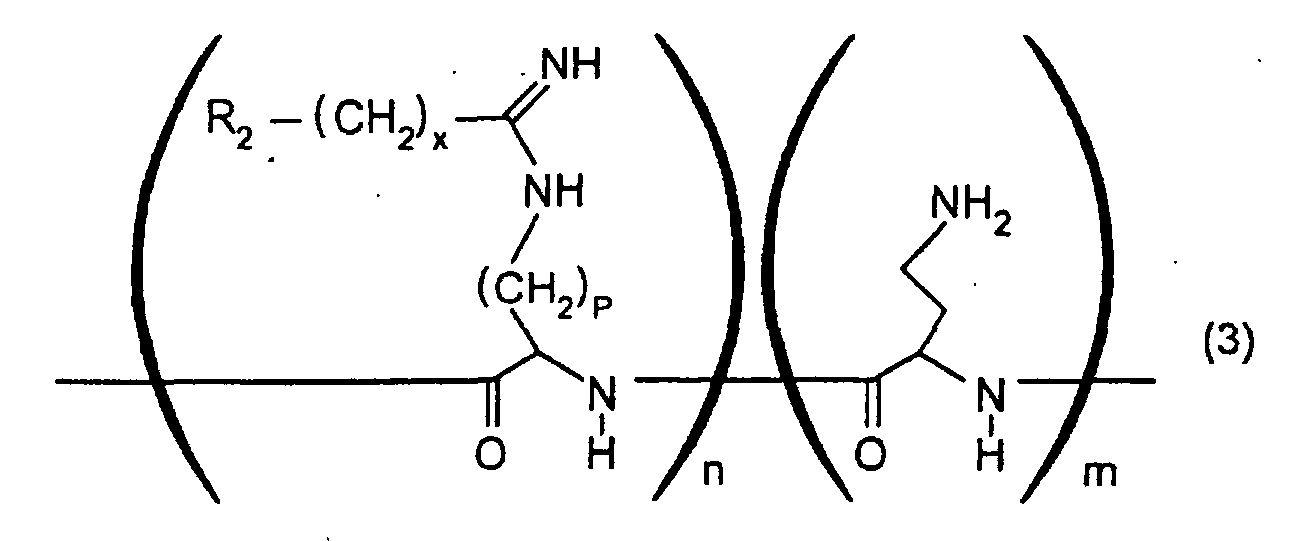
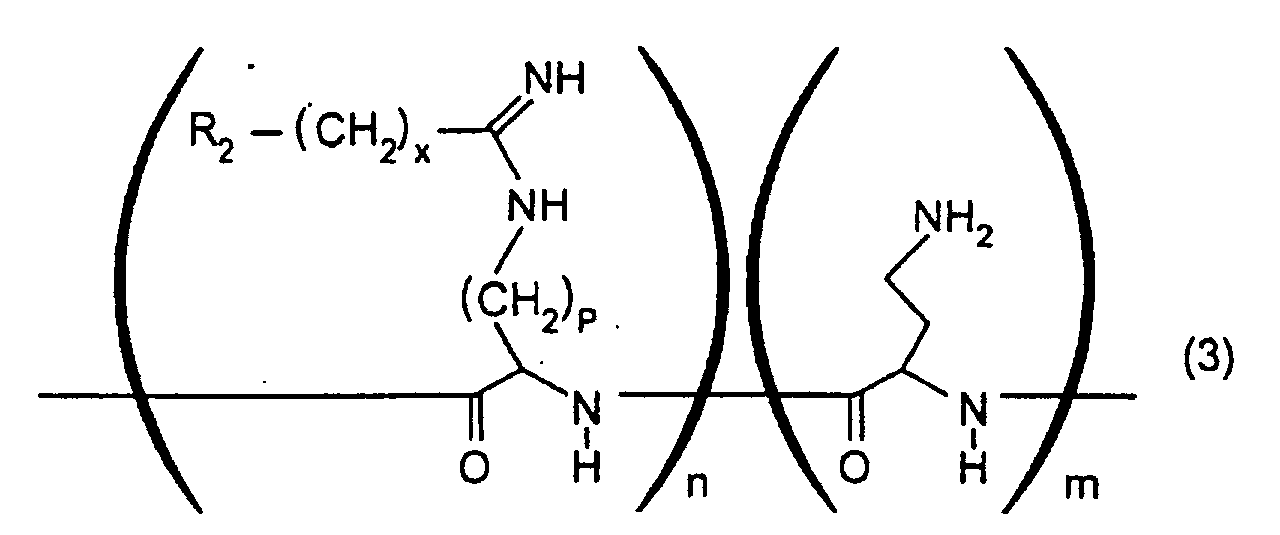
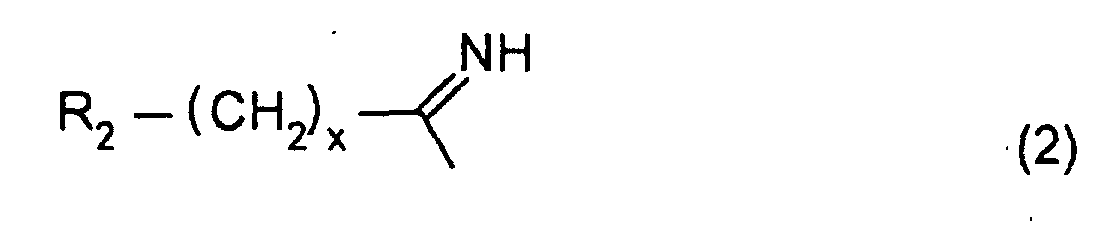
- L is a linker containing imine which may further contain one or more methylene groups; thus R 1 is a radical represented by formula (2) wherein "X" is 0 or a natural number of 20 or less; and then the polypeptide derivative is represented by formula (3).
- a pharmaceutically acceptable salt of the polypeptide derivative represented by the formula (3) is also particularly preferred.
- R 2 be a moiety derived from one member selected from the group consisting of a monosaccharide, an oligosaccharide, a polysaccharide, a peptide, an oligopeptide, a polypeptide, an antibody and a cell-specific ligand.
- R 2 be a thioglycosyl group, an O-glycosyl group or a N-glycosyl group each of which is derived from one member selected from the group consisting of a monosaccharide, an oligosaccharide and a polysaccharide.
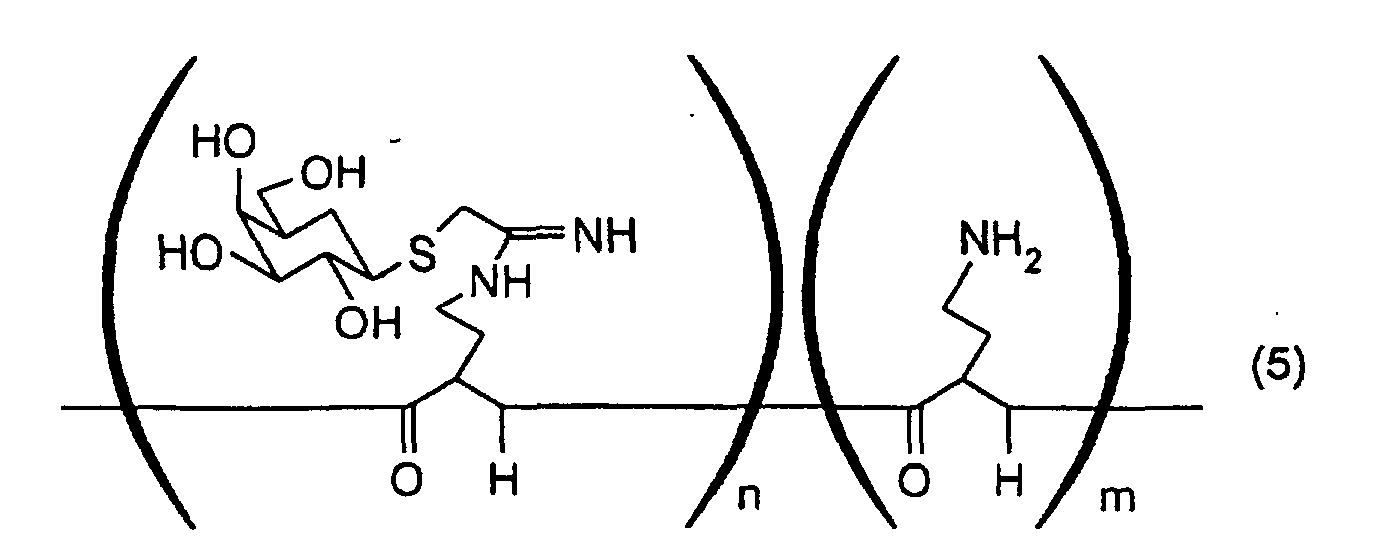
- polypeptides are represented by formula (5).
- Pharmaceutically acceptable salts of the polypeptide derivatives represented by the formula (5) are also particularly preferred.
- This invention also provides a nucleic acid carrier comprising the polypeptide derivative represented by the formula (1) or a pharmaceutically acceptable salt thereof.
- This invention further provides a gene therapeutic composition comprising the nucleic acid carrier and a therapeutic gene.
- a method of selectively protecting the 4-amino group of diaminobutyric acid with a carbobenzoxy group comprising reacting diaminobutyric acid or a acid addition salt thereof with [p-(benzyloxycarbonyl)phenyl]dimethylsulfonium methylsulfate in a reaction inert medium at a pH of from 8 to 11.
- This invention relates to a polypeptide derivative which is useful as a nucleic acid carrier for carrying a therapeutic gene and which may contain polydiaminobutyric acid, wherein at least two side chain (free) amino groups are modified with cell recognition groups.
- polypeptide of this invention is a polypeptide represented by the formula (1) or a pharmaceutically acceptable salt thereof. Where there is no need to describe the polypeptide derivative and its pharmaceutically acceptable salt discriminatingly, either or both of them are expressed by the term, "polypeptide(s) of this invention.”
- R 1 is derived from one member selected from the group consisting of a monosaccharide, an oligosaccharide, a polysaccharide, a peptide, an oligopeptide, a polypeptide, an antibody and a cell-specific ligand, or is selected from the group consisting of an optionally substituted C 1 -C 20 alkyl, an optionally substituted C 1 -C 20 alkenyl, an optionally substituted C 7 -C 45 aryl, an optionally substituted C 7 -C 45 alkylaryl, an optionally substituted C 7 -C 45 alkenylaryl, and an optionally substituted amino group wherein the substituent may be a moiety of the one member selected from the group consisting of a monosaccharide, an oligosaccharide, a polysaccharide, a peptide, an oligopeptide, a polypeptide, an antibody and a cell-specific ligand; "p" represents an integer
- alkyl means an aliphatic group (straight chain, branched chain, cyclic chain or a combination of the foregoing) having the above-defined carbon number.
- alkenyl means an unsaturated aliphatic group (straight chain, branched chain, cyclic chain or a combination of the foregoing) having the above-defined carbon number.
- aryl means an aromatic ring having the above-defined carbon number which may be substituted with one to four substituents.
- substituents include, but not limited to C 1 -C 6 alkyl, C 1 -C 6 alkoxy, C 1 -C 6 alkylamino, hydroxyl, cyano, halogen, mercapto, nitro, carboxyl, formyl, thioalkoxy, and the like.
- alkylaryl and alkenylaryl mean the alkyl group and the alkenyl group as defined above each of which is bonded to one to three aryl groups. Similarly to the above-mentioned aryl group, this aryl portion may be substituted with one to four substituents.
- alkyl group any of the "alkyl group,” “alkenyl group,” “aryl group,” “alkylaryl group,” and “alkenylaryl group” as defined above may optionally contain as part of its structure, a substituent corresponding to the linker (L) which will be described later.
- pharmaceutically acceptable salt means a salt (or salts) formed from the organic or inorganic acid as illustrated below with the free amino group(s) (which, in other words, is not utilized for the backbone peptide bonding) or the free imino group(s) of the polypeptide derivative of the formula (1) that retains the biological utility of the polypeptide derivative itself (i.e., as a nucleic acid carrier) and that is non-toxic biologically or physiologically and does not exhibit undesired side reactions upon administration to the human body. Therefore, it is not particularly limited insofar as it is pharmaceutically acceptable.
- the salt from an inorganic acid such as boric acid, hydrochloric acid, sulfuric acid, nitric acid, or phosphoric acid and the salt from an organic acid such as acetic acid, propionic acid, citric acid, lactic acid, oxalic acid, succinic acid, tartaric acid, malonic acid, fumaric acid, or malic acid.
- an inorganic acid such as boric acid, hydrochloric acid, sulfuric acid, nitric acid, or phosphoric acid
- an organic acid such as acetic acid, propionic acid, citric acid, lactic acid, oxalic acid, succinic acid, tartaric acid, malonic acid, fumaric acid, or malic acid.
- Such pharmaceutically acceptable salts may be readily prepared from the polypeptide derivatives of this invention according to standard methods.
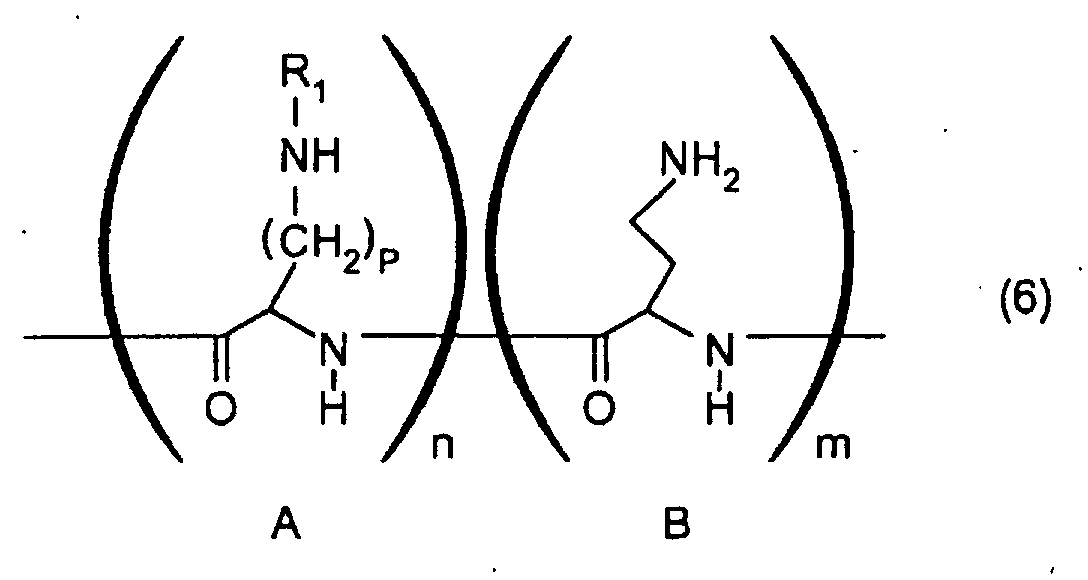
- a polypeptide peptide of the formula (1) comprises a structural unit A that may contain polydiaminobutyric acid of which one amino group is blocked with R 1 radical and a structural unit B comprising polydiaminobutyric acid having an free amino group (formula (6)).
- the formula (1) represents a block copolymer consisting of the structural unit A and the structural unit B, or alternatively a random copolymer consisting of the structural unit A and the structural unit B. In this invention, the random copolymer is particularly preferred.
- the polypeptide derivatives represented by the formulae (3) to (5) are random polymers.
- polypeptide derivative comprises the structural units A and B in any proportions; and they may exist in the form of their respective pharmaceutically acceptable salts described above.
- the polypeptide derivative may either be that which has a single 'molecular weight or an aggregate having molecular weight distribution.
- each unit can exist as D-form or L-form which is an optical isomer.
- the polypeptide derivative of this invention is a polypeptide of D-form or of L-form, or a polypeptide that is their mixture in any proportion.
- the structural unit A comprises the polymer of diaminobutyric acid (which will be referred to as "DBA” hereafter) as a base unit.
- the polypeptide derivative of the formula (1) will contain polydiaminobutyric acid (which will be referred to as "pDBA” hereafter).
- the number of residue of a polypeptide derivative according to this invention is meant “m+n” in the formula (1).
- “m” represents an integer of 2 or more and “n” represents an integer of 2 or more.
- the preferred number of residues is at least 20 residues. More preferably, the number of residues is at least 25, and most preferably at least 30.
- the preferred number (m+n) of residues of the polypeptide derivative according to the invention is 300 or less.
- the number of residues is 280 or less; and more preferably the number is 250 or less.
- the number of residues is too large, the synthesis of polypeptide derivatives will be difficult and handling will also be inconvenient.
- performance when used as a nucleic acid carrier will be inadequate.
- the preferred value for m is 3 or more, and more preferred value is 4 or more.
- R 1 as defined above is a radical to block the free amino group and is derived from one member selected from the group consisting of a monosaccharide, an oligosaccharide, a polysaccharide, a peptide, an oligopeptide, a polypeptide, an antibody and a cell-specific ligand, or is selected from the group consisting of an optionally substituted C 1 -C 20 alkyl, an optionally substituted C 1 -C 20 alkenyl, an optionally substituted C 7 -C 45 aryl, an optionally substituted C 7 -C 45 alkylaryl (aralkyl), an optionally substituted C 7 -C 45 alkenylaryl, and an optionally substituted amino group.
- the R 1 radical according to this invention has two characteristics principally. One of them is cell recognition function and this allows the R 1 radical to recognize a component of the targeted cell (especially, an antigen or a receptor on the cell surface). Specifically, the introduction of R 1 radical imparts a cell recognition site to the polypeptide derivative of this invention. Therefore, when the polypeptide derivative of this invention is used as the nucleic acid carrier, it will be able to efficiently deliver a therapeutic gene to the targeted cell.
- a wide variety of naturally occurring factors or synthetic compounds are known as the molecules possessing the cell recognition function. A Moiety derivable from those known molecules may preferably be utilized as the R 1 radical in this invention.
- they are monosaccharides, oligosaccharides, polysaccharides, peptides, oligopeptides, polypeptides, antibodies and cell-specific ligands, etc.
- the illustrated concrete substances include, but not limited to galactose, mannose, glucose, fructose, lactose, dextran, Gal-GlccNAc, RGD, transferrin, LDL (low density lipoprotein), asialoorosomucoid and the like.
- the other characteristic of the R 1 radical is that its introduction will render the polypeptide derivative more cationic. This is necessary to bring electrostatic interaction with the therapeutic gene such as a nucleic acid that is normally charged negatively and to incorporate the gene into a composition.
- the R 1 radical may be provided with suitable substituents, if desired.
- the representative substituents include, inter alia, alkoxy, alkylthio, alkylamino, amino, imino, guanigino, and hydrazino groups.
- R 1 is represented by the formula R 2 -L-.
- L is a linker bonded to the free amino group.
- Suitable linkers include, but not limited to carbonyl, thiocarbonyl, imine and methylene.
- the linker may contain one or more methylene groups in addition to those mentioned above.
- R 1 is represented by the formula (2). wherein "X" is 0 or a natural number of 20 or less.
- polypeptide derivative of this invention is represented by the formula (3).
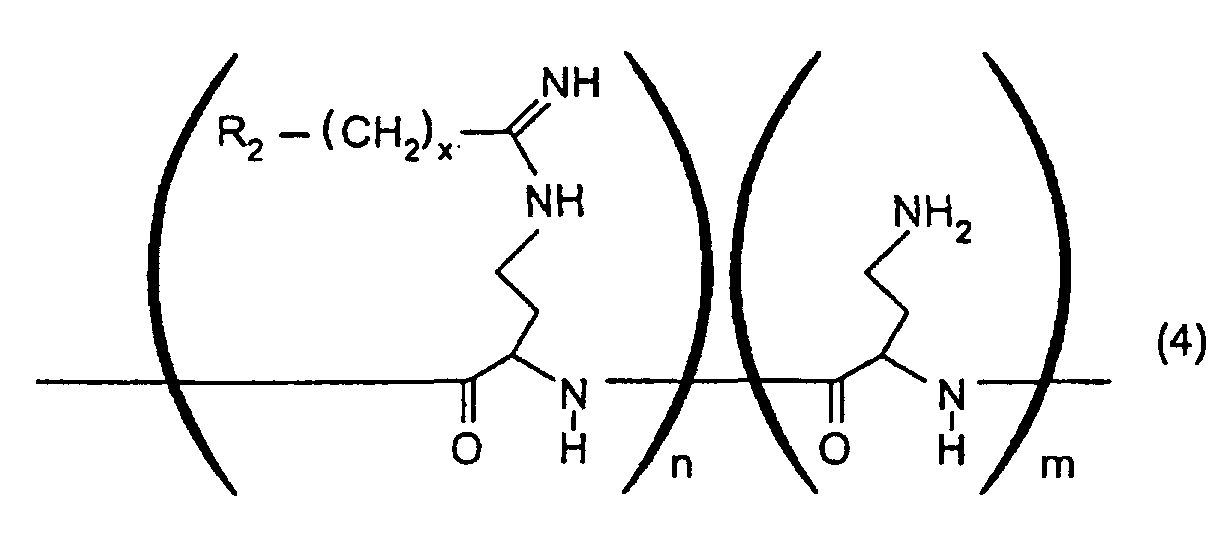
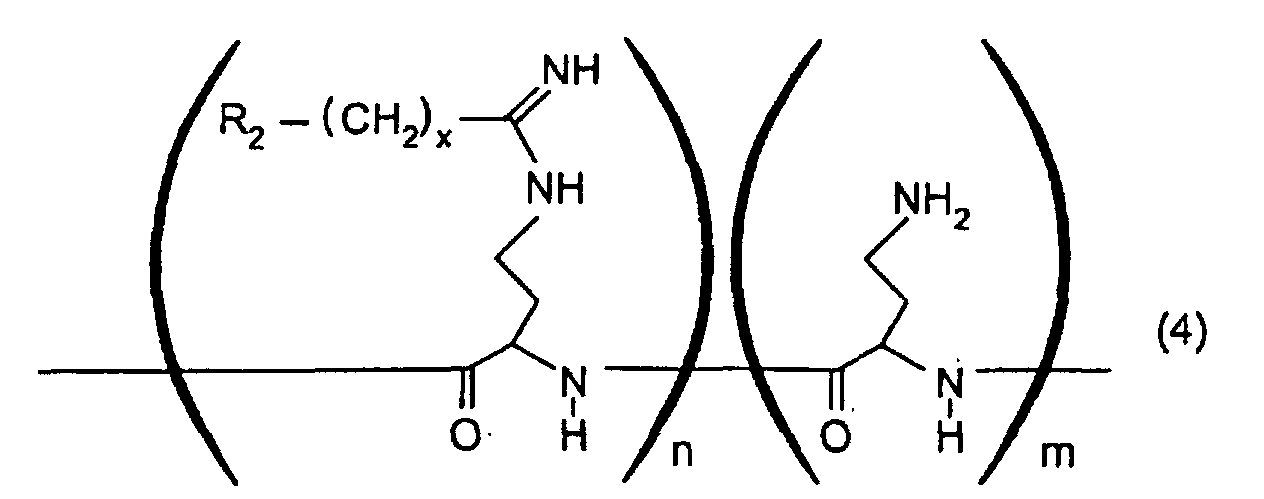
- the particularly preferred group of the polypeptide derivatives are compounds wherein "p" is 2, which are represented by the formula (4).
- R 2 is a thioglycosyl group, an O-glycosyl group or a N-glycosyl group each of which is a moiety derived from one member selected from a monosaccharide, an oligosaccharide, or a polysaccharide.
- the particularly preferred individual polypeptide derivative is represented by the formula (5).
- polypeptide derivatives of the formula (1) can be synthesized by combining several reactions that are known to one skilled in the art.
- the method employed in this invention comprises the syntheses of the structural units A and B represented by the formula (6) and the formation of peptide bonds from the respective structural units synthesized; and it specifically includes the steps described below.
- a solution of a monomer (polymer) having an amino group at its side chain is treated with a base such as the hydroxide or the carbonate of an alkaline metal and the pH of solution is adjusted.
- a protecting reagent R-X R is Z, Boc, Troc, Z(Cl) or the like and X is a leaving group) activated with the suitable leaving group (such as halogen, sulfonate, phenoxide or derivatives of the foregoing) is allowed to react with the solution, introducing the protecting group to the side chain amino group.
- the starting polymer for the preparation of the polymer preferably employs diaminobutyric acid, lysine, ornithine, or diaminopropionic acid.
- the monomer (polymer) into which the protecting group has been introduced is normally obtained as a precipitate.
- Water and a volatile organic solvent that is miscible with water in any proportion, or alternatively diethyl ether or ethyl acetate may be used to wash these precipitates.
- the compound prepared in 1-1 is dissolved in water or an organic solvent that is miscible with water in any proportion.
- the solution is treated with a base such as the hydroxide or the carbonate of an alkaline metal and the pH of solution is adjusted.
- an Fmoc reagent such as 9-fluorenylmethylchloroformate or N-(9-fluorenylmethoxycarbonyloxy)succinimide to allow for reaction.
- the resulting precipitates are washed with water and a volatile organic solvent that is miscible with water in any proportion, or alternatively with diethyl ether or ethyl acetate and dried.
- a solution of diaminobutyric acid having a free amino group at its side chain is treated with a base such as the hydroxide or the carbonate of an alkaline metal and the pH of solution is adjusted.
- a protecting reagent R-X (R is Z, Boc, Troc, Z(Cl) or the like and X is a leaving group) activated with the suitable leaving group (such as halogen, sulfonate, phenoxide or derivatives of the foregoing) is allowed to react with the solution, introducing the protecting group to the side chain amino group.
- DBA into which the protecting group has been introduced is normally obtained as a precipitate. Water and a volatile organic solvent that is miscible with water in any proportion, or alternatively diethyl ether or ethyl acetate may be used to wash these precipitates.
- polydiaminobutyric acid derivative preferably the side chain amino group (4-position) of diaminobutyric acid is protected with a suitable protecting group and the amino acid moiety is converted into an acid anhydride thereof using triphosgene, after which it is used as a monomer for polycondensation.
- a suitable protecting group preferably the side chain amino group (4-position) of diaminobutyric acid is protected with a suitable protecting group and the amino acid moiety is converted into an acid anhydride thereof using triphosgene, after which it is used as a monomer for polycondensation.
- triphosgene triphosgene
- the method for synthesizing polydiaminobutyric acid involves three steps as described below.
- the first step is one in which the amino group at the 4-position of DBA is protected; the second step is one in which diaminobutyric acid anhydride (which will be abbreviated as "NCA") is produced from the selectively protected DBA(R); and the third step is one in which pDBA is synthesized from NCA.
- NCA diaminobutyric acid anhydride
- the "R" in DBA(R) means the protecting group introduced into the 4-amino group.
- the amino group in the side chain (4-position) of diaminobutyric acid first needs to be selectively protected.
- the copper complex method (Jikken Kagaku Koza-Experimental Chemistry Monograph Series Vol. 22, Ed. The Chemical Society of Japan, p239) and the direct protection method (Jikken Kagaku Koza-Experimental Chemistry Monograph Series Vol. 22, Ed. The Chemical Society of Japan, p238) are known as the methods of choice. Since the copper complex method employs a heavy metal, copper, and requires a number of steps, it is not an industrially advantageous reaction pathway; and the direct protection method is more convenient. However, there has been no report that the latter method is utilized to selectively protect the side chain amino acid of diaminobutyric acid.
- a DBA solution is treated with a base such as the hydroxide or the carbonate of an alkaline metal and the pH of solution is adjusted.
- a protecting reagent R-X (R is Z, Boc, Troc, Z(Cl) or the like and X is a leaving group) activated with a suitable leaving group (such as halogen, sulfonate, phenoxide or derivatives of the foregoing) is allowed to react with the solution, introducing the protecting group to DBA.
- the pH of the reaction system is preferably from 8 to 11, more preferably from 8.5 to 10.5, and most preferably 9.2 to 9.8.
- DBA(R) into which the protecting group has been introduced is subjected to after-treatment following a standard method.
- the protection reaction is carried out within a predetermined pH range to selectively protect the amino acid of DBA, which has not been hitherto known to one skilled in the art. Accordingly, the selective protection method of amino groups constitutes one aspect of this invention.
- DBA(R) is suspended in a suitable solvent and is allowed to react with phosgene, phosgene dimmer, or triphosgene, yielding NCA.
- the solvent to be used is appropriately a solvent for which NCA (the product) has high solubility and which does not react with NCA.
- the suitable solvent is that which does not react with NCA and which has little hygroscopic property, including diethyl ether, diisopropyl ether, hexane, toluene, etc.
- NCA is dissolved in a suitable solvent and an appropriate initiator is allowed to act thereon, yielding a polymer.
- the solvent to be used is appropriately a solvent the dissolution power of which is high for NCA but low for the product (or a polymer).
- THF tetrahydrofuran
- acetonitrile ethyl acetate, dichloromethane, etc.
- the initiator are amines, alcohols, alkoxides, etc; and 'alkylamines, particularly butylamine, are preferred.
- the polymer is produced as a precipitate.
- An inert solvent that does not dissolve polymer which includes acetonitrile, diethyl ether, hexane, ethanol, methanol, etc.
- a suitable method may be used to remove the protecting group from the produced polymer. Standard methods such as dialysis and ultrafiltration may be used for the desalting (after deprotection) and the elimination of low molecular weight impurities.
- the modifying group to be introduced into pDBA is first derived from its parent substance (compound) and is activated so as to be reactive to the amino group(s).
- the method of activation may differ with respect to the nature of the modifying group, it can appropriately be chosen from techniques known to one skilled in the art.
- the activated form of the modifying group and the 4-amino group of polydiaminobutyric acid are subjected to coupling reaction, yielding the objective modified peptide derivative.
- a metal alkoxide is allowed to act on the parent substance (such as a saccharide or a protein) having a nitrile group already introduced, in a suitable solvent.
- the nitrile group is thereby converted into an alkoxyimmino group, where the aforementioned activation is carried out.
- the metal to be used in the alkoxide is preferably an alkaline metal and sodium is particularly preferable.
- the alcoholic solvent is preferably a lower alcohol and particularly, methanol or ethanol is preferable.
- the activated alkoxyimino group is then allowed to react with the 4-amino group of polydiaminobutyric acid under basic conditions (pH 8 to 11), when there is produced the polypeptide derivative of the formula (4) the 4-amino group of which has been modified with the modifying group that will be a tissue recognition site.
- the buffer to be used in the coupling reaction employs that which has buffering capability at the aforementioned pH and which does not contain any amine component. Especially, borate buffer is preferable.
- polypeptide derivatives of this invention are useful as a nucleic acid carrier to deliver therapeutic genes.
- the whole synthetic process for the polypeptide derivatives of this invention is shown in Fig. 1. The detail of each step will be described in Examples.
- the structure of the nucleic acid carrier comprising the polypeptide derivative of this invention has such structural characteristics as have been previously described for the polypeptide derivative. Therefore, it will be possible to detect the nucleic acid carrier of this invention based on such structural characteristics. Even if the nucleic acid carrier of this invention itself, or a gene therapeutic composition comprising it are used in different forms, the detection of nucleic acid carrier of this invention will be likewise possible when suitable pretreatment is performed. One skilled in the art can readily select the necessary treatment for this purpose.
- the method of detection is not particularly limited; and a variety of ordinarily known polypeptide analysis methods can be used (J. Controlled Release vol. 54, 1998, p39-48). Specifically usable are the qualitative and quantitative analysis of diaminobutyric acid following the amino acid assay method in peptides, the determination of the number of residues based on molecular weight measurement using various kinds of liquid chromatography, mass spectroscopy, and chemical qualitative analysis methods.
- the gene therapeutic composition of this invention comprises at least a nucleic carrier of the invention and a therapeutic gene.
- therapeutic gene means various nucleic acids or nucleotide derivatives as will be described below.
- the nucleic acid and the therapeutic gene can form a complex at different ratios to prepare the gene therapeutic composition. If the ratio of therapeutic gene to nucleic acid carrier (weight (w)/weight (w)) is in the range of from 2:1 to 1:50, therapeutic effects can be obtained. More preferably, if compounding is carried out at the ratio of therapeutic gene to nucleic acid carrier (w/w) being in the range of from 1:1 to 1:30, there can be obtained even more effectiveness. If the ratio of therapeutic gene to nucleic acid carrier (w/w) is 1:50 or more, the quantity of the free nucleic acid that does not participate in the complex with the therapeutic gene will increase, which is undesirable. In contrast, if the ratio is 2:1 or less, it will be undesirable because the affinity to the cell surface of the cell into which the gene is transferred decreases, causing the efficiency of therapeutic gene transfer to be lowered.
- the nucleic acid carrier of this invention can have a positive charge and thus can retain the therapeutic gene, such as nucleic acid, principally having a negative charge through electrostatic bonding. Consequently, after the carrier is delivered to or within the objective cell, it will be possible to efficiently liberate the therapeutic gene and to cause it to be expressed. It will also be possible to control this action by adequately selecting the charge ratio of therapeutic gene to nucleic acid carrier. In this invention, if the charge ratio is set in the range of from 1:1 to 1:40, greater effects will be obtained. If the charge ratio is 1:1 or less, the affinity to the cell surface will decrease, causing the efficiency of therapeutic gene transfer to be lowered. In contrast, if it is 1:40 or more, there will be an increased quantity of the free nucleic acid carrier that does not participate in the complex with the therapeutic gene, which is undesirable.
- nucleic acids or nucleotide derivatives are not particularly limited with respect to the kinds, molecular weights, shapes, and the sequences of genes encoded.
- the molecular weight of nucleic acid is non-limiting such that it may be from approximately 20 bases of oligonucleotide to several kilo-bases of cosmid gene.
- nucleic acid For the shape of nucleic acid, a single-stranded gene, a double-stranded gene, a triple-stranded forming gene, DNA, RNA, a DNA/RNA chimera-type gene, a phosphothioate-type gene, a straight-chain gene, a circular gene, and the like may be used without any restriction.
- the sequence of gene to be encoded can employ, in addition to the therapeutic gene, any sequence among a promoter or an enhancer for the transcription of the therapeutic gene, a poly-A signal, a marker gene for labeling and/or selecting the cell into which the gene has been transferred, a virus-derived gene sequence for the efficient insertion of gene into cellular genomic DNA sequences, and a signal sequence for extracellularly secreting the substance that acts as drug and/or for having the substance remained at localized sites within a cell.
- genes corresponding to disorders namely genes that act against the disorders in an antagonistic manner or genes that supplement those lacking in the disorders may be used.
- SOD antiinflammatory cytokines
- genes encoding the peptides that act on cell-adhesion factors in an antagonistic manner for inflammatory disorders genes encoding normal enzymes for enzyme-deficient disorders; genes encoding normal receptors for receptor-deficient disorders; thymidine kinases that kill virus-infected cells, genes encoding toxins such as diphtheria toxin, genes encoding antisense, triplehelixes, ribozymes, decoys, and transdominant mutants all of which inhibit the replication of viruses for virus infections; thymidine kinases that kill cancer cells, genes encoding toxins such as diphtheria toxin, genes encoding antisense, triplehelixes, and ribozymes all of which inactivate cancer genes, cancer-suppressing genes
- any cassettes without any particular limitations may be used insofar as they can cause genes to express in the target cells.
- One skilled in the art can readily select such expression cassettes.
- they are expression cassettes capable of gene expression in the cells derived from an animal, more preferably, expression cassettes capable of gene expression in the cells derived from a mammal, and most preferably expression cassettes capable of gene expression in the cells derived from a human.
- the gene promoters that can be used as expression cassettes include: for example, virus-derived promoters from an Adenovirus, a cytomegalovirus, a human immunodeficiency virus, a simian virus 40, a Rous sarcoma virus, a herpes simplex virus, a murine leukemia virus, a sinbis virus, a Sendai virus, a hepatitis type A virus, a hepatitis type B virus, a hepatitis type C virus, a papilloma virus, a human T cell leukemia virus, an influenza virus, a Japanese encephalitis virus, a JC virus, parbovirus B19, a poliovirus, and the like; mammal-derived promoters such as albumin and a heat shock protein; and chimera type promoters such as a CAG promoter.
- virus-derived promoters from an Adenovirus, a cytomegalovirus, a human
- a signal sequence for extracellularly secreting the drug encoded by the therapeutic gene and/or for having the substance remained at localized sites within a cell there may used a signal peptide derived from interleukin-2 that assists extracellular secretion (Fusao Komada, The 115th Annual Meeting of The Pharmaceutical Society of Japan, Abstracts, 4, 12, 1995), a peptide derived from Adenovirus E1a that promotes nuclear localization, a peptide derived from polyoma virus large T antigen, a peptide derived from SV40 large T antigen, a peptide derived from nucleoplasmin, and a peptide derived from the HTLV1p24 post-transcription regulating protein (Kalderon, D., et al., Cell, 39, 499, 1984).
- the gene therapeutic composition of this invention may be prepared by mixing the therapeutic gene that has been designed for therapeutic purposes as illustrated above and the nucleic acid carrier. More specifically, after the nucleic acid carrier and the therapeutic gene that has been designed for therapeutic purposes are separately dissolved in an appropriate solvent such as water, physiological saline water, or an isotonicated buffer, they are admixed and allowed to stand for 10 minutes to 30 minutes, thus enabling the preparation.
- an appropriate solvent such as water, physiological saline water, or an isotonicated buffer
- the ratio of the nucleic acid constituting the therapeutic gene and the nucleic acid carrier is not particularly limited; but the nucleic acid carrier is used at a level of from about 0.5 ⁇ g to 50 ⁇ g, and preferably from 1 ⁇ g to 30 ⁇ g relative to 1 ⁇ g of the nucleic acid.
- the gene therapeutic composition of this invention can be used in the gene therapy through autologous implantation ( ex vivo gene therapy) where the target cells are first removed outside the body from the patient and the cells are then returned to the body of the patient after the therapeutic gene has been transferred into the cells.
- the therapeutic gene can also be used in the gene therapy where the therapeutic gene is directly administered to the patient ( in vivo gene therapy).
- Gene therapy is largely classified into “Augmentation Gene Therapy” in which aberrant (causative) genes are left intact and new (normal) genes are augmented and “Replacement Therapy” in which aberrant genes are replaced with normal genes.
- the nucleic acid carriers of this invention can be used in both types of therapy.
- Methods for administering the gene therapeutic composition of this invention to the body are not particularly limited. They may preferably be carried out by, for example, parental administration such as administration through injection. A variety of pharmaceutically acceptable excipients can be added to the composition.
- the dosages for the gene therapeutic composition of this invention differ depending on the intended methods, the intended objects, etc., and one skilled in the art can readily make appropriate selection and optimization. Specifically, where administration by injection is used, preferably administration is done in a daily dose of from about 0.1 ⁇ g/kg to about 1,000 mg/kg, and more preferably in a daily dose of from about 1 ⁇ g/kg to about 100 mg/kg.
- the nucleic acid carrier of this invention does not form precipitates upon complex formation with the therapeutic gene. Therefore, when the gene therapeutic composition of this invention is directly administered to the blood vessels, there is no risk of thrombus formation, thus allowing for efficient and precise administration of the therapeutic gene.
- DL-2,4-diaminobutyric acid dihydrochloride (1) (30 g, Sigma-Aldrich Corporation) was dissolved in 200 ml of water, to which 12.6 g of sodium hydroxide dissolved in 250 ml of water was added. To this was then added 101 g of [p-(benzyloxycarbonyl)phenyl]dimethylsulfonium methylsulfate (Z-DSP)(2) (Sanshin Chemical Industry, Co. Ltd.) at stirring over a period of about 20 minutes with ice cooling. During this period the pH was maintained at 9.4-9.7 by addition of an 8M aueous sodium hydroxide solution, and with ice cooling stirring was continued for additional 2 hours to yield the product as a precipitate. After the resulting product was filtered and washed with water and ethanol, it was dried to afford 28 g of the titled compound (3) (in 71% yield).
- DL-2,4-diaminobutyric acid dihydrochloride (1) (30 g, Sigma-Aldrich Corporation) was dissolved in 200 ml of water, to which 12.6 g of sodium hydroxide dissolved in 250 ml of water was added. To this was then added 101 g of Z-DSP (2) (Sanshin Chemical Industry, Co. Ltd.) at stirring over a period of about 20 minutes with ice cooling. During this period the pH was maintained at 11.1-11.5 by addition of an 8M aqueous sodium hydroxide solution, and with ice cooling stirring was then continued for 2 additional hours to yield the product as a precipitate. After the resulting product was filtered and washed with water and ethanol, it was dried to afford 15 g of the titled compound (3) (in 38% yield).
- Poly-4-N-carbobenzoxy-DL-diaminobutyric acid (5) (0.5 g) was dissolved in 2 ml of trifluoroacetic acid, to which a 25% hydrogen bromide/acetate solution was added and mixed with shaking. After allowing the solution to stand, the formed precipitates were twice washed with diethyl ether (ether removed by decantation). The resulting precipitates were sufficiently brought to dryness under reduced pressure. Sodium acetate and water were added to the obtained solids to produce a mixed solution. The mixed solution was dialyzed with running water using a dialysis tube for removing materials with a molecular weight of 1,000 or less.
- Example 2-2 Poly-4-N-carbobenzoxy-DL-diaminobutyric acid (5) (90.0 mg) obtained
- Example 2-2 was dissolved in 0.5 ml of trifluoroacetic acid, to which a 25% hydrogen bromide/acetate solution (0.5 ml) was added and mixed with shaking. After allowing the solution to stand, the formed precipitates were twice washed with diethyl ether (ether removed by decantation). The resulting precipitates were sufficiently brought to dryness under reduced pressure. The obtained solids were dissolved in water. The solution was dialyzed with running water using a dialysis tube for removing materials with a molecular weight of 1,000 or less. Then, centrifugation was carried out at 30,000 rpm for 2 hours to remove insoluble materials. The resulting solution was lyophilized to afford 73.1 mg of poly-DL-diaminobutyric acid bromide (7)(in 99% yield).
- Cyanomethyl-1-thio- ⁇ -D-galactopyranoside (7) (16.6 mg, Sigma-Aldrich Corporation) was added to a 2-ml solution of 0.01M sodium methoxide methanol, which was allowed to stand at 25 °C for 24 hours. Subsequently, solvent was removed from the solution under reduced pressure, and 25.5 mg of diaminobutyric acid bromide (6) dissolved in 4 ml of tetraborate buffer (50 mM, pH 9.5) was added to the product and allowed to stand for 3 hours. The reaction solution was dialyzed with running water using a dialysis membrane with a fractionating molecular weight of 1,000.
- a solution of a plasmid that encodes the luciferase gene and a solution of pDBA or the side chain galactose-modified polydiaminobutyric acid derivative (Gal-pDBA) as prepared in Examples 2-4 were, respectively, prepared at twice the desired concentration.
- the plasmid was an about 5.25-kb Picker gene control vector into which the luciferase gene had previously been inserted (Toyo Ink Co. Ltd.) and it will be abbreviated "Plasmid A" hereafter.
- the nucleic acid carriers were added dropwise to the plasmid solution while stirring to prepare plasmid/pDBA complex solutions.
- PBS was used as solvent.
- 25.0 ⁇ g/ml plasmid solutions were prepared, and plasmid/pDBA complex solutions having a plasmid concentration of 12.5 ⁇ g/ml were used as the gene transfer samples.
- HepG2 cells were inoculated onto a 12-well multi-well plate (Coaster Inc.) at 1x10 5 cells/well one day prior to testing.
- the plasmid/pDBA complex solution was added to the HepG2 cells in the presence of 10% fetal bovine serum (Sanko Junyaku Co. Ltd.), and incubation was carried out at 37 °C for 4 hours. Medium was exchanged with a fresh culture medium and incubation continued for 48 hours. After washing with PBS twice, a cell lysis reagent (Toyo Ink Co. Ltd.) was added and freeze-thaw was carried out once. The cell lysate was recovered and subjected to centrifugation (12,000 rpm x 10 minutes).
- the luciferase activity of the supernatant was determined with a luminometer (LumitLB9501; Berthold Inc.) using a luciferase assay system (Toyo Ink Co. Ltd.).
- the protein concentration of the centrifuged supernatant was also determined with a microplate reader (Rainbow Themo; Tecan Inc.) using a protein assay kit (Bio-Rad Inc.).
- Fig. 2 shows the results of measurement of the activity of luciferase expressed.
- Gal-pDBA exhibited higher luciferase activity than did non-modified pDBA. Therefore, it was confirmed that when pDBA was glycosylated with a sugar according to this invention, the expression of luciferase markedly enhanced.
- Plasmid A and a solution of pDBA were prepared at twice the desired concentration. Thirty minutes prior to administration, the pDBA solutions were added dropwise to the plasmid solution while stirring to prepare plasmid/pDBA complexes solution. PBS was used as solvent. Specifically, 50.0 ⁇ g/ml plasmid solutions were prepared, and plasmid/pDBA complex solutions having a plasmid concentration of 25 ⁇ g/ml were used as the gene transfer samples.
- Plasmid/pDBA complex solutions were prepared from Plasmid A and pDBA or Gal-pDBA as obtained in Examples 2-4 such that the weight ratios of plasmid/pDBA were from 1/3 to 1/9 (w/w).
- the complex solutions were administered to mice through their tail veins.
- the dosage of Plasmid A per mouse was 12.5 ⁇ g/0.5 ml.
- Two days after administration the gene transfer to the tissue was determined by measuring the luciferase activity found in the liver.
- Fig. 3 shows the obtained results (data when the weight ratio of plasmid/pDBA was 1/3).
- Two days after administration in the group where Gal-pDBA was used as the nucleic acid carrier in the liver about 2.5-fold luciferase activity was measured as compared to the group where pDBA was used as the nucleic acid carrier. This result demonstrates that when the nucleic acid carriers of the Examples are used for systemic administration, the gene can especially be transferred to the liver.
- the yield of the reaction and the purity of the product can be improved. Accordingly, the synthesis of highly pure carbobenzoxy-DBA will become possible in a short time and with a high yield.
- the nucleic acid carriers of this invention can form complexes with a variety of therapeutic genes; and they enable the therapeutic genes to be transferred into cells efficiently and safely through different means as well as enable high expression of the genes in the cells.
- nucleic acid carriers of this invention can be used to enhance the gene transfer to the liver and allow for liver treatment in a concentrated manner.
Landscapes
- Health & Medical Sciences (AREA)
- Chemical & Material Sciences (AREA)
- Life Sciences & Earth Sciences (AREA)
- Organic Chemistry (AREA)
- Genetics & Genomics (AREA)
- Engineering & Computer Science (AREA)
- Medicinal Chemistry (AREA)
- General Health & Medical Sciences (AREA)
- Molecular Biology (AREA)
- Proteomics, Peptides & Aminoacids (AREA)
- Biochemistry (AREA)
- Bioinformatics & Cheminformatics (AREA)
- Biophysics (AREA)
- Pharmacology & Pharmacy (AREA)
- Public Health (AREA)
- Biotechnology (AREA)
- Animal Behavior & Ethology (AREA)
- Veterinary Medicine (AREA)
- Epidemiology (AREA)
- General Engineering & Computer Science (AREA)
- Wood Science & Technology (AREA)
- Chemical Kinetics & Catalysis (AREA)
- Zoology (AREA)
- Biomedical Technology (AREA)
- General Chemical & Material Sciences (AREA)
- Analytical Chemistry (AREA)
- Plant Pathology (AREA)
- Microbiology (AREA)
- Inorganic Chemistry (AREA)
- Polymers & Plastics (AREA)
- Physics & Mathematics (AREA)
- Gastroenterology & Hepatology (AREA)
- Medicines That Contain Protein Lipid Enzymes And Other Medicines (AREA)
- Pharmaceuticals Containing Other Organic And Inorganic Compounds (AREA)
- Medicinal Preparation (AREA)
- Peptides Or Proteins (AREA)
- Polyamides (AREA)
Abstract
Description

or a pharmaceutically acceptable salt thereof.






Claims (10)
- A peptide derivative represented by formula (1):wherein R1 is derived from one member selected from the group consisting of a monosaccharide, an oligosaccharide, a polysaccharide, a peptide, an oligopeptide, a polypeptide, an antibody and a cell-specific ligand, or is selected from the group consisting of an optionally substituted C1-C20 alkyl, an optionally substituted C1-C20 alkenyl, an optionally substituted C7-C45 aryl, an optionally substituted C7-C45 alkylaryl, an optionally substituted C7-C45 alkenylaryl, and an optionally substituted amino group wherein the substituent may be a moiety of the one member selected from the group consisting of a monosaccharide, an oligosaccharide, a polysaccharide, a peptide, an oligopeptide, a polypeptide, an antibody and a cell-specific ligand; "p" represents an integer of 1-5; "m" represents an integer of 2 or more; and "n" represents an integer of 2 or more, provided that "m + n" represents an integer of 300 or less, or a pharmaceutically acceptable salt thereof.

- The polypeptide derivative or a pharmaceutically acceptable thereof according to claim 1, wherein R1 is a radical represented by the formula of R2-L-, wherein "L" is a linker selected from carbonyl, thiocarbonyl, imine or methylene which may further contain one or more methylene groups; and R2 is a residual moiety of the R1 radical as previously defined.
- The polypeptide derivative or a pharmaceutically acceptable salt thereof according to claim 2, wherein L is a linker containing imine which may further contain one or more methylene groups; thus R1 is a radical represented by formula (2) wherein "X" is 0 or a natural number of 20 or less and which is represented by formula (3).

- The polypeptide derivative or a pharmaceutically acceptable salt thereof according to claim 3, wherein "p" is 2 and which is represented by formula (4).
- The polypeptide derivative or a pharmaceutically acceptable salt thereof according to claim 3 or 4, wherein R2 is a radical derived from one member selected from the group consisting of a monosaccharide, an oligosaccharide, a polysaccharide, a peptide, an oligopeptide, a polypeptide, an antibody and a cell-specific ligand.
- The polypeptide derivative or a pharmaceutically acceptable salt thereof according to claim 5, wherein R2 is a thioglycosyl group, an O-glycosyl group, or a N-glycosyl group each of which is derived from one member selected from the group consisting of a monosaccharide, an oligosaccharide, and a polysaccharide.
- The polypeptide derivative or a pharmaceutically acceptable salt thereof according to claim 6, which is represented by formula (5):
- A nucleic acid carrier comprising the polypeptide derivative or a pharmaceutically acceptable salt thereof according to claim 1.
- A gene therapeutic composition comprising the nucleic acid carrier according to claim 8 and a therapeutic gene.
- A method of selectively protecting the 4-amino group of diaminobutyric acid with a carbobenzoxy group, comprising reacting diaminobutyric acid or a acid addition salt thereof with [p-(benzyloxycarbonyl)phenyl]dimethylsulfonium methylsulfate in a reaction inert medium at a pH of from 8 to 11.
Applications Claiming Priority (3)
| Application Number | Priority Date | Filing Date | Title |
|---|---|---|---|
| JP2000146829 | 2000-05-18 | ||
| JP2000146829A JP2001323059A (en) | 2000-05-18 | 2000-05-18 | Polypeptide derivative and carrier for nucleic acid |
| PCT/JP2001/004176 WO2001088017A1 (en) | 2000-05-18 | 2001-05-18 | Polypeptide derivatives and nucleic acid carriers containing the same |
Publications (2)
| Publication Number | Publication Date |
|---|---|
| EP1285942A1 true EP1285942A1 (en) | 2003-02-26 |
| EP1285942A4 EP1285942A4 (en) | 2005-03-16 |
Family
ID=18653108
Family Applications (1)
| Application Number | Title | Priority Date | Filing Date |
|---|---|---|---|
| EP01932141A Withdrawn EP1285942A4 (en) | 2000-05-18 | 2001-05-18 | POLYPEPTIDE DERIVATIVES AND CARRIERS OF NUCLEIC ACIDS CONTAINING THESE DERIVATIVES |
Country Status (5)
| Country | Link |
|---|---|
| US (1) | US20040005708A1 (en) |
| EP (1) | EP1285942A4 (en) |
| JP (1) | JP2001323059A (en) |
| AU (1) | AU5877601A (en) |
| WO (1) | WO2001088017A1 (en) |
Cited By (1)
| Publication number | Priority date | Publication date | Assignee | Title |
|---|---|---|---|---|
| WO2005121215A3 (en) * | 2004-06-10 | 2006-08-10 | Farmhispania | Polypeptides with the capacity to entrap drugs and release them in a controlled way |
Family Cites Families (9)
| Publication number | Priority date | Publication date | Assignee | Title |
|---|---|---|---|---|
| JPS63215656A (en) * | 1987-03-02 | 1988-09-08 | Sanshin Kagaku Kogyo Kk | Production of epsilon-acyllysine or delta-acylornithine |
| JP2589435B2 (en) * | 1991-09-17 | 1997-03-12 | 株式会社ディ・ディ・エス研究所 | Sugar-modified polylysine derivative |
| JPH0790080A (en) * | 1993-09-22 | 1995-04-04 | Yamanouchi Pharmaceut Co Ltd | D-galactopyranosyl-gluconic acid derivative of poly-epsilon-substituted-l-lysine |
| JPH07228688A (en) * | 1994-02-18 | 1995-08-29 | Yamanouchi Pharmaceut Co Ltd | Poly-omega-substituted-l-glutamic acid derivative modified with saccharide and its production |
| JP3450921B2 (en) * | 1995-01-11 | 2003-09-29 | ポーラ化成工業株式会社 | D-galactopyranosylgluconic acid derivatives of poly-δ-substituted L-ornithine |
| EP0775751A3 (en) * | 1995-11-22 | 1998-06-10 | F. Hoffmann-La Roche Ag | Cell transfection |
| EP0834572A3 (en) * | 1996-10-02 | 1999-08-25 | F. Hoffmann-La Roche Ag | Alpha, gamma-diaminobutyric acid (DAB) containing oligopeptide derivatives |
| CA2213257A1 (en) * | 1996-10-02 | 1998-04-02 | Jean-Yves Legendre | Oligopeptide derivatives |
| EP0963758A3 (en) * | 1998-05-07 | 2000-03-22 | Universiteit Gent | Synthetic polyaminoacid complexes for delivery of nucleic acids to target cells |
-
2000
- 2000-05-18 JP JP2000146829A patent/JP2001323059A/en active Pending
-
2001
- 2001-05-18 AU AU58776/01A patent/AU5877601A/en not_active Abandoned
- 2001-05-18 EP EP01932141A patent/EP1285942A4/en not_active Withdrawn
- 2001-05-18 WO PCT/JP2001/004176 patent/WO2001088017A1/en not_active Ceased
-
2002
- 2002-05-18 US US10/276,425 patent/US20040005708A1/en not_active Abandoned
Cited By (1)
| Publication number | Priority date | Publication date | Assignee | Title |
|---|---|---|---|---|
| WO2005121215A3 (en) * | 2004-06-10 | 2006-08-10 | Farmhispania | Polypeptides with the capacity to entrap drugs and release them in a controlled way |
Also Published As
| Publication number | Publication date |
|---|---|
| US20040005708A1 (en) | 2004-01-08 |
| WO2001088017A1 (en) | 2001-11-22 |
| AU5877601A (en) | 2001-11-26 |
| EP1285942A4 (en) | 2005-03-16 |
| JP2001323059A (en) | 2001-11-20 |
Similar Documents
| Publication | Publication Date | Title |
|---|---|---|
| US5948878A (en) | Cationic polymers for nucleic acid transfection and bioactive agent delivery | |
| CN103491982B (en) | The polynucleotides delivering in vivo conjugate connected with enzyme sensitiveness | |
| KR20010012809A (en) | Composition and method for enhancing transport across biological membranes | |
| WO1998013381A1 (en) | Modified physiologically active proteins and medicinal compositions containing the same | |
| JP2001508815A (en) | Cationic polymer / lipid nucleic acid delivery vehicle | |
| WO2006085664A1 (en) | Polycation chargeable polymer and use as carrier of nucleic acid | |
| KR20160035081A (en) | POLYCONJUGATES FOR DELIVERY OF RNAi TRIGGERS TO TUMOR CELLS IN VIVO | |
| JPWO2007099660A1 (en) | Nucleic acid-containing polymer micelle complex | |
| CN111001012A (en) | A kind of hydrophilic carbonate type antibody conjugated drug | |
| AU3589699A (en) | Polymeric system for delivery of nucleic acid material to target cells in biological systems | |
| US6677164B1 (en) | Multivalent polymers, processes for their preparation, and their use for preparing biologically active compounds | |
| EP1115428B1 (en) | Cationic dendrimeric compounds and their use as oligonucleotide/polynucleotide carriers | |
| WO2023284554A1 (en) | Carrier-free intracellular protein delivery prodrug, and preparation method therefor and application thereof | |
| CN115151278B (en) | Tumor-targeted peptide nanoparticle delivery system for nucleic acid therapy | |
| US20060014695A1 (en) | Hpma-polyamine conjugates and uses therefore | |
| US20040005708A1 (en) | Polypeptide derivatives and nucleic acid carriers containing the same | |
| US20030148929A1 (en) | Nucleic acid carriers and pharmaceutical compositions for gene therapy | |
| JP3938954B2 (en) | Novel graft copolymer, drug using the same, and method for incorporating a drug into specific cells using the same | |
| US20260027218A1 (en) | Star-shaped graft copolymers | |
| CA2247432A1 (en) | Targeting macromolecular prodrugs to t lymphocytes | |
| AU765127B2 (en) | Nucleic acid transporters and medicinal compositions for gene therapy | |
| Zhu et al. | Preparation of vitamin B6-conjugated peptides at the amino terminus and of vitamin B6-peptide-oligonucleotide conjugates | |
| EP1229124A1 (en) | Nucleic acid transporter containing polypeptide and recombinant virus vector | |
| JP2000210079A (en) | Nucleic acid transporter and drug for gene therapy | |
| RU2377247C2 (en) | Molecular conjugate on basis of synthetic analogues of luliberin and application thereof as dna delivery system to cells of hormone-sensitive tumours (versions) |
Legal Events
| Date | Code | Title | Description |
|---|---|---|---|
| PUAI | Public reference made under article 153(3) epc to a published international application that has entered the european phase |
Free format text: ORIGINAL CODE: 0009012 |
|
| 17P | Request for examination filed |
Effective date: 20021202 |
|
| AK | Designated contracting states |
Designated state(s): AT BE CH CY DE DK ES FI FR GB GR IE IT LI LU MC NL PT SE TR Kind code of ref document: A1 Designated state(s): AT BE CH CY DE DK ES FI FR GB GR IE IT LI LU MC NL PT SE TR |
|
| RBV | Designated contracting states (corrected) |
Designated state(s): AT BE CH CY DE FR GB IT LI |
|
| RIC1 | Information provided on ipc code assigned before grant |
Ipc: 7C 07K 1/00 B Ipc: 7C 08G 69/10 B Ipc: 7A 61K 48/00 B Ipc: 7A 61K 47/48 B Ipc: 7A 61K 47/34 B Ipc: 7C 07K 14/00 A Ipc: 7C 12N 15/87 B |
|
| A4 | Supplementary search report drawn up and despatched |
Effective date: 20050124 |
|
| STAA | Information on the status of an ep patent application or granted ep patent |
Free format text: STATUS: THE APPLICATION IS DEEMED TO BE WITHDRAWN |
|
| 18D | Application deemed to be withdrawn |
Effective date: 20060729 |