EP1285668A1 - Preparations for evaluating eliminative ability of stomach - Google Patents
Preparations for evaluating eliminative ability of stomach Download PDFInfo
- Publication number
- EP1285668A1 EP1285668A1 EP01925887A EP01925887A EP1285668A1 EP 1285668 A1 EP1285668 A1 EP 1285668A1 EP 01925887 A EP01925887 A EP 01925887A EP 01925887 A EP01925887 A EP 01925887A EP 1285668 A1 EP1285668 A1 EP 1285668A1
- Authority
- EP
- European Patent Office
- Prior art keywords
- preparation
- gastric emptying
- measuring
- emptying rate
- labeled
- Prior art date
- Legal status (The legal status is an assumption and is not a legal conclusion. Google has not performed a legal analysis and makes no representation as to the accuracy of the status listed.)
- Withdrawn
Links
Images


Classifications
-
- A—HUMAN NECESSITIES
- A61—MEDICAL OR VETERINARY SCIENCE; HYGIENE
- A61K—PREPARATIONS FOR MEDICAL, DENTAL OR TOILETRY PURPOSES
- A61K51/00—Preparations containing radioactive substances for use in therapy or testing in vivo
- A61K51/12—Preparations containing radioactive substances for use in therapy or testing in vivo characterised by a special physical form, e.g. emulsion, microcapsules, liposomes, characterized by a special physical form, e.g. emulsions, dispersions, microcapsules
- A61K51/1206—Administration of radioactive gases, aerosols or breath tests
-
- A—HUMAN NECESSITIES
- A61—MEDICAL OR VETERINARY SCIENCE; HYGIENE
- A61K—PREPARATIONS FOR MEDICAL, DENTAL OR TOILETRY PURPOSES
- A61K51/00—Preparations containing radioactive substances for use in therapy or testing in vivo
- A61K51/12—Preparations containing radioactive substances for use in therapy or testing in vivo characterised by a special physical form, e.g. emulsion, microcapsules, liposomes, characterized by a special physical form, e.g. emulsions, dispersions, microcapsules
Definitions
- the present invention relates to a technique for the diagnostic measurement of the gastric emptying rate. More specifically, the present invention relates to a preparation which can measure the reduction or acceleration of the gastric emptying rate in a noninvasive manner using the expired air, and a method for measuring the gastric emptying rate using the preparation.
- the present invention allows the safe and easy examination of reduction or acceleration of the gastric emptying rate.
- the preparation of the present invention is useful for the objective diagnosis of the gastric motor function, and are useful for evaluating the pharmacological effects or therapeutic effects of drugs relating to the gastric motor function in individual subjects.
- stomach ulcer and duodenal ulcer has made a great transition from treatment by means of surgical procedures to noninvasive drug treatments as a result of progress made in drugs such as H 2 -antagonists, gastric inhibitors and the like.
- the marker is not discharged from the stomach simultaneously with the food contents, but is instead discharged from the stomach after all of the food contents have bee discharged; as a result, the actual gastric emptying function cannot be accurately examined.
- the acetaminophen method there is a danger of drug allergy and liver damage due to the side effects of acetaminophen; furthermore, since this drug is subject to other effects in the body such as absorption in the small intestine, metabolization by the liver, excretion from the kidneys and the like, the gastric emptying function cannot be accurately examined.
- the concentration of acetaminophen in the blood is measured after administering acetaminophen, the invasive procedure of blood collection is required.
- the present inventors found that in the case of a preparation (a stomach-soluble type ⁇ a disintegrate-release type sustained-release preparation>) that is prepared so that is gradually disintegrated and dissolved inside the stomach, there is a correlation between the endogastric elution behavior of the components of the preparation and the gastric emptying rate (gastric movement). On the basis of this finding, the present inventors confirmed that the gastric emptying rate can easily be measuring the elution behavior of the disintegrate-release type sustained-release preparation.
- the present inventors confirmed that, when a labeled compound excreted in the exhalation as carbon dioxide gas following metabolization is used in preparation of the abovementioned sustained-release preparation, the gastric emptying rate can be measured in a noninvasive manner from the excretion behavior of the labeled compound or metabolites thereof.
- the first preparation of the present invention (hereafter referred to as "a stomach-soluble preparation”) was perfected on the basis of such findings.
- a stomach-soluble preparation is a preparation for measuring the gastric emptying rate as described in items 1 through 9 below:
- the preparation has a form for oral administration such as tablet, capsule, pill, powder, granule or the like.
- the present inventors found that if a labeled compound that generates carbon dioxide gas as result of dissolution or a metabolic reaction is used in manufacturing of a preparation that dissolves in the intestines, the preparation is be dissolved in intestine or be subjected to further metabolization, and excreted in the exhalation as labeled carbon dioxide gas.
- the inventors also found that the gastric emptying rate can be measured noninvasively by tracking the behavior of the labeled carbon dioxide gas excreted in the exhalation, and that as a result, the gastric emptying function can easily be evaluated.
- gastric and intestinal motor patterns There are generally two types of gastric and intestinal motor patterns (motor mode) in humans and animals, i. e., a fasting mode and an ingestion mode.
- the present inventors confirmed that the gastric emptying rate can be measured in accordance with these various motor modes by appropriately selecting the size of the abovementioned intestine-soluble preparation.
- the second preparation of the present invention (hereafter referred to as "an intestine-soluble preparation”) was perfected on the basis of such findings.
- the second preparation of the present invention (“a intestine-soluble preparation”) is a preparation for measuring the gastric emptying rate as described in items 10 through 15 below:
- the abovementioned preparation can be prepared in a form for oral administration such as tablet, capsule, pill, powder, granule or the like.
- the present invention provides a method for measuring the gastric emptying rate using at least one preparation for measuring the gastric emptying rate, i. e., either the first preparation or the second preparation described above.
- the method can be performed by orally administering any of the stomach-soluble preparations described in the abovementioned items 1 through 9 or the intestine-soluble preparations described in the abovementioned items 10 through 15 to the subject, and then measuring the behavior of the labeled compound in the body, or measuring the amount or behavior of a labeled compound (metabolite) excreted from the body.
- this involves measurement of the amount or behavior of labeled CO 2 excreted in the exhalation.
- the gastric emptying rate of the subject can be evaluated by utilizing such a method.
- the present invention also provides a diagnostic evaluation method for the gastric emptying rate of humans or animals.
- this method can be performed by orally administering any of the stomach-soluble preparations described in the abovementioned items 1 through 9 or the intestine-soluble preparations described in the abovementioned items 10 through 15 to a subject for whom a reduction or acceleration of the gastric emptying function is suspected, and then comparing the behavior of the labeled compound inside the body or the amount or behavior of a labeled compound excreted from the body, with the behavior of the labeled compound inside the body or amount or behavior of a labeled compound excreted from the body that is obtained for a healthy subject using the same preparation for measuring the gastric emptying rate.
- the method is performed by comparing the amount or behavior of labeled CO 2 excreted in the exhalation for the abovementioned healthy subject and subject in which a reduction or acceleration of the gastric emptying function is suspected.
- the evaluation of the abovementioned gastric emptying rate can be performed more accurately by using two separate preparations, i. e., the stomach-soluble preparation and the intestine-soluble preparation, in combination.
- the present invention also relates to a method for evaluating the pharmacological effect or therapeutic effect of drugs relating to the gastric motor function.
- this method can be performed by orally administering any of the stomach-soluble preparations described in the abovementioned items 1 through 9 or the intestine-soluble preparations described in the abovementioned items 10 through 15 to the subject before and after the administration of a drug relating to the gastric motor function, measuring the behavior of the labeled compound inside the body or the amount or behavior of a labeled compound (matabolite) excreted from the body, and comparing the results obtained before the administration of the drug with the results obtained after the administration of the drug.
- the method of the present invention is performed by comparing the amount or behavior of labeled CO 2 gas excreted in the exhalation prior to the administration of the abovementioned drug with the amount or behavior of labeled CO 2 gas excreted in the exhalation following the administration of the abovementioned drug.
- the evaluation of the pharmacological effect or therapeutic effect of the abovementioned drug can be performed more accurately by using two preparations, i. e., a stomach-soluble preparation and an intestine-soluble preparation, in combination.
- the first preparation of the present invention is a composition containing a compound which is labeled with an isotope of C or O, or with both isotopes, and which is converted into labeled CO 2 in the body and excreted in the exhalation; this preparation is used to measure the gastric emptying rate, which is prepared in the form of a sustained-release preparation that is disintegrated and released in the stomach (a disintegrate-release type sustained-release preparation).
- a desirable example of such a compound is one which is converted into carbonate ions (CO 3 -2 ), hydrogencarbonate ions (HCO 3 -1 ) or carbon dioxide gas (CO 2 ) after being dissolved in the stomach, and after being subsequently disintegrated or metabolized in some cases, and which appears as carbon dioxide gas in the exhalation.
- Compounds which dissolve and generate carbonate ions or hydrogencarbonate ions may be broadly cited as examples of compounds that quickly appear as carbon dioxide gas in the exhalation following dissolution; examples of such compounds include alkali metal carbonates such as sodium carbonate, potassium carbonate and the like; alkaline earth metal carbonates such as calcium carbonate, magnesium carbonate and the like; ammonium carbonate; alkali metal hydrogencarbonates such as potassium hydrogencarbonate, sodium hydrogencarbonate and the like; and ammonium hydrogencarbonate. Furthermore, especially if these compounds are used in combination with acidic compounds such as citric acid, tartaric acid, malic acid or the like, the compounds will quickly appear in the exhalation as carbon dioxide gas. Especially desirable for use are sodium carbonate, potassium carbonate, sodium hydrogencarbonate and potassium hydrogencarbonate.
- amino acids, proteins, organic acids or salts thereof e. g., alkali metal salts such as Na salts or the like
- sugars, fats and the like may be cited as examples of compounds that appear as carbon dioxide gas in the exhalation after being dissolved inside the stomach and subsequently broken down or metabolized. After being digested and absorbed, all of these compounds generate carbon dioxide gas in the exhalation as a result of liver metabolism.
- examples of amino acids that can be used include glycine, phenylalanine, tryptophan, methionine, valine, histidine and the like;
- examples of organic acids that can be used include acetic acid, lactic acid, pyruvic acid, butyric acid, octanoic acid, propionic acid and alkali metal salts of these acids;
- examples of sugars that can be used include glucose, galactose, xylose, lactose and the like; and examples of fats that can be used include medium-chain triglycerides such as trioctanoin or the like.
- the present invention is not limited to these compounds.
- Examples of compounds that are especially desirable for use include amino acids such as glycine or the like, organic acids such as acetic acid, octanoic acid or the like. and alkali metal salts of such organic acids (sodium salts or potassium salts).
- isotopes that can be used to label such compounds include 13 C, 14 C and 18 O.
- Such isotopes may be radioactive or non-radioactive; however, from the standpoint of safety, non-radioactive isotopes are preferable.
- 13 C is especially desirable for use as such an isotope.
- the preparation for measuring the gastric emptying rate of the present invention is characterized in that it is a disintegrate-release type sustained-release preparation in solid form for oral administration, which comprises the abovementioned isotope-labeled compound or a composition containing the compound.
- the disintegrate-release type sustained-release preparation is a preparation in which the release of the labeled compound containing the isotope (constituting the active ingredient of the preparation of the present invention) from the preparation is controlled by the disintegrate characteristics of the preparation; this term of "disintegrate-release type sustained-release preparation" is used in a sense that includes the preparation in which the labeled compound is gradually and continuously released and eluted as the preparation disintegrates. In cases where such a disintegrate-release type sustained-release preparation is orally administered, the surface of the preparation is gradually erodes by the gastric contraction movement so that the preparation is disintegrated, and as this erosive disintegrate occurs, the active disingredient contained in the preparation, i. e., the labeled compound, is gradually released into the stomach.
- Such disintegrate-release type sustained-release preparations may include preparations that show zero-order release behavior in elution tests prescribed by the > Japan Pharmacopoeia, as well as preparations that show zero-order release behavior in the stomach following oral administration (in vivo elution).
- the preparation of the present invention be a preparation which remains in the stomach for a certain period of time after entering the stomach without being immediately discharged from the stomach, and in which the surface of the preparation is gradually eroded and disintegrated by the gastric contraction movement, so that the labeled compound containing the isotope is gradually eluted into the stomach as the abovementioned erosive disintegrate occurs.
- the labeled compound that is eluted inside the stomach may be immediately converted into labeled carbon dioxide gas inside the stomach, or may be absorbed and metabolized by the intestines or liver, depending on the type of compound that is used, resulting in discharging in the exhalation as labeled carbon dioxide gas.
- the stomach-soluble preparation of the present invention is a preparation that shows the abovementioned disintegrate and elution behavior, there are no restrictions on the form of the preparation, components other than the labeled compound, proportions at which the respective components are mixed, or method used to prepare the preparation. Examples of formulations and components other than the labeled compound are indicated below; however, the stomach-soluble preparation of the present invention is not limited in any way by these examples.
- a preparation with a particle diameter which will not pass through the pylorus of the stomach may be cited as an example of a preparation that is not immediately discharged form the stomach after entering the stomach.
- a preparation with a particle diameter of 5 to 10 mm (and in some cases 2 to 30 mm) can ordinarily be used.
- the present invention is not limited to this particle size range.
- a preparation which has a particle size that is smaller than 1 to 2 mm at administration may be used if this preparation absorbs moisture such as body fluids or the like inside the stomach and thus expands or swells to a size that will not pass through the pylorus of the stomach.
- Such a preparation can be prepared to contain a substance that has the effect of absorbing moisture and swelling, in addition to the labeled compound.
- swelling substances include gelatin, hydrogel and reaction products of gelatin and N-acetyl-homocysteinethiolactone or the like; all substances of this type that are known in the art may be used.
- Such swelling substances may be used singly, or may be used in combinations consisting of two or more substances.
- a preparation that shows zero-order elution behavior for example a preparation in which the surface of the preparation is gradually eroded and disintegrated by the gastric contraction movement, it is desirable to use a anti-disintegrator in the preparation, in addition to the labeled compound.
- anti-disintegrators examples include all components that are known in the art.
- water-soluble high-molecular weight compound that are generally known as anti-disintegrators may be widely used.
- water-soluble high-molecular weight compound examples include water-soluble polymer such as hydroxypropylcellulose, hydroxypropylmethylcellulose, ethylcellulose, cellulose acetate phthalate and the like; the acid-soluble high-molecular weight compoud such as methyl methacrylate - butyl methacrylate-dimethylaminoethyl methacrylate copolymers (e.g., aminoacryl methacrylate copolymer E (commercial name: Oidragit E100, Ream Pharma)), polyvinylacetyl diethylacetate (commercial name: AEA, Sankyo); and weak-alkali-soluble high-molecular weight compound such as acrylic acid copolymers or methacrylic acid copolymers (e.g., methacryl
- water-soluble high-molecular weight compound may be used singly, or may be used in arbitrary combinations consisting of two or more polymers. Hydroxypropylcellulose, hydroxypropylmethylcellulose, ethylcellulose and cellulose acetate phthalate are desirable for use, and hydroxypropylcellulose and hydroxypropylmethylcellulose are especially desirable for use.
- fats may be cited as examples of anti-disintegrators.
- examples of such fats include glycerides that are esters of glycerol with fatty acids such as stearic acid, palmitic acid or the like; cocoa butter, hydrogenated oils, hardened oils, carnauba wax and the like.
- sugars may also be cited as examples of anti-disintegrators. Examples of such sugars include sucrose, white sugar, corn syrup and the like, and sugar alcohols such as sorbitol, mannitol and the like. These anti-disintegrators may be used singly, or may be used in arbitrary combinations consisting of two or more agents.
- the amount of anti-disintegrator that is contained in the stomach-soluble preparation of the present invention there are no particular restrictions on the amount of anti-disintegrator that is contained in the stomach-soluble preparation of the present invention, as long as the effect of the present invention can be manifested.
- the amount of anti-disintegrator used be in the range of 10 to 90 parts by weight, preferably 20 to 80 parts by weight per 100 parts by weight of the stomach-soluble preparation.
- the amount of anti-disintegrator used be in the range of 1 to 90 parts by weight, preferably 2 to 60 parts by weight per 100 parts by weight of the stomach-soluble preparation, and in cases where a sugar is used, it is ordinarily desirable that the amount of anti-disintegrator used be in the range of 50 to 99 parts by weight, preferably in the range of 80 to 99 parts by weight per 100 parts by weight of the stomach-soluble preparation.
- the stomach-soluble preparation of the present invention there are no particular restrictions on the form of the stomach-soluble preparation of the present invention, as long as this preparation is solid.
- the preparation may take the form of tablets, pills, stomach-soluble capsules, granules, powders or the like.
- it is desirable to construct the preparation so that the granules and powders swell by absorbing moisture inside the stomach, and thus is not immediately dissolved or discharged from the stomach, but is gradually dissolved and disintegrated from the swollen surfaces by the gastric contraction movement.
- stomach-soluble capsules filled with granules or a powder.
- Tablets or pills may be uncoated; alternatively, their surfaces may be coated by a stomach-soluble coating.
- the preparation of the present invention may be a composition prepared by adding a excipient such as lactose, sucrose (white sugar), sodium chloride, glucose, urea, starch, calcium carbonate, kaolin, crystalline cellulose, silicic acid or the like; binders such as simple syrup, liquid glucose, liquid starch, gelatin solution, carboxymethylcellulose, shellac, methylcellulose, potassium phosphate, polyvinylpyrrolidone or the like; integrators such as dried starch, sodium alginate, powdered agar, powdered laminaran, polyoxyethylene sorbitan fatty acid esters, sodium laurylsulfate, stearic acid monoglycerides, starch, lactose and the like; absorbefacient
- a excipient such as lactose, sucrose (white sugar), sodium chloride, glucose, urea, starch, calcium carbonate, kaolin, crystalline cellulose, silicic acid or the like
- binders such as
- the stomach-soluble preparation for measuring the gastric emptying rate provided by the present invention is ordinarily administered to the subject together with water, and acts as follows in accordance with the kind of labeled compound that is used.
- the labeled compound is NaH 13 CO 3
- the administered preparation is rubbed by the endogastric wall as a result of the gastric contraction (gastric peristalsis), so that the surface of the preparation is scraped away and the preparation is physically pulverized, thus gradually reducing the size of the preparation until the preparation is finally discharged from the pylorus.
- the isotope-labeled compound NaH 13 CO 3
- the isotope-labeled compound is successively eluted from the tablet, and as this compound is eluted, labeled carbon dioxide gas 13 CO 2 is successively excreted in the exhalation.
- the excretion behavior of the 13 CO 2 gas in the exhalation (this behavior is indicated by the ratio of 13 CO 2 gas to 12 CO 2 gas excreted in the exhalation, i. e.,[ 13 CO 2 / 12 CO 2 ]) in cases where the stomach-soluble preparation of the present invention is administered is characterized by the following: specifically, on the basis of the elution characteristics that are peculiar to this preparation, the rise of the 13 CO 2 elimination rate (initial rate) is significantly slower than in a case where a solution of NaH 13 CO 3 is administered, and this rate shows a substantially steady state (plateau state) for a certain period of time after a period of time has elapsed.
- the amount of 13 CO 2 at a specified time in the steady state the CO 2 ⁇ value ( ⁇ ), which is the difference in the ⁇ 13 C value ( ⁇ ) (i. e., the 13 CO 2 / 12 CO 2 concentration ratio in the exhalation) between the exhalation sample collected before administration of the preparation and each of the exhalation samples collected after administration of the preparation, or the initial rate can be used as an indicator of the gastric emptying rate.
- a diagnosis of a drop in the gastric emptying function can be made in cases where a subject shows a lower carbon dioxide gas ⁇ value ( ⁇ ) or initial rate than that of a healthy subject, which is used as a standard.
- the labeled compound is an organic acid such as acetic acid or the like or an amino acid such as glycine or the like
- this compound appears in the expired air as labeled carbon dioxide gas after being dissolved inside the stomach, absorbed in the intestines and metabolized by the liver; accordingly, detection of the labeled CO 2 is slower than in the case described above.
- the rate-limiting stage is the dissolution stage of the tablets inside the stomach, excretion behavior similar to that of the abovementioned compounds such as NaH 13 CO 3 and the like is shown.
- the preparation for measuring the gastric emptying rate of the present invention may be administered alone, or may be administered together with test food, or immediately before or after feeding.
- a desirable method is a method in which the preparation for measuring the gastric emptying rate of the present invention is administered immediately after the ingestion of test food.
- test food used here, as long as the food does not interfere with the action and effect of the preparation of the present invention in measuring the gastric emptying rate.
- solid food fluid food or liquid food may be used; however, solid food is preferable.
- the second preparation of the present invention is a preparation for measuring the gastric emptying rate (intestine-soluble preparation, enteric coated preparation) in which a composition containing a compound that is labeled with either an isotope of C or O, or with isotopes of both, and that is converted into labeled CO 2 in the body and excreted in the exhalation, is coated by an enteric coating that dissolves in the intestines.
- a desirable example of such a compound is a compound which is converted into carbonate ions (CO 3 -2 ), hydrogencarbonate ions (HCO 3 -1 ) or carbon dioxide gas (CO 2 ) after being dissolved in the intestine, and after being subsequently disintegrated or metabolized in some cases, and which appears as carbon dioxide gas in the exhalation.
- Compounds which dissolve and generate carbonate ions or hydrogencarbonate ions may be broadly cited as examples of compounds that quickly appear as carbon dioxide gas in the exhalation following dissolution; examples of such compounds include alkali metal carbonates such as sodium carbonate, potassium carbonate and the like; alkaline earth metal carbonates such as calcium carbonate, magnesium carbonate and the like; ammonium carbonate; alkali metal hydrogencarbonates such as potassium hydrogencarbonate, sodium hydrogencarbonate and the like; and ammonium hydrogencarbonate.
- alkali metal carbonates such as sodium carbonate, potassium carbonate and the like
- alkaline earth metal carbonates such as calcium carbonate, magnesium carbonate and the like
- ammonium carbonate alkali metal hydrogencarbonates
- alkali metal hydrogencarbonates such as potassium hydrogencarbonate, sodium hydrogencarbonate and the like
- ammonium hydrogencarbonate alkali metal hydrogencarbonates
- more preferable are sodium carbonate, potassium carbonate, sodium hydrogencarbonate, and potassium hydrogencarbonate.
- These compounds may be used in combination with acidic compounds such as citric acid, tartaric acid, malic acid and the like.
- acidic compounds such as citric acid, tartaric acid, malic acid and the like.
- amino acids, proteins, organic acids or salts thereof e. g., alkali metal salts such as Na salts or the like
- sugars, fats and the like may be cited as examples of compounds that appear as carbon dioxide gas in the exhalation after being dissolved in the intestine and subsequently disintegrated or metabolized. After being digested and absorbed, all of these compounds generate carbon dioxide gas in the exhalation as a result of liver metabolism.
- examples of amino acids that can be used include glycine, phenylalanine, tryptophan, methionine, valine, histidine and the like;
- examples of organic acids that can be used include acetic acid, lactic acid, pyruvic acid, butyric acid, octanoic acid, propionic acid and alkali metal salts of these acids;
- examples of sugars that can be used include glucose, galactose, xylose, lactose and the like; and examples of fats that can be used include medium-chain triglycerides such as trioctanoin or the like.
- the present invention is not limited to these compounds.
- Examples of compounds that are especially desirable for use include amino acids such as glycine or the like, organic acids such as acetic acid, octanoic acid or the like, and alkali metal salts of such organic acids (sodium salts or potassium salts).
- isotopes that can be used to label such compounds include 13 C, 14 C and 18 O.
- Such isotopes may be radioactive or non-radioactive; however, from the standpoint of safety, non-radioactive isotopes are preferable.
- 13 C is especially desirable for use as such an isotope.
- a core of the preparation of the present invention may be prepared using abovementioned labeled compound by itself, or using a composition containing the labeled compound and any desired carriers or additives ordinarily used in this field in accordance with the form of the preparation.
- carriers or additives include excipients such as lactose, sucrose (white sugar), sodium chloride, glucose, urea, starch, calcium carbonate, kaolin, crystalline cellulose, silicic acid or the like; binders such as simple syrup, liquid glucose, liquid starch, gelatin solution, carboxymethylcellulose, shellac, methylcellulose, potassium phosphate, polyvinylpyrrolidone or the like; disintegrators such as dried starch, sodium alginate, powdered agar, powdered laminaran, polyoxyethylene sorbitan fatty acid esters, sodium laurylsulfate, stearic acid monoglycerides, starch, lactose or the like; absorbefacients such as
- the intestine-soluble type preparation for measuring the gastric emptying rate of the present invention is prepared by coated the abovementioned labeled compound or a composition containing this compound with an enteric coating.
- the coated form there are no particular restrictions on the coated form, as long as the coating is designed so that the coating does not dissolve inside the stomach when the preparation of the present invention is orally administered, and so that the coating dissolves in accordance with the pH inside the intestines after the preparation is discharged from the stomach, with the isotope-labeled compound contained inside being eluted and dissolved at the same time as the dissolution of the coating or following the dissolution of the coating.
- coated forms include a coated preparation in which the surface of the core consisting of the labeled compound or the composition containing the labeled compound, which is prepared in any of various forms such as powders, granules, tablets, pills or the like, is coated with an enteric coating, capsules in which a liquid-form (including emulsions and the like), powder-form or granular labeled compound or composition containing such a compound is contained inside a capsule made of an intestine-soluble substance. Furthermore, these coating treatments can be accomplished using ordinary methods.
- enteric coating or "intestine-soluble substance” used in the present invention refers to a substance that dissolves under the weakly acidic to weakly alkaline conditions seen in the pH inside the intestines (more concretely, in a pH range of 4 to 8, and preferably in a pH range of 5 to 7).
- examples of such substances include intestine-soluble high-molecular weight compound such as hydroxypropylmethylcellulose phthalate (commercial names: HP-55, HP-50, Shin-Etsu Chemical Co., Ltd.), acrylic acid copolymers or methacrylic acid copolymers (e.g., methacrylic acid - methyl methacrylate copolymers (commercial name: Oidragit S100, Ream Pharma) or the like), hydroxypropylmethylcellulose acetate succinate (commercial name: AQOAT, Shin-Etsu Chemical Co., Ltd.), carboxymethylethylcellulose, hydroxypropylmethylcellulose phthalate, cellulose acetate phthalate and the like.
- hydroxypropylmethylcellulose phthalate commercial names: HP-55, HP-50, Shin-Etsu Chemical Co., Ltd.
- acrylic acid copolymers or methacrylic acid copolymers e.g., methacrylic acid - methyl methacrylate copolymers (commercial
- the intestine-soluble preparation of the present invention can be appropriately designed and prepared in accordance with the manner of use of the preparation, the time of administration and the like.
- the preparation be designed and prepared so that the final size of the preparation is a specified size or greater.
- the term "specified size" used in reference to the preparation refers to a size which is such that in cases where the preparation is orally administered, the preparation remains inside the stomach for a certain period of time without being immediately discharged from the stomach, and is only discharged from the stomach by the phase III excretory wave in the fasting mode, i. e., the housekeeper wave.
- the size of the preparation of the present invention there are no particular restrictions on the size of the preparation of the present invention, as long as the preparation has a size which is such that the preparation substantially shows the abovementioned behavior in the stomach and intestines.
- this includes a preparation with a mean size of approximately 0.1 mm or greater (in some cases approximately 0.5 mm or greater, in some cases approximately 1 mm or greater, and in some cases approximately 2 mm or greater).
- the present invention is not limited to such sizes.
- a mean size of approximately 30 mm may be cited as an example of the upper limit of the preparation size; however, the present invention is not restricted to such a limit.
- the intestine-soluble preparation of the present invention is not limited to a preparation that already has a desired size at the time of administration, but may also be a preparation which swells to a desired size as a result of absorbing moisture such as body fluids or the like following administration.
- the intestine-soluble preparation of the present invention is coated by an enteric coating, so that the preparation does not dissolve or disintegrate in the stomach. Accordingly, when a preparation having the abovementioned size is orally administered to a subject under fasting conditions, this preparation shows the following behavior: specifically, in a fasting mode, after remaining inside the stomach for a certain period of time, the preparation is finally discharged into the intestines from the stomach by a strong contractile movement that pushes the stomach contents toward the pylorus as a result of the appearance of the housekeeper wave.
- the enteric coating on the surface of the preparation is dissolved by the effects of the pH inside the intestines, so that the labeled compound inside the preparation begins to be eluted.
- the labeled compound NaH 13 CO 3 quickly appears as labeled carbon dioxide gas in the exhalation after being dissolved in the intestines.
- the labeled compound is eluted inside the intestines, and as the compound dissolves, labeled carbon dioxide gas 13 CO 2 is successively excreted in the exhalation.
- the excretion behavior of the 13 CO 2 gas in the exhalation (in concrete terms, this behavior is indicated by the ratio of 13 CO 2 gas to 12 CO 2 gas excreted in the exhalation, i. e.,[ 13 CO 2 / 12 CO 2 ]) ordinarily shows an abrupt rise pattern based on the gastric excretion movement that is peculiar to the subject, especially the housekeeper excretion in phase III.
- the housekeeper wave ordinarily appears periodically every 1 to 3 hours under fasting conditions; however, in the case of subjects in which there is a drop in the gastric emptying rate, as in diabetic patients and the like, the appearance of this housekeeper wave may be delayed, weakened or completely absent.
- the presence or absence of any drop in gastric emptying function can be evaluated by measuring the amount of 13 CO 2 gas over time following oral administration, or more concretely the CO 2 ⁇ value ( ⁇ ) (i. e., the difference between the ⁇ 13 C value ( 13 CO 2 / 12 CO 2 concentration ratio in the exhalation) in each of the exhalation samples collected following administration and the ⁇ 13 C value in the exhalation sample prior to administration).
- ⁇ the CO 2 ⁇ value
- the labeled compound is an organic acid such as acetic acid or the like or an amino acid such as glycine or the like
- this compound appears as labeled carbon dioxide gas in the exhalation after being dissolved and absorbed in the intestines and metabolized by the liver. Accordingly, detection thereof (the labeled 13 CO 2 gas excreted in the exhalation) is slower than in the case described above.
- the rate-limiting stage is the excretory from the stomach by the housekeeper wave, the presence or absence of a drop in the gastric emptying rate can be evaluated in the same manner as in the case of compounds such as the abovementioned NaH 13 CO 3 or the like.
- the administration of the intestine-soluble preparation of the present invention can be performed under fasting conditions by the administration of a preparation with a specified size alone; however, this preparation can also be administration together with food such as test food or the like, or immediately prior to or following the ingestion of test food.
- the gastric emptying rate can also be measured for subjects who have ingested food.
- the preparation be designed and prepared so that the final size of the preparation is smaller than the size.
- the term "specified size” refers to a size which is such that in cases where the preparation with the size is orally administered, the preparation is discharged from the stomach by the gastric movement to discharge food, after entering the stomach.
- the size of the preparation of the present invention there are no particular restrictions on the size of the preparation of the present invention, as long as the preparation has a size which is such that the preparation substantially shows the abovementioned behavior in the stomach and intestines.
- this includes a preparation with a mean size of approximately 5 mm or less (in some cases approximately 2 mm or less, in some cases approximately 1 mm or less, and in some cases approximately 0.5 mm or less).
- the present invention is not limited to such sizes.
- the enteric coating on the surface is dissolved by the effects of the pH in the intestines, so that the labeled compound is eluted from the inside, and is successively excreted in the exhalation as labeled carbon dioxide gas, either immediately following the dissolution of the compound, or after metabolization of the compound in the body.
- the excretion behavior of the labeled carbon dioxide gas according to the intestine-soluble preparation of the present invention reflects the gastric emptying pattern that is peculiar to each subject in the ingestion mode; accordingly, the gastric emptying function of the subject can be evaluated from such excretion behavior of the carbon dioxide gas.
- the present invention also provides a method for measuring the gastric emptying rate using the abovementioned preparations for measuring the gastric emptying rate (stomach-soluble preparation and intestine-soluble preparation). Measurement of the gastric emptying rate can be accomplished by administering the preparation of the present invention for measuring the gastric emptying rate (stomach-soluble preparation or intestine-soluble preparation) containing the abovementioned labeled compound to living animals or humans, collecting the exhalation, urine, feces, blood or other body fluids, and preferably the exhalation, and investigating the behavior of the compound in the body form the amount of the labeled compounds that is excreted in the collected samples.
- the gastric emptying rate can be measured by orally administering the preparation of the present invention for measuring the gastric emptying rate (stomach-soluble preparation or intestine-soluble preparation) to the subject, collecting samples of the exhalation over time, and measuring the amount of 13 CO 2 excreted in the exhalation over time as the ratio of 13 CO 2 / 12 CO 2 ( ⁇ 13 C value), according to 13 C exhalation examination methods.
- both the stomach-soluble preparation and intestine-soluble preparation are unaffected by physiological factors such as absorption or metabolization in cases where a compound that dissolves and generates carbonate ions or hydrogencarbonate ions such as sodium hydrogencarbonate or the like is used as the labeled compound. Accordingly, measurements that directly reflect the gastric movement (gastric peristalsis) can be made. Furthermore, physiological reactions (gastric emptying functions) can be investigated in greater detail by testing with the test food varied (e. g., by loading with fats or the like).
- evaluation of the gastric emptying rate can be accurately performed with much greater precision by performing repeated administration of the stomach-soluble preparation or intestine-soluble preparation of the present invention instead of a single administration, or by performing such administration a multiple number of times under different conditions such as fasting conditions and ingestion conditions or the like.
- the gastric emptying function can be evaluated with a higher degree of precision by performing an evaluation that combines both the results obtained by measuring the gastric emptying rate using the stomach-soluble preparation and the results obtained by measuring the gastric emptying rate using the intestine-soluble preparation.
- the measurement and analysis of the labeled compound contained in the collected samples vary according to whether the isotope used is radioactive or non-radioactive; however, such analysis can be performed using commonly used analysis methods such as the liquid scintillation counter method, mass analysis method, infrared spectroscopic analysis method, emission spectrochemical analysis method, magnetic resonance spectrum method or the like. From the standpoint of measurement precision, the infrared spectroscopic analysis method and mass analysis method are especially desirable.
- the method used to administer the preparation of the present invention for measuring the gastric emptying rate is as described above; however, there are no particular restrictions on this method.
- the amount of labeled compound that is contained in an administration unit of the preparation of the present invention varies according to the sample being measured and the type of labeled compound used, and therefore cannot be set as a specific value. This amount can be appropriately adjusted and set on a case by case basis.
- the preparation in both the first preparation and the second preparation, in cases where measurement is performed by an exhalation test using sodium hydrogencarbonate (NaH 13 CO 3 ) as the labeled compound, it is desirable that the preparation contain 1 to 2000 mg, and preferably 10 to 200 mg, of sodium hydrogencarbonate (NaH 13 CO 3 ) per unit administration.
- acetic acid CH 3 13 COOH
- a reduction or acceleration of the gastric emptying rate in the subject can be diagnosed and evaluated by utilizing the abovementioned method for measuring the gastric emptying rate.
- a diagnosis can be accomplished by comparing the behavior of the labeled compound in the body or the amount or behavior of a labeled compound excreted from the body measured for a subject by the abovementioned method with a standard control (behavior of the labeled compound in the body or the amount or behavior of a labeled compound excreted from the body measured for a healthy subject).
- the gastric emptying rate of a subject can be diagnosed and evaluated by administering the preparation of the present invention for measuring the gastric emptying rate (stomach-soluble preparation or intestine-soluble preparation) to the subject, measuring the amount of labeled carbon dioxide gas ( 13 CO 2 ) that is excreted in the exhalation following this administration, or the CO 2 ⁇ value ( ⁇ ) (i. e., the difference between the ⁇ 13 C value following administration of the preparation and the ⁇ 13 C value prior to administration of the preparation), over time, and comparing the resultant excretion pattern for the subject with that for a standard control (healthy subject).
- the preparation of the present invention for measuring the gastric emptying rate (stomach-soluble preparation or intestine-soluble preparation) to the subject, measuring the amount of labeled carbon dioxide gas ( 13 CO 2 ) that is excreted in the exhalation following this administration, or the CO 2 ⁇ value ( ⁇ ) (i. e., the difference between the ⁇ 13 C value following administration of the preparation and the ⁇
- the first preparation of the present invention i. e., the stomach-soluble preparation for measuring the gastric emptying rate
- the stomach-soluble preparation for measuring the gastric emptying rate is characterized by the fact that the amount of labeled carbon dioxide gas ( 13 CO 2 ) or the CO 2 ⁇ value ( ⁇ ) maintains a plateau state after a certain period of time has elapsed.
- the gastric emptying rate of the subject can also be diagnosed and evaluated using the method described below instead of the method described above.
- the gastric emptying rate of a healthy subject is measured beforehand as described above, and the resulting behavior over time is used as a standard control.
- the same preparation for measuring the gastric emptying rate is administered to a subject for whom a drop in the gastric emptying rate is suspected, such as a subject suffering from the abovementioned indefinite complaint, and the amount of 13 CO 2 or the CO 2 ⁇ value ( ⁇ ) in the exhalation sample, which is collected at least one point in time positioned in the plateau state of the standard control, is measured.
- the presence or absence of a drop in the gastric emptying rate can be evaluated according to whether the CO 2 ⁇ value ( ⁇ ) of the subject is higher or lower than that of the standard control.
- Such a method is useful in that the gastric emptying rate can be simply evaluated by collecting a small number of exhalation samples without constraining the subject for a long period of time.
- the presence or absence of a drop in the gastric emptying rate can also be evaluated from the initial rate of 13 CO 2 excreted in the exhalation. If this method is used, the time for which the subject is constrained can be greatly shortened. In this case, it may be judged that there has been a drop in the gastric emptying rate in cases where the initial rate of 13 CO 2 excreted in the exhalation that is measured for the subject is slower than the initial rate of 13 CO 2 measured for the standard control.
- drugs having effects that forcibly adjust the gastric peristalsis movement in an accelerating or inhibitory manner such as gastric motor function enhancers, gastric motor function accelerators or gastric motor function suppressers may be cited as examples of drugs relating to the gastric motor function.
- a disintegrate-release type sustained-release tablet with a diameter of 10 mm was prepared using ordinary methods by mixing the abovementioned components. When this preparation was subjected to an in vitro elution test (according to the 13 th revised Japan Pharmacopoeia). it was confirmed that the preparation showed zero-order release behavior.
- a disintegrate-release type sustained-release tablet with a diameter of 10 mm was prepared using ordinary methods by mixing the abovementioned components.
- a disintegrate-release type sustained-release tablet with a diameter of 10 mm was prepared using ordinary methods by mixing the abovementioned components.
- a disintegrate-release type sustained-release tablet with a diameter of 10 mm was prepared using ordinary methods by mixing the abovementioned components.
- a disintegrate-release type sustained-release tablet with a diameter of 10 mm was prepared using ordinary methods by mixing the abovementioned components.
- a disintegrate-release type sustained-release tablet with a diameter of 8 mm was prepared by mixing the abovementioned components using an ordinary dry granulation method.
- a disintegrate-release type sustained-release tablet with a diameter of 8 mm was prepared by mixing the abovementioned components using an kneading granulation method.
- the respective ingredients were mixed and bonded in accordance with the composition of the abovementioned ⁇ Core Components>, and granules were manufactured by an ordinary method.
- these core granules were spray-coated with the enteric coating liquid having the composition described above, thus producing granules that were coated with hydroxypropylmethylcellulose phthalate which is an enteric coating, at the rate of 40 parts by weight per 100 parts by weight of the granules.
- the mean particle size of these granules was 1000 to 1400 ⁇ m.
- Granules for making tablet were manufactured according an ordinary method by using 50 mg of labeled sodium acetate (CH 3 13 COONa) as an active gredient, and mixing an excipient (lactose, corn starch 50 mg), a binder (hydroxypropylmethylcellulose 50 mg), a disintegrator (crystalline cellulose 25 mg) and a lubricant (magnesium stearate 3 mg). These granules were compressed to produce a tablet containing 50 mg of CH 3 13 COONa according to an ordinary method.
- an excipient lactose, corn starch 50 mg
- a binder hydroxypropylmethylcellulose 50 mg
- a disintegrator crystalline cellulose 25 mg
- a lubricant magnesium stearate 3 mg
- this tablet was coated with an enteric coating (hydroxypropylmethylcellulose phthalate (commercial name: HP-55, Shin-Etsu Chemical Co., Ltd.) (proportion of coating layer: 2 wt % in 100 wt % of the tablet), thus producing an intestine-soluble preparation containing CH 3 13 COONa (diameter: approximately 7 mm).
- enteric coating hydroxypropylmethylcellulose phthalate (commercial name: HP-55, Shin-Etsu Chemical Co., Ltd.) (proportion of coating layer: 2 wt % in 100 wt % of the tablet), thus producing an intestine-soluble preparation containing CH 3 13 COONa (diameter: approximately 7 mm).
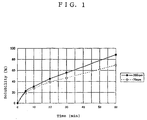
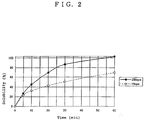
- the sustained-release tablet of the present invention shows significantly different elution behavior (solubility) according to the paddle rpm Imitated for the gastric emptying movement, with the elution behavior (solubility) showing a higher value at an increased rpm, and a lower value at a reduced rpm (Fig. 1). Furthermore, it was confirmed that the difference in the elution behavior is more conspicuous in the presence of beads that mimic an ingestion state (Figs. 2 and 3).
- a drop (or acceleration) in the gastric motor function can be evaluated by a delay (or acceleration) of the rate of elution of the labeled compound into the exhalation that is connected with a drop (or rise) in the elution behavior of the tablet in the stomach.
- stomach-soluble preparation disintegrate-release type sustained-release preparation
- gastric emptying rate gastric motor function
- the gastric emptying rate was evaluated using the intestine-soluble granules prepared in Example 8.
- the pH inside the stomach was immediately adjusted by the forcible administration of 20 mL of 0.1 N aqueous solution of hydrochloric acid.
- the abovementioned capsule was administered to the animals of the stomach elimination retardation model (group receiving propantheline), after which the carbon dioxide gas concentration ratio ( ⁇ 13 C value) in the exhalation was similarly measured over time, and the carbon dioxide gas ⁇ value ( ⁇ ) was calculated.
- Fig. 4 shows the mean exhalation pattern for four beagle dogs, with the time (h) elapsed following administration being shown on the horizontal axis, and the carbon dioxide gas ⁇ value ( ⁇ ) being shown on the vertical axis.
- the sodium hydrogencarbonate solution (NaH 13 CO 3 solution) in the control test showed a maximum of the carbon dioxide gas ⁇ value ( ⁇ ) immediately after administration, and was then rapidly excreted from the body.
- the encapsulated enteric coated granules of the present invention showed a maximum value ( ⁇ ) at approximately 1.3 hours (Tmax) following administration, and were excreted relatively slowly.
- the intestine-soluble preparation of the present invention allows the definite measurement of a drop in the gastric emptying rate in the gastric emptying retardation model on the basis of the delay of the excretion of the labeled carbon dioxide gas in the exhalation. This indicates that the gastric emptying function can be evaluated by measuring the respiratory excretion pattern of the labeled carbon dioxide gas in a exhalation test using the preparation of the present invention.
- the preparation of the present invention for measuring the gastric emptying rate makes it possible to measure the gastric emptying function in humans or animals simply and with good precision. Especially if a preparation for measuring the gastric emptying rate prepared using a labeled compound that is excreted in the exhalation as carbon dioxide gas is used, the gastric emptying function can be simply measured by means of an exhalation test without placing a psychological or physical burden on the subject.
- the preparation of the present invention for measuring the gastric emptying rate and a method for measuring the gastric emptying rate that employs this preparation, it is possible to diagnose and evaluate a drop or acceleration in the gastric emptying rate of the subject simply and with good precision. Furthermore, by using the preparation of the present invention for measuring the gastric emptying rate, and a method for measuring the gastric emptying rate that employs this preparation, it is possible to evaluate the pharmacological effects of drugs relating to the gastric motor function in a direct and simple manner, and to evaluate the therapeutic effects of such drugs on individual subjects directly, and in an objective manner.
Landscapes
- Health & Medical Sciences (AREA)
- Chemical & Material Sciences (AREA)
- Life Sciences & Earth Sciences (AREA)
- Medicinal Chemistry (AREA)
- General Health & Medical Sciences (AREA)
- Optics & Photonics (AREA)
- Pharmacology & Pharmacy (AREA)
- Epidemiology (AREA)
- Dispersion Chemistry (AREA)
- Animal Behavior & Ethology (AREA)
- Physics & Mathematics (AREA)
- Public Health (AREA)
- Veterinary Medicine (AREA)
- Atmospheric Sciences (AREA)
- Medicines Containing Antibodies Or Antigens For Use As Internal Diagnostic Agents (AREA)
- Medicinal Preparation (AREA)
- Investigating Or Analysing Biological Materials (AREA)
Abstract
Description
Specifically, the first preparation of the present invention ("a stomach-soluble preparation") is a preparation for measuring the gastric emptying rate as described in items 1 through 9 below:
the acid-soluble high-molecular weight compoud such as methyl methacrylate - butyl methacrylate-dimethylaminoethyl methacrylate copolymers (e.g., aminoacryl methacrylate copolymer E (commercial name: Oidragit E100, Ream Pharma)), polyvinylacetyl diethylacetate (commercial name: AEA, Sankyo); and weak-alkali-soluble high-molecular weight compound such as acrylic acid copolymers or methacrylic acid copolymers (e.g., methacrylic acid - methyl methacrylate copolymers (commercial name: Oidragit S100, Ream Pharma)), hydroxypropylmethylcellulose acetate succinate (commercial name: AQOAT, manufactured by Shin-Etsu Chemical Co.,Ltd.), carboxymethylethylcellulose, cellulose acetate phthalate and the like. These water-soluble high-molecular weight compound may be used singly, or may be used in arbitrary combinations consisting of two or more polymers. Hydroxypropylcellulose, hydroxypropylmethylcellulose, ethylcellulose and cellulose acetate phthalate are desirable for use, and hydroxypropylcellulose and hydroxypropylmethylcellulose are especially desirable for use.
specifically, in a fasting mode, after remaining inside the stomach for a certain period of time, the preparation is finally discharged into the intestines from the stomach by a strong contractile movement that pushes the stomach contents toward the pylorus as a result of the appearance of the housekeeper wave. Once the preparation has been discharged into the intestines, the enteric coating on the surface of the preparation is dissolved by the effects of the pH inside the intestines, so that the labeled compound inside the preparation begins to be eluted. Here, the labeled compound NaH13CO3 quickly appears as labeled carbon dioxide gas in the exhalation after being dissolved in the intestines. For example, in a case where the preparation contains such a labeled compound NaH13CO3, the labeled compound is eluted inside the intestines, and as the compound dissolves, labeled carbon dioxide gas 13CO2 is successively excreted in the exhalation.
| Sodium hydrogencarbonate (NaH13CO3) | 100 mg |
| Hydroxypropylcellulose (HFC-L, Shin-Etsu Chemical Co., Ltd.) | 50 mg |
| Magnesium stearate | 1 mg |
| Total | 151 mg |
| Sodium hydrogencarbonate (NaH13CO3) | 100 mg |
| Lactose | 40 mg |
| Hydroxypropylmethylcellulose | 40 |
| Magnesium stearate | |
| 2 mg | |
| Total | 182 mg |
| Sodium hydrogencarbonate (NaH13CO3) | 100 mg |
| Lactose | 40 mg |
| Hydroxypropylcellulose (HPC-L, Shin-Etsu Chemical Co., Ltd.) | 40 |
| Magnesium stearate | |
| 2 mg | |
| Total | 182 mg |
| Sodium hydrogencarbonate (NaH13CO3) | 100 mg |
| Hydroxypropylcellulose (HPC-L. Shin-Etsu Chemical Co., Ltd.) | 80 mg |
| Magnesium stearate | 2mg |
| Total | 182 mg |
| Sodium hydrogencarbonate (NaH13CO3) | 100 mg |
| Lactose | 20 mg |
| Hydroxypropylcellulose (HPC-L, Shin-Etsu Chemical Co., Ltd.) | 60 |
| Magnesium stereate | |
| 2 mg | |
| Total | 182 mg |
| Sodium hydrogencarbonate (NaH13CO3) | 100 mg |
| Lactose | 82 mg |
| Hardened oil (Lubri Wax-101, Freund Industrial Co., Ltd.) | 16 |
| Magnesium stearate | |
| 2 mg | |
| Total | 200 mg |
| Sodium hydrogencarbonate (NaH13CO3) | 100 mg |
| Lactose | 78 mg |
| Hardened oil (Lubri Wax-101, Freund Industrial Co., Ltd.) | 20 |
| Purified water | |
| 40 | |
| Magnesium stearate | |
| 2 mg | |
| Final weight of tablet (solid content) | 200 mg |
| <Core Components> | |
| Sodium hydrogencarbonate (NaH13CO3) | 100 mg |
| Refined white sugar (powdered) | 150 |
| Corn starch | |
| 100 mg | |
| Crystalline cellulose (Avicel PH-301, Asahi Kasei) | 100 mg |
| Calcium carboxymethycellulose (ECG-5-5, Nichirin Chemical Co., Ltd.) | 50 mg |
| Hydroxypropylcellulose (HPC-L, Shin-Etsu Chemical Co., Ltd.) | 7.5 mg |
| Purified water | 75 mg |
| Anhydrous ethanol | 67.5 mg |
| Total solid content | 507.5 mg |
| <Enteric Coating Liquid Components> | |
| Hydroxypropylmethylcellulose phthalate (HP-55, Shin-Etsu Chemical Co., Ltd.) | 6.0 mg |
| Talc | 1.8 mg |
| Anhydrous ethanol | 73.8 mg |
| Purified water | 18.4 mg |
| Total | 100.0 mg |
Claims (24)
- A preparation for measuring the gastric emptying rate comprising a composition containing a compound that is labeled with at least one of the isotopes of C and O and that is converted into labeled CO2 in the body and excreted in the exhalation, the preparation being a disintegrate-released type sustained-release preparation.
- The preparation for measuring the gastric emptying rate according to claim 1, wherein the preparation is soluble in the stomach.
- The preparation for measuring the gastric emptying rate according to claim 1, wherein the behavior of the preparation following oral administration to a subject is such that:(1) the preparation remains inside the stomach for a certain period of time after entering the stomach, without being immediately discharged from the stomach,(2) the surface of the preparation is gradually eroded by the gastric contraction so that the preparation is disintegrated, and as this erosion and disintegrate occurs, the labeled compound is gradually eluted into the stomach, and(3) the eluted labeled compound is converted into labeled carbon dioxide gas inside the stomach and excreted in the exhalation, or is absorbed, metabolized and excreted in the exhalation as labeled carbon dioxide gas.
- The preparation for measuring the gastric emptying rate according to claim 1, wherein the preparation expands to such a size that does not pass through the pylorus for a certain period of time following oral administration.
- The preparation for measuring the gastric emptying rate according to claim 1, which comprises an anti-disintegrator in addition to the labeled compound.
- The preparation for measuring the gastric emptying rate according to claim 5, wherein the anti-disintegrator is at least one member selected from water-soluble high-molecular weight compound, fat and oil, and sugars.
- The preparation for measuring the gastric emptying rate according to claim 6, wherein the anti-disintegrator is at least one member selected from a group consisting of hydroxypropylcellulose, hydroxypropylmethylcellulose, ethylcellulose, cellulose acetate phthalate, hardened oil, carnauba wax, sugars and sugar alcohol.
- The preparation for measuring the gastric emptying rate according to claim 1, wherein the isotope is at least one member selected from a group consisting of 13C, 14C and 18O.
- The preparation for measuring the gastric emptying rate according to claim 1, wherein the labeled compound is at least one member selected from a group consisting of alkali metal salt, alkaline earth metal salt and ammonium salt of carbonic acid, alkali metal hydrogencarbonate, alkaline earth metal hydrogencarbonate and ammonium hydrogencarbonate.
- The preparation for measuring the gastric emptying rate according to claim 1, wherein the labeled compound is at least one member selected from a group consisting of acetic acid, glycine, octanoic acid and alkali metal salts thereof.
- A preparation for measuring the gastric emptying rate comprising a composition containing a compound that is labeled with at least one isotopes of C and O and that is converted into labeled CO2 in the body and excreted in the exhalation, the preparation being coated by an enteric coating.
- The preparation for measuring the gastric emptying rate according to claim 11, wherein the behavior of the preparation following oral administration to a subject is such that(1) the preparation remains inside the stomach for a certain period of time after entering the stomach, without being discharged from the stomach,(2) the preparation is discharged from the stomach by the gastric housekeeper movement, and(3) the preparation is dissolved in the intestines, and the labeled compound eluted from the interior of the preparation is converted into labeled carbon dioxide inside the intestines or absorbed and metabolized, and is excreted in the exhalation.
- The preparation for measuring the gastric emptying rate according to claim 11, wherein the behavior of the preparation following oral administration to a subject is such that(1) the preparation enters the stomach,(2) the preparation is discharged from the stomach by the gastric movement to discharge food, and(3) the preparation is dissolved in the intestines, and the labeled compound eluted from the interior of the preparation is converted into labeled carbon dioxide inside the intestines or absorbed and metabolized, and is excreted in the exhalation.
- The preparation for measuring the gastric emptying rate according to claim 11, wherein the isotope is at least one member selected from a group consisting of 13C, 14C and 18O.
- The preparation for measuring the gastric emptying rate according to claim 11, wherein the labeled compound is at least one member selected from a group consisting of alkali metal salt, alkaline earth metal salt and ammonium salt of carbonic acid, alkali metal hydrogencarbonate, alkaline earth metal hydrogencarbonate and ammonium hydrogencarbonate.
- The preparation for measuring the gastric emptying rate according to claim 11, wherein the labeled compound is at least one member selected from a group consisting of acetic acid, glycine, octanoic acid and alkali metal salts thereof.
- A method for measuring the gastric emptying rate, which comprises orally administering the preparation for measuring the gastric emptying rate according to claim 1 or claim 11 to a subject, and measuring the behavior of the labeled compound inside the body or the amount or behavior of a labeled compound excreted from the body.
- A method for measuring the gastric emptying rate, comprises orally administering the preparation for measuring the gastric emptying rate according to claim 1 or claim 11 to a subject, and measuring the amount or behavior of labeled CO2 excreted in the exhalation.,
- A method for evaluating the gastric emptying rate of a subject for whom a reduction or acceleration of the gastric emptying rate is suspected, comprising the steps of:orally administering the preparation for measuring the gastric emptying rate according to claim 1 or claim 11 to said subject; andcomparing the behavior of the labeled compound inside the body or the amount or behavior of a labeled compound excreted from the body with the behavior of the labeled compound inside the body or the amount or behavior of a labeled compound excreted from the body obtained for a healthy subject using the same preparation for measuring the gastric emptying rate.
- A method for evaluating the gastric emptying rate of a subject for whom a reduction or acceleration of the gastric emptying rate is suspected, comprising the steps of:orally administering the preparation for measuring the gastric emptying rate according to claim 1 or claim 11 to said subject; andcomparing the amount or behavior of labeled CO2 excreted in the exhalation with the amount or behavior of labeled CO2 excreted in the exhalation obtained for a healthy subject using the same preparation for measuring the gastric emptying rate.
- The method for evaluating the gastric emptying rate according to claim 19, which comprises the steps of an evaluation performed using the preparation for measuring the gastric emptying rate according to claim 1 and an evaluation performed using the preparation for measuring the gastric emptying rate according to claim 11 in combination.
- A method for evaluating the pharmacological effect of a drug relating to the gastric motor function, or the therapeutic effect of such drug on a subject, comprising the steps of:orally administering the preparation for measuring the gastric emptying rate according to claim 1 or claim 11 to the subject before and after the administration of a drug relating to the gastric motor function to the subject; andcomparing the behavior of the labeled compound inside the body or the amount or behavior of a labeled compound excreted from the body following the administration of said drug with the behavior of the labeled compound inside the body or the amount or behavior of a labeled compound excreted from the body prior to the administration of said drug.
- A method for evaluating the pharmacological effect of drugs relating to the gastric motor function, or the therapeutic effect of such drugs on a subject, comprising the steps of:orally administering the preparation for measuring the gastric emptying rate according to claim 1 or claim 11 to the subject before and after the administration of a drug relating to the gastric motor function to the subject; andcomparing the amount or behavior of labeled CO2 excreted in the exhalation following the administration of said drug with the amount or behavior of labeled CO2 excreted in the exhalation prior to the administration of said drug.
- The method for evaluating the pharmacological effects of a drug relating to the gastric motor function or the therapeutic effects of said drug on a subject according to claim 22, which comprises the steps of an evaluation performed using the preparation for measuring the gastric emptying rate according to claim 1 and an evaluation performed using the preparation for measuring the gastric emptying rate according to claim 11 in combination.
Applications Claiming Priority (3)
| Application Number | Priority Date | Filing Date | Title |
|---|---|---|---|
| JP2000133691 | 2000-05-02 | ||
| JP2000133691 | 2000-05-02 | ||
| PCT/JP2001/003549 WO2001082979A1 (en) | 2000-05-02 | 2001-04-25 | Preparations for evaluating eliminative ability of stomach |
Publications (2)
| Publication Number | Publication Date |
|---|---|
| EP1285668A1 true EP1285668A1 (en) | 2003-02-26 |
| EP1285668A4 EP1285668A4 (en) | 2007-07-11 |
Family
ID=18642127
Family Applications (1)
| Application Number | Title | Priority Date | Filing Date |
|---|---|---|---|
| EP01925887A Withdrawn EP1285668A4 (en) | 2000-05-02 | 2001-04-25 | PREPARATIONS FOR EVALUATING THE CAPACITY OF STOMACH REMOVAL |
Country Status (10)
| Country | Link |
|---|---|
| US (2) | US7018613B2 (en) |
| EP (1) | EP1285668A4 (en) |
| KR (1) | KR20030007567A (en) |
| CN (1) | CN1427728A (en) |
| AU (2) | AU2001252559B2 (en) |
| BR (1) | BR0110512A (en) |
| CA (1) | CA2409223A1 (en) |
| MX (1) | MXPA02010852A (en) |
| TW (1) | TWI268780B (en) |
| WO (1) | WO2001082979A1 (en) |
Cited By (6)
| Publication number | Priority date | Publication date | Assignee | Title |
|---|---|---|---|---|
| EP1312381A4 (en) * | 2000-06-21 | 2004-12-22 | Otsuka Pharma Co Ltd | PREPARATIONS FOR MEASURING THE GASTRIC PH VALUE AND METHOD FOR MEASURING THE GASTRIC PH VALUE USING THE SAME |
| GB2442980A (en) * | 2006-10-18 | 2008-04-23 | Autoliv Dev | Method and apparatus for determining carbon dioxide with different isotopes in exhaled breath |
| EP2618145A4 (en) * | 2010-08-19 | 2014-02-26 | Otsuka Pharma Co Ltd | METHOD FOR QUANTITATIVE MEASUREMENT OF GASTRIC ACIDITY USING C13-labeled CARBONATE SALT |
| US10228365B2 (en) | 2012-08-20 | 2019-03-12 | Otsuka Pharmaceutical Co., Ltd. | Method for measuring carbohydrate metabolism ability, and composition for use in said method |
| US10444229B2 (en) | 2013-03-15 | 2019-10-15 | Otsuka Pharmaceutical Co., Ltd. | Method of measuring insulin resistance with fatty acid combustion, and composition used herein |
| EP3546936A4 (en) * | 2016-11-25 | 2020-08-05 | Otsuka Pharmaceutical Co., Ltd. | Nutritional state evaluation method |
Families Citing this family (5)
| Publication number | Priority date | Publication date | Assignee | Title |
|---|---|---|---|---|
| JP2006508334A (en) * | 2002-06-28 | 2006-03-09 | オリディオン ブレシド リミティド | Management of gastrointestinal disorders |
| CN101232905B (en) * | 2005-07-25 | 2013-01-09 | 大塚制药株式会社 | Oral preparation useful in measuring capacity to metabolize pyridine |
| CA2649262A1 (en) * | 2006-04-13 | 2007-10-25 | Otsuka Pharmaceutical Co., Ltd. | Test agent for diagnosing dyspepsia |
| JP4864083B2 (en) * | 2006-05-01 | 2012-01-25 | 東京瓦斯株式会社 | Diagnostic agent for evaluating gastric emptying function and / or small intestine absorbability |
| CN109078197A (en) * | 2018-09-12 | 2018-12-25 | 江苏省原子医学研究所 | A kind of novel gastric emptying measuring method |
Family Cites Families (13)
| Publication number | Priority date | Publication date | Assignee | Title |
|---|---|---|---|---|
| US4451260A (en) * | 1982-03-26 | 1984-05-29 | Minnesota Mining And Manufacturing Company | Sustained release oral medicinal delivery device |
| US4830010A (en) * | 1986-04-04 | 1989-05-16 | Marshall Barry J | Methods for the diagnosis of gastrointestinal disorders |
| US5164308A (en) * | 1990-05-21 | 1992-11-17 | Martek Corporation | Preparation of labelled triglyceride oils by cultivation of microorganisms |
| US5233997A (en) * | 1991-04-04 | 1993-08-10 | Baylor College Of Medicine | Non-invasive measure of intestinal transit time and uses thereof |
| SE504902C2 (en) * | 1994-11-02 | 1997-05-26 | Diabact Ab | Preparation for detection of Helicobacter pylori in the stomach |
| WO1996036330A2 (en) * | 1995-05-17 | 1996-11-21 | Cedars-Sinai Medical Center | Compositions containing fatty acids for improving digestion and absorption in the small intestine |
| US5707602A (en) * | 1996-03-25 | 1998-01-13 | Meretek Diagnostics | Measurement of gastric emptying |
| ES2145624T3 (en) * | 1996-08-13 | 2000-07-01 | Kyowa Hakko Kogyo Kk | UREA BASED TABLETS MARKED WITH ISOTOPES. |
| US5785949A (en) * | 1996-09-05 | 1998-07-28 | Meretek Diagnostics | Measurement of liquid phase gastric emptying |
| US6186958B1 (en) * | 1997-02-26 | 2001-02-13 | Oridion Medical | Breath test analyzer |
| CA2250485C (en) * | 1997-10-21 | 2008-04-29 | Tokyo Gas Co., Ltd. | Diagnostic agent for diabetes |
| US6740305B1 (en) * | 1999-04-09 | 2004-05-25 | Xanthus Life Scienes, Inc. | Assessment of gastric emptying disorders |
| WO2000061197A1 (en) * | 1999-04-09 | 2000-10-19 | Phenome Sciences Inc. | Assessment of gastric emptying disorders |
-
2001
- 2001-04-25 AU AU2001252559A patent/AU2001252559B2/en not_active Ceased
- 2001-04-25 EP EP01925887A patent/EP1285668A4/en not_active Withdrawn
- 2001-04-25 MX MXPA02010852A patent/MXPA02010852A/en active IP Right Grant
- 2001-04-25 CN CN01808968A patent/CN1427728A/en active Pending
- 2001-04-25 BR BR0110512-4A patent/BR0110512A/en not_active IP Right Cessation
- 2001-04-25 CA CA002409223A patent/CA2409223A1/en not_active Abandoned
- 2001-04-25 AU AU5255901A patent/AU5255901A/en active Pending
- 2001-04-25 KR KR1020027014688A patent/KR20030007567A/en not_active Ceased
- 2001-04-25 US US10/275,072 patent/US7018613B2/en not_active Expired - Fee Related
- 2001-04-25 WO PCT/JP2001/003549 patent/WO2001082979A1/en not_active Ceased
- 2001-05-01 TW TW090110417A patent/TWI268780B/en not_active IP Right Cessation
-
2005
- 2005-12-01 US US11/290,701 patent/US20060153771A1/en not_active Abandoned
Cited By (7)
| Publication number | Priority date | Publication date | Assignee | Title |
|---|---|---|---|---|
| EP1312381A4 (en) * | 2000-06-21 | 2004-12-22 | Otsuka Pharma Co Ltd | PREPARATIONS FOR MEASURING THE GASTRIC PH VALUE AND METHOD FOR MEASURING THE GASTRIC PH VALUE USING THE SAME |
| GB2442980A (en) * | 2006-10-18 | 2008-04-23 | Autoliv Dev | Method and apparatus for determining carbon dioxide with different isotopes in exhaled breath |
| GB2442980B (en) * | 2006-10-18 | 2011-11-23 | Autoliv Dev | Improvements in or relating to detection of substances in a subject |
| EP2618145A4 (en) * | 2010-08-19 | 2014-02-26 | Otsuka Pharma Co Ltd | METHOD FOR QUANTITATIVE MEASUREMENT OF GASTRIC ACIDITY USING C13-labeled CARBONATE SALT |
| US10228365B2 (en) | 2012-08-20 | 2019-03-12 | Otsuka Pharmaceutical Co., Ltd. | Method for measuring carbohydrate metabolism ability, and composition for use in said method |
| US10444229B2 (en) | 2013-03-15 | 2019-10-15 | Otsuka Pharmaceutical Co., Ltd. | Method of measuring insulin resistance with fatty acid combustion, and composition used herein |
| EP3546936A4 (en) * | 2016-11-25 | 2020-08-05 | Otsuka Pharmaceutical Co., Ltd. | Nutritional state evaluation method |
Also Published As
| Publication number | Publication date |
|---|---|
| MXPA02010852A (en) | 2003-07-14 |
| BR0110512A (en) | 2004-03-09 |
| US7018613B2 (en) | 2006-03-28 |
| AU2001252559B2 (en) | 2005-09-15 |
| AU5255901A (en) | 2001-11-12 |
| WO2001082979A1 (en) | 2001-11-08 |
| US20060153771A1 (en) | 2006-07-13 |
| CA2409223A1 (en) | 2002-11-18 |
| KR20030007567A (en) | 2003-01-23 |
| TWI268780B (en) | 2006-12-21 |
| CN1427728A (en) | 2003-07-02 |
| EP1285668A4 (en) | 2007-07-11 |
| US20030190283A1 (en) | 2003-10-09 |
Similar Documents
| Publication | Publication Date | Title |
|---|---|---|
| EP0787017B1 (en) | Diagnostic preparation for detection of helicobacter pylori | |
| US7018613B2 (en) | Preparations for evaluating eliminative ability of stomach | |
| RU2655886C1 (en) | Sulphate salts as pass-time accelerators | |
| US20180003695A1 (en) | Method for quantitative measurement of gastric acidity using 13c carbonate salt | |
| JP4748917B2 (en) | Preparation for measuring gastric pH and method for measuring gastric pH using the same | |
| JPWO2001097863A1 (en) | Preparation for measuring intragastric pH and method for measuring intragastric pH using the same | |
| EP2011518B1 (en) | Test agent for diagnosing dyspepsia | |
| JP2002541220A (en) | Evaluation of gastric emptying disorder | |
| BG63036B1 (en) | PHARMACEUTICAL PREPARATION FOR DIAGNOSTIC ACTIVITY IN STEEL TRACT | |
| JP2768559B2 (en) | Diagnostic preparation for detection of Helicobacter Pylori | |
| EP1283060A1 (en) | Preparations for diagnosing infection with helicobacter pylori | |
| JP2858295B2 (en) | Gastric emptying function test agent | |
| JPWO2001082979A1 (en) | Preparation for measuring gastric excretion capacity | |
| Hodges | In Vivo Characterization of Oral Multiparticulate Systems |
Legal Events
| Date | Code | Title | Description |
|---|---|---|---|
| PUAI | Public reference made under article 153(3) epc to a published international application that has entered the european phase |
Free format text: ORIGINAL CODE: 0009012 |
|
| 17P | Request for examination filed |
Effective date: 20021129 |
|
| AK | Designated contracting states |
Kind code of ref document: A1 Designated state(s): AT BE CH CY DE DK ES FI FR GB GR IE IT LI LU MC NL PT SE TR Designated state(s): AT BE CH CY DE DK ES FI FR GB GR IE IT LI LU MC NL PT SE TR |
|
| RIN1 | Information on inventor provided before grant (corrected) |
Inventor name: NONOMURA, HIDEJI Inventor name: NODA, ATSUNARI Inventor name: IKEI, NOBUHIRO,PURETAMEZON KAWAUCHI 107 Inventor name: INADA, MAKOTO Inventor name: MIYAKE, MASATERU,23-24, AZA HIGASHITSUTSUKINOUCHI Inventor name: YAMADA, KEIGO Inventor name: NAKAGAWA, SHINSUKE |
|
| A4 | Supplementary search report drawn up and despatched |
Effective date: 20070608 |
|
| 17Q | First examination report despatched |
Effective date: 20071213 |
|
| STAA | Information on the status of an ep patent application or granted ep patent |
Free format text: STATUS: THE APPLICATION IS DEEMED TO BE WITHDRAWN |
|
| 18D | Application deemed to be withdrawn |
Effective date: 20080424 |