EP1283272B1 - Methods and means for assessing HIV envelope inhibitor therapy - Google Patents
Methods and means for assessing HIV envelope inhibitor therapy Download PDFInfo
- Publication number
- EP1283272B1 EP1283272B1 EP02078298.3A EP02078298A EP1283272B1 EP 1283272 B1 EP1283272 B1 EP 1283272B1 EP 02078298 A EP02078298 A EP 02078298A EP 1283272 B1 EP1283272 B1 EP 1283272B1
- Authority
- EP
- European Patent Office
- Prior art keywords
- hiv
- env
- sequence
- seq
- drug
- Prior art date
- Legal status (The legal status is an assumption and is not a legal conclusion. Google has not performed a legal analysis and makes no representation as to the accuracy of the status listed.)
- Expired - Lifetime
Links
Images




Classifications
-
- G—PHYSICS
- G01—MEASURING; TESTING
- G01N—INVESTIGATING OR ANALYSING MATERIALS BY DETERMINING THEIR CHEMICAL OR PHYSICAL PROPERTIES
- G01N33/00—Investigating or analysing materials by specific methods not covered by groups G01N1/00 - G01N31/00
- G01N33/48—Biological material, e.g. blood, urine; Haemocytometers
- G01N33/50—Chemical analysis of biological material, e.g. blood, urine; Testing involving biospecific ligand binding methods; Immunological testing
- G01N33/5005—Chemical analysis of biological material, e.g. blood, urine; Testing involving biospecific ligand binding methods; Immunological testing involving human or animal cells
- G01N33/5008—Chemical analysis of biological material, e.g. blood, urine; Testing involving biospecific ligand binding methods; Immunological testing involving human or animal cells for testing or evaluating the effect of chemical or biological compounds, e.g. drugs, cosmetics
- G01N33/5044—Chemical analysis of biological material, e.g. blood, urine; Testing involving biospecific ligand binding methods; Immunological testing involving human or animal cells for testing or evaluating the effect of chemical or biological compounds, e.g. drugs, cosmetics involving specific cell types
-
- C—CHEMISTRY; METALLURGY
- C07—ORGANIC CHEMISTRY
- C07K—PEPTIDES
- C07K14/00—Peptides having more than 20 amino acids; Gastrins; Somatostatins; Melanotropins; Derivatives thereof
- C07K14/005—Peptides having more than 20 amino acids; Gastrins; Somatostatins; Melanotropins; Derivatives thereof from viruses
-
- C—CHEMISTRY; METALLURGY
- C12—BIOCHEMISTRY; BEER; SPIRITS; WINE; VINEGAR; MICROBIOLOGY; ENZYMOLOGY; MUTATION OR GENETIC ENGINEERING
- C12Q—MEASURING OR TESTING PROCESSES INVOLVING ENZYMES, NUCLEIC ACIDS OR MICROORGANISMS; COMPOSITIONS OR TEST PAPERS THEREFOR; PROCESSES OF PREPARING SUCH COMPOSITIONS; CONDITION-RESPONSIVE CONTROL IN MICROBIOLOGICAL OR ENZYMOLOGICAL PROCESSES
- C12Q1/00—Measuring or testing processes involving enzymes, nucleic acids or microorganisms; Compositions therefor; Processes of preparing such compositions
- C12Q1/02—Measuring or testing processes involving enzymes, nucleic acids or microorganisms; Compositions therefor; Processes of preparing such compositions involving viable microorganisms
- C12Q1/025—Measuring or testing processes involving enzymes, nucleic acids or microorganisms; Compositions therefor; Processes of preparing such compositions involving viable microorganisms for testing or evaluating the effect of chemical or biological compounds, e.g. drugs, cosmetics
-
- C—CHEMISTRY; METALLURGY
- C12—BIOCHEMISTRY; BEER; SPIRITS; WINE; VINEGAR; MICROBIOLOGY; ENZYMOLOGY; MUTATION OR GENETIC ENGINEERING
- C12Q—MEASURING OR TESTING PROCESSES INVOLVING ENZYMES, NUCLEIC ACIDS OR MICROORGANISMS; COMPOSITIONS OR TEST PAPERS THEREFOR; PROCESSES OF PREPARING SUCH COMPOSITIONS; CONDITION-RESPONSIVE CONTROL IN MICROBIOLOGICAL OR ENZYMOLOGICAL PROCESSES
- C12Q1/00—Measuring or testing processes involving enzymes, nucleic acids or microorganisms; Compositions therefor; Processes of preparing such compositions
- C12Q1/70—Measuring or testing processes involving enzymes, nucleic acids or microorganisms; Compositions therefor; Processes of preparing such compositions involving virus or bacteriophage
- C12Q1/701—Specific hybridization probes
- C12Q1/702—Specific hybridization probes for retroviruses
- C12Q1/703—Viruses associated with AIDS
-
- G—PHYSICS
- G01—MEASURING; TESTING
- G01N—INVESTIGATING OR ANALYSING MATERIALS BY DETERMINING THEIR CHEMICAL OR PHYSICAL PROPERTIES
- G01N33/00—Investigating or analysing materials by specific methods not covered by groups G01N1/00 - G01N31/00
- G01N33/48—Biological material, e.g. blood, urine; Haemocytometers
- G01N33/50—Chemical analysis of biological material, e.g. blood, urine; Testing involving biospecific ligand binding methods; Immunological testing
- G01N33/5005—Chemical analysis of biological material, e.g. blood, urine; Testing involving biospecific ligand binding methods; Immunological testing involving human or animal cells
- G01N33/5008—Chemical analysis of biological material, e.g. blood, urine; Testing involving biospecific ligand binding methods; Immunological testing involving human or animal cells for testing or evaluating the effect of chemical or biological compounds, e.g. drugs, cosmetics
-
- G—PHYSICS
- G01—MEASURING; TESTING
- G01N—INVESTIGATING OR ANALYSING MATERIALS BY DETERMINING THEIR CHEMICAL OR PHYSICAL PROPERTIES
- G01N33/00—Investigating or analysing materials by specific methods not covered by groups G01N1/00 - G01N31/00
- G01N33/48—Biological material, e.g. blood, urine; Haemocytometers
- G01N33/50—Chemical analysis of biological material, e.g. blood, urine; Testing involving biospecific ligand binding methods; Immunological testing
- G01N33/5005—Chemical analysis of biological material, e.g. blood, urine; Testing involving biospecific ligand binding methods; Immunological testing involving human or animal cells
- G01N33/5008—Chemical analysis of biological material, e.g. blood, urine; Testing involving biospecific ligand binding methods; Immunological testing involving human or animal cells for testing or evaluating the effect of chemical or biological compounds, e.g. drugs, cosmetics
- G01N33/502—Chemical analysis of biological material, e.g. blood, urine; Testing involving biospecific ligand binding methods; Immunological testing involving human or animal cells for testing or evaluating the effect of chemical or biological compounds, e.g. drugs, cosmetics for testing non-proliferative effects
-
- G—PHYSICS
- G01—MEASURING; TESTING
- G01N—INVESTIGATING OR ANALYSING MATERIALS BY DETERMINING THEIR CHEMICAL OR PHYSICAL PROPERTIES
- G01N33/00—Investigating or analysing materials by specific methods not covered by groups G01N1/00 - G01N31/00
- G01N33/48—Biological material, e.g. blood, urine; Haemocytometers
- G01N33/50—Chemical analysis of biological material, e.g. blood, urine; Testing involving biospecific ligand binding methods; Immunological testing
- G01N33/5005—Chemical analysis of biological material, e.g. blood, urine; Testing involving biospecific ligand binding methods; Immunological testing involving human or animal cells
- G01N33/5091—Chemical analysis of biological material, e.g. blood, urine; Testing involving biospecific ligand binding methods; Immunological testing involving human or animal cells for testing the pathological state of an organism
-
- G—PHYSICS
- G16—INFORMATION AND COMMUNICATION TECHNOLOGY [ICT] SPECIALLY ADAPTED FOR SPECIFIC APPLICATION FIELDS
- G16B—BIOINFORMATICS, i.e. INFORMATION AND COMMUNICATION TECHNOLOGY [ICT] SPECIALLY ADAPTED FOR GENETIC OR PROTEIN-RELATED DATA PROCESSING IN COMPUTATIONAL MOLECULAR BIOLOGY
- G16B15/00—ICT specially adapted for analysing two-dimensional [2D] or three-dimensional [3D] molecular structures, e.g. structural or functional relations or structure alignment
- G16B15/30—Drug targeting using structural data; Docking or binding prediction
-
- C—CHEMISTRY; METALLURGY
- C12—BIOCHEMISTRY; BEER; SPIRITS; WINE; VINEGAR; MICROBIOLOGY; ENZYMOLOGY; MUTATION OR GENETIC ENGINEERING
- C12N—MICROORGANISMS OR ENZYMES; COMPOSITIONS THEREOF; PROPAGATING, PRESERVING, OR MAINTAINING MICROORGANISMS; MUTATION OR GENETIC ENGINEERING; CULTURE MEDIA
- C12N2740/00—Reverse transcribing RNA viruses
- C12N2740/00011—Details
- C12N2740/10011—Retroviridae
- C12N2740/16011—Human Immunodeficiency Virus, HIV
- C12N2740/16111—Human Immunodeficiency Virus, HIV concerning HIV env
- C12N2740/16122—New viral proteins or individual genes, new structural or functional aspects of known viral proteins or genes
-
- G—PHYSICS
- G01—MEASURING; TESTING
- G01N—INVESTIGATING OR ANALYSING MATERIALS BY DETERMINING THEIR CHEMICAL OR PHYSICAL PROPERTIES
- G01N2333/00—Assays involving biological materials from specific organisms or of a specific nature
- G01N2333/005—Assays involving biological materials from specific organisms or of a specific nature from viruses
- G01N2333/08—RNA viruses
- G01N2333/15—Retroviridae, e.g. bovine leukaemia virus, feline leukaemia virus, feline leukaemia virus, human T-cell leukaemia-lymphoma virus
- G01N2333/155—Lentiviridae, e.g. visna-maedi virus, equine infectious virus, FIV, SIV
- G01N2333/16—HIV-1, HIV-2
- G01N2333/162—HIV-1, HIV-2 env, e.g. gp160, gp110/120, gp41, V3, peptid T, DC4-Binding site
-
- G—PHYSICS
- G01—MEASURING; TESTING
- G01N—INVESTIGATING OR ANALYSING MATERIALS BY DETERMINING THEIR CHEMICAL OR PHYSICAL PROPERTIES
- G01N2800/00—Detection or diagnosis of diseases
- G01N2800/52—Predicting or monitoring the response to treatment, e.g. for selection of therapy based on assay results in personalised medicine; Prognosis
-
- G—PHYSICS
- G16—INFORMATION AND COMMUNICATION TECHNOLOGY [ICT] SPECIALLY ADAPTED FOR SPECIFIC APPLICATION FIELDS
- G16B—BIOINFORMATICS, i.e. INFORMATION AND COMMUNICATION TECHNOLOGY [ICT] SPECIALLY ADAPTED FOR GENETIC OR PROTEIN-RELATED DATA PROCESSING IN COMPUTATIONAL MOLECULAR BIOLOGY
- G16B15/00—ICT specially adapted for analysing two-dimensional [2D] or three-dimensional [3D] molecular structures, e.g. structural or functional relations or structure alignment
-
- Y—GENERAL TAGGING OF NEW TECHNOLOGICAL DEVELOPMENTS; GENERAL TAGGING OF CROSS-SECTIONAL TECHNOLOGIES SPANNING OVER SEVERAL SECTIONS OF THE IPC; TECHNICAL SUBJECTS COVERED BY FORMER USPC CROSS-REFERENCE ART COLLECTIONS [XRACs] AND DIGESTS
- Y02—TECHNOLOGIES OR APPLICATIONS FOR MITIGATION OR ADAPTATION AGAINST CLIMATE CHANGE
- Y02A—TECHNOLOGIES FOR ADAPTATION TO CLIMATE CHANGE
- Y02A90/00—Technologies having an indirect contribution to adaptation to climate change
- Y02A90/10—Information and communication technologies [ICT] supporting adaptation to climate change, e.g. for weather forecasting or climate simulation
Definitions
- the present invention relates to methods and means for the evaluation of HIV treatment.
- molecular events at the HIV envelope protein and their effect on therapeutic efficacy of drugs are determined.
- the methods rely on providing HIV envelope nucleic acid material and evaluating a treatment either through genotyping or phenotyping. Said method may find use in multiple fields including diagnostics, drug screening, pharmacogenetics and drug development.
- HIV human immunodeficiency virus
- pro protease
- RT reverse transcriptase
- HIV can mutate under the selective pressure of drug therapy
- physician must change the doses of drugs, or initiate combination therapy using protease and reverse transcriptase inhibitors, or other types of anti-HIV drugs.
- the Antiviragram ® and Genseq TM assays determine the phenotype and genotype respectively of a patient's reverse transcriptase and protease genes. The relevant coding regions are obtained from patient samples, reverse transcribed, and amplified by the polymerase chain reaction (PCR), then inserted into a plasmid to create chimeric viruses. The ability of these viruses to invade and kill cells in culture is assessed in the presence of HIV reverse transcriptase and protease inhibitors.
- inhibitors As resistance to current treatments grows, novel types of inhibitors are being developed focusing on other targets essential for viral replication and proliferation. These include inhibitors of the HIV envelope (env), tat, rev, integrase (IN), and other viral gene products. In the development of new drugs to suppress HIV replication, inhibitors of CD4 binding or chemokine receptor binding, and inhibitors of virus-cell membrane fusion, that target the envelope protein are promising candidates.
- the HIV envelope is a glycoprotein consisting of two non-covalently associated subunits, gp 120 and gp41, generated by proteolytic cleavage of the precursor gp 160 protein, produced from the env gene on the HIV chromosome.
- This glycoprotein plays a critical role in the infection of cells.
- the gp120 subunit is involved in target cell recognition, while the gp41 subunit promotes fusion between the viral and cell membranes, allowing the virus to infect new cells.
- Examples of compounds designed to target the envelope glycoprotein are the entry inhibitors, such as T-20, T-1249, PRO-542, PRO-140, PRO-367, AMD-3100. Other entry inhibitors include AMD-070, SCH-C, SCH-D, and BMS-806. The clinical efficacy of these compounds is currently under investigation.
- the envelope region is the most variable region of the HIV genome (i.e. highest frequency of mutations), providing numerous escape mutants to either drugs or neutralizing antibodies. Therefore, monitoring protocols to test the susceptibility of patient borne virus to envelope protein targeted drugs are needed.
- the present invention provides the means for phenotypic and genotypic evaluation of the drug efficacy of envelope inhibitors based on the analysis of patient borne viral strains. Assays for evaluating the wild-type or mutant HIV envelope are disclosed, using a set of primers designed for the retrieval, preparation and analysis of HIV genetic material.
- a method for determining the susceptibility of at least one human immunodeficiency virus to at least one drug comprising:
- the present invention concerns a method for determining the susceptibility of at least one human immunodeficiency virus to at least one drug, comprising:
- Primers specific for amplification of HIV DNA env region or portions thereof include SEQ. ID 1-23, 40-47.
- Primers useful for the amplification of the wild-type HIV sequence include SEQ. ID 32-34, 37-39.
- the primers may incorporate a restriction site, such as primers SEQ. ID 33, 34 and 38.
- deletion constructs may be prepared by re-introducing portions of the env gene into a plasmid where the env gene has been previously deleted by amplification.
- Primers for amplifying the regions of interest, for example, the gp120 sequence include SEQ ID 35-36.
- Primers useful for ligation of the amplicons with the plasmids comprising the wild-type HIV sequence with a deletion in the env region of the HIV genome include SEQ. ID 48-50. Table 1.
- Primers for obtaining and preparing amplicons, plasmids and recombinant viruses 3' env PRIMERS OLIGO NAME SEQ ID NO LENGTH MW Tm SEQUENCE (5'-3') ENV3AA1003 SEQ ID NO:1 26 7817.0 71.9 ATTCTTTCCCTTACAGCAGGCCATCC ENV3INN1 SEQ ID NO:2 22 6604.1 66.5 GCTCCTACTCCTTCTGCTGCTG ENV3OUT1 SEQ ID NO:3 26 8026.1 65.8 CTTAAAGGTACCTGAGGTCTGACTGG ENV3INN2 SEQ ID NO:4 24 7439.7 69.4 GGTGTGTAGTTCTGCCAATCAGGG ENV3OUT2 SEQ ID NO:5 28 8517.5 70.7 CA
- the invention relates to the use of the plasmids in the methods disclosed herein.
- the complete HIV sequence may be incorporated in the plasmid or only part(s) thereof, such as, for example, the plasmids used in the present invention may lack the gp41 portion of the env gene, or may additionally lack the gp120 portion.
- the description also discloses a plasmid comprising a HIV env deletion construct, wherein at least 100 base pairs (bp) of the HIV envelope gene are deleted, suitably wherein at least 250bp of the HIV envelope gene are deleted, more suitably wherein at least 500bp of the HIV envelope gene are deleted.
- the deletion may also comprise parts of flanking genes, or eventually more than one gene, e.g. deletion of env and rev, deletion of env, rev and tat.
- a suitable plasmid backbone may be selected from the group including pUC, pBR322 and pGEM.
- the plasmids pSV40HXB2D ⁇ Tat-Rev-Env (accession number LMBP 4570), pSV40HXB2D ⁇ Rev Env (accession number LMBP 4569), pSV40HXB2D ⁇ gp41 (accession number LMBP 4567), pSV40HXB2D ⁇ Env (accession number LMBP 4571), pGEMHIV ⁇ GPRT (accession number LMBP 4568) were deposited at the Belgian Coordinated Collections of Micro-Organisms located at the Universiteit Gent - Laboratorium voor Mole Diagram Biologie on July 1, 2002.
- determining the susceptibility may be useful for designing a treatment regimen.
- a method may comprise determining the relative replicative capacity of a clinical isolate of a patient and using said relative replicative capacity to determine an appropriate drug regimen for the patient.
- the present invention also provides a method of identifying a drug effective against HIV envelope comprising: obtaining at least one HIV envelope sequence or a portion thereof, determining the phenotypic susceptibility of the envelope towards said drug, using said phenotypic susceptibility to determine the effectiveness of said drug.
- the invention further comprises a method for determining the susceptibility of at least one human immunodeficiency virus to at least one drug, comprising:
- Primers useful for determining the nucleotide sequence of the amplicon or a portion thereof include SEQ. 24-31 and 51-57. This particular selection has the advantage that it enables the sequencing of the complete HIV envelope gene. Consequently, using this set of primers all possible mutations that may occur in the HIV envelope gene may be resolved. Table 2. Primers for sequencing the gp41 and g120 regions. .
- the genotype of the patient-derived env coding region may be determined directly from the amplified DNA by performing DNA sequencing during the amplification step. Alternatively, the sequence may be obtained after sub-cloning into a suitable vector. A variety of commercial sequencing enzymes and equipment may be used in this process. The efficiency may be increased by determining the sequence of the env-coding region in several parallel reactions, each with a different set of primers. Such a process could be performed at high throughput on a multiple-well plate, for example. Commercially available detection and analysis systems may be used to determine and store the sequence information for later analysis.
- the nucleotide sequence may be obtained using several approaches including sequencing nucleic acids. This sequencing may be performed using techniques including gel based approaches, mass spectroscopy and hybridization.
- the sequence at particular nucleic acids, codons, or short sequences may be obtained. If a particular resistance associated mutation is known, the nucleotide sequence may be determined using hybridization assays (including Biochips, LipA-assay), mass spectroscopy, allele specific PCR, or using probes or primers discriminating between mutant and wild-type sequence. For these purposes the probes or primers may be suitably labeled for detection (e.g. Molecular beacons, TaqMan®, SunRise primers).
- a viral sequence may contain one or multiple mutations versus consensus wild-type.
- a single mutation or a combination of env mutations may correlate to a change in drug efficacy. This correlation may be indicative of reduced or increased susceptibility of the virus for a drug. Said mutations may also influence the viral fitness.
- Mutations in the patient borne HIV env may be identified by sequence comparison with a reference sequence of a viral strain e.g. K03455.
- K03455 is present in Genbank and available through the internet.
- the identified mutation may be indicative of a change in susceptibility of the viral strain for one or more drugs.
- Said susceptibility data are derived from phenotypic analysis, wherein the env sequence comprising said mutation is analyzed.
- resistance mutations to compound AMD-3100 include amongst others, Q278T, I288T, and N293D in gp120. Examples of resistance mutations to compound T-20 in the gp41 are G36S, V38M.
- the present invention further provides a method of identifying a drug effective against HIV envelope comprising: obtaining at least one HIV envelope sequence or a portion thereof, determining the sequence of the HIV envelope, comparing said sequence with sequences present in a database, of which the phenotypic susceptibility has been determined with the methods of the present invention, using said sequence comparison to determine the effectiveness of said drug.
- results from phenotyping and genotyping experiments can be used to develop a database of replicative capacity levels in the presence of particular drugs, drug regimens or other treatment for a large number of mutant HIV strains.
- One such approach is virtual phenotyping ( WO 01/79540 ). Briefly, the genotype of a patient derived env sequence may be correlated to the phenotypic susceptibility of said patient derived env sequence. If no phenotyping is performed, the sequence may be screened towards a collection of sequences present in a database. Identical sequences are retrieved and the database is further interrogated to identify if a corresponding phenotype is known for any of the retrieved sequences.
- a report may be prepared including the EC 50 of the viral strain for one or more therapies, the sequence of the strain under investigation, biological cut-offs. Suitably, complete sequences will be interrogated in the database. Optionally, portions of sequences, such as combinations of mutations indicative of a change in drug susceptibility, may as well be screened. Such combination of mutations is sometimes referred to as a hot-spot (see e.g. WO 01/79540 ). Additionally, data may then be incorporated into existing programs that analyze the drug susceptibility of viruses with mutations in other segments of the HIV genome such as in the pol genes. For example, such a database may be analyzed in combination with reverse transcriptase and protease sequence information and the results used in the determination of appropriate treatment strategies.
- the description discloses a method of constructing a genotypic and phenotypic database of env sequences or portions thereof, comprising:
- the invention concerns a method of constructing a genotypic and phenotypic database of env sequences or portions thereof, comprising:
- phenotypic and genotypic data enable the development of a database comprising both phenotypic and genotypic information of the HIV envelope, wherein the database further provides a correlation in between genotypes and genotypes, and in between genotypes and phenotypes, wherein the correlation is indicative of efficacy of a given treatment regimen.
- a database can further be used to predict the phenotype of a HIV envelope gene based on its genotypic profile.
- a human immunodefieciency virus refers to any HIV including laboratory strains, wild type strains, mutant strains and any biological sample comprising at least one HIV virus, such as, for example, an HIV clinical isolate.
- HIV strains compatible with the present invention are any such strains that are capable of infecting mammals, particularly humans. Examples are HIV-1 and HIV-2.
- an HIV virus refers to any sample comprising at least one HIV virus. Since a patient may have HIV viruses in his body with different mutations in the env gene, it is to be understood that a sample may contain a variety of different HIV viruses containing different mutational profiles in the env gene. A sample may be obtained for example from an individual, from cell cultures, or generated using recombinant technology, or cloning.
- HIV strains compatible with the present invention are any such strains that are capable of infecting mammals, particularly humans.
- Viral strains used for obtaining a plasmid are preferably HIV wild-type sequences, such as LAI, HXB2D.
- LAI also known as IIIB, is a wild-type HIV strain.
- HXB2D is a wild-type HIV strain.
- This sequence may be incorporated into a plasmid.
- HIV DNA e.g. proviral DNA
- reverse transcription into DNA by a suitable reverse transcriptase is needed.
- the protocols describing the analysis of RNA are also amenable for DNA analysis. However, if a protocol starts from DNA, the person skilled in the art will know that no reverse transcription is needed.
- Nucleic acid may be amplified by techniques such as polymerase chain reaction (PCR), nucleic acid sequence based amplification (NASBA), self-sustained sequence replication (3SR), transcription-based amplification (TAS), ligation chain reaction (LCR). Often PCR is used.
- PCR polymerase chain reaction
- NASBA nucleic acid sequence based amplification
- 3SR self-sustained sequence replication
- TAS transcription-based amplification
- LCR ligation chain reaction
- an amplicon refers to the amplified and, where necessary, reverse-transcribed env gene or portions thereof. Additionally, the amplicon may include the flanking regions of the envelope gene, such as the tat and rev sequences, or portions thereof. It should be understood that this env gene may be of diverse origin, including plasmids and patient material; suitably it is obtained from patient derived material. Amplicon is sometimes defined as the "DNA construct". A portion of the env gene is defined as a fragment of env gene recovered from patient borne virus, lab viruses including IIIB and NL4-3, or mutant viruses. This fragment does not encompass the complete env. Said fragment may be obtained directly from its source, including a patient sample, or may be obtained using molecular biology tools following the recovery of the complete env sequence.
- Primers specific for the env region of the HIV genome such as the primers described herein and their homologs are claimed.
- Such primers are chosen from SEQ. ID N° 1-57 or have at least 80% homology, preferably 90% homology, more preferably 95% homology as determined using algorithms known to the person skilled in the art such as FASTA and BLAST.
- Interesting sets of primers include at least one primer selected from SEQ. ID N° 1-50.
- the primer sequences listed herein may be labeled. Suitably, this label may be detected using fluorescence, luminescence or absorbance.
- primers located in a region of 50 nucleotides (nt) upstream or downstream from the sequences given herein constitute part of the present invention.
- the primers may be located in a region of 20 nt upstream or downstream from the sequences given herein and, constitute, as well, part of the present invention. Also, primers comprising at least 8 consecutive bases present in either of the primers described herein constitute an embodiment of the invention. Moreover, the primers comprise at least 12 consecutive bases present in either of the primers described herein.
- the primers may contain linker regions for cloning.
- the linker region of a primer may contain a restriction enzyme recognition site.
- said restriction enzyme recognition site is a unique restriction enzyme recognition site.
- primers may partially anneal to the target region.
- a drug means any agent such as a chemotherapeutic, peptide, antibody, antisense, ribozyme and any combination thereof be it marketed or under development.
- drugs include protease inhibitors including ritonavir, amprenavir, nelfinavir; reverse transcriptase inhibitors such as nevirapine, delavirdine, AZT, zidovudine, didanosine; envelope inhibitors; integrase inhibitors.
- agents interfering with HIV envelope biology are analyzed.
- Treatment or treatment regimen refers to the management or handling of an individual medical condition by the administration of drugs, at directed dosages, time intervals, duration, alone or in different combinations, via different administration routes, in suitable formulations, etc.
- the susceptibility of at least one HIV virus to at least one drug is determined by the replicative capacity of the recombinant virus in the presence of at least one drug relative to the replicative capacity of an HIV virus with a wild-type env gene sequence in the presence of the same at least one drug.
- Replicative capacity means the ability of the virus or chimeric construct to grow under culturing conditions. This is sometimes referred to as viral fitness.
- the culturing conditions may contain triggers that influence the growth of the virus, examples of which are drugs.
- an alteration in viral drug sensitivity is defined as a change in susceptibility of a viral strain to said drug.
- Susceptibilities are generally expressed as ratios of EC 50 or EC 90 values.
- the EC 50 or EC 90 value is the effective drug concentration at which 50% or 90% respectively of the viral population is inhibited from replicating.
- the IC 50 or IC 90 value is the drug concentration at which 50% or 90% respectively of the enzyme activity is inhibited.
- the susceptibility of a viral strain can be expressed as a fold change in susceptibility, wherein the fold change is derived from the ratio of, for instance, the EC 50 or IC 50 values of a mutant viral strain, compared to the wild type EC 50 or IC 50 values.
- the susceptibility of a viral strain or population may also be expressed as resistance of a viral strain, wherein the result is indicated as a fold increase in EC 50 or IC 50 as compared to wild type EC 50 or IC 50 .
- the susceptibility of at least one HIV virus to one drug may be tested by determining the cytopathogenicity of the recombinant virus to cells.
- the cytopathogenic effect means, the viability of the cells in culture in the presence of chimeric viruses.
- the cells may be chosen from T cells, monocytes, macrophages, dendritic cells, Langerhans cells, hematopoietic stem cells or, precursor cells, MT4 cells and PM-1 cells.
- Suitable host cells for homologous recombination of HIV sequences include MT4 and PM-1.
- MT4 is a CD4 + T-cell line containing the CXCR4 co-receptor.
- the PM-1 cell line expresses both the CXCR4 and CCR5 co-receptors. All the above mentioned cells are capable of producing new infectious virus particles upon recombination of the env deletion vectors with the env amplicons. Thus, they can also be used for testing the cytopathogenic effects of recombinant viruses.
- the cytopathogenicity may, for example, be monitored by the presence of a reporter molecule including reporter genes.
- a reporter gene is defined as a gene which product has reporting capabilities. Suitable reporter molecules include tetrazolium salts, green fluorescent proteins, beta-galactosidase, chloramfenicol transferase, alkaline phosphatase, and luciferase.
- chimeric means a construct comprising nucleic acid material from different origin such as, for example, a combination of wild type virus with a laboratory virus, a combination of wild type sequence and patient derived sequence.
- sequence to be specifically detected by sequence analysis according to the present invention may be a wild type, polymorphic or mutant sequence of the HIV env gene or fragment thereof.
- This nucleotide sequence may encompass one or several nucleotide changes.
- Target sequences may refer to single nucleotide positions, nucleotides encoding amino acids or to sequence spanning any of the foregoing nucleotide positions. In the present invention said sequence often includes one or two variable nucleotide positions.
- Sequence alterations detected by the present method include but are not limited to single nucleotide mutations, substitutions, deletions, insertions, transversions, inversions, repeats or variations covering multiple variations, optionally present at different locations. Sequence alterations may further relate to epigenetic sequence variations not limited to for instance methylation.
- RNA may be isolated using known methods such as that described in Boom, R. et al. (J. Clin. Microbiol. 28(3): 495-503 (1990 ). Alternatively, a number of commercial methods such as the QIAAMP ® viral RNA kit (Qiagen, Inc.) may be used to obtain viral RNA from bodily fluids such as plasma, serum, or cell-free fluids. DNA may be extracted from tissue using methods known by the skilled in the art such as the procedure described by Maniatis et al.
- the amplified sequences of gp41, gp 120, env (gp 160), rev-env, tat-rev-env, or portions thereof, also termed herein as amplicons may be inserted into a vector comprising the wild-type HIV sequence with a deletion of the relevant portion.
- An infectious clone is generated upon exchange of genetic material between the amplicon and the deletion construct to yield an HIV sequence.
- a method for obtaining a plasmid containing the wild-type HIV sequence with a deletion in the env, tat, and/or rev regions of the HIV genome is disclosed as well herein.
- the removal of the region of interest is achieved by amplification of a plasmid containing the wild type HIV sequence, such as HXB2D.
- This plasmid amplification refers to the selective amplification of a portion of the plasmid using primers annealing to the flanking sequences of the desired deletion region, i.e. env sequence, such that all plasmid is amplified except for the region to be deleted.
- Such method of amplification is a direct, one-step, and simple technique to produce a deletion of a sequence in a circular plasmid DNA.
- said amplification of plasmid's DNA generates a unique restriction site.
- Unique restriction site refers to a single occurrence of a site on the nucleic acid that is recognized by a restriction enzyme or that it does not occur anywhere else in the construct.
- the unique restriction site may be created after amplification by re-ligating both 5' and 3' ends of the amplified plasmid's DNA. Alternatively, the unique restriction site may not have to be created, as it may be already fully located in one of the ends, 5' or 3' end.
- the unique restriction site may be inserted. Optionally, part of the unique restriction site may be present in the region to be amplified.
- the creation of a unique restriction site deriving from amplification is a preferred method since is a one-step, direct, simple and fast method.
- the unique restriction site is further relevant for the production of recombinant virus.
- unique restriction sites will depend upon the sequence of the HIV genome, and upon the sequence to be deleted therefrom.
- Unique restriction sites that can be employed in the present invention are those present only once in the HIV genome and may flank the region of interest to be deleted.
- the primers used for amplification may contain the same or other specific restriction endonuclease sites to facilitate insertion into a different vector.
- one of the primers used for amplification may contain a phosphorylated 5' end-linker to facilitate insertion of a foreign amplicon.
- One interesting unique restriction site is SmaI.
- the method for obtaining a plasmid containing the wild-type HIV sequence with a deletion in the env, tat, and/or rev regions of the HIV genome may be performed in a second cloning vector.
- the env region may be inserted into a cloning vector such as pGEM (Promega, for example the backbone of pGEM3 vector has been used) and manipulated, by amplification, to remove part of the gp120 and/or gp41-coding region such that insertion of the remaining env sequence from the samples would not disrupt the reading frame.
- the manipulated env region is then placed in a pSV40HXB2D vector such that it contains the complete wild type HIV sequence except for the relevant gp41, gp120, or env deletions.
- An example env deletion vector is pSV40HXB2D ⁇ ENV, which has a deletion of 1904 base pairs of the env sequence comprising the entire gp41 coding region and a large portion of the gp120 coding region. The first 641 base pairs of the env coding sequence, including the v1 and v2 loops, remain.
- An example gp41 deletion vector is pSV40HXB2D ⁇ gp41, which has a deletion of 1053 base pairs of the gp41 coding region.
- deletion constructs may be prepared by reintroducing portions of the env gene into a plasmid wherein the env gene has been previously deleted by amplification. Primers for amplifying the regions of interest, the portions to be re-introduced, for example, the gp120 sequence, include SEQ ID 35-36.
- vectors must be created to allow re-insertion of the deleted sequences without disrupting the reading frame of the tat, rev, or env genes.
- the amplified env, gp120 or gp41 sequences may be inserted into the appropriate ⁇ env, ⁇ gp120 or ⁇ gp41 vector by homologous recombination in a suitable host cell between overlapping DNA segments in the vector and amplified sequence.
- the amplified env, gp120 or gp41 sequence can be incorporated into the vector at a unique restriction site according to cloning procedures standard in the art. This latter is a direct cloning strategy. Suitable for direct cloning strategies are two different restriction sites are used to facilitate ligation of the amplified region in the appropriate orientation.
- Recombinant viruses incorporating most or all of the env sequence would prevent incompatibility between mixed gp41 and gp120 subunits in a recombinant vector.
- Recombinant vectors bearing env subunits i.e. gp41 or gp120 or parts thereof from different origin could yield incompatibility upon transfecting cell lines.
- Recombinant virus stocks are stored for future analysis, such as for example, viability testing.
- the chimeric virus may be grown and the viral titer determined (expressed as multiplicity of infection, MOI) before proceeding to the determination of the phenotypic susceptibility.
- the indicator gene encoding a signal indicative of replication of the virus in the presence of a drug or indicative of the susceptibility of the virus in the presence of a drug may be present in the culturing cells such as MT-4 cells. Alternatively, said indicator gene may be incorporated in the chimeric construct introduced into the culturing cells or may be introduced separately. Suitable indicator genes encode for fluorescent proteins, particularly green fluorescent protein or mutant thereof.
- genetic material may be introduced into the cells using a variety of techniques known in the art including, calcium phosphate precipitation, liposomes, viral infection, and electroporation.
- the monitoring may be performed in high throughput.
- the protocols and products of the present invention may be used for diverse diagnostic, clinical, toxicological, research and forensic purposes including, drug discovery, designing patient therapy, drug efficacy testing, and patient management.
- the present methods may be used in combination with other assays.
- the results may be implemented in computer models and databases.
- the products described herein may be incorporated into kits.
- the protocols and products of the present invention also allow monitoring of the resistance profiles of anti-HIV compounds that target env gene products. They may also be useful in determining how the effectiveness of a variety of different types of anti-HIV compounds depends on env phenotype and genotype.
- anti-HIV drugs that can be tested in this assay include, nucleotide, nucleoside, and non-nucleoside reverse transcriptase inhibitors, protease inhibitors, entry inhibitors, and integrase inhibitors.
- entry inhibitors which include membrane-fusion inhibitors, such as T-20, T-1249, PRO-542, PRO-140, PRO-367, AMD-3100, AMD-070, SCH-C, SCH-D, and BMS-806, but those of skill in the art will appreciate that other types of antiviral compounds may also be tested.
- the activity of antivirals which target the env, tat, rev genes may be screened by running clinically significant HIV strains encompassing mutant env, tat, rev sequences, wild-type env, tat, rev sequences, or optionally in the presence of neutralizing antibodies, chemokines
- the phenotypic assay may be used as or comprise part of a high-throughput screening assay where numerous antivirals and HIV strains compositions are evaluated.
- the results may be monitored by several approaches including but not limited to morphology screening, microscopy, and optical methods, such as, for example, absorbance and fluorescence.
- the assays of the present invention may as well be used for therapeutic drug monitoring.
- Said approach includes a combination of susceptibility testing, determination of drug level and assessment of a threshold.
- Said threshold may be derived from population based pharmacokinetic modeling ( WO 02/23186 ).
- the threshold is a drug concentration needed to obtain a beneficial therapeutic effect in vivo.
- the in vivo drug level may be determined using techniques such as high performance liquid chromatography, liquid chromatography, mass spectroscopy or combinations thereof.
- the susceptibility of the virus may be derived from phenotyping or interpretation of genotyping results.
- the assays of the present invention may also be useful to discriminate an effective drug from an ineffective drug by establishing cut-offs, i.e. biological cut-offs (see e.g. WO 02/33402 ).
- Biological cut-offs are drug specific. These cut-offs are determined following phenotyping of a large population of individuals mainly containing wild-type viruses. The cut-off is derived from the distribution of the fold increase in resistances of the wild-type viruses for a particular drug.
- HIV env DNA was taken from the HXB2D ⁇ GPRT vector and modified using a pGEM plasmid, then was inserted into a pSV40HXB2D infectious clone.
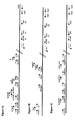
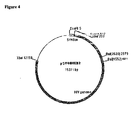
- a 2668 bp fragment containing wild type env sequence was excised from the HXB2D ⁇ GPRT vector. The fragment corresponded to nucleotides 6350-9018 of HXB2D ⁇ GPRT. This fragment was introduced into the KpnI site of a pGEM vector to make pGEMENV, shown in Fig.
- a 1905 base-pair fragment of the 2668 base-pair pGEMENV KpnI insert was then effectively deleted by amplification of the plasmid using oligos containing SmaI restriction sites (SEQ ID NO:32: 5' ggg aat tgg ctc aaa gga tac ctt tgg-3'; SEQ ID NO:33: 5' - ggg atc ctg cag ccc ggg ctt gga ag gcc - 3').
- the pSV40HXB2D infectious clone was first digested using Bal I to remove a region of 1922 bp between nt 2620 and 4552, containing the KpnI I recognition site, then was religated.
- the resulting plasmid was called pSV40HXB2D ⁇ Bal and is shown in Fig. 5 .
- pSV40HXB2D ⁇ Bal was treated with KpnI I to enable insertion of the pGEM ⁇ ENV Kpnl I fragment described above. This plasmid is shown in Fig. 6 and was called pSV40HXB2D ⁇ Bal ⁇ ENV.
- the ⁇ Bal region was re-inserted to complete construction of the infectious clone.
- the final vector was called pSV40HXB2D ⁇ ENV and is shown in Fig. 7 .
- a residual SmaI I recognition site remained at the site of the env deletion. This could be used for linearizing the vector before electroporation and subsequent homologous recombination.
- the patient derived env fragment could be inserted directly into the SmaI I site.
- the env gene was amplified using PCR from the HXB2D ⁇ GPRT vector and introduced into a pGEM vector by KpnI I digestion, creating pGEMENV, as described in part A.
- the gp41 coding region was effectively deleted from pGEMENV.
- the resulting construct was digested with SmaI I and re-ligated to create pGEM ⁇ gp41.
- the remaining KpnI I insert was ligated into the pSV40HX2B infectious clone, as described for the env deletion plasmid, to create pSV40HX2B ⁇ gp41.
- the gp41 deletion consists of 1053 base pairs from nucleotide 7717 to nucleotide 8770.
- the SmaI I site introduced by the primers was used for direct ligation of patient derived gp41 DNA into the infectious particle.
- the plasmid can be linearized by SmaI I digestion for homologous recombination.
- the ⁇ gp41 vector was also prepared by reintroducing the gp120 section of the env gene into the pGEM ⁇ ENV vector described in part A.
- the gp120 fragment was amplified using pfu polymerase (Stratagene) and the primers: 5' -ata cat tat tgt gcc ccg gct gg -3' (SEQ ID NO:35) and 5' - ggg tgc tac tcc taa tgg ttc -3' (SEQ ID NO:36). This generated fragment was subsequently introduced into the pGEM ⁇ ENV.
- the constructs were designed to yield a unique Smal restriction recognition site into the vector.
- the pSV40HXB2D vector was used as a backbone to initiate the deletion by PCR.
- the construct described in option 1 constitutes a deletion in the tat gene. Since upon generation of chimeric viruses a chimeric tat gene could be generated (constituting partly from the plasmid backbone and partly derived from the patient), which could interfere with the infectivity of the chimeric particle, a second option was designed. In this second approach, the deletion was initiated upstream of the tat gene in order to get a tat which constitutes uniquely from a single biological source.
- the wild-type ⁇ Rev-Env deletion vector was constructed by deletion of the complete Env coding sequence (gp 160) including Rev and most of Tat (leaving 10 AA N-terminal) (deletion of nucleotides 5860 to 8798 (in Nef start) --> 2938 bp deletion). The deletion was accomplished by PCR on pSV40HXB2D template with primers Env 3 and Env 5. After SmaI digestion the construct was religated.
- OLIGO NAME SEQUENCE 5'-3' SEQ ID NO Env3 GGGCTCTAGTCTAGGATCTACTGGCTCC SEQ ID NO: 37 Env5 GGATCCTGCAGCCC GGGTGGCAAGTGGTCAAAAAGT SEQ ID NO: 38 (SmaI tail, which is underlined, was used to facilitate cloning.)
- the wild-type ⁇ Tat-Rev-Env deletion vector was constructed by deletion of the complete Env coding sequence (gp160) including Tat and Rev (deletion of nucleotides 5572 (in Vif/Vpr start) to 8798 (in Nef start) --> 3226 bp deletion). The deletion was accomplished by PCR on pSV40HXB2D template with primers Env 4 and Env 5. After SmaI digestion the construct was religated.
- OLIGO NAME SEQUENCE 5'-3' SEQ ID NO Env4 GGGGCTTGTTCCATCTATCCTCTGTCAG SEQ ID NO: 39 Env5 GGATCCTGCAGCCC GGGTGGCAAGTGGTCAAAAAGT SEQ ID NO: 38 (SmaI tail, which is underlined, was used to facilitate cloning.)
- the variability in the env gene is significantly higher than that of other HIV genes such as the pol genes. Therefore several series of primers that would be capable of efficiently reverse-transcribing and amplifying the env gene obtained from patient samples were designed. Oligonucleotides were developed which hybridized to the most conserved regions in the gene determined from alignment of HIV-1 complete genomes (HIV sequence database, see e.g. website hiv-web.lanl.gov). Over 150 different 5' and 3' primer combinations were originally tested for efficient amplification of env sequences from patient HIV isolates. These different combinations yielded up to 94% amplification in screening on 16 patient samples. Following optimization of the primer combinations, the four most efficient combinations were tested on 93 patient samples. For efficient amplification, two sets of primers were used in combination to yield amplification of 84% of the samples.
- HIV RNA was extracted from patient plasma using the QIAAMP ® viral RNA extraction kit (Qiagen), according to the manufacturer's protocol. 10 ⁇ l of the extracted RNA was reverse transcribed for 30 minutes at 42°C in a 20 ⁇ l volume with a commercial PCR buffer including 1.5 mM MgCl 2 at 1x strength, and an additional 3.5 mM MgCl 2 , 0.75 ⁇ M 3' primer, 1 unit/ ⁇ l of RNase inhibitor, 1 mM of each dNTP, and 0.33 units/ ⁇ l of EXPAND ® reverse transcriptase (Roche). Either the ENV3INN2 (SEQ ID NO:4) or ENV3OUT1 (SEQ ID NO:3) primers were used.
- a nested PCR procedure was performed, using sets of outer and inner primers. This method is described in Kellam, P. and Larder, B.A., (Antimicrobial Agents and Chemotherapy 38: 23-30 (1994 )). After heat denaturation of the reverse transcription reaction at 99°C for 5 minutes, 10 ⁇ l was added directly to the reaction mix for the outer PCR, described below. The 3' primer for the outer PCR is the same as that used for reverse transcription.
- ENV3INN2 (SEQ ID NO:4) was used as the reverse transcription 3' primer
- the env sequence was amplified either with ENV5OUTA (SEQ ID NO:11) the outer 5' primer and ENV5AA1001 (SEQ ID NO:8) and ENV3OUT1 (SEQ ID NO:3) as the inner primers, or with ENV5OUTC (SEQ ID NO:12) as the outer 5' primer and ENV5AA1002 (SEQ ID NO:9) and ENV3OUT1 (SEQ ID NO:3) as the inner primers.
- ENV3OUT1 SEQ ID NO:3
- 5'EGENV1 SEQ ID NO:10
- ENV5OUT1 SEQ ID NO:6
- ENV3AA1003 SEQ ID NO:1
- ENV3INN2 SEQ ID NO:4
- 5OUTgp41 SEQ ID NO:19
- 5INNgp41A SEQ ID NO:20
- ENV3OUT1 SEQ ID NO:3
- the outer PCR reaction was carried out in 100 ⁇ l with a commercial PCR buffer containing 1.5 mM MgCl 2 in the final reaction volume, an additional 1 mM MgCl 2 , 0.2 mM each dNTP, 0.75 ⁇ M of the outer 5' primer, 10 ⁇ l of the reverse transcriptase reaction (including the 3' primer) and 0.05 units/ ⁇ l of EXPAND ® High Fidelity polymerase (Roche). After an initial denaturation at 95°C for 3 minutes, thermal cycling for 30 cycles was performed, followed by a final extension for 10 minutes at 72°C. The thermal cycling procedure consisted of 1 minute at 90°C, 30 seconds at 60°C, and 2 minutes at 72°C.
- Inner PCR reactions were performed with 5 ⁇ l of the outer PCR reaction in a 100 ⁇ l volume for 30 cycles using the same cycling procedure as for the outer PCR reactions.
- the reaction contained a commercial PCR buffer with 1.5 mM MgCl 2 at 1x concentration, an additional 1 mM MgCl 2 , 0.2 mM of each dNTP, 0.15 ⁇ M of each primer, and 0.05 units/ ⁇ l of EXPAND ® High Fidelity polymerase.
- ENV3INN2 SEQ ID NO:4
- 5LMENV3 SEQ ID NO:42
- 5LMENV4 SEQ ID NO: 43
- 5LMENV1 SEQ ID NO:40
- ENV3AA1003 SEQ ID NO: 1
- ENV3INN2 (SEQ ID NO: 4) was used for reverse transcription.
- the reverse transcription primer can be used in combination with 5LMENV7 (SEQ ID NO: 46) or 5LMENV8 (SEQ ID NO: 47).
- 5LMENV5 SEQ ID NO:44
- 5LMENV6 SEQ ID NO: 45
- ENV3OUT1 SEQ ID NO: 3
- ENV3INN1 SEQ ID NO: 2
- ENV3AA1003 (SEQ ID NO: 1).
- PCR products were purified using the QIAQUICK ® 96 PCR BioRobot kit (Qiagen), according to the manufacturer's protocol. Table 7. Primer combinations for gp 160 PCR Primer set RET Outer PCR Inner PCR 3'primer 5'primer 3'primer 5'primer 3'primer Mix C 11 ENV3INN2 ENV5OUTA (ENV3INN2) ENV5AA1001 ENV3OUT1 Mix I 17 ENV3INN2 ENV5OUTC (ENV3INN2) ENV5AA1002 ENV3OUT1 Mix X 16 ENV3OUT1 5'EGENV1 (ENV3OUT1) END5OUT1 ENV3AA1003 Table 8.
- the linearized vector pSV40HXB2D ⁇ ENV and the amplified env DNA were transfected by electroporation into MT4 cells or MT4 cells equipped with a LTR-reporter gene construct (MT4-rep).
- the normal MT4 cells may be used for the MTT-assay.
- the MT4 cells equipped with the LTR reporter gene for example, have a reporter molecule, i.e. GFP under control of LTR.
- the HIV genome was reconstituted with a patient derived env region.
- Production of recombinant virus was evaluated by scoring the cytopathogenic effect (CPE) that normally is induced by HIV infection of MT4 cells or by the induced LTR-driven reporter signal in MT4-rep cells. The viruses were harvested and titrated at maximum CPE.
- CPE cytopathogenic effect
- the HXB2D wild-type laboratory strain above is T-tropic and uses the CXCR4 co-receptor to infect cells.
- most clinical strains are M-tropic and use the CCR5 co-receptor, which may not be expressed in MT4 or MT4-rep cells. Therefore, recombination experiments with patient env amplicons were performed with both the MT4 and MT4-rep cell lines and with the PM-1 cell line, which expresses both co-receptors.
- No CPE was observed after HXB2D or patient derived env amplicon transfection of PM-1 cells.
- Virco ID 133268 gave a strong reporter signal and a detectable but weak CPE.
- Homologous recombination between the patient derived env sequences and the env gene in the pSV40HXB2D ⁇ ENV vector can be avoided by cloning the patients' amplified env fragment into the SmaI I site of the vector.
- the vector was digested with SmaI I and dephosphorylated to prevent self-ligation.
- Patient derived env amplicons were then ligated into the vector after a similar SmaI I digestion.
- the resultant plasmid was used to transform competent E . coli cells. Colonies containing the correct env insert were identified and positive clones containing the patient fragment of Virco ID 133265 were obtained by this method.
- RNA and genomic DNA from these cells was extracted from frozen, electroporated cells.
- the RNA was DNase treated to remove traces of the originally added vector and amplicon.
- RNA was also extracted from the supernatant of electroporated cells and DNase treated.
- the samples were reverse transcribed (for the RNA) and PCR amplified to detect the (gag-protease-reverse transcriptase, GPRT) GPRT region and the entire env region including both gp 120 and gp41 sections. The results are listed in table 5.
- the patients' gp41 fragment was digested with SmaI I and ligated into the Smal I site of the pSV40HXB2D ⁇ gp41 vector as described in Example 3 for the env sequence.
- Positive clones containing a gp41 insert in the correct orientation and a correct restriction pattern were obtained for the following Virco ID's: 133268, 133275, 133276, 142028 and 133266. Sequence analysis confirmed the correct ligation of the gp41 fragment in the vector for clones 133268 and 142028.
- Plasmid DNA for all 5 samples was then used to transfect electroporated MT4-rep cells.
- Sample 133268 gave a weak positive reporter signal and no CPE. CPE and reporter signals were not observed for the other samples. All samples were negative in titration. Table 5.
- the linearized wild type deletion vectors pSV40HXB2D ⁇ Rev-Env and pSV40HXBD ⁇ Tat-Rev-Env were co-transfected with the corresponding env sequences (Rev-Env and Tat-Rev-Env respectively) into MT4-reporter cells. Recombination was performed with wild type HXB2D sequences and yielded for both deletion constructs in full CPE at day 8 post transfection.
- the sequencing was started by first distributing 4 ⁇ l of the primer stocks (4.0 ⁇ M) over a 96 well plate.
- master mixes were made consisting of 14 ⁇ l deionized water, 17.5 ⁇ l dilution buffer, 7 ⁇ l sample (PCR fragment) and 14 ⁇ l Big DyeTM Terminator Mix (Perkin Elmer).
- sequence reactions were held at 4°C or frozen until further analysis.
- the sequencing reactions were precipitated using a standard ethanol precipitation procedure, resuspended in 2 ⁇ l formamide and heated for 2 minutes at 92°C in the thermal cycler. Samples were cooled on ice until ready to load. 1 ⁇ l of each reaction was loaded on a 4.25% vertical acrylamide gel in a 377 sequencer system and gel was run until separation of the fragments was complete.
- Sequences were imported as a specific project into the sequence manager of Sequencher (Genecodes, Applied Biosystems) and compared to the wild type HXB2D env reference sequence. Sequences were assembled automatically and set at 85% minimum match. Secondary peaks were searched and the minimum was set at 60%. Any sequence that extended beyond the 5' end or the 3' end of the reference was deleted. When a region of overlap between sequences from the same strand was reached, the poorest quality of sequence was deleted leaving an overlap of 5-10 bases. Ambiguous base calls were considered poor matches to exact base calls. The sequence assembly was saved within a contig that could be edited.
- sequence editing was performed following certain rules: A) Applied Biosystems, Inc. primer blocks were trimmed at 5' ends where 1 consecutive base remained off the scale, the sequence was trimmed not more than 25% until the first 25 bases contained less than 1 ambiguity, at least the first 10 bases from the 5' end were removed, and B) 3' ends were trimmed starting 300 bases after the 5' trim, the first 25 bases containing more than 2 ambiguities were removed, the 3' end was trimmed until the last 25 bases contained less than 1 ambiguity. The maximum length of the obtained sequence fragment after trimming was 550 bases.
- the nucleotide sequence of gp41 was determined as described in section B of this example for Virco ID's 133268, 133275, 133276 and 142028.
- the gp41 primers of SEQ ID NO:24 - SEQ ID NO:31 were used.
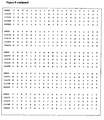
- the alignment of the corresponding amino acid sequence with the HXB2D wild type amino acid sequence was obtained as described in this section and is presented in Fig. 8 .
Landscapes
- Health & Medical Sciences (AREA)
- Life Sciences & Earth Sciences (AREA)
- Chemical & Material Sciences (AREA)
- Engineering & Computer Science (AREA)
- Immunology (AREA)
- Molecular Biology (AREA)
- Biomedical Technology (AREA)
- Bioinformatics & Cheminformatics (AREA)
- Hematology (AREA)
- Physics & Mathematics (AREA)
- Urology & Nephrology (AREA)
- Organic Chemistry (AREA)
- General Health & Medical Sciences (AREA)
- Medicinal Chemistry (AREA)
- Biotechnology (AREA)
- Biochemistry (AREA)
- Microbiology (AREA)
- Analytical Chemistry (AREA)
- Cell Biology (AREA)
- Proteomics, Peptides & Aminoacids (AREA)
- Toxicology (AREA)
- Zoology (AREA)
- Pathology (AREA)
- General Physics & Mathematics (AREA)
- Tropical Medicine & Parasitology (AREA)
- Wood Science & Technology (AREA)
- Virology (AREA)
- Biophysics (AREA)
- Food Science & Technology (AREA)
- Genetics & Genomics (AREA)
- General Engineering & Computer Science (AREA)
- Spectroscopy & Molecular Physics (AREA)
- Medical Informatics (AREA)
- Crystallography & Structural Chemistry (AREA)
- AIDS & HIV (AREA)
- Bioinformatics & Computational Biology (AREA)
- Evolutionary Biology (AREA)
- Pharmacology & Pharmacy (AREA)
- Theoretical Computer Science (AREA)
- Physiology (AREA)
Description
- The present invention relates to methods and means for the evaluation of HIV treatment. In particular, molecular events at the HIV envelope protein and their effect on therapeutic efficacy of drugs are determined. The methods rely on providing HIV envelope nucleic acid material and evaluating a treatment either through genotyping or phenotyping. Said method may find use in multiple fields including diagnostics, drug screening, pharmacogenetics and drug development.
- A number of different therapeutic regimens have been developed to treat HIV (human immunodeficiency virus) infection. However, like many viruses, HIV has no proofreading capacity, thus, it can quickly mutate to overcome the effects of drugs or combinations thereof targeted against it. Under the selective pressure of a given therapy, the virus mutates to phenotypes that reduce or eliminate the effects of the administered drugs. Despite the development of new classes of anti-HIV drugs such as protease (pro) and reverse transcriptase (RT) inhibitors and complex drug regimens, drug resistance continues to increase. Further, drug-resistant virus strains can infect new individuals, gradually replacing more treatable strains in the infected population.
- The ease with which HIV can mutate under the selective pressure of drug therapy requires the frequent monitoring of the replicative capacity of a patient's virus in response to the patient's current therapy so that the therapeutic strategy can be adjusted or changed to provide maximum benefit over time. Often, the physician must change the doses of drugs, or initiate combination therapy using protease and reverse transcriptase inhibitors, or other types of anti-HIV drugs.
- Accurate determination of the susceptibility of a patient's virus strain toward a variety of drugs or drug combinations is especially helpful in making decisions about appropriate treatment. In order to reduce drug resistance and assist physicians in choosing the best therapy for a given HIV-infected patient, sophisticated patient monitoring techniques have been developed, such as Antivirogram® (described in
WO 97/27480U.S. Patent No. 6,221,578 B1 ; incorporated herein by reference) and Phenosense™ (WO97/27319 - Holz-Smith et al., 2001, Antimicrobial agents and chemotherapy, vol. 45, (1) pp 60-66 discloses the analysis of a chimeric HIV derived from exchanging envelope regions between a drug-sensitive and a drug-resistant virus. The study indicates that regions within gp120 and the N-terminal 25 amino acids of gp 41 are important elements for the drug sensitivity against the compound IC9564. Three mutations (G237R, R252K and R533A) were identified in the envelope region conferring drug-resistance.
- These assays determine the resistance of patient borne virus towards a defined drug regimen by providing information about the susceptibility of the patient's virus strain to protease and reverse transcriptase inhibitors treatment. Many of the developed strategies use either immunologic means or sequencing techniques. The Antiviragram® and Genseq™ assays determine the phenotype and genotype respectively of a patient's reverse transcriptase and protease genes. The relevant coding regions are obtained from patient samples, reverse transcribed, and amplified by the polymerase chain reaction (PCR), then inserted into a plasmid to create chimeric viruses. The ability of these viruses to invade and kill cells in culture is assessed in the presence of HIV reverse transcriptase and protease inhibitors.
- As resistance to current treatments grows, novel types of inhibitors are being developed focusing on other targets essential for viral replication and proliferation. These include inhibitors of the HIV envelope (env), tat, rev, integrase (IN), and other viral gene products. In the development of new drugs to suppress HIV replication, inhibitors of CD4 binding or chemokine receptor binding, and inhibitors of virus-cell membrane fusion, that target the envelope protein are promising candidates.
- The HIV envelope is a glycoprotein consisting of two non-covalently associated subunits, gp 120 and gp41, generated by proteolytic cleavage of the precursor gp 160 protein, produced from the env gene on the HIV chromosome. This glycoprotein plays a critical role in the infection of cells. The gp120 subunit is involved in target cell recognition, while the gp41 subunit promotes fusion between the viral and cell membranes, allowing the virus to infect new cells. Examples of compounds designed to target the envelope glycoprotein are the entry inhibitors, such as T-20, T-1249, PRO-542, PRO-140, PRO-367, AMD-3100. Other entry inhibitors include AMD-070, SCH-C, SCH-D, and BMS-806. The clinical efficacy of these compounds is currently under investigation.
- Despite the introduction of new anti-HIV drugs like those that target the envelope glycoprotein, new resistance mutations will inevitably arise. The envelope region is the most variable region of the HIV genome (i.e. highest frequency of mutations), providing numerous escape mutants to either drugs or neutralizing antibodies. Therefore, monitoring protocols to test the susceptibility of patient borne virus to envelope protein targeted drugs are needed. The present invention provides the means for phenotypic and genotypic evaluation of the drug efficacy of envelope inhibitors based on the analysis of patient borne viral strains. Assays for evaluating the wild-type or mutant HIV envelope are disclosed, using a set of primers designed for the retrieval, preparation and analysis of HIV genetic material.
- Thus, described is a method for determining the susceptibility of at least one human immunodeficiency virus to at least one drug, comprising:
- i) obtaining at least one sample comprising HIV RNA or DNA wherein the sample has been previously collected from an HIV infected patient and, wherein the sample comprises at least one env gene or a portion thereof;
- ii) reverse-transcribing and amplifying the HIV RNA, or amplifying the HIV DNA, with primers specific for env region of the HIV genome, to obtain at least one amplicon comprising the at least one env gene or a portion thereof;
- iii) homologously recombining or ligating the at least one amplicon with the at least one plasmid comprising the wild-type HIV sequence with a deletion in the env region of the HIV genome, to prepare at least one recombinant virus; and
- iv) monitoring the at least one recombinant virus in the presence of the at least one drug to determine the phenotypic susceptibility.
- More in particular, the present invention concerns a method for determining the susceptibility of at least one human immunodeficiency virus to at least one drug, comprising:
- i) obtaining at least one sample comprising HIV RNA or DNA wherein the sample has been previously collected from an HIV infected patient and, wherein the sample comprises at least one env gene or a portion thereof;
- ii) reverse-transcribing and amplifying the HIV RNA, or amplifying the HIV DNA, with primers specific for env region of the HIV genome, to obtain at least one amplicon comprising the at least one env gene or a portion thereof;
- iii) using nucleic acid amplification to generate at least one plasmid containing the wild-type HIV sequence with a deletion in the env region of the HIV genome;
- iv) homologously recombining or ligating the at least one amplicon with the at least one plasmid comprising the wild-type HIV sequence with a deletion in the env region of the HIV genome, to prepare at least one recombinant virus; and
- v) monitoring the at least one recombinant virus in the presence of the at least one drug to determine the phenotypic susceptibility, characterized in that a primer is selected from SEQ ID NO. 1-23 and 32-50.
- Primers specific for amplification of HIV DNA env region or portions thereof include SEQ. ID 1-23, 40-47.
- Primers useful for the amplification of the wild-type HIV sequence include SEQ. ID 32-34, 37-39. Optionally the primers may incorporate a restriction site, such as primers SEQ. ID 33, 34 and 38. Suitably, deletion constructs may be prepared by re-introducing portions of the env gene into a plasmid where the env gene has been previously deleted by amplification. Primers for amplifying the regions of interest, for example, the gp120 sequence, include SEQ ID 35-36.
- Primers useful for ligation of the amplicons with the plasmids comprising the wild-type HIV sequence with a deletion in the env region of the HIV genome include SEQ. ID 48-50.
Table 1. Primers for obtaining and preparing amplicons, plasmids and recombinant viruses 3' env PRIMERS OLIGO NAME SEQ ID NO LENGTH MW Tm SEQUENCE (5'-3') ENV3AA1003 SEQ ID NO:1 26 7817.0 71.9 ATTCTTTCCCTTACAGCAGGCCATCC ENV3INN1 SEQ ID NO:2 22 6604.1 66.5 GCTCCTACTCCTTCTGCTGCTG ENV3OUT1 SEQ ID NO:3 26 8026.1 65.8 CTTAAAGGTACCTGAGGTCTGACTGG ENV3INN2 SEQ ID NO:4 24 7439.7 69.4 GGTGTGTAGTTCTGCCAATCAGGG ENV3OUT2 SEQ ID NO:5 28 8517.5 70.7 CAACTGGTACTAGCTTGAAGCACCATCC 5'env (gp160) PRIMERS OLIGO NAME SEQ ID NO LENGTH MW Tm SEQUENCE (5'-3') ENV5OUT1 SEQ ID NO:6 27 8212.3 67.5 CCTAAAGCCATGTGTAAAGTTAACCCC ENV5INN1 SEQ ID NO:7 24 7321.7 69.1 CCATTACACAGGCTTGTCCAAAGG ENV5AA1001 SEQ ID NO:8 26 8089.2 64.1 GCATGAGGATATAATCAGTTTATGGG ENV5AA1002 SEQ ID NO:9 26 7914.1 63.9 TGTAATACCTCAGTCATTACACAGGC 5'EGENV1 SEQ ID NO:10 27 8341.4 70.6 GGGATCAAAGCCTAAAGCCATGTGTAA ENV5OUTA SEQ ID NO:11 26 8413.4 73.6 TGGGTACCTGTGTGGAAAGAAGCAAC ENV5OUTC SEQ ID NO:12 25 7648.9 73.7 GTTTGGGCCACACATGCCTGTGTAC ENVSOUTD SEQ ID NO:13 25 7555.9 71.5 CACACATGCCTGTGTACCCACAGAC ENV5OUTE SEQ ID NO:14 27 8286.4 70.6 GTGTGGAAAGAAGCAACCACCACTCTA ENVSOUTF SEQ ID NO:15 26 8057.1 66.1 GTGGGTCACAGTCTATTATGGGGTAC ENV5OUTG SEQ ID NO:16 26 7856.1 73.0 CCACAGACCCCAACCCACAAGAAGTA ENVSOUTH SEQ ID NO:17 27 8308.3 70.3 CAGAGGTACATAATGTTTGGGCCACAC 5' gp41 PRIMERS OLIGO NAME SEQ ID NO LENGTH MW Tm SEQUENCE (5'3') 5FAROUTgp41 SEQ ID NO:18 23 7090.1 66.3 CCTCAGGAGGGGACCYAGAAATT 5OUTgp41 SEQ ID NO:19 26 7912.1 72.3 GGAMAAGCAATGTATGCCCCTCCCAT 5INNgp41A SEQ ID NO:20 24 7441.1 64.6 CTTCAGACCTGGAGGAGGAGATAT 5INNgp41B SEQ ID NO:21 25 7868.1 66.9 GGAGATATGAGGGACAATTGGAGAA 5INNgp41C SEQ ID NO:22 25 7845.1 71.0 CCTGGAGGAGGAGATATGAGGGACA 5INNgp41D SEQ ID NO:23 21 6360.1 64.4 CCATTAGGAGTAGCACCCACC 5' rev-env PRIMERS OLIGO NAME SEQ ID NO LENGTH MW Tm SEQUENCE (5'-3') 5LMENV1 SEQ ID NO:40 24 7440.7 63.8 TTGGGTGTCAACATAGCAGAATAG 5LMENV2 SEQ ID NO:41 24 7338.6 60.2 CTGTTTATTCATTTTCAGAATTGG 5LMENV3 SEQ ID NO:42 25 7735.9 62.3 CTATGAAACTTATGGGGATACTTGG 5LMENV4 SEQ ID NO:43 23 7032.5 65.9 GCTCCATGGCTTAGGACAACATA 5' tat-rev-env PRIMERS OLIGO NAME SEQ ID NO LENGTH MW Tm SEQUENCE (5'-3') 5LMENV5 SEQ ID NO:44 24 7336.7 65.2 AGATAAAGCCACCTTTGCCTAGTG 5LMENV6 SEQ ID NO:45 24 7369.7 56.5 GACATAACAAGGTAGGATCTCTAC 5LMENV7 SEQ ID NO:46 24 7427.8 62.1 ATCAAGCAGGACATAACAAGGTAG 5LMENV8 SEQ ID NO:47 21 6374.1 58.8 GCAGACCAACTAATTCATCTG MUTAGENESIS PRIMERS OLIGO NAME SEQ ID NO LENGTH MW Tm SEQUENCE (5'-3') Env1 SEQ ID NO: 32 26 - - GGGAATTGGCTCAAAGGATACCTTTGG Env2 SEQ ID NO: 33 30 - - GGGATCCTGCAGCCCGGGCTTGGAAAGGCC Env6 SEQ ID NO: 34 23 - - GGGTGCTACTCCTAATGGTTCAAT Env3 SEQ ID NO:37 27 8571.4 69.5 GGGCTCTAGTCTAGGATCTACTGGCTCC Env5 SEQ ID NO:38 36 11175;0 86.2 GGATCCTGCAGCCCGGGTGGCAAGTGGTCAAAAAGT Env4 SEQ ID NO: 39 28 8537.3 73.3 GGGGCTTGTTCCATCTATCCTCTGTCAG WILD-TYPE CLONING PRIMERS OLIGO NAME SEQ ID NO LENGTH MW Tm SEQUENCE (5'-3') C120-WTI SEQ ID NO: 35 23 - - ATACATTATTGTGCCCCGGCTGG C120-WT2 SEQ ID NO: 36 21 - - GGGTGCTACTCCTAATGGTTC gp41 CLONING PRIMERS OLIGO NAME SEQ ID NO. LENGTH MW Tm SEQUENCE (5'-3') 5CP41-P SEQ ID NO: 48 24 7588.9 68.4 P-ACCAAGGCAAAGAGAAGAGTGGTG 3CP41-P SEQ ID NO: 49 26 8081.0 61.1 P-TGTCTTATTCTTCTAGGTATGTGGMG 5CPenv-P SEQ ID NO: 50 22 6781.2 68.4 P-ATACATTATTGTGCCCCGGCTG - The invention relates to the use of the plasmids in the methods disclosed herein. The complete HIV sequence may be incorporated in the plasmid or only part(s) thereof, such as, for example, the plasmids used in the present invention may lack the gp41 portion of the env gene, or may additionally lack the gp120 portion. The description also discloses a plasmid comprising a HIV env deletion construct, wherein at least 100 base pairs (bp) of the HIV envelope gene are deleted, suitably wherein at least 250bp of the HIV envelope gene are deleted, more suitably wherein at least 500bp of the HIV envelope gene are deleted. The deletion may also comprise parts of flanking genes, or eventually more than one gene, e.g. deletion of env and rev, deletion of env, rev and tat. A suitable plasmid backbone may be selected from the group including pUC, pBR322 and pGEM.
- The plasmids pSV40HXB2DΔTat-Rev-Env (accession number LMBP 4570), pSV40HXB2DΔRev Env (accession number LMBP 4569), pSV40HXB2DΔgp41 (accession number LMBP 4567), pSV40HXB2DΔEnv (accession number LMBP 4571), pGEMHIVΔGPRT (accession number LMBP 4568) were deposited at the Belgian Coordinated Collections of Micro-Organisms located at the Universiteit Gent - Laboratorium voor Moleculaire Biologie on July 1, 2002.
- The methods for determining the susceptibility may be useful for designing a treatment regimen. For example, a method may comprise determining the relative replicative capacity of a clinical isolate of a patient and using said relative replicative capacity to determine an appropriate drug regimen for the patient.
- The present invention also provides a method of identifying a drug effective against HIV envelope comprising: obtaining at least one HIV envelope sequence or a portion thereof, determining the phenotypic susceptibility of the envelope towards said drug, using said phenotypic susceptibility to determine the effectiveness of said drug.
- The invention further comprises a method for determining the susceptibility of at least one human immunodeficiency virus to at least one drug, comprising:
- i) obtaining at least one sample comprising HIV RNA or DNA wherein the sample has been previously collected from an HIV infected patient and wherein the sample comprises at least one env gene or a portion thereof;
- ii) reverse-transcribing and amplifying the HIV RNA, or amplifying the HIV DNA, with primers specific for the env region of the HIV genome, to obtain at least one amplicon comprising the env gene or a portion thereof;
- iii) determining the nucleotide sequence of the at least one amplicon or a portion thereof; and
- iv) comparing the nucleotide sequence of the at least one amplicon or portion thereof to the sequence of known sequences, to determine the susceptibility.
- Primers useful for determining the nucleotide sequence of the amplicon or a portion thereof include SEQ. 24-31 and 51-57. This particular selection has the advantage that it enables the sequencing of the complete HIV envelope gene. Consequently, using this set of primers all possible mutations that may occur in the HIV envelope gene may be resolved.
Table 2. Primers for sequencing the gp41 and g120 regions. . gp41 SEQUENCING PRIMERS OLIGO NAME SEQ ID NO LENGTH MW Tm SEQUENCE (5'-3') EnvSeq1 SEQ ID NO:24 18 5941.6 GGGACAATTGGAGAAGTG EnvSeq2 SEQ ID NO:25 19 6161.8 GAATCGCAGAACCAGCAGG EnvSeq4 SEQ ID NO:26 20 6305 CCAATTCCACAGACTTGCCC EnvSeq5 SEQ ID NO:27 21 6772.2 GCTCCAGGCAAGAGTCCTGGC EnvSeq6 SEQ ID NO:28 22 7141.4 GAGTTAGGCAGGGATACTCACC EnvSeq7 SEQ ID NO:29 18 5576.6 CTCTCCACCTTCTTCTTC EnvSeq8 SEQ ID NO:30 26 8381.2 GCAGATGAGTTTTCCAGAGCAGCCCC EnvSeq9 SEQ ID NO:31 20 6302 CTTTTTGACCACTTGCCACC gp120 SEQUENCING PRIMERS OLIGO NAME SEQ ID NO LENGTH MW Tm SEQUENCE (5'-3) gp120f_seq1 SEQ ID NO:51 18 5534 54 ATGCTCCTTGGGATGTTG gp120f_seq2 SEQ ID NO:52 18 5432 54 AACCCCACTCTGTGTTAG gp120f_seq3 SEQ ID NO:53 20 5985 60 CCCATACATTATTGTGCCCC gp120f_seq4 SEQ ID NO:54 18 5638 52 GTTTTAATTGTGGAGGGG gp120r_seq5 SEQ ID NO:55 18 5391 60 GTGCTTCCTGCTGCTCCC gp120r_seq6 SEQ ID NO:56 18 5438 52 GGCATACATTGCTTTTCC gp120r_seq7 SEQ ID NO:57 20 6243 60 GGGGCACAATAATGTATGGG - The genotype of the patient-derived env coding region may be determined directly from the amplified DNA by performing DNA sequencing during the amplification step. Alternatively, the sequence may be obtained after sub-cloning into a suitable vector. A variety of commercial sequencing enzymes and equipment may be used in this process. The efficiency may be increased by determining the sequence of the env-coding region in several parallel reactions, each with a different set of primers. Such a process could be performed at high throughput on a multiple-well plate, for example. Commercially available detection and analysis systems may be used to determine and store the sequence information for later analysis. The nucleotide sequence may be obtained using several approaches including sequencing nucleic acids. This sequencing may be performed using techniques including gel based approaches, mass spectroscopy and hybridization. However, as more resistance related mutations are identified, the sequence at particular nucleic acids, codons, or short sequences may be obtained. If a particular resistance associated mutation is known, the nucleotide sequence may be determined using hybridization assays (including Biochips, LipA-assay), mass spectroscopy, allele specific PCR, or using probes or primers discriminating between mutant and wild-type sequence. For these purposes the probes or primers may be suitably labeled for detection (e.g. Molecular beacons, TaqMan®, SunRise primers).
- A viral sequence may contain one or multiple mutations versus consensus wild-type. A single mutation or a combination of env mutations may correlate to a change in drug efficacy. This correlation may be indicative of reduced or increased susceptibility of the virus for a drug. Said mutations may also influence the viral fitness. Mutations in the patient borne HIV env may be identified by sequence comparison with a reference sequence of a viral strain e.g. K03455. K03455 is present in Genbank and available through the internet. The identified mutation may be indicative of a change in susceptibility of the viral strain for one or more drugs. Said susceptibility data are derived from phenotypic analysis, wherein the env sequence comprising said mutation is analyzed. For example, resistance mutations to compound AMD-3100 include amongst others, Q278T, I288T, and N293D in gp120. Examples of resistance mutations to compound T-20 in the gp41 are G36S, V38M.
- The present invention further provides a method of identifying a drug effective against HIV envelope comprising: obtaining at least one HIV envelope sequence or a portion thereof, determining the sequence of the HIV envelope, comparing said sequence with sequences present in a database, of which the phenotypic susceptibility has been determined with the methods of the present invention, using said sequence comparison to determine the effectiveness of said drug.
- Results from phenotyping and genotyping experiments can be used to develop a database of replicative capacity levels in the presence of particular drugs, drug regimens or other treatment for a large number of mutant HIV strains. One such approach is virtual phenotyping (
WO 01/79540 WO 01/79540 - As such, the description discloses a method of constructing a genotypic and phenotypic database of env sequences or portions thereof, comprising:
- i) obtaining samples comprising HIV RNA or DNa wherein the sample has been previously collected from an HIV infected patient and wherein the samples comprise the env gene or portions thereof;
- ii) reverse-transcribing and amplifying the HIV RNA, or amplifying the HIV DNA, with primers specific for the env region of the HIV genome, to obtain amplicons comprising the env gene or portions thereof;
- iii) determining the nucleotide sequence of the amplicons or portions thereof;
- iv) homologously recombining or ligating the amplicons with the plasmids comprising the wild-type HIV sequence with a deletion in the env region of the HIV genome, to prepare recombinant viruses; and
- v) determining the replicative capacity of the recombinant viruses in the presence of anti-HIV drugs by comparing the replicative capacity of the recombinant HIV viruses with the replicative capacity of a wild-type env gene sequence;
- vi) correlating the nucleotide sequence and relative replicative capacity in a data table.
- More in particular, the invention concerns a method of constructing a genotypic and phenotypic database of env sequences or portions thereof, comprising:
- i) obtaining samples comprising HIV RNA or DNA wherein the sample has been previously collected from an HIV infected patient and wherein the samples comprise the env gene or portions thereof;
- ii) reverse-transcribing and amplifying the HIV RNA, or amplifying the HIV DNA, with primers specific for the env region of the HIV genome, to obtain amplicons comprising the env gene or portions thereof;
- iii) determining the nucleotide sequence of the amplicons or portions thereof;
- iv) using nucleic acid amplification to generate plasmids containing the wild-type HIV sequence with a deletion in the env region of the HIV genome;
- v) homologously recombining or ligating the amplicons with the plasmids comprising the wild-type HIV sequence with a deletion in the env region of the HIV genome, to prepare recombinant viruses;
- vi) determining the replicative capacity of the recombinant viruses in the presence of anti-HIV drugs by comparing the replicative capacity of the recombinant HIV viruses with the replicative capacity of a wild-type env gene sequence; and
- vii) correlating the nucleotide sequence and relative replicative capacity in a data table.
- Thus, obtained phenotypic and genotypic data enable the development of a database comprising both phenotypic and genotypic information of the HIV envelope, wherein the database further provides a correlation in between genotypes and genotypes, and in between genotypes and phenotypes, wherein the correlation is indicative of efficacy of a given treatment regimen. Such a database can further be used to predict the phenotype of a HIV envelope gene based on its genotypic profile.
- A human immunodefieciency virus (HIV), as used herein refers to any HIV including laboratory strains, wild type strains, mutant strains and any biological sample comprising at least one HIV virus, such as, for example, an HIV clinical isolate. HIV strains compatible with the present invention are any such strains that are capable of infecting mammals, particularly humans. Examples are HIV-1 and HIV-2.
- For reduction to practice of the present invention, an HIV virus refers to any sample comprising at least one HIV virus. Since a patient may have HIV viruses in his body with different mutations in the env gene, it is to be understood that a sample may contain a variety of different HIV viruses containing different mutational profiles in the env gene. A sample may be obtained for example from an individual, from cell cultures, or generated using recombinant technology, or cloning.
- HIV strains compatible with the present invention are any such strains that are capable of infecting mammals, particularly humans. Viral strains used for obtaining a plasmid are preferably HIV wild-type sequences, such as LAI, HXB2D. LAI, also known as IIIB, is a wild-type HIV strain. One particular clone thereof, this means one sequence, is HXB2D. This sequence may be incorporated into a plasmid.
- Instead of viral RNA, HIV DNA, e.g. proviral DNA, may be used for the methods described herein. In case RNA is used, reverse transcription into DNA by a suitable reverse transcriptase is needed. The protocols describing the analysis of RNA are also amenable for DNA analysis. However, if a protocol starts from DNA, the person skilled in the art will know that no reverse transcription is needed. The primers designed to amplify the RNA strand, also anneal to, and amplify DNA. Reverse transcription and amplification may be performed with a single set of primers. Suitably a hemi-nested and more suitably a nested approach may also be used to reverse transcribe and amplify the genetic material.
- Nucleic acid may be amplified by techniques such as polymerase chain reaction (PCR), nucleic acid sequence based amplification (NASBA), self-sustained sequence replication (3SR), transcription-based amplification (TAS), ligation chain reaction (LCR). Often PCR is used.
- For the purpose of the present invention an amplicon refers to the amplified and, where necessary, reverse-transcribed env gene or portions thereof. Additionally, the amplicon may include the flanking regions of the envelope gene, such as the tat and rev sequences, or portions thereof. It should be understood that this env gene may be of diverse origin, including plasmids and patient material; suitably it is obtained from patient derived material. Amplicon is sometimes defined as the "DNA construct". A portion of the env gene is defined as a fragment of env gene recovered from patient borne virus, lab viruses including IIIB and NL4-3, or mutant viruses. This fragment does not encompass the complete env. Said fragment may be obtained directly from its source, including a patient sample, or may be obtained using molecular biology tools following the recovery of the complete env sequence.
- It may not be necessary to amplify the entire env gene in the context of the present invention to determine the susceptibility of an HIV isolate to anti-HIV drugs. For example, current HIV envelope glycoprotein inhibitors such as T-20 and T-1249 interact with the gp41 subunit of the envelope. Therefore, it is likely that resistance associated mutations to these compounds will mainly arise in the gp41 subunit. If this is the case, it may be sufficient to amplify only the gp41 region of the env gene for use in phenotyping and genotyping.
- Primers specific for the env region of the HIV genome such as the primers described herein and their homologs are claimed. Such primers are chosen from SEQ. ID N° 1-57 or have at least 80% homology, preferably 90% homology, more preferably 95% homology as determined using algorithms known to the person skilled in the art such as FASTA and BLAST. Interesting sets of primers include at least one primer selected from SEQ. ID N° 1-50. The primer sequences listed herein may be labeled. Suitably, this label may be detected using fluorescence, luminescence or absorbance. In addition primers located in a region of 50 nucleotides (nt) upstream or downstream from the sequences given herein constitute part of the present invention. Specifically, the primers may be located in a region of 20 nt upstream or downstream from the sequences given herein and, constitute, as well, part of the present invention. Also, primers comprising at least 8 consecutive bases present in either of the primers described herein constitute an embodiment of the invention. Interestingly, the primers comprise at least 12 consecutive bases present in either of the primers described herein. In one aspect of the present invention the primers may contain linker regions for cloning. Optionally, the linker region of a primer may contain a restriction enzyme recognition site. Preferably, said restriction enzyme recognition site is a unique restriction enzyme recognition site. Alternatively, primers may partially anneal to the target region.
- A drug means any agent such as a chemotherapeutic, peptide, antibody, antisense, ribozyme and any combination thereof be it marketed or under development. Examples of drugs include protease inhibitors including ritonavir, amprenavir, nelfinavir; reverse transcriptase inhibitors such as nevirapine, delavirdine, AZT, zidovudine, didanosine; envelope inhibitors; integrase inhibitors. In particular, agents interfering with HIV envelope biology are analyzed. Treatment or treatment regimen refers to the management or handling of an individual medical condition by the administration of drugs, at directed dosages, time intervals, duration, alone or in different combinations, via different administration routes, in suitable formulations, etc.
- The susceptibility of at least one HIV virus to at least one drug is determined by the replicative capacity of the recombinant virus in the presence of at least one drug relative to the replicative capacity of an HIV virus with a wild-type env gene sequence in the presence of the same at least one drug. Replicative capacity means the ability of the virus or chimeric construct to grow under culturing conditions. This is sometimes referred to as viral fitness. The culturing conditions may contain triggers that influence the growth of the virus, examples of which are drugs.
- An alteration in viral drug sensitivity is defined as a change in susceptibility of a viral strain to said drug. Susceptibilities are generally expressed as ratios of EC50 or EC90 values. The EC50 or EC90 value is the effective drug concentration at which 50% or 90% respectively of the viral population is inhibited from replicating. The IC50 or IC90 value is the drug concentration at which 50% or 90% respectively of the enzyme activity is inhibited. Hence, the susceptibility of a viral strain can be expressed as a fold change in susceptibility, wherein the fold change is derived from the ratio of, for instance, the EC50 or IC50 values of a mutant viral strain, compared to the wild type EC50 or IC50 values. In particular, the susceptibility of a viral strain or population may also be expressed as resistance of a viral strain, wherein the result is indicated as a fold increase in EC50 or IC50 as compared to wild type EC50 or IC50.
- The susceptibility of at least one HIV virus to one drug may be tested by determining the cytopathogenicity of the recombinant virus to cells. In the context of this invention, the cytopathogenic effect means, the viability of the cells in culture in the presence of chimeric viruses. The cells may be chosen from T cells, monocytes, macrophages, dendritic cells, Langerhans cells, hematopoietic stem cells or, precursor cells, MT4 cells and PM-1 cells. Suitable host cells for homologous recombination of HIV sequences include MT4 and PM-1. MT4 is a CD4+ T-cell line containing the CXCR4 co-receptor. The PM-1 cell line expresses both the CXCR4 and CCR5 co-receptors. All the above mentioned cells are capable of producing new infectious virus particles upon recombination of the env deletion vectors with the env amplicons. Thus, they can also be used for testing the cytopathogenic effects of recombinant viruses. The cytopathogenicity may, for example, be monitored by the presence of a reporter molecule including reporter genes. A reporter gene is defined as a gene which product has reporting capabilities. Suitable reporter molecules include tetrazolium salts, green fluorescent proteins, beta-galactosidase, chloramfenicol transferase, alkaline phosphatase, and luciferase. Several methods of cytopathogenic testing including phenotypic testing are described in the literature comprising the recombinant virus assay (Kellam and Larder, Antimicrob. Agents Chemotherap. 1994, 38, 23-30, Hertogs et al. Antimicrob. Agents Chemotherap. 1998, 42, 269-276; Pauwels et al. ).
- The term chimeric means a construct comprising nucleic acid material from different origin such as, for example, a combination of wild type virus with a laboratory virus, a combination of wild type sequence and patient derived sequence.
- The sequence to be specifically detected by sequence analysis according to the present invention may be a wild type, polymorphic or mutant sequence of the HIV env gene or fragment thereof. This nucleotide sequence may encompass one or several nucleotide changes. Target sequences may refer to single nucleotide positions, nucleotides encoding amino acids or to sequence spanning any of the foregoing nucleotide positions. In the present invention said sequence often includes one or two variable nucleotide positions. Sequence alterations detected by the present method include but are not limited to single nucleotide mutations, substitutions, deletions, insertions, transversions, inversions, repeats or variations covering multiple variations, optionally present at different locations. Sequence alterations may further relate to epigenetic sequence variations not limited to for instance methylation.
- Any type of patient sample may be used to obtain the envelope gene, such as, for example, serum and tissue. Viral RNA may be isolated using known methods such as that described in Boom, R. et al. (J. Clin. Microbiol. 28(3): 495-503 (1990). Alternatively, a number of commercial methods such as the QIAAMP® viral RNA kit (Qiagen, Inc.) may be used to obtain viral RNA from bodily fluids such as plasma, serum, or cell-free fluids. DNA may be extracted from tissue using methods known by the skilled in the art such as the procedure described by Maniatis et al. (1982) which involves the preparation of a cell lysate followed by digestion with proteinase K, obtaining DNA purification by a multi-step phenol extraction, ethanol precipitation and ribonuclease digestion. Optionally, available commercial methods may also be employed to obtain DNA from bodily fluids, such as QIAAMP® Blood kits for DNA isolation from blood and body fluids (Qiagen, Inc.)
- To prepare recombinant HIV viruses for phenotyping assays, the amplified sequences of gp41, gp 120, env (gp 160), rev-env, tat-rev-env, or portions thereof, also termed herein as amplicons, may be inserted into a vector comprising the wild-type HIV sequence with a deletion of the relevant portion. An infectious clone is generated upon exchange of genetic material between the amplicon and the deletion construct to yield an HIV sequence.
- A method for obtaining a plasmid containing the wild-type HIV sequence with a deletion in the env, tat, and/or rev regions of the HIV genome is disclosed as well herein. The removal of the region of interest is achieved by amplification of a plasmid containing the wild type HIV sequence, such as HXB2D.
- This plasmid amplification refers to the selective amplification of a portion of the plasmid using primers annealing to the flanking sequences of the desired deletion region, i.e. env sequence, such that all plasmid is amplified except for the region to be deleted. Such method of amplification is a direct, one-step, and simple technique to produce a deletion of a sequence in a circular plasmid DNA.
- Preferably, said amplification of plasmid's DNA generates a unique restriction site. Unique restriction site refers to a single occurrence of a site on the nucleic acid that is recognized by a restriction enzyme or that it does not occur anywhere else in the construct. The unique restriction site may be created after amplification by re-ligating both 5' and 3' ends of the amplified plasmid's DNA. Alternatively, the unique restriction site may not have to be created, as it may be already fully located in one of the ends, 5' or 3' end. Optionally, the unique restriction site may be inserted. Optionally, part of the unique restriction site may be present in the region to be amplified. The creation of a unique restriction site deriving from amplification is a preferred method since is a one-step, direct, simple and fast method. The unique restriction site is further relevant for the production of recombinant virus.
- As one skilled in the art will understand, the creation of a unique restriction site will depend upon the sequence of the HIV genome, and upon the sequence to be deleted therefrom. Unique restriction sites that can be employed in the present invention are those present only once in the HIV genome and may flank the region of interest to be deleted. Optionally, the primers used for amplification may contain the same or other specific restriction endonuclease sites to facilitate insertion into a different vector. Additionally, one of the primers used for amplification may contain a phosphorylated 5' end-linker to facilitate insertion of a foreign amplicon. One interesting unique restriction site is SmaI.
- Optionally, the method for obtaining a plasmid containing the wild-type HIV sequence with a deletion in the env, tat, and/or rev regions of the HIV genome, may be performed in a second cloning vector. The env region may be inserted into a cloning vector such as pGEM (Promega, for example the backbone of pGEM3 vector has been used) and manipulated, by amplification, to remove part of the gp120 and/or gp41-coding region such that insertion of the remaining env sequence from the samples would not disrupt the reading frame. The manipulated env region is then placed in a pSV40HXB2D vector such that it contains the complete wild type HIV sequence except for the relevant gp41, gp120, or env deletions.
- An example env deletion vector is pSV40HXB2DΔENV, which has a deletion of 1904 base pairs of the env sequence comprising the entire gp41 coding region and a large portion of the gp120 coding region. The first 641 base pairs of the env coding sequence, including the v1 and v2 loops, remain. An example gp41 deletion vector is pSV40HXB2DΔgp41, which has a deletion of 1053 base pairs of the gp41 coding region.
- Those of skill in the art will appreciate that other HIV vectors and cloning procedures known in the art may also be used to create Δgp41, Δgp120, Δnv (gp160), Δrev-env, or Δtat-rev-env plasmids for recombination or ligation with patient derived sequences and creation of infectious viruses. For instance, deletion constructs may be prepared by reintroducing portions of the env gene into a plasmid wherein the env gene has been previously deleted by amplification. Primers for amplifying the regions of interest, the portions to be re-introduced, for example, the gp120 sequence, include SEQ ID 35-36. In general, vectors must be created to allow re-insertion of the deleted sequences without disrupting the reading frame of the tat, rev, or env genes.
- The amplified env, gp120 or gp41 sequences may be inserted into the appropriate Δenv, Δgp120 or Δgp41 vector by homologous recombination in a suitable host cell between overlapping DNA segments in the vector and amplified sequence. Alternatively, the amplified env, gp120 or gp41 sequence can be incorporated into the vector at a unique restriction site according to cloning procedures standard in the art. This latter is a direct cloning strategy. Suitable for direct cloning strategies are two different restriction sites are used to facilitate ligation of the amplified region in the appropriate orientation.
- It may be convenient to insert gp120 and gp41 sections of the env gene into the vector even when mutations are only expected in one of these two sections. Recombinant viruses incorporating most or all of the env sequence would prevent incompatibility between mixed gp41 and gp120 subunits in a recombinant vector. Recombinant vectors bearing env subunits i.e. gp41 or gp120 or parts thereof from different origin could yield incompatibility upon transfecting cell lines. Recombinant virus stocks are stored for future analysis, such as for example, viability testing.
- Following the generation of the recombinant construct the chimeric virus may be grown and the viral titer determined (expressed as multiplicity of infection, MOI) before proceeding to the determination of the phenotypic susceptibility. The indicator gene, encoding a signal indicative of replication of the virus in the presence of a drug or indicative of the susceptibility of the virus in the presence of a drug may be present in the culturing cells such as MT-4 cells. Alternatively, said indicator gene may be incorporated in the chimeric construct introduced into the culturing cells or may be introduced separately. Suitable indicator genes encode for fluorescent proteins, particularly green fluorescent protein or mutant thereof. In order to allow homologous recombination, genetic material may be introduced into the cells using a variety of techniques known in the art including, calcium phosphate precipitation, liposomes, viral infection, and electroporation. The monitoring may be performed in high throughput.
- The protocols and products of the present invention may be used for diverse diagnostic, clinical, toxicological, research and forensic purposes including, drug discovery, designing patient therapy, drug efficacy testing, and patient management. The present methods may be used in combination with other assays. The results may be implemented in computer models and databases. The products described herein may be incorporated into kits.
- Additionally, the protocols and products of the present invention also allow monitoring of the resistance profiles of anti-HIV compounds that target env gene products. They may also be useful in determining how the effectiveness of a variety of different types of anti-HIV compounds depends on env phenotype and genotype. Examples of anti-HIV drugs that can be tested in this assay include, nucleotide, nucleoside, and non-nucleoside reverse transcriptase inhibitors, protease inhibitors, entry inhibitors, and integrase inhibitors. Particularly, anti-HIV drugs that can be tested in this assay include entry inhibitors, which include membrane-fusion inhibitors, such as T-20, T-1249, PRO-542, PRO-140, PRO-367, AMD-3100, AMD-070, SCH-C, SCH-D, and BMS-806, but those of skill in the art will appreciate that other types of antiviral compounds may also be tested. Additionally, the activity of antivirals which target the env, tat, rev genes, may be screened by running clinically significant HIV strains encompassing mutant env, tat, rev sequences, wild-type env, tat, rev sequences, or optionally in the presence of neutralizing antibodies, chemokines, or plasma proteins, in a phenotypic assay. In a similar embodiment, the phenotypic assay may be used as or comprise part of a high-throughput screening assay where numerous antivirals and HIV strains compositions are evaluated. The results may be monitored by several approaches including but not limited to morphology screening, microscopy, and optical methods, such as, for example, absorbance and fluorescence.
- The assays of the present invention may as well be used for therapeutic drug monitoring. Said approach includes a combination of susceptibility testing, determination of drug level and assessment of a threshold. Said threshold may be derived from population based pharmacokinetic modeling (
WO 02/23186 - In addition, the assays of the present invention may also be useful to discriminate an effective drug from an ineffective drug by establishing cut-offs, i.e. biological cut-offs (see e.g.
WO 02/33402 -
-
Figure 1A . Overview env primers (full env). -
Figure 1B . Overview env primers (gp41 env assay). -
Figure 1C . Overview env primers (Tat-Rev-Env). -
Figure 2 . Schematic representation of the pGEM vector containing the HIV env gene. The pGEM vector backbone is based on the pGEM3Zf(+) plasmid. The HIV env gene has been introduced into the KpnI site. The location of the HIV sequence is indicated in gray. -
Figure 3 . Schematic representation of the pGEMΔenv vector. The location of the HIV sequence is indicated in gray. -
Figure 4 . Schematic representation of pSV40HXB2D vector. The location of the HIV sequence is indicated in gray. -
Figure 5 . Schematic representation of pSV40HXB2DΔBal vector. The location of the HIV sequence is indicated in gray. -
Figure 6 . Schematic representation of pSV40HXB2DΔBalΔenv vector. The location of the HIV sequence is indicated in gray. -
Figure 7 . Schematic representation of pSV40HXB2DΔenv vector. The location of the HIV sequence is indicated in gray. -
Figure 8 . Alignment of gp41 amino acid sequences. HXB2D sequence is the reference HIV sequence. 133275, 133276, 133268 and 14028 are Virco IDs for individual gp41 sequences. Legend: amino acids (AA) are given in their one letter code, differences from HXB2D inpatient samples are marked in red, AA 36 to 38 from gp41 are marked in boldface to indicate the region of which specific polymorphisms were evaluated - The following non-limiting examples help to illustrate the principles of the invention.
- To prepare a plasmid containing the wild type HIV sequence and a deletion in the env gene into which patient derived env DNA could be inserted, HIV env DNA was taken from the HXB2DΔGPRT vector and modified using a pGEM plasmid, then was inserted into a pSV40HXB2D infectious clone. Using KpnI restriction digestion, a 2668 bp fragment containing wild type env sequence was excised from the HXB2DΔGPRT vector. The fragment corresponded to nucleotides 6350-9018 of HXB2DΔGPRT. This fragment was introduced into the KpnI site of a pGEM vector to make pGEMENV, shown in
Fig. 2 . A 1905 base-pair fragment of the 2668 base-pair pGEMENV KpnI insert was then effectively deleted by amplification of the plasmid using oligos containing SmaI restriction sites (SEQ ID NO:32: 5' ggg aat tgg ctc aaa gga tac ctt tgg-3'; SEQ ID NO:33: 5' - ggg atc ctg cag ccc ggg ctt gga aag gcc - 3'). These primers annealed to nucleotides 6386-6412 and 8317-8327 of the insert (numbering based on HIV reference sequence gi 9629357). The amplified DNA was cleaved with SmaI and religated to create the pGEMΔENV plasmid, shown inFig. 3 . The 1905 base-pair deletion included all of the gp41 coding region and a major part of the gp 120 coding region. The first 641 base pairs of the env gene remained, including the sequence coding for the v1 and v2 loops. The remaining KpnI fragment was then introduced into a pSV40HXB2D infectious clone, shown inFig. 4 . - The pSV40HXB2D infectious clone was first digested using Bal I to remove a region of 1922 bp between nt 2620 and 4552, containing the KpnI I recognition site, then was religated. The resulting plasmid was called pSV40HXB2DΔBal and is shown in
Fig. 5 . pSV40HXB2DΔBal was treated with KpnI I to enable insertion of the pGEMΔENV Kpnl I fragment described above. This plasmid is shown inFig. 6 and was called pSV40HXB2DΔBalΔENV. In the final step, the ΔBal region was re-inserted to complete construction of the infectious clone. The final vector was called pSV40HXB2DΔENV and is shown inFig. 7 . A residual SmaI I recognition site remained at the site of the env deletion. This could be used for linearizing the vector before electroporation and subsequent homologous recombination. Alternatively, the patient derived env fragment could be inserted directly into the SmaI I site. - To create a plasmid without the gp41 part of the env gene, the env gene was amplified using PCR from the HXB2DΔGPRT vector and introduced into a pGEM vector by KpnI I digestion, creating pGEMENV, as described in part A. Using the primers 5' - ggg atc ctg cag ccc ggg ctt gga aag gcc - 3'(SEQ ID NO:33) and 5' - ggg tgc tac tcc taa tgg ttc aat - 3' (SEQ ID NO:34), containing SmaI I restriction sites, the gp41 coding region was effectively deleted from pGEMENV. The resulting construct was digested with SmaI I and re-ligated to create pGEMΔgp41. The remaining KpnI I insert was ligated into the pSV40HX2B infectious clone, as described for the env deletion plasmid, to create pSV40HX2BΔgp41. The gp41 deletion consists of 1053 base pairs from nucleotide 7717 to nucleotide 8770. The SmaI I site introduced by the primers was used for direct ligation of patient derived gp41 DNA into the infectious particle. Alternatively, the plasmid can be linearized by SmaI I digestion for homologous recombination.
- The Δgp41 vector was also prepared by reintroducing the gp120 section of the env gene into the pGEMΔENV vector described in part A. The gp120 fragment was amplified using pfu polymerase (Stratagene) and the primers: 5' -ata cat tat tgt gcc ccg gct gg -3' (SEQ ID NO:35) and 5' - ggg tgc tac tcc taa tgg ttc -3' (SEQ ID NO:36). This generated fragment was subsequently introduced into the pGEMΔENV.
- A different strategy was developed for the generation of full ENV deletion constructs, including the V1 and V2 loops, which were still present in the earlier constructs. The constructs were designed to yield a unique Smal restriction recognition site into the vector. The pSV40HXB2D vector was used as a backbone to initiate the deletion by PCR. The construct described in
option 1 constitutes a deletion in the tat gene. Since upon generation of chimeric viruses a chimeric tat gene could be generated (constituting partly from the plasmid backbone and partly derived from the patient), which could interfere with the infectivity of the chimeric particle, a second option was designed. In this second approach, the deletion was initiated upstream of the tat gene in order to get a tat which constitutes uniquely from a single biological source. - The wild-type ΔRev-Env deletion vector was constructed by deletion of the complete Env coding sequence (gp 160) including Rev and most of Tat (leaving 10 AA N-terminal) (deletion of nucleotides 5860 to 8798 (in Nef start) --> 2938 bp deletion). The deletion was accomplished by PCR on pSV40HXB2D template with
primers Env 3 andEnv 5. After SmaI digestion the construct was religated. -
OLIGO NAME SEQUENCE (5'-3') SEQ ID NO Env3 GGGCTCTAGTCTAGGATCTACTGGCTCC SEQ ID NO: 37 Env5 GGATCCTGCAGCCCGGGTGGCAAGTGGTCAAAAAGT SEQ ID NO: 38 (SmaI tail, which is underlined, was used to facilitate cloning.) - The wild-type ΔTat-Rev-Env deletion vector was constructed by deletion of the complete Env coding sequence (gp160) including Tat and Rev (deletion of nucleotides 5572 (in Vif/Vpr start) to 8798 (in Nef start) --> 3226 bp deletion). The deletion was accomplished by PCR on pSV40HXB2D template with
primers Env 4 andEnv 5. After SmaI digestion the construct was religated. -
OLIGO NAME SEQUENCE (5'-3') SEQ ID NO Env4 GGGGCTTGTTCCATCTATCCTCTGTCAG SEQ ID NO: 39 Env5 GGATCCTGCAGCCCGGGTGGCAAGTGGTCAAAAAGT SEQ ID NO: 38 (SmaI tail, which is underlined, was used to facilitate cloning.) - The variability in the env gene is significantly higher than that of other HIV genes such as the pol genes. Therefore several series of primers that would be capable of efficiently reverse-transcribing and amplifying the env gene obtained from patient samples were designed. Oligonucleotides were developed which hybridized to the most conserved regions in the gene determined from alignment of HIV-1 complete genomes (HIV sequence database, see e.g. website hiv-web.lanl.gov). Over 150 different 5' and 3' primer combinations were originally tested for efficient amplification of env sequences from patient HIV isolates. These different combinations yielded up to 94% amplification in screening on 16 patient samples. Following optimization of the primer combinations, the four most efficient combinations were tested on 93 patient samples. For efficient amplification, two sets of primers were used in combination to yield amplification of 84% of the samples.
- When only the gp41 region of the env gene was amplified, an additional set of 5' primers was tested. Three sets of primers were later tested on 90 patient samples of different subtypes. These three primer combinations supplied amplification in 81% of the samples. Generally, most of the clinical isolates analyzed belonged to the B subtype. The percentage of positive specific amplification of gp41 sequences from this subtype ranged from 74% to 76%.
- HIV RNA was extracted from patient plasma using the QIAAMP® viral RNA extraction kit (Qiagen), according to the manufacturer's protocol. 10 µl of the extracted RNA was reverse transcribed for 30 minutes at 42°C in a 20 µl volume with a commercial PCR buffer including 1.5 mM MgCl2 at 1x strength, and an additional 3.5 mM MgCl2, 0.75 µM 3' primer, 1 unit/ µl of RNase inhibitor, 1 mM of each dNTP, and 0.33 units/µl of EXPAND® reverse transcriptase (Roche). Either the ENV3INN2 (SEQ ID NO:4) or ENV3OUT1 (SEQ ID NO:3) primers were used.
- To amplify the reverse-transcribed fragment, a nested PCR procedure was performed, using sets of outer and inner primers. This method is described in Kellam, P. and Larder, B.A., (Antimicrobial Agents and Chemotherapy 38: 23-30 (1994)). After heat denaturation of the reverse transcription reaction at 99°C for 5 minutes, 10 µl was added directly to the reaction mix for the outer PCR, described below. The 3' primer for the outer PCR is the same as that used for reverse transcription. When ENV3INN2 (SEQ ID NO:4) was used as the reverse transcription 3' primer, the env sequence was amplified either with ENV5OUTA (SEQ ID NO:11) the outer 5' primer and ENV5AA1001 (SEQ ID NO:8) and ENV3OUT1 (SEQ ID NO:3) as the inner primers, or with ENV5OUTC (SEQ ID NO:12) as the outer 5' primer and ENV5AA1002 (SEQ ID NO:9) and ENV3OUT1 (SEQ ID NO:3) as the inner primers. When ENV3OUT1 (SEQ ID NO:3) was used as the reverse transcription 3' primer, 5'EGENV1 (SEQ ID NO:10) was used as the outer 5' primer and ENV5OUT1 (SEQ ID NO:6) and ENV3AA1003 (SEQ ID NO:1) were used as the inner primers for env amplification. To amplify the gp41 part of env, ENV3INN2 (SEQ ID NO:4) was used for reverse transcription, while 5OUTgp41 (SEQ ID NO:19) was the outer 5' primer, and 5INNgp41A (SEQ ID NO:20) and ENV3OUT1 (SEQ ID NO:3) were the inner primers.
- Different primers were used for the inner PCR for ligation experiments. These primers, cloning primers: 5'CPenv-P (SEQ ID NO:50) and 3'CP41-P (SEQ ID NO:49) for ligation in ΔEnv; 5'CP41-P (SEQ ID NO:48) and 3'CP41-P (SEQ ID NO:49) for ligation in Δgp41, enabled the insertion of the sample derived amplicon in the deletion construct without disrupting the reading frame. These sequences (Table 6) were phosphorylated at the 5 prime ends.
- The outer PCR reaction was carried out in 100 µl with a commercial PCR buffer containing 1.5 mM MgCl2 in the final reaction volume, an additional 1 mM MgCl2, 0.2 mM each dNTP, 0.75 µM of the outer 5' primer, 10 µl of the reverse transcriptase reaction (including the 3' primer) and 0.05 units/µl of EXPAND® High Fidelity polymerase (Roche). After an initial denaturation at 95°C for 3 minutes, thermal cycling for 30 cycles was performed, followed by a final extension for 10 minutes at 72°C. The thermal cycling procedure consisted of 1 minute at 90°C, 30 seconds at 60°C, and 2 minutes at 72°C.
- Inner PCR reactions were performed with 5 µl of the outer PCR reaction in a 100 µl volume for 30 cycles using the same cycling procedure as for the outer PCR reactions. The reaction contained a commercial PCR buffer with 1.5 mM MgCl2 at 1x concentration, an additional 1 mM MgCl2, 0.2 mM of each dNTP, 0.15 µM of each primer, and 0.05 units/µl of EXPAND® High Fidelity polymerase.
- To amplify the patient Rev-Env sequence, ENV3INN2 (SEQ ID NO:4) was used for reverse transcription, while 5LMENV3 (SEQ ID NO:42) or 5LMENV4 (SEQ ID NO: 43) was the 5'outer primer and 5LMENV1 (SEQ ID NO:40) and ENV3AA1003 (SEQ ID NO: 1) were the inner primers.
- For amplification of the patient Tat-Rev-Env sequence, ENV3INN2 (SEQ ID NO: 4) was used for reverse transcription. For outer PCR, the reverse transcription primer can be used in combination with 5LMENV7 (SEQ ID NO: 46) or 5LMENV8 (SEQ ID NO: 47). For the inner PCR amplification, different primer combinations were possible: 5LMENV5 (SEQ ID NO:44) or 5LMENV6 (SEQ ID NO: 45) in combination with ENV3OUT1 (SEQ ID NO: 3), ENV3INN1 (SEQ ID NO: 2) or ENV3AA1003 (SEQ ID NO: 1).
- PCR products were purified using the
QIAQUICK ® 96 PCR BioRobot kit (Qiagen), according to the manufacturer's protocol.Table 7. Primer combinations for gp 160 PCR Primer set RET Outer PCR Inner PCR 3'primer 5'primer 3'primer 5'primer 3'primer Mix C 11 ENV3INN2 ENV5OUTA (ENV3INN2) ENV5AA1001 ENV3OUT1 Mix I 17 ENV3INN2 ENV5OUTC (ENV3INN2) ENV5AA1002 ENV3OUT1 Mix X 16 ENV3OUT1 5'EGENV1 (ENV3OUT1) END5OUT1 ENV3AA1003 Table 8. Primer combination for gp41 PCR RET Outer PCR Inner PCR 3'primer 5'primer 3'primer 5'primer 3'primer ENV3INN2 5'OUTgp41 ENV3INN2 5'INNgp41A ENV3OUT1 

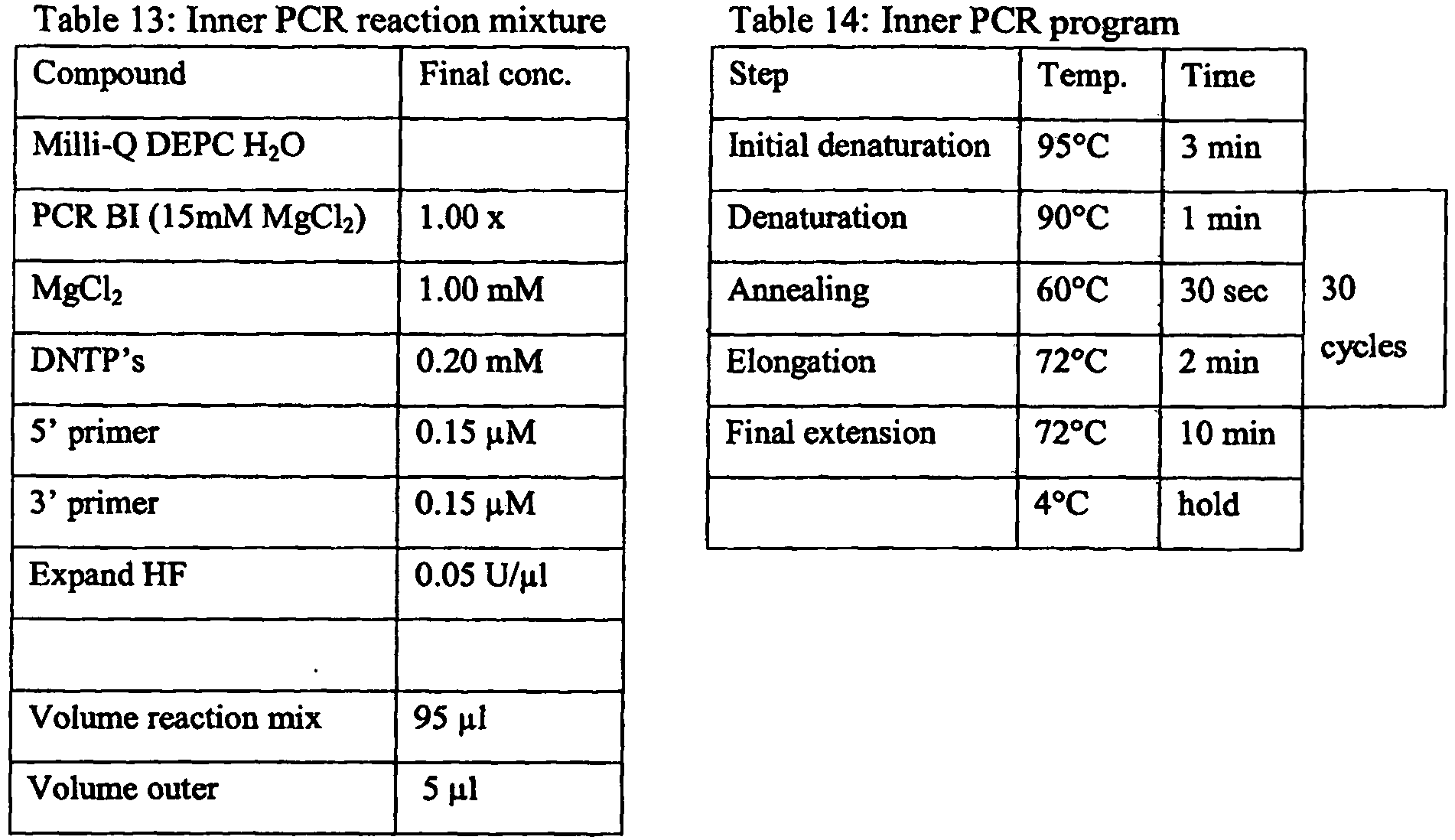
- To produce recombinant virus, the linearized vector pSV40HXB2DΔENV and the amplified env DNA, termed the env amplicon, were transfected by electroporation into MT4 cells or MT4 cells equipped with a LTR-reporter gene construct (MT4-rep). The normal MT4 cells may be used for the MTT-assay. The MT4 cells equipped with the LTR reporter gene, for example, have a reporter molecule, i.e. GFP under control of LTR.
- By homologous recombination between overlapping parts of the vector and the env amplicon, the HIV genome was reconstituted with a patient derived env region. Production of recombinant virus was evaluated by scoring the cytopathogenic effect (CPE) that normally is induced by HIV infection of MT4 cells or by the induced LTR-driven reporter signal in MT4-rep cells. The viruses were harvested and titrated at maximum CPE.
- Recombination was first performed between a wild type env amplicon HXB2D and several clones of the pSV40HXB2DΔENV vector in both MT4 and MT4-rep cells. Little difference was observed between the different pSV40HXB2DΔENV clones. Full CPE was yielded at
day 9 or 12. Results of these experiments are presented in Table 3. - The HXB2D wild-type laboratory strain above is T-tropic and uses the CXCR4 co-receptor to infect cells. In contrast, most clinical strains are M-tropic and use the CCR5 co-receptor, which may not be expressed in MT4 or MT4-rep cells. Therefore, recombination experiments with patient env amplicons were performed with both the MT4 and MT4-rep cell lines and with the PM-1 cell line, which expresses both co-receptors. No CPE was observed after HXB2D or patient derived env amplicon transfection of PM-1 cells. However, in MT4 cells,
Virco ID 133268, gave a strong reporter signal and a detectable but weak CPE. The titer of this sample was low. Transfection of the amplicon fromVirco ID 133268 in PM-1 also gave a positive signal and a low but sufficient titer upon titration in PM-1. Table 3 provides a summary of these results. - Homologous recombination between the patient derived env sequences and the env gene in the pSV40HXB2DΔENV vector can be avoided by cloning the patients' amplified env fragment into the SmaI I site of the vector. First, the vector was digested with SmaI I and dephosphorylated to prevent self-ligation. Patient derived env amplicons were then ligated into the vector after a similar SmaI I digestion. The resultant plasmid was used to transform competent E. coli cells. Colonies containing the correct env insert were identified and positive clones containing the patient fragment of Virco ID 133265 were obtained by this method. This clone was then transfected into PM-1 cells to produce recombinant virus particles.
Table 3. Overview env transfections Transfection Cell type Sample type Number Reporter activity CPE Titration TRF00049R&D MT4 HXB2D 13 NA - to ++ Low titer TRF00049R&D MT4 HXB2D 2 NA +++ OK TRF00049R&D MT4-rep HXB2D 6 +to++ + to++ Low titer TRF00049R&D MT4-rep HXB2D 8 ++ to +++ ++ to +++ OK TRF00058R&D MT4 4 patients 17 NA - ND TRF00058R&D MT4-rep 4 patients 17 +/- - ND TRF00063R&D MT4 HXB2D 21 NA +/- ND TRF00066R&D MT4-rep HXB2D 30 ND +/- ND TRF00069R&D MT4-rep HXB2D 15 ND +++* OK TRF00074R&D MT4-rep HXB2D 20 ND +++* OK TRF00076R&D MT4-rep HXB2D 4 ND ++ to +++* OK TRF00076R&D MT4-rep HXB2D 11 ND - ND TRF01012R&D MT4-rep HXB2D 1 +/- - Low titer TRF01012R&D MT4-rep HXB2D 1 +/- - OK TRF01012R&D MT4-rep 10 patients 10 +/- - Low titer TRF01012R&D PM-1 HXB2D 2 +/- - Low titer TRF01012R&D PM-1 9 patients 9 +/- - Low titer TRF01012R&D PM-1 133268 1 +++* + OK TRF01016R&D PM-1 HXB2D 2 +/- - Low titer TRF01016R&D PM-1 133268 1 ++ - Low titer TRF01016R&D PM-1 15 patients 15 +/- - Low titer Legend: NA: not applicable, ND: not determined, -: no infection, negative; +/-: few cells infected; +: 1/3 cell clusters is infected; ++: 2/3 cell clusters is infected; +++ almost all cell clusters are infected; +++* almost every cell is infected. TRF00083R&D: TRF means transfection, R&D Research & Development. - Transfection of the wild type HXB2D amplicon and pSV40HXB2DΔgp41 vector in MT4 cells reproducibly gave normal CPE and virus stocks with good titers. However, no CPE was observed in MT4 transfections with 15 patient samples. Transfection of MT4-rep cells with HXB2D resulted in a strong reporter signal, normal CPE and sufficient titer. The patient derived
sample Virco ID 133268 gave a strong reporter signal and CPE at 13 days after electroporation in MT4-rep cells.Table 4. Overview gp41 transfections experiments Transfection Cell type Sample type Number Reporter activity CPE Titration TRF00083R&D MT4 HXB2D 4 NA +++ OK TRF00083R&D MT4 1 patient 3 NA - Low titer TRF00086R&D MT4 HXB2D 5 NA +++* OK TRF00086R&D MT4 14 patients 14 NA - Low titer TRF01023R&D MT4-rep HXB2D 6 +++* +++* OK TRF01023R&D MT4- rep HXB2D 1 +/- - Low titer TRF01023R&D PM-1 HXB2D 1 +/- +/- Low titer TRF01023R&D MT4- rep 133268 3 + to +++ - to + Low titer TRF01023R&D MT4- rep 4 patients 4 +/- to + - to +/- Low titer TRF01023R&D PM-1 133268 1 +/- +/- Low titer TRF01023R&D PM-1 4 patients 4 +/- +/- Low titer Legend: NA: not applicable, -: no infection, negative; +/-: few cells infected; +: 1/3 cell clusters is infected; ++: 2/3 cell clusters is infected; +++ almost all cell clusters are infected; +++* almost every cell is infected. - To confirm that recombinant viruses were formed in MT4 and MT4-rep cells transfected with wild type and patient derived gp41 amplicons, RNA and genomic DNA from these cells was extracted from frozen, electroporated cells. The RNA was DNase treated to remove traces of the originally added vector and amplicon. RNA was also extracted from the supernatant of electroporated cells and DNase treated. The samples were reverse transcribed (for the RNA) and PCR amplified to detect the (gag-protease-reverse transcriptase, GPRT) GPRT region and the entire env region including both gp 120 and gp41 sections. The results are listed in table 5.
- The fact that the env region could be amplified from the transfected cells proved that recombination between the gp41 amplicon and the pSV40HXB2DΔgp41 vector occurred after electroporation of MT4 or MT4-rep cells. Furthermore, this experiment demonstrated that viral RNA was present in the cells and in the supernatant of electroporated cells and that viral DNA was integrated into the cellular DNA of the electroporated cells.
- As an alternative to homologous recombination between patient amplicons and the wild-type env sequence in the pSV40HXB2DΔgp41 vector, the patients' gp41 fragment was digested with SmaI I and ligated into the Smal I site of the pSV40HXB2DΔgp41 vector as described in Example 3 for the env sequence. Positive clones containing a gp41 insert in the correct orientation and a correct restriction pattern were obtained for the following Virco ID's: 133268, 133275, 133276, 142028 and 133266. Sequence analysis confirmed the correct ligation of the gp41 fragment in the vector for
clones Sample 133268 gave a weak positive reporter signal and no CPE. CPE and reporter signals were not observed for the other samples. All samples were negative in titration.Table 5. Detection of HIV sequences in cells and cell supernatant Sample ID Cells GPRT PCR Env PCR GPRT PCR Env PCR RNA Cells DNA cells 132121 MT4-rep + + + + 132125 MT4-rep + + + - 132149 MT4-rep + + + + HXB2D MT4-rep + + + + pHXB2D MT4-rep + + + + 132121 MT4 + - + - 132125 MT4 + - + - 132149 MT4 + + + + HXB2D MT4 + + + + pHXB2D MT4 + + + + RNA supernatant 132121 MT4-rep + + 132125 MT4-rep + + 132149 MT4-rep + + HXB2D MT4-rep + + pHXB2D MT4-rep + - 132121 MT4 +/- + 132125 MT4 + + 132149 MT4 + + HXB2D MT4 + - pHXB2D MT4 + + Legend: pHXB2D transfection (full circle with intact HXB2D) as positive control Table 6. List of gp41 cloning primers CLONING PRIMERS OLIGO NAME SEQ ID NO. MW MW Tm SEQUENCE (5'-3') 5'CP41-P SEQ ID NO: 48 24 7588.9 68.4 P-ACCAAGGCAAAGAGAAGAGTGGTG 3'CP41-P SEQ ID NO: 49 26 8081.0 61.1 P-TGTCTTATTCTTCTAGGTATGTGGMG 5'CPenv-P SEQ ID NO: 50 22 6781.2 68.4 P-ATACATTATTGTGCCCCGGCTG - To produce recombinant virus, the linearized wild type deletion vectors pSV40HXB2DΔRev-Env and pSV40HXBDΔTat-Rev-Env were co-transfected with the corresponding env sequences (Rev-Env and Tat-Rev-Env respectively) into MT4-reporter cells. Recombination was performed with wild type HXB2D sequences and yielded for both deletion constructs in full CPE at day 8 post transfection.
- See Example 2.
- The sequencing was started by first distributing 4µl of the primer stocks (4.0 µM) over a 96 well plate. In a second step, master mixes were made consisting of 14 µl deionized water, 17.5 µl dilution buffer, 7µl sample (PCR fragment) and 14 µl Big Dye™ Terminator Mix (Perkin Elmer). A fraction (7.5 µl) of each master mix, containing a specific PCR fragment, was transferred to a specific place into the 96 well plate so that each sample fraction was mixed with a different PCR primer set. Samples were pipetted across the rows. The samples were placed in a thermal cycler and sequencing cycles started, which consisted of 25 repetitive cycles of 10 sec at 96°C, 5 sec at 50°C and 4 min at 60°C, respectively. Finally, sequence reactions were held at 4°C or frozen until further analysis. The sequencing reactions were precipitated using a standard ethanol precipitation procedure, resuspended in 2 µl formamide and heated for 2 minutes at 92°C in the thermal cycler. Samples were cooled on ice until ready to load. 1 µl of each reaction was loaded on a 4.25% vertical acrylamide gel in a 377 sequencer system and gel was run until separation of the fragments was complete.
- Sample sequences were imported as a specific project into the sequence manager of Sequencher (Genecodes, Applied Biosystems) and compared to the wild type HXB2D env reference sequence. Sequences were assembled automatically and set at 85% minimum match. Secondary peaks were searched and the minimum was set at 60%. Any sequence that extended beyond the 5' end or the 3' end of the reference was deleted. When a region of overlap between sequences from the same strand was reached, the poorest quality of sequence was deleted leaving an overlap of 5-10 bases. Ambiguous base calls were considered poor matches to exact base calls. The sequence assembly was saved within a contig that could be edited.
- Obtained sequences were edited so that base calls could be interpreted easily. Ambiguous sequences were retrieved and checked for possible errors or points of heterogeneity. When the point of ambiguity appeared correct (both strands of sequence agreed but were different from the reference sequence) it was interpreted to be a variant. The reference sequence was used as an aid for building a contig and a guide to overall size and for trimming, but was not used for deciding base calls. A change was only made when both strands agreed. All gaps were deleted or filled, unless they occurred in contiguous groups of multiples of three (i.e., insertion or deletion of complete codons) based on data form both sequence strands. Once the editing was complete, the new contig sequence was saved as a consensus sequence and used for further analysis.
- Detailed sequence editing was performed following certain rules: A) Applied Biosystems, Inc. primer blocks were trimmed at 5' ends where 1 consecutive base remained off the scale, the sequence was trimmed not more than 25% until the first 25 bases contained less than 1 ambiguity, at least the first 10 bases from the 5' end were removed, and B) 3' ends were trimmed starting 300 bases after the 5' trim, the first 25 bases containing more than 2 ambiguities were removed, the 3' end was trimmed until the last 25 bases contained less than 1 ambiguity. The maximum length of the obtained sequence fragment after trimming was 550 bases.
- Sequences that failed to align were removed from the assembly and replaced by data retrieved from new sequence analyses. When further failures occurred, PCR reactions were repeated. Chromatograms were visualized using an IBM software system.
- The nucleotide sequence of gp41 was determined as described in section B of this example for Virco ID's 133268, 133275, 133276 and 142028. The gp41 primers of SEQ ID NO:24 - SEQ ID NO:31 were used. The alignment of the corresponding amino acid sequence with the HXB2D wild type amino acid sequence was obtained as described in this section and is presented in
Fig. 8 . -
- <110> Tibotec Pharmaceuticals Ltd.
- <120> Methods and means for assessing HIV envelope inhibitor therapy
- <130> TIP-0042-EPO seq listing
- <140>
<141> - <150>
EP 01203011.0
<151> 2001-08-08 - <150>
US 60/310497
<151> 2001-08-08 - <160> 62
- <170> PatentIn Ver. 2.1
- <210> 1
<211> 26
<222> DNA
<213> Human immunodeficiency virus - <400> 1
attctttccc ttacagcagg ccatcc 26 - <210> 2
<211> 22
<212> DNA
<213> Human immunodeficiency virus - <400> 2
gctcctactc cttctgctgc tg 22 - <210> 3
<211> 26
<212> DNA
<213> Human immunodeficiency virus - <400> 3
cttaaaggta cctgaggtct gactgg 26 - <210> 4
<211> 24
<212> DNA
<213> Human immunodeficiency virus - <400> 4
ggtgtgtagt tctgccaatc aggg 24 - <210> 5
<211> 28
<212> DNA
<213> Human immunodeficiency virus - <400> 5
caactggtac tagcttgaag cacaatcc 28 - <210> 6
<211> 27
<212> DNA
<213> Human immunodeficiency virus - <400> 6
cctaaagcca tgtgtaaagt taacccc 27 - <210> 7
<211> 24
<212> DNA
<213> Human immunodeficiency virus - <400> 7
ccattacaca ggcttgtcca aagg 24 - <210> 8
<211> 26
<212> DNA
<213> Human immunodeficiency virus - <400> 8
gcatgaggat ataatcagtt tatggg 26 - <210> 9
<211> 26
<212> DNA
<213> Human immunodeficiency virus - <400> 9
tgtaatacct cagtcattac acaggc 26 - <210> 10
<211> 27
<212> DNA
<213> Human immunodeficiency virus - <400> 10
gggatcaaag cctaaagcca tgtgtaa 27 - <210> 11
<211> 26
<212> DNA
<213> Human immunodeficiency virus - <400> 11
tgggtacctg tgtggaaaga agcaac 26 - <210> 12
<211> 25
<212> DNA
<213> Human immunodeficiency virus - <400> 12
gctcgggcca cacatgcctg tgtac 25 - <210> 13
<211> 25
<212> DNA
<213> Human immunodeficiency virus - <400> 13
cacacatgcc tgtgtaccca cagac 25 - <210> 14
<211> 27
<212> DNA
<213> Human immunodeficiency virus - <400> 14
gtgtggaaag aagcaaccac cactcta 27 - <210> 15
<211> 26
<212> DNA
<213> Human immunodeficiency virus - <400> 15
gtgggtcaca gtctattatg gggtac 26 - <210> 16
<211> 26
<212> DNA
<213> Human immunodeficiency virus - <400> 16
ccacagaccc caacccacaa gaagta 26 - <210> 17
<211> 27
<212> DNA
<213> Human immunodeficiency virus - <400> 17
cagaggtaca taatgtttgg gccacac 27 - <210> 18
<211> 23
<212> DNA
<213> Human immunodeficiency virus - <400> 18
cctcaggagg ggaccyagaa att 23 - <210> 19
<211> 26
<212> DNA
<213> Human immunodeficiency virus - <400> 19
ggamaagcaa tgtatgcccc tcccat 26 - <210> 20
<211> 24
<212> DNA
<213> Human immunodeficiency virus - <400> 20
cttcagacct ggaggaggag atat 24 - <210> 21
<211> 25
<212> DNA
<213> Human immunodeficiency virus - <400> 21
ggagatatga gggacaattg gagaa 25 - <210> 22
<211> 25
<212> DNA
<213> Human immunodeficiency virus - <400> 22
cctggaggag gagatatgag ggaca 25 - <210> 23
<211> 21
<212> DNA
<213> Human immunodeficiency virus - <400> 23
ccattaggag tagcacccacc 21 - <210> 24
<211> 18
<212> DNA
<213> Human immunodeficiency virus - <400> 24
gggacaattg gagaagtg 18 - <210> 25
<211> 19
<212> DNA
<213> Human immunodeficiency virus - <400> 25
gaatcgcaga accagcagg 19 - <210> 26
<211> 20
<212> DNA
<213> Human immunodeficiency virus - <400> 26
ccaattccac agacttgccc 20 - <210> 27
<211> 21
<212> DNA
<213> Human immunodeficiency virus - <400> 27
gctccaggca agagtcctggc 21 - <210> 28
<211> 22
<212> DNA
<213> Human immunodeficiency virus - <400> 28
gagttaggca gggatactcacc 22 - <210> 29
<211> 18
<212> DNA
<213> Human immunodeficiency virus - <400> 29
ctctccacct tcttcttc 18 - <210> 30
<211> 26
<212> DNA
<213> Human immunodeficiency virus - <400> 30
gcagatgagt tttccagagc agcccc 26 - <210> 31
<211> 20
<212> DNA
<213> Human immunodeficiency virus - <400> 31
ctttttgacc acttgccacc 20 - <210> 32
<211> 27
<212> DNA
<213> Human immunodeficiency virus - <400> 32
gggaactggc tcaaaggata cctttgg 27 - <210> 33
<211> 30
<212> DNA
<213> Human immunodeficiency virus - <400> 33
gggatcctgc agcccgggct tggaaaggcc 30 - <210> 34
<211> 24
<212> DNA
<213> Human immunodeficiency virus - <400> 34
gggtgctact actaatggtt caat 24 - <210> 35
<211> 23
<212> DNA
<213> Human immunodeficiency virus - <400> 35
atacattatt gtgcaccggc tgg 23 - <210> 36
<211> 21
<212> DNA
<213> Human immunodeficiency virus - <400> 36
gggtgctact cctaatggttc 21 - <210> 37
<211> 28
<212> DNA
<213> Human immunodeficiency virus - <400> 37
gggatctagt ctaggatcta ctggctcc 28 - <210> 38
<211> 36
<212> DNA
<213> Human immunodeficiency virus - <400> 38
ggatcctgca gcccgggtgg caagtggtca aaaagt 36 - <210> 39
<211> 28
<212> DNA
<213> Human immunodeficiency virus - <400> 39
ggggcttgtt ccatctatcc tctgtcag 28 - <210> 40
<211> 24
<212> DNA
<213> Human immunodeficiency virus - <400> 40
ttgggtgtca acatagcaga atag 24 - <210> 41
<211> 24
<212> DNA
<213> Human immunodeficiency virus - <400> 41
ctgtttattc attttcagaa ttgg 24 - <210> 42
<211> 25
<212> DNA
<213> Human immunodeficiency virus - <400> 42
ctatgaaact tatggggata cttgg 25 - <210> 43
<211> 23
<212> DNA
<213> Human immunodeficiency virus - <400> 43
gctccatggc ttaggacaac ata 23 - <210> 44
<211> 24
<212> DNA
<213> Human immunodeficiency virus - <400> 44
agataaagcc acctttgcct agtg 24 - <210> 45
<211> 24
<212> DNA
<213> Human immunodeficiency virus - <400> 45
gacataacaa ggtaggatct ctac 24 - <210> 46
<211> 24
<212> DNA
<213> Human immunodeficiency virus - <400> 46
atcaagcagg acataacaag gtag 24 - <210> 47
<211> 21
<212> DNA
<213> Human immunodeficiency virus - <400> 47
gcagaccaac taattcatctg 21 - <210> 48
<211> 24
<212> DNA
<213> Human immunodeficiency virus - <400> 48
accaaggcaa agagaagagt ggtg 24 - <210> 49
<211> 26
<212> DNA
<213> Human immunodeficiency virus - <400> 49
tgtcttattc ttctaggtat gtggmg 26 - <210> 50
<211> 22
<212> DNA
<213> Human immunodeficiency virus - <400> 50
atacattatt gtgccccggc tg 22 - <210> 51
<211> 18
<212> DNA
<213> Human immunodeficiency virus - <400> 51
atgctccttg ggatgttg 18 - <210> 52
<211> 18
<212> DNA
<213> Human immunodeficiency virus - <400> 52
aaccccactc tgtgttag 18 - <210> 53
<211> 20
<212> DNA
<213> Human immunodeficiency virus - <400> 53
cccatacatt attgtgcccc 20 - <210> 54
<211> 18
<212> DNA
<213> Human immunodeficiency virus - <400> 54
gttttaaccg tggagggg 18 - <210> 55
<211> 18
<212> DNA
<213> Human immunodeficiency virus - <400> 55
gtgcttcctg ctgctccc 18 - <210> 56
<211> 18
<212> DNA
<213> Human immunodeficiency virus - <400> 56
ggcatacatt gcttttcc 18 - <210> 57
<211> 20
<212> DNA
<213> Human immunodeficiency virus - <400> 57
ggggcacaat aatgtatggg 20 - <210> 58
<211> 359
<212> PRT
<213> Human immunodeficiency virus - <400> 58


- <210> 59
<211> 360
<212 PRT
<213> Human immunodeficiency virus - <400> 59


- <210> 60
<211> 360
<212> PRT
<213> Human immunodeficiency virus - <400> 60


- <210> 61
<211> 360
<212> PRT
<213> Human immunodeficiency virus - <400> 61


- <210> 62
<211> 359
<212> PRT
<213> Human immunodeficiency virus - <400> 62


Claims (9)
- A method for determining the susceptibility of at least one human immunodeficiency virus to at least one drug, comprising:i) obtaining at least one sample comprising HIV RNA or DNA wherein the sample has been previously collected from an HIV infected patient and wherein the sample comprises at least one env gene or a portion thereof;ii) reverse-transcribing and amplifying the HIV RNA, or amplifying the HIV DNA, with primers specific for env region of the HIV genome, to obtain at least one amplicon comprising the at least one env gene or a portion thereof;iii) using nucleic acid amplification to generate at least one plasmid containing the wild-type HIV sequence with a deletion in the env region of the HIV genome;iv) homologously recombining or ligating the at least one amplicon with the at least one plasmid comprising the wild-type HIV sequence with a deletion in the env region of the HIV genome, to prepare at least one recombinant virus; andv) monitoring the at least one recombinant virus in the presence of the at least one drug to determine the phenotypic susceptibility.characterized in that a primer is selected from SEQ ID NO. 1-23 and 32-50.
- A method according to claim 1 wherein the susceptibility of at least one human immunodeficiency virus to at least one drug is determined by the replicative capacity of the at least one recombinant virus in the presence of the at least one drug compared to the replicative capacity of an HIV virus with a wild-type env gene sequence in the presence of the same at least one drug.
- A method according to claims 1 and 2 for designing a treatment regimen for an HIV infected patient, wherein the treatment regimen is selected based on the replicative capacity of the at least one recombinant virus in the presence of the at least one drug.
- A method of identifying a drug effective against HIV envelope comprising: obtaining at least one HIV envelope sequence or a portion thereof, determining the phenotypic susceptibility of the envelope towards said drug, use said phenotypic susceptibility to determine the effectiveness of said drug.
- A method for determining the susceptibility of at least one human immunodeficiency virus to at least one drug, comprising:i) obtaining at least one sample comprising HIV RNA or DNA wherein the sample has been previously collected from an HIV infected patient and wherein the sample comprises at least one env gene or a portion thereof;ii) reverse-transcribing and amplifying the HIV RNA, or amplifying the HIV DNA, with primers specific for the env region of the HIV genome, to obtain at least one amplicon comprising the env gene or a portion thereof;iii) determining the nucleotide sequence of the at least one amplicon or a portion thereof; andiv) comparing the nucleotide sequence of the at least one amplicon or portion thereof to the sequence of known sequences, to determine the susceptibility.
- A method of identifying a drug effective against HIV envelope comprising: obtaining at least one HIV envelope sequence or a portion thereof, determining the sequence of said HIV envelope, comparing said sequence with sequences present in a database of which the phenotypic susceptibility has been determined, using said sequence comparison to determine the effectiveness of said drug.
- A method of constructing a genotypic and phenotypic database of env sequences or portions thereof, comprising:i) obtaining samples comprising HIV RNA or DNA wherein the sample has been previously collected from an HIV infected patient and wherein the samples comprise the env gene or portions thereof;ii) reverse-transcribing and amplifying the HIV RNA, or amplifying the HIV DNA, with primers specific for the env region of the HIV genome, to obtain amplicons comprising the env gene or portions thereof;iii) determining the nucleotide sequence of the amplicons or portions thereof;iv) using nucleic acid amplification to generate plasmids containing the wild-type HIV sequence with a deletion in the env region of the HIV genome;v) homologously recombining or ligating the amplicons with the plasmids comprising the wild-type HIV sequence with a deletion in the env region of the HIV genome, to prepare recombinant viruses;vi) determining the replicative capacity of the recombinant viruses in the presence of anti-HIV drugs by comparing the replicative capacity of the recombinant HIV viruses with the replicative capacity of a wild-type env gene sequence;vii) correlating the nucleotide sequence and relative replicative capacity in a data table.
- A method according to any of claims 1 to 3 and 7 characterized in that the plasmid generated using amplification comprises a deleted HIV envelope gene of at least 500 bp.
- A method according to any of claims 5 to 7 characterized in that a primer is selected from SEQ ID No. 1-57.
Priority Applications (1)
| Application Number | Priority Date | Filing Date | Title |
|---|---|---|---|
| EP02078298.3A EP1283272B1 (en) | 2001-08-08 | 2002-08-08 | Methods and means for assessing HIV envelope inhibitor therapy |
Applications Claiming Priority (5)
| Application Number | Priority Date | Filing Date | Title |
|---|---|---|---|
| US31049701P | 2001-08-08 | 2001-08-08 | |
| EP01203011 | 2001-08-08 | ||
| US310497P | 2001-08-08 | ||
| EP01203011 | 2001-08-08 | ||
| EP02078298.3A EP1283272B1 (en) | 2001-08-08 | 2002-08-08 | Methods and means for assessing HIV envelope inhibitor therapy |
Publications (3)
| Publication Number | Publication Date |
|---|---|
| EP1283272A2 EP1283272A2 (en) | 2003-02-12 |
| EP1283272A3 EP1283272A3 (en) | 2004-02-25 |
| EP1283272B1 true EP1283272B1 (en) | 2013-11-13 |
Family
ID=27838009
Family Applications (1)
| Application Number | Title | Priority Date | Filing Date |
|---|---|---|---|
| EP02078298.3A Expired - Lifetime EP1283272B1 (en) | 2001-08-08 | 2002-08-08 | Methods and means for assessing HIV envelope inhibitor therapy |
Country Status (2)
| Country | Link |
|---|---|
| US (1) | US7306901B2 (en) |
| EP (1) | EP1283272B1 (en) |
Families Citing this family (13)
| Publication number | Priority date | Publication date | Assignee | Title |
|---|---|---|---|---|
| US20090317798A1 (en) * | 2005-06-02 | 2009-12-24 | Heid Christian A | Analysis using microfluidic partitioning devices |
| WO2007065926A1 (en) * | 2005-12-07 | 2007-06-14 | Tibotec Pharmaceuticals Ltd. | Methods, plasmid vectors and primers for assessing hiv viral fitness |
| WO2010083250A2 (en) * | 2009-01-13 | 2010-07-22 | Fluidigm Corporation | Single-cell nucleic acid analysis |
| AU2010247444A1 (en) * | 2009-05-12 | 2011-11-24 | Virco Bvba | HIV-1-C resistance monitoring |
| WO2011119920A2 (en) | 2010-03-25 | 2011-09-29 | Oregon Health & Science University | Cmv glycoproteins and recombinant vectors |
| SMT201800284T1 (en) | 2011-06-10 | 2018-07-17 | Univ Oregon Health & Science | Cmv glycoproteins and recombinant vectors |
| EP2568289A3 (en) | 2011-09-12 | 2013-04-03 | International AIDS Vaccine Initiative | Immunoselection of recombinant vesicular stomatitis virus expressing hiv-1 proteins by broadly neutralizing antibodies |
| US9840732B2 (en) | 2012-05-21 | 2017-12-12 | Fluidigm Corporation | Single-particle analysis of particle populations |
| ES2631608T3 (en) | 2012-06-27 | 2017-09-01 | International Aids Vaccine Initiative | Env-glycoprotein variant of HIV-1 |
| EP2848937A1 (en) | 2013-09-05 | 2015-03-18 | International Aids Vaccine Initiative | Methods of identifying novel HIV-1 immunogens |
| EP2873423B1 (en) | 2013-10-07 | 2017-05-31 | International Aids Vaccine Initiative | Soluble hiv-1 envelope glycoprotein trimers |
| US10174292B2 (en) | 2015-03-20 | 2019-01-08 | International Aids Vaccine Initiative | Soluble HIV-1 envelope glycoprotein trimers |
| US9931394B2 (en) | 2015-03-23 | 2018-04-03 | International Aids Vaccine Initiative | Soluble HIV-1 envelope glycoprotein trimers |
Family Cites Families (8)
| Publication number | Priority date | Publication date | Assignee | Title |
|---|---|---|---|---|
| EP0361749B1 (en) | 1988-09-27 | 1995-02-08 | Dana Farber Cancer Institute | A vector comprising a replication competent HIV-I provirus and a heterologous gene |
| WO1994017825A1 (en) * | 1993-02-05 | 1994-08-18 | The Regents Of The University Of California | Multiple-gene mutants of human immunodeficiency virus (hiv) for vaccine use |
| ES2177922T3 (en) * | 1996-01-26 | 2002-12-16 | Virco Bvba | METHOD OF ASSESSMENT CHEMOTHERAPY OF HIV-POSITIVE PATIENTS BASED ON PHENOTYTIC SENSITIVITY TO PHARMACOS OF THE DELIVERY HIV STEMS. |
| IT1312061B1 (en) | 1999-04-09 | 2002-04-04 | Diapharm Ltd | NUCLEOTIDAL SEQUENCE FOR THE REVELATION AND CHARACTERIZATION OF HIV-1 HOSPITALS THAT PARTICIPATE IN THE PROCESSES OF |
| GB9909793D0 (en) | 1999-04-28 | 1999-06-23 | Glaxo Group Ltd | Improved assay and reagents therefor |
| WO2000073511A1 (en) * | 1999-05-28 | 2000-12-07 | Virco Nv | New mutational profiles in hiv-1 reverse transcriptase correlated with phenotypic drug resistance |
| AU2001233513A1 (en) | 2000-02-04 | 2001-08-14 | K.U. Leuven Research And Development | Hiv-1 resistance assay |
| AU2305202A (en) * | 2000-11-10 | 2002-05-21 | Bioalliance Pharma | Novel method for analysing phenotypic characteristics of human immunodeficiency virus (hiv) |
-
2002
- 2002-08-08 US US10/214,670 patent/US7306901B2/en not_active Expired - Lifetime
- 2002-08-08 EP EP02078298.3A patent/EP1283272B1/en not_active Expired - Lifetime
Also Published As
| Publication number | Publication date |
|---|---|
| US20030180715A1 (en) | 2003-09-25 |
| EP1283272A2 (en) | 2003-02-12 |
| EP1283272A3 (en) | 2004-02-25 |
| US7306901B2 (en) | 2007-12-11 |
Similar Documents
| Publication | Publication Date | Title |
|---|---|---|
| US6958211B2 (en) | Methods of assessing HIV integrase inhibitor therapy | |
| EP2126137B1 (en) | Method for designing a drug regime for hiv-infected patients | |
| Kellam et al. | Retroviral recombination can lead to linkage of reverse transcriptase mutations that confer increased zidovudine resistance | |
| Courcoul et al. | Peripheral blood mononuclear cells produce normal amounts of defective Vif-human immunodeficiency virus type 1 particles which are restricted for the preretrotranscription steps | |
| Milich et al. | V3 loop of the human immunodeficiency virus type 1 Env protein: interpreting sequence variability | |
| Cornelissen et al. | Human immunodeficiency virus type 1 subtypes defined by env show high frequency of recombinant gag genes. The UNAIDS Network for HIV Isolation and Characterization | |
| St. Louis et al. | Infectious molecular clones with the nonhomologous dimer initiation sequences found in different subtypes of human immunodeficiency virus type 1 can recombine and initiate a spreading infection in vitro | |
| US7306901B2 (en) | Methods and means for assessing HIV envelope inhibitor therapy | |
| Huang et al. | Characterization ofgagandpolSequences from Long-Term Survivors of Human Immunodeficiency Virus Type 1 Infection | |
| Shchemelev et al. | Genetic diversity of the human immunodeficiency virus (HIV-1) in the Kaliningrad region | |
| EP1960554B1 (en) | Methods, plasmid vectors and primers for assessing hiv viral fitness | |
| EP1285971B1 (en) | Methods for the phenotypic and genotypic assessment of the drug sensitivity of HIV integrase variants | |
| US20120064514A1 (en) | Hiv-1-c resistance monitoring | |
| Ramakrishnan et al. | Evaluations of HIV type 1 rev gene diversity and functional domains following perinatal transmission | |
| Marty et al. | Adapting the geno2pheno [coreceptor] tool to HIV-1 subtype CRF01_AE by phenotypic validation using clinical isolates from South-East Asia | |
| Valli et al. | Shortening of the symptom-free period in rhesus macaques is associated with decreasing nonsynonymous variation in the env variable regions of simian immunodeficiency virus SIVsm during passage | |
| Oliveira et al. | Enfuvirtide (T-20) resistance-related mutations in HIV type 1 subtypes B, C, and F isolates from Brazilian patients failing HAART | |
| Tirado et al. | Evolution of SIV envelope in morphine-dependent rhesus macaques with rapid disease progression | |
| Kanizsai et al. | Monitoring of drug resistance in therapy-naive HIV infected patients and detection of African HIV subtypes in Hungary | |
| EP1390380B1 (en) | Methods and primers for evaluating hiv-1 mutations | |
| Gillman et al. | EZ-DMS–A Simple and Accessible Protocol and Software Package for Deep Mutational Scanning of Virus Proteins | |
| Hendricks | Dynamics of HIV Reservoirs During Sequential ATI | |
| und medikamentöse Resistenz et al. | Genetic diversity and baseline drug resistance of South African HIV-1 Integrase sequences prior to the availability of Integrase strand-transfer inhibitors | |
| JP2023534968A (en) | Methods and compositions for efficiency and specificity of CRISPR/CAS9 guide RNA against genetically diverse HIV-1 isolates | |
| Bircher et al. | High fidelity of homologous retroviral recombination in cell culture |
Legal Events
| Date | Code | Title | Description |
|---|---|---|---|
| PUAI | Public reference made under article 153(3) epc to a published international application that has entered the european phase |
Free format text: ORIGINAL CODE: 0009012 |
|
| AK | Designated contracting states |
Designated state(s): AT BE BG CH CY CZ DE DK EE ES FI FR GB GR IE IT LI LU MC NL PT SE SK TR |
|
| AX | Request for extension of the european patent |
Extension state: AL LT LV MK RO SI |
|
| PUAL | Search report despatched |
Free format text: ORIGINAL CODE: 0009013 |
|
| AK | Designated contracting states |
Kind code of ref document: A3 Designated state(s): AT BE BG CH CY CZ DE DK EE ES FI FR GB GR IE IT LI LU MC NL PT SE SK TR |
|
| AX | Request for extension of the european patent |
Extension state: AL LT LV MK RO SI |
|
| 17P | Request for examination filed |
Effective date: 20040825 |
|
| 17Q | First examination report despatched |
Effective date: 20041001 |
|
| AKX | Designation fees paid |
Designated state(s): AT BE BG CH CY CZ DE DK EE ES FI FR GB GR IE IT LI LU MC NL PT SE SK TR |
|
| RAP1 | Party data changed (applicant data changed or rights of an application transferred) |
Owner name: TIBOTEC PHARMACEUTICALS LTD. |
|
| 17Q | First examination report despatched |
Effective date: 20041001 |
|
| TPAC | Observations filed by third parties |
Free format text: ORIGINAL CODE: EPIDOSNTIPA |
|
| RAP1 | Party data changed (applicant data changed or rights of an application transferred) |
Owner name: TIBOTEC PHARMACEUTICALS |
|
| RAP1 | Party data changed (applicant data changed or rights of an application transferred) |
Owner name: JANSSEN R&D IRELAND |
|
| REG | Reference to a national code |
Ref country code: DE Ref legal event code: R079 Ref document number: 60245760 Country of ref document: DE Free format text: PREVIOUS MAIN CLASS: C12Q0001700000 Ipc: C07K0014005000 |
|
| GRAP | Despatch of communication of intention to grant a patent |
Free format text: ORIGINAL CODE: EPIDOSNIGR1 |
|
| RIC1 | Information provided on ipc code assigned before grant |
Ipc: G06F 19/16 20110101ALI20130515BHEP Ipc: G01N 33/50 20060101ALI20130515BHEP Ipc: C12Q 1/02 20060101ALI20130515BHEP Ipc: C07K 14/005 20060101AFI20130515BHEP Ipc: C12Q 1/70 20060101ALI20130515BHEP |
|
| INTG | Intention to grant announced |
Effective date: 20130607 |
|
| GRAS | Grant fee paid |
Free format text: ORIGINAL CODE: EPIDOSNIGR3 |
|
| GRAA | (expected) grant |
Free format text: ORIGINAL CODE: 0009210 |
|
| AK | Designated contracting states |
Kind code of ref document: B1 Designated state(s): AT BE BG CH CY CZ DE DK EE ES FI FR GB GR IE IT LI LU MC NL PT SE SK TR |
|
| REG | Reference to a national code |
Ref country code: GB Ref legal event code: FG4D |
|
| REG | Reference to a national code |
Ref country code: DE Ref legal event code: R081 Ref document number: 60245760 Country of ref document: DE Owner name: JANSSEN SCIENCES IRELAND UC, LITTLE ISLAND, IE Free format text: FORMER OWNER: TIBOTEC PHARMACEUTICALS LTD., BLANCHARDSTOWN, DUBLIN, IE |
|
| REG | Reference to a national code |
Ref country code: CH Ref legal event code: EP |
|
| REG | Reference to a national code |
Ref country code: AT Ref legal event code: REF Ref document number: 640551 Country of ref document: AT Kind code of ref document: T Effective date: 20131215 |
|
| REG | Reference to a national code |
Ref country code: IE Ref legal event code: FG4D |
|
| REG | Reference to a national code |
Ref country code: DE Ref legal event code: R096 Ref document number: 60245760 Country of ref document: DE Effective date: 20140109 |
|
| REG | Reference to a national code |
Ref country code: NL Ref legal event code: VDEP Effective date: 20131113 |
|
| REG | Reference to a national code |
Ref country code: AT Ref legal event code: MK05 Ref document number: 640551 Country of ref document: AT Kind code of ref document: T Effective date: 20131113 |
|
| PG25 | Lapsed in a contracting state [announced via postgrant information from national office to epo] |
Ref country code: FI Free format text: LAPSE BECAUSE OF FAILURE TO SUBMIT A TRANSLATION OF THE DESCRIPTION OR TO PAY THE FEE WITHIN THE PRESCRIBED TIME-LIMIT Effective date: 20131113 Ref country code: NL Free format text: LAPSE BECAUSE OF FAILURE TO SUBMIT A TRANSLATION OF THE DESCRIPTION OR TO PAY THE FEE WITHIN THE PRESCRIBED TIME-LIMIT Effective date: 20131113 Ref country code: SE Free format text: LAPSE BECAUSE OF FAILURE TO SUBMIT A TRANSLATION OF THE DESCRIPTION OR TO PAY THE FEE WITHIN THE PRESCRIBED TIME-LIMIT Effective date: 20131113 |
|
| PG25 | Lapsed in a contracting state [announced via postgrant information from national office to epo] |
Ref country code: CY Free format text: LAPSE BECAUSE OF FAILURE TO SUBMIT A TRANSLATION OF THE DESCRIPTION OR TO PAY THE FEE WITHIN THE PRESCRIBED TIME-LIMIT Effective date: 20131113 Ref country code: AT Free format text: LAPSE BECAUSE OF FAILURE TO SUBMIT A TRANSLATION OF THE DESCRIPTION OR TO PAY THE FEE WITHIN THE PRESCRIBED TIME-LIMIT Effective date: 20131113 Ref country code: ES Free format text: LAPSE BECAUSE OF FAILURE TO SUBMIT A TRANSLATION OF THE DESCRIPTION OR TO PAY THE FEE WITHIN THE PRESCRIBED TIME-LIMIT Effective date: 20131113 |
|
| PG25 | Lapsed in a contracting state [announced via postgrant information from national office to epo] |
Ref country code: PT Free format text: LAPSE BECAUSE OF FAILURE TO SUBMIT A TRANSLATION OF THE DESCRIPTION OR TO PAY THE FEE WITHIN THE PRESCRIBED TIME-LIMIT Effective date: 20140313 |
|
| PG25 | Lapsed in a contracting state [announced via postgrant information from national office to epo] |
Ref country code: EE Free format text: LAPSE BECAUSE OF FAILURE TO SUBMIT A TRANSLATION OF THE DESCRIPTION OR TO PAY THE FEE WITHIN THE PRESCRIBED TIME-LIMIT Effective date: 20131113 |
|
| REG | Reference to a national code |
Ref country code: DE Ref legal event code: R097 Ref document number: 60245760 Country of ref document: DE |
|
| PG25 | Lapsed in a contracting state [announced via postgrant information from national office to epo] |
Ref country code: SK Free format text: LAPSE BECAUSE OF FAILURE TO SUBMIT A TRANSLATION OF THE DESCRIPTION OR TO PAY THE FEE WITHIN THE PRESCRIBED TIME-LIMIT Effective date: 20131113 Ref country code: CZ Free format text: LAPSE BECAUSE OF FAILURE TO SUBMIT A TRANSLATION OF THE DESCRIPTION OR TO PAY THE FEE WITHIN THE PRESCRIBED TIME-LIMIT Effective date: 20131113 |
|
| PLBE | No opposition filed within time limit |
Free format text: ORIGINAL CODE: 0009261 |
|
| STAA | Information on the status of an ep patent application or granted ep patent |
Free format text: STATUS: NO OPPOSITION FILED WITHIN TIME LIMIT |
|
| PG25 | Lapsed in a contracting state [announced via postgrant information from national office to epo] |
Ref country code: DK Free format text: LAPSE BECAUSE OF FAILURE TO SUBMIT A TRANSLATION OF THE DESCRIPTION OR TO PAY THE FEE WITHIN THE PRESCRIBED TIME-LIMIT Effective date: 20131113 |
|
| 26N | No opposition filed |
Effective date: 20140814 |
|
| REG | Reference to a national code |
Ref country code: DE Ref legal event code: R097 Ref document number: 60245760 Country of ref document: DE Effective date: 20140814 |
|
| PG25 | Lapsed in a contracting state [announced via postgrant information from national office to epo] |
Ref country code: LU Free format text: LAPSE BECAUSE OF FAILURE TO SUBMIT A TRANSLATION OF THE DESCRIPTION OR TO PAY THE FEE WITHIN THE PRESCRIBED TIME-LIMIT Effective date: 20140808 Ref country code: MC Free format text: LAPSE BECAUSE OF FAILURE TO SUBMIT A TRANSLATION OF THE DESCRIPTION OR TO PAY THE FEE WITHIN THE PRESCRIBED TIME-LIMIT Effective date: 20131113 |
|
| PG25 | Lapsed in a contracting state [announced via postgrant information from national office to epo] |
Ref country code: IT Free format text: LAPSE BECAUSE OF FAILURE TO SUBMIT A TRANSLATION OF THE DESCRIPTION OR TO PAY THE FEE WITHIN THE PRESCRIBED TIME-LIMIT Effective date: 20131113 |
|
| REG | Reference to a national code |
Ref country code: IE Ref legal event code: MM4A |
|
| REG | Reference to a national code |
Ref country code: FR Ref legal event code: PLFP Year of fee payment: 14 |
|
| PG25 | Lapsed in a contracting state [announced via postgrant information from national office to epo] |
Ref country code: IE Free format text: LAPSE BECAUSE OF NON-PAYMENT OF DUE FEES Effective date: 20140808 |
|
| REG | Reference to a national code |
Ref country code: DE Ref legal event code: R081 Ref document number: 60245760 Country of ref document: DE Owner name: JANSSEN SCIENCES IRELAND UC, LITTLE ISLAND, IE Free format text: FORMER OWNER: JANSSEN R&D IRELAND, EASTEGATE VILLAGE, LITTLE ISLAND, IE |
|
| REG | Reference to a national code |
Ref country code: FR Ref legal event code: TP Owner name: JANSSEN SCIENCES IRELAND UC, IE Effective date: 20160120 |
|
| PG25 | Lapsed in a contracting state [announced via postgrant information from national office to epo] |
Ref country code: BG Free format text: LAPSE BECAUSE OF FAILURE TO SUBMIT A TRANSLATION OF THE DESCRIPTION OR TO PAY THE FEE WITHIN THE PRESCRIBED TIME-LIMIT Effective date: 20131113 |
|
| PG25 | Lapsed in a contracting state [announced via postgrant information from national office to epo] |
Ref country code: GR Free format text: LAPSE BECAUSE OF FAILURE TO SUBMIT A TRANSLATION OF THE DESCRIPTION OR TO PAY THE FEE WITHIN THE PRESCRIBED TIME-LIMIT Effective date: 20140214 |
|
| REG | Reference to a national code |
Ref country code: FR Ref legal event code: PLFP Year of fee payment: 15 |
|
| PG25 | Lapsed in a contracting state [announced via postgrant information from national office to epo] |
Ref country code: TR Free format text: LAPSE BECAUSE OF FAILURE TO SUBMIT A TRANSLATION OF THE DESCRIPTION OR TO PAY THE FEE WITHIN THE PRESCRIBED TIME-LIMIT Effective date: 20131113 |
|
| REG | Reference to a national code |
Ref country code: CH Ref legal event code: PUE Owner name: JANSSEN SCIENCES IRELAND UC, IE Free format text: FORMER OWNER: JANSSEN R&D IRELAND, IE |
|
| REG | Reference to a national code |
Ref country code: GB Ref legal event code: 732E Free format text: REGISTERED BETWEEN 20170105 AND 20170111 |
|
| REG | Reference to a national code |
Ref country code: FR Ref legal event code: PLFP Year of fee payment: 16 |
|
| REG | Reference to a national code |
Ref country code: FR Ref legal event code: PLFP Year of fee payment: 17 |
|
| PGFP | Annual fee paid to national office [announced via postgrant information from national office to epo] |
Ref country code: DE Payment date: 20190723 Year of fee payment: 18 Ref country code: FR Payment date: 20190711 Year of fee payment: 18 |
|
| PGFP | Annual fee paid to national office [announced via postgrant information from national office to epo] |
Ref country code: BE Payment date: 20190716 Year of fee payment: 18 |
|
| PGFP | Annual fee paid to national office [announced via postgrant information from national office to epo] |
Ref country code: GB Payment date: 20190808 Year of fee payment: 18 |
|
| PGFP | Annual fee paid to national office [announced via postgrant information from national office to epo] |
Ref country code: CH Payment date: 20190819 Year of fee payment: 18 |
|
| REG | Reference to a national code |
Ref country code: DE Ref legal event code: R119 Ref document number: 60245760 Country of ref document: DE |
|
| REG | Reference to a national code |
Ref country code: CH Ref legal event code: PL |
|
| GBPC | Gb: european patent ceased through non-payment of renewal fee |
Effective date: 20200808 |
|
| PG25 | Lapsed in a contracting state [announced via postgrant information from national office to epo] |
Ref country code: CH Free format text: LAPSE BECAUSE OF NON-PAYMENT OF DUE FEES Effective date: 20200831 Ref country code: LI Free format text: LAPSE BECAUSE OF NON-PAYMENT OF DUE FEES Effective date: 20200831 |
|
| REG | Reference to a national code |
Ref country code: BE Ref legal event code: MM Effective date: 20200831 |
|
| PG25 | Lapsed in a contracting state [announced via postgrant information from national office to epo] |
Ref country code: FR Free format text: LAPSE BECAUSE OF NON-PAYMENT OF DUE FEES Effective date: 20200831 Ref country code: DE Free format text: LAPSE BECAUSE OF NON-PAYMENT OF DUE FEES Effective date: 20210302 |
|
| PG25 | Lapsed in a contracting state [announced via postgrant information from national office to epo] |
Ref country code: BE Free format text: LAPSE BECAUSE OF NON-PAYMENT OF DUE FEES Effective date: 20200831 Ref country code: GB Free format text: LAPSE BECAUSE OF NON-PAYMENT OF DUE FEES Effective date: 20200808 |