EP1283266A1 - Transformant and process for producing polyester by using the same - Google Patents
Transformant and process for producing polyester by using the same Download PDFInfo
- Publication number
- EP1283266A1 EP1283266A1 EP01930202A EP01930202A EP1283266A1 EP 1283266 A1 EP1283266 A1 EP 1283266A1 EP 01930202 A EP01930202 A EP 01930202A EP 01930202 A EP01930202 A EP 01930202A EP 1283266 A1 EP1283266 A1 EP 1283266A1
- Authority
- EP
- European Patent Office
- Prior art keywords
- gene
- polyester
- transformant
- derived
- yeast
- Prior art date
- Legal status (The legal status is an assumption and is not a legal conclusion. Google has not performed a legal analysis and makes no representation as to the accuracy of the status listed.)
- Withdrawn
Links
Images


Classifications
-
- C—CHEMISTRY; METALLURGY
- C12—BIOCHEMISTRY; BEER; SPIRITS; WINE; VINEGAR; MICROBIOLOGY; ENZYMOLOGY; MUTATION OR GENETIC ENGINEERING
- C12N—MICROORGANISMS OR ENZYMES; COMPOSITIONS THEREOF; PROPAGATING, PRESERVING, OR MAINTAINING MICROORGANISMS; MUTATION OR GENETIC ENGINEERING; CULTURE MEDIA
- C12N9/00—Enzymes; Proenzymes; Compositions thereof; Processes for preparing, activating, inhibiting, separating or purifying enzymes
- C12N9/93—Ligases (6)
-
- C—CHEMISTRY; METALLURGY
- C12—BIOCHEMISTRY; BEER; SPIRITS; WINE; VINEGAR; MICROBIOLOGY; ENZYMOLOGY; MUTATION OR GENETIC ENGINEERING
- C12N—MICROORGANISMS OR ENZYMES; COMPOSITIONS THEREOF; PROPAGATING, PRESERVING, OR MAINTAINING MICROORGANISMS; MUTATION OR GENETIC ENGINEERING; CULTURE MEDIA
- C12N15/00—Mutation or genetic engineering; DNA or RNA concerning genetic engineering, vectors, e.g. plasmids, or their isolation, preparation or purification; Use of hosts therefor
- C12N15/09—Recombinant DNA-technology
- C12N15/11—DNA or RNA fragments; Modified forms thereof; Non-coding nucleic acids having a biological activity
- C12N15/52—Genes encoding for enzymes or proenzymes
-
- C—CHEMISTRY; METALLURGY
- C12—BIOCHEMISTRY; BEER; SPIRITS; WINE; VINEGAR; MICROBIOLOGY; ENZYMOLOGY; MUTATION OR GENETIC ENGINEERING
- C12N—MICROORGANISMS OR ENZYMES; COMPOSITIONS THEREOF; PROPAGATING, PRESERVING, OR MAINTAINING MICROORGANISMS; MUTATION OR GENETIC ENGINEERING; CULTURE MEDIA
- C12N9/00—Enzymes; Proenzymes; Compositions thereof; Processes for preparing, activating, inhibiting, separating or purifying enzymes
- C12N9/88—Lyases (4.)
-
- C—CHEMISTRY; METALLURGY
- C12—BIOCHEMISTRY; BEER; SPIRITS; WINE; VINEGAR; MICROBIOLOGY; ENZYMOLOGY; MUTATION OR GENETIC ENGINEERING
- C12P—FERMENTATION OR ENZYME-USING PROCESSES TO SYNTHESISE A DESIRED CHEMICAL COMPOUND OR COMPOSITION OR TO SEPARATE OPTICAL ISOMERS FROM A RACEMIC MIXTURE
- C12P7/00—Preparation of oxygen-containing organic compounds
- C12P7/62—Carboxylic acid esters
- C12P7/625—Polyesters of hydroxy carboxylic acids
Definitions
- the present invention relates to a gene coding for a copolyester-synthesizing enzyme, a microorganism which utilizes said gene for the fermentative synthesis of apolyester, and a method of producing a polyester with the aid of said microorganism. More particularly, the present invention relates to a gene which functions in a host organism and is related to synthesize, by an enzyme, a plastic-like polymer degradable under the action of microorganisms in the natural environment (the soil, river or sea), a transformant derived from said host organism by transformation with said gene and having an improved ability to fermentatively synthesize a plastic-like polymer, and a method of producing a copolyester with the aid of said transformant.
- a representative example is a homopolymer of 3-hydroxybutyric acid (hereinafter referred to briefly as 3HB), namely poly-3-hydroxybutyric acid (hereinafter referred to briefly as P(3HB)), which was first discovered in Bacillus megaterium in 1925. Since P(3HB) is a thermoplastic polymer biodegradable in the natural environment, it has attracted attention as an eco-friendly plastic. However, because of its high crystallinity, P(3HB) is so hard and brittle that it has found application so far only in a limited assortment of practical uses and much research work has been undertaken to correct for the drawback.
- 3HB 3-hydroxybutyric acid
- P(3HB) poly-3-hydroxybutyric acid
- Japanese Kokai Publication Sho-57-150393 and Japanese Kokai Publication Sho-59-220192 disclose the production technology for a copolymer of 3-hydroxybutyric acid (3HB) and 3-hydroxyvaleric acid (3HV) (hereinafter referred to briefly as P(3HB-co-3HV)).
- P(3HB-co-3HV) is so flexible that it was initially expected to find application in a broader range of end uses.
- P (3HB-co-3HV) responds poorly to a gain in the molar fraction of 3HV so that particularly the flexibility required of film and the like cannot be improved, thus limiting its scope of use to rigid moldings such as shampoo bottles and throw-away razor handles.
- a PHA (polyhydroxyalkanoic acid) -synthase gene was cloned from a P(3HB-co-3HH) -producible strain of Aeromonas caviae [T. Fukui, Y. Doi: J. Bacteriol, Vol. 179, No. 15, 4821-4830 (1997), Japanese Kokai Publication Hei-10-108682].
- this gene was introduced into Ralstonia eutropha (formerly, Alcaligenes eutrophus ) and the production of P (3HB-co-3HH) was carried out using the resulting transformant, the cell output was 4 g/L and the polymer content was 30%.
- this polymer P(3HB-co-3HH) may have a broadly variable characteristic ranging from a rigid polymer to a flexible polymer depending on the 3HH molar fraction, it can be expected to find application in a broad spectrum of uses from television housings and the like, which require rigidity, to yarn, film and the like which require flexibility.
- productivity of said polymer is still invariably low in these production methods and none are considered fully satisfactory for practical production methods of this polymer.
- yeasts are fast-growing, with high cell productivity.
- the yeast cell attracted attention as the single cell protein in the past and studies on the production of yeast cells for use as a feedstuff using n-paraffin as the carbon source, while their component nucleic acids have been utilized as seasonings.
- yeasts are considered to produce acetyl-CoA, which is a precursor of the polymer, with high efficiency, a high polymer productivity is expected.
- the separation of cells from the culture broth is easy as compared with bacteria, it is possible to simplify the polymer extraction and purification process. Therefore, a demand has existed for a process for producing P(3HB-co-3HH) having beneficial physical properties with the aid of yeasts.
- the present invention has for its object to provide a polyester synthesis-associated gene which functions and can be expressed with good efficiency in a yeast, a transformant of the yeast as transformed with a gene expression cassette comprising said gene, and a method of producing a polyester which is biodegradable and has excellent physical properties, such as P(3HB-co-3HH), which comprises growing the transformant obtained.
- the inventors of the present invention constructed a gene expression cassette by ligating a promoter and a terminator, both of which substantially function in a yeast, to at least one enzyme gene related to the synthesis of a copolyester through copolymerization of 3-hydroxyalkanoic acids of the following general formula (1) and can be substantially expressed in the yeast, introduced said gene expression cassette into a yeast to construct a transformant, and cultured said transformant, whereby a polyester, which is a copolymer of 3-hydroxyalkanoic acids of the following general formula (1), could be successfully harvested from the resulting culture.
- R represents an alkyl group.
- the present invention is concerned with a transformant wherein at least one kind of gene expression cassettes comprising a polyester synthesis-associated enzyme gene has been introduced into a yeast.
- the present invention is further concerned with a method of producing a polyester using said transformant which comprises growing said transformant and harvesting the polyester from the resulting culture.
- nucleotide sequences may have undergone mutation, such as deletion, substitution and/or insertion, as far as the functions of the gene and the functions necessary for gene expression are retained.
- the present invention is related to a polyester synthesis-associated enzyme gene which is modified from at least one gene code CTG to TTA, TTG, CTT, CTC or CTA.
- the yeast to be used is not particularly restricted but may be any of the yeasts belonging to the following genera and deposited with any of authoritative culture collections (such as IFO, ATCC, etc.):
- Candida malosa or Yarrowia lipolytica is preferred and Candida malosa is particularly preferred.
- the polyester synthesis-associated enzyme gene is not particularly restricted but is preferably one coding for an enzyme derived from a bacterium. Specifically, preferred is an enzyme gene associated with the synthesis of a copolyester of 3-hydroxyalkanoic acids of the above general formula (1), more preferred is an enzyme gene associated with the synthesis of P(3HB-co-3HH) which is a copolyester resulting from the copolymerization of 3-hydroxybutyric acid of the following formula (2) and 3-hydroxyhexanoic acid of the following formula (3).
- the enzyme gene involved in the synthesis of a copolyester of 3-hydroxyalkanoic acids of the above general formula (1) is not particularly restricted but may for example be the polyester synthase gene described in Japanese Kokai Publication Hei-10-108682. As a specific example of such polyester synthase gene, a PHA synthase gene can be mentioned. Furthermore, a polyester synthesis-associated enzyme gene may be used in combination with the present polyester synthase genes.
- Such enzyme genes include (R) -specific enoyl-CoAhydratase gene which converts enoyl-CoA, an intermediate in the ⁇ -oxidation pathway, to thereby synthesize monomeric (R)-3-hydroxyacyl-CoA [T.
- Candida cylindracea Y. Kawaguchi et al., Nature 341 , 164-166 (1989)
- Candida maltosa H. Sugiyama et al., Yeast 11 , 43-52 (1995)
- a polyester synthesis-associated enzyme gene is to be expressed in such a yeast, genetic code translating abnormalities may take place so that an enzyme having an amino acid sequence different from that of the proper enzyme is produced at times. Therefore, the function of this enzyme is not fully exhibited.
- Such a phenomenon can be avoided by using a gene constructed by modifying the genetic code CTG contained in the gene beforehand to a different genetic code corresponding to leucine (TTA, TTG, CTT, CTC, CTA).
- the frequency of usage of genetic codes varies widely with different organisms.
- the genetic code to be used vary with different organisms and it has been pointed out that the translation efficiency of a gene consisting of genetic codes with high frequencies of use is high.
- the GC contents of Aeromonas caviae PHA synthase gene and (R)-specific enoyl-CoA hydratase gene are 67.16% and 65.77%, respectively, but among the enzymes so far reported in Candida maltosa , the contents are 39.55% for phosphoglycerate kinase and 35.67% for ALK2-A.
- a polyester synthesis-associated gene may be efficiently expressed in Candida maltosa , for instance, it is preferable to use said gene in which said genetic code CTG is changed to a different genetic code specifying leucine and, at the same time, the genetic codes are changed to those with high frequency of use.
- the polyester synthesis-associated enzyme gene of the invention maybe used as it is in a yeast which shows no translating abnormality of the genetic codes .
- a modified gene as modified by changing genetic codes to those used by the particular yeast with high frequencies without alternation of the amino acid sequence may be used.
- the CTG codon of said enzyme gene may be changed to TTA, TTG, CTT, CTC or CTA, or a gene as modified by changing genetic codes to those used by the particular yeast with high frequencies without alternation of the amino acid sequence may be used.
- the host is Candida maltosa
- the gene identified in SEQ ID NO:3 or NO:4 can be used as the polyester synthesis-associated enzyme gene of the invention.
- the nucleotide sequence of this gene may have undergone mutation, such as deletion, substitution, insertion and/or the like, provided that the resulting mutant gene produces the said polyester synthesis-associated enzyme.
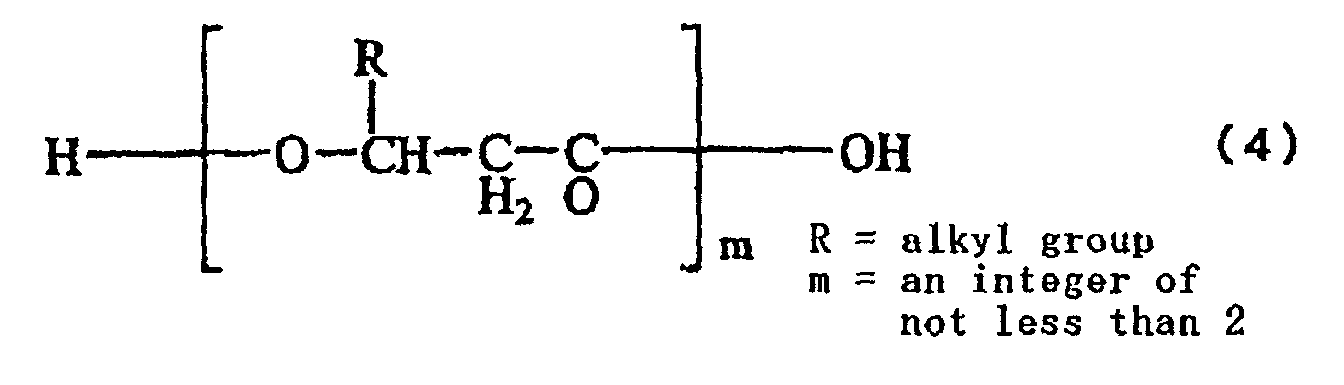
- the polyester synthesized by said PHA synthase is a copolymer of 3-hydroxyalkanoic acids of the above general formula (1), and can be represented by the general formula (4) shown below.
- Preferred is the copolyester P(3HB-co-3HH) obtainable by copolymerization of 3-hydroxybutyric acidof the above formula (2) and 3-hydroxyhexanoic acid of the above formula (3) and can be represented by the following general formula (5).
- DNA sequences such as a promoter, UAS, etc. upstream of the 5'-end of the gene and to ligate DNA sequences such as poly-Aaddition signal, terminator, etc. downstream of the 3'-end of the gene.
- DNA sequences may be any arbitrary sequences that may function in the yeast. While the promoter includes sequences relevant to constitutive expression and sequences relevant to inducible expression, whichever kind of such promoter sequence can be employed.
- the above promoter and terminator are preferably those which function in the organism used for the production of a polyester.
- the promoter and terminator to be used are preferably those derived from Yarrowia lipolytica . More preferably, a promoter derived from Yarrowia lipolytica ALK3 and a terminator derived from Yarrowia lipolytica XRP2 are used.
- the DNA sequence of said promoter and/or terminator maybe the DNA sequence derived by the deletion, substitution and/or addition of one or more nucleotides as far as it may function in Yarrowia lipolytica .
- the vector for use in the above construction may be any vector which is a plasmid capable of autonomous replication in Escherichia coli and may have a region which will be autonomously replicated in the yeast. Such a vector capable of autonomous replication in the yeast will be contained intracellularly. Moreover, the gene expression cassette can then be integrated onto the chromosome. In Yarrowia lipolytica , the autonomously replicating pSAT4 and pSUT5 can be employed (Toshiya Iida: Studies on the n-alkane-inductive cytochrome P450 gene group of the yeast Yarrowia lipolytica , a doctorate dissertation thesis, Tokyo University graduate School, 1997).
- the polyester synthesis-associated enzyme gene is preferably a gene derived from Aeromonas caviae , and for example, the A . caviae -derived PHA synthase gene (hereinafter referred to briefly as phaC) (SEQ ID NO:1) or the (R)-specific enoyl-CoA hydratase gene (hereinafter referred to briefly as phaJ) which converts phaC and enoyl-CoA, which is an intermediate in the ⁇ -oxidation pathway, to the monomeric (R)-3-hydroxyacyl-CoA [T. Fukui et al., FEMS Microbiology Letters, Vol. 170, 69-75 (1999)] (SEQ ID NO:2) can be used with advantage.
- phaC A . caviae -derived PHA synthase gene
- phaJ the (R)-specific enoyl-CoA hydratase gene
- the promoter ALK3p (SEQ ID NO:5) (GenBank AB010390) of Yarrowia lipolytica Alk3 gene can be ligated upstream of the 5'-end of each of these structural genes.
- PCR PCR technique
- the primer sequences used in the PCR are shown in SEQ ID NO:8 through NO:14.
- PCR conditions may be arbitrary as far as the objective gene fragment can be amplified.
- ALK3X with XbaI at 5'-end and NdeI at 3'-end and ALK3S with SacII at 5'-end and NdeI at 3'-end can be constructed from SEQ ID NO:8 and NO:9 and SEQ ID NO:9 and NO:10, respectively, using SEQ ID NO:5 as a template.
- a 100-bp (approx.) fragment with NdeI at 5'-end and PstI at 3'-end can be constructed from SEQ ID NO:11 and NO:12 using SEQ ID NO:1 as a template.
- phaJ fragment with NdeI at 5' -end and KpnI at 3'-end can be constructed from SEQ ID NO:13 and NO:14 using SEQ ID NO:2 as a template.
- the vector the plasmid vector pSUT5 (Fig. 1, SEQ ID NO:19) and the vector pSUT6 obtainable by changing the NdeI site of pSUT5 to an XbaI site by using a linker DNA shown in SEQ ID NO:20 can be used.
- KpnI of pSUT6, ALK3S and phaJ can be ligated to construct a plasmid pSUT-phaJ (Fig. 3).
- BamHI of pSUT5 ALK3X and phaC can be ligated to construct a plasmid pSUT-PHA1 (Fig. 4).
- ALK3S, phaJ and downstream terminator can be excised as a unit from the plasmid pSUT-phaJ using SacII and XbaI and ligated to the SacII, XbaI site of plasmid pSUT-PHA1 to construct a plasmid pSUT-PHA2 (Fig. 5).
- SacII and XbaI ligated to the SacII, XbaI site of plasmid pSUT-PHA1 to construct a plasmid pSUT-PHA2
- two kinds of plasmids for recombination can be constructed.
- the promoter and terminator to be used are preferably those which function in Candida maltosa , more preferably those derived from Candida maltosa . Still more preferably, the promoter and terminator derived from Candida maltosa ALK1 are used.
- the DNA sequence of said promoter and/or terminator may be a DNA sequence derived by the deletion, substitution and/or addition of one or more bases only provided that the sequence may function in Candida maltosa .
- the vector for use in the construction may be the same as the one referred to above for the case (a).
- the autonomously replicating pUTU1 can be used [M. Ohkuma at al., J. Biol. Chem., Vol. 273, 3948-3953 (1998)].
- the polyester synthesis-associated enzyme gene is preferably the gene coding for the same amino acid sequence as the Aeromonas caviae -derived enzyme.
- the gene coding for the same amino acid sequence as the Aeromonas caviae -derived PHA synthase in Candida maltosa (this gene is hereinafter referred to briefly as ORF2, which is defined by SEQ ID NO:3), or the gene coding for the same amino acid sequence, in Candida maltosa , as ORF2 and the (R)-specific enoyl-CoA hydratase which converts enoyl-CoA, which is an intermediate in the ⁇ -oxidation pathway, to the monomeric (R)-3-hydroxyacyl-CoA (this gene is hereinafter referred to briefly as ORF3, which is defined by SEQ ID NO:4) [T. Fukui et al., FEMS Microbiology Letters, Vol. 170, 69-75 (1999)], can be used
- the promoter ALK1p (SEQ ID NO:6) and terminator ALK1t (SEQ ID NO:7) (GenBank D00481) [M. Takagi et al., Agric. Biol. Chem., Vol. 5, 2217-2226 (1989)] of the Candida maltosa Alk1 gene can be ligated upstream of the 5'-end and downstream of the 3'-end respectively in each of these structural genes.
- a PCR technique can be utilized.
- the primer sequences for use in the PCR are shown in SEQ ID NO:15 through NO:18.
- the conditions mentioned above for the case (a) can be employed as the consitions for the PCR.
- ALK1p with SalI at 5'-end and NdeI at 3'-end can be prepared from SEQ ID NO:15 and NO:16 using SEQ ID NO:6 as a template.
- ALK1t with HindIII at 5'-end and EcoRV at 3'-end can be prepared from SEQ ID NO:17 and NO:18 using SEQ ID NO:7 as a template.
- the vector pUTA1 (Fig. 2) prepared by modifying the marker gene from Ura3 to Ade1 using pUTU1 and Candida maltosa Ade1 gene (SEQ ID NO:21, GenBank D00855) [S. Kawai et al., Agric. Biol.
- Introduction of the polymer synthesis-associated gene expression cassette cloning vector into a yeast can be carried out by the per se known method.
- the calcium method [Lederberg. E. M. et al., J. Bacteriol, 119 , 1072 (1974)] or the electroporation method [Current Protocols in Molecular Biology, 1 , 1. 8. 4., 1994], for instance, can be employed.
- a commercial transformation kit such as Fast TrackTM-Yeast Transformation Kit SM (Geno Technology), can also be utilized.
- Yarrowia lipolytica CXAU1 strain [T. Iida et al., Yeast, 14 , 1387-1397 (1998)] can be used as the host.
- this strain By transforming this strain with the polymer synthesis-associated gene expression cassette by the above transformation method, there can be constructed Yarrowia lipolytica PHA1 containing pSUT-PHA1 and Yarrowia lipolytica PHA2 containing pSUT-PHA2.
- Candida maltosa CHA1 As the host, Candida maltosa CHA1 [S. Kawai et al., Agric. Biol. Chem., Vol. 55, 59-65 (1991)] can also be used. By transforming this strain with the polymer synthesis-associated gene expression cassette by the above transformation method, Candida maltosa CHA1 containing pUTA-ORF23 can be constructed.
- the polyester is harvested from a culture obtained by growing the transformant of the invention.
- the production of a polyester by cultivation of a transformant of the invention can be carried out in the following manner.
- the carbon source for use in this cultivation may be any substance that the yeast is able to assimilate.
- an inducer can be added as needed. There are cases in which the inducer serves as a principal source of carbon.
- a medium containing sources of nitrogen, inorganic salts and other organic nutrient sources can be utilized.
- the cultivation temperature may be a temperature at which that strain can grow but is preferably 20°C to 40 °C.
- the cultivation time is not particularly restricted but may range from about 1 day to 7 days. Thereafter, the polyester can be harvested from the grown cells or the culture broth thus obtained.
- the carbon source which can be used includes carbohydrates such as glucose, glycerol, sucrose, etc., oils and fats, fatty acids, and even n-paraffins and the like.
- oils and fats there can be used rapeseed oil, coconut oil, palm oil and palm kernel oil, among others.
- fatty acids there can be mentioned saturated or unsaturated fatty acids such as hexanoic acid, octanoic acid, decanoic acid, lauric acid, oleic acid, palmitic acid, linoleic acid, linolenic acid, myristic acid, etc., and derivatives of such fatty acids, e.g. their esters and salts.
- Candida maltosa or Yarrowia lipolytica for instance, can be carried out using an oil or fat as the carbon source.
- the efficiency can be improved by adding lipase to the medium.
- an oil-assimilating function can be imparted.
- the proportion of the odd-number component of the carbon chain can be increased in the copolyester of 3-hydroxyalkanoic acids of the above general formula (1).
- the nitrogen source includes ammonia, ammonium salts such as ammonium chloride, ammonium sulfate, ammonium phosphate, etc., peptone, meat extract, yeast extract and so on.
- ammonium salts such as ammonium chloride, ammonium sulfate, ammonium phosphate, etc., peptone, meat extract, yeast extract and so on.
- inorganic salts there can be mentioned, for example, potassium phosphate, potassium diphosphate, magnesium phosphate, magnesium sulfate and sodium chloride, etc.
- aminoacids such as glycine, alanine, serine, threonine, proline, etc.
- vitamins such as vitamin B1, vitamin B12, biotin, nicotinamide, pantothenic acid and vitamin C, etc.
- the following techniques can be used for harvesting the polyester from the grown cells.
- the culture broth is centrifuged with centrifuge to separate the cells and those cells are washed with distilled water, methanol or the like and dried.
- the polyester is extracted into an organic solvent such as chloroform.
- the cellular component is removed by filtration or the like and the polyester is precipitated by adding a poor solvent, such as methanol, hexane or the like, to the filtrate.
- a poor solvent such as methanol, hexane or the like
- the method of producing a polyester according to the present invention, constituted as above, is capable of producing a copolyester of 3-hydroxyalkanoic acids of the above general formula (1) with good productivity.
- polyester synthesis-associated enzyme gene the PHA synthase gene (phaC; SEQ ID NO:1) derived from Aeromonas caviae and (R)-specific enoyl-CoA hydratase gene (phaJ; SEQ ID NO:2) which converts, enoyl-CoA, an intermediate in the ⁇ -oxidation pathway, to the monomeric (R)-3-hydroxyacyl-CoA [T. Fukui et al., FEMS Microbiology Letters, Vol. 170, 69-75 (1999)] were used.
- polyester synthesis-associated enzyme gene As polyester synthesis-associated enzyme gene, this gene was constructed with reference to the amino acid sequences of Aeromonas caviae -derived PHA synthase and (R)-specific enoyl-CoA hydratase which converts enoyl-CoA, an intermediate in the ⁇ -oxidation pathway, to the monomeric (R)-3-hydroxyacyl-CoA [T. Fukui et al., FEMS Microbiology Letters, Vol. 170, 69-75 (1999)].
- Candida maltosa is a yeast which translates the CTG codon to serine, not to leucine. Therefore, for use in Candida maltosa , CTG was not assigned to the leucine-specifying codon.
- the codon corresponding to each amino acid the codon with the high frequency of usage in Candida maltosa was preferentially selected.
- Klaus Wolf Nonconventional Yeast in Biotechnology (published by Springer) was consulted. Specifically, ATG and TGG were assigned to the methionine-specifying codons and the tryphtophan-specifying codons, respectively. TTT or TTC was assigned alternately to the phenylalanine-specifying codons.
- CTC and CTG both of which are used in DNA sequences of Aeromonas caviae
- TTA and TTG were used as such.
- isoleucine-specifying codons ATC and ATA, both of which are used in DNA sequences of Aeromonas caviae
- valine-specifying codons GTG and GTA, both of which are used in DNA sequences of Aeromonas caviae
- GTT GTC and GTT were used as such.
- GCC, GCG and GCA As the alanine-specifying codons, GCC, GCG and GCA, all of which are used in DNA sequences of Aeromonas caviae , were modified to GCT, GCC and GCT respectively, while GCT was used as such.
- TAT and TAC were assigned alternatively as the tyrosine-specifying codons as used in DNA sequences of Aeromonas caviae .
- stop codons TAA was used.
- Histidine-specifying codons As the histidine-specifying codons, CAT and CAC were assigned alternatively as the histidine-specifying codons as used in DNA sequences of Aeromonas caviae .
- the glutamine-specifying codons all of the corresponding codons were modified to CAA.
- AAT and AAC were assigned alternatively to the corresponding asparagine-specifying codons.
- the lysine-specifying codons all of the corresponding codons were modified to AAA.
- As the asparic acid-specifying codons all of the corresponding codons were modified to GAT.
- the glutamic acid-specifying codons all of the corresponding codons were modified to GAA.
- the cysteine-specifying codons all of the corresponding codons were modified to TGT.
- the arginine-specifying codons all of the corresponding codons were modified to AGA.
- PHA synthase gene (ORF2; SEQ ID NO:3) and (R)-specific enoyl-CoA hydratase gene (ORF3; SEQ ID NO:4) were accordingly designed, and based on these sequences, ORF2 and ORF3 were constructed by total synthesis.
- the Yarrowia lipolytica AlK3 gene promoter ALK3p (SEQ ID NO:5) (GenBank AB010390) was ligated upstream of the 5' end of each gene.
- the restriction enzyme sites necessary for linking the promoter to the structural gene were prepared by PCR.
- the primer sequences used in PCR are shown in SEQ ID NO:8 through NO:14. PCR was carried out in 25 cycles of 94 °C ⁇ 1 min., 55 °C ⁇ 2 min., 72 °C ⁇ 3 min. for amplification of the particular gene fragment.
- the polymerase used was Takara Shuzo's ExTaq.
- ALK3X with XbaI at 5'-end and NdeI at 3'-end and ALK3S with SacII at 5'-end and NdeI at 3'-end were prepared from SEQ ID NO:8 and SEQ ID NO:9 or SEQ ID NO:9 and SEQ ID NO:10 respectively, using SEQ ID NO:5 as a template.
- phaC an about 100 bp-fragment with NdeI at 5'-end and PstI at 3'-end was prepared from SEQ ID NO:11 and SEQ ID NO:12 using SEQ ID NO:1 as a template. To this fragment was ligated the remaining PstI-BamHI fragment sized about 1700 bp to construct the full-length phaC with NdeI at 5'-end and BamHI at 3'-end. As to phaJ, phaJ fragment with Ndel at 5'-end and KpnI at 3'-end was prepared from SEQ ID NO:13 and NO:14 using SEQ ID NO:2 as a template.
- the plasmid pSUT5 (Fig. 1, SEQ ID NO: 19) and the plasmid pSUT6 prepared by changing the NdeI site of pSUT5 to an XbaI site by using a linker DNA shown in SEQ ID NO:20 were used.
- KpnI of the above pSUT6, ALK3S and phaJ were ligated to construct the plasmid pSUT-phaJ (Fig. 3).
- ALK3X and phaC were ligated to the multicloning site XbaI, BamHT of pSUT5 to construct a plasmid pSUT-PHA1 (Fig. 4).
- Yarrowia lipolytica CXAU1 strain (T. Iida et al., Yeast, 14 , 1387-1397 (1998)) was used.
- Fast TrackTM-Yeast Transformation Kit SM (Geno Technology) was used. Transformation was carried out in accordance with the protocol and using a selection plate (0.67 w/v% yeast nitrogen base without amino acid, 2 w/v % glucose, 24 mg/L adenine hydrochloride, 2 w/v % agar), a recombinant strain was obtained.
- the Candida maltosa AlK1 gene promoter ALK1p (SEQ ID NO:6, GenBank D00481) was ligated upstream of the 5'-end of each gene and the Candida maltosa AlK1 gene terminator ALK1t (SEQ ID NO:7) was ligated downstream of the 3'-end.
- PCR was used for the preparation of the restriction enzyme sites necessary for ligating the promoter and terminator to the structural gene.
- the primer sequences used for PCR are shown in SEQ ID NO:15 through NO:18.
- the PCR was carried out in 25 cycles of 94 °C ⁇ 1 min., 55 °C ⁇ 2 min., 72 °C ⁇ 3 min.
- pUTA1 was constructed by removing URA3 gene from pUTU1 with Xhol and ligating the ADE1 gene fragment as excised with Sall.
- ALK1p was ligated to the PvuII, NdeI site of pUCNT (described in WO94/03613) and ALK1t was ligated to the HindIII, SspI site of the pUCNT to construct pUAL1 (Fig. 6). Then, ORF2 was ligated to the NdeI, PstI site of pUAL1 to construct a plasmid pUAL-ORF2 (Fig. 7). Moreover, in the course of construction of pUAL1, ORF3 was ligated to the NdeI, HindIII site of pUCNT-ALK1 and, further, ALK1p was ligated to construct pUAL-ORF3 (Fig. 8).
- the ORF2, upstream promoter and downstream terminator were excised as a unit from the plasmid pUAL-ORF2 using EcoT22I and ligated to the PstI site of pUTA1 to construct pUTA-ORF2. Furthermore, using SalI, ORF3, the upstream promoter and downstream terminator were excised as a unit from pUAL-ORF3 and ligated to the SalI site of pUTA-ORF2 to construct a plasmid pUTA-ORF23 (Fig. 9).
- a gene expression cassette for producing a copolyester of 3-hydroxyalkanoic acids of the above general formula (1) was constructed in the yeast Candida maltosa .
- the overall construction diagram is shown in Fig. 11.
- Candida maltosa CHA1 S. Kawai et al., Agric. Biol. Chem., Vol. 55, 59-65 (1991) was used.
- Fast TrackTM-Yeast Transformation Kit SM Gene Technology
- Transformation was carried out in accordance with the protocol and using a selection plate (0.67 w/v % yeast nitrogen base without amino acid, 2 w/v % glucose, 24 mg/L of histidine, 2 w/v % agar), a recombinant strain was obtained.
- the recombinant strains of Yarrowia lipolytica containing the plasmids pSUT5, pSUT-PHA1 and pSUT-PHA2 were cultured in the following manner.
- YPD medium (1 w/v % yeast-extract, 2 w/v % Bacto-Pepton, 2 w/v % glucose) was used.
- polyester production medium 1/4 YP medium (0.25 w/v % yeast extract, 0.5 w/v % Bacto-Pepton) and a mineral medium (0.7 w/v % KH 2 PO 4 , 1.3 w/v % (NH 4 ) 2 HPO 4 , 0.5 w/v % Pro-Ex AP-12 (Banshu Condiment), 0.04 w/v % adenine, 1 ppm thiamine hydrochloride, 1 v/v % trace metal salt solution (as dissolved in 0.1 N-HCl 8 w/v % MgSO 4 ⁇ 7H 2 O, 0.6 w/v % ZnSO 4 ⁇ 7H 2 O, 0.9 w/v % FeSO 4 ⁇ 7H 2 O, 0.05 w/v % CuSO 4 ⁇ 5H 2 O, 0.1 w/v % MnSO 4 ⁇ 6-7H 2 O, 1 w/v % NaCl)) supplemented
- a 500-ml Sakaguchi flask containing 100 ml of the preculture medium was inoculated with 100 ⁇ l of a glycerol stock of each recombinant strain and after 20 hours of culture, a 2-L Sakaguchi flask containing 500 mL of the production medium was inoculated with the preculture at the 1 v/v % level.
- the inoculated flask was incubated at the cultivation temperature of 30 °C and the shaking speed of 120 rpm.
- the cultivation time was 24 hours for the YPD medium and 72 hours for the mineral medium.
- the culture broth was centrifuged to harvest cells, which were then washed with methanol and lyophilized. The dry cells were weighed.
- the dry cells thus obtained were crushed and extracted with 100 ml of chloroform added under stirring overnight.
- the extract was filtered to remove cells and the filtrate was concentrated to 1 to 2 ml on an evaporator.
- To the concentrate was added 10 ml of hexane to precipitate the hexane-insoluble fraction.
- the gas chromatograph used was Shimadzu GC-17A and the capillary column used was GL Science's NEUTRA BOND-1 (column length 25m, column in. dia. 0.25 mm, liquid film thickness 0.4 ⁇ m). As to temperature conditions, the temperature was increased from the initial level of 100 °C at the rate of 8 °C /min.
- the obtained results of analysis are shown in Table 1 and the chart of a sample (3) is given in Fig. 12.
- the NMR analysis (JEOL, JNM-EX400) and IR analysis (ShimadzuCorporation, DR-800) of the hexane-insoluble fraction obtained were also carried out. As an example, the result on a sample (6) are shown in Figs. 13 and 14, respectively.
- copolyester P (3HB-co-3HH) can be produced by means of the yeast Yarrowia lipolytica .
- the recombinant strain of Candida maltosa containing the plasmid pUTA1 or pUTA-ORF23 was cultured in the following manner.
- YNB medium (0.67 w/v % yeast nitrogen base without amino acid) supplemented with 1 w/v % casamino acids and 2 w/v % palmoil was used.
- polyester production medium YNB medium supplemented with 1 w/v % casamino acids and containing, as a source of carbon, 1 ⁇ 2 w/v % palm oil, 2 ⁇ 2 w/v % coconut oil, 3 ⁇ 2 w/v % tetradecane or 4 ⁇ 2 w/v % hexadecane.
- A500-ml Sakaguchi flask containing 50 ml of the preculture medium was inoculated with 100 ⁇ l of a glycerol stock of each strain and incubated for 20 hours. Then, a 2-L Sakaguchi flask containing 500 mL of the production medium was inoculated with the above preculture at the 10 v/v % level. Culture was carried out at the cultivation temperature of 30 °C and the shaking speed of 120 rpm for the cultivation time of 72 hours. The resulting culture broth was autoclaved and centrifuged to harvest cells and the cells thus obtained were washed with methanol and lyophilized. The dry cells were weighed.
- the dry cells thus obtained were crushed and extracted with 100 ml of chloroform added under stirring overnight.
- the extract was filtered to remove cells and the filtrate was concentrated to 1 to 2 ml on an evaporator.
- To the concentrate was added 10 ml of hexane to precipitate the hexane-insoluble fraction.
- copolyester P(3HB-co-3HH) can be produced by means of the yeast Candida maltosa .
- a copolyester of 3-hydroxyalkanoic acids of the above general formula (1) which is biodegradable and has good physical properties, can be produced by using a yeast.
Landscapes
- Health & Medical Sciences (AREA)
- Life Sciences & Earth Sciences (AREA)
- Genetics & Genomics (AREA)
- Chemical & Material Sciences (AREA)
- Engineering & Computer Science (AREA)
- Organic Chemistry (AREA)
- Zoology (AREA)
- Wood Science & Technology (AREA)
- Bioinformatics & Cheminformatics (AREA)
- Biomedical Technology (AREA)
- General Engineering & Computer Science (AREA)
- Biotechnology (AREA)
- Molecular Biology (AREA)
- General Health & Medical Sciences (AREA)
- Biochemistry (AREA)
- Microbiology (AREA)
- Medicinal Chemistry (AREA)
- Physics & Mathematics (AREA)
- Biophysics (AREA)
- Plant Pathology (AREA)
- Chemical Kinetics & Catalysis (AREA)
- General Chemical & Material Sciences (AREA)
- Micro-Organisms Or Cultivation Processes Thereof (AREA)
- Preparation Of Compounds By Using Micro-Organisms (AREA)
Abstract
The present invention relates to a gene coding for a
copolyester-synthesizing enzyme, a microorganism which
utilizes said gene for the fermentative synthesis of a polyester,
and a method of producing a polyester with the aid of said
microorganism. More particularly, the present invention
relates to a gene which functions in a host organism and is related
to synthesize, by an enzyme, a plastic-like polymer degradable
under the action of microorganisms in the natural environment
(the soil, river or sea), a transformant derived from said host
organism by transformation with said gene and having an improved
ability to fermentatively synthesize a plastic-like polymer,
and a method of producing a copolyester with the aid of said
transformant.
Description
The present invention relates to a gene coding for a
copolyester-synthesizing enzyme, a microorganism which
utilizes said gene for the fermentative synthesis of apolyester,
and a method of producing a polyester with the aid of said
microorganism. More particularly, the present invention
relates to a gene which functions in a host organism and is related
to synthesize, by an enzyme, a plastic-like polymer degradable
under the action of microorganisms in the natural environment
(the soil, river or sea), a transformant derived from said host
organism by transformation with said gene and having an improved
ability to fermentatively synthesize a plastic-like polymer,
and a method of producing a copolyester with the aid of said
transformant.
It is already known that many kinds of microorganisms
accumulate polyesters as the energy-storing substance
intracellularly. A representative example is a homopolymer of
3-hydroxybutyric acid (hereinafter referred to briefly as 3HB),
namely poly-3-hydroxybutyric acid (hereinafter referred to
briefly as P(3HB)), which was first discovered in Bacillus
megaterium in 1925. Since P(3HB) is a thermoplastic polymer
biodegradable in the natural environment, it has attracted
attention as an eco-friendly plastic. However, because of its
high crystallinity, P(3HB) is so hard and brittle that it has
found application so far only in a limited assortment of practical
uses and much research work has been undertaken to correct for
the drawback.
As results of such researches, Japanese Kokai Publication
Sho-57-150393 and Japanese Kokai Publication Sho-59-220192
disclose the production technology for a copolymer of
3-hydroxybutyric acid (3HB) and 3-hydroxyvaleric acid (3HV)
(hereinafter referred to briefly as P(3HB-co-3HV)). Compared
with P(3HB), this P (3HB-co-3HV) is so flexible that it was
initially expected to find application in a broader range of
end uses. Actually, however, P (3HB-co-3HV) responds poorly to
a gain in the molar fraction of 3HV so that particularly the
flexibility required of film and the like cannot be improved,
thus limiting its scope of use to rigid moldings such as shampoo
bottles and throw-away razor handles.
Recently, studies have been undertaken on the binary
copolyester of 3HB and 3-hydroxyhexanoic acid (hereinafter
referred to briefly as 3HH) (the copolyester will hereinafter
be referred to briefly as P (3HB-co-3HH)) and the technology of
producing it. For example, such studies have been described
in Japanese Kokai Publication Hei-5-93049 and Japanese Kokai
Publication Hei-7-265065. The technology described in the
above patent literature for the production of P(3HB-co-3HH)
comprises fermentative production from a fatty acid, e.g. oleic
acid, or an oil or fat, e.g. olive oil, with the aid of a
soil-isolated strain of Aeromonas caviae. Properties of
P(3HB-co-3HH) have also been studied [Y. Doi, S. Kitamura, H.
Abe: Macromolecules 28, 4822-4823 (1995)]. In this report
referred to above, Aeromonas caviae is cultured using a fatty
acid of 12 or more carbon atoms as the sole carbon source to
fermentatively produce P(3HB-co-3HH) with a 3HH fraction of 11
to 19 mol %. This P(3HB-co-3HH) undergoes a gradual transition
from a hard, brittle one to a flexible one with an increasing
molar fraction of 3HH and has been found to show flexibility
surpassing that of P(3HB-co-3HV). However, this production
method is poor in productivity with a cell output of 4 g/L and
a polymer content of 30% and, therefore, explorations were made
for methods of higher productivity for commercial exploitation.
A PHA (polyhydroxyalkanoic acid) -synthase gene was cloned
from a P(3HB-co-3HH) -producible strain of Aeromonas caviae [T.
Fukui, Y. Doi: J. Bacteriol, Vol. 179, No. 15, 4821-4830 (1997),
Japanese Kokai Publication Hei-10-108682]. When this gene was
introduced into Ralstonia eutropha (formerly, Alcaligenes
eutrophus) and the production of P (3HB-co-3HH) was carried out
using the resulting transformant, the cell output was 4 g/L and
the polymer content was 30%. Further, by growing this
transformant on vegetable oil as the carbon source, a cell content
of 4 g/L with a polymer content of 80% could be accomplished
[T. Fukui et al.: Appl. Microbiol. Biotechnol. 49, 333 (1998)].
A process for producing P(3HB-co-3HH) using bacteria, e.g.
Escherichia coli, or plants as hosts has also been described
(WO 00/43525). However, there is no disclosure of the
productivity achieved by this production technology.
Since this polymer P(3HB-co-3HH) may have a broadly
variable characteristic ranging from a rigid polymer to a
flexible polymer depending on the 3HH molar fraction, it can
be expected to find application in a broad spectrum of uses from
television housings and the like, which require rigidity, to
yarn, film and the like which require flexibility. However,
the productivity of said polymer is still invariably low in these
production methods and none are considered fully satisfactory
for practical production methods of this polymer.
Recently, Leaf et al. have conducted studies on the
production of biodegradable polyesters using a yeast, which is
considered to elaborate acetyl CoA, the precursor of 3HB, with
good efficiency as a producer organism (Microbiology, Vol. 142,
pp 1169-1180 (1996)). They introduced the Ralstonia eutropha
polyester synthase gene into Saccharomyces cerevisiae, a kind
of yeast, to construct a transformant and cultured it using
glucose as the carbon source, to thereby confirm the accumulation
of P(3HB) (polymer content 0.5%). However, the polymer produced
in this study was P (3HB), which is hard and brittle.
It is known that yeasts are fast-growing, with high cell
productivity. The yeast cell attracted attention as the single
cell protein in the past and studies on the production of yeast
cells for use as a feedstuff using n-paraffin as the carbon source,
while their component nucleic acids have been utilized as
seasonings. Furthermore, since yeasts are considered to
produce acetyl-CoA, which is a precursor of the polymer, with
high efficiency, a high polymer productivity is expected.
Moreover, since the separation of cells from the culture broth
is easy as compared with bacteria, it is possible to simplify
the polymer extraction and purification process. Therefore,
a demand has existed for a process for producing P(3HB-co-3HH)
having beneficial physical properties with the aid of yeasts.
In light of the above state of the art, the present invention
has for its object to provide a polyester synthesis-associated
gene which functions and can be expressed with good efficiency
in a yeast, a transformant of the yeast as transformed with a
gene expression cassette comprising said gene, and a method of
producing a polyester which is biodegradable and has excellent
physical properties, such as P(3HB-co-3HH), which comprises
growing the transformant obtained.
After many investigations, the inventors of the present
invention constructed a gene expression cassette by ligating
a promoter and a terminator, both of which substantially function
in a yeast, to at least one enzyme gene related to the synthesis
of a copolyester through copolymerization of 3-hydroxyalkanoic
acids of the following general formula (1) and can be
substantially expressed in the yeast,
introduced said gene expression cassette into a yeast to construct a transformant,
and cultured said transformant, whereby a polyester, which is a copolymer of 3-hydroxyalkanoic acids of the following general formula (1), could be successfully harvested from the resulting culture. in the formula, R represents an alkyl group.
introduced said gene expression cassette into a yeast to construct a transformant,
and cultured said transformant, whereby a polyester, which is a copolymer of 3-hydroxyalkanoic acids of the following general formula (1), could be successfully harvested from the resulting culture.
The present invention, therefore, is concerned with a
transformant
wherein at least one kind of gene expression cassettes comprising a polyester synthesis-associated enzyme gene has been introduced into a yeast.
wherein at least one kind of gene expression cassettes comprising a polyester synthesis-associated enzyme gene has been introduced into a yeast.
The present invention is further concerned with a method
of producing a polyester using said transformant
which comprises growing said transformant
and harvesting the polyester from the resulting culture.
which comprises growing said transformant
and harvesting the polyester from the resulting culture.
The term "substantially" as used herein means that
referring to the sequence of the polyester synthesis-associated
gene and the gene sequences such as a promoter and terminator,
among others, which are necessary for the construction of the
gene expression cassette, the nucleotide sequences may have
undergone mutation, such as deletion, substitution and/or
insertion, as far as the functions of the gene and the functions
necessary for gene expression are retained.
Furthermore, the present invention is related to a
polyester synthesis-associated enzyme gene
which is modified from at least one gene code CTG to TTA, TTG, CTT, CTC or CTA.
which is modified from at least one gene code CTG to TTA, TTG, CTT, CTC or CTA.
The present invention is now described in detail.
The yeast to be used is not particularly restricted but
may be any of the yeasts belonging to the following genera and
deposited with any of authoritative culture collections (such
as IFO, ATCC, etc.):
As the yeast used for the transformant according to the
present invention, Candida malosa or Yarrowia lipolytica is
preferred and Candida malosa is particularly preferred.
The polyester synthesis-associated enzyme gene is not
particularly restricted but is preferably one coding for an
enzyme derived from a bacterium. Specifically, preferred is
an enzyme gene associated with the synthesis of a copolyester
of 3-hydroxyalkanoic acids of the above general formula (1),
more preferred is an enzyme gene associated with the synthesis
of P(3HB-co-3HH) which is a copolyester resulting from the
copolymerization of 3-hydroxybutyric acid of the following
formula (2) and 3-hydroxyhexanoic acid of the following formula
(3).


The enzyme gene involved in the synthesis of a copolyester
of 3-hydroxyalkanoic acids of the above general formula (1) is
not particularly restricted but may for example be the polyester
synthase gene described in Japanese Kokai Publication
Hei-10-108682. As a specific example of such polyester synthase
gene, a PHA synthase gene can be mentioned. Furthermore, a
polyester synthesis-associated enzyme gene may be used in
combination with the present polyester synthase genes. Such
enzyme genes include (R) -specific enoyl-CoAhydratase gene which
converts enoyl-CoA, an intermediate in the β-oxidation pathway,
to thereby synthesize monomeric (R)-3-hydroxyacyl-CoA [T. Fukui
et al.: FEMS Microbiology Letters, Vol. 170, 69-75 (1999)], β
-ketothiolase gene which dimerizes acetyl-CoA to monomeric
3-hydroxybutyryl-CoA, and NADPH-dependent acetoacetyl-CoA
reductase gene [Peoples OP et al.: J. Biol. Chem., 264 (26)
15298-15303 (1989)].
Some species of said host yeast show abnormalities in the
translating of genetic codes. For example, Candida cylindracea
[Y. Kawaguchi et al., Nature 341, 164-166 (1989)] and Candida
maltosa [H. Sugiyama et al., Yeast 11, 43-52 (1995)] are
nonconventional yeasts in which the genetic code CTG is not
translated into leucine but into serine. When a polyester
synthesis-associated enzyme gene is to be expressed in such a
yeast, genetic code translating abnormalities may take place
so that an enzyme having an amino acid sequence different from
that of the proper enzyme is produced at times. Therefore, the
function of this enzyme is not fully exhibited.
Such a phenomenon can be avoided by using a gene constructed
by modifying the genetic code CTG contained in the gene beforehand
to a different genetic code corresponding to leucine (TTA, TTG,
CTT, CTC, CTA).
Analysis of the genetic codes of organisms inclusive of
yeasts reveals that the frequency of usage of genetic codes varies
widely with different organisms. Thus, among a plurality of
genetic codes specifying the same amino acid, the genetic code
to be used vary with different organisms and it has been pointed
out that the translation efficiency of a gene consisting of
genetic codes with high frequencies of use is high. For example,
the GC contents of Aeromonas caviae PHA synthase gene and
(R)-specific enoyl-CoA hydratase gene are 67.16% and 65.77%,
respectively, but among the enzymes so far reported in Candida
maltosa, the contents are 39.55% for phosphoglycerate kinase
and 35.67% for ALK2-A. Therefore, in order that a polyester
synthesis-associated gene may be efficiently expressed in
Candida maltosa, for instance, it is preferable to use said gene
in which said genetic code CTG is changed to a different genetic
code specifying leucine and, at the same time, the genetic codes
are changed to those with high frequency of use.
The polyester synthesis-associated enzyme gene of the
invention maybe used as it is in a yeast which shows no translating
abnormality of the genetic codes . As an alternative, a modified
gene as modified by changing genetic codes to those used by the
particular yeast with high frequencies without alternation of
the amino acid sequence may be used. In a yeast which shows
translating abnormality of genetic codes, the CTG codon of said
enzyme gene may be changed to TTA, TTG, CTT, CTC or CTA, or a
gene as modified by changing genetic codes to those used by the
particular yeast with high frequencies without alternation of
the amino acid sequence may be used. For example, when the host
is Candida maltosa, the gene identified in SEQ ID NO:3 or NO:4
can be used as the polyester synthesis-associated enzyme gene
of the invention. The nucleotide sequence of this gene may have
undergone mutation, such as deletion, substitution, insertion
and/or the like, provided that the resulting mutant gene produces
the said polyester synthesis-associated enzyme.
The polyester synthesized by said PHA synthase is a
copolymer of 3-hydroxyalkanoic acids of the above general formula
(1), and can be represented by the general formula (4) shown
below. Preferred is the copolyester P(3HB-co-3HH) obtainable
by copolymerization of 3-hydroxybutyric acidof the above formula
(2) and 3-hydroxyhexanoic acid of the above formula (3) and can
be represented by the following general formula (5).

For the expression of a gene in a yeast, it is necessary
to ligate DNA sequences such as a promoter, UAS, etc. upstream
of the 5'-end of the gene and to ligate DNA sequences such as
poly-Aaddition signal, terminator, etc. downstream of the 3'-end
of the gene. These DNA sequences may be any arbitrary sequences
that may function in the yeast. While the promoter includes
sequences relevant to constitutive expression and sequences
relevant to inducible expression, whichever kind of such promoter
sequence can be employed.
Moreover, in the transformant of the invention, the above
promoter and terminator are preferably those which function in
the organism used for the production of a polyester.
Construction of a gene expression cassette to be used for
the construction of a transformant according to the invention
is now described, referring to (a) the case in which Yarrowia
lipolytica is used as the host and (b) the case in which Candida
maltosa is used as the host as examples.
When Yarrowia lipolytica is used as the host, the promoter
and terminator to be used are preferably those derived from
Yarrowia lipolytica. More preferably, a promoter derived from
Yarrowia lipolytica ALK3 and a terminator derived from Yarrowia
lipolytica XRP2 are used. The DNA sequence of said promoter
and/or terminator maybe the DNA sequence derived by the deletion,
substitution and/or addition of one or more nucleotides as far
as it may function in Yarrowia lipolytica.
The vector for use in the above construction may be any
vector which is a plasmid capable of autonomous replication in
Escherichia coli and may have a region which will be autonomously
replicated in the yeast. Such a vector capable of autonomous
replication in the yeast will be contained intracellularly.
Moreover, the gene expression cassette can then be integrated
onto the chromosome. In Yarrowia lipolytica, the autonomously
replicating pSAT4 and pSUT5 can be employed (Toshiya Iida:
Studies on the n-alkane-inductive cytochrome P450 gene group
of the yeast Yarrowia lipolytica, a doctorate dissertation thesis,
Tokyo University Graduate School, 1997).
In the above yeast, the polyester synthesis-associated
enzyme gene is preferably a gene derived from Aeromonas caviae,
and for example, the A. caviae-derived PHA synthase gene
(hereinafter referred to briefly as phaC) (SEQ ID NO:1) or the
(R)-specific enoyl-CoA hydratase gene (hereinafter referred to
briefly as phaJ) which converts phaC and enoyl-CoA, which is
an intermediate in the β-oxidation pathway, to the monomeric
(R)-3-hydroxyacyl-CoA [T. Fukui et al., FEMS Microbiology
Letters, Vol. 170, 69-75 (1999)] (SEQ ID NO:2) can be used with
advantage.
The promoter ALK3p (SEQ ID NO:5) (GenBank AB010390) of
Yarrowia lipolytica Alk3 gene can be ligated upstream of the
5'-end of each of these structural genes.
To prepare the restriction enzyme site necessary for
linking the promoter to the structural gene, a PCR technique
can be utilized. The primer sequences used in the PCR are shown
in SEQ ID NO:8 through NO:14. PCR conditions may be arbitrary
as far as the objective gene fragment can be amplified.
As to the promoter, ALK3X with XbaI at 5'-end and NdeI
at 3'-end and ALK3S with SacII at 5'-end and NdeI at 3'-end can
be constructed from SEQ ID NO:8 and NO:9 and SEQ ID NO:9 and
NO:10, respectively, using SEQ ID NO:5 as a template. As to
phaC, a 100-bp (approx.) fragment with NdeI at 5'-end and PstI
at 3'-end can be constructed from SEQ ID NO:11 and NO:12 using
SEQ ID NO:1 as a template. To this fragment is ligated the
remaining 1700-bp (approx.) PstI-BamHI fragment to construct
the full-length phaC with NdeI at 5'-end and BamHI at 3'-end.
As to phaJ, phaJ fragment with NdeI at 5' -end and KpnI at 3'-end
can be constructed from SEQ ID NO:13 and NO:14 using SEQ ID NO:2
as a template. As to the vector, the plasmid vector pSUT5 (Fig.
1, SEQ ID NO:19) and the vector pSUT6 obtainable by changing
the NdeI site of pSUT5 to an XbaI site by using a linker DNA
shown in SEQ ID NO:20 can be used. To the multi-cloning site
SacII, KpnI of pSUT6, ALK3S and phaJ can be ligated to construct
a plasmid pSUT-phaJ (Fig. 3). Then, to the multi-cloning site
XbaI, BamHI of pSUT5, ALK3X and phaC can be ligated to construct
a plasmid pSUT-PHA1 (Fig. 4).
Further, ALK3S, phaJ and downstream terminator can be
excised as a unit from the plasmid pSUT-phaJ using SacII and
XbaI and ligated to the SacII, XbaI site of plasmid pSUT-PHA1
to construct a plasmid pSUT-PHA2 (Fig. 5). In this manner, two
kinds of plasmids for recombination can be constructed.
By the above procedure, there can be constructed a gene
expression cassette for the production of a copolyester of
3-hydroxyalkanoic acids of the above general formula (1) in the
yeast Yarrowia lipolytica.
When Candida maltosa is used as the host, the promoter
and terminator to be used are preferably those which function
in Candida maltosa, more preferably those derived from Candida
maltosa. Still more preferably, the promoter and terminator
derived from Candida maltosa ALK1 are used. The DNA sequence
of said promoter and/or terminator may be a DNA sequence derived
by the deletion, substitution and/or addition of one or more
bases only provided that the sequence may function in Candida
maltosa.
The vector for use in the construction may be the same
as the one referred to above for the case (a). In Candida maltosa,
the autonomously replicating pUTU1 can be used [M. Ohkuma at
al., J. Biol. Chem., Vol. 273, 3948-3953 (1998)].
When Candida maltosa is used as the host, the polyester
synthesis-associated enzyme gene is preferably the gene coding
for the same amino acid sequence as the Aeromonas caviae-derived
enzyme. For example, the gene coding for the same amino acid
sequence as the Aeromonas caviae-derived PHA synthase in Candida
maltosa (this gene is hereinafter referred to briefly as ORF2,
which is defined by SEQ ID NO:3), or the gene coding for the
same amino acid sequence, in Candida maltosa, as ORF2 and the
(R)-specific enoyl-CoA hydratase which converts enoyl-CoA,
which is an intermediate in the β-oxidation pathway, to the
monomeric (R)-3-hydroxyacyl-CoA (this gene is hereinafter
referred to briefly as ORF3, which is defined by SEQ ID NO:4)
[T. Fukui et al., FEMS Microbiology Letters, Vol. 170, 69-75
(1999)], can be used with advantage.
The promoter ALK1p (SEQ ID NO:6) and terminator ALK1t (SEQ
ID NO:7) (GenBank D00481) [M. Takagi et al., Agric. Biol. Chem.,
Vol. 5, 2217-2226 (1989)] of the Candida maltosa Alk1 gene can
be ligated upstream of the 5'-end and downstream of the 3'-end
respectively in each of these structural genes.
To prepare the restriction enzyme site for linking the
promoter and terminator to the structural gene, a PCR technique
can be utilized. The primer sequences for use in the PCR are
shown in SEQ ID NO:15 through NO:18. The conditions mentioned
above for the case (a) can be employed as the consitions for
the PCR.
As to the promoter region, ALK1p with SalI at 5'-end and
NdeI at 3'-end can be prepared from SEQ ID NO:15 and NO:16 using
SEQ ID NO:6 as a template. As to the terminator region, ALK1t
with HindIII at 5'-end and EcoRV at 3'-end can be prepared from
SEQ ID NO:17 and NO:18 using SEQ ID NO:7 as a template. As to
the vector, the vector pUTA1 (Fig. 2) prepared by modifying the
marker gene from Ura3 to Ade1 using pUTU1 and Candida maltosa
Ade1 gene (SEQ ID NO:21, GenBank D00855) [S. Kawai et al., Agric.
Biol. Chem., Vol. 55, 59-65 (1991)]. By ligating ALK1p to the
PvuII, NdeI site of pUCNT (described in WO 94/03613) and ALK1t
to the HindIII, SspI site of the pUCNT, pUAL1 (Fig. 6) can be
constructed. Then, by ligating ORF2 to the NdeI, PstI site of
pUAL1, the plasmid pUAL-ORF2 (Fig. 7) can be constructed.
Further, by ligating ORF3 to the NdeI, HindIII site of pUCNT-ALK1t
in the course of construction of pUAL1 and further ligating ALK1p,
pUAL-ORF3 (Fig. 8) can be constructed.
Then, by excising ORF2, upstream promoter and downstream
terminator as a unit from the plasmid pUAL-ORF2 using EcoT22I
and ligating it to the PstI site of pUTA1, pUTA-ORF2 can be
constructed.
In addition, by excising ORF3, upstream promoter and
downstream terminator as a unit from pUAL-ORF3 using Sa1I and
ligating it to the SalI site of pUTA-ORF2, a plasmid pUTA-ORF23
(Fig. 9) can be constructed.
By the above procedure, there can be constructed a gene
expression cassette for the production of a copolyester of
alkanoic acids of the above general formula (1) in the yeast
Candida maltosa.
Introduction of the polymer synthesis-associated gene
expression cassette cloning vector into a yeast can be carried
out by the per se known method. Thus, the calcium method
[Lederberg. E. M. et al., J. Bacteriol, 119, 1072 (1974)] or
the electroporation method [Current Protocols in Molecular
Biology, 1, 1. 8. 4., 1994], for instance, can be employed. A
commercial transformation kit, such as Fast Track™-Yeast
Transformation KitSM (Geno Technology), can also be utilized.
For example, Yarrowia lipolytica CXAU1 strain [T. Iida
et al., Yeast, 14, 1387-1397 (1998)] can be used as the host.
By transforming this strain with the polymer
synthesis-associated gene expression cassette by the above
transformation method, there can be constructed Yarrowia
lipolytica PHA1 containing pSUT-PHA1 and Yarrowia lipolytica
PHA2 containing pSUT-PHA2.
As the host, Candida maltosa CHA1 [S. Kawai et al., Agric.
Biol. Chem., Vol. 55, 59-65 (1991)] can also be used. By
transforming this strain with the polymer synthesis-associated
gene expression cassette by the above transformation method,
Candida maltosa CHA1 containing pUTA-ORF23 can be constructed.
In the method of producing a polyester according to the
present invention, the polyester is harvested from a culture
obtained by growing the transformant of the invention.
The production of a polyester by cultivation of a
transformant of the invention can be carried out in the following
manner. The carbon source for use in this cultivation may be
any substance that the yeast is able to assimilate. Furthermore,
when the expression of the promoter is inductive, an inducer
can be added as needed. There are cases in which the inducer
serves as a principal source of carbon. Referring to nutrients
other than the carbon source or sources, a medium containing
sources of nitrogen, inorganic salts and other organic nutrient
sources can be utilized. The cultivation temperature may be
a temperature at which that strain can grow but is preferably
20°C to 40 °C. The cultivation time is not particularly
restricted but may range from about 1 day to 7 days. Thereafter,
the polyester can be harvested from the grown cells or the culture
broth thus obtained.
The carbon source which can be used includes carbohydrates
such as glucose, glycerol, sucrose, etc., oils and fats, fatty
acids, and even n-paraffins and the like. As said oils and fats,
there can be used rapeseed oil, coconut oil, palm oil and palm
kernel oil, among others. As said fatty acids, there can be
mentioned saturated or unsaturated fatty acids such as hexanoic
acid, octanoic acid, decanoic acid, lauric acid, oleic acid,
palmitic acid, linoleic acid, linolenic acid, myristic acid,
etc., and derivatives of such fatty acids, e.g. their esters
and salts. The cultivation of Candida maltosa or Yarrowia
lipolytica, for instance, can be carried out using an oil or
fat as the carbon source. In the case of a yeast which cannot
assimilate oils and fats at all or cannot assimilate them with
good efficiency, the efficiency can be improved by adding lipase
to the medium. Moreover, by transforming the lipase gene, an
oil-assimilating function can be imparted.
Moreover, by using a fatty acid or n-paraffin having an
odd number of carbon atoms as the carbon source, the proportion
of the odd-number component of the carbon chain can be increased
in the copolyester of 3-hydroxyalkanoic acids of the above
general formula (1).
The nitrogen source includes ammonia, ammonium salts such
as ammonium chloride, ammonium sulfate, ammonium phosphate, etc.,
peptone, meat extract, yeast extract and so on. As to said
inorganic salts, there can be mentioned, for example, potassium
phosphate, potassium diphosphate, magnesium phosphate,
magnesium sulfate and sodium chloride, etc.
As other nutrients, there can be mentioned, for example,
aminoacids, such as glycine, alanine, serine, threonine, proline,
etc., and vitamins such as vitamin B1, vitamin B12, biotin,
nicotinamide, pantothenic acid and vitamin C, etc.
In the practice of the invention, the following techniques
can be used for harvesting the polyester from the grown cells.
Thus, after completion of cultivation, the culture broth is
centrifuged with centrifuge to separate the cells and those cells
are washed with distilled water, methanol or the like and dried.
From the dry cells, the polyester is extracted into an organic
solvent such as chloroform. From this organic solvent solution
containing the polyester, the cellular component is removed by
filtration or the like and the polyester is precipitated by adding
a poor solvent, such as methanol, hexane or the like, to the
filtrate. After removal of the supernatant by filtration or
centrifugation, the precipitated polyester is dried and
recovered. The thus-obtained polyester is analyzed by gas
chromatography or nuclear magnetic resonance spectrometry, for
instance.
The method of producing a polyester according to the
present invention, constituted as above, is capable of producing
a copolyester of 3-hydroxyalkanoic acids of the above general
formula (1) with good productivity.
Furthermore, by the above-mentioned method which
comprises constructing a recombinant Yarrowia lipolytica strain
containing the plasmid pSUT-PHA1 or pSUT-PHA2 or a recombinant
Candida maltosa strain containing the plasmid pUTA-ORF23, for
instance, and growing either strain, said copolyester
P(3HB-co-3HH) resulting from the copolymerization of
3-hydroxybutyric acid of the above general formula (2) and
3-hydroxyhexanoic acid of the above general formula (3) can be
produced.
The following examples illustrate the present invention
in further detail. It should, however, be understood that the
technical scope of the invention is by no means defined by those
examples.
As polyester synthesis-associated enzyme gene, the PHA
synthase gene (phaC; SEQ ID NO:1) derived from Aeromonas caviae
and (R)-specific enoyl-CoA hydratase gene (phaJ; SEQ ID NO:2)
which converts, enoyl-CoA, an intermediate in the β-oxidation
pathway, to the monomeric (R)-3-hydroxyacyl-CoA [T. Fukui et
al., FEMS Microbiology Letters, Vol. 170, 69-75 (1999)] were
used.
As polyester synthesis-associated enzyme gene, this gene
was constructed with reference to the amino acid sequences of
Aeromonas caviae-derived PHA synthase and (R)-specific
enoyl-CoA hydratase which converts enoyl-CoA, an intermediate
in the β-oxidation pathway, to the monomeric
(R)-3-hydroxyacyl-CoA [T. Fukui et al., FEMS Microbiology
Letters, Vol. 170, 69-75 (1999)].
Candida maltosa is a yeast which translates the CTG codon
to serine, not to leucine. Therefore, for use in Candida maltosa,
CTG was not assigned to the leucine-specifying codon. As the
codon corresponding to each amino acid, the codon with the high
frequency of usage in Candida maltosa was preferentially selected.
For information on the frequency of usage of each codon, Klaus
Wolf: Nonconventional Yeast in Biotechnology (published by
Springer) was consulted. Specifically, ATG and TGG were
assigned to the methionine-specifying codons and the
tryphtophan-specifying codons, respectively. TTT or TTC was
assigned alternately to the phenylalanine-specifying codons.
As the leucine-specifying codons, CTC and CTG, both of which
are used in DNA sequences of Aeromonas caviae, were modified
to TTA and TTG respectively, while TTA and TTG were used as such.
As the isoleucine-specifying codons, ATC and ATA, both of which
are used in DNA sequences of Aeromonas caviae, were modified
to ATT and ATC respectively, while ATT was used as such. As
the valine-specifying codons, GTG and GTA, both of which are
used in DNA sequences of Aeromonas caviae, were modified to GTT,
while GTC and GTT were used as such. As the serine-specifying
codons, AGC, TCA and TCG, all of which are used in DNA sequences
of Aeromonas caviae, were modified to TCT, while TCC and TCT
were used as such. As the proline-specifying codons, all of
the corresponding codons were modified to CCA. As the
threonine-specifying codons, ACC, ACG and ACA, all of which are
used in DNA sequences of Aeromonas caviae, were modified to ACT,
ACC and ACC respectively, while ATC was used as such. As the
alanine-specifying codons, GCC, GCG and GCA, all of which are
used in DNA sequences of Aeromonas caviae, were modified to GCT,
GCC and GCT respectively, while GCT was used as such. As the
tyrosine-specifying codons, TAT and TAC were assigned
alternatively as the tyrosine-specifying codons as used in DNA
sequences of Aeromonas caviae. As stop codons, TAA was used.
As the histidine-specifying codons, CAT and CAC were assigned
alternatively as the histidine-specifying codons as used in DNA
sequences of Aeromonas caviae. As the glutamine-specifying
codons, all of the corresponding codons were modified to CAA.
AAT and AAC were assigned alternatively to the corresponding
asparagine-specifying codons. As the lysine-specifying codons,
all of the corresponding codons were modified to AAA. As the
asparic acid-specifying codons, all of the corresponding codons
were modified to GAT. As the glutamic acid-specifying codons,
all of the corresponding codons were modified to GAA. As the
cysteine-specifying codons, all of the corresponding codons were
modified to TGT. As the arginine-specifying codons, all of the
corresponding codons were modified to AGA. As the
glycine-specifying codons, all of the corresponding codons were
modified to GGT. In Aeromonas caviae-derived PHA synthase DNA
sequence, two T nucleotides (at No. 969 and at No. 1449) were
modified to C so as to construct two KpnI sites. Amino acid
sequence structure was not changed by these substitutions.
Thus, PHA synthase gene (ORF2; SEQ ID NO:3) and (R)-specific
enoyl-CoA hydratase gene (ORF3; SEQ ID NO:4) were accordingly
designed, and based on these sequences, ORF2 and ORF3 were
constructed by total synthesis.
In order that the above genes may be expressed in Yarrowia
lipolytica, the Yarrowia lipolytica AlK3 gene promoter ALK3p
(SEQ ID NO:5) (GenBank AB010390) was ligated upstream of the
5' end of each gene. The restriction enzyme sites necessary
for linking the promoter to the structural gene were prepared
by PCR. The primer sequences used in PCR are shown in SEQ ID
NO:8 through NO:14. PCR was carried out in 25 cycles of 94 °C
× 1 min., 55 °C × 2 min., 72 °C × 3 min. for amplification of
the particular gene fragment. The polymerase used was Takara
Shuzo's ExTaq. Regarding the promoter region, ALK3X with XbaI
at 5'-end and NdeI at 3'-end and ALK3S with SacII at 5'-end and
NdeI at 3'-end were prepared from SEQ ID NO:8 and SEQ ID NO:9
or SEQ ID NO:9 and SEQ ID NO:10 respectively, using SEQ ID NO:5
as a template.
As regards phaC, an about 100 bp-fragment with NdeI at
5'-end and PstI at 3'-end was prepared from SEQ ID NO:11 and
SEQ ID NO:12 using SEQ ID NO:1 as a template. To this fragment
was ligated the remaining PstI-BamHI fragment sized about 1700
bp to construct the full-length phaC with NdeI at 5'-end and
BamHI at 3'-end. As to phaJ, phaJ fragment with Ndel at 5'-end
and KpnI at 3'-end was prepared from SEQ ID NO:13 and NO:14 using
SEQ ID NO:2 as a template.
As to the vector, the plasmid pSUT5 (Fig. 1, SEQ ID NO: 19)
and the plasmid pSUT6 prepared by changing the NdeI site of pSUT5
to an XbaI site by using a linker DNA shown in SEQ ID NO:20 were
used. To the multicloning site SacII, KpnI of the above pSUT6,
ALK3S and phaJ were ligated to construct the plasmid pSUT-phaJ
(Fig. 3). Further, ALK3X and phaC were ligated to the
multicloning site XbaI, BamHT of pSUT5 to construct a plasmid
pSUT-PHA1 (Fig. 4).
Then, from the plasmid pSUT-phaJ, ALK3S, phaJ and
downstream terminator were excised as a unit using SacII and
XbaI and ligated to the SacII, XbaI site of plasmid pSUT-PHA1
to construct a plasmid pSUT-PHA2 (Fig. 5). In this manner, two
kinds of plasmids for recombination, pSUT-PHA1 and pSUT-PHA2,
were constructed. By the above procedure, a gene expression
cassette for producing a copolyester of 3-hydroxyalkanoic acids
of the above general formula (1) in the yeast Yarrowia lipolytica
was constructed. The overall construction diagram is shown in
Fig. 10.
As the host, Yarrowia lipolytica CXAU1 strain (T. Iida
et al., Yeast, 14, 1387-1397 (1998)) was used. For the
introduction of the constructed plasmid into the host, Fast
Track™-Yeast Transformation KitSM (Geno Technology) was used.
Transformation was carried out in accordance with the protocol
and using a selection plate (0.67 w/v% yeast nitrogen base without
amino acid, 2 w/v % glucose, 24 mg/L adenine hydrochloride, 2
w/v % agar), a recombinant strain was obtained.
In order that said ORF2 and ORF3 could be expressed in
Candida maltosa, the Candida maltosa AlK1 gene promoter ALK1p
(SEQ ID NO:6, GenBank D00481) was ligated upstream of the 5'-end
of each gene and the Candida maltosa AlK1 gene terminator ALK1t
(SEQ ID NO:7) was ligated downstream of the 3'-end. PCR was
used for the preparation of the restriction enzyme sites
necessary for ligating the promoter and terminator to the
structural gene. The primer sequences used for PCR are shown
in SEQ ID NO:15 through NO:18. The PCR was carried out in 25
cycles of 94 °C × 1 min., 55 °C × 2 min., 72 °C × 3 min. for
amplification of the particular gene fragment. The polymerase
used was Takara Shuzo's ExTaq. As to the promoter region, ALK1p
with SalI at 5'-end and NdeI at 3'-end was prepared from SEQ
ID NO:15 and NO:16 using SEQ ID NO:6 as a template. As to the
terminator region, ALK1t with Hind III at 5'-end and EcoRV at
3'-end was prepared from SEQ ID NO:17 and NO:18 using SEQ ID
NO:7 as a template. Finally, as the vectors to which ORF2 and
ORF3 were to be ligated, there were used pUTU [M. Ohkuma et al.,
J. Biol. Chem., Vol. 273, 3948-3953 (1998)] which is obtained
by ligating the autonomously replicating sequence (ARS) of
Candida maltosa (GenBank D29758) and URA3 gene (GenBank D12720)
to pUC19 and pUTA1 (Fig. 2) which is obtained by modifying the
marker gene from Ura3 to Ade1 using Candida maltosa ADE1 gene
(SEQ ID NO:21; GenBank D00855). pUTA1 was constructed by
removing URA3 gene from pUTU1 with Xhol and ligating the ADE1
gene fragment as excised with Sall.
ALK1p was ligated to the PvuII, NdeI site of pUCNT
(described in WO94/03613) and ALK1t was ligated to the HindIII,
SspI site of the pUCNT to construct pUAL1 (Fig. 6). Then, ORF2
was ligated to the NdeI, PstI site of pUAL1 to construct a plasmid
pUAL-ORF2 (Fig. 7). Moreover, in the course of construction
of pUAL1, ORF3 was ligated to the NdeI, HindIII site of pUCNT-ALK1
and, further, ALK1p was ligated to construct pUAL-ORF3 (Fig.
8).
Then, the ORF2, upstream promoter and downstream
terminator were excised as a unit from the plasmid pUAL-ORF2
using EcoT22I and ligated to the PstI site of pUTA1 to construct
pUTA-ORF2. Furthermore, using SalI, ORF3, the upstream
promoter and downstream terminator were excised as a unit from
pUAL-ORF3 and ligated to the SalI site of pUTA-ORF2 to construct
a plasmid pUTA-ORF23 (Fig. 9). By the above procedure, a gene
expression cassette for producing a copolyester of
3-hydroxyalkanoic acids of the above general formula (1) was
constructed in the yeast Candida maltosa. The overall
construction diagram is shown in Fig. 11.
As the host, Candida maltosa CHA1 (S. Kawai et al., Agric.
Biol. Chem., Vol. 55, 59-65 (1991)) was used. For introduction
of the plasmid constructed into the host, Fast Track™-Yeast
Transformation KitSM (Geno Technology) was used.
Transformation was carried out in accordance with the protocol
and using a selection plate (0.67 w/v % yeast nitrogen base without
amino acid, 2 w/v % glucose, 24 mg/L of histidine, 2 w/v % agar),
a recombinant strain was obtained.
The recombinant strains of Yarrowia lipolytica containing
the plasmids pSUT5, pSUT-PHA1 and pSUT-PHA2 were cultured in
the following manner. As the preculture medium, YPD medium (1
w/v % yeast-extract, 2 w/v % Bacto-Pepton, 2 w/v % glucose) was
used. As the polyester production medium, 1/4 YP medium (0.25
w/v % yeast extract, 0.5 w/v % Bacto-Pepton) and a mineral medium
(0.7 w/v % KH2PO4, 1.3 w/v % (NH4)2HPO4, 0.5 w/v % Pro-Ex AP-12
(Banshu Condiment), 0.04 w/v % adenine, 1 ppm thiamine
hydrochloride, 1 v/v % trace metal salt solution (as dissolved
in 0.1 N-HCl 8 w/v % MgSO4·7H2O, 0.6 w/v % ZnSO4·7H2O, 0.9 w/v %
FeSO4·7H2O, 0.05 w/v % CuSO4·5H2O, 0.1 w/v % MnSO4·6-7H2O, 1 w/v %
NaCl)) supplemented with 2 w/v % palm oil was used.
A 500-ml Sakaguchi flask containing 100 ml of the
preculture medium was inoculated with 100 µl of a glycerol stock
of each recombinant strain and after 20 hours of culture, a 2-L
Sakaguchi flask containing 500 mL of the production medium was
inoculated with the preculture at the 1 v/v % level. The
inoculated flask was incubated at the cultivation temperature
of 30 °C and the shaking speed of 120 rpm. The cultivation time
was 24 hours for the YPD medium and 72 hours for the mineral
medium. After autoclaving, the culture broth was centrifuged
to harvest cells, which were then washed with methanol and
lyophilized. The dry cells were weighed.
The dry cells thus obtained were crushed and extracted
with 100 ml of chloroform added under stirring overnight. The
extract was filtered to remove cells and the filtrate was
concentrated to 1 to 2 ml on an evaporator. To the concentrate
was added 10 ml of hexane to precipitate the hexane-insoluble
fraction.
To about 2 mg of the hexane-insoluble fraction thus
obtained were added 500 µl of sulfuric acid-methanol mixture
(15:85) and 500 µl of chloroform and, after sealing, heated
at 100 °C for 140 minutes to obtain the polyester decomposition
product methyl ester. After cooling, 0.3 g of sodium hydrogen
carbonate was added for neutralization. To this was added 1
ml of diisopropyl ether, and the mixture was stirred with a stirrer.
This was followed by centrifuging and the organic solvent layer
was separated and analyzed for composition by capillary gas
chromatography. The gas chromatograph used was Shimadzu GC-17A
and the capillary column used was GL Science's NEUTRA BOND-1
(column length 25m, column in. dia. 0.25 mm, liquid film thickness
0.4 µm). As to temperature conditions, the temperature was
increased from the initial level of 100 °C at the rate of 8 °C
/min. The obtained results of analysis are shown in Table 1
and the chart of a sample (3) is given in Fig. 12. The NMR analysis
(JEOL, JNM-EX400) and IR analysis (ShimadzuCorporation, DR-800)
of the hexane-insoluble fraction obtained were also carried out.
As an example, the result on a sample (6) are shown in Figs.
13 and 14, respectively.
| Culture and analysis result | |||||
| Sample | Medium | Strain | Weight of cells (g/L) | Amount of polymer accumulated (wt %) | 3HH Composition (mol %) |
| (1) | 1/4 YP | Control | 3.56 | 8.9×10⁻² | |
| (2) | PHA1 | 3.65 | 1.9×10⁻¹ | ||
| (3) | PHA2 | 3.43 | 2.6×10⁻¹ | 15 (GC) | |
| (4) | Mineral | Control | 0.15 | 6.7×10⁻² | |
| (5) | PHA1 | 0.19 | 1.4×10⁻¹ | ||
| (6) | PHA2 | 0.17 | 1.8 | 27 (NMR) |
It is apparent from the above results that the copolyester
P (3HB-co-3HH) can be produced by means of the yeast Yarrowia
lipolytica.
It was also found that the polymer occurred, though in
a small amount, in the yeast, too.
The recombinant strain of Candida maltosa containing the
plasmid pUTA1 or pUTA-ORF23 was cultured in the following manner.
As the preculture medium, YNB medium (0.67 w/v % yeast nitrogen
base without amino acid) supplemented with 1 w/v % casamino acids
and 2 w/v % palmoil was used. As the polyester production medium,
YNB medium supplemented with 1 w/v % casamino acids and containing,
as a source of carbon, 1 ○ 2 w/v % palm oil, 2 ○ 2 w/v % coconut
oil, 3 ○ 2 w/v % tetradecane or 4 ○ 2 w/v % hexadecane.
A500-ml Sakaguchi flask containing 50 ml of the preculture
medium was inoculated with 100 µl of a glycerol stock of each
strain and incubated for 20 hours. Then, a 2-L Sakaguchi flask
containing 500 mL of the production medium was inoculated with
the above preculture at the 10 v/v % level. Culture was carried
out at the cultivation temperature of 30 °C and the shaking speed
of 120 rpm for the cultivation time of 72 hours. The resulting
culture broth was autoclaved and centrifuged to harvest cells
and the cells thus obtained were washed with methanol and
lyophilized. The dry cells were weighed.
The dry cells thus obtained were crushed and extracted
with 100 ml of chloroform added under stirring overnight. The
extract was filtered to remove cells and the filtrate was
concentrated to 1 to 2 ml on an evaporator. To the concentrate
was added 10 ml of hexane to precipitate the hexane-insoluble
fraction.
As a result, white precipitates were found in cultures
of the plasmid pUTA-ORF23-containing recombinant strain as
cultured using coconut oil, tetradecane and hexadecane (Table
2). The results of NMR analysis (JEOL, JNM-EX400) of the
hexane-insoluble fraction obtained in the culture using coconut
oil are shown in Table 2 and Fig. 15.
| Culture of a recombinant strain | ||
| Carbon source | Weight of cells (g/L) | Polymer accumulated |
| Palm oil | 12.5 | - |
| Coconut oil | 10.3 | ++ |
| Tetradecane | 4.4 | + |
| Hexadecane | 3.6 | + |
It is apparent from the above results that the copolyester
P(3HB-co-3HH) can be produced by means of the yeast Candida
maltosa.
In accordance with the present invention, a copolyester
of 3-hydroxyalkanoic acids of the above general formula (1),
which is biodegradable and has good physical properties, can
be produced by using a yeast.


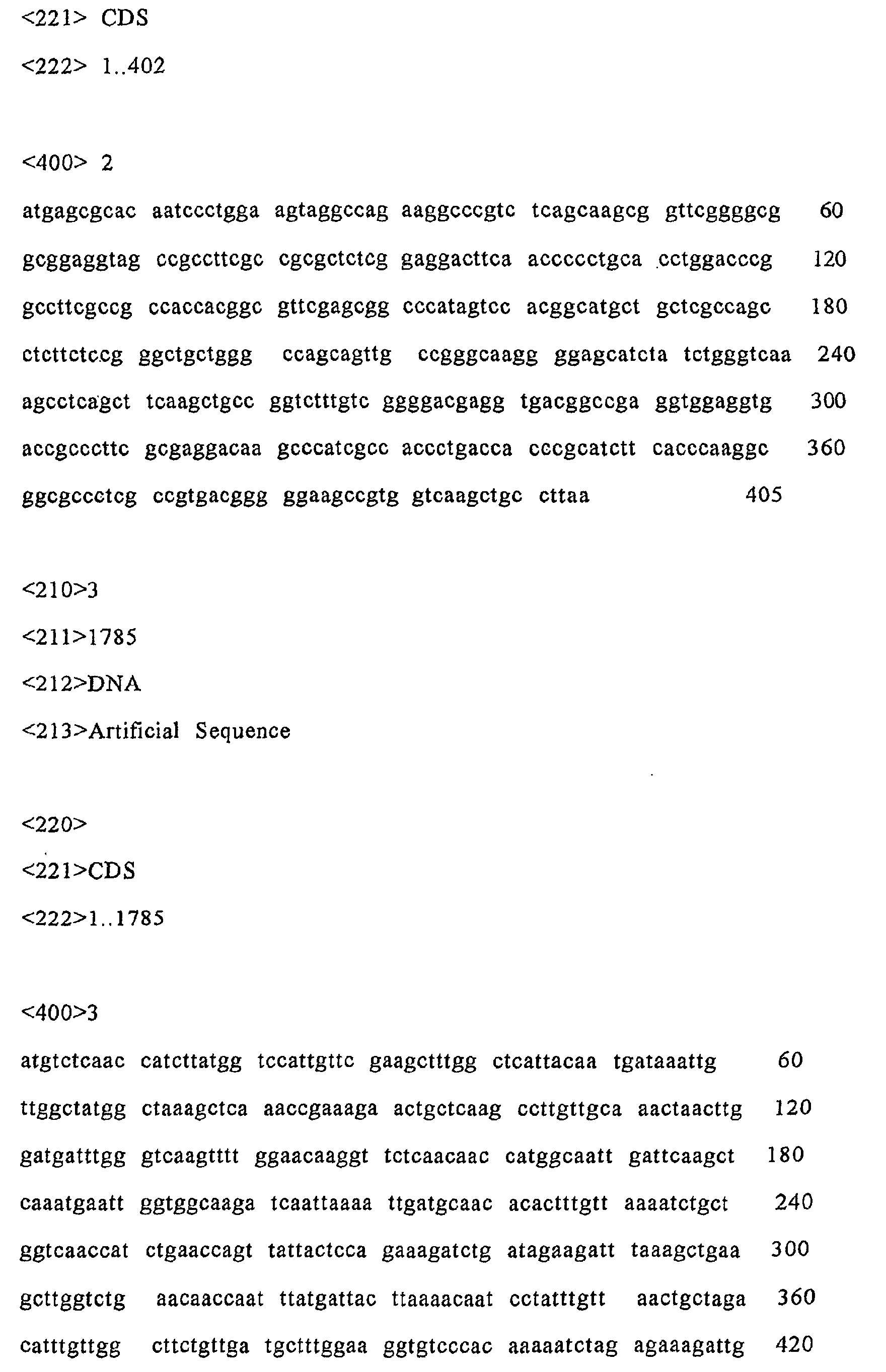
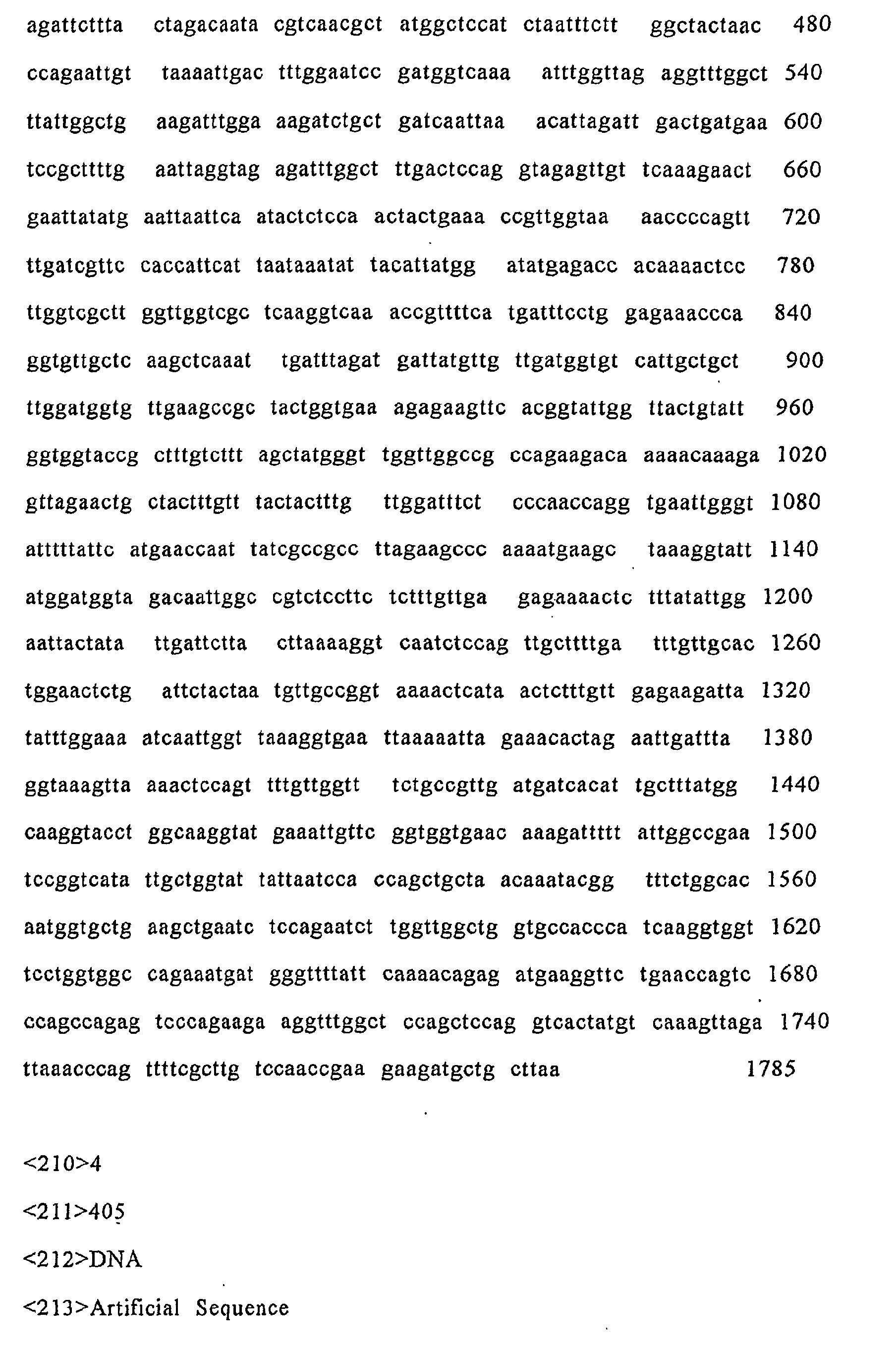
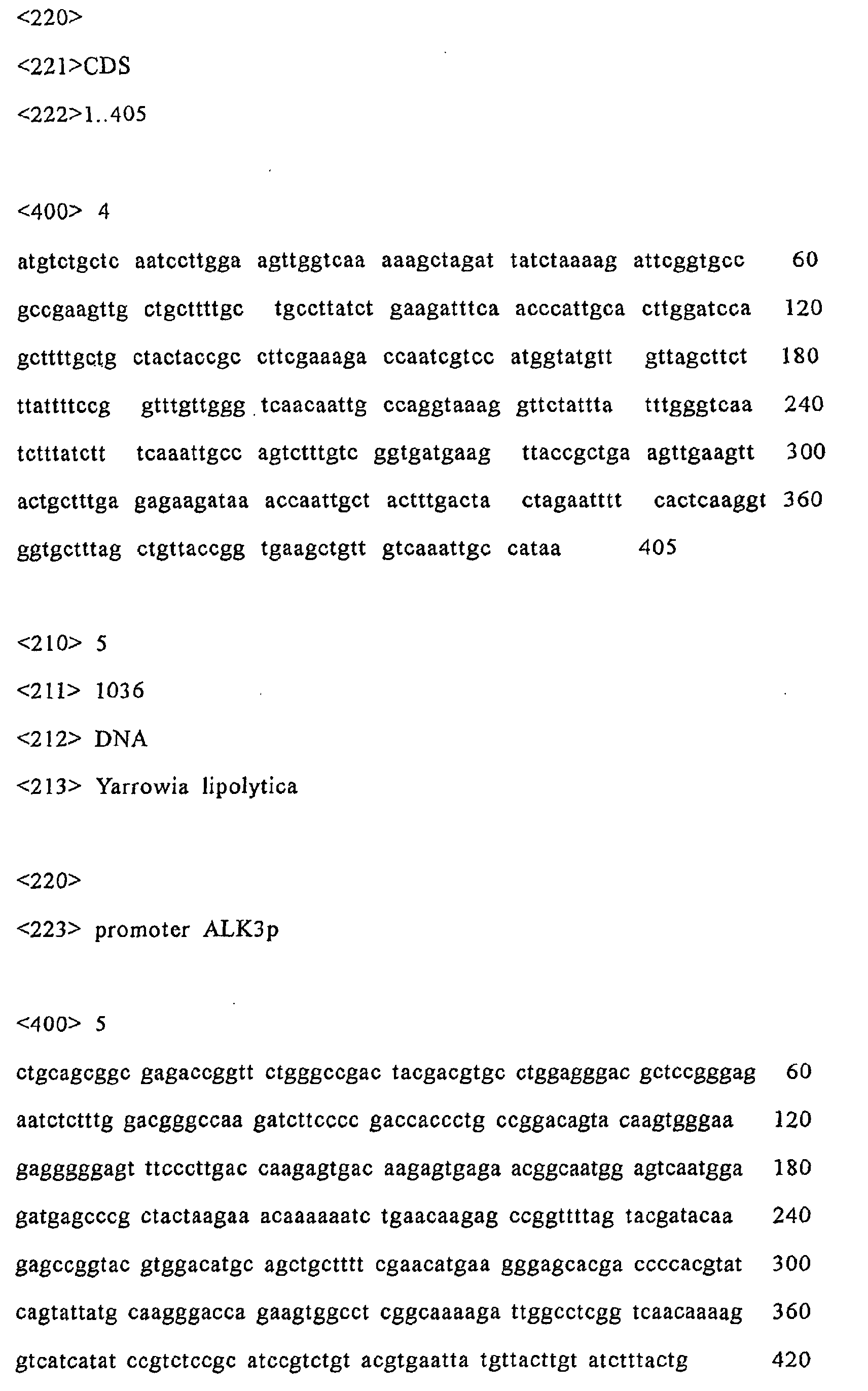

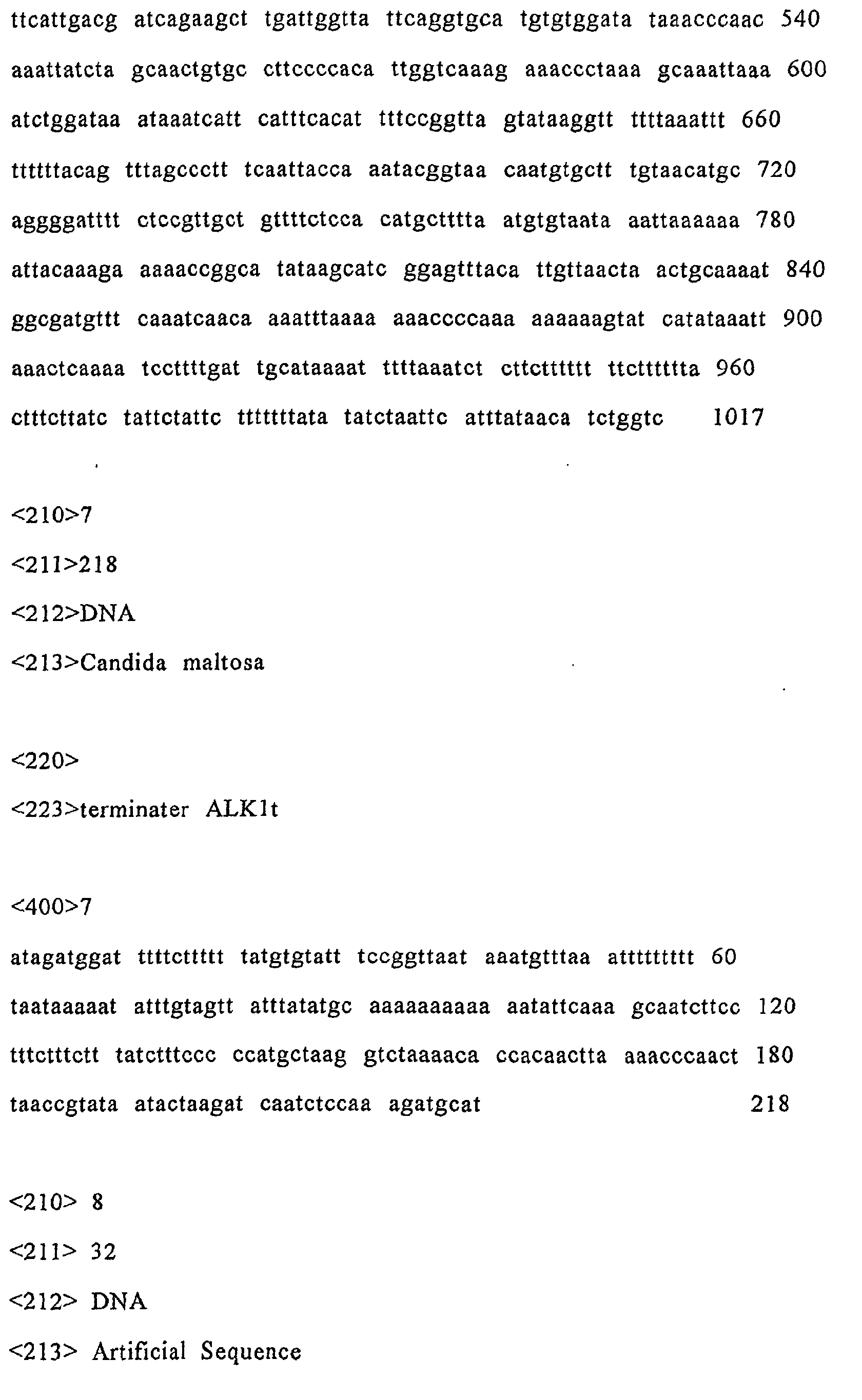
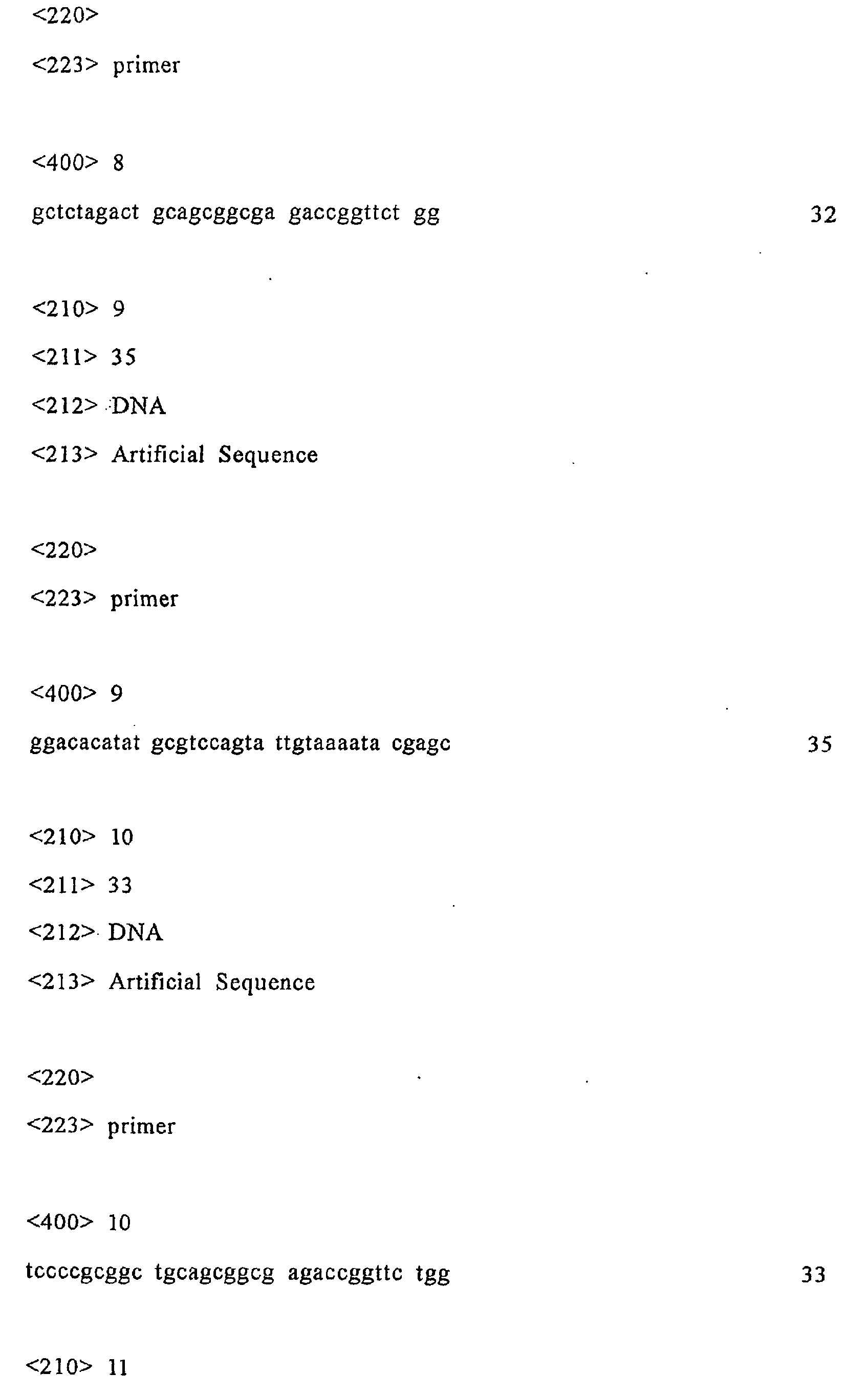

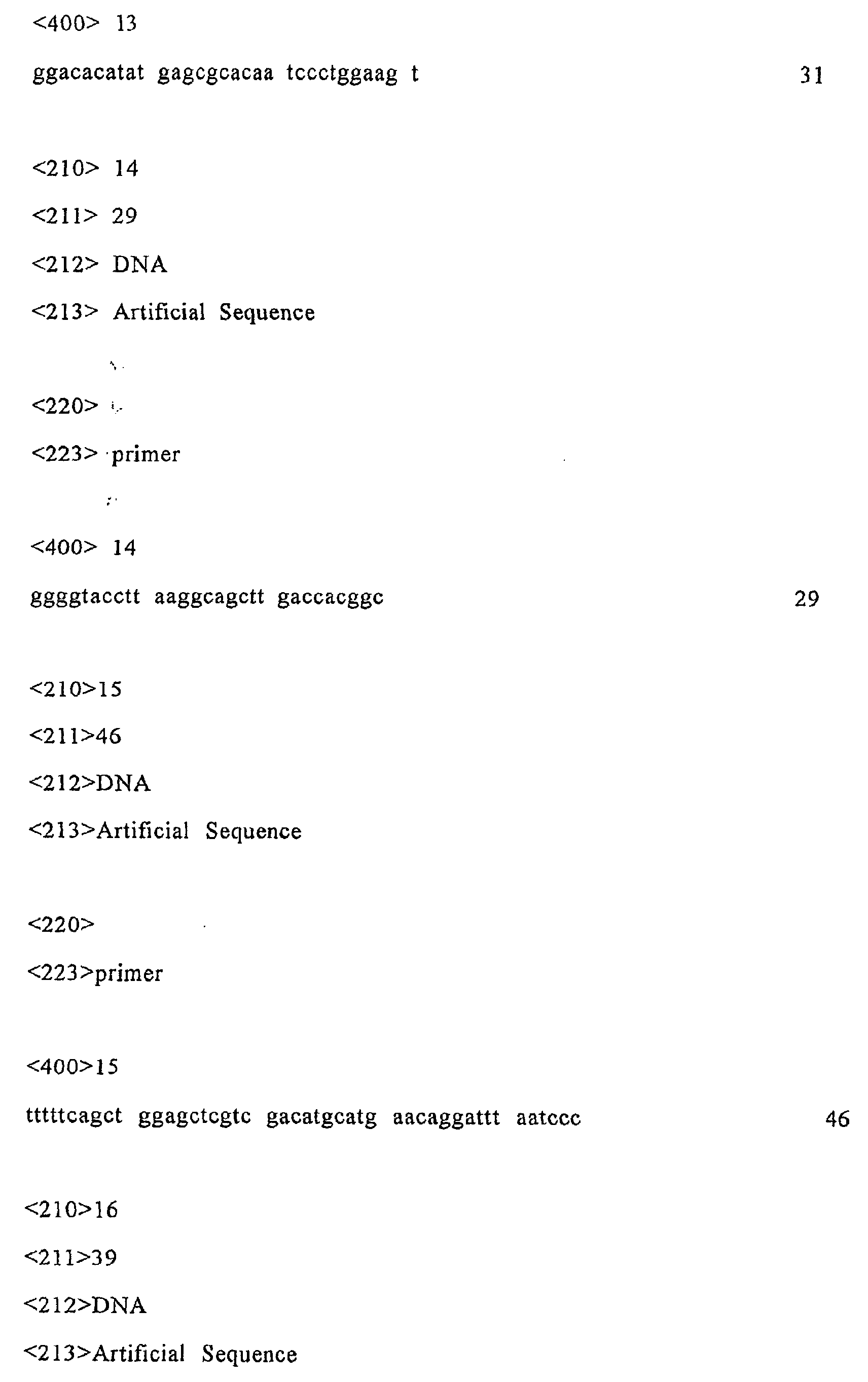


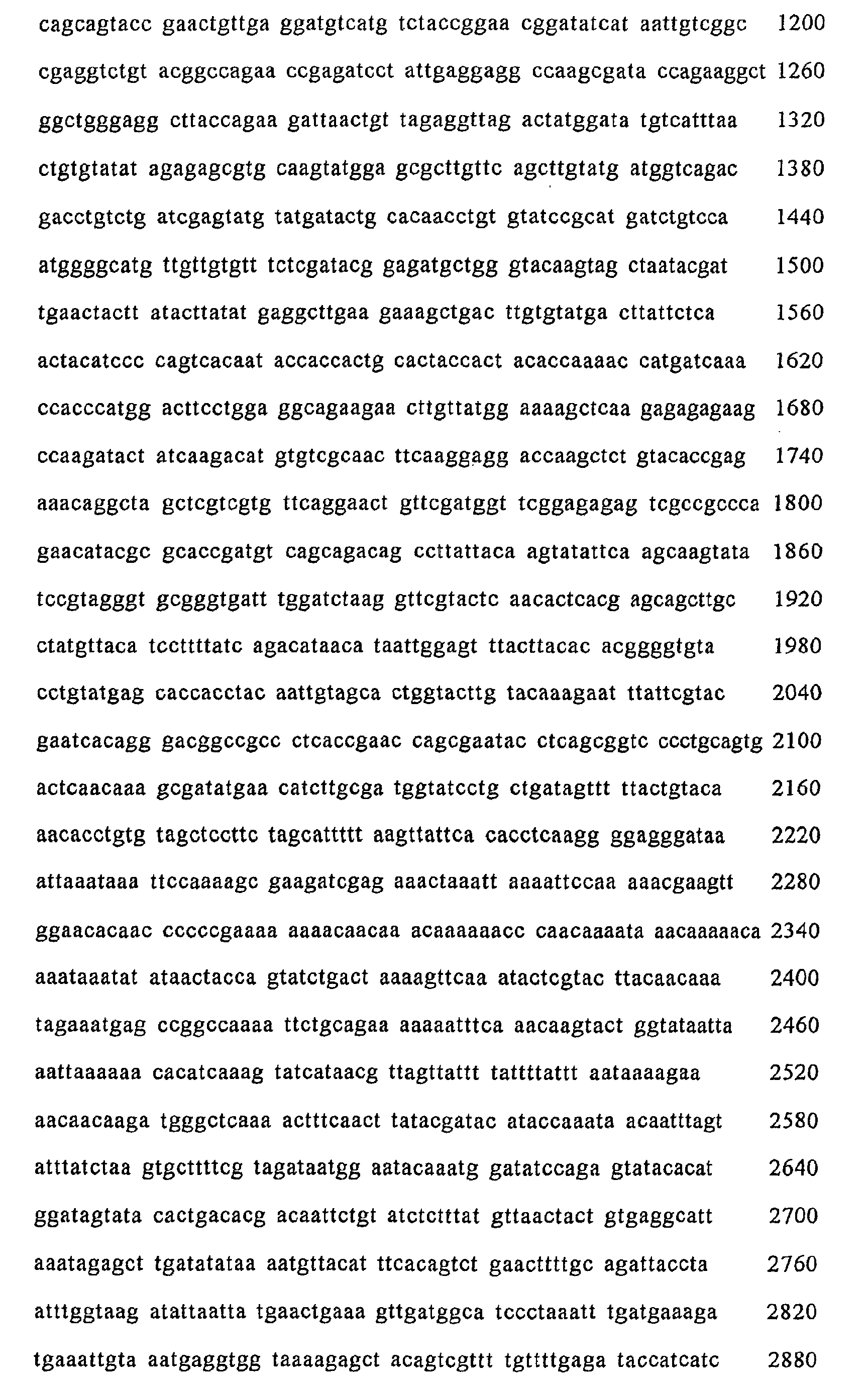

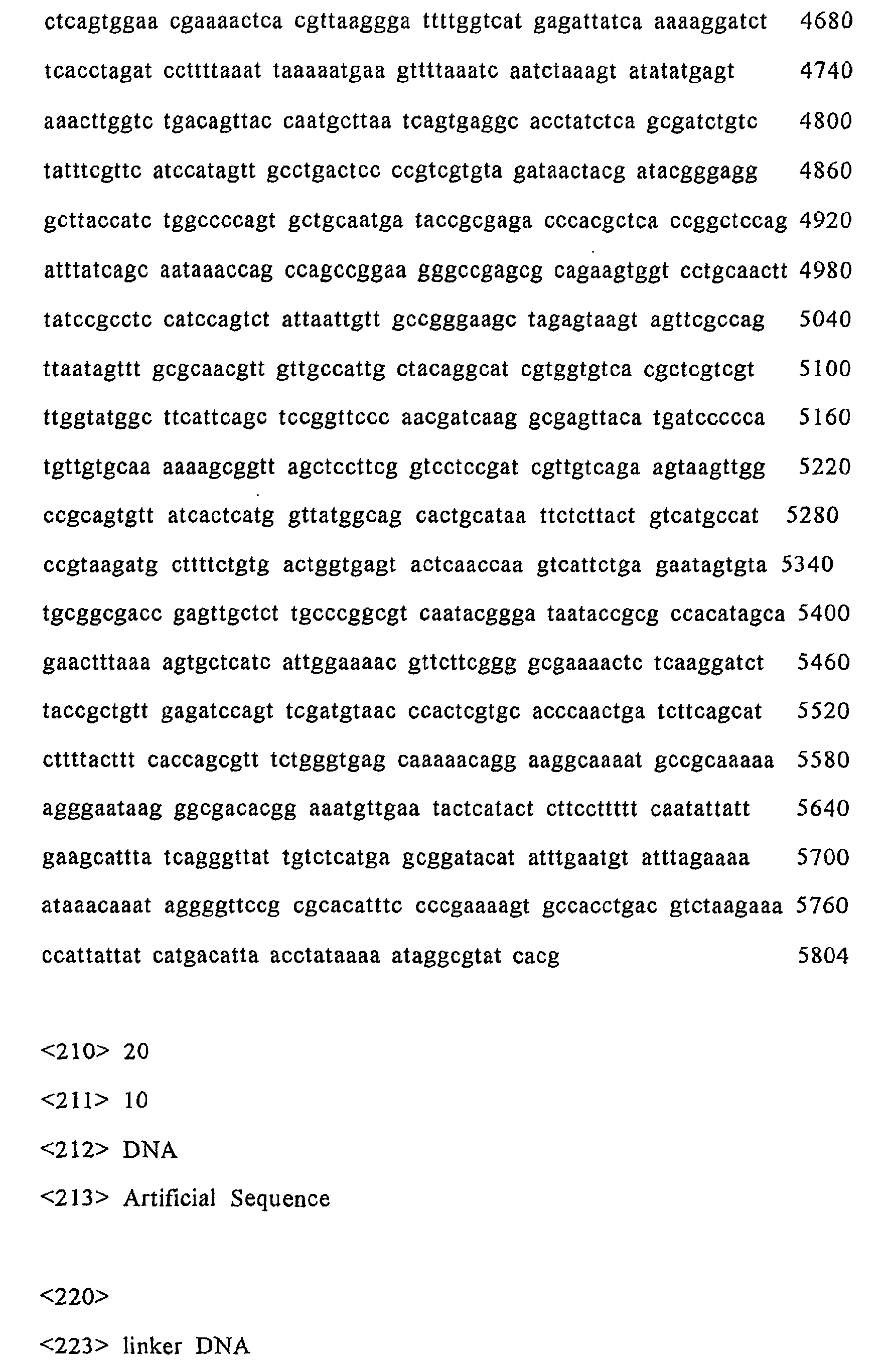
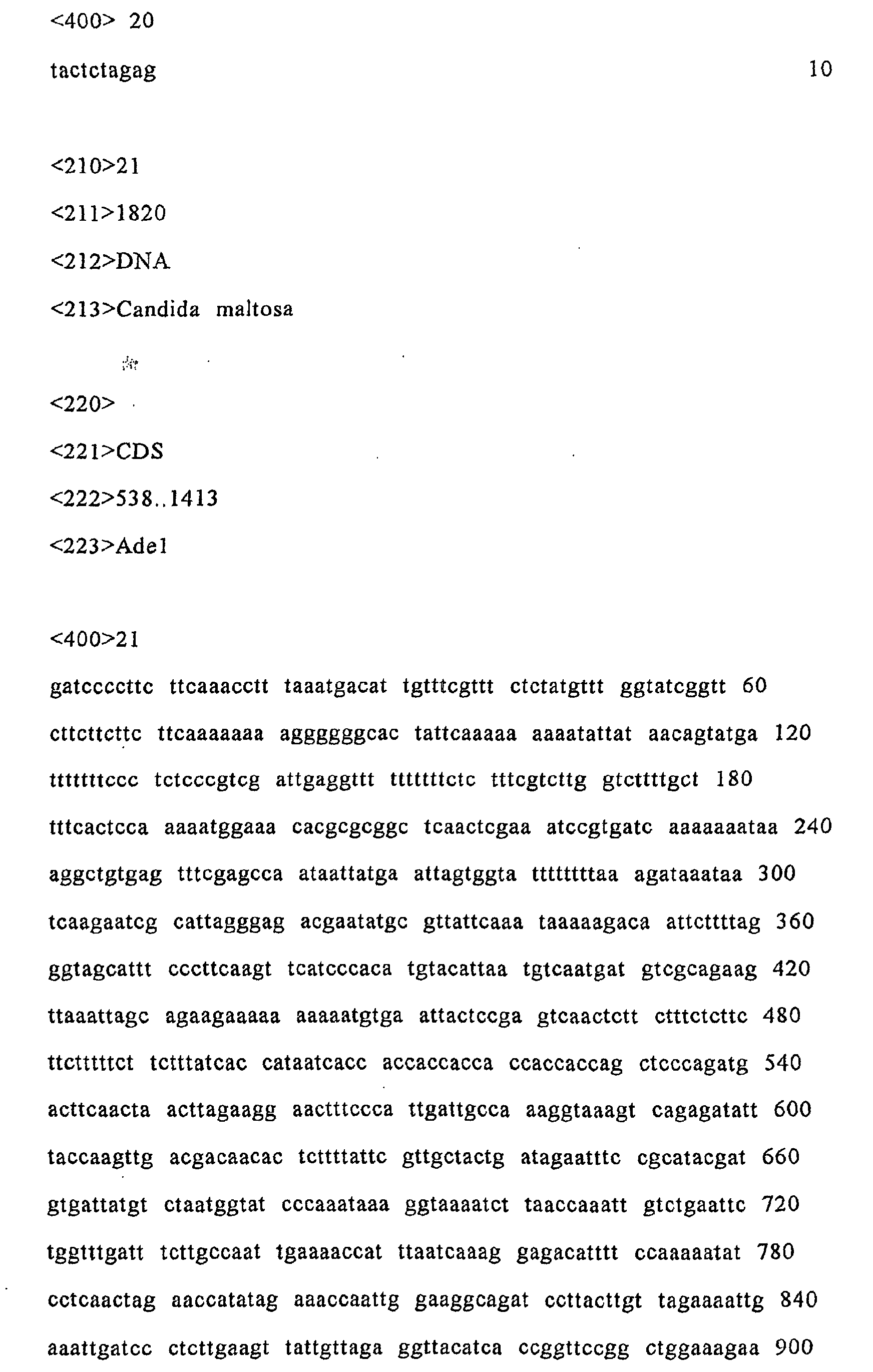

Claims (23)
- A transformant
wherein at least one kind of gene expression cassette comprising a polyester synthesis-associated enzyme gene has been introduced into a yeast. - The transformant according to Claim 1
wherein the polyester is a copolymer resulting from the copolymerization of 3-hydroxyalkanoic acids of the following general formula (1);in the formula, R represents an alkyl group.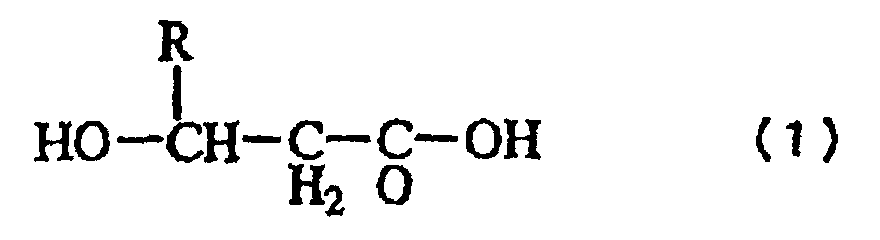
- The transformant according to Claim 1 or 2
wherein the polyester is copolyester P(3HB-co-3HH) resulting from the copolymerization of 3-hydroxybutyric acid of the following formula (2) and 3-hydroxyhexanoic acid of the following formula (3);
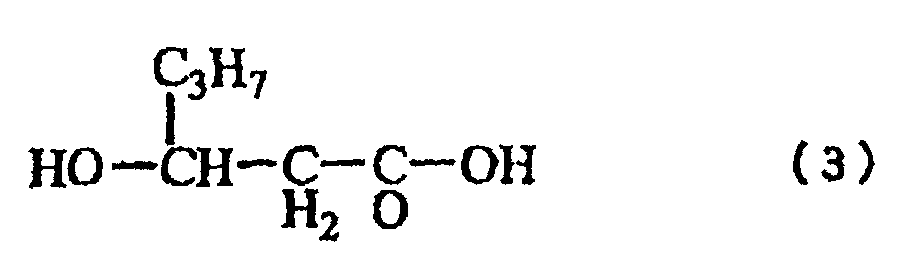
- The transformant according to any of Claims 1 to 3
wherein the yeast belongs to any of the genera Aciculoconidium, Ambrosiozyma, Arthroascus, Arxiozyma, Ashbya, Babjevia, Bensingtonia, Botryoascus, Botryozyma, Brettanomyces, Bullera, Bulleromyces, Candida, Citeromyces, Clavispora, Cryptococcus, Cystofilobasidium, Debaryomyces, Dekkara, Dipodascopsis, Dipodascus, Eeniella, Endomycopsella, Eremascus, Eremothecium, Erythrobasidium, Fellomyces, Filobasidium, Galactomyces, Geotrichum, Guilliermondella, Hanseniaspora, Hansenula, Hasegawaea, Holtermannia, Hormoascus, Hyphopichia, Issatchenkia, Kloeckera, Kloeckeraspora, Kluyveromyces, Kondoa, Kuraishia, Kurtzmanomyces, Leucosporidium, Lipomyces, Lodderomyces, Malassezia, Metschnikowia, Mrakia, Myxozyma, Nadsonia, Nakazawaea, Nematospora, Ogataea, Oosporidium, Pachysolen, Phachytichospora, Phaffia, Pichia, Rhodosporidium, Rhodotorula, Saccharomyces, Saccharomycodes, Saccharomycopsis, Saitoella, Sakaguchia, Saturnospora, Schizoblastosporion, Schizosaccharomyces, Schwanniomyces, Sporidiobolus, Sporobolomyces, Sporopachydermia, Stephanoascus, Sterigmatomyces, Sterigmatosporidium, Symbiotaphrina, Sympodiomyces, Sympodiomycopsis, Torulaspora, Trichosporiella, Trichosporon, Trigonopsis, Tsuchiyaea, Udeniomyces, Waltomyces, Wickerhamia, Wickerhamiella, Williopsis, Yamadazyma, Yarrowia, Zygoascus, Zygosaccharomyces, Zygowilliopsis and Zygozyma. - The transformant according to any of Claims 1 to 4
wherein the yeast is Yarrowia lipolytica. - The transformant according to any of Claims 1 to 4
wherein the yeast is Candida maltosa. - The transformant according to any of Claims 1 to 6
wherein a polyester synthesis-associated enzyme gene expression cassette comprises a promoter and a terminator,
said promoter and said terminator functioning in a yeast. - The transformant according to Claim 7
wherein the promoter and terminator are derived from Yarrowia lipolytica. - The transformant according to Claim 7 or 8
wherein the promoter is derived from Yarrowia lipolytica ALK3. - The transformant according to Claim 7 or 8
wherein the terminator is derived from Yarrowia lipolytica XPR2. - The transformant according to Claim 7
wherein the promoter and terminator are derived from Candida maltosa. - The transformant according to Claim 7 or 11
wherein the promoter is derived from Candida maltosa ALK1. - The transformant according to Claim 7 or 11
wherein the terminator is derived from Candida maltosa ALK1. - The transformant according to any of Claims 1 to 13
wherein the polyester synthesis-associated enzyme gene is derived from Aeromonas caviae. - The transformant according to any of Claims 1 to 13
wherein the polyester synthesis-associated enzyme gene is a PHA synthase gene derived from Aeromonas caviae or a PHA synthase gene and (R)-specific enoyl-CoA hydratase gene. - The transformant according to Claim 15
wherein said PHAsynthase gene has the sequence represented by SEQ ID NO:3
and the (R)-specific enoyl-CoA hydratase gene has the sequence represented by SEQ ID NO:4. - A method of producing a polyester using the transformant according to any of Claims 1 to 16
which comprises growing said transformant
and harvesting a polyester from the resulting culture. - A polyester synthesis-associated enzyme gene
which is modified from at least one gene code CTG to TTA, TTG, CTT, CTC or CTA. - The polyester synthesis-associated enzyme gene according to Claim 18
which codes for an enzyme derived from a bacterium. - The polyester synthesis-associated enzyme gene according to Claim 19
wherein said bacterium is Aeromonas caviae. - The polyester synthesis-associated enzyme gene according to Claim 20
wherein the enzyme gene derived from Aeromonas caviae is a PHA synthase gene or a (R)-specific enoyl-CoA hydratase gene. - The polyester synthesis-associated enzyme gene according to Claim 21
wherein said PHA synthase gene has the sequence represented by SEQ ID NO:3. - The polyester synthesis-associated enzyme gene according to Claim 21
wherein said (R)-specific enoyl-CoA hydratase gene has the sequence represented by SEQ ID NO:4.
Applications Claiming Priority (7)
| Application Number | Priority Date | Filing Date | Title |
|---|---|---|---|
| JP2000148726 | 2000-05-19 | ||
| JP2000148726 | 2000-05-19 | ||
| JP2000396955 | 2000-12-27 | ||
| JP2000396955 | 2000-12-27 | ||
| JP2001016929 | 2001-01-25 | ||
| JP2001016929 | 2001-01-25 | ||
| PCT/JP2001/004158 WO2001088144A1 (en) | 2000-05-19 | 2001-05-18 | Transformant and process for producing polyester by using the same |
Publications (2)
| Publication Number | Publication Date |
|---|---|
| EP1283266A1 true EP1283266A1 (en) | 2003-02-12 |
| EP1283266A4 EP1283266A4 (en) | 2005-01-05 |
Family
ID=27343437
Family Applications (1)
| Application Number | Title | Priority Date | Filing Date |
|---|---|---|---|
| EP01930202A Withdrawn EP1283266A4 (en) | 2000-05-19 | 2001-05-18 | Transformant and process for producing polyester by using the same |
Country Status (6)
| Country | Link |
|---|---|
| US (1) | US7083972B2 (en) |
| EP (1) | EP1283266A4 (en) |
| KR (1) | KR20020029369A (en) |
| CN (1) | CN1380903A (en) |
| CA (1) | CA2374969A1 (en) |
| WO (1) | WO2001088144A1 (en) |
Cited By (1)
| Publication number | Priority date | Publication date | Assignee | Title |
|---|---|---|---|---|
| EP2327776A1 (en) * | 2009-11-30 | 2011-06-01 | Institut National De La Recherche Agronomique | Method for the production of Very Long Chain Fatty Acids (VLCFA) by fermentation with a recombinant Yarrowia sp |
Families Citing this family (10)
| Publication number | Priority date | Publication date | Assignee | Title |
|---|---|---|---|---|
| US7429469B2 (en) | 2001-10-10 | 2008-09-30 | Kaneka Corporation | Enzyme gene participating in the synthesis of polyester and process for producing polyester using the same |
| PL372136A1 (en) * | 2002-04-26 | 2005-07-11 | Kaneka Corporation | Method of separating poly-3-hydroxyalkanoic acid |
| US20080118963A1 (en) * | 2002-09-30 | 2008-05-22 | Noriko Ogawa | Method Of Coagulating Poly-3-Hydroxyalkanoic Acid |
| US7238482B2 (en) | 2003-05-07 | 2007-07-03 | E. I. Du Pont De Nemours And Company | Production of polyunsaturated fatty acids in oleaginous yeasts |
| RU2005139128A (en) * | 2003-05-15 | 2006-05-27 | Канека Корпорейшн (Jp) | ADVANCED TRANSFORMANT AND METHOD FOR PRODUCING COMPLEX POLYESTER USING THE SPECIFIED TRANSFORMANT |
| US7259255B2 (en) | 2003-06-25 | 2007-08-21 | E. I. Du Pont De Nemours And Company | Glyceraldehyde-3-phosphate dehydrogenase and phosphoglycerate mutase promoters for gene expression in oleaginous yeast |
| US7459546B2 (en) | 2003-06-25 | 2008-12-02 | E.I. Du Pont De Nemours And Company | Glyceraldehyde-3-phosphate dehydrogenase and phosphoglycerate mutase regulatory sequences for gene expression in oleaginous yeast |
| US7588931B2 (en) | 2004-11-04 | 2009-09-15 | E. I. Du Pont De Nemours And Company | High arachidonic acid producing strains of Yarrowia lipolytica |
| JP7009009B2 (en) | 2019-04-26 | 2022-01-25 | 株式会社 フューエンス | Genes for synthesizing high molecular weight copolymers |
| JP7678797B2 (en) * | 2020-04-10 | 2025-05-16 | 株式会社カネカ | Method for producing copolymerized polyhydroxyalkanoic acid mixture and transformed microorganism |
Family Cites Families (2)
| Publication number | Priority date | Publication date | Assignee | Title |
|---|---|---|---|---|
| JP3062459B2 (en) * | 1996-08-14 | 2000-07-10 | 理化学研究所 | Polyester synthase gene and method for producing polyester |
| JP2002209574A (en) | 2001-01-19 | 2002-07-30 | Kanegafuchi Chem Ind Co Ltd | Gene disrupted yeast |
-
2001
- 2001-05-18 CA CA002374969A patent/CA2374969A1/en not_active Abandoned
- 2001-05-18 WO PCT/JP2001/004158 patent/WO2001088144A1/en not_active Ceased
- 2001-05-18 CN CN01801326A patent/CN1380903A/en active Pending
- 2001-05-18 EP EP01930202A patent/EP1283266A4/en not_active Withdrawn
- 2001-05-18 KR KR1020027000761A patent/KR20020029369A/en not_active Withdrawn
- 2001-05-18 US US10/019,543 patent/US7083972B2/en not_active Expired - Fee Related
Cited By (2)
| Publication number | Priority date | Publication date | Assignee | Title |
|---|---|---|---|---|
| EP2327776A1 (en) * | 2009-11-30 | 2011-06-01 | Institut National De La Recherche Agronomique | Method for the production of Very Long Chain Fatty Acids (VLCFA) by fermentation with a recombinant Yarrowia sp |
| WO2011064393A1 (en) * | 2009-11-30 | 2011-06-03 | Institut National De La Recherche Agronomique | Method for the production of very long chain fatty acids (vlcfa) by fermentation with a recombinant yarrowia sp |
Also Published As
| Publication number | Publication date |
|---|---|
| KR20020029369A (en) | 2002-04-18 |
| CA2374969A1 (en) | 2001-11-22 |
| CN1380903A (en) | 2002-11-20 |
| US20040146998A1 (en) | 2004-07-29 |
| US7083972B2 (en) | 2006-08-01 |
| WO2001088144A1 (en) | 2001-11-22 |
| EP1283266A4 (en) | 2005-01-05 |
Similar Documents
| Publication | Publication Date | Title |
|---|---|---|
| Mitra et al. | Current developments on polyhydroxyalkanoates synthesis by using halophiles as a promising cell factory | |
| CN111615555B (en) | Transformed microorganism for producing copolymerized PHA containing 3HH monomer units at a high composition ratio, and method for producing PHA using the transformed microorganism | |
| JP5670728B2 (en) | Improved polyhydroxyalkanoate-producing microorganism and method for producing polyhydroxyalkanoate using the same | |
| US7384766B2 (en) | Gene-substituted microorganisms, and production method of polyesters using the same | |
| EP0824148B1 (en) | Polyester synthase gene and process for producing polyester | |
| JPWO2018021046A1 (en) | Transformant producing 3HH unit-containing copolymerized PHA, and method for producing the PHA | |
| EP2048224B1 (en) | Microorganism with replaced gene and process for producing polyester using the same | |
| US7083972B2 (en) | Transformant and process for producing polyester by using the same | |
| JP4643799B2 (en) | Polyester manufacturing method | |
| JP7748499B2 (en) | Transformed microorganism and method for producing polyhydroxyalkanoic acid | |
| US7429469B2 (en) | Enzyme gene participating in the synthesis of polyester and process for producing polyester using the same | |
| CN104870645A (en) | Method for producing butanediol | |
| KR102693462B1 (en) | Recombinant Corynebacterium glutamicum strain for producing 5-hydroxyvaleric acid and a method of producing glutaric acid using the same | |
| JPWO2017104722A1 (en) | PHA-producing microorganism having sucrose utilization and method for producing PHA using the microorganism | |
| EP1626087A1 (en) | Improved transformant and process for producing polyester using the same | |
| US20080233620A1 (en) | Novel Transformant and Process for Producing Polyester Using the Same | |
| US20060160195A1 (en) | Novel vector | |
| JPWO2008090873A1 (en) | Process for producing polyhydroxyalkanoate | |
| WO2024166830A1 (en) | Transformed microorganism, and production method of polyhydroxyalkanoic acid | |
| JP2008029218A (en) | Method for producing copolymerized polyester using microorganisms having reduced enzyme activity | |
| JP2008086238A (en) | Method for producing polyhydroxyalkanoate | |
| JPWO2001088144A1 (en) | Transformant and method for producing polyester using the same | |
| JPH11243956A (en) | Polyester production method | |
| JP7009009B2 (en) | Genes for synthesizing high molecular weight copolymers | |
| WO2025173696A1 (en) | Method for producing polyhydroxyalkanoic acid, and transformed microorganism |
Legal Events
| Date | Code | Title | Description |
|---|---|---|---|
| PUAI | Public reference made under article 153(3) epc to a published international application that has entered the european phase |
Free format text: ORIGINAL CODE: 0009012 |
|
| 17P | Request for examination filed |
Effective date: 20020404 |
|
| AK | Designated contracting states |
Designated state(s): AT BE CH CY DE DK ES FI FR GB GR IE IT LI LU MC NL PT SE TR |
|
| RBV | Designated contracting states (corrected) |
Designated state(s): DE FR GB |
|
| A4 | Supplementary search report drawn up and despatched |
Effective date: 20041124 |
|
| 17Q | First examination report despatched |
Effective date: 20060907 |
|
| STAA | Information on the status of an ep patent application or granted ep patent |
Free format text: STATUS: THE APPLICATION IS DEEMED TO BE WITHDRAWN |
|
| 18D | Application deemed to be withdrawn |
Effective date: 20080111 |