EP1282878B1 - Method for performing multiple chemical reactions and a kit and system therefor - Google Patents
Method for performing multiple chemical reactions and a kit and system therefor Download PDFInfo
- Publication number
- EP1282878B1 EP1282878B1 EP01934219A EP01934219A EP1282878B1 EP 1282878 B1 EP1282878 B1 EP 1282878B1 EP 01934219 A EP01934219 A EP 01934219A EP 01934219 A EP01934219 A EP 01934219A EP 1282878 B1 EP1282878 B1 EP 1282878B1
- Authority
- EP
- European Patent Office
- Prior art keywords
- chemical
- reaction
- functionality
- sets
- functionalities
- Prior art date
- Legal status (The legal status is an assumption and is not a legal conclusion. Google has not performed a legal analysis and makes no representation as to the accuracy of the status listed.)
- Expired - Lifetime
Links
- 238000006243 chemical reaction Methods 0.000 title claims abstract description 230
- 238000000034 method Methods 0.000 title claims abstract description 53
- 239000007788 liquid Substances 0.000 claims abstract description 10
- 239000000126 substance Substances 0.000 claims description 81
- 230000009466 transformation Effects 0.000 claims description 47
- 239000013626 chemical specie Substances 0.000 claims description 43
- 239000011541 reaction mixture Substances 0.000 claims description 25
- 239000000047 product Substances 0.000 claims description 23
- 239000000470 constituent Substances 0.000 claims description 17
- 238000010438 heat treatment Methods 0.000 claims description 10
- 239000007795 chemical reaction product Substances 0.000 claims description 6
- 238000004590 computer program Methods 0.000 claims description 5
- 239000011550 stock solution Substances 0.000 claims description 4
- 238000002360 preparation method Methods 0.000 claims description 3
- 238000003786 synthesis reaction Methods 0.000 abstract description 7
- 230000008901 benefit Effects 0.000 abstract description 2
- 239000003153 chemical reaction reagent Substances 0.000 description 16
- 239000000758 substrate Substances 0.000 description 12
- 239000002904 solvent Substances 0.000 description 11
- 239000000523 sample Substances 0.000 description 10
- 239000003054 catalyst Substances 0.000 description 9
- 230000015572 biosynthetic process Effects 0.000 description 8
- 150000005829 chemical entities Chemical class 0.000 description 7
- 230000008569 process Effects 0.000 description 7
- WVDDGKGOMKODPV-UHFFFAOYSA-N Benzyl alcohol Chemical compound OCC1=CC=CC=C1 WVDDGKGOMKODPV-UHFFFAOYSA-N 0.000 description 6
- LFQSCWFLJHTTHZ-UHFFFAOYSA-N Ethanol Chemical compound CCO LFQSCWFLJHTTHZ-UHFFFAOYSA-N 0.000 description 6
- 238000007792 addition Methods 0.000 description 5
- 239000007858 starting material Substances 0.000 description 5
- 238000004458 analytical method Methods 0.000 description 4
- WPYMKLBDIGXBTP-UHFFFAOYSA-N benzoic acid Chemical compound OC(=O)C1=CC=CC=C1 WPYMKLBDIGXBTP-UHFFFAOYSA-N 0.000 description 4
- 238000006757 chemical reactions by type Methods 0.000 description 4
- 150000003138 primary alcohols Chemical class 0.000 description 4
- 230000035484 reaction time Effects 0.000 description 4
- ABEXEQSGABRUHS-UHFFFAOYSA-N 16-methylheptadecyl 16-methylheptadecanoate Chemical compound CC(C)CCCCCCCCCCCCCCCOC(=O)CCCCCCCCCCCCCCC(C)C ABEXEQSGABRUHS-UHFFFAOYSA-N 0.000 description 3
- CSCPPACGZOOCGX-UHFFFAOYSA-N Acetone Chemical compound CC(C)=O CSCPPACGZOOCGX-UHFFFAOYSA-N 0.000 description 3
- WEVYAHXRMPXWCK-UHFFFAOYSA-N Acetonitrile Chemical compound CC#N WEVYAHXRMPXWCK-UHFFFAOYSA-N 0.000 description 3
- IAZDPXIOMUYVGZ-UHFFFAOYSA-N Dimethylsulphoxide Chemical compound CS(C)=O IAZDPXIOMUYVGZ-UHFFFAOYSA-N 0.000 description 3
- LYCAIKOWRPUZTN-UHFFFAOYSA-N Ethylene glycol Chemical compound OCCO LYCAIKOWRPUZTN-UHFFFAOYSA-N 0.000 description 3
- 241000764238 Isis Species 0.000 description 3
- JFDZBHWFFUWGJE-UHFFFAOYSA-N benzonitrile Chemical compound N#CC1=CC=CC=C1 JFDZBHWFFUWGJE-UHFFFAOYSA-N 0.000 description 3
- 238000006664 bond formation reaction Methods 0.000 description 3
- 238000005859 coupling reaction Methods 0.000 description 3
- 229940000406 drug candidate Drugs 0.000 description 3
- 238000005417 image-selected in vivo spectroscopy Methods 0.000 description 3
- 238000012739 integrated shape imaging system Methods 0.000 description 3
- 239000012071 phase Substances 0.000 description 3
- 238000012545 processing Methods 0.000 description 3
- 239000000376 reactant Substances 0.000 description 3
- 239000005711 Benzoic acid Substances 0.000 description 2
- ZMXDDKWLCZADIW-UHFFFAOYSA-N N,N-Dimethylformamide Chemical compound CN(C)C=O ZMXDDKWLCZADIW-UHFFFAOYSA-N 0.000 description 2
- LRHPLDYGYMQRHN-UHFFFAOYSA-N N-Butanol Chemical compound CCCCO LRHPLDYGYMQRHN-UHFFFAOYSA-N 0.000 description 2
- SECXISVLQFMRJM-UHFFFAOYSA-N N-Methylpyrrolidone Chemical compound CN1CCCC1=O SECXISVLQFMRJM-UHFFFAOYSA-N 0.000 description 2
- KDLHZDBZIXYQEI-UHFFFAOYSA-N Palladium Chemical compound [Pd] KDLHZDBZIXYQEI-UHFFFAOYSA-N 0.000 description 2
- DKGAVHZHDRPRBM-UHFFFAOYSA-N Tert-Butanol Chemical compound CC(C)(C)O DKGAVHZHDRPRBM-UHFFFAOYSA-N 0.000 description 2
- WYURNTSHIVDZCO-UHFFFAOYSA-N Tetrahydrofuran Chemical compound C1CCOC1 WYURNTSHIVDZCO-UHFFFAOYSA-N 0.000 description 2
- WGLPBDUCMAPZCE-UHFFFAOYSA-N Trioxochromium Chemical compound O=[Cr](=O)=O WGLPBDUCMAPZCE-UHFFFAOYSA-N 0.000 description 2
- 230000003321 amplification Effects 0.000 description 2
- 238000013528 artificial neural network Methods 0.000 description 2
- 235000010233 benzoic acid Nutrition 0.000 description 2
- 229960004217 benzyl alcohol Drugs 0.000 description 2
- 235000019445 benzyl alcohol Nutrition 0.000 description 2
- 230000008859 change Effects 0.000 description 2
- 238000011161 development Methods 0.000 description 2
- 238000002405 diagnostic procedure Methods 0.000 description 2
- -1 dilute Substances 0.000 description 2
- 239000007789 gas Substances 0.000 description 2
- 125000002887 hydroxy group Chemical group [H]O* 0.000 description 2
- 238000006317 isomerization reaction Methods 0.000 description 2
- 239000007791 liquid phase Substances 0.000 description 2
- 239000000463 material Substances 0.000 description 2
- 239000000203 mixture Substances 0.000 description 2
- 238000003199 nucleic acid amplification method Methods 0.000 description 2
- 238000002515 oligonucleotide synthesis Methods 0.000 description 2
- 238000006053 organic reaction Methods 0.000 description 2
- 230000003647 oxidation Effects 0.000 description 2
- 238000007254 oxidation reaction Methods 0.000 description 2
- 238000010647 peptide synthesis reaction Methods 0.000 description 2
- 108090000765 processed proteins & peptides Proteins 0.000 description 2
- VEMKTZHHVJILDY-UHFFFAOYSA-N resmethrin Chemical compound CC1(C)C(C=C(C)C)C1C(=O)OCC1=COC(CC=2C=CC=CC=2)=C1 VEMKTZHHVJILDY-UHFFFAOYSA-N 0.000 description 2
- 239000004065 semiconductor Substances 0.000 description 2
- 239000007790 solid phase Substances 0.000 description 2
- IMRWILPUOVGIMU-UHFFFAOYSA-N 2-bromopyridine Chemical compound BrC1=CC=CC=N1 IMRWILPUOVGIMU-UHFFFAOYSA-N 0.000 description 1
- GSNUFIFRDBKVIE-UHFFFAOYSA-N DMF Natural products CC1=CC=C(C)O1 GSNUFIFRDBKVIE-UHFFFAOYSA-N 0.000 description 1
- 238000005698 Diels-Alder reaction Methods 0.000 description 1
- 102000004190 Enzymes Human genes 0.000 description 1
- 108090000790 Enzymes Proteins 0.000 description 1
- AHVYPIQETPWLSZ-UHFFFAOYSA-N N-methyl-pyrrolidine Natural products CN1CC=CC1 AHVYPIQETPWLSZ-UHFFFAOYSA-N 0.000 description 1
- 238000005481 NMR spectroscopy Methods 0.000 description 1
- 238000006069 Suzuki reaction reaction Methods 0.000 description 1
- 230000021736 acetylation Effects 0.000 description 1
- 238000006640 acetylation reaction Methods 0.000 description 1
- 239000002253 acid Substances 0.000 description 1
- 230000010933 acylation Effects 0.000 description 1
- 238000005917 acylation reaction Methods 0.000 description 1
- 230000029936 alkylation Effects 0.000 description 1
- 238000005804 alkylation reaction Methods 0.000 description 1
- 230000009435 amidation Effects 0.000 description 1
- 238000007112 amidation reaction Methods 0.000 description 1
- 238000005902 aminomethylation reaction Methods 0.000 description 1
- 238000006254 arylation reaction Methods 0.000 description 1
- KCXMKQUNVWSEMD-UHFFFAOYSA-N benzyl chloride Chemical compound ClCC1=CC=CC=C1 KCXMKQUNVWSEMD-UHFFFAOYSA-N 0.000 description 1
- 125000001797 benzyl group Chemical group [H]C1=C([H])C([H])=C(C([H])=C1[H])C([H])([H])* 0.000 description 1
- 238000009835 boiling Methods 0.000 description 1
- ZADPBFCGQRWHPN-UHFFFAOYSA-N boronic acid Chemical compound OBO ZADPBFCGQRWHPN-UHFFFAOYSA-N 0.000 description 1
- 125000003178 carboxy group Chemical group [H]OC(*)=O 0.000 description 1
- 150000001733 carboxylic acid esters Chemical group 0.000 description 1
- 125000002843 carboxylic acid group Chemical group 0.000 description 1
- 150000001735 carboxylic acids Chemical group 0.000 description 1
- 230000000052 comparative effect Effects 0.000 description 1
- 238000006482 condensation reaction Methods 0.000 description 1
- 238000011109 contamination Methods 0.000 description 1
- 238000007796 conventional method Methods 0.000 description 1
- 238000001816 cooling Methods 0.000 description 1
- 230000008878 coupling Effects 0.000 description 1
- 238000010168 coupling process Methods 0.000 description 1
- 238000006114 decarboxylation reaction Methods 0.000 description 1
- 238000006356 dehydrogenation reaction Methods 0.000 description 1
- ZHXTWWCDMUWMDI-UHFFFAOYSA-N dihydroxyboron Chemical compound O[B]O ZHXTWWCDMUWMDI-UHFFFAOYSA-N 0.000 description 1
- 238000009509 drug development Methods 0.000 description 1
- 238000006735 epoxidation reaction Methods 0.000 description 1
- 230000032050 esterification Effects 0.000 description 1
- 238000005886 esterification reaction Methods 0.000 description 1
- 238000002474 experimental method Methods 0.000 description 1
- 230000022244 formylation Effects 0.000 description 1
- 238000006170 formylation reaction Methods 0.000 description 1
- 238000002290 gas chromatography-mass spectrometry Methods 0.000 description 1
- 239000011521 glass Substances 0.000 description 1
- 230000026030 halogenation Effects 0.000 description 1
- 238000005658 halogenation reaction Methods 0.000 description 1
- 238000006197 hydroboration reaction Methods 0.000 description 1
- 238000005984 hydrogenation reaction Methods 0.000 description 1
- 238000010656 hydrometalation reaction Methods 0.000 description 1
- 230000033444 hydroxylation Effects 0.000 description 1
- 238000005805 hydroxylation reaction Methods 0.000 description 1
- 239000012535 impurity Substances 0.000 description 1
- 239000011261 inert gas Substances 0.000 description 1
- 239000002608 ionic liquid Substances 0.000 description 1
- 150000002596 lactones Chemical group 0.000 description 1
- 238000004895 liquid chromatography mass spectrometry Methods 0.000 description 1
- 238000002156 mixing Methods 0.000 description 1
- 230000004048 modification Effects 0.000 description 1
- 238000012986 modification Methods 0.000 description 1
- 238000005648 named reaction Methods 0.000 description 1
- 239000002547 new drug Substances 0.000 description 1
- 150000002894 organic compounds Chemical class 0.000 description 1
- 238000005949 ozonolysis reaction Methods 0.000 description 1
- 229910052763 palladium Inorganic materials 0.000 description 1
- 229920000642 polymer Polymers 0.000 description 1
- 230000009257 reactivity Effects 0.000 description 1
- 230000008707 rearrangement Effects 0.000 description 1
- 230000009467 reduction Effects 0.000 description 1
- 238000006722 reduction reaction Methods 0.000 description 1
- 150000003839 salts Chemical class 0.000 description 1
- 150000003333 secondary alcohols Chemical class 0.000 description 1
- 238000007086 side reaction Methods 0.000 description 1
- 239000007787 solid Substances 0.000 description 1
- 239000000243 solution Substances 0.000 description 1
- 238000002907 substructure search Methods 0.000 description 1
- 150000003509 tertiary alcohols Chemical class 0.000 description 1
- 238000000844 transformation Methods 0.000 description 1
- XLYOFNOQVPJJNP-UHFFFAOYSA-N water Substances O XLYOFNOQVPJJNP-UHFFFAOYSA-N 0.000 description 1
Images

Classifications
-
- B—PERFORMING OPERATIONS; TRANSPORTING
- B01—PHYSICAL OR CHEMICAL PROCESSES OR APPARATUS IN GENERAL
- B01J—CHEMICAL OR PHYSICAL PROCESSES, e.g. CATALYSIS OR COLLOID CHEMISTRY; THEIR RELEVANT APPARATUS
- B01J19/00—Chemical, physical or physico-chemical processes in general; Their relevant apparatus
- B01J19/08—Processes employing the direct application of electric or wave energy, or particle radiation; Apparatus therefor
- B01J19/12—Processes employing the direct application of electric or wave energy, or particle radiation; Apparatus therefor employing electromagnetic waves
- B01J19/122—Incoherent waves
- B01J19/126—Microwaves
-
- B—PERFORMING OPERATIONS; TRANSPORTING
- B01—PHYSICAL OR CHEMICAL PROCESSES OR APPARATUS IN GENERAL
- B01J—CHEMICAL OR PHYSICAL PROCESSES, e.g. CATALYSIS OR COLLOID CHEMISTRY; THEIR RELEVANT APPARATUS
- B01J19/00—Chemical, physical or physico-chemical processes in general; Their relevant apparatus
-
- B—PERFORMING OPERATIONS; TRANSPORTING
- B01—PHYSICAL OR CHEMICAL PROCESSES OR APPARATUS IN GENERAL
- B01J—CHEMICAL OR PHYSICAL PROCESSES, e.g. CATALYSIS OR COLLOID CHEMISTRY; THEIR RELEVANT APPARATUS
- B01J19/00—Chemical, physical or physico-chemical processes in general; Their relevant apparatus
- B01J19/0006—Controlling or regulating processes
-
- B—PERFORMING OPERATIONS; TRANSPORTING
- B01—PHYSICAL OR CHEMICAL PROCESSES OR APPARATUS IN GENERAL
- B01J—CHEMICAL OR PHYSICAL PROCESSES, e.g. CATALYSIS OR COLLOID CHEMISTRY; THEIR RELEVANT APPARATUS
- B01J19/00—Chemical, physical or physico-chemical processes in general; Their relevant apparatus
- B01J19/0006—Controlling or regulating processes
- B01J19/004—Multifunctional apparatus for automatic manufacturing of various chemical products
-
- B—PERFORMING OPERATIONS; TRANSPORTING
- B01—PHYSICAL OR CHEMICAL PROCESSES OR APPARATUS IN GENERAL
- B01J—CHEMICAL OR PHYSICAL PROCESSES, e.g. CATALYSIS OR COLLOID CHEMISTRY; THEIR RELEVANT APPARATUS
- B01J4/00—Feed or outlet devices; Feed or outlet control devices
- B01J4/02—Feed or outlet devices; Feed or outlet control devices for feeding measured, i.e. prescribed quantities of reagents
-
- G—PHYSICS
- G05—CONTROLLING; REGULATING
- G05B—CONTROL OR REGULATING SYSTEMS IN GENERAL; FUNCTIONAL ELEMENTS OF SUCH SYSTEMS; MONITORING OR TESTING ARRANGEMENTS FOR SUCH SYSTEMS OR ELEMENTS
- G05B15/00—Systems controlled by a computer
- G05B15/02—Systems controlled by a computer electric
-
- B—PERFORMING OPERATIONS; TRANSPORTING
- B01—PHYSICAL OR CHEMICAL PROCESSES OR APPARATUS IN GENERAL
- B01J—CHEMICAL OR PHYSICAL PROCESSES, e.g. CATALYSIS OR COLLOID CHEMISTRY; THEIR RELEVANT APPARATUS
- B01J2219/00—Chemical, physical or physico-chemical processes in general; Their relevant apparatus
- B01J2219/00049—Controlling or regulating processes
- B01J2219/00051—Controlling the temperature
- B01J2219/00054—Controlling or regulating the heat exchange system
- B01J2219/00056—Controlling or regulating the heat exchange system involving measured parameters
- B01J2219/00058—Temperature measurement
-
- B—PERFORMING OPERATIONS; TRANSPORTING
- B01—PHYSICAL OR CHEMICAL PROCESSES OR APPARATUS IN GENERAL
- B01J—CHEMICAL OR PHYSICAL PROCESSES, e.g. CATALYSIS OR COLLOID CHEMISTRY; THEIR RELEVANT APPARATUS
- B01J2219/00—Chemical, physical or physico-chemical processes in general; Their relevant apparatus
- B01J2219/00049—Controlling or regulating processes
- B01J2219/00162—Controlling or regulating processes controlling the pressure
-
- B—PERFORMING OPERATIONS; TRANSPORTING
- B01—PHYSICAL OR CHEMICAL PROCESSES OR APPARATUS IN GENERAL
- B01J—CHEMICAL OR PHYSICAL PROCESSES, e.g. CATALYSIS OR COLLOID CHEMISTRY; THEIR RELEVANT APPARATUS
- B01J2219/00—Chemical, physical or physico-chemical processes in general; Their relevant apparatus
- B01J2219/00274—Sequential or parallel reactions; Apparatus and devices for combinatorial chemistry or for making arrays; Chemical library technology
- B01J2219/00277—Apparatus
- B01J2219/00351—Means for dispensing and evacuation of reagents
-
- B—PERFORMING OPERATIONS; TRANSPORTING
- B01—PHYSICAL OR CHEMICAL PROCESSES OR APPARATUS IN GENERAL
- B01J—CHEMICAL OR PHYSICAL PROCESSES, e.g. CATALYSIS OR COLLOID CHEMISTRY; THEIR RELEVANT APPARATUS
- B01J2219/00—Chemical, physical or physico-chemical processes in general; Their relevant apparatus
- B01J2219/00274—Sequential or parallel reactions; Apparatus and devices for combinatorial chemistry or for making arrays; Chemical library technology
- B01J2219/0068—Means for controlling the apparatus of the process
- B01J2219/00686—Automatic
- B01J2219/00689—Automatic using computers
-
- B—PERFORMING OPERATIONS; TRANSPORTING
- B01—PHYSICAL OR CHEMICAL PROCESSES OR APPARATUS IN GENERAL
- B01J—CHEMICAL OR PHYSICAL PROCESSES, e.g. CATALYSIS OR COLLOID CHEMISTRY; THEIR RELEVANT APPARATUS
- B01J2219/00—Chemical, physical or physico-chemical processes in general; Their relevant apparatus
- B01J2219/00274—Sequential or parallel reactions; Apparatus and devices for combinatorial chemistry or for making arrays; Chemical library technology
- B01J2219/0068—Means for controlling the apparatus of the process
- B01J2219/00695—Synthesis control routines, e.g. using computer programs
-
- B—PERFORMING OPERATIONS; TRANSPORTING
- B01—PHYSICAL OR CHEMICAL PROCESSES OR APPARATUS IN GENERAL
- B01J—CHEMICAL OR PHYSICAL PROCESSES, e.g. CATALYSIS OR COLLOID CHEMISTRY; THEIR RELEVANT APPARATUS
- B01J2219/00—Chemical, physical or physico-chemical processes in general; Their relevant apparatus
- B01J2219/00274—Sequential or parallel reactions; Apparatus and devices for combinatorial chemistry or for making arrays; Chemical library technology
- B01J2219/0068—Means for controlling the apparatus of the process
- B01J2219/007—Simulation or vitual synthesis
-
- C—CHEMISTRY; METALLURGY
- C40—COMBINATORIAL TECHNOLOGY
- C40B—COMBINATORIAL CHEMISTRY; LIBRARIES, e.g. CHEMICAL LIBRARIES
- C40B60/00—Apparatus specially adapted for use in combinatorial chemistry or with libraries
- C40B60/14—Apparatus specially adapted for use in combinatorial chemistry or with libraries for creating libraries
-
- Y—GENERAL TAGGING OF NEW TECHNOLOGICAL DEVELOPMENTS; GENERAL TAGGING OF CROSS-SECTIONAL TECHNOLOGIES SPANNING OVER SEVERAL SECTIONS OF THE IPC; TECHNICAL SUBJECTS COVERED BY FORMER USPC CROSS-REFERENCE ART COLLECTIONS [XRACs] AND DIGESTS
- Y10—TECHNICAL SUBJECTS COVERED BY FORMER USPC
- Y10T—TECHNICAL SUBJECTS COVERED BY FORMER US CLASSIFICATION
- Y10T436/00—Chemistry: analytical and immunological testing
- Y10T436/11—Automated chemical analysis
- Y10T436/115831—Condition or time responsive
-
- Y—GENERAL TAGGING OF NEW TECHNOLOGICAL DEVELOPMENTS; GENERAL TAGGING OF CROSS-SECTIONAL TECHNOLOGIES SPANNING OVER SEVERAL SECTIONS OF THE IPC; TECHNICAL SUBJECTS COVERED BY FORMER USPC CROSS-REFERENCE ART COLLECTIONS [XRACs] AND DIGESTS
- Y10—TECHNICAL SUBJECTS COVERED BY FORMER USPC
- Y10T—TECHNICAL SUBJECTS COVERED BY FORMER US CLASSIFICATION
- Y10T436/00—Chemistry: analytical and immunological testing
- Y10T436/25—Chemistry: analytical and immunological testing including sample preparation
-
- Y—GENERAL TAGGING OF NEW TECHNOLOGICAL DEVELOPMENTS; GENERAL TAGGING OF CROSS-SECTIONAL TECHNOLOGIES SPANNING OVER SEVERAL SECTIONS OF THE IPC; TECHNICAL SUBJECTS COVERED BY FORMER USPC CROSS-REFERENCE ART COLLECTIONS [XRACs] AND DIGESTS
- Y10—TECHNICAL SUBJECTS COVERED BY FORMER USPC
- Y10T—TECHNICAL SUBJECTS COVERED BY FORMER US CLASSIFICATION
- Y10T436/00—Chemistry: analytical and immunological testing
- Y10T436/25—Chemistry: analytical and immunological testing including sample preparation
- Y10T436/25625—Dilution
-
- Y—GENERAL TAGGING OF NEW TECHNOLOGICAL DEVELOPMENTS; GENERAL TAGGING OF CROSS-SECTIONAL TECHNOLOGIES SPANNING OVER SEVERAL SECTIONS OF THE IPC; TECHNICAL SUBJECTS COVERED BY FORMER USPC CROSS-REFERENCE ART COLLECTIONS [XRACs] AND DIGESTS
- Y10—TECHNICAL SUBJECTS COVERED BY FORMER USPC
- Y10T—TECHNICAL SUBJECTS COVERED BY FORMER US CLASSIFICATION
- Y10T436/00—Chemistry: analytical and immunological testing
- Y10T436/25—Chemistry: analytical and immunological testing including sample preparation
- Y10T436/2575—Volumetric liquid transfer
Definitions
- the present invention relates to a method for conducting a plurality of chemical reactions in a system including an apparatus which provides energy for the chemical reaction, where a particular advantage is the use of predetermined reaction parameters corresponding to similar chemical reactions.
- the present invention also relates to kits and a system for performing said method.
- a field of great interest is the field of development of novel organic compounds, e.g. novel drug candidates.
- Some of the major obstacles for an organic chemist today are the time consumed, the complexity, and the search for efficient routes in organic synthesis.
- the average performance some ten years ago was around 25-50 complete substances per chemist a year in the pharmaceutical industry, resulting in an equal amount of new chemical entities as potential new drug candidates.
- Today the figure is close to 100's per year and will soon be expected to be in the region of 1000's per year per day.
- the challenges for the pharmaceutical industry and the organic chemist include identification of ways of reducing time in the drug development, identification of ways of creating chemical diversity, development of new synthesis routes and reintroduction of old "impossible" synthetic routes. Also, it is a constant challenge to reach classes of totally new chemical entities.
- Microwaves assisted chemistry offers a way of providing solutions to at least some of the above problems, namely by speeding up the reaction time with orders of magnitude, improving the yield of chemical reactions, offering higher purity of the resulting product due to rapid heating and thereby reducing impurities from side reactions, and making reactions which were not considered feasible with conventional thermal heating possible.
- the organic chemist has knowledge about a wide variety of chemical reaction types, he will, if possible, tend to select familiar reaction types even when totally new chemical entities are to be synthesised. Thus, for the organic chemist, it would be desirable if he could gain access to "novel" reaction types associated with reagents unfamiliar to him in a easy manner.
- the automated synthesis of novel drug candidates and other complex chemical entities should not be limited to "chemistries" developed by the organic chemist operating the system.
- US 5,800,784 describes a chemical treatment cassette for enabling the performance of various complex chemistries with minimal human intervention. It is described that the cassette includes a machine readable code set for identifying the exact chemical treatment protocols required for the samples in the cassette. Thus, the machine readable code set substitutes the manual instructions normally provided to a system so that the cassettes can be processed independent of human intervention. However, in US 5,800,784, the machine readable code set and thereby the exact chemical treatment protocols should still be defined and selected by the user prior to the processing of the samples.
- the present invention relates to a method of conducting R chemical reactions as defined in claim 1.
- chemical reaction (as well as the synonymous term “transformation”) should be interpreted in the broadest sense.
- Examples of “chemical reactions” range from (a) the formation of new chemical entities (covalent bond formation) via the reaction of a chemical species with one or more reagents optionally under the influence of a catalyst, over (b) formation of salts (ionic bond formation) (c) to isomerisation/rearrangement of chemical species (d) racemisation of chemical species.
- the present invention is particularly useful for the formation of new chemical entities (covalent bond formation). For all these types of chemical reactions, an (unknown) optimal set of reaction parameters is believed to exist.
- the present invention will make it possible for a person to gain access to useful set of reaction parameters and to perform a series (R) desired reaction substantially without the requirement for manual intervention. This is particularly true when the method is facilitated by a kit including predetermined amounts of suitable reactants, catalysts, etc. which may be required or useful for the chemical reaction in question.
- the chemical reaction may broadly speaking involve one or more chemical species (jointly designated “B”; e.g. "the starting material(s)”), one or more chemical substances (jointly A; e.g. a reagent) and optionally one or more catalysts (e.g. enzyme(s)) thereby leading to the desired product (D).
- Said chemical species e.g. starting material(s)
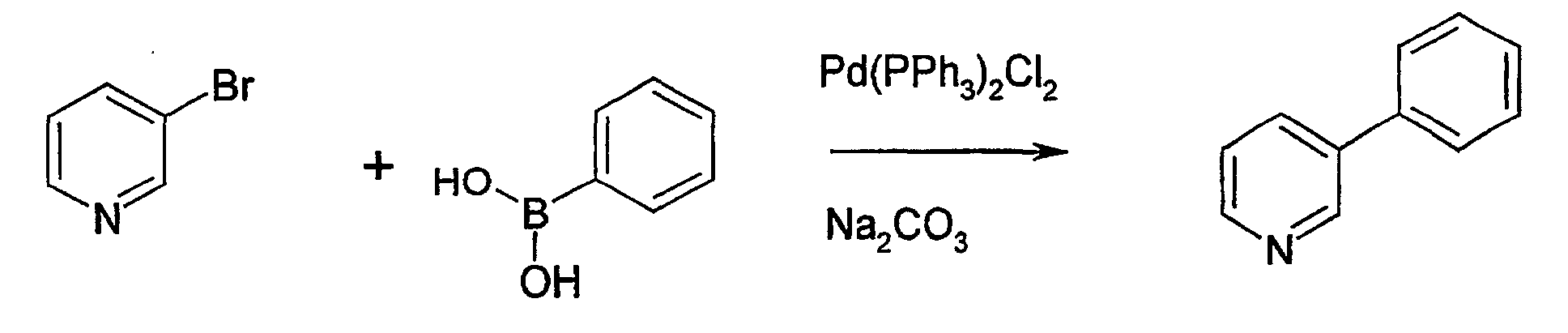
- Examples of interesting chemical reactions (transformations) within the present context are organic reactions e.g. polymerisation/oligomerisation, esterification, decarboxylation, hydrogenation, dehydrogenation, addition such as 1,3-dipolar addition, oxidation, isomerisation, acylation, alkylation, amidation, arylation, Diels-Alder reactions such as maleinisation and fumarisation, epoxidation, formylation, hydrocarboxylation, hydroboration, halogenation, hydroxylation, hydrometallation, reduction, sulphonation, aminomethylation, ozonolysis, C-C coupling reactions (e.g. Stille, Heck and Suzuki reactions), etc.
- the system and method according to the invention are especially suited for reactions involving one or more catalysts and for asymmetric organic reactions.
- the chemical reaction can take place in a suitable solvent or in neat form.
- suitable solvents will, as will be acknowledged by the person skilled in the art, depend on the chemical reactions to be conducted.
- the dissipation factor (or loss tangent) of the solvent is greater than about 0.04 at 20°C.
- suitable solvents for microwave assisted chemical reactions are acetonitrile, DMF, DMSO, NMP, water, tert-butanol, EtOH, benzonitrile, ethylene glycol, acetone, THF and ionic liquids (see, e.g., WO 00/72956).
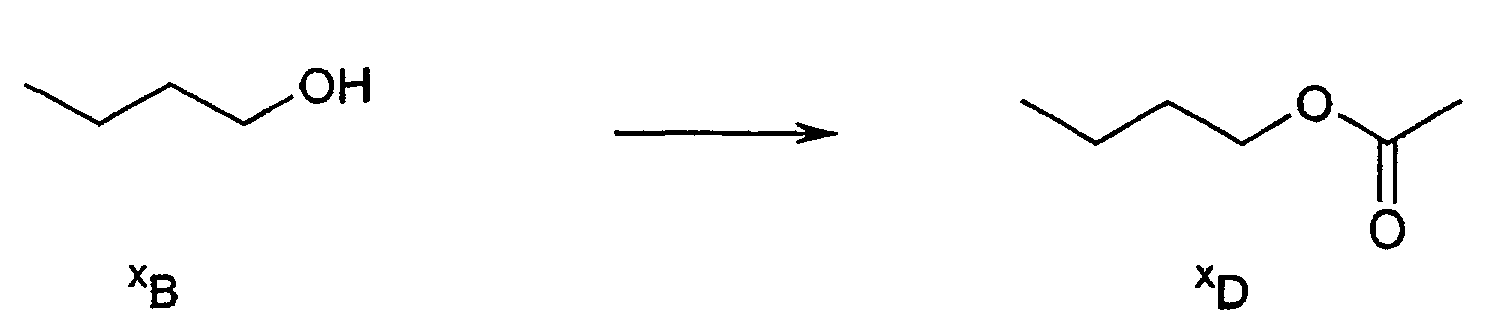
- a chemical reaction can generally be considered as involving one or more chemical species X B (which may be the selected starting material(s) or substrate(s) for the chemical reaction) and resulting in a reaction product X D (which is the desired product of the chemical reaction defined by the user).
- the reaction product includes a functionality ⁇ and that the chemical reaction involves one or more functionalities ⁇ in the X B's, which are transformed into ⁇ in X D.
- each of the X B's may include more than one functionality ⁇ , e.g. in the instance where the desired product is a lactone ( ⁇ ester bond; ⁇ 's ⁇ alcohol and acid, respectively).
- the chemical reaction can generally be considered as the following transformation: X B( ⁇ ) ⁇ X D( ⁇ ) where the part of X B not being included in the functionality/functionalities ⁇ is substantially preserved as the part of X D not being included in the functionality ⁇ .
- the chemical reaction is typically conducted under the influence of one or more chemical substances A.
- Such chemical substances A include a functionality ⁇ which is involved in the transformation of the ⁇ 's into ⁇ .
- the substance(s) A may be specific reagent(s) or may be a solvent which includes groups useful for facilitating the transformation above.
- the functionality ⁇ of A need not to be covalently coupled to the functionality ⁇ , although this will be the case in many instances.
- the reaction involves one or more chemical species X B (i.e. starting material(s) selected by the user of the system wherein the chemical reaction is to be conducted) and resulting in a reaction product X D (e.g. the desired product) which includes a functionality ⁇ , where the chemical reaction involves one or more functionalities ⁇ (e.g. a carboxylic acid functionality) in the X B's which are transformed into ⁇ (e.g. an carboxylic ester functionality) in X D.
- X B i.e. starting material(s) selected by the user of the system wherein the chemical reaction is to be conducted
- a reaction product X D e.g. the desired product
- ⁇ e.g. a carboxylic acid functionality
- the chemical species ( X B) may be cyclohexyl-1-carboxylic acid and the desired product ( X D) may be benzyl cyclohexyl-1-carboxylate, where the functionality ⁇ included in X B is -COOH which is to be transformed to the ester-COOBn, thus, ⁇ in X D is -COOBn.
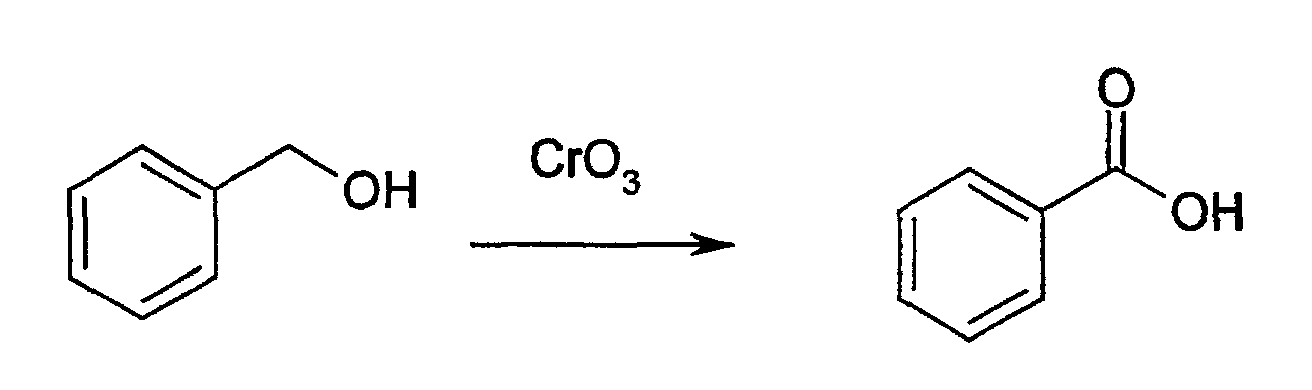
- Another Illustrative example is the oxidation of benzylalcohol to benzoic acid wherein B is benzyl alcohol with the hydroxyl group being the functionality ⁇ and CrO 3 as the chemical substance A and benzoic acid being the product D with the carboxylic acid group as the functionality ⁇ .
- the above simplified description of the reactions also include the possibility of including what could be considered as two (or more) substrates which in a coupling reaction are coupled to each other.
- X B the substrate
- X D( ⁇ ) the coupled product
- the functionality ⁇ in both (or all) of the chemical species X B should be provided to the parameter selection unit.
- the R reactions are conducted in a system which provides energy for the chemical reactions.
- the term "provides energy” should be understood in the broadest sense, namely that the apparatus may be able to actively heat the reaction mixtures (see below) or the apparatus may simply be able to provide the correct conditions with respect to temperature (including cooling), pressure, atmosphere, etc. so that the reactions are energetically favoured and allowed to proceed according to the R sets of reaction parameters ( X ⁇ R ).
- preferred embodiments of the present invention are those where the apparatus provides energy to the reactions in the form of heat, in particular by heating with microwaves.
- the system also includes a parameter selecting unit having a user interface and storage means for carrying a database.
- the parameter selecting unit preferably also comprises an apparatus control unit for communicating with the apparatus.
- the apparatus typically comprises liquid handler means for preparing the reaction mixtures and a reaction cavity for treating the reaction mixtures (providing the reaction conditions).
- the apparatus control unit may communicate with an analysis unit.
- the system is constructed so that the user interface, preferably a graphical user interface (GUI), is connected to the storage means via a search unit in order to be able to get access to the database.
- the storage means may be available directly in the form of a hard disk, CD-ROM, etc. or via the internet, a server network, or the like.
- the search in the database is preferably performed by a substructure search for a desired chemical reaction (transformation A( ⁇ ) + X B( ⁇ ) --> X D( ⁇ )).
- the data retrieved from the server database may be edited in the apparatus control unit to fit the specification of the user or use directly, preferably without the intervention by the user.
- the apparatus control unit then preferably sends instructions to the liquid handler with information including all the steps needed for the reaction such as making stock solution, dilute, mix the reagent, mix, etc.
- the liquid handler can perform these steps using a robotic arm with a needle connected to a pump but could also be handled with valves and tubing.
- the robotic arm also has a gripper that is used for moving the samples into the reaction cavity, e.g. a microwave cavity.
- the apparatus control system also instructs to reaction cavity of the apparatus about reaction temperature, pressure, etc.
- the temperature and pressure in the reaction cavity may be measured during the treatment process.
- a sample from the reaction mixture may again be handled by the liquid handler and send to an analysis unit in order to follow the reaction. All the data generated from each unit may be send back to the storage means and stored for later use. Such data may be used for building up the database, for repeating reactions, etc.
- the user could also use the parameter selection unit as a office client via a network, web interface, through a firewall and via internet.
- the data could be stored on a server, hard disk, CD-ROM, etc.
- the method of the present invention may be conducted in a semi-automated manner by utilising a computer program especially adapted for performing the steps of selecting the R sets of reaction parameters, preparing the R reaction mixtures and treating the R reaction mixtures, etc., i.e. facilitating the method described herein when performed in the system described above.
- the treatment typically includes heating.
- the reaction is a microwave facilitated chemical reaction, wherein treatment is application of microwaves to the reaction mixture.
- Such a reaction is preferably performed in a microwave reaction cavity of a microwave apparatus.
- Such a microwave apparatus preferably comprises a controllable microwave generating and amplification means for providing microwaves to the reaction cavity.
- the application of microwaves is preferably controlled by the R selected set of reaction parameters via the controllable microwave generating and amplification means.
- One possible microwave apparatus to be utilised in connection with the present invention is described in WO 00/36880.
- the method comprises the step of having the user to provide information to the user interface of the parameter selection unit about (at least) the functionality/functionalities ⁇ in the chemical species X B.
- information about the functionality/functionalities ⁇ in the chemical species X B should be provided to a parameter selection unit.
- Such information might be in the form of structural information about the functionality or information in the form of a code specifically referring to the functionality/functionalities ⁇ .
- a user interface module providing this possibility can be made available by using standard software products, e.g. ISIS Draw, etc., used for graphical presentation of chemical structure, as such software products are able to present chemical structures in a standardised manner.
- the operator might select the functionality from a list of chemical functionalities provided via the user interface module.
- At least a partial chemical structure (substructure) of X B is provided so as to make is possible for the parameter selection unit (via the search unit) to retrieve the most relevant sets of reaction parameters from the database (see below).
- the full chemical structure of X B is provided so as to ensure that other functionalities in X B are also taken into consideration.
- the present method also comprises the step of having the user to provide information to the user interface of the parameter selection unit about the desired transformation of ⁇ to ⁇ .
- This information can, as above for ⁇ , be given in the form of structural information about the functionality/functionalities ⁇ or information in the form of a code specifically referring to the functionality ⁇ or the specific transformation ⁇ -> ⁇ .
- the user may also select the desired transformation from a list of named reactions.
- Information about the partial or complete structure need not necessarily to be given as the part of X D not being ⁇ normally is typically essentially identical to the part of X B not being ⁇ . Thus, if the full (or partial) structure of X B is already provided, information about the transformation, or simply about ⁇ , is normally sufficient.
- the system After the initial information is provided to the parameter selection unit via the user interface, the system will be able to conduct the R chemical reactions with only little or no user intervention. This is particularly true when a predefined kit is provided to the system.
- the parameter selection unit is used for retrieving the R sets of reaction parameters from a database.
- the parameter selection unit preferably includes processing means for conducting the retrieval, processing/selection.
- a storage means diskette, CD-ROM, semiconductor memory chip, etc.
- the parameter selection unit can include a neural network sub-module for providing the option of maintaining the database with results of the reactions performed (preferably including yields), thereby giving the possibility facilitating a reaction optimisation process.
- the method of the present invention utilises a database which comprises N sets of associated data, each of the N sets comprising (at least):
- the database might have one of many possible formats known to the person skilled in the art. In particular, several commercially available formats are possible, e.g. Beilstein Crossfire, Scifinder, ISIS/Base (Teilheimer, Spore, CIRX, Daylight).
- the database is provided on storage means, e.g. a diskette, a hard disk, a CD-ROM, a semiconductor memory chip, etc.
- the database is provided on storage means which is accessible via the internet. This possibility makes it possible for the user/customer (via the parameter selection unit) to have access (e.g. via an access code) to a database which is provided and maintained by a supplier.
- the database comprises N sets of “associated data”.
- associated data is meant that a series of data representing information about a chemical reaction is presented in the database in a way that will make it possible for the parameter selection unit to retrieve such data.
- One way of traditionally “organising” the database is to present the associated data in separate records, however, as the database also should comprise functional or structural information about the chemical species N B, it is envisaged that a relational database often is more suitable.
- N is also used as a prefix for B, D, ⁇ , ⁇ and A thereby indicating that specific B, D, ⁇ , ⁇ and A's, respectively, are included in the n'th set (n being in the range of 1 to N) of associated data in the database.
- N can be any positive integer, however preferably an integer of at least 4, such as at least 10, in particular at least 25.
- the total number of sets of associated data may be quite large, e.g. up to 1,000 or even up to 10,000. It should be understood that N B and N D in one sets of associated data can be the same as in another set of associated data.
- the N sets should also comprise sets of associated data corresponding to non-identical sets of N B and N B, i.e. not all sets of associated data should relate to the same reaction B --> D.
- the N sets of associated data each comprise a set of reaction parameters for a chemical reaction involving the transformation of a functionality N ⁇ of a chemical species N B into N ⁇ in a product N D under the influence of a chemical substance N A, such chemical substance including a chemical functionality N ⁇ being involved in the transformation of the functionality N ⁇ to the functionality N ⁇ .
- the chemical reactions for which data (sets of reaction parameters) are stored in the database can all be generalised as the transformation N A( N ⁇ ) + N B( N ⁇ ) ⁇ N D( N ⁇ ).
- reaction parameters is intended to mean a specific set of parameters which make it possible to conduct a chemical reaction in a reproducible manner.
- Typical examples of reaction parameters for chemical reactions are parameters with respect to temperature (i.e. temperature level, temperature cycles, etc.), pressure (i.e. initial pressure, maximum pressure, etc.), reaction time, reaction cycles, relative amounts of reactants, time of addition of reactants, etc.
- the associated data may also include information about addition of necessary additional reagents and/or catalysts, etc. Although not mandatory, it will often be advantageous to include information about the yield or the pre-run reactions and optionally also the purity.
- the set of reaction parameters may be presented either as the direct parameters (temperature, pressure, etc.) or may be presented as indirect parameters, i.e. control parameters for the apparatus (via the apparatus control unit) which is to provide energy for the chemical reaction.
- the set of reaction parameters is typically presented as a control parameter protocol which will lead to the desired parameters with respect to temperature, pressure, etc. when used in the apparatus.
- the set of reaction parameters also comprises information about the intended parameters with respect to temperature, pressure, etc. in that such additional information can be used to monitor the conducted reaction and, in a even more preferred embodiment, to slightly adjust the control parameters so as to obtain the desired reaction parameters.
- a set of reaction parameters may allow the person in control of the system or an computer associated with the system (e.g. a computer comprising a trained neural network for optimising the reaction conditions) to alter the set of reaction parameters if desirable.
- the parameter selection unit should work without user intervention except where information is required as described for the invention.
- the N sets of associated data also each comprises functional and/or structural information about the chemical species N B.
- information about the functionality N ⁇ should be given (functional information).
- further information about the partial or full chemical structure is preferably also given in order to make it possible to compare the chemical structure of the N B's and X B. This will, as mentioned above, make it possible to take into consideration the impact of other potentially reactive functionalities within X B.
- the N sets of associated data preferably also comprises information about the functionality ⁇ , and more preferably also information about the chemical substances N A, in particular the functionality N ⁇ , but more preferred also further partial or full structural information.
- none of the N sets of associated data in the database exactly correspond to a transformation of X B into X D. This means that the desired reaction (involving the transformation of a specific X B to a specific X D) has not been performed in advance, and the full impact of the present invention with respect to retrieval and selection can then be exploited.
- the method also comprises the further step of allowing the parameter selection unit to retrieve R sets of associated data ( ⁇ R ) from the database, such sets of associated data being selected so that the functionality N ⁇ in each set of associated data is essentially identical to the functionality/functionalities ⁇ in X B and the functionality N ⁇ is essentially identical to ⁇ in the product X D.
- R sets of associated data
- the term "essentially identical" indicates that the functionalities taken as such should be structurally identical, but that certain differences might appear, especially with respect to reactivity (electron distribution, sterical hindrance, etc.).
- the provided information about X ⁇ and X ⁇ should preferably have the same level of specificity as the information about N ⁇ and N ⁇ . This should be taken into consideration when constructing the parameter selection unit and building the database.
- the result of the desired reaction can be provided to the database so as to extend the knowledge accumulated.
- R (R>1) sets of reaction parameters are selected, thereby making it possible to conduct R chemical reactions under fairly realistically reaction conditions with the aim of identifying the best possible conditions for the transformation in question and optionally with the aim of further optimising the reaction conditions.
- such an optimisation procedure may be conducted in an iterative manner.
- the reaction of X B to give the product X D under the conditions defined by the sets of reaction parameters ( X ⁇ R ) requires the influence of corresponding chemical substances A R , where such chemical substances A R including a chemical functionality ⁇ R being involved in the transformation of the functionality ⁇ to the functionality ⁇ .
- the R sets of reaction parameters also comprise information about which specific A R 's are required.
- the chemical substances A R should be selected so that the functionalities ⁇ R thereof resemble the functionalities N ⁇ of the chemical substances N A retrieved as in the R sets of associated data ( ⁇ R ).
- the reagents proposed with the R sets of reaction parameters should be of the same type as the ones used in the pre-run reactions represented in the database. ( ⁇ R ⁇ N ⁇ )
- the R sets of reaction parameters ( X ⁇ R ) are accompanied by corresponding information about the chemical substances A R under which influence the R reactions should be conducted.
- Such information should, beside the information about the functionality or (full or partial) structure of the A R 's, also comprise information about the amount of chemical substance (number of equivalents), time of addition, etc.
- the R sets of associated data which are to be retrieved from the database also include information about any additional constituents involved in the chemical reaction involving the transformation of a functionality N ⁇ of a chemical species N B into a N ⁇ in a product N D under the influence of a chemical substance N A.
- additional constituents may include catalysts, additional reagents, solvents, reactive gasses, inert atmospheres, etc.
- the R sets of reaction parameters ( X ⁇ R ) are accompanied by information about any such additional constituents involved in the chemical reaction.
- chemical substances A R are preferably reagents. In one embodiment, the chemical substances A R are immobilised.
- the retrieved R sets of reaction parameters are selected so as to provide a set of reaction parameters based on the best (sub)structural match between X B (or the X B's) and the N B's in ⁇ Q , i.e. one set of reaction parameters corresponding to a pre-run reaction which included a similar chemical species.
- structural match and “structural similarity” refer to comparative measure which can be performed by available software products incorporated in or collaborating with the parameter selection unit. It should be understood that structural similarity or structural match can also be based on a preselected substructure of the molecule. This is apparent as the information provided to the parameter selection unit may be limited to a substructure of X B. In order for the parameter selection unit to perform the comparison, one of a number of possible commercial software products can be associated with the parameter selection unit. Examples hereof are ISIS/Base and Beilstein Crossfire and Scifinder as well as several molecular modelling software packages.
- the retrieved R sets are simply used directly as parameters in the R sets of reaction parameters, preferably by using A R 's having the same functionalities ⁇ R as the functionalities N ⁇ in the corresponding reaction.
- the R sets of reaction parameters involves the use of more than one chemical substance A R .
- various types of chemical substances e.g. reagents
- R reactions can be tested under various conditions in an optimisation process (R reactions).
- R reactions when an initial optimisation process is conducted in order to identify a chemical substance A to be used in a subsequent optimisation process, the R sets of reaction parameters involves the use of R chemical substances A R .
- R sets of reaction parameters should include such information.
- the R sets involve a few A's in combination with a number of different solvent, catalysts, temperature profiles, etc. thereby yielding a complete set for optimisation suggestions.
- the array of R reaction mixtures each comprising a predetermined amount of the chemical substance A R and the chemical species X B and any additional constituents required is prepared according to the sets of reaction parameters.
- the user intervention in connection with this method step normally is limited to (i) providing the substrate ( X B) (or substrates) in a suitable form, e.g. in solid or liquid or dissolved form in a vial, and (ii) providing the necessary reagents (chemical substances), solvents, catalysts, etc.
- the latter step is preferably effected by means of a kit in which the necessary constituents are provided in separate vials which can be handled by the handling means of the system. This being said, it is preferred that the R sets of reaction parameters provides sufficient information to the system so that user intervention is reduced or, preferably, eliminated.
- the array of R reaction mixtures is prepared by combining the chemical species X B with the content of one or more of P containers each comprising a chemical substance A R including a chemical functionality ⁇ R which is intended to facilitate the transformation of a functionality ⁇ to a functionality ⁇ in a chemical reaction involving a chemical species X B.
- each of the R reaction mixtures are treated in the apparatus, more specifically in the reaction cavity, in accordance with the corresponding set of reaction parameters.
- the reaction mixture(s) are typically placed in the reaction cavity by the liquid handler means.
- the R reactions can be performed sequentially or, alternatively, substantially simultaneously.
- treatment of the R reactions is performed substantially simultaneously. In both instances, it is preferred that the user intervention is eliminated.
- the reaction mixtures can be placed directly in the reaction cavity of apparatus where reaction is effected, but the sample is typically placed in an open or closed sample holder or vial.
- This sample holder or vial can be an integral part of the reaction cavity or a separate reaction vessel of any material suitable for treatment under the conditions defined by the reactions parameters, e.g. microwave heating applications.
- microwave heating it will be known to the person skilled in the art that the material constituting the sample holder should preferably not absorb the microwave energy.
- Various types of polymers and glasses can advantageously be used. Specifically, various types of trays, microtiter plates, etc. can preferably be used when a plurality of samples are heated simultaneously.
- the sample holder or vial preferably includes a lid.
- the free space in the reaction cavity can be filled with an inert gas in order to avoid reaction between ambient gasses and the sample. It is however preferred that the sample holder includes a lid.
- the reaction cavity should preferably be able to sustain high internal pressure either caused by the chemical reaction or intentionally to create a high-pressure atmosphere as a reaction parameter.
- High internal pressure is normally used as a method to increase the temperature in the reaction vessel over the boiling point for the liquid phase in the reaction vessel.
- the pressure can be kept at a predetermined level or pre-set as a level not to be exceeded or fall below.
- the pressure system incorporates a safety valve function for protection of the pressurised components and personal safety of the operator.
- the present invention also provides a kit for use in the method, such a kit is defined in claim 12.
- the kit preferably also comprises additional constituents required for the transformation.
- the kit is particularly useful in that predispensed amounts of various chemical substances can be provided.
- the kit is preferably disposable so that the constituents thereof is only used in a series of R chemical reactions.
- the method typically involves that the kit for the R chemical reactions is provided.
- the kit is typically disposed after the R reaction mixtures are prepared.
- the present invention also relates to a system as defined in claim 14.
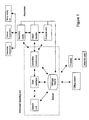
- a system is illustrated in Figure 1.
- the system may also comprise one or more disposable kits comprising P containers each comprising a chemical substance A R including a chemical functionality ⁇ R which is intended to facilitate the transformation of the functionality ⁇ to the functionality ⁇ in the chemical reaction.
- the apparatus of the system is preferably a microwave apparatus, i.e. the reaction cavity is a microwave reaction cavity.
- the system defined herein is particularly useful for use in the method defined herein.
- the present invention also relates to a computer readable data carrier loaded with a computer program system for facilitating the method defined herein in the system defined herein, said computer program system comprising:
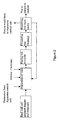
- the functionality of the computer program is illustrated in Figure 3.
- the computer readable data carrier can be of any format, e.g. a CD-ROM, a hard disk, a floppy disk, RAM, etc.
- the first step in the method is to provide information to the user interface (i) about the functionality ⁇ (-OH) and (ii) about the desired transformation of ⁇ to ⁇ (-OH ⁇ -O-Acetyl, i.e. acetylation of an alcohol).
- the user also provides information to the user interface about the full structure of X B (n-butanol) or the partial structure of X B (-CH 2 OH; i.e.primary alcohol).
- the database comprises N sets of associated data, i.a. data for the transformation hydroxy groups ( N ⁇ ) of various chemical species ( N B) into the acetylated derivative.
- the database includes associated data for primary, secondary and tertiary alcohols as substrates.
- the search unit can retrieve the R sets of data among all sets of associated data defining ⁇ as an alcohol and defining the transformation, ⁇ ⁇ ⁇ , as the conversion of an alcohol to the acetylated derivative.
- the search unit retrieves the R sets of associated data corresponding to R sets of data among the associated data in which N ⁇ is a primary alcohol.
- the next step could be to reduce the number of hits by checking the availability of the chemicals called for.
- the retrieved R sets of reaction parameters corresponds to a commercially available, disposable reaction kit comprising reagents, preferably include additional constituents, for the R reactions.
- the R sets of reaction parameters can then be used directly by transferring the data to the apparatus control unit, optionally after priori user modification (normally not preferred).
- Reagent A could be change, change of reaction temperature, reaction times etc.
- the information that is transferred to the apparatus control unit will include information for making stock solution, reagent mixing, reaction temperature, etc.
- the instrument then execute the reaction according to the protocol.
- a sample for analysis of the reaction mixture can be transferred to a analysis tool such as LC/MS, GC/MS, flow-through probe NMR, etc.
- the data from all different part will be collected in the database server and can be use again for reproducibility.
- the user will instead be able to retrieve a number of R sets of preselected reaction parameters.
- the user will describe the structure of the chosen substrate.
- the software then generate the protocols from predefined reaction parameters.
- the user than add the kit into the apparatus at a predefine position and start the run.
Landscapes
- Chemical & Material Sciences (AREA)
- Organic Chemistry (AREA)
- Chemical Kinetics & Catalysis (AREA)
- Engineering & Computer Science (AREA)
- Physics & Mathematics (AREA)
- General Health & Medical Sciences (AREA)
- Health & Medical Sciences (AREA)
- Toxicology (AREA)
- Electromagnetism (AREA)
- Manufacturing & Machinery (AREA)
- General Engineering & Computer Science (AREA)
- General Physics & Mathematics (AREA)
- Automation & Control Theory (AREA)
- Physical Or Chemical Processes And Apparatus (AREA)
- Organic Low-Molecular-Weight Compounds And Preparation Thereof (AREA)
Abstract
Description
where a particular advantage is the use of predetermined reaction parameters corresponding to similar chemical reactions. The present invention also relates to kits and a system for performing said method.

- retrieving information via the user interface of the parameter selection unit about the functionality/functionalities β in the chemical species XB;
- retrieving information via the user interface of the parameter selection unit about the desired transformation of β to δ;
- retrieving, via the parameter selection unit, R sets of associated data (∑R) from the database, such sets of associated data being selected so that the functionality/functionalities Nβ in each set of associated data is/are essentially identical to the functionality/functionalities β in XB and the functionality MNδ is essentially identical to δ in the product XD, in order to obtain the R sets of reaction parameters (X∑R), said R sets of reaction parameters (X∑R) being accompanied by corresponding information about the chemical substance(s) AR under which influence the R reactions should be conducted and information about any additional constituents involved in the chemical reaction;
- providing instructions to the liquid handler about the preparation of an array of R reaction mixtures each comprising a predetermined amount of the chemical substance(s) AR and the chemical species XB and any additional constituents required according to the sets of reaction parameters;
- providing instructions to the reaction cavity about treatment of each of the R reaction mixtures in the apparatus in accordance with the corresponding set of reaction parameters.

Claims (16)
- A method of conducting R chemical reactions, where R is a positive integer in a system which includes an apparatus which provides energy for the chemical reactions, said system also including a parameter selection unit having a user interface and storage means for carrying a database, said chemical reaction involving one or more chemical species XB and resulting in a reaction product XD which includes a functionality δ, where the chemical reaction involves one or more functionalities β in the XB's which are transformed into δ in XD, each reaction being performed under the influence of one or more corresponding chemical substances AR, such chemical substances AR induding a chemical functionality αR being involved in the transformation of the functionatity/functionalities β to the functionality δ, said database comprising N sets of associated data, each of the N sets comprisingthe method comprising thati) a set of reaction parameters for a chemical reaction involving the transformation of one or more functionalities Nβ of chemical species NB into Nδ in a product ND under the influence of one or more chemical substances NA, such chemical substance(s) each including a chemical functionality Nα being involved in the transformation of the functionality Nβ to the functionality Nδ; andii) functional or structural information about the chemical species NB;the user provides information to the user Interface of the parameter selection unit about the functionalityl/functionalities β in the chemical species XB;the user provides information to the user interface of the parameter selection unit about the desired transformation of β to δ;the parameter selection unit retrieves R sets of associated data (∑R) from the database, such sets of associated data being selected so that the functionality/functionalities Nβ in each set of associated data is/are essentially identical to the functionality/functionalities β in XB and the functionality MNδ is essentially identical to δ in the product XD, in order to obtain the R sets of reaction parameters (X∑R), said R sets of reaction parameters (X∑R) being accompanied by corresponding information about the chemical substance(s) AR under which influence the R reactions should be conducted and information about any additional constituents involved in the chemical reaction;an array of R reaction mixtures each comprising a predetermined amount of the chemical substance(s) AR and the chemical species XB and any additional constituents required is prepared according to the sets of reaction parameters;each of the R reaction mixtures are treated in the apparatus in accordance with the corresponding set of reaction parameters.
- A method according to claim 1, wherein the array of R reaction mixtures is provided from XB stock solution(s) and a kit comprising stock solutions of the chemical substance(s) AR and any additional constituents required.
- A method according to any of the preceding claims, wherein the R sets of reaction parameters involves the use of more than one chemical substance AR.
- A method according to any of the preceding claims, wherein the R sets of reaction parameters involves the use of R chemical substances AR.
- A method according to any of the preceding claims, in which the array of R reaction mixtures is prepared by combining the chemical species XB with the content of one or more of P containers each comprising a chemical substance AR including a chemical functionality αR which is intended to facilitate the transformation of a functionality β to a functionality δ in a chemical reaction involving a chemical species XB.
- A method according to any of the preceding claims, wherein the R sets of reaction parameters are provided in the form of control parameters for the apparatus.
- A method according to any of the preceding claims, wherein treatment of the R reactions is performed substantially simultaneously.
- A method according to any of the claims 1-6, wherein treatment of the R reactions is performed sequentially.
- A method according to any of the preceding claims, wherein the treatment includes heating.
- A method according to any of the preceding claims, wherein the reaction is a microwave facilitated chemical reaction.
- A method according to any of the preceding, wherein the apparatus comprises a microwave reaction cavity.
- A kit adapted to be used in the method defined in any of the claims 1-11, said kit comprising P containers each comprising a chemical substance AR including a chemical functionality αR which is intended to facilitate the transformation of one or more functionalities β to a functionality δ in a chemical reaction involving one or more chemical species XB, said chemical reaction being intended to result in a reaction product XD which includes a functionality δ, where the chemical reaction involves one or more functionalities β in the XB's which are transformed into δ in XD.
- A kit according to claim 12, which further comprises additional constituents required for the transformation.
- A system for conducting R chemical reactions where R is a positive integer of the type
the system comprises(a) an apparatus which provides energy for the chemical reactions, said apparatus comprising a reaction cavity and a liquid handler;(b) a parameter selection unit having a user interface means, a search unit means, apparatus control unit means, and storage means for carrying a database, said database comprising N sets of associated data, each of the N sets comprisingi) a set of reaction parameters for a chemical reaction involving the transformation of a functionality Nβ of a chemical species NB into Nδ in a product ND under the influence of a chemical substance NA, such chemical substance including a chemical functionality Nα being involved in the transformation of the functionality Nβ to the functionality Nδ; andii) functional or structural information about the chemical species NB;(c) means for retrieving information via the user interface of the parameter selection unit about the functionality/functionalities β in the chemical species XB;(d) means for retrieving information via the user interface of the parameter selection unit about the desired transformation of β to δ;(e) means for retrieving, via the parameter selection unit, R sets of associated data (∑R) from the database, such sets of associated data being selected so that the functionality/functionalities Nβ in each set of associated data is/are essentially identical to the functionality/functionalities β in XB and the functionality MNδ is essentially identical to δ in the product XD, in order to obtain the R sets of reaction parameters (X∑R), said R sets of reaction parameters (X∑R) being accompanied by corresponding information about the chemical substance(s) AR under which influence the R reactions should be conducted and information about any additional constituents involved in the chemical reaction;(f) means for providing instructions to the liquid handler about the preparation of an array of R reaction mixtures each comprising a predetermined amount of the chemical substance(s) AR and the chemical species XB and any additional constituents required according to the sets of reaction parameters;(g) means for providing instructions to the reaction cavity about treatment of each of the R reaction mixtures in the apparatus in accordance with the corresponding set of reaction parameters. - A system according to claim 14, further comprising one or more disposable kits comprising P containers each comprising a chemical substance AR including a chemical functionality αR which is intended to facilitate the transformation of the functionality β to the functionality δ in the chemical reaction.
- A computer readable data carrier loaded with a computer program system adapted to facilitate the method defined in any of the claims 1-11 in a system as defined in claim 14 or 15.
Applications Claiming Priority (3)
| Application Number | Priority Date | Filing Date | Title |
|---|---|---|---|
| DK200000759 | 2000-05-08 | ||
| DKPA200000759 | 2000-05-08 | ||
| PCT/IB2001/000767 WO2001086572A1 (en) | 2000-05-08 | 2001-05-07 | Method for performing multiple chemical reactions and a kit and system therefor |
Publications (2)
| Publication Number | Publication Date |
|---|---|
| EP1282878A1 EP1282878A1 (en) | 2003-02-12 |
| EP1282878B1 true EP1282878B1 (en) | 2004-01-14 |
Family
ID=8159481
Family Applications (1)
| Application Number | Title | Priority Date | Filing Date |
|---|---|---|---|
| EP01934219A Expired - Lifetime EP1282878B1 (en) | 2000-05-08 | 2001-05-07 | Method for performing multiple chemical reactions and a kit and system therefor |
Country Status (7)
| Country | Link |
|---|---|
| US (1) | US7112450B2 (en) |
| EP (1) | EP1282878B1 (en) |
| AT (1) | ATE257961T1 (en) |
| AU (1) | AU2001260518A1 (en) |
| DE (1) | DE60101795T2 (en) |
| DK (1) | DK1282878T3 (en) |
| WO (1) | WO2001086572A1 (en) |
Families Citing this family (4)
| Publication number | Priority date | Publication date | Assignee | Title |
|---|---|---|---|---|
| US7991730B2 (en) * | 2007-07-17 | 2011-08-02 | Novalyst Discovery | Methods for similarity searching of chemical reactions |
| US10566078B1 (en) | 2018-09-19 | 2020-02-18 | Basf Se | Method of Determination of Operating and/or Dimensioning Parameters of A Gas Treatment Plant |
| WO2020058179A1 (en) * | 2018-09-19 | 2020-03-26 | Basf Se | Simulation of unit operations of a chemical plant for acid gas removal |
| US11048842B2 (en) | 2018-09-19 | 2021-06-29 | Basf Se | Simulation of unit operations of a chemical plant for acid gas removal |
Family Cites Families (17)
| Publication number | Priority date | Publication date | Assignee | Title |
|---|---|---|---|---|
| EP0437480B1 (en) * | 1988-10-10 | 1994-10-19 | Commonwealth Scientific And Industrial Research Organisation | Method and apparatus for continuous chemical reactions |
| US5714127A (en) | 1992-10-08 | 1998-02-03 | Warner-Lambert Company | System for multiple simultaneous synthesis |
| US5543186A (en) * | 1993-02-17 | 1996-08-06 | E. Khashoggi Industries | Sealable liquid-tight, thin-walled containers made from hydraulically settable materials |
| EP0725678B1 (en) * | 1993-10-28 | 2001-08-22 | Commonwealth Scientific And Industrial Research Organisation | Batch microwave reactor |
| US6017496A (en) * | 1995-06-07 | 2000-01-25 | Irori | Matrices with memories and uses thereof |
| DE19537755A1 (en) * | 1995-10-10 | 1997-04-30 | Mikrowellen Systeme Mws Gmbh | Microwave oven, especially for a laboratory |
| EP0892963A1 (en) | 1996-01-26 | 1999-01-27 | David E. Patterson | Method of creating and searching a molecular virtual library using validated molecular structure descriptors |
| US5880972A (en) * | 1996-02-26 | 1999-03-09 | Pharmacopeia, Inc. | Method and apparatus for generating and representing combinatorial chemistry libraries |
| US6044212A (en) | 1996-05-24 | 2000-03-28 | Advanced Life Sciences, Inc. | Use of automated technology in chemical process research and development |
| EP0818744A3 (en) | 1996-07-08 | 1998-07-08 | Proteus Molecular Design Limited | Process for selecting candidate drug compounds |
| US5800784A (en) | 1996-07-09 | 1998-09-01 | Horn; Marcus J. | Chemical sample treatment system and cassette, and methods for effecting multistep treatment process |
| WO1998015825A2 (en) * | 1996-10-07 | 1998-04-16 | Irori | Matrices with memories in automated drug discovery and units therefor |
| US6136274A (en) * | 1996-10-07 | 2000-10-24 | Irori | Matrices with memories in automated drug discovery and units therefor |
| US6253168B1 (en) * | 1998-05-12 | 2001-06-26 | Isis Pharmaceuticals, Inc. | Generation of virtual combinatorial libraries of compounds |
| US6403939B1 (en) | 1998-12-17 | 2002-06-11 | Personal Chemistry I'uppsala Ab | Microwave apparatus and methods for performing chemical reactions |
| WO2000054166A1 (en) | 1999-03-12 | 2000-09-14 | Mydlowec William J | Method and apparatus for automated design of chemical synthesis routes |
| CA2374251C (en) * | 1999-05-26 | 2007-11-27 | Personal Chemistry I Uppsala Ab | Preparation and use of ionic liquids in microwave-assisted chemical transformations |
-
2001
- 2001-05-07 US US09/849,489 patent/US7112450B2/en not_active Expired - Fee Related
- 2001-05-07 AU AU2001260518A patent/AU2001260518A1/en not_active Abandoned
- 2001-05-07 WO PCT/IB2001/000767 patent/WO2001086572A1/en not_active Ceased
- 2001-05-07 AT AT01934219T patent/ATE257961T1/en not_active IP Right Cessation
- 2001-05-07 DE DE60101795T patent/DE60101795T2/en not_active Expired - Fee Related
- 2001-05-07 EP EP01934219A patent/EP1282878B1/en not_active Expired - Lifetime
- 2001-05-07 DK DK01934219T patent/DK1282878T3/en active
Also Published As
| Publication number | Publication date |
|---|---|
| EP1282878A1 (en) | 2003-02-12 |
| DE60101795D1 (en) | 2004-02-19 |
| ATE257961T1 (en) | 2004-01-15 |
| US20020013000A1 (en) | 2002-01-31 |
| DE60101795T2 (en) | 2004-11-25 |
| US7112450B2 (en) | 2006-09-26 |
| WO2001086572A1 (en) | 2001-11-15 |
| AU2001260518A1 (en) | 2001-11-20 |
| DK1282878T3 (en) | 2004-05-17 |
Similar Documents
| Publication | Publication Date | Title |
|---|---|---|
| Schanche | Microwave synthesis solutions from personal chemistry | |
| Lawson et al. | Tris (2, 4, 6‐trifluorophenyl) borane: An Efficient Hydroboration Catalyst | |
| US6667009B1 (en) | Apparatus for sampling and analysis of reactions by trapping reaction components on a sorbent | |
| US20040024493A1 (en) | Method, system, and sub-system, for processing a chemical reaction | |
| Ooi et al. | Highly efficient, catalytic Meerwein–Ponndorf–Verley reduction with a novel bidentate aluminum catalyst | |
| Little et al. | MALDI on a chip: analysis of arrays of low-femtomole to subfemtomole quantities of synthetic oligonucleotides and DNA diagnostic products dispensed by a piezoelectric pipet | |
| JP5258835B2 (en) | Polynucleotide detection and quantification device | |
| Schmatloch et al. | Instrumentation for combinatorial and high‐throughput polymer research: A short overview | |
| EP1567861B1 (en) | Centrifugal device and method for performing binding assays | |
| EP1181560B1 (en) | Investigating different physical and/or chemical forms of materials | |
| EP2392928B1 (en) | Analysis system, analysis device, vessel, analysis method, program, and recording medium | |
| CN113981056A (en) | Method for performing high-throughput sequencing based on internal reference of known tag | |
| Brown et al. | Solid phase synthesis | |
| Yu et al. | Recent advances and applications in high-throughput continuous flow | |
| US7112450B2 (en) | Method for performing multiple chemical reactions and a kit and system therefor | |
| van Putten et al. | Automation and microfluidics for the efficient, fast, and focused reaction development of asymmetric hydrogenation catalysis | |
| US20030147779A1 (en) | Low volume micro-plate and volume-limiting plugs | |
| US20070160998A1 (en) | Device for analyzing an interaction between target and probe molecules | |
| Havez et al. | Directed ortho-lithiation on solid phase | |
| Turner et al. | Automation of the molecular diagnostic Laboratory | |
| JP4140756B2 (en) | Evaluation method of catalytic activity of rare earth alkoxides | |
| Lu et al. | High‐Throughput Platform for Novel Reaction Discovery | |
| EP4636771A1 (en) | Device and method for displaying performance comparison result with respect to fluorescence data analysis algorithm | |
| US20230167491A1 (en) | Method for high-throughput sequencing based on internal reference with known index | |
| US8865475B2 (en) | Method of reacting two-phase solution changing in phase state with temperature change and apparatus for practicing the same |
Legal Events
| Date | Code | Title | Description |
|---|---|---|---|
| PUAI | Public reference made under article 153(3) epc to a published international application that has entered the european phase |
Free format text: ORIGINAL CODE: 0009012 |
|
| 17P | Request for examination filed |
Effective date: 20021209 |
|
| AK | Designated contracting states |
Designated state(s): AT BE CH CY DE DK ES FI FR GB GR IE IT LI LU MC NL PT SE TR |
|
| AX | Request for extension of the european patent |
Extension state: AL LT LV MK RO SI |
|
| GRAH | Despatch of communication of intention to grant a patent |
Free format text: ORIGINAL CODE: EPIDOS IGRA |
|
| RIN1 | Information on inventor provided before grant (corrected) |
Inventor name: FAGRELL, MAGNUS Inventor name: WESTMAN, JACOB |
|
| GRAS | Grant fee paid |
Free format text: ORIGINAL CODE: EPIDOSNIGR3 |
|
| GRAA | (expected) grant |
Free format text: ORIGINAL CODE: 0009210 |
|
| AK | Designated contracting states |
Kind code of ref document: B1 Designated state(s): AT BE CH CY DE DK ES FI FR GB GR IE IT LI LU MC NL PT SE TR |
|
| PG25 | Lapsed in a contracting state [announced via postgrant information from national office to epo] |
Ref country code: CY Free format text: LAPSE BECAUSE OF FAILURE TO SUBMIT A TRANSLATION OF THE DESCRIPTION OR TO PAY THE FEE WITHIN THE PRESCRIBED TIME-LIMIT Effective date: 20040114 Ref country code: FI Free format text: LAPSE BECAUSE OF FAILURE TO SUBMIT A TRANSLATION OF THE DESCRIPTION OR TO PAY THE FEE WITHIN THE PRESCRIBED TIME-LIMIT Effective date: 20040114 Ref country code: TR Free format text: LAPSE BECAUSE OF FAILURE TO SUBMIT A TRANSLATION OF THE DESCRIPTION OR TO PAY THE FEE WITHIN THE PRESCRIBED TIME-LIMIT Effective date: 20040114 |
|
| REG | Reference to a national code |
Ref country code: GB Ref legal event code: FG4D |
|
| REG | Reference to a national code |
Ref country code: CH Ref legal event code: EP |
|
| REG | Reference to a national code |
Ref country code: IE Ref legal event code: FG4D |
|
| REF | Corresponds to: |
Ref document number: 60101795 Country of ref document: DE Date of ref document: 20040219 Kind code of ref document: P |
|
| RAP2 | Party data changed (patent owner data changed or rights of a patent transferred) |
Owner name: PERSONAL CHEMISTRY I UPPSALA AB |
|
| PG25 | Lapsed in a contracting state [announced via postgrant information from national office to epo] |
Ref country code: GR Free format text: LAPSE BECAUSE OF FAILURE TO SUBMIT A TRANSLATION OF THE DESCRIPTION OR TO PAY THE FEE WITHIN THE PRESCRIBED TIME-LIMIT Effective date: 20040414 |
|
| PG25 | Lapsed in a contracting state [announced via postgrant information from national office to epo] |
Ref country code: ES Free format text: LAPSE BECAUSE OF FAILURE TO SUBMIT A TRANSLATION OF THE DESCRIPTION OR TO PAY THE FEE WITHIN THE PRESCRIBED TIME-LIMIT Effective date: 20040425 |
|
| REG | Reference to a national code |
Ref country code: CH Ref legal event code: NV Representative=s name: A. BRAUN, BRAUN, HERITIER, ESCHMANN AG PATENTANWAE |
|
| NLT2 | Nl: modifications (of names), taken from the european patent patent bulletin |
Owner name: PERSONAL CHEMISTRY I UPPSALA AB |
|
| REG | Reference to a national code |
Ref country code: SE Ref legal event code: TRGR |
|
| PG25 | Lapsed in a contracting state [announced via postgrant information from national office to epo] |
Ref country code: LU Free format text: LAPSE BECAUSE OF NON-PAYMENT OF DUE FEES Effective date: 20040507 Ref country code: IE Free format text: LAPSE BECAUSE OF NON-PAYMENT OF DUE FEES Effective date: 20040507 |
|
| REG | Reference to a national code |
Ref country code: DK Ref legal event code: T3 |
|
| PG25 | Lapsed in a contracting state [announced via postgrant information from national office to epo] |
Ref country code: MC Free format text: LAPSE BECAUSE OF NON-PAYMENT OF DUE FEES Effective date: 20040531 |
|
| LTIE | Lt: invalidation of european patent or patent extension |
Effective date: 20040114 |
|
| ET | Fr: translation filed | ||
| PLBE | No opposition filed within time limit |
Free format text: ORIGINAL CODE: 0009261 |
|
| STAA | Information on the status of an ep patent application or granted ep patent |
Free format text: STATUS: NO OPPOSITION FILED WITHIN TIME LIMIT |
|
| 26N | No opposition filed |
Effective date: 20041015 |
|
| REG | Reference to a national code |
Ref country code: IE Ref legal event code: MM4A |
|
| PGFP | Annual fee paid to national office [announced via postgrant information from national office to epo] |
Ref country code: CH Payment date: 20070515 Year of fee payment: 7 |
|
| PGFP | Annual fee paid to national office [announced via postgrant information from national office to epo] |
Ref country code: NL Payment date: 20070522 Year of fee payment: 7 |
|
| PGFP | Annual fee paid to national office [announced via postgrant information from national office to epo] |
Ref country code: BE Payment date: 20070523 Year of fee payment: 7 Ref country code: DK Payment date: 20070523 Year of fee payment: 7 |
|
| PGFP | Annual fee paid to national office [announced via postgrant information from national office to epo] |
Ref country code: AT Payment date: 20070524 Year of fee payment: 7 Ref country code: DE Payment date: 20070524 Year of fee payment: 7 Ref country code: SE Payment date: 20070524 Year of fee payment: 7 |
|
| PGFP | Annual fee paid to national office [announced via postgrant information from national office to epo] |
Ref country code: GB Payment date: 20070521 Year of fee payment: 7 |
|
| PG25 | Lapsed in a contracting state [announced via postgrant information from national office to epo] |
Ref country code: PT Free format text: LAPSE BECAUSE OF NON-PAYMENT OF DUE FEES Effective date: 20040614 |
|
| PGFP | Annual fee paid to national office [announced via postgrant information from national office to epo] |
Ref country code: IT Payment date: 20070531 Year of fee payment: 7 |
|
| PGFP | Annual fee paid to national office [announced via postgrant information from national office to epo] |
Ref country code: FR Payment date: 20070430 Year of fee payment: 7 |
|
| REG | Reference to a national code |
Ref country code: CH Ref legal event code: PFA Owner name: PERSONAL CHEMISTRY I UPPSALA AB Free format text: PERSONAL CHEMISTRY I UPPSALA AB#KUNGSGATAN 76#753 18 UPPSALA (SE) -TRANSFER TO- PERSONAL CHEMISTRY I UPPSALA AB#KUNGSGATAN 76#753 18 UPPSALA (SE) |
|
| BERE | Be: lapsed |
Owner name: *PERSONAL CHEMISTRY I UPPSALA A.B. Effective date: 20080531 |
|
| REG | Reference to a national code |
Ref country code: CH Ref legal event code: PL |
|
| REG | Reference to a national code |
Ref country code: DK Ref legal event code: EBP |
|
| GBPC | Gb: european patent ceased through non-payment of renewal fee |
Effective date: 20080507 |
|
| PG25 | Lapsed in a contracting state [announced via postgrant information from national office to epo] |
Ref country code: LI Free format text: LAPSE BECAUSE OF NON-PAYMENT OF DUE FEES Effective date: 20080531 Ref country code: NL Free format text: LAPSE BECAUSE OF NON-PAYMENT OF DUE FEES Effective date: 20081201 Ref country code: CH Free format text: LAPSE BECAUSE OF NON-PAYMENT OF DUE FEES Effective date: 20080531 |
|
| PG25 | Lapsed in a contracting state [announced via postgrant information from national office to epo] |
Ref country code: AT Free format text: LAPSE BECAUSE OF NON-PAYMENT OF DUE FEES Effective date: 20080507 |
|
| REG | Reference to a national code |
Ref country code: FR Ref legal event code: ST Effective date: 20090119 |
|
| PG25 | Lapsed in a contracting state [announced via postgrant information from national office to epo] |
Ref country code: BE Free format text: LAPSE BECAUSE OF NON-PAYMENT OF DUE FEES Effective date: 20080531 |
|
| PG25 | Lapsed in a contracting state [announced via postgrant information from national office to epo] |
Ref country code: DK Free format text: LAPSE BECAUSE OF NON-PAYMENT OF DUE FEES Effective date: 20080531 Ref country code: FR Free format text: LAPSE BECAUSE OF NON-PAYMENT OF DUE FEES Effective date: 20080602 Ref country code: DE Free format text: LAPSE BECAUSE OF NON-PAYMENT OF DUE FEES Effective date: 20081202 |
|
| PG25 | Lapsed in a contracting state [announced via postgrant information from national office to epo] |
Ref country code: GB Free format text: LAPSE BECAUSE OF NON-PAYMENT OF DUE FEES Effective date: 20080507 |
|
| PG25 | Lapsed in a contracting state [announced via postgrant information from national office to epo] |
Ref country code: IT Free format text: LAPSE BECAUSE OF NON-PAYMENT OF DUE FEES Effective date: 20080507 |
|
| PG25 | Lapsed in a contracting state [announced via postgrant information from national office to epo] |
Ref country code: SE Free format text: LAPSE BECAUSE OF NON-PAYMENT OF DUE FEES Effective date: 20080508 |