EP1282428B1 - Biocompatible macromers - Google Patents
Biocompatible macromers Download PDFInfo
- Publication number
- EP1282428B1 EP1282428B1 EP01935182A EP01935182A EP1282428B1 EP 1282428 B1 EP1282428 B1 EP 1282428B1 EP 01935182 A EP01935182 A EP 01935182A EP 01935182 A EP01935182 A EP 01935182A EP 1282428 B1 EP1282428 B1 EP 1282428B1
- Authority
- EP
- European Patent Office
- Prior art keywords
- opf
- peg
- cross
- fumarate
- linked
- Prior art date
- Legal status (The legal status is an assumption and is not a legal conclusion. Google has not performed a legal analysis and makes no representation as to the accuracy of the status listed.)
- Expired - Lifetime
Links
- 229920001223 polyethylene glycol Polymers 0.000 claims abstract description 173
- VZCYOOQTPOCHFL-OWOJBTEDSA-N Fumaric acid Chemical group OC(=O)\C=C\C(O)=O VZCYOOQTPOCHFL-OWOJBTEDSA-N 0.000 claims abstract description 44
- -1 poly(ethylene glycol) Polymers 0.000 claims abstract description 43
- VZCYOOQTPOCHFL-UHFFFAOYSA-N trans-butenedioic acid Natural products OC(=O)C=CC(O)=O VZCYOOQTPOCHFL-UHFFFAOYSA-N 0.000 claims abstract description 41
- 239000000017 hydrogel Substances 0.000 claims abstract description 16
- QIQCZROILFZKAT-UHFFFAOYSA-N tetracarbon dioxide Chemical group O=C=C=C=C=O QIQCZROILFZKAT-UHFFFAOYSA-N 0.000 claims abstract description 6
- SEFVRKXJJPMVHQ-UHFFFAOYSA-N 2-[[2-[[2-[(2-aminoacetyl)amino]-5-(diaminomethylideneamino)pentanoyl]amino]acetyl]amino]butanedioic acid Chemical compound NC(N)=NCCCC(NC(=O)CN)C(=O)NCC(=O)NC(CC(O)=O)C(O)=O SEFVRKXJJPMVHQ-UHFFFAOYSA-N 0.000 claims description 37
- 229920001299 polypropylene fumarate Polymers 0.000 claims description 36
- 238000004132 cross linking Methods 0.000 claims description 29
- 108090000765 processed proteins & peptides Proteins 0.000 claims description 19
- 108090000623 proteins and genes Proteins 0.000 claims description 15
- 102000004169 proteins and genes Human genes 0.000 claims description 15
- 239000003814 drug Substances 0.000 claims description 14
- 238000000034 method Methods 0.000 claims description 14
- 229940124597 therapeutic agent Drugs 0.000 claims description 11
- 239000000178 monomer Substances 0.000 claims description 7
- 238000004519 manufacturing process Methods 0.000 claims description 3
- MWOGMBZGFFZBMK-LJZWMIMPSA-N (2s)-2-[[(2s)-2-[[2-[[(2s,3s)-2-[[(2s)-2-amino-3-(4-hydroxyphenyl)propanoyl]amino]-3-methylpentanoyl]amino]acetyl]amino]-3-hydroxypropanoyl]amino]-5-(diaminomethylideneamino)pentanoic acid Chemical compound NC(N)=NCCC[C@@H](C(O)=O)NC(=O)[C@H](CO)NC(=O)CNC(=O)[C@H]([C@@H](C)CC)NC(=O)[C@@H](N)CC1=CC=C(O)C=C1 MWOGMBZGFFZBMK-LJZWMIMPSA-N 0.000 claims description 2
- 108010019407 glycyl-arginyl-glycyl-aspartic acid Proteins 0.000 claims description 2
- 108010077471 lysyl-arginyl-seryl-arginine Proteins 0.000 claims description 2
- 108010052768 tyrosyl-isoleucyl-glycyl-seryl-arginine Proteins 0.000 claims description 2
- 230000008961 swelling Effects 0.000 abstract description 19
- 230000004048 modification Effects 0.000 abstract description 15
- 238000012986 modification Methods 0.000 abstract description 15
- 238000002360 preparation method Methods 0.000 abstract description 14
- 239000000126 substance Substances 0.000 abstract description 11
- 239000000499 gel Substances 0.000 abstract description 10
- 239000001530 fumaric acid Substances 0.000 abstract description 9
- 239000003999 initiator Substances 0.000 abstract description 9
- 238000010526 radical polymerization reaction Methods 0.000 abstract description 8
- 230000001419 dependent effect Effects 0.000 abstract description 4
- 125000000962 organic group Chemical group 0.000 abstract description 4
- ZLYYJUJDFKGVKB-OWOJBTEDSA-N (e)-but-2-enedioyl dichloride Chemical compound ClC(=O)\C=C\C(Cl)=O ZLYYJUJDFKGVKB-OWOJBTEDSA-N 0.000 description 28
- 238000006243 chemical reaction Methods 0.000 description 27
- ZMANZCXQSJIPKH-UHFFFAOYSA-N Triethylamine Chemical compound CCN(CC)CC ZMANZCXQSJIPKH-UHFFFAOYSA-N 0.000 description 21
- YMWUJEATGCHHMB-UHFFFAOYSA-N Dichloromethane Chemical compound ClCCl YMWUJEATGCHHMB-UHFFFAOYSA-N 0.000 description 18
- XEKOWRVHYACXOJ-UHFFFAOYSA-N Ethyl acetate Chemical compound CCOC(C)=O XEKOWRVHYACXOJ-UHFFFAOYSA-N 0.000 description 18
- ZMXDDKWLCZADIW-UHFFFAOYSA-N N,N-Dimethylformamide Chemical compound CN(C)C=O ZMXDDKWLCZADIW-UHFFFAOYSA-N 0.000 description 18
- XLYOFNOQVPJJNP-UHFFFAOYSA-N water Substances O XLYOFNOQVPJJNP-UHFFFAOYSA-N 0.000 description 17
- 238000005481 NMR spectroscopy Methods 0.000 description 16
- QAEDZJGFFMLHHQ-UHFFFAOYSA-N trifluoroacetic anhydride Chemical compound FC(F)(F)C(=O)OC(=O)C(F)(F)F QAEDZJGFFMLHHQ-UHFFFAOYSA-N 0.000 description 16
- YXFVVABEGXRONW-UHFFFAOYSA-N Toluene Chemical compound CC1=CC=CC=C1 YXFVVABEGXRONW-UHFFFAOYSA-N 0.000 description 15
- 238000000655 nuclear magnetic resonance spectrum Methods 0.000 description 14
- NXLNNXIXOYSCMB-UHFFFAOYSA-N (4-nitrophenyl) carbonochloridate Chemical compound [O-][N+](=O)C1=CC=C(OC(Cl)=O)C=C1 NXLNNXIXOYSCMB-UHFFFAOYSA-N 0.000 description 13
- 238000005227 gel permeation chromatography Methods 0.000 description 13
- 229920000642 polymer Polymers 0.000 description 13
- 102000004196 processed proteins & peptides Human genes 0.000 description 13
- 235000018102 proteins Nutrition 0.000 description 13
- DNIAPMSPPWPWGF-UHFFFAOYSA-N Propylene glycol Chemical compound CC(O)CO DNIAPMSPPWPWGF-UHFFFAOYSA-N 0.000 description 12
- HEDRZPFGACZZDS-MICDWDOJSA-N Trichloro(2H)methane Chemical compound [2H]C(Cl)(Cl)Cl HEDRZPFGACZZDS-MICDWDOJSA-N 0.000 description 12
- 230000008859 change Effects 0.000 description 12
- 238000012512 characterization method Methods 0.000 description 12
- 239000000243 solution Substances 0.000 description 12
- 230000003247 decreasing effect Effects 0.000 description 11
- 235000011087 fumaric acid Nutrition 0.000 description 11
- CIWBSHSKHKDKBQ-JLAZNSOCSA-N Ascorbic acid Chemical compound OC[C@H](O)[C@H]1OC(=O)C(O)=C1O CIWBSHSKHKDKBQ-JLAZNSOCSA-N 0.000 description 10
- ROOXNKNUYICQNP-UHFFFAOYSA-N ammonium persulfate Chemical compound [NH4+].[NH4+].[O-]S(=O)(=O)OOS([O-])(=O)=O ROOXNKNUYICQNP-UHFFFAOYSA-N 0.000 description 10
- 230000007423 decrease Effects 0.000 description 9
- 230000004927 fusion Effects 0.000 description 9
- 125000002887 hydroxy group Chemical group [H]O* 0.000 description 9
- 238000006384 oligomerization reaction Methods 0.000 description 9
- 238000002844 melting Methods 0.000 description 8
- 230000008018 melting Effects 0.000 description 8
- HGCMSCWGVAYWHR-UHFFFAOYSA-N 1,3,5-trimethyl-2-[[phenyl-[(2,4,6-trimethylphenyl)methyl]phosphoryl]methyl]benzene Chemical compound CC1=CC(C)=CC(C)=C1CP(=O)(C=1C=CC=CC=1)CC1=C(C)C=C(C)C=C1C HGCMSCWGVAYWHR-UHFFFAOYSA-N 0.000 description 7
- 238000001157 Fourier transform infrared spectrum Methods 0.000 description 7
- 230000015572 biosynthetic process Effects 0.000 description 7
- 238000000113 differential scanning calorimetry Methods 0.000 description 7
- 238000010348 incorporation Methods 0.000 description 7
- 238000004458 analytical method Methods 0.000 description 6
- 230000008901 benefit Effects 0.000 description 6
- 230000000975 bioactive effect Effects 0.000 description 6
- 239000012153 distilled water Substances 0.000 description 6
- 230000000694 effects Effects 0.000 description 6
- 239000000463 material Substances 0.000 description 6
- 239000002904 solvent Substances 0.000 description 6
- 238000005033 Fourier transform infrared spectroscopy Methods 0.000 description 5
- 150000001252 acrylic acid derivatives Chemical class 0.000 description 5
- 229910001870 ammonium persulfate Inorganic materials 0.000 description 5
- 229960005070 ascorbic acid Drugs 0.000 description 5
- 235000010323 ascorbic acid Nutrition 0.000 description 5
- 239000011668 ascorbic acid Substances 0.000 description 5
- 210000004027 cell Anatomy 0.000 description 5
- 230000003915 cell function Effects 0.000 description 5
- 150000001875 compounds Chemical class 0.000 description 5
- 238000005859 coupling reaction Methods 0.000 description 5
- 239000012634 fragment Substances 0.000 description 5
- 238000002329 infrared spectrum Methods 0.000 description 5
- 230000000704 physical effect Effects 0.000 description 5
- 239000000376 reactant Substances 0.000 description 5
- CSDQQAQKBAQLLE-UHFFFAOYSA-N 4-(4-chlorophenyl)-4,5,6,7-tetrahydrothieno[3,2-c]pyridine Chemical compound C1=CC(Cl)=CC=C1C1C(C=CS2)=C2CCN1 CSDQQAQKBAQLLE-UHFFFAOYSA-N 0.000 description 4
- OKKJLVBELUTLKV-MZCSYVLQSA-N Deuterated methanol Chemical compound [2H]OC([2H])([2H])[2H] OKKJLVBELUTLKV-MZCSYVLQSA-N 0.000 description 4
- IAZDPXIOMUYVGZ-WFGJKAKNSA-N Dimethyl sulfoxide Chemical compound [2H]C([2H])([2H])S(=O)C([2H])([2H])[2H] IAZDPXIOMUYVGZ-WFGJKAKNSA-N 0.000 description 4
- 230000004913 activation Effects 0.000 description 4
- 230000021164 cell adhesion Effects 0.000 description 4
- 230000008878 coupling Effects 0.000 description 4
- 238000010168 coupling process Methods 0.000 description 4
- 125000005647 linker group Chemical group 0.000 description 4
- 238000005259 measurement Methods 0.000 description 4
- 231100000252 nontoxic Toxicity 0.000 description 4
- 230000003000 nontoxic effect Effects 0.000 description 4
- 229920002959 polymer blend Polymers 0.000 description 4
- 125000006850 spacer group Chemical group 0.000 description 4
- 238000003786 synthesis reaction Methods 0.000 description 4
- JIAARYAFYJHUJI-UHFFFAOYSA-L zinc dichloride Chemical compound [Cl-].[Cl-].[Zn+2] JIAARYAFYJHUJI-UHFFFAOYSA-L 0.000 description 4
- LOVPHSMOAVXQIH-UHFFFAOYSA-N (4-nitrophenyl) hydrogen carbonate Chemical compound OC(=O)OC1=CC=C([N+]([O-])=O)C=C1 LOVPHSMOAVXQIH-UHFFFAOYSA-N 0.000 description 3
- BTJIUGUIPKRLHP-UHFFFAOYSA-N 4-nitrophenol Chemical compound OC1=CC=C([N+]([O-])=O)C=C1 BTJIUGUIPKRLHP-UHFFFAOYSA-N 0.000 description 3
- LYCAIKOWRPUZTN-UHFFFAOYSA-N Ethylene glycol Chemical compound OCCO LYCAIKOWRPUZTN-UHFFFAOYSA-N 0.000 description 3
- NIXOWILDQLNWCW-UHFFFAOYSA-M acrylate group Chemical group C(C=C)(=O)[O-] NIXOWILDQLNWCW-UHFFFAOYSA-M 0.000 description 3
- 238000010533 azeotropic distillation Methods 0.000 description 3
- 229920000249 biocompatible polymer Polymers 0.000 description 3
- 235000014633 carbohydrates Nutrition 0.000 description 3
- 150000001720 carbohydrates Chemical class 0.000 description 3
- 239000003795 chemical substances by application Substances 0.000 description 3
- IEPRKVQEAMIZSS-AATRIKPKSA-N diethyl fumarate Chemical compound CCOC(=O)\C=C\C(=O)OCC IEPRKVQEAMIZSS-AATRIKPKSA-N 0.000 description 3
- 229940079593 drug Drugs 0.000 description 3
- 238000001035 drying Methods 0.000 description 3
- 150000002238 fumaric acids Chemical class 0.000 description 3
- 125000001570 methylene group Chemical group [H]C([H])([*:1])[*:2] 0.000 description 3
- 239000000203 mixture Substances 0.000 description 3
- 229920000570 polyether Polymers 0.000 description 3
- 238000000425 proton nuclear magnetic resonance spectrum Methods 0.000 description 3
- 239000011541 reaction mixture Substances 0.000 description 3
- 238000001228 spectrum Methods 0.000 description 3
- 230000002522 swelling effect Effects 0.000 description 3
- 238000009281 ultraviolet germicidal irradiation Methods 0.000 description 3
- 238000005160 1H NMR spectroscopy Methods 0.000 description 2
- IYMAXBFPHPZYIK-BQBZGAKWSA-N Arg-Gly-Asp Chemical compound NC(N)=NCCC[C@H](N)C(=O)NCC(=O)N[C@@H](CC(O)=O)C(O)=O IYMAXBFPHPZYIK-BQBZGAKWSA-N 0.000 description 2
- IJGRMHOSHXDMSA-UHFFFAOYSA-N Atomic nitrogen Chemical compound N#N IJGRMHOSHXDMSA-UHFFFAOYSA-N 0.000 description 2
- HEDRZPFGACZZDS-UHFFFAOYSA-N Chloroform Chemical compound ClC(Cl)Cl HEDRZPFGACZZDS-UHFFFAOYSA-N 0.000 description 2
- RTZKZFJDLAIYFH-UHFFFAOYSA-N Diethyl ether Chemical compound CCOCC RTZKZFJDLAIYFH-UHFFFAOYSA-N 0.000 description 2
- 102000003886 Glycoproteins Human genes 0.000 description 2
- 108090000288 Glycoproteins Proteins 0.000 description 2
- VEXZGXHMUGYJMC-UHFFFAOYSA-N Hydrochloric acid Chemical compound Cl VEXZGXHMUGYJMC-UHFFFAOYSA-N 0.000 description 2
- UFHFLCQGNIYNRP-UHFFFAOYSA-N Hydrogen Chemical compound [H][H] UFHFLCQGNIYNRP-UHFFFAOYSA-N 0.000 description 2
- QIGBRXMKCJKVMJ-UHFFFAOYSA-N Hydroquinone Chemical compound OC1=CC=C(O)C=C1 QIGBRXMKCJKVMJ-UHFFFAOYSA-N 0.000 description 2
- CERQOIWHTDAKMF-UHFFFAOYSA-N Methacrylic acid Chemical compound CC(=C)C(O)=O CERQOIWHTDAKMF-UHFFFAOYSA-N 0.000 description 2
- WHNWPMSKXPGLAX-UHFFFAOYSA-N N-Vinyl-2-pyrrolidone Chemical compound C=CN1CCCC1=O WHNWPMSKXPGLAX-UHFFFAOYSA-N 0.000 description 2
- 102000016611 Proteoglycans Human genes 0.000 description 2
- 108010067787 Proteoglycans Proteins 0.000 description 2
- UIIMBOGNXHQVGW-UHFFFAOYSA-M Sodium bicarbonate Chemical compound [Na+].OC([O-])=O UIIMBOGNXHQVGW-UHFFFAOYSA-M 0.000 description 2
- DTQVDTLACAAQTR-UHFFFAOYSA-M Trifluoroacetate Chemical compound [O-]C(=O)C(F)(F)F DTQVDTLACAAQTR-UHFFFAOYSA-M 0.000 description 2
- 238000007098 aminolysis reaction Methods 0.000 description 2
- 238000006065 biodegradation reaction Methods 0.000 description 2
- 239000012620 biological material Substances 0.000 description 2
- ADYMVDABNYGGSL-ONEGZZNKSA-N bis(2-hydroxypropyl) (e)-but-2-enedioate Chemical compound CC(O)COC(=O)\C=C\C(=O)OCC(C)O ADYMVDABNYGGSL-ONEGZZNKSA-N 0.000 description 2
- 125000002843 carboxylic acid group Chemical group 0.000 description 2
- 239000000969 carrier Substances 0.000 description 2
- 229920002678 cellulose Polymers 0.000 description 2
- 238000007385 chemical modification Methods 0.000 description 2
- 239000003153 chemical reaction reagent Substances 0.000 description 2
- 239000011248 coating agent Substances 0.000 description 2
- 238000000576 coating method Methods 0.000 description 2
- 229920001577 copolymer Polymers 0.000 description 2
- 238000007334 copolymerization reaction Methods 0.000 description 2
- 238000010586 diagram Methods 0.000 description 2
- 238000009792 diffusion process Methods 0.000 description 2
- 238000004821 distillation Methods 0.000 description 2
- VZCYOOQTPOCHFL-OWOJBTEDSA-L fumarate(2-) Chemical compound [O-]C(=O)\C=C\C([O-])=O VZCYOOQTPOCHFL-OWOJBTEDSA-L 0.000 description 2
- 230000006870 function Effects 0.000 description 2
- 238000001415 gene therapy Methods 0.000 description 2
- 239000011521 glass Substances 0.000 description 2
- 229910052739 hydrogen Inorganic materials 0.000 description 2
- 239000001257 hydrogen Substances 0.000 description 2
- 230000007062 hydrolysis Effects 0.000 description 2
- 238000006460 hydrolysis reaction Methods 0.000 description 2
- 230000000977 initiatory effect Effects 0.000 description 2
- 238000005580 one pot reaction Methods 0.000 description 2
- 150000007530 organic bases Chemical class 0.000 description 2
- 239000003960 organic solvent Substances 0.000 description 2
- 239000008188 pellet Substances 0.000 description 2
- VYMDGNCVAMGZFE-UHFFFAOYSA-N phenylbutazonum Chemical compound O=C1C(CCCC)C(=O)N(C=2C=CC=CC=2)N1C1=CC=CC=C1 VYMDGNCVAMGZFE-UHFFFAOYSA-N 0.000 description 2
- 239000002952 polymeric resin Substances 0.000 description 2
- 238000006116 polymerization reaction Methods 0.000 description 2
- 239000002516 radical scavenger Substances 0.000 description 2
- 238000001953 recrystallisation Methods 0.000 description 2
- 238000010992 reflux Methods 0.000 description 2
- 125000001424 substituent group Chemical group 0.000 description 2
- 230000035322 succinylation Effects 0.000 description 2
- 238000010613 succinylation reaction Methods 0.000 description 2
- 229920003002 synthetic resin Polymers 0.000 description 2
- 210000001519 tissue Anatomy 0.000 description 2
- ILWRPSCZWQJDMK-UHFFFAOYSA-N triethylazanium;chloride Chemical compound Cl.CCN(CC)CC ILWRPSCZWQJDMK-UHFFFAOYSA-N 0.000 description 2
- 235000005074 zinc chloride Nutrition 0.000 description 2
- 239000011592 zinc chloride Substances 0.000 description 2
- XQQUSYWGKLRJRA-RABCQHRBSA-N (2s)-2-[[(2s)-2-[[(2s)-2-[[(2s)-6-amino-2-[[(2s,3s)-2-amino-3-methylpentanoyl]amino]hexanoyl]amino]-3-methylbutanoyl]amino]propanoyl]amino]-3-methylbutanoic acid Chemical compound CC[C@H](C)[C@H](N)C(=O)N[C@@H](CCCCN)C(=O)N[C@@H](C(C)C)C(=O)N[C@@H](C)C(=O)N[C@@H](C(C)C)C(O)=O XQQUSYWGKLRJRA-RABCQHRBSA-N 0.000 description 1
- SEFVRKXJJPMVHQ-YUMQZZPRSA-N (2s)-2-[[2-[[(2s)-2-[(2-aminoacetyl)amino]-5-(diaminomethylideneamino)pentanoyl]amino]acetyl]amino]butanedioic acid Chemical compound NC(N)=NCCC[C@H](NC(=O)CN)C(=O)NCC(=O)N[C@@H](CC(O)=O)C(O)=O SEFVRKXJJPMVHQ-YUMQZZPRSA-N 0.000 description 1
- SMZOUWXMTYCWNB-UHFFFAOYSA-N 2-(2-methoxy-5-methylphenyl)ethanamine Chemical compound COC1=CC=C(C)C=C1CCN SMZOUWXMTYCWNB-UHFFFAOYSA-N 0.000 description 1
- FALRKNHUBBKYCC-UHFFFAOYSA-N 2-(chloromethyl)pyridine-3-carbonitrile Chemical compound ClCC1=NC=CC=C1C#N FALRKNHUBBKYCC-UHFFFAOYSA-N 0.000 description 1
- NIXOWILDQLNWCW-UHFFFAOYSA-N 2-Propenoic acid Natural products OC(=O)C=C NIXOWILDQLNWCW-UHFFFAOYSA-N 0.000 description 1
- 239000004475 Arginine Substances 0.000 description 1
- 229920002101 Chitin Polymers 0.000 description 1
- 108090000790 Enzymes Proteins 0.000 description 1
- 102000004190 Enzymes Human genes 0.000 description 1
- 108010037362 Extracellular Matrix Proteins Proteins 0.000 description 1
- 102000010834 Extracellular Matrix Proteins Human genes 0.000 description 1
- 102000003974 Fibroblast growth factor 2 Human genes 0.000 description 1
- 108090000379 Fibroblast growth factor 2 Proteins 0.000 description 1
- 102000001554 Hemoglobins Human genes 0.000 description 1
- 108010054147 Hemoglobins Proteins 0.000 description 1
- 108090000723 Insulin-Like Growth Factor I Proteins 0.000 description 1
- 102000016921 Integrin-Binding Sialoprotein Human genes 0.000 description 1
- 108010028750 Integrin-Binding Sialoprotein Proteins 0.000 description 1
- ODKSFYDXXFIFQN-BYPYZUCNSA-P L-argininium(2+) Chemical compound NC(=[NH2+])NCCC[C@H]([NH3+])C(O)=O ODKSFYDXXFIFQN-BYPYZUCNSA-P 0.000 description 1
- CKLJMWTZIZZHCS-REOHCLBHSA-N L-aspartic acid Chemical compound OC(=O)[C@@H](N)CC(O)=O CKLJMWTZIZZHCS-REOHCLBHSA-N 0.000 description 1
- 102000003855 L-lactate dehydrogenase Human genes 0.000 description 1
- 108700023483 L-lactate dehydrogenases Proteins 0.000 description 1
- 239000002879 Lewis base Substances 0.000 description 1
- 102000036675 Myoglobin Human genes 0.000 description 1
- 108010062374 Myoglobin Proteins 0.000 description 1
- 102000004067 Osteocalcin Human genes 0.000 description 1
- 108090000573 Osteocalcin Proteins 0.000 description 1
- 102000009890 Osteonectin Human genes 0.000 description 1
- 108010077077 Osteonectin Proteins 0.000 description 1
- 102000004264 Osteopontin Human genes 0.000 description 1
- 108010081689 Osteopontin Proteins 0.000 description 1
- 102000010780 Platelet-Derived Growth Factor Human genes 0.000 description 1
- 108010038512 Platelet-Derived Growth Factor Proteins 0.000 description 1
- 239000004721 Polyphenylene oxide Substances 0.000 description 1
- 239000004793 Polystyrene Substances 0.000 description 1
- 102000013275 Somatomedins Human genes 0.000 description 1
- 229920002472 Starch Polymers 0.000 description 1
- 239000004809 Teflon Substances 0.000 description 1
- 229920006362 Teflon® Polymers 0.000 description 1
- 102000004887 Transforming Growth Factor beta Human genes 0.000 description 1
- 108090001012 Transforming Growth Factor beta Proteins 0.000 description 1
- 230000010933 acylation Effects 0.000 description 1
- 238000005917 acylation reaction Methods 0.000 description 1
- 230000002730 additional effect Effects 0.000 description 1
- 235000001014 amino acid Nutrition 0.000 description 1
- 150000001413 amino acids Chemical class 0.000 description 1
- 239000003125 aqueous solvent Substances 0.000 description 1
- ODKSFYDXXFIFQN-UHFFFAOYSA-N arginine Natural products OC(=O)C(N)CCCNC(N)=N ODKSFYDXXFIFQN-UHFFFAOYSA-N 0.000 description 1
- 108010072041 arginyl-glycyl-aspartic acid Proteins 0.000 description 1
- 235000003704 aspartic acid Nutrition 0.000 description 1
- 239000002585 base Substances 0.000 description 1
- OQFSQFPPLPISGP-UHFFFAOYSA-N beta-carboxyaspartic acid Natural products OC(=O)C(N)C(C(O)=O)C(O)=O OQFSQFPPLPISGP-UHFFFAOYSA-N 0.000 description 1
- 229920000229 biodegradable polyester Polymers 0.000 description 1
- 239000004622 biodegradable polyester Substances 0.000 description 1
- 239000004621 biodegradable polymer Substances 0.000 description 1
- 229920002988 biodegradable polymer Polymers 0.000 description 1
- 210000000988 bone and bone Anatomy 0.000 description 1
- 230000010478 bone regeneration Effects 0.000 description 1
- 239000000872 buffer Substances 0.000 description 1
- 239000007853 buffer solution Substances 0.000 description 1
- 239000008366 buffered solution Substances 0.000 description 1
- 238000011088 calibration curve Methods 0.000 description 1
- 230000015556 catabolic process Effects 0.000 description 1
- 230000003197 catalytic effect Effects 0.000 description 1
- 238000004113 cell culture Methods 0.000 description 1
- 230000001413 cellular effect Effects 0.000 description 1
- 230000036755 cellular response Effects 0.000 description 1
- 239000001913 cellulose Substances 0.000 description 1
- 238000010382 chemical cross-linking Methods 0.000 description 1
- 239000002131 composite material Substances 0.000 description 1
- 239000012141 concentrate Substances 0.000 description 1
- 238000006482 condensation reaction Methods 0.000 description 1
- 238000001816 cooling Methods 0.000 description 1
- 239000003431 cross linking reagent Substances 0.000 description 1
- 239000007857 degradation product Substances 0.000 description 1
- 238000006731 degradation reaction Methods 0.000 description 1
- 238000011161 development Methods 0.000 description 1
- 230000018109 developmental process Effects 0.000 description 1
- 239000006185 dispersion Substances 0.000 description 1
- 238000012377 drug delivery Methods 0.000 description 1
- 150000002148 esters Chemical class 0.000 description 1
- 210000002744 extracellular matrix Anatomy 0.000 description 1
- 230000002349 favourable effect Effects 0.000 description 1
- 238000001914 filtration Methods 0.000 description 1
- 125000000524 functional group Chemical group 0.000 description 1
- 239000003102 growth factor Substances 0.000 description 1
- 230000036541 health Effects 0.000 description 1
- 238000010438 heat treatment Methods 0.000 description 1
- 230000010354 integration Effects 0.000 description 1
- 230000003993 interaction Effects 0.000 description 1
- 108010088381 isoleucyl-lysyl-valyl-alanyl-valine Proteins 0.000 description 1
- 150000007527 lewis bases Chemical class 0.000 description 1
- 239000003446 ligand Substances 0.000 description 1
- 239000007788 liquid Substances 0.000 description 1
- 239000012528 membrane Substances 0.000 description 1
- 150000002734 metacrylic acid derivatives Chemical class 0.000 description 1
- 239000003607 modifier Substances 0.000 description 1
- 229910052757 nitrogen Inorganic materials 0.000 description 1
- 150000002894 organic compounds Chemical class 0.000 description 1
- 125000000636 p-nitrophenyl group Chemical group [H]C1=C([H])C(=C([H])C([H])=C1*)[N+]([O-])=O 0.000 description 1
- 238000012856 packing Methods 0.000 description 1
- 238000005897 peptide coupling reaction Methods 0.000 description 1
- 230000000737 periodic effect Effects 0.000 description 1
- 238000011907 photodimerization Methods 0.000 description 1
- 229920001610 polycaprolactone Polymers 0.000 description 1
- 239000004632 polycaprolactone Substances 0.000 description 1
- 238000006068 polycondensation reaction Methods 0.000 description 1
- 229920000671 polyethylene glycol diacrylate Polymers 0.000 description 1
- 229920006254 polymer film Polymers 0.000 description 1
- 229920001451 polypropylene glycol Polymers 0.000 description 1
- 229920002223 polystyrene Polymers 0.000 description 1
- 239000002244 precipitate Substances 0.000 description 1
- 238000000746 purification Methods 0.000 description 1
- 239000012429 reaction media Substances 0.000 description 1
- 230000035484 reaction time Effects 0.000 description 1
- 230000009257 reactivity Effects 0.000 description 1
- 239000004627 regenerated cellulose Substances 0.000 description 1
- 238000009877 rendering Methods 0.000 description 1
- 230000008439 repair process Effects 0.000 description 1
- 238000011160 research Methods 0.000 description 1
- 235000017557 sodium bicarbonate Nutrition 0.000 description 1
- 229910000030 sodium bicarbonate Inorganic materials 0.000 description 1
- 230000003595 spectral effect Effects 0.000 description 1
- 235000019698 starch Nutrition 0.000 description 1
- 239000008107 starch Substances 0.000 description 1
- 239000000021 stimulant Substances 0.000 description 1
- 239000000758 substrate Substances 0.000 description 1
- 229940014800 succinic anhydride Drugs 0.000 description 1
- 230000003319 supportive effect Effects 0.000 description 1
- ZRKFYGHZFMAOKI-QMGMOQQFSA-N tgfbeta Chemical compound C([C@H](NC(=O)[C@H](C(C)C)NC(=O)CNC(=O)[C@H](CCC(O)=O)NC(=O)[C@H](CCCNC(N)=N)NC(=O)[C@H](CC(N)=O)NC(=O)[C@H](CC(C)C)NC(=O)[C@H]([C@@H](C)O)NC(=O)[C@H](CCC(O)=O)NC(=O)[C@H]([C@@H](C)O)NC(=O)[C@H](CC(C)C)NC(=O)CNC(=O)[C@H](C)NC(=O)[C@H](CO)NC(=O)[C@H](CCC(N)=O)NC(=O)[C@@H](NC(=O)[C@H](C)NC(=O)[C@H](C)NC(=O)[C@@H](NC(=O)[C@H](CC(C)C)NC(=O)[C@@H](N)CCSC)C(C)C)[C@@H](C)CC)C(=O)N[C@@H]([C@@H](C)O)C(=O)N[C@@H](C(C)C)C(=O)N[C@@H](CC=1C=CC=CC=1)C(=O)N[C@@H](C)C(=O)N1[C@@H](CCC1)C(=O)N[C@@H]([C@@H](C)O)C(=O)N[C@@H](CC(N)=O)C(=O)N[C@@H](CCC(O)=O)C(=O)N[C@@H](C)C(=O)N[C@@H](CC=1C=CC=CC=1)C(=O)N[C@@H](CCCNC(N)=N)C(=O)N[C@@H](C)C(=O)N[C@@H](CC(C)C)C(=O)N1[C@@H](CCC1)C(=O)N1[C@@H](CCC1)C(=O)N[C@@H](CCCNC(N)=N)C(=O)N[C@@H](CCC(O)=O)C(=O)N[C@@H](CCCNC(N)=N)C(=O)N[C@@H](CO)C(=O)N[C@@H](CCCNC(N)=N)C(=O)N[C@@H](CC(C)C)C(=O)N[C@@H](CC(C)C)C(O)=O)C1=CC=C(O)C=C1 ZRKFYGHZFMAOKI-QMGMOQQFSA-N 0.000 description 1
- 238000001757 thermogravimetry curve Methods 0.000 description 1
- 230000017423 tissue regeneration Effects 0.000 description 1
- 231100000331 toxic Toxicity 0.000 description 1
- 230000002588 toxic effect Effects 0.000 description 1
- 238000005809 transesterification reaction Methods 0.000 description 1
- 229920003169 water-soluble polymer Polymers 0.000 description 1
- 230000029663 wound healing Effects 0.000 description 1
Images







Classifications
-
- C—CHEMISTRY; METALLURGY
- C08—ORGANIC MACROMOLECULAR COMPOUNDS; THEIR PREPARATION OR CHEMICAL WORKING-UP; COMPOSITIONS BASED THEREON
- C08G—MACROMOLECULAR COMPOUNDS OBTAINED OTHERWISE THAN BY REACTIONS ONLY INVOLVING UNSATURATED CARBON-TO-CARBON BONDS
- C08G65/00—Macromolecular compounds obtained by reactions forming an ether link in the main chain of the macromolecule
- C08G65/02—Macromolecular compounds obtained by reactions forming an ether link in the main chain of the macromolecule from cyclic ethers by opening of the heterocyclic ring
- C08G65/32—Polymers modified by chemical after-treatment
- C08G65/329—Polymers modified by chemical after-treatment with organic compounds
- C08G65/331—Polymers modified by chemical after-treatment with organic compounds containing oxygen
- C08G65/332—Polymers modified by chemical after-treatment with organic compounds containing oxygen containing carboxyl groups, or halides, or esters thereof
- C08G65/3322—Polymers modified by chemical after-treatment with organic compounds containing oxygen containing carboxyl groups, or halides, or esters thereof acyclic
-
- A—HUMAN NECESSITIES
- A61—MEDICAL OR VETERINARY SCIENCE; HYGIENE
- A61K—PREPARATIONS FOR MEDICAL, DENTAL OR TOILETRY PURPOSES
- A61K47/00—Medicinal preparations characterised by the non-active ingredients used, e.g. carriers or inert additives; Targeting or modifying agents chemically bound to the active ingredient
- A61K47/50—Medicinal preparations characterised by the non-active ingredients used, e.g. carriers or inert additives; Targeting or modifying agents chemically bound to the active ingredient the non-active ingredient being chemically bound to the active ingredient, e.g. polymer-drug conjugates
- A61K47/51—Medicinal preparations characterised by the non-active ingredients used, e.g. carriers or inert additives; Targeting or modifying agents chemically bound to the active ingredient the non-active ingredient being chemically bound to the active ingredient, e.g. polymer-drug conjugates the non-active ingredient being a modifying agent
- A61K47/56—Medicinal preparations characterised by the non-active ingredients used, e.g. carriers or inert additives; Targeting or modifying agents chemically bound to the active ingredient the non-active ingredient being chemically bound to the active ingredient, e.g. polymer-drug conjugates the non-active ingredient being a modifying agent the modifying agent being an organic macromolecular compound, e.g. an oligomeric, polymeric or dendrimeric molecule
- A61K47/59—Medicinal preparations characterised by the non-active ingredients used, e.g. carriers or inert additives; Targeting or modifying agents chemically bound to the active ingredient the non-active ingredient being chemically bound to the active ingredient, e.g. polymer-drug conjugates the non-active ingredient being a modifying agent the modifying agent being an organic macromolecular compound, e.g. an oligomeric, polymeric or dendrimeric molecule obtained otherwise than by reactions only involving carbon-to-carbon unsaturated bonds, e.g. polyureas or polyurethanes
- A61K47/60—Medicinal preparations characterised by the non-active ingredients used, e.g. carriers or inert additives; Targeting or modifying agents chemically bound to the active ingredient the non-active ingredient being chemically bound to the active ingredient, e.g. polymer-drug conjugates the non-active ingredient being a modifying agent the modifying agent being an organic macromolecular compound, e.g. an oligomeric, polymeric or dendrimeric molecule obtained otherwise than by reactions only involving carbon-to-carbon unsaturated bonds, e.g. polyureas or polyurethanes the organic macromolecular compound being a polyoxyalkylene oligomer, polymer or dendrimer, e.g. PEG, PPG, PEO or polyglycerol
-
- A—HUMAN NECESSITIES
- A61—MEDICAL OR VETERINARY SCIENCE; HYGIENE
- A61L—METHODS OR APPARATUS FOR STERILISING MATERIALS OR OBJECTS IN GENERAL; DISINFECTION, STERILISATION OR DEODORISATION OF AIR; CHEMICAL ASPECTS OF BANDAGES, DRESSINGS, ABSORBENT PADS OR SURGICAL ARTICLES; MATERIALS FOR BANDAGES, DRESSINGS, ABSORBENT PADS OR SURGICAL ARTICLES
- A61L27/00—Materials for grafts or prostheses or for coating grafts or prostheses
- A61L27/14—Macromolecular materials
- A61L27/18—Macromolecular materials obtained otherwise than by reactions only involving carbon-to-carbon unsaturated bonds
-
- C—CHEMISTRY; METALLURGY
- C08—ORGANIC MACROMOLECULAR COMPOUNDS; THEIR PREPARATION OR CHEMICAL WORKING-UP; COMPOSITIONS BASED THEREON
- C08G—MACROMOLECULAR COMPOUNDS OBTAINED OTHERWISE THAN BY REACTIONS ONLY INVOLVING UNSATURATED CARBON-TO-CARBON BONDS
- C08G63/00—Macromolecular compounds obtained by reactions forming a carboxylic ester link in the main chain of the macromolecule
- C08G63/66—Polyesters containing oxygen in the form of ether groups
- C08G63/668—Polyesters containing oxygen in the form of ether groups derived from polycarboxylic acids and polyhydroxy compounds
- C08G63/676—Polyesters containing oxygen in the form of ether groups derived from polycarboxylic acids and polyhydroxy compounds in which at least one of the two components contains aliphatic unsaturation
-
- C—CHEMISTRY; METALLURGY
- C08—ORGANIC MACROMOLECULAR COMPOUNDS; THEIR PREPARATION OR CHEMICAL WORKING-UP; COMPOSITIONS BASED THEREON
- C08G—MACROMOLECULAR COMPOUNDS OBTAINED OTHERWISE THAN BY REACTIONS ONLY INVOLVING UNSATURATED CARBON-TO-CARBON BONDS
- C08G63/00—Macromolecular compounds obtained by reactions forming a carboxylic ester link in the main chain of the macromolecule
- C08G63/91—Polymers modified by chemical after-treatment
- C08G63/914—Polymers modified by chemical after-treatment derived from polycarboxylic acids and polyhydroxy compounds
- C08G63/918—Polycarboxylic acids and polyhydroxy compounds in which at least one of the two components contains aliphatic unsaturation
-
- C—CHEMISTRY; METALLURGY
- C08—ORGANIC MACROMOLECULAR COMPOUNDS; THEIR PREPARATION OR CHEMICAL WORKING-UP; COMPOSITIONS BASED THEREON
- C08G—MACROMOLECULAR COMPOUNDS OBTAINED OTHERWISE THAN BY REACTIONS ONLY INVOLVING UNSATURATED CARBON-TO-CARBON BONDS
- C08G65/00—Macromolecular compounds obtained by reactions forming an ether link in the main chain of the macromolecule
- C08G65/02—Macromolecular compounds obtained by reactions forming an ether link in the main chain of the macromolecule from cyclic ethers by opening of the heterocyclic ring
- C08G65/32—Polymers modified by chemical after-treatment
- C08G65/329—Polymers modified by chemical after-treatment with organic compounds
-
- C—CHEMISTRY; METALLURGY
- C08—ORGANIC MACROMOLECULAR COMPOUNDS; THEIR PREPARATION OR CHEMICAL WORKING-UP; COMPOSITIONS BASED THEREON
- C08G—MACROMOLECULAR COMPOUNDS OBTAINED OTHERWISE THAN BY REACTIONS ONLY INVOLVING UNSATURATED CARBON-TO-CARBON BONDS
- C08G81/00—Macromolecular compounds obtained by interreacting polymers in the absence of monomers, e.g. block polymers
- C08G81/02—Macromolecular compounds obtained by interreacting polymers in the absence of monomers, e.g. block polymers at least one of the polymers being obtained by reactions involving only carbon-to-carbon unsaturated bonds
- C08G81/024—Block or graft polymers containing sequences of polymers of C08C or C08F and of polymers of C08G
- C08G81/025—Block or graft polymers containing sequences of polymers of C08C or C08F and of polymers of C08G containing polyether sequences
Definitions
- the present invention relates to a compound for forming a biocompatible polymeric material. More particularly, the present invention relates to a compound that includes an oligo(poly(ethylene glycol) fumarate) (OPF), and a method for making same. Further, the present invention relates to compounds including OPF that may be functionalized by modification with a therapeutic agent, such as a biocompatible organic group, and/or may be cross-linked to form a polymeric network.
- OPF oligo(poly(ethylene glycol) fumarate)
- degradable polymeric networks have found utility as biomaterials in a variety of medical applications.
- degradable polymeric networks can be used as carriers for delivery of therapeutic agents, such as gene therapy agents, drugs, and biocompatible organic compounds that modify cellular function.
- degradable polymeric networks can serve as conduits for guided tissue regeneration, such as in wound healing.
- degradable polymeric networks can serve as supportive scaffolding for cells, such as in bone regeneration and repair.
- degradable polymeric networks can serve as stimulants of desired cellular responses and as specific substrates for targeted cell adhesion, among other cellular applications.
- Degradable polymeric networks that are useful in biomedical applications are typically based on polymers that are desirably nontoxic and biocompatible.
- Poly(ethylene glycol) (PEG) a hydrophilic polyether
- PEG poly(ethylene glycol)
- hydrophilic polyether is one such polymer.
- Water-soluble polymers such as PEG have been investigated extensively in recent years for use as nontoxic, biocompatible, protein repulsive, noninflammatory, and nonimmunogenic modifiers for drugs, proteins, enzymes, and surfaces of implanted materials.
- the solubility of PEG in water as well as a number of common organic solvents facilitates its modification by a variety of chemical reactions and makes it useful for binding water-insoluble or poorly water-soluble molecules and rendering them water-soluble.
- Formation of a degradable polymeric network from PEG typically involves chemical modification of the PEG in order to form a cross-linkable macromer.
- the chemical modification may take a variety of forms, typically involving bonding the PEG to a cross-linkable moiety.
- a polymeric network is formed that includes the cross-linkable moieties, as well as PEG polymer units.
- Polymeric networks based on PEG may differ in their properties, depending for example on the nature of the cross-linking and the presence of any co-polymers.
- Poly(ethylene glycol) (PEG) based macromers have been extensively investigated for use in hydrogel preparation. Hydrogels swell in water and have been investigated particularly as carriers of therapeutic agents. Hydrogels have the advantages that they diminish nonspecific adherence of carried agents to cells. Thus, they can be made cell-adhesion specific through the introduction of specific attached molecules, or ligands.
- PEG macromers have been based on (meth)acrylation of PEG based polymers, where the (meth)acrylate group functions as the cross-linkable moiety.
- PEG di-(meth)acrylate has been cross-linked by photoirradiation, among other methods.
- the photo-cross-linking of PEG acrylates has been extensively explored as a method of coating PEG onto surfaces of polymeric materials and biological tissues.
- a disadvantage of PEG acrylates, such as PEG methacrylates, for use in forming a degradable polymeric network is that hydrolysis of a PEG acrylate macromer liberates ethylene glycol and an acrylic acid, such as methacrylic acid. Methacrylic acid is toxic and thus not biocompatible.
- PEG mono- and di-(meth)acrylates have a tendency to form clumped polymeric networks, due to the cross-linkable moiety being present at one or both ends of the macromer.
- PEG macromer based on the photodimerization of cinnamylidene groups has also been synthesized.
- This light-sensitive PEG macromer has been cross-linked by long wavelength (>300 nm) UV irradiation, however, the photo-cross-linked PEG hydrogels can undergo photoscission with UV irradiation at 254 nm.
- proteins such as myoglobin, hemoglobin, lactate dehydrogenase, and organophosphorous hydrolase have been immobilized into the photosensitive hydrogels and their stability has been demonstrated.
- PEG-based polymeric networks that are biodegradable, have desired mechanical properties in both wet and dry states, and that degrade into non-toxic degradation products.
- the present invention includes a macromer that is formed of at least two repeating units that each contain a biocompatible cross-linkable moiety bound to a biocompatible polymer.
- a preferred biocompatible polymer is PEG.
- a preferred biocompatible cross-linkable moiety is a fumaryl group.
- the present invention includes a macromer based on PEG and fumaric acid.
- This new PEG macromer has different properties from previous PEG macromers.
- the macromer may also be advantageous for biodegradation because of its multiple ester bonds in comparison with PEG (meth)acrylates.
- the macromer is further expected to be biocompatible because it consists of biocompatible components. Since the PEG macromer based on fumaric acid is composed of monomeric PEG fumarate of finite length, the physical properties of the macromer can be easily tailored by changing PEG molecular weight.
- the present invention includes a method of making a PEG macromer that involves a one-pot reaction between PEG and fumaryl chloride. This reaction may be useful for other applications. Further, the reaction can be influenced by factors such as PEG molecular weight and reactant molar ratio. The interpretation and modulation of those factors involved in the condensation reaction will provide useful information that is applicable to the preparation of various macromers with desirable properties as well as the resulting hydrogels.
- the present invention includes any of the above macromers modified by the addition of a therapeutic agent.
- the therapeutic agent may be any conventional therapeutic agent, such as drugs, gene therapy agents, molecules that modulate cell function, and the like.
- Molecules that modulate cellular function may be biocompatible organic groups, such as peptides, proteins, protein fragments, proteoglycans, glycoproteins, and carbohydrates.
- the present invention includes a method for the preparation of a polymeric network functionalized with various bioactive molecules.
- the base macromer for the method preferably is composed of biocompatible PEG and fumaric acid.
- a preferred polymeric network is advantageous for biodegradation because of the inclusion of multiple ester bonds.
- the unsaturated fumarate bonds of a preferred macromer have the advantage of being useful for preparation of polymeric composites with controlled mechanical properties by radical polymerization.
- the present invention includes a combination of features and advantages which enable it to overcome various problems of prior devices.
- the various characteristics described above, as well as other features, will be readily apparent to those skilled in the art upon reading the following detailed description of the preferred embodiments of the invention, and by referring to the accompanying drawings.
- a biodegradable macromer includes a plurality of repeating units. Each repeating unit preferably includes a biocompatible polymer of finite, predetermined length and a biocompatible cross-linkable moiety.
- a controllable macromolecular structure is preferably provided.
- the preferred macromers can be used to form a network structure with a mesh size that can be tuned by varying the molecular weight of the polymers that are combined with cross-linkable moieties to form the macromer.
- a polymeric network is preferably provided that has controllable properties.
- the wet to dry swelling ratio of a hydrogel formed by cross-linking the preferred macromers is preferrably tunable by varying the molecular weight of the polymer used to form the macromer.
- the polymer preferably includes poly(ethylene glycol) (PEG). Further, the cross-linkable moiety preferably includes an unsaturated carbon carbon bond. More preferably the cross-linkable moiety includes a fumaryl group that includes the unsaturated bond.
- PEG poly(ethylene glycol)
- a new biodegradable PEG macromer is prepared by a one-pot reaction between PEG and a fumaryl compound.
- the fumaryl compound preferably has a substituent, such as a Lewis base that has an affinity for hydrogen.
- a hydrogen is removed from the PEG and the substituent is removed from the fumaryl compound.
- the reaction is preferably carried out in the presence of an organic base, as a solvent.
- the solvent preferably acts as a proton scavenger.
- a suitable organic base is, for example, triethylamine.
- the reaction between PEG and fumaryl chloride preferably results in the formation of PEG fumarate oligomers. These are oligo(PEG fumarate) (OPF) and are the preferred macromers of the present invention.
- an OPF macromer is terminated by PEG.
- Macromers with these end PEG chains are preferred for the immobilization of proteins and peptides due to their terminal hydroxyl groups.
- These macromers may also be utilized to produce hydrogels with specific functions, such as molecular recognition and drug delivery. However, it will be understood that, in other embodiments of the present invention, the macromer may be terminated by fumarate.
- PEG polyethers
- hydrophilic polyethers any suitable end-hydroxylated polymer may be used.
- the previously described reaction can be used to prepare biodegradable macromers based on fumaric acid by reacting biodegradable polymers with end functional groups such as end-hydroxylated polycaprolactone and end-hydroxylated poly( ⁇ -hydroxy acid)s in the presence of fumaryl chloride.
- the oligo(poly(ethylene glycol) fumarate) (OPF) macromer is cross-linked to form a polymeric network.
- the cross-linked OPF may be especially valuable for the surface coating of polymeric materials by photoirradiation.
- Cross-linking may be direct, from the fumaryl of an OPF to the fumaryl of another (or the same) OPF.
- cross-linking may be indirect, involving a linker molecule cross-linked to the OPF.
- Exemplary linker molecules are PEG-diacrylate and PPF-diacrylate, where PPF stands for poly(propylene fumarate). It is preferred that the linker molecule is biocompatible. Further, the linker molecule preferably is degradable to non-toxic components.
- an OPF is copolymerized with other monomers.
- the co-polymerization of OPF with other monomers is preferably useful for the preparation of polymeric gels with different physical properties from a gel prepared by polymerization of OPF without co-polymerization. The properties preferably depend on the other monomer.
- the co-polymer is preferably chosen from among any known biocompatible polymeric monomer according to a desirable physical property of the gel formed by co-polymerizing the monomer with OPF to form a macromer according to an embodiment of the present invention.
- a cross-linked OPF has tunable swelling properties.
- An OPF according to a preferred embodiment of the present invention has different swelling properties from hydrogels of PEG acrylates or P(PF-co-EG), since fumarate bonds in the OPF are separated by finite PEG blocks.
- a preferred OPF therefore, has the advantage of being more suitable for preparing hydrogels with a defined structure.
- an advantage of the OPF is the ability to form polymeric networks having a controlled macromolecular structure.
- An example of a desirable structure that may be obtained is a mesh structure with a controllable mesh size.
- a preferred OPF has the advantage of being suitable for use as a cross-linking agent for polymeric resins.
- an OPF according to a preferred embodiment of the present invention improves the dispersion of polymeric resins because it is soluble in aqueous and organic solvents.
- a preferred method of modification of OPF with a therapeutic agent is by reacting the end hydroxl groups of PEG with 4-nitrochloroformate (NPC) to form an activated NPC-OPF.
- NPC 4-nitrochloroformate
- OPF may also be modified with a therapeutic agent through an N-hydroxysuccinimidyl (NHS) ester.
- NHS N-hydroxysuccinimidyl
- the terminal group of OPF preferably includes carboxylic acid groups instead of hydroxyl groups.
- An OPF with end carboxylic acid groups can be obtained by the reaction with a molar excess of fumaryl chloride over PEG that results in OPF with end fumaric acids rather than PEG, or by succinylation of end hydroxyl groups of OPF with succinic anhydride.
- the succinylation will be an additional step to prepare the activated OPF and the OPF with fumaric acids, different from the OPF with PEG, will eventually result in the incorporation of peptides with limited mobility in polymeric scaffolds by the absence of a flexible PEG spacer with the cross-linking of end fumaric acids.
- the therapeutic agent may be any conventional therapeutic agent for example molecules that modulate cellular function, such as biocompatible organic groups, for example peptides, proteins, protein fragments, proteoglycans, glycoproteins, and carbohydrates.
- Suitable peptides include RGD, YIGSR, REDV, IKVAV, and KRSR peptides.
- RGD peptides have been known to modulate cell behavior on a variety of surfaces and are therefore considered useful for cell-modulating polymeric networks.
- NPC-OPF has cross-linkable fumarate bonds as well as 4-nitrophenylcarbonate groups for peptide coupling, making it ideal for the preparation of polymeric networks functionalized with cell specific peptides.
- cross-linkable double bonds in an OPF modified with a peptide may be advantageous for many biomedical applications because it can be formed into cross-linked polymeric networks that are functionalized with bioactive peptides.
- cross-linked polymeric networks that are functionalized with bioactive peptides.
- Suitable proteins include members of the transforming growth factor beta superfamily, bone morphogeneic proteins, basic fibroblast growth factor, platelet derived growth factor, insulin like growth factor, and extracellular matrix molecules including osteopontin, osteonectin, osteocalcin, and bone sialoprotein.
- Suitable protein fragments include fragments of the members of the same compounds, comprising 3-30 amino acids.
- Suitable carbohydrates include starch, cellulose, and chitin.
- cross-linked PPF carrying cell adhesion peptides may find applications in biomaterials.
- Cross-linked PPF has favorable mechanical properties for orthopaedic applications.
- the functionalized OPF will be especially effective for the preparation of polymeric networks with modulated cellular functions, since the PEG chain between peptide and fumarate will serve as a flexible spacer that can stretch out to a biological solution and facilitate the interaction between cells and peptides.
- Fumaryl chloride was obtained from Acros (Pittsburgh, PA) and distilled before use.
- Anhydrous methylene chloride was obtained by distillation after the reflux for 2h in the presence of calcium hydride.
- Ascorbic acid was obtained from Sigma (Saint Louis, MO) and bis-(2,4,6-trimethylbenzyl) phenylphosphine oxide was given by Ciba Specialty Chemicals (Terrytown, NY). Other solvents were of reagent grade and were used without purification.
- OPF was prepared by the reaction schematically represented in Figure 1 .
- Thirty grams (0.003 mole) of PEG 1.0K (50 g for PEG 3.4K and 4.6K) was dried by azeotropic distillation as follows. After dissolving PEG in 250 ml of toluene, 150 ml of toluene was distilled off and the remaining toluene was further removed under reduced pressure. The dried PEG 1.0K was dissolved in 250 ml of anhydrous methylene chloride. Fumaryl chloride (0.3 mole) and triethylamine (0.3 mole) were simultaneously added to the PEG solution in an ice bath over 5 h while the reaction mixture was vigorously stirred.
- the PEG macromers were characterized by a 250 MHz 1 H NMR (Bruker AC 250) in CDCl 3 .
- the end group of OPF was analyzed by NMR measurements after dissolving the OPF with 5.0% v/v trifluoroacetic anhydride in CDCl 3 .
- the number average molecular weight of OPF was calculated from the NMR spectra.
- ⁇ H * m is the theoretical heat of fusion of 100% crystalline PEG (49 cal/g).
- the molecular weight of OPF was also calculated by gel permeation chromatography (GPC).
- GPC gel permeation chromatography
- a Phenogel guard column 50X7.8 mm, 5 ⁇ m, mixed bed, Phenomenex, Torrence, CA
- a Phenogel column 300X 7.8 mm, 5 ⁇ m, mixed bed, Phenomenex
- M n number-average
- M w weight-average
- M n,OPF , M n,PFU , and r represent the M n of OPF determined by GPC, the molecular weight of monomeric PEG fumarate, and [fumaryl chloride] /[PEG], respectively.
- the OPF was characterized by FT-IR spectroscopy. Samples were prepared as KBr pellets and the spectra were obtained on a Nicolet 500 spectrometer (Madison, WI).
- the OPF was cross-linked by radical polymerization.
- the cross-linking of the OPF was qualitatively analyzed by NMR measurements.
- 0.2 g of OPF 3.4K and 0.002 g of bis-(2,4,6-trimethylbenzyl) phenylphosphine oxide were dissolved in 1.0 ml of CD 3 OD:DMSO-d 6 (1:1).
- the NMR spectrum of the OPF solution was recorded before and after 30 min photoirradiation in an Ultralum (Paramount, CA) ultraviolet light box.
- the cross-linking of OPF by the chemical initiators was investigated after dissolving 0.2 g of the OPF and 5.0 ⁇ g of ammonium persulfate and ascorbic acid in 1 ml of D 2 O.
- the NMR spectrum of the OPF solution was recorded at 10 min, 1.5 h, 3.0 h, and 24 h after the addition of initiators.
- the swelling of the cross-linked OPF was investigated by a gravimetric method. Samples for the swelling study were prepared by photoirradiation which was faster than chemical cross-linking.
- the solution for cross-linking was prepared by dissolving 1 g of OPF in 5 ml of 60% v/v dimethylformamide (DMF) in water.
- DMF dimethylformamide
- 0.1, 0.15, and 0.2 ml of 10 w/v% bis-(2,4,6-trimethylbenzoyl) phenylphophine oxide in DMF were mixed with the OPF solution.
- the OPF solution was transferred to a polystyrene cell culture dish (60 ⁇ 15 mm, Fisher Scientific, Pittsburgh, PA) lined with Teflon film.
- the OPF solution was cross-linked by 1 h irradiation with UV light.
- the cross-linked OPF gels were cut into 12 mm diameter discs. The disks were dried at 0.25 torr overnight and then weighed, W i .
- the dry films were swollen in 20 ml of deionized distilled water (DDW) until an equilibrium was reached then weighed again, W s .
- the swollen gels were dried overnight at reduced pressure and weighed, W d .
- the swelling ratio and the fraction of unreacted macromer, sol fraction were determined by the following equations.
- swelling ratio represents the amount (g) of water that can be drawn by 1 g of dry OPF gel rather than simple weight ratio between swollen and dry OPF gels.
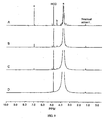
- the end group of the OPF was analyzed by using trifluoroacetic anhydride, a compound that immediately reacts with free hydroxyl groups to form trifluoroacetate.
- trifluoroacetic anhydride a compound that immediately reacts with free hydroxyl groups to form trifluoroacetate.
- the formation of trifluoroacetate shifted the attached methylene proton downfield, thus separating it from the other methylene proton peaks of PEG ( Figure 3 ). Since trifluoroacetic anhydride can not react with fumaric acid, this change in the NMR spectrum indicated the presence of end hydroxyl groups and therefore the termination of OPF by PEG.
- the number-average molecular weight (M n ) of OPF was determined by NMR measurements with the assumption that the OPF had PEG end groups.
- the determined molecular weights of OPF are presented in Table 1.
- the OPF molecular weight was close to that determined by GPC calibrated with PEG standards. Table 1.
- T m melting temperature
- ⁇ H m heat of fusion
- OPF OPF
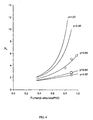
- PEG molecular weight As the PEG molecular weight increased from 1000 to 4600, the X n determined by equation (2) decreased from 5.1 to 2.5. As the ratio of fumaryl chloride to PEG, r, decreased from 0.98 to 0.80, X n also decreased from 5.67 to 3.6 and the M n of OPF decreased from 7790 to 4990.
- the changes in the heat of fusion and melting temperature could be a result of conformational changes in the polymer backbones caused by oligomerization.
- the incorporation of rigid fumarate bonds could prevent close packing of the flexible PEG chains and thus cause a decrease in crystallinity as seen in Table 1. This decrease in crystallinity may result in the observed changes in melting temperature and heat of fusion in comparison with PEG.
- the FT-IR spectra of OPF in Figure 7 also indicated successful incorporation of fumarate bonds into the macromer.
- the IR spectra of corresponding OPF 1.0K and 3.4K showed a characteristic ester carbonyl stretch band at 1725 cm -1 in addition to an asymmetrical C-O-C stretching band at 1110 cm -1 and C-H stretch bands at 2890 cm -1 .
- the OPF was cross-linked by radical polymerization.
- the cross-linking of OPF was initiated either by photoirradiation of bis-(2,4,6-trimethylbenzyl) phenylphosphine oxide or by chemical initiation in the presence of ammonium persulfate and ascorbic acid.
- the cross-linking of OPF was qualitatively investigated by NMR spectroscopy.
- Figure 8 shows the changes in the NMR spectrum of OPF 3.4K after cross-linking. Photoirradiation for 30 min cross-linked the OPF caused the NMR band of unsaturated fumarate protons at 6.8 ppm to disappear and the PEG proton peak to dramatically broaden. The fumarate protons were consumed in the cross-linking reaction.
- the inventors while not wishing to be limited by the following interpretation, believe that the peak broadening may be related to decreased polymer mobility and thus a shorter relaxation time.
- the cross-linked OPF exhibited swelling characteristics of a hydrogel, with swelling ratios dependent on the molecular weight of PEG.
- Table 2 summarizes the results of the swelling studies.
- the swelling ratio of the cross-linked OPF by photo-irradiation in the presence of 1.0% w/w initiator increased from 5.7 to 16.0.
- the concentration of the initiator did not significantly affect the swelling of the cross-linked OPF in the range from 1.0% w/w to 2.0% w/w.
- the increase in the swelling ratio with the increase in the PEG molecular weight may be due to the longer mesh size between cross-linkable fumarate bonds.
- the sol fraction of the cross-linked OPF also increased with the increase in PEG molecular weight.
- the sol fraction of cross-linked OPF at 1.0% w/w of initiator increased from 8.6 to19.8% as the PEG molecular weight increased from 1000 to 4600.
- Table 2 The sol fraction of cross-linked OPF at 1.0% w/w of initiator increased from 8.6 to19.8% as the PEG molecular weight increased from 1000 to 4600.
- the molar ratio of fumaryl chloride to PEG also affected the swelling of crosslinked OPF.
- the swelling ratio of the cross-linked OPF 1.0K in the presence of 1.5% w/w of photo-initiator decreased from 11.0 to 5.4.
- the change in swelling ratio of the cross-linked OPF 1.0K with the change in the reactant molar ratio may be associated with the change in sol fraction.
- the sol fraction of the cross-linked OPF 1.0K slightly increased from 6 to 10% as the reactant molar ratio decreased from 0.98 to 0.90, respectively. Further decrease in r from 0.90 to 0.80, however, dramatically increased the sol fraction from 10 to 54 %, respectively, while the swelling ratio increased from 6.6 to 11.0.
- the effect of the molar ratio on the sol fraction might result from the change in the molecular weight of the OPF 1.0K.
- the determined molecular weight by GPC increased from 4990 to 7790.
- the increase in molecular weight caused an increase in viscosity of the OPF 1.0K solution. This increase in viscosity might affect the crosslinking by limiting the diffusion of radicals. As the viscosity increases, the limited diffusion of radicals may interfere with the termination of polymerization by bimolecular coupling.
- Exemplary macromers based on PEG and fumaric acid was successfully prepared by a reaction between PEG and fumaryl chloride.
- the exemplary macromers were designed to contain end PEG chains and multiple fumarate bonds.
- the PEG molecular weight and the molar ratio of PEG and fumaryl chloride affected the molecular weight of OPF and its physical properties.
- the prepared OPF was cross-linked by radical polymerization initiated by photoirradiation and chemical initiation.
- the cross-linked OPF gels exhibited typical properties of hydrogels, which were dependent on the molecular weight of PEG and the reactant ratio between fumaryl chloride and PEG.
- Poly(ethylene glycol) of molecular weight 1000 PEG 1.0K
- triethylamine, trifluoroacetic anhydride, diethyl fumarate, propylene glycol, calcium hydride, and 4-nitrophenyl chloroformate (NPC) were purchased from Aldrich (Milwaukee, WI) and were used as received.
- Fumaryl chloride was obtained from Acros (Pittsburgh, PA) and distilled before use.
- Gly-Arg-Gly-Asp (GRGD) was purchased from Bachem California Inc. (Torrance, CA).
- Bis-(2,4,6-trimethylbenzyl) phenylphosphine oxide was supplied by Ciba Specialty Chemicals (Terrytown, NY).
- Methylene chloride was purified by distillation after refluxing 4 hr over calcium hydride. All other solvents were of reagent grade and were used as received.
- PEG 1.0K was reacted with fumaryl chloride to result in OPF 1.0K described above in Section I. Briefly, after drying 30 g of PEG 1.0K (30 mmoles) by azeotropic distillation using 200 ml of toluene, the dried PEG 1.0K were reacted with 27 mmoles of fumaryl chloride in the presence of 27 mmoles of triethylamine on ice. The resulting OPF 1.0K was purified by recrystallization using 500 ml of ethyl acetate.
- the number average molecular weight (M n ) of OPF 1.0K was determined to be 5340 through end group analysis using NMR spectroscopy. The spectra were obtained after OPF 1.0K was dissolved in 5.0% v/v trifluoroacetic anhydride in CDCl 3 .
- the OPF 1.0K was reacted with 4-nitrophenyl chloroformate (NPC) before modification with GRGD.
- NPC 4-nitrophenyl chloroformate
- Ten grams of OPF 1.0K (1.9 mmoles) were dried by azeotropic distillation of 80 ml out of 100 ml toluene.
- the OPF 1.0K was then dissolved in 100 ml anhydrous methylene chloride and reacted with 4.2 g NPC (21 mmoles) in the presence of 3.7 ml triethylamine (26 mmoles) on ice for 2 hr. After running the reaction for another 16 hr at room temperature, the solvent was removed by rotovaporation.
- the concentrate was dissolved in 300 ml ethyl acetate and filtered to remove precipitates of triethylamine hydrochloride salt.
- the OPF 1.0K activated with NPC (NPC-OPF 1.0K) was purified twice by recrystallization in ethyl acetate. Finally, the NPC-OPF 1.0K was dried under reduced pressure and stored at 5°C to minimize hydrolysis.
- the OPF 1.0K, NPC-OPF 1.0K, and the OPF 1.0K modified with GRGD were characterized by a 250 MHz 1 H-NMR spectrometer (Bruker AC 250) in CDCl 3 .
- FT-IR spectra of KBr pellets of OPF and its derivatives were acquired by using a Nicolet 500 spectrometer (Madison, WI).
- PPF poly(propylene fumarate)
- a polymeric network was prepared from PPF and OPF 1.0K modified with GRGD. Varying amounts of PPF and OPF 1.0K modified with GRGD were mixed in the presence of 1 ml of methylene chloride and 20 ⁇ l of N,N-dimethylformamide (DMF). The compositions of the polymer solutions used are presented in Table 3. For photo-cross-linking, 0.5% w/w of bis-(2,4,6-trimethylbenzyl) phenylphosphine oxide to PPF was added to the polymer mixture. The polymer mixture was spread on a clean glass plate equipped with 0.2 mm high spacers.
- the cross-linked PPF was characterized by FT-IR and contact angle analysis.
- FT-IR spectra of the cross-linked PPF films were acquired by a Nicolet 500 spectrometer after drying the cross-linked PPF overnight at 0.1 torr.
- the equilibrium contact angle of 6 ⁇ l of DDW on the cross-linked PPF was measured using a NRL contact angle goniometer (Rame Hart, CA). Measurements were taken at 4 different locations on the surface of each film.
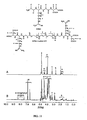
- OPF 1.0K The reaction between PEG 1.0K and fumaric acid resulted in the oligomer, OPF 1.0K, as described above in Section I. End group analysis using a NMR measurement showed the number-average molecular weight (M n ) of OPF 1.0K was 5340. This analysis also demonstrated that OPF 1.0K had PEG end blocks that were available for future coupling with bioactive molecules such as proteins and peptides. The end hydroxyl groups of PEG reacted with NPC creating an activated OPF. The activated OPF could then be modified with GRGD, a model cell-modulating peptide. The NPC-OPF 1.0K was characterized by NMR ( Figure 10 ).
- the NMR spectrum of OPF 1.0K modified with GRGD in Figure 11B shows the characteristic proton peaks of GRGD as well as proton peaks of the OPF 1.0K indicating successful modification.
- the presence of GRGD was confirmed by peaks a, b and c of arginine and aspartic acid. Turning the color of the reaction medium into green during the reaction directly supported the release of 4-nitrophenol by aminolysis. Peak integration of the NMR spectrum gives an 83% yield for the coupling reaction of GRGD with OPF 1.0K.
- GRGD modified OPF 1.0K was cross-linked with PPF to prepare a functionalized polymeric network that incorporated cell adhesion peptides. Since the OPF 1.0K and PPF carry unsaturated double bonds, the cross-linking between them is likely through radical polymerization between these bonds. Photo-cross-linking using bis-(2,4,6-trimethylbenzyl) phenylphosphine oxide is highly effective for the cross-linking of a fumarate based macromer as described above in Section 1. The cross-linked polymeric network was characterized by FT-IR after drying. The IR spectrum of cross-linked PPF in the absence of OPF 1.0K has three C-H stretch bands at 2890, 2950, and 2990 cm -1 ( Figure 13 ).
- OPF 1.0K increases the intensities of the bands at 2890 and 2950 cm -1 .
- the increase in the C-H stretch band intensity resulted from the additional effect of the C-H band at 2895 cm -1 of the PEG incorporated in the OPF.
- concentration of OPF 1.0K increases to 4.4% w/w, the spectral change in the C-H stretch region is more noticeable ( Figure 13-C ).
- OPF 1.0K/PPF films (0.44 w/w%) show a decrease in equilibrium water contact angle (46.6°) as compared to PPF films (60.1°) due to the hydrophilic nature of OPF ( Figure 14 ).
- a further decrease (43.4°) was seen with an increase in OPF 1.0K concentration (2.2% w/w).
- the decrease in contact angle change suggests the presence of the OPF 1.0K at the surface of the films.
- Incorporation of GRGD modified OPF1.0K into films with PPF had a greater effect on the decrease of the equilibrium contact angle of the films than incorporation of OPF 1.0K.
- a novel macromer, OPF was successfully prepared from biocompatible components, PEG and fumaric acid.
- the prepared OPF was reacted with NPC for its modification with bioactive molecules such as GRGD for possible applications in tissue engineering.
- the NPC-OPF could be modified with GRGD by aminolysis in a basic buffer solution.
- the OPF modified with GRGD was cross-linked with PPF to construct a biodegradable polymeric scaffold.
- the fumarate bonds of OPF and PPF might be involved in the cross-linking by radical polymerization.
- FT-IR and contact angle measurements were used for characterization of the cross-linked PPF incorporating the OPF modified with GRGD.
- the water contact angle on the cross-linked PPF decreased as the concentration of OPF or the OPF modified with GRGD increased.
- the OPF modified with GRGD exhibited decreased contact angle more than OPF without modification.
- the OPF modified with bioactive peptides holds promise for the preparation of functionalized polymeric networks.
Landscapes
- Chemical & Material Sciences (AREA)
- Health & Medical Sciences (AREA)
- Medicinal Chemistry (AREA)
- Chemical Kinetics & Catalysis (AREA)
- Polymers & Plastics (AREA)
- Organic Chemistry (AREA)
- General Chemical & Material Sciences (AREA)
- Epidemiology (AREA)
- Public Health (AREA)
- Veterinary Medicine (AREA)
- General Health & Medical Sciences (AREA)
- Life Sciences & Earth Sciences (AREA)
- Animal Behavior & Ethology (AREA)
- Dermatology (AREA)
- Oral & Maxillofacial Surgery (AREA)
- Transplantation (AREA)
- Engineering & Computer Science (AREA)
- Bioinformatics & Cheminformatics (AREA)
- Pharmacology & Pharmacy (AREA)
- Medicinal Preparation (AREA)
- Materials For Medical Uses (AREA)
- Polyethers (AREA)
Abstract
Description
- This work was supported by funding from the National Institutes of Health Grants R01-AR44381 and R01-DE13031.
- The present invention relates to a compound for forming a biocompatible polymeric material. More particularly, the present invention relates to a compound that includes an oligo(poly(ethylene glycol) fumarate) (OPF), and a method for making same. Further, the present invention relates to compounds including OPF that may be functionalized by modification with a therapeutic agent, such as a biocompatible organic group, and/or may be cross-linked to form a polymeric network.
- Synthetic, degradable polymeric networks have found utility as biomaterials in a variety of medical applications. For example, degradable polymeric networks can be used as carriers for delivery of therapeutic agents, such as gene therapy agents, drugs, and biocompatible organic compounds that modify cellular function. In particular, degradable polymeric networks can serve as conduits for guided tissue regeneration, such as in wound healing. Further, degradable polymeric networks can serve as supportive scaffolding for cells, such as in bone regeneration and repair. Still further, degradable polymeric networks can serve as stimulants of desired cellular responses and as specific substrates for targeted cell adhesion, among other cellular applications.
- Degradable polymeric networks that are useful in biomedical applications are typically based on polymers that are desirably nontoxic and biocompatible. Poly(ethylene glycol) (PEG), a hydrophilic polyether, is one such polymer. Water-soluble polymers such as PEG, have been investigated extensively in recent years for use as nontoxic, biocompatible, protein repulsive, noninflammatory, and nonimmunogenic modifiers for drugs, proteins, enzymes, and surfaces of implanted materials. The solubility of PEG in water as well as a number of common organic solvents facilitates its modification by a variety of chemical reactions and makes it useful for binding water-insoluble or poorly water-soluble molecules and rendering them water-soluble.
- Formation of a degradable polymeric network from PEG typically involves chemical modification of the PEG in order to form a cross-linkable macromer. The chemical modification may take a variety of forms, typically involving bonding the PEG to a cross-linkable moiety. When the macromers are cross-linked together, a polymeric network is formed that includes the cross-linkable moieties, as well as PEG polymer units. Polymeric networks based on PEG may differ in their properties, depending for example on the nature of the cross-linking and the presence of any co-polymers.
- Poly(ethylene glycol) (PEG) based macromers have been extensively investigated for use in hydrogel preparation. Hydrogels swell in water and have been investigated particularly as carriers of therapeutic agents. Hydrogels have the advantages that they diminish nonspecific adherence of carried agents to cells. Thus, they can be made cell-adhesion specific through the introduction of specific attached molecules, or ligands.
- Typically, PEG macromers have been based on (meth)acrylation of PEG based polymers, where the (meth)acrylate group functions as the cross-linkable moiety. PEG di-(meth)acrylate has been cross-linked by photoirradiation, among other methods. The photo-cross-linking of PEG acrylates has been extensively explored as a method of coating PEG onto surfaces of polymeric materials and biological tissues. A disadvantage of PEG acrylates, such as PEG methacrylates, for use in forming a degradable polymeric network is that hydrolysis of a PEG acrylate macromer liberates ethylene glycol and an acrylic acid, such as methacrylic acid. Methacrylic acid is toxic and thus not biocompatible. Further, PEG mono- and di-(meth)acrylates have a tendency to form clumped polymeric networks, due to the cross-linkable moiety being present at one or both ends of the macromer.
- An alternative type of PEG macromer based on the photodimerization of cinnamylidene groups has also been synthesized. This light-sensitive PEG macromer has been cross-linked by long wavelength (>300 nm) UV irradiation, however, the photo-cross-linked PEG hydrogels can undergo photoscission with UV irradiation at 254 nm. Various proteins such as myoglobin, hemoglobin, lactate dehydrogenase, and organophosphorous hydrolase have been immobilized into the photosensitive hydrogels and their stability has been demonstrated.
- Nothwithstanding the above teachings, it is desirable to provide PEG-based polymeric networks that are biodegradable, have desired mechanical properties in both wet and dry states, and that degrade into non-toxic degradation products.
- The present invention includes a macromer that is formed of at least two repeating units that each contain a biocompatible cross-linkable moiety bound to a biocompatible polymer. A preferred biocompatible polymer is PEG. Further, a preferred biocompatible cross-linkable moiety is a fumaryl group.
- The present invention includes a macromer based on PEG and fumaric acid. This new PEG macromer has different properties from previous PEG macromers. The macromer may also be advantageous for biodegradation because of its multiple ester bonds in comparison with PEG (meth)acrylates. The macromer is further expected to be biocompatible because it consists of biocompatible components. Since the PEG macromer based on fumaric acid is composed of monomeric PEG fumarate of finite length, the physical properties of the macromer can be easily tailored by changing PEG molecular weight.
- The present invention includes a method of making a PEG macromer that involves a one-pot reaction between PEG and fumaryl chloride. This reaction may be useful for other applications. Further, the reaction can be influenced by factors such as PEG molecular weight and reactant molar ratio. The interpretation and modulation of those factors involved in the condensation reaction will provide useful information that is applicable to the preparation of various macromers with desirable properties as well as the resulting hydrogels.
- The present invention includes any of the above macromers modified by the addition of a therapeutic agent. The therapeutic agent may be any conventional therapeutic agent, such as drugs, gene therapy agents, molecules that modulate cell function, and the like. Molecules that modulate cellular function may be biocompatible organic groups, such as peptides, proteins, protein fragments, proteoglycans, glycoproteins, and carbohydrates.
- The present invention includes a method for the preparation of a polymeric network functionalized with various bioactive molecules. The base macromer for the method preferably is composed of biocompatible PEG and fumaric acid. A preferred polymeric network is advantageous for biodegradation because of the inclusion of multiple ester bonds. Further, the unsaturated fumarate bonds of a preferred macromer have the advantage of being useful for preparation of polymeric composites with controlled mechanical properties by radical polymerization.
- Thus, the present invention includes a combination of features and advantages which enable it to overcome various problems of prior devices. The various characteristics described above, as well as other features, will be readily apparent to those skilled in the art upon reading the following detailed description of the preferred embodiments of the invention, and by referring to the accompanying drawings.
- For a more detailed description of the preferred embodiment of the present invention, reference will now be made to the accompanying Figures, wherein:
-
Figure 1 is a schematic chemical diagram illustrating the synthesis of oligo(poly(propylene glycol) fumarate) (OPF); -
Figure 2 is a schematic chemical diagram illustrating the preparation of the OPF 1.0K and its GRGD modification; -
Figure 3 is a plot showing 1H NMR spectra of an OPF 1.0K in the absence (A) and presence (B) of trifluoroacetic anhydride, where the OPF 1.0K was prepared by the reaction between PEG 1.0K and fumaryl chloride at a 1:0.90 molar ratio, and the NMR measurements were carried out in CDCl3 at room temperature; -
Figure 4 is a plot showing measured conversion of OPF prepared from PEG 1.0K (for r=0.80, 0.90, 0.98), 3.4K, and 4.6K; -
Figure 5 is a plot showing GPC chromatograms of PEG and OPF, where PEG 1.0K (A), 3.4K (B), and 4.6K (C) were used for the preparation of OPF 1.0K at 1:0.80 (D), 1:0.90 (E), and 1:0.98 (F) molar ratio between PEG and fumaryl chloride, OPF 3.4K (G), and OPF 4.6K (H) at 1:0.90 molar ratio between PEG and fumaryl chloride; -
Figure 6 is a plot showing dependence of the degree of oligomerization,X n, on the conversion, p, and monomer molar ratio, r, where the degree of oligomerization at various conversions was calculated by using equation (3), experimental data were fitted to the curves, and for OPF 1.0K, OPF 3.4K, and OPF 4.6K, the determined p values 0.83, 0.69, and 0.62, respectively, were used; -
Figure 7 is a plot showing FT-IR spectra of OPF 3.4K (A) and OPF 1.0K (B) prepared from PEG 3.4K (C) and 1.0K (D). -
Figure 8 is a plot showing 1H NMR spectra of OPF 3.4K before (A) and after (B) UV irradiation for 30 min in the presence of 1.0% w/w of bis-(2,4,6-trimethylbenzyl) phenylphosphine oxide, where the NMR was measured in CD3OD:DMSO-d6 (1:1) and the peak assignment of OPF was based on the chemical structures and notions inFigure 3 ; -
Figure 9 is a plot showing 1H NMR spectra of OPF 3.4K at 10 min (A), 1.5 h (B), 3.0 h (C), and 24 h (D) after the addition of ammonium persulfate and ascorbic acid, where the NMR was measured in D2O and the peak assignment of OPF was based on the chemical structures and notions inFigure 3 . -
Figure 10 is a plot showing NMR spectra of the OPF 1.0K (A) and the OPF 1.0K activated with 4-nitrophenyl chloroformate (B) in CDCl3; -
Figure 11 is a plot showing NMR spectra of GRGD (A) and the OPF 1.0K modified with GRGD (B) in D2O; -
Figure 12 is a plot showing FT-IR spectra of PEG (A), OPF 1.0K (B), the OPF 1.0K activated with NPC (C), and the OPF 1.0K modified with GRGD (D); -
Figure 13 is a plot showing FT-IR spectra of the cross-linked PPF in the absence (A) and presence of 0.44 w/w % (B) and 4.4 w/w% OPF 1.0K (C); and -
Figure 14 is a plot showing changes in the equilibrium contact angle of water on the cross-linked PPF with the concentration changes in the OPF 1.0Kand the OPF 1.0K modified with GRGD where N=3 for standard deviation.
- According to a preferred embodiment of the present invention, a biodegradable macromer includes a plurality of repeating units. Each repeating unit preferably includes a biocompatible polymer of finite, predetermined length and a biocompatible cross-linkable moiety. Thus, when the preferred macromers are cross-linked, a controllable macromolecular structure is preferably provided. For example, the preferred macromers can be used to form a network structure with a mesh size that can be tuned by varying the molecular weight of the polymers that are combined with cross-linkable moieties to form the macromer. Further, when the preferred macromers are cross-linked, a polymeric network is preferably provided that has controllable properties. For example, the wet to dry swelling ratio of a hydrogel formed by cross-linking the preferred macromers is preferrably tunable by varying the molecular weight of the polymer used to form the macromer.
- The polymer preferably includes poly(ethylene glycol) (PEG). Further, the cross-linkable moiety preferably includes an unsaturated carbon carbon bond. More preferably the cross-linkable moiety includes a fumaryl group that includes the unsaturated bond.
- In particular, referring to now to
Figure 1 , according to a preferred embodiment of the present invention, a new biodegradable PEG macromer is prepared by a one-pot reaction between PEG and a fumaryl compound. The fumaryl compound preferably has a substituent, such as a Lewis base that has an affinity for hydrogen. In the reaction, a hydrogen is removed from the PEG and the substituent is removed from the fumaryl compound. The reaction is preferably carried out in the presence of an organic base, as a solvent. The solvent preferably acts as a proton scavenger. A suitable organic base is, for example, triethylamine. The reaction between PEG and fumaryl chloride preferably results in the formation of PEG fumarate oligomers. These are oligo(PEG fumarate) (OPF) and are the preferred macromers of the present invention. - According to a preferred embodiment of the present invention, an OPF macromer is terminated by PEG. Macromers with these end PEG chains are preferred for the immobilization of proteins and peptides due to their terminal hydroxyl groups. These macromers may also be utilized to produce hydrogels with specific functions, such as molecular recognition and drug delivery. However, it will be understood that, in other embodiments of the present invention, the macromer may be terminated by fumarate.
- It will be understood that the other polymeric units may be used as alternatives to PEG. In particular, PEG is exemplary of polyethers, in particular hydrophilic polyethers. Further, any suitable end-hydroxylated polymer may be used. For example, the previously described reaction can be used to prepare biodegradable macromers based on fumaric acid by reacting biodegradable polymers with end functional groups such as end-hydroxylated polycaprolactone and end-hydroxylated poly(α-hydroxy acid)s in the presence of fumaryl chloride.
- According to some embodiments of the present invention, the oligo(poly(ethylene glycol) fumarate) (OPF) macromer is cross-linked to form a polymeric network. The cross-linked OPF may be especially valuable for the surface coating of polymeric materials by photoirradiation. Cross-linking may be direct, from the fumaryl of an OPF to the fumaryl of another (or the same) OPF. Alternatively, cross-linking may be indirect, involving a linker molecule cross-linked to the OPF. Exemplary linker molecules are PEG-diacrylate and PPF-diacrylate, where PPF stands for poly(propylene fumarate). It is preferred that the linker molecule is biocompatible. Further, the linker molecule preferably is degradable to non-toxic components.
- In some embodiments of the present invention, an OPF is copolymerized with other monomers. The co-polymerization of OPF with other monomers is preferably useful for the preparation of polymeric gels with different physical properties from a gel prepared by polymerization of OPF without co-polymerization. The properties preferably depend on the other monomer. Further, the co-polymer is preferably chosen from among any known biocompatible polymeric monomer according to a desirable physical property of the gel formed by co-polymerizing the monomer with OPF to form a macromer according to an embodiment of the present invention.
- In some embodiments of the present invention, a cross-linked OPF has tunable swelling properties. An OPF according to a preferred embodiment of the present invention, has different swelling properties from hydrogels of PEG acrylates or P(PF-co-EG), since fumarate bonds in the OPF are separated by finite PEG blocks. A preferred OPF, therefore, has the advantage of being more suitable for preparing hydrogels with a defined structure. In particular, an advantage of the OPF is the ability to form polymeric networks having a controlled macromolecular structure. An example of a desirable structure that may be obtained is a mesh structure with a controllable mesh size.
- Furthermore, the presence of multiple ester bonds as well as hydrophilic PEG backbones in a preferred OPF can facilitate the degradation of OPF in an aqueous environment.
- Still further, a preferred OPF has the advantage of being suitable for use as a cross-linking agent for polymeric resins. For example, an OPF according to a preferred embodiment of the present invention improves the dispersion of polymeric resins because it is soluble in aqueous and organic solvents.
- Referring now to
Figure 3 , a preferred method of modification of OPF with a therapeutic agent, such as a bioactive molecule, is by reacting the end hydroxl groups of PEG with 4-nitrochloroformate (NPC) to form an activated NPC-OPF. - Alternatively, OPF may also be modified with a therapeutic agent through an N-hydroxysuccinimidyl (NHS) ester. Although the modification of the NHS activated OPF (NHS-OPF) may be faster than that of the NPC-OPF, the terminal group of OPF preferably includes carboxylic acid groups instead of hydroxyl groups. An OPF with end carboxylic acid groups can be obtained by the reaction with a molar excess of fumaryl chloride over PEG that results in OPF with end fumaric acids rather than PEG, or by succinylation of end hydroxyl groups of OPF with succinic anhydride. However, the succinylation will be an additional step to prepare the activated OPF and the OPF with fumaric acids, different from the OPF with PEG, will eventually result in the incorporation of peptides with limited mobility in polymeric scaffolds by the absence of a flexible PEG spacer with the cross-linking of end fumaric acids.
- The therapeutic agent may be any conventional therapeutic agent for example molecules that modulate cellular function, such as biocompatible organic groups, for example peptides, proteins, protein fragments, proteoglycans, glycoproteins, and carbohydrates.
- Suitable peptides include RGD, YIGSR, REDV, IKVAV, and KRSR peptides. In particular, RGD peptides have been known to modulate cell behavior on a variety of surfaces and are therefore considered useful for cell-modulating polymeric networks. NPC-OPF has cross-linkable fumarate bonds as well as 4-nitrophenylcarbonate groups for peptide coupling, making it ideal for the preparation of polymeric networks functionalized with cell specific peptides.
- Further, the presence of cross-linkable double bonds in an OPF modified with a peptide may be advantageous for many biomedical applications because it can be formed into cross-linked polymeric networks that are functionalized with bioactive peptides. Although the example described below in Section II utilized GRGD to functionalize OPF, many other molecules such as specific growth factors or fragments thereof may be incorporated into the polymer networks.
- Suitable proteins include members of the transforming growth factor beta superfamily, bone morphogeneic proteins, basic fibroblast growth factor, platelet derived growth factor, insulin like growth factor, and extracellular matrix molecules including osteopontin, osteonectin, osteocalcin, and bone sialoprotein. Suitable protein fragments include fragments of the members of the same compounds, comprising 3-30 amino acids.
- Suitable carbohydrates include starch, cellulose, and chitin.
- The cross-linked PPF carrying cell adhesion peptides may find applications in biomaterials. Cross-linked PPF has favorable mechanical properties for orthopaedic applications.
- The functionalized OPF will be especially effective for the preparation of polymeric networks with modulated cellular functions, since the PEG chain between peptide and fumarate will serve as a flexible spacer that can stretch out to a biological solution and facilitate the interaction between cells and peptides.
- Without further elaboration, it is believed that one skilled in the art can, using the description herein, utilize the present invention to its fullest extent. The following specific embodiments are to be construed as illustrative and not as constraining the scope of the present invention in any way whatsoever.
- PEG (MW=1000, 3350, and 4600) (PEG 1.0K, 3.4K, and 4.6K, respectively), trifluoroacetic anhydride (TFAA), N-vinyl-2-pyrrolidinone (NVP), calcium hydride, ammonium persulfate, and triethylamine were purchased from Aldrich (Milwaukee, WI). Fumaryl chloride was obtained from Acros (Pittsburgh, PA) and distilled before use. Anhydrous methylene chloride was obtained by distillation after the reflux for 2h in the presence of calcium hydride. Ascorbic acid was obtained from Sigma (Saint Louis, MO) and bis-(2,4,6-trimethylbenzyl) phenylphosphine oxide was given by Ciba Specialty Chemicals (Terrytown, NY). Other solvents were of reagent grade and were used without purification.
- OPF was prepared by the reaction schematically represented in
Figure 1 . Thirty grams (0.003 mole) of PEG 1.0K (50 g for PEG 3.4K and 4.6K) was dried by azeotropic distillation as follows. After dissolving PEG in 250 ml of toluene, 150 ml of toluene was distilled off and the remaining toluene was further removed under reduced pressure. The dried PEG 1.0K was dissolved in 250 ml of anhydrous methylene chloride. Fumaryl chloride (0.3 mole) and triethylamine (0.3 mole) were simultaneously added to the PEG solution in an ice bath over 5 h while the reaction mixture was vigorously stirred. For the oligomerization of PEG 3.4K and 4.6K, 500 ml of anhydrous methylene chloride was used. To investigate the effect of the reactant ratio on the OPF molecular weight, three different molar ratios of PEG 1.0K to fumaryl chloride were used (1:0.8, 1:0.9, and 1:0.98). OPF from PEG of different molecular weights (OPF 1.0K, 3.4K, and 4.6K from PEG 1.0K, 3.4K, and 4.6K) was prepared by the same reaction for PEG 1.0K at 1:0.9 molar ratio of PEG to fumaryl chloride. After dropwise addition of fumaryl chloride and triethylamine into the PEG solution, the reaction was run overnight at room temperature. Upon completion of the reaction, the solvent was removed by rotovaporation and the residue was dissolved in 500 ml (1000 ml for OPF from PEG 3.4K and 4.6K) of warm ethyl acetate. Then, triethylamine hydrochloride salt was removed by filtration. The OPF was recrystallized twice from ethyl acetate and dried at reduced pressure. The OPF was kept in a refrigerator to avoid crosslinking at room temperature. - The PEG macromers were characterized by a 250 MHz 1H NMR (Bruker AC 250) in CDCl3. The end group of OPF was analyzed by NMR measurements after dissolving the OPF with 5.0% v/v trifluoroacetic anhydride in CDCl3. The number average molecular weight of OPF was calculated from the NMR spectra.
- The OPF was analyzed by differential scanning calorimetry (DSC). DSC was performed on a TA Instruments Model 2920 (Newcastle, DE) with a mechanical cooling accessory. The samples were analyzed at a heating rate of 10°C per min from 0 to 70 °C. Melting points and the heat of fusion, ΔHm (cal/g), were obtained from the thermograms. The percent crystallinity of OPF, X, was determined from the following equation:

Here, ΔH * m is the theoretical heat of fusion of 100% crystalline PEG (49 cal/g). - The molecular weight of OPF was also calculated by gel permeation chromatography (GPC). A Phenogel guard column (50X7.8 mm, 5 µm, mixed bed, Phenomenex, Torrence, CA) and a Phenogel column (300X 7.8 mm, 5 µm, mixed bed, Phenomenex) were used to elute the samples at 1 ml per min chloroform flow rate. After obtaining the calibration curve with PEG standards (Polyscience, Warrington, PA), number-average (Mn ) and weight-average (Mw ) molecular weights were calculated by running OPF samples. The degree of oligomerization,
X n , and the conversion of OPF, p, were determined by the following equations:

Here, Mn,OPF , Mn,PFU , and r represent the Mn of OPF determined by GPC, the molecular weight of monomeric PEG fumarate, and [fumaryl chloride] /[PEG], respectively. - The OPF was characterized by FT-IR spectroscopy. Samples were prepared as KBr pellets and the spectra were obtained on a Nicolet 500 spectrometer (Madison, WI).
- The OPF was cross-linked by radical polymerization. The cross-linking of the OPF was qualitatively analyzed by NMR measurements. To observe the cross-linking of OPF by photoirradiation, 0.2 g of OPF 3.4K and 0.002 g of bis-(2,4,6-trimethylbenzyl) phenylphosphine oxide were dissolved in 1.0 ml of CD3OD:DMSO-d6 (1:1). The NMR spectrum of the OPF solution was recorded before and after 30 min photoirradiation in an Ultralum (Paramount, CA) ultraviolet light box. The cross-linking of OPF by the chemical initiators was investigated after dissolving 0.2 g of the OPF and 5.0 µg of ammonium persulfate and ascorbic acid in 1 ml of D2O. The NMR spectrum of the OPF solution was recorded at 10 min, 1.5 h, 3.0 h, and 24 h after the addition of initiators.
- The swelling of the cross-linked OPF was investigated by a gravimetric method. Samples for the swelling study were prepared by photoirradiation which was faster than chemical cross-linking. The solution for cross-linking was prepared by dissolving 1 g of OPF in 5 ml of 60% v/v dimethylformamide (DMF) in water. To investigate the effect of the amount of photoinitiator, 0.1, 0.15, and 0.2 ml of 10 w/v% bis-(2,4,6-trimethylbenzoyl) phenylphophine oxide in DMF were mixed with the OPF solution. The OPF solution was transferred to a polystyrene cell culture dish (60× 15 mm, Fisher Scientific, Pittsburgh, PA) lined with Teflon film. The OPF solution was cross-linked by 1 h irradiation with UV light. The cross-linked OPF gels were cut into 12 mm diameter discs. The disks were dried at 0.25 torr overnight and then weighed, W i. The dry films were swollen in 20 ml of deionized distilled water (DDW) until an equilibrium was reached then weighed again, Ws . The swollen gels were dried overnight at reduced pressure and weighed, Wd . The swelling ratio and the fraction of unreacted macromer, sol fraction, were determined by the following equations.


Here, swelling ratio represents the amount (g) of water that can be drawn by 1 g of dry OPF gel rather than simple weight ratio between swollen and dry OPF gels. - As described in more detail below, end group analysis by nuclear magnetic resonance (NMR) spectroscopy showed that the oligo (PEG fumarate) (OPF) had end PEG chains and multiple fumarate groups along its macromolecular chain. According to thermal characterization by differential scanning calorimetry (DSC), the crystallinity of OPF was found to be lower than PEG. The molecular weight and the degree of oligomerization of OPF determined by gel permeation chromatography (GPC) revealed that the conversion of OPF was substantially affected by the steric factors associated with large PEG chains. As the OPF was cross-linked, the unsaturated fumarate bonds disappeared and the PEG proton peak broadened in the NMR spectra.
- The end group of the OPF was analyzed by using trifluoroacetic anhydride, a compound that immediately reacts with free hydroxyl groups to form trifluoroacetate. The formation of trifluoroacetate shifted the attached methylene proton downfield, thus separating it from the other methylene proton peaks of PEG (
Figure 3 ). Since trifluoroacetic anhydride can not react with fumaric acid, this change in the NMR spectrum indicated the presence of end hydroxyl groups and therefore the termination of OPF by PEG. - The number-average molecular weight (Mn) of OPF was determined by NMR measurements with the assumption that the OPF had PEG end groups. The determined molecular weights of OPF are presented in Table 1. The OPF molecular weight was close to that determined by GPC calibrated with PEG standards.
Table 1. Characterization Data of Various OPF Prepared From PEG of Different Molecular Weights and Fumaryl Chloridea Sample r Tm(°C) ΔHm(cal/g) % crystallinity GPC NMR Mn Mw Xn Mn PEG 1.0K 40.512 ± 1.65 28.9 ± 2.8 59.0 1260 1330 PEG 3.4K 60.59 ± 1.00 40.1 ± 0.2 81.8 3960 4180 PEG 4.6K 61.06 ± 0.78 44.2 ± 4.4 90.2 5080 5440 OPF 1.0K 0.98 39.42 ± 1.18 21.2 ± 2.4 43.3 7790 16070 5.67 6720 OPF 1.0K 0.90 39.83 ± 0.27 25.9 ± 0.5 52.9 7000 11210 5.09 6840 OPF 1.0K 0.80 40.29 ± 1.01 27.0 ± 1.4 55.1 4990 6960 3.63 4630 OPF 3.4K 0.90 55.47 ± 0.52 35.1 ± 2.4 71.6 11610 22060 2.85 1240 a r is the molar ratio between fumaryl chloride and PEG. The melting temperature (T m) and the heat of fusion (ΔHm) were measured by DSC. Number-average (Mn) and weight-average (Mw) molecular weights were calculaed by GPC and end group analysis using NMR. The degree of oligomerization, Xn, was determined by eq 3. For DSC measurements, n = 3. - The properties of OPF were dependent on the PEG molecular weight and the ratio between PEG and fumaryl chloride. As the PEG molecular weight increased from 1000 to 4600, the
X n determined by equation (2) decreased from 5.1 to 2.5. As the ratio of fumaryl chloride to PEG, r, decreased from 0.98 to 0.80,X n also decreased from 5.67 to 3.6 and the Mn of OPF decreased from 7790 to 4990. The conversion of PEG and fumaryl chloride into OPF (p), as determined by equation (3) decreased as the PEG molecular weight increased. Specifically, as the PEG molecular weight increased from 1000 to 4600, p fell from 0.83 to 0.62 (r=0.9) (Figure 4 ). However, a change in r did not cause a significant change in p. The calculated p values for OPF 1.0K at r=0.98, 0.90, and 0.80 were 0.83, 0.85, and 0.81 respectively. These effects of PEG molecular weight on oligomerization extent can be explained in terms of steric hindrance. As PEG molecular weight increases, the reactivity of end hydroxyl groups decreases since the larger PEG random coil exerts more steric hindrance. For example, the GPC chromatograms inFigure 5 indicate that the OPF 1.0K does not include any noticeable free PEG while OPF 3.4K and 4.6K do contain a small amount of free PEG. The results also show that the hydroxyl groups of low molecular weight PEG are more accessible to fumaryl chloride during the oligomerization.Figure 6 shows that the OPF molecular weight can be modulated by a change in r. According to the calculatedX n at various p values, the effect of r onX n substantially increases as p is closer to 1.00. In reality, the polycondensation between fumaryl chloride and PEG can not produce oligomers of high molecular weight mainly because of the steric factor of PEG. According toFigure 5 , the highest achievableX n in our experimental system was 6.0, 3.2, and 2.7 for PEG 1.0K, 3.4K, and 4.6K, respectively. However, the conversion of OPF may be improved by increasing the reaction time. - Thermal characterization of OPF by DSC showed that the OPF has a lower heat of fusion than PEG. A change in r also affected the heat of fusion of the OPF and thus the crystallinity. As r for OPF 1.0K increases from 0.80 to 0.98, the heat of fusion decreases from 27.0 to 21.2 cal/g. These values are noticeably lower than 28.9 J/g, the heat of fusion of PEG 1.0K determined by DSC. Additionally, the melting temperature of OPF was lower than that of PEG. OPF 3.4K and 4.6K especially showed significant lower melting temperatures than PEG 3.4K and 4.6K while the OPF 1.0K had similar melting temperature to the PEG 1.0K. The melting temperatures of PEG 3.4K and 4.6K were 60.59 and 61.06 °C, while those of OPF 3.4K and 4.6K (r= 0.9) were 55.47 and 56.69 °C, respectively. The changes in the heat of fusion and melting temperature could be a result of conformational changes in the polymer backbones caused by oligomerization. The incorporation of rigid fumarate bonds could prevent close packing of the flexible PEG chains and thus cause a decrease in crystallinity as seen in Table 1. This decrease in crystallinity may result in the observed changes in melting temperature and heat of fusion in comparison with PEG.
- The FT-IR spectra of OPF in
Figure 7 also indicated successful incorporation of fumarate bonds into the macromer. In comparison with the IR spectra of PEG 1.0K and 3.4K, the IR spectra of corresponding OPF 1.0K and 3.4K showed a characteristic ester carbonyl stretch band at 1725 cm-1 in addition to an asymmetrical C-O-C stretching band at 1110 cm-1 and C-H stretch bands at 2890 cm-1. - The OPF was cross-linked by radical polymerization. The cross-linking of OPF was initiated either by photoirradiation of bis-(2,4,6-trimethylbenzyl) phenylphosphine oxide or by chemical initiation in the presence of ammonium persulfate and ascorbic acid. The cross-linking of OPF was qualitatively investigated by NMR spectroscopy.
Figure 8 shows the changes in the NMR spectrum of OPF 3.4K after cross-linking. Photoirradiation for 30 min cross-linked the OPF caused the NMR band of unsaturated fumarate protons at 6.8 ppm to disappear and the PEG proton peak to dramatically broaden. The fumarate protons were consumed in the cross-linking reaction. The inventors, while not wishing to be limited by the following interpretation, believe that the peak broadening may be related to decreased polymer mobility and thus a shorter relaxation time. - In addition to photoirradiation of the OPF, radical polymerization using ammonium persulfate and ascorbic acid also cross-linked the OPF 3.4K. The chemical initiators required a longer time for the cross-linking of OPF than that needed with photoirradiation. Ten minutes after the addition of initiators, there was no significant change in the NMR spectrum of the OPF 3.4K (
Figure 9A ). After further time, the intensity of the fumarate proton peak noticeably decreased and the PEG proton peak broadened (Figures 8B , C, and D). The OPF 3.4K started to form a gel at 3h. The complete crosslinking of the OPF 3.4K caused the fumarate proton peak, b, to disappear in the NMR spectrum and the PEG proton peaks to broaden further as shown inFigure 9D . - While not wishing to be limited to the following interpretation, the inventors believe that the presumed random coils of PEG in 60% v/v DMF in water might help the OPF crosslink
- The cross-linked OPF exhibited swelling characteristics of a hydrogel, with swelling ratios dependent on the molecular weight of PEG. Table 2 summarizes the results of the swelling studies. As the PEG molecular weight increased from 1000 to 4600, the swelling ratio of the cross-linked OPF by photo-irradiation in the presence of 1.0% w/w initiator increased from 5.7 to 16.0. However, the concentration of the initiator did not significantly affect the swelling of the cross-linked OPF in the range from 1.0% w/w to 2.0% w/w. The increase in the swelling ratio with the increase in the PEG molecular weight may be due to the longer mesh size between cross-linkable fumarate bonds. As seen in Table 2, the sol fraction of the cross-linked OPF also increased with the increase in PEG molecular weight. The sol fraction of cross-linked OPF at 1.0% w/w of initiator increased from 8.6 to19.8% as the PEG molecular weight increased from 1000 to 4600.
Table 2. Swelling Properties of the Cross-linked OPF Hydrogels Sample R Initator (% w/w) swelling ratio sol fraction (%) OPF 1.0K 0.90 1.0 5.67 ± 0.10 8.61 ± 0.24 OPF 1.0K 0.90 1.5 6.62 ± 0.04 10.48 ± 0.12 OPF 1.0K 0.90 2.0 5.91 ± 0.04 6.10 ± 0.11 OPF3.4K 0.90 1.0 11.55 ± 0.61 11.65 ± 3.80 OPF3.4K 0.90 1.5 12.61 ± 0.07 12.18 ± 0.16 OPF 3.4K 0.90 2.0 13.22 ± 0.10 12.15 ± 0.10 OPF 4.6K 0.90 1.0 16.01 ± 0.16 19.79 ± 0.10 OPF 4.6K 0.90 1.5 18.44 ± 0.21 20.06 ± 0.68 OPF 4.6K 0.90 2.0 19.91 ± 0.21 21.10 ± 0.41 OPF 1.0K 0.98 1.5 5.35 ± 0.07 5.87 ± 0.06 OPF 1.0K 0.80 1.5 11.03 ± 0.40 53.51 ± 1.00 a r is the molar ratio between fumaryl chloride and PEG. For all samples, n = 3. - The molar ratio of fumaryl chloride to PEG also affected the swelling of crosslinked OPF. As r increased from 0.80 to 0.98, the swelling ratio of the cross-linked OPF 1.0K in the presence of 1.5% w/w of photo-initiator decreased from 11.0 to 5.4. The change in swelling ratio of the cross-linked OPF 1.0K with the change in the reactant molar ratio may be associated with the change in sol fraction. The sol fraction of the cross-linked OPF 1.0K slightly increased from 6 to 10% as the reactant molar ratio decreased from 0.98 to 0.90, respectively. Further decrease in r from 0.90 to 0.80, however, dramatically increased the sol fraction from 10 to 54 %, respectively, while the swelling ratio increased from 6.6 to 11.0. The effect of the molar ratio on the sol fraction might result from the change in the molecular weight of the OPF 1.0K. As r increased from 0.80 to 0.98, the determined molecular weight by GPC increased from 4990 to 7790. The increase in molecular weight caused an increase in viscosity of the OPF 1.0K solution. This increase in viscosity might affect the crosslinking by limiting the diffusion of radicals. As the viscosity increases, the limited diffusion of radicals may interfere with the termination of polymerization by bimolecular coupling.
- Exemplary macromers based on PEG and fumaric acid was successfully prepared by a reaction between PEG and fumaryl chloride. The exemplary macromers were designed to contain end PEG chains and multiple fumarate bonds. The PEG molecular weight and the molar ratio of PEG and fumaryl chloride affected the molecular weight of OPF and its physical properties. The prepared OPF was cross-linked by radical polymerization initiated by photoirradiation and chemical initiation. The cross-linked OPF gels exhibited typical properties of hydrogels, which were dependent on the molecular weight of PEG and the reactant ratio between fumaryl chloride and PEG.
- Poly(ethylene glycol) of molecular weight 1000 (PEG 1.0K), triethylamine, trifluoroacetic anhydride, diethyl fumarate, propylene glycol, calcium hydride, and 4-nitrophenyl chloroformate (NPC) were purchased from Aldrich (Milwaukee, WI) and were used as received. Fumaryl chloride was obtained from Acros (Pittsburgh, PA) and distilled before use. Gly-Arg-Gly-Asp (GRGD) was purchased from Bachem California Inc. (Torrance, CA). Bis-(2,4,6-trimethylbenzyl) phenylphosphine oxide was supplied by Ciba Specialty Chemicals (Terrytown, NY). Methylene chloride was purified by distillation after refluxing 4 hr over calcium hydride. All other solvents were of reagent grade and were used as received.
- A new PEG macromer, oligo(PEG fumarate) (OPF), was synthesized and modified as shown schematically in
Figure 2 . PEG 1.0K was reacted with fumaryl chloride to result in OPF 1.0K described above in Section I. Briefly, after drying 30 g of PEG 1.0K (30 mmoles) by azeotropic distillation using 200 ml of toluene, the dried PEG 1.0K were reacted with 27 mmoles of fumaryl chloride in the presence of 27 mmoles of triethylamine on ice. The resulting OPF 1.0K was purified by recrystallization using 500 ml of ethyl acetate. The number average molecular weight (Mn) of OPF 1.0K was determined to be 5340 through end group analysis using NMR spectroscopy. The spectra were obtained after OPF 1.0K was dissolved in 5.0% v/v trifluoroacetic anhydride in CDCl3. - The OPF 1.0K was reacted with 4-nitrophenyl chloroformate (NPC) before modification with GRGD. Ten grams of OPF 1.0K (1.9 mmoles) were dried by azeotropic distillation of 80 ml out of 100 ml toluene. The OPF 1.0K was then dissolved in 100 ml anhydrous methylene chloride and reacted with 4.2 g NPC (21 mmoles) in the presence of 3.7 ml triethylamine (26 mmoles) on ice for 2 hr. After running the reaction for another 16 hr at room temperature, the solvent was removed by rotovaporation. The concentrate was dissolved in 300 ml ethyl acetate and filtered to remove precipitates of triethylamine hydrochloride salt. The OPF 1.0K activated with NPC (NPC-OPF 1.0K) was purified twice by recrystallization in ethyl acetate. Finally, the NPC-OPF 1.0K was dried under reduced pressure and stored at 5°C to minimize hydrolysis.
- The activated NPC-OPF 1.0K (0.055g, 0.103 mmole) was reacted with GRGD (5 mg, 0.109 mmole) in 5 ml of 0.1M sodium bicarbonate buffer of pH 8.3. The reaction was run overnight at room temperature. In order to remove unreacted GRGD and released 4-nitrophenol, the reaction mixture was dialyzed using deionized distilled water (DDW) for 2 days with periodic medium changes. A regenerated cellulose ester membrane (MWCO=2000, Spectra/Por) was used. The dialyzed polymer solution was immediately frozen in liquid nitrogen and lyophilized for 2 days.
- The OPF 1.0K, NPC-OPF 1.0K, and the OPF 1.0K modified with GRGD were characterized by a 250 MHz 1H-NMR spectrometer (Bruker AC 250) in CDCl3. FT-IR spectra of KBr pellets of OPF and its derivatives were acquired by using a Nicolet 500 spectrometer (Madison, WI).
- An unsaturated biodegradable polyester, poly(propylene fumarate) (PPF), was prepared by the method described in co-pending application Serial No.
PCT/US99/07912, filed April 9, 1999 - A polymeric network was prepared from PPF and OPF 1.0K modified with GRGD. Varying amounts of PPF and OPF 1.0K modified with GRGD were mixed in the presence of 1 ml of methylene chloride and 20 µl of N,N-dimethylformamide (DMF). The compositions of the polymer solutions used are presented in Table 3. For photo-cross-linking, 0.5% w/w of bis-(2,4,6-trimethylbenzyl) phenylphosphine oxide to PPF was added to the polymer mixture. The polymer mixture was spread on a clean glass plate equipped with 0.2 mm high spacers. After placing a second glass plate on the spacers and covering the polymer film, the polymer mixture was cross-linked by photoirradiation for 30 min in an Ultralum (Paramount, CA) ultraviolet light box. The cross-linked PPF film was thoroughly washed with DDW and dried overnight at 50°C in a vacuum oven.
Table 3. Compositions of the polymer mixtures for the preparation of the cross-linked PPF. GRGD-OPF 1.0K stands for the OPF 1.0K modified with GRGD. Sample PPF (g) OPF 1.0K (mg) GRGD - OPF 1.0K (mg) Sample 10.45 0 0 Sample 20.45 2 0 Sample 30.45 20 0 Sample 40.45 0 2 Sample 50.45 0 10 Sample 60.45 0 20 - The cross-linked PPF was characterized by FT-IR and contact angle analysis. FT-IR spectra of the cross-linked PPF films were acquired by a Nicolet 500 spectrometer after drying the cross-linked PPF overnight at 0.1 torr. The equilibrium contact angle of 6 µl of DDW on the cross-linked PPF was measured using a NRL contact angle goniometer (Rame Hart, CA). Measurements were taken at 4 different locations on the surface of each film.
- The reaction between PEG 1.0K and fumaric acid resulted in the oligomer, OPF 1.0K, as described above in Section I. End group analysis using a NMR measurement showed the number-average molecular weight (Mn) of OPF 1.0K was 5340. This analysis also demonstrated that OPF 1.0K had PEG end blocks that were available for future coupling with bioactive molecules such as proteins and peptides. The end hydroxyl groups of PEG reacted with NPC creating an activated OPF. The activated OPF could then be modified with GRGD, a model cell-modulating peptide. The NPC-OPF 1.0K was characterized by NMR (
Figure 10 ). The characteristic proton peaks of 4-nitrophenyl carbonate ranging from 7.4 to 8.4 ppm in the NMR spectrum (Figure 102B) indicate the successful activation of OPF by NPC. The NMR spectrum inFigure 10B also shows that the hydroxyl proton peak of the OPF 1.0K, peak d, disappeared and the proton peak of the methylene group attached to 4-nitrophenyl carbonate, peak e, appeared at 4.4 ppm after activation. NMR analysis also gives a reaction yield of 91% for OPF 1.0K with NPC. This NPC-OPF 1.0K is available for coupling of proteins and peptides in a buffered solution of pH between 8.0 and 9.0. - The NMR spectrum of OPF 1.0K modified with GRGD in
Figure 11B shows the characteristic proton peaks of GRGD as well as proton peaks of the OPF 1.0K indicating successful modification. The presence of GRGD was confirmed by peaks a, b and c of arginine and aspartic acid. Turning the color of the reaction medium into green during the reaction directly supported the release of 4-nitrophenol by aminolysis. Peak integration of the NMR spectrum gives an 83% yield for the coupling reaction of GRGD with OPF 1.0K. - The modified OPF 1.0K was also characterized by FT-IR. As shown in
Figure 12 , the IR spectrum of the OPF 1.0K has the -C=O stretch band of fumarate bonds at 1730 cm-1 before activation with NPC. The FT-IR spectrum of the NPC-OPF 1.0K has the -C=O stretch band from 4-nitrophenyl carbonate at 1770 cm-1, the aromatic -NO2 band at 1530 cm-1, as well as the -C=O stretch band of the fumarate bonds. The bands of NPC disappeared after the GRGD modification. The coupling of GRGD with NPC-OPF 1.0K release 4-nitrophenol as supported by the absence of the 4-nitrophenyl bands in the IR spectrum of OPF modified with GRGD. - GRGD modified OPF 1.0K was cross-linked with PPF to prepare a functionalized polymeric network that incorporated cell adhesion peptides. Since the OPF 1.0K and PPF carry unsaturated double bonds, the cross-linking between them is likely through radical polymerization between these bonds. Photo-cross-linking using bis-(2,4,6-trimethylbenzyl) phenylphosphine oxide is highly effective for the cross-linking of a fumarate based macromer as described above in
Section 1. The cross-linked polymeric network was characterized by FT-IR after drying. The IR spectrum of cross-linked PPF in the absence of OPF 1.0K has three C-H stretch bands at 2890, 2950, and 2990 cm-1 (Figure 13 ). The incorporation of OPF 1.0K increases the intensities of the bands at 2890 and 2950 cm-1. The increase in the C-H stretch band intensity resulted from the additional effect of the C-H band at 2895 cm-1 of the PEG incorporated in the OPF. When the concentration of OPF 1.0K increases to 4.4% w/w, the spectral change in the C-H stretch region is more noticeable (Figure 13-C ). - Characterization of the film surfaces was conducted to ascertain the changes in surface physical properties with the incorporation of the OPF 1.0K or GRGD modified OPF 1.0K. OPF 1.0K/PPF films (0.44 w/w%) show a decrease in equilibrium water contact angle (46.6°) as compared to PPF films (60.1°) due to the hydrophilic nature of OPF (
Figure 14 ). A further decrease (43.4°) was seen with an increase in OPF 1.0K concentration (2.2% w/w). The decrease in contact angle change suggests the presence of the OPF 1.0K at the surface of the films. Incorporation of GRGD modified OPF1.0K into films with PPF had a greater effect on the decrease of the equilibrium contact angle of the films than incorporation of OPF 1.0K. Films with a concentration of 0.44% w/w have a contact angle of 38.6°, while 2.2% w/w films have a contact angle of 31.1°. The contact angle measurements indicate that OPF 1.0K modified with GRGD is more hydrophilic than OPF 1.0K alone. - A novel macromer, OPF, was successfully prepared from biocompatible components, PEG and fumaric acid. The prepared OPF was reacted with NPC for its modification with bioactive molecules such as GRGD for possible applications in tissue engineering. The NPC-OPF could be modified with GRGD by aminolysis in a basic buffer solution. The OPF modified with GRGD was cross-linked with PPF to construct a biodegradable polymeric scaffold. The fumarate bonds of OPF and PPF might be involved in the cross-linking by radical polymerization. FT-IR and contact angle measurements were used for characterization of the cross-linked PPF incorporating the OPF modified with GRGD. The water contact angle on the cross-linked PPF decreased as the concentration of OPF or the OPF modified with GRGD increased. Especially, the OPF modified with GRGD exhibited decreased contact angle more than OPF without modification. The OPF modified with bioactive peptides holds promise for the preparation of functionalized polymeric networks.
- While preferred embodiments of this invention have been shown and described, modifications thereof can be made by one skilled in the art. The embodiments described herein are exemplary only and are not limiting. Many variations and modifications of the macromers and methods of making them are possible and are within the scope of the invention. For example, the steps of a method may be carried out in any order unless indicated otherwise. Accordingly, the scope of protection is not limited to the embodiments described herein, but is only limited by the claims that follow, the scope of which shall include all equivalents of the subject matter of the claims.
Claims (11)
- A macromer consisting of oligo(poly(ethylene glycol) fumarate) optionally modified with a therapeutic agent.
- The macromer according to claim 1 wherein the oligo(poly(ethylene glycol) fumarate) is modified with a peptide, or a protein.
- The macromer according to claim 2 wherein the peptide is selected from RGD, YIGSR, REDV, GRGD, and KRSR peptides.
- A polymeric network obtained by crosslinking a macromer according to any one of the preceding claims.
- The polymeric network according to claim 4 comprising oligo(poly(ethylene glycol)) cross-linked with at least one monomer molecule.
- The polymeric network according to claim 5 comprising oligo(poly(ethylene glycol)) cross-linked with poly(propylene fumarate).
- A biocompatible hydrogel comprising a polymeric network according to claim 4.
- A method of making a macromer comprising reacting PEG with a fumaryl compound to form an oligo(PEG fumarate).
- A method of making a polymeric network comprising comprising cross-linking the fumaryl groups of a macromer according to Claim 8.
- The method according to claim 8 wherein the oligo(poly(ethylene glycol) fumarate) is modified with a peptide, or a protein.
- The method according to claim 8 comprising cross-linking the oligo(poly(ethylene glycol) fumarate) with polypropylene fumarate.
Applications Claiming Priority (7)
| Application Number | Priority Date | Filing Date | Title |
|---|---|---|---|
| US20368900P | 2000-05-11 | 2000-05-11 | |
| US203689P | 2000-05-11 | ||
| US23609900P | 2000-09-28 | 2000-09-28 | |
| US236099P | 2000-09-28 | ||
| US845570 | 2001-04-30 | ||
| US09/845,570 US6884778B2 (en) | 2000-04-14 | 2001-04-30 | Biocompatible macromers |
| PCT/US2001/014910 WO2001085180A1 (en) | 2000-05-11 | 2001-05-09 | Biocompatible macromers |
Publications (3)
| Publication Number | Publication Date |
|---|---|
| EP1282428A1 EP1282428A1 (en) | 2003-02-12 |
| EP1282428A4 EP1282428A4 (en) | 2007-09-05 |
| EP1282428B1 true EP1282428B1 (en) | 2012-07-11 |
Family
ID=27394581
Family Applications (1)
| Application Number | Title | Priority Date | Filing Date |
|---|---|---|---|
| EP01935182A Expired - Lifetime EP1282428B1 (en) | 2000-05-11 | 2001-05-09 | Biocompatible macromers |
Country Status (3)
| Country | Link |
|---|---|
| US (1) | US6884778B2 (en) |
| EP (1) | EP1282428B1 (en) |
| WO (1) | WO2001085180A1 (en) |
Families Citing this family (32)
| Publication number | Priority date | Publication date | Assignee | Title |
|---|---|---|---|---|
| US6537569B2 (en) * | 2001-02-14 | 2003-03-25 | Microvention, Inc. | Radiation cross-linked hydrogels |
| US7629388B2 (en) * | 2001-11-20 | 2009-12-08 | William Marsh Rice University | Synthesis and characterization of biodegradable cationic poly(propylene fumarate-co-ethylene glycol) copolymer hydrogels modified with agmatine for enhanced cell adhesion |
| US7820158B2 (en) * | 2003-04-10 | 2010-10-26 | Surmodics, Inc. | Ligand-coupled initiator polymers and methods of use |
| US7585499B2 (en) | 2003-04-10 | 2009-09-08 | Surmodics, Inc. | Method for encapsulation of cellular material using a charged initiator polymer |
| US20070043202A1 (en) * | 2003-07-01 | 2007-02-22 | Yaszemski Michael J | Self-crosslinkable poly(caprolactone fumarate) |
| US20070231788A1 (en) * | 2003-12-31 | 2007-10-04 | Keyvan Behnam | Method for In Vitro Assay of Demineralized Bone Matrix |
| US8328876B2 (en) * | 2003-12-31 | 2012-12-11 | Warsaw Orthopedic, Inc. | Bone matrix compositions and methods |
| EP2594291A1 (en) * | 2004-07-05 | 2013-05-22 | Ascendis Pharma GmbH | Hydrogel |
| US7968085B2 (en) | 2004-07-05 | 2011-06-28 | Ascendis Pharma A/S | Hydrogel formulations |
| CA2587308A1 (en) * | 2004-11-12 | 2006-05-18 | Mayo Foundation For Medical Education And Research | Photocrosslinkable poly(caprolactone fumarate) |
| WO2006055940A2 (en) * | 2004-11-18 | 2006-05-26 | Mayo Foundation For Medical Education And Research | Block copolymers of polycaprolactone and poly (propylene fumarate) |
| JP5199866B2 (en) * | 2005-03-23 | 2013-05-15 | メイヨ フオンデーシヨン フオー メデイカル エジユケーシヨン アンド リサーチ | Photocrosslinkable oligo (poly (ethylene glycol) fumarate) hydrogels for cell and drug delivery |
| EP1874525B1 (en) * | 2005-04-29 | 2011-06-01 | Mayo Foundation for Medical Education and Research | Hydrophilic/hydrophobic polymer networks based on poly(caprolactone fumarate), poly(ethylene glycol fumarate), and copolymers thereof |
| WO2007008927A2 (en) * | 2005-07-12 | 2007-01-18 | University Of South Carolina | Bioresorbable composition for repairing skeletal tissue |
| CN101365499A (en) * | 2005-11-01 | 2009-02-11 | 骨骼技术股份有限公司 | Bone matrix compositions and methods |
| MX2008010841A (en) | 2006-02-21 | 2008-10-27 | Nektar Therapeutics Al Corp | Segmented degradable polymers and conjugates made therefrom. |
| JP5496671B2 (en) * | 2006-09-26 | 2014-05-21 | マサチューセッツ インスティテュート オブ テクノロジー | Modified self-assembling peptide |
| WO2008157492A2 (en) | 2007-06-15 | 2008-12-24 | Osteotech, Inc. | Osteoinductive demineralized cancellous bone |
| CA2945295C (en) * | 2007-06-15 | 2020-01-14 | Warsaw Orthopedic, Inc. | Method of treating tissue |
| US9554920B2 (en) * | 2007-06-15 | 2017-01-31 | Warsaw Orthopedic, Inc. | Bone matrix compositions having nanoscale textured surfaces |
| CA2690457C (en) | 2007-06-15 | 2018-02-20 | Osteotech, Inc. | Bone matrix compositions and methods |
| US9492278B2 (en) * | 2007-07-10 | 2016-11-15 | Warsaw Orthopedic, Inc. | Delivery system |
| US20110054408A1 (en) * | 2007-07-10 | 2011-03-03 | Guobao Wei | Delivery systems, devices, tools, and methods of use |
| CA2702499A1 (en) * | 2007-10-19 | 2009-04-23 | Osteotech, Inc. | Demineralized bone matrix compositions and methods |
| CA2703637A1 (en) | 2007-11-09 | 2009-07-02 | Osteotech, Inc. | Bone matrix compositions having nanoscale textured surfaces |
| US20090286907A1 (en) * | 2008-01-23 | 2009-11-19 | Beltz Mark W | Fumaric Acid/Diol Polyesters and Their Manufacture and Use |
| EP2898900B1 (en) | 2008-09-19 | 2017-11-15 | Nektar Therapeutics | Polymer conjugates of ziconotide |
| US20110171166A1 (en) * | 2008-09-19 | 2011-07-14 | Nektar Therapeutics | Polymer conjugates of osteocalcin peptides |
| WO2010093959A2 (en) | 2009-02-12 | 2010-08-19 | Osteotech, Inc. | Delivery systems, tools, and methods of use |
| SG178195A1 (en) | 2009-07-31 | 2012-03-29 | Sanofi Aventis Deutschland | Long acting insulin composition |
| SG178193A1 (en) | 2009-07-31 | 2012-03-29 | Sanofi Aventis Deutschland | Prodrugs comprising an insulin linker conjugate |
| EP2438930A1 (en) | 2010-09-17 | 2012-04-11 | Sanofi-Aventis Deutschland GmbH | Prodrugs comprising an exendin linker conjugate |
Family Cites Families (16)
| Publication number | Priority date | Publication date | Assignee | Title |
|---|---|---|---|---|
| CA1341310C (en) * | 1988-07-15 | 2001-10-23 | Robert Filepp | Interactive computer network and method of operation |
| US5162430A (en) * | 1988-11-21 | 1992-11-10 | Collagen Corporation | Collagen-polymer conjugates |
| US5573934A (en) * | 1992-04-20 | 1996-11-12 | Board Of Regents, The University Of Texas System | Gels for encapsulation of biological materials |
| NZ249770A (en) * | 1992-02-28 | 1996-09-25 | Univ Texas | Biodegradable, polymerisable, substantially water soluble macromer comprising at least one water soluble region, at least one degradable region and at least two free radical polymerisable regions separated by at least one degradable region |
| US5530759A (en) * | 1995-02-01 | 1996-06-25 | International Business Machines Corporation | Color correct digital watermarking of images |
| US5780426A (en) * | 1995-06-07 | 1998-07-14 | Ixsys, Incorporated | Fivemer cyclic peptide inhibitors of diseases involving αv β3 |
| US5527864A (en) * | 1995-08-08 | 1996-06-18 | Suggs; Laura J. | Poly(propylene fumarate-co-ethylene oxide) |
| PT876165E (en) * | 1995-12-18 | 2006-10-31 | Angiotech Biomaterials Corp | COMPOSITIONS OF RETICULATED POLYMERS AND PROCESSES FOR THEIR USE |
| US5998362A (en) * | 1996-09-12 | 1999-12-07 | Merck & Co., Inc. | Conjugates useful in the treatment of prostate cancer |
| US5825892A (en) * | 1996-10-28 | 1998-10-20 | International Business Machines Corporation | Protecting images with an image watermark |
| US5854382A (en) * | 1997-08-18 | 1998-12-29 | Meadox Medicals, Inc. | Bioresorbable compositions for implantable prostheses |
| WO1999010022A2 (en) * | 1997-08-27 | 1999-03-04 | California Institute Of Technology | Methods and compositions to prevent formation of adhesions in biological tissues |
| US5945457A (en) * | 1997-10-01 | 1999-08-31 | A.V. Topchiev Institute Of Petrochemical Synthesis, Russian Academy Of Science | Process for preparing biologically compatible polymers and their use in medical devices |
| JP2002539275A (en) * | 1998-04-10 | 2002-11-19 | ダブリューエム・マーシュ・ライス・ユニバーシティー | Synthesis of poly (propylene fumarate) by acylation of propylene glycol in the presence of proton scavenger |
| US6248363B1 (en) * | 1999-11-23 | 2001-06-19 | Lipocine, Inc. | Solid carriers for improved delivery of active ingredients in pharmaceutical compositions |
| JP2002542349A (en) * | 1999-04-16 | 2002-12-10 | ダブリューエム・マーシュ・ライス・ユニバーシティー | Biodegradable poly (propylene fumarate) network cross-linked with poly (propylene fumarate) -diacrylate macromer |
-
2001
- 2001-04-30 US US09/845,570 patent/US6884778B2/en not_active Expired - Lifetime
- 2001-05-09 WO PCT/US2001/014910 patent/WO2001085180A1/en not_active Ceased
- 2001-05-09 EP EP01935182A patent/EP1282428B1/en not_active Expired - Lifetime
Also Published As
| Publication number | Publication date |
|---|---|
| EP1282428A4 (en) | 2007-09-05 |
| WO2001085180A1 (en) | 2001-11-15 |
| US20020028189A1 (en) | 2002-03-07 |
| EP1282428A1 (en) | 2003-02-12 |
| US6884778B2 (en) | 2005-04-26 |
Similar Documents
| Publication | Publication Date | Title |
|---|---|---|
| US6884778B2 (en) | Biocompatible macromers | |
| KR101906472B1 (en) | A photo-crosslinkable shape memory polymer and manufacturing method thereof | |
| EP1392751B1 (en) | Biodegradable copolymers linked to segment with a plurality of functional groups | |
| CA2309278C (en) | Biodegradable, anionic polymers derived from the amino acid l-tyrosine | |
| US6388047B1 (en) | Hydrogel-forming system with hydrophobic and hydrophilic components | |
| KR100619611B1 (en) | Functionalized Poly (propylene Fumarate) and Poly (propylenefumarate-co-ethylene glycol | |
| US5644005A (en) | Method of making poly(propylene fumarate-coethylene oxide) | |
| EP2456764B1 (en) | A method of making a polymer preferably an (alkyl)acryloyl polycarbonate, the polymer and (alkyl)acryloyl polycarbonate obtained, and a biodevice comprising same | |
| US7863406B2 (en) | Unsaturated poly(ester-amide) biomaterials | |
| EP2222754B1 (en) | Thermoresponsive arginine-based hydrogels as biologic carriers | |
| Rutnakornpituk et al. | Synthesis, characterization and properties of chitosan modified with poly (ethylene glycol)–polydimethylsiloxane amphiphilic block copolymers | |
| WO1999051221A1 (en) | Hydrolytically unstable biocompatible polymer | |
| AU2002248535A1 (en) | Biodegradable copolymers linked to segment with a plurality of functional groups | |
| JPH0859811A (en) | Biocompatible block copolymer | |
| US20120322953A1 (en) | Biocompatible polymer networks | |
| US5844017A (en) | Prepolymers of absorbable polyoxaesters containing amines and/or amido groups | |
| CN107245129B (en) | A kind of hydrophilic unsaturated aliphatic polyester and its preparation method and application | |
| Kasprzyk et al. | Cyclodextrin-modified poly (octamethylene citrate) polymers towards enhanced sorption properties | |
| Petrini et al. | Linear poly (ethylene oxide)-based polyurethane hydrogels: polyurethane-ureas and polyurethane-amides | |
| CN100519511C (en) | Aniline oligomer, its aliphatic polyester copolymer and their prepn | |
| CA2345787A1 (en) | Biocompatible macromers | |
| Wang et al. | Synthesis and characterization of phosphoester linkage-containing hydrogels | |
| CN1176978C (en) | A kind of degradable chemically cross-linked hydrogel and preparation method thereof | |
| CN102702514A (en) | Multi-block copolymer of polyester amide and aniline oligomer and preparation method thereof | |
| CN105949458A (en) | Poly(L-glutamate)-grafted cinnamyl alcohol, preparation method and drug-loaded nano-material |
Legal Events
| Date | Code | Title | Description |
|---|---|---|---|
| PUAI | Public reference made under article 153(3) epc to a published international application that has entered the european phase |
Free format text: ORIGINAL CODE: 0009012 |
|
| 17P | Request for examination filed |
Effective date: 20021108 |
|
| AK | Designated contracting states |
Designated state(s): AT BE CH CY DE DK ES FI FR GB GR IE IT LI LU MC NL PT SE TR |
|
| RIN1 | Information on inventor provided before grant (corrected) |
Inventor name: JO, SEONGBONG Inventor name: MIKOS, ANTONIOS, G. |
|
| A4 | Supplementary search report drawn up and despatched |
Effective date: 20070808 |
|
| 17Q | First examination report despatched |
Effective date: 20080602 |
|
| GRAP | Despatch of communication of intention to grant a patent |
Free format text: ORIGINAL CODE: EPIDOSNIGR1 |
|
| GRAS | Grant fee paid |
Free format text: ORIGINAL CODE: EPIDOSNIGR3 |
|
| GRAA | (expected) grant |
Free format text: ORIGINAL CODE: 0009210 |
|
| AK | Designated contracting states |
Kind code of ref document: B1 Designated state(s): AT BE CH CY DE DK ES FI FR GB GR IE IT LI LU MC NL PT SE TR |
|
| REG | Reference to a national code |
Ref country code: GB Ref legal event code: FG4D |
|
| REG | Reference to a national code |
Ref country code: CH Ref legal event code: EP |
|
| REG | Reference to a national code |
Ref country code: AT Ref legal event code: REF Ref document number: 565728 Country of ref document: AT Kind code of ref document: T Effective date: 20120715 |
|
| REG | Reference to a national code |
Ref country code: DE Ref legal event code: R082 Ref document number: 60146807 Country of ref document: DE Representative=s name: PATENTANWALTSKANZLEI MEYER, DE |
|
| REG | Reference to a national code |
Ref country code: IE Ref legal event code: FG4D |
|
| REG | Reference to a national code |
Ref country code: DE Ref legal event code: R096 Ref document number: 60146807 Country of ref document: DE Effective date: 20120906 |
|
| REG | Reference to a national code |
Ref country code: NL Ref legal event code: T3 |
|
| REG | Reference to a national code |
Ref country code: AT Ref legal event code: MK05 Ref document number: 565728 Country of ref document: AT Kind code of ref document: T Effective date: 20120711 |
|
| PG25 | Lapsed in a contracting state [announced via postgrant information from national office to epo] |
Ref country code: CY Free format text: LAPSE BECAUSE OF FAILURE TO SUBMIT A TRANSLATION OF THE DESCRIPTION OR TO PAY THE FEE WITHIN THE PRESCRIBED TIME-LIMIT Effective date: 20120711 Ref country code: BE Free format text: LAPSE BECAUSE OF FAILURE TO SUBMIT A TRANSLATION OF THE DESCRIPTION OR TO PAY THE FEE WITHIN THE PRESCRIBED TIME-LIMIT Effective date: 20120711 Ref country code: FI Free format text: LAPSE BECAUSE OF FAILURE TO SUBMIT A TRANSLATION OF THE DESCRIPTION OR TO PAY THE FEE WITHIN THE PRESCRIBED TIME-LIMIT Effective date: 20120711 Ref country code: AT Free format text: LAPSE BECAUSE OF FAILURE TO SUBMIT A TRANSLATION OF THE DESCRIPTION OR TO PAY THE FEE WITHIN THE PRESCRIBED TIME-LIMIT Effective date: 20120711 |
|
| PG25 | Lapsed in a contracting state [announced via postgrant information from national office to epo] |
Ref country code: PT Free format text: LAPSE BECAUSE OF FAILURE TO SUBMIT A TRANSLATION OF THE DESCRIPTION OR TO PAY THE FEE WITHIN THE PRESCRIBED TIME-LIMIT Effective date: 20121112 Ref country code: GR Free format text: LAPSE BECAUSE OF FAILURE TO SUBMIT A TRANSLATION OF THE DESCRIPTION OR TO PAY THE FEE WITHIN THE PRESCRIBED TIME-LIMIT Effective date: 20121012 Ref country code: SE Free format text: LAPSE BECAUSE OF FAILURE TO SUBMIT A TRANSLATION OF THE DESCRIPTION OR TO PAY THE FEE WITHIN THE PRESCRIBED TIME-LIMIT Effective date: 20120711 |
|
| PG25 | Lapsed in a contracting state [announced via postgrant information from national office to epo] |
Ref country code: DK Free format text: LAPSE BECAUSE OF FAILURE TO SUBMIT A TRANSLATION OF THE DESCRIPTION OR TO PAY THE FEE WITHIN THE PRESCRIBED TIME-LIMIT Effective date: 20120711 Ref country code: ES Free format text: LAPSE BECAUSE OF FAILURE TO SUBMIT A TRANSLATION OF THE DESCRIPTION OR TO PAY THE FEE WITHIN THE PRESCRIBED TIME-LIMIT Effective date: 20121022 |
|
| PLBE | No opposition filed within time limit |
Free format text: ORIGINAL CODE: 0009261 |
|
| STAA | Information on the status of an ep patent application or granted ep patent |
Free format text: STATUS: NO OPPOSITION FILED WITHIN TIME LIMIT |
|
| PG25 | Lapsed in a contracting state [announced via postgrant information from national office to epo] |
Ref country code: IT Free format text: LAPSE BECAUSE OF FAILURE TO SUBMIT A TRANSLATION OF THE DESCRIPTION OR TO PAY THE FEE WITHIN THE PRESCRIBED TIME-LIMIT Effective date: 20120711 |
|
| 26N | No opposition filed |
Effective date: 20130412 |
|
| PGFP | Annual fee paid to national office [announced via postgrant information from national office to epo] |
Ref country code: GB Payment date: 20130528 Year of fee payment: 13 Ref country code: DE Payment date: 20130530 Year of fee payment: 13 |
|
| REG | Reference to a national code |
Ref country code: DE Ref legal event code: R097 Ref document number: 60146807 Country of ref document: DE Effective date: 20130412 |
|
| PGFP | Annual fee paid to national office [announced via postgrant information from national office to epo] |
Ref country code: NL Payment date: 20130526 Year of fee payment: 13 Ref country code: FR Payment date: 20130606 Year of fee payment: 13 |
|
| PG25 | Lapsed in a contracting state [announced via postgrant information from national office to epo] |
Ref country code: MC Free format text: LAPSE BECAUSE OF FAILURE TO SUBMIT A TRANSLATION OF THE DESCRIPTION OR TO PAY THE FEE WITHIN THE PRESCRIBED TIME-LIMIT Effective date: 20120711 |
|
| REG | Reference to a national code |
Ref country code: CH Ref legal event code: PL |
|
| PG25 | Lapsed in a contracting state [announced via postgrant information from national office to epo] |
Ref country code: CH Free format text: LAPSE BECAUSE OF NON-PAYMENT OF DUE FEES Effective date: 20130531 Ref country code: LI Free format text: LAPSE BECAUSE OF NON-PAYMENT OF DUE FEES Effective date: 20130531 |
|
| REG | Reference to a national code |
Ref country code: IE Ref legal event code: MM4A |
|
| PG25 | Lapsed in a contracting state [announced via postgrant information from national office to epo] |
Ref country code: IE Free format text: LAPSE BECAUSE OF NON-PAYMENT OF DUE FEES Effective date: 20130509 |
|
| REG | Reference to a national code |
Ref country code: DE Ref legal event code: R119 Ref document number: 60146807 Country of ref document: DE |
|
| REG | Reference to a national code |
Ref country code: NL Ref legal event code: V1 Effective date: 20141201 |
|
| GBPC | Gb: european patent ceased through non-payment of renewal fee |
Effective date: 20140509 |
|
| REG | Reference to a national code |
Ref country code: DE Ref legal event code: R119 Ref document number: 60146807 Country of ref document: DE Effective date: 20141202 |
|
| PG25 | Lapsed in a contracting state [announced via postgrant information from national office to epo] |
Ref country code: NL Free format text: LAPSE BECAUSE OF NON-PAYMENT OF DUE FEES Effective date: 20141201 |
|
| REG | Reference to a national code |
Ref country code: FR Ref legal event code: ST Effective date: 20150130 |
|
| PG25 | Lapsed in a contracting state [announced via postgrant information from national office to epo] |
Ref country code: DE Free format text: LAPSE BECAUSE OF NON-PAYMENT OF DUE FEES Effective date: 20141202 |
|
| PG25 | Lapsed in a contracting state [announced via postgrant information from national office to epo] |
Ref country code: FR Free format text: LAPSE BECAUSE OF NON-PAYMENT OF DUE FEES Effective date: 20140602 Ref country code: GB Free format text: LAPSE BECAUSE OF NON-PAYMENT OF DUE FEES Effective date: 20140509 |
|
| PG25 | Lapsed in a contracting state [announced via postgrant information from national office to epo] |
Ref country code: TR Free format text: LAPSE BECAUSE OF FAILURE TO SUBMIT A TRANSLATION OF THE DESCRIPTION OR TO PAY THE FEE WITHIN THE PRESCRIBED TIME-LIMIT Effective date: 20120711 |
|
| PG25 | Lapsed in a contracting state [announced via postgrant information from national office to epo] |
Ref country code: LU Free format text: LAPSE BECAUSE OF NON-PAYMENT OF DUE FEES Effective date: 20130509 |