EP1281971B1 - Method and kit for quantifying beta-lactam penicillins - Google Patents
Method and kit for quantifying beta-lactam penicillins Download PDFInfo
- Publication number
- EP1281971B1 EP1281971B1 EP02077943A EP02077943A EP1281971B1 EP 1281971 B1 EP1281971 B1 EP 1281971B1 EP 02077943 A EP02077943 A EP 02077943A EP 02077943 A EP02077943 A EP 02077943A EP 1281971 B1 EP1281971 B1 EP 1281971B1
- Authority
- EP
- European Patent Office
- Prior art keywords
- antibodies
- hapten
- lactam
- unsubstituted
- conjugate
- Prior art date
- Legal status (The legal status is an assumption and is not a legal conclusion. Google has not performed a legal analysis and makes no representation as to the accuracy of the status listed.)
- Expired - Lifetime
Links
Images

Classifications
-
- C—CHEMISTRY; METALLURGY
- C07—ORGANIC CHEMISTRY
- C07D—HETEROCYCLIC COMPOUNDS
- C07D499/00—Heterocyclic compounds containing 4-thia-1-azabicyclo [3.2.0] heptane ring systems, i.e. compounds containing a ring system of the formula:, e.g. penicillins, penems; Such ring systems being further condensed, e.g. 2,3-condensed with an oxygen-, nitrogen- or sulfur-containing hetero ring
-
- C—CHEMISTRY; METALLURGY
- C07—ORGANIC CHEMISTRY
- C07K—PEPTIDES
- C07K16/00—Immunoglobulins [IG], e.g. monoclonal or polyclonal antibodies
- C07K16/44—Immunoglobulins [IG], e.g. monoclonal or polyclonal antibodies against material not provided for elsewhere, e.g. haptens, metals, DNA, RNA, amino acids
-
- G—PHYSICS
- G01—MEASURING; TESTING
- G01N—INVESTIGATING OR ANALYSING MATERIALS BY DETERMINING THEIR CHEMICAL OR PHYSICAL PROPERTIES
- G01N33/00—Investigating or analysing materials by specific methods not covered by groups G01N1/00 - G01N31/00
- G01N33/48—Biological material, e.g. blood, urine; Haemocytometers
- G01N33/50—Chemical analysis of biological material, e.g. blood, urine; Testing involving biospecific ligand binding methods; Immunological testing
- G01N33/94—Chemical analysis of biological material, e.g. blood, urine; Testing involving biospecific ligand binding methods; Immunological testing involving narcotics or drugs or pharmaceuticals, neurotransmitters or associated receptors
- G01N33/9446—Antibacterials
-
- G—PHYSICS
- G01—MEASURING; TESTING
- G01N—INVESTIGATING OR ANALYSING MATERIALS BY DETERMINING THEIR CHEMICAL OR PHYSICAL PROPERTIES
- G01N2415/00—Assays, e.g. immunoassays or enzyme assays, involving penicillins or cephalosporins
Definitions
- the present invention relates to a method and kit for detecting, or determining the quantity of, ⁇ -lactam penicillins, as well as, haptens, immunogens, conjugates and antibodies useful therein.
- detecting is meant qualitatively analysing for the presence or absence of a substance.
- the present invention is intended to have broad applicability across the main first generation ⁇ -lactam penicillins such as ampicillin, penicillin G, amoxycillin, cloxacillin, dicloxacillin and oxacillin, but is not intended to be limited to these specific ⁇ -lactam penicillins.
- Antibiotics are routinely used in animal husbandry for both prophylactic and therapeutic purposes.
- the ⁇ -lactam class of antibiotics are commonly used in the meat and dairy industry, as growth enhancers. This class, also known as the penicillins, is used to treat dairy cow mastitis, thereby increasing milk yields and the productive life span of the cow.
- ⁇ -lactams may also be included in animal feed, with the purpose of enhancing the growth of poultry and pigs. Through disease prevention, or by inhibiting the activity of natural gut flora in such animals, the antibiotic causes the animals to reach marketable size faster than without the use of such enhancers.
- the free carboxyl group of the closed ⁇ -lactam ring may be esterified, as is disclosed in EP-A-309,299 and in Usleber et al, 1994.
- Antisera raised to ⁇ -lactam antibiotics conjugated in this manner are specific for the acyl side chains and only cross react with other ⁇ -lactam antibiotics if they have similar side chains, as is the case with the isoxazolyl penicillins.
- conjugation can occur by way of the 6-amino group of 6-amino penicillanic acid, as is disclosed in EP-A-309,299 and de Leuw et al, 1997.
- the antibodies display high cross reactivity with the main first generation ⁇ -lactams.
- a further potential conjugation site for ⁇ -lactam penicillins is via the ⁇ amino group of the D- ⁇ -aminoacetamido group of penicillin, as is disclosed in, for example, Nagakura et al, 1991.
- the present invention describes the conjugation of a novel hapten (ampicillin derivative) at the ⁇ amino group of the D- ⁇ -aminoacetamido group of penicillin to an antigenicity-conferring carrier material to produce an immunogen. It also describes how antibodies generated to this immunogen are employed in the development of a generic assay which can be used to test milk and meat and the like for the presence of ⁇ -lactam antibiotics.
- the invention provides a hapten comprising a 6-[D- ⁇ -aminoacetamido] penicillin derivative crosslinked at the ⁇ -amino group with a substituted or unsubstituted phenyldicarbaldehyde selected from the group consisting of substituted or unsubstituted phthalaldehyde, substituted or unsubstituted isophthalaldehyde and substituted or unsubstituted terephthalaldehyde.
- a representative 6-[D- ⁇ -aminoacetamido]penicillin derivative has the structural formula: and the conjugation site is identified by an arrow.
- the phenyldicarbaldehyde is a substituted or unsubstituted terephthalaldehyde, most preferably unsubstituted terephthalaldehyde.
- Suitable substitutions include the addition of aldehyde, thioisocyanate and N-hydroxysuccinimide functional groups at the para- and ortho- positions.
- the haptens are prepared by reacting a substituted or unsubstituted phenyldicarbaldehyde with a 6-[D- ⁇ -aminoacetamido]penicillin derivative in a suitable solvent, of which dimethylformamide and dimethylsulfoxide are suitable examples.
- the present invention concerns an immunogen comprising the hapten of the present invention coupled to an antigenicity-conferring carrier material.
- the carrier material is a protein, a protein fragment, a synthetic polypeptide or a semi-synthetic polypeptide.
- the present invention concerns antibodies raised against the immunogen of the present invention, the antibodies being capable of binding with at least one structural epitope of an intact ⁇ -lactam ring.
- the antibodies are fixed on a backing substrate.
- the invention further provides a process of preparing the antibodies, the process comprising the steps of immunising an non-human animal, preferably a vertebrate animal, most preferably a mammalian animal by repeated administration of an immunogen of the present invention; and collecting the resulting serum antibodies from the immunised animal.
- the process further comprises fixing said serum antibodies to a backing substrate, preferably a solid support, most preferably a polystyrene solid support.
- the antibodies are polyclonal.
- the antibodies are monoclonal.
- the present invention comprises a conjugate comprising the hapten of the present invention covalently bonded to a detectable labelling agent.
- the labelling agent is selected from an enzyme, a luminescent substance, a radioactive substance, or a mixture thereof.
- the labelling agent is an enzyme, preferably a peroxidase, most preferably horseradish peroxidase (HRP).
- the luminescent substance may be a bioluminescent, chemiluminescent or fluorescent material.
- the present invention comprises a method for detecting, or determining the quantity of, ⁇ -lactam penicillins in a sample, the method comprising contacting the sample with the conjugate of the present invention, or a mixture thereof, and with antibodies of the present invention, or a mixture thereof; detecting or determining the quantity of bound conjugate; and deducing from a calibration curve the presence or amount of ⁇ -lactam penicillins in the sample.
- the antibodies are polyclonal.
- the invention includes a kit for detecting, or determining the quantity of, ⁇ -lactam penicillins, the kit including the conjugate of the present invention, or a mixture thereof, and the antibodies of the present invention, or a mixture thereof.
- the kit may optionally include instructions for the use of said conjugate(s) and said antibodies for detecting, or determining the quantity of, ⁇ -lactam penicillins in a sample.
- the sample is a solution, such as a biological fluid, including milk; or a cellular tissue cutting, such as meat.
- the respective crosslinkers (of the immunogen and the conjugate), crosslinked at the ⁇ -amino position may be the same or different.
- the present invention involves use of the conjugates according to the present invention, or a mixture thereof, with the antibodies according to the present invention, or a mixture thereof, to test samples such as milk and meat for detecting, or determining the quantity of, ⁇ -lactam antibiotics.
- the present invention relates to novel haptens which are employed in the preparation of novel immunogens by conjugation to conventional antigenicity-conferring carrier materials.
- the resulting immunogen is then administered to animals, preferably vertebrate hosts, most preferably mammalian hosts, to elicit production of avid polyclonal antisera which are then used to develop a generic immunoassay for the ⁇ -lactam penicillins, employing a conjugate (hapten-labelling agent), or a mixture thereof, as the detection reagent.
- the focus of the present invention is the preparation of antibodies specific for the entire group of ⁇ -lactam penicillins.
- ampicillin is derivatized through the amino group employing a bifunctional cross linker such as a substituted or unsubstituted phenyldicarbaldehyde, preferably substituted or unsubstituted terephthalaldehyde (unsubstituted terephthalaldehyde is shown in Figure 1 of the accompanying drawings).
- a bifunctional cross linker such as a substituted or unsubstituted phenyldicarbaldehyde, preferably substituted or unsubstituted terephthalaldehyde (unsubstituted terephthalaldehyde is shown in Figure 1 of the accompanying drawings).
- the ⁇ -lactam ring of ampicillin is conserved during derivatization to ensure that the epitopes common to the penicillin group are retained.
- hapten of the present invention provides defined structural epitopes, it is not in itself immunogenic and therefore must be conjugated to a suitable antigenicity-conferring carrier material, so that the thus-formed immunogen will elicit an immunogenic response when injected into a host animal.
- suitable antigenicity-conferring carrier materials include proteins and proteins fragments such as albumins, serum proteins e.g. globulins, ocular lens proteins and lipoproteins.
- Illustrative protein carriers include bovine serum albumin, egg ovalbumin, bovine gamma globulin, thyroxine binding globulin, keyhole limpet haemocyanin etc.
- synthetic poly(amino acids) having a sufficient number of available amine groups such as lysine may be employed, as may other synthetic or natural polymeric materials bearing reactive functional groups.
- carbohydrates, yeasts or polysaccharides may be conjugated to the hapten to produce an immunogen of the present invention.
- the hapten is also conjugated to a labelling agent such as an enzyme (for example, horseradish peroxidase), a fluorescent substance or a radioactive substance to produce a detection reagent for use in the immunoassay.
- a labelling agent such as an enzyme (for example, horseradish peroxidase), a fluorescent substance or a radioactive substance to produce a detection reagent for use in the immunoassay.
- the fluorescent substance may be, for example, a monovalent residue of fluorescein or a derivative thereof.
- Preparation of the hapten and its conjugation either to the carrier material or to the labelling agent is performed according to Reaction Scheme 1 set out in Figure 1.
- the labelling agent e.g. enzyme or other label
- ampicillin is reacted with terephthalaldehyde in dimethylformamide at room temperature for 18 hours to produce a Schiff base intermediate.
- the intermediate is reacted with either the carrier material (for example, bovine serum albumin) or with the labelling agent (e.g., enzyme or label) in acetate buffer at pH4-5 and this is followed by reduction of the Schiff base with, for example, sodium cyanoborohydride to yield either the immunogen of the present invention or the conjugate of the present invention, respectively.
- each immunogen is evaluated using matrix-assisted UV laser desorption/ionization mass spectrometry (MALDI MS).
- MALDI MS matrix-assisted UV laser desorption/ionization mass spectrometry
- bovine serum albumin a minimum of 6 molecules of hapten per carrier molecule is preferred.
- immunogen hapten-bovine serum albumin
- the hapten solution prepared in Example 1 was added dropwise to a solution of 200mg of bovine serum albumin (BSA) in 10ml of 0.1M sodium acetate buffer, pH 4.1. The mixture was protected from light and stirred at room temperature for 4 hours. Reduction of the Schiff base was accomplished by addition of 30mg of sodium cyanoborohydride. The mixture was stirred for 90 mins and 5mg sodium borohydride was added. After stirring for a further 10 mins, the mixture was dialysed against phosphate buffered saline, pH 7.2, at 4°C for 24 hours (3 changes). The extent of conjugation of hapten to BSA was evaluated by MALDI MS, which revealed a conjugation ratio of 6.3 hapten molecules to one molecule of BSA.
- BSA bovine serum albumin
- a checkerboard titration was performed to determine optimum capture antibody and conjugate (ampicillin-HRP) concentrations.
- Serial dilutions of the IgG fraction of each antiserum to be tested were prepared in 10mM Tris, pH 8.5.
- the wells of an enhanced binding 96 well polystyrene microtiter plate were coated with these dilutions (as shown in Figure 2) by incubation at 37°C for 2 hours (125 ⁇ l/well).
- the plate was washed 4 times with Tris buffered saline (pH7.4) containing Tween (Trade Mark) 20 (TBST) and tapped dry.
- a microtiter plate was then coated with the IgG fraction of anti-ampicillin antiserum at the optimum coating dilution of 1/1000 in Tris, pH8.5, as outlined above.
- Standard solutions of ampicillin (sodium salt) were prepared in TBST and applied at the following concentrations: 0, 1, 5, 10, 50, 100, 200, 500ng/ml.
- B is the absorbance measured at 450nm for xng/ml ampicillin
- B 0 is the absorbance measured at 450nm for 0ng/ml ampicillin.
- the ampicillin immunoassay exhibited a high level of cross-reactivity with each of the ⁇ -lactam penicillins (Table 2).
- high level of cross-reactivity is meant a cross-reactivity of greater than 35%, relative to 100% for ampicillin.
- the present immunoassay is most specific for ampicillin (100% CR), amoxycillin (87% CR) and benzylpenicillin (72% CR).
- a range of milk samples were tested for the presence of ⁇ -lactam antibiotics using standard antimicrobial methods. These samples with assigned values were then tested using the present ELISA.
- Microtitre plates were coated and reagents were prepared as described in Example 5. The immunoassay procedure was adapted as follows. A 1% solution of milk buffer at pH7.4 was prepared by dissolving skimmed milk powder in distilled water and 25 ⁇ l of this buffer was added to the wells of the plate. Following the addition of the milk buffer, ampicillin standards were loaded (25 ⁇ l per well), followed by milk samples (25 ⁇ l per well). Both standards and samples were run in duplicate.
Landscapes
- Chemical & Material Sciences (AREA)
- Health & Medical Sciences (AREA)
- Organic Chemistry (AREA)
- Life Sciences & Earth Sciences (AREA)
- Engineering & Computer Science (AREA)
- Molecular Biology (AREA)
- Immunology (AREA)
- Biomedical Technology (AREA)
- Medicinal Chemistry (AREA)
- Hematology (AREA)
- Biochemistry (AREA)
- General Health & Medical Sciences (AREA)
- Urology & Nephrology (AREA)
- Food Science & Technology (AREA)
- General Physics & Mathematics (AREA)
- Cell Biology (AREA)
- Physics & Mathematics (AREA)
- Analytical Chemistry (AREA)
- Biotechnology (AREA)
- Pharmacology & Pharmacy (AREA)
- Microbiology (AREA)
- Pathology (AREA)
- Bioinformatics & Cheminformatics (AREA)
- Biophysics (AREA)
- Genetics & Genomics (AREA)
- Proteomics, Peptides & Aminoacids (AREA)
- Peptides Or Proteins (AREA)
- Measuring Or Testing Involving Enzymes Or Micro-Organisms (AREA)
- Preparation Of Compounds By Using Micro-Organisms (AREA)
Abstract
Description
- The present invention relates to a method and kit for detecting, or determining the quantity of, β-lactam penicillins, as well as, haptens, immunogens, conjugates and antibodies useful therein.
- By "detecting" is meant qualitatively analysing for the presence or absence of a substance.
- By "determining" is meant quantitatively analysing for the amount of a substance.
- The present invention is intended to have broad applicability across the main first generation β-lactam penicillins such as ampicillin, penicillin G, amoxycillin, cloxacillin, dicloxacillin and oxacillin, but is not intended to be limited to these specific β-lactam penicillins.
- Antibiotics are routinely used in animal husbandry for both prophylactic and therapeutic purposes. The β-lactam class of antibiotics are commonly used in the meat and dairy industry, as growth enhancers. This class, also known as the penicillins, is used to treat dairy cow mastitis, thereby increasing milk yields and the productive life span of the cow. β-lactams may also be included in animal feed, with the purpose of enhancing the growth of poultry and pigs. Through disease prevention, or by inhibiting the activity of natural gut flora in such animals, the antibiotic causes the animals to reach marketable size faster than without the use of such enhancers.
- Problems, however, may arise when residues of the β-lactams are present in meat and dairy products. As with any antibiotic, continuous exposure of humans to the β-lactams can result in a reduction of the efficiency of the drugs used to treat diseases, due to the development of resistant strains of pathogenic bacteria. The presence of the β-lactams in consumed food may also result in allergic reactions in penicillin sensitive humans. Dairy products containing these antibiotics may also interfere with bacterial cultures used in processing.
- As a result, strict guidelines have been imposed throughout the European Community regarding withdrawal times and the maximum recommended levels (MRLs) of the β-lactams in milk and meat. Milk and meat samples are routinely tested to ensure that they comply with this EC legislation. Various methods are used to test for antibiotics such as the β-lactams. Many of these tests are based on microbial inhibition tests, which are time consuming and may be specific for individual β-lactams. The development of a method for the rapid detection of the β-lactams in milk and meat would be especially valuable if the method was generic, i.e., detected most, if not all, β-lactam antibiotics.
- Many attempts have been made to raise antibodies in β-lactam sensitised animals, with the aim of producing an immunoassay for the detection of β-lactams in general. The first stage of such a process is to produce an immunogen which will elicit an immune response in the animal host. This is problematic due to the failure of the β-lactam ring to,remain intact during conjugation to a carrier protein. Known conjugation methods based on the open lactam ring are disclosed in, for example, US-A-4,347,312, US-A-5,128,240, in de Haan et al, 1985 and in Faghihi Shirazi et al, 1991. This results in the production of antisera sensitive to the open form of the β-lactam ring, which may not necessarily be sensitive to the generic ring structure.
- Alternatively, for example, the free carboxyl group of the closed β-lactam ring may be esterified, as is disclosed in EP-A-309,299 and in Usleber et al, 1994. Antisera raised to β-lactam antibiotics conjugated in this manner are specific for the acyl side chains and only cross react with other β-lactam antibiotics if they have similar side chains, as is the case with the isoxazolyl penicillins. Further, alternatively, conjugation can occur by way of the 6-amino group of 6-amino penicillanic acid, as is disclosed in EP-A-309,299 and de Leuw et al, 1997. In such cases, where the β-lactam ring remains intact during conjugation, the antibodies display high cross reactivity with the main first generation β-lactams. A further potential conjugation site for β-lactam penicillins is via the α amino group of the D-α-aminoacetamido group of penicillin, as is disclosed in, for example, Nagakura et al, 1991. The cell lines disclosed in Nagakura et al, 1991, Abp4 and Abp7, concern haptens and conjugates using a MBS (maleimidobenzoyl-N-hydroxysuccinimide) cross-linker and the document concludes that one of the cell lines (Abp4) recognises the thiazolidine ring whilst the other of the cell lines (Abp7) recognises the acyl side chain. Abp4 cross reacts with penicillin G, 6-aminopenicillanic acid and certain cephalosporins, while Abp7 is highly specific, displaying little or no cross reactivity with the main first generation β-lactams.
- DE 4 013 004 concerns itself with the use of labelled haptens in ELISA.
- The present invention describes the conjugation of a novel hapten (ampicillin derivative) at the α amino group of the D-α-aminoacetamido group of penicillin to an antigenicity-conferring carrier material to produce an immunogen. It also describes how antibodies generated to this immunogen are employed in the development of a generic assay which can be used to test milk and meat and the like for the presence of β-lactam antibiotics.
- In a first aspect, the invention provides a hapten comprising a 6-[D-α-aminoacetamido] penicillin derivative crosslinked at the α-amino group with a substituted or unsubstituted phenyldicarbaldehyde selected from the group consisting of substituted or unsubstituted phthalaldehyde, substituted or unsubstituted isophthalaldehyde and substituted or unsubstituted terephthalaldehyde.
A representative 6-[D-α-aminoacetamido]penicillin derivative has the structural formula:and the conjugation site is identified by an arrow.
- Preferably, the phenyldicarbaldehyde is a substituted or unsubstituted terephthalaldehyde, most preferably unsubstituted terephthalaldehyde. Suitable substitutions include the addition of aldehyde, thioisocyanate and N-hydroxysuccinimide functional groups at the para- and ortho- positions.
- The haptens are prepared by reacting a substituted or unsubstituted phenyldicarbaldehyde with a 6-[D-α-aminoacetamido]penicillin derivative in a suitable solvent, of which dimethylformamide and dimethylsulfoxide are suitable examples.
- In a further aspect, the present invention concerns an immunogen comprising the hapten of the present invention coupled to an antigenicity-conferring carrier material. Preferably, the carrier material is a protein, a protein fragment, a synthetic polypeptide or a semi-synthetic polypeptide.
- In a still further aspect, the present invention concerns antibodies raised against the immunogen of the present invention, the antibodies being capable of binding with at least one structural epitope of an intact β-lactam ring. Preferably, the antibodies are fixed on a backing substrate.
- The invention further provides a process of preparing the antibodies, the process comprising the steps of immunising an non-human animal, preferably a vertebrate animal, most preferably a mammalian animal by repeated administration of an immunogen of the present invention; and collecting the resulting serum antibodies from the immunised animal. Preferably, the process further comprises fixing said serum antibodies to a backing substrate, preferably a solid support, most preferably a polystyrene solid support. Preferably the antibodies are polyclonal. Alternatively the antibodies are monoclonal.
- In a still further aspect, the present invention comprises a conjugate comprising the hapten of the present invention covalently bonded to a detectable labelling agent. Preferably, the labelling agent is selected from an enzyme, a luminescent substance, a radioactive substance, or a mixture thereof. Preferably, the labelling agent is an enzyme, preferably a peroxidase, most preferably horseradish peroxidase (HRP). Alternatively or additionally, the luminescent substance may be a bioluminescent, chemiluminescent or fluorescent material.
- In a still further aspect, the present invention comprises a method for detecting, or determining the quantity of, β-lactam penicillins in a sample, the method comprising contacting the sample with the conjugate of the present invention, or a mixture thereof, and with antibodies of the present invention, or a mixture thereof; detecting or determining the quantity of bound conjugate; and deducing from a calibration curve the presence or amount of β-lactam penicillins in the sample.
- Preferably the antibodies are polyclonal.
- In a further aspect, the invention includes a kit for detecting, or determining the quantity of, β-lactam penicillins, the kit including the conjugate of the present invention, or a mixture thereof, and the antibodies of the present invention, or a mixture thereof. The kit may optionally include instructions for the use of said conjugate(s) and said antibodies for detecting, or determining the quantity of, β-lactam penicillins in a sample.
- Preferably, the sample is a solution, such as a biological fluid, including milk; or a cellular tissue cutting, such as meat.
- In the method and kit of the present invention, the respective crosslinkers (of the immunogen and the conjugate), crosslinked at the α-amino position, may be the same or different.
- In a further aspect, the present invention involves use of the conjugates according to the present invention, or a mixture thereof, with the antibodies according to the present invention, or a mixture thereof, to test samples such as milk and meat for detecting, or determining the quantity of, β-lactam antibiotics.
- The present invention relates to novel haptens which are employed in the preparation of novel immunogens by conjugation to conventional antigenicity-conferring carrier materials. The resulting immunogen is then administered to animals, preferably vertebrate hosts, most preferably mammalian hosts, to elicit production of avid polyclonal antisera which are then used to develop a generic immunoassay for the β-lactam penicillins, employing a conjugate (hapten-labelling agent), or a mixture thereof, as the detection reagent.
- The chemical structure of ampicillin and the other β-lactam penicillins are summarised in the following table, having regard to the structural formula set out below:

Chemical structures of the β-lactam penicillins Penicillin R Penicillin G PhCH2CO Penicillin V PhOCH2CO Ampicillin D-PhCH(NH2)CO Amoxycillin D-(p-Hydroxy)PhCH(NH2)CO Oxacillin 5-methyl-3-phenyl-4-isoxazolyl-carbonyl Cloxacillin 5-methyl-3-(O-chlorophenyl)-4-isoxazolyl-carbonyl Dicloxacillin 5-methyl-3-(O,O'-dichlorophenyl)-4-isoxazolyl-carbonyl 6-Aminopenicillanic Acid H - The focus of the present invention is the preparation of antibodies specific for the entire group of β-lactam penicillins. In order to achieve this broad specificity, ampicillin is derivatized through the amino group employing a bifunctional cross linker such as a substituted or unsubstituted phenyldicarbaldehyde, preferably substituted or unsubstituted terephthalaldehyde (unsubstituted terephthalaldehyde is shown in Figure 1 of the accompanying drawings). The β-lactam ring of ampicillin is conserved during derivatization to ensure that the epitopes common to the penicillin group are retained.
- Although the hapten of the present invention (ampicillin derivative) provides defined structural epitopes, it is not in itself immunogenic and therefore must be conjugated to a suitable antigenicity-conferring carrier material, so that the thus-formed immunogen will elicit an immunogenic response when injected into a host animal. Suitable antigenicity-conferring carrier materials include proteins and proteins fragments such as albumins, serum proteins e.g. globulins, ocular lens proteins and lipoproteins. Illustrative protein carriers include bovine serum albumin, egg ovalbumin, bovine gamma globulin, thyroxine binding globulin, keyhole limpet haemocyanin etc. Alternatively, synthetic poly(amino acids) having a sufficient number of available amine groups such as lysine may be employed, as may other synthetic or natural polymeric materials bearing reactive functional groups. In particular, carbohydrates, yeasts or polysaccharides may be conjugated to the hapten to produce an immunogen of the present invention.
- The hapten (ampicillin derivative) is also conjugated to a labelling agent such as an enzyme (for example, horseradish peroxidase), a fluorescent substance or a radioactive substance to produce a detection reagent for use in the immunoassay. The fluorescent substance may be, for example, a monovalent residue of fluorescein or a derivative thereof.
- Preparation of the hapten and its conjugation either to the carrier material or to the labelling agent (e.g. enzyme or other label) is performed according to
Reaction Scheme 1 set out in Figure 1. Thus, for example, ampicillin is reacted with terephthalaldehyde in dimethylformamide at room temperature for 18 hours to produce a Schiff base intermediate. The intermediate is reacted with either the carrier material (for example, bovine serum albumin) or with the labelling agent (e.g., enzyme or label) in acetate buffer at pH4-5 and this is followed by reduction of the Schiff base with, for example, sodium cyanoborohydride to yield either the immunogen of the present invention or the conjugate of the present invention, respectively. - In order to confirm that adequate conjugation of hapten to carrier material has been achieved, prior to immunisation, each immunogen is evaluated using matrix-assisted UV laser desorption/ionization mass spectrometry (MALDI MS). In the case of the preferred carrier material, bovine serum albumin, a minimum of 6 molecules of hapten per carrier molecule is preferred.
- In order to generate polyclonal antisera, the immunogen is mixed with Freund's Adjuvant and the mixture is injected into a host animal, such as a rabbit, sheep, mouse, guinea pig or horse. Further injections (boosts) are made and serum is sampled for evaluation of antibody titer. When the optimal titer has been reached, the host animal is then bled to yield a suitable volume of specific antiserum. The degree of antibody purification required depends on the intended application. For many purposes, there is no requirement at all for purification, however, in other cases, such as where the antibody is to be immobilised on a solid support, purification steps can be taken to remove undesired material and reduce or eliminate nonspecific binding.
- The antibodies generated to ampicillin are useful as reagents in biochemical assays for the determination of the presence of β-lactam penicillins in biological fluids such as milk and in food products such as meat.
- In the drawings:-
- Figure 1
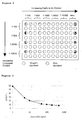
concerns Reaction Scheme 1, which is a general reaction scheme for the preparation of a hapten according to the present invention and its subsequent conjugation to either a carrier material or a labelling agent, to form an immunogen according to the present invention or a conjugate according to the present invention; - Figure 2 schematically illustrates a competitive ELISA titration assay on a microtiter plate;
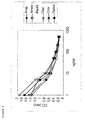
- Figure 3 is a calibration curve for a competitive ELISA; and
- Figure 4 is a calibration curve generated employing each of the beta lactam penicillins as a standard in an ELISA.
-
- 183mg (1.364mmole) of terephthalaldehyde was added under nitrogen to a solution of 500mg (1.24mmole) of ampicillin trihydrate in 10ml dimethylformamide at 20°C. The mixture was protected from light and stirred for 24 hours at room temperature. To confirm the reaction was complete, thin layer chromatography (TLC) (80% chloroform, 20% methanol v/v) was performed which showed no remaining starting materials and the formation of a new spot less polar than ampicillin. The hapten solution was stored under nitrogen at -20°C (stable for 1 year).
- The hapten solution prepared in Example 1 was added dropwise to a solution of 200mg of bovine serum albumin (BSA) in 10ml of 0.1M sodium acetate buffer, pH 4.1. The mixture was protected from light and stirred at room temperature for 4 hours. Reduction of the Schiff base was accomplished by addition of 30mg of sodium cyanoborohydride. The mixture was stirred for 90 mins and 5mg sodium borohydride was added. After stirring for a further 10 mins, the mixture was dialysed against phosphate buffered saline, pH 7.2, at 4°C for 24 hours (3 changes). The extent of conjugation of hapten to BSA was evaluated by MALDI MS, which revealed a conjugation ratio of 6.3 hapten molecules to one molecule of BSA.
- The conjugation of the hapten of Example 1 to HRP was performed in a similar manner to that described for the preparation of the immunogen. 40µl of the hapten solution prepared in Example 1 was added to 20mg HRP (horseradish peroxidase) in 2 ml of 0.1M sodium acetate buffer at pH4-5. The mixture was protected from light and stirred for 4 hours at room temperature. Sodium cyanoborohydride (0.7mg) was added and the mixture was stirred for 90 mins. The conjugate was purified using two PD-10 columns (Pharmacia Biotech) and dialysed overnight, protected from light, against double deionised water at 2-8°C.
- An aqueous solution of the immunogen of Example 2 was formulated with Freund's Complete Adjuvant (FCA) to form an emulsion consisting of 2mg/ml immunogen in 50%(v/v) FCA. Three sheep were immunised with this emulsion, 0.25ml being subcutaneously injected at each of 4 sites in the flank of each animal. Subsequent immunisations (boosts) contained 1mg/ml immunogen emulsified in 50%(v/v) Freund's Incomplete Adjuvant (FIA) and were administered in the same manner at monthly intervals for 1 year. Blood sampling took place 7 to 14 days after each boost. Each sample was processed to produce antiserum which was further purified by caprylic acid and ammonium sulfate precipitation to yield an immunoglobulin G (IgG) fraction. The IgG fraction was evaluated by competitive ELISA microtiter plate assay, as described below.
- A checkerboard titration was performed to determine optimum capture antibody and conjugate (ampicillin-HRP) concentrations. Serial dilutions of the IgG fraction of each antiserum to be tested (prepared in accordance with Example 4) were prepared in 10mM Tris, pH 8.5. The wells of an enhanced binding 96 well polystyrene microtiter plate were coated with these dilutions (as shown in Figure 2) by incubation at 37°C for 2 hours (125µl/well). The plate was washed 4 times with Tris buffered saline (pH7.4) containing Tween (Trade Mark) 20 (TBST) and tapped dry. 50µl of a 10ng/ml solution of ampicillin (mid assay range) in TBST was added to the appropriate wells (Figure 2). 50µl of TBST was added to the remaining (control) wells. Serial dilutions of conjugate (ampicillin-HRP) were prepared in Tris buffer at pH7.2 containing EDTA, D-mannitol, sucrose, thimerosal and BSA and 75µl of each dilution was added to the wells, as shown in Figure 2. The plate was incubated at 37°C for 2 hours. The excess unbound conjugate was removed by washing 6 times over a 10 minute period with TBST. 125µl of tetramethylbenzidine (TMB) substrate solution was added to each well of the plate, which was then incubated for 15 to 20 minutes, in the dark, at room temperature. The reaction was terminated by addition of 125µl 0.2M H2SO4 to each well. The absorbance was then measured at 450nm using a microtiter plate reader. A 1/1000 dilution of capture antibody in combination with a 1/15000 dilution of conjugate produced an acceptable top absorbance of 2.15 and a significant drop in absorbance between the 0 and 10ng/ml antigen concentrations of 80%.
- A microtiter plate was then coated with the IgG fraction of anti-ampicillin antiserum at the optimum coating dilution of 1/1000 in Tris, pH8.5, as outlined above. Standard solutions of ampicillin (sodium salt) were prepared in TBST and applied at the following concentrations: 0, 1, 5, 10, 50, 100, 200, 500ng/ml. The data generated resulted in the sensitive calibration curve illustrated in Figure 3 where B is the absorbance measured at 450nm for xng/ml ampicillin and B0 is the absorbance measured at 450nm for 0ng/ml ampicillin.
- Standard solutions of benzylpenicillin (penicillin G-PenG), amoxycillin (Amox), cloxacillin (Clox), dicloxacillin (Diclox) and oxacillin (Oxa) were prepared in TBST at 0, 1, 5, 10, 50, 100, 200 and 500ng/ml. Calibration curves were generated employing each of the β-lactam penicillin standards in the ampicillin immunoassay (Figure 4) and these were used to determine the cross-reactivity of the immunoassay with each penicillin. The results of this study are presented in Table 2, cross reactivity being calculated according to the following formula:
IC50 100 - The ampicillin immunoassay exhibited a high level of cross-reactivity with each of the β-lactam penicillins (Table 2). By high level of cross-reactivity is meant a cross-reactivity of greater than 35%, relative to 100% for ampicillin. The present immunoassay is most specific for ampicillin (100% CR), amoxycillin (87% CR) and benzylpenicillin (72% CR). Since the maximum recommended levels (MRL) for amoxycillin, ampicillin and benzylpenicillin in milk are each 4µg/kg and for oxacillin, cloxacillin and dicloxacillin are each 30µg/kg, the IC50 values determined for each of the β-lactam penicillins suggest that the ELISA described is suitable for use as a generic immunoassay for β-lactam antibiotics in compliance with EC regulations, 2377/90.
Cross reactivity of the ampicillin immunoassay with the β-lactam penicillins. β- Lactam Assay 1 Assay 2Assay 3Mean Results MRLs µg/kg IC50 ng/ml %CR IC50 ng/ml %CR IC50 ng/ml %CR IC50 ng/ml %CR Amp 1.7 100 2.5 100 2.5 100 2.2 100 4 Amox 1.8 94 3.0 83 3.0 83 2.6 87 4 PenG 2.7 63 3.2 78 3.4 74 3.1 72 4 Oxa 4.0 42.5 7.0 36 6.6 38 5.9 39 30 Cloxa 3.4 50 5.8 43 5.8 43 5 45 30 Dicloxa 3.8 45 6.0 42 4.9 51 4.9 46 30 - A range of milk samples were tested for the presence of β-lactam antibiotics using standard antimicrobial methods. These samples with assigned values were then tested using the present ELISA. Microtitre plates were coated and reagents were prepared as described in Example 5. The immunoassay procedure was adapted as follows. A 1% solution of milk buffer at pH7.4 was prepared by dissolving skimmed milk powder in distilled water and 25µl of this buffer was added to the wells of the plate. Following the addition of the milk buffer, ampicillin standards were loaded (25µl per well), followed by milk samples (25µl per well). Both standards and samples were run in duplicate. Conjugate (ampicillin-HRP) was then added (75µl per well), and the microtitre plate incubated for 2 hours at 37°C for the competition reaction to take place. After the competition reaction, the plate was washed and developed using the same procedure as described in Example 5. The results of the analysis are shown in Table 3, which shows the calculated concentrations for a range of milk samples tested by the generic β-lactam ELISA described. The β-lactam ELISA described was used to test milk samples known to be negative for the presence of β-lactams (samples 1-6), as well as confirmed β-lactam positive samples (samples 7 & 8). The ELISA results confirm that samples 1-6 are negative and that samples 7 and 8 are positive for β-lactam antibiotic content (see Table 3).
- The results of the ELISA, shown in Table 3, demonstrate that the immunoassay can be used successfully to screen milk samples for the presence of β-lactams. Negative samples tested by ELISA were confirmed as negative, and known positive samples were confirmed as positive.
Milk Sample Absorbance CV% Calculated Concn. (ng/ml) 1 1.906 2.2 Neg 2 1.826 1.7 Neg 3 2.083 1.6 Neg 4 1.857 0.1 Neg 5 1.754 3.1 Neg 6 1.719 0.9 Neg 7 0.718 9.0 126.19 8 0.914 7.8 66.79 - Faghihi Shirazi M., Hung TV., Womersley DM. 1991. Polyclonal antibodies reactive to some Beta-Lactam antibiotics. Australian Journal of Dairy Technology, 46(2), 88-90.
- De Haan P., de Jonge A.J.R, Verbrugge T. and Boorsma D.M., 1985. Three epitope specific monoclonal antibodies against the hapten penicillin. Int. Arch. Allergy Appl Immun. 76: 42-46.
- De Leuw P., Kapa G. and Petz M., 1997. Production and Characterisation of Multianalyte Antibodies against penicillins in egg yolk. J. of AOAC International 80(6): 1220-8.
- Nagakura N., Souma S., Shimizu T., Yanagihara Y., 1991. Anti-ampicillin monoclonal antibodies and their cross-reactivities to various β-lactams. J. of Antimicrobial Chemotherapy 28: 357-368.
- Usleber, E., Lorber, M. Straka M., Terplan G., Martlbauer E., 1994. Enzyme Immunoassay for the Detection of Isoxazolyl Penicillin Antibiotics in Milk. Analyst, 119, 2765-2768.
Claims (13)
- A hapten comprising a 6-[D-α-aminoacetamido] penicillin derivative crosslinked at the α-amino group with a substituted or unsubstituted phenyldicarbaldehyde selected from the group consisting of substituted or unsubstituted phthalaldehyde, substituted or unsubstituted isophthalaldehyde and substituted or unsubstituted terephthalaldehyde.
- A hapten according to claim 1, wherein the phenyldicarbaldehyde is a substituted or unsubstituted terephthalaldehyde, preferably an unsubstituted terephthalaldehyde.
- A process for preparing a hapten according to Claim 1 or 2, wherein a substituted or unsubstituted phenyldicarbaldehyde is reacted with a 6-[D-α-aminoacetamido]penicillin derivative in a suitable solvent.
- An immunogen comprising a hapten according to Claim 1 or 2 coupled to an antigenicity-conferring carrier material.
- An immunogen according to Claim 4, wherein the carrier material is a protein, a protein fragment, a synthetic polypeptide or a semi-synthetic polypeptide.
- Antibodies raised against an immunogen according to Claim 4 or 5, wherein the antibodies are capable of binding with at least one structural epitope of an intact β-lactam ring.
- Antibodies according to Claim 6, wherein the antibodies are fixed on a backing substrate.
- A process of preparing the antibodies according to Claim 6 or 7, the process comprising the steps of immunising an non-human animal by repeated administration of an immunogen according to Claim 4 or 5, and collecting the resulting serum antibodies from the immunised animal.
- A process according to Claim 8, wherein the process further comprises fixing said serum antibodies to a backing substrate.
- A conjugate comprising a hapten according to Claim 1 or 2 covalently bonded to a labelling agent which is detectable.
- A conjugate according to Claim 10, wherein the labelling agent is selected from an enzyme, which is preferably a peroxidase, most preferably horseradish peroxidase; a luminescent substance which is preferably selected from a bioluminescent, chemiluminescent or fluorescent substance; a radioactive substance; or a mixture thereof.
- A method for detecting, or determining the quantity of, β-lactam penicillins in a sample, the method comprising contacting the sample with a conjugate according to Claim 10 or 11, or a mixture thereof, and with antibodies according to Claim 6 or 7, or a mixture thereof; detecting, or determining the quantity of, bound conjugate; and deducing from a calibration curve the presence, or amount of, β-lactam penicillins in the sample.
- A kit for detecting, or determining the quantity of, β-lactam penicillins, the kit including a conjugate according to Claim 10 or 11, or a mixture thereof, and antibodies according to Claim 6 or 7, or a mixture thereof.
Priority Applications (1)
| Application Number | Priority Date | Filing Date | Title |
|---|---|---|---|
| EP02077943A EP1281971B1 (en) | 2001-08-02 | 2002-07-18 | Method and kit for quantifying beta-lactam penicillins |
Applications Claiming Priority (3)
| Application Number | Priority Date | Filing Date | Title |
|---|---|---|---|
| EP01202941 | 2001-08-02 | ||
| EP01202941 | 2001-08-02 | ||
| EP02077943A EP1281971B1 (en) | 2001-08-02 | 2002-07-18 | Method and kit for quantifying beta-lactam penicillins |
Publications (2)
| Publication Number | Publication Date |
|---|---|
| EP1281971A1 EP1281971A1 (en) | 2003-02-05 |
| EP1281971B1 true EP1281971B1 (en) | 2005-11-02 |
Family
ID=8180744
Family Applications (1)
| Application Number | Title | Priority Date | Filing Date |
|---|---|---|---|
| EP02077943A Expired - Lifetime EP1281971B1 (en) | 2001-08-02 | 2002-07-18 | Method and kit for quantifying beta-lactam penicillins |
Country Status (8)
| Country | Link |
|---|---|
| US (1) | US6960653B2 (en) |
| EP (1) | EP1281971B1 (en) |
| JP (1) | JP2003114227A (en) |
| CN (1) | CN1223596C (en) |
| AT (1) | ATE308757T1 (en) |
| DE (1) | DE60207016T2 (en) |
| ES (1) | ES2251559T3 (en) |
| HK (1) | HK1053352B (en) |
Cited By (1)
| Publication number | Priority date | Publication date | Assignee | Title |
|---|---|---|---|---|
| CN102876769A (en) * | 2011-07-12 | 2013-01-16 | 内蒙古蒙牛乳业(集团)股份有限公司 | Pretreatment method for detecting beta-lactam antibiotics in milk powder, and detection method using same |
Families Citing this family (14)
| Publication number | Priority date | Publication date | Assignee | Title |
|---|---|---|---|---|
| US7953779B1 (en) * | 2002-10-08 | 2011-05-31 | Trilogy Development Group, Inc. | Configuration representation and modeling using configuration spaces |
| IL163821A0 (en) * | 2004-08-31 | 2005-12-18 | Ravgalai Ltd Rapax Consortium | Software for management of legal motions Methods and kits for the detection of biotoxic andantibiotic residues |
| EP1712914A1 (en) * | 2005-04-14 | 2006-10-18 | Unisensor S.A. | In vitro process and kit for the simultaneous detection and identification of antibiotics belonging to different classes. |
| CN101153871B (en) * | 2007-10-31 | 2011-05-11 | 江南大学 | Synthesis method for generally used artificial antigen of Beta-lactam medicine |
| CN102455361B (en) * | 2010-10-21 | 2013-10-16 | 北京勤邦生物技术有限公司 | Kit and method for detecting beta-lactam antibiotics |
| CN103018449B (en) * | 2011-09-20 | 2016-02-24 | 北京勤邦生物技术有限公司 | Detect enzyme linked immunological kit and the method thereof of AMOZ |
| WO2013053953A1 (en) * | 2011-10-14 | 2013-04-18 | Université de Liège | Method for measuring beta-lactam antibiotics |
| CN103364546B (en) * | 2012-04-05 | 2016-03-30 | 北京勤邦生物技术有限公司 | A kind of kit and method detecting Furaxone metabolite |
| CN102827188B (en) * | 2012-08-25 | 2014-09-10 | 河北农业大学 | Universal hapten, artificial antigen, broad-spectrum monoclonal antibody of penicillin drugs, preparation method and application thereof |
| CN104614529B (en) * | 2015-01-14 | 2017-01-11 | 北京农学院 | Ampicillin penicilloic acid detection kit and detection method |
| CN106053819A (en) * | 2016-06-12 | 2016-10-26 | 深圳市计量质量检测研究院 | Tetrodotoxin immunochromatography detection card and application thereof |
| CN106526106A (en) * | 2016-12-07 | 2017-03-22 | 百奥森(江苏)食品安全科技有限公司 | Detection method for beta-lactam in milk products |
| BR112022009371A2 (en) * | 2019-11-15 | 2022-08-09 | Hoffmann La Roche | METHODS TO DETERMINE THE QUANTITY OR CONCENTRATION OF ONE OR MORE ANTIBIOTIC ANALYTES, SAMPLING TUBES, USES OF A NUCLEOPHILICAL DERIVATIZATION REAGENT AND ANTIBIOTIC ANALYTE |
| US20240110220A1 (en) * | 2021-01-26 | 2024-04-04 | Commissariat A L'energie Atomique Et Aux Energies Alternatives | Detecting beta-lactamase enzyme activity |
Family Cites Families (5)
| Publication number | Priority date | Publication date | Assignee | Title |
|---|---|---|---|---|
| US4347312A (en) | 1980-03-20 | 1982-08-31 | Research Triangle Institute | Detection of antibiotics in milk |
| US4596768A (en) * | 1983-11-02 | 1986-06-24 | Syntex (U.S.A.) Inc. | Antibodies for penicilloic acid their preparation and use |
| US5128240A (en) | 1984-12-20 | 1992-07-07 | International Immunoassay Laboratories, Inc. | Immunological method of measuring unstable analytes using cross-reactive antibodies |
| GB8722470D0 (en) | 1987-09-24 | 1987-10-28 | Blackmore D J | Production of anti-genic protein-hapten conjugates |
| DE4013004C2 (en) * | 1990-04-24 | 1993-10-21 | Elvira Schecklies | Method for the quantitative determination of low molecular weight organic substances |
-
2002
- 2002-07-18 DE DE60207016T patent/DE60207016T2/en not_active Expired - Lifetime
- 2002-07-18 ES ES02077943T patent/ES2251559T3/en not_active Expired - Lifetime
- 2002-07-18 EP EP02077943A patent/EP1281971B1/en not_active Expired - Lifetime
- 2002-07-18 AT AT02077943T patent/ATE308757T1/en not_active IP Right Cessation
- 2002-07-31 US US10/211,411 patent/US6960653B2/en not_active Expired - Lifetime
- 2002-08-02 JP JP2002226040A patent/JP2003114227A/en active Pending
- 2002-08-02 CN CNB021273383A patent/CN1223596C/en not_active Expired - Fee Related
-
2003
- 2003-07-24 HK HK03105332.3A patent/HK1053352B/en not_active IP Right Cessation
Non-Patent Citations (1)
| Title |
|---|
| DE HAAN P. ET AL, INT. ARCHS. ALLERGY APPL. IMMUN., vol. 76, 1985, pages 42 - 46 * |
Cited By (1)
| Publication number | Priority date | Publication date | Assignee | Title |
|---|---|---|---|---|
| CN102876769A (en) * | 2011-07-12 | 2013-01-16 | 内蒙古蒙牛乳业(集团)股份有限公司 | Pretreatment method for detecting beta-lactam antibiotics in milk powder, and detection method using same |
Also Published As
| Publication number | Publication date |
|---|---|
| DE60207016T2 (en) | 2006-08-03 |
| CN1223596C (en) | 2005-10-19 |
| HK1053352A1 (en) | 2003-10-17 |
| US6960653B2 (en) | 2005-11-01 |
| ATE308757T1 (en) | 2005-11-15 |
| US20030143653A1 (en) | 2003-07-31 |
| ES2251559T3 (en) | 2006-05-01 |
| JP2003114227A (en) | 2003-04-18 |
| CN1405563A (en) | 2003-03-26 |
| DE60207016D1 (en) | 2005-12-08 |
| HK1053352B (en) | 2006-05-04 |
| EP1281971A1 (en) | 2003-02-05 |
Similar Documents
| Publication | Publication Date | Title |
|---|---|---|
| US6960653B2 (en) | Method and kit for detecting, or determining the quantity of, beta-lactam penicillins | |
| US7371829B2 (en) | Haptens, immunogens, antibodies and conjugates to ketamine and its metabolites | |
| EP0279213B1 (en) | Fluorescence polarization immunoassay for amphetamine/methamphetamine | |
| US20090280499A1 (en) | Method and kit for detecting, or determining 3,4- methylenedioxymethamphetamine | |
| Bremus et al. | A broadly applicable approach to prepare monoclonal anti-cephalosporin antibodies for immunochemical residue determination in milk | |
| US7115718B2 (en) | Haptens, immunogens, antibodies and conjugates to 2-oxo-3-hydroxy-LSD | |
| US10620225B2 (en) | Detection of polymyxins | |
| WO2010101777A1 (en) | Detection of melamine | |
| US9435817B2 (en) | Detection of synthetic cannabinoids | |
| EP2440938B1 (en) | mCPP IMMUNOASSAY | |
| US7026134B2 (en) | Haptens, immunogens and antibodies to oxycodone and its metabolites | |
| Grubelnik et al. | Highly sensitive enzyme immunoassays for the detection of β-lactam antibiotics | |
| JP2007063180A (en) | Method of detecting new quinolone antibacterial agent | |
| EP2698383A1 (en) | Detection of synthetic Cannabinoids | |
| US8852953B2 (en) | Immunodetection and quantification of pyrazolopyrimidine sedatives | |
| Lata et al. | Development of competitive indirect enzyme-linked immunosorbent assay for detection of cephalexin residues in milk | |
| HK1053652A (en) | Haptens, immunogens, antibodies and conjugates for 2-oxo-3-hydroxy lsd | |
| HK1053641A (en) | Haptens, immunogens, antibodies and conjugates to ketamine and its metabolites |
Legal Events
| Date | Code | Title | Description |
|---|---|---|---|
| PUAI | Public reference made under article 153(3) epc to a published international application that has entered the european phase |
Free format text: ORIGINAL CODE: 0009012 |
|
| AK | Designated contracting states |
Designated state(s): AT BE BG CH CY CZ DE DK EE ES FI FR GB GR IE IT LI LU MC NL PT SE SK TR |
|
| AX | Request for extension of the european patent |
Extension state: AL LT LV MK RO SI |
|
| 17P | Request for examination filed |
Effective date: 20030805 |
|
| AKX | Designation fees paid |
Designated state(s): AT BE BG CH CY CZ DE DK EE ES FI FR GB GR IE IT LI LU MC NL PT SE SK TR |
|
| AXX | Extension fees paid |
Extension state: MK Payment date: 20030805 Extension state: RO Payment date: 20030805 Extension state: LV Payment date: 20030805 Extension state: LT Payment date: 20030805 Extension state: SI Payment date: 20030805 Extension state: AL Payment date: 20030805 |
|
| DAX | Request for extension of the european patent (deleted) | ||
| 17Q | First examination report despatched |
Effective date: 20040119 |
|
| GRAP | Despatch of communication of intention to grant a patent |
Free format text: ORIGINAL CODE: EPIDOSNIGR1 |
|
| GRAS | Grant fee paid |
Free format text: ORIGINAL CODE: EPIDOSNIGR3 |
|
| GRAA | (expected) grant |
Free format text: ORIGINAL CODE: 0009210 |
|
| AK | Designated contracting states |
Kind code of ref document: B1 Designated state(s): AT BE BG CH CY CZ DE DK EE ES FI FR GB GR IE IT LI LU MC NL PT SE SK TR |
|
| PG25 | Lapsed in a contracting state [announced via postgrant information from national office to epo] |
Ref country code: SK Free format text: LAPSE BECAUSE OF FAILURE TO SUBMIT A TRANSLATION OF THE DESCRIPTION OR TO PAY THE FEE WITHIN THE PRESCRIBED TIME-LIMIT Effective date: 20051102 Ref country code: CZ Free format text: LAPSE BECAUSE OF FAILURE TO SUBMIT A TRANSLATION OF THE DESCRIPTION OR TO PAY THE FEE WITHIN THE PRESCRIBED TIME-LIMIT Effective date: 20051102 Ref country code: BE Free format text: LAPSE BECAUSE OF FAILURE TO SUBMIT A TRANSLATION OF THE DESCRIPTION OR TO PAY THE FEE WITHIN THE PRESCRIBED TIME-LIMIT Effective date: 20051102 Ref country code: AT Free format text: LAPSE BECAUSE OF FAILURE TO SUBMIT A TRANSLATION OF THE DESCRIPTION OR TO PAY THE FEE WITHIN THE PRESCRIBED TIME-LIMIT Effective date: 20051102 Ref country code: CH Free format text: LAPSE BECAUSE OF FAILURE TO SUBMIT A TRANSLATION OF THE DESCRIPTION OR TO PAY THE FEE WITHIN THE PRESCRIBED TIME-LIMIT Effective date: 20051102 Ref country code: FI Free format text: LAPSE BECAUSE OF FAILURE TO SUBMIT A TRANSLATION OF THE DESCRIPTION OR TO PAY THE FEE WITHIN THE PRESCRIBED TIME-LIMIT Effective date: 20051102 Ref country code: LI Free format text: LAPSE BECAUSE OF FAILURE TO SUBMIT A TRANSLATION OF THE DESCRIPTION OR TO PAY THE FEE WITHIN THE PRESCRIBED TIME-LIMIT Effective date: 20051102 |
|
| REG | Reference to a national code |
Ref country code: GB Ref legal event code: FG4D |
|
| REG | Reference to a national code |
Ref country code: CH Ref legal event code: EP |
|
| REG | Reference to a national code |
Ref country code: GB Ref legal event code: 732E |
|
| REF | Corresponds to: |
Ref document number: 60207016 Country of ref document: DE Date of ref document: 20051208 Kind code of ref document: P |
|
| PG25 | Lapsed in a contracting state [announced via postgrant information from national office to epo] |
Ref country code: DK Free format text: LAPSE BECAUSE OF FAILURE TO SUBMIT A TRANSLATION OF THE DESCRIPTION OR TO PAY THE FEE WITHIN THE PRESCRIBED TIME-LIMIT Effective date: 20060202 Ref country code: GR Free format text: LAPSE BECAUSE OF FAILURE TO SUBMIT A TRANSLATION OF THE DESCRIPTION OR TO PAY THE FEE WITHIN THE PRESCRIBED TIME-LIMIT Effective date: 20060202 Ref country code: BG Free format text: LAPSE BECAUSE OF FAILURE TO SUBMIT A TRANSLATION OF THE DESCRIPTION OR TO PAY THE FEE WITHIN THE PRESCRIBED TIME-LIMIT Effective date: 20060202 Ref country code: SE Free format text: LAPSE BECAUSE OF FAILURE TO SUBMIT A TRANSLATION OF THE DESCRIPTION OR TO PAY THE FEE WITHIN THE PRESCRIBED TIME-LIMIT Effective date: 20060202 |
|
| PG25 | Lapsed in a contracting state [announced via postgrant information from national office to epo] |
Ref country code: PT Free format text: LAPSE BECAUSE OF FAILURE TO SUBMIT A TRANSLATION OF THE DESCRIPTION OR TO PAY THE FEE WITHIN THE PRESCRIBED TIME-LIMIT Effective date: 20060403 |
|
| REG | Reference to a national code |
Ref country code: ES Ref legal event code: FG2A Ref document number: 2251559 Country of ref document: ES Kind code of ref document: T3 |
|
| REG | Reference to a national code |
Ref country code: HK Ref legal event code: GR Ref document number: 1053352 Country of ref document: HK |
|
| REG | Reference to a national code |
Ref country code: CH Ref legal event code: PL |
|
| ET | Fr: translation filed | ||
| PG25 | Lapsed in a contracting state [announced via postgrant information from national office to epo] |
Ref country code: MC Free format text: LAPSE BECAUSE OF NON-PAYMENT OF DUE FEES Effective date: 20060731 |
|
| PLBE | No opposition filed within time limit |
Free format text: ORIGINAL CODE: 0009261 |
|
| STAA | Information on the status of an ep patent application or granted ep patent |
Free format text: STATUS: NO OPPOSITION FILED WITHIN TIME LIMIT |
|
| 26N | No opposition filed |
Effective date: 20060803 |
|
| PG25 | Lapsed in a contracting state [announced via postgrant information from national office to epo] |
Ref country code: EE Free format text: LAPSE BECAUSE OF FAILURE TO SUBMIT A TRANSLATION OF THE DESCRIPTION OR TO PAY THE FEE WITHIN THE PRESCRIBED TIME-LIMIT Effective date: 20051102 |
|
| PG25 | Lapsed in a contracting state [announced via postgrant information from national office to epo] |
Ref country code: LU Free format text: LAPSE BECAUSE OF NON-PAYMENT OF DUE FEES Effective date: 20060718 Ref country code: TR Free format text: LAPSE BECAUSE OF FAILURE TO SUBMIT A TRANSLATION OF THE DESCRIPTION OR TO PAY THE FEE WITHIN THE PRESCRIBED TIME-LIMIT Effective date: 20051102 |
|
| PG25 | Lapsed in a contracting state [announced via postgrant information from national office to epo] |
Ref country code: CY Free format text: LAPSE BECAUSE OF FAILURE TO SUBMIT A TRANSLATION OF THE DESCRIPTION OR TO PAY THE FEE WITHIN THE PRESCRIBED TIME-LIMIT Effective date: 20051102 |
|
| REG | Reference to a national code |
Ref country code: GB Ref legal event code: 732E Free format text: REGISTERED BETWEEN 20100415 AND 20100421 |
|
| REG | Reference to a national code |
Ref country code: FR Ref legal event code: PLFP Year of fee payment: 15 |
|
| PGFP | Annual fee paid to national office [announced via postgrant information from national office to epo] |
Ref country code: NL Payment date: 20161223 Year of fee payment: 15 |
|
| PGFP | Annual fee paid to national office [announced via postgrant information from national office to epo] |
Ref country code: ES Payment date: 20161025 Year of fee payment: 15 |
|
| REG | Reference to a national code |
Ref country code: FR Ref legal event code: PLFP Year of fee payment: 16 |
|
| REG | Reference to a national code |
Ref country code: NL Ref legal event code: MM Effective date: 20170801 |
|
| PG25 | Lapsed in a contracting state [announced via postgrant information from national office to epo] |
Ref country code: NL Free format text: LAPSE BECAUSE OF NON-PAYMENT OF DUE FEES Effective date: 20170801 |
|
| REG | Reference to a national code |
Ref country code: FR Ref legal event code: PLFP Year of fee payment: 17 |
|
| REG | Reference to a national code |
Ref country code: ES Ref legal event code: FD2A Effective date: 20181030 |
|
| PGFP | Annual fee paid to national office [announced via postgrant information from national office to epo] |
Ref country code: PL Payment date: 20180918 Year of fee payment: 5 Ref country code: FR Payment date: 20180723 Year of fee payment: 17 Ref country code: IT Payment date: 20180717 Year of fee payment: 17 |
|
| PG25 | Lapsed in a contracting state [announced via postgrant information from national office to epo] |
Ref country code: ES Free format text: LAPSE BECAUSE OF NON-PAYMENT OF DUE FEES Effective date: 20170719 |
|
| REG | Reference to a national code |
Ref country code: DE Ref legal event code: R119 Ref document number: 60207016 Country of ref document: DE |
|
| PG25 | Lapsed in a contracting state [announced via postgrant information from national office to epo] |
Ref country code: DE Free format text: LAPSE BECAUSE OF NON-PAYMENT OF DUE FEES Effective date: 20200201 |
|
| PG25 | Lapsed in a contracting state [announced via postgrant information from national office to epo] |
Ref country code: FR Free format text: LAPSE BECAUSE OF NON-PAYMENT OF DUE FEES Effective date: 20190731 |
|
| PG25 | Lapsed in a contracting state [announced via postgrant information from national office to epo] |
Ref country code: IT Free format text: LAPSE BECAUSE OF NON-PAYMENT OF DUE FEES Effective date: 20190718 |
|
| REG | Reference to a national code |
Ref country code: GB Ref legal event code: 732E Free format text: REGISTERED BETWEEN 20210708 AND 20210714 |
|
| PGFP | Annual fee paid to national office [announced via postgrant information from national office to epo] |
Ref country code: IE Payment date: 20210716 Year of fee payment: 20 |
|
| PGFP | Annual fee paid to national office [announced via postgrant information from national office to epo] |
Ref country code: GB Payment date: 20210727 Year of fee payment: 20 |
|
| REG | Reference to a national code |
Ref country code: GB Ref legal event code: PE20 Expiry date: 20220717 |
|
| REG | Reference to a national code |
Ref country code: IE Ref legal event code: MK9A |
|
| PG25 | Lapsed in a contracting state [announced via postgrant information from national office to epo] |
Ref country code: IE Free format text: LAPSE BECAUSE OF EXPIRATION OF PROTECTION Effective date: 20220718 Ref country code: GB Free format text: LAPSE BECAUSE OF EXPIRATION OF PROTECTION Effective date: 20220717 |