EP1280318A2 - Method of forming a local mobility domain and a local mobility agent and apparatus therefor - Google Patents
Method of forming a local mobility domain and a local mobility agent and apparatus therefor Download PDFInfo
- Publication number
- EP1280318A2 EP1280318A2 EP02255262A EP02255262A EP1280318A2 EP 1280318 A2 EP1280318 A2 EP 1280318A2 EP 02255262 A EP02255262 A EP 02255262A EP 02255262 A EP02255262 A EP 02255262A EP 1280318 A2 EP1280318 A2 EP 1280318A2
- Authority
- EP
- European Patent Office
- Prior art keywords
- lma
- router
- lmd
- list
- establishing
- Prior art date
- Legal status (The legal status is an assumption and is not a legal conclusion. Google has not performed a legal analysis and makes no representation as to the accuracy of the status listed.)
- Granted
Links
Images



Classifications
-
- H—ELECTRICITY
- H04—ELECTRIC COMMUNICATION TECHNIQUE
- H04L—TRANSMISSION OF DIGITAL INFORMATION, e.g. TELEGRAPHIC COMMUNICATION
- H04L12/00—Data switching networks
- H04L12/28—Data switching networks characterised by path configuration, e.g. LAN [Local Area Networks] or WAN [Wide Area Networks]
-
- H—ELECTRICITY
- H04—ELECTRIC COMMUNICATION TECHNIQUE
- H04L—TRANSMISSION OF DIGITAL INFORMATION, e.g. TELEGRAPHIC COMMUNICATION
- H04L45/00—Routing or path finding of packets in data switching networks
- H04L45/20—Hop count for routing purposes, e.g. TTL
-
- H—ELECTRICITY
- H04—ELECTRIC COMMUNICATION TECHNIQUE
- H04L—TRANSMISSION OF DIGITAL INFORMATION, e.g. TELEGRAPHIC COMMUNICATION
- H04L45/00—Routing or path finding of packets in data switching networks
- H04L45/46—Cluster building
-
- H—ELECTRICITY
- H04—ELECTRIC COMMUNICATION TECHNIQUE
- H04L—TRANSMISSION OF DIGITAL INFORMATION, e.g. TELEGRAPHIC COMMUNICATION
- H04L61/00—Network arrangements, protocols or services for addressing or naming
-
- H—ELECTRICITY
- H04—ELECTRIC COMMUNICATION TECHNIQUE
- H04L—TRANSMISSION OF DIGITAL INFORMATION, e.g. TELEGRAPHIC COMMUNICATION
- H04L61/00—Network arrangements, protocols or services for addressing or naming
- H04L61/50—Address allocation
-
- H—ELECTRICITY
- H04—ELECTRIC COMMUNICATION TECHNIQUE
- H04W—WIRELESS COMMUNICATION NETWORKS
- H04W40/00—Communication routing or communication path finding
- H04W40/34—Modification of an existing route
- H04W40/36—Modification of an existing route due to handover
-
- H—ELECTRICITY
- H04—ELECTRIC COMMUNICATION TECHNIQUE
- H04W—WIRELESS COMMUNICATION NETWORKS
- H04W8/00—Network data management
- H04W8/02—Processing of mobility data, e.g. registration information at HLR [Home Location Register] or VLR [Visitor Location Register]; Transfer of mobility data, e.g. between HLR, VLR or external networks
- H04W8/06—Registration at serving network Location Register, VLR or user mobility server
-
- H—ELECTRICITY
- H04—ELECTRIC COMMUNICATION TECHNIQUE
- H04W—WIRELESS COMMUNICATION NETWORKS
- H04W40/00—Communication routing or communication path finding
- H04W40/24—Connectivity information management, e.g. connectivity discovery or connectivity update
- H04W40/246—Connectivity information discovery
-
- H—ELECTRICITY
- H04—ELECTRIC COMMUNICATION TECHNIQUE
- H04W—WIRELESS COMMUNICATION NETWORKS
- H04W80/00—Wireless network protocols or protocol adaptations to wireless operation
- H04W80/04—Network layer protocols, e.g. mobile IP [Internet Protocol]
-
- H—ELECTRICITY
- H04—ELECTRIC COMMUNICATION TECHNIQUE
- H04W—WIRELESS COMMUNICATION NETWORKS
- H04W88/00—Devices specially adapted for wireless communication networks, e.g. terminals, base stations or access point devices
- H04W88/005—Data network PoA devices
Definitions
- the present invention relates to a method of forming a local mobility domain (LMD) and a local mobility agent (LMA), and more particularly, to a method of forming an LMD and an LMA based on Mobile IP and an apparatus thereof.
- LMD local mobility domain
- LMA local mobility agent
- IPv6 a new protocol, known as IPv6, has been defined.
- Mobile terminals having an access to the Internet under the IPv6 contain fixed home addresses and home agents.
- the mobile terminal moves to a network other than the home network, the mobile terminal receives a care-of-address, which represents a new location of the mobile terminal.
- a mobile node reports a care-of-address (COA) to a home agent (HA).
- COA care-of-address
- HA home agent
- AR abbreviations AR, CN, MN, BU, and COA denote an access router, a correspondent node, a mobile node, a binding update, and a care-of-address, respectively.
- the network is divided into LMDs, each domain containing an LMA, to operate as local HAs.
- the MN in a predetermined LMD receives a regional care-of-address (RCOA) and a local care-of-address (LCOA).
- RCOA regional care-of-address
- LCOA local care-of-address
- the RCOA represents the location of the LMA in the LMD
- the LCOA represents the present location of the MN.
- an MN registers a present location and the location of an LMA to an LMA and an HA, respectively.
- the HA sends the data to the present LMA of the MN and the LMA transfers the data to the MN as shown in FIG. 4.
- the MN registers the present location to the LMA as shown in FIG. 5.
- the data transferred to the MN are transferred through the HA, the LMA, and a new access router (AR), as shown in FIG. 6.
- abbreviations RCOA and LCOA denote a regional care-of-address and a local care-of-address, respectively, while the other abbreviations are the same as those in FIGS. 1 and 2.
- the conventional technology requires that a network manager should establish the LMD and LMA. Moreover, it is difficult to correct the LMD according to changes of the networks, and the LMA may become the point of failure for the entire network.
- a method of forming an LMD comprising the steps of: (a) establishing a hop-count from a center router (CR) for a predetermined value; (b) generating a list of access routers (ARs) within a domain defined by the established hop-count while surrounding a predetermined AR; and (c) establishing the ARs included in the list as an LMD, which has the predetermined AR as the CR.
- a method of forming an LMA comprising the steps of: (a) establishing an LMD; and (b) establishing an AR to which an MN has a first access as an LMA to register a local care-of-address (LCOA) and a regional care-of-address (RCOA) to a home agent (HA) and the LMA, when the MN has accessed a predetermined LMD.
- the method of forming the LMA further includes the step of (c) determining the existence of the LMA in an LMD list of the AR, which the MN has newly accessed, to register a new LCOA to the LMA, when the MN moves.
- step (c) further includes the step of establishing the AR, which the MN has newly accessed, as a new LMA to register new LCOA and RCOA to the HA and the new LMA, respectively, when the LMA is absent from the LMD list of the AR, which the MN has newly accessed.
- a router comprising: a hop-count establishment unit for receiving and storing a hop-count; an LMD list generation unit for establishing routers within a domain, which has a hop-count less than a predetermined value from a router, as an LMD to generate and store a list of the routers within the LMD; and an address management unit for receiving and storing an RCOA and an LCOA from an MN in the case that the router is established as the LMA.
- an MN comprising: an LMA control unit for deciding whether to establish a present AR to which an MN has an access as an LMA and for receiving and storing a list of the AR established as the LMA; an address register unit for registering an RCOA and an LCOA to an HA and the LMA, respectively; and an LMA service time adjustment unit for establishing the present AR to which the MN has an access as a new LMA when a binding lifetime has passed and a number of BUMs exceeds a predetermined value.
- an apparatus for establishing an LMA comprising a router and an MN.
- the router includes: a hop-count establishment unit for receiving and storing a hop-count; a LMD list generation unit for establishing routers within a domain, which has a hop-count less than a predetermined value from a router, as an LMD to generate and store a list of the routers within the LMD; and an address management unit for receiving and storing an RCOA and an LCOA from the MN in the case that the router is established as the LMA.
- the MN includes: an LMA control unit for deciding whether to establish the present router to which the MN has an access as the LMA and for receiving and storing a list of the AR established as the LMA; an address register unit for registering the RCOA and the LCOA to an HA and the LMA, respectively; and an LMA service time adjustment unit for establishing the present AR to which the MN has an access as a new LMA when a binding lifetime has passed and a number of BUMs exceeds a predetermined value.
- the present invention thus provides a method and apparatus for establishing a local mobility domain (LMD) and a local mobility agent (LMA) according to a movement of a mobile node (MN).
- LMD local mobility domain
- LMA local mobility agent
- abbreviations AR, CN, MN, BU, COA, RCOA, LCOA, and LMD denote an access router, a correspondent node, a mobile node, a binding update, a care-of-address, a regional care-of-address, a local care-of-address, and a local mobility domain, respectively.
- FIG. 7 illustrates an LMD according to the present invention, which is constituted by a center router and routers within a short distance. The distance between the routers is measured by hop-count.
- a hop is a path for transferring a data packet from a router to the other router in a packet interchange type network.
- the hop-count for transferring one packet to a target position is stored in a packet header, in a network such as the Internet using Transport Communication Protocol/Internet Protocol (TCP/IP).
- TCP/IP Transport Communication Protocol/Internet Protocol
- LMD is represented as LMD(CR, N) in the present specification, wherein, CR stands for a center router and N stands for a natural number. Accordingly, the LMD(CR, N) stands for an assemblage of routers that exist within the hop-count of a natural number N from a center router. For example, as shown in FIG. 7, an LMD(AR1, 2), which is represented as a circle, surrounds an AR1.
- the CRs of each LMD become the LMAs of the LMDs.
- the AR1 in the LMD(AR1, 2) becomes the LMA as shown in FIG. 7.
- a network manager establishes the natural number N to decide the size of the LMD.
- the network manager may change the natural number N according to the state of the network to vary the size of the LMD.
- the natural number N is determined, the LMD is firmly fixed by the CR.
- Each AR makes LMD lists, which specify the routers within a distance defined by the natural number N from each AR.
- the LMD list is the list of the routers in the LMD of an AR, and each router has a different LMD list.
- FIG. 8 illustrates a method for constituting an LMD and an LMA when the MN has first accessed a network according to the present invention.
- the AR to which the MN has had a first access becomes a first LMA of the MN.
- an LMD is constituted according to the first LMA.
- the MN registers an RCOA and an LCOA to a home agent (HA) and the LMA, respectively.
- HA home agent
- data targeting the MN is transferred through the HA and the LMA.
- FIG. 9 illustrates a method for constituting an LMD and an LMA when the MN moves within an LMD according to the present invention.
- the MN checks the existence of the present LMA in the LMD list of the new AR.
- the existence of the LMA in the LMD list of the new AR means that the MN has moved within the LMD, therefore the MN registers a new LCOA to the present LMA.
- FIG. 10 illustrates a method for constituting an LMD and an LMA when the MN moves out of an LMD according to the present invention.
- the MN checks the existence of the present LMA in the LMD list of the new AR.
- the absence of the LMA from the LMD list of the new AR means that the MN has moved outside of the LMD. Consequently, the new AR becomes a new LMA, and the MN registers new RCOA and LCOA to the HA and the new LMA, respectively, as in the case where the MN had the first access to the network.
- FIG. 11 is a flowchart for explaining a method of constituting an LMD and an LMA according to the present invention.
- a hop-count for LMDs is established by a predetermined value N, in step 1101.
- the lists of each AR that have the hop-count less than the value N from each AR are generated and stored to establish LMDs according to the lists, in step 1102.
- the AR to which the MN has had a first access is established as an LMA to register an RCOA and an LCOA to an HA and the LMA, respectively, in step 1104. Then, the movement of the MN is determined, in step 1105.
- step 1106 the existence of the existing LMA is checked in a new AR, in step 1106.
- the MN registers a new LCOA to the present LMA, in step 1108.
- the MN establishes the new AR as a new LMA, in step 1107, and registers new RCOA and LCOA to the HA and the new LMA, respectively.
- step 1105 is repeated. In the case that the MN has not moved, step 1105 is repeated.
- FIG. 12 illustrates a device for establishing an LMA according to the present invention.
- the device includes a router 1201 having a hop-count establishment unit 12011, an LMD list generation unit 12012, and an address management unit 12013, and an MN 1202 having an LMA control unit 12021, an address register unit 12022, and an LMA service time adjustment unit 12023.
- the hop-count establishment unit 12011 receives and stores variations, which determine the size of an LMD, from a network manager.
- the LMD list generation unit 12012 searches ARs within a domain defined by a hop-count of the hop-count establishment unit 12011 to make and store the list of the ARs.
- the address management unit 12013 receives and stores an RCOA and an LCOA from the MN 1202 to transfer the RCOA to an HA.
- the LMA control unit 12021 When the MN 1202 is first introduced to a network, the LMA control unit 12021 establishes the AR to which the MN 1202 has a first access as an LMA. After the MN 1202 has moved, the LMA control unit 12021 determines the existence of the existing LMA in the LMD list of a new AR. In the case that the LMA exists in the LMD list of the new AR, the LMA control unit 12021 retains the existing LMA as the new LMA. In other case, the LMA control unit 12021 establishes the new AR as the new LMA.
- the address register unit 12022 receives new RCOA and LCOA to transfer and register to the LMA and the HA.
- the address register unit 12022 transfers and registers the LCOA to the LMA while storing the RCOA and LCOA.
- the LMA service time adjustment unit 12023 establishes the present AR as a new LMA.
- FIG. 13 illustrates an operation of the LMA service time adjustment unit 12023 according to the present invention.
- FIG. 13 illustrates a flowchart for explaining a method for re-establishing an LMA due to a local mobility management time-out according to the present invention.
- a service time can be limited when the MN receives a service by using the LMA.
- the service time is limited in order to reduce the frequency of needless use of the LMA by limiting a register time of the LMA.
- the service time is checked by counting a time limit field of a binding update and a number of BUMs that are transferred to the LMA. After transferring a predetermined number of BUMs, the present AR becomes a new LMA and the MN registers a new address to the HA.
- a binding lifetime is checked to determine whether the binding lifetime has surpassed a predetermined value, in step 1301.
- the number of BUMs is determined whether to be over a predetermined binding limit, in step 1302.
- the MN registers a new CR and registers a present address to an HA while initializing the number of the BUMs as zero.
- the binding lifetime has been equal to or less than the predetermined value, in step 1301, the above procedures are not operated.
- the MN transfers the BUM, in step 1304.
- the above-described invention may be organized into a program recorded on media, so as to be operated in a common digital computer.
- the examples of the media include magnetic recording media, i.e., ROMs, floppy disks, and hard disks, optical recording media, i.e., CD-ROMs, and DVDs, and carrier waves, i.e., transfer through the Internet.
- the present invention does not require manual establishment of an LMD and an LMA in a localized mobility management and actively varies the LMD according to changes in the network to improve convenience and efficiency in a network management.
- the AR is used as an LMA to distribute load on the network.
- a time limit for receiving service from the LMA is set in the MN. This is realized in the MN without affecting the protocol to improve the entire performance of the network as well as the performance of the AR.
Landscapes
- Engineering & Computer Science (AREA)
- Computer Networks & Wireless Communication (AREA)
- Signal Processing (AREA)
- Databases & Information Systems (AREA)
- Mobile Radio Communication Systems (AREA)
- Data Exchanges In Wide-Area Networks (AREA)
Abstract
Description
- The present invention relates to a method of forming a local mobility domain (LMD) and a local mobility agent (LMA), and more particularly, to a method of forming an LMD and an LMA based on Mobile IP and an apparatus thereof.
- As the Internet has grown and as users have become more interested in mobile Internet access, the world is running out of IP addresses for network devices. With the drawbacks of the existing IPv4 becoming more evident, a new protocol, known as IPv6, has been defined.
- Mobile terminals having an access to the Internet under the IPv6 contain fixed home addresses and home agents. When the mobile terminal moves to a network other than the home network, the mobile terminal receives a care-of-address, which represents a new location of the mobile terminal.
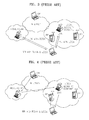
- Referring to FIGS. 1 and 2, a mobile node (MN) reports a care-of-address (COA) to a home agent (HA). In the case that data targeting the MN is input to the home network of the MN, the HA receives the data to transfer it to the COA of the MN. In FIG. 1, abbreviations AR, CN, MN, BU, and COA denote an access router, a correspondent node, a mobile node, a binding update, and a care-of-address, respectively.
- In the case that the home network is far from a present network, it is inconvenient to register every movement of the MN to the HA. In this case, the network is divided into LMDs, each domain containing an LMA, to operate as local HAs. The MN in a predetermined LMD receives a regional care-of-address (RCOA) and a local care-of-address (LCOA). In this case, the RCOA represents the location of the LMA in the LMD, and the LCOA represents the present location of the MN.
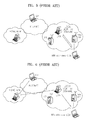
- With reference to FIGS. 3 through 6, an MN registers a present location and the location of an LMA to an LMA and an HA, respectively. When data targeting the MN is input to a home network, the HA sends the data to the present LMA of the MN and the LMA transfers the data to the MN as shown in FIG. 4. If the MN moves within the LMD, the MN registers the present location to the LMA as shown in FIG. 5. The data transferred to the MN are transferred through the HA, the LMA, and a new access router (AR), as shown in FIG. 6. In this case, abbreviations RCOA and LCOA denote a regional care-of-address and a local care-of-address, respectively, while the other abbreviations are the same as those in FIGS. 1 and 2.
- The conventional technology requires that a network manager should establish the LMD and LMA. Moreover, it is difficult to correct the LMD according to changes of the networks, and the LMA may become the point of failure for the entire network.
- According to the invention, there is provided a method of forming an LMD comprising the steps of: (a) establishing a hop-count from a center router (CR) for a predetermined value; (b) generating a list of access routers (ARs) within a domain defined by the established hop-count while surrounding a predetermined AR; and (c) establishing the ARs included in the list as an LMD, which has the predetermined AR as the CR.
- According to another aspect of the invention, there is provided a method of forming an LMA comprising the steps of: (a) establishing an LMD; and (b) establishing an AR to which an MN has a first access as an LMA to register a local care-of-address (LCOA) and a regional care-of-address (RCOA) to a home agent (HA) and the LMA, when the MN has accessed a predetermined LMD. It is preferable that the method of forming the LMA further includes the step of (c) determining the existence of the LMA in an LMD list of the AR, which the MN has newly accessed, to register a new LCOA to the LMA, when the MN moves. Here, step (c) further includes the step of establishing the AR, which the MN has newly accessed, as a new LMA to register new LCOA and RCOA to the HA and the new LMA, respectively, when the LMA is absent from the LMD list of the AR, which the MN has newly accessed.
- According to yet another aspect of the invention, there is provided a router comprising: a hop-count establishment unit for receiving and storing a hop-count; an LMD list generation unit for establishing routers within a domain, which has a hop-count less than a predetermined value from a router, as an LMD to generate and store a list of the routers within the LMD; and an address management unit for receiving and storing an RCOA and an LCOA from an MN in the case that the router is established as the LMA.
- According to yet another aspect of the invention, there is provided an MN comprising: an LMA control unit for deciding whether to establish a present AR to which an MN has an access as an LMA and for receiving and storing a list of the AR established as the LMA; an address register unit for registering an RCOA and an LCOA to an HA and the LMA, respectively; and an LMA service time adjustment unit for establishing the present AR to which the MN has an access as a new LMA when a binding lifetime has passed and a number of BUMs exceeds a predetermined value.
- According to yet another aspect of the invention, there is provided an apparatus for establishing an LMA comprising a router and an MN. Here, the router includes: a hop-count establishment unit for receiving and storing a hop-count; a LMD list generation unit for establishing routers within a domain, which has a hop-count less than a predetermined value from a router, as an LMD to generate and store a list of the routers within the LMD; and an address management unit for receiving and storing an RCOA and an LCOA from the MN in the case that the router is established as the LMA. The MN includes: an LMA control unit for deciding whether to establish the present router to which the MN has an access as the LMA and for receiving and storing a list of the AR established as the LMA; an address register unit for registering the RCOA and the LCOA to an HA and the LMA, respectively; and an LMA service time adjustment unit for establishing the present AR to which the MN has an access as a new LMA when a binding lifetime has passed and a number of BUMs exceeds a predetermined value.
- The present invention thus provides a method and apparatus for establishing a local mobility domain (LMD) and a local mobility agent (LMA) according to a movement of a mobile node (MN).
- The advantages of the present invention will become more apparent by describing in detail preferred embodiments thereof with reference to the attached drawings in which:
- FIG. 1 illustrates a method for registering a mobile terminal using IPv6;
- FIG. 2 illustrates a method for transferring data when using a mobile terminal;
- FIG. 3 illustrates a method for registering a localized mobility management;
- FIG. 4 illustrates a method for transferring localized mobility management data;
- FIG. 5 illustrates a method for registering the localized mobility management in moving;
- FIG. 6 illustrates a method for transferring the localized mobility management data in moving;
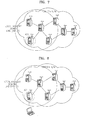
- FIG. 7 illustrates a local mobility domain (LMD) according to the present invention;
- FIG. 8 illustrates a method for constituting an LMD and a local mobility agent (LMA) when a mobile node (MN) has first accessed a network according to the present invention;
- FIG. 9 illustrates a method for constituting an LMD and an LMA when the MN moves within an LMD according to the present invention;
- FIG. 10 illustrates a method for constituting an LMD and an LMA when the MN moves out of an LMD according to the present invention;
- FIG. 11 is a flowchart for explaining a method of forming an LMD and an LMA according to the present invention;
- FIG. 12 illustrates a device for establishing an LMA according to the present invention; and
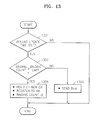
- FIG. 13 illustrates a method for re-establishing an LMA due to a local mobility management time-out according to the present invention.
- The present invention will be described with reference to attached drawings. As described above, abbreviations AR, CN, MN, BU, COA, RCOA, LCOA, and LMD denote an access router, a correspondent node, a mobile node, a binding update, a care-of-address, a regional care-of-address, a local care-of-address, and a local mobility domain, respectively.
- FIG. 7 illustrates an LMD according to the present invention, which is constituted by a center router and routers within a short distance. The distance between the routers is measured by hop-count.
- In this case, a hop is a path for transferring a data packet from a router to the other router in a packet interchange type network. The hop-count for transferring one packet to a target position is stored in a packet header, in a network such as the Internet using Transport Communication Protocol/Internet Protocol (TCP/IP).
- An LMD is represented as LMD(CR, N) in the present specification, wherein, CR stands for a center router and N stands for a natural number. Accordingly, the LMD(CR, N) stands for an assemblage of routers that exist within the hop-count of a natural number N from a center router. For example, as shown in FIG. 7, an LMD(AR1, 2), which is represented as a circle, surrounds an AR1.
- The CRs of each LMD become the LMAs of the LMDs. For example, the AR1 in the LMD(AR1, 2) becomes the LMA as shown in FIG. 7.
- A network manager establishes the natural number N to decide the size of the LMD. The network manager may change the natural number N according to the state of the network to vary the size of the LMD. When the natural number N is determined, the LMD is firmly fixed by the CR.
- Each AR makes LMD lists, which specify the routers within a distance defined by the natural number N from each AR. The LMD list is the list of the routers in the LMD of an AR, and each router has a different LMD list.
- FIG. 8 illustrates a method for constituting an LMD and an LMA when the MN has first accessed a network according to the present invention. When the MN is introduced into a new network, the AR to which the MN has had a first access becomes a first LMA of the MN. Then, an LMD is constituted according to the first LMA. The MN registers an RCOA and an LCOA to a home agent (HA) and the LMA, respectively. Then, data targeting the MN is transferred through the HA and the LMA.
- FIG. 9 illustrates a method for constituting an LMD and an LMA when the MN moves within an LMD according to the present invention. When the MN moves to the other AR, the MN checks the existence of the present LMA in the LMD list of the new AR. The existence of the LMA in the LMD list of the new AR means that the MN has moved within the LMD, therefore the MN registers a new LCOA to the present LMA.
- FIG. 10 illustrates a method for constituting an LMD and an LMA when the MN moves out of an LMD according to the present invention. When the MN moves to a new AR, the MN checks the existence of the present LMA in the LMD list of the new AR. The absence of the LMA from the LMD list of the new AR means that the MN has moved outside of the LMD. Consequently, the new AR becomes a new LMA, and the MN registers new RCOA and LCOA to the HA and the new LMA, respectively, as in the case where the MN had the first access to the network.
- FIG. 11 is a flowchart for explaining a method of constituting an LMD and an LMA according to the present invention. A hop-count for LMDs is established by a predetermined value N, in
step 1101. The lists of each AR that have the hop-count less than the value N from each AR are generated and stored to establish LMDs according to the lists, instep 1102. When an MN has accessed a predetermined LMD, instep 1103, the AR to which the MN has had a first access is established as an LMA to register an RCOA and an LCOA to an HA and the LMA, respectively, instep 1104. Then, the movement of the MN is determined, instep 1105. In the case that the MN has moved, the existence of the existing LMA is checked in a new AR, instep 1106. In the case that the LMA exists in the new AR, the MN registers a new LCOA to the present LMA, instep 1108. In the case that the LMA is absent from the new AR, the MN establishes the new AR as a new LMA, instep 1107, and registers new RCOA and LCOA to the HA and the new LMA, respectively. Then,step 1105 is repeated. In the case that the MN has not moved,step 1105 is repeated. - FIG. 12 illustrates a device for establishing an LMA according to the present invention. The device includes a
router 1201 having a hop-count establishment unit 12011, an LMDlist generation unit 12012, and anaddress management unit 12013, and anMN 1202 having anLMA control unit 12021, anaddress register unit 12022, and an LMA servicetime adjustment unit 12023. - The hop-
count establishment unit 12011 receives and stores variations, which determine the size of an LMD, from a network manager. The LMDlist generation unit 12012 searches ARs within a domain defined by a hop-count of the hop-count establishment unit 12011 to make and store the list of the ARs. Theaddress management unit 12013 receives and stores an RCOA and an LCOA from theMN 1202 to transfer the RCOA to an HA. - When the
MN 1202 is first introduced to a network, theLMA control unit 12021 establishes the AR to which theMN 1202 has a first access as an LMA. After theMN 1202 has moved, theLMA control unit 12021 determines the existence of the existing LMA in the LMD list of a new AR. In the case that the LMA exists in the LMD list of the new AR, theLMA control unit 12021 retains the existing LMA as the new LMA. In other case, theLMA control unit 12021 establishes the new AR as the new LMA. - Then, the
address register unit 12022 receives new RCOA and LCOA to transfer and register to the LMA and the HA. When theMN 1202 has moved within the LMD, theaddress register unit 12022 transfers and registers the LCOA to the LMA while storing the RCOA and LCOA. - In the case that a predetermined binding lifetime has passed and a number of binding update messages (BUM) exceeds a predetermine value, the LMA service
time adjustment unit 12023 establishes the present AR as a new LMA. FIG. 13 illustrates an operation of the LMA servicetime adjustment unit 12023 according to the present invention. - FIG. 13 illustrates a flowchart for explaining a method for re-establishing an LMA due to a local mobility management time-out according to the present invention. In the present invention, a service time can be limited when the MN receives a service by using the LMA. In this case, the service time is limited in order to reduce the frequency of needless use of the LMA by limiting a register time of the LMA. The service time is checked by counting a time limit field of a binding update and a number of BUMs that are transferred to the LMA. After transferring a predetermined number of BUMs, the present AR becomes a new LMA and the MN registers a new address to the HA.
- A binding lifetime is checked to determine whether the binding lifetime has surpassed a predetermined value, in
step 1301. In the case that the binding lifetime has elapsed, the number of BUMs is determined whether to be over a predetermined binding limit, instep 1302. When the number of the BUMs is over the predetermined binding limit, the MN registers a new CR and registers a present address to an HA while initializing the number of the BUMs as zero. In the case that the binding lifetime has been equal to or less than the predetermined value, instep 1301, the above procedures are not operated. In the case that the number of the BUMs is equal to or less than the predetermined binding limit, the MN transfers the BUM, instep 1304. - The above-described invention may be organized into a program recorded on media, so as to be operated in a common digital computer. The examples of the media include magnetic recording media, i.e., ROMs, floppy disks, and hard disks, optical recording media, i.e., CD-ROMs, and DVDs, and carrier waves, i.e., transfer through the Internet.
- As a result, the present invention does not require manual establishment of an LMD and an LMA in a localized mobility management and actively varies the LMD according to changes in the network to improve convenience and efficiency in a network management. In addition, the AR is used as an LMA to distribute load on the network.
- In order to prevent load on the LMA caused by the MN, which uses an outside AR as an LMA for a long period while not moving a lot, a time limit for receiving service from the LMA is set in the MN. This is realized in the MN without affecting the protocol to improve the entire performance of the network as well as the performance of the AR.
- While this invention has been particularly shown and described with reference to preferred embodiments thereof, the preferred embodiments described above are merely illustrative and are not intended to limit the scope of the invention. It will be understood by those skilled in the art that various changes in form and details may be made therein without departing from the spirit and scope of the invention as defined by the appended claims.
Claims (11)
- A method of forming a local mobility agent (LMA) comprising the acts of:(a) establishing an LMD; and(b) establishing a router to which a mobile node (MN) has a first access as an LMA to register a local care-of-address (LCOA) and a regional care-of-address (RCOA) to a home agent (HA) and the LMA, when the MN has accessed a predetermined LMD.
- The method of forming the LMA of claim 1, further including the act of:(c) determining the existence of the LMA in an LMD list of the router, which the MN has newly accessed, to register a new LCOA to the LMA, when the MN moves.
- The method of forming the LMA of claim 2, further including the act of:establishing the router, which the MN has newly accessed, as a new LMA to register new LCOA and RCOA to the HA and the new LMA, respectively, when the LMA is absent from the LMD list of the router, which the MN has newly accessed.
- A method of operation of a system having a plurality of access routers capable of communication with a mobile node, each router having a list of routers making up a local mobility domain of routers within a predetermined hop count of the router, the method including the steps of:accessing a router with a mobile node;establishing the router as the local mobility agent of the mobile node;registering the router as a local care-of-address and a regional care-of-address to a home agent and the local mobility agent;accessing another router with the mobile node;determining the existence of the local mobility agent in the list of routers making up a local mobility domain in the new router;if the local mobility agent is present in the list, registering the other router as a new local care-of-address in the local mobility agent; andif the local mobility agent is not present in the list, establishing the other router as the new local mobility agent of the mobile node and registering the other router as a regional care-of-address to the home agent.
- The method of forming the LMA of any preceding claim, further including the act of:(d) establishing the present AR as a new LMA to register new LCOA and RCOA to the HA and the new LMA, respectively, when the MN exceeds a predetermined binding lifetime and a number of binding update messages (BUM) exceeds a predetermined value.
- A method of forming a local mobility domain (LMD) comprising the acts of:(a) establishing a predetermined hop-count valve indicating the maximum number of hops from a center router (CR);(b) generating a list of routers within a domain defined by the established hop-count valve surrounding a predetermined router; and(c) establishing the routers included in the list as an LMD, which has the predetermined router as the CR.
- A computer program for storing in routers in a network, the computer program including code for causing the network to implement a method according to any of claims 1 to 6.
- A computer program according to claim 7 stored on a recording medium.
- A router comprising:a hop-count establishment unit for receiving and storing a hop-count;a local mobility domain (LMD) list generation unit for establishing routers within a domain, which has a hop-count less than a predetermined value from a router, as an LMD to generate and store a list of the routers within the LMD; andan address management unit for receiving and storing an RCOA and an LCOA from a mobile node (MN) in the case that the router is established as the local mobility agent (LMA).
- A mobile node (MN) comprising:a local mobility agent (LMA) control unit for deciding whether to establish a present router to which an MN has an access as an LMA and for receiving and storing a list of the AR established as the LMA;an address register unit for registering an RCOA and an LCOA to an HA and the LMA, respectively; andan LMA service time adjustment unit for establishing the present AR to which the MN has an access as a new LMA when a binding lifetime has passed and a number of received binary update messages (BUMs) exceeds a predetermined value.
- An apparatus for establishing an LMA comprising:a router including:a hop-count establishment unit for receiving and storing a hop-count;a local mobility domain (LMD) list generation unit for establishing routers within a domain, which has a hop-count less than a predetermined value from a router, as an LMD to generate and store a list of the routers within the LMD; andan address management unit for receiving and storing a regional care-of-address (RCOA) and a local care-of-address (LCOA) from a mobile node (MN) in the case that the router is established as the LMA, andthe MN including:an LMA control unit for deciding whether to establish the present router to which the MN has an access as the LMA and for receiving and storing a list of the AR established as the LMA;an address register unit for registering the RCOA and the LCOA to an HA and the LMA, respectively; andan LMA service time adjustment unit for establishing the present AR to which the MN has an access as a new LMA when a binding lifetime has passed and a number of binary update messages (BUMs) exceeds a predetermined value.
Applications Claiming Priority (2)
| Application Number | Priority Date | Filing Date | Title |
|---|---|---|---|
| KR2001045485 | 2001-07-27 | ||
| KR1020010045485A KR100754383B1 (en) | 2001-07-27 | 2001-07-27 | Method and apparatus for forming local area and local movement control device |
Publications (3)
| Publication Number | Publication Date |
|---|---|
| EP1280318A2 true EP1280318A2 (en) | 2003-01-29 |
| EP1280318A3 EP1280318A3 (en) | 2004-07-07 |
| EP1280318B1 EP1280318B1 (en) | 2006-08-30 |
Family
ID=19712623
Family Applications (1)
| Application Number | Title | Priority Date | Filing Date |
|---|---|---|---|
| EP02255262A Expired - Lifetime EP1280318B1 (en) | 2001-07-27 | 2002-07-26 | Method of forming a local mobility domain and a local mobility agent and apparatus therefor |
Country Status (5)
| Country | Link |
|---|---|
| US (1) | US7603477B2 (en) |
| EP (1) | EP1280318B1 (en) |
| KR (1) | KR100754383B1 (en) |
| CN (1) | CN100397841C (en) |
| DE (1) | DE60214301T2 (en) |
Cited By (3)
| Publication number | Priority date | Publication date | Assignee | Title |
|---|---|---|---|---|
| EP1524805A3 (en) * | 2003-10-18 | 2006-08-02 | Samsung Electronics Co., Ltd. | Method and system for discovering a mobility anchor point and managing mobility of a mobile node in a mobile IP network |
| WO2009043846A1 (en) * | 2007-10-04 | 2009-04-09 | Nokia Siemens Networks Oy | Access technology indication for proxy mobile internet protocol version 6 |
| EP1613004A4 (en) * | 2003-03-17 | 2010-06-16 | Nat Inst Inf & Comm Tech | MOBILE NETWORK AND ASSOCIATED COMMUNICATION METHOD |
Families Citing this family (11)
| Publication number | Priority date | Publication date | Assignee | Title |
|---|---|---|---|---|
| KR100929101B1 (en) * | 2003-02-17 | 2009-11-30 | 삼성전자주식회사 | How to calculate hop of mobile IP in IP network |
| CN1316786C (en) * | 2003-08-11 | 2007-05-16 | 北京邮电大学 | Hierarchical network layer mobility management method in mobile internet |
| CN100366036C (en) * | 2004-06-15 | 2008-01-30 | 南京大学 | Method of Routing Return Procedure in Mobile IPv6 |
| KR100693051B1 (en) * | 2005-01-11 | 2007-03-12 | 삼성전자주식회사 | Mobile control system and service method of service mobile terminal for minicon |
| WO2008018154A1 (en) * | 2006-08-09 | 2008-02-14 | Telefonaktiebolaget Lm Ericsson (Publ) | Routing manager hierarchy |
| US8130771B2 (en) * | 2006-10-10 | 2012-03-06 | Alcatel Lucent | Packet-forwarding for proxy mobile IP |
| CN101175316B (en) * | 2006-10-30 | 2010-05-19 | 华为技术有限公司 | Method and communication system for cross-local mobility management domain handover |
| US8873507B2 (en) | 2009-10-02 | 2014-10-28 | Futurewei Technologies, Inc. | Distributed local mobility anchors for achieving optimized mobility routing |
| US8824353B2 (en) * | 2009-10-02 | 2014-09-02 | Futurewei Technologies, Inc. | Mobility route optimization in a network having distributed local mobility anchors |
| US8842607B2 (en) * | 2010-01-08 | 2014-09-23 | Futurewei Technologies, Inc. | Mobility management system and method |
| US8904431B2 (en) * | 2010-12-20 | 2014-12-02 | Microsoft Corporation | Current device location advertisement distribution |
Family Cites Families (14)
| Publication number | Priority date | Publication date | Assignee | Title |
|---|---|---|---|---|
| US5572528A (en) * | 1995-03-20 | 1996-11-05 | Novell, Inc. | Mobile networking method and apparatus |
| US6763007B1 (en) * | 1998-12-11 | 2004-07-13 | Lucent Technologies Inc. | Two phase local mobility scheme for wireless access to packet based networks |
| US6842462B1 (en) * | 1998-12-18 | 2005-01-11 | Lucent Technologies Inc. | Wireless access of packet based networks |
| KR100678830B1 (en) * | 1999-12-08 | 2007-02-05 | 주식회사 케이티 | Method and apparatus for connection admission control in differential service providing IP network using router status information |
| JP4162347B2 (en) * | 2000-01-31 | 2008-10-08 | 富士通株式会社 | Network system |
| US6947401B2 (en) * | 2000-03-08 | 2005-09-20 | Telefonaktiebolaget Lm Ericsson (Publ) | Hierarchical mobility management for wireless networks |
| US6992995B2 (en) * | 2000-04-17 | 2006-01-31 | Telcordia Technologies, Inc. | Telecommunication enhanced mobile IP architecture for intra-domain mobility |
| JP3906679B2 (en) * | 2001-12-05 | 2007-04-18 | 日本電気株式会社 | Mobile communication method, system, and program |
| US6973313B1 (en) * | 2002-03-29 | 2005-12-06 | Openwave Systems Inc. | Heuristic algorithm/protocol to determine the nearest available gateway for a mobile client |
| US7269657B1 (en) * | 2002-05-10 | 2007-09-11 | Rockwell Collins, Inc. | Method and system for providing a mobile IP network with non-path dependent intra domain quality of service |
| KR100474451B1 (en) * | 2002-08-16 | 2005-03-10 | 삼성전자주식회사 | Optimized packet routing method in mobile IPv6 supporting localized mobility management |
| KR100568231B1 (en) * | 2003-08-11 | 2006-04-07 | 삼성전자주식회사 | Domain Name Service System and Method |
| JP2007508776A (en) * | 2003-10-18 | 2007-04-05 | サムスン エレクトロニクス カンパニー リミテッド | Method and system for mobile anchor point search and mobile node mobility management in a network system supporting mobile IP |
| US7961690B2 (en) * | 2006-07-07 | 2011-06-14 | Symbol Technologies, Inc. | Wireless switch network architecture implementing mobility areas within a mobility domain |
-
2001
- 2001-07-27 KR KR1020010045485A patent/KR100754383B1/en not_active Expired - Lifetime
-
2002
- 2002-07-25 CN CNB021269688A patent/CN100397841C/en not_active Expired - Fee Related
- 2002-07-26 DE DE60214301T patent/DE60214301T2/en not_active Expired - Fee Related
- 2002-07-26 EP EP02255262A patent/EP1280318B1/en not_active Expired - Lifetime
- 2002-07-29 US US10/206,194 patent/US7603477B2/en not_active Expired - Fee Related
Non-Patent Citations (2)
| Title |
|---|
| PERKINS C E ET AL: "Optimized smooth handoffs in Mobile IP" PROCEEDINGS IEEE INTERNATIONAL SYMPOSIUM ON COMPUTERS AND COMMUNICATIONS, XX, XX, 6 July 1999 (1999-07-06), pages 340-346, XP002902009 * |
| SOLIMAN H ET AL: "Hierarchical MIPv6 mobility management" IETF MOBILE IP WORKING GROUP - INTERNET DRAFT, 13 September 2000 (2000-09-13), XP002249000 Retrieved from the Internet: <URL:http://community.roxen.com/developers /idocs/drafts/draft-soliman-mobi leip-hmipv6> [retrieved on 2003-07-24] * |
Cited By (4)
| Publication number | Priority date | Publication date | Assignee | Title |
|---|---|---|---|---|
| EP1613004A4 (en) * | 2003-03-17 | 2010-06-16 | Nat Inst Inf & Comm Tech | MOBILE NETWORK AND ASSOCIATED COMMUNICATION METHOD |
| EP1524805A3 (en) * | 2003-10-18 | 2006-08-02 | Samsung Electronics Co., Ltd. | Method and system for discovering a mobility anchor point and managing mobility of a mobile node in a mobile IP network |
| WO2009043846A1 (en) * | 2007-10-04 | 2009-04-09 | Nokia Siemens Networks Oy | Access technology indication for proxy mobile internet protocol version 6 |
| US8121047B2 (en) | 2007-10-04 | 2012-02-21 | Nokia Siemens Networks Oy | Access technology indication for Proxy Mobile Internet Protocol version 6 |
Also Published As
| Publication number | Publication date |
|---|---|
| KR20030010850A (en) | 2003-02-06 |
| EP1280318A3 (en) | 2004-07-07 |
| CN1400786A (en) | 2003-03-05 |
| US7603477B2 (en) | 2009-10-13 |
| CN100397841C (en) | 2008-06-25 |
| DE60214301D1 (en) | 2006-10-12 |
| US20030035390A1 (en) | 2003-02-20 |
| EP1280318B1 (en) | 2006-08-30 |
| KR100754383B1 (en) | 2007-08-31 |
| DE60214301T2 (en) | 2007-04-05 |
Similar Documents
| Publication | Publication Date | Title |
|---|---|---|
| Ma et al. | Dynamic hierarchical mobility management strategy for mobile IP networks | |
| CA2514424C (en) | Arrangement for establishing a bidirectional tunnel between a mobile router and a correspondent node | |
| EP1540918B1 (en) | Method and apparatus in a gateway for registering mobile routers of a mobile ad hoc network to respective home agents | |
| EP1280318B1 (en) | Method of forming a local mobility domain and a local mobility agent and apparatus therefor | |
| AU2004307038B2 (en) | Method and system for discovering a mobility anchor point and managing mobility of a mobile node in a network system supporting mobile IP | |
| US8391235B2 (en) | Apparatus and method of handover for mobile node | |
| US7301957B2 (en) | Multi-home agent control apparatus and method | |
| KR20110014511A (en) | Apparatus and method for managing network mobility in proxy mobile IP network | |
| US20060098575A1 (en) | Route selecting method and apparatus using return routability procedure | |
| US7515590B2 (en) | Mobile communication system and method thereof | |
| CN1939006A (en) | Method and system for detecting network connection in ipv6 radio access network | |
| US20120163219A1 (en) | METHOD AND APPARATUS FOR SUPPORTING MOBILITY BASED ON FLOW IN PMIPv6 | |
| CN1768517B (en) | Method, apparatus and system for accessing to a roaming mobile node | |
| US7203761B1 (en) | Method and apparatus for routing data to/from a mobile user | |
| US20100174828A1 (en) | METHOD AND SYSTEM FOR OPTIMIZING ROUTING BETWEEN NODES IN PROXY MOBILE IPv6 NETWORK | |
| US20090119412A1 (en) | Support for avoidance of unnecessary tunneling | |
| WO2009002075A2 (en) | Method and system for optimizing routing between nodes in proxy mobile ipv6 network | |
| KR100416236B1 (en) | Method and system for providing communication | |
| Kim et al. | NeMRI-based multicasting in network mobility | |
| Vasantha et al. | Mobility Management System for Wireless Mesh Networks Based on Pointer |
Legal Events
| Date | Code | Title | Description |
|---|---|---|---|
| PUAI | Public reference made under article 153(3) epc to a published international application that has entered the european phase |
Free format text: ORIGINAL CODE: 0009012 |
|
| 17P | Request for examination filed |
Effective date: 20020814 |
|
| AK | Designated contracting states |
Designated state(s): AT BE BG CH CY CZ DE DK EE ES FI FR GB GR IE IT LI LU MC NL PT SE SK TR |
|
| AX | Request for extension of the european patent |
Extension state: AL LT LV MK RO SI |
|
| PUAL | Search report despatched |
Free format text: ORIGINAL CODE: 0009013 |
|
| AK | Designated contracting states |
Kind code of ref document: A3 Designated state(s): AT BE BG CH CY CZ DE DK EE ES FI FR GB GR IE IT LI LU MC NL PT SE SK TR |
|
| AX | Request for extension of the european patent |
Extension state: AL LT LV MK RO SI |
|
| AKX | Designation fees paid |
Designated state(s): DE FR GB |
|
| 17Q | First examination report despatched |
Effective date: 20050413 |
|
| GRAP | Despatch of communication of intention to grant a patent |
Free format text: ORIGINAL CODE: EPIDOSNIGR1 |
|
| GRAS | Grant fee paid |
Free format text: ORIGINAL CODE: EPIDOSNIGR3 |
|
| GRAA | (expected) grant |
Free format text: ORIGINAL CODE: 0009210 |
|
| AK | Designated contracting states |
Kind code of ref document: B1 Designated state(s): DE FR GB |
|
| REG | Reference to a national code |
Ref country code: GB Ref legal event code: FG4D |
|
| REF | Corresponds to: |
Ref document number: 60214301 Country of ref document: DE Date of ref document: 20061012 Kind code of ref document: P |
|
| ET | Fr: translation filed | ||
| PLBE | No opposition filed within time limit |
Free format text: ORIGINAL CODE: 0009261 |
|
| STAA | Information on the status of an ep patent application or granted ep patent |
Free format text: STATUS: NO OPPOSITION FILED WITHIN TIME LIMIT |
|
| 26N | No opposition filed |
Effective date: 20070531 |
|
| PGFP | Annual fee paid to national office [announced via postgrant information from national office to epo] |
Ref country code: DE Payment date: 20080807 Year of fee payment: 7 |
|
| PGFP | Annual fee paid to national office [announced via postgrant information from national office to epo] |
Ref country code: FR Payment date: 20080718 Year of fee payment: 7 |
|
| PGFP | Annual fee paid to national office [announced via postgrant information from national office to epo] |
Ref country code: GB Payment date: 20080806 Year of fee payment: 7 |
|
| GBPC | Gb: european patent ceased through non-payment of renewal fee |
Effective date: 20090726 |
|
| REG | Reference to a national code |
Ref country code: FR Ref legal event code: ST Effective date: 20100331 |
|
| PG25 | Lapsed in a contracting state [announced via postgrant information from national office to epo] |
Ref country code: FR Free format text: LAPSE BECAUSE OF NON-PAYMENT OF DUE FEES Effective date: 20090731 |
|
| PG25 | Lapsed in a contracting state [announced via postgrant information from national office to epo] |
Ref country code: GB Free format text: LAPSE BECAUSE OF NON-PAYMENT OF DUE FEES Effective date: 20090726 |
|
| PG25 | Lapsed in a contracting state [announced via postgrant information from national office to epo] |
Ref country code: DE Free format text: LAPSE BECAUSE OF NON-PAYMENT OF DUE FEES Effective date: 20100202 |