EP1277767A1 - Solvent absorbing resin and method for preparation thereof - Google Patents
Solvent absorbing resin and method for preparation thereof Download PDFInfo
- Publication number
- EP1277767A1 EP1277767A1 EP02715871A EP02715871A EP1277767A1 EP 1277767 A1 EP1277767 A1 EP 1277767A1 EP 02715871 A EP02715871 A EP 02715871A EP 02715871 A EP02715871 A EP 02715871A EP 1277767 A1 EP1277767 A1 EP 1277767A1
- Authority
- EP
- European Patent Office
- Prior art keywords
- organic liquid
- liquid absorbent
- resin
- water
- salt
- Prior art date
- Legal status (The legal status is an assumption and is not a legal conclusion. Google has not performed a legal analysis and makes no representation as to the accuracy of the status listed.)
- Withdrawn
Links
Images
Classifications
-
- C—CHEMISTRY; METALLURGY
- C08—ORGANIC MACROMOLECULAR COMPOUNDS; THEIR PREPARATION OR CHEMICAL WORKING-UP; COMPOSITIONS BASED THEREON
- C08J—WORKING-UP; GENERAL PROCESSES OF COMPOUNDING; AFTER-TREATMENT NOT COVERED BY SUBCLASSES C08B, C08C, C08F, C08G or C08H
- C08J5/00—Manufacture of articles or shaped materials containing macromolecular substances
-
- B—PERFORMING OPERATIONS; TRANSPORTING
- B01—PHYSICAL OR CHEMICAL PROCESSES OR APPARATUS IN GENERAL
- B01J—CHEMICAL OR PHYSICAL PROCESSES, e.g. CATALYSIS OR COLLOID CHEMISTRY; THEIR RELEVANT APPARATUS
- B01J20/00—Solid sorbent compositions or filter aid compositions; Sorbents for chromatography; Processes for preparing, regenerating or reactivating thereof
- B01J20/22—Solid sorbent compositions or filter aid compositions; Sorbents for chromatography; Processes for preparing, regenerating or reactivating thereof comprising organic material
- B01J20/26—Synthetic macromolecular compounds
-
- B—PERFORMING OPERATIONS; TRANSPORTING
- B01—PHYSICAL OR CHEMICAL PROCESSES OR APPARATUS IN GENERAL
- B01J—CHEMICAL OR PHYSICAL PROCESSES, e.g. CATALYSIS OR COLLOID CHEMISTRY; THEIR RELEVANT APPARATUS
- B01J20/00—Solid sorbent compositions or filter aid compositions; Sorbents for chromatography; Processes for preparing, regenerating or reactivating thereof
- B01J20/28—Solid sorbent compositions or filter aid compositions; Sorbents for chromatography; Processes for preparing, regenerating or reactivating thereof characterised by their form or physical properties
- B01J20/28014—Solid sorbent compositions or filter aid compositions; Sorbents for chromatography; Processes for preparing, regenerating or reactivating thereof characterised by their form or physical properties characterised by their form
- B01J20/2805—Sorbents inside a permeable or porous casing, e.g. inside a container, bag or membrane
-
- B—PERFORMING OPERATIONS; TRANSPORTING
- B01—PHYSICAL OR CHEMICAL PROCESSES OR APPARATUS IN GENERAL
- B01J—CHEMICAL OR PHYSICAL PROCESSES, e.g. CATALYSIS OR COLLOID CHEMISTRY; THEIR RELEVANT APPARATUS
- B01J20/00—Solid sorbent compositions or filter aid compositions; Sorbents for chromatography; Processes for preparing, regenerating or reactivating thereof
- B01J20/30—Processes for preparing, regenerating, or reactivating
- B01J20/32—Impregnating or coating ; Solid sorbent compositions obtained from processes involving impregnating or coating
- B01J20/3202—Impregnating or coating ; Solid sorbent compositions obtained from processes involving impregnating or coating characterised by the carrier, support or substrate used for impregnation or coating
- B01J20/3206—Organic carriers, supports or substrates
-
- B—PERFORMING OPERATIONS; TRANSPORTING
- B01—PHYSICAL OR CHEMICAL PROCESSES OR APPARATUS IN GENERAL
- B01J—CHEMICAL OR PHYSICAL PROCESSES, e.g. CATALYSIS OR COLLOID CHEMISTRY; THEIR RELEVANT APPARATUS
- B01J20/00—Solid sorbent compositions or filter aid compositions; Sorbents for chromatography; Processes for preparing, regenerating or reactivating thereof
- B01J20/30—Processes for preparing, regenerating, or reactivating
- B01J20/32—Impregnating or coating ; Solid sorbent compositions obtained from processes involving impregnating or coating
- B01J20/3202—Impregnating or coating ; Solid sorbent compositions obtained from processes involving impregnating or coating characterised by the carrier, support or substrate used for impregnation or coating
- B01J20/3206—Organic carriers, supports or substrates
- B01J20/3208—Polymeric carriers, supports or substrates
- B01J20/321—Polymeric carriers, supports or substrates consisting of a polymer obtained by reactions involving only carbon to carbon unsaturated bonds
-
- B—PERFORMING OPERATIONS; TRANSPORTING
- B01—PHYSICAL OR CHEMICAL PROCESSES OR APPARATUS IN GENERAL
- B01J—CHEMICAL OR PHYSICAL PROCESSES, e.g. CATALYSIS OR COLLOID CHEMISTRY; THEIR RELEVANT APPARATUS
- B01J20/00—Solid sorbent compositions or filter aid compositions; Sorbents for chromatography; Processes for preparing, regenerating or reactivating thereof
- B01J20/30—Processes for preparing, regenerating, or reactivating
- B01J20/32—Impregnating or coating ; Solid sorbent compositions obtained from processes involving impregnating or coating
- B01J20/3202—Impregnating or coating ; Solid sorbent compositions obtained from processes involving impregnating or coating characterised by the carrier, support or substrate used for impregnation or coating
- B01J20/3206—Organic carriers, supports or substrates
- B01J20/3208—Polymeric carriers, supports or substrates
- B01J20/3212—Polymeric carriers, supports or substrates consisting of a polymer obtained by reactions otherwise than involving only carbon to carbon unsaturated bonds
-
- B—PERFORMING OPERATIONS; TRANSPORTING
- B01—PHYSICAL OR CHEMICAL PROCESSES OR APPARATUS IN GENERAL
- B01J—CHEMICAL OR PHYSICAL PROCESSES, e.g. CATALYSIS OR COLLOID CHEMISTRY; THEIR RELEVANT APPARATUS
- B01J20/00—Solid sorbent compositions or filter aid compositions; Sorbents for chromatography; Processes for preparing, regenerating or reactivating thereof
- B01J20/30—Processes for preparing, regenerating, or reactivating
- B01J20/32—Impregnating or coating ; Solid sorbent compositions obtained from processes involving impregnating or coating
- B01J20/3231—Impregnating or coating ; Solid sorbent compositions obtained from processes involving impregnating or coating characterised by the coating or impregnating layer
- B01J20/3234—Inorganic material layers
- B01J20/3236—Inorganic material layers containing metal, other than zeolites, e.g. oxides, hydroxides, sulphides or salts
-
- C—CHEMISTRY; METALLURGY
- C08—ORGANIC MACROMOLECULAR COMPOUNDS; THEIR PREPARATION OR CHEMICAL WORKING-UP; COMPOSITIONS BASED THEREON
- C08F—MACROMOLECULAR COMPOUNDS OBTAINED BY REACTIONS ONLY INVOLVING CARBON-TO-CARBON UNSATURATED BONDS
- C08F8/00—Chemical modification by after-treatment
- C08F8/12—Hydrolysis
-
- C—CHEMISTRY; METALLURGY
- C08—ORGANIC MACROMOLECULAR COMPOUNDS; THEIR PREPARATION OR CHEMICAL WORKING-UP; COMPOSITIONS BASED THEREON
- C08F—MACROMOLECULAR COMPOUNDS OBTAINED BY REACTIONS ONLY INVOLVING CARBON-TO-CARBON UNSATURATED BONDS
- C08F8/00—Chemical modification by after-treatment
- C08F8/34—Introducing sulfur atoms or sulfur-containing groups
- C08F8/36—Sulfonation; Sulfation
-
- C—CHEMISTRY; METALLURGY
- C08—ORGANIC MACROMOLECULAR COMPOUNDS; THEIR PREPARATION OR CHEMICAL WORKING-UP; COMPOSITIONS BASED THEREON
- C08F—MACROMOLECULAR COMPOUNDS OBTAINED BY REACTIONS ONLY INVOLVING CARBON-TO-CARBON UNSATURATED BONDS
- C08F8/00—Chemical modification by after-treatment
- C08F8/44—Preparation of metal salts or ammonium salts
-
- C—CHEMISTRY; METALLURGY
- C08—ORGANIC MACROMOLECULAR COMPOUNDS; THEIR PREPARATION OR CHEMICAL WORKING-UP; COMPOSITIONS BASED THEREON
- C08F—MACROMOLECULAR COMPOUNDS OBTAINED BY REACTIONS ONLY INVOLVING CARBON-TO-CARBON UNSATURATED BONDS
- C08F2800/00—Copolymer characterised by the proportions of the comonomers expressed
- C08F2800/10—Copolymer characterised by the proportions of the comonomers expressed as molar percentages
Definitions
- This invention relates to a solvent absorbent resin comprised of a water-insoluble resin, into which hydrophilic polar groups have been introduced, and a method for producing the solvent absorbent resin.
- This invention also relates to an absorbent material, capable of absorbing various organic liquids, for use in preventing or combating dispersion on the occasion of leakage of organic liquids in plants, and more particularly to an absorbent material for absorbing organic liquids, which is ease to handle for transport or storage, and a method for producing the absorbent material.
- the liquid absorbent resin such as water- or oil-absorbent resin
- the liquid absorbent resin is routinely produced by adding a cross-linkable monomer to a monomer having solubility for a target liquid for polymerization.
- the monomer as the feedstock is relatively expensive, in most cases, and the feedstock monomer is partially left over unpolymerized in the product even after polymerization, thus raising problems in connection with cost and safety.
- the state-of-the-art liquid absorbent resin is designed and manufactured with absorption of certain predetermined liquid as a target, so that the liquid absorbent performance for liquids other than the targeted liquid is lowered drastically.
- a liquid absorbent resin having wide adaptability has strongly been desired.
- the throughput of a product employing resins or plastics having aromatic rings or conjugated diene in molecules is increasing, such that the amount of waste materials made from these materials is also increasing. Consequently, there is an increasing need towards efficacious utilization of such waste materials to meet the increasing interest for protection of the global environment.
- the polymer-based waste materials are disposed of roughly by three types of techniques, namely land-filling, incineration and re-melting. Of these, land-filling and incineration account for approximately 90% of the total amount of disposal of the waste material, meaning that most of the waste material is not re-used.
- thermoplastic resin As the method of recycling the polymer waste material, such a method of melting by heating and re-molding is routinely employed, insofar as the thermoplastic resin is concerned.
- a lot of problems are presented, such as thermal deterioration, for example the lowering of the molecular weight or oxidation of the polymer, admixture of foreign matter, such as dust and dirt, or admixture of resins containing various colorants, which leads to the necessity of color matching. That is, in recycling polymer waste materials of the general-purpose plastics or resins by heating or melting, processing techniques or costs pose serious impediments.
- the state-of-the-art organic liquid absorbent resin is designed and manufactured with absorption of certain predetermined organic liquids as a target, so that the liquid absorbent performance for liquids other than the targeted liquids is lowered drastically.
- the liquid absorbent resin since it is frequently required of the liquid absorbent resin to be able to absorb plural sorts of organic liquids simultaneously, such a liquid absorbent resin having wide adaptability also has strongly been desired.
- Sand bags are routinely used for preventing the flooding of the sea, rivers or lakes in inundation disasters, and are produced by charging the soil into a hemp pouch.
- sand bags are equipped for preventing organic liquids, stored in plants on the occasion of disasters, such as earthquakes, in order to prevent organic liquids stored in plants from leaking from a storage area to outside the plant.
- the component of the conventional sand bags is mostly soil, although the water-absorbent resin is used only in limited cases. Consequently, the conventional sand bags are only poor in absorbency with respect to the organic liquid, and hence are unable to prevent liquid dispersion effectively.
- a waste polymer material such as water-insoluble resin, or an inorganic waste solid material, such as metal or ceramics, which were difficult to dispose of as waste material, to contribute to protection of the global environment.
- the present inventors have conducted eager researches towards accomplishing the above object and found that, by introducing hydrophilic polar groups to the water-insoluble resin obtained from general-purpose monomers, the resulting resin exhibits absorbency applicable to a wide variety of solvents.
- the present inventors have conducted further researches and ultimately arrived at the present invention.
- the present invention provides a solvent absorbent resin formed of a water-insoluble resin to which have been introduced hydrophilic polar groups.
- the hydrophilic polar groups are at least one of a sulfo group which may be in the form of a salt, a sulfuric acid group which may be in the form of a salt, a carboxylic, an amide or a nitro groups, which may be in the form of a salt, a -PO(OH) 2 group, which may be in the form of a salt, a -OPO(OH) 2 group, which may be in the form of a salt, a hydroxyl group, which may be in the form of a salt, and an aminic base group, which may be in the form of a salt.
- the hydrophilic polar groups are contained in an amount of 0.1 to 99 mol% in the entire monomer units in the water-insoluble resin.
- the water-insoluble resin contains at least one of an aromatic ring and a conjugated diene in a main chain and/or a side chain thereof.
- At least one of the aromatic ring and the conjugated diene contained in the water-insoluble resin accounts for 1 to 100 mol% in the entire monomer units in the resin.
- the present invention also provides a solvent absorbent resin formed of a used water-insoluble resin to which have been introduced hydrophilic polar groups.
- the hydrophilic polar groups are at least one of a sulfo group which may be in the form of a salt, a sulfuric acid group which may be in the form of a salt, a carboxylic, an amide or a nitro groups, which may be in the form of a salt, a-PO(OH) 2 group, which may be in the form of a salt, a -OPO(OH) 2 group, which may be in the form of a salt, a hydroxyl group, which may be in the form of a salt, and an aminic base group, which may be in the form of a salt.
- the hydrophilic polar groups are contained in an amount of 0.1 to 99 mol% in the entire monomer units in the water-insoluble resin.
- the water-insoluble resin contains at least one of an aromatic ring and a conjugated diene in a main chain and/or a side chain thereof.
- At least one of the aromatic ring and the conjugated diene contained in the water-insoluble resin accounts for 1 to 100 mol% in the entire monomer units in the resin.
- the present invention also provides a method for producing a solvent absorbent resin comprising introducing hydrophilic groups to a water-insoluble resin.
- the hydrophilic polar groups are at least one of a sulfo group which may be in the form of a salt, a sulfuric acid group which may be in the form of a salt, a carboxylic, an amide or a nitro groups, which may be in the form of a salt, a -PO(OH) 2 group, which may be in the form of a salt, a -OPO(OH) 2 group, which may be in the form of a salt, a hydroxyl group, which may be in the form of a salt, and an aminic base group, which may be in the form of a salt.
- the hydrophilic polar groups are contained in an amount of 0.1 to 99 mol% in the entire monomer units in the water-insoluble resin.
- the water-insoluble resin contains at least one of an aromatic ring and a conjugated diene in a main chain and/or a side chain thereof.
- At least one of the aromatic ring and the conjugated diene contained in the water-insoluble resin accounts for 1 to 100 mol% in the entire monomer units in the resin.
- the present invention also provides a method for producing a used solvent absorbent resin comprising introducing hydrophilic groups to a water-insoluble resin.
- the hydrophilic polar groups are at least one of a sulfo group which may be in the form of a salt, a sulfuric acid group which may be in the form of a salt, a carboxylic, an amide or a nitro groups, which may be in the form of a salt, a -PO(OH) 2 group, which may be in the form of a salt, a -OPO(OH) 2 group, which may be in the form of a salt, a hydroxyl group, which may be in the form of a salt, and an aminic base group, which may be in the form of a salt.
- the hydrophilic polar groups are contained in an amount of 0.1 to 99 mol% in the entire monomer units in the water-insoluble resin.
- the water-insoluble resin contains at least one of an aromatic ring and a conjugated diene in a main chain and/or a side chain thereof.
- At least one of the aromatic ring and the conjugated diene contained in the water-insoluble resin accounts for 1 to 100 mol% in the entire monomer units in the resin.
- the present invention also provides a water-insoluble resin into which hydrophilic groups have been introduced.
- the absorbent unit comprised of a water-insoluble resin, co-existing with support, the unit is not prone to collapsing during transport or storage.
- the organic liquid absorbent resin is supported by the support to prevent the unit from becoming collapsed during transport or storage.
- the present invention provides an organic liquid absorbent unit comprising an organic liquid absorbent resin comprised of a used water-insoluble resin having hydrophilic polar groups introduced thereto and a support.
- This support is constituted by a flexible netted product and supports the organic liquid absorbent resin.
- the organic liquid absorbent unit contains a solid substance having a specific gravity not less than unity.
- This solid substance having a specific gravity not less than unity, natural ores having a specific gravity not less than unity are used.
- the solid substance may be a waste material having a specific gravity not less than unity or a waste material bonded together and having a specific gravity not less than unity.
- a waste material, having a specific gravity not less than unity, may also be used.
- the organic liquid absorbent unit of the present invention includes an organic liquid absorbent resin comprised of a used water-insoluble resin, to which hydrophilic polar groups have been introduced, and a support.
- the support is formed by a flexible netted product.
- the organic liquid absorbent resin is supported by the support.
- the organic liquid absorbent unit contains a solid substance having a specific gravity not less than unity.
- This solid substance having a specific gravity not less than unity, natural ores having a specific gravity not less than unity are used.
- the solid substance may also be a waste material having a specific gravity not less than unity or a waste material bonded together and having a specific gravity not less than unity.
- a waste material, having a specific gravity not less than unity, may also be used.
- the present invention also provides a method for producing an organic liquid absorbent unit, including charging an organic liquid absorbent resin, obtained on introducing hydrophilic groups to a water-insoluble resin, and a support, into an organic liquid permeating pouch.
- the support is a flexible netted product.
- the organic liquid absorbent resin is supported by the support.
- the organic liquid permeating pouch is charged one of a solid substance having a specific gravity not less than unity, a solid substance comprised of natural ores having a specific gravity not less than unity, a solid substance comprised of a waste material having a specific gravity not less than unity, a solid substance comprised of a waste material, bonded together, and having a specific gravity not less than unity, a solid substance comprised of a magnetic waste material having a specific gravity not less than unity.
- the present invention also provides an organic liquid absorbent unit containing a used organic liquid absorbent resin, to which hydrophilic polar groups have been introduced, and a solid substance having a specific gravity not less than unity.
- a solid substance comprised of natural ores having a specific gravity not less than unity, a solid substance comprised of a waste material having a specific gravity not less than unity, a solid substance comprised of a waste material, bonded together, and having a specific gravity not less than unity, may be used.
- the present invention also provides a method for producing an organic liquid absorbent unit comprising charging an organic liquid absorbent resin, obtained on introducing hydrophilic groups to a used water-insoluble resin, into an organic liquid permeating pouch.
- the hydrophilic polar groups are at least one of a sulfo group which may be in the form of a salt, a sulfuric acid group which may be in the form of a salt, a carboxylic, an amide or a nitro groups, which may be in the form of a salt, a -PO(OH) 2 group, which may be in the form of a salt, a -OPO(OH) 2 group, which may be in the form of a salt, a hydroxyl group, which may be in the form of a salt, and an aminic base group, which may be in the form of a salt.
- the hydrophilic polar groups are contained in an amount of 0.1 to 99 mol% in the entire monomer units in the water-insoluble resin.
- the water-insoluble resin contains at least one of an aromatic ring and a conjugated diene in a main chain and/or a side chain thereof, and at least one of the aromatic ring and the conjugated diene contained in the water-insoluble resin accounts for 1 to 100 mol% in the entire monomer units in the resin.
- This solid substance may be one of a solid substance comprised of natural ores having a specific gravity not less than unity, a solid substance comprised of a waste material having a specific gravity not less than unity, a solid substance comprised of a waste material, bonded together, and having a specific gravity not less than unity, and a solid substance comprised of a magnetic waste material having a specific gravity not less than unity.
- the present invention also provides a method for producing an organic liquid absorbent unit comprising charging an organic liquid absorbent resin, obtained on introducing hydrophilic groups to a used water-insoluble resin, into an organic liquid permeating pouch.
- the hydrophilicpolar groups are at least one of a sulfo group which may be in the form of a salt, a sulfuric acid group which may be in the form of a salt, a carboxylic, an amide or a nitro groups, which may be in the form of a salt, a -PO(OH) 2 group, which may be in the form of a salt, a -OPO(OH) 2 group, which may be in the form of a salt, a hydroxyl group, which may be in the form of a salt, and an aminic base group, which may be in the form of a salt.
- the hydrophilic polar groups are contained in an amount of 0.1 to 99 mol% in the entire monomer units in the water-insoluble resin.
- the water-insoluble resin contains at least one of an aromatic ring and a conjugated diene in a main chain and/or a side chain thereof, and at least one of the aromatic ring and the conjugated diene contained in the water-insoluble resin accounts for 1 to 100 mol% in the entire monomer units in the resin.
- This solid substance may be one of a solid substance comprised of natural ores having a specific gravity not less than unity, a solid substance comprised of a waste material having a specific gravity not less than unity, a solid substance comprised of a waste material, bonded together, and having a specific gravity not less than unity, and a solid substance comprised of a magnetic waste material having a specific gravity not less than unity.
- the present inventors conducted researches into handling performance of the organic liquid absorbent unit during transport and storage, and have found that, if an attractable substance exists together with the absorbent unit, a large quantity of the organic liquid absorbent units can be transported promptly at a time without resorting to the human power. If, for example, a magnetic substance is used as the attractable material, it is possible to transport a large quantity of the organic liquid absorbent units promptly at a time by a crane or a conveyor by magnetically attracting the organic liquid absorbent units. Moreover, if inorganic solid waste materials, such as metal or ceramics, are re-used as resource re-utilization, it is beneficial for protection of global resources, in consideration that these materials represent components difficult to dispose of in the disintegration of electrical equipment.
- the present invention also provides an organic liquid absorbent unit containing an organic liquid absorbent resin, to which the hydrophilic polar groups have been introduced, and an attractable substance, which attractable substance may be one of a magnetic material, a magnetic waste material and a waste material bonded together.
- the organic liquid absorbent unit of the present invention includes a support which is a flexible netted product.
- the organic liquid absorbent resin is supported by a support.
- the present invention also provides an organic liquid absorbent unit comprised of an organic liquid absorbent resin made up by a used water-insoluble resin, int which hydrophilic polar groups have been introduced, and an attractable substance.
- the attractable substance is a magnetic substance which is comprised of a waste material bonded or not bonded together.
- the organic liquid absorbent unit also includes a support comprised of a flexible netted product.
- the organic liquid absorbent resin is supported by a support.
- the present invention also provides a method for producing an organic liquid absorbent unit comprising introducing an organic liquid absorbent resin obtained on introducing hydrophilic groups to a water-insoluble resin, and an attractable substance, into an organic liquid permeating pouch.
- the attractable substance may be a magnetic substance, a waste material or a waste material bonded together.
- the hydrophilic polar groups are at least one of a sulfo group which may be in the form of a salt, a sulfuric acid group which may be in the form of a salt, a carboxylic, an amide or a nitro groups, which may be in the form of a salt, a -PO(OH) 2 group, which may be in the form of a salt, a -OPO(OH) 2 group, which may be in the form of a salt, a hydroxyl group, which may be in the form of a salt, and an aminic base group, which may be in the form of a salt.
- the hydrophilic polar groups are contained in an amount of 0.1 to 99 mol% in the entire monomer units in the water-insoluble resin.
- the water-insoluble resin contains at least one of an aromatic ring and a conjugated diene in a main chain and/or a side chain thereof, and at least one of the aromatic ring and the conjugated diene contained in the water-insoluble resin accounts for 1 to 100 mol% in the entire monomer units in the resin.
- the support is charged into the organic liquid permeating pouch to form an organic liquid absorbent unit, and is formed by a flexible netted product.
- the organic liquid absorbent resin is supported by the support.
- the present invention also provides a method for producing an organic liquid absorbent unit comprising introducing an organic liquid absorbent resin obtained on introducing hydrophilic groups to a water-insoluble resin, and an attractable substance, into an organic liquid permeating pouch.
- the magnetic substance is a waste material which may be bonded together.
- the hydrophilic polar groups are at least one of a sulfo group which may be in the form of a salt, a sulfuric acid group which may be in the form of a salt, a carboxylic, an amide or a nitro groups, which may be in the form of a salt, a -PO(OH) 2 group, which may be in the form of a salt, a -OPO(OH) 2 group, which may be in the form of a salt, a hydroxyl group, which may be in the form of a salt, and an aminic base group, which may be in the form of a salt.
- the hydrophilic polar groups are contained in an amount of 0.1 to 99 mol% in the entire monomer units in the water-insoluble resin.
- the water-insoluble resin contains at least one of an aromatic ring and a conjugated diene in a main chain and/or a side chain thereof, and at least one of the aromatic ring and the conjugated diene contained in the water-insoluble resin accounts for 1 to 100 mol% in the entire monomer units in the resin.
- the organic liquid permeating pouch is charged into the support, which is a flexible netted product.
- the organic liquid absorbent resin is supported by the support.
- the organic liquid absorbent unit By transporting, under suction, the organic liquid absorbent unit, in which not only the organic liquid absorbent resin but also the attractable substance, present in the organic liquid permeating pouch, a large quantity of the organic liquid absorbent units can be transported promptly at a time without resorting to human labor. For example, if a magnetic substance is used as an attractable substance, the organic liquid absorbent units can be transported promptly at a time in large quantities, by a crane or a conveyor, even to places hazardous for human operators.
- organic liquid absorbent resin obtained on introducing an organic liquid absorbent resin to the water-insoluble resin, a wide variety of organic liquids can be absorbed.
- organic liquid absorbent unit can be provided which is small in weight and size during transport, and absorbs the organic liquids in use to meet the requirements as to weight ands size and as to shape followup sufficiently the organic liquid absorbent unit is also beneficial in contributing to protection of global environment by re-utilization of the polymer waste material, such as waste resin, which proved a nuisance as waste, can be re-used as resources.
- the present invention also provides a method for transporting an organic liquid absorbent unit comprising sucking an organic liquid absorbent resin, comprised of a water-insoluble resin, to which hydrophilic polar groups have been introduced, and a magnetic substance.
- the water-insoluble resin comprised of a water-insoluble resin, to which hydrophilic polar groups have been introduced, and the magnetic substance, is transported as it is sucked magnetically.
- the magnetic substance is a waste magnetic substance or a waste magnetic substance bonded together.
- the organic liquid absorbent unit further includes a support which support is a flexible netted product.
- the organic liquid absorbent resin is supported by the support.
- the present invention also provides a method for transporting an organic liquid absorbent unit comprising sucking and transporting an organic liquid absorbent resin, comprised of a used water-insoluble resin, to which hydrophilicpolar groups have been introduced, and a magnetic substance.
- the water-insoluble resin comprised of the used water-insoluble resin, to which hydrophilic polar groups have been introduced, and the magnetic substance, is transported as it is sucked magnetically.
- the magnetic substance is a waste magnetic substance or a waste magnetic substance bonded together.
- the organic liquid absorbent unit further includes a support, which support is a flexible netted product.
- the organic liquid absorbent resin is supported by the support.
- An organic liquid absorbent material of the present invention is generally prepared on introducing hydrophilic polar groups to a water-insoluble resin.
- the present invention features using, as the feedstock, a water-insoluble resin obtained from an inexpensive general-purpose monomer.
- the water-insoluble resin used in the present invention may be a general-purpose resin, in particular a general-purpose resin contained in a waste material.
- the water-insoluble resin examples include an ABS (acrylonitrile- butadiene- styrene) polymer, high impact polystyrene (HIPS), a styrene- butadiene elastomer (SBC), SAN (styrene- acrylonitrile) polymer, a polyacrylonitrile polymer (PAN), polyacrylonitrile- butadiene (nitrile rubber), polystyrene (PS), nylon polymer, polyolefin (such as polyethylene, polypropylene or polyisoprene) polymer, vinyl chloride (PVC), polyphenylene ether (PPE), polyphenylene sulfide (PPS), polycarbonate (PC), polyethylene terephthalate (PET), polybutylene terephthalate (PBT), polysulfone, polyallyl sulfone, polyether sulfone, polythioether sulfone, polyether ketone, polysulf
- the water-insoluble polymers having aromatic diene rings or conjugated diene structures that allow for facilitated introduction of hydrophilic polar groups as later explained, in the main and/or side chains thereof, are most preferred.
- the content of the aromatic rings and/or conjugated diene units in the water-insoluble polymer is desirably about 1 to 100 mol% based on the weight of the total monomer units in the water-insoluble polymer. If the content is lower than this range, the number of the hydrophilic polar groups introduced into the water-insoluble resin is smaller, while the absorbency with respect to the polar solvent is lowered. Moreover, the water-insoluble resin tends to be dissolved in various solvents even after the hydrophilic polar groups have been introduced into the water-insoluble resin. In order to prevent this, the content is desirably not lower than about 1%.
- the molecular weight (Mw) of the water-insoluble resin material is customarily about 1,000 to 20,000,000 and preferably about 10,000 to 1,000,000 in terms of weight averaged molecular weight Mw). If the molecular weight is higher than 1,000, the liquid electrolyte solution is completely dissolved in water or in an organic solvent to render it impossible to evade the inconvenience that the solvent absorbent resin cannot be produced, that is, the state of the gel cannot be maintained following the absorption. The molecular weight lower than 20,000,000 is more practical in that hydrophilic groups can then be introduced more readily.
- These water-insoluble resins may be newly prepared unused resin particles (virgin pellets). Alternatively, these resin materials may also be used resins or waste resins, molded for specified usage or application.
- the waste materials may be ejects (odds and ends) of the resin feedstock or molded products from the production process, chassis already used in electrical equipment or automobiles, various component materials, tubes, hoses or various shock-absorbing materials.
- the used resins mean those resins recovered from the above waste materials.
- the waste materials in the present invention may be those from plants, selling stores or household. The waste materials recovered from plants or selling stores, such as rejects or odds and ends, are more desirable than the waste materials recovered from the household, because the former waste materials are generally more uniform in composition.
- the water-insoluble resin may be alloyed with other resins, or may be used or waste resins containing additives as known per se, such as face dyes, stabilizers, combustion retardants, plasticizers, fillers and other assistant agents.
- the water-insoluble resin may also be a mixture of the used or waste material with unused materials (virgin materials).
- the present invention contemplates to introduce hydrophilic polar groups to the aforementioned water-insoluble resin for conversion to the solvent absorbent resin.
- the hydrophilic polar groups contribute to affording not only the effect in increasing the absorbency with respect to polar solvents but also the effect in preventing the water-insoluble resin from becoming dissolved in various solvents.
- the hydrophilic polar groups may be enumerated by acidic or basic groups.
- the acidic or basic groups may also constitute a salt.
- sulfo groups represented by the formula -SO 3 M and which may be in the form of a salt, where M is a hydrogen atom or a cation of metals, such as sodium or potassium
- sulfuric acid groups represented by the formula -OSO 3 M and which may be in the form of a salt, where M has the same meaning as above
- phospho groups represented by the formula -PO(OM 1 ) (OM 2 ) or the formula -OPO(OM 1 )(OM 2 ), and which may be in the form of a salt, where M 1 and M 2 may be the same or different and have the same meaning as M, and hydroxy groups represented by the formula -OM 3 , and which may be in the form of a salt, where M3 has the same meaning as M
- acidic groups that may be
- aminic bases such as amino groups, secondary amino groups, such as methylamino groups, tertiary amino groups, such as dimethylamino groups, for example, quaternary ammonium groups, such as trimethyl ammonium chloride groups, that may be in the form of salts, may be exemplified as basic groups that may be in the form of a salt.
- amide or nitro groups may also be used.
- a water-insoluble resin desirably containing an aromatic ring
- sulfonating agents such concentrated sulfuric acid, preferably with a concentration not lower than about 70 wt%, sulfuric anhydride, fuming sulfuric acid or chlorosulfonic acid, or the resin is dissolved or dispersed in an organic solvent, to introduce sulfo groups to the resin.
- the resulting product then is neutralized with a basic compound, such as sodium hydroxide or potassium hydroxide, for conversion to a sulfonate.
- the reaction temperature in introducing the sulfo groups is generally on the order of approximately 0°C to 200°C, preferably approximately 30°C to 120°C, although the temperature varies appreciably depending on whether or not an organic solvent is used. If the reaction temperature is approximately 0°C or higher, the rate of reaction is sufficiently high and a liquid electrolyte absorbing resin having more desirable properties may be produced. If the reaction temperature is not higher than approximately 200°C, molecular chains in the resin are not prone to disruption, while the resin is hardly soluble in water or in solvents.
- the reaction time is generally 1 minute to 40 hours, preferably five minutes to two hours, although the reaction time is varied appreciably with the reaction temperature. Under this condition, the reaction may proceed sufficiently with an optimum production efficiency.
- a water-insoluble resin preferably having an unsaturated bond
- a hot aqueous solution of sulfuric acid is reacted with a hot aqueous solution of sulfuric acid, to introduce the sulfuric acid groups, and subsequently the resulting product is reacted with a basic compound, such as sodium hydroxide or potassium hydroxide, to form a sulfate.
- a basic compound such as sodium hydroxide or potassium hydroxide
- n-butyl lithium is added to a water-insoluble resin, preferably containing aromatic groups, and the resulting product is reacted with dry ice, to introduce carboxylic groups.
- the resulting product then is reacted with a basic compound, for example, sodium hydroxide or potassium hydroxide, to form a carboxylate.
- a water-insoluble resin, containing nitro groups may be hydrolyzed with heated concentrated sulfuric acid, or heated alkali, such as a heated aqueous solution of sodium hydroxide or of potassium hydroxide.
- a water-insoluble resin preferably having an aromatic ring may be reacted with fuming nitric acid or a liquid mixture of nitric acid and sulfuric acid.
- phosphorus trichloride may be added to a water-insoluble resin desirably containing an aromatic ring, and the resulting product then is hydrolyzed to introduce the -PO(OH) 2 group.
- the resulting product then is reacted with a basic compound, such as sodium hydroxide or potassium hydroxide, to form a corresponding salt.
- phosphorus trichloride may be added to a water-insoluble resin desirably containing an unsaturated bond, and the resulting product then is hydrolyzed to introduce the -OPO(OH) 2 group.
- the resulting product then is reacted with a basic compound, such as sodium hydroxide or potassium hydroxide, to form a corresponding salt.
- a water-insoluble resin desirably containing an unsaturated bond is reacted with an aqueous solution of sulfuric acid to enable hydroxy groups to be introduced.
- the resulting product then is reacted with a basic compound, such as sodium hydroxide or potassium hydroxide, to form a corresponding salt.
- a water-insoluble resin desirably containing an aromatic ring is subjected to a Friedel-Kraft reaction for chloromethylation, followed by reaction with ammonia or a variety of amine compounds to introduce tertiary or quaternary amine salts as ionic groups.
- a Friedel-Kraft reaction for chloromethylation followed by reaction with ammonia or a variety of amine compounds to introduce tertiary or quaternary amine salts as ionic groups.
- any known method may be used.
- hydrophilic polar group introducing agents or basic compounds may be virgin products, waste liquids discharged from plants, or recycled products. From the perspective of effective utilization of resources, it is more desirable to use the waste liquid as the feedstock of the liquid electrolyte absorbing resins.
- hydrophilic polar groups Only one of these hydrophilic polar groups may be introduced, while a plurality of the hydrophilic polar groups may also be introduced in combination.
- the amount of the hydrophilic polar groups introduced to the water-insoluble resin is desirably about 0.1 to 99 mol% based on the weight of the units in the resin. This range is preferred in order to suppress dissolution in water of the resin following introduction of the hydrophilic polar groups, and in order to assure optimum absorbency into the liquid electrolyte.
- the above-described method enables the hydrophilic polar groups to be introduced into the water-insoluble resin to produce a resin having superior solvent absorbency.
- a reaction product which is usually a gelated product, obtained by the reaction of introducing the hydrophilic polar groups, is preferably filtered, washed with water and subsequently dried or dehydrated to produce a resin having superior solvent absorbency.
- the water-insoluble resin of the present invention may, of course, be prepared by polymerizing a monomer, to the main chain and/or the side chain of which the hydrophilic polar groups have been introduced, by means known per se.
- the water-insoluble resin of the present invention has many usages, it may be useful as a processing agent for a waste solvent discharged from a plant, for example, as an emergency processing agent on occurrence of leakage of a solvent storage tank.
- solvents that can be absorbed with the water-insoluble resin obtained in accordance with the present invention:
- the solvent absorbent resin of the present invention shows superior solvent absorption performance for such wide range of solvents.
- the solvent absorbent resin of the present invention has both an oleophilic site or an oleophilic site, which are based on the water-insoluble resin, and a hydrophilic site and a polar site, which are based on the hydrophilic polar group, in a molecule, and hence is able to absorb or adsorb liquid or gaseous chemical substances, such as a wider range of various solvents.
- organic solvents may be in gaseous, liquid or solid state at ambient temperature without any particular problems. If the organic solvent is in the form of a liquid, the solvent absorbent resin may directly be added to an organic sovent to absorb the solvent. If the organic solvent is in the form of a gas, it may be absorbed in a liquefied state or by contacting the resin with the gaseous organic solvent. If the organic solvent is in the form of a solid, it may be absorbed by the resin as the solvent is dissolved or melted in other organic solvent(s).
- a resin having a superior absorption performance for organic solvents may be produced by introducing hydrophilic polar groups into a water-insoluble resin, without regard to the introducing methods used.
- the solvent absorbent resin of the present invention may further contain other components, such as known liquid absorbing resins, for example, those obtained on addition of a cross-linkable monomer followed by polymerization, stabilizers or humidifiers.
- a commercially available SAN resin (styrene, 57 mol%; acrylonitrile, 43 mol %) was crushed to 16 to 32 meshes and reacted with 90 wt% of 100°C sulfuric acid for thirty minutes. After the end of the reaction, the gelated mass in the system was filtered through a glass filter, washed with water and again filtered. The resulting product was dried in an air circulating type drier at 105°C for two hours. From the results of elementary analysis of sulfur of the resulting dried product, sulfo groups were found to account for 26 mol% in the entire monomer units. From the measured results of FT-IR, it was also found that the nitrile groups in the resin were converted into amide groups.
- ABS resin styrene, 50 mol%; acrylonitrile, 39 mol%; butadiene, 11 mol%
- Sulfo groups were found to account for 42 mol% in the entire monomer units.
- FT-IR FT-IR
- a transparent portion of a used 8 mm video cassette (SAN resin composed of 64 mol% of styrene and 36 mol% of styrene), crushed to 16 to 32 mesh, was reacted under the same conditions as in Example 1. From the results of elementary analysis of sulfur, sulfo groups were found to account for 31 mol% in the entire monomer units. From the measured results of FT-IR, it was also found that the nitrile groups in the resin were converted into amide groups.
- a black-colored portion of a used 8 mm video cassette (ABS resin composed of 52 mol% of styrene, 28 mol% of acrylonitrile and 19 mol% of butadiene), crushed to a size of 16 to 32 mesh, was reacted with waste sulfuric acid, recovered from a semiconductor plant (88 wt%; used in rinsing semiconductor products) at 100°C for three hours. After the end of the reaction, the gelated mass in the system was filtered through a glass filter, neutralized with a waste sodium hydroxide solution, recovered from a semiconductor plant (after use for regenerating an ion exchange resin), washed with water and filtered.
- ABS resin composed of 52 mol% of styrene, 28 mol% of acrylonitrile and 19 mol% of butadiene
- the resulting product was dried in an air circulating type drier at 105°C for two hours. From the results of elementary analysis of sulfur, sulfo groups (in the form of sodium salt) were found to account for 45 mol% in the entire monomer units. From the measured results of FT-IR, it was also found that the nitrile groups in the resin were converted into amide groups.
- a used rubber hose (acrylonitrile, 22 wt%; butadiene, 78 wt%) was frozen and crushed to a size of 16 to 32 mesh and reacted with 96 wt% of concentrated sulfuric acid at 90°C for thirty minutes.
- the gelated product in the system was filtered through a glass filter, washed with water and again filtered.
- the resulting filtered product was dried in an air circulating type drier at 105°C for two hours. From the results of elementary analysis of sulfur, sulfo groups were found to account for 19 mol% in the entire monomer units. From the measured results of FT-IR, it was also found that the nitrile groups in the resin were converted into amide groups.
- the solvent absorbency of the product obtained by the above processing was compared to that of the commercially available water-absorbent resin (sodium polyacrylate type high absorbent resin).
- IPA, THF, DMF and CMSO denote isopropyl alcohol, tetrahydrofuran, dimethylformamide and dimethyl sulfoxide, respectively.
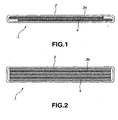
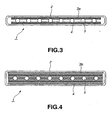
- an organic liquid absorbent unit 1 shown in Figs.1 and 2 is explained as an organic liquid absorbent unit embodying the present invention.
- An 'organic liquid absorbent unit' in the claims and in the following description of the embodiments may be exemplified by one having the function of a so-called sand bag used for preventing leakage of an organic liquid from a storage area or to outside the plant (sand bag substitute) and by one having the function of removing an unneeded organic liquid left over after leakage of the organic liquid.
- the organic liquid absorbent unit 1 is made up of the organic liquid transmitting pouch 2, and the organic liquid absorbent resin 3 and the support 4, both enclosed in this organic liquid transmitting pouch 2.
- the organic liquid absorbent unit 1 is made up by an organic liquid absorbent resin 3a, in a dried state, the support 4 and the organic liquid transmitting pouch 2, as shown in the cross-sectional view of Fig.1.
- the organic liquid absorbent unit 1 is made up of an organic liquid absorbent resin 3b in a swollen state in which it has absorbed the liquid, the support 4 and the organic liquid transmitting pouch 2, as shown in the cross-sectional view of Fig.2.
- the organic liquid absorbent resin used in the present invention, is usually produced by introducing hydrophilic polar groups into a water-insoluble resin.
- a water-insoluble resin obtained from an inexpensive general-purpose monomer as the feedstock.
- the following resins may be used as the general-purpose water-insoluble resin:
- the organic liquid absorbent resin of the present invention may be mixed with other components, such as known organic liquid absorbent resin, such as one obtained on addition of a cross-linkable monomer followed by polymerization, stabilizers or humidifiers.
- known organic liquid absorbent resin such as one obtained on addition of a cross-linkable monomer followed by polymerization, stabilizers or humidifiers.
- hydrophilic polar groups By introducing hydrophilic polar groups into the water-insoluble resin by any suitable method, but preferably by the above-described method, it is possible to produce a resin having superior organic liquid absorbency.
- the organic liquids that can be absorbed with the organic liquid absorbent resin obtained in accordance with the present invention, may be exemplified by those now explained.
- the solvent absorbent resin of the present invention exhibits superior solvent absorption performance for such wide range of solvents.
- the organic liquid absorbent resin of the present invention has both an oleophilic site or a polar site, which are based on the water-insoluble resin, and a hydrophilic site or a non-polar site, which are based on the hydrophilic polar group, in a molecule, and hence is able to absorb or adsorb liquid or gaseous chemical substances, such as a wider range of various solvents.
- organic solvents may be in gaseous, liquid or solid state at ambient temperature without any particular problems. If the organic solvent is in the form of a liquid, the organic liquid absorbent unit of the present invention containing the organic liquid absorbent resin may directly be contacted with an organic liquid to absorb the organic liquid. If the organic solvent is in the form of a gas, it may be liquefied and absorbed in this state or the organic liquid absorbent unit of the present invention containing the organic liquid absorbent resin may be contacted with the gaseous organic liquid for absorption. If the organic solvent is in the form of a solid, it may be dissolved or melted in other organic liquids and absorbed in this state in the organic liquid absorbent unit of the present invention containing the organic liquid absorbent resin.
- the organic liquid transmitting pouch 2 of the present invention may be formed by a cloth of natural or synthetic fibers.
- the natural fibers may be enumerated by, for example, cotton, hemp or silk.
- the synthetic fibers may be enumerated by, for example, polyamide, polyimide, polyester, polyethylene or polypropylene. These fibers may be used singly or mixed and formed into a woven or knitted cloth.
- the pouch may also be a non-woven cloth. It may, however, formed by a film-like product having fine through-holes passing through to the upper and lower surfaces of the product.
- the material of the support 4 of the present invention there is no particular limitation, provided that it is able to support the organic liquid absorbent resin.
- the term 'support' herein means e.g., causing the modified polymer compounds to be deposited or impregnated in order to prevent the modified polymer compound from becoming e.g., drastically tilted in the organic liquid transmitting pouch 2.
- the support is preferably a flexible netted product.
- Such flexible netted product 4 may be a cloth of natural or synthetic fibers.
- the support may be formed of the same material as that used for the organic liquid transmitting pouch 2.
- the natural fibers may, for example, be exemplified by cotton, hemp or silk.
- the synthetic fibers may be enumerated by, for example, polyamide, polyimide, polyester, polyethylene or polypropylene. These fibers may be used singly or mixed and formed into a woven or knitted cloth.
- the pouch may also be a non-woven cloth or paper. It may, however, formed by a film-like product having fine through-holes passing through to the upper and lower surfaces of the product.
- the support 4 preferably the flexible netted product, preferably has a through-hole ratio higher than the organic liquid transmitting pouch 2, whereby the organic liquid absorbent resin can be deposited on or impregnated in the support to secure the organic liquid absorbent resin to the support. It is possible in this manner to prevent the organic liquid absorbent unit from becoming collapsed due to the organic liquid absorbent resin becoming offset within the organic liquid absorbent unit during transport or storage of the organic liquid absorbent unit. Moreover, even if the organic liquid absorbent unit is repeatedly used, specifically, used for liquid absorption and subsequently dried for re-use, the organic liquid absorbent resin may be prevented from becoming collapsed in the organic liquid absorbent unit to increase the number of times of repeated use.
- the methods for securing the organic liquid absorbent resin to the support of the present invention by deposition or impregnation there is such a method consisting in coating a water dispersion system of the organic liquid absorbent resin in the swollen state of having absorbed the liquid on the support and drying the water dispersion system in situ.
- a method consisting in coating an organic liquid dispersion system of the organic liquid absorbent resin in the non-swollen state on the support and drying the water dispersion system in situ This meritoriously simplifies the coating and drying process to diminish the energy consumption.
- the sheet-like material, secured to the support by depositing the organic liquid absorbent resin to the support, or impregnating the support with the organic liquid absorbent resin, may be compacted by a static press orb roll. Although this operation may be performed at room temperature, it may preferably be performed under heating to a temperature higher than the room temperature.
- the soil and/or a solid material with a specific gravity not lower than unity may also be contained in the organic liquid transmitting pouch in addition to the organic liquid absorbent resin.
- the solid material with the specific gravity not lower than unity may be exemplified by natural ores, waste materiels, or a waste material bonded together.
- the constituent materials may be enumerated by plastics, metals, ceramics, glass, or mixtures thereof.
- polymer materials having a specific gravity not larger than unity may be used.
- polystyrene styrene-propylene copolymers, styrene-butadiene copolymers, styrene-vinyl chloride copolymers, styrene- vinyl acetate copolymers, styrene-acrylate copolymers, styrene -methacrylate copolymers, polyester resins, water-soluble resins, such as polyvinyl alcohol, casein or sodium polyacrylate, alcohol-soluble resins, such as copolymerized nylon or methoxymethylated nylon, and cured resins forming a three-dimensional meshed structure, such as polyurethane, melamine resins or epoxy resins.
- polystyrene styrene-propylene copolymers
- styrene-butadiene copolymers styrene-vinyl chloride copolymers
- styrene- vinyl acetate copolymers
- a magnetic material may be used as a solid material having a specific gravity not lower than unity. This is meritorious in that the organic liquid absorbent unit according to the present invention may be magnetically attracted to enable movement and transport by e.g., a crane. There is an additional asset that the organic liquid absorbent unit can be discriminated by this magnetism.
- Such magnetic material may be exemplified by such material as exhibits ferrimagnetism, ferromagnetism or parasitic magnetism.
- ferromagnetic materials include iron, nickel, cobalt, alloys thereof, alloys containing these metals, transition metals or alloys thereof, and alloys containing rare earth elements.
- ferrimagnetic materials include magnetite, maghemite, hematite, manganese zinc ferrite, manganese nickel ferrite, barium ferrite and strontium ferrite. These may consist of natural ores, waste materials or waste materials bonded together. These materials are higher in specific gravity than the routine inorganic materials and hence are able to elevate the weight of the sand bags significantly.
- the sand bag employing these materials is in a state of having absorbed the liquid, its weight can be increased correspondingly. Moreover, these materials can be acquired from inductors or loudspeakers of used electrical equipment or deflection yokes of used television receivers.
- the present invention is beneficial from the standpoint of effective utilization of resources in consideration that these are components difficult to dispose of in the disintegration processing of electronic equipment.
- the organic liquid absorbent unit 1 shown in Figs.5 and 6 is explained as an organic liquid absorbent unit embodying the present invention.
- An 'organic liquid absorbent unit' in the claims and in the description of the embodiments may be exemplified by one having the function of a so-called sand bag used for preventing leakage of an organic liquid from a storage area or to outside a plant (sand bag substitute) and by one having the function of removing an unneeded organic liquid left over after leakage of the organic liquid.
- the organic liquid absorbent unit 1 is made up of the organic liquid transmitting pouch 2, and the organic liquid absorbent resin 3 enclosed in this organic liquid transmitting pouch 2.
- the organic liquid absorbent unit 1 is made up by an organic liquid absorbent resin 3a, in a dried state, and the organic liquid transmitting pouch 2, as shown in the cross-sectional view of Fig.5.
- the organic liquid absorbent unit 1 is made up of an organic liquid absorbent resin 13b in a swollen state in which it has absorbed the liquid, and an organic liquid transmitting pouch 12, as shown in the cross-sectional view of Fig.6.
- the reference numeral 7 denotes a soil or other solid substances with the specific gravity not lower than unity.
- the organic liquid absorbent resin used in the present invention, is normally produced by introducing hydrophilic polar groups to the water-insoluble resin.
- hydrophilic polar groups there is no particular limitation to the water-insoluble resin, used as feedstock, it is desirable to use a water-insoluble resin obtained from inexpensive general-purpose monomer. These general-purpose water-insoluble resins may be those given above (omitted here).
- the organic liquid absorbent resin exhibits superior organic liquid absorption performance for such wide range of solvents.
- the organic liquid absorbent resin of the present invention has both an oleophilic site or a polar site, which is based on the water-insoluble resin, and a hydrophilic site or a non-polar site, which is based on the hydrophilic polar group, in a molecule, and hence is able to absorb or adsorb liquid or gaseous chemical substances, such as a wider range of various solvents.
- organic solvents may be in gaseous, liquid or solid state at ambient temperature without any particular problems. If the organic solvent is in the form of a liquid, the organic liquid absorbent unit of the present invention containing the organic liquid absorbent resin may directly be contacted with an organic liquid to absorb the organic liquid. If the organic solvent is in the form of a gas, it may be liquefied and absorbed in this state, or the organic liquid absorbent unit of the present invention containing the organic liquid absorbent resin may be contacted with the gaseous organic liquid for absorption. If the organic solvent is in the form of a solid, it may be dissolved or melted in other organic liquids and absorbed in this state in the organic liquid absorbent unit of the present invention containing the organic liquid absorbent resin.
- the organic liquid transmitting pouch 2 of the present invention may be formed by a cloth of natural or synthetic fibers.
- the natural fibers may be enumerated by, for example, cotton, hemp or silk.
- the synthetic fibers may be enumerated by, for example, polyamide, polyimide, polyester, polyethylene or polypropylene. These fibers may be used singly or mixed and formed into a woven or knitted cloth.
- the pouch may also be formed by a non-woven cloth. It may, however, be formed by a film-like product having fine through-holes passing through to the upper and lower surfaces of the product.
- the soil and/or a solid material with a specific gravity not lower than unity may also be contained in the organic liquid transmitting pouch in addition to the organic liquid absorbent resin.
- the solid material with the specific gravity not lower than unity may be exemplified by natural ores, waste materiels, or a waste material bonded together.
- the constituent materials may be enumerated by plastics, metals, ceramics, glass or mixtures thereof.
- polymer materials having a specific gravity not larger than unity may be used.
- polystyrene styrene-propylene copolymers, styrene-butadiene copolymers, styrene-vinyl chloride copolymers, styrene-vinyl acetate copolymers, styrene-acrylate copolymers, styrene-methacrylate copolymers, polyester resins, water-soluble resins, such as polyvinyl alcohol, casein or sodium polyacrylate, alcohol-soluble resins, such as copolymerized nylon or methoxymethylated nylon, and cured resins forming a three-dimensional meshed structure, such as polyurethane, melamine resins or epoxy resins.
- polystyrene styrene-propylene copolymers
- styrene-butadiene copolymers styrene-vinyl chloride copolymers
- a magnetic material may be used as a solid material having a specific gravity not lower than unity. This is meritorious in that the organic liquid absorbent unit according to the present invention may be magnetically attracted to enable movement and transport by e.g., a crane. There is an additional asset that the organic liquid absorbent unit can be discriminated by this magnetism.
- Such magnetic material may be exemplified by such material as exhibits ferrimagnetism, ferromagnetism or parasitic magnetism.
- ferromagnetic materials include iron, nickel, cobalt, alloys thereof, alloys containing these metals, transition metals or alloys thereof, and alloys containing rare earth elements.
- ferrimagnetic materials include magnetite, maghemite, hematite, manganese zinc ferrite, manganese nickel ferrite, barium ferrite and strontium ferrite. These may consist of natural ores, waste materials or waste materials bonded together. These materials are higher in specific gravity than the routine inorganic materials and hence are able to elevate the weight of the sand bags significantly.
- the sand bag employing these materials is in a state of having absorbed the liquid, its weight can be increased correspondingly. Moreover, these materials can be acquired from inductors or loudspeakers of used electrical equipment or deflection yokes of used television receivers.
- the teaching of the present invention is beneficial from the standpoint of effective utilization of resources in consideration that the above components are difficult to dispose of in the disintegration processing of electronic equipment.
- the organic liquid absorbent unit according to the present invention is used for prohibiting an organic liquid stored in a tank from leaking from the site of storage or to outside a plant in case liquid leakage has occurred in the tank on outbreak of a disaster such as earthquake.
- the organic liquid absorbent unit may also be used for disposing of the waste organic liquid discharged e.g., from a plant.
- an 'organic liquid absorbent unit' may be exemplified by one having the function of a so-called sand bag used for preventing leakage of an organic liquid from a storage area or to outside a plant (sand bag substitute) and by one having the function of removing an unneeded organic liquid left over after leakage of the organic liquid.
- the organic liquid absorbent unit 1 is made up of an organic liquid transmitting pouch 2, and an organic liquid absorbent resin 3 enclosed along with a magnetic member 7a in this organic liquid transmitting pouch 2.
- the organic liquid absorbent unit 1 is made up by the organic liquid transmitting pouch 2, organic liquid absorbent resin 3a, and the magnetic member 7a, as shown in the cross-sectional view of Fig.5.
- the organic liquid absorbent unit 1 is made up by the organic liquid absorbent resin 3b in a swollen state in which it has absorbed the liquid, magnetic member and the organic liquid transmitting pouch 2, as shown in the cross-sectional view of Fig.6.
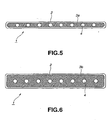
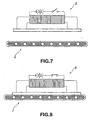
- the dry state and the liquid soaked and swollen state of the organic liquid absorbent unit 21, according to the present invention, in which is enclosed the soil or the solid substance 7a with a specific gravity not lower than unity, are shown in Figs.7 and 4, respectively.
- the organic liquid absorbent resin used in the present invention, is normally produced by introducing hydrophilic polar groups to the water-insoluble resin.
- hydrophilic polar groups there is no particular limitation to the water-insoluble resin used as feedstock, it is desirable to use a water-insoluble resin obtained from inexpensive general-purpose monomers. These general-purpose water-insoluble resins may be those given above (omitted here).
- organic liquids that may be absorbed with the organic liquid absorbent resin, obtained by the present invention are the same as those shown above.
- the solvent absorbent resin exhibits superior solvent absorption performance for such wide range of solvents.
- the organic liquid absorbent resin of the present invention has both an oleophilic site or a polar site, which is based on the water-insoluble resin, and a hydrophilic site or a non-polar site, which is based on the hydrophilic polar group, in a molecule, and hence is able to absorb or adsorb liquid or gaseous chemical substances, such as a wider range of various solvents.
- organic solvents may be in gaseous, liquid or solid state at ambient temperature without any particular problems. If the organic solvent is in the form of a liquid, the organic liquid absorbent unit of the present invention containing the organic liquid absorbent resin may directly be contacted with an organic liquid to absorb the organic liquid. If the organic solvent is in the form of a gas, it may be liquefied and absorbed in this state, or the organic liquid absorbent unit of the present invention containing the organic liquid absorbent resin may be contacted with the gaseous organic liquid for absorption. If the organic solvent is in the form of a solid, it may be dissolved or melted in other organic liquids and absorbed in this state in the organic liquid absorbent unit of the present invention containing the organic liquid absorbent resin.
- the present invention features containing the attractable substance 7a, in addition to the organic liquid absorbent resin 3, in the organic liquid permeating pouch.
- the attractable substance 7a it is desirable to use a magnetic substance.
- the organic liquid absorbent unit 1 may be magnetically attracted, using magnetic suction means 6, as shown in Figs.7 and 8, to enable movement and transport by e.g., a conveyor or a crane. This is meritorious in enabling transport to places hazardous for human operators or prompt transport in case of an emergency. There is an additional asset that the organic liquid absorbent unit can be discriminated by this magnetism.
- Such magnetic material may be exemplified by material exhibiting ferrimagnetism, ferromagnetism or parasitic magnetism.
- ferromagnetic materials include iron, nickel, cobalt, alloys thereof, alloys containing these metals, transition metals or alloys thereof, and alloys containing rare earth elements.
- ferrimagnetic materials include magnetite, maghemite, hematite, manganese zinc ferrite, manganese nickel ferrite, barium ferrite and strontium ferrite. These may consist of natural ores, waste materials or waste materials bonded together. These materials can be acquired from inductors or loudspeakers of used electrical equipment or deflection yokes of used television receivers.
- the teaching of the present invention is beneficial from the standpoint of effective utilization of resources in consideration that the above components are difficult to dispose of in the disintegration processing of electronic equipment.
- the technique of producing ferrite with used dry cells which has now been developed, may be effectively adapted to the present invention.
- These magnetic materials are higher in specific gravity than the routine inorganic materials and contributes to increasing the weight of the organic liquid absorbent unit.
- the magnetic materials are also effective in increasing the weight of even the organic liquid absorbent unit in the liquid-soaked state.
- the organic liquid transmitting pouch 2 of the present invention may be formed by a cloth of natural or synthetic fibers.
- the natural fibers may be enumerated by, for example, cotton, hemp or silk.
- the synthetic fibers may be enumerated by, for example, polyamide, polyimide, polyester, polyethylene or polypropylene. These fibers may be used singly or mixed and formed into a woven or knitted cloth.
- the pouch may also be formed by a non-woven cloth. It may, however, be formed by a film-like product having fine through-holes passing through to the upper and lower surfaces of the product.
- a support may further be contained in the organic liquid permeating pouch 2, in addition to the organic liquid absorbent resin and the magnetic substance.
- the support is capable of supporting the organic liquid absorbent resin.
- the support is preferably a flexible netted product.
- Such flexible netted product 5 may be a cloth of natural or synthetic fibers.
- the support may be formed of the same material as that used for the organic liquid transmitting pouch 2.
- the natural fibers may, for example, be exemplified by cotton, hemp or silk.
- the synthetic fibers may be enumerated by, for example, polyamide, polyimide, polyester, polyethylene or polypropylene. These fibers may be used singly or mixed, and may be formed into a woven or knitted cloth.
- the pouch may also be a non-woven cloth or paper. It may, however, formed by a film-like product having fine through-holes passing through to the upper and lower surfaces of the product.
- the support 5, preferably the flexible netted product preferably has a through-hole ratio higher than the organic liquid transmitting pouch 2, whereby the organic liquid absorbent resin can be deposited on or impregnated in the support to secure the organic liquid absorbent resin to the support. It is possible in this manner to prevent the organic liquid absorbent unit from becoming collapsed due to the organic liquid absorbent resin becoming offset within the organic liquid absorbent unit during transport or storage of the organic liquid absorbent unit. Moreover, even if the organic liquid absorbent unit is repeatedly used, specifically, used for liquid absorption and subsequently dried for re-use, the organic liquid absorbent resin may be prevented from becoming collapsed in the organic liquid absorbent unit, thereby allowing to increase the number of times of repeated use.
- the methods for securing the organic liquid absorbent resin to the support of the present invention by deposition or impregnation there is such a method consisting in coating a water dispersion system of the organic liquid absorbent resin in the liquid-soaked swollen state on the support and drying the water dispersion system in situ.
- a method consisting in coating an organic liquid dispersion system of the organicliquid absorbent resin in the non-swollen state on the support and drying the water dispersion system in situ. This meritoriously simplifies the coating and drying process to diminish the energy consumption.
- the sheet-like material, secured to the support by depositing the organic liquid absorbent resin to the support, or impregnating the support with the organic liquid absorbent resin, may be compacted by a static press or roll. Although this operation may be performed at room temperature, it may preferably be performed under heating to a temperature higher than the room temperature.
- the soil or the solid substance with a specific gravity not less than unity may be contained in the organic liquid transmitting pouch in addition to the organic liquid absorbent resin.
- the solid material with the specific gravity not lower than unity may be exemplified by natural ores, waste materiels, or a waste material bonded together.
- the constituent materials may be enumerated by plastics, glass, metals, ceramics, or mixtures thereof.
- polymer materials having a specific gravity not larger than unity may be used.
- polystyrene styrene-propylene copolymers, styrene-butadiene copolymers, styrene-vinyl chloride copolymers, styrene- vinyl acetate copolymers, styrene-acrylate copolymers, styrene-methacrylate copolymers, polyester resins, water-soluble resins, such as polyvinyl alcohol, casein or sodium polyacrylate, alcohol-soluble resins, such as copolymerized nylon or methoxymethylated nylon, and cured resins forming a three-dimensional meshed structure, such as polyurethane, melamine resins or epoxy resins.
- polystyrene styrene-propylene copolymers
- styrene-butadiene copolymers styrene-vinyl chloride copolymers
- styrene- vinyl acetate copolymers
- the present invention also features sucking an organic liquid absorbent unit, comprised of an organic liquid permeating pouch enclosing therein an organic liquid absorbent resin and an attracted substance.
- a magnetic material is used as an attractable substance 4, and the organic liquid absorbent unit 1 is magnetically transported, using magnetic attracting means 6, as shown for example in Figs.7 and 8.
- the organic liquid absorbent unit suited to the transporting method of the present invention is now explained in detail.
- the organic liquid absorbent unit 1 shown in Figs.3 to 6 is explained as an organic liquid absorbent unit of the present invention.
- the 'organic liquid absorbent unit' in the claims and in the of description of the embodiments may be exemplified by one having the function of a so-called sand bag used for preventing leakage of an organic liquid from a storage area or to outside the plant (sand bag substitute) and by one having the function of removing an unneeded organic liquid left over after leakage of the organic liquid.
- the organic liquid absorbent unit 1 is made up of an organic liquid transmitting pouch 2, and an organic liquid absorbent resin 3 enclosed along with a magnetic member 7a in this organic liquid transmitting pouch 2.
- the organic liquid absorbent unit 1 is made up by the organic liquid transmitting pouch 2, organic liquid absorbent resin 3a, and the magnetic member 7a, as shown in the cross-sectional view of Fig.5.
- the organic liquid absorbent unit 1 is made up by the organic liquid absorbent resin 3b in a swollen state in which it has absorbed the liquid, magnetic member and the organic liquid transmitting pouch 2, as shown in the cross-sectional view of Fig.2.
- the dry state and the liquid-soaked and swollen state of the organic liquid absorbent unit 1, according to the present invention, in which is enclosed the soil or the solid substance with a specific gravity not lower than unity, are shown in Figs.3 and 4, respectively.
- the organic liquid absorbent resin used in the present invention, is normally produced by introducing hydrophilic polar groups to the water-insoluble resin.
- hydrophilic polar groups there is no particular limitation to the water-insoluble resin used as feedstock, it is desirable to use a water-insoluble resin obtained from inexpensive general-purpose monomers.
- These general-purpose water-insoluble resins may be those now explained.
- the organic liquids that may be absorbed with the organic liquid absorbent resin, obtained by the present invention are the same as those shown above.
- such a resin which is optimum in solvent absorbency may be produced.
- the solvent absorbent resin may be produced even from used general-purpose resin or waste liquid, such as waste sulfuric acid, to contribute to effective utilization of resources and hence to protection of global environment.
- the solvent-absorbing resin of the present invention has many usages, it may be useful as a processing agent for a waste solvent discharged from a plant, for example, as an emergency processing agent on occurrence of leakage of a solvent storage tank.
- the organic liquid absorbent unit of the present invention is obtained by causing the organic liquid absorbent resin to be present in the organic liquid permeating pouch.
- the organic liquid absorbent resin may be produced by introducing hydrophilic polar groups to the water-insoluble resin and contains a modified high molecular compounds which takes on a gelated state on liquid absorption.
- the organic liquid absorbent unit according to the present invention is able to absorb a wide range of the various organic liquids to prevent leakage of an organic liquid from a storage area or to outside the plant more effectively than with the organic liquid absorbent unit.
- the organic liquid absorbent unit of the present invention which is small in weight and size during transport, absorbs the organic liquids to fulfil the function as to weight and size and as to shape followup, while it is less prone to collapsing during transport and storage.
- the organic liquid absorbent unit of the present invention is obtained by causing the organic liquid absorbent resin to be present in the organic liquid permeating pouch.
- the organic liquid absorbent resin may be produced by introducing hydrophilic polar groups to the water-insoluble resin, and contains a modified high molecular compounds which take on a gelated state on liquid absorption.
- the organic liquid absorbent unit according to the present invention is able to absorb a wide range of the various organic liquids to prevent leakage of an organic liquid from a storage area or to outside the plant more effectively than with the organic liquid absorbent unit.
- the organic liquid absorbent unit of the present invention which is small in weight and size during transport, absorbs the organic liquids to meet the requirements as to weight and size and as to shape followup, while it is less prone to collapsing during transport and storage.
- the organic liquid absorbent unit of the present invention is small in weight and size during transport, and also contains an attractable substance, so that it may be transported promptly and in large quantities by suction means in meeting with the attractable substance.
- the attractable substance is a magnetic material
- magnetic attraction means may be used.
- the organic liquid absorbent unit absorbs the organic liquids to meet the requirements as to weight and size and as to shape followup sufficiently.
- a large quantity of the organic liquid absorbent units can be transported quickly at a time even to hazardous sites for human operators.
- the organic liquid absorbent unit according to the present invention is suited to this transporting method. Stated differently, the organic liquid absorbent unit of the present invention, which is small in weight and size during transport, absorbs the organic liquids to meet the requirements as to weight and size and as to shape followup sufficiently. In addition, the organic liquid absorbent unit according to the present invention is able to absorb a wide range of the various organic liquids to prevent leakage of an organic liquid from a storage area or to outside the plant more effectively than with the organic liquid absorbent unit.
- the organic liquid absorbent unit of the present invention can be produced from used resin or waste material, while the solid material, with a specific gravity not less than unity, optionally contained, may be produced from waste components difficult to dispose of in the disintegration processing of electronic equipment. Thus, these waste materials can be utilized effectively to contribute to protection of global environment.
Landscapes
- Chemical & Material Sciences (AREA)
- Organic Chemistry (AREA)
- Chemical Kinetics & Catalysis (AREA)
- Analytical Chemistry (AREA)
- Health & Medical Sciences (AREA)
- Medicinal Chemistry (AREA)
- Polymers & Plastics (AREA)
- General Chemical & Material Sciences (AREA)
- Inorganic Chemistry (AREA)
- Engineering & Computer Science (AREA)
- Manufacturing & Machinery (AREA)
- Materials Engineering (AREA)
- Solid-Sorbent Or Filter-Aiding Compositions (AREA)
- Addition Polymer Or Copolymer, Post-Treatments, Or Chemical Modifications (AREA)
- Processes Of Treating Macromolecular Substances (AREA)
Abstract
The present invention is relative with an organic liquid absorbent resin comprised of a water-insoluble resin to which have been introduced hydrophilic polar groups. This organic liquid absorbent resin is produced on introducing hydrophilic groups to the water-insoluble resin. This organic liquid absorbent resin is inexpensive, high in safety and superior in is performance in absorbing not only hydrophilic solvents but also oleophilic solvents. <IMAGE>
Description
This invention relates to a solvent absorbent resin comprised of a water-insoluble
resin, into which hydrophilic polar groups have been introduced, and a
method for producing the solvent absorbent resin. This invention also relates to an
absorbent material, capable of absorbing various organic liquids, for use in preventing
or combating dispersion on the occasion of leakage of organic liquids in plants, and
more particularly to an absorbent material for absorbing organic liquids, which is ease
to handle for transport or storage, and a method for producing the absorbent material.
The liquid absorbent resin, such as water- or oil-absorbent resin, is routinely
produced by adding a cross-linkable monomer to a monomer having solubility for a
target liquid for polymerization. In this case, the monomer as the feedstock is
relatively expensive, in most cases, and the feedstock monomer is partially left over
unpolymerized in the product even after polymerization, thus raising problems in
connection with cost and safety. Moreover, the state-of-the-art liquid absorbent resin
is designed and manufactured with absorption of certain predetermined liquid as a
target, so that the liquid absorbent performance for liquids other than the targeted
liquid is lowered drastically. However, in practice, since it is required of the liquid
absorbent resin in many cases to be able to absorb plural sorts of liquids
simultaneously, such a liquid absorbent resin having wide adaptability has strongly
been desired.
On the other hand, the throughput of a product employing resins or plastics
having aromatic rings or conjugated diene in molecules, such as ABS (acrylonitrile-butadiene-
styrene) resin, SAN (styrene- acrylonitrile) resin, polyacrylonitrile-butadiene
or polyethylene terephthalate (PET), is increasing, such that the amount of
waste materials made from these materials is also increasing. Consequently, there is
an increasing need towards efficacious utilization of such waste materials to meet the
increasing interest for protection of the global environment.
Under this situation, it is thought to be desirable to enhance the possibility of
further re-utilization of these waste materials and to conduct researches towards
modification of the materials to products with higher added value.
Meanwhile, the polymer-based waste materials are disposed of roughly by three
types of techniques, namely land-filling, incineration and re-melting. Of these, land-filling
and incineration account for approximately 90% of the total amount of disposal
of the waste material, meaning that most of the waste material is not re-used.
As the method of recycling the polymer waste material, such a method of
melting by heating and re-molding is routinely employed, insofar as the thermoplastic
resin is concerned. In this case, a lot of problems are presented, such as thermal
deterioration, for example the lowering of the molecular weight or oxidation of the
polymer, admixture of foreign matter, such as dust and dirt, or admixture of resins
containing various colorants, which leads to the necessity of color matching. That is,
in recycling polymer waste materials of the general-purpose plastics or resins by
heating or melting, processing techniques or costs pose serious impediments.
Moreover, the state-of-the-art organic liquid absorbent resin is designed and
manufactured with absorption of certain predetermined organic liquids as a target, so
that the liquid absorbent performance for liquids other than the targeted liquids is
lowered drastically. However, in practice, since it is frequently required of the liquid
absorbent resin to be able to absorb plural sorts of organic liquids simultaneously, such
a liquid absorbent resin having wide adaptability also has strongly been desired.
In addition, for increasing the ease in handling for transport or preservation of
the organic liquid absorbent material, a further improvement is desired of the organic
liquid absorbent material to prevent it from becoming collapsed during transport or
storage.
Sand bags are routinely used for preventing the flooding of the sea, rivers or
lakes in inundation disasters, and are produced by charging the soil into a hemp pouch.
Recently, from the perspective of risk management, sand bags are equipped for
preventing organic liquids, stored in plants on the occasion of disasters, such as
earthquakes, in order to prevent organic liquids stored in plants from leaking from a
storage area to outside the plant. However, the component of the conventional sand
bags is mostly soil, although the water-absorbent resin is used only in limited cases.
Consequently, the conventional sand bags are only poor in absorbency with respect to
the organic liquid, and hence are unable to prevent liquid dispersion effectively.
These sand bags are both bulky and heavy and hence are difficult to transport.
Moreover, should the organic liquid absorbent material be transported from distant
sites, it is necessary to use a vehicle for such transport, while the material needs to be
loaded/unloaded by a labor-consuming operation. On outbreak of a disaster, the
organic liquid absorbent material must be quickly transported at a required time to a
required site. However, such prompt transport of a sufficient quantity of the organic
liquid absorbent material is impeded by its poor transportability. There is also a
problem that the organic liquid absorbent material cannot be installed on a site to
which it is risky for an operator to transport the material. Moreover, the component
of the conventional sand bags is mostly soil, although the water-absorbent resin is used
only in limited cases. Consequently, the conventional sand bags are only poor in
absorbency with respect to organic liquids, and hence are unable to prevent dispersion
of the organic liquids effectively
It is therefore an object of the present invention to provide a liquid absorbent
resin which is inexpensive, high in safety, superior in its property of absorbing both
hydrophilic and oleophilic solvents, and having wide adaptability, and a method for the
preparation of the liquid absorbent resin.
It is another object of the present invention to provide a method for effective
utilization of used water-insoluble resin obtained from waster general-purpose plastics
for conversion to a high added-value product, and a product obtained by such method.
It is a further object of the present invention to provide an organic liquid
absorbent material which is small in size and weight during transport and which
absorbs the organic liquid in use to achieve the requirements for size or weight and the
outer shape followup function sufficiently for use as substitute for sand bags.
It is a further object of the present invention to exploit a waste polymer material,
such as water-insoluble resin, or an inorganic waste solid material, such as metal or
ceramics, which were difficult to dispose of as waste material, to contribute to
protection of the global environment.
It is a further object of the present invention to provide an organic liquid
absorbent material which is inexpensive and high in safety, has a wide field of
application and which is easy to handle in transport or storage, and a method for the
preparation of the organic liquid absorbent material.
It is yet another object of the present invention to provide a method for
transporting the organic liquid absorbent material promptly and in large quantities at
a time even to a site to which it is otherwise difficult for an operator to transport the
material.
The present inventors have conducted eager researches towards accomplishing
the above object and found that, by introducing hydrophilic polar groups to the water-insoluble
resin obtained from general-purpose monomers, the resulting resin exhibits
absorbency applicable to a wide variety of solvents. The present inventors have
conducted further researches and ultimately arrived at the present invention.
That is, the present invention provides a solvent absorbent resin formed of a
water-insoluble resin to which have been introduced hydrophilic polar groups.
The hydrophilic polar groups are at least one of a sulfo group which may be in
the form of a salt, a sulfuric acid group which may be in the form of a salt, a
carboxylic, an amide or a nitro groups, which may be in the form of a salt, a -PO(OH)2
group, which may be in the form of a salt, a -OPO(OH)2 group, which may be in the
form of a salt, a hydroxyl group, which may be in the form of a salt, and an aminic base
group, which may be in the form of a salt.
The hydrophilic polar groups are contained in an amount of 0.1 to 99 mol% in
the entire monomer units in the water-insoluble resin.
The water-insoluble resin contains at least one of an aromatic ring and a
conjugated diene in a main chain and/or a side chain thereof.
At least one of the aromatic ring and the conjugated diene contained in the
water-insoluble resin accounts for 1 to 100 mol% in the entire monomer units in the
resin.
The present invention also provides a solvent absorbent resin formed of a used
water-insoluble resin to which have been introduced hydrophilic polar groups.
The hydrophilic polar groups are at least one of a sulfo group which may be in
the form of a salt, a sulfuric acid group which may be in the form of a salt, a
carboxylic, an amide or a nitro groups, which may be in the form of a salt, a-PO(OH)2
group, which may be in the form of a salt, a -OPO(OH)2 group, which may be in the
form of a salt, a hydroxyl group, which may be in the form of a salt, and an aminic base
group, which may be in the form of a salt.
The hydrophilic polar groups are contained in an amount of 0.1 to 99 mol% in
the entire monomer units in the water-insoluble resin.
The water-insoluble resin contains at least one of an aromatic ring and a
conjugated diene in a main chain and/or a side chain thereof.
At least one of the aromatic ring and the conjugated diene contained in the
water-insoluble resin accounts for 1 to 100 mol% in the entire monomer units in the
resin.
The present invention also provides a method for producing a solvent absorbent
resin comprising introducing hydrophilic groups to a water-insoluble resin.
The hydrophilic polar groups are at least one of a sulfo group which may be in
the form of a salt, a sulfuric acid group which may be in the form of a salt, a
carboxylic, an amide or a nitro groups, which may be in the form of a salt, a -PO(OH)2
group, which may be in the form of a salt, a -OPO(OH)2 group, which may be in the
form of a salt, a hydroxyl group, which may be in the form of a salt, and an aminic base
group, which may be in the form of a salt.
The hydrophilic polar groups are contained in an amount of 0.1 to 99 mol% in
the entire monomer units in the water-insoluble resin.
The water-insoluble resin contains at least one of an aromatic ring and a
conjugated diene in a main chain and/or a side chain thereof.
At least one of the aromatic ring and the conjugated diene contained in the
water-insoluble resin accounts for 1 to 100 mol% in the entire monomer units in the
resin.
The present invention also provides a method for producing a used solvent
absorbent resin comprising introducing hydrophilic groups to a water-insoluble resin.
The hydrophilic polar groups are at least one of a sulfo group which may be in
the form of a salt, a sulfuric acid group which may be in the form of a salt, a
carboxylic, an amide or a nitro groups, which may be in the form of a salt, a -PO(OH)2
group, which may be in the form of a salt, a -OPO(OH)2 group, which may be in the
form of a salt, a hydroxyl group, which may be in the form of a salt, and an aminic base
group, which may be in the form of a salt.
The hydrophilic polar groups are contained in an amount of 0.1 to 99 mol% in
the entire monomer units in the water-insoluble resin.
The water-insoluble resin contains at least one of an aromatic ring and a
conjugated diene in a main chain and/or a side chain thereof.
At least one of the aromatic ring and the conjugated diene contained in the
water-insoluble resin accounts for 1 to 100 mol% in the entire monomer units in the
resin.
The present invention also provides a water-insoluble resin into which
hydrophilic groups have been introduced. With the absorbent unit, comprised of a
water-insoluble resin, co-existing with support, the unit is not prone to collapsing
during transport or storage. Moreover, the organic liquid absorbent resin is supported
by the support to prevent the unit from becoming collapsed during transport or storage.
The present invention provides an organic liquid absorbent unit comprising an
organic liquid absorbent resin comprised of a used water-insoluble resin having
hydrophilic polar groups introduced thereto and a support. This support is constituted
by a flexible netted product and supports the organic liquid absorbent resin.
The organic liquid absorbent unit contains a solid substance having a specific
gravity not less than unity. As this solid substance, having a specific gravity not less
than unity, natural ores having a specific gravity not less than unity are used. The solid
substance may be a waste material having a specific gravity not less than unity or a
waste material bonded together and having a specific gravity not less than unity. A
waste material, having a specific gravity not less than unity, may also be used.
The organic liquid absorbent unit of the present invention includes an organic
liquid absorbent resin comprised of a used water-insoluble resin, to which hydrophilic
polar groups have been introduced, and a support. The support is formed by a flexible
netted product. The organic liquid absorbent resin is supported by the support.
The organic liquid absorbent unit contains a solid substance having a specific
gravity not less than unity. As this solid substance, having a specific gravity not less
than unity, natural ores having a specific gravity not less than unity are used. The solid
substance may also be a waste material having a specific gravity not less than unity or
a waste material bonded together and having a specific gravity not less than unity. A
waste material, having a specific gravity not less than unity, may also be used.
The present invention also provides a method for producing an organic liquid
absorbent unit, including charging an organic liquid absorbent resin, obtained on
introducing hydrophilic groups to a water-insoluble resin, and a support, into an
organic liquid permeating pouch.
The support is a flexible netted product. The organic liquid absorbent resin is
supported by the support. In the organic liquid permeating pouch is charged one of a
solid substance having a specific gravity not less than unity, a solid substance
comprised of natural ores having a specific gravity not less than unity, a solid
substance comprised of a waste material having a specific gravity not less than unity,
a solid substance comprised of a waste material, bonded together, and having a
specific gravity not less than unity, a solid substance comprised of a magnetic waste
material having a specific gravity not less than unity.
The present invention also provides an organic liquid absorbent unit containing
a used organic liquid absorbent resin, to which hydrophilic polar groups have been
introduced, and a solid substance having a specific gravity not less than unity. As the
solid substance, a solid substance comprised of natural ores having a specific gravity
not less than unity, a solid substance comprised of a waste material having a specific
gravity not less than unity, a solid substance comprised of a waste material, bonded
together, and having a specific gravity not less than unity, may be used.
The present invention also provides a method for producing an organic liquid
absorbent unit comprising charging an organic liquid absorbent resin, obtained on
introducing hydrophilic groups to a used water-insoluble resin, into an organic liquid
permeating pouch.
The hydrophilic polar groups, used here, are at least one of a sulfo group which
may be in the form of a salt, a sulfuric acid group which may be in the form of a salt,
a carboxylic, an amide or a nitro groups, which may be in the form of a salt, a
-PO(OH)2 group, which may be in the form of a salt, a -OPO(OH)2 group, which may
be in the form of a salt, a hydroxyl group, which may be in the form of a salt, and an
aminic base group, which may be in the form of a salt. Preferably, the hydrophilic polar
groups are contained in an amount of 0.1 to 99 mol% in the entire monomer units in
the water-insoluble resin.
Preferably, the water-insoluble resin contains at least one of an aromatic ring
and a conjugated diene in a main chain and/or a side chain thereof, and at least one of
the aromatic ring and the conjugated diene contained in the water-insoluble resin
accounts for 1 to 100 mol% in the entire monomer units in the resin.
Into the water-transmitting pouch is charged a solid substance having a specific
gravity not lower than unity. This solid substance may be one of a solid substance
comprised of natural ores having a specific gravity not less than unity, a solid
substance comprised of a waste material having a specific gravity not less than unity,
a solid substance comprised of a waste material, bonded together, and having a
specific gravity not less than unity, and a solid substance comprised of a magnetic
waste material having a specific gravity not less than unity.
The present invention also provides a method for producing an organic liquid
absorbent unit comprising charging an organic liquid absorbent resin, obtained on
introducing hydrophilic groups to a used water-insoluble resin, into an organic liquid
permeating pouch. The hydrophilicpolar groups are at least one of a sulfo group which
may be in the form of a salt, a sulfuric acid group which may be in the form of a salt,
a carboxylic, an amide or a nitro groups, which may be in the form of a salt, a
-PO(OH)2 group, which may be in the form of a salt, a -OPO(OH)2 group, which may
be in the form of a salt, a hydroxyl group, which may be in the form of a salt, and an
aminic base group, which may be in the form of a salt. Preferably, the hydrophilic polar
groups are contained in an amount of 0.1 to 99 mol% in the entire monomer units in
the water-insoluble resin.
Preferably, the water-insoluble resin contains at least one of an aromatic ring
and a conjugated diene in a main chain and/or a side chain thereof, and at least one of
the aromatic ring and the conjugated diene contained in the water-insoluble resin
accounts for 1 to 100 mol% in the entire monomer units in the resin.
Into the water-transmitting pouch is charged a solid substance having a specific
gravity not lower than unity. This solid substance may be one of a solid substance
comprised of natural ores having a specific gravity not less than unity, a solid
substance comprised of a waste material having a specific gravity not less than unity,
a solid substance comprised of a waste material, bonded together, and having a
specific gravity not less than unity, and a solid substance comprised of a magnetic
waste material having a specific gravity not less than unity.
The present inventors conducted researches into handling performance of the
organic liquid absorbent unit during transport and storage, and have found that, if an
attractable substance exists together with the absorbent unit, a large quantity of the
organic liquid absorbent units can be transported promptly at a time without resorting
to the human power. If, for example, a magnetic substance is used as the attractable
material, it is possible to transport a large quantity of the organic liquid absorbent units
promptly at a time by a crane or a conveyor by magnetically attracting the organic
liquid absorbent units. Moreover, if inorganic solid waste materials, such as metal or
ceramics, are re-used as resource re-utilization, it is beneficial for protection of global
resources, in consideration that these materials represent components difficult to
dispose of in the disintegration of electrical equipment.
The present invention also provides an organic liquid absorbent unit containing
an organic liquid absorbent resin, to which the hydrophilic polar groups have been
introduced, and an attractable substance, which attractable substance may be one of a
magnetic material, a magnetic waste material and a waste material bonded together.
The organic liquid absorbent unit of the present invention includes a support
which is a flexible netted product. The organic liquid absorbent resin is supported by
a support.
The present invention also provides an organic liquid absorbent unit comprised
of an organic liquid absorbent resin made up by a used water-insoluble resin, int which
hydrophilic polar groups have been introduced, and an attractable substance. The
attractable substance is a magnetic substance which is comprised of a waste material
bonded or not bonded together.
The organic liquid absorbent unit also includes a support comprised of a flexible
netted product. The organic liquid absorbent resin is supported by a support. The
present invention also provides a method for producing an organic liquid absorbent unit
comprising introducing an organic liquid absorbent resin obtained on introducing
hydrophilic groups to a water-insoluble resin, and an attractable substance, into an
organic liquid permeating pouch.
The attractable substance may be a magnetic substance, a waste material or a
waste material bonded together.
The hydrophilic polar groups are at least one of a sulfo group which may be in
the form of a salt, a sulfuric acid group which may be in the form of a salt, a
carboxylic, an amide or a nitro groups, which may be in the form of a salt, a -PO(OH)2
group, which may be in the form of a salt, a -OPO(OH)2 group, which may be in the
form of a salt, a hydroxyl group, which may be in the form of a salt, and an aminic base
group, which may be in the form of a salt. Preferably, the hydrophilic polar groups are
contained in an amount of 0.1 to 99 mol% in the entire monomer units in the water-insoluble
resin.
Preferably, the water-insoluble resin contains at least one of an aromatic ring
and a conjugated diene in a main chain and/or a side chain thereof, and at least one of
the aromatic ring and the conjugated diene contained in the water-insoluble resin
accounts for 1 to 100 mol% in the entire monomer units in the resin.
The support is charged into the organic liquid permeating pouch to form an
organic liquid absorbent unit, and is formed by a flexible netted product. The organic
liquid absorbent resin is supported by the support.
The present invention also provides a method for producing an organic liquid
absorbent unit comprising introducing an organic liquid absorbent resin obtained on
introducing hydrophilic groups to a water-insoluble resin, and an attractable substance,
into an organic liquid permeating pouch. The magnetic substance is a waste material
which may be bonded together.
The hydrophilic polar groups are at least one of a sulfo group which may be in
the form of a salt, a sulfuric acid group which may be in the form of a salt, a
carboxylic, an amide or a nitro groups, which may be in the form of a salt, a -PO(OH)2
group, which may be in the form of a salt, a -OPO(OH)2 group, which may be in the
form of a salt, a hydroxyl group, which may be in the form of a salt, and an aminic base
group, which may be in the form of a salt. Preferably, the hydrophilic polar groups are
contained in an amount of 0.1 to 99 mol% in the entire monomer units in the water-insoluble
resin.
Preferably, the water-insoluble resin contains at least one of an aromatic ring
and a conjugated diene in a main chain and/or a side chain thereof, and at least one of
the aromatic ring and the conjugated diene contained in the water-insoluble resin
accounts for 1 to 100 mol% in the entire monomer units in the resin.
The organic liquid permeating pouch is charged into the support, which is a
flexible netted product. The organic liquid absorbent resin is supported by the support.
By transporting, under suction, the organic liquid absorbent unit, in which not
only the organic liquid absorbent resin but also the attractable substance, present in the
organic liquid permeating pouch, a large quantity of the organic liquid absorbent units
can be transported promptly at a time without resorting to human labor. For example,
if a magnetic substance is used as an attractable substance, the organic liquid absorbent
units can be transported promptly at a time in large quantities, by a crane or a
conveyor, even to places hazardous for human operators.
With use of the organic liquid absorbent resin, obtained on introducing an
organic liquid absorbent resin to the water-insoluble resin, a wide variety of organic
liquids can be absorbed. Moreover, such an organic liquid absorbent unit can be
provided which is small in weight and size during transport, and absorbs the organic
liquids in use to meet the requirements as to weight ands size and as to shape followup
sufficiently the organic liquid absorbent unit is also beneficial in contributing to
protection of global environment by re-utilization of the polymer waste material, such
as waste resin, which proved a nuisance as waste, can be re-used as resources.
The present invention also provides a method for transporting an organic liquid
absorbent unit comprising sucking an organic liquid absorbent resin, comprised of a
water-insoluble resin, to which hydrophilic polar groups have been introduced, and a
magnetic substance.
The water-insoluble resin, comprised of a water-insoluble resin, to which
hydrophilic polar groups have been introduced, and the magnetic substance, is
transported as it is sucked magnetically.
The magnetic substance is a waste magnetic substance or a waste magnetic
substance bonded together.
The organic liquid absorbent unit further includes a support which support is a
flexible netted product.
In the method for transporting the organic liquid absorbent unit, the organic
liquid absorbent resin is supported by the support.
The present invention also provides a method for transporting an organic liquid
absorbent unit comprising sucking and transporting an organic liquid absorbent resin,
comprised of a used water-insoluble resin, to which hydrophilicpolar groups have been
introduced, and a magnetic substance.
The water-insoluble resin, comprised of the used water-insoluble resin, to which
hydrophilic polar groups have been introduced, and the magnetic substance, is
transported as it is sucked magnetically.
The magnetic substance is a waste magnetic substance or a waste magnetic
substance bonded together.
The organic liquid absorbent unit further includes a support, which support is
a flexible netted product.
In the method for transporting the organic liquid absorbent unit, the organic
liquid absorbent resin is supported by the support.
Other objects, features and advantages of the present invention will become
more apparent from reading the embodiments of the present invention as shown in the
drawings.
An organic liquid absorbent material of the present invention is generally
prepared on introducing hydrophilic polar groups to a water-insoluble resin.
For preparation of a solvent absorbent resin which is inexpensive and which
contains only a minor quantity of residual monomers, the present invention features
using, as the feedstock, a water-insoluble resin obtained from an inexpensive general-purpose
monomer. The water-insoluble resin used in the present invention may be a
general-purpose resin, in particular a general-purpose resin contained in a waste
material. Specified examples of the water-insoluble resin include an ABS
(acrylonitrile- butadiene- styrene) polymer, high impact polystyrene (HIPS), a
styrene- butadiene elastomer (SBC), SAN (styrene- acrylonitrile) polymer, a
polyacrylonitrile polymer (PAN), polyacrylonitrile- butadiene (nitrile rubber),
polystyrene (PS), nylon polymer, polyolefin (such as polyethylene, polypropylene or
polyisoprene) polymer, vinyl chloride (PVC), polyphenylene ether (PPE),
polyphenylene sulfide (PPS), polycarbonate (PC), polyethylene terephthalate (PET),
polybutylene terephthalate (PBT), polysulfone, polyallyl sulfone, polyether sulfone,
polythioether sulfone, polyether ketone, polyether imide, polyether ether ketone,
polyamide (nylon), polyamideimide, polyimide, polyallylate, aromatic polyester,
polyurethane, polyvinyl chloride, chlorinated polyether, polychloromethyl styrene,
polyacrylate, polymethacrylate, celluloid, various liquid crystal polymers, methacryl
resins (PMMA), amber resins, terpene resins, epoxy resins, phenol formalin resins, and
melamine resins. Of these, the water-insoluble polymers having aromatic diene rings
or conjugated diene structures, that allow for facilitated introduction of hydrophilic
polar groups as later explained, in the main and/or side chains thereof, are most
preferred. The content of the aromatic rings and/or conjugated diene units in the water-insoluble
polymer is desirably about 1 to 100 mol% based on the weight of the total
monomer units in the water-insoluble polymer. If the content is lower than this range,
the number of the hydrophilic polar groups introduced into the water-insoluble resin
is smaller, while the absorbency with respect to the polar solvent is lowered.
Moreover, the water-insoluble resin tends to be dissolved in various solvents even after
the hydrophilic polar groups have been introduced into the water-insoluble resin. In
order to prevent this, the content is desirably not lower than about 1%.
Although there is no particular limitation to the molecular weight (Mw) of the
water-insoluble resin material, it is customarily about 1,000 to 20,000,000 and
preferably about 10,000 to 1,000,000 in terms of weight averaged molecular weight
Mw). If the molecular weight is higher than 1,000, the liquid electrolyte solution is
completely dissolved in water or in an organic solvent to render it impossible to evade
the inconvenience that the solvent absorbent resin cannot be produced, that is, the state
of the gel cannot be maintained following the absorption. The molecular weight lower
than 20,000,000 is more practical in that hydrophilic groups can then be introduced
more readily.
These water-insoluble resins may be newly prepared unused resin particles
(virgin pellets). Alternatively, these resin materials may also be used resins or waste
resins, molded for specified usage or application. The waste materials may be ejects
(odds and ends) of the resin feedstock or molded products from the production process,
chassis already used in electrical equipment or automobiles, various component
materials, tubes, hoses or various shock-absorbing materials. The used resins mean
those resins recovered from the above waste materials. The waste materials in the
present invention may be those from plants, selling stores or household. The waste
materials recovered from plants or selling stores, such as rejects or odds and ends, are
more desirable than the waste materials recovered from the household, because the
former waste materials are generally more uniform in composition.
The water-insoluble resin may be alloyed with other resins, or may be used or
waste resins containing additives as known per se, such as face dyes, stabilizers,
combustion retardants, plasticizers, fillers and other assistant agents. Alternatively, the
water-insoluble resin may also be a mixture of the used or waste material with unused
materials (virgin materials).
The present invention contemplates to introduce hydrophilic polar groups to the
aforementioned water-insoluble resin for conversion to the solvent absorbent resin.
The hydrophilic polar groups contribute to affording not only the effect in increasing
the absorbency with respect to polar solvents but also the effect in preventing the
water-insoluble resin from becoming dissolved in various solvents.
The hydrophilic polar groups may be enumerated by acidic or basic groups. The
acidic or basic groups may also constitute a salt. As for specified examples of the
hydrophilic polar groups, sulfo groups represented by the formula -SO3M, and which
may be in the form of a salt, where M is a hydrogen atom or a cation of metals, such
as sodium or potassium, sulfuric acid groups represented by the formula -OSO3M, and
which may be in the form of a salt, where M has the same meaning as above, phospho
groups, represented by the formula -PO(OM1) (OM2) or the formula
-OPO(OM1)(OM2), and which may be in the form of a salt, where M1 and M2 may be
the same or different and have the same meaning as M, and hydroxy groups
represented by the formula -OM3, and which may be in the form of a salt, where M3
has the same meaning as M, may be exemplified as acidic groups that may be in the
form of salts. In addition, aminic bases, such as amino groups, secondary amino
groups, such as methylamino groups, tertiary amino groups, such as dimethylamino
groups, for example, quaternary ammonium groups, such as trimethyl ammonium
chloride groups, that may be in the form of salts, may be exemplified as basic groups
that may be in the form of a salt. Moreover, amide or nitro groups may also be used.
For introducing sulfo groups, which are or are not in the form of salts, to the
water-insoluble resin, a water-insoluble resin, desirably containing an aromatic ring,
is directly reacted with sulfonating agents, such concentrated sulfuric acid, preferably
with a concentration not lower than about 70 wt%, sulfuric anhydride, fuming sulfuric
acid or chlorosulfonic acid, or the resin is dissolved or dispersed in an organic solvent,
to introduce sulfo groups to the resin. The resulting product then is neutralized with
a basic compound, such as sodium hydroxide or potassium hydroxide, for conversion
to a sulfonate. Meanwhile, the reaction temperature in introducing the sulfo groups is
generally on the order of approximately 0°C to 200°C, preferably approximately 30°C
to 120°C, although the temperature varies appreciably depending on whether or not an
organic solvent is used. If the reaction temperature is approximately 0°C or higher,
the rate of reaction is sufficiently high and a liquid electrolyte absorbing resin having
more desirable properties may be produced. If the reaction temperature is not higher
than approximately 200°C, molecular chains in the resin are not prone to disruption,
while the resin is hardly soluble in water or in solvents. The reaction time is generally
1 minute to 40 hours, preferably five minutes to two hours, although the reaction time
is varied appreciably with the reaction temperature. Under this condition, the reaction
may proceed sufficiently with an optimum production efficiency.
For introducing sulfuric acid groups, that may be in the form of a salt, a water-insoluble
resin, preferably having an unsaturated bond, is reacted with a hot aqueous
solution of sulfuric acid, to introduce the sulfuric acid groups, and subsequently the
resulting product is reacted with a basic compound, such as sodium hydroxide or
potassium hydroxide, to form a sulfate.
For introducing carboxylic groups, that may be in the form of salts, n-butyl
lithium is added to a water-insoluble resin, preferably containing aromatic groups, and
the resulting product is reacted with dry ice, to introduce carboxylic groups. The
resulting product then is reacted with a basic compound, for example, sodium
hydroxide or potassium hydroxide, to form a carboxylate.
For introducing amide groups, a water-insoluble resin, containing nitro groups,
may be hydrolyzed with heated concentrated sulfuric acid, or heated alkali, such as a
heated aqueous solution of sodium hydroxide or of potassium hydroxide.
For introducing nitro groups, a water-insoluble resin preferably having an
aromatic ring may be reacted with fuming nitric acid or a liquid mixture of nitric acid
and sulfuric acid.
For introducing a -PO(OH)2 group that may be in the form of a salt, phosphorus
trichloride may be added to a water-insoluble resin desirably containing an aromatic
ring, and the resulting product then is hydrolyzed to introduce the -PO(OH)2 group.
The resulting product then is reacted with a basic compound, such as sodium hydroxide
or potassium hydroxide, to form a corresponding salt.
For introducing a -OPO(OH)2 group, that may be in the form of a salt,
phosphorus trichloride may be added to a water-insoluble resin desirably containing
an unsaturated bond, and the resulting product then is hydrolyzed to introduce the
-OPO(OH)2 group. The resulting product then is reacted with a basic compound, such
as sodium hydroxide or potassium hydroxide, to form a corresponding salt.
For introducing a hydroxy group that may be in the form of a salt, a water-insoluble
resin desirably containing an unsaturated bond is reacted with an aqueous
solution of sulfuric acid to enable hydroxy groups to be introduced. The resulting
product then is reacted with a basic compound, such as sodium hydroxide or potassium
hydroxide, to form a corresponding salt.
For introducing tertiary and/or quaternary aminic base, a water-insoluble resin
desirably containing an aromatic ring is subjected to a Friedel-Kraft reaction for
chloromethylation, followed by reaction with ammonia or a variety of amine
compounds to introduce tertiary or quaternary amine salts as ionic groups. In
introducing primary or secondary amino groups or converting these amino groups into
corresponding salts, any known method may be used.
Meanwhile, hydrophilic polar group introducing agents or basic compounds may
be virgin products, waste liquids discharged from plants, or recycled products. From
the perspective of effective utilization of resources, it is more desirable to use the waste
liquid as the feedstock of the liquid electrolyte absorbing resins.
Only one of these hydrophilic polar groups may be introduced, while a plurality
of the hydrophilic polar groups may also be introduced in combination. The amount
of the hydrophilic polar groups introduced to the water-insoluble resin is desirably
about 0.1 to 99 mol% based on the weight of the units in the resin. This range is
preferred in order to suppress dissolution in water of the resin following introduction
of the hydrophilic polar groups, and in order to assure optimum absorbency into the
liquid electrolyte.
The above-described method enables the hydrophilic polar groups to be
introduced into the water-insoluble resin to produce a resin having superior solvent
absorbency.
- By way of a more preferred embodiment, a reaction product, which is usually
a gelated product, obtained by the reaction of introducing the hydrophilic polar groups,
is preferably filtered, washed with water and subsequently dried or dehydrated to
produce a resin having superior solvent absorbency.
The water-insoluble resin of the present invention may, of course, be prepared
by polymerizing a monomer, to the main chain and/or the side chain of which the
hydrophilic polar groups have been introduced, by means known per se.
Although the water-insoluble resin of the present invention has many usages, it
may be useful as a processing agent for a waste solvent discharged from a plant, for
example, as an emergency processing agent on occurrence of leakage of a solvent
storage tank. The following are specified examples of solvents that can be absorbed
with the water-insoluble resin obtained in accordance with the present invention:
It is astonishing that the solvent absorbent resin of the present invention shows
superior solvent absorption performance for such wide range of solvents. The reason
is presumably that, since the solvent absorbent resin of the present invention has both
an oleophilic site or an oleophilic site, which are based on the water-insoluble resin,
and a hydrophilic site and a polar site, which are based on the hydrophilic polar group,
in a molecule, and hence is able to absorb or adsorb liquid or gaseous chemical
substances, such as a wider range of various solvents.
These organic solvents may be in gaseous, liquid or solid state at ambient
temperature without any particular problems. If the organic solvent is in the form of
a liquid, the solvent absorbent resin may directly be added to an organic sovent to
absorb the solvent. If the organic solvent is in the form of a gas, it may be absorbed
in a liquefied state or by contacting the resin with the gaseous organic solvent. If the
organic solvent is in the form of a solid, it may be absorbed by the resin as the solvent
is dissolved or melted in other organic solvent(s).
As discussed above, a resin having a superior absorption performance for
organic solvents may be produced by introducing hydrophilic polar groups into a
water-insoluble resin, without regard to the introducing methods used.
If desired, the solvent absorbent resin of the present invention may further
contain other components, such as known liquid absorbing resins, for example, those
obtained on addition of a cross-linkable monomer followed by polymerization,
stabilizers or humidifiers.
As solvent absorbent resins according to the present invention, samples of
Examples 1 to 5 were actually prepared and evaluated. However, the present invention
is not limited to these specified Examples.
A commercially available SAN resin (styrene, 57 mol%; acrylonitrile, 43 mol %)
was crushed to 16 to 32 meshes and reacted with 90 wt% of 100°C sulfuric acid for
thirty minutes. After the end of the reaction, the gelated mass in the system was
filtered through a glass filter, washed with water and again filtered. The resulting
product was dried in an air circulating type drier at 105°C for two hours. From the
results of elementary analysis of sulfur of the resulting dried product, sulfo groups
were found to account for 26 mol% in the entire monomer units. From the measured
results of FT-IR, it was also found that the nitrile groups in the resin were converted
into amide groups.
A commercially available ABS resin (styrene, 50 mol%; acrylonitrile, 39 mol%;
butadiene, 11 mol%) was crushed to 16 to 32 meshes and under the same conditions
as in Example 1. From the results of elementary analysis of sulfur of the resulting
dried product, sulfo groups were found to account for 42 mol% in the entire monomer
units. From the measured results of FT-IR, it was also found that the nitrile groups in
the resin were converted into amide groups.
A transparent portion of a used 8 mm video cassette (SAN resin composed of
64 mol% of styrene and 36 mol% of styrene), crushed to 16 to 32 mesh, was reacted
under the same conditions as in Example 1. From the results of elementary analysis of
sulfur, sulfo groups were found to account for 31 mol% in the entire monomer units.
From the measured results of FT-IR, it was also found that the nitrile groups in the
resin were converted into amide groups.
A black-colored portion of a used 8 mm video cassette (ABS resin composed of
52 mol% of styrene, 28 mol% of acrylonitrile and 19 mol% of butadiene), crushed to
a size of 16 to 32 mesh, was reacted with waste sulfuric acid, recovered from a
semiconductor plant (88 wt%; used in rinsing semiconductor products) at 100°C for
three hours. After the end of the reaction, the gelated mass in the system was filtered
through a glass filter, neutralized with a waste sodium hydroxide solution, recovered
from a semiconductor plant (after use for regenerating an ion exchange resin), washed
with water and filtered. The resulting product was dried in an air circulating type drier
at 105°C for two hours. From the results of elementary analysis of sulfur, sulfo groups
(in the form of sodium salt) were found to account for 45 mol% in the entire monomer
units. From the measured results of FT-IR, it was also found that the nitrile groups in
the resin were converted into amide groups.
A used rubber hose (acrylonitrile, 22 wt%; butadiene, 78 wt%) was frozen and
crushed to a size of 16 to 32 mesh and reacted with 96 wt% of concentrated sulfuric
acid at 90°C for thirty minutes. After the end of the reaction, the gelated product in the
system was filtered through a glass filter, washed with water and again filtered. The
resulting filtered product was dried in an air circulating type drier at 105°C for two
hours. From the results of elementary analysis of sulfur, sulfo groups were found to
account for 19 mol% in the entire monomer units. From the measured results of FT-IR,
it was also found that the nitrile groups in the resin were converted into amide
groups.
The solvent absorbency of the product obtained by the above processing was
compared to that of the commercially available water-absorbent resin (sodium
polyacrylate type high absorbent resin).
The respective samples, unified to a particle size of 200 to 65 mesh, were
immersed for thirty minutes in a large quantity of each of various solvents, and sample
weights after the immersion were measured, to compare the absorbency form the
equation: factor of absorption = sample weight after immersion (g)/sample weight
before immersion (g). The results are shown in the following table 1:
| Factor of absorption (g/g) | ||||||
| Ex.1 | Ex.2 | Ex.3 | Ex.4 | Ex.5 | commercially available water-absorbent resin | |
| methanol | 220 | 122 | 165 | 98 | 36 | 1.2 |
| ethanol | 20 | 5 | 18 | 15 | 8 | 1.0 |
| IPA | 17 | 13 | 15 | 13 | 5 | 1.4 |
| acetone | 40 | 10 | 10 | 12 | 5 | 1.9 |
| THF | 16 | 35 | 16 | 8 | 7 | 2.8 |
| DMF | 88 | 83 | 18 | 20 | 10 | 1.2 |
| DMSO | 354 | 140 | 210 | 97 | 35 | 1.6 |
| toluene | 20 | 11 | 15 | 10 | 4 | 2.7 |
| n-heptane | 10 | 8 | 8 | 9 | 3 | 1.2 |
In the above table, IPA, THF, DMF and CMSO denote isopropyl alcohol,
tetrahydrofuran, dimethylformamide and dimethyl sulfoxide, respectively.
The above results indicate that the resin obtained by the present invention is
superior in solvent absorbency.
Referring to the drawings, preferred embodiments of the present invention are
explained in detail. In the following, an organic liquid absorbent unit 1, shown in
Figs.1 and 2, is explained as an organic liquid absorbent unit embodying the present
invention. An 'organic liquid absorbent unit' in the claims and in the following
description of the embodiments may be exemplified by one having the function of a
so-called sand bag used for preventing leakage of an organic liquid from a storage area
or to outside the plant (sand bag substitute) and by one having the function of removing
an unneeded organic liquid left over after leakage of the organic liquid.
The organic liquid absorbent unit 1 according to the present invention is made
up of the organic liquid transmitting pouch 2, and the organic liquid absorbent resin 3
and the support 4, both enclosed in this organic liquid transmitting pouch 2. In a dried
state, the organic liquid absorbent unit 1 is made up by an organic liquid absorbent
resin 3a, in a dried state, the support 4 and the organic liquid transmitting pouch 2, as
shown in the cross-sectional view of Fig.1. In a liquid-soaked swollen state, the
organic liquid absorbent unit 1 is made up of an organic liquid absorbent resin 3b in
a swollen state in which it has absorbed the liquid, the support 4 and the organic liquid
transmitting pouch 2, as shown in the cross-sectional view of Fig.2. The dried state
and the swollen state brought about by liquid absorption of the organic liquid absorbent
unit 1 of the present invention, containing soil or a solid material 5 having a specific
gravity not less than unity, are shown in the cross-sectional views of Figs.3 and 4,
respectively.
The organic liquid absorbent resin, used in the present invention, is usually
produced by introducing hydrophilic polar groups into a water-insoluble resin.
Although there is no limitation to the water-insoluble resin used as the feedstock, it is
preferred to use a water-insoluble resin obtained from an inexpensive general-purpose
monomer as the feedstock. Specifically, the following resins may be used as the
general-purpose water-insoluble resin:
If desired, the organic liquid absorbent resin of the present invention may be
mixed with other components, such as known organic liquid absorbent resin, such as
one obtained on addition of a cross-linkable monomer followed by polymerization,
stabilizers or humidifiers.
By introducing hydrophilic polar groups into the water-insoluble resin by any
suitable method, but preferably by the above-described method, it is possible to
produce a resin having superior organic liquid absorbency.
Specifically, the organic liquids, that can be absorbed with the organic liquid
absorbent resin obtained in accordance with the present invention, may be exemplified
by those now explained.
It is astonishing that the solvent absorbent resin of the present invention exhibits
superior solvent absorption performance for such wide range of solvents. The reason
is presumably that, since the organic liquid absorbent resin of the present invention has
both an oleophilic site or a polar site, which are based on the water-insoluble resin, and
a hydrophilic site or a non-polar site, which are based on the hydrophilic polar group,
in a molecule, and hence is able to absorb or adsorb liquid or gaseous chemical
substances, such as a wider range of various solvents.
These organic solvents may be in gaseous, liquid or solid state at ambient
temperature without any particular problems. If the organic solvent is in the form of
a liquid, the organic liquid absorbent unit of the present invention containing the
organic liquid absorbent resin may directly be contacted with an organic liquid to
absorb the organic liquid. If the organic solvent is in the form of a gas, it may be
liquefied and absorbed in this state or the organic liquid absorbent unit of the present
invention containing the organic liquid absorbent resin may be contacted with the
gaseous organic liquid for absorption. If the organic solvent is in the form of a solid,
it may be dissolved or melted in other organic liquids and absorbed in this state in the
organic liquid absorbent unit of the present invention containing the organic liquid
absorbent resin.
The organic liquid transmitting pouch 2 of the present invention may be formed
by a cloth of natural or synthetic fibers. The natural fibers may be enumerated by, for
example, cotton, hemp or silk. The synthetic fibers may be enumerated by, for
example, polyamide, polyimide, polyester, polyethylene or polypropylene. These
fibers may be used singly or mixed and formed into a woven or knitted cloth. The
pouch may also be a non-woven cloth. It may, however, formed by a film-like product
having fine through-holes passing through to the upper and lower surfaces of the
product.
As for the material of the support 4 of the present invention, there is no
particular limitation, provided that it is able to support the organic liquid absorbent
resin. The term 'support' herein means e.g., causing the modified polymer compounds
to be deposited or impregnated in order to prevent the modified polymer compound
from becoming e.g., drastically tilted in the organic liquid transmitting pouch 2.
The support is preferably a flexible netted product. Such flexible netted product
4 may be a cloth of natural or synthetic fibers. The support may be formed of the same
material as that used for the organic liquid transmitting pouch 2. The natural fibers
may, for example, be exemplified by cotton, hemp or silk. The synthetic fibers may
be enumerated by, for example, polyamide, polyimide, polyester, polyethylene or
polypropylene. These fibers may be used singly or mixed and formed into a woven or
knitted cloth. The pouch may also be a non-woven cloth or paper. It may, however,
formed by a film-like product having fine through-holes passing through to the upper
and lower surfaces of the product.
In this case, the support 4, preferably the flexible netted product, preferably has
a through-hole ratio higher than the organic liquid transmitting pouch 2, whereby the
organic liquid absorbent resin can be deposited on or impregnated in the support to
secure the organic liquid absorbent resin to the support. It is possible in this manner
to prevent the organic liquid absorbent unit from becoming collapsed due to the
organic liquid absorbent resin becoming offset within the organic liquid absorbent unit
during transport or storage of the organic liquid absorbent unit. Moreover, even if the
organic liquid absorbent unit is repeatedly used, specifically, used for liquid absorption
and subsequently dried for re-use, the organic liquid absorbent resin may be prevented
from becoming collapsed in the organic liquid absorbent unit to increase the number
of times of repeated use.
Among the methods for securing the organic liquid absorbent resin to the
support of the present invention by deposition or impregnation, there is such a method
consisting in coating a water dispersion system of the organic liquid absorbent resin in
the swollen state of having absorbed the liquid on the support and drying the water
dispersion system in situ. There is also such a method consisting in coating an organic
liquid dispersion system of the organic liquid absorbent resin in the non-swollen state
on the support and drying the water dispersion system in situ. This meritoriously
simplifies the coating and drying process to diminish the energy consumption. There
may also be such a method consisting in impregnating the support with water or an
organic liquid and allowing the organic liquid absorbent resin in the dried state to be
deposited on the support to dry the entire system in situ.
The sheet-like material, secured to the support by depositing the organic liquid
absorbent resin to the support, or impregnating the support with the organic liquid
absorbent resin, may be compacted by a static press orb roll. Although this operation
may be performed at room temperature, it may preferably be performed under heating
to a temperature higher than the room temperature.
According to the present invention, the soil and/or a solid material with a
specific gravity not lower than unity may also be contained in the organic liquid
transmitting pouch in addition to the organic liquid absorbent resin. By so doing, there
is derived an advantage that the organic liquid absorbent unit of the present invention
is not liable to be flooded by an organic liquid especially at a time when not much time
has elapsed since it is first installed.
The solid material with the specific gravity not lower than unity may be
exemplified by natural ores, waste materiels, or a waste material bonded together. The
constituent materials may be enumerated by plastics, metals, ceramics, glass, or
mixtures thereof. For bonding, polymer materials having a specific gravity not larger
than unity may be used. Although there is no limitation to the polymer materials used
for bonding, these may be exemplified by polystyrene, styrene-propylene copolymers,
styrene-butadiene copolymers, styrene-vinyl chloride copolymers, styrene- vinyl
acetate copolymers, styrene-acrylate copolymers, styrene -methacrylate copolymers,
polyester resins, water-soluble resins, such as polyvinyl alcohol, casein or sodium
polyacrylate, alcohol-soluble resins, such as copolymerized nylon or
methoxymethylated nylon, and cured resins forming a three-dimensional meshed
structure, such as polyurethane, melamine resins or epoxy resins.
According to the present invention, a magnetic material may be used as a solid
material having a specific gravity not lower than unity. This is meritorious in that the
organic liquid absorbent unit according to the present invention may be magnetically
attracted to enable movement and transport by e.g., a crane. There is an additional
asset that the organic liquid absorbent unit can be discriminated by this magnetism.
Such magnetic material may be exemplified by such material as exhibits
ferrimagnetism, ferromagnetism or parasitic magnetism. Specified examples of the
ferromagnetic materials include iron, nickel, cobalt, alloys thereof, alloys containing
these metals, transition metals or alloys thereof, and alloys containing rare earth
elements. Specified examples of the ferrimagnetic materials include magnetite,
maghemite, hematite, manganese zinc ferrite, manganese nickel ferrite, barium ferrite
and strontium ferrite. These may consist of natural ores, waste materials or waste
materials bonded together. These materials are higher in specific gravity than the
routine inorganic materials and hence are able to elevate the weight of the sand bags
significantly. If the sand bag employing these materials is in a state of having absorbed
the liquid, its weight can be increased correspondingly. Moreover, these materials can
be acquired from inductors or loudspeakers of used electrical equipment or deflection
yokes of used television receivers. The present invention is beneficial from the
standpoint of effective utilization of resources in consideration that these are
components difficult to dispose of in the disintegration processing of electronic
equipment.
Referring to the drawings, further preferred embodiments of the present
invention are explained in detail. In the following, the organic liquid absorbent unit 1
shown in Figs.5 and 6 is explained as an organic liquid absorbent unit embodying the
present invention. An 'organic liquid absorbent unit' in the claims and in the
description of the embodiments may be exemplified by one having the function of a
so-called sand bag used for preventing leakage of an organic liquid from a storage area
or to outside a plant (sand bag substitute) and by one having the function of removing
an unneeded organic liquid left over after leakage of the organic liquid.
The organic liquid absorbent unit 1 according to the present invention is made
up of the organic liquid transmitting pouch 2, and the organic liquid absorbent resin 3
enclosed in this organic liquid transmitting pouch 2. In a dried state, the organic liquid
absorbent unit 1 is made up by an organic liquid absorbent resin 3a, in a dried state,
and the organic liquid transmitting pouch 2, as shown in the cross-sectional view of
Fig.5. In a liquid-soaked swollen state, the organic liquid absorbent unit 1 is made up
of an organic liquid absorbent resin 13b in a swollen state in which it has absorbed the
liquid, and an organic liquid transmitting pouch 12, as shown in the cross-sectional
view of Fig.6. In these figures, the reference numeral 7 denotes a soil or other solid
substances with the specific gravity not lower than unity.
The organic liquid absorbent resin, used in the present invention, is normally
produced by introducing hydrophilic polar groups to the water-insoluble resin.
Although there is no particular limitation to the water-insoluble resin, used as
feedstock, it is desirable to use a water-insoluble resin obtained from inexpensive
general-purpose monomer. These general-purpose water-insoluble resins may be those
given above (omitted here).
It is a significant effect of the present invention that the organic liquid
absorbent resin exhibits superior organic liquid absorption performance for such wide
range of solvents. The reason is presumably that, since the organic liquid absorbent
resin of the present invention has both an oleophilic site or a polar site, which is based
on the water-insoluble resin, and a hydrophilic site or a non-polar site, which is based
on the hydrophilic polar group, in a molecule, and hence is able to absorb or adsorb
liquid or gaseous chemical substances, such as a wider range of various solvents.
These organic solvents may be in gaseous, liquid or solid state at ambient
temperature without any particular problems. If the organic solvent is in the form of
a liquid, the organic liquid absorbent unit of the present invention containing the
organic liquid absorbent resin may directly be contacted with an organic liquid to
absorb the organic liquid. If the organic solvent is in the form of a gas, it may be
liquefied and absorbed in this state, or the organic liquid absorbent unit of the present
invention containing the organic liquid absorbent resin may be contacted with the
gaseous organic liquid for absorption. If the organic solvent is in the form of a solid,
it may be dissolved or melted in other organic liquids and absorbed in this state in the
organic liquid absorbent unit of the present invention containing the organic liquid
absorbent resin.
The organic liquid transmitting pouch 2 of the present invention may be formed
by a cloth of natural or synthetic fibers. The natural fibers may be enumerated by, for
example, cotton, hemp or silk. The synthetic fibers may be enumerated by, for
example, polyamide, polyimide, polyester, polyethylene or polypropylene. These
fibers may be used singly or mixed and formed into a woven or knitted cloth. The
pouch may also be formed by a non-woven cloth. It may, however, be formed by a
film-like product having fine through-holes passing through to the upper and lower
surfaces of the product.
According to the present invention, the soil and/or a solid material with a
specific gravity not lower than unity may also be contained in the organic liquid
transmitting pouch in addition to the organic liquid absorbent resin. By so doing, there
is derived an advantage that the organic liquid absorbent unit of the present invention
is not liable to be flooded by an organic liquid especially at a time when not much time
has elapsed since it is first installed.
The solid material with the specific gravity not lower than unity may be
exemplified by natural ores, waste materiels, or a waste material bonded together. The
constituent materials may be enumerated by plastics, metals, ceramics, glass or
mixtures thereof. For bonding, polymer materials having a specific gravity not larger
than unity may be used. Although there is no limitation to the polymer materials used
for bonding, these may be exemplified by polystyrene, styrene-propylene copolymers,
styrene-butadiene copolymers, styrene-vinyl chloride copolymers, styrene-vinyl
acetate copolymers, styrene-acrylate copolymers, styrene-methacrylate copolymers,
polyester resins, water-soluble resins, such as polyvinyl alcohol, casein or sodium
polyacrylate, alcohol-soluble resins, such as copolymerized nylon or
methoxymethylated nylon, and cured resins forming a three-dimensional meshed
structure, such as polyurethane, melamine resins or epoxy resins.
According to the present invention, a magnetic material may be used as a solid
material having a specific gravity not lower than unity. This is meritorious in that the
organic liquid absorbent unit according to the present invention may be magnetically
attracted to enable movement and transport by e.g., a crane. There is an additional
asset that the organic liquid absorbent unit can be discriminated by this magnetism.
Such magnetic material may be exemplified by such material as exhibits
ferrimagnetism, ferromagnetism or parasitic magnetism. Specified examples of the
ferromagnetic materials include iron, nickel, cobalt, alloys thereof, alloys containing
these metals, transition metals or alloys thereof, and alloys containing rare earth
elements. Specified examples of the ferrimagnetic materials include magnetite,
maghemite, hematite, manganese zinc ferrite, manganese nickel ferrite, barium ferrite
and strontium ferrite. These may consist of natural ores, waste materials or waste
materials bonded together. These materials are higher in specific gravity than the
routine inorganic materials and hence are able to elevate the weight of the sand bags
significantly. If the sand bag employing these materials is in a state of having absorbed
the liquid, its weight can be increased correspondingly. Moreover, these materials can
be acquired from inductors or loudspeakers of used electrical equipment or deflection
yokes of used television receivers. The teaching of the present invention is beneficial
from the standpoint of effective utilization of resources in consideration that the above
components are difficult to dispose of in the disintegration processing of electronic
equipment.
The organic liquid absorbent unit according to the present invention is used for
prohibiting an organic liquid stored in a tank from leaking from the site of storage or
to outside a plant in case liquid leakage has occurred in the tank on outbreak of a
disaster such as earthquake. The organic liquid absorbent unit may also be used for
disposing of the waste organic liquid discharged e.g., from a plant.
Referring to the drawings, a further preferred embodiment of the present
invention is explained in detail. In the following, the organic liquid absorbent unit 1
shown in Figs.3 to 8 is explained as an organic liquid absorbent unit embodying the
present invention. As explained previously, an 'organic liquid absorbent unit' may be
exemplified by one having the function of a so-called sand bag used for preventing
leakage of an organic liquid from a storage area or to outside a plant (sand bag
substitute) and by one having the function of removing an unneeded organic liquid left
over after leakage of the organic liquid.
The organic liquid absorbent unit 1 according to the present invention is made
up of an organic liquid transmitting pouch 2, and an organic liquid absorbent resin 3
enclosed along with a magnetic member 7a in this organic liquid transmitting pouch
2. In a dried state, the organic liquid absorbent unit 1 is made up by the organic liquid
transmitting pouch 2, organic liquid absorbent resin 3a, and the magnetic member 7a,
as shown in the cross-sectional view of Fig.5. In a swollen state, brought about by
liquid absorption, the organic liquid absorbent unit 1 is made up by the organic liquid
absorbent resin 3b in a swollen state in which it has absorbed the liquid, magnetic
member and the organic liquid transmitting pouch 2, as shown in the cross-sectional
view of Fig.6. The dry state and the liquid soaked and swollen state of the organic
liquid absorbent unit 21, according to the present invention, in which is enclosed the
soil or the solid substance 7a with a specific gravity not lower than unity, are shown
in Figs.7 and 4, respectively.
The organic liquid absorbent resin, used in the present invention, is normally
produced by introducing hydrophilic polar groups to the water-insoluble resin.
Although there is no particular limitation to the water-insoluble resin used as feedstock,
it is desirable to use a water-insoluble resin obtained from inexpensive general-purpose
monomers. These general-purpose water-insoluble resins may be those given above
(omitted here).
The organic liquids that may be absorbed with the organic liquid absorbent
resin, obtained by the present invention, are the same as those shown above.
It is a significant effect of the present invention that the solvent absorbent resin.
exhibits superior solvent absorption performance for such wide range of solvents. The
reason is presumably that, since the organic liquid absorbent resin of the present
invention has both an oleophilic site or a polar site, which is based on the water-insoluble
resin, and a hydrophilic site or a non-polar site, which is based on the
hydrophilic polar group, in a molecule, and hence is able to absorb or adsorb liquid or
gaseous chemical substances, such as a wider range of various solvents.
These organic solvents may be in gaseous, liquid or solid state at ambient
temperature without any particular problems. If the organic solvent is in the form of
a liquid, the organic liquid absorbent unit of the present invention containing the
organic liquid absorbent resin may directly be contacted with an organic liquid to
absorb the organic liquid. If the organic solvent is in the form of a gas, it may be
liquefied and absorbed in this state, or the organic liquid absorbent unit of the present
invention containing the organic liquid absorbent resin may be contacted with the
gaseous organic liquid for absorption. If the organic solvent is in the form of a solid,
it may be dissolved or melted in other organic liquids and absorbed in this state in the
organic liquid absorbent unit of the present invention containing the organic liquid
absorbent resin.
The present invention features containing the attractable substance 7a, in
addition to the organic liquid absorbent resin 3, in the organic liquid permeating pouch.
As the attractable substance 7a, it is desirable to use a magnetic substance. By having
the magnetic material contained in the pouch, the organic liquid absorbent unit 1 may
be magnetically attracted, using magnetic suction means 6, as shown in Figs.7 and 8,
to enable movement and transport by e.g., a conveyor or a crane. This is meritorious
in enabling transport to places hazardous for human operators or prompt transport in
case of an emergency. There is an additional asset that the organic liquid absorbent unit
can be discriminated by this magnetism.
Such magnetic material may be exemplified by material exhibiting
ferrimagnetism, ferromagnetism or parasitic magnetism. Specified examples of the
ferromagnetic materials include iron, nickel, cobalt, alloys thereof, alloys containing
these metals, transition metals or alloys thereof, and alloys containing rare earth
elements. Specified examples of the ferrimagnetic materials include magnetite,
maghemite, hematite, manganese zinc ferrite, manganese nickel ferrite, barium ferrite
and strontium ferrite. These may consist of natural ores, waste materials or waste
materials bonded together. These materials can be acquired from inductors or
loudspeakers of used electrical equipment or deflection yokes of used television
receivers. The teaching of the present invention is beneficial from the standpoint of
effective utilization of resources in consideration that the above components are
difficult to dispose of in the disintegration processing of electronic equipment. The
technique of producing ferrite with used dry cells, which has now been developed, may
be effectively adapted to the present invention. These magnetic materials are higher
in specific gravity than the routine inorganic materials and contributes to increasing the
weight of the organic liquid absorbent unit. The magnetic materials are also effective
in increasing the weight of even the organic liquid absorbent unit in the liquid-soaked
state.
The organic liquid transmitting pouch 2 of the present invention may be formed
by a cloth of natural or synthetic fibers. The natural fibers may be enumerated by, for
example, cotton, hemp or silk. The synthetic fibers may be enumerated by, for
example, polyamide, polyimide, polyester, polyethylene or polypropylene. These
fibers may be used singly or mixed and formed into a woven or knitted cloth. The
pouch may also be formed by a non-woven cloth. It may, however, be formed by a
film-like product having fine through-holes passing through to the upper and lower
surfaces of the product.
According to the present invention, a support may further be contained in the
organic liquid permeating pouch 2, in addition to the organic liquid absorbent resin and
the magnetic substance.
There is no limitation to the shape or the component material of a support 5
according to the present invention provided that the support is capable of supporting
the organic liquid absorbent resin. The support is preferably a flexible netted product.
Such flexible netted product 5 may be a cloth of natural or synthetic fibers. The
support may be formed of the same material as that used for the organic liquid
transmitting pouch 2. The natural fibers may, for example, be exemplified by cotton,
hemp or silk. The synthetic fibers may be enumerated by, for example, polyamide,
polyimide, polyester, polyethylene or polypropylene. These fibers may be used singly
or mixed, and may be formed into a woven or knitted cloth. The pouch may also be
a non-woven cloth or paper. It may, however, formed by a film-like product having
fine through-holes passing through to the upper and lower surfaces of the product.
In this case, the support 5, preferably the flexible netted product, preferably has
a through-hole ratio higher than the organic liquid transmitting pouch 2, whereby the
organic liquid absorbent resin can be deposited on or impregnated in the support to
secure the organic liquid absorbent resin to the support. It is possible in this manner
to prevent the organic liquid absorbent unit from becoming collapsed due to the
organic liquid absorbent resin becoming offset within the organic liquid absorbent unit
during transport or storage of the organic liquid absorbent unit. Moreover, even if the
organic liquid absorbent unit is repeatedly used, specifically, used for liquid absorption
and subsequently dried for re-use, the organic liquid absorbent resin may be prevented
from becoming collapsed in the organic liquid absorbent unit, thereby allowing to
increase the number of times of repeated use.
Among the methods for securing the organic liquid absorbent resin to the
support of the present invention by deposition or impregnation, there is such a method
consisting in coating a water dispersion system of the organic liquid absorbent resin in
the liquid-soaked swollen state on the support and drying the water dispersion system
in situ. There is also such a method consisting in coating an organic liquid dispersion
system of the organicliquid absorbent resin in the non-swollen state on the support and
drying the water dispersion system in situ. This meritoriously simplifies the coating
and drying process to diminish the energy consumption. There may also be such a
method consisting in impregnating the support with water or an organic liquid and
allowing the organic liquid absorbent resin in the dried state to be deposited on the
support to dry the entire system in situ.
The sheet-like material, secured to the support by depositing the organic liquid
absorbent resin to the support, or impregnating the support with the organic liquid
absorbent resin, may be compacted by a static press or roll. Although this operation
may be performed at room temperature, it may preferably be performed under heating
to a temperature higher than the room temperature.
According to the present invention, the soil or the solid substance with a specific
gravity not less than unity may be contained in the organic liquid transmitting pouch
in addition to the organic liquid absorbent resin. By so doing, there is derived an
advantage that the organic liquid absorbent unit of the present invention is not liable
to be flooded by an organic liquid especially at a time when not much time has elapsed
since it is first installed.
The solid material with the specific gravity not lower than unity may be
exemplified by natural ores, waste materiels, or a waste material bonded together. The
constituent materials may be enumerated by plastics, glass, metals, ceramics, or
mixtures thereof. For bonding, polymer materials having a specific gravity not larger
than unity may be used. Although there is no limitation to the polymer materials used
for bonding, these may be exemplified by polystyrene, styrene-propylene copolymers,
styrene-butadiene copolymers, styrene-vinyl chloride copolymers, styrene- vinyl
acetate copolymers, styrene-acrylate copolymers, styrene-methacrylate copolymers,
polyester resins, water-soluble resins, such as polyvinyl alcohol, casein or sodium
polyacrylate, alcohol-soluble resins, such as copolymerized nylon or
methoxymethylated nylon, and cured resins forming a three-dimensional meshed
structure, such as polyurethane, melamine resins or epoxy resins.
The present invention also features sucking an organic liquid absorbent unit,
comprised of an organic liquid permeating pouch enclosing therein an organic liquid
absorbent resin and an attracted substance. Specifically, a magnetic material is used
as an attractable substance 4, and the organic liquid absorbent unit 1 is magnetically
transported, using magnetic attracting means 6, as shown for example in Figs.7 and 8.
By attraction for transport by exploiting the attractable material, movement and
transport in large quantities at a time become possible with the use of a conveyor or a
crane. This is meritorious in enabling transport to places hazardous for human
operators or prompt transport in case of an emergency. There is an additional asset that
the organic liquid absorbent unit can be discriminated by this magnetism.
Referring to the drawings, the organic liquid absorbent unit suited to the
transporting method of the present invention is now explained in detail. In the
following, the organic liquid absorbent unit 1 shown in Figs.3 to 6 is explained as an
organic liquid absorbent unit of the present invention. The 'organic liquid absorbent
unit' in the claims and in the of description of the embodiments may be exemplified
by one having the function of a so-called sand bag used for preventing leakage of an
organic liquid from a storage area or to outside the plant (sand bag substitute) and by
one having the function of removing an unneeded organic liquid left over after leakage
of the organic liquid.
The organic liquid absorbent unit 1 according to the present invention is made
up of an organic liquid transmitting pouch 2, and an organic liquid absorbent resin 3
enclosed along with a magnetic member 7a in this organic liquid transmitting pouch
2. In a dried state, the organic liquid absorbent unit 1 is made up by the organic liquid
transmitting pouch 2, organic liquid absorbent resin 3a, and the magnetic member 7a,
as shown in the cross-sectional view of Fig.5. In a swollen state, brought about by
liquid absorption, the organic liquid absorbent unit 1 is made up by the organic liquid
absorbent resin 3b in a swollen state in which it has absorbed the liquid, magnetic
member and the organic liquid transmitting pouch 2, as shown in the cross-sectional
view of Fig.2. The dry state and the liquid-soaked and swollen state of the organic
liquid absorbent unit 1, according to the present invention, in which is enclosed the soil
or the solid substance with a specific gravity not lower than unity, are shown in Figs.3
and 4, respectively.
The organic liquid absorbent resin, used in the present invention, is normally
produced by introducing hydrophilic polar groups to the water-insoluble resin.
Although there is no particular limitation to the water-insoluble resin used as feedstock,
it is desirable to use a water-insoluble resin obtained from inexpensive general-purpose
monomers. These general-purpose water-insoluble resins may be those now explained.
Specifically, the organic liquids that may be absorbed with the organic liquid absorbent
resin, obtained by the present invention, are the same as those shown above.
According to the present invention, such a resin which is optimum in solvent
absorbency may be produced. The solvent absorbent resin may be produced even from
used general-purpose resin or waste liquid, such as waste sulfuric acid, to contribute
to effective utilization of resources and hence to protection of global environment.
Although the solvent-absorbing resin of the present invention has many usages,
it may be useful as a processing agent for a waste solvent discharged from a plant, for
example, as an emergency processing agent on occurrence of leakage of a solvent
storage tank.
The organic liquid absorbent unit of the present invention is obtained by causing
the organic liquid absorbent resin to be present in the organic liquid permeating pouch.
The organic liquid absorbent resin may be produced by introducing hydrophilic polar
groups to the water-insoluble resin and contains a modified high molecular compounds
which takes on a gelated state on liquid absorption. Thus, the organic liquid absorbent
unit according to the present invention is able to absorb a wide range of the various
organic liquids to prevent leakage of an organic liquid from a storage area or to outside
the plant more effectively than with the organic liquid absorbent unit.
Moreover, in use, the organic liquid absorbent unit of the present invention,
which is small in weight and size during transport, absorbs the organic liquids to fulfil
the function as to weight and size and as to shape followup, while it is less prone to
collapsing during transport and storage.
Additionally, the organic liquid absorbent unit of the present invention is
obtained by causing the organic liquid absorbent resin to be present in the organic
liquid permeating pouch. The organic liquid absorbent resin may be produced by
introducing hydrophilic polar groups to the water-insoluble resin, and contains a
modified high molecular compounds which take on a gelated state on liquid absorption.
Thus, the organic liquid absorbent unit according to the present invention is able to
absorb a wide range of the various organic liquids to prevent leakage of an organic
liquid from a storage area or to outside the plant more effectively than with the organic
liquid absorbent unit.
The organic liquid absorbent unit of the present invention, which is small in
weight and size during transport, absorbs the organic liquids to meet the requirements
as to weight and size and as to shape followup, while it is less prone to collapsing
during transport and storage.
The organic liquid absorbent unit of the present invention is small in weight and
size during transport, and also contains an attractable substance, so that it may be
transported promptly and in large quantities by suction means in meeting with the
attractable substance. For example, if the attractable substance is a magnetic material,
magnetic attraction means may be used. In use, the organic liquid absorbent unit
absorbs the organic liquids to meet the requirements as to weight and size and as to
shape followup sufficiently.
According to the transporting method of the present invention, a large quantity
of the organic liquid absorbent units can be transported quickly at a time even to
hazardous sites for human operators.
The organic liquid absorbent unit according to the present invention is suited to
this transporting method. Stated differently, the organic liquid absorbent unit of the
present invention, which is small in weight and size during transport, absorbs the
organic liquids to meet the requirements as to weight and size and as to shape followup
sufficiently. In addition, the organic liquid absorbent unit according to the present
invention is able to absorb a wide range of the various organic liquids to prevent
leakage of an organic liquid from a storage area or to outside the plant more effectively
than with the organic liquid absorbent unit.
The organic liquid absorbent unit of the present invention can be produced from
used resin or waste material, while the solid material, with a specific gravity not less
than unity, optionally contained, may be produced from waste components difficult to
dispose of in the disintegration processing of electronic equipment. Thus, these waste
materials can be utilized effectively to contribute to protection of global environment.
Claims (52)
- A solvent absorbent resin formed of a water-insoluble resin to which have been introduced hydrophilic polar groups.
- The solvent absorbent resin according to claim 1 wherein the hydrophilic polar groups are at least one of a sulfo group which is in the form of a salt, a sulfuric acid group which is in the form of a salt, a carboxylic, an amide or a nitro groups, which is in the form of a salt, a -PO(OH)2 group, which is in the form of a salt, a -OPO(OH)2 group, which is in the form of a salt, a hydroxyl group, which is in the form of a salt, and an aminic base group, which is in the form of a salt.
- The solvent absorbent resin according to claim 1 wherein the hydrophilic polar groups are contained in an amount of 0.1 to 99 mol% in the entire monomer units in the water-insoluble resin.
- The solvent absorbent resin according to claim 1 wherein the water-insoluble resin contains at least one of an aromatic ring and a conjugated diene in a main chain and/or a side chain thereof.
- The solvent absorbent resin according to claim 4 wherein at least one of the aromatic ring and the conjugated diene contained in the water-insoluble resin accounts for 1 to 100 mol% in the entire monomer units in the resin.
- A solvent absorbent resin formed of a used water-insoluble resin to which have been introduced hydrophilic polar groups.
- The solvent absorbent resin according to claim 6 wherein the hydrophilic polar groups are at least one of a sulfo group which is in the form of a salt, a sulfuric acid group which is in the form of a salt, a carboxylic, an amide or a nitro groups, which is in the form of a salt, a -PO(OH)2 group, which is in the form of a salt, a -OPO(OH)2 group, which is in the form of a salt, a hydroxyl group, which is in the form of a salt, and an aminic base group, which is in the form of a salt.
- The solvent absorbent resin according to claim 6 wherein the hydrophilic polar groups are contained in an amount of 0.1 to 99 mol% in the entire monomer units in the water-insoluble resin.
- The solvent absorbent resin according to claim 6 wherein the water-insoluble resin contains at least one of an aromatic ring and a conjugated diene in a main chain and/or a side chain thereof.
- The solvent absorbent resin according to claim 9 wherein at least one of the aromatic ring and the conjugated diene contained in the water-insoluble resin accounts for 1 to 100 mol% in the entire monomer units in the resin.
- A method for producing a solvent absorbent resin comprising introducing hydrophilic groups to a water-insoluble resin.
- The method for producing a solvent absorbent resin according to claim 11 wherein the hydrophilic polar groups are at least one of a sulfo group which is in the form of a salt, a sulfuric acid group which is in the form of a salt, a carboxylic, an amide or a nitro groups, which is in the form of a salt, a -PO(OH)2 group, which is in the form of a salt, a -OPO(OH)2 group, which is in the form of a salt, a hydroxyl group, which is in the form of a salt, and an aminic base group, which is in the form of a salt.
- The method for producing a solvent absorbent resin according to claim 11 wherein the hydrophilic polar groups are contained in an amount of 0.1 to 99 mol% in the entire monomer units in the water-insoluble resin.
- The method for producing a solvent absorbent resin according to claim 11 wherein the water-insoluble resin contains at least one of an aromatic ring and a conjugated diene in a main chain and/or a side chain thereof.
- The method for producing a solvent absorbent resin according to claim 14 wherein at least one of the aromatic ring and the conjugated diene contained in the water-insoluble resin accounts for 1 to 100 mol% in the entire monomer units in the resin.
- A method for producing a used solvent absorbent resin comprising introducing hydrophilic groups to a water-insoluble resin.
- The method for producing a solvent absorbent resin according to claim 16 wherein the hydrophilic polar groups are at least one of a sulfo group which is in the form of a salt, a sulfuric acid group which is in the form of a salt, a carboxylic, an amide or a nitro groups, which is in the form of a salt, a -PO(OH)2 group, which is in the form of a salt, a -OPO(OH)2 group, which is in the form of a salt, a hydroxyl group, which is in the form of a salt, and an aminic base group, which is in the form of a salt.
- The method for producing a solvent absorbent resin according to claim 16 wherein the hydrophilic polar groups are contained in an amount of 0.1 to 99 mol% in the entire monomer units in the water-insoluble resin.
- The method for producing a solvent absorbent resin according to claim 16 wherein the water-insoluble resin contains at least one of an aromatic ring and a conjugated diene in a main chain and/or a side chain thereof.
- The method for producing a solvent absorbent resin according to claim 19 wherein at least one of the aromatic ring and the conjugated diene contained in the water-insoluble resin accounts for 1 to 100 mol% in the entire monomer units in the resin.
- A water-insoluble resin into which hydrophilic groups have been introduced.
- An organic liquid absorbent unit comprising;
an organic liquid absorbent resin, comprised of a water-insoluble resin having hydrophilic polar groups introduced thereto; and
a support member. - The organic liquid absorbent unit according to claim 22 wherein said support member is a flexible netted product.
- The organic liquid absorbent unit according to claim 22 wherein the organic liquid absorbent resin is supported by said support member.
- An organic liquid absorbent unit comprising;
an organic liquid absorbent resin comprised of a used water-insoluble resin having hydrophilic polar groups introduced thereto; and
a support member. - A method for producing an organic liquid absorbent unit, comprising:charging an organic liquid absorbent resin, obtained on introducing hydrophilic groups to a water-insoluble resin, and a support member, into an organic liquid permeating pouch.
- The method for producing an organic liquid absorbent unit according to claim 26 wherein said support member is a flexible netted product.
- The method for producing an organic liquid absorbent unit according to claim 26 wherein the organic liquid absorbent resin is supported by said support member.
- A method for producing an organic liquid absorbent unit, comprising:charging an organic liquid absorbent resin, obtained on introducing hydrophilic groups to a used water-insoluble resin, and a support, into an organic liquid permeating pouch.
- A method for producing an organic liquid absorbent unit, comprising:charging an organic liquid absorbent resin, obtained on introducing hydrophilic groups to a water-insoluble resin, into an organic liquid permeating pouch.
- The method for producing an organic liquid absorbent unit according to claim 30 wherein the hydrophilic polar groups are at least one of a sulfo group which is in the form of a salt, a sulfuric acid group which is in the form of a salt, a carboxylic, an amide or a nitro groups, which is in the form of a salt, a -PO(OH)2 group, which is in the form of a salt, a -OPO(OH)2 group, which is in the form of a salt, a hydroxyl group, which is in the form of a salt, and an aminic base group, which is in the form of a salt.
- The method for producing an organic liquid absorbent unit according to claim 30 wherein the hydrophilic polar groups are contained in an amount of 0.1 to 99 mol% in the entire monomer units in the water-insoluble resin.
- The method for producing an organic liquid absorbent unit according to claim 30 wherein the water-insoluble resin contains at least one of an aromatic ring and a conjugated diene in a main chain and/or a side chain thereof.
- The method for producing an organic liquid absorbent unit according to claim 30 wherein at least one of the aromatic ring and the conjugated diene contained in the water-insoluble resin accounts for 1 to 100 mol% in the entire monomer units in the resin.
- A method for producing an organic liquid absorbent unit, comprising:charging an organic liquid absorbent resin, obtained on introducing hydrophilic groups to a used water-insoluble resin, into an organic liquid permeating pouch.
- An organic liquid absorbent unit comprising:an organic liquid absorbent resin comprised of a water-insoluble resin into which hydrophilic polar groups have been introduced; andan attractable substance.
- The organic liquid absorbent unit according to claim 36 wherein the attractable substance is a magnetic substance.
- The organic liquid absorbent unit according to claim 37 wherein the magnetic substance is a waste magnetic substance.
- The organic liquid absorbent unit according to claim 37 wherein the magnetic member is a waste magnetic substance bonded together.
- An organic liquid absorbent unit containing
a used organic liquid absorbent resin, to which hydrophilic polar groups have been introduced; and
a magnetic substance. - A method for producing an organic liquid absorbent unit comprising:introducing an organic liquid absorbent resin obtained on introducing hydrophilic groups to a water-insoluble resin, and an attractable substance, into an organic liquid permeating pouch.
- The method for producing an organic liquid absorbent unit according to claim 41 wherein said attractable substance is a magnetic substance.
- The method for producing an organic liquid absorbent unit according to claim 42 wherein said attractable substance is a magnetic substance.
- The method for producing an organic liquid absorbent unit according to claim 42 wherein said magnetic substance is a waste magnetic substance.
- A method for producing an organic liquid absorbent unit comprising;
charging an organic liquid absorbent resin, obtained on introducing hydrophilic groups to a used water-insoluble resin, and a magnetic substance, into an organic liquid permeating pouch. - The method for producing an organic liquid absorbent unit according to claim 45 wherein the attractable substance is a magnetic substance.
- A method for transporting an organic liquid absorbent unit comprising:sucking an organic liquid absorbent resin, comprised of a water-insoluble resin, to which hydrophilic polar groups have been introduced, and a magnetic substance.
- The method for transporting an organic liquid absorbent unit according to claim 47 wherein the organic liquid absorbent resin, comprised of the water-insoluble resin, to which hydrophilic polar groups have been introduced, and the magnetic substance, is sucked magnetically.
- The method for transporting an organic liquid absorbent unit according to claim 48 wherein the magnetic substance is a waste magnetic substance.
- The method for transporting an organic liquid absorbent unit according to claim 48 wherein the magnetic substance is a waste magnetic substance bonded together.
- A method for transporting an organic liquid absorbent unit comprising:sucking an organic liquid absorbent resin, comprised of a used water-insoluble resin, to which hydrophilic polar groups have been introduced, and a magnetic substance.
- The method for transporting an organic liquid absorbent unit according to claim 51 wherein the organic liquid absorbent resin, comprised of a used water-insoluble resin, to which hydrophilic polar groups have been introduced, and the magnetic substance, is sucked magnetically.
Applications Claiming Priority (11)
| Application Number | Priority Date | Filing Date | Title |
|---|---|---|---|
| JP2001013773A JP2002212223A (en) | 2001-01-22 | 2001-01-22 | Solvent absorbing resin and method for producing the same |
| JP2001013773 | 2001-01-22 | ||
| JP2001071222 | 2001-03-13 | ||
| JP2001071224 | 2001-03-13 | ||
| JP2001071077A JP2002265633A (en) | 2001-03-13 | 2001-03-13 | Organic liquid absorber and method for producing the same |
| JP2001071078A JP2002263488A (en) | 2001-03-13 | 2001-03-13 | Organic liquid absorber and method for producing the same |
| JP2001071078 | 2001-03-13 | ||
| JP2001071224A JP2002265808A (en) | 2001-03-13 | 2001-03-13 | Organic liquid absorber and method for producing the same |
| JP2001071077 | 2001-03-13 | ||
| JP2001071222A JP2002263468A (en) | 2001-03-13 | 2001-03-13 | Transportation method of organic liquid absorber |
| PCT/JP2002/000435 WO2002057323A1 (en) | 2001-01-22 | 2002-01-22 | Solvent absorbing resin and method for preparation thereof |
Publications (2)
| Publication Number | Publication Date |
|---|---|
| EP1277767A1 true EP1277767A1 (en) | 2003-01-22 |
| EP1277767A4 EP1277767A4 (en) | 2006-09-20 |
Family
ID=27531776
Family Applications (1)
| Application Number | Title | Priority Date | Filing Date |
|---|---|---|---|
| EP02715871A Withdrawn EP1277767A4 (en) | 2001-01-22 | 2002-01-22 | SOLVENT ABSORBING RESIN AND PROCESS FOR PREPARING THE SAME |
Country Status (5)
| Country | Link |
|---|---|
| US (1) | US20030149209A1 (en) |
| EP (1) | EP1277767A4 (en) |
| KR (1) | KR20020086665A (en) |
| CN (1) | CN1455783A (en) |
| WO (1) | WO2002057323A1 (en) |
Families Citing this family (6)
| Publication number | Priority date | Publication date | Assignee | Title |
|---|---|---|---|---|
| CN1269248C (en) * | 2001-01-22 | 2006-08-09 | 索尼公司 | Electolyte-absorptive polymer and its production method, and cell using the polymer |
| US7713964B2 (en) * | 2001-12-03 | 2010-05-11 | Wyeth Llc | Methods for treating asthmatic conditions |
| US7605156B2 (en) | 2001-12-03 | 2009-10-20 | Wyeth | Methods for the use of inhibitors of cytosolic phospholipase A2 |
| TW200718687A (en) * | 2005-05-27 | 2007-05-16 | Wyeth Corp | Inhibitors of cytosolic phospholipase A2 |
| DE112012006712B4 (en) | 2012-07-19 | 2017-08-10 | Georgius Abidal Adam | Process and system for extracting carbon fibers from a resin composite by solvent cracking |
| CN110508033B (en) * | 2019-08-06 | 2021-04-13 | 合肥宸为新材料科技有限公司 | High-molecular absorbent and preparation method thereof |
Family Cites Families (9)
| Publication number | Priority date | Publication date | Assignee | Title |
|---|---|---|---|---|
| JPS6448802A (en) * | 1987-08-19 | 1989-02-23 | Kyoritsu Yuki Co Ltd | Water-absorbing resin |
| JPH0466125A (en) * | 1990-07-04 | 1992-03-02 | Nippon Zeon Co Ltd | Water-absorbing agent, method for producing water-absorbing agent, and method for reducing moisture in powder or granular material using water-absorbing agent |
| US5246116A (en) * | 1992-09-22 | 1993-09-21 | Reynolds Metals Company | Method and apparatus for separation and recovery of the components from foil-containing laminates |
| GB2307872A (en) * | 1995-12-04 | 1997-06-11 | Minnesota Mining & Mfg | Star polymer binder for magnetic recording materials |
| DE69732199T2 (en) * | 1996-07-08 | 2005-12-22 | Sony Corp. | Process for the preparation of polyelectrolytes |
| US6348545B2 (en) * | 1997-01-10 | 2002-02-19 | Sony Corporation | Water-absorbing resin and manufacturing method |
| JP3937549B2 (en) * | 1997-01-10 | 2007-06-27 | ソニー株式会社 | Method for producing water absorbent resin composition |
| US6534572B1 (en) * | 1998-05-07 | 2003-03-18 | H. B. Fuller Licensing & Financing, Inc. | Compositions comprising a thermoplastic component and superabsorbent polymer |
| JP2001293370A (en) * | 2000-04-14 | 2001-10-23 | Sony Corp | Absorber and method for producing the same |
-
2002
- 2002-01-22 WO PCT/JP2002/000435 patent/WO2002057323A1/en not_active Ceased
- 2002-01-22 US US10/239,596 patent/US20030149209A1/en not_active Abandoned
- 2002-01-22 KR KR1020027012388A patent/KR20020086665A/en not_active Ceased
- 2002-01-22 EP EP02715871A patent/EP1277767A4/en not_active Withdrawn
- 2002-01-22 CN CN02800158A patent/CN1455783A/en active Pending
Also Published As
| Publication number | Publication date |
|---|---|
| KR20020086665A (en) | 2002-11-18 |
| CN1455783A (en) | 2003-11-12 |
| WO2002057323A1 (en) | 2002-07-25 |
| US20030149209A1 (en) | 2003-08-07 |
| EP1277767A4 (en) | 2006-09-20 |
Similar Documents
| Publication | Publication Date | Title |
|---|---|---|
| Sander et al. | Characterization of charcoal adsorption sites for aromatic compounds: insights drawn from single-solute and bi-solute competitive experiments | |
| Wang et al. | Construction of perylene‐based amphiphilic micelle and its efficient adsorption and in situ photodegradation of bisphenol A in aqueous solution | |
| Li et al. | Rapid adsorption for oil using superhydrophobic and superoleophilic polyurethane sponge | |
| EP1277767A1 (en) | Solvent absorbing resin and method for preparation thereof | |
| Zhu et al. | Identification of brominated carbazoles in sediment cores from Lake Michigan | |
| Keshavarz et al. | Impregnation of polyurethane foam with activated carbon for enhancing oil removal from water | |
| Gomri et al. | Adsorbent Material Used for the Treatment of Per‐and Poly‐Fluoroalkyl Substances (PFAS): A Short Review | |
| Nandwana et al. | OHM sponge: A versatile, efficient, and ecofriendly environmental remediation platform | |
| CA2387431A1 (en) | A method to remediate soil using a surfactant of an alkenylsuccinic anhydride or acid reacted with an amine acid or salt of an amine acid | |
| Du et al. | Facile fabrication of sodium styrene sulfonate-grafted ethylene-vinyl alcohol copolymer as adsorbent for ammonium removal from aqueous solution | |
| Mishra et al. | Diketopyrrolopyrrole‐based Donor–Acceptor Covalent Organic Frameworks for Iodine Capture | |
| Abdullatif et al. | Triazine-and Heptazine-based porous organic polymer networks for the efficient removal of perfluorooctanoic acid | |
| EP1224043B1 (en) | A method to remediate soil using a surfactant of a salt of an acrylamidoalkanesulfonic acid-amine reaction product | |
| Dong et al. | Degradable sugar-based magnetic hybrid nanoparticles for recovery of crude oil from aqueous environments | |
| Humbe et al. | Polyvinylidene fluoride/polysulfone/air plasma defected hexagonal boron nitride emerging nano blends for electrostatic dissipation | |
| CN102604534A (en) | Preparation method of benzoxazine super-hydrophobic conductive coating | |
| CN1847271A (en) | Solvent absorbing resin and method for preparation thereof | |
| JP2002263468A (en) | Transportation method of organic liquid absorber | |
| JP2002263488A (en) | Organic liquid absorber and method for producing the same | |
| US7258904B2 (en) | Absorber and method for producing it | |
| Jalili et al. | Fabrication of DTC-g-PE-DA@ GO@ PU chelator for extraction of precious and toxic metals from e-waste | |
| CN1123402C (en) | Cleansing processing agent, cleansing method employing agent and molded structural member | |
| KR101011933B1 (en) | Electrolyte solution | |
| CN114762823A (en) | Method for preparing oil-water separation adsorption material by modifying waste mask | |
| Gustafsson et al. | Phase distributions of hydrophobic chemicals in the aquatic environment: existing partitioning models are unable to predict the dissolved component in several common situations |
Legal Events
| Date | Code | Title | Description |
|---|---|---|---|
| PUAI | Public reference made under article 153(3) epc to a published international application that has entered the european phase |
Free format text: ORIGINAL CODE: 0009012 |
|
| AK | Designated contracting states |
Kind code of ref document: A1 Designated state(s): AT BE CH CY DE DK ES FI FR GB GR IE IT LI LU MC NL PT SE TR |
|
| 17P | Request for examination filed |
Effective date: 20021223 |
|
| A4 | Supplementary search report drawn up and despatched |
Effective date: 20060822 |
|
| STAA | Information on the status of an ep patent application or granted ep patent |
Free format text: STATUS: THE APPLICATION HAS BEEN WITHDRAWN |
|
| 18W | Application withdrawn |
Effective date: 20070328 |