EP1276916B1 - Thermal spray powder - Google Patents
Thermal spray powder Download PDFInfo
- Publication number
- EP1276916B1 EP1276916B1 EP01928636A EP01928636A EP1276916B1 EP 1276916 B1 EP1276916 B1 EP 1276916B1 EP 01928636 A EP01928636 A EP 01928636A EP 01928636 A EP01928636 A EP 01928636A EP 1276916 B1 EP1276916 B1 EP 1276916B1
- Authority
- EP
- European Patent Office
- Prior art keywords
- chromium oxide
- particles
- powder
- calcination
- process according
- Prior art date
- Legal status (The legal status is an assumption and is not a legal conclusion. Google has not performed a legal analysis and makes no representation as to the accuracy of the status listed.)
- Revoked
Links
- 239000000843 powder Substances 0.000 title claims abstract description 36
- 239000007921 spray Substances 0.000 title claims description 13
- 239000002245 particle Substances 0.000 claims abstract description 101
- WGLPBDUCMAPZCE-UHFFFAOYSA-N Trioxochromium Chemical compound O=[Cr](=O)=O WGLPBDUCMAPZCE-UHFFFAOYSA-N 0.000 claims abstract description 67
- 229910000423 chromium oxide Inorganic materials 0.000 claims abstract description 67
- 238000001354 calcination Methods 0.000 claims abstract description 34
- 238000000034 method Methods 0.000 claims description 24
- 230000008569 process Effects 0.000 claims description 23
- 238000007499 fusion processing Methods 0.000 claims description 8
- 239000000203 mixture Substances 0.000 claims description 8
- 238000001816 cooling Methods 0.000 claims description 2
- 238000004519 manufacturing process Methods 0.000 claims description 2
- 230000009467 reduction Effects 0.000 claims description 2
- 238000009826 distribution Methods 0.000 abstract description 12
- 239000000463 material Substances 0.000 description 12
- 239000000047 product Substances 0.000 description 12
- PNEYBMLMFCGWSK-UHFFFAOYSA-N aluminium oxide Inorganic materials [O-2].[O-2].[O-2].[Al+3].[Al+3] PNEYBMLMFCGWSK-UHFFFAOYSA-N 0.000 description 9
- 238000000576 coating method Methods 0.000 description 9
- 239000000049 pigment Substances 0.000 description 9
- MCMNRKCIXSYSNV-UHFFFAOYSA-N Zirconium dioxide Chemical compound O=[Zr]=O MCMNRKCIXSYSNV-UHFFFAOYSA-N 0.000 description 7
- 239000011248 coating agent Substances 0.000 description 7
- VYZAMTAEIAYCRO-UHFFFAOYSA-N Chromium Chemical compound [Cr] VYZAMTAEIAYCRO-UHFFFAOYSA-N 0.000 description 5
- 239000010419 fine particle Substances 0.000 description 5
- 230000000052 comparative effect Effects 0.000 description 4
- 239000007771 core particle Substances 0.000 description 4
- 238000000915 furnace ionisation nonthermal excitation spectrometry Methods 0.000 description 4
- 229910052596 spinel Inorganic materials 0.000 description 4
- 239000011029 spinel Substances 0.000 description 4
- 238000010891 electric arc Methods 0.000 description 3
- 230000001590 oxidative effect Effects 0.000 description 3
- UQSXHKLRYXJYBZ-UHFFFAOYSA-N Iron oxide Chemical compound [Fe]=O UQSXHKLRYXJYBZ-UHFFFAOYSA-N 0.000 description 2
- 238000005054 agglomeration Methods 0.000 description 2
- 230000002776 aggregation Effects 0.000 description 2
- QVGXLLKOCUKJST-UHFFFAOYSA-N atomic oxygen Chemical compound [O] QVGXLLKOCUKJST-UHFFFAOYSA-N 0.000 description 2
- 238000006243 chemical reaction Methods 0.000 description 2
- UOUJSJZBMCDAEU-UHFFFAOYSA-N chromium(3+);oxygen(2-) Chemical group [O-2].[O-2].[O-2].[Cr+3].[Cr+3] UOUJSJZBMCDAEU-UHFFFAOYSA-N 0.000 description 2
- 230000007547 defect Effects 0.000 description 2
- QDOXWKRWXJOMAK-UHFFFAOYSA-N dichromium trioxide Chemical compound O=[Cr]O[Cr]=O QDOXWKRWXJOMAK-UHFFFAOYSA-N 0.000 description 2
- 230000008030 elimination Effects 0.000 description 2
- 238000011156 evaluation Methods 0.000 description 2
- 238000010304 firing Methods 0.000 description 2
- 239000000446 fuel Substances 0.000 description 2
- 230000004927 fusion Effects 0.000 description 2
- 230000001788 irregular Effects 0.000 description 2
- 239000000155 melt Substances 0.000 description 2
- 229910052751 metal Inorganic materials 0.000 description 2
- 239000002184 metal Substances 0.000 description 2
- VNWKTOKETHGBQD-UHFFFAOYSA-N methane Chemical compound C VNWKTOKETHGBQD-UHFFFAOYSA-N 0.000 description 2
- 238000003801 milling Methods 0.000 description 2
- 229910052760 oxygen Inorganic materials 0.000 description 2
- 239000001301 oxygen Substances 0.000 description 2
- OKTJSMMVPCPJKN-UHFFFAOYSA-N Carbon Chemical compound [C] OKTJSMMVPCPJKN-UHFFFAOYSA-N 0.000 description 1
- 230000008901 benefit Effects 0.000 description 1
- 239000006227 byproduct Substances 0.000 description 1
- 229910052799 carbon Inorganic materials 0.000 description 1
- 239000000919 ceramic Substances 0.000 description 1
- 230000008859 change Effects 0.000 description 1
- 239000003795 chemical substances by application Substances 0.000 description 1
- 239000011651 chromium Substances 0.000 description 1
- 229910052804 chromium Inorganic materials 0.000 description 1
- 238000009833 condensation Methods 0.000 description 1
- 230000005494 condensation Effects 0.000 description 1
- 230000007797 corrosion Effects 0.000 description 1
- 238000005260 corrosion Methods 0.000 description 1
- 239000013078 crystal Substances 0.000 description 1
- 230000006378 damage Effects 0.000 description 1
- 230000008021 deposition Effects 0.000 description 1
- 230000006866 deterioration Effects 0.000 description 1
- 238000005474 detonation Methods 0.000 description 1
- 230000000694 effects Effects 0.000 description 1
- 238000003379 elimination reaction Methods 0.000 description 1
- 238000007749 high velocity oxygen fuel spraying Methods 0.000 description 1
- 239000012535 impurity Substances 0.000 description 1
- 238000010147 laser engraving Methods 0.000 description 1
- 238000002356 laser light scattering Methods 0.000 description 1
- 238000002844 melting Methods 0.000 description 1
- 230000008018 melting Effects 0.000 description 1
- 229910044991 metal oxide Inorganic materials 0.000 description 1
- 150000004706 metal oxides Chemical class 0.000 description 1
- 230000003647 oxidation Effects 0.000 description 1
- 238000007254 oxidation reaction Methods 0.000 description 1
- 239000011148 porous material Substances 0.000 description 1
- 238000005204 segregation Methods 0.000 description 1
- 238000000926 separation method Methods 0.000 description 1
- 238000005245 sintering Methods 0.000 description 1
- 239000007787 solid Substances 0.000 description 1
- 238000005507 spraying Methods 0.000 description 1
- 239000000126 substance Substances 0.000 description 1
- 239000000758 substrate Substances 0.000 description 1
- RUDFQVOCFDJEEF-UHFFFAOYSA-N yttrium(III) oxide Inorganic materials [O-2].[O-2].[O-2].[Y+3].[Y+3] RUDFQVOCFDJEEF-UHFFFAOYSA-N 0.000 description 1
Images



Classifications
-
- C—CHEMISTRY; METALLURGY
- C04—CEMENTS; CONCRETE; ARTIFICIAL STONE; CERAMICS; REFRACTORIES
- C04B—LIME, MAGNESIA; SLAG; CEMENTS; COMPOSITIONS THEREOF, e.g. MORTARS, CONCRETE OR LIKE BUILDING MATERIALS; ARTIFICIAL STONE; CERAMICS; REFRACTORIES; TREATMENT OF NATURAL STONE
- C04B35/00—Shaped ceramic products characterised by their composition; Ceramics compositions; Processing powders of inorganic compounds preparatory to the manufacturing of ceramic products
- C04B35/01—Shaped ceramic products characterised by their composition; Ceramics compositions; Processing powders of inorganic compounds preparatory to the manufacturing of ceramic products based on oxide ceramics
- C04B35/12—Shaped ceramic products characterised by their composition; Ceramics compositions; Processing powders of inorganic compounds preparatory to the manufacturing of ceramic products based on oxide ceramics based on chromium oxide
-
- C—CHEMISTRY; METALLURGY
- C23—COATING METALLIC MATERIAL; COATING MATERIAL WITH METALLIC MATERIAL; CHEMICAL SURFACE TREATMENT; DIFFUSION TREATMENT OF METALLIC MATERIAL; COATING BY VACUUM EVAPORATION, BY SPUTTERING, BY ION IMPLANTATION OR BY CHEMICAL VAPOUR DEPOSITION, IN GENERAL; INHIBITING CORROSION OF METALLIC MATERIAL OR INCRUSTATION IN GENERAL
- C23C—COATING METALLIC MATERIAL; COATING MATERIAL WITH METALLIC MATERIAL; SURFACE TREATMENT OF METALLIC MATERIAL BY DIFFUSION INTO THE SURFACE, BY CHEMICAL CONVERSION OR SUBSTITUTION; COATING BY VACUUM EVAPORATION, BY SPUTTERING, BY ION IMPLANTATION OR BY CHEMICAL VAPOUR DEPOSITION, IN GENERAL
- C23C4/00—Coating by spraying the coating material in the molten state, e.g. by flame, plasma or electric discharge
- C23C4/04—Coating by spraying the coating material in the molten state, e.g. by flame, plasma or electric discharge characterised by the coating material
- C23C4/10—Oxides, borides, carbides, nitrides or silicides; Mixtures thereof
- C23C4/11—Oxides
-
- C—CHEMISTRY; METALLURGY
- C01—INORGANIC CHEMISTRY
- C01G—COMPOUNDS CONTAINING METALS NOT COVERED BY SUBCLASSES C01D OR C01F
- C01G37/00—Compounds of chromium
- C01G37/02—Oxides or hydrates thereof
-
- C—CHEMISTRY; METALLURGY
- C01—INORGANIC CHEMISTRY
- C01P—INDEXING SCHEME RELATING TO STRUCTURAL AND PHYSICAL ASPECTS OF SOLID INORGANIC COMPOUNDS
- C01P2004/00—Particle morphology
- C01P2004/01—Particle morphology depicted by an image
- C01P2004/03—Particle morphology depicted by an image obtained by SEM
-
- C—CHEMISTRY; METALLURGY
- C01—INORGANIC CHEMISTRY
- C01P—INDEXING SCHEME RELATING TO STRUCTURAL AND PHYSICAL ASPECTS OF SOLID INORGANIC COMPOUNDS
- C01P2004/00—Particle morphology
- C01P2004/51—Particles with a specific particle size distribution
-
- C—CHEMISTRY; METALLURGY
- C01—INORGANIC CHEMISTRY
- C01P—INDEXING SCHEME RELATING TO STRUCTURAL AND PHYSICAL ASPECTS OF SOLID INORGANIC COMPOUNDS
- C01P2004/00—Particle morphology
- C01P2004/60—Particles characterised by their size
- C01P2004/61—Micrometer sized, i.e. from 1-100 micrometer
Definitions
- the present invention relates to thermal spray powders and specifically to chromium oxide thermal spray powders.
- the size parameter is particularly important since a uniform coating is required and because the systems often have trouble handling widely different particle sizes in the same feed.
- thermal spray powders have particle sizes from 5 to 125 microns but any particular powder used will have a rather narrow particle size variation within this broad range.
- graded sizes such as 5-25,10-30, 10-3 8, 15-45, 22-45, 10-63, 45-75, 45-125 and so on. In such graded sizes fines are avoided as far as possible with a fines tolerance usually being specified at no more than 2 to 5% below the bottom limit. Wherever possible particle sizes below 5 microns are removed to increase productivity.
- This narrow size distribution is important to optimize melting and delivery of material to the gun at a uniform rate. Fine particles tend to hamper flow and/or cause nozzle build-up during application. They also tend to cause irregular flow and to stick to the surface of larger particles. All this results in uneven coating and build-up rate and when this is detected the process must be shut down and corrective measures taken. If a defect is not detected, such as the deposition of agglomerates of fine particles, this can result in pinholes, large pores or defects which in turn can lead to coating failure or, if detected, require re-working. Thus a narrow particle size range with a minimum of associated fines is critical in providing a high quality thermal spray powder.
- thermal spray powders are also important in their effective and economic use. Rounded shapes are best with blocky shapes also being quite acceptable. However shapes that are weak, that is having a distinct aspect ratio, (the ratio of the longest particle dimension to the next longest dimension perpendicular to the longest), of about 2 or more, can cause severe flow problems and therefore irregular coatings.
- the ideal powder for thermal spray applications is round and falls within a narrow size range and has a minimum of fines outside that range.
- the chemical nature of the powder is determined by the application for which it is intended. Where such application is intended to impart wear resistance, strength, corrosion resistance and suitability for laser engraving for example, the powder of choice is chromium oxide.
- Such powders have their own specific problem in such applications since they are often contaminated by chromium metal which must be reduced to a minimum, usually below 0.1 % by weight, before they can be used.
- Chromium oxide is typically produced in a fusion process in an electric arc furnace using a feed of fine pigment-grade chromium oxide with a particle size of about 3 microns.
- the fusion process causes the particles to melt and fuse into an ingot that is then crushed to the appropriate particle sizes.
- the arc furnace which uses carbon electrodes, operates under somewhat reducing conditions leaving a significant amount of chromium metal as an impurity. This can be reduced to acceptable levels by subsequent calcination under oxidizing conditions.
- the ingot of fused chromium oxide is milled to produce a fine powder which is then size-classified and the desired particle size range is heated in a furnace at temperatures above about 1100°C in a flow of air. Any resulting agglomeration can readily be broken down to the ultimate particles again by a light milling.
- the fusion process is somewhat expensive and results in the loss of considerable amount of fines, material that is typically removed prior to calcination. These fines are often recycled through the fusion process or otherwise disposed of.
- a process for making an improved chromium oxide thermal spray powder has now been devised that is more economical, results in particles with a better shape and involves less unusable by-product
- the process has an added degree of flexibility in making surface chemistry adjustments in the particles and therefore the coating applied.
- the present invention provides a process for the production of a chromium oxide thermal spray powder which comprises calcining chromium oxide powder with a particle size range of 0.1 to 125 ⁇ m and comprising at least 5% by volume of chromium oxide particles smaller than 10 ⁇ m for a time sufficient to reduce the volume of particles with sizes less than 10 ⁇ m to below 5%, and preferably below 2%, of the total weight of chromium oxide.
- chromium oxide particles are usually made by fusing pure chromium oxide in an electric arc furnace. This is because the fine particles, which are too fine to be used directly in thermal spray applications, do not readily sinter together. Rather the surface material tends to volatilize and then condense. This explains the previous commercial practice of fusing, crushing and fines segregation as discussed above.
- a preferred process therefore comprises:
- the calcining operation be carried out in an air flow to cause oxidation of the metal to the oxide.
- the initial charge of chromium oxide is obtained by a fusion process producing a block of chromium oxide followed by a comminution of the block until the particle size is below 125 ⁇ m.
- This process has the advantage that the powder obtained by crushing the fused chromium oxide does not need to be classified to remove fines before calcination and, by using the fine powder feedstock used to make the fused chromium oxide powder, the process throughput is greatly increased.
- the fines produced by the comminution and the new fine powder added are used to improve the shape of the chromium oxide particles and render them closer to the spherical.
- fused particles as sites allows the reaction with fine particles to take place at relatively low temperatures above 1100°C and preferred at 1350°C.
- the reaction will also take place when using 100% of particles less than 10 ⁇ m provided a protracted time at low temperatures or increased temperature is used. With increased temperature in the range of 1600°C, product of 5 to 125 ⁇ m from feeds ⁇ 10 ⁇ m can be made in reasonable times without the need for larger fused particles as sites for growth.
- the comminuted chromium oxide was obtained by fusing chromium oxide powders with particle sizes primarily below 10 ⁇ m in an electric arc furnace with carbon electrodes to form an ingot of chromium oxide which was then comminuted using a rolls crusher. Comminution was continued until the particles had an average size well below 125 ⁇ m and the particles with sizes larger than 125 ⁇ m were screened out. This process resulted in chromium oxide particles with a total of up to about 5% of chromium metal.
- Fusion of fine chromium oxide particles was carried out in a conventional carbon arc fusion furnace operated at a temperature of 2800°C.
- the upper portion of the Table gives the D 10 , D 50 and D 90 values and the values given in the lower part of the Table indicate the percentage of particles with sizes smaller than the indicated value in the lower part of the left hand column. It will be readily apparent that the particle size distribution has shifted markedly towards the larger particle sizes and the particles below about 5 ⁇ m have been virtually eliminated.
- Example 2 The following Example is similar to that set forth in Example 1 with the difference that the two feeds evaluated were based on a classified roller mill product wherein all particles had a particle size less than 50 ⁇ m and to which an amount of the same pigment grade chromium oxide as used in Example 1 had been added. The amount added was either 10% or 25% by weight of the milled feed. The results obtained are shown in Table 2. Table 2 Part. Size MILL. FEED + 10%FINES MILL.
- Comparative Examples 5-7 illustrate variations in the site materials. Adding pigment grade chromium oxide to alumina, zirconia, spinel, chromium oxide and many other site particles can make a layered chemistry particle where the core is the site particle and chromium oxide is the outer layer. Other chemistries like alumina or spinel or zirconia or iron oxide can be added to the fine chromium oxide for an infinitely variable surface chemistry product. In addition the core particle can be changed for more variation in chemistry.
- FIG. 4 shows the use of a spinel particle as the core or site material representing 50 % of the mix with 50% chromium oxide fines added.
- Figures 4 and 5 are photomicrographs of the pre- and post-calcination products. The particles size distributions are shown in the following Table. Part.
- Example core particles comprising 6%Yttria -69%zirconia -25%alumina are treated to give a coating of chromia.
- the particle size distribution before and after calcination is given in the following Table. "The core particles represented 50% by weight and chromium oxide pigment provided the balance of the weight.
Landscapes
- Chemical & Material Sciences (AREA)
- Organic Chemistry (AREA)
- Engineering & Computer Science (AREA)
- Materials Engineering (AREA)
- Inorganic Chemistry (AREA)
- Mechanical Engineering (AREA)
- Chemical Kinetics & Catalysis (AREA)
- Plasma & Fusion (AREA)
- Physics & Mathematics (AREA)
- Metallurgy (AREA)
- Ceramic Engineering (AREA)
- Manufacturing & Machinery (AREA)
- Structural Engineering (AREA)
- Inorganic Compounds Of Heavy Metals (AREA)
- Coating By Spraying Or Casting (AREA)
- Manufacturing Of Micro-Capsules (AREA)
- Medicinal Preparation (AREA)
- Acyclic And Carbocyclic Compounds In Medicinal Compositions (AREA)
Abstract
Description
- The present invention relates to thermal spray powders and specifically to chromium oxide thermal spray powders.
- It is known in the art that it is highly advantageous to apply a fine coating of a ceramic metal oxide to substrates that are, in use, subjected to high temperatures or to highly abrasive or corrosive environments so as to protect the surface of the metal from wear damage or physical deterioration. These coatings can be applied in a variety of ways but among the more frequently used are oxygen fuel guns such as the detonation gun, (the "D-Gun"), manufactured and sold by Praxair; and high-velocity oxygen fuel ("HVOF") guns such as those manufactured and sold by Sulzer-Metco, Praxair, TAFA and plasma guns manufactured by SNMI, Sulzer-Metco, Praxair, TAFA and others. In using all such devices, control of the particle size and shape as well as purity are extremely important.
- Published Japanese patent application No.
62063660 - The size parameter is particularly important since a uniform coating is required and because the systems often have trouble handling widely different particle sizes in the same feed. Generally thermal spray powders have particle sizes from 5 to 125 microns but any particular powder used will have a rather narrow particle size variation within this broad range. Thus most applications call for graded sizes such as 5-25,10-30, 10-3 8, 15-45, 22-45, 10-63, 45-75, 45-125 and so on. In such graded sizes fines are avoided as far as possible with a fines tolerance usually being specified at no more than 2 to 5% below the bottom limit. Wherever possible particle sizes below 5 microns are removed to increase productivity.
- This narrow size distribution is important to optimize melting and delivery of material to the gun at a uniform rate. Fine particles tend to hamper flow and/or cause nozzle build-up during application. They also tend to cause irregular flow and to stick to the surface of larger particles. All this results in uneven coating and build-up rate and when this is detected the process must be shut down and corrective measures taken. If a defect is not detected, such as the deposition of agglomerates of fine particles, this can result in pinholes, large pores or defects which in turn can lead to coating failure or, if detected, require re-working. Thus a narrow particle size range with a minimum of associated fines is critical in providing a high quality thermal spray powder.
- The shape of thermal spray powders is also important in their effective and economic use. Rounded shapes are best with blocky shapes also being quite acceptable. However shapes that are weak, that is having a distinct aspect ratio, (the ratio of the longest particle dimension to the next longest dimension perpendicular to the longest), of about 2 or more, can cause severe flow problems and therefore irregular coatings.
- In summary the ideal powder for thermal spray applications is round and falls within a narrow size range and has a minimum of fines outside that range. The chemical nature of the powder is determined by the application for which it is intended. Where such application is intended to impart wear resistance, strength, corrosion resistance and suitability for laser engraving for example, the powder of choice is chromium oxide. Such powders have their own specific problem in such applications since they are often contaminated by chromium metal which must be reduced to a minimum, usually below 0.1 % by weight, before they can be used.
- Chromium oxide is typically produced in a fusion process in an electric arc furnace using a feed of fine pigment-grade chromium oxide with a particle size of about 3 microns. The fusion process causes the particles to melt and fuse into an ingot that is then crushed to the appropriate particle sizes. The arc furnace however, which uses carbon electrodes, operates under somewhat reducing conditions leaving a significant amount of chromium metal as an impurity. This can be reduced to acceptable levels by subsequent calcination under oxidizing conditions. In this process the ingot of fused chromium oxide is milled to produce a fine powder which is then size-classified and the desired particle size range is heated in a furnace at temperatures above about 1100°C in a flow of air. Any resulting agglomeration can readily be broken down to the ultimate particles again by a light milling.
- The fusion process is somewhat expensive and results in the loss of considerable amount of fines, material that is typically removed prior to calcination. These fines are often recycled through the fusion process or otherwise disposed of.
- A process for making an improved chromium oxide thermal spray powder has now been devised that is more economical, results in particles with a better shape and involves less unusable by-product In addition the process has an added degree of flexibility in making surface chemistry adjustments in the particles and therefore the coating applied.
- The present invention provides a process for the production of a chromium oxide thermal spray powder which comprises calcining chromium oxide powder with a particle size range of 0.1 to 125 µm and comprising at least 5% by volume of chromium oxide particles smaller than 10 µm for a time sufficient to reduce the volume of particles with sizes less than 10 µm to below 5%, and preferably below 2%, of the total weight of chromium oxide.
- As indicated above chromium oxide particles are usually made by fusing pure chromium oxide in an electric arc furnace. This is because the fine particles, which are too fine to be used directly in thermal spray applications, do not readily sinter together. Rather the surface material tends to volatilize and then condense. This explains the previous commercial practice of fusing, crushing and fines segregation as discussed above.
- A preferred process therefore comprises:
- a) feeding chromium oxide particles with sizes of from 0.1 to 125 µm into a furnace along with from 0 to 100% based on the weight of the comminuted product, of chromium oxide powder with a particle size less than 10 µm to produce a mixture of particles in which at least 5% by volume of the particles are smaller than 10 µm;
- b) calcining the mixture at a temperature above 1000°C for a time sufficient to cause reduction of the content of chromium oxide particles smaller than 10 µm to below 5% ; and
- c) cooling and classifying the resultant product.
- Where the mixture comprises chromium metal, it is preferred that the calcining operation be carried out in an air flow to cause oxidation of the metal to the oxide.
- In a further preferred aspect of the invention the initial charge of chromium oxide is obtained by a fusion process producing a block of chromium oxide followed by a comminution of the block until the particle size is below 125 µm. This process has the advantage that the powder obtained by crushing the fused chromium oxide does not need to be classified to remove fines before calcination and, by using the fine powder feedstock used to make the fused chromium oxide powder, the process throughput is greatly increased. At the same time the fines produced by the comminution and the new fine powder added are used to improve the shape of the chromium oxide particles and render them closer to the spherical. This is apparently achieved by volatilization of the fine particles and preferred recondensation of the volatilizate on the larger particles in areas of concavity, thus improving their shapes for thermal spray purposes by making them more spherical. There seems to be a particle size at about 5 µm or larger where particles become sites for condensation or crystal growth. Particles that are less than 5 µm vaporize and then are absorbed or crystallize on the surface of particles that are larger than 5 µm.
- Using the fused particles as sites allows the reaction with fine particles to take place at relatively low temperatures above 1100°C and preferred at 1350°C. The reaction will also take place when using 100% of particles less than 10 µm provided a protracted time at low temperatures or increased temperature is used. With increased temperature in the range of 1600°C, product of 5 to 125 µm from feeds <10 µm can be made in reasonable times without the need for larger fused particles as sites for growth.
- It is understood that when reference is made herein to "particle sizes", these are volume average particle sizes measured using a Leeds & Northrop "Microtrac" particle size analyzer which employs a laser light scattering technique to measure the sizes. When running the Microtrac in "percent passing" mode, it is often convenient to describe the particle size distribution in terms of the volume percentage below a given level. Therefore the "D10" value is understood to indicate the size where 10 volume % of the particles are smaller than the value at D10; D50 indicates the median particle size of the overall sample with equal volumes of particles larger and smaller than the median value; and D90 gives the particle size where 90 volume % of the particles are smaller than that size.
-
-
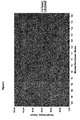
Figure 1 is an SEM photomicrograph of chromium oxide particles after comminution but before calcination. -
Figure 2 is an SEM photomicrograph of chromium oxide particles as shown inFigure 1 after they have been calcined. -
Figure 3 is a graph showing Microtrac particle sizes before and after calcination as described in Example 1, Table 1, "Milled Feed Alone" -
Figures 4 and 5 are, respectively, pre- and post-calcination SEM photomicrographs of the products made according to Example 6. -
Figures 6 and 7 are, respectively, pre- and post-calcination SEM photomicrographs of the products made according to Example 7. -
Figures 8 and 9 are, respectively, pre- and post-calcination SEM photomicrographs of the products made according to Example 8. - The invention is now further described with reference to the following Examples which are offered merely to illustrate the invention rather than suggest or imply any inherent limitations on its scope.
- In each of the examples the comminuted chromium oxide was obtained by fusing chromium oxide powders with particle sizes primarily below 10 µm in an electric arc furnace with carbon electrodes to form an ingot of chromium oxide which was then comminuted using a rolls crusher. Comminution was continued until the particles had an average size well below 125 µm and the particles with sizes larger than 125 µm were screened out. This process resulted in chromium oxide particles with a total of up to about 5% of chromium metal.
- An electric kiln was used for the calcination process and the chromium oxide feed was held in the kiln at 1350°C for a period of 15 hours. Ramp up to the calcination temperature took 8 hours and cool down to room temperature after the calcination took about 30 hours. The total amount of chromium oxide fed into the kiln in any specific run was 450kg. The particle size distribution was measured before and after each run. The Results are shown in Table 1.
- Fusion of fine chromium oxide particles was carried out in a conventional carbon arc fusion furnace operated at a temperature of 2800°C.
- In this Example the results of carrying out the process of the invention on a chromium oxide powder obtained by a milling process and then with the same powder to which pigment grade chromium oxide, ("fines"), has been added. The results are set forth in Table 1 below.
- This Table sets out the results of calcining a feed obtained directly from a roller mill crusher without the customary separation of fines. The second evaluation was performed on a separated fines fraction from a roller mill crusher having a D50 of about 3 to 5 µm, ("milled fines") with the addition of 10% of pigment grade chromium oxide which also had a D50 of about 3 µm, ("fines"). This added material is the same chromium oxide used as the feedstock for the fusion process by which the chromium oxide fed to the roll crusher was made. For each, the initial, or "green", particle size distribution and the "fired" particle size distribution are given.
Table 1 Part. Size MILLED FEED ALONE MILLED FINES + FINES GREEN FIRED GREEN FIRED D10 4.17 14.59 0.969 5.7 D50 18.76 30.09 3.69 14.76 D90 41.12 50.69 13.58 33.15 15.0 µm 41.7 11.91 92.49 53.21 11.0 µm 29.4 4.23 85.51 33.13 7.78 µm 21.19 1.57 77.03 18.54 5.50 µm 14.59 0.48 66.29 9.16 3.89 µm 9.07 0.0 50.7 3.59 2.75 µm 6.41 0.0 48.49 2.06 1.94 µm 3.86 0.0 43.20 1.14 1.38 µm 1.81 0.0 26.82 0.38 0.92 µm 0.37 0.0 10.13 0.0 - The upper portion of the Table gives the D10, D50 and D90 values and the values given in the lower part of the Table indicate the percentage of particles with sizes smaller than the indicated value in the lower part of the left hand column. It will be readily apparent that the particle size distribution has shifted markedly towards the larger particle sizes and the particles below about 5 µm have been virtually eliminated.
- SEM photomicrographs were taken of chromium oxide particles of the milled feed prior to calcination according to the invention and after. These are reproduced as
Figures 1 and 2 . It will readily be seen that the calcination resulted in a considerable change from the angular, sharp-edged appearance of the milled products seen inFigure 1 , (before calcination), to the smoother rounded shapes inFigure 2 , (after calcination). - The following Example is similar to that set forth in Example 1 with the difference that the two feeds evaluated were based on a classified roller mill product wherein all particles had a particle size less than 50 µm and to which an amount of the same pigment grade chromium oxide as used in Example 1 had been added. The amount added was either 10% or 25% by weight of the milled feed. The results obtained are shown in Table 2.
Table 2 Part. Size MILL. FEED + 10%FINES MILL. FEED + 25%FINES GREEN FIRED GREEN FIRED D 10 4.79 12.87 3.87 11.22 D 50 15.54 28.79 12.32 26.47 D90 37.02 51.08 34.34 48.0 15.0 µm 50.07 15.70 59.37 20.0 11.0 µm 35.30 6.73 45.70 9.57 7.78 µm 23.95 3.13 33.38 4.76 5.50 µm 14.15 1.16 21.30 1.81 3.89 µm 5.95 0.0 10.07 0.09 2.75 µm 3.24 0.0 5.55 0.0 1.94 µm 1.96 0.0 3.28 0.0 1.38 µm 0.71 0.0 1.39 0.0 0.92 µm 0.0 0.0 0.21 0.0 - Once again the pattern of a shift away from the finer sizes and a significant growth of the population of particles in the size range greater than about 5 µm is very evident.
- The extent to which particle growth and elimination of the smallest particles can be controlled by the length of the calcination process is illustrated in this Example. It should be noted that excessively long calcination can lead to the agglomeration of the larger particles which is also very disadvantageous for a thermal spray powder. This example does not show the length of calcination but does show adding fines at 2 major percentages and the resulting consumption by sites in the firing. Test with 25 % fines and 50 % fines were done at 1350 and 1400°C.
- In Table 3 below, data are presented based on mixtures of two cuts separated from a milled fused chromium oxide: a coarser cut that included all particles passing through a 200 mesh sieve, (and therefore were smaller than 75 µm); and a finer cut which included only particles passing through a 500 mesh sieve, (and therefore were smaller than 18 µm). In the first evaluation 25% by weight of the finer cut was added and in the second, 50% by weight of the finer cut was added. Again the data reveal a significant shift towards particle sizes larger than about 5 µm and a virtual elimination of particles smaller than 5 µm.
Table 3 Part. Size 25%FINES 50%FINES GREEN FIRED GREEN FIRED D10 5.81 10.46 4.19 8.39 D50 30.09 24.32 13.0 18.83 D90 66.05 48.02 64,34 39.93 15.0 µm 33.33 24.74 57.22 37.95 11.0 µm 23.68 11.32 42.90 19.15 7.78 µm 15.52 4.65 29.04 8.23 5.50 µm 9.05 1.38 17.57 2.62 3.89 µm 4.09 0.0 8.51 0.0 2.75 µm 2.67 0.0 6.17 0.0 1.94 µm 1.74 0.0 4.77 0.0 1.38 µm 0.66 0.0 2.47 0.0 0.92 µm 0.0 0.0 0.66 0.0 - This Example shows the effect on particle size distribution of firing a feed comprising:
- 100% of a fine pigment grade chromium oxide;
- 100% of a relatively coarser pigment grade chromium oxide; and
- a 50/50 mixture of the two grades. The results in Table 4 show the possibilities of controlling quite precisely the particle size of the product obtained.


- Comparative Examples 5-7 illustrate variations in the site materials. Adding pigment grade chromium oxide to alumina, zirconia, spinel, chromium oxide and many other site particles can make a layered chemistry particle where the core is the site particle and chromium oxide is the outer layer. Other chemistries like alumina or spinel or zirconia or iron oxide can be added to the fine chromium oxide for an infinitely variable surface chemistry product. In addition the core particle can be changed for more variation in chemistry. Thus for example it is possible to use the above approach to produce particles with an alumina or zirconia core and a chromium oxide outer layer, or a chromium oxide core and a chromium oxide outer layer, or a chromium oxide core with an alumina/chromium oxide outer layer and many others. The particles formed in this way are similar to the previous examples where the positive pressure developed from chromium oxide helps to keep the particles distinct. With most other materials sintering takes place as the positive pressure is not present; a solid block would form if for example all fine alumina was used. Using alumina as a core and chromium oxide as an outer layer forms distinct particles. You can think of the chromium oxide component of the outer layers as a parting agent, that maintains distinct particles in the process which would normally sinter to a block.
- This example shows the use of a spinel particle as the core or site material representing 50 % of the mix with 50% chromium oxide fines added.
Figures 4 and 5 are photomicrographs of the pre- and post-calcination products. The particles size distributions are shown in the following Table.Part. Size 50/50 Spinel + pigment50/50 GREEN FIRED D10 1.03 20.20 D50 3.90 45.04 D90 17.20 76.93 15.0 µm 31.87 5.65 11.0 µm 31.21 1.81 7.78 µm 28.88 0.67 5.50 µm 27.86 0.260 3.89 µm 26.89 0 2.75 µm 21.95 0 1.94 µm 12.85 0 1.38 µm 6.83 0 0.92 µm 2.15 0 - In this Example an alumina core particle is treated to give it a coating of chromia. The particle size distribution before and after calcination is given in the following Table. SEM photomicrographs of the before and after products are shown in
Figures 6 and 7 .Part. Size 50/50 Alumina + Chromium Oxide Pigment GREEN FIRED D10 1.20 20.20 D50 6.43 45.04 D90 15.29 76.93 15.0 µm 90.56 79.85 11.0 µm 76.71 48.71 7.78 µm 58.84 19.48 5.50 µm 43.44 5.87 3.89 µm 32.12 2.57 2.75 µm 29.36 2.57 1.94 µm 23.55 1.56 1.38 µm 13.90 0.50 0.92 µm 2.15 0 - In this Example core particles comprising 6%Yttria -69%zirconia -25%alumina are treated to give a coating of chromia. The particle size distribution before and after calcination is given in the following Table. "The core particles represented 50% by weight and chromium oxide pigment provided the balance of the weight.
- The particle size distribution before and after calcination is shown in the following Table and SEM photomicrographs present the same information visually in
Figures 8 and 9 .Part. Size 50/50 YZA + Chromium Oxide Pigment GREEN FIRED D10 2.70 18.21 D50 61.37 58.28 D90 326.58 103.8 15.0 µm 15.81 7.64 11.0 µm 14.79 3.79 7.78 µm 14.79 1.92 5.50 µm 14.75 0.79 3.89 µm 12.65 0 2.75 µm 10.20 0 1.94 µm 6.02 0 1.38 µm 3.09 0 0.92 µm 0.84, 0
Claims (9)
- A process for the production of a chromium oxide thermal spray powder which comprises calcining chromium oxide powder with a particle size range of 0.1 to 125 µm and comprising at least 5 % by volume of chromium oxide particles smaller than 10 µm for a time sufficient to reduce the volume of particles with sizes less than 10 µm to below 5 %.
- The process according to claim 1, in which calcination is continued until the percentage of particles with sizes less than 10 µm is less than 2 %.
- The process according to claim 1, in which the calcination is conducted at a temperature between 1000 and 1600°C.
- The process according to claim 3, in which the calcination is conducted at a temperature between 1200 and 1400°C.
- The process according to claim 1, in which the powder calcined has a D90 of at least 30 µm before calcination.
- The process according to claim 1, in which the powder calcined has a D10 below 5 µm and essentially all particles in this fraction are chromium oxide particles.
- The process according to claim 1, in which at least a portion of the chromium oxide powder calcined is obtained by crushing a chromium oxide obtained by a fusion process.
- The process according to claim 1, in which the chromium oxide powder consists of a chromium oxide powder with a D50 below 10 µm and is calcined at 1600°C to obtain a powder with particles within a size range of from 5 - 125 µm and a D50 greater than 10 µm.
- The process according to claim 1, which comprises:a) Feeding chromium oxide particles with a size range of from 0.1 to 125 µm into a furnace along with from 0 to 100 % based on the weight of the comminuted product, of chromium oxide powder with a particle size less than 10 µm to produce a mixture of particles in which at least 5 % by volume of particles are smaller than 10 µm;b) calcining the mixture at a temperature above 1000°C for a time sufficient to cause reduction of the content of chromium oxide particles smaller than 10 µm to below 5 %; andc) cooling and classifying the resultant product.
Priority Applications (1)
| Application Number | Priority Date | Filing Date | Title |
|---|---|---|---|
| EP09153604.5A EP2062993B1 (en) | 2000-04-24 | 2001-04-19 | Method for making thermal spray powder |
Applications Claiming Priority (3)
| Application Number | Priority Date | Filing Date | Title |
|---|---|---|---|
| US09/556,324 US6410470B1 (en) | 2000-04-24 | 2000-04-24 | Thermal spray powder process |
| US556324 | 2000-04-24 | ||
| PCT/US2001/012676 WO2001081647A2 (en) | 2000-04-24 | 2001-04-19 | Improved thermal spray powder |
Related Child Applications (1)
| Application Number | Title | Priority Date | Filing Date |
|---|---|---|---|
| EP09153604.5A Division EP2062993B1 (en) | 2000-04-24 | 2001-04-19 | Method for making thermal spray powder |
Publications (2)
| Publication Number | Publication Date |
|---|---|
| EP1276916A2 EP1276916A2 (en) | 2003-01-22 |
| EP1276916B1 true EP1276916B1 (en) | 2009-07-01 |
Family
ID=24220854
Family Applications (2)
| Application Number | Title | Priority Date | Filing Date |
|---|---|---|---|
| EP01928636A Revoked EP1276916B1 (en) | 2000-04-24 | 2001-04-19 | Thermal spray powder |
| EP09153604.5A Expired - Lifetime EP2062993B1 (en) | 2000-04-24 | 2001-04-19 | Method for making thermal spray powder |
Family Applications After (1)
| Application Number | Title | Priority Date | Filing Date |
|---|---|---|---|
| EP09153604.5A Expired - Lifetime EP2062993B1 (en) | 2000-04-24 | 2001-04-19 | Method for making thermal spray powder |
Country Status (11)
| Country | Link |
|---|---|
| US (1) | US6410470B1 (en) |
| EP (2) | EP1276916B1 (en) |
| JP (1) | JP3917425B2 (en) |
| KR (1) | KR100499743B1 (en) |
| AT (1) | ATE435313T1 (en) |
| BR (1) | BR0110217B1 (en) |
| CA (1) | CA2403653C (en) |
| DE (1) | DE60139120D1 (en) |
| ES (1) | ES2329441T3 (en) |
| MX (1) | MXPA02010467A (en) |
| WO (1) | WO2001081647A2 (en) |
Families Citing this family (12)
| Publication number | Priority date | Publication date | Assignee | Title |
|---|---|---|---|---|
| US6410470B1 (en) | 2000-04-24 | 2002-06-25 | Saint-Gobain Industrial Ceramics, Inc. | Thermal spray powder process |
| US7012037B2 (en) * | 2002-04-08 | 2006-03-14 | Saint-Gobain Ceramics And Plastics, Inc. | Chromia spray powders |
| US6774076B2 (en) * | 2002-04-08 | 2004-08-10 | Saint-Gobain Ceramics & Plastics, Inc. | Chromia spray powders and a process for making the same |
| FR2844448B1 (en) | 2002-09-17 | 2006-06-23 | Lcw Les Colorants Wackherr | METHOD FOR THE EXTEMPORANEOUS PREPARATION OF COSMETIC COMPOSITIONS HAVING THE TEXTURE OF A CREAM, AND COMPOSITIONS FOR CARRYING OUT SAID METHOD |
| FR2844800B1 (en) * | 2002-09-19 | 2006-07-21 | CHROME OXIDE PIGMENTS WITH REDUCED CHROMIUM CONTENT (VI) | |
| EP1510593A1 (en) * | 2003-08-28 | 2005-03-02 | Siemens Aktiengesellschaft | Process for coating a component, component and powder |
| JP4885445B2 (en) * | 2004-12-21 | 2012-02-29 | 株式会社フジミインコーポレーテッド | Thermal spray powder |
| CA2619331A1 (en) * | 2007-01-31 | 2008-07-31 | Scientific Valve And Seal, Lp | Coatings, their production and use |
| US20090162273A1 (en) * | 2007-12-21 | 2009-06-25 | Howmedica Osteonics Corp. | Chromium oxide powder having a reduced level of hexavalent chromium and a method of making the powder |
| JP5889564B2 (en) * | 2011-07-26 | 2016-03-22 | オーエスジー株式会社 | Tool surface modification method |
| DE102017218580A1 (en) | 2017-10-18 | 2019-04-18 | Christian Maier GmbH & Co. KG | Method for applying a layer to a component and component produced by the method |
| CN117069486A (en) * | 2023-08-08 | 2023-11-17 | 沈阳石花微纳材料科技有限公司 | Preparation method of rounded chromium oxide-based ceramic powder based on melting and crushing process |
Family Cites Families (23)
| Publication number | Priority date | Publication date | Assignee | Title |
|---|---|---|---|---|
| US4330513A (en) * | 1976-10-13 | 1982-05-18 | Air Resources, Inc. | Catalytic fume incineration |
| GB2123316B (en) * | 1982-07-14 | 1985-10-23 | Atomic Energy Authority Uk | Substrates for electronic devices |
| JPS59182279A (en) * | 1983-03-28 | 1984-10-17 | 住友化学工業株式会社 | Manufacture of flame spray ceramic powder |
| JPS60215528A (en) * | 1984-04-10 | 1985-10-28 | Nippon Chem Ind Co Ltd:The | Chromium oxide for spraying and its production |
| JPS6123755A (en) * | 1984-07-13 | 1986-02-01 | Nippon Steel Corp | Roll for heat treating furnace |
| JPS6263659A (en) * | 1985-09-14 | 1987-03-20 | Nippon Steel Corp | Production of powdery material for thermal spraying |
| JPS6263660A (en) * | 1985-09-14 | 1987-03-20 | Nippon Steel Corp | Production of powdery material for thermal spraying |
| JPS62167219A (en) * | 1986-01-20 | 1987-07-23 | Awamura Kinzoku Kogyo Kk | Production of thermal spraying powder of sintered chromium oxide |
| JPH0825135B2 (en) * | 1987-06-16 | 1996-03-13 | オリンパス光学工業株式会社 | Work support device |
| US5215727A (en) * | 1990-03-02 | 1993-06-01 | Occidental Chemical Corporation | Method of making chromic oxide |
| US5174976A (en) * | 1990-12-31 | 1992-12-29 | Mobil Oil Corporation | Method for calcining crystalline (metallo)aluminophosphate compositions |
| JP2719049B2 (en) * | 1991-01-28 | 1998-02-25 | 日本碍子株式会社 | Method for producing lanthanum chromite membrane and method for producing interconnector for solid oxide fuel cell |
| EP0508697A1 (en) * | 1991-04-09 | 1992-10-14 | Qi-Jiang Situ | A re-calcination and extraction process for the detoxification and comprehensive utilization of chromic residues |
| JPH06102823B2 (en) * | 1991-07-18 | 1994-12-14 | 日本研磨材工業株式会社 | Chromium oxide spray material and method for producing the same |
| JPH0644991A (en) * | 1992-07-27 | 1994-02-18 | Ngk Insulators Ltd | Manufacture of interconnector for solid electrolyte type fuel cell |
| US5305726A (en) * | 1992-09-30 | 1994-04-26 | United Technologies Corporation | Ceramic composite coating material |
| JP3733599B2 (en) * | 1993-08-11 | 2006-01-11 | 住友化学株式会社 | Metal oxide powder and method for producing the same |
| CA2129874C (en) | 1993-09-03 | 1999-07-20 | Richard M. Douglas | Powder for use in thermal spraying |
| US5653948A (en) * | 1995-04-07 | 1997-08-05 | Yoshizawa Sekkai Kogyo Kabushiki Kaisha | Method for calcining fine limestone powder |
| DE19624923C1 (en) * | 1996-06-21 | 1998-03-12 | Siemens Ag | Process for the preparation of a catalyst and catalyst produced thereafter |
| FR2755435A1 (en) * | 1996-11-04 | 1998-05-07 | Pechiney Aluminium | MANUFACTURE OF CALCINE ALUMINA WITH CRYSTALLITE SIZE ADJUSTED ON DEMAND WITH LOW DISPERSION |
| US6200541B1 (en) * | 1997-10-28 | 2001-03-13 | Bp Amoco Corporation | Composite materials for membrane reactors |
| US6410470B1 (en) | 2000-04-24 | 2002-06-25 | Saint-Gobain Industrial Ceramics, Inc. | Thermal spray powder process |
-
2000
- 2000-04-24 US US09/556,324 patent/US6410470B1/en not_active Expired - Lifetime
-
2001
- 2001-04-19 CA CA002403653A patent/CA2403653C/en not_active Expired - Lifetime
- 2001-04-19 JP JP2001578714A patent/JP3917425B2/en not_active Expired - Lifetime
- 2001-04-19 DE DE60139120T patent/DE60139120D1/en not_active Expired - Lifetime
- 2001-04-19 BR BRPI0110217-6A patent/BR0110217B1/en not_active IP Right Cessation
- 2001-04-19 WO PCT/US2001/012676 patent/WO2001081647A2/en not_active Ceased
- 2001-04-19 EP EP01928636A patent/EP1276916B1/en not_active Revoked
- 2001-04-19 KR KR10-2002-7014156A patent/KR100499743B1/en not_active Expired - Lifetime
- 2001-04-19 EP EP09153604.5A patent/EP2062993B1/en not_active Expired - Lifetime
- 2001-04-19 MX MXPA02010467A patent/MXPA02010467A/en active IP Right Grant
- 2001-04-19 AT AT01928636T patent/ATE435313T1/en not_active IP Right Cessation
- 2001-04-19 ES ES01928636T patent/ES2329441T3/en not_active Expired - Lifetime
Also Published As
| Publication number | Publication date |
|---|---|
| EP1276916A2 (en) | 2003-01-22 |
| DE60139120D1 (en) | 2009-08-13 |
| WO2001081647A3 (en) | 2002-02-21 |
| KR20020093060A (en) | 2002-12-12 |
| CA2403653A1 (en) | 2001-11-01 |
| US6410470B1 (en) | 2002-06-25 |
| BR0110217A (en) | 2003-01-21 |
| MXPA02010467A (en) | 2003-04-25 |
| ES2329441T3 (en) | 2009-11-26 |
| ATE435313T1 (en) | 2009-07-15 |
| KR100499743B1 (en) | 2005-07-07 |
| JP2003531298A (en) | 2003-10-21 |
| CA2403653C (en) | 2006-06-20 |
| WO2001081647A2 (en) | 2001-11-01 |
| BR0110217B1 (en) | 2011-04-05 |
| EP2062993A1 (en) | 2009-05-27 |
| JP3917425B2 (en) | 2007-05-23 |
| EP2062993B1 (en) | 2019-06-26 |
Similar Documents
| Publication | Publication Date | Title |
|---|---|---|
| EP1239055B1 (en) | Thermal spray spherical particles, and sprayed components | |
| EP2062993B1 (en) | Method for making thermal spray powder | |
| EP1247786B1 (en) | Thermal spray particles and sprayed components | |
| EP1552031B1 (en) | Plasma spheroidized ceramic powder | |
| TWI705155B (en) | Powder for spraying | |
| EP1171253B1 (en) | Die coatings for gravity and low pressure die casting | |
| US20060043644A1 (en) | Composite ceramic having nano-scale grain dimensions and method for manufacturing same | |
| EP1243666B1 (en) | Thermal spray rare earth oxide particles, sprayed components and corrosion resistant components | |
| KR20020062855A (en) | Spray powder and method for its production | |
| JP3523216B2 (en) | Rare earth-containing compound particles for thermal spraying, thermal spraying member sprayed with the same | |
| US11306383B2 (en) | Thermal spraying material | |
| CN115261762A (en) | Material for thermal spraying | |
| US7279221B2 (en) | Thermal spraying powder | |
| KR101241244B1 (en) | Thermal spraying powder, thermal spraying method, and method for forming thermal spray coating | |
| US7445763B2 (en) | Coating powder of Cr or V doped titanium suboxides | |
| KR20040105236A (en) | Chromia-alumina spray powders and a process for making the same | |
| US3395030A (en) | Carbide flame spray material | |
| EP4365147A1 (en) | Powder mixture, coating with higher fraction of coarse porosity, component and method | |
| DE69000179T2 (en) | METHOD FOR PRODUCING FINE PARTICLE POWDERS BY SPRAYING WITH A HOT DISC. | |
| FI131339B1 (en) | Method for preparing a powder mixture for a ceramic coating and its use | |
| JPH0261050A (en) | Formation of wear resistant coating film | |
| US20100183816A1 (en) | Low velocity oxygen-fueled flame spray method and apparatus for making ferrite material products and products produced thereby |
Legal Events
| Date | Code | Title | Description |
|---|---|---|---|
| PUAI | Public reference made under article 153(3) epc to a published international application that has entered the european phase |
Free format text: ORIGINAL CODE: 0009012 |
|
| 17P | Request for examination filed |
Effective date: 20020923 |
|
| AK | Designated contracting states |
Kind code of ref document: A2 Designated state(s): AT BE CH CY DE DK ES FI FR GB GR IE IT LI LU MC NL PT SE TR |
|
| RIN1 | Information on inventor provided before grant (corrected) |
Inventor name: YU, SUNG H. Inventor name: WALLAR, HOWARD Inventor name: QUINLIVAN, ROBERT, F. |
|
| RIN1 | Information on inventor provided before grant (corrected) |
Inventor name: QUINLIVAN, ROBERT, F. Inventor name: WALLAR, HOWARD Inventor name: YU, SUNG H. |
|
| RIN1 | Information on inventor provided before grant (corrected) |
Inventor name: QUINLIVAN, ROBERT, F. Inventor name: YU, SUNG H. Inventor name: WALLAR, HOWARD |
|
| 17Q | First examination report despatched |
Effective date: 20070621 |
|
| RIN1 | Information on inventor provided before grant (corrected) |
Inventor name: YU, SUNG H. Inventor name: QUINLIVAN, ROBERT, F. Inventor name: WALLAR, HOWARD |
|
| GRAP | Despatch of communication of intention to grant a patent |
Free format text: ORIGINAL CODE: EPIDOSNIGR1 |
|
| RTI1 | Title (correction) |
Free format text: THERMAL SPRAY POWDER |
|
| GRAS | Grant fee paid |
Free format text: ORIGINAL CODE: EPIDOSNIGR3 |
|
| GRAA | (expected) grant |
Free format text: ORIGINAL CODE: 0009210 |
|
| AK | Designated contracting states |
Kind code of ref document: B1 Designated state(s): AT BE CH CY DE DK ES FI FR GB GR IE IT LI LU MC NL PT SE TR |
|
| REG | Reference to a national code |
Ref country code: GB Ref legal event code: FG4D |
|
| REG | Reference to a national code |
Ref country code: CH Ref legal event code: EP |
|
| REG | Reference to a national code |
Ref country code: IE Ref legal event code: FG4D |
|
| REF | Corresponds to: |
Ref document number: 60139120 Country of ref document: DE Date of ref document: 20090813 Kind code of ref document: P |
|
| REG | Reference to a national code |
Ref country code: SE Ref legal event code: TRGR |
|
| REG | Reference to a national code |
Ref country code: ES Ref legal event code: FG2A Ref document number: 2329441 Country of ref document: ES Kind code of ref document: T3 |
|
| NLV1 | Nl: lapsed or annulled due to failure to fulfill the requirements of art. 29p and 29m of the patents act | ||
| PG25 | Lapsed in a contracting state [announced via postgrant information from national office to epo] |
Ref country code: AT Free format text: LAPSE BECAUSE OF FAILURE TO SUBMIT A TRANSLATION OF THE DESCRIPTION OR TO PAY THE FEE WITHIN THE PRESCRIBED TIME-LIMIT Effective date: 20090701 |
|
| PG25 | Lapsed in a contracting state [announced via postgrant information from national office to epo] |
Ref country code: NL Free format text: LAPSE BECAUSE OF FAILURE TO SUBMIT A TRANSLATION OF THE DESCRIPTION OR TO PAY THE FEE WITHIN THE PRESCRIBED TIME-LIMIT Effective date: 20090701 |
|
| PG25 | Lapsed in a contracting state [announced via postgrant information from national office to epo] |
Ref country code: PT Free format text: LAPSE BECAUSE OF FAILURE TO SUBMIT A TRANSLATION OF THE DESCRIPTION OR TO PAY THE FEE WITHIN THE PRESCRIBED TIME-LIMIT Effective date: 20091102 |
|
| PLBI | Opposition filed |
Free format text: ORIGINAL CODE: 0009260 |
|
| PG25 | Lapsed in a contracting state [announced via postgrant information from national office to epo] |
Ref country code: DK Free format text: LAPSE BECAUSE OF FAILURE TO SUBMIT A TRANSLATION OF THE DESCRIPTION OR TO PAY THE FEE WITHIN THE PRESCRIBED TIME-LIMIT Effective date: 20090701 |
|
| 26 | Opposition filed |
Opponent name: H.C. STARCK GMBH Effective date: 20100331 |
|
| PLAX | Notice of opposition and request to file observation + time limit sent |
Free format text: ORIGINAL CODE: EPIDOSNOBS2 |
|
| PG25 | Lapsed in a contracting state [announced via postgrant information from national office to epo] |
Ref country code: BE Free format text: LAPSE BECAUSE OF FAILURE TO SUBMIT A TRANSLATION OF THE DESCRIPTION OR TO PAY THE FEE WITHIN THE PRESCRIBED TIME-LIMIT Effective date: 20090701 |
|
| PLBB | Reply of patent proprietor to notice(s) of opposition received |
Free format text: ORIGINAL CODE: EPIDOSNOBS3 |
|
| PG25 | Lapsed in a contracting state [announced via postgrant information from national office to epo] |
Ref country code: GR Free format text: LAPSE BECAUSE OF FAILURE TO SUBMIT A TRANSLATION OF THE DESCRIPTION OR TO PAY THE FEE WITHIN THE PRESCRIBED TIME-LIMIT Effective date: 20091002 |
|
| PG25 | Lapsed in a contracting state [announced via postgrant information from national office to epo] |
Ref country code: MC Free format text: LAPSE BECAUSE OF NON-PAYMENT OF DUE FEES Effective date: 20100430 |
|
| REG | Reference to a national code |
Ref country code: CH Ref legal event code: PL |
|
| PG25 | Lapsed in a contracting state [announced via postgrant information from national office to epo] |
Ref country code: IE Free format text: LAPSE BECAUSE OF NON-PAYMENT OF DUE FEES Effective date: 20100419 |
|
| PG25 | Lapsed in a contracting state [announced via postgrant information from national office to epo] |
Ref country code: CH Free format text: LAPSE BECAUSE OF NON-PAYMENT OF DUE FEES Effective date: 20100430 Ref country code: LI Free format text: LAPSE BECAUSE OF NON-PAYMENT OF DUE FEES Effective date: 20100430 |
|
| RDAF | Communication despatched that patent is revoked |
Free format text: ORIGINAL CODE: EPIDOSNREV1 |
|
| APAH | Appeal reference modified |
Free format text: ORIGINAL CODE: EPIDOSCREFNO |
|
| APBM | Appeal reference recorded |
Free format text: ORIGINAL CODE: EPIDOSNREFNO |
|
| APBP | Date of receipt of notice of appeal recorded |
Free format text: ORIGINAL CODE: EPIDOSNNOA2O |
|
| APBQ | Date of receipt of statement of grounds of appeal recorded |
Free format text: ORIGINAL CODE: EPIDOSNNOA3O |
|
| PLAB | Opposition data, opponent's data or that of the opponent's representative modified |
Free format text: ORIGINAL CODE: 0009299OPPO |
|
| R26 | Opposition filed (corrected) |
Opponent name: H.C. STARCK GMBH Effective date: 20100331 |
|
| PG25 | Lapsed in a contracting state [announced via postgrant information from national office to epo] |
Ref country code: CY Free format text: LAPSE BECAUSE OF FAILURE TO SUBMIT A TRANSLATION OF THE DESCRIPTION OR TO PAY THE FEE WITHIN THE PRESCRIBED TIME-LIMIT Effective date: 20090701 |
|
| PGFP | Annual fee paid to national office [announced via postgrant information from national office to epo] |
Ref country code: SE Payment date: 20120427 Year of fee payment: 12 |
|
| PG25 | Lapsed in a contracting state [announced via postgrant information from national office to epo] |
Ref country code: LU Free format text: LAPSE BECAUSE OF NON-PAYMENT OF DUE FEES Effective date: 20100419 |
|
| APBU | Appeal procedure closed |
Free format text: ORIGINAL CODE: EPIDOSNNOA9O |
|
| PG25 | Lapsed in a contracting state [announced via postgrant information from national office to epo] |
Ref country code: TR Free format text: LAPSE BECAUSE OF FAILURE TO SUBMIT A TRANSLATION OF THE DESCRIPTION OR TO PAY THE FEE WITHIN THE PRESCRIBED TIME-LIMIT Effective date: 20090701 |
|
| PGFP | Annual fee paid to national office [announced via postgrant information from national office to epo] |
Ref country code: ES Payment date: 20120426 Year of fee payment: 12 |
|
| REG | Reference to a national code |
Ref country code: SE Ref legal event code: EUG |
|
| PG25 | Lapsed in a contracting state [announced via postgrant information from national office to epo] |
Ref country code: SE Free format text: LAPSE BECAUSE OF NON-PAYMENT OF DUE FEES Effective date: 20130420 |
|
| REG | Reference to a national code |
Ref country code: ES Ref legal event code: FD2A Effective date: 20140606 |
|
| PG25 | Lapsed in a contracting state [announced via postgrant information from national office to epo] |
Ref country code: ES Free format text: LAPSE BECAUSE OF NON-PAYMENT OF DUE FEES Effective date: 20130420 |
|
| REG | Reference to a national code |
Ref country code: FR Ref legal event code: PLFP Year of fee payment: 15 |
|
| PGFP | Annual fee paid to national office [announced via postgrant information from national office to epo] |
Ref country code: FI Payment date: 20150320 Year of fee payment: 15 |
|
| PGFP | Annual fee paid to national office [announced via postgrant information from national office to epo] |
Ref country code: FR Payment date: 20150319 Year of fee payment: 15 Ref country code: GB Payment date: 20150324 Year of fee payment: 15 |
|
| REG | Reference to a national code |
Ref country code: DE Ref legal event code: R064 Ref document number: 60139120 Country of ref document: DE Ref country code: DE Ref legal event code: R103 Ref document number: 60139120 Country of ref document: DE |
|
| RDAD | Information modified related to despatch of communication that patent is revoked |
Free format text: ORIGINAL CODE: EPIDOSCREV1 |
|
| PGFP | Annual fee paid to national office [announced via postgrant information from national office to epo] |
Ref country code: DE Payment date: 20150319 Year of fee payment: 15 |
|
| PGFP | Annual fee paid to national office [announced via postgrant information from national office to epo] |
Ref country code: IT Payment date: 20150330 Year of fee payment: 15 |
|
| RDAG | Patent revoked |
Free format text: ORIGINAL CODE: 0009271 |
|
| STAA | Information on the status of an ep patent application or granted ep patent |
Free format text: STATUS: PATENT REVOKED |
|
| 27W | Patent revoked |
Effective date: 20150618 |
|
| GBPR | Gb: patent revoked under art. 102 of the ep convention designating the uk as contracting state |
Effective date: 20150618 |
|
| REG | Reference to a national code |
Ref country code: SE Ref legal event code: ECNC |