EP1276892B1 - A bacterial two-hybrid system for protein interaction screening - Google Patents
A bacterial two-hybrid system for protein interaction screening Download PDFInfo
- Publication number
- EP1276892B1 EP1276892B1 EP01925789A EP01925789A EP1276892B1 EP 1276892 B1 EP1276892 B1 EP 1276892B1 EP 01925789 A EP01925789 A EP 01925789A EP 01925789 A EP01925789 A EP 01925789A EP 1276892 B1 EP1276892 B1 EP 1276892B1
- Authority
- EP
- European Patent Office
- Prior art keywords
- molecule
- interest
- signal amplification
- target ligand
- fragment
- Prior art date
- Legal status (The legal status is an assumption and is not a legal conclusion. Google has not performed a legal analysis and makes no representation as to the accuracy of the status listed.)
- Expired - Lifetime
Links
Images


Classifications
-
- C—CHEMISTRY; METALLURGY
- C12—BIOCHEMISTRY; BEER; SPIRITS; WINE; VINEGAR; MICROBIOLOGY; ENZYMOLOGY; MUTATION OR GENETIC ENGINEERING
- C12N—MICROORGANISMS OR ENZYMES; COMPOSITIONS THEREOF; PROPAGATING, PRESERVING, OR MAINTAINING MICROORGANISMS; MUTATION OR GENETIC ENGINEERING; CULTURE MEDIA
- C12N15/00—Mutation or genetic engineering; DNA or RNA concerning genetic engineering, vectors, e.g. plasmids, or their isolation, preparation or purification; Use of hosts therefor
- C12N15/09—Recombinant DNA-technology
- C12N15/10—Processes for the isolation, preparation or purification of DNA or RNA
- C12N15/1034—Isolating an individual clone by screening libraries
- C12N15/1055—Protein x Protein interaction, e.g. two hybrid selection
Definitions
- the present invention concerns the construction of new strains useful in a method for selecting a molecule, a kit therefor, a method for screening a molecule, a kit therefor, and a signal amplification system comprising a bacterial multi-hybrid system. More particularly, the present invention relates to improvements to the technique referred as a multi-hybrid system described in PCT application No. WO 99/28746, published on June 10, 1999. This technology is also described in Proc. Natl. Acad. Sci. USA in 1998,95(10) pages 5752-5756 (Karimova et al.).
- a novel bacterial two-hybrid system that allows an easy in vivo screening and selection of functional interactions between two proteins has recently been described.
- This genetic system is based on the reconstitution of an artificial cAMP signal transduction pathway in an Escherichia coli adenylate cyclase deficient strain ( cya ). It takes advantage of the modular structure of the catalytic domain of Bordetella pertussis adenylate cyclase, which consists of two complementary fragments. Bordetella pertussis adenylate cyclase: a toxin with multiple talents Trends in Microbiol. 7, 172-176). When they are expressed separately in E. coli, they can not be converted to an active enzyme unless interacting polypeptides are genetically fused to these fragments.
- this bacterial two-hybrid system is taking place in an E. coli cya strain, i.e., lacking its endogenous adenylate cyclase.
- E. coli cya strains harboring point mutations, deletions or insertions within the cya gene have been described.
- the DHP1 strain was isolated. This strain is a spontaneous cya derivative of DH1 (F-, glnV44(AS), recA1, endA1, gyrA96 (Nal r ), thil, hsdR17, spoT1, rfbD1 ). Functional complementation between hybrid proteins appeared to be much more efficient in DHP1 than in other cya strains that were tested, possibly, because of the higher stability of chimeric proteins.
- DHP1 exhibits a high frequency (at about 10 -6 ) of spontaneous reversion of the Cya - phenotype towards a Cya + phenotype. This characteristic is, therefore, limiting the utility of DHP1 in large scale screening applications, such as a library screening when a great number of transformed cells have to be analyzed.
- the new bacterial strains should exhibit a Cya phenotype, allowing efficient functional complementation between standard hybrid proteins, and be suitable for use in large scale analysis of protein-protein interactions.
- This invention aids in fulfilling these needs in the art. More particularly, it is an aim of this invention to provide new tools for using the bacterial multi-hybrid systems, methods, and kits disclosed in published PCT application WO 99/28746.
- this invention relates to improvements in the methods and kits described in published PCT Application WO 99/28746.
- this invention provides improved bacterial strains for use in the methods and kits.
- the bacterial strains are selected from the group consisting of strain BTH101 having C.N.C.M. Deposit Accession No. I-2309 and strain DHM1 having C.N.C.M. Deposit Accession No. I-2310.
- this invention provides a signal amplification system as described in WO 99/28746 using strain BTH101 or strain DHM1 of this invention.
- this invention provides a method of selecting a molecule of interest as described in WO 99/28746.
- the method utilizes the signal amplification system described in WO 99/28746 in which the strain BTH101 or the strain DHM1 is employed.
- this invention provides a kit for selecting a molecule of interest.
- the kit is as described in WO 99/28746 and utilizes strain BTH101 or strain DHM1 of this invention.
- This invention also provides a method of screening for a substance capable of stimulating or inhibiting the interaction between a target ligand and a molecule of interest as described in WO 99/28746.
- the method utilizes strain BTH101 or strain DHM1 of this invention.
- this invention provides a kit for screening for a substance capable of stimulating or inhibiting the interaction between a target ligand and a molecule of interest.
- the kit is as described in WO 99/28746 and utilizes strain BTH101 or strain DHM1 of this invention.
- This invention also provides strain BTH101 having C.N.C.M. Deposit Accession No. I-2309.
- this invention provides strain DHM1 having C.N.C.M. Deposit Accession No. I-2310.
- This invention also provides a DNA library comprising a collection of vectors transformed in a bacterial multi-hybrid system of the invention using strain BTH101 or strain DHM1.
- Each plasmid can contain a polynucleotide coding for the molecule of interest fused to a polynucleotide coding for the first or the second fragment of an enzyme.
- the polynucleotide coding for the molecule of interest can be, for example, a fragment of genomic DNA of Helicobacter pylori .
- this invention provides an H. pylori DNA library, HGX BHP 3 , having C.N.C.M. Deposit Accession No. I-2367.
- the present invention relates to the use of new strains, which are characterized as DHM1 and BTH101, and plasmids contained in E. coli XL-1/pUT18, XL-1/pUT18C, XL1-1/pT25, and XL-1/pKT25.
- yeast two-hybrid system currently represents the most powerful in vivo approach to screen for polypeptides that could bind to a given target protein. It utilizes hybrid genes to detect protein-protein interactions by means of direct activation of a reporter-gene expression.
- the two putative protein partners are genetically fused to the DNA-binding domain of a transcription factor and to a transcriptional activation domain, respectively.
- a productive interaction between the two proteins of interest will bring the transcriptional activation domain in the proximity of the DNA-binding domain and will trigger directly the transcription of an adjacent reporter gene (usually lacZ or a nutritional marker) giving a screenable phenotype.
- an adjacent reporter gene usually lacZ or a nutritional marker
- the signal amplification system is useful in a method of selecting a molecule of interest, which is capable of binding to a target ligand, wherein the interaction between the molecule of interest and the target ligand is detected with the signal amplification system by generating a signal amplification and triggering transcriptional activation.
- kits for selecting a molecule of interest comprising:
- kit described in WO 99/28746 for selecting the molecule of interest can also comprise:
- published PCT application WO 99/28746 describes a method of screening for a substance capable of stimulating or inhibiting the interaction between a target ligand and a molecule of interest.
- the stimulating or the inhibiting activity is detected with the signal amplification system according by means of generating an amplification and respectively of triggering or of abolishing transcriptional activation.
- the signal amplification and the triggered or abolished transcriptional activation are compared with those obtained from an identical signal amplification system without any substance.
- the method of screening for a substance capable of stimulating or inhibiting the interaction between a target ligand and a molecule of interest can be performed in an E. coli strain or in any bacterial strain deficient in endogenous adenylate cyclase or any other eukaryotic cell.
- kits for screening for the substance capable of stimulating or inhibiting the interaction between a target ligand and a molecule of interest comprises:
- the original Escherichia coli cya strain, DHP1 used in the bacterial two-hybrid system and other methods and kits described in published PCT application WO 99/28746 was a spontaneous cya mutant that was isolated as phosphomycin resistant. Although complementation worked efficiently in the DHP1 strain, it had a tendency to revert to a Cya+ phenotype at a high frequency, which precluded its utilization in large scale screening.
- New cya strains have been constructed. These new strains of this invention (i) should not revert and (ii) should exhibit an efficient complementation. Two such strains were selected, DHM1 and BTH101, and are described below. Bacterial strains and plasmids used are listed in Table 1.
- DHM1 and BTH101 can be employed in the methods and kits described in published PCT application WO 99/28746.
- the entire disclosure of published PCT application WO 99/28746 is relied upon.
- the terms used herein have the same definitions as in WO 99/28746.
- DHP1 strain described in published PCT application WO 99/28746 is an adenylate cyclase deficient ( cya ) derivative of DH1 (F-, glnV44(AS), recA1, endA1, gyrA96, (Nal r ), thil, hsdR17, spoT1, rfbD1 ) (25), and was isolated using phosphomycin as a selection antibiotic (Alper, M. D. & Ames, B. N. (1978) J. Bacteriol. 133, 149-57). Growth media used were the rich medium LB or the synthetic medium M63 (Miller, J. H.
- DHM1 F-, recA1, endA1, gyrA96Nal r ), thi1, hsdR17 , spoT1, rfbD1, glnV44(AS), cya -854
- DHM1 strain is a derivative of DHP that harbors a small deletion within the cya gene ( cya -854) that was introduced by P1 transduction (Miller, 1972).
- a P1 vir phage lysate was prepared on the donor strain FB8 cya -854 ilv 691::Tn 10 (kind gift of M. Perrote).
- This strain has a transposon Tn 10 insert in close linkage to cya (Wanner, 1986). This linkage was used to transfer the cya -85s4 mutation into DHP1 that harbors a plasmid, pRecA, a pBR322 derivative that encodes the recA gene of E.
- Tc R tetracycline resistant transductants were tested for the presence of the mutant allele cya-854, a 200-base-pair deletion within the cya gene (Glaser, P., Roy A, Danchin, A., 1989). This was carried out by restreaking the cells on MacConkey/maltose indicator plates with tetracycline (25 ⁇ g/ml).
- the transductants harboring the cya -854 mutation could be readily distinguished from those harboring the original cya mutation from DHP1 as they do not revert (that is no Cya + cells -red phenotype- could be detected in patches of a large number of colonies), whereas the transductants with the original DHP1 cya mutation reverted with high frequency as indicated by the appearance of red Cya + cells within patches of a large number of colonies.
- the frequency of co-transduction of two markers, ilv -691::Tn 10 and cya -854 was about 30 %. One such transductant was selected and called DHP11.
- DHM1 strain was constructed by P1 transduction of the wild type allele of ilv from E. coli K-12 FB8 into DHP11 harboring pRecA.
- the transductants were selected on minimal medium without added amino acids. After reisolation of the resulting transductants, the presence of the cya -857 mutation and the loss of Tn 10 (Tc s -sensitivity) were verified by plating on MacConkey/maltose and LB containing Tc (25 ⁇ g/ml) plates.
- Tc s -sensitivity the transductants DHM1(pRecA) were grown in L-broth overnight and then spread on MacConkey/maltose plates.
- DHM1 cells that lost pRecA 100 singles colonies were restreaked on the two plates: one LB plate containing ampicillin (Amp, 100 ⁇ g/ml) and one MacConkey/maltose plate without antibiotic. Plates were grown for 24 hours at 37°C. Several Amp-sensitive clones were picked from the MacConkey/maltose plate, and after restreaking and further testing for complementation, one clone, called DHM1, was selected.
- Lac + and Mal + revertants were, respectively, 10 -7 and 10 -9 . Note that these Lac + and Mal + revertants are not Cya + revertants but arise from cAMP/CAP independent mutations within the lac promoter or cAMP-independent CAP mutations (CRP * ).
- BTH101 F - , galE15, galK16, rpsL1 (Str r ), hsdR2, mcrA1, mcrB1, cya-99
- BTH101 strain is a derivative of MC1061 that was constructed by conjugation and P1 transduction techniques (Miller, 1972). While an attempt was made to introduce a precise deletion within the cya gene, we isolated a spontaneous cya mutant of MC1061, BTH99, that most likely harbors a deletion within the cya gene as it reverts to Cya + (in fact Lac + or Mal + phenotype) with a very low frequency. This mutant was obtained as follows. First, a plasmid was constructed, pSKDKancya, by inserting within pSKBluescript II vector (Stratagene) - between the Xho I and Xba I sites - the following fragments of DNA: a 1.5 kb fragment of E.
- pSKDKancya by inserting within pSKBluescript II vector (Stratagene) - between the Xho I and Xba I sites - the following fragments of DNA: a 1.5 kb fragment of E.
- Plasmid pSKDKancya was transformed into the donor strain Hfr KL800 and the resulting transformants were mated with the recipient strain MC1061 (Streptomycin resistant) for 30 min at 37° C. Aliquots of a mating mixture were plated on MacConkey maltose indicator plates supplemented by Kan (50 ⁇ g/ml) and Str (100 ⁇ g/ml, to conterselect donor cells).
- the recipient Kan R and Str R cells were then mixed with a lambda vir phage stock in order to select cya derivatives ( E. coli cya cells are resistant to ⁇ ) and re-plated on MacConkey maltose.
- cya derivatives E. coli cya cells are resistant to ⁇
- MacConkey maltose Several ⁇ R , cya derivatives were isolated. None of them harbored the intended cya deletions, but several of the clones obtained exhibited a stable cya phenotype (i.e., they reverted towards Lac + or Mal + phenotypes with a very low frequency).
- the reisolated recombinants were subsequently plated on LB-Kan and MacConkey maltose indicator plates.
- BTH101 is a derivative of BTH99 that was created by two successive P1 transductions.
- the wild type lac operon was transduced from FB8, the transductants were selected on minimal plates supplemented by lactose in the presence of 1mM cAMP.
- Lac + clones (BTH100) were reisolated and tested for the presence of cya-99 by using MacConkey/lactose indicator plates with and without cAMP.
- BTH101 strain was made by PI transduction of the wild type allele of ilv (from FB8) into BTH100. The resulting clones were selected on minimal medium without amino acids.
- One such clone, BTH101 was kept for further characterization.
- Plasmids and strains useful for practicing this invention have been deposited at Collection Nationale de Cultures de Microorganismes in Paris, France as follows: Plasmid Deposit Date Accession No. XL-1/pUT18 November 25, 1998 I-2092 XL-1/pUT18C November 25, 1998 I-2093 XL-1/pT25 November 25, 1998 I-2094 XL-1/pKT25 November 25, 1998 I-2095 DHM1 September 10, 1999 I-2310 BTH101 September 10, 1999 I-2309 H. pylori December 14, 1999 I-2367 library HGX BHP 3
- Plasmid pKT25 (3445-bp) is a derivative of the low copy vector pSU40 (expressing a kan amycin resistance selectable marker) that encodes the T25 fragment. It was constructed as follows: a 1044-bp Hind III- Eco RI, fragment of pT25 was first subcloned into pSU40 linearized with Hind III and Eco RI, resulting in pKT25L. pKT25 was generated from pKT25L by deleting a 236-bp Nhe I- Hind III fragment.
- Plasmid pUT18 (3023-bp) is a derivative of the high copy number vector pUC19 (expressing an ampicillin resistance selectable marker and compatible with pT25 or pKT25) that encodes the T18 fragment (amino acids 225 to 399 of CyaA).
- plasmid pUC19L by inserting a 24-bp double-stranded oligonucleotide (5'-ATTCATCGATATAACTAAGTAA-3' [SEQ ID No. 1]) and its complementary sequence) between the EcoRI and Nde I sites of pUC 19.
- a 534-bp fragment harboring the T18 open reading frame was amplified by PCR (using appropriate primers and pT18 as target DNA) and cloned into pUC19L digested by Eco RI and Cla I (the appropriate restriction sites were included into the PCR primers).
- pUT18 the T18 open reading frame is fused in frame downstream of the multicloning site of pUC19.
- This plasmid is designed to create chimeric proteins in which a heterologous polypeptide is used to the N-terminal end of T18 (see map).
- Plasmid pUT18C (3017-bp) is a derivative of pUC19 (expressing an ampicillin resistance selectable marker and compatible with pT25 or pKT25) that encodes the T18 fragment. It was constructed by subcloning the same 534-bp PCR-amplified fragment harboring the T18 open reading frame described above into pUC19L linearized by Hind III and Pst I (the appropriate restriction sites were included into the PCR primers). In the resulting plasmid, pUT18C, the T18 open reading frame is fused in frame upstream of the multicloning site of pUC19L. This plasmid is designed to create chimeric proteins in which a heterologous polypeptide is fused to the C-terminal end of T18 (see map).
- Plasmid pKT25-zip (3556-bp) is a derivative of pKT25 that was constructed by inserting a DNA fragment (PCR-amplified using appropriate primers) encoding the leucine zipper region of GCN4 into pKT25 cleaved by Kpn I, as described above.
- Plasmid pUT18-zip (3125-bp) is a derivative of pUT18 that was constructed by inserting a 114bp DNA fragment (PCR-amplified using appropriate primers) encoding the leucine zipper region of GCN4 into pUT18 linearized by Kpn I and Eco RI.
- Plasmid pUT18C-zip (3119-bp) is a derivative of pUT18C that was constructed by inserting the same 114-bp DNA fragment encoding the GCN4 leucine zipper described above into pUT18 linearized by Kpn I and Eco RI.
- pUT18C is a high-copy number plasmid since it contains the ColEl origin of replication. It was, therefore, used as the prey vector.
- a new multi-cloning site was created by ligating a long oligonucleotide within the Kpn I - Pst I sites.
- the sequences of the top and bottom oligonucleotides were as follows: AGGCCGCAGGGGCCGCGGCC GCACTAGTGGGGATCCTTAATTAACTGCAGGGGCCACTGGGGCCCGGTAC [SEQ ID No. 2] and CGGGCCCCAGTGGCCCCTGCAGTTAATTAA GGATCCCCACTAGTGCGGCCGCGGCCCCTGCGGCCTTGCA [SEQ ID No. 3], respectively.
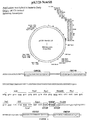
- pKT25 NewSFI a derivative of pKT25, was used as the bait vector. It contains a multi-cloning site similar to the one of pUT18C NewSFI and was constructed with the top AGGGCCGCAGGGGCCGCGGC CGCACTAGTGGGGATCCTTAATTAAGCTGCAGGGCCACTGGGGCCCGGTAC [SEQ ID No. 4] and bottom CGGGCCCCAGTGGCCCTGCAGCTTAATTAA GGATCCCCACTAGTGCGGCCGCGCGGCCCCTGCGGCCCTTGCA [SEQ ID No. 5] oligos. Maps of these two vectors can be found in Figs. 3 and 4.
- pUT18CNS was BamHI digested and filled in with a guanosine nucleotide to prevent self-religation of the vector.
- Nebulized genomic DNA from H. pylori was blunt-ended using a cocktail of Mung Bean Nuclease, T4 Polymerase and Klenow enzymes. Inserts were further ligated with adapters into linearized pUT18CNS plasmid.
- DH10B Gibco BRL
- pKT25NS was digested with the Bam HI and Pst I restriction enzymes.
- the vector was further dephosphorylated using Calf Intestine Phosphatase.
- the urease accessory protein UreH (HP0067) has been previously used in a genome-wide approach of Helicobacter pylori two-hybrid in yeast screens (WO 99/28746).
- the insert corresponding to the full-length coding sequence was Bam HI - Pst I subcloned from pAS2 ⁇ -HP0067 into newly prepared pKT25 NewSFI.
- DHM1 was used as the cya - host strain. Electro-competent DHM1 cells were transformed with pKT25 NewSFI-HP0067 and plated on LB + kanamycin. pKT25 NewSFI-HP0067 cells were subsequently rendered electro-competent and transformed with 1:1 of diluted H. pylori library (40ng). Transformed cells were incubated 1 hour at 37°C after adding 1 ml of SOC medium and were further washed with 1 ml M9 medium. Following a 1/10000 th dilution, cells were plated on LB + kanamycin + ampicillin for counting of double-transformants.
- Remaining of the transformed cells was plated either undiluted on 9 M63 + maltose + X-Gal + IPTG + kanamycin + ampicillin plates or diluted 1/10 th on 9 plates of the same medium or diluted 1/100 th on 10 plates of the same medium.
- 5 x 10 7 double transformants were obtained following transformation of the DHM1/pKT25 NewSFI-HP0067 with 40 ng of library DNA.
- About 5 x 10 6 , 5 x 10 5 and 5 x 10 4 bacteria were, therefore, plated on the M63 screening plates, when no, 1/10 th or 1/100th dilutions were performed, respectively.
- 18 positive clones were selected, 3 in the 0 dilution condition, 11 in the 1/10 th dilution condition, and 4 in the 1/100 th dilution condition.
- ureF another urease accessory protein
- HP0069 another urease accessory protein
- yeast two-hybrid screen of PCT WO 99/28746.
- 4 independent fusions (different start positions of the inserts) were found. All of the inserts were found to be in frame with T18.
- Five out of the 18 clones correspond to HP 1493, a predicted coding region of H. pylori, which has no known homology with any other sequence deposited in public gene databases.
- Out of the 5 clones at least 3 independent fusions were found. Two of these 3 independent fusions were found out of frame with T18. This prey was not found in the corresponding yeast two-hybrid screen (WO 99/28746). It might correspond to a novel protein partner of ureH, which can not be isolated with the yeast two-hybrid technology.
- the present invention utilizes the signal amplification system in Escherichia coli described in WO 99/28746, in which the proteins of interest are genetically fused to two complementary fragments of the catalytic domain of Bordetella pertussis adenylate cyclase.
- B. pertussis produces a calmodulin dependent adenylate cyclase toxin encoded by the cyaA gene.
- the catalytic domain is located within the first 400 amino acids of this 1706 residue-long protein.
- the catalytic domain can be proteolytically cleaved into two complementary fragments, T25 and T18, that remain associated in the presence of CaM in a fully active ternary complex.
- T25 and T18 two complementary fragments
- the mixture of the two fragments did not exhibit detectable activity suggesting that the two fragments are not able to reassociate to yield basal CaM-independent activity.
- T25 and T18 The two complementary fragments, T25 and T18, that are both necessary to form an active enzyme, in the presence of CaM when expressed in E. coli as separated entities, are unable to recognize each other and cannot reconstitute a functional enzyme.
- T25 and T18 are fused to peptides or proteins that are able to interact, heterodimerization of these chimeric polypeptides results in a functional complementation between the adenylate cyclase fragments.
- E. coli When expressed in an adenylate cyclase deficient E. coli strain ( E. coli lacks CaM or CaM-related proteins), the T25 and T18 fragments fused to putative interacting proteins reassociate and lead to cAMP synthesis.
- Interaction between a target ligand and a molecule of interest results in functional complementation between the two adenylate cyclase fragments leading to cAMP synthesis, which in turn can trigger the expression of several resident genes.
- this assay one can select specific clones expressing a protein that interacts with a given target by a simple genetic screening.
- the present invention provides a signal amplification system comprising a bacterial multi-hybrid system, and more preferably a two-hybrid system, of at least two chimeric polypeptides containing a first chimeric polypeptide corresponding to a first fragment of an enzyme, and a second chimeric polypeptide corresponding to a second fragment of an enzyme or a modulating substance capable of activating said enzyme wherein the first fragment is fused to a molecule of interest and the second fragment or the modulating substance is fused to a target ligand and wherein the activity of the enzyme is restored by the in vivo interaction between the said molecule of interest and the said target ligand and wherein a signal amplification is generated; and wherein signal amplification is performed in an E. coli strain selected from the group consisting of strain BTH101 having C.N.C.M. Deposit Accession No. I-2309 and strain DHM1 having C.N.C.M. Deposit Accession No. I-2310.
- the enzyme can be selected from the group consisting of adenylate cyclase and guanylate cyclase from any origin. Any origin refers to Bordetella species or any other organism that produces this type of enzyme.
- the enzyme is the catalytic domain of Bordetella adenylate cyclase (CyaA) located within the first 400 amino acid residues of the adenylate cyclase enzyme as described in WO 99/28746.
- the present invention also concerns a first fragment and a second fragment, which are any combination of fragments from the same enzyme, which in vitro functionally interact with the natural activator of said enzyme by restoring its activity.
- the first and the second fragments are selected from the following group described in WO 99/28746.
- the first and the second fragments can be a fragment T25 corresponding to amino acids 1 to 224 of Bordetella pertussis CyaA and a fragment T18 corresponding to amino acids 225 to 399 of Bordetella pertussis CyaA as described in WO 99/28746.
- the first fragment is a mutated fragment of the catalytic domain of Bordetella adenylate cyclase (CyaA).
- the modulating substance can be a natural activator, or a fragment thereof, of the enzyme.
- the natural activator can be the calmodulin (CaM), or a fragment thereof, and the first fragment can be mutated compared to the wild type enzyme.
- the fragment of calmodulin can be about 70 amino acids long, corresponding preferentially, to residues 77 to 148 of mammalian calmodulin, as described in WO 99/28746.
- the present invention also concerns a method of selecting a molecule of interest which is capable of binding to target ligand wherein the interaction between the said molecule of interest and the said target ligand is detected with a signal amplification system of the invention, by means of generating a signal amplification and triggering transcriptional activation or repression, wherein the method of selecting the molecule of interest is performed in an E. coli strain selected from the group consisting of strain BTH101 having C.N.C.M. Deposit Accession No. I-2309 and strain DHM1 having C.N.C.M. Deposit Accession No. I-2310.
- the signal amplification system comprises a bacterial multi-hybrid system of at least two distinct fragments of an enzyme, whose enzymatic activity is restored by the interaction between the said molecule of interest and the said target ligand.
- the signal amplification system comprises bacterial multi-hybrid system of at least a first fragment of an enzyme and a modulating substance, whose activity is restored by the interaction between the said molecule of interest and the said target ligand.
- the signal amplification system according to the invention comprises a bacterial multi-hybrid system as described in WO 99/28746.
- the interaction between the molecule of interest and the target ligand is detected, by means of signal amplification which triggers transcriptional activation, and is quantified by measuring the synthesis of the signaling molecule or the expression of the reporter gene.
- the signal amplification corresponds to the production of a signaling molecule.
- This signaling molecule is any molecule capable of leading to a signaling cascade reaction.
- the signaling molecule corresponds to the synthesis of cAMP.
- the signaling molecule corresponds to the synthesis of cGMP.
- the transcriptional activation leads to a reporter gene expression;
- the reporter gene is selected from the group consisting of gene coding for nutritional marker, such as lactose or maltose; gene conferring resistance to antibiotics such as ampicillin, chloramphenicol, kanamycin, or tetracyclin; a gene encoding for a toxin; a color marker, such as, fluorescent marker of the type of the Green Fluorescent Protein (GFP); a gene encoding phage receptor proteins or a fragment thereof, such as phage ⁇ receptor, lamB , and any other gene giving a selectable phenotype.
- GFP Green Fluorescent Protein
- cAMP upon binding to CAP, is able to activate the transcription of catabolic operons, allowing the bacteria to ferment carbohydrates, such as maltose or lactose, and to express the phage ⁇ receptor, protein LamB, which could serve as a marker at the bacterial surface.
- This signal amplification system comprising this bacterial multi-hybrid system using BTH101 or DHM1 is able to reveal, for example, interactions between small peptides (GCN4 leucine zipper), bacterial (tyrosyl tRNA synthetase), or eukaryotic proteins (yeast Prp11/Prp21 complex).
- the reporter gene could be a toxin, not naturally present in bacteria, under the control of a cAMP/CAP-dependent promoter. This could be particularly useful to search for chemical compounds or mutations that abolish a given interaction between the target ligand and a molecule of interest.
- cAMP when association between the target ligand and a molecule of interest takes place, cAMP will be produced, the expression of the toxin gene will be switched on, and the cells will be killed.
- a substance capable of stimulating or inhibiting the interaction between the target ligand and the molecule of interest and that abolishes interaction will shut down toxin gene expression and will enable the cells to grow.
- An easy selection for substances that abolish interaction between the target ligand and the molecule of interest is resistance to phage ⁇ .
- the phage receptor the LamB protein
- the phage receptor is the product of the lamB gene, which is part of the maltose regulon, therefore its expression requires cAMP. Substances that abolish interaction between the target ligand and the molecule of interest will abrogate cAMP synthesis and bacteria will become resistant to phage ⁇ . As a result, the cells will grow.
- Another selection scheme for compounds or mutations that abolish a given interaction could be designed by constructing a strain that harbors a selectable marker (i.e. a gene conferring resistance to antibiotics such as ampicillin chloramphenicol, kanamycin, tetracyclin, etc.) under the transcriptional control of a promoter that is repressed by cAMP/CAP.
- a selectable marker i.e. a gene conferring resistance to antibiotics such as ampicillin chloramphenicol, kanamycin, tetracyclin, etc.
- Such cAMP/CAP repressed promoter can be engineered by introducing a synthetic CAP binding site within the promotor region as shown by Morita et al. (Morita T, Shigesada K., Kimizuka F., Aiba H. (1988), "Regulatory effect of a synthetic CRP recognition sequence placed downstream of a promoter" Nucleic Acids Res. 16:7315-32).
- the target ligand according to the invention is selected from the group consisting of protein, peptide, polypeptide, receptor, ligand, antigen, antibody, DNA binding protein, glycoprotein, lipoprotein and recombinant protein.
- the molecule of interest is capable of interacting with the target ligand and possibly of binding to said target ligand.
- the molecule of interest is a mutant molecule compared to the known wild type molecule, and said molecule of interest is tested for its capacity of interacting with the target ligand.
- the present invention includes a molecule of interest identified by the method of selecting a molecule of interest according to the present invention.
- the present invention further includes a molecule of interest corresponding to a polynucleotide capable of expressing a molecule, which interacts with a fused target ligand coupled with an enzyme or a fragment thereof
- the selection of the molecule of interest of the invention is performed in strain DHM1. In another preferred embodiment, the selection of the molecule of interest of the invention is performed in strain BTH101.
- the present invention also concerns a kit for selecting molecule of interest, wherein said kit comprises: (a) a signal amplification system of the invention; (b) a bacterial strain deficient in endogenous adenylate cyclase selected from the group consisting of strain BTH101 having C.N.C.M. Deposit Accession No. I-2309 and strain DHM1 having C.N.C.M. Deposit Accession No.
- I-2310 (c) a medium allowing the detection of the complementation selected from the group consisting of indicator or selective medium as minimal medium supplemented with lactose or maltose as unique carbon source, medium with antibiotics, medium to visualize fluorescence, luminescense, conventional medium, such as xGAL medium, and medium which allows the sorting by the presence of the phage receptor.
- a medium allowing the detection of the complementation selected from the group consisting of indicator or selective medium as minimal medium supplemented with lactose or maltose as unique carbon source, medium with antibiotics, medium to visualize fluorescence, luminescense, conventional medium, such as xGAL medium, and medium which allows the sorting by the presence of the phage receptor.
- the invention concerns a kit for selecting molecule of interest, wherein said kit comprises: (a) a signal amplification system of the invention wherein the molecule of interest is a mutant molecule compared to the known wild type molecule; (b) a signal amplification system of the invention wherein the molecule of interest is the known wild type molecule as the control; (c) a bacterial strain deficient in endogenous adenylate cyclase selected from the group consisting of strain BTH101 having C.N.C.M. Deposit Accession No. I-2309 and strain DHM1 having C.N.C.M. Deposit Accession No.
- I-2310 a medium allowing the detection of the complementation selected from the group consisting of indicator or selective medium as minimal medium supplemented with lactose or maltose as unique carbon source, medium with antibiotics, medium to visualize fluorescence, luminescence, conventional medium, such as xGAL medium, and medium which allows the sorting by the presence of the phage receptor for each signal amplification system; (e) means for detecting whether the signal amplification system with the mutant molecule is enhanced or inhibited with respect to the signal amplification system with wild type.
- a medium allowing the detection of the complementation selected from the group consisting of indicator or selective medium as minimal medium supplemented with lactose or maltose as unique carbon source, medium with antibiotics, medium to visualize fluorescence, luminescence, conventional medium, such as xGAL medium, and medium which allows the sorting by the presence of the phage receptor for each signal amplification system; (e) means for detecting whether the signal amplification system with the mutant molecule is enhanced or inhibit
- the present invention also concerns a method of screening for substance capable of stimulating or inhibiting the interaction between a target ligand and a molecule of interest wherein respectively the stimulating or the inhibiting activity is detected with a signal amplification system of the invention, by means of generating an amplification and respectively of triggering or of abolishing transcriptional activation wherein said signal amplification and said triggered or abolished transcriptional activation are compared with those obtained from an identical signal amplification system without any substance and wherein the method of screening for the substance is performed in an E. coli strain selected from the group consisting of strain BTH101 having C.N.C.M. Deposit Accession No. I-2309 and strain DHM1 having C.N.C.M. Deposit Accession No. I-2310.
- the method of screening for substance capable of stimulating or inhibiting the interaction between a target ligand and a molecule of interest of the invention is characterized by the signal amplification system that comprises a bacterial multi-hybrid system of at least two distinct fragments of an enzyme, whose enzymatic activity is restored by the interaction between the said molecule of interest and the said target ligand.
- the method of screening for substance capable of stimulating or inhibiting the interaction between a target ligand and a molecule of interest of the invention is characterized by the signal amplification system that comprises a bacterial multi-hybrid system of at least a first fragment of an enzyme and a modulating substance, whose activity is restored by the interaction between the said molecule of interest and the said target ligand.
- the signal amplification corresponds to the production of a signaling molecule.
- the signal amplification corresponding to the production of a signaling molecule is blocked or partially abolished.
- the transcriptional activation leads to a reporter gene expression.
- the transcriptional activation leading to a reporter gene expression is blocked or partially abolished.
- the target ligand is selected from the group consisting of receptor, ligand, antigen, antibody, DNA binding protein, glycoprotein and lipoprotein
- the substance is selected from the group consisting of protein, glycoprotein, lipoprotein, ligand and any other drug having stimulating or inhibitory affinity.
- the signaling molecule corresponds to the synthesis of cAMP or to the synthesis of cGMP.
- the reporter gene is selected from the group consisting of gene coding for nutritional marker such as lactose, maltose; gene conferring resistance to antibiotics such as ampicillin, kanamycin or tetracyclin; gene encoding for toxin; color marker such as fluorescent marker of the type of the Green Fluorescent Protein (GFP); gene encoding for phage receptor proteins or fragment thereof such as phage ⁇ receptor, lamB and any other gene giving a selectable phenotype.
- nutritional marker such as lactose, maltose
- gene conferring resistance to antibiotics such as ampicillin, kanamycin or tetracyclin
- gene encoding for toxin color marker such as fluorescent marker of the type of the Green Fluorescent Protein (GFP)
- GFP Green Fluorescent Protein
- the molecule of interest is a mutant molecule compared to the known wild type molecule and said molecule of interest is tested for its capacity of interacting with the target ligand.
- the screening for substance is performed in strain DHM1. In another preferred embodiment, the screening for substance is performed in strain BTH101.
- the present invention also concerns a kit for screening for substance capable of stimulating or inhibiting the interaction between a target ligand and a molecule of interest, wherein said kit comprises (a) a signal amplification system of the invention with the substance capable of stimulating or inhibiting the interaction between a target ligand and a molecule of interest; (b) a signal amplification system of the invention without any substance as the control; (c) a bacterial strain deficient in endogenous adenylate cyclase selected from the group consisting of strain BTH101 having C.N.C.M. Deposit Accession No. I-2309 and strain DHM1 having C.N.C.M. Deposit Accession No.
- I-2310 a medium allowing the detection of the complementation selected from the group consisting of indicator plate or selective medium as minimal medium supplemented with lactose or maltose as unique carbon source, medium with antibiotics, medium to visualize fluorescence, conventional medium and medium which allows the sorting by the presence of the phage receptor and; (e) means for detecting whether the signal amplification system with the substance is enhanced or inhibited with respect to the signal amplification system without any substance.
- the present invention further relates to the a molecule of interest identified by the methods of the invention.
- the present invention also concerns the substance capable of stimulating or inhibiting the interaction between a target ligand and a molecule of interest identified by the method of the invention.
- the present invention also concerns the signal amplification system of the invention, wherein the bacterial multi-hybrid system contains: (a) a first chimeric polypeptide corresponding to a first fragment a of an enzyme; (b) a second chimeric polypeptide corresponding to a second fragment of an enzyme or a modulating substance capable of activating said enzyme; (c) a substance capable of stimulating or inhibiting the interaction between a target ligand and a molecule of interest, wherein the first fragment is fused to a molecule of interest and the second fragment or the modulating substance is fused to a target ligand and wherein the activity of the enzyme is restored by the interaction between the said molecule of interest and the said target ligand and wherein a signal amplification is generated; and a bacterial strain deficient in endogenous adenylate cyclase selected from the group consisting of strain BTH101 having C.N.C.M. Deposit Accession No. I-2309 and strain DHM1 having C.N.C.
- the present invention also concerns a DNA library containing a collection of vectors transformed in a bacterial multi-hybrid system, wherein each vector contains a polynucleotide coding for the molecule of interest fused to a polynucleotide encoding for a first or second fragment of an enzyme; the polynucleotide is selected from the group consisting of cDNA, RNA, genomic DNA, mitochondrial DNA.
- the DNA library of the invention is the H. pylori DNA library having C.N.C.M. Deposit Accession No. I-2367.
- the invention further concerns the strain BTH101 having C.N.C.M. Deposit Accession No. I-2309 and the strain DHM1 having C.N.C.M. Deposit Accession No. I-2310.
- this invention provides the construction and selection of two new E. coli cya strains that overcome the limitations of the DHP1 strain described in published PCT application WO 99/28746.
- the new strains, DHM1 and BTH101 exhibit a stable Cya - phenotype: DHM1 has an internal deletion of about 200 bp within the cya gene, BTH101 harbors an uncharacterized mutation within the cya gene which is most likely a deletion, as no Cya+ revertant could be isolated from this strain.
Landscapes
- Life Sciences & Earth Sciences (AREA)
- Health & Medical Sciences (AREA)
- Genetics & Genomics (AREA)
- Chemical & Material Sciences (AREA)
- Engineering & Computer Science (AREA)
- General Engineering & Computer Science (AREA)
- Bioinformatics & Cheminformatics (AREA)
- Biomedical Technology (AREA)
- Organic Chemistry (AREA)
- Biotechnology (AREA)
- Zoology (AREA)
- Wood Science & Technology (AREA)
- Crystallography & Structural Chemistry (AREA)
- Plant Pathology (AREA)
- Molecular Biology (AREA)
- Microbiology (AREA)
- Bioinformatics & Computational Biology (AREA)
- Physics & Mathematics (AREA)
- Biochemistry (AREA)
- General Health & Medical Sciences (AREA)
- Biophysics (AREA)
- Measuring Or Testing Involving Enzymes Or Micro-Organisms (AREA)
- Micro-Organisms Or Cultivation Processes Thereof (AREA)
Abstract
Description

| Plasmid | Deposit Date | Accession No. |
| XL-1/pUT18 | November 25, 1998 | I-2092 |
| XL-1/pUT18C | November 25, 1998 | I-2093 |
| XL-1/pT25 | November 25, 1998 | I-2094 |
| XL-1/pKT25 | November 25, 1998 | I-2095 |
| DHM1 | September 10, 1999 | I-2310 |
| BTH101 | September 10, 1999 | I-2309 |
| H. pylori | December 14, 1999 | I-2367 |
| library | ||
| HGX BHP3 |
| Bait | Dilution | Clone | Strand | Pos. | ORF | nt/AUG | | Phase |
| HP0067 | ||||||||
| 0 | 2 | C | 74170 | HP0069 | 41 | 765 | IF | |
| | 0 | 3 | C | 74182 | HP0069 | 29 | 765 | IF |
| | 0 | 4 | W | 1566571 | HP1493 | 30 | 612 | OOF |
| HP0067 | 10 | 1 | C | 117917 | HP0109 | 308 | 1863 | IF |
| HP0067 | 10 | 2 | W | 692044 | HP0645 | 1681 | 1683 | OOF |
| HP0067 | 10 | 3 | ND | ND | HP 1493 | ND | ND | ND |
| HP0067 | 10 | 4 | W | 1566580 | HP1493 | 39 | 612 | OOF |
| HP0067 | 10 | 5 | C | 488358 | HP0466 | 320 | 768 | IF |
| HP0067 | 10 | 7 | C | 74170 | HP0069 | 41 | 765 | IF |
| HP0067 | 10 | 8 | C | 74194 | HP0069 | 17 | 765 | IF |
| HP0067 | 10 | 9 | C | 143584 | HP0132 | 11 | 1368 | IF |
| HP0067 | 10 | 10 | W | 1566580 | HP1493 | 39 | 612 | OOF |
| HP0067 | 10 | 11 | W | 1566576 | HP1493 | 35 | 612 | IF |
| HP0067 | 10 | 12 | C | 74173 | HP0069 | 38 | 765 | IF |
| HP0067 | 100 | 1 | W | 503238 | HP0480 | 611 | 1800 | IF |
| HP0067 | 100 | 2 | W | 364123 | HP0354 | 1574 | 1857 | IF |
| HP0067 | 100 | 3 | C | 1e+06 | HP1422 | 2021 | 2763 | IF |
| HP0067 | 100 | 4 | C | 1261589 | HP1190 | 386 | 1329 | IF |
| ND: Not Determined |
| Bait | Dilution | Clone | Strand | Pos. | ORF | nt/AUG | | Phase |
| HP0067 | ||||||||
| 0 | 2 | C | 74170 | HP0069 | 41 | 765 | IF | |
| HP0067 | 10 | 7 | C | 74170 | HP0069 | 41 | 765 | IF |
| HP0067 | 10 | 12 | C | 74173 | HP0069 | 38 | 765 | IF |
| | 0 | 3 | C | 74182 | HP0069 | 29 | 765 | IF |
| HP0067 | 10 | 8 | C | 74194 | HP0069 | 17 | 765 | IF |
| HP0067 | 10 | 1 | C | 117917 | HP0109 | 308 | 1863 | IF |
| HP0067 | 10 | 9 | C | 143584 | HP0132 | 11 | 1368 | IF |
| HP0067 | 100 | 2 | W | 364123 | HP0354 | 1574 | 1857 | IF |
| HP0067 | 10 | 5 | C | 488358 | HP0466 | 320 | 768 | IF |
| HP0067 | 100 | 1 | W | 503238 | HP0480 | 611 | 1800 | IF |
| HP0067 | 10 | 2 | W | 692044 | HP0645 | 1681 | 1683 | OOF |
| HP0067 | 100 | 4 | C | 1261589 | HP1190 | 386 | 1329 | IF |
| HP0067 | 100 | 3 | C | 1492663 | HP1422 | 2021 | 2763 | IF |
| | 0 | 4 | W | 1566571 | HP1493 | 30 | 612 | OOF |
| HP0067 | 10 | 11 | W | 1566576 | HP1493 | 35 | 612 | IF |
| HP0067 | 10 | 4 | W | 1566580 | HP1493 | 39 | 612 | OOF |
| HP0067 | 10 | 10 | W | 1566580 | HP1493 | 39 | 612 | OOF |
| HP0067 | 10 | 3 | ND | ND | HP1493 | ND | ND | ND |
Claims (44)
- A signal amplification system comprising a bacterial multi-hybrid system of at least two chimeric polypeptides containing :wherein the first fragment is fused to a molecule of interest and the second fragment or the modulating substance is fused to a target ligand and wherein the activity of the enzyme is restored by the in vivo interaction between the said molecule of interest and the said target ligand and wherein a signal amplification is generated; and(a) a first chimeric polypeptide corresponding to a first fragment of an enzyme;(b) a second chimeric polypeptide corresponding to a second fragment of an enzyme or a modulating substance capable of activating said enzyme,
wherein signal amplification is performed in an E. coli strain selected from the group consisting of strain BTH101 having C.N.C.M. Deposit Accession No. I-2309 and strain DHM1 having C.N.C.M. Deposit Accession No. I-2310. - The signal amplification system according to claim 1, wherein the enzyme is an enzyme selected from the group consisting of adenylate cyclase and guanylate cyclase from any origin.
- The signal amplification system according to claim 2, wherein the enzyme is the catalytic domain of Bordetella adenylate cyclase (CyaA), located within the first 400 amino acid residues of the adenylate cyclase enzyme.
- The signal amplification system according to claim 3, wherein the first and the second fragments are any combination of fragments from the same enzyme which in vitro functionally interact with the natural activator of said enzyme by restoring its activity.
- The signal amplification system according to claim 4, wherein the first and the second fragments are selected from the group consisting of :(a) a fragment T25 corresponding to amino acids 1 to 224 of CyaA and a fragment T18 corresponding to amino acids 225 to 399 of CyaA;(b) a fragment corresponding to amino acids 1 to 224 of CyaA and a fragment corresponding to amino acids 224 to 384 of CyaA;(c) a fragment corresponding to amino acids 1 to 137 of CyaA and a fragment corresponding to amino acids 138 to 400 of CyaA;(d) a fragment corresponding to amino acids 1 to 317 of CyaA and a fragment corresponding to amino acids 318 to 400 of CyaA ;(e) two fragments from eukaryotic adenylate cyclase in association with molecules such as G protein, forskolin.
- The signal amplification system according to claim 4 or 5, wherein the first and the second fragments are a fragment T25 corresponding to amino acids 1 to 224 of Bordetella pertussis CyaA and a fragment T18 corresponding to amino acids 225 to 399 of Bordetella pertussis CyaA.
- The signal amplification system according to any one of the claims 1 to 3, wherein the modulating substance is a natural activator, or a fragment thereof, of the enzyme.
- The signal amplification system according to claim 7, wherein the natural activator is the calmodulin (CaM), or a fragment thereof, and said first fragment is mutated compared to the wild type enzyme.
- The signal amplification system according to claim 8, wherein the first fragment is a mutated fragment of the catalytic domain of Bordetella adenylate cyclase (CyaA).
- A method of selecting a molecule of interest which is capable of binding to target ligand wherein the interaction between the said molecule of interest and the said target ligand is detected with a signal amplification system according to any one of the claims 1 to 9, by means of generating a signal amplification and triggering transcriptional activation or repression, wherein the method of selecting the molecule of interest is performed in an E. coli strain selected from the group consisting of strain BTH101 having C.N.C.M. Deposit Accession No. I-2309 and strain DHM1 having C.N.C.M. Deposit Accession No. I-2310.
- The method of selecting a molecule of interest according to claim 10, wherein the signal amplification corresponds to the production of a signaling molecule.
- The method of selecting a molecule of interest according to claim 10,
wherein the transcriptional activation leads to a reporter gene expression. - The method of selecting a molecule of interest according to any one of claims 10 to 12, wherein the signal amplification system comprises a bacterial multi-hybrid system of at least two distinct fragments of an enzyme, whose enzymatic activity is restored by the interaction between the said molecule of interest and the said target ligand.
- The method of selecting a molecule of interest according to any one of claims 10 to 12, wherein the signal amplification system comprises bacterial multi-hybrid system of at least a first fragment of an enzyme and a modulating substance, whose activity is restored by the interaction between the said molecule of interest and the said target ligand.
- The method of selecting a molecule of interest according to any one of claims 10 to 14, wherein the target ligand is selected from the group consisting of protein, peptide, polypeptide, receptor, ligand, antigen, antibody, DNA binding protein, glycoprotein, lipoprotein and recombinant protein.
- The method of selecting a molecule of interest according to any one of claims 10 to 15, wherein the molecule of interest is capable of interacting with the target ligand and/or capable of binding to said target ligand.
- The method of selecting a molecule of interest according to any one of claims 10 to 16, wherein the interaction between the molecule of interest and the target ligand is detected, by means of signal amplification which triggers transcriptional activation, and is quantified by measuring the synthesis of the signaling molecule or the expression of the reporter gene.
- The method of selecting a molecule of interest according to any one of claims 10 to 17, wherein the signaling molecule corresponds to the synthesis of cAMP.
- The method of selecting a molecule of interest according to claim 13, wherein the signaling molecule corresponds to the synthesis of cGMP.
- The method of selecting a molecule of interest according to claim 12, wherein the reporter gene is selected from the group consisting of gene coding for nutritional marker such as lactose, maltose; gene conferring resistance to antibiotics such as ampicillin, kanamycin or tetracyclin; gene encoding for toxin; color marker such as fluorescent marker of the type of the Green Fluorescent Protein (GFP); gene encoding for phage receptor proteins or fragment thereof such as phage λ receptor, lamB and any other gene giving a selectable phenotype.
- The method of selecting a molecule of interest according to any one of claims 10 to 20, wherein the molecule of interest is a mutant molecule compared to the known wild type molecule and said molecule of interest is tested for its capacity of interacting with the target ligand.
- The method of selecting a molecule of interest according to any one of claims 10 to 21, wherein the selection is performed in strain DHM1.
- The method of selecting a molecule of interest according to any one of claims 10 to 21 wherein the selection is performed in strain BTH101.
- A kit for selecting molecule of interest, wherein said kit comprises:(a) a signal amplification system according to any one of claims 1 to 9;(b) a bacterial strain deficient in endogenous adenylate cyclase selected from the group consisting of strain BTH101 having C.N.C.M. Deposit Accession No. I-2309 and strain DHM1 having C.N.C.M. Deposit Accession No. I-2310;(c) a medium allowing the detection of the complementation selected from the group consisting of indicator or selective medium as minimal medium supplemented with lactose or maltose as unique carbon source, medium with antibiotics, medium to visualize fluorescence, luminescense, conventional medium, such as xGAL medium, and medium which allows the sorting by the presence of the phage receptor.
- A kit for selecting molecule of interest, wherein said kit comprises:(a) a signal amplification system according to any one of claims 1 to 9 wherein the molecule of interest is a mutant molecule compared to the known wild type molecule;(b) a signal amplification system according to any one of claims 1 to 9 wherein the molecule of interest is the known wild type molecule as the control;(c) a bacterial strain deficient in endogenous adenylate cyclase selected from the group consisting of strain BTH101 having C.N.C.M. Deposit Accession No. I-2309 and strain DHM1 having C.N.C.M. Deposit Accession No. I-2310;(d) a medium allowing the detection of the complementation selected from the group consisting of indicator or selective medium as minimal medium supplemented with lactose or maltose as unique carbon source, medium with antibiotics, medium to visualize fluorescence, luminescence, conventional medium, such as xGAL medium, and medium which allows the sorting by the presence of the phage receptor for each signal amplification system;(e) means for detecting whether the signal amplification system with the mutant molecule is enhanced or inhibited with respect to the signal amplification system with wild type.
- A method of screening for substance capable of stimulating or inhibiting the interaction between a target ligand and a molecule of interest wherein respectively the stimulating or the inhibiting activity is detected with a signal amplification system according to any one of the claims 1 to 9, by means of generating an amplification and respectively of triggering or of abolishing transcriptional activation;
wherein said signal amplification and said triggered or abolished transcriptional activation are compared with those obtained from an identical signal amplification system without any substance; and
wherein the method of screening for the substance is performed in an E. coli strain selected from the group consisting of strain BTH101 having C.N.C.M. Deposit Accession No. I-2309 and strain DHM1 having C.N.C.M. Deposit Accession No. I-2310. - The method of screening for substance capable of stimulating or inhibiting the interaction between a target ligand and a molecule of interest according to claim 26, wherein the signal amplification system comprises a bacterial multi-hybrid system of at least two distinct fragments of an enzyme, whose enzymatic activity is restored by the interaction between the said molecule of interest and the said target ligand.
- The method of screening for substance capable of stimulating or inhibiting the interaction between a target ligand and a molecule of interest according to claim 26, wherein the signal amplification system comprises a bacterial multi-hybrid system of at least a first fragment of an enzyme and a modulating substance, whose activity is restored by the interaction between the said molecule of interest and the said target ligand.
- The method of screening for substance capable of stimulating the interaction between a target ligand and a molecule of interest according to any one of claims 26 to 28, wherein the signal amplification corresponds to the production of a signaling molecule.
- The method of screening for substance capable of inhibiting the interaction between a target ligand and a molecule of interest according to any one of claims 26 to 28, wherein the signal amplification corresponding to the production of a signaling molecule is blocked or partially abolished.
- The method of screening for substance capable of stimulating the interaction between a target ligand and a molecule of interest according to any one of claims 26 to 29, wherein the transcriptional activation leads to a reporter gene expression.
- The method of screening for substance capable of inhibiting the interaction between a target ligand and a molecule of interest according to any one of claims 26 to 28 and to claim 30, wherein the transcriptional activation leading to a reporter gene expression is blocked or partially abolished.
- The method of screening for substance capable of stimulating or inhibiting the interaction between a target ligand and a molecule of interest according to any one of claims 26 to 32, wherein the target ligand is selected from the group consisting of receptor, ligand, antigen, antibody, DNA binding protein, glycoprotein and lipoprotein.
- The method of screening for substance capable of stimulating or inhibiting the interaction between a target ligand and a molecule of interest according to any one of claims 26 to 33, wherein the substance is selected from the group consisting of proteins, glycoproteins, lipoproteins, and ligands.
- The method of screening for substance capable of stimulating or inhibiting the interaction between a target ligand and a molecule of interest according to claim 29 or 30, wherein the signaling molecule corresponds to the synthesis of cAMP.
- The method of screening for substance capable of stimulating or inhibiting the interaction between a target ligand and a molecule of interest according to claim 29 or 30, wherein the signaling molecule corresponds to the synthesis ofcGMP.
- The method of screening for substance capable of stimulating or inhibiting the interaction between a target ligand and a molecule of interest according to claim 31 or 32, wherein the reporter gene is selected from the group consisting of gene coding for nutritional marker such as lactose, maltose; gene conferring resistance to antibiotics such as ampicillin, kanamycin or tetracyclin; gene encoding for toxin; color marker such as fluorescent marker of the type of the Green Fluorescent Protein (GFP); gene encoding for phage receptor proteins or fragment thereof such as phage λ receptor, lamB and any other gene giving a selectable phenotype.
- The method of screening for substance capable of stimulating or inhibiting the interaction between a target ligand and a molecule of interest according to any one of claims 26 to 37, wherein the molecule of interest is a mutant molecule compared to the known wild type molecule and said molecule of interest is tested for its .capacity of interacting with the target ligand.
- The method of screening for substance capable of stimulating or inhibiting the interaction between a target ligand and a molecule of interest according to any one of claims 26 to 37, wherein the screening is performed in strain DHM1.
- The method of screening for a substance capable of stimulating or inhibiting the interaction between a target ligand and a molecule of interest according to any one of claims 26 to 38, wherein the screening is performed in strain BTH101.
- A kit for screening for substance capable of stimulating or inhibiting the interaction between a target ligand and a molecule of interest, wherein said kit comprises:(a) a signal amplification system according to any one of claims 1 to 9 with the substance capable of stimulating or inhibiting the interaction between a target ligand and a molecule of interest;(b) a signal amplification system according to any one of claims 1 to 9 without any substance as the control;(c) a bacterial strain deficient in endogenous adenylate cyclase selected from the group consisting of strain BTH101 having C.N.C.M. Deposit Accession No. I-2309 and strain DHM1 having C.N.C.M. Deposit Accession No. I-2310;(d) a medium allowing the detection of the complementation selected from the group consisting of indicator plate or selective medium as minimal medium supplemented with lactose or maltose as unique carbon source, medium with antibiotics, medium to visualize fluorescence, conventional medium and medium which allows the sorting by the presence of the phage receptor and;(e) means for detecting whether the signal amplification system with the substance is enhanced or inhibited with respect to the signal amplification system without any substance.
- The signal amplification system according to any one of the claims 1 to 9, wherein the bacterial multi-hybrid system contains:a bacterial strain deficient in endogenous adenylate cyclase selected from the group consisting of strain BTH101 having C.N.C.M. Deposit Accession No. I-2309 and strain DHM1 having C.N.C.M. Deposit Accession No. I-2310.(a) a first chimeric polypeptide corresponding to a first fragment a of an enzyme;(b) a second chimeric polypeptide corresponding to a second fragment of an enzyme or a modulating substance capable of activating said enzyme;(c) a substance capable of stimulating or inhibiting the interaction between a target ligand and a molecule of interest,' wherein the first fragment is fused to a molecule of interest and the second fragment or the modulating substance is fused to a target ligand and wherein the activity of the enzyme is restored by the interaction between the said molecule of interest and the said target ligand and wherein a signal amplification is generated; and
- Strain BTH101 having C.N.C.M. Deposit Accession No. I-2309.
- Strain DHM1 having C.N.C.M. Deposit Accession No. I-2310.
Applications Claiming Priority (3)
| Application Number | Priority Date | Filing Date | Title |
|---|---|---|---|
| US19288600P | 2000-03-29 | 2000-03-29 | |
| US192886P | 2000-03-29 | ||
| PCT/IB2001/000773 WO2001073108A2 (en) | 2000-03-29 | 2001-03-29 | A bacterial two-hybrid system for protein interaction screening |
Publications (2)
| Publication Number | Publication Date |
|---|---|
| EP1276892A2 EP1276892A2 (en) | 2003-01-22 |
| EP1276892B1 true EP1276892B1 (en) | 2004-11-24 |
Family
ID=22711424
Family Applications (1)
| Application Number | Title | Priority Date | Filing Date |
|---|---|---|---|
| EP01925789A Expired - Lifetime EP1276892B1 (en) | 2000-03-29 | 2001-03-29 | A bacterial two-hybrid system for protein interaction screening |
Country Status (8)
| Country | Link |
|---|---|
| US (2) | US20020045237A1 (en) |
| EP (1) | EP1276892B1 (en) |
| JP (1) | JP2003528621A (en) |
| AT (1) | ATE283369T1 (en) |
| AU (1) | AU2001252466A1 (en) |
| CA (1) | CA2404663A1 (en) |
| DE (1) | DE60107410D1 (en) |
| WO (1) | WO2001073108A2 (en) |
Families Citing this family (7)
| Publication number | Priority date | Publication date | Assignee | Title |
|---|---|---|---|---|
| JP2002075917A (en) * | 2000-08-25 | 2002-03-15 | Canon Inc | Sample separation apparatus and separation method |
| US7462472B2 (en) * | 2001-11-02 | 2008-12-09 | The University Of Chicago | Methods and compositions relating to anthrax pathogenesis |
| US20040121334A1 (en) * | 2002-12-19 | 2004-06-24 | Kimberly-Clark Worldwide, Inc. | Self-calibrated flow-through assay devices |
| US7931791B2 (en) * | 2006-10-25 | 2011-04-26 | Southern Illinois University Carbondale | Method of detecting analyte-biomolecule interactions |
| EP2975126A1 (en) * | 2014-07-15 | 2016-01-20 | Institut Pasteur | In vivo detection of proteins interaction based on adenylate cyclase hybrid system |
| WO2021063917A1 (en) | 2019-10-01 | 2021-04-08 | Universiteit Gent | Vaccine against chlamydia in swine |
| CN118546969B (en) * | 2024-07-24 | 2024-11-15 | 中山大学 | System B2H-seq for high-throughput screening of protein interaction and application method |
Family Cites Families (4)
| Publication number | Priority date | Publication date | Assignee | Title |
|---|---|---|---|---|
| US5283173A (en) * | 1990-01-24 | 1994-02-01 | The Research Foundation Of State University Of New York | System to detect protein-protein interactions |
| US5466614A (en) * | 1993-09-20 | 1995-11-14 | At&T Global Information Solutions Company | Structure and method for remotely measuring process data |
| AU721549B2 (en) * | 1996-12-11 | 2000-07-06 | Bristol-Myers Squibb Company | Prokaryotic two-hybrid system |
| US6333154B1 (en) * | 1997-12-04 | 2001-12-25 | Institut Pasteur | Bacterial multi-hybrid system and applications thereof |
-
2001
- 2001-03-28 US US09/818,939 patent/US20020045237A1/en not_active Abandoned
- 2001-03-29 DE DE60107410T patent/DE60107410D1/en not_active Expired - Lifetime
- 2001-03-29 CA CA002404663A patent/CA2404663A1/en not_active Abandoned
- 2001-03-29 EP EP01925789A patent/EP1276892B1/en not_active Expired - Lifetime
- 2001-03-29 JP JP2001570823A patent/JP2003528621A/en active Pending
- 2001-03-29 AT AT01925789T patent/ATE283369T1/en not_active IP Right Cessation
- 2001-03-29 AU AU2001252466A patent/AU2001252466A1/en not_active Abandoned
- 2001-03-29 US US10/240,102 patent/US20040029223A1/en not_active Abandoned
- 2001-03-29 WO PCT/IB2001/000773 patent/WO2001073108A2/en not_active Ceased
Also Published As
| Publication number | Publication date |
|---|---|
| AU2001252466A1 (en) | 2001-10-08 |
| US20040029223A1 (en) | 2004-02-12 |
| US20020045237A1 (en) | 2002-04-18 |
| WO2001073108A3 (en) | 2002-11-28 |
| DE60107410D1 (en) | 2004-12-30 |
| JP2003528621A (en) | 2003-09-30 |
| EP1276892A2 (en) | 2003-01-22 |
| WO2001073108A2 (en) | 2001-10-04 |
| CA2404663A1 (en) | 2001-10-04 |
| ATE283369T1 (en) | 2004-12-15 |
Similar Documents
| Publication | Publication Date | Title |
|---|---|---|
| US5965368A (en) | Reverse two-hybrid systems | |
| EP1036323B1 (en) | A bacterial multi-hybrid system and applications | |
| Feucht et al. | Bifunctional protein required for asymmetric cell division and cell-specific transcription in Bacillus subtilis. | |
| Hall et al. | The ompB locus and the regulation of the major outer membrane porin proteins of Escherichia coli K12 | |
| Gardel et al. | secD, a new gene involved in protein export in Escherichia coli | |
| Susskind et al. | Superinfection exclusion by P22 prophage in lysogens of Salmonella typhimurium: III. Failure of superinfecting phage DNA to enter sieA+ lysogens | |
| Smith et al. | Genetic evidence for transcriptional activation by the yeast IME1 gene product | |
| Kolonin et al. | [3] Interaction mating methods in two-hybrid systems | |
| Chumley et al. | Rearrangement of the bacterial chromosome using Tn 10 as a region of homology | |
| Elliott | Transport of 5-aminolevulinic acid by the dipeptide permease in Salmonella typhimurium | |
| EP1053347B1 (en) | Peptide detection method | |
| Pérals et al. | Interplay between recombination, cell division and chromosome structure during chromosome dimer resolution in Escherichia coli | |
| US20040029223A1 (en) | Bacterial two-hybrid system for protein interaction screening | |
| Morgan et al. | Genetic organization and regulation of proteins associated with production of syringotoxin by Pseudomonas syringae pv. syringae | |
| Pearson et al. | Construction of PCR‐ligated long flanking homology cassettes for use in the functional analysis of six unknown open reading frames from the left and right arms of Saccharomyces cerevisiae chromosome XV | |
| Matsunaga et al. | DNA-binding domain of the RepE initiator protein of mini-F plasmid: involvement of the carboxyl-terminal region | |
| Karimova et al. | Bordetella pertussis adenylate cyclase toxin as a tool to analyze molecular interactions in a bacterial two-hybrid system | |
| EP3169782B1 (en) | In vivo detection of proteins interaction based on adenylate cyclase hybrid system | |
| Jovanovich | Regulation of a cya-lac fusion by cyclic AMP in Salmonella typhimurium | |
| US20090305286A1 (en) | Method for the Identification of Suitable Fragmentation Sites in a Reporter Protein | |
| WO1990012488A2 (en) | A clone of double-stranded rna virus applied to antibody production, study of retrovirus-like frameshifting and production of proteins in yeast | |
| Alves et al. | Automated High-throughput microscopy screening unveiled new Listeria monocytogenes genes involved in cell infection | |
| Knipfer et al. | Development of an α-complementation system for mycobacterial promoter analysis | |
| Jones-Mortimer et al. | [13] Use of transposons to isolate and characterize mutants lacking membrane proteins, illustrated by the sugar transport systems of Escherichia coli | |
| Manual | CytoTrap Vector Kit |
Legal Events
| Date | Code | Title | Description |
|---|---|---|---|
| PUAI | Public reference made under article 153(3) epc to a published international application that has entered the european phase |
Free format text: ORIGINAL CODE: 0009012 |
|
| 17P | Request for examination filed |
Effective date: 20021021 |
|
| AK | Designated contracting states |
Kind code of ref document: A2 Designated state(s): AT BE CH CY DE DK ES FI FR GB GR IE IT LI LU MC NL PT SE TR |
|
| AX | Request for extension of the european patent |
Free format text: AL;LT;LV;MK;RO;SI |
|
| 17Q | First examination report despatched |
Effective date: 20030530 |
|
| GRAP | Despatch of communication of intention to grant a patent |
Free format text: ORIGINAL CODE: EPIDOSNIGR1 |
|
| GRAS | Grant fee paid |
Free format text: ORIGINAL CODE: EPIDOSNIGR3 |
|
| GRAA | (expected) grant |
Free format text: ORIGINAL CODE: 0009210 |
|
| AK | Designated contracting states |
Kind code of ref document: B1 Designated state(s): AT BE CH CY DE DK ES FI FR GB GR IE IT LI LU MC NL PT SE TR |
|
| PG25 | Lapsed in a contracting state [announced via postgrant information from national office to epo] |
Ref country code: IT Free format text: LAPSE BECAUSE OF FAILURE TO SUBMIT A TRANSLATION OF THE DESCRIPTION OR TO PAY THE FEE WITHIN THE PRESCRIBED TIME-LIMIT;WARNING: LAPSES OF ITALIAN PATENTS WITH EFFECTIVE DATE BEFORE 2007 MAY HAVE OCCURRED AT ANY TIME BEFORE 2007. THE CORRECT EFFECTIVE DATE MAY BE DIFFERENT FROM THE ONE RECORDED. Effective date: 20041124 Ref country code: NL Free format text: LAPSE BECAUSE OF FAILURE TO SUBMIT A TRANSLATION OF THE DESCRIPTION OR TO PAY THE FEE WITHIN THE PRESCRIBED TIME-LIMIT Effective date: 20041124 Ref country code: CH Free format text: LAPSE BECAUSE OF FAILURE TO SUBMIT A TRANSLATION OF THE DESCRIPTION OR TO PAY THE FEE WITHIN THE PRESCRIBED TIME-LIMIT Effective date: 20041124 Ref country code: AT Free format text: LAPSE BECAUSE OF FAILURE TO SUBMIT A TRANSLATION OF THE DESCRIPTION OR TO PAY THE FEE WITHIN THE PRESCRIBED TIME-LIMIT Effective date: 20041124 Ref country code: FI Free format text: LAPSE BECAUSE OF FAILURE TO SUBMIT A TRANSLATION OF THE DESCRIPTION OR TO PAY THE FEE WITHIN THE PRESCRIBED TIME-LIMIT Effective date: 20041124 Ref country code: TR Free format text: LAPSE BECAUSE OF FAILURE TO SUBMIT A TRANSLATION OF THE DESCRIPTION OR TO PAY THE FEE WITHIN THE PRESCRIBED TIME-LIMIT Effective date: 20041124 Ref country code: FR Free format text: LAPSE BECAUSE OF FAILURE TO SUBMIT A TRANSLATION OF THE DESCRIPTION OR TO PAY THE FEE WITHIN THE PRESCRIBED TIME-LIMIT Effective date: 20041124 Ref country code: BE Free format text: LAPSE BECAUSE OF FAILURE TO SUBMIT A TRANSLATION OF THE DESCRIPTION OR TO PAY THE FEE WITHIN THE PRESCRIBED TIME-LIMIT Effective date: 20041124 Ref country code: LI Free format text: LAPSE BECAUSE OF FAILURE TO SUBMIT A TRANSLATION OF THE DESCRIPTION OR TO PAY THE FEE WITHIN THE PRESCRIBED TIME-LIMIT Effective date: 20041124 |
|
| REG | Reference to a national code |
Ref country code: GB Ref legal event code: FG4D |
|
| REG | Reference to a national code |
Ref country code: CH Ref legal event code: EP |
|
| REF | Corresponds to: |
Ref document number: 60107410 Country of ref document: DE Date of ref document: 20041230 Kind code of ref document: P |
|
| REG | Reference to a national code |
Ref country code: IE Ref legal event code: FG4D |
|
| PG25 | Lapsed in a contracting state [announced via postgrant information from national office to epo] |
Ref country code: GR Free format text: LAPSE BECAUSE OF FAILURE TO SUBMIT A TRANSLATION OF THE DESCRIPTION OR TO PAY THE FEE WITHIN THE PRESCRIBED TIME-LIMIT Effective date: 20050224 Ref country code: DK Free format text: LAPSE BECAUSE OF FAILURE TO SUBMIT A TRANSLATION OF THE DESCRIPTION OR TO PAY THE FEE WITHIN THE PRESCRIBED TIME-LIMIT Effective date: 20050224 Ref country code: SE Free format text: LAPSE BECAUSE OF FAILURE TO SUBMIT A TRANSLATION OF THE DESCRIPTION OR TO PAY THE FEE WITHIN THE PRESCRIBED TIME-LIMIT Effective date: 20050224 |
|
| PG25 | Lapsed in a contracting state [announced via postgrant information from national office to epo] |
Ref country code: DE Free format text: LAPSE BECAUSE OF FAILURE TO SUBMIT A TRANSLATION OF THE DESCRIPTION OR TO PAY THE FEE WITHIN THE PRESCRIBED TIME-LIMIT Effective date: 20050225 |
|
| PG25 | Lapsed in a contracting state [announced via postgrant information from national office to epo] |
Ref country code: ES Free format text: LAPSE BECAUSE OF FAILURE TO SUBMIT A TRANSLATION OF THE DESCRIPTION OR TO PAY THE FEE WITHIN THE PRESCRIBED TIME-LIMIT Effective date: 20050306 |
|
| PG25 | Lapsed in a contracting state [announced via postgrant information from national office to epo] |
Ref country code: LU Free format text: LAPSE BECAUSE OF NON-PAYMENT OF DUE FEES Effective date: 20050329 Ref country code: IE Free format text: LAPSE BECAUSE OF NON-PAYMENT OF DUE FEES Effective date: 20050329 Ref country code: CY Free format text: LAPSE BECAUSE OF FAILURE TO SUBMIT A TRANSLATION OF THE DESCRIPTION OR TO PAY THE FEE WITHIN THE PRESCRIBED TIME-LIMIT Effective date: 20050329 Ref country code: GB Free format text: LAPSE BECAUSE OF NON-PAYMENT OF DUE FEES Effective date: 20050329 |
|
| PG25 | Lapsed in a contracting state [announced via postgrant information from national office to epo] |
Ref country code: MC Free format text: LAPSE BECAUSE OF NON-PAYMENT OF DUE FEES Effective date: 20050331 |
|
| NLV1 | Nl: lapsed or annulled due to failure to fulfill the requirements of art. 29p and 29m of the patents act | ||
| REG | Reference to a national code |
Ref country code: CH Ref legal event code: PL |
|
| PLBE | No opposition filed within time limit |
Free format text: ORIGINAL CODE: 0009261 |
|
| STAA | Information on the status of an ep patent application or granted ep patent |
Free format text: STATUS: NO OPPOSITION FILED WITHIN TIME LIMIT |
|
| 26N | No opposition filed |
Effective date: 20050825 |
|
| GBPC | Gb: european patent ceased through non-payment of renewal fee |
Effective date: 20050329 |
|
| REG | Reference to a national code |
Ref country code: IE Ref legal event code: MM4A |
|
| EN | Fr: translation not filed | ||
| PG25 | Lapsed in a contracting state [announced via postgrant information from national office to epo] |
Ref country code: PT Free format text: LAPSE BECAUSE OF NON-PAYMENT OF DUE FEES Effective date: 20050424 |