This invention relates to a method of integrating structured
metadata. In addition, this invention relates to a method of
transmitting structured metadata. Furthermore, this invention
relates to a method of dividing structured metadata.
Structured metadata can be designed to describe audio-visual
contents transmitted in digital television broadcast. The MPEG-7
standards relate to structured metadata of a tree structure which
describe audio-visual contents. The tree-structure metadata result
from temporally and spatially structuring data representative of the
audio-visual contents.
A typical MPEG-7 description includes descriptors D and
description schemes DS. The descriptors D are used for describing
the features of contents. A description scheme DS is able to have
descriptors D and lower-rank description schemes DS as elements
thereof. Therefore, a description scheme DS corresponds to a
descriptor group. The description definition language (DDL)
prescribes the syntax for descriptors D and description schemes
DS.
The format of an MPEG-7 description uses the extensible
markup language (XML). The DDL results from adding, to the XML
schema, an extension peculiar to the MPEG-7 system.
Structured metadata of a tree structure which describe audio-visual
contents enable a high-speed and efficient search for a
desired content.
According to the MPEG-7 standards, an MPEG-7 description
consists of only one document. Thus, an MPEG-7 description
representing audio-visual contents transmitted in one channel of
digital television broadcast for a day has a huge document. The
efficiency of the transmission of such a huge document tends to be
low.
It is a first object of this invention to provide a method of
integrating structured metadata.
It is a second object of this invention to provide a method of
transmitting structured metadata.
It is a third object of this invention to provide a method of
dividing structured metadata.
A first aspect of this invention provides a method of
integrating structured metadata. The method comprises the steps
of using a first unit including a first metadata store portion and a
connection destination information store portion, the first metadata
store portion containing first structured metadata, the connection
destination information store portion containing connection
position information and reference information, the connection
position information representing a connection point in the first
structured metadata to which second structured metadata should be
connected, the reference information relating to the second
structured metadata and including information relating to a place
where the second structured metadata exist; using a second unit
including a second metadata store portion containing the second
structured metadata; and integrating the first structured metadata
and the second structured metadata into third structured metadata
of a tree structure in response to the connection position
information and the reference information contained in the
connection destination information store portion of the first unit.
A second aspect of this invention is based on the first aspect
thereof, and provides a method wherein the connection position
information includes information designating a node in the first
structured metadata, and information designating a connection
position of the second structured metadata with respect to the
designated node.
A third aspect of this invention is based on the first aspect
thereof, and provides a method wherein the reference information
includes information relating to a content of the second structured
metadata.
A fourth aspect of this invention is based on the third aspect
thereof, and provides a method further comprising the step of
deciding whether or not the first structured metadata and the
second structured metadata should be integrated in response to the
information relating to the content of the second structured
metadata.
A fifth aspect of this invention is based on the first aspect
thereof, and provides a method wherein the reference information
includes information representing a necessity of integration with
the first structured metadata.
A sixth aspect of this invention is based on the fifth aspect
thereof, and provides a method further comprising the step of
deciding whether or not the first structured metadata and the
second structured metadata should be integrated in response to the
information representing the necessity of integration with the first
structured metadata.
A seventh aspect of this invention is based on the first aspect
thereof, and provides a method wherein first and second
identification information pieces for identifying the first and second
units are added to the first and second units, respectively.
An eighth aspect of this invention is based on the seventh
aspect thereof, and provides a method wherein the information
relating to the place where the second structured metadata exist is
based on the second identification information piece for identifying
the second unit.
A ninth aspect of this invention is based on the first aspect
thereof, and provides a method wherein the first structured
metadata, the second structured metadata, the connection position
information, and the reference information are of a textual format.
A tenth aspect of this invention is based on the seventh aspect
thereof, and provides a method wherein the first and second
identification information pieces, the first structured metadata, the
second structured metadata, the connection position information,
and the reference information are of a textual format.
An eleventh aspect of this invention is based on the first
aspect thereof, and provides a method wherein the first structured
metadata, the second structured metadata, the connection position
information, and the reference information are of a binary format.
A twelfth aspect of this invention is based on the seventh
aspect thereof, and provides a method wherein the first and second
identification information pieces, the first structured metadata, the
second structured metadata, the connection position information,
and the reference information are of a binary format.
A thirteenth aspect of this invention is based on the first
aspect thereof, and provides a method wherein the third structured
metadata represent an electronic program guide.
A fourteenth aspect of this invention is based on the first
aspect thereof, and provides a method wherein the connection
position information includes name information relating to a name
of a node in an assumptive integration-resultant structured metadata
which corresponds to an uppermost node in the second structured
metadata.
A fifteenth aspect of this invention is based on the fourteenth
aspect thereof, and provides a method further comprising the step
of converting a name of the uppermost node in the second
structured metadata into the name of the node in the assumptive
integration-resultant structured metadata before the first structured
metadata and the second structured metadata are integrated.
A sixteenth aspect of this invention provides a method of
integrating structured metadata. The method comprises the steps
of using a first unit including a first metadata store portion and a
connection destination information store portion, the first metadata
store portion containing first structured metadata, the connection
destination information store portion containing first connection
position information and first reference information, the first
connection position information representing a first connection
point in the first structured metadata to which second structured
metadata should be connected, the first reference information
relating to the second structured metadata and including
information relating to a place where the second structured
metadata exist, the connection destination information store
portion containing second connection position information and
second reference information, the second connection position
information representing a second connection point in the first
structured metadata to which third structured metadata should be
connected, the second reference information relating to the third
structured metadata and including information relating to a place
where the third structured metadata exist, the connection
destination information store portion containing at least one of (1)
first common information and (2) second common information as
common attribute information, the first common information being
common to the first connection position information and the
second connection position information, the second common
information being common to the first reference information and
the second reference information; using at least one of second and
third units, the second unit including a second metadata store
portion containing either the second structured metadata or a set of
the second structured metadata and the third structured metadata,
the third unit including a third metadata store portion containing
the third structured metadata; and integrating the first structured
metadata, the second structured metadata, and the third structured
metadata into fourth structured metadata of a tree structure in
response to the common attribute information contained in the
connection destination information store portion of the first unit.
A seventeenth aspect of this invention is based on the
sixteenth aspect thereof, and provides a method further comprising
the step of using the common attribute information in preference to
the first connection position information, the first reference
information, the second connection position information, and the
second reference information for the integration of the first
structured metadata, the second structured metadata, and the third
structured metadata.
An eighteenth aspect of this invention provides a method of
integrating structured metadata. The method comprises the steps
of using a first unit including a first metadata store portion and a
connection destination information store portion, the first metadata
store portion containing first structured metadata, the connection
destination information store portion containing connection
position information and reference information, the connection
position information representing a node in an assumptive
integration-resultant structured metadata which corresponds to an
uppermost node in second structured metadata, the reference
information relating to the second structured metadata and
including information relating to a place where the second
structured metadata exist; using a second unit including a second
metadata store portion containing the second structured metadata;
and integrating the first structured metadata and the second
structured metadata into third structured metadata of a tree
structure in response to the connection position information and
the reference information contained in the connection destination
information store portion of the first unit.
A nineteenth aspect of this invention is based on the
eighteenth aspect thereof, and provides a method wherein the
reference information includes information relating to a content of
the second structured metadata.
A twentieth aspect of this invention is based on the
nineteenth aspect thereof, and provides a method further
comprising the step of deciding whether or not the first structured
metadata and the second structured metadata should be integrated
in response to the information relating to the content of the second
structured metadata.
A twenty-first aspect of this invention is based on the
eighteenth aspect thereof, and provides a method wherein the
reference information includes information representing a necessity
of integration with the first structured metadata.
A twenty-second aspect of this invention is based on the
twenty-first aspect thereof, and provides a method further
comprising the step of deciding whether or not the first structured
metadata and the second structured metadata should be integrated
in response to the information representing the necessity of
integration with the first structured metadata.
A twenty-third aspect of this invention is based on the
eighteenth aspect thereof, and provides a method wherein first and
second identification information pieces for identifying the first and
second units are added to the first and second units, respectively.
A twenty-fourth aspect of this invention is based on the
twenty-third aspect thereof, and provides a method wherein the
information relating to the place where the second structured
metadata exist is based on the second identification information
piece for identifying the second unit.
A twenty-fifth aspect of this invention is based on the
eighteenth aspect thereof, and provides a method wherein the first
structured metadata, the second structured metadata, the
connection position information, and the reference information are
of a textual format.
A twenty-sixth aspect of this invention is based on the twenty-third
aspect thereof, and provides a method wherein the first and
second identification information pieces, the first structured
metadata, the second structured metadata, the connection position
information, and the reference information are of a textual format.
A twenty-seventh aspect of this invention is based on the
eighteenth aspect thereof, and provides a method wherein the first
structured metadata, the second structured metadata, the
connection position information, and the reference information are
of a binary format.
A twenty-eighth aspect of this invention is based on the
twenty-third aspect thereof, and provides a method wherein the
first and second identification information pieces, the first
structured metadata, the second structured metadata, the
connection position information, and the reference information are
of a binary format.
A twenty-ninth aspect of this invention is based on the
eighteenth aspect thereof, and provides a method wherein the third
structured metadata represent an electronic program guide.
A thirtieth aspect of this invention is based on the eighteenth
aspect thereof, and provides a method wherein the connection
position information includes name information relating to a name
of the node in the assumptive integration-resultant structured
metadata which corresponds to the uppermost node in the second
structured metadata.
A thirty-first aspect of this invention is based on the thirtieth
aspect thereof, and provides a method further comprising the step
of converting a name of the uppermost node in the second
structured metadata into the name of the node in the assumptive
integration-resultant structured metadata before the first structured
metadata and the second structured metadata are integrated.
A thirty-second aspect of this invention provides a method of
integrating structured metadata. The method comprises the steps
of using a first unit including a first metadata store portion and a
connection destination information store portion, the first metadata
store portion containing first structured metadata, the connection
destination information store portion containing first connection
position information and first reference information, the first
connection position information representing a first node in an
assumptive integration-resultant structured metadata which
corresponds to an uppermost node in second structured metadata,
the first reference information relating to the second structured
metadata and including information relating to a place where the
second structured metadata exist, the connection destination
information store portion containing second connection position
information and second reference information, the second
connection position information representing a second node in the
assumptive integration-resultant structured metadata which
corresponds to an uppermost node in third structured metadata,
the second reference information relating to the third structured
metadata and including information relating to a place where the
third structured metadata exist, the connection destination
information store portion containing at least one of (1) first
common information and (2) second common information as
common attribute information, the first common information being
common to the first connection position information and the
second connection position information, the second common
information being common to the first reference information and
the second reference information; using at least one of second and
third units, the second unit including a second metadata store
portion containing either the second structured metadata or a set of
the second structured metadata and the third structured metadata,
the third unit including a third metadata store portion containing
the third structured metadata; and integrating the first structured
metadata, the second structured metadata, and the third structured
metadata into fourth structured metadata of a tree structure in
response to the common attribute information contained in the
connection destination information store portion of the first unit.
A thirty-third aspect of this invention is based on the thirty-second
aspect thereof, and provides a method further comprising
the step of using the common attribute information in preference to
the first connection position information, the first reference
information, the second connection position information, and the
second reference information for the integration of the first
structured metadata, the second structured metadata, and the third
structured metadata.
A thirty-fourth aspect of this invention provides a method of
transmitting structured metadata. The method comprises the steps
of using a first unit including a first metadata store portion and a
connection destination information store portion, the first metadata
store portion containing first structured metadata, the connection
destination information store portion containing connection
position information and reference information, the connection
position information representing a connection point in the first
structured metadata to which second structured metadata should be
connected, the second structured metadata being subordinate to the
first structured metadata, the reference information relating to the
second structured metadata and including information relating to a
place where the second structured metadata exist, the first unit
containing first identification information for identifying the first
unit; using a second unit including a second metadata store portion
containing the second structured metadata, the second unit
containing second identification information for identifying the
second unit; and transmitting the first and second units.
A thirty-fifth aspect of this invention is based on the thirty-fourth
aspect thereof, and provides a method further comprising
the step of controlling the transmission of the first and second units
on a unit-by-unit basis.
A thirty-sixth aspect of this invention is based on the thirty-fourth
aspect thereof, and provides a method wherein the first
structured metadata and the second structured metadata compose
third structured metadata being of a tree structure and representing
an electronic program guide.
A thirty-seventh aspect of this invention is based on the thirty-fourth
aspect thereof, and provides a method wherein the first
structured metadata and the second structured metadata result
from dividing original structured metadata, and the connection
position information includes name information relating to a name
of a node in the original structured metadata which corresponds to
an uppermost node in the second structured metadata.
A thirty-eighth aspect of this invention is based on the thirty-fourth
aspect thereof, and provides a method wherein the
connection position information includes name information relating
to a name of a node in an assumptive integration-resultant
structured metadata which corresponds to an uppermost node in
the second structured metadata.
A thirty-ninth aspect of this invention provides a method of
transmitting first structured metadata and second structured
metadata resulting from dividing original structured metadata. The
second structured metadata are subordinate to the first structured
metadata. The method comprises the steps of using a first unit
including a first metadata store portion and a connection
destination information store portion, the first metadata store
portion containing the first structured metadata, the connection
destination information store portion containing connection
position information and reference information, the connection
position information representing a node in the original structured
metadata which corresponds to an uppermost node in the second
structured metadata, the reference information relating to the
second structured metadata and including information relating to a
place where the second structured metadata exist; using a second
unit including a second metadata store portion containing the
second structured metadata; and transmitting the first and second
units.
A fortieth aspect of this invention provides a method of
transmitting structured metadata. The method comprises the steps
of using a first unit including a first metadata store portion and a
connection destination information store portion, the first metadata
store portion containing first structured metadata, the connection
destination information store portion containing connection
position information and reference information, the connection
position information representing a node in an assumptive
integration-resultant structured metadata which corresponds to an
uppermost node in second structured metadata, the second
structured metadata being subordinate to the first structured
metadata, the reference information relating to the second
structured metadata and including information relating to a place
where the second structured metadata exist; using a second unit
including a second metadata store portion containing the second
structured metadata; and transmitting the first and second units.
A forty-first aspect of this invention is based on the thirty-ninth
aspect thereof, and provides a method wherein the
connection position information includes name information relating
to a name of the node in the original structured metadata which
corresponds to the uppermost node in the second structured
metadata.
A forty-second aspect of this invention is based on the fortieth
aspect thereof, and provides a method wherein the connection
position information includes name information relating to a name
of the node in the assumptive integration-resultant structured
metadata which corresponds to the uppermost node in the second
structured metadata.
A forty-third aspect of this invention is based on the thirty-ninth
aspect thereof, and provides a method further comprising the
step of controlling the transmission of the first and second units on
a unit-by-unit basis.
A forty-fourth aspect of this invention is based on the thirty-ninth
aspect thereof, and provides a method wherein the first
structured metadata and the second structured metadata compose
third structured metadata being of a tree structure and representing
an electronic program guide.
A forty-fifth aspect of this invention provides a method of
dividing structured metadata. The method comprises the steps of
dividing original structured metadata of a tree structure into first
division-resultant structured metadata and second division-resultant
structured metadata, the original structured metadata representing
a content; generating a first unit including a first metadata store
portion and a connection destination information store portion, the
first metadata store portion containing the first division-resultant
structured metadata, the connection destination information store
portion containing connection position information and reference
information, the connection position information representing a
connection point in the first division-resultant structured metadata
to which the second division-resultant structured metadata should
be connected, the reference information relating to the second
division-resultant structured metadata and including information
relating to a place where the second division-resultant structured
metadata exist; and generating a second unit including a second
metadata store portion containing the second division-resultant
structured metadata.
A forty-sixth aspect of this invention is based on the forty-fifth
aspect thereof, and provides a method wherein the connection
position information includes name information relating to a name
of a node in the original structured metadata which corresponds to
an uppermost node in the second division-resultant structured
metadata.
A forty-seventh aspect of this invention provides a method of
dividing structured metadata. The method comprises the steps of
dividing original structured metadata of a tree structure into first
division-resultant structured metadata, second division-resultant
structured metadata, and third division-resultant structured
metadata, the original structured metadata representing a content;
generating a first unit including a first metadata store portion and a
connection destination information store portion, the first metadata
store portion containing the first division-resultant structured
metadata, the connection destination information store portion
containing first connection position information and first reference
information, the first connection position information representing
a first connection point in the first division-resultant structured
metadata to which the second division-resultant structured
metadata should be connected, the first reference information
relating to the second division-resultant structured metadata and
including information relating to a place where the second division-resultant
structured metadata exist, the connection destination
information store portion containing second connection position
information and second reference information, the second
connection position information representing a second connection
point in the first division-resultant structured metadata to which
the third division-resultant structured metadata should be
connected, the second reference information relating to the third
division-resultant structured metadata and including information
relating to a place where the third division-resultant structured
metadata exist, the connection destination information store
portion containing at least one of (1) first common information and
(2) second common information as common attribute information,
the first common information being common to the first connection
position information and the second connection position
information, the second common information being common to the
first reference information and the second reference information;
and generating at least one of second and third units, the second
unit including a second metadata store portion containing either the
second division-resultant structured metadata or a set of the second
division-resultant structured metadata and the third division-resultant
structured metadata, the third unit including a third
metadata store portion containing the third division-resultant
structured metadata.
A forty-eighth aspect of this invention provides a method of
dividing structured metadata. The method comprises the steps of
dividing original structured metadata of a tree structure into first
division-resultant structured metadata and second division-resultant
structured metadata, the original structured metadata representing
a content; generating a first unit including a first metadata store
portion and a connection destination information store portion, the
first metadata store portion containing the first division-resultant
structured metadata, the connection destination information store
portion containing connection position information and reference
information, the connection position information representing a
node in the original structured metadata which corresponds to an
uppermost node in the second division-resultant structured
metadata, the reference information relating to the second division-resultant
structured metadata and including information relating to
a place where the second division-resultant structured metadata
exist; and generating a second unit including a second metadata
store portion containing the second division-resultant structured
metadata.
A forty-ninth aspect of this invention is based on the forty-eighth
aspect thereof, and provides a method wherein the
connection position information includes name information relating
to a name of the node in the original structured metadata which
corresponds to the uppermost node in the second division-resultant
structured metadata.
A fiftieth aspect of this invention provides a method of
dividing structured metadata. The method comprises the steps of
dividing original structured metadata of a tree structure into first
division-resultant structured metadata, second division-resultant
structured metadata, and third division-resultant structured
metadata, the original structured metadata representing a content;
generating a first unit including a first metadata store portion and a
connection destination information store portion, the first metadata
store portion containing the first division-resultant structured
metadata, the connection destination information store portion
containing first connection position information and first reference
information, the first connection position information representing
a first node in the original structured metadata which corresponds
to an uppermost node in the second division-resultant structured
metadata, the first reference information relating to the second
division-resultant structured metadata and including information
relating to a place where the second division-resultant structured
metadata exist, the connection destination information store
portion containing second connection position information and
second reference information, the second connection position
information representing a second node in the original structured
metadata which corresponds to an uppermost node in the third
division-resultant structured metadata, the second reference
information relating to the third division-resultant structured
metadata and including information relating to a place where the
third division-resultant structured metadata exist, the connection
destination information store portion containing at least one of (1)
first common information and (2) second common information as
common attribute information, the first common information being
common to the first connection position information and the
second connection position information, the second common
information being common to the first reference information and
the second reference information; and generating at least one of
second and third units, the second unit including a second metadata
store portion containing either the second division-resultant
structured metadata or a set of the second division-resultant
structured metadata and the third division-resultant structured
metadata, the third unit including a third metadata store portion
containing the third division-resultant structured metadata.
A fifty-first aspect of this invention is based on the forty-fifth
aspect thereof, and provides a method wherein the original
structured metadata represent an electronic program guide.
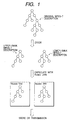
Fig. 1 is a diagram of a division procedure and a store and
transmission procedure in a first embodiment of this invention.
Fig. 2 is a diagram of the store and transmission procedure
and a reconstruction procedure in the first embodiment of this
invention.
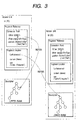
Fig. 3 is a diagram of the structures of access units in the first
embodiment of this invention.
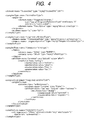
Fig. 4 is a descriptive view showing an example of the DDL
syntax of one access unit in Fig. 3.
Fig. 5 is a diagram of a first example of an upper-rank MPEG-7
description, a lower-rank MPEG-7 description, and connection
between the upper-rank MPEG-7 description and the lower-rank
MPEG-7 description in the first embodiment of this invention.
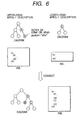
Fig. 6 is a diagram of a second example of an upper-rank
MPEG-7 description, a lower-rank MPEG-7 description, and
connection between the upper-rank MPEG-7 description and the
lower-rank MPEG-7 description in the first embodiment of this
invention.
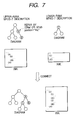
Fig. 7 is a diagram of a third example of an upper-rank MPEG-7
description, a lower-rank MPEG-7 description, and connection
between the upper-rank MPEG-7 description and the lower-rank
MPEG-7 description in the first embodiment of this invention.
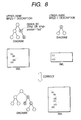
Fig. 8 is a diagram of a fourth example of an upper-rank
MPEG-7 description, a lower-rank MPEG-7 description, and
connection between the upper-rank MPEG-7 description and the
lower-rank MPEG-7 description in the first embodiment of this
invention.
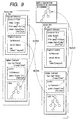
Fig. 9 is a diagram of the structures of access units in a second
embodiment of this invention.
Figs. 10 and 11 are a descriptive view showing an example of
the DDL syntax of one access unit in Fig. 9.
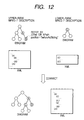
Fig. 12 is a diagram of a first example of an upper-rank MPEG-7
description, a lower-rank MPEG-7 description, and connection
between the upper-rank MPEG-7 description and the lower-rank
MPEG-7 description in a third embodiment of this invention.
Fig. 13 is a diagram of a second example of an upper-rank
MPEG-7 description, a lower-rank MPEG-7 description, and
connection between the upper-rank MPEG-7 description and the
lower-rank MPEG-7 description in the third embodiment of this
invention.
Fig. 14 is a diagram of a binary format for an access unit in a
fourth embodiment of this invention.
Fig. 15 is a diagram of a binary format for "Fragment
reference" in Fig. 14.
Fig. 16 is a diagram of the structures of access units in a fifth
embodiment of this invention.
Fig. 17 is a descriptive view showing an example of the DDL
syntax of one access unit in Fig. 16.
Fig. 18 is a diagram of a binary format for an access unit in the
fifth embodiment of this invention.
Fig. 19 is a diagram of a binary format for "Fragment
Reference" in the fifth embodiment of this invention.
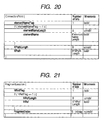
Fig. 20 is a diagram of a binary format for "Connection Point"
in the fifth embodiment of this invention.
Fig. 21 is a diagram of a binary format for "Fragment Location"
in the fifth embodiment of this invention.
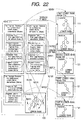
Fig. 22 is a diagram of the structures of access units in a sixth
embodiment of this invention.
Fig. 23 is a block diagram of an MPEG-7 transmission system
according to a seventh embodiment of this invention.
Fig. 24 is a block diagram of an MPEG-7 reception system
according to an eighth embodiment of this invention.
Fig. 25 is a diagram of a video contents search system
according to a ninth embodiment of this invention.
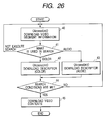
Fig. 26 is a flowchart of an application program for a user-side
computer in Fig. 25.
First Embodiment
Original structured metadata being an original MPEG-7
description of a tree structure is separated or divided at an arbitrary
position into upper-rank structured metadata and lower-rank
structured metadata which mean upper-layer structured metadata
and lower-layer structured metadata respectively. The position of
the separation (the division) is also referred to as the separation
point or the connection point. Connection position information
representative of the separation point (the connection point) with
the lower-rank structured metadata is added to the upper-rank
structured metadata. In addition, reference information for
designating the lower-rank structured metadata is added to the
upper-rank structured metadata. The reference information
includes at least information relating to the place where the lower-rank
structured metadata exist.
The reference information may further include information
relating to the contents of the lower-rank structured metadata and a
way of processing the lower-rank structured metadata. In this case,
the reference information can be used as a decision material for the
processing of the lower-rank structured metadata by a user or an
application program.
The lower-rank structured metadata and the upper-rank
structured metadata are connected on the basis of the connection
position information and the reference information to reconstruct
the original structured metadata (the original MPEG-7 description
of the tree structure). In other words, the lower-rank structured
metadata and the upper-rank structured metadata are integrated
into the original structured metadata on the basis of the connection
position information and the reference information.
A method of processing an original MPEG-7 description
(original structured metadata) of a tree structure includes a
sequence of a division procedure, a store and transmission
procedure, and a reconstruction procedure. The reconstruction
procedure is also referred to as the integration procedure.
Fig. 1 shows the division procedure and the store and
transmission procedure implemented by an encoding side including
a computer which operates in accordance with a control program.
The control program is designed to enable the encoding side to
execute operation steps mentioned hereafter. With reference to Fig.
1, an original MPEG-7 description (original structured metadata) is
divided into a plurality of division-resultant MPEG-7 descriptions
(blocks of division-resultant structured metadata). The division-resultant
MPEG-7 descriptions include an upper-rank MPEG-7
description and a lower-rank MPEG-7 description which mean an
upper-layer MPEG-7 description and a lower-layer MPEG-7
description respectively. The division-resultant MPEG-7
descriptions are stored into the metadata store portions in access
units, respectively. This step corresponds to capsulating the
division-resultant MPEG-7 descriptions by the access units.
Connection position information and reference information are
generated in accordance with the conditions of dividing the original
MPEG-7 description. The connection position information and the
reference information are added to the access unit containing the
upper-rank MPEG-7 description. The access units can be provided
in and handled by a store system or a transmission system.
Examples of the store system and the transmission system are as
follows. In a store system for the Internet or another
communication network, one or more access units in a file format
are stored. In a transmission system such as a digital television
broadcast system, access units are sequentially arranged to form a
data stream, and the data stream is transmitted.
Fig. 2 shows the store and transmission procedure and the
reconstruction procedure implemented by a decoding side
including a computer which operates in accordance with a control
program. The control program is designed to enable the decoding
side to execute operation steps mentioned hereafter. With
reference to Fig. 2, the access units are received from the store
system or the transmission system. The division-resultant MPEG-7
descriptions are read from the metadata store portions in the
access units. The connection position information and the
reference information are read from the access unit containing the
upper-rank MPEG-7 description. The division-resultant MPEG-7
descriptions are connected to reconstruct the original MPEG-7
description on the basis of the connection position information and
the reference information. In other words, the division-resultant
MPEG-7 descriptions are integrated into the original MPEG-7
description on the basis of the connection position information and
the reference information.
Fig. 3 shows examples of the structures of access units loaded
with a division-resultant upper-rank MPEG-7 description and a
division-resultant lower-rank MPEG-7 description respectively. Fig.
4 shows an example of the DDL (description definition language)
syntax of one access unit in Fig. 3.
Each access unit in Fig. 3 includes a metadata store portion
named "Description", a connection destination information store
portion named "Fragment Reference", and an attribute "id
(identification information)" store portion for containing a division-resultant
MPEG-7 description and various types of information
which are represented by text data. Generally, descriptions and
information represented by text data have the following advantages.
It is easy for a user to understand them. It is easy to edit them.
Furthermore, they are suited for transmission via the Internet.
The Description stores the related division-resultant MPEG-7
description. Generally, there is only one Description in each access
unit.
The Fragment Reference stores connection destination
information which is referred to and used when the division-resultant
MPEG-7 description in the related Description and the
division-resultant MPEG-7 description of a rank lower than the rank
of the former division-resultant MPEG-7 description are connected.
The connection destination information includes connection
position information and reference information.
Generally, in the case where there is a plurality of lower-rank
MPEG-7 descriptions to be connected with an upper-rank MPEG-7
description stored in the Description of an access unit, Fragment
References are provided in the access unit for the lower-rank
MPEG-7 descriptions respectively. In the case where there is no
lower-rank MPEG-7 description to be connected with an upper-rank
MPEG-7 description stored in the Description of an access
unit, Fragment Reference is absent from the access unit.
The Fragment Reference has two child elements named
"Connection Point" and "Fragment Location" respectively.
The Connection Point is connection position information
relating to an upper-rank MPEG-7 description stored in the related
Description. The connection position information represents a
place or a connection point in the upper-rank MPEG-7 description
to which a lower-rank MPEG-7 description should be connected.
The Connection Point uses a child element named "IDRef" or a child
element named "XPath" in designating a specified node in the
upper-rank MPEG-7 description. The child element "IDRef
designates a specified node by use of ID (identification information)
in the related MPEG-7 description. On the other hand, the child
element "XPath" denotes a specified node in the related MPEG-7
description by use of the XML path language XPath (http://www. w3.
org/TR/xpath) decided by W3C (World Wide Web Consortium).
The Connection Point includes "position (attribute position)"
designating a position to which the lower-rank MPEG-7 description
should be connected with respect to the node designated by the
child element "IDRef" or "XPath". When the value of "position"
corresponds to "before", the lower-rank MPEG-7 description is
connected to a sibling position before the designated node. When
the value of "position" corresponds to "after", the lower-rank MPEG-7
description is connected to a sibling position after the designated
node. When the value of "position" corresponds to "first", the lower-rank
MPEG-7 description is connected to the head of a child node
or the head of a set of child nodes with respect to the designated
node. When the value of "position" corresponds to "last", the lower-rank
MPEG-7 description is connected to the end of a child node or
the end of a set of child nodes with respect to the designated node.
A way of using the attribute position ("position") will be
explained below. Each of Figs. 5, 6, 7, and 8 has illustrations and
actual XML description portions showing an upper-rank MPEG-7
description, a lower-rank MPEG-7 description, and a reconstructed
MPEG-7 description resulting from connecting the upper-rank
MPEG-7 description and the lower-rank MPEG-7 description.
In Fig. 5, a child element "IDRef" or "XPath" of Connection
Point designates a node "B" in an upper-rank MPEG-7 description,
and the value of an attribute position corresponds to "before". In
this case, a lower-rank MPEG-7 description is connected to the
upper-rank MPEG-7 description at a sibling position before the
node "B". In Fig. 5, the sibling position before the node "B" means a
position leftward of the node "B".
In Fig. 6, a child element "IDRef" or "XPath" of Connection
Point designates a node "B" in an upper-rank MPEG-7 description,
and the value of an attribute position corresponds to "after". In this
case, a lower-rank MPEG-7 description is connected to the upper-rank
MPEG-7 description at a sibling position after the node "B". In
Fig. 6, the sibling position after the node "B" means a position
rightward of the node "B".
In Fig. 7, a child element "IDRef" or "XPath" of Connection
Point designates a node "A" in an upper-rank MPEG-7 description,
and the value of an attribute position corresponds to "first". In this
case, a lower-rank MPEG-7 description is connected to the upper-rank
MPEG-7 description at the head of a child element (a child
node) with respect to the node "A", that is, at a sibling position
before the node "B". In Fig. 7, the sibling position before the node
"B" means a position leftward of the node "B".
In Fig. 8, a child element "IDRef" or "XPath" of Connection
Point designates a node "A" in an upper-rank MPEG-7 description,
and the value of an attribute position corresponds to "last". In this
case, a lower-rank MPEG-7 description is connected to the upper-rank
MPEG-7 description at the end of a child element (a child
node) with respect to the node "A", that is, at a sibling position after
the node "B". In Fig. 8, the sibling position after the node "B" means
a position rightward of the node "B".
With reference back to Fig. 3, the Fragment Location being a
child element of the Fragment Reference is reference information
designating a lower-rank MPEG-7 description which should be
connected to the upper-rank MPEG-7 description in the related
Description. The Fragment Location is of a data format being
"uriReference", and refers to a root element of the lower-rank
MPEG-7 description by URI (uniform resource identifiers). Thus,
the Fragment Location represents the place where the lower-rank
MPEG-7 description exists. The Fragment Location uses the XML
pointer language XPointer (http://www. w3. org/TR/ptr) decided by
W3C in addition to the URI, and thereby refers to a specified
element in an external XML document.
The Fragment Location has "content (attribute content)" and
"use (attribute use)". The attribute content gives an outline of the
content of the lower-rank MPEG-7 description. The attribute
content can employ, for example, the name of a root element of the
lower-rank MPEG-7 description. A user or an application program
can utilize the attribute content to selectively get and save a desired
division-resultant MPEG-7 description or descriptions. The
attribute use represents the necessity of the lower-rank MPEG-7
description for connection with the upper-rank MPEG-7
description. The default value of the attribute use is "optional".
When the value of the attribute use is set to "required", it is
mandatory that an MPEG-7 application program gets or saves the
lower-rank MPEG-7 description. The protection of the copyright
on the upper-rank MPEG-7 description can be strengthened by
placing related copyright protection data in the lower-rank MPEG-7
description.
The attribute "id" store portion holds "id (attribute
identification information)" for the related access unit, that is, the
access-unit identification information. Generally, access units have
"id" in different states respectively. Thus, the access units can be
identified by referring to the states of "id" therein. In a store
system for the Internet or another communication network, access
units are stored in files, and can be identified by using URI. In a
transmission system such as a digital television broadcast system,
access units are sequentially arranged to form a data stream, and
URI can not be used for access-unit identification. Even in the
transmission system, the access units can be identified by referring
to the states of "id" therein.
After access units are received or obtained from the store
system or the transmission system, division-resultant MPEG-7
descriptions are read from the access units. In addition,
information (connection position information and reference
information) is read from the Fragment Reference, that is, the
connection destination information store portion, of each of the
access units. The division-resultant MPEG-7 descriptions are
sequentially connected on the basis of the connection position
information and the reference information to reconstruct an original
MPEG-7 description. Thus, according to user's intention or an
application program, access units are received or obtained, and
division-resultant MPEG-7 descriptions are read from the received
access units and are then connected to reconstruct an original
MPEG-7 description on the basis of connection position information
and reference information in the Fragment Reference which are in
the direction from an upper-rank MPEG-7 description toward a
lower-rank MPEG-7 description. Two or more may be selected
from the access units on the basis of the reference information. In
other words, two or more may be selected from the division-resultant
MPEG-7 descriptions on the basis of the reference
information. In this case, a portion of the original MPEG-7
description is reconstructed by connecting the selected division-resultant
MPEG-7 descriptions. Accordingly, a user or an
application program can select two or more from the division-resultant
MPEG-7 descriptions by referring to the information in
the Fragment Reference, and can reconstruct a portion of the
original MPEG-7 description from the selected division-resultant
MPEG-7 descriptions.
Access units loaded with division-resultant MPEG-7
descriptions can be transmitted. In this case, transmission control
can be implemented access-unit by access-unit. Thus, it is possible
to provide a high transmission efficiency.
As previously mentioned, connection position information and
reference information composing information for connection are
placed in the Fragment Reference, that is, the connection
destination information store portion, of an access unit which is
separate from the metadata store portion (Description) thereof.
Accordingly, the addition of the information for connection can be
implemented without operating the inner parts of structured
metadata.
Second Embodiment
A second embodiment of this invention is similar to the first
embodiment thereof except design changes mentioned hereafter.
Fig. 9 shows examples of the structures of access units in the
second embodiment of this invention which are loaded with
division-resultant MPEG-7 descriptions respectively. Figs. 10 and
11 show an example of the DDL syntax of one access unit in Fig. 9.
Each access unit in Fig. 9 includes a connection destination
information store portion named "Fragment Reference", a metadata-store-related
portion named "Update Command", and an attribute
"id (identification information)" store portion. The Update
Command includes a metadata store portion.
The Fragment Reference is similar in structure to that in the
first embodiment of this invention. Generally, a plurality of
Fragment References can be in an access unit. Fragment Reference
can be absent from an access unit.
The attribute "id" store portion is similar to that in the first
embodiment of this invention.
The Update Command forms or updates an MPEG-7
description by executing a command. The Update Command has
three child elements named "Type", "Location", and "Value"
respectively. Generally, one or more Update Commands exist in an
access unit.
The Type in the Update Command represents the type of a
command to be executed. The Type takes a value among four
different values corresponding to "add", "delete", "change", and
"reset" respectively. When the value of the Type corresponds to
"add", an MPEG-7 description stored in the related Value is
connected to a specified position in a subject MPEG-7 description
which is represented by the related Location. When the value of the
Type corresponds to "delete", a specified node and later nodes
(lower nodes) are deleted from a subject MPEG-7 description.
When the value of the Type corresponds to "change", a specified
node in a subject MPEG-7 description which is represented by the
related Location and also later nodes (lower nodes) therein are
replaced by an MPEG-7 description stored in the related Value.
When the value of the Type corresponds to "reset", a subject MPEG-7
description is returned to its predetermined initial state.
The Location in the Update Command is position information
representing a place where a command is executed. The Location is
of a data format being "uriReference", and refers to or designates a
node to be exposed to command execution in a subject MPEG-7
description by the URI and the XML pointer language XPointer. The
subject MPEG-7 description, that is, the MPEG-7 description which
is referred to, has already been generated by previous command
execution.
The Location includes "position (attribute position)". The
attribute position is effective only when the value of the Type
corresponds to "add". The attribute position designates a position
to which an MPEG-7 description in the related "Value" should be
connected with respect to the node referred to by the Location.
When the value of the attribute position corresponds to "before", the
MPEG-7 description is connected to a sibling position before the
designated node. When the value of the attribute position
corresponds to "after", the MPEG-7 description is connected to a
sibling position after the designated node. When the value of the
attribute position corresponds to "first", the MPEG-7 description is
connected to the head of a child node or the head of a set of child
nodes with respect to the designated node. When the value of the
attribute position corresponds to "last", the MPEG-7 description is
connected to the end of a child node or the end of a set of child
nodes with respect to the designated node.
The Value in the Update Command is intended to store an
MPEG-7 description (a division-resultant MPEG-7 description).
As previously mentioned, when the value of the Type in the
Update Command corresponds to "add", an MPEG-7 description
stored in the related Value is connected to a specified position in a
subject MPEG-7 description which is represented by the related
Location. Therefore, the Type being "add" causes connection of
plural MPEG-7 descriptions to reconstruct an integrated MPEG-7
description. Thus, according to access-unit-group producer's or
sender's intention, the reconstruction of an integrated MPEG-7 is
implemented by using the reference information in the direction
from a lower-rank MPEG-7 description toward an upper-rank
MPEG-7 description. Furthermore, a producer or a sender for an
original MPEG-7 description can control an integrated MPEG-7
description reconstructed in a user side.
Third Embodiment
A third embodiment of this invention is similar to the first
embodiment thereof except for design changes mentioned
hereafter. In the third embodiment of this invention, the attribute
position in the Connection Point takes one among only two values.
The two values correspond to, for example, "before" and "last"
("beforeAsSibling" and "lastAsChild") respectively. The two values
may correspond to "after" and "first" respectively.
The value of the attribute position which corresponds to
"beforeAsSibling" means that the lower-rank MPEG-7 description
designated by the related Fragment Location (the reference
information relating to the lower-rank MPEG-7 description) should
be connected to a position before the node designated by the
Connection Point as a sibling. The value of the attribute position
which corresponds to "lastAsChild" means that the lower-rank
MPEG-7 description designated by the related Fragment Location
should be connected to the end of a child node with respect to the
node designated by the Connection Point.
A way of using the attribute position will be explained below.
Each of Figs. 12 and 13 has illustrations and actual XML description
portions showing an upper-rank MPEG-7 description, a lower-rank
MPEG-7 description, and a reconstructed MPEG-7 description
resulting from connecting the upper-rank MPEG-7 description and
the lower-rank MPEG-7 description.
In Fig. 12, a child element "IDRef" or "XPath" of Connection
Point designates a node "B" in an upper-rank MPEG-7 description,
and the value of an attribute position corresponds to
"beforeAsSibling". In this case, a lower-rank MPEG-7 description is
connected to the upper-rank MPEG-7 description at a sibling
position before the node "B". In Fig. 12, the sibling position before
the node "B" means a position leftward of the node "B".
In Fig. 13, a child element "IDRef" or "XPath" of Connection
Point designates a node "A" in an upper-rank MPEG-7 description,
and the value of an attribute position corresponds to "lastAsChild".
In this case, a lower-rank MPEG-7 description is connected to the
upper-rank MPEG-7 description at the end of a child element (a
child node) with respect to the node "A", that is, at a sibling
position after the node "B". In Fig. 13, the sibling position after the
node "B" means a position rightward of the node "B".
The values of the attribute point which correspond to
"beforeAsSibling" and "lastAsChild" can designate an arbitrary
position as will be explained below. In the case where a certain
node "A" does not have any child and a lower-rank MPEG-7
description is requested to be added as a child with respect to the
node "A", the requested addition can be implemented by setting the
Connection Point to designate the node "A" and setting the attribute
point to "lastAsChild". In the case where a certain node "A" has a
child and a lower-rank MPEG-7 description is requested to be
added to a sibling position after the child, the requested addition
can be implemented by setting the Connection Point to designate
the node "A" and setting the attribute point to "lastAsChild". In the
case where a certain node "A" has a child (a node "B") and a lower-rank
MPEG-7 description is requested to be added to a sibling
position before the child, the requested addition can be
implemented by setting the Connection Point to designate the node
"B" and setting the attribute point to "beforeAsSibling".
Fourth Embodiment
A fourth embodiment of this invention is similar to one of the
first, second, and third embodiments thereof except for design
changes mentioned hereafter. The fourth embodiment of this
invention is designed so that a division-resultant MPEG-7
description and various types of information in each access unit are
represented by binary data. Generally, descriptions and information
represented by binary data have the following advantages. They are
smaller in volume than corresponding text-data descriptions and
information, and are hence higher in transmission efficiency than
the text-data descriptions and information. They are suited for
digital television broadcast and distribution to mobile terminals.
Fig. 14 shows a binary format for an access unit in the fourth
embodiment of this invention. As shown in Fig. 14, the access unit
has a sequence of portions AU1, AU2, AU3, AU4, and AU5 arranged
in that order. The portion AU1 stores identification information
AUID for identifying the present access unit. The portions AU2,
AU3, and AU5 are named "Length of fragment references", "Number
of fragment references", and "Sub-tree binary representation",
respectively. The portion AU4 is divided into segments each named
"Fragment reference".
The portion AU2, that is, "Length of fragment references",
stores information which represents the length between the end of
"Length of fragment references" and the head of "Sub-tree binary
representation" in unit of bit number. The information in the
portion AU2 enables "Sub-tree binary representation" to be accessed
without decoding "Fragment references".
The portion AU3, that is, "Number of fragment references",
stores information which represents the number of "Fragment
references" in the portion AU4.
Each of "Fragment references" in the portion AU4 stores
information for connection between upper-rank structured
metadata and lower-rank structured metadata which is connection
destination information composed of connection position
information and reference information. Generally, a plurality of
"Fragment references" can be provided in one access unit.
The portion AU5, that is, "Sub-tree binary representation",
stores binary data representing structured metadata (a division-resultant
MPEG-7 description). The binary data result from
converting XML structured metadata by a binary encoding procedure
such as "Binary XML Content Format Specification" prescribed by
WAP (Wireless Application Protocol) Forum.
Fig. 15 shows a binary format for "Fragment reference". As
shown in Fig. 15, "Fragment reference" has a sequence of portions
FR1, FR2, FR3, and FR4 named "Reference of content ID",
"Necessity", "Reference to AUID", and "Connection point"
respectively.
The portion FR1, that is, "Reference of content ID", stores
identification information for the type of the content of lower-rank
structured metadata which should be referred to. Thus, the portion
FR1 stores information relating to the content of the lower-rank
structured metadata. Generally, the contents of structured metadata
are previously classified into types to which different states of
content identification information are assigned respectively.
The portion FR2, that is, "Necessity", has one bit representing
the necessity of lower-rank structured metadata which should be
referred to. Thus, the portion FR2 stores binary information
representing the necessity of the connection of the lower-rank
structured metadata with upper-rank structured metadata to
generate integrated structured metadata. The bit in the portion
FR2 which is "0" corresponds to "optional". The bit in the portion
FR2 which is "1" corresponds to "mandatory".
The portion FR3, that is, "Reference to AUID", stores
information for referring to lower-rank structured metadata by using
the identification information AUID given to an access unit storing
the lower-rank structured metadata. Thus, the portion FR3 stores
information relating to a place where the lower-rank structured
metadata exist.
The information in "Reference of content ID", the information
in "Necessity", and the information in "Reference to AUID" compose
reference information relating to the lower-rank structured
metadata.
The portion FR4, that is, "Connection point", stores
connection position information representing a point (a connection
point) in upper-rank structured metadata in the related "Sub-tree
binary representation" to which lower-rank structured metadata
should be connected. For example, the connection position
information uses "Xpath" to designate a node in the upper-rank
structured metadata, and includes "position (attribute position)"
designating a position to which the lower-rank structured metadata
should be connected with respect to the designated node. It should
be noted that "Xpath" and "position" may be replaced by binary data
resulting from conversion of "Xpath" and "position" by a binary
encoding procedure.
Fifth Embodiment
A fifth embodiment of this invention is similar to the first
embodiment thereof except design changes mentioned hereafter.
Fig. 16 shows examples of the structures of access units in the
fifth embodiment of this invention which are loaded with division-resultant
MPEG-7 descriptions. One access unit can store a
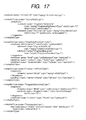
plurality of division-resultant MPEG-7 descriptions. Fig. 17 shows
an example of the DDL syntax of one access unit in Fig. 16.
With reference to Fig. 16, an original MPEG-7 description is
divided into an upper-rank MPEG-7 description and two lower-rank
MPEG-7 descriptions. The upper-rank MPEG-7 description is
stored in one access unit referred to as an upper-rank access unit,
and both the two lower-rank MPEG-7 descriptions are stored in
another access unit referred to as a lower-rank access unit. The
access unit storing the upper-rank MPEG-7 description can
efficiently refer to the lower-rank MPEG-7 descriptions in the other
access unit.
The upper-rank access unit in Fig. 16 includes a metadata
store portion named "Description", and a connection destination
information store portion named "Fragment Reference". The lower-rank
access unit in Fig. 16 includes two Descriptions.
Each Description stores a division-resultant MPEG-7
description. Generally, there is one or more Descriptions in each
access unit.
The Fragment Reference stores connection destination
information which is referred to and used when the division-resultant
MPEG-7 description in the related Description and the
division-resultant MPEG-7 descriptions of ranks lower than the
rank of the former division-resultant MPEG-7 description are
connected. The connection destination information includes
connection position information and reference information.
The Fragment Reference has child elements of two types
which are named "Connection Point" and "Fragment Location"
respectively. Generally, the Fragment Reference has one or more
sets each having Connection Point and Fragment Location, and each
corresponding to one lower-rank MPEG-7 description to be
connected with the division-resultant MPEG-7 description in the
related Description. In Fig. 16, since the two lower-rank MPEG-7
descriptions exist, the Fragment Reference has two sets each having
Connection Point and Fragment Location.
Generally, in the case where there is no lower-rank MPEG-7
description to be connected with an upper-rank MPEG-7
description stored in the Description of an access unit, Fragment
Reference is absent from the access unit. A plurality of Fragment
References may be provided in one access unit when lower-rank
MPEG-7 descriptions are in certain conditions.
The Connection Point is connection position information
relating to an upper-rank MPEG-7 description stored in the related
Description. The connection position information represent a place
or a connection point in the upper-rank MPEG-7 description to
which a lower-rank MPEG-7 description should be connected. The
Connection Point uses a child element named "XPath" in
representing or designating a specified node in the original MPEG-7
description which corresponds to the uppermost node in the lower-rank
MPEG-7 description. The specified node is a path of a root
node in the lower-rank MPEG-7 description, and is absent from the
upper-rank MPEG-7 description in the related Description. The
use of "XPath" makes it possible to accurately represent the position
at which the lower-rank MPEG-7 description should be connected
with the upper-rank MPEG-7 description without using "position
(attribute position)".
The Connection Point may include "element Name (attribute
element Name)". The attribute element Name represents the name
of the specified node in the original MPEG-7 description which
corresponds to the uppermost node in the lower-rank MPEG-7
description. Therefore, the attribute element Name can represent
the name of the root node in the lower-rank MPEG-7 description.
Thus, even in the case where the name of the root node in the
division-resultant lower-rank MPEG-7 description differs from that
of the corresponding node in the original MPEG-7 description, it is
possible that the root-node name is converted back to the original
name and then the lower-rank MPEG-7 description and the upper-rank
MPEG-7 description are connected to reconstruct the original
MPEG-7 description.
An upper-rank MPEG-7 description and lower-rank MPEG-7
descriptions may be generated individually rather than being
generated by dividing an original MPEG-7 description. In this case,
the child element "XPath" in the Connection Point represents or
designates a specified node in an assumptive integrated MPEG-7
description which corresponds to the uppermost node in the
related lower-rank MPEG-7 description (the path of the root node
in the lower-rank MPEG-7 description). The attribute element
Name represents the name of the specified node in the assumptive
integrated MPEG-7 description which corresponds to the
uppermost node in the lower-rank MPEG-7 description. Therefore,
the attribute element Name can represent the name of the root
node in the lower-rank MPEG-7 description. The content of the
child element "XPath" in the Connection Point remains substantially
the same regardless of whether an upper-rank MPEG-7 description
and lower-rank MPEG-7 descriptions are generated individually or
generated by dividing an original MPEG-7 description. Also, the
content of the attribute element Name remains substantially the
same regardless of whether an upper-rank MPEG-7 description and
lower-rank MPEG-7 descriptions are generated individually or
generated by dividing an original MPEG-7 description.
Each Fragment Location being a child element of the
Fragment Reference is reference information designating a lower-rank
MPEG-7 description which should be connected to the upper-rank
MPEG-7 description in the related Description. The Fragment
Location is of a data format being "uriReference". The Fragment
Location has a child element named "HRef". Basically, in the case
where an access unit including an upper-rank MPEG-7 description
refers to a lower-rank MPEG-7 description, the child element
"HRef" in the Fragment Location represents URI (uniform resource
identifiers) of an access unit including the lower-rank MPEG-7
description.
In the case where an access unit including an upper-rank
MPEG-7 description refers to lower-rank MPEG-7 descriptions in a
common access unit as shown in Fig. 16, the Fragment Reference
has a common attribute "href" representing the URI of the common
access unit and being independent of and separate from the
Connection Points and the Fragment Locations. The attribute "href"
is common to the child elements "HRef" in the Fragment Locations.
In this case, the child element "HRef" may be omitted from each
Fragment Location corresponding to one lower-rank MPEG
description.
Each Fragment Location has a child element named "Fragment
Index" which represents a number (an identification number) for
identifying a related lower-rank MPEG-7 description. Generally,
serial positive integers are assigned to lower-rank MPEG-7
descriptions in a common access unit as different identification
numbers respectively. Accordingly, it is possible to identify the
lower-rank MPEG-7 descriptions in the common access unit.
Each Fragment Location may have "content (attribute
content)" giving an outline of the content of the related lower-rank
MPEG-7 description. In the case where lower-rank MPEG-7
descriptions are the same in content outline, the Fragment
Reference has "common attribute content" giving the content
outline and being independent of and separate from the Connection
Points and the Fragment Locations. In this case, the attribute
content may be omitted from each Fragment Location
corresponding to one lower-rank MPEG-7 description.
In the case where the contents of lower-rank MPEG-7
descriptions have a common generic outline although being
different from each other in specific outline, the common attribute
content in the Fragment Reference represents the generic content
outline while the attribute contents in the Fragment Locations
represent the specific content outlines respectively.
Under the condition that information common to the
Fragment Locations in the Fragment Reference is included in the
Fragment Reference as common attribute information as previously
mentioned, it is possible to decide whether or not access units
including lower-rank MPEG-7 descriptions should be obtained by
referring to the common attribute information without accessing
the corresponding information in each of the Fragment Locations.
Also, it is possible to actually obtain the access units by referring to
the common attribute information without accessing the related
information in each of the Fragment Locations. Therefore, the
processing of the reference information is simplified. In the case
where information common to the Fragment Locations in the
Fragment Reference is included in the Fragment Reference as
common attribute information while the corresponding information
is omitted from each of the Fragment Locations, the amount of
reference information is relatively small so that the access units can
be efficiently transmitted.
Each Fragment Reference may have "common attribute
element Name" independent of and separate from the Connection
Points and the Fragment Locations. In the case where the names of
the root nodes in the lower-rank MPEG-7 descriptions which are
represented by the attribute element Names in the Connection
Points are the same, the common attribute element Name may
represent the root-node name. In this case, the attribute element
Name may be omitted from each Connection Point. Thereby, the
processing of the connection position information can be simplified,
and the amount of the connection position information can be
reduced.
The attribute information (the common attribute information)
in the Fragment Reference loaded with the connection destination
information is used in connecting or integrating the upper-rank
MPEG-7 description and the lower-rank MPEG-7 descriptions as
previously mentioned. Thereby, the processing of each Connection
Point (the connection position information), the processing of each
Fragment Location (the reference information), or the processing of
each Connection Point and each Fragment Location in the Fragment
Reference can be simplified so that the connection or integration of
the upper-rank MPEG-7 description and the lower-rank MPEG-7
descriptions can be implemented at a high speed.
As in the first embodiment of this invention, an original
MPEG-7 description can be reconstructed as follows. After access
units are obtained, division-resultant MPEG-7 descriptions are read
from the access units. In addition, information (connection position
information and reference information) is read from the Fragment
Reference, that is, the connection destination information store
portion. The division-resultant MPEG-7 descriptions are
sequentially connected on the basis of the connection position
information and the reference information to reconstruct an original
MPEG-7 description.
Two or more may be selected from the access units on the
basis of the reference information. In other words, two or more
may be selected from the division-resultant MPEG-7 descriptions on
the basis of the reference information. In this case, a portion of the
original MPEG-7 description is reconstructed by connecting the
selected division-resultant MPEG-7 descriptions.
Access units loaded with division-resultant MPEG-7
descriptions can be transmitted. In this case, transmission control
can be implemented access-unit by access-unit. Thus, it is possible
to provide a high transmission efficiency.
As previously mentioned, connection position information and
reference information composing information for connection are
placed in the Fragment Reference, that is, the connection
destination information store portion, of an access unit which is
separate from the metadata store portion (Description) thereof.
Accordingly, the addition of the information for connection can be
implemented without operating the inner parts of structured
metadata.
As in the first embodiment of this invention, the Fragment
Location may have "use (attribute use)" which represents the
necessity of the related lower-rank MPEG-7 description for
connection with the upper-rank MPEG-7 description.
As in the first embodiment of this invention, each access unit
may include an attribute "id (identification information)" store
portion. The attribute "id" store portion contains "id (attribute
identification information)" for the related access unit, that is, the
access-unit identification information.
Generally, an MPEG-7 description or descriptions and various
types of information ("attribute id", connection position information,
reference information, and attribute information) in each access
unit are represented by text data as shown in Fig. 17. An MPEG-7
description or descriptions and various types of information in each
access unit may be represented by binary data. In this case, each
access unit takes a binary format as shown in Fig. 18. The Fragment
Reference in each access unit takes a binary format as shown in Fig.
19. Each Connection Point in the Fragment Reference takes a
binary format as shown in Fig. 20. Each Fragment Location in the
Fragment Reference takes a binary format as shown in Fig. 21.
Sixth Embodiment
A sixth embodiment of this invention is similar to the fifth
embodiment thereof except design changes mentioned hereafter.
Fig. 22 shows examples of the structures of access units in the
sixth embodiment of this invention which are loaded with division-resultant
MPEG-7 descriptions. With reference to Fig. 22, an
original MPEG-7 description is divided into an upper-rank MPEG-7
description 100 and five lower-rank MPEG-7 descriptions 111,
112, 121, 131, and 141. The upper-rank MPEG-7 description 100
is stored in an upper-rank access unit. The lower-rank MPEG-7
descriptions 111 and 112 are stored in a first lower-rank access
unit. The lower-rank MPEG-7 descriptions 121, 131, and 141 are
stored in second, third, and fourth lower-rank access units,
respectively.
The upper-rank access unit in Fig. 22 includes a metadata
store portion named "Description", and three connection
destination information store portions named "first Fragment
Reference", "second Fragment Reference", and "third Fragment
Reference" respectively. The first lower-rank access unit in Fig. 22
includes two Descriptions. Each of the second, third, and fourth
lower-rank access units in Fig. 22 includes one Description. Each
Description stores a related division-resultant MPEG-7 description.
The first, second, and third Fragment References have child
elements of two types which are named "Connection Point" and
"Fragment Location" respectively. Generally, an upper-rank access
unit has one or more sets each having Connection Point and
Fragment Location, and each corresponding to one lower-rank
MPEG-7 description to be connected with the division-resultant
MPEG-7 description in the related Description. In Fig. 22, since
the five lower-rank MPEG-7 descriptions 111, 112, 121, 131, and
141 exist, the upper-rank access unit has five sets each having
Connection Point and Fragment Location. Each Connection point is
connection position information relating to the upper-rank MPEG-7
description 100 stored in the related Description. Each Fragment
Location is reference information designating a related lower-rank
MPEG-7 description (111, 112, 121, 131, or 141) which should be
connected to the upper-rank MPEG-7 description 100 in the
related Description.
A child element "HRef" in each Fragment Location represents
URI (uniform resource identifiers) of an access unit including the
related lower-rank MPEG-7 description.
In Fig. 22, since both the lower-rank MPEG-7 descriptions
111 and 112 are in the first lower-rank access unit, the child
elements "HRef" in the Fragment Locations corresponding to the
lower-rank MPEG-7 descriptions 111 and 112 are the same. The
sets of the Connection Points and the Fragment Locations
corresponding to the lower-rank MPEG-7 descriptions 111 and 112
are in the first Fragment Reference, and a common attribute "href"
in the first Fragment Reference represents the URI of the first
lower-rank access unit. In this case, the child element "HRef" may
be omitted from each Fragment Location corresponding to one
lower-rank MPEG description.
Child elements "Fragment Index" in the Fragment Locations
corresponding to the lower-rank MPEG-7 descriptions 111 and 112
represent numbers (identification numbers) for identifying the
lower-rank MPEG-7 descriptions 111 and 112 respectively.
Generally, serial positive integers are assigned to lower-rank MPEG-7
descriptions in a common access unit as different identification
numbers respectively. Accordingly, it is possible to identify the
lower-rank MPEG-7 descriptions 111 and 112 in the first lower-rank
access unit.
It is assumed that "content (attribute content)" in the
Fragment Location corresponding to the lower-rank MPEG-7
description 121 and "content (attribute content)" in the Fragment
Location corresponding to the lower-rank MPEG-7 description 131
are the same. Furthermore, it is assumed that "attribute element
Name" in the Connection Point corresponding to the lower-rank
MPEG-7 description 121 and "attribute element Name" in the
Connection Point corresponding to the lower-rank MPEG-7
description 131 are the same. In these cases, the sets of the
Connection Points and the Fragment Locations corresponding to the
lower-rank MPEG-7 descriptions 121 and 131 are stored in the
second Fragment Reference. In addition, "common attribute
content" in the second Fragment Reference represents the same
information as that in the two attribute contents while "common
attribute element Name" in the second Fragment Reference
represents the same information as that in the two attribute
element Names. In this case, the attribute content may be omitted
from each Fragment Location corresponding to one lower-rank
MPEG-7 description. Also, the attribute element Name may be
omitted from each Connection Point corresponding to one lower-rank
MPEG-7 description.
In the case where the contents of the lower-rank MPEG-7
descriptions 121 and 131 have a common generic outline although
being different from each other in specific outline, the common
attribute content in the second Fragment Reference may represent
the generic content outline while the attribute contents in the
Fragment Locations therein may represent the specific content
outlines respectively.
In Fig. 22, the set of the Connection Point and the Fragment
Location corresponding to the lower-rank MPEG-7 description 141
does not have any commonality with respect to the sets of the
Connection Points and the Fragment Locations corresponding to the
other lower-rank MPEG-7 descriptions. Therefore, the set of the
Connection Point and the Fragment Location corresponding to the
lower-rank MPEG-7 description 141 is stored in an exclusive
Fragment Reference, that is, the third Fragment Reference.
Seventh Embodiment
Fig. 23 shows an MPEG-7 transmission system according to a
seventh embodiment of this invention. The system in Fig. 23 is
designed to transmit an MPEG-7 description or descriptions
together with video contents in digital television broadcast.
The system in Fig. 23 includes a divider 10 receiving an
original MPEG-7 description being an XML document. The divider
10 includes a computer which operates in accordance with a
control program. The control program is designed to enable the
divider 10 to execute operation steps indicated hereafter. The
divider 10 divides the original MPEG-7 description into a suitable
number of fragments (division-resultant MPEG-7 descriptions)
according to predetermined rules. Regarding each of the
fragments, the divider 10 generates, in accordance with the
conditions of dividing the original MPEG-7 description, "Fragment
Reference" and attribute identification information for the
reconstruction of the original MPEG-7 description. The divider 10
adds "Fragment Reference" and attribute identification information
to each fragment to complete an access unit in Fig. 3. The divider
10 outputs access units to an MPEG-7/binary encoder 11. Each of
the access unit contains a division-resultant MPEG-7 description.
Regarding each of the fragments, the divider 10 may generate
"Fragment Reference", attribute identification information, and
"Update Command" for the reconstruction of the original MPEG-7
description. In this case, the divider 10 adds "Fragment
Reference", attribute identification information, and "Update
Command" to each fragment to complete an access unit in Fig. 9.
Alternatively, the divider 10 may generate an access unit in Fig. 16
or Fig. 22.
The MPEG-7/binary encoder 11 receives access units from
the divider 10. Each of the received access units contains a
division-resultant MPEG-7 description. The MPEG-7/binary
encoder 11 encodes each of the received access units into a binary
MPEG-7 access unit. The MPEG-7/binary encoder 11 outputs
binary MPEG-7 access units to a transmission controller 12.
The system of Fig. 23 further includes a video encoder 13
receiving video contents. The video encoder 13 encodes the
received video contents into encoding-resultant video data of, for
example, an MPEG-2 format. The video encoder 13 outputs the
encoding-resultant video data to the transmission controller 12.
The transmission controller 12 includes a multiplexer. Thus,
the transmission controller 12 multiplexes the binary MPEG-7
access units and the encoding-resultant video data into a
multiplexing-resultant signal. The transmission controller 12
transmits or broadcasts the multiplexing-resultant signal.
The transmission controller 12 includes a computer which
operates in accordance with a control program. The control
program is designed to enable the transmission controller 12 to
execute operation steps indicated later. The transmission
controller 12 implements the transmission of the binary MPEG-7
access units according to a carousel system. The transmission
controller 12 controls the period and frequency of carousel
transmission on an access-unit by access-unit basis according to
predetermined rules.
For example, the transmission controller 12 decides the
degree of the importance of information in each binary MPEG-7
access unit. The transmission controller 12 increases the period of
carousel transmission and the frequency thereof as the decided
importance degree rises. In addition, the transmission controller
12 decides the rank (the layer) to which structured metadata in
each binary MPEG-7 access unit belongs. The transmission
controller 12 increases the period of carousel transmission and the
frequency thereof as the decided rank rises.
Eighth Embodiment
Fig. 24 shows an MPEG-7 reception system according to an
eighth embodiment of this invention. The system in Fig. 24 is
designed to receive a multiplexing-resultant signal transmitted or
broadcasted by the system of Fig. 23.
The system in Fig. 24 includes a receiver 20 which receives a
broadcasted multiplexing-resultant signal. The receiver 20 includes
a demultiplexer. Thus, the receiver 20 demultiplexes the received
multiplexing-resultant signal into binary MPEG-7 access units and
encoding-resultant video data. The receiver 20 outputs the binary
MPEG-7 access units to an MPEG-7/binary decoder 21. The
receiver 20 outputs the encoding-resultant video data to a video
decoder 22.
The MPEG-7/binary decoder 21 decodes each of the binary
MPEG-7 access units into an XML-format MPEG-7 access unit, that
is, a textual-format MPEG-7 access unit. The MPEG-7/binary
decoder 21 outputs textual-format MPEG-7 access units to an
integrator 23.
The integrator 23 includes a computer which operates in
accordance with a control program. The control program is
designed to enable the integrator 23 to execute operation steps
indicated hereafter. The integrator 23 extracts division-resultant
MPEG-7 descriptions from the textual-format MPEG-7 access units.
The integrator 23 refers to integration-purpose information
(connection position information and reference information) in
"Fragment Reference" in each of the textual-format MPEG-7 access
units. The integrator 23 connects or integrates the division-resultant
MPEG-7 descriptions to reconstruct an original MPEG-7
description in accordance with the integration-purpose information.
The integrator 23 outputs the reconstructed original MPEG-7
description.
Reference information in "Fragment Reference" which relates
to lower-rank structured metadata has information ("attribute use"
and "Necessity") representing the necessity of the connection of the
lower-rank structured metadata to upper-rank structured metadata.
The integrator 23 may decide whether or not the integration for the
reconstruction is allowed on the basis of at least one of (1) the
above-mentioned information ("attribute use" and "Necessity") and
(2) the information relating to the content of the lower-rank
structured metadata.
The video decoder 22 decodes the encoding-resultant video
data into original video contents. The video decoder 22 outputs the
video contents.
Ninth Embodiment
Fig. 25 shows a video contents search system according to a
ninth embodiment of this invention. The system in Fig. 25 uses the
Internet. In the system of Fig. 25, a server 30 and a user-side
computer 31 can be connected via the Internet.
The server 30 has a storage loaded with a video database (a
video contents database) holding a plurality of video contents and
MPEG-7 descriptions corresponding to the video contents
respectively. As in one of the first, second, third, fourth, fifth, and
sixth embodiments of this invention, each of the original MPEG-7
descriptions is divided and the division-resultant MPEG-7
descriptions are placed in access units. The access units include an
access unit containing video segment information being a division-resultant
upper-rank MPEG-7 description, and an access unit
containing descriptors in each field such as "color" or "audio" which
compose a division-resultant lower-rank MPEG-7 description.
Each video-segment-information access unit has a plurality of
"Fragment References". Each of "Fragment References" stores
connection position information and reference information. Each of
"Fragment References" refers to the descriptor access unit in the
related field, and includes added "attribute content" giving an
outline of the content of the lower-rank MPEG-7 description which
should be referred to.
The user-side computer 31 can access the video database in
the server 30 via the Internet to search the video contents for
desired one. Specifically, the user-side computer 31 can selects
arbitrary one among the MPEG-7 access units in the video database.
The selected MPEG-7 access unit is transferred from the server 30
to the user-side computer 31 via the Internet before being
downloaded thereinto.
Fig. 26 is a flowchart of an application program for the user-side
computer 31 which relates to video contents search via the
Internet. As shown in Fig. 26, a first step 40 of the application
program accesses the video contents database in the server 30 via
the Internet. The step 40 requests the server 30 to transfer a
video-segment-information access unit (corresponding to one video
content) from the video contents database. The step 40 receives or
obtains the requested video-segment-information access unit. Thus,
the requested video-segment-information access unit is downloaded
into the user-side computer 31.
A step 41 following the step 40 accepts user's command
designating a factor (a field) used for search. The step 41 decides
which of "color", "audio", and "not execute search" the factor (the
field) designated by the user's command corresponds to. When the
designated factor corresponds to "color", the program advances
from the step 41 to a step 42. When the designated factor
corresponds to "audio", the program advances from the step 41 to a
step 43. When the designated factor corresponds to "not execute
search", the program returns from the step 41 to the step 40.
The step 42 fetches "attribute contents" from "Fragment
References" in the video-segment-information access unit. As
previously mentioned, each of "attribute contents" gives an outline of
the content of a related lower-rank MPEG-7 description which
should be referred to. The step 42 uses "attribute contents" in
determining a descriptor access unit including descriptors
corresponding to the designated factor ("color") used for search.
The step 42 accesses the server 30 via the Internet. The step 42
requests the server 30 to transfer the determined descriptor access
unit, that is, the "color" descriptor access unit, from the video
contents database. The step 42 receives or obtains the requested
"color" descriptor access unit. Thus, the requested "color"
descriptor access unit is downloaded into the user-side computer
31. After the step 42, the program advances to a step 44.
The step 43 fetches "attribute contents" from "Fragment
References" in the video-segment-information access unit. The step
43 uses "attribute contents" in determining a descriptor access unit
including descriptors corresponding to the designated factor
("audio") used for search. The step 43 accesses the server 30 via
the Internet. The step 43 requests the server 30 to transfer the
determined descriptor access unit, that is, the "audio" descriptor
access unit, from the video contents database. The step 43 receives
or obtains the requested "audio" descriptor access unit. Thus, the
requested "audio" descriptor access unit is downloaded into the
user-side computer 31. After the step 43, the program advances to
the step 44.
In the case where the video-segment-information access unit
does not have "Fragment Reference" referring to a descriptor access
unit including descriptors corresponding to the designated factor,
later steps for the present video content are skipped and the
program proceeds to steps for a next video content.
The step 44 accepts information about search conditions set
by the user. The step 44 collates an MPEG-7 description in the
downloaded descriptor access unit with the search conditions. The
step 44 decides whether or not the MPEG-7 description meets the
search conditions. When the MPEG-7 description meets the search
conditions, the program advances from the step 44 to a step 45.
Otherwise, the program returns from the step 44 to the step 40 for
the processing of a next video content.
The step 45 accesses the server 30 via the Internet. The step
45 requests the server 30 to transfer, from the video contents
database, a video content corresponding to the MPEG-7 description
meeting the search conditions. The step 45 receives or obtains the
requested video content. Thus, the requested video content is
downloaded into the user-side computer 31. After the step 45, the
current execution cycle of the application program ends.
Tenth Embodiment
A tenth embodiment of this invention is similar to one of the
first to ninth embodiments thereof except for the design change as
follows. The tenth embodiment of this invention is designed to
handle structured metadata of a tree structure which represent an
electronic program guide (EPG) rather than audio-visual contents.
The EPG includes an information pieces indicating broadcasted
program titles, broadcasting dates, broadcasting channels, and
broadcasted program outlines.
Eleventh Embodiment
An eleventh embodiment of this invention is similar to one of
the first to tenth embodiments thereof except for design changes
mentioned hereafter. According to the eleventh embodiment of this
invention, computer programs for implementing the division of an
original MPEG-7 description and the integration of lower-rank
MPEG-7 descriptions in one of the first to tenth embodiments
thereof are distributed to users via the Internet or CD-ROMs. Each
of the users installs the distributed computer programs into a user-side
computer or another apparatus. The user-side computer or the
other apparatus is employed as a dividing apparatus and an
integrating apparatus.
Advantages
The first to eleventh embodiments of this invention have the
following features and advantages.