EP1276289A2 - OFDM receiving system for performing system timing synchronization using guard interval and method for the same - Google Patents
OFDM receiving system for performing system timing synchronization using guard interval and method for the same Download PDFInfo
- Publication number
- EP1276289A2 EP1276289A2 EP01130993A EP01130993A EP1276289A2 EP 1276289 A2 EP1276289 A2 EP 1276289A2 EP 01130993 A EP01130993 A EP 01130993A EP 01130993 A EP01130993 A EP 01130993A EP 1276289 A2 EP1276289 A2 EP 1276289A2
- Authority
- EP
- European Patent Office
- Prior art keywords
- interval
- symbol
- data transmission
- symbol timing
- fft
- Prior art date
- Legal status (The legal status is an assumption and is not a legal conclusion. Google has not performed a legal analysis and makes no representation as to the accuracy of the status listed.)
- Granted
Links
Images




Classifications
-
- H—ELECTRICITY
- H04—ELECTRIC COMMUNICATION TECHNIQUE
- H04L—TRANSMISSION OF DIGITAL INFORMATION, e.g. TELEGRAPHIC COMMUNICATION
- H04L25/00—Baseband systems
- H04L25/02—Details ; arrangements for supplying electrical power along data transmission lines
- H04L25/03—Shaping networks in transmitter or receiver, e.g. adaptive shaping networks
- H04L25/03006—Arrangements for removing intersymbol interference
-
- H—ELECTRICITY
- H04—ELECTRIC COMMUNICATION TECHNIQUE
- H04N—PICTORIAL COMMUNICATION, e.g. TELEVISION
- H04N7/00—Television systems
- H04N7/015—High-definition television systems
-
- H—ELECTRICITY
- H04—ELECTRIC COMMUNICATION TECHNIQUE
- H04L—TRANSMISSION OF DIGITAL INFORMATION, e.g. TELEGRAPHIC COMMUNICATION
- H04L27/00—Modulated-carrier systems
- H04L27/26—Systems using multi-frequency codes
- H04L27/2601—Multicarrier modulation systems
- H04L27/2647—Arrangements specific to the receiver only
- H04L27/2655—Synchronisation arrangements
- H04L27/2662—Symbol synchronisation
-
- H—ELECTRICITY
- H04—ELECTRIC COMMUNICATION TECHNIQUE
- H04L—TRANSMISSION OF DIGITAL INFORMATION, e.g. TELEGRAPHIC COMMUNICATION
- H04L27/00—Modulated-carrier systems
- H04L27/26—Systems using multi-frequency codes
- H04L27/2601—Multicarrier modulation systems
- H04L27/2647—Arrangements specific to the receiver only
- H04L27/2655—Synchronisation arrangements
- H04L27/2668—Details of algorithms
- H04L27/2673—Details of algorithms characterised by synchronisation parameters
- H04L27/2676—Blind, i.e. without using known symbols
- H04L27/2679—Decision-aided
-
- H—ELECTRICITY
- H04—ELECTRIC COMMUNICATION TECHNIQUE
- H04L—TRANSMISSION OF DIGITAL INFORMATION, e.g. TELEGRAPHIC COMMUNICATION
- H04L27/00—Modulated-carrier systems
- H04L27/26—Systems using multi-frequency codes
- H04L27/2601—Multicarrier modulation systems
- H04L27/2602—Signal structure
- H04L27/2605—Symbol extensions, e.g. Zero Tail, Unique Word [UW]
- H04L27/2607—Cyclic extensions
-
- H—ELECTRICITY
- H04—ELECTRIC COMMUNICATION TECHNIQUE
- H04L—TRANSMISSION OF DIGITAL INFORMATION, e.g. TELEGRAPHIC COMMUNICATION
- H04L27/00—Modulated-carrier systems
- H04L27/26—Systems using multi-frequency codes
- H04L27/2601—Multicarrier modulation systems
- H04L27/2602—Signal structure
- H04L27/261—Details of reference signals
Definitions
- the present invention relates to an orthogonal frequency division multiplex (OFDM) receiving system, and more particularly, to an OFDM receiving system for changing a fast Fourier transform (FFT) window period using a guard interval, and a method for the same.
- OFDM orthogonal frequency division multiplex
- OFDM transmitting systems transmit information over a subcarrier using fast Fourier transform (FFT) and add a guard interval to the front portion of a useful symbol in order to reduce the influence of a multi-path.
- FFT fast Fourier transform
- OFDM receiving systems find the boundary between a guard interval and a useful symbol interval in a received OFDM signal and perform FFT window timing synchronization in order to perform FFT with respect to only a useful symbol. For this, OFDM receiving systems roughly find an FFT interval using the similarity between the guard interval and the useful symbol.
- FIG. 1 is a conceptual diagram of symbol timing synchronization in a conventional OFDM receiving system.
- a single symbol is composed of a guard interval T g and a useful symbol interval T u .
- a window timing controller (not shown) controlling window timing determines the start point of a symbol using a guard interval and inputs N samples starting from the determined symbol start point to an FFT operation unit (not shown).
- the window timing controller inputs samples corresponding to the useful symbol interval T u starting from a symbol timing synchronization point of the FFT window period to the FFT operation unit.
- the window timing controller does not determine a correct symbol start point under a pre-ghost channel environment having a multi-path resulting in intersymbol interference (ISI) occurring between a back portion of a symbol and a portion of the next symbol, as shown in (b) of FIG. 1.
- ISI intersymbol interference
- an orthogonal frequency division multiplex (OFDM) receiving method for preventing intersymbol interference occurring in a multi-channel or a pre-ghost channel by changing a fast Fourier transform (FFT) window period using a guard interval transmitted before a useful symbol.
- OFDM orthogonal frequency division multiplex
- an OFDM receiving system for performing the OFDM receiving method.
- an OFDM receiving method of performing FFT with respect to a data transmission interval of a symbol unit composed of a guard interval and a useful symbol interval includes extracting scattered pilots, which are inserted into a symbol at intervals of predetermined samples, from a received OFDM signal, estimating a symbol timing offset using the extracted scattered pilots and setting a symbol timing synchronization point in the data transmission interval, and adding samples in a predetermined interval in the data transmission interval to samples in an interval obtained by subtracting a predetermined length from the useful symbol interval starting from the symbol timing synchronization point and performing FFT with respect to the result of addition.
- an OFDM receiving system for performing FFT with respect to a data transmission interval of a symbol unit composed of a guard interval and a useful symbol interval.
- the system includes an analog-to-digital converter for converting an OFDM signal into digital complex samples, an FFT operation unit for performing FFT with respect to the useful symbol interval, a scattered pilot extractor for extracting scattered pilots from samples output from the FFT operating unit, a symbol timing offset estimator for estimating a symbol timing offset using scattered pilots extracted by the scattered pilot extractor, and an FFT window controller for setting a symbol timing synchronization point in a data transmission interval received from the analog-to-digital converter, adding samples in a predetermined interval extending from the symbol timing synchronization point toward the front of the data transmission interval to samples in an interval obtained by subtracting a predetermined length from a useful symbol interval starting from the symbol timing synchronization point, and inputting the result of addition to the FFT operation unit.
- FIG. 2 is a block diagram of an entire orthogonal frequency division multiplex (OFDM) receiving system performing symbol timing synchronization according to the present invention.
- the OFDM receiving system of FIG. 2 includes an analog-to-digital converter (ADC) 210, a coarse symbol sync extractor 220, a fast Fourier transform (FFT) window controller 230, an FFT operation unit 240, a scattered pilot mode detector 250, a scattered pilot extractor 260, a symbol timing offset estimator 270, and a digital phase locked loop (DPLL) 280.
- ADC analog-to-digital converter
- FFT fast Fourier transform
- DPLL digital phase locked loop
- the ADC 210 converts an OFDM signal into digital complex samples having a sample rate of 9.14 MHz.
- the coarse symbol sync extractor 220 extracts a coarse symbol start point from received digital complex samples.
- the FFT window controller 230 detects a coarse symbol start point using a coarse symbol sync signal extracted by the coarse symbol sync extractor 220, sets a symbol timing synchronization point using an offset value estimated by a symbol timing offset estimator 270, adds samples in a predetermined interval extending from the symbol timing synchronization point toward the front of a data transmission interval to samples in an interval obtained by subtracting a predetermined length from a useful symbol interval starting from the symbol timing synchronization point, and inputs the result of addition to the FFT operation unit 240.
- the FFT operation unit 230 performs FFT with respect to samples corresponding to the useful symbol interval output from the FFT window controller 120, and outputs a frequency domain signal.
- the frequency domain signal includes a scattered pilot signal containing information necessary for OFDM transmission in addition to general data. Scattered pilot signals which have been inserted into each symbol of the frequency domain signal at intervals of 12 samples are necessary for symbol timing synchronization.
- the scattered pilot mode detector 250 decides the mode of a scattered pilot and compares the sums of powers of subcarriers corresponding to each scattered pilot mode with one another based on the feature that a pilot has greater power than usual data to detect a mode having greatest power among four modes.
- the scattered pilot extractor 260 extracts scattered pilots which have been inserted into a symbol using a scattered pilot start mode detected by the scattered pilot mode detector 250.
- the symbol timing offset estimator 270 estimates a symbol timing offset composed of an integer part and a fraction part using scattered pilots extracted by the scattered pilot extractor 260.
- the integer part is applied to the FFT window controller 230 to perform fine symbol timing synchronization, and the fraction part is applied to the ADC 210 through the DPLL 280 to control the sampling clock signal of the ADC 210.
- the DPLL 280 changes the frequency and phase of a sampling clock signal of the ADC 210 using the fraction part of the a symbol timing offset output from the symbol timing offset estimator 260.
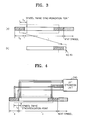
- FIG. 3 is a conceptual diagram of a method of setting an FFT window period in an FFT window controller according to the present invention.
- the FFT window controller 230 sets a symbol timing synchronization point in a data transmission interval composed of a guard interval T g and a useful symbol interval T u using a timing symbol offset estimated by the symbol timing offset estimator 270.
- the FFT window controller 230 adds samples in a predetermined interval T p extending from the symbol timing synchronization point toward the front of the data transmission interval to samples in an interval obtained by subtracting a predetermined length from the useful symbol interval T u starting from the symbol timing synchronization point.
- the predetermined interval T p is set to be shorter than the guard interval T g according to a channel environment.
- the samples in the predetermined interval T p correspond to a guard interval obtained by copying a portion of the useful symbol interval T u and thus are included in the symbol to be fast Fourier transformed. Accordingly, the single symbol is fast Fourier transformed, thereby preventing intersymbol interference (ISI) in the OFDM receiving system.
- ISI intersymbol interference
- FIG. 4 is a conceptual diagram of a method of resetting an FFT window period in an FFT window controller and inputting reset information to an FFT operation unit.
- the FFT window controller 230 adds samples in a predetermined interval T p extending from a symbol timing synchronization point set in a data transmission interval toward the front of the data transmission interval to samples in an interval obtained by subtracting a predetermined length from a useful symbol interval T u starting from the symbol timing synchronization point and inputs the result of addition to the FFT operation unit 240. For example, when a data transmission mode is 2 K, the FFT window controller 230 inputs 2048 samples to the FFT operation unit 240 in parallel.
- FIG. 5 is a flowchart of a symbol timing synchronization method in an OFDM receiving system according to the present invention.
- step 510 an OFDM signal is received in units of symbols from an OFDM transmitting system.
- step 520 scattered pilots which have been inserted into a symbol at intervals of predetermined samples are extracted from the received OFDM signal.
- a symbol timing offset is estimated using the extracted scattered pilots in step 530, and a symbol timing synchronization point is set in a data transmission interval composed of a guard interval and a useful symbol interval in step 540.
- step 550 samples in a predetermined interval extending from the symbol timing synchronization point toward the front of the data transmission interval are added to samples in an interval obtained by subtracting a predetermined length from a useful symbol interval starting from the symbol timing synchronization point, thereby resetting an FFT window period.
- FIG. 6 is a graph of the performance of the present invention versus the performance of prior art in symbol timing synchronization.
- the graphs shows the square mean SAMPLE 2 of a symbol timing offset remaining after symbol timing synchronization in a digital video broadcasting-terrestrial (DVB-T) system.
- a test was performed in a data transmission mode of 2 K, in a guard interval length mode of 1/16, and with an initial sample offset of 1000 samples, a sampling clock frequency offset of 200 ppm, an initial sampling clock phase offset of 200 ppm, and a loop bandwidth of 500 ppm in a PLL block.
- 20 channels according to the DVB-T test specifications are used as a multi-path.
- the present invention has a lower square mean SAMPLE 2 of a remaining symbol timing offset than the prior art with respect to a Rayleigh channel and a Ricean channel.
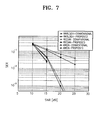
- FIG. 7 is a graph of symbol error rates (SERs) exhibited after symbol timing synchronization and channel equalization according to the present invention and prior art. A test was performed under the same conditions as in FIG. 6. For a channel-equalization algorithm, channel estimation and equalization are performed by performing linear interpolation using scattered pilots during a 4-symbol period. Referring to FIG. 7, the present invention has a lower SER than the prior art with respect to a Rayleigh channel.
- SERs symbol error rates
- symbol timing synchronization and channel equalization can be accurately performed without having ISI even when a symbol start point is not correctly decided under a multi-channel (or a Rayleigh channel) or a pre-ghost channel environment.
- the present invention is not restricted to the embodiments described above, and it will be understood by those skilled in the art that various changes in form and details may be made therein.
- the present invention can be applied to European type digital TV, wireless LANs according to IEEE 802.11a and other systems using OFDM.
- the present invention can be embodied as a program which can be executed in a computer.
- the program can be read from a medium used in a computer and executed by the computer.
- the medium may be a storage medium such as a magnetic storage medium (for example, a ROM, a floppy disc, or a hard disc), an optical readable medium (for example, a CD-ROM or a DVD), or a carrier wave (for example, transmission through Internet).
- the program can be distributively stored in computer readable recording media in computer systems connected through a network and can be executed.
Landscapes
- Engineering & Computer Science (AREA)
- Signal Processing (AREA)
- Computer Networks & Wireless Communication (AREA)
- Multimedia (AREA)
- Power Engineering (AREA)
- Synchronisation In Digital Transmission Systems (AREA)
Abstract
Description
Claims (5)
- An orthogonal frequency division multiplex (OFDM) receiving method of performing fast Fourier transform (FFT) with respect to a data transmission interval of a symbol unit composed of a guard interval and a useful symbol interval, the method comprising the steps of:extracting scattered pilots, which are inserted into a symbol at intervals of predetermined samples, from a received OFDM signal;estimating a symbol timing offset using the extracted scattered pilots and setting a symbol timing synchronization point in the data transmission interval; andadding samples in a predetermined interval in the data transmission interval to samples in an interval obtained by subtracting a predetermined length from the useful symbol interval starting from the symbol timing synchronization point and performing FFT with respect to the result of addition.
- The method of claim 1, wherein the predetermined interval in the data transmission interval extends from the symbol timing synchronization point toward the front of the data transmission interval.
- The method of claim 1 or 2, wherein the predetermined interval in the data transmission interval is shorter than the guard interval.
- The method of one of the claims 1 to 3, wherein the predetermined interval in the data transmission interval changes depending on a channel environment.
- An orthogonal frequency division multiplex (OFDM) receiving system for performing fast Fourier transform (FFT) with respect to a data transmission interval of a symbol unit composed of a guard interval and a useful symbol interval, the system comprising:an analog-to-digital converter for converting an OFDM signal into digital complex samples;FFT operation means for performing FFT with respect to the useful symbol interval;a scattered pilot extractor for extracting scattered pilots from samples output from the FFT operating means;a symbol timing offset estimator for estimating a symbol timing offset using scattered pilots extracted by the scattered pilot extractor; andan FFT window controller for setting a symbol timing synchronization point in a data transmission interval received from the analog-to-digital converter, adding samples in a predetermined interval extending from the symbol timing synchronization point toward the front of the data transmission interval to samples in an interval obtained by subtracting a predetermined length from a useful symbol interval starting from the symbol timing synchronization point, and inputting the result of addition to the FFT operation means.
Applications Claiming Priority (2)
| Application Number | Priority Date | Filing Date | Title |
|---|---|---|---|
| KR1020010041556A KR100833223B1 (en) | 2001-07-11 | 2001-07-11 | OPM receiver system and method for performing symbol timing synchronization using guard interval |
| KR2001041556 | 2001-07-11 |
Publications (3)
| Publication Number | Publication Date |
|---|---|
| EP1276289A2 true EP1276289A2 (en) | 2003-01-15 |
| EP1276289A3 EP1276289A3 (en) | 2003-06-04 |
| EP1276289B1 EP1276289B1 (en) | 2006-03-08 |
Family
ID=36202158
Family Applications (1)
| Application Number | Title | Priority Date | Filing Date |
|---|---|---|---|
| EP01130993A Expired - Lifetime EP1276289B1 (en) | 2001-07-11 | 2001-12-28 | OFDM receiving system for performing system timing synchronization using guard interval and method for the same |
Country Status (5)
| Country | Link |
|---|---|
| EP (1) | EP1276289B1 (en) |
| JP (1) | JP2003046477A (en) |
| KR (1) | KR100833223B1 (en) |
| CN (1) | CN100495955C (en) |
| DE (1) | DE60117678T2 (en) |
Cited By (7)
| Publication number | Priority date | Publication date | Assignee | Title |
|---|---|---|---|---|
| GB2385756A (en) * | 2002-01-24 | 2003-08-27 | Lg Electronics Inc | FFT window position recovery system utilising first and second guard interv inserted into divided symbols |
| WO2005034460A1 (en) * | 2003-10-03 | 2005-04-14 | Nokia Corporation | Method, system and receiver for receiving a multi-carrier transmission |
| DE102006017347A1 (en) * | 2006-04-11 | 2007-10-25 | Grundig Multimedia B.V. | A method of receiving a DVB-T broadcast reception signal |
| US7769094B2 (en) | 2006-11-10 | 2010-08-03 | Telefonaktiebolaget L M Ericsson (Publ) | Arrangement and method for reducing the impact of interfering signals in a communication system |
| US7778336B1 (en) * | 2005-02-09 | 2010-08-17 | Marvell International Ltd. | Timing and frequency synchronization of OFDM signals for changing channel conditions |
| US20110300819A1 (en) * | 2008-12-19 | 2011-12-08 | Nordstroem Fredrik | Receiver and a Method for Mobile Communications |
| CN101552758B (en) * | 2008-04-02 | 2013-01-02 | 扬智科技股份有限公司 | A Fine Symbol Timing Synchronization Method in OFDM Systems |
Families Citing this family (14)
| Publication number | Priority date | Publication date | Assignee | Title |
|---|---|---|---|---|
| CN1297089C (en) * | 2003-03-14 | 2007-01-24 | 北京泰美世纪科技有限公司 | Continuous pilot frequency data transmission method based on OFDM frequency hop in broadcasting system |
| EP1521413A3 (en) * | 2003-10-01 | 2009-09-30 | Panasonic Corporation | Multicarrier reception with channel estimation and equalisation |
| US7751501B2 (en) * | 2004-05-19 | 2010-07-06 | Infineon Technologies Ag | Tracking system |
| CN100505725C (en) * | 2004-06-01 | 2009-06-24 | 北京大学 | Channel equalization method of OFDM system |
| KR100629506B1 (en) | 2005-02-21 | 2006-09-28 | 삼성전자주식회사 | Frame synchronization control method and apparatus for European type DAW |
| KR100913979B1 (en) * | 2006-03-31 | 2009-08-25 | 노키아 코포레이션 | Method, system and receiver for receiving a multi-carrier transmission |
| KR100822817B1 (en) | 2006-10-31 | 2008-04-18 | 삼성전자주식회사 | Receiver and Method for Performing Timing Synchronization in an OPDM Scheme |
| KR100765990B1 (en) | 2006-11-07 | 2007-10-12 | 삼성전자주식회사 | Receiver and method for performing adaptive OLA in multi-band OPM scheme |
| WO2008084612A1 (en) * | 2007-01-09 | 2008-07-17 | Ntt Docomo, Inc. | Base station device, mobile communication system, mobile station, and communication control method |
| KR101138602B1 (en) * | 2008-04-17 | 2012-04-26 | 주식회사 코아로직 | Orthogonal frequency division multiplexingOFDM receiving apparatus and method of minimizing inter symbol interferenceISI using the same the apparatus |
| CN101588336B (en) * | 2008-05-19 | 2012-12-19 | 华为技术有限公司 | Method, system and device for realizing symbol synchronization |
| US20100153479A1 (en) * | 2008-12-11 | 2010-06-17 | Electronics And Telecommunications Research Institute | Apparatus for setting up start point of fast fourier transform and method thereof |
| JP5682382B2 (en) * | 2011-03-09 | 2015-03-11 | 富士通セミコンダクター株式会社 | Receiving device, transmitting device, and correction method related to discrete sample timing thereof |
| CN114485733B (en) * | 2022-04-19 | 2022-06-21 | 宜科(天津)电子有限公司 | Anti-interference method, equipment and medium for photoelectric sensor |
Family Cites Families (2)
| Publication number | Priority date | Publication date | Assignee | Title |
|---|---|---|---|---|
| KR100314353B1 (en) * | 1998-04-28 | 2001-12-28 | 전주범 | Ofdm receiver system |
| EP1063824B1 (en) * | 1999-06-22 | 2006-08-02 | Matsushita Electric Industrial Co., Ltd. | Symbol synchronisation in multicarrier receivers |
-
2001
- 2001-07-11 KR KR1020010041556A patent/KR100833223B1/en not_active Expired - Fee Related
- 2001-12-14 JP JP2001382307A patent/JP2003046477A/en active Pending
- 2001-12-17 CN CNB011436573A patent/CN100495955C/en not_active Expired - Fee Related
- 2001-12-28 EP EP01130993A patent/EP1276289B1/en not_active Expired - Lifetime
- 2001-12-28 DE DE60117678T patent/DE60117678T2/en not_active Expired - Lifetime
Cited By (13)
| Publication number | Priority date | Publication date | Assignee | Title |
|---|---|---|---|---|
| GB2385756B (en) * | 2002-01-24 | 2004-09-22 | Lg Electronics Inc | FFT window position recovery system and method |
| GB2385756A (en) * | 2002-01-24 | 2003-08-27 | Lg Electronics Inc | FFT window position recovery system utilising first and second guard interv inserted into divided symbols |
| CN100591059C (en) * | 2003-10-03 | 2010-02-17 | 诺基亚公司 | Method, system and receiver for receiving multi-carrier transmissions |
| WO2005034460A1 (en) * | 2003-10-03 | 2005-04-14 | Nokia Corporation | Method, system and receiver for receiving a multi-carrier transmission |
| US7778336B1 (en) * | 2005-02-09 | 2010-08-17 | Marvell International Ltd. | Timing and frequency synchronization of OFDM signals for changing channel conditions |
| DE102006017347A1 (en) * | 2006-04-11 | 2007-10-25 | Grundig Multimedia B.V. | A method of receiving a DVB-T broadcast reception signal |
| DE102006017347B4 (en) * | 2006-04-11 | 2008-11-27 | Grundig Multimedia B.V. | A method of receiving a DVB-T broadcast reception signal |
| EP1845642A3 (en) * | 2006-04-11 | 2008-05-28 | Grundig Multimedia B.V. | Method and means for receiving a DVB-T broadcast signal |
| US7769094B2 (en) | 2006-11-10 | 2010-08-03 | Telefonaktiebolaget L M Ericsson (Publ) | Arrangement and method for reducing the impact of interfering signals in a communication system |
| CN101552758B (en) * | 2008-04-02 | 2013-01-02 | 扬智科技股份有限公司 | A Fine Symbol Timing Synchronization Method in OFDM Systems |
| US20110300819A1 (en) * | 2008-12-19 | 2011-12-08 | Nordstroem Fredrik | Receiver and a Method for Mobile Communications |
| US8768258B2 (en) * | 2008-12-19 | 2014-07-01 | Telefonaktiebolaget Lm Ericsson (Publ) | Receiver and a method for mobile communications |
| US8934842B2 (en) | 2008-12-19 | 2015-01-13 | Telefonaktiebolaget L M Ericsson (Publ) | Receiver and a method for mobile communications |
Also Published As
| Publication number | Publication date |
|---|---|
| JP2003046477A (en) | 2003-02-14 |
| KR20030006016A (en) | 2003-01-23 |
| CN100495955C (en) | 2009-06-03 |
| CN1396729A (en) | 2003-02-12 |
| EP1276289B1 (en) | 2006-03-08 |
| EP1276289A3 (en) | 2003-06-04 |
| DE60117678D1 (en) | 2006-05-04 |
| KR100833223B1 (en) | 2008-05-28 |
| DE60117678T2 (en) | 2006-08-17 |
Similar Documents
| Publication | Publication Date | Title |
|---|---|---|
| EP1276289B1 (en) | OFDM receiving system for performing system timing synchronization using guard interval and method for the same | |
| EP1267535B1 (en) | Method and apparatus for symbol synchronisation in a multicarrier receiver | |
| JP4336190B2 (en) | Determination of symbol timing for MIMO OFDM and other wireless communication systems | |
| KR100619460B1 (en) | Apparatus and method for providing a signal and a providing medium | |
| US7554902B2 (en) | Preamble design for frequency offset estimation and channel equalization in burst OFDM transmission system | |
| US7336598B2 (en) | Guard interval length control method in OFDM system and OFDM transmitting and receiving apparatuses | |
| EP1872550B1 (en) | Trend influenced symbol time tracking for an OFDM communication system | |
| KR100793759B1 (en) | Method and system for processing orthogonal frequency division multiplexed signal | |
| US8229011B2 (en) | Fine symbol timing synchronization method and apparatus in OFDM system | |
| EP1041790B1 (en) | Symbol timing recovery for OFDM demodulator | |
| EP1237319B1 (en) | Methods and apparatus for efficient and accurate coarse timing synchronization in burst demodulators | |
| EP1746794B1 (en) | Path selection in an OFDM apparatus | |
| KR101105399B1 (en) | Apparatus, Method and Receiver for Time Synchronization Detection in Orthogonal Frequency Division Multiple Access System | |
| JP2005287043A (en) | Receiver | |
| EP2245816B1 (en) | Post-DTF/FFT time tracking algorithm for OFDM receivers | |
| WO2008020360A1 (en) | Time error estimation for data symbols | |
| JP2003264529A (en) | Method for estimating transfer function of channel carrying multicarrier signal and multicarrier receiver | |
| KR100746554B1 (en) | Signal transmitter and receiver | |
| JP2002232389A (en) | OFDM receiver | |
| JP4362955B2 (en) | Demodulator and demodulation method | |
| JP4684308B2 (en) | Demodulator | |
| GB2377350A (en) | OFDM Receiving system for efficiently estimating symbol timing offset without being influenced by jitter | |
| Langowski | Time and frequency synchronisation in 4G OFDM systems | |
| KR101360298B1 (en) | Method of determining position of fft window in ofdm communication system and ofdm receiver | |
| KR20160116994A (en) | Method and apparatus for compensating sampling clock offset |
Legal Events
| Date | Code | Title | Description |
|---|---|---|---|
| PUAI | Public reference made under article 153(3) epc to a published international application that has entered the european phase |
Free format text: ORIGINAL CODE: 0009012 |
|
| 17P | Request for examination filed |
Effective date: 20011228 |
|
| AK | Designated contracting states |
Kind code of ref document: A2 Designated state(s): AT BE CH CY DE DK ES FI FR GB GR IE IT LI LU MC NL PT SE TR |
|
| AX | Request for extension of the european patent |
Free format text: AL;LT;LV;MK;RO;SI |
|
| PUAL | Search report despatched |
Free format text: ORIGINAL CODE: 0009013 |
|
| AK | Designated contracting states |
Designated state(s): AT BE CH CY DE DK ES FI FR GB GR IE IT LI LU MC NL PT SE TR |
|
| AX | Request for extension of the european patent |
Extension state: AL LT LV MK RO SI |
|
| RIC1 | Information provided on ipc code assigned before grant |
Ipc: 7H 04L 27/26 A Ipc: 7H 04L 25/03 B |
|
| 17Q | First examination report despatched |
Effective date: 20031124 |
|
| AKX | Designation fees paid |
Designated state(s): DE FR GB |
|
| GRAP | Despatch of communication of intention to grant a patent |
Free format text: ORIGINAL CODE: EPIDOSNIGR1 |
|
| GRAS | Grant fee paid |
Free format text: ORIGINAL CODE: EPIDOSNIGR3 |
|
| GRAA | (expected) grant |
Free format text: ORIGINAL CODE: 0009210 |
|
| AK | Designated contracting states |
Kind code of ref document: B1 Designated state(s): DE FR GB |
|
| REG | Reference to a national code |
Ref country code: GB Ref legal event code: FG4D |
|
| REF | Corresponds to: |
Ref document number: 60117678 Country of ref document: DE Date of ref document: 20060504 Kind code of ref document: P |
|
| ET | Fr: translation filed | ||
| PLBE | No opposition filed within time limit |
Free format text: ORIGINAL CODE: 0009261 |
|
| STAA | Information on the status of an ep patent application or granted ep patent |
Free format text: STATUS: NO OPPOSITION FILED WITHIN TIME LIMIT |
|
| 26N | No opposition filed |
Effective date: 20061211 |
|
| REG | Reference to a national code |
Ref country code: FR Ref legal event code: PLFP Year of fee payment: 15 |
|
| REG | Reference to a national code |
Ref country code: FR Ref legal event code: PLFP Year of fee payment: 16 |
|
| PGFP | Annual fee paid to national office [announced via postgrant information from national office to epo] |
Ref country code: FR Payment date: 20161124 Year of fee payment: 16 Ref country code: DE Payment date: 20161122 Year of fee payment: 16 Ref country code: GB Payment date: 20161122 Year of fee payment: 16 |
|
| REG | Reference to a national code |
Ref country code: DE Ref legal event code: R119 Ref document number: 60117678 Country of ref document: DE |
|
| GBPC | Gb: european patent ceased through non-payment of renewal fee |
Effective date: 20171228 |
|
| REG | Reference to a national code |
Ref country code: FR Ref legal event code: ST Effective date: 20180831 |
|
| PG25 | Lapsed in a contracting state [announced via postgrant information from national office to epo] |
Ref country code: DE Free format text: LAPSE BECAUSE OF NON-PAYMENT OF DUE FEES Effective date: 20180703 Ref country code: FR Free format text: LAPSE BECAUSE OF NON-PAYMENT OF DUE FEES Effective date: 20180102 |
|
| PG25 | Lapsed in a contracting state [announced via postgrant information from national office to epo] |
Ref country code: GB Free format text: LAPSE BECAUSE OF NON-PAYMENT OF DUE FEES Effective date: 20171228 |