EP1276049A2 - Distributed processing framework system - Google Patents
Distributed processing framework system Download PDFInfo
- Publication number
- EP1276049A2 EP1276049A2 EP02254783A EP02254783A EP1276049A2 EP 1276049 A2 EP1276049 A2 EP 1276049A2 EP 02254783 A EP02254783 A EP 02254783A EP 02254783 A EP02254783 A EP 02254783A EP 1276049 A2 EP1276049 A2 EP 1276049A2
- Authority
- EP
- European Patent Office
- Prior art keywords
- service
- test
- look
- processing
- machine
- Prior art date
- Legal status (The legal status is an assumption and is not a legal conclusion. Google has not performed a legal analysis and makes no representation as to the accuracy of the status listed.)
- Withdrawn
Links
Images



Classifications
-
- G—PHYSICS
- G06—COMPUTING OR CALCULATING; COUNTING
- G06F—ELECTRIC DIGITAL DATA PROCESSING
- G06F9/00—Arrangements for program control, e.g. control units
- G06F9/06—Arrangements for program control, e.g. control units using stored programs, i.e. using an internal store of processing equipment to receive or retain programs
- G06F9/46—Multiprogramming arrangements
- G06F9/50—Allocation of resources, e.g. of the central processing unit [CPU]
- G06F9/5005—Allocation of resources, e.g. of the central processing unit [CPU] to service a request
- G06F9/5027—Allocation of resources, e.g. of the central processing unit [CPU] to service a request the resource being a machine, e.g. CPUs, Servers, Terminals
- G06F9/5055—Allocation of resources, e.g. of the central processing unit [CPU] to service a request the resource being a machine, e.g. CPUs, Servers, Terminals considering software capabilities, i.e. software resources associated or available to the machine
-
- G—PHYSICS
- G06—COMPUTING OR CALCULATING; COUNTING
- G06F—ELECTRIC DIGITAL DATA PROCESSING
- G06F11/00—Error detection; Error correction; Monitoring
- G06F11/36—Prevention of errors by analysis, debugging or testing of software
- G06F11/3668—Testing of software
- G06F11/3672—Test management
- G06F11/3688—Test management for test execution, e.g. scheduling of test suites
-
- G—PHYSICS
- G06—COMPUTING OR CALCULATING; COUNTING
- G06F—ELECTRIC DIGITAL DATA PROCESSING
- G06F2209/00—Indexing scheme relating to G06F9/00
- G06F2209/50—Indexing scheme relating to G06F9/50
- G06F2209/5015—Service provider selection
Definitions
- the present invention relates generally to software processing, and more particularly, to methods and systems for intelligently and automatically selecting and utilizing networked computer resources to collectively process computing operations.
- software testing is used to find and eliminate defects (i.e., bugs) in software, which if undetected, can cause the software to operate improperly.
- software testing may be performed by implementing a stand-alone computer or a network of computer resources. When a stand-alone computer system is used to perform the software testing, the stand-alone computer system is programmed to run a test selected by the software user.
- the user is responsible for manually adding and deleting the computer resources to the network, programming the master computer system and the server, initiating the running of a user-selected test, and running the test on the group of dedicated computer systems coupled to the server.
- a heavy user interface is required for initiating the software testing on the master computer, scheduling the running of the specific test on the system resources, adding and deleting of the system resources, keeping track of the system resources and their respective hardware and software configuration, and maintaining the system resources.
- the software testing is performed by dedicated system resources. That is, the system resources are designed to solely be used for software testing.
- DPF distributed processing framework
- DTF distributed test framework
- a processing system in one embodiment, includes a master system and a processing resource.
- the master system is designed to execute a service component and a system controller component.
- the processing resource is designed to register with a look up service of the service component for a specific period of time.
- the processing resource registers with the look up service so as to advertise the eligibility of the processing resource to execute a software processing job that has a set of requirements.
- the system controller component is designed to search the look up service of the service component to locate the processing resource having a set of attributes that substantially matches the set of requirements of the software processing job.
- a test execution request processing method includes a look up service, a system for testing a code, and a controller code.
- the system for testing the code includes a machine service that has a machine service proxy and a set of machine service attributes.
- the machine service proxy and the set of machine service attributes are used to register the system with the look up service.
- the controller code is designed to search the look up service so as to locate the system to process the test execution request if the system is suitable based on the requirements defined by the test execution request.
- a method for executing a set of software processing jobs includes designating a group of computer resources as a part of a community of computer resources available to execute the set of software processing jobs. Also included in the method are scheduling the set of software processing jobs with the group of computer resources and negotiating access to a specific computer resource for each scheduled software processing job. The method also includes executing each scheduled software processing job when the corresponding specific computer resource is available for processing. Further included is generating a report identifying a result of the execution of each scheduled software processing job.
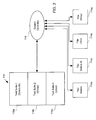
- FIG. 1 is a block diagram illustrating a distributed test framework (DTF) system, in accordance with one embodiment of the present invention.
- DTF distributed test framework
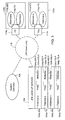
- Figure 2 is a block diagram illustrating the capability of the present invention to intelligently locate an available and suitable test system to execute a test suite, in accordance with another embodiment of the present invention.
- Figure 3 is a block diagram illustrating the implementation of the test system attributes to locate a suitable test system to process a test execution request, in accordance with yet another embodiment of the present invention.
- Figure 4 is a block diagram illustrating the capability of the present invention to locate an available and suitable test system to process a test execution request having a set of specific requirements, in accordance to yet another embodiment of the present invention.
- Figure 5 is a block diagram depicting the one-to-one communication between the system controller, JiniTM look up service, and a test system of a DTF system, in accordance to still another embodiment of the present invention.
- Figure 6 is a block diagram showing the interaction between the Jini look up service, system controller, and a test system, in accordance with still another embodiment of the present invention.
- FIG. 7 depicts a DTF utility graphical user interface (GUI), in accordance to yet another embodiment of the present invention.
- GUI DTF utility graphical user interface
- FIG. 8 is a DTF utility graphical user interface (GUI), in accordance to yet another embodiment of the present invention.
- GUI DTF utility graphical user interface
- FIG. 9 is a DTF utility graphical user interface (GUI), in accordance to still another embodiment of the present invention.
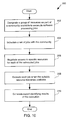
- FIG 10 is a flow chart diagram illustrating a method operations implemented by a distributed processing framework (DPF) system to execute a process, in accordance with yet another embodiment of the present invention.
- DPF distributed processing framework
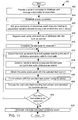
- Figure 11 is a flow chart diagram illustrating the method operations implemented by a distributed test framework system in executing a test suite, in accordance with still another embodiment of the present invention.
- a distributed processing framework (DPF) system to manage the execution of a process utilizing cross-platform dynamically networked distributed computer systems is disclosed.
- the embodiment of the present invention has the capability to intelligently select and utilize computer systems of an ad-hoc network of distributed computer systems having either the same or different software/hardware configuration to execute a process.
- an "ad-hoc" or a "dynamic” network is defined as a network in which the computer resources may be part of the network temporarily and for a specific length of time (i.e., spontaneous).
- the DPF system. implements the JiniTM (hereinafter "Jini") technology to provide spontaneous interaction between its components.
- the computer systems attach to and detach from the ad-hoc network of processing resources (e.g., computer resources) without disturbing the DPF system. Accordingly, the computer resources are not limited to executing processes submitted to the DPF system
- the DPF system is a distributed test framework (DTF) system configured to manage test suite execution on cross-platform dynamically networked computer systems.
- the DTF system includes a server computer system and a plurality of ad-hoc network of processing resources configured to spontaneously interact implementing the Jini technology.
- the server computer system is configured to include a Jini look up service and a system controller configured to manage the processing of the submitted test suites.
- the plurality of computer resources join the Jini look up service registering their respective proxies and the corresponding attributes.
- the system controller searches the look up service for an available suitable computer resource to process each of the submitted test suites. Once a computer resource is selected to run the test suite, the machine service component of the selected computer resource spawns a second service (e.g., process service) to execute the test suite.
- a second service e.g., process service
- Jini technology is a network architecture that enables the spontaneous assembly and interaction of services and devices on a network of computer systems.
- Jini technology eliminates the challenges of scale, component integration, and ad-hoc networking encountered in distributed computing environments. Jini simplifies interactions over a network by providing a fast and easy way for clients to use available services.
- Jini technology is also configured to be wire-protocol and transport-protocol neutral.
- Jini network technology includes a communication and programming model that enables clients and Jini services to discover and connect with each other to form an impromptu (i.e., spontaneous) Jini community.
- Jini is written in Java, Jini implements the mechanism, Java Remote Method Invocation Application Program Interface (API), to move objects around the network.
- API Java Remote Method Invocation Application Program Interface
- a Jini service is configured to employ a proxy to move around the network.
- the proxy is defined as an object having service attributes and communication instructions.
- the Jini services are found and thereafter registered with a look up service on a network.
- registering a service is defined as sending the service proxy to all look up services on the network or a selected subset of the look up services.
- the look up service is equivalent to a directory or an index of available services wherein the proxies for each of the services and their associated code are stored.
- Jini introduces a concept called "leasing.” That is, once a service joins the Jini network, the Jini service registers its availability for a certain period of leased time. This lease period may be renegotiated before the lease time is expired. When a service leaves the Jini network, the service entry in the look up service is removed automatically once the service's lease is expired.
- Jini technology please refer to K. Arnold et al., The Jini Specification (1999) and W. Keith Edwards, Core Jini (1999).
- Java As Jini is implemented in the JavaTM (hereinafter "Java") programming language, in a like manner, an overview of Java is provided below.
- the application layer generally provides the user interface for the system.
- a Java module is used to process commands received by the application layer.
- a Java virtual machine is used as an interpreter to provide portability to Java applications.
- developers design Java applications as hardware independent software modules, which are executed Java virtual machines.
- the Java virtual machine layer is developed to operate in conjunction with the native operating system of a particular hardware, which represents the physical hardware on which the system operates or runs. In this manner, Java applications can be ported from one hardware device to another without requiring updating of the application code.
- Java classes are compiled into machine independent byte code class files which are executed by a machine-dependent virtual machine.
- the virtual machine provides a level of abstraction between the machine independence of the byte code classes and the machine-dependent instruction set of the underlying computer hardware.
- a class loader is responsible for loading the byte code class files as needed, and an interpreter or just-in-time compiler provides for the transformation of byte codes into machine code.
- Java is a programming language designed to generate applications that can run on all hardware platforms, small, medium and large, without modification.
- Java has been promoted and geared heavily for the Web, both for public Web sites and intranets.
- Java programs can be called from within HTML documents or launched standalone.
- Java is an interpreted language.
- the source code of a Java program is compiled into an intermediate language called "byte code”.
- the byte code is then converted (interpreted) into machine code at runtime.
- the Web browser Upon finding a Java applet, the Web browser invokes a Java interpreter (Java Virtual Machine), which translates the byte code into machine code and runs it.
- Java programs are not dependent on any specific hardware and will run in any computer with the Java Virtual Machine software.
- Java programs can also be compiled into machine language for faster performance. However a compiled Java program loses hardware independence as a result.
- FIG. 1 illustrating a block diagram of a distributed test framework (DTF) system 100, in accordance with one embodiment of the present invention.
- the DTF system 100 includes two groups of computer systems: (1) a system server group 101, and (2) a test system group 114'.
- the system server group 101 includes a service component 102 and a system controller 108.
- the service component 102 is configured to contain a Jini look up service 104 and a Remote Method Invocation (RMI) 106.
- RMI Remote Method Invocation
- the RMI is designed to handle various communication needs.
- the Jini look up service 104 is a dedicated process running on the master computer system, server, and is configured to function as a central registry.
- the master computer system is defined as the computer system running the system controller 108.
- the master computer is configured to include both the system controller 108 and the service component 102.
- each of the system controller 108 and the service component 102 may be included and run by separate computer systems.
- the look up service 104 is configured to enable the system controller 108 to locate available computer systems of an ad-hoc network of computer systems to execute a given test execution request using the test system registerable attributes.
- the look up service 104 includes registerable attributes, which identify the test machine platform, operating system, and other software and hardware characteristics.
- the illustrated system controller 108 includes a communication module 110 and a test suite management module 112.
- the communication module 110 manages the communication between the system controller 108 and the distributed test systems 114.
- the communication module 110 is responsible for locating available test systems 114, running test execution requests, and gathering information regarding the status of the test systems 114.
- the system controller 108 manages the communication with the distributed test systems 114 by implementing a plurality of threads. In this manner, the system controller 108 has the capability to communicate with a plurality of test systems 114 in parallel.
- system controller 108 may implement any suitable mechanism to manage the communication between the system controller 108 and the distributed test systems 114 (e.g., Jini, RMI, TCP/IP Sockets, etc.).
- the test suite management module 112 is responsible for managing the processing of the submitted test suites and the test execution requests.
- a test suite is a comprehensive list of data files having commands specifically programmed to initiate a number of functional aspects of the software product being tested. For instance, if the software product being tested is a word processing program, the test suite may activate a spell check command, a cut test command, a paste command, etc. Thus, once the test suite is executed, the test results reveal whether any of the tested commands failed to operate as intended. Also as used herein, once submitted for processing, each test suite becomes a "test execution request." As the processing of different portions of the test suite can be assigned to different test machines, the test suites may be divided into a plurality of test execution requests (i.e., jobs).
- the test suite management module 112 maintains an inqueue directory designed to include almost all the submitted test execution requests. Once the system controller 108 is initiated, the system controller 108 is configured to read each test execution request from files held in the inqueue directory. Once a test execution request is read, it is put into either a wait queue configured to hold test execution requests waiting to be executed or an execution queue designed to hold test execution requests currently being executed. Further information regarding managing the inqueue directory, wait queue, and execution queue will be provided below. As illustrated, in one example, the test suite management module 112 is configured to manage the software applications and user interfaces implemented for job submission, queue watching, job administration, etc., as shown in 116.
- the test system group 114' includes a plurality of test systems 114 having similar or diverse hardware and software configuration. Although shown as a group, the test systems 114 are not necessarily limited to testing. In fact, the test systems 114 can be computers or systems used by employees of a company for normal desktop work. So long as the test systems 114 are associated with the networked group, the processing power of these test systems 114 can be used. In one embodiment, the test systems 114 can be used during normal working ours when the test systems 114 are running, for example, business applications, or during off hours, thus tapping into potentially huge processing resources that would otherwise be left unused. It should therefore be appreciated that test systems 114 do not necessarily have to be solely dedicated to testing or processing for the system server group 101.
- the test systems 114 are configured to execute the test execution requests dispatched by the system controller 108.
- Each of the test systems 114 runs an agent process (not shown in this Figure) designed to register the respective test system 114 with the Jini look up service 104.
- the agent process for each test system 114 advertises the availability of the associated test system 114.
- a machine service component of the agent is used to establish communication between the associated test system 114 and the system controller 108.
- the machine service registers the test system 114 characteristics with the Jini look up service 104.
- the test system 114 attributes are subsequently used by the system controller 108 to locate a test system 114 suitable to execute a specific test execution request.
- the DTF system 100 of the present invention can physically be divided into two groups, logically, the DTF system 100 of the present invention is comprised of three over all parts: (1) Job submission and other user interfaces; (2) Test scheduler and system controller; and (3) Test execution on remote or local systems.
- the job submission and other user interfaces component is a job queuing system having a variety of applications and user interfaces.
- the job submission component is configured to perform several tasks such as handling job submission, managing queues, administrating jobs, and administrating the ad-hoc network of the distributed test systems.
- the user interface may be as follows:
- the second logical component, the test scheduler and system controller includes the system controller 108 configured to perform the function of managing the job queues and dispatching the test execution requests to test system 114 for processing.
- the system controller 108 is configured to manage both; the wait queue (i.e., the queue containing the test execution requests waiting to be executed) and the execution queue (i.e., the queue containing test execution requests currently being executed).
- the in-queue is analogous to the wait queue.
- test scheduler and system controller component is configured to include four modules:
- an inqueue directory 116 contains a plurality of test execution requests 116a, 116b, and 116c.
- the system controller 108 is designed to read each test execution request 116a-116c contained within the inqueue directory 116.
- each test suite request 116a-116c must be executed by a test system 114 capable of running the test execution request requirements.
- each of the test execution requests 116a, 116b, and 116c must be run on a Solaris IATM test system, a WintelTM test system, or a LinuxTM test system, respectively.
- the DTF system 100 of the present invention has the capability to advantageously locate an available test system from a plurality of ad-hoc network of test systems 114a, 114b, 114c, and 114d to execute each of the test execution requests 116a-116c.
- each of the test systems 114a-114d has a different software and hardware configuration.
- the test system 114a is run on WintelTM and the test system 114b is run on LinuxTM
- the test systems 114c and 114d are programmed to run on Solaris IATM and SolarisTM, respectively.
- the machine service for each test system 114a-114c registers the respective test system 114a-114c with the Jini look up service using the Jini attributes.
- the embodiments of the present invention are configured to register the hardware and software configuration for each test system 114a-114d with the Jini look up service 104.
- the system controller 108 can search the Jini look up service 104 implementing the test execution request requirements as search criteria.
- the system controller 108 of the present invention selects the test systems 114c, 114a, and 114b to execute the test suite requests 116a-116c, respectively.
- test system attributes to locate a suitable test system to run a test execution request can further be understood with respect to the block diagram shown in Figure 3, in accordance with one embodiment of the present invention.
- the test systems 114b and 114a, the system controller 108, and the Jini look up service 104 communicate to each other using Jini.
- the system controller 108, the Jini look up service 104, and the test systems 114a and 114b and all the other resources that are Jini enabled form a virtual Jini community 118.
- the test system 114a runs an agent process 120a responsible for notifying the Jini look up service 104 of the existence and configuration of the test system 114a.
- the agent 120a is also designed to export a downloadable image of itself.
- the downloadable image allows the system controller 108 to ask the test system 114a to initiate running a test execution request while interacting with the test system 114a as the test execution request is being processed.
- the illustrated agent 120a involves two Jini services, machine service 114a-MS and test service 114a-TS.
- the function of the machine service 114a-MS is to advertise the availability of the test system 114a, the characteristics of the test system 114a, and the ability of the test system 114a to launch a test execution request. Additionally, the machine service 114a-MS is designed to be present on the test machine 114a at all times. As such, the machine service 114a-MS is initiated on the test system 114a at the start-up time and is configured to remain active on the test system 114a until the test system 114a is shut down.
- the test service 114a-TS is a module configured to encapsulate the test execution request.
- the test service 114a-TS is spawned by the machine service 114a-MS and is subsequently launched when the machine service 114a-MS receives a request to start running a test execution request from the system controller 108.
- the new test service 114a-TS is spawned based on the test execution request type.
- the machine service 114a-MS spawns separate test systems 114a-TS when running Tonga-type, JCK-type, JTREG-type, and shell-type test suites.
- test system 114b is configured to include an agent 120b designed to include a machine system 114b-MS and a test system 114b-TS.
- the machine service 114a-MS and test service 114a-TS register Jini attributes 104a-MS.A and 104a-TS.A of the test system 114a with the Jini look up service 104.
- the sequence of events in registering the machine service 114a-MS and test service 114a-TS may be as follows: Once the test-system 114a discovers and joins the Jini community 118, the test service 114a-MS of the test system 114a registers with the Jini look up service 104.
- the machine service 114a-MS registers a machine service proxy 104a-MS.P and the attributes 104a-MS.A of the machine service 114a-MS with the look up service 104.
- the Jini attributes 104a-MS.A are then used by the system controller 108 to locate a test service having attributes suitable to run the test execution request.
- the machine service 114a-MS spawns a test service 114a-TS having the same type as the test execution request.
- the machine service 114a-MS is configured to spawn a matching test service 114a-TS for each test execution request type.
- the test system 114a may have the attributes to run a Tonga test execution request and a JTREG type test execution request.
- the Jini look up service 104 will include two test services each running a different type of test execution request. As a consequence, when the processing of one type of test execution request has concluded, the test service 114a-TS having substantially the same type can be terminated.
- the test service 104a-TS, 104a-TS.A, and 104-TS.P are designed to substantially exist while the test system 114a is running a test execution request.
- the system controller 108 can determine whether the test system 114a is processing a test execution request. Specifically, this is achieved by the system controller 108 simply querying the Jini look up service 104 as to whether the test system 114a has an associated existing test service.
- the machine service 114a-MS and the test system 114a-TS are configured to respectively register a corresponding machine service proxy 104-MS.P and a respective test service proxy 104-TS.P with the Jini look up service 104.
- the system controller 108 implements the machine service proxy 104-MS.P and the test service proxy 104-TS.P to communicate with the test system 114a.
- the system controller 108 downloads the machine service proxy 104-MS.P from the Jini look up service 104.
- the system controller 108 starts communicating with the machine service proxy 104-MS.P rather than communicating directly with the corresponding test system 114a or the machine service 114a-MS.
- the test service proxy 104-TS.P is the communication channel between the system controller 108 and the test service 114a-TS.
- the system controller 108 downloads the test service proxy 104-TS.P from the Jini look up service 104. Thereafter, the system controller communicates with the test service proxy 104-TS.P as if communicating with the test system 114a or the test service 114a-TS.
- the machine service 114b-MS and test service 114b-TS register their respective machine service proxy 104b-MS.P and machine service attributes 104b-MS.A as well as the respective test service proxy 104b-TS.P and test service attributes 104b-TS.A with the Jini look up service 104.
- test systems 114a-114 n respectively being a PC 100, Macintosh, PC 99, Macintosh, PC 100, and Macintosh are registered with the Jini look up service 104. That is, for each test system 114a-114 n , the Jini look up service 104 contains an associated machine service 104a-MS to 104 n -MS.
- the Jini look up service 104 includes a corresponding machine service proxy 104a-MS.P to 104 n -MS.P and the associated machine service attributes 104a-MS.A to 104 n -MS.A.
- the Jini look up service 104 includes the corresponding test system proxy 104a-TS.P, 104b-TS.P, and 104c-TS.P and the respective test system attributes 104a-TS.A, 104b-TS.A, and 104c-TS.A.
- having associated test systems in the Jini look up service are the indications of the busy status of the test systems 114a, 114b, and 114e, respectively.
- the system controller 108 when the system controller 108 receives a test execution request requiring to be processed by a PC 100, the system controller 108 searches for an available PC 100 test system. While searching the Jini look up service 104, the system controller 108 will first locate the machine service 104a-MS. Despite machine service 104a-MS having the required attribute (i.e., being a PC 100), the system controller 108 will have to by pass this entry, as the test system 114a is busy. The system controller 108 detects the unavailability of test system 114a by the Jini look up service 104 including the test service 104a-TS associated with the test system 114a.
- the system controller locates machine service 104c-MS.
- the Jini look up service does not include a test system associated with the test system 114c, revealing the test system 114c availability to execute the test execution request.
- the lack of a corresponding test service in the Jini look up service 104 occurs once the test execution request has concluded and the test service 104a-TS lease with the Jini look up service 104 has expired.
- the test system 114a can then be selected to execute a different test execution request.
- a different or the same type of test service 114a-TS is spawned by the machine service 114a-MS, again indicating the busy status of the test system 114a.
- FIG. 5 depicting the one-to-one communication between the system controller 108, Jini look up service 104, and test system 114 of the DTF system, in accordance with one embodiment of the present invention.
- a machine service 114-MS component of the test system 114 discovers the Jini look up service 104. Thereafter, the machine service 114-MS joins the Jini look up service 104 by registering a plurality of Jini attributes 104-MS.A and a machine system proxy 104-MS.P with the Jini look up service 104.
- the system controller 108 Seeking a test system to execute a given test execution request, the system controller 108 discovers the Jini look up service 104. Subsequently, the system controller 108 searches the Jini look up service 104 for a test system suitable to run the test execution request. Once the system controller 108 has determined that the machine service attributes 104-MS.A of the test system 114 matches to that required to run the test execution request, the system controller 108 downloads the machine service proxy 104-MS.P from the Jini look up service 104. From then on, the system controller 108 starts communicating with the machine service proxy 104-MS.P as if communicating with the machine service 114-MS. At this point, the system controller 108 communicates with the machine service proxy 104-MS.P requesting the execution of the test execution request.
- the machine service 114-MS spawns a test service 114-TS which type matches that required by the test execution request.
- a test service proxy 104-TS.P and a set of test service attributes 104-TS.A of the test service 114-TS are then registered with the Jini look up service 104.
- the system controller 108 downloads the test service proxy 104-TS.P and communicates with the test system proxy 104-TS.P as if communicating with the test system 114-TS.
- the test service 114-TS receives the test execution command from the system controller 108, thus initiating the test execution request.
- test service 114-TS lease with the Jini look up service 104 expires, thus triggering the removal of the test system proxy 104-TS.P and test system attributes 104-TS.A from the Jini look up service 104.
- the system controller 108 associates the availability of the test system 114 to run the next test execution request with the test system 114 lacking of a registered test service proxy 104-TS.P.
- the interaction between the Jini look up service 104, system controller 108, and test system 114 can further be understood, in accordance with one implementation of the present invention.
- the test system 114 includes a machine service 114-MS and a test service 114-TS.
- the machine service 114-MS includes a lease manager 124, a launch manager 122, and an attribute manager 120 while the test system 114-TS includes a call back 126, a report manager 128, and a lease manager 130.
- the interaction between the DTF system components starts by the test system 114 discovering the Jini look up service 104.
- the machine service 114-MS communicates with the attribute manager 120, obtaining the test system 114 attributes.
- the machine service 114-MS joins the Jini look up service 104 by registering the machine service 114-MS proxy and machine service attributes with the Jini look up service 104.
- the lease manager 124 leases the machine service 114 for a specific period of time. That is, the lease manager 124 registers the availability of the test system 114 to execute a test execution request for a specific period of time.
- the lease manager 124 can renew the lease with the Jini look up service 104. In this manner, once the test system 114 is removed from the ad-hoc network of the distributed test systems, the machine service proxy, machine service attributes, test service proxy, and test service attributes are automatically removed from the Jini look up service 104 as soon as the lease is expired.
- the system controller 108 scans the inqueue directory, reading the required attributes for running the first test execution request in the in-queue (i.e., the wait queue). The system controller 108 then searches the Jini look up service 104, looking for a test system having attributes matching to that required by the test execution request (or computer process) to be processed. Once the system controller 108 determines that the test system 114 is a suitable test system to run the test execution request, the system controller 108 downloads the machine service proxy for the test system 114 from the Jini look up service 104. As shown in the embodiment of Figure 6, once the machine service proxy is downloaded, the system controller 108 use the proxy communication 105 to communicate with the machine service proxy as if communicating with the test system 114. At this point, the test execution is initiated by the system controller 108 dispatching a start execution request to the machine service 114-MS.
- the launch manager 122 component of the machine service 114-MS receives the system controller 108 request to start test execution, the launch manager 122 spawns the appropriate test service 114-TS.
- the test service 114-TS type spawned by the launch manager 122 is determined by the test execution request requirements dispatched by the system controller 108.
- the lease manager 130 of the test system 114-TS is configured to register the test system attributes and a test system proxy with the Jini look up service 104.
- the test service 114-TS registers its availability to execute the test execution request with the Jini look up service 104 for a specified lease period.
- the system controller 108 downloads the test service proxy from the Jini look up service 104 and communicates with the test system proxy as if the system controller 108 is communicating with the test service 114-TS.
- the test service 114-TS sends an event to the system controller 108 indicating the commencement of the test execution request processing.
- the test service 114-TS is designed to send additional events during the running of the test execution request and upon its conclusion.
- the call back component 126 is configured to communicate with the lease manager 130 signaling the conclusion of processing the test execution request. Once the lease manager 130 receives such communication, the lease manager 130 communicates with the Jini look up service 104 signaling the expiration of the test suite 114-TS lease with the Jini look up service 104.
- test suite 114 proxy and test suite 114 attribute entries are removed from the Jini look up service 104, thus pointing out the availability of the test system 114 for processing another suitable job.
- test result data generated by the processing of the test execution request are collected, categorized, and maintained by the report manager 128.
- the report manager 128 analyzes and generates a test report implementing the test result data.
- the test systems 114 of the DTF system generate test reports using the results generated by the processing of an associated test execution request.
- the test results generated by each test system 114 may be utilized so as to create a test result summary report, covering the test results produced by each of the test systems 114.
- DTF utility GUI 200 illustrated in Figure 7, in accordance with one embodiment of the present invention.
- the DTF utility GUI 200 may include a tool bar 201 containing a plurality of pull down menus such as "File” 202 and "Help" 204.
- the DTF utility GUI 200 of the present invention enables a user of the master computer system (i.e., the server) to monitor and obtain information regarding different components of the DTF system.
- the DTF utility GUI 200 is configured to provide information regarding the status of a scheduler 206, machines 208, and logs 210 components of the DTF system.
- the DTF utility GUI 200 may provide the user with the real-time status of any of the components of the DTF system.
- the scheduler 206 shown in the DTF utility GUI 200 is configured to gather and maintain data in a temporary data holding place such as a queue.
- the scheduler 206 keeps track of the status of the submitted test execution requests by maintaining an in-queue 212, an active queue 222, and a completed queue 240.
- the exemplary in-queue 212 includes a job name field 214 and a suite name field 216 for maintaining job name and the corresponding test suite name for each job entry 215a-215g.
- job names for job entries 215a and 215b are substantially identical to the corresponding test suite name for job entries 215a and 215b
- job names for the job entries 215c-215g are not identical to the test suite names for the job entries 215c-215d. For the most part, this occurs because for execution purposes, a test suite may be divided into test execution requests (i.e., jobs) expediting the processing of the test suite.
- the test execution requests are submitted to the DTF system through the system controller 108. Specifically, once the system controller 108 is initiated, the system controller 108 is configured to scan the XML files within the inqueue directory and then read the XML files including a "testrequest" tag. Then, these test execution requests and their test suites are used to initialize the in-queue 212. However, one of ordinary skill in the art must appreciate that in a different implementation, any appropriate mechanism may be used to place the test execution requests into the in-queue 212.
- the DTF utility GUI 200 provides the user of the master computer system (i.e., the server) the capability to initiate the processing of any of the job entries 215a-215g using a start job button 220. Similarly, the user of the master computer system is given the opportunity to delete any of the job entries 215a-215g and their associated suite names through implementing a remove job button 218.
- the master computer system i.e., the server
- the user of the master computer system is given the opportunity to delete any of the job entries 215a-215g and their associated suite names through implementing a remove job button 218.
- the active queue 222 contains the test execution requests currently being executed. As illustrated, the active queue 222 implements a plurality of fields such as job name 224, suite name 226, host name 228, start 230, stop 232, elapsed 234, and status 236 to monitor the jobs during the execution.
- job name 224 the active queue 222 implements a plurality of fields such as job name 224, suite name 226, host name 228, start 230, stop 232, elapsed 234, and status 236 to monitor the jobs during the execution.
- a job entry 225 having a job name "java-net-client 4" and a suite name "java-net-client 4" started executing on 13:15:56 on 06/21 and is configured to be executed until 16:00:00 on 12/31.
- the status 236 for the job entry 225 indicates that the job entry 225 is in "execution” by the test system "ultracos.” Similar to the in-queue 212, the active queue 222 provides a master computer user an opportunity to terminate the execution of the jobs by pressing a kill job button 238.
- the completed queue 240 contains a plurality of fields, job name 242, suite name 244, host name 246, start 248, stop 250, elapsed 252, and status 254 field configured to collect and maintain data concerning the status of completed jobs.
- the execution of a job entry 256 and a job entry 258 has concluded.
- the elapsed time for each job entry 256 and 258 is shown to be about 9 seconds.
- a restart selected task 260 button is configured to provide the user of the master computer service the opportunity to re-run the completed job.
- the completed job will be removed from the completed queue 240 and is placed in the inqueue 212. In this manner, the completed job can be run again.
- a DTF utility GUI 200' depicting in Figure 8 provides information regarding the status of machines 208 of the DTF system, in accordance with one embodiment of the present invention.
- the DTF utility GUI 200' is configured to provide a list of test machines creating the impromptu Jini community of test systems.
- the machines list 266 includes a plurality of fields such as host name 268, host address 270, operating system (OS) name 272, OS architecture 274, and OS version 276.
- the machine list 266 includes one machine entry 278 having a host name "ultracos," and a JavaTM binary host address 129,144,176.88. Additionally, as shown, the machine entry 278 has a version 5.7 SunTM solaris operating system with a sparc architecture.
- the illustrated DTF utility GUI 200' also provides the master computer user an update list 280 button, giving the user the opportunity to update the status of the machines list 266, when needed or if necessary.
- DTF utility GUI 200 illustrating the contents of the logs 210 component of the DTF system, in accordance with one embodiment of the present invention.
- the logs 210 component includes a list entitled a DTF log information 262.
- the logs 210 component is configured to maintain a list of certain actions performed by some of the DTF system components (e.g., scheduler, machine service lookup service, etc.).
- the DTF utility can be implemented on master computer systems (i.e., servers) having different platforms and environments.
- the DTF utility may be run in a WindowsTM environment, and be launched by using the Programs submenu of WindowsTM Start menu.
- a group of resources e.g., processing resources
- this task is achieved by the group of resources joining a look up service implementing a proxy and a set of attributes associated with each of the resources.
- the group of resources may include a plurality of ad-hoc networked computer systems, which register with Jini look up service, indicating their availability to execute a software process job.
- computer systems are test systems configured to process a test execution request (e.g., a job). Each of the test systems registers with the Jini look up service using a machine service designed to have a proxy and a set of attributes.
- each of the software processing jobs contained within the inqueue directory are scanned and depending on availability of a resource to execute the software processing job, is read either into a wait queue or an execution queue.
- access to specific resources are negotiated for each of the scheduled jobs. That is, a system controller searches the look up service seeking an available resource having the attributes substantially similar to that required by the software processing job. Once such resource has been located, the system controller communicates with the resource by obtaining machine service proxy associated with the located resource.
- each of the scheduled jobs is executed when a suitable resource becomes available. That is, after obtaining the proxy from the look up service, the system controller dispatches a software processing job execution request, initiating the processing of the software processing job.
- the machine service when executing a test execution request, the machine service spawns a process service configured to include a proxy and a set of attributes.
- the process service is a test system and once spawned, the test service proxy and the attributes are registered with the Jini look up service. At this point, the system controller obtains the proxy so as to initiate the test execution request.
- a report identifying the results of the process execution is generated.
- the distributed processing framework of embodiments of the present invention allows a software process be executed by a group of ad-hoc network of processing resources such that substantially minimum administration is required. In this manner, adding and deleting of resources have almost minimum effect on the execution of a software processing job.
- the method operations implemented in executing a test suite by the distributed test framework system is shown in a flow chart diagram 400 illustrated in Figure 11, in accordance with one embodiment of the present invention.
- the method begins with operation 402 in which a system controller to distribute and manage a test suite submitted for execution is provided. As discussed in more detail above, the system controller maintains a suite directory wherein the description of each test suite is kept in an XML formatted file.
- a look up service configured to perform the function of a network device registry, directory service, or a registry service is established.
- the look up service is a Jini look up service designed to function as a dedicated process running on a particular computer system. For instance, the Jini look up service may be run on the system server, which includes the system controller.
- Each of the resources is configured to include an associated machine service designed to have a set of attributes and a proxy.
- the resources are test systems having similar or dissimilar software and hardware configuration.
- the test systems software and/or hardware configuration are registerable attributes, which are used by the system controller to locate and select an available suitable test system.
- each proxy and each set of attributes are registered with the look up service.
- the test suite is scheduled for execution. For instance, each of the test suites stored in the XML formatted inqueue directory are read by the system controller and placed in an in-queue queue.
- the look up service is searched for a test system having attributes matching the set of attributes associated with the test suite to be executed.
- a machine service is selected to execute the test suite using the test suite attributes as criteria.
- the proxy associated with the selected test system is obtained. In one embodiment, this task is achieved by the system controller downloading the selected test system proxy.
- the proxy is used to communicate with the test system.
- the system controller communicates with the selected test system proxy as if communicating with the test system.
- the system controller dispatches a test execution request to the proxy, initiating the test suite execution.
- the test suite is next executed implementing the test service type spawned by the machine service.
- the machine service spawns the test service configured to have a test service proxy and the set of attributes. Once spawned, the test service proxy and the set of attributes are registered with the Jini look up service, indicating the unavailability of the test machine to execute a test suite requiring similar configuration.
- a determination is made as to whether there are any more test suites to be executed.
- test suite execution summary report is generated.
- an embodiment of the present invention implements an ad-hoc network of computer resources to execute a process wherein the attaching and detaching of a computer resource has substantially minimum or no effect on the process execution.
- the embodiments of the present invention implement computer resources, which are not limited to be used by the distributed processing framework system of the present invention.
- the DPF substantially eliminates the waste of resources associated with the prior art.
- Another advantage of the distributed processing framework is that in contrast to the prior art, the distributed processing framework system is highly scalable. Yet another benefit is that the DPF system requires substantially minimal/none administration.
- the ad-hoc network of distributed computer resources in conjunction with the server component creates a self-healing network.
- the network of computer resources can in fact span over a large geographical area.
- the distributed processing framework of the present invention can be implemented to run any computer process.
- the present invention is described based on the Jini technology, other network technologies having the capability to create an ad-hoc group of computer resources may be implemented (e.g., RMI, TCP/IP Sockets, etc.).
- the present invention implements Java programming language, other programming languages may be used to implement the embodiments of the present invention (e.g., C, C ++, any object oriented programming language, etc.).
- the present invention can be implemented by software provided to a computer system on a carrier medium such as a storage medium, e.g. a floppy disk, hard disk, CD ROM or solid state memory device, or a transient medium, i.e. a signal, e.g. an electrical, optical, microwave, acoustic or rf signal.
- a carrier medium such as a storage medium, e.g. a floppy disk, hard disk, CD ROM or solid state memory device, or a transient medium, i.e. a signal, e.g. an electrical, optical, microwave, acoustic or rf signal.
Landscapes
- Engineering & Computer Science (AREA)
- Theoretical Computer Science (AREA)
- Software Systems (AREA)
- Physics & Mathematics (AREA)
- General Engineering & Computer Science (AREA)
- General Physics & Mathematics (AREA)
- Computer Hardware Design (AREA)
- Quality & Reliability (AREA)
- Debugging And Monitoring (AREA)
- Multi Processors (AREA)
- Computer And Data Communications (AREA)
Abstract
Description
- The present invention relates generally to software processing, and more particularly, to methods and systems for intelligently and automatically selecting and utilizing networked computer resources to collectively process computing operations.
- As the use of software in performing daily tasks is increasing rapidly, assessing software reliability through software testing has become an imperative stage in software development cycle. As is well known, software testing is used to find and eliminate defects (i.e., bugs) in software, which if undetected, can cause the software to operate improperly. In general, software testing may be performed by implementing a stand-alone computer or a network of computer resources. When a stand-alone computer system is used to perform the software testing, the stand-alone computer system is programmed to run a test selected by the software user. Comparatively, if a network of computer resources is used, the user is responsible for manually adding and deleting the computer resources to the network, programming the master computer system and the server, initiating the running of a user-selected test, and running the test on the group of dedicated computer systems coupled to the server.
- In either scenario, a heavy user interface is required for initiating the software testing on the master computer, scheduling the running of the specific test on the system resources, adding and deleting of the system resources, keeping track of the system resources and their respective hardware and software configuration, and maintaining the system resources. Additionally, in either case, the software testing is performed by dedicated system resources. That is, the system resources are designed to solely be used for software testing.
- At least two drawbacks can be associated with the current state of software testing described above. First, the significant role of human interaction causes software testing to be very time consuming and costly. In certain situations, this setback is extrapolated as a result of human error. Second, currently, computer resources are being wasted, as the computer resources are solely dedicated to software testing.
- In view of the foregoing, there is a need for a flexible methodology and system capable of selecting and utilizing dynamic, cross-platform computer resources to process a computer software.
- Broadly speaking, one aspect of the present invention fills these needs by implementing a distributed processing framework (DPF) system configured to manage and execute processes implementing impromptu cross-platform distributed systems. In one embodiment, the distributed processing framework system is a distributed test framework (DTF) system designed to manage software test suite execution on cross-platform, dynamically networked distributed computer systems. It should be appreciated that the present invention can be implemented in numerous ways, including as a process, an apparatus, a system, a device, a method or software. Several inventive embodiments of the present invention are described below.
- In one embodiment, a processing system is disclosed. The processing system includes a master system and a processing resource. The master system is designed to execute a service component and a system controller component. The processing resource is designed to register with a look up service of the service component for a specific period of time. The processing resource registers with the look up service so as to advertise the eligibility of the processing resource to execute a software processing job that has a set of requirements. The system controller component is designed to search the look up service of the service component to locate the processing resource having a set of attributes that substantially matches the set of requirements of the software processing job.
- In another embodiment, a test execution request processing method is disclosed. The test execution request processing method includes a look up service, a system for testing a code, and a controller code. The system for testing the code includes a machine service that has a machine service proxy and a set of machine service attributes. The machine service proxy and the set of machine service attributes are used to register the system with the look up service. By registering with the look up service, the system is placed in the look up service so as to promote the eligibility of the system to process a test execution request. The controller code is designed to search the look up service so as to locate the system to process the test execution request if the system is suitable based on the requirements defined by the test execution request.
- In yet another embodiment, a method for executing a set of software processing jobs is disclosed. The method includes designating a group of computer resources as a part of a community of computer resources available to execute the set of software processing jobs. Also included in the method are scheduling the set of software processing jobs with the group of computer resources and negotiating access to a specific computer resource for each scheduled software processing job. The method also includes executing each scheduled software processing job when the corresponding specific computer resource is available for processing. Further included is generating a report identifying a result of the execution of each scheduled software processing job.
- Other aspects and advantages of the invention will become apparent from the following detailed description, taken in conjunction with the accompanying drawings, illustrating by way of example the principles of the invention.
- The present invention will be readily understood by the following detailed description in conjunction with the accompanying drawings, and like reference numerals designate like structural elements.
- Figure 1 is a block diagram illustrating a distributed test framework (DTF) system, in accordance with one embodiment of the present invention.
- Figure 2 is a block diagram illustrating the capability of the present invention to intelligently locate an available and suitable test system to execute a test suite, in accordance with another embodiment of the present invention.
- Figure 3 is a block diagram illustrating the implementation of the test system attributes to locate a suitable test system to process a test execution request, in accordance with yet another embodiment of the present invention.
- Figure 4 is a block diagram illustrating the capability of the present invention to locate an available and suitable test system to process a test execution request having a set of specific requirements, in accordance to yet another embodiment of the present invention.
- Figure 5 is a block diagram depicting the one-to-one communication between the system controller, Jini™ look up service, and a test system of a DTF system, in accordance to still another embodiment of the present invention.
- Figure 6 is a block diagram showing the interaction between the Jini look up service, system controller, and a test system, in accordance with still another embodiment of the present invention.
- Figure 7 depicts a DTF utility graphical user interface (GUI), in accordance to yet another embodiment of the present invention.
- Figure 8 is a DTF utility graphical user interface (GUI), in accordance to yet another embodiment of the present invention.
- Figure 9 is a DTF utility graphical user interface (GUI), in accordance to still another embodiment of the present invention
- Figure 10 is a flow chart diagram illustrating a method operations implemented by a distributed processing framework (DPF) system to execute a process, in accordance with yet another embodiment of the present invention.
- Figure 11 is a flow chart diagram illustrating the method operations implemented by a distributed test framework system in executing a test suite, in accordance with still another embodiment of the present invention.
- A distributed processing framework (DPF) system to manage the execution of a process utilizing cross-platform dynamically networked distributed computer systems is disclosed. The embodiment of the present invention has the capability to intelligently select and utilize computer systems of an ad-hoc network of distributed computer systems having either the same or different software/hardware configuration to execute a process. As used herein, an "ad-hoc" or a "dynamic" network is defined as a network in which the computer resources may be part of the network temporarily and for a specific length of time (i.e., spontaneous). In one example, the DPF system. implements the Jini™ (hereinafter "Jini") technology to provide spontaneous interaction between its components. In this manner, the computer systems attach to and detach from the ad-hoc network of processing resources (e.g., computer resources) without disturbing the DPF system. Accordingly, the computer resources are not limited to executing processes submitted to the DPF system
- In one exemplary embodiment, the DPF system is a distributed test framework (DTF) system configured to manage test suite execution on cross-platform dynamically networked computer systems. In one implementation, the DTF system includes a server computer system and a plurality of ad-hoc network of processing resources configured to spontaneously interact implementing the Jini technology. The server computer system is configured to include a Jini look up service and a system controller configured to manage the processing of the submitted test suites. In one instance, the plurality of computer resources join the Jini look up service registering their respective proxies and the corresponding attributes. In one example, the system controller searches the look up service for an available suitable computer resource to process each of the submitted test suites. Once a computer resource is selected to run the test suite, the machine service component of the selected computer resource spawns a second service (e.g., process service) to execute the test suite.
- As one embodiment of the present invention implements the Jini technology, a brief introduction to Jini is provided below. Nevertheless, this brief introduction to Jini should not be considered as limiting as Jini technology is well known by those skilled in the art. Jini technology is a network architecture that enables the spontaneous assembly and interaction of services and devices on a network of computer systems. Built on the Java platform, Jini technology eliminates the challenges of scale, component integration, and ad-hoc networking encountered in distributed computing environments. Jini simplifies interactions over a network by providing a fast and easy way for clients to use available services. Jini technology is also configured to be wire-protocol and transport-protocol neutral.
- Summarily, Jini network technology includes a communication and programming model that enables clients and Jini services to discover and connect with each other to form an impromptu (i.e., spontaneous) Jini community. As Jini is written in Java, Jini implements the mechanism, Java Remote Method Invocation Application Program Interface (API), to move objects around the network.
- In one embodiment, a Jini service is configured to employ a proxy to move around the network. As used herein, the proxy is defined as an object having service attributes and communication instructions. Through implementing discovery and join processes, the Jini services are found and thereafter registered with a look up service on a network. As used herein, registering a service is defined as sending the service proxy to all look up services on the network or a selected subset of the look up services. By way of example, the look up service is equivalent to a directory or an index of available services wherein the proxies for each of the services and their associated code are stored. When a service is requested, the proxy associated with the requested service is sent to the requesting client, thus enabling the client to use the requested service. Once dispatched, the proxy is configured to conduct all communication between the client and the Jini service.
- In providing an ad-hoc network of computers, in one embodiment, Jini introduces a concept called "leasing." That is, once a service joins the Jini network, the Jini service registers its availability for a certain period of leased time. This lease period may be renegotiated before the lease time is expired. When a service leaves the Jini network, the service entry in the look up service is removed automatically once the service's lease is expired. For further details on Jini technology, please refer to K. Arnold et al., The Jini Specification (1999) and W. Keith Edwards, Core Jini (1999).
- As Jini is implemented in the Java™ (hereinafter "Java") programming language, in a like manner, an overview of Java is provided below. In operation, a user of a typical Java based system interacts with an application layer of a system generally written by a third party developer. The application layer generally provides the user interface for the system. A Java module is used to process commands received by the application layer. A Java virtual machine is used as an interpreter to provide portability to Java applications. In general, developers design Java applications as hardware independent software modules, which are executed Java virtual machines. The Java virtual machine layer is developed to operate in conjunction with the native operating system of a particular hardware, which represents the physical hardware on which the system operates or runs. In this manner, Java applications can be ported from one hardware device to another without requiring updating of the application code.
- Unlike most programming languages, in which a program is compiled into machine-dependent, executable program code, Java classes are compiled into machine independent byte code class files which are executed by a machine-dependent virtual machine. The virtual machine provides a level of abstraction between the machine independence of the byte code classes and the machine-dependent instruction set of the underlying computer hardware. A class loader is responsible for loading the byte code class files as needed, and an interpreter or just-in-time compiler provides for the transformation of byte codes into machine code.
- More specifically, Java is a programming language designed to generate applications that can run on all hardware platforms, small, medium and large, without modification. Developed by Sun, Java has been promoted and geared heavily for the Web, both for public Web sites and intranets. Generally, Java programs can be called from within HTML documents or launched standalone. When a Java program runs from a Web page, it is called a " Java applet," and when run on a Web server, the application is called a "servlet."
- Java is an interpreted language. The source code of a Java program is compiled into an intermediate language called "byte code". The byte code is then converted (interpreted) into machine code at runtime. Upon finding a Java applet, the Web browser invokes a Java interpreter (Java Virtual Machine), which translates the byte code into machine code and runs it. Thus, Java programs are not dependent on any specific hardware and will run in any computer with the Java Virtual Machine software. On the server side, Java programs can also be compiled into machine language for faster performance. However a compiled Java program loses hardware independence as a result.
- Keeping these brief overviews to Jini and Java as they relate to the present invention in mind, reference is now made to Figure 1 illustrating a block diagram of a distributed test framework (DTF)
system 100, in accordance with one embodiment of the present invention. As shown, physically, theDTF system 100 includes two groups of computer systems: (1) asystem server group 101, and (2) a test system group 114'. Thesystem server group 101 includes aservice component 102 and asystem controller 108. Theservice component 102 is configured to contain a Jini look upservice 104 and a Remote Method Invocation (RMI) 106. In one embodiment, the RMI is designed to handle various communication needs. Comparatively, the Jini look upservice 104 is a dedicated process running on the master computer system, server, and is configured to function as a central registry. As used herein, the master computer system is defined as the computer system running thesystem controller 108. As designed, in one embodiment, the master computer is configured to include both thesystem controller 108 and theservice component 102. However, in a different implementation, each of thesystem controller 108 and theservice component 102 may be included and run by separate computer systems. As designed, the look upservice 104 is configured to enable thesystem controller 108 to locate available computer systems of an ad-hoc network of computer systems to execute a given test execution request using the test system registerable attributes. For instance, the look upservice 104 includes registerable attributes, which identify the test machine platform, operating system, and other software and hardware characteristics. - The illustrated
system controller 108 includes acommunication module 110 and a testsuite management module 112. Thecommunication module 110 manages the communication between thesystem controller 108 and the distributedtest systems 114. For instance, thecommunication module 110 is responsible for locatingavailable test systems 114, running test execution requests, and gathering information regarding the status of thetest systems 114. In one example, thesystem controller 108 manages the communication with the distributedtest systems 114 by implementing a plurality of threads. In this manner, thesystem controller 108 has the capability to communicate with a plurality oftest systems 114 in parallel. However, it must be noted that in a different embodiment, thesystem controller 108 may implement any suitable mechanism to manage the communication between thesystem controller 108 and the distributed test systems 114 (e.g., Jini, RMI, TCP/IP Sockets, etc.). - The test
suite management module 112 is responsible for managing the processing of the submitted test suites and the test execution requests. As used herein a test suite is a comprehensive list of data files having commands specifically programmed to initiate a number of functional aspects of the software product being tested. For instance, if the software product being tested is a word processing program, the test suite may activate a spell check command, a cut test command, a paste command, etc. Thus, once the test suite is executed, the test results reveal whether any of the tested commands failed to operate as intended. Also as used herein, once submitted for processing, each test suite becomes a "test execution request." As the processing of different portions of the test suite can be assigned to different test machines, the test suites may be divided into a plurality of test execution requests (i.e., jobs). - By way of example, the test
suite management module 112 maintains an inqueue directory designed to include almost all the submitted test execution requests. Once thesystem controller 108 is initiated, thesystem controller 108 is configured to read each test execution request from files held in the inqueue directory. Once a test execution request is read, it is put into either a wait queue configured to hold test execution requests waiting to be executed or an execution queue designed to hold test execution requests currently being executed. Further information regarding managing the inqueue directory, wait queue, and execution queue will be provided below. As illustrated, in one example, the testsuite management module 112 is configured to manage the software applications and user interfaces implemented for job submission, queue watching, job administration, etc., as shown in 116. - The test system group 114' includes a plurality of
test systems 114 having similar or diverse hardware and software configuration. Although shown as a group, thetest systems 114 are not necessarily limited to testing. In fact, thetest systems 114 can be computers or systems used by employees of a company for normal desktop work. So long as thetest systems 114 are associated with the networked group, the processing power of thesetest systems 114 can be used. In one embodiment, thetest systems 114 can be used during normal working ours when thetest systems 114 are running, for example, business applications, or during off hours, thus tapping into potentially huge processing resources that would otherwise be left unused. It should therefore be appreciated thattest systems 114 do not necessarily have to be solely dedicated to testing or processing for thesystem server group 101. - In one embodiment, the
test systems 114 are configured to execute the test execution requests dispatched by thesystem controller 108. Each of thetest systems 114 runs an agent process (not shown in this Figure) designed to register therespective test system 114 with the Jini look upservice 104. In this manner, the agent process for eachtest system 114 advertises the availability of the associatedtest system 114. As will be discussed in further detail below, a machine service component of the agent is used to establish communication between the associatedtest system 114 and thesystem controller 108. Specifically, by implementing the Jini attributes, the machine service registers thetest system 114 characteristics with the Jini look upservice 104. Thetest system 114 attributes are subsequently used by thesystem controller 108 to locate atest system 114 suitable to execute a specific test execution request. - While the
DTF system 100 of the present invention can physically be divided into two groups, logically, theDTF system 100 of the present invention is comprised of three over all parts: (1) Job submission and other user interfaces; (2) Test scheduler and system controller; and (3) Test execution on remote or local systems. - For the most part, the job submission and other user interfaces component is a job queuing system having a variety of applications and user interfaces. As designed, the job submission component is configured to perform several tasks such as handling job submission, managing queues, administrating jobs, and administrating the ad-hoc network of the distributed test systems.
- By way of example, in one implementation, the user interface may be as follows:
- Launch system controller: In one embodiment, launching the
system controller 108 is performed by running an appropriate shell script. As designed, the shell script is configured to launch the Jini and RMI support servers. - Kill system controller: Finds substantially all the processes, and once found kills each of the processes, individually.
- Submit jobs: Before the
system controller 108 is launched, an Extensible Markup Language (XML) formatted test-execution-request file is created in the inqueue directory (e.g., that is preferably part of the test suite management module). In this manner, once thesystem Controller 108 is launched, thesystem controller 108 scans the inqueue directory, thus entering almost each and every test execution request into the in-queue (the in-queue being an actual queue, as contrasted with the inqueue directory). - Check queue: In one embodiment, a stopgap Graphical User Interface (GUI) is provided.
- Cancel/administer a job: In one implementation, a stopgap GUI is implemented.
- Other administrative tasks: In one exemplary embodiment, additional user
interfaces are included. For instance, in certain cases, the
system controller 108 is configured to implement various input files. - The second logical component, the test scheduler and system controller, includes the
system controller 108 configured to perform the function of managing the job queues and dispatching the test execution requests to testsystem 114 for processing. Thus, thesystem controller 108 is configured to manage both; the wait queue (i.e., the queue containing the test execution requests waiting to be executed) and the execution queue (i.e., the queue containing test execution requests currently being executed). In one embodiment, the in-queue is analogous to the wait queue. - As designed, the test scheduler and system controller component is configured to include four modules:
- Suite MGR: This module maintains a list of the available test suites stored in a known location in the file system. As designed, the test suite descriptions are stored in an XML formatted file in a suite directory.
- Log MGR: This module is configured to handle the logging of activities inside the
system controller 108 by implementing a plurality of log files having XML format. For instance, this is particularly useful for debug tracing and system statistics charting. - Queue MGR: This module is designed to maintain the two queues, wait queue (i.e., the in-queue) and the execution queue. Specifically, while a job is in any of the queues, an XML formatted file is kept in the queue directory reflecting the current status of the job. Each test execution request is configured to have a list of attributes describing the system characteristics required to execute the test execution request.
- Reference is made to a block diagram depicted in Figure 2 wherein the capability of the embodiment of the present invention to intelligently locate a
test system 114 available to execute a test suite is illustrated, in accordance with one embodiment of the present invention. As shown, aninqueue directory 116 contains a plurality oftest execution requests system controller 108 is initiated, thesystem controller 108 is designed to read eachtest execution request 116a-116c contained within theinqueue directory 116. As shown, eachtest suite request 116a-116c must be executed by atest system 114 capable of running the test execution request requirements. For instance, each of thetest execution requests DTF system 100 of the present invention has the capability to advantageously locate an available test system from a plurality of ad-hoc network oftest systems test execution requests 116a-116c. - As shown in the embodiment depicted in Figure 2, each of the
test systems 114a-114d has a different software and hardware configuration. For instance, while thetest system 114a is run on Wintel™ and thetest system 114b is run on Linux™, thetest systems test system 114a-114c registers therespective test system 114a-114c with the Jini look up service using the Jini attributes. Particularly, the embodiments of the present invention are configured to register the hardware and software configuration for eachtest system 114a-114d with the Jini look upservice 104. In this manner, thesystem controller 108 can search the Jini look upservice 104 implementing the test execution request requirements as search criteria. Thus, as shown in the example of Figure 2, thesystem controller 108 of the present invention selects thetest systems test suite requests 116a-116c, respectively. - Implementing the test system attributes to locate a suitable test system to run a test execution request can further be understood with respect to the block diagram shown in Figure 3, in accordance with one embodiment of the present invention. As shown, the
test systems system controller 108, and the Jini look upservice 104 communicate to each other using Jini. In one example, thesystem controller 108, the Jini look upservice 104, and thetest systems virtual Jini community 118. - As shown, the
test system 114a runs anagent process 120a responsible for notifying the Jini look upservice 104 of the existence and configuration of thetest system 114a. In one example, theagent 120a is also designed to export a downloadable image of itself. Beneficially, the downloadable image allows thesystem controller 108 to ask thetest system 114a to initiate running a test execution request while interacting with thetest system 114a as the test execution request is being processed. - The illustrated
agent 120a involves two Jini services,machine service 114a-MS andtest service 114a-TS. The function of themachine service 114a-MS is to advertise the availability of thetest system 114a, the characteristics of thetest system 114a, and the ability of thetest system 114a to launch a test execution request. Additionally, themachine service 114a-MS is designed to be present on thetest machine 114a at all times. As such, themachine service 114a-MS is initiated on thetest system 114a at the start-up time and is configured to remain active on thetest system 114a until thetest system 114a is shut down. - Comparatively, the
test service 114a-TS is a module configured to encapsulate the test execution request. As designed, thetest service 114a-TS is spawned by themachine service 114a-MS and is subsequently launched when themachine service 114a-MS receives a request to start running a test execution request from thesystem controller 108. Specifically, thenew test service 114a-TS is spawned based on the test execution request type. By way of example, in one embodiment, themachine service 114a-MS spawnsseparate test systems 114a-TS when running Tonga-type, JCK-type, JTREG-type, and shell-type test suites. However, one having ordinary skill in the art must appreciate that in a different example, the machine services of the DTF system of the present invention are configured to spawn other suitable test systems. As shown, similar totest system 114a, thetest system 114b is configured to include anagent 120b designed to include amachine system 114b-MS and atest system 114b-TS. - As will be discussed in more detail below and as shown in the implementation of Figure 3, the
machine service 114a-MS andtest service 114a-TS, respectively, register Jini attributes 104a-MS.A and 104a-TS.A of thetest system 114a with the Jini look upservice 104. For instance, in one embodiment, the sequence of events in registering themachine service 114a-MS andtest service 114a-TS may be as follows: Once the test-system 114a discovers and joins theJini community 118, thetest service 114a-MS of thetest system 114a registers with the Jini look upservice 104. In this manner, themachine service 114a-MS registers amachine service proxy 104a-MS.P and theattributes 104a-MS.A of themachine service 114a-MS with the look upservice 104. The Jini attributes 104a-MS.A are then used by thesystem controller 108 to locate a test service having attributes suitable to run the test execution request. - Once the
test system 114a has been selected to run the test execution request, themachine service 114a-MS spawns atest service 114a-TS having the same type as the test execution request. As discussed above, themachine service 114a-MS is configured to spawn amatching test service 114a-TS for each test execution request type. For example, thetest system 114a may have the attributes to run a Tonga test execution request and a JTREG type test execution request. In such a situation, the Jini look upservice 104 will include two test services each running a different type of test execution request. As a consequence, when the processing of one type of test execution request has concluded, thetest service 114a-TS having substantially the same type can be terminated. Thus, for the most part, thetest service 104a-TS, 104a-TS.A, and 104-TS.P are designed to substantially exist while thetest system 114a is running a test execution request. In this manner, thesystem controller 108 can determine whether thetest system 114a is processing a test execution request. Specifically, this is achieved by thesystem controller 108 simply querying the Jini look upservice 104 as to whether thetest system 114a has an associated existing test service. - In addition to registering the
attributes 104a-MS.A and 104a-TS.A, themachine service 114a-MS and thetest system 114a-TS are configured to respectively register a corresponding machine service proxy 104-MS.P and a respective test service proxy 104-TS.P with the Jini look upservice 104. As designed, thesystem controller 108 implements the machine service proxy 104-MS.P and the test service proxy 104-TS.P to communicate with thetest system 114a. Particularly, once thesystem controller 108 has selected thetest system 114a to run the test execution request, thesystem controller 108 downloads the machine service proxy 104-MS.P from the Jini look upservice 104. Once the machine service proxy 104-MS.P is downloaded, thesystem controller 108 starts communicating with the machine service proxy 104-MS.P rather than communicating directly with thecorresponding test system 114a or themachine service 114a-MS. - In a like manner, the test service proxy 104-TS.P is the communication channel between the
system controller 108 and thetest service 114a-TS. Thus, similar to themachine service 114a-MS, thesystem controller 108 downloads the test service proxy 104-TS.P from the Jini look upservice 104. Thereafter, the system controller communicates with the test service proxy 104-TS.P as if communicating with thetest system 114a or thetest service 114a-TS. As shown, in the same manner, themachine service 114b-MS andtest service 114b-TS register their respectivemachine service proxy 104b-MS.P and machine service attributes 104b-MS.A as well as the respectivetest service proxy 104b-TS.P and test service attributes 104b-TS.A with the Jini look upservice 104. - The capability of the present invention to determine the availability of a test system to process a test execution request having a set of specific requirements can further be understood with reference to the block diagram of Figure 4, in accordance to one embodiment of the present invention. As illustrated, a plurality of
test systems 114a-114n respectively being aPC 100, Macintosh, PC 99, Macintosh,PC 100, and Macintosh are registered with the Jini look upservice 104. That is, for eachtest system 114a-114n, the Jini look upservice 104 contains an associatedmachine service 104a-MS to 104n-MS. In a like manner, for eachmachine service 104a-MS to 104n-MS, the Jini look upservice 104 includes a correspondingmachine service proxy 104a-MS.P to 104n-MS.P and the associated machine service attributes 104a-MS.A to 104n-MS.A. - Although for each
test system 114a-114n a machine service entry can be found in the Jini look upservice 104, only testsystems test services 104a-TS, 104b-TS, and 104e-TS. Further more, as shown, for each of thetest systems service 104 includes the correspondingtest system proxy 104a-TS.P, 104b-TS.P, and 104c-TS.P and the respective test system attributes 104a-TS.A, 104b-TS.A, and 104c-TS.A. In one embodiment, having associated test systems in the Jini look up service are the indications of the busy status of thetest systems - For instance, at this point, when the
system controller 108 receives a test execution request requiring to be processed by aPC 100, thesystem controller 108 searches for anavailable PC 100 test system. While searching the Jini look upservice 104, thesystem controller 108 will first locate themachine service 104a-MS. Despitemachine service 104a-MS having the required attribute (i.e., being a PC 100), thesystem controller 108 will have to by pass this entry, as thetest system 114a is busy. Thesystem controller 108 detects the unavailability oftest system 114a by the Jini look upservice 104 including thetest service 104a-TS associated with thetest system 114a. Subsequently, in search of the nextavailable PC 100 test system, the system controller locatesmachine service 104c-MS. However, this time, the Jini look up service does not include a test system associated with thetest system 114c, revealing thetest system 114c availability to execute the test execution request. - As will be discussed in more detail below, in one implementation, the lack of a corresponding test service in the Jini look up
service 104 occurs once the test execution request has concluded and thetest service 104a-TS lease with the Jini look upservice 104 has expired. Thus, once thetest service 104a-TS and its associatedproxy 104a-TS.P and attributes 104a-TS.A have been removed from the Jini look upservice 104, thetest system 114a can then be selected to execute a different test execution request. Depending on the type of the test execution request, a different or the same type oftest service 114a-TS is spawned by themachine service 114a-MS, again indicating the busy status of thetest system 114a. - Reference is now made to Figure 5 depicting the one-to-one communication between the
system controller 108, Jini look upservice 104, andtest system 114 of the DTF system, in accordance with one embodiment of the present invention. As shown, enabled by the Jini technology, a machine service 114-MS component of thetest system 114 discovers the Jini look upservice 104. Thereafter, the machine service 114-MS joins the Jini look upservice 104 by registering a plurality of Jini attributes 104-MS.A and a machine system proxy 104-MS.P with the Jini look upservice 104. - Seeking a test system to execute a given test execution request, the
system controller 108 discovers the Jini look upservice 104. Subsequently, thesystem controller 108 searches the Jini look upservice 104 for a test system suitable to run the test execution request. Once thesystem controller 108 has determined that the machine service attributes 104-MS.A of thetest system 114 matches to that required to run the test execution request, thesystem controller 108 downloads the machine service proxy 104-MS.P from the Jini look upservice 104. From then on, thesystem controller 108 starts communicating with the machine service proxy 104-MS.P as if communicating with the machine service 114-MS. At this point, thesystem controller 108 communicates with the machine service proxy 104-MS.P requesting the execution of the test execution request. - Subsequent to receiving this request, the machine service 114-MS spawns a test service 114-TS which type matches that required by the test execution request. Next, a test service proxy 104-TS.P and a set of test service attributes 104-TS.A of the test service 114-TS are then registered with the Jini look up
service 104. Thereafter, thesystem controller 108 downloads the test service proxy 104-TS.P and communicates with the test system proxy 104-TS.P as if communicating with the test system 114-TS. Then, the test service 114-TS receives the test execution command from thesystem controller 108, thus initiating the test execution request. - As was discussed in more detail above, once the test execution has concluded, the test service 114-TS lease with the Jini look up
service 104 expires, thus triggering the removal of the test system proxy 104-TS.P and test system attributes 104-TS.A from the Jini look upservice 104. In this manner, thesystem controller 108 associates the availability of thetest system 114 to run the next test execution request with thetest system 114 lacking of a registered test service proxy 104-TS.P. - Proceeding to the block diagram of Figure 6, the interaction between the Jini look up
service 104,system controller 108, andtest system 114 can further be understood, in accordance with one implementation of the present invention. As discussed in more detail above, thetest system 114 includes a machine service 114-MS and a test service 114-TS. As designed, the machine service 114-MS includes alease manager 124, alaunch manager 122, and anattribute manager 120 while the test system 114-TS includes a call back 126, areport manager 128, and alease manager 130. - In one example, the interaction between the DTF system components starts by the
test system 114 discovering the Jini look upservice 104. Subsequent to this discovery, the machine service 114-MS communicates with theattribute manager 120, obtaining thetest system 114 attributes. Thereafter, the machine service 114-MS joins the Jini look upservice 104 by registering the machine service 114-MS proxy and machine service attributes with the Jini look upservice 104. As part of registering the machine service 114-MS with the look upservice 104, thelease manager 124 leases themachine service 114 for a specific period of time. That is, thelease manager 124 registers the availability of thetest system 114 to execute a test execution request for a specific period of time. However, before the leased period is expired, thelease manager 124 can renew the lease with the Jini look upservice 104. In this manner, once thetest system 114 is removed from the ad-hoc network of the distributed test systems, the machine service proxy, machine service attributes, test service proxy, and test service attributes are automatically removed from the Jini look upservice 104 as soon as the lease is expired. - At this point, the
system controller 108 scans the inqueue directory, reading the required attributes for running the first test execution request in the in-queue (i.e., the wait queue). Thesystem controller 108 then searches the Jini look upservice 104, looking for a test system having attributes matching to that required by the test execution request (or computer process) to be processed. Once thesystem controller 108 determines that thetest system 114 is a suitable test system to run the test execution request, thesystem controller 108 downloads the machine service proxy for thetest system 114 from the Jini look upservice 104. As shown in the embodiment of Figure 6, once the machine service proxy is downloaded, thesystem controller 108 use theproxy communication 105 to communicate with the machine service proxy as if communicating with thetest system 114. At this point, the test execution is initiated by thesystem controller 108 dispatching a start execution request to the machine service 114-MS. - Once the
launch manager 122 component of the machine service 114-MS receives thesystem controller 108 request to start test execution, thelaunch manager 122 spawns the appropriate test service 114-TS. Specifically, the test service 114-TS type spawned by thelaunch manager 122 is determined by the test execution request requirements dispatched by thesystem controller 108. Irrespective of the test service 114-TS type, thelease manager 130 of the test system 114-TS is configured to register the test system attributes and a test system proxy with the Jini look upservice 104. Again, like the machine service 114-MS, the test service 114-TS registers its availability to execute the test execution request with the Jini look upservice 104 for a specified lease period. At this point, thesystem controller 108 downloads the test service proxy from the Jini look upservice 104 and communicates with the test system proxy as if thesystem controller 108 is communicating with the test service 114-TS. - Once the test service 114-TS starts executing the job, the test service 114-TS sends an event to the
system controller 108 indicating the commencement of the test execution request processing. In one embodiment, the test service 114-TS is designed to send additional events during the running of the test execution request and upon its conclusion. At the conclusion of running the test execution request, the call backcomponent 126 is configured to communicate with thelease manager 130 signaling the conclusion of processing the test execution request. Once thelease manager 130 receives such communication, thelease manager 130 communicates with the Jini look upservice 104 signaling the expiration of the test suite 114-TS lease with the Jini look upservice 104. Upon the expiration of the test suite 114-TS lease with the Jini look upservice 104, thetest suite 114 proxy andtest suite 114 attribute entries are removed from the Jini look upservice 104, thus pointing out the availability of thetest system 114 for processing another suitable job. - The test result data generated by the processing of the test execution request are collected, categorized, and maintained by the
report manager 128. In one embodiment, thereport manager 128 analyzes and generates a test report implementing the test result data. Thus, in one embodiment of the present invention, thetest systems 114 of the DTF system generate test reports using the results generated by the processing of an associated test execution request. However, in a different embodiment, the test results generated by eachtest system 114 may be utilized so as to create a test result summary report, covering the test results produced by each of thetest systems 114. - User interfaces implemented in test execution request submission, test execution request scheduling and execution, and managing the ad-hoc network of the distributed resources can further be understood with reference to a DTF utility graphical user interface (GUI) 200 illustrated in Figure 7, in accordance with one embodiment of the present invention. As shown in the example of Figure 7, the
DTF utility GUI 200 may include a tool bar 201 containing a plurality of pull down menus such as "File" 202 and "Help" 204. As further illustrated, in one implementation, theDTF utility GUI 200 of the present invention enables a user of the master computer system (i.e., the server) to monitor and obtain information regarding different components of the DTF system. For instance, in the embodiment of Figure 6, theDTF utility GUI 200 is configured to provide information regarding the status of ascheduler 206,machines 208, and logs 210 components of the DTF system. However, in a different embodiment, theDTF utility GUI 200 may provide the user with the real-time status of any of the components of the DTF system. - The
scheduler 206 shown in theDTF utility GUI 200 is configured to gather and maintain data in a temporary data holding place such as a queue. In one embodiment, thescheduler 206 keeps track of the status of the submitted test execution requests by maintaining an in-queue 212, anactive queue 222, and a completedqueue 240. The exemplary in-queue 212 includes ajob name field 214 and asuite name field 216 for maintaining job name and the corresponding test suite name for eachjob entry 215a-215g. As shown, while job names forjob entries job entries job entries 215c-215g are not identical to the test suite names for thejob entries 215c-215d. For the most part, this occurs because for execution purposes, a test suite may be divided into test execution requests (i.e., jobs) expediting the processing of the test suite. - In one embodiment, to reduce the extent of human interaction, the test execution requests are submitted to the DTF system through the
system controller 108. Specifically, once thesystem controller 108 is initiated, thesystem controller 108 is configured to scan the XML files within the inqueue directory and then read the XML files including a "testrequest" tag. Then, these test execution requests and their test suites are used to initialize the in-queue 212. However, one of ordinary skill in the art must appreciate that in a different implementation, any appropriate mechanism may be used to place the test execution requests into the in-queue 212. - As shown, the
DTF utility GUI 200 provides the user of the master computer system (i.e., the server) the capability to initiate the processing of any of thejob entries 215a-215g using astart job button 220. Similarly, the user of the master computer system is given the opportunity to delete any of thejob entries 215a-215g and their associated suite names through implementing aremove job button 218. - While in-
queue 212 contains the test execution requests waiting to be executed by the suitable test system, theactive queue 222 contains the test execution requests currently being executed. As illustrated, theactive queue 222 implements a plurality of fields such asjob name 224,suite name 226,host name 228, start 230, stop 232, elapsed 234, andstatus 236 to monitor the jobs during the execution. Thus, in the depicted example, ajob entry 225 having a job name "java-net-client 4" and a suite name "java-net-client 4" started executing on 13:15:56 on 06/21 and is configured to be executed until 16:00:00 on 12/31. As shown, thestatus 236 for thejob entry 225 indicates that thejob entry 225 is in "execution" by the test system "ultracos." Similar to the in-queue 212, theactive queue 222 provides a master computer user an opportunity to terminate the execution of the jobs by pressing akill job button 238. - In a like manner, the completed
queue 240 contains a plurality of fields,job name 242,suite name 244,host name 246, start 248, stop 250, elapsed 252, andstatus 254 field configured to collect and maintain data concerning the status of completed jobs. As indicated in thestatus 254 field for both job entries, the execution of ajob entry 256 and ajob entry 258 has concluded. Also, as depicted, the elapsed time for eachjob entry task 260 button is configured to provide the user of the master computer service the opportunity to re-run the completed job. Thus, in one embodiment, by selecting a completed job, while pressing a restart selectedtask button 260, the completed job will be removed from the completedqueue 240 and is placed in theinqueue 212. In this manner, the completed job can be run again. - A DTF utility GUI 200' depicting in Figure 8 provides information regarding the status of
machines 208 of the DTF system, in accordance with one embodiment of the present invention. Specifically, the DTF utility GUI 200' is configured to provide a list of test machines creating the impromptu Jini community of test systems. The machines list 266 includes a plurality of fields such ashost name 268,host address 270, operating system (OS)name 272,OS architecture 274, andOS version 276. For instance, in the embodiment illustrated in Figure 7, themachine list 266 includes onemachine entry 278 having a host name "ultracos," and a Java™ binary host address 129,144,176.88. Additionally, as shown, themachine entry 278 has a version 5.7 Sun™ solaris operating system with a sparc architecture. The illustrated DTF utility GUI 200' also provides the master computer user anupdate list 280 button, giving the user the opportunity to update the status of themachines list 266, when needed or if necessary. - Reference is now made to
DTF utility GUI 200" illustrating the contents of thelogs 210 component of the DTF system, in accordance with one embodiment of the present invention. As shown, thelogs 210 component includes a list entitled aDTF log information 262. For instance, in the implementation depicted in Figure 9, thelogs 210 component is configured to maintain a list of certain actions performed by some of the DTF system components (e.g., scheduler, machine service lookup service, etc.). - It must be noted that as designed, the DTF utility can be implemented on master computer systems (i.e., servers) having different platforms and environments. For instance, in one implementation, the DTF utility may be run in a Windows™ environment, and be launched by using the Programs submenu of Windows™ Start menu.
- Reference is now made to a flow chart diagram 300 of Figure 10 illustrating a method operations implemented to execute a process by the distributed processing framework system of the present invention, in accordance with one embodiment of the present invention. The method begins in
operation 302 in which a group of resources (e.g., processing resources) as part of a community available to execute software processing jobs is designated. In one embodiment, this task is achieved by the group of resources joining a look up service implementing a proxy and a set of attributes associated with each of the resources. By way of example, the group of resources may include a plurality of ad-hoc networked computer systems, which register with Jini look up service, indicating their availability to execute a software process job. In one implementation, computer systems are test systems configured to process a test execution request (e.g., a job). Each of the test systems registers with the Jini look up service using a machine service designed to have a proxy and a set of attributes. - Proceeding to
operation 304, the processing of a set of jobs is scheduled with the resources of the community. In one embodiment, each of the software processing jobs contained within the inqueue directory are scanned and depending on availability of a resource to execute the software processing job, is read either into a wait queue or an execution queue. Next, inoperation 306, access to specific resources are negotiated for each of the scheduled jobs. That is, a system controller searches the look up service seeking an available resource having the attributes substantially similar to that required by the software processing job. Once such resource has been located, the system controller communicates with the resource by obtaining machine service proxy associated with the located resource. - Next, in
operation 308, each of the scheduled jobs is executed when a suitable resource becomes available. That is, after obtaining the proxy from the look up service, the system controller dispatches a software processing job execution request, initiating the processing of the software processing job. In one embodiment, when executing a test execution request, the machine service spawns a process service configured to include a proxy and a set of attributes. In a DPF system, the process service is a test system and once spawned, the test service proxy and the attributes are registered with the Jini look up service. At this point, the system controller obtains the proxy so as to initiate the test execution request. Next, inoperation 310, a report identifying the results of the process execution is generated. - Thus, beneficially, the distributed processing framework of embodiments of the present invention allows a software process be executed by a group of ad-hoc network of processing resources such that substantially minimum administration is required. In this manner, adding and deleting of resources have almost minimum effect on the execution of a software processing job.
- The method operations implemented in executing a test suite by the distributed test framework system is shown in a flow chart diagram 400 illustrated in Figure 11, in accordance with one embodiment of the present invention. The method begins with
operation 402 in which a system controller to distribute and manage a test suite submitted for execution is provided. As discussed in more detail above, the system controller maintains a suite directory wherein the description of each test suite is kept in an XML formatted file. Next, in operation 404 a look up service configured to perform the function of a network device registry, directory service, or a registry service is established. In one embodiment the look up service is a Jini look up service designed to function as a dedicated process running on a particular computer system. For instance, the Jini look up service may be run on the system server, which includes the system controller. - Subsequently, a community of resources is set up in
operation 406. Each of the resources is configured to include an associated machine service designed to have a set of attributes and a proxy. For instance, in one embodiment, the resources are test systems having similar or dissimilar software and hardware configuration. The test systems software and/or hardware configuration are registerable attributes, which are used by the system controller to locate and select an available suitable test system. - Proceeding to
operation 408, each proxy and each set of attributes are registered with the look up service. Inoperation 410, the test suite is scheduled for execution. For instance, each of the test suites stored in the XML formatted inqueue directory are read by the system controller and placed in an in-queue queue. Next, inoperation 412, the look up service is searched for a test system having attributes matching the set of attributes associated with the test suite to be executed. Continuing tooperation 414, a machine service is selected to execute the test suite using the test suite attributes as criteria. Thereafter, inoperation 416, the proxy associated with the selected test system is obtained. In one embodiment, this task is achieved by the system controller downloading the selected test system proxy. - Moving to
operation 418, the proxy is used to communicate with the test system. For instance, the system controller communicates with the selected test system proxy as if communicating with the test system. In one implementation, the system controller dispatches a test execution request to the proxy, initiating the test suite execution. The test suite is next executed implementing the test service type spawned by the machine service. In one example, the machine service spawns the test service configured to have a test service proxy and the set of attributes. Once spawned, the test service proxy and the set of attributes are registered with the Jini look up service, indicating the unavailability of the test machine to execute a test suite requiring similar configuration. Continuing tooperation 422, a determination is made as to whether there are any more test suites to be executed. If a determination is made that more test suites exist to be executed, the method continues tooperation 412 in which the look up service is searched for a test system having attributes matching to that required by the test suite being executed. However, if it is determined that all the test suits have been executed, the method moves tooperation 422, in which a test suite execution summary report is generated. - The advantages of embodiments of the present invention are numerous. Most notably, an embodiment of the present invention implements an ad-hoc network of computer resources to execute a process wherein the attaching and detaching of a computer resource has substantially minimum or no effect on the process execution. Furthermore, the embodiments of the present invention implement computer resources, which are not limited to be used by the distributed processing framework system of the present invention. As such, the DPF substantially eliminates the waste of resources associated with the prior art. Another advantage of the distributed processing framework is that in contrast to the prior art, the distributed processing framework system is highly scalable. Yet another benefit is that the DPF system requires substantially minimal/none administration. Still another benefit is that the ad-hoc network of distributed computer resources in conjunction with the server component creates a self-healing network. Yet another benefit is that the network of computer resources can in fact span over a large geographical area.
- Although mainly exemplary embodiments of a distributed test framework system designed to execute a test suite are described, it would be understood by one having ordinary skill in the art that the distributed processing framework of the present invention can be implemented to run any computer process. Additionally, although the present invention is described based on the Jini technology, other network technologies having the capability to create an ad-hoc group of computer resources may be implemented (e.g., RMI, TCP/IP Sockets, etc.). Furthermore, although the present invention implements Java programming language, other programming languages may be used to implement the embodiments of the present invention (e.g., C, C++, any object oriented programming language, etc.).
- The present invention can be implemented by software provided to a computer system on a carrier medium such as a storage medium, e.g. a floppy disk, hard disk, CD ROM or solid state memory device, or a transient medium, i.e. a signal, e.g. an electrical, optical, microwave, acoustic or rf signal.
- Although the foregoing invention has been described in some detail for purposes of clarity of understanding, it will be apparent that certain changes and modifications may be practiced within the scope of the appended claims. Accordingly, the present embodiments are to be considered as illustrative and not restrictive, and the invention is not to be limited to the details given herein, but may be modified within the scope of the appended claims.
Claims (21)
- A processing system, comprising:wherein the system controller component is configured to search the look up service of the service component to locate the processing resource having a set of attributes substantially matching the set of requirements of the software processing job.a master system configured to execute a service component and a system controller component; anda processing resource configured to register with a look up service of the service component for a specific period of time, the registering being configured to advertise the eligibility of the processing resource to execute a software processing job having a set of requirements,
- A processing system of claim 1, wherein the system controller component includes,
a communication module configured to manage a communication between the system controller component and the processing resource; and
a process management module configured to manage the executing of the software processing job. - A processing system of claim 1, wherein the processing resource has a machine service configured to have a machine service proxy and a set of machine service attributes.
- A processing system of claim 3, wherein the machine service is configured to spawn a process service having a process service proxy and a set of process service attributes.
- A processing system of claim 4, wherein the process service is configured to have a type substantially similar to a type of the software processing job.
- A processing system of claim 4, wherein the process service is configured to register with the look up service implementing the process service proxy and the set of process service attributes.
- A processing system of claim 6, wherein the process service is configured to be registered with the look up service for a duration of time necessary to execute the software processing job.
- A processing system of claim 6, wherein the process service proxy and the set of process service attributes are configured to be removed from the look up service substantially at the conclusion of executing the software processing job so as to indicate the availability of the processing resource to execute a second software processing job having a set of substantially similar requirements.
- A test execution request processing method, comprising:a look up service;a system for testing a code, including a machine service, the machine service having a machine service proxy and a set of machine service attributes, the machine service proxy and the set of machine service attributes being used to register the system with the look up service, the registering being configured to place the system in the look up service so as to promote the eligibility of the system to process a test execution request; anda controller code configured to search the look up service so as to locate the system to process the test execution request if the system is suitable based on the requirements defined by the test execution request.
- A test execution request processing method as recited in claim 9, wherein the system further comprises:a test service having a type substantially similar to a type of the test execution request, the test service being spawn by the machine service.
- A test execution request processing method as recited in claim 10, wherein the test service is configured to register with the look up service implementing a test service proxy of the test service and a set of test service attributes of the test service.
- A test execution request processing method as recited in claim 9, wherein the controller code searches the look up service to locate the system to process the test execution request, if the system has the set of machine service attributes that substantially matches a set of test execution request requirements.
- A test execution request processing method as recited in claim 9, wherein the controller code is configured to obtain the machine service proxy from the look up service so as to communicate with the machine service.
- A test execution request processing method as recited in claim 11, wherein the controller code is configured to obtain the test service proxy from the look up service so as to communicate with the test service.
- A method for executing a set of software processing jobs, the method comprising:designating a group of computer resources as a part of a community of computer resources available to execute the set of software processing jobs;scheduling the set of software processing jobs with the group of computer resources;negotiating access to a specific computer resource for each scheduled software processing job;executing each scheduled software processing job when the corresponding specific computer resource is available for processing; andgenerating a report identifying a result of the execution of each scheduled software processing job.
- A method as recited in claim 15, wherein designating the group of computer resources as part of the community of computer resources available to execute the set of software processing jobs, comprises:registering each computer resource of the group of computer resources with a look up service.
- A method as recited in claim 16, wherein registering each computer resource of the group of computer resources with the look up service, includes: registering a machine service proxy with the look up service; and
registering a set of machine service attributes with the look up service. - A method as recited in claim 15, wherein scheduling the set of software processing jobs with the group of computer resources, comprises:reading each software processing job contained within an inqueue directory by a system controller; andplacing each software processing job in a wait queue.
- A method as recited in claim 15, wherein negotiating access to the specific computer resource for each scheduled software processing job, comprises:searching a look up service by a system controller for the computer resource having a set of attributes matching the set of machine service attributes;locating the specific computer resource by the system controller, the specific computer resource configured to have a set of attributes substantially matching the set of machine service attributes; andcreating communication between the specific computer resource and the system controller implementing a machine service proxy of the specific computer resource.
- A method as recited in claim 15, wherein executing each scheduled software processing job when the corresponding specific computer resource is available for processing, includes:requesting a machine service of the specific computer resource to execute the software processing job by the system controller;spawning of a process service by the machine service, the process service configured to have a type substantially similar to a type of the software processing job;registering a process service proxy and a set of process service attributes with a look up service;creating communication between a system controller and the processing resource implementing the process service proxy; andprocessing the software processing job by the process service.
- A carrier medium carrying computer readable code for controlling a computer system to implement the method of any one of claims 9 to 20.
Applications Claiming Priority (4)
| Application Number | Priority Date | Filing Date | Title |
|---|---|---|---|
| US30491901P | 2001-07-11 | 2001-07-11 | |
| US304919P | 2001-07-11 | ||
| US953223 | 2001-09-11 | ||
| US09/953,223 US7426729B2 (en) | 2001-07-11 | 2001-09-11 | Distributed processing framework system |
Publications (2)
| Publication Number | Publication Date |
|---|---|
| EP1276049A2 true EP1276049A2 (en) | 2003-01-15 |
| EP1276049A3 EP1276049A3 (en) | 2006-11-08 |
Family
ID=26974303
Family Applications (1)
| Application Number | Title | Priority Date | Filing Date |
|---|---|---|---|
| EP02254783A Withdrawn EP1276049A3 (en) | 2001-07-11 | 2002-07-09 | Distributed processing framework system |
Country Status (2)
| Country | Link |
|---|---|
| US (1) | US7426729B2 (en) |
| EP (1) | EP1276049A3 (en) |
Families Citing this family (30)
| Publication number | Priority date | Publication date | Assignee | Title |
|---|---|---|---|---|
| US7243352B2 (en) * | 2002-11-27 | 2007-07-10 | Sun Microsystems, Inc. | Distributed process runner |
| US8533737B2 (en) * | 2004-03-18 | 2013-09-10 | Global Infotek, Inc. | System and method for interfacing distributed systems with different frameworks |
| US7957379B2 (en) * | 2004-10-19 | 2011-06-07 | Nvidia Corporation | System and method for processing RX packets in high speed network applications using an RX FIFO buffer |
| US7934215B2 (en) * | 2005-01-12 | 2011-04-26 | Microsoft Corporation | Smart scheduler |
| US7954106B2 (en) * | 2005-12-19 | 2011-05-31 | British Telecommunications Public Limited Company | Estimating resource usage system for allocating resources to tasks based upon the rating value of tasks and resources mapping |
| US8136114B1 (en) * | 2006-04-21 | 2012-03-13 | Sprint Communications Company L.P. | Business process management system having dynamic task assignment |
| WO2007122639A2 (en) * | 2006-04-26 | 2007-11-01 | Tata Consultancy Services | A system and method for pattern based services extraction |
| US8266624B2 (en) * | 2006-11-30 | 2012-09-11 | Red Hat, Inc. | Task dispatch utility coordinating the execution of tasks on different computers |
| US8347299B2 (en) * | 2007-10-19 | 2013-01-01 | International Business Machines Corporation | Association and scheduling of jobs using job classes and resource subsets |
| US8893015B2 (en) | 2008-07-03 | 2014-11-18 | Ebay Inc. | Multi-directional and variable speed navigation of collage multi-media |
| US10282391B2 (en) | 2008-07-03 | 2019-05-07 | Ebay Inc. | Position editing tool of collage multi-media |
| US8365092B2 (en) | 2008-07-03 | 2013-01-29 | Ebay Inc. | On-demand loading of media in a multi-media presentation |
| US7984332B2 (en) * | 2008-11-17 | 2011-07-19 | Microsoft Corporation | Distributed system checker |
| US8145450B2 (en) * | 2008-12-23 | 2012-03-27 | Novell, Inc. | Techniques for distributed testing |
| US8645326B2 (en) * | 2009-06-30 | 2014-02-04 | Sap Ag | System to plan, execute, store and query automation tests |
| CN101727389B (en) * | 2009-11-23 | 2012-11-14 | 中兴通讯股份有限公司 | Automatic test system and method of distributed integrated service |
| FR2958059B1 (en) * | 2010-03-26 | 2012-04-13 | Bull Sas | METHOD, COMPUTER PROGRAM, AND TASK EXECUTION VALIDATION DEVICE IN EVOLUTIVE COMPUTER SYSTEMS |
| US8281187B1 (en) * | 2010-09-27 | 2012-10-02 | Amazon Technologies | Unified and extensible meta-testing framework |
| US8730826B2 (en) * | 2010-11-17 | 2014-05-20 | Ixia | Testing fragment reassembly |
| US8639971B1 (en) | 2011-02-17 | 2014-01-28 | Scale Computing | Condition detection and reporting in complex systems |
| US9104651B1 (en) * | 2011-07-15 | 2015-08-11 | Scale Computing, Inc. | Techniques for distributing tests and test suites across a network |
| US8949305B1 (en) * | 2011-07-15 | 2015-02-03 | Scale Computing, Inc. | Distributed dynamic system configuration |
| US8756595B2 (en) * | 2011-07-28 | 2014-06-17 | Yahoo! Inc. | Method and system for distributed application stack deployment |
| US9077665B1 (en) | 2012-05-24 | 2015-07-07 | Scale Computing, Inc. | Transferring virtual machines and resource localization in a distributed fault-tolerant system |
| US10430216B1 (en) | 2012-08-23 | 2019-10-01 | Scale Computing Inc | Virtual machine automated selection |
| US10019287B1 (en) | 2012-08-23 | 2018-07-10 | Scale Computing | Virtual machine resource display |
| US9167445B2 (en) | 2012-08-24 | 2015-10-20 | Ascom Network Testing Ab | Systems and methods for measuring available bandwidth in mobile telecommunications networks |
| US10965733B2 (en) * | 2016-08-28 | 2021-03-30 | Vmware, Inc. | Efficient, automated distributed-search methods and systems |
| US10698737B2 (en) * | 2018-04-26 | 2020-06-30 | Hewlett Packard Enterprise Development Lp | Interoperable neural network operation scheduler |
| US11108675B2 (en) | 2018-10-31 | 2021-08-31 | Keysight Technologies, Inc. | Methods, systems, and computer readable media for testing effects of simulated frame preemption and deterministic fragmentation of preemptable frames in a frame-preemption-capable network |
Family Cites Families (23)
| Publication number | Priority date | Publication date | Assignee | Title |
|---|---|---|---|---|
| EP0456249B1 (en) * | 1990-05-10 | 1998-12-09 | Hewlett-Packard Company | System for integrating application programs in a heterogeneous network enviroment |
| US5754701A (en) * | 1992-08-11 | 1998-05-19 | Nec Corporation | Image signal coding method |
| US5371883A (en) * | 1993-03-26 | 1994-12-06 | International Business Machines Corporation | Method of testing programs in a distributed environment |
| JP3927600B2 (en) * | 1995-05-30 | 2007-06-13 | コーポレーション フォー ナショナル リサーチ イニシアチブス | System for distributed task execution |
| DE69625751T2 (en) * | 1995-07-07 | 2003-10-02 | Sun Microsystems, Inc. | Method and system for synchronizing execution of events when testing software |
| US6058393A (en) * | 1996-02-23 | 2000-05-02 | International Business Machines Corporation | Dynamic connection to a remote tool in a distributed processing system environment used for debugging |
| US5742754A (en) * | 1996-03-05 | 1998-04-21 | Sun Microsystems, Inc. | Software testing apparatus and method |
| US5854889A (en) * | 1996-06-26 | 1998-12-29 | Mci Worldcom, Inc. | Method and system for heterogeneous telecommunications network testing |
| US6112243A (en) * | 1996-12-30 | 2000-08-29 | Intel Corporation | Method and apparatus for allocating tasks to remote networked processors |
| US5925102A (en) * | 1997-03-28 | 1999-07-20 | International Business Machines Corporation | Managing processor resources in a multisystem environment in order to provide smooth real-time data streams, while enabling other types of applications to be processed concurrently |
| US5948065A (en) * | 1997-03-28 | 1999-09-07 | International Business Machines Corporation | System for managing processor resources in a multisystem environment in order to provide smooth real-time data streams while enabling other types of applications to be processed concurrently |
| US6446108B1 (en) | 1997-07-18 | 2002-09-03 | Lucent Technologies Inc. | Method for wide area network service location |
| US6163805A (en) * | 1997-10-07 | 2000-12-19 | Hewlett-Packard Company | Distributed automated testing system |
| US6222530B1 (en) * | 1998-08-21 | 2001-04-24 | Corporate Media Partners | System and method for a master scheduler |
| US6662217B1 (en) * | 1999-01-19 | 2003-12-09 | Microsoft Corporation | Distributed and automated test administration system for administering automated tests on server computers over the internet |
| US6216158B1 (en) * | 1999-01-25 | 2001-04-10 | 3Com Corporation | System and method using a palm sized computer to control network devices |
| US6708324B1 (en) * | 1999-06-24 | 2004-03-16 | Cisco Technology, Inc. | Extensible automated testing software |
| US6523137B1 (en) * | 1999-10-12 | 2003-02-18 | Cisco Technology, Inc. | Method and system for remote testing of application program interfaces |
| US6754701B1 (en) | 2000-05-05 | 2004-06-22 | Mercury Interactive Corporation | Use of a single thread to support multiple network connections for server load testing |
| US6757262B1 (en) * | 2000-09-15 | 2004-06-29 | Motorola, Inc. | Service framework supporting remote service discovery and connection |
| US6697967B1 (en) * | 2001-06-12 | 2004-02-24 | Yotta Networks | Software for executing automated tests by server based XML |
| US20030120776A1 (en) * | 2001-07-11 | 2003-06-26 | Sun Microsystems, Inc. | System controller for use in a distributed processing framework system and methods for implementing the same |
| US6961937B2 (en) * | 2001-07-11 | 2005-11-01 | Sun Microsystems, Inc. | Registry service for use in a distributed processing framework system and methods for implementing the same |
-
2001
- 2001-09-11 US US09/953,223 patent/US7426729B2/en not_active Expired - Lifetime
-
2002
- 2002-07-09 EP EP02254783A patent/EP1276049A3/en not_active Withdrawn
Non-Patent Citations (5)
| Title |
|---|
| G. GOLDSZMIDT, S. KATZ, S. YEMINI: "Interactive blackbox debugging for concurrent languages" PROCEEDINGS OF THE 1988 ACM SIGPLAN AND SIGOPS WORKSHOP ON PARALLEL AND DISTRIBUTED DEBUGGING, [Online] - 1989 pages 271-282, XP002399702 Retrieved from the Internet: URL:http://delivery.acm.org/10.1145/70000/ 69241/p271-goldszmidt.pdf?key1=69241&key2= 0744578511&coll=&dl=ACM&CFID=15151515&CFTO KEN=6184618> * |
| JEREMIAH WITTEVRONGEL, FRANK MAURER: "SCENTOR: Scenario-Based Testing of E-Business Applications" PROCEEDINGS WETICE 2001, IEEE, 2001, [Online] 20 June 2001 (2001-06-20), - 22 June 2001 (2001-06-22) pages 41-46, XP002399701 Retrieved from the Internet: URL:http://ieeexplore.ieee.org/iel5/7566/2 0615/00953386.pdf?tp=&arnumber=953386&isnu mber=20615> * |
| SUN MICROSYSTEMS: "Jini(TM) Architectural Overview" SUN TECHNICAL WITHEPAPERS, [Online] January 1999 (1999-01), XP002265321 Retrieved from the Internet: URL:wwws.sun.com/software/jini/whitepapers /architecture.html> [retrieved on 2003-12-15] * |
| SUN MICROSYSTEMS: "Jini(TM) Device Architecture Specification" SUN COMMUNITY RESOURCES, [Online] 25 January 1999 (1999-01-25), XP002265322 Retrieved from the Internet: URL:http://wwws.sun.com/software/jini/spec s/jini101specs/jini-spec.html> [retrieved on 2003-12-16] * |
| W. KEITH EDWARDS: "Core JINI" THE SUN MICROSYSTEMS PRESS - JAVA SERIES, June 1999 (1999-06), pages 64-83, XP002265323 * |
Also Published As
| Publication number | Publication date |
|---|---|
| US20030014510A1 (en) | 2003-01-16 |
| US7426729B2 (en) | 2008-09-16 |
| EP1276049A3 (en) | 2006-11-08 |
Similar Documents
| Publication | Publication Date | Title |
|---|---|---|
| US7426729B2 (en) | Distributed processing framework system | |
| US6961937B2 (en) | Registry service for use in a distributed processing framework system and methods for implementing the same | |
| US7114159B2 (en) | Processing resource for use in a distributed processing framework system and methods for implementing the same | |
| US7130881B2 (en) | Remote execution model for distributed application launch and control | |
| US7243352B2 (en) | Distributed process runner | |
| US7165256B2 (en) | Task grouping in a distributed processing framework system and methods for implementing the same | |
| US6983400B2 (en) | Distributed test harness model | |
| EP1276047A2 (en) | System controller for use in a distributed processing framework system and methods for implementing the same | |
| US20030051186A1 (en) | Methods to restore tests execution after unexpected crashes for use in a distributed test framework | |
| US7020699B2 (en) | Test result analyzer in a distributed processing framework system and methods for implementing the same | |
| US6549932B1 (en) | System, method and computer program product for discovery in a distributed computing environment | |
| US7287190B2 (en) | Simultaneous execution of test suites on different platforms | |
| US6810364B2 (en) | Automated testing of computer system components | |
| US7159021B2 (en) | System and method for testing peer-to-peer network applications | |
| US7945671B2 (en) | Method and apparatus for middleware assisted system integration in a federated environment | |
| US6978447B1 (en) | Method and system for efficiently interpreting a computer program | |
| US6842891B2 (en) | Dynamic attributes for distributed test framework | |
| US8234660B2 (en) | Method and apparatus for a support platform | |
| US20040015975A1 (en) | Interface for distributed processing framework system | |
| US7243137B2 (en) | Remote system controller and data center and methods for implementing the same | |
| US7257613B2 (en) | Methods to develop remote applications with built in feedback ability for use in a distributed test framework | |
| US7853956B2 (en) | Message system and method | |
| US7231437B2 (en) | Task submission systems and methods for a distributed test framework | |
| US20060161618A1 (en) | Abstract mechanism for constructing commands for the command pattern |
Legal Events
| Date | Code | Title | Description |
|---|---|---|---|
| PUAI | Public reference made under article 153(3) epc to a published international application that has entered the european phase |
Free format text: ORIGINAL CODE: 0009012 |
|
| 17P | Request for examination filed |
Effective date: 20020717 |
|
| AK | Designated contracting states |
Kind code of ref document: A2 Designated state(s): AT BE BG CH CY CZ DE DK EE ES FI FR GB GR IE IT LI LU MC NL PT SE SK TR |
|
| AX | Request for extension of the european patent |
Free format text: AL;LT;LV;MK;RO;SI |
|
| RIC1 | Information provided on ipc code assigned before grant |
Ipc: 7G 06F 11/22 B Ipc: 7G 06F 11/36 A |
|
| PUAL | Search report despatched |
Free format text: ORIGINAL CODE: 0009013 |
|
| AK | Designated contracting states |
Kind code of ref document: A3 Designated state(s): AT BE BG CH CY CZ DE DK EE ES FI FR GB GR IE IT LI LU MC NL PT SE SK TR |
|
| AX | Request for extension of the european patent |
Extension state: AL LT LV MK RO SI |
|
| STAA | Information on the status of an ep patent application or granted ep patent |
Free format text: STATUS: THE APPLICATION HAS BEEN WITHDRAWN |
|
| 18W | Application withdrawn |
Effective date: 20070531 |
|
| AKX | Designation fees paid |
Designated state(s): DE FR GB |