EP1275339B1 - Risk check sheet for dental caries - Google Patents
Risk check sheet for dental caries Download PDFInfo
- Publication number
- EP1275339B1 EP1275339B1 EP02014845A EP02014845A EP1275339B1 EP 1275339 B1 EP1275339 B1 EP 1275339B1 EP 02014845 A EP02014845 A EP 02014845A EP 02014845 A EP02014845 A EP 02014845A EP 1275339 B1 EP1275339 B1 EP 1275339B1
- Authority
- EP
- European Patent Office
- Prior art keywords
- risk
- dental caries
- sheet
- caused
- check
- Prior art date
- Legal status (The legal status is an assumption and is not a legal conclusion. Google has not performed a legal analysis and makes no representation as to the accuracy of the status listed.)
- Expired - Lifetime
Links
Images



Classifications
-
- A—HUMAN NECESSITIES
- A61—MEDICAL OR VETERINARY SCIENCE; HYGIENE
- A61B—DIAGNOSIS; SURGERY; IDENTIFICATION
- A61B5/00—Measuring for diagnostic purposes; Identification of persons
- A61B5/45—For evaluating or diagnosing the musculoskeletal system or teeth
- A61B5/4538—Evaluating a particular part of the muscoloskeletal system or a particular medical condition
- A61B5/4542—Evaluating the mouth, e.g. the jaw
- A61B5/4547—Evaluating teeth
-
- A—HUMAN NECESSITIES
- A61—MEDICAL OR VETERINARY SCIENCE; HYGIENE
- A61B—DIAGNOSIS; SURGERY; IDENTIFICATION
- A61B5/00—Measuring for diagnostic purposes; Identification of persons
-
- A—HUMAN NECESSITIES
- A61—MEDICAL OR VETERINARY SCIENCE; HYGIENE
- A61C—DENTISTRY; APPARATUS OR METHODS FOR ORAL OR DENTAL HYGIENE
- A61C19/00—Dental auxiliary appliances
Definitions
- the present invention relates to a risk check sheet for dental caries, which enables a technician for dental care to grasp the risk of dental caries of a patient and to show its state to the patient in an easily understandable way.
- the caries risk radar chart as disclosed in Clinical Cariology is concerned with a method in which among the results obtained by checking the amount of dental plaque, the level of Mutans streptococci, the level of Lactobacilli, the number of eating and drinking per day, the amount and quality of saliva, the buffer capacity of saliva, DMFT (an index showing the caries experience of permanent teeth, which is expressed by a value obtained by dividing the sum of caries-experienced teeth of permanent teeth of a subject by the number of subjects), the shape of fissure in enamel, the fluoride mouth wash, the fluoride application, the family make-up, the level of bacteria of the family, and the like by using a "Caries Risk Questionnaire", the eight major factors, i.e., the buffer capacity of saliva, the level of Mutans stroptococci, the level of Lactobacilli, the number of eating and drinking, the accumulated amount of dental plaque, the use status of fluoride, the DMFT,
- the risk of dental caries can be simply shown in a visual form.
- the number of the parameters related to the risk of dental caries is high and the procedures are complicated, but also each of the parameters uses technical terminologies, which is difficult for a general patient to understand. Therefore, it has been difficult to make the patient per se understand the risk of dental caries and give a motivation for the maintenance and continuation of oral care.
- the invention is aimed to overcome the above-described problems of the conventional art and to provide a risk check sheet for dental caries, which enables a technician for dental care to grasp the risk of dental caries of a patient by confirming the intra-oral state and life habit, particularly the eating habit, of the patient from the diagnosis results obtained through inquiries or inspections or by utilizing instruments, to comprehensively show its state to the patient in an easily understandable way, and to give the patient a motivation for the maintenance and continuation of oral care.
- the invention relates to a risk check sheet for dental caries that is used for judging the risk of dental caries, which comprises a list sheet provided with three kinds of risk items consisting of a risk of dental caries caused by a resistance, a risk of dental caries caused by intra-oral bacteria, and a risk of dental caries caused by eating habit, each having a plurality of check items, as to each of which one from a plurality of selection items having different ranks is to be alternatively selected, and numerical data of the risks of dental caries by summing up evaluation scores given in the selection items for each risk item; and a chart sheet provided with a standard circle having a predetermined radius and centering around an origin, standard lines consisting of three lines radially provided with a distance of 120 degree, centering around the origin, each starting at least from the standard circle, and allocated for the three kinds of risks of dental caries, and indicator circles, each of which is drawn such that, when a point of intersection between each standard line and the standard circle is defined as a front point of intersection,
- the check item with respect to the risk of dental caries caused by a resistance is constituted of at least two kinds selected from the group consisting of the number of decayed teeth at present, the number of filled teeth in the past, the number of missing teeth, the status of a set of teeth, the status of gingiva, the amount of saliva, the buffer capacity of saliva, the age, the presence and kind of systemic disease, the presence of pregnancy, and the presence and kind of a drug administered;
- the check item with respect to the risk of dental caries caused by intra-oral bacteria is constituted of at least two kinds selected from the group consisting of the amount of dental plaque, the level of Mutans streptococci, the level of Sorbrinus streptococci, and the level of Lactobacilli;
- the check item with respect to the risk of dental caries caused by eating habit is constituted of at least two kinds selected from the group consisting of the number of eating and drinking per day, the frequency of
- Fig. 1 is an explanatory view showing one embodiment of a list sheet of a risk check sheet for dental caries according to the present invention
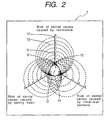
- Fig. 2 is an explanatory view showing one embodiment of a chart sheet of a risk check sheet for dental caries according to the present invention
- Fig. 3 is an explanatory view showing one example in which an entry is made in the list sheet as shown in Fig. 1
- Fig. 4 is an explanatory view showing one example in which the results of the list sheet as shown in Fig. 1 are entered in the chart sheet as shown in Fig. 2.
- a numeral 1 is a list sheet configuring a one side sheet of the risk check sheet for dental caries according to the present invention, which is used for numerical the risks of dental caries of a subject.
- This list sheet 1 expresses three kinds of risk items 2, as constituted of a risk 2a of dental caries caused by a resistance, a risk 2b of dental caries caused by intra-oral bacteria, and a risk 2c of dental caries caused by eating habit on a basis of the three factors proposed by Keyes as cited above.
- Each of these three kinds of the risk items 2 has a plurality of check items 3, as to each of which one from a plurality of selection items 4 having different ranks is alternatively selected, the selection items being ranked and given with an evaluation scores depending on the easiness to cause a dental caries.
- the check item 3 with respect to the risk 2a of dental caries caused by a resistance is constituted of at least two kinds selected from the group consisting of the number of decayed teeth at present, the number of filled teeth in the past, the number of missing teeth, the status of a set of teeth, the status of gingiva, the amount of saliva, the buffer capacity of saliva, the age, the presence and kind of systemic disease, the presence of pregnancy, and the presence and kind of a drug administered.
- a check item 3 related to the easiness to cause a dental caries by the state of intra-oral bacteria of a subject. It is preferred that the check item 3 with respect to the risk 2b of dental caries caused by intra-oral bacteria is constituted of at least two kinds selected from the group consisting of the amount of dental plaque, the level of Mutans streptococci, the level of Sorbrinus streptococci, and the level of Lactobacilli. In the embodiment shown in Fig. 1, selected are two items consisting of the amount (level) of bacteria in a mouth (not particularly limiting the kind of bacteria) and the deposited amount of a dental plaque.
- a check item 3 related to the easiness to cause dental caries by the eating habit of a subject. It is preferred that the check item 3 with respect to the risk 2c of dental caries caused by eating habit is constituted of at least two kinds selected from the group consisting of the number of eating and drinking per day, the frequency of eating between meals per day, and the contents of eating between meals. In the embodiment shown in Fig. 1, selected are three items consisting of the frequency of eating between meals and the contents of eating between meals (foods and drinks).
- the list sheet 1 is provided with an entry column 5 of selective evaluation score for entering an evaluation score given in the selection item 4 alternatively selected from the selection items 4 as to each check item 3 for each risk item 2 as well as with an entry column 6 of total score of the selective evaluation score.
- a natural number is employed as the selective evaluation score.
- a method for obtaining such an evaluation score for example, when the "number of decayed teeth at present" is concerned, there are a method in which the number of decayed teeth at present is answered directly in terms of a numerical value and a method in which ranges such as "0", "1 to 3", "4 to 7", etc. are prepared in advance.
- the evaluation score may be entered as "1".
- a method for entering the answer to each of the selection items 4 there are a method in which a numerical value is entered directly in the entry column 5 of selective evaluation score, as shown in Fig. 1 and a method in which circles are given on lines into which numerical values are entered as seen in usual questionnaires or check sheets, etc. Further, it is convenient to provide an entry column 6a of total risk such that the evaluation scores given in all of the risk items 2 are expressed together, whereby the total risk of dental caries can be confirmed.
- the answers are summed up for each risk item 2 based on the evaluation score given in each selection item 4 to make data.
- the method for summing up the answers is made based on the total score of the respective evaluation scores depending on the contents of the check items 3 for each risk item 2. Accordingly, it is convenient that the entry column 6 of total score of the selective evaluation scores is provided to display the data having been summed up. Further, in order to give an importance to the respective evaluation score depending on the contents of the risk item 2 or the check item 3, an arbitrary coefficient may be multiplied.
- the ultimate evaluation score of each risk item 2 is a natural number from which a fraction has been treated. In the embodiment shown in Fig. 1, since the evaluation score in each of the check items 3 is designated as 0, 1 and 2, respectively, no fraction is formed in the total score of the selective evaluation scores.
- the risk sheet 1 is entered in the following manner. That is, in the entry column of selective evaluation score of each of the selection items of the risk 2a caused by a resistance, entered are the evaluation scores "2", “2", “2" and “2", and in the entry column 6 of total score, entered is "8"; in the entry column of selective evaluation score of each of the selection items of the risk 2b caused by intra-oral bacteria, entered are the evaluation scores "0" and "1", and in the entry column 6 of total score, entered is "1"; in the entry column of selective evaluation score of each of the selection items of the risk 2c caused by eating habit, entered are the evaluation scores "1", "1" and "2", and in the entry column 6 of total score, entered is "4"; and in the entry column 6a of total risk, entered is "13" (i.e., 8 + 1 + 4).
- the chart sheet 7 is provided with a standard circle 8 having a predetermined radius and centering around an origin 0; standard lines 9 consisting of three lines radially provided with a distance of 120 degree, centering around the origin 0, each starting at least from the standard circle 8, and allocated for the three kinds of risks of dental caries consisting of the risk 2a of dental caries caused by a resistance, the risk 2b of dental caries caused by intra-oral bacteria, and the risk 2c of dental caries caused by eating habit; and indicator circles 13, each of which is drawn such that, when a point of intersection between each standard line 9 and the standard circle 8 is defined as a front point 10 of intersection, whereas a position symmetrical to the front point 10 of intersection on the standard circle 8 is defined as a rear point 11 of intersection, a length between each of points obtained by dividing equally a length from the front point 10 of intersection to a maximum point 12 positioned in a predetermined distance longer than the radius of the standard circle 8 on the standard line 9 by a maximum value of the sum of evaluation scores in each
- the scales of the three kinds of risks of dental caries as described above i.e., the risk 2a of dental caries caused by a resistance, the risk 2b of dental caries caused by intra-oral bacteria, and the risk 2c of dental caries caused by eating habit, are "8", "4" and "6", respectively in terms of the maximum sum of evaluation scores.
- the indicator circle 13 is drawn by a tint line as compared with a usual line and/or a broken line, as in the embodiment shown in Fig. 2. Since the standard circle 8 expresses a minimum value of the data, the standard circle 8 is preferably drawn by a solid line with a usual shade. While it is preferred that each of the standard lines 9 starts from the standard circle 8, and no line is present within the standard circle 8, each of the standard lines 9 may start from the origin 0 within the standard circle 8. Further, it is preferred that in the indicator circles 13, its outer peripheral lines or a plane surrounded by a maximum circle thereof is displayed with a different color corresponding to each of the risk items 2.
- a circle corresponding to the total evaluation score obtained from the evaluation scores having been summed up for each risk item 2 as numerical by the risk sheet 1 is drawn along the indicator circle 13.
- a circle corresponding to the total evaluation score obtained from the evaluation scores having been summed up for each risk item 2 is drawn along the indicator circle 13 in such a way, a degree of the risk of dental caries in each of the risk items 2 becomes definite from the size of the circle. Further, it is possible to grasp the relation among the risks of dental caries from the size of a portion where the three circles overlap.
- the chart sheet 7 is entered in the following manner. That is, since the total evaluation score of the risk 2a of dental caries caused by a resistance, the total evaluation score of the risk 2b caused by intra-oral bacteria, and the total evaluation score of the risk 2c caused by eating habit are "8", "1", and "4", respectively, circles corresponding to the respective evaluation scores of "8", "1", and "4" are entered along the indicator circles 13.
- the risk check sheet for dental caries according to the present invention, even a patient who has been judged to have a high risk of dental caries can be largely suppressed with respect to the risk of dental caries. In contrast, even for a patient who has been judged to have a low risk of dental caries, when the patient is careless, the risk of dental caries will possibly increase. Accordingly, in addition to the above-described three kinds of risks of dental caries, that is, the risk 2a of dental caries caused by a resistance, the risk 2b of dental caries caused by intra-oral bacteria, and the risk 2c of dental caries caused by eating habit, a check item regarding the self management or the prophylactic factors of dental caries may be provided.
- the check item regarding the prophylactic factors of dental caries is constituted of at least two kinds selected from the group consisting of the frequency of tooth brushing, the use of a dental floss, the use of an interdental brush, the use of a fluoride-incorporated tooth paste, the experience of local application of a fluoride solution, the experience of professional tooth cleaning, the experience of filling of pit and fissure, the frequency of going to dental clinic, and the habit of chewing gum.
- Each of the check items is provided with a plurality of selection items having different ranks to be alternatively selected, and data of the prophylactic factor of dental caries from the evaluation scores given in the selection items are summed up and numericalized. For example, when the resulting value is added to the value of the total risk, or if the case may be, is reduced therefrom, it is possible to comprehensively grasp the risk of dental caries and the prophylactic factor of dental caries.
- the check item regarding the prophylactic factor of dental caries is provided in such a way to check the prophylactic factor of dental caries caused by the self management or the prophylactic treatment, a technician for dental care can effectively use the risk check sheet for dental caries in planning for the treatment or giving an advice, and hence, such is preferred.
- the risk sheet 1 and the chart sheet 7 constituting the risk check sheet for dental caries according to the present invention are generally printed on papers and provided. But, it is also possible to take them in a soft ware as a computer application system and use by displaying them on a screen of the computer, or directly use or download them from the Internet. Further, while the list sheet 1 and the chart sheet 7 may be used simultaneously on paper or a screen, needless to say, they can be used individually because the check contents often include private items.
- the risk check sheet for dental caries is a risk check sheet for dental caries, which enables a technician for dental care to grasp the risk of dental caries of a patient by confirming the intra-oral state or life habit of the patient from the diagnosis results obtained through inquiries or inspections or by utilizing instruments, to comprehensively show such risk to the patient in a way that the patient per se can easily understand the cause and risk of dental caries and to give the patient a motivation for the maintenance and continuation of oral care. Accordingly, the present invention is greatly valuable in contributing to the dental remedy.
Landscapes
- Health & Medical Sciences (AREA)
- Life Sciences & Earth Sciences (AREA)
- Heart & Thoracic Surgery (AREA)
- Medical Informatics (AREA)
- Veterinary Medicine (AREA)
- Public Health (AREA)
- Physics & Mathematics (AREA)
- General Health & Medical Sciences (AREA)
- Biophysics (AREA)
- Pathology (AREA)
- Engineering & Computer Science (AREA)
- Molecular Biology (AREA)
- Animal Behavior & Ethology (AREA)
- Surgery (AREA)
- Biomedical Technology (AREA)
- Physical Education & Sports Medicine (AREA)
- Oral & Maxillofacial Surgery (AREA)
- Dentistry (AREA)
- Rheumatology (AREA)
- Orthopedic Medicine & Surgery (AREA)
- Dental Tools And Instruments Or Auxiliary Dental Instruments (AREA)
- Investigating Or Analysing Biological Materials (AREA)
- Cosmetics (AREA)
- Dental Preparations (AREA)
Abstract
Description
- The present invention relates to a risk check sheet for dental caries, which enables a technician for dental care to grasp the risk of dental caries of a patient and to show its state to the patient in an easily understandable way.
- Document WO-A-0 074 559 discloses a risk check sheet according to the preample of
claim 1. - In order to consider a measure for inhibiting the progress of "dental caries" as a condition-pluricausal disease caused by the intra-oral state or life habit and to plan for treating it, a movement in which a technician for dental care confirms the intra-oral state and life habit of a patient through inquiries or inspections and grasps "whether easily or hardly to be attacked by the dental caries", that is, "a risk of dental caries", of the patient per se starts to occur. To make the patient per se understand the risk of dental caries is necessary in giving a motivation against the maintenance and continuation of oral care.
- For example, the caries risk radar chart as disclosed in Clinical Cariology (published by Ishiyaku Publishers, Inc.) is concerned with a method in which among the results obtained by checking the amount of dental plaque, the level of Mutans streptococci, the level of Lactobacilli, the number of eating and drinking per day, the amount and quality of saliva, the buffer capacity of saliva, DMFT (an index showing the caries experience of permanent teeth, which is expressed by a value obtained by dividing the sum of caries-experienced teeth of permanent teeth of a subject by the number of subjects), the shape of fissure in enamel, the fluoride mouth wash, the fluoride application, the family make-up, the level of bacteria of the family, and the like by using a "Caries Risk Questionnaire", the eight major factors, i.e., the buffer capacity of saliva, the level of Mutans stroptococci, the level of Lactobacilli, the number of eating and drinking, the accumulated amount of dental plaque, the use status of fluoride, the DMFT, and the amount and quality of saliva, are selected as parameters related to the risk of dental caries and plotted in the radar chart, and the risk of dental caries is confirmed from the size and shape of a graph thus drawn. Accordingly, the risk of dental caries can be simply shown in a visual form. However, not only the number of the parameters related to the risk of dental caries is high and the procedures are complicated, but also each of the parameters uses technical terminologies, which is difficult for a general patient to understand. Therefore, it has been difficult to make the patient per se understand the risk of dental caries and give a motivation for the maintenance and continuation of oral care.
- The invention is aimed to overcome the above-described problems of the conventional art and to provide a risk check sheet for dental caries, which enables a technician for dental care to grasp the risk of dental caries of a patient by confirming the intra-oral state and life habit, particularly the eating habit, of the patient from the diagnosis results obtained through inquiries or inspections or by utilizing instruments, to comprehensively show its state to the patient in an easily understandable way, and to give the patient a motivation for the maintenance and continuation of oral care.
- We, the present inventors made extensive and intensive investigations to achieve the above-described aim. As a result, they paid an attention to the point that, taking into account the matter that a dental caries is generated only when all of three factors, i.e., the quality of teeth and saliva of a patient, the intra-oral bacterium (dental plaque) and the foods, are under certain conditions (see Keyes PH: Recent advances in dental caries research, bacteriology, bacteriological findings, and biological implications, Int Dent J, 12, 443 (1962)), and considering the above reversely from the standpoint on how to inhibit the dental caries, if any of the foregoing conditions could be improved, the dental caries would not be generated. Finally, it has been found that when the parameters considered hitherto to relate to the risk for the generation of dental caries, been as disclosed in the above-cited "Clinical Cariology", are summarized into the above-described three factors and numerical together, and each of the numerical risks of dental caries is displayed in a specific method, a technician for dental care can make a patient comprehensively understand the risk of dental caries and give the patient a motivation for the maintenance and continuation of oral care, leading to accomplishment of the invention.
- Specifically, the invention relates to a risk check sheet for dental caries that is used for judging the risk of dental caries, which comprises a list sheet provided with three kinds of risk items consisting of a risk of dental caries caused by a resistance, a risk of dental caries caused by intra-oral bacteria, and a risk of dental caries caused by eating habit, each having a plurality of check items, as to each of which one from a plurality of selection items having different ranks is to be alternatively selected, and numerical data of the risks of dental caries by summing up evaluation scores given in the selection items for each risk item; and a chart sheet provided with a standard circle having a predetermined radius and centering around an origin, standard lines consisting of three lines radially provided with a distance of 120 degree, centering around the origin, each starting at least from the standard circle, and allocated for the three kinds of risks of dental caries, and indicator circles, each of which is drawn such that, when a point of intersection between each standard line and the standard circle is defined as a front point of intersection, whereas a position symmetrical to the front point of intersection on the standard circle is defined as a rear point of intersection, a length between each of points obtained by dividing equally a length from the front point of intersection to a maximum point positioned in a predetermined distance longer than the radius of the standard circle on the standard line by a maximum value of the sum of evaluation scores in each corresponding risk item and the rear point of intersection is a diameter.
- Thus, in the risk check sheet for dental caries having such a configuration, it has also been found to be preferred that the check item with respect to the risk of dental caries caused by a resistance is constituted of at least two kinds selected from the group consisting of the number of decayed teeth at present, the number of filled teeth in the past, the number of missing teeth, the status of a set of teeth, the status of gingiva, the amount of saliva, the buffer capacity of saliva, the age, the presence and kind of systemic disease, the presence of pregnancy, and the presence and kind of a drug administered; the check item with respect to the risk of dental caries caused by intra-oral bacteria is constituted of at least two kinds selected from the group consisting of the amount of dental plaque, the level of Mutans streptococci, the level of Sorbrinus streptococci, and the level of Lactobacilli; and the check item with respect to the risk of dental caries caused by eating habit is constituted of at least two kinds selected from the group consisting of the number of eating and drinking per day, the frequency of eating between meals per day, and the contents of eating between meals.
-
- Fig. 1 is an explanatory view showing one embodiment of a list sheet of a risk check sheet for dental caries according to the present invention.
- Fig. 2 is an explanatory view showing one embodiment of a chart sheet of a risk check sheet for dental caries according to the present invention.
- Fig. 3 is an explanatory view showing one example in which an entry is made in the list sheet as shown in Fig. 1.
- Fig. 4 is an explanatory view showing one example in which the results of the list sheet as shown in Fig. 1 are entered in the chart sheet as shown in Fig. 2.
- The risk check sheet for dental caries according to the present invention will be hereunder described in detail with reference to the accompanying drawings.
- Fig. 1 is an explanatory view showing one embodiment of a list sheet of a risk check sheet for dental caries according to the present invention; Fig. 2 is an explanatory view showing one embodiment of a chart sheet of a risk check sheet for dental caries according to the present invention; Fig. 3 is an explanatory view showing one example in which an entry is made in the list sheet as shown in Fig. 1; and Fig. 4 is an explanatory view showing one example in which the results of the list sheet as shown in Fig. 1 are entered in the chart sheet as shown in Fig. 2.
- In the drawings, a
numeral 1 is a list sheet configuring a one side sheet of the risk check sheet for dental caries according to the present invention, which is used for numerical the risks of dental caries of a subject. Thislist sheet 1 expresses three kinds ofrisk items 2, as constituted of arisk 2a of dental caries caused by a resistance, arisk 2b of dental caries caused by intra-oral bacteria, and arisk 2c of dental caries caused by eating habit on a basis of the three factors proposed by Keyes as cited above. Each of these three kinds of therisk items 2 has a plurality ofcheck items 3, as to each of which one from a plurality ofselection items 4 having different ranks is alternatively selected, the selection items being ranked and given with an evaluation scores depending on the easiness to cause a dental caries. Thus, it is possible to numerical data of the risk of dental caries by summing up the evaluation scores given in theselection items 4 for eachrisk item 2. - In the
risk 2a of dental caries caused by a resistance, expressed is acheck item 3 related to the easiness to cause a dental caries by a physical strength and immunity of a subject. It is preferred that thecheck item 3 with respect to therisk 2a of dental caries caused by a resistance is constituted of at least two kinds selected from the group consisting of the number of decayed teeth at present, the number of filled teeth in the past, the number of missing teeth, the status of a set of teeth, the status of gingiva, the amount of saliva, the buffer capacity of saliva, the age, the presence and kind of systemic disease, the presence of pregnancy, and the presence and kind of a drug administered. In the embodiment shown in Fig. 1, selected are four items consisting of the status of decayed teeth at present, the circumstance of a set of teeth and gingiva, the amount of saliva, and the buffer capacity of saliva. - In the
risk 2b of dental caries caused by intra-oral bacteria, expressed is acheck item 3 related to the easiness to cause a dental caries by the state of intra-oral bacteria of a subject. It is preferred that thecheck item 3 with respect to therisk 2b of dental caries caused by intra-oral bacteria is constituted of at least two kinds selected from the group consisting of the amount of dental plaque, the level of Mutans streptococci, the level of Sorbrinus streptococci, and the level of Lactobacilli. In the embodiment shown in Fig. 1, selected are two items consisting of the amount (level) of bacteria in a mouth (not particularly limiting the kind of bacteria) and the deposited amount of a dental plaque. - In the
risk 2c of dental caries caused by eating habit, expressed is acheck item 3 related to the easiness to cause dental caries by the eating habit of a subject. It is preferred that thecheck item 3 with respect to therisk 2c of dental caries caused by eating habit is constituted of at least two kinds selected from the group consisting of the number of eating and drinking per day, the frequency of eating between meals per day, and the contents of eating between meals. In the embodiment shown in Fig. 1, selected are three items consisting of the frequency of eating between meals and the contents of eating between meals (foods and drinks). - The expressions used in the
risk item 2 and thecheck item 3 of thelist sheet 1 and those used in achart sheet 7 as described later are not limited to those described above. For example, as a matter of course, the expression "number of decayed teeth at present" may be replaced by one having clearly the same meanings such as "number of currently decayed teeth". Also, it is preferred that every risk item is classified by coloring. - Preferably, the
list sheet 1 is provided with anentry column 5 of selective evaluation score for entering an evaluation score given in theselection item 4 alternatively selected from theselection items 4 as to eachcheck item 3 for eachrisk item 2 as well as with anentry column 6 of total score of the selective evaluation score. In the embodiment shown in Fig. 1, a natural number is employed as the selective evaluation score. As a method for obtaining such an evaluation score, for example, when the "number of decayed teeth at present" is concerned, there are a method in which the number of decayed teeth at present is answered directly in terms of a numerical value and a method in which ranges such as "0", "1 to 3", "4 to 7", etc. are prepared in advance. When the number of decayed teeth at present based on the answer is, for example, in the range of 1 to 3, the evaluation score may be entered as "1". As a method for entering the answer to each of theselection items 4, there are a method in which a numerical value is entered directly in theentry column 5 of selective evaluation score, as shown in Fig. 1 and a method in which circles are given on lines into which numerical values are entered as seen in usual questionnaires or check sheets, etc. Further, it is convenient to provide anentry column 6a of total risk such that the evaluation scores given in all of therisk items 2 are expressed together, whereby the total risk of dental caries can be confirmed. - When the answer to each of the
selection items 4 is obtained, the answers are summed up for eachrisk item 2 based on the evaluation score given in eachselection item 4 to make data. The method for summing up the answers is made based on the total score of the respective evaluation scores depending on the contents of thecheck items 3 for eachrisk item 2. Accordingly, it is convenient that theentry column 6 of total score of the selective evaluation scores is provided to display the data having been summed up. Further, in order to give an importance to the respective evaluation score depending on the contents of therisk item 2 or thecheck item 3, an arbitrary coefficient may be multiplied. Moreover, in order to entry the data in thechart sheet 7 as described later, it is preferred that the ultimate evaluation score of eachrisk item 2 is a natural number from which a fraction has been treated. In the embodiment shown in Fig. 1, since the evaluation score in each of thecheck items 3 is designated as 0, 1 and 2, respectively, no fraction is formed in the total score of the selective evaluation scores. - For example, as in an example shown in Fig. 3, the
risk sheet 1 is entered in the following manner. That is, in the entry column of selective evaluation score of each of the selection items of therisk 2a caused by a resistance, entered are the evaluation scores "2", "2", "2" and "2", and in theentry column 6 of total score, entered is "8"; in the entry column of selective evaluation score of each of the selection items of therisk 2b caused by intra-oral bacteria, entered are the evaluation scores "0" and "1", and in theentry column 6 of total score, entered is "1"; in the entry column of selective evaluation score of each of the selection items of therisk 2c caused by eating habit, entered are the evaluation scores "1", "1" and "2", and in theentry column 6 of total score, entered is "4"; and in theentry column 6a of total risk, entered is "13" (i.e., 8 + 1 + 4). - Thus, a circle corresponding to the total evaluation score obtained from the evaluation scores having been summed up for each
risk item 2 as numerical by therisk sheet 1 is drawn on thechart sheet 7. From the size of this circle, the relation among therespective risk items 2 is grasped, thereby making the risk of dental caries clear. Next, thechart sheet 7 will be described. - The
chart sheet 7 is provided with astandard circle 8 having a predetermined radius and centering around anorigin 0;standard lines 9 consisting of three lines radially provided with a distance of 120 degree, centering around theorigin 0, each starting at least from thestandard circle 8, and allocated for the three kinds of risks of dental caries consisting of therisk 2a of dental caries caused by a resistance, therisk 2b of dental caries caused by intra-oral bacteria, and therisk 2c of dental caries caused by eating habit; andindicator circles 13, each of which is drawn such that, when a point of intersection between eachstandard line 9 and thestandard circle 8 is defined as afront point 10 of intersection, whereas a position symmetrical to thefront point 10 of intersection on thestandard circle 8 is defined as arear point 11 of intersection, a length between each of points obtained by dividing equally a length from thefront point 10 of intersection to amaximum point 12 positioned in a predetermined distance longer than the radius of thestandard circle 8 on thestandard line 9 by a maximum value of the sum of evaluation scores in eachcorresponding risk item 2 and therear point 11 of intersection is a diameter. - In the embodiment shown in Fig. 2, the scales of the three kinds of risks of dental caries as described above, i.e., the
risk 2a of dental caries caused by a resistance, therisk 2b of dental caries caused by intra-oral bacteria, and therisk 2c of dental caries caused by eating habit, are "8", "4" and "6", respectively in terms of the maximum sum of evaluation scores. Accordingly, there are provided theindicator circles 13, each of which is drawn such that a length between each of points obtained by dividing equally a length from thefront point 10 of intersection, which is a point of intersection between eachstandard line 9 and thestandard circle 8, to themaximum point 12 by each maximum value (i.e., "8", "4" and "6") of the sum of evaluation scores in eachcorresponding risk item 2 and therear point 11 of intersection is a diameter. - Preferably, the
indicator circle 13 is drawn by a tint line as compared with a usual line and/or a broken line, as in the embodiment shown in Fig. 2. Since thestandard circle 8 expresses a minimum value of the data, thestandard circle 8 is preferably drawn by a solid line with a usual shade. While it is preferred that each of thestandard lines 9 starts from thestandard circle 8, and no line is present within thestandard circle 8, each of thestandard lines 9 may start from theorigin 0 within thestandard circle 8. Further, it is preferred that in the indicator circles 13, its outer peripheral lines or a plane surrounded by a maximum circle thereof is displayed with a different color corresponding to each of therisk items 2. - On the
chart sheet 7, a circle corresponding to the total evaluation score obtained from the evaluation scores having been summed up for eachrisk item 2 as numerical by therisk sheet 1 is drawn along theindicator circle 13. When a circle corresponding to the total evaluation score obtained from the evaluation scores having been summed up for eachrisk item 2 is drawn along theindicator circle 13 in such a way, a degree of the risk of dental caries in each of therisk items 2 becomes definite from the size of the circle. Further, it is possible to grasp the relation among the risks of dental caries from the size of a portion where the three circles overlap. - In the case of the example shown in Fig. 3, as in an example shown in Fig. 4, the
chart sheet 7 is entered in the following manner. That is, since the total evaluation score of therisk 2a of dental caries caused by a resistance, the total evaluation score of therisk 2b caused by intra-oral bacteria, and the total evaluation score of therisk 2c caused by eating habit are "8", "1", and "4", respectively, circles corresponding to the respective evaluation scores of "8", "1", and "4" are entered along the indicator circles 13. In this situation, since therisk 2a of dental caries caused by a resistance is the largest, a technician for dental care will give a patient an advice such as the necessity for treating the dental caries immediately; and since therisk 2c of dental caries caused by eating habit is next large, a technician for dental care will give a patient an advice such that the intake of sweet drinks must be reduced. - In the risk check sheet for dental caries according to the present invention, even a patient who has been judged to have a high risk of dental caries can be largely suppressed with respect to the risk of dental caries. In contrast, even for a patient who has been judged to have a low risk of dental caries, when the patient is careless, the risk of dental caries will possibly increase. Accordingly, in addition to the above-described three kinds of risks of dental caries, that is, the
risk 2a of dental caries caused by a resistance, therisk 2b of dental caries caused by intra-oral bacteria, and therisk 2c of dental caries caused by eating habit, a check item regarding the self management or the prophylactic factors of dental caries may be provided. Preferably, the check item regarding the prophylactic factors of dental caries is constituted of at least two kinds selected from the group consisting of the frequency of tooth brushing, the use of a dental floss, the use of an interdental brush, the use of a fluoride-incorporated tooth paste, the experience of local application of a fluoride solution, the experience of professional tooth cleaning, the experience of filling of pit and fissure, the frequency of going to dental clinic, and the habit of chewing gum. Each of the check items is provided with a plurality of selection items having different ranks to be alternatively selected, and data of the prophylactic factor of dental caries from the evaluation scores given in the selection items are summed up and numericalized. For example, when the resulting value is added to the value of the total risk, or if the case may be, is reduced therefrom, it is possible to comprehensively grasp the risk of dental caries and the prophylactic factor of dental caries. - When the check item regarding the prophylactic factor of dental caries is provided in such a way to check the prophylactic factor of dental caries caused by the self management or the prophylactic treatment, a technician for dental care can effectively use the risk check sheet for dental caries in planning for the treatment or giving an advice, and hence, such is preferred.
- Incidentally, the
risk sheet 1 and thechart sheet 7 constituting the risk check sheet for dental caries according to the present invention are generally printed on papers and provided. But, it is also possible to take them in a soft ware as a computer application system and use by displaying them on a screen of the computer, or directly use or download them from the Internet. Further, while thelist sheet 1 and thechart sheet 7 may be used simultaneously on paper or a screen, needless to say, they can be used individually because the check contents often include private items. - As described above in detail, the risk check sheet for dental caries according to the present invention is a risk check sheet for dental caries, which enables a technician for dental care to grasp the risk of dental caries of a patient by confirming the intra-oral state or life habit of the patient from the diagnosis results obtained through inquiries or inspections or by utilizing instruments, to comprehensively show such risk to the patient in a way that the patient per se can easily understand the cause and risk of dental caries and to give the patient a motivation for the maintenance and continuation of oral care. Accordingly, the present invention is greatly valuable in contributing to the dental remedy.
- While the invention has been described in detail and with reference to specific embodiments thereof, it will be apparent to one skilled in the art that various changes and modifications can be made therein without departing from the scope thereof as defined in the appended claims.
Claims (2)
- A risk check sheet for dental caries that is used for judging the risk of dental caries, which comprises:a list sheet (1) provided with three kinds of risk items (2) consisting of a risk of dental caries caused by a resistance, a risk of dental caries caused by intra-oral bacteria, and a risk of dental caries caused by eating habit, each having a plurality of check items (3), as to each of which one from a plurality of selection items having different ranks is to be alternatively selected, and numerical data of the risks of dental caries by summing up evaluation scores given in the selection items for each risk item; characterized bya chart sheet (7) provided with a standard circle (8) having a predetermined radius and centering around an origin, standard lines (9) consisting of three lines radially provided with a distance of 120 degree, centering around the origin, each starting at least from the standard circle, and allocated for the three kinds of risks of dental caries, and indicator circles (13), each of which is drawn such that, when a point of intersection (10) between each standard line and the standard circle is defined as a front point of intersection, whereas a position symmetrical to the front point of intersection on the standard circle is defined as a rear point of intersection (11), a length between each of points obtained by dividing equally a length from the front point of intersection to a maximum point (12) positioned in a predetermined distance longer than the radius of the standard circle on the standard line by a maximum value of the sum of evaluation scores in each corresponding risk item and the rear point of intersection is a diameter.
- The risk check sheet for dental caries according to claim 1, wherein:the check item with respect to the risk of dental caries caused by a resistance is constituted of at least two kinds selected from the group consisting of the number of decayed teeth at present, the number of filled teeth in the past, the number of missing teeth, the status of a set of teeth, the status of gingiva, the amount of saliva, the buffer capacity of saliva, the age, the presence and kind of systemic disease, the presence of pregnancy, and the presence and kind of a drug administered;the check item with respect to the risk of dental caries caused by intra-oral bacteria is constituted of at least two kinds selected from the group consisting of the amount of dental plaque, the level of Mutans streptococci, the level of Sorbrinus, and the level of Lactobacilli; andthe check item with respect to the risk of dental caries caused by eating habit is constituted of at least two kinds selected from the group consisting of the number of eating and drinking per day, the frequency of eating between meals per day, and the contents of eating between meals.
Applications Claiming Priority (2)
| Application Number | Priority Date | Filing Date | Title |
|---|---|---|---|
| JP2001209606A JP2003025769A (en) | 2001-07-10 | 2001-07-10 | Decayed tooth risk check sheet |
| JP2001209606 | 2001-07-10 |
Publications (2)
| Publication Number | Publication Date |
|---|---|
| EP1275339A1 EP1275339A1 (en) | 2003-01-15 |
| EP1275339B1 true EP1275339B1 (en) | 2005-09-21 |
Family
ID=19045233
Family Applications (1)
| Application Number | Title | Priority Date | Filing Date |
|---|---|---|---|
| EP02014845A Expired - Lifetime EP1275339B1 (en) | 2001-07-10 | 2002-07-03 | Risk check sheet for dental caries |
Country Status (6)
| Country | Link |
|---|---|
| US (2) | US20030011191A1 (en) |
| EP (1) | EP1275339B1 (en) |
| JP (1) | JP2003025769A (en) |
| AT (1) | ATE304810T1 (en) |
| AU (1) | AU5064802A (en) |
| DE (1) | DE60206218T2 (en) |
Families Citing this family (5)
| Publication number | Priority date | Publication date | Assignee | Title |
|---|---|---|---|---|
| US7324661B2 (en) | 2004-04-30 | 2008-01-29 | Colgate-Palmolive Company | Computer-implemented system and method for automated and highly accurate plaque analysis, reporting, and visualization |
| CA2754166C (en) * | 2009-03-05 | 2016-08-09 | Quantum Dental Technologies Inc. | Method of assessing oral health risk |
| JP5188547B2 (en) * | 2010-07-30 | 2013-04-24 | 中国電力株式会社 | Housing performance evaluation check sheet |
| US9833198B2 (en) * | 2015-02-04 | 2017-12-05 | Francis J. Stapleton | System and method for obtaining an objective dental health analysis |
| WO2021152505A1 (en) * | 2020-01-30 | 2021-08-05 | 3M Innovative Properties Company | Article and method to treat interproximal dental caries |
Family Cites Families (13)
| Publication number | Priority date | Publication date | Assignee | Title |
|---|---|---|---|---|
| US4464122A (en) * | 1982-12-02 | 1984-08-07 | Berkeley Fuller | Health potential summary and incentive system |
| US4869531A (en) * | 1988-04-01 | 1989-09-26 | Rees Michael K | Apparatus and method for documenting physical examinations |
| US5123676A (en) * | 1989-03-06 | 1992-06-23 | Donnelly Donald D | Records management apparatus for constructing and maintaining a file folder based document filing and retrieval system |
| US5143405A (en) * | 1990-04-16 | 1992-09-01 | Yousef Daneshvar | Bearer medical information booklet |
| US5324077A (en) * | 1990-12-07 | 1994-06-28 | Kessler Woodrow B | Medical data draft for tracking and evaluating medical treatment |
| US5376532A (en) * | 1992-09-18 | 1994-12-27 | The Procter & Gamble Company | Methods for evaluating risk of developing periodontitis |
| US5758096A (en) * | 1995-08-09 | 1998-05-26 | Barsky; Howard | System and method for personalized medication treatment management |
| WO1997050046A2 (en) * | 1996-06-21 | 1997-12-31 | The Oralife Group, Inc. | Assessment, prevention and treatment of oral disease |
| US5720502A (en) * | 1996-11-08 | 1998-02-24 | Cain; John R. | Pain location and intensity communication apparatus and method |
| US5984368A (en) * | 1996-11-08 | 1999-11-16 | Quality Medical Communications, Inc. | Patient condition and pain location and intensity communication apparatus and method |
| CA2235880A1 (en) * | 1997-05-09 | 1998-11-09 | Richard Barry Fleisher | Star plots of analyte values over time |
| WO2000074559A1 (en) * | 1999-06-04 | 2000-12-14 | Sunstar Inc. | Risk reduction table, method for creating the same, risk care set including risk reduction table, and risk care business system |
| WO2002091279A2 (en) * | 2001-05-03 | 2002-11-14 | University Of Florida | Method and system for recording carious lesions |
-
2001
- 2001-07-10 JP JP2001209606A patent/JP2003025769A/en active Pending
-
2002
- 2002-06-14 US US10/170,442 patent/US20030011191A1/en not_active Abandoned
- 2002-06-26 AU AU50648/02A patent/AU5064802A/en not_active Abandoned
- 2002-07-03 AT AT02014845T patent/ATE304810T1/en not_active IP Right Cessation
- 2002-07-03 EP EP02014845A patent/EP1275339B1/en not_active Expired - Lifetime
- 2002-07-03 DE DE60206218T patent/DE60206218T2/en not_active Expired - Fee Related
-
2004
- 2004-07-16 US US10/892,090 patent/US20040259058A1/en not_active Abandoned
Also Published As
| Publication number | Publication date |
|---|---|
| AU5064802A (en) | 2003-01-16 |
| EP1275339A1 (en) | 2003-01-15 |
| US20030011191A1 (en) | 2003-01-16 |
| DE60206218T2 (en) | 2006-06-22 |
| DE60206218D1 (en) | 2005-10-27 |
| ATE304810T1 (en) | 2005-10-15 |
| JP2003025769A (en) | 2003-01-29 |
| US20040259058A1 (en) | 2004-12-23 |
Similar Documents
| Publication | Publication Date | Title |
|---|---|---|
| Migliorati et al. | Efficacy of professional hygiene and prophylaxis on preventing plaque increase in orthodontic patients with multibracket appliances: a systematic review | |
| Arici et al. | Comparison of different toothbrushing protocols in poor-toothbrushing orthodontic patients | |
| Barbakow et al. | The ‘Lightspeed’preparation technique evaluated by Swiss clinicians after attending continuing education courses | |
| Snider et al. | Effectiveness of AI‐driven remote monitoring technology in improving oral hygiene during orthodontic treatment | |
| Wendt et al. | Early dental caries risk assessment and prevention in pre-school children: evaluation of a new strategy for dental care in a field study | |
| Brägger et al. | Progression of periodontal disease in patients with mild to moderate adult periodontitis | |
| Karabekiroğlu et al. | Effectiveness of different preventive programs in cariogram parameters of young adults at high caries risk | |
| Neely et al. | A familial pattern of multiple idiopathic cervical root resorption in a father and son: a 22‐year follow‐up | |
| EP1275339A1 (en) | Risk check sheet for dental caries | |
| Barzotto et al. | Clinical decision making for diagnosis and treatment of dental enamel injuries | |
| Baskirt et al. | Dental and periodontal health in children with hemophilia | |
| Cunha et al. | Effect of a single‐tufted toothbrush on the control of dental biofilm in orthodontic patients: A randomized clinical trial | |
| Lee et al. | Oral disease beliefs, behaviors, and health status of Korean‐Americans | |
| Nagy et al. | Microbiological evaluation of LOCATOR® Legacy attachments: A cross‐sectional clinical study | |
| Gorduysus | Endodontics in geriatric patient | |
| Thakkar et al. | CRAFT-A proposed framework for caries risk assessment in Indian children | |
| CA2375185C (en) | Risk improvement table, method of creating the same, risk care set including the risk improvement table, and risk care business system | |
| US20050112527A1 (en) | Method and system for periodontal charting | |
| Biofilm | DENTAL DEPOSITS | |
| Alampur et al. | Comparison between Subjective and Colorimetric Probe Technique in Grading Interdental Embrasure Spaces in Esthetic Zone | |
| Dewi et al. | Early Childhood Caries: Comprehensive Action for the Quality of Life of Children | |
| Avery et al. | Top tips for preventative dentistry in primary care | |
| Alade et al. | Assessment of Knowledge of the Relationship between Periodontal Disease and Systemic Disease among Dental Students and Its Impact on Oral Hygiene Practices | |
| Gadbury-Amyot et al. | SECTION IV Critical Thinking in Dental Hygiene Practice | |
| Rai et al. | Evaluation of orthodontic tooth brush designs among patients with fixed orthodontic appliances |
Legal Events
| Date | Code | Title | Description |
|---|---|---|---|
| PUAI | Public reference made under article 153(3) epc to a published international application that has entered the european phase |
Free format text: ORIGINAL CODE: 0009012 |
|
| AK | Designated contracting states |
Kind code of ref document: A1 Designated state(s): AT BE BG CH CY CZ DE DK EE ES FI FR GB GR IE IT LI LU MC NL PT SE SK TR |
|
| AX | Request for extension of the european patent |
Free format text: AL;LT;LV;MK;RO;SI |
|
| 17P | Request for examination filed |
Effective date: 20030227 |
|
| AKX | Designation fees paid |
Designated state(s): AT BE BG CH CY CZ DE DK EE ES FI FR GB GR IE IT LI LU MC NL PT SE SK TR |
|
| GRAP | Despatch of communication of intention to grant a patent |
Free format text: ORIGINAL CODE: EPIDOSNIGR1 |
|
| GRAS | Grant fee paid |
Free format text: ORIGINAL CODE: EPIDOSNIGR3 |
|
| GRAA | (expected) grant |
Free format text: ORIGINAL CODE: 0009210 |
|
| AK | Designated contracting states |
Kind code of ref document: B1 Designated state(s): AT BE BG CH CY CZ DE DK EE ES FI FR GB GR IE IT LI LU MC NL PT SE SK TR |
|
| PG25 | Lapsed in a contracting state [announced via postgrant information from national office to epo] |
Ref country code: IT Free format text: LAPSE BECAUSE OF FAILURE TO SUBMIT A TRANSLATION OF THE DESCRIPTION OR TO PAY THE FEE WITHIN THE PRESCRIBED TIME-LIMIT;WARNING: LAPSES OF ITALIAN PATENTS WITH EFFECTIVE DATE BEFORE 2007 MAY HAVE OCCURRED AT ANY TIME BEFORE 2007. THE CORRECT EFFECTIVE DATE MAY BE DIFFERENT FROM THE ONE RECORDED. Effective date: 20050921 Ref country code: CH Free format text: LAPSE BECAUSE OF FAILURE TO SUBMIT A TRANSLATION OF THE DESCRIPTION OR TO PAY THE FEE WITHIN THE PRESCRIBED TIME-LIMIT Effective date: 20050921 Ref country code: FI Free format text: LAPSE BECAUSE OF FAILURE TO SUBMIT A TRANSLATION OF THE DESCRIPTION OR TO PAY THE FEE WITHIN THE PRESCRIBED TIME-LIMIT Effective date: 20050921 Ref country code: SK Free format text: LAPSE BECAUSE OF FAILURE TO SUBMIT A TRANSLATION OF THE DESCRIPTION OR TO PAY THE FEE WITHIN THE PRESCRIBED TIME-LIMIT Effective date: 20050921 Ref country code: CZ Free format text: LAPSE BECAUSE OF FAILURE TO SUBMIT A TRANSLATION OF THE DESCRIPTION OR TO PAY THE FEE WITHIN THE PRESCRIBED TIME-LIMIT Effective date: 20050921 Ref country code: AT Free format text: LAPSE BECAUSE OF FAILURE TO SUBMIT A TRANSLATION OF THE DESCRIPTION OR TO PAY THE FEE WITHIN THE PRESCRIBED TIME-LIMIT Effective date: 20050921 Ref country code: NL Free format text: LAPSE BECAUSE OF FAILURE TO SUBMIT A TRANSLATION OF THE DESCRIPTION OR TO PAY THE FEE WITHIN THE PRESCRIBED TIME-LIMIT Effective date: 20050921 Ref country code: LI Free format text: LAPSE BECAUSE OF FAILURE TO SUBMIT A TRANSLATION OF THE DESCRIPTION OR TO PAY THE FEE WITHIN THE PRESCRIBED TIME-LIMIT Effective date: 20050921 |
|
| REG | Reference to a national code |
Ref country code: GB Ref legal event code: FG4D |
|
| REG | Reference to a national code |
Ref country code: CH Ref legal event code: EP |
|
| REG | Reference to a national code |
Ref country code: IE Ref legal event code: FG4D |
|
| REF | Corresponds to: |
Ref document number: 60206218 Country of ref document: DE Date of ref document: 20051027 Kind code of ref document: P |
|
| PG25 | Lapsed in a contracting state [announced via postgrant information from national office to epo] |
Ref country code: BG Free format text: LAPSE BECAUSE OF FAILURE TO SUBMIT A TRANSLATION OF THE DESCRIPTION OR TO PAY THE FEE WITHIN THE PRESCRIBED TIME-LIMIT Effective date: 20051221 Ref country code: DK Free format text: LAPSE BECAUSE OF FAILURE TO SUBMIT A TRANSLATION OF THE DESCRIPTION OR TO PAY THE FEE WITHIN THE PRESCRIBED TIME-LIMIT Effective date: 20051221 Ref country code: GR Free format text: LAPSE BECAUSE OF FAILURE TO SUBMIT A TRANSLATION OF THE DESCRIPTION OR TO PAY THE FEE WITHIN THE PRESCRIBED TIME-LIMIT Effective date: 20051221 Ref country code: SE Free format text: LAPSE BECAUSE OF FAILURE TO SUBMIT A TRANSLATION OF THE DESCRIPTION OR TO PAY THE FEE WITHIN THE PRESCRIBED TIME-LIMIT Effective date: 20051221 |
|
| PG25 | Lapsed in a contracting state [announced via postgrant information from national office to epo] |
Ref country code: ES Free format text: LAPSE BECAUSE OF FAILURE TO SUBMIT A TRANSLATION OF THE DESCRIPTION OR TO PAY THE FEE WITHIN THE PRESCRIBED TIME-LIMIT Effective date: 20060101 |
|
| PG25 | Lapsed in a contracting state [announced via postgrant information from national office to epo] |
Ref country code: PT Free format text: LAPSE BECAUSE OF FAILURE TO SUBMIT A TRANSLATION OF THE DESCRIPTION OR TO PAY THE FEE WITHIN THE PRESCRIBED TIME-LIMIT Effective date: 20060221 |
|
| NLV1 | Nl: lapsed or annulled due to failure to fulfill the requirements of art. 29p and 29m of the patents act | ||
| REG | Reference to a national code |
Ref country code: CH Ref legal event code: PL |
|
| ET | Fr: translation filed | ||
| PG25 | Lapsed in a contracting state [announced via postgrant information from national office to epo] |
Ref country code: IE Free format text: LAPSE BECAUSE OF NON-PAYMENT OF DUE FEES Effective date: 20060703 |
|
| PLBE | No opposition filed within time limit |
Free format text: ORIGINAL CODE: 0009261 |
|
| STAA | Information on the status of an ep patent application or granted ep patent |
Free format text: STATUS: NO OPPOSITION FILED WITHIN TIME LIMIT |
|
| PG25 | Lapsed in a contracting state [announced via postgrant information from national office to epo] |
Ref country code: MC Free format text: LAPSE BECAUSE OF NON-PAYMENT OF DUE FEES Effective date: 20060731 |
|
| 26N | No opposition filed |
Effective date: 20060622 |
|
| REG | Reference to a national code |
Ref country code: IE Ref legal event code: MM4A |
|
| PGFP | Annual fee paid to national office [announced via postgrant information from national office to epo] |
Ref country code: BE Payment date: 20070604 Year of fee payment: 6 |
|
| PGFP | Annual fee paid to national office [announced via postgrant information from national office to epo] |
Ref country code: DE Payment date: 20070730 Year of fee payment: 6 |
|
| PGFP | Annual fee paid to national office [announced via postgrant information from national office to epo] |
Ref country code: GB Payment date: 20070627 Year of fee payment: 6 |
|
| PGFP | Annual fee paid to national office [announced via postgrant information from national office to epo] |
Ref country code: FR Payment date: 20070611 Year of fee payment: 6 |
|
| PG25 | Lapsed in a contracting state [announced via postgrant information from national office to epo] |
Ref country code: EE Free format text: LAPSE BECAUSE OF FAILURE TO SUBMIT A TRANSLATION OF THE DESCRIPTION OR TO PAY THE FEE WITHIN THE PRESCRIBED TIME-LIMIT Effective date: 20050921 |
|
| PG25 | Lapsed in a contracting state [announced via postgrant information from national office to epo] |
Ref country code: TR Free format text: LAPSE BECAUSE OF FAILURE TO SUBMIT A TRANSLATION OF THE DESCRIPTION OR TO PAY THE FEE WITHIN THE PRESCRIBED TIME-LIMIT Effective date: 20050921 Ref country code: LU Free format text: LAPSE BECAUSE OF NON-PAYMENT OF DUE FEES Effective date: 20060703 |
|
| PG25 | Lapsed in a contracting state [announced via postgrant information from national office to epo] |
Ref country code: CY Free format text: LAPSE BECAUSE OF FAILURE TO SUBMIT A TRANSLATION OF THE DESCRIPTION OR TO PAY THE FEE WITHIN THE PRESCRIBED TIME-LIMIT Effective date: 20050921 |
|
| GBPC | Gb: european patent ceased through non-payment of renewal fee |
Effective date: 20080703 |
|
| PG25 | Lapsed in a contracting state [announced via postgrant information from national office to epo] |
Ref country code: DE Free format text: LAPSE BECAUSE OF NON-PAYMENT OF DUE FEES Effective date: 20090203 |
|
| REG | Reference to a national code |
Ref country code: FR Ref legal event code: ST Effective date: 20090331 |
|
| PG25 | Lapsed in a contracting state [announced via postgrant information from national office to epo] |
Ref country code: GB Free format text: LAPSE BECAUSE OF NON-PAYMENT OF DUE FEES Effective date: 20080703 |
|
| PG25 | Lapsed in a contracting state [announced via postgrant information from national office to epo] |
Ref country code: FR Free format text: LAPSE BECAUSE OF NON-PAYMENT OF DUE FEES Effective date: 20080731 |
|
| PG25 | Lapsed in a contracting state [announced via postgrant information from national office to epo] |
Ref country code: BE Free format text: LAPSE BECAUSE OF NON-PAYMENT OF DUE FEES Effective date: 20080731 |