EP1271923A2 - Digital image multitoning method - Google Patents
Digital image multitoning method Download PDFInfo
- Publication number
- EP1271923A2 EP1271923A2 EP02077364A EP02077364A EP1271923A2 EP 1271923 A2 EP1271923 A2 EP 1271923A2 EP 02077364 A EP02077364 A EP 02077364A EP 02077364 A EP02077364 A EP 02077364A EP 1271923 A2 EP1271923 A2 EP 1271923A2
- Authority
- EP
- European Patent Office
- Prior art keywords
- level
- digital image
- image
- dithering
- levels
- Prior art date
- Legal status (The legal status is an assumption and is not a legal conclusion. Google has not performed a legal analysis and makes no representation as to the accuracy of the status listed.)
- Withdrawn
Links
Images

Classifications
-
- H—ELECTRICITY
- H04—ELECTRIC COMMUNICATION TECHNIQUE
- H04N—PICTORIAL COMMUNICATION, e.g. TELEVISION
- H04N1/00—Scanning, transmission or reproduction of documents or the like, e.g. facsimile transmission; Details thereof
- H04N1/40—Picture signal circuits
- H04N1/40087—Multi-toning, i.e. converting a continuous-tone signal for reproduction with more than two discrete brightnesses or optical densities, e.g. dots of grey and black inks on white paper
Definitions
- the present invention relates generally to a method and system for forming multi-level halftone images from an input digital image, which minimize the perceived noise level in the multitoned image.
- a traditional graphic arts printing press will either disperse ink or withhold ink at each location of the image.
- halftoning techniques have been developed. With these techniques, the appearance of intermediate gray levels is created by taking advantage of the fact that the human eye acts as a low-pass filter and will average the intensity over a small local area of the image. It is, therefore, possible to locally vary the ratio between the white area and the black area to form varying levels of gray.
- halftone dot patterns were created optically for images made on printing presses, presently the majority of halftone images are created on a computer using one of many presently known and utilized digital halftoning algorithms.
- Two widely used halftoning algorithms for digital printers, such as laser writers, are generally referred to in the art as periodic dither and error diffusion.
- Multi-level halftoning methods eliminate contouring artifacts by preserving the original average color level in a local image region.
- the number of output colors of the display device is large enough so that contouring does not occur and, as a result, multi-level halftoning is generally not necessary.
- multi-level halftoning techniques For example, it may be possible to reduce the amount of RAM required in a printer or the disk-space required for an image file by reducing the number of bits required to store each image pixel. In this case, multi-level halftoning could be considered to be a form of image compression.
- Gentile et al. describe generalizations of both the conventional error-diffusion and dither techniques for use with multi-level image displays. They report a number of variations for each technique related to the form of the quantizer which is used to map the input color values to the quantized output color values. In particular, they describe two image independent quantizers, a "RGB cubical quantizer” and an "L*u*v* uniform quantizer.”
- the L*u*v* uniform quantizer is implemented by first transforming the input color value to a uniform color space (such as the well-known and standardized CIE-LUV color space) and performing the quantization in that space. The quantized color values must then be transformed to the output color space.
- a uniform color space such as the well-known and standardized CIE-LUV color space
- An advantage of this method is that the visibility of the halftone patterns will be more uniform across the color space.
- the primary drawback is that the implementation is much more complex than the simple cubical quantizer due to the fact that transformations into and out of the uniform color space must be calculated for each pixel. These transformations involve either a series of mathematical equations or the use of multi-dimensional look-up tables (LUTs).
- the need is met according to the present invention by providing a method for multitone processing an N level digital image to produce an M level digital image wherein M ⁇ N, that includes the steps of: determining M reconstruction levels based on the gray level distribution of the N level image; and applying multilevel dithering to the N level digital image using the M reconstruction levels to produce the M level digital image.
- the M reconstruction levels are selected according to a K-means clustering technique and the multilevel dithering is multilevel error diffusion.
- the present invention has the advantage that, instead of conventionally equally spaced reconstruction levels, adaptive reconstruction levels are determined according to the distribution of image pixel values for a given image, resulting in reduced noise in the multilevel dithered output image.
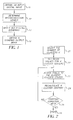
- FIG. 1 there is shown a block diagram of the present invention for a monochrome input digital image.
- An N level input digital image is obtained 11 and used to determine a set of M image-dependent, optimal reconstruction levels 12 , where M ⁇ N, based on the gray level distribution of the N level image.
- these reconstruction levels are chosen to minimize a mean squared error (MSE) between the N level input digital image and an M level output digital image where each pixel is quantized to the nearest reconstruction level.
- MSE mean squared error
- a K-means clustering technique is used in the preferred embodiment to partition the values present in the N level input image into K clusters, where K is equal to M, giving rise to M cluster means.
- a pre-determined stopping condition is checked 25 .
- a stopping condition is when the changes in the cluster centers are below a predetermined threshold. If the pre-determined stopping condition is not met, steps 23 and 24 are repeated.
- K-means clustering process is stopped 26 .
- K-means algorithm see Tou and Gonzalez, Pattern Recognition Principles, Reading MA: Addison-Wesley, 1974.
- K cluster means are used as the M optimal reconstruction levels to produce an M level output image.
- the first and last (highest and lowest) levels of the M levels can be predetermined. For example, the first level can be set to zero, and the last level can be set to the maximum possible level.
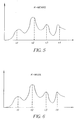
- a typical histogram of intensity values of an N level input image is partitioned into M clusters of distribution.
- the centers of these M clusters are selected as the reconstruction levels.
- the peaks also referred to as the "modes” can be identified, as shown in Fig. 6.
- the corresponding values of these "modes” e.g., t1, t2, t3, and t4 as shown in Fig. 6) can be used as the reconstruction levels.
- the M optimal reconstruction levels are then used to apply multi-level dithering 13 to the image to obtain 14 an M level output image.
- Multi-level dithering can be used to create the appearance of intensity values intermediate to the reconstruction levels by varying the values assigned to the pixels of the output digital image such that the local mean intensity value is preserved.
- An example of a multi-level halftoning method that could be used would be multi-level error diffusion.
- FIG. 3 A flow diagram illustrating a typical multi-level error diffusion algorithm is shown in Fig. 3.
- an input pixel value I ij from the i th column and j th row of the input digital color image is processed by assigning 27 a reconstruction level to each image pixel to form a corresponding output pixel value O ij of the output digital image.
- the assignment of a reconstruction level to each image pixel introduces a quantization error due to the fact that the output pixel value is selected to be one of the reconstruction levels in the determined set reconstruction levels.
- a difference operation 30 is used to compute an intensity error E i,j representing the difference between the input pixel value I i,j. and the output pixel value O ij .
- a errors E ij are weighted by applying 32 a series of error weights W i,j to the resulting intensity error E ij . The weighted intensity errors are then added 34 to the nearby input pixels that have yet to be processed.
- FIG. 4 An example set of error weights W ij is shown in Fig. 4.
- the intensity error E ij for the current pixel 40 with column and row address (i, j) is weighted by a factor of 1 ⁇ 4 and distributed to the next pixel to the right 42 in the current row of the image having the column and row address (i+1, j).
- the intensity error E ij is also weighted by factors of 1 ⁇ 4 and distributed to three pixels in the next row of the image 44 having column and row addresses (i-1, j+1), (i, j+1) and (i+1, j+1).
- the quantization errors introduced when processing the current pixel 40 are distributed to nearby input pixels that have not yet been processed. The result is that the local mean intensity value is approximately preserved.
- image-independent, uniformly spaced reconstruction levels are used in a multi-toning process. For example, 0, 85, 170, and 255 are the fixed reconstruction levels if a 4 level dithering is desired for an input image with 256 intensity levels.
- image-dependent reconstruction levels are used.
- image-dependent reconstruction levels there is a high likelihood that the amount of quantization error will be relatively smaller than would otherwise incurs using fixed reconstruction levels at a given pixel. Therefore, there is a lower likelihood for the need to diffuse quantization error to nearby input pixels.
- the effect of using image-dependent reconstruction levels is less perceived noise in the final multi-level dithered output images.
- the present invention may be embodied in a computer program product that may include one or more storage media, for example: magnetic storage media such as magnetic disk (such as a floppy disk) or magnetic tape; optical storage media such as optical disk, optical tape, or machine readable bar code; solid-state electronic storage devices such as random access memory (RAM), or read-only memory (ROM); or any other physical device or media employed to store a computer program having instructions for controlling one or more computers to practice the method according to the present invention.
- magnetic storage media such as magnetic disk (such as a floppy disk) or magnetic tape
- optical storage media such as optical disk, optical tape, or machine readable bar code
- solid-state electronic storage devices such as random access memory (RAM), or read-only memory (ROM); or any other physical device or media employed to store a computer program having instructions for controlling one or more computers to practice the method according to the present invention.
Landscapes
- Physics & Mathematics (AREA)
- Discrete Mathematics (AREA)
- General Physics & Mathematics (AREA)
- Engineering & Computer Science (AREA)
- Multimedia (AREA)
- Signal Processing (AREA)
- Image Processing (AREA)
- Facsimile Image Signal Circuits (AREA)
- Controls And Circuits For Display Device (AREA)
Abstract
Description
- 11
- obtain an input digital image step
- 12
- determine reconstruction levels step
- 13
- apply multi-level dithering step
- 14
- obtain a dithered output image step
- 21
- select the number of clusters step
- 22
- set initial cluster centers step
- 23
- assign pixels step
- 24
- recalculate cluster centers step
- 25
- stopping condition
- 26
- end K-means step
- 27
- assign reconstruction level to each image pixel step
- 30
- difference operation
- 32
- weight errors step
- 34
- sum operation
- 40
- current pixel
- 42
- next pixel to the right
- 44
- pixels in next row of image
Claims (11)
- A method for multitone processing an N level digital image to produce an M level digital image wherein M<N, comprising the steps of:a) determining M reconstruction levels based on the gray level distribution of the N level image; andb) applying multilevel dithering to the N level digital image using the M reconstruction levels to produce the M level digital image.
- The method claimed in claim 1, wherein the determining step comprises performing a K-means clustering operation on the N level digital image, wherein K = M.
- The method claimed in claim 1, wherein the determining step comprises forming a histogram of the N level digital image and locating M levels corresponding to the M most prominent peaks in the histogram.
- The method claimed in claim 1, wherein the first and last levels of the M levels are predetermined.
- The method claimed in claim 4, wherein the first level is zero.
- The method claimed in claim 4, wherein the last level is the maximum possible level.
- The method claimed in claim 1, wherein the N-level digital image has multiple channels and the k-means clustering and multi-level dithering is performed on each of the multiple channels independently.
- The method claimed in claim 1, wherein the N-level digital image has multiple channels and the K-means clustering is performed in the multi-channel space and multi-level vector dithering is used.
- The method claimed in claim 1, wherein the multi-level dithering is vector error diffusion.
- The method claimed in claim 7, wherein the multi-level dithering is vector error diffusion.
- The method claimed in claim 8, wherein the multi-level dithering is vector error diffusion.
Applications Claiming Priority (2)
| Application Number | Priority Date | Filing Date | Title |
|---|---|---|---|
| US896798 | 2001-06-29 | ||
| US09/896,798 US7593135B2 (en) | 2001-06-29 | 2001-06-29 | Digital image multitoning method |
Publications (2)
| Publication Number | Publication Date |
|---|---|
| EP1271923A2 true EP1271923A2 (en) | 2003-01-02 |
| EP1271923A3 EP1271923A3 (en) | 2004-11-17 |
Family
ID=25406862
Family Applications (1)
| Application Number | Title | Priority Date | Filing Date |
|---|---|---|---|
| EP02077364A Withdrawn EP1271923A3 (en) | 2001-06-29 | 2002-06-17 | Digital image multitoning method |
Country Status (3)
| Country | Link |
|---|---|
| US (1) | US7593135B2 (en) |
| EP (1) | EP1271923A3 (en) |
| JP (1) | JP2003110849A (en) |
Families Citing this family (7)
| Publication number | Priority date | Publication date | Assignee | Title |
|---|---|---|---|---|
| US7616341B2 (en) * | 2004-07-12 | 2009-11-10 | Toshiba Corporation | System and method for metadata controlled multi-configured halftone screening |
| US20070058200A1 (en) * | 2005-09-12 | 2007-03-15 | Kabushiki Kaisha Toshiba | System and method for generating multi-bit halftones using horizontal buildup |
| JP4852766B2 (en) * | 2005-11-11 | 2012-01-11 | 国立大学法人北陸先端科学技術大学院大学 | Clustering system and image processing system including the same |
| JP5121592B2 (en) * | 2008-06-18 | 2013-01-16 | キヤノン株式会社 | Image forming apparatus and image processing method |
| US9363414B2 (en) | 2012-01-06 | 2016-06-07 | Ricoh Company, Ltd. | Halftone mechanism |
| US9036212B2 (en) | 2012-01-06 | 2015-05-19 | Ricoh Production Print Solutions LLC | Halftone screen generation mechanism |
| US9332155B2 (en) | 2014-02-04 | 2016-05-03 | Ricoh Company, Ltd. | Digital image halftone conversion with selective enhancement |
Family Cites Families (8)
| Publication number | Priority date | Publication date | Assignee | Title |
|---|---|---|---|---|
| JPH10285390A (en) * | 1997-04-03 | 1998-10-23 | Minolta Co Ltd | Image processor |
| JP2566780B2 (en) * | 1987-06-30 | 1996-12-25 | 京セラ株式会社 | Artificial mandible prosthesis member |
| US4945478A (en) * | 1987-11-06 | 1990-07-31 | Center For Innovative Technology | Noninvasive medical imaging system and method for the identification and 3-D display of atherosclerosis and the like |
| JPH06253134A (en) | 1993-02-26 | 1994-09-09 | Toshiba Corp | Image processing device |
| US5621546A (en) * | 1993-11-02 | 1997-04-15 | Xerox Corporation | Method and apparatus for vector error diffusion with output color control |
| US5565994A (en) * | 1994-12-06 | 1996-10-15 | Xerox Corporation | Multiple separation error diffusion, with cross separation correlation control for color images |
| US5649025A (en) * | 1995-02-03 | 1997-07-15 | Xerox Corporation | Multithresholding for document image segmentation |
| US5936684A (en) * | 1996-10-29 | 1999-08-10 | Seiko Epson Corporation | Image processing method and image processing apparatus |
-
2001
- 2001-06-29 US US09/896,798 patent/US7593135B2/en not_active Expired - Fee Related
-
2002
- 2002-06-17 EP EP02077364A patent/EP1271923A3/en not_active Withdrawn
- 2002-06-25 JP JP2002184489A patent/JP2003110849A/en active Pending
Also Published As
| Publication number | Publication date |
|---|---|
| US7593135B2 (en) | 2009-09-22 |
| US20030007184A1 (en) | 2003-01-09 |
| EP1271923A3 (en) | 2004-11-17 |
| JP2003110849A (en) | 2003-04-11 |
Similar Documents
| Publication | Publication Date | Title |
|---|---|---|
| EP0838940B1 (en) | Multiple spatial channel processing | |
| JP4100782B2 (en) | Error diffusion value processing method | |
| US7961350B2 (en) | Halftone for reducing dot contact between different colors | |
| US7889389B2 (en) | Printing method and apparatus | |
| US5742405A (en) | Method and system for forming multi-level halftone images from an input digital image | |
| JP2000333010A (en) | Gradation dependent type error spread half tone processing method | |
| US5627659A (en) | Image processing system capable of selecting from among a plurality of error diffusion matrices | |
| US5689586A (en) | Methods to print N-tone images with multi-leveling techniques | |
| EP0591977B1 (en) | Image processor and printing apparatus | |
| US7417771B2 (en) | Error diffusion halftoning system | |
| EP1798951A1 (en) | Method, apparatus and computer program for halftoning digital images | |
| US6025930A (en) | Multicell clustered mask with blue noise adjustments | |
| US6608700B1 (en) | Removal of error diffusion artifacts with alternating distribution weights | |
| US7623268B2 (en) | Replacement halftoning | |
| US7593135B2 (en) | Digital image multitoning method | |
| EP0785667A2 (en) | Force field halftoning | |
| KR100354742B1 (en) | Image data processing device | |
| US6956670B1 (en) | Method, system, program, and data structures for halftoning with line screens having different lines per inch (LPI) | |
| KR100657339B1 (en) | Methods and system for combining luminance preserving quantization and halftoning | |
| US20100134809A1 (en) | Gamma correction method for error diffusion | |
| US20040085553A1 (en) | Multitoning a digital image having at least one group of similar colors channels | |
| US5611022A (en) | Color imaging | |
| JP3814921B2 (en) | Grayscale image halftoning method and apparatus having grayscale image halftoning means | |
| US6597813B1 (en) | Masks with modulated clustering and aperiodicity and rescaling of masks | |
| US20040008382A1 (en) | System and method for error diffusion screening with parallel processing |
Legal Events
| Date | Code | Title | Description |
|---|---|---|---|
| PUAI | Public reference made under article 153(3) epc to a published international application that has entered the european phase |
Free format text: ORIGINAL CODE: 0009012 |
|
| AK | Designated contracting states |
Kind code of ref document: A2 Designated state(s): AT BE CH CY DE DK ES FI FR GB GR IE IT LI LU MC NL PT SE TR |
|
| AX | Request for extension of the european patent |
Free format text: AL;LT;LV;MK;RO;SI |
|
| PUAL | Search report despatched |
Free format text: ORIGINAL CODE: 0009013 |
|
| AK | Designated contracting states |
Kind code of ref document: A3 Designated state(s): AT BE CH CY DE DK ES FI FR GB GR IE IT LI LU MC NL PT SE TR |
|
| AX | Request for extension of the european patent |
Extension state: AL LT LV MK RO SI |
|
| AKX | Designation fees paid | ||
| REG | Reference to a national code |
Ref country code: DE Ref legal event code: 8566 |
|
| STAA | Information on the status of an ep patent application or granted ep patent |
Free format text: STATUS: THE APPLICATION IS DEEMED TO BE WITHDRAWN |
|
| 18D | Application deemed to be withdrawn |
Effective date: 20050518 |