EP1271291A2 - Information processing apparatus and power management method - Google Patents
Information processing apparatus and power management method Download PDFInfo
- Publication number
- EP1271291A2 EP1271291A2 EP02014186A EP02014186A EP1271291A2 EP 1271291 A2 EP1271291 A2 EP 1271291A2 EP 02014186 A EP02014186 A EP 02014186A EP 02014186 A EP02014186 A EP 02014186A EP 1271291 A2 EP1271291 A2 EP 1271291A2
- Authority
- EP
- European Patent Office
- Prior art keywords
- operating status
- processing apparatus
- information processing
- power
- characteristic information
- Prior art date
- Legal status (The legal status is an assumption and is not a legal conclusion. Google has not performed a legal analysis and makes no representation as to the accuracy of the status listed.)
- Granted
Links
Images



Classifications
-
- G—PHYSICS
- G06—COMPUTING OR CALCULATING; COUNTING
- G06F—ELECTRIC DIGITAL DATA PROCESSING
- G06F1/00—Details not covered by groups G06F3/00 - G06F13/00 and G06F21/00
- G06F1/26—Power supply means, e.g. regulation thereof
- G06F1/28—Supervision thereof, e.g. detecting power-supply failure by out of limits supervision
-
- G—PHYSICS
- G06—COMPUTING OR CALCULATING; COUNTING
- G06F—ELECTRIC DIGITAL DATA PROCESSING
- G06F1/00—Details not covered by groups G06F3/00 - G06F13/00 and G06F21/00
- G06F1/26—Power supply means, e.g. regulation thereof
- G06F1/32—Means for saving power
- G06F1/3203—Power management, i.e. event-based initiation of a power-saving mode
Definitions
- the present invention relates to an information processing apparatus such as personal computers and a power management method of the information processing apparatus, particularly to an information processing apparatus having a plurality of devices and a power management method for managing a power of the plurality of devices.
- a user can set desired power management functions to be executed by a system. Thereby, the user can select a power management control in which an operation capability has priority, or a power management control in which the power saving has priority.
- the present invention is directed to method and apparatus that substantially obviates one or more of the problems due to limitations and disadvantages of the related art.
- an information processing apparatus having a device, comprises a storage unit configured to store characteristic information indicating a past operating status of the device; and a controller configured to control a power management of the device based on the characteristic information.
- an optimum power management control can automatically be executed in accordance with an operating status of the information processing apparatus.
- FIG. 1 shows a constitution of the information processing apparatus according to the first embodiment of the present invention.
- the information processing apparatus is a portable computer such as a notebook-type personal computer, and can be operated by a battery.
- the information processing apparatus is roughly divided into a hardware unit 101 and a software unit 102.
- the hardware unit 101 comprises a plurality of devices (#1, #2 to #N) 101-1, 101-2, ... 101-N.
- Examples of the devices 101-1, 101-2, ... 101-N include a CPU, memory, chip set, video adapter, hard disk drive, display monitor, USB controller, IEEE 1394 I/F controller, modem, LAN controller, and radio communication module.
- the software unit 102 comprises a system software 103, user application 110, user setting tool 111, and the like.
- the system software 103 is a program group for controlling the hardware unit 101, such as an operating system and utility program.
- a plurality of device drivers (#1, #2 to #N) 107-1, 107-2, ... 107-N, a power management/control system 112, and the like are provided.
- the device drivers (#1, #2 to #N) 107-1, 107-2, ... 107-N manage and control the plurality of corresponding devices (#1, #2 to #N) 104-1, 104-2, ... 104-N. In this case, one device driver may manage plural devices.
- the power management/control system 112 is a program for performing the power management control of the information processing apparatus, and controls operating speeds of the respective devices 104-1, 104-2, ... 104-N or an on/off of a power supply in accordance with a set value for a power saving control designated by a user.
- the set value include 1) the operating speed of the CPU (clock frequency of the CPU), 2) time required from when an idle state is detected until the power supply of the corresponding device is turned off, and 3) designation of a use device and a nonuse device.
- the power management/control system 112 also has a function (optimization mode) of optimizing the set value for the power saving control. In the optimization mode, even when the user does not perform an operation of designating the set value for the power saving control, the power management/control system 112 automatically selects the optimum value. To realize the function, the power management/control system 112 detects the present operating status of the hardware unit 101 at a constant time interval. In a detection method, information is obtained from the device drivers 107-1, 107-2, ... 107-N corresponding to the respective devices 104-1, 104-2, ... 104-N, or the information is obtained directly from the devices 104-1, 104-2, ... 104-N if necessary. Thereby, it is possible to grasp a tendency of operating status of each of the devices.
- the power management/control system 112 predicts the set value for an optimum power saving control based on the tendency of the past operating status of the information processing apparatus every predetermined time period (e.g., every five minutes), and controls the set value for the power saving control based on the predicted result. That is, the system predicts the future operating status of the devices 104-1, 104-2, ... 104-N, determines the set value for the power saving control, and controls the operating speeds of the respective devices 104-1, 104-2, ... 104-N or the on/off of the power supply based on the determined set value. Even in this case, similarly as during the obtaining of the information, the system sets the value via the device drivers 107-1, 107-2, ... 107-N corresponding to the respective devices 104-1, 104-2, ... 104-N, or directly controls the devices 104-1, 104-2, ... 104-N if necessary.
- the user-setting tool 111 is an interface for allowing the user to designate the set value for the power saving control. Moreover, by using the user-setting tool 111, one of the optimization mode for automatically performing the power saving control, and a user-setting mode for performing the power saving control in accordance with the user setting can be selected. Even when the optimization mode is selected, the user can use the user-setting tool 111 to freely set the individual set values again.
- FIG. 2 shows a functional constitution of the power management/control system 112.
- the power management/control system 112 includes a management/control unit 201, inferring unit 202, learning unit 203, and database 204.
- the management/control unit 201 performs a power management control, has an interface with the respective devices 104-1, 104-2, ... 104-N and device drivers 107-1, 107-2, ... 107-N, and also has an interface with the user via the user setting tool 111.
- This management/control unit 201 executes the obtaining of operating status of the respective devices 104-1, 104-2, ... 104-N and the power management control of the respective devices 104-1, 104-2, ... 104-N.
- the inferring unit 202 predicts the set value for the optimum power saving control based on characteristic information that indicates the past operating status of the information processing apparatus for every predetermined time period and is stored in the database 204.
- the unit 202 predicts the future operating status of the respective devices 104-1, 104-2, ... 104-N for a next time period based on the present operating status of the respective devices 104-1, 104-2, ... 104-N, and the past operating status of the respective devices 104-1, 104-2, ... 104-N which is indicated by the characteristic information.
- the predicted result is notified to the management/control unit 201, and the power management control is executed based on the predicted result by the management/control unit 201.
- the learning unit 203 learns the operating status of the information processing apparatus, and generates the above-described characteristic information. That is, the learning unit 203 analyzes the history of the past operating status of the information processing apparatus, which is obtained by the management/control unit 201 and stored in the database 204. Moreover, the leaning unit 203 generates the characteristic information indicating the tendency of the operating status of each of the device drivers 107-1, 107-2, ... 107-N for every predetermined time period and stores the characteristic information into the database 204.
- FIG. 3 shows one example of the characteristic information stored in the database 204.
- the characteristic information has time scales "month”, “day of the week”, and “time”, and the operating status of the respective device drivers 107-1, 107-2, ... 107-N, and weight values are registered for every predetermined time period (e.g., every five minutes) designated by the time scales.
- FIG. 3 it is shown that a time period from time 8:00 to 8:05 on Monday (MON) in June, the device #1 is fully used (100%), the device #2 is not used at all (0%), and the device #N is partly used (20%). It is shown that a time period from time 9:00 to 9:05 on Monday (MON) in June, all the devices #1 to #N are partly used (20%).
- the operating statuses of the respective devices are represented by numeric values of 0 to 100% so that the tendency of the operating status (use amount of resource) of the CPU or memory can also be recorded. Depending on the device, there are sometimes only two states ON and OFF.
- a weight value indicates a frequency of occurrence of the corresponding status. That is, it can be assumed that with a larger weight value, a probability of occurrence of the corresponding operating status increases at the point of time.
- FIGS. 4A to 4C show one example of a change of the operating status of each of the devices 104-1, 104-2, ... 104-N.
- the operating status of each device depends on a user's action pattern.
- the operating status of the devices such as the CPU, memory, and LAN of the information processing apparatus has a large value between 8:00 and 17:00, but the value of the operating status extremely drops before 8:00 and after 17:00.
- some devices such as the IEEE 1394 I/F, and modem are hardly used between 8:00 and 17:00.
- the user uses the devices such as the IEEE 1394 I/F and modem in many cases. Therefore, as shown in FIG. 4C, the value of the operating status sometimes rises after 17:00.
- the above-described characteristic information is generated and recorded which indicates the tendency of the operating status of each device with the time scales of the "month", “day of the week", and "time”. Thereby, it is possible to highly precisely predict the operating status of each device by the day of the week and time period from the characteristic information.
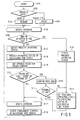
- a procedure of a power management control processing executed by the power management/control system 112 during the optimization mode will next be described with reference to a flowchart of FIG. 5.
- the power management/control system 112 is started, when the user turns on the power supply of the information processing apparatus (step S101). A flow of the processing to be executed differs with the previous system status. Therefore, the power management/control system 112 first determines whether the previous system status is a sleep state or a power off (shutdown) state (step S102).
- the sleep state means that a system context necessary for restoring a system-operating environment is saved in a main memory or a hard disk, and subsequently the power supply of the system is turned off.
- the power management/control system 112 executes a resume processing of restoring the system context and restoring the system-operating environment just before the power off (step S103).
- a usual boot up processing for starting the operating system is executed (step S104).
- the information processing apparatus is brought into an operative state in this manner. While the information processing apparatus is in the operative state, the power management/control system 112 repeatedly executes the following processing.
- the power management/control system 112 first searches the database 204 to find characteristic information corresponding to the present time period and a succeeding time period (steps S105, S106). If it is 8:02, Monday of June, characteristic information corresponding to the present time period from 8:00 to 8:05 and the succeeding time period from 8:05 to 8:10 is found. If it is 9:04, Monday of June, characteristic information corresponding to the succeeding time period from 9:05 to 9:10 is not found.
- the power management/control system 112 detects the present operating status of the respective devices 104-1, 104-2, ... 104-N (step S107).
- the system 112 predicts the operating status of the respective devices 104-1, 104-2, ... 104-N for the succeeding time period based on the detected present operating status of the respective devices 104-1, 104-2, ... 104-N and the characteristic information in the database 204 indicating the past operating status corresponding to the present time period and the succeeding time period, and determines the set value for the optimum power saving control for each of the devices 104-1, 104-2, ... 104-N (steps S108, S109).
- the detected operating status of the respective devices 104-1, 104-2, ... 104-N agrees with the past operating status corresponding to the present time period, it can be assumed that the past operating status corresponding to the succeeding time period will be happened with a high probability.
- the probability at which the status shifts to the past operating status corresponding to the succeeding time period is assumed to be low.
- the weight value concerning the past operating status will also be considered.
- the optimum value for the power saving control is set based on the determination.
- the information processing apparatus in a predicted operating status where the operations of all the devices 104-1, 104-2, ... 104-N are stopped, the information processing apparatus is expected to shift to the sleep state or the power off state.
- the power management/control system 112 determines whether the predicted operating status is the sleep state or the power off state (step S110).
- the power management/control system 112 inquires of the user as to whether the apparatus may shift to the sleep state or power off state by a screen display, and the like (step S113). If the apparatus directly shifts to the sleep state or power off state, this supposedly sometimes goes against a user's intention. By a response from the user, the system determines whether or not the apparatus can shift to the sleep state or the power off state (step S114).
- the power off state may be excluded beforehand from the predicted operating status. When there is no response from the user concerning the inquiry, the apparatus may automatically shift to the sleep state.
- step S115 If the user does no permit a shift to the sleep state or power off state (NO in step S114), a predetermined standard operating status is set to the operating status for the succeeding time period (step S115).
- the power management/control system 112 detects the present operating status of the respective devices 104-1, 104-2, ... 104-N (step S116). Then, a predetermined standard operating status is set to the operating status for the succeeding time period (step S115).
- the power management/control system 112 updates the database 204 by rewriting the characteristic information indicating the operating status corresponding to the present time period and the succeeding time period (step S111). Thereafter, during the succeeding time period, the power management control is executed based on the set value (step S112).
- the end of the processing is not shown in the flowchart of FIG. 5. However, if the future operating status is the power off state or the sleep state, the processing is completed by the shift to the power off state or the sleep state.
- the information processing apparatus having a plurality of devices generates the characteristic information indicating the tendencies of the operating status of the plurality of devices by the month, day of the week, and time period based on the history of the operating status concerning each of the devices; obtains the tendency of the operating status of each device corresponding to the present month, day of the week, and time period from the characteristic information; predicts the operating status of each device of the succeeding time period; and controls the on/off of the power supply of each device or the operating speed of the device based on the predicted operating status of the device.
- the optimum power management control suitable for the operating status can be realized.
- the setting of the power management can constantly be optimized.
- the on/off of the power supply or the operating speed of the device is controlled individually for the devices, it is possible to eliminate any useless power consumption by the actually unused device.
- the characteristic information for at least each time period may be registered, and it is unnecessary to register the characteristic information for each month or each day of the week beforehand.
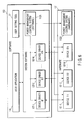
- FIG. 6 shows the constitution example of the information processing apparatus according to the second embodiment of the present invention.
- the information processing apparatus has a constitution different from the constitution of FIG. 1 in that a power management/control system 112B constituted of hardware is provided in addition to a power management/control system 112A constituted of software, and the other respects are similar to those of FIG. 1.
- the power management/control system 112A constituted of software corresponds to the power management/control system 112 of FIG. 1.
- the power management/control system 112B constituted of hardware has an interface with the power management/control system 112A, is managed/controlled by the power management/control system 112A, and manages/controls the respective devices 104-1, 104-2, ... 104-N.
- the power management/control system 112B comprises a controller for generating a wakeup signal to change the information processing apparatus to a power on state from the sleep state or the power off state at a set alarm time.
- the power management/control system 112A sets the alarm time to generate the wakeup signal in the power management/control system 112B. That is, the power management/control system 112A predicts a time to turn on the power supply of the information processing apparatus based on the above-described characteristic information, and sets the predicted time as the alarm time in the power management/control system 112B. Even when the power supply of the information processing apparatus is turned off, the power continues to be supplied to the power management/control system 112B from the battery, and the like, and the wakeup signal is automatically generated at the alarm time. This brings the information processing apparatus in the power on state.
- FIG. 7 is a flowchart showing the flow of the processing operation by the power management/control systems 112A and 112B.
- the flowchart of FIG. 7 shows the flow as seen from the user, and therefore the power off status is included.
- the status of the power off which is visible from the user, is also one of the managed statuses. Therefore, the flow of the processing operation does not have a starting point or an endpoint in the flowchart of FIG. 7.
- the other processing operations are equal to those of FIG. 5.
- step S201 it is first determined whether the previous system status was the sleep state, or the power off (shutdown) state, or was maintained in the power on state.
- step S202 The resume processing is executed, when the status was the sleep state (step S202).
- step S203 The boot up processing is executed, when the status was the power off (shutdown) state (step S203).
- the database 204 is searched to find characteristic information corresponding to the present time period and a succeeding time period (steps S204, S205).
- step S206 When the characteristic information is found (YES in step S205), the present operating status of the respective devices 104-1, 104-2, ... 104-N is detected (step S206).
- the operating status of the respective devices 104-1, 104-2, ... 104-N for the succeeding time period is predicted based on the detected present operating status of the respective devices 104-1, 104-2, ... 104-N and the characteristic information in the database 204 indicating the past operating status corresponding to the present time period and the succeeding time period, and the set value for the optimum power saving control for each of the devices 104-1, 104-2, ... 104-N is determined (steps S207, S208).
- the optimum value for the power saving control is set based on the determination.
- the information processing apparatus in a predicted operating status where the operations of all the devices 104-1, 104-2, ... 104-N are stopped, the information processing apparatus is expected to shift to the sleep state or the power off state.
- step S209 it is determined whether the predicted operating status is the sleep state or the power off state.
- the predicted operating status is the sleep state or the power off state (YES in the step S209)
- the user is inquired as to whether the apparatus may shift to the sleep state or power off state by a screen display, and the like (step S212).
- the power off state may be excluded beforehand from the predicted operating status.
- the apparatus may automatically shift to the sleep state.
- a predetermined standard operating status is set to the operating status for the succeeding time period (step S214).
- step S205 When the characteristic information is not found (NO in step S205), the present operating status of the respective devices 104-1, 104-2, ... 104-N is detected (step S215). Then, a predetermined standard operating status is set to the operating status for the succeeding time period (step S214).
- the database 204 is updated by rewriting the characteristic information indicating the operating status corresponding to the present time period and the succeeding time period (step S210). Thereafter, during the succeeding time period, the power management control is executed based on the set value (step S211).
- the optimum power management control suitable for the operating status can be realized.
- the setting of the power management can constantly be optimized.
- the on/off of the power supply or the operating speed of the device is controlled individually for the devices 104-1, 104-2, ... 104-N, it is possible to eliminate any useless power consumption by the actually unused device.
- the characteristic information may be registered for at least each time period, and it is unnecessary to register the characteristic information beforehand for each month, or each day of the week.
Landscapes
- Engineering & Computer Science (AREA)
- Theoretical Computer Science (AREA)
- Physics & Mathematics (AREA)
- General Engineering & Computer Science (AREA)
- General Physics & Mathematics (AREA)
- Power Sources (AREA)
- Remote Monitoring And Control Of Power-Distribution Networks (AREA)
- Supply And Distribution Of Alternating Current (AREA)
Abstract
Description
Claims (17)
- An information processing apparatus having a device, characterized by comprising:storage means (204) for storing characteristic information indicating a past operating status of the device; andmeans (201) for controlling a power management of the device based on the characteristic information.
- The apparatus according to claim 1,
characterized by further comprising:means (201) for periodically detecting an operating status of the device; andmeans (202, 203) for analyzing the detected operating status of the device and obtaining the characteristic information. - The apparatus according to claim 1,
characterized in that the controller comprises:means for detecting a present operating status of the device and predict a feature operating status of the devices based on the detected present operating status and the characteristic information; andpower controller means for controlling the power management of the device based on the predicted feature operating status of the device. - The apparatus according to claim 3,
characterized in that the power controller means controls on/off of a power supply of the device. - The apparatus according to claim 3,
characterized in that the power controller means controls an operating speed of the device. - The apparatus according to claim 1,
characterized by further comprising:means for generating a wakeup signal for changing the information processing apparatus to a power-on state from a sleep state at a predetermined time,and characterized in that the controlling means comprises:means for predicting, based on the characteristic information, a time at which a power of the information processing apparatus is turned on; andmeans for determining the predetermined time based on the predicted time. - The apparatus according to claim 1,
characterized in that the controlling means comprises:means for predicting, based on the characteristic information, a time at which the information processing apparatus is changed to a sleep state from an operative state; andmeans for changing the information processing apparatus to the sleep state from the operative state at the predicted time. - An information processing apparatus having a device, characterized by comprising:means (201) for storing characteristic information indicating a past operating status of the device by a day of week and a time of day;means (202, 203) for predicting a feature operating status of the device based on the characteristic information; andmeans (201) for controlling a power management of the device based on the predicted feature operating status.
- An information processing apparatus in which a power management is controlled in accordance with a power saving control signal, the apparatus
characterized by comprising:means (204) for storing characteristic information indicating an operating status of the information processing apparatus;means (202, 203) for predicting a feature operating status of the information processing apparatus based on the characteristic information; andmeans (201) for generating the power saving control signal based on the predicted operating status. - A power control method for an information processing apparatus having a device, the method
characterized by comprising steps of:storing characteristic information indicating a past operating status of the device; andcontrolling a power management of the device based on the characteristic information. - The method according to claim 10,
characterized by further comprising steps of:periodically detecting a present operating status of the device; andanalyzing the detected present operating status of the device and obtaining the characteristic information. - The method according to claim 10,
characterized in that the controlling step comprises substeps of:detecting a present operating status of the device and predicting a feature operating status of the device based on the detected present operating status and the characteristic information; andcontrolling the power management of the device based on the predicted operating status of the device. - The method according to claim 12, characterized in that the controlling step comprises a substep of controlling on/off of a power supply of the device.
- The method according to claim 12, characterized in that the controlling step comprises a substep of controlling an operating speed of the device.
- The method according to claim 10,
characterized by further comprising steps of:characterized in that the controlling comprises:generating a wakeup signal for changing the information processing apparatus to a power-on state from a sleep state at a predetermined time,predicting, based on the characteristic information, a time at which a power of the information processing apparatus is turned on; anddetermining the predetermined time based on the predicted time. - The method according to claim 10,
characterized in that the controlling step comprises a substep of:predicting a time at which the information processing apparatus is changed to a sleep state from an operative state based on the characteristic information; andsetting the information processing apparatus to the sleep state from the operative state at the predicted time. - A power control method for an information processing apparatus in which a power management is controlled in accordance with a power saving control signal, the method characterized by comprising steps of:storing characteristic information indicating an operating status of the information processing apparatus;predicting a feature operating status of the information processing apparatus based on the characteristic information; andgenerating the power saving control signal based on the predicted operating status.
Applications Claiming Priority (2)
| Application Number | Priority Date | Filing Date | Title |
|---|---|---|---|
| JP2001199974A JP3600556B2 (en) | 2001-06-29 | 2001-06-29 | Information processing equipment |
| JP2001199974 | 2001-06-29 |
Publications (3)
| Publication Number | Publication Date |
|---|---|
| EP1271291A2 true EP1271291A2 (en) | 2003-01-02 |
| EP1271291A3 EP1271291A3 (en) | 2006-05-17 |
| EP1271291B1 EP1271291B1 (en) | 2007-02-28 |
Family
ID=19037178
Family Applications (1)
| Application Number | Title | Priority Date | Filing Date |
|---|---|---|---|
| EP02014186A Expired - Lifetime EP1271291B1 (en) | 2001-06-29 | 2002-06-25 | Information processing apparatus and power management method |
Country Status (4)
| Country | Link |
|---|---|
| US (1) | US20030005341A1 (en) |
| EP (1) | EP1271291B1 (en) |
| JP (1) | JP3600556B2 (en) |
| DE (1) | DE60218384T2 (en) |
Cited By (3)
| Publication number | Priority date | Publication date | Assignee | Title |
|---|---|---|---|---|
| WO2010151819A1 (en) * | 2009-06-25 | 2010-12-29 | Qualcomm Incorporated | Prediction engine to control energy consumption |
| EP1635247A4 (en) * | 2003-05-27 | 2011-05-25 | Lenovo Singapore Pte Ltd | ENERGY SAVING FACTOR IDENTIFICATION SYSTEM, INFORMATION PROCESSING DEVICE, ENERGY SAVING FACTOR IDENTIFICATION METHOD, PROGRAM, AND RECORDING MEDIUM |
| CN102163073A (en) * | 2010-02-23 | 2011-08-24 | 华为终端有限公司 | Terminal power consumption optimization processing method and device |
Families Citing this family (13)
| Publication number | Priority date | Publication date | Assignee | Title |
|---|---|---|---|---|
| US20060019723A1 (en) * | 2004-06-29 | 2006-01-26 | Pieter Vorenkamp | Automatic control of power save operation in a portable communication device utilizing historical usage information |
| JP4341594B2 (en) * | 2005-06-30 | 2009-10-07 | セイコーエプソン株式会社 | Program for causing computer to execute information processing apparatus and power control method |
| US8904340B2 (en) * | 2007-02-13 | 2014-12-02 | International Business Machines Corporation | Use of temporary optimized settings to reduce cycle time of automatically created spreadsheets |
| US8281166B2 (en) * | 2008-03-10 | 2012-10-02 | Virdiem Corporation | System and method for computer power control |
| US8488500B2 (en) | 2008-05-02 | 2013-07-16 | Dhaani Systems | Power management of networked devices |
| JP5551388B2 (en) * | 2009-07-21 | 2014-07-16 | トヨタ自動車株式会社 | Power saving system |
| JP5440128B2 (en) * | 2009-11-27 | 2014-03-12 | 日本電気株式会社 | Power saving notification system, terminal device, method and program |
| US20110239019A1 (en) * | 2010-03-23 | 2011-09-29 | Unisys Corporation | Method and system for managing power consumption of a computing device |
| JP5455245B2 (en) * | 2011-01-28 | 2014-03-26 | Necアクセステクニカ株式会社 | Information terminal, power saving method and program in information terminal |
| US9043619B2 (en) * | 2012-06-19 | 2015-05-26 | Getac Technology Corporation | Method and apparatus for power management according to a situation mode |
| CN104951031A (en) * | 2014-03-28 | 2015-09-30 | 伊姆西公司 | Power management equipment, power management method and power management system |
| US10884484B2 (en) * | 2018-12-20 | 2021-01-05 | Dell Products, L.P. | Extending a battery life of a battery-powered computing device |
| TW202516363A (en) * | 2023-09-21 | 2025-04-16 | 日商索尼互動娛樂股份有限公司 | Information processing device, control method thereof, and program |
Family Cites Families (7)
| Publication number | Priority date | Publication date | Assignee | Title |
|---|---|---|---|---|
| JP2533942B2 (en) * | 1989-03-13 | 1996-09-11 | 株式会社日立製作所 | Knowledge extraction method and process operation support system |
| US5339445A (en) * | 1992-11-16 | 1994-08-16 | Harris Corporation | Method of autonomously reducing power consumption in a computer sytem by compiling a history of power consumption |
| US5517649A (en) * | 1994-04-19 | 1996-05-14 | Maxtor Corporation | Adaptive power management for hard disk drives |
| US5905901A (en) * | 1996-10-29 | 1999-05-18 | Micron Electronics | Method for adaptive power management of a computer system |
| US5954820A (en) * | 1997-09-26 | 1999-09-21 | International Business Machines Corporation | Portable computer with adaptive demand-driven power management |
| JPH11232147A (en) * | 1998-02-16 | 1999-08-27 | Toshiba Corp | Power estimation apparatus, power estimation method, and machine-readable recording medium recording power estimation program |
| WO2000028402A1 (en) * | 1998-11-09 | 2000-05-18 | Seiko Epson Corporation | Interface device, method of controlling interface device, and information recording device |
-
2001
- 2001-06-29 JP JP2001199974A patent/JP3600556B2/en not_active Expired - Fee Related
-
2002
- 2002-06-25 EP EP02014186A patent/EP1271291B1/en not_active Expired - Lifetime
- 2002-06-25 DE DE60218384T patent/DE60218384T2/en not_active Expired - Fee Related
- 2002-06-27 US US10/180,314 patent/US20030005341A1/en not_active Abandoned
Cited By (5)
| Publication number | Priority date | Publication date | Assignee | Title |
|---|---|---|---|---|
| EP1635247A4 (en) * | 2003-05-27 | 2011-05-25 | Lenovo Singapore Pte Ltd | ENERGY SAVING FACTOR IDENTIFICATION SYSTEM, INFORMATION PROCESSING DEVICE, ENERGY SAVING FACTOR IDENTIFICATION METHOD, PROGRAM, AND RECORDING MEDIUM |
| WO2010151819A1 (en) * | 2009-06-25 | 2010-12-29 | Qualcomm Incorporated | Prediction engine to control energy consumption |
| US8200371B2 (en) | 2009-06-25 | 2012-06-12 | Qualcomm Incorporated | Prediction engine to control energy consumption |
| CN102163073A (en) * | 2010-02-23 | 2011-08-24 | 华为终端有限公司 | Terminal power consumption optimization processing method and device |
| CN102163073B (en) * | 2010-02-23 | 2012-11-21 | 华为终端有限公司 | Terminal power consumption optimization processing method and device |
Also Published As
| Publication number | Publication date |
|---|---|
| EP1271291A3 (en) | 2006-05-17 |
| JP3600556B2 (en) | 2004-12-15 |
| DE60218384T2 (en) | 2007-11-15 |
| DE60218384D1 (en) | 2007-04-12 |
| EP1271291B1 (en) | 2007-02-28 |
| JP2003015783A (en) | 2003-01-17 |
| US20030005341A1 (en) | 2003-01-02 |
Similar Documents
| Publication | Publication Date | Title |
|---|---|---|
| EP1271291B1 (en) | Information processing apparatus and power management method | |
| US6457134B1 (en) | Portable computer with differentiated time-out feature | |
| US7017061B2 (en) | Method and system for dynamically adjusting power consumption of an information handling system | |
| US8384941B2 (en) | System and method for enabling an environmentally informed printer choice at job submission time | |
| US8041521B2 (en) | Estimating power consumption of computing components configured in a computing system | |
| US6910139B2 (en) | Software processing apparatus with a switching processing unit for displaying animation images in an environment operating base on type of power supply | |
| EP1743231B1 (en) | Selecting input/output devices to control power consumption of a computer system | |
| US8051318B2 (en) | Method and apparatus for controlling power in a battery-powered electronic device | |
| US6804630B2 (en) | Method for measuring quantity of usage of CPU | |
| JP6735492B2 (en) | Server for executing recommendation processing of air conditioner and recommendation processing system | |
| EP1734436A1 (en) | Automatically controlling processor mode of multi-core processor | |
| CN109983419B (en) | Dynamic energy storage device discharge | |
| EP0936532A2 (en) | Remote control method for power save function | |
| EP1731989A2 (en) | Method and appartus for implementing a hybrid mode for a multi-core processor | |
| JP3932786B2 (en) | Battery-driven terminal device and storage medium | |
| US20080188993A1 (en) | Power source management apparatus | |
| EP2746896A2 (en) | Multi-mode device power-saving optimization | |
| JP2014164393A (en) | Electric power prediction device, equipment control system, electric power prediction method and program | |
| US20130132759A1 (en) | Computer component power-consumption database | |
| JP2005295714A (en) | Automatic power supply control system | |
| KR101769707B1 (en) | Method and apparatus for pc standby power remote monitoring and controlling | |
| US8463616B2 (en) | Scheduling a process according to time-varying input prices | |
| CN115330005A (en) | Control method and device of shared equipment, computer equipment and storage medium | |
| CN110737322A (en) | Information processing method and electronic equipment | |
| CN101371213A (en) | energy management |
Legal Events
| Date | Code | Title | Description |
|---|---|---|---|
| PUAI | Public reference made under article 153(3) epc to a published international application that has entered the european phase |
Free format text: ORIGINAL CODE: 0009012 |
|
| 17P | Request for examination filed |
Effective date: 20020625 |
|
| AK | Designated contracting states |
Kind code of ref document: A2 Designated state(s): AT BE CH CY DE DK ES FI FR GB GR IE IT LI LU MC NL PT SE TR |
|
| AX | Request for extension of the european patent |
Free format text: AL;LT;LV;MK;RO;SI |
|
| PUAL | Search report despatched |
Free format text: ORIGINAL CODE: 0009013 |
|
| AK | Designated contracting states |
Kind code of ref document: A3 Designated state(s): AT BE CH CY DE DK ES FI FR GB GR IE IT LI LU MC NL PT SE TR |
|
| AX | Request for extension of the european patent |
Extension state: AL LT LV MK RO SI |
|
| 17Q | First examination report despatched |
Effective date: 20060731 |
|
| GRAP | Despatch of communication of intention to grant a patent |
Free format text: ORIGINAL CODE: EPIDOSNIGR1 |
|
| AKX | Designation fees paid |
Designated state(s): DE FI FR GB SE |
|
| GRAS | Grant fee paid |
Free format text: ORIGINAL CODE: EPIDOSNIGR3 |
|
| GRAA | (expected) grant |
Free format text: ORIGINAL CODE: 0009210 |
|
| AK | Designated contracting states |
Kind code of ref document: B1 Designated state(s): DE FI FR GB SE |
|
| PG25 | Lapsed in a contracting state [announced via postgrant information from national office to epo] |
Ref country code: FI Free format text: LAPSE BECAUSE OF FAILURE TO SUBMIT A TRANSLATION OF THE DESCRIPTION OR TO PAY THE FEE WITHIN THE PRESCRIBED TIME-LIMIT Effective date: 20070228 |
|
| REG | Reference to a national code |
Ref country code: GB Ref legal event code: FG4D |
|
| RIN1 | Information on inventor provided before grant (corrected) |
Inventor name: TERUNUMA, YOSHIKAZU |
|
| REF | Corresponds to: |
Ref document number: 60218384 Country of ref document: DE Date of ref document: 20070412 Kind code of ref document: P |
|
| PG25 | Lapsed in a contracting state [announced via postgrant information from national office to epo] |
Ref country code: SE Free format text: LAPSE BECAUSE OF FAILURE TO SUBMIT A TRANSLATION OF THE DESCRIPTION OR TO PAY THE FEE WITHIN THE PRESCRIBED TIME-LIMIT Effective date: 20070531 |
|
| ET | Fr: translation filed | ||
| PLBE | No opposition filed within time limit |
Free format text: ORIGINAL CODE: 0009261 |
|
| STAA | Information on the status of an ep patent application or granted ep patent |
Free format text: STATUS: NO OPPOSITION FILED WITHIN TIME LIMIT |
|
| 26N | No opposition filed |
Effective date: 20071129 |
|
| PGFP | Annual fee paid to national office [announced via postgrant information from national office to epo] |
Ref country code: DE Payment date: 20080703 Year of fee payment: 7 |
|
| PGFP | Annual fee paid to national office [announced via postgrant information from national office to epo] |
Ref country code: FR Payment date: 20080617 Year of fee payment: 7 |
|
| PGFP | Annual fee paid to national office [announced via postgrant information from national office to epo] |
Ref country code: GB Payment date: 20080625 Year of fee payment: 7 |
|
| GBPC | Gb: european patent ceased through non-payment of renewal fee |
Effective date: 20090625 |
|
| REG | Reference to a national code |
Ref country code: FR Ref legal event code: ST Effective date: 20100226 |
|
| PG25 | Lapsed in a contracting state [announced via postgrant information from national office to epo] |
Ref country code: FR Free format text: LAPSE BECAUSE OF NON-PAYMENT OF DUE FEES Effective date: 20090630 |
|
| PG25 | Lapsed in a contracting state [announced via postgrant information from national office to epo] |
Ref country code: GB Free format text: LAPSE BECAUSE OF NON-PAYMENT OF DUE FEES Effective date: 20090625 |
|
| PG25 | Lapsed in a contracting state [announced via postgrant information from national office to epo] |
Ref country code: DE Free format text: LAPSE BECAUSE OF NON-PAYMENT OF DUE FEES Effective date: 20100101 |