EP1270722A1 - Cytochrome p-450 gene cluster from rhodococcus ruber and uses thereof in ether fuel cleavage - Google Patents
Cytochrome p-450 gene cluster from rhodococcus ruber and uses thereof in ether fuel cleavage Download PDFInfo
- Publication number
- EP1270722A1 EP1270722A1 EP01401667A EP01401667A EP1270722A1 EP 1270722 A1 EP1270722 A1 EP 1270722A1 EP 01401667 A EP01401667 A EP 01401667A EP 01401667 A EP01401667 A EP 01401667A EP 1270722 A1 EP1270722 A1 EP 1270722A1
- Authority
- EP
- European Patent Office
- Prior art keywords
- etbe
- nucleic acid
- seq
- eth
- ether fuel
- Prior art date
- Legal status (The legal status is an assumption and is not a legal conclusion. Google has not performed a legal analysis and makes no representation as to the accuracy of the status listed.)
- Granted
Links
Images




Classifications
-
- C—CHEMISTRY; METALLURGY
- C12—BIOCHEMISTRY; BEER; SPIRITS; WINE; VINEGAR; MICROBIOLOGY; ENZYMOLOGY; MUTATION OR GENETIC ENGINEERING
- C12N—MICROORGANISMS OR ENZYMES; COMPOSITIONS THEREOF; PROPAGATING, PRESERVING, OR MAINTAINING MICROORGANISMS; MUTATION OR GENETIC ENGINEERING; CULTURE MEDIA
- C12N9/00—Enzymes; Proenzymes; Compositions thereof; Processes for preparing, activating, inhibiting, separating or purifying enzymes
- C12N9/0004—Oxidoreductases (1.)
- C12N9/0071—Oxidoreductases (1.) acting on paired donors with incorporation of molecular oxygen (1.14)
- C12N9/0077—Oxidoreductases (1.) acting on paired donors with incorporation of molecular oxygen (1.14) with a reduced iron-sulfur protein as one donor (1.14.15)
-
- B—PERFORMING OPERATIONS; TRANSPORTING
- B09—DISPOSAL OF SOLID WASTE; RECLAMATION OF CONTAMINATED SOIL
- B09C—RECLAMATION OF CONTAMINATED SOIL
- B09C1/00—Reclamation of contaminated soil
- B09C1/10—Reclamation of contaminated soil microbiologically, biologically or by using enzymes
Definitions
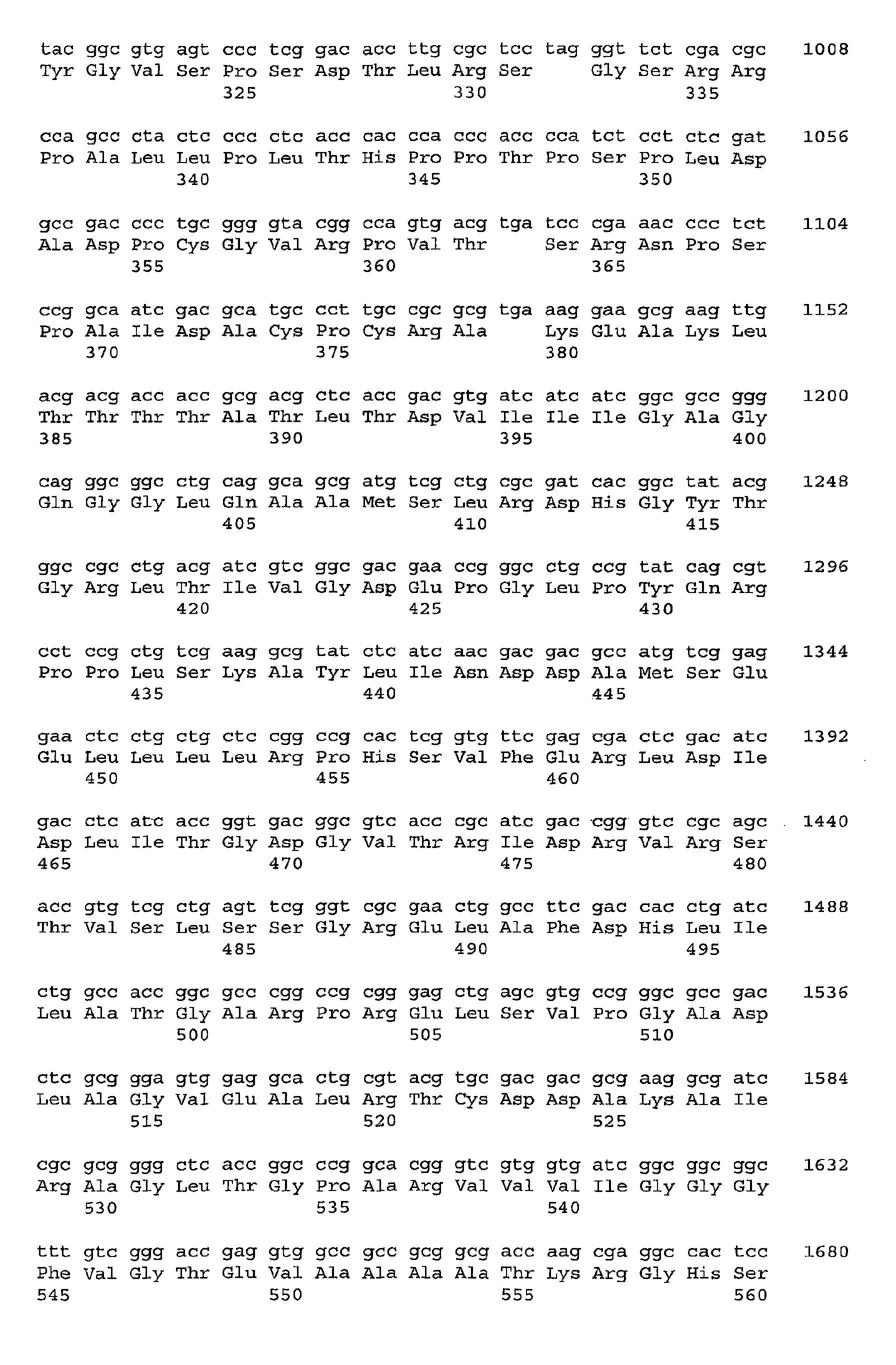
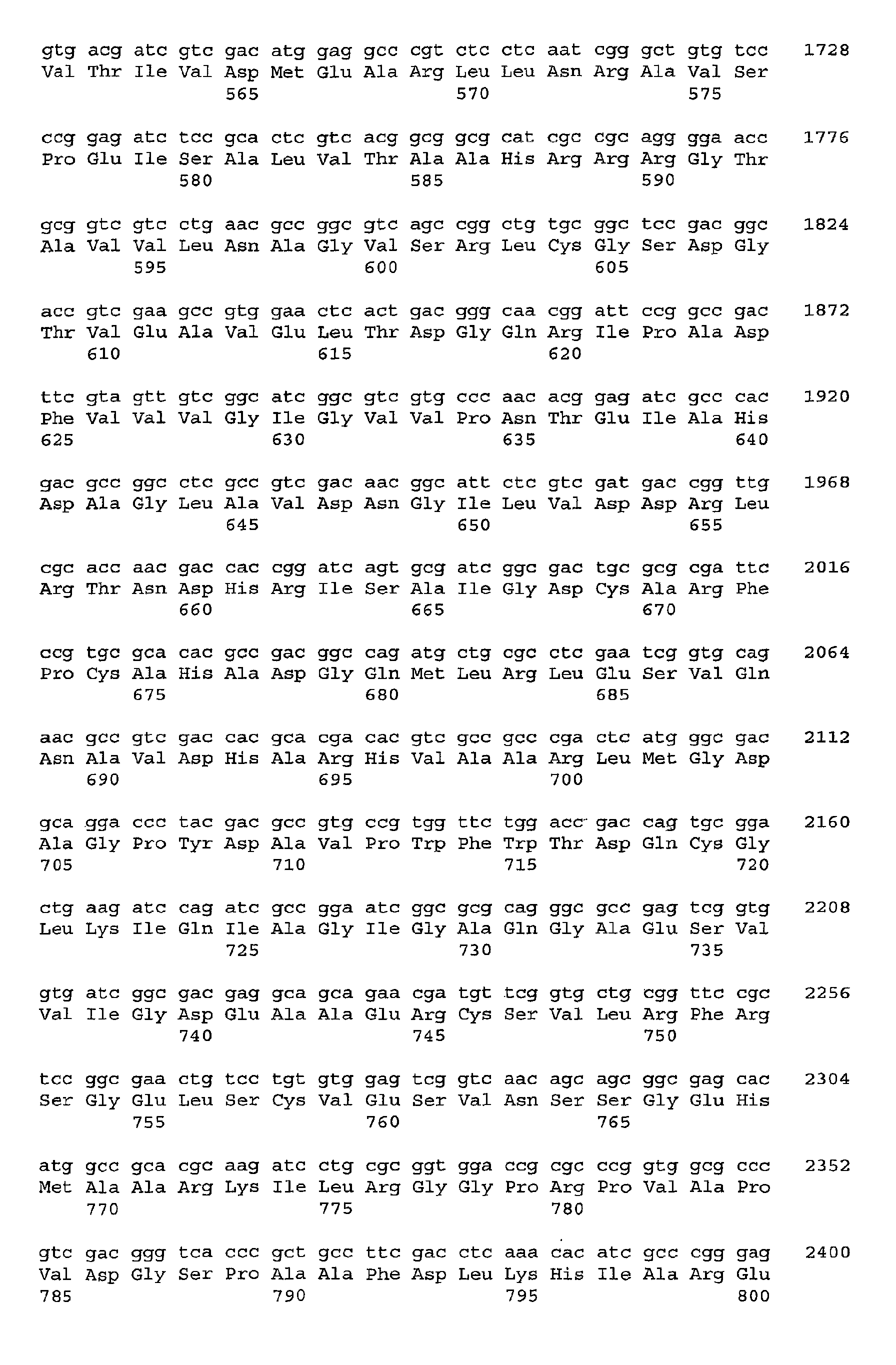
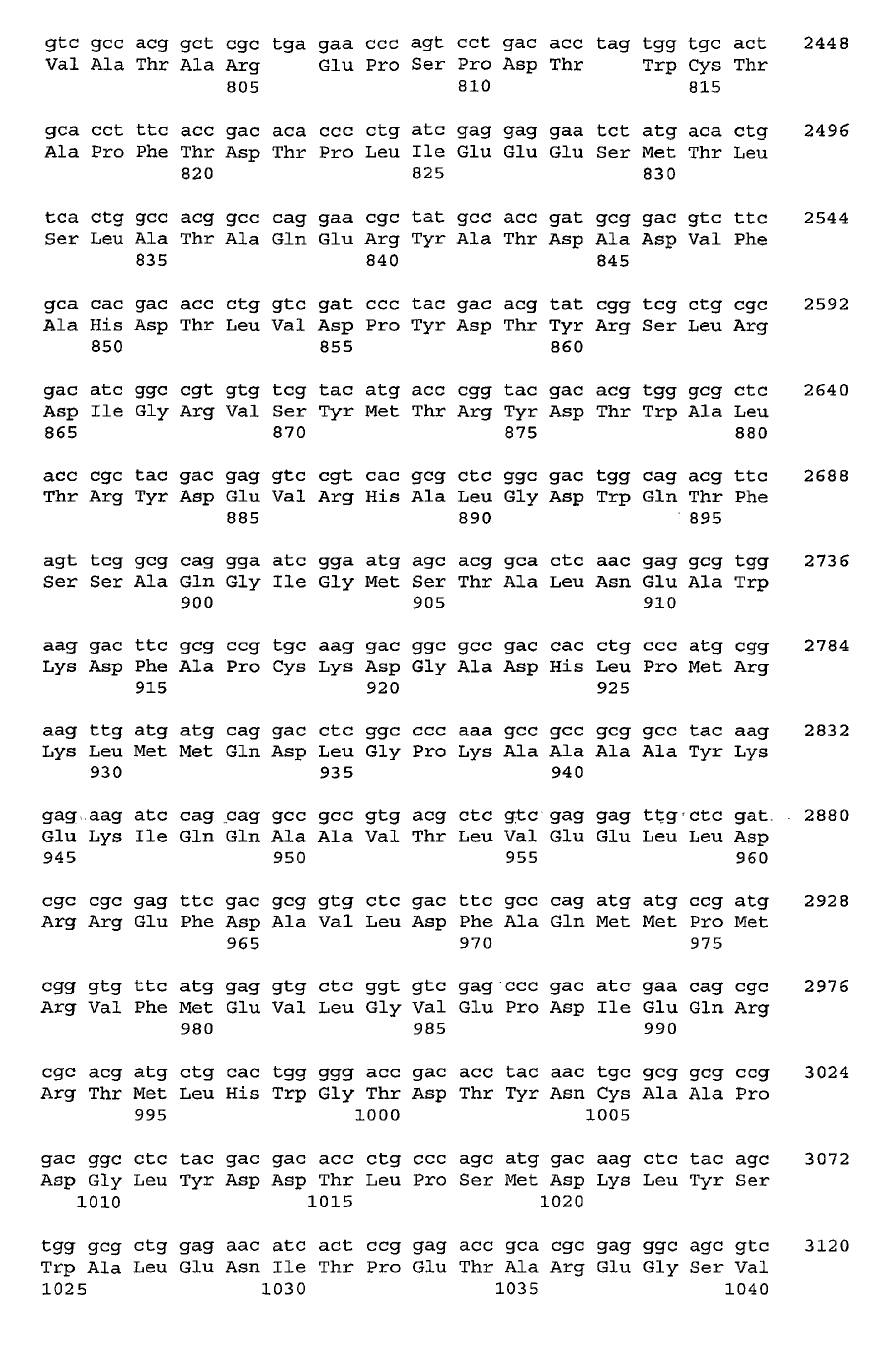
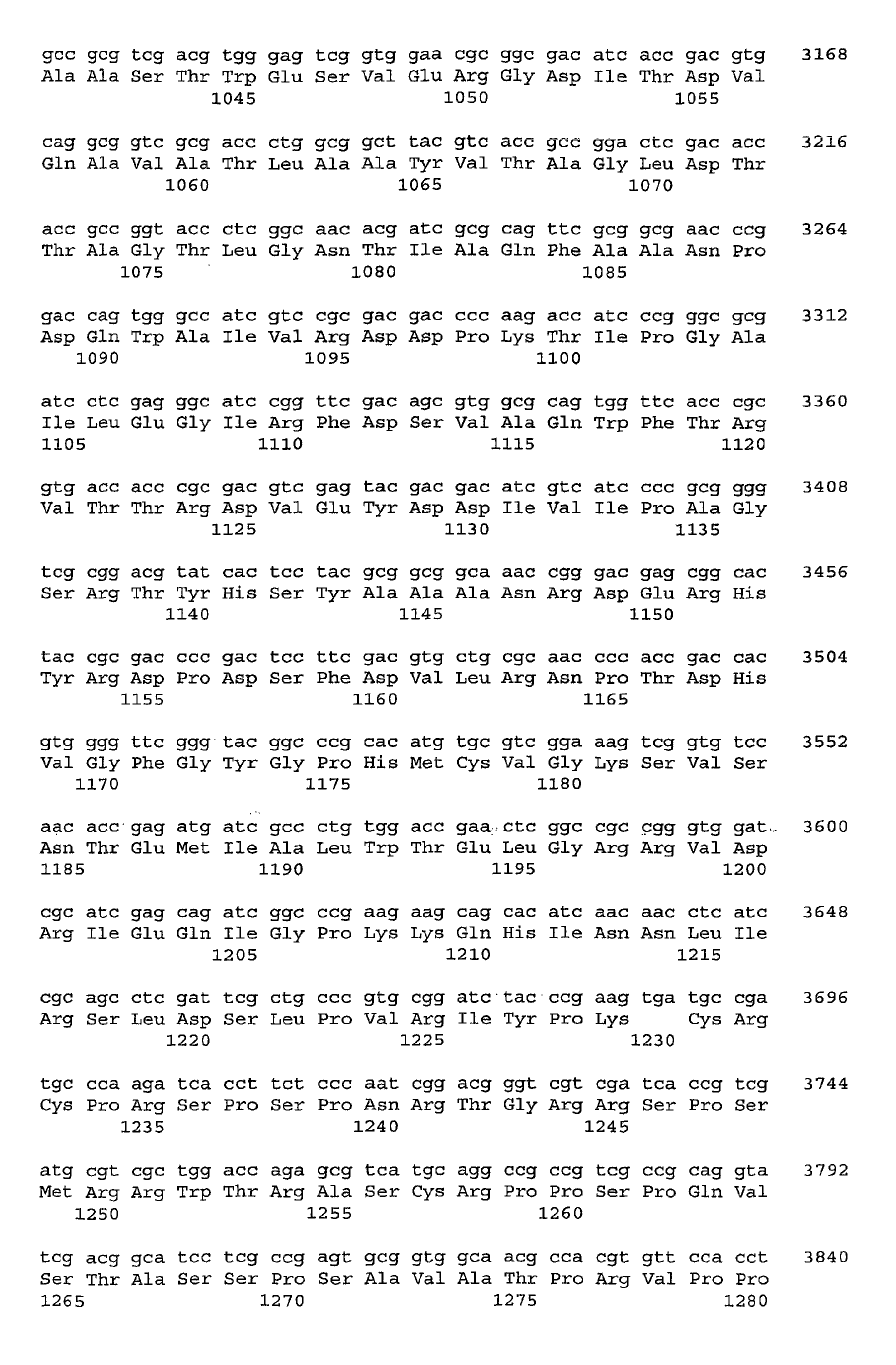
- the present invention is directed to a cytochrome P-450 gene cluster involved in the cleavage of ether fuel additives. More especially, the present invention pertains to the nucleic acid sequence of genes responsible for the biodegradation of ethyl tert -butyl ether (ETBE) in Rhodococcus ruber, and to several applications ensuing from the knowledge of this sequence, such as probes and biosensors for detecting a pollution by an ether fuel, and for assessing the potential of a contaminated soil or effluent to cleave said ether fuel. The invention also pertains to methods for rendering a cell able to cleave ether fuel additives, and to bacteria useful for ether fuel depollution of a contaminated soil or effluent.
- EBE ethyl tert -butyl ether
- Methyl tert- butyl ether (MTBE) and ethyl tert -butyl ether (ETBE) are used as additives in unleaded gasoline. These ethers were originally used to enhance the octane number of gasoline.
- the octane number also called Antiknock Rating, measures the ability of a fuel to resist knocking when ignited in a mixture with air in the cylinder of an internal-combustion engine. The octane number is determined by comparing, under standard conditions, the knock intensity of the fuel with that of blends of two reference fuels: iso-octane, which resists knocking, and heptane, which knocks readily.
- the octane number is the percentage by volume of iso-octane in the iso-octane/heptane mixture that matches the fuel being tested in a standard test engine.
- MTBE and ETBE are also used as oxygenates, to raise the oxygen content of gasoline, in order to improve combustion efficiency, thereby reducing emissions of unburnt hydrocarbons to the atmosphere.
- concentrations up to 15% (v/v) MTBE can be used in oxygenated gasoline, making MTBE one of the main organic chemicals produced in the United States.
- ETBE is used in some European countries and its interest resides in its potential to increase the market for ethanol, as ETBE is manufactured from ethanol and isobutene. ETBE also has technical superiority compared to MTBE, in terms of lower vapor pressure and higher octane number.
- ethers are relatively nontoxic. However, the carcinogenicity of these compounds is still uncertain. Moreover, their unpleasant taste and odor at very low concentrations render water unfit for drinking, making these xenobiotic compounds important pollutants.
- MTBE and ETBE were oxidized to tert -butyl alcohol (TBA) which was further oxidized to products not effective for growth of the propane oxidizers. Oxidation of both MTBE and TBA involves a soluble cytochrome P-450 which corresponds most likely to the propane mono-oxygenase (PMO).
- PMO propane mono-oxygenase
- Fayolle et al. first isolated two bacterial strains capable of using ETBE as the sole source of carbon and energy (11). They identified these two strains as actinomycetes Gordonia terrae and Rhodococcus equi, but further studies, based on the analysis of 16S RNA sequences, showed that these strains were Rhodococcus ruber and Rhodococcus zopfii, respectively. Both strains stoichiometrically convert ETBE into TBA, which accumulates in the culture medium. R.
- ruber is unable to use MTBE or tert -amyl methyl ether (TAME) as the sole carbon and energy source, but can degrade MTBE or TAME, to TBA or tert -amyl alcohol (TAA), respectively, after growth on ETBE (18).
- TAME tert -amyl methyl ether
- TAA tert -amyl alcohol
- the same enzyme system accounts for the degradation of MTBE, TAME, ETBE and presumably other ether fuels, as shown in Example 9.
- One mole of oxygen is consumed per mole of ETBE degraded, which suggests that scission of the ether bond proceeds through hydroxylation by a monooxygenase, yielding a hemiacetal intermediate which spontaneously dismutates into TBA and acetaldehyde.
- the most likely monooxygenase candidate is an inducible cytochrome P-450, which was detected as a peak at 447 nm in the carbon monoxide difference spectrum
- the invention provides means for ether fuel cleavage by an oxidative process, therefore providing means for degrading components of gasoline causing problems when spilled in the environment owing to their high solubility in water or to their poor biodegradability. It results from the genomic characterization of wild-type R. ruber and of spontaneous mutants of R. ruber unable to use ETBE as the sole source of carbon and energy. Loss of the ability to degrade ether fuel additives such as ETBE was shown to result from a chromosomal deletion secondary to a recombination between direct repeats.
- the eth cluster an operon (hereafter termed the eth cluster), encoding a cytochrome P-450 system, whose expression was induced by ETBE, demonstrating its essential role in the cleavage of ether fuels by R. ruber.
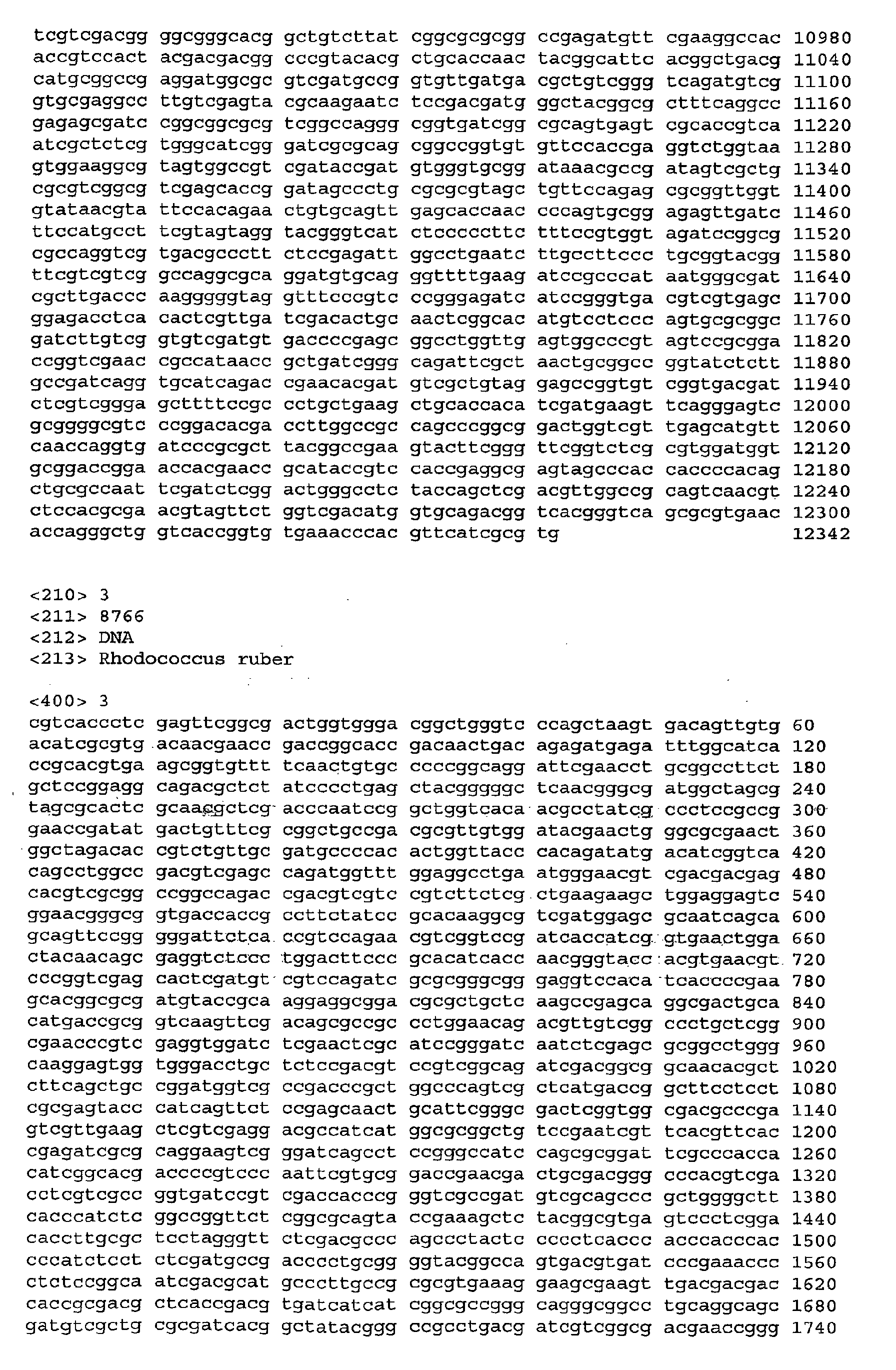
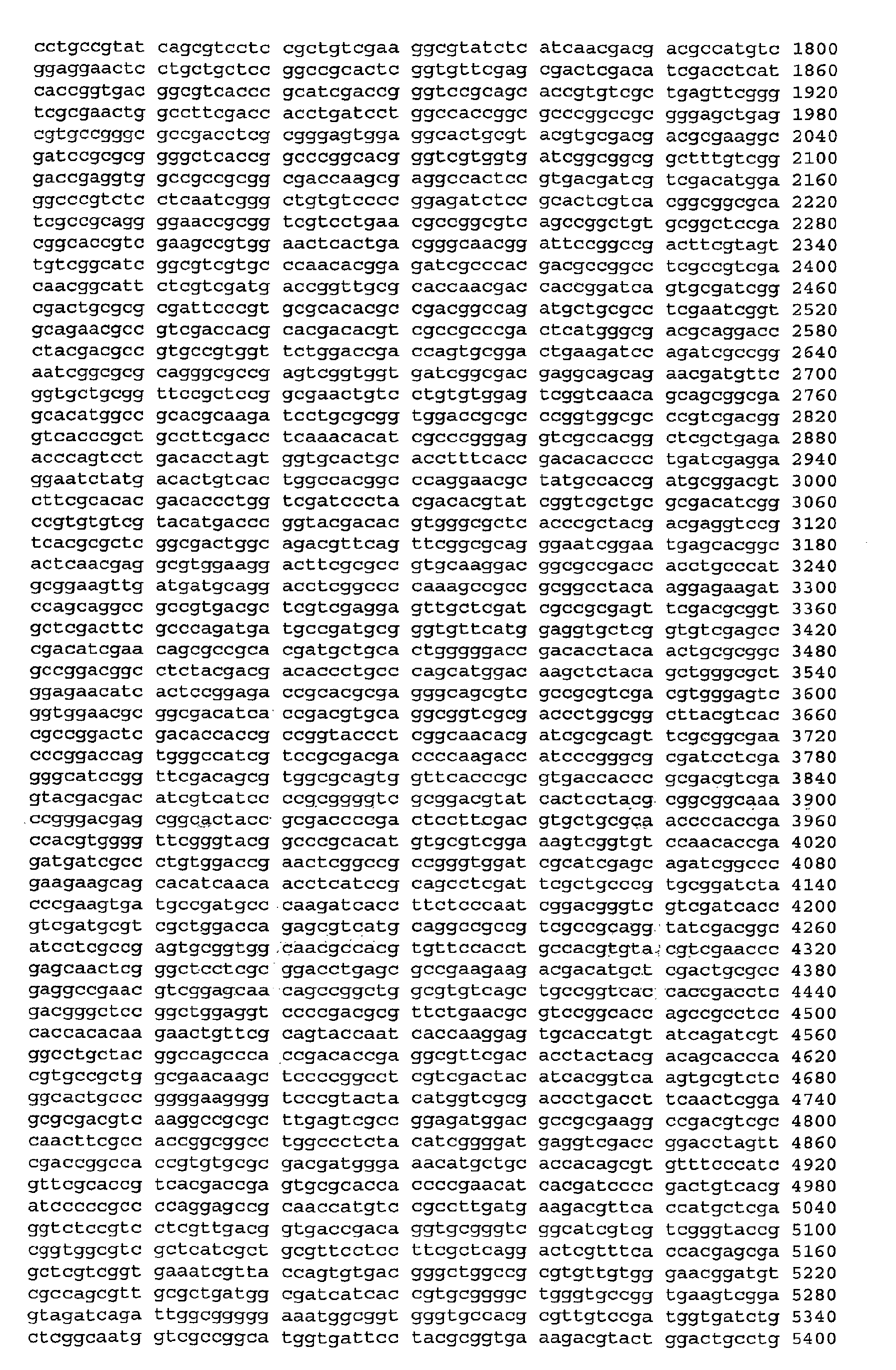
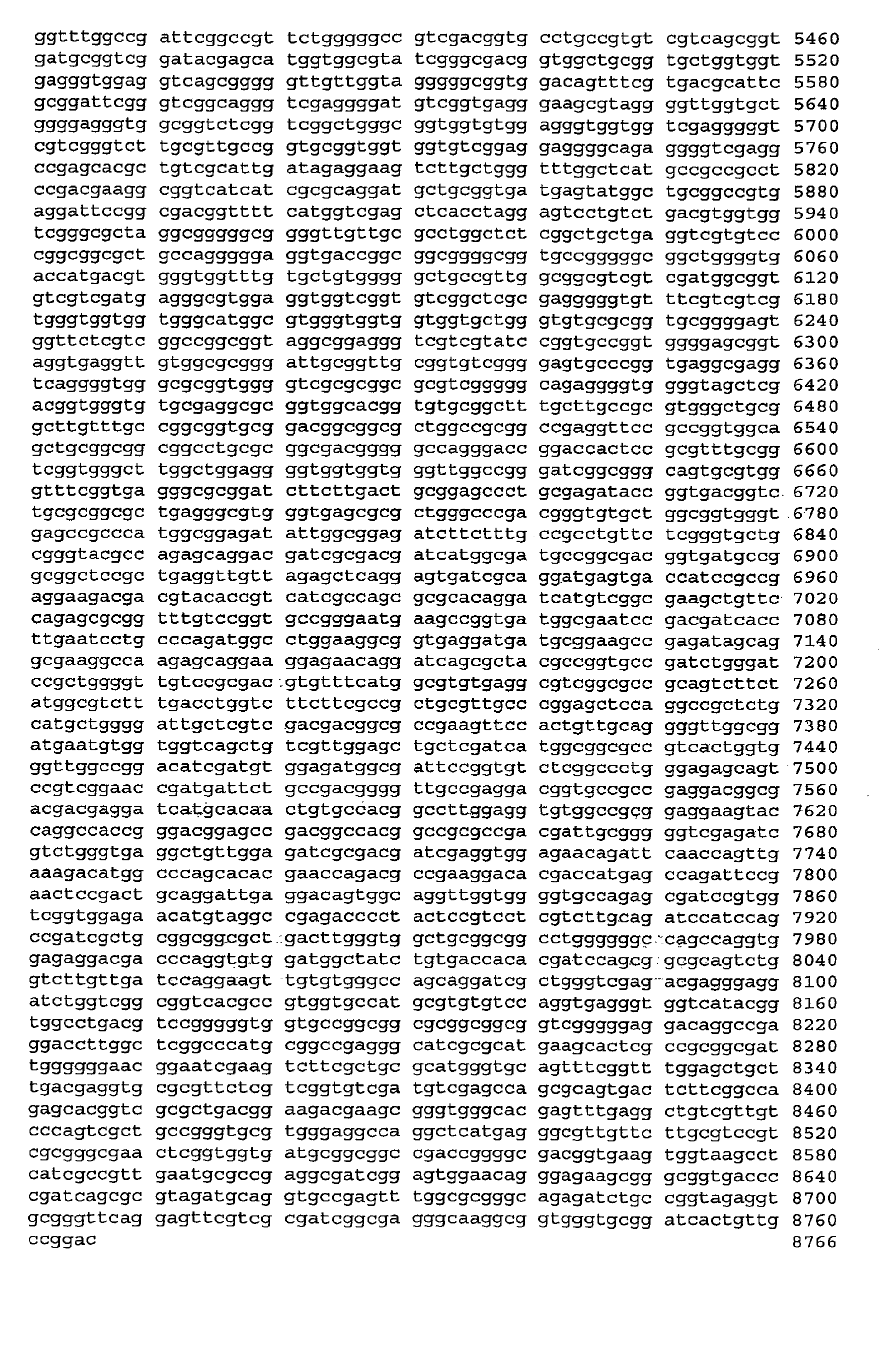
- Figure 4A represents the restriction map of a 23.7 kpb BamH I fragment of SEQ ID No: 1, comprising a duplicated region of 5.6 kpb (hatched boxes, SEQ ID No:4) flanking a 8.7 kbp region (SEQ ID No: 3) which includes the eth cluster.
- Figure 4B represents the same BamH I fragment, after the deletion of a 14.3 kpb of SEQ ID No: 2, by chromosomal rearrangement between the two duplicated regions.
- Rhodococcus equi now identified as Rhodococcus zopfii
- Rhodococcus zopfii Rhodococcus zopfii
- the inventors have shown that the ethB gene present in R. zopfii exhibits more than 98% identity with that of R. ruber (previously identifies as G. terrae ) (Example 10).
- Probes derived from the ethB gene of R. ruber hybridize to restriction fragments of the R. zopfii genome which have the same size as those from the R. ruber DNA.
- ETBE-degrading bacteria possess cytochrome P-450 systems highly similar to that of R. ruber , as shown in Examples 9 and 10.
- the inventors have also shown (Example 12) that the R. ruber mutant lacking the eth cluster can recover the ability to use ETBE as a carbon source after being transformed by a plasmid comprising the eth cluster.
- the invention therefore pertains to isolated nucleic acid sequences hybridizing to the DNA sequences of the genes responsible for the degradation of ETBE in a strain initially identified as Gordonia terrae (11), now identified as Rhodococcus ruber on the basis of 165 RNA sequence analysis. This strain was deposited at the Collection Nationale de Cultures de Microorganismes (CNCM) under the reference 1-1889.
- the invention also pertains to vectors comprising at least one of these nucleic acid sequences, and to recombinant bacteria containing at least one of these vectors.
- the invention also concerns probes and primers specific for the eth cluster, methods and biosensors for identifying the presence in a sample of a microorganism comprising this cluster and, if necessary, for isolating such microorganisms.
- the present invention also pertains to biosensors for detecting a pollution by ETBE or other ether fuel additives, as well as to processes for depolluting an effluent, a soil or a sludge contaminated with an ether fuel, by the use of a microorganism, recombinant or not, which exhibits the properties of the eth cluster.
- ether fuel additive designates a compound comprising an ether function and which is used in gasoline to improve combustion efficiency and/or to enhance the octane number of said gasoline.
- the most commonly used ether fuel additives are the methyl tert -butyl ether (MTBE) widely used in the US, and the ethyl tert -butyl ether (ETBE) mainly used in Europe.
- Other ether fuel additives are presently tested, such as tertiary amyl methyl ether (TAME) and tertiary amyl ethyl ether (TAEE).
- TAME tertiary amyl methyl ether
- TAEE tertiary amyl ethyl ether
- Further ethers may be used in the future as fuel additives and exhibit technical superiority compared to the presently used ether fuel additives.
- the phrase "ether fuel” is also used to designates the above-defined compounds.
- “Stringent hybridization conditions” are defined here as conditions that enable specific hybridization of two single-strand DNA molecules at about 65°C, for example in a solution of 6X SSC, 0.5% SDS, 5X Denhardt's solution and 100 ⁇ g/ml of denatured unspecific DNA, or any other solution of equivalent ionic strength, and after a washing step performed at 65°C, for example in a solution of at most 0.2X SSC and 0.1% SDS, or any other solution of equivalent ionic strength.
- stringency conditions can be adapted by the skilled artisan, depending on the size of the hybridizing sequence, its GC content and any other parameter, for example according to the protocols that are described in Sambrook et al., 2001 (Molecular Cloning : A Laboratory Manual, 3 rd Ed., laboratory press, Cold Spring Harbor, New York).
- a sequence S2 is "derived from” a sequence S1 if S2 is a fragment of S1, or a variant of S1, or a variant of a fragment of S1.
- a sequence comprising S1 or a fragment of S1, or a variant of S1, or a variant of a fragment of S1 is said “derived from” S1 as well.
- a “fragment” is longer than 10 nucleotides, preferably longer than 20 nucleotides, and even more preferably longer than 50 nucleotides.
- a "variant" of a nucleotide sequence designates a sequence which is at least 60%, and preferably at least 80% identical to said nucleotide sequence, the percentage of nucleic acid identity between two nucleic acid sequences being calculated using the BLAST software (Version 2.06 of September 1998).
- a bacterium B2 will be said "derived from” a bacterium B1 if B2 has been obtained by sub-cloning B1 cells, optionally after culturing B1 in specific conditions, or after introducing a foreign DNA into B1 cells.
- a bacterium B2 can be derived from B1 by chromosomal rearrangement.
- a "functional variant" of a protein P1 designates a protein P2 which can complement the absence of P1 in a biological process in which P1 is usually involved.
- a functional variant of EthB is able to replace the native EthB in the cytochrome P-450 system in such a way that this system keeps its ability to degrade ETBE.
- An "ETBE-negative" bacterium means here a bacterium which cannot degrade ETBE, whereas an “ETBE-positive” bacterium is able to degrade ETBE, whatever the degradation product(s) obtained.
- a first embodiment of the present invention is an isolated nucleic acid sequence which specifically hybridizes under stringent conditions with the genome of Rhodococcus ruber I-1889, as deposited at the Collection Nationale de Culture de Microorganismes (CNCM) and does not hybridize under stringent conditions with the genome of a bacterial cell derived from Rhodococcus ruber I-1889 by chromosomal rearrangement resulting in a 14.3 kbp deletion including the eth gene cluster and the loss of the ability to degrade ETBE.
- CNCM Collection Nationale de Culture de Microorganismes
- nucleic acids designated here are nucleic acids which hybridize with the DNA fragment that is absent in a bacterial cell derived from Rhodococcus ruber I-1889 by chromosomal rearrangement resulting in a 14.3 kbp deletion including the eth gene and do not hybridize with the sequences flanking said eth gene cluster.
- nucleic acids designated here are nucleic acids which hybridize with the DNA fragment of Rhodococcus ruber I-1889 eth gene cluster which is a 8.7 kpb fragment represented by the white box between the two hatched boxes in Figure 4A (SEQ ID No: 3).
- Such a nucleic acid can also be "derived from" SEQ ID No:3 as defined above.
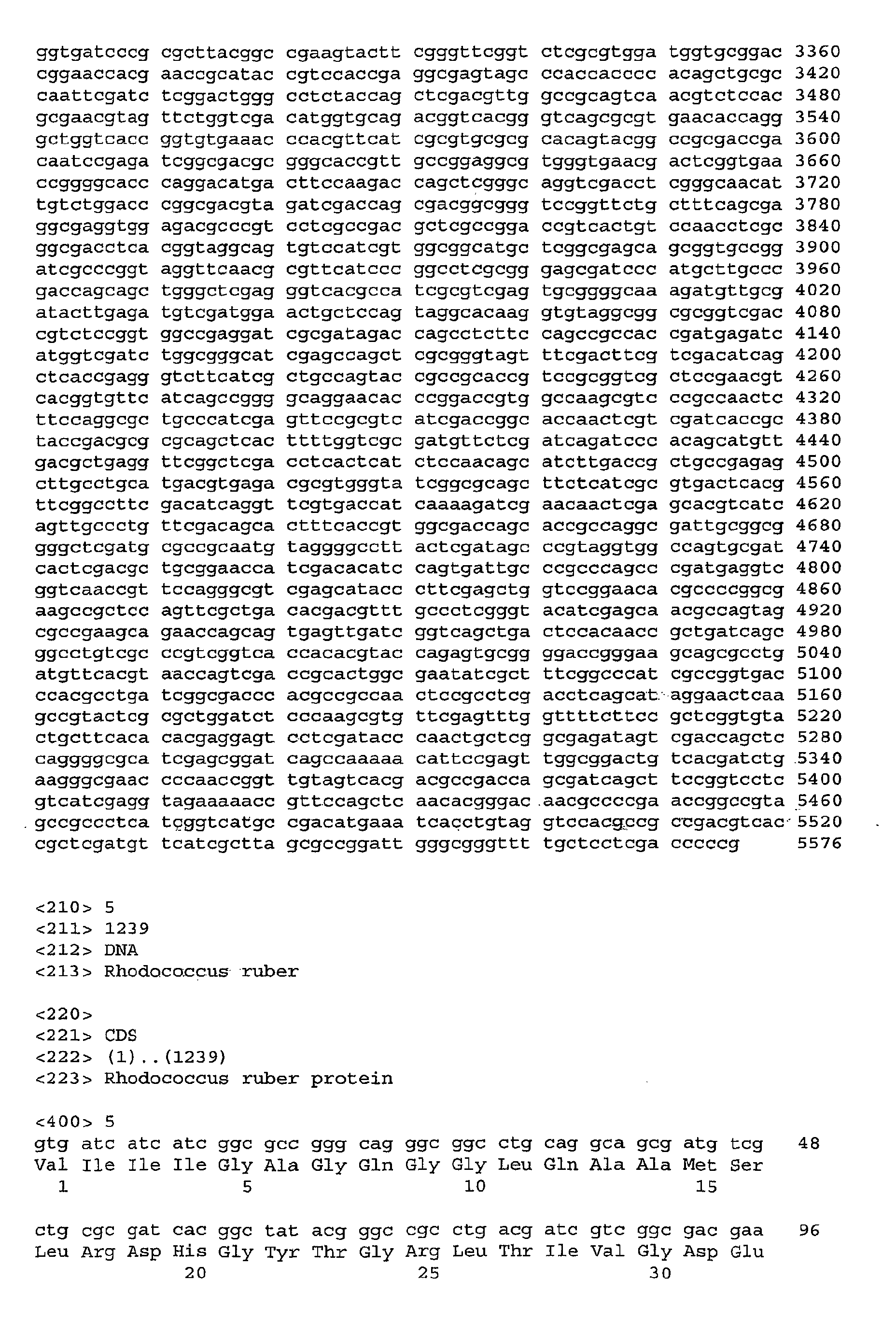
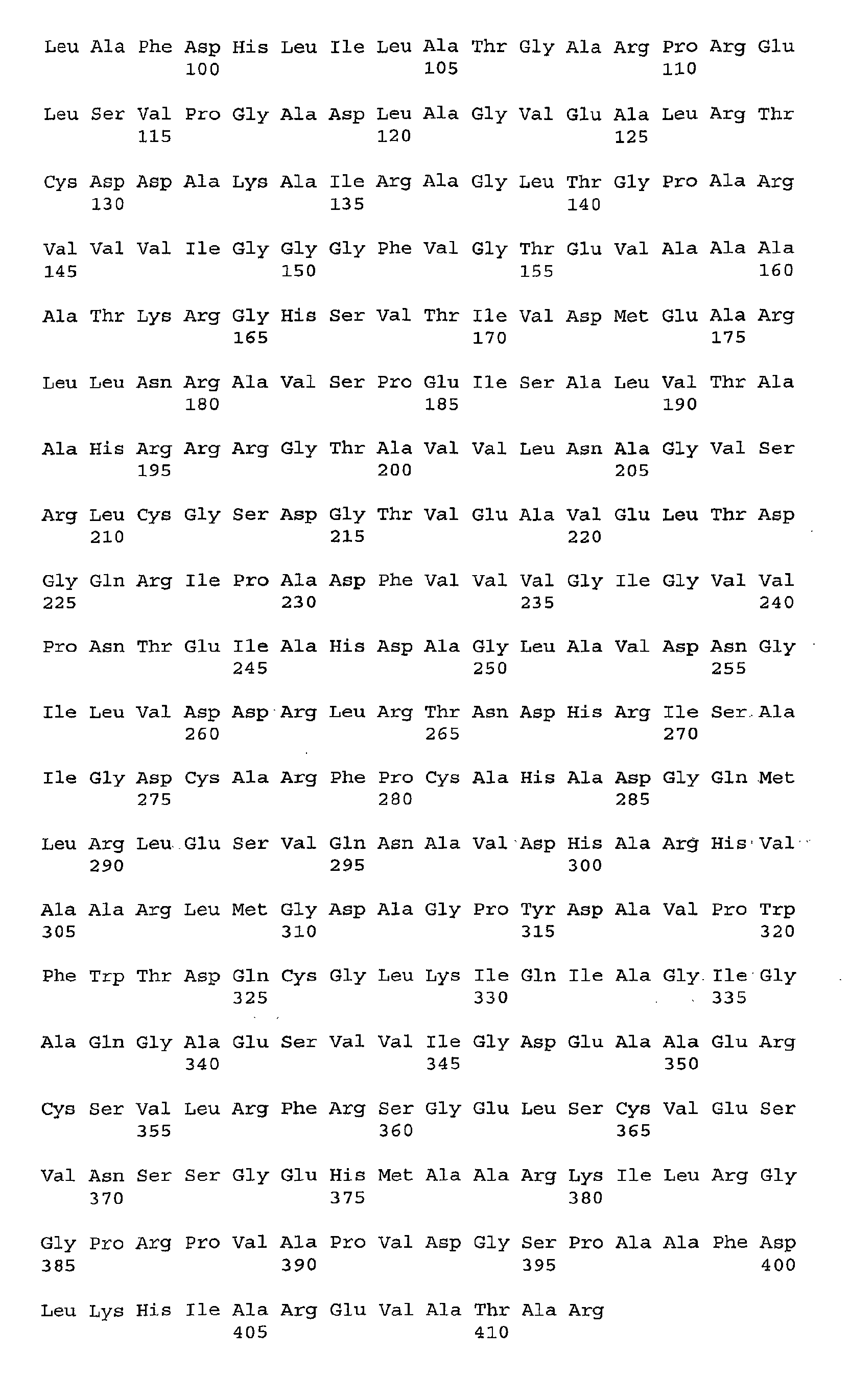
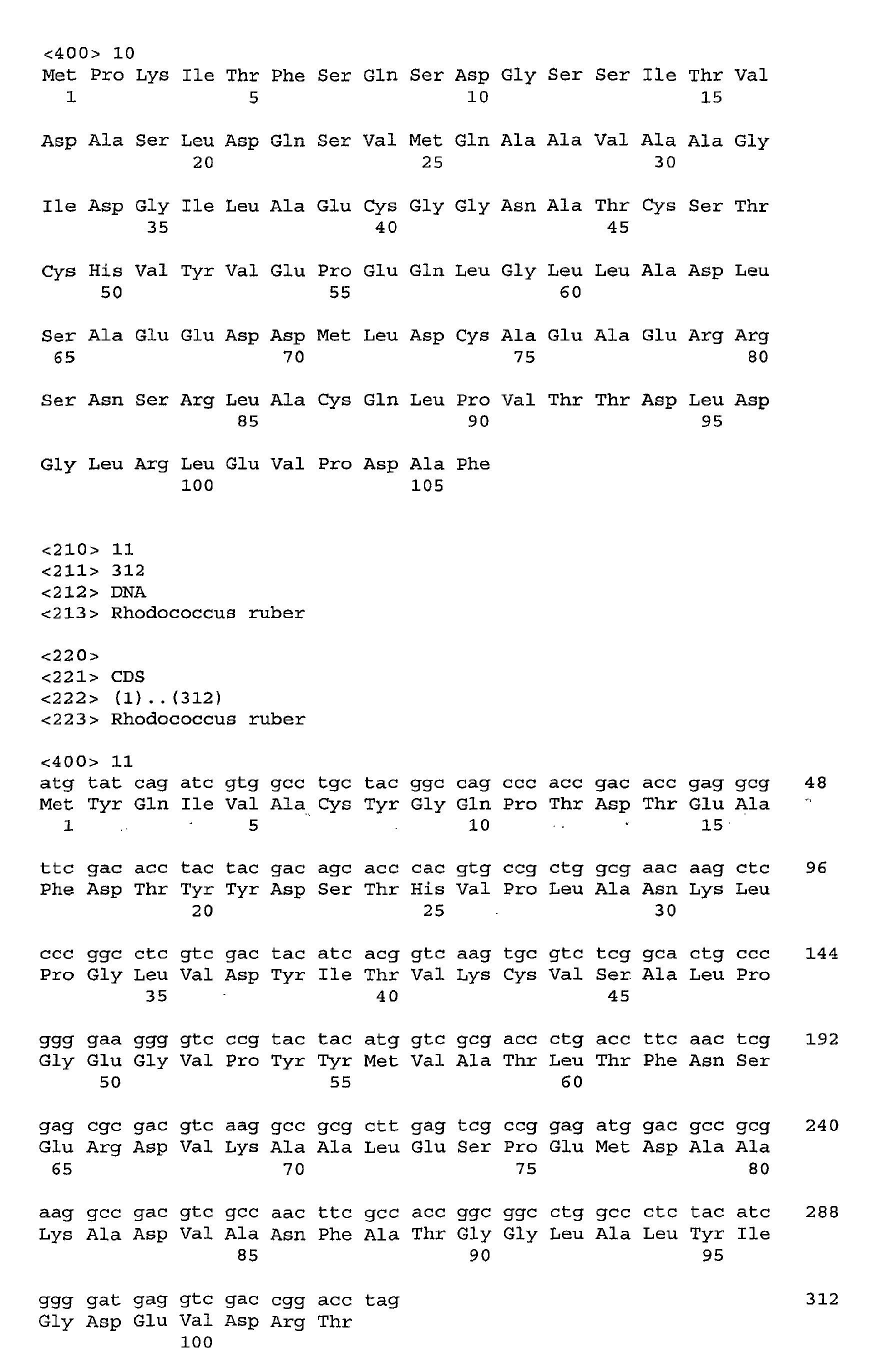
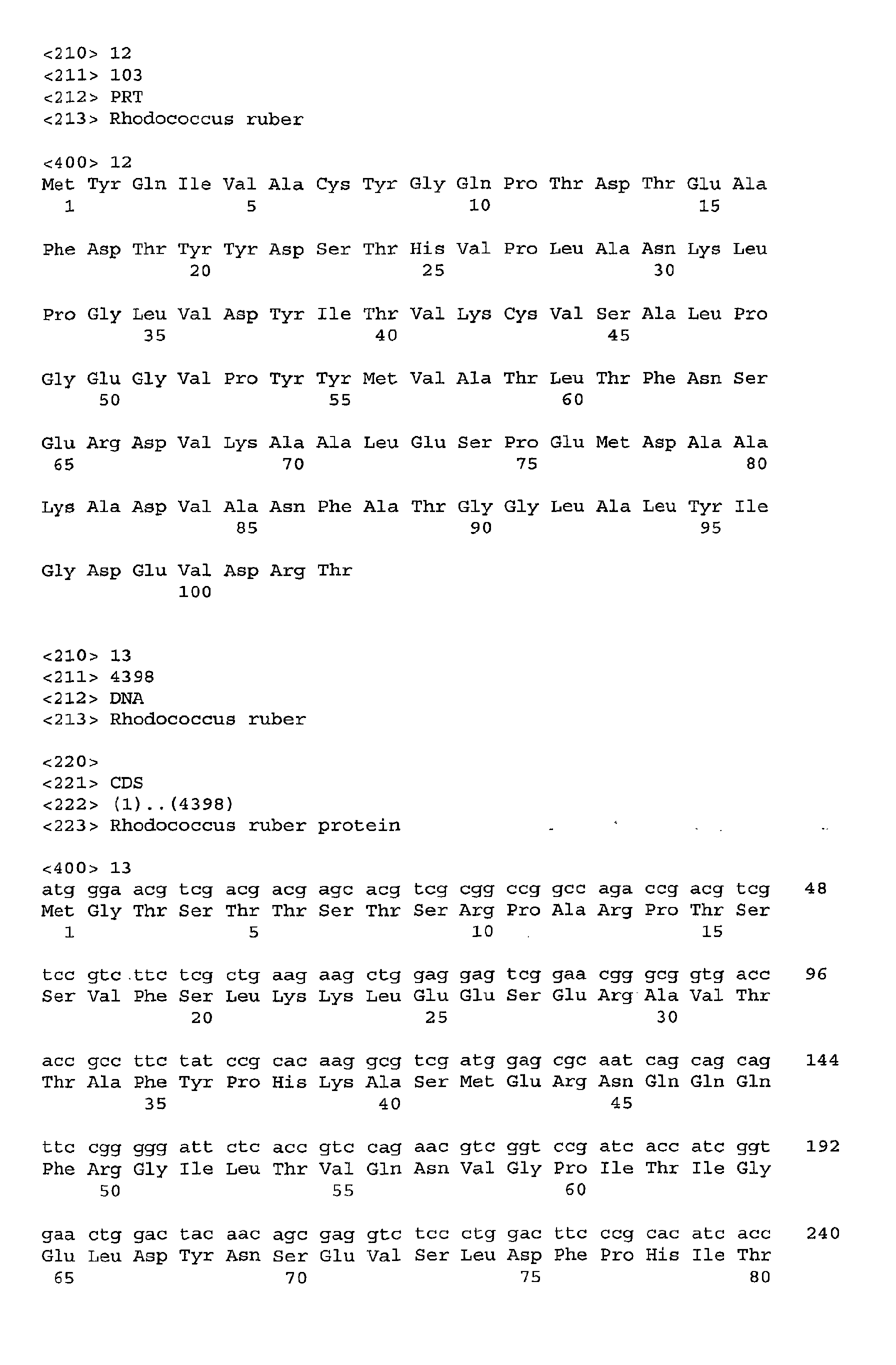
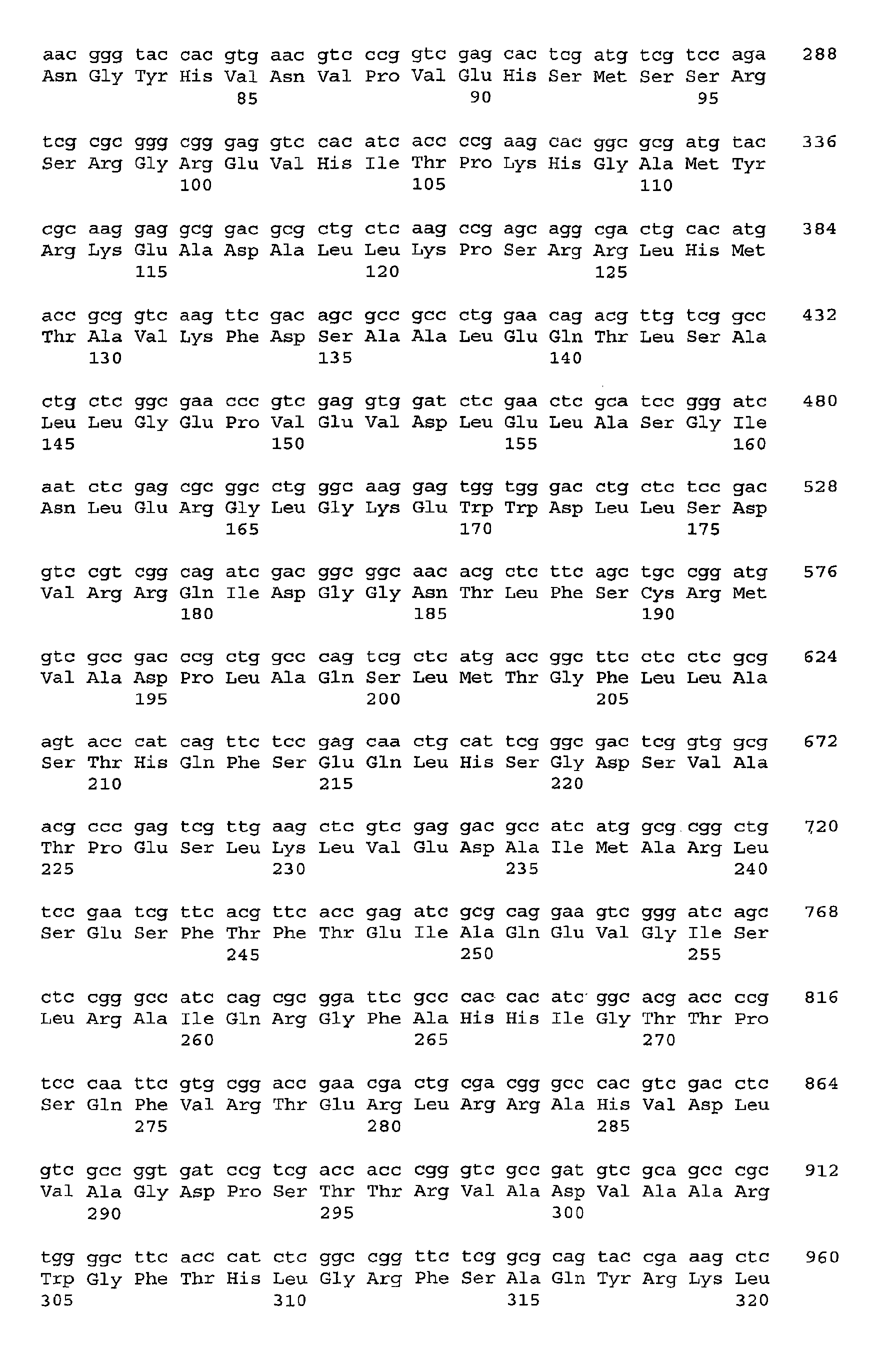
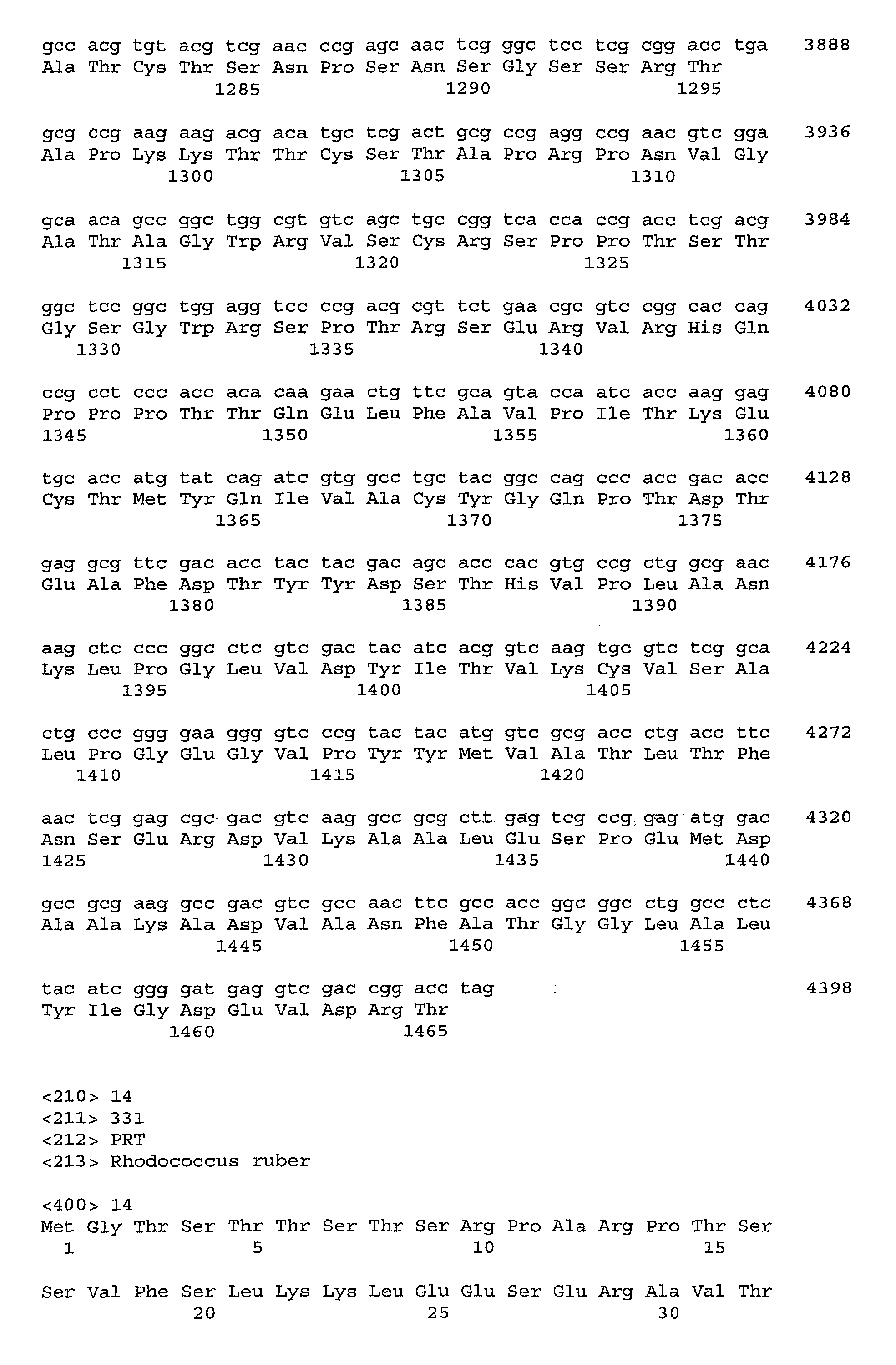
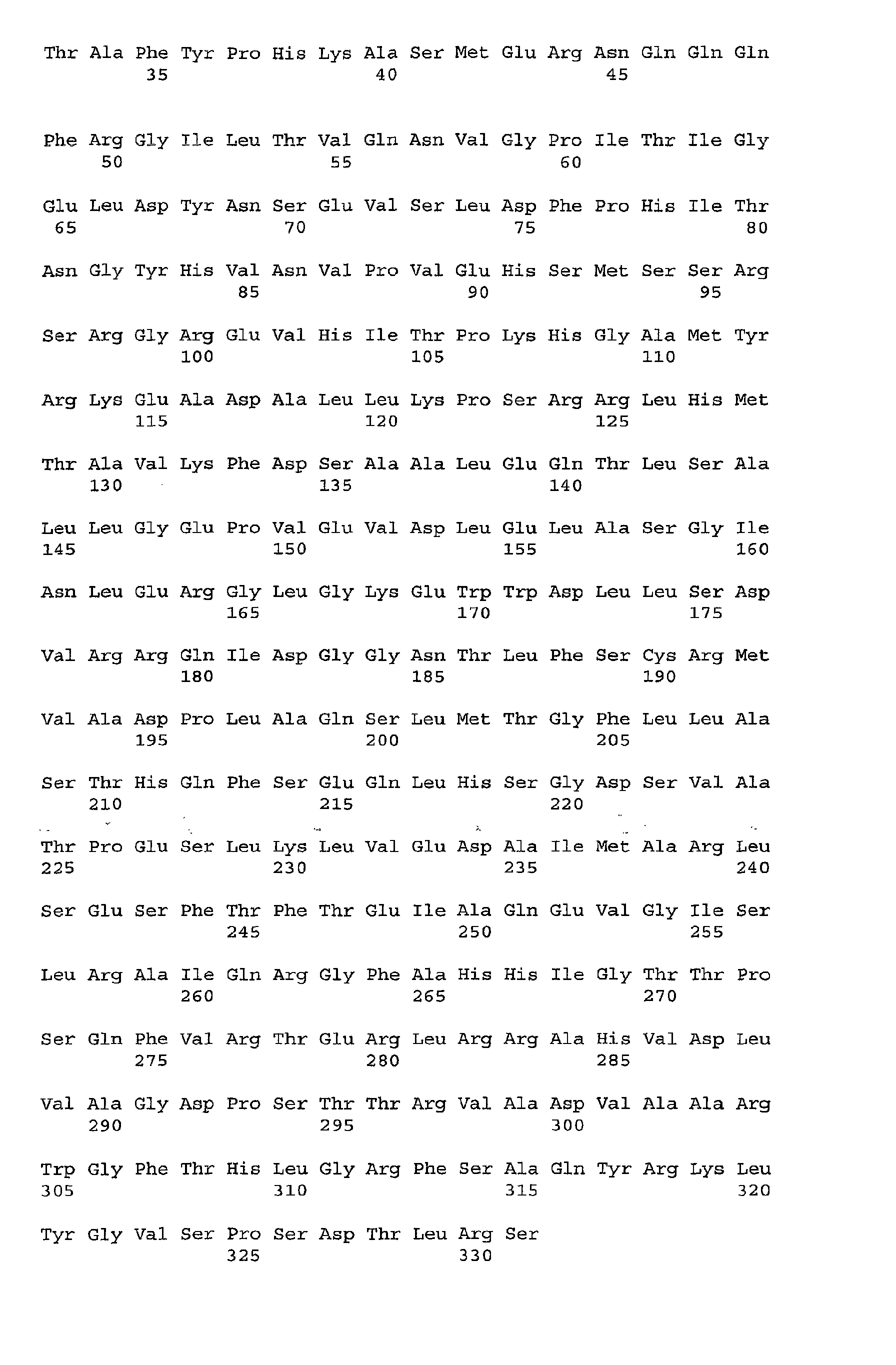
- the application pertains to an isolated nucleic acid sequence which specifically hybridizes under stringent conditions with at least one of the nucleic acids of SEQ ID No: 5, 7, 9, 11, or 13 ( ethA, B , C, D or R ORF, respectively), wherein said nucleic acid sequence encodes a protein of SEQ ID No: 6, 8, 10, 12 or 14, respectively, or a functional variant thereof, according to the above definition.
- a third aspect of this invention pertains to an isolated nucleic acid sequence having the following properties:
- the application hence pertains to a nucleic acid which can trans -complement the genome of an ETBE-negative Rhodococcus ruber bacterium in order to render this bacterium ETBE-positive.
- This nucleic acid does not necessarily contain the whole SEQ ID No: 2.
- some parts of this sequence can be deleted and/or substituted by a different sequence.
- the ethR gene can be deleted and the eth promoter replaced by a strong constitutive promoter.
- any of the ethA, B, C, and D ORFs can be replaced by a sequence encoding a functional variant of Eth A, B, C, and D, respectively.
- Such a variant can be obtained by mutagenesis or by DNA shuffling between homologous genes of different bacteria, and functional screening to find a variant which is at least as functional as the natural Eth A, B, C, or D.
- the present invention also pertains to a vector comprising any nucleic acid of the invention as described above.
- a vector encoding EthR as a transcriptional activator for an heterologous gene is within the scope of the present invention.
- a vector of the invention can be for example a plasmid, a cosmid, a phage or a virus.
- a recombinant Escherichia coli bacterium comprising a vector as described above was deposited at the Collection Nationale de Cultures de Microorganismes (CNCM) on April 19, 2001, under the name of Escherichia coli K12 (pGT220) and number 1-2662. This bacterium is part of the invention as well.
- the invention also pertains to a nucleic acid probe for the detection or characterization of bacterial strains able to degrade ether fuel additives, which hybridizes under stringent conditions with
- Another object of the present invention is a nucleic acid primer specifically hybridizing with a DNA sequence of SEQ ID No: 1, wherein said primer can be used for the amplification of a DNA sequence included in SEQ ID No: 1 by any means, for example by PCR.
- a preferred primer of the invention specifically hybridizes with a DNA sequence of SED ID No: 3.
- the invention also pertains to an antibody specifically binding to a polypeptide of SEQ ID No: 6, 8, 10, 12 or 14.
- an antibody can be obtained, for example, by immunizing an animal with a polypeptide of SEQ ID No: 6, 8, 10, 12 or 14, or with a truncated form of these polypeptides, or with a fusion protein comprising part of these polypeptides.
- a binding assay can be performed with said antibody, using protein extracts from Rhodococcus ruber I-1889 and from a R.
- ruber ETBE-negative bacterium derived from Rhodococcus ruber I-1889 by chromosomal rearrangement resulting in a 14.3 kbp deletion including the eth gene cluster. If the signal obtained with the extract from the ETBE-positive bacterium is significantly higher than that obtained with the extract from the ETBE-negative mutant, the tested antibody is in the scope of the present invention.
- This assay can be performed using the protocols of Sambrook et al., 2001 (Molecular Cloning : A Laboratory Manual, 3 rd Ed., laboratory press, Cold Spring Harbor, New York) for the preparation of protein extracts and for testing the binding affinity of the antibody to said extracts, for example by Western blot.
- the inventors have demonstrated that the ethB gene encodes a cytochrome P-450 of SEQ ID No: 8, or a variant thereof, which catalyzes the oxidation of ETBE.
- This cytochrome P-450 is also part of the present invention, as well as the other proteins EthA, EthC, EthD and EthR expressed by the open reading frames ethA, ethC, ethD and ethR, respectively.
- Eth A is similar to a glutathione reductase-like ferrodoxin
- Eth C is a putidaredoxin-type [2Fe-2S] ferrodoxin which probably serves as an electron carrier between the NADH-dependent ferredoxin reductase (EthA) and the cytochrome P-450 (EthB).
- EthA NADH-dependent ferredoxin reductase
- EthB cytochrome P-450
- Eth D is more abundant in R. ruber in the presence of ETBE suggests that this polypeptide interacts with the cytochrome P450 as well.
- Any complex of at least two polypeptides from the group of Eth A, Eth B, Eth C and Eth D is also part of this invention.
- Rhodococcus ruber I-1889 often looses its ability to degrade ETBE by chromosomal rearrangement resulting in a 14.3 kbp deletion including the eth gene cluster, and that this rearrangement occurs between two 5.6 kpb duplicated sequences (of SEQ ID No: 4).
- this rearrangement occurs between two 5.6 kpb duplicated sequences (of SEQ ID No: 4).
- a recombinant bacterium derived from Rhodococcus ruber I-1889 by deletion of all or part of at least one copy of the DNA fragment of SEQ ID No: 4 is also in the scope of the present application.
- the invention also pertains to a recombinant bacterium comprising any above-described nucleic acid molecule or vector of the invention.
- This bacterium can comprise a vector encoding the whole eth gene cluster, or only part of this cluster.
- a bacterium comprising a plasmid encoding a gene responsible for the degradation of TBA (which is a degradation product of ETBE), said gene being under the control of a promoter including the ethR ORF, is in the scope of this invention.
- TBA which is a degradation product of ETBE
- Such a bacterium could advantageously be used with Rhodococcus ruber I-1889 to completely degrade ETBE, because the genes for both the degradation of ETBE and TBA would be induced by ETBE.
- a preferred embodiment of this invention is a recombinant bacterium as described above, which is able to degrade ETBE and other ether fuels.
- Another preferred embodiment of this invention is a recombinant bacterium which can use ETBE as sole source of carbon.
- cytochrome P-450 system involved in ETBE degradation by R. ruber provides new insights into the biodegradation mechanism, and therefore into the bioremediation process, of gazoline oxygenates. For instance, it would be interesting to transfer the eth genes into a TBA-degrading strain, in order to produce a recombinant strain which would mineralize ETBE completely. Therefore, a recombinant bacterium comprising a vector encoding the eth genes, which is capable of degrading one ether fuel and its degradation products, for example cleaving ETBE and also capable of degrading TBA, is in the scope of the present invention. In a preferred embodiment of the recombinant bacteria of the invention, these bacteria are capable of completely mineralizing ETBE, which means degrading these compounds to innocuous compounds , such as CO 2 and water.
- Another aspect of the invention is a method for rendering a cell able to cleave ether fuel additives, comprising the step of introducing into said cell a nucleic acid or a vector encoding at least part of the Eth proteins, or functional variants thereof, as described above.
- a method for improving the efficiency of ether fuels degradation is also considered here. This can be achieved for example, by increasing the copy number of the eth gene cluster in a cell, or by driving the expression of the eth genes from a promoter stronger than the natural one.
- EthB cytochrome P-450
- the cell to be rendered capable of cleaving ether fuel additives is preferentially a bacterium.
- this method can be performed on a plant, fungal or yeast cell.
- the invention also pertains to a method for identifying in a complex mixture the presence of a microorganism comprising at least part of the eth gene cluster able to confer to a bacterial strain the ability to cleave an ether fuel additive, comprising the step of contacting said sample with a nucleic acid probe and/or an antibody as mentioned above.
- a method for identifying in a complex mixture the presence of a microorganism comprising at least part of the eth gene cluster able to confer to a bacterial strain the ability to cleave an ether fuel additive, comprising the step of performing a DNA amplification with at least one primer as described above, is also part of the present invention.
- the detection is performed using hybridization with a probe, antibody binding, or amplification with primers
- the skilled artisan is able to adapt the detection means to the kind and amount of sample treated and the treatment used.
- the probe or the primers can be radiolabelled or fluorescent, or even coupled to an enzyme.
- the complex mixture can be for example a sample of water, soil, sludge, sediment, dredge tailing, gas or chemical waste.
- the invention further pertains to a biosensor comprising a nucleic acid as described above (isolated fragment, vector, probe, primer,...), and/or an antibody specifically binding to a polypeptide encoded by one of the genes of the eth gene cluster, i.e., a polypeptide of any of SEQ ID No: 6, 8, 10, 12 or 14.
- the invention also pertains to a method for isolating a microorganism able to cleave ether fuel additives, comprising the step of detecting the presence or absence in a sample, of the eth gene cluster included in SEQ ID No: 3 or a sequence derived from SEQ ID No: 3.
- SEQ ID No: 3 corresponds to the DNA fragment which is absent from the genome of a bacterial cell derived from Rhodococcus ruber I-1889 by chromosomal rearrangement resulting in a 14.3 kbp deletion including the eth gene cluster and the loss of the ability to degrade ETBE.
- a method for isolating a microorganism able to cleave ether fuel additives comprising the step of detecting the presence or absence in a sample, of a nucleic acid hybridizing under stringent conditions with a nucleic acid probe as described above, is part of the invention as well.
- the nucleic acid probe is specific for the sequence of SEQ ID No: 3.
- the invention also pertains to a bacterium which is able to cleave an ether fuel additive, and which has been identified and/or isolated by a method as described above.
- Another bacterium according to the invention is a recombinant bacterium comprising a reporter gene under the control of the eth promoter. Indeed, the inventors have shown that the expression of two polypeptides, EthB and EthD, is induced upon growth on ETBE (Examples 1 and 5 below). This demonstrates that the promoter of the eth cluster is inducible by ETBE. Therefore, a bacterium comprising a transcriptional fusion between the eth cluster (involving at least the eth promoter and ethR ), and a reporter gene can be used for the detection of a pollution by ETBE.
- the reporter gene can code for any reporter protein known in the art, for example a bioluminescent protein such as luciferase, or an enzyme such as peroxydase or beta-galactosidase, and the means to reveal the expression of said reporter gene are known by the skilled artisan.
- a bioluminescent protein such as luciferase
- an enzyme such as peroxydase or beta-galactosidase
- a bacterium as described in the preceding paragraph can be used in a process for detecting a contamination by an ether fuel additive such as ETBE in an aqueous effluent, a soil, a sludge, a sediment, a dredge tailing, a gas or a chemical waste, comprising the step of contacting said aqueous effluent, soil, sludge, sediment, dredge tailing, gas or chemical waste with said bacterium.
- This process is also part of the present invention, as well as a microbial whole cell biosensor comprising a bacterium as described in the above paragraph, for detecting the presence of a contamination by an ether fuel additive, such as ETBE, in a complex mixture.
- Another aspect of the present invention is a process for depolluting an aqueous effluent, a soil, a sludge, a sediment, a dredge tailing, a gas or a chemical waste contaminated with an ether fuel such as ETBE, comprising the step of contacting said effluent, soil, sludge, sediment, dredge tailing, gas or chemical waste with a bacterium able to degrade at least said ether fuel, as described above.
- said bacterium able to degrade the ether fuel is a recombinant bacterium bearing all or part of the eth gene cluster.
- said bacterium able to degrade the ether fuel is a bacterium which has been identified by a method as described above.
- the depollution takes place in a bioreactor.
- bioreactors known to those of skill in the art may be used in the practice of the present invention.
- Suspended growth reactors such as membrane bioreactors, standard continuously stirred tank reactors (CSTRs) and activated sludge systems may be used in the practice of the invention.
- CSTRs continuously stirred tank reactors
- activated sludge systems may be used in the practice of the invention.
- fixed film reactors such as fluidized bed reactors or fixed support reactors, may also be used, if desired.
- the depollution takes place in situ, by addition of recombinant bacteria capable of cleaving ether fuel additives as described above to the contaminated medium.
- the bacteria can further contain a susceptibility gene that prevents their uncontrolled spread in the environment, by addition of a product that will kill them selectively when they are not necessary anymore.
- the bacteria can be confined in biobarriers, biofilters, and/or biopiles.
- biobarriers, biofilters, and biopiles are commonly used by the skilled artisan to prevent the spreading of a pollution, for example when disposed between the pollution source and ground water located downstream of said pollution.
- the present invention includes also within its scope the use of one or more microorganisms in combination with one or more of the microorganisms described herein to achieve complementary degradation against a mixture of contaminants which includes an ether, for example, in the treatment of mixed waste streams.
- Such a combination utilizes the different degradative specificities of the involved microorganisms. Accordingly, for certain applications, a given contaminated medium may be treated with microorganisms having different specificities for given contaminants or their degradative intermediates.
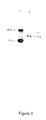
- FIG. 1 10-15%-polyacrylamide gradient gel electrophoresis containing SDS.
- R. ruber crude extracts of wild type (I-1889 designated as IFP 2001) and the constitutive mutant ( I-2194 designated as IFP 2007) were analysed after growth in the presence of ethanol (EtOH) or ETBE as the sole source of carbon.
- EtOH ethanol
- ETBE ethanol
- the migration of molecular size markers (in kDa) is indicated on the right.
- FIG. 1 Pulsed-field gel electrophoresis of Xba I-digested chromosomal DNA from wild type (I-1889) and ETBE-negative mutants of R. ruber.
- the arrows designate the 125-kb band of the wild type strain and the 110-kb band of the mutants.
- the migration of the 50-kb concatemers of lambda DNA is indicated on the left.
- FIG. 3 Southern blot hybridization of BamH I-digested chromosomal DNA from the wild type strain (1) and an ETBE-negative mutant (2), using the Bam HI-fragment of 7.4 kbp as a probe. The size of hybridizing bands is indicated in kbp.
- Figure 4 Wild type genetic organization of the 23.7 kbp region carrying the genes involved in the ETBE degradation (A) and restriction map of the 9.3-kbp Bam HI fragment of the ETBE-negative mutant (B).
- the eth genes encode a transcriptional activator (EthR), a ferredoxin reductase (EthA), the ETBE-inducible cytochrome P-450 (EthB), a ferredoxin (EthC) and an ETBE-inducible unknown protein (EthD).
- the other open reading frames shown correspond to a resolvase (TnpR), transposase (TnpA), two-component system response regulator (truncated Orf1'), integral membrane protein (Orf2), sodium:solute symporter (Orf3), membrane protein (truncated Orf7') and three unidentified proteins (Orf4, Orf5 and Orf6).
- FIG. 1 Regions of the genomes of strains of R. ruber I-1889, R. zopfii I-2053, and Gordonia sp IFP 2009 probably sharing high similarity.
- the position of the R. ruber ethB probe is shown by a white rectangle.
- Genomic fragments of similar size hybridising to the ethB probe in R. ruber I-1889 and in the other strains tested are shown by black rectangles.
- R. ruber I-1889, or I-2194 was grown at 30°C in Luria-Bertani (LB) medium, or in minimum medium MM1 which contained 50 mM KH 2 PO 4 , 50 mM K 2 HPO 4 , 0.16 mM MgSO 4 , 1.9 mM Na 2 HPO 4 , 28 mM NH 4 Cl, 0.27 mM CaCl 2 , 4.4 ⁇ M FeCl 3 , 200 ⁇ g/l biotine, 50 ⁇ g/l riboflavine, 50 ⁇ g/l nicotinic acid, 50 ⁇ g/l calcium panthotenate, 50 ⁇ g/l p-aminobenzoic acid, 20 ⁇ g/l folic acid, 15 ⁇ g/l thiamine hydrochoride, 1.5 ⁇ g/l cyanocobalamine, with 200 mg/l ETBE (Aldrich Chemical Co.), or 0.5% ethanol as the sole carbon
- Pulsed-field gel electrophoresis Pulsed-field gel electrophoresis.
- Plugs were incubated in 0.5 M EDTA for 24 h at 37°C, then washed in TE and incubated in 1% (w/v) sodium N-lauroylsarcosinate (Fluka) and 2 mg/ml proteinase K for an extra night at 55°C. Plugs were washed in TE and incubated in TE containing 4 ⁇ g/ml phenylmethylsulfonyl fluoride (Sigma Chemical co.) for 1 h at 55°C to inactivate proteinase K. Finally, plugs were extensively washed in TE and digested with 3 U/ml Xba l .
- Chromosomal DNA was extracted with phenol and with chloroform. Precipitation was performed with 1/10 volume of 1 M NaCI and 2 volumes of ethanol. About 800 ⁇ g DNA was recovered by hooking it on the end of a Pasteur pipet and was resuspended in TEN.
- Chromosomal DNA was digested with Bam HI and fragments of the appropriate size were electroeluted from an agarose gel. Cloning was carried out using pUC18 (37) linearized with Bam HI, treated with bacterial alkaline phosphatase and formulated with T4 DNA ligase (Ready-To-Go from Amersham-Pharmacia-Biotech). E. coli was transformed by electroporation and plated in the presence of 100 ⁇ g/ml ticarcillin. Colonies of recombinant clones were transferred to Nylon filters (Hybond-N+; Amersham-Pharmacia-Biotech). Filters were placed colony side up in all the following operations.
- Cell lysis was performed by placing the filters on an absorbent filter paper soaked in 2 X SSC (0.3 M NaCI, 0.03 M sodium citrate), 5% SDS and incubating for 10 min. Membranes were then transferred to dry filter paper. DNA fixation and denaturation were carried out by exposure to 650 watts microwaves for 2 min. Filters were washed in 5 X SSC, 0.1% SDS at 65°C for 30 min. Lysate left on the surface of the filters was scratched up with a gloved finger. Membranes were rinsed in 2 X SSC and transferred to dry filter paper.
- Hybridizations of DNA probes proceeded in Rapid-Hyb buffer (Amersham-Pharmacia-Biotech) from 2 h to overnight incubations at 65°C. Unspecific hybridizations were removed by washing the membranes twice in 1 X SSC, 0.1% SDS at 65°C for 30 min.
- DNA probes were purified from agarose gels using the QIAquick gel extraction kit (Qiagen). DNA was labelled with [ 32 P]dCTP using the random prime labelling system (rediprime II, Amersham-Pharmacia-Biotech). Labelled DNA was purified from unincorporated nucleotides using a Sephadex G-50 column (Nick Columns, Amersham-Pharmacia-Biotech).
- the plasmids were fragmented by nebulization and gel-purified fragments in the range of 1-2 kbp were cloned in the pcDNA2.1 vector using the non-palindromic cloning method as described before (12).
- the inserts of randomly chosen clones of the small-insert library were sequenced from both ends using a Perkin Elmer automated sequencer ABI 3700. The sequences were assembled using the Phred, Phrap and Consed software tools (9, 10).
- Example 1 Identification of Rhodococcus ruber proteins induced in the presence of ETBE.
- Figure 1 shows an SDS-polyacrylamide gel analysis of crude extracts prepared from R. ruber cells grown on ethanol and on ETBE. Two polypeptides of 43 and 10 kDa were clearly induced in the wild type upon growth on ETBE. They were also present, although less abundant, in cells of a previously isolated constitutive mutant I-2194 (18). Peptide microsequencing yielded the partial sequences HALGDWQTFSSAQGI, FDSVAQWFTR, and SVSNTEMIALWTELG for the 43-kDa protein and GQPTDTEAFDTYYS for the 10-kDa protein.
- the first sequence, HALGDWQTFSSAQGI was 66% identical to a putative cytochrome P-450 from Mycobacterium tuberculosis H37Rv (Genpept Z177137_5), suggesting that the 43-kDa polypeptide may be the inducible cytochrome P-450 observed in ETBE-grown G terrae cells by Hernandez-Perez et al. (18).
- the GQPTDTEAFDTYYS sequence was 47% identical to Orf4 from Rhodococcus erythropolis (Genpept U17130_4).
- the R. erythropolis orf4 gene is part of a cytochrome P-450 gene cluster suggesting that the inducible 10-kDa polypeptide is related to a cytochrome P-450 system.
- Example 2 Isolation of independent ETBE-negative mutants.
- Example 3 Evidence for a 15-kbp chromosomal deletion in ETBE-negative mutants.
- Xba I-genomic digests of wild type and mutant strains were analyzed by pulsed-field gel electrophoresis (Fig. 2).
- a 125-kbp fragment was present in the wild type strain and was absent in the ETBE-negative mutants.
- a 110-kbp fragment was observed in the ETBE-negative mutants only.
- Southern blot hybridization revealed that the wild-type 125-kbp fragment used as a probe hybridized with the mutant 110-kpb fragment, showing that the 110-kpb fragment was a deleted form of the 125-kbp fragment. This result indicated that ETBE-negative mutants resulted from a 15-kbp chromosomal deletion. Since all independant mutants showed the same genotype, a single mutant was used for further investigation.
- Example 4 Cloning of the wild type DNA region corresponding to the deletion.
- the wild-type Xba I-fragment of 125 kbp was purified from a pulsed-field gel electrophoresis gel and was used as a probe in Southern-blot analysis. Hybridization of the 125-kb Xbal probe with Bam HI-genomic digests showed that a 7.4-kbp band and a 16.3-kbp band, present in the wild type strain, disappeared in the ETBE-negative mutant. Conversely, a new 9.3-kbp band, which was absent in the wild type strain, was detected in the ETBE-negative mutant.
- the 7.4-kb Bam HI probe also hybridized with the 16.3-kbp Bam HI fragment of the wild type and with the 9.3-kbp Bam HI fragment of the ETBE-negative mutant. This indicated that the wild-type 7.4-kbp fragment carried a sequence that was also present in these two fragments.
- the wild type 16.3-kbp Bam HI fragment and the mutant 9.3-kbp Bam HI fragment were cloned by colony hybridization using the 7.4-kb Bam HI fragment as a probe.
- Example 5 ethA,B,C,D code for a cytochrome P-450 system.
- EthA (412 amino acids) is similar to glutathione reductase-like ferredoxin reductases. It contains amino acids typical of two ADP-binding ⁇ folds which encompass the completely conserved consensus motif GXGXXG (36).
- the N-terminal ADP-binding site (Val-1 to Asp-31) may constitute the FAD-binding site and the centrally-located ADP-binding site (Arg-144 to Asp-172) may constitute the NAD-binding site.
- EthB 400 amino acids corresponds to the ETBE-induced protein of 43 kDa, since it contains the three peptides that were sequenced.
- EthB is similar to cytochromes P-450, which suggests that EthB is the cytochrome P-450 catalyzing the oxidation of ETBE.
- EthB carries a cysteine residue at position 349, which is strictly conserved in all cytochromes P-450. This residue is part of the consensus FGXGXHXCXG and possibly provides anchoring of the heme in the active site of the cytochrome P-450.
- EthB The highest similarity score of EthB (33% identity) was found with a putative cytochrome P-450 from the phenanthrene-degrading actinomycete Nocardioides sp. (22). Among the characterized cytochromes P-450, EthB shows highest similarity (25% identity) to the Pseudomonas sp. cytochrome P-450terp, which hydroxylates the monoterpene ⁇ -terpineol as a step in the process of its catabolic assimilation (29).
- Two actinomycetal cytochromes P-450 also show 25% identity to EthB: NikQ from the antibiotic nikkomycin-producing Streptomyces tendae (24) and Orf3 from the drug mitomycin C-producing Streptomyces lavendulae (25).
- EthC (106 amino acids) is a putidaredoxin-type [2Fe-2S] ferredoxin which probably serves as an electron carrier between the NADH-dependent ferredoxin reductase (EthA) and the cytochrome P-450 (EthB).
- the four cysteine residues located at positions 40, 46, 49 and 76 of EthC correspond to the perfectly conserved residues that are required for coordinating the prosthetic group.
- EthD (103 amino acids) corresponds to the ETBE-induced protein of 10 kDa, since it carries the sequenced peptide.
- EthD is similar to three Orfs of unknown function: OrfY from Pseudonocardia sp. (Genpept AJ296087_1), an Orf from Bacillus halodurans (Genpept AP001507_200) and Orf4 from Rhodococcus erythropolis (Genpept U17130_4), which are 40, 34 and 40% identical to EthD, respectively.
- R. erythropolis orf4 belongs to the thc gene cluster which encodes a cytochrome P-450 system catalyzing the N-dealkylation of thiocarbamates (28).
- the thc cluster contains genes homologous to the eth genes of R. ruber.
- the thcB gene encodes a cytochrome P-450 showing 24% identity to EthB.
- the thcC and thcD genes encode a ferredoxin (named rhodocoxin) and a ferredoxin reductase, respectively, which are the closest relatives to EthC (48% identity) and EthA (47% identity), respectively (Fig. 5).
- Example 6 ethR encodes a transcriptional regulator of the AraC / XyIS family.
- the ethR gene lies 183 bp upstream of ethA (Fig. 4).
- EthR (331 amino acids) is highly similar to positive transcriptional regulators of the AraC/XylS family.
- the highly conserved C-terminal domain of regulators of the AraC/XyIS family is comprised between amino acids 250 and 325 of EthR (13).
- a putative DNA-binding motif was found in EthR between residues 244 and 265 using the method of Dodd and Egan (7).
- the most closely related member is R. erythropolis ThcR which is 31% identical to EthR (28).
- ThcR is the only member of the AraC/XylS family which shows significant similarity with EthR outside the conserved C-terminal domain of the family.
- the thcR gene is located upstream of the putative operon encoding the cytochrome P-450 system involved in the N-dealkylation of thiocarbamates.
- Example 7 Transposon repeats flanking eth genes.
- the 5.6-kbp repeat consists of a class-II transposon containing a terminal inverted repeat of 38 bp, a tnpA gene encoding a putative transposase, and an IS-interrupted tnpR gene. Discounting the entire IS sequence, the intact tnpR gene may encode a putative resolvase of 311 amino acids.
- the TnpA (1008 amino acids) and TnpR (311 amino acids) proteins show very high amino acid similarity to TnpA and Orf5, respectively, of the Streptomyces fradiae Tn 4556 transposon (34).
- the TnpA transposase of S. fradiae is the closest relative of G.
- Orf5 of S. fradiae Tn 4556 is a potential resolvase of Tn4556 whose similarity with R. ruber TnpR extends into the upstream region of this Orf, disregarding a TAG stop codon as mentioned by De Mot et al. (6).
- the deduced polypeptide of 324 residues is 31% identical to TnpR of R. ruber. The closest relative of R.
- ruber TnpR is Rhodococcus erythropolis PmrA (62% identity), which is a site-specific recombinase of the integrase family and may be involved in stabilization of the cryptic plasmid pFAJ2600 (6). Amino acid comparisons revealed that other proteins related to R. ruber TnpR are almost exclusively site-specific recombinases of the integrase family. This suggests that, unlike most resolvases of class-II transposons, TnpR belongs to the integrase family and not to the resolvase-invertase family of site-specific recombinases.
- the region coding for TnpR is interrupted by an insertion of 1409 bp at codon 180, introducing a stop codon at position 181.
- This 1409-bp insertion displays all structural characteristics of mobile elements of the IS3 family. Imperfect 45-bp inverted repeats flank a single open reading frame with a translational frameshift.
- the predicted protein is 420 amino acid long and shows extended similarity to several transposases of the IS3 family. The most closely related is the transposase of Mycobacterium avium IS999 (Genpept AF232829_2) which is 40% identical to the IS3-type transposase of R. ruber.
- the region coding for the R is interrupted by an insertion of 1409 bp at codon 180, introducing a stop codon at position 181.
- This 1409-bp insertion displays all structural characteristics of mobile elements of the IS3 family. Imperfect 45-bp inverted repeats flank a single open reading frame with a translational frameshift.
- ruber transposase of 420 amino acids overlaps two open reading frames in phase 0 and -1 encoding, respectively, the N-terminal (108 amino acids) and the C-terminal (312 amino acids) regions of the potential transposase.
- the translational frameshift may be a means of producing several proteins using the same coding region (5).
- Example 8 Genetic rearrangement promoting ETBE-negative mutants.
- the 9.3-kbp Bam HI fragment which is specific of ETBE-negative mutants.
- the genetic organization of the 9.3-kbp Bam HI fragment was determined by sequencing each end of the fragment (68 and 452 nucleotides, respectively) and by restriction analysis (Fig. 4).
- the 9.3-kbp Bam HI fragment corresponds to the wild type 23.7 kbp region deleted for one copy of the 5.6-kbp transposon and for the intergenic region between the two copies of the transposon. This deletion encompasses the eth gene cluster which is involved in ETBE degradation.
- the genetic organizations of the wild type and ETBE-negative mutants suggest that spontaneous loss of the ability to degrade ETBE results from an homologous recombination between the two identical direct repeats of the 5.6-kbp transposon.
- Example 9 Evidence that the genes located between the two transposon-like sequences participate in the cleavage of MTBE and tert-amyl methyl ether (TAME)
- Rhodococcus ruber I-1889 is able to degrade MTBE and tert- amyl methyl ether (TAME) to TBA and tert -amyl alcohol (TAA) when the ethers are added together with a substrate allowing growth as a carbon source (ref. 18: Hernandez-Pérez, Fayolle & Vandecasteele).
- TAME tert- amyl methyl ether
- TAA tert -amyl alcohol
- TBA and TAA were assayed by gas chromatography using a Peri 2000 chromatograph (Perichrom) equipped with a 3 m10% FFAP/Chromosorb 80-100 mesh and a flame ionization detector.
- the wild type cells had a specific activity of 31.9, 20.5 and 33;4 pmole min -1 O.D. 600 -1 against ETBE, MTBE and TAME respectively.
- the specific activity of the mutant strain was less than 1 pmole min -1 O.D. 600 -1 , showing that the genes present in the deleted segment were required for the degradation of the three substrates.
- Example 10 Evidence that other ETBE-degrading bacteria possess highly similar cytochrome P-450 systems, which can be amplified by PCR using primers derived from the sequence of ethB
- Rhodococcus zopfii deposited at CNCM on July 20, 1998, under the accession number I-2053 and Gordonia sp. IFP 2009, were tested for the presence of cytochrome P-450 systems similar to that encoded by ethRABCD gene cluster of R. ruber I-1889.
- Whole genomic DNA was extracted from Rhodococcus zopfii I-2053 and Gordonia sp.
- the expected DNA segment corresponds to the region encoding residues 59 to 365 of the R. ruber cytochrome P-450 polypeptide.
- Reaction mixtures contained 100 pmole of each primer, 50-100 ng of template DNA, 400 M of eachdNTP, and 2.5 units of LaTaqTM DNA polymerase (Takara Biomedicals) in 50 I GC buffer I (supplied by the manufacturer with DNA polymerase).
- the PCR cycler program was as follows: 4 min at 94°C, followed by 35 cycles: 1 min at 94°C, 1 min at 65°C, 1 min at 72°C. In either case, a 919 bp fragment was obtained, cloned into the pCR® 2.1-TOPO® vector supplied with the TOPO TA cloning kit (Invitrogen), and sequenced. For both .R.
- the sequence of the DNA amplified by the primers derived from R. ruber ethB was at least 98% identical with that of the corresponding region in R. ruber I-1889. Furthermore, the DNA segment amplified from R. ruber I-1889 was labelled and used as a probe against Southern blots of R. ruber I-1889, R. zopfii I-2053 and Gordonia sp. IFP 2009 digested with various restriction enzymes. As shown in Figure 6, in the three strains, the probe hybridised to a 3 kb Kpnl fragment covering the ethABCD genes and part of the ethR gene of R. ruber I-1889. In addition, R. ruber I-1889 and R. zopfii I-2053 shared a common 6.1 kb Pst I fragment hybridising to the ethB probe, which was not observed in Gordonia sp. IFP 2009.
- Example 11 Evidence that in other bacterial species degrading ETBE, the genes encoding the cytochrome P-450 system are flanked by duplicated transposon-like sequences similar to those present in R. ruber I-1889
- Example 12 Complementation of the R. ruber mutant by the ethRABCD gene cluster
- the Nhe I -Sac I DNA segment located between nucleotides 9328 and 14253 was recloned between the Xba l and Sac I sites of the pRE-7 vector (ref. Zheng, H., Tkachuk, O. & Prescott, J.F. 1997. Development of a R hodococcus equi-Escherchia coli plasmid shuttle vector. Plasmid 38 , 180-187).
- the recombinant plasmid, termed pGT222 was reintroduced into the strain of R. ruber harbouring the spontaneous deletion described above. Transformants were selected on LB containing 100 g/m I kanamycin. One of the R. ruber transformants was shown to recover the ability to grow using ETBE as a carbon source. This indicates that the region located downstream from the ethRABCD cluster is not required for ETBE utilization.
Landscapes
- Life Sciences & Earth Sciences (AREA)
- Engineering & Computer Science (AREA)
- Health & Medical Sciences (AREA)
- Chemical & Material Sciences (AREA)
- Wood Science & Technology (AREA)
- Genetics & Genomics (AREA)
- Microbiology (AREA)
- Molecular Biology (AREA)
- Organic Chemistry (AREA)
- General Health & Medical Sciences (AREA)
- Zoology (AREA)
- Biotechnology (AREA)
- Biomedical Technology (AREA)
- Bioinformatics & Cheminformatics (AREA)
- Soil Sciences (AREA)
- Medicinal Chemistry (AREA)
- Environmental & Geological Engineering (AREA)
- Biochemistry (AREA)
- General Engineering & Computer Science (AREA)
- Mycology (AREA)
- Micro-Organisms Or Cultivation Processes Thereof (AREA)
- Measuring Or Testing Involving Enzymes Or Micro-Organisms (AREA)
Abstract
Description















Claims (40)
- An isolated nucleic acid which specifically hybridizes under stringent conditions with the genome of Rhodococcus ruber as deposited at the Collection Nationale de Cultures de Microorganismes (CNCM) under the accession number I-1889, and which does not hybridize under stringent conditions with the genome of a bacterial cell derived from said Rhodococcus ruber I-1889 by chromosomal rearrangement resulting in a 14.3 kbp deletion including the eth gene cluster and the loss of the ability to degrade ETBE.
- An isolated nucleic acid which specifically hybridizes under stringent conditions with at least one of the nucleic acids of SEQ ID No : 5, 7, 9, 11, or 13 (ethA, B, C, D or R ORFs, respectively), wherein said nucleic acid encodes a protein of SEQ ID No: 6, 8, 10, 12 or 14, respectively, or a functional variant thereof.
- A nucleic acid having the following properties :a) it hybridizes under stringent conditions with a nucleic acid of SEQ ID No: 2;b) when transferred into a bacterial cell derived from Rhodococcus ruber as deposited at the Collection Nationale de Cultures de Microorganismes (CNCM) under the accession number I-1889 by chromosomal rearrangement resulting in a 14.3 kbp deletion including the eth gene cluster, it confers to this bacterium the ability to cleave ether fuel additives.
- A vector comprising a nucleic acid of any of claims 1 to 3.
- The vector of claim 4, which is a plasmid, a cosmid, a phage or a virus.
- A recombinant Escherichia coli bacterium comprising a vector of claim 5, as deposited at the Collection Nationale de Cultures de Microorganismes (CNCM) on April 19, 2001, under the name of Escherichia coli K12 (pGT220) and the accession number 1-2662.
- A nucleic acid probe for the detection or characterization of bacterial strains able to cleave ether fuel aditives, which hybridizes under stringent conditions witha) a nucleic acid of SEQ ID No: 1 and/orb) a nucleic acid of SEQ ID No: 2 and/orc) a nucleic acid of SEQ ID No: 3.
- A nucleic acid primer specifically hybridizing with a DNA sequence of SEQ ID No : 1, wherein said primer can be used for the amplification of a DNA sequence included in SEQ ID No : 1.
- An antibody specifically binding to a polypeptide of SEQ ID No: 6, 8, 10, 12 or 14.
- A cytochrome P-450 of SEQ ID No : 8, or a variant thereof, which catalyzes the oxidation of ETBE.
- A polypeptide of SEQ ID No : 6 (EthA), or a variant thereof.
- A polypeptide of SEQ ID No : 10 (Eth C), or a variant thereof.
- A polypeptide of SEQ ID No : 12 (Eth D), or a variant thereof.
- A polypeptide of SEQ ID No : 14 (Eth R), or a variant thereof.
- A complex of at least two of the polypeptides according to claims 10 to 13.
- A recombinant bacterium derived from the strain of Rhodococcus ruber as deposited at the Collection Nationale de Cultures de Microorganismes (CNCM) under the accession number I-1889 by deletion of all or part of at least one copy of the DNA fragment of SEQ ID No: 4.
- A recombinant bacterium comprising a nucleic acid molecule of any of claims 1 to 3, or a vector of claim 4 or 5.
- The recombinant bacterium of Claim 16 or 17, which is able to cleave an ether fuel additive.
- The recombinant bacterium of claim 18, which can use ETBE as sole source of carbon.
- The recombinant bacterium of claims 16 to 19, which is also capable of degrading TBA.
- The recombinant bacterium of claims 16 to 20, which is able to completely mineralize an ether fuel additive.
- The recombinant bacterium of claim 21, which is able to completely mineralize ETBE.
- A method for rendering a cell able to cleave an ether fuel additive, comprising the step of introducing into said cell a nucleic acid of any of claims 1 to 3, or a vector of claim 4 or 5.
- The method of Claim 23, wherein said cell is a bacterium.
- The method of Claim 23, wherein said cell is a plant cell, a fungus or a yeast.
- A method for identifying in a complex mixture the presence of a microorganism comprising at least part of the eth gene cluster able to confer to a bacterial strain the ability to cleave an ether fuel additive, comprising the step of contacting said sample with a nucleic acid probe of claim 7 and/or an antibody of claim 9.
- A method for identifying in a complex mixture the presence of a microorganism comprising at least part of the eth gene cluster able to confer to a bacterial strain the ability to cleave an ether fuel additive, comprising the step of performing a DNA amplification with at least one primer of claim 8.
- The method of claim 26 or 27, wherein the complex mixture is a sample of water, soil, sludge, sediment, dredge tailing, gas or chemical waste.
- A biosensor for detecting the presence in a sample, of a microorganism able to degrade ETBE, said biosensor comprising a nucleic acid of any of claims 1 to 3, 7 and 8, and/or an antibody of claim 9.
- A method for isolating a microorganism able to cleave an ether fuel additive, comprising the step of detecting the presence or absence in a sample, of the eth gene cluster included in SEQ ID No : 3.
- A method for isolating a microorganism able to cleave an ether fuel additive, comprising the step of detecting the presence or absence in a sample, of a nucleic acid hybridizing under stringent conditions with a nucleic acid probe according to Claim 7.
- A bacterium, which is able to cleave an ether fuel additive, and which has been identified and/or isolated by a method of any of claims 26 to 28, 30 and 31.
- A recombinant bacterium comprising a reporter gene under the control of the eth promoter.
- A process for detecting a contamination by an ether fuel additive in an aqueous effluent, a soil, a sludge, a sediment, a dredge tailing, a gas or a chemical waste, comprising the step of contacting said effluent, soil, sludge, sediment, dredge tailing, gas or chemical waste with a bacterium of claim 33.
- A microbial whole cell biosensor for detecting the presence of a contamination by an ether fuel additive in a complex mixture, comprising a bacterium of claim 33.
- A process for depolluting an aqueous effluent, a soil, a sludge, a sediment, a dredge tailing, a gas or a chemical waste contaminated with ETBE, comprising the step of contacting said effluent, soil, sludge, sediment, dredge tailing, gas or chemical waste with a bacterium of any of claims 16 to 22 and 32.
- The process of Claim 36, wherein the depollution takes place in a bioreactor.
- The process of Claim 36, wherein the depollution takes place in situ, by addition of bacteria of any of claims 16 to 22 and 32 to the contaminated medium.
- The process of claim 36, wherein the bacteria are confined in biobarriers, biofilters, and/or biopiles.
- The process according to any of claims 36 to 39, wherein the effluent, soil, sludge, sediment, dredge tailing, gas or chemical waste to be decontaminated is additionally contacted with other microorganisms capable of degrading the contaminant or its degradative by-products.
Priority Applications (8)
| Application Number | Priority Date | Filing Date | Title |
|---|---|---|---|
| DK01401667T DK1270722T3 (en) | 2001-06-22 | 2001-06-22 | Cytochrome P-450 cluster from Rhodococcus rubber and its use for ether fuel cleavage |
| DE60125923T DE60125923T2 (en) | 2001-06-22 | 2001-06-22 | Cytochrome P-450 gene group from Rhodococcus ruber and its use for the cleavage of ether fuels |
| ES01401667T ES2280325T3 (en) | 2001-06-22 | 2001-06-22 | SET OF GENES OF THE RHODOCOCCUS RUBER CYCROCHROME P-450 AND USE OF THE SAME IN THE FUEL SPLIT OF ETER TYPE. |
| EP01401667A EP1270722B1 (en) | 2001-06-22 | 2001-06-22 | Cytochrome p-450 gene cluster from rhodococcus ruber and uses thereof in ether fuel cleavage |
| AU2002350338A AU2002350338A1 (en) | 2001-06-22 | 2002-06-20 | Cytochrome p-450 gene cluster from rhodococcus ruber and uses thereof in ether fuel cleavage |
| CA2451002A CA2451002C (en) | 2001-06-22 | 2002-06-20 | Cytochrome p-450 gene cluster from rhodococcus ruber and uses thereof in ether fuel cleavage |
| PCT/EP2002/008066 WO2003000884A2 (en) | 2001-06-22 | 2002-06-20 | Cytochrome p-450 gene cluster from rhodococcus ruber and uses thereof in ether fuel cleavage |
| US10/739,003 US7777015B2 (en) | 2001-06-22 | 2003-12-19 | Cytochrome P-450 gene cluster from Rhodococcus ruber and uses thereof in ether fuel cleavage |
Applications Claiming Priority (1)
| Application Number | Priority Date | Filing Date | Title |
|---|---|---|---|
| EP01401667A EP1270722B1 (en) | 2001-06-22 | 2001-06-22 | Cytochrome p-450 gene cluster from rhodococcus ruber and uses thereof in ether fuel cleavage |
Publications (2)
| Publication Number | Publication Date |
|---|---|
| EP1270722A1 true EP1270722A1 (en) | 2003-01-02 |
| EP1270722B1 EP1270722B1 (en) | 2007-01-10 |
Family
ID=8182779
Family Applications (1)
| Application Number | Title | Priority Date | Filing Date |
|---|---|---|---|
| EP01401667A Expired - Lifetime EP1270722B1 (en) | 2001-06-22 | 2001-06-22 | Cytochrome p-450 gene cluster from rhodococcus ruber and uses thereof in ether fuel cleavage |
Country Status (8)
| Country | Link |
|---|---|
| US (1) | US7777015B2 (en) |
| EP (1) | EP1270722B1 (en) |
| AU (1) | AU2002350338A1 (en) |
| CA (1) | CA2451002C (en) |
| DE (1) | DE60125923T2 (en) |
| DK (1) | DK1270722T3 (en) |
| ES (1) | ES2280325T3 (en) |
| WO (1) | WO2003000884A2 (en) |
Cited By (3)
| Publication number | Priority date | Publication date | Assignee | Title |
|---|---|---|---|---|
| EP1500704A4 (en) * | 2002-04-12 | 2006-04-05 | Mercian Corp | SYSTEM FOR EXPRESSION OF CYTOCHROME P-450 OF ACTINOMYCETIC ORIGIN IN ESCHERICHIA COLI |
| EP3108975A1 (en) * | 2011-03-24 | 2016-12-28 | Cornell University | Aromatic-cationic peptides and uses of same |
| CN111727235A (en) * | 2019-01-15 | 2020-09-29 | 辽宁格瑞仕特生物制药有限公司 | Rhodococcus rhodochrous products and their pharmaceutical uses |
Families Citing this family (2)
| Publication number | Priority date | Publication date | Assignee | Title |
|---|---|---|---|---|
| WO2005123915A1 (en) | 2004-06-21 | 2005-12-29 | Novozymes A/S | Stably maintained multiple copies of at least two orf in the same orientation |
| CN116793751B (en) * | 2023-08-21 | 2023-11-14 | 山西农业大学 | An improved mud collector |
Citations (1)
| Publication number | Priority date | Publication date | Assignee | Title |
|---|---|---|---|---|
| US6040154A (en) * | 1997-07-23 | 2000-03-21 | Institut Francais Du Petrole | Process for bacterial treatment of effluents that contain ethyl-tert-butyl ether |
-
2001
- 2001-06-22 DE DE60125923T patent/DE60125923T2/en not_active Expired - Lifetime
- 2001-06-22 DK DK01401667T patent/DK1270722T3/en active
- 2001-06-22 ES ES01401667T patent/ES2280325T3/en not_active Expired - Lifetime
- 2001-06-22 EP EP01401667A patent/EP1270722B1/en not_active Expired - Lifetime
-
2002
- 2002-06-20 WO PCT/EP2002/008066 patent/WO2003000884A2/en not_active Ceased
- 2002-06-20 AU AU2002350338A patent/AU2002350338A1/en not_active Abandoned
- 2002-06-20 CA CA2451002A patent/CA2451002C/en not_active Expired - Lifetime
-
2003
- 2003-12-19 US US10/739,003 patent/US7777015B2/en not_active Expired - Fee Related
Patent Citations (1)
| Publication number | Priority date | Publication date | Assignee | Title |
|---|---|---|---|---|
| US6040154A (en) * | 1997-07-23 | 2000-03-21 | Institut Francais Du Petrole | Process for bacterial treatment of effluents that contain ethyl-tert-butyl ether |
Non-Patent Citations (8)
| Title |
|---|
| CHAUVAUX SYLVIE ET AL: "Cloning of a genetically unstable cytochrome P-450 gene cluster involved in degradation of the pollutant ethyl tert-butyl ether by Rhodococcus ruber.", JOURNAL OF BACTERIOLOGY, vol. 183, no. 22, November 2001 (2001-11-01), pages 6551 - 6557, XP001037219, ISSN: 0021-9193 * |
| FAYOLLE ET AL: "Isolation of two aerobic bacterial strains that degrade efficiently ethyl t-butyl ether (ETBE)", BIOTECHNOLOGY LETTERS, KEW, SURREY, GB, vol. 20, no. 3, March 1998 (1998-03-01), pages 283 - 286, XP002115642, ISSN: 0141-5492 * |
| HERNANDEZ-PEREZ G ET AL: "Biodegradation of ethyl t-butyl ether (ETBE), methyl t-butyl ether (MTBE) and t-amyl methyl ether (TAME) by Gordonia terrae.", APPLIED MICROBIOLOGY AND BIOTECHNOLOGY, vol. 55, no. 1, January 2001 (2001-01-01), pages 117 - 121, XP001036948, ISSN: 0175-7598 * |
| KHAROUNE M ET AL: "Aerobic biodegradation of an oxygenates mixture: ETBE, MTBE and TAME in an upflow fixed-bed reactor", WATER RESEARCH, ELSEVIER SCIENCE PUBLISHERS, AMSTERDAM, NL, vol. 35, no. 7, May 2001 (2001-05-01), pages 1665 - 1674, XP004230860, ISSN: 0043-1354 * |
| KHAROUNE M ET AL: "Isolation and characterization of two aerobic bacterial strains that completely degrade ethyl tert-butyl ether (ETBE).", APPLIED MICROBIOLOGY AND BIOTECHNOLOGY, vol. 55, no. 3, April 2001 (2001-04-01), pages 348 - 353, XP001037901, ISSN: 0175-7598 * |
| NAGY I ET AL: "Degradation of the thiocarbamate herbicide EPTC (S-ethyl dipropylcarbamothioate) and biosafening by Rhodococcus sp. strain NI86/21 involve an inducible cytochrome P-450 system and aldehyde dehydrogenase.", JOURNAL OF BACTERIOLOGY, (1995 FEB) 177 (3) 676-87., XP002185660 * |
| PIVETEAU P ET AL: "Biodegradation of tert-butyl alcohol and related xenobiotics by a methylotrophic bacterial isolate.", APPLIED MICROBIOLOGY AND BIOTECHNOLOGY, vol. 55, no. 3, April 2001 (2001-04-01), pages 369 - 373, XP001036947, ISSN: 0175-7598 * |
| STEFFAN ET AL: "Biodegradation of the gasoline oxygenates methyl tert-butyl ether, ethyl tert-butyl ether, and tert-amyl methyl ether by propane-oxidizing bacteria", APPLIED AND ENVIRONMENTAL MICROBIOLOGY, WASHINGTON,DC, US, vol. 63, no. 11, November 1997 (1997-11-01), pages 4216 - 4222, XP002115641, ISSN: 0099-2240 * |
Cited By (4)
| Publication number | Priority date | Publication date | Assignee | Title |
|---|---|---|---|---|
| EP1500704A4 (en) * | 2002-04-12 | 2006-04-05 | Mercian Corp | SYSTEM FOR EXPRESSION OF CYTOCHROME P-450 OF ACTINOMYCETIC ORIGIN IN ESCHERICHIA COLI |
| EP3108975A1 (en) * | 2011-03-24 | 2016-12-28 | Cornell University | Aromatic-cationic peptides and uses of same |
| EP3488941A1 (en) * | 2011-03-24 | 2019-05-29 | Cornell University | Aromatic-cationic peptides and uses of same |
| CN111727235A (en) * | 2019-01-15 | 2020-09-29 | 辽宁格瑞仕特生物制药有限公司 | Rhodococcus rhodochrous products and their pharmaceutical uses |
Also Published As
| Publication number | Publication date |
|---|---|
| US7777015B2 (en) | 2010-08-17 |
| CA2451002A1 (en) | 2003-01-03 |
| CA2451002C (en) | 2013-06-11 |
| US20040214787A1 (en) | 2004-10-28 |
| EP1270722B1 (en) | 2007-01-10 |
| DE60125923T2 (en) | 2007-10-18 |
| ES2280325T3 (en) | 2007-09-16 |
| WO2003000884A2 (en) | 2003-01-03 |
| DE60125923D1 (en) | 2007-02-22 |
| DK1270722T3 (en) | 2007-05-14 |
| AU2002350338A1 (en) | 2003-01-08 |
| WO2003000884A3 (en) | 2003-10-09 |
Similar Documents
| Publication | Publication Date | Title |
|---|---|---|
| Chauvaux et al. | Cloning of a genetically unstable cytochrome P-450 gene cluster involved in degradation of the pollutant ethyl tert-butyl ether by Rhodococcus ruber | |
| Nagata et al. | Cloning and sequencing of a dehalogenase gene encoding an enzyme with hydrolase activity involved in the degradation of gamma-hexachlorocyclohexane in Pseudomonas paucimobilis | |
| François et al. | Biodegradation of methyl tert-butyl ether and other fuel oxygenates by a new strain, Mycobacterium austroafricanum IFP 2012 | |
| van den Wijngaard et al. | Degradation of 1, 2-dichloroethane by Ancylobacter aquaticus and other facultative methylotrophs | |
| Whyte et al. | Gene cloning and characterization of multiple alkane hydroxylase systems in Rhodococcus strains Q15 and NRRL B-16531 | |
| Erickson et al. | Enhanced biodegradation of polychlorinated biphenyls after site-directed mutagenesis of a biphenyl dioxygenase gene | |
| Van Beilen et al. | Diversity of alkane hydroxylase systems in the environment | |
| Shim et al. | Aerobic degradation of mixtures of tetrachloroethylene, trichloroethylene, dichloroethylenes, and vinyl chloride by toluene-o-xylene monooxygenase of Pseudomonas stutzeri OX1 | |
| Whangsuk et al. | Two endocrine disrupting dibutyl phthalate degrading esterases and their compensatory gene expression in Sphingobium sp. SM42 | |
| Khan et al. | Cloning, expression and biochemical characterization of lignin-degrading DyP-type peroxidase from Bacillus sp. Strain BL5 | |
| Wu et al. | A novel 2-aminophenol 1, 6-dioxygenase involved in the degradation of p-chloronitrobenzene by Comamonas strain CNB-1: purification, properties, genetic cloning and expression in Escherichia coli | |
| Kis et al. | Characterization of the Rhodococcus sp. MK1 strain and its pilot application for bioremediation of diesel oil-contaminated soil | |
| WO1997027304A9 (en) | Para-nitrobenzyl esterases with enhanced activity in aqueous and nonaqueous media | |
| Ferreira et al. | Genes involved in the methyl tert-butyl ether (MTBE) metabolic pathway of Mycobacterium austroafricanum IFP 2012 | |
| EP1270722B1 (en) | Cytochrome p-450 gene cluster from rhodococcus ruber and uses thereof in ether fuel cleavage | |
| Beguin et al. | Genes involved in the degradation of ether fuels by bacteria of the Mycobacterium/Rhodococcus group | |
| Masuda | Identification and characterization of monooxygenase enzymes involved in 1, 4-dioxane degradation in Pseudonocardia sp. strain ENV478, Mycobacterium sp. strain ENV421, and Nocardia sp. strain ENV425 | |
| Cortés-Espinosa et al. | Heterologous expression of manganese peroxidase in Aspergillus niger and its effect on phenanthrene removal from soil | |
| Steffan et al. | Biodegradation of 1, 4-dioxane | |
| US7754470B2 (en) | Nitroreductase enzymes for bioremediation | |
| US8063192B2 (en) | Microbial reductive dehalogenation of vinyl chloride | |
| Cox | Elucidation of the mechanisms and environmental relevance of cis-dichloroethene and vinyl chloride biodegradation | |
| CN119932057B (en) | Bisphenol F degradation gene cluster bpf and its application | |
| Meza | Effect of propane grade on growth and activity of gaseous hydrocarbon-oxidizing bacteria | |
| Gibbs et al. | Purification and characterization of 2′ aminobiphenyl-2, 3-diol 1, 2-dioxygenase from Pseudomonas sp. LD2 |
Legal Events
| Date | Code | Title | Description |
|---|---|---|---|
| PUAI | Public reference made under article 153(3) epc to a published international application that has entered the european phase |
Free format text: ORIGINAL CODE: 0009012 |
|
| AK | Designated contracting states |
Kind code of ref document: A1 Designated state(s): AT BE CH CY DE DK ES FI FR GB GR IE IT LI LU MC NL PT SE TR |
|
| AX | Request for extension of the european patent |
Free format text: AL;LT;LV;MK;RO;SI |
|
| 17P | Request for examination filed |
Effective date: 20030624 |
|
| AKX | Designation fees paid |
Designated state(s): AT BE CH CY DE DK ES FI FR GB GR IE IT LI LU MC NL PT SE TR |
|
| 17Q | First examination report despatched |
Effective date: 20050606 |
|
| GRAP | Despatch of communication of intention to grant a patent |
Free format text: ORIGINAL CODE: EPIDOSNIGR1 |
|
| RAP1 | Party data changed (applicant data changed or rights of an application transferred) |
Owner name: INSTITUT FRANCAIS DU PETROLE Owner name: INSTITUT PASTEUR |
|
| GRAS | Grant fee paid |
Free format text: ORIGINAL CODE: EPIDOSNIGR3 |
|
| RAP1 | Party data changed (applicant data changed or rights of an application transferred) |
Owner name: INSTITUT FRANCAIS DU PETROLE |
|
| GRAA | (expected) grant |
Free format text: ORIGINAL CODE: 0009210 |
|
| AK | Designated contracting states |
Kind code of ref document: B1 Designated state(s): AT BE CH CY DE DK ES FI FR GB GR IE IT LI LU MC NL PT SE TR |
|
| REG | Reference to a national code |
Ref country code: GB Ref legal event code: FG4D |
|
| REG | Reference to a national code |
Ref country code: IE Ref legal event code: FG4D |
|
| REF | Corresponds to: |
Ref document number: 60125923 Country of ref document: DE Date of ref document: 20070222 Kind code of ref document: P |
|
| REG | Reference to a national code |
Ref country code: CH Ref legal event code: NV Representative=s name: PATENTANWAELTE SCHAAD, BALASS, MENZL & PARTNER AG |
|
| REG | Reference to a national code |
Ref country code: SE Ref legal event code: TRGR |
|
| REG | Reference to a national code |
Ref country code: DK Ref legal event code: T3 |
|
| PG25 | Lapsed in a contracting state [announced via postgrant information from national office to epo] |
Ref country code: PT Free format text: LAPSE BECAUSE OF FAILURE TO SUBMIT A TRANSLATION OF THE DESCRIPTION OR TO PAY THE FEE WITHIN THE PRESCRIBED TIME-LIMIT Effective date: 20070611 |
|
| ET | Fr: translation filed | ||
| REG | Reference to a national code |
Ref country code: ES Ref legal event code: FG2A Ref document number: 2280325 Country of ref document: ES Kind code of ref document: T3 |
|
| PLBE | No opposition filed within time limit |
Free format text: ORIGINAL CODE: 0009261 |
|
| STAA | Information on the status of an ep patent application or granted ep patent |
Free format text: STATUS: NO OPPOSITION FILED WITHIN TIME LIMIT |
|
| 26N | No opposition filed |
Effective date: 20071011 |
|
| PG25 | Lapsed in a contracting state [announced via postgrant information from national office to epo] |
Ref country code: MC Free format text: LAPSE BECAUSE OF NON-PAYMENT OF DUE FEES Effective date: 20070630 |
|
| PG25 | Lapsed in a contracting state [announced via postgrant information from national office to epo] |
Ref country code: GR Free format text: LAPSE BECAUSE OF FAILURE TO SUBMIT A TRANSLATION OF THE DESCRIPTION OR TO PAY THE FEE WITHIN THE PRESCRIBED TIME-LIMIT Effective date: 20070411 |
|
| PG25 | Lapsed in a contracting state [announced via postgrant information from national office to epo] |
Ref country code: IE Free format text: LAPSE BECAUSE OF NON-PAYMENT OF DUE FEES Effective date: 20070622 |
|
| PG25 | Lapsed in a contracting state [announced via postgrant information from national office to epo] |
Ref country code: CY Free format text: LAPSE BECAUSE OF FAILURE TO SUBMIT A TRANSLATION OF THE DESCRIPTION OR TO PAY THE FEE WITHIN THE PRESCRIBED TIME-LIMIT Effective date: 20070110 |
|
| PG25 | Lapsed in a contracting state [announced via postgrant information from national office to epo] |
Ref country code: LU Free format text: LAPSE BECAUSE OF NON-PAYMENT OF DUE FEES Effective date: 20070622 |
|
| PG25 | Lapsed in a contracting state [announced via postgrant information from national office to epo] |
Ref country code: TR Free format text: LAPSE BECAUSE OF FAILURE TO SUBMIT A TRANSLATION OF THE DESCRIPTION OR TO PAY THE FEE WITHIN THE PRESCRIBED TIME-LIMIT Effective date: 20070110 |
|
| REG | Reference to a national code |
Ref country code: DE Ref legal event code: R081 Ref document number: 60125923 Country of ref document: DE Owner name: IFP ENERGIES NOUVELLES, FR Free format text: FORMER OWNER: INSTITUT FRANCAIS DU PETROLE, RUEIL MALMAISON, FR Effective date: 20110331 |
|
| REG | Reference to a national code |
Ref country code: FR Ref legal event code: PLFP Year of fee payment: 16 |
|
| REG | Reference to a national code |
Ref country code: FR Ref legal event code: PLFP Year of fee payment: 17 |
|
| REG | Reference to a national code |
Ref country code: FR Ref legal event code: PLFP Year of fee payment: 18 |
|
| PGFP | Annual fee paid to national office [announced via postgrant information from national office to epo] |
Ref country code: NL Payment date: 20200515 Year of fee payment: 20 Ref country code: DK Payment date: 20200526 Year of fee payment: 20 Ref country code: DE Payment date: 20200612 Year of fee payment: 20 Ref country code: FI Payment date: 20200518 Year of fee payment: 20 Ref country code: FR Payment date: 20200630 Year of fee payment: 20 Ref country code: CH Payment date: 20200623 Year of fee payment: 20 |
|
| PGFP | Annual fee paid to national office [announced via postgrant information from national office to epo] |
Ref country code: IT Payment date: 20200619 Year of fee payment: 20 Ref country code: GB Payment date: 20200619 Year of fee payment: 20 Ref country code: SE Payment date: 20200622 Year of fee payment: 20 Ref country code: BE Payment date: 20200616 Year of fee payment: 20 |
|
| PGFP | Annual fee paid to national office [announced via postgrant information from national office to epo] |
Ref country code: AT Payment date: 20200518 Year of fee payment: 20 |
|
| PGFP | Annual fee paid to national office [announced via postgrant information from national office to epo] |
Ref country code: ES Payment date: 20200713 Year of fee payment: 20 |
|
| REG | Reference to a national code |
Ref country code: DE Ref legal event code: R071 Ref document number: 60125923 Country of ref document: DE |
|
| REG | Reference to a national code |
Ref country code: NL Ref legal event code: MK Effective date: 20210621 |
|
| REG | Reference to a national code |
Ref country code: DK Ref legal event code: EUP Expiry date: 20210622 |
|
| REG | Reference to a national code |
Ref country code: CH Ref legal event code: PL |
|
| REG | Reference to a national code |
Ref country code: FI Ref legal event code: MAE |
|
| REG | Reference to a national code |
Ref country code: GB Ref legal event code: PE20 Expiry date: 20210621 |
|
| REG | Reference to a national code |
Ref country code: BE Ref legal event code: MK Effective date: 20210622 |
|
| REG | Reference to a national code |
Ref country code: SE Ref legal event code: EUG |
|
| REG | Reference to a national code |
Ref country code: AT Ref legal event code: MK07 Ref document number: 351233 Country of ref document: AT Kind code of ref document: T Effective date: 20210622 |
|
| PG25 | Lapsed in a contracting state [announced via postgrant information from national office to epo] |
Ref country code: GB Free format text: LAPSE BECAUSE OF EXPIRATION OF PROTECTION Effective date: 20210621 |
|
| REG | Reference to a national code |
Ref country code: ES Ref legal event code: FD2A Effective date: 20211013 |
|
| PG25 | Lapsed in a contracting state [announced via postgrant information from national office to epo] |
Ref country code: ES Free format text: LAPSE BECAUSE OF EXPIRATION OF PROTECTION Effective date: 20210623 |