EP1270600A1 - Process for producing rubber latex - Google Patents
Process for producing rubber latex Download PDFInfo
- Publication number
- EP1270600A1 EP1270600A1 EP00980065A EP00980065A EP1270600A1 EP 1270600 A1 EP1270600 A1 EP 1270600A1 EP 00980065 A EP00980065 A EP 00980065A EP 00980065 A EP00980065 A EP 00980065A EP 1270600 A1 EP1270600 A1 EP 1270600A1
- Authority
- EP
- European Patent Office
- Prior art keywords
- polymerization
- weight
- iron salt
- edta
- electrolyte
- Prior art date
- Legal status (The legal status is an assumption and is not a legal conclusion. Google has not performed a legal analysis and makes no representation as to the accuracy of the status listed.)
- Withdrawn
Links
Classifications
-
- C—CHEMISTRY; METALLURGY
- C08—ORGANIC MACROMOLECULAR COMPOUNDS; THEIR PREPARATION OR CHEMICAL WORKING-UP; COMPOSITIONS BASED THEREON
- C08F—MACROMOLECULAR COMPOUNDS OBTAINED BY REACTIONS ONLY INVOLVING CARBON-TO-CARBON UNSATURATED BONDS
- C08F36/00—Homopolymers and copolymers of compounds having one or more unsaturated aliphatic radicals, at least one having two or more carbon-to-carbon double bonds
- C08F36/02—Homopolymers and copolymers of compounds having one or more unsaturated aliphatic radicals, at least one having two or more carbon-to-carbon double bonds the radical having only two carbon-to-carbon double bonds
- C08F36/04—Homopolymers and copolymers of compounds having one or more unsaturated aliphatic radicals, at least one having two or more carbon-to-carbon double bonds the radical having only two carbon-to-carbon double bonds conjugated
Definitions
- the present invention relates to a process for preparing a latex of a diene rubber, and more particularly to a process for preparing a latex of a diene rubber, particularly a latex of a diene rubber having a large average particle size, in a high polymerization conversion without extending the polymerization time.
- Diene rubbers or diene rubber latices have been widely used as raw materials of, for example, tires and rubber components of ABS resin and MBS resin.
- the polymerization reaction rate becomes slow rapidly when the polymerization conversion reaches some level. In that case, mere extension of the polymerization time to achieve a desired polymerization conversion prolongs occupation of a polymerization apparatus, thus resulting in lowering of the production efficiency.
- Japanese Patent Publication Kokai No. 57-131211 proposes a method for achieving a high conversion by introducing an inert gas to a reaction vessel under pressure to raise the inner pressure to 1.5 kg/cm 2 G or more when the polymerization conversion reaches at least 80 % by weight.
- this method requires a large cost for isolation, incineration or recovery of the unreacted monomers and inert gas and, therefore, it is economically disadvantageous.
- the present inventors previously proposed a process for preparing a latex of a rubber having a large average particle size in a relatively short period of time, which is characterized by adding an electrolyte during the polymerization reaction when the polymerization conversion reaches 10 to 70 % by weight (Japanese Patent Application No. 11-127814).
- Japanese Patent Application No. 11-127814 Japanese Patent Application No. 11-127814.
- this process has the problem that the polymerization rate is lowered by the addition of an electrolyte and accordingly the polymerization conversion achieved in a prescribed time is lowered. Since unreacted monomers are recovered and incinerated, the cost performance of monomers is low. Extension of the polymerization time to achieve a higher conversion lowers the productivity. Also, the polymerization conversion cannot be favorably increased by conventional means as mentioned above.
- the present inventors supposed that the reason why the final conversion became low in the emulsion polymerization of conjugated diene compounds was that since the total surface area of latex particles per unit volume of a latex decreased owing to agglomeration of the latex particles, a radical generating source present in the vicinity of the particle interface became hard to enter the field of polymerization.
- the present inventors aimed at a chelate compound formed by EDTA (disodium ethylenediaminetetraacetate) and an iron salt of a redox initiator as a means to achieve them and made an intensive study.
- EDTA is introduced as a chelating agent for an iron salt used in a redox initiator of emulsion polymerization in R. W. Brown, C. V. Bawn, E. B. Hansen, L. H. Howland, "Industrial and Engineering Chemistry", Vol. 6, No. 3, 234(1974), H. Minato and M.
- the present inventors firstly made experiments to obtain an empirical formula of initial polymerization rate under the conditions that the EDTA/iron salt molar ratio was made approximately constant within the range below 3 and the amounts of EDTA and ferrous sulfate were varied. As a result, it was found that the initial polymerization rate was proportional to the EDTA weight raised to the 0.85th power.
- the present inventors have gone ahead with experiments wherein the EDTA/iron salt molar ratio is varied after the addition of electrolyte and have accomplished the present invention.
- the present invention provides a process for preparing a latex of a rubber which comprises emulsion-polymerizing a monomer component comprising 70 to 100 % by weight of an aliphatic conjugated diene monomer and 30 to 0 % by weight of an ethylenically unsaturated monomer copolymerizable therewith, wherein an electrolyte is added to the polymerization system in the course of the polymerization when the polymerization conversion reaches 10 to 70 % by weight, and an aqueous solution containing EDTA and an iron salt in an EDTA/iron salt ratio of 4.3 to 18 by mole is added 30 minutes or more after the addition of the electrolyte.
- the amount of the iron salt dissolved in the above-mentioned aqueous solution is preferably from 0.00001 to 0.003 parts by weight per 100 parts by weight of the monomer component. Also, the EDTA/iron salt ratio is preferably from 6 to 10 by mole.
- the polymerization rate is decreased by the addition of an electrolyte, but it is increased by adding the above-mentioned aqueous solution of EDTA and an iron salt to the polymerization system.
- an aqueous solution of an electrolyte is added during the polymerization when, after initiating the polymerization, the polymerization conversion reaches 10 to 70 % by weight in order to coagulate the produced rubber particles to enhance the particle size.
- an emulsion polymerization of an aliphatic conjugated diene monomer alone or a mixture of not less than 70 % by weight of an aliphatic conjugated diene monomer and not more than 30 % by weight of an ethylenically unsaturated monomer copolymerizable therewith is started in a conventional manner.
- Examples of the aliphatic conjugated diene monomer used in the present invention are, for instance, 1,3-butadiene, isoprene, chloroprene and the like.
- 1,3-butadiene is preferred from the viewpoint of a high production efficiency.
- the conjugated diene monomers may be used alone or in admixture thereof.
- various vinyl compounds and olefin compounds can be used in the present invention.
- Representative examples thereof are, for instance, a methacrylic ester such as methyl methacrylate or ethyl methacrylate, an acrylic ester such as methyl acrylate or ethyl acrylate, an aromatic vinyl compound such as styrene or ⁇ -methylstyrene, its nucleus substitution derivative such as vinyltoluene or chlorostyrene, and the like. These may be used alone or in combination thereof.
- the proportion of the aliphatic conjugated diene monomer in the monomer mixture of aliphatic conjugated diene monomer and ethylenically unsaturated monomer copolymerizable therewith is at least 70 % by weight. If the proportion is less than 70 % by weight, the obtained polymer is poor in properties as a rubber and no toughness is obtained.
- a redox initiator is used as a polymerization initiator.
- the redox initiator is composed of an organic peroxide, a chelate compound formed in an aqueous solution of an iron salt and EDTA, and a secondary reducing agent which restores the chelate compound of ferric ion to the chelate compound of ferrous ion.
- the amounts of these organic peroxide, iron salt, EDTA and secondary reducing agent which are added to the polymerization system upon starting the polymerization can be selected within the ranges used in usual emulsion polymerization of conjugated diene monomers.
- organic peroxide examples include hydroperoxides such as t-butyl hydroperoxide, cumene hydroperoxide and p-menthane hydroperoxide, and other peroxides.
- the organic peroxides may be used alone or in admixture thereof.
- the amount of the organic peroxide is usually from 0.05 to 0.3 part by weight per 100 parts by weight of the monomer component.
- the iron salt used as a reducing agent in the present invention is those forming a chelate compound with EDTA in water and includes, for instance, ferrous sulfate, ferrous phosphate, ferrous chloride, ferrous nitrate, and the like. These ferrous salts may be used alone or in admixture thereof.
- the amount of the iron salt charged at the time of starting the polymerization is from 0.001 to 0.05 part by weight per 100 parts by weight of the monomer component.
- the amount of EDTA charged is from 0.002 to 0.1 part by weight per 100 parts by weight of the monomer component.
- the molar ratio of the EDTA to the iron salt is from 0.8 to 4.3.
- Examples of the secondary reducing agent used in the present invention are, for instance, sodium formaldehyde sulfoxylate (Rongalit), sodium bisulfite, sodium thiosulfate, sodium pyrosulfite, and the like.
- the secondary reducing agents may be used alone or in admixture thereof.
- the amount of the secondary reducing agent is usually from 0.03 to 0.3 part by weight, preferably 0.04 to 0.2 part by weight, per 100 parts by weight of the monomer component.
- the amount of water used in the emulsion polymerization is a usually adopted amount, and is preferably from 60 to 200 parts by weight, more preferably from 70 to 150 parts by weight, per 100 parts by weight of the monomer component.
- the amount of an emulsifier is preferably from 1 to 4 parts by weight per 100 parts by weight of the monomer component.
- the emulsifier may be additionally fed during the polymerization so as to prevent sticking of particles to each other or formation of a precipitate due to shortage of the emulsifier on the particle surface.
- emulsifiers as used in usual polymerization for rubbers can be used in the present invention, e.g., a fatty acid soap such as sodium oleate, a resin acid soap such as potassium disproportionated rosin, an anionic surfactant such as sodium laurylsulfate or sodium dodecylbenzenesulfonate, a non-ionic surfactant such as polyoxyethylene alkyl ether, and the like.
- additives e.g., a chain transfer agent such as mercaptan and a crosslinking agent such as allyl methacrylate, can be used without any restriction.
- the polymerization reaction temperature can be selected from the range adopted in a usual emulsion polymerization, and is preferably from 35 to 80°C, more preferably from 40 to 60°C.
- an electrolyte capable of coagulating polymer particles of a latex is added to the polymerization system when the polymerization conversion falls within the range of 10 to 70 % by weight, preferably 20 to 60 % by weight, thereby coagulating the particles of the latex to enhance the particle size.
- the electrolyte are, for instance, an organic acid containing a carboxyl group and having 6 or less carbon atoms such as formic acid, acetic acid, propionic acid, oxalic acid, succinic acid, malic acid or citric acid, salts thereof, and sodium sulfate. These may be used alone or in combination thereof.
- the electrolyte is used in an amount of 0.1 to 5 parts by weight per 100 parts by weight of the monomer component. It is convenient to use the electrolyte in the form of a 1 to 20 % by weight aqueous solution. If the addition of the electrolyte is conducted at a time when the polymerization conversion is less than 10 % by weight, a precipitate is easy to be formed. If the addition of the electrolyte is conducted at a time when the polymerization conversion exceeds 70 % by weight, the viscosity of the rubber latex becomes too high and, accordingly, temperature control and stirring are difficult. Also, if the amount of electrolyte added is less than 0.1 part by weight, the particle size of the latex cannot be enhanced to 0.1 ⁇ m or more, and if the amount is more than 5 parts by weight, a precipitate is easy to be produced.
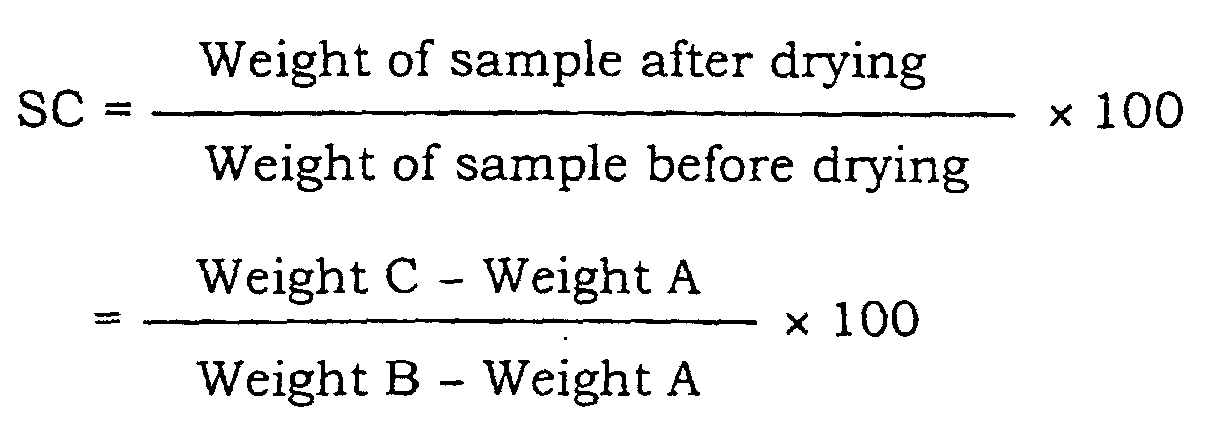
- SC % by weight
- W part by weight
- K part by weight
- M part by weight
- the solid concentration SC in the above equation is determined by the following method. About 1 g of a latex is taken out of a polymerization reactor and placed in a vessel (weight A) previously weighed. The latex is allowed to stand under atmospheric pressure (760 mmHg) until it is defoamed, and is weighed (weight B). The latex is then dried for 1 hour in a drier kept at 120°C and is weighed (weight C). The solid concentration is calculated by the following equation.
- the polymerization rate lowers owing to the addition of an elecytrolyte. From this fact, it is assumed that EDTA and an iron salt which have been present in the polymerization system no longer function effectively owing to the addition of an electrolyte or coagulation of the produced polymer particles.
- an aqueous solution of EDTA and an iron salt is added to the polymerization system 30 minutes or more after the addition of electrolyte for the purpose of enhancing the efficiency of the initiation reaction of a polymerization initiator and of making the initiation reaction continue.
- the amount, based on the monomer component, of the iron salt to be added in this stage is decreased to less than the amount used in a usual emulsion polymerization, thus resulting in using the secondary reducing agent and the peroxide in excess with respect to the iron salt, so that the EDTA/iron salt molar ratio becomes a rate-determining factor of the initiation reaction rate.
- the EDTA/iron salt molar ratio in an aqueous solution of EDTA and an iron salt to be added during the polymerization is from 4.3 to 18, preferably 6 to 10.
- EDTA and the iron salt may be added in the form of a separate aqueous solution of each of them.
- the amount of the iron salt added is from 0.00001 to 0.003 part by weight per 100 parts by weight of the monomer component. If the addition of the aqueous solution of EDTA and iron salt is conducted before 30 minutes from the addition of electrolyte, the produced polymer particles are not sufficiently coagulated.
- the addition of the aqueous solution of EDTA and iron salt can be conducted at any time after 30 minutes or more from the addition of electrolyte.
- the polymerization is further continued with stirring, for example, until the polymerization conversion reaches 80 % by weight or higher, thus giving a rubber latex having a weight average particle size of not less than 0.1 ⁇ m in a shortened period of time, e.g., in a total polymerization time of 6 to 14 hours.
- a high polymerization conversion can be achieved in a prescribed polymerization time in spite of the addition of an electrolyte.
- the particle size of the obtained latex can be controlled by adjusting the amount of the electrolyte which is added during the polymerization.
- the amount of a precipitate formed in the polymerization step can be suppressed to at most 0.2 % by weight based on the monomer used.
- the rubber latexes prepared according to the present invention can be employed, for example, in tires as a synthetic rubber and in the preparation of ABS resin, MBS resin and the like by graft polymerization.
- the polymerization reaction rate or polymerization rate of an emulsion polymerization was determined according to the method described in Shinzo Omi, Synthesis and Design of Microsphere by Emulsion Polymerization Reaction, page 59 (1989) published by IPC Shuppan Kabushiki Kaisha.
- the term "initial polymerization rate” as used herein means the amount of a change (%/hour) in polymerization conversion between 1 hour and 2 hours after starting the polymerization.
- later stage polymerization rate as used herein means an average value of the amounts of a change in polymerization conversion per every unit hour (%/hour) obtained between 9 hours and 12 hours after starting the polymerization.
- a 3 liter autoclave degassed to vacuum was charged with 2.0 parts of semi-hardened beef tallow fatty acid potassium salt, 0.44 part of potassium tertiary phosphate, 0.2 part of n-dodecylmercaptan, 0.0014 part of ferrous sulfate, 0.0023 part of disodium ethylenediaminetetraacetate (EDTA), 0.2 part of sodium formaldehyde sulfoxylate, 77 parts of pure water and 100 parts of 1,3-butadiene. They were stirred and the temperature was elevated to 50°C. To the autoclave was added 0.05 part of p-menthane hydroperoxide to start the polymerization.
- EDTA disodium ethylenediaminetetraacetate
- the precipitate rate is represented by percentage of the weight of a precipitate based on the weight of the monomer component. Further, the obtained rubber latex was coagulated with sodium chloride to give a rubber crumb and the gel fraction of the rubber was measured. The results are shown in Table 1.
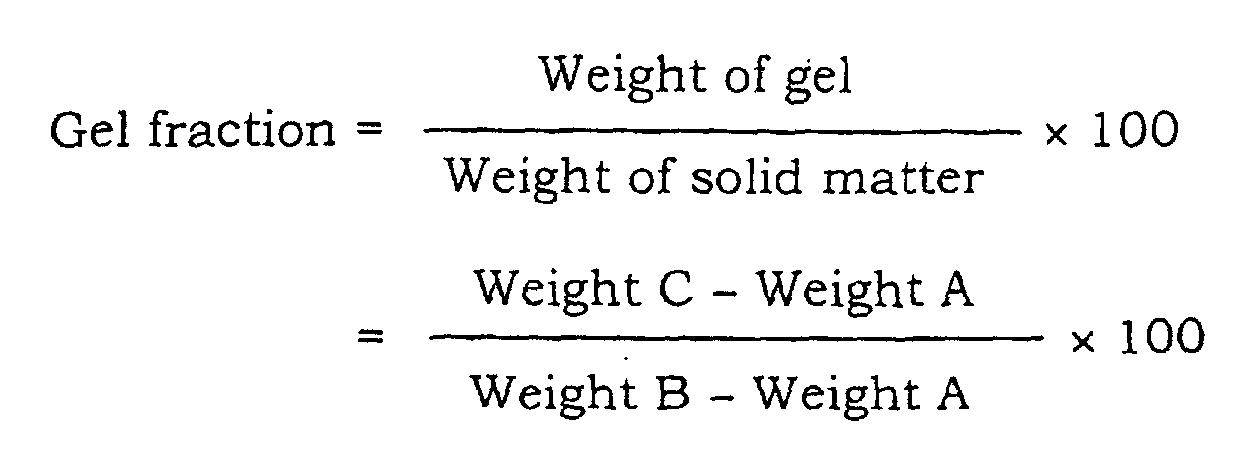
- the gel fraction is represented by a weight percentage of a gel in a solid matter of a latex.
- the gel fraction is measured by coagulating about 5 g of a rubber latex, vacuum-drying the coagulated latex at 50°C for 48 hours, placing about 0.5 g of the obtained solid matter in a previously weighed 150 mesh wire net (weight A), weighing it (weight B), immersing the solid matter in toluene for 48 hours with the wire net, drying a gel remaining on the wire net at 105°C for 30 minutes, and weighing it (weight C).
- the gel fraction is calculated according to the following equation.
- the polymerization was carried out in the same manner as in Example 1 except that an aqueous solution of 0.00212 part of EDTA and 0.000176 part of ferrous sulfate (EDTA/ferrous sulfate molar ratio: 9.00) was used as the aqueous solution of chelate compound to be added after the addition of sodium sulfate.
- EDTA/ferrous sulfate molar ratio: 9.00 ferrous sulfate
- the polymerization was carried out in the same manner as in Example 1 except that an aqueous solution of 0.0035 part of EDTA and 0.000176 part of ferrous sulfate (EDTA/ferrous sulfate molar ratio: 14.86) was used as the aqueous solution of chelate compound to be added after the addition of sodium sulfate.
- EDTA/ferrous sulfate molar ratio: 14.86 ferrous sulfate
- the polymerization was carried out in the same manner as in Example 1 except that an aqueous solution of 0.00422 part of EDTA and 0.000176 part of ferrous sulfate (EDTA/ferrous sulfate molar ratio: 17.94) was used as the aqueous solution of chelate compound to be added after the addition of sodium sulfate.
- EDTA/ferrous sulfate molar ratio: 17.94 ferrous sulfate
- the polymerization was carried out in the same manner as in Example 1 except that an aqueous solution of EDTA and ferrous sulfate was not added after the addition of sodium sulfate. The results are shown in Table 1.
- the polymerization was carried out in the same manner as in Example 1 except that an aqueous solution of 0.00162 part of EDTA and 0.00097 part of ferrous sulfate (EDTA/ferrous sulfate molar ratio: 1.25) was used as the aqueous solution of chelate compound to be added after the addition of sodium sulfate.
- EDTA/ferrous sulfate molar ratio: 1.25 ferrous sulfate
- the polymerization was carried out in the same manner as in Example 1 except that an aqueous solution of 0.000704 part of EDTA and 0.000176 part of ferrous sulfate (EDTA/ferrous sulfate molar ratio: 2.99) was used as the aqueous solution of chelate compound to be added after the addition of sodium sulfate.
- EDTA/ferrous sulfate molar ratio: 2.99 ferrous sulfate
- a rubber latex having a large average particle size is obtained in a relatively short period of time by adding an electrolyte during the polymerization. Moreover, by adding an aqueous solution of EDTA and an iron salt in a specific molar ratio after the addition of the electrolyte, the later stage polymerization rate can be increased and the final polymerization conversion can be further increased. Since a high polymerization conversion can be achieved without extending the polymerization time, the productivity is good, and a rubber latex having a good quality can be obtained.
Landscapes
- Chemical & Material Sciences (AREA)
- Health & Medical Sciences (AREA)
- Chemical Kinetics & Catalysis (AREA)
- Medicinal Chemistry (AREA)
- Polymers & Plastics (AREA)
- Organic Chemistry (AREA)
- Addition Polymer Or Copolymer, Post-Treatments, Or Chemical Modifications (AREA)
- Polymerisation Methods In General (AREA)
- Polymerization Catalysts (AREA)
Abstract
A process for preparing a synthetic diene rubber by emulsion
polymerization, wherein an electrolyte capable of coagulating particles of
a rubber latex is added to the polymerization system in the course of the
polymerization when the polymerization conversion reaches 10 to 70 %
by weight, and an aqueous solution containing EDTA and an iron salt in
an EDTA/iron salt ratio of 4.3 to 18 by mole is added 30 minutes or more
after the addition of the electrolyte, thereby producing a rubber latex
having a good quality in a shortened period of time in a high
polymerization conversion without extending the polymerization time.
Description
The present invention relates to a process for preparing a
latex of a diene rubber, and more particularly to a process for preparing
a latex of a diene rubber, particularly a latex of a diene rubber having a
large average particle size, in a high polymerization conversion without
extending the polymerization time.
Diene rubbers or diene rubber latices have been widely used
as raw materials of, for example, tires and rubber components of ABS
resin and MBS resin. In polymerization of an aliphatic conjugated
diene monomer or a monomer mixture of an aliphatic conjugated diene
compound and an ethylenically unsaturated compound copolymerizable
therewith, in general the polymerization reaction rate becomes slow
rapidly when the polymerization conversion reaches some level. In that
case, mere extension of the polymerization time to achieve a desired
polymerization conversion prolongs occupation of a polymerization
apparatus, thus resulting in lowering of the production efficiency. As a
countermeasure therefor it has been widely adopted to raise the
polymerization temperature during the polymerization or to add an
initiator such as a peroxide during the polymerization. However, if the
polymerization temperature is raised to more than 60°C, the gel fraction
of a rubber increases to result in deterioration of elasticity which is a
characteristic of rubbers. Also, even if a peroxide or the like is added,
the polymerization conversion does not increase too much.
If the polymerization conversion reaches about 80 % by
weight or more, the rate of increase of the polymerization conversion
lowers and, in general, the pressure of the reaction system also lowers.
Thus, Japanese Patent Publication Kokai No. 57-131211 proposes a
method for achieving a high conversion by introducing an inert gas to a
reaction vessel under pressure to raise the inner pressure to 1.5
kg/cm2G or more when the polymerization conversion reaches at least
80 % by weight. However, this method requires a large cost for isolation,
incineration or recovery of the unreacted monomers and inert gas and,
therefore, it is economically disadvantageous.
On the other hand, the present inventors previously
proposed a process for preparing a latex of a rubber having a large
average particle size in a relatively short period of time, which is
characterized by adding an electrolyte during the polymerization
reaction when the polymerization conversion reaches 10 to 70 % by
weight (Japanese Patent Application No. 11-127814). However, this
process has the problem that the polymerization rate is lowered by the
addition of an electrolyte and accordingly the polymerization conversion
achieved in a prescribed time is lowered. Since unreacted monomers
are recovered and incinerated, the cost performance of monomers is low.
Extension of the polymerization time to achieve a higher conversion
lowers the productivity. Also, the polymerization conversion cannot be
favorably increased by conventional means as mentioned above.
Thus, it is an object of the present invention to prepare, in a
process for preparing a diene rubber latex wherein an electrolyte is
added during the polymerization, a latex of a rubber having a good
quality and having a proper gel fraction in a high polymerization
conversion in a prescribed polymerization time with a little formation of
precipitates.
The present inventors supposed that the reason why the final
conversion became low in the emulsion polymerization of conjugated
diene compounds was that since the total surface area of latex particles
per unit volume of a latex decreased owing to agglomeration of the latex
particles, a radical generating source present in the vicinity of the
particle interface became hard to enter the field of polymerization.
Thus, under the consideration that it would be important in increasing
the polymerization conversion to make radical generation in the vicinity
of the particle interface efficient and to make the radical generation
continue, the present inventors aimed at a chelate compound formed by
EDTA (disodium ethylenediaminetetraacetate) and an iron salt of a redox
initiator as a means to achieve them and made an intensive study.
T. R. Hongness, "Qualitative Analysis and Chemical
Equilibrium", 5th edition, published by Holt, Rinehart and Winston Inc.
in 1966 discloses that in general EDTA and an iron salt form a chelate
compound in equimolar amounts. In chelatometric titration, it is
desirable that the bonding ratio of a metal ion to a chelating agent is 1 :
1. EDTA is introduced as a representative compound satisfying this
requirement in "Chelatometric Titration" at page 896 of Encyclopaedia
Chimica, No. 2, 22nd edition, edited by Kagaku Daijiten Henshu Iinkai
and published by Kyoritsu Shuppan Kabushiki Kaisha on September 10,
1978 and in Seiji Takagi, "Experiment and Calculation of Quantitative
Analysis, Vol. 2, Method of Quantitative Analysis" published by Kyoritsu
Shuppan Kabushiki Kaisha on June 1, 1969. Also, EDTA is introduced
as a chelating agent for an iron salt used in a redox initiator of emulsion
polymerization in R. W. Brown, C. V. Bawn, E. B. Hansen, L. H. Howland,
"Industrial and Engineering Chemistry", Vol. 6, No. 3, 234(1974), H.
Minato and M. Iwakawa, "Polymer Journal", Vol. 6, No. 3, 234(1974) and
in Shinzo Omi, "Assessment of Polymer Manufacturing Process",
Assessment of ABS Manufacturing Process at page 124 of Research
Report (1990) of the Research Group on Reaction Engineering of The
Society of Polymer Science, Japan. Further, as a result of examining
working examples in patent publications concerning emulsion
polymerization for the production of ABS and MBS resins, it was found
that the molar ratio of EDTA to an iron salt (EDTA/iron salt) in redox
initiator was close to 1, for example, 1 in JP-A-59-122510, 1.3 in JP-A-45-22629,
1.9 in JP-B-59-49937, 2.4 in US-A-4370252, 3.0 in JP-A-8-157502,
3.0 in JP-A-44-2578, 3.3 in US-A-3214401, 3.7 in JP-A-56-136807,
and 4.2 in JP-A-46-14263. There was found no working
example showing EDTA/iron salt molar ratio exceeding 4.3. Like this,
the molar ratio (EDTA/iron salt) of EDTA to an iron salt conventionally
used is close to 1 and even the maximum is 4.2.
The present inventors firstly made experiments to obtain an
empirical formula of initial polymerization rate under the conditions that
the EDTA/iron salt molar ratio was made approximately constant within
the range below 3 and the amounts of EDTA and ferrous sulfate were
varied. As a result, it was found that the initial polymerization rate was
proportional to the EDTA weight raised to the 0.85th power. Thus, in a
process wherein an electrolyte is added during a polymerization for the
production of a rubber, in order to increase the polymerization rate after
the addition of electrolyte and to enhance the final polymerization
conversion, the present inventors have gone ahead with experiments
wherein the EDTA/iron salt molar ratio is varied after the addition of
electrolyte and have accomplished the present invention.
Thus, the present invention provides a process for preparing
a latex of a rubber which comprises emulsion-polymerizing a monomer
component comprising 70 to 100 % by weight of an aliphatic conjugated
diene monomer and 30 to 0 % by weight of an ethylenically unsaturated
monomer copolymerizable therewith, wherein an electrolyte is added to
the polymerization system in the course of the polymerization when the
polymerization conversion reaches 10 to 70 % by weight, and an
aqueous solution containing EDTA and an iron salt in an EDTA/iron salt
ratio of 4.3 to 18 by mole is added 30 minutes or more after the addition
of the electrolyte.
The amount of the iron salt dissolved in the above-mentioned
aqueous solution is preferably from 0.00001 to 0.003 parts by weight
per 100 parts by weight of the monomer component. Also, the
EDTA/iron salt ratio is preferably from 6 to 10 by mole.
The polymerization rate is decreased by the addition of an
electrolyte, but it is increased by adding the above-mentioned aqueous
solution of EDTA and an iron salt to the polymerization system.
In the emulsion polymerization process according to the
present invention, an aqueous solution of an electrolyte is added during
the polymerization when, after initiating the polymerization, the
polymerization conversion reaches 10 to 70 % by weight in order to
coagulate the produced rubber particles to enhance the particle size.
Firstly an emulsion polymerization of an aliphatic conjugated
diene monomer alone or a mixture of not less than 70 % by weight of an
aliphatic conjugated diene monomer and not more than 30 % by weight
of an ethylenically unsaturated monomer copolymerizable therewith is
started in a conventional manner.
Examples of the aliphatic conjugated diene monomer used in
the present invention are, for instance, 1,3-butadiene, isoprene,
chloroprene and the like. In particular, 1,3-butadiene is preferred from
the viewpoint of a high production efficiency. The conjugated diene
monomers may be used alone or in admixture thereof.
As the ethylenically unsaturated monomer, various vinyl
compounds and olefin compounds can be used in the present invention.
Representative examples thereof are, for instance, a methacrylic ester
such as methyl methacrylate or ethyl methacrylate, an acrylic ester such
as methyl acrylate or ethyl acrylate, an aromatic vinyl compound such
as styrene or α-methylstyrene, its nucleus substitution derivative such
as vinyltoluene or chlorostyrene, and the like. These may be used alone
or in combination thereof.
The proportion of the aliphatic conjugated diene monomer in
the monomer mixture of aliphatic conjugated diene monomer and
ethylenically unsaturated monomer copolymerizable therewith is at
least 70 % by weight. If the proportion is less than 70 % by weight, the
obtained polymer is poor in properties as a rubber and no toughness is
obtained.
In the present invention, a redox initiator is used as a
polymerization initiator. The redox initiator is composed of an organic
peroxide, a chelate compound formed in an aqueous solution of an iron
salt and EDTA, and a secondary reducing agent which restores the
chelate compound of ferric ion to the chelate compound of ferrous ion.
The amounts of these organic peroxide, iron salt, EDTA and secondary
reducing agent which are added to the polymerization system upon
starting the polymerization can be selected within the ranges used in
usual emulsion polymerization of conjugated diene monomers.
Examples of the organic peroxide are, for instance,
hydroperoxides such as t-butyl hydroperoxide, cumene hydroperoxide
and p-menthane hydroperoxide, and other peroxides. The organic
peroxides may be used alone or in admixture thereof. The amount of
the organic peroxide is usually from 0.05 to 0.3 part by weight per 100
parts by weight of the monomer component.
The iron salt used as a reducing agent in the present
invention is those forming a chelate compound with EDTA in water and
includes, for instance, ferrous sulfate, ferrous phosphate, ferrous
chloride, ferrous nitrate, and the like. These ferrous salts may be used
alone or in admixture thereof. The amount of the iron salt charged at
the time of starting the polymerization is from 0.001 to 0.05 part by
weight per 100 parts by weight of the monomer component. The
amount of EDTA charged is from 0.002 to 0.1 part by weight per 100
parts by weight of the monomer component. The molar ratio of the
EDTA to the iron salt (EDTA/iron salt) is from 0.8 to 4.3.
Examples of the secondary reducing agent used in the
present invention are, for instance, sodium formaldehyde sulfoxylate
(Rongalit), sodium bisulfite, sodium thiosulfate, sodium pyrosulfite, and
the like. The secondary reducing agents may be used alone or in
admixture thereof. The amount of the secondary reducing agent is
usually from 0.03 to 0.3 part by weight, preferably 0.04 to 0.2 part by
weight, per 100 parts by weight of the monomer component.
The amount of water used in the emulsion polymerization is a
usually adopted amount, and is preferably from 60 to 200 parts by
weight, more preferably from 70 to 150 parts by weight, per 100 parts by
weight of the monomer component.
The amount of an emulsifier is preferably from 1 to 4 parts by
weight per 100 parts by weight of the monomer component. The
emulsifier may be additionally fed during the polymerization so as to
prevent sticking of particles to each other or formation of a precipitate
due to shortage of the emulsifier on the particle surface. Any
emulsifiers as used in usual polymerization for rubbers can be used in
the present invention, e.g., a fatty acid soap such as sodium oleate, a
resin acid soap such as potassium disproportionated rosin, an anionic
surfactant such as sodium laurylsulfate or sodium dodecylbenzenesulfonate,
a non-ionic surfactant such as polyoxyethylene alkyl ether,
and the like.
Other additives, e.g., a chain transfer agent such as
mercaptan and a crosslinking agent such as allyl methacrylate, can be
used without any restriction.
The polymerization reaction temperature can be selected
from the range adopted in a usual emulsion polymerization, and is
preferably from 35 to 80°C, more preferably from 40 to 60°C.
After starting the polymerization, an electrolyte capable of
coagulating polymer particles of a latex is added to the polymerization
system when the polymerization conversion falls within the range of 10
to 70 % by weight, preferably 20 to 60 % by weight, thereby coagulating
the particles of the latex to enhance the particle size. Examples of the
electrolyte are, for instance, an organic acid containing a carboxyl group
and having 6 or less carbon atoms such as formic acid, acetic acid,
propionic acid, oxalic acid, succinic acid, malic acid or citric acid, salts
thereof, and sodium sulfate. These may be used alone or in
combination thereof. The electrolyte is used in an amount of 0.1 to 5
parts by weight per 100 parts by weight of the monomer component. It
is convenient to use the electrolyte in the form of a 1 to 20 % by weight
aqueous solution. If the addition of the electrolyte is conducted at a
time when the polymerization conversion is less than 10 % by weight, a
precipitate is easy to be formed. If the addition of the electrolyte is
conducted at a time when the polymerization conversion exceeds 70 %
by weight, the viscosity of the rubber latex becomes too high and,
accordingly, temperature control and stirring are difficult. Also, if the
amount of electrolyte added is less than 0.1 part by weight, the particle
size of the latex cannot be enhanced to 0.1 µm or more, and if the
amount is more than 5 parts by weight, a precipitate is easy to be
produced.
The polymerization conversion (% by weight) as herein used
is a value obtained according to the following equation:
Polymerization conversion = SC × (W + K) - K (1 - SC) × M
× 100.
wherein SC (% by weight) is the solid concentration of polymerization
system, W (part by weight) is the amount of water, K (part by weight) is
the total amount of an emulsifier and an electrolyte, and M (part by
weight) is the amount of a monomer or monomers.
The solid concentration SC in the above equation is
determined by the following method. About 1 g of a latex is taken out of
a polymerization reactor and placed in a vessel (weight A) previously
weighed. The latex is allowed to stand under atmospheric pressure
(760 mmHg) until it is defoamed, and is weighed (weight B). The latex is
then dried for 1 hour in a drier kept at 120°C and is weighed (weight C).
The solid concentration is calculated by the following equation.
The polymerization rate lowers owing to the addition of an
elecytrolyte. From this fact, it is assumed that EDTA and an iron salt
which have been present in the polymerization system no longer
function effectively owing to the addition of an electrolyte or coagulation
of the produced polymer particles.
In the present invention, an aqueous solution of EDTA and
an iron salt is added to the polymerization system 30 minutes or more
after the addition of electrolyte for the purpose of enhancing the
efficiency of the initiation reaction of a polymerization initiator and of
making the initiation reaction continue. The amount, based on the
monomer component, of the iron salt to be added in this stage is
decreased to less than the amount used in a usual emulsion
polymerization, thus resulting in using the secondary reducing agent
and the peroxide in excess with respect to the iron salt, so that the
EDTA/iron salt molar ratio becomes a rate-determining factor of the
initiation reaction rate.
The EDTA/iron salt molar ratio in an aqueous solution of
EDTA and an iron salt to be added during the polymerization is from 4.3
to 18, preferably 6 to 10. EDTA and the iron salt may be added in the
form of a separate aqueous solution of each of them. The amount of the
iron salt added is from 0.00001 to 0.003 part by weight per 100 parts by
weight of the monomer component. If the addition of the aqueous
solution of EDTA and iron salt is conducted before 30 minutes from the
addition of electrolyte, the produced polymer particles are not
sufficiently coagulated. The addition of the aqueous solution of EDTA
and iron salt can be conducted at any time after 30 minutes or more
from the addition of electrolyte. From the viewpoint of shortening the
polymerization time, it is preferable to conduct the addition of the
aqueous solution as promptly as possible after an elapse of 30 minutes
from the addition of electrolyte, for example, before the polymerization
conversion reaches 80 % by weight.
After the addition of an aqueous solution of EDTA and an iron
salt, the polymerization is further continued with stirring, for example,
until the polymerization conversion reaches 80 % by weight or higher,
thus giving a rubber latex having a weight average particle size of not
less than 0.1 µm in a shortened period of time, e.g., in a total
polymerization time of 6 to 14 hours. According to the process of the
present invention, a high polymerization conversion can be achieved in a
prescribed polymerization time in spite of the addition of an electrolyte.
The particle size of the obtained latex can be controlled by adjusting the
amount of the electrolyte which is added during the polymerization.
Further, according to the process of the present invention, the amount of
a precipitate formed in the polymerization step can be suppressed to at
most 0.2 % by weight based on the monomer used.
The rubber latexes prepared according to the present
invention can be employed, for example, in tires as a synthetic rubber
and in the preparation of ABS resin, MBS resin and the like by graft
polymerization.
The present invention is more specifically explained by
means of the following examples in which all parts and % are by weight
unless otherwise noted. It is to be understood that the present
invention is not limited to these examples.
In the examples, the polymerization reaction rate or
polymerization rate of an emulsion polymerization was determined
according to the method described in Shinzo Omi, Synthesis and Design
of Microsphere by Emulsion Polymerization Reaction, page 59 (1989)
published by IPC Shuppan Kabushiki Kaisha. The term "initial
polymerization rate" as used herein means the amount of a change
(%/hour) in polymerization conversion between 1 hour and 2 hours after
starting the polymerization. The term "later stage polymerization rate"
as used herein means an average value of the amounts of a change in
polymerization conversion per every unit hour (%/hour) obtained
between 9 hours and 12 hours after starting the polymerization.
A 3 liter autoclave degassed to vacuum was charged with 2.0
parts of semi-hardened beef tallow fatty acid potassium salt, 0.44 part of
potassium tertiary phosphate, 0.2 part of n-dodecylmercaptan, 0.0014
part of ferrous sulfate, 0.0023 part of disodium ethylenediaminetetraacetate
(EDTA), 0.2 part of sodium formaldehyde sulfoxylate, 77
parts of pure water and 100 parts of 1,3-butadiene. They were stirred
and the temperature was elevated to 50°C. To the autoclave was added
0.05 part of p-menthane hydroperoxide to start the polymerization.
After 4.5 hours when the polymerization conversion reached about 45 %,
0.8 part of sodium sulfate was added to the polymerization system. An
aqueous solution of 0.00142 part of EDTA and 0.000176 part of ferrous
sulfate was added as an aqueous solution of a chelate compound to the
polymerization system 30 minutes after the addition of sodium sulfate.
The EDTA/ferrous sulfate molar ratio in this aqueous solution was 6.03.
After the addition of the aqueous solution, the polymerization was
further continued and ended 12 hours after starting the polymerization.
The later stage polymerization rate, the final conversion and the
precipitate rate of the obtained butadiene rubber latex were measured.
The precipitate rate is represented by percentage of the weight of a
precipitate based on the weight of the monomer component. Further,
the obtained rubber latex was coagulated with sodium chloride to give a
rubber crumb and the gel fraction of the rubber was measured. The
results are shown in Table 1.
The gel fraction is represented by a weight percentage of a gel
in a solid matter of a latex. The gel fraction is measured by coagulating
about 5 g of a rubber latex, vacuum-drying the coagulated latex at 50°C
for 48 hours, placing about 0.5 g of the obtained solid matter in a
previously weighed 150 mesh wire net (weight A), weighing it (weight B),
immersing the solid matter in toluene for 48 hours with the wire net,
drying a gel remaining on the wire net at 105°C for 30 minutes, and
weighing it (weight C). The gel fraction is calculated according to the
following equation.
The polymerization was carried out in the same manner as in
Example 1 except that an aqueous solution of 0.00212 part of EDTA and
0.000176 part of ferrous sulfate (EDTA/ferrous sulfate molar ratio: 9.00)
was used as the aqueous solution of chelate compound to be added after
the addition of sodium sulfate. The results are shown in Table 1.
The polymerization was carried out in the same manner as in
Example 1 except that an aqueous solution of 0.0035 part of EDTA and
0.000176 part of ferrous sulfate (EDTA/ferrous sulfate molar ratio:
14.86) was used as the aqueous solution of chelate compound to be
added after the addition of sodium sulfate. The results are shown in
Table 1.
The polymerization was carried out in the same manner as in
Example 1 except that an aqueous solution of 0.00422 part of EDTA and
0.000176 part of ferrous sulfate (EDTA/ferrous sulfate molar ratio:
17.94) was used as the aqueous solution of chelate compound to be
added after the addition of sodium sulfate. The results are shown in
Table 1.
The polymerization was carried out in the same manner as in
Example 1 except that an aqueous solution of EDTA and ferrous sulfate
was not added after the addition of sodium sulfate. The results are
shown in Table 1.
The polymerization was carried out in the same manner as in
Example 1 except that 0.05 part of p-menthane hydroperoxide was
added instead of the aqueous solution of chelate compound 30 minutes
after the addition of sodium sulfate. The results are shown in Table 1.
The polymerization was carried out in the same manner as in
Example 1 except that an aqueous solution of 0.00162 part of EDTA and
0.00097 part of ferrous sulfate (EDTA/ferrous sulfate molar ratio: 1.25)
was used as the aqueous solution of chelate compound to be added after
the addition of sodium sulfate. The results are shown in Table 1.
The polymerization was carried out in the same manner as in
Example 1 except that an aqueous solution of 0.000704 part of EDTA
and 0.000176 part of ferrous sulfate (EDTA/ferrous sulfate molar ratio:
2.99) was used as the aqueous solution of chelate compound to be added
after the addition of sodium sulfate. The results are shown in Table 1.

According to the process of the present invention, a rubber
latex having a large average particle size is obtained in a relatively short
period of time by adding an electrolyte during the polymerization.
Moreover, by adding an aqueous solution of EDTA and an iron salt in a
specific molar ratio after the addition of the electrolyte, the later stage
polymerization rate can be increased and the final polymerization
conversion can be further increased. Since a high polymerization
conversion can be achieved without extending the polymerization time,
the productivity is good, and a rubber latex having a good quality can be
obtained.
Claims (7)
- A process for preparing a latex of a rubber which comprises emulsion-polymerizing a monomer component comprising 70 to 100 % by weight of an aliphatic conjugated diene monomer and 30 to 0 % by weight of an ethylenically unsaturated monomer copolymerizable therewith, wherein an electrolyte is added to the polymerization system in the course of the polymerization when the polymerization conversion reaches 10 to 70 % by weight, and an aqueous solution containing EDTA and an iron salt in an EDTA/iron salt ratio of 4.3 to 18 by mole is added 30 minutes or more after the addition of the electrolyte.
- The process of Claim 1, wherein the amount of the iron salt dissolved in said aqueous solution is from 0.00001 to 0.003 part by weight per 100 parts by weight of said monomer component.
- The process of Claim 1, wherein the EDTA/iron salt ratio in said aqueous solution is from 6 to 10 by mole.
- The process of Claim 1, wherein said electrolyte is at least one member selected from the group consisting of an organic acid containing carboxyl group and having 6 or less carbon atoms, its salts and sodium sulfate.
- The process of Claim 1, wherein said electrolyte is employed in an amount of 0.1 to 5 parts by weight per 100 parts by weight of said monomer component.
- The process of Claim 1, wherein the polymerization initiator of the emulsion polymerization is a redox initiator comprising an organic peroxide, a chelate compound formed from an iron salt as a reducing agent and EDTA, and a secondary reducing agent, and the amount of the iron salt charged at the time of starting the polymerization is from 0.01 to 0.05 part by weight per 100 parts by weight of said monomer component.
- The process of Claim 1, wherein the polymerization initiator of the emulsion polymerization is a redox initiator comprising an organic peroxide, a chelate compound formed from an iron salt as a reducing agent and EDTA, and a secondary reducing agent, and the amount of the iron salt added during the polymerization is such that the organic peroxide and secondary reducing agent which have been present in the polymerization system are present in excess with respect to said iron salt added.
Applications Claiming Priority (3)
| Application Number | Priority Date | Filing Date | Title |
|---|---|---|---|
| JP36540099 | 1999-12-22 | ||
| JP36540099 | 1999-12-22 | ||
| PCT/JP2000/008779 WO2001046268A1 (en) | 1999-12-22 | 2000-12-12 | Process for producing rubber latex |
Publications (2)
| Publication Number | Publication Date |
|---|---|
| EP1270600A1 true EP1270600A1 (en) | 2003-01-02 |
| EP1270600A4 EP1270600A4 (en) | 2003-03-19 |
Family
ID=18484169
Family Applications (1)
| Application Number | Title | Priority Date | Filing Date |
|---|---|---|---|
| EP00980065A Withdrawn EP1270600A4 (en) | 1999-12-22 | 2000-12-12 | Process for producing rubber latex |
Country Status (4)
| Country | Link |
|---|---|
| US (1) | US20030013805A1 (en) |
| EP (1) | EP1270600A4 (en) |
| CN (1) | CN1391583A (en) |
| WO (1) | WO2001046268A1 (en) |
Cited By (1)
| Publication number | Priority date | Publication date | Assignee | Title |
|---|---|---|---|---|
| CN101423586B (en) * | 2007-11-01 | 2011-09-07 | 中国石油天然气股份有限公司 | A kind of manufacture method of high conversion rate butadiene-acrylonitrile copolymer rubber |
Families Citing this family (2)
| Publication number | Priority date | Publication date | Assignee | Title |
|---|---|---|---|---|
| JP2006225614A (en) * | 2005-02-21 | 2006-08-31 | Sdc Technologies Asia Kk | Anti-fogging coating liquid and coated article |
| CN119735744A (en) * | 2023-09-29 | 2025-04-01 | 中国石油天然气股份有限公司 | A method for preparing emulsion-polymerized styrene-butadiene rubber |
Family Cites Families (3)
| Publication number | Priority date | Publication date | Assignee | Title |
|---|---|---|---|---|
| NL261122A (en) * | 1960-02-26 | |||
| AU452524B2 (en) * | 1971-04-02 | 1974-08-21 | Nippon Oil Company, Limited | A method of manufacturing a latex having high concentration of polymer particles and low viscosity |
| US4480078A (en) * | 1981-09-23 | 1984-10-30 | The Goodyear Tire & Rubber Company | Continuous emulsion polymerization process |
-
2000
- 2000-12-12 WO PCT/JP2000/008779 patent/WO2001046268A1/en not_active Ceased
- 2000-12-12 US US10/129,852 patent/US20030013805A1/en not_active Abandoned
- 2000-12-12 EP EP00980065A patent/EP1270600A4/en not_active Withdrawn
- 2000-12-12 CN CN00816043.0A patent/CN1391583A/en active Pending
Cited By (1)
| Publication number | Priority date | Publication date | Assignee | Title |
|---|---|---|---|---|
| CN101423586B (en) * | 2007-11-01 | 2011-09-07 | 中国石油天然气股份有限公司 | A kind of manufacture method of high conversion rate butadiene-acrylonitrile copolymer rubber |
Also Published As
| Publication number | Publication date |
|---|---|
| WO2001046268A1 (en) | 2001-06-28 |
| CN1391583A (en) | 2003-01-15 |
| EP1270600A4 (en) | 2003-03-19 |
| US20030013805A1 (en) | 2003-01-16 |
Similar Documents
| Publication | Publication Date | Title |
|---|---|---|
| JP2004514001A (en) | Method for producing acrylonitrile-butadiene-styrene latex having high total solid content | |
| US4013824A (en) | Mixing of organosulfur molecular weight modifier with emulsifier in presence of monomer or diluent | |
| US5384372A (en) | Shortstopping of free radical polymerizations | |
| EP0737696A1 (en) | Process for preparing styrene-butadiene rubber | |
| JPH0250923B2 (en) | ||
| JPH0723444B2 (en) | Method for producing HCFC resistant thermoplastic resin composition | |
| KR100708991B1 (en) | Process for preparing acrylonitrile-butadiene-styrene latex | |
| US4125481A (en) | Mixing of organosulfur molecular weight modifier with emulsifier for emulsion polymerization systems | |
| JPH1112427A5 (en) | Acrylic rubber composition and vulcanizate | |
| JPH05214006A (en) | Production of ultrahigh-molecular polymer emulsion | |
| US20030013805A1 (en) | Process for producing rubber latex | |
| JPH0616708A (en) | Method for producing polymer latex | |
| JPH09296015A (en) | Method for producing ABS polymer latex | |
| EP1101775A1 (en) | Process for producing rubber latex | |
| US3928498A (en) | Preformed polymer latex in emulsion polymerization systems | |
| US3855188A (en) | Emulsion polymerization process utilizing organosulfur molecular weight modifier premixed with emulsifier and reducing agent | |
| US6635707B1 (en) | Process for producing synthetic latex | |
| US20060122327A1 (en) | Process for preparing enlarged latex particles | |
| JPWO2001046268A1 (en) | Rubber latex manufacturing method | |
| JP3181691B2 (en) | Method for producing graft copolymer | |
| EP1329464B1 (en) | Agglomeratable rubber latex | |
| JP3275979B2 (en) | Method for enlarging diene polymer latex | |
| US20030032724A1 (en) | Process for producing graft copolymer latex | |
| US4079101A (en) | Diolefin polymerization process in the presence of seed polymers | |
| JP2002060440A (en) | Graft copolymer latex, its manufacturing method and coagulated powder made therefrom |
Legal Events
| Date | Code | Title | Description |
|---|---|---|---|
| PUAI | Public reference made under article 153(3) epc to a published international application that has entered the european phase |
Free format text: ORIGINAL CODE: 0009012 |
|
| 17P | Request for examination filed |
Effective date: 20020704 |
|
| AK | Designated contracting states |
Kind code of ref document: A1 Designated state(s): BE |
|
| A4 | Supplementary search report drawn up and despatched |
Effective date: 20030130 |
|
| RIC1 | Information provided on ipc code assigned before grant |
Ipc: 7C 08F 36/04 A Ipc: 7C 08F 2/44 B Ipc: 7C 08F 2/22 B |
|
| STAA | Information on the status of an ep patent application or granted ep patent |
Free format text: STATUS: THE APPLICATION IS DEEMED TO BE WITHDRAWN |
|
| 18D | Application deemed to be withdrawn |
Effective date: 20030416 |