EP1270596A1 - Antibody/carrier complex, process for producing the same, method of controlling antigen-antibody reaction by using the same and immunoassay method - Google Patents
Antibody/carrier complex, process for producing the same, method of controlling antigen-antibody reaction by using the same and immunoassay method Download PDFInfo
- Publication number
- EP1270596A1 EP1270596A1 EP01917858A EP01917858A EP1270596A1 EP 1270596 A1 EP1270596 A1 EP 1270596A1 EP 01917858 A EP01917858 A EP 01917858A EP 01917858 A EP01917858 A EP 01917858A EP 1270596 A1 EP1270596 A1 EP 1270596A1
- Authority
- EP
- European Patent Office
- Prior art keywords
- antibody
- carrier
- polymer
- reaction
- antigen
- Prior art date
- Legal status (The legal status is an assumption and is not a legal conclusion. Google has not performed a legal analysis and makes no representation as to the accuracy of the status listed.)
- Withdrawn
Links
Images


Classifications
-
- C—CHEMISTRY; METALLURGY
- C07—ORGANIC CHEMISTRY
- C07K—PEPTIDES
- C07K17/00—Carrier-bound or immobilised peptides; Preparation thereof
- C07K17/02—Peptides being immobilised on, or in, an organic carrier
- C07K17/06—Peptides being immobilised on, or in, an organic carrier attached to the carrier via a bridging agent
-
- C—CHEMISTRY; METALLURGY
- C07—ORGANIC CHEMISTRY
- C07K—PEPTIDES
- C07K16/00—Immunoglobulins [IG], e.g. monoclonal or polyclonal antibodies
- C07K16/18—Immunoglobulins [IG], e.g. monoclonal or polyclonal antibodies against material from animals or humans
- C07K16/26—Immunoglobulins [IG], e.g. monoclonal or polyclonal antibodies against material from animals or humans against hormones ; against hormone releasing or inhibiting factors
-
- G—PHYSICS
- G01—MEASURING; TESTING
- G01N—INVESTIGATING OR ANALYSING MATERIALS BY DETERMINING THEIR CHEMICAL OR PHYSICAL PROPERTIES
- G01N33/00—Investigating or analysing materials by specific methods not covered by groups G01N1/00 - G01N31/00
- G01N33/48—Biological material, e.g. blood, urine; Haemocytometers
- G01N33/50—Chemical analysis of biological material, e.g. blood, urine; Testing involving biospecific ligand binding methods; Immunological testing
- G01N33/53—Immunoassay; Biospecific binding assay; Materials therefor
- G01N33/543—Immunoassay; Biospecific binding assay; Materials therefor with an insoluble carrier for immobilising immunochemicals
- G01N33/54353—Immunoassay; Biospecific binding assay; Materials therefor with an insoluble carrier for immobilising immunochemicals with ligand attached to the carrier via a chemical coupling agent
Definitions
- the present invention relates to an antibody/carrier complex used for immunological analysis, measurement, assays, or the like, using an antigen-antibody reaction, such as immunochromatography, affinity chromatography, blotting, immunoturbidimetry (immunonephelometry), dyeing of an antigen in a tissue using an antibody, Ouchterlony, enzyme immunoassay, etc., in the field of medicine, and the like.
- an antigen-antibody reaction such as immunochromatography, affinity chromatography, blotting, immunoturbidimetry (immunonephelometry), dyeing of an antigen in a tissue using an antibody, Ouchterlony, enzyme immunoassay, etc., in the field of medicine, and the like.
- the measurable concentration range of an antigen depends on the affinity of the antibody.
- affinity which corresponds to the concentration range of an antigen as a subject of analysis, measurement, or assay.
- an antibody having an affinity corresponding to the concentration range of an antigen as a subject of analysis cannot be obtained in some cases even when the production method is improved, because the adjustable range of the affinity of an obtained monoclonal or polyclonal antibody itself is finite.
- the present invention is directed to an objective of providing: an antibody/carrier complex wherein the affinity of an antibody to an antigen, i.e., the reactivity of an antigen-antibody reaction, can readily be controlled without producing a novel antibody; a production method of the same; a method for controlling an antigen-antibody reaction using the same; and an immunological measurement method.
- an antibody/carrier complex of the present invention includes at least one antibody, the antibody/carrier complex including a polymer structure wherein each antigen binding site of the antibody is allowed to be arranged so as to react with an antigen.
- the polymer structure is an antibody polymer or carrier polymer.
- the carrier is selected from a group consisting of protein, carbohydrate, and lipid.
- the carrier is bonded to a Fc-site of the antibody.
- the present invention relates also to a method for producing the above antibody/carrier complex.
- This method comprises a step of copolymerizing an antibody and a carrier using a polymerization reagent.
- the present invention relates also to a method for producing the above antibody/carrier complex.
- This method comprises: a step of polymerizing a carrier using a polymerization reagent so as to form a carrier polymer; and a step of bonding an antibody to the carrier polymer.
- the present invention relates also to a method for producing the above antibody/carrier complex.
- This method comprises: a step of polymerizing an antibody using a polymerization reagent so as to form an antibody polymer; and a step of bonding a carrier to the antibody polymer.
- the present invention relates also to a method for producing the above antibody/carrier complex.
- This method comprises: a step of polymerizing a carrier using a polymerization reagent so as to form a carrier polymer; a step of polymerizing an antibody using a polymerization reagent so as to form an antibody polymer; and a step of bonding the antibody polymer and the carrier polymer.
- the polymerization reagent is 3,3'-dithiobis(sulfosuccinimidylpropionate) or dithiothreitol.
- One aspect of the present invention relates to a method for adjusting the reactivity of an antigen-antibody reaction.
- This method comprises steps of: in a reaction of an antibody and a polymerization reagent, changing a parameter selected from a group consisting of the equivalent of the polymerization reagent with respect to the antibody, reaction temperature, reaction time, and the concentration of antibody, so as to obtain a plurality of antibody polymers having different degrees of polymerization; bonding the plurality of antibody polymers to carriers so as to obtain a set of antibody/carrier complexes; and selecting an antibody/carrier complex which reacts with an antigen at a desired degree of reaction, from the set of antibody/carrier complexes.
- One aspect of the present invention relates to an immunological measurement method.
- This method comprises a step of bringing a subject substance in a sample and the above antibody/carrier complex into an antigen-antibody reaction.
- an antibody/carrier complex of the present invention includes at least one antibody, and is characterized in that the antibody/carrier complex comprises a polymer structure which allows each antigen binding site of the antibody to be placed so as to react with an antigen.
- Such an antibody/carrier complex has many antigen binding sites in comparison to a bivalent antibody which does not have a polymer structure.
- the ratio of antigen binding sites which can effectively participate in antigen-antibody reactions to the total antigen binding sites can be changed.
- the antibody/carrier complex of the present invention can be used to adjust the reactivity of an antigen-antibody reaction so as to be higher or lower in comparison to an immunoreaction of unpolymerized bivalent antibody and antigen.
- the antibody/carrier complex of the present invention has a larger size in comparison to an antibody polymer formed of the same amount of antibody without a carrier.
- the number of antigen binding sites, which are present on the surface of a complex molecule and at which a reaction with an antigen is not sterically inhibited can be increased, and as a result, the reactivity range of an antigen-antibody reaction can be extended towards higher reactivity.
- an antibody/carrier complex of the present invention has the same size as that of an antibody polymer formed of only an antibody, the amount of the antibody is smaller than that of the antibody polymer, while the antibody/carrier complex achieves an antigen-antibody reaction in substantially the same reactivity range as that achieved by the antibody polymer.
- One of the antibody/carrier complexes which is most efficiently modified so as to have high reactivity has a structure where the core portion thereof is formed of a carrier or a carrier polymer, and one or more antibody molecules are bonded onto the surface of the core portion such that antibody binding sites are exposed outward. Furthermore, in the case where an antibody/carrier complex of the present invention is labeled with a labeling substance for use in an immunological analysis or the like, only a carrier portion of the antibody/carrier complex can be labeled, and therefore, there is little possibility that an antigen-antibody reaction is inhibited by a labeled antibody.
- the number of antigen binding sites, which are present on the surface of a complex molecule and at which a reaction with an antigen is not sterically inhibited, can be increased, and as a result, the reactivity range of an antigen-antibody reaction of the antibody/carrier complex can be extended towards higher reactivity in comparison to when an antibody polymer formed of only an antibody is used.
- the present invention is not limited to a specific antibody. Any antibody can be used regardless of its origin, subclass, etc.
- IgG, IgM, IgA, IgE, and IgD derived from a human or mouse
- IgG, IgM, IgA, IgE, IgD, and IgY derived from a rat, rabbit, goat, sheep, chicken, or the like
- These antibodies may be bought as commercially-available products, or may be extracted directly from an animal.
- the structure of a carrier of the antibody/carrier complex may be formed of any material so long as the material does not inhibit an antigen-antibody reaction.
- it may be a material which is found in a body of an organism.
- Protein, carbohydrate, and lipid may be used. Examples of such a material include proteins which do not function as an antibody, such as serum protein, gelatin, or the like, carbohydrate such as monosaccharides, oligosaccharides, polysaccharides, complex carbohydrates, or the like, and lipids such as simple lipid. complex lipid, lipid derivative, or the like.
- protein and carbohydrate are preferable because a polymerization reaction can readily be caused.
- proteins which do not function as an enzyme are preferable because such protein does not cause a reaction with a substance other than a subject antigen.
- albumin derived from serum, or the like is also preferable because such albumin does not inhibit a reaction of an antibody and has high water-solubility.
- a carrier is capable of bonding to a Fc-site of an antibody.
- the antibody and the carrier are combined such that an antigen binding site faces in a direction opposite to the carrier.
- the carrier bonding to the Fc-site of the antibody is, for example, protein A, protein G, or the like.
- a production method of an antibody/carrier complex according to the present invention is characterized by copolymerizing an antibody and a carrier using a polymerization reagent.
- the production method may include a step of polymerizing a carrier using a polymerization reagent so as to form a carrier polymer, and a step of bonding an antibody to the carrier polymer.
- the production method may include a step of polymerizing an antibody using a polymerization reagent so as to form an antibody polymer, and a step of bonding an carrier to the antibody polymer.
- the production method may include a step of polymerizing a carrier using a polymerization reagent so as to form a carrier polymer, a step of polymerizing an antibody using a polymerization reagent so as to form an antibody polymer, and a step of bonding the carrier polymer and the antibody polymer.
- an antibody/carrier complex which includes a step of polymerizing a carrier using a polymerization reagent so as to form a carrier polymer and a step of bonding an antibody to the carrier polymer, is used, an antibody/carrier complex which has the carrier polymer in a core portion and the antibody in a surface portion can be readily formed.
- This method is preferable because the adjustable affinity range of the antibody can be extended towards higher affinity.
- the polymerization reagent is not limited to any specific reagent so long as the reagent can cause a polymerization reaction.
- a polymerization reagent for an antibody a polyfunctional reagent having two or more functional groups which are capable of bonding to an antibody (succinimidyl group, pyridyldisulfide group, or the like) in one molecule, a reagent which reduces a disulfide bond of protein, etc., may be used.
- the polyfunctional reagent may be, for example, 3,3'-dithiobis(sulfosuccinimidylpropionate)(hereinafter, referred to as "DTSSP"), bis(sulfosuccinimidyl)suberate, disulfosuccinimidyltartrate, ethylene glycol bis(sulfosuccinimidylsuccinate), N-succinimidyl-3-(2-pyridyldithio)propionate, bis[2-(sulfosuccinimidoxycarbonyloxy)ethyl]sulfone, dimethylsuberimidate ⁇ 2HCl, N- ⁇ -maleimidobutyryloxysulfosuccimide ester, sulfosuccimidi[4-iodoacetyl], bismaleimidohexane, 1,4-di-[3'-(2'-pyridyldithio)propion
- DTSSP or DTT as a polyfunctional reagent in the respect that a reaction with an antibody can readily be controlled.
- a reagent which reduces disulfide bonds of proteins may be, for example, 2-mercaptoethanol, or the like.
- a method for adjusting the reactivity of an antigen-antibody reaction is characterized by controlling the degree of polymerization of the antibody in the above antibody/carrier complex.
- the affinity to an antigen in an antigen-antibody reaction increases as the degree of polymerization of an antibody increases, but if the degree of polymerization is increased after the highest affinity has been reached, the affinity decreases to a level lower than the affinity of an antibody achieved before polymerization.
- the number of antigen binding sites of the antibody/carrier complex increases along with an increase in the degree of polymerization of the antigen, and accordingly, the reactivity of the reaction with the antigen increases; whereas a further increase in the degree of polymerization accelerates polymerization via antigen binding sites, or inhibits sterically binding of antigen binding sites to antigens, and accordingly, the reactivity of the reaction with the antigen is decreased.
- the affinity of the antibody to the antigen can be adjusted.
- an immunological measurement method of the present invention is characterized by measurement of a subject substance, using an antigen-antibody reaction of the subject substance in a sample with the above antibody/carrier complex.
- the immunological measurement method a conventionally known method can be used without any special limitation.
- the immunological measurement method may be, for example, immunochromatography, affinity chromatography, blotting, immunoturbidimetry (immunonephelometry), dyeing of an antigen in a tissue using an antibody, Ouchterlony, enzyme immunoassay, etc.
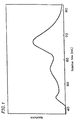
- Figure 1 is a chromatogram measured for an unpolymerized antibody by high-performance liquid chromatography.
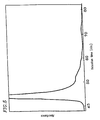
- Figures 2 through 5 are chromatograms measured for an antibody complex of this Example by high-performance liquid chromatography.
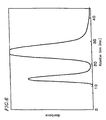
- Figure 6 is a chromatogram measured for a carrier polymer of this Example by high-performance liquid chromatography.
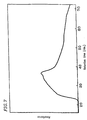
- Figure 7 is a chromatogram measured for an antibody/carrier complex of this Example by high-performance liquid chromatography.
- an antibody polymer was produced.
- An antibody directed to a human chorionic gonadotrophin (hereinafter, "hGC”) which is hereinafter referred to as an anti-hGC antibody, was used as the antibody.
- 10 mg of anti-hGC antibody was added into 1 ml phosphate buffered saline (hereinafter, "PBS"), to a concentration of 10 mg/ml.
- PBS phosphate buffered saline
- DTSSP having different equivalents, equivalents of 20, 50, 100, and 200, were added as polyfunctional polymerization reagents, and the reactions in the reagents were then performed for 30 minutes so as to polymerize the antibody so as to obtain Solution (A), Solution (B), Solution (C), and Solution (D).
- FIG. 1 shows resultant chromatograms of the HPLC.
- the vertical axis represents the absorbance (relative value), and the horizontal axis represents the retention time. As a molecular weight becomes greater, the retention time becomes shorter, and as a result, the peak of the chromatogram shifts leftward.
- Figure 1 shows a chromatogram of an unpolymerized, anti-hCG antibody.
- the peak of the anti-hCG antibody occurs near the retention time range of 66-68 minutes. Small peaks are found near the times of 44 minutes and 56 minutes, because the antibodies were denatured and aggregated in the solution so that the molecular weight appeared greater.
- Figure 2 shows a chromatogram for Solution (A) where the antibody was brought into reaction using the DTSSP having an equivalent of 20 to the antibody. Polymerization had not almost advanced yet , so that no change was found in the pattern of the chromatogram, and the peak occurred near the retention time of 70 minutes, as seen in Figure 1 .
- Figure 3 shows a chromatogram for Solution (B) where the antibody was brought into reaction using the DTSSP having an equivalent of 50 to the antibody. Polymerization of the antibody had slightly advanced, so that the peak near the retention time of 45 minutes was slightly increased.
- Figure 4 shows a chromatogram for Solution (C) where the antibody was brought into reaction using the DTSSP having an equivalent of 100 to the antibody. Polymerization of the antibody had further advanced, so that a large peak occurred near the retention time of 45 minutes.
- Figure 5 shows a chromatogram for Solution (D) where the antibody was brought into reaction using the DTSSP having an equivalent of 200 to the antibody. Polymerization of the antibody had further advanced, so that the peak near the retention time of 70 minutes disappeared, and a very large peak occurred near the retention time of 45 minutes.
- the molecular weight of the antibody complex corresponding to the peak near the retention time of 45 minutes is considered to be equal to or greater than the exclusion limit of the column, i.e., equal to or greater than the molecular weight of 2 ⁇ 10 6 .
- the peak near the retention time of 45 minutes was increased by increasing the equivalent of the polyfunctional reagent, it is understood that the proportion of the antibodies having greater degree of polymerization was increased.
- the degree of polymerization of the antibodies of the obtained antibody polymer could be adjusted by maintaining the reaction time constant and controlling the equivalent of the polyfunctional reagent added.
- the antibody polymer was produced for use in production of an antibody/carrier complex.
- a PBS solution having an anti-hCG antibody concentration of 10 mg/ml was prepared.
- 4.056 mg of DTSSP, which has an equivalent of 100 with respect to 10 mg of antibody was dissolved in 100 ⁇ l of PBS.
- 1 ml of antibody solution and 100 ⁇ l of DTSSP solution are slowly stirred at 35°C for 30 minutes.
- a Sephadex G-25 Column (produced by Amersham Pharmacia) was used to extract from the reaction solution a fraction including an antibody polymer.
- Bovine serum albumin (hereinafter, referred to as BSA) was used as a carrier. 110 mg of BSA was dissolved in 5 ml PBS so as to prepare a BSA solution. This amount of BSA corresponds to equivalent of 25 with respect to 10 mg of antibody. Then, a PBS solution having a DTT concentration of 77 mg/ml was prepared. The 1 ml of PBS solution having such a DTT concentration was mixed with 5 ml of PBS solution containing BSA, the mixture was slowly stirred at room temperature for 30 to 40 minutes, and the reaction was stopped immediately before the solution became cloudy. After the reaction was completed, a G-25 Column was used to collect from the reaction solution a fraction including a carrier polymer (retention time of 12 to 18 minutes) as shown in Figure 6 .
- BSA Bovine serum albumin
- a carrier polymer is fractionated, and immediately thereafter, mixed and brought into reaction with the previously-fractionated antibody polymer.
- the reaction was performed overnight at 4°C. This reaction advanced only by mixing the carrier polymer and the antibody polymer. This was supposed to be because a free SH group was left on a carrier polymer immediately after the carrier polymer was treated with DTT and fractionated by the column.
- a S-300HR Column was used to collect from the reaction solution a fraction including an antibody/carrier complex (A) (retention time of 24 to 44 minutes) as shown in Figure 7 .
- Comparative Example 1 a PBS solution having an anti-hCG antibody concentration of 10 mg/ml was brought into contact with DTSSP having the equivalents of 70, 100, and 200 to the antibody, as in Example 1. After the reaction was completed, the S-300HR Column was used to fractionate a fraction near the retention time of 45 minutes, so as to obtain antibody polymers (B), (C), and (D).
- Immunochromatography which is an immunological measurement method, was performed for a sample including hCG as a subject substance, using the antibody/carrier complex of Example 1 or the antibody polymer of Comparative Example 1, so as to measure hCG. This measurement of hCG is described with reference to Figure 8 .
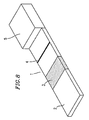
- Figure 8 is a perspective view showing an immunochromatography device used for measurement.
- An immunochromatography device including a porous carrier 1 shown in Figure 8 was used in the measurement.
- the antibody/carrier complex or antibody polymer was labeled with cyanine dye having a chemical structure shown below in Formula 1 (hereinafter, referred to as SLIC3), and carried in a labeling section 3 to a certain amount as a labeled antibody.
- SLIC3 cyanine dye having a chemical structure shown below in Formula 1
- an unpolymerized anti-hCG antibody was immobilized as an immobilized antibody.
- a PBS solution including hCG as an antigen was used as a sample.
- Such a sample having a hCG concentration of 0, 40, 400, 4,000, or 40,000 IU was added to a predetermined amount in a sample introduction section 2 .
- the sample moves toward a liquid absorbing section 5 via the labeling section 3 and determination section 4 .
- the labeled antibody carried in the labeling section 3 is dissolved into moisture of the sample, and begins to move together with the sample. Thereafter, the dissolved labeled antibody passes through the determination section 4 . If a specific bonding reaction of antigen and antibody is positive, the immobilized antibody and the labeled antibody are put into reaction via the antigen in the determination section 4 , so that the determination section 4 is stained. If negative, no reaction occurs, so that the labeled antibody passes through the determination section 4 and then is absorbed by the liquid absorbing section 5 .
- the intensity of color developed in the determination section 4 was measured using a reflection absorbance measurement device (CS9300PC produced by Shimadzu Corporation), where reflection absorption value for incident light at 550 nm (wavelength absorbed by SLIC3) was measured.
- Table 1 below shows measurement results obtained for the antibody polymer of Comparative Example 1.
- Data value is a reflection absorption value. As the data value increases, the intensity of color increases. That is, the data value indicates the intensity of the affinity of the antibody, i.e., functions as an index which indicates the degree of affinity.
- the "ND" means that color of the dye was not detected, i.e., the affinity was not obtained.
- PBS was used as a negative control.
- the affinity of the unpolymerized antibody used was obtained only in the concentration range up to about 400 IU.
- the polymerization reaction further advances so that precipitate is generated.
- the affinity of the antibody is reduced to lower than that obtained before polymerization.
- the degree of polymerization of antibody in an obtained antibody/carrier complex is controlled by controlling the equivalent of a polyfunctional reagent used in a reaction, whereby the reactivity of the antibody/carrier complex to an antigen is adjusted.
- the present invention is not limited to this, but various parameters can be used. For example, the reaction temperature, reaction time, and concentration of antibody in a reaction of an antibody with the polyfunctional reagent, etc., may be controlled.
- the Sephacryl S-300HR Column or Sephadex G-25 Column was used for purifying a polymerized antibody, but the present invention is not limited to these columns. Any other column may be used so long as the column can perform purification of macromolecules.
- a column which is used for gel filtration in liquid chromatography, and which can separate an antibody typically having a molecular weight of 150,000 and a protein having a molecular weight several times larger than that of the antibody may be used.
- a purification method utilizing electrophoresis may be used in substitution for HPLC. Still further, by modifying a reaction performed with a reagent and a reaction temperature, purification can be performed using a precipitation method, a re-crystallization method, etc.
- the reactivity of an antigen-antibody reaction can be changed without being limited to an inherent affinity of an antibody itself to an antigen while the amount of the antibody used is small. Further, according to a method for adjusting the reactivity of an antigen-antibody reaction of the present invention, the reactivity of the antigen-antibody reaction can readily be changed without producing a new antibody.
- the measurement affinity in analysis, measurement, and assay utilizing an antigen-antibody reaction can be controlled so as to be a desired value.
- the method of the present invention is useful especially in the field of medicine.
Landscapes
- Health & Medical Sciences (AREA)
- Chemical & Material Sciences (AREA)
- Life Sciences & Earth Sciences (AREA)
- Immunology (AREA)
- Molecular Biology (AREA)
- Organic Chemistry (AREA)
- Engineering & Computer Science (AREA)
- Biochemistry (AREA)
- General Health & Medical Sciences (AREA)
- Medicinal Chemistry (AREA)
- Biophysics (AREA)
- Hematology (AREA)
- Genetics & Genomics (AREA)
- Urology & Nephrology (AREA)
- Biomedical Technology (AREA)
- Proteomics, Peptides & Aminoacids (AREA)
- Cell Biology (AREA)
- Biotechnology (AREA)
- Microbiology (AREA)
- Endocrinology (AREA)
- Food Science & Technology (AREA)
- Physics & Mathematics (AREA)
- Analytical Chemistry (AREA)
- General Physics & Mathematics (AREA)
- Pathology (AREA)
- Peptides Or Proteins (AREA)
Abstract
An antibody/carrier complex which makes it possible to easily control the reactivity in an antigen-antibody reaction without producing a new antibody. This antibody/carrier complex is a complex containing at least one antibody and has a polymer structure wherein each antigen-binding site of the antibody is allowed to be arranged so as to react with the antigen.
Description
The present invention relates to an antibody/carrier
complex used for immunological analysis, measurement, assays,
or the like, using an antigen-antibody reaction, such as
immunochromatography, affinity chromatography, blotting,
immunoturbidimetry (immunonephelometry), dyeing of an
antigen in a tissue using an antibody, Ouchterlony, enzyme
immunoassay, etc., in the field of medicine, and the like.
In immunological analysis, measurement, assays, or
the like, which uses an antigen-antibody reaction, the
measurable concentration range of an antigen depends on the
affinity of the antibody. Thus, in order to obtain an antibody
having an affinity which corresponds to the concentration
range of an antigen as a subject of analysis, measurement,
or assay, it was conventionally necessary to search for and
obtain an antibody having the intended affinity among
commercially-available antibodies, or necessary to produce
a novel antibody having the intended affinity.
However, an antibody having an affinity
corresponding to the concentration range of an antigen as
a subject of analysis cannot be obtained in some cases even
when the production method is improved, because the adjustable
range of the affinity of an obtained monoclonal or polyclonal
antibody itself is finite.
In view of the above problem, the present invention
is directed to an objective of providing: an antibody/carrier
complex wherein the affinity of an antibody to an antigen,
i.e., the reactivity of an antigen-antibody reaction, can
readily be controlled without producing a novel antibody;
a production method of the same; a method for controlling
an antigen-antibody reaction using the same; and an
immunological measurement method.
In order to solve the above problem, an
antibody/carrier complex of the present invention includes
at least one antibody, the antibody/carrier complex including
a polymer structure wherein each antigen binding site of
the antibody is allowed to be arranged so as to react with
an antigen.
Preferably, the polymer structure is an antibody
polymer or carrier polymer.
Preferably, the carrier is selected from a group
consisting of protein, carbohydrate, and lipid.
Preferably, the carrier is bonded to a Fc-site of
the antibody.
The present invention relates also to a method for
producing the above antibody/carrier complex. This method
comprises a step of copolymerizing an antibody and a carrier
using a polymerization reagent.
The present invention relates also to a method for
producing the above antibody/carrier complex. This method
comprises: a step of polymerizing a carrier using a
polymerization reagent so as to form a carrier polymer; and
a step of bonding an antibody to the carrier polymer.
The present invention relates also to a method for
producing the above antibody/carrier complex. This method
comprises: a step of polymerizing an antibody using a
polymerization reagent so as to form an antibody polymer;
and a step of bonding a carrier to the antibody polymer.
The present invention relates also to a method for
producing the above antibody/carrier complex. This method
comprises: a step of polymerizing a carrier using a
polymerization reagent so as to form a carrier polymer; a
step of polymerizing an antibody using a polymerization
reagent so as to form an antibody polymer; and a step of
bonding the antibody polymer and the carrier polymer.
Preferably, the polymerization reagent is
3,3'-dithiobis(sulfosuccinimidylpropionate) or
dithiothreitol.
One aspect of the present invention relates to a
method for adjusting the reactivity of an antigen-antibody
reaction. This method comprises steps of: in a reaction of
an antibody and a polymerization reagent, changing a parameter
selected from a group consisting of the equivalent of the
polymerization reagent with respect to the antibody, reaction
temperature, reaction time, and the concentration of antibody,
so as to obtain a plurality of antibody polymers having
different degrees of polymerization; bonding the plurality
of antibody polymers to carriers so as to obtain a set of
antibody/carrier complexes; and selecting an
antibody/carrier complex which reacts with an antigen at
a desired degree of reaction, from the set of antibody/carrier
complexes.
One aspect of the present invention relates to an
immunological measurement method. This method comprises a
step of bringing a subject substance in a sample and the
above antibody/carrier complex into an antigen-antibody
reaction.
Hereinafter, the present invention will be described
in detail.
It should be noted that in the present invention,
protein separation and analyzing methods and immunological
methods known in the subject art fields are adopted unless
otherwise noted. These methods can be performed using
commercially-available enzymes, kits, antibodies, labeling
substances, etc.
As described above, an antibody/carrier complex of
the present invention includes at least one antibody, and
is characterized in that the antibody/carrier complex
comprises a polymer structure which allows each antigen
binding site of the antibody to be placed so as to react
with an antigen. Such an antibody/carrier complex has many
antigen binding sites in comparison to a bivalent antibody
which does not have a polymer structure. In the
antibody/carrier complex of the present invention, the ratio
of antigen binding sites which can effectively participate
in antigen-antibody reactions to the total antigen binding
sites can be changed. Thus, the antibody/carrier complex
of the present invention can be used to adjust the reactivity
of an antigen-antibody reaction so as to be higher or lower
in comparison to an immunoreaction of unpolymerized bivalent
antibody and antigen. Further, the antibody/carrier complex
of the present invention has a larger size in comparison
to an antibody polymer formed of the same amount of antibody
without a carrier. Thus, the number of antigen binding sites,
which are present on the surface of a complex molecule and
at which a reaction with an antigen is not sterically inhibited,
can be increased, and as a result, the reactivity range of
an antigen-antibody reaction can be extended towards higher
reactivity. Further, when an antibody/carrier complex of
the present invention has the same size as that of an antibody
polymer formed of only an antibody, the amount of the antibody
is smaller than that of the antibody polymer, while the
antibody/carrier complex achieves an antigen-antibody
reaction in substantially the same reactivity range as that
achieved by the antibody polymer. One of the
antibody/carrier complexes which is most efficiently
modified so as to have high reactivity has a structure where
the core portion thereof is formed of a carrier or a carrier
polymer, and one or more antibody molecules are bonded onto
the surface of the core portion such that antibody binding
sites are exposed outward. Furthermore, in the case where
an antibody/carrier complex of the present invention is
labeled with a labeling substance for use in an immunological
analysis or the like, only a carrier portion of the
antibody/carrier complex can be labeled, and therefore, there
is little possibility that an antigen-antibody reaction is
inhibited by a labeled antibody. As a result, the number
of antigen binding sites, which are present on the surface
of a complex molecule and at which a reaction with an antigen
is not sterically inhibited, can be increased, and as a result,
the reactivity range of an antigen-antibody reaction of the
antibody/carrier complex can be extended towards higher
reactivity in comparison to when an antibody polymer formed
of only an antibody is used.
The present invention is not limited to a specific
antibody. Any antibody can be used regardless of its origin,
subclass, etc. For example, IgG, IgM, IgA, IgE, and IgD
derived from a human or mouse, and IgG, IgM, IgA, IgE, IgD,
and IgY derived from a rat, rabbit, goat, sheep, chicken,
or the like, may be used. These antibodies may be bought
as commercially-available products, or may be extracted
directly from an animal.
The structure of a carrier of the antibody/carrier
complex may be formed of any material so long as the material
does not inhibit an antigen-antibody reaction. Preferably.
it may be a material which is found in a body of an organism.
Protein, carbohydrate, and lipid may be used. Examples of
such a material include proteins which do not function as
an antibody, such as serum protein, gelatin, or the like,
carbohydrate such as monosaccharides, oligosaccharides,
polysaccharides, complex carbohydrates, or the like, and
lipids such as simple lipid. complex lipid, lipid derivative,
or the like. Among these, protein and carbohydrate are
preferable because a polymerization reaction can readily
be caused. Further, proteins which do not function as an
enzyme are preferable because such protein does not cause
a reaction with a substance other than a subject antigen.
Furthermore, albumin derived from serum, or the like, is
also preferable because such albumin does not inhibit a
reaction of an antibody and has high water-solubility.
Furthermore, it is preferable that a carrier is
capable of bonding to a Fc-site of an antibody. In such a
case, the antibody and the carrier are combined such that
an antigen binding site faces in a direction opposite to
the carrier. Thus, the possibility that an antigen-antibody
reaction is inhibited by the bonding of the antibody and
carrier is reduced, and therefore, the adjustable reactivity
range of the antibody can be extended towards higher
reactivity. The carrier bonding to the Fc-site of the
antibody is, for example, protein A, protein G, or the like.
A production method of an antibody/carrier complex
according to the present invention is characterized by
copolymerizing an antibody and a carrier using a
polymerization reagent.
The production method may include a step of
polymerizing a carrier using a polymerization reagent so
as to form a carrier polymer, and a step of bonding an antibody
to the carrier polymer.
Alternatively, the production method may include a
step of polymerizing an antibody using a polymerization
reagent so as to form an antibody polymer, and a step of
bonding an carrier to the antibody polymer.
Alternatively, the production method may include a
step of polymerizing a carrier using a polymerization reagent
so as to form a carrier polymer, a step of polymerizing an
antibody using a polymerization reagent so as to form an
antibody polymer, and a step of bonding the carrier polymer
and the antibody polymer.
Among these variations, when the production method
of an antibody/carrier complex, which includes a step of
polymerizing a carrier using a polymerization reagent so
as to form a carrier polymer and a step of bonding an antibody
to the carrier polymer, is used, an antibody/carrier complex
which has the carrier polymer in a core portion and the antibody
in a surface portion can be readily formed. This method is
preferable because the adjustable affinity range of the
antibody can be extended towards higher affinity.
The polymerization reagent is not limited to any
specific reagent so long as the reagent can cause a
polymerization reaction. For example, as a polymerization
reagent for an antibody, a polyfunctional reagent having
two or more functional groups which are capable of bonding
to an antibody (succinimidyl group, pyridyldisulfide group,
or the like) in one molecule, a reagent which reduces a
disulfide bond of protein, etc., may be used.
The polyfunctional reagent may be, for example,
3,3'-dithiobis(sulfosuccinimidylpropionate)(hereinafter,
referred to as "DTSSP"), bis(sulfosuccinimidyl)suberate,
disulfosuccinimidyltartrate, ethylene glycol
bis(sulfosuccinimidylsuccinate),
N-succinimidyl-3-(2-pyridyldithio)propionate,
bis[2-(sulfosuccinimidoxycarbonyloxy)ethyl]sulfone,
dimethylsuberimidate · 2HCl,
N-γ-maleimidobutyryloxysulfosuccimide ester,
sulfosuccimidi[4-iodoacetyl], bismaleimidohexane,
1,4-di-[3'-(2'-pyridyldithio)propione amide]butane,
2-mercaptomethylamine · HCl, dithiothreitol (hereinafter,
referred to as "DTT"), etc.
Among the above, it is preferable to use DTSSP or
DTT as a polyfunctional reagent in the respect that a reaction
with an antibody can readily be controlled.
A reagent which reduces disulfide bonds of proteins
may be, for example, 2-mercaptoethanol, or the like.
A method for adjusting the reactivity of an
antigen-antibody reaction is characterized by controlling
the degree of polymerization of the antibody in the above
antibody/carrier complex.
In the antibody/carrier complex of the present
invention, the affinity to an antigen in an antigen-antibody
reaction increases as the degree of polymerization of an
antibody increases, but if the degree of polymerization is
increased after the highest affinity has been reached, the
affinity decreases to a level lower than the affinity of
an antibody achieved before polymerization. This is because
the number of antigen binding sites of the antibody/carrier
complex increases along with an increase in the degree of
polymerization of the antigen, and accordingly, the
reactivity of the reaction with the antigen increases; whereas
a further increase in the degree of polymerization accelerates
polymerization via antigen binding sites, or inhibits
sterically binding of antigen binding sites to antigens,
and accordingly, the reactivity of the reaction with the
antigen is decreased. Thus, by controlling the degree of
polymerization of an antibody in an antibody/carrier complex.
the affinity of the antibody to the antigen can be adjusted.
Furthermore, an immunological measurement method of
the present invention is characterized by measurement of
a subject substance, using an antigen-antibody reaction of
the subject substance in a sample with the above
antibody/carrier complex. As the immunological measurement
method, a conventionally known method can be used without
any special limitation. The immunological measurement
method may be, for example, immunochromatography, affinity
chromatography, blotting, immunoturbidimetry
(immunonephelometry), dyeing of an antigen in a tissue using
an antibody, Ouchterlony, enzyme immunoassay, etc.
Hereinafter, the present invention is specifically
described with reference to Examples, but is not limited
to the following Examples.
Hereinafter, an example of the present invention is
described with reference to Figures 1 and 7.
Figure 1 is a chromatogram measured for an
unpolymerized antibody by high-performance liquid
chromatography. Figures 2 through 5 are chromatograms
measured for an antibody complex of this Example by
high-performance liquid chromatography. Figure 6 is a
chromatogram measured for a carrier polymer of this Example
by high-performance liquid chromatography. Figure 7 is a
chromatogram measured for an antibody/carrier complex of
this Example by high-performance liquid chromatography.
First, an antibody polymer was produced. An
antibody directed to a human chorionic gonadotrophin
(hereinafter, "hGC"), which is hereinafter referred to as
an anti-hGC antibody, was used as the antibody. 10 mg of
anti-hGC antibody was added into 1 ml phosphate buffered
saline (hereinafter, "PBS"), to a concentration of 10 mg/ml.
To this prepared solution, DTSSP having different equivalents,
equivalents of 20, 50, 100, and 200, were added as
polyfunctional polymerization reagents, and the reactions
in the reagents were then performed for 30 minutes so as
to polymerize the antibody so as to obtain Solution (A),
Solution (B), Solution (C), and Solution (D). Sephacryl
S-300HR Column (produced by Amersham Pharmacia) was used
in high-performance liquid chromatography (hereinafter,
HPLC) to evaluate the degree of polymerization of the antibody,
and to purify the antibody under the condition of flow velocity
of 150 ml/h. Figures 1 through 5 show resultant
chromatograms of the HPLC. The vertical axis represents the
absorbance (relative value), and the horizontal axis
represents the retention time. As a molecular weight becomes
greater, the retention time becomes shorter, and as a result,
the peak of the chromatogram shifts leftward.
Figure 1 shows a chromatogram of an unpolymerized,
anti-hCG antibody. The peak of the anti-hCG antibody occurs
near the retention time range of 66-68 minutes. Small peaks
are found near the times of 44 minutes and 56 minutes, because
the antibodies were denatured and aggregated in the solution
so that the molecular weight appeared greater.
Figure 2 shows a chromatogram for Solution (A) where
the antibody was brought into reaction using the DTSSP having
an equivalent of 20 to the antibody. Polymerization had not
almost advanced yet , so that no change was found in the pattern
of the chromatogram, and the peak occurred near the retention
time of 70 minutes, as seen in Figure 1.
Figure 3 shows a chromatogram for Solution (B) where
the antibody was brought into reaction using the DTSSP having
an equivalent of 50 to the antibody. Polymerization of the
antibody had slightly advanced, so that the peak near the
retention time of 45 minutes was slightly increased.
Figure 4 shows a chromatogram for Solution (C) where
the antibody was brought into reaction using the DTSSP having
an equivalent of 100 to the antibody. Polymerization of the
antibody had further advanced, so that a large peak occurred
near the retention time of 45 minutes.
Figure 5 shows a chromatogram for Solution (D) where
the antibody was brought into reaction using the DTSSP having
an equivalent of 200 to the antibody. Polymerization of the
antibody had further advanced, so that the peak near the
retention time of 70 minutes disappeared, and a very large
peak occurred near the retention time of 45 minutes.
The molecular weight of the antibody complex
corresponding to the peak near the retention time of
45 minutes is considered to be equal to or greater than the
exclusion limit of the column, i.e., equal to or greater
than the molecular weight of 2×10⁶. Considering that the
peak near the retention time of 45 minutes was increased
by increasing the equivalent of the polyfunctional reagent,
it is understood that the proportion of the antibodies having
greater degree of polymerization was increased.
Based on the above results, the degree of
polymerization of the antibodies of the obtained antibody
polymer could be adjusted by maintaining the reaction time
constant and controlling the equivalent of the polyfunctional
reagent added.
Next, the antibody polymer was produced for use in
production of an antibody/carrier complex. First, a PBS
solution having an anti-hCG antibody concentration of
10 mg/ml was prepared. 4.056 mg of DTSSP, which has an
equivalent of 100 with respect to 10 mg of antibody, was
dissolved in 100 µl of PBS. 1 ml of antibody solution and
100 µl of DTSSP solution are slowly stirred at 35°C for
30 minutes. After the reaction has been completed, a
Sephadex G-25 Column (produced by Amersham Pharmacia) was
used to extract from the reaction solution a fraction
including an antibody polymer.
Bovine serum albumin (hereinafter, referred to as
BSA) was used as a carrier. 110 mg of BSA was dissolved in
5 ml PBS so as to prepare a BSA solution. This amount of
BSA corresponds to equivalent of 25 with respect to 10 mg
of antibody. Then, a PBS solution having a DTT concentration
of 77 mg/ml was prepared. The 1 ml of PBS solution having
such a DTT concentration was mixed with 5 ml of PBS solution
containing BSA, the mixture was slowly stirred at room
temperature for 30 to 40 minutes, and the reaction was stopped
immediately before the solution became cloudy. After the
reaction was completed, a G-25 Column was used to collect
from the reaction solution a fraction including a carrier
polymer (retention time of 12 to 18 minutes) as shown in
Figure 6.
A carrier polymer is fractionated, and immediately
thereafter, mixed and brought into reaction with the
previously-fractionated antibody polymer. The reaction was
performed overnight at 4°C. This reaction advanced only by
mixing the carrier polymer and the antibody polymer. This
was supposed to be because a free SH group was left on a
carrier polymer immediately after the carrier polymer was
treated with DTT and fractionated by the column. After the
reaction was completed, a S-300HR Column was used to collect
from the reaction solution a fraction including an
antibody/carrier complex (A) (retention time of 24 to
44 minutes) as shown in Figure 7.
In Comparative Example 1, a PBS solution having an
anti-hCG antibody concentration of 10 mg/ml was brought into
contact with DTSSP having the equivalents of 70, 100, and
200 to the antibody, as in Example 1. After the reaction
was completed, the S-300HR Column was used to fractionate
a fraction near the retention time of 45 minutes, so as to
obtain antibody polymers (B), (C), and (D).
Immunochromatography, which is an immunological
measurement method, was performed for a sample including
hCG as a subject substance, using the antibody/carrier complex
of Example 1 or the antibody polymer of Comparative Example 1,
so as to measure hCG. This measurement of hCG is described
with reference to Figure 8. Figure 8 is a perspective view
showing an immunochromatography device used for measurement.
An immunochromatography device including a porous
carrier 1 shown in Figure 8 was used in the measurement.
The antibody/carrier complex or antibody polymer was labeled
with cyanine dye having a chemical structure shown below
in Formula 1 (hereinafter, referred to as SLIC3), and carried
in a labeling section 3 to a certain amount as a labeled
antibody.
 In a
In a determination section 4, an unpolymerized anti-hCG
antibody was immobilized as an immobilized antibody. A PBS
solution including hCG as an antigen was used as a sample.
Such a sample having a hCG concentration of 0, 40, 400, 4,000,
or 40,000 IU was added to a predetermined amount in a sample
introduction section 2. The sample moves toward a liquid
absorbing section 5 via the labeling section 3 and
determination section 4. When the sample passes through the
labeling section 3, the labeled antibody carried in the
labeling section 3 is dissolved into moisture of the sample,
and begins to move together with the sample. Thereafter,
the dissolved labeled antibody passes through the
determination section 4. If a specific bonding reaction of
antigen and antibody is positive, the immobilized antibody
and the labeled antibody are put into reaction via the antigen
in the determination section 4, so that the determination
section 4 is stained. If negative, no reaction occurs, so
that the labeled antibody passes through the determination
section 4 and then is absorbed by the liquid absorbing
section 5. The intensity of color developed in the
determination section 4 was measured using a reflection
absorbance measurement device (CS9300PC produced by Shimadzu
Corporation), where reflection absorption value for incident
light at 550 nm (wavelength absorbed by SLIC3) was measured.
Table 1 below shows measurement results obtained for
the antibody polymer of Comparative Example 1. Data value
is a reflection absorption value. As the data value increases,
the intensity of color increases. That is, the data value
indicates the intensity of the affinity of the antibody,
i.e., functions as an index which indicates the degree of
affinity. The "ND" means that color of the dye was not
detected, i.e., the affinity was not obtained. PBS was used
as a negative control. The affinity of the unpolymerized
antibody used was obtained only in the concentration range
up to about 400 IU.
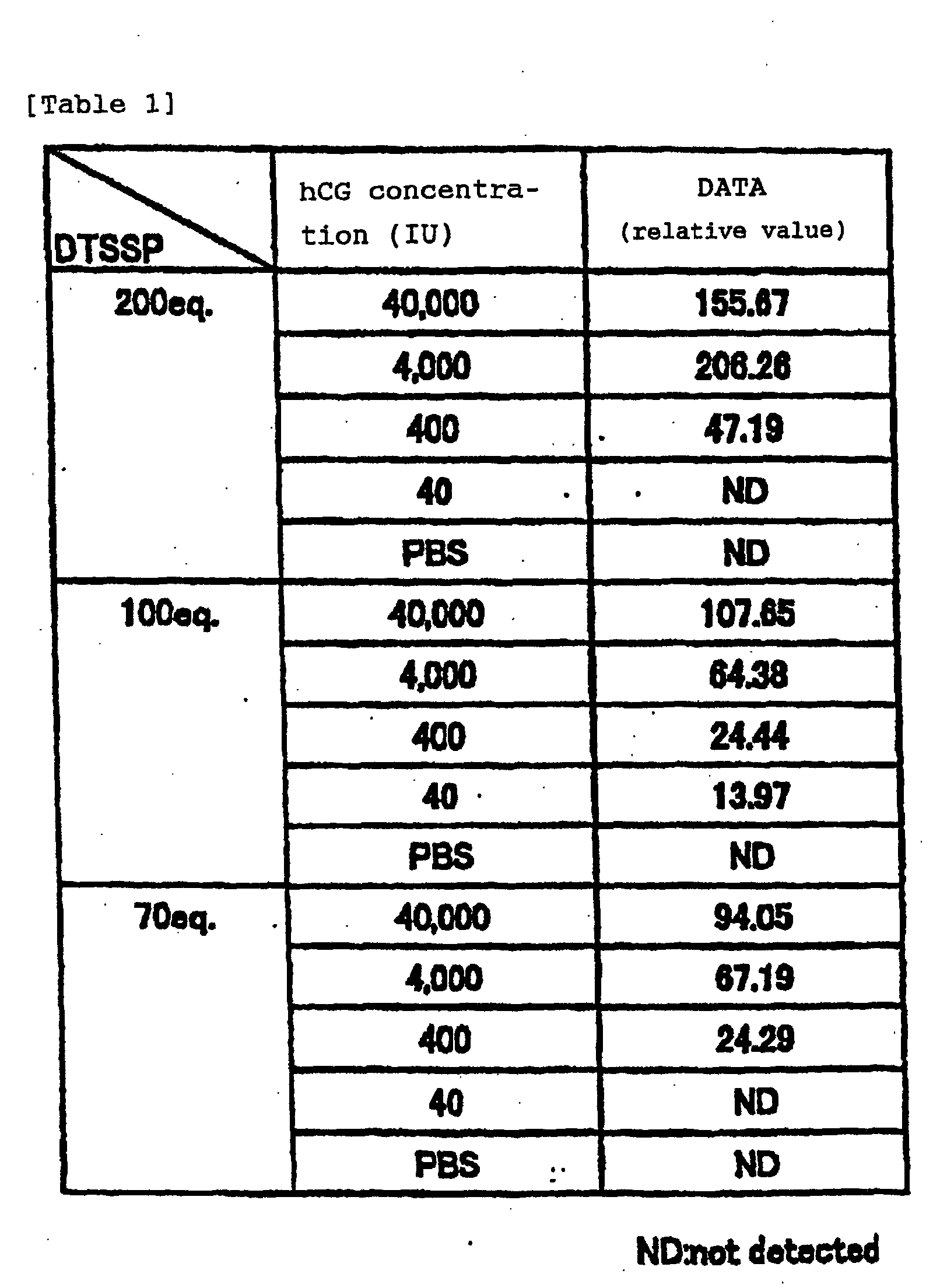
As shown in Table 1, in the antibody polymer (B)
or (D) which was reacted using DTSSP having an equivalent
of 70 or 200 with respect to the antibody, the affinity was
only obtained to hCG having a concentration down to 400 IU.
However, in the antibody polymer (C) which was put into
reaction using DTSSP having the equivalent of 100 with respect
to the antibody, affinity to hCG having a concentration down
to 40 IU was obtained.
In the case where the equivalent of DTSSP is increased
to the equivalent of 200 or more, the polymerization reaction
further advances so that precipitate is generated. As a
result, the affinity of the antibody is reduced to lower
than that obtained before polymerization.
The same measurement was performed on the
antibody/carrier complex (A) of Example 1. The affinity to
a hCG having a concentration down to 40 IU was obtained.
This affinity is substantially equal to that of the antibody
polymer (C) produced using DTSSP which has the same equivalent.
Considering that the total amount of protein carried in the
labeling section 3 is substantially the same, it is understood
that in the antibody/carrier complex (A) of Example 1,
substantially the same affinity can be achieved with a smaller
amount of antibody, in comparison to the antibody polymer
(C) of the Comparative Example.
In the above process of producing the labeled antibody.
labeling was performed after an antibody/carrier complex
was produced. However, an antibody/carrier complex where
only a carrier portion is labeled can be produced by labeling
a carrier polymer and then bringing an antibody polymer into
reaction with the labeled carrier polymer. As a result, the
possibility that an antigen-antibody reaction is inhibited
by a directly labeled antibody is reduced. Accordingly, the
range of affinity to an antigen in an antigen-antibody
reaction of the antibody/carrier complex can be extended
towards higher affinity.
In the above, the degree of polymerization of antibody
in an obtained antibody/carrier complex is controlled by
controlling the equivalent of a polyfunctional reagent used
in a reaction, whereby the reactivity of the antibody/carrier
complex to an antigen is adjusted. However, the present
invention is not limited to this, but various parameters
can be used. For example, the reaction temperature, reaction
time, and concentration of antibody in a reaction of an
antibody with the polyfunctional reagent, etc., may be
controlled.
Further, the Sephacryl S-300HR Column or Sephadex
G-25 Column was used for purifying a polymerized antibody,
but the present invention is not limited to these columns.
Any other column may be used so long as the column can perform
purification of macromolecules. For example, a column which
is used for gel filtration in liquid chromatography, and
which can separate an antibody typically having a molecular
weight of 150,000 and a protein having a molecular weight
several times larger than that of the antibody, may be used.
Furthermore, a purification method utilizing
electrophoresis may be used in substitution for HPLC. Still
further, by modifying a reaction performed with a reagent
and a reaction temperature, purification can be performed
using a precipitation method, a re-crystallization method,
etc.
According to an antibody/carrier complex of the
present invention, the reactivity of an antigen-antibody
reaction can be changed without being limited to an inherent
affinity of an antibody itself to an antigen while the amount
of the antibody used is small. Further, according to a method
for adjusting the reactivity of an antigen-antibody reaction
of the present invention, the reactivity of the
antigen-antibody reaction can readily be changed without
producing a new antibody.
By using the method of the present invention, the
measurement affinity in analysis, measurement, and assay
utilizing an antigen-antibody reaction can be controlled
so as to be a desired value. Thus, the method of the present
invention is useful especially in the field of medicine.
Claims (11)
- An antibody/carrier complex including at least one antibody, the antibody/carrier complex including a polymer structure wherein each antigen binding site of the antibody is allowed to be arranged so as to react with an antigen.
- An antibody/carrier complex according to claim 1, wherein the polymer structure is an antibody polymer or carrier polymer.
- An antibody/carrier complex according to claim 1, wherein the carrier is selected from a group consisting of protein, carbohydrate, and lipid.
- An antibody/carrier complex according to claim 1, wherein the carrier is bonded to a Fc-site of the antibody.
- A method for producing the antibody/carrier complex recited in claim 1, comprising a step of copolymerizing an antibody and a carrier using a polymerization reagent.
- A method for producing the antibody/carrier complex recited in claim 1, comprising: a step of polymerizing a carrier using a polymerization reagent so as to form a carrier polymer; and a step of bonding an antibody to the carrier polymer.
- A method for producing the antibody/carrier complex recited in claim 1, comprising: a step of polymerizing an antibody using a polymerization reagent so as to form an antibody polymer; and a step of bonding a carrier to the antibody polymer.
- A method for producing the antibody/carrier complex recited in claim 1, comprising: a step of polymerizing a carrier using a polymerization reagent so as to form a carrier polymer; a step of polymerizing an antibody using a polymerization reagent so as to form an antibody polymer; and a step of bonding the antibody polymer and the carrier polymer.
- A method for producing the antibody/carrier complex according to any of claims 5-8, wherein the polymerization reagent is 3,3'-dithiobis(sulfosuccinimidylpropionate) or dithiothreitol.
- A method for adjusting the reactivity of an antigen-antibody reaction, comprising steps of:in a reaction of an antibody and a polymerization reagent, changing a parameter selected from a group consisting of the equivalent of the polymerization reagent with respect to the antibody, reaction temperature, reaction time, and the concentration of antibody, so as to obtain a plurality of antibody polymers having different degrees of polymerization;bonding the plurality of antibody polymers to carriers so as to obtain a set of antibody/carrier complexes; andselecting an antibody/carrier complex which reacts with an antigen at a desired degree of reaction, from the set of antibody/carrier complexes.
- An immunological measurement method, comprising a step of bringing a subject substance in a sample and the antibody/carrier complex recited in one of claims 1-4 into an antigen-antibody reaction.
Applications Claiming Priority (3)
| Application Number | Priority Date | Filing Date | Title |
|---|---|---|---|
| JP2000106019 | 2000-04-07 | ||
| JP2000106019 | 2000-04-07 | ||
| PCT/JP2001/003017 WO2001077182A1 (en) | 2000-04-07 | 2001-04-06 | Antibody/carrier complex, process for producing the same, method of controlling antigen-antibody reaction by using the same and immunoassay method |
Publications (2)
| Publication Number | Publication Date |
|---|---|
| EP1270596A1 true EP1270596A1 (en) | 2003-01-02 |
| EP1270596A4 EP1270596A4 (en) | 2003-06-04 |
Family
ID=18619263
Family Applications (1)
| Application Number | Title | Priority Date | Filing Date |
|---|---|---|---|
| EP01917858A Withdrawn EP1270596A4 (en) | 2000-04-07 | 2001-04-06 | ANTIBODY-CARRIER COMPLEX, PRODUCTION METHOD, METHOD FOR MONITORING ANTIGEN-ANTIBODY REACTION BY SAID COMPLEX AND IMMUNOASSAY METHOD |
Country Status (3)
| Country | Link |
|---|---|
| US (1) | US20030143638A1 (en) |
| EP (1) | EP1270596A4 (en) |
| WO (1) | WO2001077182A1 (en) |
Families Citing this family (3)
| Publication number | Priority date | Publication date | Assignee | Title |
|---|---|---|---|---|
| JP2005241389A (en) * | 2004-02-25 | 2005-09-08 | Ochiyanomizu Jiyoshi Univ | Specific immobilization reagent for fluorescence-labeled sugar chain and immobilization method |
| JP7432502B2 (en) | 2017-09-22 | 2024-02-16 | エフ. ホフマン-ラ ロシュ アーゲー | Multivalent mono- or bispecific recombinant antibodies for analytical purposes |
| CN112198318B (en) * | 2020-07-15 | 2021-07-20 | 南京岚煜生物科技有限公司 | Methods for the assignment of antibody standards and the determination of the minimum detection limit of antibody detection reagents |
Family Cites Families (11)
| Publication number | Priority date | Publication date | Assignee | Title |
|---|---|---|---|---|
| US4698420A (en) * | 1985-02-25 | 1987-10-06 | Xoma Corporation | Antibody hybrid molecules and process for their preparation |
| JP3207878B2 (en) * | 1991-08-23 | 2001-09-10 | オリンパス光学工業株式会社 | Method for immobilizing biological material |
| JPH07270415A (en) * | 1994-03-31 | 1995-10-20 | Toray Ind Inc | Enzyme immunoassay |
| US5585278A (en) * | 1994-10-27 | 1996-12-17 | Bayer Corporation | Method for coupling antibody to novel latex substrate and its use in immunoassay |
| US5807942A (en) * | 1995-06-09 | 1998-09-15 | Nof Corporation | Polymerized product of protein and process for producing it |
| JPH1033165A (en) * | 1996-07-25 | 1998-02-10 | Asahi Chem Ind Co Ltd | Selective separation of hematopoietic undifferentiated cell and separator |
| JPH11326324A (en) * | 1998-05-07 | 1999-11-26 | Matsushita Electric Ind Co Ltd | Indirectly polymerized labeled antibody and method for producing the same |
| US5994511A (en) * | 1997-07-02 | 1999-11-30 | Genentech, Inc. | Anti-IgE antibodies and methods of improving polypeptides |
| DE59709791D1 (en) * | 1997-09-19 | 2003-05-15 | Alstom Switzerland Ltd | Burner for operating a heat generator |
| JPH11295313A (en) * | 1998-04-09 | 1999-10-29 | Eiken Chem Co Ltd | Polymers of antibodies or antibody fragments and their use |
| JP2000002704A (en) * | 1998-06-17 | 2000-01-07 | Sekisui Chem Co Ltd | Method for producing immunoassay reagent and immunoassay reagent |
-
2001
- 2001-04-06 WO PCT/JP2001/003017 patent/WO2001077182A1/en not_active Ceased
- 2001-04-06 EP EP01917858A patent/EP1270596A4/en not_active Withdrawn
- 2001-04-06 US US10/240,862 patent/US20030143638A1/en not_active Abandoned
Also Published As
| Publication number | Publication date |
|---|---|
| EP1270596A4 (en) | 2003-06-04 |
| US20030143638A1 (en) | 2003-07-31 |
| WO2001077182A1 (en) | 2001-10-18 |
Similar Documents
| Publication | Publication Date | Title |
|---|---|---|
| Molina‐Bolívar et al. | Latex immunoagglutination assays | |
| Bao | Capillary electrophoretic immunoassays | |
| US4434236A (en) | Immunoassay wherein labeled antibody is displaced from immobilized analyte-analogue | |
| AU616484B2 (en) | Method for determination of a polyvalent substance using an immunoaggregate | |
| Radl et al. | The origin of monomeric and polymeric forms of IgA in man | |
| JP2677753B2 (en) | Aggregation immunoassay | |
| Jinn-Nan et al. | Comparison of site-specific coupling chemistry for antibody immobilization on different solid supports | |
| US20030003602A1 (en) | Homogeneous immunoassay method | |
| EP0124366B1 (en) | Method of measuring biological ligands | |
| CA2093494A1 (en) | Method for the elimination of non-specific reactions in immuno-assays | |
| EP1239285A1 (en) | Improved homogeneous immunoassay method | |
| EP0902287B1 (en) | Method and test strip for reducing urea effect of immunochromatographic assays using urine samples | |
| EP1270596A1 (en) | Antibody/carrier complex, process for producing the same, method of controlling antigen-antibody reaction by using the same and immunoassay method | |
| CA1334507C (en) | Simple method for immunological assay | |
| JPH01209370A (en) | Method and apparatus for measuring immunologically active substance | |
| US4652532A (en) | Free radical based biochemical method for detecting substances in fluids | |
| JPH06167495A (en) | Aggregation immunoassay method | |
| AU630865B2 (en) | Measurement of transferrin | |
| US5756363A (en) | Liposome reagent for immunoagglutination and immunoanalytical method | |
| Gomez-Morte et al. | Immunoassay for food quality evaluation | |
| JPWO2001077182A1 (en) | Antibody-carrier complex, its manufacturing method, method for adjusting antigen-antibody reaction using the same, and immunoassay method | |
| JPH0346565A (en) | Enzyme immunoassay utilizing magnetic material | |
| JP2501960B2 (en) | Methods and reagents for immunologically measuring ligands | |
| EP0653065B1 (en) | Separation method | |
| JP4780405B2 (en) | Method for measuring test substance using binding affinity, and control method for binding affinity analysis for measurement of test substance |
Legal Events
| Date | Code | Title | Description |
|---|---|---|---|
| PUAI | Public reference made under article 153(3) epc to a published international application that has entered the european phase |
Free format text: ORIGINAL CODE: 0009012 |
|
| 17P | Request for examination filed |
Effective date: 20021007 |
|
| AK | Designated contracting states |
Kind code of ref document: A1 Designated state(s): AT BE CH CY DE DK ES FI FR GB GR IE IT LI LU MC NL PT SE TR |
|
| A4 | Supplementary search report drawn up and despatched |
Effective date: 20030424 |
|
| RBV | Designated contracting states (corrected) |
Designated state(s): AT BE CH CY DE DK FR GB IT LI NL SE |
|
| STAA | Information on the status of an ep patent application or granted ep patent |
Free format text: STATUS: THE APPLICATION IS DEEMED TO BE WITHDRAWN |
|
| 18D | Application deemed to be withdrawn |
Effective date: 20061101 |