EP1270589A1 - Novel leukotriene b4 receptor - Google Patents
Novel leukotriene b4 receptor Download PDFInfo
- Publication number
- EP1270589A1 EP1270589A1 EP01912398A EP01912398A EP1270589A1 EP 1270589 A1 EP1270589 A1 EP 1270589A1 EP 01912398 A EP01912398 A EP 01912398A EP 01912398 A EP01912398 A EP 01912398A EP 1270589 A1 EP1270589 A1 EP 1270589A1
- Authority
- EP
- European Patent Office
- Prior art keywords
- receptor
- ltb
- seq
- leukotriene
- activity
- Prior art date
- Legal status (The legal status is an assumption and is not a legal conclusion. Google has not performed a legal analysis and makes no representation as to the accuracy of the status listed.)
- Withdrawn
Links
Images


Classifications
-
- C—CHEMISTRY; METALLURGY
- C07—ORGANIC CHEMISTRY
- C07K—PEPTIDES
- C07K14/00—Peptides having more than 20 amino acids; Gastrins; Somatostatins; Melanotropins; Derivatives thereof
- C07K14/435—Peptides having more than 20 amino acids; Gastrins; Somatostatins; Melanotropins; Derivatives thereof from animals; from humans
- C07K14/705—Receptors; Cell surface antigens; Cell surface determinants
- C07K14/72—Receptors; Cell surface antigens; Cell surface determinants for hormones
- C07K14/723—G protein coupled receptor, e.g. TSHR-thyrotropin-receptor, LH/hCG receptor, FSH receptor
-
- C—CHEMISTRY; METALLURGY
- C07—ORGANIC CHEMISTRY
- C07K—PEPTIDES
- C07K14/00—Peptides having more than 20 amino acids; Gastrins; Somatostatins; Melanotropins; Derivatives thereof
- C07K14/435—Peptides having more than 20 amino acids; Gastrins; Somatostatins; Melanotropins; Derivatives thereof from animals; from humans
- C07K14/705—Receptors; Cell surface antigens; Cell surface determinants
-
- A—HUMAN NECESSITIES
- A61—MEDICAL OR VETERINARY SCIENCE; HYGIENE
- A61K—PREPARATIONS FOR MEDICAL, DENTAL OR TOILETRY PURPOSES
- A61K38/00—Medicinal preparations containing peptides
Definitions
- This invention relates to a novel leukotriene B 4 receptor, a nucleic acid encoding the receptor, a vector containing the nucleic acid, a method for screening a substance capable of modifying the activity of the receptor by using a host cell containing the vector and the receptor, and pharmaceutical compositions for inflammatory diseases containing as the active ingredient a substance capable of modifying the activity of the receptor.
- LTB 4 leukotriene B 4
- LTB 4 leukotriene B 4
- LTB 4 is produced mainly in myelocyte system cells such as leukocytes, but it is produced also in parenchymal cells such as of the intestinal tract and the lungs when leukotriene A 4 (LTA 4 ) as the LTB 4 precursor is supplied.
- LTA 4 leukotriene A 4
- LTB 4 is concerned in the onset, advance and exacerbation of rheumatoid arthritis, edema, glomerulonephritis and the like renal diseases, bronchitis, airway oversensitivity and the like respiratory diseases, eczema, dermatitis and the like skin diseases, psoriasis, inflammatory bowel disease, ulcerative colitis and the like intestinal diseases, cerebral myelitis and the like central diseases (Koza Prostaglandin 3 (1988), 225 - 227, 484 - 486, edited by N. Katori, M. Murota and S. Yamamoto; William T.J. (1999) Novel Inhibitors of Leukotrienes, 299 - 316).
- LTB 4 receptor antagonists a large number of LTB 4 receptor antagonists (Negro, J.M. et al . (1997) Allergol. Immunopathol. Mdr., 25, 104 - 112; Kishikawa, K. et al. (1995) Adv. Prostaglandin Thromboxane Leukot. Res ., 23, 279 - 281) have been studied and developed with the aim of obtaining antiinflammatory drugs.
- receptors which specifically recognize LTB 4 human BLT (Yokomizo, T. et al . (1997) Nature, 387, 620 - 624) and mouse BLT (Martin, V. et al. (1999) J. Biol. Chem ., 274, 8597 - 8603) have so far been isolated and identified, but the presence of other LTB 4 receptors is not known.
- the invention aims at providing a novel leukotriene B 4 (LTB 4 ) receptor and a nucleic acid encoding the receptor.
- the invention also aims at providing a method for screening a substance capable of modifying the activity of the receptor by using the novel LTB 4 receptor and pharmaceuticals containing as the active ingredient a substance capable of modifying the activity of the receptor, particularly pharmaceuticals for inflammatory diseases.
- nucleic acids coding for novel human and rat LTB 4 receptors which are different from already known LTB 4 receptors and have determined their nucleotide sequences and deduced amino acid sequences.
- vectors containing nucleic acids coding for the receptors and host cells containing the vectors were prepared in succession, production of novel recombinant LTB 4 receptors was made possible by expressing LTB 4 receptors using the host cells, and then it was confirmed that the receptors induce inflammation based on the finding that the receptors have cell migration activity.
- a method for producing antibodies for the receptors was established and the antibodies were obtained.
- a method for screening substances capable of modifying the activity of the receptors was established, substances having antagonist activity for the receptors were obtained by the screening method and then it was confirmed that these substances are effective in preventing and/or treating inflammatory diseases, thus accomplishing the invention.
- the invention relates to:
- bronchitis As illustrative examples of the inflammatory disease, bronchitis, dermatitis, psoriasis, ulcerative colitis, rheumatoid arthritis and edema can be cited.
- the LTB 4 receptor of the invention can be used for the screening of a substance which modifies the activity of the receptor.
- a substance having antagonist activity for the receptor particularly a substance which inhibits cell migration activity, is useful for the prevention and/or treatment of inflammatory diseases (bronchitis, dermatitis, psoriasis, ulcerative colitis, rheumatoid arthritis and edema).
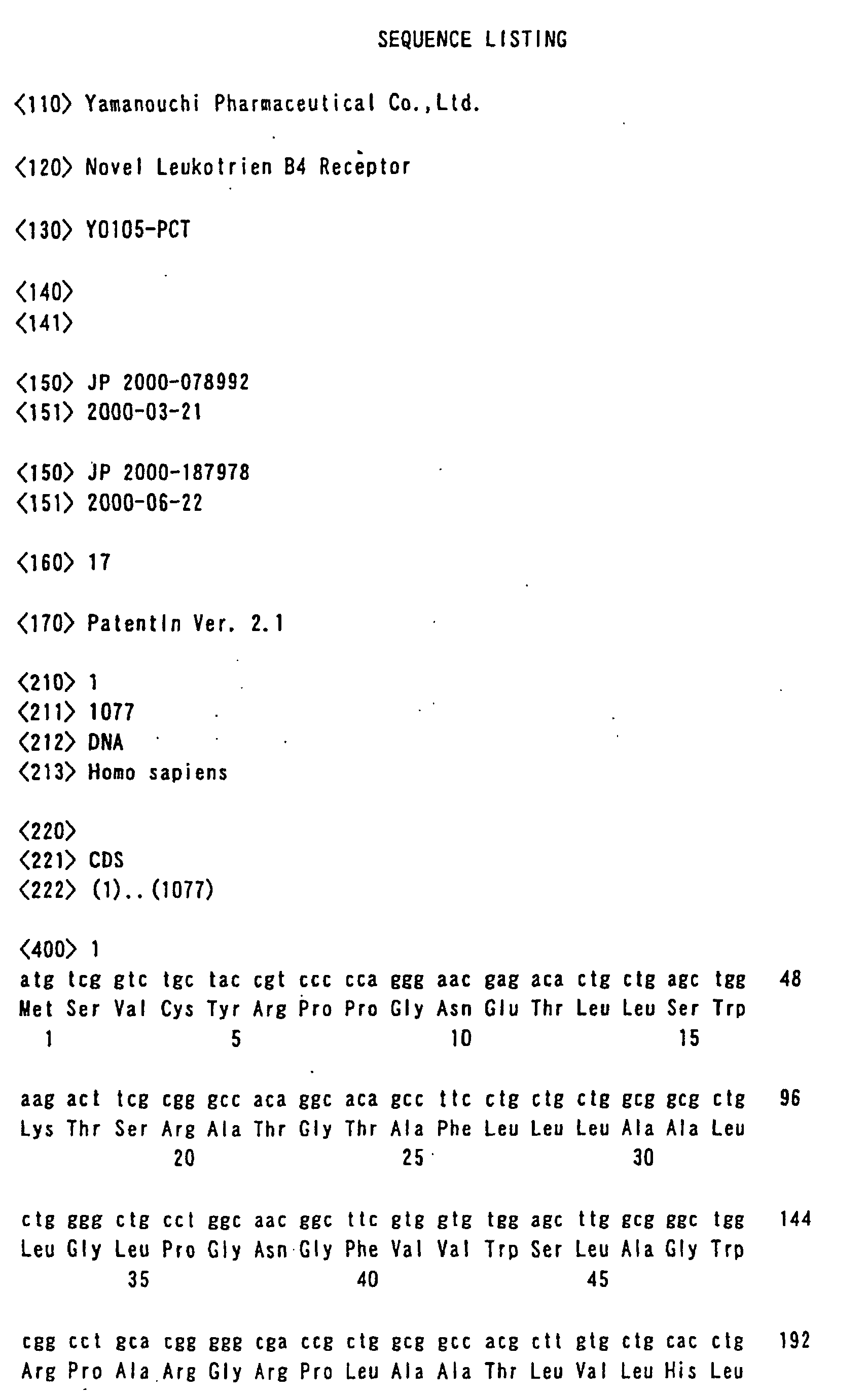
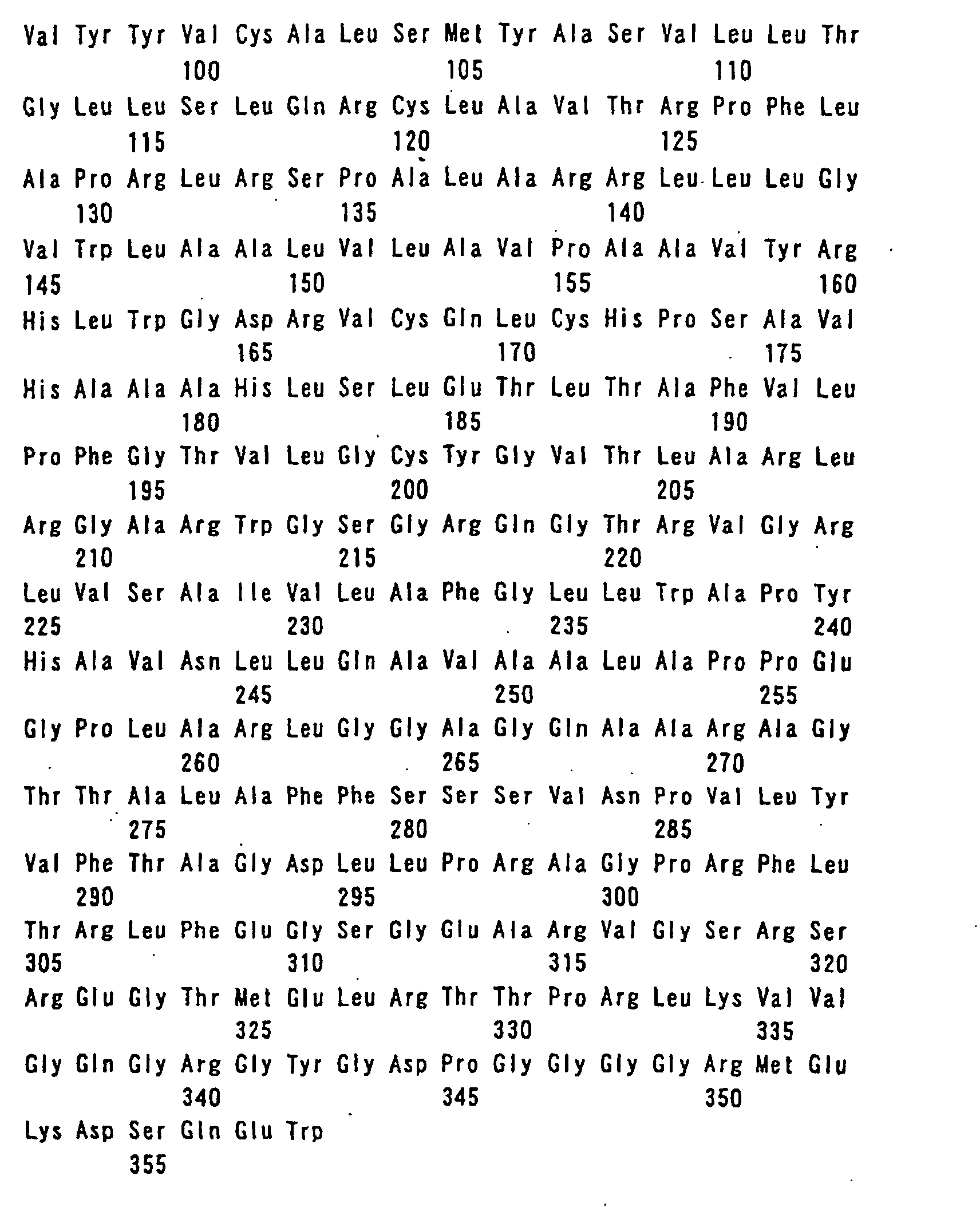
- nucleic acid of the invention represented by the nucleotide sequence (1,077 base pairs) described in SEQ ID NO:16 and the protein represented by the amino acid sequence (358 amino acids) described in SEQ ID NO:17 are novel.
- nucleotide sequence (1,077 base pairs) of the invention described in SEQ ID NO:1 and the amino acid sequence (358 amino acids) described in SEQ ID NO:2 were disclosed in international publications WO 00/22131 and WO 00/31258 which had been published after the priority date of this application, but the specifications merely describe the nucleotide sequence and a deduced amino acid sequence encoded thereby and do not describe about an illustrative and specific use of the protein represented by the amino acid sequence described in SEQ ID NO:2, the fact that a novel LTB 4 receptor is encoded by the nucleotide sequence described in SEQ ID NO:1, an illustrative production method of the LTB 4 receptor represented by the amino acid sequence and obtainment of the LTB 4 receptor represented by the amino acid sequence.
- LTB 4 receptor as used in this specification represents "LTB 4 receptor protein”.
- the LTB 4 receptor of the invention includes,
- the "equivalent" of the protein represented by the amino acid sequence described in SEQ ID NO:2 is an LTB 4 receptor which is represented by an amino acid sequence in which the amino acid sequence described in SEQ ID NO:2 has substitution, deletion or insertion of amino acids with preferably from 1 to 10, more preferably from 1 to 7, most preferably from 1 to 5, of amino acids and which also "shows the same activity of the LTB 4 receptor represented by the amino acid sequence described in SEQ ID NO:2".
- stringent condition under which a DNA coding for a "hybridizing equivalent” of the protein represented by the amino acid sequence described in SEQ ID NO:2 hybridizes with the DNA represented by the nucleotide sequence described in SEQ ID NO:1 or SEQ ID NO: 16, it is generally a hybridization condition of "5 x SSC, 5 x Denhaldts, 0.5% SDS, 40% formamide, 42°C” and a washing condition of "0.5 x SSC, 0.1% SDS, 55°C", and more stringent condition is a washing condition of "0.1 x SSC, 0.1% SDS, 65°C".
- homology of the amino acid sequence of an "homologous protein" of the protein represented by the amino acid sequence described in SEQ ID NO:2 with the amino acid sequence described in SEQ ID NO:2 or SEQ ID NO:17 is 92% or more, but is preferably 95% or more and more preferably 97% or more.
- the homology was calculated using the Clustal method (Higgins D.G. and Sharo P.M. (1989) Comput. Appl. Biosci ., 5, 151 - 3) of MegAlign ver 4.00 (mfd. by DNASTAR) in accordance with the default parameters.
- a Gap penalty value of 10 and a Gap length penalty value of 10 as the multiple alignment parameters and a K tuple value of 1, a Gap penalty value of 3, a Window value of 5 and a Diagonal Saved value of 5 as the pair wise alignment parameters.
- Origin of the LTB 4 receptor of the invention is not limited to human and rat.
- an LTB 4 receptor originated from an organism other than human and rat e.g., mouse, hamster or dog
- a receptor artificially modified by genetic engineering techniques based on the sequence described in SEQ ID NO:2 or SEQ ID NO:17 are also included in the LTB 4 receptor of the invention, with the proviso that they correspond to any one of the LTB 4 receptors of the invention of the aforementioned items (1) to (5).
- the LTB 4 receptor of the invention is a recombinant LTB 4 receptor.
- nucleic acid of the invention is not particularly limited, with the proviso that it is a nucleic acid represented by the nucleotide sequence coding for any one of the LTB 4 receptors of the invention of the aforementioned items (1) to (5).
- nucleic acid includes DNA and RNA, but DNA is desirable.
- the nucleic acid of the invention can be produced by the following methods.
- mRNA is extracted from human cells or rat cells, or human or rat tissues, having the ability to produce the LTB 4 receptor of the invention.
- two primers interposing the LTB 4 receptor mBNA or a partial mRNA region are prepared.
- RT-PCR reverse transcriptase-polymerase chain reaction
- the receptor cDNA or a part thereof can be obtained.
- the receptor can be produced by integrating the thus obtained human or rat LTB 4 receptor cDNA or a part thereof into an appropriate expression vector and expressing it in a host cell.
- RNA molecules including the one coding for the receptor are extracted by a known method.
- guanidine thiocyanate hot phenol method, guanidine thiocyanate-guanidine hydrochloride method and the like can be exemplified, and preferably, guanidine thiocyanate cesium chloride method can be cited.
- the cell or tissue having the ability to produce the receptor can be specified by methods such as northern blot technique which uses a nucleic acid having a nucleotide sequence encoding the receptor, or a part thereof, and western blotting that uses an antibody specific for the receptor.
- mRNA can be purified by adsorbing and eluting it using an oligo(dT)-cellulose column.
- the mRNA can be further fractionated by a sucrose density gradient centrifugation or the like method.
- a commercially available already extracted mBNA preparation may be used without extracting the mRNA.
- a single-stranded cDNA is synthesized by carrying out reverse transcriptase reaction of the thus purified mRNA in the presence of a random primer or oligo(dT) primer.
- This synthesis can be carried out by a conventional method.
- the thus obtained single-stranded cDNA is subjected to polymerase chain reaction (Saiki, R.K. et al. (1988) Science, 239, 487 - 491; to be referred to as PCR hereinafter) to amplify the LTB 4 receptor DNA of interest.
- the thus obtained DNA is fractionated by an agarose gel electrophoresis or the like method.
- a DNA fragment of interest can also be obtained by digesting the DNA with restriction enzymes and the like and then ligating the digests.
- a nucleic acid coding for the LTB 4 receptor of the invention can also be produced using conventional genetic engineering techniques. Firstly, a single-stranded cDNA is synthesized using the mRNA obtained by the method described in a) as the template and using reverse transcriptase, and then a double-stranded cDNA is synthesized from the single-stranded cDNA. Examples of the method include S1 nuclease method (Efstratiadis, A. et al. (1976), Cell, 7, 279 - 288), Land method (Land, H. et al . (1981) Nucleic Acids Res., 9, 2251 - 2266), O.
- a recombinant plasmid obtained by the above method is transformed by introducing it into an Escherichia coli strain, e.g., DH5 ⁇ , and then the transformants can be selected making use of tetracycline resistance or ampicillin resistance as the marker.
- the transformation of a host cell when the host cell is E . coli for example, can be carried out by the Hanahan's method (Hanahan, D. (1983) J. Mol. Biol., 166, 557 - 580), namely a method in which the recombinant DNA is added to competent cells prepared by allowing CaCl 2 and MgCl 2 or RbCl to coexist.
- a plasmid but a lambda or the like phage vector can also be used as the vector.
- oligonucleotide which corresponds to the entire or a partial portion of the LTB 4 receptor of the invention is synthesized (in this case, it may be either a nucleotide sequence derived by the use of codon usage or plurality of nucleotide sequences by combining possible nucleotide sequences), this is used as a probe (labeled with 32 P or 33 P) and allowed to undergo hybridization on a nitrocellulose filter to which DNA samples of the transformants are denatured and fixed, and then the thus obtained positive strains are screened and selected.
- a DNA fragment coding for the entire or a partial portion of the LTB 4 receptor of interest is amplified.
- a cDNA synthesized by reverse transcription reaction from mRNA of a cell which produces the LTB 4 receptor or a genomic DNA can be used as the template DNA to be used herein.
- the DNA fragment prepared in this manner is labeled with 32 P or 33 P, and using this as the probe, colony hybridization or plaque hybridization is carried out to select a clone of interest.
- a cDNA is integrated into an expression vector in advance, protein is produced on the surface of transformants, and then a strain of interest is selected by detecting the desired LTB 4 receptor producing strain using an antibody for the LTB 4 receptor of the invention and a secondary antibody for the antibody.
- the method for collecting a DNA coding for the LTB 4 receptor of the invention from the thus obtained transformant of interest can be carried out in accordance with a known method (Maniatis, T. et al . (1982): "Molecular Cloning - A Laboratory Manual” Cold Spring Harbor Laboratory, NY). For example, it can be carried out by separating a fraction corresponding to a plasmid DNA from cells and cutting out a cDNA region from the plasmid DNA.
- a nucleic acid represented by a nucleotide sequence coding for the amino acid sequence described in SEQ ID NO:2 or SEQ ID NO:17 can also be produced by ligating DNA fragments produced by a chemical synthesis method. Each DNA fragment can be synthesized using a DNA synthesizer (e.g., Oligo 1000M DNA Synthesizer (Beckman), or 394 DNA/RNA Synthesizer (Applied Biosystems) or the like).
- a DNA synthesizer e.g., Oligo 1000M DNA Synthesizer (Beckman), or 394 DNA/RNA Synthesizer (Applied Biosystems) or the like.
- genes of eucaryote generally show polymorphism as known in interferon gene and the like (e.g., cf. Nishi, T. et al. (1985) J. Biocbem ., 97, 153 - 159), and there are cases in which one or plurality of amino acids are substituted due to this polymorphism.
- receptors in which one or plurality of amino acid residues are substituted, deleted or inserted at one or plurality of positions in the amino acid sequence described in SEQ ID NO:2 or SEQ ID NO:17, it is possible that they show the same activity of the LTB 4 receptor represented by the amino acid sequence described in SEQ ID NO:2.
- these receptors are called "equivalents" of the protein represented by the amino acid sequence described in SEQ ID NO:2 and included in the invention, and nucleic acids represented by the nucleotide sequences coding for them are also included in the invention.
- nucleic acids of the invention can also be produced by chemical synthesis of the nucleic acids based on the sequence information on the LTB 4 receptor of the invention in accordance, e.g., with the phosphite triester method (Hunkapiller, M. et al. (1984) Nature, 10, 105 - 111) or the like usual method.
- codons for desired amino acids are by themselves well known and their selection is optional, and they can be determined, e.g., in accordance with a conventional method taking codon usage of a host to be used into consideration (Crantham, R. et al. (1981) Nucleic Acids Res ., 9, r43 - r74).
- partial modification of codons of these nucleotide sequences can be carried out in accordance with a conventional method such as site specific mutagenesis (Mark, D.F. et al. (1984) Proc. Natl. Acad. Sci. USA , 81, 5662 - 5666) which uses a primer comprised of a synthetic oligonucleotide coding for a desired modification.
- a method which uses a hybridization technique or a gene amplification technique can be exemplified. That is, it can be generally carried out by those skilled in the art to isolate a DNA having high homology from the sequence described in SEQ ID NO:1 or SEQ ID NO:16 or from a DNA sample derived from the same or different organism species, prepared based on a part thereof, making use of the hybridization technique (Current Protocols in Molecular Biology, edit. Ausubel et al. (1987), publish.
- such a LTB 4 receptor which is a protein encoded by a DNA that hybridizes with the DNA described in SEQ ID NO:1 or SEQ ID NO:16 under a stringent condition and which also shows the same activity of the LTB 4 receptor represented by the amino acid sequence described in SEQ ID NO:2, is called a "hybridizing equivalent" of the protein represented by the amino acid sequence described in SEQ ID NO:2, and a nucleic acid coding for the same is also included in the invention.
- mouse As the organism for isolating the nucleic acid of the invention, mouse, rabbit, domestic fowl, swine, bovine and the like can be exemplified in addition to human and rat, though not limited thereto.
- Amino acid sequence of the protein encoded by a DNA isolated by making use of the hybridization technique generally has high homology with the amino acid sequence described in SEQ ID NO:2 or SEQ ID NO:17.
- the high homology means a sequence homology of at least 92% or more, preferably 95% or more and more preferably 97% or more.
- Sequence determination of the DNA obtained by the above methods a) to d) can be carried out, e.g., by the Maxam-Gilbert's chemical modification method (Maxam, A.M. and Gilbert, W. (1980): “Methods in Enzymology", 65, 499 - 559) or the dideoxy nucleotide chain termination method (Messing, J. and Vieira, J. (1982) Gene, 19, 269 - 276) which uses M13.
- the vector, host cell and LTB 4 receptor of the invention can be obtained by the following methods.
- Transformation of a host cell with a fragment which contains the nucleic acid coding for the LTB 4 receptor of the invention isolated by the method described in 1) can be carried out by again integrating it into an appropriate vector DNA. Also, it is possible to effect expression of the DNA in respective host cells by introducing an appropriate promoter and a sequence concerning gene expression into the vector.
- cells of a vertebrate, an insect, a yeast and the like are included in the eucaryote host cells, and as the vertebrate cells, a COS cell as a monkey cell (Gluzman, Y. (1981) Cell, 23, 175 - 182), a Chinese hamster ovary (CHO) cell and a dihydrofolate reductase deficient strain of the same cell (CHO-dhfr (-)) (Urlaub, G. and Chasin, L.A. (1980) Proc. Natl. Acad. Sci. USA , 77, 4216 - 4220), a human fetal kidney HEK293 cell and a 293-EBNA cell (mfd. by Invitrogen) in which EBNA-1 gene of Epstein Barr Virus is introduced into the same cell, and the like are frequently used, of which the HEK293 cell and CHO cell used in Examples are particularly preferable.
- a COS cell as a monkey cell (Gluz
- An expression vector which can be used in vertebrate cells generally has a promoter positioned at upstream of the gene to be expressed, an RNA splicing site, a polyadenylation site, a transcription termination sequence and the like, and it may further has a replication origin as occasion demands.
- Examples of the expression vector include pSV2dhfr having SV40 early promoter (Subramini, S. et al. (1981) Mol. Cell. Biol., 1, 854 - 864), pEF-BOS having human elongation factor promoter (Mizushima, S. and Nagata, S. (1990) Nucleic Acids Res ., 18, 5322), pCEP4 having cytomegalovirus promoter (mfd. by Invitrogen) and the like, of which the pEF-BOS used in Examples is particularly desirable.
- desired transformant cells can be obtained by using pCEP4 (Invitrogen) or the like expression vector which has the Epstein Barr Virus replication origin and can perform autonomous growth in the 293-EBNA cell.
- pCEP4 Invitrogen
- CHO cell When CHO cell is used as the host cell, transformant cells capable of stably producing LTB 4 receptor can be obtained by co-transfecting the expression vector together with a vector capable of expressing neo gene which functions as a G418 marker, such as pRSVneo (Sambrook, J. et al. (1989): "Molecular Cloning - A Laboratory Manual” Cold Spring Harbor Laboratory, NY), pSV2-neo (Southern, P.J. and Berg, P. (1982) J.
- transformant cells capable of stably producing LTB 4 receptor can be obtained by transfecting an expression vector pEF-BOS-dhfr-JULF2 prepared by integrating dhfr into pEF-BOS, and then using a nucleic acid-free medium as the selection medium.
- transformant cells capable of stably producing highly expressed LTB 4 receptor by adding methotrexate which is a competitive inhibitor of dhfr.
- the desired transformant obtained in the above can be cultured in accordance with a conventional method, and the LTB 4 receptor of the invention is produced by this culturing in the cell or on the cell surface.
- various conventionally used media can be optionally selected in response to the employed host cells, and in the case of 293-EBNA cell for example, a medium prepared by adding G418 to Dulbecco's Modified Eagle's minimum essential medium (DMEM) or the like medium supplemented with fetal bovine serum (FBS) or the like serum component can be used.
- DMEM Dulbecco's Modified Eagle's minimum essential medium
- FBS fetal bovine serum
- the LTB 4 receptor of the invention thus produced in the cell or on the cell surface of a transformant can be isolated and purified therefrom by various known separation techniques making use of physical properties and chemical properties of the receptor.
- Illustrative examples of the techniques include usual treatment with a protein precipitant, ultrafiltration, various types of liquid chromatography such as molecular sieve chromatography (gel filtration), adsorption chromatography, ion exchanger chromatography, affinity chromatography, high performance liquid chromatography (HPLC) and the like, dialysis, combinations thereof and the like, which are carried out after solubilizing a membrane fraction containing the receptor.
- the membrane fraction can be obtained in accordance with a conventional method.
- the LTB 4 receptor of the invention can be obtained by culturing cells expressing the LTB 4 receptor of the invention on the surface, suspending the resulting cells in a buffer and then homogenizing and centrifuging them. Also, by solubilizing the LTB 4 receptor with a solubilizing agent as mild as possible (CHAPS, Triton X-100, digitonin or the like), characteristics of the receptor can be maintained after the solubilization.
- a solubilizing agent as mild as possible (CHAPS, Triton X-100, digitonin or the like
- LTB 4 receptor of the invention Confirmation of expression, confirmation of intracellular location, purification and the like of the LTB 4 receptor of the invention become possible by expressing the LTB 4 receptor through its in-frame fusion with a marker sequence.
- the marker sequence include FLAG epitope, Hexa-Histidine tag, Hemagglutinin tag, myc epitope and the like.
- enterokinase, factor Xa, thrombin or the like protease is inserted between the marker sequence and LTB 4 receptor, it becomes possible to cut out and remove the marker sequence moiety with these proteases.
- a method for screening substances which modify the activity of the LTB 4 receptor is included in the invention.
- This screening method comprised of steps in which the LTB 4 receptor (cell or cell membrane expressing the receptor, or a purified sample of the receptor) produce by the above method 2) is used, an agent to be tested is added to a system for measuring an index of the modification of the receptor in response to a physiological characteristic of the receptor, the receptor and drug to be tested are allowed to contact with each other, and the index is measured by a means, e.g., by measuring changes in the activity of the receptor.
- the substances which modify the activity of the LTB 4 receptor of the invention are roughly divided into a substance having agonist activity for the receptor, namely a substance which accelerates the activity of the receptor, and a substance having antagonist activity for the receptor, namely a substance which inhibits the activity of the receptor, by measuring changes in the activity of the receptor, and the screening method of the invention can select any one of the substances having the agonist activity and substances having antagonist activity for the receptor.
- the screening method of the invention is more suited for the selection of substances having antagonist activity for the receptor.
- An illustrative example of the method for screening substances which bind to the LTB 4 receptor of the invention is the method of following a), preferably the method described in Example 8.
- illustrative examples of the method for measuring changes in the activity of the LTB 4 receptor of the invention include the methods of following b) and c), of which preferred is the screening method of c) which makes use of the fluctuation of intracellular Ca ++ and CAMP concentrations, and more preferred are the methods described in Example 5 and Example 7.
- the substances (compounds, peptides and antibodies) which bind to the LTB 4 receptor of the invention can be screened by a ligand binding assay method.
- a cell or cell membrane expressing the receptor or a purified sample of the receptor is prepared. Buffer, ion, pH and the like assay conditions are optimized, and a cell membrane expressing the receptor or a purified sample of the receptor is incubated for a predetermined period of time in the optimized buffer together with a labeled ligand such as [ 3 H]LTB 4 and an agent to be tested.
- the mixture After incubation in the presence or absence of an agent to be tested, the mixture is filtered using a glass filter or the like, and the radioactivity of the bonded GTP ⁇ S is measured using a liquid scintillation counter or the like.
- compounds, peptides and antibodies having agonist activity for the receptor can be screened.
- compounds, peptides and antibodies having antagonist activity for the receptor can be screened.
- the Ca ++ concentration can be measured using fura2, fluo3 and the like, and the cAMP concentration can be measured using a commercially available cAMP assay kit (e.g., mfd. by Amersham).
- An agent to be tested is allowed to react for a predetermined period of time with a cell expressing the receptor and a cell not expressing the receptor (control cell), and the Ca ++ and CAMP concentrations are measured directly or indirectly.
- Compounds, peptides and antibodies having agonist activity for the receptor can be screened making use, as the index, of the increased Ca ++ and/or decreased cAMP concentration specific for the receptor-expressed cell in comparison with the control cell.
- compounds, peptides and antibodies having antagonist activity for the receptor can be screened making use, as the index, of the action of LTB 4 to inhibit increase of Ca ++ and/or decrease of cAMP concentration in the presence of an agent to be tested.
- the detection sensitivity "Signal/Noise ratio" decreases as the expressed amount of LTB 4 receptor increases. Accordingly, it is desirable to use a cell from which the highest S/N ratio can be obtained, namely a stably expressing cell strain having not so high receptor expression quantity, as the receptor expression cell to be used in this screening.
- the antibodies of the invention can be produced by the following methods.
- Antibodies which react with the LTB 4 receptor of the invention can be obtained by directly administering the receptor or a fragment of the receptor to various animals. They can also be obtained by the DNA vaccine method (Raz, E. et al . (1994) Proc. Natl. Acad. Sci. USA , 91, 9519 - 9523; Donnelly, J.J. et al. (1996) J. Infect. Dis ., 173, 314 - 320) using a plasmid into which a nucleic acid coding for the LTB 4 receptor of the invention is introduced.
- a polyclonal antibody is produced from sera or eggs of rabbit, rat, goat, domestic fowl or the like animal which is immunized and sensitized by emulsifying the receptor or a fragment thereof in complete Freund's adjuvant or the like appropriate adjuvant and administering the emulsion by intraperitoneal, subcutaneous, intravenous or the like injection.
- the polyclonal antibody produced from sera or eggs in this manner can be separated and purified by conventional protein isolation purification methods. Examples of such methods include centrifugation, dialysis, salting out with ammonium sulfate and DEAE-cellulose, hydroxyapatite, protein A agarose or the like chromatography.
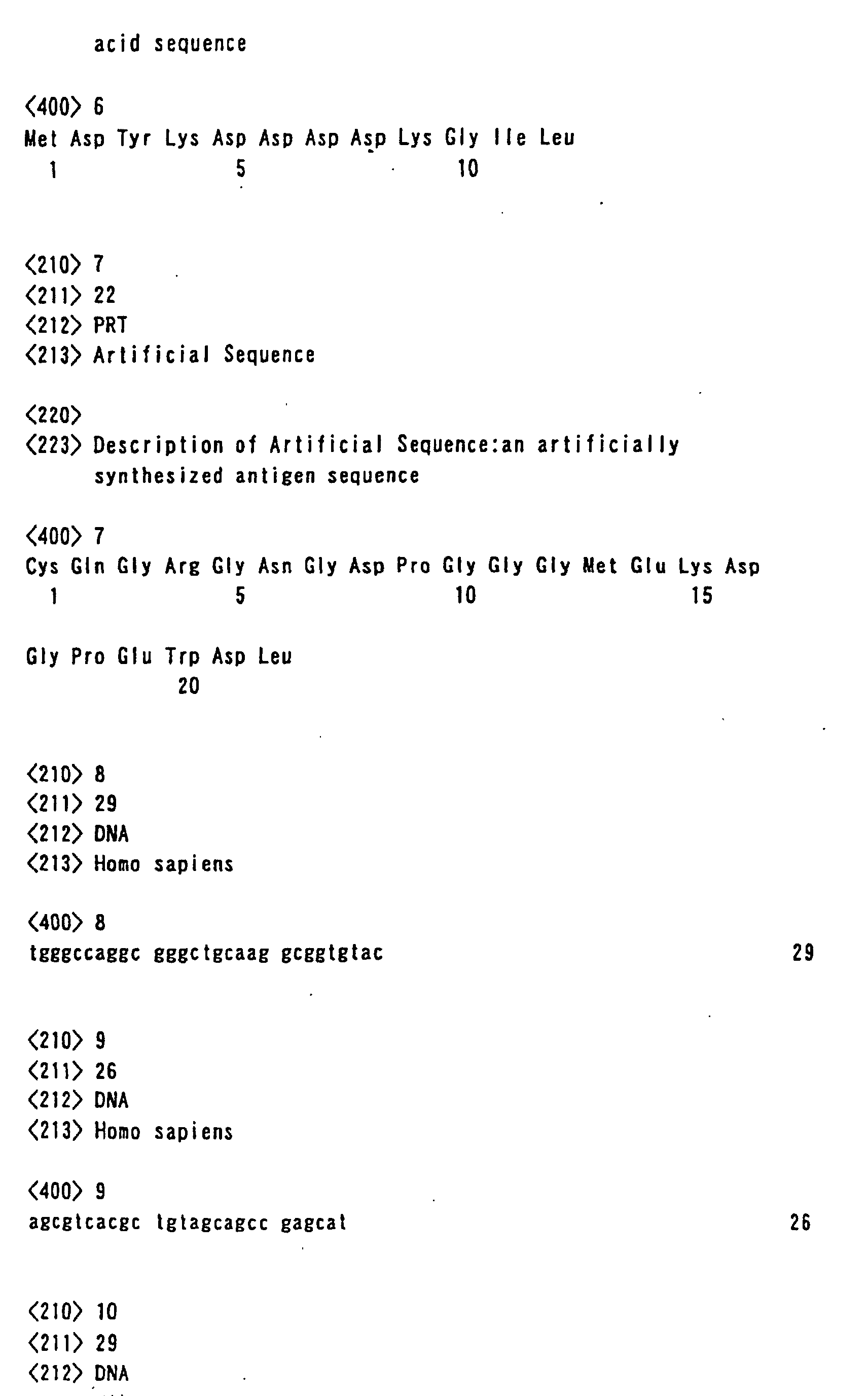
- it can be produced using a peptide having the amino acid sequence described in SEQ ID NO:7 as the antigen under the conditions described in Example 3.
- a monoclonal antibody can be produced easily by those skilled in the art by the cell fusion method of Kohler and Milstein (Kohler, G. and Milstein, C. (1975) Nature , 256, 495 - 497).
- Immunization is carried out by inoculating an emulsion prepared by emulsifying the LTB 4 receptor of the invention or a fragment thereof in complete Freund's adjuvant or the like appropriate adjuvant, into the abdominal cavity, under the skin or into a vein of a mouse several times at intervals of several weeks. After the final immunization, spleen cells are taken out and fused with a myeloma cell to prepare a hybridoma.
- a myeloma cell having hypoxanthine-guanine phosphoribosyltransferase deficiency, thymidine kinase deficiency or the like marker such as a mouse myeloma cell strain P3X63Ag8.U1
- polyethylene glycol is used as the fusing agent.
- Eagle's minimum essential medium, Dulbecco's modified minimum essential medium, RPMI-1640 or the like generally and frequently used medium is used by optionally supplementing it with 10 to 30% of fetal bovine serum.
- the fused strains are selected by the HAT selection method. Screening of hybridoma is carried out by ELISA method, immunological tissue staining method or the like known method or the aforementioned screening method using culture supernatants, and a clone of hybridoma secreting the antibody of interest is selected. Also, monoclonal nature of the hybridoma is guaranteed by repeating its subcloning by the limiting dilution method. A purification-possible amount of the antibody is produced by culturing the thus obtained hybridoma in a medium for 2 to 4 days or in the abdominal cavity of a pristane-pretreated BALB/c mouse for 10 to 20 days.
- the monoclonal antibody produced in this manner can be separated and purified from the culture supernatant or ascitic fluid by conventional protein isolation purification methods. Examples of such methods include centrifugation, dialysis, salting out with ammonium sulfate and DEAE-cellulose, hydroxyapatite, protein A agarose or the like chromatography.
- a monoclonal antibody or an antibody fragment containing a part thereof can also be produced by integrating the entire or a partial portion of a nucleic acid coding for the antibody into an expression vector and introducing into E. coli , yeast or animal cells.
- an active antibody fragment containing a part of the antibody such as F(ab') 2 , Fab, Fab', or Fv, can be obtained.
- an antibody which reacts with the LTB 4 receptor of the invention as single chain Fv or Fab by the methods of Clackson and Zebedee (Clackson, T. et al. (1991) Nature, 352, 624 - 628; Zebedee, S. et al. (1992) Proc. Natl. Acad. Sci. USA , 89, 3175 - 3179).
- a human antibody by immunizing a transgenic mouse in which a mouse antibody DNA is replaced by a human antibody DNA (Lonberg, N. et al . (1994) Nature , 368, 856 - 859).
- compositions of the invention are included in the invention.
- the pharmaceutical composition of the invention is preferably a pharmaceutical composition for inflammatory diseases, which uses a substance having antagonist activity for the receptor as the active ingredient.
- Examples of the active ingredient include, e.g. as substances having antagonist activity for the LTB 4 receptor of the invention, 4-hexyloxy-N-hydroxybenzenecarboximidoamide and the like selected in Example 7.
- the invention includes not only a pharmaceutical which uses 4-hexyloxy-N-hydroxybenzenecarboximidoamide as the active ingredient but also all pharmaceuticals which use a substance capable of modifying the activity of the receptor as the active ingredient, but it is desirable to use a substance having antagonist activity for the receptor as the active ingredient.
- compositions which use, as the active ingredient, a substance (a compound, a peptide, an antibody or an antibody fragment) capable of modifying the activity of the LTB 4 receptor of the invention (preferably having the antagonist activity) are prepared using carriers, fillers and other additives generally used for their preparation, in response to the type of the active ingredient.
- Examples of the administration include oral administration by tablets, pills, capsules, granules, fine subtilaes, powders, oral solutions and the like or parenteral administration by intravenous, intramuscular or the like injections, suppositories, percutaneous preparations, transmucosal preparations and the like. Particularly in the case of peptides which are digested in the stomach, intravenous injection or the like parenteral administration is desirable.
- one or more active substances are mixed with at least one inert diluent such as lactose, mannitol, glucose, microcrystalline cellulose, hydroxypropylcellulose, starch, polyvinyl pyrrolidone, aluminum magnesium silicate and the like.
- the composition may contain other additives than the inert diluent, such as a lubricant, a disintegrating agent, a stabilizing agent, a solubilizing or solubilization assisting agent and the like.
- tablets or pills may be coated with a sugar coat or a film of a gastric or enteric substance.
- the liquid composition for oral administration includes emulsions, solutions, suspensions, syrups and elixirs and contains a generally used inert diluent such as purified water or ethanol.
- this composition may also contain other additives such as moistening agent, suspending agents, sweeteners, aromatics and antiseptics.
- the injections for parenteral administration includes aseptic aqueous or non-aqueous solutions, suspensions and emulsions.
- examples of the diluent for use in the aqueous solutions and suspensions include distilled water for injection, physiological saline and the like.
- examples of the diluent for use in the non-aqueous solutions and suspensions include propylene glycol, polyethylene glycol, olive oil or the like plant oil, ethanol or the like alcohol, polysorbate 80 and the like.
- Such a composition may further contain a moistening agent, an emulsifying agent, a dispersing agent, a stabilizing agent, a solubilizing or solubilization assisting agent, an antiseptic and the like.
- compositions are sterilized by filtration through a bacteria retaining filter, blending of a germicide or irradiation. Alternatively, they may be used by firstly producing sterile solid compositions and dissolving them in sterile water or a sterile solvent for injection use prior to their use.
- the clinical dose is optionally decided by taking into consideration strength of the activity of each active ingredient selected by the aforementioned screening method, symptoms and age, sex and the like of each patient to be treated.
- the dose in the case of oral administration, is generally from about 0.1 to 100 mg, preferably from 0.1 to 50 mg, per day per adult (as 60 kg in body weight). In the case of parenteral administration, it is from 0.01 to 50 mg, preferably from 0.01 to 10 mg, per day in the form of injections.
- a method for using a DNA coding for the LTB 4 receptor as a diagnostic agent is also included in the invention. Detection of a mutation type LTB 4 receptor gene related to functional disorders is used in the diagnosis of diseases induced by too small expression, excess expression or changed expression of the LTB 4 receptor, or of morbidity thereof. Accordingly, the invention relates to a DNA which specifically hybridizes with the DNA represented by the nucleotide sequence described in SEQ ID NO:1 and has a chain length of at least 15 nucleotides.
- the term "specifically hybridizes" with the DNA of the invention means that it hybridizes with the DNA of the invention but does not hybridize with other DNA under general hybridization conditions, preferably under "stringent conditions".
- a DNA which has at least a part of or the entire sequence (or a complimentary sequence thereof) of the DNA of the invention and has a chain length of at least 15 nucleotides is used.
- the nucleotide sequence desirable as the probe is from the 22nd position to the 615th position of SEQ ID NO:1 used in Example 4-1.
- the "under stringent conditions" are preferably the conditions described in Example 4-1.
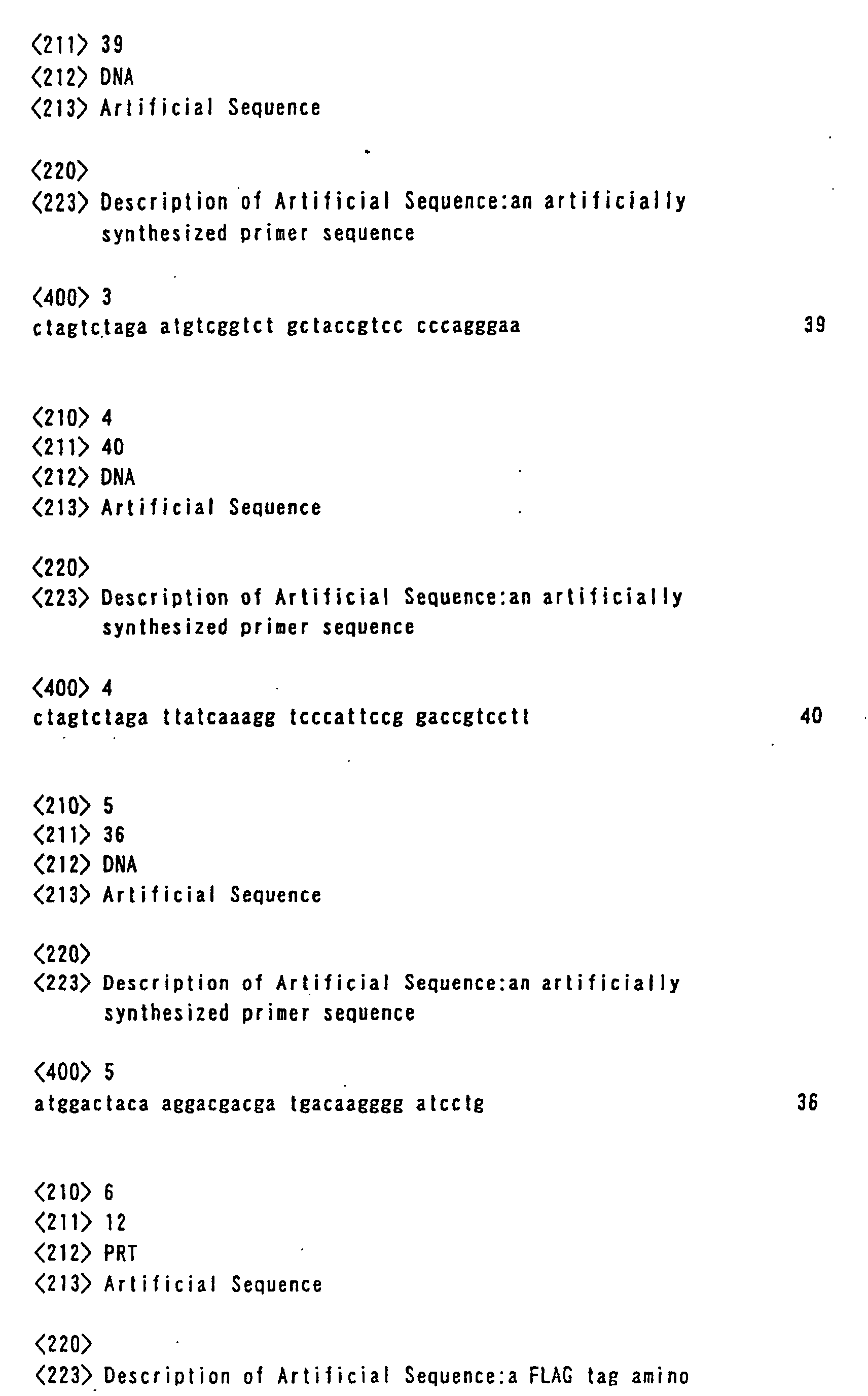
- it when used as a primer, it has a chain length of generally from 15 to 100 nucleotides, preferably from 15 to 40 nucleotides. Nucleotide sequences desirable as the primer are shown in SEQ ID NO:3 (forward primer) and SEQ ID NO:4 (reverse primer) and SEQ ID NO:8 (forward primer) and SEQ ID NO: 9 (reverse primer).
- the DNA for diagnosis use can be obtained from cells of persons to be diagnosed, such as blood, urine, saliva and a biopsy or partial biopsy material of tissue. Deletion and insertion mutations can be detected by changes in the size of amplified product when compared with normal genotype. Point mutation can be identified by hybridizing amplified DNA with labeled LTB 4 receptor nucleotide. Completely matched sequence and mismatched double strand can be distinguished by RNase digestion or difference in the melting temperature. Also, difference in the DNA sequence can be detected by changes in the mobility of DNA fragments by electrophoresis with a gel using or without using a denaturing agent, or by directly determining the DNA sequence (Myers, R.M. et al. (1985) Science, 230, 1242 - 1246).
- this is used in the diagnosis of diseases induced by too small expression, excess expression or changed expression of the receptor, or of morbidity thereof, by a method which measures abnormal decrease or increase of the receptor level from samples obtained from subjects.
- the decrease or increase of expression can be measured at the RNA level by any one of polynucleotide determination methods well known to those skilled in the art, such as PCR, RT-PCR, RNase protection, northern blot technique and other hybridization methods.
- decrease or increase of the receptor level from samples obtained from subjects can be measured by an assay method well known to those skilled in the art. Examples of such an assay method include radioimmunoassay, competitive binding assay, western blotting, ELISA and the like.
- Complete length cDNA coding for a novel receptor of the invention was obtained by PCR using a human genomic DNA (mfd. by Clontech) as the template.
- the oligonucleotide represented by SEQ ID NO:3 was used as a forward primer, and the oligonucleotide represented by SEQ ID NO:4 as a reverse primer ( Xba I site is added to each of the respective 5'-ends).
- the PCR was carried out using Pfu DNA polymerase (mfd. by Stratagene) by repeating a cycle of 98°C (20 seconds)/58°C (30 seconds)/74°C (3 minutes) 34 times in the presence of 5% DMSO.
- the nucleotide sequence represented by SEQ ID NO:1 has an open reading frame (ORF) 1,077 bases.
- An amino acid sequence (358 amino acids) deduced from the ORF is shown in SEQ ID NO:2. Since the deduced amino acid sequence has hydrophobic regions considered to be 7 transmembrane domains which are a characteristic of G protein-coupled receptor, it was found that this JULF2 DNA encodes a G protein-coupled receptor.
- a plasmid pEF-BOS-dhfr-FL in which the oligonucleotide represented by SEQ ID NO:5 was inserted into the Xba I site of the plasmid pEF-BOS-dhfr described in Example 1 was used.
- a FLAG epitope represented by the amino acid sequence described in SEQ ID NO:6 is fused as a marker to the N-terminus of the protein of interest.
- a plasmid constructed by inserting the JULF2 gene into pEF-BOS-dhfr-FL was named pEF-BOS-dhfr-FL-JULF2.
- see293-EBNA (mfd. by Invitrogen) was inoculated into a 15 cm Petri dish at a density of 5 x 10 6 cells and cultured for 1 day, and then 20 ⁇ g of pEF-BOS-dhfr-FL-JULF2 or pEF-BOS-dhfr-FL was subjected to gene transfer using Lipofectamine-2000 (mfd. by Gibco BRL). After the gene transfer, the cells were cultured for 1 day, recovered and washed, and then a 2 x 10 5 portion of the cells were allowed to react with 1,000 times-diluted mouse anti-FLAG monoclonal antibody M2 (mfd. by Sigma) or control normal mouse IgG (mfd.
- each of the HEK293-EBNA cell in which expression of the FLAG epitope-fused JULF2 on the cell membrane surface was confirmed (to be referred to as FLAG-JULF2 expressing HEK293-EBNA cell hereinafter) and the HEK293-EBNA cell into which pEF-BOS-dhfr-FL was introduced (to be referred to as FLAG expressing HEK293-EBNA cell hereinafter) was suspended in 20 mM Tris-HCl (pH 7.4)/150 mM NaCl/CompleteTM (mfd. by Boehringer Mannheim) and homogenized using Polytron.
- SDS, digitonin and sodium cholate were added to the homogenate to final concentrations of 4%, 0.1% and 0.2% and incubated at 4°C for 2 hours, and then 20% v/v of SDSOut (mfd. by PIERCE) was added thereto and incubated at 4°C for 30 minutes for the purpose of removing free SDS.
- SDSOut mfd. by PIERCE
- the immune precipitate was washed, treated at 100°C for 5 minutes in a sample buffer [0.25 M Tris-HCl (pH 6.8), 10% glycerol, 2% SDS, 0.1% Bromophenol Blue], subjected to electrophoresis using SDS/10% - 20% acrylamide gel (mfd. by Daiichi Pure Chemicals) and then transferred on a PVDF membrane using a blotting apparatus.
- the PVDF membrane after the transfer was subjected to blocking and then allowed to react with mouse anti-FLAG monoclonal antibody M2 (mfd. by Sigma) and horseradish peroxidase-labeled rabbit anti-mouse IgG polyclonal antibody (mfd. by Zymed) in that order. After the reaction, expression of FLAG epitope-fused JULF2 was confirmed using ECL Western Blotting Detection System (mfd. by Amersham Pharmacia).
- the FLAG epitope-fused JULF2 was detected as a band of 37 to 45 kDa which, among proteins capable of reacting with the anti-FLAG monoclonal antibody M2, does not exist in the FLAG expressing HEK293-EBNA cell but exists in the FLAG-JULF2 expressing HEK293-EBNA cell.
- Estimated molecular weight of JULF2 was 38 kDa, and its band was found as almost expected molecular weight.
- a peptide represented by SEQ ID NO:7 (JULF2-C22) prepared by adding cysteine to a partial amino acid sequence (from the 338th position to the 358th position of SEQ ID NO:2) of JULF2 was linked to KLH using Imject Maleimide Activated mcKLH Kit (mfd. by PIERCE) and used as an immunization antigen for the preparation of antibody for human JULF2.
- Western blotting was carried out using the anti-FLAG antibody M2 immune precipitates of FLAG-JULF2 expressing HEK293-EBNA cell and FLAG expressing HEK293-EBNA cell prepared in Example 2 and rabbit anti-JULF2-C22 polyclonal antibody.
- each immune precipitate was subjected to electrophoresis using SDS/10% - 20% acrylamide gel (mfd. by Daiichi Pure Chemicals) and then transferred on a PVDF membrane using a blotting apparatus.
- the PVDF membrane after the transfer was subjected to blocking and then allowed to react with 1,000 times-diluted rabbit anti-JULF2-C22 polyclonal antibody and 2,000 times-diluted horseradish peroxidase-labeled goat anti-rabbit IgG polyclonal antibody (mfd. by MBL) in that order. After the reaction, color development was carried out using the ECL Western Blotting Detection System.
- the band reacting with the anti-JULF2-C22 polyclonal antibody was detected as a band of 37 to 45 kDa at the same position of the anti-FLAG antibody M2 of Example 2 only with the FLAG-JULF2 expressing HEK293-EBNA cell.
- the anti-JULF2-C22 polyclonal antibody is an antibody which recognizes JULF2.
- the use of this antibody rendered possible detection of natural JULF2 by western blotting, immunological tissue staining and the like methods.
- JULF2 DNA was analyzed by northern blot hybridization method.
- a cDNA fragment (from the 22nd position to the 615th position of SEQ ID NO:1) was used.
- Hybridization of a membrane on which poly(A) + RNA (2 ⁇ g) derived from each human organ was blotted (mfd. by Clontech) with the probe was carried out at 42°C (18 hours) in a solution containing 50% formamide, 5 x SSPE. 10 x Denhardt's solution, 2% SDS and 100 ⁇ g/ml denatured salmon sperm DNA.
- the membrane was finally washed twice (65°C , 30 minutes) with a solution containing 0.2 x SSC and 0.1% SDS.
- mRNA of about 2.5 kb was strongly detected in the spleen, peripheral blood leukocyte, adrenal gland, bone marrow, trachea, thyroid gland, ovary and lymph node, and the signal was slightly detected in the pancreas, heart and spinal cord.
- mBNA molecules of 3.5 kb, 5 kb and 9.5 kb were expressed in peripheral blood leukocyte, particularly, the mRNA of 5 kb was strongly detected in the spleen, bone marrow and adrenal gland. In addition, a mRNA of 6.5 kb was specifically detected only in the trachea. It was found that at least five different sizes of mRNA for the G protein-coupled receptor human JULF2 DNA are expressed in a broad range of human tissues.
- Heparin blood samples were collected from healthy volunteers, mixed with 1/3 volume of 6% dextran/physiological saline and then allowed to stand at room temperature for 1 hour. The supernatant was collected and centrifuged at 150 x g for 5 minutes, and the sediment was suspended in Hunk's balanced salt solution (HBSS). This was overlaid on the same volume of Ficoll (Pharmacia) and centrifuged at 400 x g for 30 minutes. The intermediate layer was collected as a mononuclear cell fraction, and the sediment as polynuclear leukocytes. The polynuclear leukocytes were mixed with CD16 microbeads (mfd.
- JULF2 Expression distribution of JULF2 was measured using the blood cell fraction cDNA as the template and using the oligonucleotide represented by SEQ ID NO:8 and oligonucleotide represented by SEQ ID NO:9 as the primer . set.
- the PCR was carried out using Pfu DNA polymerase (mfd. by Stratagene) by repeating a cycle of 98°C (20 seconds)/60°C (30 seconds)/74°C (2 minutes) 35 times in the presence of 5% DMSO. Also, as an internal standard, PCR was carried out under the same conditions using the aforementioned cDNA of each human organ as the template and using Human G3PDH Control Amplimer Set (mfd. by Clontech).
- RNA total RNA (RT(-)) which was not converted into cDNA was used as a control.
- the reaction products were analyzed by 1% agarose gel electrophoresis.
- About 400 bp amplification product of JULF2 was detected in each of the blood cell fractions of both of the healthy persons A and B, particularly in the mononuclear cell.
- JULF2 was significantly detected in mononuclear cell while the BLT as a known LTB 4 receptor is considered to be expressed frequently in neutrophil, it was suggested that JULF2 is mostly concerned in chronic inflammatory diseases among inflammatory diseases induced by leukotriene B 4 .
- pEF-BOS-dhfr As an expression vector for expressing human JULF2, pEF-BOS-dhfr was used.
- the thus constructed plasmid was named pEF-BOS-dhfr-Jul22.
- the CHO-dhfr(-) strain was inoculated at a density of 1 x 10 6 cells into a 10 cm Petri dish containing ⁇ MEM (supplemented with nucleic acids) medium/10% fetal bovine serum and cultured for 1 day and then subjected to gene transfer of 8 ⁇ g of pEF-BOS-dhfr-Jul22 and pEF-BOS-dhfr (control vector) using FuGENE6 (mfd. by Boehringer Mannheim).
- the gene-transferred cells were recovered 24 hours thereafter, suspended in ⁇ MEM (nucleic acid-free) medium/100 nM methotrexate (mfd. by Wako Pure Chemical Industries)/10% fetal bovine serum and then serially diluted and inoculated again into the 10 cm Petri dish. Colonies formed after 2 weeks were separately isolated and used as JULF2 stably expressing CHO cells.
- Each of the JULF2 stably expressing CHO cells and control vector-introduced CHO cells was inoculated into a 24 well plate at a density of 1 x 10 5 cells. After 1 day of culturing, the cells were treated for 10 minutes with ⁇ MEM (nucleic acid-free) medium/1 mM 3-isobutyl-1-methylxanthine (mfd. by Sigma)/0.1% BSA, and then 1 ⁇ M forskolin (mfd. by Wako Pure Chemical Industries)/0 to 1 ⁇ M LTB 4 was added dropwise thereto. After 30 minutes at 37°C, the culture supernatant was discarded and the cells were lysed using a cAMP EIA System (BIOTRAK; mfd. by Amersham) cell lysis solution.
- BIOTRAK cAMP EIA System
- a 8 ⁇ m pore polycarbonate frame filter (mfd. by Neuroprobe) was treated with 10 ⁇ g/ml fibronectin (Asahi Technoglass)/PBS at 4°C overnight. From 0 to 1 ⁇ M of LTB 4 was put into the lower layer of 96 blind well chamber (mfd. by Neuroprobe), the fibronectin-treated frame filter was set, and the JULF2 stably expressing CHO cells and control vector-introduced CHO cells were suspended in ⁇ MEM (nucleic acid-free) medium/0.1% BSA and then inoculated into the upper layer of the chamber at a density of 2 x 10 5 cells.
- ⁇ MEM nucleic acid-free
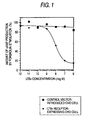
- the frame filter was fixed with methanol and stained with Diff-Quik Staining Kit (International Reagents Corporation). The upper surface of this filter (the side on which cells were set) was wiped and air-dried and then absorbance at 595 nm was measured using a plate reader (Molecular Devices). Also, in order to examine pertussis toxin (PTX) sensitivity of the JULF2 stably expressing CHO cells, JULF2 stably expressing CHO cells treated with 50 ng/ml PTX for 20 hours were subjected to a cell migration test (Fig. 2).
- PTX pertussis toxin
- JULF2 stably expressing CHO cells migrate into the lower layer of the filter toward LTB 4 .
- the cell migration showed a bell type chemotaxis in which the migration activity becomes maximum for 30 nM concentration of LTB 4 and in which the migration activity is inhibited at further high concentration. Since this reaction was completely inhibited by PTX pretreatment, it was strongly suggested that a G ⁇ i-like G protein is concerned in the JULF2-mediated cell migration.
- the JULF2 stably expressing CHO cell was inoculated into a 96 well plate at a density of 1 x 10 4 cells and, after 1 day of culturing, treated for 10 minutes with a MEM (nucleic acid-free) medium/1 mM 3-isobutyl-1-methylxanthine (mfd. by Sigma)/0.1% BSA. After the treatment, a mixture of 1 ⁇ M forskolin (mfd.
- the compound A, compound B and compound C are commercially available reagents, and compound A is on the market as a code number 0199-0032 of ChemDiv, Inc, and compound B as a code number TPB-488 of InterBioScreen. It was found that these compounds are antagonists of JULF2, because they inhibit CAMP inhibition action of JULF2 stably expressing CHO cell in a dose-dependent manner. Their IC 50 values are 0.4 ⁇ M in compound A, 6.7 ⁇ M in compound B and 12 ⁇ M in compound C. In this connection, the property of the compound A to show antiinflammatory effect is also described in Biochemical Pharmacology , 51 , 737 - 742, 1996.
- the DNA fragment obtained in Example 1 coding for JULF2 was digested with Xba I and then cloned into pCEP4 (mfd. by Invitrogen) to be used as an expression vector (pCEP4-JULF2) for expressing JULF2.
- pCEP4-JULF2 HEK293-EBNA strain was inoculated into a 15 cm Petri dish at a density of 5 x 10 6 cells and cultured for 1 day, and then 20 ⁇ g of pCEP4-JULF2 was subjected to gene transfer using Lipofectamine-2000 (mfd. by Gibco BRL).
- the gene-transferred cells were recovered 24 hours thereafter, washed, suspended in 20 mM Tris-HCl (pH 7.4)/5 mM EDTA and then homogenized using Polytron. After ultracentrifugation, the sediment was suspended in 20 mM Tris-HCl (pH 7.4) and used as a membrane fraction.
- JULF2 expressing cell membrane fraction screening of candidate compounds was carried out making use of the activity to inhibit binding of LTB 4 as an index.
- a solution composed of 50 mM Tris-HCl(pH 7.4), 10 mM MgCl 2 , 10 mM NaCl and 0.05% BSA, containing 100 ⁇ g of the JULF2 expressing cell membrane fraction was mixed with 5 ⁇ M of a candidate compound and 0.5 nM in final concentration of [ 3 H]LTB 4 and incubated at room temperature for 1 hour, and then the cell membrances were recovered on a glass filter using a cell harvester.
- Example 6 the cell migration activity was measured in the presence of the compound A, compound B or compound C selected in Example 7 in an amount of from 0.03 to 100 ⁇ M to the upper layer and adding 100 nM of LTB 4 to the lower layer. The results are shown in Fig. 4. It was confirmed that these compounds inhibit cell migration toward LTB 4 in a dose-dependent manner.
- LTB 4 is a strong chemoattractant for neutrophil (Chen, X.S. et al. (1994) Nature, 372, pp. 179 - 182). Since JULF2 is expressed in mononuclear cell and also expressed in neutrophil as shown in Examples 4-1 and 4-2, it is considered that this receptor is concerned in the exacerbation of inflammatory diseases and allergic diseases, such as rheumatism, psoriasis, asthma and the like, via cell migration of these cells. Based on the above, it is considered that these JULF2 antagonists have anti-inflammation action by inhibiting cell migration.
- a DNA fragment was obtained by PCR.
- the PCR was carried out using rat genomic DNA (mfd. by Clontech) as the template by repeating a cycle of 98°C (20 seconds)/55°C (30 seconds)/74°C (3 minutes) 32 times in the presence of 5% DMSO.
- a DNA fragment of about 250 bp amplified as the result was analyzed using ABI377 DNA Sequencer.
- the oligonucleotide represented by SEQ ID NO:12 and the oligonucleotide represented by SEQ ID NO:13 were prepared to carry out 5'-RACE and 3'-RACE using Rat Spleen Marathon cDNA Amplification Kit (mfd. by Clontech).
- the PCR was carried out in accordance with a usual method using LA Taq polymerase (mfd. by Takara Shuzo) to find that DNA fragments of about 2 kbp were amplified in both cases.
- the oligonucleotide represented by SEQ ID NO:14 was used as a forward primer, and the oligonucleotide represented by SEQ ID NO:15 as a reverse primer, to carry out PCR ( Spe I site is added to each of the respective 5'-ends).
- the PCR was carried out using rat spleen cDNA as the template and using Pfu DNA polymerase (mfd.
- Nucleotide sequence of the thus obtained clone was analyzed by the dideoxy chain termination method using ABI377 DNA Sequencer (mfd. by Applied Biosystems). The thus revealed sequence is shown in SEQ ID NO:16.
- the nucleotide sequence represented by SEQ ID NO:16 has an ORF of 1,077 bases.
- An amino acid sequence (358 amino acids) deduced from the ORF is shown in SEQ ID NO:17. This amino acid sequence showed a homology of 92.2% with the amino acid sequence of human JULF2. Since homology of the BLT as a known LTB 4 receptor is 76.6% between human and rat and 75.5% between human and mouse, it was suggested that particularly JULF2 among LTB 4 receptors is an important receptor to be preserved during the steps of evolution.
- the LTB 4 receptor activity of a protein encoded by the rat JULF2 DNA obtained in Example 10 was confirmed by the following tests.
- the pEF-BOS-dhfr plasmid was introduced with the rat JULF2 DNA obtained in Example 10 and named pEF-BOS-dhfr-rat JULF2.
- a rat JULF2 stably expressing CHO cell was obtained by the same method of Example 5.
- changed amount of intracellular cAMP by LTB 4 in the presence of 1 ⁇ M forskolin was measured using the rat JULF2 stably expressing CHO cell under the same conditions of Example 5, LTB 4 dose-dependent cAMP production inhibition action was found.
- LTB 4 showed an EC 50 value of from 7.5 to 11.3 nM.
- the LTB 4 receptor provided by the invention is useful for the screening and evaluation of substances which modify the activity of the receptor as preventive and/or therapeutic agents for diseases induced by human leukotriene B 4 , such as inflammatory diseases (bronchitis, psoriasis, ulcerative colitis, rheumatoid arthritis and edema), and substances useful as therapeutic agents for diseases in which this receptor is concerned can be selected by the screening method that uses the receptor provided by the invention.
- the DNA coding for the receptor of the invention is useful not only for the production of the receptor but also for the diagnosis of diseases induced by mutation of or abnormal expressional changes in the receptor.
- the polyclonal antibody or monoclonal antibody for the receptor is useful for, e.g., the receptor agonists, diagnostic agents or means of separation and purification of polypeptides.
Landscapes
- Health & Medical Sciences (AREA)
- Life Sciences & Earth Sciences (AREA)
- Chemical & Material Sciences (AREA)
- Organic Chemistry (AREA)
- Zoology (AREA)
- Genetics & Genomics (AREA)
- Gastroenterology & Hepatology (AREA)
- Immunology (AREA)
- Biochemistry (AREA)
- Biophysics (AREA)
- General Health & Medical Sciences (AREA)
- Toxicology (AREA)
- Medicinal Chemistry (AREA)
- Molecular Biology (AREA)
- Proteomics, Peptides & Aminoacids (AREA)
- Cell Biology (AREA)
- Endocrinology (AREA)
- Peptides Or Proteins (AREA)
- Preparation Of Compounds By Using Micro-Organisms (AREA)
- Micro-Organisms Or Cultivation Processes Thereof (AREA)
Abstract
Description
various commercially available compounds such as those which were used in Example 7,
various known compounds registered in chemical files, peptides, and compounds obtained by combinatorial chemistry techniques (Terrett, U.K. et al. (1995) Tetrahedron, 51, 8135 - 8137),
random peptides prepared by applying phage display (Felici, F. et al. (1991) J. Mol. Biol., 222, 301 - 310) and the like methods, culture supernatants of microorganisms, natural components derived from plants and marine organisms, animal tissue extracts, and
compounds or peptides prepared by chemically or biologically modifying a peptide, can be used. The substances which modify the activity of the LTB4 receptor of the invention are roughly divided into a substance having agonist activity for the receptor, namely a substance which accelerates the activity of the receptor, and a substance having antagonist activity for the receptor, namely a substance which inhibits the activity of the receptor, by measuring changes in the activity of the receptor, and the screening method of the invention can select any one of the substances having the agonist activity and substances having antagonist activity for the receptor. The screening method of the invention is more suited for the selection of substances having antagonist activity for the receptor.




Claims (17)
- A leukotriene B4 receptor, which is represented by the amino acid sequence described in SEQ ID NO:2, or the amino acid sequence described in SEQ ID NO:2 in which one or more amino acid(s) residues are substituted, deleted and/or inserted at one or more position(s) and showing the same activity of the leukotriene B4 receptor represented by the amino acid sequence described in SEQ ID NO:2.
- The leukotriene B4 receptor according to claim 1, which is represented by the amino acid sequence described in SEQ ID NO:2.
- A leukotriene B4 receptor, which is a protein encoded by a DNA that hybridizes with the DNA represented by the nucleotide sequence described in SEQ ID NO:1 or SEQ ID NO:16 under a stringent condition and showing the same activity of the leukotriene B4 receptor represented by the amino acid sequence described in SEQ ID NO:2.
- The leukotriene B4 receptor according to claim 3, which is a protein represented by the amino acid sequence described in SEQ ID NO:2.
- The leukotriene B4 receptor according to claim 3, which is a protein represented by the amino acid sequence described in SEQ ID NO:17.
- A nucleic acid which encodes the amino acid sequence of the leukotriene B4 receptor described in claim 1 or 3.
- A vector which contains the nucleic acid described in claim 6.
- A host cell which contains the vector described in claim 7.
- A method for producing the leukotriene B4 receptor described in claim 1 or 3, characterized in that it uses the host cell described in claim 8.
- An antibody which binds to the leukotriene B4 receptor described in claim 1 or 3.
- A method for screening a substance capable of modifying the activity of leukotriene B4 receptor, characterized in that the leukotriene B4 receptor described in claim 1 or 3 is allowed to contact with an agent to be tested.
- The screening method according to claim 11, which comprises a step for contacting the leukotriene B4 receptor described in claim 1 or 3 with an agent to be tested in the presence of a ligand and a step for measuring changes in the receptor activity.
- The screening method according to claim 11, which comprises a step for contacting the leukotriene B4 receptor described in claim 1 or 3 with an agent to be tested in the presence of a ligand and a step for measuring binding inhibition activity of the ligand for the receptor.
- The screening method according to claim 11, wherein the substance capable of modifying the activity of the leukotriene B4 receptor described in claim 1 or 3 is a substance for preventing and/or treating an inflammatory disease.
- An antagonist of the leukotriene B4 receptor described in claim 1 or 3, which is capable of being selected by the method described in claim 11.
- A pharmaceutical composition for an inflammatory disease (excluding a pharmaceutical composition for an inflammatory disease in which 4-octyloxybenzenecarboximidoamide hydrochloride is the active ingredient), which contains as the active ingredient a substance that is capable of modifying the activity of the leukotriene B4 receptor described in claim 1 or 3 and is capable of being selected by the method described in claim 11.
- The pharmaceutical composition for an inflammatory disease according to claim 16 (excluding a pharmaceutical composition for an inflammatory disease in which 4-octyloxybenzenecarboximidoamide hydrochloride is . the active ingredient), wherein the substance capable of modifying the activity is a substance having antagonist activity.
Applications Claiming Priority (5)
| Application Number | Priority Date | Filing Date | Title |
|---|---|---|---|
| JP2000078992 | 2000-03-21 | ||
| JP2000078992A JP2005229803A (en) | 2000-03-21 | 2000-03-21 | Novel leukotriene B4 receptor |
| JP2000187978 | 2000-06-22 | ||
| JP2000187978A JP2005232001A (en) | 2000-06-22 | 2000-06-22 | Novel leukotriene B4 receptor |
| PCT/JP2001/002060 WO2001070815A1 (en) | 2000-03-21 | 2001-03-15 | Novel leukotriene b4 receptor |
Publications (2)
| Publication Number | Publication Date |
|---|---|
| EP1270589A1 true EP1270589A1 (en) | 2003-01-02 |
| EP1270589A4 EP1270589A4 (en) | 2004-09-29 |
Family
ID=26588002
Family Applications (1)
| Application Number | Title | Priority Date | Filing Date |
|---|---|---|---|
| EP01912398A Withdrawn EP1270589A4 (en) | 2000-03-21 | 2001-03-15 | NEW LEUCOTRIENE B4 RECEPTOR |
Country Status (4)
| Country | Link |
|---|---|
| US (2) | US20030077709A1 (en) |
| EP (1) | EP1270589A4 (en) |
| AU (1) | AU2001241156A1 (en) |
| WO (1) | WO2001070815A1 (en) |
Cited By (2)
| Publication number | Priority date | Publication date | Assignee | Title |
|---|---|---|---|---|
| EP2034022A1 (en) * | 2007-09-10 | 2009-03-11 | Universite Libre De Bruxelles | Leukotriene B4 binding soluble lipocalin receptor from ixodes ricinus |
| EP1745800A4 (en) * | 2004-04-26 | 2009-11-18 | Ono Pharmaceutical Co | NEW BLT2 MEDIATED DISEASE, AND BLT2 BINDING AGENT AND COMPOUND |
Families Citing this family (1)
| Publication number | Priority date | Publication date | Assignee | Title |
|---|---|---|---|---|
| GB201706406D0 (en) * | 2017-04-21 | 2017-06-07 | Volution Immuno Pharmaceuticals Sa | Method of treatment |
Family Cites Families (10)
| Publication number | Priority date | Publication date | Assignee | Title |
|---|---|---|---|---|
| US5246965A (en) * | 1991-06-11 | 1993-09-21 | Ciba-Geigy | Arylethers, their manufacture and methods of treatment |
| ES2118372T3 (en) * | 1992-11-17 | 1998-09-16 | Icos Corp | NEW RECEIVERS SEVEN TRANSMEMBRANA V28. |
| US6342510B1 (en) * | 1995-06-12 | 2002-01-29 | G. D. Searle & Co. | Treatment of inflammation and inflammation-related disorders with a combination of a cyclooxygenase-2 inhibitors and a leukotriene B4 receptor antagonist |
| EP1054903A4 (en) * | 1998-02-20 | 2002-10-09 | Smithkline Beecham Corp | Fishboy, a g-protein coupled receptor |
| NZ510712A (en) * | 1998-10-13 | 2004-11-26 | Arena Pharm Inc | Non-endogenous, constitutively activated human G protein-coupled receptors |
| JP2003532371A (en) * | 1998-11-12 | 2003-11-05 | メルク エンド カムパニー インコーポレーテッド | G protein-coupled receptor similar to leukotriene B4 receptor |
| ATE301673T1 (en) * | 1998-11-20 | 2005-08-15 | Arena Pharm Inc | HUMAN RUP3 RECEPTOR COUPLED TO A G-PROTEIN WITHOUT KNOWN LIGAND |
| CA2368068A1 (en) * | 1999-03-18 | 2000-09-21 | Steven M. Ruben | 27 human secreted proteins |
| JP2003225088A (en) * | 1999-09-10 | 2003-08-12 | Meiji Seika Kaisha Ltd | Human leukotriene B4 second receptor and DNA encoding the same |
| US6465212B1 (en) * | 1999-09-20 | 2002-10-15 | Schering Corporation | Leukotriene receptor |
-
2001
- 2001-03-15 US US10/111,866 patent/US20030077709A1/en not_active Abandoned
- 2001-03-15 AU AU2001241156A patent/AU2001241156A1/en not_active Abandoned
- 2001-03-15 EP EP01912398A patent/EP1270589A4/en not_active Withdrawn
- 2001-03-15 WO PCT/JP2001/002060 patent/WO2001070815A1/en not_active Ceased
-
2004
- 2004-12-16 US US11/012,199 patent/US20050159355A1/en not_active Abandoned
Cited By (5)
| Publication number | Priority date | Publication date | Assignee | Title |
|---|---|---|---|---|
| EP1745800A4 (en) * | 2004-04-26 | 2009-11-18 | Ono Pharmaceutical Co | NEW BLT2 MEDIATED DISEASE, AND BLT2 BINDING AGENT AND COMPOUND |
| US8673889B2 (en) | 2004-04-26 | 2014-03-18 | Ono Pharmaceutical Co., Ltd. | BLT2-mediated disease, BLT2 binding agent and the compound |
| EP2034022A1 (en) * | 2007-09-10 | 2009-03-11 | Universite Libre De Bruxelles | Leukotriene B4 binding soluble lipocalin receptor from ixodes ricinus |
| WO2009034103A1 (en) * | 2007-09-10 | 2009-03-19 | Universite Libre De Bruxelles | Leukotriene b4 binding soluble lipocalin receptor from ixodes ricinus |
| US8324161B2 (en) | 2007-09-10 | 2012-12-04 | Universite Libre De Bruxelles | Leukotriene B4 binding soluble lipocalin receptor from ixodes ricinus |
Also Published As
| Publication number | Publication date |
|---|---|
| US20050159355A1 (en) | 2005-07-21 |
| EP1270589A4 (en) | 2004-09-29 |
| US20030077709A1 (en) | 2003-04-24 |
| AU2001241156A1 (en) | 2001-10-03 |
| WO2001070815A1 (en) | 2001-09-27 |
Similar Documents
| Publication | Publication Date | Title |
|---|---|---|
| EP1690939B1 (en) | Novel G protein-coupled receptor proteins | |
| US6110672A (en) | Peripheral nervous system specific sodium channels, DNA encoding therefor, crystallization, X-ray diffraction, computer molecular modeling, rational drug design, drug screening, and methods of making and using thereof | |
| JP2966093B2 (en) | Human dopamine D 4 lower receptor and its use | |
| JPH10507930A (en) | Prostaglandin receptor DP | |
| US20030118988A1 (en) | Brain and heart cyclic nucleotide gated ion channel compounds and uses thereof | |
| US5821067A (en) | Mammalian methadone-specific opioid receptor and uses in binding assays | |
| EP0790305A1 (en) | Mutant human growth hormones and their uses | |
| US7217800B2 (en) | Peptide leukotriene receptor | |
| EP0912610B1 (en) | A novel galanin receptor | |
| JP2005229804A (en) | A novel melanin concentrating hormone receptor | |
| JPWO2001019986A1 (en) | Peptide leukotriene receptors | |
| EP1048727B1 (en) | Gene encoding novel transmembrane protein | |
| JPH08502902A (en) | Human 5-HT (bottom 2) receptor | |
| JP2002504492A (en) | G-protein coupled receptor Fishboy | |
| US20050159355A1 (en) | Novel leukotriene, B4 receptor | |
| EP0576609A1 (en) | Receptors for bombesin-like peptides | |
| JPH11511030A (en) | Novel human G-protein coupled receptor | |
| JP2005232001A (en) | Novel leukotriene B4 receptor | |
| JP2005229803A (en) | Novel leukotriene B4 receptor | |
| US6635442B1 (en) | Intron/exon structure of the human and mouse β3-adrenergic receptor genes | |
| JPWO1999046378A1 (en) | Novel G protein-coupled receptor protein | |
| EP1507006A1 (en) | Method of screening remedy for renal failure | |
| JP2001054388A (en) | Novel G protein-coupled receptor and G protein-coupled receptor gene | |
| JP2003012549A (en) | Peptide leukotriene receptor | |
| CA2216835A1 (en) | Human g-protein coupled receptors |
Legal Events
| Date | Code | Title | Description |
|---|---|---|---|
| PUAI | Public reference made under article 153(3) epc to a published international application that has entered the european phase |
Free format text: ORIGINAL CODE: 0009012 |
|
| 17P | Request for examination filed |
Effective date: 20020718 |
|
| AK | Designated contracting states |
Kind code of ref document: A1 Designated state(s): AT BE CH CY DE DK ES FI FR GB GR IE IT LI LU MC NL PT SE TR |
|
| AX | Request for extension of the european patent |
Free format text: AL;LT;LV;MK;RO;SI |
|
| A4 | Supplementary search report drawn up and despatched |
Effective date: 20040812 |
|
| RAP1 | Party data changed (applicant data changed or rights of an application transferred) |
Owner name: ASTELLAS PHARMA INC. |
|
| RAP1 | Party data changed (applicant data changed or rights of an application transferred) |
Owner name: ASTELLAS PHARMA INC. |
|
| 17Q | First examination report despatched |
Effective date: 20060620 |
|
| GRAP | Despatch of communication of intention to grant a patent |
Free format text: ORIGINAL CODE: EPIDOSNIGR1 |
|
| GRAC | Information related to communication of intention to grant a patent modified |
Free format text: ORIGINAL CODE: EPIDOSCIGR1 |
|
| STAA | Information on the status of an ep patent application or granted ep patent |
Free format text: STATUS: THE APPLICATION IS DEEMED TO BE WITHDRAWN |
|
| 18D | Application deemed to be withdrawn |
Effective date: 20100120 |