EP1269976A2 - Mittel zum Blondieren von menschlichen Haaren - Google Patents
Mittel zum Blondieren von menschlichen Haaren Download PDFInfo
- Publication number
- EP1269976A2 EP1269976A2 EP02014196A EP02014196A EP1269976A2 EP 1269976 A2 EP1269976 A2 EP 1269976A2 EP 02014196 A EP02014196 A EP 02014196A EP 02014196 A EP02014196 A EP 02014196A EP 1269976 A2 EP1269976 A2 EP 1269976A2
- Authority
- EP
- European Patent Office
- Prior art keywords
- bleaching
- hair
- ammonium
- weight
- composition
- Prior art date
- Legal status (The legal status is an assumption and is not a legal conclusion. Google has not performed a legal analysis and makes no representation as to the accuracy of the status listed.)
- Granted
Links
Classifications
-
- A—HUMAN NECESSITIES
- A61—MEDICAL OR VETERINARY SCIENCE; HYGIENE
- A61K—PREPARATIONS FOR MEDICAL, DENTAL OR TOILETRY PURPOSES
- A61K8/00—Cosmetics or similar toiletry preparations
- A61K8/18—Cosmetics or similar toiletry preparations characterised by the composition
- A61K8/30—Cosmetics or similar toiletry preparations characterised by the composition containing organic compounds
- A61K8/33—Cosmetics or similar toiletry preparations characterised by the composition containing organic compounds containing oxygen
- A61K8/35—Ketones, e.g. benzophenone
- A61K8/355—Quinones
-
- A—HUMAN NECESSITIES
- A61—MEDICAL OR VETERINARY SCIENCE; HYGIENE
- A61K—PREPARATIONS FOR MEDICAL, DENTAL OR TOILETRY PURPOSES
- A61K8/00—Cosmetics or similar toiletry preparations
- A61K8/18—Cosmetics or similar toiletry preparations characterised by the composition
- A61K8/19—Cosmetics or similar toiletry preparations characterised by the composition containing inorganic ingredients
- A61K8/22—Peroxides; Oxygen; Ozone
-
- A—HUMAN NECESSITIES
- A61—MEDICAL OR VETERINARY SCIENCE; HYGIENE
- A61K—PREPARATIONS FOR MEDICAL, DENTAL OR TOILETRY PURPOSES
- A61K8/00—Cosmetics or similar toiletry preparations
- A61K8/18—Cosmetics or similar toiletry preparations characterised by the composition
- A61K8/30—Cosmetics or similar toiletry preparations characterised by the composition containing organic compounds
- A61K8/33—Cosmetics or similar toiletry preparations characterised by the composition containing organic compounds containing oxygen
- A61K8/38—Percompounds, e.g. peracids
-
- A—HUMAN NECESSITIES
- A61—MEDICAL OR VETERINARY SCIENCE; HYGIENE
- A61Q—SPECIFIC USE OF COSMETICS OR SIMILAR TOILETRY PREPARATIONS
- A61Q5/00—Preparations for care of the hair
- A61Q5/08—Preparations for bleaching the hair
Definitions
- the present invention relates to a new means for intensive, but nevertheless gentle bleaching and lightening of human hair.
- the bleaching of human hair usually consists of the following process steps: Homogeneous mixing of an anhydrous preparation, preferably a powder, which contains at least one compound with a bleaching or brightening activity, in particular a solid peroxide salt, preferably ammonium, potassium and / or sodium persulfate or alkaline earth peroxides, with an aqueous hydrogen peroxide solution, applying this composition on the hair, and rinsing after complete bleaching.
- a solid peroxide salt preferably ammonium, potassium and / or sodium persulfate or alkaline earth peroxides
- bleaching agents containing peroxides as the active ingredient are not only an improved bleaching effect is achieved without an essential one To cause hair damage, but also the properties of the sun treated hair in particular, the wet and dry combability and the Handle and volume can be improved.
- the invention also relates to a method for bleaching human beings Hair by treating it with a preparation made by mixing an anhydrous composition (A) containing at least one compound contains bleaching or brightening activity, preferably a peroxide an aqueous hydrogen peroxide composition (B) was obtained.
- A anhydrous composition
- B aqueous hydrogen peroxide composition
- ubiquinone of the formula (I) where n is a number from 1 to 10.
- coenzyme Q 10 in cosmetic products, in particular in hair care products, is known per se.
- EP 0 751 762 B describes hair care products which contain one or more ubiquinones, in particular coenzyme Q 6 and coenzyme Q 10, in combination with retinols, Retinal and ⁇ -carotene, used to treat skin aging.
- DE 199 26 167 A1 discloses water-based styling agents which contain one or more bioquinones such as ubiquinones and plastoquinones to protect the scalp and hair from undesired oxidation processes.
- DE 199 26 168 A1 discloses styling agents based on alcohol with bioquinones, in particular coenzyme Q 10.
- DE 199 26 170 A1 relates to the use of one or more bioquinones such as ubiquinones in cosmetic hair cleansing agents.
- DE 199 26 156 A1 describes the use of bioquinones such as ubiquinone for the production of cosmetic preparations for improving the hair structure, in particular the combability of the hair, that is to say hair-conditioning compositions.
- the preferred use concentration of the coenzymes Q1 to Q 10 is approximately 0.005 to 5, in particular approximately 0.01 to 2.5, particularly preferably approximately 0.05 to 1% by weight, calculated on the composition containing the bleaching powder (without oxidizing agent).
- the bleaching and Brightening powder used as dust-free products that are used as granules or Agglomerates are present.
- Dust-free bleaching powders which have been prepared in accordance with EP-A 630 643 by agglomerating the pulverulent starting components by spraying on molten waxes or C 10 -C 18 fatty acid alkanolamides or fusing them at elevated temperature are also suitable according to the invention.
- the bleaching agent compositions also contain the components customary in such compositions: If it is a powder, in particular inert powdered carriers, these are, for example, pyrogenic silicon dioxide, starch powder, etc., alkalizing agents such as sodium metasilicate, surface-active substances and Binder. To avoid repetition, reference is made to the relevant standard works, for example K. Schrader, "Fundamentals and recipes of cosmetics, 2nd edition (1989, Wilsonhig Buchverlag), pp. 815 to 823. Peroxides are used as active ingredients.
- Persulfates such as sodium and potassium persulfate, ammonium persulfate, alkaline earth peroxides such as magnesium peroxide, melamine peroxide, urea peroxide or phtholimidoperoxyhexanoic acid may be mentioned as such.
- the proportion of peroxides is at least 10, preferably at least 20 to about 80% by weight.
- the bleaching agents can also contain 0.1 to 10% by weight, calculated on the total composition, of one or more ammonium salts.
- Suitable ammonium salts are ammonium carbonate, ammonium hydrogen carbonate, Ammonium carbamate, ammonium chloride, ammonium sulfate, ammonium phosphates, Ammonium nitrate, ammonium bromide, ammonium iodide, ammonium thiosulfate, Ammonium molybdate, ammonium vanadate, ammonium sulfamate, ammonium citrate, Ammonium salicylate, ammonium valerate, ammonium artrate, ammonium benzoate, Ammonium acetate, ammonium formate and ammonium lactate.
- ammonium phosphates such as NH 4 H 2 PO 4 , (NH 4 ) 2 HPO 4 , (NH 4 ) 2 NaPO 4 , NaNH 4 HPO 4 or NH 4 Na 2 PO 4 , ammonium chloride, ammonium sulfate and diammonium hydrogen citrate and ammonium carbonate are preferred, preferably in an amount of 0.1 to 10% by weight.
- ammonium compounds can, as known from EP 609 796 A2, in correspondingly higher amounts are used as the sole bleaching agent.
- the proportion of the bleaching or brightening compounds is overall preferably between about 5 and about 75, in particular about 25 and about 60 % By weight, based on the lightening and bleaching powder.
- the particle sizes of the bleaching agents according to the invention are generally below 1 mm, preferably below 500 microns, for example less than 400 microns, especially about 25 to about 100 microns, which is excellent Processability, i.e. Miscibility with an aqueous hydrogen peroxide solution guaranteed before application to human hair.
- the agent is used in a known and customary manner:
- the powdered brightening agent is mixed with a 6 to 12 percent hydrogen peroxide solution, preferably in a ratio of about 1 part by weight of the powder to about 0.5 to about 4, in particular about 1 to about 2.5 parts by weight of the peroxide solution, or Lotion mixed homogeneously and then applied to the hair for about 10 to about 60, in particular about 20 to 30 minutes, depending on the temperature.
- the application can also be done in such a way that the bleaching powder and Hydrogen peroxide solution can be mixed with a cream base, and this homogeneous mixture is then applied to the hair.
- composition is preferably adjusted so that when mixed with aqueous hydrogen peroxide solution a pH of the ready-to-use mixture from about 8 to about 11.5, especially between 9 to 11.
- silica 16.27 (% by weight) ammonium chloride 14.70 sodium 10.00 Natriumetasilicat 2.30 phthalimido 41,50 sodium 15.20 Coenzyme Q6 0.03
- This composition is mixed in a weight ratio of 1: 2.5: 2.5 with an H 2 O 2 lotion b) and a cream base c):
- a dust-free powder is obtained which can be mixed well with a known 6% H 2 O 2 solution in a weight ratio of 1: 1.
- the pH of this mixture is 9.0.
- Silicon dioxide (diatomaceous earth) 3.20 (% by weight) Silicon dioxide (fumed SiO 2 ) 5.25 sodium 3.50 urea 2.00 Natriumlauroylsarkosinat 0.80 sodium 1.20 sodium 1.00 metasilicate 6.00 starch powder 3.50 potassium persulfate 57,00 magnesium 4.00 organopolysiloxane 1.00 Coenzyme Q10 0.05 Paraffin oil (Paraffinum perliquidum, 11,50 DAB 9)
- the powder was produced by spraying the paraffin oil onto the powder matrix at about 20 ° C. using the vortex spray process.
- a dust-free powder is obtained which can be mixed well with a known 6% H 2 O 2 solution in a weight ratio of 1: 1. 99% of the particles had a diameter of ⁇ 400 microns.
- the bleaching effect and the shine of the hair are excellent with good wetness dry comb; there was no significant damage to the hair. Omitting the coenzyme Q10 resulted in a reduced and more uneven bleaching; the hair had a rougher feel and a diminished one Wet and dry combability.
- Silicon dioxide (diatomaceous earth) 3.20 (% by weight) Silicon dioxide (fumed SiO 2 ) 5.30 sodium 3.50 urea 2.00 Natriumlauroylsarkosinat 0.80 sodium 1.20 sodium 1.00 metasilicate 6.00 starch powder 4.40 sodium 39,50 potassium persulfate 14.02 magnesium 4.00 coconut monoethanolamide 15.00 Coenzyme Q10 0.05 Coenzyme Q6 0.03
- the powder was prepared by heating the above mixture to 70 ° C to 75 ° C in an eddy current generator and then cooling. It contained a dust-free powder which could be mixed well with a known 9% H 2 O 2 solution in a weight ratio of 1: 1.5. 99% of the particles had a diameter of ⁇ 400 microns.
- the bleaching effect achieved on the hair was uniformly excellent with good wet and dry combability of the hair; there was no significant damage to the hair.
- the omission of the coenzymes Q10 and Q6 led to a reduced conditioning and bleaching effect.
- the powder was mixed with an aqueous 6% H 2 O 2 composition in a ratio of 1: 1 and the mixture was applied to the hair. After exposure, washing and drying, a well and evenly bleached hair with a subtle shine, soft feel and good wet and dry combability was obtained.
Landscapes
- Health & Medical Sciences (AREA)
- Life Sciences & Earth Sciences (AREA)
- Animal Behavior & Ethology (AREA)
- General Health & Medical Sciences (AREA)
- Public Health (AREA)
- Veterinary Medicine (AREA)
- Emergency Medicine (AREA)
- Birds (AREA)
- Epidemiology (AREA)
- Chemical & Material Sciences (AREA)
- Inorganic Chemistry (AREA)
- Cosmetics (AREA)
Abstract

Description
Homogenes Vermischen einer wasserfreien Zubereitung, vorzugsweise eines Pulvers, das mindestens eine Verbindung mit bleichender bzw. aufhellender Wirksamkeit, insbesondere ein festes Peroxidsalz, vorzugsweise Ammonium-, Kalium- und/oder Natriumpersulfat oder Erdalkaliperoxide enthält, mit einer wäßrigen Wasserstoffperoxid-Lösung, Aufbringen dieser Zusammensetzung auf das Haar, und Ausspülen nach vollendeter Blondierung. Dabei ist seit längerem bekannt, daß die Verwendung der im Hinblick auf die Blondierung wirksamsten Bestandteile, insbesondere der Persulfate, vor allem des Ammoniumpersulfats, in den erforderlichen höheren Konzentrationen zu Haarschädigungen führen kann.
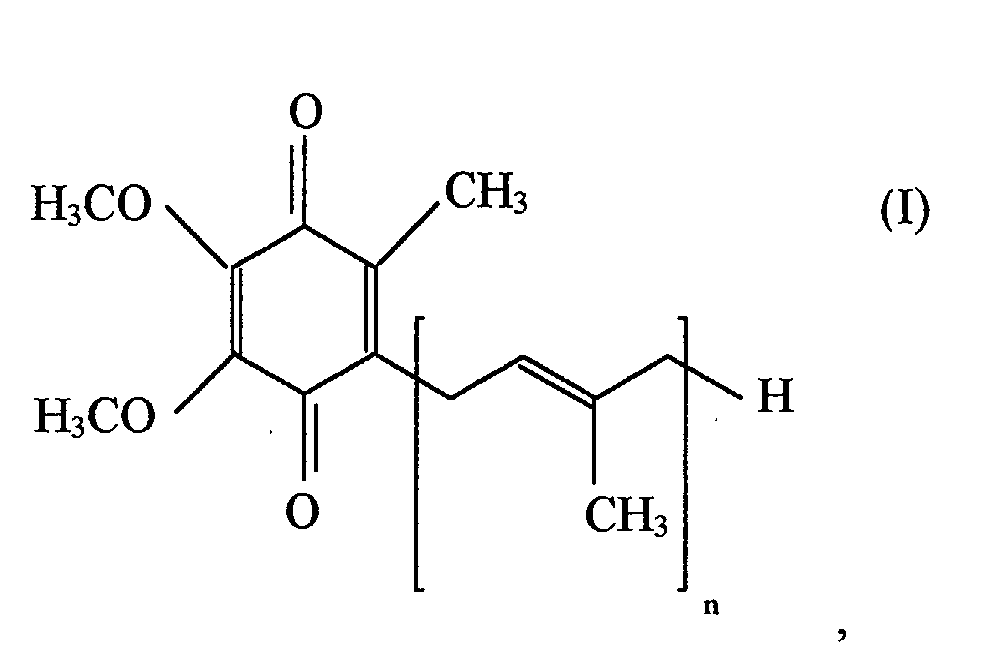
Bevorzugte Ubichinone sind solche mit n = 6 bis 10, insbesondere Ubichinon 50, worin n 10 bedeutet, auch unter der Bezeichnung "Coenzym Q 10" bekannt.
Die Verwendung von "Coenzym Q 10" in kosmetischen Mitteln, insbesondere in Haarpflegemitteln, ist an sich bekannt.
Die EP 0 751 762 B beschreibt Haarpflegemittel, die ein oder mehrere Ubichinone, insbesondere Coenzym Q 6 und Coenzym Q 10, in Kombination mit Retinolen,
Retinalen und β-Carotin, zur Behandlung der Hautalterung enthalten.
Aus der DE 199 26 167 A1 sind Stylingmittel auf Wasserbasis bekannt, die ein oder mehrere Biochinone wie Ubichinone und Plastochinone zum Schutz der Kopfhaut und des Haares vor unerwünschten Oxidationsprozessen enthalten.
Die DE 199 26 168 A1 offenbart Stylingmittel auf alkoholischer Basis mit Biochinonen, insbesondere Coenzym Q 10.
Die DE 199 26 170 A1 betrifft die Verwendung eines oder mehrerer Biochinone wie Ubichinone in kosmetischen Haarreinigungsmitteln.
Schließlich beschreibt die DE 199 26 156 A1 die Verwendung von Biochinonen wie Ubichinon zur Herstellung von kosmetischen Zubereitungen zur Verbesserung der Haarstruktur, insbesondere der Kämmbarkeit des Haares, also haarkonditionierenden Zusammensetzungen.
Die bevorzugte Einsatzkonzentration der Coenzyme Q1 bis Q 10 beträgt etwa 0,005 bis 5, insbesondere etwa 0,01 bis 2,5, besonders bevorzugt etwa 0,05 bis 1 Gew.-%, berechnet auf die das Blondierpulver (ohne Oxidationsmittel) enthaltende Zusammensetzung.
Wenn es sich um ein Pulver handelt, insbesondere inerte pulverförmige Trägerstoffe, sind das beispielsweise pyrogenes Siliciumioxid, Stärkepulver, etc., Alkalisierungsmittel wie Natriummetasilikat, oberflächenaktive Substanzen und
Bindemittel. Zur Vermeidung von Wiederholungen wird auf die einschlägigen Standardwerke, beispielsweise K. Schrader, "Grundlagen und Rezepturen der Kosmetika, 2. Auflage (1989, Hüthig Buchverlag), S.815 bis 823, verwiesen.
Als aktive Bestandteile werden Peroxide eingesetzt. Als solche sind insbesondere Persulfate wie Natrium- und Kaliumpersulfat, Ammoniumpersulfat, Erdalkaliperoxide wie Magnesiumperoxid, Melaminperoxid, Harnstoffperoxid oder Phtholimidoperoxyhexansäure zu nennen.
Der Anteil an Peroxiden liegt bei mindestens 10, vorzugsweise mindestens 20 bis etwa 80 Gew.-%.
Gemäß einer bevorzugten Ausführungsform der Erfindung können die Blondiermittel noch 0,1 bis 10 Gew.-%, berechnet auf die Gesamtzusammensetzung, eines oder mehrerer Ammoniumsalze enthalten.
Das pulverförmige Aufhellungsmittel wird mit einer 6- bis 12-prozentigen Wasserstoffperoxid-Lösung, vorzugsweise in einem Verhältnis von etwa 1 Gewichtsteil des Pulvers zu etwa 0,5 bis etwa 4, insbesondere etwa 1 bis etwa 2,5 Gewichtsteilen der Peroxid-Lösung oder -Lotion homogen vermischt und anschließend etwa 10 bis etwa 60, insbesondere etwa 20 bis 30 Minuten, je nach Temperatur, auf dem Haar zur Einwirkung gebracht.
| Siliciumdioxid | 16,27 (Gew.-%) |
| Ammoniumchlorid | 14,70 |
| Natriumcarbonat | 10,00 |
| Natriumetasilicat | 2,30 |
| Phthalimidoperoxyhexansäure | 41,50 |
| Natriumpersulfat | 15,20 |
| Coenzym Q6 | 0,03 |
| Wasserstoffperoxid | 6,00 (Gew.-%) |
| Cetylstearylalkohol | 1,70 |
| Phosphorsäure | 0,50 |
| Natriumlaurylsulfat | 0,20 |
| Coenzym Q6 | 0,05 |
| Dinatriumhydrogenphosphat | 0,10 |
| Salicylsäure | 0,10 |
| Wasser | ad 100,00 |
| Cetylstearylalkohol | 11,0 (Gew.-%) |
| Oleth-5 | 5,0 |
| Ölsäure | 2,5 |
| Stearamide MEA | 2,3 |
| Cocoamide MEA | 2,3 |
| Natriumcetylstearylsulfat | 1,2 |
| 1,2-Propylenglykol | 1,0 |
| 1,2-Propylenglykolstearat | 0,6 |
| Natriumlaurylsulfat | 0,5 |
| Weizenproteinhydrolysat | 0,9 |
| Organopolysiloxan | 0,4 |
| Panthenol | 0,6 |
| Parfum | 0,4 |
| Komplexbildner | 0,2 |
| Wasser | ad 100,0 |
Bei der Applikation dieser Mischung wurde eine ausgezeichnete, gleichmäßige Blondierwirkung mit guter Naß- und Trockenkämmbarkeit und ausgezeichnetem Glanz festgestellt; eine wesentliche Haarschädigung trat an Haarsträhnen aus ungeschädigtem Menschenhaar nicht auf.
Das Weglassen des "Coenzym Q6" in den Zusammensetzungen führte zu einer verringerten, weniger gleichmäßigen Blondierwirkung, und einem weniger konditionierten Haar.
| Kieselgur | 2,60 (Gew.-%) |
| Natriumcarboxymethylcelluslose | 2,50 |
| Hydroxyethylcellulose | 1,60 |
| Natriumlaurylsulfat | 2,50 |
| Natriumstearat | 1,60 |
| Eiweißhydrolysat | 0,60 |
| Stärke | 1,00 |
| Natriumcarbonat | 0,60 |
| Natriummetasilikat | 9,00 |
| Polyvinylpyrrolidon K90 | 3,20 |
| Kokosfettsäuremonoethanolamid | 9,80 |
| (NH4)2HPO4 | 2,00 |
| Magnesiumperoxid | 3,80 |
| Kaliumpersulfat | 8,00 |
| Natriumpersulfat | 50,00 |
| Organopolysiloxan | 1,00 |
| Coenzym Q10 | 0,20 |
Der pH-Wert dieser Mischung liegt bei 9,0.
Weglassen des "Coenzym Q10" ergab einen deutlich verringerten Blondiereffekt.
| Siliciumdioxid (Diatomenerde) | 3,20 (Gew.-%) |
| Siliciumdioxid (pyrogenes SiO2) | 5,25 |
| Natriumcarboxymethylcellulose | 3,50 |
| Harnstoff | 2,00 |
| Natriumlauroylsarkosinat | 0,80 |
| Natriumstearat | 1,20 |
| Natriumcarbonat | 1,00 |
| Natriummetasilikat | 6,00 |
| Stärkepulver | 3,50 |
| Kaliumpersulfat | 57,00 |
| Magnesiumperoxid | 4,00 |
| Organopolysiloxan | 1,00 |
| Coenzym Q10 | 0,05 |
| Paraffinöl (Paraffinum perliquidum, | 11,50 |
| DAB 9) |
Es wird ein staubfreies Pulver erhalten, das mit einer bekannten 6%igen H2O2-Lösung im Gewichtsverhältnis 1:1 gut angerührt werden kann.
99% der Teilchen hatten einen Durchmesser von <400 Mikron.
| Siliciumdioxid (Diatomenerde) | 3,20 (Gew.-%) |
| Siliciumdioxid (pyrogenes SiO2) | 5,30 |
| Natriumcarboxymethylcellulose | 3,50 |
| Harnstoff | 2,00 |
| Natriumlauroylsarkosinat | 0,80 |
| Natriumstearat | 1,20 |
| Natriumcarbonat | 1,00 |
| Natriummetasilikat | 6,00 |
| Stärkepulver | 4,40 |
| Natriumpersulfat | 39,50 |
| Kaliumpersulfat | 14,02 |
| Magnesiumperoxid | 4,00 |
| Cocosmonoethanolamid | 15,00 |
| Coenzym Q10 | 0,05 |
| Coenzym Q6 | 0,03 |
Es wurde ein staubfreies Pulver enthalten, das mit einer bekannten 9%igen H2O2-Lösung im Gewichtsverhältnis 1:1,5 gut angerührt werden konnte. 99% der Teilchen hatten einen Durchmesser von <400 Mikron.
Die am Haar erzielte Blondierwirkung war gleichmäßig ausgezeichnet bei guter Naßund Trockenkämmbarkeit des Haares; eine wesentliche Haarschädigung war nicht erkennbar.
Das Weglassen der Coenzyme Q10 und Q6 führte zu einer verringerten Konditionier- und Blondierwirkung.
| Pyrogenes Silicia (Aerosil) | 4,00 (Gew.-Teile) |
| Hydroxyethylcellulose | 1,70 |
| Polyvinylpyrrolidon | 4,00 |
| Tetranatrium-EDTA | 2,00 |
| Natriumstearat | 1,25 |
| Natriumcarbonat | 1,00 |
| Ammoniumpersulfat | 8,00 |
| Magnesiumperoxid | 10,00 |
| Kaliumpersulfat | 44,00 |
| Natriummetasilikat | 11,50 |
| Natriumlaurylsulfat | 0,50 |
| Organopolysiloxan-Pfropfcopolymerisat | 1,00 |
| Coenzym Q10 | 0,05 |
| Aufgesprühtes Paraffinöl | 11,00 |
Claims (7)
- Wasserfreies Mittel zum Blondieren von menschlichen Haaren, enthaltendworin n eine Zahl von 1 bis 10 bedeutet.a) mindestens eine Verbindung mit bleichender bzw. aufhellender Wirkung, undb) 0,001 bis 10 Gew.-%, bezogen auf die Zusammensetzung, mindestens eines Ubichinons der Formel (I)

- Mittel nach Anspruch 1, worin n 10 bedeutet.
- Mittel nach Anspruch 1, worin n 6 bedeutet.
- Mittel nach einem oder mehreren der Ansprüche 1 bis 3, enthaltend 0,1 bis 2,5 Gew.-% mindestens eines Ubichinons.
- Mittel nach einem oder mehreren der Ansprüche 1 bis 4, enthaltend als Verbindung mit bleichender bzw. aufhellender Wirkung mindestens ein Peroxid.
- Mittel nach einem oder mehreren der Ansprüche 1 bis 5, enthaltend als Verbindung mit bleichender bzw. aufhellender Wirkung mindestens ein Ammoniumsalz.
- Verfahren zum Blondieren und Aufhellen von menschlichen Haaren, wobei eine wasserfreie Zusammensetzung (A), die mindestens eine bleichende bzw. aufhellende Verbindung enthält, mit einer wäßrigen Wasserstoffperoxidzusammensetzung (B), enthaltend 0,001 bis 10 Gew.-%, bezogen auf die Zusammensetzung, mindestens eines Ubichinons der Formel (I)worin n eine Zahl von 1 bis 10 bedeutet,

vermischt und die Mischung auf menschliches Haar aufgebracht wird.
Applications Claiming Priority (2)
| Application Number | Priority Date | Filing Date | Title |
|---|---|---|---|
| DE10131540A DE10131540A1 (de) | 2001-06-29 | 2001-06-29 | Mittel zum Blondieren von menschlichen Haaren |
| DE10131540 | 2001-06-29 |
Publications (3)
| Publication Number | Publication Date |
|---|---|
| EP1269976A2 true EP1269976A2 (de) | 2003-01-02 |
| EP1269976A3 EP1269976A3 (de) | 2003-04-23 |
| EP1269976B1 EP1269976B1 (de) | 2009-09-02 |
Family
ID=7690010
Family Applications (1)
| Application Number | Title | Priority Date | Filing Date |
|---|---|---|---|
| EP02014196A Expired - Lifetime EP1269976B1 (de) | 2001-06-29 | 2002-06-26 | Mittel zum Blondieren von menschlichen Haaren |
Country Status (3)
| Country | Link |
|---|---|
| EP (1) | EP1269976B1 (de) |
| AT (1) | ATE441396T1 (de) |
| DE (2) | DE10131540A1 (de) |
Cited By (5)
| Publication number | Priority date | Publication date | Assignee | Title |
|---|---|---|---|---|
| EP1493427A1 (de) * | 2003-07-03 | 2005-01-05 | KPSS-Kao Professional Salon Services GmbH | Mittel zum blondieren von menschlichen Haaren |
| WO2004087086A3 (de) * | 2003-04-03 | 2005-06-02 | Henkel Kgaa | Leistungsfähige oxidative haarbehandlungsmittel mit faserstrukturstabilisierung durch radikalfänger |
| EP1982691A1 (de) * | 2007-04-20 | 2008-10-22 | KPSS-Kao Professional Salon Services GmbH | Zusammensetzung zum Färben von Keratinfasern |
| EP2191863A1 (de) * | 2008-11-26 | 2010-06-02 | KPSS-Kao Professional Salon Services GmbH | Zusammensetzung zur dauerhaften Verformung des menschlichen Haares |
| WO2011067112A3 (de) * | 2009-12-04 | 2013-05-30 | Henkel Ag & Co. Kgaa | Verwendung von coenzym q10 und/oder dessen derivaten in verfahren zur permanenten haarumformung |
Family Cites Families (7)
| Publication number | Priority date | Publication date | Assignee | Title |
|---|---|---|---|---|
| WO1997041215A1 (en) * | 1996-04-29 | 1997-11-06 | Novo Nordisk A/S | Non-aqueous, liquid, enzyme-containing compositions |
| DE19926167B4 (de) * | 1999-06-09 | 2012-08-30 | Henkel Ag & Co. Kgaa | Aerosol-Stylingmittel auf Wasserbasis mit Biochinonen |
| DE19926156A1 (de) * | 1999-06-09 | 2000-12-14 | Beiersdorf Ag | Haarkosmetische Zubereitungen insbesondere solche zur Verbesserung der Kämmbarkeit der Haare auf der Grundlage von Ubichinonen |
| DE19926168A1 (de) * | 1999-06-09 | 2000-12-14 | Beiersdorf Ag | Stylingmittel auf Alkoholbasis mit Biochinonen |
| DE19926177A1 (de) * | 1999-06-09 | 2001-02-15 | Beiersdorf Ag | Haarpflegemittel mit Ubichinonen |
| DE19926170A1 (de) * | 1999-06-09 | 2000-12-14 | Beiersdorf Ag | Haarkosmetische Mittel mit Ubichinonen |
| DE10106746A1 (de) * | 2001-02-14 | 2002-09-05 | Goldwell Gmbh | Haarfärbemittel |
-
2001
- 2001-06-29 DE DE10131540A patent/DE10131540A1/de not_active Ceased
-
2002
- 2002-06-26 AT AT02014196T patent/ATE441396T1/de not_active IP Right Cessation
- 2002-06-26 DE DE50213810T patent/DE50213810D1/de not_active Expired - Lifetime
- 2002-06-26 EP EP02014196A patent/EP1269976B1/de not_active Expired - Lifetime
Cited By (9)
| Publication number | Priority date | Publication date | Assignee | Title |
|---|---|---|---|---|
| WO2004087086A3 (de) * | 2003-04-03 | 2005-06-02 | Henkel Kgaa | Leistungsfähige oxidative haarbehandlungsmittel mit faserstrukturstabilisierung durch radikalfänger |
| EP1493427A1 (de) * | 2003-07-03 | 2005-01-05 | KPSS-Kao Professional Salon Services GmbH | Mittel zum blondieren von menschlichen Haaren |
| US7160334B2 (en) | 2003-07-03 | 2007-01-09 | Kpss-Kao Professional Salon Services Gmbh | Composition for bleaching human hair |
| AU2004202832B2 (en) * | 2003-07-03 | 2008-01-31 | Kao Germany Gmbh | Composition for bleaching human hair |
| EP1982691A1 (de) * | 2007-04-20 | 2008-10-22 | KPSS-Kao Professional Salon Services GmbH | Zusammensetzung zum Färben von Keratinfasern |
| EP2002821A1 (de) * | 2007-04-20 | 2008-12-17 | KPSS-Kao Professional Salon Services GmbH | Zusammensetzung zum Färben von Keratinfasern |
| EP2191863A1 (de) * | 2008-11-26 | 2010-06-02 | KPSS-Kao Professional Salon Services GmbH | Zusammensetzung zur dauerhaften Verformung des menschlichen Haares |
| WO2010060602A1 (en) * | 2008-11-26 | 2010-06-03 | Kpss-Kao Professional Salon Services Gmbh | Process for permanent shaping of human hair |
| WO2011067112A3 (de) * | 2009-12-04 | 2013-05-30 | Henkel Ag & Co. Kgaa | Verwendung von coenzym q10 und/oder dessen derivaten in verfahren zur permanenten haarumformung |
Also Published As
| Publication number | Publication date |
|---|---|
| DE10131540A1 (de) | 2003-01-16 |
| EP1269976B1 (de) | 2009-09-02 |
| EP1269976A3 (de) | 2003-04-23 |
| ATE441396T1 (de) | 2009-09-15 |
| DE50213810D1 (de) | 2009-10-15 |
Similar Documents
| Publication | Publication Date | Title |
|---|---|---|
| EP0609796B1 (de) | Blondiermittel für menschliche Haare | |
| DE29722990U1 (de) | Mittel zum Blondieren und Aufhellen von menschlichen Haaren | |
| DE60311570T2 (de) | Mittel zum Bleichen von menschlichen Haaren | |
| EP1269976B1 (de) | Mittel zum Blondieren von menschlichen Haaren | |
| EP1082088B1 (de) | Verwendung eines Mittels zum Blondieren menschlicher Haare | |
| EP0320612B1 (de) | Mittel und Verfahren zur dauerhaften Haarverformung | |
| DE60302065T2 (de) | Zusammensetzung zum Blondieren von menschlichen Haaren | |
| DE102017210809A1 (de) | Mittel zum Aufhellen von Haaren enthaltend spezielle Oxo-Carbonsäuren | |
| DE10028965C2 (de) | Verfahren zum Blondieren von menschlichen Haaren mit einer Zusammensetzung enthaltend Phtalimidoperoxyhexansäure | |
| EP1175894B1 (de) | Mittel zum Blondieren von menschlichen Haaren enthaltend Poly-(N-acylalkylenimin) modifizierte Organopolysikoxane | |
| DE20110784U1 (de) | Mittel zum Blondieren von menschlichen Haaren | |
| DE20010874U1 (de) | Mittel zum Blondieren von menschlichen Haaren | |
| DE19961934A1 (de) | Blondiermittel | |
| DE29613065U1 (de) | Blondiermittel für menschliche Haare | |
| EP0815830B1 (de) | Mittel zum Blondieren von menschlichen Haaren | |
| DE19630453C2 (de) | Blondiermittel für menschliche Haare | |
| DE19600216B4 (de) | Blondiermittel | |
| EP0868166B2 (de) | Blondiermittel | |
| DE10131539A1 (de) | Haarfärbemittel | |
| DE102024207646A1 (de) | Mittel zur oxidativen Farbveränderung von keratinischen Fasern enthaltend Wasserstoffperoxid, Persulfat, Komplexbildner und Aminoalkylsulfonsäure | |
| DE29611217U1 (de) | Mittel zum Blondieren von menschlichen Haaren | |
| DE102005003412A1 (de) | Mittel zum Blondieren menschlicher Haare und Verfahren zu dessen Herstellung |
Legal Events
| Date | Code | Title | Description |
|---|---|---|---|
| PUAI | Public reference made under article 153(3) epc to a published international application that has entered the european phase |
Free format text: ORIGINAL CODE: 0009012 |
|
| AK | Designated contracting states |
Kind code of ref document: A2 Designated state(s): AT BE CH CY DE DK ES FI FR GB GR IE IT LI LU MC NL PT SE TR |
|
| AX | Request for extension of the european patent |
Free format text: AL;LT;LV;MK;RO;SI |
|
| PUAL | Search report despatched |
Free format text: ORIGINAL CODE: 0009013 |
|
| RAP1 | Party data changed (applicant data changed or rights of an application transferred) |
Owner name: KPSS-KAO PROFESSIONAL SALON SERVICES GMBH |
|
| AK | Designated contracting states |
Designated state(s): AT BE CH CY DE DK ES FI FR GB GR IE IT LI LU MC NL PT SE TR |
|
| AX | Request for extension of the european patent |
Extension state: AL LT LV MK RO SI |
|
| 17P | Request for examination filed |
Effective date: 20030319 |
|
| 17Q | First examination report despatched |
Effective date: 20030605 |
|
| AKX | Designation fees paid | ||
| REG | Reference to a national code |
Ref country code: DE Ref legal event code: 8566 |
|
| RBV | Designated contracting states (corrected) |
Designated state(s): AT BE CH CY DE DK ES FI FR GB GR IE IT LI LU MC NL PT SE TR |
|
| APBN | Date of receipt of notice of appeal recorded |
Free format text: ORIGINAL CODE: EPIDOSNNOA2E |
|
| APBR | Date of receipt of statement of grounds of appeal recorded |
Free format text: ORIGINAL CODE: EPIDOSNNOA3E |
|
| APAA | Appeal reference recorded |
Free format text: ORIGINAL CODE: EPIDOS REFN |
|
| APAF | Appeal reference modified |
Free format text: ORIGINAL CODE: EPIDOSCREFNE |
|
| APAF | Appeal reference modified |
Free format text: ORIGINAL CODE: EPIDOSCREFNE |
|
| APBT | Appeal procedure closed |
Free format text: ORIGINAL CODE: EPIDOSNNOA9E |
|
| R17C | First examination report despatched (corrected) |
Effective date: 20030605 |
|
| GRAP | Despatch of communication of intention to grant a patent |
Free format text: ORIGINAL CODE: EPIDOSNIGR1 |
|
| RIC1 | Information provided on ipc code assigned before grant |
Ipc: A61Q 5/08 20060101ALI20071018BHEP Ipc: A61K 8/35 20060101ALI20071018BHEP Ipc: A61K 8/22 20060101AFI20071018BHEP Ipc: A61K 8/38 20060101ALI20071018BHEP |
|
| GRAS | Grant fee paid |
Free format text: ORIGINAL CODE: EPIDOSNIGR3 |
|
| GRAA | (expected) grant |
Free format text: ORIGINAL CODE: 0009210 |
|
| AK | Designated contracting states |
Kind code of ref document: B1 Designated state(s): AT BE CH CY DE DK ES FI FR GB GR IE IT LI LU MC NL PT SE TR |
|
| REG | Reference to a national code |
Ref country code: CH Ref legal event code: EP |
|
| REG | Reference to a national code |
Ref country code: IE Ref legal event code: FG4D Free format text: LANGUAGE OF EP DOCUMENT: GERMAN |
|
| REF | Corresponds to: |
Ref document number: 50213810 Country of ref document: DE Date of ref document: 20091015 Kind code of ref document: P |
|
| PG25 | Lapsed in a contracting state [announced via postgrant information from national office to epo] |
Ref country code: SE Free format text: LAPSE BECAUSE OF FAILURE TO SUBMIT A TRANSLATION OF THE DESCRIPTION OR TO PAY THE FEE WITHIN THE PRESCRIBED TIME-LIMIT Effective date: 20090902 Ref country code: FI Free format text: LAPSE BECAUSE OF FAILURE TO SUBMIT A TRANSLATION OF THE DESCRIPTION OR TO PAY THE FEE WITHIN THE PRESCRIBED TIME-LIMIT Effective date: 20090902 |
|
| PG25 | Lapsed in a contracting state [announced via postgrant information from national office to epo] |
Ref country code: CY Free format text: LAPSE BECAUSE OF FAILURE TO SUBMIT A TRANSLATION OF THE DESCRIPTION OR TO PAY THE FEE WITHIN THE PRESCRIBED TIME-LIMIT Effective date: 20090902 |
|
| REG | Reference to a national code |
Ref country code: IE Ref legal event code: FD4D |
|
| PG25 | Lapsed in a contracting state [announced via postgrant information from national office to epo] |
Ref country code: IE Free format text: LAPSE BECAUSE OF FAILURE TO SUBMIT A TRANSLATION OF THE DESCRIPTION OR TO PAY THE FEE WITHIN THE PRESCRIBED TIME-LIMIT Effective date: 20090902 Ref country code: ES Free format text: LAPSE BECAUSE OF FAILURE TO SUBMIT A TRANSLATION OF THE DESCRIPTION OR TO PAY THE FEE WITHIN THE PRESCRIBED TIME-LIMIT Effective date: 20091213 Ref country code: PT Free format text: LAPSE BECAUSE OF FAILURE TO SUBMIT A TRANSLATION OF THE DESCRIPTION OR TO PAY THE FEE WITHIN THE PRESCRIBED TIME-LIMIT Effective date: 20100104 |
|
| PLBE | No opposition filed within time limit |
Free format text: ORIGINAL CODE: 0009261 |
|
| STAA | Information on the status of an ep patent application or granted ep patent |
Free format text: STATUS: NO OPPOSITION FILED WITHIN TIME LIMIT |
|
| PG25 | Lapsed in a contracting state [announced via postgrant information from national office to epo] |
Ref country code: DK Free format text: LAPSE BECAUSE OF FAILURE TO SUBMIT A TRANSLATION OF THE DESCRIPTION OR TO PAY THE FEE WITHIN THE PRESCRIBED TIME-LIMIT Effective date: 20090902 |
|
| 26N | No opposition filed |
Effective date: 20100603 |
|
| PG25 | Lapsed in a contracting state [announced via postgrant information from national office to epo] |
Ref country code: GR Free format text: LAPSE BECAUSE OF FAILURE TO SUBMIT A TRANSLATION OF THE DESCRIPTION OR TO PAY THE FEE WITHIN THE PRESCRIBED TIME-LIMIT Effective date: 20091203 |
|
| BERE | Be: lapsed |
Owner name: KPSS-KAO PROFESSIONAL SALON SERVICES G.M.B.H. Effective date: 20100630 |
|
| PG25 | Lapsed in a contracting state [announced via postgrant information from national office to epo] |
Ref country code: MC Free format text: LAPSE BECAUSE OF NON-PAYMENT OF DUE FEES Effective date: 20100630 |
|
| PG25 | Lapsed in a contracting state [announced via postgrant information from national office to epo] |
Ref country code: IT Free format text: LAPSE BECAUSE OF FAILURE TO SUBMIT A TRANSLATION OF THE DESCRIPTION OR TO PAY THE FEE WITHIN THE PRESCRIBED TIME-LIMIT Effective date: 20090902 |
|
| PG25 | Lapsed in a contracting state [announced via postgrant information from national office to epo] |
Ref country code: BE Free format text: LAPSE BECAUSE OF NON-PAYMENT OF DUE FEES Effective date: 20100630 |
|
| PG25 | Lapsed in a contracting state [announced via postgrant information from national office to epo] |
Ref country code: AT Free format text: LAPSE BECAUSE OF NON-PAYMENT OF DUE FEES Effective date: 20100626 |
|
| REG | Reference to a national code |
Ref country code: CH Ref legal event code: PFA Owner name: KAO GERMANY GMBH Free format text: KPSS-KAO PROFESSIONAL SALON SERVICES GMBH#PFUNGSTAEDTER STR. 92-100#64297 DARMSTADT (DE) -TRANSFER TO- KAO GERMANY GMBH#PFUNGSTAEDTER STR. 92-100#64297 DARMSTADT (DE) |
|
| REG | Reference to a national code |
Ref country code: NL Ref legal event code: TD Effective date: 20120403 |
|
| REG | Reference to a national code |
Ref country code: FR Ref legal event code: CD Owner name: KAO GERMANY GMBH, DE Effective date: 20120411 |
|
| PG25 | Lapsed in a contracting state [announced via postgrant information from national office to epo] |
Ref country code: LU Free format text: LAPSE BECAUSE OF NON-PAYMENT OF DUE FEES Effective date: 20100626 |
|
| REG | Reference to a national code |
Ref country code: DE Ref legal event code: R081 Ref document number: 50213810 Country of ref document: DE Owner name: KAO GERMANY GMBH, DE Free format text: FORMER OWNER: KPSS-KAO PROFESSIONAL SALON SERVICES GMBH, 64297 DARMSTADT, DE Effective date: 20120830 |
|
| PG25 | Lapsed in a contracting state [announced via postgrant information from national office to epo] |
Ref country code: TR Free format text: LAPSE BECAUSE OF FAILURE TO SUBMIT A TRANSLATION OF THE DESCRIPTION OR TO PAY THE FEE WITHIN THE PRESCRIBED TIME-LIMIT Effective date: 20090902 |
|
| PGFP | Annual fee paid to national office [announced via postgrant information from national office to epo] |
Ref country code: NL Payment date: 20130626 Year of fee payment: 12 |
|
| REG | Reference to a national code |
Ref country code: NL Ref legal event code: V1 Effective date: 20150101 |
|
| PG25 | Lapsed in a contracting state [announced via postgrant information from national office to epo] |
Ref country code: NL Free format text: LAPSE BECAUSE OF NON-PAYMENT OF DUE FEES Effective date: 20150101 |
|
| REG | Reference to a national code |
Ref country code: FR Ref legal event code: PLFP Year of fee payment: 15 |
|
| REG | Reference to a national code |
Ref country code: FR Ref legal event code: PLFP Year of fee payment: 16 |
|
| REG | Reference to a national code |
Ref country code: FR Ref legal event code: PLFP Year of fee payment: 17 |
|
| PGFP | Annual fee paid to national office [announced via postgrant information from national office to epo] |
Ref country code: FR Payment date: 20180628 Year of fee payment: 17 |
|
| PGFP | Annual fee paid to national office [announced via postgrant information from national office to epo] |
Ref country code: DE Payment date: 20180831 Year of fee payment: 17 Ref country code: GB Payment date: 20180629 Year of fee payment: 17 |
|
| PGFP | Annual fee paid to national office [announced via postgrant information from national office to epo] |
Ref country code: CH Payment date: 20180705 Year of fee payment: 17 |
|
| REG | Reference to a national code |
Ref country code: DE Ref legal event code: R119 Ref document number: 50213810 Country of ref document: DE |
|
| REG | Reference to a national code |
Ref country code: CH Ref legal event code: PL |
|
| GBPC | Gb: european patent ceased through non-payment of renewal fee |
Effective date: 20190626 |
|
| PG25 | Lapsed in a contracting state [announced via postgrant information from national office to epo] |
Ref country code: DE Free format text: LAPSE BECAUSE OF NON-PAYMENT OF DUE FEES Effective date: 20200101 Ref country code: GB Free format text: LAPSE BECAUSE OF NON-PAYMENT OF DUE FEES Effective date: 20190626 |
|
| PG25 | Lapsed in a contracting state [announced via postgrant information from national office to epo] |
Ref country code: CH Free format text: LAPSE BECAUSE OF NON-PAYMENT OF DUE FEES Effective date: 20190630 Ref country code: LI Free format text: LAPSE BECAUSE OF NON-PAYMENT OF DUE FEES Effective date: 20190630 |
|
| PG25 | Lapsed in a contracting state [announced via postgrant information from national office to epo] |
Ref country code: FR Free format text: LAPSE BECAUSE OF NON-PAYMENT OF DUE FEES Effective date: 20190630 |