EP1267243A2 - Access to electronic content over a network using a hybrid optical disc for authentication - Google Patents
Access to electronic content over a network using a hybrid optical disc for authentication Download PDFInfo
- Publication number
- EP1267243A2 EP1267243A2 EP02077066A EP02077066A EP1267243A2 EP 1267243 A2 EP1267243 A2 EP 1267243A2 EP 02077066 A EP02077066 A EP 02077066A EP 02077066 A EP02077066 A EP 02077066A EP 1267243 A2 EP1267243 A2 EP 1267243A2
- Authority
- EP
- European Patent Office
- Prior art keywords
- user
- information
- optical disc
- hybrid optical
- access
- Prior art date
- Legal status (The legal status is an assumption and is not a legal conclusion. Google has not performed a legal analysis and makes no representation as to the accuracy of the status listed.)
- Withdrawn
Links
Images




Classifications
-
- G—PHYSICS
- G11—INFORMATION STORAGE
- G11B—INFORMATION STORAGE BASED ON RELATIVE MOVEMENT BETWEEN RECORD CARRIER AND TRANSDUCER
- G11B20/00—Signal processing not specific to the method of recording or reproducing; Circuits therefor
- G11B20/00086—Circuits for prevention of unauthorised reproduction or copying, e.g. piracy
-
- G—PHYSICS
- G06—COMPUTING OR CALCULATING; COUNTING
- G06F—ELECTRIC DIGITAL DATA PROCESSING
- G06F21/00—Security arrangements for protecting computers, components thereof, programs or data against unauthorised activity
- G06F21/60—Protecting data
- G06F21/62—Protecting access to data via a platform, e.g. using keys or access control rules
- G06F21/6218—Protecting access to data via a platform, e.g. using keys or access control rules to a system of files or objects, e.g. local or distributed file system or database
-
- G—PHYSICS
- G06—COMPUTING OR CALCULATING; COUNTING
- G06Q—INFORMATION AND COMMUNICATION TECHNOLOGY [ICT] SPECIALLY ADAPTED FOR ADMINISTRATIVE, COMMERCIAL, FINANCIAL, MANAGERIAL OR SUPERVISORY PURPOSES; SYSTEMS OR METHODS SPECIALLY ADAPTED FOR ADMINISTRATIVE, COMMERCIAL, FINANCIAL, MANAGERIAL OR SUPERVISORY PURPOSES, NOT OTHERWISE PROVIDED FOR
- G06Q20/00—Payment architectures, schemes or protocols
- G06Q20/38—Payment protocols; Details thereof
- G06Q20/40—Authorisation, e.g. identification of payer or payee, verification of customer or shop credentials; Review and approval of payers, e.g. check credit lines or negative lists
-
- G—PHYSICS
- G11—INFORMATION STORAGE
- G11B—INFORMATION STORAGE BASED ON RELATIVE MOVEMENT BETWEEN RECORD CARRIER AND TRANSDUCER
- G11B20/00—Signal processing not specific to the method of recording or reproducing; Circuits therefor
- G11B20/00086—Circuits for prevention of unauthorised reproduction or copying, e.g. piracy
- G11B20/00137—Circuits for prevention of unauthorised reproduction or copying, e.g. piracy involving measures which result in a restriction to contents recorded on or reproduced from a record carrier to authorised users
Definitions
- the present invention relates to a method to provide secure access to electronic content over a network.
- a network for example, allowing the secure transfer of information
- information including information that the user or the provider wishes to keep restricted to a limited population.
- This object is achieved by a method of transferring information from a content supplier from one or more databases, such information including program(s), audio, still pictures, data files, or video, or combinations thereof to a remote location that uses an authorizing hybrid disc that permits the use of such transferred information, comprising the steps of:
- the information supplier can easily supply the information over a network, such as the Internet, which allows a potential world-wide audience with small overhead.
- the access to information can be exclusively linked to a particular user, so that an unauthorized user cannot view the information without the authorized user's authorizing disc.
- the supplier can supply confidential information, if there is a need, through the use of authorizing discs that can give the user access to this information, but the user cannot distribute this access to others without also providing the single authorizing disc.
- a further advantage to the supplier is that such a disc, besides being an authorization vehicle, can be a good promoting and marketing tool for driving trials of a product or service.
- the disc can direct the end-user to the supplier's web site without the chance of the user mistyping the site URL.
- the information is easily accessed over a network connection, such as the Internet, while being locked to a particular user's authorizing disc that can restrict access of others to the same information. This is particularly important with personal information such as medical records, financial information, and so forth. Access to the content is portable; if the user wishes to access information while travelling, the user can bring the disc and use it on any computer equipped with an optical disc drive, such as CD-ROM drive, DVD reader, and so forth.
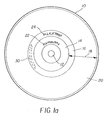
- a second session or written session 16 has been written by a content supplier or other authorized party prior to distribution.
- a content supplier is defined as a person or entity engaged in the production, sale, resale, or distribution of information content (for example, audio, video, text, data, and so forth) who wishes to use authorizing hybrid optical disc 10 to make access to said content available only to authorized end users.
- the content supplier maintains the information content in its own databases and provides access to information to end-users via a network (for example, the Internet).
- Written session 16 can be a third or later session if authorizing hybrid optical disc 10 already includes more than one session.
- Written session 16 includes a unique identification number or unique ID, also known as user-specific encrypted information 24 that is written in one or more known absolute sector addresses in an encrypted manner.
- User-specific encrypted information 24 serves to make each authorizing hybrid optical disc 10 unique for a specific user by virtue of the fact that each user-specific encrypted information 24 written to the authorizing hybrid optical disc 10 is a unique combination of binary digits.
- User-specific encrypted information 24 is also designed to be combined with preformed identification signature 22 to form a user-personalized secure signature.
- written session 16 can include other programs or information.
- authorizing hybrid optical disc 10 can further include an encrypted client application package 30, which includes a client application to verify the authenticity of authorizing hybrid optical disc 10 in a secure way.
- Authorizing hybrid optical disc 10 can also include further writeable area 20, which is the as-yet-unwritten part of RAM portion 18.
- FIG. 1b shows a substitution scheme in which the symbols of unique identification 32 are replaced, on an individual basis or in blocks, with other symbols or groups of symbols 34.
- FIG. 1c shows a simple hiding scheme in which unique identification 32 is hidden among a longer series of symbols 36. Its position and length must be known to effect decryption.
- FIG. 1d shows a more complex hiding scheme in which the symbols of unique identification 32 are scrambled, either individually or in groups, and hidden among a larger series of symbols 38.
- This invention can use one or more of these or other schemes to write user-specific encrypted information 24 in an encrypted manner to RAM portion 18 of authorizing hybrid optical disc 10.
- Preformed identification signature 22 and user-specific encrypted information 24 are concatenated to provide user-personalized secure signature 40.
- User-personalized secure signature 40 can be an electronic "key" to access information. It can further include payment authorizing information (for example, the user's credit or debit card number in an encrypted form) that allows the user to transact business with a content supplier.
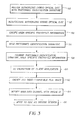
- FIG. 3 we see a block diagram of one method for making the authorizing hybrid optical disc 10 to be used in this invention.
- a hybrid optical disc 10 is mastered with preformed identification signature 22 in step 50, and then used to manufacture a set of authorizing hybrid optical discs 10 with the same preformed identification signature 22 in step 52. All succeeding information transfers to the authorizing hybrid optical disc 10 are by standard CD writer techniques.
- user-specific encrypted information 24 is generated for an individual authorizing hybrid optical disc 10.
- Preformed identification signature 22 is read from the authorizing hybrid optical disc 10 (step 56) and concatenated with user-specific encrypted information 24 to form user-personalized secure signature 40, which also serves as the encryption key (step 58).
- User-personalized secure signature 40 is used to uniquely encrypt the client application 110 in step 60.
- Encrypted client application 78 is used to create an ISO 9660-compatible file image in step 62.
- the main data channel of the session is modified with the user-specific encrypted information 24 (step 64) and the entire package is written to authorizing hybrid optical disc 10 as written session 16 in RAM portion 18 (step 66).
- Authorizing hybrid optical discs 10 can then be distributed in any manner (for example, mailed, distributed through stores, and so forth.) The method of distribution can be related to the final use. Some examples will help illuminate this. For example, a magazine wishing to give its subscribers access to a special webcast on the Internet can distribute an authorizing hybrid optical disc 10 with each mailed subscription copy. An educational facility that includes online educational content can distribute such a authorizing hybrid optical disc 10 to each student at registration. A corporation that needs to provide access to up-to-date information to representatives in the field can post the information on a private site and distribute the "keys" (authorizing hybrid optical discs 10) to the representatives via internal distribution channels. A for-profit provider of access to special events (a pay-for-view type of model) can sell authorizing hybrid optical discs 10 via distributors and media sales outlets.
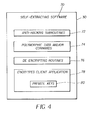
- Encrypted client application package 30 is a single executable program with the same name on the authorizing hybrid optical disc 10 as the original executable program.
- Encrypted client application package 30 includes self-extracting software 70 which runs first. It further includes anti-hacking routines 72 to check for the presence of hacking software in memory when the program is run. Such hacking software can include reverse-engineering programs, disassemblers, or software designed to capture a secure data stream and replay it at a later time (sometimes called "spoofing").
- Encrypted client application package 30 can further include a section with polymorphic data and/or commands 74.
- Polymorphic code generally provides multiple paths which achieve the same results, but are constructed in such a way that a program follows a different path each time it executes. Polymorphic code is used to make the program more difficult to reverse-engineer.
- De-encrypting routines 76 are designed to use the data stored on authorizing hybrid optical disc 10 (specifically preformed identification signature 22 and user-specific encrypted information 24) to de-encrypt encrypted client application 78.
- Encrypted client application package 30 further includes a private keys area 80, which comprises a set of private encryption keys that are used to verify the authenticity and integrity of authorizing hybrid optical disc 10 in a secure manner by utilizing public key encryption.
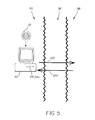
- FIG. 5 we see a schematic diagram of the use of this invention to make the initial authorizing connection over the Internet or other network 96.
- Personal computer 92 which includes optical disc reader 94 or optical disc reader/writer 94a and can be at the end-user's local site 90, is connected via the Internet or other network 96 to a remote location 98.
- an end-user places his/her authorizing hybrid optical disc 10 into optical disc reader 94 (or optical disc reader/writer 94a) in personal computer 92.
- Information is transferred between authorizing hybrid optical disc 10 and remote location 98 via a secure connection whose nature will become evident. This information transfer can be either initiated by client application 110 on authorizing hybrid optical disc 10 (optical-disc-push operation 102) or by remote location 98 (web-pull operation 104).
- FIG. 6 we see a schematic view of the way that user-personalized secure signature 40 is passed to remote location 98 in a secure manner in order to authenticate authorizing hybrid optical disc 10.
- Client application 110 runs on an end-user's computer system, which is physically remote from remote location 98, but is connected via the Internet or other network 96.
- Client application 110 which is originally encrypted on authorizing hybrid optical disc 10 as encrypted client application 78 within encrypted client application package 30, is designed to read preformed identification signature 22 and user-specific encrypted information 24 from authorizing hybrid optical disc 10 in data read step 116, and combine them into user-personalized secure signature 40.
- Remote location 98 sends a key request 112 to client application 110 for user-personalized secure signature 40. Included in key request 112 is a message to use one of a plurality of keys from private keys area 80 when answering the request. Client application 110 returns user-personalized secure signature 40 to remote location 98 in signed message 114 that has been signed with the selected private key. Remote location 98 possesses the public key corresponding to the chosen private key, and can verify the authenticity of client application 110, and therefore of authorizing hybrid optical disc 10. If authorizing hybrid optical disc 10 is authentic and user-personalized secure signature 40 is a signature which allows access to the online information, access can be granted by remote location 98.
- Access allows the user to communicate with the content supplier, select information (for example, events, concerts, and so forth) to access, transact business, and to access the desired information. Accessing information is also known as downloading in the sense that the information must be transferred from remote location 98 to the user's location. However, the information is not stored at the user's location.
- FIG. 7 we see a schematic of the private keys available in private keys area 80, their corresponding public keys, and how they are used between remote location 98 and client application 110.
- Client application 110 has been provided with a private key series 120, which is stored in private keys area 80 of encrypted client application package 30.
- These private keys are capable of decrypting messages that have been encrypted with the corresponding public key, and they are also capable of signing messages in a secure way.
- private key 124 other private keys 126, 128, 130, 132 and 134 are also shown
- public key 136 other private keys 138, 140 and 142 are also shown.
- Public key 136 can check the authenticity of messages signed by private key 124.
- Remote location 98 includes a public key series 122 of public keys corresponding to the private keys in private key series 120.
- Public key series 122 can include the entire set of keys corresponding to private keys series 120, or can be a subset thereof. The latter arrangement allows certain keys to be maintained exclusively for one application or one vendor without modifying the client application. If the security of any key is compromised, that particular key can be removed from remote location 98, and the security breach is thereby closed.
- Remote location 98 randomly selects a public key "X" from public key series 122, making it selected public key 146.
- Remote location 98 sends key request 112 to client application 110 and indicates in key request 112 which key has been selected to be selected public key 146.
- Client application 110 selects the corresponding private key from private key series 120 to give the selected private key 144.
- the selected public key 146/selected private key 144 pair form public/private key channel 148.
- Client application 110 uses selected private key 144 to sign signed message 114 that is sent to remote location 98.
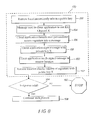
- FIG. 8 we see a block diagram showing more details of the secure method for transmitting user-personalized secure signature 40.
- remote location 98 randomly chooses selected public key 146 from public key series 122.
- remote location 98 sends key request 112 to client application 110 to use public/private key channel 148 (that is the random key it has selected).
- Client application 110 formats user-personalized secure signature 40 into a message (step 156) which it then signs with selected private key 144 (step 158).
- Client application 110 then sends signed message 114 to remote location 98 (step 160).
- Remote location 98 receives signed message 114 and uses selected public key 146 to verify signed message 114 (step 162). If signed message 114 is not valid (step 164), the process stops (step 166). If signed message 114 is valid, the process can continue (step 168).
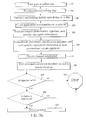
- FIG. 9a we see a method by which the user, who is the holder of the authorizing hybrid optical disc 10, can access online information that has been authorized.
- the content supplier's remote location 98 can be accessible via a channel (for example, a network, the Internet, and so forth) to which the user connects.
- the user places authorizing hybrid optical disc 10 into optical disc reader 94 or optical disc reader/writer 94a in step 176.
- Authorized hybrid optical disc 10 can be encoded with the address of remote location 98 in the form of a link that connects the user to remote location 98, either automatically or by the user clicking on a link (step 178). This removes the possibility of user error in typing a network address.
- client application 110 autolaunches or is launched by the website or the authorizing hybrid optical disc 10.
- Client application 110 reads preformed identification signature 22 and user-specific encrypted information 24 (step 182) and concatenates them into user-personalized secure signature 40, which also serves as the decryption key (step 184).
- a secure channel is established between client application 110 and remote location 98 (step 170, elaborated in greater detail in FIG. 8) and user-personalized secure signature 40 is provided to remote location 98 in step 186.
- step 164 if remote location 98 determines that user-personalized secure signature 40 is invalid (for example, a counterfeit disc or a pirated user-personalized secure signature), or if it is missing, the process stops (step 166).
- remote location 98 checks if user-personalized secure signature 40 is authorized to access the information in step 188. If user-personalized secure signature 40 is not authorized to access the information (for example, the user is attempting to access this month's webcast with the authorizing hybrid optical disc for last month's webcast), the process stops (step 166). If the signature is authorized to access the information, access is granted in step 190.
- the content supplier's remote location 98 can be accessible via a channel (for example, a network, the Internet, and so forth) to which the user connects.
- the user connects to the Internet or another network and goes to the appropriate website.
- the user can type in the address (for example, an Internet URL) of the content supplier.
- the website requests that the user insert the authorizing hybrid optical disc 10.
- the user places authorizing hybrid optical disc 10 into optical disc reader 94 or optical disc reader/writer 94a in step 176.
- client application 110 autolaunches or is launched by remote location 98 or authorizing hybrid optical disc 10.
- Client application 110 reads preformed identification signature 22 and user-specific encrypted information 24 (step 182) and concatenates them into user-personalized secure signature 40, which also serves as the decryption key (step 184).
- a secure channel is established between client application 110 and remote location 98 (step 170, elaborated in greater detail in FIG. 8) and user-personalized secure signature 40 is provided to remote location 98 in step 186.
- step 164 if remote location 98 determines that user-personalized secure signature 40 is invalid (for example, a counterfeit disc or a pirated user-personalized secure signature), or if it is missing, the process stops (step 166). If user-personalized secure signature 40 is valid, remote location 98 then checks if user-personalized secure signature 40 is authorized to access the information in step 188. If user-personalized secure signature 40 is not authorized to access the information (for example, the user is attempting to access this month's webcast with the authorizing hybrid optical disc for last month's webcast), the process stops (step 166). If user-personalized secure signature 40 is authorized to access the information, access is granted in step 190.
- This invention allows a high degree of control over remote access to research, private text and pictures, messages, and much more. This invention and its degree of control over remote access can be further illustrated with some examples.
- Example 1 A fashion magazine, as part of its ongoing effort to encourage its readers to subscribe, wishes to offer its subscribers access to a special "runway" fashion show that will be available to be viewed on the Internet at remote location 98.
- the magazine can do this by including an authorizing hybrid optical disc 10 in subscribers' copies of an issue.
- authorizing hybrid optical disc 10 includes preformed identification signature 22 and user-specific encrypted information 24. These two IDs, and the above-described authentication procedure using client application 110, allow remote location 98 to verify that authorizing hybrid optical disc 10 is authentic (for example, not pirated) and authorizing (for example, a correct key for this show). This allows the subscriber to connect to and view the fashion show.
- User-specific encrypted information 24 can be the same for each authorizing hybrid optical disc 10.
- the key advantage is that the combination of preformed identification 22 and user-specific encrypted information 24 makes the authorizing hybrid optical disc 10 very difficult to duplicate and easy to verify the authenticity.
- the magazine thus can restrict numerous non-authorized viewers from accessing the show, if that is the desire. Once the authorizing hybrid optical disc 10s are distributed, the magazine can also use them for future promotions, special events, and so forth.
- Example 2 An educational facility wishes to provide its students with access to online information at the facility's remote location 98. This information can include supplemental course information, student guides, access to the student's records, and even the ability to take exams online.
- the facility provides each student with an authorizing hybrid optical disc 10 that includes preformed identification signature 22 and user-specific encrypted information 24. User-specific encrypted information 24 is unique for each student.
- the authorizing hybrid optical disc 10 is keyed to a particular student, the student can be granted access to his/her academic records (but not to others'), and to supplemental information for the courses registered (but be excluded from others they are not registered for).
- Advantages include the ability to allow students easy access to their own records, but not be allowed to view other's information.
- Another advantage is the ability to make materials available to registered students but not to others. Thus, the facility can be assured of staying within the educational "fair-use" area of copyright law.
- Example 3 A company wishes to make new sales information available immediately to its field representatives and through them to its customers.
- the company provides remote location 98 that requires authentication for viewing the sales information.
- the company gives each of its representatives an authorizing hybrid optical disc 10 that includes preformed identification signature 22 and user-specific encrypted information 24.
- User-specific encrypted information 24 is unique for each representative.
- the multiple layers of authentication and piracy checking mean that an unscrupulous customer cannot make a pirated copy of authorizing hybrid optical disc 10 during the visit, nor use other methods to obtain the information and later emulate authorizing hybrid optical disc 10. Because the authorizing hybrid optical disc 10 is keyed to a particular representative, access can be turned off for a lost authorizing hybrid optical disc 10 without affecting the other representatives in the field. Advantages are that a company representative can show new and even potentially restricted information (for example, new product introductions for the coming months) over a network connection while retaining control over who can view that information.
- Example 4 A company which promotes popular events (for example, concerts, sporting events) wishes to make an event available to paying viewers in many locations. It does this by providing remote location 98 that requires authentication for viewing the event.
- the promoting company creates authorizing hybrid optical discs 10 that include preformed identification signature 22 and user-specific encrypted information 24.
- User-specific encrypted information 24 can be unique for each authorizing hybrid optical disc 10 or can be the same.
- the promoting company then makes authorizing hybrid optical discs 10 available for sale to the public through chosen retail outlets or as a cross-promotion with another entity (for example, an online music store). This allows a customer to buy or otherwise obtain an authorizing hybrid optical disc 10 and to connect to and view the event.
- the multiple layers of authentication and piracy checking mean that unscrupulous customers are discouraged from making pirated copies of authorizing hybrid optical disc 10.
- Making all copies of authorizing hybrid optical disc 10 with the same user-specific encrypted information 24 would lower the production cost, while making each authorizing hybrid optical disc 10 unique would give enhanced anti-piracy techniques. For example, if a pirate manages to copy a disc, remote location 98 can shut that off upon realizing that more than one customer is gaining access with the same user-personalized secure signature 40.
- each disc unique Another advantage of making each disc unique is that the user can use it to access future events.
- the user does this by making payment for the additional access via any normal means of payment over a network (for example, credit card payment over the Internet).
- the user can transfer a payment number (for example, a debit or credit card number) which authorizes a predetermined payment amount to the content supplier from the user's bank or other commercial institution.
- the promoting company then gives the user access to one or more events or content selections that the user has selected.
- the same authorizing hybrid optical disc 10 serves as the user's "key" to access the event.
- Example 5 A bank wishes to give customers convenient access to their banking information. However, the bank must be very careful that no one else can get access to that customer's information, nor that particular customer get access to any other customer's information.
- the bank provides remote location 98 that requires authentication for viewing the customer information.
- the bank provides its customers with an authorizing hybrid optical disc 10 that includes preformed identification signature 22 and user-specific encrypted information 24. User-specific encrypted information 24 is unique for each customer.
- the multiple layers of authentication and piracy checking mean that someone cannot easily make a pirated copy of authorizing hybrid optical disc 10, nor easily use other methods to obtain the information and emulate authorizing hybrid optical disc 10. Because the authorizing hybrid optical disc 10 is keyed to a particular customer, access can easily be turned off at remote location 98 for a lost authorizing hybrid optical disc 10 or a closed account. Additional security measures of the "what you know" type can be built in, such as the use of a PIN or user-selected personal information to allow authorizing hybrid optical disc 10 to access remote location 98.
- Example 6 A hospital wishes to make patient in-hospital records available to the primary care physicians of those patients.
- the hospital provides remote location 98 that requires authentication for viewing the patient information.
- the hospital gives each doctor an authorizing hybrid optical disc 10 that includes preformed identification signature 22 and user-specific encrypted information 24.
- User-specific encrypted information 24 is unique for each doctor.
- the multiple layers of authentication and piracy checking mean that someone cannot easily make a pirated copy of authorizing hybrid optical disc 10, nor use other methods to obtain the access information and emulate authorizing hybrid optical disc 10. Because the authorizing hybrid optical disc 10 is keyed to a particular doctor, access can be turned off for a lost authorizing hybrid optical disc 10 without affecting other doctors.
- Example 7 A financial services company wishes to make additional services available to customers who have joined a "preferred services" group. These services can be for example, additional access to personal financial information, special analysis of important financial sectors of the economy and what it means to the individual investor, research that has been done by the financial services company, and so forth. The company must be very careful that no one else can get access to that customer's information, nor that particular customer get access to any other customer's information.
- the financial services company provides remote location 98 that requires authentication for viewing the customer information.
- the company provides its preferred customers with an authorizing hybrid optical disc 10 that includes preformed identification signature 22 and user-specific encrypted information 24.
- User-specific encrypted information 24 is unique for each customer and can include information (for exampl.e, the customer's name) that makes the use of authorizing hybrid optical disc 10 a personalized experience for the customer.
- the two IDs, and the above-described authentication procedure using client application 110, allow remote location 98 to verify that authorizing hybrid optical disc 10 is authentic (for example, not pirated) and authorizing (for example, a key for a certain customer). This allows the customer to connect to and view personal information and other added services, but not to access information belonging to anyone else.
- the multiple layers of authentication and piracy checking mean that someone cannot easily make a pirated copy of authorizing hybrid optical disc 10, nor easily use other methods to obtain the information and emulate authorizing hybrid optical disc 10.
- the authorizing hybrid optical disc 10 is keyed to a particular customer, access can easily be turned off at remote location 98 for a lost authorizing hybrid optical disc 10 or a closed account. Additional security measures of the "what you know" type can be built in, such as the use of a PIN or user-selected personal information to allow authorizing hybrid optical disc 10 to access remote location 98.
- Example 8 A map generation service wishes to provide maps that customers worldwide can request over the Internet. It does this by providing remote location 98 that requires authentication for ordering the map.
- the service creates authorizing hybrid optical discs 10 that include preformed identification signature 22 and user-specific encrypted information 24. User-specific encrypted information 24 is unique for each authorizing hybrid optical disc 10. These two IDs, and the above-described authentication procedure using client application 110, allow remote location 98 to verify that authorizing hybrid optical disc 10 is authentic (for example, not pirated) and authorizing (for example, a key for accessing the map-generation service).
- the service then makes authorizing hybrid optical discs 10 available for sale to the public, either through chosen retail outlets or some other way, such as ordering over the Internet.
- the multiple layers of authentication and piracy checking mean that unscrupulous customers are discouraged from making pirated copies of authorizing hybrid optical disc 10.
- Making each authorizing hybrid optical disc 10 unique allows the service to keep track of how many maps were paid for and how many have been generated to date.
Landscapes
- Engineering & Computer Science (AREA)
- Computer Security & Cryptography (AREA)
- Business, Economics & Management (AREA)
- Theoretical Computer Science (AREA)
- General Physics & Mathematics (AREA)
- Signal Processing (AREA)
- Accounting & Taxation (AREA)
- Physics & Mathematics (AREA)
- Finance (AREA)
- Computer Hardware Design (AREA)
- Strategic Management (AREA)
- Databases & Information Systems (AREA)
- Health & Medical Sciences (AREA)
- Bioethics (AREA)
- General Health & Medical Sciences (AREA)
- General Business, Economics & Management (AREA)
- Software Systems (AREA)
- General Engineering & Computer Science (AREA)
- Signal Processing For Digital Recording And Reproducing (AREA)
- Storage Device Security (AREA)
- Optical Record Carriers And Manufacture Thereof (AREA)
- Optical Recording Or Reproduction (AREA)
- Management, Administration, Business Operations System, And Electronic Commerce (AREA)
Abstract
Description
the content supplier from the user's bank or other commercial institution. The promoting company then gives the user access to one or more events or content selections that the user has selected. For each access, the same authorizing hybrid
Claims (7)
- A method of transferring information from a content supplier from one or more databases, such information including program(s), audio, still, data files, or video, or combinations thereof to a remote location that uses an authorizing hybrid optical disc that permits the use of such transferred information, comprising the steps of:(a) providing an authorizing hybrid optical disc having a ROM portion and a RAM portion;(b) providing the ROM portion to include a preformed identification signature which is impressed into the ROM portion of the disc and is arranged to be difficult for a pirate to copy;(c) providing the RAM portion which includes user-specific encrypted information which personalizes the optical disc for that specific user and in combination with the ROM preformed identification signature provides a user-personalized secure signature;(d) a content supplier authenticating a user using the user-personalized secure signature so as to permit a user to communicate over a network with the content supplier and the user selecting information desired to be downloaded; and(e) downloading the selected information to the user's memory location for use by the user.
- The method of claim 1 further including permitting an authenticated user to communicate with the content supplier to transact business with the content supplier.
- The method of claim 1 wherein a channel is used to communicate with the remote location via a network and wherein the hybrid disc is encoded with the address of the remote location.
- The method of claim 3 wherein the channel is the Internet.
- The method of claim 1 wherein the user-personalized secure signature includes payment authorizing information.
- The method of claim 1 further including the step of a user making payment via the network for the transfer of the selected information.
- The method of claim 6 wherein payment is provided by a user by transferring a payment number which can be used for transferring a predetermined payment amount from a commercial institution that can be for an amount of access to be selected by the holder of the hybrid optical disc.
Applications Claiming Priority (2)
| Application Number | Priority Date | Filing Date | Title |
|---|---|---|---|
| US878532 | 1986-06-25 | ||
| US09/878,532 US20020188566A1 (en) | 2001-06-11 | 2001-06-11 | Access to electronic content over a network using a hybrid optical disc for authentication |
Publications (2)
| Publication Number | Publication Date |
|---|---|
| EP1267243A2 true EP1267243A2 (en) | 2002-12-18 |
| EP1267243A3 EP1267243A3 (en) | 2008-01-23 |
Family
ID=25372215
Family Applications (1)
| Application Number | Title | Priority Date | Filing Date |
|---|---|---|---|
| EP02077066A Withdrawn EP1267243A3 (en) | 2001-06-11 | 2002-05-27 | Access to electronic content over a network using a hybrid optical disc for authentication |
Country Status (5)
| Country | Link |
|---|---|
| US (1) | US20020188566A1 (en) |
| EP (1) | EP1267243A3 (en) |
| JP (1) | JP2003100013A (en) |
| CN (1) | CN1391376A (en) |
| TW (1) | TWI227446B (en) |
Cited By (3)
| Publication number | Priority date | Publication date | Assignee | Title |
|---|---|---|---|---|
| WO2006024992A3 (en) * | 2004-08-30 | 2006-05-11 | Koninkl Philips Electronics Nv | Rendering pre-recorded and additional content |
| EP1881672A1 (en) * | 2006-05-03 | 2008-01-23 | Medinbiz Co., Ltd. | Ultrasonic moving-picture real-time service system and method and recording medium having embodied thereon computer program for performing method |
| CN100489990C (en) * | 2003-11-12 | 2009-05-20 | 三星电子株式会社 | Method and apparatus for restricting use of storage medium using user key |
Families Citing this family (26)
| Publication number | Priority date | Publication date | Assignee | Title |
|---|---|---|---|---|
| JP4604422B2 (en) * | 2001-07-31 | 2011-01-05 | ソニー株式会社 | COMMUNICATION SYSTEM, COMMUNICATION DEVICE, AND COMMUNICATION METHOD |
| US6952697B1 (en) | 2002-06-21 | 2005-10-04 | Trust Licensing, Llc | Media validation system |
| CN1315324C (en) * | 2003-03-05 | 2007-05-09 | 华为技术有限公司 | Safe access method and device for digital broadcast television network |
| KR100985784B1 (en) * | 2003-05-02 | 2010-10-06 | 엘지전자 주식회사 | Authentication method of interactive optical disc |
| CN1816865B (en) | 2003-05-27 | 2010-05-12 | Lg电子株式会社 | Recording medium, method and apparatus for recording and reproducing |
| US20050018574A1 (en) * | 2003-07-25 | 2005-01-27 | Jenkins Jens C. | Hybrid optical storage media and methods of use |
| KR20050064624A (en) * | 2003-12-24 | 2005-06-29 | 삼성전자주식회사 | Apparatus for recording and playing storage medium and the method thereof |
| JP4784131B2 (en) * | 2005-04-11 | 2011-10-05 | ソニー株式会社 | Information processing apparatus, information processing method, and computer program |
| CN100449496C (en) * | 2005-09-08 | 2009-01-07 | 佳能株式会社 | Information processing device, information processing method |
| US7899662B2 (en) | 2005-10-12 | 2011-03-01 | Storage Appliance Corporation | Data backup system including a data protection component |
| US7844445B2 (en) | 2005-10-12 | 2010-11-30 | Storage Appliance Corporation | Automatic connection to an online service provider from a backup system |
| US7813913B2 (en) | 2005-10-12 | 2010-10-12 | Storage Appliance Corporation | Emulation component for data backup applications |
| US7818160B2 (en) * | 2005-10-12 | 2010-10-19 | Storage Appliance Corporation | Data backup devices and methods for backing up data |
| US7702830B2 (en) * | 2005-10-12 | 2010-04-20 | Storage Appliance Corporation | Methods for selectively copying data files to networked storage and devices for initiating the same |
| US7822595B2 (en) | 2005-10-12 | 2010-10-26 | Storage Appliance Corporation | Systems and methods for selectively copying embedded data files |
| US8195444B2 (en) | 2005-10-12 | 2012-06-05 | Storage Appliance Corporation | Systems and methods for automated diagnosis and repair of storage devices |
| US8788848B2 (en) * | 2007-03-22 | 2014-07-22 | Microsoft Corporation | Optical DNA |
| US8837721B2 (en) | 2007-03-22 | 2014-09-16 | Microsoft Corporation | Optical DNA based on non-deterministic errors |
| US8675466B2 (en) * | 2008-02-19 | 2014-03-18 | Thomson Licensing | Optical disc with pre-recorded and recordable regions and methods of forming the disc |
| US9135948B2 (en) * | 2009-07-03 | 2015-09-15 | Microsoft Technology Licensing, Llc | Optical medium with added descriptor to reduce counterfeiting |
| US20100214894A1 (en) * | 2009-02-20 | 2010-08-26 | Microsoft Corporation | Optical Medium with Added Descriptor to Reduce Counterfeiting |
| US9263085B2 (en) * | 2009-05-20 | 2016-02-16 | Sony Dadc Austria Ag | Method for copy protection |
| EP2523191A2 (en) | 2009-07-17 | 2012-11-14 | Sharp Kabushiki Kaisha | nfomation recording medium, recording/reproducing device, recording/reproducing device control method, recording/reproducing device control program, and computer readable recording medium |
| US8413137B2 (en) | 2010-02-04 | 2013-04-02 | Storage Appliance Corporation | Automated network backup peripheral device and method |
| US8792321B2 (en) | 2010-08-17 | 2014-07-29 | Thomson Licensing | Optical disc with pre-recorded and recordable regions and method of forming the disc |
| US9195810B2 (en) | 2010-12-28 | 2015-11-24 | Microsoft Technology Licensing, Llc | Identifying factorable code |
Family Cites Families (15)
| Publication number | Priority date | Publication date | Assignee | Title |
|---|---|---|---|---|
| JPH02293930A (en) * | 1989-05-08 | 1990-12-05 | Victor Co Of Japan Ltd | Preventing system for stealing of recording contents of recording medium |
| US5291554A (en) * | 1992-05-28 | 1994-03-01 | Tv Answer, Inc. | Shared-price custom video rentals via interactive TV |
| US6298441B1 (en) * | 1994-03-10 | 2001-10-02 | News Datacom Ltd. | Secure document access system |
| US5822291A (en) * | 1995-03-23 | 1998-10-13 | Zoom Television, Inc. | Mass storage element and drive unit therefor |
| US5671276A (en) * | 1995-07-21 | 1997-09-23 | General Instrument Corporation Of Delaware | Method and apparatus for impulse purchasing of packaged information services |
| DE69614823T2 (en) * | 1995-10-09 | 2002-04-11 | Matsushita Electric Industrial Co., Ltd. | RECORDING DEVICE FOR OPTICAL DISKS |
| US6055314A (en) * | 1996-03-22 | 2000-04-25 | Microsoft Corporation | System and method for secure purchase and delivery of video content programs |
| US5805699A (en) * | 1996-05-20 | 1998-09-08 | Fujitsu Limited | Software copying system |
| TW401573B (en) * | 1997-01-10 | 2000-08-11 | Victor Company Of Japan | Methods, apparatuse, and systems for producing and writing cipher keys, reproducing information with a cipher key, and for permitting reproduction of information with a cipher key, and optical disc recorded with a cipher key |
| US6041411A (en) * | 1997-03-28 | 2000-03-21 | Wyatt; Stuart Alan | Method for defining and verifying user access rights to a computer information |
| US6385723B1 (en) * | 1997-05-15 | 2002-05-07 | Mondex International Limited | Key transformation unit for an IC card |
| US6105008A (en) * | 1997-10-16 | 2000-08-15 | Visa International Service Association | Internet loading system using smart card |
| US6044349A (en) * | 1998-06-19 | 2000-03-28 | Intel Corporation | Secure and convenient information storage and retrieval method and apparatus |
| US6226618B1 (en) * | 1998-08-13 | 2001-05-01 | International Business Machines Corporation | Electronic content delivery system |
| US7028011B1 (en) * | 1999-09-10 | 2006-04-11 | Eastman Kodak Company | Hybrid optical recording disc with copy protection |
-
2001
- 2001-06-11 US US09/878,532 patent/US20020188566A1/en not_active Abandoned
-
2002
- 2002-04-17 TW TW091107845A patent/TWI227446B/en not_active IP Right Cessation
- 2002-05-27 EP EP02077066A patent/EP1267243A3/en not_active Withdrawn
- 2002-06-05 JP JP2002164812A patent/JP2003100013A/en active Pending
- 2002-06-11 CN CN02122764A patent/CN1391376A/en active Pending
Cited By (3)
| Publication number | Priority date | Publication date | Assignee | Title |
|---|---|---|---|---|
| CN100489990C (en) * | 2003-11-12 | 2009-05-20 | 三星电子株式会社 | Method and apparatus for restricting use of storage medium using user key |
| WO2006024992A3 (en) * | 2004-08-30 | 2006-05-11 | Koninkl Philips Electronics Nv | Rendering pre-recorded and additional content |
| EP1881672A1 (en) * | 2006-05-03 | 2008-01-23 | Medinbiz Co., Ltd. | Ultrasonic moving-picture real-time service system and method and recording medium having embodied thereon computer program for performing method |
Also Published As
| Publication number | Publication date |
|---|---|
| JP2003100013A (en) | 2003-04-04 |
| EP1267243A3 (en) | 2008-01-23 |
| US20020188566A1 (en) | 2002-12-12 |
| CN1391376A (en) | 2003-01-15 |
| TWI227446B (en) | 2005-02-01 |
Similar Documents
| Publication | Publication Date | Title |
|---|---|---|
| EP1267243A2 (en) | Access to electronic content over a network using a hybrid optical disc for authentication | |
| EP1267244A2 (en) | Delivery of electronic content over a network using a hybrid optical disk for authentication | |
| US5771291A (en) | User identification and authentication system using ultra long identification keys and ultra large databases of identification keys for secure remote terminal access to a host computer | |
| US9934408B2 (en) | Secure personal content server | |
| US5835595A (en) | Method and apparatus for crytographically protecting data | |
| US7725404B2 (en) | Secure electronic commerce using mutating identifiers | |
| US7765604B2 (en) | Information processing method, information processing apparatus and recording medium | |
| US7539307B2 (en) | System, method, and service for delivering enhanced multimedia content on physical media | |
| US6367019B1 (en) | Copy security for portable music players | |
| CN100524330C (en) | System and method for local shared multimedia content subscription | |
| JP2006504176A (en) | Method and apparatus for permitting content operation | |
| US20050027991A1 (en) | System and method for digital rights management | |
| US8121952B2 (en) | System, method, and service for delivering multimedia content by means of a permission to decrypt titles on a physical media | |
| JP2007124717A (en) | Digital content unauthorized copy prevention system | |
| US20030172273A1 (en) | Method for controlling the distribution of data | |
| JP2003298565A (en) | Content distribution system | |
| JPH11250571A (en) | Information distribution device, terminal device, and information distribution system | |
| CN101645289B (en) | Method for securely distributing video compact disks | |
| Burström et al. | Digital Rights Management, Evaluation of existing systems. |
Legal Events
| Date | Code | Title | Description |
|---|---|---|---|
| PUAI | Public reference made under article 153(3) epc to a published international application that has entered the european phase |
Free format text: ORIGINAL CODE: 0009012 |
|
| AK | Designated contracting states |
Kind code of ref document: A2 Designated state(s): AT BE CH CY DE DK ES FI FR GB GR IE IT LI LU MC NL PT SE TR |
|
| AX | Request for extension of the european patent |
Free format text: AL;LT;LV;MK;RO;SI |
|
| PUAL | Search report despatched |
Free format text: ORIGINAL CODE: 0009013 |
|
| AK | Designated contracting states |
Kind code of ref document: A3 Designated state(s): AT BE CH CY DE DK ES FI FR GB GR IE IT LI LU MC NL PT SE TR |
|
| AX | Request for extension of the european patent |
Extension state: AL LT LV MK RO SI |
|
| AKX | Designation fees paid | ||
| REG | Reference to a national code |
Ref country code: DE Ref legal event code: 8566 |
|
| STAA | Information on the status of an ep patent application or granted ep patent |
Free format text: STATUS: THE APPLICATION IS DEEMED TO BE WITHDRAWN |
|
| 18D | Application deemed to be withdrawn |
Effective date: 20080724 |