EP1265810B1 - Hydrogen getter composition - Google Patents
Hydrogen getter composition Download PDFInfo
- Publication number
- EP1265810B1 EP1265810B1 EP01917451A EP01917451A EP1265810B1 EP 1265810 B1 EP1265810 B1 EP 1265810B1 EP 01917451 A EP01917451 A EP 01917451A EP 01917451 A EP01917451 A EP 01917451A EP 1265810 B1 EP1265810 B1 EP 1265810B1
- Authority
- EP
- European Patent Office
- Prior art keywords
- hydrogen
- composition according
- getter composition
- hydrogen getter
- general formula
- Prior art date
- Legal status (The legal status is an assumption and is not a legal conclusion. Google has not performed a legal analysis and makes no representation as to the accuracy of the status listed.)
- Expired - Lifetime
Links
- 0 *c1nc(*)nc(*)n1 Chemical compound *c1nc(*)nc(*)n1 0.000 description 2
- WMGOVBNUWLOAKL-AUCPOXKISA-N C(/C=C/c1ccccc1)OC(NC(OC/C=C/c1ccccc1)=N1)N=C1OC/C=C/c1ccccc1 Chemical compound C(/C=C/c1ccccc1)OC(NC(OC/C=C/c1ccccc1)=N1)N=C1OC/C=C/c1ccccc1 WMGOVBNUWLOAKL-AUCPOXKISA-N 0.000 description 1
Images

Classifications
-
- C—CHEMISTRY; METALLURGY
- C01—INORGANIC CHEMISTRY
- C01B—NON-METALLIC ELEMENTS; COMPOUNDS THEREOF; METALLOIDS OR COMPOUNDS THEREOF NOT COVERED BY SUBCLASS C01C
- C01B3/00—Hydrogen; Gaseous mixtures containing hydrogen; Separation of hydrogen from mixtures containing it; Purification of hydrogen; Reversible storage of hydrogen
- C01B3/0005—Reversible storage of hydrogen, e.g. by hydrogen getters or electrodes
- C01B3/001—Reversible storage of hydrogen, e.g. by hydrogen getters or electrodes characterised by the uptaking media; Treatment thereof
- C01B3/0015—Organic compounds, e.g. liquid organic hydrogen carriers [LOHC] or metalorganic compounds; Solutions thereof
-
- C—CHEMISTRY; METALLURGY
- C01—INORGANIC CHEMISTRY
- C01B—NON-METALLIC ELEMENTS; COMPOUNDS THEREOF; METALLOIDS OR COMPOUNDS THEREOF NOT COVERED BY SUBCLASS C01C
- C01B3/00—Hydrogen; Gaseous mixtures containing hydrogen; Separation of hydrogen from mixtures containing it; Purification of hydrogen; Reversible storage of hydrogen
-
- C—CHEMISTRY; METALLURGY
- C07—ORGANIC CHEMISTRY
- C07D—HETEROCYCLIC COMPOUNDS
- C07D251/00—Heterocyclic compounds containing 1,3,5-triazine rings
- C07D251/02—Heterocyclic compounds containing 1,3,5-triazine rings not condensed with other rings
- C07D251/12—Heterocyclic compounds containing 1,3,5-triazine rings not condensed with other rings having three double bonds between ring members or between ring members and non-ring members
- C07D251/26—Heterocyclic compounds containing 1,3,5-triazine rings not condensed with other rings having three double bonds between ring members or between ring members and non-ring members with only hetero atoms directly attached to ring carbon atoms
- C07D251/30—Only oxygen atoms
- C07D251/34—Cyanuric or isocyanuric esters
-
- Y—GENERAL TAGGING OF NEW TECHNOLOGICAL DEVELOPMENTS; GENERAL TAGGING OF CROSS-SECTIONAL TECHNOLOGIES SPANNING OVER SEVERAL SECTIONS OF THE IPC; TECHNICAL SUBJECTS COVERED BY FORMER USPC CROSS-REFERENCE ART COLLECTIONS [XRACs] AND DIGESTS
- Y02—TECHNOLOGIES OR APPLICATIONS FOR MITIGATION OR ADAPTATION AGAINST CLIMATE CHANGE
- Y02E—REDUCTION OF GREENHOUSE GAS [GHG] EMISSIONS, RELATED TO ENERGY GENERATION, TRANSMISSION OR DISTRIBUTION
- Y02E60/00—Enabling technologies; Technologies with a potential or indirect contribution to GHG emissions mitigation
- Y02E60/30—Hydrogen technology
- Y02E60/32—Hydrogen storage
Definitions
- the present invention relates to a composition capable of hydrogen sorption in a closed container at low pressure, and particularly it relates to a composition formed of an unsaturated organic substance and a hydrogenation catalyst.
- Getter materials have been in use for a long time in all the industrial applications which require the vacuum maintenance in a closed system.
- a particularly important application uses the property of low thermal conductivity of the vacuum for realizing thermal insulation systems for any material or device. Said insulation is generally obtained by creating, outside the material or device to be insulated, a double wall with evacuated interspace.
- a first requirement relates to the specific rate of the reaction with hydrogen, which has to be high in order to avoid an accumulation of hydrogen in closed systems. Furthermore, it is necessary that said hydrogenation reaction be capable of occurring also at very low partial hydrogen pressures, in other words that the equilibrium of the reaction be shifted towards the products.
- Another requirement, important for ensuring that the unsaturated compound remains on the catalyst, is that said unsaturated compound have a low vapor pressure within the whole range of working pressure and temperature.
- Patent US 3,896,042 discloses a method for sorbing hydrogen from a closed system at low pressure and low temperature, which consists in placing inside said container a hydrogenation catalyst suitably supported on an inert substrate and coated with an unsaturated organic compound.
- the unsaturated organic compounds described in said patent are some arylacetylenes and particularly dimerized propargyl phenyl ether, dimerized benzylacetylene, dimerized phenylpropiolate, dimerized diphenyl propargyl ether and polydipropargyl ether ofbisphenol-A.
- Patent US 4,405,487 describes a combination of getter materials, which can be used for instance inside sealed containers for electronic and mechanical components, comprising a moisture getter and a hydrogen getter.
- the latter is formed of a hydrogenation catalyst and of a solid acetylenic hydrocarbon, comprising no nitrogen and sulphur heteroatoms.
- these elements can bring about the generation of undesired by-products by hydrolysis.
- the acetylenic hydrocarbon which is indicated as particularly advantageous also from the point of view of the hydrogenation rate and of the hydrogen gettering capacity per gram of compound is 1,4-diphenylbutadiyne.
- Patents US 5,624,598 and US 5,703,378 describe a composition for hydrogen sorption at low pressures and high temperatures, which can be used for instance for thermal insulation of the pipes for transportation of high temperature fluids.
- Said composition is formed of a suitable catalyst and of a hydrocarbon compound, or polymer, comprising triple bonds between carbon atoms and aromatic moieties selected among benzene, styrene, naphthalene, anthracene, diphenyl, fluorene, phenanthrene and pyrene.
- aromatic moieties has the purpose of raising the melting temperature of the unsaturated compounds and of their hydrogenated derivatives, so that they are solid at the working temperatures and pressures.
- compositions indicated in the last mentioned patents consists in that they are obtained as mixtures of many compounds having different molecular weight. This involves problems in the control and reproducibility of the physical and chemical characteristics of the product. In particular, as it is known, it is difficult to obtain a solution of organic compounds having a very high molecular weight; consequently, the steps for the production of the final getter which require passing through a solution, such as the mixing with the hydrogenation catalyst and the deposition on a porous substrate, are difficult.
- a second drawback of the above described composition for hydrogen sorption consists in the high production cost thereof.
- the synthesis of the unsaturated compounds or polymers is carried out by a condensation reaction starting from acetylenes and aromatic halides which requires the use of triphenylphosphine and palladium complexes as catalysts.
- the other catalyst, triphenylphosphine is a toxic product which should not be used in industrial processes in order to avoid safety and ecological problems.
- object of the present invention is providing a hydrogen getter composition free from said drawbacks. Said object is achieved by means of a hydrogen getter composition whose main features are specified in the first claim and other features are specified in the subsequent claims.
- a first advantage of the hydrogen getter composition according to the present invention consists in that it allows final hydrogen pressures lower than those typical for getters according to the state of the art to be reached with particularly high sorption rates.
- a second advantage of the hydrogen getter composition according to the present invention is that its production cost is very low.
- the synthesis of the unsaturated organic substances which are the components thereof is carried out from starting materials already available on the market and by means of processes which provide for high yields without using expensive catalysts and do not require subsequent separation steps.
- the hydrogen getter according to the present invention comprises an unsaturated organic substance and a hydrogenation catalyst.
- the unsaturated organic substance can be a compound having general formula A or A': wherein R 1 , R 2 and R 3 are hydrogen or hydrocarbon moieties optionally comprising one or more heteroatoms and wherein at least one among R 1 , R 2 and R 3 is selected in the group formed of alkenyl, alkynyl, arylalkenyl and arylalkynyl moieties, optionally comprising one or more heteroatoms.
- said unsaturated organic substance can be a dimer or a polymer of the compound of general formula A or A', as well as a copolymer wherein one of the structural units has the general formula A or A'.
- the three substituents R 1 , R 2 and R 3 can be all different from hydrogen and each one can have more than one unsaturated bond, so that the quantity of hydrogen irreversibly sorbed per gram of substance is maximized.
- the substituents R 1 , R 2 and R 3 comprise at least one heteroatom, selected among N, O and S and directly bound to the triazine ring.
- the presence of the heteroatoms does not affect the reactivity of the compound and the effectiveness of the hydrogenation catalyst.
- the three substituents R 1 , R 2 and R 3 are preferably the same.
- compositions of the invention are the two following organic compounds, both having general formula A:
- Compound a is a new compound whose name, according to the IUPAC nomenclature, is 2,4,6-tris-(E-3-phenyl-prop-2-enyl-1-oxy)-1,3,5-triazine; this compound has molecular weight of 477,56 g/mol and its melting point has proved to be 128-129°C.
- This compound may be obtained, for instance, by reacting one equivalent of 2,4,6-trichloro-1,3,5-triazine with three equivalents of an alkaline metal cinnamate; this latter may be formed in-situ in the reaction medium.
- Compound b has the IUPAC name 2,4,6-tris-(4-methoxy-but-2-ynyl-1-oxy)-1,3,5-triazine, and molecular weight of 375,38 g/mol.
- the catalyst forming part of the getter composition according to the present invention can be any catalyst known in the art for hydrogenation reactions, such as transition metals belonging to Group VIII of the periodic table or salts or complexes thereof.
- catalysts such as transition metals belonging to Group VIII of the periodic table or salts or complexes thereof.
- palladium supported on alumina or palladium on carbon are used.
- the getter composition can be prepared mixing or diluting the unsaturated organic substance in a suitable solvent and adding the hydrogenation catalyst to the obtained solution. After an accurate stirring of the mixture, the getter composition is obtained by evaporation of the solvent. In case of the use of palladium metal as the catalyst, this is preferably present in a quantity ranging between 0,1% and 10% by weight of the unsaturated organic substance.
- This example relates to the synthesis of compound a mentioned in the text.
- the reaction mixture is washed with water until pH is neutral.
- the solution is concentrated and the product is precipitated by addition of diisopropylether.
- the product is dried and analyzed by NMR and mass spectrometry, which prove it to be 2,4,6-tris-(E-3-phenyl-prop-2-enyl-1-oxy)-1,3,5-triazine.
- the compound has melting point of 128-129°C. 37 g of product are obtained, which are equal to a yield of about 78%.
- This example relates to the synthesis of compound b mentioned in the text.
- 1,8 g (0,075 mol) of NaH are suspended in 20 ml of tetrahydrofurane (THF) under inert atmosphere.
- a solution containing 6 g (0,06 mol) of 4-methoxy-but-2-yn-1-ol in 20 ml of THF is added dropwise to the suspension, allowing the reaction to proceed for 3 hours at room temperature under stirring. Then, to this solution is added by slow dripping a solution containing 3,5 g (0,019 mol) of 2,4,6-trichloro-s-triazine in 30 ml of THF allowing to react for one night.
- the solvent is evaporated and the residue is first washed with 30 ml of water, and then acidificated with a 10% HCl solution. Three subsequent extractions with CH 2 Cl 2 and evaporation of the solvent are carried out. 6 g of a deep yellow oil are obtained.
- the product is purified by chromatography on a silica column, using ethyl acetate as eluent. At the end 4,3 g of a yellow liquid are obtained, with a yield of 60%.
- the final compound is liquid, but it can be impregnated on palladium on carbon obtaining a composition suitable for the purpose of the invention, which has a null vapor pressure in the hydrogen sorption test.
- This example relates to the measure of the hydrogen sorption capacity of a composition according to the invention containing compound a.
- FIG. 1 the system diagrammatically shown in figure 1 is used, formed of a hydrogen reservoir 10, connected by means of a needle valve 11 to a chamber 12 having known volume, whose pressure is measured by means of a capacitive manometer 13; chamber 12 is connected by means of valve 14 to a pumping system (not shown in the figure). Furthermore, chamber 12 is connected, by means of a liquid nitrogen trap 15 and a valve 16, to measuring chamber 17; this latter chamber is connected in turn to a pumping system (not shown in the figure) by means of valve 18. Trap 15 has the purpose of blocking the passage of possible impurities from chamber 12 to chamber 17.
- 1 g of the mixture is introduced, in the powder form, in measuring chamber 17.
- Chamber 17 is evacuated to a pressure of 1,33 x 10 -3 mbar, then the chamber is isolated from the pumping by closing valve 18.
- valve 16 With valve 16 closed, valve 11 is opened until the pressure in the system has reached the value of 6,7 mbar. Now, valve 16 is opened and valve 11 is closed, while the pressure decrease in the system due to the sorption by the sample under analysis is measured.
- the pressure is decreased to one tenth of the initial value (0,67 mbar) the procedure for the hydrogen dosage is repeated. The same procedure is repeated until when, after the introduction of hydrogen in the measuring chamber, no sorption by the sample is detected.
- the pressure values as a function of the testing time are processed, thus obtaining sorption rate values (S) as a function of the sorbed hydrogen quantity (Q) by means of the following formulae:
- Q i is the quantity of hydrogen sorbed at time i
- S i volumetric sorption rate at time i
- P 0 initial pressure
- P i the pressure at time i
- V the total volume of the measuring system.
- the composition containing compound a sorbs a total quantity of about 67 (mbar x 1/g) of hydrogen, equivalent to about 133 (mbar x 1/g) if referred to compound a alone; the sorption rate varies from an initial value of about 5,3 x 10 -3 (mbar x 1/g x s) to a value of about 2,7 x 10 -5 (mbar x 1/g x s) when the sorption capacity of the composition is almost exhausted.
- test of example 4 is repeated on a sample of one gram of composition of the invention, obtained impregnating 0,5 g of compound b produced as described in example 3 on 0,5 g of 5% palladium on carbon.
- This composition shows a hydrogen sorption capacity of 186 (mbar x 1/g) if referred to compound b alone, with sorption speed equal to 2,7 x 10 -3 (mbar x 1/g x s) at the beginning of the test and 8 x 10 -6 (mbar x 1/g x s) at the end thereof.
Landscapes
- Chemical & Material Sciences (AREA)
- Organic Chemistry (AREA)
- Engineering & Computer Science (AREA)
- Combustion & Propulsion (AREA)
- Inorganic Chemistry (AREA)
- General Health & Medical Sciences (AREA)
- Health & Medical Sciences (AREA)
- Chemical Kinetics & Catalysis (AREA)
- Catalysts (AREA)
- Low-Molecular Organic Synthesis Reactions Using Catalysts (AREA)
- Laminated Bodies (AREA)
- Solid-Sorbent Or Filter-Aiding Compositions (AREA)
- Production Of Liquid Hydrocarbon Mixture For Refining Petroleum (AREA)
- Organic Low-Molecular-Weight Compounds And Preparation Thereof (AREA)
Abstract
Description
- The present invention relates to a composition capable of hydrogen sorption in a closed container at low pressure, and particularly it relates to a composition formed of an unsaturated organic substance and a hydrogenation catalyst.
- Getter materials have been in use for a long time in all the industrial applications which require the vacuum maintenance in a closed system. A particularly important application uses the property of low thermal conductivity of the vacuum for realizing thermal insulation systems for any material or device. Said insulation is generally obtained by creating, outside the material or device to be insulated, a double wall with evacuated interspace.
- Since hydrogen has, among gases, the largest thermal conductivity, it is particularly important to provide means for sorbing the traces of hydrogen which are still present in the evacuated interspaces so as to complete the achievement of vacuum. Furthermore, due to the small size of the hydrogen molecule, this gas outgases very easily from the walls of the evacuated containers and has to be continuously sorbed in order to maintain the thermal insulation property.
- It is known that the organic compounds comprising unsaturated bonds among carbon atoms react with hydrogen in the presence of a suitable catalyst being converted into the corresponding saturated compounds. By virtue of this reactivity, said compounds, combined with a suitable catalyst, can be advantageously used as hydrogen getters.
- Although in principle all compounds comprising a double or triple bond between two carbon atoms can sorb hydrogen, some fundamental requirements have to be satisfied for a compound to be industrially used. A first requirement relates to the specific rate of the reaction with hydrogen, which has to be high in order to avoid an accumulation of hydrogen in closed systems. Furthermore, it is necessary that said hydrogenation reaction be capable of occurring also at very low partial hydrogen pressures, in other words that the equilibrium of the reaction be shifted towards the products. Another requirement, important for ensuring that the unsaturated compound remains on the catalyst, is that said unsaturated compound have a low vapor pressure within the whole range of working pressure and temperature.
- Patent US 3,896,042 discloses a method for sorbing hydrogen from a closed system at low pressure and low temperature, which consists in placing inside said container a hydrogenation catalyst suitably supported on an inert substrate and coated with an unsaturated organic compound. The unsaturated organic compounds described in said patent are some arylacetylenes and particularly dimerized propargyl phenyl ether, dimerized benzylacetylene, dimerized phenylpropiolate, dimerized diphenyl propargyl ether and polydipropargyl ether ofbisphenol-A.
- Patent US 4,405,487 describes a combination of getter materials, which can be used for instance inside sealed containers for electronic and mechanical components, comprising a moisture getter and a hydrogen getter. The latter is formed of a hydrogenation catalyst and of a solid acetylenic hydrocarbon, comprising no nitrogen and sulphur heteroatoms. In fact, according to the patent teaching, these elements can bring about the generation of undesired by-products by hydrolysis. The acetylenic hydrocarbon which is indicated as particularly advantageous also from the point of view of the hydrogenation rate and of the hydrogen gettering capacity per gram of compound is 1,4-diphenylbutadiyne.
- Patents US 5,624,598 and US 5,703,378 describe a composition for hydrogen sorption at low pressures and high temperatures, which can be used for instance for thermal insulation of the pipes for transportation of high temperature fluids. Said composition is formed of a suitable catalyst and of a hydrocarbon compound, or polymer, comprising triple bonds between carbon atoms and aromatic moieties selected among benzene, styrene, naphthalene, anthracene, diphenyl, fluorene, phenanthrene and pyrene. The presence of aromatic moieties has the purpose of raising the melting temperature of the unsaturated compounds and of their hydrogenated derivatives, so that they are solid at the working temperatures and pressures.
- However, a first drawback of the compositions indicated in the last mentioned patents consists in that they are obtained as mixtures of many compounds having different molecular weight. This involves problems in the control and reproducibility of the physical and chemical characteristics of the product. In particular, as it is known, it is difficult to obtain a solution of organic compounds having a very high molecular weight; consequently, the steps for the production of the final getter which require passing through a solution, such as the mixing with the hydrogenation catalyst and the deposition on a porous substrate, are difficult.
- A second drawback of the above described composition for hydrogen sorption consists in the high production cost thereof. In facts, the synthesis of the unsaturated compounds or polymers is carried out by a condensation reaction starting from acetylenes and aromatic halides which requires the use of triphenylphosphine and palladium complexes as catalysts. At the end of the reaction, for economical reasons it is necessary to isolate the palladium complex, separating it from the reaction products so that it can be used again. Further, the other catalyst, triphenylphosphine, is a toxic product which should not be used in industrial processes in order to avoid safety and ecological problems.
- Therefore, object of the present invention is providing a hydrogen getter composition free from said drawbacks. Said object is achieved by means of a hydrogen getter composition whose main features are specified in the first claim and other features are specified in the subsequent claims.
- A first advantage of the hydrogen getter composition according to the present invention consists in that it allows final hydrogen pressures lower than those typical for getters according to the state of the art to be reached with particularly high sorption rates.
- A second advantage of the hydrogen getter composition according to the present invention is that its production cost is very low. In fact, the synthesis of the unsaturated organic substances which are the components thereof is carried out from starting materials already available on the market and by means of processes which provide for high yields without using expensive catalysts and do not require subsequent separation steps.
- These and other advantages of the hydrogen getter composition according to the present invention will appear to those skilled in the art from the following detailed description of some embodiments with reference to the accompanying drawings, wherein:
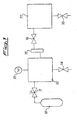
- figure 1 is a scheme representing the measuring system used for evaluating the hydrogen sorption properties of the compositions according to the invention; and
- figure 2 is a graph showing the variation of the hydrogen sorption rate as a function of the sorbed hydrogen quantity per gram of unsaturated organic substance a of the getter composition according to the present invention.
- The hydrogen getter according to the present invention comprises an unsaturated organic substance and a hydrogenation catalyst. The unsaturated organic substance can be a compound having general formula A or A':

- Further, said unsaturated organic substance can be a dimer or a polymer of the compound of general formula A or A', as well as a copolymer wherein one of the structural units has the general formula A or A'.
- The three substituents R1, R2 and R3 can be all different from hydrogen and each one can have more than one unsaturated bond, so that the quantity of hydrogen irreversibly sorbed per gram of substance is maximized.
- Furthermore, according to a particular embodiment of the present invention the substituents R1, R2 and R3 comprise at least one heteroatom, selected among N, O and S and directly bound to the triazine ring. As a matter of fact it has been found that, contrary to the teachings of patent US 4,405,487, in some cases the presence of the heteroatoms does not affect the reactivity of the compound and the effectiveness of the hydrogenation catalyst. Preferred R1, R2 and R3 substituents are represented by the general formulae R-(C=C)n-CH2-O- and R-(C=C)n-CH2-O-, wherein n ≥ 1 and R is any aliphatic or aromatic hydrocarbon moiety.
- In order to allow a simplified synthesis of the unsaturated organic substance according to the present invention, in the case of a compound having general formula A or A', the three substituents R1, R2 and R3 are preferably the same.
- The compounds of general formula A or A' can be synthesized starting from the corresponding trichlorotriazine according to the following general scheme:

- It is important to underline that the above described unsaturated organic substances can be used as the components of a hydrogen getter according to the present invention also in the liquid form, because they generally show good thermal resistance features. However, if the final application of the hydrogen getter involves particularly high working temperatures and solid unsaturated organic substances are required, very high melting points can be obtained by condensing two or more compounds having general formula A or A', so as to obtain dimers or polymers of said compounds. A further possibility consists in condensing two or more molecules of the compound having general formula A or A' with any hydrocarbon compound.
- Preferred for the use in the compositions of the invention are the two following organic compounds, both having general formula A:


- Compound a is a new compound whose name, according to the IUPAC nomenclature, is 2,4,6-tris-(E-3-phenyl-prop-2-enyl-1-oxy)-1,3,5-triazine; this compound has molecular weight of 477,56 g/mol and its melting point has proved to be 128-129°C. This compound may be obtained, for instance, by reacting one equivalent of 2,4,6-trichloro-1,3,5-triazine with three equivalents of an alkaline metal cinnamate; this latter may be formed in-situ in the reaction medium.
- Compound b has the IUPAC name 2,4,6-tris-(4-methoxy-but-2-ynyl-1-oxy)-1,3,5-triazine, and molecular weight of 375,38 g/mol.
- The catalyst forming part of the getter composition according to the present invention can be any catalyst known in the art for hydrogenation reactions, such as transition metals belonging to Group VIII of the periodic table or salts or complexes thereof. Preferably, palladium supported on alumina or palladium on carbon are used.
- Any known technique can be used for obtaining the getter composition according to the present invention. For example, it can be prepared mixing or diluting the unsaturated organic substance in a suitable solvent and adding the hydrogenation catalyst to the obtained solution. After an accurate stirring of the mixture, the getter composition is obtained by evaporation of the solvent. In case of the use of palladium metal as the catalyst, this is preferably present in a quantity ranging between 0,1% and 10% by weight of the unsaturated organic substance.
- In the following some examples relevant to the synthesis of organic compounds which can be advantageously used in the getter compositions of the invention, and to the measure of the hydrogen sorption properties of these compositions will be provided.
- This example relates to the synthesis of compound a mentioned in the text.
- 50 g (0,36 mol) of cinnamic alcohol are dissolved in 180 ml of dry toluene. 20 g (0,36 mol) of KOH are added to the solution, and the resulting mixture is kept under stirring for one hour at room temperature. During this phase, potassium cinnamate is obtained. Then, a solution prepared starting from 18 g (0,10 mol) of 2,4,6-trichloro-s-triazine in 150 ml of toluene is added, allowing to react at room temperature for further 90 hours under stirring.
- The reaction mixture is washed with water until pH is neutral. The solution is concentrated and the product is precipitated by addition of diisopropylether. The product is dried and analyzed by NMR and mass spectrometry, which prove it to be 2,4,6-tris-(E-3-phenyl-prop-2-enyl-1-oxy)-1,3,5-triazine. The compound has melting point of 128-129°C. 37 g of product are obtained, which are equal to a yield of about 78%.
- The synthesis described in example 1 is repeated, but in this case 50 g (0,36 mol) of K2CO3 are added to the initial mixture of cinnamic alcohol and KOH in toluene. 30 g of 2,4,6-tris-(E-phenyl-prop-2-enyl-1-oxy)-1,3,5-triazine are obtained, with a yield of about 64%.
- This example relates to the synthesis of compound b mentioned in the text.
- 1,8 g (0,075 mol) of NaH are suspended in 20 ml of tetrahydrofurane (THF) under inert atmosphere. A solution containing 6 g (0,06 mol) of 4-methoxy-but-2-yn-1-ol in 20 ml of THF is added dropwise to the suspension, allowing the reaction to proceed for 3 hours at room temperature under stirring. Then, to this solution is added by slow dripping a solution containing 3,5 g (0,019 mol) of 2,4,6-trichloro-s-triazine in 30 ml of THF allowing to react for one night. The solvent is evaporated and the residue is first washed with 30 ml of water, and then acidificated with a 10% HCl solution. Three subsequent extractions with CH2Cl2 and evaporation of the solvent are carried out. 6 g of a deep yellow oil are obtained. The product is purified by chromatography on a silica column, using ethyl acetate as eluent. At the end 4,3 g of a yellow liquid are obtained, with a yield of 60%. The final compound is liquid, but it can be impregnated on palladium on carbon obtaining a composition suitable for the purpose of the invention, which has a null vapor pressure in the hydrogen sorption test.
- This example relates to the measure of the hydrogen sorption capacity of a composition according to the invention containing compound a.
- For this measure the system diagrammatically shown in figure 1 is used, formed of a
hydrogen reservoir 10, connected by means of aneedle valve 11 to achamber 12 having known volume, whose pressure is measured by means of acapacitive manometer 13;chamber 12 is connected by means of valve 14 to a pumping system (not shown in the figure). Furthermore,chamber 12 is connected, by means of aliquid nitrogen trap 15 and avalve 16, to measuringchamber 17; this latter chamber is connected in turn to a pumping system (not shown in the figure) by means ofvalve 18.Trap 15 has the purpose of blocking the passage of possible impurities fromchamber 12 tochamber 17. - 10 g of compound a prepared as described in example 1 are dissolved in 50 ml of ethyl alcohol. 10 g of 5% palladium on carbon of the company Aldrich are added to the solution; this material consists in carbon powder having a high specific surface on which palladium in metal form has been deposited in a quantity of 5% by weight of the sum of carbon and Pd. The obtained solution is stirred for half an hour, and subsequently the solvent is eliminated by evaporation, thus obtaining a residue formed of a mixture of compound a and palladium on carbon.
- 1 g of the mixture is introduced, in the powder form, in measuring
chamber 17.Chamber 17 is evacuated to a pressure of 1,33 x 10⁻³ mbar, then the chamber is isolated from the pumping by closingvalve 18. Withvalve 16 closed,valve 11 is opened until the pressure in the system has reached the value of 6,7 mbar. Now,valve 16 is opened andvalve 11 is closed, while the pressure decrease in the system due to the sorption by the sample under analysis is measured. When the pressure is decreased to one tenth of the initial value (0,67 mbar) the procedure for the hydrogen dosage is repeated. The same procedure is repeated until when, after the introduction of hydrogen in the measuring chamber, no sorption by the sample is detected. The pressure values as a function of the testing time are processed, thus obtaining sorption rate values (S) as a function of the sorbed hydrogen quantity (Q) by means of the following formulae:

wherein Qi is the quantity of hydrogen sorbed at time i, Si the volumetric sorption rate at time i, P0 the initial pressure, Pi the pressure at time i, V the total volume of the measuring system. - Q and S are then normalized with respect to the weight of the getter sample. The results of the test are given in figure 2. As it can be seen from the figure, the composition containing compound a sorbs a total quantity of about 67 (mbar x 1/g) of hydrogen, equivalent to about 133 (mbar x 1/g) if referred to compound a alone; the sorption rate varies from an initial value of about 5,3 x 10⁻³ (mbar x 1/g x s) to a value of about 2,7 x 10⁻⁵ (mbar x 1/g x s) when the sorption capacity of the composition is almost exhausted.
- The test of example 4 is repeated on a sample of one gram of composition of the invention, obtained impregnating 0,5 g of compound b produced as described in example 3 on 0,5 g of 5% palladium on carbon. This composition shows a hydrogen sorption capacity of 186 (mbar x 1/g) if referred to compound b alone, with sorption speed equal to 2,7 x 10⁻³ (mbar x 1/g x s) at the beginning of the test and 8 x 10⁻⁶ (mbar x 1/g x s) at the end thereof.
- Possible variations and additions can be made by those which are skilled in the art to the hereby described and illustrated embodiment remaining within the scope of the invention itself.
Claims (10)
- A hydrogen getter composition comprising an unsaturated organic substance and a hydrogenation catalyst, characterized in that the unsaturated organic substance is a compound having general formula A or A', a dimer or polymer thereof, or a copolymer wherein one of the structural units has the general formula A or A':

- A hydrogen getter composition according to claim 1, characterized in that R1, R2 and R3 comprise at least one heteroatom selected in the group of N, O and S, which is directly bound to the triazine ring.
- A hydrogen getter composition according to claims 1 or 2, characterized in that the unsaturated organic substance has the general formula A or A' and that R1, R2 and R3 are the same.
- A hydrogen getter composition according to the preceding claim, characterized in that R1, R2 and R3 can be represented by the general formula R-(C=C)n-CH2-O-, wherein n ≥ 1 and R is any aliphatic or aromatic hydrocarbon moiety.
- A hydrogen getter composition according to claim 3, characterized in that R1, R2 and R3 can be represented by the general formula R-(C≡C)n-CH2-O-, wherein n ≥ 1 and R is any aliphatic or aromatic hydrocarbon moiety.
- A hydrogen getter composition according to one of the preceding claims, characterized in that the hydrogenation catalyst is selected among the metals of Group VIII of the periodic table, salts and complexes thereof.
- A hydrogen getter composition according to the preceding claim, characterized in that the hydrogenation catalyst is Pd supported on alumina or carbon.
- A hydrogen getter composition according to the preceding claim, characterized in that the quantity of palladium is between 0,1% and 10% by weight of the unsaturated organic substance.
- A hydrogen getter composition according to the general formula A of claim 1, wherein each of the R1 R2 R3 groups has the formulation:

- A process for the synthesis of the hydrogen getter composition according to claim 9, characterized in that 2,4,6-trichloro-1,3,5-triazine is reacted with three equivalents of an alkaline metal cinnamate.
Applications Claiming Priority (3)
| Application Number | Priority Date | Filing Date | Title |
|---|---|---|---|
| ITPN000529 | 2000-03-15 | ||
| IT2000MI000529A IT1318392B1 (en) | 2000-03-15 | 2000-03-15 | HYDROGEN GETTER COMPOSITION. |
| PCT/IT2001/000105 WO2001068516A1 (en) | 2000-03-15 | 2001-03-02 | Hydrogen getter composition |
Publications (3)
| Publication Number | Publication Date |
|---|---|
| EP1265810A1 EP1265810A1 (en) | 2002-12-18 |
| EP1265810B1 true EP1265810B1 (en) | 2006-11-22 |
| EP1265810B8 EP1265810B8 (en) | 2007-08-01 |
Family
ID=11444462
Family Applications (1)
| Application Number | Title | Priority Date | Filing Date |
|---|---|---|---|
| EP01917451A Expired - Lifetime EP1265810B8 (en) | 2000-03-15 | 2001-03-02 | Hydrogen getter composition |
Country Status (13)
| Country | Link |
|---|---|
| US (1) | US6645396B2 (en) |
| EP (1) | EP1265810B8 (en) |
| JP (1) | JP4704654B2 (en) |
| KR (1) | KR20030076219A (en) |
| CN (1) | CN1418171A (en) |
| AU (1) | AU4452701A (en) |
| CA (1) | CA2401259A1 (en) |
| DE (1) | DE60124677T2 (en) |
| ES (1) | ES2275665T3 (en) |
| IT (1) | IT1318392B1 (en) |
| RU (1) | RU2002127595A (en) |
| TW (1) | TW527349B (en) |
| WO (1) | WO2001068516A1 (en) |
Families Citing this family (11)
| Publication number | Priority date | Publication date | Assignee | Title |
|---|---|---|---|---|
| FR2859202B1 (en) | 2003-08-29 | 2005-10-14 | Commissariat Energie Atomique | HYDROGEN TRAP COMPOUND, METHOD OF MANUFACTURE AND USES |
| ITMI20050904A1 (en) * | 2005-05-17 | 2006-11-18 | Getters Spa | ADDITIVE FOR ELECTROLYTIC CONDENSERS |
| US20070146965A1 (en) * | 2005-11-22 | 2007-06-28 | Porter Mitchell | Ultracapacitor pressure control system |
| ITMI20060056A1 (en) * | 2006-01-16 | 2007-07-17 | Getters Spa | ELECTROLYTIC CONDENSER INCLUDING MEANS FOR THE ABSORPTION OF HARMFUL SUBSTANCES |
| US8715870B2 (en) * | 2006-05-11 | 2014-05-06 | Ford Motor Company | Gas reclaiming system and method |
| FR2909657B1 (en) | 2006-12-12 | 2009-03-06 | Commissariat Energie Atomique | HYDROGEN-RELATIVE MINERAL COMPOSITION, PROCESS FOR PREPARATION AND USES |
| DE102007024145B3 (en) * | 2007-05-24 | 2008-11-27 | Universität Heidelberg | Molecular hydrogen storage and hydrogen transfer reagents for hydrogenation reactions |
| CN102024575A (en) * | 2010-06-30 | 2011-04-20 | 南京双登科技发展研究院有限公司 | Flexible package super capacitor getter |
| JP6402102B2 (en) * | 2013-07-09 | 2018-10-10 | 学校法人早稲田大学 | Hydrogen carrier and hydrogen generation method |
| CN108675262B (en) * | 2018-05-07 | 2021-11-16 | 南京大学 | Method for preparing hydrogen by catalyzing formic acid |
| JP7093150B2 (en) * | 2018-12-06 | 2022-06-29 | 日本化薬株式会社 | Curable resin composition and its cured product |
Family Cites Families (9)
| Publication number | Priority date | Publication date | Assignee | Title |
|---|---|---|---|---|
| US3896042A (en) | 1974-02-15 | 1975-07-22 | Us Energy | Low temperature, low pressure hydrogen gettering |
| US4616014A (en) * | 1981-10-22 | 1986-10-07 | Fujisawa Pharmaceutical Co., Ltd. | Triazine derivatives, and pharmaceutical compositions comprising the same |
| US4405487A (en) | 1982-04-29 | 1983-09-20 | Harrah Larry A | Combination moisture and hydrogen getter |
| JPS646028A (en) * | 1987-06-30 | 1989-01-10 | Furukawa Electric Co Ltd | Production of molded article of low-toxic crosslinked ethylene-tetrafluoroethylene copolymer composition |
| US5980845A (en) * | 1994-08-24 | 1999-11-09 | Cherry; Doyle | Regeneration of hydrogen sulfide scavengers |
| US5624598A (en) * | 1995-04-18 | 1997-04-29 | Shepodd; Timothy J. | Materials for the scavanging of hydrogen at high temperatures |
| JPH09255787A (en) * | 1996-03-26 | 1997-09-30 | Chisso Corp | Use of polyphosphoric acid compound as hydrogen halide scavenger |
| US5837158A (en) * | 1996-09-23 | 1998-11-17 | Sandia Corporation | Polymer formulations for gettering hydrogen |
| WO1999063298A1 (en) * | 1998-06-03 | 1999-12-09 | Marconi Aerospace Defense Systems, Inc. | Hydrogen absorbing rubber |
-
2000
- 2000-03-15 IT IT2000MI000529A patent/IT1318392B1/en active
-
2001
- 2001-03-02 RU RU2002127595/04A patent/RU2002127595A/en unknown
- 2001-03-02 ES ES01917451T patent/ES2275665T3/en not_active Expired - Lifetime
- 2001-03-02 EP EP01917451A patent/EP1265810B8/en not_active Expired - Lifetime
- 2001-03-02 CN CN01806513A patent/CN1418171A/en active Pending
- 2001-03-02 WO PCT/IT2001/000105 patent/WO2001068516A1/en not_active Ceased
- 2001-03-02 CA CA002401259A patent/CA2401259A1/en not_active Abandoned
- 2001-03-02 DE DE60124677T patent/DE60124677T2/en not_active Expired - Lifetime
- 2001-03-02 KR KR1020027012031A patent/KR20030076219A/en not_active Withdrawn
- 2001-03-02 JP JP2001567623A patent/JP4704654B2/en not_active Expired - Fee Related
- 2001-03-02 AU AU44527/01A patent/AU4452701A/en not_active Abandoned
- 2001-05-08 TW TW090105178A patent/TW527349B/en not_active IP Right Cessation
-
2002
- 2002-09-16 US US10/244,906 patent/US6645396B2/en not_active Expired - Lifetime
Also Published As
| Publication number | Publication date |
|---|---|
| EP1265810B8 (en) | 2007-08-01 |
| TW527349B (en) | 2003-04-11 |
| US6645396B2 (en) | 2003-11-11 |
| CN1418171A (en) | 2003-05-14 |
| KR20030076219A (en) | 2003-09-26 |
| ITMI20000529A1 (en) | 2001-09-15 |
| JP2003527357A (en) | 2003-09-16 |
| JP4704654B2 (en) | 2011-06-15 |
| CA2401259A1 (en) | 2001-09-20 |
| US20030052304A1 (en) | 2003-03-20 |
| DE60124677T2 (en) | 2007-09-13 |
| DE60124677D1 (en) | 2007-01-04 |
| IT1318392B1 (en) | 2003-08-25 |
| RU2002127595A (en) | 2004-03-20 |
| EP1265810A1 (en) | 2002-12-18 |
| WO2001068516A1 (en) | 2001-09-20 |
| AU4452701A (en) | 2001-09-24 |
| ES2275665T3 (en) | 2007-06-16 |
Similar Documents
| Publication | Publication Date | Title |
|---|---|---|
| EP1265810B8 (en) | Hydrogen getter composition | |
| Xu et al. | Phenylacetylene dendrimers by the divergent, convergent, and double-stage convergent methods | |
| Smith et al. | Studies of silica-supported metal chloride catalysts for the vapor-phase hydrochlorination of acetylene | |
| KR101337147B1 (en) | Organoruthenium compound for chemical deposition and chemical deposition process using the organoruthenium compound | |
| US4507401A (en) | Intermetallic catalyst preparation | |
| US5703378A (en) | Materials for the scavanging of hydrogen at high temperatures | |
| Toscano et al. | Cobalt-carbon bond disruption enthalpies: the first reliable measurement of a co-methyl bde via solution thermochemical methods | |
| Li et al. | The sol–gel technique to prepare calix [6] crown-containing organosilicon resins and their adsorption properties towards metal ions | |
| Al-Azemi et al. | External-stimulus-triggered conformational inversion of mechanically self-locked pseudo [1] catenane and gemini-catenanes based on A1/A2-alkyne–azide-difunctionalized pillar [5] arenes | |
| Talipov et al. | Sorption of ammonia, methylamine and methanol by the P3 polymorph of gossypol. Synthesis of unsymmetrical monoamine derivatives of gossypol by a solid-state reaction | |
| Kim | Calix [4] azacrown ethers in polymeric CTA membrane | |
| Pialat et al. | Achieving short ignition delay and high specific impulse with cyanoborohydride-based hypergolic ionic liquids | |
| JP2011084487A (en) | Calixarene derivative for sensitive material, calixarene-based composite material and sensor element and sensor using them | |
| Rabasco et al. | Reactions of strong bases with vinyl fluoride formation and characterization of 1-fluorovinyl anion and the fluoride-acetylene hydrogen-bonded complex | |
| CN116003313B (en) | Preparation method and application of AIE fluorescent compound for rapidly monitoring ammonia gas | |
| Boche et al. | Dynamic equilibrium between ion pairs of aromatic [9] annulene anion and of olefinic nonafulvene structure | |
| Martin et al. | Gas‐phase thermolysis of sulfur compounds. Part III: n‐butyl 2‐propenyl sulfide | |
| Schnabel et al. | Absolute rate constants for some reactions of ethylene and cyclopropane with iron-cluster ions | |
| Goncharov et al. | Structure and stability of isoxazoline compounds | |
| Russell et al. | Ion-pair equilibriums in cyclic 1, 2-semidiones | |
| Schröder et al. | Coordination of Dioxygen in Three Representative Transition Metal Cations: FeO, CrO, and [CH3Re (O2) 2O]+ | |
| US4612407A (en) | Aliphatic aromatization with intemetallic Group VIII-IIIA, IVA catalyst | |
| US20250367637A1 (en) | Metal organic framework and method of producing the same | |
| Seidel et al. | Thermochemical study of clathrate-forming host-guest reactions for the detection of organic solvent vapours | |
| Asakawa et al. | The self-assembly of some novel [2] rotaxanes and their alkali metal cation complexation |
Legal Events
| Date | Code | Title | Description |
|---|---|---|---|
| PUAI | Public reference made under article 153(3) epc to a published international application that has entered the european phase |
Free format text: ORIGINAL CODE: 0009012 |
|
| 17P | Request for examination filed |
Effective date: 20020930 |
|
| AK | Designated contracting states |
Kind code of ref document: A1 Designated state(s): AT BE CH CY DE DK ES FI FR GB GR IE IT LI LU MC NL PT SE TR |
|
| AX | Request for extension of the european patent |
Free format text: AL;LT;LV;MK;RO;SI |
|
| 17Q | First examination report despatched |
Effective date: 20040528 |
|
| GRAP | Despatch of communication of intention to grant a patent |
Free format text: ORIGINAL CODE: EPIDOSNIGR1 |
|
| GRAS | Grant fee paid |
Free format text: ORIGINAL CODE: EPIDOSNIGR3 |
|
| GRAA | (expected) grant |
Free format text: ORIGINAL CODE: 0009210 |
|
| AK | Designated contracting states |
Kind code of ref document: B1 Designated state(s): AT BE CH CY DE DK ES FI FR GB GR IE IT LI LU MC NL PT SE TR |
|
| PG25 | Lapsed in a contracting state [announced via postgrant information from national office to epo] |
Ref country code: FI Free format text: LAPSE BECAUSE OF FAILURE TO SUBMIT A TRANSLATION OF THE DESCRIPTION OR TO PAY THE FEE WITHIN THE PRESCRIBED TIME-LIMIT Effective date: 20061122 Ref country code: NL Free format text: LAPSE BECAUSE OF FAILURE TO SUBMIT A TRANSLATION OF THE DESCRIPTION OR TO PAY THE FEE WITHIN THE PRESCRIBED TIME-LIMIT Effective date: 20061122 |
|
| REG | Reference to a national code |
Ref country code: GB Ref legal event code: FG4D |
|
| REG | Reference to a national code |
Ref country code: CH Ref legal event code: EP |
|
| REG | Reference to a national code |
Ref country code: IE Ref legal event code: FG4D |
|
| REF | Corresponds to: |
Ref document number: 60124677 Country of ref document: DE Date of ref document: 20070104 Kind code of ref document: P |
|
| REG | Reference to a national code |
Ref country code: CH Ref legal event code: PK Free format text: DIE PRIORITAET WURDE BERICHTIGT |
|
| PG25 | Lapsed in a contracting state [announced via postgrant information from national office to epo] |
Ref country code: DK Free format text: LAPSE BECAUSE OF FAILURE TO SUBMIT A TRANSLATION OF THE DESCRIPTION OR TO PAY THE FEE WITHIN THE PRESCRIBED TIME-LIMIT Effective date: 20070222 |
|
| REG | Reference to a national code |
Ref country code: SE Ref legal event code: TRGR |
|
| PG25 | Lapsed in a contracting state [announced via postgrant information from national office to epo] |
Ref country code: PT Free format text: LAPSE BECAUSE OF FAILURE TO SUBMIT A TRANSLATION OF THE DESCRIPTION OR TO PAY THE FEE WITHIN THE PRESCRIBED TIME-LIMIT Effective date: 20070423 |
|
| NLV1 | Nl: lapsed or annulled due to failure to fulfill the requirements of art. 29p and 29m of the patents act | ||
| REG | Reference to a national code |
Ref country code: ES Ref legal event code: FG2A Ref document number: 2275665 Country of ref document: ES Kind code of ref document: T3 |
|
| ET | Fr: translation filed | ||
| PLBE | No opposition filed within time limit |
Free format text: ORIGINAL CODE: 0009261 |
|
| STAA | Information on the status of an ep patent application or granted ep patent |
Free format text: STATUS: NO OPPOSITION FILED WITHIN TIME LIMIT |
|
| 26N | No opposition filed |
Effective date: 20070823 |
|
| PG25 | Lapsed in a contracting state [announced via postgrant information from national office to epo] |
Ref country code: MC Free format text: LAPSE BECAUSE OF NON-PAYMENT OF DUE FEES Effective date: 20070331 Ref country code: IE Free format text: LAPSE BECAUSE OF NON-PAYMENT OF DUE FEES Effective date: 20070302 |
|
| PG25 | Lapsed in a contracting state [announced via postgrant information from national office to epo] |
Ref country code: GR Free format text: LAPSE BECAUSE OF FAILURE TO SUBMIT A TRANSLATION OF THE DESCRIPTION OR TO PAY THE FEE WITHIN THE PRESCRIBED TIME-LIMIT Effective date: 20070223 |
|
| PG25 | Lapsed in a contracting state [announced via postgrant information from national office to epo] |
Ref country code: CY Free format text: LAPSE BECAUSE OF FAILURE TO SUBMIT A TRANSLATION OF THE DESCRIPTION OR TO PAY THE FEE WITHIN THE PRESCRIBED TIME-LIMIT Effective date: 20061122 Ref country code: LU Free format text: LAPSE BECAUSE OF NON-PAYMENT OF DUE FEES Effective date: 20070302 |
|
| PGFP | Annual fee paid to national office [announced via postgrant information from national office to epo] |
Ref country code: CH Payment date: 20100325 Year of fee payment: 10 |
|
| PGFP | Annual fee paid to national office [announced via postgrant information from national office to epo] |
Ref country code: BE Payment date: 20100506 Year of fee payment: 10 |
|
| BERE | Be: lapsed |
Owner name: SAES GETTERS S.P.A. Effective date: 20110331 |
|
| REG | Reference to a national code |
Ref country code: CH Ref legal event code: PL |
|
| PG25 | Lapsed in a contracting state [announced via postgrant information from national office to epo] |
Ref country code: BE Free format text: LAPSE BECAUSE OF NON-PAYMENT OF DUE FEES Effective date: 20110331 |
|
| PG25 | Lapsed in a contracting state [announced via postgrant information from national office to epo] |
Ref country code: LI Free format text: LAPSE BECAUSE OF NON-PAYMENT OF DUE FEES Effective date: 20110331 Ref country code: CH Free format text: LAPSE BECAUSE OF NON-PAYMENT OF DUE FEES Effective date: 20110331 |
|
| REG | Reference to a national code |
Ref country code: FR Ref legal event code: PLFP Year of fee payment: 15 |
|
| PGFP | Annual fee paid to national office [announced via postgrant information from national office to epo] |
Ref country code: ES Payment date: 20150326 Year of fee payment: 15 Ref country code: DE Payment date: 20150320 Year of fee payment: 15 Ref country code: IT Payment date: 20150310 Year of fee payment: 15 |
|
| PGFP | Annual fee paid to national office [announced via postgrant information from national office to epo] |
Ref country code: TR Payment date: 20150224 Year of fee payment: 15 Ref country code: AT Payment date: 20150320 Year of fee payment: 15 Ref country code: SE Payment date: 20150319 Year of fee payment: 15 Ref country code: GB Payment date: 20150319 Year of fee payment: 15 Ref country code: FR Payment date: 20150319 Year of fee payment: 15 |
|
| REG | Reference to a national code |
Ref country code: DE Ref legal event code: R119 Ref document number: 60124677 Country of ref document: DE |
|
| REG | Reference to a national code |
Ref country code: SE Ref legal event code: EUG |
|
| REG | Reference to a national code |
Ref country code: AT Ref legal event code: MM01 Ref document number: 346015 Country of ref document: AT Kind code of ref document: T Effective date: 20160302 |
|
| GBPC | Gb: european patent ceased through non-payment of renewal fee |
Effective date: 20160302 |
|
| PG25 | Lapsed in a contracting state [announced via postgrant information from national office to epo] |
Ref country code: SE Free format text: LAPSE BECAUSE OF NON-PAYMENT OF DUE FEES Effective date: 20160303 |
|
| REG | Reference to a national code |
Ref country code: FR Ref legal event code: ST Effective date: 20161130 |
|
| PG25 | Lapsed in a contracting state [announced via postgrant information from national office to epo] |
Ref country code: GB Free format text: LAPSE BECAUSE OF NON-PAYMENT OF DUE FEES Effective date: 20160302 Ref country code: FR Free format text: LAPSE BECAUSE OF NON-PAYMENT OF DUE FEES Effective date: 20160331 Ref country code: DE Free format text: LAPSE BECAUSE OF NON-PAYMENT OF DUE FEES Effective date: 20161001 |
|
| PG25 | Lapsed in a contracting state [announced via postgrant information from national office to epo] |
Ref country code: AT Free format text: LAPSE BECAUSE OF NON-PAYMENT OF DUE FEES Effective date: 20160302 Ref country code: IT Free format text: LAPSE BECAUSE OF NON-PAYMENT OF DUE FEES Effective date: 20160302 |
|
| REG | Reference to a national code |
Ref country code: ES Ref legal event code: FD2A Effective date: 20170428 |
|
| PG25 | Lapsed in a contracting state [announced via postgrant information from national office to epo] |
Ref country code: ES Free format text: LAPSE BECAUSE OF NON-PAYMENT OF DUE FEES Effective date: 20160303 |
|
| PG25 | Lapsed in a contracting state [announced via postgrant information from national office to epo] |
Ref country code: TR Free format text: LAPSE BECAUSE OF NON-PAYMENT OF DUE FEES Effective date: 20160302 |