BACKGROUND OF THE INVENTION
1. Field of the Invention
-
The present invention relates to cationic ion pairing reagents and families of cationic
ion pairing reagents, where combustion products of the reagents are volatile and include O or
S or halogen atoms or combinations thereof as their only heteroatoms, and where the reagents
can be used in conjunction with gas-phase or vapor-phase element-specific detectors.
-
More particularly, the present invention relates to cationic ion pairing reagents and
families of cationic ion pairing reagents including a cation and a counterion, where
combustion products of the reagents are volatile and include O or S or halogen atoms or
combinations thereof as their only heteroatoms, and where the reagents can be used in
conjunction with gas-phase or vapor-phase element-specific detectors (ESDs), such as
nitrogen-selective gas-phase chemiluminescence detectors, nitrogen-phosphorus thermoionic
detectors, atomic emission plasma detectors, inductively-coupled plasma -mass spectrometric
(ICP-MS) detectors, element-specific GC detectors such as nitrogen or phosphorus specific
GC detectors, etc.
2. Description of the Related Art
-
In order to form a cationic ion pairing reagent, a cation with a hydrophobic portion and
a counterion, an anion must be present. Typically, the hydrophobicity of the counterion is low
to promote the interaction of the anionic analytes and the cationic pairing ions. The counterion
of the cationic pairing ion can be derived either from strong electrolytes or weak electrolytes.
-
The typical cationic ion pairing reagents are derived from weak bases (i.e., bases with
pKb values in the 2 to 10 range) or strong bases and contain sufficiently hydrophobic alkyl,
cycloalkyl, aryl or alkylaryl moieties. Typically, the weak base-derived cationic pairing ions
are primary, secondary or tertiary ammonium ions; while the strong base-derived cationic
pairing ions are quaternary ammonium ions and phosphonium ions. The counterions are
typically inorganic anions, such as hydroxide ions, halide ions, oxyhalide ions, sulfate ions,
bisulfate ions, sulfite ions, bisulfite ions, nitrate ions, nitrite ions, phosphate ions, hydrogen
phosphate ions, dihydrogen phosphate ions, carbonate ions, bicarbonate ions or borate ions,
or organic anions, such as carboxylate ions, phenolate ions, sulfonate ions, organic sulfate ions
or organoboronate ions. Typically, ion pairing reagent compositions that contain only strong
electrolyte ions are preferred, because they do not significantly alter the pH of the solutions
that comprise them, and because they typically do not participate in acid-base reactions.
-
The use of amines or quaternary ammonium compounds as cationic pairing ions with
nitrogen-selective detectors is undesirable, because they contribute a high background signal
level. Phosphonium cations are also undesirable with gas-phase ESDs, because their
combustion products are not sufficiently volatile to leave the gas-phase detector systems as
vapors or gases and contaminate the detector systems.
-
Thus, there is a need in the art for cationic ion pairing reagents and cationic ion pairing
reagent systems whose combustion products are volatile and do not significantly interfere with
post-combustion element-specific detection.
SUMMARY OF THE INVENTION
-
The present invention provides cationic ion pairing reagent compositions, whose
combustion products are volatile and include O or S or halogen atoms or combinations thereof
as their only heteroatoms, and where the reagents can be used in conjunction with gas-phase
or vapor-phase, element-specific detectors (ESDs), such as nitrogen-selective gas-phase
chemiluminescence detectors, atomic emission plasma detectors, inductively-coupled plasma
mass spectrometric (ICP-MS) detectors, element-specific GC detectors such as nitrogen or
phosphorus specific GC detectors, etc.
-
The present invention also provides qualitative or quantitative analytical applications
using the cationic ion pairing reagents of this invention for determination of an analyte,
including chromatographic, electrophoretic or extractive separation or flow-injection analysis
of analytes which contain heteroatoms other than O or S or halogen atoms or combinations
thereof or chromatographic, electrophoretic or extractive separation or flow-injection analysis
of analytes that in addition to O or S or halogen atoms or their combinations contain
heteroatoms other than O or S or halogen atoms or their combinations detected by coupled
gas-phase or vapor-phase element-specific detectors.
-
The present invention also provides cationic ion pairing reagent compositions
including a cation and a counterion, where the cation has a hydrophobic portion and a
hydrophilic portion, and where combustion products of the cation and the counterion are
volatile and have only O or S or halogen atoms or combinations thereof as heteroatoms.
-
The present invention also provides cationic ion pairing reagent compositions formed
in situ from a strong base and a strong and/or weak acid which react to form a cation and a
counterion of this invention, where the cation has a hydrophobic portion and a hydrophilic
portion, and where combustion products of the cation and the counterion are volatile and have
only O or S or halogen atoms or combinations thereof as heteroatoms.
-
The present invention also provides a cationic ion pairing reagent system covering a
desired hydrophobicity range including e.g further comprising a plurality of cationic ion
pairing reagents or in situ formed pairing ions of this invention.
-
The present invention also provides cationic ion pairing reagent compositions
including a cation selected from the group consisting of oxonium, sulfonium or sulfoxonium
ions and mixtures or combinations thereof having volatile combustion products wherein the
combustion products include O or S or halogen atoms or combinations thereof as their only
heteroatoms.
-
The present invention also provides cationic ion pairing reagent compositions
including a counterion selected from the group consisting of: inorganic anions such as
hydroxide, halide, oxyhalide, sulfate, bisulfate, sulfite, bisulfite, carbonate, or bicarbonate ions
having volatile combustion products; or organic anions, such as carboxylate, phenolate,
sulfonate or organic sulfate (R-O-S(O)2-O-) ions having volatile combustion products,
wherein the combustion products of the counterions include O or S or halogen atoms or
combinations thereof as their only heteroatoms.
-
For in situ formed pairing ions, the bases are selected from the group consisting of
oxonium, sulfonium, or sulfoxonium ions and mixtures or combinations thereof having
volatile combustion products with only O, or S, or halogen atoms or combinations thereof as
heteroatoms, and the acids are selected from the group consisting of acids based on halide,
oxyhalide, sulfate, bisulfate, sulfite, bisulfite, carbonate, or bicarbonate ions having volatile
combustion products; or acids based on organic anions, such as carboxylate, phenolate,
sulfonate or organic sulfate (R-O-S(O)2-O-) ions and mixtures or combinations there of having
volatile combustion products with only O or S or halogen atoms or combinations thereof as
heteroatoms.
-
The present invention also provides an analytical system for detecting an analyte,
where the system includes a combustion zone in which a sample including at least one analyte
and at least one cationic pairing ion of this invention, is converted to its corresponding
combustion products and a detector capable of detecting at least one of the analyte combustion
products.
-
The present invention also provides a method including the steps of dissolving a
sample comprising at least one analyte in a solution comprising at least one cationic ion
pairing reagent of this invention, combusting the solution and the sample to their
corresponding combustion products and detecting at least one analyte combustion product.
-
The present invention also provides a method including the steps of dissolving a
sample comprising at least one analyte in a solution comprising at least one cationic ion
pairing reagent of this invention, combusting the solution and the sample to their
corresponding combustion products, converting one or more analyte combustion product into
a transformate and detecting at least one transformate.
-
The present invention also provides a method for forming a cationic ion pairing
reagent in situ including the steps of dissolving at least one base having a hydrophobic portion
in a solvent to form a solution, adding a strong and/or weak acid to the solution to convert the
base into a cationic pairing ion to be used according to the present invention, where
combustion products of the acid and base are volatile and have only O or S or halogen atoms
or combinations thereof as heteroatoms.
-
The present invention also provides an analytical system for detecting an analyte
including a separation apparatus that separates a sample comprising an analyte or a plurality
of analytes and at least one cationic ion pairing reagent or in situ formed cationic pairing ion
of this invention, a combustion zone where each constituent is converted to its corresponding
combustion products and a detector capable of detecting at least one analyte combustion
product.
-
The present invention also provides an analytical system for detecting an analyte
including a separation apparatus that separates a sample comprising an analyte or a plurality
of analytes and at least one cationic ion pairing reagent or in situ formed cationic pairing ion
of this invention, a combustion zone where each constituent is converted to its corresponding
combustion products, a transformation zone where at least one analyte combustion product
is converted into a transformate and a detector capable of detecting at least one transformate.
-
The present invention also provides an analytical system for detecting an analyte
including a separation apparatus that separates a solution comprising an analyte or a plurality
of analytes and at least one cationic ion pairing reagent or in situ formed cationic pairing ion
of this invention, a combustion zone where each constituent is converted to its corresponding
combustion products and a detector capable of detecting at least one analyte combustion
product.
-
The present invention also provides an analytical system for detecting an analyte
including a separation apparatus that separates a solution comprising an analyte or a plurality
of analytes and at least one cationic ion pairing reagent or in situ formed cationic pairing ion
of this invention, a combustion zone where each constituent is converted to its corresponding
combustion products, a transformation zone where at least one analyte combustion product
is converted into a transformate and a detector capable of detecting at least one transformate.
DESCRIPTION OF THE DRAWINGS
-
The invention can be better understood with reference to the following detailed
description together with the appended illustrative drawings in which like elements are
numbered the same:
-
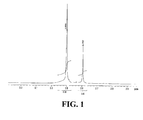
Figure 1 graphically depicts the 300 MHz 1H NMR spectrum of the D2O solution of
trimethylsulfonium methanesulfonate, a typical, cationic ion pairing reagent composition of
the present invention whose combustion products are volatile and contain, at most O and S
atoms as heteroatoms.
-
Figure 2 graphically depicts the 75 MHz 1H NMR spectrum of the D2O solution of
trimethylsulfonium methanesulfonate, a typical, cationic ion pairing reagent composition of
the present invention whose combustion products are volatile and contain, at most O and S
atoms as heteroatoms.
DETAILED DESCRIPTION OF THE INVENTION
-
The inventor has found that a new class of cationic ion pairing reagents and cationic
ion pairing reagent systems can be constructed that allow element specific detection of
analytes without the typical contamination of the analytes by the combustion products of the
cationic ion pairing reagent components that contain a desired detectable element or lack the
needed volatility to pass through the analytical system without fouling the system. The
cationic ion pairing reagent compositions that have volatile combustion products and include
only O or S or halogen atoms or their combinations as the only heteroatoms make possible the
use of ESDs in areas which hitherto have been unaccessible to ESDs, because prior art
cationic ion pairing reagent compositions included undesired heteroatoms (e.g., nitrogen
atoms in protonated amines and quaternary ammonium compounds), or atoms whose
combustion products are nonvolatile, cannot leave the analytical system component such as
the ESDs as vapors or gases thereby contaminating the components such as the ESDs (e.g.,
phosphorus atoms in phosphonium compounds and orangophosphates or metals).
-
The present invention broadly relates to cationic ion pairing reagents and families of
cationic ion pairing reagents or in situ formed cationic pairing ions or families of in situ
formed cationic pairing ions whose combustion products are volatile and have only O or S or
halogen atoms or their combinations as heteroatoms, where the reagents or in situ formed
cationic pairing ions can be used in conjunction with gas-phase or vapor-phase element-specific
detectors.
-
Although the reagents are designed for use primarily in aqueous solution, where the
solvent in water, the reagents can also be used with non-aqueous or mixed aqueous /non-aqueous
solvent systems such as solvent systems including, water, a lower alcohol, a lower
carboxylic acid, a lower ether, a lower cyclic ether, a lower ester, a lower ketone, a lower
halocarbon, and/or a lower hydrocarbon or mixtures and combinations thereof. The term
lower means that the compounds have 10 or fewer carbon atoms, preferably 8 or fewer carbon
atoms and particularly 6 or fewer carbon atoms. All of the solvents for use in this invention
must have volatile combustion products with O or S or halogen atoms or combinations thereof
as their only heteroatoms.
-
The present invention also relates to cationic ion pairing reagent systems capable of
covering a desired hydrophobicity range including a plurality of cationic ion pairing reagents
or families of cationic ion pairing reagents or in situ formed cationic pairing ions or families
of in situ formed cationic pairing ions of this invention.
-
The present invention also relates to an analytical system for detecting an analyte
including a combustion chamber where an analyte dissolved in a solution comprising at least
one cationic ion pairing reagent or in situ formed cationic pairing ion of this invention is
converted to its corresponding combustion products and a detector capable of detecting at
least one analyte combustion product.
-
The present invention also relates to a method including the steps of dissolving a
sample including at least one analyte in a solution comprising at least one cationic ion pairing
reagent or in situ formed cationic pairing ion of this invention, combusting the solution and
the sample into their corresponding combustion products and detecting at least one
combustion product of the analyte.
-
The present invention also relates to an analytical system for detecting an analyte
including a separation apparatus where a sample comprising at least one analyte dissolved in
a solution comprising at least one cationic ion pairing reagent or in situ formed cationic
pairing ion of the present invention is separated into its constituents, a combustion chamber
where each constituent of the sample is converted to its corresponding combustion products
and a detector capable of detecting at least one analyte combustion product.
-
The cationic ion pairing reagents or reagent systems or in situ formed cationic pairing
ions or cationic pairing ion sytems of this invention are characterized by at least the following
properties: (1) each combustion product of each cationic ion pairing reagent or in situ formed
cationic pairing ion is volatile at the operating conditions of the detection system and includes
only O or S or halogens atoms or their combinations as heteroatoms; (2) each cationic ion
pairing reagent or in situ formed cationic pairing ion includes a hydrophobic portion; (3) each
cationic ion pairing reagent or in situ formed cationic pairing ion provides adequate ion
pairing ability over its application range; and (4) each cationic ion pairing reagent or in situ
formed cationic pairing ion permits variation of the solubility, hydrophobicity and/or
electrophoretic mobility of the counterion(s) to match the requirements or constraints of the
analytical system used.
-
A cationic ion pairing reagent of this invention comprises a strong base-derived cation
and a weak acid-derived or a strong acid-derived anionic counterion. An in situ formed
cationic pairing ion is derived from a strong base and a weak or a strong acid.
-
Suitable cationic pairing ions for use in the construction of the cationic ion pairing
reagents of this invention include cations having a hydrophilic portion and a hydrophobic
portion, where the hydrophobic portion is sufficient to impart a desired hydrophobicity to the
cation, and where the cations form volatile combustion products and the combustion products
include only O or S or halogen atoms or their combinations as heteroatoms at the operating
conditions of the detection system.
-
Suitable hydrophobic portions or groups include, without limitation, alkyl, alkenyl,
alkynyl, cycloalkyl, cycloalkenyl, cycloalkynyl, aromatic groups, halogenated derivatives
thereof or mixtures or combinations thereof, and suitable hydrophilic portions or groups
include, without limitation, one or more oxonium, one or more sulfonium or one or more
sulfoxonium moieties or mixtures or combinations thereof; all having volatile combustion
products at the operating conditions of the detection system and where the combustion
products include O or S or halogen atoms or combinations thereof as their only heteroatoms.
-
Exemplary cations for use in the cationic ion pairing reagents of this invention include,
without limitation:
-
oxonium ions with alkyl, alkenyl, alkynyl, cycloalkyl, cycloalkenyl, cycloalkynyl or
aromatic groups and halogenated derivatives thereof with one oxonium moiety;
-
oxonium ions with alkyl, alkenyl, alkynyl, cycloalkyl, cycloalkenyl, cycloalkynyl or
aromatic groups and halogenated derivatives thereof with two or more oxonium moieties;
-
sulfonium ions with alkyl, alkenyl, alkynyl, cycloalkyl, cycloalkenyl, cycloalkynyl or
aromatic groups and halogenated derivatives thereof with one sulfonium moiety;
-
sulfonium ions with alkyl, alkenyl, alkynyl, cycloalkyl, cycloalkenyl, cycloalkynyl or
aromatic groups and halogenated derivatives thereof with two or more sulfonium moieties;
-
sulfoxonium ions with alkyl, alkenyl, alkynyl, cycloalkyl, cycloalkenyl, cycloalkynyl
or aromatic groups and halogenated derivatives thereof with one sulfoxonium moiety;
-
sulfoxonium ions with alkyl, alkenyl, alkynyl, cycloalkyl, cycloalkenyl, cycloalkynyl
or aromatic groups and halogenated derivatives thereof with two or more sulfoxonium
moieties;
-
or mixtures or combinations thereof;
-
where all cations form volatile combustion products at the operating conditions of the
etection system and include only O or S or halogen atoms or combinations thereof as their
heteroatoms.
-
Exemplary bases for in situ formed cationic pairing ions of this invention include,
without limitation:
-
the hydroxide forms of oxonium ions with alkyl, alkenyl, alkynyl, cycloalkyl,
cycloalkenyl, cycloalkynyl or aromatic groups and halogenated derivatives thereof with one
oxonium moiety;
-
the hydroxide forms of oxonium ions with alkyl, alkenyl, alkynyl, cycloalkyl,
cycloalkenyl, cycloalkynyl or aromatic groups and halogenated derivatives thereof with two
or more oxonium moieties;
-
the hydroxide forms of sulfonium ions with alkyl, alkenyl, alkynyl, cycloalkyl,
cycloalkenyl, cycloalkynyl or aromatic groups and halogenated derivatives thereof with one
sulfonium moiety;
-
the hydroxide forms of sulfonium ions with alkyl, alkenyl, alkynyl, cycloalkyl,
cycloalkenyl, cycloalkynyl or aromatic groups and halogenated derivatives thereof with two
or more sulfonium moieties;
-
the hydroxide forms of sulfoxonium ions with alkyl, alkenyl, alkynyl, cycloalkyl,
cycloalkenyl, cycloalkynyl or aromatic groups and halogenated derivatives thereof with one
sulfoxonium moiety;
-
the hydroxide forms of sulfoxonium ions with alkyl, alkenyl, alkynyl, cycloalkyl,
cycloalkenyl, cycloalkynyl or aromatic groups and halogenated derivatives thereof with two
or more sulfoxonium moieties;
-
or mixtures or combinations thereof;
-
where all cations form volatile combustion products at the operating conditions of the
detection system and include only O or S or halogen atoms or combinations thereof as their
heteroatoms.
-
Suitable anionic counterions for use in the construction of the cationic ion pairing
reagents of this invention include, without limitation, hydroxide, halide, oxyhalide, sulfate,
bisulfate, sulfite, bisulfite, carbonate, bicarbonate, carboxylate, phenolate, sulfonate or organic
sulfate half ester ions or mixtures or combinations thereof, where all counterions form volatile
combustion products at the operating conditions of the detection system with at most halide,
or S atoms or their combinations as heteroatoms.
-
Preferred cationic pairing ions for use in the construction of cationic ion pairing
reagents of this invention having volatile combustion products at the operating conditions of
the detection system with at most halide, O or S atoms or their combinations as heteroatoms
include, without limitation, aryl pyrillium ions, R1, R2, R3-sulfonium ions, or R1, R2, R3-sulfoxonium
ions or mixtures or combinations thereof, where R1, R2 and R3 are the same or
different and are an alkyl group, cycloalkyl group, alkylcycloalkyl group, alkylaryl group,
cycloalkylaryl group, arylalkyl group, arylcycloalkyl group or aryl group. Generally, the R'
groups (i=1,2 or 3) have one or more carbon atom, preferably, two or more carbon atoms,
particularly, three or more carbon atoms, and especially four or more carbon atoms. For in
situ formed cationic ion pairs, the corresponding bases are preferred.
-
Preferred counterions for use in the construction of cationic ion pairing reagents of this
invention having volatile combustion products at the operating conditions of the detection
system with at most halide, O or S atoms or their combinations as heteroatoms include,
without limitation, sulfate, sulfonate or organic sulfate ions and mixtures or combinations
thereof. Generally, the sulfonate or organic sulfate ions have fewer than 20 carbon atoms,
preferably, fewer than 10 carbon atoms, particularly, fewer than 5 carbon atoms, and
especially fewer than 2 carbon atoms to adjust the solubility, hydrophobic - hydrophilic
balance and/or electrophoretic mobility of the counterion.
-
Exemplary examples of the cationic pairing ions for use in the construction of cationic
ion pairing reagents of this invention having volatile combustion products at the operating
conditions of the detection system with at most halide, O or S atoms or their combinations as
heteroatoms include, without limitation, dialkylmethylsulfonium ions where the alkyl chain
contains more than two carbon atoms and can be obtained from the respective alkyl sulfides
and methyl iodide, dimethylalkylsulfonium ions where the alkyl chain contains more than two
carbon atoms and can be obtained from dimethyl sulfide and the respective alkyl iodide,
diethylalkylsulfonium ions where the alkyl chain contains more than two carbon atoms and
can be obtained from diethyl sulfide and the respective alkyl iodide, dipropylalkylsulfonium
ions where the alkyl chain contains more than two carbon atoms and can be obtained from
dipropyl sulfide and the respective alkyl iodide, dibutylalkylsulfonium ions where the alkyl
chain contains more than two carbon atoms and can be obtained from dibutyl sulfide and the
respective alkyl iodide, dipentylalkylsulfonium ions where the alkyl chain contains more than
two carbon atoms and can be obtained from dipentyl sulfide and the respective alkyl iodide,
dihexylalkylsulfonium ions where the alkyl chain contains more than two carbon atoms and
can be obtained from dihexyl sulfide and the respective alkyl iodide,
dialkylmethylsulfoxonium ions where the alkyl chain contains more than two carbon atoms
and can be obtained from the respective alkyl sulfoxides and methyl iodide,
dimethylalkylsulfoxonium ions where the alkyl chain contains more than two carbon atoms
and can be obtained from dimethyl sulfoxide and the respective alkyl iodide,
diethylalkylsulfoxonium ions where the alkyl chain contains more than two carbon atoms and
can be obtained from diethyl sulfoxide and the respective alkyl iodide,
dipropylalkylsulfoxonium ions where the alkyl chain contains more than two carbon atoms
and can be obtained from dipropyl sulfoxide and the respective alkyl iodide,
dibutylalkylsulfoxonium ions where the alkyl chain contains more than two carbon atoms and
can be obtained from dibutyl sulfoxide and the respective alkyl iodide,
dipentylalkylsulfoxonium ions where the alkyl chain contains more than two carbon atoms
and can be obtained from dipentyl sulfoxide and the respective alkyl iodide,
dihexylalkylsulfoxonium ions where the alkyl chain contains more than two carbon atoms and
can be obtained from dihexyl sulfoxide and the respective alkyl iodide. For in situ formed
cationic pairing ions, the respective bases are preferred.
-
Exemplary examples of the counterions for use in the construction of cationic ion
pairing reagents of this invention having volatile combustion products at the operating
conditions of the detection system with at most halide, O or S atoms or their combinations as
heteroatoms include, without limitation, methanesulfonate ion, which can be obtained from
methanesulfonic acid, and ethanesulfonate ion, which can be obtained from ethanesulfonic
acid. For in situ formed cationic pairing ions, the respective acids are preferred.
-
The cationic ion pairing reagents of this invention can be produced in a number of
ways, including, without limitation: (1) the reaction of the parent base of a respective cationic
pairing ion with the parent acid of a desired counterion; (2) the percolation of the parent base
of a respective cationic pairing ion or its salt through an anion exchange column that contains
the desired counterion; or (3) the extraction of a respective ion pair with an organic solvent
from an aqueous solution that holds a mixture of the parent base of the respective cationic
pairing ion or its salt and the parent acid of a desired counterion or its salt. The ion pairing
reagents of this invention can be stored and/or used either as solids or solutions.
-
In situ formed cationic pairing ions of this invention can be produced in a number of
ways, including, without limitation: (1) adding one or more desired base to a solution
containing a desired weak and/or strong acid and (2) adding a desired weak and/or strong acid
to a solution containing one or more desired base.
-
All references cited herein are incorporated by reference. While this invention has
been described fully and completely, it should be understood that the invention may be
practiced otherwise than as specifically described. Although the invention has been disclosed
with reference to its preferred embodiments, from reading this description those of skill in the
art may appreciate changes and modification that may be made which do not depart from the
scope and spirit of the invention as described above.