EP1261587B1 - Stilbene derivatives, their preparation and their use as antiviral agents - Google Patents
Stilbene derivatives, their preparation and their use as antiviral agents Download PDFInfo
- Publication number
- EP1261587B1 EP1261587B1 EP00977556A EP00977556A EP1261587B1 EP 1261587 B1 EP1261587 B1 EP 1261587B1 EP 00977556 A EP00977556 A EP 00977556A EP 00977556 A EP00977556 A EP 00977556A EP 1261587 B1 EP1261587 B1 EP 1261587B1
- Authority
- EP
- European Patent Office
- Prior art keywords
- hydroxy
- formula
- group
- sulfo
- carboxy
- Prior art date
- Legal status (The legal status is an assumption and is not a legal conclusion. Google has not performed a legal analysis and makes no representation as to the accuracy of the status listed.)
- Expired - Lifetime
Links
- 238000002360 preparation method Methods 0.000 title claims description 12
- PJANXHGTPQOBST-UHFFFAOYSA-N stilbene Chemical class C=1C=CC=CC=1C=CC1=CC=CC=C1 PJANXHGTPQOBST-UHFFFAOYSA-N 0.000 title description 5
- 239000003443 antiviral agent Substances 0.000 title 1
- 150000001875 compounds Chemical class 0.000 claims abstract description 153
- 150000003839 salts Chemical class 0.000 claims abstract description 124
- 230000003993 interaction Effects 0.000 claims abstract description 67
- 238000000034 method Methods 0.000 claims abstract description 57
- 230000001413 cellular effect Effects 0.000 claims abstract description 47
- 230000001177 retroviral effect Effects 0.000 claims abstract description 36
- 230000008569 process Effects 0.000 claims abstract description 35
- 108091027981 Response element Proteins 0.000 claims abstract description 33
- 238000011282 treatment Methods 0.000 claims abstract description 33
- 230000002401 inhibitory effect Effects 0.000 claims abstract description 30
- 230000002103 transcriptional effect Effects 0.000 claims abstract description 27
- 201000010099 disease Diseases 0.000 claims abstract description 21
- 208000037265 diseases, disorders, signs and symptoms Diseases 0.000 claims abstract description 21
- 230000014509 gene expression Effects 0.000 claims abstract description 21
- 102100031650 C-X-C chemokine receptor type 4 Human genes 0.000 claims abstract description 20
- 101000922348 Homo sapiens C-X-C chemokine receptor type 4 Proteins 0.000 claims abstract description 20
- 230000006870 function Effects 0.000 claims abstract description 20
- 230000001225 therapeutic effect Effects 0.000 claims abstract description 20
- 241000700605 Viruses Species 0.000 claims abstract description 15
- 230000000798 anti-retroviral effect Effects 0.000 claims abstract description 11
- 230000004913 activation Effects 0.000 claims abstract description 10
- 239000000825 pharmaceutical preparation Substances 0.000 claims abstract description 10
- -1 phenylazo Chemical group 0.000 claims description 159
- 239000001257 hydrogen Substances 0.000 claims description 75
- 229910052739 hydrogen Inorganic materials 0.000 claims description 75
- 230000036961 partial effect Effects 0.000 claims description 72
- 125000001997 phenyl group Chemical group [H]C1=C([H])C([H])=C(*)C([H])=C1[H] 0.000 claims description 62
- 125000000020 sulfo group Chemical group O=S(=O)([*])O[H] 0.000 claims description 55
- 125000003178 carboxy group Chemical group [H]OC(*)=O 0.000 claims description 47
- 241001465754 Metazoa Species 0.000 claims description 46
- 125000002887 hydroxy group Chemical group [H]O* 0.000 claims description 40
- 125000005843 halogen group Chemical group 0.000 claims description 30
- 125000002496 methyl group Chemical group [H]C([H])([H])* 0.000 claims description 30
- 239000000203 mixture Substances 0.000 claims description 30
- 125000000751 azo group Chemical group [*]N=N[*] 0.000 claims description 29
- 125000000217 alkyl group Chemical group 0.000 claims description 28
- 125000000449 nitro group Chemical group [O-][N+](*)=O 0.000 claims description 26
- 125000001424 substituent group Chemical group 0.000 claims description 26
- 230000005764 inhibitory process Effects 0.000 claims description 18
- 125000002924 primary amino group Chemical group [H]N([H])* 0.000 claims description 15
- 229910052757 nitrogen Inorganic materials 0.000 claims description 13
- QGZKDVFQNNGYKY-UHFFFAOYSA-N Ammonia Chemical compound N QGZKDVFQNNGYKY-UHFFFAOYSA-N 0.000 claims description 11
- 238000004519 manufacturing process Methods 0.000 claims description 10
- 229920002554 vinyl polymer Polymers 0.000 claims description 10
- 125000001624 naphthyl group Chemical group 0.000 claims description 9
- 125000002490 anilino group Chemical group [H]N(*)C1=C([H])C([H])=C([H])C([H])=C1[H] 0.000 claims description 8
- 239000003937 drug carrier Substances 0.000 claims description 8
- 125000005184 naphthylamino group Chemical group C1(=CC=CC2=CC=CC=C12)N* 0.000 claims description 7
- 125000001309 chloro group Chemical group Cl* 0.000 claims description 6
- 229910021529 ammonia Inorganic materials 0.000 claims description 5
- 229940092714 benzenesulfonic acid Drugs 0.000 claims description 5
- 125000001589 carboacyl group Chemical group 0.000 claims description 5
- 239000004202 carbamide Substances 0.000 claims description 4
- SYSQUGFVNFXIIT-UHFFFAOYSA-N n-[4-(1,3-benzoxazol-2-yl)phenyl]-4-nitrobenzenesulfonamide Chemical class C1=CC([N+](=O)[O-])=CC=C1S(=O)(=O)NC1=CC=C(C=2OC3=CC=CC=C3N=2)C=C1 SYSQUGFVNFXIIT-UHFFFAOYSA-N 0.000 claims description 4
- 125000002339 acetoacetyl group Chemical group O=C([*])C([H])([H])C(=O)C([H])([H])[H] 0.000 claims description 3
- 125000003236 benzoyl group Chemical group [H]C1=C([H])C([H])=C(C([H])=C1[H])C(*)=O 0.000 claims description 3
- 125000000391 vinyl group Chemical group [H]C([*])=C([H])[H] 0.000 claims description 3
- PJVIBWIWBVGOJD-ONEGZZNKSA-N 2-[(e)-2-[4-(3-methyl-5-oxo-4h-pyrazol-1-yl)-2-sulfophenyl]ethenyl]-5-(3-oxobutanoylamino)benzenesulfonic acid Chemical compound OS(=O)(=O)C1=CC(NC(=O)CC(=O)C)=CC=C1\C=C\C1=CC=C(N2C(CC(C)=N2)=O)C=C1S(O)(=O)=O PJVIBWIWBVGOJD-ONEGZZNKSA-N 0.000 claims description 2
- WEWFIUPOLKEEJP-UHFFFAOYSA-N triazine-4,6-diamine Chemical compound NC1=CC(N)=NN=N1 WEWFIUPOLKEEJP-UHFFFAOYSA-N 0.000 claims description 2
- 125000004435 hydrogen atom Chemical group [H]* 0.000 claims 30
- 239000003112 inhibitor Substances 0.000 abstract description 29
- 208000031886 HIV Infections Diseases 0.000 abstract description 18
- 108090000623 proteins and genes Proteins 0.000 abstract description 17
- 102000004169 proteins and genes Human genes 0.000 abstract description 16
- 208000037357 HIV infectious disease Diseases 0.000 abstract description 10
- 208000033519 human immunodeficiency virus infectious disease Diseases 0.000 abstract description 10
- 108020004707 nucleic acids Proteins 0.000 abstract description 3
- 102000039446 nucleic acids Human genes 0.000 abstract description 3
- 150000007523 nucleic acids Chemical class 0.000 abstract description 3
- 230000001737 promoting effect Effects 0.000 abstract 1
- 235000002639 sodium chloride Nutrition 0.000 description 95
- 101710149951 Protein Tat Proteins 0.000 description 57
- 150000002431 hydrogen Chemical group 0.000 description 45
- 241000725303 Human immunodeficiency virus Species 0.000 description 38
- 210000004027 cell Anatomy 0.000 description 38
- XLYOFNOQVPJJNP-UHFFFAOYSA-N water Substances O XLYOFNOQVPJJNP-UHFFFAOYSA-N 0.000 description 36
- 239000000243 solution Substances 0.000 description 33
- 239000004480 active ingredient Substances 0.000 description 30
- 241000713772 Human immunodeficiency virus 1 Species 0.000 description 25
- PEDCQBHIVMGVHV-UHFFFAOYSA-N Glycerine Chemical compound OCC(O)CO PEDCQBHIVMGVHV-UHFFFAOYSA-N 0.000 description 24
- 108091032973 (ribonucleotides)n+m Proteins 0.000 description 21
- 238000009739 binding Methods 0.000 description 19
- 239000008194 pharmaceutical composition Substances 0.000 description 19
- LFQSCWFLJHTTHZ-UHFFFAOYSA-N Ethanol Chemical compound CCO LFQSCWFLJHTTHZ-UHFFFAOYSA-N 0.000 description 17
- 230000003612 virological effect Effects 0.000 description 17
- 238000006243 chemical reaction Methods 0.000 description 15
- 235000014113 dietary fatty acids Nutrition 0.000 description 14
- 239000000194 fatty acid Substances 0.000 description 14
- 229930195729 fatty acid Natural products 0.000 description 14
- 235000018102 proteins Nutrition 0.000 description 14
- 230000003213 activating effect Effects 0.000 description 13
- 230000027455 binding Effects 0.000 description 13
- CDBYLPFSWZWCQE-UHFFFAOYSA-L Sodium Carbonate Chemical compound [Na+].[Na+].[O-]C([O-])=O CDBYLPFSWZWCQE-UHFFFAOYSA-L 0.000 description 12
- 239000002253 acid Substances 0.000 description 12
- 238000000338 in vitro Methods 0.000 description 11
- 206010038997 Retroviral infections Diseases 0.000 description 10
- 229920001223 polyethylene glycol Chemical class 0.000 description 10
- 239000011541 reaction mixture Substances 0.000 description 10
- 239000002904 solvent Substances 0.000 description 10
- 239000000126 substance Substances 0.000 description 10
- LENZDBCJOHFCAS-UHFFFAOYSA-N tris Chemical compound OCC(N)(CO)CO LENZDBCJOHFCAS-UHFFFAOYSA-N 0.000 description 10
- 208000030507 AIDS Diseases 0.000 description 9
- OKKJLVBELUTLKV-UHFFFAOYSA-N Methanol Chemical compound OC OKKJLVBELUTLKV-UHFFFAOYSA-N 0.000 description 9
- DNIAPMSPPWPWGF-UHFFFAOYSA-N Propylene glycol Chemical compound CC(O)CO DNIAPMSPPWPWGF-UHFFFAOYSA-N 0.000 description 9
- HEMHJVSKTPXQMS-UHFFFAOYSA-M Sodium hydroxide Chemical compound [OH-].[Na+] HEMHJVSKTPXQMS-UHFFFAOYSA-M 0.000 description 9
- 108020004999 messenger RNA Proteins 0.000 description 9
- RTZKZFJDLAIYFH-UHFFFAOYSA-N Diethyl ether Chemical compound CCOCC RTZKZFJDLAIYFH-UHFFFAOYSA-N 0.000 description 8
- LYCAIKOWRPUZTN-UHFFFAOYSA-N Ethylene glycol Chemical compound OCCO LYCAIKOWRPUZTN-UHFFFAOYSA-N 0.000 description 8
- VEXZGXHMUGYJMC-UHFFFAOYSA-N Hydrochloric acid Chemical compound Cl VEXZGXHMUGYJMC-UHFFFAOYSA-N 0.000 description 8
- 230000000694 effects Effects 0.000 description 8
- 210000004698 lymphocyte Anatomy 0.000 description 8
- 0 CN1N=C(*)C(*)C2OC12 Chemical compound CN1N=C(*)C(*)C2OC12 0.000 description 7
- 108700020121 Human Immunodeficiency Virus-1 rev Proteins 0.000 description 7
- 239000007983 Tris buffer Substances 0.000 description 7
- 238000004128 high performance liquid chromatography Methods 0.000 description 7
- 208000015181 infectious disease Diseases 0.000 description 7
- 239000007788 liquid Substances 0.000 description 7
- HQKMJHAJHXVSDF-UHFFFAOYSA-L magnesium stearate Substances [Mg+2].CCCCCCCCCCCCCCCCCC([O-])=O.CCCCCCCCCCCCCCCCCC([O-])=O HQKMJHAJHXVSDF-UHFFFAOYSA-L 0.000 description 7
- 230000014759 maintenance of location Effects 0.000 description 7
- 239000000725 suspension Substances 0.000 description 7
- 241001430294 unidentified retrovirus Species 0.000 description 7
- 238000005160 1H NMR spectroscopy Methods 0.000 description 6
- QTBSBXVTEAMEQO-UHFFFAOYSA-N Acetic acid Chemical compound CC(O)=O QTBSBXVTEAMEQO-UHFFFAOYSA-N 0.000 description 6
- WVDDGKGOMKODPV-UHFFFAOYSA-N Benzyl alcohol Chemical compound OCC1=CC=CC=C1 WVDDGKGOMKODPV-UHFFFAOYSA-N 0.000 description 6
- ISWSIDIOOBJBQZ-UHFFFAOYSA-N Phenol Chemical compound OC1=CC=CC=C1 ISWSIDIOOBJBQZ-UHFFFAOYSA-N 0.000 description 6
- 239000002202 Polyethylene glycol Chemical class 0.000 description 6
- FAPWRFPIFSIZLT-UHFFFAOYSA-M Sodium chloride Chemical compound [Na+].[Cl-] FAPWRFPIFSIZLT-UHFFFAOYSA-M 0.000 description 6
- 229920002472 Starch Polymers 0.000 description 6
- ZMANZCXQSJIPKH-UHFFFAOYSA-N Triethylamine Chemical compound CCN(CC)CC ZMANZCXQSJIPKH-UHFFFAOYSA-N 0.000 description 6
- 238000003556 assay Methods 0.000 description 6
- 238000000376 autoradiography Methods 0.000 description 6
- 239000002585 base Substances 0.000 description 6
- 125000004432 carbon atom Chemical group C* 0.000 description 6
- 239000003995 emulsifying agent Substances 0.000 description 6
- 239000007924 injection Substances 0.000 description 6
- 238000002347 injection Methods 0.000 description 6
- 239000003921 oil Substances 0.000 description 6
- 235000019198 oils Nutrition 0.000 description 6
- 239000002674 ointment Substances 0.000 description 6
- 239000000546 pharmaceutical excipient Substances 0.000 description 6
- 230000001105 regulatory effect Effects 0.000 description 6
- 229910000029 sodium carbonate Inorganic materials 0.000 description 6
- 235000019698 starch Nutrition 0.000 description 6
- 229920002261 Corn starch Polymers 0.000 description 5
- FBPFZTCFMRRESA-FSIIMWSLSA-N D-Glucitol Natural products OC[C@H](O)[C@H](O)[C@@H](O)[C@H](O)CO FBPFZTCFMRRESA-FSIIMWSLSA-N 0.000 description 5
- FBPFZTCFMRRESA-JGWLITMVSA-N D-glucitol Chemical compound OC[C@H](O)[C@@H](O)[C@H](O)[C@H](O)CO FBPFZTCFMRRESA-JGWLITMVSA-N 0.000 description 5
- IAZDPXIOMUYVGZ-WFGJKAKNSA-N Dimethyl sulfoxide Chemical compound [2H]C([2H])([2H])S(=O)C([2H])([2H])[2H] IAZDPXIOMUYVGZ-WFGJKAKNSA-N 0.000 description 5
- IAZDPXIOMUYVGZ-UHFFFAOYSA-N Dimethylsulphoxide Chemical compound CS(C)=O IAZDPXIOMUYVGZ-UHFFFAOYSA-N 0.000 description 5
- 241000282412 Homo Species 0.000 description 5
- 239000000654 additive Substances 0.000 description 5
- 229940024606 amino acid Drugs 0.000 description 5
- 239000007864 aqueous solution Substances 0.000 description 5
- 239000008120 corn starch Substances 0.000 description 5
- 239000006071 cream Substances 0.000 description 5
- 229920000159 gelatin Polymers 0.000 description 5
- 235000019322 gelatine Nutrition 0.000 description 5
- 238000010438 heat treatment Methods 0.000 description 5
- BXWNKGSJHAJOGX-UHFFFAOYSA-N hexadecan-1-ol Chemical compound CCCCCCCCCCCCCCCCO BXWNKGSJHAJOGX-UHFFFAOYSA-N 0.000 description 5
- 229930195733 hydrocarbon Natural products 0.000 description 5
- 150000002430 hydrocarbons Chemical class 0.000 description 5
- QIQXTHQIDYTFRH-UHFFFAOYSA-N octadecanoic acid Chemical compound CCCCCCCCCCCCCCCCCC(O)=O QIQXTHQIDYTFRH-UHFFFAOYSA-N 0.000 description 5
- 239000003755 preservative agent Substances 0.000 description 5
- 239000000047 product Substances 0.000 description 5
- 238000011321 prophylaxis Methods 0.000 description 5
- 239000000600 sorbitol Substances 0.000 description 5
- 235000010356 sorbitol Nutrition 0.000 description 5
- 239000003826 tablet Substances 0.000 description 5
- 238000013518 transcription Methods 0.000 description 5
- 230000035897 transcription Effects 0.000 description 5
- CIWBSHSKHKDKBQ-JLAZNSOCSA-N Ascorbic acid Chemical compound OC[C@H](O)[C@H]1OC(=O)C(O)=C1O CIWBSHSKHKDKBQ-JLAZNSOCSA-N 0.000 description 4
- 239000005662 Paraffin oil Substances 0.000 description 4
- 108010021757 Polynucleotide 5'-Hydroxyl-Kinase Proteins 0.000 description 4
- 102000008422 Polynucleotide 5'-hydroxyl-kinase Human genes 0.000 description 4
- 101710150344 Protein Rev Proteins 0.000 description 4
- 235000021355 Stearic acid Nutrition 0.000 description 4
- QAOWNCQODCNURD-UHFFFAOYSA-N Sulfuric acid Chemical compound OS(O)(=O)=O QAOWNCQODCNURD-UHFFFAOYSA-N 0.000 description 4
- DTQVDTLACAAQTR-UHFFFAOYSA-N Trifluoroacetic acid Chemical compound OC(=O)C(F)(F)F DTQVDTLACAAQTR-UHFFFAOYSA-N 0.000 description 4
- ZKHQWZAMYRWXGA-KNYAHOBESA-N [[(2r,3s,4r,5r)-5-(6-aminopurin-9-yl)-3,4-dihydroxyoxolan-2-yl]methoxy-hydroxyphosphoryl] dihydroxyphosphoryl hydrogen phosphate Chemical compound C1=NC=2C(N)=NC=NC=2N1[C@@H]1O[C@H](COP(O)(=O)OP(O)(=O)O[32P](O)(O)=O)[C@@H](O)[C@H]1O ZKHQWZAMYRWXGA-KNYAHOBESA-N 0.000 description 4
- 150000001298 alcohols Chemical class 0.000 description 4
- 235000001014 amino acid Nutrition 0.000 description 4
- 150000001413 amino acids Chemical class 0.000 description 4
- 125000003118 aryl group Chemical group 0.000 description 4
- WPYMKLBDIGXBTP-UHFFFAOYSA-N benzoic acid Chemical compound OC(=O)C1=CC=CC=C1 WPYMKLBDIGXBTP-UHFFFAOYSA-N 0.000 description 4
- 239000001768 carboxy methyl cellulose Substances 0.000 description 4
- 238000004587 chromatography analysis Methods 0.000 description 4
- 239000008298 dragée Substances 0.000 description 4
- 239000003814 drug Substances 0.000 description 4
- 150000002191 fatty alcohols Chemical class 0.000 description 4
- 239000000499 gel Substances 0.000 description 4
- 125000005456 glyceride group Chemical group 0.000 description 4
- IPCSVZSSVZVIGE-UHFFFAOYSA-N hexadecanoic acid Chemical compound CCCCCCCCCCCCCCCC(O)=O IPCSVZSSVZVIGE-UHFFFAOYSA-N 0.000 description 4
- 239000000543 intermediate Substances 0.000 description 4
- 238000001990 intravenous administration Methods 0.000 description 4
- 235000019359 magnesium stearate Nutrition 0.000 description 4
- 230000007246 mechanism Effects 0.000 description 4
- GLDOVTGHNKAZLK-UHFFFAOYSA-N octadecan-1-ol Chemical compound CCCCCCCCCCCCCCCCCCO GLDOVTGHNKAZLK-UHFFFAOYSA-N 0.000 description 4
- OQCDKBAXFALNLD-UHFFFAOYSA-N octadecanoic acid Natural products CCCCCCCC(C)CCCCCCCCC(O)=O OQCDKBAXFALNLD-UHFFFAOYSA-N 0.000 description 4
- WQEPLUUGTLDZJY-UHFFFAOYSA-N pentadecanoic acid Chemical compound CCCCCCCCCCCCCCC(O)=O WQEPLUUGTLDZJY-UHFFFAOYSA-N 0.000 description 4
- 239000012071 phase Substances 0.000 description 4
- 235000013855 polyvinylpyrrolidone Nutrition 0.000 description 4
- 239000001267 polyvinylpyrrolidone Substances 0.000 description 4
- 229920000036 polyvinylpyrrolidone Polymers 0.000 description 4
- 239000002244 precipitate Substances 0.000 description 4
- 241000894007 species Species 0.000 description 4
- ATHGHQPFGPMSJY-UHFFFAOYSA-N spermidine Chemical compound NCCCCNCCCN ATHGHQPFGPMSJY-UHFFFAOYSA-N 0.000 description 4
- 239000003381 stabilizer Substances 0.000 description 4
- 239000008107 starch Substances 0.000 description 4
- 239000008117 stearic acid Substances 0.000 description 4
- 150000005846 sugar alcohols Polymers 0.000 description 4
- 239000000454 talc Substances 0.000 description 4
- 229910052623 talc Inorganic materials 0.000 description 4
- 235000012222 talc Nutrition 0.000 description 4
- 108091008023 transcriptional regulators Proteins 0.000 description 4
- WEVYAHXRMPXWCK-UHFFFAOYSA-N Acetonitrile Chemical compound CC#N WEVYAHXRMPXWCK-UHFFFAOYSA-N 0.000 description 3
- 241000208199 Buxus sempervirens Species 0.000 description 3
- 101000898643 Candida albicans Vacuolar aspartic protease Proteins 0.000 description 3
- 101000898783 Candida tropicalis Candidapepsin Proteins 0.000 description 3
- 101000898784 Cryphonectria parasitica Endothiapepsin Proteins 0.000 description 3
- 229920000858 Cyclodextrin Polymers 0.000 description 3
- FBPFZTCFMRRESA-KVTDHHQDSA-N D-Mannitol Chemical compound OC[C@@H](O)[C@@H](O)[C@H](O)[C@H](O)CO FBPFZTCFMRRESA-KVTDHHQDSA-N 0.000 description 3
- BXZVVICBKDXVGW-NKWVEPMBSA-N Didanosine Chemical compound O1[C@H](CO)CC[C@@H]1N1C(NC=NC2=O)=C2N=C1 BXZVVICBKDXVGW-NKWVEPMBSA-N 0.000 description 3
- XEKOWRVHYACXOJ-UHFFFAOYSA-N Ethyl acetate Chemical compound CCOC(C)=O XEKOWRVHYACXOJ-UHFFFAOYSA-N 0.000 description 3
- 239000001828 Gelatine Substances 0.000 description 3
- 108010048209 Human Immunodeficiency Virus Proteins Proteins 0.000 description 3
- 102100034343 Integrase Human genes 0.000 description 3
- 239000004166 Lanolin Substances 0.000 description 3
- 229930195725 Mannitol Natural products 0.000 description 3
- ZMXDDKWLCZADIW-UHFFFAOYSA-N N,N-Dimethylformamide Chemical compound CN(C)C=O ZMXDDKWLCZADIW-UHFFFAOYSA-N 0.000 description 3
- 108010092799 RNA-directed DNA polymerase Proteins 0.000 description 3
- 101000933133 Rhizopus niveus Rhizopuspepsin-1 Proteins 0.000 description 3
- 101000910082 Rhizopus niveus Rhizopuspepsin-2 Proteins 0.000 description 3
- 101000910079 Rhizopus niveus Rhizopuspepsin-3 Proteins 0.000 description 3
- 101000910086 Rhizopus niveus Rhizopuspepsin-4 Proteins 0.000 description 3
- 101000910088 Rhizopus niveus Rhizopuspepsin-5 Proteins 0.000 description 3
- 101000898773 Saccharomyces cerevisiae (strain ATCC 204508 / S288c) Saccharopepsin Proteins 0.000 description 3
- VYPSYNLAJGMNEJ-UHFFFAOYSA-N Silicium dioxide Chemical compound O=[Si]=O VYPSYNLAJGMNEJ-UHFFFAOYSA-N 0.000 description 3
- GWEVSGVZZGPLCZ-UHFFFAOYSA-N Titan oxide Chemical compound O=[Ti]=O GWEVSGVZZGPLCZ-UHFFFAOYSA-N 0.000 description 3
- 108020000999 Viral RNA Proteins 0.000 description 3
- WREGKURFCTUGRC-POYBYMJQSA-N Zalcitabine Chemical compound O=C1N=C(N)C=CN1[C@@H]1O[C@H](CO)CC1 WREGKURFCTUGRC-POYBYMJQSA-N 0.000 description 3
- ZVQOOHYFBIDMTQ-UHFFFAOYSA-N [methyl(oxido){1-[6-(trifluoromethyl)pyridin-3-yl]ethyl}-lambda(6)-sulfanylidene]cyanamide Chemical compound N#CN=S(C)(=O)C(C)C1=CC=C(C(F)(F)F)N=C1 ZVQOOHYFBIDMTQ-UHFFFAOYSA-N 0.000 description 3
- DPXJVFZANSGRMM-UHFFFAOYSA-N acetic acid;2,3,4,5,6-pentahydroxyhexanal;sodium Chemical compound [Na].CC(O)=O.OCC(O)C(O)C(O)C(O)C=O DPXJVFZANSGRMM-UHFFFAOYSA-N 0.000 description 3
- 150000007513 acids Chemical class 0.000 description 3
- 150000001335 aliphatic alkanes Chemical class 0.000 description 3
- YMARZQAQMVYCKC-OEMFJLHTSA-N amprenavir Chemical compound C([C@@H]([C@H](O)CN(CC(C)C)S(=O)(=O)C=1C=CC(N)=CC=1)NC(=O)O[C@@H]1COCC1)C1=CC=CC=C1 YMARZQAQMVYCKC-OEMFJLHTSA-N 0.000 description 3
- 239000008346 aqueous phase Substances 0.000 description 3
- 230000000903 blocking effect Effects 0.000 description 3
- 239000000872 buffer Substances 0.000 description 3
- 239000002775 capsule Substances 0.000 description 3
- 229960000541 cetyl alcohol Drugs 0.000 description 3
- KRKNYBCHXYNGOX-UHFFFAOYSA-N citric acid Chemical compound OC(=O)CC(O)(C(O)=O)CC(O)=O KRKNYBCHXYNGOX-UHFFFAOYSA-N 0.000 description 3
- 229940097362 cyclodextrins Drugs 0.000 description 3
- 210000000805 cytoplasm Anatomy 0.000 description 3
- 239000006185 dispersion Substances 0.000 description 3
- VHJLVAABSRFDPM-QWWZWVQMSA-N dithiothreitol Chemical compound SC[C@@H](O)[C@H](O)CS VHJLVAABSRFDPM-QWWZWVQMSA-N 0.000 description 3
- 239000002552 dosage form Substances 0.000 description 3
- 239000000839 emulsion Substances 0.000 description 3
- 150000002148 esters Chemical class 0.000 description 3
- 150000004665 fatty acids Chemical class 0.000 description 3
- 150000002334 glycols Chemical class 0.000 description 3
- 239000008187 granular material Substances 0.000 description 3
- 230000012010 growth Effects 0.000 description 3
- 150000002500 ions Chemical class 0.000 description 3
- 239000000594 mannitol Substances 0.000 description 3
- 235000010355 mannitol Nutrition 0.000 description 3
- 230000005012 migration Effects 0.000 description 3
- 238000013508 migration Methods 0.000 description 3
- 239000003960 organic solvent Substances 0.000 description 3
- 238000007911 parenteral administration Methods 0.000 description 3
- 210000005259 peripheral blood Anatomy 0.000 description 3
- 239000011886 peripheral blood Substances 0.000 description 3
- 238000012545 processing Methods 0.000 description 3
- 230000009467 reduction Effects 0.000 description 3
- 238000011160 research Methods 0.000 description 3
- 229910052708 sodium Inorganic materials 0.000 description 3
- 239000011734 sodium Substances 0.000 description 3
- 235000019812 sodium carboxymethyl cellulose Nutrition 0.000 description 3
- 229920001027 sodium carboxymethylcellulose Polymers 0.000 description 3
- 239000011780 sodium chloride Substances 0.000 description 3
- 239000007787 solid Substances 0.000 description 3
- 239000007921 spray Substances 0.000 description 3
- 230000000638 stimulation Effects 0.000 description 3
- GVJHHUAWPYXKBD-UHFFFAOYSA-N (±)-α-Tocopherol Chemical compound OC1=C(C)C(C)=C2OC(CCCC(C)CCCC(C)CCCC(C)C)(C)CCC2=C1C GVJHHUAWPYXKBD-UHFFFAOYSA-N 0.000 description 2
- OIQOAYVCKAHSEJ-UHFFFAOYSA-N 2-[2,3-bis(2-hydroxyethoxy)propoxy]ethanol;hexadecanoic acid;octadecanoic acid Chemical compound OCCOCC(OCCO)COCCO.CCCCCCCCCCCCCCCC(O)=O.CCCCCCCCCCCCCCCCCC(O)=O OIQOAYVCKAHSEJ-UHFFFAOYSA-N 0.000 description 2
- HIQIXEFWDLTDED-UHFFFAOYSA-N 4-hydroxy-1-piperidin-4-ylpyrrolidin-2-one Chemical compound O=C1CC(O)CN1C1CCNCC1 HIQIXEFWDLTDED-UHFFFAOYSA-N 0.000 description 2
- HBAQYPYDRFILMT-UHFFFAOYSA-N 8-[3-(1-cyclopropylpyrazol-4-yl)-1H-pyrazolo[4,3-d]pyrimidin-5-yl]-3-methyl-3,8-diazabicyclo[3.2.1]octan-2-one Chemical class C1(CC1)N1N=CC(=C1)C1=NNC2=C1N=C(N=C2)N1C2C(N(CC1CC2)C)=O HBAQYPYDRFILMT-UHFFFAOYSA-N 0.000 description 2
- XKRFYHLGVUSROY-UHFFFAOYSA-N Argon Chemical compound [Ar] XKRFYHLGVUSROY-UHFFFAOYSA-N 0.000 description 2
- IJGRMHOSHXDMSA-UHFFFAOYSA-N Atomic nitrogen Chemical compound N#N IJGRMHOSHXDMSA-UHFFFAOYSA-N 0.000 description 2
- 239000005711 Benzoic acid Substances 0.000 description 2
- DPUOLQHDNGRHBS-UHFFFAOYSA-N Brassidinsaeure Natural products CCCCCCCCC=CCCCCCCCCCCCC(O)=O DPUOLQHDNGRHBS-UHFFFAOYSA-N 0.000 description 2
- CURLTUGMZLYLDI-UHFFFAOYSA-N Carbon dioxide Chemical compound O=C=O CURLTUGMZLYLDI-UHFFFAOYSA-N 0.000 description 2
- RGHNJXZEOKUKBD-SQOUGZDYSA-N D-gluconic acid Chemical compound OC[C@@H](O)[C@@H](O)[C@H](O)[C@@H](O)C(O)=O RGHNJXZEOKUKBD-SQOUGZDYSA-N 0.000 description 2
- 229920002307 Dextran Polymers 0.000 description 2
- 102000004190 Enzymes Human genes 0.000 description 2
- 108090000790 Enzymes Proteins 0.000 description 2
- VZCYOOQTPOCHFL-OWOJBTEDSA-N Fumaric acid Chemical compound OC(=O)\C=C\C(O)=O VZCYOOQTPOCHFL-OWOJBTEDSA-N 0.000 description 2
- 108010010803 Gelatin Proteins 0.000 description 2
- AEMRFAOFKBGASW-UHFFFAOYSA-N Glycolic acid Chemical compound OCC(O)=O AEMRFAOFKBGASW-UHFFFAOYSA-N 0.000 description 2
- 241000713340 Human immunodeficiency virus 2 Species 0.000 description 2
- KFZMGEQAYNKOFK-UHFFFAOYSA-N Isopropanol Chemical compound CC(C)O KFZMGEQAYNKOFK-UHFFFAOYSA-N 0.000 description 2
- FYYHWMGAXLPEAU-UHFFFAOYSA-N Magnesium Chemical compound [Mg] FYYHWMGAXLPEAU-UHFFFAOYSA-N 0.000 description 2
- TWRXJAOTZQYOKJ-UHFFFAOYSA-L Magnesium chloride Chemical compound [Mg+2].[Cl-].[Cl-] TWRXJAOTZQYOKJ-UHFFFAOYSA-L 0.000 description 2
- AFVFQIVMOAPDHO-UHFFFAOYSA-N Methanesulfonic acid Chemical compound CS(O)(=O)=O AFVFQIVMOAPDHO-UHFFFAOYSA-N 0.000 description 2
- 241000699670 Mus sp. Species 0.000 description 2
- LRHPLDYGYMQRHN-UHFFFAOYSA-N N-Butanol Chemical compound CCCCO LRHPLDYGYMQRHN-UHFFFAOYSA-N 0.000 description 2
- AMQJEAYHLZJPGS-UHFFFAOYSA-N N-Pentanol Chemical compound CCCCCO AMQJEAYHLZJPGS-UHFFFAOYSA-N 0.000 description 2
- PVNIIMVLHYAWGP-UHFFFAOYSA-N Niacin Chemical compound OC(=O)C1=CC=CN=C1 PVNIIMVLHYAWGP-UHFFFAOYSA-N 0.000 description 2
- PXHVJJICTQNCMI-UHFFFAOYSA-N Nickel Chemical compound [Ni] PXHVJJICTQNCMI-UHFFFAOYSA-N 0.000 description 2
- ZQPPMHVWECSIRJ-UHFFFAOYSA-N Oleic acid Natural products CCCCCCCCC=CCCCCCCCC(O)=O ZQPPMHVWECSIRJ-UHFFFAOYSA-N 0.000 description 2
- 235000021314 Palmitic acid Nutrition 0.000 description 2
- 235000019483 Peanut oil Nutrition 0.000 description 2
- NBIIXXVUZAFLBC-UHFFFAOYSA-N Phosphoric acid Chemical compound OP(O)(O)=O NBIIXXVUZAFLBC-UHFFFAOYSA-N 0.000 description 2
- 230000004570 RNA-binding Effects 0.000 description 2
- 239000012980 RPMI-1640 medium Substances 0.000 description 2
- 229920005654 Sephadex Polymers 0.000 description 2
- 239000012507 Sephadex™ Substances 0.000 description 2
- GSEJCLTVZPLZKY-UHFFFAOYSA-N Triethanolamine Chemical compound OCCN(CCO)CCO GSEJCLTVZPLZKY-UHFFFAOYSA-N 0.000 description 2
- 229920004890 Triton X-100 Polymers 0.000 description 2
- 239000013504 Triton X-100 Substances 0.000 description 2
- XLOMVQKBTHCTTD-UHFFFAOYSA-N Zinc monoxide Chemical compound [Zn]=O XLOMVQKBTHCTTD-UHFFFAOYSA-N 0.000 description 2
- 230000009471 action Effects 0.000 description 2
- 239000013543 active substance Substances 0.000 description 2
- 238000006136 alcoholysis reaction Methods 0.000 description 2
- 229910052783 alkali metal Inorganic materials 0.000 description 2
- ZMJZYXKPJWGDGR-UHFFFAOYSA-N aminosulfamic acid Chemical compound NNS(O)(=O)=O ZMJZYXKPJWGDGR-UHFFFAOYSA-N 0.000 description 2
- 239000003708 ampul Substances 0.000 description 2
- RWZYAGGXGHYGMB-UHFFFAOYSA-N anthranilic acid Chemical compound NC1=CC=CC=C1C(O)=O RWZYAGGXGHYGMB-UHFFFAOYSA-N 0.000 description 2
- 239000003963 antioxidant agent Substances 0.000 description 2
- 235000006708 antioxidants Nutrition 0.000 description 2
- 235000010323 ascorbic acid Nutrition 0.000 description 2
- 229960005070 ascorbic acid Drugs 0.000 description 2
- 239000011668 ascorbic acid Substances 0.000 description 2
- 230000008901 benefit Effects 0.000 description 2
- 235000010233 benzoic acid Nutrition 0.000 description 2
- 235000019445 benzyl alcohol Nutrition 0.000 description 2
- 229960004217 benzyl alcohol Drugs 0.000 description 2
- 239000011230 binding agent Substances 0.000 description 2
- 230000015572 biosynthetic process Effects 0.000 description 2
- 230000037396 body weight Effects 0.000 description 2
- 239000001506 calcium phosphate Substances 0.000 description 2
- 239000000969 carrier Substances 0.000 description 2
- 239000004359 castor oil Substances 0.000 description 2
- 235000019438 castor oil Nutrition 0.000 description 2
- 210000003850 cellular structure Anatomy 0.000 description 2
- 229920002678 cellulose Polymers 0.000 description 2
- 239000001913 cellulose Substances 0.000 description 2
- 235000010980 cellulose Nutrition 0.000 description 2
- 239000003153 chemical reaction reagent Substances 0.000 description 2
- 238000000576 coating method Methods 0.000 description 2
- 239000008119 colloidal silica Substances 0.000 description 2
- HCAJEUSONLESMK-UHFFFAOYSA-N cyclohexylsulfamic acid Chemical compound OS(=O)(=O)NC1CCCCC1 HCAJEUSONLESMK-UHFFFAOYSA-N 0.000 description 2
- 230000003247 decreasing effect Effects 0.000 description 2
- 239000003599 detergent Substances 0.000 description 2
- PXBRQCKWGAHEHS-UHFFFAOYSA-N dichlorodifluoromethane Chemical compound FC(F)(Cl)Cl PXBRQCKWGAHEHS-UHFFFAOYSA-N 0.000 description 2
- 235000019404 dichlorodifluoromethane Nutrition 0.000 description 2
- 229960002656 didanosine Drugs 0.000 description 2
- 229960004132 diethyl ether Drugs 0.000 description 2
- XBDQKXXYIPTUBI-UHFFFAOYSA-N dimethylselenoniopropionate Natural products CCC(O)=O XBDQKXXYIPTUBI-UHFFFAOYSA-N 0.000 description 2
- UKMSUNONTOPOIO-UHFFFAOYSA-N docosanoic acid Chemical compound CCCCCCCCCCCCCCCCCCCCCC(O)=O UKMSUNONTOPOIO-UHFFFAOYSA-N 0.000 description 2
- POULHZVOKOAJMA-UHFFFAOYSA-N dodecanoic acid Chemical compound CCCCCCCCCCCC(O)=O POULHZVOKOAJMA-UHFFFAOYSA-N 0.000 description 2
- 239000000975 dye Substances 0.000 description 2
- ZQPPMHVWECSIRJ-MDZDMXLPSA-N elaidic acid Chemical compound CCCCCCCC\C=C\CCCCCCCC(O)=O ZQPPMHVWECSIRJ-MDZDMXLPSA-N 0.000 description 2
- 239000002702 enteric coating Substances 0.000 description 2
- 238000009505 enteric coating Methods 0.000 description 2
- 108700004025 env Genes Proteins 0.000 description 2
- 229940052303 ethers for general anesthesia Drugs 0.000 description 2
- XYIBRDXRRQCHLP-UHFFFAOYSA-N ethyl acetoacetate Chemical compound CCOC(=O)CC(C)=O XYIBRDXRRQCHLP-UHFFFAOYSA-N 0.000 description 2
- 238000001704 evaporation Methods 0.000 description 2
- 230000008020 evaporation Effects 0.000 description 2
- 239000000945 filler Substances 0.000 description 2
- 239000006260 foam Substances 0.000 description 2
- 239000008273 gelatin Substances 0.000 description 2
- 239000007903 gelatin capsule Substances 0.000 description 2
- 235000011852 gelatine desserts Nutrition 0.000 description 2
- 238000002523 gelfiltration Methods 0.000 description 2
- 108091006104 gene-regulatory proteins Proteins 0.000 description 2
- 102000034356 gene-regulatory proteins Human genes 0.000 description 2
- ZEMPKEQAKRGZGQ-XOQCFJPHSA-N glycerol triricinoleate Natural products CCCCCC[C@@H](O)CC=CCCCCCCCC(=O)OC[C@@H](COC(=O)CCCCCCCC=CC[C@@H](O)CCCCCC)OC(=O)CCCCCCCC=CC[C@H](O)CCCCCC ZEMPKEQAKRGZGQ-XOQCFJPHSA-N 0.000 description 2
- KEMQGTRYUADPNZ-UHFFFAOYSA-N heptadecanoic acid Chemical compound CCCCCCCCCCCCCCCCC(O)=O KEMQGTRYUADPNZ-UHFFFAOYSA-N 0.000 description 2
- 239000003906 humectant Substances 0.000 description 2
- VKOBVWXKNCXXDE-UHFFFAOYSA-N icosanoic acid Chemical compound CCCCCCCCCCCCCCCCCCCC(O)=O VKOBVWXKNCXXDE-UHFFFAOYSA-N 0.000 description 2
- 230000002779 inactivation Effects 0.000 description 2
- NUBQKPWHXMGDLP-BDEHJDMKSA-N indinavir sulfate Chemical compound OS(O)(=O)=O.C([C@H](N(CC1)C[C@@H](O)C[C@@H](CC=2C=CC=CC=2)C(=O)N[C@H]2C3=CC=CC=C3C[C@H]2O)C(=O)NC(C)(C)C)N1CC1=CC=CN=C1 NUBQKPWHXMGDLP-BDEHJDMKSA-N 0.000 description 2
- 238000007918 intramuscular administration Methods 0.000 description 2
- SUMDYPCJJOFFON-UHFFFAOYSA-N isethionic acid Chemical compound OCCS(O)(=O)=O SUMDYPCJJOFFON-UHFFFAOYSA-N 0.000 description 2
- TWBYWOBDOCUKOW-UHFFFAOYSA-N isonicotinic acid Chemical compound OC(=O)C1=CC=NC=C1 TWBYWOBDOCUKOW-UHFFFAOYSA-N 0.000 description 2
- QXJSBBXBKPUZAA-UHFFFAOYSA-N isooleic acid Natural products CCCCCCCC=CCCCCCCCCC(O)=O QXJSBBXBKPUZAA-UHFFFAOYSA-N 0.000 description 2
- JTEGQNOMFQHVDC-NKWVEPMBSA-N lamivudine Chemical compound O=C1N=C(N)C=CN1[C@H]1O[C@@H](CO)SC1 JTEGQNOMFQHVDC-NKWVEPMBSA-N 0.000 description 2
- 235000019388 lanolin Nutrition 0.000 description 2
- 229910052749 magnesium Inorganic materials 0.000 description 2
- 238000005259 measurement Methods 0.000 description 2
- 230000001404 mediated effect Effects 0.000 description 2
- 239000002609 medium Substances 0.000 description 2
- 239000012528 membrane Substances 0.000 description 2
- 229910052751 metal Inorganic materials 0.000 description 2
- 239000002184 metal Substances 0.000 description 2
- 238000002156 mixing Methods 0.000 description 2
- 238000000329 molecular dynamics simulation Methods 0.000 description 2
- GOQYKNQRPGWPLP-UHFFFAOYSA-N n-heptadecyl alcohol Natural products CCCCCCCCCCCCCCCCCO GOQYKNQRPGWPLP-UHFFFAOYSA-N 0.000 description 2
- 230000007935 neutral effect Effects 0.000 description 2
- 229940127073 nucleoside analogue Drugs 0.000 description 2
- RXBWRFDZXRAEJT-SZNOJMITSA-N palinavir Chemical compound C([C@H](NC(=O)[C@@H](NC(=O)C=1N=C2C=CC=CC2=CC=1)C(C)C)[C@H](O)CN1[C@@H](C[C@@H](CC1)OCC=1C=CN=CC=1)C(=O)NC(C)(C)C)C1=CC=CC=C1 RXBWRFDZXRAEJT-SZNOJMITSA-N 0.000 description 2
- 239000012188 paraffin wax Substances 0.000 description 2
- 230000037361 pathway Effects 0.000 description 2
- 239000000312 peanut oil Substances 0.000 description 2
- 239000002304 perfume Substances 0.000 description 2
- 229920002401 polyacrylamide Polymers 0.000 description 2
- 235000010482 polyoxyethylene sorbitan monooleate Nutrition 0.000 description 2
- 229920000053 polysorbate 80 Polymers 0.000 description 2
- 230000023603 positive regulation of transcription initiation, DNA-dependent Effects 0.000 description 2
- 230000003389 potentiating effect Effects 0.000 description 2
- 239000000843 powder Substances 0.000 description 2
- 108090000765 processed proteins & peptides Proteins 0.000 description 2
- 238000000746 purification Methods 0.000 description 2
- 238000000163 radioactive labelling Methods 0.000 description 2
- 230000002829 reductive effect Effects 0.000 description 2
- 229960000311 ritonavir Drugs 0.000 description 2
- NCDNCNXCDXHOMX-XGKFQTDJSA-N ritonavir Chemical compound N([C@@H](C(C)C)C(=O)N[C@H](C[C@H](O)[C@H](CC=1C=CC=CC=1)NC(=O)OCC=1SC=NC=1)CC=1C=CC=CC=1)C(=O)N(C)CC1=CSC(C(C)C)=N1 NCDNCNXCDXHOMX-XGKFQTDJSA-N 0.000 description 2
- YGSDEFSMJLZEOE-UHFFFAOYSA-N salicylic acid Chemical compound OC(=O)C1=CC=CC=C1O YGSDEFSMJLZEOE-UHFFFAOYSA-N 0.000 description 2
- QWAXKHKRTORLEM-UGJKXSETSA-N saquinavir Chemical compound C([C@@H]([C@H](O)CN1C[C@H]2CCCC[C@H]2C[C@H]1C(=O)NC(C)(C)C)NC(=O)[C@H](CC(N)=O)NC(=O)C=1N=C2C=CC=CC2=CC=1)C1=CC=CC=C1 QWAXKHKRTORLEM-UGJKXSETSA-N 0.000 description 2
- 238000010583 slow cooling Methods 0.000 description 2
- LPXPTNMVRIOKMN-UHFFFAOYSA-M sodium nitrite Chemical compound [Na+].[O-]N=O LPXPTNMVRIOKMN-UHFFFAOYSA-M 0.000 description 2
- 229940063673 spermidine Drugs 0.000 description 2
- 239000007858 starting material Substances 0.000 description 2
- UCSJYZPVAKXKNQ-HZYVHMACSA-N streptomycin Chemical compound CN[C@H]1[C@H](O)[C@@H](O)[C@H](CO)O[C@H]1O[C@@H]1[C@](C=O)(O)[C@H](C)O[C@H]1O[C@@H]1[C@@H](NC(N)=N)[C@H](O)[C@@H](NC(N)=N)[C@H](O)[C@H]1O UCSJYZPVAKXKNQ-HZYVHMACSA-N 0.000 description 2
- 235000000346 sugar Nutrition 0.000 description 2
- 239000001117 sulphuric acid Substances 0.000 description 2
- 235000011149 sulphuric acid Nutrition 0.000 description 2
- 239000000829 suppository Substances 0.000 description 2
- 239000002511 suppository base Substances 0.000 description 2
- VZCYOOQTPOCHFL-UHFFFAOYSA-N trans-butenedioic acid Natural products OC(=O)C=CC(O)=O VZCYOOQTPOCHFL-UHFFFAOYSA-N 0.000 description 2
- QORWJWZARLRLPR-UHFFFAOYSA-H tricalcium bis(phosphate) Chemical class [Ca+2].[Ca+2].[Ca+2].[O-]P([O-])([O-])=O.[O-]P([O-])([O-])=O QORWJWZARLRLPR-UHFFFAOYSA-H 0.000 description 2
- SZHOJFHSIKHZHA-UHFFFAOYSA-N tridecanoic acid Chemical compound CCCCCCCCCCCCC(O)=O SZHOJFHSIKHZHA-UHFFFAOYSA-N 0.000 description 2
- UFTFJSFQGQCHQW-UHFFFAOYSA-N triformin Chemical compound O=COCC(OC=O)COC=O UFTFJSFQGQCHQW-UHFFFAOYSA-N 0.000 description 2
- 229960000523 zalcitabine Drugs 0.000 description 2
- HBOMLICNUCNMMY-XLPZGREQSA-N zidovudine Chemical compound O=C1NC(=O)C(C)=CN1[C@@H]1O[C@H](CO)[C@@H](N=[N+]=[N-])C1 HBOMLICNUCNMMY-XLPZGREQSA-N 0.000 description 2
- QBYIENPQHBMVBV-HFEGYEGKSA-N (2R)-2-hydroxy-2-phenylacetic acid Chemical compound O[C@@H](C(O)=O)c1ccccc1.O[C@@H](C(O)=O)c1ccccc1 QBYIENPQHBMVBV-HFEGYEGKSA-N 0.000 description 1
- LNAZSHAWQACDHT-XIYTZBAFSA-N (2r,3r,4s,5r,6s)-4,5-dimethoxy-2-(methoxymethyl)-3-[(2s,3r,4s,5r,6r)-3,4,5-trimethoxy-6-(methoxymethyl)oxan-2-yl]oxy-6-[(2r,3r,4s,5r,6r)-4,5,6-trimethoxy-2-(methoxymethyl)oxan-3-yl]oxyoxane Chemical compound CO[C@@H]1[C@@H](OC)[C@H](OC)[C@@H](COC)O[C@H]1O[C@H]1[C@H](OC)[C@@H](OC)[C@H](O[C@H]2[C@@H]([C@@H](OC)[C@H](OC)O[C@@H]2COC)OC)O[C@@H]1COC LNAZSHAWQACDHT-XIYTZBAFSA-N 0.000 description 1
- OYHQOLUKZRVURQ-NTGFUMLPSA-N (9Z,12Z)-9,10,12,13-tetratritiooctadeca-9,12-dienoic acid Chemical compound C(CCCCCCC\C(=C(/C\C(=C(/CCCCC)\[3H])\[3H])\[3H])\[3H])(=O)O OYHQOLUKZRVURQ-NTGFUMLPSA-N 0.000 description 1
- WRIDQFICGBMAFQ-UHFFFAOYSA-N (E)-8-Octadecenoic acid Natural products CCCCCCCCCC=CCCCCCCC(O)=O WRIDQFICGBMAFQ-UHFFFAOYSA-N 0.000 description 1
- BJEPYKJPYRNKOW-REOHCLBHSA-N (S)-malic acid Chemical compound OC(=O)[C@@H](O)CC(O)=O BJEPYKJPYRNKOW-REOHCLBHSA-N 0.000 description 1
- UWYVPFMHMJIBHE-OWOJBTEDSA-N (e)-2-hydroxybut-2-enedioic acid Chemical compound OC(=O)\C=C(\O)C(O)=O UWYVPFMHMJIBHE-OWOJBTEDSA-N 0.000 description 1
- WBYWAXJHAXSJNI-VOTSOKGWSA-M .beta-Phenylacrylic acid Natural products [O-]C(=O)\C=C\C1=CC=CC=C1 WBYWAXJHAXSJNI-VOTSOKGWSA-M 0.000 description 1
- DDMOUSALMHHKOS-UHFFFAOYSA-N 1,2-dichloro-1,1,2,2-tetrafluoroethane Chemical compound FC(F)(Cl)C(F)(F)Cl DDMOUSALMHHKOS-UHFFFAOYSA-N 0.000 description 1
- IXPNQXFRVYWDDI-UHFFFAOYSA-N 1-methyl-2,4-dioxo-1,3-diazinane-5-carboximidamide Chemical compound CN1CC(C(N)=N)C(=O)NC1=O IXPNQXFRVYWDDI-UHFFFAOYSA-N 0.000 description 1
- JKMHFZQWWAIEOD-UHFFFAOYSA-N 2-[4-(2-hydroxyethyl)piperazin-1-yl]ethanesulfonic acid Chemical compound OCC[NH+]1CCN(CCS([O-])(=O)=O)CC1 JKMHFZQWWAIEOD-UHFFFAOYSA-N 0.000 description 1
- PKRSYEPBQPFNRB-UHFFFAOYSA-N 2-phenoxybenzoic acid Chemical compound OC(=O)C1=CC=CC=C1OC1=CC=CC=C1 PKRSYEPBQPFNRB-UHFFFAOYSA-N 0.000 description 1
- GXIURPTVHJPJLF-UHFFFAOYSA-N 2-phosphoglyceric acid Chemical compound OCC(C(O)=O)OP(O)(O)=O GXIURPTVHJPJLF-UHFFFAOYSA-N 0.000 description 1
- LQJBNNIYVWPHFW-UHFFFAOYSA-N 20:1omega9c fatty acid Natural products CCCCCCCCCCC=CCCCCCCCC(O)=O LQJBNNIYVWPHFW-UHFFFAOYSA-N 0.000 description 1
- VZUYQYHOEYJKNE-DAFODLJHSA-N 3-amino-6-[(e)-2-(4-nitrophenyl)ethenyl]cyclohexa-2,4-diene-1,1-disulfonic acid Chemical compound C1=CC(N)=CC(S(O)(=O)=O)(S(O)(=O)=O)C1\C=C\C1=CC=C([N+]([O-])=O)C=C1 VZUYQYHOEYJKNE-DAFODLJHSA-N 0.000 description 1
- OSJPPGNTCRNQQC-UWTATZPHSA-N 3-phospho-D-glyceric acid Chemical compound OC(=O)[C@H](O)COP(O)(O)=O OSJPPGNTCRNQQC-UWTATZPHSA-N 0.000 description 1
- UETHPMGVZHBAFB-OWOJBTEDSA-N 4,4'-dinitro-trans-stilbene-2,2'-disulfonic acid Chemical compound OS(=O)(=O)C1=CC([N+]([O-])=O)=CC=C1\C=C\C1=CC=C([N+]([O-])=O)C=C1S(O)(=O)=O UETHPMGVZHBAFB-OWOJBTEDSA-N 0.000 description 1
- WUBBRNOQWQTFEX-UHFFFAOYSA-N 4-aminosalicylic acid Chemical compound NC1=CC=C(C(O)=O)C(O)=C1 WUBBRNOQWQTFEX-UHFFFAOYSA-N 0.000 description 1
- QSBYPNXLFMSGKH-UHFFFAOYSA-N 9-Heptadecensaeure Natural products CCCCCCCC=CCCCCCCCC(O)=O QSBYPNXLFMSGKH-UHFFFAOYSA-N 0.000 description 1
- 244000215068 Acacia senegal Species 0.000 description 1
- 206010001052 Acute respiratory distress syndrome Diseases 0.000 description 1
- 235000019489 Almond oil Nutrition 0.000 description 1
- GUBGYTABKSRVRQ-XLOQQCSPSA-N Alpha-Lactose Chemical compound O[C@@H]1[C@@H](O)[C@@H](O)[C@@H](CO)O[C@H]1O[C@@H]1[C@@H](CO)O[C@H](O)[C@H](O)[C@H]1O GUBGYTABKSRVRQ-XLOQQCSPSA-N 0.000 description 1
- 239000004475 Arginine Substances 0.000 description 1
- BSYNRYMUTXBXSQ-UHFFFAOYSA-N Aspirin Chemical compound CC(=O)OC1=CC=CC=C1C(O)=O BSYNRYMUTXBXSQ-UHFFFAOYSA-N 0.000 description 1
- 235000021357 Behenic acid Nutrition 0.000 description 1
- 108091003079 Bovine Serum Albumin Proteins 0.000 description 1
- NLZUEZXRPGMBCV-UHFFFAOYSA-N Butylhydroxytoluene Chemical compound CC1=CC(C(C)(C)C)=C(O)C(C(C)(C)C)=C1 NLZUEZXRPGMBCV-UHFFFAOYSA-N 0.000 description 1
- 241000222120 Candida <Saccharomycetales> Species 0.000 description 1
- 229920002134 Carboxymethyl cellulose Polymers 0.000 description 1
- 241000282693 Cercopithecidae Species 0.000 description 1
- WBYWAXJHAXSJNI-SREVYHEPSA-N Cinnamic acid Chemical compound OC(=O)\C=C/C1=CC=CC=C1 WBYWAXJHAXSJNI-SREVYHEPSA-N 0.000 description 1
- 244000060011 Cocos nucifera Species 0.000 description 1
- 235000013162 Cocos nucifera Nutrition 0.000 description 1
- RYGMFSIKBFXOCR-UHFFFAOYSA-N Copper Chemical compound [Cu] RYGMFSIKBFXOCR-UHFFFAOYSA-N 0.000 description 1
- NBSCHQHZLSJFNQ-GASJEMHNSA-N D-Glucose 6-phosphate Chemical compound OC1O[C@H](COP(O)(O)=O)[C@@H](O)[C@H](O)[C@H]1O NBSCHQHZLSJFNQ-GASJEMHNSA-N 0.000 description 1
- DSLZVSRJTYRBFB-LLEIAEIESA-N D-glucaric acid Chemical compound OC(=O)[C@@H](O)[C@@H](O)[C@H](O)[C@@H](O)C(O)=O DSLZVSRJTYRBFB-LLEIAEIESA-N 0.000 description 1
- RGHNJXZEOKUKBD-UHFFFAOYSA-N D-gluconic acid Natural products OCC(O)C(O)C(O)C(O)C(O)=O RGHNJXZEOKUKBD-UHFFFAOYSA-N 0.000 description 1
- AEMOLEFTQBMNLQ-AQKNRBDQSA-N D-glucopyranuronic acid Chemical compound OC1O[C@H](C(O)=O)[C@@H](O)[C@H](O)[C@H]1O AEMOLEFTQBMNLQ-AQKNRBDQSA-N 0.000 description 1
- FEWJPZIEWOKRBE-JCYAYHJZSA-N Dextrotartaric acid Chemical compound OC(=O)[C@H](O)[C@@H](O)C(O)=O FEWJPZIEWOKRBE-JCYAYHJZSA-N 0.000 description 1
- 239000004338 Dichlorodifluoromethane Substances 0.000 description 1
- 206010059866 Drug resistance Diseases 0.000 description 1
- LVGKNOAMLMIIKO-UHFFFAOYSA-N Elaidinsaeure-aethylester Natural products CCCCCCCCC=CCCCCCCCC(=O)OCC LVGKNOAMLMIIKO-UHFFFAOYSA-N 0.000 description 1
- URXZXNYJPAJJOQ-UHFFFAOYSA-N Erucic acid Natural products CCCCCCC=CCCCCCCCCCCCC(O)=O URXZXNYJPAJJOQ-UHFFFAOYSA-N 0.000 description 1
- IAYPIBMASNFSPL-UHFFFAOYSA-N Ethylene oxide Chemical class C1CO1 IAYPIBMASNFSPL-UHFFFAOYSA-N 0.000 description 1
- 241000282326 Felis catus Species 0.000 description 1
- 238000012413 Fluorescence activated cell sorting analysis Methods 0.000 description 1
- 206010017533 Fungal infection Diseases 0.000 description 1
- IAJILQKETJEXLJ-UHFFFAOYSA-N Galacturonsaeure Natural products O=CC(O)C(O)C(O)C(O)C(O)=O IAJILQKETJEXLJ-UHFFFAOYSA-N 0.000 description 1
- VFRROHXSMXFLSN-UHFFFAOYSA-N Glc6P Natural products OP(=O)(O)OCC(O)C(O)C(O)C(O)C=O VFRROHXSMXFLSN-UHFFFAOYSA-N 0.000 description 1
- WHUUTDBJXJRKMK-UHFFFAOYSA-N Glutamic acid Natural products OC(=O)C(N)CCC(O)=O WHUUTDBJXJRKMK-UHFFFAOYSA-N 0.000 description 1
- 229920000084 Gum arabic Polymers 0.000 description 1
- 101001002657 Homo sapiens Interleukin-2 Proteins 0.000 description 1
- 108010070875 Human Immunodeficiency Virus tat Gene Products Proteins 0.000 description 1
- 206010020460 Human T-cell lymphotropic virus type I infection Diseases 0.000 description 1
- 241000714260 Human T-lymphotropic virus 1 Species 0.000 description 1
- DGAQECJNVWCQMB-PUAWFVPOSA-M Ilexoside XXIX Chemical compound C[C@@H]1CC[C@@]2(CC[C@@]3(C(=CC[C@H]4[C@]3(CC[C@@H]5[C@@]4(CC[C@@H](C5(C)C)OS(=O)(=O)[O-])C)C)[C@@H]2[C@]1(C)O)C)C(=O)O[C@H]6[C@@H]([C@H]([C@@H]([C@H](O6)CO)O)O)O.[Na+] DGAQECJNVWCQMB-PUAWFVPOSA-M 0.000 description 1
- XEEYBQQBJWHFJM-UHFFFAOYSA-N Iron Chemical compound [Fe] XEEYBQQBJWHFJM-UHFFFAOYSA-N 0.000 description 1
- NJBBLOIWMSYVCQ-VZTVMPNDSA-N Kynostatin 272 Chemical compound C([C@H](NC(=O)[C@@H](NC(=O)COC=1C2=CC=NC=C2C=CC=1)CSC)[C@H](O)C(=O)N1[C@@H](CSC1)C(=O)NC(C)(C)C)C1=CC=CC=C1 NJBBLOIWMSYVCQ-VZTVMPNDSA-N 0.000 description 1
- ONIBWKKTOPOVIA-BYPYZUCNSA-N L-Proline Chemical compound OC(=O)[C@@H]1CCCN1 ONIBWKKTOPOVIA-BYPYZUCNSA-N 0.000 description 1
- CKLJMWTZIZZHCS-REOHCLBHSA-N L-aspartic acid Chemical compound OC(=O)[C@@H](N)CC(O)=O CKLJMWTZIZZHCS-REOHCLBHSA-N 0.000 description 1
- WHUUTDBJXJRKMK-VKHMYHEASA-N L-glutamic acid Chemical compound OC(=O)[C@@H](N)CCC(O)=O WHUUTDBJXJRKMK-VKHMYHEASA-N 0.000 description 1
- GUBGYTABKSRVRQ-QKKXKWKRSA-N Lactose Natural products OC[C@H]1O[C@@H](O[C@H]2[C@H](O)[C@@H](O)C(O)O[C@@H]2CO)[C@H](O)[C@@H](O)[C@H]1O GUBGYTABKSRVRQ-QKKXKWKRSA-N 0.000 description 1
- 239000005639 Lauric acid Substances 0.000 description 1
- WHXSMMKQMYFTQS-UHFFFAOYSA-N Lithium Chemical compound [Li] WHXSMMKQMYFTQS-UHFFFAOYSA-N 0.000 description 1
- PWHULOQIROXLJO-UHFFFAOYSA-N Manganese Chemical compound [Mn] PWHULOQIROXLJO-UHFFFAOYSA-N 0.000 description 1
- UEEJHVSXFDXPFK-UHFFFAOYSA-N N-dimethylaminoethanol Chemical compound CN(C)CCO UEEJHVSXFDXPFK-UHFFFAOYSA-N 0.000 description 1
- MBBZMMPHUWSWHV-BDVNFPICSA-N N-methylglucamine Chemical compound CNC[C@H](O)[C@@H](O)[C@H](O)[C@H](O)CO MBBZMMPHUWSWHV-BDVNFPICSA-N 0.000 description 1
- 125000001429 N-terminal alpha-amino-acid group Chemical group 0.000 description 1
- 206010028980 Neoplasm Diseases 0.000 description 1
- 108091028043 Nucleic acid sequence Proteins 0.000 description 1
- 108091005461 Nucleic proteins Proteins 0.000 description 1
- 239000005642 Oleic acid Substances 0.000 description 1
- 240000007594 Oryza sativa Species 0.000 description 1
- 235000007164 Oryza sativa Nutrition 0.000 description 1
- 238000012408 PCR amplification Methods 0.000 description 1
- 229930182555 Penicillin Natural products 0.000 description 1
- JGSARLDLIJGVTE-MBNYWOFBSA-N Penicillin G Chemical compound N([C@H]1[C@H]2SC([C@@H](N2C1=O)C(O)=O)(C)C)C(=O)CC1=CC=CC=C1 JGSARLDLIJGVTE-MBNYWOFBSA-N 0.000 description 1
- 239000004264 Petrolatum Substances 0.000 description 1
- 241000233872 Pneumocystis carinii Species 0.000 description 1
- 229920003171 Poly (ethylene oxide) Polymers 0.000 description 1
- 239000004698 Polyethylene Substances 0.000 description 1
- 229920001214 Polysorbate 60 Polymers 0.000 description 1
- ONIBWKKTOPOVIA-UHFFFAOYSA-N Proline Natural products OC(=O)C1CCCN1 ONIBWKKTOPOVIA-UHFFFAOYSA-N 0.000 description 1
- OFOBLEOULBTSOW-UHFFFAOYSA-N Propanedioic acid Natural products OC(=O)CC(O)=O OFOBLEOULBTSOW-UHFFFAOYSA-N 0.000 description 1
- 229940124158 Protease/peptidase inhibitor Drugs 0.000 description 1
- IWYDHOAUDWTVEP-UHFFFAOYSA-N R-2-phenyl-2-hydroxyacetic acid Natural products OC(=O)C(O)C1=CC=CC=C1 IWYDHOAUDWTVEP-UHFFFAOYSA-N 0.000 description 1
- 108091034057 RNA (poly(A)) Proteins 0.000 description 1
- NCDNCNXCDXHOMX-UHFFFAOYSA-N Ritonavir Natural products C=1C=CC=CC=1CC(NC(=O)OCC=1SC=NC=1)C(O)CC(CC=1C=CC=CC=1)NC(=O)C(C(C)C)NC(=O)N(C)CC1=CSC(C(C)C)=N1 NCDNCNXCDXHOMX-UHFFFAOYSA-N 0.000 description 1
- VMHLLURERBWHNL-UHFFFAOYSA-M Sodium acetate Chemical compound [Na+].CC([O-])=O VMHLLURERBWHNL-UHFFFAOYSA-M 0.000 description 1
- DWAQJAXMDSEUJJ-UHFFFAOYSA-M Sodium bisulfite Chemical compound [Na+].OS([O-])=O DWAQJAXMDSEUJJ-UHFFFAOYSA-M 0.000 description 1
- DBMJMQXJHONAFJ-UHFFFAOYSA-M Sodium laurylsulphate Chemical compound [Na+].CCCCCCCCCCCCOS([O-])(=O)=O DBMJMQXJHONAFJ-UHFFFAOYSA-M 0.000 description 1
- NWGKJDSIEKMTRX-AAZCQSIUSA-N Sorbitan monooleate Chemical compound CCCCCCCC\C=C/CCCCCCCC(=O)OC[C@@H](O)[C@H]1OC[C@H](O)[C@H]1O NWGKJDSIEKMTRX-AAZCQSIUSA-N 0.000 description 1
- PJANXHGTPQOBST-VAWYXSNFSA-N Stilbene Natural products C=1C=CC=CC=1/C=C/C1=CC=CC=C1 PJANXHGTPQOBST-VAWYXSNFSA-N 0.000 description 1
- 101710172711 Structural protein Proteins 0.000 description 1
- KDYFGRWQOYBRFD-UHFFFAOYSA-N Succinic acid Natural products OC(=O)CCC(O)=O KDYFGRWQOYBRFD-UHFFFAOYSA-N 0.000 description 1
- 229930006000 Sucrose Natural products 0.000 description 1
- CZMRCDWAGMRECN-UGDNZRGBSA-N Sucrose Chemical compound O[C@H]1[C@H](O)[C@@H](CO)O[C@@]1(CO)O[C@@H]1[C@H](O)[C@@H](O)[C@H](O)[C@@H](CO)O1 CZMRCDWAGMRECN-UGDNZRGBSA-N 0.000 description 1
- FEWJPZIEWOKRBE-UHFFFAOYSA-N Tartaric acid Natural products [H+].[H+].[O-]C(=O)C(O)C(O)C([O-])=O FEWJPZIEWOKRBE-UHFFFAOYSA-N 0.000 description 1
- 108091023040 Transcription factor Proteins 0.000 description 1
- 235000021307 Triticum Nutrition 0.000 description 1
- 244000098338 Triticum aestivum Species 0.000 description 1
- 108010052104 Viral Regulatory and Accessory Proteins Proteins 0.000 description 1
- 208000036142 Viral infection Diseases 0.000 description 1
- 229930003427 Vitamin E Natural products 0.000 description 1
- 240000008042 Zea mays Species 0.000 description 1
- 235000005824 Zea mays ssp. parviglumis Nutrition 0.000 description 1
- 235000002017 Zea mays subsp mays Nutrition 0.000 description 1
- FGUZFFWTBWJBIL-XWVZOOPGSA-N [(1r)-1-[(2s,3r,4s)-3,4-dihydroxyoxolan-2-yl]-2-hydroxyethyl] 16-methylheptadecanoate Chemical compound CC(C)CCCCCCCCCCCCCCC(=O)O[C@H](CO)[C@H]1OC[C@H](O)[C@H]1O FGUZFFWTBWJBIL-XWVZOOPGSA-N 0.000 description 1
- SMEGJBVQLJJKKX-HOTMZDKISA-N [(2R,3S,4S,5R,6R)-5-acetyloxy-3,4,6-trihydroxyoxan-2-yl]methyl acetate Chemical compound CC(=O)OC[C@@H]1[C@H]([C@@H]([C@H]([C@@H](O1)O)OC(=O)C)O)O SMEGJBVQLJJKKX-HOTMZDKISA-N 0.000 description 1
- 238000010521 absorption reaction Methods 0.000 description 1
- 235000010489 acacia gum Nutrition 0.000 description 1
- 239000000205 acacia gum Substances 0.000 description 1
- 125000002777 acetyl group Chemical group [H]C([H])([H])C(*)=O 0.000 description 1
- 229940081735 acetylcellulose Drugs 0.000 description 1
- 230000002378 acidificating effect Effects 0.000 description 1
- 239000012190 activator Substances 0.000 description 1
- 201000000028 adult respiratory distress syndrome Diseases 0.000 description 1
- 239000000443 aerosol Substances 0.000 description 1
- 235000010443 alginic acid Nutrition 0.000 description 1
- 239000000783 alginic acid Substances 0.000 description 1
- 229920000615 alginic acid Polymers 0.000 description 1
- 229960001126 alginic acid Drugs 0.000 description 1
- 150000004781 alginic acids Chemical class 0.000 description 1
- 150000008044 alkali metal hydroxides Chemical class 0.000 description 1
- 229910052784 alkaline earth metal Inorganic materials 0.000 description 1
- 150000003973 alkyl amines Chemical class 0.000 description 1
- 125000005907 alkyl ester group Chemical group 0.000 description 1
- 239000008168 almond oil Substances 0.000 description 1
- BJEPYKJPYRNKOW-UHFFFAOYSA-N alpha-hydroxysuccinic acid Natural products OC(=O)C(O)CC(O)=O BJEPYKJPYRNKOW-UHFFFAOYSA-N 0.000 description 1
- 229910000147 aluminium phosphate Inorganic materials 0.000 description 1
- 235000012211 aluminium silicate Nutrition 0.000 description 1
- 229910000323 aluminium silicate Inorganic materials 0.000 description 1
- 150000001408 amides Chemical class 0.000 description 1
- 150000001412 amines Chemical class 0.000 description 1
- 125000003277 amino group Chemical group 0.000 description 1
- 229960004909 aminosalicylic acid Drugs 0.000 description 1
- 150000003863 ammonium salts Chemical class 0.000 description 1
- 230000003321 amplification Effects 0.000 description 1
- 238000004458 analytical method Methods 0.000 description 1
- 230000000840 anti-viral effect Effects 0.000 description 1
- ODKSFYDXXFIFQN-UHFFFAOYSA-N arginine Natural products OC(=O)C(N)CCCNC(N)=N ODKSFYDXXFIFQN-UHFFFAOYSA-N 0.000 description 1
- 229910052786 argon Inorganic materials 0.000 description 1
- 235000003704 aspartic acid Nutrition 0.000 description 1
- 239000011324 bead Substances 0.000 description 1
- 235000013871 bee wax Nutrition 0.000 description 1
- 239000012166 beeswax Substances 0.000 description 1
- 229940116226 behenic acid Drugs 0.000 description 1
- SRSXLGNVWSONIS-UHFFFAOYSA-N benzenesulfonic acid Chemical compound OS(=O)(=O)C1=CC=CC=C1 SRSXLGNVWSONIS-UHFFFAOYSA-N 0.000 description 1
- OQFSQFPPLPISGP-UHFFFAOYSA-N beta-carboxyaspartic acid Natural products OC(=O)C(N)C(C(O)=O)C(O)=O OQFSQFPPLPISGP-UHFFFAOYSA-N 0.000 description 1
- 210000004369 blood Anatomy 0.000 description 1
- 239000008280 blood Substances 0.000 description 1
- 238000009835 boiling Methods 0.000 description 1
- 125000001246 bromo group Chemical group Br* 0.000 description 1
- KDYFGRWQOYBRFD-NUQCWPJISA-N butanedioic acid Chemical compound O[14C](=O)CC[14C](O)=O KDYFGRWQOYBRFD-NUQCWPJISA-N 0.000 description 1
- 235000010354 butylated hydroxytoluene Nutrition 0.000 description 1
- FUFJGUQYACFECW-UHFFFAOYSA-L calcium hydrogenphosphate Chemical compound [Ca+2].OP([O-])([O-])=O FUFJGUQYACFECW-UHFFFAOYSA-L 0.000 description 1
- 235000011010 calcium phosphates Nutrition 0.000 description 1
- 159000000007 calcium salts Chemical class 0.000 description 1
- CJZGTCYPCWQAJB-UHFFFAOYSA-L calcium stearate Chemical compound [Ca+2].CCCCCCCCCCCCCCCCCC([O-])=O.CCCCCCCCCCCCCCCCCC([O-])=O CJZGTCYPCWQAJB-UHFFFAOYSA-L 0.000 description 1
- 235000013539 calcium stearate Nutrition 0.000 description 1
- 239000008116 calcium stearate Substances 0.000 description 1
- 239000001569 carbon dioxide Substances 0.000 description 1
- 229910002092 carbon dioxide Inorganic materials 0.000 description 1
- 235000010948 carboxy methyl cellulose Nutrition 0.000 description 1
- 125000002057 carboxymethyl group Chemical group [H]OC(=O)C([H])([H])[*] 0.000 description 1
- 239000008112 carboxymethyl-cellulose Substances 0.000 description 1
- 230000003915 cell function Effects 0.000 description 1
- 108091092328 cellular RNA Proteins 0.000 description 1
- 230000004640 cellular pathway Effects 0.000 description 1
- 230000007541 cellular toxicity Effects 0.000 description 1
- 229920002301 cellulose acetate Polymers 0.000 description 1
- 230000008859 change Effects 0.000 description 1
- 238000012512 characterization method Methods 0.000 description 1
- 150000005829 chemical entities Chemical class 0.000 description 1
- 239000003795 chemical substances by application Substances 0.000 description 1
- 238000013375 chromatographic separation Methods 0.000 description 1
- 235000013985 cinnamic acid Nutrition 0.000 description 1
- 229930016911 cinnamic acid Natural products 0.000 description 1
- HNEGQIOMVPPMNR-IHWYPQMZSA-N citraconic acid Chemical compound OC(=O)C(/C)=C\C(O)=O HNEGQIOMVPPMNR-IHWYPQMZSA-N 0.000 description 1
- 235000015165 citric acid Nutrition 0.000 description 1
- 239000011248 coating agent Substances 0.000 description 1
- 239000010941 cobalt Substances 0.000 description 1
- 229910017052 cobalt Inorganic materials 0.000 description 1
- GUTLYIVDDKVIGB-UHFFFAOYSA-N cobalt atom Chemical compound [Co] GUTLYIVDDKVIGB-UHFFFAOYSA-N 0.000 description 1
- 238000004040 coloring Methods 0.000 description 1
- 230000000295 complement effect Effects 0.000 description 1
- 235000008504 concentrate Nutrition 0.000 description 1
- 239000012141 concentrate Substances 0.000 description 1
- 239000000470 constituent Substances 0.000 description 1
- 239000013068 control sample Substances 0.000 description 1
- 238000001816 cooling Methods 0.000 description 1
- 229910052802 copper Inorganic materials 0.000 description 1
- 239000010949 copper Substances 0.000 description 1
- 229910000365 copper sulfate Inorganic materials 0.000 description 1
- ARUVKPQLZAKDPS-UHFFFAOYSA-L copper(II) sulfate Chemical compound [Cu+2].[O-][S+2]([O-])([O-])[O-] ARUVKPQLZAKDPS-UHFFFAOYSA-L 0.000 description 1
- 235000005822 corn Nutrition 0.000 description 1
- 235000012343 cottonseed oil Nutrition 0.000 description 1
- 239000002385 cottonseed oil Substances 0.000 description 1
- 229940088900 crixivan Drugs 0.000 description 1
- 239000012228 culture supernatant Substances 0.000 description 1
- 238000012258 culturing Methods 0.000 description 1
- MGNCLNQXLYJVJD-UHFFFAOYSA-N cyanuric chloride Chemical compound ClC1=NC(Cl)=NC(Cl)=N1 MGNCLNQXLYJVJD-UHFFFAOYSA-N 0.000 description 1
- 235000018417 cysteine Nutrition 0.000 description 1
- XUJNEKJLAYXESH-UHFFFAOYSA-N cysteine Natural products SCC(N)C(O)=O XUJNEKJLAYXESH-UHFFFAOYSA-N 0.000 description 1
- NHVNXKFIZYSCEB-XLPZGREQSA-N dTTP Chemical compound O=C1NC(=O)C(C)=CN1[C@@H]1O[C@H](COP(O)(=O)OP(O)(=O)OP(O)(O)=O)[C@@H](O)C1 NHVNXKFIZYSCEB-XLPZGREQSA-N 0.000 description 1
- 230000034994 death Effects 0.000 description 1
- STORWMDPIHOSMF-UHFFFAOYSA-N decanoic acid;octanoic acid;propane-1,2,3-triol Chemical compound OCC(O)CO.CCCCCCCC(O)=O.CCCCCCCCCC(O)=O STORWMDPIHOSMF-UHFFFAOYSA-N 0.000 description 1
- 230000001419 dependent effect Effects 0.000 description 1
- 238000001514 detection method Methods 0.000 description 1
- 238000011161 development Methods 0.000 description 1
- 235000019700 dicalcium phosphate Nutrition 0.000 description 1
- 229940087091 dichlorotetrafluoroethane Drugs 0.000 description 1
- 235000013681 dietary sucrose Nutrition 0.000 description 1
- ZBCBWPMODOFKDW-UHFFFAOYSA-N diethanolamine Chemical compound OCCNCCO ZBCBWPMODOFKDW-UHFFFAOYSA-N 0.000 description 1
- HPNMFZURTQLUMO-UHFFFAOYSA-N diethylamine Chemical compound CCNCC HPNMFZURTQLUMO-UHFFFAOYSA-N 0.000 description 1
- 231100000676 disease causative agent Toxicity 0.000 description 1
- 239000012153 distilled water Substances 0.000 description 1
- 125000003438 dodecyl group Chemical group [H]C([H])([H])C([H])([H])C([H])([H])C([H])([H])C([H])([H])C([H])([H])C([H])([H])C([H])([H])C([H])([H])C([H])([H])C([H])([H])C([H])([H])* 0.000 description 1
- 239000006196 drop Substances 0.000 description 1
- 229940079593 drug Drugs 0.000 description 1
- 238000001035 drying Methods 0.000 description 1
- 239000003480 eluent Substances 0.000 description 1
- 238000005516 engineering process Methods 0.000 description 1
- 101150030339 env gene Proteins 0.000 description 1
- DPUOLQHDNGRHBS-KTKRTIGZSA-N erucic acid Chemical compound CCCCCCCC\C=C/CCCCCCCCCCCC(O)=O DPUOLQHDNGRHBS-KTKRTIGZSA-N 0.000 description 1
- AFAXGSQYZLGZPG-UHFFFAOYSA-N ethanedisulfonic acid Chemical compound OS(=O)(=O)CCS(O)(=O)=O AFAXGSQYZLGZPG-UHFFFAOYSA-N 0.000 description 1
- CCIVGXIOQKPBKL-UHFFFAOYSA-M ethanesulfonate Chemical compound CCS([O-])(=O)=O CCIVGXIOQKPBKL-UHFFFAOYSA-M 0.000 description 1
- BEFDCLMNVWHSGT-UHFFFAOYSA-N ethenylcyclopentane Chemical compound C=CC1CCCC1 BEFDCLMNVWHSGT-UHFFFAOYSA-N 0.000 description 1
- 150000002170 ethers Chemical class 0.000 description 1
- 125000001495 ethyl group Chemical group [H]C([H])([H])C([H])([H])* 0.000 description 1
- LVGKNOAMLMIIKO-QXMHVHEDSA-N ethyl oleate Chemical compound CCCCCCCC\C=C/CCCCCCCC(=O)OCC LVGKNOAMLMIIKO-QXMHVHEDSA-N 0.000 description 1
- 229940093471 ethyl oleate Drugs 0.000 description 1
- LIWAQLJGPBVORC-UHFFFAOYSA-N ethylmethylamine Chemical compound CCNC LIWAQLJGPBVORC-UHFFFAOYSA-N 0.000 description 1
- 238000011156 evaluation Methods 0.000 description 1
- 230000003090 exacerbative effect Effects 0.000 description 1
- 239000003925 fat Substances 0.000 description 1
- 235000019197 fats Nutrition 0.000 description 1
- 239000010685 fatty oil Substances 0.000 description 1
- 230000002349 favourable effect Effects 0.000 description 1
- 239000012894 fetal calf serum Substances 0.000 description 1
- 239000007941 film coated tablet Substances 0.000 description 1
- 239000000706 filtrate Substances 0.000 description 1
- 125000001153 fluoro group Chemical group F* 0.000 description 1
- 238000009472 formulation Methods 0.000 description 1
- 238000001640 fractional crystallisation Methods 0.000 description 1
- 238000007710 freezing Methods 0.000 description 1
- 230000008014 freezing Effects 0.000 description 1
- 239000001530 fumaric acid Substances 0.000 description 1
- 235000011087 fumaric acid Nutrition 0.000 description 1
- 208000024386 fungal infectious disease Diseases 0.000 description 1
- 230000004927 fusion Effects 0.000 description 1
- WIGCFUFOHFEKBI-UHFFFAOYSA-N gamma-tocopherol Natural products CC(C)CCCC(C)CCCC(C)CCCC1CCC2C(C)C(O)C(C)C(C)C2O1 WIGCFUFOHFEKBI-UHFFFAOYSA-N 0.000 description 1
- 239000007789 gas Substances 0.000 description 1
- 239000000174 gluconic acid Substances 0.000 description 1
- 235000012208 gluconic acid Nutrition 0.000 description 1
- 229940097043 glucuronic acid Drugs 0.000 description 1
- 235000013922 glutamic acid Nutrition 0.000 description 1
- 239000004220 glutamic acid Substances 0.000 description 1
- ZDXPYRJPNDTMRX-UHFFFAOYSA-N glutamine Natural products OC(=O)C(N)CCC(N)=O ZDXPYRJPNDTMRX-UHFFFAOYSA-N 0.000 description 1
- 239000001963 growth medium Substances 0.000 description 1
- 150000008282 halocarbons Chemical class 0.000 description 1
- 210000005104 human peripheral blood lymphocyte Anatomy 0.000 description 1
- 150000002440 hydroxy compounds Chemical class 0.000 description 1
- WGCNASOHLSPBMP-UHFFFAOYSA-N hydroxyacetaldehyde Natural products OCC=O WGCNASOHLSPBMP-UHFFFAOYSA-N 0.000 description 1
- 239000001866 hydroxypropyl methyl cellulose Substances 0.000 description 1
- 235000010979 hydroxypropyl methyl cellulose Nutrition 0.000 description 1
- 229920003088 hydroxypropyl methyl cellulose Polymers 0.000 description 1
- UFVKGYZPFZQRLF-UHFFFAOYSA-N hydroxypropyl methyl cellulose Chemical compound OC1C(O)C(OC)OC(CO)C1OC1C(O)C(O)C(OC2C(C(O)C(OC3C(C(O)C(O)C(CO)O3)O)C(CO)O2)O)C(CO)O1 UFVKGYZPFZQRLF-UHFFFAOYSA-N 0.000 description 1
- 229940031704 hydroxypropyl methylcellulose phthalate Drugs 0.000 description 1
- 229920003132 hydroxypropyl methylcellulose phthalate Polymers 0.000 description 1
- CBVCZFGXHXORBI-PXQQMZJSSA-N indinavir Chemical compound C([C@H](N(CC1)C[C@@H](O)C[C@@H](CC=2C=CC=CC=2)C(=O)N[C@H]2C3=CC=CC=C3C[C@H]2O)C(=O)NC(C)(C)C)N1CC1=CC=CN=C1 CBVCZFGXHXORBI-PXQQMZJSSA-N 0.000 description 1
- 229960001936 indinavir Drugs 0.000 description 1
- 239000003978 infusion fluid Substances 0.000 description 1
- 239000004615 ingredient Substances 0.000 description 1
- 125000002346 iodo group Chemical group I* 0.000 description 1
- 125000000959 isobutyl group Chemical group [H]C([H])([H])C([H])(C([H])([H])[H])C([H])([H])* 0.000 description 1
- 238000002955 isolation Methods 0.000 description 1
- XUGNVMKQXJXZCD-UHFFFAOYSA-N isopropyl palmitate Chemical compound CCCCCCCCCCCCCCCC(=O)OC(C)C XUGNVMKQXJXZCD-UHFFFAOYSA-N 0.000 description 1
- 108010075606 kynostatin 272 Proteins 0.000 description 1
- 239000008101 lactose Substances 0.000 description 1
- 229960001627 lamivudine Drugs 0.000 description 1
- 210000000265 leukocyte Anatomy 0.000 description 1
- 235000014666 liquid concentrate Nutrition 0.000 description 1
- 229910052744 lithium Inorganic materials 0.000 description 1
- 150000004668 long chain fatty acids Chemical class 0.000 description 1
- 239000000314 lubricant Substances 0.000 description 1
- 210000002540 macrophage Anatomy 0.000 description 1
- 239000011777 magnesium Substances 0.000 description 1
- 229910001629 magnesium chloride Inorganic materials 0.000 description 1
- VZCYOOQTPOCHFL-UPHRSURJSA-N maleic acid Chemical compound OC(=O)\C=C/C(O)=O VZCYOOQTPOCHFL-UPHRSURJSA-N 0.000 description 1
- 239000011976 maleic acid Substances 0.000 description 1
- 239000001630 malic acid Substances 0.000 description 1
- 235000011090 malic acid Nutrition 0.000 description 1
- 229960002510 mandelic acid Drugs 0.000 description 1
- 229910052748 manganese Inorganic materials 0.000 description 1
- 239000011572 manganese Substances 0.000 description 1
- 238000004949 mass spectrometry Methods 0.000 description 1
- 239000000463 material Substances 0.000 description 1
- 239000011159 matrix material Substances 0.000 description 1
- 230000034217 membrane fusion Effects 0.000 description 1
- 229910021645 metal ion Inorganic materials 0.000 description 1
- 229910044991 metal oxide Inorganic materials 0.000 description 1
- 150000004706 metal oxides Chemical class 0.000 description 1
- 150000002739 metals Chemical class 0.000 description 1
- 229940098779 methanesulfonic acid Drugs 0.000 description 1
- 229920000609 methyl cellulose Polymers 0.000 description 1
- WBYWAXJHAXSJNI-UHFFFAOYSA-N methyl p-hydroxycinnamate Natural products OC(=O)C=CC1=CC=CC=C1 WBYWAXJHAXSJNI-UHFFFAOYSA-N 0.000 description 1
- 239000001923 methylcellulose Substances 0.000 description 1
- 229960002900 methylcellulose Drugs 0.000 description 1
- 235000010981 methylcellulose Nutrition 0.000 description 1
- 230000003641 microbiacidal effect Effects 0.000 description 1
- 229940124561 microbicide Drugs 0.000 description 1
- 235000013336 milk Nutrition 0.000 description 1
- 239000008267 milk Substances 0.000 description 1
- 210000004080 milk Anatomy 0.000 description 1
- 150000007522 mineralic acids Chemical class 0.000 description 1
- 238000005065 mining Methods 0.000 description 1
- 125000004108 n-butyl group Chemical group [H]C([H])([H])C([H])([H])C([H])([H])C([H])([H])* 0.000 description 1
- 125000003136 n-heptyl group Chemical group [H]C([H])([H])C([H])([H])C([H])([H])C([H])([H])C([H])([H])C([H])([H])C([H])([H])* 0.000 description 1
- 125000001280 n-hexyl group Chemical group C(CCCCC)* 0.000 description 1
- 125000000740 n-pentyl group Chemical group [H]C([H])([H])C([H])([H])C([H])([H])C([H])([H])C([H])([H])* 0.000 description 1
- 125000004123 n-propyl group Chemical group [H]C([H])([H])C([H])([H])C([H])([H])* 0.000 description 1
- KVBGVZZKJNLNJU-UHFFFAOYSA-N naphthalene-2-sulfonic acid Chemical compound C1=CC=CC2=CC(S(=O)(=O)O)=CC=C21 KVBGVZZKJNLNJU-UHFFFAOYSA-N 0.000 description 1
- 229940097496 nasal spray Drugs 0.000 description 1
- 239000007922 nasal spray Substances 0.000 description 1
- QAGYKUNXZHXKMR-HKWSIXNMSA-N nelfinavir Chemical compound CC1=C(O)C=CC=C1C(=O)N[C@H]([C@H](O)CN1[C@@H](C[C@@H]2CCCC[C@@H]2C1)C(=O)NC(C)(C)C)CSC1=CC=CC=C1 QAGYKUNXZHXKMR-HKWSIXNMSA-N 0.000 description 1
- 229910052759 nickel Inorganic materials 0.000 description 1
- 235000001968 nicotinic acid Nutrition 0.000 description 1
- 229960003512 nicotinic acid Drugs 0.000 description 1
- 239000011664 nicotinic acid Substances 0.000 description 1
- 229910000069 nitrogen hydride Inorganic materials 0.000 description 1
- 231100001083 no cytotoxicity Toxicity 0.000 description 1
- 239000012454 non-polar solvent Substances 0.000 description 1
- 231100000252 nontoxic Toxicity 0.000 description 1
- 230000003000 nontoxic effect Effects 0.000 description 1
- 238000003199 nucleic acid amplification method Methods 0.000 description 1
- 239000002773 nucleotide Substances 0.000 description 1
- 125000003729 nucleotide group Chemical group 0.000 description 1
- 239000004006 olive oil Substances 0.000 description 1
- 235000008390 olive oil Nutrition 0.000 description 1
- 239000006186 oral dosage form Substances 0.000 description 1
- 210000000056 organ Anatomy 0.000 description 1
- 150000002894 organic compounds Chemical class 0.000 description 1
- 239000003791 organic solvent mixture Substances 0.000 description 1
- 230000003204 osmotic effect Effects 0.000 description 1
- 229950006460 palinavir Drugs 0.000 description 1
- 125000000913 palmityl group Chemical group [H]C([*])([H])C([H])([H])C([H])([H])C([H])([H])C([H])([H])C([H])([H])C([H])([H])C([H])([H])C([H])([H])C([H])([H])C([H])([H])C([H])([H])C([H])([H])C([H])([H])C([H])([H])C([H])([H])[H] 0.000 description 1
- WLJNZVDCPSBLRP-UHFFFAOYSA-N pamoic acid Chemical compound C1=CC=C2C(CC=3C4=CC=CC=C4C=C(C=3O)C(=O)O)=C(O)C(C(O)=O)=CC2=C1 WLJNZVDCPSBLRP-UHFFFAOYSA-N 0.000 description 1
- FJKROLUGYXJWQN-UHFFFAOYSA-N papa-hydroxy-benzoic acid Natural products OC(=O)C1=CC=C(O)C=C1 FJKROLUGYXJWQN-UHFFFAOYSA-N 0.000 description 1
- 239000006072 paste Substances 0.000 description 1
- 229940049954 penicillin Drugs 0.000 description 1
- 239000000137 peptide hydrolase inhibitor Substances 0.000 description 1
- VLTRZXGMWDSKGL-UHFFFAOYSA-N perchloric acid Chemical class OCl(=O)(=O)=O VLTRZXGMWDSKGL-UHFFFAOYSA-N 0.000 description 1
- 230000000737 periodic effect Effects 0.000 description 1
- 230000002093 peripheral effect Effects 0.000 description 1
- 239000012466 permeate Substances 0.000 description 1
- 229940066842 petrolatum Drugs 0.000 description 1
- 235000019271 petrolatum Nutrition 0.000 description 1
- 230000000144 pharmacologic effect Effects 0.000 description 1
- 150000002989 phenols Chemical class 0.000 description 1
- XNGIFLGASWRNHJ-UHFFFAOYSA-L phthalate(2-) Chemical compound [O-]C(=O)C1=CC=CC=C1C([O-])=O XNGIFLGASWRNHJ-UHFFFAOYSA-L 0.000 description 1
- 239000002504 physiological saline solution Substances 0.000 description 1
- OXNIZHLAWKMVMX-UHFFFAOYSA-N picric acid Chemical class OC1=C([N+]([O-])=O)C=C([N+]([O-])=O)C=C1[N+]([O-])=O OXNIZHLAWKMVMX-UHFFFAOYSA-N 0.000 description 1
- 239000000049 pigment Substances 0.000 description 1
- 239000004014 plasticizer Substances 0.000 description 1
- 239000003495 polar organic solvent Substances 0.000 description 1
- 229920000573 polyethylene Polymers 0.000 description 1
- 238000003752 polymerase chain reaction Methods 0.000 description 1
- 239000011148 porous material Substances 0.000 description 1
- 159000000001 potassium salts Chemical class 0.000 description 1
- 229920001592 potato starch Polymers 0.000 description 1
- 229940116317 potato starch Drugs 0.000 description 1
- 230000001376 precipitating effect Effects 0.000 description 1
- 238000001556 precipitation Methods 0.000 description 1
- 230000002335 preservative effect Effects 0.000 description 1
- 102000004196 processed proteins & peptides Human genes 0.000 description 1
- BDERNNFJNOPAEC-UHFFFAOYSA-N propan-1-ol Chemical compound CCCO BDERNNFJNOPAEC-UHFFFAOYSA-N 0.000 description 1
- 239000003380 propellant Substances 0.000 description 1
- 235000019260 propionic acid Nutrition 0.000 description 1
- 239000001944 prunus armeniaca kernel oil Substances 0.000 description 1
- 150000003856 quaternary ammonium compounds Chemical class 0.000 description 1
- 150000003242 quaternary ammonium salts Chemical class 0.000 description 1
- IUVKMZGDUIUOCP-BTNSXGMBSA-N quinbolone Chemical compound O([C@H]1CC[C@H]2[C@H]3[C@@H]([C@]4(C=CC(=O)C=C4CC3)C)CC[C@@]21C)C1=CCCC1 IUVKMZGDUIUOCP-BTNSXGMBSA-N 0.000 description 1
- 230000002285 radioactive effect Effects 0.000 description 1
- 238000001953 recrystallisation Methods 0.000 description 1
- 238000010992 reflux Methods 0.000 description 1
- 230000004044 response Effects 0.000 description 1
- 229940064914 retrovir Drugs 0.000 description 1
- 238000010839 reverse transcription Methods 0.000 description 1
- 235000009566 rice Nutrition 0.000 description 1
- 229940100486 rice starch Drugs 0.000 description 1
- 239000003419 rna directed dna polymerase inhibitor Substances 0.000 description 1
- 229960004889 salicylic acid Drugs 0.000 description 1
- 229960001852 saquinavir Drugs 0.000 description 1
- 229920006395 saturated elastomer Polymers 0.000 description 1
- 235000003441 saturated fatty acids Nutrition 0.000 description 1
- 150000004671 saturated fatty acids Chemical class 0.000 description 1
- 238000007789 sealing Methods 0.000 description 1
- 125000002914 sec-butyl group Chemical group [H]C([H])([H])C([H])([H])C([H])(*)C([H])([H])[H] 0.000 description 1
- 208000037921 secondary disease Diseases 0.000 description 1
- 230000028327 secretion Effects 0.000 description 1
- 238000000926 separation method Methods 0.000 description 1
- 239000008159 sesame oil Substances 0.000 description 1
- 235000011803 sesame oil Nutrition 0.000 description 1
- 230000011664 signaling Effects 0.000 description 1
- 239000000741 silica gel Substances 0.000 description 1
- 229910002027 silica gel Inorganic materials 0.000 description 1
- RMAQACBXLXPBSY-UHFFFAOYSA-N silicic acid Chemical compound O[Si](O)(O)O RMAQACBXLXPBSY-UHFFFAOYSA-N 0.000 description 1
- 235000012239 silicon dioxide Nutrition 0.000 description 1
- 239000001632 sodium acetate Substances 0.000 description 1
- 235000017281 sodium acetate Nutrition 0.000 description 1
- 235000010413 sodium alginate Nutrition 0.000 description 1
- 239000000661 sodium alginate Substances 0.000 description 1
- 229940005550 sodium alginate Drugs 0.000 description 1
- 229940080236 sodium cetyl sulfate Drugs 0.000 description 1
- 239000001509 sodium citrate Substances 0.000 description 1
- 229940079827 sodium hydrogen sulfite Drugs 0.000 description 1
- 235000010267 sodium hydrogen sulphite Nutrition 0.000 description 1
- 235000019333 sodium laurylsulphate Nutrition 0.000 description 1
- 235000010288 sodium nitrite Nutrition 0.000 description 1
- 229910052979 sodium sulfide Inorganic materials 0.000 description 1
- GRVFOGOEDUUMBP-UHFFFAOYSA-N sodium sulfide (anhydrous) Chemical compound [Na+].[Na+].[S-2] GRVFOGOEDUUMBP-UHFFFAOYSA-N 0.000 description 1
- GGHPAKFFUZUEKL-UHFFFAOYSA-M sodium;hexadecyl sulfate Chemical compound [Na+].CCCCCCCCCCCCCCCCOS([O-])(=O)=O GGHPAKFFUZUEKL-UHFFFAOYSA-M 0.000 description 1
- NWZBFJYXRGSRGD-UHFFFAOYSA-M sodium;octadecyl sulfate Chemical compound [Na+].CCCCCCCCCCCCCCCCCCOS([O-])(=O)=O NWZBFJYXRGSRGD-UHFFFAOYSA-M 0.000 description 1
- 239000007901 soft capsule Substances 0.000 description 1
- 238000000638 solvent extraction Methods 0.000 description 1
- 239000011877 solvent mixture Substances 0.000 description 1
- 239000004334 sorbic acid Substances 0.000 description 1
- 235000010199 sorbic acid Nutrition 0.000 description 1
- 229940075582 sorbic acid Drugs 0.000 description 1
- 229940057429 sorbitan isostearate Drugs 0.000 description 1
- 229950004959 sorbitan oleate Drugs 0.000 description 1
- 239000003549 soybean oil Substances 0.000 description 1
- 235000012424 soybean oil Nutrition 0.000 description 1
- 238000001256 steam distillation Methods 0.000 description 1
- 235000021286 stilbenes Nutrition 0.000 description 1
- 229960005322 streptomycin Drugs 0.000 description 1
- 238000007920 subcutaneous administration Methods 0.000 description 1
- 229960004793 sucrose Drugs 0.000 description 1
- 150000008163 sugars Chemical class 0.000 description 1
- 239000006228 supernatant Substances 0.000 description 1
- 230000001629 suppression Effects 0.000 description 1
- 238000003786 synthesis reaction Methods 0.000 description 1
- 235000020357 syrup Nutrition 0.000 description 1
- 239000006188 syrup Substances 0.000 description 1
- 239000011975 tartaric acid Substances 0.000 description 1
- 235000002906 tartaric acid Nutrition 0.000 description 1
- LMBFAGIMSUYTBN-MPZNNTNKSA-N teixobactin Chemical compound C([C@H](C(=O)N[C@@H]([C@@H](C)CC)C(=O)N[C@@H](CO)C(=O)N[C@H](CCC(N)=O)C(=O)N[C@H]([C@@H](C)CC)C(=O)N[C@@H]([C@@H](C)CC)C(=O)N[C@@H](CO)C(=O)N[C@H]1C(N[C@@H](C)C(=O)N[C@@H](C[C@@H]2NC(=N)NC2)C(=O)N[C@H](C(=O)O[C@H]1C)[C@@H](C)CC)=O)NC)C1=CC=CC=C1 LMBFAGIMSUYTBN-MPZNNTNKSA-N 0.000 description 1
- 125000000999 tert-butyl group Chemical group [H]C([H])([H])C(*)(C([H])([H])[H])C([H])([H])[H] 0.000 description 1
- 238000012360 testing method Methods 0.000 description 1
- DZLFLBLQUQXARW-UHFFFAOYSA-N tetrabutylammonium Chemical class CCCC[N+](CCCC)(CCCC)CCCC DZLFLBLQUQXARW-UHFFFAOYSA-N 0.000 description 1
- TUNFSRHWOTWDNC-HKGQFRNVSA-N tetradecanoic acid Chemical compound CCCCCCCCCCCCC[14C](O)=O TUNFSRHWOTWDNC-HKGQFRNVSA-N 0.000 description 1
- 239000004408 titanium dioxide Substances 0.000 description 1
- OGIDPMRJRNCKJF-UHFFFAOYSA-N titanium oxide Inorganic materials [Ti]=O OGIDPMRJRNCKJF-UHFFFAOYSA-N 0.000 description 1
- JOXIMZWYDAKGHI-UHFFFAOYSA-N toluene-4-sulfonic acid Chemical compound CC1=CC=C(S(O)(=O)=O)C=C1 JOXIMZWYDAKGHI-UHFFFAOYSA-N 0.000 description 1
- 231100000331 toxic Toxicity 0.000 description 1
- 230000002588 toxic effect Effects 0.000 description 1
- 231100000419 toxicity Toxicity 0.000 description 1
- 230000001988 toxicity Effects 0.000 description 1
- 231100000820 toxicity test Toxicity 0.000 description 1
- DPUOLQHDNGRHBS-MDZDMXLPSA-N trans-Brassidic acid Chemical compound CCCCCCCC\C=C\CCCCCCCCCCCC(O)=O DPUOLQHDNGRHBS-MDZDMXLPSA-N 0.000 description 1
- 108091006106 transcriptional activators Proteins 0.000 description 1
- 150000003626 triacylglycerols Chemical class 0.000 description 1
- 125000005270 trialkylamine group Chemical group 0.000 description 1
- 229940078499 tricalcium phosphate Drugs 0.000 description 1
- 235000019731 tricalcium phosphate Nutrition 0.000 description 1
- 229910000391 tricalcium phosphate Inorganic materials 0.000 description 1
- HRXKRNGNAMMEHJ-UHFFFAOYSA-K trisodium citrate Chemical compound [Na+].[Na+].[Na+].[O-]C(=O)CC(O)(CC([O-])=O)C([O-])=O HRXKRNGNAMMEHJ-UHFFFAOYSA-K 0.000 description 1
- 229940038773 trisodium citrate Drugs 0.000 description 1
- 229960005486 vaccine Drugs 0.000 description 1
- 229940099259 vaseline Drugs 0.000 description 1
- 235000015112 vegetable and seed oil Nutrition 0.000 description 1
- 239000008158 vegetable oil Substances 0.000 description 1
- 235000013311 vegetables Nutrition 0.000 description 1
- 230000029812 viral genome replication Effects 0.000 description 1
- 230000009385 viral infection Effects 0.000 description 1
- 210000000605 viral structure Anatomy 0.000 description 1
- 210000002845 virion Anatomy 0.000 description 1
- 235000019165 vitamin E Nutrition 0.000 description 1
- 229940046009 vitamin E Drugs 0.000 description 1
- 239000011709 vitamin E Substances 0.000 description 1
- 239000001993 wax Substances 0.000 description 1
- 239000000080 wetting agent Substances 0.000 description 1
- 229940100445 wheat starch Drugs 0.000 description 1
- 229960002555 zidovudine Drugs 0.000 description 1
- 150000003751 zinc Chemical class 0.000 description 1
- 239000011787 zinc oxide Substances 0.000 description 1
- OENHQHLEOONYIE-JLTXGRSLSA-N β-Carotene Chemical compound CC=1CCCC(C)(C)C=1\C=C\C(\C)=C\C=C\C(\C)=C\C=C\C=C(/C)\C=C\C=C(/C)\C=C\C1=C(C)CCCC1(C)C OENHQHLEOONYIE-JLTXGRSLSA-N 0.000 description 1
Classifications
-
- C—CHEMISTRY; METALLURGY
- C07—ORGANIC CHEMISTRY
- C07D—HETEROCYCLIC COMPOUNDS
- C07D403/00—Heterocyclic compounds containing two or more hetero rings, having nitrogen atoms as the only ring hetero atoms, not provided for by group C07D401/00
- C07D403/14—Heterocyclic compounds containing two or more hetero rings, having nitrogen atoms as the only ring hetero atoms, not provided for by group C07D401/00 containing three or more hetero rings
-
- A—HUMAN NECESSITIES
- A61—MEDICAL OR VETERINARY SCIENCE; HYGIENE
- A61P—SPECIFIC THERAPEUTIC ACTIVITY OF CHEMICAL COMPOUNDS OR MEDICINAL PREPARATIONS
- A61P31/00—Antiinfectives, i.e. antibiotics, antiseptics, chemotherapeutics
- A61P31/12—Antivirals
- A61P31/14—Antivirals for RNA viruses
- A61P31/18—Antivirals for RNA viruses for HIV
-
- C—CHEMISTRY; METALLURGY
- C07—ORGANIC CHEMISTRY
- C07D—HETEROCYCLIC COMPOUNDS
- C07D231/00—Heterocyclic compounds containing 1,2-diazole or hydrogenated 1,2-diazole rings
- C07D231/02—Heterocyclic compounds containing 1,2-diazole or hydrogenated 1,2-diazole rings not condensed with other rings
- C07D231/10—Heterocyclic compounds containing 1,2-diazole or hydrogenated 1,2-diazole rings not condensed with other rings having two or three double bonds between ring members or between ring members and non-ring members
- C07D231/14—Heterocyclic compounds containing 1,2-diazole or hydrogenated 1,2-diazole rings not condensed with other rings having two or three double bonds between ring members or between ring members and non-ring members with hetero atoms or with carbon atoms having three bonds to hetero atoms with at the most one bond to halogen, e.g. ester or nitrile radicals, directly attached to ring carbon atoms
- C07D231/18—One oxygen or sulfur atom
- C07D231/20—One oxygen atom attached in position 3 or 5
- C07D231/22—One oxygen atom attached in position 3 or 5 with aryl radicals attached to ring nitrogen atoms
- C07D231/26—1-Phenyl-3-methyl-5- pyrazolones, unsubstituted or substituted on the phenyl ring
-
- C—CHEMISTRY; METALLURGY
- C07—ORGANIC CHEMISTRY
- C07D—HETEROCYCLIC COMPOUNDS
- C07D231/00—Heterocyclic compounds containing 1,2-diazole or hydrogenated 1,2-diazole rings
- C07D231/02—Heterocyclic compounds containing 1,2-diazole or hydrogenated 1,2-diazole rings not condensed with other rings
- C07D231/10—Heterocyclic compounds containing 1,2-diazole or hydrogenated 1,2-diazole rings not condensed with other rings having two or three double bonds between ring members or between ring members and non-ring members
- C07D231/14—Heterocyclic compounds containing 1,2-diazole or hydrogenated 1,2-diazole rings not condensed with other rings having two or three double bonds between ring members or between ring members and non-ring members with hetero atoms or with carbon atoms having three bonds to hetero atoms with at the most one bond to halogen, e.g. ester or nitrile radicals, directly attached to ring carbon atoms
- C07D231/44—Oxygen and nitrogen or sulfur and nitrogen atoms
- C07D231/46—Oxygen atom in position 3 or 5 and nitrogen atom in position 4
- C07D231/48—Oxygen atom in position 3 or 5 and nitrogen atom in position 4 with hydrocarbon radicals attached to said nitrogen atom
Definitions
- the present invention relates to a novel use or method of use of compounds which are stilbene derivatives, as such or in the form of pharmaceutical compositions, as inhibitors of the interaction of a transcriptional regulator with a retroviral response element or with other viral or cellular structures of nucleic acid or peptidic nature, or as inhibitors of viral infection, which is based on membrane fusion, a use or method of use of said compounds for the treatment of a virus disease, especially a retroviral infection, such as an HIV infection, especially a use or method of use of said compounds as an antiretroviral therapeutic inhibiting the interaction of a transcriptional regulator with a retroviral response element or with other viral or cellular elements, be it nucleic acid or protein, to a process for the manufacture of a pharmaceutical composition comprising said compounds for any one of the uses mentioned above, to a pharmaceutical composition comprising said compounds for any of the uses mentioned above, and/or to said compounds for use in the treatment of the animal (including human) body; the invention also relates to novel compounds of the stilbene derivative type
- retroviruses have been identified and characterized in recent efforts to understand causes for certain diseases.
- viruses affecting e.g., cats, such as FIV. monkeys, such as SIV, and humans, such as HTLV-I, or HIV, especially HIV-1 or HIV-2.
- a characteristic of these retroviruses, as well as many other viruses, is that the transcription of their RNA is controlled by regulatory proteins which bind to hairpin stem-loop RNA conformations present on mRNA's of the retrovirus; in addition Tat protein is recognized as functioning as activator of certain cellular functions independently of the viral response element.
- the virus HIV (especially HIV-1 or HIV-2) is regarded as the causative agent for the complex disease process leading to AIDS.
- the genome of this virus encodes (inter alia) two regulatory proteins, Tat and Rev, both of which are effective through regulatory pathways that were identified only recently. These regulatory pathways are controlled at the level of protein-RNA interaction, and more recently recognized to also occur at the level of protein/protein or protein/membrane interactions with cellular structures (summarized in: Gallo, R., Proc. Natl. Sci. U.S.A. 96 8324-8326 (1999)).
- the first of these consists of a doubly spliced. 2 kb mRNA species encodig the viral regulatory proteins, including Tat and Rev.
- the second class consists of the unspliced (9 kb) and incompletely spliced (4 kb) viral mRNAs that encode the structural proteins of the virion.
- Tat induces a marked increase in the steady-state level of viral mRNA. Evidence suggests that this increase can be explained by an increase in the rate of HIV transcription or/and elongation (reflected in the characterisation as "transcription booster"). Newer evidence describes an additional role for Tat in the potent gene activation and membrane expression of cellular coreceptors for the virus, such as e.g. CXCR4, possibly through mechanisms independent of a viral nucleic acid response element.
- RNA transcripts are fully spliced by the cellular RNA processing machinery prior to export to the cytoplasm.
- unspliced (Gag) or partially spliced (Env) viral mRNAs evade processing - instead they are exported directly to the cytoplasm. Rev thus induces the efficient export of viral RNA species that are otherwise excluded from the cell cytoplasm.
- Tat exercises one of its functions through a sequence termed TAR (for "Trans-Activation Response Region") that comprises a part of the 5'-noncoding region of all HIV mRNAs. This region forms a stable stem-loop structure in vitro.
- TAR Trans-Activation Response Region
- TAR Trans-Activation Response Region
- Tat binds directly to the TAR RNA sequence and that this binding is independent of the nucleotide sequence in the loop, but dependent on the integrity of the upper stem.
- free Tat protein induces the transcription and protein expression of cellular proteins, such as CXCR4 (Huang et al, J. Virol. 72 , 8952-8960 (1998)).
- Rev protein is highly sequence specific and requires recognition of an RNA target sequence, the "Rev Responsive Element” (RRE), a highly conserved region in the middle of the viral env gene.
- RRE Rev Responsive Element
- the RRE corresponds to a predicted RNA secondary structure of great stability.
- the viral RNA binding sites of both Tat and Rev map to protein areas which are highly arginine rich (see Calnan, B.J., et al., Science 252, 1167-1171 (1991) and Tiley, L.S., et al., Proc. Natl. Acad. Sci. USA 89 , 758-62 (1992)), the cellular activation has not yet been characterized.
- Tat RNA at sites of specific regulatory elements (TAR and RRE), and compete in this process with the viral Tat and Rev proteins. Disruptions of Tat/TAR and Rev/RRE complexes or blocking additional functions of these small HIV proteins, such as activating cellular HIV-promoting processes, corrupt the regulatory systems essential for viral replication and provide a powerful basis for therapeutic intervention in AIDS patients.
- Different strains of HIV produce different forms of Tat; however, the the N-terminal amino acid sequence of 72 amino acids is common to all forms.
- the principle form of Tat (designated as Tat(1-86) herein) consists of ca.
- the binding sites for Tat and Rev on the respective mRNA comprise sites with hairpin stem-loop conformations with so-called bulged residues.
- Tat is introduced to the transcription machinery following direct binding to an RNA stem-loop structure transcribed from the trans-activation responsive region (TAR). Tat recognizes a U-rich bulge sequence located six residues below the apex of the TAR RNA stem-loop.
- the compounds of formula I can be used in the treatment of a retroviral disease in a warm-blooded animal which disease is responsive to the inhibition of the interaction of a transcriptional regulator with a retroviral response element, that is as antiretroviral compounds and/or therapeutics inhibiting the interaction of transcriptional regulators with retroviral response elements, for example the interaction between a transcriptional regulator of HIV with a retroviral response element of HIV, especially the interaction between HIV-1 Tat and TAR and/or the interaction between HIV-1 Rev and RRE.
- the compound can be used for .... by inhibiting the interaction of a transcriptional activator, especially HIV Tat with cellular molecules that are directly responsible for expression and function of cellular, e.g. surface molecules such as HIV-coreceptors, especially CXCR4, which are essential for HIV infection.
- the use of the compounds of formula I given below is of particularly high value for the treatment of various retroviral infections, e.g. against variants of HIV, especially such variants that have become resistant to other kinds of treatment.
- a compound to be used according to the invention is preferably a compound of formula I, wherein
- lower defines a moiety with up to and including maximally 7, especially up to and including maximally 4, carbon atoms, said moiety being branched or straight-chained.
- Lower alkyl for example, is methyl, ethyl, n-propyl, sec-propyl, n-butyl, isobutyl, sec-butyl, tert-butyl, n-pentyl, n-hexyl or n-heptyl.
- Halo is preferably fluoro, chloro, bromo or iodo, especially chloro.
- the compounds of formula I can exist as isomers or mixtures of isomers; for example, if one or more asymmetric carbon atoms are present, these carbon atoms can be in the (R)-, (S)-or (R,S)-configuration, independent of one another; and/or, if one or more double bonds are present in A, A' and/or A", these can be present in the cis/trans, the cis or (preferably) the trans form. It is thus possible to obtain isomeric mixtures, such as racemates or diastereomeric mixtures, or pure diastereomers or enantiomers, depending on the number of asymmetric carbon atoms and on whether isomers or isomeric mixtures are present. Preferred are pure stereoisomers (pure enantiomers, pure diastereomers or pure trans-isomers).
- R 1 is preferably methyl and R 2 is preferably hydrogen, 5-chloro-2-hydroxy-phenylazo, 2-hydroxy-4-nitro-phenylazo, 2-hydroxy-5-sulfo-phenylazo, 2-carboxy-phenylazo or 2-hydroxy-4-sulfo-1-naphthylazo.
- Each of m and n is preferably 1, the corresponding sulfo group being bonded preferably in the o-position with regard to the bivalent radical -A- in formula I.
- G is preferably selected from the group consisting of lower alkanoyl, especially acetyl; acetoacetyl; benzoyl; phenylaminocarbonyl; 4-[3-carboxy-4-hydroxy-phenylazo]-phenylaminocarbonyl, 2-(5-hydroxy-7-sulfo-naphthyl)-aminocarbonyl, 2-[5-hydroxy-6-(2-hydroxy-5-sulfo-phenylazo)-7-sulfo-naphthyl]-aminocarbonyl, 2-[5-hydroxy-6-(2-carboxy-phenylazo)-7-sulfo-naphthyl]-aminocarbonyl and 2-[5-hydroxy-6-(2-hydroxy-5-nitro-phenylazo)-7-sulfo-naphthyl]-aminocarbonyl.
- R 3 is preferably selected from
- the compounds of formula I can exist in the form of tautomers that result from the intramolecular migration of protons.
- a tautomer of the formula I is especially one wherein any group of the formula (A) is present in the following tautomeric form: wherein R 1 and R 2 have the meanings given for a compound of formula I.
- a group of the formula (H) may be present in the hydroxy form instead of the oxo-form.
- tautomeric forms may be present in pure from or as mixtures, depending on the properties of the corresponding compound of formula I, e.g. in the form of equilibrium mixtures.
- the presence and possible conditions for the existence of these tautomers or further tautomers are known to the person having skill in the art. Any of these tautomers are comprised by the definition of compounds of formula I.
- Salts are preferably pharmaceutically acceptable salts of compounds of formula I.
- Such salts are formed preferably from compounds of formula I having an acid group, for example a carboxy group or a sulfo group, and are, for example, salts thereof with suitable bases, such as non-toxic metal salts derived from metals of groups la, Ib, IIa and llb of the Periodic Table of the Elements, especially suitable alkali metal salts, for example lithium, sodium or potassium salts, or alkaline earth metal salts, for example magnesium or calcium salts, also zinc salts or ammonium salts, as well as salts formed with organic amines, such as unsubstituted or hydroxy-substituted mono-, di- or tri-alkylamines, especially mono-, di- or tri-lower alkylamines, or with quaternary ammonium compounds, for example with N-methyl-N-ethylamine, diethylamine, triethylamine, mono-, bis- or tris-(2-hydroxy-lower alkyl)-amines, such as
- the compounds of formula I having a basic group, for example an amino group can form acid addition salts, for example with inorganic acids, for example hydrohalic acids, such as hydrochloric acid, sulfuric acid or phosphoric acid, or with organic carboxylic, sulfonic, sulfo or phospho acids or N-substituted sulfamic acids, for example acetic acid, propionic acid, glycolic acid, succinic acid, maleic acid, hydroxymaleic acid, methyl maleic acid, fumaric acid, malic acid, tartaric acid, gluconic acid, glucaric acid, glucuronic acid, citric acid, benzoic acid, cinnamic acid, mandelic acid, salicylic acid, 4-aminosalicylic acid, 2-phenoxybenzoic acid, 2-acetoxybenzoic acid, embonic acid, nicotinic acid or isonicotinic acid, as well as with amino acids, for example the a-amino acids mentioned herein
- a complex salt of a compound of formula I is preferably a pharmaceutically acceptable complex salt and may be formed, for example, if a group comprising an o-hydroxyphenyl-azo or o-carboxyphenyl-azo group is present.
- the possible metal ions include but are not limited to copper, nickel, cobalt, manganese and comparable ions.
- a novel compound of fomula I also a pharmaceutically unacceptable complex salt is encompassed by the present invention.
- the compounds of formula I have useful, in particular pharmacologically useful, properties. Surprisingly, it has been found that the compounds of formula I are able to inhibit the propagation of a retrovirus, especially HIV, especially HIV-1, especially in infected human lymphocytes and show a particularly potent, specific inhibition on the binding of the Tat protein to TAR. In addition compounds of formula I have been found to suppress Tat-mediated activation of cellular co-receptors for HIV. They thus represent a new class of inhibitors and therapeutics.
- the in vitro inhibition of the interaction between Tat and TAR can be shown by a competition Tat-TAR gel-shift assay.
- a competition Tat-TAR gel-shift assay Through binding of the protein (recombinant Tat, Medical Research Council (MRC), Cambridge, U.K. - for the sequence of recombinant Tat see Churcher et al., J. Mol. Biol. 230, 90-110 (1993)) to the RNA (synthetic TAR duplex, Genset, Paris, France; for the sequence see Hamy et al., J. Mol. Biol. 230 , 111-123 (1993)), the overall size and the charge/weight ratio of the formed duplex are changed, so that electrophoretic migration through a native polyacrylamide gel is affected.
- MRC Medical Research Council
- RNA and complexes can be discriminated based on their relative positions in the gel (Hamy et al., J. Mol. Biol. 230 , 111-123 (1993)). If the binding reaction with a test substance is able to prevent the protein binding to the radiolabelled RNA, this competition for binding can be visualized on the autoradiography as a decreased intensity of the retarded band.
- compounds of the formula I are tested as follows:
- the unincorporated [ ⁇ - 32 P]ATP is removed by chromatography through a Sephadex NAP-10 column (Pharmacia, Uppsala, Sweden) equilibrated with water.
- the labelled 14-mer is annealed to 1.5 equivalents of unlabelled 17-mer by heating to 90 C for 3 min, followed by slow cooling down to 0 °C.
- the binding reaction for protein and RNA which takes place in a volume of 25 ml contains approximately 10,000 cpm of the labelled duplex TAR-RNA and 20 nM recombinant Tat protein in TK buffer (Tris.HCI 20 mM pH 8.0, KCI 50 mM) with 10 mM DTT, 0.1 % Triton X-100 ((Alkylphenylpolyethylenglykol, Rohm & Haas, Darmstadt, Germany) in the absence or presence of varying concentrations of inhibitor.
- TK buffer Tris.HCI 20 mM pH 8.0, KCI 50 mM
- Triton X-100 (Alkylphenylpolyethylenglykol, Rohm & Haas, Darmstadt, Germany) in the absence or presence of varying concentrations of inhibitor.
- the autoradiographies are quantified by Phosphorimager (Molecular Dynamics/Bucher, Basle, Switzerland).
- a CD 50 value is determined as the concentration of a compound of the formula I giving a 50 % decrease in the intensity of the retarded band (Tat-TAR complex).
- the CD 50 -values that are obtained are preferably in the range of from 10 x 10 -9 to 10 x 10 -6 M, more preferably from 10 x 10 -9 to 0.5 x 10 -6 M.
- RNA for the coreceptor The in vitro inhibition of cellular coreceptor expression through HIV Tat can be shown by using reverse transcription of the RNA for the coreceptor, followed by a specific amplification through polymerase chain reaction (RT-PCR).
- RT-PCR polymerase chain reaction
- the specific signal for the coreceptor is detected by RT-PCR-amplification of the respective RNA after RNA purification from treated cells (TRIZOL method, Life Technologies, Paisley, UK) Cellular activation with HIV-1 Tat in the presence of said stilbene inhibitor does not result in the production of a specific PCR product.
- This serves as direct evidence for the suppression of Tat-mediated stimulation of coreceptor-expression by said inhibitor, independently of other viral molecules.
- inhibitory activity of said compound class was measured as reduction of the PCR signal to levels of the control sample, which was not treated with HIV-1 Tat.
- Rev-RRE gel-shift assay The in vitro inhibition of the interaction between Rev and RRE can be shown by a competition Rev-RRE gel-shift assay.
- MRC Medical Research Council
- RNA synthetic RRE duplex, Genset, Paris, France; for the sequence see Iwai et al., Nucl. Acids Res. 20 , 6465-72 (1992)
- the overall size and the charge/weight ratio of the formed duplex are changed, so that electrophoretic migration through a native polyacrylamide gel is affected.
- RNA and complexes can be discriminated based on their relative positions in the gel (Hamy et al., J. Mol. Biol. 230 , 111-123 (1993)). If the binding reaction with a substance is able to prevent the protein binding to the radiolabelled RNA, this competition for binding can be visualized on the autoradiography as a decreased intensity of the retarded band.
- compounds of the formula I are tested as follows:
- the unincorporated [ ⁇ - 32 P]ATP is removed by chromatography through a Sephadex NAP-10 column (Pharmacia, Uppsala, Sweden) equilibrated with water.
- the labelled 14-mer is annealed to 1.5 equivalents of unlabelled 15-mer by heating to 90 C for 3 min, followed by slow cooling down to 0 °C.
- the binding reaction for protein and RNA which takes place in a volune of 25 ml contains approximately 10,000 cpm of the labelled duplex RRE-RNA and 20 nM ecombinant Rev protein in TK buffer (Tris.HCI 20 mM pH 8.0, KCl 50 mM) with 10 mM DTT, 0.1 % Triton X-100 ((Alkylphenylpolyethylenglykol, Rohm & Haas, Darmstadt, Germany) in the absence or presence of varying concentrations of inhibitor.
- TK buffer Tris.HCI 20 mM pH 8.0, KCl 50 mM
- Triton X-100 (Alkylphenylpolyethylenglykol, Rohm & Haas, Darmstadt, Germany) in the absence or presence of varying concentrations of inhibitor.
- the autoradiographies are quantified by Phosphorimager (Molecular Dynamics/Bucher, Basle, Switzerland).
- IC 50 value is determined as the concentration of a compound of the formula I giving a 50 % decrease in the intensity of the retarded band (Rev-RRE complex). It is possible to show that similar binding affinity can be found when wild-type unlabelled TAR-RNA is used as competitor, thus suggesting that the compounds of the present invention have affinities comparable to that of the high molecular weight full-length Rev protein in vitro.
- PBLs Peripheral Blood Mononuclear Lymphocytes
- Cells (1 x 10 6 /ml) are cultured for 2 days in RPMI-1640 (Gibco), supplemented with 10 % heat-inactivated fetal calf serum (Gibco), 50 mg/ml streptomycin, 50 U/ml penicillin (Amimed), 2 nM glutamine and 10 mM hepes buffer (Gibco).
- Stimulated lymphocytes are obtained by culturing in the presence of PHA (0.25 mg/ml; Wellcome diagnostics, Templehill, Dartford, England). PHA-lymphocyte stimulation is confirmed by the increase in cell size (Scattergram, FACS analysis).
- RT determination is possible as follows: The RT activity is determined in 50mM Tris ( ⁇ , ⁇ , ⁇ -tris(hydroxymethyl)methylamine, ultra pure, Merck, Federal Republic of Germany) pH 7.8; 75mM of KCl, 2mM of dithiothreitol, 5mM of MgCl 2 ; 0.05% Nonidet P-40 (detergent; Sigma, Switzerland); 50 ⁇ g/ml of polyadenylic acid (Pharmacia, Sweden); and 1.6 ⁇ g/ml of dT(12-18) (Sigma, Switzerland). The mixture is filtered through an Acrodisc filter (0.45 ⁇ : Gellman Science Inc, Ann Arbor) and stored at -20°C.
- Acrodisc filter (0.45 ⁇ : Gellman Science Inc, Ann Arbor
- the RT activity is a measure of the reproduction of HIV-1.
- the compounds of formula I inhibit virus reproduction when administered in the micromolar range, for example during 17 days after infection practically no increase in RT activity can be determined in the presence of preferably 5 to 50 ⁇ M concentrations of an inhibitor of the present invention (for example 0 to 100 counts per minute), while in the control high increase of RT activity can be found (for example more than 9000 counts per minute on day 17).
- the ED 90 is defined as that concentration of compound at which 90 % reduction of RT activity versus the untreated control is observed.
- the assay is designed for the determination of the maximal tolerated dose (MTD)
- MTD maximal tolerated dose
- three six to eight week old female Balb/c AnCbif Tif mice (Ciba animal farm, Sisseln, Switzerland) per dose group are treated once i.v.
- the dosage is increased until toxic effects are observed within 7 days after drug treatment.
- the animals are euthanasized and organs are macroscopically inspected.
- the MTD is the dose where all three animals still survive.
- FIGS-assay Fusion Induced Gene Stimulation Assay
- the compounds of formula I can thus, for example, be used in the treatment of retroviral diseases in warm-blooded animals which diseases are responsive to the inhibition of the interaction of transcriptional regulators with retroviral response elements, preferably HIV-, such as HIV-1-, infections which are responsive to the inhibition of the interaction between Tat and TAR and/or Rev and RRE or by blocking additional functions of these small HIV proteins, such as activating cellular HIV-promoting processes, especially of activation of cellular coreceptors for HIV; and more specifically for the treatment of AIDS and its initial stages, such as ARDS, in humans by inhibition of the interaction between Tat and TAR and/or Rev and RRE of HIV-1.
- HIV- such as HIV-1-
- infected cells e.g. lymphocytes
- outside the body is possible in order to reintroduce healthy cells by transplantantion or injection, for example in order to improve the lymphocyte titer in patients with advanced AIDS.
- the compounds of formula I can also be used in the treatment of commercially valuable cell (such as lymphocyte) cultures against retroviral infections, especially against HIV, such as HIV-1, infections.
- cell such as lymphocyte
- retroviral infections especially against HIV, such as HIV-1, infections.
- HIV such as HIV-1
- signaling molecules such as interleukines or the like
- PBLs Peripheral Blood Mononuclear Lymphocytes
- the present invention relates also to the use of a compound of formula I in the inhibition of the interaction of transcriptional regulators with retroviral response elements, especially as mentioned above, or to a method wherein a compound of formula I is used to inhibit the interaction of transcriptional regulators with retroviral response elements.
- the invention also relates to the use of a compound of formula I in the inhibition of cellular pathways directly responsive to viral transactivators, i.e. HIV Tat, especially cellular coreceptors, which are essential for HIV infection, such as CXCR4 (Alkhatib, G, et al. Science 272, 1955 (1996); Feng, Y., et al. Science 272 , 872 (1996)).
- the invention preferably relates to the use of a compound of formula I, a tautomer thereof, a (preferably pharmaceutically acceptable) salt or a (preferably pharmaceutically acceptable) complex salt thereof as described hereinbefore anc hereinafter as an inhibitor of the interaction of a transcriptional regulator with a retroviral response element, more preferably as an inhibitor of the interaction between a transcriptional regulator of HIV with a retroviral response element of HIV, especially as an inhibitor for the interaction between HIV-1 Tat and TAR and/or the interaction between HIV-1 Rev and RRE; especially in cells outside the body of a warm-blooded animal including a human, but also in a warm-blooded animal, including a human; or to the use of a compound of formula I, a tautomer thereof, a (preferably pharmaceutically acceptable) salt or a (preferably pharmaceutically acceptable) complex salt thereof as decribed hereinbefore and hereinafter for the manufacture of a pharmaceutical preparation for the inhibition of the interaction of a transcriptional regulator with a retroviral response element, more preferably as
- the invention preferably also relates to a method of inhibiting the interaction of a transcriptional regulator with a retroviral response element, more preferably the interaction between a transcriptional regulator of HIV with a retroviral response element of HIV, especially the interaction between HIV-1 Tat and TAR or inhibiting additional specific functions of Tat, such as activating cellular HIV-promoting processes, especially expression of cellular coreceptors for HIV, especially CXCR4, and/or the interaction between HIV-1 Rev and RRE, in a human being, wherein a compound of formula I, a tautomer thereof, a (preferably pharmaceutically acceptable) salt or a (prefereably pharmaceutically acceptable) complex salt thereof as described hereinbefore and hereinafter is administered especially to a warm-blooded animal, including a human, in need of such treatment or to a cell outside the body of a warm-blooded animal , especially outside the human body, in need of such treatment, in an amount that is sufficient for inhibiting said interaction.
- the invention preferably also relates to the use of a compound of formula I, a tautomer thereof, a (preferably pharmaceutically acceptable) salt or a (preferably pharmaceutically acceptable) complex salt thereof as described hereinbefore and hereinafter for the treatment of a virus disease, especially a retroviral infection, such as an HIV infection, most especially an HIV-1 infection, especially in cells outside the body of a warm-blooded animal including a human, but also in a warm-blooded animal, including a human; or to the use of a compound of formula I, a tautomer thereof, a (preferably pharmaceutically acceptable) salt or a (preferably pharmaceutically acceptable) complex salt thereof as decribed hereinbefore and hereinafter for the manufacture of a pharmaceutical preparation for the treatment of a virus disease, especially a retroviral infection, such as an HIV infection, most especially an HIV-1 infection, especially in cells outside the body of a warm-blooded animal including a human, but also in a warm-blooded animal, including a human.
- the invention preferably also relates to a method of treating a virus disease, especially a retroviral infection, such as an HIV infection, most especially an HIV-1 infection, especially in cells outside the body of a warm-blooded animal including a human, but also in a warm-blooded animal, including a human, wherein a compound of formula I, a tautomer thereof, a (preferably pharmaceutically acceptable) salt or a (prefereably pharmaceutically acceptable) complex salt thereof as described hereinbefore and hereinafter is administered especially to a warm-blooded animal, including a human, that is in need of such treatment, or to a cell outside the body of a warm-blooded animal, especially outside the human body, that is in need of such treatment, in an amount that is sufficient for the treatment of said disease.
- a virus disease especially a retroviral infection, such as an HIV infection, most especially an HIV-1 infection, especially in cells outside the body of a warm-blooded animal including a human, but also in a warm-blooded
- the invention relates to the use of a compound of formula I, a tautomer thereof, a (preferably pharmaceutically acceptable) salt or a (preferably pharmaceutically acceptable) complex salt thereof as described hereinbefore and hereinafter as an antiretroviral therapeutic (also for prophylaxis with regard e.g.
- a transcriptional regulator with a retroviral response element, especially as a therapeutic against HIV-1 inhibiting the interaction of the Tat/TAR interaction or inhibiting additional functions of Tat, such as activating cellular HIV-promoting processes, especially of cellular coreceptors for HIV, especially CXCR4, especially in cells outside the body of a warm-blooded animal including a human, but also in a warm-blooded animal, including a human; or to the use of a compound of formula I, a tautomer thereof, a (preferably pharmaceutically acceptable) salt or a (preferably pharmaceutically acceptable) complex salt thereof as decribed hereinbefore and hereinafter for the manufacture of a pharmaceutical preparation useful as an antiretroviral therapeutic (also for prophylaxis with regard e.g.
- a transcriptional regulator with a retroviral response element, especially as a therapeutic against HIV-1 inhibiting the interaction of the Tat/TAR interaction or inhibiting additional specific functions of Tat, such as activating cellular HIV-promoting processes, especially expression of cellular coreceptors for HIV, especially CXCR4, especially in cells outside the body of a warm-blooded animal including a human, but also in a warm-blooded animal, including a human.
- the invention also relates to a method of use of a compound of formula I, a tautomer thereof, a (preferably pharmaceutically acceptable) salt or a (preferably pharmaceutically acceptable) complex salt thereof as described hereinbefore and hereinafter, as an antiretroviral therapeutic inhibiting the interaction of a transcriptional regulator with a retroviral response element, especially as a therapeutic against HIV-1 inhibiting the interaction of the Tat/TAR interaction or inhibiting additional specific functions of Tat, such as activating cellular HIV-promoting processes, especially expression of cellular coreceptors for HIV, especially CXCR4,, comprising administering said compound of formula I, a tautomer thereof, a (preferably pharmaceutically acceptable) salt or a (preferably pharmaceutically acceptable) complex salt thereof as described hereinbefore and hereinafter, especially to a cell outside the body of a warm-blooded animal, including a human, that is in need thereof, in an amount that is effective in said inhibition but also in a warm-blooded animal, including a human, that is in need thereof, in
- the invention preferably also relates to a process for the manufacture of a pharmaceutical composition
- a pharmaceutical composition comprising a compound of formula I, a tautomer thereof, a pharmaceutically acceptable salt or a pharmaceutically acceptable complex salt thereof as described hereinbefore and hereinafter and a pharmaceutically acceptable carrier, for use as an inhibitor of the interaction of a transcriptional regulator with a retroviral response element, more preferably as an inhibitor of the interaction between a transcriptional regulator of HIV with a retroviral response element of HIV, especially as an inhibitor for the interaction between HIV-1 Tat and TAR or for additional specific functions of Tat, such as activating cellular HIV-promoting processes, especially expression of cellular coreceptors for HIV, especially CXCR4, and/or the interaction between HIV-1 Rev and RRE; for use in the treatment of a virus disease, especially a retroviral infection, such as an HIV infection, most especially an HIV-1 infection; or as an antiretroviral therapeutic (also for prophylaxis with regard e.g.
- a transcriptional regulator with a retroviral response element, especially as a therapeutic against HIV-1 inhibiting the interaction of the Tat/TAR interaction or additional specific functions of Tat, such as activating cellular HIV-promoting processes, especially expression of cellular coreceptors for HIV, especially CXCR4,; in a warm-blooded animal, especially a human, or in a cell outside the body of a warm-blooded animal, including a human; said process comprising admixing a compound of the formula i and at least a pharmaceutically acceptable carrier.
- the invention preferably also relates to a pharmaceutical preparation, comprising a compound of formula I, a tautomer thereof, a pharmaceutically acceptable salt or a pharmaceutically acceptable complex salt thereof as described hereinbefore and hereinafter and a pharmaceutically acceptable carrier, for use as an inhibitor of the interaction of a transcriptional regulator with a retroviral response element, more preferably as an inhibitor of the interaction between a transcriptional regulator of HIV with a retroviral response element of HIV, especially as an inhibitor for the interaction between HIV-1 Tat and TAR or of additional specific functions of Tat, such as activating cellular HIV-promoting processes, especially expression of cellular coreceptors for HIV, especially CXCR4, and/or the interaction between HIV-1 Rev and RRE; for use in the treatment of a virus disease, especially a retroviral infection, such as an HIV infection, most especially an HIV-1 infection; or as an antiretroviral therapeutic (also for prophylaxis with regard e.g.
- a transcriptional regulator with a retroviral response element, especially as a therapeutic against HIV-1 inhibiting the interaction of the Tat/TAR interaction or inhibiting additional specific functions of Tat, such as activating cellular HIV-promoting processes, especially expression of cellular coreceptors for HIV, especially CXCR4,; in a warm-blooded animal, especially a human, or in a cell outside the body of a warm-blooded animal, including a human.
- the invention prefereably also relates to a compound of formula I, a tautomer thereof, a pharmaceutically acceptable salt or a pharmaceutically acceptable complex salt thereof as described hereinbefore and hereinafter and a pharmaceutically acceptable carrier, for use in the treatment of the animal or human body, especially for use as an inhibitor of the interaction of a transcriptional regulator with a retroviral response element, more preferably as an inhibitor of the interaction between a transcriptional regulator of HIV with a retroviral response element of HIV, especially as an inhibitor for the interaction between HIV-1 Tat and TAR or for additional specific functions of Tat, such as activating cellular HIV-promoting processes, especially expression of cellular coreceptors for HIV, especially CXCR4, and/or the interaction between HIV-1 Rev and RRE; for use in the treatment of a virus disease, especially a retroviral infection, such as an HIV infection, most especially an HIV-1 infection; or as an antiretroviral therapeutic (also for prophylaxis with regard e.g.
- a transcriptional regulator with a retroviral response element, especially as a therapeutic against HIV-1 inhibiting the interaction of the Tat/TAR interaction or inhibiting additional specific functions of Tat, such as activating cellular HIV-promoting processes, especially expression of cellular coreceptors for HIV, especially CXCR4; in a warm-blooded animal, especially a human, or in a cell outside the body of a warm-blooded animal, including a human.
- the compound to be used is a compound of formula I wherein
- a compound mentioned below in the Examples or a tautomer thereof; or a pharmaceutically acceptable salt or a pharmaceutically acceptable complex salt thereof where at least one salt-forming or complex-forming group is present.
- the invention relates also to novel compounds of formula I and their salts and to the use thereof in the processes, methods and pharmaceutical compositions mentioned hereinbefore and hereinafter, and to pharmaceutical compositions comprising those compounds, especially the compounds mentioned below:
- the compond of the formula I named N,N'-bis(4- ⁇ 2-[4-(3-methyl-5-oxo-4,5-dihydro-1.H.-pyrazol-1-yl)-2-sulfo-phenyl]-vinyl ⁇ -2-sulfophenyl)-[1,3,5]triazine-2,4,6-triamine (especially in the trans form) or a tautomer thereof; or a pharmaceutically acceptable salt or a pharmaceutically acceptable complex salt thereof where at least one salt-forming or complex-forming group is present.
- a compound of the formula I, a tautomer thereof, or a pharmaceutically acceptable salt or complex salt thereof may be prepared in analogy to or by a process described int the literature (see any one of US 2,221,360 (patented Nov. 12, 1940) and US 2,301,333 (patented Nov. 10, 1942), both of which are herewith included for reference). Also starting materials or conversions of a compound of formula I into a different compound of formula I can be found in former publications (see US 2,221,360 or US 2,301,333), or they are commercially available, known or can be prepared according to known procedures.
- the new compounds of formula I can be prepared in accordance with methods that, in principle, are known per se in the sense of an analogy process wherein a compound of the formula II, wherein Q a is a radical of the partial formula (C), wherein R 3 is selected from the group comprising
- the reaction preferably takes place in appropriate solvents, especially water in the absence of presence of further polar solutes, such as alcohols, e.g. methanol, ethanol or isopropanol, in the presence of preferably 2 to 50 percent by weight ammonia, for example in water with 20 to 35 % ammonia, preferably in a closed reaction vessel, especially a closed tube, at elevated temperatures, preferably in the range from 25 to 100 °C, especially from 60 to 90 °C.
- suitable solvents especially water in the absence of presence of further polar solutes, such as alcohols, e.g. methanol, ethanol or isopropanol
- ammonia for example in water with 20 to 35 % ammonia
- closed reaction vessel especially a closed tube
- elevated temperatures preferably in the range from 25 to 100 °C, especially from 60 to 90 °C.
- a starting material of the formula II is either known or can be prepared according to methods known in the art (see especially US 2,221,360 (patented Nov. 12, 1940) and US 2,301,333 (patented Nov. 10, 1942)).
- reaction is carried out, for example, in free solution, but it may also be effected over chromatographic columns, for example by gel filtration.
- the reaction is carried out at temperatures from immediately above the freezing point to the boiling point of the solutions in question, preferably at from 0 to 50°C, especially at from 20 to 40°C, for example at room temperature, in the presence or absence of a protecting gas, such as nitrogen or argon.
- a protecting gas such as nitrogen or argon.
- the compounds of formula I and the salt-forming salt are used in suitable molar ratios, or the salt forming salt is employed in excess.
- the individual components are used in the molar ratio that corresponds to the ratio of the molarity of the compound of formula I and the counterion(s) in the resulting salts.
- the salts that are formed precipitate for example, by themselves, in some cases only after cooling, or they are precipitated by the addition of solvents, especially of non-polar solvents, for example ethers, such as diethyl ether, or of water, and/or are obtained by partial or complete concentration by evaporation.
- solvents especially of non-polar solvents, for example ethers, such as diethyl ether, or of water, and/or are obtained by partial or complete concentration by evaporation.
- the reaction may also be effected via a free compound of formula I, which is prepared, for example, by converting the salt or complex salt of a compound of formula I with (a) first counterion(s) into the free compound with the aid of an acid or base, for example a hydroxy base, such as an alkali metal hydroxide, for example NaOH or KOH, or with an OH - -charged ion exchanger in aqueous solution in the presence or absence of an organic solvent, as defined above; the subsequent conversion of the free compound may be carried out, for example, as described above.
- an acid or base for example a hydroxy base, such as an alkali metal hydroxide, for example NaOH or KOH, or with an OH - -charged ion exchanger in aqueous solution in the presence or absence of an organic solvent, as defined above
- the subsequent conversion of the free compound may be carried out, for example, as described above.
- the free compounds of formula I are preferably prepared as just described, also by chromatography, for example by gel filtration, or over ion exchangers.
- isomers obtainable according to the invention can be separated in a manner known per se into the individual isomers; diastereoisomers or cis/trans-isomers can be separated, for example, by partitioning between polyphasic solvent mixtures, recrystallisation and/or chromatographic separation, for example over silica gel, and racemates can be separated, for example, by the formation of salts with optically pure salt-forming reagents and separation of the mixture of diastereoisomers so obtainable, for example by means of fractional crystallisation, or by chromatography over optically active column materials.
- compositions that comprise (preferably a novel) compound of formula I, a tautomer thereof; or a pharmaceutically acceptable salt or complex salt thereof, as active ingredient
- enteral such as nasal, buccal, rectal or, especially, oral, and parenteral, such as intravenous, intramuscular or subcutaneous, administration to warm-blooded animals, especially humans.
- the compositions comprise the active ingredient on its own or, preferably, together with a pharmaceutically acceptable carrier.
- the dose of active ingredient depends on the disease to be treated, and on the species, its age, weight and individual condition, on individual pharmacokinetic conditions, and on the mode of administration.
- the invention relates also to processes for, and to the use of (preferably the novel) compounds of formula I in the preparation of pharmaceutical compositions that comprise compounds of formula I as active component (active ingredient).
- Preferred as active ingredient is always a novel compound of formula I, as defined above.
- the pharmacologically acceptable compounds of the present invention may be used, for example, for the preparation of pharmaceutical compositions that comprise an effective amount of the active ingredient together or in admixture with a significant amount of inorganic or organic, solid or liquid, pharmaceutically acceptable carriers.
- the pharmaceutical compositions comprise from approximately 1% to approximately 95% active ingredient, dosage forms that are in single dose form preferably comprising from approximately 20% to approximately 90% active ingredient, and dosage forms that are not in single dose form preferably comprising from approximately 5% to approximately 20% active ingredient.
- Unit dose forms are, for example, dragées, tablets, ampoules, vials, suppositories or capsules.
- Other dosage forms are, for example, ointments, creams, pastes, foams, tinctures, lipsticks, drops, sprays, dispersions, etc.
- Examples are capsules comprising from approximately 0.05g to approximately 1.0g of the active ingredient.
- compositions of the present invention are prepared in a manner known per se , for example by means of conventional mixing, granulating, confectioning, dissolving or lyophilising processes.
- solutions of the active ingredient additionally also suspensions or dispersions, especially isotonic aqueous solutions, dispersions or suspensions, which, for example in the case of lyophitised compositions comprising the active ingredient on its own or together with a carrier, e.g. mannitol, may be prepared before use.
- the pharmaceutical compositions may be sterilised and/or may comprise excipients, for example preservatives, stabilisers, wetting agents and/or emulsifiers, solubilisers, salts for regulating the osmotic pressure and/or buffers, and are prepared in a manner known per se , for example by means of conventional dissolving or lyophilising processes.
- the said solutions or suspensions may comprise viscosityincreasing substances, such as sodium carboxymethylcellulose, carboxymethylcellulose, dextran, polyvinylpyrrolidone or gelatin, or also solubilisers, for example ®Tween 80 [polyoxyethylene(20) sorbitan monooleate; trademark of ICI Americas, Inc, USA].
- viscosityincreasing substances such as sodium carboxymethylcellulose, carboxymethylcellulose, dextran, polyvinylpyrrolidone or gelatin, or also solubilisers, for example ®Tween 80 [polyoxyethylene(20) sorbitan monooleate; trademark of ICI Americas, Inc, USA].
- Suspensions in oil comprise as the oil component the vegetable, synthetic or semisynthetic oils customarily used for injection purposes.
- liquid fatty acid esters which contain as acid component a long-chain fatty acid having from 8 to 22, especially from 12 to 22, carbon atoms, for example lauric acid, tridecylic acid, myristic acid, pentadecylic acid, palmitic acid, margaric acid, stearic acid, arachidic acid, behenic acid or corresponding unsaturated acids, for example oleic acid, elaidic acid, erucic acid, brassidic acid or linoleic acid, where appropriate with the addition of antioxidants, for example vitamin E, b-carotene or 3,5-di-tert-butyl-4-hydroxytoluene.
- the alcohol component of those fatty acid esters has not more than 6 carbon atoms and is a mono- or poly-valent, for example mono-, di- or tri-valent, alcohol, for example methanol, ethanol, propanol, butanol or pentanol or their isomers, but especially glycol and glycerol.
- fatty acid esters ethyl oleate, isopropyl myristate, isopropyl palmitate, "Labrafil M2375” (polyoxyethylene glycerol trioleate from Gattefossé, Paris), “Labrafil M1944 CS” (unsaturated polyglycolised glycerides prepared by alcoholysis of apricot kernel oil and composed of glycerides and polyethylene glycol esters; Gattefossé, France), “Labrasol” (saturated polyglycolised glycerides prepared by alcoholysis of TCM and composed of glycerides and polyethylene glycol esters; Gattefossé, France) and/or "Miglyol812" (triglyceride of saturated fatty acids having a chain length of from C 8 to C 12 from Hüls AG, Germany), but especially vegetable oils, such as cottonseed oil, almond oil, olive oil, castor oil, ses
- the preparation of the injection compositions is carried out in customary manner under sterile conditions, as well as the introduction, for example, into ampoules or vials and the sealing of the containers.
- compositions for oral administration can be obtained, for example, by combining the active ingredient with one or more solid carriers, granulating a resulting mixture, where appropriate, and processing the mixture or granules, if desired, where appropriate with the addition of additional excipients, to form tablets or dragée cores.
- Suitable carriers are especially fillers, such as sugars, for example lactose, saccharose, mannitol or sorbitol, cellulose preparations and/or calcium phosphates, for example tri calcium phosphate or calcium hydrogen phosphate, and also binders, such as starches, for example corn, wheat, rice or potato starch, methylcellulose, hydroxypropylmethylcellulose, sodium carboxymethylcellulose and/or polyvinylpyrrolidone, and/or, if desired, disintegrators, such as the above-mentioned starches and also carboxymethyl starch, cross-linked polyvinylpyrrolidone, or alginic acid or a salt thereof, such as sodium alginate.
- Additional excipients are especially flow conditioners and lubricants, for example silicic acid, talc, stearic acid or salts thereof, such as magnesium or calcium stearate, and/or polyethylene glycol, or derivatives thereof.
- Dragée cores can be provided with suitable, where appropriate enteric coatings, there being used inter alia concentrated sugar solutions, which may comprise gum arabic, talc, polyvinylpyrrolidone, polyethylene glycol and/or titanium dioxide, or coating solutions in suitable organic solvents or solvent mixtures or, for the preparation of enteric coatings, solutions of suitable cellulose preparations, such as acetylcellulose phthalate or hydroxypropylmethylcellulose phthalate. Colourings or pigments may be added to the tablets or dragée coatings, for example for identification purposes or to indicate different doses of active ingredient.
- enteric coatings there being used inter alia concentrated sugar solutions, which may comprise gum arabic, talc, polyvinylpyrrolidone, polyethylene glycol and/or titanium dioxide, or coating solutions in suitable organic solvents or solvent mixtures or, for the preparation of enteric coatings, solutions of suitable cellulose preparations, such as acetylcellulose phthalate or hydroxypropylmethylcellulose phthalate. Colourings or pigments may be
- compositions for oral administration are also hard gelatin capsules, and soft sealed capsules consisting of gelatin and a plasticiser, such as glycerol or sorbitol.
- the hard gelatin capsules may comprise the active ingredient in the form of granules, for example in admixture with fillers, such as corn starch, binders and/or glidants, such as talc or magnesium stearate, and, where appropriate, stabilisers.
- the active ingredient is preferably dissolved or suspended in suitable liquid excipients, such as fatty oils, paraffin oil or liquid polyethylene glycols or fatty acid esters of ethylene glycol or propylene glycol, it likewise being possible to add stabilisers and detergents, for example of the polyoxyethylene sorbitan fatty acid ester type.
- suitable liquid excipients such as fatty oils, paraffin oil or liquid polyethylene glycols or fatty acid esters of ethylene glycol or propylene glycol, it likewise being possible to add stabilisers and detergents, for example of the polyoxyethylene sorbitan fatty acid ester type.
- oral dosage forms are, for example, syrups prepared in customary manner which comprise the active ingredient, for example, in suspended form and in a concentration of approximately from 5% to 20%, preferably approximately 10% or in a similar concentration that provides a suitable single dose when administered, for example, in a measure of 5 or 10ml.
- syrups prepared in customary manner which comprise the active ingredient, for example, in suspended form and in a concentration of approximately from 5% to 20%, preferably approximately 10% or in a similar concentration that provides a suitable single dose when administered, for example, in a measure of 5 or 10ml.
- powdered or liquid concentrates for the preparation of shakes, for example in milk. Such concentrates may also be packed in single dose quantities.
- Suitable rectally administrable pharmaceutical compositions are, for example, supposi tories that consist of a combination of the active ingredient with a suppository base.
- Suitable suppository bases are, for example, natural or synthetic triglycerides, paraffin hydrocarbons, polyethylene glycols or higher alkanols.
- aqueous solutions of an active ingredient in water-soluble form for example in the form of a water-soluble salt, or aqueous injection suspensions that comprise viscosity-increasing substances, for example sodium carboxymethylcellulose, sorbitol and/or dextran, and, if desired, stabilisers.
- the active ingredient where appropriate together with excipients, can also be in the form of a lyophilisate and be made into a solution prior to parenteral administration by the addition of suitable solvents.
- Solutions used, for example, for parenteral administration can also be used as infusion solutions.
- Preferred preservatives are, for example, antioxidants, such as ascorbic acid, or micro bicides, such as sorbic acid or benzoic acid.
- Ointments are oil-in-water emulsions that comprise up to 70%, but preferably from 20 to 50%, water or aqueous phase.
- fatty phase especially hydro carbons, for example paraffin oil or hard paraffins, which, in order to improve the water-binding capacity, preferably contain suitable hydroxy compounds, such as fatty alcohols or esters thereof, for example cetyl alcohol or wool wax alcohols, such as wool wax.
- Emulsifiers are corresponding lipophilic substances, such as sorbitan fatty acid esters, for example sorbitan oleate and/or sorbitan isostearate.
- Additives to the aqueous phase are, for example, humectants, such as polyalcohols, for example glycerol, propylene glycol, sorbitol and/or polyethylene glycol, or preservatives and perfumes.
- humectants such as polyalcohols, for example glycerol, propylene glycol, sorbitol and/or polyethylene glycol, or preservatives and perfumes.
- Fatty ointments are anhydrous and comprise as base especially hydrocarbons, for example paraffin or paraffin oil, also natural or partially synthetic fats, for example coconut fatty acid triglyceride, or preferably hardened oils, for example hydrogenated groundnut oil or castor oil, also fatty acid partial esters of glycerol, for example glycerol mono- and/or di-stearate, and also, for example, the fatty alcohols increasing water absorption, emulsifiers and/or additives mentioned in connection with the ointments.
- hydrocarbons for example paraffin or paraffin oil, also natural or partially synthetic fats, for example coconut fatty acid triglyceride, or preferably hardened oils, for example hydrogenated groundnut oil or castor oil, also fatty acid partial esters of glycerol, for example glycerol mono- and/or di-stearate, and also, for example, the fatty alcohols increasing water absorption, emulsifiers and/or additives mentioned in
- Creams are oil-in-water emulsions that comprise more than 50% water.
- oily base there are used especially fatty alcohols, for example lauryl, cetyl or stearyl alcohol, fatty acids, for example palmitic or stearic acid, liquid to solid waxes, for example isopropyl myristate, wool wax or beeswax, and/or hydrocarbons, for example Vaseline® (petrolatum) or paraffin oil.
- Suitable emulsifiers are surface-active substances having predominantly hydrophilic properties, such as non-ionic emulsifiers, for example fatty acid esters of polyalcohols or ethylene oxide adducts thereof, such as polyglyceric acid fatty acid esters or polyethylene sorbitan fatty acid esters, and also polyoxyethylene fatty alcohol ethers or fatty acid esters, or corresponding ionic emulsifiers, such as alkali metal salts of fatty alcohol sulfates, for example sodium lauryl sulfate, sodium cetyl sulfate or sodium stearyl sulfate, which are usually used in the presence of fatty alcohols, for example cetyl alcohol or stearyl alcohol.
- non-ionic emulsifiers for example fatty acid esters of polyalcohols or ethylene oxide adducts thereof, such as polyglyceric acid fatty acid esters or polyethylene sorbitan fatty acid esters, and
- Additives to the aqueous phase are inter alia agents that reduce the drying out of the creams, for example polyalcohols, such as glycerol, sorbitol, propylene glycol and/or polyethylene glycols, also preservatives and perfumes.
- polyalcohols such as glycerol, sorbitol, propylene glycol and/or polyethylene glycols, also preservatives and perfumes.
- Pastes are creams and ointments having secretion-absorbing powder constituents, such as metal oxides, for example titanium oxide or zinc oxide, also talc and/or aluminium silicates, the purpose of which is to bind any moisture or secretions present.
- metal oxides for example titanium oxide or zinc oxide
- talc and/or aluminium silicates the purpose of which is to bind any moisture or secretions present.
- Foams are administered from pressurised containers and are liquid oil-in-water emulsions in aerosol form, there being used as propellants halogenated hydrocarbons, such as chloro-fluoro-lower alkanes, for example dichlorodifluoromethane and dichlorotetrafluoroethane, or preferably non-halogenated gaseous hydrocarbons, air, N 2 O or carbon dioxide.
- halogenated hydrocarbons such as chloro-fluoro-lower alkanes, for example dichlorodifluoromethane and dichlorotetrafluoroethane, or preferably non-halogenated gaseous hydrocarbons, air, N 2 O or carbon dioxide.
- oil phase there are used inter alia the oil phases used above under ointments and creams, likewise the additives mentioned therein.
- Tinctures and solutions generally have an aqueous-ethanolic base to which there are added inter alia polyalcohols, for example glycerol, glycols and/or polyethylene glycol, as humectants for reducing evaporation, and fat-restoring substances, such as fatty acid esters with low molecular weight polyethylene glycols, that is to say lipophilic substances that are soluble in the aqueous mixture, as a replacement for the fatty substances removed from the skin by the ethanol, and, if necessary, other excipients and additives.
- polyalcohols for example glycerol, glycols and/or polyethylene glycol
- humectants for reducing evaporation for example glycerol, glycols and/or polyethylene glycol
- fat-restoring substances such as fatty acid esters with low molecular weight polyethylene glycols, that is to say lipophilic substances that are soluble in the aqueous mixture, as a replacement for the fatty substances
- the compounds of formula I may be administered prophylactically or therapeutically as such or in the form of pharmaceutical compositions, preferably in an amount that is effective against the mentioned diseases, to a warm-blooded animal, for example a human, requiring such treatment, the compounds being used especially in the form of pharmaceutical compositions.
- compositions according to the invention are those for enteral, such as nasal, rectal or oral, or parenteral, such as intramuscular or intravenous, administration to warm-blooded animals (humans and animals), that comprise an effective dose of the pharmacological active ingredient, alone or together with a significant amount of a pharmaceutically acceptable carrier.
- the dose of the active ingredient depends on the species of warm-blooded animal, the body weight, the age and the individual condition, individual pharmacokinetic data, the disease to be treated and the mode of administration.
- the dose to be administered to warm-blooded animals is from approximately 3 mg to approximately 3 g, preferably from approximately 10 mg to approximately 1.5 g, for example approximately from 100 mg to 1000 mg per person per day, divided preferably into 1 to 3 single doses which may, for example, be of the same size. Usually, children receive half of the adult dose.
- a compound of formula I, a tautomer thereof, a salt thereof or a complex salt thereof is prefereably administered in a concentration in the range from 100 nM to 100 ⁇ M, preferably from 1 to 50 ⁇ M, in the respective culture medium.
- Mass spectroscopy Measurement on VG- réelle II from Fisons; electron spray.
- the hydrazine sulfonic acid intermediate so obtained is then dissolved in 150 ml of water and 58 g of 30 % aqueous sodium hydroxide. 30 g of acetoacetic acid ethyl ester are added, the reaction mixture is stirred for 30 min, then 14 g of sodium carbonate are added. The reaction solution was then stirred at 95 °C during 2 h. After that, 70 g of 30 % aqueous hydrogen chloride are added and the reaction mixture is cooled overnight.
- trans-4-amino-4'-nitro-stilbene-2,2-disulfonic acid prepared by partial reduction of trans-4,4'-dinitrostilbene-2,2'-disulfonic acid by means of sodium sulfide, see ) are dissolved in 300 ml of water with 27 g of 30 % sodium hydroxide at 50 °C. The solution is cooled down to 0 °C, and then 56 g of 25 % sodium nitrite solution are added. The resulting reaction solution is stirred overnight. After adding 75 g of ice, the reaction mixture is poured on 200 g of ice in 115 g of 30 % hydrochloric acid during 5 min.
- the resulting mixture is stirred for 1 h at 0 to 5 °C.
- the reaction mixture is then poured slowly into a solution resulting from the combination of a solution of 70 g of sodium carbonate in 50 ml of water and 80 g of 40% aqueous sodium hydrogen sulfite. After allowing the solution to stand overnight, 30 g of sulphuric acid diluted to 40 % with ice are added. The resulting diazosulfonic acid solution is used directly in the next reaction step.
- Example 7 In vitro inhibition of the interaction between Tat and TAR:
- Example 8 Inhibition of viral growth of HIV-1 in cellular systems:
- a sterile-filtered aqueous solution, with 20 % cyclodextrins as solubilisers, of one of the compounds of formula I mentioned in the preceding Examples 1 to 6 (e.g. Example 2) as active ingredient, is so mixed under aseptic conditions, with heating, with a sterile gelatine solution containing phenol as preservative, that 1.0ml of solution has the following composition: active ingredient 3 mg gelatine 150.0 mg phenol 4.7 mg dist. water with 20 % cyclodextrins as solubilisers 1.0 ml
- Example 10 Sterile dry substance for injection:
- Example 12 Film-coated tablets
- active ingredient 1000 g corn starch 680 g colloidal silica 200 g magnesium stearate 20 g stearic acid 50 g sodium carboxymethyl starch 250 g water quantum satis
- the dry granules are pressed through a sieve having a mesh size of 1 mm, mixed with a pre-sieved mixture (1 mm sieve) of 330 g of corn starch, the magnesium stearate, the stearic acid and the sodium carboxymethyl starch, and compressed to form slightly biconvex tablets.
Landscapes
- Organic Chemistry (AREA)
- Chemical & Material Sciences (AREA)
- Health & Medical Sciences (AREA)
- Life Sciences & Earth Sciences (AREA)
- Virology (AREA)
- Chemical Kinetics & Catalysis (AREA)
- Pharmacology & Pharmacy (AREA)
- Tropical Medicine & Parasitology (AREA)
- Communicable Diseases (AREA)
- Oncology (AREA)
- AIDS & HIV (AREA)
- General Chemical & Material Sciences (AREA)
- Medicinal Chemistry (AREA)
- Nuclear Medicine, Radiotherapy & Molecular Imaging (AREA)
- Molecular Biology (AREA)
- Animal Behavior & Ethology (AREA)
- General Health & Medical Sciences (AREA)
- Public Health (AREA)
- Veterinary Medicine (AREA)
- Pharmaceuticals Containing Other Organic And Inorganic Compounds (AREA)
- Acyclic And Carbocyclic Compounds In Medicinal Compositions (AREA)
- Medicines Containing Material From Animals Or Micro-Organisms (AREA)
- Organic Low-Molecular-Weight Compounds And Preparation Thereof (AREA)
Abstract
Description
- The present invention relates to a novel use or method of use of compounds which are stilbene derivatives, as such or in the form of pharmaceutical compositions, as inhibitors of the interaction of a transcriptional regulator with a retroviral response element or with other viral or cellular structures of nucleic acid or peptidic nature, or as inhibitors of viral infection, which is based on membrane fusion, a use or method of use of said compounds for the treatment of a virus disease, especially a retroviral infection, such as an HIV infection, especially a use or method of use of said compounds as an antiretroviral therapeutic inhibiting the interaction of a transcriptional regulator with a retroviral response element or with other viral or cellular elements, be it nucleic acid or protein, to a process for the manufacture of a pharmaceutical composition comprising said compounds for any one of the uses mentioned above, to a pharmaceutical composition comprising said compounds for any of the uses mentioned above, and/or to said compounds for use in the treatment of the animal (including human) body; the invention also relates to novel compounds of the stilbene derivative type, to processes for the preparation of these compounds and to novel intermediates.
- Many different retroviruses have been identified and characterized in recent efforts to understand causes for certain diseases. Among these retroviruses are viruses affecting, e.g., cats, such as FIV. monkeys, such as SIV, and humans, such as HTLV-I, or HIV, especially HIV-1 or HIV-2. A characteristic of these retroviruses, as well as many other viruses, is that the transcription of their RNA is controlled by regulatory proteins which bind to hairpin stem-loop RNA conformations present on mRNA's of the retrovirus; in addition Tat protein is recognized as functioning as activator of certain cellular functions independently of the viral response element.
- According to WHO estimations, now more than 25 million people are infected with the retrovirus HIV. This infection usually leads to the death of the infected persons due to the development of AIDS and secondary diseases, such as infections, e.g. by Pneumocystis carinii, Candida mycosis, or exacerbating other viral diseases, and/or tumor diseases, such as Kaposi's sarcome.
- The virus HIV (especially HIV-1 or HIV-2) is regarded as the causative agent for the complex disease process leading to AIDS. The genome of this virus encodes (inter alia) two regulatory proteins, Tat and Rev, both of which are effective through regulatory pathways that were identified only recently. These regulatory pathways are controlled at the level of protein-RNA interaction, and more recently recognized to also occur at the level of protein/protein or protein/membrane interactions with cellular structures (summarized in: Gallo, R., Proc. Natl. Sci. U.S.A. 96 8324-8326 (1999)).
- Two classes of HIV mRNAs can be distinguished. The first of these consists of a doubly spliced. 2 kb mRNA species encodig the viral regulatory proteins, including Tat and Rev. The second class consists of the unspliced (9 kb) and incompletely spliced (4 kb) viral mRNAs that encode the structural proteins of the virion.
- Tat induces a marked increase in the steady-state level of viral mRNA. Evidence suggests that this increase can be explained by an increase in the rate of HIV transcription or/and elongation (reflected in the characterisation as "transcription booster"). Newer evidence describes an additional role for Tat in the potent gene activation and membrane expression of cellular coreceptors for the virus, such as e.g. CXCR4, possibly through mechanisms independent of a viral nucleic acid response element.
- In the absence of Rev, viral RNA transcripts are fully spliced by the cellular RNA processing machinery prior to export to the cytoplasm. In the presence of Rev, unspliced (Gag) or partially spliced (Env) viral mRNAs evade processing - instead they are exported directly to the cytoplasm. Rev thus induces the efficient export of viral RNA species that are otherwise excluded from the cell cytoplasm.
- Both Tat and Rev recognize regulatory elements on the viral mRNA. Tat exercises one of its functions through a sequence termed TAR (for "Trans-Activation Response Region") that comprises a part of the 5'-noncoding region of all HIV mRNAs. This region forms a stable stem-loop structure in vitro. Recent evidence indicates that Tat binds directly to the TAR RNA sequence and that this binding is independent of the nucleotide sequence in the loop, but dependent on the integrity of the upper stem. In addition and through a still uncharacterized mechanism free Tat protein induces the transcription and protein expression of cellular proteins, such as CXCR4 (Huang et al, J. Virol.72, 8952-8960 (1998)). The action of Rev protein is highly sequence specific and requires recognition of an RNA target sequence, the "Rev Responsive Element" (RRE), a highly conserved region in the middle of the viral env gene. The RRE corresponds to a predicted RNA secondary structure of great stability. The viral RNA binding sites of both Tat and Rev map to protein areas which are highly arginine rich (see Calnan, B.J., et al., Science 252, 1167-1171 (1991) and Tiley, L.S., et al., Proc. Natl. Acad. Sci. USA 89, 758-62 (1992)), the cellular activation has not yet been characterized.
- The Tat/TAR interaction has been investigated in more detail in the literature (see Calnan, B.J., et al., Science 252, 1167-1171 (1991)) and Calnan, B.J., et al., in: Peptides: Chemistry and Biology, Proc. XII Amer. Peptide Symp., ed. by J.A. Smith and J.E. Rivier, ESCOM Science, Leiden 1992, pp. 685-7). Towards the carboxyl terminus of Tat a highly basic region (residues 48 - 57) is present which appears to be involved in RNA binding. It is of high therapeutic interest to identify new chemical entities with the ability to bind HIV RNA at sites of specific regulatory elements (TAR and RRE), and compete in this process with the viral Tat and Rev proteins. Disruptions of Tat/TAR and Rev/RRE complexes or blocking additional functions of these small HIV proteins, such as activating cellular HIV-promoting processes, corrupt the regulatory systems essential for viral replication and provide a powerful basis for therapeutic intervention in AIDS patients. Different strains of HIV produce different forms of Tat; however, the the N-terminal amino acid sequence of 72 amino acids is common to all forms. The principle form of Tat (designated as Tat(1-86) herein) consists of ca. 86 amino acids in known linear sequence (see Ratner et al., Nature 313, 277 (1985), which is incorporated by reference herein). Three domains in the protein have been shown to exist by structure/function analysis, including a proline-rich region spanning residues 1-18, a cysteine-rich region spanning residues 22-37, and a basic region of nine amino acid spanning residues 49-57 with the following sequence:
49(L)-Arg-(L)-Lys-(L)-Lys-(L)-Arg-(L)-Arg-(L)-Gln-(L)-Arg-(L)-Arg-(L)-Arg57.
This latter basic region is designated as "basic domain" of the HIV Tat protein. - On the other hand, the binding sites for Tat and Rev on the respective mRNA comprise sites with hairpin stem-loop conformations with so-called bulged residues. For example, Tat is introduced to the transcription machinery following direct binding to an RNA stem-loop structure transcribed from the trans-activation responsive region (TAR). Tat recognizes a U-rich bulge sequence located six residues below the apex of the TAR RNA stem-loop.
- A number of new compounds have recently been approved for the treatment of AIDS, especially inhibitors of the retroviral reverse transcriptase and of the retroviral aspartate protease. However, especially in view of the appearence of drug resistance, many of these compounds loose efficiency, and often rather sophisticated administration protocols, e.g. including triple combinations of one aspartate protease inhibitor with two reverse transcriptase inhibitors, are necessary.
- It is thus of great advantage to add new compounds of different nature and against different viral targets to the arsenal of substances effective against restroviral diseases, such as AIDS.
- US 2,221, 360 (patented Nov. 12, 1940) and US 2,301,333 (patented Nov. 10, 1942) mention stilbene analogues that are useful as dyes and as intermediates for the synthesis of dyes. No pharmaceutical utility is mentioned or suggested.
- Surprisingly, it has been found that the compounds mentioned in the two US patents, or analogues thereof, especially the compounds of formula I defined below, show very favourable and valuable pharmaceutical characteristics, especially with regard to the therapeutic and/or diagnostic treatment of retroviral infections, particularly AIDS.
- More specifically, the compounds of formula I can be used in the treatment of a retroviral disease in a warm-blooded animal which disease is responsive to the inhibition of the interaction of a transcriptional regulator with a retroviral response element, that is as antiretroviral compounds and/or therapeutics inhibiting the interaction of transcriptional regulators with retroviral response elements, for example the interaction between a transcriptional regulator of HIV with a retroviral response element of HIV, especially the interaction between HIV-1 Tat and TAR and/or the interaction between HIV-1 Rev and RRE. Similarly the compound can be used for .... by inhibiting the interaction of a transcriptional activator, especially HIV Tat with cellular molecules that are directly responsible for expression and function of cellular, e.g. surface molecules such as HIV-coreceptors, especially CXCR4, which are essential for HIV infection.
- Due to the mechanism that provides these compounds with an incomparable therapeutic potential to complement or replace existing, specific or less specific antiviral treatments, the use of the compounds of formula I given below is of particularly high value for the treatment of various retroviral infections, e.g. against variants of HIV, especially such variants that have become resistant to other kinds of treatment.
- A compound to be used according to the invention is preferably a compound of formula I,wherein

- A is -CH2-CH2- or -CH=CH-;
- D is a radical of the partial formula (A),
wherein
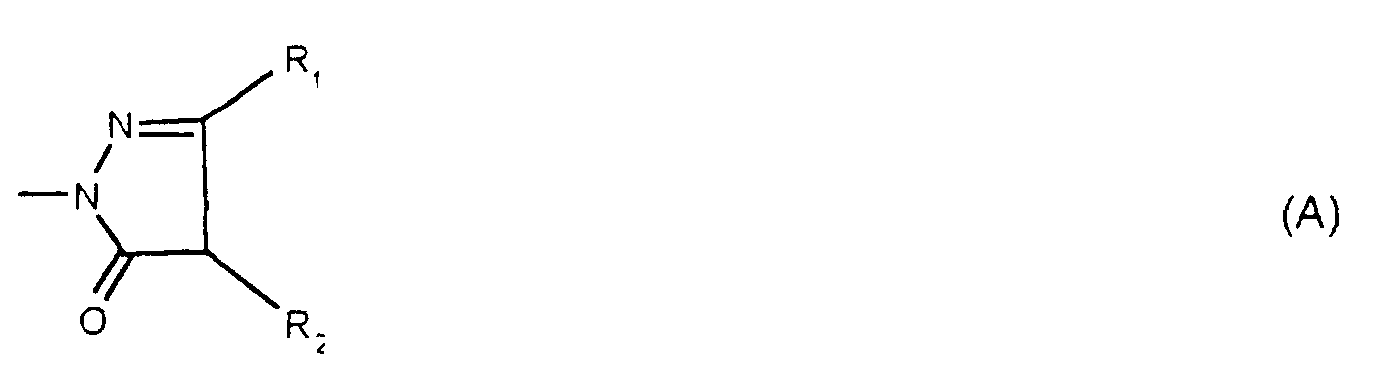
R1 is hydrogen, lower alkyl, phenyl or carboxy; and
R2 is hydrogen, phenylazo or naphthylazo wherein the phenyl or naphthtyl is unsubstituted or substituted by one or more substituents selected from the group comprising halo, hydroxy, carboxy, nitro and sulfo, with at least one hydroxy or
carboxy substituent in ortho-position to the azo group,
each of m and n is, independently of the other, 1, 2, 3 or 4; and - Q is selected from the group comprising
- (a) amino,
- (b) nitro,
- (c) a radical of the partial formula (B),
G is selected from the group comprising unsubstituted or oxo substituted lower alkanoyl; benzoyl; phenylaminocarbonyl wherein the phenyl is unsubstituted or substituted by (hydroxy and/or carboxy-substituted phenyl)azo; and naphthylaminocarbonyl
wherein naphthyl is unsubstituted or substituted by one or more substituents selected from the group comprising hydroxy, sulfo, phenylazo and phenylazo wherein phenyl is substituted by one or more substituents independently selected from the group comprising hydroxy, carboxy, nitro or sulfo, - (d) a radical of any one of the partial formulae (C), (D) and (E)
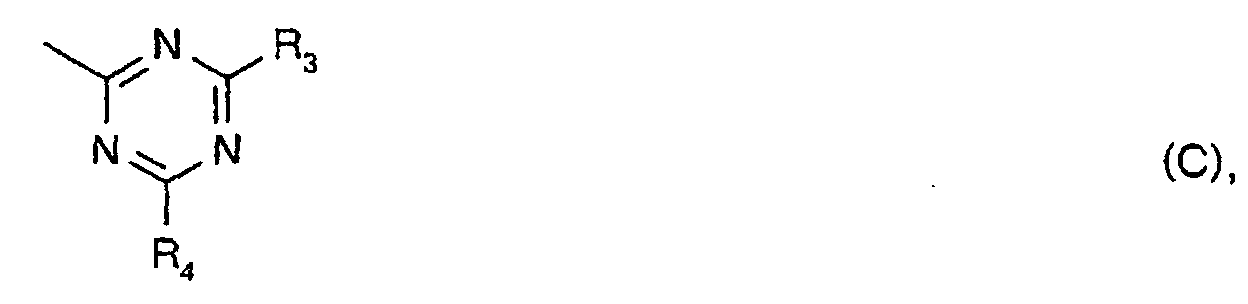
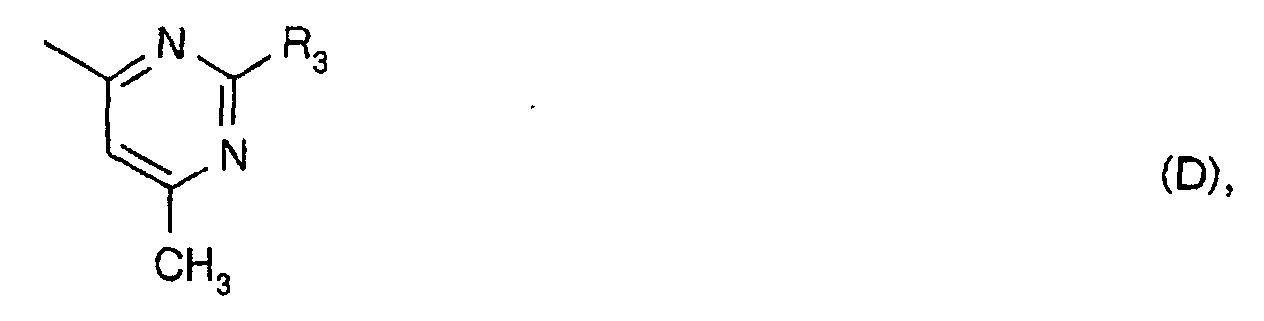 wherein
R3 is selected from the group comprising - (i) a radical of the partial formula (F)
wherein

A' is -CH2-CH2- or -CH=CH-,
D' is hydrogen, sulfo or a radical of the partial formula (A)wherein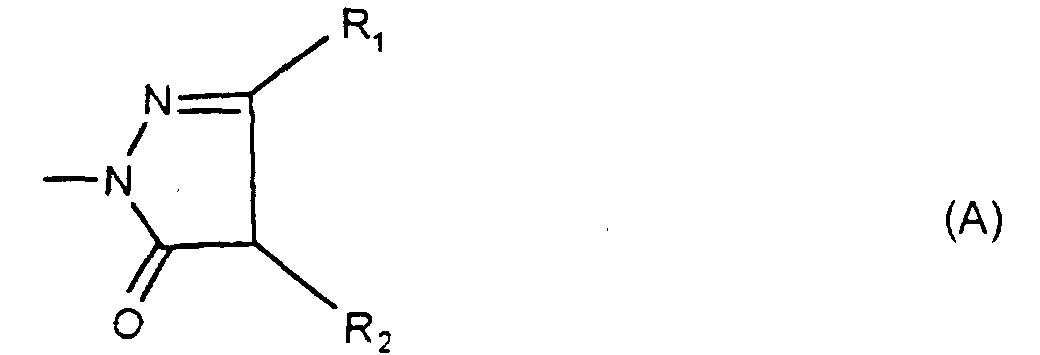
R1 is hydrogen, lower alkyl, phenyl or carboxy; and
R2 is hydrogen, phenylazo or naphthylazo wherein the phenyl or napthtyl is unsubstituted or substituted by one or more substituents selected from the group comprising halo, hydroxy, carboxy, nitro and sulfo,
and each of m' and n' is 1, 2, 3 or 4, - (ii) phenylamino wherein phenyl is subsituted by sulfophenylazo, by (hydroxy and/or carboxy)phenylazo, by methyl and 3-methyl-4-[(mono- or di-sulfo)naphthylazo-]-phenylazo or by [2-(phenylazo)-2-(acetyl)-acetyl]amino; and
- (iii) naphthylamino wherein naphthyl is substituted by up to four radicals selected from the group comprising hydroxy, sulfo, (hydroxy and/or chloro-substituted phenyl)azo, (carboxy-substituted phenyl)azo and (hydroxy and/or nitro-substituted phenyl)azo, and
- (e) a radical of the partial formula (G)
wherein

A" is -CH2-CH2- or -CH=CH-,
D" is a radical of the partial formula (A)wherein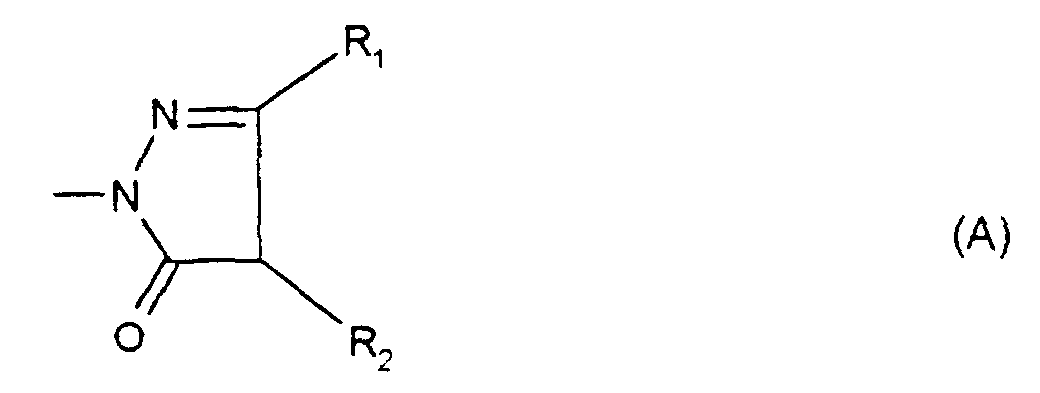
R1 is hydrogen, lower alkyl, phenyl or carboxy; and
R2 is hydrogen, phenylazo or naphthylazo wherein the phenyl or napthtyl is unsubstituted or substituted by one or more substituents selected from the group comprising halo, hydroxy, carboxy, nitro and sulfo,
and each of m" and n" is 1, 2, 3 or 4, - (f) a radical of the partial formula (H)
and
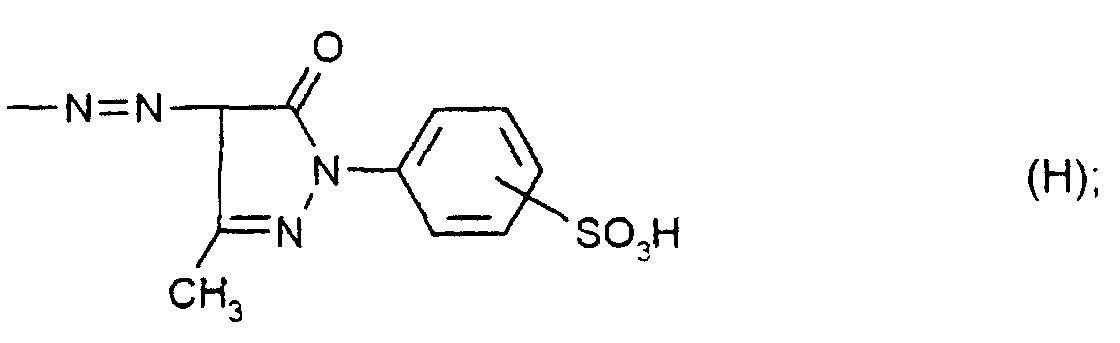
- (g) a radical of the partial formula (K),
wherein

A''' is -CH2-CH2- or -CH=CH-;
D''' is a radical of the partial formula (A),wherein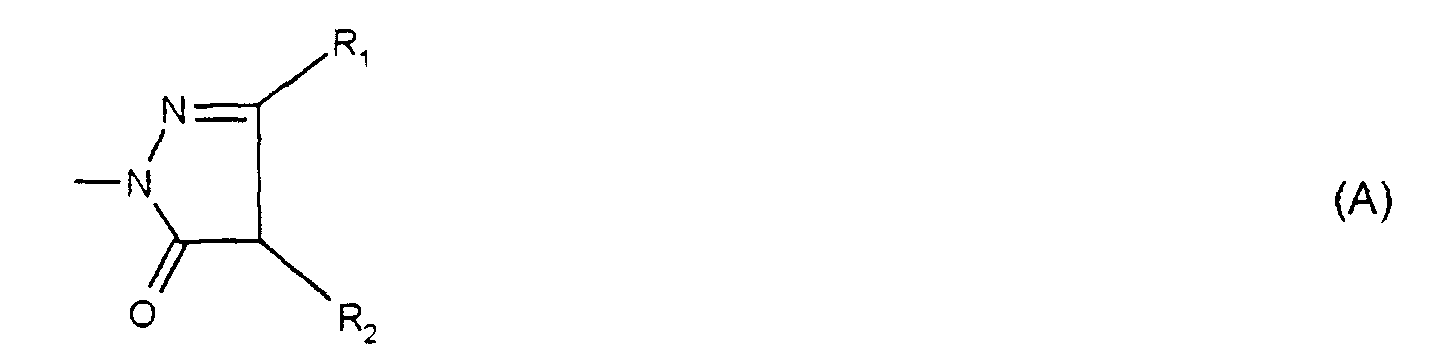
R1 is hydrogen, lower alkyl, phenyl or carboxy; and
R2 is hydrogen, phenylazo or naphthylazo wherein the phenyl or naphthtyl is unsubstituted or substituted by one or more substituents selected from the group comprising halo, hydroxy, carboxy, nitro and sulfo, with at least one hydroxy or carboxy substituent in ortho-position to the azo group, and
each of m''' and n''' is 1, 2, 3 or 4;
or a tautomer thereof; or a salt or a complex salt thereof where at least one salt-forming or
complex-forming group is present. -
- Unless otherwise indicated, the general terms and names used in the description of the present invention preferably have the following meanings:
- The term "lower" defines a moiety with up to and including maximally 7, especially up to and including maximally 4, carbon atoms, said moiety being branched or straight-chained. Lower alkyl, for example, is methyl, ethyl, n-propyl, sec-propyl, n-butyl, isobutyl, sec-butyl, tert-butyl, n-pentyl, n-hexyl or n-heptyl.
- Halo is preferably fluoro, chloro, bromo or iodo, especially chloro.
- The compounds of formula I can exist as isomers or mixtures of isomers; for example, if one or more asymmetric carbon atoms are present, these carbon atoms can be in the (R)-, (S)-or (R,S)-configuration, independent of one another; and/or, if one or more double bonds are present in A, A' and/or A", these can be present in the cis/trans, the cis or (preferably) the trans form. It is thus possible to obtain isomeric mixtures, such as racemates or diastereomeric mixtures, or pure diastereomers or enantiomers, depending on the number of asymmetric carbon atoms and on whether isomers or isomeric mixtures are present. Preferred are pure stereoisomers (pure enantiomers, pure diastereomers or pure trans-isomers).
- A is preferably -CH=CH-, which is most preferably present in the trans-configuration.
- In a radical of the partial formula (A) lower alkyl R1 is preferably methyl and R2 is preferably hydrogen, 5-chloro-2-hydroxy-phenylazo, 2-hydroxy-4-nitro-phenylazo, 2-hydroxy-5-sulfo-phenylazo, 2-carboxy-phenylazo or 2-hydroxy-4-sulfo-1-naphthylazo.
- Each of m and n is preferably 1, the corresponding sulfo group being bonded preferably in the o-position with regard to the bivalent radical -A- in formula I.
- If Q is a radical of the partial formula (B) then G is preferably selected from the group consisting of lower alkanoyl, especially acetyl; acetoacetyl; benzoyl; phenylaminocarbonyl; 4-[3-carboxy-4-hydroxy-phenylazo]-phenylaminocarbonyl, 2-(5-hydroxy-7-sulfo-naphthyl)-aminocarbonyl, 2-[5-hydroxy-6-(2-hydroxy-5-sulfo-phenylazo)-7-sulfo-naphthyl]-aminocarbonyl, 2-[5-hydroxy-6-(2-carboxy-phenylazo)-7-sulfo-naphthyl]-aminocarbonyl and 2-[5-hydroxy-6-(2-hydroxy-5-nitro-phenylazo)-7-sulfo-naphthyl]-aminocarbonyl.
- In a preferred radical of formula (C), (D) or (E), R3 is preferably selected from
- (i) a radical of the partial formula (F)
wherein

A' is -CH=CH-, preferably in the trans form,
D' is hydrogen, sulfo or a radical of the partial formula (A)
wherein
R1 is hydrogen, phenyl, carboxy or preferably methyl; and R2 is hydrogen, 5-chloro-2-hydroxy-phenylazo, 2-hydroxy-4-nitro-phenylazo, 2-hydroxy-5-sulfo-phenylazo, 2-carboxy-phenylazo or 2-hydroxy-4-sulfo-1-naphthylazo,
and each of m' and n' is 1, the corresponding sulfo groups preferably being bonded in o-position with regard to the bivalent radical -A'-; - (ii) phenylamino wherein phenyl is substituted by 4-sulfo-phenylazo, preferably in the p-position, by 3-carboxy-4-hydroxy-phenylazo, preferably in the p-position, by methyl in 3-position and by 3-methyl-4-[(4,8-disulfo)-2-naphthylazo-]-phenylazo in 4-position or by [2-(phenylazo)-2-(acetyl)-acetyl]amino, preferably in the p-position; and
- (iii) 1-(3,6-disulfo-naphthyl)amino, 1-(8-hydroxy-3,6-disulfo-naphthyl)amino, 2-(5-hydroxy-7-sulfo-naphthyl)amino, 1-(8-hydroxy-5-(2-hydroxy-5-chloro-phenylazo)-6-sulfo-naphthyl)amino, 1-(7-(2-carboxyphenylazo)-8-hydroxy-3,6-disulfo-naphthyl)-amino, 1-(8-hydroxy-7-(2-hydroxy-4-nitro-phenylazo)-3,6-disulfo-naphthyl)amino or 2-(8-hydroxy-7-(2-hydroxy-5-nitro-phenylazo)-6-sulfo-naphthyl)-amino, and
-
- If Q is a radical of the partial formula (G), then preferably in formula (G)
- A" is -CH=CH-,
- D" is hydrogen, sulfo or a radical of the partial formula (A) wherein
R1 is hydrogen, phenyl, carboxy or preferably methyl; and
R2 is hydrogen, 5-chloro-2-hydroxy-phenylazo, 2-hydroxy-4-nitro-phenylazo, 2-hydroxy-5-sulfo-phenylazo, 2-carboxy-phenylazo or 2-hydroxy-4-sulfo-1-naphthylazo,
and
each of m" and n" is 1, the corresponding sulfo groups preferably being bonded in o-position with regard to the bivalent radical -A"-. -
- If Q is a radical of the partial formula (H), then preferably in formula (H) the sulfo group is in p-position.
- If Q is a radical of the partial formula (K), then preferably in formula (K)
- A''' is -CH=CH-,
- D''' is hydrogen, sulfo or a radical of the partial formula (A) wherein
R1 is hydrogen, phenyl, carboxy or preferably methyl; and
R2 is hydrogen, 5-chloro-2-hydroxy-phenylazo, 2-hydroxy-4-nitro-phenylazo, 2-hydroxy-5-sulfo-phenylazo, 2-carboxy-phenylazo or 2-hydroxy-4-sulfo-1-naphthylazo, and
each of m''' and n''' is 1, the corresponding sulfo groups preferably being bonded in o-position with regard to the bivalent radical -A"'-. -
- The compounds of formula I can exist in the form of tautomers that result from the intramolecular migration of protons. A tautomer of the formula I is especially one wherein any group of the formula (A) is present in the following tautomeric form:wherein R1 and R2 have the meanings given for a compound of formula I.
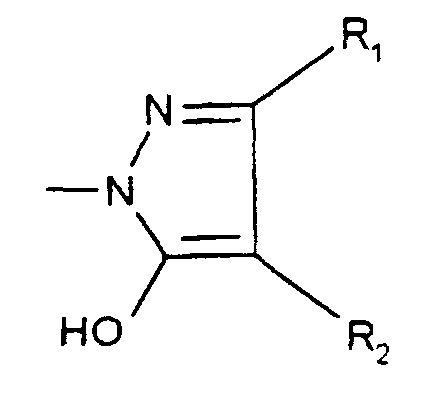
- In analogy, a group of the formula (H) may be present in the hydroxy form instead of the oxo-form.
- These and other tautomeric forms may be present in pure from or as mixtures, depending on the properties of the corresponding compound of formula I, e.g. in the form of equilibrium mixtures. The presence and possible conditions for the existence of these tautomers or further tautomers are known to the person having skill in the art. Any of these tautomers are comprised by the definition of compounds of formula I.
- Salts are preferably pharmaceutically acceptable salts of compounds of formula I.
- Such salts are formed preferably from compounds of formula I having an acid group, for example a carboxy group or a sulfo group, and are, for example, salts thereof with suitable bases, such as non-toxic metal salts derived from metals of groups la, Ib, IIa and llb of the Periodic Table of the Elements, especially suitable alkali metal salts, for example lithium, sodium or potassium salts, or alkaline earth metal salts, for example magnesium or calcium salts, also zinc salts or ammonium salts, as well as salts formed with organic amines, such as unsubstituted or hydroxy-substituted mono-, di- or tri-alkylamines, especially mono-, di- or tri-lower alkylamines, or with quaternary ammonium compounds, for example with N-methyl-N-ethylamine, diethylamine, triethylamine, mono-, bis- or tris-(2-hydroxy-lower alkyl)-amines, such as mono-, bis- or tris-(2-hydroxyethyl)amine, 2-hydroxy-tert-butylamine or tris-(hydroxymethyl)methylamine, N,N-di-lower alkyl-N-(hydroxy-lower alkyl)-amines, such as N,N-dimethyl-N-(2-hydroxyethyl)-amine or tri-(2-hydroxyethyl)-amine, N-methyl-D-glucamine, or quaternary ammonium salts, such as tetrabutylammonium salts. The compounds of formula I having a basic group, for example an amino group, can form acid addition salts, for example with inorganic acids, for example hydrohalic acids, such as hydrochloric acid, sulfuric acid or phosphoric acid, or with organic carboxylic, sulfonic, sulfo or phospho acids or N-substituted sulfamic acids, for example acetic acid, propionic acid, glycolic acid, succinic acid, maleic acid, hydroxymaleic acid, methyl maleic acid, fumaric acid, malic acid, tartaric acid, gluconic acid, glucaric acid, glucuronic acid, citric acid, benzoic acid, cinnamic acid, mandelic acid, salicylic acid, 4-aminosalicylic acid, 2-phenoxybenzoic acid, 2-acetoxybenzoic acid, embonic acid, nicotinic acid or isonicotinic acid, as well as with amino acids, for example the a-amino acids mentioned hereinbefore, especially glutamic acid and aspartic acid, and with methanesulfonic acid, ethanesulfonic acid, 2-hydroxyethanesulfonic acid, ethane-1,2-disulfonic acid, benzenesulfonic acid, 4-methylbenzenesulfonic acid, naphthalene-2-sulfonic acid, 2- or 3-phosphoglycerate, glucose-6-phosphate, N-cyclohexylsulfamic acid (forming cycla mates) or with other acidic organic compounds, such as ascorbic acid. A compound of formula I with acid and basic groups can also form internal salts.
- For isolation, diagnostic (in vitro) or purification purposes, it is also possible to use pharmaceutically unaccept able salts, for example perchlorates or picrates. Also in the case of a novel compound of fomula I, a pharmaceutically unacceptable salt is encompassed by the present invention.
- A complex salt of a compound of formula I is preferably a pharmaceutically acceptable complex salt and may be formed, for example, if a group comprising an o-hydroxyphenyl-azo or o-carboxyphenyl-azo group is present. The possible metal ions include but are not limited to copper, nickel, cobalt, manganese and comparable ions. In the case of a novel compound of fomula I, also a pharmaceutically unacceptable complex salt is encompassed by the present invention.
- The term "comprising" preferably can be replaced with the expression "consisting essentially of", more preferably with "consisting of".
- Where the term compound of formula I is used herein, this term is intended to mean either the compound as such or, where appropriate and useful, also to include a tautomer thereof, a salt thereof or a complex salt thereof.
- The compounds of formula I have useful, in particular pharmacologically useful, properties. Surprisingly, it has been found that the compounds of formula I are able to inhibit the propagation of a retrovirus, especially HIV, especially HIV-1, especially in infected human lymphocytes and show a particularly potent, specific inhibition on the binding of the Tat protein to TAR. In addition compounds of formula I have been found to suppress Tat-mediated activation of cellular co-receptors for HIV. They thus represent a new class of inhibitors and therapeutics.
- The in vitro inhibition of the interaction between Tat and TAR can be shown by a competition Tat-TAR gel-shift assay. Through binding of the protein (recombinant Tat, Medical Research Council (MRC), Cambridge, U.K. - for the sequence of recombinant Tat see Churcher et al., J. Mol. Biol. 230, 90-110 (1993)) to the RNA (synthetic TAR duplex, Genset, Paris, France; for the sequence see Hamy et al., J. Mol. Biol. 230, 111-123 (1993)), the overall size and the charge/weight ratio of the formed duplex are changed, so that electrophoretic migration through a native polyacrylamide gel is affected. By radioactive labelling of the RNA and subsequent autoradiography, free RNA and complexes can be discriminated based on their relative positions in the gel (Hamy et al., J. Mol. Biol. 230, 111-123 (1993)). If the binding reaction with a test substance is able to prevent the protein binding to the radiolabelled RNA, this competition for binding can be visualized on the autoradiography as a decreased intensity of the retarded band. In more detail, compounds of the formula I are tested as follows:
- The 14-mer strand of duplex TAR-RNA is labelled in the presence of T4 polynucleotide kinase (New England Biolabs, Beverly, MA, USA) using [γ-32P]ATP (Amersham, Little Chalfont, UK), 10 mM DTT (=dithiothreitol), 50 mM Tris.HCI (pH 7.4, Tris = Tris(hydroxymethyl)aminomethane), 0.77 % (w/v) spermidine (Fluka, Switzerland) and 10 units T4 polynucleotide kinase incubated at 37 °C for 20 min. After heat-treatment (65 °C, 10 min) for enzyme inactivation, the unincorporated [γ-32P]ATP is removed by chromatography through a Sephadex NAP-10 column (Pharmacia, Uppsala, Sweden) equilibrated with water. Prior to the in-vitro-binding reaction, the labelled 14-mer is annealed to 1.5 equivalents of unlabelled 17-mer by heating to 90 C for 3 min, followed by slow cooling down to 0 °C. The binding reaction for protein and RNA which takes place in a volume of 25 ml contains approximately 10,000 cpm of the labelled duplex TAR-RNA and 20 nM recombinant Tat protein in TK buffer (Tris.HCI 20 mM pH 8.0, KCI 50 mM) with 10 mM DTT, 0.1 % Triton X-100 ((Alkylphenylpolyethylenglykol, Rohm & Haas, Darmstadt, Germany) in the absence or presence of varying concentrations of inhibitor. The autoradiographies are quantified by Phosphorimager (Molecular Dynamics/Bucher, Basle, Switzerland). A CD50 value is determined as the concentration of a compound of the formula I giving a 50 % decrease in the intensity of the retarded band (Tat-TAR complex). The CD50-values that are obtained are preferably in the range of from 10 x 10-9 to 10 x 10-6 M, more preferably from 10 x 10-9 to 0.5 x 10⁻⁶ M.
- It is possible to show that similar binding affinity can be found when wild-type unlabelled TAR-RNA is used as competitor, thus suggesting that the compounds of the present invention have affinities comparable to that of the high molecular weight full-length Tat protein in vitro.
- The in vitro inhibition of cellular coreceptor expression through HIV Tat can be shown by using reverse transcription of the RNA for the coreceptor, followed by a specific amplification through polymerase chain reaction (RT-PCR). Unstimulated peripheral leukocytes from healthy human donors, not expressing significant amounts of coreceptor RNA, i.e. CXCR4, are incubated with recombinant Tat protein (Huang, L., et al. J. Virol 72, 8952-8960, (1998)). Within five hours, cells upregulate coreceptor expression, whereas untreated cells show no expression. The specific signal for the coreceptor is detected by RT-PCR-amplification of the respective RNA after RNA purification from treated cells (TRIZOL method, Life Technologies, Paisley, UK) Cellular activation with HIV-1 Tat in the presence of said stilbene inhibitor does not result in the production of a specific PCR product. This serves as direct evidence for the suppression of Tat-mediated stimulation of coreceptor-expression by said inhibitor, independently of other viral molecules. Specifically, inhibitory activity of said compound class was measured as reduction of the PCR signal to levels of the control sample, which was not treated with HIV-1 Tat.
- The in vitro inhibition of the interaction between Rev and RRE can be shown by a competition Rev-RRE gel-shift assay. Through binding of the protein (recombinant Rev, Medical Research Council (MRC), Cambridge, U.K. - for the sequence of recombinant Rev see Heaphy et al., Cell 60, 685-93 (1993)) to the RNA (synthetic RRE duplex, Genset, Paris, France; for the sequence see Iwai et al., Nucl. Acids Res. 20, 6465-72 (1992)), the overall size and the charge/weight ratio of the formed duplex are changed, so that electrophoretic migration through a native polyacrylamide gel is affected. By radioactive labelling of the RNA and subsequent autoradiography, free RNA and complexes can be discriminated based on their relative positions in the gel (Hamy et al., J. Mol. Biol. 230, 111-123 (1993)). If the binding reaction with a substance is able to prevent the protein binding to the radiolabelled RNA, this competition for binding can be visualized on the autoradiography as a decreased intensity of the retarded band. In more detail, compounds of the formula I are tested as follows:
- The 14-mer strand of duplex RRE-RNA is labelled in the presence of T4 polynucleotide kinase (New England Biolabs, Beverly, MA, USA) using [γ-32P]ATP (Amersham, Little Chalfont, UK), 10 mM DTT (=dithiothreitol), 50 mM Tris.HCI (pH 7.4, Tris = Tris(hydroxymethyl)-aminomethane), 0.77 % (w/v) spermidine (Fluka, Switzerland) and 10 units T4 polynucleotide kinase incubated at 37 °C for 20 min. After heat-treatment (65 °C, 10 min) for enzyme inactivation, the unincorporated [γ-32P]ATP is removed by chromatography through a Sephadex NAP-10 column (Pharmacia, Uppsala, Sweden) equilibrated with water. Prior to the in-vitro-binding reaction, the labelled 14-mer is annealed to 1.5 equivalents of unlabelled 15-mer by heating to 90 C for 3 min, followed by slow cooling down to 0 °C. The binding reaction for protein and RNA which takes place in a volune of 25 ml contains approximately 10,000 cpm of the labelled duplex RRE-RNA and 20 nM ecombinant Rev protein in TK buffer (Tris.HCI 20 mM pH 8.0, KCl 50 mM) with 10 mM DTT, 0.1 % Triton X-100 ((Alkylphenylpolyethylenglykol, Rohm & Haas, Darmstadt, Germany) in the absence or presence of varying concentrations of inhibitor. The autoradiographies are quantified by Phosphorimager (Molecular Dynamics/Bucher, Basle, Switzerland). An IC50 value is determined as the concentration of a compound of the formula I giving a 50 % decrease in the intensity of the retarded band (Rev-RRE complex). It is possible to show that similar binding affinity can be found when wild-type unlabelled TAR-RNA is used as competitor, thus suggesting that the compounds of the present invention have affinities comparable to that of the high molecular weight full-length Rev protein in vitro.
- In addition, the inhibition of viral growth of HIV-1 in cellular systems in vitro can be demonstrated by procedures known in the art, e.g. according to the method described in Lazdins et al., AIDS Research and Human Retroviruses 8(4), 505-11 (1992). In brief, Peripheral Blood Mononuclear Lymphocytes (PBLs) are obtained from the blood of healthy volunteers by leukapheresis. Cells (1 x 10⁶/ml) are cultured for 2 days in RPMI-1640 (Gibco), supplemented with 10 % heat-inactivated fetal calf serum (Gibco), 50 mg/ml streptomycin, 50 U/ml penicillin (Amimed), 2 nM glutamine and 10 mM hepes buffer (Gibco). Stimulated lymphocytes are obtained by culturing in the presence of PHA (0.25 mg/ml; Wellcome diagnostics, Templehill, Dartford, England). PHA-lymphocyte stimulation is confirmed by the increase in cell size (Scattergram, FACS analysis). Cells are exposed to HIV-1/LAV.04 (see Barre-Sinoussi et al., Science 220, 868-871 (1983)) for 6 h. Following infection, the cells are washed and resuspended in RPMI-1640 (see above) supplemented with human IL-2 (Genzyme, Cambridge, MA) at 0.6 x 10⁶/ml. Medium is changed every 3 days and activity of viral reverse transcriptase (RT activity) is determined in cell supernatants, serving as a measure for the presence of virus and thus of progression of infection according to known procedures (see Willey et al., J. Virol. 62, 353-8 (1991) for details of the method). In brief, RT determination is possible as follows: The RT activity is determined in 50mM Tris (α,α,α--tris(hydroxymethyl)methylamine, ultra pure, Merck, Federal Republic of Germany) pH 7.8; 75mM of KCl, 2mM of dithiothreitol, 5mM of MgCl2; 0.05% Nonidet P-40 (detergent; Sigma, Switzerland); 50 µg/ml of polyadenylic acid (Pharmacia, Sweden); and 1.6 µg/ml of dT(12-18) (Sigma, Switzerland). The mixture is filtered through an Acrodisc filter (0.45µ: Gellman Science Inc, Ann Arbor) and stored at -20°C. 0.1% (v/v) [α-32P]dTTP is added to aliquots of that solution in order to achieve a final radioactive activity of 10µCi/ml. 10µl of the culture supernatant are transferred to a new 96-well microtitre plate and 30µl of the mentioned RT cocktail are added thereto. After mixing, the plate is incubated for from 1.5 to 3hours at 37°C. 5 µl of that reaction mixture are transferred to Whatman DE81 paper (Whatman, Maidstone, UK). The dried filters are washed three times for 5 minutes with 300 mM of NaCl/25mM of trisodium citrate and once with 95% ethanol and again air-dried. Evaluation is effected in a Matrix Packard 96-well counter (Packard, Downers Grove, IL, USA). The RT activity is a measure of the reproduction of HIV-1. The compounds of formula I inhibit virus reproduction when administered in the micromolar range, for example during 17 days after infection practically no increase in RT activity can be determined in the presence of preferably 5 to 50 µM concentrations of an inhibitor of the present invention (for example 0 to 100 counts per minute), while in the control high increase of RT activity can be found (for example more than 9000 counts per minute on day 17). The ED90 is defined as that concentration of compound at which 90 % reduction of RT activity versus the untreated control is observed.
- Cellular toxicity experiments are conducted with human Peripheral Blood Lymphocytes or macrophages. No cytotoxicity is observed with concentrations up to 100 µM (highest tested concentration of compound of formula I), even in the case of repeated dosing with each change of cultrue medium.
- After single application of up to 50 mg/kg by i.v. administration to mice no signs of overt toxicity are observed during 8 days of observation. In detail, the assay is conducted as follows: The assay is designed for the determination of the maximal tolerated dose (MTD) For the MTD determination, three six to eight week old female Balb/c AnCbif Tif mice (Ciba animal farm, Sisseln, Switzerland) per dose group are treated once i.v. The dosage is increased until toxic effects are observed within 7 days after drug treatment. After 7 days the animals are euthanasized and organs are macroscopically inspected. The MTD is the dose where all three animals still survive. For example, when the compounds of examples 2 or 4, trans-5-(Acetoacetylamino)-2-[2-{4-(4,5-dihydro-3-methyl-5-oxo-1H-pyrazol-1-yl)-2-sulfophenyl]ethenyl]-benzenesulfonic acid or N,N'-Bis(trans-4-{2-[4-(3-methyl-5-oxo-4,5-dihydro-1H.-pyrazol-1-yl)-2-sulfo-phenyl]-vinyl}-2-sulfophenyl)-[1,3,5]triazine-2,4,6-triamine, are dissolved in sterile sodium chloride solution 0.9%, the MTD after i.v. administration is > 50 mg/kg.
- It can be shown that inhibition by a compound of formula I is mainly due to its ability to permeate into cells, a fact that can be demonstrated by a Fusion Induced Gene Stimulation Assay (FIGS-assay) that can also assess cell surface effects and be used to determine the underlying mechanism(s) of action.
- The compounds of formula I can thus, for example, be used in the treatment of retroviral diseases in warm-blooded animals which diseases are responsive to the inhibition of the interaction of transcriptional regulators with retroviral response elements, preferably HIV-, such as HIV-1-, infections which are responsive to the inhibition of the interaction between Tat and TAR and/or Rev and RRE or by blocking additional functions of these small HIV proteins, such as activating cellular HIV-promoting processes, especially of activation of cellular coreceptors for HIV; and more specifically for the treatment of AIDS and its initial stages, such as ARDS, in humans by inhibition of the interaction between Tat and TAR and/or Rev and RRE of HIV-1.
- Also treatment of infected cells, e.g. lymphocytes, outside the body is possible in order to reintroduce healthy cells by transplantantion or injection, for example in order to improve the lymphocyte titer in patients with advanced AIDS.
- The compounds of formula I can also be used in the treatment of commercially valuable cell (such as lymphocyte) cultures against retroviral infections, especially against HIV, such as HIV-1, infections. This is of special advantage where, for example, special antibodies, vaccines or signaling molecules, such as interleukines or the like, are produced from such cells which are, therefore, of large commercial value.
- Cells from infected cells can be treated in analogy to the method described above for Peripheral Blood Mononuclear Lymphocytes (PBLs).
- In general, the present invention relates also to the use of a compound of formula I in the inhibition of the interaction of transcriptional regulators with retroviral response elements, especially as mentioned above, or to a method wherein a compound of formula I is used to inhibit the interaction of transcriptional regulators with retroviral response elements. The invention also relates to the use of a compound of formula I in the inhibition of cellular pathways directly responsive to viral transactivators, i.e. HIV Tat, especially cellular coreceptors, which are essential for HIV infection, such as CXCR4 (Alkhatib, G, et al. Science 272, 1955 (1996); Feng, Y., et al. Science 272, 872 (1996)).
- The compounds of the invention may be used either on their own or in combination - either as fixed combinations or by separate administration of the single active ingredients or combinations thereof in combination, e.g. in a chronically staggered manner, with other pharmacologically active substances, for example together with inhibitors of reverse transcriptase (especially nucleoside analogues, especially 3'-azido-3'-deoxypyrimidine (= Zidovudine = ®RETROVIR, Burroughs-Wellcome), 2',3'-dideoxycytidine (= Zalcitabine = ®HIVID, Hoffmann-LaRoche), 2',3'-dideoxyinosine (= Didanosine = ®VIDEX, Bristol-Myers-Squibb) or (2R,cis)-4-amino-1- (2-hydroxymethyl-1,3-oxathiolan-5-yl)-(1H)-pyrimidin-2-one (= Lamivudine, Glaxo), or non-nucleoside analogues, such as 11-cyclopropyl-5,11-dihydro-4-methyl-(6H)-dipyrido [3,2-b;2',3'-e]-[1,4]diazepin-6-one); and/or inhibitors of retroviral aspartate proteases (especially (a) an inhibitor mentioned in EP 0 346 847 (published on Dec. 20, 1989) and EP 0 432 695 (published on June 19, 1991); corresponds to US 5,196,438), especially Ro 31-8959 (= Saquinavir; Hoffmann-LaRoche); (b) an inhibitor mentioned in EP 0 541 168 (published on May 12, 1993; corresponds to US 5,413,999), especially L-735,524 (= Indinavir = ®CRIXIVAN; Merck & Co., Inc.); (c) an inhibitor mentioned in EP 0 486 948 (published on May 27, 1992; corresponds to US 5,354,866), especially ABT-538 (= Ritonavir; Abbott)); (d) a compound named KVX-478 (or VX-478 or 141W94; GlaxoWellcome, Vertex und Kissei Pharmaceuticals); (e) a compound named AG-1343 (Agouron); (f) a compound named KNI-272 (Nippon Mining); (f) a compound named U-96988 (Upjohn); and/or a compound named BILA-2011 BS (= Palinavir; Boehringer-Ingelheim); or in each case a salt thereof where a salt forming group is present.
- In the case of the preferred subjects of the invention mentioned hereinafter, instead of the general expressions there may be used the more specific definitions mentioned at the beginning, where appropriate and expedient.
- The invention preferably relates to the use of a compound of formula I, a tautomer thereof, a (preferably pharmaceutically acceptable) salt or a (preferably pharmaceutically acceptable) complex salt thereof as described hereinbefore anc hereinafter as an inhibitor of the interaction of a transcriptional regulator with a retroviral response element, more preferably as an inhibitor of the interaction between a transcriptional regulator of HIV with a retroviral response element of HIV, especially as an inhibitor for the interaction between HIV-1 Tat and TAR and/or the interaction between HIV-1 Rev and RRE; especially in cells outside the body of a warm-blooded animal including a human, but also in a warm-blooded animal, including a human; or to the use of a compound of formula I, a tautomer thereof, a (preferably pharmaceutically acceptable) salt or a (preferably pharmaceutically acceptable) complex salt thereof as decribed hereinbefore and hereinafter for the manufacture of a pharmaceutical preparation for the inhibition of the interaction of a transcriptional regulator with a retroviral response element, more preferably as an inhibitor of the interaction between a transcriptional regulator of HIV with a retroviral response element of HIV, especially as an inhibitor for the interaction between HIV-1 Tat and TAR or by blocking additional functions of these small HIV proteins, such as activating cellular HIV-promoting processes, especially of cellular coreceptors for HIV and/or the interaction between HIV-1 Rev and RRE; especially in cells outside the body of a warm-blooded animal including a human, but also in a warm-blooded animal, including a human.
- The invention preferably also relates to a method of inhibiting the interaction of a transcriptional regulator with a retroviral response element, more preferably the interaction between a transcriptional regulator of HIV with a retroviral response element of HIV, especially the interaction between HIV-1 Tat and TAR or inhibiting additional specific functions of Tat, such as activating cellular HIV-promoting processes, especially expression of cellular coreceptors for HIV, especially CXCR4, and/or the interaction between HIV-1 Rev and RRE, in a human being, wherein a compound of formula I, a tautomer thereof, a (preferably pharmaceutically acceptable) salt or a (prefereably pharmaceutically acceptable) complex salt thereof as described hereinbefore and hereinafter is administered especially to a warm-blooded animal, including a human, in need of such treatment or to a cell outside the body of a warm-blooded animal , especially outside the human body, in need of such treatment, in an amount that is sufficient for inhibiting said interaction. In the case of inhibition in cells outside a warm-blooded animal, administtration to cells is e.g. under routine conditions.
- The invention preferably also relates to the use of a compound of formula I, a tautomer thereof, a (preferably pharmaceutically acceptable) salt or a (preferably pharmaceutically acceptable) complex salt thereof as described hereinbefore and hereinafter for the treatment of a virus disease, especially a retroviral infection, such as an HIV infection, most especially an HIV-1 infection, especially in cells outside the body of a warm-blooded animal including a human, but also in a warm-blooded animal, including a human; or to the use of a compound of formula I, a tautomer thereof, a (preferably pharmaceutically acceptable) salt or a (preferably pharmaceutically acceptable) complex salt thereof as decribed hereinbefore and hereinafter for the manufacture of a pharmaceutical preparation for the treatment of a virus disease, especially a retroviral infection, such as an HIV infection, most especially an HIV-1 infection, especially in cells outside the body of a warm-blooded animal including a human, but also in a warm-blooded animal, including a human.
- The invention preferably also relates to a method of treating a virus disease, especially a retroviral infection, such as an HIV infection, most especially an HIV-1 infection, especially in cells outside the body of a warm-blooded animal including a human, but also in a warm-blooded animal, including a human, wherein a compound of formula I, a tautomer thereof, a (preferably pharmaceutically acceptable) salt or a (prefereably pharmaceutically acceptable) complex salt thereof as described hereinbefore and hereinafter is administered especially to a warm-blooded animal, including a human, that is in need of such treatment, or to a cell outside the body of a warm-blooded animal, especially outside the human body, that is in need of such treatment, in an amount that is sufficient for the treatment of said disease.
- More particularly, the invention relates to the use of a compound of formula I, a tautomer thereof, a (preferably pharmaceutically acceptable) salt or a (preferably pharmaceutically acceptable) complex salt thereof as described hereinbefore and hereinafter as an antiretroviral therapeutic (also for prophylaxis with regard e.g. to uninfected cells) inhibiting the interaction of a transcriptional regulator with a retroviral response element, especially as a therapeutic against HIV-1 inhibiting the interaction of the Tat/TAR interaction or inhibiting additional functions of Tat, such as activating cellular HIV-promoting processes, especially of cellular coreceptors for HIV, especially CXCR4, especially in cells outside the body of a warm-blooded animal including a human, but also in a warm-blooded animal, including a human; or to the use of a compound of formula I, a tautomer thereof, a (preferably pharmaceutically acceptable) salt or a (preferably pharmaceutically acceptable) complex salt thereof as decribed hereinbefore and hereinafter for the manufacture of a pharmaceutical preparation useful as an antiretroviral therapeutic (also for prophylaxis with regard e.g. to uninfected cells) inhibiting the interaction of a transcriptional regulator with a retroviral response element, especially as a therapeutic against HIV-1 inhibiting the interaction of the Tat/TAR interaction or inhibiting additional specific functions of Tat, such as activating cellular HIV-promoting processes, especially expression of cellular coreceptors for HIV, especially CXCR4, especially in cells outside the body of a warm-blooded animal including a human, but also in a warm-blooded animal, including a human.
- More particularly, the invention also relates to a method of use of a compound of formula I, a tautomer thereof, a (preferably pharmaceutically acceptable) salt or a (preferably pharmaceutically acceptable) complex salt thereof as described hereinbefore and hereinafter, as an antiretroviral therapeutic inhibiting the interaction of a transcriptional regulator with a retroviral response element, especially as a therapeutic against HIV-1 inhibiting the interaction of the Tat/TAR interaction or inhibiting additional specific functions of Tat, such as activating cellular HIV-promoting processes, especially expression of cellular coreceptors for HIV, especially CXCR4,, comprising administering said compound of formula I, a tautomer thereof, a (preferably pharmaceutically acceptable) salt or a (preferably pharmaceutically acceptable) complex salt thereof as described hereinbefore and hereinafter, especially to a cell outside the body of a warm-blooded animal, including a human, that is in need thereof, in an amount that is effective in said inhibition but also in a warm-blooded animal, including a human, that is in need thereof, in an amount that is effective in said inhibihtion.
- The invention preferably also relates to a process for the manufacture of a pharmaceutical composition comprising a compound of formula I, a tautomer thereof, a pharmaceutically acceptable salt or a pharmaceutically acceptable complex salt thereof as described hereinbefore and hereinafter and a pharmaceutically acceptable carrier, for use as an inhibitor of the interaction of a transcriptional regulator with a retroviral response element, more preferably as an inhibitor of the interaction between a transcriptional regulator of HIV with a retroviral response element of HIV, especially as an inhibitor for the interaction between HIV-1 Tat and TAR or for additional specific functions of Tat, such as activating cellular HIV-promoting processes, especially expression of cellular coreceptors for HIV, especially CXCR4, and/or the interaction between HIV-1 Rev and RRE; for use in the treatment of a virus disease, especially a retroviral infection, such as an HIV infection, most especially an HIV-1 infection; or as an antiretroviral therapeutic (also for prophylaxis with regard e.g. to uninfected cells) inhibiting the interaction of a transcriptional regulator with a retroviral response element, especially as a therapeutic against HIV-1 inhibiting the interaction of the Tat/TAR interaction or additional specific functions of Tat, such as activating cellular HIV-promoting processes, especially expression of cellular coreceptors for HIV, especially CXCR4,; in a warm-blooded animal, especially a human, or in a cell outside the body of a warm-blooded animal, including a human; said process comprising admixing a compound of the formula i and at least a pharmaceutically acceptable carrier.
- The invention preferably also relates to a pharmaceutical preparation, comprising a compound of formula I, a tautomer thereof, a pharmaceutically acceptable salt or a pharmaceutically acceptable complex salt thereof as described hereinbefore and hereinafter and a pharmaceutically acceptable carrier, for use as an inhibitor of the interaction of a transcriptional regulator with a retroviral response element, more preferably as an inhibitor of the interaction between a transcriptional regulator of HIV with a retroviral response element of HIV, especially as an inhibitor for the interaction between HIV-1 Tat and TAR or of additional specific functions of Tat, such as activating cellular HIV-promoting processes, especially expression of cellular coreceptors for HIV, especially CXCR4, and/or the interaction between HIV-1 Rev and RRE; for use in the treatment of a virus disease, especially a retroviral infection, such as an HIV infection, most especially an HIV-1 infection; or as an antiretroviral therapeutic (also for prophylaxis with regard e.g. to uninfected cells) inhibiting the interaction of a transcriptional regulator with a retroviral response element, especially as a therapeutic against HIV-1 inhibiting the interaction of the Tat/TAR interaction or inhibiting additional specific functions of Tat, such as activating cellular HIV-promoting processes, especially expression of cellular coreceptors for HIV, especially CXCR4,; in a warm-blooded animal, especially a human, or in a cell outside the body of a warm-blooded animal, including a human.
- The invention prefereably also relates to a compound of formula I, a tautomer thereof, a pharmaceutically acceptable salt or a pharmaceutically acceptable complex salt thereof as described hereinbefore and hereinafter and a pharmaceutically acceptable carrier, for use in the treatment of the animal or human body, especially for use as an inhibitor of the interaction of a transcriptional regulator with a retroviral response element, more preferably as an inhibitor of the interaction between a transcriptional regulator of HIV with a retroviral response element of HIV, especially as an inhibitor for the interaction between HIV-1 Tat and TAR or for additional specific functions of Tat, such as activating cellular HIV-promoting processes, especially expression of cellular coreceptors for HIV, especially CXCR4, and/or the interaction between HIV-1 Rev and RRE; for use in the treatment of a virus disease, especially a retroviral infection, such as an HIV infection, most especially an HIV-1 infection; or as an antiretroviral therapeutic (also for prophylaxis with regard e.g. to uninfected cells) inhibiting the interaction of a transcriptional regulator with a retroviral response element, especially as a therapeutic against HIV-1 inhibiting the interaction of the Tat/TAR interaction or inhibiting additional specific functions of Tat, such as activating cellular HIV-promoting processes, especially expression of cellular coreceptors for HIV, especially CXCR4; in a warm-blooded animal, especially a human, or in a cell outside the body of a warm-blooded animal, including a human.
- Preferably, the compound to be used is a compound of formula I wherein
- A is -CH=CH-, preferably in the trans configuration;
- D is a radical of the partial formula (A),
wherein
R1 is hydrogen, lower alkyl, especially methyl, phenyl or carboxy, preferably methyl;
and
R2 is hydrogen, phenylazo or naphthylazo wherein the phenyl or naphthtyl is unsubstituted or substituted by one or more substituents selected from the group comprising halo, hydroxy, carboxy, nitro and sulfo, with at least one hydroxy or carboxy substituent in ortho-position to the azo group; especially selected from the group consisting of hydrogen, 5-chloro-2-hydroxy-phenylazo, 2-hydroxy-4-nitrophenylazo, 2-hydroxy-5-sulfo-phenylazo, 2-hydroxy-4-sulfo-1-naphthylazo and especially 2-carboxy-phenylazo;
each of m and n is 1, the corresponding sulfo group being preferably bonded in the o-position with regard to the bivalent radical -A- in formula I; and - Q is selected from the group consisting of
- (i) amino,
- (ii) a radical of the partial formula (B), wherein G is selected from the group comprising
unsubstituted or oxo substituted lower alkanoyl, especially acetoacetyl; a radical of the
partial formula (C)
wherein
R3 is a radical of the partial formula (F)
wherein
A' is -CH=CH-, preferably in the trans-configuration,
D' is hydrogen, sulfo or preferably a radical of the partial formula (A)
wherein
R1 is hydrogen, lower alkyl, especially methyl, phenyl or carboxy, preferably methyl; and
R2 is hydrogen, phenylazo or naphthylazo wherein the phenyl or naphthtyl is unsubstituted or substituted by one or more substituents selected from the group comprising halo, hydroxy, carboxy, nitro and sulfo, with at least one hydroxy or carboxy substituent in ortho-position to the azo group; especially selected from the group consisting of hydrogen, 5-chloro-2-hydroxy-phenylazo, 2-hydroxy-4-nitro-phenylazo, 2-hydroxy-5-sulfo-phenylazo, 2-hydroxy-4-sulfo-1-naphthylazo and especially 2-carboxy-phenylazo;
and each of m' and n' is 1, the corresponding sulfo group being preferably bonded in the o-position with regard to the bivalent radical -A- in formula I; and
R4 is halo, especially chloro, or amino,
and - (iii) a radical of the partial formula (K)
wherein
A''' is -CH=CH-, preferably in the trans-configuration,
D"' is hydrogen, sulfo or a radical of the partial formula (A) wherein
R1 is hydrogen, phenyl, carboxy or preferably methyl; and
R2 is hydrogen, phenylazo or naphthylazo wherein the phenyl or naphthtyl is unsubstituted or substituted by one or more substituents selected from the group comprising halo, hydroxy, carboxy, nitro and sulfo, with at least one hydroxy or carboxy substituent in ortho-position to the azo group; especially selected from the group consisting of hydrogen, 5-chloro-2-hydroxy-phenylazo, 2-hydroxy-4-nitro-phenylazo, 2-hydroxy-5-sulfo-phenylazo, 2-hydroxy-4-sulfo-1-naphthylazo and especially 2-carboxy-phenylazo;
and each of m''' and n''' is 1, the corresponding sulfo group being preferably bonded in the o-position with regard to the bivalent radical -A"'- in formula I,
or a tautomer thereof; or a (prefereably pharmaceutically acceptable) salt or a (preferably
pharmaceutically acceptable) complex salt thereof where at least one salt-forming or
complex-forming group is present. -
- Especially preferred is the use of a compound mentioned below in the Examples, or a tautomer thereof; or a pharmaceutically acceptable salt or a pharmaceutically acceptable complex salt thereof where at least one salt-forming or complex-forming group is present.
- The invention relates also to novel compounds of formula I and their salts and to the use thereof in the processes, methods and pharmaceutical compositions mentioned hereinbefore and hereinafter, and to pharmaceutical compositions comprising those compounds, especially the compounds mentioned below:
- Preferred among these compounds according to the invention is a compound of formula I, wherein
- A is -CH2-CH2- or -CH=CH-;
- D is a radical of the partial formula (A),
wherein
R1 is hydrogen, lower alkyl, phenyl or carboxy; and
R2 is hydrogen, phenylazo or naphthylazo wherein the phenyl or naphthtyl is unsubstituted or substituted by one or more substituents selected from the group comprising halo, hydroxy, carboxy, nitro and sulfo, with at least one hydroxy or carboxy substituent in ortho-position to the azo group,
each of m and n is 1, 2, 3 or 4; and - Q is a radical of of the partial formulae (C),
wherein
R3 is selected from the group comprising - (i) a radical of the partial formula (F),
wherein
A' is -CH2-CH2- or -CH=CH-,
D' is hydrogen, sulfo or a radical of the partial formula (A)
wherein
R1 is hydrogen, lower alkyl, phenyl or carboxy; and
R2 is hydrogen, phenylazo or naphthylazo wherein the phenyl or napthtyl is unsubstituted or substituted by one or more substituents selected from the group comprising halo, hydroxy, carboxy, nitro and sulfo,
and each of m' and n' is 1, 2, 3 or 4, preferably 1, - (ii) phenylamino wherein phenyl is subsituted by sulfophenylazo, by (hydroxy and/or carboxy)phenylazo, by methyl and 3-methyl-4-[(mono- or di-sulfo)naphthylazo-]-phenylazo or by [2-(phenylazo)-2-(acetyl)-acetyl]amino; and
- (iii) naphthylamino wherein naphthyl is substituted by up to four radicals selected
from the group comprising hydroxy, sulfo, (hydroxy and/or chloro-substituted
phenyl)azo, (carboxy-substituted phenyl)azo and (hydroxy and/or nitro-substituted
phenyl)azo,
and
R4 is amino,
or a tautomer thereof; or a salt or a complex salt thereof where at least one salt-forming or
complex-forming group is present. -
- More preferred is a compound of the formula I wherein
- A is -CH=CH-, especially in the trans configuration;
- D is a radical of the partial formula (A) wherein
R1 is lower alkyl, especially methyl, and
R2 is hydrogen,
each of m and n is 1, the corresponding sulfo group being preferably bonded in the o-position with regard to the bivalent radical -A- in formula I; and - Q is a radical of the partial formula (C),
wherein
R3 is a radical of the partial formula (F),
wherein
A' is -CH=CH-, especially in the trans configuration,
D' is a radical of the partial formula (A)
wherein
R1 is lower alkyl, especially methyl; and
R2 is hydrogen,
each of m and n is 1, the corresponding sulfo group being preferably bonded in the o-position with regard to the bivalent radical -A- in formula I;
and
R4 is amino,
or a tautomer thereof; or a salt or a complex salt thereof where at least one salt-forming or complex-forming group is present. -
- Especially preferred is the compond of the formula I named N,N'-bis(4-{2-[4-(3-methyl-5-oxo-4,5-dihydro-1.H.-pyrazol-1-yl)-2-sulfo-phenyl]-vinyl}-2-sulfophenyl)-[1,3,5]triazine-2,4,6-triamine (especially in the trans form) or a tautomer thereof; or a pharmaceutically acceptable salt or a pharmaceutically acceptable complex salt thereof where at least one salt-forming or complex-forming group is present.
- A compound of the formula I, a tautomer thereof, or a pharmaceutically acceptable salt or complex salt thereof may be prepared in analogy to or by a process described int the literature (see any one of US 2,221,360 (patented Nov. 12, 1940) and US 2,301,333 (patented Nov. 10, 1942), both of which are herewith included for reference). Also starting materials or conversions of a compound of formula I into a different compound of formula I can be found in former publications (see US 2,221,360 or US 2,301,333), or they are commercially available, known or can be prepared according to known procedures.
- The new compounds of formula I can be prepared in accordance with methods that, in principle, are known per se in the sense of an analogy process wherein a compound of the formula II,wherein

Qa is a radical of the partial formula (C),wherein
R3 is selected from the group comprising - (i) a radical of the partial formula (F),
wherein
A' is -CH2-CH2- or -CH=CH-,
D' is hydrogen, sulfo or a radical of the partial formula (A)
wherein
R1 is hydrogen, lower alkyl, phenyl or carboxy; and
R2 is hydrogen, phenylazo or naphthylazo wherein the phenyl or napthtyl is unsubstituted or substituted by one or more substituents selected from the group comprising halo, hydroxy, carboxy, nitro and sulfo,
and each of m' and n' is 1, 2, 3 or 4, preferably 1, - (ii) phenylamino wherein phenyl is subsituted by sulfophenylazo, by (hydroxy and/or carboxy)phenylazo, by methyl and 3-methyl-4-[(mono- or di-sulfo)naphthylazo-]-phenylazo or by [2-(phenylazo)-2-(acetyl)-acetyl]amino; and
- (iii) naphthylamino wherein naphthyl is substituted by up to four radicals selected
from the group comprising hydroxy, sulfo, (hydroxy and/or chloro-substituted
phenyl)azo, (carboxy-substituted phenyl)azo and (hydroxy and/or nitro-substituted
phenyl)azo,
and
R4 is halo, especially chloro, and
and A, D, m and n have the meanings given above for new compounds of formula I;
(especially a compound of formula II wherein
- A is -CH2-CH2- or -CH=CH-;
- D is a radical of the partial formula (A),
wherein
R1 is hydrogen, lower alkyl, phenyl or carboxy; and
R2 is hydrogen, phenylazo or naphthylazo wherein the phenyl or naphthtyl is unsubstituted or substituted by one or more substituents selected from the group comprising halo, hydroxy, carboxy, nitro and sulfo, with at least one hydroxy or carboxy substituent in ortho-position to the azo group,
each of m and n is 1, 2, 3 or 4; and - Q is a radical of of the partial formulae (C),
wherein
R3 is selected from the group comprising - (i) a radical of the partial formula (F),
wherein
A' is -CH2-CH2- or -CH=CH-,
D' is hydrogen, sulfo or a radical of the partial formula (A)
wherein
R1 is hydrogen, lower alkyl, phenyl or carboxy; and
R2 is hydrogen, phenylazo or naphthylazo wherein the phenyl or napthtyl is unsubstituted or substituted by one or more substituents selected from the group comprising halo, hydroxy, carboxy, nitro and sulfo,
and each of m' and n' is 1, 2, 3 or 4, preferably 1, - (ii) phenylamino wherein phenyl is subsituted by sulfophenylazo, by (hydroxy and/or carboxy)phenylazo, by methyl and 3-methyl-4-[(mono- or di-sulfo)naphthylazo-]-phenylazo or by [2-(phenylazo)-2-(acetyl)-acetyl]amino; and
- (iii) naphthylamino wherein naphthyl is substituted by up to four radicals selected from the group comprising hydroxy, sulfo, (hydroxy and/or chloro-substituted phenyl)azo, (carboxy-substituted phenyl)azo and (hydroxy and/or nitro-substituted phenyl)azo,
-
- The reaction preferably takes place in appropriate solvents, especially water in the absence of presence of further polar solutes, such as alcohols, e.g. methanol, ethanol or isopropanol, in the presence of preferably 2 to 50 percent by weight ammonia, for example in water with 20 to 35 % ammonia, preferably in a closed reaction vessel, especially a closed tube, at elevated temperatures, preferably in the range from 25 to 100 °C, especially from 60 to 90 °C.
- A starting material of the formula II is either known or can be prepared according to methods known in the art (see especially US 2,221,360 (patented Nov. 12, 1940) and US 2,301,333 (patented Nov. 10, 1942)).
- Most preferred is a process that s identical or analogous to the processes described in the examples.
- The conversion of a free compound of formula I into a salt or a complex salt; or of a salt or a complex salt of a compound of formula I into a different salt or a different complex salt is possible, for example, in solvents, especially in organic solvents, more especially in polar organic solvents, very especially in esters, for example lower alkanoyl-lower alkyl esters, such as ethyl acetate, in amides, for example N,N-di-lower alkyl-lower alkanoylamides, such as dimethylformamide, in alcohols, for example hydroxy-lower alkanes, such as methanol, ethanol, ethylene glycol or glycerol, or aryl alcohols, such as phenols, for example phenol, or in dimethyl sulfoxide, in the absence or presence of water, or in water. Special preference is given to reaction in alcohols, such as the last-mentioned hydroxy-lower alkanes, in mixtures of such alcohols and water, or in water itself.
- The reaction is carried out, for example, in free solution, but it may also be effected over chromatographic columns, for example by gel filtration.
- The reaction is carried out at temperatures from immediately above the freezing point to the boiling point of the solutions in question, preferably at from 0 to 50°C, especially at from 20 to 40°C, for example at room temperature, in the presence or absence of a protecting gas, such as nitrogen or argon.
- The compounds of formula I and the salt-forming salt are used in suitable molar ratios, or the salt forming salt is employed in excess. Preferably, the individual components are used in the molar ratio that corresponds to the ratio of the molarity of the compound of formula I and the counterion(s) in the resulting salts.
- The salts that are formed precipitate, for example, by themselves, in some cases only after cooling, or they are precipitated by the addition of solvents, especially of non-polar solvents, for example ethers, such as diethyl ether, or of water, and/or are obtained by partial or complete concentration by evaporation.
- The reaction may also be effected via a free compound of formula I, which is prepared, for example, by converting the salt or complex salt of a compound of formula I with (a) first counterion(s) into the free compound with the aid of an acid or base, for example a hydroxy base, such as an alkali metal hydroxide, for example NaOH or KOH, or with an OH--charged ion exchanger in aqueous solution in the presence or absence of an organic solvent, as defined above; the subsequent conversion of the free compound may be carried out, for example, as described above.
- The free compounds of formula I are preferably prepared as just described, also by chromatography, for example by gel filtration, or over ion exchangers.
- Mixtures of isomers obtainable according to the invention can be separated in a manner known per se into the individual isomers; diastereoisomers or cis/trans-isomers can be separated, for example, by partitioning between polyphasic solvent mixtures, recrystallisation and/or chromatographic separation, for example over silica gel, and racemates can be separated, for example, by the formation of salts with optically pure salt-forming reagents and separation of the mixture of diastereoisomers so obtainable, for example by means of fractional crystallisation, or by chromatography over optically active column materials.
- With regard to pharmaceutical compositions that comprise (preferably a novel) compound of formula I, a tautomer thereof; or a pharmaceutically acceptable salt or complex salt thereof, as active ingredient, special preference is given to compositions for enteral, such as nasal, buccal, rectal or, especially, oral, and parenteral, such as intravenous, intramuscular or subcutaneous, administration to warm-blooded animals, especially humans. The compositions comprise the active ingredient on its own or, preferably, together with a pharmaceutically acceptable carrier. The dose of active ingredient depends on the disease to be treated, and on the species, its age, weight and individual condition, on individual pharmacokinetic conditions, and on the mode of administration.
- The invention relates also to processes for, and to the use of (preferably the novel) compounds of formula I in the preparation of pharmaceutical compositions that comprise compounds of formula I as active component (active ingredient).
- Preferred as active ingredient is always a novel compound of formula I, as defined above.
- The pharmacologically acceptable compounds of the present invention may be used, for example, for the preparation of pharmaceutical compositions that comprise an effective amount of the active ingredient together or in admixture with a significant amount of inorganic or organic, solid or liquid, pharmaceutically acceptable carriers.
- The pharmaceutical compositions comprise from approximately 1% to approximately 95% active ingredient, dosage forms that are in single dose form preferably comprising from approximately 20% to approximately 90% active ingredient, and dosage forms that are not in single dose form preferably comprising from approximately 5% to approximately 20% active ingredient. Unit dose forms are, for example, dragées, tablets, ampoules, vials, suppositories or capsules. Other dosage forms are, for example, ointments, creams, pastes, foams, tinctures, lipsticks, drops, sprays, dispersions, etc.. Examples are capsules comprising from approximately 0.05g to approximately 1.0g of the active ingredient.
- The pharmaceutical compositions of the present invention are prepared in a manner known per se, for example by means of conventional mixing, granulating, confectioning, dissolving or lyophilising processes.
- There are preferably used solutions of the active ingredient, additionally also suspensions or dispersions, especially isotonic aqueous solutions, dispersions or suspensions, which, for example in the case of lyophitised compositions comprising the active ingredient on its own or together with a carrier, e.g. mannitol, may be prepared before use. The pharmaceutical compositions may be sterilised and/or may comprise excipients, for example preservatives, stabilisers, wetting agents and/or emulsifiers, solubilisers, salts for regulating the osmotic pressure and/or buffers, and are prepared in a manner known per se, for example by means of conventional dissolving or lyophilising processes. The said solutions or suspensions may comprise viscosityincreasing substances, such as sodium carboxymethylcellulose, carboxymethylcellulose, dextran, polyvinylpyrrolidone or gelatin, or also solubilisers, for example ®Tween 80 [polyoxyethylene(20) sorbitan monooleate; trademark of ICI Americas, Inc, USA].
- Suspensions in oil comprise as the oil component the vegetable, synthetic or semisynthetic oils customarily used for injection purposes. There may be mentioned especially liquid fatty acid esters which contain as acid component a long-chain fatty acid having from 8 to 22, especially from 12 to 22, carbon atoms, for example lauric acid, tridecylic acid, myristic acid, pentadecylic acid, palmitic acid, margaric acid, stearic acid, arachidic acid, behenic acid or corresponding unsaturated acids, for example oleic acid, elaidic acid, erucic acid, brassidic acid or linoleic acid, where appropriate with the addition of antioxidants, for example vitamin E, b-carotene or 3,5-di-tert-butyl-4-hydroxytoluene. The alcohol component of those fatty acid esters has not more than 6 carbon atoms and is a mono- or poly-valent, for example mono-, di- or tri-valent, alcohol, for example methanol, ethanol, propanol, butanol or pentanol or their isomers, but especially glycol and glycerol. Accordingly, there may be mentioned as examples of fatty acid esters: ethyl oleate, isopropyl myristate, isopropyl palmitate, "Labrafil M2375" (polyoxyethylene glycerol trioleate from Gattefossé, Paris), "Labrafil M1944 CS" (unsaturated polyglycolised glycerides prepared by alcoholysis of apricot kernel oil and composed of glycerides and polyethylene glycol esters; Gattefossé, France), "Labrasol" (saturated polyglycolised glycerides prepared by alcoholysis of TCM and composed of glycerides and polyethylene glycol esters; Gattefossé, France) and/or "Miglyol812" (triglyceride of saturated fatty acids having a chain length of from C8 to C12 from Hüls AG, Germany), but especially vegetable oils, such as cottonseed oil, almond oil, olive oil, castor oil, sesame oil, soybean oil and, more especially, groundnut oil.
- The preparation of the injection compositions is carried out in customary manner under sterile conditions, as well as the introduction, for example, into ampoules or vials and the sealing of the containers.
- Pharmaceutical compositions for oral administration can be obtained, for example, by combining the active ingredient with one or more solid carriers, granulating a resulting mixture, where appropriate, and processing the mixture or granules, if desired, where appropriate with the addition of additional excipients, to form tablets or dragée cores.
- Suitable carriers are especially fillers, such as sugars, for example lactose, saccharose, mannitol or sorbitol, cellulose preparations and/or calcium phosphates, for example tri calcium phosphate or calcium hydrogen phosphate, and also binders, such as starches, for example corn, wheat, rice or potato starch, methylcellulose, hydroxypropylmethylcellulose, sodium carboxymethylcellulose and/or polyvinylpyrrolidone, and/or, if desired, disintegrators, such as the above-mentioned starches and also carboxymethyl starch, cross-linked polyvinylpyrrolidone, or alginic acid or a salt thereof, such as sodium alginate. Additional excipients are especially flow conditioners and lubricants, for example silicic acid, talc, stearic acid or salts thereof, such as magnesium or calcium stearate, and/or polyethylene glycol, or derivatives thereof.
- Dragée cores can be provided with suitable, where appropriate enteric coatings, there being used inter alia concentrated sugar solutions, which may comprise gum arabic, talc, polyvinylpyrrolidone, polyethylene glycol and/or titanium dioxide, or coating solutions in suitable organic solvents or solvent mixtures or, for the preparation of enteric coatings, solutions of suitable cellulose preparations, such as acetylcellulose phthalate or hydroxypropylmethylcellulose phthalate. Colourings or pigments may be added to the tablets or dragée coatings, for example for identification purposes or to indicate different doses of active ingredient.
- Pharmaceutical compositions for oral administration are also hard gelatin capsules, and soft sealed capsules consisting of gelatin and a plasticiser, such as glycerol or sorbitol. The hard gelatin capsules may comprise the active ingredient in the form of granules, for example in admixture with fillers, such as corn starch, binders and/or glidants, such as talc or magnesium stearate, and, where appropriate, stabilisers. In soft capsules the active ingredient is preferably dissolved or suspended in suitable liquid excipients, such as fatty oils, paraffin oil or liquid polyethylene glycols or fatty acid esters of ethylene glycol or propylene glycol, it likewise being possible to add stabilisers and detergents, for example of the polyoxyethylene sorbitan fatty acid ester type.
- Other oral dosage forms are, for example, syrups prepared in customary manner which comprise the active ingredient, for example, in suspended form and in a concentration of approximately from 5% to 20%, preferably approximately 10% or in a similar concentration that provides a suitable single dose when administered, for example, in a measure of 5 or 10ml. Also suitable are, for example, powdered or liquid concentrates for the preparation of shakes, for example in milk. Such concentrates may also be packed in single dose quantities.
- Suitable rectally administrable pharmaceutical compositions are, for example, supposi tories that consist of a combination of the active ingredient with a suppository base. Suitable suppository bases are, for example, natural or synthetic triglycerides, paraffin hydrocarbons, polyethylene glycols or higher alkanols.
- For parenteral administration there are suitable, especially, aqueous solutions of an active ingredient in water-soluble form, for example in the form of a water-soluble salt, or aqueous injection suspensions that comprise viscosity-increasing substances, for example sodium carboxymethylcellulose, sorbitol and/or dextran, and, if desired, stabilisers. The active ingredient, where appropriate together with excipients, can also be in the form of a lyophilisate and be made into a solution prior to parenteral administration by the addition of suitable solvents.
- Solutions used, for example, for parenteral administration can also be used as infusion solutions.
- Preferred preservatives are, for example, antioxidants, such as ascorbic acid, or micro bicides, such as sorbic acid or benzoic acid.
- Ointments are oil-in-water emulsions that comprise up to 70%, but preferably from 20 to 50%, water or aqueous phase. There are suitable as the fatty phase especially hydro carbons, for example paraffin oil or hard paraffins, which, in order to improve the water-binding capacity, preferably contain suitable hydroxy compounds, such as fatty alcohols or esters thereof, for example cetyl alcohol or wool wax alcohols, such as wool wax. Emulsifiers are corresponding lipophilic substances, such as sorbitan fatty acid esters, for example sorbitan oleate and/or sorbitan isostearate. Additives to the aqueous phase are, for example, humectants, such as polyalcohols, for example glycerol, propylene glycol, sorbitol and/or polyethylene glycol, or preservatives and perfumes.
- Fatty ointments are anhydrous and comprise as base especially hydrocarbons, for example paraffin or paraffin oil, also natural or partially synthetic fats, for example coconut fatty acid triglyceride, or preferably hardened oils, for example hydrogenated groundnut oil or castor oil, also fatty acid partial esters of glycerol, for example glycerol mono- and/or di-stearate, and also, for example, the fatty alcohols increasing water absorption, emulsifiers and/or additives mentioned in connection with the ointments.
- Creams are oil-in-water emulsions that comprise more than 50% water. As oily base there are used especially fatty alcohols, for example lauryl, cetyl or stearyl alcohol, fatty acids, for example palmitic or stearic acid, liquid to solid waxes, for example isopropyl myristate, wool wax or beeswax, and/or hydrocarbons, for example Vaseline® (petrolatum) or paraffin oil. Suitable emulsifiers are surface-active substances having predominantly hydrophilic properties, such as non-ionic emulsifiers, for example fatty acid esters of polyalcohols or ethylene oxide adducts thereof, such as polyglyceric acid fatty acid esters or polyethylene sorbitan fatty acid esters, and also polyoxyethylene fatty alcohol ethers or fatty acid esters, or corresponding ionic emulsifiers, such as alkali metal salts of fatty alcohol sulfates, for example sodium lauryl sulfate, sodium cetyl sulfate or sodium stearyl sulfate, which are usually used in the presence of fatty alcohols, for example cetyl alcohol or stearyl alcohol. Additives to the aqueous phase are inter alia agents that reduce the drying out of the creams, for example polyalcohols, such as glycerol, sorbitol, propylene glycol and/or polyethylene glycols, also preservatives and perfumes.
- Pastes are creams and ointments having secretion-absorbing powder constituents, such as metal oxides, for example titanium oxide or zinc oxide, also talc and/or aluminium silicates, the purpose of which is to bind any moisture or secretions present.
- Foams are administered from pressurised containers and are liquid oil-in-water emulsions in aerosol form, there being used as propellants halogenated hydrocarbons, such as chloro-fluoro-lower alkanes, for example dichlorodifluoromethane and dichlorotetrafluoroethane, or preferably non-halogenated gaseous hydrocarbons, air, N2O or carbon dioxide. As oil phase there are used inter alia the oil phases used above under ointments and creams, likewise the additives mentioned therein.
- Tinctures and solutions generally have an aqueous-ethanolic base to which there are added inter alia polyalcohols, for example glycerol, glycols and/or polyethylene glycol, as humectants for reducing evaporation, and fat-restoring substances, such as fatty acid esters with low molecular weight polyethylene glycols, that is to say lipophilic substances that are soluble in the aqueous mixture, as a replacement for the fatty substances removed from the skin by the ethanol, and, if necessary, other excipients and additives.
- In the above-mentioned methods and use processes, the compounds of formula I may be administered prophylactically or therapeutically as such or in the form of pharmaceutical compositions, preferably in an amount that is effective against the mentioned diseases, to a warm-blooded animal, for example a human, requiring such treatment, the compounds being used especially in the form of pharmaceutical compositions.
- The pharmaceutical compositions according to the invention are those for enteral, such as nasal, rectal or oral, or parenteral, such as intramuscular or intravenous, administration to warm-blooded animals (humans and animals), that comprise an effective dose of the pharmacological active ingredient, alone or together with a significant amount of a pharmaceutically acceptable carrier. The dose of the active ingredient depends on the species of warm-blooded animal, the body weight, the age and the individual condition, individual pharmacokinetic data, the disease to be treated and the mode of administration.
- The dose to be administered to warm-blooded animals, for example humans of approximately 70 kg body weight, is from approximately 3 mg to approximately 3 g, preferably from approximately 10 mg to approximately 1.5 g, for example approximately from 100 mg to 1000 mg per person per day, divided preferably into 1 to 3 single doses which may, for example, be of the same size. Usually, children receive half of the adult dose.
- In the case of a methods of treatment of cells outside the body of a warm-blooded animal, a compound of formula I, a tautomer thereof, a salt thereof or a complex salt thereof is prefereably administered in a concentration in the range from 100 nM to 100 µM, preferably from 1 to 50 µM, in the respective culture medium.
- Embodiments of the invention are described in the following specific examples which are not to be construed to be intended to limit the scope of the invention in any way, but serve merely for illustration:
- Temperatures, if not mentioned: room temperature or ambient temperature. In mixtures, relations of parts of solvent or eluent or reagent mixtures in liquid form are given as volume relations (v/v), if not indicated otherwise.
- Special abbreviations used are:
- DMSO
- dimethyl sulfoxide
- d6-DMSO
- perdeuterated dimethyl sulfoxide
- Measurement of HPLC retention time:
flow rate 1 ml/min; detection at 254 nm;
A = 0.1 % trifluoroacetic acid in water, B = 0.1 % trifluoroacetic acid in acetonitrile. - Mass spectroscopy: Measurement on VG-Plattform II from Fisons; electron spray.
- 1H-NMR: Results are obtained on a Varian 300.
- The designation of the compounds in the examples as trans-compounds is tentative - it cannot be excluded that cis-siomers are present.
- 50 ml of water, 100 g of iron chips and 4 g of acetic acid are boiled under reflux for 15 min. During 1 h, the diazosulfonic acid solution obtained according to 1 a) is added at 90 °C. The reaction solution is stirred at 90 °C for 1 h; then, 7 g of sodium carbonate are added, and the reaction solution is filtered. The hot filtrate is poured into a mixture of 100 g of ice and 170 g of concentrated sulphuric acid. The reaction mixture is stirred at 101-103 °C for 1 h, cooled down to 60 °C, and the precipitating hydrazine sulfonic acid intermediate is filtered off and washed twice with 200 ml of water. The hydrazine sulfonic acid intermediate so obtained is then dissolved in 150 ml of water and 58 g of 30 % aqueous sodium hydroxide. 30 g of acetoacetic acid ethyl ester are added, the reaction mixture is stirred for 30 min, then 14 g of sodium carbonate are added. The reaction solution was then stirred at 95 °C during 2 h. After that, 70 g of 30 % aqueous hydrogen chloride are added and the reaction mixture is cooled overnight. The precipitated product is then filtered off, washed with 100 ml of water and dried at 70 to 80 °C, giving the title compound: HPLC retention time 6.0 min; MS [M-H] = 450; 1H-NMR (d6-DMSO) δ = 8.2 ppm (d, 1H, CH-stilbene); 8-7.6 ppm (m, 6H, aryl); 7.2 ppm (d, 1H, CH-stilbene); 5.35 ppm (s, 1H, CH-pyrazolyl); 2.1 ppm (s, 3H, CH3).
- 80 g of trans-4-amino-4'-nitro-stilbene-2,2-disulfonic acid (prepared by partial reduction of trans-4,4'-dinitrostilbene-2,2'-disulfonic acid by means of sodium sulfide, see ) are dissolved in 300 ml of water with 27 g of 30 % sodium hydroxide at 50 °C. The solution is cooled down to 0 °C, and then 56 g of 25 % sodium nitrite solution are added. The resulting reaction solution is stirred overnight. After adding 75 g of ice, the reaction mixture is poured on 200 g of ice in 115 g of 30 % hydrochloric acid during 5 min. The resulting mixture is stirred for 1 h at 0 to 5 °C. The reaction mixture is then poured slowly into a solution resulting from the combination of a solution of 70 g of sodium carbonate in 50 ml of water and 80 g of 40% aqueous sodium hydrogen sulfite. After allowing the solution to stand overnight, 30 g of sulphuric acid diluted to 40 % with ice are added. The resulting diazosulfonic acid solution is used directly in the next reaction step.
- 10 mg of the title compound of Example 1 are dissolved in 500 µl of DMSO, 5 µl of ethyl acetoacetate (Aldrich, Buchs, Switzerland) and 10 µl of triethylamine are added. The reaction mixture is stired at 50 °C for 2h and then worked up by concentration under reduced pressure and subsequent addition of 500 ml petrol ether/diethylether 2:1 (v/v), yielding the title compound as a precipitate: HPLC retention time 7 min; 1H-NMR (d6-DMSO/D2O = 4:1): δ = 2.45 ppm (s, 3H, CH3-acetoacetyl); δ= 2.2 ppm (s, 3H, CH3 pyrazolyl ring).
- 500 mg of the title compound of Example 1 dissolved in 10 ml of water with 116 mg of sodium carbonate are slowly added to a fine suspension of cyanuric chloride (Aldrich, Buchs, Switzerland) in 5 ml of water at 5 °C. The resulting reaction mixture is then stirred at 60 °C. During the reaction, it is ensured that the reaction mixture remains just neutral by addition of 10 % sodium carbonate solution in the amounts required for this purpose. After no more sodium carbonate addition is necessary to keep the solution neutral, the reaction mixture is cooled down to 0 °C, and 30 % aqueous hydrogen chloride solution is added carefully until the product precipitates. The precipitate is filtered off, washed with 2 ml of cold water and dried at 60 °C, yielding the title compound: HPLC retention time 6.3 min; 1H-NMR (d6-DMSO/D2O = 1:1): δ = 8.15 ppm (d, 2H, CH-stilbene); 7.6-8.1 ppm (m, 12 H, aryl); 7.35 ppm (d, 2H, CH-stilbene); 2.15 ppm (s, 6H, CH3); MS: (M2-) = 507.
- 20 mg of the title compound of Example 3 are dissolved in 2 ml of 25 % NH3, and the mixture is heated to 80 °C and kept at that temperature for 8 h in a closed tube. Most of the ammonia in excess is then removed by steam distillation. The product is precipitated by adding 10 % hydrochloric acid, filtered off and dried at 80 °C under reduced pressure, yielding the title compound: HPLC retention time 6.4 min; 1H-NMR (d6-DMSO/D2O = 1:1): δ = 8.1 ppm (d, 2H, CH-stilbene); 7.6-8.05 ppm (m, 12 H, aryl); 7.3 ppm (d, 2H, CH-stilbene); 2.1 ppm (2, 6H, CH3); MS: (M2-) = 497.
- The title compound is synthesized in accordance with a procedure disclosed in the literature (see US 2,221,360 of Nov. 12, 1990, Example 1), starting from 2-amino benzoic acid (Fluka, Buchs, Switzerland) and the title compound of Example 1.
Physical data of the title compound: HPLC retention time 10.5 min; 1H-NMR (d6-DMSO/D2O = 1:1): δ = 8.35 ppm (d, 2H, CH-stilbene); 7.5-8.1 ppm (m, 20 H, aryl); 7.2 ppm (t, 2H, CH-stilbene); 2.3 ppm (s, 6H, CH3). - 100 mg of the title compound of Example 5 are dissolved in 100 ml of water at 90 °C. 20 g of sodium acetate are added. During 1 h, a 20 % copper sulfate solution is added continuously until precipitation of the title compound copper salt is observed. After addition of sodium chloride as such, the precipitated product is filtered off, washed with 1 ml of cold water and dried at 70 °C under vacuum, yielding the title compound: HPLC retention time 10.4 min.
- In accordance with the method described above in detail for the Tat-TAR gel-shift assay, the following CD50 values are obtained for the compounds of the Examples given above:
Compound of Example CD50 (nM) 2 20 3 50 4 50 5 70 6 200 - According to the method described in detail above for the determination of HIV-1 growth in human Peripheral Blood Mononuclear Lymphocytes (PBLs), the following ED90 values are obtained for the compounds of the Examples given above:
Compound of Example ED90 (µM) 2 30 3 20 - A sterile-filtered aqueous solution, with 20 % cyclodextrins as solubilisers, of one of the compounds of formula I mentioned in the preceding Examples 1 to 6 (e.g. Example 2) as active ingredient, is so mixed under aseptic conditions, with heating, with a sterile gelatine solution containing phenol as preservative, that 1.0ml of solution has the following composition:
active ingredient 3 mg gelatine 150.0 mg phenol 4.7 mg dist. water with 20 % cyclodextrins as solubilisers 1.0 ml - 5 mg of one of the compounds of formula I mentioned in the preceding Examples 1 to 6 (e.g. Example 4) as active ingredient are dissolved in 1 ml of an aqueous solution with 20 mg of mannitol and 20 % cyclodextrins as solubilisers. The solution is sterile-filtered and introduced under aseptic conditions into a 2 ml ampoule, deep-frozen and lyophilised. Before use, the lyophilisate is dissolved in 1 ml of distilled water or 1 ml of a physiological saline solution. The solution is administered intramuscularly or intravenously. This formulation can also be introduced into a twin-chambered injection ampoule.
- 500 mg of finely ground (<5.0 mm) powder of one of the compounds of formula I men tioned in the preceding Examples 1 to 5 (e.g. Example 2) is suspended as active ingredient in a mixture of 3.5ml of Myglyol 812/ and 0.08 g of benzyl alcohol. The suspension is introduced into a container having a metering valve. 5.0 g of Freon 12/ are introduced under pressure into the container through the valve. The "Freon" is dissolved in the Myglyol/benzyl alcohol mixture by shaking. The spray container contains approximately 100 single doses which can be administered individually.
- The following ingredients are used for the preparation of 10000 tablets each containing 100 mg of active ingredient:
active ingredient 1000 g corn starch 680 g colloidal silica 200 g magnesium stearate 20 g stearic acid 50 g sodium carboxymethyl starch 250 g water quantum satis - A mixture of one of the compounds of formula I mentioned in the preceding Examples 1 to 6 (e.g. Example 3) as active ingredient, 50 g of corn starch and the colloidal silica is processed with a starch paste, made from 250 g of corn starch and 2.2 kg of demineralised water, to form a moist mass. This is forced through a sieve having a mesh size of 3 mm and dried at 45° for 30min in a fluidised bed drier. The dry granules are pressed through a sieve having a mesh size of 1 mm, mixed with a pre-sieved mixture (1 mm sieve) of 330 g of corn starch, the magnesium stearate, the stearic acid and the sodium carboxymethyl starch, and compressed to form slightly biconvex tablets.
R4 is phenyl, halo, amino, phenylamino, hydroxyphenylamino or (hydroxy and/or sulfo-substituted phenyl)azo-phenylamino,
R4 is phenyl, chloro, amino, phenylamino, 3-hydroxyphenylamino or 4-(2-hydroxy-4-sulfo-phenylazo)phenylamino.
R4 is halo, especially chloro,) or a tautomer thereof; or a salt or a complex salt thereof where at least one salt-forming or complex-forming group is present,
is reacted with ammonia,
and, if desired, a free compound of formula I or a tautomer thereof obtainable according to this process is converted into a salt or a complex salt, an obtainable salt or a complex salt of a compound of formula I or a tautomer thereof is converted into a different salt or complex salt or into a free compound of formula I or a tautomer thereof, and/or a mixture of isomers of an obtained compound of formula I is separated into individual isomers.
Claims (14)
- A compound of formula I,wherein
 A is -CH2-CH2- or -CH=CH-;D is a radical of the partial formula (A),wherein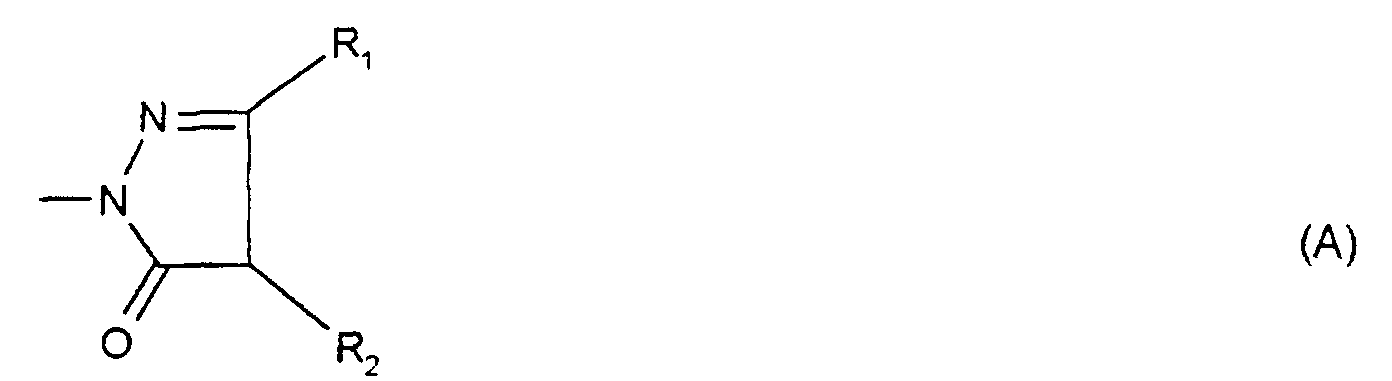
R1 is hydrogen, lower alkyl, phenyl or carboxy; and
R2 is hydrogen, phenylazo or naphthylazo wherein the phenyl or naphthtyl is unsubstituted or substituted by one or more substituents selected from the group comprising halo, hydroxy, carboxy, nitro and sulfo, with at least one hydroxy or carboxy substituent in ortho-position to the azo group,
each of m and n is, independently of the other, 1, 2, 3 or 4; andQ is selected from the group comprisingor a tautomer thereof; or a salt or a complex salt thereof where at least one salt-forming or complex-forming group is present;(a) amino,(b) nitro,(c) a radical of the partial formula (B),(d) a radical of any one of the partial formulae (C), (D) and (E)
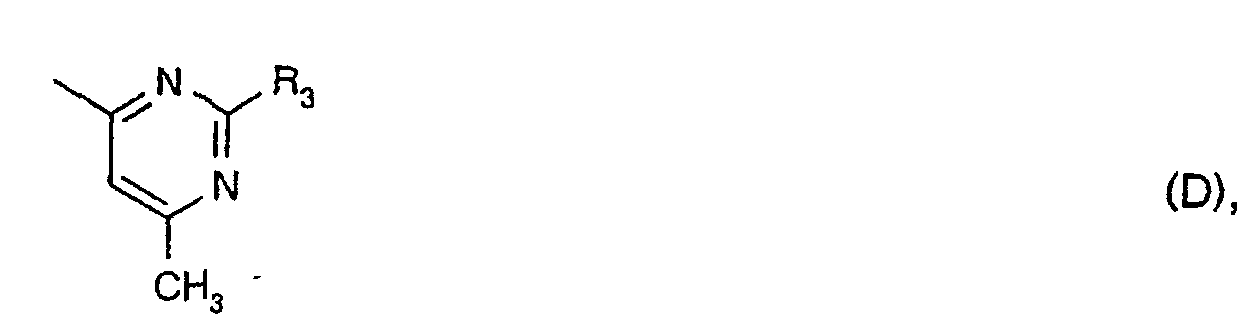 wherein
R3 is selected from the group comprisingand(i) a radical of the partial formula (F)wherein
A' is -CH2-CH2- or -CH=CH-,
D' is hydrogen, sulfo or a radical of the partial formula (A)wherein
R1 is hydrogen, lower alkyl, phenyl or carboxy; and
R2 is hydrogen, phenylazo or naphthylazo wherein the phenyl or napthtyl is unsubstituted or substituted by one or more substituents selected from the group comprising halo, hydroxy, carboxy, nitro and sulfo,
and each of m' and n' is 1, 2, 3 or 4,(ii) phenylamino wherein phenyl is subsituted by sulfophenylazo, by (hydroxy and/or carboxy)phenylazo, by methyl and 3-methyl-4-[(mono- or di-sulfo)naphthylazo-]-phenylazo or by [2-(phenylazo)-2-(acetyl)-acetyl]amino; and(iii) naphthylamino wherein naphthyl is substituted by up to four radicals selected from the group comprising hydroxy, sulfo, (hydroxy and/or chloro-substituted phenyl)azo, (carboxy-substituted phenyl)azo and (hydroxy and/or nitro-substituted phenyl)azo,
R4 is phenyl, halo, amino, phenylamino, hydroxyphenylamino or (hydroxy and/or sulfo-substituted phenyl)azo-phenylamino,(e) a radical of the partial formula (G)wherein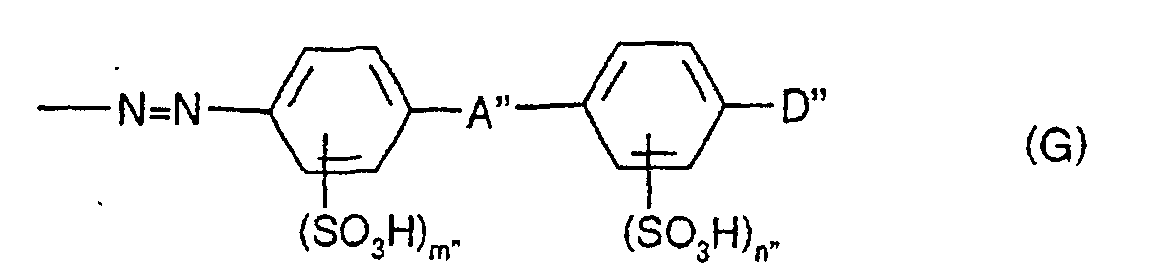
A" is -CH2-CH2- or -CH=CH-,
D" is a radical of the partial formula (A)wherein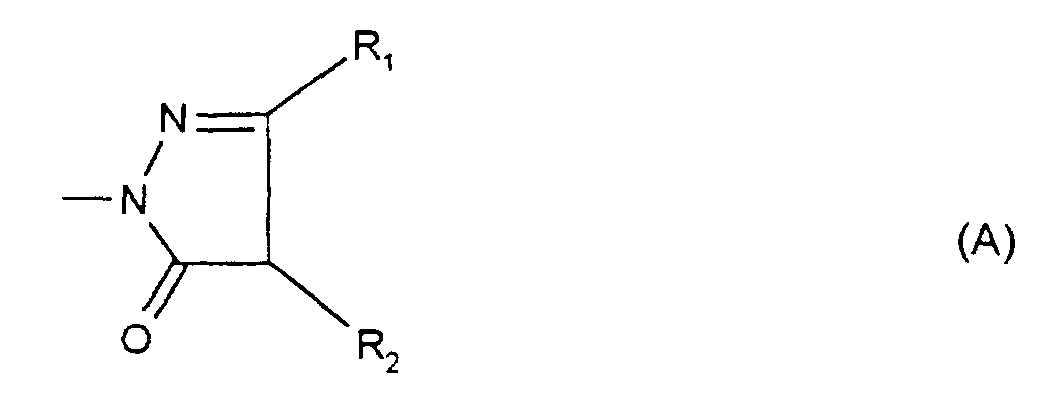
R1 is hydrogen, lower alkyl, phenyl or carboxy; and
R2 is hydrogen, phenylazo or naphthylazo wherein the phenyl or napthtyl is unsubstituted or substituted by one or more substituents selected from the group comprising halo, hydroxy, carboxy, nitro and sulfo,
and each of m" and n" is 1, 2, 3 or 4,(f) a radical of the partial formula (H)and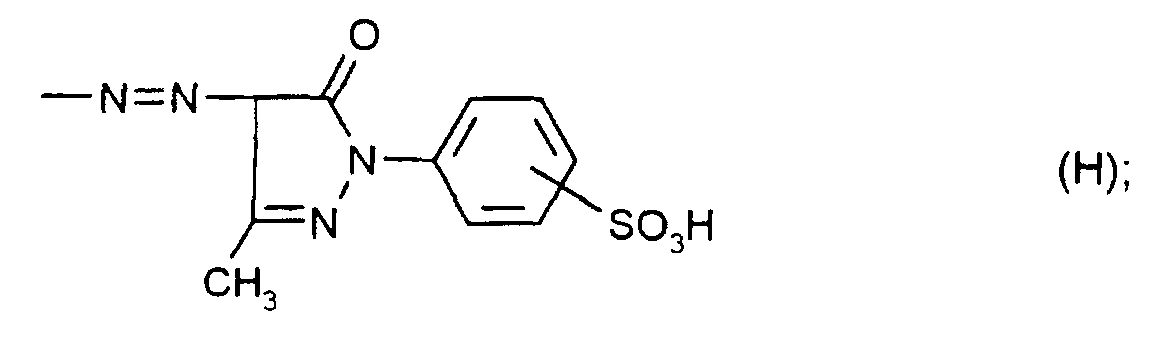 (g) a radical of the partial formula (K),wherein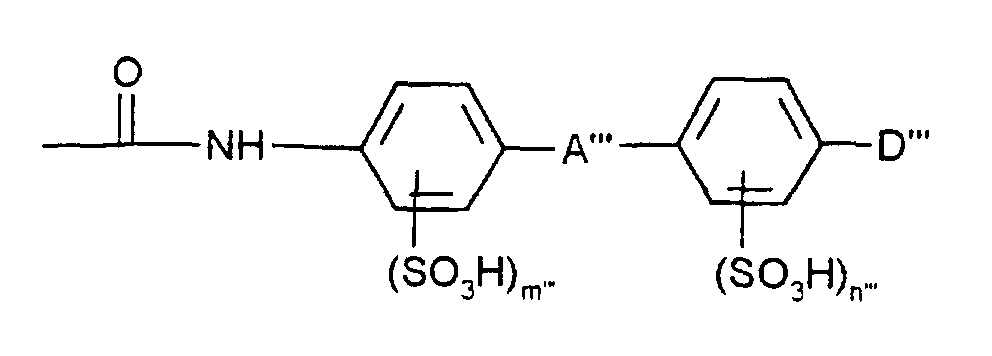
A"' is -CH2-CH2- or -CH=CH-;
D''' is a radical of the partial formula (A),wherein
R1 is hydrogen, lower alkyl, phenyl or carboxy; and
R2 is hydrogen, phenylazo or naphthylazo wherein the phenyl or naphthtyl is unsubstituted or substituted by one or more substituents selected from the group comprising halo, hydroxy, carboxy, nitro and sulfo, with at least one hydroxy or carboxy substituent in ortho-position to the azo group, and
each of m''' and n''' is 1, 2, 3 or 4;
for use in the treatment of the animal, including human, body. - A compound of formula I according to claim 1 for use in the treatment of the animal, including human, body, whereinA is -CH=CH-, preferably in the trans configuration;D is a radical of the partial formula (A),
wherein
R1 is hydrogen, lower alkyl, especially methyl, phenyl or carboxy, preferably methyl; and
R2 is hydrogen, phenylazo or naphthylazo wherein the phenyl or naphthtyl is unsubstituted or substituted by one or more substituents selected from the group comprising halo, hydroxy, carboxy, nitro and sulfo, with at least one hydroxy or carboxy substituent in ortho-position to the azo group; especially selected from the group consisting of hydrogen, 5-chloro-2-hydroxy-phenylazo, 2-hydroxy-4-nitrophenylazo, 2-hydroxy-5-sulfo-phenylazo, 2-hydroxy-4-sulfo-1-naphthylazo and especially 2-carboxy-phenylazo;
each of m and n is 1, the corresponding sulfo group being preferably bonded in the o-position with regard to the bivalent radical -A- in formula I; andQ is selected from the group consisting ofor a tautomer thereof; or a pharmaceutically acceptable salt or a pharmaceutically acceptable complex salt thereof where at least one salt-forming or complex-forming group is present.(i) amino,(ii) a radical of the partial formula (B), wherein G is selected from the group comprising unsubstituted or oxo substituted lower alkanoyl, especially acetoacetyl; a radical of the partial formula (C)
wherein
R3 is a radical of the partial formula (F)
wherein
A' is -CH=CH-, preferably in the trans-configuration,
D' is hydrogen, sulfo or preferably a radical of the partial formula (A)
wherein
R1 is hydrogen, lower alkyl, especially methyl, phenyl or carboxy, preferably methyl; and
R2 is hydrogen, phenylazo or naphthylazo wherein the phenyl or naphthtyl is unsubstituted or substituted by one or more substituents selected from the group comprising halo, hydroxy, carboxy, nitro and sulfo, with at least one hydroxy or carboxy substituent in ortho-position to the azo group; especially selected from the group consisting of hydrogen, 5-chloro-2-hydroxy-phenylazo, 2-hydroxy-4-nitro-phenylazo, 2-hydroxy-5-sulfo-phenylazo, 2-hydroxy-4-sulfo-1-naphthylazo and especially 2-carboxy-phenylazo;
and each of m' and n' is 1, the corresponding sulfo group being preferably bonded in the o-position with regard to the bivalent radical -A- in formula I;
and
R4 is halo, especially chloro, or amino,
and(iii) a radical of the partial formula (K)
wherein
A''' is -CH=CH-, preferably in the trans-configuration,
D''' is hydrogen, sulfo or a radical of the partial formula (A) wherein
R1 is hydrogen, phenyl, carboxy or preferably methyl; and
R2 is hydrogen, phenylazo or naphthylazo wherein the phenyl or naphthtyl is unsubstituted or substituted by one or more substituents selected from the group comprising halo, hydroxy, carboxy, nitro and sulfo, with at least one hydroxy or carboxy substituent in ortho-position to the azo group; especially selected from the group consisting of hydrogen, 5-chloro-2-hydroxy-phenylazo, 2-hydroxy-4-nitro-phenylazo, 2-hydroxy-5-sulfo-phenylazo, 2-hydroxy-4-sulfo-1-naphthylazo and especially 2-carboxy-phenylazo;
and each of m''' and n''' is 1, the corresponding sulfo group being preferably bonded in the o-position with regard to the bivalent radical -A"'- in formula I, - A compound according to claim 1 for use in the treatment of the animal, including human, body, of the formula I selected from the group consisting of
trans-5-amino-2-[2-{4-(4,5-dihydro-3-methyl-5-oxo-1H-pyrazol-1-yl)-2-sulfophenyl]ethenyl]-benzenesulfonic acid;
N,N'-bis(trans-4-{2-[4-(3-methyl-5-oxo-4-(o-carboxyphenylazo)-4,5-dihydro-1.H.-pyrazol-1-yl)-2-sulfo-phenyl]-vinyl}-2-sulfophenyl)-urea; and
N, N'-bis(trans-4-{2-[4-(3-methyl-5-oxo-4-(o-carboxyphenylazo)-4,5-dihydro-1.H.-pyrazol-1-yl)-2-sulfo-phenyl]-vinyl}-2-sulfophenyl)-urea copper complex,
or a pharmaceutically acceptable salt thereof. - A compound according to claim 1 for use in the treatment of the animal, including human, body, of the formula I named trans-5-(acetoacetylamino)-2-[2-{4-(4,5-dihydro-3-methyl-5-oxo-1H-pyrazol-1-yl)-2-sulfophenyl}ethenyl]-benzenesulfonic acid; or a pharmaceutically acceptable salt thereof.
- The use of a compound of formula I, a tautomer thereof, a salt or a complex salt thereof as shown in claim 1 for the manufacture of a pharmaceutical preparation for the inhibition of the interaction of a transcriptional regulator with a retroviral response element or of additional specific functions of Tat, such as specific activation of cellular HIV-promoting processes, especially expression of cellular coreceptors for HIV, especially CXCR4.
- The use of a compound of formula I, a tautomer thereof, a salt or a complex salt thereof as shown in claim 1 for the manufacture of a pharmaceutical preparation for the treatment of a virus disease.
- The use of a compound of formula I, a tautomer thereof, a salt or a complex salt thereof as shown in claim 1 for the manufacture of a pharmaceutical preparation useful as an antiretroviral therapeutic inhibiting the interaction of a transcriptional regulator with a retroviral response element or inhibiting additional specific functions of Tat, such as activation of cellular HIV-promoting processes, especially expression of cellular coreceptors for HIV, especially CXCR4,.
- A compound of formula I,wherein
 or a tautomer thereof; or a salt or a complex salt thereof where at least one salt-forming or complex-forming group is present.A is -CH2-CH2- or -CH=CH-;D is a radical of the partial formula (A),wherein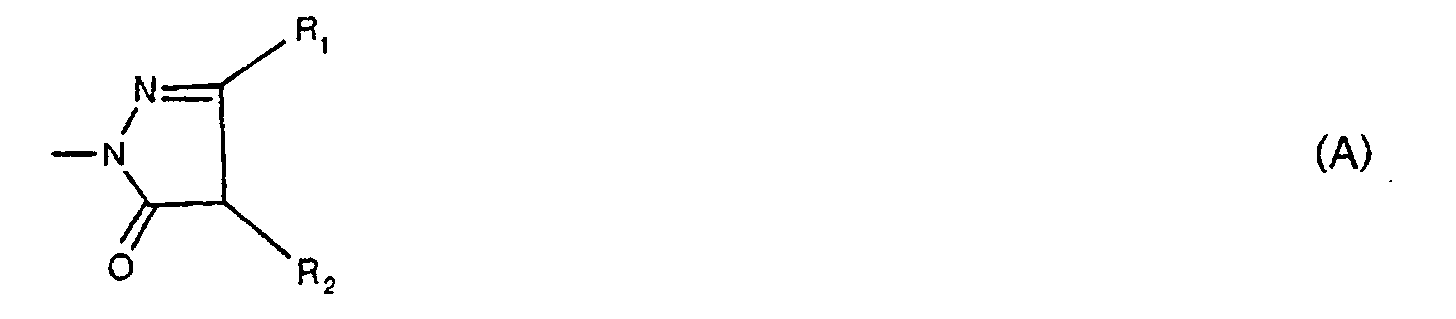
R1 is hydrogen, lower alkyl, phenyl or carboxy; and
R2 is hydrogen, phenylazo or naphthylazo wherein the phenyl or naphthtyl is unsubstituted or substituted by one or more substituents selected from the group comprising halo, hydroxy, carboxy, nitro and sulfo, with at least one hydroxy or carboxy substituent in ortho-position to the azo group,
each of m and n is 1, 2, 3 or 4; andQ is a radical of of the partial formulae (C),wherein
R3 is selected from the group comprisingand(i) a radical of the partial formula (F),wherein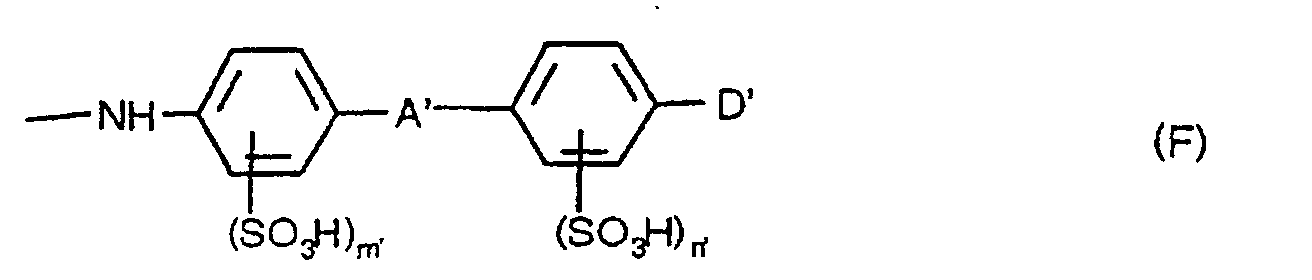
A' is -CH2-CH2- or -CH=CH-,
D' is hydrogen, sulfo or a radical of the partial formula (A)
wherein
R1 is hydrogen, lower alkyl, phenyl or carboxy; and
R2 is hydrogen, phenylazo or naphthylazo wherein the phenyl or napthtyl is unsubstituted or substituted by one or more substituents selected from the group comprising halo, hydroxy, carboxy, nitro and sulfo,
and each of m' and n' is 1, 2, 3 or 4, preferably 1,(ii) phenylamino wherein phenyl is subsituted by sulfophenylazo, by (hydroxy and/or carboxy)phenylazo, by methyl and 3-methyl-4-[(mono- or di-sulfo)naphthylazo-]-phenylazo or by [2-(phenylazo)-2-(acetyl)-acetyl]amino; and(iii) naphthylamino wherein naphthyl is substituted by up to four radicals selected from the group comprising hydroxy, sulfo, (hydroxy and/or chloro-substituted phenyl)azo, (carboxy-substituted phenyl)azo and (hydroxy and/or nitro-substituted phenyl)azo,
R4 is amino, - A compound of the formula I according to claim 8, whereinor a tautomer thereof; or a salt or a complex salt thereof where at least one salt-forming or complex-forming group is present.A is -CH=CH-, especially in the trans configuration;D is a radical of the partial formula (A) wherein
R1 is lower alkyl, and
R2 is hydrogen,
each of m and n is 1, the corresponding sulfo group being preferably bonded in the o-position with regard to the bivalent radical -A- in formula I; andQ is a radical of the partial formula (C),
wherein
R3 is a radical of the partial formula (F),
wherein
A' is -CH=CH-, especially in the trans configuration,
D' is a radical of the partial formula (A)
wherein
R1 is lower alkyl, especially methyl; and
R2 is hydrogen,
each of m and n is 1, the corresponding sulfo group being preferably bonded in the o-position with regard to the bivalent radical -A- in formula I;
and
R4 is amino, - A compound of formula I named N,N'-bis(trans-4-{2-[4-(3-methyl-5-oxo-4,5-dihydro-1.H.-pyrazol-1-yl)-2-sulfophenyl]-vinyl}-2-sulfophenyl)-[1,3,5]triazin-2,4,6-triamine or N, N'-bis(trans-4-{2-[4-(3-methyl-5-oxo-4,5-dihydro-1.H.-pyrazol-1-yl}-2-sulfo-phenyl]-vinyl}-2-sulfophenyl)-2-chloro-[1,3,5]triazine-4,6-diamine;
or a tautomer thereof; or a pharmaceutically acceptable salt thereof. - A compound of formula I, or a tautomer thereof; or a salt or a complex salt thereof where at least one salt-forming or complex-forming group is present according to any one of claims 8 to 10 for for use in the treatment of the animal, including human, body.
- A pharmaceutical preparation comprising a compound of formula I, or a tautomer thereof; or a salt or a complex salt thereof where at least one salt-forming or complex-forming group is present, according to any one of claims 8 to 10 and a pharmaceutically acceptable carrier.
- The use of a compound of formula I, or a tautomer thereof; or a salt or a complex salt thereof where at least one salt-forming or complex-forming group is present, according to claim 1, for the manufacture of a pharmaceutical preparation useful as an antiretroviral therapeutic inhibiting the interaction of a transcriptional regulator with a retroviral response element or inhibiting additional specific functions of Tat, such as activation of cellular HIV-promoting processes, especially expression of cellular coreceptors for HIV, especially CXCR4.
- A process for the preparation of a compound of the formula I, or a tautomer thereof; or a salt or a complex salt thereof where at least one salt-forming or complex-forming group is present, according to claim 8, in which a compound of the formula II,wherein
 Qa is a radical of the partial formula (C),wherein
R3 is selected from the group comprisingand(i) a radical of the partial formula (F),
wherein
A' is -CH2-CH2- or -CH=CH-,
D' is hydrogen, sulfo or a radical of the partial formula (A)
wherein
R1 is hydrogen, lower alkyl, phenyl or carboxy; and
R2 is hydrogen, phenylazo or naphthylazo wherein the phenyl or napthtyl is unsubstituted or substituted by one or more substituents selected from the group comprising halo, hydroxy, carboxy, nitro and sulfo,
and each of m' and n' is 1, 2, 3 or 4,(ii) phenylamino wherein phenyl is subsituted by sulfophenylazo, by (hydroxy and/or carboxy)phenylazo, by methyl and 3-methyl-4-[(mono- or di-sulfo)naphthylazo-]-phenylazo or by [2-(phenylazo)-2-(acetyl)-acetyl]amino; and(iii) naphthylamino wherein naphthyl is substituted by up to four radicals selected from the group comprising hydroxy, sulfo, (hydroxy and/or chloro-substituted phenyl)azo, (carboxy-substituted phenyl)azo and (hydroxy and/or nitro-substituted phenyl)azo,
R4 is halo, andand A, D, m and n have the meanings given for a compound of formula I in claim 7, is reacted with ammonia
and, if desired, a free compound of formula I or a tautomer thereof obtainable according to this process is converted into a salt or a complex salt, an obtainable salt or a complex salt of a compound of formula I or a tautomer thereof is converted into a different salt or complex salt or into a free compound of formula I or a tautomer thereof, and/or a mixture of isomers of an obtained compound of formula I is separated into individual isomers.
Applications Claiming Priority (3)
| Application Number | Priority Date | Filing Date | Title |
|---|---|---|---|
| GB9928418 | 1999-12-01 | ||
| GBGB9928418.4A GB9928418D0 (en) | 1999-12-01 | 1999-12-01 | Organic compounds |
| PCT/EP2000/011628 WO2001040194A1 (en) | 1999-12-01 | 2000-11-22 | Stilbene derivatives, their preparation and their use as antiviral agents |
Publications (2)
| Publication Number | Publication Date |
|---|---|
| EP1261587A1 EP1261587A1 (en) | 2002-12-04 |
| EP1261587B1 true EP1261587B1 (en) | 2003-07-16 |
Family
ID=10865520
Family Applications (1)
| Application Number | Title | Priority Date | Filing Date |
|---|---|---|---|
| EP00977556A Expired - Lifetime EP1261587B1 (en) | 1999-12-01 | 2000-11-22 | Stilbene derivatives, their preparation and their use as antiviral agents |
Country Status (6)
| Country | Link |
|---|---|
| EP (1) | EP1261587B1 (en) |
| AT (1) | ATE245144T1 (en) |
| AU (1) | AU1522801A (en) |
| DE (1) | DE60003956T2 (en) |
| GB (1) | GB9928418D0 (en) |
| WO (1) | WO2001040194A1 (en) |
Families Citing this family (2)
| Publication number | Priority date | Publication date | Assignee | Title |
|---|---|---|---|---|
| KR101270015B1 (en) * | 2011-02-23 | 2013-05-31 | 경상대학교산학협력단 | Novel stylbeneurea derivatives, pharmaceutically acceptable salts, method for preparation and composition containing thereof as an active ingredient for prevention and treatment of diseases induced by glycosidase |
| WO2018062954A1 (en) * | 2016-09-30 | 2018-04-05 | (주)나노믹스 | Inhibitor of function of cyclophilin and method for using same |
Family Cites Families (4)
| Publication number | Priority date | Publication date | Assignee | Title |
|---|---|---|---|---|
| US2221360A (en) * | 1940-11-12 | Metal compounds of azo dyestutfs | ||
| US2301333A (en) * | 1936-10-03 | 1942-11-10 | Soc Of Chemical Ind | Metalizable azo dyestuffs |
| EP0626945B1 (en) * | 1992-02-20 | 1998-04-22 | Merrell Pharmaceuticals Inc. | Sulfonic acid derivatives in the treatment of viral diseases |
| CN1163401A (en) * | 1996-02-13 | 1997-10-29 | 李占元 | Fully automatic hemacytometer reagent and preparing method |
-
1999
- 1999-12-01 GB GBGB9928418.4A patent/GB9928418D0/en not_active Ceased
-
2000
- 2000-11-22 EP EP00977556A patent/EP1261587B1/en not_active Expired - Lifetime
- 2000-11-22 AT AT00977556T patent/ATE245144T1/en not_active IP Right Cessation
- 2000-11-22 WO PCT/EP2000/011628 patent/WO2001040194A1/en not_active Ceased
- 2000-11-22 DE DE60003956T patent/DE60003956T2/en not_active Expired - Fee Related
- 2000-11-22 AU AU15228/01A patent/AU1522801A/en not_active Abandoned
Also Published As
| Publication number | Publication date |
|---|---|
| ATE245144T1 (en) | 2003-08-15 |
| WO2001040194A1 (en) | 2001-06-07 |
| EP1261587A1 (en) | 2002-12-04 |
| DE60003956T2 (en) | 2004-07-15 |
| GB9928418D0 (en) | 2000-01-26 |
| DE60003956D1 (en) | 2003-08-21 |
| AU1522801A (en) | 2001-06-12 |
Similar Documents
| Publication | Publication Date | Title |
|---|---|---|
| DE69732483T2 (en) | Heterocyclic azahexane derivatives with antiviral activity | |
| JP3588116B2 (en) | Pharmacologically active pyrimidineamine derivatives and process for their production | |
| US9173893B2 (en) | Purine nucleoside monophosphate prodrugs for treatment of cancer and viral infections | |
| Nagarajan et al. | Discovery of novel benzothiazolesulfonamides as potent inhibitors of HIV-1 protease | |
| AU2009282480B2 (en) | Halofuginone analogs for inhibition of tRNA synthetases and uses thereof | |
| US6300519B1 (en) | Antivirally active heterocyclic azahexane derivatives | |
| AU735127B2 (en) | Purine inhibitor of protein kinases, G proteins and polymerases | |
| US5902810A (en) | Pteridine derivatives as no synthase inhibitors | |
| CA2332087C (en) | Aryl substituted azabenzimidazoles and their use in the treatment of hiv and aids related diseases | |
| JP2001518094A (en) | Indazole-cyclic ureas useful as HIV protease inhibitors | |
| US7132420B2 (en) | Aspartic protease inhibitors | |
| PT2069303E (en) | Antiviral protease inhibitors | |
| WO1998050347A1 (en) | Naphthols useful in antiviral methods | |
| CN111249283A (en) | Pyrimidine derivatives having anticancer effect | |
| JP4101054B2 (en) | Chemical compound | |
| Li et al. | Synthesis and biological evaluation of pyrazolo [3, 4-b] pyridine-3-yl pyrimidine derivatives as sGC stimulators for the treatment of pulmonary hypertension | |
| AU601464B2 (en) | Pyrimidine derivatives | |
| EP1261587A1 (en) | Stilbene derivatives, their preparation and their use as antiviral agents | |
| AU2008278978A1 (en) | Novel fluorescent derivatives of polyamine, method for preparing same and applications thereof as diagnosis tools in the treatment of cancerous tumours | |
| JPH01501477A (en) | antifolate | |
| KR20140022431A (en) | Pyrimidylaminobenzamide derivatives for the treatment of neurofibromatosis | |
| WO1997027179A2 (en) | Antiretroviral bases | |
| JP5345524B2 (en) | Lysine related derivatives as HIV aspartyl protease inhibitors | |
| JPS61280429A (en) | Immunosuppressant | |
| AU2006262274A1 (en) | HIV-1 protease inhibitors |
Legal Events
| Date | Code | Title | Description |
|---|---|---|---|
| PUAI | Public reference made under article 153(3) epc to a published international application that has entered the european phase |
Free format text: ORIGINAL CODE: 0009012 |
|
| 17P | Request for examination filed |
Effective date: 20020622 |
|
| AK | Designated contracting states |
Kind code of ref document: A1 Designated state(s): AT BE CH CY DE DK ES FI FR GB GR IE IT LI LU MC NL PT SE TR |
|
| AX | Request for extension of the european patent |
Free format text: AL;LT;LV;MK;RO;SI |
|
| GRAH | Despatch of communication of intention to grant a patent |
Free format text: ORIGINAL CODE: EPIDOS IGRA |
|
| GRAH | Despatch of communication of intention to grant a patent |
Free format text: ORIGINAL CODE: EPIDOS IGRA |
|
| GRAA | (expected) grant |
Free format text: ORIGINAL CODE: 0009210 |
|
| AK | Designated contracting states |
Designated state(s): AT BE CH CY DE DK ES FI FR GB GR IE IT LI LU MC NL PT SE TR |
|
| PG25 | Lapsed in a contracting state [announced via postgrant information from national office to epo] |
Ref country code: IT Free format text: LAPSE BECAUSE OF FAILURE TO SUBMIT A TRANSLATION OF THE DESCRIPTION OR TO PAY THE FEE WITHIN THE PRESCRIBED TIME-LIMIT;WARNING: LAPSES OF ITALIAN PATENTS WITH EFFECTIVE DATE BEFORE 2007 MAY HAVE OCCURRED AT ANY TIME BEFORE 2007. THE CORRECT EFFECTIVE DATE MAY BE DIFFERENT FROM THE ONE RECORDED. Effective date: 20030716 Ref country code: NL Free format text: LAPSE BECAUSE OF FAILURE TO SUBMIT A TRANSLATION OF THE DESCRIPTION OR TO PAY THE FEE WITHIN THE PRESCRIBED TIME-LIMIT Effective date: 20030716 Ref country code: TR Free format text: LAPSE BECAUSE OF FAILURE TO SUBMIT A TRANSLATION OF THE DESCRIPTION OR TO PAY THE FEE WITHIN THE PRESCRIBED TIME-LIMIT Effective date: 20030716 Ref country code: FI Free format text: LAPSE BECAUSE OF FAILURE TO SUBMIT A TRANSLATION OF THE DESCRIPTION OR TO PAY THE FEE WITHIN THE PRESCRIBED TIME-LIMIT Effective date: 20030716 Ref country code: AT Free format text: LAPSE BECAUSE OF FAILURE TO SUBMIT A TRANSLATION OF THE DESCRIPTION OR TO PAY THE FEE WITHIN THE PRESCRIBED TIME-LIMIT Effective date: 20030716 |
|
| REG | Reference to a national code |
Ref country code: GB Ref legal event code: FG4D |
|
| REG | Reference to a national code |
Ref country code: CH Ref legal event code: EP |
|
| REG | Reference to a national code |
Ref country code: IE Ref legal event code: FG4D |
|
| REF | Corresponds to: |
Ref document number: 60003956 Country of ref document: DE Date of ref document: 20030821 Kind code of ref document: P |
|
| PG25 | Lapsed in a contracting state [announced via postgrant information from national office to epo] |
Ref country code: SE Free format text: LAPSE BECAUSE OF FAILURE TO SUBMIT A TRANSLATION OF THE DESCRIPTION OR TO PAY THE FEE WITHIN THE PRESCRIBED TIME-LIMIT Effective date: 20031016 Ref country code: DK Free format text: LAPSE BECAUSE OF FAILURE TO SUBMIT A TRANSLATION OF THE DESCRIPTION OR TO PAY THE FEE WITHIN THE PRESCRIBED TIME-LIMIT Effective date: 20031016 Ref country code: GR Free format text: LAPSE BECAUSE OF FAILURE TO SUBMIT A TRANSLATION OF THE DESCRIPTION OR TO PAY THE FEE WITHIN THE PRESCRIBED TIME-LIMIT Effective date: 20031016 |
|
| PG25 | Lapsed in a contracting state [announced via postgrant information from national office to epo] |
Ref country code: ES Free format text: LAPSE BECAUSE OF FAILURE TO SUBMIT A TRANSLATION OF THE DESCRIPTION OR TO PAY THE FEE WITHIN THE PRESCRIBED TIME-LIMIT Effective date: 20031027 |
|
| PG25 | Lapsed in a contracting state [announced via postgrant information from national office to epo] |
Ref country code: CY Free format text: LAPSE BECAUSE OF FAILURE TO SUBMIT A TRANSLATION OF THE DESCRIPTION OR TO PAY THE FEE WITHIN THE PRESCRIBED TIME-LIMIT Effective date: 20031122 Ref country code: LU Free format text: LAPSE BECAUSE OF NON-PAYMENT OF DUE FEES Effective date: 20031122 |
|
| PG25 | Lapsed in a contracting state [announced via postgrant information from national office to epo] |
Ref country code: MC Free format text: LAPSE BECAUSE OF NON-PAYMENT OF DUE FEES Effective date: 20031130 |
|
| NLV1 | Nl: lapsed or annulled due to failure to fulfill the requirements of art. 29p and 29m of the patents act | ||
| PG25 | Lapsed in a contracting state [announced via postgrant information from national office to epo] |
Ref country code: PT Free format text: LAPSE BECAUSE OF FAILURE TO SUBMIT A TRANSLATION OF THE DESCRIPTION OR TO PAY THE FEE WITHIN THE PRESCRIBED TIME-LIMIT Effective date: 20031216 |
|
| LTIE | Lt: invalidation of european patent or patent extension |
Effective date: 20030716 |
|
| ET | Fr: translation filed | ||
| PLBE | No opposition filed within time limit |
Free format text: ORIGINAL CODE: 0009261 |
|
| STAA | Information on the status of an ep patent application or granted ep patent |
Free format text: STATUS: NO OPPOSITION FILED WITHIN TIME LIMIT |
|
| 26N | No opposition filed |
Effective date: 20040419 |
|
| REG | Reference to a national code |
Ref country code: GB Ref legal event code: 746 Effective date: 20040727 |
|
| PGFP | Annual fee paid to national office [announced via postgrant information from national office to epo] |
Ref country code: GB Payment date: 20051117 Year of fee payment: 6 |
|
| PGFP | Annual fee paid to national office [announced via postgrant information from national office to epo] |
Ref country code: FR Payment date: 20051118 Year of fee payment: 6 |
|
| PGFP | Annual fee paid to national office [announced via postgrant information from national office to epo] |
Ref country code: IE Payment date: 20051123 Year of fee payment: 6 Ref country code: BE Payment date: 20051123 Year of fee payment: 6 Ref country code: CH Payment date: 20051123 Year of fee payment: 6 |
|
| PGFP | Annual fee paid to national office [announced via postgrant information from national office to epo] |
Ref country code: DE Payment date: 20060124 Year of fee payment: 6 |
|
| PG25 | Lapsed in a contracting state [announced via postgrant information from national office to epo] |
Ref country code: IE Free format text: LAPSE BECAUSE OF NON-PAYMENT OF DUE FEES Effective date: 20061122 |
|
| PG25 | Lapsed in a contracting state [announced via postgrant information from national office to epo] |
Ref country code: LI Free format text: LAPSE BECAUSE OF NON-PAYMENT OF DUE FEES Effective date: 20061130 Ref country code: CH Free format text: LAPSE BECAUSE OF NON-PAYMENT OF DUE FEES Effective date: 20061130 Ref country code: BE Free format text: LAPSE BECAUSE OF NON-PAYMENT OF DUE FEES Effective date: 20061130 |
|
| PG25 | Lapsed in a contracting state [announced via postgrant information from national office to epo] |
Ref country code: DE Free format text: LAPSE BECAUSE OF NON-PAYMENT OF DUE FEES Effective date: 20070601 |
|
| REG | Reference to a national code |
Ref country code: CH Ref legal event code: PL |
|
| GBPC | Gb: european patent ceased through non-payment of renewal fee |
Effective date: 20061122 |
|
| REG | Reference to a national code |
Ref country code: FR Ref legal event code: ST Effective date: 20070731 |
|
| REG | Reference to a national code |
Ref country code: CH Ref legal event code: AUV Free format text: DAS OBGENANNTE PATENT IST, MANGELS BEZAHLUNG DER 11. JAHRESGEBUEHR, DURCH VERFUEGUNG VOM 30.06.2007 ZURUECKGEWIESEN WORDEN. DIE VERFUEGUNG KONNTE DEM PATENTINHABER NICHT ZUGESTELLT WERDEN. |
|
| REG | Reference to a national code |
Ref country code: IE Ref legal event code: MM4A |
|
| PG25 | Lapsed in a contracting state [announced via postgrant information from national office to epo] |
Ref country code: GB Free format text: LAPSE BECAUSE OF NON-PAYMENT OF DUE FEES Effective date: 20061122 |
|
| BERE | Be: lapsed |
Owner name: *UNIVERSITAT BASEL Effective date: 20061130 |
|
| PG25 | Lapsed in a contracting state [announced via postgrant information from national office to epo] |
Ref country code: FR Free format text: LAPSE BECAUSE OF NON-PAYMENT OF DUE FEES Effective date: 20061130 |