EP1258820A2 - Display engagement system - Google Patents
Display engagement system Download PDFInfo
- Publication number
- EP1258820A2 EP1258820A2 EP02252686A EP02252686A EP1258820A2 EP 1258820 A2 EP1258820 A2 EP 1258820A2 EP 02252686 A EP02252686 A EP 02252686A EP 02252686 A EP02252686 A EP 02252686A EP 1258820 A2 EP1258820 A2 EP 1258820A2
- Authority
- EP
- European Patent Office
- Prior art keywords
- client
- same
- information
- palette
- server computer
- Prior art date
- Legal status (The legal status is an assumption and is not a legal conclusion. Google has not performed a legal analysis and makes no representation as to the accuracy of the status listed.)
- Ceased
Links
Images



Classifications
-
- G—PHYSICS
- G06—COMPUTING OR CALCULATING; COUNTING
- G06Q—INFORMATION AND COMMUNICATION TECHNOLOGY [ICT] SPECIALLY ADAPTED FOR ADMINISTRATIVE, COMMERCIAL, FINANCIAL, MANAGERIAL OR SUPERVISORY PURPOSES; SYSTEMS OR METHODS SPECIALLY ADAPTED FOR ADMINISTRATIVE, COMMERCIAL, FINANCIAL, MANAGERIAL OR SUPERVISORY PURPOSES, NOT OTHERWISE PROVIDED FOR
- G06Q50/00—Information and communication technology [ICT] specially adapted for implementation of business processes of specific business sectors, e.g. utilities or tourism
- G06Q50/10—Services
-
- G—PHYSICS
- G06—COMPUTING OR CALCULATING; COUNTING
- G06Q—INFORMATION AND COMMUNICATION TECHNOLOGY [ICT] SPECIALLY ADAPTED FOR ADMINISTRATIVE, COMMERCIAL, FINANCIAL, MANAGERIAL OR SUPERVISORY PURPOSES; SYSTEMS OR METHODS SPECIALLY ADAPTED FOR ADMINISTRATIVE, COMMERCIAL, FINANCIAL, MANAGERIAL OR SUPERVISORY PURPOSES, NOT OTHERWISE PROVIDED FOR
- G06Q10/00—Administration; Management
- G06Q10/10—Office automation; Time management
-
- G—PHYSICS
- G06—COMPUTING OR CALCULATING; COUNTING
- G06F—ELECTRIC DIGITAL DATA PROCESSING
- G06F16/00—Information retrieval; Database structures therefor; File system structures therefor
- G06F16/90—Details of database functions independent of the retrieved data types
- G06F16/95—Retrieval from the web
- G06F16/954—Navigation, e.g. using categorised browsing
-
- H—ELECTRICITY
- H04—ELECTRIC COMMUNICATION TECHNIQUE
- H04N—PICTORIAL COMMUNICATION, e.g. TELEVISION
- H04N21/00—Selective content distribution, e.g. interactive television or video on demand [VOD]
- H04N21/20—Servers specifically adapted for the distribution of content, e.g. VOD servers; Operations thereof
- H04N21/23—Processing of content or additional data; Elementary server operations; Server middleware
- H04N21/236—Assembling of a multiplex stream, e.g. transport stream, by combining a video stream with other content or additional data, e.g. inserting a URL [Uniform Resource Locator] into a video stream, multiplexing software data into a video stream; Remultiplexing of multiplex streams; Insertion of stuffing bits into the multiplex stream, e.g. to obtain a constant bit-rate; Assembling of a packetised elementary stream
Definitions
- the present invention relates to a display engagement system which controls computers to display various contents in an engaged fashion.
- the present disclosure relates to subject matter contained in Japanese Patent application No. 2001-126081 (filed on April 24, 2001), which is expressly incorporated herein by reference in its entirety.
- This type of system comprises a WWW server machine providing contents such as HTML documents, and client machines. Provided that all of the clients display common contents in an engaged fashion, when a user operates one of clients to scroll the displayed contents, the operation is sent to all other clients to be reflected in the respective clients. Consequently, the clients always display the common contents in the same manner.
- each client only displays the common contents. It is therefore impossible that operators (users) of the clients execute manipulations such as pasting their desiring objects to the contents.
- operators for instance, utilized for a meeting, communication among users is subject to a certain restriction.
- a display engagement program makes a server computer execute the following steps. These steps include a step of sending said client computers web data including background contents, control code making the client computer display a layer object with reflecting manipulation on the same layer object, and control code making the client computer transmit manipulation on the layer object to said server computer; and a step of broadcasting, when the manipulation on the layer object is transmitted from one of said client computers, the same manipulation to the other client computers.
- the client computer receives the control code from the server computer, and is controlled according to the control code.
- every client displays the screen where layer objects are pasted to the background contents in an engaged fashion. It is preferable that the layer objects can be moved, modified, and deleted.
- the users can discuss intelligent and complicated matter by manipulating the layer objects displayed on the screens in an engaged fashion.
- the display engagement program may be utilized for real-time design review among designers at remote locations.
- the display engagement program may be utilized as a collaborative web page creating tool, which creates web pages with reflecting the customer's suggestions.
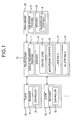
- FIG. 1 is a diagram showing a system architecture including a relay server machine 10 executing a display engagement program according to the embodiment.
- the relay server 10 is connected to a WWW server machine 20 via a network such as the Internet. Further, the relay server 10 is connectable to client machines 30 via the network.
- the relay server 10 a server computer, has a storing device in which an operating system and the display engagement program 11 are preinstalled.
- the display engagement program 11 comprises a web server program module and a server-side program module.
- the WWW server 20 has a storing device in which an operating system and a web server program are preinstalled. Further, with the storing device of the WWW server 20, web data W is stored.
- the web data W includes data written in HTML or XHTML, and background contents B composed of image data.
- the client machine 30, a client computer is composed of a computer such as a personal computer.
- the client 30 has a storing device in which an operating system and a web browser program 31 are preinstalled.
- the user of the client 30, as described later, logs in to the relay server 10 from the client 30.
- the browser 31 in the client 30 receives control code composed of a script or bytecode from the relay server 10, and the control code becomes a controller 32 which controls the processes in the browser 31.
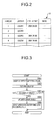
- FIG. 2 is a schematic diagram showing the user table 12, which has records corresponding to respective users registered previously.
- each record has "USER ID,” "LOG-IN TIME,” and "MISC.” fields.
- the "USER ID” field is stored with a user ID uniquely corresponding to one of users. As the user ID, the log-in name, the host name of the client 30, or the nickname of the user, can be used.
- the "MISC.” field is stored with the user's real name, an ID number, etc.
- the log-in time is stored in the "LOG-IN TIME" field of the record in the user table 12 corresponding to the same user. Note that when the user logs in, the display engagement program 11 assigns a thread corresponding to the same user.
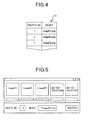
- FIG. 3 is a flowchart showing the log-in process in the relay server 10. After a user launches the browser 31 by operating the client 30, the browser 31 requests web data for log-in from the display engagement program 11 in the relay server 10 to start the process shown in FIG. 3.
- the relay server 10 makes the client 30 display the web data for log-in as a web page. Then, the user enters the user ID into the displayed web page.
- the relay server 10 obtains the user ID entered by the user from the client 30.
- the relay server 10 judges whether the entered user ID is valid or not. More specifically, the relay server 10 refers to the user table 12 to find the record whose "USER ID" field contains the user ID identical to that entered at S002. The relay server 10, if the record is found, advances the processing to S004. Whereas if not found, the relay server 10 terminates the processing.
- the relay server 10 updates the user table 12. More specifically, the relay server 10 stores the present time in the "LOG-IN" field of the record whose user ID is identical to that obtained at S002, and assigns a thread corresponding to the user.
- the relay server 10 sends the client 30 web data for notifying the fact that the log-in has successfully been completed.
- the sent web data contains control code for the initial processing which is composed of a script or an applet.
- the client 30, when receives the web data for notifying, executes the control code. Note that the control code becomes the controller 32 to control the browser 31 by being executed on the same browser 31.
- the display engagement process is executed as described later with reference to FIG. 8.
- each user can paste desired objects such as image data to contents displayed in an engaged fashion among the users.
- the storing device of the relay server 10 is stored with a palette table 13 for managing objects.
- FIG. 4 is a schematic diagram showing the palette table 13.
- the palette table 13 has records each including a unique "PALETTE NUMBER"(palette ID), and an "OBJECT" corresponding to the palette number. Note that each of the records in the palette table 13 corresponds to palette data.
- the objects may be a still image, moving images, or text data.
- the client 30 can obtain the entity of the palette table 13 from the relay server 20. Further, the client 30 can display the obtained entity of the palette table 13 as a palette window.
- FIG. 5 is a schematic diagram showing the palette table 13. In the palette window, the objects included in the palette table 13 are displayed in ascending order of the palette numbers. According to the example shown in FIG. 5, objects, "image01,” “image02,” and “image03" are schematically shown. On the other hand, in the regions to which no objects are assigned, are displayed the character string of "NOT-YET-REGISTERED"
- palette window are displayed a text box for designating a "PALETTE NO.," another text box for designating the "FILE NAME" of an object, and the "REGISTER” button.
- the user of the client 30 enters a palette number not-yet-assigned to any object, and a desired file name of an object into the respective text boxes. Then, the user can register the object with the palette table 13 by pressing the "REGISTER” button. The registration process may be executed before or after the display engagement starts.
- the registration process with the palette table 13 will hereinafter be described with reference to the FIG. 6.
- the controller 32 of the client 30 detects the event concerning the registration (S101). Then, the controller 32 obtains the palette number and the file name of the object entered into the text boxes in the palette window shown in FIG. 5.
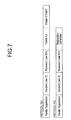
- FIG. 7 is a schematic diagram showing the protocol PA prescribed for the palette registration.
- the protocol PA is classified into a protocol PA1 and a protocol PA2. What is used for sending registration information at S102, is the protocol PA1.
- the protocol PA1 has a field indicating that the information to be sent is related to "Palette Registration,” and also has "Sender's User ID,” “Receivers' User ID's,” “Palette No.,” “Image of Object” fields.
- the “Sender's User ID” field is stored with the user ID of the user whose client 30 detected the event.
- the “Receivers' User ID's” field is stored with all user ID's except the sender's.
- the "Palette Number” field is stored with the palette number obtained at S101.
- the "Image of Object" field is stored with image data indicated by the file name of the object obtained at S101. More specifically, when the file indicated based on the file name of the object is stored in the storing device of the client 30, the controller 32 reads the file from the storing device. When the file exists on the network, the controller 32 reads the file via the network. Further, the controller 32 stores the file in the "Image of Object" field.
- the relay server 10 receives the registration information, generates palette data based on the palette number and the image data of the object, registers the palette data with the palette table 13, and broadcasts the registered information to each client 30 (S103). While the registered information is sent to all of the clients 30 except the sender according to the aforementioned protocol PA1, the information is sent to the sender's client 30 according to the protocol PA2 which has no image data of the object. As shown in FIG. 7, the protocol PA2 has the "Palette Registration,” “Sender's User ID,” and “Receivers' User ID's” fields identical to the aforementioned protocol PA1. In addition to that, the protocol PA2 only has "Registration Completed" field stored with a code indicating that the registration with the palette table 13 has been completed.
- the controller 32 of the sender's client 30 receives the registration information sent according to the protocol PA2 (S104(1)), and displays the palette window including the registered objects (S105(1)).
- the clients 30 except the sender's receives the registration information sent according to the protocol PA1 (S104(2)), extracts the palette number and the image data of the object from the registration information, adds the corresponding object to update the palette window, and displays the updated window (S105(2)). All clients 30 therefore share the entity of the palette table 13.
- the user of each client 30 can register desired data such as local data or data on the network to the palette table 13. After the registration, the registered object becomes available to all of the users.
- FIG. 9 is an explanatory diagram showing an example of the original web data W.
- the relay server 10 receives the web data W, and stores the web data W in cashe, a certain area reserved in the storing device (S204).
- the relay server 10 embeds the control code C for display engagement in the stored original web data W to generate web data W' for display in an engaged fashion (S205).
- the control code C for instance, comprises code written in HTML or XHTML, a script written in JavaScript, or bitecode of Java Applet.
- the control code C may be composed of parameters to be passed to the browser.
- the relay server 10 sends a cashe URL, a URL indicating the generated web data W', to the client 30 (S206).
- the client 30 receives the cashe URL, and requires the web data W' by designating the received cashe URL under control of the controller 32 (5207).
- the relay server 10 sends the web data W' to the client 30 (S208).
- FIG. 10 is a schematic diagram showing an example of a screen displayed based on the web data W'.
- the background contents B including image data.
- the control code C is embedded. Consequently, a function for display engagement is added to the controller 32, by the control code C being executed in the browser 31 of the client 30.
- the control code C composed of parameters to be passed to the browser 31
- the function for display engagement is added to the controller 32 by the parameters being passed to the browser 31.
- an operational component for user's manipulation may be displayed.
- each client 30 displays the common background contents B in an engaged fashion. With the display engagement being established, the user of each client 30 can paste the desired one selected from the objects registered with the palette table 13 to the background component B. Note that each of the users, if required, can newly register any object by executing the aforementioned palette registration process shown in FIG.6, and use the registered object.
- the controller 32 of the client 30 detects the event representing the pasting of the object (S301), generates manipulating information indicating the detected event to send it to the relay server 10 according to the protocol PB (S302(1)), and also reflects the detected event in the client 30 itself (S302(2)).
- FIG. 12 is a schematic diagram showing a protocol PB prescribed for the manipulating information.
- the protocol PB has the field indicating that the information to be sent is related to "Manipulation of Object," and also has "Sender's User ID,” and “Receivers' User ID's” fields.
- the "Sender's User ID” field is stored with the user ID of the user whose client 30 detected the event.
- the "Receivers' User ID's” field is stored with the all other users' user ID's.
- the protocol PB has "Palette No.,” “Width and Height,” “Position X, Y,” “Z-Index,” and “Frame No.” fields.
- the "Palette No.” field is stored with the palette number of the object which the user copied from the palette window.
- the "Width and Height” field is stored with the values indicating the width and height of the object.
- the "Position X, Y” field is stored with the values indicating the horizontal and vertical positions where the object should be pasted.
- the object is treated as a layer object prescribed in HTML and XHTML.
- the "Z-Index" field is stored with the value indicating the z-index representing the layer where the object should be pasted. Note that Z-indices are uniquely assigned to objects. A certain initial value of Z-index, for instance "1," is assigned to the first object pasted to the background contents B where none of other contents are pasted. After that, the incremented Z-index is assigned to the object newly pasted.
- the frame number of the frame where the object is pasted is stored in the "Frame No.” field.
- the relay server 10 When the manipulating information is sent according to the protocol PB, the relay server 10 receives the manipulating information, stores it, and broadcast it to all the clients 30 except the sender according to the protocol PB (S303). That is, the relay server 10 broadcasts the layout information to the clients 30 of the users whom "Receivers' User ID's" of the manipulating information indicate. Note that the manipulating information is not sent to the sender's client 30.
- the controllers 32 of clients 30 except for the sender receive the broadcasted manipulating information (S304), and reflect the manipulation indicated by the manipulating information (S305). More specifically, each controller 32 refers to "Palette No.,” “Width and Height,” “Position X, Y,” “Z-Index,” and “Frame No.” Then, the controller 32 displays the object corresponding to the "Palette No.” with the size indicated by "Width and Height” at "Position X, Y” on the layer indicated by "Z-Index” in the frame indicated by "Frame No.” According to that, the object is pasted to the background contents B with a desired status.
- FIG. 13 is an example of a screen where the object L1 of "image01" is pasted to the background contents B.
- the screens of the clients 30 except for the sender's are updated based on the manipulating information.
- the screen of the sender's client 30 has already updated based on the manipulation detected in the same client 30 (S302(2)). Consequently, the update is reflected in every client 30. That is, the common screen where an object is pasted to the background contents B as shown in FIG. 13, is displayed on the screen of every client in an engaged fashion.
- FIG. 14 shows an example of the screen where a certain user pasted the object L1 of "image01,” then, another user pasted the object L2 of "image04."
- the Z-index of the object L2 pasted later is greater than that of the object L1 pasted previously. Consequently, the object L2 pasted later is displayed with being pasted over the object L1 pasted previously.
- the controller 32 of the client 30 whose user pasted the object L2 of "image04," manages the objects L1, L2 with making a distinction between the object L1 pasted by the other user and the object L2 pasted by the user of the same client 30.
- FIG. 15 is a schematic diagram showing the management of the objects.
- the controller 32 of the client whose user pasted the object L2 only displays the object L1 pasted by the other user.
- the controller 32 continuously monitors generation of the events, raised by manipulation of the user, related to the object L2 pasted by the same user. That is, the user can execute desiredmanipulation selected from move, modify, and delete only on the object L2 pasted by the user.
- the manipulation such as move, modify or delete, is executed according to the aforementioned process shown in FIG. 11.
- the aforementioned process is executed according to FIG. 11.
- the "Z-Index" of the manipulating information generated and sent at S302(1) should be identical to the originally assigned value instead of an incremented value.
- the value reflecting the modification is set to the "Width and Height" of the manipulating information. If the manipulation changed the position, the value reflecting the manipulation is set to the "Position X, Y.”
- the screen of every client 30 is updated as shown in FIG. 16. That is, the modified object L2' shown in FIG. 16 is displayed on the layer where the object L2 was displayed, instead of the same object L2. The modification is reflected in every client 30.
- the manipulation of deletion is executed by the "Palette No.” of the manipulating information generated and sent at S302(1) being set to NULL. As the manipulation and the manipulating information indicating the same manipulation are reflected (302(2), S305), the object displayed on the screen of every client 30 comes to be deleted.
- the users can move, modify, and delete only the objects pasted by themselves.
- the display engagement program 11 may be set like that the user who does not paste the object can move, modify, delete the same object.
- the relay server 10 can store the entity on the screen of the client 30. That is, the relay server 10 can execute a snapshot process for storing the entity on the screen as snap data.
- FIG. 17 is a schematic diagram showing the snapshot process .
- the snapshot process starts when one of the users gives an instruction for the snapshot to the client 30.
- the controller 32 of the client 30 detects the instruction (S401), and generates instruction information to send it to the relay server 10 according to the protocol PC1 (S402).
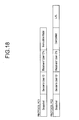
- FIG. 18 is a schematic diagram showing the protocol PC prescribed for the snapshot process.
- the protocol PC is classified into the protocol PC1 and the protocol PC2. What is used for sending the instruction information at S402, is the protocol PC1.
- the protocol PC1 has the field indicating that the information to be sent is related to "Snapshot,” and also has “Sender's User ID,” and “Receivers' User ID's” fields.
- the "Sender's User ID” field is stored with the user ID of the user whose client 30 detected the instruction for the snapshot.
- the "Receivers' User ID's” field is stored with all other users' user ID's.
- the protocol PC1 has a code of "Instruction Made” indicating that an instruction for the snapshot process has been made.
- the relay server 10 receives the instruction information, generates the snap data including the entity on the screen at the time, and broadcasts the notification indicating that the generation is completed according to the protocol PC2 (S403).
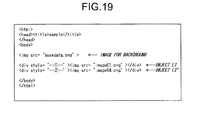
- FIG. 19 is an explanatory diagram showing an example of the snap data.
- the snap data is generated based on the background contents B shown in FIG. 9 and the data of the objects L1, L2' displayed at the time of the generation of the snap data.
- the image data of the background contents B, "basedata.png" shown in FIG. 19, may be stored in the storing device of the relay server 10 as a portion of the snap data.
- the protocol PC2 used for broadcasting the notification has "Snapshot,” “Sender's User ID,” and “Receivers' User ID's” fields identical to the aforementioned protocol PC1.
- the protocol PC2 has "Completed,” and "URL” fields.
- the “Completed” field is stored with a code indicating that the generation of the snap data has been completed.
- the "URL” field is stored with a URL indicating the snap data.
- the controller 32 of each client 30 receives the notification (S404(1), S404(2) in FIG. 17). After that, the controller 32 of each client 30 can designate the "URL" included in the received notification to receive the snap data from the relay server 10, and display the snap data as a web page (S405(1), S405(2)).
- the controller 32 of the client 30 can restore the screen displayed just moments before the interruption by receiving the snap data from the relay server 10. Because the snap data includes the Z-indices indicating the respective layers of the objects, the relationship among the objects is identical to that established just moments before the interruption. Further, the snap data may include information relating each object to the user ID of the user who pasted the same object. Provided that, only the user who pasted the object can manipulate the same object even after the restoration based on the snap data, as in the state before the interruption.
- desired objects can be pasted based on manipulation of users to the common contents displayed on screens of plural clients in an engaged fashion. Because the screen where the objects are pasted is also shared, users can establish communication concerning more intelligent and complicated matters based on the shared display.
- the present invention may be embodied in a computer program.
- the computer program may be stored on a computer-readable medium, or it could, for example, be embodied in a signal such as a downloadable data signal provided from an Internet web site.
- the appended computer program claims are to be interpreted as covering a computer program by itself, or as a record on a carrier, or as a signal, or in any other form.
Landscapes
- Engineering & Computer Science (AREA)
- Business, Economics & Management (AREA)
- Theoretical Computer Science (AREA)
- Human Resources & Organizations (AREA)
- Physics & Mathematics (AREA)
- Strategic Management (AREA)
- General Physics & Mathematics (AREA)
- Tourism & Hospitality (AREA)
- Databases & Information Systems (AREA)
- Data Mining & Analysis (AREA)
- Entrepreneurship & Innovation (AREA)
- General Business, Economics & Management (AREA)
- Marketing (AREA)
- Economics (AREA)
- Radar, Positioning & Navigation (AREA)
- Operations Research (AREA)
- Quality & Reliability (AREA)
- Remote Sensing (AREA)
- General Engineering & Computer Science (AREA)
- Health & Medical Sciences (AREA)
- General Health & Medical Sciences (AREA)
- Primary Health Care (AREA)
- Multimedia (AREA)
- Signal Processing (AREA)
- Information Transfer Between Computers (AREA)
- Computer And Data Communications (AREA)
- Processing Or Creating Images (AREA)
Abstract
Description
Claims (18)
- A program product comprising a display engagement program which controls a server computer connectable to client computers each executing a web browser, characterized in that said display engagement program controls said server computer to execute:a step of sending said client computers web data including background contents, control code making the client computer display a layer object with reflecting manipulation on the same layer object, and control code making the client computer transmit manipulation on the layer object to said server computer; anda step of broadcasting, when the manipulation on the layer object is transmitted from one of said client computers, the same manipulation to the other client computers.
- The program product according to claim 1, said control code included in said web data making said client computer generate, when a manipulation of pasting the layer object to the background contents is made at the same client computer, a manipulating information indicating the manipulation, and send it to said server computer to make the same server computer broadcast the manipulating information to all of the client computers except one which sent the manipulating information to make each of said client computers to which the manipulating information is broadcasted paste the layer object to the background contents according to the manipulating information.
- The program product according to claim 2, said manipulating information includes a palette ID uniquely corresponding to a object selected form a group of still image, moving images, and text data; and
said control code included in said web data making said client computer specify, when the same client computer receives the manipulating information from said server computer, the object corresponding to the palette ID included in the manipulating information by referring palette data containing pairs of the palette ID and the corresponding object to process the specified object as a layer object. - The program product according to claim 3, said control code included in said web data making said client computer generate, when a registration of the palette data is made at the same client computer, a registration information including the palette data, and send it to said server computer to make the same server computer broadcast the registration information to all of the client computers except one which sent the registration information to make each of said client computers to which the registration information is broadcasted store the palette data included in the registration information.
- The program product according to claim 2, said control code included in said web data making said client computer generate, when an instruction of storing what is displayed is made at the same client computer, an instructing information representing the instruction, and send it to said server computer to make the same server computer generate snap data including the layer object's status based on the manipulating information obtained from said client computers and store the generated snap data.
- The program product according to claim 5, said manipulating information including the user ID indicating the user who has made the same manipulating information; and
said snap data including information relating the object to the user ID indicating the user who has pasted the same object. - A display engagement method actualized by a server computer connectable to client computers each executing a web browser, characterized by comprising:a step of sending said client computers web data including background contents, control code making the client computer display a layer object with reflecting manipulation on the same layer object, and control code making the client computer transmit manipulation on the layer object to said server computer; anda step of broadcasting, when the manipulation on the layer object is transmitted from one of said client computers, the same manipulation to the other client computers.
- The method according to claim 7, said control code included in said web data making said client computer generate, when a manipulation of pasting the layer object to the background contents is made at the same client computer, a manipulating information indicating the manipulation, and send it to said server computer to make the same server computer broadcast the manipulating information to all of the client computers except one which sent the manipulating information to make each of said client computers to which the manipulating information is broadcasted paste the layer object to the background contents according to the manipulating information.
- The method according to claim 8, said manipulating information includes a palette ID uniquely corresponding to a object selected form a group of still image, moving images, and text data; and
said control code included in said web data making said client computer specify, when the same client computer receives the manipulating information from said server computer, the object corresponding to the palette ID included in the manipulating information by referring palette data containing pairs of the palette ID and the corresponding object to process the specified object as a layer object. - The method according to claim 9, said control code included in said web data making said client computer generate, when a registration of the palette data is made at the same client computer, a registration information including the palette data, and send it to said server computer to make the same server computer broadcast the registration information to all of the client computers except one which sent the registration information to make each of said client computers to which the registration information is broadcasted store the palette data included in the registration information.
- The method according to claim 8, said control code included in said web data making said client computer generate, when an instruction of storing what is displayed is made at the same client computer, an instructing information representing the instruction, and send it to said server computer to make the same server computer generate snap data including the layer object's status based on the manipulating information obtained from said client computers and store the generated snap data.
- The method according to claim 11, said manipulating information including the user ID indicating the user who has made the same manipulating information; and
said snap data including information relating the object to the user ID indicating the user who has pasted the same object. - A display engagement system comprising a server computer connectable to client computers each executing a web browser, characterized by further comprising:a display engagement program stored with a storing device, said display engagement program controlling said server computer to execute:a step of sending said client computers web data including background contents, control code making the client computer display a layer object with reflecting manipulation on the same layer object, and control code making the client computer transmit manipulation on the layer object to said server computer, anda step of broadcasting, when the manipulation on the layer object is transmitted from one of said client computers, the same manipulation to the other client computers.
- The system according to claim 13, said control code included in said web data making said client computer generate, when a manipulation of pasting the layer object to the background contents is made at the same client computer, a manipulating information indicating the manipulation, and send it to said server computer to make the same server computer broadcast the manipulating information to all of the client computers except one which sent the manipulating information to make each of said client computers to which the manipulating information is broadcasted paste the layer object to the background contents according to the manipulating information.
- The system according to claim 14, said manipulating information includes a palette ID uniquely corresponding to a object selected form a group of still image, moving images, and text data; and
said control code included in said web data making said client computer specify, when the same client computer receives the manipulating information from said server computer, the object corresponding to the palette ID included in the manipulating information by referring palette data containing pairs of the palette ID and the corresponding object to process the specified object as a layer object. - The system according to claim 15, said control code included in said web data making said client computer generate, when a registration of the palette data is made at the same client computer, a registration information including the palette data, and send it to said server computer to make the same server computer broadcast the registration information to all of the client computers except one which sent the registration information to make each of said client computers to which the registration information is broadcasted store the palette data included in the registration information.
- The system according to claim 14, said control code included in said web data making said client computer generate, when an instruction of storing what is displayed is made at the same client computer, an instructing information representing the instruction, and send it to said server computer to make the same server computer generate snap data including the layer object's status based on the manipulating information obtained from said client computers and store the generated snap data.
- The system according to claim 17, said manipulating information including the user ID indicating the user who has made the same manipulating information; and
said snap data including information relating the object to the user ID indicating the user who has pasted the same object.
Applications Claiming Priority (2)
| Application Number | Priority Date | Filing Date | Title |
|---|---|---|---|
| JP2001126081 | 2001-04-24 | ||
| JP2001126081A JP2002324037A (en) | 2001-04-24 | 2001-04-24 | Linked display program |
Publications (2)
| Publication Number | Publication Date |
|---|---|
| EP1258820A2 true EP1258820A2 (en) | 2002-11-20 |
| EP1258820A3 EP1258820A3 (en) | 2004-04-07 |
Family
ID=18975178
Family Applications (1)
| Application Number | Title | Priority Date | Filing Date |
|---|---|---|---|
| EP02252686A Ceased EP1258820A3 (en) | 2001-04-24 | 2002-04-16 | Display engagement system |
Country Status (4)
| Country | Link |
|---|---|
| US (1) | US7174505B2 (en) |
| EP (1) | EP1258820A3 (en) |
| JP (1) | JP2002324037A (en) |
| KR (1) | KR20020083121A (en) |
Cited By (1)
| Publication number | Priority date | Publication date | Assignee | Title |
|---|---|---|---|---|
| WO2003094516A1 (en) * | 2002-05-06 | 2003-11-13 | Motorola Inc | Image content reconfiguration for different device capabilities and methods therefor |
Families Citing this family (7)
| Publication number | Priority date | Publication date | Assignee | Title |
|---|---|---|---|---|
| KR100478613B1 (en) * | 2002-03-28 | 2005-03-28 | 가시오게산키 가부시키가이샤 | Data communication apparatus, data communication system and method thereof |
| JP3753244B2 (en) * | 2002-11-27 | 2006-03-08 | 日本電気株式会社 | Real-time web sharing system |
| US7623650B2 (en) | 2004-06-30 | 2009-11-24 | The Vanguard Group, Inc. | Universal multi-browser interface for customer service representatives |
| KR100596723B1 (en) * | 2004-10-13 | 2006-07-05 | 한국전자통신연구원 | Integrated execution device and execution method of multimedia streaming service and application streaming service |
| JP2008009892A (en) * | 2006-06-30 | 2008-01-17 | Freebit Co Ltd | Data management system and management method |
| US20080059583A1 (en) * | 2006-09-06 | 2008-03-06 | Rhub Communications, Inc. | Browser based web conferencing employing layering to display screen updates |
| US8849914B2 (en) * | 2007-12-20 | 2014-09-30 | The Vanguard Group, Inc. | System and method for synchronized co-browsing by users in different web sessions |
Family Cites Families (38)
| Publication number | Priority date | Publication date | Assignee | Title |
|---|---|---|---|---|
| US5337407A (en) * | 1991-12-31 | 1994-08-09 | International Business Machines Corporation | Method and system for identifying users in a collaborative computer-based system |
| DE69310214T2 (en) * | 1992-12-23 | 1997-11-20 | Otlc, Cupertino, Calif. | DIALOG SYSTEM |
| US5515491A (en) * | 1992-12-31 | 1996-05-07 | International Business Machines Corporation | Method and system for managing communications within a collaborative data processing system |
| AU6161594A (en) * | 1993-02-26 | 1994-09-14 | Taligent, Inc. | Collaborative work system |
| US5608872A (en) * | 1993-03-19 | 1997-03-04 | Ncr Corporation | System for allowing all remote computers to perform annotation on an image and replicating the annotated image on the respective displays of other comuters |
| US5689641A (en) * | 1993-10-01 | 1997-11-18 | Vicor, Inc. | Multimedia collaboration system arrangement for routing compressed AV signal through a participant site without decompressing the AV signal |
| US5537526A (en) * | 1993-11-12 | 1996-07-16 | Taugent, Inc. | Method and apparatus for processing a display document utilizing a system level document framework |
| US5806079A (en) * | 1993-11-19 | 1998-09-08 | Smartpatents, Inc. | System, method, and computer program product for using intelligent notes to organize, link, and manipulate disparate data objects |
| US5530795A (en) * | 1994-02-15 | 1996-06-25 | Wan; Hong K. | Computer conferencing |
| US5577188A (en) * | 1994-05-31 | 1996-11-19 | Future Labs, Inc. | Method to provide for virtual screen overlay |
| US5768607A (en) * | 1994-09-30 | 1998-06-16 | Intel Corporation | Method and apparatus for freehand annotation and drawings incorporating sound and for compressing and synchronizing sound |
| GB2303946A (en) * | 1995-07-29 | 1997-03-05 | Ibm | Data conferencing system |
| US5826025A (en) * | 1995-09-08 | 1998-10-20 | Sun Microsystems, Inc. | System for annotation overlay proxy configured to retrieve associated overlays associated with a document request from annotation directory created from list of overlay groups |
| US5832474A (en) * | 1996-02-26 | 1998-11-03 | Matsushita Electric Industrial Co., Ltd. | Document search and retrieval system with partial match searching of user-drawn annotations |
| JP2000516053A (en) * | 1996-05-07 | 2000-11-28 | ウェブライン コミュニケーションズ コーポレーション | Method and apparatus for integrating Internet multimedia content with telephone and audio communications |
| US5870559A (en) * | 1996-10-15 | 1999-02-09 | Mercury Interactive | Software system and associated methods for facilitating the analysis and management of web sites |
| US5940082A (en) * | 1997-02-14 | 1999-08-17 | Brinegar; David | System and method for distributed collaborative drawing |
| US5987525A (en) * | 1997-04-15 | 1999-11-16 | Cddb, Inc. | Network delivery of interactive entertainment synchronized to playback of audio recordings |
| DE19717167A1 (en) | 1997-04-23 | 1998-10-29 | Ibm | Web browser based conference system |
| US6125383A (en) * | 1997-06-11 | 2000-09-26 | Netgenics Corp. | Research system using multi-platform object oriented program language for providing objects at runtime for creating and manipulating biological or chemical data |
| US6144991A (en) * | 1998-02-19 | 2000-11-07 | Telcordia Technologies, Inc. | System and method for managing interactions between users in a browser-based telecommunications network |
| US6119149A (en) * | 1998-06-05 | 2000-09-12 | I2 Technologies, Inc. | System and process allowing collaboration within and between enterprises for optimal decision making |
| US6338086B1 (en) * | 1998-06-11 | 2002-01-08 | Placeware, Inc. | Collaborative object architecture |
| JP3546705B2 (en) * | 1998-07-10 | 2004-07-28 | インターナショナル・ビジネス・マシーンズ・コーポレーション | Method and apparatus for associating annotation data with application window, system, and storage medium storing program for controlling association of annotation data with application window |
| US6608628B1 (en) * | 1998-11-06 | 2003-08-19 | The United States Of America As Represented By The Administrator Of The National Aeronautics And Space Administration (Nasa) | Method and apparatus for virtual interactive medical imaging by multiple remotely-located users |
| JP3437933B2 (en) | 1999-01-21 | 2003-08-18 | インターナショナル・ビジネス・マシーンズ・コーポレーション | Browser sharing method and system |
| US6342906B1 (en) * | 1999-02-02 | 2002-01-29 | International Business Machines Corporation | Annotation layer for synchronous collaboration |
| US6687878B1 (en) | 1999-03-15 | 2004-02-03 | Real Time Image Ltd. | Synchronizing/updating local client notes with annotations previously made by other clients in a notes database |
| JP3454500B2 (en) * | 1999-06-16 | 2003-10-06 | インターナショナル・ビジネス・マシーンズ・コーポレーション | Information processing method, collaboration server, collaboration system, storage medium for storing information processing program |
| DE50004343D1 (en) | 1999-06-24 | 2003-12-11 | Siemens Ag | SHIP OF THE COMMERCIAL MARINE WITH A SHIP HULL INTENDED TO RECEIVE GOODS AND / OR PERSONS |
| AU6804300A (en) * | 1999-07-11 | 2001-01-30 | Expression, Inc. | Internet collaboration system and method |
| US6826595B1 (en) * | 2000-07-05 | 2004-11-30 | Sap Portals Israel, Ltd. | Internet collaboration system and method |
| US6721921B1 (en) * | 2000-07-26 | 2004-04-13 | Itm Associates | Method and system for annotating documents using an independent annotation repository |
| US6894703B2 (en) * | 2000-08-29 | 2005-05-17 | Mitsubishi Electric Research Laboratories, Inc. | Multi-user collaborative circular graphical user interfaces |
| US6934766B1 (en) * | 2000-11-02 | 2005-08-23 | Cisco Technology, Inc. | Method and apparatus for exchanging event information between computer systems that reduce perceived lag times by subtracting actual lag times from event playback time |
| US7647373B2 (en) * | 2001-03-13 | 2010-01-12 | Eplus Capital, Inc. | System and process for network collaboration through embedded annotation and rendering instructions |
| US7337093B2 (en) * | 2001-09-07 | 2008-02-26 | Purdue Research Foundation | Systems and methods for collaborative shape and design |
| US20060059431A1 (en) * | 2004-08-30 | 2006-03-16 | Microsoft Corporation | Real-time collaborative graphics application and method for use on a computer network having a collaborative networking platform |
-
2001
- 2001-04-24 JP JP2001126081A patent/JP2002324037A/en active Pending
-
2002
- 2002-03-29 US US10/108,340 patent/US7174505B2/en not_active Expired - Fee Related
- 2002-03-30 KR KR1020020017629A patent/KR20020083121A/en not_active Ceased
- 2002-04-16 EP EP02252686A patent/EP1258820A3/en not_active Ceased
Cited By (1)
| Publication number | Priority date | Publication date | Assignee | Title |
|---|---|---|---|---|
| WO2003094516A1 (en) * | 2002-05-06 | 2003-11-13 | Motorola Inc | Image content reconfiguration for different device capabilities and methods therefor |
Also Published As
| Publication number | Publication date |
|---|---|
| US20020198938A1 (en) | 2002-12-26 |
| JP2002324037A (en) | 2002-11-08 |
| US7174505B2 (en) | 2007-02-06 |
| EP1258820A3 (en) | 2004-04-07 |
| KR20020083121A (en) | 2002-11-01 |
Similar Documents
| Publication | Publication Date | Title |
|---|---|---|
| US7034864B2 (en) | Image display apparatus, image display system, and image display method | |
| JP5925135B2 (en) | Image forming apparatus | |
| US7389524B2 (en) | Image system using an image server controller for generating display information of a client to access images from plural image servers on network | |
| KR20140065764A (en) | System and method for function expandable collaboration screen system | |
| JP4004660B2 (en) | Image editing system, image server and client computer constituting image editing system, and image editing method | |
| JP2002091913A (en) | Remote maintenance system, and maintenance device and supporting device used for the same | |
| EP1258820A2 (en) | Display engagement system | |
| EP1271950B1 (en) | Moving images synchronization system | |
| JP2007086354A (en) | Composite video control apparatus, composite video control method, and program | |
| JP2003186792A (en) | Method for displaying message and its server and client | |
| JP2000287110A (en) | Digital camera device control system | |
| JP2001282673A (en) | Image distribution system, control method therefor, and information processing apparatus | |
| CN115794095A (en) | JavaScript-based unreal engine UI development method and system | |
| JPH09198227A (en) | Information processing system and its method and apparatus | |
| CN1574831B (en) | Communication device and communication system | |
| CN118488165A (en) | Intelligent conference control method and device | |
| JP6945905B1 (en) | Information processing system, information processing method and program | |
| JP4358414B2 (en) | Application construction method and execution method, application construction apparatus, application execution system, recording medium recording application construction method, and recording medium recording application execution method | |
| JP6189471B2 (en) | Image forming apparatus | |
| JPH0784905A (en) | Conference screen display control method | |
| JP2002344961A (en) | Screen composition method, screen composition device, and image display system | |
| KR100375927B1 (en) | The multimedia advertisement and information service system for unattended automatic certificate printing system and its operational method thereof | |
| JP4572640B2 (en) | Document display device, document display device control method, and program | |
| JP2001103445A5 (en) | ||
| CN116909459A (en) | Application screen capturing method and device based on web side, electronic equipment and storage medium |
Legal Events
| Date | Code | Title | Description |
|---|---|---|---|
| PUAI | Public reference made under article 153(3) epc to a published international application that has entered the european phase |
Free format text: ORIGINAL CODE: 0009012 |
|
| AK | Designated contracting states |
Kind code of ref document: A2 Designated state(s): AT BE CH CY DE DK ES FI FR GB GR IE IT LI LU MC NL PT SE TR |
|
| AX | Request for extension of the european patent |
Free format text: AL;LT;LV;MK;RO;SI |
|
| PUAL | Search report despatched |
Free format text: ORIGINAL CODE: 0009013 |
|
| AK | Designated contracting states |
Kind code of ref document: A3 Designated state(s): AT BE CH CY DE DK ES FI FR GB GR IE IT LI LU MC NL PT SE TR |
|
| AX | Request for extension of the european patent |
Extension state: AL LT LV MK RO SI |
|
| RIC1 | Information provided on ipc code assigned before grant |
Ipc: 7G 06F 17/60 A |
|
| 17P | Request for examination filed |
Effective date: 20040714 |
|
| 17Q | First examination report despatched |
Effective date: 20040929 |
|
| AKX | Designation fees paid |
Designated state(s): DE FR GB |
|
| STAA | Information on the status of an ep patent application or granted ep patent |
Free format text: STATUS: THE APPLICATION HAS BEEN REFUSED |
|
| 18R | Application refused |
Effective date: 20060112 |