EP1254957A2 - Method for producing target substance by fermentation - Google Patents

Method for producing target substance by fermentation Download PDF

Info

Publication number
EP1254957A2
EP1254957A2 EP02008316A EP02008316A EP1254957A2 EP 1254957 A2 EP1254957 A2 EP 1254957A2 EP 02008316 A EP02008316 A EP 02008316A EP 02008316 A EP02008316 A EP 02008316A EP 1254957 A2 EP1254957 A2 EP 1254957A2
Authority
EP
European Patent Office
Prior art keywords
maltose
protein
microorganism
glucose
mutation
Prior art date
Legal status (The legal status is an assumption and is not a legal conclusion. Google has not performed a legal analysis and makes no representation as to the accuracy of the status listed.)
Granted
Application number
EP02008316A
Other languages
German (de)
French (fr)
Other versions
EP1254957B2 (en
EP1254957B1 (en
EP1254957A3 (en
Inventor
Nobuharu Ajinomoto Co. Inc. TSUJIMOTO
Tomoko Ajinomoto Co. Inc. Suzuki
Hisao Ajinomoto Co. Inc. Ito
Current Assignee (The listed assignees may be inaccurate. Google has not performed a legal analysis and makes no representation or warranty as to the accuracy of the list.)
Ajinomoto Co Inc
Original Assignee
Ajinomoto Co Inc
Priority date (The priority date is an assumption and is not a legal conclusion. Google has not performed a legal analysis and makes no representation as to the accuracy of the date listed.)
Filing date
Publication date
Family has litigation
First worldwide family litigation filed litigation Critical https://patents.darts-ip.com/?family=18982967&utm_source=google_patent&utm_medium=platform_link&utm_campaign=public_patent_search&patent=EP1254957(A2) "Global patent litigation dataset” by Darts-ip is licensed under a Creative Commons Attribution 4.0 International License.
Application filed by Ajinomoto Co Inc filed Critical Ajinomoto Co Inc
Priority to DE60208459T priority Critical patent/DE60208459T3/en
Publication of EP1254957A2 publication Critical patent/EP1254957A2/en
Publication of EP1254957A3 publication Critical patent/EP1254957A3/en
Application granted granted Critical
Publication of EP1254957B1 publication Critical patent/EP1254957B1/en
Publication of EP1254957B2 publication Critical patent/EP1254957B2/en
Anticipated expiration legal-status Critical
Expired - Lifetime legal-status Critical Current

Links

Images

Classifications

    • CCHEMISTRY; METALLURGY
    • C07ORGANIC CHEMISTRY
    • C07KPEPTIDES
    • C07K14/00Peptides having more than 20 amino acids; Gastrins; Somatostatins; Melanotropins; Derivatives thereof
    • C07K14/195Peptides having more than 20 amino acids; Gastrins; Somatostatins; Melanotropins; Derivatives thereof from bacteria
    • C07K14/24Peptides having more than 20 amino acids; Gastrins; Somatostatins; Melanotropins; Derivatives thereof from bacteria from Enterobacteriaceae (F), e.g. Citrobacter, Serratia, Proteus, Providencia, Morganella, Yersinia
    • C07K14/245Escherichia (G)
    • CCHEMISTRY; METALLURGY
    • C12BIOCHEMISTRY; BEER; SPIRITS; WINE; VINEGAR; MICROBIOLOGY; ENZYMOLOGY; MUTATION OR GENETIC ENGINEERING
    • C12PFERMENTATION OR ENZYME-USING PROCESSES TO SYNTHESISE A DESIRED CHEMICAL COMPOUND OR COMPOSITION OR TO SEPARATE OPTICAL ISOMERS FROM A RACEMIC MIXTURE
    • C12P13/00Preparation of nitrogen-containing organic compounds
    • C12P13/04Alpha- or beta- amino acids
    • CCHEMISTRY; METALLURGY
    • C12BIOCHEMISTRY; BEER; SPIRITS; WINE; VINEGAR; MICROBIOLOGY; ENZYMOLOGY; MUTATION OR GENETIC ENGINEERING
    • C12PFERMENTATION OR ENZYME-USING PROCESSES TO SYNTHESISE A DESIRED CHEMICAL COMPOUND OR COMPOSITION OR TO SEPARATE OPTICAL ISOMERS FROM A RACEMIC MIXTURE
    • C12P13/00Preparation of nitrogen-containing organic compounds
    • C12P13/04Alpha- or beta- amino acids
    • C12P13/08Lysine; Diaminopimelic acid; Threonine; Valine
    • CCHEMISTRY; METALLURGY
    • C12BIOCHEMISTRY; BEER; SPIRITS; WINE; VINEGAR; MICROBIOLOGY; ENZYMOLOGY; MUTATION OR GENETIC ENGINEERING
    • C12PFERMENTATION OR ENZYME-USING PROCESSES TO SYNTHESISE A DESIRED CHEMICAL COMPOUND OR COMPOSITION OR TO SEPARATE OPTICAL ISOMERS FROM A RACEMIC MIXTURE
    • C12P13/00Preparation of nitrogen-containing organic compounds
    • C12P13/04Alpha- or beta- amino acids
    • C12P13/22Tryptophan; Tyrosine; Phenylalanine; 3,4-Dihydroxyphenylalanine
    • C12P13/222Phenylalanine

Definitions

  • the present invention relates to a method for producing a target substance by using a microorganism, more precisely, means for improving productivity of a substance that is an ultimate target product in a method for producing a target substance such as L-amino acids, antibiotics, vitamins, growth factors and bioactive substances by using a microorganism.
  • E. coli In fermentation using Gram-negative enterobacteria such as Escherichia coli ( E. coli ), use of such a starch decomposition solution causes a problem.
  • E. coli consumes glucose existing as a main component, but it suffers from the so-called glucose repression, which means that oligosaccharides containing two or more monosacchatides such as maltose are consumed only after monosaccharides are completely consumed. Therefore, if fermentation is terminated when only glucose that is the main component of starch decomposition solution is consumed, oligosaccharides such as maltose are not assimilated but remain vainly. Further, if it is intended to consume oligosaccharides after consumption of glucose, culture time must be extended for that and therefore utility cost and so forth are wasted ineffectively.
  • the present invention provides the followings.
  • Whether a microorganism can be used for the present invention or not can be determined by, for example, observing growth of a wild strain of the microorganism in a medium containing glucose and maltose as carbon sources and confirming if the two-phase proliferation, i.e., the so-called diauxie, is observed or not. If diauxie is observed, it is considered that the maltose assimilation should be controlled by an interaction of the IIA Glc protein of glucose PTS and a protein involved in the non-PTS uptake of maltose.
  • Escherichia coli AJ12604 (FERM BP-3579, refer to the European Patent Publication No. 488,424), Brevibacterium lactofermentum AJ12637 (FERM BP-4160, refer to French Patent Publication No. 2,686,898) etc. for L-phenylalanine, Escherichia coli AJ12624 (FERM BP-3853, refer to French Patent Publication No. 2,680,178), Brevibacterium lactofermentum AJ12475 (FERMBP-2922, refer to U.S. Patent No. 5,272,067) etc.
  • VKPM B-4411 refer to the European Patent Publication No. 519,113
  • Brevibacterium lactofermentum AJ12341 refer to U.S. Patent No. 5,188,948 etc. for L-valine and so forth.
  • strains obtained by introducing a plasmid pVIC40, pCABD2 or pMGAL1, which are incorporated with a gene involved in the production of each of the amino acids, into E. coli W3100 (tyrA) can also be suitably used, and they are described in the examples mentioned later.
  • a mutation that reduce or eliminate the interaction between these proteins can be introduced into one or both of genes coding for these proteins.
  • a mutant type malK gene encoding MalK protein and having a mutation for substituting a Gln residue for the 327th Leu residue (L327Q type mutation), which was obtained by the inventors of the present invention, can also be suitably used for the present invention.
  • a mutant type malK gene encoding a mutant type MalK protein having both of a mutation for substituting a Thr residue for the 124th Ala residue and a mutation for substituting a Gln residue for the 327th Leu residue can also be used for the present invention.
  • the positions of mutations shall represent positions corresponding to the positions in a wild-type gene or wild-type protein.
  • Such gene substitution can be performed, for example, in the same manner as the gene substitution using a temperature-sensitive plasmid described later.
  • Examples of the temperature-sensitive plasmid of Escherichia coli include pMAN031 (J. Bacteriol., 162, 1196, 1985), pMAN997 (WO99/03988) and so forth. These plasmids can autonomously replicate in Escherichia coli at least at 30°C, but cannot autonomously replicate at 37-42°C.
  • sugars such as lactose, galactose and starch hydrolysate, alcohols such as glycerol and sorbitol, organic acids such as fumaric acid, citric acid and succinic acid and so forth can be used.
  • An emerged colony was inoculated into 5 ml of L medium contained in a test tube and cultured overnight at 30°C with shaking.
  • This culture broth in a volume of 0.1 ml was inoculated into 5 ml of L medium contained in a test tube and cultured at 37-42°C for 3-4 hours with shaking.
  • This culture broth was diluted 10 3 to 10 7 times, and 0.1 ml of the dilution was applied to L agar medium and cultured overnight at 37-42°C. The ampicillin sensitivity of an emerged colony was confirmed.
  • the obtained PCR products were malK genes of the glucose-resistant strains malK#1 and malK#2, and the nucleotide sequences of these genes were determined. As a result, it was found that a substituted for the 980th T in the both strains, and in connection with that, Gln was substituted for the 327th Leu residue. This is a mutation that has not been known so far. This mutation was designated as L327Q type mutation.
  • pVIC40 (WO90/04636), pCABD2 (WO95/16042) and pMGAL1 (Japanese Patent Laid-open Publication (Kokai) No. 5-344881) were each introduced into E. coli W3100 (tyrA)malK327, and abilities to produce L-lysine, L-threonine and L-phenylalanine were investigated for each strain.

Landscapes

  • Chemical & Material Sciences (AREA)
  • Organic Chemistry (AREA)
  • Life Sciences & Earth Sciences (AREA)
  • Engineering & Computer Science (AREA)
  • Zoology (AREA)
  • Wood Science & Technology (AREA)
  • Health & Medical Sciences (AREA)
  • Genetics & Genomics (AREA)
  • General Health & Medical Sciences (AREA)
  • Biochemistry (AREA)
  • Chemical Kinetics & Catalysis (AREA)
  • General Chemical & Material Sciences (AREA)
  • Bioinformatics & Cheminformatics (AREA)
  • General Engineering & Computer Science (AREA)
  • Microbiology (AREA)
  • Biotechnology (AREA)
  • Gastroenterology & Hepatology (AREA)
  • Biophysics (AREA)
  • Medicinal Chemistry (AREA)
  • Molecular Biology (AREA)
  • Proteomics, Peptides & Aminoacids (AREA)
  • Preparation Of Compounds By Using Micro-Organisms (AREA)
  • Micro-Organisms Or Cultivation Processes Thereof (AREA)

Abstract

In a method for producing a target substance by utilizing a microorganism, which comprises culturing the microorganism in a medium to produce and accumulate the target substance in the medium and collecting the target substance from the culture, there is used, as the microorganism, a mutant strain or recombinant strain of a microorganism in which maltose assimilation is controlled by an interaction between IIAGlc protein of glucose PTS and a protein involved in non-PTS uptake of maltose, and the interaction between the IIAGlc protein and the protein involved in non-PTS uptake of maltose is reduced or eliminated in the mutant strain or recombinant strain.

Description

Field of the Invention
The present invention relates to a method for producing a target substance by using a microorganism, more precisely, means for improving productivity of a substance that is an ultimate target product in a method for producing a target substance such as L-amino acids, antibiotics, vitamins, growth factors and bioactive substances by using a microorganism.
Description of the Related Art
As typical methods for producing substances by using microorganisms, there are known methods for producing L-amino acids by fermentation. L-amino acids are used not only as seasonings and foodstuffs but also as components of various nutritional mixtures for medical purposes. Furthermore, they are used as additives for animal feed, reagents in drug manufacturing industry and chemical industry and growth factors for production of L-amino acids such as L-lysine and L-homoserine by use of a microorganism. As microorganisms that can produce L-amino acids by fermentation, there are known coryneform bacteria, Escherichia bacteria, Bacillus bacteria, Serratia bacteria and so forth.
As for such production of target substances by fermentation as described above, it can be said that most of materials used as raw materials are those containing saccharides such as blackstrap molasses. Also in amino acid fermentation or nucleic acid fermentation, culture is performed by using a saccharide as a raw material. Although sugarcane and so forth abundantly contain starch, it is rare to use it as it is as a raw material, but used in most cases as a decomposition product in which starch is decomposed into, for example, monosaccharides or disaccharides. As for the decomposition method, a solution of a saccharifying enzyme such as amylase is generally used, and thereby starch that is polysaccharide is decomposed into relatively low molecular saccharides such as glucose, maltose and maltotriose.
In fermentation using Gram-negative enterobacteria such as Escherichia coli (E. coli), use of such a starch decomposition solution causes a problem. For example, E. coli consumes glucose existing as a main component, but it suffers from the so-called glucose repression, which means that oligosaccharides containing two or more monosacchatides such as maltose are consumed only after monosaccharides are completely consumed. Therefore, if fermentation is terminated when only glucose that is the main component of starch decomposition solution is consumed, oligosaccharides such as maltose are not assimilated but remain vainly. Further, if it is intended to consume oligosaccharides after consumption of glucose, culture time must be extended for that and therefore utility cost and so forth are wasted ineffectively.
It is known that E. coli and Salmonella typhimurium generally suffer from the glucose repression. That is, when it is intended to assimilate glucose together with other carbon sources such as lactose, maltose and glycerol, glucose is assimilated first and the other carbon sources are assimilated later. Monod et al. discovered that, when lactose and glucose were used as carbon sources, two-phase proliferation, i.e., so-called diauxie, was observed (Monod, J., Growth, 11, 223-247, 1947). Through researches in molecular biology, the mechanism thereof is becoming clear. That is, IIAGlc (glucose PTS enzyme II) that acts as a phosphate donor for glucose in the phosphate cascade at the time of assimilation in the glucose-phosphoenolpyruvate-sugar phosphotransferase system, i.e., so-called PTS system, exists in a dephosphorylated state. The dephosphorylated IIAGlc causes the so-called inducer exclusion, in which the dephosphorylated IIAGlc inhibits uptake of the other saccharides (Postma P.W., Lengeler J.W. and Jacobson G.R.: in Escherichia coli and Salmonella: Cellular and Molecular Biology (ed. Neidhardt F.C.), pp.1149-1174, 1996, ASM Press, Washington D.C.).
Uptake of maltose in E. coli suffers form the glucose repression, and this is caused by the interaction between the dephosphorylated IIAGlc and the MalK protein that constitutes the uptake system for maltose by non-PTS. That is, when the bacterium is taking up glucose, IIAGlc excessively exists in the cell, and it binds to the MalK protein to inhibit the uptake of maltose. Further, a mutant strain showing improved uptake of maltose in the presence of glucose analogue was also obtained, and it is known that this mutant strain has a mutation in the malK gene coding for the MalK protein (Dean D.A. et al., Regulation of the Maltose Transport System of Escherichia coli by the Glucose-specific Enzyme III of the Phosphoenolpyruvate-Sugar Phosphotransferase System., J. Biol. Chem., 265 (34), 21005-21010, 1990; Kuhnau, S. et al., The Activities of the Escherichia coli MalK Protein in Maltose Transport and Regulation, and Inducer Exclusion Can Be Separated by Mutations, J. Bacteriol., 173 (7), 2180-2186, 1991).
Further, also for IIAGlc, there was reported a mutant strain that contained a mutant protein showing reduced binding with lactose permease (Zeng, G.A. et al., Mutation alanalysis of the enzyme IIIGlc of the phosphoenolpyruvate phosphotransferease system in Escherichia coli. Res. Microbiol., 143, 251-261, 1992). The lactose permease is an uptake enzyme for lactose that is one of the non-PTS saccharides.
However, it is unknown whether the aforementioned mutant strains assimilate maltose simultaneously in the presence of glucose.
Summary of the Invention
An object of the present invention is to improve assimilation ability of a microorganism for oligosaccharides, in particular, maltose, in production of a substance by fermentation utilizing the microorganism with a carbon source containing glucose and oligosaccharides such as starch decomposition solutions.
The inventors of the present invention assiduously studied in order to achieve the aforementioned object. As a result, they found that a microorganism in which an interaction between IIAGlc protein of glucose PTS and a protein involved in non-PTS uptake of maltose was reduced or eliminated could assimilate maltose even in the presence of glucose, and accomplished the present invention.
That is, the present invention provides the followings.
  • (1) A method for producing a target substance utilizing a microorganism and comprising culturing the microorganism in a medium to produce and accumulate the target substance in the medium and collecting the target substance from the culture, wherein the microorganism is a mutant or recombinant strain of a microorganism in which maltose assimilation is controlled by an interaction between IIAGlc protein of glucose PTS and a protein involved in non-PTS uptake of maltose, and the interaction between IIAGlc protein and a protein involved in non-PTS uptake of maltose of the mutant or recombinant strain is reduced or eliminated, and the strain can take up glucose and maltose.
  • (2) The method according to (1), wherein the protein involved in non-PTS uptake of maltose is a maltose carrier protein having an ATP decomposition activity.
  • (3) The method according to (2), wherein the protein is MalK protein.
  • (4) The method according to any one of (1)-(3), wherein the interaction between IIAGlc protein of glucose PTS and the protein involved in non-PTS uptake of maltose is reduced or eliminated because the MalK protein contained in the microorganism has a mutation selected from a mutation for substituting a Thr residue for the Ala residue at a position of 124 and a mutation for substituting a Gln residue for the Leu residue at a position of 327.
  • (5) The method according to any one of (1)-(4), wherein the interaction between IIAGlc protein of glucose PTS and the protein involved in non-PTS uptake of maltose is reduced or eliminated because the IIAGlc protein contained in the microorganism has a mutation selected from a mutation for substituting a Ser residue for the Gly residue at a position of 47 and a mutation substituting a Thr residue for the Ala residue at a position of 76.
  • (6) The method according to any one of (1)-(5), wherein the target substance is an L-amino acid.
  • (7) The method according to (6), wherein the target substance is selected from the group consisting of L-lysine, L-threonine and L-phenylaianine.
  • (8) The method according to any one of (1)-(7), wherein the microorganism is an Escherichia bacterium.
  • According to the present invention, assimilation ability of a microorganism for oligosaccharide, in particular, maltose, can be improved in production of a substance by fermentation using the microorganism with a carbon source containing glucose and an oligosaccharide such as starch decomposition solution.
    Brief Explanation of the Drawings
    Fig. 1 shows the structure of the plasmid vector pTS1 having a temperature sensitive replication origin.
    Fig. 2 shows growth of E. coli W3100(tyrA)malK1 in a medium containing glucose and maltose.
    Fig. 3 shows growth of E. coli W3100(tyrA)crr3 in a medium containing glucose and maltose.
    Fig. 4 shows growth of E. coli W3100(tyrA)malK327 in a medium containing glucose and maltose.
    Preferred Embodiments of the Invention
    Hereafter, the present invention will be explained in detail.
    The target substance produced by the microorganism according to the present invention may be selected from various L-amino acids including, for example, L-threonine, L-lysine, L-glutamic acid, L-leucine, L-isoleucine, L-valine, L-phenylalanine and so forth. Particularly preferred L-amino acids are L-lysine, L-threonine and L-phenylalanine. In addition, the target substance may be any of substances that have conventionally been produced by microorganisms using a medium containing glucose and an oligosaccharide such as maltose as carbon sources, and may be a nucleic acid such as guanylic acid and inosinic acid, vitamin, antibiotic, growth factor, bioactive substance or the like. The present invention can of course be used for any other substances so long as the substances require a carbon source in the biosynthesis thereof, even if they are not currently produced by using a microorganism.
    The microorganism used in the present invention is a microorganism in which maltose assimilation is controlled by an interaction between IIAGlc protein of glucose PTS and a protein involved in non-PTS uptake of maltose. Specifically, there can be mentioned bacteria belonging to the group of enterobacteria such as Escherichia bacteria, Enterobacter bacteria and Klebslella bacteria, coryneform bacteria, Bacillus bacteria, Serratia bacteria and so forth. It is preferably a microorganism that allows gene substitution. Whether a microorganism can be used for the present invention or not can be determined by, for example, observing growth of a wild strain of the microorganism in a medium containing glucose and maltose as carbon sources and confirming if the two-phase proliferation, i.e., the so-called diauxie, is observed or not. If diauxie is observed, it is considered that the maltose assimilation should be controlled by an interaction of the IIAGlc protein of glucose PTS and a protein involved in the non-PTS uptake of maltose.
    Specific examples of microorganisms that can be used for the present invention include, for example, Escherichia coli AJ11442 (NRRL B-12185 and FERM BP-1543, refer to U.S. Patent No. 4,346,170), Brevibacterium lactofermentum AJ3990 (ATCC31269, refer to U.S. Patent No. 4,066,501) etc. for L-lysine as the target substance, Escherichia coli VKPM B-3996 (RIA1867, refer to U.S. Patent No. 5,175,107), Corynebacterium acetoacidophilum AJ12318 (PERM BP-1172, refer to U.S. Patent No. 5,188,949) etc. for L-threonine, Escherichia coli AJ12604 (FERM BP-3579, refer to the European Patent Publication No. 488,424), Brevibacterium lactofermentum AJ12637 (FERM BP-4160, refer to French Patent Publication No. 2,686,898) etc. for L-phenylalanine, Escherichia coli AJ12624 (FERM BP-3853, refer to French Patent Publication No. 2,680,178), Brevibacterium lactofermentum AJ12475 (FERMBP-2922, refer to U.S. Patent No. 5,272,067) etc. for L-glutamic acid, Escherichia coli AJ11478 (FERM P-5274, refer to Japanese Patent Publication (Kokoku) No. 62-34397), Brevibacterium lactofermentum AJ3718 (FERM P-2516, refer to U.S. Patent No. 3,970,519) etc. for L-leucine, Escherichia coli KX141 (VKPM B-4781, refer to the European Patent Publication No. 519,113), Brevibacterium flavum AJ12149 (FERN BP-759, refer to U.S. Patent No. 4,656,135) etc. for L-isoleucine, Escherichia coli VL1970 (VKPM B-4411, refer to the European Patent Publication No. 519,113), Brevibacterium lactofermentum AJ12341 (FERM BP-1763, refer to U.S. Patent No. 5,188,948) etc. for L-valine and so forth.
    Further, when the target substance is L-lysine, L-threonine or L-phenylalanine, strains obtained by introducing a plasmid pVIC40, pCABD2 or pMGAL1, which are incorporated with a gene involved in the production of each of the amino acids, into E. coli W3100 (tyrA) can also be suitably used, and they are described in the examples mentioned later.
    Furthermore, in the microorganism used for the present invention, activity of a protein involved in production of the target substance may be enhanced, or activity of a protein involved in decomposition or the like of the target substance may be reduced, depending on the target substance.
    The microorganism used for the present invention is a mutant strain or recombinant strain obtained from such a microorganism as described above as a parent strain, in which the interaction between IIAGlc protein of glucose PTS and a protein involved in non-PTS uptake of maltose is reduced or eliminated, but it is a microorganism that can take up glucose and maltose. That is, in the present invention, the IIAGlc protein and the protein involved in non-PTS uptake of maltose contain a mutation that does not substantially affect the uptake of glucose and maltose, even though it reduces or eliminates the interaction between them.
    In Escherichia coli, the IIAGlc protein is encoded by crr gene. Further, as a protein involved in the non-PTS uptake of maltose, the MalK protein can be mentioned, which is encoded by malK gene in Escherichia coli.
    In order to reduce or eliminate the interaction of the IIAGlc protein and the protein involved in non-PTS uptake of maltose, a mutation that reduce or eliminate the interaction between these proteins can be introduced into one or both of genes coding for these proteins.
    A crr gene or malK gene that has such a mutation as mentioned above can be obtained by, for example, isolating crr gene or malK gene from a mutant strain that can grow in a medium containing maltose as a carbon source and a glucose analogue such as 2-deoxyglucose. As a mutant type malK gene that can be obtained as described above, there is known a mutant type malK gene having a mutation for substituting a Thr residue for the 124th Ala residue of the encoded MalK protein (Dean, D.A. et al., J. Biol. Chem., 265 (34), 21005-21010, 1990; Kuhnau, S. et al., J. Bacteriol., 173 (7), 2180-2186, 1991). Further, a mutant type malK gene encoding MalK protein and having a mutation for substituting a Gln residue for the 327th Leu residue (L327Q type mutation), which was obtained by the inventors of the present invention, can also be suitably used for the present invention. Furthermore, a mutant type malK gene encoding a mutant type MalK protein having both of a mutation for substituting a Thr residue for the 124th Ala residue and a mutation for substituting a Gln residue for the 327th Leu residue can also be used for the present invention.
    On the other hand, an example of the mutant type crr gene is a crr gene containing a mutation for substituting a Ser residue for the 47th Gly residue of the encoded IIAGlc protein, a mutation for substituting a Thr residue for the 76th Ala residue, or both of these mutations.
    The positions of the aforementioned mutations are numbered from the Met residue corresponding to the initiation codon, which is taken as the first codon. In addition, the malK gene or crr gene may contain one or more mutations other than the mutations according to the present invention, and hence deletion, substitution or insertion of one or more amino acid residues may occur in the encoded MalK protein or IIAGlc protein. Even such a malK gene or crr gene may be used for the present invention, so long as the interaction between the MalK protein and IIAGlc protein is reduced or eliminated, and the uptake of glucose and maltose is not substantially affected. When the MalK protein or IIAGlc protein contains deletion or insertion of one or more amino acid residues, the positions of the aforementioned mutations should change. For example, if the MalK protein includes deletion of one amino acid residue on the N-terminus side of the 327th Leu residue, the 327th Leu residue should become the 326th residue. Even in such a case, the 326th Leu residue corresponds to the 327th Leu residue of a wild-type protein. Therefore, in the present specification, the positions of mutations shall represent positions corresponding to the positions in a wild-type gene or wild-type protein.
    As the method for introducing the aforementioned mutations into the malK gene and/or crr gene, there can be mentioned a method of introducing a target mutation into the malK gene and/or crr gene by the site-specific mutagenesis or the like to produce a mutant type gene and substituting the obtained mutant type gene for malK gene and/or crr gene on a chromosome of microorganism through gene substitution utilizing homologous recombination.
    Such gene substitution can be performed, for example, in the same manner as the gene substitution using a temperature-sensitive plasmid described later. Examples of the temperature-sensitive plasmid of Escherichia coli include pMAN031 (J. Bacteriol., 162, 1196, 1985), pMAN997 (WO99/03988) and so forth. These plasmids can autonomously replicate in Escherichia coli at least at 30°C, but cannot autonomously replicate at 37-42°C.
    Further, a mutant strain having a target mutation in the malK gene and/or crr gene can also be obtained by treating a microorganism by UV irradiation or with a mitagenizing agent used for usual mutagenesis treatment such as N-methyl-N'-nitro-N-nitrosoguanidine (NTG) or nitrous acid and selecting a strain that can grow in a medium containing a glucose analogue such as 2-deoxyglucose.
    Whether an obtained candidate strain is a target mutant strain or not can be confirmed by isolating malK gene or crr gene from the candidate strain and investigating its nucleotide sequence around the mutation point.
    As the medium used for culture of the microorganism of the present invention, conventionally used well-known media can be used depending on the kind of the microorganism to be used. That is, usual media containing a carbon source, nitrogen source, inorganic ions and other organic components as required can be used. However, it is preferable to use a medium containing glucose and an oligosaccharide such as maltose as carbon sources.
    As the carbon source other than glucose and maltose, sugars such as lactose, galactose and starch hydrolysate, alcohols such as glycerol and sorbitol, organic acids such as fumaric acid, citric acid and succinic acid and so forth can be used.
    As the nitrogen source, inorganic ammonium salts such as ammonium sulfate, ammonium chloride and ammonium phosphate, organic nitrogen such as soybean hydrolysate, ammonia gas, aqueous ammonia and so forth can be used.
    As organic trace nutrient source, appropriate amounts of required substances such as vitamin B1, L-homoserine and L-tyrosine, yeast extract and so forth are preferably contained. In addition to these, small amounts of potassium phosphate, magnesium sulfate, iron ions, manganese ions and so forth are added as required.
    Culture may be performed under well-known conditions that are conventionally used depending on the microorganism to be used. For example, culture is preferably performed under an aerobic condition for 16-120 hours. Culture temperature is controlled to be 25-45°C and pH is controlled to be 5-8 during the culture. Inorganic or organic acidic or alkaline substances as well as ammonia gas and so forth can be used for pH adjustment.
    To collect a metabolic product from a medium after completion of the culture, no special method is required for the present invention. That is, collection of the target substance can be attained by a combination of well-known methods such as those using an ion exchange resin, precipitation and others.
    Best Mode for Carrying out the Invention
    Hereafter, the present invention will be explained more specifically with reference to the following examples. The reagents used in the following examples were obtained from Wako Pure Chemicals or Nakarai Tesque unless otherwise indicated. The compositions of the media used in each example are shown below.
    [L medium]
    Bacto tryptone peptone (DIFCO) 10 g/L
    Yeast extract (DIFCO) 5 g/L
    NaCl 5 g/L
    These were autoclaved at 120°C for 20 minutes.
    [L agar medium]
    L medium
    Bacto agar (DIFCO) 15 g/L
    These were steam-sterilized at 120°C for 20 minutes.
    [SOC medium]
    Bacto tryptone peptone (DIFCO) 20 g/L
    Yeast extract (DIFCO) 5 g/L
    10 mM NaCl
    2.5 mM KCl
    10 mM MgSO4
    10 mM MgCl 2
    20 mM Glucose
    The components except for magnesium solution and glucose were autoclaved (120°C, 20 minutes), then added with 2 M magnesium stock solution (1 M MgSO4, 1 M MgCl2) and 2 M glucose solution, which solutions had been preliminarily passed through a 0.22 µm filter, and passed through a 0.22 µm filter again.
    [M9 minimal medium]
    Na2HPO4 · 12H2O 80 g/L
    KH2PO4 15 g/L
    NaCl 2.5 g/L
    NH4Cl 5 g/L
    MgSO4 · 7H2O 246.48 mg/L
    Saccharide (glucose or maltose or mixture of these at a suitable ratio) 5 g/L
    pH 7.0
    MgSO4 and glucose were separately sterilized (120°C, 20 minutes) and added. A suitable amount of amino acids and vitamins were added as required. pH was adjusted with NaOH.
    [M9 minimal agar medium]
    M9 minimal medium Bacto agar (DIFCO) 15 g/L
    [Amino acid production medium]
    (NH4)2SO4 20 g/L
    KH2PO4 1 g/L
    MgSO4 · 7H2O 1 g/L
    FeSO4 · 7H2O 10 mg/L
    MnSO4 · 4H2O 10 mg/L
    Yeast Extract (DIFCO) 2 g/L
    Saccharide (glucose or maltose or mixture of these at a suitable ratio) 40 g/L
    L-Tyrosine 100 mg/L
    CaCO3 (Japanese pharmacopoeia) 30 g/L
    Streptomycin 50 mg/L.
    The saccharide, MgSO4 · 7H2O and streptomycin were separately sterilized. The other components were mixed, adjusted to pH 7.0 with KOH and autoclaved at 115°C for 10 minute. CaCO3 was subjected to dry sterilization at 180°C for 2 days. Streptomycin was sterilized by filtration.
    Example 1: Introduction of mutation into malK gene and confirmation of improvement in maltose assimilation property
    A colony of E. coli W3100 was inoculated into 5 ml of L medium and cultured overnight with shaking. From the obtained cells, chromosomal DNA was prepared by using Wizard Genomic DNA Purification Kit (Promega). PCR was performed by using the above chromosomal DNA as a template and the primers shown below.
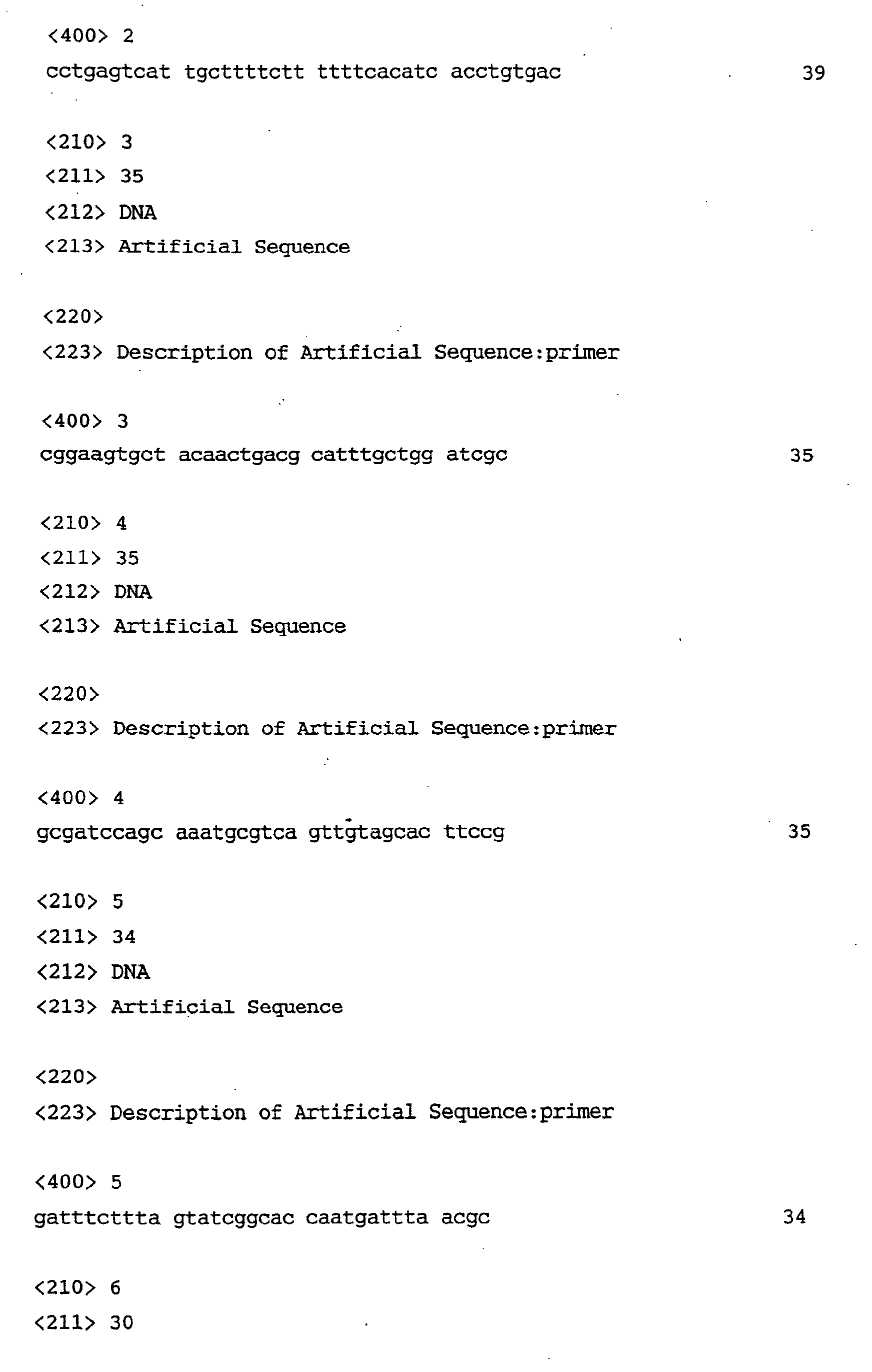
    [Primer 1]
    Figure 00190001
    [Primer 2]
    Figure 00190002
    PCR was performed by using Pyrobest DNA Polymerase produced by Takara Shuzo and according to the protocol attached to the enzyme. After completion of the reaction, the amplification product was blunt-ended and phosphorylated by using BKL Kit produced by Takara Shuzo. The amplified fragment was ligated by using Ligation Kit ver.2 (Takara Shuzo) to pSTV28 (Takara Shuzo) treated with a restriction enzyme Sma I (Takara Shuzo) and then dephosphorylated. This ligation reaction mixture was transformed into E. coli JM109 according to the method of Hanahan et al. (Hanahan, D., Studies on transformation of Escherichia coli with plamids, J. Mol. Biol., 166, 557-580, 1983). Selection of the transformants was carried out on L agar medium containing 50 µg/ml of chloramphenicol (Cm), 0.2 mM IPTG (Isopropyl-1-thio-β-D-galactopyranoside) and 40 µg/ml of X-gal (5-bromo-4-chloro-3-indolyl-β-D-galactopyranoside). A plasmid was extracted from the transformants in a conventional manner, and the nucleotide sequence of the inserted fragment was determined to confirm that the malK gene was inserted into the Sma I site of pSTV28. This plasmid was designated as pSTVmalK.
    Nucleotide substitution of the malK gene on pSTVma1K was carried out as follows. It was decided to introduce substitution of A for G as the nucleotide at the 370th position (substitution of Thr for the 124th Ala residue in the MalK protein). The positions in DNA nucleotide sequences used herein are numbered from A of the initiation codon, ATG, which was taken as the first nucleotide, and the positions of amino acid residues are numbered form the Met residue corresponding to the above initiation codon, which was taken as the first amino acid residue.
    First, substitution of the nucleotide on the plasmid was performed by using QuickChange™ Site-Directed Mutagenesis Kit (STRATAGENE). The sequences of the primers used for introducing the malK mutation are shown below.
    [Primer 3]
    Figure 00210001
    [Primer 4]
    Figure 00210002
    The introduction of the mutation was confirmed by determining the nucleotide sequence of the concerned site according to the protocol attached to the kit. The produced plasmid was designated as pSTVmalK-A124T. The plasmid was digested with restriction enzymes EcoR I and Hind III (all produced by Takara Shuzo) and ligated to the same restriction enzyme sites of a plasmid vector pTS1 having a temperature sensitive replication origin.
    pTS1 was obtained by exchanging Pst I-Hind III fragments of pMAN031 (Matsuyama, S. and Mizushima S., Construction and characterization of a deletion mutation lacking micF, a proposed regulatory gene for OmpF synthesis in Escherichia coli., J. Bacteriol., 162 (3), 1196-1202, 1985) and pBR322 (produced by Takara Shuzo) (Fig. 1). The produced plasmid was designated as pTSmalK-A124T.
    Homologous recombination of the malK gene with malK on the chromosome of E. coli W3100 (tyrA) (see Europe Patent Publication No. 488,424) according to a usual procedure for homologous recombination (Matsuyama, S and Mizushima, S., J. Bacteriol., 162(3), 1196-1202, 1985) utilizing the temperature sensitivity of the aforementioned plasmid pTSmalK-A124T.
    Briefly, E. coli W3100 (tyrA) was transformed by the method of Hanahan et al. (J. Mol. Biol., 166, 557-580) using pTSmalK-A124T. A colony emerged after culture at 30°C was inoculated into 5 ml of L medium containing 50 µg/ml ampicillin in a test tube and cultured at 30°C overnight with shaking. This culture broth was diluted 103 to 104 times, and 0.1 ml of the dilution was applied to L agar medium containing 50 µg/ml of ampicillin and cultured overnight at 42°C. An emerged colony was inoculated into 5 ml of L medium contained in a test tube and cultured overnight at 30°C with shaking. This culture broth in a volume of 0.1 ml was inoculated into 5 ml of L medium contained in a test tube and cultured at 37-42°C for 3-4 hours with shaking. This culture broth was diluted 103 to 107 times, and 0.1 ml of the dilution was applied to L agar medium and cultured overnight at 37-42°C. The ampicillin sensitivity of an emerged colony was confirmed.
    The mutation point of the target gene-substituted strain was confirmed as follows. PCR was performed by using the aforementioned colony as a template and Pyrobest DNA Polymerase. Primer 1 and Primer 2 were used as the primers, and PCR was performed according to the protocol attached to the enzyme. After completion of the reaction, the reaction mixture was subjected to gel filtration with the purpose of removing residual primers in the reaction mixture. The used column was MicroSpin™ S-400HR Column (produced by Amersham Pharmacia Biotech), and the procedure was according to the protocol attached to the column. The obtained PCR product was a mutant type malK gene of the malK gene-substituted strain. The nucleotide sequence of this gene was determined mainly for the region containing the mutation point. The mutant strain confirmed to be introduced with the desired mutation into the malK gene as desired was designated as E. coli W3100 (tyrA)malK1.
    Growth of E. coli W3100 (tyrA)malK1 in a medium consisting of M9 medium added with 0.05% glucose and 0.45% maltose was monitored by OD measurement (Fig. 2). E. coli W3100 (tyrA) was used as a control. As seen from the results shown in Fig. 2, although the two-phase proliferation, i.e., the so-called diauxie, was observed for E. coli W3100 (tyrA), such two-phase proliferation was not observed for the malK mutation-introduced strain, E. coli W3100 (tyrA)malK1. That is, it was found that, because of the introduction of the malK mutation, the inducer exclusion was not caused and maltose was assimilated simultaneously with the glucose assimilation.
    Example 2: Introduction of mutation into crr gene and confirmation of improvement in maltose assimilation property
    In this example, it was decided to introduce a mutation into the crr gene in order to reduce the interaction between the MalK protein and the crr gene product, IIAGlc.
    A colony of E. coli W3100 was inoculated into 5 ml of L medium and cultured overnight with shaking. From the obtained cells, chromosomal DNA was prepared by using Wizard Genomic DNA Purification Kit (Promega). PCR was performed by using the above chromosomal DNA as a template and the primers shown below.
    [Primer 5]
    Figure 00240001
    [Primer 6]
    Figure 00240002
    PCR was performed by using Pyrobest DNA Polymerase produced by Takara Shuzo and according to the protocol attached to the enzyme. After completion of the reaction, the amplification product in the reaction mixture was blunt-ended and phosphorylated by using BKL Kit produced by Takara Shuzo. The obtained amplified fragment was ligated by using Ligation Kit ver.2 (Takara Shuzo) to pMW219 (Nippon Gene) that was treated with a restriction enzyme SmaI (Takara Shuzo) and then dephosphorylated. E. coli JM109 was transformed with this ligation reaction mixture according to the method of Hanahan et al. Selection of the transformants was carried out on L agar medium containing 25 µg/ml of kanamycin (Km), 0.2 mM IPTG (Isopropyl-1-thio-β-Dgalactopyranoside) and 40 µg/ml of X-gal (5-bromo-4-chloro-3-indolyl-β-D-galactopyranoside). A plasmid was extracted from the transformants in a conventional manner, and the nucleotide sequence of the inserted fragment was determined to confirm that the crr gene was inserted into the Sma I site of pMW219. This plasmid was designated as pMWcrr.
    Nucleotide substitution of the crr gene on pMWcrr was carried out as follows. It was decided to introduce nucleotide substitution of A for the G at the 226th position (substitution of Thr for the 76th Ala residue, Zeng, G.A. et al., Mutational analysis of the enzyme IIIGlc of the phosphoenolpyruvate phosphotransferease system in Escherichia coli., Res. Microbiol., 143, 251-261, 1992). The positions in DNA nucleotide sequences used herein are numbered from A of the initiation codon, ATG, which was taken as the first nucleotide, and the positions of amino acid residues are numbered form the Met residue corresponding to the above initiation codon, which was taken as the first amino acid residue.
    First, substitution of the nucleotide on the plasmid was performed by using QuickChange™ Site-Directed Mutagenesis Kit (STRATAGENE). The sequences of the primers used for introducing the crr mutation are shown below.
    [Primer 7]
    Figure 00260001
    [Primer 8]
    Figure 00260002
    The introduction of the mutation was confirmed by determining the nucleotide sequence of the concerned site according to the protocol attached to the aforementioned kit. The produced plasmid was designated as pMWcrr-A76T. The plasmid was digested with restriction enzymes EcoR I and Xba I (both produced by Takara Shuzo) and ligated between the same restriction enzyme sites of the plasmid vector pMAN997 (refer to International Patent Publication WO99/03988) having a temperature sensitive replication origin.
    The produced plasmid was designated as pMANcrr-A76T. Homologous recombination was performed for crr gene on E. coli W3100 (tyrA) chromosome using this plasmid by the same method as that used for obtaining the malK mutant strain, and thus a strain introduced with the mutation into the crr gene was obtained.
    The mutation point of the target gene-substituted strain was confirmed in the same manner as the case of obtaining the malK mutant strain. PCR was performed by using an ampicillin-resistant colony as a template and Ex Taq Polymerase (produced by Takara Shuzo). Primer 5 and Primer 6 were used as the primers, and PCR was performed according to the protocol attached to the enzyme. After completion of the reaction, the reaction mixture was subjected to gel filtration with the purpose of removing residual primers in the reaction mixture. The used column was MicroSpin™ S-400HR Column (produced by Amersham Pharmacia Biotech), and the procedure was according to the protocol attached to the column. The obtained PCR product was a mutant type crr gene of the crr gene-substituted strain. The nucleotide sequence of this gene was determined mainly for the region containing the mutation point. The mutant strain that was confirmed to be introduced with the desired mutation as described above was designated as E. coli W3100 (tyrA)crr3.
    Growth of E. coli W3100 (tyrA)crr3 in a medium consisting of M9 medium added with 0.05% glucose and 0.45% maltose was monitored by OD measurement (Fig. 3). E. coli W3100 (tyrA) was used as a control. As seen from the results shown in Fig. 3, although the two-phase proliferation, i.e., the so-called diauxie, was observed for coli W3100 (tyrA), such two-phase proliferation was not observed for the crr mutation-introduced strain, E. coli W3100 (tyrA)crr3. That is, it was found that, because of the introduction of crr mutation, the inducer exclusion was not caused and maltose was assimilated simultaneously with the glucose assimilation. The same event was observed when nucleotide substitution of A for the 139th G (substitution of Ser for the 47th Gly residue) was introduced.
    Example 3: Acquisition of glucose analogue-resistant strain, identification of mutation point of the resistant strain and introduction of the mutation into E. coli W3100 (tyrA)
    A colony of E. cold W3100 (tyrA) was inoculated into 5 ml of L medium contained in a test tube and cultured overnight with shaking. The cultured cells were washed twice with 5 ml of physiological saline and suspended in the same volume of physiological saline. This suspension was applied in an amount of 0.1 ml to M9 agar medium containing maltose as a carbon source and the surface was dried. One platinum loop of 2-deoxyglucose was placed on the plate, and the cells were cultured at 37°C for two or three days. E. coli W3100 (tyrA) can utilize maltose as a carbon source, but if a glucose analogue such as 2-deoxyglucose exists, it suffers from the repression and becomes unable to grow. In this case, a growth inhibition circle is formed around the point where the glucose analogue is placed as the center. If culture is performed for two or three days, colonies that can grow emerge at a certain frequency in the inhibition circle. Glucose analogue-resistant strains were obtained based on the above phenomenon.
    Mutations on the malK gene of malK#1 and malK#2 were investigated among the glucose analogue-resistant strains. The mutation points were confirmed as follows. A colony of each strain was formed, and PCR was performed by using the colony as a template and Pyrobest DNA Polymerase. PCR was performed by using Primer 1 and Primer 2 as the primers and according to the protocol attached to the enzyme. After completion of the reaction, the reaction mixture was subjected to gel filtration with the purpose of removing residual primers in the reaction mixture. The used column was MicroSpin™ S-400HR Column (produced by Amersham Pharmacia Biotech), and the procedure was according to the protocol attached to the column. The obtained PCR products were malK genes of the glucose-resistant strains malK#1 and malK#2, and the nucleotide sequences of these genes were determined. As a result, it was found that a substituted for the 980th T in the both strains, and in connection with that, Gln was substituted for the 327th Leu residue. This is a mutation that has not been known so far. This mutation was designated as L327Q type mutation.
    The L327Q type mutation was introduced into E. coli W3100 (tyrA) by the method described above. The obtained mutation-introduced strain was designated as E. coli W3100 (tyrA)malK327. In a similar manner, growth of E. coli W3100 (tyrA)malK327 in a medium consisting of M9 medium added with 0.05% glucose and 0.45% maltose was monitored by OD measurement (Fig. 4). E. coli W3100 (tyrA) was used as a control. As seen from the results shown in Fig. 4, although the two-phase proliferation, i.e., the so-called diauxie, was observed for E. coli W3100 (tyrA), such two-phase proliferation was not observed for the malK mutation-introduced strain, E. coli W3100 (tyrA)malK327. That is, it was found that, because of the introduction of the novel malK mutation, the inducer exclusion was not caused and maltose was assimilated simultaneously with the glucose assimilation.
    Example 4: Evaluation of L-amino acid productivity of malK mutant strains
    pVIC40 (WO90/04636), pCABD2 (WO95/16042) and pMGAL1 (Japanese Patent Laid-open Publication (Kokai) No. 5-344881) were each introduced into E. coli W3100 (tyrA)malK327, and abilities to produce L-lysine, L-threonine and L-phenylalanine were investigated for each strain.
    pVIC40 is a plasmid containing the threonine operon and can be prepared from E. coli VKPM B-3996 strain (deposited at USSR Antibiotics Research Institute (VNIIA) with a registration number of RIA1867) harboring the plasmid (WO90/04636).
    pCABD2 contains DNA (dapA*24) coding for dihydrodipicolinate synthase (DDPS) derived from Escherichia coli and having a mutation for eliminating the feedback inhibition by L-lysine, DNA (lysC*80) coding for aspartokinase III derived from Escherichia coli and having a mutation for eliminating the feedback inhibition by L-lysine, DNA (dapB) coding for dihydrodipicolinate reductase derived from Escherichia coli, and DNA (ddh) coding for diaminopimelate dehydrogenase derived from Brevibacterium lactofermentum (WO95/16042).
    pMGAL1 contains a gene coding for 3-deoxy-Darabinohepturonate-7-phosphate synthase derived from Escherichia bacterium of which feedback inhibition was eliminated, and a gene coding for chorismate mutaseprephenate dehydratase derived from Escherichia bacterium of which feedback inhibition is eliminated (Japanese Patent Laid-open Publication No. 5-344881).
    E. coli W3100 (tyrA)malK327 was transformed with each plasmid by the method of Hanahan et al. Each obtained transformant was inoculated into 5 ml of L medium containing 50 µg/ml of streptomycin and cultured at 37°C overnight with shaking. Then, the culture broth was applied in an amount of 50 µl to L agar medium containing 50 µg/ml of streptomycin and cultured overnight at 37°C. An amino acid production medium containing a mixture of glucose and maltose (36 g/L glucose, 5.8 g/L of maltose) as the carbon source in a volume of 20 ml was introduced into a 500-ml volume Sakaguchi flask, and 1/8 of the cells grown on the aforementioned agar medium was scraped and inoculated into the medium. After completion of the culture, concentration of each amino acid and remained glucose and maltose were quantified. As controls, transformants obtained by introducing each of the plasmids into E. coli W3100 (tyrA) were used. The results are shown in Table 1.
    strain (host/plasmid) Lys (g/L) Thr (g/L) Phe (g/L) Remained glucose (g/L) remained maltose (g/L)
    W3110(tyrA)/pRS 0.00 0.00 0.91 0.0 5.8
    W3110(tyrA)malK327 /pRS 0.00 0.00 0.86 0.0 0.0
    W3110(tyrA)/pCABD2 9.55 - - 0.0 5.6
    W3110(tyrA)malK327 /pCABD2 10.80 - - 0.0 0.0
    W3110(tyrA)/pVIC40 - 8.48 - 0.0 4.1
    W3110(tyrA)malK327 /pVIC40 - 8.62 - 0.0 0.0
    W3110(tyrA)/pMGAL1 - - 4.57 0.0 5.7
    W3110(tyrA)malK327 /pMGAL1 - - 4.69 1.2 0.0
    - : Not tested, pRS: vector (initial concentrations of glucose and maltose were 36 g/L and 5.8 g/L, respectively, and culture time was 14 hours)
    Lys: lysine; Thr: threonine; Phe: phenylalanine
    When E. coli W3100 (tyrA) was used as the host, maltose was not assimilated yet when glucose was consumed. On the other hand, when E. coli W3100 (tyrA)malK327 was used as the host, maltose was assimilated within a similar culture time, and thus it was found that consumption of maltose was not suffered from the glucose repression.
    Further, the E. coli W3100 (tyrA)malK327 strains harboring each of pVIC40, pCABD2 and pMGAL1 showed improved L-lysine, L-threonine and L-phenylalanine producing abilities compared with the E. coli W3100(tyrA) strains harboring each of the plasmids.
    Figure 00340001
    Figure 00350001
    Figure 00360001

    Claims (8)

    1. A method for producing a target substance utilizing a microorganism and comprising culturing the microorganism in a medium to produce and accumulate the target substance in the medium and collecting the target substance from the culture,
         wherein the microorganism is a mutant or recombinant strain of a microorganism in which maltose assimilation is controlled by an interaction between IIAGlc protein of glucose PTS and a protein involved in non-PTS uptake of maltose, and the interaction between IIAGlc protein and a protein involved in non-PTS uptake of maltose of the mutant or recombinant strain is reduced or eliminated, and the strain can take up glucose and maltose.
    2. The method according to claim 1, wherein the protein involved in non-PTS uptake of maltose is a maltose carrier protein having an ATP decomposition activity.
    3. The method according to claim 2, wherein the protein is MalK protein.
    4. The method according to any one of claims 1-3,
      wherein the interaction between IIAGlc protein of glucose PTS and the protein involved in non-PTS uptake of maltose is reduced or eliminated because the MalK protein contained in the microorganism has a mutation selected from a mutation for substituting a Thr residue for the Ala residue at a position of 124 and a mutation for substituting a Gln residue for the Leu residue at a position of 327.
    5. The method according to any one of claims 1-4,
      wherein the interaction between IIAGlc protein of glucose PTS and the protein involved in non-PTS uptake of maltose is reduced or eliminated because the IIAGlc protein contained in the microorganism has a mutation selected from a mutation for substituting a Ser residue for the Gly residue at a position of 47 and a mutation substituting a Thr residue for the Ala residue at a position of 76.
    6. The method according to any one of claims 1-5,
      wherein the target substance is an L-amino acid.
    7. The method according to claim 6, wherein the target substance is selected from the group consisting of L-lysine, L-threonine and L-phenylalanine.
    8. The method according to any one of claims 1-7,
      wherein the microorganism is an Escherlchia bacterium.
    EP02008316A 2001-05-02 2002-04-11 Method for producing an L-amino acid substance by fermentation Expired - Lifetime EP1254957B2 (en)

    Priority Applications (1)

    Application Number Priority Date Filing Date Title
    DE60208459T DE60208459T3 (en) 2001-05-02 2002-04-11 Process for the preparation of an L-amino acid by fermentation

    Applications Claiming Priority (2)

    Application Number Priority Date Filing Date Title
    JP2001135517A JP2002330763A (en) 2001-05-02 2001-05-02 Method for producing objective substance by fermentation
    JP2001135517 2001-05-02

    Publications (4)

    Publication Number Publication Date
    EP1254957A2 true EP1254957A2 (en) 2002-11-06
    EP1254957A3 EP1254957A3 (en) 2003-09-17
    EP1254957B1 EP1254957B1 (en) 2006-01-04
    EP1254957B2 EP1254957B2 (en) 2012-01-18

    Family

    ID=18982967

    Family Applications (1)

    Application Number Title Priority Date Filing Date
    EP02008316A Expired - Lifetime EP1254957B2 (en) 2001-05-02 2002-04-11 Method for producing an L-amino acid substance by fermentation

    Country Status (5)

    Country Link
    US (2) US7097999B2 (en)
    EP (1) EP1254957B2 (en)
    JP (1) JP2002330763A (en)
    BR (2) BRPI0201520B1 (en)
    DE (1) DE60208459T3 (en)

    Cited By (4)

    * Cited by examiner, † Cited by third party
    Publication number Priority date Publication date Assignee Title
    WO2003004674A3 (en) * 2001-07-06 2003-08-28 Degussa Process for the preparation of l-amino acids using strains of the enterobacteriaceae family
    WO2005071062A1 (en) * 2004-01-23 2005-08-04 Degussa Ag Process for the preparation of l-amino acids using strains of the enterobacteriaceae family
    WO2009088049A1 (en) 2008-01-10 2009-07-16 Ajinomoto Co., Inc. Method for production of desired substance by fermentation process
    EP1484410B1 (en) * 2003-06-05 2011-11-02 Ajinomoto Co., Inc. Fermentation methods using modified bacteria with increased byproduct uptake.

    Families Citing this family (15)

    * Cited by examiner, † Cited by third party
    Publication number Priority date Publication date Assignee Title
    JP2001046067A (en) * 1999-08-04 2001-02-20 Ajinomoto Co Inc L-Lysine biosynthesis gene derived from thermophilic Bacillus bacteria
    BRPI0016995B1 (en) 2000-01-21 2016-03-08 Ajinomoto Kk genetically modified escherichia coli bacteria, and method for producing l-lysine
    JP2002330763A (en) * 2001-05-02 2002-11-19 Ajinomoto Co Inc Method for producing objective substance by fermentation
    CN100520793C (en) * 2003-07-29 2009-07-29 味之素株式会社 Method for determination of metabolic flux affecting production of useful material
    JP4380305B2 (en) * 2003-11-21 2009-12-09 味の素株式会社 Method for producing L-amino acid by fermentation
    US7344874B2 (en) * 2004-03-04 2008-03-18 Ajinomoto Co., Inc. L-glutamic acid-producing microorganism and a method for producing L-glutamic acid
    US7300776B2 (en) * 2004-04-26 2007-11-27 Ajinomoto Co., Inc. L-amino acid-producing bacterium and a method for producing L-amino acid
    US7482140B2 (en) * 2004-06-15 2009-01-27 Ajinomoto Co., Inc. L-tyrosine-producing bacterium and a method for producing L-tyrosine
    US7205132B2 (en) * 2004-09-10 2007-04-17 Ajinomoto Co., Inc. L-glutamic acid-producing microorganism and a method for producing L-glutamic acid
    RU2004137719A (en) * 2004-12-23 2006-06-10 Закрытое акционерное общество "Научно-исследовательский институт Аджиномото-Генетика" (ЗАО АГРИ) (RU) METHOD FOR PRODUCING L-AMINO ACIDS USING BACTERIA OF THE ENTEROBACTERIACEAE FAMILY
    US7794989B2 (en) * 2004-12-28 2010-09-14 Ajinomoto Co., Inc. L-glutamic acid-producing microorganism and a method for producing L-glutamic acid
    WO2006078039A1 (en) 2005-01-18 2006-07-27 Ajinomoto Co., Inc. L-amino acid producing microorganism and a method for producing l-amino acid
    US20070004014A1 (en) * 2005-06-29 2007-01-04 Yuichiro Tsuji Method for producing l-threonine
    JP2008283863A (en) 2005-08-26 2008-11-27 Ajinomoto Co Inc L-amino acid-producing bacterium and method for producing l-amino acid
    TW201300526A (en) * 2011-03-25 2013-01-01 Calpis Co Ltd Method for manufacturing culture medium, and culture medium manufactured by method

    Family Cites Families (14)

    * Cited by examiner, † Cited by third party
    Publication number Priority date Publication date Assignee Title
    JPS5618596A (en) * 1979-07-23 1981-02-21 Ajinomoto Co Inc Production of l-lysine through fermentation process
    JPS6047692A (en) * 1983-08-25 1985-03-15 Ajinomoto Co Inc Production of l-threonine by fermentation
    DK111185A (en) * 1985-03-12 1986-09-13 Novo Industri As XYLOSE ISOMERASE, PROCEDURE FOR PREPARING IT, IMMOBILIZED XYLOSE ISOMERASE AND PROCEDURE FOR ISOMERIZING GLUCOSE TO FRUCTOSE
    JPS63157986A (en) * 1986-08-12 1988-06-30 Sagami Chem Res Center Production of l-phenylalanine by gene recombination
    US4970157A (en) 1986-08-12 1990-11-13 Sagami Chemical Research Center Isolated phenylalanine dehydrogenase gene and process for production of phenylalanine dehydrogenase
    JPH03501682A (en) 1988-10-25 1991-04-18 味の素株式会社 Escherichia coli BKIIM strain B-3996 as an L-threonine producer
    JP3006847B2 (en) * 1990-03-27 2000-02-07 株式会社資生堂 Novel microorganism and method for producing biotin using the same
    DE69133342T2 (en) 1990-11-30 2004-07-22 Ajinomoto Co., Inc. Recombinant DNA sequences coding for enzymes free from feedback inhibition, plasmids containing these sequences, transformed microorganisms useful for the production of aromatic amino acids, and their methods of production by fermentation
    US5508047A (en) 1991-07-18 1996-04-16 The Pillsbury Company Catabolite non-repressed substrate-limited yeast strains and method of making
    US5744330A (en) * 1992-01-31 1998-04-28 The Pillsbury Company Catabolite non-repressed substrate-limited yeast strains
    JP2812153B2 (en) 1993-06-28 1998-10-22 住友金属工業株式会社 Heat treatment method for near β type titanium alloy
    DE19846499A1 (en) 1998-10-09 2000-04-20 Degussa Production of microorganisms that overproduce pantothenic acid, useful as vitamin in e.g. foods or medicines, by overexpressing sequences that encode ketopantothenate reductase
    EP1204755B1 (en) * 1999-08-18 2006-08-09 E.I. Du Pont De Nemours And Company Process for the biological production of 1,3-propanediol
    JP2002330763A (en) * 2001-05-02 2002-11-19 Ajinomoto Co Inc Method for producing objective substance by fermentation

    Cited By (8)

    * Cited by examiner, † Cited by third party
    Publication number Priority date Publication date Assignee Title
    WO2003004674A3 (en) * 2001-07-06 2003-08-28 Degussa Process for the preparation of l-amino acids using strains of the enterobacteriaceae family
    EP1484410B1 (en) * 2003-06-05 2011-11-02 Ajinomoto Co., Inc. Fermentation methods using modified bacteria with increased byproduct uptake.
    KR101110580B1 (en) * 2003-06-05 2012-02-15 아지노모토 가부시키가이샤 Method of Making Target Material
    WO2005071062A1 (en) * 2004-01-23 2005-08-04 Degussa Ag Process for the preparation of l-amino acids using strains of the enterobacteriaceae family
    WO2009088049A1 (en) 2008-01-10 2009-07-16 Ajinomoto Co., Inc. Method for production of desired substance by fermentation process
    US8617852B2 (en) 2008-01-10 2013-12-31 Ajinomoto Co., Inc. Method for producing a target substance by fermentation
    EP2749652A2 (en) 2008-01-10 2014-07-02 Ajinomoto Co., Inc. A method for producing a target substance by fermentation
    US9228215B2 (en) 2008-01-10 2016-01-05 Ajinomoto Co., Inc. Method for producing a target substance by fermentation

    Also Published As

    Publication number Publication date
    EP1254957B2 (en) 2012-01-18
    DE60208459T3 (en) 2012-04-05
    US7097999B2 (en) 2006-08-29
    US8497087B2 (en) 2013-07-30
    DE60208459D1 (en) 2006-03-30
    DE60208459T2 (en) 2006-10-05
    BR0201520A (en) 2003-06-10
    US20060205043A1 (en) 2006-09-14
    EP1254957B1 (en) 2006-01-04
    US20030077764A1 (en) 2003-04-24
    JP2002330763A (en) 2002-11-19
    BRPI0201520B1 (en) 2017-11-28
    EP1254957A3 (en) 2003-09-17

    Similar Documents

    Publication Publication Date Title
    EP1254957B1 (en) Method for producing target substance by fermentation
    EP0733712B1 (en) Process for producing substance
    CN1332021C (en) Escherichia bacteria capable of generating L-amino acid and method for generating L-amino acid
    EP0745671B1 (en) Recombinant DNA sequences encoding feedback inhibition released enzymes, plasmids comprising the recombinant DNA sequences, transformed microorganisms useful in the production of aromatic amino acids, and a process for preparing aromatic amino acids by fermentation
    EP1170376B1 (en) Method for producing L-amino acid or nucleic acid utilizing microorganism
    EP1149911B1 (en) Amino acid producing strains belonging to the genus Escherichia and method for producing an amino acid
    EP1217076B1 (en) Method of producing a target substance by fermentation
    EP1330526B1 (en) Process for the fermentative preparation of l-amino acids using strains of the enterobacteriaceae family
    EP2460873B1 (en) A method for producing an aromatic L-amino acid using a bacterium of the genus Eshcerichia with attenuated expression of any of the cynT, cynS, cynX or cynR genes or a combination thereof
    KR20020013777A (en) Method for producing threonine and isoleucine
    WO2001005939A1 (en) Process for producing target substance by fermentation
    US20040265956A1 (en) Method for producing target substance by fermentation
    US7163810B2 (en) Method for producing target substance
    EP1510582A1 (en) Method for producing L-amino acid using bacterium of Enterobacteriaceae family, having nir operon inactivated
    KR20080024226A (en) Method for producing l-threonine
    EP1587938B1 (en) Process for the fermentative preparation of l-threonine, l-lysine, l-valine and l-homoserine using strains of the enterobacteriaceae family which contain an attenuated yjgf orf sequence
    CN101107355A (en) Method for producing L-amino acid using Enterobacteriaceae bacteria having disrupted glycogen biosynthesis pathway
    CN110819663A (en) Method for producing L-amino acids using improved strains of the Enterobacteriaceae family
    RU2304615C2 (en) Method for production of l-amino acids belonging to genus eschericha
    US20030190712A1 (en) Fermentation process for the preparation of L-threonine
    JP2022516111A (en) Method for producing basic L-amino acid or its salt by fermentation of bacteria of Enterobacteriaceae
    JP2004173685A (en) Method for production of target substance by fermentation

    Legal Events

    Date Code Title Description
    PUAI Public reference made under article 153(3) epc to a published international application that has entered the european phase

    Free format text: ORIGINAL CODE: 0009012

    AK Designated contracting states

    Kind code of ref document: A2

    Designated state(s): AT BE CH CY DE DK ES FI FR GB GR IE IT LI LU MC NL PT SE TR

    AX Request for extension of the european patent

    Free format text: AL;LT;LV;MK;RO;SI

    PUAL Search report despatched

    Free format text: ORIGINAL CODE: 0009013

    AK Designated contracting states

    Kind code of ref document: A3

    Designated state(s): AT BE CH CY DE DK ES FI FR GB GR IE IT LI LU MC NL PT SE TR

    AX Request for extension of the european patent

    Extension state: AL LT LV MK RO SI

    17P Request for examination filed

    Effective date: 20040310

    AKX Designation fees paid

    Designated state(s): DE FR GB IT

    17Q First examination report despatched

    Effective date: 20040803

    GRAP Despatch of communication of intention to grant a patent

    Free format text: ORIGINAL CODE: EPIDOSNIGR1

    GRAS Grant fee paid

    Free format text: ORIGINAL CODE: EPIDOSNIGR3

    GRAA (expected) grant

    Free format text: ORIGINAL CODE: 0009210

    AK Designated contracting states

    Kind code of ref document: B1

    Designated state(s): DE FR GB IT

    REG Reference to a national code

    Ref country code: GB

    Ref legal event code: FG4D

    REF Corresponds to:

    Ref document number: 60208459

    Country of ref document: DE

    Date of ref document: 20060330

    Kind code of ref document: P

    ET Fr: translation filed
    PLBI Opposition filed

    Free format text: ORIGINAL CODE: 0009260

    PLAX Notice of opposition and request to file observation + time limit sent

    Free format text: ORIGINAL CODE: EPIDOSNOBS2

    26 Opposition filed

    Opponent name: DEGUSSA AG

    Effective date: 20061004

    PLAF Information modified related to communication of a notice of opposition and request to file observations + time limit

    Free format text: ORIGINAL CODE: EPIDOSCOBS2

    PLBB Reply of patent proprietor to notice(s) of opposition received

    Free format text: ORIGINAL CODE: EPIDOSNOBS3

    PLAB Opposition data, opponent's data or that of the opponent's representative modified

    Free format text: ORIGINAL CODE: 0009299OPPO

    R26 Opposition filed (corrected)

    Opponent name: EVONIK DEGUSSA GMBH

    Effective date: 20061004

    RTI2 Title (correction)

    Free format text: METHOD FOR PRODUCING AN L-AMINO-ACID SUBSTANCE BY FERMENTATION

    APBM Appeal reference recorded

    Free format text: ORIGINAL CODE: EPIDOSNREFNO

    APBP Date of receipt of notice of appeal recorded

    Free format text: ORIGINAL CODE: EPIDOSNNOA2O

    APBM Appeal reference recorded

    Free format text: ORIGINAL CODE: EPIDOSNREFNO

    APBP Date of receipt of notice of appeal recorded

    Free format text: ORIGINAL CODE: EPIDOSNNOA2O

    APAH Appeal reference modified

    Free format text: ORIGINAL CODE: EPIDOSCREFNO

    APBQ Date of receipt of statement of grounds of appeal recorded

    Free format text: ORIGINAL CODE: EPIDOSNNOA3O

    PLAB Opposition data, opponent's data or that of the opponent's representative modified

    Free format text: ORIGINAL CODE: 0009299OPPO

    R26 Opposition filed (corrected)

    Opponent name: EVONIK DEGUSSA GMBH

    Effective date: 20061004

    APBU Appeal procedure closed

    Free format text: ORIGINAL CODE: EPIDOSNNOA9O

    PUAH Patent maintained in amended form

    Free format text: ORIGINAL CODE: 0009272

    STAA Information on the status of an ep patent application or granted ep patent

    Free format text: STATUS: PATENT MAINTAINED AS AMENDED

    27A Patent maintained in amended form

    Effective date: 20120118

    AK Designated contracting states

    Kind code of ref document: B2

    Designated state(s): DE FR GB IT

    REG Reference to a national code

    Ref country code: DE

    Ref legal event code: R102

    Ref document number: 60208459

    Country of ref document: DE

    RTI2 Title (correction)

    Free format text: METHOD FOR PRODUCING AN L-AMINO ACID SUBSTANCE BY FERMENTATION

    REG Reference to a national code

    Ref country code: DE

    Ref legal event code: R102

    Ref document number: 60208459

    Country of ref document: DE

    Effective date: 20120118

    REG Reference to a national code

    Ref country code: FR

    Ref legal event code: PLFP

    Year of fee payment: 15

    REG Reference to a national code

    Ref country code: FR

    Ref legal event code: PLFP

    Year of fee payment: 16

    REG Reference to a national code

    Ref country code: FR

    Ref legal event code: PLFP

    Year of fee payment: 17

    PGFP Annual fee paid to national office [announced via postgrant information from national office to epo]

    Ref country code: FR

    Payment date: 20210309

    Year of fee payment: 20

    Ref country code: IT

    Payment date: 20210310

    Year of fee payment: 20

    PGFP Annual fee paid to national office [announced via postgrant information from national office to epo]

    Ref country code: GB

    Payment date: 20210318

    Year of fee payment: 20

    PGFP Annual fee paid to national office [announced via postgrant information from national office to epo]

    Ref country code: DE

    Payment date: 20210316

    Year of fee payment: 20

    REG Reference to a national code

    Ref country code: DE

    Ref legal event code: R071

    Ref document number: 60208459

    Country of ref document: DE

    REG Reference to a national code

    Ref country code: GB

    Ref legal event code: PE20

    Expiry date: 20220410

    PG25 Lapsed in a contracting state [announced via postgrant information from national office to epo]

    Ref country code: GB

    Free format text: LAPSE BECAUSE OF EXPIRATION OF PROTECTION

    Effective date: 20220410