EP1254661A1 - Method for preventing dyskinesias with selective NMDA-Antagonists - Google Patents
Method for preventing dyskinesias with selective NMDA-Antagonists Download PDFInfo
- Publication number
- EP1254661A1 EP1254661A1 EP02008620A EP02008620A EP1254661A1 EP 1254661 A1 EP1254661 A1 EP 1254661A1 EP 02008620 A EP02008620 A EP 02008620A EP 02008620 A EP02008620 A EP 02008620A EP 1254661 A1 EP1254661 A1 EP 1254661A1
- Authority
- EP
- European Patent Office
- Prior art keywords
- benzooxazol
- ethanesulfinyl
- piperidin
- group
- hydroxy
- Prior art date
- Legal status (The legal status is an assumption and is not a legal conclusion. Google has not performed a legal analysis and makes no representation as to the accuracy of the status listed.)
- Withdrawn
Links
- 208000012661 Dyskinesia Diseases 0.000 title claims abstract description 59
- 238000000034 method Methods 0.000 title description 11
- 239000005557 antagonist Substances 0.000 title description 6
- 150000001875 compounds Chemical class 0.000 claims abstract description 34
- 239000003703 n methyl dextro aspartic acid receptor blocking agent Substances 0.000 claims abstract description 12
- 108091008757 nuclear thyroid hormone receptors Proteins 0.000 claims abstract description 11
- 229940099433 NMDA receptor antagonist Drugs 0.000 claims abstract description 10
- WTDRDQBEARUVNC-LURJTMIESA-N L-DOPA Chemical compound OC(=O)[C@@H](N)CC1=CC=C(O)C(O)=C1 WTDRDQBEARUVNC-LURJTMIESA-N 0.000 claims description 70
- WTDRDQBEARUVNC-UHFFFAOYSA-N L-Dopa Natural products OC(=O)C(N)CC1=CC=C(O)C(O)=C1 WTDRDQBEARUVNC-UHFFFAOYSA-N 0.000 claims description 64
- 125000000217 alkyl group Chemical group 0.000 claims description 33
- 238000011282 treatment Methods 0.000 claims description 31
- FCBQJNCAKZSIAH-UHFFFAOYSA-N 6-[2-[4-[(4-fluorophenyl)methyl]piperidin-1-yl]ethylsulfinyl]-3h-1,3-benzoxazol-2-one Chemical compound C1=CC(F)=CC=C1CC1CCN(CCS(=O)C=2C=C3OC(=O)NC3=CC=2)CC1 FCBQJNCAKZSIAH-UHFFFAOYSA-N 0.000 claims description 29
- 208000018737 Parkinson disease Diseases 0.000 claims description 26
- 125000002887 hydroxy group Chemical group [H]O* 0.000 claims description 25
- -1 aldehyde amine Chemical class 0.000 claims description 21
- 229910052739 hydrogen Inorganic materials 0.000 claims description 21
- 239000001257 hydrogen Substances 0.000 claims description 21
- 150000003839 salts Chemical class 0.000 claims description 17
- VYFYYTLLBUKUHU-UHFFFAOYSA-N dopamine Chemical compound NCCC1=CC=C(O)C(O)=C1 VYFYYTLLBUKUHU-UHFFFAOYSA-N 0.000 claims description 12
- 150000002431 hydrogen Chemical class 0.000 claims description 12
- 125000003118 aryl group Chemical group 0.000 claims description 11
- 125000004432 carbon atom Chemical group C* 0.000 claims description 10
- 229910052736 halogen Inorganic materials 0.000 claims description 10
- 150000002367 halogens Chemical class 0.000 claims description 10
- 125000002924 primary amino group Chemical group [H]N([H])* 0.000 claims description 9
- 239000003814 drug Substances 0.000 claims description 8
- 229960003638 dopamine Drugs 0.000 claims description 7
- MBVFRSJFKMJRHA-UHFFFAOYSA-N 4-fluoro-1-benzofuran-7-carbaldehyde Chemical compound FC1=CC=C(C=O)C2=C1C=CO2 MBVFRSJFKMJRHA-UHFFFAOYSA-N 0.000 claims description 6
- 125000000738 acetamido group Chemical group [H]C([H])([H])C(=O)N([H])[*] 0.000 claims description 6
- 125000003710 aryl alkyl group Chemical group 0.000 claims description 6
- 125000004093 cyano group Chemical group *C#N 0.000 claims description 6
- 125000004435 hydrogen atom Chemical group [H]* 0.000 claims description 6
- 125000000449 nitro group Chemical group [O-][N+](*)=O 0.000 claims description 6
- FASDKYOPVNHBLU-ZETCQYMHSA-N pramipexole Chemical compound C1[C@@H](NCCC)CCC2=C1SC(N)=N2 FASDKYOPVNHBLU-ZETCQYMHSA-N 0.000 claims description 5
- 229960003089 pramipexole Drugs 0.000 claims description 5
- UHSKFQJFRQCDBE-UHFFFAOYSA-N ropinirole Chemical compound CCCN(CCC)CCC1=CC=CC2=C1CC(=O)N2 UHSKFQJFRQCDBE-UHFFFAOYSA-N 0.000 claims description 5
- 229960001879 ropinirole Drugs 0.000 claims description 5
- KORNTPPJEAJQIU-KJXAQDMKSA-N Cabaser Chemical compound C1=CC([C@H]2C[C@H](CN(CC=C)[C@@H]2C2)C(=O)N(CCCN(C)C)C(=O)NCC)=C3C2=CNC3=C1 KORNTPPJEAJQIU-KJXAQDMKSA-N 0.000 claims description 4
- 229960004596 cabergoline Drugs 0.000 claims description 4
- JUDKOGFHZYMDMF-UHFFFAOYSA-N 1-phenyl-2,3,4,5-tetrahydro-1H-3-benzazepine-7,8-diol Chemical compound C1=2C=C(O)C(O)=CC=2CCNCC1C1=CC=CC=C1 JUDKOGFHZYMDMF-UHFFFAOYSA-N 0.000 claims description 3
- 125000004176 4-fluorobenzyl group Chemical group [H]C1=C([H])C(=C([H])C([H])=C1F)C([H])([H])* 0.000 claims description 3
- BHDHBGPHCQNONZ-UHFFFAOYSA-N 6-[2-(4-benzoylpiperidin-1-yl)ethylsulfinyl]-3h-1,3-benzoxazol-2-one Chemical compound C1CN(CCS(=O)C=2C=C3OC(=O)NC3=CC=2)CCC1C(=O)C1=CC=CC=C1 BHDHBGPHCQNONZ-UHFFFAOYSA-N 0.000 claims description 3
- ZPZRJMIXFBHMFA-UHFFFAOYSA-N 6-[2-(4-benzyl-4-hydroxypiperidin-1-yl)ethylsulfinyl]-3h-1,3-benzoxazol-2-one Chemical compound C1CN(CCS(=O)C=2C=C3OC(=O)NC3=CC=2)CCC1(O)CC1=CC=CC=C1 ZPZRJMIXFBHMFA-UHFFFAOYSA-N 0.000 claims description 3
- RXYVUTNKSXMMJS-UHFFFAOYSA-N 6-[2-(4-benzylpiperidin-1-yl)ethylsulfinyl]-3h-1,3-benzoxazol-2-one Chemical compound C=1C=C2NC(=O)OC2=CC=1S(=O)CCN(CC1)CCC1CC1=CC=CC=C1 RXYVUTNKSXMMJS-UHFFFAOYSA-N 0.000 claims description 3
- DWRLXEBQOCRDPS-UHFFFAOYSA-N 6-[2-(4-benzylpiperidin-1-yl)ethylsulfinyl]-5-chloro-3h-1,3-benzoxazol-2-one Chemical compound ClC1=CC=2NC(=O)OC=2C=C1S(=O)CCN(CC1)CCC1CC1=CC=CC=C1 DWRLXEBQOCRDPS-UHFFFAOYSA-N 0.000 claims description 3
- JYSYHBLYPGXAJV-UHFFFAOYSA-N 6-[2-[2-[(4-fluorophenyl)methyl]piperidin-1-yl]ethylsulfinyl]-3h-1,3-benzoxazol-2-one Chemical compound C1=CC(F)=CC=C1CC1N(CCS(=O)C=2C=C3OC(=O)NC3=CC=2)CCCC1 JYSYHBLYPGXAJV-UHFFFAOYSA-N 0.000 claims description 3
- ISVNVERJTYNQIU-UHFFFAOYSA-N 6-[2-[4-[(2,3-difluorophenyl)methyl]piperidin-1-yl]ethylsulfinyl]-3h-1,3-benzoxazol-2-one Chemical compound FC1=CC=CC(CC2CCN(CCS(=O)C=3C=C4OC(=O)NC4=CC=3)CC2)=C1F ISVNVERJTYNQIU-UHFFFAOYSA-N 0.000 claims description 3
- DGTHJLGWIBFLAI-UHFFFAOYSA-N 6-[2-[4-[(2,4-dichlorophenyl)methyl]piperidin-1-yl]ethylsulfinyl]-3h-1,3-benzoxazol-2-one Chemical compound ClC1=CC(Cl)=CC=C1CC1CCN(CCS(=O)C=2C=C3OC(=O)NC3=CC=2)CC1 DGTHJLGWIBFLAI-UHFFFAOYSA-N 0.000 claims description 3
- GYKUUMXOJROSLM-UHFFFAOYSA-N 6-[2-[4-[(2,4-difluorophenyl)methyl]piperidin-1-yl]ethylsulfinyl]-3h-1,3-benzoxazol-2-one Chemical compound FC1=CC(F)=CC=C1CC1CCN(CCS(=O)C=2C=C3OC(=O)NC3=CC=2)CC1 GYKUUMXOJROSLM-UHFFFAOYSA-N 0.000 claims description 3
- GPQLQRXXSSFLBP-UHFFFAOYSA-N 6-[2-[4-[(2-fluorophenyl)methyl]piperidin-1-yl]ethylsulfinyl]-3h-1,3-benzoxazol-2-one Chemical compound FC1=CC=CC=C1CC1CCN(CCS(=O)C=2C=C3OC(=O)NC3=CC=2)CC1 GPQLQRXXSSFLBP-UHFFFAOYSA-N 0.000 claims description 3
- GIYLNSFKZCGTNK-UHFFFAOYSA-N 6-[2-[4-[(3,4-dichlorophenyl)methyl]piperidin-1-yl]ethylsulfinyl]-3h-1,3-benzoxazol-2-one Chemical compound C1=C(Cl)C(Cl)=CC=C1CC1CCN(CCS(=O)C=2C=C3OC(=O)NC3=CC=2)CC1 GIYLNSFKZCGTNK-UHFFFAOYSA-N 0.000 claims description 3
- BHQBKMBBHVRTNH-UHFFFAOYSA-N 6-[2-[4-[(4-chlorophenyl)methyl]piperidin-1-yl]ethylsulfinyl]-3h-1,3-benzoxazol-2-one Chemical compound C1=CC(Cl)=CC=C1CC1CCN(CCS(=O)C=2C=C3OC(=O)NC3=CC=2)CC1 BHQBKMBBHVRTNH-UHFFFAOYSA-N 0.000 claims description 3
- ITCUKPJAOPKNPT-UHFFFAOYSA-N 6-[2-[4-[(4-methoxyphenyl)methyl]piperidin-1-yl]ethylsulfinyl]-3h-1,3-benzoxazol-2-one Chemical compound C1=CC(OC)=CC=C1CC1CCN(CCS(=O)C=2C=C3OC(=O)NC3=CC=2)CC1 ITCUKPJAOPKNPT-UHFFFAOYSA-N 0.000 claims description 3
- BAOSFSQHJIWEEW-UHFFFAOYSA-N 6-[2-[4-[(4-methylphenyl)methyl]piperidin-1-yl]ethylsulfinyl]-3h-1,3-benzoxazol-2-one Chemical compound C1=CC(C)=CC=C1CC1CCN(CCS(=O)C=2C=C3OC(=O)NC3=CC=2)CC1 BAOSFSQHJIWEEW-UHFFFAOYSA-N 0.000 claims description 3
- UFHFLCQGNIYNRP-UHFFFAOYSA-N Hydrogen Chemical compound [H][H] UFHFLCQGNIYNRP-UHFFFAOYSA-N 0.000 claims description 3
- 229910052799 carbon Inorganic materials 0.000 claims description 3
- 125000001072 heteroaryl group Chemical group 0.000 claims description 3
- CDILVKAFAATSRF-UHFFFAOYSA-N n-[4-[[1-[2-[(2-oxo-3h-1,3-benzoxazol-6-yl)sulfinyl]ethyl]piperidin-4-yl]methyl]phenyl]acetamide Chemical compound C1=CC(NC(=O)C)=CC=C1CC1CCN(CCS(=O)C=2C=C3OC(=O)NC3=CC=2)CC1 CDILVKAFAATSRF-UHFFFAOYSA-N 0.000 claims description 3
- BWHPNJVKFAPVOG-QYFJGNGUSA-N (1R,3S)-3-(adamantan-1-yl)-1-(aminomethyl)-3,4-dihydroisochromene-5,6-diol hydrochloride Chemical compound Cl.C1C(C2)CC(C3)CC2CC13[C@H]1O[C@@H](CN)C2=CC=C(O)C(O)=C2C1 BWHPNJVKFAPVOG-QYFJGNGUSA-N 0.000 claims description 2
- WFFZHKKSIDENAJ-UHFFFAOYSA-N 1-[2-(4-hydroxyphenoxy)ethyl]-4-[(4-methylphenyl)methyl]piperidin-4-ol;hydrochloride Chemical compound Cl.C1=CC(C)=CC=C1CC1(O)CCN(CCOC=2C=CC(O)=CC=2)CC1 WFFZHKKSIDENAJ-UHFFFAOYSA-N 0.000 claims description 2
- KKVORRHRBZQCMY-UHFFFAOYSA-N 4-[(4-fluorophenyl)methyl]-1-[2-(4-hydroxyphenoxy)ethyl]piperidin-4-ol;hydrochloride Chemical compound Cl.C1=CC(O)=CC=C1OCCN1CCC(O)(CC=2C=CC(F)=CC=2)CC1 KKVORRHRBZQCMY-UHFFFAOYSA-N 0.000 claims description 2
- QBKWPBZSLHNXMD-UHFFFAOYSA-N 5-chloro-6-[2-[4-[(4-fluorophenyl)methyl]piperidin-1-yl]ethylsulfinyl]-3h-1,3-benzoxazol-2-one Chemical compound C1=CC(F)=CC=C1CC1CCN(CCS(=O)C=2C(=CC=3NC(=O)OC=3C=2)Cl)CC1 QBKWPBZSLHNXMD-UHFFFAOYSA-N 0.000 claims description 2
- NBWFFFJPOAXMMD-UHFFFAOYSA-N 6-[2-[4-[(4-fluorophenyl)methyl]-4-hydroxypiperidin-1-yl]ethylsulfinyl]-3h-1,3-benzoxazol-2-one Chemical compound C1CN(CCS(=O)C=2C=C3OC(=O)NC3=CC=2)CCC1(O)CC1=CC=C(F)C=C1 NBWFFFJPOAXMMD-UHFFFAOYSA-N 0.000 claims description 2
- HJWHHQIVUHOBQN-UHFFFAOYSA-N 9-chloro-5-phenyl-3-prop-2-enyl-1,2,4,5-tetrahydro-3-benzazepine-7,8-diol Chemical compound C1N(CC=C)CCC=2C(Cl)=C(O)C(O)=CC=2C1C1=CC=CC=C1 HJWHHQIVUHOBQN-UHFFFAOYSA-N 0.000 claims description 2
- WRNKIDLXXXIELU-IEBWSBKVSA-N LSM-3788 Chemical compound C1=CC([C@H]2C3=CC=CC=C3CN([C@@H]2C2)C)=C3C2=CNC3=C1 WRNKIDLXXXIELU-IEBWSBKVSA-N 0.000 claims description 2
- VMWNQDUVQKEIOC-CYBMUJFWSA-N apomorphine Chemical compound C([C@H]1N(C)CC2)C3=CC=C(O)C(O)=C3C3=C1C2=CC=C3 VMWNQDUVQKEIOC-CYBMUJFWSA-N 0.000 claims description 2
- 229960004046 apomorphine Drugs 0.000 claims description 2
- 229960002802 bromocriptine Drugs 0.000 claims description 2
- OZVBMTJYIDMWIL-AYFBDAFISA-N bromocriptine Chemical compound C1=CC(C=2[C@H](N(C)C[C@@H](C=2)C(=O)N[C@]2(C(=O)N3[C@H](C(N4CCC[C@H]4[C@]3(O)O2)=O)CC(C)C)C(C)C)C2)=C3C2=C(Br)NC3=C1 OZVBMTJYIDMWIL-AYFBDAFISA-N 0.000 claims description 2
- REHAKLRYABHSQJ-KDOFPFPSSA-N chembl28338 Chemical compound OC1=C(O)C=C2[C@H]3C(C=C(S4)CCC)=C4CN[C@@H]3CCC2=C1 REHAKLRYABHSQJ-KDOFPFPSSA-N 0.000 claims description 2
- 229960004851 pergolide Drugs 0.000 claims description 2
- YEHCICAEULNIGD-MZMPZRCHSA-N pergolide Chemical compound C1=CC([C@H]2C[C@@H](CSC)CN([C@@H]2C2)CCC)=C3C2=CNC3=C1 YEHCICAEULNIGD-MZMPZRCHSA-N 0.000 claims description 2
- 239000000018 receptor agonist Substances 0.000 claims description 2
- 229940044601 receptor agonist Drugs 0.000 claims description 2
- XTWUNLMHXDDOMD-SNVBAGLBSA-N u91356a Chemical compound C([C@H](C1)NCCC)C2=CC=CC3=C2N1C(=O)N3 XTWUNLMHXDDOMD-SNVBAGLBSA-N 0.000 claims description 2
- 125000004191 (C1-C6) alkoxy group Chemical group 0.000 claims 5
- 125000004890 (C1-C6) alkylamino group Chemical group 0.000 claims 4
- 238000004519 manufacturing process Methods 0.000 claims 2
- 230000000694 effects Effects 0.000 description 27
- 108090001041 N-Methyl-D-Aspartate Receptors Proteins 0.000 description 21
- 241000282693 Cercopithecidae Species 0.000 description 19
- 229960004502 levodopa Drugs 0.000 description 18
- 241001465754 Metazoa Species 0.000 description 17
- PLRACCBDVIHHLZ-UHFFFAOYSA-N 1-methyl-4-phenyl-1,2,3,6-tetrahydropyridine Chemical compound C1N(C)CCC(C=2C=CC=CC=2)=C1 PLRACCBDVIHHLZ-UHFFFAOYSA-N 0.000 description 14
- 230000000648 anti-parkinson Effects 0.000 description 13
- 239000000939 antiparkinson agent Substances 0.000 description 13
- 230000004044 response Effects 0.000 description 13
- 102000004868 N-Methyl-D-Aspartate Receptors Human genes 0.000 description 11
- 208000027089 Parkinsonian disease Diseases 0.000 description 11
- 102100022630 Glutamate receptor ionotropic, NMDA 2B Human genes 0.000 description 10
- 102000014649 NMDA glutamate receptor activity proteins Human genes 0.000 description 10
- 108010038912 Retinoid X Receptors Proteins 0.000 description 10
- 210000004556 brain Anatomy 0.000 description 9
- 241000700159 Rattus Species 0.000 description 8
- 125000003282 alkyl amino group Chemical group 0.000 description 8
- VREFGVBLTWBCJP-UHFFFAOYSA-N alprazolam Chemical compound C12=CC(Cl)=CC=C2N2C(C)=NN=C2CN=C1C1=CC=CC=C1 VREFGVBLTWBCJP-UHFFFAOYSA-N 0.000 description 8
- 125000003545 alkoxy group Chemical group 0.000 description 7
- HOKKHZGPKSLGJE-GSVOUGTGSA-N N-Methyl-D-aspartic acid Chemical compound CN[C@@H](C(O)=O)CC(O)=O HOKKHZGPKSLGJE-GSVOUGTGSA-N 0.000 description 6
- 206010030312 On and off phenomenon Diseases 0.000 description 6
- 230000004075 alteration Effects 0.000 description 6
- 239000003136 dopamine receptor stimulating agent Substances 0.000 description 6
- 229940079593 drug Drugs 0.000 description 6
- 230000000142 dyskinetic effect Effects 0.000 description 6
- 230000026731 phosphorylation Effects 0.000 description 6
- 238000006366 phosphorylation reaction Methods 0.000 description 6
- UYNVMODNBIQBMV-UHFFFAOYSA-N 4-[1-hydroxy-2-[4-(phenylmethyl)-1-piperidinyl]propyl]phenol Chemical compound C1CC(CC=2C=CC=CC=2)CCN1C(C)C(O)C1=CC=C(O)C=C1 UYNVMODNBIQBMV-UHFFFAOYSA-N 0.000 description 5
- 206010034010 Parkinsonism Diseases 0.000 description 5
- DKNWSYNQZKUICI-UHFFFAOYSA-N amantadine Chemical compound C1C(C2)CC3CC2CC1(N)C3 DKNWSYNQZKUICI-UHFFFAOYSA-N 0.000 description 5
- 229960003805 amantadine Drugs 0.000 description 5
- 230000006698 induction Effects 0.000 description 5
- 238000011552 rat model Methods 0.000 description 5
- 238000012360 testing method Methods 0.000 description 5
- GGUSQTSTQSHJAH-UHFFFAOYSA-N 1-(4-chlorophenyl)-2-[4-(4-fluorobenzyl)piperidin-1-yl]ethanol Chemical compound C=1C=C(Cl)C=CC=1C(O)CN(CC1)CCC1CC1=CC=C(F)C=C1 GGUSQTSTQSHJAH-UHFFFAOYSA-N 0.000 description 4
- OUYCCCASQSFEME-QMMMGPOBSA-N L-tyrosine Chemical compound OC(=O)[C@@H](N)CC1=CC=C(O)C=C1 OUYCCCASQSFEME-QMMMGPOBSA-N 0.000 description 4
- 206010044565 Tremor Diseases 0.000 description 4
- 125000005079 alkoxycarbonylmethyl group Chemical group 0.000 description 4
- 238000011260 co-administration Methods 0.000 description 4
- 238000011161 development Methods 0.000 description 4
- 230000007774 longterm Effects 0.000 description 4
- 230000037230 mobility Effects 0.000 description 4
- 210000001577 neostriatum Anatomy 0.000 description 4
- DIVDFFZHCJEHGG-UHFFFAOYSA-N oxidopamine Chemical compound NCCC1=CC(O)=C(O)C=C1O DIVDFFZHCJEHGG-UHFFFAOYSA-N 0.000 description 4
- 230000002265 prevention Effects 0.000 description 4
- 230000009467 reduction Effects 0.000 description 4
- OUYCCCASQSFEME-UHFFFAOYSA-N tyrosine Natural products OC(=O)C(N)CC1=CC=C(O)C=C1 OUYCCCASQSFEME-UHFFFAOYSA-N 0.000 description 4
- QEMSVZNTSXPFJA-HNAYVOBHSA-N 1-[(1s,2s)-1-hydroxy-1-(4-hydroxyphenyl)propan-2-yl]-4-phenylpiperidin-4-ol Chemical compound C1([C@H](O)[C@H](C)N2CCC(O)(CC2)C=2C=CC=CC=2)=CC=C(O)C=C1 QEMSVZNTSXPFJA-HNAYVOBHSA-N 0.000 description 3
- WVZSEUPGUDIELE-UHFFFAOYSA-N 4-[3-(4-benzylpiperidin-1-yl)-1-hydroxy-2-methylpropyl]phenol Chemical compound C=1C=C(O)C=CC=1C(O)C(C)CN(CC1)CCC1CC1=CC=CC=C1 WVZSEUPGUDIELE-UHFFFAOYSA-N 0.000 description 3
- QTBSBXVTEAMEQO-UHFFFAOYSA-N Acetic acid Chemical compound CC(O)=O QTBSBXVTEAMEQO-UHFFFAOYSA-N 0.000 description 3
- MKXZASYAUGDDCJ-SZMVWBNQSA-N LSM-2525 Chemical compound C1CCC[C@H]2[C@@]3([H])N(C)CC[C@]21C1=CC(OC)=CC=C1C3 MKXZASYAUGDDCJ-SZMVWBNQSA-N 0.000 description 3
- 229940127523 NMDA Receptor Antagonists Drugs 0.000 description 3
- MUBZPKHOEPUJKR-UHFFFAOYSA-N Oxalic acid Chemical compound OC(=O)C(O)=O MUBZPKHOEPUJKR-UHFFFAOYSA-N 0.000 description 3
- 241000288906 Primates Species 0.000 description 3
- 230000009471 action Effects 0.000 description 3
- 238000000540 analysis of variance Methods 0.000 description 3
- 230000001684 chronic effect Effects 0.000 description 3
- KRKNYBCHXYNGOX-UHFFFAOYSA-N citric acid Chemical compound OC(=O)CC(O)(C(O)=O)CC(O)=O KRKNYBCHXYNGOX-UHFFFAOYSA-N 0.000 description 3
- 229960001985 dextromethorphan Drugs 0.000 description 3
- 208000037265 diseases, disorders, signs and symptoms Diseases 0.000 description 3
- 229940052760 dopamine agonists Drugs 0.000 description 3
- RWTNPBWLLIMQHL-UHFFFAOYSA-N fexofenadine Chemical compound C1=CC(C(C)(C(O)=O)C)=CC=C1C(O)CCCN1CCC(C(O)(C=2C=CC=CC=2)C=2C=CC=CC=2)CC1 RWTNPBWLLIMQHL-UHFFFAOYSA-N 0.000 description 3
- 229960003998 ifenprodil Drugs 0.000 description 3
- 230000033001 locomotion Effects 0.000 description 3
- 230000006742 locomotor activity Effects 0.000 description 3
- 230000000638 stimulation Effects 0.000 description 3
- 208000024827 Alzheimer disease Diseases 0.000 description 2
- VZCYOOQTPOCHFL-OWOJBTEDSA-N Fumaric acid Chemical compound OC(=O)\C=C\C(O)=O VZCYOOQTPOCHFL-OWOJBTEDSA-N 0.000 description 2
- 102000018899 Glutamate Receptors Human genes 0.000 description 2
- 108010027915 Glutamate Receptors Proteins 0.000 description 2
- VEXZGXHMUGYJMC-UHFFFAOYSA-N Hydrochloric acid Chemical compound Cl VEXZGXHMUGYJMC-UHFFFAOYSA-N 0.000 description 2
- WHUUTDBJXJRKMK-VKHMYHEASA-N L-glutamic acid Chemical compound OC(=O)[C@@H](N)CCC(O)=O WHUUTDBJXJRKMK-VKHMYHEASA-N 0.000 description 2
- 102000034570 NR1 subfamily Human genes 0.000 description 2
- 101710138657 Neurotoxin Proteins 0.000 description 2
- NBIIXXVUZAFLBC-UHFFFAOYSA-N Phosphoric acid Chemical compound OP(O)(O)=O NBIIXXVUZAFLBC-UHFFFAOYSA-N 0.000 description 2
- WVZSEUPGUDIELE-HTAPYJJXSA-N Ro 25-6981 Chemical compound C([C@H](C)[C@@H](O)C=1C=CC(O)=CC=1)N(CC1)CCC1CC1=CC=CC=C1 WVZSEUPGUDIELE-HTAPYJJXSA-N 0.000 description 2
- 241000283984 Rodentia Species 0.000 description 2
- 239000002253 acid Substances 0.000 description 2
- 230000006399 behavior Effects 0.000 description 2
- 230000003542 behavioural effect Effects 0.000 description 2
- 238000012512 characterization method Methods 0.000 description 2
- 239000003795 chemical substances by application Substances 0.000 description 2
- 230000001186 cumulative effect Effects 0.000 description 2
- 230000003111 delayed effect Effects 0.000 description 2
- 201000010099 disease Diseases 0.000 description 2
- 230000003291 dopaminomimetic effect Effects 0.000 description 2
- 208000009985 drug-induced dyskinesia Diseases 0.000 description 2
- 238000002474 experimental method Methods 0.000 description 2
- 229930195712 glutamate Natural products 0.000 description 2
- 230000000848 glutamatergic effect Effects 0.000 description 2
- 230000003902 lesion Effects 0.000 description 2
- 210000003141 lower extremity Anatomy 0.000 description 2
- 230000007246 mechanism Effects 0.000 description 2
- 230000001404 mediated effect Effects 0.000 description 2
- 239000000203 mixture Substances 0.000 description 2
- 238000012544 monitoring process Methods 0.000 description 2
- 230000004899 motility Effects 0.000 description 2
- 125000001624 naphthyl group Chemical group 0.000 description 2
- 230000001537 neural effect Effects 0.000 description 2
- 239000002581 neurotoxin Substances 0.000 description 2
- 231100000618 neurotoxin Toxicity 0.000 description 2
- 231100000252 nontoxic Toxicity 0.000 description 2
- 230000003000 nontoxic effect Effects 0.000 description 2
- 238000002638 palliative care Methods 0.000 description 2
- 125000001997 phenyl group Chemical group [H]C1=C([H])C([H])=C(*)C([H])=C1[H] 0.000 description 2
- 230000003389 potentiating effect Effects 0.000 description 2
- 102000005962 receptors Human genes 0.000 description 2
- 108020003175 receptors Proteins 0.000 description 2
- 238000011084 recovery Methods 0.000 description 2
- 238000011808 rodent model Methods 0.000 description 2
- 238000007920 subcutaneous administration Methods 0.000 description 2
- 230000002459 sustained effect Effects 0.000 description 2
- 238000002560 therapeutic procedure Methods 0.000 description 2
- VZCYOOQTPOCHFL-UHFFFAOYSA-N trans-butenedioic acid Natural products OC(=O)C=CC(O)=O VZCYOOQTPOCHFL-UHFFFAOYSA-N 0.000 description 2
- QEMSVZNTSXPFJA-UHFFFAOYSA-N traxoprodil Chemical compound C1CC(O)(C=2C=CC=CC=2)CCN1C(C)C(O)C1=CC=C(O)C=C1 QEMSVZNTSXPFJA-UHFFFAOYSA-N 0.000 description 2
- 230000003827 upregulation Effects 0.000 description 2
- XLYOFNOQVPJJNP-UHFFFAOYSA-N water Substances O XLYOFNOQVPJJNP-UHFFFAOYSA-N 0.000 description 2
- KYZWKYWGQFCRGN-OASOTCBPSA-N (2s)-2-aminopentanedioic acid;(2r)-2-(methylamino)butanedioic acid Chemical compound CN[C@@H](C(O)=O)CC(O)=O.OC(=O)[C@@H](N)CCC(O)=O KYZWKYWGQFCRGN-OASOTCBPSA-N 0.000 description 1
- 150000000183 1,3-benzoxazoles Chemical group 0.000 description 1
- FCEHBMOGCRZNNI-UHFFFAOYSA-N 1-benzothiophene Chemical group C1=CC=C2SC=CC2=C1 FCEHBMOGCRZNNI-UHFFFAOYSA-N 0.000 description 1
- ZCYVEMRRCGMTRW-UHFFFAOYSA-N 7553-56-2 Chemical compound [I] ZCYVEMRRCGMTRW-UHFFFAOYSA-N 0.000 description 1
- 102000003678 AMPA Receptors Human genes 0.000 description 1
- 108090000078 AMPA Receptors Proteins 0.000 description 1
- 206010001541 Akinesia Diseases 0.000 description 1
- 206010003591 Ataxia Diseases 0.000 description 1
- WKBOTKDWSSQWDR-UHFFFAOYSA-N Bromine atom Chemical compound [Br] WKBOTKDWSSQWDR-UHFFFAOYSA-N 0.000 description 1
- IFYSKMGDELGSNM-RBUKOAKNSA-N CC(CC1)(CCN1[C@H]([C@H](c(cc1)ccc1O)O)N)c1ccccc1 Chemical compound CC(CC1)(CCN1[C@H]([C@H](c(cc1)ccc1O)O)N)c1ccccc1 IFYSKMGDELGSNM-RBUKOAKNSA-N 0.000 description 1
- 239000004215 Carbon black (E152) Substances 0.000 description 1
- ZAMOUSCENKQFHK-UHFFFAOYSA-N Chlorine atom Chemical compound [Cl] ZAMOUSCENKQFHK-UHFFFAOYSA-N 0.000 description 1
- 206010008748 Chorea Diseases 0.000 description 1
- FEWJPZIEWOKRBE-JCYAYHJZSA-N Dextrotartaric acid Chemical compound OC(=O)[C@H](O)[C@@H](O)C(O)=O FEWJPZIEWOKRBE-JCYAYHJZSA-N 0.000 description 1
- 206010061818 Disease progression Diseases 0.000 description 1
- 102000015554 Dopamine receptor Human genes 0.000 description 1
- 108050004812 Dopamine receptor Proteins 0.000 description 1
- 208000014094 Dystonic disease Diseases 0.000 description 1
- PXGOKWXKJXAPGV-UHFFFAOYSA-N Fluorine Chemical compound FF PXGOKWXKJXAPGV-UHFFFAOYSA-N 0.000 description 1
- 229940122459 Glutamate antagonist Drugs 0.000 description 1
- 102100029458 Glutamate receptor ionotropic, NMDA 2A Human genes 0.000 description 1
- 208000004547 Hallucinations Diseases 0.000 description 1
- 208000015592 Involuntary movements Diseases 0.000 description 1
- VLSMHEGGTFMBBZ-OOZYFLPDSA-M Kainate Chemical compound CC(=C)[C@H]1C[NH2+][C@H](C([O-])=O)[C@H]1CC([O-])=O VLSMHEGGTFMBBZ-OOZYFLPDSA-M 0.000 description 1
- 102000000079 Kainic Acid Receptors Human genes 0.000 description 1
- 108010069902 Kainic Acid Receptors Proteins 0.000 description 1
- 241000282567 Macaca fascicularis Species 0.000 description 1
- 241000124008 Mammalia Species 0.000 description 1
- 108010050574 NR1 NMDA receptor Proteins 0.000 description 1
- 108020001305 NR1 subfamily Proteins 0.000 description 1
- 108010054200 NR2B NMDA receptor Proteins 0.000 description 1
- OFOBLEOULBTSOW-UHFFFAOYSA-N Propanedioic acid Natural products OC(=O)CC(O)=O OFOBLEOULBTSOW-UHFFFAOYSA-N 0.000 description 1
- 102000001253 Protein Kinase Human genes 0.000 description 1
- 206010071390 Resting tremor Diseases 0.000 description 1
- 206010040981 Sleep attacks Diseases 0.000 description 1
- 206010042008 Stereotypy Diseases 0.000 description 1
- KDYFGRWQOYBRFD-UHFFFAOYSA-N Succinic acid Natural products OC(=O)CCC(O)=O KDYFGRWQOYBRFD-UHFFFAOYSA-N 0.000 description 1
- 206010050014 Sudden onset of sleep Diseases 0.000 description 1
- FEWJPZIEWOKRBE-UHFFFAOYSA-N Tartaric acid Natural products [H+].[H+].[O-]C(=O)C(O)C(O)C([O-])=O FEWJPZIEWOKRBE-UHFFFAOYSA-N 0.000 description 1
- 206010047700 Vomiting Diseases 0.000 description 1
- 230000002159 abnormal effect Effects 0.000 description 1
- 230000008649 adaptation response Effects 0.000 description 1
- 230000003281 allosteric effect Effects 0.000 description 1
- 229910000147 aluminium phosphate Inorganic materials 0.000 description 1
- 238000004458 analytical method Methods 0.000 description 1
- 230000008485 antagonism Effects 0.000 description 1
- 125000002178 anthracenyl group Chemical group C1(=CC=CC2=CC3=CC=CC=C3C=C12)* 0.000 description 1
- 238000000376 autoradiography Methods 0.000 description 1
- 230000009286 beneficial effect Effects 0.000 description 1
- 230000008901 benefit Effects 0.000 description 1
- BNQDCRGUHNALGH-UHFFFAOYSA-N benserazide Chemical compound OCC(N)C(=O)NNCC1=CC=C(O)C(O)=C1O BNQDCRGUHNALGH-UHFFFAOYSA-N 0.000 description 1
- 229960000911 benserazide Drugs 0.000 description 1
- 150000001556 benzimidazoles Chemical group 0.000 description 1
- 150000008316 benzisoxazoles Chemical group 0.000 description 1
- ZYGHJZDHTFUPRJ-UHFFFAOYSA-N benzo-alpha-pyrone Chemical group C1=CC=C2OC(=O)C=CC2=C1 ZYGHJZDHTFUPRJ-UHFFFAOYSA-N 0.000 description 1
- IOJUPLGTWVMSFF-UHFFFAOYSA-N benzothiazole Chemical group C1=CC=C2SC=NC2=C1 IOJUPLGTWVMSFF-UHFFFAOYSA-N 0.000 description 1
- 125000001797 benzyl group Chemical group [H]C1=C([H])C([H])=C(C([H])=C1[H])C([H])([H])* 0.000 description 1
- 230000002146 bilateral effect Effects 0.000 description 1
- 125000006267 biphenyl group Chemical group 0.000 description 1
- GDTBXPJZTBHREO-UHFFFAOYSA-N bromine Substances BrBr GDTBXPJZTBHREO-UHFFFAOYSA-N 0.000 description 1
- 229910052794 bromium Inorganic materials 0.000 description 1
- KDYFGRWQOYBRFD-NUQCWPJISA-N butanedioic acid Chemical compound O[14C](=O)CC[14C](O)=O KDYFGRWQOYBRFD-NUQCWPJISA-N 0.000 description 1
- BVKZGUZCCUSVTD-UHFFFAOYSA-N carbonic acid Chemical compound OC(O)=O BVKZGUZCCUSVTD-UHFFFAOYSA-N 0.000 description 1
- 125000003178 carboxy group Chemical group [H]OC(*)=O 0.000 description 1
- 230000001364 causal effect Effects 0.000 description 1
- 229910052801 chlorine Inorganic materials 0.000 description 1
- 239000000460 chlorine Substances 0.000 description 1
- 230000009194 climbing Effects 0.000 description 1
- 238000011278 co-treatment Methods 0.000 description 1
- 230000001010 compromised effect Effects 0.000 description 1
- 235000001671 coumarin Nutrition 0.000 description 1
- 125000000332 coumarinyl group Chemical group O1C(=O)C(=CC2=CC=CC=C12)* 0.000 description 1
- 150000001907 coumarones Chemical group 0.000 description 1
- 230000008878 coupling Effects 0.000 description 1
- 238000010168 coupling process Methods 0.000 description 1
- 238000005859 coupling reaction Methods 0.000 description 1
- 230000002950 deficient Effects 0.000 description 1
- 230000001934 delay Effects 0.000 description 1
- 230000002638 denervation Effects 0.000 description 1
- 230000001419 dependent effect Effects 0.000 description 1
- 230000005750 disease progression Effects 0.000 description 1
- 208000035475 disorder Diseases 0.000 description 1
- 238000009826 distribution Methods 0.000 description 1
- 230000007977 dopaminergic denervation Effects 0.000 description 1
- 229940000406 drug candidate Drugs 0.000 description 1
- 230000008482 dysregulation Effects 0.000 description 1
- 208000010118 dystonia Diseases 0.000 description 1
- 230000000632 dystonic effect Effects 0.000 description 1
- 235000013399 edible fruits Nutrition 0.000 description 1
- 229950005455 eliprodil Drugs 0.000 description 1
- 125000001495 ethyl group Chemical group [H]C([H])([H])C([H])([H])* 0.000 description 1
- 238000011156 evaluation Methods 0.000 description 1
- 239000003777 experimental drug Substances 0.000 description 1
- 229910052731 fluorine Inorganic materials 0.000 description 1
- 239000011737 fluorine Substances 0.000 description 1
- 230000008014 freezing Effects 0.000 description 1
- 238000007710 freezing Methods 0.000 description 1
- 239000001530 fumaric acid Substances 0.000 description 1
- 230000005021 gait Effects 0.000 description 1
- 239000003825 glutamate receptor antagonist Substances 0.000 description 1
- 230000003370 grooming effect Effects 0.000 description 1
- 230000036541 health Effects 0.000 description 1
- 108091008634 hepatocyte nuclear factors 4 Proteins 0.000 description 1
- 125000005842 heteroatom Chemical group 0.000 description 1
- 229930195733 hydrocarbon Natural products 0.000 description 1
- 230000006872 improvement Effects 0.000 description 1
- 238000000338 in vitro Methods 0.000 description 1
- 125000003392 indanyl group Chemical group C1(CCC2=CC=CC=C12)* 0.000 description 1
- 150000002475 indoles Chemical group 0.000 description 1
- 238000011221 initial treatment Methods 0.000 description 1
- 230000000977 initiatory effect Effects 0.000 description 1
- 238000007918 intramuscular administration Methods 0.000 description 1
- 238000007912 intraperitoneal administration Methods 0.000 description 1
- 238000001990 intravenous administration Methods 0.000 description 1
- 229910052740 iodine Inorganic materials 0.000 description 1
- 239000011630 iodine Substances 0.000 description 1
- 125000000959 isobutyl group Chemical group [H]C([H])([H])C([H])(C([H])([H])[H])C([H])([H])* 0.000 description 1
- 125000001449 isopropyl group Chemical group [H]C([H])([H])C([H])(*)C([H])([H])[H] 0.000 description 1
- VDBNYAPERZTOOF-UHFFFAOYSA-N isoquinolin-1(2H)-one Chemical group C1=CC=C2C(=O)NC=CC2=C1 VDBNYAPERZTOOF-UHFFFAOYSA-N 0.000 description 1
- 230000003137 locomotive effect Effects 0.000 description 1
- VZCYOOQTPOCHFL-UPHRSURJSA-N maleic acid Chemical compound OC(=O)\C=C/C(O)=O VZCYOOQTPOCHFL-UPHRSURJSA-N 0.000 description 1
- 239000011976 maleic acid Substances 0.000 description 1
- 238000007726 management method Methods 0.000 description 1
- 241001515942 marmosets Species 0.000 description 1
- 239000000463 material Substances 0.000 description 1
- 108020004999 messenger RNA Proteins 0.000 description 1
- 230000004060 metabolic process Effects 0.000 description 1
- 125000002496 methyl group Chemical group [H]C([H])([H])* 0.000 description 1
- 230000004048 modification Effects 0.000 description 1
- 238000012986 modification Methods 0.000 description 1
- 230000009456 molecular mechanism Effects 0.000 description 1
- 238000011201 multiple comparisons test Methods 0.000 description 1
- 230000017311 musculoskeletal movement, spinal reflex action Effects 0.000 description 1
- 125000004108 n-butyl group Chemical group [H]C([H])([H])C([H])([H])C([H])([H])C([H])([H])* 0.000 description 1
- 125000001280 n-hexyl group Chemical group C(CCCCC)* 0.000 description 1
- 125000000740 n-pentyl group Chemical group [H]C([H])([H])C([H])([H])C([H])([H])C([H])([H])C([H])([H])* 0.000 description 1
- 125000004123 n-propyl group Chemical group [H]C([H])([H])C([H])([H])C([H])([H])* 0.000 description 1
- 230000004770 neurodegeneration Effects 0.000 description 1
- 208000015122 neurodegenerative disease Diseases 0.000 description 1
- 150000002825 nitriles Chemical class 0.000 description 1
- 210000004205 output neuron Anatomy 0.000 description 1
- 235000006408 oxalic acid Nutrition 0.000 description 1
- 230000008289 pathophysiological mechanism Effects 0.000 description 1
- 239000008194 pharmaceutical composition Substances 0.000 description 1
- 230000000144 pharmacologic effect Effects 0.000 description 1
- 150000003053 piperidines Chemical class 0.000 description 1
- 238000013105 post hoc analysis Methods 0.000 description 1
- 210000003538 post-synaptic density Anatomy 0.000 description 1
- 108010092804 postsynaptic density proteins Proteins 0.000 description 1
- 238000003825 pressing Methods 0.000 description 1
- 238000002203 pretreatment Methods 0.000 description 1
- 230000003449 preventive effect Effects 0.000 description 1
- 238000011809 primate model Methods 0.000 description 1
- 230000000069 prophylactic effect Effects 0.000 description 1
- 108060006633 protein kinase Proteins 0.000 description 1
- 230000009822 protein phosphorylation Effects 0.000 description 1
- 102000004169 proteins and genes Human genes 0.000 description 1
- 108090000623 proteins and genes Proteins 0.000 description 1
- 125000001725 pyrenyl group Chemical group 0.000 description 1
- LISFMEBWQUVKPJ-UHFFFAOYSA-N quinolin-2-ol Chemical group C1=CC=C2NC(=O)C=CC2=C1 LISFMEBWQUVKPJ-UHFFFAOYSA-N 0.000 description 1
- FTSUPYGMFAPCFZ-ZWNOBZJWSA-N quinpirole Chemical compound C([C@H]1CCCN([C@@H]1C1)CCC)C2=C1C=NN2 FTSUPYGMFAPCFZ-ZWNOBZJWSA-N 0.000 description 1
- 229950001037 quinpirole Drugs 0.000 description 1
- 229940044551 receptor antagonist Drugs 0.000 description 1
- 239000002464 receptor antagonist Substances 0.000 description 1
- 230000008844 regulatory mechanism Effects 0.000 description 1
- 238000011160 research Methods 0.000 description 1
- 238000012552 review Methods 0.000 description 1
- 239000000523 sample Substances 0.000 description 1
- 125000002914 sec-butyl group Chemical group [H]C([H])([H])C([H])([H])C([H])(*)C([H])([H])[H] 0.000 description 1
- 238000004904 shortening Methods 0.000 description 1
- 238000009097 single-agent therapy Methods 0.000 description 1
- 230000003997 social interaction Effects 0.000 description 1
- 238000001228 spectrum Methods 0.000 description 1
- 230000009154 spontaneous behavior Effects 0.000 description 1
- 238000007619 statistical method Methods 0.000 description 1
- 239000008223 sterile water Substances 0.000 description 1
- 230000004936 stimulating effect Effects 0.000 description 1
- 125000001424 substituent group Chemical group 0.000 description 1
- 230000000946 synaptic effect Effects 0.000 description 1
- 208000011580 syndromic disease Diseases 0.000 description 1
- 238000007910 systemic administration Methods 0.000 description 1
- 239000011975 tartaric acid Substances 0.000 description 1
- 235000002906 tartaric acid Nutrition 0.000 description 1
- 125000000999 tert-butyl group Chemical group [H]C([H])([H])C(*)(C([H])([H])[H])C([H])([H])[H] 0.000 description 1
- NQRYJNQNLNOLGT-UHFFFAOYSA-N tetrahydropyridine hydrochloride Natural products C1CCNCC1 NQRYJNQNLNOLGT-UHFFFAOYSA-N 0.000 description 1
- 230000001225 therapeutic effect Effects 0.000 description 1
- 125000005309 thioalkoxy group Chemical group 0.000 description 1
- 238000011269 treatment regimen Methods 0.000 description 1
- 238000005303 weighing Methods 0.000 description 1
Images


Classifications
-
- A—HUMAN NECESSITIES
- A61—MEDICAL OR VETERINARY SCIENCE; HYGIENE
- A61K—PREPARATIONS FOR MEDICAL, DENTAL OR TOILETRY PURPOSES
- A61K31/00—Medicinal preparations containing organic active ingredients
- A61K31/33—Heterocyclic compounds
- A61K31/395—Heterocyclic compounds having nitrogen as a ring hetero atom, e.g. guanethidine or rifamycins
- A61K31/435—Heterocyclic compounds having nitrogen as a ring hetero atom, e.g. guanethidine or rifamycins having six-membered rings with one nitrogen as the only ring hetero atom
-
- A—HUMAN NECESSITIES
- A61—MEDICAL OR VETERINARY SCIENCE; HYGIENE
- A61K—PREPARATIONS FOR MEDICAL, DENTAL OR TOILETRY PURPOSES
- A61K45/00—Medicinal preparations containing active ingredients not provided for in groups A61K31/00 - A61K41/00
- A61K45/06—Mixtures of active ingredients without chemical characterisation, e.g. antiphlogistics and cardiaca
-
- A—HUMAN NECESSITIES
- A61—MEDICAL OR VETERINARY SCIENCE; HYGIENE
- A61K—PREPARATIONS FOR MEDICAL, DENTAL OR TOILETRY PURPOSES
- A61K31/00—Medicinal preparations containing organic active ingredients
- A61K31/33—Heterocyclic compounds
- A61K31/395—Heterocyclic compounds having nitrogen as a ring hetero atom, e.g. guanethidine or rifamycins
- A61K31/435—Heterocyclic compounds having nitrogen as a ring hetero atom, e.g. guanethidine or rifamycins having six-membered rings with one nitrogen as the only ring hetero atom
- A61K31/44—Non condensed pyridines; Hydrogenated derivatives thereof
- A61K31/445—Non condensed piperidines, e.g. piperocaine
-
- A—HUMAN NECESSITIES
- A61—MEDICAL OR VETERINARY SCIENCE; HYGIENE
- A61K—PREPARATIONS FOR MEDICAL, DENTAL OR TOILETRY PURPOSES
- A61K31/00—Medicinal preparations containing organic active ingredients
- A61K31/33—Heterocyclic compounds
- A61K31/395—Heterocyclic compounds having nitrogen as a ring hetero atom, e.g. guanethidine or rifamycins
- A61K31/435—Heterocyclic compounds having nitrogen as a ring hetero atom, e.g. guanethidine or rifamycins having six-membered rings with one nitrogen as the only ring hetero atom
- A61K31/44—Non condensed pyridines; Hydrogenated derivatives thereof
- A61K31/445—Non condensed piperidines, e.g. piperocaine
- A61K31/451—Non condensed piperidines, e.g. piperocaine having a carbocyclic group directly attached to the heterocyclic ring, e.g. glutethimide, meperidine, loperamide, phencyclidine, piminodine
-
- A—HUMAN NECESSITIES
- A61—MEDICAL OR VETERINARY SCIENCE; HYGIENE
- A61K—PREPARATIONS FOR MEDICAL, DENTAL OR TOILETRY PURPOSES
- A61K31/00—Medicinal preparations containing organic active ingredients
- A61K31/33—Heterocyclic compounds
- A61K31/395—Heterocyclic compounds having nitrogen as a ring hetero atom, e.g. guanethidine or rifamycins
- A61K31/435—Heterocyclic compounds having nitrogen as a ring hetero atom, e.g. guanethidine or rifamycins having six-membered rings with one nitrogen as the only ring hetero atom
- A61K31/44—Non condensed pyridines; Hydrogenated derivatives thereof
- A61K31/445—Non condensed piperidines, e.g. piperocaine
- A61K31/4523—Non condensed piperidines, e.g. piperocaine containing further heterocyclic ring systems
- A61K31/453—Non condensed piperidines, e.g. piperocaine containing further heterocyclic ring systems containing a six-membered ring with oxygen as a ring hetero atom
-
- A—HUMAN NECESSITIES
- A61—MEDICAL OR VETERINARY SCIENCE; HYGIENE
- A61K—PREPARATIONS FOR MEDICAL, DENTAL OR TOILETRY PURPOSES
- A61K31/00—Medicinal preparations containing organic active ingredients
- A61K31/33—Heterocyclic compounds
- A61K31/395—Heterocyclic compounds having nitrogen as a ring hetero atom, e.g. guanethidine or rifamycins
- A61K31/435—Heterocyclic compounds having nitrogen as a ring hetero atom, e.g. guanethidine or rifamycins having six-membered rings with one nitrogen as the only ring hetero atom
- A61K31/44—Non condensed pyridines; Hydrogenated derivatives thereof
- A61K31/445—Non condensed piperidines, e.g. piperocaine
- A61K31/4523—Non condensed piperidines, e.g. piperocaine containing further heterocyclic ring systems
- A61K31/454—Non condensed piperidines, e.g. piperocaine containing further heterocyclic ring systems containing a five-membered ring with nitrogen as a ring hetero atom, e.g. pimozide, domperidone
-
- A—HUMAN NECESSITIES
- A61—MEDICAL OR VETERINARY SCIENCE; HYGIENE
- A61P—SPECIFIC THERAPEUTIC ACTIVITY OF CHEMICAL COMPOUNDS OR MEDICINAL PREPARATIONS
- A61P25/00—Drugs for disorders of the nervous system
- A61P25/14—Drugs for disorders of the nervous system for treating abnormal movements, e.g. chorea, dyskinesia
-
- A—HUMAN NECESSITIES
- A61—MEDICAL OR VETERINARY SCIENCE; HYGIENE
- A61P—SPECIFIC THERAPEUTIC ACTIVITY OF CHEMICAL COMPOUNDS OR MEDICINAL PREPARATIONS
- A61P25/00—Drugs for disorders of the nervous system
- A61P25/14—Drugs for disorders of the nervous system for treating abnormal movements, e.g. chorea, dyskinesia
- A61P25/16—Anti-Parkinson drugs
-
- A—HUMAN NECESSITIES
- A61—MEDICAL OR VETERINARY SCIENCE; HYGIENE
- A61P—SPECIFIC THERAPEUTIC ACTIVITY OF CHEMICAL COMPOUNDS OR MEDICINAL PREPARATIONS
- A61P43/00—Drugs for specific purposes, not provided for in groups A61P1/00-A61P41/00
Definitions
- This invention relates to a method for preventing disease-related or drug-induced dyskinesias.
- Parkinson's disease is one of the most common neurodegenerative diseases, affecting almost 1% of the population over 65 (Tanner C.M., Aston D.A., Epidemiology of Parkinson's disease and akinetic syndromes. Curr . Opin. Neural ., 2000;13:427-430). Recently, a major step in its treatment was achieved as illustrated by the results of three clinical trials which showed that the early use of dopamine agonists conclusively delayed the occurrence of dyskinesias and motor complications (Parkinson Study Group, Pramipexole vs levodopa as initial treatment far Parkinson's disease: A randomized controlled trial.
- L-Dopa therapy is plagued by the development of dyskinesias which are relatively common, with a prevalence ranging between 30% to 80% after long-term L-Dopa administration (Blanchet P.J., Allard P., Gregoire L., Tardif F., Bedard P.J., Risk factors for peak dose dyskinesia in 100 levodopa-treated parkinsonian patients. Can. J. Neurol . Sci ., 1996:23:189-193; Fahn S. The spectrum of levodopa-induced dyskinesias. Ann .
- Dyskinesias can become more disabling than parkinsonism itself and still represent a major shortcoming of pharmacological management of PD. It is somewhat embarrassing to have to agree with a recent review by Ferreira J.J., Rascol O., Prevention and therapeutic strategies for levodopa-induced dyskinesias in Parkinson's disease. Curr. Opin .
- NMDA N-methyl-D-aspartate
- striatal NR2B subunit was found in dyskinetic MPTP primates (Di Paolo T., Calon F., Morissette M., Ghribi O., Grondin R., Goulet G., et al., Striatal glutamate receptors in dyskinetic MPTP monkeys. Soc. Neuorosci.
- NMDA receptor subunits such as NR1 or NR2A are also altered by denervation and subsequent L-Dopa treatment, but the increase in NR2B mRNA and protein level and/or in its tyrosine phosphorylation only in animals with dyskinesias suggest au causal link. Therefore, there is a probable relationship between the induction of persistant dyskinesias and up-regulation of NMDA receptor containing NR2B subunit. Other factors, including changes in the distribution and/or coupling function of NMDA receptors may contribute to these functional changes, which may ultimately lead to the development of motor complications (Dunah, supra., 2000; Chase and Oh, supra., 2000).
- NMDA receptor antagonists such as dextromethorphan or amantadine reduced L-Dopa-induced dyskinesias (Verhagen M.L., Blanchet P.J., van den Munckhof P., Del Dotto P., Natte R., Chase T.N., A trial of dextromethorphan in parkinsonian patients with motor response complications. Mov.
- 6-OHDA-lesioned rats when given long-term intermittent L-Dopa treatment gradually begin to manifest response alterations to dopamine-like agents (shortening in the duration of the response to dopaminergic challenge and other changes) reminiscent of the wearing-off and on-off phenomena seen in PD patients (Papa S.M., Engber T.M., Kask A.M., Chase T.N., Motor fluctuations in levodopa treated parkinsonian rats: relation to lesion extent and treatment duration. Brain Res. , 1994;662:69-74). Attempts to elucidate the molecular mechanisms by which NMDA receptors may play a role in these motor complications have been carried out in this rodent model by Chase and his team in Bethesta.
- MK-801 a nonselective NMDA receptor antagonist
- Boldry R.C. Papa S.M., Kask A.M., Chase T.N., MK-801 reverses effects of chronic levodopa on D1 and D2 dopamine agonist-induced rotational behavior.
- CI-1041 a substituted piperidine related to ifenprodil, is >1000-fold selective for NR1A/2B cloned NMDA receptors (Whittemore E.R., Ilyin V.I., Woodward R.M., Electrophysiological characterization of CI-1041 on cloned and native NMDA receptors. Soc. Neurosci ., 2000; New Jersey). It acts at an allosteric modulation site as a novel NMDA antagonist that blocks NR2B-containing NMDA receptors with a nanomolar affinity (24 nM) (Whittemore, supra., 2000).
- CI-1041 alone and in combination with L-Dopa were assessed in the MPTP-treated monkeys.
- CI-1041 at 3 to 30 mg/kg, did not exhibit any antiparkinsonian activity when administered alone and did not produce a consistent alteration in the antiparkinsonian effects of L-Dopa (Christoffersen C.L., Wright J.L., Kesten S.R., Meltzer L.T., Effects of CI-1041, a selective NMDA 1A/2B receptor antagonist, in MPTP treated monkeys. Soc. Neurosci., 2000; New La).
- CI-1041 produced a replicable reduction in L-Dopa-induced dyskinesias of 30% to 50% in 2 of 3 monkeys.
- CI-1041 potentiated the contraversive rotation induced by L-Dopa and increased both the peak rate and duration of rotation (Serpa K.A., Wright J.L., Kesten S.R., Meltzer L.T., Antiparkinsonian (AP) effects of CI-1041 (PD196860), a subtype selective NMDA antagonist, in the 6-OHDA rat model. Soc. Neurosci. , 2000; New La). This effect was maintained following 9 days of repeated co-administration.
- CI-1041 likewise potentiated rotation induced by the direct acting dopamine agonists, SKF 38393 and quinpirole, suggesting the antiparkinsonian effects are not due to effects on L-Dopa metabolism (Serpa, supra., 2000).
- CI-1041 increased both contraversive and ipsiversive rotations (Serpa, supra., 2000).
- Applicants demonstrate that co-treatment with CI-1041 prevented dyskinesias, a finding which conclusively points out the contribution of NMDA receptor-mediated mechanisms in L-Dopa-induced dyskinesias genesis and gives further evidence that prevention of this disabling side effect is possible.
- PCT International Publication No. WO 96/37226 discloses treatment of Parkinson's disease with a combination of site-selective NMDA receptor antagonist compounds and L-Dopa. Administration of the antagonist compounds allowed use of lower amounts of L-Dopa. However, there is no suggestion that NR1A/2B site-selective NMDA receptor antagonist compounds could be administered to prevent the side effects accompanying normal doses of L-Dopa.
- PCT International Publication No. WO/US 98/19357 discloses treatment of disease-related or drug-induced dyskinesias with NR1A/2B site-selective NMDA receptor antagonist compounds.
- NR1A/2B site-selective NMDA antagonists could be administered to prevent the side effects accompanying normal doses of L-Dopa including L-Dopa-induced dyskinesias.
- This invention is directed to a method for preventing dyskinesias, said method comprising administering to a subject, preferably a human, suffering therefrom a therapeutically effective amount of a NR1A/2B site-selective NMDA receptor antagonist compound.
- the compound is or stereoisomers or a pharmaceutically acceptable salt thereof, wherein R and R' are independently selected from the group consisting of hydrogen, hydroxy, alkyl, halogen, nitro, cyano, carboxaldehyde, aldehyde amine, lower alkoxy carbonylmethyl, hydroxy lower alkyl, aminocarbonylmethyl, hydrazinocarbonylmethyl, acetamido, aryl, aralkyl, amino, a halogenated alkyl group, a lower alkyl amino group, a lower alkyl amino group, or a lower alkoxy group;
- the compound is selected from the group consisting of 6- ⁇ 2-[4-(4-chloro-benzyl)-piperidin-1-yl]-ethanesulfinyl ⁇ -3H-benzooxazol-2-one; 6- ⁇ 2-[4-(4-fluoro-benzyl)-piperidin-1-yl]-ethanesulfinyl ⁇ -3H-benzooxazol-2-one; 6- ⁇ 2-[4-(4-methyl-benzyl)-piperidin-1-yl]-ethanesulfinyl ⁇ -3H-benzooxazol-2-one; 6-[2-(4-benzyl-piperidin-1-yl)-ethanesulfinyl]-3H-benzooxazol-2-one; 6- ⁇ 2-[4-(4-methoxybenzyl)-piperidin-1-yl]-ethanesulfinyl ⁇ -3H-benzooxazol-2-one;
- the compound is 6-[2-[-(4-fluoro-benzyl)-piperidin-1-yl]-ethanesulfinyl]-3H-benzooxazol-2-one or a pharmaceutically acceptable salt thereof.
- the compound is or a pharmaceutically acceptable salt thereof wherein
- the compound has a structure selected from those listed below, their stereoisomers, and their pharmaceutically acceptable salts: ⁇ -(4-chlorophenyl)-4-[(4-fluorophenyl)methyl]-1-piperidineethanol; ⁇ -(4-hydroxyphenyl)- ⁇ -methyl-4-(phenylmethyl)-1-piperidineethanol; 4-hydroxy- ⁇ -(4-hydroxyphenyl)- ⁇ -methyl-4-phenyl-1-piperidineethanol; 3-[4-(4-phenyl)-4-hydroxypiperidin-1-yl]-chroman-4,7-diol; and ⁇ -(4-hydroxyphenyl)- ⁇ -methyl-4-(phenylmethyl)-1-piperidinepropanol.
- Figure 1 is a graph showing the dyskinetic response alone or with CI-1041 wherein the maximum dyskinetic scores obtained during an observed effect following a given treatment were averaged for all monkeys and the averaged scores were then compared using a nonparametric Mann-Whitney nonpaired test. Scores ⁇ SEM, *P ⁇ 0.018 versus L-Dopa group.
- Figure 2 is a graph showing the antiparkinsonian response wherein the minimum parkinsonian scores (A) obtained for each monkey during an observed effect following a given treatment were averaged for all monkeys and compared using a nonparametric Friedman and Mann-Whitney test. Parkinsonian scores: means ⁇ SEM; *P ⁇ 0.05, and **P ⁇ 0.01 versus control. The total mobility counts (B) recorded individually during 1 hour during the peak effect following a given treatment were averaged for all monkeys. These averaged scores and mobility counts were then compared using an ANOVA for repeated measure followed by a PLSD (least significant difference) test. Counts ⁇ SEM, *P ⁇ 0.05 and **P ⁇ 0.01 versus control.
- dyskinesias are prevented by administration of a therapeutically effective amount of a NR1A/2B site-selective NMDA receptor antagonist compound.
- prevent include preventative (e.g., prophylactic) and palliative treatment or the act of providing preventative or palliative treatment which prevents the development and/or onset of dyskinesias.
- subject means animals, particularly mammals. Preferred subjects are humans.
- the compound is or stereoisomers or a pharmaceutically acceptable salt thereof, wherein R and R' are independently selected from the group consisting of hydrogen, hydroxy, alkyl, halogen, nitro, cyano, carboxaldehyde, aldehyde amine, lower alkoxy carbonylmethyl, hydroxy lower alkyl, aminocarbonylmethyl, hydrazinocarbonylmethyl, acetamido, aryl, aralkyl, amino, a halogenated alkyl group, a lower alkyl amino group, a lower alkyl amino group, or a lower alkoxy group;
- the compound is selected from the group consisting of 6- ⁇ 2-[4-(4-chloro-benzyl)-piperidin-1-yl]-ethanesulfinyl ⁇ -3H-benzooxazol-2-one; 6- ⁇ 2-[4-(4-fluoro-benzyl)-piperidin-1-yl]-ethanesulfinyl ⁇ -3H-benzooxazol-2-one; 6- ⁇ 2-[4-(4-methyl-benzyl)-piperidin-1-yl]-ethanesulfinyl ⁇ -3H-benzooxazol-2-one; 6-[2-(4-benzyl-piperidin-1-yl)-ethanesulfinyl]-3H-benzooxazol-2-one; 6- ⁇ 2-[4-(4-methoxybenzyl)-piperidin-1-yl]-ethanesulfinyl ⁇ -3H-benzooxazol-2-one; 6- ⁇ 2-[4
- the compound is 6-[2-[-(4-fluoro-benzyl)-piperidin-1-yl]-ethanesulfinyl]-3H-benzooxazol-2-one or a pharmaceutically acceptable salt thereof.
- the compound is or a pharmaceutically acceptable salt thereof wherein
- the compound administered is selected from the compounds having the structures and names listed below, their stereoisomers, and their pharmaceutically acceptable salts: ⁇ -(4-chlorophenyl)-4-[(4-fluorophenyl)methyl]-1-piperidineethanol (Eliprodil, available from Synthelabo, Inc, and disclosed in US Patent No. 5,547,963) ⁇ -(4-hydroxyphenyl)- ⁇ -methyl-4-(phenylmethyl)-1-piperidineethanol (Ifenprodil, available from Synthelabo, Inc, and disclosed in US Patent No.
- the most preferred compounds for administration in the method of this invention are 1-[2-(4-hydroxyphenoxy)ethyl]-4-hydroxy-4-(4-methylbenzyl) piperidine hydrochloride, which has the following structure: and 1-[2-(4-Hydroxyphenoxy)ethyl]-4-(4-fluorobenzyl)-4-hydroxy-piperidine hydrochloride, which has the following structure: and CP-101,606, [S-(R*,R*)]-4-hydroxy- ⁇ -(4-hydroxyphenyl)- ⁇ -methyl-4-phenyl-1-piperidineethanol, which has the following structure: and is described in PCT Application No. WO 96/37226, the disclosure of which is incorporated by reference herein.
- the method of the present invention also includes administering a compound or composition as set forth above prior to or concurrent with the administration of L-Dopa, apomorphine, pramipexole, ropinirole, cabergoline, bromocryptine, pergolide, U-91356A, SKF 38393, SKF 82958, A-77636, A-86929, CY-208-243, any other selective or nonselective dopamine or other combined dopamine D1, D2, D3, D4, or D5 receptor agonists, or combinations thereof to prevent the development and/or onset of dyskinesias.
- Non-toxic pharmaceutically acceptable salts of the compounds described herein are also included within the scope of the present invention.
- Acid addition salts are formed by mixing a solution of the particular compound used in the present invention with a solution of a pharmaceutically acceptable non-toxic acid such as hydrochloric acid, fumaric acid, maleic acid, succinic acid, acetic acid, citric acid, tartaric acid, carbonic acid, phosphoric acid, oxalic acid, and the like.
- compositions of the present invention may be administered by any means that achieve their intended purpose.
- administration may be by parenteral, subcutaneous, intravenous, intramuscular, intraperitoneal, transdermal, or buccal routes.
- administration may be by the oral route.
- the dosage administered will be dependent upon the age, health, and weight of the recipient, kind of concurrent treatment, if any, frequency of treatment, and the nature of the effect desired.
- Suitable dosage levels in the method of this invention for oral administration range from about 100 mg/dose to about 1000 mg/dose.
- the suitable level is from about 1 mg/dose to about 200 mg/dose.
- All animals were initially treated with the neurotoxin MPTP (Sigma-Aldrich Canada Ltd, Oakville, Ontario) dissolved in sterile water and injected continuously using Alzet minipumps at a dose of 0.5 mg/24 hours. In general, 2 to 4 weeks are needed to induce sustained parkinsonian features. This method of MPTP delivery is well-tolerated and allows us to reduce both the time to induce parkinsonism and the risk of MPTP manipulation. Recovery was seen in some animals, in this case 2 mg of MPTP was administered once a week, for 1 to 3 weeks. The cumulative dose and the time necessary to achieve this goal were in average 15.6 ⁇ 2.4 mg and 4.2 ⁇ 1 months, respectively.
- MPTP neurotoxin MPTP
- the animals were scored several times a week using a disability scale described below, where the normal state extends from 0 to 2, and maximal disability is 16 points. Treatment was started after the bilateral parkinsonian syndrome had stabilized (i.e., unchanged disability score of 8 or more over a month). This study was undertaken several months after the stable parkinsonian syndrome had developed (for more details on animal characteristics see Table 1).
- the animals were assigned to two treatment groups with four individuals in each group. Animals in each treatment group had a moderate to severe parkinsonism and were divided so that the different parameters which possibly could interfere with dyskinesias induction (ie, parkinsonian score at baseline, time allowed for recovery after MPTP administration, total MPTP dose, etc.) were similar for the two groups (see Table 1).
- the L-Dopa group was started on a chronic daily oral treatment with L-Dopa/benserazide alone (100/25 mg; Prolopa®) (Hoffmann-La Roche Limited, Mississauga, Ontario).
- the L-Dopa/CI-1041 group was given L-Dopa (same dosage) plus CI-1041 (at the dose of 10 mg/kg). CI-1041 was dissolved and administered per os. During the experiments, drugs were administered at 9:30 AM, and the spontaneous behavior of the animals was observed until the effect of a given drug was terminated. In both groups, the animals were treated for 28 consecutive days.
- the difference between mild, moderate, and severe dyskinesias for a given body segment is based on the assessment of the amplitude of the abnormal movements and the frequency (whether they are occasional, intermittent, or constant); each body segment being scored separately based on assessment of observation in the preceding half hour.
- the dyskinetic score obtained was the sum of the scores for all body segments for a maximal score of 21 points.
- Dyskinesias were mainly choreic in nature but dystonia was also seen. Stereotypies or licking were not considered as dyskinesias.
- Locomotor activity of all monkeys was monitored using an electronic motility monitoring system fixed on each cage (Dataquest IV, Data Sciences Inc, St. Paul, MN). Using radio-waves frequency, a probe implanted subcutaneously in the back of each animal transmits the signal to a receiver attached to the cage which is connected to a computer. Counts of locomotor activity per 5 minutes for each animal were accumulated.
- FIG 1 clearly shows that dyskinesias were significantly different in the two groups (P ⁇ 0.018). Indeed, in the L-Dopa-treated group the animals rapidly developed dyskinesias and from the second week on, all animals had abnormal movements that gradually became moderate to severe at the end of the study ( Figure 1). Dyskinesias were mainly choreic in nature but dystonic movements of the lower limbs were also seen. Conversely, co-administration of C-1041 completely prevented the induction of dyskinesias in three animals in which no dyskinesias was noted until the end of the study. In the L-Dopa+CI group, only one monkey developed mild choreic movements of the lower limbs at the end of the fourth week of treatment (see Figure 1).
- Figure 2A illustrates the decrease in the parkinsonian scores for each treatment group indicating a significant antiparkinsonian action.
- L-Dopa alone or with CI-1041 significantly (P ⁇ 0.01) lowered the parkinsonisonian scores as compared to the control (see Figure 2A).
- Co-administration of CI-1041 with L-Dopa induced a similar effect as compared to L-Dopa given alone (see Figure 2A).
- the decrease in the parkinsonian score was slightly less important in L-Dopa+CI-treated group.
- the antiparkinsonian response was also reflected by the significant improvement in the locomotor activity in both groups which indicates effective reversal of parkinsonian akinesia.
- L-Dopa alone or with CI-1041 produced a significant (P ⁇ 0.01) increase in locomotion as compared to control (see Figure 2B).
- the effect of the combined treatment regimen was not different (P ⁇ 0.2) nor the total cumulative locomotor counts over the entire duration of the study which were comparable in both drug-treatment groups (data not shown). This significant stimulatory effect on locomotion was maintained during the 4 weeks (see Figure 2B).
- the delay and duration of the L-Dopa response was not significantly affected by CI-1041 co-administration (see Table 2). However, a trend for a delayed response was observed with CI-1041 mainly for the first 2 weeks of the treatment period.
- CI-1041 was well-tolerated and no emesis, ataxia, or hallucinations were observed during the 1-month treatment.
- lower alkyls means a straight or branched hydrocarbon radical having from one to six carbon atoms and includes, for example, methyl, ethyl, n-propyl, isopropyl, n-butyl, sec-butyl, isobutyl, tert-butyl, n-pentyl, n-hexyl, and the like.
- aryl means an aromatic radical which is a phenyl group, a benzyl group, a naphthyl group, a biphenyl group, a pyrenyl group, an anthracenyl group, a fluarenyl group or a fused ring resulting from any two of phenyl, naphthyl, and a 5- or 6- membered ring containing from 0 to 3 heteroatoms selected from quinolones, isoquinolones, indoles, indanes, benzofurans, benzothiophenes, benzoxazoles, benzothiazoles, benzisoxazoles, coumarins, benzimidazoles and the like, unsubstituted or substituted by 1 to 3 substituents selected from alkyl, alkoxy, thioalkoxy, amino, formyl, carboxy, nitrile, -NHCOR, -CONHR, -CO 2 R, - -
- Halogen is fluorine, chlorine, bromine or iodine.
Landscapes
- Health & Medical Sciences (AREA)
- General Health & Medical Sciences (AREA)
- Life Sciences & Earth Sciences (AREA)
- Chemical & Material Sciences (AREA)
- Public Health (AREA)
- Medicinal Chemistry (AREA)
- Animal Behavior & Ethology (AREA)
- Veterinary Medicine (AREA)
- Pharmacology & Pharmacy (AREA)
- Epidemiology (AREA)
- Engineering & Computer Science (AREA)
- Bioinformatics & Cheminformatics (AREA)
- Chemical Kinetics & Catalysis (AREA)
- Biomedical Technology (AREA)
- Organic Chemistry (AREA)
- General Chemical & Material Sciences (AREA)
- Nuclear Medicine, Radiotherapy & Molecular Imaging (AREA)
- Neurology (AREA)
- Neurosurgery (AREA)
- Psychology (AREA)
- Pharmaceuticals Containing Other Organic And Inorganic Compounds (AREA)
- Medicines That Contain Protein Lipid Enzymes And Other Medicines (AREA)
- Acyclic And Carbocyclic Compounds In Medicinal Compositions (AREA)
- Hydrogenated Pyridines (AREA)
- Plural Heterocyclic Compounds (AREA)
Abstract
Description
- This invention relates to a method for preventing disease-related or drug-induced dyskinesias.
- Parkinson's disease (PD) is one of the most common neurodegenerative diseases, affecting almost 1% of the population over 65 (Tanner C.M., Aston D.A., Epidemiology of Parkinson's disease and akinetic syndromes. Curr. Opin. Neural., 2000;13:427-430). Recently, a major step in its treatment was achieved as illustrated by the results of three clinical trials which showed that the early use of dopamine agonists conclusively delayed the occurrence of dyskinesias and motor complications (Parkinson Study Group, Pramipexole vs levodopa as initial treatment far Parkinson's disease: A randomized controlled trial. JAMA, 2000;284:1931-1938; Rascol O., Brooks D.J., Korczyn A.D., De Deyn P.P., Clarke C.E., Lang A.E., A five-year study of the incidence of dyskinesia in patients with early Parkinson's disease who were treated with ropinirole or levodopa. N. Engl. J. Med., 2000;342:1484-1491; Rinne U.K., Bracco F., Chouza C., Dupont E., Gershanik O., Marti Masso J.F., et al., Early treatment of Parkinson's disease with cabergoline delays the onset of motor complications. Results of a double-blind levodopa controlled trial. Drugs, 1998;55(Suppl 1): 23-30). Furthermore, these studies showed that dyskinesias were further reduced in patients who were not supplemented with L-Dopa but were under dopamine agonist monotherapy until the end of the follow-up period (3 to 5 years). However, following Frucht S., Rogers J.D., Greene P.E., Gordon M.F., Fahn S., Falling asleep at the wheel: motor vehicle mishaps in persons taking pramipexole and ropinirole. Neurology, 1999;52:1908-1910 published observation about episodes of sudden onset of sleep (sleep attacks) in PD patients on pramipexole and ropinirole, the early hope to delay dyskinesias using dopamine agonists is at least tempered. In addition, given the fact that with disease progression the possibility of increasing dopamine agonist dosage will be compromised because of such side-effects, L-dopa is therefore often introduced to maximize clinical benefits and may ultimately lead to the emergence of dyskinesias. In fact, in a large proportion of patients, L-Dopa therapy is plagued by the development of dyskinesias which are relatively common, with a prevalence ranging between 30% to 80% after long-term L-Dopa administration (Blanchet P.J., Allard P., Gregoire L., Tardif F., Bedard P.J., Risk factors for peak dose dyskinesia in 100 levodopa-treated parkinsonian patients. Can. J. Neurol. Sci., 1996:23:189-193; Fahn S. The spectrum of levodopa-induced dyskinesias. Ann. Neurol., 2000;47(Suppl 1):S2-92000; Grandas F., Galiano M.L., Tabernero C., Risk factors for levodopa-induced dyskinesias in Parkinson's disease. J. Neurol., 1999;246:1127-1133). Dyskinesias can become more disabling than parkinsonism itself and still represent a major shortcoming of pharmacological management of PD. It is somewhat embarrassing to have to agree with a recent review by Ferreira J.J., Rascol O., Prevention and therapeutic strategies for levodopa-induced dyskinesias in Parkinson's disease. Curr. Opin. Neurol., 2000;13:431-436 that, in spite of tremendous efforts by different research teams all over the world, we still have no satisfactory treatment for dyskinesias in clinical practice. Hence, there is a pressing need to find a preventive strategy to avoid the appearance of motor fluctuations and dyskinesias.
- The mechanisms underlying levodopa-induced dyskinesias are not completely understood. Several lines of evidence have recently indicated that alteration of the N-methyl-D-aspartate (NMDA) receptor function as a consequence of chronic intermittent L-Dopa therapy may play an important role. Indeed, dopamine depletion and subsequent L-Dopa treatment induce adaptive responses in the striatum involving striatal glutamatergic function. In L-Dopa-treated parkinsonian patients, analysis of postmortem tissue showed an increased binding to striatal NMDA but not to kainate or AMPA receptors (Ulas J., Weihmuller F.B., Brunner L.C., Joyce J.N., Marshall J.F., Cotman C.W., Selective increase of NMDA-sensitive glutamate binding in the striatum of Parkinson's disease, Alzheimer's disease, and mixed Parkinson's disease/Alzheimer's disease patients: an autoradiographic study. J. Neurosci., 1994;14:6317-624). Furthermore, an up-regulation of striatal NR2B subunit was found in dyskinetic MPTP primates (Di Paolo T., Calon F., Morissette M., Ghribi O., Grondin R., Goulet G., et al., Striatal glutamate receptors in dyskinetic MPTP monkeys. Soc. Neuorosci., 2000; New Orleans), as revealed by quantitative autoradiography using [3H]-Ro256981, a potent and selective antagonist of NMDA receptors containing NR2B subunits (Mutel V., Buchy D., Klingelschmidt A., Messer J., Bleuel Z., Kemp J.A., Richards J.G., In vitro binding properties in rat brain of [3H]Ro 25-6981, a potent and selective antagonist of NMDA receptors containing NR2B subunits. J. Neurochem., 1998;70:2147-255). In a rodent model of PD, (the 6-hydroxydopamine(6-OHDA)-lesioned rats), repeated L-Dopa treatment induces an enhanced motor response to challenge with dopamine-like agents and this has been suggested to represent a rodent counterpart of levodopa-induced dyskinesias (Henry B., Crossman A.R, Brotchie J.M., Characterization of enhanced behavioral responses to L-DOPA following repeated administration in the 6-hydroxydopamine-lesioned rat model of Parkinson's disease. Exp. Neurol., 1998;151(2)(Jun):334-342). In this rat model, receptor binding studies have also demonstrated a significant increase in NR2B subunit expression after long-term L-Dopa administration (Ravenscroft P., Brotchie J., Alterations in striatal NR1 and NR2B NMDA receptor subunit expression in the 6-OHDA-lesioned rat model of L-DOPA-induced dyskinesia. Parkinsonism & Related Disorders, 1999;5(Suppl):S42). Furthermore, enhanced tyrosine phosphorylation of NR2B-containing NMDA receptors following L-Dopa administration in medium spiny output neurons, has been reported (Menegoz M., Lau L.F., Herve D., Huganir R.L., Girault J.A., Tyrosine phosphorylation of NMDA receptor in rat striatum: effects of 6-OH-dopamine lesions. Neuroreport, 1995;7:125-128; Oh J.D., Russell D.S., Vaughan C.L., Chase T.N., Russell D., Enhanced tyrosine phosphorylation of striatal NMDA receptor subunits: effect of dopaminergic denervation and L-DOPA administration. Brain Res., 1998;813:150-159; Dunah A.W., Wang Y., Yasuda R.P., Kameyama K., Huganir R.L., Wolfe B.B., Standaert D.G., Alterations in subunit expression, composition, and phosphorylation of striatal N-methyl-D-aspartate glutamate receptors in a rat 6-hydroxydopamine model of Parkinson's disease. Mol. Pharmacol., 2000;57:342-352). Since protein phosphorylation serves as an important regulatory mechanism for NMDA receptors (Suen P.C., Wu K., Xu J.L., Lin S.Y., Levine E.S., Black I.B., NMDA receptor subunits in the postsynaptic density of rat brain: expression and phosphorylation by endogenous protein kinases. Brain Res. Mol. Brain Res., 1998;59:215-228), their synaptic efficacy is increased (Chase T.N., The significance of continuous dopaminergic stimulation in the treatment of Parkinson's disease. Drugs, 1998;55(Suppl 1):1-9; Chase T.N., Oh J.D., Striatal dopamine- and glutamate-mediated dysregulation in experimental parkinsonism. Trends Neurosci., 2000;10(Suppl):S86-91). Other NMDA receptor subunits, such as NR1 or NR2A are also altered by denervation and subsequent L-Dopa treatment, but the increase in NR2B mRNA and protein level and/or in its tyrosine phosphorylation only in animals with dyskinesias suggest au causal link. Therefore, there is a probable relationship between the induction of persistant dyskinesias and up-regulation of NMDA receptor containing NR2B subunit. Other factors, including changes in the distribution and/or coupling function of NMDA receptors may contribute to these functional changes, which may ultimately lead to the development of motor complications (Dunah, supra., 2000; Chase and Oh, supra., 2000).
- In line with these observations, behavioral studies using NMDA receptor antagonists in experimental parkinsonism and in PD patients suggest that blockade of NMDA receptor can reduce L-Dopa-induced dyskinesias. In PD patients, NMDA receptor antagonists such as dextromethorphan or amantadine reduced L-Dopa-induced dyskinesias (Verhagen M.L., Blanchet P.J., van den Munckhof P., Del Dotto P., Natte R., Chase T.N., A trial of dextromethorphan in parkinsonian patients with motor response complications. Mov. Disord., 1998a;13:414-417; Verhagen M.L., Del Dotto P., Natte R., van den Munckhof P., Chase T.N., Dextromethorphan improves levodopa-induced dyskinesias in Parkinson's disease. Neurology, 1998b;51:203-206; Verhagen Metman L., Del Dotto P., van den Munckhof P., Fang J., Mouradian M.M., Chase T.N., Amantadine as treatment for dyskinesias and motor fluctuations in Parkinson's disease. Neurology, 1998c;50:1323-1326; Blanchet P.J., Konitsiotis S., Chase T.N., Amantadine reduces levodopa-induced dyskinesias in parkinsonian monkeys. Mov. Disord., 1998;13:798-802), and the beneficial effects of amantadine on motor response complications was maintained for at least 1 year after treatment initiation in one study (Metman L.V., Del Dotto P., LePoole K., Konitsiotis S., Fang J., Chase T.N., Amantadine for levodopa-induced dyskinesias: a 1-year follow-up study. Arch. Neurol., 1999;56:1383-1386). In primate models of PD, selective blockade of NMDA receptors containing the NR2B subunit reduced dyskinesias (Papa S.M., Chase T.N., Levodopa-induced dyskinesias improved by a glutamate antagonist in Parkinsonian monkeys. Ann. Neurol., 1996;39:574-578) and produced an antiparkinsonian effect (Steece-Collier K., Chambers L.K., Jaw-Tsai S.S., Menniti F.S., Greenamyre J.T., Antiparkinsonian actions of CP-101,606, an antagonist of NR2B subunit-containing N-methyl-d-aspartate receptors. Exp. Neurol., 2000;163:239-43; Nash J.E., Fox S.H., Henry B., Hill M.P., Peggs D., McGuire S., Maneuf Y., et al., Antiparkinsonian actions of ifenprodil in the MPTP-lesioned marmoset model of Parkinson's disease. Exp. Neural., 2000;165:136-142). Furthermore, 6-OHDA-lesioned rats when given long-term intermittent L-Dopa treatment gradually begin to manifest response alterations to dopamine-like agents (shortening in the duration of the response to dopaminergic challenge and other changes) reminiscent of the wearing-off and on-off phenomena seen in PD patients (Papa S.M., Engber T.M., Kask A.M., Chase T.N., Motor fluctuations in levodopa treated parkinsonian rats: relation to lesion extent and treatment duration. Brain Res., 1994;662:69-74). Attempts to elucidate the molecular mechanisms by which NMDA receptors may play a role in these motor complications have been carried out in this rodent model by Chase and his team in Bethesta. The authors have found that L-Dopa-induced motor fluctuations could be completely reversed and more interestingly prevented by the systemic administration of MK-801, a nonselective NMDA receptor antagonist (Boldry R.C., Papa S.M., Kask A.M., Chase T.N., MK-801 reverses effects of chronic levodopa on D1 and D2 dopamine agonist-induced rotational behavior. Brain Res., 1995;692(1-2)(Sep 18):259-264; Marin C., Papa S., Engber T.M., Bonastre M., Tolosa E., Chase T.N., MK-801 prevents levodopa-induced motor response alterations in parkinsonian rats. Brain Res., 1996;736:202-205; Papa S.M., Boldry R.C., Engber T.M., Kask A.M., Chase T.N., Reversal of levodopa-induced motor fluctuations in experimental parkinsonism by NMDA receptor blockade. Brain Res., 1995;701:13-18). Both motor fluctuations and dyskinesias seem to share a common pathophysiological mechanism, that is altered or deficient gating of glutamatergic inputs to the striatum by dopamine (Calon F., Hadj T.A., Blanchet P.J., Morissette M., Grondin R., Goulet M., Doucet J.P., et al., Dopamine-receptor stimulation: biobehavioral and biochemical consequences. Trends Neurosci., 2000;23:S92-100; Chase and Oh, supra., 2000). Hence, taken together these findings provide strong clinical/behavioral evidence for a link between NMDA receptor stimulation and long-term L-Dopa side effects. Studies similar to those performed in rodents have yet to be extended to primates.
- Monkeys rendered parkinsonian by the
neurotoxin - PCT International Publication No. WO 96/37226 discloses treatment of Parkinson's disease with a combination of site-selective NMDA receptor antagonist compounds and L-Dopa. Administration of the antagonist compounds allowed use of lower amounts of L-Dopa. However, there is no suggestion that NR1A/2B site-selective NMDA receptor antagonist compounds could be administered to prevent the side effects accompanying normal doses of L-Dopa.
- PCT International Publication No. WO/US 98/19357 (incorporated herein by reference) discloses treatment of disease-related or drug-induced dyskinesias with NR1A/2B site-selective NMDA receptor antagonist compounds. However, there is no suggestion that NR1A/2B site-selective NMDA antagonists could be administered to prevent the side effects accompanying normal doses of L-Dopa including L-Dopa-induced dyskinesias.
- Methods of prevention of dyskinesias with compounds which are NR1A/2B site-selective NMDA receptor antagonists would be desirable.
- This invention is directed to a method for preventing dyskinesias, said method comprising administering to a subject, preferably a human, suffering therefrom a therapeutically effective amount of a NR1A/2B site-selective NMDA receptor antagonist compound.
- In a preferred embodiment of this invention, the compound isor stereoisomers or a pharmaceutically acceptable salt thereof, wherein R and R' are independently selected from the group consisting of hydrogen, hydroxy, alkyl, halogen, nitro, cyano, carboxaldehyde, aldehyde amine, lower alkoxy carbonylmethyl, hydroxy lower alkyl, aminocarbonylmethyl, hydrazinocarbonylmethyl, acetamido, aryl, aralkyl, amino, a halogenated alkyl group, a lower alkyl amino group, a lower alkyl amino group, or a lower alkoxy group;
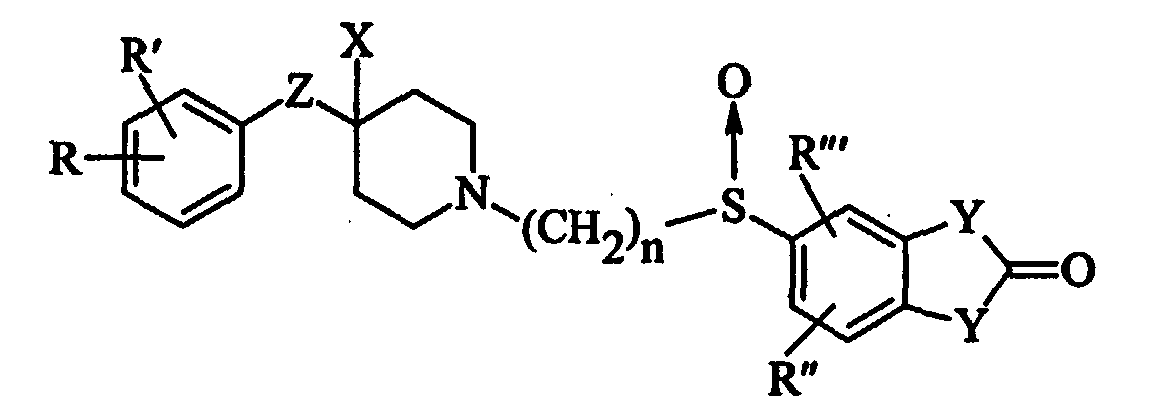
- R" and R"'
- are independently selected from the group consisting of hydrogen, hydroxy, alkyl, halogen, amino, a halogenated alkyl group, a lower alkyl amino group, or a lower alkoxy group;
- X
- is hydrogen or hydroxy;
- Z
- is -CH2- or

- N
- is 2 to 4; and
- Y
- is O, NH, or S.
- In another preferred embodiment of this invention, the compound is selected from the group consisting of 6-{2-[4-(4-chloro-benzyl)-piperidin-1-yl]-ethanesulfinyl}-3H-benzooxazol-2-one; 6- {2-[4-(4-fluoro-benzyl)-piperidin-1-yl]-ethanesulfinyl}-3H-benzooxazol-2-one; 6-{2-[4-(4-methyl-benzyl)-piperidin-1-yl]-ethanesulfinyl}-3H-benzooxazol-2-one; 6-[2-(4-benzyl-piperidin-1-yl)-ethanesulfinyl]-3H-benzooxazol-2-one; 6-{2-[4-(4-methoxybenzyl)-piperidin-1-yl]-ethanesulfinyl}-3H-benzooxazol-2-one; 6-{2-[4-(3,4-dichlorobenzyl)-piperidin-1-yl]-ethanesulfinyl}-3H-benzooxazol-2-one; 6-{2-[4-(2-fluorobenzyl)-piperidin-1-yl]-ethanesulfinyl}-3H-benzooxazol-2-one; 6-[2-(4-benzyl-4-hydroxypiperidin-1-yl)-ethanesulfinyl]-3H-benzooxazol-2-one; 6-{2-[4-(4-fluorobenzyl)-4-hydroxy-piperidin-1-yl]-ethanesulfinyl}-3H-benzooxazol-2-one; 6-[2-(4-benzoylpiperidin-1-yl)-ethanesulfinyl]-3H-benzooxazol-2-one; 6-{2-[4-(2,3-difluorobenzyl)-piperidin-1-yl]-ethanesulfinyl}-3H-benzooxazol-2-one; 6-{2-[4-(2,4-difluorobenzyl)-piperidin-1-yl]-ethanesulfinyl}-3H-benzooxazol-2-one; 6-{2-[4-(4-trifluoromethylbenzyl)-piperidin-1-yl}-3H-benzooxazol-2-one; 6{2-[4-(2,6-difluorobenzyl)-piperidin-1-yl]-ethanesulfinyl}-3H-benzooxazol-2-one; 6-{2-[4-(2,4-dichlorobenzyl)-piperidin-1-yl]-ethanesulfinyl}-3H-benzooxazol-2-one; N-(4-{1-[2-(2-oxo-2,3-dihydrobenzooxazol-6-sulfinyl)ethyl]piperidin-4-ylmethyl}phenyl)acetamide; 6-[2-(4-benzylpiperidin-1-yl)ethanesulfinyl]-5-chloro-3H-benzooxazol-2-one; 5-chloro-6-{2-[4-(4-fluorobenzyl)piperidin-1-yl]ethanesulfmyl}-3H-benzooxazol-2-one; (+)-6-{2-[4-(4-fluorobenzyl)-piperidine-1-yl]ethanesulfinyl}-3H-benzooxazol-2-one; (-)-6-{2-[4,(4-fluorobenzyl)piperidin-1-yl]ethanesulfinyl}-3H-benzooxazol-2-one and pharmaceutically acceptable salts thereof.
- In another preferred embodiment of this invention, the compound is 6-[2-[-(4-fluoro-benzyl)-piperidin-1-yl]-ethanesulfinyl]-3H-benzooxazol-2-one or a pharmaceutically acceptable salt thereof.
- In a further preferred embodiment of this invention, the compound isor a pharmaceutically acceptable salt thereof wherein
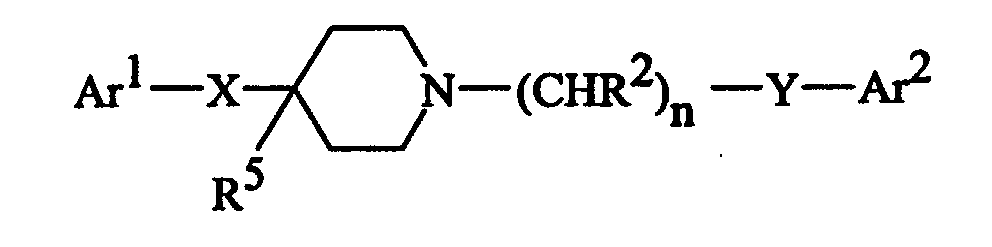
- Ar1 and Ar2
- are independently aryl or a heteroaryl group, either of which may be independently substituted by one to three of hydroxy, alkyl, halogen, nitro, cyano, carboxaldehyde, aldehyde oxime, lower alkoxy carbonylmethyl, hydroxy lower alkyl, aminocarbonylmethyl, hydrazinocarbonylmethyl, acetamido, aryl, aralkyl, amino, a halogenated alkyl group, a lower alkyl amino group, or a lower alkoxy group;
- X
- is -(CHR3)m-, wherein each R3 is independently hydrogen, hydroxy, or a lower alkyl group having 1 to 6 carbon atoms; and m is 0 or 1;
- each R2
- is independently hydrogen, hydroxy, or a lower alkyl group having 1 to 6 carbon atoms;
- n
- is 1,2,3, or 4;
- Y
- is C≡C, O, and SOp wherein p is 0, 1, or 2, NR4 wherein R4 is hydrogen or a lower alkyl group having 1 to 6 carbon atoms, or a single bond; and
- R5
- is hydrogen or hydroxy.
- In another preferred embodiment, the compound has a structure selected from those listed below, their stereoisomers, and their pharmaceutically acceptable salts:α-(4-chlorophenyl)-4-[(4-fluorophenyl)methyl]-1-piperidineethanol;
 α-(4-hydroxyphenyl)-β-methyl-4-(phenylmethyl)-1-piperidineethanol;
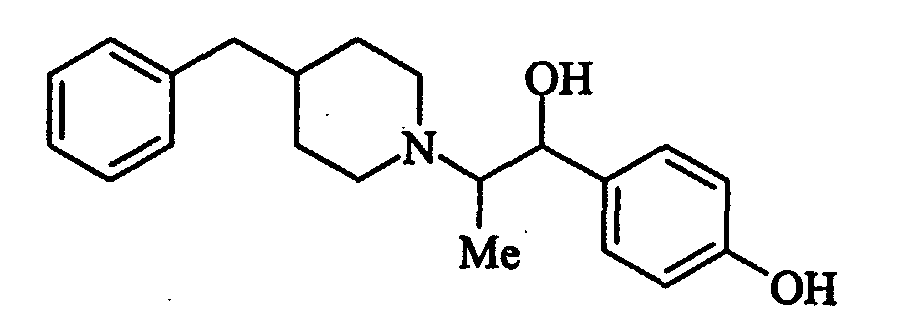 4-hydroxy-α-(4-hydroxyphenyl)-β-methyl-4-phenyl-1-piperidineethanol;
 3-[4-(4-phenyl)-4-hydroxypiperidin-1-yl]-chroman-4,7-diol; and
 α-(4-hydroxyphenyl)-β-methyl-4-(phenylmethyl)-1-piperidinepropanol.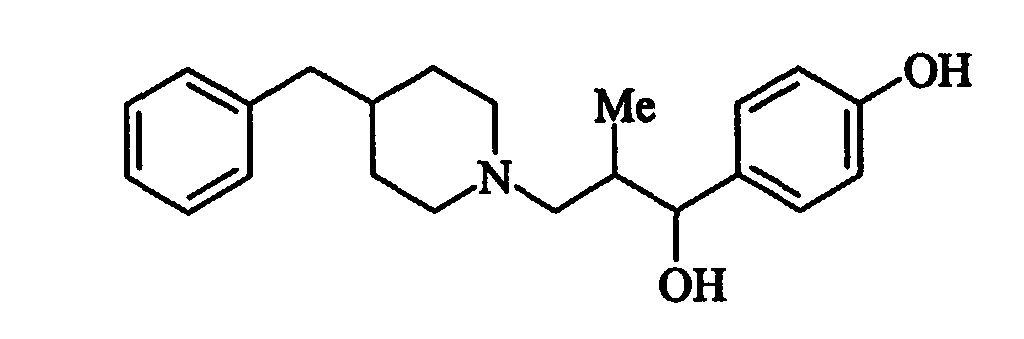
- Figure 1 is a graph showing the dyskinetic response alone or with CI-1041 wherein the maximum dyskinetic scores obtained during an observed effect following a given treatment were averaged for all monkeys and the averaged scores were then compared using a nonparametric Mann-Whitney nonpaired test. Scores±SEM, *P<0.018 versus L-Dopa group.
- Figure 2 is a graph showing the antiparkinsonian response wherein the minimum parkinsonian scores (A) obtained for each monkey during an observed effect following a given treatment were averaged for all monkeys and compared using a nonparametric Friedman and Mann-Whitney test. Parkinsonian scores: means±SEM; *P<0.05, and **P<0.01 versus control. The total mobility counts (B) recorded individually during 1 hour during the peak effect following a given treatment were averaged for all monkeys. These averaged scores and mobility counts were then compared using an ANOVA for repeated measure followed by a PLSD (least significant difference) test. Counts ± SEM, *P<0.05 and **P<0.01 versus control.
- In the method of this invention, dyskinesias are prevented by administration of a therapeutically effective amount of a NR1A/2B site-selective NMDA receptor antagonist compound.
- The terms "prevent," "prevention," and "preventing" include preventative (e.g., prophylactic) and palliative treatment or the act of providing preventative or palliative treatment which prevents the development and/or onset of dyskinesias.
- The term "subject" means animals, particularly mammals. Preferred subjects are humans.
- In a further preferred embodiment of this invention, the compound isor stereoisomers or a pharmaceutically acceptable salt thereof, wherein R and R' are independently selected from the group consisting of hydrogen, hydroxy, alkyl, halogen, nitro, cyano, carboxaldehyde, aldehyde amine, lower alkoxy carbonylmethyl, hydroxy lower alkyl, aminocarbonylmethyl, hydrazinocarbonylmethyl, acetamido, aryl, aralkyl, amino, a halogenated alkyl group, a lower alkyl amino group, a lower alkyl amino group, or a lower alkoxy group;

- R" and R'''
- are independently selected from the group consisting of hydrogen, hydroxy, alkyl, halogen, amino, a halogenated alkyl group, a lower alkyl amino group, or a lower alkoxy group;
- X
- is hydrogen or hydroxy;
- Z
- is -CH2- or
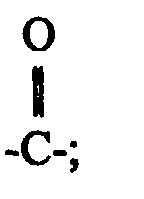
- N
- is 2 to 4; and
- Y
- is O, NH, or S which are disclosed in WO 00/00197, the disclosures of which are incorporated by reference herein.
- In another preferred embodiment of this invention, the compound is selected from the group consisting of 6-{2-[4-(4-chloro-benzyl)-piperidin-1-yl]-ethanesulfinyl}-3H-benzooxazol-2-one; 6-{2-[4-(4-fluoro-benzyl)-piperidin-1-yl]-ethanesulfinyl}-3H-benzooxazol-2-one; 6-{2-[4-(4-methyl-benzyl)-piperidin-1-yl]-ethanesulfinyl}-3H-benzooxazol-2-one; 6-[2-(4-benzyl-piperidin-1-yl)-ethanesulfinyl]-3H-benzooxazol-2-one; 6-{2-[4-(4-methoxybenzyl)-piperidin-1-yl]-ethanesulfinyl}-3H-benzooxazol-2-one; 6-{2-[4-(3,4-dichlorobenzyl)-piperidin-1-yl]-ethanesulfinyl}-3H-benzooxazol-2-one; 6-{2-[4-(2-fluorobenzyl)-piperidin-1-yl]-ethanesulfinyl}-3H-benzooxazol-2-one; 6-[2-(4-benzyl-4-hydroxypiperidin-1-yl)-ethanesulfinyl]-3H-benzooxazol-2-one;6-{2-[4-(4-fluorobenzyl)-4-hydroxy-piperidin-1-yl]-ethanesulfinyl}-3H-benzooxazol-2-one; 6-[2-(4-benzoylpiperidin-1-yl)-ethanesulfinyl]-3H-benzooxazol-2-one; 6-{2-[4-(2,3-difluorobenzyl)-piperidin-1-yl]-ethanesulfinyl}-3H-benzooxazol-2-one; 6-{2-[4-(2,4-difluorobenzyl)-piperidin-1-yl]-ethanesulfinyl}-3H-benzooxazol-2-one; 6-{2-[4-(4-trifluoromethylbenzyl)-piperidin-1-yl}-3H-benzooxazol-2-one; 6{2-[4-(2,6-difluorobenzyl)-piperidin-1-yl]-ethanesulfinyl}-3H-benzooxazol-2-one; 6-{2-[4-(2,4-dichlorobenzyl)-piperidin-1-yl]-ethanesulfinyl}-3H-benzooxazol-2-one; N-(4-{1-[2-(2-oxo-2,3-dihydrobenzooxazol-6-sulfinyl)ethyl]piperidin-4-ylmethyl}phenyl)acetamide; 6-[2-(4-benzylpiperidin-1-yl)ethanesulfinyl]-5-chloro-3H-benzooxazol-2-one; 5-chloro-6-{2-[4-(4-fluorobenzyl)piperidin-1-yl]ethanesulfinyl}-3H-benzooxazol-2-one; (+)-6-{2-[4-(4-fluorobenzyl)-piperidine-1-yl]ethanesulfinyl}-3H-benzooxazol-2-one; (-)-6-{2-[4,(4-fluorobenzyl)piperidin-1-yl]ethanesulfinyl}-3H-benzooxazol-2-one and pharmaceutically acceptable salts thereof.
- In another preferred embodiment of this invention, the compound is 6-[2-[-(4-fluoro-benzyl)-piperidin-1-yl]-ethanesulfinyl]-3H-benzooxazol-2-one or a pharmaceutically acceptable salt thereof.
- In a further preferred embodiment of this invention, the compound isor a pharmaceutically acceptable salt thereof wherein

- Ar1 and Ar2
- are independently aryl or a heteroaryl group, either of which may be independently substituted by one to three of hydroxy, alkyl, halogen, nitro, cyano, carboxaldehyde, aldehyde oxime, lower alkoxy carbonylmethyl, hydroxy lower alkyl, aminocarbonylmethyl, hydrazinocarbonylmethyl, acetamido, aryl, aralkyl, amino, a halogenated alkyl group, a lower alkyl amino group, or a lower alkoxy group;
- X
- is -(CHR3)m-, wherein each R3 is independently hydrogen, hydroxy or a lower alkyl group having 1 to 6 carbon atoms; and m is 0 or 1;
- each R2
- is independently hydrogen, hydroxy or a lower alkyl group having 1 to 6 carbon atoms;
- n
- is 1, 2, 3 or 4;
- Y
- is C≡C, O, SOp wherein p is 0, 1 or 2, NR4 wherein R4 is hydrogen or a lower alkyl group having 1 to 6 carbon atoms, or a single bond; and
- R5
- is hydrogen or hydroxy, which are disclosed in PCT International Publication Nos. WO 97/23216 and WO 97/23214, the disclosures of which are incorporated by reference herein.
- In another preferred embodiment of this invention, the compound administered is selected from the compounds having the structures and names listed below, their stereoisomers, and their pharmaceutically acceptable salts:α-(4-chlorophenyl)-4-[(4-fluorophenyl)methyl]-1-piperidineethanol (Eliprodil, available from Synthelabo, Inc, and disclosed in US Patent No. 5,547,963)
 α-(4-hydroxyphenyl)-β-methyl-4-(phenylmethyl)-1-piperidineethanol (Ifenprodil, available from Synthelabo, Inc, and disclosed in US Patent No. 3,509,164)
 4-hydroxy-α-(4-hydroxyphenyl)-β-methyl-4-phenyl-1-piperidineethanol (optically active form CP-101,606, available from Pfizer, Inc, and disclosed in US Patent No. 5,272,160)
 3-[4-(4-phenyl)-4-hydroxypiperidin-1-yl]-chroman-4,7-diol (optically active form CP-283,097, available from Pfizer, Inc)
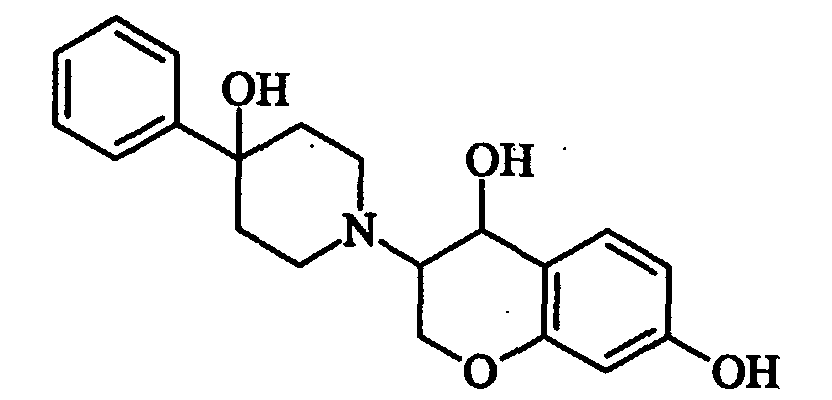 α-(4-hydroxyphenyl)-β-methyl-4-(phenylmethyl)-1-piperidinepropanol (optically active form Ro 25-6981, available from Hoffmann-La Roche, and disclosed in European Patent Application No. EP 648,744).
- The most preferred compounds for administration in the method of this invention are 1-[2-(4-hydroxyphenoxy)ethyl]-4-hydroxy-4-(4-methylbenzyl) piperidine hydrochloride, which has the following structure:and 1-[2-(4-Hydroxyphenoxy)ethyl]-4-(4-fluorobenzyl)-4-hydroxy-piperidine hydrochloride, which has the following structure:
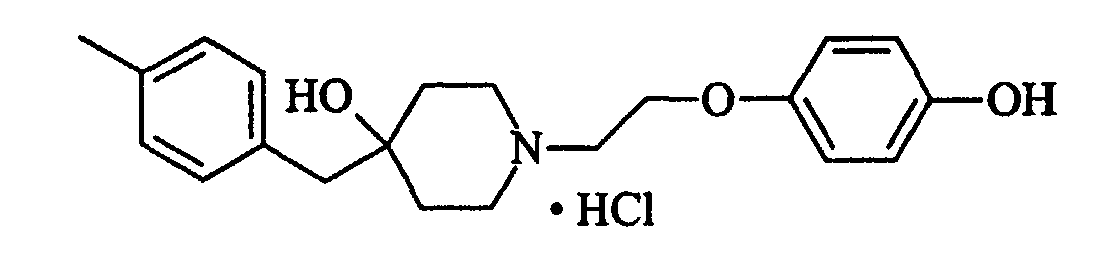 and CP-101,606, [S-(R*,R*)]-4-hydroxy-α-(4-hydroxyphenyl)-β-methyl-4-phenyl-1-piperidineethanol, which has the following structure:
 and is described in PCT Application No. WO 96/37226, the disclosure of which is incorporated by reference herein.
- The method of the present invention also includes administering a compound or composition as set forth above prior to or concurrent with the administration of L-Dopa, apomorphine, pramipexole, ropinirole, cabergoline, bromocryptine, pergolide, U-91356A, SKF 38393, SKF 82958, A-77636, A-86929, CY-208-243, any other selective or nonselective dopamine or other combined dopamine D1, D2, D3, D4, or D5 receptor agonists, or combinations thereof to prevent the development and/or onset of dyskinesias.
- Also included within the scope of the present invention is the use of the non-toxic pharmaceutically acceptable salts of the compounds described herein. Acid addition salts are formed by mixing a solution of the particular compound used in the present invention with a solution of a pharmaceutically acceptable non-toxic acid such as hydrochloric acid, fumaric acid, maleic acid, succinic acid, acetic acid, citric acid, tartaric acid, carbonic acid, phosphoric acid, oxalic acid, and the like.
- The pharmaceutical compositions of the present invention may be administered by any means that achieve their intended purpose. For example, administration may be by parenteral, subcutaneous, intravenous, intramuscular, intraperitoneal, transdermal, or buccal routes. Alternatively, or concurrently, administration may be by the oral route. The dosage administered will be dependent upon the age, health, and weight of the recipient, kind of concurrent treatment, if any, frequency of treatment, and the nature of the effect desired.
- Suitable dosage levels in the method of this invention for oral administration range from about 100 mg/dose to about 1000 mg/dose. For subcutaneous administration, the suitable level is from about 1 mg/dose to about 200 mg/dose.
- The examples which follow are intended as illustrations of certain preferred embodiments of the invention, and no limitation of the invention is implied.
- The experiments were performed in accordance with the standards of the Canadian Council on Animal care using eight female cynomolgus (Macaca fascicularis) monkeys weighing 3.0 to 3.5 kg. They were housed separately in individual observation cages equipped with an electronic motility monitoring system (Datascience, St. Paul, Minnesota) in a temperature-controlled room and exposed to a 12-hour light/dark cycle (lights on 6 AM-6 PM). They were fed once daily in the afternoon (certified primate chow and fruits), and water was provided ad libitum. All animals were initially treated with the neurotoxin MPTP (Sigma-Aldrich Canada Ltd, Oakville, Ontario) dissolved in sterile water and injected continuously using Alzet minipumps at a dose of 0.5 mg/24 hours. In general, 2 to 4 weeks are needed to induce sustained parkinsonian features. This method of MPTP delivery is well-tolerated and allows us to reduce both the time to induce parkinsonism and the risk of MPTP manipulation. Recovery was seen in some animals, in this
case 2 mg of MPTP was administered once a week, for 1 to 3 weeks. The cumulative dose and the time necessary to achieve this goal were in average 15.6 ± 2.4 mg and 4.2 ± 1 months, respectively. The animals were scored several times a week using a disability scale described below, where the normal state extends from 0 to 2, and maximal disability is 16 points. Treatment was started after the bilateral parkinsonian syndrome had stabilized (i.e., unchanged disability score of 8 or more over a month). This study was undertaken several months after the stable parkinsonian syndrome had developed (for more details on animal characteristics see Table 1).
- During this study, the animals were assigned to two treatment groups with four individuals in each group. Animals in each treatment group had a moderate to severe parkinsonism and were divided so that the different parameters which possibly could interfere with dyskinesias induction (ie, parkinsonian score at baseline, time allowed for recovery after MPTP administration, total MPTP dose, etc.) were similar for the two groups (see Table 1). The L-Dopa group was started on a chronic daily oral treatment with L-Dopa/benserazide alone (100/25 mg; Prolopa®) (Hoffmann-La Roche Limited, Mississauga, Ontario). The L-Dopa/CI-1041 group was given L-Dopa (same dosage) plus CI-1041 (at the dose of 10 mg/kg). CI-1041 was dissolved and administered per os. During the experiments, drugs were administered at 9:30 AM, and the spontaneous behavior of the animals was observed until the effect of a given drug was terminated. In both groups, the animals were treated for 28 consecutive days.
- The parkinsonian syndrome following MPTP exposure and the relief of parkinsonism following the administration of L-Dopa/benseraside alone or with CI-1041 were evaluated, using an abnormal disability scale for MPTP monkey (Hadj T.A., Gregoire L., Bangassoro E., Bedard P.J. Sustained cabergoline treatment reverses levodopa-induced dyskinesias in parkinsonian monkeys. Clin. Neuropharmacol., 2000;23:195-202), by two experienced blinded observers in the following way: (a) Posture: normal=0, Flexed intermittent=1, flexed constant=2, crouched=3; (b) Mobility: normal=0, mild reduction=1, moderate reduction=2, severe reduction=3; (c) Gait: normal=0, slow=1, very slow=2, very slow with freezing=3; (d) Tremor: absent=0, mild acting tremor=1, moderate acting tremor=2, resting tremor=3; (e) Climbing: present=0, absent=1; (f) Grooming: present=0, absent=1; (g) Vocalization: present=0, absent=1; (h) Social interaction: present=0, absent=1. A score was given every 30 minutes reflecting observations of the preceding half-hour. The maximal disability score is 16.
- The severity of dyskinesias was also rated every 30 minutes for each body segment: the face, neck, trunk, arms, and legs in the following way: None=0; Mild=1 Moderate=2; Severe=3. The difference between mild, moderate, and severe dyskinesias for a given body segment is based on the assessment of the amplitude of the abnormal movements and the frequency (whether they are occasional, intermittent, or constant); each body segment being scored separately based on assessment of observation in the preceding half hour. The dyskinetic score obtained was the sum of the scores for all body segments for a maximal score of 21 points. Dyskinesias were mainly choreic in nature but dystonia was also seen. Stereotypies or licking were not considered as dyskinesias.
- Locomotor activity of all monkeys was monitored using an electronic motility monitoring system fixed on each cage (Dataquest IV, Data Sciences Inc, St. Paul, MN). Using radio-waves frequency, a probe implanted subcutaneously in the back of each animal transmits the signal to a receiver attached to the cage which is connected to a computer. Counts of locomotor activity per 5 minutes for each animal were accumulated.
- In each group, the total mobility counts recorded individually for 1 hour period during the peak effect after a given treatment were averaged for all monkeys and compared using an analysis of variance (ANOVA) for repeated measures followed by a Fisher PLSD test (least significant differences). The null hypothesis is rejected at the 0.05 level. The minimal parkinsonian score, as well as the maximal dyskinetic score obtained during an observed effect, were averaged for all monkeys in both L-Dopa or L-Dopa+CI groups. These averaged scores were compared using a nonparametric Mann-Whitney test, which was followed by a multiple comparisons test when the null hypothesis was rejected (post-hoc analysis).
- Figure 1 clearly shows that dyskinesias were significantly different in the two groups (P<0.018). Indeed, in the L-Dopa-treated group the animals rapidly developed dyskinesias and from the second week on, all animals had abnormal movements that gradually became moderate to severe at the end of the study (Figure 1). Dyskinesias were mainly choreic in nature but dystonic movements of the lower limbs were also seen. Conversely, co-administration of C-1041 completely prevented the induction of dyskinesias in three animals in which no dyskinesias was noted until the end of the study. In the L-Dopa+CI group, only one monkey developed mild choreic movements of the lower limbs at the end of the fourth week of treatment (see Figure 1).
- Figure 2A illustrates the decrease in the parkinsonian scores for each treatment group indicating a significant antiparkinsonian action. Both L-Dopa alone or with CI-1041 significantly (P<0.01) lowered the parkinsonisonian scores as compared to the control (see Figure 2A). Co-administration of CI-1041 with L-Dopa induced a similar effect as compared to L-Dopa given alone (see Figure 2A). However, the decrease in the parkinsonian score was slightly less important in L-Dopa+CI-treated group. The antiparkinsonian response was also reflected by the significant improvement in the locomotor activity in both groups which indicates effective reversal of parkinsonian akinesia. In fact, L-Dopa alone or with CI-1041 produced a significant (P<0.01) increase in locomotion as compared to control (see Figure 2B). The effect of the combined treatment regimen was not different (P<0.2) nor the total cumulative locomotor counts over the entire duration of the study which were comparable in both drug-treatment groups (data not shown). This significant stimulatory effect on locomotion was maintained during the 4 weeks (see Figure 2B). The delay and duration of the L-Dopa response was not significantly affected by CI-1041 co-administration (see Table 2). However, a trend for a delayed response was observed with CI-1041 mainly for the first 2 weeks of the treatment period.

- CI-1041 was well-tolerated and no emesis, ataxia, or hallucinations were observed during the 1-month treatment.
- Other variations and modifications of this invention will be obvious to those skilled in this art. This invention is not limited except as set forth in the following claims.
- In the description the term "lower alkyls" means a straight or branched hydrocarbon radical having from one to six carbon atoms and includes, for example, methyl, ethyl, n-propyl, isopropyl, n-butyl, sec-butyl, isobutyl, tert-butyl, n-pentyl, n-hexyl, and the like.
- The term "aryl" means an aromatic radical which is a phenyl group, a benzyl group, a naphthyl group, a biphenyl group, a pyrenyl group, an anthracenyl group, a fluarenyl group or a fused ring resulting from any two of phenyl, naphthyl, and a 5- or 6- membered ring containing from 0 to 3 heteroatoms selected from quinolones, isoquinolones, indoles, indanes, benzofurans, benzothiophenes, benzoxazoles, benzothiazoles, benzisoxazoles, coumarins, benzimidazoles and the like, unsubstituted or substituted by 1 to 3 substituents selected from alkyl, alkoxy, thioalkoxy, amino, formyl, carboxy, nitrile, -NHCOR, -CONHR, -CO2R, -COR, or aryl.
- "Halogen" is fluorine, chlorine, bromine or iodine.
Claims (11)
- Use of NR1A/2B site-selective NMDA receptor antagonist compound for the manufacturing of pharmaceuticals for preventing dyskinesias.
- The use of Claim 1, wherein the compound has the structureor stereoisomers or a pharmaceutically acceptable salt thereof, wherein R and R' are independently selected from the group consisting of hydrogen, hydroxy, alkyl, halogen, nitro, cyano, carboxaldehyde, aldehyde amine, C1-C6 alkoxy carbonylmethyl, hydroxy C1-C6 alkyl, aminocarbonylmethyl, hydrazinocarbonylmethyl, acetamido, aryl, aralkyl, amino, a halogenated alkyl group, a C1-C6 alkyl amino group, a C1-C6 alkyl amino group, or a C1-C6 alkoxy group;

- R" and R'''
- are independently selected from the group consisting of hydrogen, hydroxy, alkyl, halogen, amino, a halogenated alkyl group, a C1-C6 alkyl amino group, or a C1-C6 alkoxy group;
- X
- is hydrogen or hydroxy;
- Z
- is -CH2- or

- N
- is 2 to 4; and
- Y
- is O, NH, or S.
- The use of Claim 1, wherein the compound is selected from the group consisting of 6-{2-[4-(4-chloro-benzyl)-piperidin-1-yl]-ethanesulfinyl}-3H-benzooxazol-2-one; 6-{2-[4-(4-fluoro-benzyl)-piperidin-1-yl]-ethanesulfinyl}-3H-benzooxazol-2-one; 6-{2-[4-(4-methyl-benzyl)-piperidin-1-yl]-ethanesulfinyl}-3H-benzooxazol-2-one; 6-[2-(4-benzylpiperidin-1-yl)-ethanesulfinyl]-3H-benzooxazol-2-one; 6-{2-[4-(4-methoxybenzyl)-piperidin-1-yl]-ethanesulfinyl}-3H-benzooxazol-2-one; 6-{2-[4-(3,4-dichlorobenzyl)-piperidin-1-yl]-ethanesulfinyl}-3H-benzooxazol-2-one; 6-{2-[4-(2-fluorobenzyl)-piperidin-1-yl]-ethanesulfinyl}-3H-benzooxazol-2-one; 6-[2-(4-benzyl-4-hydroxypiperidin-1-yl)-ethanesulfinyl]-3H-benzooxazol-2-one; 6-{2-[4-(4-fluorobenzyl)-4-hydroxy-piperidin-1-yl]-ethanesulfinyl}-3H-benzooxazol-2-one; 6-[2-(4-benzoylpiperidin-1-yl)-ethanesulfinyl]-3H-benzooxazol-2-one; 6-{2-[4-(2,3-difluorobenzyl)-piperidin-1-yl]-ethanesulfinyl}-3H-benzooxazol-2-one; 6-{2-[4-(2,4-difluorobenzyl)-piperidin-1-yl]-ethanesulfinyl}-3H-benzooxazol-2-one; 6-{2-[4-(4-trifluoromethylbenzyl)-piperidin-1-yl}-3H-benzooxazol-2-one; 6{2-[4-(2,6-difluorobenzyl)-piperidin-1-yl]-ethanesulfinyl}-3H-benzooxazol-2-one; 6-{2-[4-(2,4-dichlorobenzyl)-piperidin-1-yl]-ethanesulfinyl}-3H-benzooxazol-2-one; N-(4-{1-[2-(2-oxo-2,3-dihydrobenzooxazol-6-sulfinyl)ethyl]piperidin-4-ylmethyl}phenyl)acetamide; 6-[2-(4-benzylpiperidin-1-yl)ethanesulfinyl]-5-chloro-3H-benzooxazol-2-one; 5-chloro-6-{2-[4-(4-fluorobenzyl)piperidin-1-yl]ethanesulfinyl}-3H-benzooxazol-2-one; (+)-6-{2-[4-(4-fluorobenzyl)-piperidine-1-yl]-ethanesulfinyl}-3H-benzooxazol-2-one; (-)-6-{2-[4,(4-fluorobenzyl)-piperidin-1-yl]ethanesulfinyl}-3H-benzooxazol-2-one and pharmaceutically acceptable salts thereof.
- The use according to Claim 1, wherein the compound is 6-[2-[-(4-fluoro-benzyl)-piperidin-1-yl]-ethanesulfinyl]-3H-benzooxazol-2-one or a pharmaceutically acceptable salt thereof.
- The use of Claim 1, wherein the compound has the structureor a stereoisomer or pharmaceutically acceptable salt thereof wherein
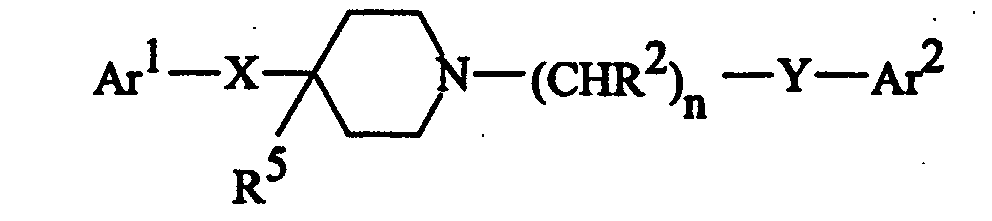
- Ar1 and Ar2
- are independently aryl or a heteroaryl group, either of which may be independently substituted by one to three of hydroxy, alkyl, halogen, nitro, cyano, carboxaldehyde, aldehyde oxime, C1-C6 alkoxy carbonylmethyl, hydroxy C1-C6 alkyl, aminocarbonylmethyl, hydrazinocarbonylmethyl, acetamido, aryl, aralkyl, amino, a halogenated alkyl group, a C1-C6 alkyl amino group, or a C1-C6 alkoxy group;
- X
- is -(CHR3)m-, wherein each R3 is independently hydrogen, hydroxy or a lower alkyl group having 1 to 6 carbon atoms; and m is 0 or 1;
- each R2
- is independently hydrogen, hydroxy, or a lower alkyl group having 1 to 6 carbon atoms;
- n
- is 1,2,3 or 4;
- Y
- is C≡C, O, and SOp wherein p is 0, 1, or 2, NR4 wherein R4 is hydrogen or a lower alkyl group having 1 to 6 carbon atoms, or a single bond; and
- R5
- is hydrogen or hydroxy.
- The use of Claim 4, wherein the compound is selected from the group consisting of


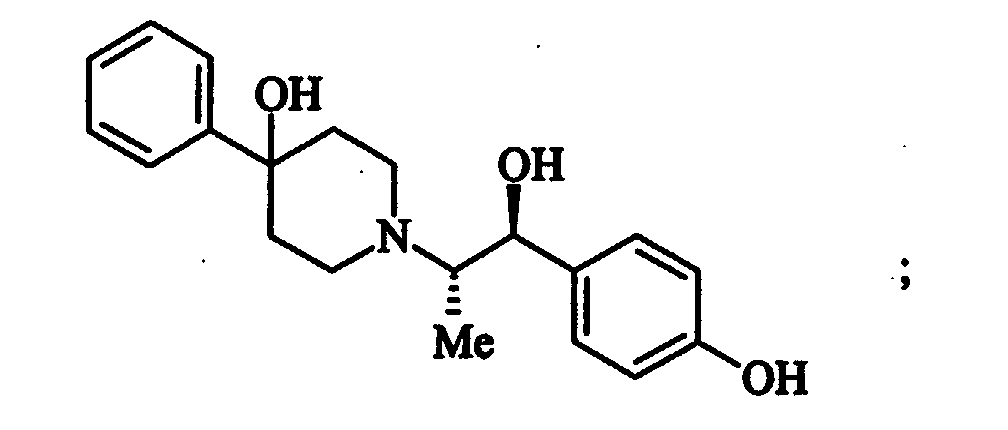 and
and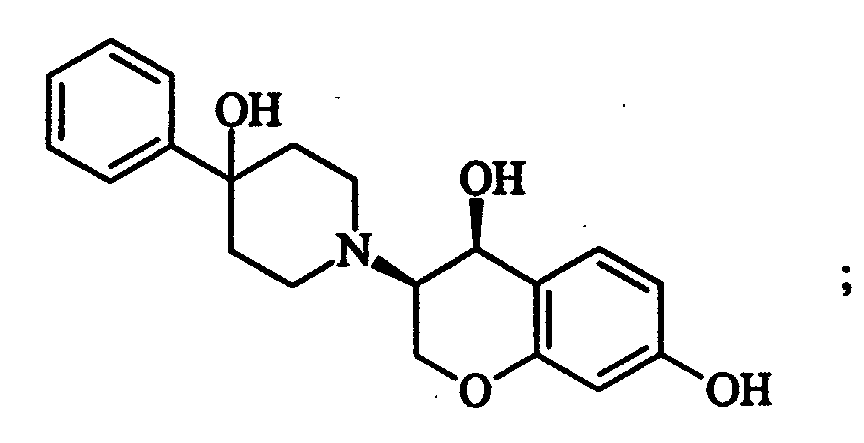 and their stereoisomers and pharmaceutically acceptable salts.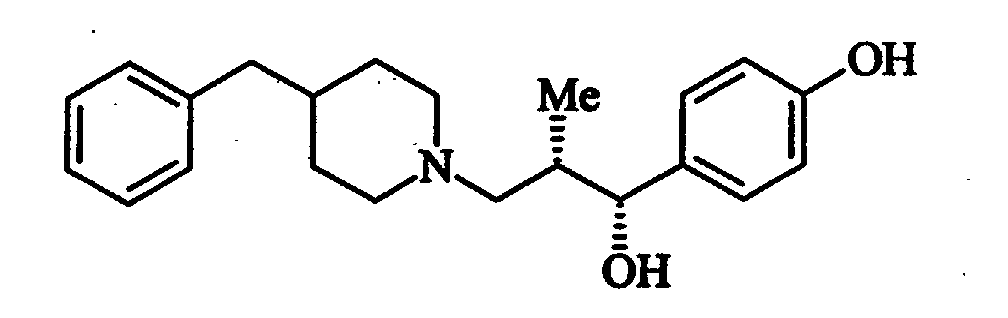
- The use of Claim 4, wherein the compound is 1-[2-(4-hydroxyphenoxy)ethyl]-4-hydroxy-4-(4-methylbenzyl)piperidine hydrochloride.
- The use of Claim 4, wherein the compound is 1-[2-(4-Hydroxyphenoxy)ethyl]-4-(4-fluorobenzyl)-4-hydroxy-piperidine hydrochloride.
- The use of Claim 5, wherein the compound is [S-(R*,R*)]-4-hydroxy-α-(4-hydroxyphenyl)-β-methyl-4-phenyl-1-piperidineethanol.
- Use of a NR1A/2B site-selective NMDA receptor antagonist compound for the manufacturing of pharmaceuticals for preventing dyskinesias in treatment of Parkinson's disease.
- The use of Claim 10, wherein the NR1A/2B site-selective NMDA receptor antagonist is used in combination with a compound selected from L-Dopa, apomorphine, pramipexole, ropinirole, cabergoline, bromocryptine, pergolide, U-91356A, SKF 38393, SKF 82958, A-77636, A-86929, CY-208-243, any other selective or nonselective dopamine or other combined dopamine D1, D2, D3, D4, or D5 receptor agonists, or combinations thereof.
Applications Claiming Priority (2)
| Application Number | Priority Date | Filing Date | Title |
|---|---|---|---|
| US28587001P | 2001-04-23 | 2001-04-23 | |
| US285870P | 2001-04-23 |
Publications (1)
| Publication Number | Publication Date |
|---|---|
| EP1254661A1 true EP1254661A1 (en) | 2002-11-06 |
Family
ID=23096048
Family Applications (1)
| Application Number | Title | Priority Date | Filing Date |
|---|---|---|---|
| EP02008620A Withdrawn EP1254661A1 (en) | 2001-04-23 | 2002-04-17 | Method for preventing dyskinesias with selective NMDA-Antagonists |
Country Status (12)
| Country | Link |
|---|---|
| US (1) | US20030004187A1 (en) |
| EP (1) | EP1254661A1 (en) |
| JP (1) | JP2002332246A (en) |
| KR (1) | KR20020082151A (en) |
| CN (1) | CN1382442A (en) |
| AU (1) | AU3439602A (en) |
| CA (1) | CA2381630A1 (en) |
| HK (1) | HK1048071A1 (en) |
| HU (1) | HUP0201336A3 (en) |
| IL (1) | IL149148A0 (en) |
| PL (1) | PL353582A1 (en) |
| ZA (1) | ZA200203180B (en) |
Cited By (5)
| Publication number | Priority date | Publication date | Assignee | Title |
|---|---|---|---|---|
| US7005432B2 (en) | 2002-05-16 | 2006-02-28 | Hoffman-La Roche Inc. | Substituted imidazol-pyridazine derivatives |
| WO2009046841A3 (en) * | 2007-10-05 | 2009-06-18 | Merck Patent Gmbh | Piperidine and piperazine derivatives for treating tumours |
| US8980308B2 (en) | 2003-08-20 | 2015-03-17 | Lts Lohmann Therapie-Systeme Ag | Transdermal pharmaceutical preparation containing active substance combinations, for treating Parkinson's disease |
| US10633336B2 (en) | 2014-12-19 | 2020-04-28 | The Broad Institute, Inc. | Dopamine D2 receptor ligands |
| US10752588B2 (en) | 2014-12-19 | 2020-08-25 | The Broad Institute, Inc. | Dopamine D2 receptor ligands |
Families Citing this family (11)
| Publication number | Priority date | Publication date | Assignee | Title |
|---|---|---|---|---|
| US20070191815A1 (en) | 2004-09-13 | 2007-08-16 | Chrono Therapeutics, Inc. | Biosynchronous transdermal drug delivery |
| US8252321B2 (en) | 2004-09-13 | 2012-08-28 | Chrono Therapeutics, Inc. | Biosynchronous transdermal drug delivery for longevity, anti-aging, fatigue management, obesity, weight loss, weight management, delivery of nutraceuticals, and the treatment of hyperglycemia, alzheimer's disease, sleep disorders, parkinson's disease, aids, epilepsy, attention deficit disorder, nicotine addiction, cancer, headache and pain control, asthma, angina, hypertension, depression, cold, flu and the like |
| EP2150239A1 (en) * | 2007-04-24 | 2010-02-10 | Boehringer Ingelheim International GmbH | Combination with an extended release tablet formulation containing pramipexole or a pharmaceutically acceptable salt thereof |
| US20130017259A1 (en) | 2011-07-06 | 2013-01-17 | The Parkinson's Institute | Compositions and Methods for Treatment of Symptoms in Parkinson's Disease Patients |
| US10105487B2 (en) | 2013-01-24 | 2018-10-23 | Chrono Therapeutics Inc. | Optimized bio-synchronous bioactive agent delivery system |
| JP2018511355A (en) | 2015-01-28 | 2018-04-26 | クロノ セラピューティクス インコーポレイテッドChrono Therapeutics Inc. | Drug delivery method and system |
| AU2016228779A1 (en) | 2015-03-12 | 2017-09-07 | Chrono Therapeutics Inc. | Craving input and support system |
| KR101657420B1 (en) * | 2015-08-31 | 2016-10-14 | 고려공업검사 주식회사 | Holder for inspection of a heat exchanger tube |
| WO2018129304A1 (en) | 2017-01-06 | 2018-07-12 | Chrono Therapeutics Inc. | Transdermal drug delivery devices and methods |
| AU2019279884B2 (en) | 2018-05-29 | 2025-01-30 | Morningside Venture Investments Limited | Drug delivery methods and systems |
| JP2022507660A (en) | 2018-11-16 | 2022-01-18 | モーニングサイド ベンチャー インベストメンツ リミテッド | Temperature-controlled transdermal drug delivery system |
Citations (2)
| Publication number | Priority date | Publication date | Assignee | Title |
|---|---|---|---|---|
| WO1999021539A1 (en) * | 1997-10-24 | 1999-05-06 | Warner-Lambert Company | Method for treating disease-related or drug-induced dyskinesias |
| WO2000000197A1 (en) * | 1998-06-26 | 2000-01-06 | Warner-Lambert Company | 4-benzyl piperidine alkylsulfoxide heterocycles and their use as subtype-selective nmda receptor antagonists |
-
2002
- 2002-04-11 CA CA002381630A patent/CA2381630A1/en not_active Abandoned
- 2002-04-15 IL IL14914802A patent/IL149148A0/en unknown
- 2002-04-17 EP EP02008620A patent/EP1254661A1/en not_active Withdrawn
- 2002-04-18 AU AU34396/02A patent/AU3439602A/en not_active Abandoned
- 2002-04-22 HU HU0201336A patent/HUP0201336A3/en unknown
- 2002-04-22 ZA ZA200203180A patent/ZA200203180B/en unknown
- 2002-04-22 KR KR1020020022046A patent/KR20020082151A/en not_active Ceased
- 2002-04-23 JP JP2002121217A patent/JP2002332246A/en active Pending
- 2002-04-23 PL PL02353582A patent/PL353582A1/en not_active Application Discontinuation
- 2002-04-23 CN CN02116192A patent/CN1382442A/en active Pending
- 2002-04-23 US US10/127,999 patent/US20030004187A1/en not_active Abandoned
-
2003
- 2003-01-14 HK HK03100309.3A patent/HK1048071A1/en unknown
Patent Citations (2)
| Publication number | Priority date | Publication date | Assignee | Title |
|---|---|---|---|---|
| WO1999021539A1 (en) * | 1997-10-24 | 1999-05-06 | Warner-Lambert Company | Method for treating disease-related or drug-induced dyskinesias |
| WO2000000197A1 (en) * | 1998-06-26 | 2000-01-06 | Warner-Lambert Company | 4-benzyl piperidine alkylsulfoxide heterocycles and their use as subtype-selective nmda receptor antagonists |
Non-Patent Citations (1)
| Title |
|---|
| BLANCHET, P. J. (1) ET AL: "NR1A/2B-selective NMDA antagonists inhibit levodopa-induced dyskinesia in MPTP monkeys.", SOCIETY FOR NEUROSCIENCE ABSTRACTS, (1998) VOL. 24, NO. 1-2, PP. 1721. MEETING INFO.: 28TH ANNUAL MEETING OF THE SOCIETY FOR NEUROSCIENCE, PART 2 LOS ANGELES, CALIFORNIA, USA NOVEMBER 7-12, 1998 SOCIETY FOR NEUROSCIENCE., XP001095504 * |
Cited By (11)
| Publication number | Priority date | Publication date | Assignee | Title |
|---|---|---|---|---|
| US7005432B2 (en) | 2002-05-16 | 2006-02-28 | Hoffman-La Roche Inc. | Substituted imidazol-pyridazine derivatives |
| US8980308B2 (en) | 2003-08-20 | 2015-03-17 | Lts Lohmann Therapie-Systeme Ag | Transdermal pharmaceutical preparation containing active substance combinations, for treating Parkinson's disease |
| WO2009046841A3 (en) * | 2007-10-05 | 2009-06-18 | Merck Patent Gmbh | Piperidine and piperazine derivatives for treating tumours |
| EP2426106A1 (en) * | 2007-10-05 | 2012-03-07 | Merck Patent GmbH | Piperidine and Piperazine derivatives for the treatment of tumours |
| EA017787B1 (en) * | 2007-10-05 | 2013-03-29 | Мерк Патент Гмбх | Piperazine derivatives |
| US8754097B2 (en) | 2007-10-05 | 2014-06-17 | Merck Patent Gmbh | Piperidine and piperazine derivatives |
| US8791111B2 (en) | 2007-10-05 | 2014-07-29 | Merck Patent Gmbh | Piperidine and piperazine derivatives |
| US10633336B2 (en) | 2014-12-19 | 2020-04-28 | The Broad Institute, Inc. | Dopamine D2 receptor ligands |
| US10752588B2 (en) | 2014-12-19 | 2020-08-25 | The Broad Institute, Inc. | Dopamine D2 receptor ligands |
| US11498896B2 (en) | 2014-12-19 | 2022-11-15 | The Broad Institute, Inc. | Dopamine D2 receptor ligands |
| US12428373B2 (en) | 2014-12-19 | 2025-09-30 | The Broad Institute, Inc. | Dopamine D2 receptor ligands |
Also Published As
| Publication number | Publication date |
|---|---|
| HU0201336D0 (en) | 2002-06-29 |
| KR20020082151A (en) | 2002-10-30 |
| HUP0201336A2 (en) | 2004-04-28 |
| PL353582A1 (en) | 2002-11-04 |
| CN1382442A (en) | 2002-12-04 |
| JP2002332246A (en) | 2002-11-22 |
| IL149148A0 (en) | 2002-11-10 |
| ZA200203180B (en) | 2003-10-22 |
| AU3439602A (en) | 2002-10-24 |
| HK1048071A1 (en) | 2003-03-21 |
| HUP0201336A3 (en) | 2004-07-28 |
| US20030004187A1 (en) | 2003-01-02 |
| CA2381630A1 (en) | 2002-10-23 |
Similar Documents
| Publication | Publication Date | Title |
|---|---|---|
| US20030004187A1 (en) | Method for preventing dyskinesias | |
| Tahar et al. | Effect of a selective glutamate antagonist on L-dopa-induced dyskinesias in drug-naive parkinsonian monkeys | |
| AU2006234627B2 (en) | Therapeutic agent for dyskinesia | |
| JP2009511618A (en) | Use of pramipexole to treat moderate to severe restless legs syndrome (RLS) | |
| US20200188389A1 (en) | Compositions and methods for minimizing or reversing agonist-induced desensitization | |
| JP2005523898A5 (en) | Movement disorder treatment | |
| US7105504B2 (en) | Combination of a CB1 receptor antagonist and of a product which activates dopaminergic neurotransmission in the brain, the pharmaceutical compositions comprising them and their use in the treatment of parkinson's disease | |
| EP3897641B1 (en) | Treatment of movement disorders | |
| BR112014025907B1 (en) | PHARMACEUTICAL FORMULATION AVAILABLE FOR ORAL ADMINISTRATION SUITABLE FOR IMPROVED MANAGEMENT OF MOVEMENT DISORDERS | |
| Modigh et al. | On the role of central nervous system catecholamines and 5‐hydroxytryptamine in the nialamide‐induced behavioural syndrome | |
| Markley | Topical agents in the treatment of cluster headache | |
| CA2299400C (en) | Method for treating disease-related or drug-induced dyskinesias | |
| EP2130539A1 (en) | Therapeutic tablet for postherpetic neuralgia and method of treating postherpetic neuralgia | |
| Dietrich et al. | Effects of topical 2% dorzolamide hydrochloride alone and in combination with 0.5% timolol maleate on intraocular pressure in normal feline eyes | |
| US20010034320A1 (en) | NK1-receptor antagonists for treating restless legs syndrome | |
| Palacios et al. | Almotriptan | |
| RU2359674C2 (en) | Application of derivatives of pyridine-2-il-methylamine for reception of medical product intended for treatment of symptoms of chronic pain of neurotic or psychogenic parentage | |
| WO1998005207A1 (en) | Method for treating excessive aggression | |
| Bozi et al. | Pergolide | |
| HK1107943A (en) | Agent for treating involuntary movement | |
| JP2002255820A (en) | Activators of monoaminergic nerves |
Legal Events
| Date | Code | Title | Description |
|---|---|---|---|
| PUAI | Public reference made under article 153(3) epc to a published international application that has entered the european phase |
Free format text: ORIGINAL CODE: 0009012 |
|
| AK | Designated contracting states |
Kind code of ref document: A1 Designated state(s): AT BE CH CY DE DK ES FI FR GB GR IE IT LI LU MC NL PT SE TR |
|
| AX | Request for extension of the european patent |
Free format text: AL;LT;LV;MK;RO;SI |
|
| 17P | Request for examination filed |
Effective date: 20030506 |
|
| 17Q | First examination report despatched |
Effective date: 20030603 |
|
| AKX | Designation fees paid |
Designated state(s): AT BE CH CY DE DK ES FI FR GB GR IE IT LI LU MC NL PT SE TR |
|
| STAA | Information on the status of an ep patent application or granted ep patent |
Free format text: STATUS: THE APPLICATION IS DEEMED TO BE WITHDRAWN |
|
| 18D | Application deemed to be withdrawn |
Effective date: 20031216 |