EP1254537B1 - System and method for assessing the security vulnerability of a network using fuzzy logic rules - Google Patents
System and method for assessing the security vulnerability of a network using fuzzy logic rules Download PDFInfo
- Publication number
- EP1254537B1 EP1254537B1 EP01910366A EP01910366A EP1254537B1 EP 1254537 B1 EP1254537 B1 EP 1254537B1 EP 01910366 A EP01910366 A EP 01910366A EP 01910366 A EP01910366 A EP 01910366A EP 1254537 B1 EP1254537 B1 EP 1254537B1
- Authority
- EP
- European Patent Office
- Prior art keywords
- network
- data
- model database
- object model
- rules
- Prior art date
- Legal status (The legal status is an assumption and is not a legal conclusion. Google has not performed a legal analysis and makes no representation as to the accuracy of the status listed.)
- Expired - Lifetime
Links
Images





Classifications
-
- H—ELECTRICITY
- H04—ELECTRIC COMMUNICATION TECHNIQUE
- H04L—TRANSMISSION OF DIGITAL INFORMATION, e.g. TELEGRAPHIC COMMUNICATION
- H04L63/00—Network architectures or network communication protocols for network security
- H04L63/14—Network architectures or network communication protocols for network security for detecting or protecting against malicious traffic
- H04L63/1433—Vulnerability analysis
-
- G—PHYSICS
- G06—COMPUTING OR CALCULATING; COUNTING
- G06F—ELECTRIC DIGITAL DATA PROCESSING
- G06F21/00—Security arrangements for protecting computers, components thereof, programs or data against unauthorised activity
- G06F21/50—Monitoring users, programs or devices to maintain the integrity of platforms, e.g. of processors, firmware or operating systems
- G06F21/57—Certifying or maintaining trusted computer platforms, e.g. secure boots or power-downs, version controls, system software checks, secure updates or assessing vulnerabilities
- G06F21/577—Assessing vulnerabilities and evaluating computer system security
-
- Y—GENERAL TAGGING OF NEW TECHNOLOGICAL DEVELOPMENTS; GENERAL TAGGING OF CROSS-SECTIONAL TECHNOLOGIES SPANNING OVER SEVERAL SECTIONS OF THE IPC; TECHNICAL SUBJECTS COVERED BY FORMER USPC CROSS-REFERENCE ART COLLECTIONS [XRACs] AND DIGESTS
- Y10—TECHNICAL SUBJECTS COVERED BY FORMER USPC
- Y10S—TECHNICAL SUBJECTS COVERED BY FORMER USPC CROSS-REFERENCE ART COLLECTIONS [XRACs] AND DIGESTS
- Y10S707/00—Data processing: database and file management or data structures
- Y10S707/99941—Database schema or data structure
- Y10S707/99944—Object-oriented database structure
-
- Y—GENERAL TAGGING OF NEW TECHNOLOGICAL DEVELOPMENTS; GENERAL TAGGING OF CROSS-SECTIONAL TECHNOLOGIES SPANNING OVER SEVERAL SECTIONS OF THE IPC; TECHNICAL SUBJECTS COVERED BY FORMER USPC CROSS-REFERENCE ART COLLECTIONS [XRACs] AND DIGESTS
- Y10—TECHNICAL SUBJECTS COVERED BY FORMER USPC
- Y10S—TECHNICAL SUBJECTS COVERED BY FORMER USPC CROSS-REFERENCE ART COLLECTIONS [XRACs] AND DIGESTS
- Y10S707/00—Data processing: database and file management or data structures
- Y10S707/99941—Database schema or data structure
- Y10S707/99944—Object-oriented database structure
- Y10S707/99945—Object-oriented database structure processing
Definitions
- This invention relates to the field of networks, and more particularly, this invention related to the field of assessing security vulnerabilities of networks.
- System assets such as the hardware, software and system nodes of a computer network, must be protected to a degree consistent with their value. Additionally, these assets must be protected only until the assets lose their value. Any security features and system architecture should also provide sufficient protection over the life of the processed data.
- a security engineer typically gathers all pertinent information, and then analyzes the risk associated with the network.
- Risk analysis is a complex and time consuming process, which is necessary to determine the exposures within a network and their potential harm.
- the security engineering typically follows the following steps:
- This last step of the analysis is a cost-benefit analysis, i.e., does it cost less to implement a control or to accept the expected cost of the loss? Risk analysis leads to a security plan, which identifies responsibility for certain actions to improve security.
- COTS commercial-off-the-shelf
- One aspect of successful risk analysis is a complete and accurate accumulation of data to generate system models used by the analysis tools.
- Many current risk analysis tools depend on surveys filled out by users, system operations personnel, and analysts to acquire the data for development of a system model used in the analysis.
- a tool can actively scan a computer network to test various vulnerabilities against system components.
- NKT Network Vulnerability Tool
- WO995619 discloses a system that automatically provides, software enhancements with updated information regarding security vulnerabilities. The enhancements can then be integrated into the computer security software, and a computer check performed to determine the integrity and authenticity of the enhancement.
- US5684957 discloses a network management system, including a database of security vulnerabilities, that can detect a security hole on a network and take the necessary measures against said security hole. In addition, when detected the security hole is displayed on a drawing of the network configuration.
- US5812763 discloses a security system which includes a plurality of inspectors each of which performs a security check operation in connection with a particular class of possible security violation condition. If, during a security check operation, an inspector determines that a security violation condition exists, it records the condition in a common working memory for further reporting or analysis.
- the present invention includes a method for assessing the security posture of a network comprising the steps of: creating a system object model database that represents the network to be analyzed; analyzing the network with disparate network vulnerability analysis programs to produce data results from each program; storing the data results from the vulnerability analysis programs and the system model database in a data fact base; applying fuzzy logic processing to the data fact base to form a cohesive vulnerability assessment; wherein the system object model database represents the network in an object/class hierarchy, such that the system object model database supports the information data requirements of the disparate network vulnerability analysis programs; and exporting only the required data from the system object model database to each respective network vulnerability analysis program; characterized by: correlating the system object model database with the data results obtained from the disparate network vulnerability analysis programs using goal oriented fuzzy logic decision rules that operate through fuzzy inference network rules and fuzzy evidential reasoning rules; and forming an inference network as a hierarchy of heuristic rules that can propagate probabilities using expert knowledge of a priori probabilities such that low-level discrete probabilities are reflected in high level conclusions of
- a data processing system for assessing the security posture of a network comprising: a plurality of disparate network vulnerability analysis programs used for analyzing a network, a system object model database that represents the network to be analyzed; an applications programming interface for importing the system object model database of the network to the network vulnerability analysis programs; a data fact base for storing the results obtained from, respective network vulnerability analysis programs after analyzing the network and the common system model database; and a fuzzy logic processor for correlating the system object model database with data results obtained from the disparate network vulnerability analysis programs; wherein the system object model database is created representing a network system description in an object/class hierarchy, such that the system object model database supports the information data requirements of the disparate network vulnerability analysis programs; and a filter is associated with the applications programming interface and each respective network vulnerability analysis program for filtering data from the system object model database and importing only the required data; characterised in that: the fuzzy logic processor uses goal oriented fuzzy logic decision rules that operate through fuzzy inference network rules and fuzzy evidential reasoning rules, said fuzzy logic processor
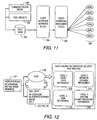
- FIG. 1 illustrates an example of a conventional network 100 having internal servers 102 that connect to an external router 104, communication network 105, and firewall 106.
- An internal router 108 is connected to the firewall 106, branch office 107, and connected to internal LAN network components 110 and a remote-access server 112 and remote user 114.
- frequent problems found on networks include hosts, such as the internal servers 102, which run unnecessary services, for example, a denial of service and anonymous FTP or misconfigured web servers that could be an internal server, for example, CGI scripts, anonymous FTP and SMTP.
- the internal LAN's 110 could include unpatched, outdated, vulnerable or default configured software and firmware and weak passwords. LAN's could also include improperly exported file sharing services, such as NetWare file services and NetBIOS.
- the internal LAN 110 could also include misconfigured or unpatched windows NT servers and problems caused by a lack of comprehensive policies, procedures, standards and guidelines.
- a remote-access server 112 could have unsecured remote-access points and the external router 104 could have information leakage through services, such as SNMP, SMIP, finger, roosers, SYSTAT, NETSTAT, TELNET banners, Windows NT TCP 139 SMB (server message block), and zone transfers to non-named server hosts. It could also have inadequate logging, monitoring and detecting capabilities.
- the branch office 107 could have a misappropriated trust relationship such as RI OGIN, RSH, or REXEC.
- the firewall 106 could be misconfigured or have a misconfigured router access control list.
- the system and method of the present invention allows the vulnerabilities of a network system to be identified.
- the software of the data processing system and method can be located on a user terminal 120 , as shown in FIG. 2, showing an identified vulnerability of a node 112 connected in the internal LAN 110.
- the data processing system and method of the present invention can be referred to as a Network Vulnerability Tool (NVT), i.e., a tool a user uses to determine network vulnerabilities and risks.
- NVT Network Vulnerability Tool
- the data processing system forming the NVT can be loaded on a Pentium PC platform running Windows NT.
- This type of platform can provide a low cost solution and support a large variety of assessment tools, also commonly referred to as network vulnerability assessment or risk analysis programs throughout this description.
- These network vulnerability analysis programs typically are the standard COTS/GOTS programs known by security engineers, and include HP Open View, which allows network automatic discovery or manual network modeling; ANSSR (Analysis of Network System Security Risks) as manufactured by Mitre Corporation, a GOTS network system analysis tool, which allows passive data gathering and single occurrence of loss.
- NSA's risk assessment methodology known as RAM (risk assessment model) can also be used and is implemented in the DPL-f decision support programming language.
- RAM also allows passive data gathering for event tree logic, prioritizes the task list, and allows a mathematical model with multiple risks/services. It is event based over time.
- DPL decision programming language
- DPL is a decision support software package that facilitates the modeling of complex decisions. It allows a user to incorporate uncertainty and flexibility into a decision process.
- DPL provides a graphical interface for building a model, and performs analyses on the model.
- DPL-f contains the functionality built into DPL and provides a graphic interface for fault tree construction. This feature allows the modeler to create fault trees and incorporate them into DPL models.
- DPL-f also contains unique analytic tools. These tools include the ability to calculate explicitly the probability of any event in the tree and perform fault tree-specific types of sensitivity analysis.
- DPL-f provides an interface for incorporating time series into a model. This allows a modeler to account for devaluation, capital growth or other time-bearing quantities without changing the structure of the model.
- DPL-f provides RAM with additional capabilities for rapid fault tree construction, libraries of embedded fault trees, an expert opinion generation system, enumeration and ordering of cut sets and a graphical portrayal of risk over time.
- the ISS Internet scanner as developed by Internet Security Systems Corporation (ISS) allows active data gathering and ;cans a network for hosts, servers, firewalls and routers and assesses security and policy compliance with networks, operating systems and software applications. It allows a snapsho: in time and a computer network compliance report.
- ISS Internet Security Systems Corporation
- the NVT is based on a knowledge solicitation framework, which incorporates a graphical description of a network topology. This topology is used to capture network attributes and analyzed subsequently for security vulnerabilities. Graphical user interface is also used to improve accuracy of the network model.
- the system and method of the NVT automatically maps an existing network and can display the existing network as a model on a graphical user interface, such as shown in FIG. 7.
- a graphical user interface such as shown in FIG. 7.
- HP Open View could graphically depict a network topology.
- the NVT of the present invention can use Open View and search for computers and other devices attached to the network. NVT performs an active search, pinging possible IP addresses on the network, and adding whatever response information it receives to its network map. NVT also provides a manual method to draw a proposed network with the graphical user interface, as illustrated, to support drag and drop.
- a system architecture can be defined, including security critical information for alternative designs or node editing to provide additional details as required to provide complete logical network planning.
- a user can also represent an entire network on a map by using a sub-network icon.
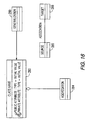
- the NVT represents and stores the description in an object/class hierarchy, as shown as an example in FIGS. 16 and 17, as will be explained below.
- a single topological system object model supports the information data needs of the disparate network vulnerability analysis programs (tools). Fuzzy logic processing of the results allows correlation of the results from the programs into a cohesive vulnerability/risk assessment to obtain a vulnerability posture of the network, as shown in the graphical user interface at FIG. 10.
- the single representation of the system simplifies the use of multiple tools and eliminates redundant data entry. It also provides a foundation for addressing the problem of incomplete data for a given vulnerability assessment tool and future knowledge negotiation capabilities.
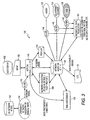
- FIG. 3 illustrates at 130 an example of the overall network visualization tool (NVT), data processing system of the present invention, where three network vulnerability analysis programs (tools) are illustrated as ANSSR 132, ISS Internet scanner 134, and RAM 136.
- the system and method of the present invention creates a system object model database (Network Model DB) 138 that represents a network and supports the information data requirements of the network vulnerability analysis programs.
- the system object model database 138 represents a single representation of the assessed system or design, and addresses the need for a single internal representation of a network to provide data to the network vulnerability analysis programs.
- This model 138 uses object oriented (OO) methodology to provide an extensible set of components in a class hierarchy that can be combined to represent a network.
- the class hierarchy provides a means of defining components with shared common traits, while retaining the specifics that distinguished it from other components.
- object oriented techniques provide a containment mechanism in which an object can contain a reference to any object, including itself. This provides a flexible mechanism for representing any physical or logical entity. Also, object oriented representation lends itself to ready modification and extension and is ideal for an information assurance arena where changes and new technologies arise daily.
- filters 140 are associated with each of the network vulnerability analysis programs 132, 134, 136 and allow only that data required by a respective network vulnerability programs to be exported to the tool (program).
- the filters are a C++ base class that provide a set of virtual methods to allow data movement between the NVT system and a program.
- the filter also provides a means for the NVT to control execution of the tool and complete data needed by a tool.
- NVT views each tool as a filter, calling the appropriate method within the filter to perform the desired task, including initializing, running, importing data and exporting data.
- Each tool can have a concrete filter subclass and provide the means to define each method specifically for the tool, while still providing the generic and well-defined programming interface (API) to NVT. This allows all tools to be treated the same within NVT, allowing the addition and removal of tools without changing any of the existing NVT codes.
- API generic and well-defined programming interface
- DPL-f Establishing communication between DPL-f and NVT using the filter technology is straightforward.
- a DPL-f filter is tasked with the specifics of building and populating fault trees.
- a default tree can represent a node in a network as developed and provide a probability value for events such as denial of service, loss of data and data compromise.
- DPL-f can be used as a final result tool.
- the network is then analyzed with each network vulnerability analysis program to produce data results from each program.
- the data results are correlated to determine a security posture of the network.
- Network validation can occur through the fuzzy logic processing of the invention, as will be explained below, and the system GUI can have input to a user display.
- An overview of the network is created as a model 142 by an automatic network discovery or manual entry 144, such as through HP Open View, and an appropriate filter 146 allows the system GUI 148 to display the network model as shown in FIG. 7 via an appropriate data input 150 to a user display 152. It is also possible to have a risk GUI 154 to assess visually the risk vulnerability, a log 156 of the risk/vulnerability report, a risk assessment 158 as part of the GUI 148, all through the network validation 160, using a plug-in or fuzzy rule set as will be described in greater detail below. Any incomplete data resolution 161 can also be handled.
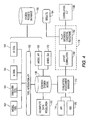
- FIG. 4 illustrates a high level block diagram similar to FIG. 3, showing the system object model database 138 that can be established and work in conjunction with an integrated application programming interface 162 to allow importing of data into the various tools 164, as illustrated as a model tool, discovery tool and information analysis tools that result in the overall system results database 166.
- An application programming interface 168 and a graphical user interface 170 work in conjunction with model database 138.
- An evaluation/ assessment manager 172 works in conjunction with an application programming interface (API) 174 and graphical user interface (GUI) 176 to correlate data results with fuzzy logic processing, indicated by dotted lines 178, including expert correlation 180 and fuzzy inferences and evidential reason 182 to produce vulnerability results 184 and a graphical user interface (GUI) 186 for the correlated results.
- API application programming interface
- GUI graphical user interface
- FIG. 4 represents a high level model showing an example of different components, it is only one example of one type of high level components that could be used with the NVT system and method of the present invention.
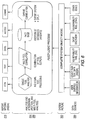
- FIGS. 5 and 6 illustrate other examples of high level models showing basic components and processing steps of the data sources 200 (FIG. 5), together with the system picture 202, a per tool analysis 204, a multi-tool analysis 206, the tool-to-expert analysis 208, and report media 210.
- the tool-to-expert analysis 208 could include the DPL-f 208a as part of the fuzzy logic processing in a data fact base, and use with CERT notes 208b and an expert system 208c for expert correlation. Reports can be generated, including output as icons on a graphical user interface, text, an EXCEL spreadsheet, Access and Configuration, as known to those skilled in the art.
- FIG. 6 also illustrates another high level model similar to FIG. 5, where the tools used to form a complete system object model and fuzzy logic process could include the individual tool processing and the multi-tool correlation.
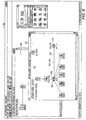
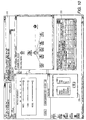
- FIGS. 7-10 illustrate in greater detail a graphical user interface 220 that can be contained on a computer screen and used for interacting with the NVT and determining the vulnerability posture of a network.
- the graphical user interface 220 is a standard type of WindowsTM interface.
- a system design window 222 permits the display of network icons 224 forming a network map that is representative of the relationship among different network elements and nodes contained within a network. Respective network icons 224 are linked together in an arrangement corresponding to how the network elements nodes are interconnected within the network. As shown in FIG. 7, the network elements can be linked together via connection lines 226, showing the interconnection that exists among actual network elements and nodes.
- the system design window 222 shows on the left side an internetwork view 230 with two nodes and a network view 232 on the right hand side of the window to illustrate a map of the network model.
- a manager window 234 is opened and displays properties of network elements.
- a select data sensitivity pop up window (box) 240 is user selectable through the menu options for selected network elements (FIG. 8A), and has user selected items for selecting the sensitivity of network elements.
- the sensitivity for data on any node can be selected for unclassified, sensitive, confidential, secret, restricted secret or top secret with appropriate Okay, Random and Default buttons.
- a select node configuration edit pop up window (box) 250 is shown in FIG. 8B and can have user selectable vulnerability profiles for selecting a vulnerability profile of a network element or node.
- FIG. 9 also shows the network model diagram with the central hub and the interconnected nodes. It is possible that a user can edit the manager window 234 entries, which also allows the network discovery to occur through appropriate selection of buttons. Naturally, network icons can be selected and moved as necessary for editing and design alternatives.
- icons representative of high risk network elements can turn colors, such as red, the hub 252.
- Other selected icons could turn yellow, indicative of a less severe risk node, such as the HP4 node 254 shown in FIGS. 7 and 9. It is possible that shaded areas around the node or portions of the network could be colored red or yellow indicative of higher risk vulnerability. It is also possible that the connection line could turn red or yellow to indicate a poor connection between elements.
- FIG.10 illustrates a vulnerability posture window 270 for displaying user readable icons indicative of vulnerable network elements and icons.
- the overall system model is shown as part of an open system design window. However, a spreadsheet 272 is illustrated and a NVT risk assessment chart 274 having slider bars for risk assessment. A risk analysis window 276 showing the top five risk analysis elements is also illustrated.
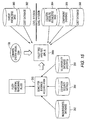
- FIG. 16 shows in greater detail a class hierarchy with the Class Names 280 as public attributes and private attributes, the Aggregation 282 and Association 284 of Source 286 and Target 288 with Generalizations 290 .
- FIG. 17 illustrates an example of a system class diagram with various components identif: ed in the blocks. Naturally, FIG. 17 is only a system class diagram as is known to those skilled in the art and is an example of what can be used for the system and method of the present invention.
- Goal oriented fuzzy logic decision making is illustrated.
- the system model database 138 and results 300 from the respective network vulnerability analysis programs are combined together using an applications programming interface and expert correlation to form a data fact base 302 through data fuzzification.
- Goal oriented fuzzy logic decision rules operate through fuzzy inference network rules 304 and fuzzy evidential reasoning rules 306 to determine the security posture of a network based on predetermined goals 308.
- the fuzzy logic processing uses data fusion, evidential reasoning and inference network techniques.
- evidential reasoning is a technique in which facts are gathered that support and refute a given hypothesis. The result is the proof or rejection of the hypothesis with a certain degree of confidence.
- the fuzzy logic processing of the present invention uses evidential reasoning to accumulate evident from the system and tool findings for each criteria, thereby merging the system assessment data into a single point of reference, the conformance of the system to a particular criteria. By suppling a set of criteria for fusion, the system constrains the fusion problem and reduces the search base.
- the accuracy of the result is contingent upon the quantity and quality of the data available and it may be necessary to perform additional refinement on the available data prior to the application of fuzzy logic processing, while also maintaining the probabilistic nature of the data.
- This refinement uses inference networks and provides a method of reasoning about probability using heuristics, thereby removing the need for extensive a priori knowledge.
- the relation between the goals and potential security metrics encourages cross fertilization.
- the fuzzyCLIPS uses fuzzy facts, which can assume any value between 0 and 1. The result can be viewed as a two dimensional plot of a continuous function bounded vertically by 0 and 1.
- Data fusion is used with the system object database, data results data fact base.
- Intelligence data fusion is a multi-level, multi-disciplinary-based information process to yield the integration of information from multiple intelligence sources (and perhaps multiple intelligence disciplines) to produce specific and comprehensive, unified da ta about an entity (its situation, capabilities, and the threat it imposes). Data fusion provides information based on the available inputs.
- the intelligence data fusion process is typically partitioned into four levels, described in Table 1.
- NVT combines multiple types of data, from multiple sources, with other contextual information to form an integrated view of a networked system's security posture.
- NVT provides a user with a simple expression of the vulnerability posture of a given system or system design, and enables them to perform "what if" analysis for functionality, performance, and countermeasure trades, for the purpose of refining and improving the system or system design.
- sensors are the various vulnerability assessment and risk analysis tools, along with the GUI to gather information, as needed, from the user.
- the resulting outputs from these tools take the form of both qualitative and quantitative data, in a variety of formats from different vendors.
- the objects of interest are the nodes in a network (computing system), i.e. the assets, including hardware, software and data.
- the situation of interest is an assessment of the weaknesses in the security system of a computer network segment that might be exploited to cause harm or loss of secrecy, integrity or availability.
- Assessing the risk faced by a computing system involves an assessment of the threats faced, their likelihood of occurrence (exploitation), and the expected cost of the loss (or harm). Finally, the network (computing system) can be refined based on the results of cost-benefits analysis. This requires information on protective measures (controls or countermeasures) appropriate for particular vulnerabilities and their costs. The cost-benefit analysis seeks to determine if it costs less to use a control or countermeasure, or accept the expected cost of the loss. This leads to the development of a security plan to improve security of a computer network system.
- Table 2 contains an example of a first partitioning of this data fusion process for computer security engineering that could be used with the present invention, with four processing levels, corresponding to the four levels found in Table 1.
- inputs to this process would consist of the object model database 138 , results from individual tools 132,134, 136, and other contextual information.
- the different data fusion levels 1-4 are indicated generally at 320, 322, 324 and 326.
- fuzzy decision technology offers the means to address these problems.
- a primary benefit of a fuzzy expert system is its ability to use and assimilate knowledge from multiple sources.
- Fuzzy logic provides the technique for representing and inferring from knowledge that is imprecise, uncertain or unreliable. Similar to traditional expert systems, a fuzzy expert system can represent knowledge in the form of a system of IF/THEN rules in which the antecedents, consequent, or both are fuzzy rather than crisp. Fuzzy logic is used to determine how well fuzzy facts match the rules, and to what degree this match affects the rule's conclusion.
- an inference network is a hierarchy of heuristic rules that can propagate probabilities without requiring extensive knowledge of a priori probabilities (e.g. Bayesian networks). The heuristic rules can be developed using expert knowledge on how the probabilities propagate, allowing conclusions to be drawn with limited knowledge of a priori probabilities. This results in low-level discrete probabilities being accurately reflected in higher-level conclusions. Probabilities of low-level events (such as probability of password compromise based on lifetime) need to be part of any conclusions drawn on higher-level events (vulnerability of password).
- FuzzyCLIPS Global contribution and accumulation of evidence have lead to a FuzzyCLIPS methodology that defines fuzzy-facts representing different vulnerability states. These facts will use global contribution and accumulation of evidence to acquire final values reflecting the tested system's vulnerability, i.e., evidential reasoning.
- This method reflects the well-defined use of fuzzy logic control systems, limiting the execution to a finite number of cycles instead of allowing it to run continuously.
- FuzzyFusionTM has been developed by Harris Corporation of Melbourne, Florida, and will use this methodology to accumulate evidence from rules based on knowledge from network security experts.
- FuzzyFusionTM will employ evidential reasoning as a technique in which facts are gathered supporting and refuting a given hypothesis. The result is the proof or rejection of the hypothesis with a certain degree of confidence.
- fuzzy logic can be applied with merging tool results in computer security uses the combination of results from ANSSR and ISS Internet Scanner, two of the tools currently used within one aspect of NVT.
- the outputs of the tools are both quantitative (ANSSR) and qualitative (Internet Scanner). Fuzzy logic allows the system to represent both data types within the same system. Then an initial hypothesis is formulated, and fuzzy logic is used to gather evidence to contradict or support the hypothesis.
- an initial hypothesis could be that auditing is invalid in an existing network system.
- the system user then exercises the ANSSR and ISS Internet Scanner tools. If ANSSR supplies a number 90 (out of 100), that auditing is sufficient. Fuzzy logic allows NVT to account for this as strong refuting evidence for the initial hypothesis that auditing is invalid. If Internet Scanner supplies the qualitative data that User Access is not audited, fuzzy logic accounts for this as supporting evidence, which is combined with the evidence from ANSSR. When the tools are finished, the contributing evidence for auditing is represented as a single fuzzy fact that provides a measure of how well auditing is implemented.
- FuzzyFusionTM as developed by Harris Corporation of Melbourne, Florida is a means to consolidate and merge the results of vulnerability assessment and risk analysis tools, employed within the NVT into a unified report.
- FuzzyFusionTM is developed to implement Levels 1 and 2 fusion.
- FuzzyFusionTM is accomplished through the use of a fuzzy expert system (Goal-Oriented Fuzzy Logic Decision Rules) using FuzzyCLIPS, which combines the outputs of the various tools, user concerns about system risks and vulnerabilities, and expert understanding of the results of each tool and how these fit into a larger information system security picture.
- FuzzyFusionTM is accomplished through the use of a fuzzy expert system (Goal-Oriented Fuzzy Logic Decision Rules) using FuzzyCLIPS, which combines the outputs of the various tools, user concerns about system risks and vulnerabilities, and expert understanding of the results of each tool and how these fit into a larger information system security picture.
- FuzzyFusionTM is accomplished through the use of a fuzzy expert system (Goal-Oriented Fuzzy Logic Decision Rules)
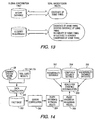
- FIG. 14 illustrates the NVT FuzzyFusionTM component architecture for implementing the first two levels of data fusion for computer security engineering.
- the task of modeling security expertise is partitioned into discrete tasks. Separation of Expert Correlation (Data Framework Merge Rules), Fuzzy Inference Network Rules, and Fuzzy Evidential Reasoning Rules addresses the problems of brittle expert systems and computational explosion. It also segregates low-level data correlation and fusion from the resolution of ambiguous/conflicting data and the merging of results into one picture. This should result in fuzzy expert systems that are easier to maintain than one large comprehensive system. Elements of this architecture are described below.
- Data Fuzzification 310 converts the results from the individual vulnerability assessment and risk analysis tools 132, 134, 136 into fuzzy-facts, and stores those along with the Common System Model (CSM), i.e., system object model database 138, into the (FuzzyCLIPS) Fact-Base 302 .
- CSM Common System Model
- Individual tool results (after fuzzification) and the CSM 138 are exported for Expert Correlation processing 3310 (Data Framework Merge Rules) to resolve system information and integrate tool output based on security expertise.
- Expert opinion can be used to determine the specific fuzzy values attributed to the low-level events.
- the Expert Correlation (Data Framework Merge Rules) 330 is a collection of fuzzy expert rules to perform node-level data refinement (Level-1) or network-segment refinement (Level-2). These rules correlate and consolidate the (fuzzified) outputs from the vulnerability assessment and risk analysis tools, using expertise from security engineers. These rules leverage extensive experience in security assessment to resolve low-level systems data and tool results. These rules resolve system information and integrate tool output. Expert Correlation Rule processing 330 can also transform low-level data from the CSM and tool results into high level conclusions. For example, IF auditing is on with these flags, AND the audit data is not backed up, THEN auditing is unreliable.
- a set of Level-1 fusion rules can consolidate the vulnerabilities for each node, resulting in a vulnerability rating for each node in the network. This rating can be imported back to NVT for display.
- a set of Level-2 fusion rules can consolidate the vulnerabilities for each network segment, resulting in a vulnerability rating for each network segment. This can again be imported back for display.
- the data is then subject to Fuzzy Inference Network Rules processing 304 . It may be necessary to perform additional refinement on the available data prior to the application of Fuzzy Evidential Reasoning Rules 304, while maintaining the probabilistic nature of the data.
- This refinement will use inference networks, as known to those skilled in the art, which provides a method of reasoning about probability using hueristics, thereby removing the need for extensive a priori knowledge.
- Fuzzy Evidential Reasoning Rules 306 are a collection of fuzzy expert rules to merge individual tool results into a higher level assessment, from a systems-level perspective, of a network's security posture. These rules provide a mechanism for merging the CSM, tool results and the results from the Expert Correlation (Data Framework Merge Rules) 330 into a unified report. This also removes the necessity of dealing with incomplete and conflicting data from the forward-chaining expert system used in Expert Correlation.
- Evidential reasoning use a technique in which facts are gathered to support and refute a given hypothesis. The result is the proof or rejection of the hypothesis with a certain degree of confidence.
- FuzzyFusionTM uses evidential reasoning to accumulate evidence from the Common System Model and tool findings for each criterion, thereby merging the computer network system assessment data into a single point of reference, the conformance of the system to particular criteria.
- NVT constrains the fusion problem and reduces the search space, referred to earlier as goal-based fusion.
- the result will be a set of fuzzy evidential rules whose sole purpose is to accumulate evidence for a given set of requirements.
- Goals for Evidence Accumulation processing 350 may be derived from a Security Requirements Database 352, a Computer Security Metrics Database 354, or a Vulnerability Database 356, such as a database composed of AFCERTs. Bounding fusion to pre-defined goals limits computation times. FuzzyFusionTM goals provide mechanism to obtain IA metrics.
- the FuzzyFusionTM process has a number of advantages over traditional approaches.
- Crisp expert systems would require extremely large knowledge bases to encompass the necessary data and, yet, would still have a problem with incomplete data and conflicting results.
- Bayesian and probability networks require extensive and often unavailable a priori knowledge of probabilities.
- Algorithmic solutions do not fit the probabilistic and heuristic nature of the security problem.
- Rete-based expert systems such as FuzzyCLIPS suffer from a geometric increase in execution time based on the number of rules and facts present in the system. This leads to breaking the analysis into subnetworks. FuzzyFusionTM will add subnetwork and scaling capabilities. The nodes for each subnetwork will be evaluated as a group, and then groups of subnetworks will be evaluated. Grouping the rules for each type of analysis into different modules will reduce the size of the Rete-network. In addition to decreasing execution time, this will also introduce a scalable method of analyzing networks that maps to the network model used by NVT.
- the other possible data spaces could include a threat knowledge database 360 , cost database 362 as part of Level 3 fusion and a counter measure knowledge base, component database and cost database as part of Level 4 fusion.
- a method and data processing system assesses the security vulnerability of a network.
- a system object model database is created and supports the information data requirements of disparate network vulnerability analysis programs. Only the required data from the system object model database representing the network is imported to the program, which then analyze the network to produce data results from each program. These data results are stored in a common system model database and within the data fact base. Goal oriented fuzzy logic decision rules are applied to determine the vulnerability posture of the network.
Landscapes
- Engineering & Computer Science (AREA)
- Computer Security & Cryptography (AREA)
- Computer Hardware Design (AREA)
- General Engineering & Computer Science (AREA)
- Software Systems (AREA)
- Computing Systems (AREA)
- Theoretical Computer Science (AREA)
- Physics & Mathematics (AREA)
- Signal Processing (AREA)
- General Physics & Mathematics (AREA)
- Computer Networks & Wireless Communication (AREA)
- Computer And Data Communications (AREA)
- Devices For Executing Special Programs (AREA)
- Burglar Alarm Systems (AREA)
- Alarm Systems (AREA)
- Maintenance And Management Of Digital Transmission (AREA)
- Data Exchanges In Wide-Area Networks (AREA)
- Debugging And Monitoring (AREA)
- Management, Administration, Business Operations System, And Electronic Commerce (AREA)
Abstract
Description
| THE LEVELS AND PURPOSES OF THE INTELLIGENCE DATA FUSION PROCESS | ||
| Data | Description | |
| 1 | Object Refinement | • Transforms data into consistent frame of reference |
| • Refines and extends, in time, estimates of object position, kinematics or attributes | ||
| • Assigns data to objects to allow application of estimation process | ||
| • Refines the estimation of | ||
| 2 | Situation Refinement | • Develops description of current relationships among objects and events in the context of the environment |
| • A symbolic, reasoning process by which distributions of fixed and tracked entities and events and activities are associated with environmental and performance data in the context of an | ||
| 3 | Threat Refinement | • Projects the current "situation" into the future and draws inferences about threats, vulnerabilities and opportunities for |
| 4 | Process Refinement | • Monitors process performance to provide information for real-time control and long-term improvement |
| • Identifies what information is needed to improve the multi-level fusion product | ||
| • Determines the source specific data requirements to collect required information | ||
| • Allocates and directs the sources to achieve mission goals |
| INITIAL PROCESSING LEVELS OF DATA FUSION FOR COMPUTER SECURITY RISK ANALYSIS | ||
| Data Fusion Levels | Description | |
| ' 1 | Node Data Refinement | • Transforms data into consistent frame of reference |
| • Refinement of data at the network node-level (the objects for computer security data fusion) | ||
| • Data from multiple tools - correlated (assigned to appropriate nodes) and possibly combined at each node | ||
| • Refines the estimation of object identity - network node (workstation) is a system-of-systems, consisting of an OS, critical applications, a database and data | ||
| • Vulnerability analysis at this level does not yet constitute | ||
| 2 | Network Segment Refinement | • Refinement of the situation at the network segment-level (system-of-systems level) |
| • Develops description of current relationships among objects (nodes) in the context of the environment (a network segment) | ||
| • A symbolic, reasoning process by which information about entities (nodes, network segments) and environment are associated with evidence about computer security goals, requirements | ||
| • Combining tool results at the network segment-level | ||
| • The situation of interest is the assessment of the network segment's vulnerabilities or | ||
| 3 | Risk Refinement | • Refinement of the exposures and their potential for harm (risk) within a computing system |
| • Projects the current "situation" (state of the computer network system) into the future and draws inferences about threats, vulnerabilities and opportunities for operations | ||
| • Based on vulnerabilities, concerns, context, cost, threats | ||
| • Refinement of a system design with the identification of controls that reduce one or more vulnerabilities | ||
| • Based on countermeasures, components, cost | ||
| • Identifies what information is needed to improve the multi-level fusion product | ||
| • Facilitate long-term improvement of the system |
IF auditing is on with these flags,
AND the audit data is not backed up,
THEN auditing is unreliable.
Claims (12)
- A method for assessing the security posture of a network comprising the steps of:wherein the system object model database (138) represents the network in an object/class hierarchy, such that the system object model database (138) supports the information data requirements of the disparate network vulnerability analysis programs; andcreating a system object model database (138) that represents the network to be analyzed;analyzing the network with disparate network vulnerability analysis programs (132, 134, 136) to produce data results from each program;storing the data results from the vulnerability analysis programs and the system model database in a data fact base (302);applying fuzzy logic processing (178) to the data fact base to form a cohesive vulnerability assessment;
exporting only the required data from the system object model database (138) to each respective network vulnerability analysis program (132, 134, 136); characterized by:correlating the system object model database (138) with the data results (300) obtained from the disparate network vulnerability analysis programs (132, 134, 136) using goal oriented fuzzy logic decision rules (178) that operate through fuzzy inference network rules (304) and fuzzy evidential reasoning rules (306); andforming an inference network as a hierarchy of heuristic rules that can propagate probabilities using expert knowledge of a priori probabilities such that low-level discrete probabilities are reflected in high level conclusions of the network vulnerability. - A method as claimed in Claim 1 characterized by exporting only the required data from the system object model database (138) via filters (140) associated with respective network vulnerability programs (132, 134, 136).
- A method as claimed in Claim 1 characterized by exporting the system object model database (138) to the network vulnerability analysis programs (132, 134, 136) via an integrated application programming interface (162).
- A method as claimed in Claim 1 characterized by modeling the network as a map on a graphical user interface (170).
- A method as claimed in Claim 1 characterized by establishing a class hierarchy to define components of the network vulnerability analysis programs (132, 134, 136) that share common data and programming traits.
- A method as claimed in Claim 1 characterized by running the network vulnerability analysis programs (132, 134, 136) to obtain data results pertaining to network system details, network topologies, node level vulnerabilities and network level vulnerabilities.
- A data processing system for assessing the security posture of a network comprising:wherein the system object model database (138) is created representing a network system description in an object/class hierarchy, such that the system object model database supports the information data requirements of the disparate network vulnerability analysis programs (132, 134, 136); anda plurality of disparate network vulnerability analysis programs (132, 134, 136) used for analyzing a network;a system object model database (138) that represents the network to be analyzed;an applications programming interface (138) for importing the system object model database (138) of the network to the network vulnerability analysis programs (132, 134, 136);a data fact base (302) for storing the results (300) obtained from respective network vulnerability analysis programs (132, 134, 136) after analyzing the network and the common system model database (138); anda fuzzy logic processor (178) for correlating the system object model database (138) with data results (300) obtained from the disparate network vulnerability analysis programs (132, 134, 136);
a filter (140) is associated with the applications programming interface (162) and each respective network vulnerability analysis program (132, 134, 136) for filtering data from the system object model database (138) and importing only the required data;
characterised in that:the fuzzy logic processor (138) is adapted to use goal oriented fuzzy logic decision rules that operate through fuzzy inference network rules (304) and fuzzy evidential reasoning rules (306), said fuzzy logic processor (178) also being adapted to operate for forming an inference network as a hierarchy of heuristic rules that can propagate probabilities using expert knowledge of a priori probabilities such that low-level discrete probabilities are reflected in high level conclusions of the network vulnerability. - A data processing system as claimed in Claim 7, characterized in that the applications programming interface (162) for exporting the system object model database comprises a graphical user interface.
- A data processing system as claimed in Claim 7 characterized by a graphical user interface (170) adapted to model the network as a map.
- A data processing system as claimed in Claim 7 characterized by a graphical user interface (154) for displaying the security posture of the network.
- A data processing system as claimed in Claim 7 characterized in that the system object model database (138) further comprises an object oriented class hierarchy to define components of the network vulnerability analysis programs (132, 134, 136) that share common data and programming traits.
- A computer program which, when run on a computer, causes the computer to perform the steps of the method of assessing the security posture of a network as claimed in any one of claims 1 to 6.
Applications Claiming Priority (3)
| Application Number | Priority Date | Filing Date | Title |
|---|---|---|---|
| US09/500,269 US6883101B1 (en) | 2000-02-08 | 2000-02-08 | System and method for assessing the security posture of a network using goal oriented fuzzy logic decision rules |
| US500269 | 2000-02-08 | ||
| PCT/US2001/002825 WO2001059594A2 (en) | 2000-02-08 | 2001-01-26 | System and method for assessing the security vulnerability of a network using fuzzy logic rules |
Publications (2)
| Publication Number | Publication Date |
|---|---|
| EP1254537A2 EP1254537A2 (en) | 2002-11-06 |
| EP1254537B1 true EP1254537B1 (en) | 2005-12-14 |
Family
ID=23988703
Family Applications (1)
| Application Number | Title | Priority Date | Filing Date |
|---|---|---|---|
| EP01910366A Expired - Lifetime EP1254537B1 (en) | 2000-02-08 | 2001-01-26 | System and method for assessing the security vulnerability of a network using fuzzy logic rules |
Country Status (10)
| Country | Link |
|---|---|
| US (1) | US6883101B1 (en) |
| EP (1) | EP1254537B1 (en) |
| KR (1) | KR20020081310A (en) |
| CN (1) | CN1266879C (en) |
| AT (1) | ATE313183T1 (en) |
| AU (1) | AU2001237979A1 (en) |
| CA (1) | CA2396981A1 (en) |
| DE (1) | DE60115845T2 (en) |
| TW (1) | TWI221985B (en) |
| WO (1) | WO2001059594A2 (en) |
Cited By (1)
| Publication number | Priority date | Publication date | Assignee | Title |
|---|---|---|---|---|
| CN101425936B (en) * | 2007-10-30 | 2011-08-31 | 北京启明星辰信息技术股份有限公司 | Macro network security status assessment method based on exception measurement |
Families Citing this family (63)
| Publication number | Priority date | Publication date | Assignee | Title |
|---|---|---|---|---|
| US7096502B1 (en) * | 2000-02-08 | 2006-08-22 | Harris Corporation | System and method for assessing the security posture of a network |
| US20040073617A1 (en) | 2000-06-19 | 2004-04-15 | Milliken Walter Clark | Hash-based systems and methods for detecting and preventing transmission of unwanted e-mail |
| US7162649B1 (en) * | 2000-06-30 | 2007-01-09 | Internet Security Systems, Inc. | Method and apparatus for network assessment and authentication |
| US20030187761A1 (en) * | 2001-01-17 | 2003-10-02 | Olsen Richard M. | Method and system for storing and processing high-frequency data |
| US7340776B2 (en) * | 2001-01-31 | 2008-03-04 | International Business Machines Corporation | Method and system for configuring and scheduling security audits of a computer network |
| US20030028803A1 (en) * | 2001-05-18 | 2003-02-06 | Bunker Nelson Waldo | Network vulnerability assessment system and method |
| US7409714B2 (en) * | 2001-06-13 | 2008-08-05 | Mcafee, Inc. | Virtual intrusion detection system and method of using same |
| US7096503B1 (en) * | 2001-06-29 | 2006-08-22 | Mcafee, Inc. | Network-based risk-assessment tool for remotely detecting local computer vulnerabilities |
| US7146642B1 (en) * | 2001-06-29 | 2006-12-05 | Mcafee, Inc. | System, method and computer program product for detecting modifications to risk assessment scanning caused by an intermediate device |
| US6966053B2 (en) * | 2001-08-10 | 2005-11-15 | The Boeing Company | Architecture for automated analysis and design with read only structure |
| US6546493B1 (en) * | 2001-11-30 | 2003-04-08 | Networks Associates Technology, Inc. | System, method and computer program product for risk assessment scanning based on detected anomalous events |
| JP4190765B2 (en) * | 2002-01-18 | 2008-12-03 | 株式会社コムスクエア | Security level information providing method and system |
| KR20050026929A (en) * | 2002-06-18 | 2005-03-16 | 컴퓨터 어소시에이츠 싱크, 인코포레이티드 | Methods and systems for managing enterprise assets |
| US8909926B2 (en) * | 2002-10-21 | 2014-12-09 | Rockwell Automation Technologies, Inc. | System and methodology providing automation security analysis, validation, and learning in an industrial controller environment |
| JP2006526193A (en) * | 2003-05-17 | 2006-11-16 | マイクロソフト コーポレーション | Mechanism for assessing security risks |
| US7580909B2 (en) * | 2003-08-26 | 2009-08-25 | Northrop Grumman Corporation | Visual representation tool for structured arguments |
| WO2005091107A1 (en) * | 2004-03-16 | 2005-09-29 | Netcraft Limited | Security component for use with an internet browser application and method and apparatus associated therewith |
| US7383259B2 (en) * | 2004-06-04 | 2008-06-03 | Taiwan Semiconductor Manufacturing Co., Ltd. | Method and system for merging wafer test results |
| US7392324B2 (en) * | 2004-08-13 | 2008-06-24 | International Business Machines Corporation | Consistent snapshots of dynamic heterogeneously managed data |
| US20060075503A1 (en) * | 2004-09-13 | 2006-04-06 | Achilles Guard, Inc. Dba Critical Watch | Method and system for applying security vulnerability management process to an organization |
| KR20060030993A (en) * | 2004-10-07 | 2006-04-12 | 한국전자통신연구원 | How to analyze the security level of an information asset |
| US7610610B2 (en) | 2005-01-10 | 2009-10-27 | Mcafee, Inc. | Integrated firewall, IPS, and virus scanner system and method |
| CN100543761C (en) * | 2005-02-10 | 2009-09-23 | 松下电器产业株式会社 | Program conversion device and program execution device |
| US20060265324A1 (en) * | 2005-05-18 | 2006-11-23 | Alcatel | Security risk analysis systems and methods |
| US7743421B2 (en) | 2005-05-18 | 2010-06-22 | Alcatel Lucent | Communication network security risk exposure management systems and methods |
| US7627593B2 (en) * | 2005-08-25 | 2009-12-01 | International Business Machines Corporation | Method and system for unified support of multiple system management information models in a multiple host environment |
| US8544098B2 (en) | 2005-09-22 | 2013-09-24 | Alcatel Lucent | Security vulnerability information aggregation |
| US8438643B2 (en) * | 2005-09-22 | 2013-05-07 | Alcatel Lucent | Information system service-level security risk analysis |
| US8095984B2 (en) * | 2005-09-22 | 2012-01-10 | Alcatel Lucent | Systems and methods of associating security vulnerabilities and assets |
| US20070156691A1 (en) * | 2006-01-05 | 2007-07-05 | Microsoft Corporation | Management of user access to objects |
| GB0613192D0 (en) | 2006-07-01 | 2006-08-09 | Ibm | Methods, apparatus and computer programs for managing persistence |
| US20080052508A1 (en) * | 2006-08-25 | 2008-02-28 | Huotari Allen J | Network security status indicators |
| US8266518B2 (en) * | 2008-01-16 | 2012-09-11 | Raytheon Company | Anti-tamper process toolset |
| US8732838B2 (en) * | 2008-06-26 | 2014-05-20 | Microsoft Corporation | Evaluating the effectiveness of a threat model |
| US8533843B2 (en) * | 2008-10-13 | 2013-09-10 | Hewlett-Packard Development Company, L. P. | Device, method, and program product for determining an overall business service vulnerability score |
| CN101436937B (en) * | 2008-11-26 | 2011-05-11 | 国家计算机网络与信息安全管理中心 | Method for evaluating network system control capability |
| US8549628B2 (en) * | 2009-04-07 | 2013-10-01 | Alcatel Lucent | Method and apparatus to measure the security of a system, network, or application |
| CN101883017B (en) * | 2009-05-04 | 2012-02-01 | 北京启明星辰信息技术股份有限公司 | System and method for evaluating network safe state |
| CN101692676B (en) * | 2009-09-29 | 2012-09-19 | 华中师范大学 | Hybrid trust management system and trust evaluation method thereof under open environment |
| TWI423619B (en) * | 2009-10-26 | 2014-01-11 | Intelligent network monitoring system | |
| US20110125548A1 (en) * | 2009-11-25 | 2011-05-26 | Michal Aharon | Business services risk management |
| CA2799402C (en) * | 2010-05-14 | 2020-10-06 | Harnischfeger Technologies, Inc. | Cycle decomposition analysis for remote machine monitoring |
| US7925874B1 (en) | 2010-05-18 | 2011-04-12 | Kaspersky Lab Zao | Adaptive configuration of conflicting applications |
| US8756698B2 (en) | 2012-08-10 | 2014-06-17 | Nopsec Inc. | Method and system for managing computer system vulnerabilities |
| US8813235B2 (en) * | 2012-08-10 | 2014-08-19 | Nopsec Inc. | Expert system for detecting software security threats |
| US8990949B2 (en) | 2013-02-15 | 2015-03-24 | International Business Machines Corporation | Automatic correction of security downgraders |
| US8973134B2 (en) | 2013-05-14 | 2015-03-03 | International Business Machines Corporation | Software vulnerability notification via icon decorations |
| US9276951B2 (en) | 2013-08-23 | 2016-03-01 | The Boeing Company | System and method for discovering optimal network attack paths |
| US9454659B1 (en) | 2014-08-15 | 2016-09-27 | Securisea, Inc. | Software vulnerabilities detection system and methods |
| US9824214B2 (en) | 2014-08-15 | 2017-11-21 | Securisea, Inc. | High performance software vulnerabilities detection system and methods |
| US10599852B2 (en) | 2014-08-15 | 2020-03-24 | Securisea, Inc. | High performance software vulnerabilities detection system and methods |
| US20160080408A1 (en) * | 2014-09-15 | 2016-03-17 | Lookingglass Cyber Solutions | Apparatuses, methods and systems for a cyber security assessment mechanism |
| CN104298225B (en) * | 2014-09-25 | 2017-07-04 | 中国石油化工股份有限公司 | Chemical process unusual service condition causality inference pattern is modeled and graphical representation method |
| CN111343135B (en) * | 2018-12-19 | 2022-05-13 | 中国移动通信集团湖南有限公司 | Network security situation detection method |
| CN110225018A (en) * | 2019-05-31 | 2019-09-10 | 江苏百达智慧网络科技有限公司 | A method of based on more equipment evaluation web application fragility |
| CN111654489B (en) * | 2020-05-27 | 2022-07-29 | 杭州迪普科技股份有限公司 | Network security situation sensing method, device, equipment and storage medium |
| CN112379645B (en) * | 2020-10-23 | 2022-01-11 | 江苏大学 | An Internet of Things management and control system and method for group-raising sow feeding stations based on Drools rule engine |
| CN115757771A (en) * | 2021-08-23 | 2023-03-07 | 好心情健康产业集团有限公司 | Clinical business processing method, device and system based on fuzzy logic |
| CN114866434B (en) * | 2022-03-09 | 2023-05-02 | 上海纽盾科技股份有限公司 | Network asset security assessment method and application |
| CN115455484B (en) * | 2022-09-22 | 2023-04-18 | 重庆蓝数软件有限公司 | Data leakage coping method for cloud computing space and server |
| CN120017288B (en) * | 2023-11-14 | 2025-11-04 | 上海交通大学 | Information System Access Risk Assessment Method Based on Access Context Logical Reasoning |
| CN119720210B (en) * | 2024-12-02 | 2025-10-21 | 中国人民解放军92493部队信息技术中心 | A method and system for fusion of heterogeneous vulnerability data based on parallel embedding |
| CN120430917A (en) * | 2025-04-03 | 2025-08-05 | 中国科学院自动化研究所 | Emergency situation understanding method, device, equipment, storage medium and program product |
Family Cites Families (19)
| Publication number | Priority date | Publication date | Assignee | Title |
|---|---|---|---|---|
| CA1314101C (en) | 1988-02-17 | 1993-03-02 | Henry Shao-Lin Teng | Expert system for security inspection of a digital computer system in a network environment |
| US5138321A (en) | 1991-10-15 | 1992-08-11 | International Business Machines Corporation | Method for distributed data association and multi-target tracking |
| US5485409A (en) | 1992-04-30 | 1996-01-16 | International Business Machines Corporation | Automated penetration analysis system and method |
| JPH06282527A (en) | 1993-03-29 | 1994-10-07 | Hitachi Software Eng Co Ltd | Network control system |
| US5528516A (en) * | 1994-05-25 | 1996-06-18 | System Management Arts, Inc. | Apparatus and method for event correlation and problem reporting |
| MX9707504A (en) | 1995-03-31 | 1997-11-29 | Abb Power T & D Co | System for optimizing power network design reliability. |
| US5699403A (en) | 1995-04-12 | 1997-12-16 | Lucent Technologies Inc. | Network vulnerability management apparatus and method |
| US5787235A (en) * | 1995-05-09 | 1998-07-28 | Gte Government Systems Corporation | Fuzzy logic-based evidence fusion tool for network analysis |
| US5745382A (en) | 1995-08-31 | 1998-04-28 | Arch Development Corporation | Neural network based system for equipment surveillance |
| US5751965A (en) | 1996-03-21 | 1998-05-12 | Cabletron System, Inc. | Network connection status monitor and display |
| US5892903A (en) | 1996-09-12 | 1999-04-06 | Internet Security Systems, Inc. | Method and apparatus for detecting and identifying security vulnerabilities in an open network computer communication system |
| US5963653A (en) | 1997-06-19 | 1999-10-05 | Raytheon Company | Hierarchical information fusion object recognition system and method |
| US6020889A (en) | 1997-11-17 | 2000-02-01 | International Business Machines Corporation | System for displaying a computer managed network layout with varying transience display of user selected attributes of a plurality of displayed network objects |
| US6298445B1 (en) * | 1998-04-30 | 2001-10-02 | Netect, Ltd. | Computer security |
| US6054987A (en) | 1998-05-29 | 2000-04-25 | Hewlett-Packard Company | Method of dynamically creating nodal views of a managed network |
| US6324656B1 (en) | 1998-06-30 | 2001-11-27 | Cisco Technology, Inc. | System and method for rules-driven multi-phase network vulnerability assessment |
| US6415321B1 (en) | 1998-12-29 | 2002-07-02 | Cisco Technology, Inc. | Domain mapping method and system |
| US6499107B1 (en) | 1998-12-29 | 2002-12-24 | Cisco Technology, Inc. | Method and system for adaptive network security using intelligent packet analysis |
| US6301668B1 (en) | 1998-12-29 | 2001-10-09 | Cisco Technology, Inc. | Method and system for adaptive network security using network vulnerability assessment |
-
2000
- 2000-02-08 US US09/500,269 patent/US6883101B1/en not_active Expired - Lifetime
-
2001
- 2001-01-26 KR KR1020027010254A patent/KR20020081310A/en not_active Withdrawn
- 2001-01-26 AT AT01910366T patent/ATE313183T1/en not_active IP Right Cessation
- 2001-01-26 EP EP01910366A patent/EP1254537B1/en not_active Expired - Lifetime
- 2001-01-26 DE DE60115845T patent/DE60115845T2/en not_active Expired - Lifetime
- 2001-01-26 CN CNB018046800A patent/CN1266879C/en not_active Expired - Fee Related
- 2001-01-26 WO PCT/US2001/002825 patent/WO2001059594A2/en not_active Ceased
- 2001-01-26 CA CA002396981A patent/CA2396981A1/en not_active Abandoned
- 2001-01-26 AU AU2001237979A patent/AU2001237979A1/en not_active Abandoned
- 2001-02-08 TW TW090102785A patent/TWI221985B/en not_active IP Right Cessation
Cited By (1)
| Publication number | Priority date | Publication date | Assignee | Title |
|---|---|---|---|---|
| CN101425936B (en) * | 2007-10-30 | 2011-08-31 | 北京启明星辰信息技术股份有限公司 | Macro network security status assessment method based on exception measurement |
Also Published As
| Publication number | Publication date |
|---|---|
| EP1254537A2 (en) | 2002-11-06 |
| WO2001059594A3 (en) | 2002-04-18 |
| TWI221985B (en) | 2004-10-11 |
| CA2396981A1 (en) | 2001-08-16 |
| ATE313183T1 (en) | 2005-12-15 |
| CN1425234A (en) | 2003-06-18 |
| CN1266879C (en) | 2006-07-26 |
| AU2001237979A1 (en) | 2001-08-20 |
| KR20020081310A (en) | 2002-10-26 |
| DE60115845T2 (en) | 2006-08-10 |
| US6883101B1 (en) | 2005-04-19 |
| DE60115845D1 (en) | 2006-01-19 |
| WO2001059594A2 (en) | 2001-08-16 |
Similar Documents
| Publication | Publication Date | Title |
|---|---|---|
| US6535227B1 (en) | System and method for assessing the security posture of a network and having a graphical user interface | |
| US6883101B1 (en) | System and method for assessing the security posture of a network using goal oriented fuzzy logic decision rules | |
| EP1254551B1 (en) | System and method for assesing the security vulnerability of a network | |
| EP1724990B1 (en) | Communication network security risk exposure management systems and methods | |
| Williams et al. | An interactive attack graph cascade and reachability display | |
| CN1941782B (en) | Systems and methods of associating security vulnerabilities and assets | |
| US8272061B1 (en) | Method for evaluating a network | |
| US8438643B2 (en) | Information system service-level security risk analysis | |
| US20060265324A1 (en) | Security risk analysis systems and methods | |
| US20030070003A1 (en) | Method and system for assessing attacks on computer networks using bayesian networks | |
| US20030182582A1 (en) | Network security simulation system | |
| Henning et al. | or Topic: The Network Vulnerability Tool (NVT)– |
Legal Events
| Date | Code | Title | Description |
|---|---|---|---|
| PUAI | Public reference made under article 153(3) epc to a published international application that has entered the european phase |
Free format text: ORIGINAL CODE: 0009012 |
|
| 17P | Request for examination filed |
Effective date: 20020621 |
|
| AK | Designated contracting states |
Kind code of ref document: A2 Designated state(s): AT BE CH CY DE DK ES FI FR GB GR IE IT LI LU MC NL PT SE TR |
|
| AX | Request for extension of the european patent |
Free format text: AL;LT;LV;MK;RO;SI |
|
| 17Q | First examination report despatched |
Effective date: 20040929 |
|
| GRAP | Despatch of communication of intention to grant a patent |
Free format text: ORIGINAL CODE: EPIDOSNIGR1 |
|
| GRAS | Grant fee paid |
Free format text: ORIGINAL CODE: EPIDOSNIGR3 |
|
| GRAA | (expected) grant |
Free format text: ORIGINAL CODE: 0009210 |
|
| AK | Designated contracting states |
Kind code of ref document: B1 Designated state(s): AT BE CH CY DE DK ES FI FR GB GR IE IT LI LU MC NL PT SE TR |
|
| PG25 | Lapsed in a contracting state [announced via postgrant information from national office to epo] |
Ref country code: BE Free format text: LAPSE BECAUSE OF FAILURE TO SUBMIT A TRANSLATION OF THE DESCRIPTION OR TO PAY THE FEE WITHIN THE PRESCRIBED TIME-LIMIT Effective date: 20051214 Ref country code: IT Free format text: LAPSE BECAUSE OF FAILURE TO SUBMIT A TRANSLATION OF THE DESCRIPTION OR TO PAY THE FEE WITHIN THE PRESCRIBED TIME-LIMIT;WARNING: LAPSES OF ITALIAN PATENTS WITH EFFECTIVE DATE BEFORE 2007 MAY HAVE OCCURRED AT ANY TIME BEFORE 2007. THE CORRECT EFFECTIVE DATE MAY BE DIFFERENT FROM THE ONE RECORDED. Effective date: 20051214 Ref country code: NL Free format text: LAPSE BECAUSE OF FAILURE TO SUBMIT A TRANSLATION OF THE DESCRIPTION OR TO PAY THE FEE WITHIN THE PRESCRIBED TIME-LIMIT Effective date: 20051214 Ref country code: LI Free format text: LAPSE BECAUSE OF FAILURE TO SUBMIT A TRANSLATION OF THE DESCRIPTION OR TO PAY THE FEE WITHIN THE PRESCRIBED TIME-LIMIT Effective date: 20051214 Ref country code: CH Free format text: LAPSE BECAUSE OF FAILURE TO SUBMIT A TRANSLATION OF THE DESCRIPTION OR TO PAY THE FEE WITHIN THE PRESCRIBED TIME-LIMIT Effective date: 20051214 Ref country code: AT Free format text: LAPSE BECAUSE OF FAILURE TO SUBMIT A TRANSLATION OF THE DESCRIPTION OR TO PAY THE FEE WITHIN THE PRESCRIBED TIME-LIMIT Effective date: 20051214 |
|
| REG | Reference to a national code |
Ref country code: GB Ref legal event code: FG4D |
|
| REG | Reference to a national code |
Ref country code: CH Ref legal event code: EP |
|
| REG | Reference to a national code |
Ref country code: IE Ref legal event code: FG4D |
|
| REF | Corresponds to: |
Ref document number: 60115845 Country of ref document: DE Date of ref document: 20060119 Kind code of ref document: P |
|
| PG25 | Lapsed in a contracting state [announced via postgrant information from national office to epo] |
Ref country code: IE Free format text: LAPSE BECAUSE OF NON-PAYMENT OF DUE FEES Effective date: 20060126 |
|
| PG25 | Lapsed in a contracting state [announced via postgrant information from national office to epo] |
Ref country code: LU Free format text: LAPSE BECAUSE OF NON-PAYMENT OF DUE FEES Effective date: 20060131 Ref country code: MC Free format text: LAPSE BECAUSE OF NON-PAYMENT OF DUE FEES Effective date: 20060131 |
|
| REG | Reference to a national code |
Ref country code: SE Ref legal event code: TRGR |
|
| PG25 | Lapsed in a contracting state [announced via postgrant information from national office to epo] |
Ref country code: GR Free format text: LAPSE BECAUSE OF FAILURE TO SUBMIT A TRANSLATION OF THE DESCRIPTION OR TO PAY THE FEE WITHIN THE PRESCRIBED TIME-LIMIT Effective date: 20060314 Ref country code: DK Free format text: LAPSE BECAUSE OF FAILURE TO SUBMIT A TRANSLATION OF THE DESCRIPTION OR TO PAY THE FEE WITHIN THE PRESCRIBED TIME-LIMIT Effective date: 20060314 |
|
| PG25 | Lapsed in a contracting state [announced via postgrant information from national office to epo] |
Ref country code: ES Free format text: LAPSE BECAUSE OF FAILURE TO SUBMIT A TRANSLATION OF THE DESCRIPTION OR TO PAY THE FEE WITHIN THE PRESCRIBED TIME-LIMIT Effective date: 20060325 |
|
| PG25 | Lapsed in a contracting state [announced via postgrant information from national office to epo] |
Ref country code: PT Free format text: LAPSE BECAUSE OF FAILURE TO SUBMIT A TRANSLATION OF THE DESCRIPTION OR TO PAY THE FEE WITHIN THE PRESCRIBED TIME-LIMIT Effective date: 20060515 |
|
| ET | Fr: translation filed | ||
| NLV1 | Nl: lapsed or annulled due to failure to fulfill the requirements of art. 29p and 29m of the patents act | ||
| REG | Reference to a national code |
Ref country code: CH Ref legal event code: PL |
|
| REG | Reference to a national code |
Ref country code: IE Ref legal event code: MM4A |
|
| PLBE | No opposition filed within time limit |
Free format text: ORIGINAL CODE: 0009261 |
|
| STAA | Information on the status of an ep patent application or granted ep patent |
Free format text: STATUS: NO OPPOSITION FILED WITHIN TIME LIMIT |
|
| 26N | No opposition filed |
Effective date: 20060915 |
|
| PG25 | Lapsed in a contracting state [announced via postgrant information from national office to epo] |
Ref country code: TR Free format text: LAPSE BECAUSE OF FAILURE TO SUBMIT A TRANSLATION OF THE DESCRIPTION OR TO PAY THE FEE WITHIN THE PRESCRIBED TIME-LIMIT Effective date: 20051214 |
|
| PG25 | Lapsed in a contracting state [announced via postgrant information from national office to epo] |
Ref country code: CY Free format text: LAPSE BECAUSE OF FAILURE TO SUBMIT A TRANSLATION OF THE DESCRIPTION OR TO PAY THE FEE WITHIN THE PRESCRIBED TIME-LIMIT Effective date: 20051214 |
|
| PGFP | Annual fee paid to national office [announced via postgrant information from national office to epo] |
Ref country code: SE Payment date: 20120127 Year of fee payment: 12 Ref country code: FI Payment date: 20120127 Year of fee payment: 12 |
|
| REG | Reference to a national code |
Ref country code: SE Ref legal event code: EUG |
|
| PG25 | Lapsed in a contracting state [announced via postgrant information from national office to epo] |
Ref country code: SE Free format text: LAPSE BECAUSE OF NON-PAYMENT OF DUE FEES Effective date: 20130127 Ref country code: FI Free format text: LAPSE BECAUSE OF NON-PAYMENT OF DUE FEES Effective date: 20130126 |
|
| PGFP | Annual fee paid to national office [announced via postgrant information from national office to epo] |
Ref country code: GB Payment date: 20150127 Year of fee payment: 15 |
|
| REG | Reference to a national code |
Ref country code: FR Ref legal event code: PLFP Year of fee payment: 16 |
|
| GBPC | Gb: european patent ceased through non-payment of renewal fee |
Effective date: 20160126 |
|
| PG25 | Lapsed in a contracting state [announced via postgrant information from national office to epo] |
Ref country code: GB Free format text: LAPSE BECAUSE OF NON-PAYMENT OF DUE FEES Effective date: 20160126 |
|
| REG | Reference to a national code |
Ref country code: FR Ref legal event code: PLFP Year of fee payment: 17 |
|
| REG | Reference to a national code |
Ref country code: FR Ref legal event code: PLFP Year of fee payment: 18 |
|
| PGFP | Annual fee paid to national office [announced via postgrant information from national office to epo] |
Ref country code: DE Payment date: 20200129 Year of fee payment: 20 |
|
| PGFP | Annual fee paid to national office [announced via postgrant information from national office to epo] |
Ref country code: FR Payment date: 20200127 Year of fee payment: 20 |
|
| REG | Reference to a national code |
Ref country code: DE Ref legal event code: R071 Ref document number: 60115845 Country of ref document: DE |