EP1253150A1 - Polymeric micellar structure - Google Patents
Polymeric micellar structure Download PDFInfo
- Publication number
- EP1253150A1 EP1253150A1 EP01946862A EP01946862A EP1253150A1 EP 1253150 A1 EP1253150 A1 EP 1253150A1 EP 01946862 A EP01946862 A EP 01946862A EP 01946862 A EP01946862 A EP 01946862A EP 1253150 A1 EP1253150 A1 EP 1253150A1
- Authority
- EP
- European Patent Office
- Prior art keywords
- micellar structure
- polymeric
- polymeric micellar
- dendrimer
- represented
- Prior art date
- Legal status (The legal status is an assumption and is not a legal conclusion. Google has not performed a legal analysis and makes no representation as to the accuracy of the status listed.)
- Granted
Links
Images


Classifications
-
- C—CHEMISTRY; METALLURGY
- C07—ORGANIC CHEMISTRY
- C07D—HETEROCYCLIC COMPOUNDS
- C07D487/00—Heterocyclic compounds containing nitrogen atoms as the only ring hetero atoms in the condensed system, not provided for by groups C07D451/00 - C07D477/00
- C07D487/22—Heterocyclic compounds containing nitrogen atoms as the only ring hetero atoms in the condensed system, not provided for by groups C07D451/00 - C07D477/00 in which the condensed system contains four or more hetero rings
-
- A—HUMAN NECESSITIES
- A61—MEDICAL OR VETERINARY SCIENCE; HYGIENE
- A61K—PREPARATIONS FOR MEDICAL, DENTAL OR TOILETRY PURPOSES
- A61K41/00—Medicinal preparations obtained by treating materials with wave energy or particle radiation ; Therapies using these preparations
- A61K41/0057—Photodynamic therapy with a photosensitizer, i.e. agent able to produce reactive oxygen species upon exposure to light or radiation, e.g. UV or visible light; photocleavage of nucleic acids with an agent
- A61K41/0071—PDT with porphyrins having exactly 20 ring atoms, i.e. based on the non-expanded tetrapyrrolic ring system, e.g. bacteriochlorin, chlorin-e6, or phthalocyanines
-
- A—HUMAN NECESSITIES
- A61—MEDICAL OR VETERINARY SCIENCE; HYGIENE
- A61K—PREPARATIONS FOR MEDICAL, DENTAL OR TOILETRY PURPOSES
- A61K47/00—Medicinal preparations characterised by the non-active ingredients used, e.g. carriers or inert additives; Targeting or modifying agents chemically bound to the active ingredient
- A61K47/50—Medicinal preparations characterised by the non-active ingredients used, e.g. carriers or inert additives; Targeting or modifying agents chemically bound to the active ingredient the non-active ingredient being chemically bound to the active ingredient, e.g. polymer-drug conjugates
- A61K47/51—Medicinal preparations characterised by the non-active ingredients used, e.g. carriers or inert additives; Targeting or modifying agents chemically bound to the active ingredient the non-active ingredient being chemically bound to the active ingredient, e.g. polymer-drug conjugates the non-active ingredient being a modifying agent
- A61K47/56—Medicinal preparations characterised by the non-active ingredients used, e.g. carriers or inert additives; Targeting or modifying agents chemically bound to the active ingredient the non-active ingredient being chemically bound to the active ingredient, e.g. polymer-drug conjugates the non-active ingredient being a modifying agent the modifying agent being an organic macromolecular compound, e.g. an oligomeric, polymeric or dendrimeric molecule
- A61K47/59—Medicinal preparations characterised by the non-active ingredients used, e.g. carriers or inert additives; Targeting or modifying agents chemically bound to the active ingredient the non-active ingredient being chemically bound to the active ingredient, e.g. polymer-drug conjugates the non-active ingredient being a modifying agent the modifying agent being an organic macromolecular compound, e.g. an oligomeric, polymeric or dendrimeric molecule obtained otherwise than by reactions only involving carbon-to-carbon unsaturated bonds, e.g. polyureas or polyurethanes
- A61K47/60—Medicinal preparations characterised by the non-active ingredients used, e.g. carriers or inert additives; Targeting or modifying agents chemically bound to the active ingredient the non-active ingredient being chemically bound to the active ingredient, e.g. polymer-drug conjugates the non-active ingredient being a modifying agent the modifying agent being an organic macromolecular compound, e.g. an oligomeric, polymeric or dendrimeric molecule obtained otherwise than by reactions only involving carbon-to-carbon unsaturated bonds, e.g. polyureas or polyurethanes the organic macromolecular compound being a polyoxyalkylene oligomer, polymer or dendrimer, e.g. PEG, PPG, PEO or polyglycerol
-
- A—HUMAN NECESSITIES
- A61—MEDICAL OR VETERINARY SCIENCE; HYGIENE
- A61K—PREPARATIONS FOR MEDICAL, DENTAL OR TOILETRY PURPOSES
- A61K47/00—Medicinal preparations characterised by the non-active ingredients used, e.g. carriers or inert additives; Targeting or modifying agents chemically bound to the active ingredient
- A61K47/50—Medicinal preparations characterised by the non-active ingredients used, e.g. carriers or inert additives; Targeting or modifying agents chemically bound to the active ingredient the non-active ingredient being chemically bound to the active ingredient, e.g. polymer-drug conjugates
- A61K47/51—Medicinal preparations characterised by the non-active ingredients used, e.g. carriers or inert additives; Targeting or modifying agents chemically bound to the active ingredient the non-active ingredient being chemically bound to the active ingredient, e.g. polymer-drug conjugates the non-active ingredient being a modifying agent
- A61K47/62—Medicinal preparations characterised by the non-active ingredients used, e.g. carriers or inert additives; Targeting or modifying agents chemically bound to the active ingredient the non-active ingredient being chemically bound to the active ingredient, e.g. polymer-drug conjugates the non-active ingredient being a modifying agent the modifying agent being a protein, peptide or polyamino acid
- A61K47/64—Drug-peptide, drug-protein or drug-polyamino acid conjugates, i.e. the modifying agent being a peptide, protein or polyamino acid which is covalently bonded or complexed to a therapeutically active agent
- A61K47/645—Polycationic or polyanionic oligopeptides, polypeptides or polyamino acids, e.g. polylysine, polyarginine, polyglutamic acid or peptide TAT
-
- H—ELECTRICITY
- H10—SEMICONDUCTOR DEVICES; ELECTRIC SOLID-STATE DEVICES NOT OTHERWISE PROVIDED FOR
- H10K—ORGANIC ELECTRIC SOLID-STATE DEVICES
- H10K85/00—Organic materials used in the body or electrodes of devices covered by this subclass
- H10K85/30—Coordination compounds
Definitions
- the invention of this application relates to a polymeric micellar structure. More specifically, the invention of this application relates to a polymeric micellar structure comprising an ionic porphyrin dendrimer, which may be used in photodynamic treatment.
- photodynamic treatment is a method wherein a target site is treated by incorporating into the body a compound that reacts with light such as ultraviolet light, visible light and infrared and irradiating the target site. Because the compound does not react without the irradiation of light, or at areas that are not irradiated, and only the cancerous cells at the target site are selectively destructed, the method has attracted much interest.
- Porphyrin compounds comprising a porphyrin ring are one type of photoreactive compounds known for photodynamic treatment. That is, porphyrin compounds react with ambient oxygen molecules by the irradiation of light, and through photoexcitation, convert them to singlet oxygen with high oxidative strength, which then oxidizes and destroys the surrounding cells.
- oligomeric compounds having a porphyrin ring bound thereto and compounds comprising sugar chains, DNA, proteins or the like bonded to porphyrin have been proposed, and studies to accomplish higher cell recognition ability and tumor affinity are underway.
- many porphyrin compounds have been problematic in that they show high toxicity even without irradiation and often destroy cells other than those at the target site. Further, since the efficiency of the photoreaction and the affinity to tumor is low, it was necessary to inject high doses of the compound to the body, making the compounds far from desirable.
- the present inventors have proposed, as compounds for photodynamic treatment, ionic porphyrin compounds which show low toxicity in vivo and destroy cancerous cells at the target site without attacking the surrounding cells (Japanese Patent Application 2000-17663).
- these compounds as dendrimers showed insufficient solubility in blood; in order to use the ionic porphyrin compounds as anticancer drugs in photodynamic treatment, it is required that these compounds show stability and efficiency in blood and are reliably delivered to the target site.
- the invention of this application has been made under the foregoing circumstances, and upon solving the problems of the ordinary art, its object is to provide a polymeric micellar structure, which is capable of efficiently delivering the porphyrin compound for photodynamic treatment to the target cells, easy to use as a drug, and stable in water.
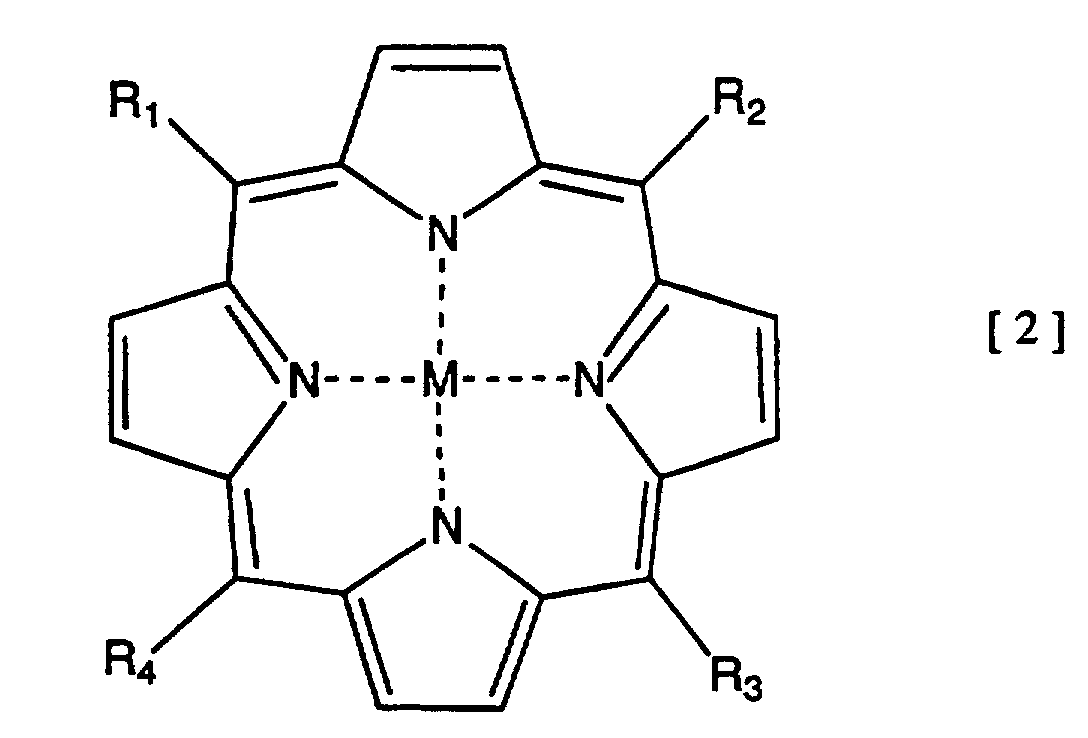
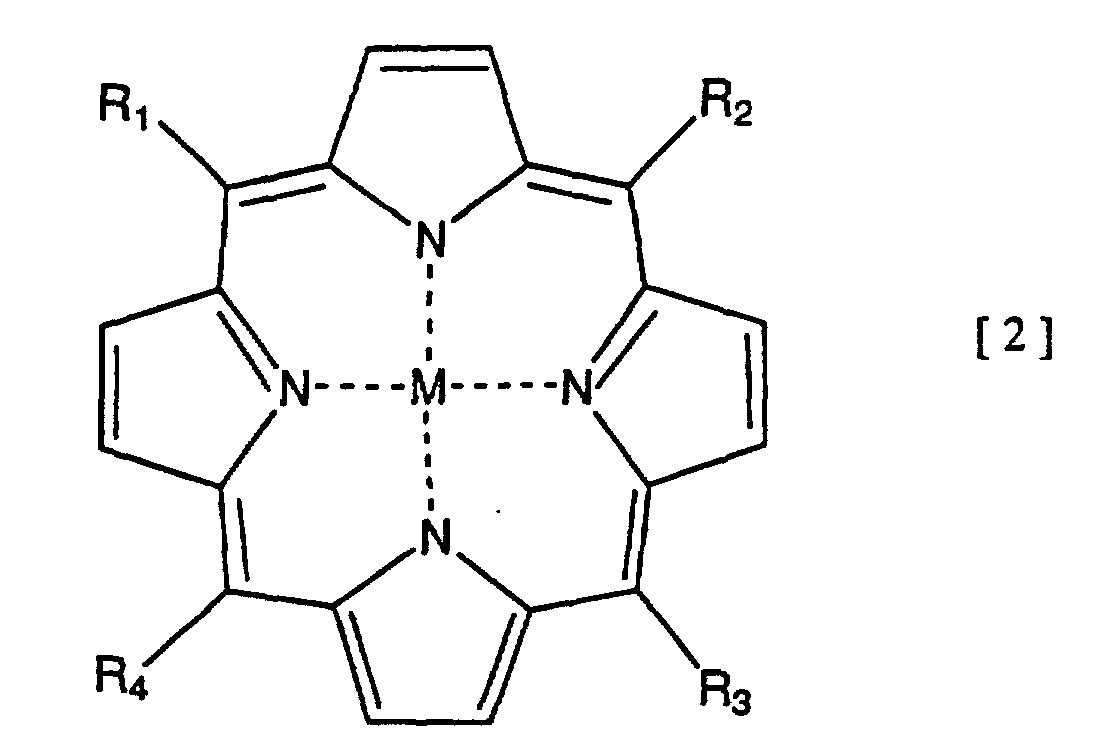
- the present invention firstly provides a polymeric micellar structure comprising an ionic porphyrin dendrimer represented by general formula [1] q(c)PM (wherein q represents the number of charged atoms on the periphery of the dendrimer, c represents a negative (-) or positive (+) charge; and PM is represented by the following general formula [2]; wherein M represents two hydrogen atoms or a metal atom, R 1 , R 2 , R 3 and R 4 represent a hydrogen atom or allyl ether dendro-subunits that may be identical or different, at least one of R 1 , R 2 , R 3 and R 4 is an allyl ether dendro-subunit, which is represented by the following general formula [3]; wherein R and R' each represent a hydrogen atom or a hydrocarbon group and may be identical or different, W represents an anionic group when the charge c is negative (-), or W represents a cationic group when the charge c is positive (+), each
- the present invention provides, secondly, the above polymeric micellar structure, wherein the anionic group is an acid anionic group, thirdly, the above polymeric micellar structure, wherein the cationic group is represented by the following formula; N + (CR 1 R 2 R 3 ) 3 (R 1 , R 2 and R 3 , which may be identical or different, each represent a hydrocarbon group), fourthly, the above polymeric micellar structure wherein the spacer molecule chain is represented by the following formula; C(Z)Z'R 4 (CR 5 R 6 ) n (Z and Z' may be identical or different and each represent at least one atom of O, S and N, R 4 represents a hydrocarbon group when Z' is an N atom, R 5 and R 6 may be the same or different and represent a hydrogen atom or a hydrocarbon group, and m represents 0 or an integer of 1 or more) , and fifthly, the above polymeric micellar structure wherein n is an integer of 25 or less.
- the present invention sixthly provides the above polymeric micellar structure, which is an electrostatically bonded polymeric micelle of an ionic porphyrin dendrimer and a water-soluble polyaminoacid-type polymer, seventhly, the above polymeric micellar structure wherein the water-soluble polyaminoacid-type polymer is a block copolymer of a polyalkylene glycol and a polyaminoacid, eighthly, more specifically, the polymeric micellar structure, which is an electrostatically bonded polymeric micelle of an anionic porphyrin dendrimer and a water-soluble polyethylene glycol-poly-L-lysine block polymer ([PEG-PLL(12-31)]), and ninthly, the polymeric micellar structure, which is an electrostatically bonded polymeric micelle of a cationic porphyrin dendrimer and a polyethylene glycol-poly-L-aspartic acid block polymer ([PEG-P(Asp
- the present invention tenthly provides an agent for photodynamic treatment, comprising, as an active ingredient, any one of the above polymeric micellar structure or a substance containing the same.
- the polymeric micellar structure of the present application comprises the ionic porphyrin dendrimer represented by the above-described general formula [1], but the central metal M in the metal porphyrin dendrimer represented by the general formula [2] maybe any atom. Since the excitation state and the oxidation mode of oxygen varies depending on the type of central atom, various metals such as Zn, Mg, Fe, Cu, Co, Ni and Mn are applicable. A metal capable of forming singlet oxygen while forming a stable porphyrin compound in vivo is preferable, and Zn, which shows high energy at photoexcitation and is advantageous in the formation of singlet oxygen, is especially favorable.
- porphyrin compound of the present invention may be one that is excitable with light of any wavelength, such as ultraviolet, visible, infrared or the like; a compound that is photoreactive in the wavelength region of ultraviolet or visible light is preferable, since their light sources are less costly and easy to handle.
- At least one of R 1 , R 2 , R 3 and R 4 in general formula [2] is an allyl ether dendro-subunit represented by general formula [3].
- this allyl ether dendro-subunit when the foregoing R and R' are both hydrocarbon groups, they are preferably alkyl groups. Further, they are appropriately alkyl groups having 25 or less carbon atoms.
- W when the foregoing W is an anionic group, an appropriate example would be an acid anionic group, specific examples of which are CO 2- , PO 4 2- , MPO 4 - , SO 4 2- , HSO 4 - , SO 3 - and the like.
- W When W is a cationic group, it may be an amino group, an ammonium group or the like; for example, when it is a group represented by N + (CR 1 R 2 R 3 ) 3 as mentioned above, R 1 , R 2 and R 3 are each alkyl groups; more specific examples would be those having 25 or less carbon atoms, and further, those having 10 or less carbon atoms.
- W is an anionic group or a cationic group, it maybe bound to the benzene ring through a spacer molecule chain.
- An example of such spacer molecule chain may be one represented by C(Z)Z'R 4 (CR 5 R 6 ) n as described above, and when R 4 , R 5 and R 6 are each hydrocarbon groups, the numbers of carbon atom are preferably 25 or less, more preferably, 10 or less.
- Examples of the spacer molecule chain represented by this general formula include -CO-O-(CR 5 R 6 ) n -, -CO-NR 4 -(CR 5 R 6 ) n - and the like. It is appropriate that m is 0 or an integer of 1 to 25.
- the coefficient n in the general formula [3] is not particularly limited. However, when it is too large, its synthesis becomes difficult due to steric hindrance, and therefore, an integer of 25 or less is generally preferable.
- the polymeric micellar structure comprising the ionic porphyrin dendrimer of the present invention may be an electrostatically bonded polymeric micelle of such dendrimers and a water-soluble ionic polymer.
- micellar structure of the above ionic porphyrin dendrimer and a water-soluble polyaminoacid-type polymer containing its counter ion is mentioned.
- examples thereof include a micellar structure of an anionic porphyrin dendrimer and a water-soluble polyethylene glycol-polylysine block polymer, a micellar structure of a cationic porphyrin dendrimer and a water-soluble polyethylene glycol-polyaspartic acid block polymer, and the like.
- the polymeric micellar structure for photodynamic treatment of the present invention comprises the porphyrin dendrimer in its center, and forms a micelle with various drug delivery systems such as liposomes and various polymers, thereby increasing its affinity to the target site such as cancers and tumors and allowing the ionic porphyrin compounds for photodynamic treatment to be used more easily as anticancer agents.
- the compound that is electrostatically bonded may be any compuond as long as it is capable of ionically bonding to the groups on the periphery of the porphyrin dendrimer to form stable micelles, and does not inhibit the photoreaction of the porphyrin dendrimer (i.e. it shows no absorption at the wavelength region of irradiation) , and further, does not exhibit toxicity in vivo.
- the polymeric micellar structure for photodynamic treatment of the present invention is preferably composed of the anionic porphyrin dendrimer and a water-soluble polyethylene glycol-poly-L-lysine block polymer ([PEG-PLL(12-31)]).
- the polymeric micellar structure for photodynamic treatment of the present invention is preferably composed of the cationic porphyrin dendrimer and polyethylene glycol-poly-L-aspartic acid block polymer ([PEG-P(Asp) (12-28)]).
- the ionic porphyrin dendrimer contained in the polymeric micellar structure for photodynamic treatment of the present invention may be synthesized by any known method, such as the divergent method (D. A. Tomalia, et. al., Polymer J ., 17, 117 (1985)), wherein the dendrimer is formed from the center toward its outer layer, and the convergent method (C. Hawker et. al., J. Chem. Soc. Chem. Commun., 1990, 1010 (1990)), wherein the dendrimer is formed from the outside toward its center.
- the divergent method which enables the dendrimer to grow by repeating a reaction, is preferable.
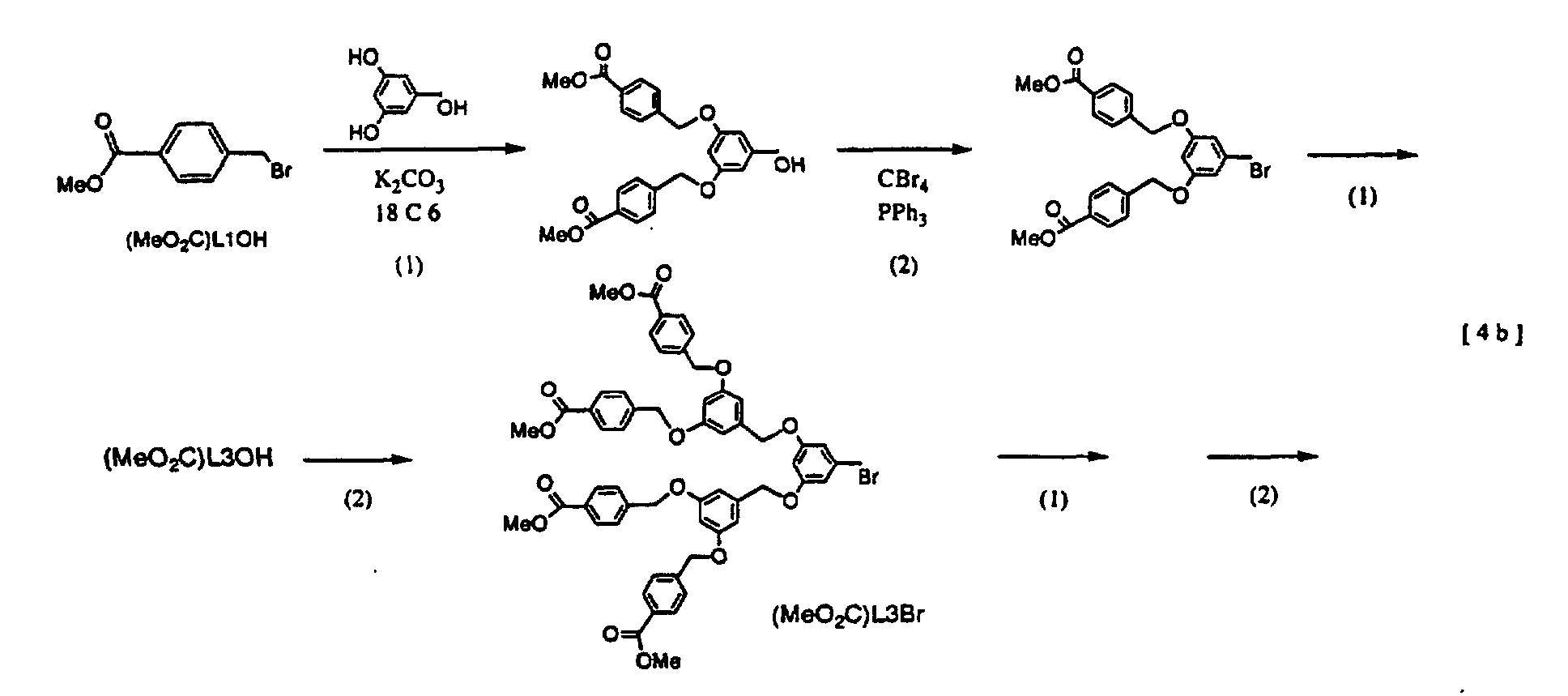
- the dendrimer moiety may be obtained by repeating the procedure of reacting benzyl bromide containing an ionic group with the dendrimer,3,5-dihydroxybenzyl alcohol, then brominating the -OH group in benzyl alcohol and reacting this group with 3, 5-dihydroxybenzyl alcohol. Reaction of this dendrimer moiety with the porphyrin derivative, and insertion of a metal, gives the desired ionic porphyrin dendrimer.
- the polymeric electrolyte compound that is bonded with the porphyrin dendrimer to form a micellar structure is not limited to the foregoing compounds.
- Polymers made to express anionic, amphoteric, or cationic properties by adjusting the pH of polyamino acids such as polyaspartic acid, polyglutamic acid, polylysine, polyarginine, polyhistidineand the like, anionic polymers such as polymalic acid, polyacrylic acid, polymethacrylic acid and polyallyl sulfonate as in polystyrene sulfonate, polyvinyl sulfate and the like
- cationic polymers such as polyethyleneimine, polyvinylamine, polyallylamine, polyvinylimidazole and the like are listed as examples.
- block copolymers of these ionic polymers and nonionic water-soluble polymers may also be used effectively. These ionic block copoly
- a dendron monomer was prepared according to chemical formula [4a] , and a dendron was formed according to [4b] .
- the resulting dendron and a porphyrin derivative were reacted in the presence of K 2 CO 3 , and the resulting porphyrin dendrimer was reacted with Zn(OAc) 2 to insert Zn to the porphyrin center (chemical formula [5]).
- the end-groups of the anionic dendron were converted to COO - under a KOH aqueous solution to obtain the anionic porphyrin dendrimer ([32(-)(L3) 4 PZn]).
- anionic porphyrin dendrimer was reacted with (CH 3 ) 2 NCH 2 CH 2 NH 2 and CH 3 l, consecutively, and followed by ion exchange, to obtain the cationic porphyrin dendrimer ([32(+)(L3) 4 PZn]) containing CONH(CH 2 )N 2 (CH 3 ) 2 at its end.
- Example 1 Preparation of electrostatically bonded polymeric micelles of anionic porphyrin dendrimer [32(-) (L3) 4 PZn] and water-soluble polyethylene glycol-poly-L-lysine block polymer [PEG-PLL(12-31)]
- PEG-PLL(12-31) (composed of a PEG block with a molecular weight of 12000 g/mol and a polylysine block of 31 lysine units) was dissolved in NaH 3 PO 3 to a concentration of 10 mM.
- a porphyrin dendrimer expressed by the general formulas [1], [2] and [3], wherein M represents a metal zinc (Zn) atom, R and R' represent hydrogen atoms, W represents an anionic group (X CO 2 - ) and n represents 3, which may also be represented by the following formula and also by the formula [32(-) (L3) 4 PZn], was dissolved in NaH 3 PO 4 to a concentration of 10 mM, followed by the addition of NaOH(160 ⁇ l, 0.1 N), which was dissolved completely.
- a test solution was prepared by adding 50 ⁇ l of solvent and 50 ⁇ l of lung cancer cells (Lewis Lung Carcinoma, 50000 cells/ml) to a phosphate buffer solution (PBS) of the electrostatically bonded polymeric micelle of [32(-) (L3) 4 PZn] and [PEG-PLL(12-31)].
- PBS phosphate buffer solution
- This solution was irradiated with light at a wavelength of 380 to 700 nm for 10 minutes, and incubated at 37°C for 48 hours, after which the survival rate of the lung cancer cells were measured by the MTT assay test method (Mitochondrion Respiration Test).
- Example 1 As in Example 1, a test solution containing the anionic porphyrin dendrimer [32(-)(L3) 4 PZn] instead of the electrostatically bonded polymeric micelle was prepared, and subjected to cell activity test.
- the amount of drug at which the survival rate of the added cancer cells reach 50% (Effective Dose: ED 50 ) after 48 hours of incubation was 2 x 10 -7 for the polymeric micellar structure of the present invention (Example 1). It was further confirmed that the destruction effect by light irradiation of the porphyrin dendrimer forming a micelle was much greater than that of the porphyrin dendrimer that does not form a polymeric micelle structure.
- Example 2 Preparation of electrostatically bonded polymeric micelles of cationic porphyrin dendrimer [32(+) (L3) 4 PZn] and polyethylene glycol-poly-L-aspartic acid block polymer [PEG-P(Asp) (12-28)]
- the resulting solution was clear and retained its stability even after a few days.
- the pH was 6.3.
- an electrostatically bonded complex micelle of [32(+)(L3) 4 PZn] and [PEG-P(Asp)(12-28)] was formed, the diameter of which was determined as 116.5 nm by dynamic light scattering measurement.
- a test solution was prepared by adding 50 ⁇ l of solvent and 50 ⁇ l of lung cancer cells (Lewis Lung Carcinoma, 50000 cells/ml) to a phosphate buffer solution (PBS) of the electrostatically bonded complex micelle of [32(+) (L3) 4 PZn] and [PEG-P(Asp) (12-28)].
- PBS phosphate buffer solution
- This solution was irradiated with light at a wavelength of 380 to 700 nm for 10 minutes, and incubated at 37°C for 48 hours, after which the survival rate of the lung cancer cells were measured by the MTT assay test method (Mitochondrion Respiration Test).
- Example 2 The same test was also performed for the micelle test solutions without conducting the 10 minutes light irradiation (Comparative Example 2). Also, in the manner described in Example 2, a test solution containing the cationic porphyrin dendrimer [32(+)(L3) 4 PZn] instead of the electrostatically bonded polymeric micelle was prepared, and subjected to cell activity test (Comparative Example 3).
- the ED 50 was 1.9 x 10 -7 for the electrostatically bonded polymeric micellar structure of [32(+) (L3) 4 PZ n ] and [PEG-P(Asp) (12-28)] (Example2). It was then confirmed that the carcinoma destruction effect increased greatly by the irradiation of the porphyrin dendrimer, as compared to the non-irradiated micelle (Comparative Example 2). Moreover, by comparing it with that for the solution containing [32(+)(L3) 4 PZn] alone (Comparative Example 3), it was confirmed that its safety as a compound for photodynamic treatment, when not irradiated, increased greatly by the formation of the polymeric micellar structure.
- the present invention provides a polymeric micellar structure for photodynamic treatment, which contains a porphyrin compound for photodynamic treatment that is capable of selectively destroying target cells such as cancer cells, can efficiently deliver the same to the target cells, is easy to use as a drug and is stable in water.
Landscapes
- Health & Medical Sciences (AREA)
- Chemical & Material Sciences (AREA)
- Life Sciences & Earth Sciences (AREA)
- Engineering & Computer Science (AREA)
- Bioinformatics & Cheminformatics (AREA)
- Organic Chemistry (AREA)
- Veterinary Medicine (AREA)
- Medicinal Chemistry (AREA)
- Pharmacology & Pharmacy (AREA)
- Epidemiology (AREA)
- Animal Behavior & Ethology (AREA)
- General Health & Medical Sciences (AREA)
- Public Health (AREA)
- Proteomics, Peptides & Aminoacids (AREA)
- Molecular Biology (AREA)
- Biochemistry (AREA)
- Inorganic Chemistry (AREA)
- Materials Engineering (AREA)
- Pharmaceuticals Containing Other Organic And Inorganic Compounds (AREA)
- Medicinal Preparation (AREA)
- Polyethers (AREA)
Abstract
Description




Claims (10)
- A polymeric micellar structure comprising an ionic porphyrin dendrimer represented by general formula [1]wherein M represents two hydrogen atoms or a metal atom, R1, R2, R3 and R4 represent a hydrogen atom or allyl ether dendro-subunits that may be identical or different, at least one of R1, R2, R3 and R4 is an allyl ether dendro-subunit, which is represented by the following general formula [3];
 wherein R and R' each represent a hydrogen atom or a hydrocarbon group and may be identical or different, W represents an anionic group when the charge c is negative (-), or W represents a cationic group when the charge c is positive (+) , each W may be bonded by a spacer molecule chain, and n represents an integer).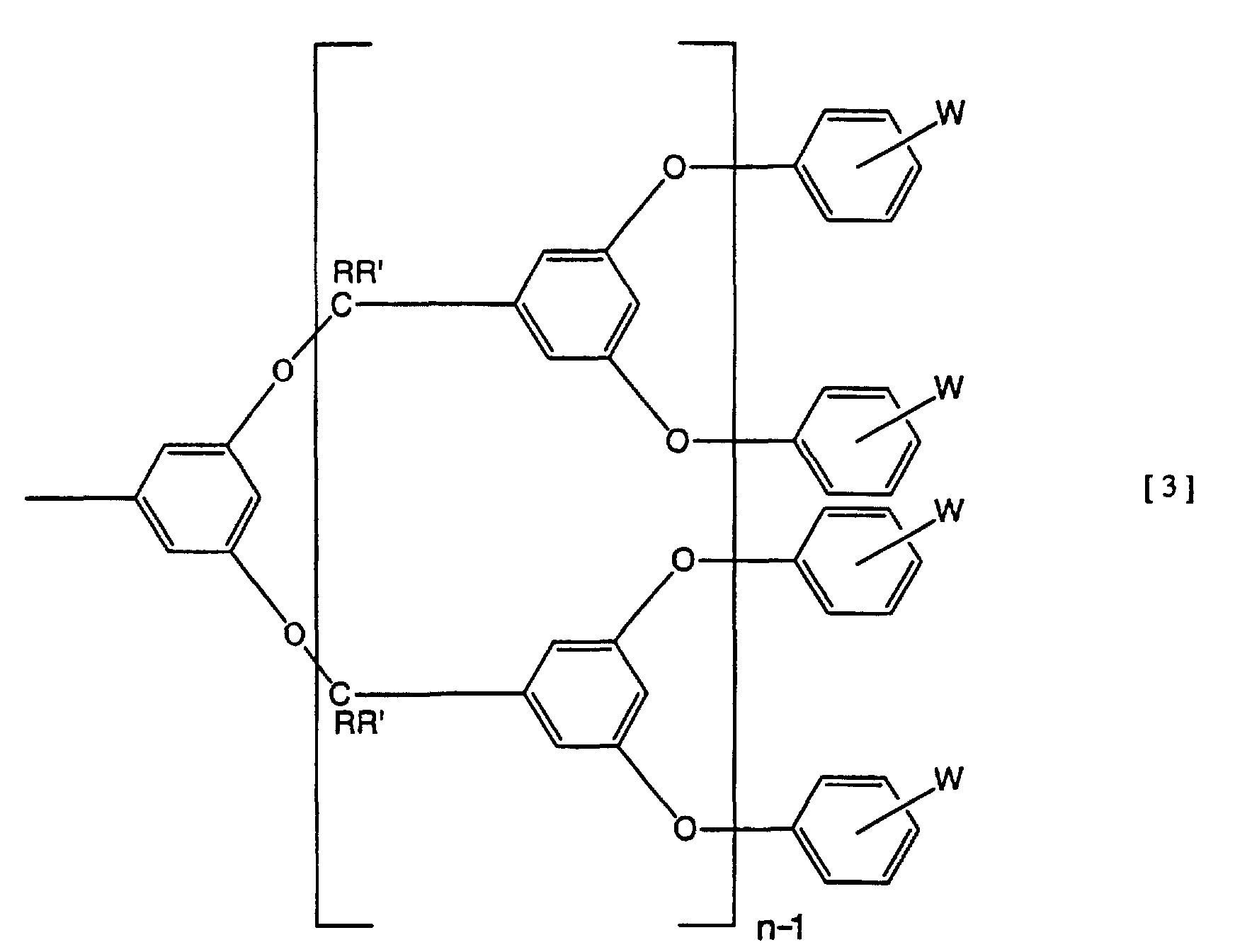
- The polymeric micellar structure of claim 1, wherein the anionic group is an acid anionic group.
- The polymeric micellar structure of claim 1, wherein the cationic group is represented by the following formula;
- The polymeric micellar structure of any one of claims. 1 to 3, wherein the spacer molecule chain is represented by the following formula;
- The polymeric micellar structure of any one of claims 1 to 4, wherein n is an integer of 25 or less.
- The polymeric micellar structure of any one of claims 1 to 5, which is an electrostatically bonded polymeric micelle of an ionic porphyrin dendrimer and a water-soluble polyaminoacid-type polymer.
- The polymeric micellar structure of claim 6, wherein the water-soluble polyaminoacid-type polymer is a block copolymer of a polyalkylene glycol and a polyaminoacid.
- The polymeric micellar structure of claim 7, which is an electrostatically bonded polymeric micelle of an anionic porphyrin dendrimer and a water-soluble polyethylene glycol-poly-L-lysine block polymer ([PEG-PLL(12-31)]).
- The polymeric micellar structure of claim 7, which is an electrostatically bonded polymeric micelle of a cationic porphyrin dendrimer and a polyethylene glycol-poly-L-aspartic acid block polymer ([PEG-P(Asp) (12-28)]).
- An agent for photodynamic treatment comprising, as an active ingredient, the polymeric micellar structure of any one of claims 1 to 9 or a substance containing the same.
Applications Claiming Priority (5)
| Application Number | Priority Date | Filing Date | Title |
|---|---|---|---|
| JP2000017662A JP3422481B2 (en) | 2000-01-26 | 2000-01-26 | Polymer micelle structure |
| JP2000017663A JP3425111B2 (en) | 2000-01-26 | 2000-01-26 | Ionic porphyrin compounds |
| JP2000017663 | 2000-01-26 | ||
| JP2000017662 | 2000-01-26 | ||
| PCT/JP2001/000546 WO2001055151A1 (en) | 2000-01-26 | 2001-01-26 | Polymeric micellar structure |
Publications (3)
| Publication Number | Publication Date |
|---|---|
| EP1253150A1 true EP1253150A1 (en) | 2002-10-30 |
| EP1253150A4 EP1253150A4 (en) | 2003-05-28 |
| EP1253150B1 EP1253150B1 (en) | 2005-03-30 |
Family
ID=26584216
Family Applications (1)
| Application Number | Title | Priority Date | Filing Date |
|---|---|---|---|
| EP01946862A Expired - Lifetime EP1253150B1 (en) | 2000-01-26 | 2001-01-26 | Polymeric micellar structure |
Country Status (4)
| Country | Link |
|---|---|
| US (1) | US6949620B2 (en) |
| EP (1) | EP1253150B1 (en) |
| DE (1) | DE60109745T2 (en) |
| WO (1) | WO2001055151A1 (en) |
Cited By (1)
| Publication number | Priority date | Publication date | Assignee | Title |
|---|---|---|---|---|
| WO2005052023A1 (en) * | 2003-11-21 | 2005-06-09 | The University Of Sheffield | Hyperbranched polymers |
Families Citing this family (21)
| Publication number | Priority date | Publication date | Assignee | Title |
|---|---|---|---|---|
| CA2466103C (en) * | 2001-11-02 | 2010-06-15 | The Governors Of The University Of Alberta | Micelle compositions containing pegylated phospholipids and a photosensitizer |
| US8425549B2 (en) | 2002-07-23 | 2013-04-23 | Reverse Medical Corporation | Systems and methods for removing obstructive matter from body lumens and treating vascular defects |
| JP4537718B2 (en) * | 2004-01-22 | 2010-09-08 | 大日本印刷株式会社 | Liquid crystal display element |
| US7853885B2 (en) * | 2005-12-23 | 2010-12-14 | American International Group, Inc. | System and method for automated processing of requests for approval of materials for business development |
| WO2007099661A1 (en) * | 2006-03-01 | 2007-09-07 | The University Of Tokyo | Polymer micelle complex including nucleic acid |
| KR101035269B1 (en) * | 2007-04-23 | 2011-05-26 | 한국과학기술연구원 | Novel photodynamic therapy using polymer derivative-photosensitizer complex |
| US8324342B1 (en) * | 2007-06-13 | 2012-12-04 | Sandia Corporation | Porphyrin coordination polymer nanospheres and nanorods |
| WO2009003110A2 (en) | 2007-06-26 | 2008-12-31 | Children's Medical Center Corporation | Metap-2 inhibitor polymersomes for therapeutic administration |
| US8088140B2 (en) | 2008-05-19 | 2012-01-03 | Mindframe, Inc. | Blood flow restorative and embolus removal methods |
| US8066757B2 (en) | 2007-10-17 | 2011-11-29 | Mindframe, Inc. | Blood flow restoration and thrombus management methods |
| US20100022951A1 (en) * | 2008-05-19 | 2010-01-28 | Luce, Forward, Hamilton 7 Scripps, Llp | Detachable hub/luer device and processes |
| US8585713B2 (en) | 2007-10-17 | 2013-11-19 | Covidien Lp | Expandable tip assembly for thrombus management |
| US11337714B2 (en) | 2007-10-17 | 2022-05-24 | Covidien Lp | Restoring blood flow and clot removal during acute ischemic stroke |
| US9198687B2 (en) | 2007-10-17 | 2015-12-01 | Covidien Lp | Acute stroke revascularization/recanalization systems processes and products thereby |
| US8926680B2 (en) | 2007-11-12 | 2015-01-06 | Covidien Lp | Aneurysm neck bridging processes with revascularization systems methods and products thereby |
| US10123803B2 (en) | 2007-10-17 | 2018-11-13 | Covidien Lp | Methods of managing neurovascular obstructions |
| US9220522B2 (en) | 2007-10-17 | 2015-12-29 | Covidien Lp | Embolus removal systems with baskets |
| CN103549986B (en) | 2008-02-22 | 2015-12-09 | 泰科保健集团有限合伙公司 | The thrombosis device agglomerate of removable combination |
| EP2271390A4 (en) | 2008-04-11 | 2016-07-20 | Covidien Lp | Monorail neuro-microcatheter for delivery of medical devices to treat stroke, processes and products thereby |
| KR101010061B1 (en) * | 2009-02-11 | 2011-01-21 | 연세대학교 산학협력단 | Amphiphilic porphyrin derivatives and preparation method thereof |
| JP5601000B2 (en) | 2010-03-31 | 2014-10-08 | 株式会社リコー | Imaging device |
Family Cites Families (2)
| Publication number | Priority date | Publication date | Assignee | Title |
|---|---|---|---|---|
| US4935498A (en) * | 1989-03-06 | 1990-06-19 | Board Of Regents, The University Of Texas System | Expanded porphyrins: large porphyrin-like tripyrroledimethine-derived macrocycles |
| US5252720A (en) * | 1989-03-06 | 1993-10-12 | Board Of Regents, The University Of Texas System | Metal complexes of water soluble texaphyrins |
-
2001
- 2001-01-26 WO PCT/JP2001/000546 patent/WO2001055151A1/en not_active Ceased
- 2001-01-26 EP EP01946862A patent/EP1253150B1/en not_active Expired - Lifetime
- 2001-01-26 DE DE60109745T patent/DE60109745T2/en not_active Expired - Lifetime
- 2001-01-26 US US10/182,191 patent/US6949620B2/en not_active Expired - Fee Related
Cited By (1)
| Publication number | Priority date | Publication date | Assignee | Title |
|---|---|---|---|---|
| WO2005052023A1 (en) * | 2003-11-21 | 2005-06-09 | The University Of Sheffield | Hyperbranched polymers |
Also Published As
| Publication number | Publication date |
|---|---|
| EP1253150B1 (en) | 2005-03-30 |
| DE60109745D1 (en) | 2005-05-04 |
| US6949620B2 (en) | 2005-09-27 |
| DE60109745T2 (en) | 2006-02-23 |
| US20030153547A1 (en) | 2003-08-14 |
| WO2001055151A1 (en) | 2001-08-02 |
| EP1253150A4 (en) | 2003-05-28 |
Similar Documents
| Publication | Publication Date | Title |
|---|---|---|
| EP1253150B1 (en) | Polymeric micellar structure | |
| Licciardi et al. | Synthesis of novel folic acid-functionalized biocompatible block copolymers by atom transfer radical polymerization for gene delivery and encapsulation of hydrophobic drugs | |
| KR101141410B1 (en) | Photosensitizer - metal nanoparticle charge complex and composition containing the complex for photodynamic therapy or diagnosis | |
| JP7372672B2 (en) | Complex of active pharmaceutical ingredients | |
| Paleos et al. | Acid-and salt-triggered multifunctional poly (propylene imine) dendrimer as a prospective drug delivery system | |
| WO2003055935A1 (en) | Dendritic poly (amino acid) carriers and methods of use | |
| US20150087601A1 (en) | Polymer micelle complex including nucleic acid | |
| JP2009532564A (en) | Biodegradable cationic polymer | |
| EP2322227A1 (en) | Ph-sensitive dendritic polymeric micelles | |
| Harvey et al. | Recent advances in nanoscale metal–organic frameworks towards cancer cell cytotoxicity: an overview | |
| JP3422481B2 (en) | Polymer micelle structure | |
| Yoon et al. | Nanotechnology-based photodynamic therapy | |
| Nguyen et al. | Preparation and characterization of oxaliplatin drug delivery vehicle based on PEGylated half-generation PAMAM dendrimer | |
| AU2003301690B2 (en) | Tri-block polymers for nanosphere-based drug or gene delivery | |
| CN114601936B (en) | A near-infrared light-responsive nitric oxide nanogenerator targeting tumors, preparation method and application thereof | |
| JP5364225B2 (en) | Photodynamic therapy agent based on polymeric micelle structure containing ionic phthalocyanine dendrimer, photosensitizer for photochemical gene transfer, and pharmaceuticals | |
| Mlynarczyk et al. | Dendrimer structure diversity and tailorability as a way to fight infectious diseases | |
| Kumar et al. | PEG conjugated PAMAM dendrimers with a anti-HIV drug stavudine for prolong release | |
| Feng et al. | Sequential functionalization of janus‐type dendrimer‐like poly (ethylene oxide) s with camptothecin and folic acid | |
| Jain et al. | Dendrimer: a complete drug carrier | |
| Huang et al. | Multifunctional nanoplatform based on pH-responsive micelle coated with discontinuous gold shell for cancer photothermo-chemotherapy and photoacoustic tomography | |
| JP3425111B2 (en) | Ionic porphyrin compounds | |
| EP2388016A9 (en) | Non-viral nucleic acid molecules delivery systems | |
| Yang et al. | Carbon dots-based nanocarrier system with intrinsic tumor targeting ability for cancer treatment | |
| CN117402304A (en) | Acid-activated bioorthogonal click amphiphilic polymers and nanoparticles thereof, preparation methods and applications |
Legal Events
| Date | Code | Title | Description |
|---|---|---|---|
| PUAI | Public reference made under article 153(3) epc to a published international application that has entered the european phase |
Free format text: ORIGINAL CODE: 0009012 |
|
| 17P | Request for examination filed |
Effective date: 20020822 |
|
| AK | Designated contracting states |
Kind code of ref document: A1 Designated state(s): AT BE CH CY DE DK ES FI FR GB GR IE IT LI LU MC NL PT SE TR |
|
| A4 | Supplementary search report drawn up and despatched |
Effective date: 20030411 |
|
| 17Q | First examination report despatched |
Effective date: 20030716 |
|
| RBV | Designated contracting states (corrected) |
Designated state(s): CH DE FR GB LI |
|
| GRAP | Despatch of communication of intention to grant a patent |
Free format text: ORIGINAL CODE: EPIDOSNIGR1 |
|
| RAP1 | Party data changed (applicant data changed or rights of an application transferred) |
Owner name: JAPAN SCIENCE AND TECHNOLOGY AGENCY |
|
| GRAS | Grant fee paid |
Free format text: ORIGINAL CODE: EPIDOSNIGR3 |
|
| GRAA | (expected) grant |
Free format text: ORIGINAL CODE: 0009210 |
|
| AK | Designated contracting states |
Kind code of ref document: B1 Designated state(s): CH DE FR GB LI |
|
| REG | Reference to a national code |
Ref country code: GB Ref legal event code: FG4D |
|
| REG | Reference to a national code |
Ref country code: CH Ref legal event code: EP |
|
| REF | Corresponds to: |
Ref document number: 60109745 Country of ref document: DE Date of ref document: 20050504 Kind code of ref document: P |
|
| REG | Reference to a national code |
Ref country code: IE Ref legal event code: FG4D |
|
| REG | Reference to a national code |
Ref country code: CH Ref legal event code: NV Representative=s name: A. BRAUN, BRAUN, HERITIER, ESCHMANN AG PATENTANWAE |
|
| PLBE | No opposition filed within time limit |
Free format text: ORIGINAL CODE: 0009261 |
|
| STAA | Information on the status of an ep patent application or granted ep patent |
Free format text: STATUS: NO OPPOSITION FILED WITHIN TIME LIMIT |
|
| ET | Fr: translation filed | ||
| 26N | No opposition filed |
Effective date: 20060102 |
|
| REG | Reference to a national code |
Ref country code: CH Ref legal event code: PFA Owner name: JAPAN SCIENCE AND TECHNOLOGY AGENCY Free format text: JAPAN SCIENCE AND TECHNOLOGY AGENCY#1-8, HONCHO 4-CHOME#KAWAGUCHI-SHI, SAITAMA 332-0012 (JP) -TRANSFER TO- JAPAN SCIENCE AND TECHNOLOGY AGENCY#1-8, HONCHO 4-CHOME#KAWAGUCHI-SHI, SAITAMA 332-0012 (JP) |
|
| PGFP | Annual fee paid to national office [announced via postgrant information from national office to epo] |
Ref country code: CH Payment date: 20140114 Year of fee payment: 14 Ref country code: DE Payment date: 20140122 Year of fee payment: 14 |
|
| PGFP | Annual fee paid to national office [announced via postgrant information from national office to epo] |
Ref country code: FR Payment date: 20140108 Year of fee payment: 14 |
|
| PGFP | Annual fee paid to national office [announced via postgrant information from national office to epo] |
Ref country code: GB Payment date: 20140122 Year of fee payment: 14 |
|
| REG | Reference to a national code |
Ref country code: CH Ref legal event code: PCAR Free format text: NEW ADDRESS: HOLBEINSTRASSE 36-38, 4051 BASEL (CH) |
|
| REG | Reference to a national code |
Ref country code: DE Ref legal event code: R119 Ref document number: 60109745 Country of ref document: DE |
|
| REG | Reference to a national code |
Ref country code: CH Ref legal event code: PL |
|
| GBPC | Gb: european patent ceased through non-payment of renewal fee |
Effective date: 20150126 |
|
| PG25 | Lapsed in a contracting state [announced via postgrant information from national office to epo] |
Ref country code: LI Free format text: LAPSE BECAUSE OF NON-PAYMENT OF DUE FEES Effective date: 20150131 Ref country code: CH Free format text: LAPSE BECAUSE OF NON-PAYMENT OF DUE FEES Effective date: 20150131 Ref country code: DE Free format text: LAPSE BECAUSE OF NON-PAYMENT OF DUE FEES Effective date: 20150801 Ref country code: GB Free format text: LAPSE BECAUSE OF NON-PAYMENT OF DUE FEES Effective date: 20150126 |
|
| REG | Reference to a national code |
Ref country code: FR Ref legal event code: ST Effective date: 20150930 |
|
| PG25 | Lapsed in a contracting state [announced via postgrant information from national office to epo] |
Ref country code: FR Free format text: LAPSE BECAUSE OF NON-PAYMENT OF DUE FEES Effective date: 20150202 |