EP1252345B1 - Solvent extraction of impurity metals from a valuable metal sulphate solution - Google Patents
Solvent extraction of impurity metals from a valuable metal sulphate solution Download PDFInfo
- Publication number
- EP1252345B1 EP1252345B1 EP00986860A EP00986860A EP1252345B1 EP 1252345 B1 EP1252345 B1 EP 1252345B1 EP 00986860 A EP00986860 A EP 00986860A EP 00986860 A EP00986860 A EP 00986860A EP 1252345 B1 EP1252345 B1 EP 1252345B1
- Authority
- EP
- European Patent Office
- Prior art keywords
- nickel
- cobalt
- extractant
- purified
- cationic
- Prior art date
- Legal status (The legal status is an assumption and is not a legal conclusion. Google has not performed a legal analysis and makes no representation as to the accuracy of the status listed.)
- Expired - Lifetime
Links
Images
Classifications
-
- C—CHEMISTRY; METALLURGY
- C22—METALLURGY; FERROUS OR NON-FERROUS ALLOYS; TREATMENT OF ALLOYS OR NON-FERROUS METALS
- C22B—PRODUCTION AND REFINING OF METALS; PRETREATMENT OF RAW MATERIALS
- C22B23/00—Obtaining nickel or cobalt
- C22B23/04—Obtaining nickel or cobalt by wet processes
- C22B23/0407—Leaching processes
- C22B23/0415—Leaching processes with acids or salt solutions except ammonium salts solutions
- C22B23/043—Sulfurated acids or salts thereof
-
- C—CHEMISTRY; METALLURGY
- C22—METALLURGY; FERROUS OR NON-FERROUS ALLOYS; TREATMENT OF ALLOYS OR NON-FERROUS METALS
- C22B—PRODUCTION AND REFINING OF METALS; PRETREATMENT OF RAW MATERIALS
- C22B23/00—Obtaining nickel or cobalt
- C22B23/04—Obtaining nickel or cobalt by wet processes
- C22B23/0453—Treatment or purification of solutions, e.g. obtained by leaching
-
- C—CHEMISTRY; METALLURGY
- C22—METALLURGY; FERROUS OR NON-FERROUS ALLOYS; TREATMENT OF ALLOYS OR NON-FERROUS METALS
- C22B—PRODUCTION AND REFINING OF METALS; PRETREATMENT OF RAW MATERIALS
- C22B23/00—Obtaining nickel or cobalt
- C22B23/04—Obtaining nickel or cobalt by wet processes
- C22B23/0476—Separation of nickel from cobalt
- C22B23/0484—Separation of nickel from cobalt in acidic type solutions
-
- C—CHEMISTRY; METALLURGY
- C22—METALLURGY; FERROUS OR NON-FERROUS ALLOYS; TREATMENT OF ALLOYS OR NON-FERROUS METALS
- C22B—PRODUCTION AND REFINING OF METALS; PRETREATMENT OF RAW MATERIALS
- C22B3/00—Extraction of metal compounds from ores or concentrates by wet processes
- C22B3/20—Treatment or purification of solutions, e.g. obtained by leaching
- C22B3/26—Treatment or purification of solutions, e.g. obtained by leaching by liquid-liquid extraction using organic compounds
- C22B3/38—Treatment or purification of solutions, e.g. obtained by leaching by liquid-liquid extraction using organic compounds containing phosphorus
- C22B3/384—Pentavalent phosphorus oxyacids, esters thereof
- C22B3/3842—Phosphinic acid, e.g. H2P(O)(OH)
-
- Y—GENERAL TAGGING OF NEW TECHNOLOGICAL DEVELOPMENTS; GENERAL TAGGING OF CROSS-SECTIONAL TECHNOLOGIES SPANNING OVER SEVERAL SECTIONS OF THE IPC; TECHNICAL SUBJECTS COVERED BY FORMER USPC CROSS-REFERENCE ART COLLECTIONS [XRACs] AND DIGESTS
- Y02—TECHNOLOGIES OR APPLICATIONS FOR MITIGATION OR ADAPTATION AGAINST CLIMATE CHANGE
- Y02P—CLIMATE CHANGE MITIGATION TECHNOLOGIES IN THE PRODUCTION OR PROCESSING OF GOODS
- Y02P10/00—Technologies related to metal processing
- Y02P10/20—Recycling
Definitions
- the present invention relates generally to a method of extracting impurity metal ions from a valuable metal sulphate stream in a solvent extraction circuit and relates particularly, though not exclusively, to the extraction of cobalt and other impurity metals from a nickel sulphate solution.
- the invention also relates to a method of pre-equilibrating a cationic solvent extractant.
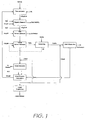
- Figure 1 is a flowsheet of a known method of extracting cobalt from a nickel sulphate solution with a direct addition of ammonia to a cobalt solvent extraction phase.
- a problem with this method is that the concentrated nickel sulphate solution with the direct addition of ammonia results in the formation of insoluble nickel ammonium sulphate double salts.
- Australian patent No. 667539 in the name of Outokumpu sets out to avoid the formation of this double salt by a two stage process involving:
- UK patent publication no. 2 324 792 discloses a method for purifying a nickel sulphate stream comprising:
- This method requires the crude stream to be contacted with organic extractant twice, with an additional step of scrubbing the organic phase between contacts which is both time consuming and expensive.
- a method of extracting impurity metal ions from an impure valuable metal sulphate stream in the form of a cobalt/nickel-containing stream in a solvent extractant circuit comprising the steps of:
- the purified valuable metal stream is a purified nickel sulphate stream.
- the purified nickel sulphate stream is the raffinate of the solvent extraction circuit.
- the impure valuable metal sulphate stream is a concentrated nickel sulphate liquor obtained by acid pressure leaching of a nickel-cobalt sulphide mineral such as a precipitate obtained during the processing of nickel lateritic ore, or nickel mattes.
- pre-equilibration of the cationic extractant with the nickel ions is effected with the direct addition of an ammonia solution. More typically the portion of the purified nickel sulphate stream is preconditioned by dilution with a diluent to achieve a predetermined concentration of nickel sufficient to avoid formation of insoluble nickel double salts. Generally the diluent is water.
- pre-equilibration of the cationic extractant is effected with the direct addition of magnesia or magnesium hydroxide.
- magnesia or magnesium hydroxide unlike with the addition of an ammonia solution, insoluble nickel double salts do not form and there is no need to dilute the portion of the purified nickel sulphate stream.
- the method of extracting impurity metal ions further comprises the step of stripping of the cobalt loaded cationic extractant from the solvent extraction circuit with sulphuric acid to yield the cationic extractant for recycle to pre-equilibration. More preferably stripping of said cobalt loaded extractant produces an aqueous cobalt strip solution which is processed to recover cobalt ions.
- the method of extracting impurity metal ions also comprises the step of electrowinning a high purity electrolyte of the nickel enriched raffinate to recover high purity nickel.
- the nickel enriched raffinate or a derivative thereof is subjected to hydrogen reduction.
- the cationic solvent extractant comprises a phosphinic acid. More preferably the phosphinic acid is bis (2,4,4 trimethylpentyl) phosphinic acid, or a derivative thereof, such as that commercially available as CYANEX 272. Generally the cationic extractant is diluted with another diluent such as kerosene.
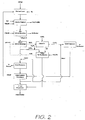
- FIG. 2 there is one embodiment of a method of extracting cobalt and other impurity metals from a concentrated nickel sulphate solution by a solvent extraction process whereby a cationic solvent extractant is separately pre-equilibrated with a portion of a purified nickel sulphate solution in such a manner that it is loaded with nickel without precipitating insoluble nickel double salts.
- the nickel loaded extractant is then transferred to an impure cobalt nickel solution where the cobalt and certain other impurity metals exchange with nickel leaving a purified concentrated nickel sulphate solution suitable for hydrogen reduction or electrowinning.
- the cobalt loaded extractant is stripped with dilute sulphuric acid before being recycled whilst an aqueous cobalt strip solution is further processed to recover cobalt.
- the process of this embodiment extracts cobalt and certain other impurities into a cationic extractant phase by exchanging with nickel and thus avoids the introduction of ammonia or alkali ions to the nickel solution.
- This direct addition of ammonia or alkali ions is required when the extractant is used directly in the known method without pre-treatment as shown in Figure 1 .
- both insoluble double salts of nickel are eliminated and the end solution, after hydrogen reduction of nickel with ammonia, is a pure solution of ammonium sulphate suitable for evaporation and recovery.
- the portion of the nickel solution is in this embodiment sufficiently diluted with water to a concentration of between 30 to 60 g/l nickel and nickel is completely extracted by adjusting the pH.
- the diluted aqueous ammonium sulphate raffinate preferably containing less than 200 ppm nickel, is evaporated or combined with a concentrated ammonium sulphate end solution after hydrogen reduction.
- this pre-equilibration step includes the use of magnesia or magnesium hydroxide as an alkali to adjust the pH instead of ammonia.
- magnesia or magnesium hydroxide is taught in the applicant's International patent application No. PCT/AU98/00457 .
- the dilute aqueous magnesium sulphate raffinate is discarded.
- the portion of the nickel sulphate there is no risk of forming the insoluble nickel double salts.
- This also avoids the direct addition of magnesium ions to the nickel sulphate process stream and hence produces a pure ammonium sulphate end solution after nickel recovery.
- a cationic organic extractant phase comprising of 0.45M CYANEX 272 (16.7% v/v) dissolved in Shellsol 2046 kerosene was contacted with a portion of a nickel sulphate solution remaining after extraction of cobalt at a temperature of 50°C.
- This nickel sulphate solution which contained 67.9 g/l Ni and ⁇ 50 ppm Co was diluted with an equal volume of water, and contacted for 5 minutes with organic phase at a stirring speed of 1200 rpm whilst adding 12.5% aqueous ammonia solution to maintain a constant pH.
- nickel was transferred from the aqueous phase into the organic phase which now contained 8.33 g/l Ni.
- This loading represents about 62% of the stoichiometric loading capacity of the extractant.
- the organic phase was fully saturated with 13.48 g/l Ni.
- the aqueous phase contained ammonium sulphate and a lower concentration of nickel that depended upon the O/A volume ratio employed, concentration of CYANEX 272 and final pH.
- an ammonium sulphate solution solution containing ⁇ 200 ppm Ni was obtained for evaporation and recovery of ammonium sulphate crystals. The following conditions and data are applicable to this pre-equilibration of CYANEX 272.
- the nickel pre-equilibrated CYANEX 272 phase was then contacted with an equal volume of an impure nickel sulphate solution containing 71.98g/l Ni, 6.50g/l Co, 11 ppm Cu, 5 ppm Zn and 11 ppm Mn at 50°C. After 5 minutes agitation at 1200 rpm, cobalt had transferred from the aqueous phase to the organic phase, whilst nickel transferred from the organic phase to the aqueous phase. After one contact with CYANEX 272 loaded with 8.33 g/l Ni, at a pH of 5.25, 98.7% Co was extracted, leaving 85 ppm Co in the aqueous phase and 76 ppm nickel remaining on the organic phase.
- the cationic solvent extractant is not limited to CYANEX 272 but rather extends to practically any cationic extractant which extracts an impurity metal such as cobalt at a lower pH than a valuable metal such as nickel and hence is able to exchange the impurity metal for the valuable metal after pre-equilibration.
Landscapes
- Chemical & Material Sciences (AREA)
- Engineering & Computer Science (AREA)
- Organic Chemistry (AREA)
- Materials Engineering (AREA)
- Mechanical Engineering (AREA)
- Metallurgy (AREA)
- Manufacturing & Machinery (AREA)
- Life Sciences & Earth Sciences (AREA)
- Environmental & Geological Engineering (AREA)
- General Life Sciences & Earth Sciences (AREA)
- Geochemistry & Mineralogy (AREA)
- Geology (AREA)
- Manufacture And Refinement Of Metals (AREA)
- Extraction Or Liquid Replacement (AREA)
- Electrolytic Production Of Metals (AREA)
Abstract
Description
- The present invention relates generally to a method of extracting impurity metal ions from a valuable metal sulphate stream in a solvent extraction circuit and relates particularly, though not exclusively, to the extraction of cobalt and other impurity metals from a nickel sulphate solution. The invention also relates to a method of pre-equilibrating a cationic solvent extractant.
-
Figure 1 is a flowsheet of a known method of extracting cobalt from a nickel sulphate solution with a direct addition of ammonia to a cobalt solvent extraction phase. A problem with this method is that the concentrated nickel sulphate solution with the direct addition of ammonia results in the formation of insoluble nickel ammonium sulphate double salts. Australian patent No.667539 - i) pre-neutralisation of a cationic extractant such as CYANEX 272 to form the ammonium salt; and
- ii) pre-extraction or exchange of the CYANEX 272 ammonium salt with magnesium sulphate in an aqueous solution to form a CYANEX 272 magnesium salt which is contacted with an aqueous nickel sulphate solution in a solvent extraction circuit so as to extract nickel.
- The applicants International patent application No.
PCT/AU98/00457 -
UK patent publication no. 2 324 792 - 1) Contacting crude sodium and ammonia containing nickel sulphate stream with an organic extractant in order to extract the nickel into the organic phase and leave the impurities in the aqueous stream;
- 2) Scrubbing the organic phase to remove unwanted sodium and ammonia that invariably extracts along with the nickel, leaving a nickel loaded organic extractant;
- 3) Contacting the impurity containing aqueous stream from step 1 that now has no sodium and ammonia impurities with the scrubbed organic extractant from step 2 resulting in an impurity containing organic extractant and a purified nickel sulphate stream.
- This method requires the crude stream to be contacted with organic extractant twice, with an additional step of scrubbing the organic phase between contacts which is both time consuming and expensive.
- According to the invention there is provided a method of extracting impurity metal ions from an impure valuable metal sulphate stream in the form of a cobalt/nickel-containing stream in a solvent extractant circuit, the method comprising the steps of:
- (a) contacting the cobalt/nickel-containing stream in a cobalt solvent extraction circuit with an organic solvent and producing a cobalt-loaded organic extractant and a purified nickel-containing stream ;
- (b) stripping cobalt from the cobalt-loaded organic extractant;
- (c) loading the stripped organic extractant with nickel from a part of the purified nickel-containing stream from step (a) to pre-equilibrate the organic extractant; and
- (d) contacting the pre-equilibrated organic extractant with the cobalt/nickel-containing stream in step (a).
- Typically the purified valuable metal stream is a purified nickel sulphate stream.
- Preferably the purified nickel sulphate stream is the raffinate of the solvent extraction circuit. More preferably the impure valuable metal sulphate stream is a concentrated nickel sulphate liquor obtained by acid pressure leaching of a nickel-cobalt sulphide mineral such as a precipitate obtained during the processing of nickel lateritic ore, or nickel mattes.
- Typically pre-equilibration of the cationic extractant with the nickel ions is effected with the direct addition of an ammonia solution. More typically the portion of the purified nickel sulphate stream is preconditioned by dilution with a diluent to achieve a predetermined concentration of nickel sufficient to avoid formation of insoluble nickel double salts. Generally the diluent is water.
- Alternatively pre-equilibration of the cationic extractant is effected with the direct addition of magnesia or magnesium hydroxide. In this embodiment, unlike with the addition of an ammonia solution, insoluble nickel double salts do not form and there is no need to dilute the portion of the purified nickel sulphate stream.
- Preferably the method of extracting impurity metal ions further comprises the step of stripping of the cobalt loaded cationic extractant from the solvent extraction circuit with sulphuric acid to yield the cationic extractant for recycle to pre-equilibration. More preferably stripping of said cobalt loaded extractant produces an aqueous cobalt strip solution which is processed to recover cobalt ions.
- Typically the method of extracting impurity metal ions also comprises the step of electrowinning a high purity electrolyte of the nickel enriched raffinate to recover high purity nickel. Alternatively the nickel enriched raffinate or a derivative thereof is subjected to hydrogen reduction.
- Preferably the cationic solvent extractant comprises a phosphinic acid. More preferably the phosphinic acid is bis (2,4,4 trimethylpentyl) phosphinic acid, or a derivative thereof, such as that commercially available as CYANEX 272. Generally the cationic extractant is diluted with another diluent such as kerosene.
- In order to facilitate a better understanding of the nature of the present invention, a preferred embodiment of a method of pre-equilibrating a cationic extractant and a method of extracting impurity metal ions from a valuable metal sulphate stream in a solvent extraction circuit will now be described, by way of example only, with reference to the following flowsheets in which:
-
Figure 1 depicts a known method of extracting cobalt and other impurity metals from a nickel sulphate stream in a solvent extraction circuit; and -
Figure 2 shows one embodiment of a method according to the invention of extracting cobalt and other impurity metals from a nickel sulphate stream in a solvent extraction circuit. - As shown in
Figure 2 there is one embodiment of a method of extracting cobalt and other impurity metals from a concentrated nickel sulphate solution by a solvent extraction process whereby a cationic solvent extractant is separately pre-equilibrated with a portion of a purified nickel sulphate solution in such a manner that it is loaded with nickel without precipitating insoluble nickel double salts. The nickel loaded extractant is then transferred to an impure cobalt nickel solution where the cobalt and certain other impurity metals exchange with nickel leaving a purified concentrated nickel sulphate solution suitable for hydrogen reduction or electrowinning. The cobalt loaded extractant is stripped with dilute sulphuric acid before being recycled whilst an aqueous cobalt strip solution is further processed to recover cobalt. - The process of this embodiment extracts cobalt and certain other impurities into a cationic extractant phase by exchanging with nickel and thus avoids the introduction of ammonia or alkali ions to the nickel solution. This direct addition of ammonia or alkali ions is required when the extractant is used directly in the known method without pre-treatment as shown in
Figure 1 . By avoiding the introduction of ammonia or other alkali ions to the nickel sulphate solution, both insoluble double salts of nickel are eliminated and the end solution, after hydrogen reduction of nickel with ammonia, is a pure solution of ammonium sulphate suitable for evaporation and recovery. - To avoid the formation of double salts whilst pre-equilibrating the extractant with nickel using the ammonia solution, the portion of the nickel solution is in this embodiment sufficiently diluted with water to a concentration of between 30 to 60 g/l nickel and nickel is completely extracted by adjusting the pH. The diluted aqueous ammonium sulphate raffinate, preferably containing less than 200 ppm nickel, is evaporated or combined with a concentrated ammonium sulphate end solution after hydrogen reduction.
- It should be appreciated that a variation of this pre-equilibration step includes the use of magnesia or magnesium hydroxide as an alkali to adjust the pH instead of ammonia. This addition of magnesia or magnesium hydroxide is taught in the applicant's International patent application No.
PCT/AU98/00457 - A cationic organic extractant phase comprising of 0.45M CYANEX 272 (16.7% v/v) dissolved in Shellsol 2046 kerosene was contacted with a portion of a nickel sulphate solution remaining after extraction of cobalt at a temperature of 50°C. This nickel sulphate solution, which contained 67.9 g/l Ni and <50 ppm Co was diluted with an equal volume of water, and contacted for 5 minutes with organic phase at a stirring speed of 1200 rpm whilst adding 12.5% aqueous ammonia solution to maintain a constant pH. When the pH was maintained at pH 6, nickel was transferred from the aqueous phase into the organic phase which now contained 8.33 g/l Ni. This loading represents about 62% of the stoichiometric loading capacity of the extractant. When the pH was further raised to pH 6.3 with more ammonia addition, the organic phase was fully saturated with 13.48 g/l Ni. The aqueous phase contained ammonium sulphate and a lower concentration of nickel that depended upon the O/A volume ratio employed, concentration of CYANEX 272 and final pH. In other tests an ammonium sulphate solution solution containing <200 ppm Ni was obtained for evaporation and recovery of ammonium sulphate crystals. The following conditions and data are applicable to this pre-equilibration of CYANEX 272.
Organic: 0.45M (16.7%v/v) CYANEX 272 in Shellsol 2046 pH Adjustment: 12.5% Ammonia Pre-equil. Solution: Co SX Raffinate Vol Organic: 150 mL O/A: 1 Temperature: 50°C Agitation: 1200 rpm Contact Time: 5 minutes Aqueous, µg/mL PDT#, sec pH Ni Co Cu Zn Mn Co SX Raffinate 0 4.97 67900* 0 0 0 0 Test 1 Raffinate 42 5.97 60446* 0 0 0 0 Test 2 Raffinate 47 6.26 54188* 0 0 0 0 # Phase disengagement time
* Prior to DilutionOrganic, µg/mL Ni Co Cu Zn Mn Initial Stripped Organic 0 1 0 2 0 Test 1 Loaded Organic 8330 9 0 29 0 Test 2 Loaded Organic 13480 10 0 43 0 -
Ni Test 1 62 Test 2 100 - The nickel pre-equilibrated CYANEX 272 phase was then contacted with an equal volume of an impure nickel sulphate solution containing 71.98g/l Ni, 6.50g/l Co, 11 ppm Cu, 5 ppm Zn and 11 ppm Mn at 50°C. After 5 minutes agitation at 1200 rpm, cobalt had transferred from the aqueous phase to the organic phase, whilst nickel transferred from the organic phase to the aqueous phase. After one contact with CYANEX 272 loaded with 8.33 g/l Ni, at a pH of 5.25, 98.7% Co was extracted, leaving 85 ppm Co in the aqueous phase and 76 ppm nickel remaining on the organic phase. When contacted with nickel saturated CYANEX 272 containing 13.48 g/l Ni at a pH of 5.75, 99.4% Co was extracted leaving 40 ppm Co in the aqueous phase and 138 ppm Ni on the organic phase. The organic phase also extracted the trace amounts of Cu, Zn and Mn. Thus the aqueous phase was purified from cobalt and other impurities whilst becoming enriched with nickel, making the solution more suitable for nickel recovery by hydrogen reduction or electrowinning. The following conditions and data relate to this extraction of cobalt and other impurities from the impure nickel sulphate solution in a solvent extraction circuit utilising the nickel pre-equilibrated CYANEX 272.
Organic: 0.45M (16.7%v/v) CYANEX 272 in Shellsol 2046 pH Adjustment: Ni Pre-equilibrated Organic Aqueous Feed Solution:PLS (After Zn SX) Vol. Organic: 100 mL O/A: 1 Temperature: 50°C Agitation: 1200 rpm Contact Time: 5 min -
Ni Pre-eq. Organic PDT, sec Equil. pH Ni Co Cu Zn Mn PLS 0 3.21 71980 6500 11 5 11 1st Contact 49 5.25 78100 85 0 0 0 2nd Contact 68 4.28 73370 5840 2 0 5 3rd Contact 64 4.24 72400 6750 5 0 7 Ni Pre-eq. Organic 8330 9 0 29 0 Co Loaded Organic 76 7840 31 19 22 -
Ni* Co Cu Zn Mn 1st Contact -8.5 98.7 100.0 100.0 100.0 2nd Contact -1.9 10.2 80.7 96.2 56.6 3rd Contact -0.6 -3.8 61.4 100.0 35.8 * Negative figures denote enrichment of Ni. -
Ni Pre-eq. Organic PDT, sec Equil. pH Ni Co Cu Zn Mn PLS 0 3.21 71980 6500 11 5 11 1st Contact 200 5.76 797.20 40 0 0 0 2nd Contact 140 4.82 75590 3990 1 0 3 3rd Contact 90 4.70 72720 6760 3 0 6 Ni Pre-eq. Organic 13480 10 0 43 0 Co Loaded Organic 138 9680 34 20 26 -
Ni* Co Cu Zn Mn 1st Contact -10.8 99.4 100.0 100.0 100.0 2nd Contact -5.0 38.6 89.5 100.0 74.5 3rd Contact -1.0 -4.0 71.9 100.0 45.3 * Negative Figures denote enrichment of Ni. -
Ni Co Cu Zn Mn Unsaturated Organic 1.04 0.87 0.89 -1.57 0.93 Saturated Organic 1.10 0.90 0.88 -0.67 0.90 - The cationic solvent extractant is not limited to CYANEX 272 but rather extends to practically any cationic extractant which extracts an impurity metal such as cobalt at a lower pH than a valuable metal such as nickel and hence is able to exchange the impurity metal for the valuable metal after pre-equilibration.
- The preceding example of the present invention is provided to illustrate a specific embodiment of the invention and is not intended to limit the scope of the method of the invention.
Claims (10)
- A method of extracting impurity metal ions from an impure valuable metal sulphate stream in the form of a cobalt/nickel-containing stream in a solvent extractant circuit, the method comprising the steps of:(a) contacting the cobalt/nickel-containing stream in a cobalt solvent extraction circuit with an organic solvent and producing a cobalt-loaded cationic extractant and a purified nickel-containing stream ;(b) stripping cobalt from the cobalt-loaded cationic extractant;(c) loading the stripped cationic extractant with nickel ions from a part of the purified nickel-containing stream from step (a) to pre-equlibrate the cationic extractant; and(d) contacting the pre-equilibrated cationic extractant with the cobalt/nickel-containing stream in step (a).
- A method as defined in claim 1 wherein the purified cobalt/nickel-containing stream is a purified nickel sulphate stream.
- A method as defined in claim 2 wherein the purified nickel cobalt/nickel-containing stream is a raffinate of the solvent extraction circuit.
- A method as defined in any one of the preceding claims wherein pre-equilibration of the cationic extractant with the nickel ions is effected with the direct addition of an ammonia solution.
- A method as defined in claim 4 wherein said portion of the purified cobalt/nickel-containing stream is preconditioned by dilution with a diluent to achieve a predetermined concentration of the valuable nickel sufficient to avoid formation of insoluble ammonium/nickel sulphate double salts.
- A method as defined in claim 5 wherein the diluent is water.
- A method as defined in any one of claims 1 to 3 wherein pre-equilibration of the cationic extractant is effected with the direct addition of magnesia or magnesium hydroxide.
- A method as defined in any one of the preceding claims wherein the cationic solvent extractant comprises a phosphinic acid.
- A method as defined in claim 8 wherein the phosphinic acid is bis (2,4,4 trimethylpentyl) phosphinic acid, or a derivative thereof.
- A method as defined in any one of the preceding claims wherein the impurity metal ions also include copper, zinc and/or manganese.
Applications Claiming Priority (3)
| Application Number | Priority Date | Filing Date | Title |
|---|---|---|---|
| AUPQ489399 | 1999-12-24 | ||
| AUPQ4893A AUPQ489399A0 (en) | 1999-12-24 | 1999-12-24 | Solvent extraction of impurity metals from a valuable metal sulphate solution |
| PCT/AU2000/001557 WO2001048252A1 (en) | 1999-12-24 | 2000-12-19 | Solvent extraction of impurity metals from a valuable metal sulphate solution |
Publications (3)
| Publication Number | Publication Date |
|---|---|
| EP1252345A1 EP1252345A1 (en) | 2002-10-30 |
| EP1252345A4 EP1252345A4 (en) | 2005-07-13 |
| EP1252345B1 true EP1252345B1 (en) | 2008-06-11 |
Family
ID=3819032
Family Applications (1)
| Application Number | Title | Priority Date | Filing Date |
|---|---|---|---|
| EP00986860A Expired - Lifetime EP1252345B1 (en) | 1999-12-24 | 2000-12-19 | Solvent extraction of impurity metals from a valuable metal sulphate solution |
Country Status (8)
| Country | Link |
|---|---|
| US (1) | US7727496B2 (en) |
| EP (1) | EP1252345B1 (en) |
| AT (1) | ATE398189T1 (en) |
| AU (1) | AUPQ489399A0 (en) |
| CA (1) | CA2395457A1 (en) |
| DE (1) | DE60039193D1 (en) |
| WO (1) | WO2001048252A1 (en) |
| ZA (1) | ZA200205056B (en) |
Cited By (2)
| Publication number | Priority date | Publication date | Assignee | Title |
|---|---|---|---|---|
| WO2024042115A1 (en) | 2022-08-24 | 2024-02-29 | Umicore | Process for preparing a high-purity nickel sulphate solution |
| US12570542B2 (en) | 2021-12-20 | 2026-03-10 | Umicore | Process for preparing a high-purity nickel sulphate solution |
Families Citing this family (4)
| Publication number | Priority date | Publication date | Assignee | Title |
|---|---|---|---|---|
| AU2001273737B2 (en) * | 2000-06-13 | 2005-06-09 | Wmc Resources Limited | Solvent extraction of impurities from concentrated metal sulphate solutions |
| AUPQ812700A0 (en) * | 2000-06-13 | 2000-07-06 | Wmc Resources Limited | Solvent extraction of impurities from concentrated metal sulphate solutions |
| RU2311467C2 (en) * | 2006-01-11 | 2007-11-27 | Общество С Ограниченной Ответственностью "Геовест" | Method of extraction of nickel and associated metals |
| FI120943B (en) * | 2008-02-19 | 2010-05-14 | Norilsk Nickel Finland Oy | Method for the separation of zinc, iron, calcium, copper and manganese from aqueous cobalt and / or nickel solutions |
Family Cites Families (16)
| Publication number | Priority date | Publication date | Assignee | Title |
|---|---|---|---|---|
| US2716588A (en) * | 1954-10-08 | 1955-08-30 | James D Hall | Method of preparation of metal salts |
| BE635283A (en) * | 1961-09-14 | 1900-01-01 | ||
| US3131998A (en) * | 1962-02-15 | 1964-05-05 | Gen Mills Inc | Liquid-liquid extraction recovery of cobalt values using a quaternary ammonium extractant |
| US3981968A (en) | 1973-10-19 | 1976-09-21 | Freeport Minerals Company | Solvent extraction of nickel from ammoniacal solutions |
| US4115512A (en) * | 1976-12-03 | 1978-09-19 | Noranda Mines Limited | Method for removing arsenic from copper and/or nickel bearing aqueous acidic solutions by solvent extraction |
| MA19258A1 (en) * | 1980-08-28 | 1982-04-01 | Canada Cyanamid | PROCESS FOR SELECTIVE SEPARATION OF COBALT (II) FROM AQUEOUS SOLUTIONS. |
| US4348367A (en) * | 1980-08-28 | 1982-09-07 | American Cyanamid Company | Selective removal of cobalt(II) from aqueous solutions with phosphinic extractants |
| US5779997A (en) | 1992-06-08 | 1998-07-14 | Outokumpu Harjavalta Metals Oy | Method for preventing the formation of jarosite and ammonium and alkali based double salts in solvent extraction circuits connected to acidic leaching processes |
| FI93973C (en) | 1992-06-18 | 1995-06-26 | Outokumpu Harjavalta Metals Oy | Process for preventing formation of jarosite and ammonium and alkali-based double salts during liquid-liquid extraction in acidic solution processes |
| FI98073C (en) * | 1995-08-14 | 1997-04-10 | Outokumpu Eng Oy | Process for the hydrometallurgical recovery of nickel from two different types of nickel stone |
| US6324468B1 (en) * | 1996-12-16 | 2001-11-27 | Mannesmann Ag | Process for transmitting route information which concerns a route of a vehicle in a road network between a traffic information center and a terminal in a vehicle, traffic information center and terminal |
| JP3546912B2 (en) * | 1997-04-30 | 2004-07-28 | 住友金属鉱山株式会社 | Purification method of nickel sulfate by acidic organic extractant |
| US6149885A (en) * | 1997-04-30 | 2000-11-21 | Sumitomo Metal Mining Co., Ltd. | Method for purifying a nickel sulfate solution by solvent extraction |
| AUPO732797A0 (en) * | 1997-06-12 | 1997-07-03 | Wmc Resources Limited | Pre-equilibration of a cationic extractant |
| US6333703B1 (en) * | 1998-11-24 | 2001-12-25 | International Business Machines Corporation | Automated traffic mapping using sampling and analysis |
| DE19963764A1 (en) * | 1999-12-30 | 2001-07-05 | Bosch Gmbh Robert | Method, control panel, navigation system and interface for displaying sections of a digital map base |
-
1999
- 1999-12-24 AU AUPQ4893A patent/AUPQ489399A0/en not_active Abandoned
-
2000
- 2000-12-19 US US10/168,704 patent/US7727496B2/en not_active Expired - Fee Related
- 2000-12-19 CA CA 2395457 patent/CA2395457A1/en not_active Abandoned
- 2000-12-19 AT AT00986860T patent/ATE398189T1/en not_active IP Right Cessation
- 2000-12-19 EP EP00986860A patent/EP1252345B1/en not_active Expired - Lifetime
- 2000-12-19 DE DE60039193T patent/DE60039193D1/en not_active Expired - Fee Related
- 2000-12-19 WO PCT/AU2000/001557 patent/WO2001048252A1/en not_active Ceased
-
2002
- 2002-06-24 ZA ZA200205056A patent/ZA200205056B/en unknown
Cited By (3)
| Publication number | Priority date | Publication date | Assignee | Title |
|---|---|---|---|---|
| US12570542B2 (en) | 2021-12-20 | 2026-03-10 | Umicore | Process for preparing a high-purity nickel sulphate solution |
| WO2024042115A1 (en) | 2022-08-24 | 2024-02-29 | Umicore | Process for preparing a high-purity nickel sulphate solution |
| US12509361B2 (en) | 2022-08-24 | 2025-12-30 | Umicore | Process for preparing a high-purity nickel sulphate solution |
Also Published As
| Publication number | Publication date |
|---|---|
| ATE398189T1 (en) | 2008-07-15 |
| US20030064013A1 (en) | 2003-04-03 |
| EP1252345A1 (en) | 2002-10-30 |
| WO2001048252A1 (en) | 2001-07-05 |
| CA2395457A1 (en) | 2001-07-05 |
| DE60039193D1 (en) | 2008-07-24 |
| EP1252345A4 (en) | 2005-07-13 |
| US7727496B2 (en) | 2010-06-01 |
| AUPQ489399A0 (en) | 2000-02-03 |
| ZA200205056B (en) | 2004-02-04 |
Similar Documents
| Publication | Publication Date | Title |
|---|---|---|
| US4900522A (en) | Separation of nickel and cobalt from sulfate solutions by solvent extraction | |
| US6171564B1 (en) | Process for extraction of metal from an ore or concentrate containing nickel and/or cobalt | |
| EP1159461B1 (en) | Recovery of nickel and cobalt from ore | |
| KR102509344B1 (en) | Method for manufacturing nickel or cobalt solution | |
| EP4442648A1 (en) | Method for producing aqueous solution containing nickel or cobalt | |
| US20080003154A1 (en) | Solvent, extraction of impurities from concentrated metal sulphate solutions | |
| EP4116262A1 (en) | Production method for cobalt sulfate | |
| EP4163257A1 (en) | Method for producing cobalt sulfate | |
| US6231823B1 (en) | Solvent extraction process for the separation of cobalt from nickel in aqueous sulphate-containing solutions | |
| JP3369855B2 (en) | Method for producing high purity nickel aqueous solution | |
| US7727496B2 (en) | Solvent extraction of impurity metals from a valuable metal sulphate solution | |
| US11821057B2 (en) | Recovery of critical metals from SX-EW copper raffinate and other solutions derived from leaching ores with sulfuric acid | |
| AU782112B2 (en) | Solvent extraction of impurity metals from a valuable metal sulphate solution | |
| AU2001273737B2 (en) | Solvent extraction of impurities from concentrated metal sulphate solutions | |
| KR20240071152A (en) | Method for Recovering High Purity MnO2 from Manganese Dust | |
| CN121866349A (en) | Method for recovering nickel from nickel matte in sulphide form | |
| AU2001273737A1 (en) | Solvent extraction of impurities from concentrated metal sulphate solutions |
Legal Events
| Date | Code | Title | Description |
|---|---|---|---|
| PUAI | Public reference made under article 153(3) epc to a published international application that has entered the european phase |
Free format text: ORIGINAL CODE: 0009012 |
|
| 17P | Request for examination filed |
Effective date: 20020724 |
|
| AK | Designated contracting states |
Kind code of ref document: A1 Designated state(s): AT BE CH CY DE DK ES FI FR GB GR IE IT LI LU MC NL PT SE TR |
|
| AX | Request for extension of the european patent |
Free format text: AL;LT;LV;MK;RO;SI |
|
| RIC1 | Information provided on ipc code assigned before grant |
Ipc: 7C 22B 3/26 B Ipc: 7C 22B 23/00 B Ipc: 7C 22B 3/00 B Ipc: 7C 22B 3/38 A |
|
| A4 | Supplementary search report drawn up and despatched |
Effective date: 20050525 |
|
| 17Q | First examination report despatched |
Effective date: 20051012 |
|
| GRAP | Despatch of communication of intention to grant a patent |
Free format text: ORIGINAL CODE: EPIDOSNIGR1 |
|
| GRAS | Grant fee paid |
Free format text: ORIGINAL CODE: EPIDOSNIGR3 |
|
| GRAA | (expected) grant |
Free format text: ORIGINAL CODE: 0009210 |
|
| AK | Designated contracting states |
Kind code of ref document: B1 Designated state(s): AT BE CH CY DE DK ES FI FR GB GR IE IT LI LU MC NL PT SE TR |
|
| REG | Reference to a national code |
Ref country code: GB Ref legal event code: FG4D |
|
| REG | Reference to a national code |
Ref country code: CH Ref legal event code: EP |
|
| REF | Corresponds to: |
Ref document number: 60039193 Country of ref document: DE Date of ref document: 20080724 Kind code of ref document: P |
|
| REG | Reference to a national code |
Ref country code: IE Ref legal event code: FG4D |
|
| PG25 | Lapsed in a contracting state [announced via postgrant information from national office to epo] |
Ref country code: NL Free format text: LAPSE BECAUSE OF FAILURE TO SUBMIT A TRANSLATION OF THE DESCRIPTION OR TO PAY THE FEE WITHIN THE PRESCRIBED TIME-LIMIT Effective date: 20080611 Ref country code: AT Free format text: LAPSE BECAUSE OF FAILURE TO SUBMIT A TRANSLATION OF THE DESCRIPTION OR TO PAY THE FEE WITHIN THE PRESCRIBED TIME-LIMIT Effective date: 20080611 |
|
| NLV1 | Nl: lapsed or annulled due to failure to fulfill the requirements of art. 29p and 29m of the patents act | ||
| PG25 | Lapsed in a contracting state [announced via postgrant information from national office to epo] |
Ref country code: SE Free format text: LAPSE BECAUSE OF FAILURE TO SUBMIT A TRANSLATION OF THE DESCRIPTION OR TO PAY THE FEE WITHIN THE PRESCRIBED TIME-LIMIT Effective date: 20080911 Ref country code: ES Free format text: LAPSE BECAUSE OF FAILURE TO SUBMIT A TRANSLATION OF THE DESCRIPTION OR TO PAY THE FEE WITHIN THE PRESCRIBED TIME-LIMIT Effective date: 20080922 Ref country code: PT Free format text: LAPSE BECAUSE OF FAILURE TO SUBMIT A TRANSLATION OF THE DESCRIPTION OR TO PAY THE FEE WITHIN THE PRESCRIBED TIME-LIMIT Effective date: 20081111 |
|
| PG25 | Lapsed in a contracting state [announced via postgrant information from national office to epo] |
Ref country code: BE Free format text: LAPSE BECAUSE OF FAILURE TO SUBMIT A TRANSLATION OF THE DESCRIPTION OR TO PAY THE FEE WITHIN THE PRESCRIBED TIME-LIMIT Effective date: 20080611 |
|
| PGFP | Annual fee paid to national office [announced via postgrant information from national office to epo] |
Ref country code: FI Payment date: 20081212 Year of fee payment: 9 |
|
| PLBE | No opposition filed within time limit |
Free format text: ORIGINAL CODE: 0009261 |
|
| STAA | Information on the status of an ep patent application or granted ep patent |
Free format text: STATUS: NO OPPOSITION FILED WITHIN TIME LIMIT |
|
| PG25 | Lapsed in a contracting state [announced via postgrant information from national office to epo] |
Ref country code: DK Free format text: LAPSE BECAUSE OF FAILURE TO SUBMIT A TRANSLATION OF THE DESCRIPTION OR TO PAY THE FEE WITHIN THE PRESCRIBED TIME-LIMIT Effective date: 20080611 |
|
| 26N | No opposition filed |
Effective date: 20090312 |
|
| PG25 | Lapsed in a contracting state [announced via postgrant information from national office to epo] |
Ref country code: MC Free format text: LAPSE BECAUSE OF NON-PAYMENT OF DUE FEES Effective date: 20081231 |
|
| REG | Reference to a national code |
Ref country code: CH Ref legal event code: PL |
|
| GBPC | Gb: european patent ceased through non-payment of renewal fee |
Effective date: 20081219 |
|
| PG25 | Lapsed in a contracting state [announced via postgrant information from national office to epo] |
Ref country code: IT Free format text: LAPSE BECAUSE OF FAILURE TO SUBMIT A TRANSLATION OF THE DESCRIPTION OR TO PAY THE FEE WITHIN THE PRESCRIBED TIME-LIMIT Effective date: 20080611 |
|
| REG | Reference to a national code |
Ref country code: IE Ref legal event code: MM4A |
|
| REG | Reference to a national code |
Ref country code: FR Ref legal event code: ST Effective date: 20090831 |
|
| PG25 | Lapsed in a contracting state [announced via postgrant information from national office to epo] |
Ref country code: DE Free format text: LAPSE BECAUSE OF NON-PAYMENT OF DUE FEES Effective date: 20090701 Ref country code: IE Free format text: LAPSE BECAUSE OF NON-PAYMENT OF DUE FEES Effective date: 20081219 Ref country code: LI Free format text: LAPSE BECAUSE OF NON-PAYMENT OF DUE FEES Effective date: 20081231 Ref country code: CH Free format text: LAPSE BECAUSE OF NON-PAYMENT OF DUE FEES Effective date: 20081231 |
|
| PG25 | Lapsed in a contracting state [announced via postgrant information from national office to epo] |
Ref country code: GB Free format text: LAPSE BECAUSE OF NON-PAYMENT OF DUE FEES Effective date: 20081219 |
|
| PG25 | Lapsed in a contracting state [announced via postgrant information from national office to epo] |
Ref country code: FR Free format text: LAPSE BECAUSE OF NON-PAYMENT OF DUE FEES Effective date: 20081231 |
|
| PG25 | Lapsed in a contracting state [announced via postgrant information from national office to epo] |
Ref country code: CY Free format text: LAPSE BECAUSE OF FAILURE TO SUBMIT A TRANSLATION OF THE DESCRIPTION OR TO PAY THE FEE WITHIN THE PRESCRIBED TIME-LIMIT Effective date: 20080611 Ref country code: LU Free format text: LAPSE BECAUSE OF NON-PAYMENT OF DUE FEES Effective date: 20081219 |
|
| PG25 | Lapsed in a contracting state [announced via postgrant information from national office to epo] |
Ref country code: TR Free format text: LAPSE BECAUSE OF FAILURE TO SUBMIT A TRANSLATION OF THE DESCRIPTION OR TO PAY THE FEE WITHIN THE PRESCRIBED TIME-LIMIT Effective date: 20080611 Ref country code: FI Free format text: LAPSE BECAUSE OF NON-PAYMENT OF DUE FEES Effective date: 20091219 |
|
| PG25 | Lapsed in a contracting state [announced via postgrant information from national office to epo] |
Ref country code: GR Free format text: LAPSE BECAUSE OF FAILURE TO SUBMIT A TRANSLATION OF THE DESCRIPTION OR TO PAY THE FEE WITHIN THE PRESCRIBED TIME-LIMIT Effective date: 20080912 |