EP1251168A1 - Method for improving the stability of linear DNA in cell-free in vitro transcription/translation systems - Google Patents
Method for improving the stability of linear DNA in cell-free in vitro transcription/translation systems Download PDFInfo
- Publication number
- EP1251168A1 EP1251168A1 EP02008545A EP02008545A EP1251168A1 EP 1251168 A1 EP1251168 A1 EP 1251168A1 EP 02008545 A EP02008545 A EP 02008545A EP 02008545 A EP02008545 A EP 02008545A EP 1251168 A1 EP1251168 A1 EP 1251168A1
- Authority
- EP
- European Patent Office
- Prior art keywords
- dna
- lysates
- unspecific
- translation
- exonucleases
- Prior art date
- Legal status (The legal status is an assumption and is not a legal conclusion. Google has not performed a legal analysis and makes no representation as to the accuracy of the status listed.)
- Granted
Links
Images

Classifications
-
- C—CHEMISTRY; METALLURGY
- C12—BIOCHEMISTRY; BEER; SPIRITS; WINE; VINEGAR; MICROBIOLOGY; ENZYMOLOGY; MUTATION OR GENETIC ENGINEERING
- C12N—MICROORGANISMS OR ENZYMES; COMPOSITIONS THEREOF; PROPAGATING, PRESERVING, OR MAINTAINING MICROORGANISMS; MUTATION OR GENETIC ENGINEERING; CULTURE MEDIA
- C12N15/00—Mutation or genetic engineering; DNA or RNA concerning genetic engineering, vectors, e.g. plasmids, or their isolation, preparation or purification; Use of hosts therefor
- C12N15/09—Recombinant DNA-technology
- C12N15/10—Processes for the isolation, preparation or purification of DNA or RNA
-
- C—CHEMISTRY; METALLURGY
- C12—BIOCHEMISTRY; BEER; SPIRITS; WINE; VINEGAR; MICROBIOLOGY; ENZYMOLOGY; MUTATION OR GENETIC ENGINEERING
- C12N—MICROORGANISMS OR ENZYMES; COMPOSITIONS THEREOF; PROPAGATING, PRESERVING, OR MAINTAINING MICROORGANISMS; MUTATION OR GENETIC ENGINEERING; CULTURE MEDIA
- C12N15/00—Mutation or genetic engineering; DNA or RNA concerning genetic engineering, vectors, e.g. plasmids, or their isolation, preparation or purification; Use of hosts therefor
- C12N15/09—Recombinant DNA-technology
- C12N15/63—Introduction of foreign genetic material using vectors; Vectors; Use of hosts therefor; Regulation of expression
- C12N15/67—General methods for enhancing the expression
- C12N15/68—Stabilisation of the vector
Definitions
- the present invention concerns a method for improving the stability of linear short DNA towards exonucleases in cell-free in vitro transcription/translation systems using lysates containing exonucleases or in cellular systems, wherein the stability of the linear short DNA is improved by adding unspecific linear DNA.
- exonuclease V is responsible for the degradation of linear DNA when S30 lysates of E. coli were transcribed and translated in vitro. Exonuclease V is composed of three subunits (the gene products recB, recC, redD). This exonuclease cleaves the linear DNA starting at its 3' end.
- nucleic acids Another conceivable measure to nevertheless protect the nucleic acids against exonucleolytic degradation is to modify the nucleic acids either by protecting both ends or by using modified nucleotide building blocks as described in the literature for nucleic acids in the anti-sense field and in the following citations.
- Single-stranded DNA/RNA molecules can be protected by protecting the ends with alkyl groups and by modifying the bases; Pandolfi et al., (1999) Nucleosides & Nucleotides. 18(9), 2051-2069. Verheijen et al. (2000) Bioorganic & Medicinal Chemistry Letters 10, 801-804 show an increased stability of single-stranded DNA molecules by protecting the ends with 4-hydroxy-N-acetylprolinol, L-serinol or by 3'-3'-phosphodiester bonds. Pure or mixed phosphorothioate bonds and chemically modified oligonucleotides e.g.
- RNA containing phosphorothioates is more stable towards nucleases and therefore has a higher translation efficiency.
- Tang et al., (1993) NAR, vol. 21, No. 11, pp 2279-2735 show that hairpin loop structures protect the 3' end of single-stranded DNAs against exonucleolytic degradation.
- a plasmid is cleaved with restriction enzymes and the resulting double-stranded non-covalently closed molecules are then modified to form dumbbell-shaped constructs by digesting the ends with a restriction endonuclease that forms single-stranded overhangs and subsequently ligating matching hairpin oligomers onto the resulting single-strand overhangs.
- This construct has an increased stability towards the exonucleases of T7 DNA polymerase.
- a disadvantage of these measures is that the synthesis of these modified nucleotide building blocks is often very complicated. On the one hand, the preparation of modified nucleotides is complicated and expensive. On the other hand, additional time-consuming process steps are required to incorporate the modification. In addition difficulties can arise in using the modified nucleic acids as templates. In the case of phosphothioates a disadvantage is for example that the synthesis is very complicated and a mixture of diastereomers is formed which, after incorporation, is not optimally suitable as a template for transcription or translation.
- coli for the cell-free synthesis of a protein starting with a template which was generated in a 2-step PCR reaction.
- the target gene is firstly amplified in a PCR reaction with the aid of two gene-specific oligonucleotide primers and subsequently subjected to a second PCR reaction in which a so-called megaprimer is used to fuse the T7 promoter and the ribosomal binding site to the amplified gene. It was only possible to produce radioactively detectable amounts of protein.
- Yang et al., (2000) J. Bacteriol. 182, 295-302 use an S30 extract from E. coli to demonstrate the cell-free synthesis of a protein starting with a template which was generated in a PCR reaction.
- eukaryotic lysates from rabbit reticulocytes are relatively nuclease-free, a disadvantage is that these lysates cannot be produced economically in large amounts. They only allow very small protein yields. The same applies to lysates from wheat germs which either have to be very laboriously prepared or they are otherwise strongly contaminated with translation-inhibiting factors from the surrounding tissue (JP 236 896).
- E. coli lysates yield much larger amounts of protein.
- the described methods for preparing lysates from E. coli only allow relatively short reaction periods of up to about one hour with linear DNA templates since afterwards these DNA templates are completely degraded by the exonucleases contained in the lysate.
- the lysates obtained from E. coli exonuclease mutants i.e. exonuclease-deficient strains
- the methods for protecting mRNA have the disadvantage that firstly an in vitro transcription has to be carried out before the protected mRNA can be added to the lysate. This in turn does not permit a coupled reaction and a continuous RNA synthesis.
- Methods for protecting RNA are described in Tohda et al. (1994) Journal of Biotechnology 34 (1994) 61-69, Yoshizawa et al., (1994) NAR, vol. 22, pp 2217-2221.
- the object of the present invention was a method for improving the stability of linear short DNA towards exonucleases in cell-free DNA-dependent in vitro transcription/translation systems using lysates containing exonucleases or in cellular systems.
- This object was achieved according to the invention by a method for improving the stability of linear short DNA towards exonucleases in cell-free DNA-dependent in vitro transcription/translation systems using lysates containing exonucleases or in cellular systems wherein the stability of the linear short DNA is improved by adding unspecific linear DNA.
- Coupled in the sense of the present invention means that the transcription and translation occur concurrently in one reaction. Coupled in the sense of the present invention can also mean that the mRNA molecules which have just been formed by transcription are already translated by the ribosomes.
- the method according to the invention is particularly preferably used for cell-free in vitro transcription/translation systems using lysates containing exonucleases.
- the method is especially used for cell-free in vitro transcription/translation systems using lysates containing exonucleases from prokaryotes e.g. lysates from E. coli.
- the present invention also concerns the use of the method according to the invention for cell-free in vitro transcription/translation systems using eukaryotic lysates containing exonucleases.
- lysates can be from oocytes or eggs e.g. from Xenopus. It is also possible to use lysates from wheat germs or rabbit reticulocytes.
- the method according to the invention can also be used when the lysates containing exonuclease are lysates from eukaryotic cells which have been grown in cell culture.
- prokaryotic lysate is most preferred according to the invention.
- the common eukaryotic lysate from rabbit reticulocytes contains a much smaller quantity of exonucleases than that of the prokaryote E. coli for example and would therefore be preferred with regard to the stability of linear templates.
- the use of a prokaryotic lysate is nevertheless advantageous since, in contrast to eukaryotic ribosomes, the prokaryotic ribosomes do not need a CAP structure for a high synthesis rate. This CAP structure cannot in turn be formed in a coupled transcription/translation reaction i.e. a reaction with concurrent transcription and translation.
- Short DNA in the sense of the present invention means that only up to 10,000 additional phase pairs are present before and after a gene (i.e. gene including its regulatory elements such as promoter, terminator, translation-increasing elements).
- the added linear DNA (sacrificial or competitor DNA) should not result in an undesired background synthesis of proteins.
- the added DNA must be unspecific.
- unspecific DNA means that the added linear DNA is not transcribed in the existing in vitro transcription/translation system.
- RNA polymerases are preferably used which only bind the DNA to be expressed or can only use the DNA to be expressed as a template for RNA synthesis but not the added unspecific DNA. This is further illustrated by the following case:
- prokaryotic DNA it is intended to transcribe prokaryotic DNA.
- a prokaryotic RNA polymerase or an RNA polymerase from bacteriophages such as that of the T7, T3 or SP6 phages as the polymerase which recognizes the corresponding prokaryotic T7, T3 or SP6 promoter but not the promoters of eukaryotic systems.
- eukaryotic DNA can be added as the unspecific DNA.
- the sacrificial DNA is eukaryotic DNA it is preferable to add sheared DNA from herring sperm, salmon sperm or calf thymus.
- one method from preventing the expression of the sacrificial DNA is for the added DNA to be from a foreign species or to contain no regulatory elements that could be recognized by the polymerase used for the expression.
- Another preferred measure for preventing unspecific expression for the method according to the invention in in vitro transcription/translation systems using exonuclease-containing lysates is to inhibit the polymerases that may be present in the lysates or cellular systems in order to prevent unspecific expression of added DNA or of DNA present in the lysates / cellular systems.
- the in vitro translation system is an in vitro transcription/translation system using exonuclease-containing lysates that are obtained from prokaryotes such as E. coli lysates
- the gene to be expressed can be provided with a promoter, as described above, which is only recognized by a bacteriophage RNA polymerase such as T7, T3 or SP6 RNA polymerase. Then the T7, T3 or SP6 RNA polymerase is added, (first measure for preventing unspecific expression).
- a substance such as rifampicin is added as an additional measure which inhibits DNA-dependent RNA polymerases in the prokaryote lysate.
- rifampicin is added as an additional measure which inhibits DNA-dependent RNA polymerases in the prokaryote lysate.
- the bacteriophage RNA polymerase such as T7, T3 or SP6 RNA polymerase is active, which only recognizes the promoter of the gene to be expressed.
- rifampicin such as streptolydigin, tirandamycin, sorangicin or rifamycin derivatives which inhibit chain extension of RNA by binding to the DNA-dependent RNA polymerases of the prokaryote lysates.
- RNA polymerase II in the eukaryotic lysates e.g. alpha-amanitin.
- special polymerases can be added such as T7, T3 RNA polymerase or SP6 RNA polymerase which only accept the gene to be expressed as a template when the gene is located behind an appropriate promoter.
- unspecific DNA at a concentration of 1 to 200 ⁇ g/ml per translation mixture.
- a concentration of 10 to 100 ⁇ g/ml per translation mixture is particularly preferred.
- the unspecific DNA has a length of at least 10 bp.
- An advantage of the method according to the invention is that genes do not have to be cloned in a complicated manner into a circular plasmid vector in order to enable protein synthesis, but that the desired gene can be amplified directly from a gene bank or RNA fraction by PCR or RT-PCR for a protein expression.
- the promoter and terminator regions required for expression can additionally be inserted in this PCR.
- DNA immunization it is usual to inject a DNA expression construct into the animal which is then taken up and expressed by the cells of the animals. Until uptake into the cells the DNA piece is exposed to exonucleolytic attack and the added unspecific DNA would protect against this.
- the advantages of the DNA stabilization according to the inventive method are that the template can continuously reform mRNA and hence the process of protein synthesis can proceed for a longer period in for example the CFCF and CECF processes described by Spirin et al., EP 0 312 617, EP 0 401 369.
- the in vitro translation/transcription is supplied with new substrates and reaction products are continuously removed.
- the in vitro transcription/translation reaction can thus proceed over a longer period i.e. up to several days.
- the DNA template has to be protected for a longer period than would be the case in a usual in vitro translation/transcription which lasts for 30 minutes up to a maximum of two hours.
- the present invention also concerns a kit consisting of one or several vessels which contain the following components:
- the present invention also concerns a reagent solution containing
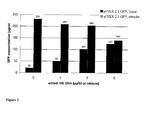
- Figure 2 shows an improvement of the protein synthesis rate specifically for linear template DNA by adding increasing amounts of sheared DNA.
- Blue columns transcription/translation mixtures of the green fluorescent protein (GFP) gene starting with linear DNA (EcoRV/Sph1-cleaved pIVEX2.1 GFP plasmid) incubated with a lysate from E. coli. 0, 1, 2, and 5 ⁇ g unspecific, sheared herring sperm DNA was added to the mixtures.
- Red columns Mixtures containing uncleaved circular pIVEX2.1 GFP plasmid to which 0, 1, 2 and 5 ⁇ g unspecific, sheared herring sperm DNA was added.
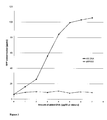
- Figure 3 shows that the addition of circular, unspecific DNA, in contrast to linear unspecific DNA, does not improve the rate of protein synthesis in a coupled transcription/translation mixture containing E. coli S30 lysate starting with a linear template.
- Red curve addition of 0 to 7 ⁇ g unspecific sheared herring sperm DNA to transcription/translation mixtures of the green fluorescent protein gene starting with a linear template DNA incubated with a lysate from E. coli. 0, 1, 2 and 5 ⁇ g unspecific sheared herring DNA was added to the mixtures.
- Blue curve addition of 0 to 7 ⁇ g circular pBR322 plasmid (instead of sheared herring sperm DNA) to the transcription/translation mixtures.
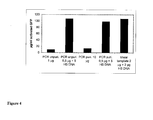
- Figure 4 shows an improved protein synthesis with addition of linear unspecific DNA in a coupled transcription/translation mixture containing an E. coli S30 lysate starting with an unpurified and purified PCR product.
- the plasmid pIVEX2.1 GFP which contained the sequence for the green fluorescent protein from Aequorea victoria in the form of a mutant GFPcycle 3 (Nature Biotechnology (1996) 14 , 315-319) was cleaved for 2 h at 37°C into 2830 bp, 1321 bp and 191 bp fragments on a preparative scale using 1.5 U SphI and EcoRV (Roche Diagnostics GmbH) per ⁇ g DNA.
- the 1321 bp fragment contained the coding sequence for GFP with the following important control elements for in vitro expression: T7 promoter, ribosomal binding site and T7 terminator.
- a 1115 bp fragment was amplified with the Expand High Fidelity PCR kit (Roche Diagnostics GmbH) for in vitro expression starting with PCR fragments.
- the PCR product began 30 bp upstream of the T7 promoter and contained the GFP-coding sequence up to the end of the T7 terminator.
- the following primers were used for the amplification: sense primer 5' gcttagatcgagatctcgatcccgcgaaattaatacgactcactatagggagac cacaacggtttc and antisense primer 5' ggaagctttcagcaaaaacccctcaagacccgtttagaggccccc aagg.
- Sheared herring sperm DNA and the circular plasmid pBR322 from Roche Diagnostics GmbH were used as unspecific competitor or sacrificial DNA.
- Transcription/translation reactions were carried out in a volume of 50 ⁇ l for 2 hours at 30°C.
- the reaction solution contained 80.5 mM potassium acetate, 10 mM magnesium acetate, 35 mM ammonium chloride, 4 mM magnesium chloride, 4 % polyethylene glycol 2000, 1 mM ATP, 0.5 mM CTP, 1 mM GTP, 0.5 mM UTP, 30 mM phosphoenolpyruvate, 8 ⁇ g/ml pyruvate kinase, 400 ⁇ M of each amino acid (all 20 naturally occurring amino acids), 0.1 mM folic acid, 0.1 mM EDTA, 50 mM HEPES-KOH pH 7.6/30°C, 20 ⁇ g/ml rifampicin, 0.03 % sodium azide, 2 ⁇ g/ml aprotinin, 1 mg/ml leupeptin, 1 ⁇ g/ml pepstatin A, 10
- E. coli MRE600 8 mM dithiothreitol, 100 U/ml Rnase-inhibitor, 15 ⁇ l E. coli lysate, 0.5 U/ ⁇ l T7-RNA polymerase.
- the E. coli lysate was prepared from the A19 strain by the method of Zubay (Annu. Rev. Genet. (1973) 7 , 267).
- Plasmid pIVEX2.1 GFP was cleaved on a preparative scale with 1.5 U each of SphI and EcoRV per ⁇ g DNA for 1 h at 37°C into 2830 bp, 1321 bp and 191 bp fragments. 2 ⁇ g aliquots of the cleavage mixture were incubated for 0, 2, 5, 30, 60 and 120 minutes with 26 ⁇ g sheared herring sperm DNA in a 50 ⁇ l transcription/translation mixture. The same incubations were carried out without the addition of sheared unspecific DNA. After ethanol precipitation of the DNA, it was separated in a 1 % agarose gel. (M, molecular weight marker; lane 14, cleaved plasmid without lysate addition).
- EcoRV/Sph1-cleaved pIVEX2.1 GFP plasmid was incubated at 30°C for 2 h in a coupled transcription/translation mixture containing E. coli S30 lysate. 0, 1, 2 and 5 ⁇ g unspecific sheared herring sperm DNA was added to the mixtures. The same incubations were carried out with uncleaved pIVEX2.1 GFP plasmid. GFP activity was measured by means of fluorescence spectroscopy.
- the samples were diluted 1:50 to 1:400 depending on their content with 100 mM HEPES-KOH pH 7.6/30°C, 14 mM magnesium acetate, 60 mM potassium acetate, 0.5 mM dithiothreitol.
- the PCR product which contained the coding sequence for GFP and the control elements T7 promoter, ribosomal binding site and T7 terminator was tested in the in vitro expression in a purified and unpurified form.
- Mixtures containing 1 ⁇ g PCR product or 0.5 ⁇ g PCR product plus 5 ⁇ g unspecific sheared herring sperm DNA (HS DNA) were incubated for 2 h at 30°C in a coupled transcription/translation mixture.
- the GFP activity was determined as described in fig. 2 by means of fluorescence spectroscopy.
Landscapes
- Health & Medical Sciences (AREA)
- Genetics & Genomics (AREA)
- Life Sciences & Earth Sciences (AREA)
- Engineering & Computer Science (AREA)
- Chemical & Material Sciences (AREA)
- Organic Chemistry (AREA)
- Zoology (AREA)
- Biomedical Technology (AREA)
- Wood Science & Technology (AREA)
- Biotechnology (AREA)
- General Engineering & Computer Science (AREA)
- Bioinformatics & Cheminformatics (AREA)
- Plant Pathology (AREA)
- Molecular Biology (AREA)
- Microbiology (AREA)
- Biophysics (AREA)
- Physics & Mathematics (AREA)
- Biochemistry (AREA)
- General Health & Medical Sciences (AREA)
- Crystallography & Structural Chemistry (AREA)
- Preparation Of Compounds By Using Micro-Organisms (AREA)
- Pharmaceuticals Containing Other Organic And Inorganic Compounds (AREA)
- Micro-Organisms Or Cultivation Processes Thereof (AREA)
- Measuring Or Testing Involving Enzymes Or Micro-Organisms (AREA)
Abstract
Description
- The present invention concerns a method for improving the stability of linear short DNA towards exonucleases in cell-free in vitro transcription/translation systems using lysates containing exonucleases or in cellular systems, wherein the stability of the linear short DNA is improved by adding unspecific linear DNA.
- Cell-free DNA-dependent in vitro transcription/translation works quite well in practice with respect to the expression of circular double helix DNA and with respect to the expression of long linear DNA. Attempts at expressing shorter linear DNA pieces had only limited success. The smaller the DNA that is used the more difficult it was to obtain appreciable amounts of gene product. It was established that these difficulties were due to the presence of exonucleases . Hence it was shown that exonuclease V is responsible for the degradation of linear DNA when S30 lysates of E. coli were transcribed and translated in vitro. Exonuclease V is composed of three subunits (the gene products recB, recC, redD). This exonuclease cleaves the linear DNA starting at its 3' end.
- It was attempted to remedy this problem by mutating the subunits of this exonuclease in order to remove the lytic activity. Yang et al., (1980) PNAS vol. 77, No. 12, pp 7029-7033 describe an improved protein synthesis starting from linear DNA templates using the E. coli strain CF300 after deletion of exonuclease V (elimination of the genes recB, recC; strain recB21).
- Leavel Basset et al., 1983 additionally mutated the RNase and polynucleotide phosphorylase genes (rna-19 pnp-7) in the recB21 strain (strain CLB7) and achieved a significantly higher protein expression with linear DNA templates after a one hour incubation period.
- Lesley et al., 1991 use an exonuclease V-deficient recD BL21 strain which was referred to as the SL119 strain and describe for the first time the method of in vitro protein synthesis starting from PCR-generated templates. Lysates of the strain SL119 are commercially available (Promega) for in vitro transcription/translation using linear templates.
- However, a disadvantage of the measures described above is that all these mutants grow more slowly and also the lysates obtained from these strains have a significantly poorer rate of synthesis. Apparently this exonuclease plays an important role in the metabolism of the bacteria. Hence it appears to be important to use lysates or cell cultures in which exonucleases are present.
- Another conceivable measure to nevertheless protect the nucleic acids against exonucleolytic degradation is to modify the nucleic acids either by protecting both ends or by using modified nucleotide building blocks as described in the literature for nucleic acids in the anti-sense field and in the following citations.
- Single-stranded DNA/RNA molecules can be protected by protecting the ends with alkyl groups and by modifying the bases; Pandolfi et al., (1999) Nucleosides & Nucleotides. 18(9), 2051-2069. Verheijen et al. (2000) Bioorganic & Medicinal Chemistry Letters 10, 801-804 show an increased stability of single-stranded DNA molecules by protecting the ends with 4-hydroxy-N-acetylprolinol, L-serinol or by 3'-3'-phosphodiester bonds. Pure or mixed phosphorothioate bonds and chemically modified oligonucleotides e.g. methylphosphonates and phosphoramidates are more stable and are degraded more slowly by exonucleases Kandimalla et al., NAR (1997) vol. 25. No. 2, pp 370-378. Tohda et al., (1994) Journal of Biotechnology 34 (1994) 61-69 show that RNA containing phosphorothioates is more stable towards nucleases and therefore has a higher translation efficiency. However, on the whole only small amounts of protein could be produced. Tang et al., (1993) NAR, vol. 21, No. 11, pp 2279-2735 show that hairpin loop structures protect the 3' end of single-stranded DNAs against exonucleolytic degradation. Hirao et al., (1993) FEBS, vol. 321, No. 2, 3, 169-172 show that the hairpin, which the DNA fragment d(GCGAAGC) forms, is extremely resistant to nucleases from E. coli extracts. Yoshizawa et al., (1994) NAR, Vol. 22, No. 12, pp 2217-2221 describe that a stabilization of the 3' end of mRNA by hybridization with the same hairpin results in a 200-fold increase in the efficiency of in vitro translation with E. coli extracts. Good and Nielsen (1998) PNAS USA 95, 2073-6 show that synthetic molecules containing bases that are coupled to a peptide backbone (peptide nucleic acid, PNA) are resistant to hydrolytic cleavage in E. coli extracts and can be used as anti-sense molecules. Burdick and Emlen (1985) J. Immunology 135, 2593-7 describe that in DNA anti-DNA immunocomplexes, IgG molecules can protect the DNA that is bound to them from nucleolytic degradation.
EP 0 967 274 A2 describes methods for preparing dumbbell-shaped linear double-stranded DNA molecules. In this method a plasmid is cleaved with restriction enzymes and the resulting double-stranded non-covalently closed molecules are then modified to form dumbbell-shaped constructs by digesting the ends with a restriction endonuclease that forms single-stranded overhangs and subsequently ligating matching hairpin oligomers onto the resulting single-strand overhangs. This construct has an increased stability towards the exonucleases of T7 DNA polymerase. - A disadvantage of these measures is that the synthesis of these modified nucleotide building blocks is often very complicated. On the one hand, the preparation of modified nucleotides is complicated and expensive. On the other hand, additional time-consuming process steps are required to incorporate the modification. In addition difficulties can arise in using the modified nucleic acids as templates. In the case of phosphothioates a disadvantage is for example that the synthesis is very complicated and a mixture of diastereomers is formed which, after incorporation, is not optimally suitable as a template for transcription or translation.
- Other cell-free expression systems without protection strategies are described in the prior art.: In US 5571690 Hecht describes a method for the cell-free synthesis of a protein starting with a template which was generated in a PCR reaction. In this method he amplifies the entire gene sequence including the phage promoter region from a plasmid. After an in vitro transcription he uses a lysate from rabbit reticulocytes for the translation. With this method it was possible to produce 57 µg/ml of a protein using mRNA which was modified after transcription with a 5'CAP. Martemyanov et al., (1997) FEBS Lett. 414, 268-270 use an S30 extract from E. coli for the cell-free synthesis of a protein starting with a template which was generated in a 2-step PCR reaction. In this method the target gene is firstly amplified in a PCR reaction with the aid of two gene-specific oligonucleotide primers and subsequently subjected to a second PCR reaction in which a so-called megaprimer is used to fuse the T7 promoter and the ribosomal binding site to the amplified gene. It was only possible to produce radioactively detectable amounts of protein. Yang et al., (2000) J. Bacteriol. 182, 295-302 use an S30 extract from E. coli to demonstrate the cell-free synthesis of a protein starting with a template which was generated in a PCR reaction. It was only possible in this method to produce radioactively detectable amounts of protein. Nakano et al., (1999) Biotechnol. & Bioeng. 64, 194-199 use an S30 extract from E. coli in a hollow fibre reactor to at least produce 80 µg/ml protein reaction mixture starting with a template which was generated in a PCR reaction. In US 6027913 Sommer used an extract from reticulocytes for the cell-free synthesis of a protein starting with a template which was generated in a single step PCR reaction. In this method the T7 promoter and the ribosomal binding site are fused to the target gene. Even with this method only small amounts of protein were produced.
- However, the methods described above are not satisfactory. Although eukaryotic lysates from rabbit reticulocytes are relatively nuclease-free, a disadvantage is that these lysates cannot be produced economically in large amounts. They only allow very small protein yields. The same applies to lysates from wheat germs which either have to be very laboriously prepared or they are otherwise strongly contaminated with translation-inhibiting factors from the surrounding tissue (JP 236 896).
- In contrast E. coli lysates yield much larger amounts of protein. However, the described methods for preparing lysates from E. coli only allow relatively short reaction periods of up to about one hour with linear DNA templates since afterwards these DNA templates are completely degraded by the exonucleases contained in the lysate. The lysates obtained from E. coli exonuclease mutants (i.e. exonuclease-deficient strains) have a significantly poorer synthesis performance than comparable wildtype strains such as the A19 strain for example.
- The methods for protecting mRNA have the disadvantage that firstly an in vitro transcription has to be carried out before the protected mRNA can be added to the lysate. This in turn does not permit a coupled reaction and a continuous RNA synthesis. Methods for protecting RNA are described in Tohda et al. (1994) Journal of Biotechnology 34 (1994) 61-69, Yoshizawa et al., (1994) NAR, vol. 22, pp 2217-2221.
- Hence the object of the present invention was a method for improving the stability of linear short DNA towards exonucleases in cell-free DNA-dependent in vitro transcription/translation systems using lysates containing exonucleases or in cellular systems.
- This object was achieved according to the invention by a method for improving the stability of linear short DNA towards exonucleases in cell-free DNA-dependent in vitro transcription/translation systems using lysates containing exonucleases or in cellular systems wherein the stability of the linear short DNA is improved by adding unspecific linear DNA.
- The method according to the invention is preferably used for coupled in vitro transcription/translation systems. Coupled in the sense of the present invention means that the transcription and translation occur concurrently in one reaction. Coupled in the sense of the present invention can also mean that the mRNA molecules which have just been formed by transcription are already translated by the ribosomes.
- The method according to the invention is particularly preferably used for cell-free in vitro transcription/translation systems using lysates containing exonucleases. The method is especially used for cell-free in vitro transcription/translation systems using lysates containing exonucleases from prokaryotes e.g. lysates from E. coli.
- The present invention also concerns the use of the method according to the invention for cell-free in vitro transcription/translation systems using eukaryotic lysates containing exonucleases. These lysates can be from oocytes or eggs e.g. from Xenopus. It is also possible to use lysates from wheat germs or rabbit reticulocytes. The method according to the invention can also be used when the lysates containing exonuclease are lysates from eukaryotic cells which have been grown in cell culture.
- The use of a prokaryotic lysate is most preferred according to the invention. Although the common eukaryotic lysate from rabbit reticulocytes contains a much smaller quantity of exonucleases than that of the prokaryote E. coli for example and would therefore be preferred with regard to the stability of linear templates. However, the use of a prokaryotic lysate is nevertheless advantageous since, in contrast to eukaryotic ribosomes, the prokaryotic ribosomes do not need a CAP structure for a high synthesis rate. This CAP structure cannot in turn be formed in a coupled transcription/translation reaction i.e. a reaction with concurrent transcription and translation.
- Short DNA in the sense of the present invention means that only up to 10,000 additional phase pairs are present before and after a gene (i.e. gene including its regulatory elements such as promoter, terminator, translation-increasing elements).
- However, the added linear DNA (sacrificial or competitor DNA) should not result in an undesired background synthesis of proteins. Hence the added DNA must be unspecific. Within the sense of the present invention unspecific DNA means that the added linear DNA is not transcribed in the existing in vitro transcription/translation system.
- Various measures can be used to ensure that the added linear DNA is not transcribed. In in vitro transcription/translation systems using exonuclease-containing lysates, RNA polymerases are preferably used which only bind the DNA to be expressed or can only use the DNA to be expressed as a template for RNA synthesis but not the added unspecific DNA. This is further illustrated by the following case:
- It is intended to transcribe prokaryotic DNA. In this case it is possible to use a prokaryotic RNA polymerase or an RNA polymerase from bacteriophages such as that of the T7, T3 or SP6 phages as the polymerase which recognizes the corresponding prokaryotic T7, T3 or SP6 promoter but not the promoters of eukaryotic systems. Hence in this case eukaryotic DNA can be added as the unspecific DNA. Thus only the gene after a prokaryotic T7, T3 or SP6 promoter will be transcribed but not the added eukaryotic DNA which is therefore referred to as unspecific for the system that is used (gene with prokaryotic, T7, T3 or SP6 promoter plus prokaryotic T7, T3 or SP6 promoter).
- In cases where the sacrificial DNA is eukaryotic DNA it is preferable to add sheared DNA from herring sperm, salmon sperm or calf thymus.
- Thus one method from preventing the expression of the sacrificial DNA is for the added DNA to be from a foreign species or to contain no regulatory elements that could be recognized by the polymerase used for the expression.
- Another preferred measure for preventing unspecific expression for the method according to the invention in in vitro transcription/translation systems using exonuclease-containing lysates is to inhibit the polymerases that may be present in the lysates or cellular systems in order to prevent unspecific expression of added DNA or of DNA present in the lysates / cellular systems.
- It is particularly preferred when the transcription of unspecific DNA is prevented by inhibiting DNA-dependent RNA polymerases which would also transcribe unspecific DNA. Hence if for example the in vitro translation system is an in vitro transcription/translation system using exonuclease-containing lysates that are obtained from prokaryotes such as E. coli lysates, the gene to be expressed can be provided with a promoter, as described above, which is only recognized by a bacteriophage RNA polymerase such as T7, T3 or SP6 RNA polymerase. Then the T7, T3 or SP6 RNA polymerase is added, (first measure for preventing unspecific expression). A substance such as rifampicin is added as an additional measure which inhibits DNA-dependent RNA polymerases in the prokaryote lysate. Hence only the bacteriophage RNA polymerase such as T7, T3 or SP6 RNA polymerase is active, which only recognizes the promoter of the gene to be expressed. These measures largely suppress unspecific expression.
- An additional or alternative measure is to add other substances instead of rifampicin such as streptolydigin, tirandamycin, sorangicin or rifamycin derivatives which inhibit chain extension of RNA by binding to the DNA-dependent RNA polymerases of the prokaryote lysates.
- In the case of in vitro transcription/translation systems using exonuclease-containing lysates that are derived from eukaryotes, a substance can be added to prevent unspecific expression which inhibits RNA polymerase II in the eukaryotic lysates e.g. alpha-amanitin. Then special polymerases can be added such as T7, T3 RNA polymerase or SP6 RNA polymerase which only accept the gene to be expressed as a template when the gene is located behind an appropriate promoter.
- According to the inventive method it is preferable to add unspecific DNA at a concentration of 1 to 200 µg/ml per translation mixture. A concentration of 10 to 100 µg/ml per translation mixture is particularly preferred.
- Furthermore it is preferred that the unspecific DNA has a length of at least 10 bp.
- An advantage of the method according to the invention is that genes do not have to be cloned in a complicated manner into a circular plasmid vector in order to enable protein synthesis, but that the desired gene can be amplified directly from a gene bank or RNA fraction by PCR or RT-PCR for a protein expression. The promoter and terminator regions required for expression can additionally be inserted in this PCR.
- It is also conceivable that such unspecific DNA is added in so-called DNA immunization with a linear DNA expression construct. In DNA immunization it is usual to inject a DNA expression construct into the animal which is then taken up and expressed by the cells of the animals. Until uptake into the cells the DNA piece is exposed to exonucleolytic attack and the added unspecific DNA would protect against this.
- The advantages of the DNA stabilization according to the inventive method are that the template can continuously reform mRNA and hence the process of protein synthesis can proceed for a longer period in for example the CFCF and CECF processes described by Spirin et al.,
EP 0 312 617,EP 0 401 369. In the CFCF and CECF techniques cited by Spirin the in vitro translation/transcription is supplied with new substrates and reaction products are continuously removed. The in vitro transcription/translation reaction can thus proceed over a longer period i.e. up to several days. Hence the DNA template has to be protected for a longer period than would be the case in a usual in vitro translation/transcription which lasts for 30 minutes up to a maximum of two hours. - It was shown that the expression of a protein starting with a linear template could be increased several-fold by the method according to the invention.
- The present invention also concerns a kit consisting of one or several vessels which contain the following components:
- a lysate containing ribosomes prepared from prokaryotic or eukaryotic cells by methods which are known to a person skilled in the art for producing lysates for in vitro translation;
- one or more of the 20 naturally-occurring L-amino acids;
- one or more naturally-occurring or synthetic t-RNAs
- one or more naturally-occurring nucleotides which can be unphosphorylated or be present as monophosphates, diphosphates or triphosphates;
- linear unspecific DNA.
- The present invention also concerns a reagent solution containing
- a lysate containing ribosomes prepared from prokaryotic or eukaryotic cells by methods which are known to a person skilled in the art for producing lysates for in vitro translation;
- one or more of the 20 naturally-occurring L-amino acids;
- one or more naturally-occurring or synthetic t-RNAs
- one or more naturally-occurring nucleotides which can be unphosphorylated or be present as monophosphates, diphosphates or triphosphates;
- linear unspecific DNA.
- Methods which are known to a person skilled in the art for producing lysates for in vitro translation are described for example in Zubay, G (1973) Annu. Rev. Genet. 7, 267 ("Prokaryotische Extrakte"); Clemens M.J. & Pruijn G.J.M. (1999) pp 129-168 in Protein Expression - A practical Approach, Higgins, S.J. & Hames, B.D. eds. Oxford University Press.
- Figure 1 shows the increased stability of linear DNA (plasmid fragments having a size of 2830 and 1321 base pairs) in a coupled transcription/translation mixture containing an E. coli S30 lysate in the presence of sheared herring sperm DNA
lane 1:M=marker
lanes 2-7: in vitro transcription/translation mixtures without DNA addition after 0, 2, 5, 30, 60 and 120 min incubation period.
lanes 8- 13: in vitro transcription/translation mixtures with addition of 520 µg/ml sheared herring sperm DNA in each case after 0, 2, 5, 30, 60 and 120 min incubation period.
lane 14: plasmid fragments having a size of 2830 and 1321 base pairs before incubation. - Figure 2 shows an improvement of the protein synthesis rate specifically for linear template DNA by adding increasing amounts of sheared DNA.
Blue columns: transcription/translation mixtures of the green fluorescent protein (GFP) gene starting with linear DNA (EcoRV/Sph1-cleaved pIVEX2.1 GFP plasmid) incubated with a lysate from E. coli. 0, 1, 2, and 5 µg unspecific, sheared herring sperm DNA was added to the mixtures.
Red columns: Mixtures containing uncleaved circular pIVEX2.1 GFP plasmid to which 0, 1, 2 and 5 µg unspecific, sheared herring sperm DNA was added. - Figure 3 shows that the addition of circular, unspecific DNA, in contrast to linear unspecific DNA, does not improve the rate of protein synthesis in a coupled transcription/translation mixture containing E. coli S30 lysate starting with a linear template.
Red curve: addition of 0 to 7 µg unspecific sheared herring sperm DNA to transcription/translation mixtures of the green fluorescent protein gene starting with a linear template DNA incubated with a lysate from E. coli. 0, 1, 2 and 5 µg unspecific sheared herring DNA was added to the mixtures.
Blue curve: addition of 0 to 7 µg circular pBR322 plasmid (instead of sheared herring sperm DNA) to the transcription/translation mixtures. - Figure 4 shows an improved protein synthesis with addition of linear unspecific DNA in a coupled transcription/translation mixture containing an E. coli S30 lysate starting with an unpurified and purified PCR product.
- Hence it can be seen already with an unpurified PCR product that protein synthesis is possible in a coupled transcription/translation mixture containing an E. coli S30 lysate when linear unspecific DNA is added.
Column Columns Column 5 positive control: EcoRV/Sph1-cleaved pIVEX2.1 GFP plasmid containing a coding sequence for GFP and the control elements T7 promoter, ribosomal binding site and T7 terminator were tested in a purified and unpurified form in the in vitro expression.
Columns 2 and 4: 0.5 µg PCR product plus 5 µg unspecific sheared herring sperm DMA (HS DNA)
columns 1 and 3: 1 µg PCR product. - The plasmid pIVEX2.1 GFP which contained the sequence for the green fluorescent protein from Aequorea victoria in the form of a mutant GFPcycle 3 (Nature Biotechnology (1996) 14, 315-319) was cleaved for 2 h at 37°C into 2830 bp, 1321 bp and 191 bp fragments on a preparative scale using 1.5 U SphI and EcoRV (Roche Diagnostics GmbH) per µg DNA. The 1321 bp fragment contained the coding sequence for GFP with the following important control elements for in vitro expression: T7 promoter, ribosomal binding site and T7 terminator.
- A 1115 bp fragment was amplified with the Expand High Fidelity PCR kit (Roche Diagnostics GmbH) for in vitro expression starting with PCR fragments. The PCR product began 30 bp upstream of the T7 promoter and contained the GFP-coding sequence up to the end of the T7 terminator. The following primers were used for the amplification: sense primer 5' gcttagatcgagatctcgatcccgcgaaattaatacgactcactatagggagac cacaacggtttc and antisense primer 5' ggaagctttcagcaaaaaacccctcaagacccgtttagaggcccc aagg. 50 ng pIVEX2.1 GFP was used as the template. The PCR cycle of 1 min 94°C, 1 minute 65°C, 1 minute 72°C was repeated 30 times. The concentration of the product was estimated by means of an agarose gel. The High Pure PCR Purification kit (Roche Diagnostics GmbH) was used to purify the PCR product.
- Sheared herring sperm DNA and the circular plasmid pBR322 from Roche Diagnostics GmbH were used as unspecific competitor or sacrificial DNA.
- Transcription/translation reactions were carried out in a volume of 50 µl for 2 hours at 30°C. The reaction solution contained 80.5 mM potassium acetate, 10 mM magnesium acetate, 35 mM ammonium chloride, 4 mM magnesium chloride, 4
% polyethylene glycol 2000, 1 mM ATP, 0.5 mM CTP, 1 mM GTP, 0.5 mM UTP, 30 mM phosphoenolpyruvate, 8 µg/ml pyruvate kinase, 400 µM of each amino acid (all 20 naturally occurring amino acids), 0.1 mM folic acid, 0.1 mM EDTA, 50 mM HEPES-KOH pH 7.6/30°C, 20 µg/ml rifampicin, 0.03 % sodium azide, 2 µg/ml aprotinin, 1 mg/ml leupeptin, 1 µg/ml pepstatin A, 10 mM acetylphosphate, 100 µg/ml tRNA from E. coli MRE600, 8 mM dithiothreitol, 100 U/ml Rnase-inhibitor, 15 µl E. coli lysate, 0.5 U/µl T7-RNA polymerase. The E. coli lysate was prepared from the A19 strain by the method of Zubay (Annu. Rev. Genet. (1973) 7, 267). - Plasmid pIVEX2.1 GFP was cleaved on a preparative scale with 1.5 U each of SphI and EcoRV per µg DNA for 1 h at 37°C into 2830 bp, 1321 bp and 191 bp fragments. 2 µg aliquots of the cleavage mixture were incubated for 0, 2, 5, 30, 60 and 120 minutes with 26 µg sheared herring sperm DNA in a 50 µl transcription/translation mixture. The same incubations were carried out without the addition of sheared unspecific DNA. After ethanol precipitation of the DNA, it was separated in a 1 % agarose gel. (M, molecular weight marker; lane 14, cleaved plasmid without lysate addition).
- EcoRV/Sph1-cleaved pIVEX2.1 GFP plasmid was incubated at 30°C for 2 h in a coupled transcription/translation mixture containing E. coli S30 lysate. 0, 1, 2 and 5 µg unspecific sheared herring sperm DNA was added to the mixtures. The same incubations were carried out with uncleaved pIVEX2.1 GFP plasmid. GFP activity was measured by means of fluorescence spectroscopy. For the measurement the samples were diluted 1:50 to 1:400 depending on their content with 100 mM HEPES-KOH pH 7.6/30°C, 14 mM magnesium acetate, 60 mM potassium acetate, 0.5 mM dithiothreitol.
- EcoRV/Sph1-cleave pIVEX2.1 GFP plasmid was incubated at 30°C for 2 h in a coupled transcription/translation mixture containing E. coli S30 lysate. 0 to 7 µg unspecific sheared herring sperm DNA or 0 to 7 µg circular pBR322 plasmid was added to the mixtures. The GFP activity was measured by means of fluorescence spectroscopy as described in fig.2.
- The PCR product which contained the coding sequence for GFP and the control elements T7 promoter, ribosomal binding site and T7 terminator was tested in the in vitro expression in a purified and unpurified form. Mixtures containing 1 µg PCR product or 0.5 µg PCR product plus 5 µg unspecific sheared herring sperm DNA (HS DNA) were incubated for 2 h at 30°C in a coupled transcription/translation mixture. The GFP activity was determined as described in fig. 2 by means of fluorescence spectroscopy.
Claims (16)
- Method for improving the stability of linear short DNA towards exonucleases in cell-free in vitro transcription/translation systems using lysates containing exonucleases or in cellular protein expression systems containing exonucleases wherein the stability of the linear short DNA is improved by adding unspecific linear DNA.
- Method as claimed in claim 1, wherein the unspecific DNA is sheared DNA from herring sperm, salmon sperm or calf thymus.
- Method as claimed in one of the claims 1 or 2, wherein the unspecific DNA is sheared DNA from herring sperm.
- Method as claimed in one of the claims 1 to 3, wherein the cell-free in vitro transcription/translation systems are cell-free coupled in vitro transcription/translation systems.
- Method as claimed in one of the claims 1 to 4, wherein the lysates containing exonucleases are prokaryotic lysates.
- Method as claimed in one of the claims 1 to 5, wherein the lysates containing exonucleases are E coli lysates.
- Method as claimed in one of the claims 1 to 4, wherein the lysates containing exonucleases are eukaryotic lysates.
- Method as claimed in claim 7, wherein the lysates containing exonucleases are lysates from eukaryotic cells which have been grown in cell culture.
- Method as claimed in one of the claims 1 to 8, wherein the unspecific DNA is added at a concentration of 1 to 200 µg/ml per translation mixture.
- Method as claimed in one of the claims 1 to 9, wherein the unspecific DNA is added at a concentration of 10 to 100 µg/ml per translation mixture.
- Method as claimed in one of the claims 1 to 10, wherein the unspecific DNA has a length of at least 10 bp.
- Use of a method as claimed in one of the claims 1 - 11 to express a protein.
- Use of the method as claimed in one of the claims 1 - 11 to express a protein, wherein the desired gene is directly amplified from a gene bank or RNA fraction by PCR or RT-PCR.
- Use of the method as claimed in one of the claims 1 - 11 to express a protein in a CFCF and CECF reactor.
- Kit consisting of one or several vessels which contain the following components:a lysate containing ribosomes prepared from prokaryotic or eukaryotic cells by a method for producing lysates for in vitro translation;one or more of the 20 naturally-occurring L-amino acids;one or more naturally-occurring or synthetic t-RNAsone or more naturally-occurring nucleotides which can be unphosphorylated or be present as monophosphates, diphosphates or triphosphateslinear unspecific DNA.
- Reagent solution containinga lysate containing ribosomes prepared from prokaryotic or eukaryotic cells by a method for producing lysates for in vitro translation;one or more of the 20 naturally-occurring L-amino acids;one or more naturally-occurring or synthetic t-RNAsone or more naturally-occurring nucleotides which can be unphosphorylated or be present as monophosphates, diphosphates or triphosphates;linear unspecific DNA.
Applications Claiming Priority (2)
| Application Number | Priority Date | Filing Date | Title |
|---|---|---|---|
| DE10119006 | 2001-04-18 | ||
| DE10119006A DE10119006A1 (en) | 2001-04-18 | 2001-04-18 | Method for improving the stability of linear DNA in cell-free in vitro transcription / translation systems |
Publications (3)
| Publication Number | Publication Date |
|---|---|
| EP1251168A1 true EP1251168A1 (en) | 2002-10-23 |
| EP1251168B1 EP1251168B1 (en) | 2004-06-23 |
| EP1251168B8 EP1251168B8 (en) | 2004-08-11 |
Family
ID=7681852
Family Applications (1)
| Application Number | Title | Priority Date | Filing Date |
|---|---|---|---|
| EP02008545A Expired - Lifetime EP1251168B8 (en) | 2001-04-18 | 2002-04-16 | Method for improving the stability of linear DNA in cell-free in vitro transcription/translation systems |
Country Status (5)
| Country | Link |
|---|---|
| US (1) | US7011958B2 (en) |
| EP (1) | EP1251168B8 (en) |
| AT (1) | ATE269898T1 (en) |
| DE (2) | DE10119006A1 (en) |
| ES (1) | ES2222417T3 (en) |
Cited By (2)
| Publication number | Priority date | Publication date | Assignee | Title |
|---|---|---|---|---|
| EP1564289A1 (en) * | 2004-02-10 | 2005-08-17 | Roche Diagnostics GmbH | Stabilization of linear double-stranded DNA in the presence of exonucleases |
| US7276592B2 (en) | 2003-04-05 | 2007-10-02 | Roche Diagnostics Operations, Inc. | Nucleotide analogs with six-membered rings |
Families Citing this family (1)
| Publication number | Priority date | Publication date | Assignee | Title |
|---|---|---|---|---|
| MX2022001664A (en) | 2019-08-09 | 2022-07-19 | Nutcracker Therapeutics Inc | MICROFLUIDIC DEVICE AND METHODS OF USE THEREOF. |
Citations (2)
| Publication number | Priority date | Publication date | Assignee | Title |
|---|---|---|---|---|
| WO1994024303A1 (en) * | 1993-04-08 | 1994-10-27 | Research Development Foundation | Cell free system for protein synthesis and use of chaperone proteins therein |
| JP2001136971A (en) * | 1999-11-12 | 2001-05-22 | Nippon Flour Mills Co Ltd | Method of protein synthesis |
Family Cites Families (7)
| Publication number | Priority date | Publication date | Assignee | Title |
|---|---|---|---|---|
| US6027913A (en) * | 1988-01-28 | 2000-02-22 | Sommer; Steven S. | Nucleic acid amplification with direct sequencing |
| GB8920097D0 (en) | 1989-09-06 | 1989-10-18 | Ici Plc | Amplification processes |
| US5571690A (en) * | 1991-05-08 | 1996-11-05 | The University Of Virginia Patents Foundation | Method for the cell-free synthesis of proteins |
| JPH11323141A (en) | 1998-05-20 | 1999-11-26 | Shiseido Co Ltd | Biodegradable resin composition |
| DE19826758C1 (en) | 1998-06-15 | 1999-10-21 | Soft Gene Gmbh | Production of closed, double-stranded DNA molecules for use in gene therapy or genetic vaccination |
| US6323009B1 (en) * | 2000-06-28 | 2001-11-27 | Molecular Staging, Inc. | Multiply-primed amplification of nucleic acid sequences |
| AU2002247014A1 (en) * | 2001-01-19 | 2002-07-30 | Genetica, Inc. | Methods and reagents for amplification and manipulation of vector and target nucleic acid sequences |
-
2001
- 2001-04-18 DE DE10119006A patent/DE10119006A1/en not_active Withdrawn
-
2002
- 2002-04-16 AT AT02008545T patent/ATE269898T1/en active
- 2002-04-16 EP EP02008545A patent/EP1251168B8/en not_active Expired - Lifetime
- 2002-04-16 ES ES02008545T patent/ES2222417T3/en not_active Expired - Lifetime
- 2002-04-16 DE DE60200661T patent/DE60200661T2/en not_active Expired - Lifetime
- 2002-04-17 US US10/124,663 patent/US7011958B2/en not_active Expired - Fee Related
Patent Citations (2)
| Publication number | Priority date | Publication date | Assignee | Title |
|---|---|---|---|---|
| WO1994024303A1 (en) * | 1993-04-08 | 1994-10-27 | Research Development Foundation | Cell free system for protein synthesis and use of chaperone proteins therein |
| JP2001136971A (en) * | 1999-11-12 | 2001-05-22 | Nippon Flour Mills Co Ltd | Method of protein synthesis |
Non-Patent Citations (3)
| Title |
|---|
| JACKSON M ET AL: "Enhanced polypeptide synthesis programmed by linear DNA fragments in cell-free extracts lacking exonuclease V.", FEBS LETTERS. NETHERLANDS 14 NOV 1983, vol. 163, no. 2, 14 November 1983 (1983-11-14), pages 221 - 224, XP008005956, ISSN: 0014-5793 * |
| PATENT ABSTRACTS OF JAPAN vol. 2000, no. 22 9 March 2001 (2001-03-09) * |
| WIRTH R ET AL: "FACTORS MODULATING TRANSCRIPTION AND TRANSLATION IN VITRO OF RIBOSOMAL PROTEIN S20 AND ISOLEUCYL-TRNA SYNTHETASE FROM ESCHERICHIA COLI", EUROPEAN JOURNAL OF BIOCHEMISTRY, BERLIN, DE, vol. 114, 1981, pages 429 - 437, XP002932536, ISSN: 0014-2956 * |
Cited By (2)
| Publication number | Priority date | Publication date | Assignee | Title |
|---|---|---|---|---|
| US7276592B2 (en) | 2003-04-05 | 2007-10-02 | Roche Diagnostics Operations, Inc. | Nucleotide analogs with six-membered rings |
| EP1564289A1 (en) * | 2004-02-10 | 2005-08-17 | Roche Diagnostics GmbH | Stabilization of linear double-stranded DNA in the presence of exonucleases |
Also Published As
| Publication number | Publication date |
|---|---|
| DE10119006A1 (en) | 2002-10-24 |
| EP1251168B8 (en) | 2004-08-11 |
| ES2222417T3 (en) | 2005-02-01 |
| EP1251168B1 (en) | 2004-06-23 |
| DE60200661D1 (en) | 2004-07-29 |
| ATE269898T1 (en) | 2004-07-15 |
| DE60200661T2 (en) | 2005-07-07 |
| US20030073201A1 (en) | 2003-04-17 |
| US7011958B2 (en) | 2006-03-14 |
| ES2222417T8 (en) | 2014-06-06 |
Similar Documents
| Publication | Publication Date | Title |
|---|---|---|
| EP1251179A2 (en) | Method for protein expression starting from stabilized linear short DNA in cell-free in vitro transcription/translation systems with exonuclease-containing lysates or in a cellular system containing exonucleases | |
| Haugel‐Nielsen et al. | The rpsO mRNA of Escherichia coli is polyadenylated at multiple sites resulting from endonucleolytic processing and exonucleolytic degradation. | |
| Ohimann et al. | Proteolytic cleavage of initiation factor elF-4γ in the reticulocyte lysate inhibits translation of capped mRNAs but enhances that of uncapped mRNAs | |
| ES2991825T3 (en) | Cell-free protein expression using a rolling circle amplification product | |
| Paterson et al. | Efficient translation of prokaryotic mRNAs in a eukaryotic cell-free system requires addition of a cap structure | |
| TW202128996A (en) | Compositions and methods for in vivo synthesis of unnatural polypeptides | |
| EP3684934B1 (en) | In vivo rna or protein expression using double-stranded concatemeric dna including phosphorothioated nucleotides | |
| Kikuchi et al. | Cleavage of tRNA within the mature tRNA sequence by the catalytic RNA of RNase P: implication for the formation of the primer tRNA fragment for reverse transcription in copia retrovirus-like particles. | |
| White et al. | RNA end-labeling and RNA ligase activities can produce a circular rRNA in whole cell extracts from trypanosomes | |
| US20260078437A1 (en) | Cell-free method of producing synthetic circular nucleic acid | |
| EP1251168B1 (en) | Method for improving the stability of linear DNA in cell-free in vitro transcription/translation systems | |
| Rivera et al. | Expression of bacteriophage M13 DNA in vivo. Localization of the transcription initiation and termination signal of the mRNA coding for the major capsid protein | |
| US5079151A (en) | Production of branched RNA-linked multi-copy single-stranded DNA using permeabilized cells | |
| EP1564289A1 (en) | Stabilization of linear double-stranded DNA in the presence of exonucleases | |
| US6344345B1 (en) | Method for producing double-stranded DNA whose terminal homopolymer part is eliminated and method for determining nucleotide sequence | |
| US20250101480A1 (en) | Compositions and methods for preparing capped mrna | |
| Hoffmann et al. | High-level cell-free protein expression from PCR-generated DNA templates | |
| JP4351776B2 (en) | Protein synthesis method | |
| WO2026010863A2 (en) | Programmable cleavage of rna | |
| THOMAS HOFFMANN | High-Level Cell-Free Protein Expression from PCR-Generated DNA Templates | |
| Akimoto et al. | Transcriptional regulation of F plasmid gene srnB: rifampicin‐promoted in vitro readthrough of a terminator in the leader region | |
| Leung | Concerted evolution of a cluster of X-linked tRNA4 7 genes from Drosophila melanogaster | |
| Wang | The evolutionarily conserved arginine attenuator peptide regulates the movement of ribosomes that have translated it | |
| JPH10225290A (en) | Method for producing nested DNA deletion by in vitro reaction using transposase | |
| Nedea | Identification of factors regulating transcription termination |
Legal Events
| Date | Code | Title | Description |
|---|---|---|---|
| PUAI | Public reference made under article 153(3) epc to a published international application that has entered the european phase |
Free format text: ORIGINAL CODE: 0009012 |
|
| AK | Designated contracting states |
Kind code of ref document: A1 Designated state(s): AT BE CH CY DE DK ES FI FR GB GR IE IT LI LU MC NL PT SE TR |
|
| AX | Request for extension of the european patent |
Free format text: AL;LT;LV;MK;RO;SI |
|
| 17P | Request for examination filed |
Effective date: 20030423 |
|
| AKX | Designation fees paid |
Designated state(s): AT BE CH CY DE DK ES FI FR GB GR IE IT LI LU MC NL PT SE TR |
|
| 17Q | First examination report despatched |
Effective date: 20030625 |
|
| GRAP | Despatch of communication of intention to grant a patent |
Free format text: ORIGINAL CODE: EPIDOSNIGR1 |
|
| GRAS | Grant fee paid |
Free format text: ORIGINAL CODE: EPIDOSNIGR3 |
|
| GRAA | (expected) grant |
Free format text: ORIGINAL CODE: 0009210 |
|
| AK | Designated contracting states |
Kind code of ref document: B1 Designated state(s): AT BE CH CY DE DK ES FI FR GB GR IE IT LI LU MC NL PT SE TR |
|
| PG25 | Lapsed in a contracting state [announced via postgrant information from national office to epo] |
Ref country code: FI Free format text: LAPSE BECAUSE OF FAILURE TO SUBMIT A TRANSLATION OF THE DESCRIPTION OR TO PAY THE FEE WITHIN THE PRESCRIBED TIME-LIMIT Effective date: 20040623 Ref country code: TR Free format text: LAPSE BECAUSE OF FAILURE TO SUBMIT A TRANSLATION OF THE DESCRIPTION OR TO PAY THE FEE WITHIN THE PRESCRIBED TIME-LIMIT Effective date: 20040623 |
|
| REG | Reference to a national code |
Ref country code: GB Ref legal event code: FG4D |
|
| REG | Reference to a national code |
Ref country code: CH Ref legal event code: EP |
|
| RAP2 | Party data changed (patent owner data changed or rights of a patent transferred) |
Owner name: ROCHE DIAGNOSTICS GMBH Owner name: F. HOFFMANN-LA ROCHE AG |
|
| REG | Reference to a national code |
Ref country code: IE Ref legal event code: FG4D |
|
| REF | Corresponds to: |
Ref document number: 60200661 Country of ref document: DE Date of ref document: 20040729 Kind code of ref document: P |
|
| NLT2 | Nl: modifications (of names), taken from the european patent patent bulletin |
Owner name: F. HOFFMANN-LA ROCHE AG |
|
| PG25 | Lapsed in a contracting state [announced via postgrant information from national office to epo] |
Ref country code: DK Free format text: LAPSE BECAUSE OF FAILURE TO SUBMIT A TRANSLATION OF THE DESCRIPTION OR TO PAY THE FEE WITHIN THE PRESCRIBED TIME-LIMIT Effective date: 20040923 Ref country code: GR Free format text: LAPSE BECAUSE OF FAILURE TO SUBMIT A TRANSLATION OF THE DESCRIPTION OR TO PAY THE FEE WITHIN THE PRESCRIBED TIME-LIMIT Effective date: 20040923 |
|
| REG | Reference to a national code |
Ref country code: SE Ref legal event code: TRGR |
|
| REG | Reference to a national code |
Ref country code: ES Ref legal event code: FG2A Ref document number: 2222417 Country of ref document: ES Kind code of ref document: T3 |
|
| ET | Fr: translation filed | ||
| PG25 | Lapsed in a contracting state [announced via postgrant information from national office to epo] |
Ref country code: CY Free format text: LAPSE BECAUSE OF FAILURE TO SUBMIT A TRANSLATION OF THE DESCRIPTION OR TO PAY THE FEE WITHIN THE PRESCRIBED TIME-LIMIT Effective date: 20050416 Ref country code: LU Free format text: LAPSE BECAUSE OF NON-PAYMENT OF DUE FEES Effective date: 20050416 |
|
| PG25 | Lapsed in a contracting state [announced via postgrant information from national office to epo] |
Ref country code: IE Free format text: LAPSE BECAUSE OF NON-PAYMENT OF DUE FEES Effective date: 20050418 |
|
| PLBE | No opposition filed within time limit |
Free format text: ORIGINAL CODE: 0009261 |
|
| STAA | Information on the status of an ep patent application or granted ep patent |
Free format text: STATUS: NO OPPOSITION FILED WITHIN TIME LIMIT |
|
| PG25 | Lapsed in a contracting state [announced via postgrant information from national office to epo] |
Ref country code: MC Free format text: LAPSE BECAUSE OF NON-PAYMENT OF DUE FEES Effective date: 20050430 |
|
| 26N | No opposition filed |
Effective date: 20050324 |
|
| REG | Reference to a national code |
Ref country code: GB Ref legal event code: ERR Free format text: NOTIFICATION HAS NOW BEEN RECEIVED FROM THE EUROPEAN PATENT OFFICE THAT THE DESIGNATION OF GB OF THE FIRST APPLICANT WAS WITHDRAWN BEFORE GRANT. THIS CORRECTION WILL NOT BE PUBLISHED IN THE EUROPEAN PATENT BULLETIN |
|
| PG25 | Lapsed in a contracting state [announced via postgrant information from national office to epo] |
Ref country code: PT Free format text: LAPSE BECAUSE OF NON-PAYMENT OF DUE FEES Effective date: 20041123 |
|
| REG | Reference to a national code |
Ref country code: FR Ref legal event code: PLFP Year of fee payment: 14 |
|
| PGFP | Annual fee paid to national office [announced via postgrant information from national office to epo] |
Ref country code: GB Payment date: 20150325 Year of fee payment: 14 |
|
| PGFP | Annual fee paid to national office [announced via postgrant information from national office to epo] |
Ref country code: NL Payment date: 20150421 Year of fee payment: 14 |
|
| PGFP | Annual fee paid to national office [announced via postgrant information from national office to epo] |
Ref country code: CH Payment date: 20150428 Year of fee payment: 14 Ref country code: ES Payment date: 20150410 Year of fee payment: 14 Ref country code: DE Payment date: 20150429 Year of fee payment: 14 Ref country code: SE Payment date: 20150407 Year of fee payment: 14 |
|
| PGFP | Annual fee paid to national office [announced via postgrant information from national office to epo] |
Ref country code: IT Payment date: 20150417 Year of fee payment: 14 Ref country code: FR Payment date: 20150325 Year of fee payment: 14 Ref country code: AT Payment date: 20150325 Year of fee payment: 14 |
|
| PGFP | Annual fee paid to national office [announced via postgrant information from national office to epo] |
Ref country code: BE Payment date: 20150408 Year of fee payment: 14 |
|
| PG25 | Lapsed in a contracting state [announced via postgrant information from national office to epo] |
Ref country code: BE Free format text: LAPSE BECAUSE OF NON-PAYMENT OF DUE FEES Effective date: 20160430 |
|
| REG | Reference to a national code |
Ref country code: DE Ref legal event code: R119 Ref document number: 60200661 Country of ref document: DE |
|
| REG | Reference to a national code |
Ref country code: SE Ref legal event code: EUG |
|
| REG | Reference to a national code |
Ref country code: CH Ref legal event code: PL |
|
| REG | Reference to a national code |
Ref country code: NL Ref legal event code: MM Effective date: 20160501 |
|
| REG | Reference to a national code |
Ref country code: AT Ref legal event code: MM01 Ref document number: 269898 Country of ref document: AT Kind code of ref document: T Effective date: 20160416 |
|
| GBPC | Gb: european patent ceased through non-payment of renewal fee |
Effective date: 20160416 |
|
| REG | Reference to a national code |
Ref country code: FR Ref legal event code: ST Effective date: 20161230 |
|
| PG25 | Lapsed in a contracting state [announced via postgrant information from national office to epo] |
Ref country code: NL Free format text: LAPSE BECAUSE OF NON-PAYMENT OF DUE FEES Effective date: 20160501 Ref country code: FR Free format text: LAPSE BECAUSE OF NON-PAYMENT OF DUE FEES Effective date: 20160502 Ref country code: GB Free format text: LAPSE BECAUSE OF NON-PAYMENT OF DUE FEES Effective date: 20160416 Ref country code: CH Free format text: LAPSE BECAUSE OF NON-PAYMENT OF DUE FEES Effective date: 20160430 Ref country code: LI Free format text: LAPSE BECAUSE OF NON-PAYMENT OF DUE FEES Effective date: 20160430 Ref country code: DE Free format text: LAPSE BECAUSE OF NON-PAYMENT OF DUE FEES Effective date: 20161101 |
|
| PG25 | Lapsed in a contracting state [announced via postgrant information from national office to epo] |
Ref country code: AT Free format text: LAPSE BECAUSE OF NON-PAYMENT OF DUE FEES Effective date: 20160416 Ref country code: IT Free format text: LAPSE BECAUSE OF NON-PAYMENT OF DUE FEES Effective date: 20160416 Ref country code: SE Free format text: LAPSE BECAUSE OF NON-PAYMENT OF DUE FEES Effective date: 20160417 |
|
| PG25 | Lapsed in a contracting state [announced via postgrant information from national office to epo] |
Ref country code: ES Free format text: LAPSE BECAUSE OF NON-PAYMENT OF DUE FEES Effective date: 20160417 |
|
| REG | Reference to a national code |
Ref country code: ES Ref legal event code: FD2A Effective date: 20181204 |