EP1248454A2 - Verfahren zur Verschlüsselung von digitalen Bildern - Google Patents
Verfahren zur Verschlüsselung von digitalen Bildern Download PDFInfo
- Publication number
- EP1248454A2 EP1248454A2 EP02450069A EP02450069A EP1248454A2 EP 1248454 A2 EP1248454 A2 EP 1248454A2 EP 02450069 A EP02450069 A EP 02450069A EP 02450069 A EP02450069 A EP 02450069A EP 1248454 A2 EP1248454 A2 EP 1248454A2
- Authority
- EP
- European Patent Office
- Prior art keywords
- pixel
- pix
- xor
- image
- gra
- Prior art date
- Legal status (The legal status is an assumption and is not a legal conclusion. Google has not performed a legal analysis and makes no representation as to the accuracy of the status listed.)
- Withdrawn
Links
Images




Classifications
-
- H—ELECTRICITY
- H04—ELECTRIC COMMUNICATION TECHNIQUE
- H04K—SECRET COMMUNICATION; JAMMING OF COMMUNICATION
- H04K1/00—Secret communication
- H04K1/06—Secret communication by transmitting the information or elements thereof at unnatural speeds or in jumbled order or backwards
-
- H—ELECTRICITY
- H04—ELECTRIC COMMUNICATION TECHNIQUE
- H04K—SECRET COMMUNICATION; JAMMING OF COMMUNICATION
- H04K1/00—Secret communication
- H04K1/02—Secret communication by adding a second signal to make the desired signal unintelligible
-
- H—ELECTRICITY
- H04—ELECTRIC COMMUNICATION TECHNIQUE
- H04N—PICTORIAL COMMUNICATION, e.g. TELEVISION
- H04N1/00—Scanning, transmission or reproduction of documents or the like, e.g. facsimile transmission; Details thereof
- H04N1/44—Secrecy systems
- H04N1/448—Rendering the image unintelligible, e.g. scrambling
Definitions
- the invention relates to a method for encrypting digital images made up of pixels are built up.
- the invention further relates to a method for decrypting digital images which were encrypted according to the inventive method.
- the invention also relates to an encryption device for encrypting digital images made up of individual pixels.
- the invention also relates to a decryption device for decrypting digital images that were encrypted with a device according to the invention.
- a gray value or color value is usually assigned to a pixel, which is represented by bits or Bit values of the pixel is displayed.
- This object is achieved with a method of the type mentioned in the introduction in that on at least one pixel at least two non-commutating operations be applied, the change of bit values of the at least one pixel for encryption purposes, using a combination of the two operations there is an inverse operation which converts the bit values of an encrypted pixel into the Converts bit values of the original pixel.
- An essential property of the method according to the invention is that the for Operations used to encrypt do not commute with each other, which is why Encryption operation is not identical to a decryption operation, and Applying the encryption operation twice does not restore the original image results.
- Another advantage of the invention is that the computing effort for the Decryption is roughly comparable to that for encryption.
- a favorable embodiment of the invention provides that at least one of the operations is a unary operation that links bits of a pixel together.
- a unary Operation or operator is understood to mean an operation or operator in this document, which acts only on a pixel during a binary operation binary operator affects at least two pixels.
- the binary operation is XORed between at least two bits of at least two pixels, the Result value of the XOR link is assigned to one of the at least two pixels.
- a tried and tested variant of the invention is that the unary operation is a conditional exchange between at least two bits of a pixel.
- the unary operation advantageously brings about a change in the gray value at least of a pixel.
- the pixels are in the form of picture lines arranged.
- a variant of the invention provides that the image lines are generated and received by a sensor a control can be transmitted which is set up to convert the image from the image lines to build and display on an output unit.
- the senor can Have sensor control that writes a code in front of a picture line, the beginning of a picture line characterized. Further advantages can be achieved by the sensor control the image lines are numbered and each line is provided with a check number.
- the Decryption method mentioned in the introduction in which one to a combination of Operations used to encrypt a pixel are inverse operations on an encrypted one Pixel is applied.
- the encryption method according to the invention is particularly suitable an encryption device of the type mentioned, which a controller has, which is set up, at least one pixel at least two mutually commuting operations for changing bit values of the at least to apply a pixel.
- the controller is advantageously set up to perform a unary operation for linking of bits of a pixel.
- the controller can also be set up to perform a binary operation for linking to perform two adjacent pixels.
- control as binary operation an XOR operation between at least two bits of at least two Perform pixels, and the result value of the XOR link one of the least assign two pixels.
- the controller is advantageously set up to change a gray value of a pixel perform unary surgery.
- the controller can be set up to determine the gray value of at least one pixel that is in a predeterminable value range contains a new gray value from this value range according to an assignment table, and the original gray value by the to replace the new gray value.
- a tried and tested variant of the invention provides that both the original and the new gray value also lies in a value range between 0 and 255.
- the pixels are arranged in the form of picture lines.
- An advantageous embodiment of the invention is that a sensor for generation the image lines is provided, which is set up to connect the image lines to a Transfer control that is set up to encrypt the image and / or the Receive image lines and build the image from them and / or on an output unit display.
- the senor has a sensor control which is set up in front of an image line write a code for the beginning of a picture line.
- the sensor control can also do this be set up to number the picture lines and to provide each line with a check number.
- a decryption device of the type mentioned in which a Control is provided, which is set up to a combination of Encryption of a pixel uses inverse operations on an encrypted operation Apply pixels.
- FIG. 1 shows a device according to the invention VOR for encrypting a digital one Image BIL a control STR, which is set up for individual pixels of the image BIL at least two non-commuting operations XOR, BDV, GRA ' apply. These operations and their use for encryption purposes further illustrated and discussed below.
- the digital image BIL to be encrypted can be, for example, one not shown here CCD camera or a sensor SEN are recorded, the image BIL in the form of lines ZEI can be generated.
- the sensor SEN can be a sensor control SEN, which, as shown in Fig. 3, is set up to the Start of each line ZEI to write a constant code COD, which is the beginning of the line marked.
- the sensor control SES can have a check number PZA as well as a Add line number ZNU.
- the code COD, the check number PZA and the line number ZNU form a "line frame" which together with each line ZEI of the picture BIL to the Control STR is transferred.
- the code COD can be a reserved bit pattern and the Check number PZA and the line number ZNU be simple counting fields, the modulo of yours maximum value can be counted up.
- a transmission fault can occur the image data from the sensor SEN to the control STR of the encryption device BEFORE, the further reception of the image is set up again and continued without errors become.
- the controller STR of the encryption device VOR can also do this be set up, an error in the image transmission based on the line frame or Recognize test information and recognize its severity.
- the transmission of the image data does not have to go directly from the sensor SEN to the encryption device BEFORE, but it can also be one, not shown here
- Memory unit can be provided, in which the image data from the sensor control SEN are written, the reading and transmission to the encryption device BEFORE at any time.
- the encrypted image VBI can be stored in a memory SP1 stored or, if necessary, displayed on an output unit ASE.
- a Transmission to a receiver, not shown here, is also conceivable. Becomes the encrypted image VBI forwarded to a recipient so the transmission can also according to the line-oriented transfer method described above Use the line frame.
- a decryption device EVO can be used for decryption of encrypted digital images VBI, have a memory SP2 in which the encrypted image VBI is stored.
- a control STR ' is provided, which is set up to form a combination of operations used to encrypt an image BIL inverse operation on a to use encrypted image VBI.
- the decrypted picture BIL can, for example, in stored in a memory SP3 or output on an output unit ASE.
- each image line contains several pixels PI1-PI18.
- the operations on pixels PI1-PI18 described in more detail below of the image BIL applied.
- the encrypted image VBI can also be in the form of lines ZEI, however, the individual pixels PV1'-PV18 'are in encrypted form.
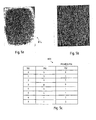
- the conditional exchange of two bits of a pixel PIX into one Encoding a digital picture BIL can be used.
- This operation shown in Fig. 5c illustrates the stochastic properties of the image information, which is most strongly expressed in the least significant bit BIT of a pixel PIX.
- the seventh and second bit BIT of the pixel PIX are exemplary embodiments swapped when the least significant bit BIT of this pixel PIX is set, so that a encrypted pixel PIV results.
- this operation de actually performed at every second pixel PIX. Furthermore, this operation takes place under the just made assumption at 50% of the pixel PIX that the total pixel value changes because two of the four possible states of two bits BIT do not change Experience exchange.
- conditional Swap no longer clearly visible, although the entire structure and for experts the type of fingerprint may still be recognizable. It should be noted here that Applying conditional exchange BDV operation twice the original picture BIL restores.
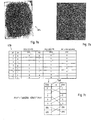
- the linkage of adjacent pixels is provided by a bitwise XOR Operation an improvement in the encryption of the information of an image BIL - here of a fingerprint image.
- bitwise XOR operation bits BIT that are in the Pixels are in the same position, compared with each other, the result according to 6c table is formed.
- the XOR operation is identical to its inverse operation, i.e. that is, you apply the same Operation on the encrypted picture on you get back the original picture.
- a first pixel PI1 and one are formed neighboring, second pixel PI2, the result is an encrypted pixel PV1.
- the second pixel PI2 is encrypted using a bitwise XOR Link to an adjacent, third pixel. Analogous to that just described Essentially, all pixels of the image can be acted upon directly using one of them neighboring pixels are encrypted.
- the XOR link between two neighboring pixels does not necessarily have to be between Bits are made with identical positions in the individual pixels, but can also be with bits predeterminable position.
- the combination leads to the two being carried out one after the other Operations described above for a substantial change in the information of the Image BIL.
- FIG. 7b there is neither a localization of the fingerprint image possible, structural information can still be recognized.
- the reason is that the Correlation of neighboring pixels, which can still be seen after the XOR operation, by using the unary operator of the conditional swapping of two bits is changed.
- the picture appears essentially only as a random sequence of Brightness values.
- VER of the image BIL is encrypted at a first one encoding pixel PI1 a conditional exchange was carried out - the second bit BIT is swapped with the seventh bit when the seventh bit is set.
- Pixel PV1 thus encrypted with a still unencrypted neighboring pixel PI2 the XOR link described above, so that a second encrypted Pixel PV2 is obtained.
- the first pixel PI1 is used to encrypt the image BIL the second encrypted pixel PV1 'replaced.
- the method according to the invention thus allows it to be used in arithmetic terms simple operators on every pixel of an image, using the existing noise of the image to carry out an easy to implement and very efficient encryption.
- This assignment like the BDV conditional exchange represents a unary operation Range of values of the original GRA and the new gray value GRA 'from 0 to 255 result in 256! Assignment options, reducing the effort for an unauthorized person Decryption of such a coded pixel PV1 "is very high.
- the original gray value GRA of the pixel PV1 is first produced using the assignment table TAB or its inverse table TAB -1 , then the further decryption is carried out by using a combination of operations or operators used for the encryption inverse operation INV on the encrypted pixel PV1 '.
- the operations XOR, BDV are used in the reverse order to that used for the encryption VER.
- a device according to the invention for encryption and decryption can be implemented, for example, with a commercially available PC which is set up to carry out the method according to the invention.
- Programming languages which are suitable for implementing the method are known to the person skilled in large numbers, for example C, C ++ etc.
Landscapes
- Engineering & Computer Science (AREA)
- Signal Processing (AREA)
- Computer Networks & Wireless Communication (AREA)
- Multimedia (AREA)
- Compression Or Coding Systems Of Tv Signals (AREA)
- Image Processing (AREA)
Abstract
Description
- Fig. 1
- eine erfindungsgemäße Vorrichtung zum Verschlüsseln eines von einem Sensor aufgenommenen, digitalen Bildes,
- Fig. 2
- eine erfindungsgemäße Vorrichtung zum Entschlüsseln eines digitalen Bildes,
- Fig. 3
- ein digitales Bild welches in Form von Bildzeilen vorliegt,
- Fig. 4
- das digitale Bild aus Fig. 3 in verschlüsselter Form,
- Fig. 5a
- ein digitales Bild eines Fingerabdruckes,
- Fig. 5b
- das Bild aus Fig. 1a nach Anwendung eines Operators zur bedingten Vertauschung auf die einzelnen Pixel des Bildes,
- Fig. 5c
- eine Tabelle mit Werten eines Pixels und eines durch bedingte Vertauschung von Bits dieses Pixels verschlüsselten Pixels,
- Fig. 6a
- ein digitales Bild eines Fingerabdruckes,
- Fig. 6b
- zeigt das Bild aus Fig. 2a nach Anwendung eines Operators, der eine XOR Verknüpfung zwischen zumindest zwei Bits eines Pixels bewirkt.
- Fig. 6c
- eine Tabelle mit Werten zweier Pixel und eines durch eine XOR Verknüpfung dieser beiden Pixel verschlüsselten Pixels,
- Fig. 7a
- zeigt ein digitales Bild eines Fingerabdruckes,
- Fig. 7b
- zeigt das Bild aus Fig. 3a nach Anwendung eines Operators zur bedingten Vertauschung und eines XOR Operators und
- Fig. 7c
- eine tabellarische Darstellung des erfindungsgemäßen Verschlüsselungsverfahrens und
- Fig. 7d
- eine tabellarische Darstellung des erfindungsgemäßen Entschlüsselungsverfahrens.
Claims (27)
- Verfahren zur Verschlüsselung von digitalen Bildern (BIL), die aus einzelnen Pixel (PIX, PI1, PI2) aufgebaut sind, dadurch gekennzeichnet, dass auf zumindest ein Pixel (PIX, PI1, PI2) zumindest zwei nicht miteinander kommutierende Operationen (XOR, BDV) angewendet werden, die eine Veränderung von Bitwerten (BIT) des zumindest einen Pixels (PIX, PI1, PI2) zwecks Verschlüsselung bewirken, wobei zu einer Kombination der beiden Operationen (XOR, BDV) eine inverse Operation (INV) existiert, welche die Bitwerte (BIT) eines verschlüsselten Pixels (PV1') in die Bitwerte des ursprünglichen Pixels (PIX, PI1, PI2) überführt.
- Verfahren nach Anspruch 1, dadurch gekennzeichnet, dass zumindest eine der Operationen (BDV, XOR) eine unäre Operation (BDV) ist, die Bits (BIT) eines Pixels (PIX, PI1, PI2) miteinander verknüpft.
- Verfahren nach einem der Ansprüche 1 bis 2, dadurch gekennzeichnet, dass zumindest eine der Operationen (BDV, XOR) eine binäre Operation (XOR) ist, die zumindest zwei benachbarte Pixel (PIX, PI1, PI2) miteinander verknüpft.
- Verfahren nach Anspruch 3, dadurch gekennzeichnet, dass die binäre Operation (XOR) eine XOR-Verknüpfung zwischen zumindest zwei Bits (BIT) zumindest zweier Pixel (PI1, PI2) bewirkt, wobei der Ergebniswert der XOR-Verknüpfung (XOR) einem der zumindest zwei Pixel (PI1, PI2) zugeordnet wird.
- Verfahren nach einem der Ansprüche 2 bis 4, dadurch gekennzeichnet, dass die unäre Operation (BDV) eine bedingte Vertauschung (BDV) zwischen zumindest zwei Bits eines Pixels (PIX, PI1, PI2) bewirkt.
- Verfahren nach einem der Ansprüche 2 bis 4,dadurch gekennzeichnet, dass die unäre Operation eine Änderung des Grauwertes (GRA) zumindest eines Pixels (PV1', PIX, PI1, PI2) bewirkt.
- Verfahren nach Anspruch 6, dadurch gekennzeichnet, dass dem Grauwert (GRA) zumindest eines Pixels (PIX, PI1, PI2), der in einem vorgebbaren Wertebereich liegt ein neuer Grauwert (GRA') aus diesem Wertebereich gemäß einer Zuordnungstabelle (TAB) zugeordnet wird, wobei der ursprünglichen Grauwert (GRA) durch den neuen Grauwert (GRA') ersetzt wird.
- Verfahren nach Anspruch 7, dadurch gekennzeichnet, dass sowohl der ursprüngliche (GRA) als auch der neue Grauwert (GRA') je in einem Wertebereich zwischen 0 und 255 liegen.
- Verfahren nach einem der Ansprüche 1 bis 7, dadurch gekennzeichnet, dass die Pixel (PIX, PI1, PI2) in Form von Bildzeilen (ZEI) angeordnet werden.
- Verfahren nach Anspruch 9, dadurch gekennzeichnet, dass die Bildzeilen von einem Sensor (SEN) erzeugt und an eine Steuerung (STR) übertragen werden, die dazu eingerichtet ist, das Bild (BIL) zu verschlüsseln und/oder aus den Bildzeilen (ZEI) das Bild (BIL) aufzubauen und/oder auf einer Ausgabeeinheit (ASE) darzustellen.
- Verfahren nach Anspruch 10, dadurch gekennzeichnet, dass der Sensor (SEN) eine Sensorsteuerung (SES) aufweist, die vor eine Bildzeile (ZEI) einen Code (COD) schreibt, der einen Bildzeilenanfang charakterisiert.
- Verfahren nach Anspruch 11, dadurch gekennzeichnet, dass die Sensorsteuerung (SES) die Bildzeilen (ZEI) nummeriert und jede Zeile mit einer Prüfzahl (PRZ) versieht.
- Verfahren zur Entschlüsselung von digitalen Bildern (BIL), die nach einem Verfahren der Ansprüche 1 bis 6 verschlüsselt wurden, dadurch gekennzeichnet, dass eine zu einer Kombination von zur Verschlüsselung eines Pixels (PIX, PI1, PI2) verwendeten Operationen (XOR, BDV) inverse Operation (INV) auf ein verschlüsseltes Pixel (PV2) angewendet wird.
- Verschlüsselungsvorrichtung (VOR) zur Verschlüsselung von digitalen Bildern (BIL), die aus einzelnen Pixel (PIX, PI1, PI2) aufgebaut sind, dadurch gekennzeichnet, dass sie eine Steuerung (STR) aufweist, die dazu eingerichtet ist, auf zumindest ein Pixel (PIX, PI1, PI2) zumindest zwei nicht miteinander kommutierende Operationen (XOR, BDV) zur Veränderung von Bitwerten (BIT) des zumindest einen Pixels (PIX, PI1, PI2) anzuwenden.
- Verschlüsselungsvorrichtung nach Anspruch 10, dadurch gekennzeichnet, dass die Steuerung dazu eingerichtet ist, eine unäre Operation (BDV) zur Verknüpfung von Bits (BIT) eines Pixels (PIX, PI1, PI2) durchzuführen.
- Verschlüsselungsvorrichtung nach Anspruch 10 oder 11, dadurch gekennzeichnet, dass die Steuerung dazu eingerichtet ist, eine binäre Operation (XOR) zur Verknüpfung zweier benachbarter Pixel (PIX, PI1, PI2) durchzuführen.
- Verschlüsselungsvorrichtung nach Anspruch 11, dadurch gekennzeichnet, dass die Steuerung (STR) dazu eingerichtet ist, als binäre Operation (XOR) eine XOR-Verknüpfung zwischen zumindest zwei Bits (BIT) zumindest zweier Pixel (PI1, PI2) durchzuführen, und den Ergebniswert der XOR-Verknüpfung (XOR) einem der zumindest zwei Pixel (PI1, PI2) zuzuordnen.
- Verschlüsselungsvorrichtung nach einem der Ansprüche 11 bis 13, dadurch gekennzeichnet, dass die Steuerung (STR) dazu eingerichtet ist, als unäre Operation (BDV) eine bedingte Vertauschung (BDV) zwischen zumindest zwei Bits eines Pixels (PIX, PI1, PI2) durchzuführen.
- Verschlüsselungsvorrichtung nach einem der Ansprüche 11 bis 14, dadurch gekennzeichnet, dass die Steuerung (STR) dazu eingerichtet ist, eine einen Grauwert (GRA) eines Pixels (PIX, PI1, PI2) verändernde unäre Operation durchzuführen.
- Verschlüsselungsvorrichtung nach Anspruch 15, dadurch gekennzeichnet, dass die Steuerung (STR) dazu eingerichtet ist, dem Grauwert (GRA) zumindest eines Pixels (PIX, PI1, PI2), der in einem vorgebbaren Wertebereich liegt einen neuen Grauwert (GRA') aus diesem Wertebereich gemäß einer Zuordnungstabelle (TAB) zuzuordnen, und den ursprünglichen Grauwert (GRA) durch den neuen Grauwert (GRA') zu ersetzen.
- Verschlüsselungsvorrichtung nach Anspruch 16, dadurch gekennzeichnet, dass sowohl der ursprüngliche (GRA) als auch der neue Grauwert (GRA') je in einem Wertebereich zwischen 0 und 255 liegen.
- Verschlüsselungsvorrichtung nach einem der Ansprüche 14 bis 21, dadurch gekennzeichnet, dass die Pixel (PIX, PI1, PI2) in Form von Bildzeilen (ZEI) angeordnet sind.
- Verschlüsselungsvorrichtung nach Anspruch 22, dadurch gekennzeichnet, dass ein Sensor zur Erzeugung der Bildzeilen (ZEI) vorgesehen ist, welcher dazu eingerichtet ist die Bildzeilen (ZEI) an eine Steuerung (STR) zu übertragen, die dazu eingerichtet ist, die Bildzeilen (ZEI) zu empfangen, zu verschlüsseln und/oder und daraus das Bild (BIL) aufzubauen und/oder auf einer Ausgabeeinheit (AUS) darzustellen.
- Verschlüsselungsvorrichtung nach Anspruch 23, dadurch gekennzeichnet, dass der Sensor (SEN) eine Sensorsteuerung (SES) aufweist, die dazu eingerichtet ist, vor eine Bildzeile (ZEI) einen Code für einen Bildzeilenanfang zu schreiben.
- Verschlüsselungsvorrichtung nach Anspruch 23 oder 24, dadurch gekennzeichnet, dass die Sensorsteuerung (SES) dazu eingerichtet ist, die Bildzeilen (ZEI) zu nummerieren und jede Zeile mit einer Prüfzahl (PRZ) zu versehen.
- Verschlüsselungsvorrichtung nach einem der Ansprüche 14 bis 25, dadurch gekennzeichnet, dass die Pixel (PIX, PI1, PI2) in Form von Bildzeilen (ZEI) angeordnet sind.
- Entschlüsselungsvorrichtung zur Entschlüsselung von digitalen Bildern (BIL), die mit einer Vorrichtung nach den Ansprüchen 14 bis 26 verschlüsselt wurden, dadurch gekennzeichnet, dass eine Steuerung (STR') vorgesehen ist, die dazu eingerichtet ist, eine zu einer Kombination von zur Verschlüsselung eines Pixels (PIX, PI1, PI2) verwendeten Operationen (XOR, BDV) inverse Operation (INV) auf ein verschlüsseltes Pixel (PV2) anzuwenden.
Applications Claiming Priority (2)
| Application Number | Priority Date | Filing Date | Title |
|---|---|---|---|
| AT5582001 | 2001-04-06 | ||
| AT5582001 | 2001-04-06 |
Publications (2)
| Publication Number | Publication Date |
|---|---|
| EP1248454A2 true EP1248454A2 (de) | 2002-10-09 |
| EP1248454A3 EP1248454A3 (de) | 2006-12-13 |
Family
ID=3676562
Family Applications (1)
| Application Number | Title | Priority Date | Filing Date |
|---|---|---|---|
| EP02450069A Withdrawn EP1248454A3 (de) | 2001-04-06 | 2002-03-25 | Verfahren zur Verschlüsselung von digitalen Bildern |
Country Status (1)
| Country | Link |
|---|---|
| EP (1) | EP1248454A3 (de) |
Cited By (2)
| Publication number | Priority date | Publication date | Assignee | Title |
|---|---|---|---|---|
| CN106101746A (zh) * | 2016-07-12 | 2016-11-09 | 深圳大学 | 一种数字视频内容安全认证的方法及其系统 |
| CN118103842A (zh) * | 2021-10-19 | 2024-05-28 | 冰眼公司 | 相干图像加密 |
Family Cites Families (3)
| Publication number | Priority date | Publication date | Assignee | Title |
|---|---|---|---|---|
| DE978033C (de) * | 1970-05-28 | 1976-04-22 | Fa. Dr.-Ing. Rudolf Hell, 2300 Kiel | Verfahren zum Ver- und Entschlüsseln von Halbtonbildern bei der Bildtelegraphie |
| JP2503798B2 (ja) * | 1991-03-20 | 1996-06-05 | 富士ゼロックス株式会社 | 暗号化ファクシミリ装置 |
| US5535277A (en) * | 1994-03-10 | 1996-07-09 | Mita Industrial Co., Ltd. | Encryption communication apparatus |
-
2002
- 2002-03-25 EP EP02450069A patent/EP1248454A3/de not_active Withdrawn
Cited By (2)
| Publication number | Priority date | Publication date | Assignee | Title |
|---|---|---|---|---|
| CN106101746A (zh) * | 2016-07-12 | 2016-11-09 | 深圳大学 | 一种数字视频内容安全认证的方法及其系统 |
| CN118103842A (zh) * | 2021-10-19 | 2024-05-28 | 冰眼公司 | 相干图像加密 |
Also Published As
| Publication number | Publication date |
|---|---|
| EP1248454A3 (de) | 2006-12-13 |
Similar Documents
| Publication | Publication Date | Title |
|---|---|---|
| DE3924226C2 (de) | ||
| DE69220269T2 (de) | Anordnung und Verfahren zur Vorverarbeitung binärer Bilddaten von Lauflängekodierung | |
| EP0232417B1 (de) | Verfahren zur korrektur von übertragungsfehlern | |
| DE60223337T3 (de) | Verfahren zur gesicherten verschlüsselung und baustein zur ausführung eines solchen verschlüsselungsverfahrens | |
| DE2855787A1 (de) | Digitalsignatureinrichtung | |
| DE2907991A1 (de) | Verfahren und vorrichtung zur verarbeitung digitaler videosignale | |
| DE3416795C2 (de) | Bilddaten-Kompressionssystem | |
| DE10115118A1 (de) | Verfahren zur Übertragung von Daten über einen Datenbus | |
| DE2930903A1 (de) | Verfahren und vorrichtung zum uebertragen von faksimilesignalen | |
| DE69729297T2 (de) | Verschlüsselungsvorrichtung für binärkodierte nachrichten | |
| DE2805294C2 (de) | Codierende Übertragungsanlage für Faksimile-Signale | |
| DE2728889A1 (de) | Verfahren und vorrichtung zum uebertragen eines faksimilesignals durch sequentielle randdifferentialcodierung | |
| DE60116195T2 (de) | Vorrichtung und Verfahren zur Verschleierung von Eingangsparametern | |
| DE60303034T2 (de) | Methode und verfahren zur fälschungsresistenten visuellen verschlüsselung | |
| DE69128935T2 (de) | Fehlerschutz für daten variabler länge | |
| DE69426757T2 (de) | Vorrichtung zur Durchführung eines symmetrischen Blockchiffrierungsalgorithmus ohne die Eigenschaft der Komplementierung | |
| DE2826450C3 (de) | Verfahren zum Steuern der Übertragung digitaler Signale und Anordnung zur Durchführung des Verfahrens bei einer digitalen Faksimileübertragungseinrichtung | |
| DE2821237A1 (de) | Verfahren und vorrichtung zur wiedergabe von bildern | |
| DE60224603T2 (de) | Auf einem graphisch implementierten Algorithmus basierendes Verfahren zur Erzeugung und Filtrierung von Datensequenzen für kryptographische Anwendungen | |
| DE60225543T2 (de) | Digitale wasserzeichen | |
| DE10345378B4 (de) | Verfahren und Vorrichtung zur Ver-/Entschlüsselung | |
| DE3631797A1 (de) | Verfahren und vorrichtung zur verschluesselung von nutzdaten | |
| EP0027572A1 (de) | Verfahren und Vorrichtung zur verschlüsselten Übertragung von Information | |
| DE19654342C2 (de) | Verfahren zur Übermittlung von komprimierten Daten | |
| DE2450669A1 (de) | Verfahren und schaltungsanordnungen zur verschluesselung und entschluesselung |
Legal Events
| Date | Code | Title | Description |
|---|---|---|---|
| PUAI | Public reference made under article 153(3) epc to a published international application that has entered the european phase |
Free format text: ORIGINAL CODE: 0009012 |
|
| AK | Designated contracting states |
Kind code of ref document: A2 Designated state(s): AT BE CH CY DE DK ES FI FR GB GR IE IT LI LU MC NL PT SE TR |
|
| AX | Request for extension of the european patent |
Free format text: AL;LT;LV;MK;RO;SI |
|
| PUAL | Search report despatched |
Free format text: ORIGINAL CODE: 0009013 |
|
| AK | Designated contracting states |
Kind code of ref document: A3 Designated state(s): AT BE CH CY DE DK ES FI FR GB GR IE IT LI LU MC NL PT SE TR |
|
| AX | Request for extension of the european patent |
Extension state: AL LT LV MK RO SI |
|
| AKX | Designation fees paid | ||
| REG | Reference to a national code |
Ref country code: DE Ref legal event code: 8566 |
|
| STAA | Information on the status of an ep patent application or granted ep patent |
Free format text: STATUS: THE APPLICATION IS DEEMED TO BE WITHDRAWN |
|
| 18D | Application deemed to be withdrawn |
Effective date: 20070614 |