EP1248433A2 - Content delivery system, content delivery method, and content reproducing device - Google Patents
Content delivery system, content delivery method, and content reproducing device Download PDFInfo
- Publication number
- EP1248433A2 EP1248433A2 EP02005330A EP02005330A EP1248433A2 EP 1248433 A2 EP1248433 A2 EP 1248433A2 EP 02005330 A EP02005330 A EP 02005330A EP 02005330 A EP02005330 A EP 02005330A EP 1248433 A2 EP1248433 A2 EP 1248433A2
- Authority
- EP
- European Patent Office
- Prior art keywords
- content
- reproducing device
- server
- complementary
- insufficient
- Prior art date
- Legal status (The legal status is an assumption and is not a legal conclusion. Google has not performed a legal analysis and makes no representation as to the accuracy of the status listed.)
- Ceased
Links
Images


Classifications
-
- G—PHYSICS
- G06—COMPUTING OR CALCULATING; COUNTING
- G06Q—INFORMATION AND COMMUNICATION TECHNOLOGY [ICT] SPECIALLY ADAPTED FOR ADMINISTRATIVE, COMMERCIAL, FINANCIAL, MANAGERIAL OR SUPERVISORY PURPOSES; SYSTEMS OR METHODS SPECIALLY ADAPTED FOR ADMINISTRATIVE, COMMERCIAL, FINANCIAL, MANAGERIAL OR SUPERVISORY PURPOSES, NOT OTHERWISE PROVIDED FOR
- G06Q20/00—Payment architectures, schemes or protocols
- G06Q20/08—Payment architectures
- G06Q20/12—Payment architectures specially adapted for electronic shopping systems
- G06Q20/123—Shopping for digital content
- G06Q20/1235—Shopping for digital content with control of digital rights management [DRM]
-
- H—ELECTRICITY
- H04—ELECTRIC COMMUNICATION TECHNIQUE
- H04L—TRANSMISSION OF DIGITAL INFORMATION, e.g. TELEGRAPHIC COMMUNICATION
- H04L67/00—Network arrangements or protocols for supporting network services or applications
- H04L67/50—Network services
- H04L67/56—Provisioning of proxy services
- H04L67/565—Conversion or adaptation of application format or content
-
- G—PHYSICS
- G06—COMPUTING OR CALCULATING; COUNTING
- G06Q—INFORMATION AND COMMUNICATION TECHNOLOGY [ICT] SPECIALLY ADAPTED FOR ADMINISTRATIVE, COMMERCIAL, FINANCIAL, MANAGERIAL OR SUPERVISORY PURPOSES; SYSTEMS OR METHODS SPECIALLY ADAPTED FOR ADMINISTRATIVE, COMMERCIAL, FINANCIAL, MANAGERIAL OR SUPERVISORY PURPOSES, NOT OTHERWISE PROVIDED FOR
- G06Q20/00—Payment architectures, schemes or protocols
- G06Q20/30—Payment architectures, schemes or protocols characterised by the use of specific devices or networks
- G06Q20/32—Payment architectures, schemes or protocols characterised by the use of specific devices or networks using wireless devices
- G06Q20/322—Aspects of commerce using mobile devices [M-devices]
-
- H—ELECTRICITY
- H04—ELECTRIC COMMUNICATION TECHNIQUE
- H04L—TRANSMISSION OF DIGITAL INFORMATION, e.g. TELEGRAPHIC COMMUNICATION
- H04L63/00—Network architectures or network communication protocols for network security
- H04L63/04—Network architectures or network communication protocols for network security for providing a confidential data exchange among entities communicating through data packet networks
- H04L63/0428—Network architectures or network communication protocols for network security for providing a confidential data exchange among entities communicating through data packet networks wherein the data content is protected, e.g. by encrypting or encapsulating the payload
-
- H—ELECTRICITY
- H04—ELECTRIC COMMUNICATION TECHNIQUE
- H04L—TRANSMISSION OF DIGITAL INFORMATION, e.g. TELEGRAPHIC COMMUNICATION
- H04L67/00—Network arrangements or protocols for supporting network services or applications
- H04L67/01—Protocols
- H04L67/02—Protocols based on web technology, e.g. hypertext transfer protocol [HTTP]
-
- H—ELECTRICITY
- H04—ELECTRIC COMMUNICATION TECHNIQUE
- H04L—TRANSMISSION OF DIGITAL INFORMATION, e.g. TELEGRAPHIC COMMUNICATION
- H04L69/00—Network arrangements, protocols or services independent of the application payload and not provided for in the other groups of this subclass
- H04L69/30—Definitions, standards or architectural aspects of layered protocol stacks
- H04L69/32—Architecture of open systems interconnection [OSI] 7-layer type protocol stacks, e.g. the interfaces between the data link level and the physical level
- H04L69/322—Intralayer communication protocols among peer entities or protocol data unit [PDU] definitions
- H04L69/329—Intralayer communication protocols among peer entities or protocol data unit [PDU] definitions in the application layer [OSI layer 7]
-
- H—ELECTRICITY
- H04—ELECTRIC COMMUNICATION TECHNIQUE
- H04N—PICTORIAL COMMUNICATION, e.g. TELEVISION
- H04N21/00—Selective content distribution, e.g. interactive television or video on demand [VOD]
- H04N21/20—Servers specifically adapted for the distribution of content, e.g. VOD servers; Operations thereof
- H04N21/23—Processing of content or additional data; Elementary server operations; Server middleware
- H04N21/234—Processing of video elementary streams, e.g. splicing of video streams or manipulating encoded video stream scene graphs
- H04N21/2343—Processing of video elementary streams, e.g. splicing of video streams or manipulating encoded video stream scene graphs involving reformatting operations of video signals for distribution or compliance with end-user requests or end-user device requirements
- H04N21/234327—Processing of video elementary streams, e.g. splicing of video streams or manipulating encoded video stream scene graphs involving reformatting operations of video signals for distribution or compliance with end-user requests or end-user device requirements by decomposing into layers, e.g. base layer and one or more enhancement layers
-
- H—ELECTRICITY
- H04—ELECTRIC COMMUNICATION TECHNIQUE
- H04N—PICTORIAL COMMUNICATION, e.g. TELEVISION
- H04N21/00—Selective content distribution, e.g. interactive television or video on demand [VOD]
- H04N21/20—Servers specifically adapted for the distribution of content, e.g. VOD servers; Operations thereof
- H04N21/25—Management operations performed by the server for facilitating the content distribution or administrating data related to end-users or client devices, e.g. end-user or client device authentication, learning user preferences for recommending movies
- H04N21/254—Management at additional data server, e.g. shopping server, rights management server
- H04N21/2543—Billing, e.g. for subscription services
-
- H—ELECTRICITY
- H04—ELECTRIC COMMUNICATION TECHNIQUE
- H04N—PICTORIAL COMMUNICATION, e.g. TELEVISION
- H04N21/00—Selective content distribution, e.g. interactive television or video on demand [VOD]
- H04N21/20—Servers specifically adapted for the distribution of content, e.g. VOD servers; Operations thereof
- H04N21/25—Management operations performed by the server for facilitating the content distribution or administrating data related to end-users or client devices, e.g. end-user or client device authentication, learning user preferences for recommending movies
- H04N21/258—Client or end-user data management, e.g. managing client capabilities, user preferences or demographics, processing of multiple end-users preferences to derive collaborative data
- H04N21/25866—Management of end-user data
- H04N21/25875—Management of end-user data involving end-user authentication
-
- H—ELECTRICITY
- H04—ELECTRIC COMMUNICATION TECHNIQUE
- H04N—PICTORIAL COMMUNICATION, e.g. TELEVISION
- H04N21/00—Selective content distribution, e.g. interactive television or video on demand [VOD]
- H04N21/40—Client devices specifically adapted for the reception of or interaction with content, e.g. set-top-box [STB]; Operations thereof
- H04N21/41—Structure of client; Structure of client peripherals
- H04N21/414—Specialised client platforms, e.g. receiver in car or embedded in a mobile appliance
- H04N21/41407—Specialised client platforms, e.g. receiver in car or embedded in a mobile appliance embedded in a portable device, e.g. video client on a mobile phone, PDA, laptop
-
- H—ELECTRICITY
- H04—ELECTRIC COMMUNICATION TECHNIQUE
- H04N—PICTORIAL COMMUNICATION, e.g. TELEVISION
- H04N21/00—Selective content distribution, e.g. interactive television or video on demand [VOD]
- H04N21/80—Generation or processing of content or additional data by content creator independently of the distribution process; Content per se
- H04N21/81—Monomedia components thereof
- H04N21/8106—Monomedia components thereof involving special audio data, e.g. different tracks for different languages
- H04N21/8113—Monomedia components thereof involving special audio data, e.g. different tracks for different languages comprising music, e.g. song in MP3 format
-
- H—ELECTRICITY
- H04—ELECTRIC COMMUNICATION TECHNIQUE
- H04N—PICTORIAL COMMUNICATION, e.g. TELEVISION
- H04N21/00—Selective content distribution, e.g. interactive television or video on demand [VOD]
- H04N21/80—Generation or processing of content or additional data by content creator independently of the distribution process; Content per se
- H04N21/83—Generation or processing of protective or descriptive data associated with content; Content structuring
- H04N21/835—Generation of protective data, e.g. certificates
- H04N21/8352—Generation of protective data, e.g. certificates involving content or source identification data, e.g. Unique Material Identifier [UMID]
-
- H—ELECTRICITY
- H04—ELECTRIC COMMUNICATION TECHNIQUE
- H04N—PICTORIAL COMMUNICATION, e.g. TELEVISION
- H04N7/00—Television systems
- H04N7/16—Analogue secrecy systems; Analogue subscription systems
- H04N7/162—Authorising the user terminal, e.g. by paying; Registering the use of a subscription channel, e.g. billing
- H04N7/165—Centralised control of user terminal ; Registering at central
-
- H—ELECTRICITY
- H04—ELECTRIC COMMUNICATION TECHNIQUE
- H04L—TRANSMISSION OF DIGITAL INFORMATION, e.g. TELEGRAPHIC COMMUNICATION
- H04L2463/00—Additional details relating to network architectures or network communication protocols for network security covered by H04L63/00
- H04L2463/101—Additional details relating to network architectures or network communication protocols for network security covered by H04L63/00 applying security measures for digital rights management
-
- H—ELECTRICITY
- H04—ELECTRIC COMMUNICATION TECHNIQUE
- H04L—TRANSMISSION OF DIGITAL INFORMATION, e.g. TELEGRAPHIC COMMUNICATION
- H04L67/00—Network arrangements or protocols for supporting network services or applications
- H04L67/01—Protocols
- H04L67/04—Protocols specially adapted for terminals or networks with limited capabilities; specially adapted for terminal portability
-
- Y—GENERAL TAGGING OF NEW TECHNOLOGICAL DEVELOPMENTS; GENERAL TAGGING OF CROSS-SECTIONAL TECHNOLOGIES SPANNING OVER SEVERAL SECTIONS OF THE IPC; TECHNICAL SUBJECTS COVERED BY FORMER USPC CROSS-REFERENCE ART COLLECTIONS [XRACs] AND DIGESTS
- Y10—TECHNICAL SUBJECTS COVERED BY FORMER USPC
- Y10S—TECHNICAL SUBJECTS COVERED BY FORMER USPC CROSS-REFERENCE ART COLLECTIONS [XRACs] AND DIGESTS
- Y10S707/00—Data processing: database and file management or data structures
- Y10S707/99931—Database or file accessing
- Y10S707/99933—Query processing, i.e. searching
Definitions
- a content delivery method for delivering content to a content reproducing device capable of reproducing content comprising the steps of: separating or dividing content into a first content and a second content; storing the separated or divided second content in a server connected to a network; and providing the first content to the content reproducing device, and transmitting the second content from the server to the content reproducing device via a network.
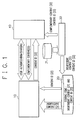
- the content reproducing device 10 receives the complementary content 32 on the basis of the content ID 22, and restores the content 31 to its original state using the insufficient content 21 and the complementary content 32. While the complementary content 32 is being transmitted, accounting for the content 31 is executed to a user. By this configuration, it becomes possible to charge a user each time he reproduces content. Further, by preparing insufficient content in advance on the user's side, it is possible to download content effectively.
- the insufficient content 21 is provided free of charge.
- the insufficient content 21 is preferably configured, when the content separator 30 separates the content 31, so that a user can look at or listen to a part of the insufficient content 21 free of charge. Alternatively, the insufficient content 21 may as well be configured so that a user cannot look at or listen to it.
- the ratio of the information amount of the insufficient content 21 to that of the complementary content 32 is not limited to the above one. Furthermore, the ratio of the separation may be changed according to each content.
- 160 bits of the complementary content are transmitted per 0.01 second, and thereby, the remaining 1120 bits are extracted from the insufficient content. Thereafter, the 160 bits of the complementary content are assigned to the first bit strings, and the 1120 bits of the insufficient content are assigned to the remaining bit strings every 0.01 second. Thereby, the complete content 31 is restored.
Landscapes
- Engineering & Computer Science (AREA)
- Signal Processing (AREA)
- Multimedia (AREA)
- Computer Security & Cryptography (AREA)
- Computer Networks & Wireless Communication (AREA)
- Business, Economics & Management (AREA)
- Accounting & Taxation (AREA)
- Databases & Information Systems (AREA)
- Strategic Management (AREA)
- General Physics & Mathematics (AREA)
- Theoretical Computer Science (AREA)
- General Business, Economics & Management (AREA)
- Physics & Mathematics (AREA)
- General Engineering & Computer Science (AREA)
- Finance (AREA)
- Computer Hardware Design (AREA)
- Computing Systems (AREA)
- Computer Graphics (AREA)
- Management, Administration, Business Operations System, And Electronic Commerce (AREA)
- Information Transfer Between Computers (AREA)
- Storage Device Security (AREA)
- Reverberation, Karaoke And Other Acoustics (AREA)
Abstract
Description
Claims (14)
- A content delivery system for delivering content to a content reproducing device that reproduces content, comprising:a content separator that separates or divides content into a first content and a second content;a first content storing means that stores the first content outputted from the content separator; anda server that includes a storing means for storing the second content outputted from the content separator, and that transmits the second content to the content reproducing device via a network; whereinthe content reproducing device acquires the second content from the server and the first content from the first content storing means, and reproduces the content using the first content and the second content.
- A content delivery system for delivering content to a content reproducing device that reproduces content, comprising:a content separator that separates or divides content into a first content and a second content;a first content storing means that stores the first content outputted from the content separator; anda server that includes a storing means for storing the second content outputted from the content separator, and that transmits the second content to the content reproducing device via a network; wherein:the content reproducing device acquires the second content from the server and the first content from the first content storing means, and reproduces the content using the first content and the second content; andthe server makes a charge for the content at the time of transmitting the second content to the content reproducing device.
- The content delivery system as claimed in claim 1 or 2 wherein:the first content storing means stores content related information concerned with the second content, and the first content; andthe content reproducing device acquires the content related information and the first content from the first content storing means.
- The system as claimed in claim 3, wherein:the content reproducing device transmits the content related information to the server; andthe server transmits the second content to the content reproducing device on the basis of the content related information.
- The content delivery system as claimed in claim 3 or 4 wherein:the server authenticates the content reproducing device before transmitting the second content to the content reproducing device, and transmits the second content to the content reproducing device only when the device is authenticated.
- The system as claimed in any one of claims 1 to 5, which is used for pay per view.
- A content delivery method for delivering content to a content reproducing device capable of reproducing content, comprising the steps of:separating or dividing content into a first content and a second content;storing the separated or divided second content in a server connected to a network; andproviding the first content to the content reproducing device, and transmitting the second content from the server to the content reproducing device via a network.
- A content delivery method for delivering content to a content reproducing device capable of reproducing content, comprising the steps of:separating or dividing content into a first content and a second content;storing the separated or divided second content in a server connected to a network; andproviding the first content to the content reproducing device, and transmitting the second content from the server to the content reproducing device via a network; whereinthe server makes a charge for the content at the time of transmitting the second content to the content reproducing device.
- The method as claimed in claim 7 or 8, wherein the server transmits the second content to the content reproducing device on the basis of content related information concerned with the second content.
- The method as claimed in claim 7, 8 or 9 wherein:the server authenticates the content reproducing device before transmitting the second content to the content reproducing device, and transmits the second content to the content reproducing device only when the device is authenticated.
- The method as claimed in claim 7, 8,9 or 10, which is used for pay per view.
- A content reproducing device for receiving a complementary content at the time of reproducing content on the basis of content related information, restoring a complete content using the complementary content and an insufficient content, and reproducing the restored content.
- The device as claimed in claim 12, including a wireless section.
- The device as claimed in claim 12 or 13, which is used for pay per view.
Applications Claiming Priority (2)
| Application Number | Priority Date | Filing Date | Title |
|---|---|---|---|
| JP2001076071 | 2001-03-16 | ||
| JP2001076071A JP2002278859A (en) | 2001-03-16 | 2001-03-16 | Contents distribution system, contents distribution method and contents reproducing device for reproducing contents |
Publications (2)
| Publication Number | Publication Date |
|---|---|
| EP1248433A2 true EP1248433A2 (en) | 2002-10-09 |
| EP1248433A3 EP1248433A3 (en) | 2004-04-28 |
Family
ID=18933065
Family Applications (1)
| Application Number | Title | Priority Date | Filing Date |
|---|---|---|---|
| EP02005330A Ceased EP1248433A3 (en) | 2001-03-16 | 2002-03-13 | Content delivery system, content delivery method, and content reproducing device |
Country Status (4)
| Country | Link |
|---|---|
| US (1) | US7177873B2 (en) |
| EP (1) | EP1248433A3 (en) |
| JP (1) | JP2002278859A (en) |
| CN (1) | CN1251123C (en) |
Cited By (7)
| Publication number | Priority date | Publication date | Assignee | Title |
|---|---|---|---|---|
| WO2004036914A1 (en) * | 2002-10-21 | 2004-04-29 | Omron Corporation | Medium data reproduction device, medium data distribution device, medium data reproduction method, medium data reproduction program, medium data distribution program, and computer-readable recording medium |
| EP1367818A3 (en) * | 2002-05-27 | 2004-10-13 | Matsushita Electric Industrial Co., Ltd. | Stream distribution system, stream server device, cache server device, stream record/playback device, computer programs and related methods |
| FR2868654A1 (en) * | 2004-04-06 | 2005-10-07 | Medialive | METHOD AND SYSTEM FOR SECURE DIFFUSION OF AUDIOVISUAL FLOWS PROTECTED AT A DYNAMIC GROUP OF RECEIVERS |
| WO2007072397A3 (en) * | 2005-12-21 | 2007-09-20 | Koninkl Philips Electronics Nv | Video encoding and decoding |
| WO2007107899A1 (en) * | 2006-03-21 | 2007-09-27 | Koninklijke Philips Electronics N.V. | A method and apparatus for playing content |
| US7567487B2 (en) | 2004-03-23 | 2009-07-28 | Panasonic Corporation | Content moving device, content moving method, computer program, recording medium, and content moving system |
| US7856168B2 (en) | 2004-04-20 | 2010-12-21 | Panasonic Corporation | Recorder/reproducer and content data protection system for preventing unauthorized use of content |
Families Citing this family (30)
| Publication number | Priority date | Publication date | Assignee | Title |
|---|---|---|---|---|
| US8311946B1 (en) * | 1999-10-15 | 2012-11-13 | Ebrary | Method and apparatus for improved information transactions |
| US7536561B2 (en) * | 1999-10-15 | 2009-05-19 | Ebrary, Inc. | Method and apparatus for improved information transactions |
| US7801820B2 (en) * | 2003-01-13 | 2010-09-21 | Sony Corporation | Real-time delivery of license for previously stored encrypted content |
| FR2849980B1 (en) * | 2003-01-15 | 2005-04-08 | Medialive | METHOD FOR THE DISTRIBUTION OF VIDEO SEQUENCES, DECODER AND SYSTEM FOR THE IMPLEMENTATION OF THIS PRODUCT |
| FR2853786B1 (en) * | 2003-04-11 | 2005-08-05 | Medialive | METHOD AND EQUIPMENT FOR DISTRIBUTING DIGITAL VIDEO PRODUCTS WITH A RESTRICTION OF CERTAIN AT LEAST REPRESENTATION AND REPRODUCTION RIGHTS |
| KR100541636B1 (en) * | 2003-04-17 | 2006-01-10 | 삼성전자주식회사 | Content Synchronization Method and Data Format |
| CN1735871A (en) * | 2003-05-16 | 2006-02-15 | 日本波技术集团有限公司 | System for preventing unauthorized use of digital content |
| JP2005025553A (en) * | 2003-07-03 | 2005-01-27 | Fuji Xerox Co Ltd | Data file delivery device, access management device, data file delivery method and program of the same |
| JP4413555B2 (en) | 2003-08-11 | 2010-02-10 | アルパイン株式会社 | AV playback system and AV apparatus |
| JP4517608B2 (en) * | 2003-09-04 | 2010-08-04 | 富士ゼロックス株式会社 | Data communication system |
| JP4513309B2 (en) * | 2003-11-11 | 2010-07-28 | 富士ゼロックス株式会社 | Print processing system, terminal device, print processing device |
| JP2005204175A (en) * | 2004-01-16 | 2005-07-28 | Ntt Communications Kk | Digital content encryption apparatus, digital content encryption method, digital content encryption program, and digital content decryption program |
| WO2005088460A1 (en) * | 2004-03-16 | 2005-09-22 | Japan-Wave Inc. | System for preventing unauthorized use of digital content |
| JP2005267328A (en) * | 2004-03-19 | 2005-09-29 | Japan Wave:Kk | Rental system of digital contents, recording device used for same system, reproduction device used for same system, recording software used for same system, and reproduction software used for same system |
| JP4595361B2 (en) * | 2004-03-19 | 2010-12-08 | 株式会社日立製作所 | Content recording / reproducing apparatus and system |
| US7546342B2 (en) * | 2004-05-14 | 2009-06-09 | Microsoft Corporation | Distributed hosting of web content using partial replication |
| JP2006004374A (en) * | 2004-06-21 | 2006-01-05 | Japan Wave:Kk | System for preventing unauthorized use of digital content, reproducing device used for same system, reproducing program used for same system, and digital content reproducing device |
| US8112361B2 (en) * | 2004-08-10 | 2012-02-07 | Hiro Media Ltd. | Method and system for dynamic, real-time addition of advertisement to downloaded static content |
| US20080319862A1 (en) * | 2004-08-10 | 2008-12-25 | Hiromedia Ltd. | Method and system for preventing ad stripping from ad-supported digital content |
| JP4509691B2 (en) * | 2004-08-17 | 2010-07-21 | 株式会社エヌ・ティ・ティ・ドコモ | Content distribution system and content distribution method |
| JP4664034B2 (en) * | 2004-10-15 | 2011-04-06 | 株式会社エヌ・ティ・ティ・ドコモ | Content distribution management apparatus and content distribution management method |
| JP4682319B2 (en) * | 2004-11-01 | 2011-05-11 | 国立大学法人広島大学 | Data transmission device, data transmission system, data transmission device control method, data transmission device control program, and recording medium recording data transmission device control program |
| JP4721692B2 (en) * | 2004-11-30 | 2011-07-13 | パナソニック株式会社 | Content management apparatus and content management method |
| US7840564B2 (en) | 2005-02-16 | 2010-11-23 | Ebrary | System and method for automatic anthology creation using document aspects |
| JP2006331011A (en) * | 2005-05-25 | 2006-12-07 | Japan Wave:Kk | Copy preventing method for digital content and recording medium with program relating to copy prevention method recorded thereon |
| US7433869B2 (en) * | 2005-07-01 | 2008-10-07 | Ebrary, Inc. | Method and apparatus for document clustering and document sketching |
| JP4654806B2 (en) * | 2005-07-15 | 2011-03-23 | ソニー株式会社 | Information processing apparatus, information recording medium manufacturing apparatus, information recording medium and method, and computer program |
| US8042188B2 (en) | 2005-07-15 | 2011-10-18 | Sony Corporation | Information processing apparatus, information recording medium manufacturing apparatus, information recording medium, method and computer program |
| JP4590333B2 (en) * | 2005-09-27 | 2010-12-01 | キヤノン株式会社 | Data processing method, data processing apparatus, and program |
| KR101566142B1 (en) * | 2014-10-21 | 2015-11-06 | 숭실대학교산학협력단 | User Terminal and Method for Protecting Core Codes of Applications Using the same |
Family Cites Families (5)
| Publication number | Priority date | Publication date | Assignee | Title |
|---|---|---|---|---|
| US25777A (en) * | 1859-10-11 | Grain-cleaner | ||
| EP0936774A1 (en) * | 1998-02-13 | 1999-08-18 | CANAL+ Société Anonyme | Recording of scrambled digital data |
| US6424828B1 (en) * | 1999-06-03 | 2002-07-23 | Ericsson Inc. | Internet server and method for providing access to internet e-mail and internet web pages |
| JP3889919B2 (en) * | 2000-08-31 | 2007-03-07 | 株式会社日立製作所 | Information distribution method, information reception method, information distribution system, information distribution apparatus, reception terminal, and storage medium |
| US20040064416A1 (en) * | 2000-10-03 | 2004-04-01 | Ariel Peled | Secure distribution of digital content |
-
2001
- 2001-03-16 JP JP2001076071A patent/JP2002278859A/en active Pending
-
2002
- 2002-03-13 EP EP02005330A patent/EP1248433A3/en not_active Ceased
- 2002-03-14 US US10/096,683 patent/US7177873B2/en not_active Expired - Lifetime
- 2002-03-16 CN CNB02105648XA patent/CN1251123C/en not_active Expired - Lifetime
Cited By (11)
| Publication number | Priority date | Publication date | Assignee | Title |
|---|---|---|---|---|
| EP1367818A3 (en) * | 2002-05-27 | 2004-10-13 | Matsushita Electric Industrial Co., Ltd. | Stream distribution system, stream server device, cache server device, stream record/playback device, computer programs and related methods |
| US7548984B2 (en) | 2002-05-27 | 2009-06-16 | Panasonic Corporation | Stream distribution system, stream server device, cache server device, stream record/playback device, related methods and computer programs |
| WO2004036914A1 (en) * | 2002-10-21 | 2004-04-29 | Omron Corporation | Medium data reproduction device, medium data distribution device, medium data reproduction method, medium data reproduction program, medium data distribution program, and computer-readable recording medium |
| US7567487B2 (en) | 2004-03-23 | 2009-07-28 | Panasonic Corporation | Content moving device, content moving method, computer program, recording medium, and content moving system |
| FR2868654A1 (en) * | 2004-04-06 | 2005-10-07 | Medialive | METHOD AND SYSTEM FOR SECURE DIFFUSION OF AUDIOVISUAL FLOWS PROTECTED AT A DYNAMIC GROUP OF RECEIVERS |
| WO2005101836A1 (en) | 2004-04-06 | 2005-10-27 | Medialive | Method and system for the secure diffusion of protected audiovisual flows to a dynamic group of receivers |
| US8229117B2 (en) | 2004-04-06 | 2012-07-24 | Querell Data Limited Liability Company | Process and system for the secure broadcasting of protected audiovisual streams to a dynamic group of receivers |
| US8782688B2 (en) | 2004-04-06 | 2014-07-15 | Querell Data Limited Liability Company | Process and system for the secure broadcasting of protected audiovisual streams to a dynamic group of receivers |
| US7856168B2 (en) | 2004-04-20 | 2010-12-21 | Panasonic Corporation | Recorder/reproducer and content data protection system for preventing unauthorized use of content |
| WO2007072397A3 (en) * | 2005-12-21 | 2007-09-20 | Koninkl Philips Electronics Nv | Video encoding and decoding |
| WO2007107899A1 (en) * | 2006-03-21 | 2007-09-27 | Koninklijke Philips Electronics N.V. | A method and apparatus for playing content |
Also Published As
| Publication number | Publication date |
|---|---|
| CN1251123C (en) | 2006-04-12 |
| EP1248433A3 (en) | 2004-04-28 |
| CN1375756A (en) | 2002-10-23 |
| US20020143807A1 (en) | 2002-10-03 |
| JP2002278859A (en) | 2002-09-27 |
| HK1050744A1 (en) | 2003-07-04 |
| US7177873B2 (en) | 2007-02-13 |
Similar Documents
| Publication | Publication Date | Title |
|---|---|---|
| US7177873B2 (en) | Content delivery system, content delivery method, and content reproducing device | |
| US7010809B2 (en) | Reproduction device stopping reproduction of encrypted content data having encrypted region shorter than predetermined length | |
| US6983367B2 (en) | Information providing apparatus and method, information processing apparatus and method, and program storage medium | |
| EP1081616B1 (en) | Distribution system, semiconductor memory card, receiving apparatus, computer-readable recording medium, and receiving method | |
| US7294776B2 (en) | Content supply method and apparatus | |
| US7024156B2 (en) | Information distributing method, information receiving method, information distribution system, information distribution apparatus, reception terminal and storage medium | |
| US20020152262A1 (en) | Method and system for preventing the infringement of intellectual property rights | |
| RU2265961C2 (en) | Method for improving content distribution and operations related to said method | |
| JP2008515046A (en) | How to provide content | |
| JP2000090039A (en) | Music distribution method, transmission device and method, and reproduction device and method | |
| US20010054027A1 (en) | Restriction canceling apparatus | |
| JP4994548B2 (en) | Method and equipment suitable for ordering and delivering media objects | |
| JPH10333769A (en) | Multimedia data distribution system and multimedia data reproduction terminal | |
| JP3888511B2 (en) | Information distribution method, information user terminal, and distribution system | |
| JP2000307527A (en) | Data communication system and transmission/reception device | |
| JP2000115097A (en) | Information distribution method and information provision method | |
| JP2002099509A (en) | Portable terminal equipment | |
| JP2001184287A (en) | Player terminal using public network and copyrighted matter distributing device and copyrighted matter transmission charging system | |
| KR100610638B1 (en) | A system and a method for providing multimedia contents on demand | |
| US7908478B2 (en) | Data processing method and data reading method | |
| JP2002258878A (en) | System for distributing contents data | |
| JPH08214090A (en) | Information provision system | |
| US20050240587A1 (en) | Information processing system | |
| US20040013267A1 (en) | Copyright protection system | |
| JP2002314525A (en) | Content distribution method and content distribution device |
Legal Events
| Date | Code | Title | Description |
|---|---|---|---|
| PUAI | Public reference made under article 153(3) epc to a published international application that has entered the european phase |
Free format text: ORIGINAL CODE: 0009012 |
|
| AK | Designated contracting states |
Kind code of ref document: A2 Designated state(s): AT BE CH CY DE DK ES FI FR GB GR IE IT LI LU MC NL PT SE TR |
|
| AX | Request for extension of the european patent |
Free format text: AL;LT;LV;MK;RO;SI |
|
| PUAL | Search report despatched |
Free format text: ORIGINAL CODE: 0009013 |
|
| AK | Designated contracting states |
Kind code of ref document: A3 Designated state(s): AT BE CH CY DE DK ES FI FR GB GR IE IT LI LU MC NL PT SE TR |
|
| AX | Request for extension of the european patent |
Extension state: AL LT LV MK RO SI |
|
| 17P | Request for examination filed |
Effective date: 20040317 |
|
| 17Q | First examination report despatched |
Effective date: 20040629 |
|
| AKX | Designation fees paid |
Designated state(s): DE FR GB IT |
|
| STAA | Information on the status of an ep patent application or granted ep patent |
Free format text: STATUS: THE APPLICATION HAS BEEN REFUSED |
|
| 18R | Application refused |
Effective date: 20060120 |