EP1248336A2 - Method and apparatus for wavelength conversion - Google Patents
Method and apparatus for wavelength conversion Download PDFInfo
- Publication number
- EP1248336A2 EP1248336A2 EP02250679A EP02250679A EP1248336A2 EP 1248336 A2 EP1248336 A2 EP 1248336A2 EP 02250679 A EP02250679 A EP 02250679A EP 02250679 A EP02250679 A EP 02250679A EP 1248336 A2 EP1248336 A2 EP 1248336A2
- Authority
- EP
- European Patent Office
- Prior art keywords
- frequency
- pump
- optical signal
- wdm
- signal
- Prior art date
- Legal status (The legal status is an assumption and is not a legal conclusion. Google has not performed a legal analysis and makes no representation as to the accuracy of the status listed.)
- Withdrawn
Links
Images




Classifications
-
- H—ELECTRICITY
- H01—ELECTRIC ELEMENTS
- H01S—DEVICES USING THE PROCESS OF LIGHT AMPLIFICATION BY STIMULATED EMISSION OF RADIATION [LASER] TO AMPLIFY OR GENERATE LIGHT; DEVICES USING STIMULATED EMISSION OF ELECTROMAGNETIC RADIATION IN WAVE RANGES OTHER THAN OPTICAL
- H01S5/00—Semiconductor lasers
- H01S5/50—Amplifier structures not provided for in groups H01S5/02 - H01S5/30
-
- G—PHYSICS
- G02—OPTICS
- G02F—OPTICAL DEVICES OR ARRANGEMENTS FOR THE CONTROL OF LIGHT BY MODIFICATION OF THE OPTICAL PROPERTIES OF THE MEDIA OF THE ELEMENTS INVOLVED THEREIN; NON-LINEAR OPTICS; FREQUENCY-CHANGING OF LIGHT; OPTICAL LOGIC ELEMENTS; OPTICAL ANALOGUE/DIGITAL CONVERTERS
- G02F1/00—Devices or arrangements for the control of the intensity, colour, phase, polarisation or direction of light arriving from an independent light source, e.g. switching, gating or modulating; Non-linear optics
- G02F1/35—Non-linear optics
- G02F1/353—Frequency conversion, i.e. wherein a light beam is generated with frequency components different from those of the incident light beams
- G02F1/3536—Four-wave interaction
-
- G—PHYSICS
- G02—OPTICS
- G02F—OPTICAL DEVICES OR ARRANGEMENTS FOR THE CONTROL OF LIGHT BY MODIFICATION OF THE OPTICAL PROPERTIES OF THE MEDIA OF THE ELEMENTS INVOLVED THEREIN; NON-LINEAR OPTICS; FREQUENCY-CHANGING OF LIGHT; OPTICAL LOGIC ELEMENTS; OPTICAL ANALOGUE/DIGITAL CONVERTERS
- G02F2/00—Demodulating light; Transferring the modulation of modulated light; Frequency-changing of light
- G02F2/004—Transferring the modulation of modulated light, i.e. transferring the information from one optical carrier of a first wavelength to a second optical carrier of a second wavelength, e.g. all-optical wavelength converter
-
- H—ELECTRICITY
- H04—ELECTRIC COMMUNICATION TECHNIQUE
- H04B—TRANSMISSION
- H04B10/00—Transmission systems employing electromagnetic waves other than radio-waves, e.g. infrared, visible or ultraviolet light, or employing corpuscular radiation, e.g. quantum communication
- H04B10/25—Arrangements specific to fibre transmission
- H04B10/2507—Arrangements specific to fibre transmission for the reduction or elimination of distortion or dispersion
- H04B10/2543—Arrangements specific to fibre transmission for the reduction or elimination of distortion or dispersion due to fibre non-linearities, e.g. Kerr effect
- H04B10/2563—Four-wave mixing [FWM]
-
- H—ELECTRICITY
- H04—ELECTRIC COMMUNICATION TECHNIQUE
- H04B—TRANSMISSION
- H04B10/00—Transmission systems employing electromagnetic waves other than radio-waves, e.g. infrared, visible or ultraviolet light, or employing corpuscular radiation, e.g. quantum communication
- H04B10/29—Repeaters
-
- H—ELECTRICITY
- H01—ELECTRIC ELEMENTS
- H01S—DEVICES USING THE PROCESS OF LIGHT AMPLIFICATION BY STIMULATED EMISSION OF RADIATION [LASER] TO AMPLIFY OR GENERATE LIGHT; DEVICES USING STIMULATED EMISSION OF ELECTROMAGNETIC RADIATION IN WAVE RANGES OTHER THAN OPTICAL
- H01S5/00—Semiconductor lasers
- H01S5/04—Processes or apparatus for excitation, e.g. pumping, e.g. by electron beams
- H01S5/041—Optical pumping
-
- H—ELECTRICITY
- H01—ELECTRIC ELEMENTS
- H01S—DEVICES USING THE PROCESS OF LIGHT AMPLIFICATION BY STIMULATED EMISSION OF RADIATION [LASER] TO AMPLIFY OR GENERATE LIGHT; DEVICES USING STIMULATED EMISSION OF ELECTROMAGNETIC RADIATION IN WAVE RANGES OTHER THAN OPTICAL
- H01S5/00—Semiconductor lasers
- H01S5/50—Amplifier structures not provided for in groups H01S5/02 - H01S5/30
- H01S5/5054—Amplifier structures not provided for in groups H01S5/02 - H01S5/30 in which the wavelength is transformed by non-linear properties of the active medium, e.g. four wave mixing
Definitions
- the present invention relates to wavelength conversion, and more particularly to wavelength conversion using four wave mixing.
- a wavelength division multiplexed (WDM) signal generally consists of a plurality of optical channels.
- An optical-electrical-optical wavelength conversion system typically converts a WDM signal from a low frequency band to a high frequency band, or from a high frequency band to a low frequency band using a plurality of photodiodes and laser diodes corresponding to the optical channels of the signal and the desired frequency band for conversion.
- the use of a large number of photodiodes and laser diodes for such a conversion system requires significant assembly, and consequently increases the size and cost of the system.
- laser diodes having a wavelength corresponding to the frequency band to which the signal is to be converted to may not be available. Furthermore, due to the limit in response speed in the optical-electric and electric-optical conversion processes, the transfer speed of the signal is also limited.
- FWM Four-wave mixing
- Wavelength conversion employing FWM typically generates noise in the frequency bands both above and below the frequency of the pump light in addition to the wavelength converted WDM signal.
- the noise originates from one of generative FWM (improper) phenomenon wherein at least one of a plurality of optical channels of a WDM signal (before wavelength conversion) is used as pump light for the other channels. This noise generation degrades the quality of a WDM signal following wavelength conversion.
- the invention comprises a method of wavelength converting an optical signal.
- the method may comprise combining one or more pump lightwaves with said optical signal in a conversion medium, and producing a converted output optical signal spanning a frequency band outside of a frequency band that contains noise signals produced by improper four-wave mixing in said conversion medium.
- a method comprises four-wave mixing the optical signal channels and a pump lightwave in a conversion medium and selecting a frequency for the pump lightwave such that the frequency difference between any selected optical signal channel frequency and the pump lightwave frequency is approximately equal to or greater than the frequency bandwidth spanned by the plurality of optical signal channels.
- a method comprises four-wave mixing, in a conversion medium, the plurality of optical signal channels and first and second pump lightwaves having first and second frequencies respectively.
- frequencies for the first and second pump lightwaves may be selected such that (1) the optical signal channel frequencies lie between the first pump lightwave frequency and an average frequency of the two pump lightwave frequencies, and (2) the frequency difference between the first and second pump frequencies is at least about four times the frequency span of the optical signal channels.
- an apparatus for producing wavelength converted light comprises a conversion medium, coupled to receive as inputs a wavelength division multiplexed (WDM) optical signal and a pump lightwave, wherein the WDM optical signal has a bandwidth WBW, and wherein the frequency of said pump lightwave is at least WBW different from the frequencies present in the WDM optical signal.
- WDM wavelength division multiplexed
- a wavelength converter for converting the wavelength of a signal light comprises a first branch having a single pump source and a second branch having a plurality of pump sources.
- a multifrequency light source comprises N light sources, a multiplexer having the N light sources as an input and a multiplexed output; and a wavelength converter having the multiplexed output as an input and having 2N optical signal outputs.
- FWM Four-wave mixing
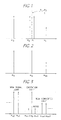
- the frequency ⁇ c of the generated (wavelength converted) signal appears at a location symmetric to the frequency ⁇ 3 mirrored about the average frequency (( ⁇ 1 + ⁇ 2 )/2) of the other two signals ⁇ 1 , ⁇ 2 , as illustrated in Figure 1.
- This FWM phenomenon is referred to as degenerate FWM phenomenon, wherein the wavelength converted signal ⁇ cs appears on the frequency axis at a position symmetric to the frequency ⁇ S of the signal lightwave, mirrored about the frequency ⁇ p of the pump light as shown in Figure 2.
- the signal light is a WDM signal consisting of multiple (n) channels and subjected to simultaneous wavelength conversion by FWM
- the WDM signal is subjected to simultaneous wavelength conversion as expressed by equation (2).
- an improper FWM phenomenon occurs between one of the components of the WDM signal (multiple channels) and the pump lightwave, having the frequency ⁇ p , which produces a wavelength converted signal based on the improper FWM phenomenon.
- the frequency of the noise signal that is generated at the position closest to the frequency ⁇ P of the pump lightwave is determined by the two channels (whose frequencies are ⁇ sj and ⁇ si , respectively) among the channels of the WDM signal prior to wavelength conversion which have the minimum frequency interval. Therefore, the frequencies of noise signals ( ⁇ n 1 and ⁇ n -1 ) generated by improper FWM of the two channels and the pump lightwave are the closest to the frequency ⁇ P of the pump lightwave.
- Figure 3 illustrates the position on the frequency axis of the WDM converted signals produced by FWM with respect to the channel frequencies ⁇ s1 and ⁇ s2 of the WDM signal, and noise signals generated by improper FWM between ⁇ si and ⁇ sj .
- the WDM signals of channel frequencies ⁇ s1 and ⁇ s2 are produced as converted signals of frequencies ⁇ c1 and ⁇ c2 at symmetric positions mirrored about the frequency position ⁇ p of the pump lightwave.
- the noise signals at frequencies ⁇ n1 and ⁇ n-1 are produced at the positions closest to the frequency ⁇ P of the pump lightwave.
- the frequency of the noise generated by improper FWM which is farthest from the frequency ⁇ p of the pump lightwave is determined by the frequencies ⁇ sj and ⁇ si of the two channels which have the largest frequency difference.
- the frequency of the noise is determined by the absolute value of the difference between the frequency ⁇ s1 of the channel closest to the frequency ⁇ P of the pump lightwave in the frequency band of the WDM signal light before wavelength conversion, and the frequency of the channel farthest from the frequency ⁇ P of the pump lightwave in the frequency band of the WDM signal light before wavelength conversion. In prior art FWM wavelength converters, this produces a noise signal frequency which is inside the frequency band where the WDM signal prior to wavelength conversion is positioned.
- the frequencies of the noise which are farthest from the frequency ⁇ p of the pump lightwave lie on the respective sides of the frequency ⁇ p of the pump lightwave, one on each side, and the interval between the two frequencies is equal to the frequency bandwidth where the WDM signal lies. Therefore, the noise signal frequencies are positioned on the frequency axis on the respective sides of the frequency ⁇ p of the pump lightwave, with a total frequency bandwidth twice the frequency bandwidth of the WDM signal prior to wavelength conversion.
- the generated noise signals lie dispersed along the frequency band wherein the interval between the noise frequencies is determined by the separation between signal channels, and the frequency ⁇ p of the pump lightwave is at the center improper.
- a first method of wavelength conversion uses a single pump lightwave to prevent the frequency band of the noise signals generated by improper FWM from overlapping the frequency band of WDM converted light after wavelength conversion, and the frequency band of WDM converted light prior to wavelength conversion.
- the wavelength conversion method sets the frequency band of noise signals (herein after referred to as "guard band”) such that the guard band is centered around the frequency ⁇ p of the pump light and separates the noise signals from the WDM converted signals in a way such that the frequency band of the WDM converted signal lies outside the guard band.
- the frequency bandwidth of the noise signals do not overlap the frequency bandwidth of the wavelength-converted signals.
- WDM signal light prior to wavelength conversion consists of n channels spread over a signal bandwidth of WBW. Also assume that the frequency intervals between the channels are equal to one another and have a value ⁇ , the interval between the frequency ⁇ P of the single pump lightwave to be used and the frequency ⁇ s1 among the frequencies of the WDM signal which is closest to the frequency ⁇ P of the pump lightwave is ⁇ , and the i-th frequency of the WDM signal from the frequency ⁇ P of the pump lightwave is ⁇ si .
- ⁇ si ⁇ p - ⁇ - ( n - i ) ⁇ (1 ⁇ i ⁇ n )
- the frequency of the WDM signal is set to a position in a frequency band lower than the frequency ⁇ p of the pump lightwave in this case, the results of the analysis do not change even if the frequency of the WDM signal is positioned in a frequency band higher than that frequency ⁇ p of the pump lightwave. Therefore, the generality will not be lost even if the frequency of the WDM signal lies in either a frequency band lower than the frequency ⁇ p of the pump lightwave, or in a frequency band higher than the frequency ⁇ p of the pump light.
- Equation (3) the frequency ⁇ nji of the noise signal becomes as given by the following equation, wherein ⁇ nji in equation (3) is ⁇ nk .
- there is only one combination of ( i, j) that satisfies k n.
- the frequency ⁇ nk of the noise signal spreads extensively on both sides of the frequency ⁇ p of the pump lightwave so as to have the frequency bandwidth of the WDM signal, ( n - 1) ⁇ , while maintaining the equal frequency interval ⁇ between channels of the WDM signal prior to wavelength conversion.
- the WDM converted signal is located on the opposite side of the frequency band of the WDM signal prior to wavelength conversion, centered about the frequency ⁇ p of the pump lightwave.
- the WDM converted signal extends by equal intervals of ⁇ to the position of the frequency ( n - 1) ⁇ from the position of the frequency, separated by ⁇ , from the frequency ⁇ p of the pump lightwave.
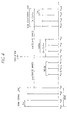
- Figure 4 is an exemplary, graphical illustration of the positional relationship of the WDM signal prior to wavelength conversion, the WDM converted signal after wavelength conversion, and noise on the frequency axis.
- the WDM signal prior to wavelength conversion, having a frequency band of ( n - 1) ⁇ , and the WDM converted signal after wavelength conversion having the frequency band ( n - 1) ⁇ are positioned at mirror symmetric locations on the frequency axis, centered about the frequency ⁇ p of the pump lightwave.
- Noise having a frequency bandwidth of ( n - 1) ⁇ ⁇ 2, is positioned on both sides of the frequency ⁇ p of the pump lightwave, and between the channel of the frequency ⁇ s1 of the WDM signal prior to wavelength conversion and the channel of the frequency ⁇ cs1 of the WDM converted signal after wavelength conversion.
- a interval between pump lightwave and closest channel in WDM optical signal lightwave, ⁇ should be grater than or equal to the frequency bandwidth of WDM optical signal lightwave.
- the WDM signal prior to wavelength conversion should have an upper limit of ⁇ in order to prevent the frequency band of the noise signal generated by improper FWM from overlapping the frequency band of the WDM converted signal.
- n ( n - 1) ⁇
- the maximum value of the bandwidth of the WDM signal becomes ⁇ .
- the WDM converted signal is converted into the band ⁇ away from the frequency ⁇ p of the pump lightwave, and the noise lies only in the band of the interval ⁇ from the frequency ⁇ p of the pump lightwave.
- the frequency ⁇ p of the pump lightwave in the foregoing description is set equal to or close to a frequency equivalent to the zero dispersion wavelength of the conversion medium, wherein the conversion efficiency of FWM can be enhanced.
- guard band the band of the interval ⁇ having one end at the frequency ⁇ p of the pump lightwave is referred to as the "guard band.”
- the guard band is a frequency bandwidth which is set on either side of the pump lightwave such that the bandwidth on one side is equal to or wider than that of the WDM signal.
- the conversion medium can be implemented with a 100 m high nonlinearity dispersion shifted fiber (HNL-DSF) with a zero dispersion wavelength of 1564 nm, 191.7THz.
- the frequency ⁇ p of the pump lightwave can be set to 191.7 THz
- the width ( ⁇ ) of the guard band set to 3.4 THz
- the channel quantity n set to 18, wherein WDM signal light in a C band (1530 to 1565 nm) can be converted to an L band (1565 to 1625 nm).
- An optical spectrum of the wavelength conversion is shown in Figure 5.
- the frequency band of the WDM converted signal does not overlap the frequency band of the noise.
- the frequency bandwidth of the WDM signal to be converted should be restricted, and a guard band should be set on both sides of the frequency ⁇ p . Therefore, the bandwidth usable in signal transfer is decreased by setting the guard band. Specifically, if the band usable in signal transfer consist of the frequency band from ⁇ p to the farthest channel frequency of the WDM converted signal from the ⁇ p , the frequency band usable in signal transfer is reduced by half.
- wavelength conversion of WDM optical signals by FWM causes noise signal frequencies generated by improper FWM to lie at mirror symmetric positions, centered about the frequency ⁇ p of the pump light.
- the range of the noise signal frequencies starts at the position which is separated from the frequency ⁇ p of the pump light by ⁇ and ends at the position which is separated from the frequency ⁇ p of the pump lightwave by the frequency bandwidth of the WDM signal.
- the second wavelength conversion method comprises a two-pump-light wavelength converting method which executes FWM by using two pump lightwaves of different frequencies and sets a guard band as a frequency band for noise.
- wavelength conversion is carried out by FWM using two pump lightwaves of different frequencies ⁇ p1 and ⁇ p2
- wavelength conversion of the WDM optical signal described by equation (2)
- the average frequency of the two pump lightwaves as the center.
- Noise signal frequencies originating from improper FWM, given by equation (3), are produced with the frequencies ⁇ p1 and ⁇ p2 of the individual pump lightwaves as their centers.
- the average frequency of the frequencies ⁇ p1 and ⁇ p2 of the two pump lightwaves may be matched with the frequency ⁇ 0 .
- the frequency band between the frequency ⁇ 0 and the frequency ⁇ p1 and the frequency band between the frequency ⁇ 0 and the frequency ⁇ p2 have the frequency bandwidth F w .
- the frequency bandwidth F w can be determined so as to prevent the channels of the WDM converted signals from overlapping the noise signal frequencies produced by improper FWM.
- the WDM signal prior to wavelength conversion consists of n channels having the equal frequency interval ⁇ , and the frequency interval between the frequency of ⁇ 0 and the frequency of the WDM signal that is closest to the former frequency is ⁇ .
- ⁇ si is the frequency of the i-th channel of the WDM signal light as counted from the frequency closest to the average frequency ⁇ 0 of the two pump lights
- ⁇ csi is the frequency of the channel of the WDM converted signal which is produced by FWM-based wavelength conversion of the channel of the frequency ⁇ si .
- the frequency of each channel of the WDM signal lies in a frequency band lower than the average frequency ⁇ 0 of the two pump lights.
- the results of the analysis do not change. Therefore, the generality will not be lost regardless of whether the frequency of each channel of the WDM optical signal lies in a frequency band lower than or higher than the average frequency ⁇ 0 of the two pump lights.
- ⁇ njip1 is the frequency of the noise generated by the optical channels of frequencies ⁇ si and ⁇ sj in the WDM signal prior to wavelength conversion and the first pump lightwave of the frequency ⁇ p1 .
- ⁇ njip2 is the frequency of the noise signal generated by optical channels of frequencies ⁇ si and ⁇ sj in the WDM signal prior to wavelength conversion and the second pump lightwave of the frequency ⁇ p2 .
- the frequency ⁇ si of the i-th channel of the WDM signal light is given by the following equation:
- the frequencies of the WDM converted signal start at the frequency separated from the average frequency ⁇ 0 of the two pump lightwaves by the interval ⁇ , and the frequency bandwidth is the same as the frequency bandwidth of the WDM signal prior to wavelength conversion.
- the frequency bandwidths of the noise signals are given by equations (22) and (23). Specifically, the frequencies of the noise signal produced by improper FWM with the first pump lightwave are produced at the mirror symmetric positions on both sides of the frequency ⁇ p1 of the first pump lightwave, and extend the frequency bandwidth with that of the WDM signal.
- the frequencies of the noise signal generated by improper FWM with the second pump lightwave are produced at the mirror symmetric positions on both sides of the frequency ⁇ p2 of the second pump lightwaves and extend the frequency bandwidth with that of the WDM signal prior to wavelength conversion.
- the frequency bandwidth for these noise signals is twice the frequency bandwidth of the WDM signal.
- the frequency band of the WDM signal prior to wavelength conversion lies between the average frequency ⁇ 0 of the two pump lightwaves and the frequency ⁇ p1 of the first pump lightwave
- the frequency band of the WDM converted signal lies between the average frequency ⁇ 0 of the two pump lightwaves and the frequency ⁇ p2 of the second pump lightwave.
- ⁇ csisup is the upper limit of the channel frequencies ⁇ csi of the WDM converted signal that are produced with the average frequency ⁇ 0 of the two pump lightwaves as the center or the highest frequency
- the frequency ⁇ csisup can be derived from equation (19), and given by the following equation:
- ⁇ njip2inf is the lower limit of the noise signal frequencies that are produced by improper FWM with the second pump lightwave of the frequency ⁇ p2 and the optical channels with frequencies ⁇ si and ⁇ sj of the WDM signal or the lowest frequency
- the frequency ⁇ njip2inf can be derived from equation (23) and given by the following equation:
- the noise signal frequency and the optical channel frequency of the WDM converted signal after wavelength conversion which lie between the average frequency ⁇ 0 of the two pump lightwaves and the frequency ⁇ p2 of the second pump light, do not overlap each other. That is, if the following equation is satisfied, the noise signal frequency and the optical channel frequency of the WDM converted signal do not overlap each other.
- the frequency interval between the optical channels in the WDM signal prior to wavelength conversion having the minimum frequency interval and the average frequency ⁇ 0 of the two pump lightwaves can be set to, ideally, the channel frequency of the WDM converted signal, and the noise signal frequency do not overlap if F w , the frequency interval between the average frequency ⁇ 0 of the two pump lightwaves and the frequency ⁇ p2 of the second pump lightwave, is set equal to or greater than twice the frequency bandwidth of the WDM signal prior to wavelength conversion, as is apparent from equation (27).
- guard band with bandwidth which would be equal to or wider than the frequency bandwidth of the WDM signal, on both sides of the frequencies ⁇ p1 and ⁇ p2 of the pump lightwaves.
- the width of the guard bands are equal to or greater than twice the frequency bandwidth of the WDM signal prior to wavelength conversion, and are centered about the frequencies ⁇ p1 and ⁇ p2 of the pump lights.
- the conversion band F w given by ( ⁇ p2 - ⁇ 0 ) or ( ⁇ 0 - ⁇ p1 ), should be set equal to or greater than twice the frequency bandwidth of the WDM signal prior to wavelength conversion.
- the frequencies of the WDM converted signal start at the frequency separated from the average frequency ⁇ 0 of the two pump lightwaves by the interval between the channel of the WDM signal prior to wavelength conversion which is closest to the frequency ⁇ 0 .
- the frequency bandwidth of the WDM converted signal is the same as the frequency bandwidth of the WDM signal prior to wavelength conversion and the frequency ⁇ 0 of the two pump lightwaves.
- Equation (16) can be satisfied with respect to the noise signal frequency ⁇ njip1 produced by improper FWM with the WDM signal prior to wavelength conversion having optical channel frequencies ⁇ si and ⁇ sj and the first pump lightwave with frequency ⁇ p1 .
- Equation (17) can be satisfied with respect to the noise signal frequency ⁇ njip2 produced by improper FWM with the WDM signal prior wavelength conversion having optical channel frequencies ⁇ si and ⁇ sj and the second pump lightwave with frequency ⁇ p2 .
- the noise frequency ⁇ njip1 and ⁇ njip2 lies at the mirror symmetric position on both sides of the frequency ⁇ p1 and ⁇ p2 of the first pump lightwaves, extended the bandwidth with the WDM signal prior to wavelength conversion, and its frequency bandwidth becomes twice the frequency bandwidth of the WDM signal prior to wavelength conversion respectively.
- the noise signal frequencies closest to the frequencies of the two pump lightwaves are separated by a distance ⁇ from the frequencies of the respective pump lightwaves on the frequency axes on both sides of the pump light frequencies.
- the noise signal frequencies closest to the frequencies of the two pump lightwaves lie on the frequency axes on both sides of the pump lightwave frequencies, but are separated from the frequencies of the respective pump lightwave frequencies by the narrowest frequency interval between the optical channels.
- the noise signal frequencies closest to the two pump lightwaves frequencies merely have different positions on the frequency axes.
- the distribution of the noise signal frequencies lie on the frequency axes on both sides of the frequencies ⁇ p1 and ⁇ p2 of the pump lightwaves, and the noise signal frequencies spread by the frequency bandwidth of the WDM signal prior to wavelength conversion, centered about the frequencies ⁇ p1 and ⁇ p2 .
- Fig. 6 is an exemplary illustration of the positional relationship between the WDM signal prior to wavelength conversion, the WDM converted signal, pump lightwaves, and noise signals along the frequency axis.
- the bandwidth F w is set equal to or greater than twice the frequency bandwidth of the WDM signal prior to wavelength conversion and, the band of the WDM converted light is separated from the noise band, and both frequency bands do not overlap.
- a second embodiment of a wavelength converter according to the second wavelength converting method (two-pump -lightwaves wavelength converting method) will be discussed below.
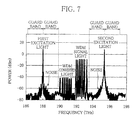
- a FWM conversion medium can be implemented with a 100-m HNL-DSF with a zero dispersion wavelength of 1564 nm,191.6THz.
- the frequency ⁇ p1 of the first pump light can be set to about 187.9 THz, and the frequency ⁇ p2 of the second pump light can be set to about 195.3 THz.
- the average frequency ⁇ 0 will then be about 191.6 THz.
- the bandwidth of the signals is chosen so that the width of the guard band is about 1.8 THz.
- the equal frequency interval ⁇ was 0.2 THz
- the channel quantity n was 7, and WDM signal light in the C band (1530 to 1565 nm) was wavelength-converted to the L band (1565 to 1625 nm).
- the resultant optical spectrum is shown in Figure 7.
- the band of the WDM converted signal does not overlap t that of noise generated by improper FWM. Because the SNR of signals after wavelength conversion (WDM signal and WDM converted signal) relative to the noise should be equal to or greater than 30 dB, the obtained signals maintain their characteristics as high quality as light sources.
- the average of the frequencies ⁇ p1 and ⁇ p2 of the two pump lightwaves may advantageously be matched with the zero dispersion wavelength of the conversion medium.
- the channel frequency of the WDM signal prior to wavelength conversion is given by ⁇ si and the channel frequency of the WDM converted signal which is produced at the mirror symmetric positions centered about the average frequency ⁇ 0 of the two pump lightwaves is given by ⁇ csi .
- the propagation constants of the frequencies ⁇ p1 and ⁇ p2 of the two pump lightwaves propagating in the conversion medium where FWM occurs, and the frequencies ⁇ si and ⁇ csi are respectively given as ⁇ p1 , ⁇ p2 , ⁇ si , and ⁇ csi .
- the frequencies ⁇ p1 and ⁇ p2 are located at mirror symmetric positions on the frequency axis centered about the frequency ⁇ 0 . Therefore, the positions of the propagation constants ⁇ p1 and ⁇ p2 on the frequency axis lie at positions which are equal in a distance ⁇ 1 on the frequency axis from the frequency ⁇ 0 to the frequencies ⁇ p1 and ⁇ p2 , and have different signs on the frequency axis where the frequency ⁇ 0 is designated as zero.
- the propagation constants ⁇ si and ⁇ csi are located at mirror symmetric positions on the frequency axis centered about the frequency ⁇ 0 . Therefore, the positions of the propagation constants ⁇ si and ⁇ csi on the frequency axis are equal in distance ⁇ 2 on the frequency axis from the frequency ⁇ 0 to the frequencies ⁇ si and ⁇ csi , and have different signs on the frequency axis where the frequency ⁇ 0 is designated as zero.
- the frequency of the WDM converted signal is preferably set closer to the frequency equivalent to the zero dispersion wavelength of the conversion medium.
- the average frequency ⁇ 0 of the two pump lightwaves is preferably matched with the frequency equivalent to the zero dispersion wavelength of the conversion medium in the foregoing description.
- a WDM signal prior to wavelength conversion is set on one side of the frequency of a single pump lightwave on the frequency axis, the interval between the frequency of the pump lightwave and that of the frequencies of the WDM signal prior to wavelength conversion which is closest to the former frequency is set wider than the frequency bandwidth of the WDM signal light, and FWM-based wavelength conversion is carried out.
- WDM converted signals can be produced at the mirror symmetric positions around the frequency of the pump lightwave, and noise is generated in the guard bands by improper FWM.
- a WDM signal prior to wavelength conversion is set between the average frequency of two pump lights and the frequency of one of the two pump lights, the interval between the frequency of one of the pump lights and the average frequency of the two pump lights is set equal to or higher than twice the frequency bandwidth of the WDM signal prior to wavelength conversion, and FWM-based wavelength conversion is carried out.
- WDM converted signals can be produced at the mirror symmetric positions around the average frequency of the two pump lights in the guard bands, and noise is generated around the individual pump lights outside the guard bands by improper FWM.
- the frequency band of the WDM converted light does not overlap the frequency band of noise generated by improper FWM.
- WDM signal light which lies in either the S band (1460 to 1530 nm), the C band (1530 to 1565 nm) or the L band (1565 to 1625 nm) can be wavelength-converted to another band without generating noise. Wavelength conversion free of noise can also be realized within the same band.
- the first wavelength converting method for example, as WDM signal light which lies in a certain band is subjected to wavelength conversion to produce WDM converted light outside the guard band, and a band-pass filter which passes only converted light is used in that WDM, it is possible to acquire wavelength-converted WDM light free of noise.
- the adaptation of the first wavelength conversion method can allow WDM signal light in the L band to be wavelength-converted to the S band without noise. Such a case will be discussed below as an additional embodiment.
- a single pump lightwave with a frequency of about 195 THz is applied to a conversion medium, the guard band is set to 4 THz, the equal frequency interval is 200 GHz, the channel quantity is 21 and WDM signal light in the L band, which has a frequency bandwidth of 180 to 190 THz, is subjected to FWM.
- the bandwidth spanned by the signals (about 4 THz, as 21 channels with 200 GHz between each channel spans 4 THz) is slightly less than the distance between the highest signal frequency (about 190 THz) and the pump wavelength (about 195 THz).
- WDM converted light in the S band having the equal frequency interval of 200 GHz, twenty-one channels, and a frequency bandwidth of 200 to 204 THz, is produced outside the guard band, and, at the same time, noise with frequency bandwidths of 191 to 199 THz are generated around the frequency of 195 THz of the pump lightwave in the guard band.
- WDM signal light in the C band having an equal frequency interval of about 200 GHz, six channels and a frequency bandwidth of about 192 to 193 THz, is wavelength-converted to WDM converted light in the same C band which has the equal frequency interval of about 200 GHz, six channels and a frequency bandwidth of about 193 to 194 THz.
- the signal channel bandwidth is about 1 THz (6 channels separated by 200 GHz each).
- the signal frequencies (at 192-193 THz) are between the lower pump frequency (190 THz) and the average of the two pump frequencies (193 THz).
- the lower pump frequency is separated from the higher pump frequency by at least four times the bandwidth spanned by the signal channels.
- the frequencies of the individual pump lightwaves can be set such that the average frequency of two pump lightwaves becomes approximately 193 THz.
- the frequency of one of the pump lightwaves can be set to a value equal to or lower than 190 THz, and the frequency of the other pump lightwave can be set to a value equal to or higher than 196 THz.
- the pump lightwave frequencies were respectively set to about 190 THz and 196 THz respectively, and the width of the guard band was set to 1 THz.
- FWM can then generate WDM converted light having an equal frequency interval of about 200 GHz, six channels, and a frequency bandwidth of about 193 to 194 THz in the guard band.
- noise with a frequency bandwidth of about 189 to 191 THz will be generated around the frequency of 190 THz of one of the pump lights, and noise with a frequency bandwidth of 195 to 197 THz is generated around the frequency of 196 THz of the other pump light.
- the WDM converted signal is passed through a band-pass filter, where wavelength-converted, noise-free WDM signal light having a frequency bandwidth of 193 to 194 THz is extracted.
- the frequencies of the individual pump lightwaves can be set such that the average frequency of the two pump lightwaves is 193 THz.
- the frequency of one of the pump lights can be set to a value equal to or lower than 190 THz
- the frequency of the other pump lightwave can be set to a value equal to or higher than 196 THz.
- the pump lightwave frequencies were respectively set to about 190 THz and 196 THz
- the width of the guard band was set to about 1 THz.
- FWM can then generate WDM converted light, having the equal frequency interval of 200 GHz, six channels, and a frequency bandwidth of about 192 to 193 THz in the guard band Inside the guard band, noise with a frequency bandwidth of about 189 to 191 THz is generated around the frequency of 190 THz of one of the pump lightwaves, and noise with a frequency bandwidth of about 195 to 197 THz is generated around the frequency of 196 THz of the other pump lightwave.
- the WDM converted light may be passed through a band-pass filter, and wavelength-converted, noise-free WDM signal light having a frequency bandwidth of about 192 to 193 THz is extracted.
- Example 2 the average frequency (193 THz) of the two pump lightwaves overlaps a portion of the frequency band of WDM signal light prior to wavelength conversion. Because the average frequency is not real, however, it is unnecessary to filter out the average frequency.
- the average frequency of the two pump lightwaves can be set close to either the highest or lowest frequency of the WDM signal prior to wavelength conversion.
- Such a method can effectively utilize the frequency band and is generally suitable for implementation.
- WDM signal light is sent to an access network from a main network, or to the main network from an access network, in an optical communication system
- WDM signal light is amplified by, for example, an EDFA before being distributed to individual networks.
- the WDM signal prior to wavelength conversion and the WDM converted signal after FWM-based wavelength conversion are acquired at the output of the filter.
- wavelength selective demultiplexing can be realized. If the WDM signals are applied to an arrayed waveguide, the WDM signal prior to wavelength conversion and the WDM converted signal appear in the output waveguide channel by channel.
- the use of the wavelength converting method of the present invention therefore, can provide for the design of a variety of multifunction optical communication components and systems.
- the use of both the first wavelength converting method and the second wavelength converting method of the present invention can provide a wavelength converter which acquires WDM converted light which is completely free of noise generated by improper FWM.
- a wavelength converter 300 is illustrated in the block diagram of Fig. 8.
- the wavelength converter 300 comprises a demultiplexer 302, a first wavelength converting section 304 which executes the first wavelength converting method, a second wavelength converting section 306 which executes the second wavelength converting method, a first filter 308 which passes only first WDM converted light 310 in the output of the first wavelength converting section 304, a second filter 312 which passes only second WDM converted light 314 in the output of the second wavelength converting section 306, and a multiplexer 316, which multiplexes the first WDM converted light 310 and the second WDM converted light 314, as shown in Fig. 8.
- WDM signal light 320 for wavelength conversion is applied to the demultiplexer 302.
- the demultiplexer 302 demultiplexes the input WDM signal 320 into two WDM signals of different frequency bands 322, 324, wherein the first demodulated WDM signal 322 is input to the first wavelength converting section 304 while the second demultiplexed WDM signal 324 is input to the second wavelength converting section 306.
- the first wavelength converting section 304 can have a conversion medium into which the first demultiplexed WDM signal 322 and one pump lightwave 330 enter.
- the wavelength converting section 304 can be designed such that the interval between a frequency of the first demultiplexed WDM signal 322 closest to the frequency of the single pump lightwave 330, and the frequency of the pump lightwave 330 becomes, as the guard band, equal to or larger than the frequency bandwidth of the first demultiplexed WDM signal 322.
- the second wavelength converting section 306 can have a conversion medium into which the second demultiplexed WDM signal 324 and two pump lightwaves 334, 336 enter.
- the second wavelength converting section 306 can be designed such that the frequency of the second demultiplexed WDM signal 324 is positioned between the average frequency of the two pump lightwaves 334, 336 and a frequency of the two pump lightwaves 334, 336, and the interval between that one frequency and the average frequency becomes, as the guard band, equal to or larger than twice the frequency bandwidth of the second demultiplexed WDM signal 324.
- the first demultiplexed WDM signal 322 from the demultiplexer 302 can be demultiplexed so as to include the frequency component that lies closest to the frequency of the one pump lightwave 330 discussed above.
- the second demultiplexed WDM signal 324 from the demultiplexer 302 can be demultiplexed so as to include the frequency components that lie closest to the average frequency of the two pump lightwaves 334, 336.
- the wavelength-converted first demultiplexed WDM converted signal 310 is produced at the mirror symmetric positions on the frequency axis, centered about the frequency of the single pump lightwave 330, i.e., outside of the guard band, by FWM of the first demultiplexed WDM signal 322 and the single pump lightwave 330.
- noise 340 frequencies originating from improper FWM are generated in the guard band.
- the wavelength-converted second demultiplexed WDM converted signal 314 is produced at the mirror symmetric positions on the frequency axis, centered about the average frequency of the two pump lightwaves 334, 336, i.e., inside the guard band, by FWM of the input second demultiplexed WDM 324 signal and the two pump lightwaves 334, 336.
- noise 342 frequencies originating from improper FWM are generated outside the guard band.
- the output of the first wavelength converting section 304 is applied to the first filter 308 and only the first demultiplexed WDM converted signal 310 passes through the first filter 308. That is, the first demultiplexed WDM signal 322, the pump lightwave 330, and noise 340 can all be eliminated.
- the output of the second wavelength converting section 306 is applied to the second filter 312 and only the second demultiplexed WDM converted signal 314 passes through the second filter 312. That is, the second demultiplexed WDM signal 324, the pump lightwaves 334, 336, and noise 342 can all be eliminated.
- the converted signals 310, 314 are multiplexed by the multiplexer 316.
- the demultiplexer 302 and the multiplexer 316 can be implemented, for example, with an arrayed waveguide type demultiplexer and Mach-Zehnder type multiplexer, respectively.
- a first branch in the wavelength converter shown in Fig. 8 incorporates the first wavelength converting section 304 and the first filter 308, and a second branch incorporates the second wavelength converting section 306 and the second filter 312, the guard band will be empty and no noise will be present on the output side of the first branch.
- the guard band will be empty and no noise will be present on the output side of the first branch.
- the WDM converted signals pass through the multiplexer 316, the formerly empty guard band is filled with the frequency band of the latter WDM converted signal. Therefore, the optical frequency band can be used effectively in such a wavelength converter.
- the WDM signal when the frequency bandwidth of the WDM signal prior to wavelength conversion is wide, it may be beneficial for the WDM signal to be demultiplexed to a plurality of WDM signals having narrower frequency bandwidths before using the wavelength converter. This can be beneficial because the guard band specified by the frequency bandwidth of the WDM signal prior to wavelength conversion and the FWM conversion efficiency becomes low when the frequency bandwidth of the WDM signal prior to wavelength conversion is wide.
- WDM converted light is present between the average frequency of two pump lightwaves and the guard band whose frequency bandwidth is equal to or higher than the frequency bandwidth of WDM signal light that is to be wavelength-converted, and no pump lightwave is present at the position of the average frequency.
- the second wavelength converting method therefore does not require filtering of the pump lightwaves and the WDM signal, and thus can be advantageous in the effective use of the optical frequency band.
- the frequency bandwidth of the WDM signal to be wavelength-converted when the frequency bandwidth of the WDM signal to be wavelength-converted is wide, it can be divided by N. Then, the frequency of a single pump lightwave in the first branch can be set equal to the average frequency of the two pump lightwaves in the second branch. Of the WDM signals resulting from the division by N, the WDM signal that includes the channel whose frequency is closest to the aforesaid average frequency can be wavelength-converted by the second branch.
- the width of the guard band in the second branch can be set equal to or greater than twice the frequency bandwidth of the WDM signal.
- N-1 branches with single pump sources can be combined in parallel and N-1 divided WDM signals are respectively assigned to these N-1 branches and subjected to wavelength conversion.
- the width of the guard band in each of these branches can be set equal to or greater than the frequency bandwidth of the respectively-assigned divided WDM signals.
- the frequency of the pump lightwave in the single pump source branch is set equal to the average frequency of the two pump lightwaves in the second, two pump source branch, no frequency skip occurs in the WDM converted signal after FWM-based wavelength conversion.
- the overall optical frequency band can be used effectively.
- the WDM signal that is transferred over the main transmission path is preferably demultiplexed so as to have frequency components that can be separately processed by the separate branches.
- an arrayed waveguide demultiplexer can be used. Specifically, one of the input lines of the arrayed waveguide demultiplexer can be connected to the main transmission path. As a result, the WDM signal according to each frequency band can be produced from each output waveguide on the output side.
- the demultiplexer would have N frequency components assigned, respectively, to the first branch and the second branch.
- the multiplexer can be constructed by connecting N output terminals of the branches to an N-to-1 combining unit.
- WDM signal light in the C band having a frequency bandwidth of about 192 to 195 THz, an equal inter-channel frequency interval of about 200 GHz, and sixteen channels can be wavelength-converted to WDM signal light in the L band which has a frequency bandwidth of about 187 to 190 THz, the equal inter-channel frequency interval of about 200 GHz and sixteen channels.
- the WDM signal light in the C band can be applied to the demultiplexer and demultiplexed into a first demultiplexed WDM signal having the equal inter-channel frequency interval of 200 GHz, eight channels, and a frequency bandwidth of about 193.6 to 195 THz, and a second demultiplexed WDM signal having the equal inter-channel frequency interval of 200 GHz, eight channels, and a frequency bandwidth of about 192 to 193.4 THz.
- the first and second demultiplexed WDM signals can be applied to the first wavelength converting section 304 and the second wavelength converting section 306, respectively.
- the frequency of a single pump lightwave can be set to 191 THz, and the width of the guard band can be set to 2.6 THz.
- the first wavelength converting section 304 provides WDM converted light with the equal frequency interval of 200 GHz, eight channels, and a frequency bandwidth of 187 to 188.4 THz outside the guard band, and noise with a frequency band of about 189.6 THz to 192.4 THz in the guard band.
- the WDM converted light and the noise can be applied to the first filter 308 to filter out the noise with a frequency band of about 189.6 THz or higher and the first demultiplexed WDM signal.
- the frequencies of two pump lightwaves can be selected so that their average frequency is about 191 THz.
- the frequency of one pump lightwave can be set to 187 THz or lower, and the frequency of the other pump lightwave can be set to 195 THz or higher.
- the frequency of one pump lightwave is set to about 187 THz while the frequency of the other pump lightwave is set to about 195 THz.
- the width of the guard band can be set to 2 THz.
- the second wavelength converting section 306 provides WDM converted light having eight channels, the equal frequency interval of 200 GHz, and a frequency bandwidth of about 188.6 to 190 THz inside the guard band, noise spreading in a frequency band of 185.6 to 188.4 THz around the frequency of 187 THz of one pump lightwave outside the guard band, and noise spreading in a frequency band of 193.6 to 196.4 THz around the frequency of 195 THz of the other pump lightwave outside the guard band.
- the WDM converted light and the noise can be applied to the second filter (band-pass filter) 312 to pass only the WDM converted light with a frequency band of 188.6 to 190 THz.
- the WDM converted signals from the first filter 308 and the second filter 312 can be applied to the multiplexer 316.
- WDM converted signal light having the equal frequency interval of 200 GHz, sixteen channels, and a frequency bandwidth of 187 to 190 THz can be produced.
- WDM signal light present in the L band can be wavelength-converted to the C band without noise by using the wavelength converter of the present invention.
- the process of wavelength conversion to the L band from the C band should be reversed.
- WDM signal light in the L band having an equal inter-channel frequency interval of about 200 GHz, sixteen channels, and a frequency bandwidth of about 187 to 190 THz
- WDM signal light in the C band having the equal inter-channel frequency interval of about 200 GHz, sixteen channels, and a frequency bandwidth of about 192 to 195 THz.
- the WDM signal light in the L band can be applied to the demultiplexer 302 and is demultiplexed into a first demultiplexed WDM converted signal having the equal inter-channel frequency interval of about 200 GHz, eight channels, and a frequency bandwidth of about 187 to 188.4 THz, and a second demultiplexed WDM converted signal having the equal inter-channel frequency interval of about 200 GHz, eight channels and a frequency bandwidth of about 188.6 to 190 THz.
- the first and second demultiplexed WDM signals can be applied to the first wavelength converting section 304 and the second wavelength converting section 306, respectively.
- the frequency of about 191 THz of a single pump lightwave can be used and the width of the guard band can be set to about 1.4 THz.
- the first wavelength converting section 304 provides a WDM converted signal having the equal frequency interval of about 200 GHz, eight channels, and a frequency bandwidth of 193.6 to 195 THz outside the guard band, a WDM converted signal having a frequency bandwidth of about 193.6 to 195 THz around the frequency of about 191 THz of the pump lightwave inside the guard band, and noise having a frequency band of about 189.6 THz to 192.4 THz around the frequency of 1 about 91 THz of the pump lightwave inside the guard band.
- the WDM converted signals and the noise can be applied to the first filter 308 to filter out the noises with a frequency band of about 192.4 THz or lower, and the first demultiplexed WDM converted signal, such that WDM converted light having a frequency band of about 193.6 to 195 THz is extracted.
- the frequencies of two pump lightwaves can be selected such that their average frequency is about 191 THz.
- the frequency of one pump lightwave can be set to about 187 THz or lower, and the frequency of the other pump lightwave can be set to 195 THz or higher.
- the frequency of one pump lightwave is set to 187 THz while the frequency of the other pump lightwave is set to 195 THz.
- the width of the guard band can be set to about 1.4 THz.
- the second wavelength converting section 306 provides WDM converted light having eight channels, the equal frequency interval of about 200 GHz, and a frequency bandwidth of about 192 to 193.4 THz inside the guard band, noise spreading in a frequency band of about 185.6 to 188.4 THz around the frequency of about 187 THz of one pump lightwave outside the guard band, and noise spreading in a frequency band of about 193.6 to 196.4 THz around the frequency of about 195 THz of the other pump lightwave outside the guard band.
- the WDM converted light and the noise can be applied to the second filter (band-pass filter) 312 to pass only the WDM converted light having a frequency band of about 192 to 193.4 THz.
- the WDM converted signals from the first filter 308 and the second filter 312 can be applied to the multiplexer 316, thus providing WDM converted light having the equal frequency interval of 200 GHz, sixteen channels, and a frequency bandwidth of about 192 to 195 THz.
- a band-pass filter which eliminates only noise in the guard band is used as the first filter 308
- a band-pass filter which passes only the frequency band in the guard band is used as the second filter 312
- WDM signal light prior to wavelength conversion and WDM converted light without noise can be produced after the WDM signals pass through the multiplexer 316. That is, a signal whose wavelength channels become twice the channel frequency of the WDM signal prior to wavelength conversion can be produced.
- the use of the wavelength converter as a light source can provide a signal having twice the channel frequency of the input signal per single light source.
- Such a wavelength converter can thus reduce the number of laser diodes used in a light source.
- a plurality of light sources of this type are connected in series, for example, it is possible to construct a light source which provides a signal light whose channel frequency increases to two times, four times, eight times and so forth, depending on the number of light sources implemented.
- the number of laser diodes required to produce such an effect decreases to 1/2, 1/4, 1/8 and so forth in order. This makes the entire light source more compact in size and reduces the cost thereof.
- a plurality of light sources such as laser diodes 360 have outputs that are multiplexed together by a multiplexer 362.
- the output of the multiplexer is routed to a four-wave mixer 364 and pump source filter/filters 370 connected in series.
- These components may, for example, be configured as shown in Figure 8, wherein the filter or filters 370 pass both the converted light and the original signal light, but block the pump lightwave and noise signals. This produces 2N WDM outputs from only N laser diodes. If desired, the outputs may be demultiplexed into 2N separate light sources by a demultiplexer 372.
Landscapes
- Physics & Mathematics (AREA)
- Nonlinear Science (AREA)
- General Physics & Mathematics (AREA)
- Electromagnetism (AREA)
- Optics & Photonics (AREA)
- Engineering & Computer Science (AREA)
- Computer Networks & Wireless Communication (AREA)
- Signal Processing (AREA)
- Condensed Matter Physics & Semiconductors (AREA)
- Optical Communication System (AREA)
- Optical Modulation, Optical Deflection, Nonlinear Optics, Optical Demodulation, Optical Logic Elements (AREA)
Abstract
Description




Claims (33)
- A method of wavelength converting a plurality of optical signal channels that span a frequency bandwidth, said method comprising:four wave mixing said optical signal channels and a pump lightwave in a conversion medium; andselecting a frequency for said pump lightwave such that the frequency difference between any selected optical signal channel frequency and the pump lightwave frequency is approximately equal to or greater than the frequency bandwidth spanned by the plurality of optical signal channels.
- A method according to claim 1, wherein said frequency of said pump lightwave is selected to be approximately equal to a zero dispersion frequency of said conversion medium.
- A method according to claim 1 or claim 2, wherein said conversion medium exhibits a non-linear optical property.
- A method of wavelength conversion of a plurality of optical signal channels spanning a frequency bandwidth, said method comprising:four-wave mixing, in a conversion medium, said plurality of optical signal channels and first and second pump lightwaves having first and second frequencies respectively;selecting frequencies for said first and second pump lightwaves such that (1) the optical signal channel frequencies lie between said first pump lightwave frequency and an average frequency of said two pump lightwave frequencies, and (2) the frequency difference between said first and second pump frequencies is at least about four times the frequency span of said optical signal channels.
- A method according to claim 4, wherein said average frequencies of pump lightwaves is approximately equal to a zero dispersion frequency of said conversion medium.
- A method according to claim 4 or claim 5, wherein said conversion medium exhibits a non-linear optical property.
- A wavelength converter comprising:a demultiplexer, configured to demultiplex a wavelength division multiplexed (WDM) optical signal into at least two demultiplexed WDM optical signals, wherein a first demultiplexed WDM optical signal has a first frequency bandwidth and a second demultiplexed WDM optical signal has a second frequency bandwidth;a first wavelength converting section comprising a first conversion medium configured to receive said first demultiplexed WDM optical signal and a pump lightwave, wherein there is an interval between a said frequency of said pump lightwave and one frequency of said demultiplexed WDM optical signal with a frequency closest to said frequency of said pump lightwave, and said interval between said pump lightwave and said first demultiplexed WDM optical signal is equal to or greater than said first frequency bandwidth of said first demultiplexed WDM optical signal, and wherein a first output signal, including a first wavelength converted WDM optical signal, is produced at an output of said first wavelength converting section;a second wavelength converting section comprising a second conversion medium configured to receive said second demultiplexed WDM optical signal and a first and second pump lightwaves, wherein said second demultiplexed WDM optical signal is in a frequency bandwidth between a frequency of said first pump lightwave and an average frequency of said first and second pump lightwaves, wherein a frequency bandwidth between said first frequency of said first pump lightwave and said second demultiplexed WDM optical signal with a frequency closest to said first pump lightwave is set equal to or greater than said frequency bandwidth of said second demultiplexed WDM optical signal, and wherein a second output signal, including a second wavelength converted WDM optical signal, is produced at an output of said second wavelength converting section;a first filter, coupled to said first wavelength converting section, configured to receive said first output signal and to pass only said first wavelength converted WDM optical signal;a second filter, coupled to said second wavelength converting section, configured to receive said second output signal and to pass only said second wavelength converted WDM optical signal; anda multiplexer, coupled to said first filter and said second filter, configured to multiplex said first wavelength converted WDM optical signal from said first filter and said second wavelength converted WDM optical signal from said second filter.
- A wavelength converter according to claim 7, wherein said frequency of said pump lightwave in said first wavelength converting section is equal to a zero dispersion frequency of said first conversion medium.
- A wavelength converter according to claim 7 or claim 8 wherein said average frequency of said two pump lightwaves in said second wavelength converting section is equal to a zero dispersion frequency of said second conversion medium.
- An apparatus for producing wavelength converted light comprising a conversion medium coupled to receive as inputs a wavelength division multiplexed (WDM) optical signal and a pump lightwave, wherein the WDM optical signal has a bandwidth WBW, and wherein the frequency of said pump lightwave is at least WBW different from the frequencies present in the WDM optical signal.
- An apparatus according to claim 10, wherein said conversion medium comprises a high-nonlinearity optical fiber.
- An apparatus according to claim 10, wherein said conversion medium comprises a dispersion shifted optical fiber.
- An apparatus according to any one of claims 10 to 12, wherein the pump light source has a frequency that is at least WBW greater than the highest signal channel frequency.
- An apparatus according to any one of claims 10 to 12, wherein the pump light source has a frequency that is at least WBW smaller than the lowest signal channel frequency.
- A method of wavelength converting an optical signal having a bandwidth WBW, the method comprising injecting a pump lightwave into a conversion medium with said optical signal, wherein said pump lightwave has a frequency that is spaced by at least WBW from a closest frequency channel in said optical signal.
- A method according to claim 15, wherein said conversion medium comprises a high-nonlinearity optical fiber.
- A method according to claim 15, wherein said conversion medium comprises a dispersion shifted optical fiber.
- A method of wavelength converting a wavelength division multiplexed (WDM) optical signal having a bandwidth WBW, the method comprising injecting first and second pump lightwaves into a conversion medium with said WDM optical signal, wherein (1) said first pump lightwave has a frequency at least WBW less than the lowest frequency in said WDM optical signal, (2) the average frequency of said first and second pump lightwaves is higher than the highest frequency in said WDM optical signal, and (3) said second pump lightwave has a frequency at least 2WBW greater than an average frequency of said first and second pump lightwaves.
- A method of wavelength converting WDM optical signal having a bandwidth WBW, the method comprising injecting first and second pump lightwaves into a conversion medium with said WDM optical signal, wherein (1) said first pump lightwave has a frequency at least 2WBW less than said average frequency of said first and second pump lightwaves, (2) said average frequency of said first and second pump lightwaves is less than the lowest frequency in said WDM optical signal, and (3) said second pump lightwave has a frequency at least WBW greater than the highest frequency in said WDM optical signal.
- A method of wavelength converting an optical signal, comprising combining one or more pump lightwaves with said WDM optical signal in a conversion medium, and producing a converted output WDM optical signal spanning a frequency band outside of a frequency band that contains noise signals produced by improper four-wave mixing in said conversion medium.
- A method according to claim 19 or claim 20, comprising combining said optical signal with a single pump lightwave.
- A method according to claim 21 comprising providing a guard band around said pump lightwave.
- A method according to claim 19 or claim 20, comprising combining said optical signal with at least two pump lightwaves.
- A method according to claim 23, comprising providing a guard band around all of said pump lightwaves.
- A method according to any one of claims 19 to 24, comprising separating the frequencies present in said optical signal from the frequencies present in said pump lightwaves by an amount sufficient to separate noise frequencies from converted output signal frequencies.
- A system for wavelength conversion of an optical signal comprising:a conversion medium;an optical signal input to said conversion medium;at least one pump light source input to said conversion medium;a converted optical signal output from said conversion medium; andmeans for preventing noise produced by improper four wave mixing from appearing in a frequency band occupied by said converted optical signal.
- A system according to claim 26, wherein said means comprises a guard band surrounding said at least one pump source.
- A wavelength converter for converting the wavelength of a signal light, comprising:a first branch having a single pump source; anda second branch having a plurality of pump sources.
- A wavelength converter according to claim 28, wherein said single pump source in said first branch has a frequency that is either higher or lower than all of the signal light frequencies.
- A wavelength converter according to claim 28 or claim 29, wherein a first of said plurality of said pump light sources in said second branch has a frequency higher than at least some of the signal light and a second pump light source has a frequency lower than at least some of the signal light.
- A multifrequency light source comprising:N light sources;a multiplexer having said N light sources as an input and a multiplexed output; anda wavelength converter having said multiplexed output as an input and having 2N optical signal outputs.
- A light source according to claim 31, additionally comprising a demultiplexer receiving an output of said wavelength converter as an input.
- A light source according to claim 31 or claim 32, wherein said light sources comprise photodiodes.
Applications Claiming Priority (2)
| Application Number | Priority Date | Filing Date | Title |
|---|---|---|---|
| JP2001100719 | 2001-03-30 | ||
| JP2001100719A JP2002296629A (en) | 2001-03-30 | 2001-03-30 | Method for converting wavelength using optical four wave mixing and considering noise, wavelength converter and light source |
Publications (2)
| Publication Number | Publication Date |
|---|---|
| EP1248336A2 true EP1248336A2 (en) | 2002-10-09 |
| EP1248336A3 EP1248336A3 (en) | 2005-01-12 |
Family
ID=18954139
Family Applications (1)
| Application Number | Title | Priority Date | Filing Date |
|---|---|---|---|
| EP02250679A Withdrawn EP1248336A3 (en) | 2001-03-30 | 2002-01-31 | Method and apparatus for wavelength conversion |
Country Status (4)
| Country | Link |
|---|---|
| US (1) | US6831775B2 (en) |
| EP (1) | EP1248336A3 (en) |
| JP (1) | JP2002296629A (en) |
| CA (1) | CA2369795A1 (en) |
Cited By (1)
| Publication number | Priority date | Publication date | Assignee | Title |
|---|---|---|---|---|
| DE102009028819A1 (en) | 2009-08-21 | 2011-02-24 | Forschungsverbund Berlin E.V. | Apparatus for frequency conversion of laser radiation by four-wave mixing, comprises quasi-phase matching medium equipped with hollow cylinder during four-wave mixing of light waves |
Families Citing this family (16)
| Publication number | Priority date | Publication date | Assignee | Title |
|---|---|---|---|---|
| US7054057B2 (en) * | 2001-03-27 | 2006-05-30 | The Furukawa Electric Co., Ltd. | Multi-frequency light source |
| JP2004109916A (en) * | 2002-09-20 | 2004-04-08 | Nikon Corp | Wavelength converter for optical communication |
| TW594109B (en) * | 2003-09-18 | 2004-06-21 | Ind Tech Res Inst | Wavelength converter with wideband four-wave-mixing |
| JP5135815B2 (en) * | 2006-02-14 | 2013-02-06 | ミツミ電機株式会社 | Semiconductor integrated circuit device |
| US20070258717A1 (en) * | 2006-05-01 | 2007-11-08 | Masaaki Hirano | Optical device and wavelength conversion method and optical fiber suitable for them |
| US9641275B2 (en) | 2011-06-17 | 2017-05-02 | Tyco Electronics Subsea Communications Llc | Symmetric optical multiplexing node |
| GB2496214B (en) * | 2011-11-01 | 2016-03-16 | Fianium Ltd | Amplifying optical device pumped or seeded with nonlinearly generated light |
| JPWO2018155017A1 (en) * | 2017-02-24 | 2019-12-12 | 国立研究開発法人産業技術総合研究所 | Wavelength conversion method and wavelength converter |
| JP2018191074A (en) * | 2017-04-28 | 2018-11-29 | 富士通株式会社 | Transmission apparatus and transmission method |
| JP7106835B2 (en) * | 2017-10-06 | 2022-07-27 | 富士通株式会社 | Optical transmission device, wavelength conversion device, optical transmission method, and wavelength conversion method |
| JP7176213B2 (en) | 2018-03-28 | 2022-11-22 | 富士通株式会社 | Transmission device and transmission method |
| JP7135783B2 (en) | 2018-11-27 | 2022-09-13 | 富士通株式会社 | TRANSMISSION SYSTEM, TRANSMISSION DEVICE, AND TRANSMISSION METHOD |
| JP7473789B2 (en) * | 2020-03-13 | 2024-04-24 | 富士通株式会社 | Wavelength conversion device and wavelength conversion method |
| JP2022128895A (en) * | 2021-02-24 | 2022-09-05 | 富士通株式会社 | Wavelength conversion device, transmission device, and transmission system |
| CN113238308B (en) * | 2021-05-07 | 2022-09-27 | 北京华光浩阳科技有限公司 | Wavelength conversion device based on topological insulator |
| JP2024054601A (en) * | 2022-10-05 | 2024-04-17 | 富士通株式会社 | Optical transmission system, wavelength converter, and optical transmission device |
Family Cites Families (11)
| Publication number | Priority date | Publication date | Assignee | Title |
|---|---|---|---|---|
| US4881790A (en) * | 1988-04-25 | 1989-11-21 | American Telephone And Telegraph Company, At&T Bell Laboratories | Optical communications system comprising raman amplification means |
| JPH0713208A (en) * | 1993-06-24 | 1995-01-17 | Nippon Telegr & Teleph Corp <Ntt> | Optical frequency converter |
| US5619368A (en) * | 1995-05-16 | 1997-04-08 | Massachusetts Inst. Of Technology | Optical frequency shifter |
| JP3349945B2 (en) * | 1998-03-13 | 2002-11-25 | 日本電気株式会社 | Signal conversion device and optical transmission system using the signal conversion device |
| US6101024A (en) * | 1998-03-24 | 2000-08-08 | Xtera Communications, Inc. | Nonlinear fiber amplifiers used for a 1430-1530nm low-loss window in optical fibers |
| EP1008898A1 (en) * | 1998-06-29 | 2000-06-14 | The Furukawa Electric Co., Ltd. | Wavelength multiplexing optical transmission system and wavelength converter for wavelength multiplexing optical transmission |
| JP3973769B2 (en) * | 1998-08-19 | 2007-09-12 | 富士通株式会社 | Method and apparatus for wavelength conversion |
| JP3566096B2 (en) * | 1998-08-31 | 2004-09-15 | 富士通株式会社 | Apparatus for phase conjugate conversion and wavelength conversion |
| US6330104B1 (en) * | 1999-08-11 | 2001-12-11 | Lucent Technologies, Inc | Optical wavelength conversion using four wave mixing in fiber |
| JP4875237B2 (en) * | 1999-12-28 | 2012-02-15 | 古河電気工業株式会社 | Wavelength division multiplex transmission method using wavelength converter |
| FR2814305B1 (en) * | 2000-09-18 | 2002-12-06 | Cit Alcatel | WAVELENGTH SELECTION AND CONVERSION DEVICE, AND THE INCORPORATED PHOTONIC SWITCHING MATRIX |
-
2001
- 2001-03-30 JP JP2001100719A patent/JP2002296629A/en active Pending
-
2002
- 2002-01-17 US US10/053,231 patent/US6831775B2/en not_active Expired - Fee Related
- 2002-01-31 CA CA002369795A patent/CA2369795A1/en not_active Abandoned
- 2002-01-31 EP EP02250679A patent/EP1248336A3/en not_active Withdrawn
Cited By (1)
| Publication number | Priority date | Publication date | Assignee | Title |
|---|---|---|---|---|
| DE102009028819A1 (en) | 2009-08-21 | 2011-02-24 | Forschungsverbund Berlin E.V. | Apparatus for frequency conversion of laser radiation by four-wave mixing, comprises quasi-phase matching medium equipped with hollow cylinder during four-wave mixing of light waves |
Also Published As
| Publication number | Publication date |
|---|---|
| US6831775B2 (en) | 2004-12-14 |
| CA2369795A1 (en) | 2002-09-30 |
| JP2002296629A (en) | 2002-10-09 |
| EP1248336A3 (en) | 2005-01-12 |
| US20020163689A1 (en) | 2002-11-07 |
Similar Documents
| Publication | Publication Date | Title |
|---|---|---|
| US6831775B2 (en) | Method and apparatus for wavelength conversion | |
| JP4875237B2 (en) | Wavelength division multiplex transmission method using wavelength converter | |
| US6002503A (en) | Optical add/drop multiplexer | |
| US6445850B1 (en) | Method and apparatus for per-band compensation with gap-free band structure for high speed DWDM transmission | |
| US5410624A (en) | Filter for a wavelength division multiplex system | |
| JPS62245740A (en) | Wavelength multiplex optical transmission system | |
| US20120294618A1 (en) | Reconfigurable Optical Add/Drop Multiplexer and Reconfigurable Optical Add/Drop Multiplexing Method | |
| US6512864B1 (en) | Optical multiplexer/demultiplexer arrangement for WDM signals having in-band and out-of-band signal components | |
| US7408701B2 (en) | Multi-frequency light source | |
| US8861966B2 (en) | Method and system for band blocking in an optical telecommunication network | |
| JP2002518696A (en) | Method and apparatus for dropping an optical channel in an optical propagation system | |
| US6243179B1 (en) | Banded add drop device | |
| US7085447B2 (en) | System for optically demultiplexing wavelength bands | |
| US20040184807A1 (en) | Wavelength converter and wavelength division multiplexing transmission method using same | |
| US6552834B2 (en) | Methods and apparatus for preventing deadbands in an optical communication system | |
| US20240369904A1 (en) | Wavelength adapter and wavelength modification method | |
| EP1009120A2 (en) | Multichannel optical ADD/DROP, multiplexor/demultiplexor | |
| US20190103917A1 (en) | Optical Pumping Technique | |
| US7110673B2 (en) | Optical communication system | |
| EP1245997A1 (en) | Multi-frequency light source using four-wave mixing | |
| US7031613B1 (en) | Chromatic dispersion compensation by sub-band | |
| JP3987447B2 (en) | Optical carrier generator, optical modulator, optical signal transmitter / receiver, and optical communication system | |
| JPH09153861A (en) | Optical submarine cable branching device for wavelength division multiplexing communication system and wavelength division multiplexing optical submarine cable network using the same | |
| Takada et al. | Three-stage ultra-high-density multi/demultiplexer covering low-loss fibre transmission window 1.26-1.63 µm | |
| JPH0973107A (en) | Variable channel optical drop filter |
Legal Events
| Date | Code | Title | Description |
|---|---|---|---|
| PUAI | Public reference made under article 153(3) epc to a published international application that has entered the european phase |
Free format text: ORIGINAL CODE: 0009012 |
|
| AK | Designated contracting states |
Kind code of ref document: A2 Designated state(s): AT BE CH CY DE DK ES FI FR GB GR IE IT LI LU MC NL PT SE TR |
|
| AX | Request for extension of the european patent |
Free format text: AL;LT;LV;MK;RO;SI |
|
| PUAL | Search report despatched |
Free format text: ORIGINAL CODE: 0009013 |
|
| AK | Designated contracting states |
Kind code of ref document: A3 Designated state(s): AT BE CH CY DE DK ES FI FR GB GR IE IT LI LU MC NL PT SE TR |
|
| AX | Request for extension of the european patent |
Extension state: AL LT LV MK RO SI |
|
| AKX | Designation fees paid | ||
| REG | Reference to a national code |
Ref country code: DE Ref legal event code: 8566 |
|
| STAA | Information on the status of an ep patent application or granted ep patent |
Free format text: STATUS: THE APPLICATION IS DEEMED TO BE WITHDRAWN |
|
| 18D | Application deemed to be withdrawn |
Effective date: 20050713 |