TECHNICAL FIELD
The present invention relates to a process for producing an
ethylenic oligomer. More particularly, the present invention is
concerned with a process for producing an ethylenic oligomer
which is capable of producing a high quality ethylenic oligomer
having enhanced purity, and in which a Ziegler based catalyst can
maintain a high catalytic activity, when producing an ethylenic
oligomer which is useful as a starting material for high molecular
polymers, plasticizers, surfactants and the like by the use of the
foregoing catalyst.
BACKGROUND ART
An ethylenic oligomer is a useful substance which is widely
used as a starting monomer material for olefin polymers, as a
comonomer for a variety of high molecular polymers, as a starting
material for plasticizers, surfactants and the like. Usually, the
ethylenic oligomer is produced by oligomerizing ethylene as the
starting material by the use of a Ziegler based catalyst. The
production process generally comprises the step of
oligomerization reaction, the step of recovering unreacted
ethylene, the step of deactivating the catalyst and deashing and
the step of fractionating the solvent used therein and ethylenic
oligomer.
A production process in which a Ziegler based catalyst is
used as a catalyst for oligomerization reaction involves a problem
in that a large amount of water, when being mixed in the reaction
system, brings about partial deactivation of the catalyst, which as
a result, causes deterioration of product quality such as the
formation of organochlorine components upon ethylene
oligomerization.
Such being the case, the process for producing an ethylenic
oligomer by using a Ziegler based catalyst involves a fear of
deteriorating the catalytic activity due to water present in the
reaction system, particularly the water introduced from a
reaction solvent into the reaction system. In particular, in the
case of recovering unreacted ethylene from the oligomerization
product, deactivating the catalyst and deashing, thereafter
recycling the organic solvent separated by distillation through
the reaction system and reusing it as a reaction solvent, there has
been a fear of a large amount of water being mixed in the reaction
system during the operation. Accordingly, it has been desired to
decrease the amount of water mixed in the reaction system,
particularly the amount of water in the reaction solvent to be
recycled and at the same time, to maintain the catalytic activity
at a highest possible level.
In the method comprising the above-mentioned process, in
the case of recycling the organic solvent finally obtained in a
fractionating system through the oligomerization reaction system
for the purpose of reuse, considerable amounts of resultant
olefins as ethylenic oligomers are mixed in the organic solvent. In
general, the ethylenic oligomer produced by the foreging process
contains impurities such as paraffin, internal olefin and branched
olefin, which impurities cause marked deterioration in the
quality of a polyethylene resin and the like as the final products.
In particular, it has been proved that in the case of recycling an
organic solvent in the oligomerization reaction system for use as a
reaction solvent, the foregoing unfavorable result is made
remarkable by the existence of an olefin which is other than
ethylene and is contained in the organic solvent. Moreover the
catalyst, which is formulated in the presence of a solvent, brings
about the possibility of causing deterioration in catalytic activity
or clogging in a catalyst feed line due to olefin polymerization.
DISCLOSURE OF THE INVENTION
That is to say, the present invention consists in providing a
method for maintaining a catalytic activity at a high level in a
process for producing an ethylenic oligomer which employs a
Ziegler based catalyst and recyclingly uses a reaction solvent.
Moreover, the present invention consists in providing a
method capable of affording a highly pure ethylenic oligomer free
from an impurity in a process for producing an ethylenic oligomer
which employs a Ziegler based catalyst and recyclingly uses a
reaction solvent.
In view of the above-mentioned subject, intensive extensive
research and investigation were accumulated by the present
inventors. As a result, it has been found that the objects of the
present invention can be achieved by reducing water present in
the reaction system, particularly the water introduced from a
reaction solvent into the reaction system, especially from an
organic reaction solvent to be recyclingly used thereinto.
Further it has been found that the objects of the present
invention can be achieved by reducing olefinic components that
are other than ethylene and are present in the reaction system,
particularly the aforesaid olefinic components introduced from a
reaction solvent into the reaction system, especially from an
organic reaction solvent to be recyclingly used thereinto. Thus
the present invention has been accomplished on the basis of the
foregoing findings and information.
Specifically, the present invention provides a process for
producing an ethylenic oligomer which comprises subjecting
ethylene to oligomerization reaction in an organic solvent in the
presence of a Ziegler based catalyst, and recyclingly using for the
oligomerization reaction, the organic solvent separated by
distillng the resultant oligomerization reaction product, wherein
the water concentration in the oligomerization reaction system is
at most 8 ppm by weight, in particular the water concentration in
the organic solvent to be recycled in the oligomerization reaction
system is at most 8 ppm by weight (first aspect of the present
application).
In addition, the present invention provides a process for
producing an ethylenic oligomer which comprises subjecting
ethylene to oligomerization reaction in an organic solvent in the
presence of a Ziegler based catalyst, and recyclingly using for the
oligomerization reaction, the organic solvent separated by
distillng the resultant oligomerization reaction product, wherein
the concentration of olefins having at least three carbon atoms
in the organic solvent to be recycled in the oligomerization
reaction system is at most 2% by weight (second aspect of the
present application).
BRIEF DESCRIPTION OF THE DRAWINGS
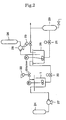
FIG. 1 and FIG. 2 are each a schematic process flow diagram
which shows the production process for carrying out the present
invention;
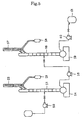
FIG. 3 and FIG. 4 are each a schematic process flow diagram
which shows an example of carrying out distillation in the process
of the present invention; and
FIG. 5 is a schematic process flow diagram which shows the
production process for carrying out distillation in the working
examples of the present invention.
THE MOST PREFERRED EMBODIMENT TO CARRY OUT THE
INVENTION
In the following, more detailed description will be given of
the present invention. In the present invention, the ethylenic
oligomer is obtained by oligomerizing ethylene in the presence of
a Ziegler based catalyst, which consists of the combination of (A)
a transition metal compound, (B) an organoaluminum and (C) a
tertiary component to be used as desired. There is used as the
transition metal compound (A), the compound represented by the
general formula:
M XxYyOz
wherein M is a zirconium atom or a titanium atom, X is a halogen
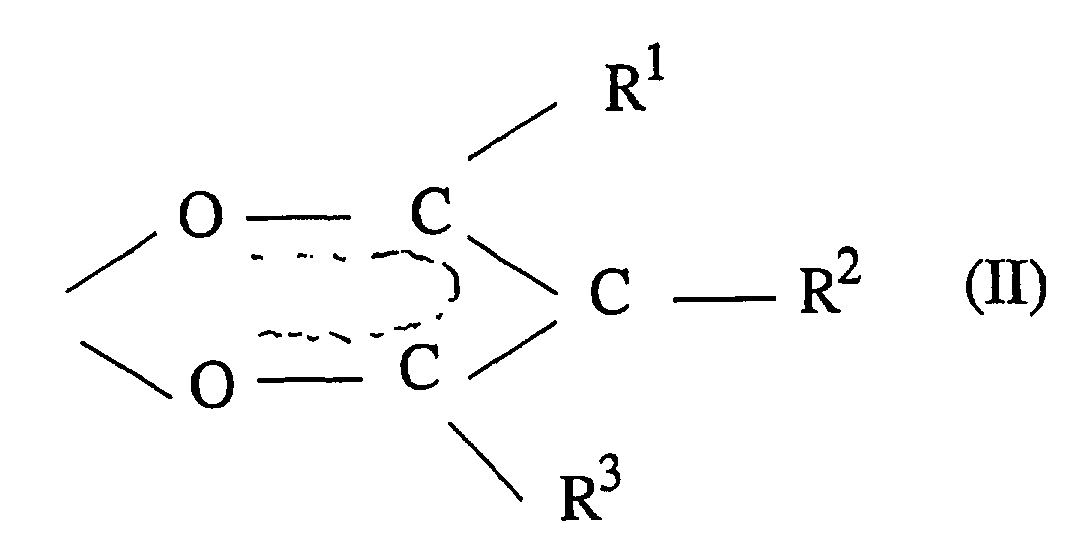
atom (chlorine atom, bromine atom or iodine atom), Y is RO-, R
2
N-, -OCOR, -OSO
3R, R-, -Cp (cyclopentadienyl), wherein R is a
straight chain or branched chain alkyl group having 1 to 20
carbon atoms or β diketonato represented by the general
formula (II):
wherein R
1, R
2 and R
3 are each independently a hydrogen
atom, an alkyl group having 1 to 20 carbon atoms or an alkyl
group which is substituted with a halogen atom and which has 1
to 20 carbon atoms with the proviso that one of R
1, R
2 and R
3
is an alkyl group which is substituted with a halogen atom and
which has 1 to 20 carbon atoms, x, y and z are each an integer
from 0 to 4 with the proviso that x + y + z = 4.
The above-mentioned compound is specifically exemplified
by ZrCl4, ZrBr4, ZrI4, ZrBrCl3, ZrBr2Cl2, TiCl4, TiBr4,
TiI4, TiBrCl3, TiBr2Cl2, Zr(OC2H5)4, Zr(OC2H5)2Cl2,
Zr(O-n-C3H7)4, Zr(O-n-C3H7)2Cl2, Zr(O-iso-C3H7)4, Zr(O-iso-C3H7)2Cl2,
Zr(O-n-C4H9)4, Zr(O-n-C4H9)2Cl2, Zr(O-iso-C4H9)4,
Zr(O-iso-C4H9)2Cl2, Zr(O-tert-C4H9)4, Zr(O-tert-C4H9)2Cl2,
Zr((CH3)2N)4, Zr((C2H5)2N)4, Zr((n-C3H7)2N)4, Zr((iso-C3H7)2
N)4, Zr((n-C4H9)2N)4, Zr((tert-C4H9)2N)4, Zr(OSO3CH3)4,
Zr(OSO3C2H5)4, Zr(OSO3C3H7)4, Zr(OSO3C4H9)4, ZrCp2Cl2,
ZrCp2ClBr, Ti(OC2H5)4, Ti(OC2H5)2Cl2, Ti(O-n-C3H7)4,
Ti(O-n-C3H7)2Cl2, Ti(O-iso-C3H7)4, Ti(O-iso-C3H7)2Cl2,
Ti(O-n-C4H9)4, Ti(O-n-C4H9)2Cl2, Ti(O-iso-C4H9)4,
Ti(O-iso-C4H9)2Cl2, Ti(O-tert-C4H9)4, Ti(O-tert-C4H9)2Cl2,
Ti((CH3)2N)4, Ti((C2H5)2N)4, Ti((n-C3H7)2N)4, Ti((iso-C3H7)
2N)4, Zr(n-C4H9)2N)4, Ti((tert-C4H9)2N)4, Ti(OSO3CH3)4,
Ti(OSO3C2H5)4, Ti(OSO3C3H7)4, Ti(OSO3C4H9)4, TiCp2Cl2,
TiCp2ClBr, Zr(OCOC2H5)4, Zr(OCOC2H5)2Cl2, Zr(OCOC
3H7)4, Zr(OCOC3H7)2Cl2, Zr(OCOC3H7)4, Zr(OCOC3H7)2Cl2,
Zr(OCOC4H9)4, Zr(OCOC4H9)2Cl2, Ti(OCOC2H5)4,
Ti(OCOC2H5)2Cl2, Ti(OCOC3H7)4, Ti(OCOC3H7)2Cl2,
Ti(OCOC3H7)4, Ti(OCOC3H7)2Cl2, Ti(OCOC4H9)4, Ti(OCOC4H9)2Cl2,
ZrCl2(HCOCFCOF)2 and ZrCl2(CH3COCFCOCH3)2.
The organoaluminum (B) is exemplified by the compound
represented by the general formula:
Al Ya Xb Oc Nd
wherein X is a halogen atom (chlorine atom, bromine atom or
iodine atom), Y is RO-, R2N-, -OCOR, or R-, wherein R is a
straight chain or branched chain alkyl group having 1 to 20
carbon atoms, and a, b, c and d are each an integer from 0 to 3
with the proviso that a + b + c + d = 3, and/or by the
compound represented by the general formula:
Al2 Ya'Xb'Oc'Nd'
wherein X is a halogen atom (chlorine atom, bromine atom or
iodine atom), Y is RO-, R2N-, -OCOR, -RCOCR',COR" or R-,
wherein R, R' and R" are each a straight chain or branched chain
alkyl group having 1 to 20 carbon atoms, and a', b', c' and d' are
each an integer from 0 to 6 with the proviso that a' + b' + c' +
d'= 6.
Examples of the compound represented by the general
formula (III) include Al(CH3)3, Al(C2H5)3, Al(C3H7)3, Al(iso-C3
H7)3, Al(C4H9)3, Al(iso-C4H9)3, Al(C5H11)3, Al(C6H13)3, Al(C8
H17)3, Al(C2H5)2Cl, Al(C2H5)2Br, Al(C2H5)2I, Al(C2H5)Cl2,
Al(C2H5)Br2, Al(C2H5)I2, AlC2H5(OC2H5)2, AlC2H5(OC3H7)2,
AlC2H5(OC4H9)2, Al(OC2H5)2Cl, Al(OC3H7)2Cl, Al(OC4H9)2Cl,
Al(OC2H5)Cl2, Al(OC3H7)Cl2, Al(OC4H9)Cl2, AlC2H5(OCOC2H5)2,
AlC2H5(OCOC3H7)2, AlC2H5(OCOC4H9)2, Al(OCOC2H5)2Cl,
Al(OCOC3H7)2Cl, Al(OCOC4H9)2Cl, Al(OCOC2H5)Cl2, Al(OCOC3
H7)Cl2, Al(OCOC4H9)Cl2, Al(C2H5)2OC2H5, Al(C2H5)2OC3H7,
Al(C2H5)2OC4H9, Al(C2H5)2N(C2H5)2, Al(C2H5)2N(C3H7)2 and
Al(C2H5)2N(C4H9)2. Examples of the compound represented by
the general formula (IV) include Al2(CH3)Cl3, Al2(CH3)3Br3,
Al2(C2H5)3Cl3, Al2(C2H5)3Br3, Al2(C2H5)3I3, Al2(C2H5)2BrCl2,
Al2(C3H7)3Cl3, Al2(iso-C3H7)3Cl3, Al2(C4H9)3Cl3, Al2(iso-C4
H9)3Cl3, Al2(C5H11)3Cl3, Al2(C8H17)3Cl3, Al2(C2H5)2(CH3)Cl3,
Al2(OC2H5)3Cl3, Al2(OC3H7)3Cl3, Al2(OC4H9)3Cl3, Al2(OCOC2
H5)3Cl3, Al2(OCOC3H7)3Cl3 and Al2(OCOC4H9)3Cl3.
As the tertiary component (C) which is used as desired,
there is usable at least one compound selected from sulfur
compounds, phosphorus compounds and nitrogen compounds.
The tertiary component contributes to enhancing the purity of an
ethylenic oligomer as the objective product.
The sulfur compound needs only to be an organosulfur
compound without specific limitation, and is preferably
exemplified by dimethyl sulfide, diethyl sulfide, dipropyl sulfide,
dihexyl sulfide, dicyclohexyl sulfide, thioethers such as diphenyl
thioether: dialkyl disulfide compounds such as dimethyl disulfide,
diethyl disulfide, dipropyl disulfide, dibutyl disulfide, dihexyl
disulfide, dicyclohexyl disulfide and ethylmethyl disulfide:
thiophenes such as thiophene, 2-methyl-thiophene,
3-methylthiophene, 2,3-dimethylthiophene, 2-ethylthiophene and
benzothiophene and heterocyclic sulfur compounds such as
tetrahydrothiophene and thiopyrane: aromatic sulfur compounds
such as diphenyl sulfide, diphenyl disulfide, methylphenyl
disulfide, methylphenyl sulfide: thiourea: and sulfides such as
methyl sulfide, ethyl sulfide and butyl sulfide.
The phosphorus compound needs only to be an
organophosphorus compound without specific limitation, and is
preferably exemplified by phosphines such as triphenylphosphine,
triethylphosphine, tributylphosphine, tripropylphosphine,
trioctylphosphine and tricyclohexylphosphine.
The nitrogen compound needs only to be an organonitrogen
compound without specific limitation, and is preferably
exemplified by organoamines such as methylamine, ethylamine,
propylamine, butylamine, pentylamine, hexylamine,
cyclohexylamine, octylamine , decylamine, aniline, benzylamine,
naphthylamine, dimethylamine, diethylamine, dibutylamine,
diphenylamine, methylphenylamine, trimethylamine,
triethylamine, tributylamine, triphenylamine, pyridine and
picoline.
There are preferably usable in the present invention, the
sulfur compounds, phosphorus compounds and nitrogen
compounds each as mentioned above, of which is particularly
preferably usable one or two or more compounds selected from
dimethyl disulfide, thiophenes, thiourea, triphenylphosphine,
tributyl phosphine, trioctylphosphine and aniline.
The oligomerization reaction of ethylene according to the
present invention is put into practice usually in an organic
solvent. Examples of the organic solvent include alicyclic
compounds such as cyclohexane and decalin, aromatic
hydrocarbons such as benzene, toluene, xylene,
chlorobenzene,ethylbenzene, dichlorobenzene and chlorotoluene,
halogenide thereof, aliphatic hydrocarbons such as pentane,
hexane, heptane, octane, nonane and decane, halogenated
aliphatic hydrocarbons such as dichloroethane and
dichlorobutane, and the like solvents.
With regard to the blending proportions of the foregoing
components (A), (B) and (C) and the foregoing organic solvent in
the present invention, the amount of the component(A) is usually
0.01 to 5 mmol, preferably 0.03 to 1 mmol, the amount of the
component (B) is usually 0.05 to 15 mmol, preferably 0.06 to 3
mmol, and the amount of the component (C) is usually 0.05 to 20
mmol, preferably 0.1 to 10 mmol in the case of using the
above-mentioned sulfur compound, preferably 0.05 to 5 mmol in
the case of using the aforesaid nitrogen or phosphorus compound,
on the basis of 250 ml of the organic solvent.
In addition, more preferable result is obtainable by setting
the blending proportions of the foregoing components (A) and (B)
to 1 to 15 expressed in terms of Al / Zr (molar ratio).
The oligomerization reaction in the present invention is
carried out usually at a temperatue in the range of 100 to 150°C
under pressure of 30 to 90 kg / cm 2 · G (2.94 to 8.82 MPa). The
reaction time, which varies depending upon the temperature and
pressure and accordingly can not be unequivocally determined, is
usually 10 to 60 minutes, approximately.
The ethylenic oligomers to be obtained by using ethylene as
the starting material in the process according to the present
invention are a variety of oligomers each having the number of
carbon atoms of 4 or more, preferably 4 to 24, particularly 4 to 18.
Specific examples thereof include 1-butene, 1-hexene, 1-octene,
1-decene, 1-dodecene, 1-tetradecene, 1-hexadecene and
1-octadecene. The ethylenic oligomers are obtained as mixed
products of these oligomers.
In the process according to the present invention, the liquid
reaction product obtained by the oligomerization reaction of
ethylene is subjected to subsequent recovery of unreacted
ethylene, deactivation of the catalyst and deashing treatment.
In this case, it is necessary to maintain the temperature of the
liquid reaction product after the completion of the
oligomerization reaction at 90 °C or higher. The foregoing
temperature is not specifically limited provided that it is 90°C or
higher, but is in the range of usually 90 to 150°C, preferably 100
to 130°C. The foregoing temperature, when being unreasonably
high, is unfavorable, since it sometimes brings about
deterioration of product purity.
The amount of by-produced polymer, which varies depending
upon the reaction conditions, is not unequivocal, but is usually
300 to 500 ppm. The by-produced polymer is dissolved in the
liquid reaction product when the temperature thereof is kept at
90°C or higher, thereby enabling to proceed with stable running
irrespective of the type of the organic solvent to be used for the
polymerization reaction.
Subsequently the catalyst is subjected to deactivation
treatment by introducing a deactivating agent at a pressure of the
treatment system of 4 kg / cm 2 · G(0.39 MPa), approximately.
Examples of the deactivating agent to be used therein include
basic nitrogen compounds, water, alcohols, carboxylic acids and
phenols. The basic nitrogen compounds among them are
exemplified by ammonia and amines such as methylamine,
ethylamine, propylamine, butylamine, pentylamine, hexylamine,
cyclohexylamine, octylamine, decylamine, aniline, benzylamine,
naphthylamine, dimethylamine, diethylamine, dibutylamine,
diphenylamine, methylphenylamine, trimethylamine,
triethylamine, tributylamine, triphenylamine, pyridine and
picoline.
In the present invention, the above-mentioned deactivation
treatment is followed by deashing treatment and further recovery
of the organic solvent and unreacted ethylene by distillation.
The recovered organic solvent and unreacted ethylene are each
recycled through the oligomerization reaction system.
The objective ethylenic oligomers are obtained as desirable
mixed products of various ethylenic oligomers by means of
multistage distillation. The mixed products can be obtained in
large amounts as ethylenic oligomers each having desirable
number of carbon atoms by properly selecting the reactioin
conditions.
The organic solvent which has been separated and recovered
in the above-mentioned distillation step is recycled through the
oligomerization reaction system for use as the reaction solvent.
In this case, it is necessary in the first aspect of the present
application to set the water concentration in the solvent on at
most 8 ppm by weight. The water concentration exceeding 8 ppm
by weight results in deterioration in a catalytic activity, thus
making it impossible to maintain a high activity. Accordingly it
is preferable in the present invention to further decrease the
water concentration in the organic solvent to be recycled to at
most 5 ppm by weight.
As a method for decreasing the water concentration in the
organic solvent to be recycled, a general procedure such as
distillation and adsorption can be used.
In the case where the organic solvent which has been
separated and recovered in the above-mentioned distillation step
is recycled through the oligomerization reaction system for use as
the reaction solvent, it is necessary in the second aspect of the
present application to set the concentration of the olefin having 3
or more carbon atoms, for instance, the olefin having 4 or 8 carbon
atoms in the solvent on at most 2% by weight. The aforesaid
concentration exceeding 2% by weight brings about an increase
in impurities in the resultant ethylenic oligomers, thus
deteriorating the quality of polyethylene resin and the like as the
final product. For this reason, the concentration of the olefin in
the organic solvent to be recycled is set on preferably at most 1%
by weight, more preferably at most 0.5% by weight.
It is preferable in the present invention to combine the first
and second aspects thereof, viz., to set the concentration of the
olefin having 3 or more carbon atoms, for instance, the olefin
having 4 or 8 carbon atoms in the solvent to be recycled through
the oligomerization reaction system on at most 2% by weight in
the first aspect thereof, and also to set the water concentration in
the solvent to be recycled through the oligomerization reaction
system on at most 8 ppm by weight in the second aspect thereof.
In order to decrease the water concentration in the solvent
which has been separated and recovered within the prescribed
range according to the present invention and at the same time, to
decrease the concentration of olefin having 3 or more carbon
atoms in the solvent which has been separated and recovered
within the prescribed range according thereto, the following
distillation procedure is preferably carried out.
Distillation equipment preferably comprises a plurarity of
distillation columns. In the case of separating and recovering the
solvent with two distillation columns, it is possible as the process
flow diagram of distillation equipment to separate water and
ethylenic oligomer lighter than the solvent at the overhead of a first
distillation column, introduce the bottom into a second distillation
column, and recover the solvent at the overhead of the second
distillation column. It is preferable in this case to set the
theoretical number of plates to at least 30, and the reflux ratio to
at least 4 in each of the distillation columns.
In the following, some description will be given of the
preferred embodiments of the present invention with reference to
the attached drawings. FIG. 1 is a schematic process flow
diagram which shows the production process for carrying out the
present invention. The liquid reaction product which is produced
in a reactor 1 and is composed of a Ziegler based catalyst, an
organic solvent, unreacted ethylene and ethylenic oligomers is
supplied to a first stage flash tank 3 via a control valve 2, and
further to a second stage flash tank 6 via a control valve 5. The
liquid product after the first stage flashing, prior to supply to the
second stage flash tank, is heated in a heat exchanger 4 to be kept
at a prescribed temperature or higher. In these flash tanks the
unreacted ethylene which is dissolved in the liquid reaction
product is recovered. Then the liquid reaction product is sent to
a deactivator 8, where the catalyst is deactivated with a
deactivating agent 13. Slight amount of light ethylenic oligomer
accompanying the recovered ethylene is recovered in a pot 10, and
is sent to the deactivator 8, and then to a deasher 9, and after
cleaning with cleaning water 14, to a separating tank 15. Therein
the deactivated liquid is separated into oil phase and water phase,
and the water phase is discarded outside the system as waste
water 16. The oil phase is sent to a dissolving tank 19 equipped
with a heat exchanger 17 and a pump 18, is heated to again
dissolve the polymer therein completely, and thereafter is sent to
the distillation system, where the solvent and the ethylenic
oligomer are fractionated.
Mention can be made of various distillation flow diagrams,
for instance, two flow diagrams as illustrated on FIG. 3 and 4.
Example of distillation flow diagram 1 (FIG.3)
The liquid after the deashing treatment is sent to a first
distillation column 30, where the liquid composed principally of
ethylenic oligomer with C-6 and less is withdrawn at the top,
whereas the liquid composed principally of ethylenic oligomer
with C-8 and more and the organic solvent is withdrawn at the
bottom.
The overhead liquid in the first distillation column 30 is
introduced in the second distillation column 31, where offgas and
water are withdrawn at the top, and the ethylenic oligomer with
C-4 and more obtained at the bottom is introduced in a third
distillation column 32, where the ethylenic oligomer with C-4 is
obtained at the top, and the ethylenic oligomer with C-6 is
obtained at the bottom.
The bottom in the first distillation column 30 is introduced
in a fourth distillation column 33, where the organic solvent is
obtained at the top, and the liquid composed principally of
ethylenic oligomer with C-8 or more is obtained at the bottom.
In the present invention, the organic solvent obtained therein is
again recycled through the oligomerization reaction system as
the reaction solvent. The bottom in the fourth distillation
tower 33 is consecutively introducced in the same manner as the
foregoing, into distillation columns 34, 35, 36, 37 , 38 and 39,
where ethylenic oligomers with C-8, C-10, C-12, C-14, C-16 and
C-18, respectively are obtained at the top, and the liquid
composed principally of ethylenic oligomer with C-20 or more is
obtained at the bottom of the final distillation tower 39.
Example of distillation flow diagram 2 (FIG.4)
The liquid after the deashing treatment is sent to a first
distillation column 40, where the liquid composed principally of
ethylenic oligomer with C-8 and less and the organic solvent is
withdrawn at the top, whereas the liquid composed principally of
ethylenic oligomer with C-10 and more is withdrawn at the
bottom. The overhead liquid in the first distillation column 40
is introduced in the second distillation column 41, where offgas
and water are withdrawn at the top, and the ethylenic oligomer
with C-4 and more and the organic solvent that are obtained at
the bottom are consecutively introducced in a third distillation
column 42, a fouth distillation column 43 and a fifth distillation
column 44, where the ethylenic oligomer with C-6 and the organic
solvent are obtained at the top, and ethylenic oligomer with C-8
is obtained as the bottom 44. In the present invention, the
organic solvent obtained therein is again recycled through the
oligomerization reaction system as the reaction solvent. The
bottom in the distillation column 40 is consecutively
introducced in the same manner as the foregoing, into
distillation columns 45, 46, 47, 48 and 49, where ethylenic
oligomers with C-10, C-12, C-14, C-16 and C-18, respectively are
obtained at the top, and the liquid composed principally of
ethylenic oligomer with C-20 and more is obtained at the bottom
of the final distillation tower 49.
By virtue of the process for producing an ethylenic
oligomer according to the present invention wherein a Ziegler
based catalyst is employed and a reaction solvent is recyclingly
used, it is made possible to maintain the catalytic activity of the
foregoing catalyst by decreasing the water concentration in an
organic solvent to be recycled through the oligomerization
reaction system to a prescribed level or lower. It is also made
possible to obtain a highly pure ethylenic oligomer free from an
impurity by setting the concentration of olefin having 3 and
more carbon atoms in the reaction solvent to be recycled through
the above-mentioned oligomerization reaction system on at most
2% by weight.
In the following, the present invention will be described
in more detail with reference to working examples, which
however shall never limit the present invention thereto.
Example 1
[ Preparation of catalyst]
In a 500 milliliter (mL) flask equipped with a stirrer were
introduced in an atmosphere of argon, 25 mmol of zirconium
tetrachloride anhydride (ZrCl4) and 250 mL of dry cyclohexane
with stirring for 10 minutes at room temperature. To the
mixture thus prepared were added triethylaluminum [(C2H5)3Al]
and then ethylaluminum sesquichloride [(C2H5)3Al2Cl3],
wherein the amounts of the triethylaluminum and
ethylaluminum sesquichloride were regulated to (C2H5)3Al2Cl3
/(C2H5)3Al being 3.5 ( molar ratio) and [(C2H5)3Al2Cl3 + (C2H5)3Al]
/ ZrCl4 being 7 (molar ratio). After adding all the
components, the resultant mixture was heated at 70°C for 2
hours in an atmosphere of argon under stirring to form a
complex so that liquid catalyst was prepared.
[Oligomerization reaction]
Oligomerization reaction was continuously carried out by
the use of a complete mixing tank type reactor (internal volume
of one liter). The above-prepared liquid catalyst was mixed
with cyclohexane which had been dried in an atmosphere of
argon so that the concentration of the zirconium tetrachloride
was adjusted to 0.08 mmol/1 of cyclohexane. Further, thiophene
was added to the mixture in an amount of three times molar
ratio to the zirconium tetrachloride to prepare a catalytic
solution. Subsequently a definite amount of the catalytic
solution was fed in the reactor (700 cc/hour). The
oligomerization reaction was carried out at 120°C at 65 kg / cm
2
· G (6.4 MPa) under stirring at 500 rpm at a liquid level
equivalent to 500 cc for retention time of 43 minutes, during
which time highly pure ethylene gas was continuously fed in the
reactor so as to maintain the reaction pressure at 65 kg / cm
2 · G.
The reaction conditions and the results are given in Table 1.
| ZrCl4 | (mmol/hour) | 0.08 |
| Ethylaluminum sesquichloride | (mmol/hour) | 0.436 |
| Triethylaluminum | (mmol/hour) | 0.124 |
| Cyclohexane | (cc/hour) | 700 |
| Reaction temperature | (°C) | 120 |
| Reaction pressure | (kg/cm 2 · G) | 65 |
| Reaction time | (minute) | 43 |
| Catalytic activity | (kg/g · ZrCl4) | 12.6 |
| Ethylenic oligomer | C-4 | (% by wt) | 14.9 |
| C-6 | (% by wt) | 15.4 |
| C-8 | (% by wt) | 14.1 |
| C-10∼18 | (% by wt) | 41.3 |
| C- ≧ 20 | (% by wt) | 14.3 |
| C-18 purity | | 94.5 |
The deactivation treatment of catalyst was carried out by
continuously supplying the deactivating tank with the liquid
reaction product which had been obtained in the foregoing
oligomerization reaction at a flow rate of cyclohexane of 546 g / hour
(700 cc / hour) at a flow rate of ethylenic oligomer of 225 g
/ hour, making a total of 771 g/hour. A deactivating agent
consisting of 10% by weight of aqueous ammonia was supplied
at 28 g / hour. The deactivating tank was operated at 100°C at
4 kg / cm2 · G (0.39 MPa) under stirring at 700 rpm by the use of
the equipment as illustrated in FIG. 2, wherein the symbols 24,
25 and 26 are pot, deactivating tank and aqueous ammonia tank,
respectively. The liquid product after the deactivation treatment
was filtered to filter off wax component by using filter paper.
The resultant filtrate was washed twice with deionized water in
an amount two times that of the filtrate, and subsequently dried
with potassium carbonate anhydride. The colorless transparent
liquid reaction product thus obtained was analysed by gas
chromatography to determine the distribution and purity of the
ethylenic oligomer as the objective product. The product
distribution was found by calculation through Schultz · Flory
distribution from the result of gas chromatography for C-10 and
more based on the operational loss.
[Distillation operation]
The resultant oligomerization reaction liquid which had
been subjected to deactivation treatment was separated by
means of distillation to recover cyclohexane by the following
manner.
The resultant oligomerization reaction liquid was
introduced in an Oldshue distillation equipment (first
distillation column) having an inside diameter of 40 mm at a flow
rate of 360 g / hour. The first distillation column had the
number of theoretical plates of 15 in the enriching section and
15 in the stripping section, and was operated at atmospheric
pressure at a temperature of 66.1°C at the overhead and at a
temperature of 90.7°C at the bottom at a reflux ratio of 5. The
liquid composed principally of ethylenic oligomer with C-6 and
less and cyclohexane was withdrawn at the overhead at a flow
rate of 47 g / hour, and the liquid composed principally of most
of cyclohexane and ethylenic oligomer with C-8 and more was
withdrawn at the bottom at a flow rate of 313 g / hour.
The bottom from the first distillation column was
introduced in another Oldshue distillation equipment (second
distillation column) having an inside diameter of 40 mm. The
second distillation column had the number of theoretical plates of
15 in the enriching section and 15 in the stripping section, and
was operated at atmospheric pressure at a temperature of 80.0°C
in the overhead and at a temperature of 170.9°C in the bottom
at a reflux ratio of 5. The liquid composed principally of
cyclohexane was withdrawn at the overhead at a flow rate of 170
g / hour, and the liquid composed principally of cyclohexane and
ethylenic oligomers with C-8 and more was withdrawn at the
bottom at a flow rate of 143 g / hour. The overhead obtained
from the second distillation column had a water concentration
being 8 ppm by wieght and a concentration of olefin with C-3
and more being 0.35 % by weight. The above-mentioned
distillation operation was carried out by using the equipment as
illustrated in FIG. 5, wherein the symbols denote the followings.
51: first distillation column, 52 and 57: condenser, 53
and 58: receiver, 54 and 59: oil bath, 56: second distillation
column, 61: pot.
Subsequently, the overhead which had been obtained from
the second distillation column in the above-mentioned manner,
and which was composed principally of cyclohexane was treated
with a molecular sieve to reduce the water concentration to at
most one ppm by weight, and was utilized for the preparation of
catalyst and for oligomerization reaction.
[Preparation of catalyst]
In a one liter (L) flask equipped with a stirrer were
introduced in an atmosphere of argon, 100 mL of zirconium
tetrachloride anhydride (ZrCl4) and the foregoing liquid
composed principally of cyclohexane having a water
concentration of at most one ppm by weight with stirring for 10
minutes. To the mixture thus prepared were added 158.3 mmol of
triethylaluminum ( TEA ) with stirring for 10 minutes and then
541.7 mmol of ethylaluminum sesquichloride ( EASC ) followed
by stirring at 70°C for 2 hours to form a complex.
Subsequently, in a 500 mL three-neck flask were
introduced 250 ml of the foregoing liquid composed principally of
cyclohexane having a water concentration of at most one ppm by
weight and the above-prepared solution of the complex so that
the solution contained 0.12 mmol of ZrCl4, 0.65 mmol of EASC
and 0.19 mmol of TEA. To the resultant mixture was added
0.36 mmol of thiophene with stirring for 10 minutes, so that
liquid catalyst was prepared.
[Preparation Example of ethylenic oligomer (Oligomerization of
ethylene)]
In a one liter (L) autoclave equipped with a stirrer was
introduced by pressurizing in an atmosphere of dry argon, the
liquid catalyst which had been prepared in the above-mentioned
"Preparation of catalyst", while the autoclave was maintained at
50 to 60°C. After completing the supply of the liquid catalyst,
stirring was started, highly pure ethylene gas was promptly
blown into the autoclave until the pressure therein reached 65kg
/ cm 2 · G, and thereafter the temperature was raised to 120°C.
The blowing in of the ethylene was continued in an amount
necessary for maintaining the foregoing pressure, while the
reaction was continued for 30 minutes under the
above-mentioned reaction conditions. After the completion of
the reaction, the autoclave was cooled, depressurized, and was
incorporated with 10 mL of water as the deactivating agent to
deactivate the catalyst. As a result, the catalytic activity was
made to be the figures as given in Table 2.
Example 2
The procedure in Example 1 was repeated to carry out the
oligomerization reaction except that the liquid which had been
composed principally of cyclohexane and obtained as the
overhead in the second distillation column was not treated with
molecular sieve, but was used as such upon catalyst preparation
and as the reaction solvent. The reaction conditions and
performance results are given in Table 2.
Comparative Example 1
The procedure in Example 1 was repeated to carry out the
oligomerization reaction except that the liquid which had been
composed principally of cyclohexane and obtained as the
overhead in the second distillation column was incorporated
with water so that the water concentration in the liquid was
regulated to 15 ppm by wright, and was used upon catalyst
preparation and as the reaction solvent. The reaction
conditions and performance results are given in Table 2.
| | Example | Comparative Exp.1 |
| | 1 | 2 |
| Water concentration in solvent(wt-ppm) | ≦ 1 | 8 | 15 |
| Catalytic activity (g-oligomer/g-ZrCl4/hour) | 7200 | 7000 | 5000 |
The procedure in Example 1 was repeated to carry out the
catalyst preparation, oligomerization reaction, deactivation
treatment of catalyst and distillation operation. The chemical
composition of the overhead obtained in the second distillation
column in the final distillation operation is given in Table 3,
wherein the concentration of olefin having C-3 or more was
0.33% by weight. The distillation operation was carried out
by the use of the equipment as illustrated in FIG. 5.
Subsequently, the procedure in Example 1 was repeated to
carry out the [Oligomerization reaction] except that the liquid
which had been composed principally of cyclohexane and
obtained from the overhead of the second distillation column was
used as the reaction solvent. As a result, the product
distribution were comparable to those as given in Table 1. In
Table 4 is given the purity of C-18, which is the production ratio
of 1-octadecene as the objective product to the total production
amount of C-18 and catalytic activity.
Examples 4 and 5 and Reference Example 1
The procedure in Example 3 was repeated to carry out
Examples 4 and 5 and Reference Example 1 except that the
distillation conditions as given in Table 5 were applied in place
of those in Example 3. As a result, the product distribution
were comparable to those as given in Table 1. The chemical
composition of the overhead obtained in the second distillation
column is given in Table 3. Further, in Table 4 is given the
purity of C-18 and the catalytic activity in the case where the
oligomerization reaction was put into practice by using as the
reaction solvent, the liquid which had been composed principally
of cyclohexane and obtained from the overhead of the second
distillation column.
Reference Example 2
The procedure in Example 3 was repeated to carry out the
oligomerization reaction except that the liquid which had been
composed principally of cyclohexane and obtained as the
overhead in the second distillation column was incorporated
with water so that the water concentration in the liquid was
regulated to 15 ppm by wright, and was recyclingly used. The
results are given in Table 4.
Comparative Example 2
The procedure in Reference Example 1 was repeated to
carry out the oligomerization reaction except that the liquid
which had been composed principally of cyclohexane and
obtained as the overhead in the second distillation column was
incorporated with water so that the water concentration in the
liquid was regulated to 15 ppm by wright, and was recyclingly
used. The results are given in Table 4.
| Overhead liquid composition in 2nd distillation column (wt.%) | Example No. | Reference Example 1 |
| | 3 | 4 | 5 |
| C-4 olefin | 0.18 | 0.39 | 0.95 | 2.47 |
| C-8 olefin | 0.15 | 0.28 | 0.79 | 3.12 |
| Cyclohexane | 99.67 | 99.33 | 98.26 | 94.41 |
| C-3 and more olefin | 0.33 | 0.67 | 1.74 | 5.59 |
| Water (ppm by wt) | 5 | 6 | 5 | 5 |
| | Example No. | Ref. Ex.1 | Ref. Ex.2 | Comp. Ex.2 |
| | 3 | 4 | 5 |
| C-18 purity (wt %) | 94.4 | 94.3 | 94.1 | 92.6 | 95.8 | 94.5 |
| Catalytic activity (kg/g-ZrCl4) | 12.5 | 12.6 | 12.6 | 12.5 | 9.0 | 9.1 |
{Remarks} Ref. Ex.: Reference Example
Comp. Ex.: Comparative Example |
| | Example No. | Ref. Ex.1 | Ref. Ex.2 | Comp. Ex.2 |
| | 3 | 4 | 5 |
| 1 st Distillation Tower | | | | | Same as data in Example 3 | Same as data in Reference Example 1 |
| Top temperature (°C) | 66.1 | 63.8 | 60.1 | 56.0 |
| Bottom temperature (°C) | 90.7 | 90.2 | 89.7 | 89.1 |
| Reflux ratio | 5 | 5 | 5 | 5 |
| Top flow rate (g/hour) | 47 | 38 | 28 | 20 |
| Bottom flow rate (g/hour) | 313 | 322 | 332 | 340 |
| 2 nd Distillation Tower |
| Top temperature (°C) | 80.0 | 80.0 | 79.9 | 79.9 |
| Bottom temperature (°C) | 170.9 | 171.1 | 172.2 | 178.2 |
| Reflux ratio | 5 | 5 | 5 | 2 |
| Top flow rate (g/hour) | 170 | 179 | 190 | 202 |
| Bottom flow rate (g/hour) | 143 | 143 | 142 | 138 |
The present invention relates to a process for producing an
ethylenic oligomer which is capable of producing a high quality
ethylenic oligomer having enhanced purity, and in which a Ziegler
based catalyst can maintain a high catalytic activity, when
producing an ethylenic oligomer which is useful as a starting
material for high molecular polymers, plasticizers, surfactants
and the like by the use of the foregoing catalyst.