BACKGROUND OF THE INVENTION
The present invention pertains to photoimaging and, in particular,
the use of photoresists (positive-working and/or negative-working) for
imaging in the production of semiconductor devices. The present
invention also pertains to novel fluorine-containing polymer compositions
which are useful as base resins in resists and potentially in many other
applications.
Polymer products are used as components of imaging and
photosensitive systems and particularly in photoimaging systems such as
those described in Introduction to Microlithography, Second Edition by L.
F. Thompson, C. G. Willson, and M. J. Bowden, American Chemical
Society, Washington, DC, 1994. In such systems, ultraviolet (UV) light or
other electromagnetic radiation impinges on a material containing a
photoactive component to induce a physical or chemical change in that
material. A useful or latent image is thereby produced which can be
processed into a useful image for semiconductor device fabrication.
Although the polymer product itself may be photoactive, generally a
photosensitive composition contains one or more photoactive components
in addition to the polymer product. Upon exposure to electromagnetic
radiation (e.g., UV light), the photoactive component acts to change the
rheological state, solubility, surface characteristics, refractive index, color,
electromagnetic characteristics or other such physical or chemical
characteristics of the photosensitive composition as described in the
Thompson et al. publication supra.
For imaging very fine features at the submicrometer level in
semiconductor devices, electromagnetic radiation in the far or extreme
ultraviolet (UV) is needed. Positive working resists generally are utilized
for semiconductor manufacture. Lithography in the UV at 365 nm (I-line)
using novolak polymers and diazonaphthoquinones as dissolution
inhibitors is a currently established chip technology having a resolution
limit of about 0.35-0.30 µm. Lithography in the far UV at 248 nm using
p-hydroxystyrene polymers is known and has a resolution limit of
0.35-0.18 nm. There is strong impetus for future photolithography at even
shorter wavelengths, due to a decreasing lower resolution limit with
decreasing wavelength (i.e., a resolution limit of 0.18-0.12 µm for
193 nm imaging). Photolithography using 193 nm exposure wavelength
(obtained from an argon fluorine (ArF) excimer laser) is a leading
candidate for future microelectronics fabrication using 0.18 and 0.13 µm
design rules. Photolithography using 157 nm exposure wavelength
(obtained using an F2 laser source) may be used for future
microelectronics fabrication using 0.100 µm or less design rules. The
opacity of traditional near UV and far UV organic photoresists at 193 nm
and shorter wavelengths precludes their use in single-layer schemes at
these wavelengths.
Some resist compositions suitable for imaging at 193 nm are
known. For example, photoresist compositions comprising cycloolefinmaleic
anhydride alternating copolymers have been shown to be useful for
imaging of semiconductors at 193 nm (see F. M. Houlihan et al,
Macromolecules, 30, pages 6517-6534 (1997); T. Wallow et al., SPIE,
Vol. 2724, pages 355-364; and F. M. Houlihan et al., Journal of
Photopolymer Science and Technology, 10, No. 3, pages 511-520
(1997)). Several publications are focused on 193 nm resists (i.e., U.
Okoroanyanwu et al, SPIE, Vol. 3049, pages 92-103; R. Allen et al., SPIE,
Vol. 2724, pages 334-343; and Semiconductor International, Sept. 1997,
pages 74-80). Compositions comprising addition polymers and/or ROMP
(ring-opening metathesis polymerization) of functionalized norbornenes
have been disclosed (e.g., PCT WO 97/33198 (9/12/97) to B. F.
Goodrich). Homopolymers and maleic anhydride copolymers of
norbornadiene and their use in 193 nm lithography have been disclosed
(J. Niu and J. Frechet, Angew. Chem. Int. Ed., 37, No. 5, (1998),
pages 667-670). No resist compositions for imaging at 157 nm have been
disclosed.
Copolymers of fluoroolefin monomers and cyclic unsaturated
monomers have been described in U.S. Patents 5,177,166 and
5,229,473. These patents do not disclose the use of these copolymers in
any photosensitive compositions. Copolymers of certain fluorinated
olefins with certain vinyl esters and vinyl ethers have been described. For
example, the copolymer of TFE with cyclohexanecarboxylate, vinyl ester is
described in Japanese Patent Appl. JP 03281664 and the copolymer of
TFE and cyclohexyl vinyl ether is described in Japanese Patent Appl.
JP 54046286. Copolymers of TFE and vinyl esters, such as vinyl acetate,
and use of these copolymers in photosensitive compositions for refractive
index imaging (e.g. holography) is described in U.S. Patent 4,963,471.
Disclosures relating to copolymers comprising fluorinated olefins and vinyl
esters of formula CH2=CHO2CR and vinyl ethers of formulae
CH2=CHOCH2R or CH2=CHOR, have R groups with a C:H ratio that is
relatively low and which is less than 0.58.
Homopolymers and copolymers of certain monomers that possess
properties of being both cyclic and fluorine-containing have been
described as well as their application as components in photodefinable
fluorine-containing polymer films in Japanese Kokai No Hei
9(1997)-43856. There is no teaching in this reference of homopolymers
or copolymers comprised of polycyclic comonomers as photoresist
components. Furthermore, there is no teaching that the compositions
disclosed could be used in photoresists with imaging effected at far UV
wavelengths of less than 180 nm.
U.S. Patent 5,655,627 discloses a process for generating a
negative tone resist image by coating a silicon wafer with a copolymer
resist solution of pentafluoropropyl methacrylate-t-butyl methacrylate in a
solvent, and then exposing at 193 nm and developing with a carbon
dioxide critical fluid.
There is a critical need though for other novel resist compositions
for use at 193 nm or lower, and particularly at 157 nm, that have not only
high transparency at these short wavelengths but also other suitable key
properties, including good plasma etch resistance and adhesive
properties.
SUMMARY OF THE INVENTION
The present photoresist in some embodiments comprises:
wherein the fluorine-containing copolymer does not contain aromatic
functionality but contains sufficient functionality to render the photoresist
developable so as to produce a relief image, upon imagewise exposure to
ultraviolet radiation having wavelength of ≤365 nm.
In one preferred embodiment, at least one ethylenically unsaturated
compound is selected from the group consisting of:
CH2=CHOCH2R15 (L) CH2=CHOR15 (M)
wherein:
In a separate embodiment the invention comprises a photoresist
comprising:
wherein the fluorine-containing copolymer contains sufficient functionality
to render the photoresist developable so as to produce relief images,
upon imagewise exposure to ultraviolet radiation having a wavelength of
≤365 nm. In this photoresist, the fluorine-containing copolymer may
further comprises a repeat unit derived from at least one ethylenically
unsaturated compound containing at least one fluorine atom covalently
attached to an ethylenically unsaturated carbon atom.
The present photoresist in other embodiments comprises
wherein the fluorine-containing copolymer does not contain aromatic
functionality but contains sufficient functionality to render the photoresist
developable so as to produce a relief image, upon imagewise exposure to
ultraviolet radiation having wavelength of ≤365 nm.
In another embodiment, the invention is a process for preparing a
photoresist image on a substrate comprising, in order:
In another embodiment, the invention is a process for preparing a
photoresist image on a substrate comprising, in order:
The developing step (Z) in the above processes can either be
negative-working or positive-working.
In another embodiment, the invention is a fluorine-containing
copolymer comprising:
In still another embodiment, the invention is a fluorine-containing
copolymer comprising:
wherein R
16 to R
21 are each independently hydrogen atoms, C
1 to C
12
alkyls, (CH
2)
qCO
2A, CO
2(CH
2)
qCO
2A or CO
2A wherein q is 1 to 12 and A
is hydrogen or an acid protecting group with the proviso that at least one
of R
18 to R
21 is CO
2A.
In still another embodiment, the invention is a fluorine-containing
copolymer comprising:
wherein m is 0, 1 or 2;
- R1 to R8 are the same or different and each represents a hydrogen
atom, a halogen atom which can be any element of the halogen group
but, typically, chlorine, fluorine or bromine, a carboxyl group, a
hydrocarbon group of 1 to about 20 carbon atoms or a heteroatom
substituted hydrocarbon group of 1 to 20 carbon atoms having one or
more heteroatoms which can be oxygen, nitrogen or sulfur;
- X is oxygen or a direct bond;
- Rf is a straight chain or branched perfluoroalkyl group of from 1 to
10 carbon atoms, optionally substituted by ether oxygens.
A key characteristic of the copolymers (and photoresists comprised
of the copolymers) of this invention is the cooperative combination of
polycyclic repeat unit(s) with the same or different repeat units that are
fluorine containing and, furthermore, with all repeat units in the
copolymers not containing aromatic functionality. The presence of
polycyclic repeat units in the copolymers is critical in order for the
copolymers to possess high resistance to plasma etching (e.g., reactive
ion etching). Polycyclic repeat units also tend to provide a high glass
transition temperature which is critical for maintaining dimensional stability
in the resist films. The presence of repeat units that are fluorine-containing
is critical in order for the copolymers to possess high optical
transparency, i.e., to have low optical absorptions in the extreme and far
UV. The absence of aromatic functionality in the repeat units of the
copolymers is also required in order for the polymers to possess high
optical transparency.
In certain embodiments of this invention, the fluorine-containing
copolymer may be comprised of a repeat unit derived from at least one
polycyclic ethylenically unsaturated compound having at least one atom or
group selected from the group consisting of fluorine atom, perfluoroalkyl
group, and perfluoroalkoxy group, covalently attached to a carbon atom
which is contained within a ring structure. Fluorine atoms, perfluoroalkyl
groups and perfluoroalkoxy groups tend to inhibit polymerization of cyclic
ethylenically unsaturated compounds by metal-catalyzed addition
polymerization or metathesis polymerization when such groups are
attached directly to an ethylenically unsaturated carbon atom. Thus, it is
critical in such cases that the at least one fluorine atom, perfluoroalkyl
group and perfluoroalkoxy group be separated from each ethylenically
unsaturated carbon atom of the ethylenically unsaturated compound by at
least one covalently attached carbon atom. Furthermore, attaching the
atom and/or group directly to a ring minimizes the presence of undesirable
non-fluorinated aliphatic carbon atoms.
The copolymers of this invention surprisingly have balanced
properties that are critical for imparting necessary properties to photoresist
compositions for semiconductor applications. First, these copolymers
have unexpectedly low optical absorptions in the extreme and far UV,
including 193 nm and 157 nm wavelengths. Having copolymers with low
optical absorptions is critical for formulating high photospeed resists
wherein the major amount of UV light is absorbed by the photoactive
component(s) and not lost due to absorption by the copolymer (matrix of
the resist). Second, resists comprising the fluorine-containing polymers of
this invention desirably exhibit very low plasma etch rates. This latter
property is critical in affording high resolution precision resists that are
required in semiconductor fabrication. Achieving simultaneously suitable
values of these properties is particularly critical for imaging at 157 nm. In
this case, ultra thin resists are needed for high resolution, but these thin
resists must nevertheless be highly etch resistant such that resist remains
on imaged substrates and protects areas of underlying substrate during
etching.
The photoresist compositions of this invention have a particularly
good balance of desirable properties, including high transparency to
extreme, far, and near ultraviolet light, high plasma etch resistance, and
projected high resolution characteristics suitable for microelectronics
device fabrication using 0.18 and 0.13 µm design rules. The photoresist
compositions of this invention in particular have good optical transparency
at 157 nm. The novel copolymers of this invention also have good
properties including anticipated high transparency at 157 nm and other
wavelengths in the UV.
DETAILED DESCRIPTION OF THE PREFERRED EMBODIMENT(S)
The present invention is a photoresist for microlithography
comprising a fluorine-containing copolymer and at least one photoactive
component, wherein the fluorine-containing copolymer contains sufficient
functionality to render the photoresist developable so as to produce a
relief image, following imagewise exposure to ultraviolet radiation having
wavelength of ≤365 nm. In some preferred embodiments, the sufficient
functionality is selected from an acid (e.g., a carboxylic acid) and/or an
acid protected group to render the exposed portions of photoresist soluble
in basic solution upon exposure to sufficient ultraviolet radiation having
wavelength of ≤365 nm while the unexposed portions are insoluble in the
basic solution, In this manner a relief image can be created using the
photoresist. The present photoresists are useful for 365 nm (I-line),
248 nm (KrF laser), and especially 193 nm (ArF laser) and 157 nm (F2
laser) microlithography. These photoresists are critical in allowing for the
imaging of feature sizes in the sub-01.0 micrometer range.
In the preferred embodiments of this invention, the photoresist
composition comprises copolymers that comprise a repeat unit derived
from at least one polycyclic comonomer (i.e., a comonomer comprising at
least two rings, e.g., norbornene). This is important for three main
reasons: 1) polycyclic monomers have relatively high carbon to hydrogen
ratios (C:H), which results in base polymers comprised of repeat units of
these polycyclic monomers generally having good plasma etch resistance;
2) polymers having repeat units derived from polyclic monomers, which
preferably can be fully saturated upon polymerization, generally have
good transparency characteristics; and 3) polymers prepared from
polycyclic monomers usually have relatively high glass transition
temperatures for improved dimensional stability during processing. The
ethylenically unsaturated group may be contained within the polycyclic
moiety as in norbornene or may be pendant to the polycyclic moiety as in
1-adamantane carboxylate vinyl ester. A polymer comprised of repeat
units derived from polycyclic comonomers, having high C:H ratios, has a
relatively low Ohnishi number (O.N.), where:
O. N. = N/ (Nc-No)
with N being the number of atoms in the repeat unit of the polymer, Nc
being the number of carbon atoms in the repeat unit of the polymer, and
No being the number of oxygen atoms in the repeat unit of the polymer.
There is an empirical law discovered by Ohnishi et al. (J. Electrochem.
Soc., Solid-State Sci. Technol., 130, 143 (1983) which states that the
reactive ion etch (RIE) rate of polymers is a linear function of the Ohnishi
number (O.N.). As one example, poly(norbornene) has formula (C7H10)n
and the O.N. = 17/7 = 2.42. Polymers comprised predominantly of carbon
and hydrogen having polycyclic moieties and relatively little functionality
containing oxygen will have relatively low O.N.s and will, according to the
empirical law of Ohnishi, have corresponding low (in an approximate linear
manner) RIE rates.
As is well known to those skilled in the polymer art, an ethylenically
unsaturated compound undergoes free radical polymerization to afford a
polymer having a repeat unit that is derived from the ethylenically
unsaturated compound, Specifically, an ethylenically unsaturated
compound having structure:
that undergoes free radical polymerization will afford a polymer having a
repeat unit:
where P, Q, S, and T independently can represent, but are not limited to,
H, F, Cl, Br, alkyl, aryl, aralkyl and cycloalkyl.
If only one ethylenically unsaturated compound undergoes
polymerization, the resulting polymer is a homopolymer. If two or more
distinct ethylenically unsaturated compounds undergo polymerization, the
resulting polymer is a copolymer.
Some representative examples of ethylenically unsaturated
compounds and their corresponding repeat units are given below:
In the sections that follow, the photoresist compositions of this
invention are described in terms of their component parts.
Fluorine-Containing Copolymer
The photoresists of this invention comprise a fluorine-containing
copolymer comprising a repeat unit derived from at least one ethylenically
unsaturated compound which is polycyclic and at least one ethylenically
unsaturated compound contains at least one fluorine atom covalently
attached to an ethylenically unsaturated carbon atom. Representative
ethylenically unsaturated compounds that are suitable for the fluorine-containing
copolymers of this invention include, but are not limited to,
tetrafluoroethylene, chlorotrifluoroethylene, hexafluoropropylene,
trifluoroethylene, vinylidene fluoride, vinyl fluoride, perfluoro-(2,2-dimethyl-1,3-dioxole),
perfluoro-(2-methylene-4-methyl-1,3-dioxolane,
CF2=CFO(CF2)tCF=CF2, where t is 1 or 2, and RfOCF=CF2 wherein Rf is
a saturated fluoroalkyl group of from 1 to about 10 carbon atoms. The
fluorine-containing copolymers of this invention can be comprised of any
integral number of additional fluorine-containing comonomers, which
include, but are not limited to, those listed supra. Preferred comonomers
are tetrafluoroethylene, chlorotrifluoroethylene, hexafluoropropylene,
trifluoroethylene and RfOCF=CF2, wherein Rf is a saturated fluoroalkyl
group of from 1 to about 10 carbon atoms. More preferred comonomers
are tetrafluoroethylene, chlorotrifluoroethylene, hexafluoropropylene, and
RfOCF=CF2, wherein Rf is a saturated perfluoroalkyl group of from 1 to
about 10 carbon atoms. Most preferred comonomers are
tetrafluoroethylene and chlorotrifluoroethylene.
In some preferred embodiments, the fluorine-containing copolymer
of the photoresists of this invention further comprises a repeat unit derived
from at least one unsaturated compound selected from the group of
structures H-O:
CH2=CHOCH2R15 (L) CH2=CHOR15 (M)
wherein:
R15 is a saturated alkyl group of about 4 to 20 carbon atoms,
optionally containing one or more ether oxygens with the proviso that the
ratio of carbon atoms to hydrogen atoms is greater than or equal to 0.58.
R16 to R21 are each independently hydrogen atoms, C1 to C12
alkyls, (CH2)qCO2A, CO2(CH2)qCO2A or CO2A wherein q is 1 to 12 and A
is hydrogen or an acid protected group with the proviso that at least one of
R18 to R21 is CO2A.
X is oxygen or a direct bond.
Rf is a straight chain or branched chain perfluoroalkyl group of from
1 to 10 carbon atoms, optionally substituted by at least on ether oxygen
atom. The perfluoroalkyl group can be CF3, C2F5, or C3F7.
Structures H-O above represent additional possible comonomers of
the fluorine-containing polymers in the photoresists of this invention.
Representative comonomers having structure H include, but are
not limited to:
Representative comonomers having structure I include, but are not
limited to:
Representative comonomers having structure J include, but are not
limited to:
Representative comonomers having structure K include, but are not
limited to:
Representative comonomers having structure L include, but are not
limited to:
Representative comonomers having structure M include, but are
not limited to:
All of the inventive copolymers comprising comonomers having
structures K, L and M are characterized in being copolymers comprising
fluorinated olefins and vinyl esters of formula CH2=CHO2CR or vinyl
ethers of formulae CH2=CHOCH2R or CH2=CHOR, having R groups with
a C:H ratio that is relatively high and which is greater than 0.58 since a
high C:H ratio corresponds to good plasma etch resistance. (To
distinguish them from copolymers comprising fluorinated olefins and vinyl
esters of formula CH2=CHO2CR or vinyl ethers of formulae
CH2=CHOCH2R or CH2=CHOR, have R groups with a C:H ratio that is
relatively low and which is less than 0.58.
Representative comonomers having structure N include, but are
not limited to:
where A = H, (CH
3)
3C, (CH
3)
3Si.
Representative comonomers having structure O, include but are
not limited to:
Such comonomers may be conveniently prepared by cycloaddition
of norbornadiene with perfluoropropylvinyl ether, perfluoromethylvinyl
ether or hexafluoropropylene, respectively.
In preferred embodiments described above having at least one
unsaturated compound of structure H-O as the second recited
comonomer, there is a limitation on the second comonomer if (and only if)
the fluorine-containing copolymer is not comprised of additional
comonomer(s) having functionality that is selected from a carboxylic acid
and a protected acid group. In this case, the fluorine-containing
copolymer has just two comonomers (the two recited comonomers and
having no additional unrecited comonomers). In this case, there must be
sufficient functionality that is selected from a carboxylic acid and a
protected acid group present in the at least one unsaturated compound
(i.e., the second recited comonomer) such that the photoresists of this
invention that are comprised of the fluorine-containing polymer are
developable upon imagewise exposure as explained in more detail infra.
In these embodiments with the fluorine-containing copolymer having just
two comonomers, the mole percentages of the two comonomers in the
copolymer can range from 90%, 10% to 10%, 90% for the fluoromonomer
(first recited monomer) and the second comonomer, respectively.
Preferably, the mole percentages of the two comonomers are in the range
from 60%, 40% to 40%, 60% for the fluoromonomer (first recited
monomer) and the second comonomer, respectively.
The fluorine-containing copolymers comprising the photoresists of
this invention can be comprised of any integral number without limit of
additional comonomers beyond the two recited comonomers (i.e., (i) at
least one ethylenically unsaturated compound containing at least one
fluorine atom covalently attached to an ethylenically unsaturated carbon
atom; and (ii) at least one unsaturated compound selected from the group
of structures H-N) for some embodiments. Representative additional
comonomers can include, but are not limited to, acrylic acid, methacrylic
acid, t-butyl acrylate, t-butyl methacrylate, t-amyl acrylate, t-amyl
methacrylate, isobutyl acrylate, isobutyl methacrylate, ethylene, vinyl
acetate, itaconic acid, and vinyl alcohol. In those embodiments where the
fluorine-containing copolymer has two recited comonomers and is
comprised of three or more comonomers, the mole percentage of the
second recited comonomer (i.e., (ii) at least one unsaturated compound
selected from the group of structures H-N) ranges from about 20 mole %
to about 80 mole %, preferably ranges from about 30 mole % to about
70 mole %, more preferably ranges from about 40 mole % to about
70 mole %, and still most preferably is about 50 to about 70 mole %.
Summation of the mole percentages of all other comonomers constituting
the copolymer represents a balance that when added to the mole
percentage of the second recited comonomer totals 100%. The sum of
the mole percentages of all other comonomers present in the copolymer
except for the second recited comonomer broadly is in the range from
about 80 mole % to about 20 mole %. Preferably, the sum of the mole
percentages of all other comonomers is in the range from about
70 mole % to about 30 mole %. More preferably, the sum of the mole
percentages of all other comonomers is in the range from about
60 mole % to about 30 mole %, and, still more preferably, the sum of the
mole percentages of all other comonomers is in the range from about
50 mole % to about 30 mole %. When the fluorine-containing polymer is a
terpolymer, a suitable ratio of the fluoromonomer (first recited monomer)
to the additional comonomer can broadly range from 5:95 to 95:5. When
the fluorine-containing copolymer contains additional comonomers having
functionality of acid groups or protected acid groups in sufficient amounts
necessary for developability, the functionality can be present or absent in
the second recited comonomer without limitation.
A given fluorine-containing copolymer, comprised of a repeat unit
derived from a comonomer having at least one fluorine atom attached to
an ethylenically unsaturated carbon atom, of the photoresist
composition(s) of this invention can be prepared by free radical
polymerization. Polymers may be prepared by bulk, solution, suspension
or emulsion polymerization techniques known to those skilled in the art
using free radical initiators, such as azo compounds or peroxides.
A given fluorine-containing copolymer, containing only repeat units
derived from all cyclic comonomers and totally lacking a repeat unit
derived from a comonomer that has one or more fluorine atom(s) attached
to an ethylenically unsaturated carbon atom(s), of the photoresist
composition(s) of this invention can also be prepared by free radical
polymerization, but in addition can be prepared by other polymerization
methods, including vinyl-addition polymerization and ring-opening
methathesis polymerization (ROMP). Both of the latter polymerization
methods are known to those skilled in the art. Vinyl-addition
polymerization using nickel and palladium catalysts is disclosed in the
following references: 1) Okoroanyanwu U.; Shimokawa, T.; Byers, J. D.;
Willson, C. G. J. Mol. Catal. A: Chemical 1998, 133, 93; 2) PCT
WO 97/33198 (9/12/97) assigned to B.F. Goodrich; 3) Reinmuth, A.;
Mathew, J. P.; Melia, J.; Risse, W. Macromol. Rapid Commun. 1996, 17,
173; and 4) Breunig, S.; Risse, W. Makromol. Chem. 1992, 193, 2915.
Ring-opening metathesis polymerization is disclosed in references 1) and
2) supra using ruthenium and irridium catalysts; and also in 5) Schwab, P.;
Grubbs, R. H.; Ziller, J. W. J. Am. Chem. Soc. 1996, 118, 100; and
6) Schwab, P.; France, M. B.; Ziller, J. W.; Grubbs, R. H. Angew. Chem.
Int. Ed. Engl. 1995, 34, 2039.
Some of the fluorine-containing bipolymers of the resist
compositions of this invention, where the bipolymer contains a
fluoromonomer (e.g., TFE) and a cyclic olefin (e.g., norbornene) appear to
be alternating or approximately alternating bipolymers having a structure,
but not limited to, the one shown below:
In such cases, the invention includes these alternating or
approximately alternating copolymers but is not in any manner limited to
just alternating copolymer structures.
Photoactive Component (PAC)
The compositions of this invention contain at least one photoactive
component (PAC) that usually is a compound that affords either acid or
base upon exposure to actinic radiation. If an acid is produced upon
exposure to actinic radiation, the PAC is termed a photoacid generator
(PAG). If a base is produced upon exposure to actinic radiation, the PAC
is termed a photobase generator (PBG).
Suitable photoacid generators for this invention include, but are not
limited to, 1) sulfonium salts (structure I), 2) iodonium salts (structure II),
and 3) hydroxamic acid esters, such as structure III.
In structures I-II, R
a-R
c are independently substituted or unsubstituted aryl
or substituted or unsubstituted C
1-C
20 alkylaryl (aralkyl). Representative
aryl groups include, but are not limited to, phenyl and naphthyl. Suitable
substituents include, but are not limited to oxygen atom such that the
substituent group can be hydroxyl (-OH) or C
1-C
20 alkyloxy (e.g.,
C
10H
21O). The anion Y- in structures I-II can be, but is not limited to,
SbF
6- (hexafluoroantimonate), CF
3SO
3- (trifluoromethylsulfonate =
triflate), and C
4F
9SO
3- (perfluorobutylsulfonate).
The fluorine-containing copolymers of the resist compositions of
this invention may contain one or more components having protected acid
groups that can yield, by catalysis of acids or bases generated
photolytically from photoactive compounds (PACs), hydrophilic acid or
base groups which enable development of resist coatings. A given
protected acid group is one that is normally chosen on the basis of its
being acid labile, such that when photoacid is produced upon imagewise
exposure, the acid will catalyze deprotection and production of hydrophilic
acid groups that are necessary for development under aqueous
conditions. In addition, the fluorine-containing copolymers may also
contain acid functionality that is not protected.
Examples of components having protected acid groups that yield a
carboxylic acid as the hydrophilic group upon exposure to photogenerated
acid include, but are not limited to, A) esters capable of forming, or
rearranging to, a tertiary cation, B) esters of lactone, C) acetal esters,
D) β-cyclic ketone esters, E) α-cyclic ether esters, and F) MEEMA
(methoxy ethoxy ethyl methacrylate) and other esters which are easily
hydrolyzable because of anchimeric assistance. Some specific examples
in category A) are t-butyl ester, 2-methyl-2-adamantyl ester, and isobornyl
ester. Some specific examples in category B) are γ-butyrolactone-3-yl,
γ-butyrolactone-2-yl, mavalonic lactone, 3-methyl-γ-butyrolactone-3-yl,
3-tetrahydrofuranyl, and 3-oxocyclohexyl. Some specific examples in
category C) are 2-tetrahydropyranyl, 2-tetrahydrofuranyl, and
2,3-propylenecarbonate-1-yl. Additional examples in category C) include
various esters from addition of vinyl ethers, such as, for example, ethoxy
ethyl vinyl ether, methoxy ethoxy ethyl vinyl ether, and acetoxy ethoxy
ethyl vinyl ether.
Examples of components having protected acid groups that yield
an alcohol as the hydrophilic group upon exposure to photogenerated acid
or base include, but are not limited to, t-butoxycarbonyl (t-BOC), t-butyl
ether, and 3-cyclohexenyl ether.
In this invention, often, but not always, the components having
protected groups are repeat units having protected acid groups that have
been incorporated in the base copolymer resins of the compositions (as
discussed supra). Frequently the protected acid groups are present in
one or more comonomer(s) that are polymerized to form a given
copolymeric base resin of this invention. Alternatively, in this invention, a
copolymeric base resin can be formed by copolymerization with an acid-containing
comonomer and then subsequently acid functionality in the
resulting acid-containing copolymer can be partially or wholly converted by
appropriate means to derivatives having protected acid groups. As one
specific example, a copolymer of TFE/NB/t-BA (copolymer of tetrafluoroethylene,
norbornene, and t-butyl acrylate) is a copolymeric base resin
within the scope of the invention having t-butyl ester groups as protected-acid
groups.
Dissolution Inhibitors and Additives
Various dissolution inhibitors can be utilized in this invention.
Ideally, dissolution inhibitors (Dls) for far and extreme UV resists (e.g.,
193 nm resists) should be designed/chosen to satisfy multiple materials
needs including dissolution inhibition, plasma etch resistance, and
adhesion behavior of resist compositions comprising a given Dl additive.
Some dissolution inhibiting compounds also serve as plasticizers in resist
compositions,
A variety of bile-salt esters (i.e., cholate esters) are particularly
useful as DIs in the compositions of this invention. Bile-salt esters are
known to be effective dissolution inhibitors for deep UV resists, beginning
with work by Reichmanis et al. in 1983. (E. Reichmanis et al., "The Effect
of Substituents on the Photosensitivity of 2-Nitrobenzyl Ester Deep UV
Resists", J. Electrochem. Soc. 1983, 130, 1433-1437.) Bile-salt esters are
particularly attractive choices as Dls for several reasons, including their
availability from natural sources, their possessing a high alicyclic carbon
content, and particularly for their being transparent in the deep and
vacuum UV region, (which essentially is also the far and extreme UV
region), of the electromagnetic spectrum (e.g., typically they are highly
transparent at 193 nm). Furthermore, the bile-salt esters are also
attractive Dl choices since they may be designed to have widely ranging
hydrophobic to hydrophilic compatibilities depending upon hydroxyl
substitution and functionalization.
Representative bile-acids and bile-acid derivatives that are suitable
as additives and/or dissolution inhibitors for this invention include, but are
not limited to, those illustrated below, which are as follows: cholic acid
(IV), deoxycholic acid (V), lithocholic acid (VI), t-butyl deoxycholate (VII), t-butyl
lithocholate (VIII), and t-butyl-3-α-acetyl lithocholate (IX). Bile-acid
esters, including compounds VII-IX, are preferred dissolution inhibitors in
this invention.
The invention is not limited to use of bile-acid esters and related
compounds as dissolution inhibitors. Other types of dissolution inhibitors,
such as various diazonaphthoquinones (DNQs) and
diazocoumarins(DCs), can be utilized in this invention in some
applications. Diazanaphthoquinones and diazocoumarins are generally
suitable in resists compositions designed for imaging at higher
wavelengths of UV light (e.g., 365 nm and perhaps at 248 nm). These
dissolution inhibitors are generally not preferred in resist compositions
designed for imaging with UV light at 193 nm or lower wavelengths, since
these compounds absorb strongly in this region of the UV and are usually
not sufficiently transparent for most applications at these low UV
wavelengths.
Components for Negative-Working Photoresist Embodiment
Some embodiments of this invention are negative-working
photoresists. These negative-working photoresists comprise at least one
binder polymer comprised of acid-labile groups and at least one
photoactive component that affords photogenerated acid. Imagewise
exposure of the resist affords photogenerated acid which converts the
acid-labile groups to polar functionality (e.g., conversion of ester
functionality (less polar) to acid functionality (more polar)). Development
is then done in an organic solvent or critical fluid (having moderate to low
polarity), which results in a negative-working system in which exposed
areas remain and unexposed areas are removed.
A variety of different crosslinking agents can be employed as
required or optional photoactive component(s) in the negative-working
compositions of this invention. (A crosslinking agent is required in
embodiments that involve insolubilization in developer solution as a result
of crosslinking, but is optional in preferred embodiments that involve
insolubilization in developer solution as a result of polar groups being
formed in exposed areas that are insoluble in organic solvents and critical
fluids having moderate/low polarity). Suitable crosslinking agents include,
but are not limited to, various bis-azides, such as 4,4'-diazidodiphenyl
sulfide and 3,3'-diazidodiphenyl sulfone. Preferably, a negative-working
resist composition containing a crosslinking agent(s) also contains suitable
functionality (e.g., unsaturated C=C bonds) that can react with the reactive
species (e.g., nitrenes) that are generated upon exposure to UV to
produce crosslinked polymers that are not soluble, dispersed, or
substantially swollen in developer solution, which consequently imparts
negative-working characteristics to the composition.
Solvents:
The photoresists of this invention may be formulated with a solvent such
as chlorobenzene, methyl ethyl ketone, cyclohexanone or propylene glycol
methyl ether acetate. A solvent can be chlorobenzene and methyl ethyl
ketone or propylene glycol methyl ether acetate and cyclohexanone.
Other Components
The compositions of this invention can contain optional additional
components. Examples of additional components which can be added
include, but are not limited to, bases, surfactants, resolution enhancers,
adhesion promoters, residue reducers, coating aids, plasticizers, and Tg
(glass transition temperature) modifiers. Some useful bases include
tributylamine, tripentylamine, trihexylamine, triheptylamine, trioctylamine,
benzimidazole, 4-phenylpyridine, 4,4'-diaminodiphenyl ether,
nicotinamide, 1-piperidinoethanol, triethanolamine, 3-piperidino-1,2-propanediol,
2,2,6,6-tetramethylpiperidinol, tetrabutylammonium
hydroxide, tetrabutylammonium acetate, and tetrabutylammonium lactate.
Some useful surfactants include perfluorooctanoic acid ammonium salt,
perfluorononanoic acid ammonium salt, ZONYL® (Trade name of DuPont)
FSA, FSN, FSO, and FSK fluorosurfactants, polyoxyethylene stearylether,
polyoxyethylene oleyl ether, polyoxyethylene octylphenyl ether,
polyoxyethylene nonylphenyl ether, polyethylene glycol dilaurate,
polyethylene glycol distearate, alkylbenzene sulphonates, sodium
sulfosuccinate, and sodium lauryl sulfate.
Process Steps
Imagewise Exposure
The photoresist compositions of this invention are sensitive in the
ultraviolet region of the electromagnetic spectrum and especially to those
wavelengths ≤365 nm. Imagewise exposure of the resist compositions of
this invention can be done at many different UV wavelengths including,
but not limited to, 365 nm, 248 nm, 193 nm, 157 nm, and lower
wavelengths. Imagewise exposure is preferably done with ultraviolet light
of 248 nm, 193 nm, 157 nm, or lower wavelengths; is more preferably
done with ultraviolet light of 193 nm, 157 nm, or lower wavelengths; and is
still more preferably done with ultraviolet light of 157 nm or lower
wavelengths. Imagewise exposure can either be done digitally with a
laser or equivalent device or non-digitally with use of a photomask. Digital
imaging with a laser is preferred. Suitable laser devices for digital imaging
of the compositions of this invention include, but are not limited to, an
argon-fluorine excimer laser with UV output at 193 nm, a krypton-fluorine
excimer laser with UV output at 248 nm, and a fluorine (F2) laser with
output at 157 nm. Since, as discussed supra, use of UV light of lower
wavelength for imagewise exposure corresponds to higher resolution
(lower resolution limit), the use of a lower wavelength (e.g., 193 nm or
157 nm or lower) is generally preferred over use of a higher wavelength
(e.g., 248 nm or higher). Specifically, imaging at 157 nm is preferred over
imaging at 193 nm for this reason.
Development
The fluorine-containing polymers in the resist compositions of this
invention must contain sufficient functionality for development following
imagewise exposure to UV light. Preferably, the functionality is acid or
protected acid such that aqueous development is possible using a basic
developer such as sodium hydroxide solution, potassium hydroxide
solution, or ammonium hydroxide solution. Some preferred fluorine-containing
polymers in the resist compositions of this invention are acid-containing
copolymers or homopolymers comprised of at least one acid-containing
monomer of structural unit:
in which E
1 is H or C
1-C
12 alkyl; E
2 is CO
2E
3, SO
3E, or other acidic
functional group; and E and E
3 are H or C
1-C
12 alkyl, which is
unsubstituted or hydroxyl-substituted. Alkyl groups can contain one to
twelve carbon atoms and preferably one to eight. A preferred acid-containing
binder polymer for aqueous processability (aqueous
development) in use is a carboxylic acid-containing copolymer. The level
of carboxylic acid groups is determined for a given composition by
optimizing the amount needed for good development in aqueous alkaline
developer.
When an aqueous processable photoresist is coated or otherwise
applied to a substrate and imagewise exposed to UV light, development of
the photoresist composition may require that the binder material should
contain sufficient acid groups (e.g., carboxylic acid groups) and/or
protected acid groups that are at least partially deprotected upon
exposure to render the photoresist (or other photoimageable coating
composition) processable in aqueous alkaline developer. In case of a
positive-working photoresist layer, the photoresist layer will be removed
during development in portions which are exposed to UV radiation but will
be substantially unaffected in unexposed portions during development by
aqueous alkaline liquids such as wholly aqueous solutions containing
0.262 N tetramethylammonium hydroxide (with development at 25°C
usually for less than or equal to 120 seconds) or 1% sodium carbonate by
weight (with development at a temperature of 30°C usually for less than 2
or equal to 2 minutes). In case of a negative-working photoresist layer,
the photoresist layer will be removed during development in portions
which are unexposed to UV radiation but will be substantially unaffected in
exposed portions during development using either a critical fluid or an
organic solvent.
A critical fluid, as used herein, is one or more substances heated to
a temperature near or above its critical temperature and compressed to a
pressure near or above its critical pressure. Critical fluids in this invention
are at least at a temperature that is higher than 15°C below the critical
temperature of the fluid and are at least at a pressure higher than
5 atmosphers below the critical pressure of the fluid. Carbon dioxide may
be used for the critical fluid in the present invention. A comonomer having
structure O particularly when R
f is a longer chain fluoroalkyl group,
may be especially useful with supercritical carbon
dioxide. Various organic solvents can also be used as developer in this
invention. These include, but are not limited to, halogenated solvents and
non-halogenated solvents. Halogenated solvents are preferred and
fluorinated solvents are more preferred.
| GLOSSARY |
| Chemicals/Monomers |
| AA | Acrylic acid Aldrich Chemical Co., Milwaukee, WI |
| AdVE | 1-Adamantanemethylvinyl Ether |
| AIBN | 2,2'-azobisisobutyronitrile Aldrich Chemical Co., Milwaukee, WI |
| CFC-113 | 1,1,2-Trichlorotrifluoroethane (E. I. du Pont de Nemours and Company, Wilmington, DE) |
| MAA | Methacrylic acid Aldrich Chemical Co., Milwaukee, WI |
| MEK | 2-Butanone Aldrich Chemical Co., Milwaukee, WI |
| TFE | Tetrafluoroethylene (E. I. du Pont de Nemours and Company, Wilmington, DE) |
| NB | Norbornene = Bicyclo[2.2.1]hept-2-ene Aldrich Chemical Co., Milwaukee, WI |
| E | Ethylene |
| NB-CO2H | 5-Norbornene-2-carboxylic acid = Bicyclo[2.2.1]hept-5-ene-2-carboxylic acid (Aldrich Chemical Co.) |
| NB-CO2 tBu | 5-Norbornene-2-carboxylic acid tert-butyl ester = tertiary-Butyl bicyclo[2.2.1]hept-5-ene-2-carboxylate |
| THF | Tetrahydrofuran Aldrich Chemical Co., Milwaukee, WI |
| Perkadox® 16 N | Di-(4-tert-butylcyclohexyl)peroxydicarbonate Noury Chemical Corp., Burt, NY |
| TBA | Tertiary-Butyl acrylate |
| TCB | Trichlorobenzene Aldrich Chemical Co., Milwaukee, WI |
| VAc | Vinyl acetate Aldrich Chemical Co., Milwaukee, WI |
| VOH | Vinyl alcohol |
| Vazo® 52 | 2,4-Dimethyl-2,2'-azobis(pentanenitrile) (E. I. du Pont de Nemours and Company, Wilmington, DE) |
| PGMEA | Propylene glycol methyl ether acetate Aldrich Chemical Co., Milwaukee, WI |
| General |
| Extreme UV | Region of the electromagnetic spectrum in the ultraviolet that ranges from 10 nanometers to 200 nanometers |
| Far UV | Region of the electromagnetic spectrum in the ultraviolet that ranges from 200 nanometers to 300 nanometers |
| UV | Ultraviolet region of the electromagnetic spectrum which ranges from 10 nanometers to 390 nanometers |
| Near UV | Region of the electromagnetic spectrum in the ultraviolet that ranges from 300 nanometers to 390 nanometers |
| Mn | Number-average molecular weight of a given polymer |
| Mw | Weight-average molecular weight of a given polymer |
| P = Mw/Mn | Polydispersity of a given polymer |
| Polymers |
| P(TFE/NB) | Poly(tetrafluoroethylene-co-norbornene) = copolymer of tetrafluoroethylene and norbornene |
| P(TFE/NB-CO2H) | Poly(tetrafluoroethylene-co-norbomene carboxylic acid) = copolymer of tetrafluoroethylene and norbornene carboxylic acid, where the CO2H moiety can be substituted at any position of the NB-CO2H comonomer of the polymer |
| P(TFE/NB/NB-CO2H) | Poly(tetrafluoroethylene-conorbornene-co-norbornene carboxylic acid) = copolymer of tetrafluoroethylene, norbornene, and norbornene carboxylic acid, where the CO2H moiety can be substituted at any position of the NB-CO2H comonomer of the polymer |
| P(TFE/NB/AA) | Poly(tetrafluoroethylene-conorbornene-co-acrylic acid) |
| P(TFE/NB/E) | Poly(tetrafluoroethylene-conorbornene-co-ethylene) |
| P(TFE/NB/MAA) | Poly(tetrafluoroethylene-conorbornene-co-methacrylic acid) |
| P(TFE/NB/tBA) | Poly(tetrafluoroethylene-conorbornene-co-t-butyl acrylate) |
| P(TFE/NB/tBA/AA) | Poly(tetrafluoroethylene-conorbornene-co-t-butyl acrylate-coacrylic acid) |
| P(TFE/NB/tBA/MAA) | Poly(tetrafluoroethylene-conorbornene-co-t-butyl acrylate-comethacrylic acid) |
| P(TFE/NB/VAc) | Poly(tetrafluoroethylene-conorbornene-co-vinyl acetate) |
| P(TFE/NB/VOH) | Poly(tetrafluoroethylene-conorbornene-co-vinyl alcohol) |
| P(TFE/NB/5-NB-2-CO2tBu) | Poly(tetrafluoroethylene-conorbornene-co-5-norbornene-2carboxylic acid tert-butyl ester) |
| P(TFE/1-AdCO2CH=CH2) | Poly(tetrafluoroethylene-co-1-adamantane-carboxylate vinyl ester) |
| P(TFE/AdVE) | Poly(tetrafluoroethylene-co-1-adamantanemethylvinyl ether) |
| P(TFE/NBVether) | Poly(tetrafluoroethylene-co-2-norbornanemethylvinyl ether) |
Perfluoro-(2,2-dimethyl-1,3-dioxole)
Perfluoro-(2-methylene-4-methyl-1,3-dioxolane)
Unless otherwise specified, all temperatures are in degrees
Centigrade, all mass measurements are in grams, and all percentages are
weight percentages.
Inherent viscosities were measured using a Cannon AutoVisc II
automated viscosity system (Cannon Instrument Company, State College,
PA 16804) in the indicated solvents, generally at 35°C and 1%
concentration, and are reported in units of dL/g. Glass transition
temperatures (Tgs) were determined by DSC (differential scanning
calorimetry) using a heating rate of 20°C/min, data is reported from the
second heat. The DSC unit used is a Model DSC2910 made by TA
Instruments, Wilmington, DE.
EXAMPLE 1
Synthesis of TFE/Norbomene Copolymer = P(TFE/NB)
A 1-L stirred Hastelloy autoclave was charged with a solution of
28.2 g (0.30 mol) norbornene in 300 mL CFC-113. The autoclave was
closed, pressured to 200 psi with nitrogen three times, cooled and
evacuated. TFE (35 g, 0.35 mol) was added and the mixture was heated
with stirring to 40°C. A 25 mL portion of a solution of 5.0 g of 60%
di(see-butyl)peroxydicarbonate in 50 mL of CFC-113 was injected over
5 min. The resulting mixture was stirred for about 18 hr. The reactor was
cooled, vented and the clear colorless solution was removed using
CFC-113 to rinse. Polymer was isolated by precipitation of the CFC-113
solution into excess methanol. The white solid was filtered and dried in a
vacuum oven overnight at about 45°C. Isolated yield was 7.4 g of white
polymer; GPC (MEK) Mw 2800, Mn 1700, Mw/Mn 1.59; Inh. Vise. 0.0271
(MEK). Anal. Found: C, 54.27; H, 5.28; F, 30.81. From the % H, the
composition of the polymer was calculated as 49 mol % TFE and
51 mol % norbornene.
EXAMPLE 2
Synthesis of TFE/Norbomene Copolymer = P(TFE/NB)
A 400 mL stainless steel pressure vessel was charged with a
solution of 33 g (0.35 mol) norbornene in 120 mL of CFC-113. Perkadox®
16 N (1.20 g) was added. The vessel was closed, purged with nitrogen,
cooled, evacuated and charged with 40 g (0.40 mol) TFE. The vessel was
heated with shaking to 50°C and maintained for 18 hr with the internal
pressure decreasing from 200 psi to 167 psi. The vessel was cooled,
vented and the liquid contents recovered using additional CFC-113 to
rinse. Polymer was isolated by precipitation of the CFC-113 solution into
excess methanol. The white solid was filtered and dried in a vacuum oven
overnight at about 65°C. Isolated yield was 29.7 g (41%) of white
polymer; GPC (MEK) Mw 10000, Mn 2900, Mw/Mn 3.57; Inh. Visc. 0.0130
(MEK). Anal. Found: C, 54.60; H, 5.05; F, 31.21. From the % C, the
composition of the polymer was calculated as 52 mol % TFE and
48 mol % norbornene.
EXAMPLE 3
Synthesis of TFE/Norbornene Copolymer = P(TFE/NB)
The procedure of Example 2 was followed using 47 g (0.5 mol)
norbornene, 120 mL CFC-113, 1.6 g Perkadox® 16N and 50 g (0.50 mol)
TFE with polymerization conducted at 40°C for 18 hr. There was isolated
19.7 g (20%) of white polymer; GPC (MEK) Mw 10600, Mn 3700; Mw/Mn
2.89; Inh. Visc. 0.0195 (MEK); Tg 152°C (DSC). Anal. Found: C, 58.33;
H, 5.63; F, 33.13. From the % C analysis, composition of the polymer was
calculated as 46 mol % TFE and 54 mol % norbornene.
EXAMPLE 4
Synthesis of TFE/Norbornene Copolymer = P(TFE/NB)
The procedures and reagents from Example 3 were followed with
the polymerization conducted at 50°C. There was isolated 34 g (35%) of
white polymer; GPC (MEK) Mw 6000, Mn 2500, Mw/Mn 2.38; Inh. Visc.
0.048 (MEK); Tg 151°C (DSC). Anal. Found: C, 56.60; H, 5.38; F, 31.57.
From the % C analysis, composition of the polymer was calculated as
49 mol % TFE and 51 mol % norbornene.
EXAMPLE 5
Synthesis of TFE/Norbornene Copolymer = P(TFE/NB)
The procedure of Example 2 was followed using 42.3 g (0.45 mol)
norbomene, 100 mL of CFC-113, 1.5 g Perkadox® 16N and 50 g
(0.50 mol) TFE. There was isolated 36 g (39%) of white polymer; GPC
(MEK) Mw 6700, Mn 2800, Mw/Mn 2.37; Inh. Visc. 0.035 (MEK); Tg
151°C (DSC). Anal. Found: C, 54.11; H, 5.36; F, 32.83. From the % C
analysis, composition of the polymer was calculated as 52 mol % TFE and
48 mol % norbornene.
EXAMPLE 6
Synthesis of TFE/Norbornene Copolymer = P(TFE/NB)
The procedure of Example 2 was followed using 28.2 g (0.30 mol)
norbornene, 100 mL of CFC-113, 1.5 g Perkadox® 16N and 70 g
(0.70 mol) TFE. There was isolated 58.7 g (60%) of white polymer; GPC
(MEK) Mw 24200, Mn 8700, Mw/Mn 2.79; Inh. Visc. 0.037 (MEK); Tg
146.5°C (DSC). Anal. Found: C, 50.60; H, 4.51; F, 37.34. From the % C
analysis, composition of the polymer was calculated as 58 mol % TFE and
42 mol % norbornene.
EXAMPLE 7
Synthesis of TFE/Norbornene/VAc Terpolymer = P(TFE/NB/VAc)
The procedure of Example 2 was followed using 37.6 g (0.40 mol)
norbornene, 8.6 g (0.1 mol) VAc, 120 mL of CFC-113, 1.6 g of Perkadox®
16N and 50 g of TFE. There was isolated 45.9 g (48%) of white polymer;
GPC (MEK) Mw 16600, Mn 4300; Mw/Mn 3.84; Inh. Visc. 0.0489 (MEK);
Tg 124.3°C (DSC). Anal. Found: C, 53.07; H, 4.99; F, 29.63. 13C NMR
(δ, TCB) 168 (C=O), 112 to 126 (CF2), 62 to 80 (CH), 20 to 50 (remaining
carbons). From integration of appropriate peaks in this spectrum, the
polymer was found to contain 41 mol % TFE, 46 mol % norbornene and
12 mol % VAc.
EXAMPLE 8
Synthesis of TFE/Norbornene/VAc Terpolymer = P(TFE/NB/Vac)
The procedure of Example 2 was followed using 28.2 g (0.30 mol)
norbornene, 12.9 g (0.15 mol) VAc, 100 mL of CFC-113, 1.5 g of
Perkadox® 16N and 50 g of TFE. There was isolated 55.1 g (60%) of
white polymer; GPC (MEK) Mw 15200, Mn 6300; Mw/Mn 2.4; Inh. Visc.
0.0531 (MEK); Tg 101.3°C (DSC). Anal. Found: C, 50.98; H, 5.00; F,
31.59. 13C NMR (δ, TCB) 168 (C=O), 112 to 126 (CF2), 62 to 80 (CH), 20
to 50 (remaining carbons). From integration of appropriate peaks in this
spectrum, the polymer was found to contain 43 mol % TFE, 38 mol %
norbornene and 20 mol % VAc.
EXAMPLE 9
Synthesis of TFE/Norbornene/VAc Terpolymer = P(TFE/NB/VAc)
The procedure of Example 2 was followed using 21.2 g (0.225 mol)
norbornene, 19.4 g (0.225 mol) VAc, 100 mL of CFC-113, 1.5 g of
Perkadox® 16N and 50 g of TFE. There was isolated 57.2 g (63%) of
white polymer; GPC (MEK) Mw 22000, Mn 7900; Mw/Mn 2.8; Inh. Visc.
0.0694 (MEK); Tg 91.7°C (DSC). Anal. Found: C, 48.62; H, 4.74; F,
29.98. 13C NMR (δ, TCB) 168 (C=O), 112 to 126 (CF2), 62 to 80 (CH), 20
to 50 (remaining carbons). From integration of appropriate peaks in this
spectrum, the polymer was found to contain 43 mol % TFE, 28 mol %
norbornene and 29 mol % VAc.
EXAMPLE 10
Synthesis of TFE/Norbornene/VAc Terpolymer = P(TFE/NB/VAc)
The procedure of Example 2 was followed using 14.1 g (0.15 mol)
norbornene, 25.8 g (0.30 mol) VAc, 100 mL of CFC-113, 1.5 g of
Perkadox® 16N and 50 g of TFE. There was isolated 72.7 g (81%) of
white polymer; GPC (MEK) Mw 34600, Mn 12300; Mw/Mn 2.8; Inh. Visc.
0.156 (MEK); Tg 75.6°C (DSC). Anal. Found: C, 44.24; H, 3.99; F, 36.90.
EXAMPLE 11
Synthesis of TFE/Norbornene/Ethylene Terpolymer = P(TFE/NB/E)
A 400 mL stainless steel pressure vessel was charged with 14.1 g
(0.15 mol) norbornene, 100 mL CFC-113 and 1.13 g Perkadox® 16N. The
vessel was closed, purged with nitrogen, cooled, evacuated and charged
with 4.2 g (0.15 mol) ethylene and 45 g (0.45 mol) tetrafluoroethylene.
The vessel was heated to 50°C and shaken for 18 hr. The vessel was
cooled to room temperature, vented and the contents were recovered as a
clear liquid using additonal CFC-113 to rinse. The polymer was
precipitated by adding the CFC-113 solution to excess methanol. The
solid was filtered and dried in a vacuum oven at 65°C overnight. There
was isolated 33.8 g (53%) of white polymer; GPC (MEK) Mw 18600, Mn
8600, Mw/Mn 2.17; Inh. Visc. 0.0892 (MEK); Tg 92.1°C. Anal. Found: C,
50.15; H, 4.73, F, 39.91.
EXAMPLE 12
Synthesis of TFE/Norbornene/Ethylene Terpolymer = P(TFE/NB/E)
The procedure of Example 11 was followed using 18.8 g (0.20 mol)
norbornene, 100 mL CFC-113, 1.5 g Perkadox® 16N, 5.6 g (0.20 mol)
ethylene and 60 g (0.60 mol) tetrafluoroethylene. The product mixture
was a milky solution which was added to excess methanol to precipitate
the polymer. There was isolated 55.9 g (66%) of white polymer; GPC
(MEK) Mw 22200, Mn 10300, Mw/Mn 2.15; Inh. Visc. 0.0940 (MEK); Tg
98.7°C. Anal. Found: C, 47.80; H, 4.39, F, 42.79.
EXAMPLE 13
Synthesis of TFE/Norbornene/Ethylene Terpolymer = P(TFE/NB/E)
The procedure of Example 11 was followed using 28.2 g (0.20 mol)
norbornene, 100 mL CFC-113, 1.5 g Perkadox® 16N, 2.8 g (0.10 mol)
ethylene and 60 g (0.60 mol) tetrafluoroethylene. The product mixture
was a clear solution which was added to excess methanol to precipitate
the polymer. There was isolated 41.0 g (45%) of white polymer; GPC
(MEK) Mw 16400, Mn 7000, Mw/Mn 2.3; Inh. Visc. 0.0660 (MEK); Tg
131.9°C. Anal. Found: C, 52.01; H, 4.85, F, 34.55.
EXAMPLE 14
Synthesis of TFE/Norbornene/Ethylene/tert-Butyl
Acrylate Tetrapolymer = P(TFE/NB/E/tBA)
The procedure of Example 11 was followed using 23.5 g (0.25 mol)
norborenene, 6.4 g (0.05 mole) tert-butyl acrylate, 100 mL CFC-113, 1.5 g
Perkadox® 16N, 2.8 g (0.10 mol) ethylene and 60 g (0.6 mol)
tetrafluoroethylene. The product mixture was a clear liquid which was
added to excess methanol to precipitate the polymer. There was isolated
35.8 g (39%) of white polymer; GPC (MEK) Mw 13700, Mn 7000, Mw/Mn
1.96; Inh. Visc. 0.0830; Tg 108°C. Anal. Found: C, 57.47; H, 6.11; F,
24.40. Full polymer composition could not be determined by 13C NMR
due to overlapping resonances. However, the mole ratio of TFE to
tert-butyl acrylate was found to be 3.0 to 1.0 from integration of peaks at
112 to 124 ppm (CF2) versus 80 ppm (CH).
EXAMPLE 15
Synthesis of TFE/Norbornene/tert-Butyl Acrylate
Terpolymers = P(TFE/NB/tBA)
The procedure of Example 2 was followed using 33.9 g (0.35 mol)
norbornene, 6.4 g (0.05 mol) tert-butyl acrylate, 100 mL CFC-113, 1.5 g
Perkadox® 16N and 60 g (0.60 mol) of tetrafluoroethylene. The product
mixture was a clear liquid which was added to excess methanol to
precipitate the polymer. There was isolated 27.8 g (28 %) of white
polymer; GPC (MEK) Mw 11100, Mn 5600, Mw/Mn 1.99; Inh Visc. 0.0462
(MEK); Tg 130°C. Anal. Found: C, 60.39; H, 6.72; F, 28.00. 13C NMR (δ,
TCB) 166 to 178 (C=O), 112 to 124 (CF2), 80 (CH), 22 to 54 (remaining
carbons). From integrations of appropriate resonances, the polymer
composition was found to be 36 mol % TFE, 17 mol % tert-butyl acrylate
and 47 mol % norbornene.
EXAMPLE 16
Synthesis of TFE/Norbornene/tert-Butvl Acrylate
Terpolymers = P(TFE/NB/tBA)
The procedure of Example 2 was followed using 28.2 g (0.30 mol)
norbornene, 12.8 g (0.05 mol) tert-butyl acrylate, 100 mL CFC-113, 1.5 g
Perkadox® 16N and 60 g (0.60 mol) of tetrafluoroethylene. The product
mixture was a clear liquid which was added to excess methanol to
precipitate the polymer. There was isolated 28.8 g (29%) of white
polymer; GPC (MEK) Mw 16100, Mn 7500, Mw/Mn 2.15; Inh Vise. 0.0862
(MEK); Tg 115°C. Anal. Found: C, 62.32; H, 7.53; F, 18.98. 13C NMR (δ,
TCB) 166 to 178 (C=O), 112 to 124 (CF2), 80 (CH), 22 to 54 (remaining
carbons). From integrations of appropriate resonances, the polymer
composition was found to be 28 mol % TFE, 34 mol % tert-butyl acrylate
and 38 mol % norbornene.
EXAMPLE 17
Synthesis of TFE/Norbornene/5-Norbornene-2-carboxvlic acid tert-butyl
ester Terpolymer = P(TFE/NB/5-NB-2-CO2tBu)
5-norbornene-2-carboxylic acid, tert-butyl ester was prepared as a
comonomer for this polymer synthesis example using the procedure which
follows: To a single neck 300 mL round bottom flask was added a
solution of freshly cracked cyclopentadiene (15.5 g, 230 mmol) and tert-butyl
acrylate (29.4 g, 229 mmol) in xylene (85 g). The reaction mixture
was heated at reflux for 8 hours under nitrogen; the product was then
fractionally distilled using a spinning band distillation column (boiling point
44-46°C @ 0.4-0.5 mm Hg). Yield of 5-norbornene-2-carboxylic acid, tert-butyl
ester was 30 g (67%).
The polymerization procedure of Example 2 was followed using
37.6 g (0.40 mol) norbornene, 19.4 g (0.10 mol) 5-norbornene-2-carboxylic
acid, tert-butyl ester, 1.6 g Perkadox® 16N, 120 mL CFC-113
and 50 g (0.50 mol) TFE. The product mixture was a clear liquid which
was added to excess methanol to precipitate the polymer. There was
isolated 18.6 g (17%) of white polymer; GPC (MEK) Mw 4300, Mn 2300,
Mw/Mn 1.9; Inh. Visc. 0.040 (MEK); Tg 171°C. Anal. Found; C, 59.26; H,
6.00; F, 29.16. From integrations of appropriate 13C NMR resonances,
the polymer composition was found to be 42 mol % TFE, 17 mol %
5-norbornene-2-carboxylic acid tert-butyl ester and 41 mol % norbornene.
EXAMPLE 18
Synthesis of TFE/Norbornene/5-Norbornene-2-carboxylic acid
Terpolymer = P(TFE/NB/5-NB-2-CO2H)
The procedure of Example 2 was followed using 37.6 g (0.40 mol)
norbornene, 13.8 g (0.10 mol) 5-norbornene-2-carboxylic acid, 120 mL
CFC-113, 1.6 g Perkadox® 16N and 50 g (0.50 mol) TFE. The product
mixture was a clear liquid which was concentrated in vacuum to about 2/3
of the original volume and added to excess methanol to precipitate the
polymer. The white solid was washed with several portions of methanol
and dried. There was isolated 6.8 g (6.7%) of white polymer; GPC (MEK)
Mw 3800, Mn 2400, Mw/Mn 1.6; Inh. Visc. 0,0373 (MEK); Tg 166°C.
Anal. Found: C, 58.07; H, 5.59; F, 30.73. From integrations of
appropriate 13C NMR resonances, the polymer composition was found to
be 41 mol % TFE, 8 mol % 5-norbomene-2-carboxylic acid and 51 mol %
norbornene.
EXAMPLE 19
Synthesis of TFE/Norbornene/Acrylic Acid Terpolymer = P(TFE/NB/AA)
The procedure of Example 2 was followed using 37.6 g (0.040 mol)
norbornene, 7.2 g (0.10 mol) acrylic acid, 1.5 g Perkadox® 16N, 100 mL
CFC-113 and 50 g (0.50 mol) TFE Product mixture consisted of a clear
liquid, a cloudy liquid underneath and a white solid on the surface. The
well agitated mixture was added in small portions to excess hexane to
precipitate polymer. There was isolated 18.9 g (20%) of white polymer;
GPC (THF) Mw 9700; Mn 5300; Mw/Mn 1.8; Inh. Visc. 0.157 (THF); Tg
165.3°C. Anal. Found: C, 58.60; H, 6.20; F, 18.95.
EXAMPLE 20
Synthesis of TFE/1-Adamantanecarboxylate Vinyl Ester
Dipolymer = P(TFE/1-AdCO2CH=CH2)
The synthesis of 1-adamantanecarboxylate vinyl ester has been
described by S. Nozakura et al., in J. Polym. Sci., Polym. Chem. Ed.,
Vol. 11, pages 1043-11051 (1973). This compound was prepared from
1-adamantanecarboxylic acid (Aldrich Chemical Co.) and vinyl acetate
using a catalyst of bipyridine palladium diacetate and ethybenzenesulfonic
acid according to the procedure disclosed in F. J. Waller, U.S. Patent
5,214,172 (1993).
A 200 mL stainless steel pressure vessel was charged with 8.2 g
(0.04 mol) of 1-adamantane carboxylic acid, vinyl ester, 40 mL of tert-butanol,
20 mL of methyl acetate, and 0.1 g Vazo® 52. The vessel was
closed, purged with nitrogen, cooled, evacuate and charged with 6 g
(0.06 mol) tetrafluoroethylene. The vessel contents were agitated for
18 hr at 50°C. The vessel was cooled to room temperature and vented.
The vessel contents were transferred to a glass jar using acetone to rinse.
The product mixture was a cloudy solution containing a gummy solid.
This mixture was added to excess methanol and the white precipitate solid
was filtered off and dried in a vacuum oven overnight. There was isolated
3.7 g (26%) of white polymer; GPC (THF) Mw 48700, Mn 23400, Mw/Mn
2.08; Tg 151°C. Anal. Found: C, 63.85; H, 6.98; F, 16.82. From the % C
analysis, the polymer composition was calculated to be 38 mole % TFE
and 62 mole % adamantane carboxylic acid, vinyl ester.
EXAMPLE 21
Synthesis of TFE/Norbornene/Vinyl Alcohol Terpolymer =
P(TFE/NB/VOH)
A 20 g portion of the polymer prepared in Example 8 was dissolved
in 200 mL of THF with stirring and heated to about 60°C. A solution of 5 g
of sodium hydroxide pellets dissolved in 15 mL water and 15 mL methanol
was added in portions over 0.5 hr. The resulting solution was heated at a
gentle reflux for 4 hr. After standing at room temperature overnight, the
solution was added to excess 1N aqueous hydrochloric acid and ice. The
precipitated polymer was filtered, washed with several portions of water
and dried in a vacuum oven with nitrogen purge at 70-75°C overnight.
There was isolated 16.7 g of white polymer; GPC (THF) Mw 11700, Mn
3600, Mw/Mn 3.25; Inh. Visc. 0.0901 (THF); Tg 115.8°C. Anal. Found: C,
52.92; H, 5.34; F, 33.52.
EXAMPLE 22
Measurement of Plasma Etch Rates
Polymer samples were dissolved in PGMEA or chlorobenzene, spin
coated at 3000 rpm for 1 min onto silicon wafers and the coated wafer
then baked on a hot plate for 50 sec at 90°C. The plasma etch resistance
of the spin coated polymers was then evaluated by exposure to a CF
4/O
2
plasma (pressure=150 mtorr, CF
4/O
2=40/7.1 sccm, source power=300 W,
483 V DC Bias). The plasma etch rate was determined by protecting a
portion of the coated wafer with a microscope slide or cover slip; the wafer
was then exposed to the CF
4/O
2 plasma for a given length of time and the
thickness change of the unprotected resist vs. resist protected under the
glass slide measured using an Alpha-Step 200 Stylus Profilometer with a
5 µ tip stylus. The etch rate was usually measured at two different
exposure times (e.g. 1.5 min and 3.0 min) and found to differ slightly. For
comparison purposes, results obtained for a commercial Novolak resin
(Borden Inc.) at two different exposure times are included. Etch rates
reported relative to Novolak use the "better" of the two Novolak etch rates
(i.e., 1716 Å/min).
| Copolymer (Example #) | Spinning solvent | Concentration of spinning sample | Exposure time in CF4/O2 plasma (min) | Etch Rate (A/min) | Etch rate relative to Novolak |
| Borden Novolak | PGMEA/ | 27 wt. % | 3.0 | 1716 | --- |
| PD-124-C | Acetone (55:45) | | 1.5 | 1935 | --- |
| TFE/NB (Example 1) | PGMEA | 33 | 6.0 | 2139 | 1.2 |
| TFE/NB | Chlorobenzene | 32 | 3.0 | 1375 | 0.8 |
| (Example 2) | | | 1.5 | 1599 | 0.9 |
| TFE/NB (Example 3) | Chlorobenzene | 9 | 1.0 | 1250 | 0.7 |
| TFE/NB/VAc | Chlorobenzene | 32 | 3.0 | 2134 | 1.2 |
| (Example 7) | | | 1.5 | 2323 | 1.4 |
| TFE/NB/VAc | Chlorobenzene | 28 | 3.0 | 2843 | 1.7 |
| (Example 8) | | | 1.5 | 2330 | 1.4 |
| TFE/NB/VAc | Chlorobenzene | 35 | 3.0 | 2886 | 1.7 |
| (Example 9) | | | 1.5 | 2532 | 1.5 |
| TFE/NB/E/ tBu Acrylate (Example 14) | Chlorobenzene | 33 | 3.0 | 1287 | 0.8 |
| | | 1.5 | 1363 | 0.8 |
| TFE/NB/ tBu Acrylate (Example 15) | Chlorobenzene | 33 | 3.0 | 1881 | 1.1 |
| | | 1.5 | 2043 | 1.2 |
| TFE/NB/ tBu Acryate (Example 16) | Chlorobenzene | 33 | 3.0 | 2055 | 1.2 |
| | | 1.5 | 2357 | 1.4 |
| TFE/NB/ NB-CO2 tBu (Example 17) | Chlorobenzene | 33 | 3.0 | 2350 | 1.4 |
| | | 1.5 | 2547 | 1.5 |
| TFE/NB/ NB-CO2H (Example 18) | PGMEA | 33 | 3.0 | 1990 | 1.2 |
| | | 1.5 | 1869 | 1.1 |
Films of the P(TFE/NB) copolymer from Example 2 and the
P(TFE/NB/NB-CO2 tBu) terpolymer from Example 17 were spin coated
onto quartz substrates at speeds of 3500-5500 rpm from solutions in
chlorobenzene, and were dried in a vacuum oven at 100°C for 16 hours in
order to remove residual solvent (chlorobenzene), which strongly absorbs
in the UV. Film thicknesses were about 2 µm, independent of the speed
at which the films were spun. The UV absorbance spectra (µm-1) of the
two films are shown in Figure 1. The optical absorption of both resins is
negligible at 248 nm. Both resins have very low absorptions at 193 nm
(<0.2 µm-1 (of film thickness)), which would still allow them and/or related
materials to be used as photoresists at this wavelength.
EXAMPLE 24
A photoresist composition was made at 32.3% solids level as
summarized below:
| Component | Wt. (gm) |
| (Copolymer from Example 15) 36/47/17 (mole %) TFE/NB/tBA | 9.9 |
| Chlorobenzene Mixed triaryl sulfonium hexafluoroantimonate salts: 4-thiophenoxyphenyl diphenyl sulfonium hexafluoro-antimonate and bis(4-(diphenylsulfonio)-phenyl)-sulfide-bis-hexafluoroantimonate | 19.5 |
| [Sartomer SarCat™ CD-1010, 50% solids solution in |
| propylene carbonate, Sartomer Co., Exton, PA] | 1.2 |
| Methyl ethyl ketone (MEK) | 2.0 |
This solution was magnetically stirred overnight. Spin coating was
done using a Brewer Science Inc. Model-100CB combination spin
coater/hotplate on a 6 in diameter silicon wafer, Type "P", 1.00 orient.
Development was performed on Litho Tech Japan, Resist Development
Analyzer (RDA-790).
The wafer was prepared by depositing 6.0 ml of
hexamethyldisilazane (HMDS) primer and spinning at 1000 rpm for
5 seconds. Then 6.0 ml of the above solution was deposited and spun at
4500 rpm for 60 seconds and baked at 90°C for 60 seconds. The coating
was imagewise exposed to broadband UV light (350 to 450 nm) with an
ORIEL Model-82421 Solar Simulator (1000 watt) for 15 seconds, which
provided a dose of 19.7 mJ/cm2, and subsequently baked at 90°C for
90 seconds through a UV photomask on quartz (mask which is effective in
blocking UV light in masked portions throughout the UV). The imaged
coating was developed for 15 seconds at 23°C in TMAH solution (ONKA
NMD-3, 2.38 weight % of TMAH) to give a positive image.
EXAMPLE 25
A photoresist composition is made to 33% solids level in
chlorobenzene to afford a coating solution. Solid components of the
composition are P(TFE/NB/tBA) from Example 15 (70.5 grams), t-butyl
deoxycholate (28 grams), and triphenylsulfonium hexafluorantimonate
(1.5 grams). This resist solution is spin coated onto a 6" diameter silicon
wafer and dried at 150°C. The resist is digitally imaged using an ArF laser
which outputs 193 nm UV light at a level 5 mJ/cm2 and then baked at
90°C for 90 seconds. The resulting image-wise exposed resist sample is
then subjected to development using 0.262 N tetrabutylammonium
hydroxide for 1 minute. Development results in the UV-exposed resist
portions being removed while the UV-unexposed portions remain, which
thereby affords a high resolution and high contrast relief image of the
positive-working resist.
EXAMPLE 26
This example is the same as Example 25 except that P(TFE/NB/5-NB-2-CO2 tBu)
from Example 17 is used in place of P(TFE/NB/tBA).
There results a high resolution and high contrast relief image of this
positive-working resist.
EXAMPLE 27
P(TFE/NB/tBA/AA) copolymer of composition 36 mol % TFE,
17 mol % tert-butyl acrylate, 10 mol % acrylic acid, and 37 mol %
norbornene is synthesized following the general procedure given in
Example 15 using the four comonomers - TFE, tBA, AA, and NB. This
example is the same as Example 25 except that P(TFE/NB/tBA/AA) is
used in place of P(TFE/NB/tBA). There results a high resolution and high
contrast relief image of this positive-working resist.
EXAMPLES 28-30
These examples are the same as and correspond to
Examples 25-27, respectively, except that in each of these examples,
imaging is effected using 157 nm UV light from a F2 excimer laser at a
level of 5 mJ/cm2 (instead of 193 nm UV light). There results a high
resolution and high contrast relief image of this positive-working resist.
EXAMPLE 31
This example illustrates negative-working imaging of a silicon wafer
with a resist comprised of TFE/NB/tBA copolymer, wherein the resist is
developed with an organic solvent.
| Component | Wt. (gm) |
| (Copolymer prepared analogously to copolymers from Examples 15 and 16) 22/36/42 (mole %) TFE/NB/tBA | 2.6 |
| Propylene glycol methyl ether acetate (PGMEA) 5% (wt) Solution of Sartomer SarCat CD-1012 in PGMEA | 8.3 |
| that was filtered through a 0.45 µ PTFE syringe filter [SarCat CD-1012 is a solid diaryl iodonium hexafluoroantimonate salt - [4-(2-hydroxy-1-tetradecyloxy)phenyl]phenyl iodonium hexafluoroantimonate] | 2.8 |
The above components were mixed, and the resulting solution was
magnetically stirred overnight, Spin coating was done using a Brewer
Science, Inc. Model-100CB combination spin coater/hotplate on a 5 inch
diameter silicon wafer, Type "P", 1.00 orient. The silicon wafer was
prepared by depositing 6 ml of hexamethyldisilazane (HMDS) primer and
spinning at 1000 rpm for 5 seconds and then 3500 rpm for 10 seconds.
Then 6 ml of the above solution was deposited and spun at 2000 rpm for
60 seconds and baked at 110°C for 60 seconds. Half the coated wafer
was exposed for 60 seconds to 248 nm light obtained by passing
broadband UV light from an ORIEL Model-82421 Solar Simulator
(1000 watt) through a 248 nm interference filter which passed about 30%
of the energy at 248 nm. The wafer was then baked at 110°C for
120 seconds. The wafer was developed by dipping for 60 seconds in
chlorobenzene at ambient temperature and resulted in a negative-working
image being produced (i.e., the portion(s) of the coated wafer that had
been exposed to 248 nm light was insoluble in the developer and
remained on the wafer, while the portion(s) of the coated wafer that had
not been exposed to 248 nm light were soluble/dispersible in the
developer and were removed during the course of development resulting
in the negative-working image being produced).
EXAMPLE 32
This example further illustrates negative-working imaging of a
silicon wafer with a resist comprised of TFE/NB/tBA copolymer, wherein
the resist is developed with an organic solvent.
| Component | Wt. (gm) |
| (Copolymer prepared analogously to copolymers from Examples 15 and 16) 20/51/29 (mole %) TFE/NB/tBA | 3.8 |
| Cyclohexanone | 12.1 |
| 5% (wt) Solution of Sartomer SarCat CD-1012 in cyclohexanone that was filtered through a 0.45u PTFE syringe filter. | 4.1 |
| [SarCat CD-1012 is a solid diaryl iodonium hexafluoroantimonate salt - [4-(2-hydroxy-1-tetradecyloxy)phenyl]phenyl iodonium hexafluoroantimonate] |
The above components were mixed, and the resulting solution was
processed in the same manner as in Example 31, including development
in chlorobenzene. There resulted in a negative-working image being
produced upon development in chlorobenzene.
EXAMPLE 33
A 45/5/50 (mole%) copolymer of tetrafluoroethylene (TFE), tert-butyl
acrylate (tBA), and the partially fluorinated bicyclic comonomer "A"
shown below is synthesized following the general procedure given in
Example 15. The copolymer is formulated into a photoresist by dissolving
it into chlorobenzene solvent to give a 25 weight % solution, and adding
1 weight % (vs. copolymer) of a photoacid generator, which is
triphenylsulfonium hexafluoroantimonate. The resist solution is spin
coated onto a 6" diameter silicon wafer and dried at 150°C. The resist
composition is exposed to 193 nm UV light (at a level of 5 mJ/cm
2 from a
ArF laser) through a mask. The exposed wafer is then baked at 90°C for
90 seconds, and then developed in critical CO
2 at 4,000 psi pressure and
80°C for 10 minutes. Development results in the unexposed portions
being removed while the UV-exposed portions remain, which thereby
affords a high resolution and high contrast negative-working image
Comonomer A is prepared by reaction of perfluoropropylvinyl ether
(1 equivalent) with norbornadiene (4 equivalents) for 24 hours at 190°C in
a sealed metal pressure vessel. Liquid product is purified by spinning
band distillation to afford pure cuts of the bicyclic comonomer "A" ( and
having boiling point = 118°C @ 99 mm).
EXAMPLE 34
The resist solution from Example 33 is spin coated onto a 6"
diameter silicon wafer and dried at 150°C. The resist composition is
exposed to 193 nm UV light (at a level of 5 mJ/cm2 from a ArF laser)
through a mask. The exposed wafer is then baked at 90°C for
90 seconds, and then developed in CF3CFHCFHCF2CF3 (Vertrel XF®,
commercially available from E. I. du Pont de Nemours and Company,
Wilmington, DE) for 1 minute at 25°C. Development results in the
unexposed portions being removed while the UV-exposed portions
remain, thereby affording a high resolution and high contrast image from
this negative-working photoresist.
EXAMPLE 35
Synthesis of 1-Adamantanemethylvinyl Ether
A suspension of 1-adamantanemethanol (71 g, 0.43 mol) (Aldrich
Chemical Company) and 1.0 g of mercuric acetate in 150 g of ethylvinyl
ether was refluxed under nitrogen overnight. The resulting mixture was
concentrated at 50°C and 0.5 mm to a solid. The solid was suspended in
150 g ethylvinyl ether with 1.0 g of mercuric acetate and refluxed for about
72 hr giving a clear solution. This was concentrated as above and the
residue was mixed with another 150 g portion of ethylvinyl ether and
refluxed overnight. This solution was concentrated as above. The
residue was dissolved in 250 mL of hexane and washed with 2 X 50 mL of
5% aqueous potassium carbonate solution. The hexane solution was
dried over magnesium sulfate, filtered and treated with 1.5 g of calcium
hydride to convert any remaining alcohol to a nonvolatile salt. The
solution was concentrated on a rotary evaporator and the residue was
distilled in a Kugelrohr apparatus at 65-75°C and 0.5 mm giving 67.2 g
(81%) of white solid, mp 41-42°C. 1H NMR (δ, CD2Cl2) 1.5 (s), 1.6 (m)
and 1.8 (m) (15 H), 3.2 (s, 2H), 3.9 (d, 1H), 4.1 (d, 1H), 6.5 (dd, 1H). Anal.
Calcd for C13H20O: C, 81.20; H, 10.48; O; 8.32% Found: C, 81.22; H,
9.85; O, 8.07%.
EXAMPLE 36
Synthesis of 2-Norbornanemethylvinyl Ether
A dry 1-L round bottom flask with condenser, thermocouple and
magnetic stirrer was swept with nitrogen and charged with 76.8 g
(0.61 mol) of 2-norbornanemethanol (Aldrich Chemical Company), 93.6 g
(1.3 mol) of ethylvinyl ether (Aldrich Chemical Company) and 2.23 g of
mercuric acetate. The resulting mixture was maintained at reflux for 48 hr.
The excess ethylvinyl ether was evaporated under reduced pressure. The
residue was dissolved in hexane and passed through a 5.5 X 35 cm
column of silica gel eluting with hexane. The desired fractions were
combined and concentrated under reduced pressure. The residue was
distilled in a Kugelrohr apparatus at 45°C and 0.1 mm pressure to give
49 g (53%) of colorless liquid. 1H NMR (δ, CD2Cl2) 0.56-3.6 (complex
multiplets, 13 H), 3.98 (d, 1H), 4.21 (d, 1H), 6.47 (dd, 1H). Anal. Calcd
for C10H16O: C, 78.90; H, 10.59; O; 10.51. Found: C, 78.70; H, 10.67;
O, 10.21%.
EXAMPLE 37
Synthesis of TFE/1-Adamantanemethylvinyl Ether Copolymer =
P(TFE/AdVE)
The procedure of Example 20 was followed using 19.0 g (0.10 mol)
of 1-adamantanemethylvinyl ether, 0.1 g of potassium carbonate, 60 mL
of tert-butanol, 0.3 g of Vazo® 52 and 15 g (0.15 mol) of TFE. The
product consisted of a white solid in a cloudy liquid. The liquid was
decanted and the solid was dissolved in 200 mL of THF. The THF
solution was added slowly to excess methanol to precipiate the polymer.
The white solid was filtered, washed with methanol and dried in a vacuum
oven at room temperature overnight. There was isolated 21.1 g (62%) of
white polymer; GPC (THF) Mn 37300, Mw 240600, Mw/Mn 6.5; Tg
121.4°C. Anal.: Found: C, 61.04; H, 6.69; F, 22.32%. From the
percentage of carbon, the polymer is calculated to comprise 51 mole % of
TFE and 49 mole % of AdVE.
EXAMPLE 38
Synthesis of TFE/2-Norbornanemethylvinyl
Ether Copolymer = P(TFE/NbVether)
The procedure of Example 20 was followed using 15.2 g (0.10 mol)
of 2-norbornanemethylvinyl ether, 0.1 g of potassium carbonate, 60 mL of
tert-butanol, 0.3 g of Vazo® 52 and 15 g (0.15 mol) of TFE. The product
consisted of a white solid in a cloudy liquid. The liquid was decanted and
the solid was dissolved in 150 mL of THF. The THF solution was added
slowly to excess methanol to precipitate the polymer. The white solid was
filtered, washed with methanol and dried in a vacuum oven at room
temperature overnight, There was isolated 23.7 g (74%) of white polymer;
GPC (THF) Mn 57400, Mw 247000, Mw/Mn 4.3; Tg 66°C. Anal.: Found C,
56.57%; H, 6.32; F, 23.97%. From the percentage of carbon, the polymer
is calculated to comprise 51 mole % of TFE and 49 mole % of NbVether.
EXAMPLE 39
Copolymerization of TFE, Norbornene and
A 200 mL pressure vessel was charged with 14.1 g (0.15 mol) of
norbornene, 45.6 g (0.15 mol) of the hexafluoroisopropanol-substituted
norbornene, 75 mL of 1,1,2-trichlorotrifluoroethane and 1.2 g of
Perkadox®16N. The vessel was closed, cooled in dry ice, evacuated and
charged with 45 g (0.45 mol) of tetrafluoroethylene. The vessel contents
were heated with agitation to 50°C and maintained for 18 hr. The vessel
was cooled to room temperature and vented. The polymer solution was
added slowly to excess hexane. The precipitate was dried in a vacuum
oven at about 50°C giving 3.5 g of polymer. 1H NMR (δ, THF-d8) 0.6 - 4.0
(complex pattern). 19F NMR (δ, THF-d8) -78.8 (s, CF3 groups), -100 to
-125 (m, CF2). From the integral ratio of the 19F absorptions, the molar
ratio of tetrafluoroethylene units to hexafluoroisopropanol-substituted
norbornene repeat units in the polymer was determined to be 1.76:1.
EXAMPLE 40
Measurement of Optical Transparency at 157 nm
Optical transparency data at 157 nm was determined using a spin-coated
film sample of each of the polymer samples as shown in the table
below. For each film sample, the absorbance per micron of film thickness
was determined, which is designated as
ABS/MICRON@157 NM in the
table below. Compositions of the copolymers are given below in mole
percentages of each comonomer in the order indicated.
| EXAMPLE | POLYMER | ABS/MICRON @157 NM |
| 2 | P(TFE/NB) (52:48) | 1.41 |
| 5 | P(TFE/NB) (52:48) | 1.34 |
| 3 | P(TFE/NB) (46:54) | 1.53 |
| 6 | P(TFE/NB) (58:42) | 1.23 |
| 15 | P(TFE/NB/tBA) (36:47:17) | 2.44 |
| 16 | P(TFE/NB/tBA) (28:38:34) | 3.60 |
| 39 | P(NBFA) | 3.00 |
Optical transparency data at 157 nm was determined using a spin-coated
film sample of each of the polymer samples as shown in the table
below. For each film sample, the absorbance per micron of film thickness
was determined, which is designated as
ABS/MICRON@157 NM in the
table below. Compositions of the copolymers are given below in mole
percentages of each comonomer in the order indicated.
| EXAMPLE | POLYMER | ABS/MICRON @157 NM |
| 37 | P(TFE/AdVE) | 2.1 |
A 200 mL pressure vessel was charged with a solution of 15.4 g
(0.08 mol) 1-adamantanemethylvinyl ether, 21.4 g (0.08 mol)
CH2=CHOCH2CH2OCH2C(CF3)2OH (synthesis used for this comonomer
is provided below), 5.1 g (0.04 mol) tert-butyl acrylate, 0.5 g potassium
carbonate, 60 mL tert-butanol and 15 mL isopropanol. Vazo® 52 (0.4 g)
was added. The vessel was closed, purged with nitrogen, evacuated and
charged with 24 g (0.24 mol) of tetrafluoroethylene. The vessel contents
were agitated for 18 hr at 50°C as the internal pressure decreased from
329 to 179 psi. The vessel was cooled to room temperature, vented and
the contents recovered using acetone to rinse. The mixture was filtered,
concentrated on a rotary evaporator to about 60% of its initial volume, and
added slowly to a 12-fold excess of hexane. The tacky precipitate was
collected and air dried at room temperature. It was dissolved in 160 mL of
THF and precipitated by adding this solution slowly to an excess of cold
water in a blender. The precipitated polymer was collected and dried in a
vacuum oven overnight at 65-70°C. Yield was 36.7 g (56%) of a polymer
foam. GPC (THF) Mn 59000, Mw 130300, Mw/Mn 2.21. 1H NMR (δ,
THF-d8) 1.43 (s, C(CH3)3), 1.5-2.1 (m , adamantane hydrogens + CH2CH
from tert-butyl acrylate), 2.3-2.8 (broad, backbone CH2 groups from vinyl
ether monomers), 3.2 and 3.35 (m, AdCH2), 3.7 (s, CH2C(CF3)2), 3.9 (s,
OCH2CH2O) and 4.1-4.4 (m, backbone CH from vinyl ethers). 19F NMR
(δ, THF-d8) -75.7 (s, CF3), -108 to -125 (M, CF2). From integration of
appropriate resonances in the NMR spectra, the polymer was calculated
to comprise approximately 38 mole % TFE, 22 mole %
1-adamantanemethylvinyl ether, 22 mole %
CH2=CHOCH2CH2OCH2C(CF3)2OH and 17 mole % tert-butyl acrylate.
Anal. Found: C, 47.94; H, 5.05; F, 35.13.
Synthesis of CH2=CHOCH2CH2OCH2C(CF3)2OH
A dry 5-L round bottom flask equipped with mechanical stirrer,
condenser and addition funnel was flushed with nitrogen and charged with
14.2 g (0.59 mol) of 95% sodium hydride and 400 mL of anhydrous DMF.
This mixture was cooled to 10°C and 41.6 g (0.47 mol) of
2-hydroxyethylvinyl ether was added dropwise over 1/2 hr. An additional
250 mL of DMF were added and the mixture was stirred for 1 hr.
1,1-Bis(trifluoromethyl)ethylene oxide (1, Hexafluoro-isobutylene epoxide)
(85 g, 0.47 mol) was added over 1 hr at 20-23°C. The resulting
suspension was stirrer for 22 hr. It was then transferred to a one-neck
flask and most of the DMF was removed on a rotary evaporator at 0.1 mm
and 29°C. The residue was dissolved in 250 mL of water and 10%
hydrochloric acid was carefully added until the solution pH was about 8.
An oil which separated was collected, washed with water and dried over a
mixture of anhydrous sodium sulfate and potassium carbonate. The
mixture was filtered and the filtrate was distilled in a Kugelrohr apparatus
at 0.5 mm and 50-59°C from a small amount of anhydrous potassium
carbonate to give 89 g (71%) of oil which was stored over potassium
carbonate and characterized to be compound 2. 1H NMR (δ, C6D6) 3.12
(d, 2H), 3.28 (d, 2H), 3.60 (s, 2H), 3.90 (d, 1H), 4.07 (d, 1H), 6.20 (dd,
1H). 19F NMR (δ, C6D6) -76.89 (s).
EXAMPLE 43
The following solution was prepared and magnetically stirred
overnight.
| Component | Wt. (gm) |
| TFE tetrapolymer from Example 42 | 1.30 |
| Propylene glycol methyl ether acetate (PGMEA) | 12.1 |
| t-Butyl Lithocholate | 0.45 |
| 5% (wt) solution of triphenylsulfonium triflate dissolved in cyclohexanone which was filtered through a 0.45µ PTFE syringe filter | 1.12 |
Spin coating of the above solution was done using a Brewer
Science Inc. Model-100CB combination spin coater/hotplate on a 4 in.
diameter silicon wafer, Type "P", 1.00 orient. Development was
performed on a Litho Tech Japan Co. Resist Development Analyzer
(Model-790).
The wafer was prepared by depositing 6 ml of
hexamethyldisilazane (HMDS) primer and spinning at 1000 rpm for 5 sec.
and then 3500 rpm for 10 sec. Then 6 ml of the above solution, after
filtering through a 0.45 µ PTFE syringe filter, was deposited and spun at
5000 rpm for 60 seconds and baked at 120°C for 60 seconds. The
coated wafer was exposed to 248 nm light obtained by passing broadband
UV light from an ORIEL Model-82421 Solar Simulator (1000 watt) through
a 248 nm interference filter which passes about 30% of the energy at
248 nm. Exposure time was 30 seconds, providing a dose of
20.5 mJ/cm2, through a mask with 18 positions of varying neutral optical
density to allow various exposure doses. The exposed wafer was then
baked at 120°C for 120 seconds. The wafer was developed for
60 seconds at 23°C in aqueous tetramethylammonium hydroxide (TMAH)
solution (ONKA NMD-W, 2.38% TMAH solution) to give a positive image.


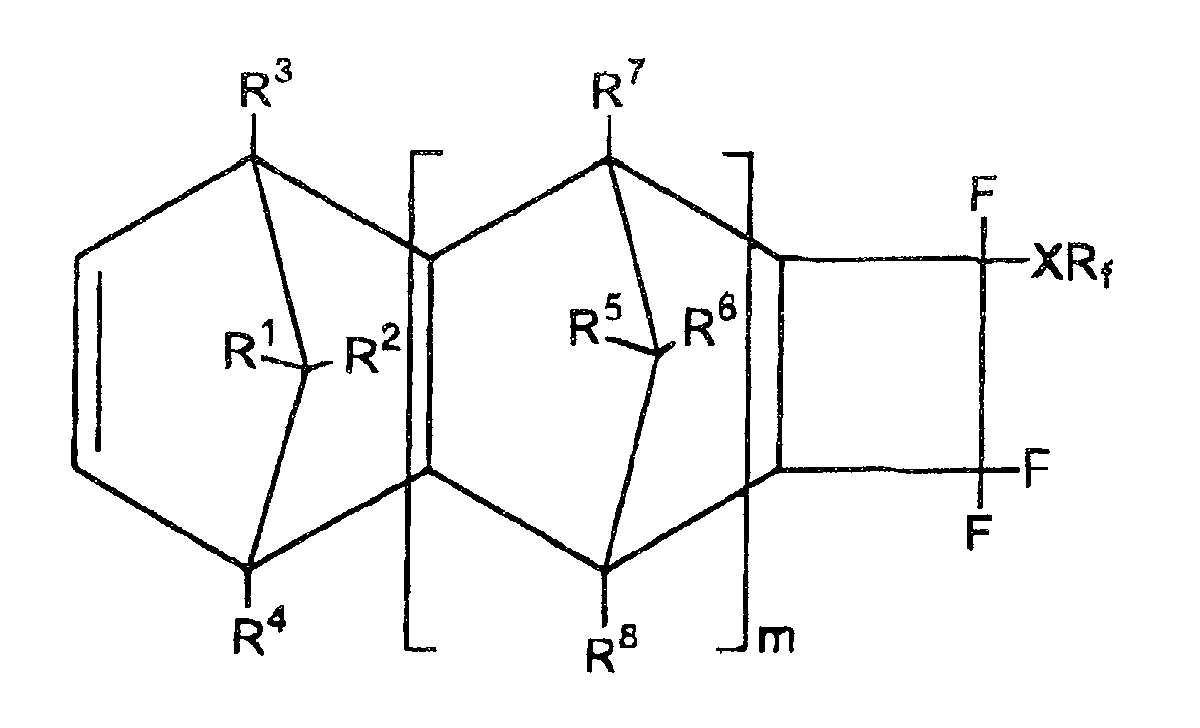

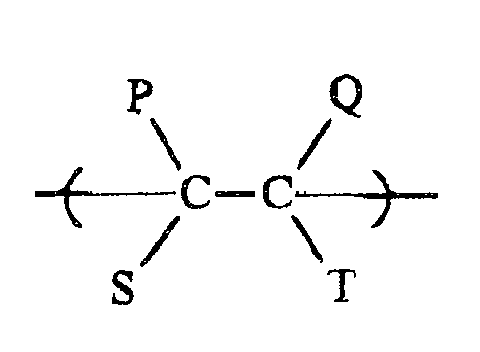

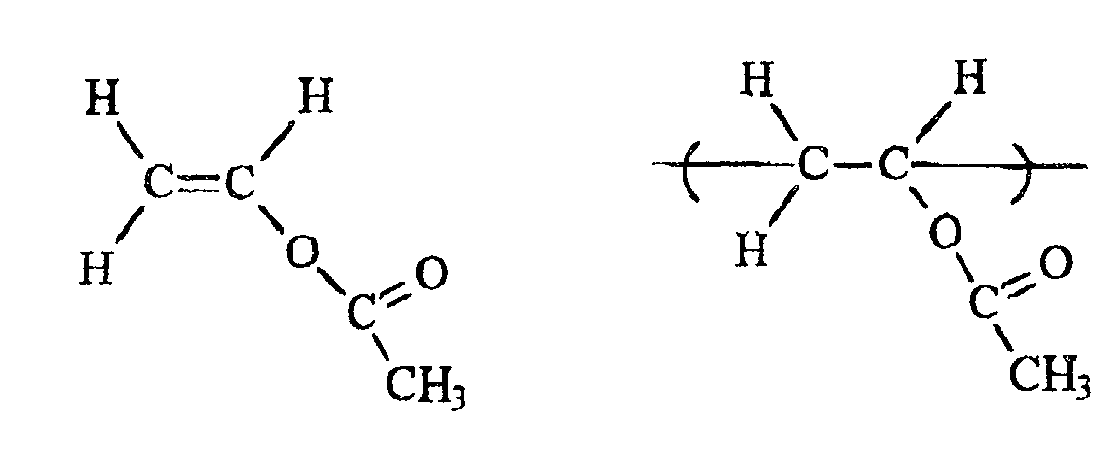

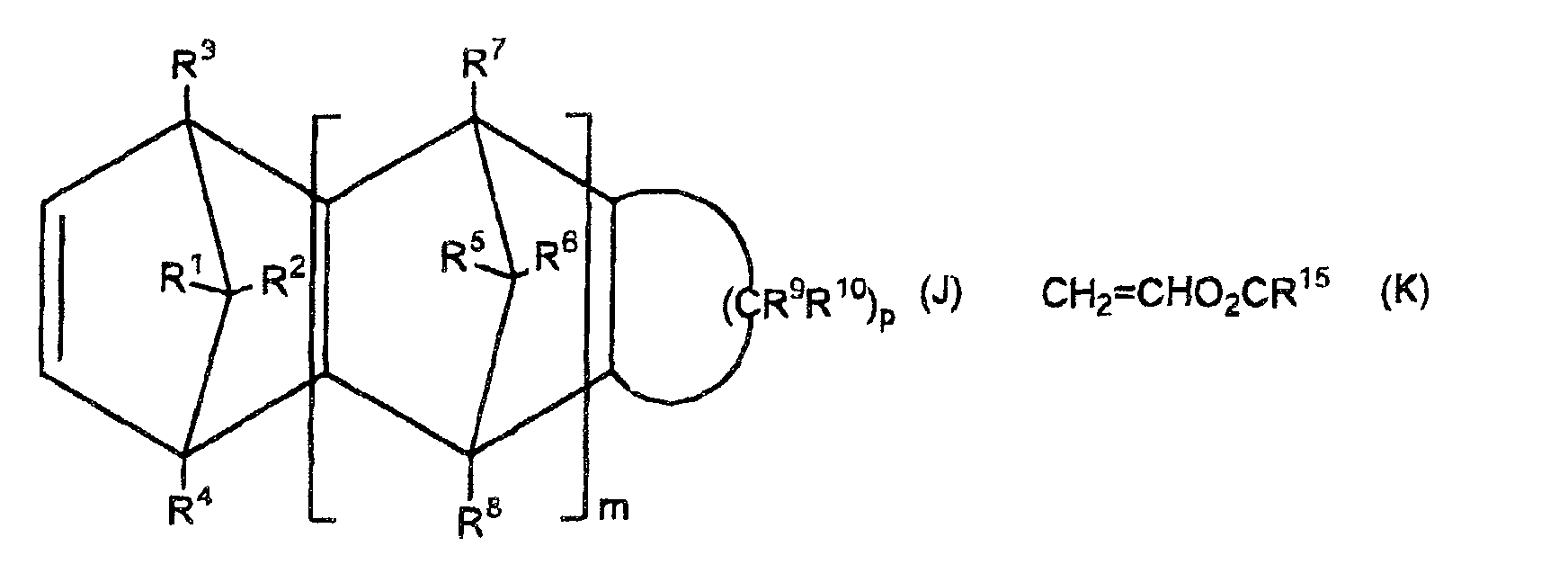
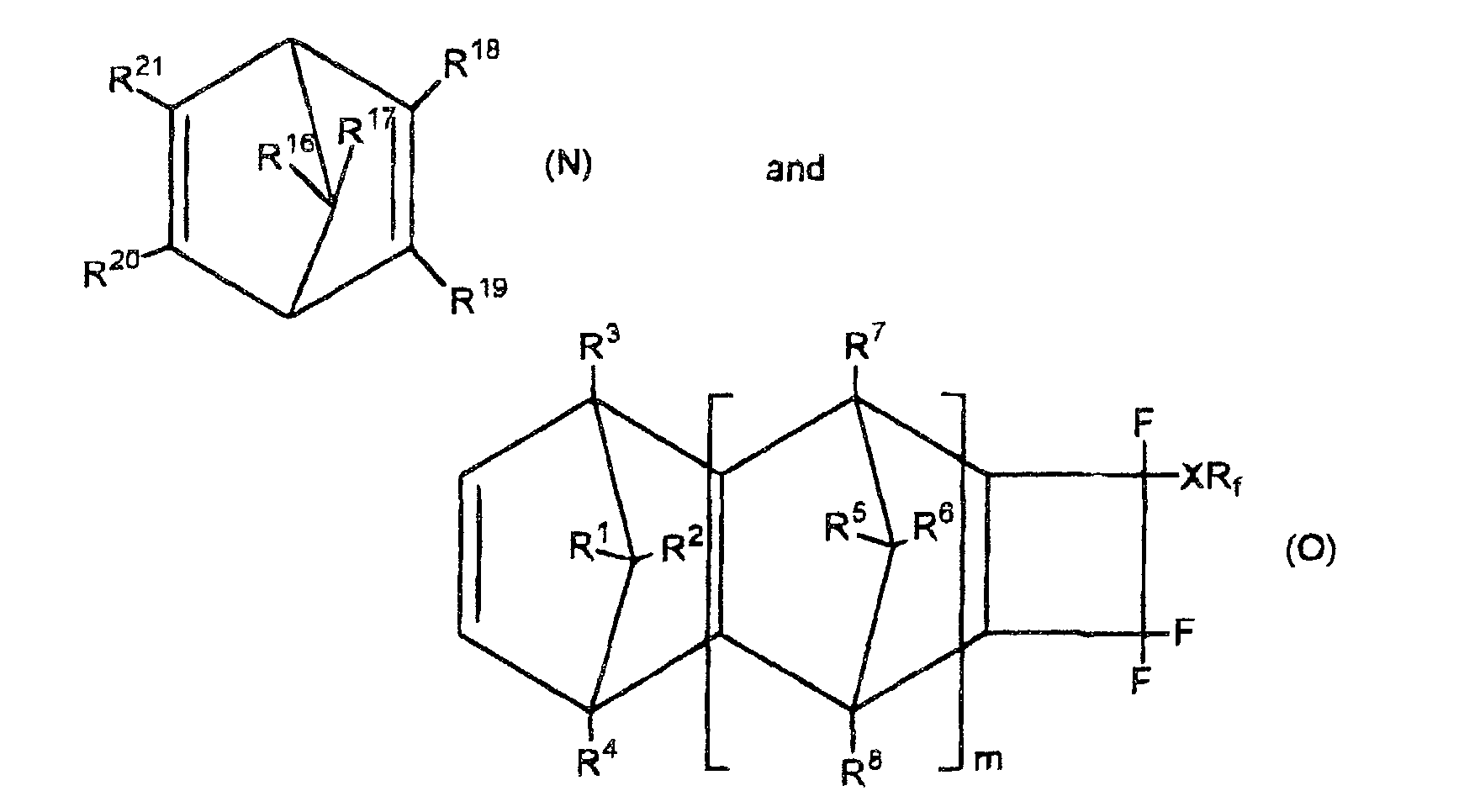
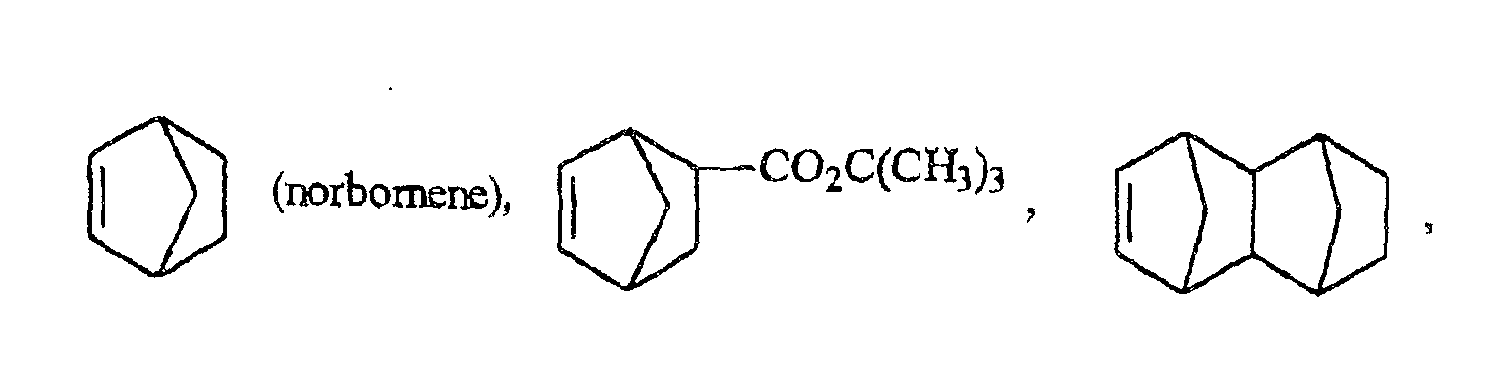


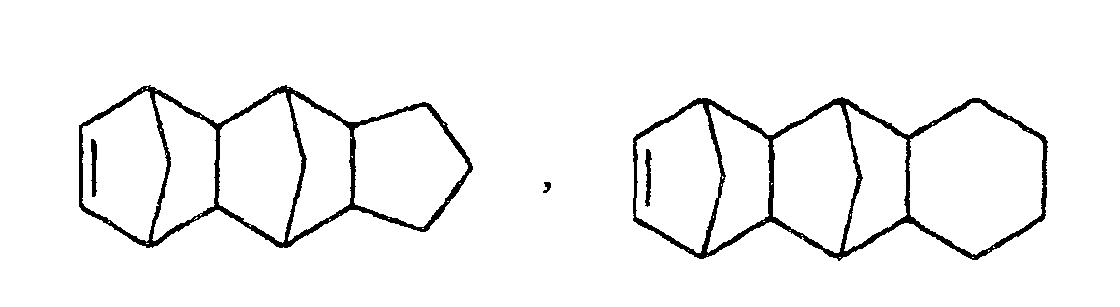
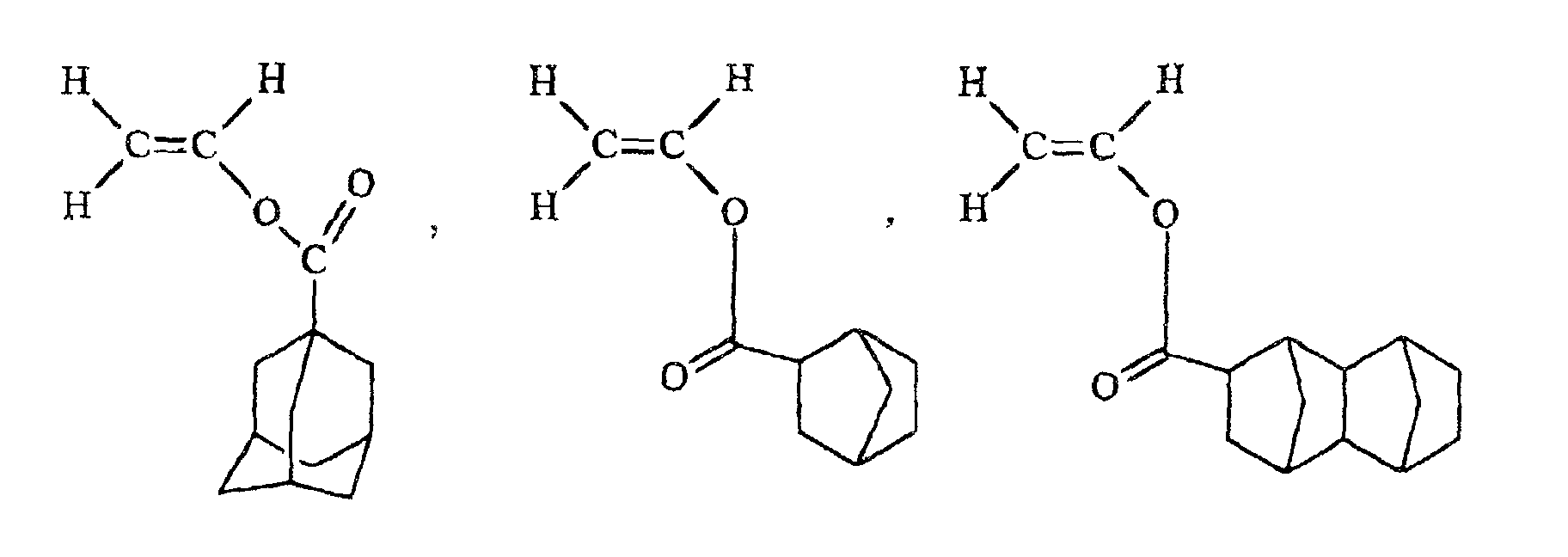


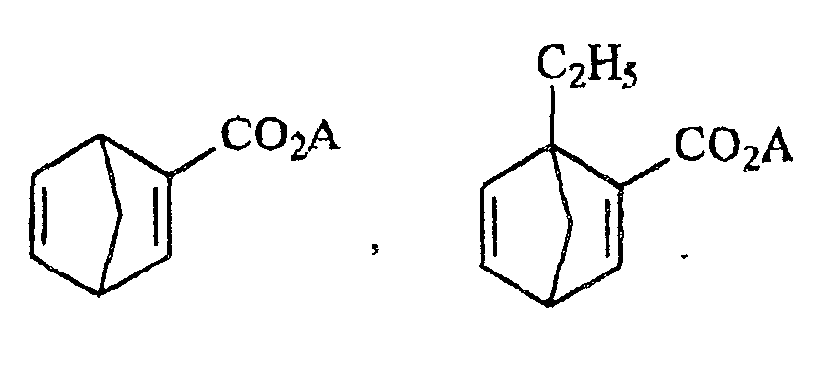
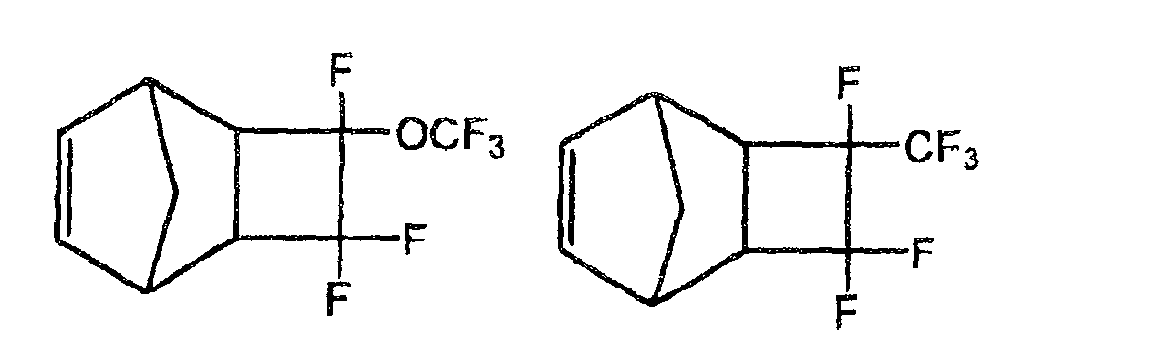

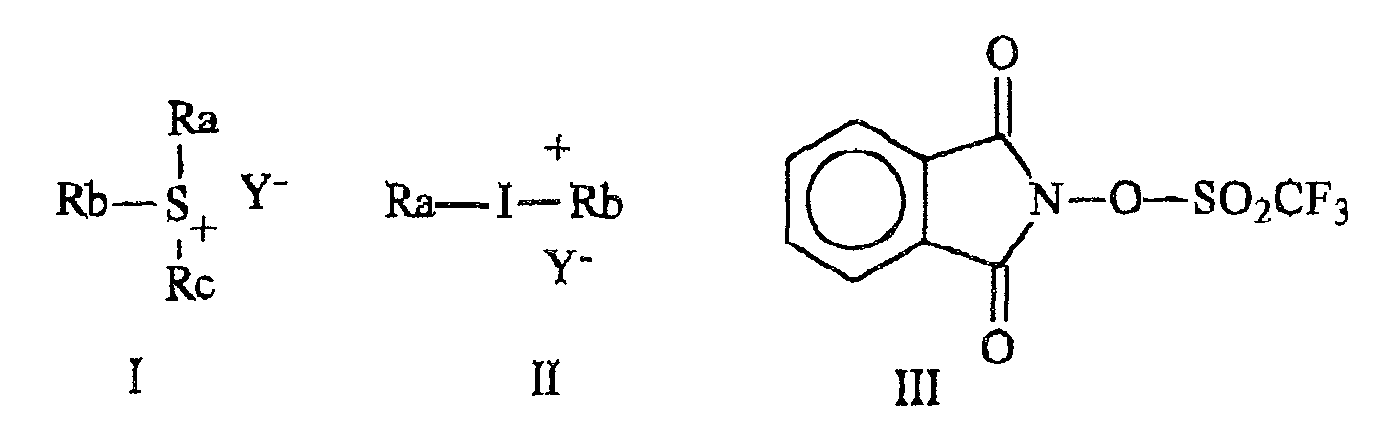


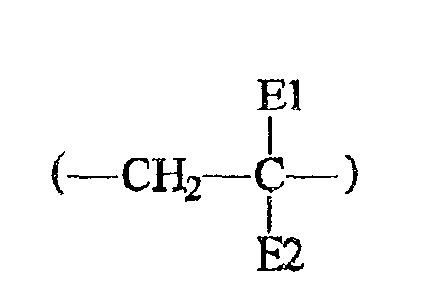


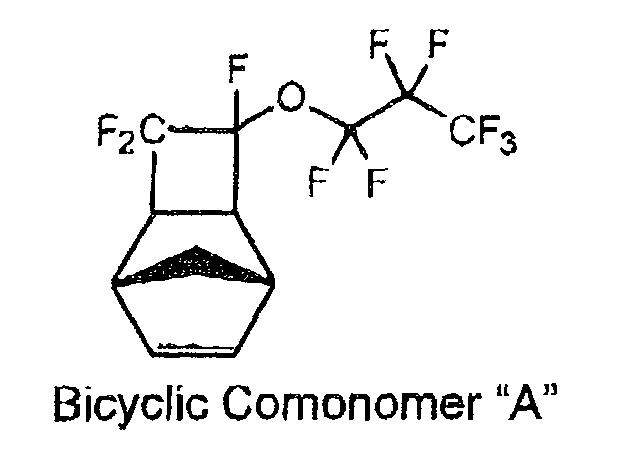

 R1 to R8 are the same or different and each represents a hydrogen atom, a halogen atom, a carboxyl group, a hydrocarbon group of 1 to about 20 carbon atoms or a heteroatom substituted hydrocarbon group of 1 to about 20 carbon atom, the heteroatom being one or more oxygen atoms, nitrogen atoms or sulfur atoms;X is an oxygen atom or a direct bond;Rf is a straight chain or branched perfluoroalkyl group of from 1 to 10 carbon atoms, with the proviso that XRf is not OC3F7.