EP1245562A1 - 5-THIA-$g(v)-(SUBSTITUTED PHENYL)-PROSTAGLANDIN E ALCOHOLS, PROCESS FOR PREPARING THE ALCOHOLS AND PHARMACEUTICAL PREPARATIONS CONTAINING THE SAME AS THE ACTIVE INGREDIENT - Google Patents
5-THIA-$g(v)-(SUBSTITUTED PHENYL)-PROSTAGLANDIN E ALCOHOLS, PROCESS FOR PREPARING THE ALCOHOLS AND PHARMACEUTICAL PREPARATIONS CONTAINING THE SAME AS THE ACTIVE INGREDIENT Download PDFInfo
- Publication number
- EP1245562A1 EP1245562A1 EP00985939A EP00985939A EP1245562A1 EP 1245562 A1 EP1245562 A1 EP 1245562A1 EP 00985939 A EP00985939 A EP 00985939A EP 00985939 A EP00985939 A EP 00985939A EP 1245562 A1 EP1245562 A1 EP 1245562A1
- Authority
- EP
- European Patent Office
- Prior art keywords
- alkyl
- alkyloxy
- hydroxy
- alkylthio
- formula
- Prior art date
- Legal status (The legal status is an assumption and is not a legal conclusion. Google has not performed a legal analysis and makes no representation as to the accuracy of the status listed.)
- Withdrawn
Links
- 0 C[C@]1[C@@](C)C(*)CC1 Chemical compound C[C@]1[C@@](C)C(*)CC1 0.000 description 1
Classifications
-
- A—HUMAN NECESSITIES
- A61—MEDICAL OR VETERINARY SCIENCE; HYGIENE
- A61K—PREPARATIONS FOR MEDICAL, DENTAL OR TOILETRY PURPOSES
- A61K31/00—Medicinal preparations containing organic active ingredients
- A61K31/557—Eicosanoids, e.g. leukotrienes or prostaglandins
- A61K31/5575—Eicosanoids, e.g. leukotrienes or prostaglandins having a cyclopentane, e.g. prostaglandin E2, prostaglandin F2-alpha
-
- C—CHEMISTRY; METALLURGY
- C07—ORGANIC CHEMISTRY
- C07C—ACYCLIC OR CARBOCYCLIC COMPOUNDS
- C07C405/00—Compounds containing a five-membered ring having two side-chains in ortho position to each other, and having oxygen atoms directly attached to the ring in ortho position to one of the side-chains, one side-chain containing, not directly attached to the ring, a carbon atom having three bonds to hetero atoms with at the most one bond to halogen, and the other side-chain having oxygen atoms attached in gamma-position to the ring, e.g. prostaglandins ; Analogues or derivatives thereof
-
- A—HUMAN NECESSITIES
- A61—MEDICAL OR VETERINARY SCIENCE; HYGIENE
- A61P—SPECIFIC THERAPEUTIC ACTIVITY OF CHEMICAL COMPOUNDS OR MEDICINAL PREPARATIONS
- A61P1/00—Drugs for disorders of the alimentary tract or the digestive system
- A61P1/16—Drugs for disorders of the alimentary tract or the digestive system for liver or gallbladder disorders, e.g. hepatoprotective agents, cholagogues, litholytics
-
- A—HUMAN NECESSITIES
- A61—MEDICAL OR VETERINARY SCIENCE; HYGIENE
- A61P—SPECIFIC THERAPEUTIC ACTIVITY OF CHEMICAL COMPOUNDS OR MEDICINAL PREPARATIONS
- A61P11/00—Drugs for disorders of the respiratory system
-
- A—HUMAN NECESSITIES
- A61—MEDICAL OR VETERINARY SCIENCE; HYGIENE
- A61P—SPECIFIC THERAPEUTIC ACTIVITY OF CHEMICAL COMPOUNDS OR MEDICINAL PREPARATIONS
- A61P11/00—Drugs for disorders of the respiratory system
- A61P11/06—Antiasthmatics
-
- A—HUMAN NECESSITIES
- A61—MEDICAL OR VETERINARY SCIENCE; HYGIENE
- A61P—SPECIFIC THERAPEUTIC ACTIVITY OF CHEMICAL COMPOUNDS OR MEDICINAL PREPARATIONS
- A61P13/00—Drugs for disorders of the urinary system
- A61P13/12—Drugs for disorders of the urinary system of the kidneys
-
- A—HUMAN NECESSITIES
- A61—MEDICAL OR VETERINARY SCIENCE; HYGIENE
- A61P—SPECIFIC THERAPEUTIC ACTIVITY OF CHEMICAL COMPOUNDS OR MEDICINAL PREPARATIONS
- A61P19/00—Drugs for skeletal disorders
- A61P19/02—Drugs for skeletal disorders for joint disorders, e.g. arthritis, arthrosis
-
- A—HUMAN NECESSITIES
- A61—MEDICAL OR VETERINARY SCIENCE; HYGIENE
- A61P—SPECIFIC THERAPEUTIC ACTIVITY OF CHEMICAL COMPOUNDS OR MEDICINAL PREPARATIONS
- A61P19/00—Drugs for skeletal disorders
- A61P19/08—Drugs for skeletal disorders for bone diseases, e.g. rachitism, Paget's disease
-
- A—HUMAN NECESSITIES
- A61—MEDICAL OR VETERINARY SCIENCE; HYGIENE
- A61P—SPECIFIC THERAPEUTIC ACTIVITY OF CHEMICAL COMPOUNDS OR MEDICINAL PREPARATIONS
- A61P25/00—Drugs for disorders of the nervous system
-
- A—HUMAN NECESSITIES
- A61—MEDICAL OR VETERINARY SCIENCE; HYGIENE
- A61P—SPECIFIC THERAPEUTIC ACTIVITY OF CHEMICAL COMPOUNDS OR MEDICINAL PREPARATIONS
- A61P25/00—Drugs for disorders of the nervous system
- A61P25/02—Drugs for disorders of the nervous system for peripheral neuropathies
-
- A—HUMAN NECESSITIES
- A61—MEDICAL OR VETERINARY SCIENCE; HYGIENE
- A61P—SPECIFIC THERAPEUTIC ACTIVITY OF CHEMICAL COMPOUNDS OR MEDICINAL PREPARATIONS
- A61P29/00—Non-central analgesic, antipyretic or antiinflammatory agents, e.g. antirheumatic agents; Non-steroidal antiinflammatory drugs [NSAID]
-
- A—HUMAN NECESSITIES
- A61—MEDICAL OR VETERINARY SCIENCE; HYGIENE
- A61P—SPECIFIC THERAPEUTIC ACTIVITY OF CHEMICAL COMPOUNDS OR MEDICINAL PREPARATIONS
- A61P35/00—Antineoplastic agents
-
- A—HUMAN NECESSITIES
- A61—MEDICAL OR VETERINARY SCIENCE; HYGIENE
- A61P—SPECIFIC THERAPEUTIC ACTIVITY OF CHEMICAL COMPOUNDS OR MEDICINAL PREPARATIONS
- A61P37/00—Drugs for immunological or allergic disorders
- A61P37/02—Immunomodulators
- A61P37/04—Immunostimulants
-
- A—HUMAN NECESSITIES
- A61—MEDICAL OR VETERINARY SCIENCE; HYGIENE
- A61P—SPECIFIC THERAPEUTIC ACTIVITY OF CHEMICAL COMPOUNDS OR MEDICINAL PREPARATIONS
- A61P37/00—Drugs for immunological or allergic disorders
- A61P37/02—Immunomodulators
- A61P37/06—Immunosuppressants, e.g. drugs for graft rejection
-
- A—HUMAN NECESSITIES
- A61—MEDICAL OR VETERINARY SCIENCE; HYGIENE
- A61P—SPECIFIC THERAPEUTIC ACTIVITY OF CHEMICAL COMPOUNDS OR MEDICINAL PREPARATIONS
- A61P43/00—Drugs for specific purposes, not provided for in groups A61P1/00-A61P41/00
-
- A—HUMAN NECESSITIES
- A61—MEDICAL OR VETERINARY SCIENCE; HYGIENE
- A61P—SPECIFIC THERAPEUTIC ACTIVITY OF CHEMICAL COMPOUNDS OR MEDICINAL PREPARATIONS
- A61P9/00—Drugs for disorders of the cardiovascular system
-
- A—HUMAN NECESSITIES
- A61—MEDICAL OR VETERINARY SCIENCE; HYGIENE
- A61P—SPECIFIC THERAPEUTIC ACTIVITY OF CHEMICAL COMPOUNDS OR MEDICINAL PREPARATIONS
- A61P9/00—Drugs for disorders of the cardiovascular system
- A61P9/10—Drugs for disorders of the cardiovascular system for treating ischaemic or atherosclerotic diseases, e.g. antianginal drugs, coronary vasodilators, drugs for myocardial infarction, retinopathy, cerebrovascula insufficiency, renal arteriosclerosis
-
- A—HUMAN NECESSITIES
- A61—MEDICAL OR VETERINARY SCIENCE; HYGIENE
- A61P—SPECIFIC THERAPEUTIC ACTIVITY OF CHEMICAL COMPOUNDS OR MEDICINAL PREPARATIONS
- A61P9/00—Drugs for disorders of the cardiovascular system
- A61P9/12—Antihypertensives
-
- C—CHEMISTRY; METALLURGY
- C07—ORGANIC CHEMISTRY
- C07C—ACYCLIC OR CARBOCYCLIC COMPOUNDS
- C07C405/00—Compounds containing a five-membered ring having two side-chains in ortho position to each other, and having oxygen atoms directly attached to the ring in ortho position to one of the side-chains, one side-chain containing, not directly attached to the ring, a carbon atom having three bonds to hetero atoms with at the most one bond to halogen, and the other side-chain having oxygen atoms attached in gamma-position to the ring, e.g. prostaglandins ; Analogues or derivatives thereof
- C07C405/0008—Analogues having the carboxyl group in the side-chains replaced by other functional groups
- C07C405/0033—Analogues having the carboxyl group in the side-chains replaced by other functional groups containing sulfur
Definitions
- the present invention relates to a 5-thia- ⁇ -substituted phenyl-prostaglandin E alcohol.
- Prostaglandin E 2 (abbreviated as PGE 2 ) has been known as a metabolite in the arachidonate cascade. It has been known that PGE 2 possesses cytoprotective activity, uterine contractile activity, a pain-inducing effect, a promoting effect on digestive peristalsis, an awakening effect, a suppressive effect on gastric acid secretion, hypotensive activity and diuretic activity etc.
- EP 4 subtype receptor relates to inhibition of producing TNF- ⁇ and acceleration of producing IL-10. Therefore, the compounds which can bind on EP 4 subtype receptor strongly are expected to be useful for the prevention and/or treatment of immunological diseases (autoimmune diseases such as amyotrophic lateral sclerosis (ALS), multiple sclerosis, Sjoegren's syndrome, chronic rheumarthrosis and systemic lupus erythematosus etc., and rejection after organ transplantation etc.), asthma, abnormal bone formation, neuronal cell death, lung failure, liver damage, acute hepatitis, nephritis, renal insufficiency, hypertension, myocardiac ischemia, systemic inflammatory response syndrome, sepsis, hemophagous syndrome, macrophage activation syndrome, Still's disease, Kawasaki disease, burn, systemic granulomatosis, ulcerative colitis, Crohn's disease, hypercytokinemia at dialysis, multiple organ failure, and shock etc. Further, it is thought that EP 4 subtype
- 5-thia-prostaglandin derivatives of the following formula (A) are useful as a compound which satisfies these purposes and have filed a patent application relates to such compounds (WO00/03980). These compounds can bind on EP 4 subtype receptor selectively and binds on the other subtype receptors weakly, so they show no any other activities. Therefore they are expected to be drugs possessing less side effects.
- the present inventors et al. have studied to find out the stable compounds which can bind on EP 4 subtype receptor specifically, and do not bind on any other EP subtype receptors nor any other prostanoid receptors.
- the present inventors have found out 5-thiaprostaglandin wherein a substituted phenyl is introduced into ⁇ -chain have achieved this object, and then filed the said patent application (WO00/03980).
- the present inventors et al. have confirmed that converting carboxy group of the compounds described in the said patent application into hydroxy group (alcohol) improved an absorption of the compounds into the living body and then, have completed the present invention.
- the compounds of the formula (I) of the present invention may be converted into carboxylic acid which is an active compound by oxidation in the living body.
- the said active carboxylic acid possesses an activity to bind on EP 4 subtype receptor strongly and bind on the other prostanoid receptors including the other subtype receptors weakly, and a sufficient stability as a drug.
- the present invention relates to
- C1-4 alkyl in R 4a , R 4b and R 5 means methyl, ethyl, propyl, butyl and isomers thereof.
- C1-6 alkyl in R 1 means methyl, ethyl, propyl, butyl, pentyl, hexyl and isomers thereof.
- C2-6 alkyl in R 1 means ethyl, propyl, butyl, pentyl, hexyl and isomers thereof.
- C2-6 alkanoyl in R 1 means acetyl, propanoyl, butanoyl, pentanoyl, hexanoyl and isomers thereof.
- C2-4 alkenyl in R 5 means vinyl, propenyl, butenyl and isomers thereof.
- C2-4 alkynyl in R 5 means ethynyl, propynyl, butynyl and isomers thereof.
- C3-7 cycloalkyl in R 5 means cyclopropyl, cyclobutyl, cyclopentyl, cyclohexyl, cycloheptyl.
- halogen in R 2 and R 5 means fluorine, chlorine, bromine and iodine.
- the symbol means single bond or double bond. Further, unless otherwise specified, in the present invention, the symbol means that the substituent attached thereto is in front of the sheet, the symbol means that the substituent attached thereto is behind the sheet and the symbol means that there is a mixture of substituents in front of and behind the sheet or that the substituent attached thereto may be in front of or behind the sheet as would be clear to the person skilled in the art.
- alkyl, alkenyl, alkynyl, alkylene group means straight-chain or branched-chain ones.
- isomers on double bond, ring, fused ring (E-, Z-, cis-, trans-isomer), isomers generated from asymmetric carbon atom(s) (R-, S-, ⁇ -, ⁇ -isomer, enantiomer, diastereomer), optically active isomers (D-, L-, d-, I-isomer), polar compounds generated by chromatographic separation (more polar compound, less polar compound), equilibrium compounds, mixtures thereof at voluntary ratios and racemic mixtures are also included in the present invention.
- the substituent(s) of phenyl in R 5 is preferably substituted at 3-position, 3-position and 4-position, and 3-position and 5-position.
- each group (i) to (iv) as the substituent(s) of phenyl in R 5 means as follows:
- the compounds of the present invention of the formula (I) may be converted into the corresponding cyclodextrin clathrates by the method described in the specification of Japanese Patent Application Kokoku Sho 50-3362, 52-31404 or 61-52146 using ⁇ -, ⁇ - or ⁇ -cyclodextrin or a mixture thereof. Converting into the corresponding cyclodextrin clathrates serves to increase the stability and solubility in water of the compounds, and therefore it is useful in the use for pharmaceuticals.
- a protecting group of hydroxy which is removed under an acidic condition includes, for example, t-butyldimethylsilyl, triphenylmethyl, and tetrahydropyran-2-yl (THP) etc.
- Hydrolysis under an acidic condition has been known.
- This reaction may be carried out, for example, in an organic solvent which is admissible with water (e.g., tetrahydrofran, methanol, ethanol, dimethoxyethane, acetonitrile or mixture thereof etc.), using an inorganic acid (e.g., hydrochloric acid, phosphoric acid, hydrofluoric acid, hydrogen fluoride-pyridine etc.) or an organic acid (e.g., acetic acid, tosylic acid, trichloroacetic acid etc.) at temperature of 0-50°C.
- an organic solvent e.g., tetrahydrofran, methanol, ethanol, dimethoxyethane, acetonitrile or mixture thereof etc.
- an inorganic acid e.g., hydrochloric acid, phosphoric acid, hydrofluoric acid, hydrogen fluoride-pyridine etc.
- an organic acid e.g., acetic acid
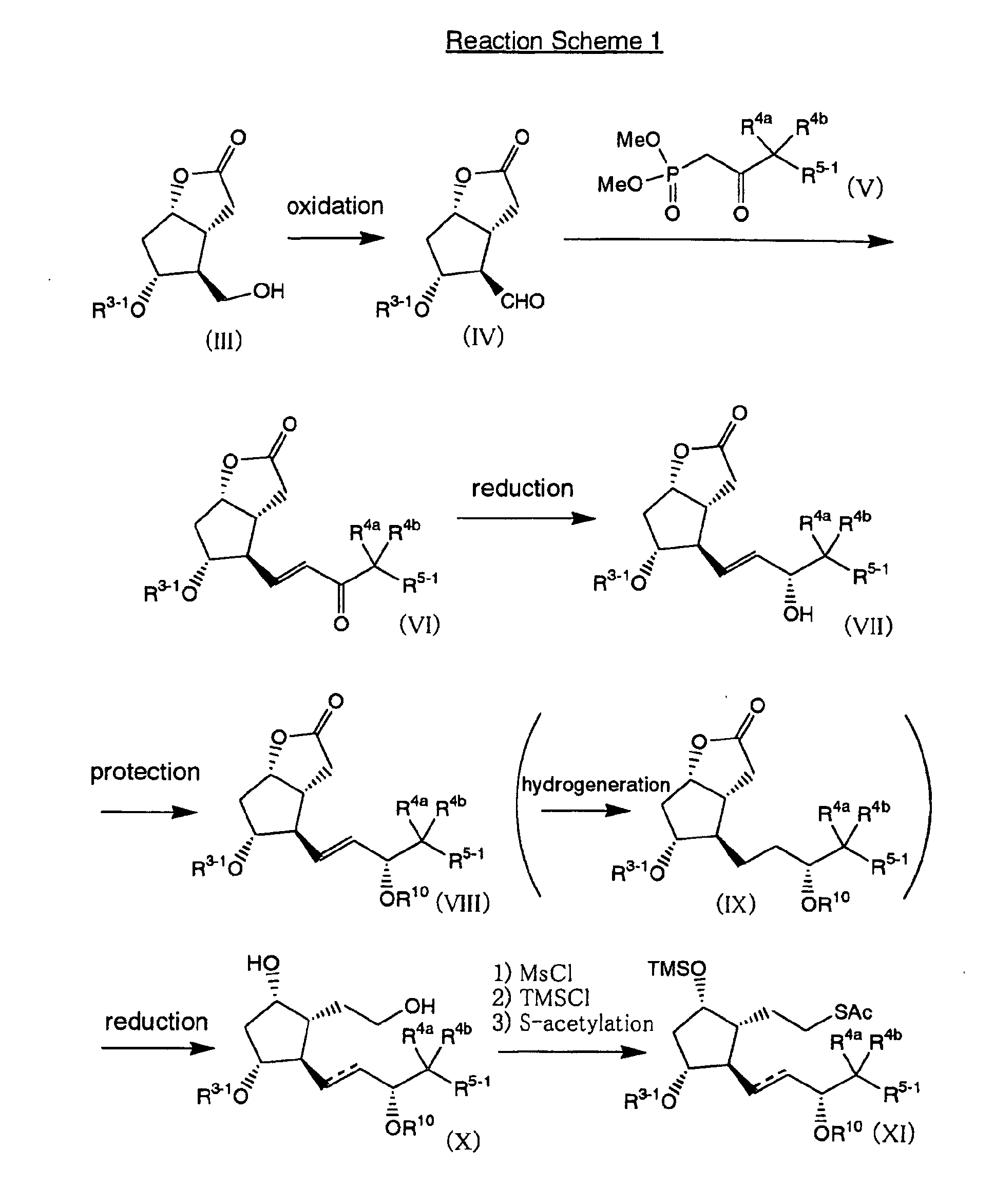
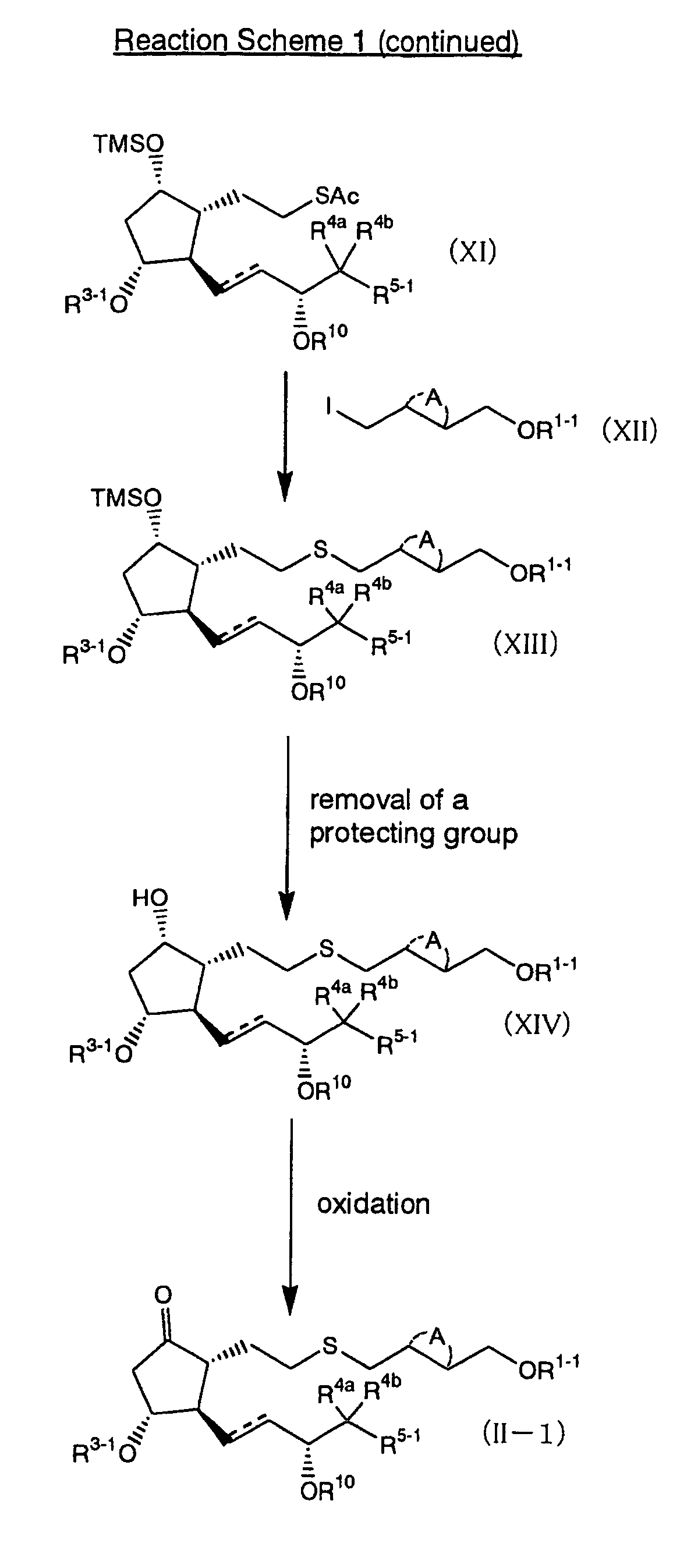
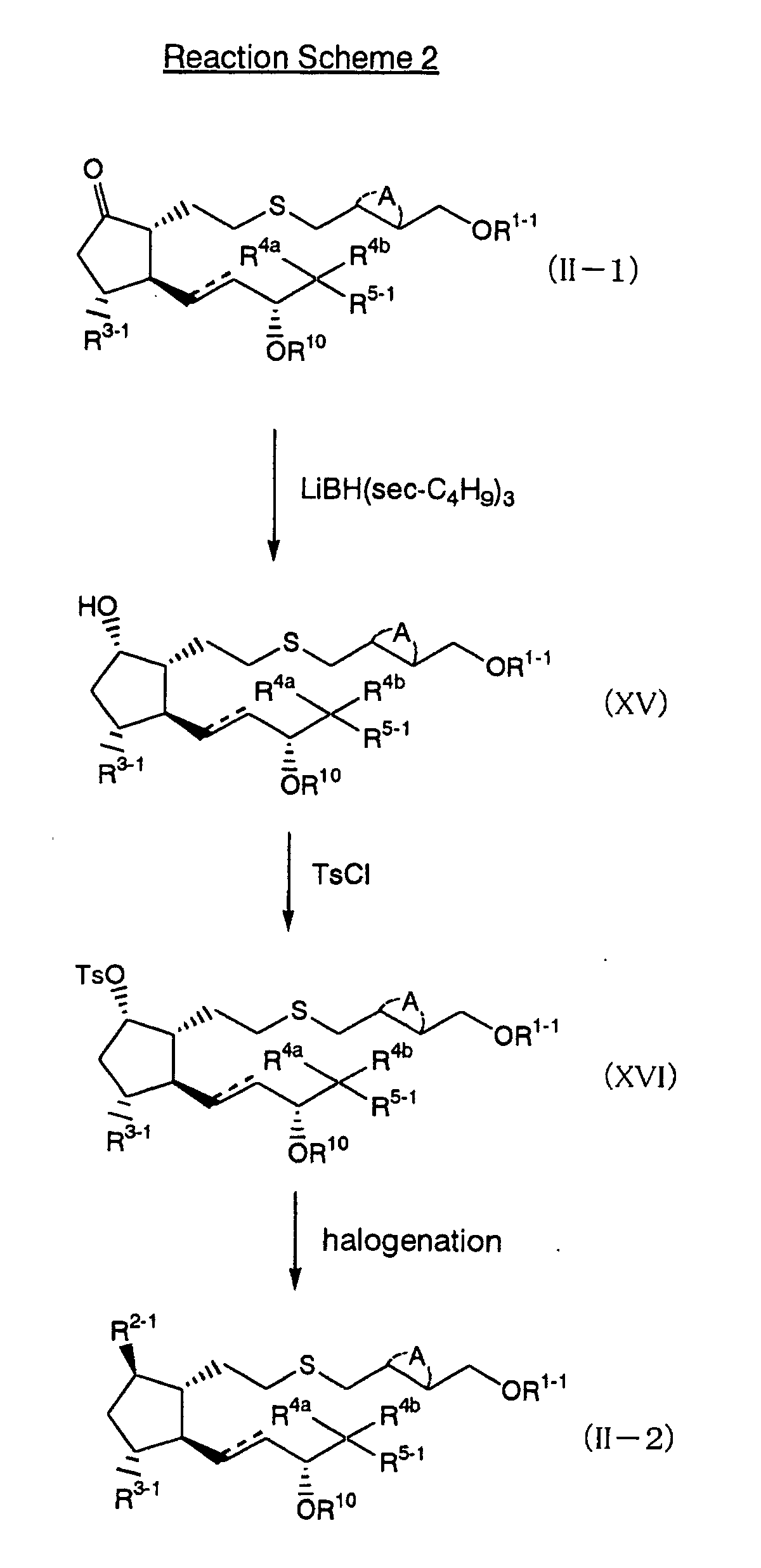
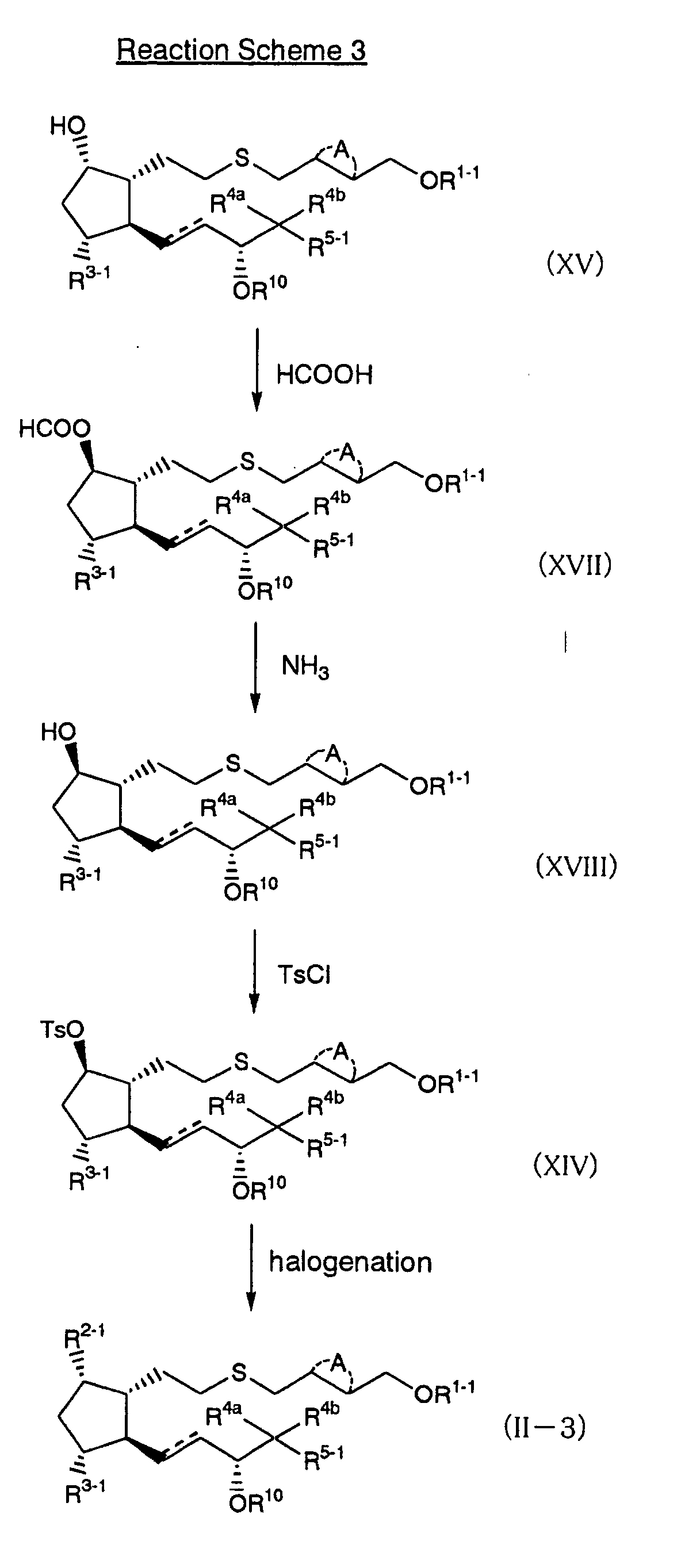
- the compounds of the formula (II) may be prepared by the following Reaction Schemes 1-3.
- the other starting materials and reagents in the present invention are known per se or may be prepared by known methods.
- reaction pr oducts may be purified by conventional techniques. For example, purification may be carried out by distillation at atmospheric or reduced pressure, by high performance liquid chromatography, by thin layer chromatography or by column chromatography using silica gel or magnesium silicate, by washing or by recrystallization. Purification may be carried out after each reaction, or after a series of reactions.
- the compounds of the present invention of the formula (I) may be converted into carboxylic acids by oxidation in the living body. As described in the specification of WOOO/03980, the corresponding carboxylic acids can bind strongly on EP 4 subtype receptor which is one of PGE 2 receptors and show an activity on it.
- LPS (10 ⁇ g/2 ml/kg) was administered into a tail vein of SD-strain male rat. Blood was collected from an abdominal large vein with heparin after 90 minutes from administration to prepare blood plasma. The amount of TNF- ⁇ in the blood plasma was determined by using ELISA Kit (Rat TNF- ⁇ Immunoassay kit, Biosource Co.). Each compound of the present invention was administered orally before 30 minutes from administration of LPS.
- the effective dose (IC50) was defined as the dose at which the test compound showed 50% inhibition on producing TNF- ⁇ in blood plasma, when the amount of producing TNF- ⁇ in the control group (administration of LPS, non-administration of test compound) was as 100%. The results are shown in Table 4.
- Example No Example No Effective dose IC50 ( ⁇ g/kg) p.o. 1 117 1(1) 57.4
- Example 1(1) (1 mg/kg; alcohol compound) was administered into SD-strain male rat by intravenous route to determine each concentration of the said compound and corresponding carboxylic acid, i.e., (11 ⁇ ,15 ⁇ ,13E)-9-oxo-11,15-dihydroxy-1 6-(3-methoxymethylphenyl)-17,18,19,20-tetranor-5-thiaprost-13-enoic acid (corresponding carboxylic acid) in blood plasma.
- the test solution may be prepared from a physiological saline solution containing 0.3%ethanol and 0.1 % POLYSORBATE 80. The concentration was determined by using liquid chromatograph mass spectrometer (LC/MS/MS). The results are shown in Table 5.
- Compounds Concentration in blood plasma AUC 0- ⁇ (ng ⁇ hr/ml)
- the toxicity of the compounds of the formula (I) of the present invention is very low and therefore, it is confirmed that these compounds are safe for use as medicine.
- the compounds of the present invention of the formula (I) may be converted into carboxylic acids by oxidation in the living body.
- Such carboxylic acids can bind on PGE 2 receptor and show the activity on it. Particularly, they bind on EP 4 subtype receptor strongly, so the compounds of the formula (I) are expected to be useful for the prevention and/or treatment of immunological diseases (autoimmune diseases such as amyotrophic lateral sclerosis (ALS), multiple sclerosis, Sjoegren's syndrome, chronic rheumarthrosis and systemic lupus erythematosus etc., and rejection after organ transplantation etc.), asthma, abnormal bone formation, neuronal cell death, lung failure, liver damage, acute hepatitis, nephritis, renal insufficiency, hypertension, myocardiac ischemia, systemic inflammatory response syndrome, sepsis, hemophagous syndrome, macrophage activation syndrome, Still's disease, Kawasaki disease, burn, systemic granulomatosis, ulcerative
- the carboxylic acids converted from the compounds of the present invention of the formula (I) by oxidation might bind weakly on the subtypes receptors other than EP 4 subtype receptor do not express other effects, therefore such compounds are expected to be an agent having less side effect.
- the compounds of the formula (I) of the present invention or cyclodextrin clathrate thereof may be normally administered systematically or locally, usually by oral or parenteral administration.
- the doses to be administered are determined depending upon age, body weight, symptom, the desired therapeutic effect, the route of administration, and the duration of the treatment etc.
- the doses per person per dose are generally between 1 ⁇ g and 100 mg, by oral administration, up to several times per day, and between 0.1 ⁇ g and 10 mg, by parenteral administration (preferred into vein) up to several times per day, or continuous administration between 1 and 24 hrs. per day into vein.
- the doses to be used depend upon various conditions. Therefore, there are cases in which doses lower than or greater than the ranges specified above may be used.
- the compounds of the present invention may be administered as solid compositions, liquid compositions or other compositions for oral administration, or as injections, liniments or suppositories etc. for parenteral administration.
- Solid compositions for oral administration include compressed tablets, pills, capsules, dispersible powders, and granules etc.
- Capsules contain hard capsules and soft capsules.
- one or more of the active compound(s) is or are, admixed with at least one inert diluent such as lactose, mannitol, mannit, glucose, hydroxypropyl cellulose, microcrystalline cellulose, starch, polyvinylpyrrolidone, magnesium metasilicate aluminate.
- inert diluent such as lactose, mannitol, mannit, glucose, hydroxypropyl cellulose, microcrystalline cellulose, starch, polyvinylpyrrolidone, magnesium metasilicate aluminate.
- compositions may also comprise, as is normal practice, additional substances other than inert diluents: e.g. lubricating agents such as magnesium stearate, disintegrating agents such as cellulose calcium glycolate, and assisting agents for dissolving such as glutamic acid, asparaginic acid.
- lubricating agents such as magnesium stearate
- disintegrating agents such as cellulose calcium glycolate
- assisting agents for dissolving such as glutamic acid, asparaginic acid.
- the tablets or pills may, if desired, be coated with film of gastric or enteric material such as sugar, gelatin, hydroxypropyl cellulose or hydroxypropyl cellulose phthalate etc., or be coated with two or more films. And further, coating may include containment within capsules of absorbable materials such as gelatin.
- Liquid compositions for oral administration include pharmaceutically-acceptable emulsions, solutions, syrups and elixirs etc.
- one or more of the active compound(s) is or are comprised in inert diluent(s) commonly used in the art (for example, purified water, ethanol etc.).
- inert diluents such compositions may also comprise adjuvants such as wetting agents, suspending agents, sweetening agents, flavouring agents, perfuming agents and preserving agents.
- compositions for oral administration include spray compositions which may be prepared by known methods and which comprise one or more of the active compound(s).
- Spray compositions may comprise additional substances other than inert diluents: e.g. stabilizing agents such as sodium hydrogen sulfate, stabilizing agents to give isotonicity, isotonic buffer such as sodium chloride, sodium citrate, citric acid.
- stabilizing agents such as sodium hydrogen sulfate
- isotonic buffer such as sodium chloride, sodium citrate, citric acid.
- Injections for parenteral administration include sterile aqueous or nonaqueous solutions, suspensions and emulsions.
- Aqueous solutions or suspensions include distilled water for injection and physiological salt solution.
- Non-aqueous solutions or suspensions include propylene glycol, polyethylene glycol, plant oil such as olive oil, alcohol such as ethanol, POLYSORBATE80 (registered trade mark) etc.
- compositions may comprise additional diluents: e.g. preserving agents, wetting agents, emulsifying agents, dispersing agents, stabilizing agent, assisting agents such as assisting agents for dissolving (for example, glutamic acid, asparaginic acid).
- preserving agents e.g. preserving agents, wetting agents, emulsifying agents, dispersing agents, stabilizing agent, assisting agents such as assisting agents for dissolving (for example, glutamic acid, asparaginic acid).
- assisting agents such as assisting agents for dissolving (for example, glutamic acid, asparaginic acid).
- assisting agents such as assisting agents for dissolving (for example, glutamic acid, asparaginic acid).
- They may be sterilized for example, by filtration through a bacteria-retaining filter, by incorporation of sterilizing agents in the compositions or by irradiation. They may also be manufactured in the form of sterile solid compositions which can be dissolved in sterile water or
- compositions for parenteral administration include liquids for external use, and endermic liniments, ointments, suppositories and pessaries which comprise one or more of the active compound(s) and may be prepared by known methods.
- the solvents in parentheses in chromatographic separations and TLC show the developing or eluting solvents and the ratios of the solvents used are by volume.
- the following compounds were admixed in conventional method and punched out to obtain 100 tablets each containing 0.5 mg of active ingredient.
- the following components were admixed in a conventional method, and the solution was sterilized in a conventional method, placed 1 ml portions into ampoules and freeze-dried in a conventional method to obtain 100 ampoules each containing 0.2 mg of active ingredient.
Landscapes
- Health & Medical Sciences (AREA)
- Chemical & Material Sciences (AREA)
- Organic Chemistry (AREA)
- Veterinary Medicine (AREA)
- Public Health (AREA)
- Medicinal Chemistry (AREA)
- Pharmacology & Pharmacy (AREA)
- Life Sciences & Earth Sciences (AREA)
- Animal Behavior & Ethology (AREA)
- General Health & Medical Sciences (AREA)
- Engineering & Computer Science (AREA)
- Chemical Kinetics & Catalysis (AREA)
- General Chemical & Material Sciences (AREA)
- Nuclear Medicine, Radiotherapy & Molecular Imaging (AREA)
- Bioinformatics & Cheminformatics (AREA)
- Immunology (AREA)
- Rheumatology (AREA)
- Heart & Thoracic Surgery (AREA)
- Physical Education & Sports Medicine (AREA)
- Cardiology (AREA)
- Pulmonology (AREA)
- Orthopedic Medicine & Surgery (AREA)
- Neurology (AREA)
- Urology & Nephrology (AREA)
- Neurosurgery (AREA)
- Biomedical Technology (AREA)
- Epidemiology (AREA)
- Pain & Pain Management (AREA)
- Vascular Medicine (AREA)
- Transplantation (AREA)
- Gastroenterology & Hepatology (AREA)
- Pharmaceuticals Containing Other Organic And Inorganic Compounds (AREA)
- Organic Low-Molecular-Weight Compounds And Preparation Thereof (AREA)
Abstract

Description

a process for producing it and a pharmaceutical composition it as an active ingredient.
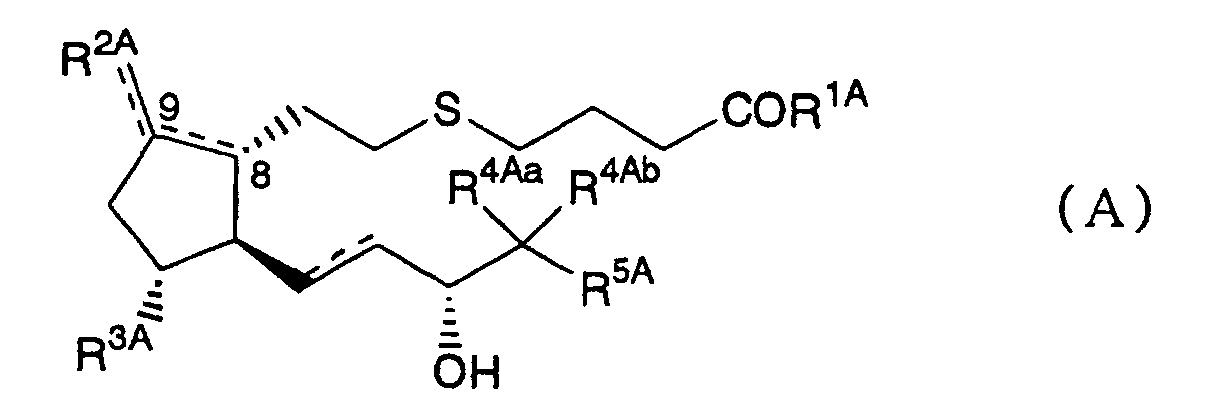
with the proviso that when R2A is the formula: O-COR8A, bond of C8-C9 is a double bond) and cyclodextrin clathrate thereof are described in the specification of WO00/03980.

or cyclodextrin clathrate thereof,


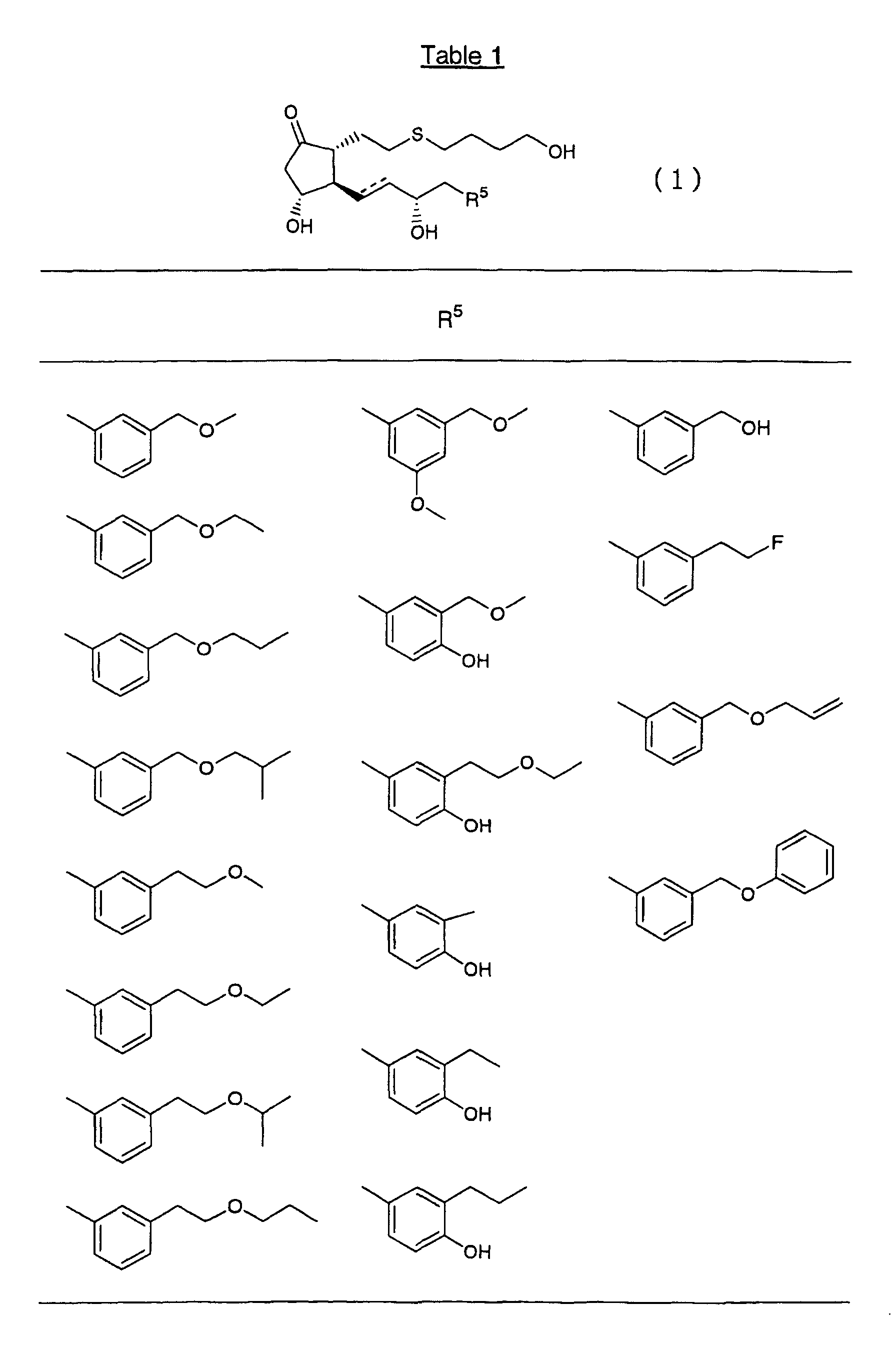
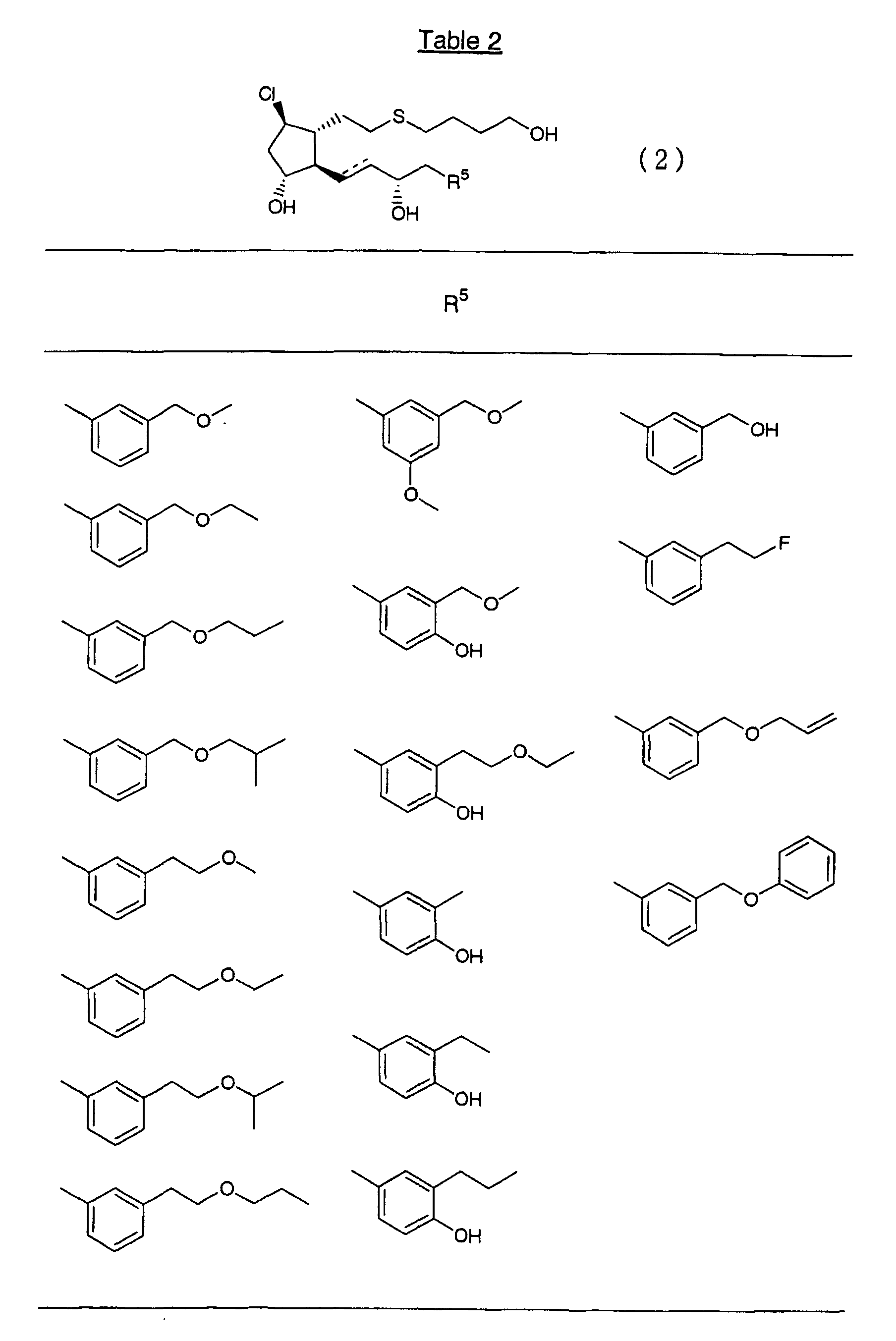


| Example No Example No | Effective dose IC50 (µg/kg) p.o. |
| 1 | 117 |
| 1(1) | 57.4 |
| Compounds | Concentration in blood plasma AUC0-∞ (ng · hr/ml) |
| Example 1(1) | 462±78 |
| corresponding carboxylic acid | 99±26 |

TLC: Rf 0.52 (hexane : ethyl acetate = 2 : 1);
NMR(CDCl3): δ 7.3-7.1 (m, 4H), 5.55-5.2 (m, 2H), 4.75-4.45 (m, 1H), 4.42 (s, 2H), 4.3-4.2 (m, 2H), 3.62 (t, J = 5Hz, 2H), 3.38 (s, 3H), 3.4-3.2 (m, 2H), 3.0-2.7 (m, 2H), 2.6-2.4 (m, 4H), 2.4-2.2 (m, 1H), 2.05-1.85 (m, 2H), 1.85-1.3 (m, 15H), 0.89 (s, 9H), 0.05 (s, 6H).

TLC: Rf 0.63 (hexane : ethyl acetate = 2:1).

TLC: Rf 0.25 (ethyl acetate : hexane = 2:1);
NMR(CDCl3): δ 7.3-7.1 (m, 4H), 5.75-5.6 (m, 2H), 4.44 (s, 2H), 4.4-4.3 (m, 1H), 3.65 (t, J = 6Hz, 2H), 3.41 (s, 3H), 2.9-2.7 (m, 2H), 2.7-2.3 (m, 6H), 2.3-2.0 (m, 3H), 2.0-1.5 (m, 9H).
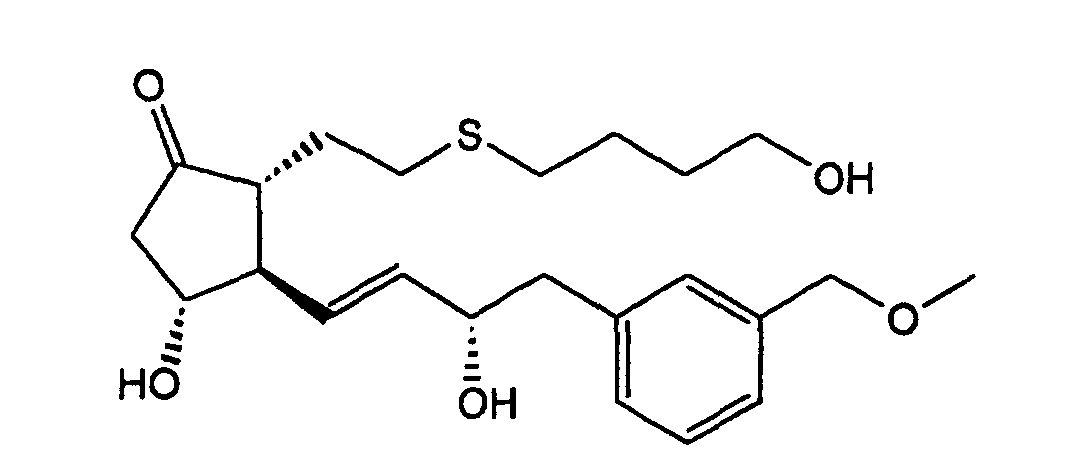
NMR(CDCl3): δ 7.35-7.17 (m, 4H), 5.77 (dd, J = 15.0, 6.0Hz, 1H), 5.54 (dd, J = 15.0, 8.0Hz, 1H), 4.48-4.38 (m, 3H), 4.00-3.90 (m, 1H), 3.68-3.63 (m, 2H), 3.42 (s, 3H), 3.01-2.21 (m, 11H), 1.92-1.55 (m, 8H).
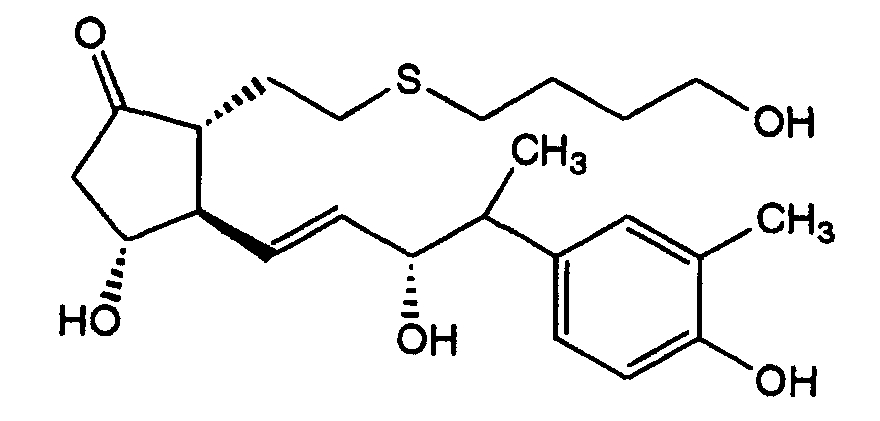
NMR(CDCl3): δ 7.0-6.7 (m, 3H), 5.68 and 5.53 (dd, J = 15, 8Hz, 1H), 5.57 and 5.35 (dd, J = 15, 9Hz, 1H), 4.2-3.9 (m, 2H), 3.65-3.6 (br, 2H), 2.8-2.0 (m, 16H), 2.0-1.5 (m, 6H), 1.32 and 1.20 (d, J = 7Hz, 3H).
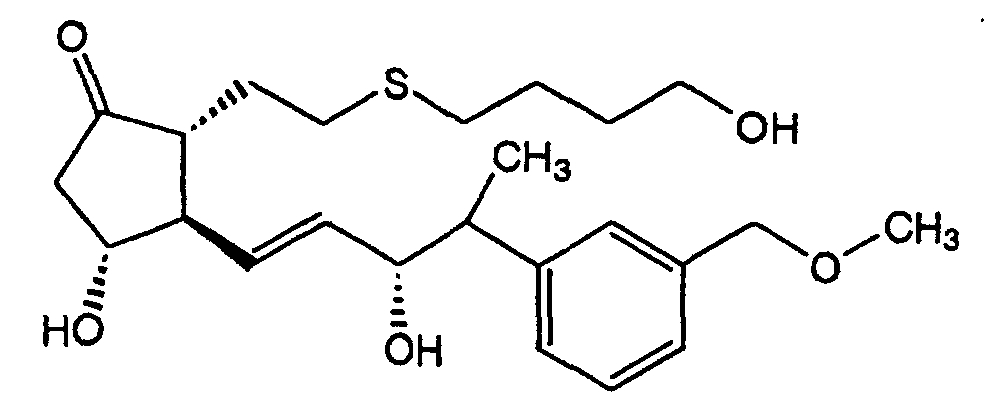
NMR(CDCl3): δ 7.36-7.10 (m, 4H), 5.71 (dd, J = 15.3, 6.6Hz, 0.5H), 5.62 (dd, J = 15.6, 5.7Hz, 0.5H), 5.53 (dd, J = 16.0, 8.1Hz, 0.5H), 5.47 (dd, J = 15.3, 7.8Hz, 0.5H), 4.49-4.38 (m, 2H), 4.25-4.15 (m, 1H), 3.99-3.76 (m, 1H), 3.71-3.60 (m, 2H), 3.43 (s, 3H), 3.35-3.23 and 3.10-2.41 (m, 8H), 2.36-2.14 (m, 4H), 2.00-1.60 (m, 6H), 1.36 and 1.28 (d, J = 7.0Hz, 3H).

NMR(CDCl3): δ 7.38-7.10 (m, 4H), 5.75 (dd, J = 15.3, 6.0Hz, 1H), 5.53 (dd, J = 15.3, 8.0Hz, 1H), 4.48-4.38 (m, 3H), 4.00-3.89 (m, 1H), 3.63-3.53 (m, 1H), 3.46-3.17 (m, 5H), 2.95-2.14 (m, 11 H), 1.99-1.62 (m, 3H),1.06-0.84 (m, 2H), 0.58-0.44 (m, 2H).
- (11α,15 α,13E)-9-oxo-11,15-dihydroxy-16-(3-methoxy-methylphenyl)-17,18,19,20-tetranor-5-thiaprost-13-en-1-alcohol
· α-cyclodextrin
----- 250 mg (active ingredient 50 mg) - Carboxymethylcellulose calcium ------ 200 mg
- Magnesium stearate ----- 100 mg
- Micro crystalline cellulose ----- 9.2 g
- (11α,15α,13E)-9-oxo-11,15-dihydroxy-16-(3-methoxy-methylphenyl)-17,18,19,20-tetranor-5-thiaprost-13-en-alcohol
· α-cyclodextrin
----- 100 mg (active ingredient 20 mg) - Mannit ------ 5 g
- Distlled water ----- 100 ml
Claims (12)
- A 5-thia- ω-substituted phenyl-prostaglandin E alcohol of the formula (I)(wherein, --A-- is absent or --A-- is methylene or ethylene,
 --- is a single bond or a double bond)R1 is hydrogen, C1-6 alkyl, phyenyl-C1-6 alkyl, C2-6 alkanoyl, or phyenyl-C2-6 alkanoyl,R2 is oxo or halogen,R3 is hydrogen or hydroxy,R4a and R4b are, independently, hydrogen or C1-4 alkyl,R5 is phenyl substituted with the following group:i) 1-3 of group selected from the group consisting ofC1-4 alkyloxy-C1-4 alkyl,C2-4 alkenyloxy-C1-4 alkyl,C2-4 alkynyloxy-C1-4 alkyl,C3-7 cycloalkyloxy-C1-4 alkyl,C3-7 cycloalkyl(C1-4 alkyloxy)-C1-4 alkyl,phenyloxy-C1-4 alkyl,phyenyl-C1-4 alkyloxy-C1-4 alkyl,C1-4 alkylthio-C1-4 alkyl,C2-4 alkenylthio-C1-4 alkyl,C2-4 alkynylthio-C1-4 alkyl,C3-7 cycloalkylthio-C1-4 alkyl,C3-7 cycloalkyl(C1-4 alkylthio-)-C1-4 alkyl,phenylthio-C1-4 alkyl, andphyenyl-C1-4 alkylthio-C1-4 alkyl,ii)C1-4 alkyloxy-C1-4 alkyl and C1-4 alkyl,C1-4 alkyloxy-C1-4 alkyl and C1-4 alkyloxy,C1-4 alkyloxy-C1-4 alkyl and hydroxy,C1-4 alkyloxy-C1-4 alkyl and halogen,C1-4 alkylthio-C1-4 alkyl and C1-4 alkyl,C1-4 alkylthio-C1-4 alkyl and C1-4 alkyloxy,C1-4 alkylthio-C1-4 alkyl and hydroxy, orC1-4 alkylthio-C1-4 alkyl and halogen,iii) haloalkyl or hydroxy-C1-4 alkyl, oriv) C1-4 alkyl and hydroxy;
or cyclodextrin clathrate thereof. - The compound according to claim 1, wherein R2 is oxo.
- The compound according to claim 1, wherein R2 is halogen.
- The compound according to claim 1, wherein R3 is hydrogen.
- The compound according to claim 1, wherein R3 is hydroxy.
- The compound according to claim 1, wherein R5 is phenyl substituted with i) 1-3 of substituent(s) selected fromC1-4 alkyloxy-C1-4 alkyl,C2-4 alkenyloxy-C1-4 alkyl,C2-4 alkynyloxy-C1-4 alkyl,C3-7 cycloalkyloxy-C1-4 alkyl,C3-7 cycloalkyl(C1-4 alkyloxy)-C1-4 alkyl,phenyloxy-C1-4 alkyl,phyenyl-C1-4 alkyloxy-C1-4 alkyl,C1-4 alkylthio-C1-4 alkyl,C2-4 alkenylthio-C1-4 alkyl,C2-4 alkynylthio-C1-4 alkyl,C3-7 cycloalkylthio-C1-4 alkyl,C3-7 cycloalkyl(C1-4 alkylthio-)-C1-4 alkyl,phenylthio-C1-4 alkyl, orphyenyl-C1-4 alkylthio-C1-4 alkyl.
- The compound according to claim 1, wherein R5 is phenyl substituted with ii) C1-4 alkyloxy-C1-4 alkyl and C1-4 alkyl,C1-4 alkyloxy-C1-4 alkyl and C1-4 alkyloxy,C1-4 alkyloxy-C1-4 alkyl and hydroxy,C1-4 alkyloxy-C1-4 alkyl and halogen,C1-4 alkylthio-C1-4 alkyl and C1-4 alkyl,C1-4 alkylthio-C1-4 alkyl and C1-4 alkyloxy,C1-4 alkylthio-C1-4 alkyl and hydroxy, orC1-4 alkylthio-C1-4 alkyl and halogen
- The compound according to claim 1, wherein R5 is phenyl substituted with iii) haloalkyl, or hydroxy-C1-4 alkyl.
- The compound according to claim 1, wherein R5 is phenyl substituted with iv) C1-4 alkyl and hydroxy.
- The compound according to claim 1, which is (15α,13E)-9-oxo-15-hydroxy-16-(3-methoxymethylphenyl)-17,18,19,20-tetranor-5-thiaprost-13-en-1-alcohol,(11 α,15α,13E)-9-oxo-11,15-dihydroxy-1 6-(3-methoxymethylphenyl)-17,18,19,20-tetranor-5-thiaprost-1 3-en-1-alcohol,(11 α,15α,13E)-9-oxo-11,15-dihydroxy-16-methyl-16- (3-methyl-4-hydroxyphenyl)-17,18,19,20-tetranor-5-thiaprost-13-en-1-alcohol,(11α,15α,13E) -9-oxo-11,15-dihydroxy-16-methyl-16-(3-methoxymethylphenyl)-17,18,19,20-tetranor-5-thiaprost-13-en-1-alcohol, or(11 α,15 α,13E)-9-oxo-11,15-dihydroxy-16-(3-methoxymethylphenyl)-2,3-propano-17,18,19,20-tetranor-5-thiaprost-13-en-1-alcohol.
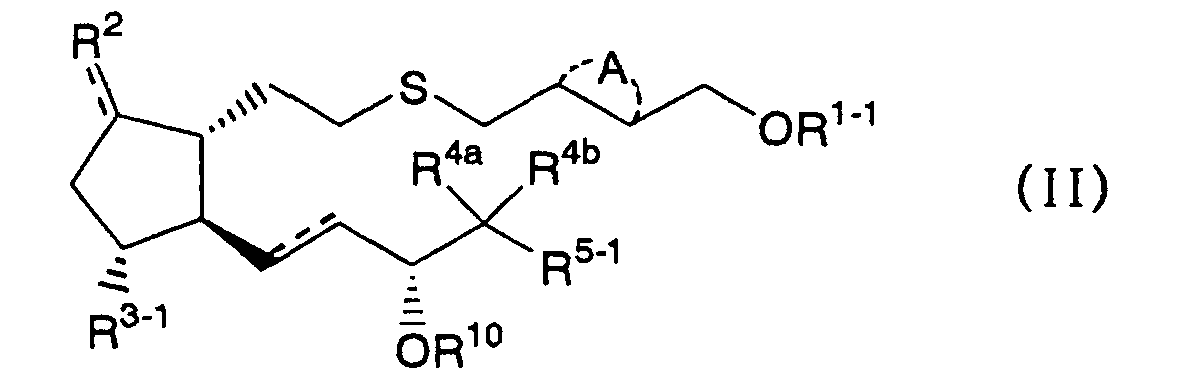
- A process which comprises reacting a compound of the formula (II)(wherein,
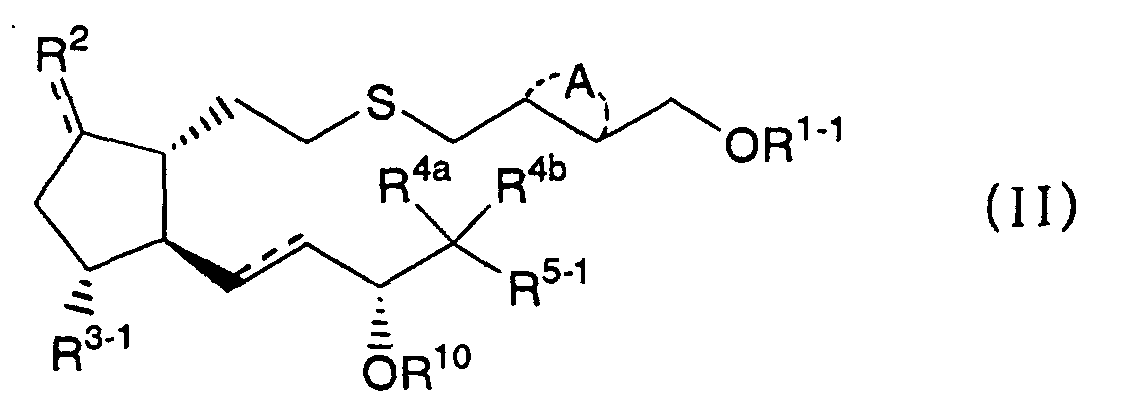 the other symbols are the same meaning as defined hereinbefore)R1-1 is C1-6 alkyl, phenyl-C1-6 alkyl, C2-6 alkanoyl, phenyl-C2-6 alkanoyl, or a protecting group of hydroxy which is removed under an acidic condition,R3-1 is hydrogen, or hydroxy protected by a protecting group of hydroxy which is removed under an acidic condition,R10 is a protecting group of hydroxy which is removed under an acidic condition,R5-1 is the same meaning of R5 in claim 1 provided that a hydroxy in the group represented by R5-1 is protected by a protecting group of hydroxy which is removed under an acidic condition, and
for removal of a protecting group under an acidic condition to obtain a compound of the formula (I)(wherein, all the symbols are the same meaning as defined in claim 1).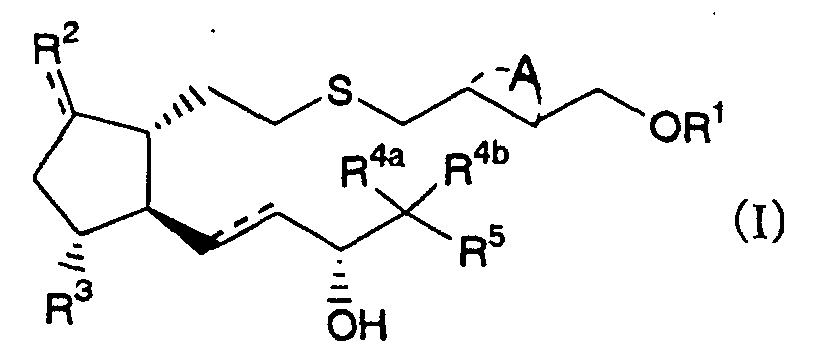
- A pharmaceutical composition comprising a 5-thia- ω-substituted phenyl-prostaglandin E alcohol of the formula (I), or cyclodextrin clathrate thereof as an active ingredient.
Applications Claiming Priority (3)
| Application Number | Priority Date | Filing Date | Title |
|---|---|---|---|
| JP2000000416 | 2000-01-05 | ||
| JP2000000416 | 2000-01-05 | ||
| PCT/JP2000/009308 WO2001049661A1 (en) | 2000-01-05 | 2000-12-27 | 5-THIA-φ-(SUBSTITUTED PHENYL)-PROSTAGLANDIN E ALCOHOLS, PROCESS FOR PREPARING THE ALCOHOLS AND PHARMACEUTICAL PREPARATIONS CONTAINING THE SAME AS THE ACTIVE INGREDIENT |
Publications (2)
| Publication Number | Publication Date |
|---|---|
| EP1245562A1 true EP1245562A1 (en) | 2002-10-02 |
| EP1245562A4 EP1245562A4 (en) | 2004-12-15 |
Family
ID=18529769
Family Applications (1)
| Application Number | Title | Priority Date | Filing Date |
|---|---|---|---|
| EP00985939A Withdrawn EP1245562A4 (en) | 2000-01-05 | 2000-12-27 | 5-thia-"omega"-(substituted phenyl)-prostaglandin e alcohols, process for preparing the alcohols and pharmaceutical preparations containing the same as the active ingredient |
Country Status (5)
| Country | Link |
|---|---|
| US (1) | US6639111B2 (en) |
| EP (1) | EP1245562A4 (en) |
| KR (1) | KR20020067594A (en) |
| AU (1) | AU2227401A (en) |
| WO (1) | WO2001049661A1 (en) |
Cited By (3)
| Publication number | Priority date | Publication date | Assignee | Title |
|---|---|---|---|---|
| WO2004043471A1 (en) * | 2002-11-13 | 2004-05-27 | Taisho Pharmaceutical Co., Ltd. | Antipruritic drug |
| US7718701B2 (en) | 2002-08-09 | 2010-05-18 | Taisho Pharmaceutical Co., Ltd. | Antipruritic agent |
| US7737182B2 (en) | 2002-08-09 | 2010-06-15 | Taisho Pharmaceutical Co., Ltd. | Pharmaceuticals for xerosis |
Families Citing this family (3)
| Publication number | Priority date | Publication date | Assignee | Title |
|---|---|---|---|---|
| NZ531153A (en) | 2001-08-09 | 2005-10-28 | Ono Pharmaceutical Co | Carboxylic acid derivative compounds and drugs comprising these compounds as the active ingredient |
| US7612082B2 (en) | 2004-10-28 | 2009-11-03 | Allergan, Inc. | Prostaglandin EP4 antagonists |
| US7511168B2 (en) * | 2006-01-18 | 2009-03-31 | Shih-Yi Wei | Processes and intermediates for the preparations of prostaglandins |
Family Cites Families (8)
| Publication number | Priority date | Publication date | Assignee | Title |
|---|---|---|---|---|
| US4175201A (en) * | 1973-05-18 | 1979-11-20 | University Of Chicago | Chemical synthesis |
| US4271314A (en) * | 1979-11-28 | 1981-06-02 | G. D. Searle & Co. | 4,5-Unsaturated prostanoic acid derivatives |
| US4529812A (en) | 1983-02-02 | 1985-07-16 | G. D. Searle & Co. | 3-Oxaprostaglandins |
| EP0386901A1 (en) * | 1989-02-20 | 1990-09-12 | Ono Pharmaceutical Co., Ltd. | Novel 5-hetero-6-oxo-PGE derivatives |
| US5599838A (en) * | 1996-02-23 | 1997-02-04 | Taisho Pharmaceutical Co., Ltd. | Prostaglandin derivatives |
| WO1998039293A2 (en) * | 1997-03-07 | 1998-09-11 | Alcon Laboratories, Inc. | 13-thia prostaglandins for use in glaucoma therapy |
| ES2216336T3 (en) * | 1997-12-25 | 2004-10-16 | Ono Pharmaceutical Co., Ltd. | OMEGA-CICLOALQUILOS DERIVATIVES OF PROSTAGLANDINA E2. |
| TWI249520B (en) * | 1998-07-15 | 2006-02-21 | Ono Pharmaceutical Co | 5-Thia-omega-substituted phenyl prostaglandin E derivatives, method for producing the same and medicines containing the same as the active ingredient |
-
2000
- 2000-12-27 KR KR1020027008642A patent/KR20020067594A/en not_active Ceased
- 2000-12-27 US US10/169,602 patent/US6639111B2/en not_active Expired - Fee Related
- 2000-12-27 EP EP00985939A patent/EP1245562A4/en not_active Withdrawn
- 2000-12-27 AU AU22274/01A patent/AU2227401A/en not_active Abandoned
- 2000-12-27 WO PCT/JP2000/009308 patent/WO2001049661A1/en not_active Ceased
Cited By (3)
| Publication number | Priority date | Publication date | Assignee | Title |
|---|---|---|---|---|
| US7718701B2 (en) | 2002-08-09 | 2010-05-18 | Taisho Pharmaceutical Co., Ltd. | Antipruritic agent |
| US7737182B2 (en) | 2002-08-09 | 2010-06-15 | Taisho Pharmaceutical Co., Ltd. | Pharmaceuticals for xerosis |
| WO2004043471A1 (en) * | 2002-11-13 | 2004-05-27 | Taisho Pharmaceutical Co., Ltd. | Antipruritic drug |
Also Published As
| Publication number | Publication date |
|---|---|
| KR20020067594A (en) | 2002-08-22 |
| WO2001049661A1 (en) | 2001-07-12 |
| US20030097023A1 (en) | 2003-05-22 |
| AU2227401A (en) | 2001-07-16 |
| EP1245562A4 (en) | 2004-12-15 |
| US6639111B2 (en) | 2003-10-28 |
Similar Documents
| Publication | Publication Date | Title |
|---|---|---|
| EP1008588B1 (en) | 11,15-o-dialkylprostaglandin e derivatives, process for producing the same, and drugs containing the same as the active ingredient | |
| US6462081B1 (en) | 5-thia-ω-substituted phenyl-prostaglandin E derivatives, process for producing the same and drugs containing the same as the active ingredient | |
| EP0974580B1 (en) | Omega-cycloalkyl-prostaglandin E1 derivatives | |
| US6586468B1 (en) | ω-substituted phenyl-prostaglandin E derivatives and drugs containing the same as the active ingredient | |
| EP0855389B1 (en) | A 3,7-dithiaprostanoic acid derivative | |
| KR100573535B1 (en) | ω-cycloalkyl-prostaglandin E2 derivative | |
| EP1042283B1 (en) | Omega-cycloalkyl-prostaglandin e2 derivatives | |
| JPWO1998034916A1 (en) | 11,15-O-dialkyl prostaglandin E derivatives, their production method and drugs containing them as active ingredients | |
| JPWO2000003980A1 (en) | 5-Thia-ω-substituted phenyl-prostaglandin E derivatives, their preparation method and drugs containing them as an active ingredient | |
| US6639111B2 (en) | 5-thia-ω-(substituted phenyl)-prostaglandin E alcohols, process for preparing the alcohols and pharmaceutical preparations containing the same as the active ingredient | |
| JP3162668B2 (en) | ω-cycloalkyl-prostaglandin E2 derivative | |
| JP4029251B2 (en) | ω-cycloalkyl-prostaglandin E2 derivative | |
| JP4123568B2 (en) | 6-oxo-PGE1 compounds, processes for their preparation and prostaglandin E2 receptor agonists containing them as active ingredients | |
| JP3703004B2 (en) | 5-thia-ω-substituted phenyl-prostaglandin E derivatives | |
| JPWO2001049661A1 (en) | 5-Thia-ω-substituted phenyl-prostaglandin E-alcohols, their preparation and drugs containing them as active ingredients | |
| CA2010505A1 (en) | 5-hetero-6-oxo-pge derivatives | |
| WO2001066518A1 (en) | φ-SUBSTITUTED PHENYL-PROSTAGLANDIN E-ALCOHOLS, PROCESS FOR PRODUCING THE SAME AND DRUGS CONTAINING THE SAME AS THE ACTIVE INGREDIENT | |
| JPWO2001066518A1 (en) | ω-substituted phenyl-prostaglandin E-alcohols, their preparation method and drugs containing them as active ingredients |
Legal Events
| Date | Code | Title | Description |
|---|---|---|---|
| PUAI | Public reference made under article 153(3) epc to a published international application that has entered the european phase |
Free format text: ORIGINAL CODE: 0009012 |
|
| 17P | Request for examination filed |
Effective date: 20020703 |
|
| AK | Designated contracting states |
Kind code of ref document: A1 Designated state(s): AT BE CH CY DE DK ES FI FR GB GR IE IT LI LU MC NL PT SE TR |
|
| AX | Request for extension of the european patent |
Free format text: AL;LT;LV;MK;RO;SI |
|
| RTI1 | Title (correction) |
Free format text: 5-THIA-"OMEGA"-(SUBSTITUTED PHENYL)-PROSTAGLANDIN E ALCOHOLS, PROCESS FOR PREPARING THE ALCOHOLS AND PHARMACEUTICAL PREPARATIONS CONTAINING THE SAME AS THE ACTIVE INGREDIENT |
|
| A4 | Supplementary search report drawn up and despatched |
Effective date: 20041029 |
|
| STAA | Information on the status of an ep patent application or granted ep patent |
Free format text: STATUS: THE APPLICATION IS DEEMED TO BE WITHDRAWN |
|
| 18D | Application deemed to be withdrawn |
Effective date: 20070703 |