EP1244457B1 - Use of modulators of annexin for the manufacture of a medicament for the treatment and/or prevention of arthritis and arthritic diseases - Google Patents
Use of modulators of annexin for the manufacture of a medicament for the treatment and/or prevention of arthritis and arthritic diseases Download PDFInfo
- Publication number
- EP1244457B1 EP1244457B1 EP00990288A EP00990288A EP1244457B1 EP 1244457 B1 EP1244457 B1 EP 1244457B1 EP 00990288 A EP00990288 A EP 00990288A EP 00990288 A EP00990288 A EP 00990288A EP 1244457 B1 EP1244457 B1 EP 1244457B1
- Authority
- EP
- European Patent Office
- Prior art keywords
- group
- bond
- branched
- straight chain
- substituted
- Prior art date
- Legal status (The legal status is an assumption and is not a legal conclusion. Google has not performed a legal analysis and makes no representation as to the accuracy of the status listed.)
- Expired - Lifetime
Links
- 206010003246 arthritis Diseases 0.000 title claims abstract description 23
- 230000002917 arthritic effect Effects 0.000 title claims abstract description 21
- 201000010099 disease Diseases 0.000 title claims abstract description 21
- 208000037265 diseases, disorders, signs and symptoms Diseases 0.000 title claims abstract description 21
- 238000011282 treatment Methods 0.000 title claims description 19
- 230000002265 prevention Effects 0.000 title claims description 7
- 239000003814 drug Substances 0.000 title claims description 5
- 238000004519 manufacturing process Methods 0.000 title claims description 5
- 102000000412 Annexin Human genes 0.000 title abstract description 47
- 108050008874 Annexin Proteins 0.000 title abstract description 47
- 239000003795 chemical substances by application Substances 0.000 claims abstract description 51
- 125000000217 alkyl group Chemical group 0.000 claims description 44
- 125000003118 aryl group Chemical group 0.000 claims description 37
- 239000001257 hydrogen Substances 0.000 claims description 23
- 229910052739 hydrogen Inorganic materials 0.000 claims description 23
- 125000000753 cycloalkyl group Chemical group 0.000 claims description 20
- NINIDFKCEFEMDL-UHFFFAOYSA-N Sulfur Chemical group [S] NINIDFKCEFEMDL-UHFFFAOYSA-N 0.000 claims description 19
- 150000002431 hydrogen Chemical class 0.000 claims description 19
- 239000011593 sulfur Chemical group 0.000 claims description 19
- 229910052717 sulfur Inorganic materials 0.000 claims description 19
- 125000002947 alkylene group Chemical group 0.000 claims description 17
- 125000001072 heteroaryl group Chemical group 0.000 claims description 17
- IJGRMHOSHXDMSA-UHFFFAOYSA-N Atomic nitrogen Chemical group N#N IJGRMHOSHXDMSA-UHFFFAOYSA-N 0.000 claims description 16
- 125000003545 alkoxy group Chemical group 0.000 claims description 15
- QVGXLLKOCUKJST-UHFFFAOYSA-N atomic oxygen Chemical compound [O] QVGXLLKOCUKJST-UHFFFAOYSA-N 0.000 claims description 15
- 229910052760 oxygen Inorganic materials 0.000 claims description 15
- 239000001301 oxygen Substances 0.000 claims description 15
- 125000003710 aryl alkyl group Chemical group 0.000 claims description 14
- 125000003342 alkenyl group Chemical group 0.000 claims description 13
- 125000000304 alkynyl group Chemical group 0.000 claims description 13
- 229910052757 nitrogen Chemical group 0.000 claims description 13
- 125000004953 trihalomethyl group Chemical group 0.000 claims description 13
- 125000005842 heteroatom Chemical group 0.000 claims description 11
- 125000003368 amide group Chemical group 0.000 claims description 10
- 125000004093 cyano group Chemical group *C#N 0.000 claims description 10
- 125000002252 acyl group Chemical group 0.000 claims description 9
- 125000003277 amino group Chemical group 0.000 claims description 9
- 125000004432 carbon atom Chemical group C* 0.000 claims description 9
- 150000003839 salts Chemical class 0.000 claims description 9
- WSNMPAVSZJSIMT-UHFFFAOYSA-N COc1c(C)c2COC(=O)c2c(O)c1CC(O)C1(C)CCC(=O)O1 Chemical compound COc1c(C)c2COC(=O)c2c(O)c1CC(O)C1(C)CCC(=O)O1 WSNMPAVSZJSIMT-UHFFFAOYSA-N 0.000 claims description 8
- 125000004185 ester group Chemical group 0.000 claims description 8
- 229910052799 carbon Inorganic materials 0.000 claims description 7
- 125000005843 halogen group Chemical group 0.000 claims description 7
- 125000002887 hydroxy group Chemical group [H]O* 0.000 claims description 7
- 229910052736 halogen Inorganic materials 0.000 claims description 6
- 150000002367 halogens Chemical class 0.000 claims description 6
- OKTJSMMVPCPJKN-UHFFFAOYSA-N Carbon Chemical group [C] OKTJSMMVPCPJKN-UHFFFAOYSA-N 0.000 claims description 5
- 125000000449 nitro group Chemical group [O-][N+](*)=O 0.000 claims description 5
- 125000003302 alkenyloxy group Chemical group 0.000 claims description 4
- 125000001797 benzyl group Chemical group [H]C1=C([H])C([H])=C(C([H])=C1[H])C([H])([H])* 0.000 claims description 4
- 239000011203 carbon fibre reinforced carbon Substances 0.000 claims description 4
- 125000004149 thio group Chemical group *S* 0.000 claims description 4
- OPDWDFGLWVJPPI-BWDMCYIDSA-N 3-[(2S)-2-amino-3-(1H-indol-3-yl)propanoyl]-1-methyl-5-phenyl-3H-1,4-benzodiazepin-2-one Chemical group CN1c2ccccc2C(=NC(C(=O)[C@@H](N)Cc2c[nH]c3ccccc23)C1=O)c1ccccc1 OPDWDFGLWVJPPI-BWDMCYIDSA-N 0.000 claims description 3
- 125000001997 phenyl group Chemical group [H]C1=C([H])C([H])=C(*)C([H])=C1[H] 0.000 claims description 3
- 125000000565 sulfonamide group Chemical group 0.000 claims description 3
- IHUKVJKKTBLTEE-QMMMGPOBSA-N (2s)-2-acetamido-5-[[amino-(methylcarbamoylamino)methylidene]amino]-n-methylpentanamide Chemical compound CNC(=O)NC(N)=NCCC[C@H](NC(C)=O)C(=O)NC IHUKVJKKTBLTEE-QMMMGPOBSA-N 0.000 claims description 2
- ZCYVEMRRCGMTRW-UHFFFAOYSA-N 7553-56-2 Chemical compound [I] ZCYVEMRRCGMTRW-UHFFFAOYSA-N 0.000 claims description 2
- WKBOTKDWSSQWDR-UHFFFAOYSA-N Bromine atom Chemical compound [Br] WKBOTKDWSSQWDR-UHFFFAOYSA-N 0.000 claims description 2
- 239000004215 Carbon black (E152) Substances 0.000 claims description 2
- ZAMOUSCENKQFHK-UHFFFAOYSA-N Chlorine atom Chemical compound [Cl] ZAMOUSCENKQFHK-UHFFFAOYSA-N 0.000 claims description 2
- PXGOKWXKJXAPGV-UHFFFAOYSA-N Fluorine Chemical compound FF PXGOKWXKJXAPGV-UHFFFAOYSA-N 0.000 claims description 2
- UFHFLCQGNIYNRP-UHFFFAOYSA-N Hydrogen Chemical compound [H][H] UFHFLCQGNIYNRP-UHFFFAOYSA-N 0.000 claims description 2
- 125000004429 atom Chemical group 0.000 claims description 2
- GDTBXPJZTBHREO-UHFFFAOYSA-N bromine Substances BrBr GDTBXPJZTBHREO-UHFFFAOYSA-N 0.000 claims description 2
- 229910052794 bromium Inorganic materials 0.000 claims description 2
- 239000000460 chlorine Substances 0.000 claims description 2
- 229910052801 chlorine Inorganic materials 0.000 claims description 2
- 229910052731 fluorine Inorganic materials 0.000 claims description 2
- 239000011737 fluorine Substances 0.000 claims description 2
- 229930195733 hydrocarbon Natural products 0.000 claims description 2
- 125000004435 hydrogen atom Chemical group [H]* 0.000 claims description 2
- 125000002768 hydroxyalkyl group Chemical group 0.000 claims description 2
- 239000011630 iodine Substances 0.000 claims description 2
- 229910052740 iodine Inorganic materials 0.000 claims description 2
- 125000000468 ketone group Chemical group 0.000 claims description 2
- 125000002950 monocyclic group Chemical group 0.000 claims description 2
- QJGQUHMNIGDVPM-UHFFFAOYSA-N nitrogen group Chemical group [N] QJGQUHMNIGDVPM-UHFFFAOYSA-N 0.000 claims description 2
- 125000001174 sulfone group Chemical group 0.000 claims description 2
- 125000003375 sulfoxide group Chemical group 0.000 claims description 2
- 125000001183 hydrocarbyl group Chemical group 0.000 claims 1
- KCWGETCFOVJEPI-UHFFFAOYSA-N jtv-519 Chemical group C1C2=CC(OC)=CC=C2SCCN1C(=O)CCN(CC1)CCC1CC1=CC=CC=C1 KCWGETCFOVJEPI-UHFFFAOYSA-N 0.000 claims 1
- 108010035532 Collagen Proteins 0.000 abstract description 47
- 102000008186 Collagen Human genes 0.000 abstract description 46
- 229920001436 collagen Polymers 0.000 abstract description 46
- 210000000845 cartilage Anatomy 0.000 abstract description 40
- 230000015572 biosynthetic process Effects 0.000 abstract description 16
- 210000001612 chondrocyte Anatomy 0.000 abstract description 15
- 238000000034 method Methods 0.000 abstract description 14
- 230000001603 reducing effect Effects 0.000 abstract description 14
- 238000003786 synthesis reaction Methods 0.000 abstract description 14
- 230000003247 decreasing effect Effects 0.000 abstract description 12
- 239000012634 fragment Substances 0.000 abstract description 12
- 108090000765 processed proteins & peptides Proteins 0.000 abstract description 8
- 108090000623 proteins and genes Proteins 0.000 abstract description 8
- 230000011382 collagen catabolic process Effects 0.000 abstract description 7
- 230000013632 homeostatic process Effects 0.000 abstract description 7
- 239000000203 mixture Substances 0.000 abstract description 7
- 230000006907 apoptotic process Effects 0.000 abstract description 6
- 230000008439 repair process Effects 0.000 abstract description 6
- 230000001737 promoting effect Effects 0.000 abstract description 5
- 230000008468 bone growth Effects 0.000 abstract description 3
- 102000004196 processed proteins & peptides Human genes 0.000 abstract description 3
- 230000033558 biomineral tissue development Effects 0.000 abstract 1
- 108020004707 nucleic acids Proteins 0.000 abstract 1
- 102000039446 nucleic acids Human genes 0.000 abstract 1
- 150000007523 nucleic acids Chemical class 0.000 abstract 1
- 238000012216 screening Methods 0.000 abstract 1
- IAZDPXIOMUYVGZ-UHFFFAOYSA-N Dimethylsulphoxide Chemical compound CS(C)=O IAZDPXIOMUYVGZ-UHFFFAOYSA-N 0.000 description 27
- 230000006870 function Effects 0.000 description 23
- 201000008482 osteoarthritis Diseases 0.000 description 15
- 230000000694 effects Effects 0.000 description 14
- 108090000672 Annexin A5 Proteins 0.000 description 13
- 102000004121 Annexin A5 Human genes 0.000 description 13
- 102000016611 Proteoglycans Human genes 0.000 description 11
- 108010067787 Proteoglycans Proteins 0.000 description 11
- 210000004027 cell Anatomy 0.000 description 11
- 239000001963 growth medium Substances 0.000 description 11
- -1 carboxy, nitro, amino Chemical group 0.000 description 10
- 150000001875 compounds Chemical class 0.000 description 9
- 206010039073 rheumatoid arthritis Diseases 0.000 description 9
- OYPRJOBELJOOCE-UHFFFAOYSA-N Calcium Chemical compound [Ca] OYPRJOBELJOOCE-UHFFFAOYSA-N 0.000 description 8
- 150000001557 benzodiazepines Chemical class 0.000 description 8
- 239000011575 calcium Substances 0.000 description 8
- 229910052791 calcium Inorganic materials 0.000 description 8
- 210000000056 organ Anatomy 0.000 description 8
- PMMYEEVYMWASQN-DMTCNVIQSA-N Hydroxyproline Chemical compound O[C@H]1CN[C@H](C(O)=O)C1 PMMYEEVYMWASQN-DMTCNVIQSA-N 0.000 description 7
- 210000000988 bone and bone Anatomy 0.000 description 7
- 239000002158 endotoxin Substances 0.000 description 7
- 229960002591 hydroxyproline Drugs 0.000 description 7
- 229920006008 lipopolysaccharide Polymers 0.000 description 7
- 210000001519 tissue Anatomy 0.000 description 7
- PEDCQBHIVMGVHV-UHFFFAOYSA-N Glycerine Chemical compound OCC(O)CO PEDCQBHIVMGVHV-UHFFFAOYSA-N 0.000 description 6
- PMMYEEVYMWASQN-UHFFFAOYSA-N dl-hydroxyproline Natural products OC1C[NH2+]C(C([O-])=O)C1 PMMYEEVYMWASQN-UHFFFAOYSA-N 0.000 description 6
- 230000002757 inflammatory effect Effects 0.000 description 6
- 230000033001 locomotion Effects 0.000 description 6
- 102000004169 proteins and genes Human genes 0.000 description 6
- 230000002829 reductive effect Effects 0.000 description 6
- 239000000725 suspension Substances 0.000 description 6
- FGMPLJWBKKVCDB-UHFFFAOYSA-N trans-L-hydroxy-proline Natural products ON1CCCC1C(O)=O FGMPLJWBKKVCDB-UHFFFAOYSA-N 0.000 description 6
- XLYOFNOQVPJJNP-UHFFFAOYSA-N water Substances O XLYOFNOQVPJJNP-UHFFFAOYSA-N 0.000 description 6
- BHPQYMZQTOCNFJ-UHFFFAOYSA-N Calcium cation Chemical compound [Ca+2] BHPQYMZQTOCNFJ-UHFFFAOYSA-N 0.000 description 5
- 230000027455 binding Effects 0.000 description 5
- 229910001424 calcium ion Inorganic materials 0.000 description 5
- 150000002632 lipids Chemical class 0.000 description 5
- 239000002609 medium Substances 0.000 description 5
- CIWBSHSKHKDKBQ-JLAZNSOCSA-N Ascorbic acid Chemical compound OC[C@H](O)[C@H]1OC(=O)C(O)=C1O CIWBSHSKHKDKBQ-JLAZNSOCSA-N 0.000 description 4
- 239000006144 Dulbecco’s modified Eagle's medium Substances 0.000 description 4
- 102000010834 Extracellular Matrix Proteins Human genes 0.000 description 4
- 108010037362 Extracellular Matrix Proteins Proteins 0.000 description 4
- 108010002352 Interleukin-1 Proteins 0.000 description 4
- 208000012659 Joint disease Diseases 0.000 description 4
- FAPWRFPIFSIZLT-UHFFFAOYSA-M Sodium chloride Chemical compound [Na+].[Cl-] FAPWRFPIFSIZLT-UHFFFAOYSA-M 0.000 description 4
- 239000002253 acid Substances 0.000 description 4
- 230000001195 anabolic effect Effects 0.000 description 4
- 229940049706 benzodiazepine Drugs 0.000 description 4
- 239000000872 buffer Substances 0.000 description 4
- 230000003185 calcium uptake Effects 0.000 description 4
- 231100000673 dose–response relationship Toxicity 0.000 description 4
- 210000002744 extracellular matrix Anatomy 0.000 description 4
- 230000004907 flux Effects 0.000 description 4
- 210000004349 growth plate Anatomy 0.000 description 4
- 238000002347 injection Methods 0.000 description 4
- 239000007924 injection Substances 0.000 description 4
- 239000007788 liquid Substances 0.000 description 4
- 125000004433 nitrogen atom Chemical group N* 0.000 description 4
- 238000007911 parenteral administration Methods 0.000 description 4
- 239000000243 solution Substances 0.000 description 4
- 208000006820 Arthralgia Diseases 0.000 description 3
- 102000005701 Calcium-Binding Proteins Human genes 0.000 description 3
- 108010045403 Calcium-Binding Proteins Proteins 0.000 description 3
- 102000000503 Collagen Type II Human genes 0.000 description 3
- 108010041390 Collagen Type II Proteins 0.000 description 3
- LFQSCWFLJHTTHZ-UHFFFAOYSA-N Ethanol Chemical compound CCO LFQSCWFLJHTTHZ-UHFFFAOYSA-N 0.000 description 3
- 206010023230 Joint stiffness Diseases 0.000 description 3
- 208000002193 Pain Diseases 0.000 description 3
- DBMJMQXJHONAFJ-UHFFFAOYSA-M Sodium laurylsulphate Chemical compound [Na+].CCCCCCCCCCCCOS([O-])(=O)=O DBMJMQXJHONAFJ-UHFFFAOYSA-M 0.000 description 3
- 210000001188 articular cartilage Anatomy 0.000 description 3
- 229940053197 benzodiazepine derivative antiepileptics Drugs 0.000 description 3
- 230000009460 calcium influx Effects 0.000 description 3
- 238000010790 dilution Methods 0.000 description 3
- 239000012895 dilution Substances 0.000 description 3
- 239000000284 extract Substances 0.000 description 3
- 239000000499 gel Substances 0.000 description 3
- 230000005764 inhibitory process Effects 0.000 description 3
- 230000001404 mediated effect Effects 0.000 description 3
- 239000008194 pharmaceutical composition Substances 0.000 description 3
- 239000000843 powder Substances 0.000 description 3
- 230000009467 reduction Effects 0.000 description 3
- 239000007787 solid Substances 0.000 description 3
- 239000003826 tablet Substances 0.000 description 3
- 210000002303 tibia Anatomy 0.000 description 3
- 238000001262 western blot Methods 0.000 description 3
- YBJHBAHKTGYVGT-ZKWXMUAHSA-N (+)-Biotin Chemical compound N1C(=O)N[C@@H]2[C@H](CCCCC(=O)O)SC[C@@H]21 YBJHBAHKTGYVGT-ZKWXMUAHSA-N 0.000 description 2
- QRXMUCSWCMTJGU-UHFFFAOYSA-N 5-bromo-4-chloro-3-indolyl phosphate Chemical compound C1=C(Br)C(Cl)=C2C(OP(O)(=O)O)=CNC2=C1 QRXMUCSWCMTJGU-UHFFFAOYSA-N 0.000 description 2
- QTBSBXVTEAMEQO-UHFFFAOYSA-M Acetate Chemical compound CC([O-])=O QTBSBXVTEAMEQO-UHFFFAOYSA-M 0.000 description 2
- 102000002260 Alkaline Phosphatase Human genes 0.000 description 2
- 108020004774 Alkaline Phosphatase Proteins 0.000 description 2
- 208000023275 Autoimmune disease Diseases 0.000 description 2
- 241000283707 Capra Species 0.000 description 2
- RTZKZFJDLAIYFH-UHFFFAOYSA-N Diethyl ether Chemical compound CCOCC RTZKZFJDLAIYFH-UHFFFAOYSA-N 0.000 description 2
- KCXVZYZYPLLWCC-UHFFFAOYSA-N EDTA Chemical compound OC(=O)CN(CC(O)=O)CCN(CC(O)=O)CC(O)=O KCXVZYZYPLLWCC-UHFFFAOYSA-N 0.000 description 2
- YLQBMQCUIZJEEH-UHFFFAOYSA-N Furan Chemical compound C=1C=COC=1 YLQBMQCUIZJEEH-UHFFFAOYSA-N 0.000 description 2
- WQZGKKKJIJFFOK-GASJEMHNSA-N Glucose Natural products OC[C@H]1OC(O)[C@H](O)[C@@H](O)[C@@H]1O WQZGKKKJIJFFOK-GASJEMHNSA-N 0.000 description 2
- DHMQDGOQFOQNFH-UHFFFAOYSA-N Glycine Chemical compound NCC(O)=O DHMQDGOQFOQNFH-UHFFFAOYSA-N 0.000 description 2
- VEXZGXHMUGYJMC-UHFFFAOYSA-N Hydrochloric acid Chemical compound Cl VEXZGXHMUGYJMC-UHFFFAOYSA-N 0.000 description 2
- SIKJAQJRHWYJAI-UHFFFAOYSA-N Indole Chemical compound C1=CC=C2NC=CC2=C1 SIKJAQJRHWYJAI-UHFFFAOYSA-N 0.000 description 2
- 241001465754 Metazoa Species 0.000 description 2
- KYQCOXFCLRTKLS-UHFFFAOYSA-N Pyrazine Chemical compound C1=CN=CC=N1 KYQCOXFCLRTKLS-UHFFFAOYSA-N 0.000 description 2
- JUJWROOIHBZHMG-UHFFFAOYSA-N Pyridine Chemical compound C1=CC=NC=C1 JUJWROOIHBZHMG-UHFFFAOYSA-N 0.000 description 2
- KAESVJOAVNADME-UHFFFAOYSA-N Pyrrole Chemical compound C=1C=CNC=1 KAESVJOAVNADME-UHFFFAOYSA-N 0.000 description 2
- SMWDFEZZVXVKRB-UHFFFAOYSA-N Quinoline Chemical compound N1=CC=CC2=CC=CC=C21 SMWDFEZZVXVKRB-UHFFFAOYSA-N 0.000 description 2
- VMHLLURERBWHNL-UHFFFAOYSA-M Sodium acetate Chemical compound [Na+].CC([O-])=O VMHLLURERBWHNL-UHFFFAOYSA-M 0.000 description 2
- YTPLMLYBLZKORZ-UHFFFAOYSA-N Thiophene Chemical compound C=1C=CSC=1 YTPLMLYBLZKORZ-UHFFFAOYSA-N 0.000 description 2
- 239000007983 Tris buffer Substances 0.000 description 2
- XSQUKJJJFZCRTK-UHFFFAOYSA-N Urea Chemical compound NC(N)=O XSQUKJJJFZCRTK-UHFFFAOYSA-N 0.000 description 2
- 125000004414 alkyl thio group Chemical group 0.000 description 2
- 238000004458 analytical method Methods 0.000 description 2
- 125000005110 aryl thio group Chemical group 0.000 description 2
- 229940072107 ascorbate Drugs 0.000 description 2
- 235000010323 ascorbic acid Nutrition 0.000 description 2
- 239000011668 ascorbic acid Substances 0.000 description 2
- 238000003556 assay Methods 0.000 description 2
- 150000007657 benzothiazepines Chemical class 0.000 description 2
- WQZGKKKJIJFFOK-VFUOTHLCSA-N beta-D-glucose Chemical compound OC[C@H]1O[C@@H](O)[C@H](O)[C@@H](O)[C@@H]1O WQZGKKKJIJFFOK-VFUOTHLCSA-N 0.000 description 2
- 239000002775 capsule Substances 0.000 description 2
- 150000001721 carbon Chemical group 0.000 description 2
- 239000000969 carrier Substances 0.000 description 2
- 230000001925 catabolic effect Effects 0.000 description 2
- 238000007398 colorimetric assay Methods 0.000 description 2
- ZSWFCLXCOIISFI-UHFFFAOYSA-N cyclopentadiene Chemical compound C1C=CC=C1 ZSWFCLXCOIISFI-UHFFFAOYSA-N 0.000 description 2
- 230000034994 death Effects 0.000 description 2
- 230000003413 degradative effect Effects 0.000 description 2
- 239000003085 diluting agent Substances 0.000 description 2
- VHJLVAABSRFDPM-ZXZARUISSA-N dithioerythritol Chemical compound SC[C@H](O)[C@H](O)CS VHJLVAABSRFDPM-ZXZARUISSA-N 0.000 description 2
- 238000001962 electrophoresis Methods 0.000 description 2
- 239000003995 emulsifying agent Substances 0.000 description 2
- 239000000839 emulsion Substances 0.000 description 2
- 238000000605 extraction Methods 0.000 description 2
- 238000001415 gene therapy Methods 0.000 description 2
- 230000002068 genetic effect Effects 0.000 description 2
- 239000008187 granular material Substances 0.000 description 2
- 239000001046 green dye Substances 0.000 description 2
- 239000003102 growth factor Substances 0.000 description 2
- 238000003119 immunoblot Methods 0.000 description 2
- 230000004941 influx Effects 0.000 description 2
- NOESYZHRGYRDHS-UHFFFAOYSA-N insulin Chemical compound N1C(=O)C(NC(=O)C(CCC(N)=O)NC(=O)C(CCC(O)=O)NC(=O)C(C(C)C)NC(=O)C(NC(=O)CN)C(C)CC)CSSCC(C(NC(CO)C(=O)NC(CC(C)C)C(=O)NC(CC=2C=CC(O)=CC=2)C(=O)NC(CCC(N)=O)C(=O)NC(CC(C)C)C(=O)NC(CCC(O)=O)C(=O)NC(CC(N)=O)C(=O)NC(CC=2C=CC(O)=CC=2)C(=O)NC(CSSCC(NC(=O)C(C(C)C)NC(=O)C(CC(C)C)NC(=O)C(CC=2C=CC(O)=CC=2)NC(=O)C(CC(C)C)NC(=O)C(C)NC(=O)C(CCC(O)=O)NC(=O)C(C(C)C)NC(=O)C(CC(C)C)NC(=O)C(CC=2NC=NC=2)NC(=O)C(CO)NC(=O)CNC2=O)C(=O)NCC(=O)NC(CCC(O)=O)C(=O)NC(CCCNC(N)=N)C(=O)NCC(=O)NC(CC=3C=CC=CC=3)C(=O)NC(CC=3C=CC=CC=3)C(=O)NC(CC=3C=CC(O)=CC=3)C(=O)NC(C(C)O)C(=O)N3C(CCC3)C(=O)NC(CCCCN)C(=O)NC(C)C(O)=O)C(=O)NC(CC(N)=O)C(O)=O)=O)NC(=O)C(C(C)CC)NC(=O)C(CO)NC(=O)C(C(C)O)NC(=O)C1CSSCC2NC(=O)C(CC(C)C)NC(=O)C(NC(=O)C(CCC(N)=O)NC(=O)C(CC(N)=O)NC(=O)C(NC(=O)C(N)CC=1C=CC=CC=1)C(C)C)CC1=CN=CN1 NOESYZHRGYRDHS-UHFFFAOYSA-N 0.000 description 2
- 210000001503 joint Anatomy 0.000 description 2
- 239000003446 ligand Substances 0.000 description 2
- 239000002502 liposome Substances 0.000 description 2
- 239000006193 liquid solution Substances 0.000 description 2
- 239000006194 liquid suspension Substances 0.000 description 2
- 230000007774 longterm Effects 0.000 description 2
- HQKMJHAJHXVSDF-UHFFFAOYSA-L magnesium stearate Chemical compound [Mg+2].CCCCCCCCCCCCCCCCCC([O-])=O.CCCCCCCCCCCCCCCCCC([O-])=O HQKMJHAJHXVSDF-UHFFFAOYSA-L 0.000 description 2
- 239000000463 material Substances 0.000 description 2
- 239000012528 membrane Substances 0.000 description 2
- 230000004060 metabolic process Effects 0.000 description 2
- 230000009871 nonspecific binding Effects 0.000 description 2
- 231100000252 nontoxic Toxicity 0.000 description 2
- 230000003000 nontoxic effect Effects 0.000 description 2
- 125000000962 organic group Chemical group 0.000 description 2
- 239000000546 pharmaceutical excipient Substances 0.000 description 2
- 150000003904 phospholipids Chemical class 0.000 description 2
- 230000008569 process Effects 0.000 description 2
- 239000001632 sodium acetate Substances 0.000 description 2
- 235000017281 sodium acetate Nutrition 0.000 description 2
- 239000011780 sodium chloride Substances 0.000 description 2
- 239000000126 substance Substances 0.000 description 2
- 125000005156 substituted alkylene group Chemical group 0.000 description 2
- 239000000758 substrate Substances 0.000 description 2
- 239000000375 suspending agent Substances 0.000 description 2
- 210000001179 synovial fluid Anatomy 0.000 description 2
- 210000002437 synoviocyte Anatomy 0.000 description 2
- 239000006188 syrup Substances 0.000 description 2
- 235000020357 syrup Nutrition 0.000 description 2
- VZCYOOQTPOCHFL-UHFFFAOYSA-N trans-butenedioic acid Natural products OC(=O)C=CC(O)=O VZCYOOQTPOCHFL-UHFFFAOYSA-N 0.000 description 2
- 230000014616 translation Effects 0.000 description 2
- LENZDBCJOHFCAS-UHFFFAOYSA-N tris Chemical compound OCC(N)(CO)CO LENZDBCJOHFCAS-UHFFFAOYSA-N 0.000 description 2
- ICLYJLBTOGPLMC-KVVVOXFISA-N (z)-octadec-9-enoate;tris(2-hydroxyethyl)azanium Chemical compound OCCN(CCO)CCO.CCCCCCCC\C=C/CCCCCCCC(O)=O ICLYJLBTOGPLMC-KVVVOXFISA-N 0.000 description 1
- FCEHBMOGCRZNNI-UHFFFAOYSA-N 1-benzothiophene Chemical compound C1=CC=C2SC=CC2=C1 FCEHBMOGCRZNNI-UHFFFAOYSA-N 0.000 description 1
- PLZWYQYDWCXHTF-UHFFFAOYSA-N 1-methyl-5-phenyl-3h-1,4-benzodiazepin-2-one Chemical compound N=1CC(=O)N(C)C2=CC=CC=C2C=1C1=CC=CC=C1 PLZWYQYDWCXHTF-UHFFFAOYSA-N 0.000 description 1
- SVUOLADPCWQTTE-UHFFFAOYSA-N 1h-1,2-benzodiazepine Chemical compound N1N=CC=CC2=CC=CC=C12 SVUOLADPCWQTTE-UHFFFAOYSA-N 0.000 description 1
- HVAUUPRFYPCOCA-AREMUKBSSA-N 2-O-acetyl-1-O-hexadecyl-sn-glycero-3-phosphocholine Chemical compound CCCCCCCCCCCCCCCCOC[C@@H](OC(C)=O)COP([O-])(=O)OCC[N+](C)(C)C HVAUUPRFYPCOCA-AREMUKBSSA-N 0.000 description 1
- JKMHFZQWWAIEOD-UHFFFAOYSA-N 2-[4-(2-hydroxyethyl)piperazin-1-yl]ethanesulfonic acid Chemical compound OCC[NH+]1CCN(CCS([O-])(=O)=O)CC1 JKMHFZQWWAIEOD-UHFFFAOYSA-N 0.000 description 1
- QKNYBSVHEMOAJP-UHFFFAOYSA-N 2-amino-2-(hydroxymethyl)propane-1,3-diol;hydron;chloride Chemical compound Cl.OCC(N)(CO)CO QKNYBSVHEMOAJP-UHFFFAOYSA-N 0.000 description 1
- MXVMRHIWTSFDPU-UHFFFAOYSA-N 2-chlorobenzenecarboximidamide Chemical compound NC(=N)C1=CC=CC=C1Cl MXVMRHIWTSFDPU-UHFFFAOYSA-N 0.000 description 1
- JZIBVTUXIVIFGC-UHFFFAOYSA-N 2H-pyrrole Chemical compound C1C=CC=N1 JZIBVTUXIVIFGC-UHFFFAOYSA-N 0.000 description 1
- SLXKOJJOQWFEFD-UHFFFAOYSA-N 6-aminohexanoic acid Chemical compound NCCCCCC(O)=O SLXKOJJOQWFEFD-UHFFFAOYSA-N 0.000 description 1
- XZIIFPSPUDAGJM-UHFFFAOYSA-N 6-chloro-2-n,2-n-diethylpyrimidine-2,4-diamine Chemical compound CCN(CC)C1=NC(N)=CC(Cl)=N1 XZIIFPSPUDAGJM-UHFFFAOYSA-N 0.000 description 1
- GUBGYTABKSRVRQ-XLOQQCSPSA-N Alpha-Lactose Chemical compound O[C@@H]1[C@@H](O)[C@@H](O)[C@@H](CO)O[C@H]1O[C@@H]1[C@@H](CO)O[C@H](O)[C@H](O)[C@H]1O GUBGYTABKSRVRQ-XLOQQCSPSA-N 0.000 description 1
- 102000004145 Annexin A1 Human genes 0.000 description 1
- 108090000663 Annexin A1 Proteins 0.000 description 1
- 102000004149 Annexin A2 Human genes 0.000 description 1
- 108090000668 Annexin A2 Proteins 0.000 description 1
- 102000004120 Annexin A3 Human genes 0.000 description 1
- 108090000670 Annexin A3 Proteins 0.000 description 1
- 102000004148 Annexin A4 Human genes 0.000 description 1
- 108090000669 Annexin A4 Proteins 0.000 description 1
- 108090000656 Annexin A6 Proteins 0.000 description 1
- 102000004154 Annexin A6 Human genes 0.000 description 1
- 102100034273 Annexin A7 Human genes 0.000 description 1
- 108010039940 Annexin A7 Proteins 0.000 description 1
- 206010003267 Arthritis reactive Diseases 0.000 description 1
- 206010003274 Arthritis viral Diseases 0.000 description 1
- 241000271566 Aves Species 0.000 description 1
- 108010017384 Blood Proteins Proteins 0.000 description 1
- 102000004506 Blood Proteins Human genes 0.000 description 1
- 241000283690 Bos taurus Species 0.000 description 1
- 108091003079 Bovine Serum Albumin Proteins 0.000 description 1
- 101150082216 COL2A1 gene Proteins 0.000 description 1
- 229940127291 Calcium channel antagonist Drugs 0.000 description 1
- 241000282472 Canis lupus familiaris Species 0.000 description 1
- 241000700199 Cavia porcellus Species 0.000 description 1
- 108091006146 Channels Proteins 0.000 description 1
- 108010012236 Chemokines Proteins 0.000 description 1
- 102000019034 Chemokines Human genes 0.000 description 1
- 108010062745 Chloride Channels Proteins 0.000 description 1
- 102000011045 Chloride Channels Human genes 0.000 description 1
- KRKNYBCHXYNGOX-UHFFFAOYSA-K Citrate Chemical compound [O-]C(=O)CC(O)(CC([O-])=O)C([O-])=O KRKNYBCHXYNGOX-UHFFFAOYSA-K 0.000 description 1
- 102000029816 Collagenase Human genes 0.000 description 1
- 108060005980 Collagenase Proteins 0.000 description 1
- 108090000695 Cytokines Proteins 0.000 description 1
- 102000004127 Cytokines Human genes 0.000 description 1
- FBPFZTCFMRRESA-KVTDHHQDSA-N D-Mannitol Chemical compound OC[C@@H](O)[C@@H](O)[C@H](O)[C@H](O)CO FBPFZTCFMRRESA-KVTDHHQDSA-N 0.000 description 1
- FEWJPZIEWOKRBE-JCYAYHJZSA-N Dextrotartaric acid Chemical compound OC(=O)[C@H](O)[C@@H](O)C(O)=O FEWJPZIEWOKRBE-JCYAYHJZSA-N 0.000 description 1
- 235000009355 Dianthus caryophyllus Nutrition 0.000 description 1
- 240000006497 Dianthus caryophyllus Species 0.000 description 1
- 241000196324 Embryophyta Species 0.000 description 1
- 102000004190 Enzymes Human genes 0.000 description 1
- 108090000790 Enzymes Proteins 0.000 description 1
- 241000283086 Equidae Species 0.000 description 1
- 241000588724 Escherichia coli Species 0.000 description 1
- 241000282326 Felis catus Species 0.000 description 1
- KRHYYFGTRYWZRS-UHFFFAOYSA-M Fluoride anion Chemical compound [F-] KRHYYFGTRYWZRS-UHFFFAOYSA-M 0.000 description 1
- VZCYOOQTPOCHFL-OWOJBTEDSA-N Fumaric acid Chemical compound OC(=O)\C=C\C(O)=O VZCYOOQTPOCHFL-OWOJBTEDSA-N 0.000 description 1
- 208000034826 Genetic Predisposition to Disease Diseases 0.000 description 1
- CEAZRRDELHUEMR-URQXQFDESA-N Gentamicin Chemical compound O1[C@H](C(C)NC)CC[C@@H](N)[C@H]1O[C@H]1[C@H](O)[C@@H](O[C@@H]2[C@@H]([C@@H](NC)[C@@](C)(O)CO2)O)[C@H](N)C[C@@H]1N CEAZRRDELHUEMR-URQXQFDESA-N 0.000 description 1
- 229930182566 Gentamicin Natural products 0.000 description 1
- 239000004471 Glycine Substances 0.000 description 1
- 201000005569 Gout Diseases 0.000 description 1
- 108010046732 HLA-DR4 Antigen Proteins 0.000 description 1
- 208000018565 Hemochromatosis Diseases 0.000 description 1
- 208000002972 Hepatolenticular Degeneration Diseases 0.000 description 1
- 241000238631 Hexapoda Species 0.000 description 1
- 101001033249 Homo sapiens Interleukin-1 beta Proteins 0.000 description 1
- 241000725303 Human immunodeficiency virus Species 0.000 description 1
- 101000768072 Hydra vulgaris Annexin-B12 Proteins 0.000 description 1
- 201000002980 Hyperparathyroidism Diseases 0.000 description 1
- 208000004575 Infectious Arthritis Diseases 0.000 description 1
- 102000004877 Insulin Human genes 0.000 description 1
- 108090001061 Insulin Proteins 0.000 description 1
- 108090000862 Ion Channels Proteins 0.000 description 1
- 102000004310 Ion Channels Human genes 0.000 description 1
- 206010023215 Joint effusion Diseases 0.000 description 1
- 208000005137 Joint instability Diseases 0.000 description 1
- 206010023232 Joint swelling Diseases 0.000 description 1
- 208000003456 Juvenile Arthritis Diseases 0.000 description 1
- 206010059176 Juvenile idiopathic arthritis Diseases 0.000 description 1
- GUBGYTABKSRVRQ-QKKXKWKRSA-N Lactose Natural products OC[C@H]1O[C@@H](O[C@H]2[C@H](O)[C@@H](O)C(O)O[C@@H]2CO)[C@H](O)[C@@H](O)[C@H]1O GUBGYTABKSRVRQ-QKKXKWKRSA-N 0.000 description 1
- HLFSDGLLUJUHTE-SNVBAGLBSA-N Levamisole Chemical compound C1([C@H]2CN3CCSC3=N2)=CC=CC=C1 HLFSDGLLUJUHTE-SNVBAGLBSA-N 0.000 description 1
- 241000124008 Mammalia Species 0.000 description 1
- 229930195725 Mannitol Natural products 0.000 description 1
- 102000055008 Matrilin Proteins Human genes 0.000 description 1
- 108010072582 Matrilin Proteins Proteins 0.000 description 1
- 108010000684 Matrix Metalloproteinases Proteins 0.000 description 1
- 102000002274 Matrix Metalloproteinases Human genes 0.000 description 1
- 241000699666 Mus <mouse, genus> Species 0.000 description 1
- GHAZCVNUKKZTLG-UHFFFAOYSA-N N-ethyl-succinimide Natural products CCN1C(=O)CCC1=O GHAZCVNUKKZTLG-UHFFFAOYSA-N 0.000 description 1
- HDFGOPSGAURCEO-UHFFFAOYSA-N N-ethylmaleimide Chemical compound CCN1C(=O)C=CC1=O HDFGOPSGAURCEO-UHFFFAOYSA-N 0.000 description 1
- MBBZMMPHUWSWHV-BDVNFPICSA-N N-methylglucamine Chemical compound CNC[C@H](O)[C@@H](O)[C@H](O)[C@H](O)CO MBBZMMPHUWSWHV-BDVNFPICSA-N 0.000 description 1
- 239000000020 Nitrocellulose Substances 0.000 description 1
- 201000010394 Ochronosis Diseases 0.000 description 1
- 102000003840 Opioid Receptors Human genes 0.000 description 1
- 108090000137 Opioid Receptors Proteins 0.000 description 1
- 241000283973 Oryctolagus cuniculus Species 0.000 description 1
- 208000010191 Osteitis Deformans Diseases 0.000 description 1
- 208000008558 Osteophyte Diseases 0.000 description 1
- 208000001132 Osteoporosis Diseases 0.000 description 1
- 208000027868 Paget disease Diseases 0.000 description 1
- 241001111421 Pannus Species 0.000 description 1
- 241001494479 Pecora Species 0.000 description 1
- PCNDJXKNXGMECE-UHFFFAOYSA-N Phenazine Natural products C1=CC=CC2=NC3=CC=CC=C3N=C21 PCNDJXKNXGMECE-UHFFFAOYSA-N 0.000 description 1
- 102000004160 Phosphoric Monoester Hydrolases Human genes 0.000 description 1
- 108090000608 Phosphoric Monoester Hydrolases Proteins 0.000 description 1
- 108010003541 Platelet Activating Factor Proteins 0.000 description 1
- 241000288906 Primates Species 0.000 description 1
- 108010059712 Pronase Proteins 0.000 description 1
- 201000001263 Psoriatic Arthritis Diseases 0.000 description 1
- 208000036824 Psoriatic arthropathy Diseases 0.000 description 1
- 241000700159 Rattus Species 0.000 description 1
- 208000034189 Sclerosis Diseases 0.000 description 1
- BUGBHKTXTAQXES-UHFFFAOYSA-N Selenium Chemical compound [Se] BUGBHKTXTAQXES-UHFFFAOYSA-N 0.000 description 1
- 208000007156 Spondylarthritis Diseases 0.000 description 1
- 201000002661 Spondylitis Diseases 0.000 description 1
- 229920002472 Starch Polymers 0.000 description 1
- CZMRCDWAGMRECN-UGDNZRGBSA-N Sucrose Chemical compound O[C@H]1[C@H](O)[C@@H](CO)O[C@@]1(CO)O[C@@H]1[C@H](O)[C@@H](O)[C@H](O)[C@@H](CO)O1 CZMRCDWAGMRECN-UGDNZRGBSA-N 0.000 description 1
- 229930006000 Sucrose Natural products 0.000 description 1
- 241000282887 Suidae Species 0.000 description 1
- QAOWNCQODCNURD-UHFFFAOYSA-L Sulfate Chemical compound [O-]S([O-])(=O)=O QAOWNCQODCNURD-UHFFFAOYSA-L 0.000 description 1
- 102000004338 Transferrin Human genes 0.000 description 1
- 108090000901 Transferrin Proteins 0.000 description 1
- 208000018839 Wilson disease Diseases 0.000 description 1
- 230000005856 abnormality Effects 0.000 description 1
- 238000009825 accumulation Methods 0.000 description 1
- 150000007513 acids Chemical class 0.000 description 1
- 239000012190 activator Substances 0.000 description 1
- 239000004480 active ingredient Substances 0.000 description 1
- 239000011149 active material Substances 0.000 description 1
- 239000013543 active substance Substances 0.000 description 1
- 125000004423 acyloxy group Chemical group 0.000 description 1
- 239000002671 adjuvant Substances 0.000 description 1
- 206010001689 alkaptonuria Diseases 0.000 description 1
- 125000004453 alkoxycarbonyl group Chemical group 0.000 description 1
- 150000001350 alkyl halides Chemical class 0.000 description 1
- 229940100198 alkylating agent Drugs 0.000 description 1
- 239000002168 alkylating agent Substances 0.000 description 1
- 150000001413 amino acids Chemical group 0.000 description 1
- 229960002684 aminocaproic acid Drugs 0.000 description 1
- 229940035676 analgesics Drugs 0.000 description 1
- 238000010171 animal model Methods 0.000 description 1
- 239000005557 antagonist Substances 0.000 description 1
- 239000000730 antalgic agent Substances 0.000 description 1
- 230000001773 anti-convulsant effect Effects 0.000 description 1
- 239000002260 anti-inflammatory agent Substances 0.000 description 1
- 229940121363 anti-inflammatory agent Drugs 0.000 description 1
- 230000003110 anti-inflammatory effect Effects 0.000 description 1
- 229940019748 antifibrinolytic proteinase inhibitors Drugs 0.000 description 1
- 230000000949 anxiolytic effect Effects 0.000 description 1
- 238000013459 approach Methods 0.000 description 1
- 125000004104 aryloxy group Chemical group 0.000 description 1
- 230000002238 attenuated effect Effects 0.000 description 1
- 230000003190 augmentative effect Effects 0.000 description 1
- RFRXIWQYSOIBDI-UHFFFAOYSA-N benzarone Chemical compound CCC=1OC2=CC=CC=C2C=1C(=O)C1=CC=C(O)C=C1 RFRXIWQYSOIBDI-UHFFFAOYSA-N 0.000 description 1
- WPYMKLBDIGXBTP-UHFFFAOYSA-N benzoic acid Chemical compound OC(=O)C1=CC=CC=C1 WPYMKLBDIGXBTP-UHFFFAOYSA-N 0.000 description 1
- 239000011230 binding agent Substances 0.000 description 1
- 230000004071 biological effect Effects 0.000 description 1
- 229960002685 biotin Drugs 0.000 description 1
- 235000020958 biotin Nutrition 0.000 description 1
- 239000011616 biotin Substances 0.000 description 1
- 210000004369 blood Anatomy 0.000 description 1
- 239000008280 blood Substances 0.000 description 1
- 239000001045 blue dye Substances 0.000 description 1
- 210000004556 brain Anatomy 0.000 description 1
- UDSAIICHUKSCKT-UHFFFAOYSA-N bromophenol blue Chemical compound C1=C(Br)C(O)=C(Br)C=C1C1(C=2C=C(Br)C(O)=C(Br)C=2)C2=CC=CC=C2S(=O)(=O)O1 UDSAIICHUKSCKT-UHFFFAOYSA-N 0.000 description 1
- 239000000480 calcium channel blocker Substances 0.000 description 1
- 239000004202 carbamide Substances 0.000 description 1
- 125000003178 carboxy group Chemical group [H]OC(*)=O 0.000 description 1
- 230000008355 cartilage degradation Effects 0.000 description 1
- 230000015556 catabolic process Effects 0.000 description 1
- 125000002091 cationic group Chemical group 0.000 description 1
- 210000000170 cell membrane Anatomy 0.000 description 1
- 230000001413 cellular effect Effects 0.000 description 1
- 239000001913 cellulose Substances 0.000 description 1
- 229920002678 cellulose Polymers 0.000 description 1
- 230000008859 change Effects 0.000 description 1
- 239000007795 chemical reaction product Substances 0.000 description 1
- 239000003754 cholecystokinin receptor blocking agent Substances 0.000 description 1
- 208000002849 chondrocalcinosis Diseases 0.000 description 1
- 229960002424 collagenase Drugs 0.000 description 1
- 239000006071 cream Substances 0.000 description 1
- 208000031513 cyst Diseases 0.000 description 1
- 230000006378 damage Effects 0.000 description 1
- 239000007857 degradation product Substances 0.000 description 1
- 238000006731 degradation reaction Methods 0.000 description 1
- 230000002939 deleterious effect Effects 0.000 description 1
- 238000011161 development Methods 0.000 description 1
- 239000008121 dextrose Substances 0.000 description 1
- 230000029087 digestion Effects 0.000 description 1
- 238000007865 diluting Methods 0.000 description 1
- 239000000539 dimer Substances 0.000 description 1
- IPZJQDSFZGZEOY-UHFFFAOYSA-N dimethylmethylene Chemical group C[C]C IPZJQDSFZGZEOY-UHFFFAOYSA-N 0.000 description 1
- 230000003292 diminished effect Effects 0.000 description 1
- XEYBRNLFEZDVAW-ARSRFYASSA-N dinoprostone Chemical compound CCCCC[C@H](O)\C=C\[C@H]1[C@H](O)CC(=O)[C@@H]1C\C=C/CCCC(O)=O XEYBRNLFEZDVAW-ARSRFYASSA-N 0.000 description 1
- 229960002986 dinoprostone Drugs 0.000 description 1
- 239000002552 dosage form Substances 0.000 description 1
- 230000002222 downregulating effect Effects 0.000 description 1
- 239000003937 drug carrier Substances 0.000 description 1
- 238000001035 drying Methods 0.000 description 1
- 239000000975 dye Substances 0.000 description 1
- 230000002497 edematous effect Effects 0.000 description 1
- 230000000668 effect on calcium Effects 0.000 description 1
- 210000002257 embryonic structure Anatomy 0.000 description 1
- 230000012202 endocytosis Effects 0.000 description 1
- 230000007515 enzymatic degradation Effects 0.000 description 1
- 229940088598 enzyme Drugs 0.000 description 1
- 210000003743 erythrocyte Anatomy 0.000 description 1
- 210000003527 eukaryotic cell Anatomy 0.000 description 1
- 230000028023 exocytosis Effects 0.000 description 1
- 201000010934 exostosis Diseases 0.000 description 1
- 238000002474 experimental method Methods 0.000 description 1
- 239000012894 fetal calf serum Substances 0.000 description 1
- 210000002950 fibroblast Anatomy 0.000 description 1
- 239000000796 flavoring agent Substances 0.000 description 1
- 238000009472 formulation Methods 0.000 description 1
- 229960002518 gentamicin Drugs 0.000 description 1
- 239000008103 glucose Substances 0.000 description 1
- 230000012010 growth Effects 0.000 description 1
- 229960000789 guanidine hydrochloride Drugs 0.000 description 1
- PJJJBBJSCAKJQF-UHFFFAOYSA-N guanidinium chloride Chemical compound [Cl-].NC(N)=[NH2+] PJJJBBJSCAKJQF-UHFFFAOYSA-N 0.000 description 1
- 150000002430 hydrocarbons Chemical group 0.000 description 1
- 208000003532 hypothyroidism Diseases 0.000 description 1
- 230000002989 hypothyroidism Effects 0.000 description 1
- 150000002466 imines Chemical class 0.000 description 1
- 238000000338 in vitro Methods 0.000 description 1
- 238000001727 in vivo Methods 0.000 description 1
- 125000003454 indenyl group Chemical group C1(C=CC2=CC=CC=C12)* 0.000 description 1
- PZOUSPYUWWUPPK-UHFFFAOYSA-N indole Natural products CC1=CC=CC2=C1C=CN2 PZOUSPYUWWUPPK-UHFFFAOYSA-N 0.000 description 1
- RKJUIXBNRJVNHR-UHFFFAOYSA-N indolenine Natural products C1=CC=C2CC=NC2=C1 RKJUIXBNRJVNHR-UHFFFAOYSA-N 0.000 description 1
- 208000014674 injury Diseases 0.000 description 1
- 229940125396 insulin Drugs 0.000 description 1
- 230000003993 interaction Effects 0.000 description 1
- 230000004068 intracellular signaling Effects 0.000 description 1
- 238000007918 intramuscular administration Methods 0.000 description 1
- 238000007912 intraperitoneal administration Methods 0.000 description 1
- 238000001990 intravenous administration Methods 0.000 description 1
- 150000002500 ions Chemical class 0.000 description 1
- 230000002427 irreversible effect Effects 0.000 description 1
- 239000008101 lactose Substances 0.000 description 1
- 229960001614 levamisole Drugs 0.000 description 1
- 210000003041 ligament Anatomy 0.000 description 1
- 239000008297 liquid dosage form Substances 0.000 description 1
- 210000004185 liver Anatomy 0.000 description 1
- 244000144972 livestock Species 0.000 description 1
- 239000006210 lotion Substances 0.000 description 1
- 239000000314 lubricant Substances 0.000 description 1
- 230000019231 macromolecule metabolic process Effects 0.000 description 1
- 210000002540 macrophage Anatomy 0.000 description 1
- ZLNQQNXFFQJAID-UHFFFAOYSA-L magnesium carbonate Chemical compound [Mg+2].[O-]C([O-])=O ZLNQQNXFFQJAID-UHFFFAOYSA-L 0.000 description 1
- 239000001095 magnesium carbonate Substances 0.000 description 1
- 229910000021 magnesium carbonate Inorganic materials 0.000 description 1
- 235000019359 magnesium stearate Nutrition 0.000 description 1
- 229940049920 malate Drugs 0.000 description 1
- VZCYOOQTPOCHFL-UPHRSURJSA-N maleic acid Chemical compound OC(=O)\C=C/C(O)=O VZCYOOQTPOCHFL-UPHRSURJSA-N 0.000 description 1
- BJEPYKJPYRNKOW-UHFFFAOYSA-N malic acid Chemical compound OC(=O)C(O)CC(O)=O BJEPYKJPYRNKOW-UHFFFAOYSA-N 0.000 description 1
- 208000027202 mammary Paget disease Diseases 0.000 description 1
- 239000000594 mannitol Substances 0.000 description 1
- 235000010355 mannitol Nutrition 0.000 description 1
- 239000003550 marker Substances 0.000 description 1
- 239000011159 matrix material Substances 0.000 description 1
- 208000030159 metabolic disease Diseases 0.000 description 1
- 230000002503 metabolic effect Effects 0.000 description 1
- 125000001570 methylene group Chemical group [H]C([H])([*:1])[*:2] 0.000 description 1
- 229960000907 methylthioninium chloride Drugs 0.000 description 1
- 230000002297 mitogenic effect Effects 0.000 description 1
- 238000012986 modification Methods 0.000 description 1
- 230000004048 modification Effects 0.000 description 1
- 239000003068 molecular probe Substances 0.000 description 1
- 239000000178 monomer Substances 0.000 description 1
- 125000001624 naphthyl group Chemical group 0.000 description 1
- 208000015122 neurodegenerative disease Diseases 0.000 description 1
- 229920001220 nitrocellulos Polymers 0.000 description 1
- 208000029347 ochronosis disease Diseases 0.000 description 1
- 238000012829 orthopaedic surgery Methods 0.000 description 1
- 239000006179 pH buffering agent Substances 0.000 description 1
- 230000036961 partial effect Effects 0.000 description 1
- 230000037361 pathway Effects 0.000 description 1
- 239000000137 peptide hydrolase inhibitor Substances 0.000 description 1
- 230000000737 periodic effect Effects 0.000 description 1
- 239000008177 pharmaceutical agent Substances 0.000 description 1
- 102000036213 phospholipid binding proteins Human genes 0.000 description 1
- 108091011000 phospholipid binding proteins Proteins 0.000 description 1
- UEZVMMHDMIWARA-UHFFFAOYSA-M phosphonate Chemical compound [O-]P(=O)=O UEZVMMHDMIWARA-UHFFFAOYSA-M 0.000 description 1
- 230000000704 physical effect Effects 0.000 description 1
- 239000006187 pill Substances 0.000 description 1
- 125000003386 piperidinyl group Chemical group 0.000 description 1
- 229920002401 polyacrylamide Polymers 0.000 description 1
- 238000002264 polyacrylamide gel electrophoresis Methods 0.000 description 1
- 229920000642 polymer Polymers 0.000 description 1
- 239000003755 preservative agent Substances 0.000 description 1
- 125000002924 primary amino group Chemical group [H]N([H])* 0.000 description 1
- 238000012545 processing Methods 0.000 description 1
- 230000035755 proliferation Effects 0.000 description 1
- 230000002035 prolonged effect Effects 0.000 description 1
- XEYBRNLFEZDVAW-UHFFFAOYSA-N prostaglandin E2 Natural products CCCCCC(O)C=CC1C(O)CC(=O)C1CC=CCCCC(O)=O XEYBRNLFEZDVAW-UHFFFAOYSA-N 0.000 description 1
- 150000003180 prostaglandins Chemical class 0.000 description 1
- 230000001681 protective effect Effects 0.000 description 1
- 238000000159 protein binding assay Methods 0.000 description 1
- 238000001243 protein synthesis Methods 0.000 description 1
- UMJSCPRVCHMLSP-UHFFFAOYSA-N pyridine Natural products COC1=CC=CN=C1 UMJSCPRVCHMLSP-UHFFFAOYSA-N 0.000 description 1
- 238000007409 radiographic assessment Methods 0.000 description 1
- 208000002574 reactive arthritis Diseases 0.000 description 1
- 102000005962 receptors Human genes 0.000 description 1
- 108020003175 receptors Proteins 0.000 description 1
- 230000008263 repair mechanism Effects 0.000 description 1
- 230000004044 response Effects 0.000 description 1
- 230000002441 reversible effect Effects 0.000 description 1
- 239000003419 rna directed dna polymerase inhibitor Substances 0.000 description 1
- CVHZOJJKTDOEJC-UHFFFAOYSA-N saccharin Chemical compound C1=CC=C2C(=O)NS(=O)(=O)C2=C1 CVHZOJJKTDOEJC-UHFFFAOYSA-N 0.000 description 1
- 239000012723 sample buffer Substances 0.000 description 1
- 238000004062 sedimentation Methods 0.000 description 1
- 229910052711 selenium Inorganic materials 0.000 description 1
- 239000011669 selenium Substances 0.000 description 1
- 239000008299 semisolid dosage form Substances 0.000 description 1
- 230000019491 signal transduction Effects 0.000 description 1
- 235000020183 skimmed milk Nutrition 0.000 description 1
- 239000011734 sodium Substances 0.000 description 1
- 229960004249 sodium acetate Drugs 0.000 description 1
- 238000002415 sodium dodecyl sulfate polyacrylamide gel electrophoresis Methods 0.000 description 1
- DCQXTYAFFMSNNH-UHFFFAOYSA-M sodium;2-[bis(2-hydroxyethyl)amino]ethanol;acetate Chemical compound [Na+].CC([O-])=O.OCCN(CCO)CCO DCQXTYAFFMSNNH-UHFFFAOYSA-M 0.000 description 1
- 239000007909 solid dosage form Substances 0.000 description 1
- 239000008247 solid mixture Substances 0.000 description 1
- 229940035044 sorbitan monolaurate Drugs 0.000 description 1
- 239000008107 starch Substances 0.000 description 1
- 235000019698 starch Nutrition 0.000 description 1
- 210000005065 subchondral bone plate Anatomy 0.000 description 1
- 238000007920 subcutaneous administration Methods 0.000 description 1
- 125000001424 substituent group Chemical group 0.000 description 1
- 238000006467 substitution reaction Methods 0.000 description 1
- KDYFGRWQOYBRFD-UHFFFAOYSA-L succinate(2-) Chemical compound [O-]C(=O)CCC([O-])=O KDYFGRWQOYBRFD-UHFFFAOYSA-L 0.000 description 1
- 239000005720 sucrose Substances 0.000 description 1
- 239000013589 supplement Substances 0.000 description 1
- 239000000829 suppository Substances 0.000 description 1
- 239000004094 surface-active agent Substances 0.000 description 1
- 238000001356 surgical procedure Methods 0.000 description 1
- 238000013268 sustained release Methods 0.000 description 1
- 239000012730 sustained-release form Substances 0.000 description 1
- 230000008961 swelling Effects 0.000 description 1
- 208000024891 symptom Diseases 0.000 description 1
- 230000008409 synovial inflammation Effects 0.000 description 1
- 201000000596 systemic lupus erythematosus Diseases 0.000 description 1
- 239000000454 talc Substances 0.000 description 1
- 229910052623 talc Inorganic materials 0.000 description 1
- 210000004233 talus Anatomy 0.000 description 1
- 229940095064 tartrate Drugs 0.000 description 1
- 210000002435 tendon Anatomy 0.000 description 1
- 238000012360 testing method Methods 0.000 description 1
- 125000000383 tetramethylene group Chemical group [H]C([H])([*:1])C([H])([H])C([H])([H])C([H])([H])[*:2] 0.000 description 1
- 230000001225 therapeutic effect Effects 0.000 description 1
- 230000008719 thickening Effects 0.000 description 1
- 239000002562 thickening agent Substances 0.000 description 1
- 229930192474 thiophene Natural products 0.000 description 1
- 238000011200 topical administration Methods 0.000 description 1
- 238000013518 transcription Methods 0.000 description 1
- 230000035897 transcription Effects 0.000 description 1
- 238000012546 transfer Methods 0.000 description 1
- 239000012581 transferrin Substances 0.000 description 1
- 238000013519 translation Methods 0.000 description 1
- 230000032258 transport Effects 0.000 description 1
- 230000008733 trauma Effects 0.000 description 1
- 229940117013 triethanolamine oleate Drugs 0.000 description 1
- 239000003981 vehicle Substances 0.000 description 1
- 230000003612 virological effect Effects 0.000 description 1
- 230000003442 weekly effect Effects 0.000 description 1
- 238000009736 wetting Methods 0.000 description 1
- 239000000080 wetting agent Substances 0.000 description 1
Images


Classifications
-
- G—PHYSICS
- G01—MEASURING; TESTING
- G01N—INVESTIGATING OR ANALYSING MATERIALS BY DETERMINING THEIR CHEMICAL OR PHYSICAL PROPERTIES
- G01N33/00—Investigating or analysing materials by specific methods not covered by groups G01N1/00 - G01N31/00
- G01N33/48—Biological material, e.g. blood, urine; Haemocytometers
- G01N33/50—Chemical analysis of biological material, e.g. blood, urine; Testing involving biospecific ligand binding methods; Immunological testing
- G01N33/5005—Chemical analysis of biological material, e.g. blood, urine; Testing involving biospecific ligand binding methods; Immunological testing involving human or animal cells
- G01N33/5008—Chemical analysis of biological material, e.g. blood, urine; Testing involving biospecific ligand binding methods; Immunological testing involving human or animal cells for testing or evaluating the effect of chemical or biological compounds, e.g. drugs, cosmetics
- G01N33/5044—Chemical analysis of biological material, e.g. blood, urine; Testing involving biospecific ligand binding methods; Immunological testing involving human or animal cells for testing or evaluating the effect of chemical or biological compounds, e.g. drugs, cosmetics involving specific cell types
-
- A—HUMAN NECESSITIES
- A61—MEDICAL OR VETERINARY SCIENCE; HYGIENE
- A61K—PREPARATIONS FOR MEDICAL, DENTAL OR TOILETRY PURPOSES
- A61K31/00—Medicinal preparations containing organic active ingredients
-
- A—HUMAN NECESSITIES
- A61—MEDICAL OR VETERINARY SCIENCE; HYGIENE
- A61K—PREPARATIONS FOR MEDICAL, DENTAL OR TOILETRY PURPOSES
- A61K31/00—Medicinal preparations containing organic active ingredients
- A61K31/33—Heterocyclic compounds
- A61K31/395—Heterocyclic compounds having nitrogen as a ring hetero atom, e.g. guanethidine or rifamycins
- A61K31/55—Heterocyclic compounds having nitrogen as a ring hetero atom, e.g. guanethidine or rifamycins having seven-membered rings, e.g. azelastine, pentylenetetrazole
-
- A—HUMAN NECESSITIES
- A61—MEDICAL OR VETERINARY SCIENCE; HYGIENE
- A61K—PREPARATIONS FOR MEDICAL, DENTAL OR TOILETRY PURPOSES
- A61K31/00—Medicinal preparations containing organic active ingredients
- A61K31/33—Heterocyclic compounds
- A61K31/395—Heterocyclic compounds having nitrogen as a ring hetero atom, e.g. guanethidine or rifamycins
- A61K31/55—Heterocyclic compounds having nitrogen as a ring hetero atom, e.g. guanethidine or rifamycins having seven-membered rings, e.g. azelastine, pentylenetetrazole
- A61K31/551—Heterocyclic compounds having nitrogen as a ring hetero atom, e.g. guanethidine or rifamycins having seven-membered rings, e.g. azelastine, pentylenetetrazole having two nitrogen atoms, e.g. dilazep
- A61K31/5513—1,4-Benzodiazepines, e.g. diazepam or clozapine
-
- A—HUMAN NECESSITIES
- A61—MEDICAL OR VETERINARY SCIENCE; HYGIENE
- A61K—PREPARATIONS FOR MEDICAL, DENTAL OR TOILETRY PURPOSES
- A61K31/00—Medicinal preparations containing organic active ingredients
- A61K31/33—Heterocyclic compounds
- A61K31/395—Heterocyclic compounds having nitrogen as a ring hetero atom, e.g. guanethidine or rifamycins
- A61K31/55—Heterocyclic compounds having nitrogen as a ring hetero atom, e.g. guanethidine or rifamycins having seven-membered rings, e.g. azelastine, pentylenetetrazole
- A61K31/553—Heterocyclic compounds having nitrogen as a ring hetero atom, e.g. guanethidine or rifamycins having seven-membered rings, e.g. azelastine, pentylenetetrazole having at least one nitrogen and one oxygen as ring hetero atoms, e.g. loxapine, staurosporine
-
- A—HUMAN NECESSITIES
- A61—MEDICAL OR VETERINARY SCIENCE; HYGIENE
- A61K—PREPARATIONS FOR MEDICAL, DENTAL OR TOILETRY PURPOSES
- A61K31/00—Medicinal preparations containing organic active ingredients
- A61K31/33—Heterocyclic compounds
- A61K31/395—Heterocyclic compounds having nitrogen as a ring hetero atom, e.g. guanethidine or rifamycins
- A61K31/55—Heterocyclic compounds having nitrogen as a ring hetero atom, e.g. guanethidine or rifamycins having seven-membered rings, e.g. azelastine, pentylenetetrazole
- A61K31/554—Heterocyclic compounds having nitrogen as a ring hetero atom, e.g. guanethidine or rifamycins having seven-membered rings, e.g. azelastine, pentylenetetrazole having at least one nitrogen and one sulfur as ring hetero atoms, e.g. clothiapine, diltiazem
-
- A—HUMAN NECESSITIES
- A61—MEDICAL OR VETERINARY SCIENCE; HYGIENE
- A61K—PREPARATIONS FOR MEDICAL, DENTAL OR TOILETRY PURPOSES
- A61K49/00—Preparations for testing in vivo
- A61K49/0004—Screening or testing of compounds for diagnosis of disorders, assessment of conditions, e.g. renal clearance, gastric emptying, testing for diabetes, allergy, rheuma, pancreas functions
-
- A—HUMAN NECESSITIES
- A61—MEDICAL OR VETERINARY SCIENCE; HYGIENE
- A61P—SPECIFIC THERAPEUTIC ACTIVITY OF CHEMICAL COMPOUNDS OR MEDICINAL PREPARATIONS
- A61P19/00—Drugs for skeletal disorders
- A61P19/02—Drugs for skeletal disorders for joint disorders, e.g. arthritis, arthrosis
-
- A—HUMAN NECESSITIES
- A61—MEDICAL OR VETERINARY SCIENCE; HYGIENE
- A61P—SPECIFIC THERAPEUTIC ACTIVITY OF CHEMICAL COMPOUNDS OR MEDICINAL PREPARATIONS
- A61P19/00—Drugs for skeletal disorders
- A61P19/08—Drugs for skeletal disorders for bone diseases, e.g. rachitism, Paget's disease
-
- A—HUMAN NECESSITIES
- A61—MEDICAL OR VETERINARY SCIENCE; HYGIENE
- A61P—SPECIFIC THERAPEUTIC ACTIVITY OF CHEMICAL COMPOUNDS OR MEDICINAL PREPARATIONS
- A61P3/00—Drugs for disorders of the metabolism
- A61P3/12—Drugs for disorders of the metabolism for electrolyte homeostasis
- A61P3/14—Drugs for disorders of the metabolism for electrolyte homeostasis for calcium homeostasis
-
- A—HUMAN NECESSITIES
- A61—MEDICAL OR VETERINARY SCIENCE; HYGIENE
- A61P—SPECIFIC THERAPEUTIC ACTIVITY OF CHEMICAL COMPOUNDS OR MEDICINAL PREPARATIONS
- A61P43/00—Drugs for specific purposes, not provided for in groups A61P1/00-A61P41/00
-
- G—PHYSICS
- G01—MEASURING; TESTING
- G01N—INVESTIGATING OR ANALYSING MATERIALS BY DETERMINING THEIR CHEMICAL OR PHYSICAL PROPERTIES
- G01N33/00—Investigating or analysing materials by specific methods not covered by groups G01N1/00 - G01N31/00
- G01N33/48—Biological material, e.g. blood, urine; Haemocytometers
- G01N33/50—Chemical analysis of biological material, e.g. blood, urine; Testing involving biospecific ligand binding methods; Immunological testing
- G01N33/5005—Chemical analysis of biological material, e.g. blood, urine; Testing involving biospecific ligand binding methods; Immunological testing involving human or animal cells
- G01N33/5008—Chemical analysis of biological material, e.g. blood, urine; Testing involving biospecific ligand binding methods; Immunological testing involving human or animal cells for testing or evaluating the effect of chemical or biological compounds, e.g. drugs, cosmetics
-
- G—PHYSICS
- G01—MEASURING; TESTING
- G01N—INVESTIGATING OR ANALYSING MATERIALS BY DETERMINING THEIR CHEMICAL OR PHYSICAL PROPERTIES
- G01N33/00—Investigating or analysing materials by specific methods not covered by groups G01N1/00 - G01N31/00
- G01N33/48—Biological material, e.g. blood, urine; Haemocytometers
- G01N33/50—Chemical analysis of biological material, e.g. blood, urine; Testing involving biospecific ligand binding methods; Immunological testing
- G01N33/5005—Chemical analysis of biological material, e.g. blood, urine; Testing involving biospecific ligand binding methods; Immunological testing involving human or animal cells
- G01N33/5008—Chemical analysis of biological material, e.g. blood, urine; Testing involving biospecific ligand binding methods; Immunological testing involving human or animal cells for testing or evaluating the effect of chemical or biological compounds, e.g. drugs, cosmetics
- G01N33/5014—Chemical analysis of biological material, e.g. blood, urine; Testing involving biospecific ligand binding methods; Immunological testing involving human or animal cells for testing or evaluating the effect of chemical or biological compounds, e.g. drugs, cosmetics for testing toxicity
- G01N33/5017—Chemical analysis of biological material, e.g. blood, urine; Testing involving biospecific ligand binding methods; Immunological testing involving human or animal cells for testing or evaluating the effect of chemical or biological compounds, e.g. drugs, cosmetics for testing toxicity for testing neoplastic activity
-
- G—PHYSICS
- G01—MEASURING; TESTING
- G01N—INVESTIGATING OR ANALYSING MATERIALS BY DETERMINING THEIR CHEMICAL OR PHYSICAL PROPERTIES
- G01N33/00—Investigating or analysing materials by specific methods not covered by groups G01N1/00 - G01N31/00
- G01N33/48—Biological material, e.g. blood, urine; Haemocytometers
- G01N33/50—Chemical analysis of biological material, e.g. blood, urine; Testing involving biospecific ligand binding methods; Immunological testing
- G01N33/5005—Chemical analysis of biological material, e.g. blood, urine; Testing involving biospecific ligand binding methods; Immunological testing involving human or animal cells
- G01N33/5008—Chemical analysis of biological material, e.g. blood, urine; Testing involving biospecific ligand binding methods; Immunological testing involving human or animal cells for testing or evaluating the effect of chemical or biological compounds, e.g. drugs, cosmetics
- G01N33/502—Chemical analysis of biological material, e.g. blood, urine; Testing involving biospecific ligand binding methods; Immunological testing involving human or animal cells for testing or evaluating the effect of chemical or biological compounds, e.g. drugs, cosmetics for testing non-proliferative effects
-
- G—PHYSICS
- G01—MEASURING; TESTING
- G01N—INVESTIGATING OR ANALYSING MATERIALS BY DETERMINING THEIR CHEMICAL OR PHYSICAL PROPERTIES
- G01N33/00—Investigating or analysing materials by specific methods not covered by groups G01N1/00 - G01N31/00
- G01N33/48—Biological material, e.g. blood, urine; Haemocytometers
- G01N33/50—Chemical analysis of biological material, e.g. blood, urine; Testing involving biospecific ligand binding methods; Immunological testing
- G01N33/5005—Chemical analysis of biological material, e.g. blood, urine; Testing involving biospecific ligand binding methods; Immunological testing involving human or animal cells
- G01N33/5008—Chemical analysis of biological material, e.g. blood, urine; Testing involving biospecific ligand binding methods; Immunological testing involving human or animal cells for testing or evaluating the effect of chemical or biological compounds, e.g. drugs, cosmetics
- G01N33/5082—Supracellular entities, e.g. tissue, organisms
- G01N33/5088—Supracellular entities, e.g. tissue, organisms of vertebrates
-
- G—PHYSICS
- G01—MEASURING; TESTING
- G01N—INVESTIGATING OR ANALYSING MATERIALS BY DETERMINING THEIR CHEMICAL OR PHYSICAL PROPERTIES
- G01N33/00—Investigating or analysing materials by specific methods not covered by groups G01N1/00 - G01N31/00
- G01N33/48—Biological material, e.g. blood, urine; Haemocytometers
- G01N33/50—Chemical analysis of biological material, e.g. blood, urine; Testing involving biospecific ligand binding methods; Immunological testing
- G01N33/68—Chemical analysis of biological material, e.g. blood, urine; Testing involving biospecific ligand binding methods; Immunological testing involving proteins, peptides or amino acids
- G01N33/6887—Chemical analysis of biological material, e.g. blood, urine; Testing involving biospecific ligand binding methods; Immunological testing involving proteins, peptides or amino acids from muscle, cartilage or connective tissue
-
- G—PHYSICS
- G01—MEASURING; TESTING
- G01N—INVESTIGATING OR ANALYSING MATERIALS BY DETERMINING THEIR CHEMICAL OR PHYSICAL PROPERTIES
- G01N2500/00—Screening for compounds of potential therapeutic value
-
- G—PHYSICS
- G01—MEASURING; TESTING
- G01N—INVESTIGATING OR ANALYSING MATERIALS BY DETERMINING THEIR CHEMICAL OR PHYSICAL PROPERTIES
- G01N2510/00—Detection of programmed cell death, i.e. apoptosis
-
- G—PHYSICS
- G01—MEASURING; TESTING
- G01N—INVESTIGATING OR ANALYSING MATERIALS BY DETERMINING THEIR CHEMICAL OR PHYSICAL PROPERTIES
- G01N2800/00—Detection or diagnosis of diseases
- G01N2800/10—Musculoskeletal or connective tissue disorders
- G01N2800/101—Diffuse connective tissue disease, e.g. Sjögren, Wegener's granulomatosis
- G01N2800/102—Arthritis; Rheumatoid arthritis, i.e. inflammation of peripheral joints
-
- G—PHYSICS
- G01—MEASURING; TESTING
- G01N—INVESTIGATING OR ANALYSING MATERIALS BY DETERMINING THEIR CHEMICAL OR PHYSICAL PROPERTIES
- G01N2800/00—Detection or diagnosis of diseases
- G01N2800/10—Musculoskeletal or connective tissue disorders
- G01N2800/105—Osteoarthritis, e.g. cartilage alteration, hypertrophy of bone
Definitions
- the present invention relates to uses of modulators of annexin and of cartilage homeostasis, for the manufacture of a medicament for the treatment and prevention of arthritis and arthritic disease.
- OA osteoarthritis
- RA rheumatoid arthritis
- arthritis and arthritic diseases the steady-state metabolism for collagen in the extracellular matrix of articular cartilage is disturbed. This disturbance causes more degradation than synthesis of collagen, resulting in a net loss in cartilage at joint surfaces and an interruption of cartilage homeostasis.
- arthritis and arthritic diseases like OA and RA, are characterized by localized proteoglycan and cartilage loss and an accompanying bone response. It has been hypothesized that destruction of collagenous extracellular matrix in subjects with arthritis is augmented by the accumulation of specific catabolic fragments of cartilage collagens that shut down matrix synthesis and activate matrix metalloproteinases [5].
- Treatment is generally aimed at symptomatic relief of joint pain and stiffness using analgesics, antiinflammatories, or injectable corticosteriods.
- Annexins constitute a large family of calcium and phospholipid binding proteins. At least one example of an annexin is expressed in almost every mammalian, insect, plant, and primitive eukaryotic cell type, but no single function has been identified [1]. Calcium binding sites appear to be conserved across the various annexins.
- Benzodiazepines are known to bind with high affinity to GABA A receptors in the brain and to influence chloride channel opening.
- the effects of various benzodiazepine derivatives include, for example, anxiolytic activities, anticonvulsant effects, cholecystokinin receptor antagonist, opiate receptor ligand, platelet-activating factor ligand, human immunodeficiency virus trans-activator Tat antagonist, and reverse transcriptase inhibitors.
- BDA452 (3-(R,S)-(L-tryptophanyl)-1,3-dihydro-1-methyl-5-phenyl-2H-1,4-benzodiazepine-2-one) inhibited calcium fluxes induced by annexins V, V-N1, VIa, and VIb but increased calcium fluxes induced by annexins I, III, and VI; whereas, BDA 250 (1,3-dihydro-1-methyl-5-phenyl-2H-1,4-benzodiazepine-2-one)) had no effect on annexin V-induced calcium influx but inhibited influx induced by annexins I and III [2]. No such benzodiazepine effect has been shown in intact cells, however, and there has been no suggestion that benzodiazepines may influence cartilage homeostasis or repair.
- the present invention provides uses of a therapeutically effective amount of an agent for the manufacture of a medicament for the treatment or prevention of arthritis or an arthritic disease in a subject, wherein the agent attenuates annexin function.
- Agents can be screened to identify those that increase collagen synthesis, decrease collagen degradation, or reduce or delay apoptosis, and such agents may be used for attaining or maintaining cartilage homeostasis, promoting cartilage repair, increasing collagen synthesis, decreasing collagen degradation, or reducing or delaying apoptosis.
- alkyl is used to designate a straight or branched chain substituted or unsubstituted hydrocarbon radical containing from 1 to 12 carbon atoms.
- cycloalkyl is used to represent a cyclic aliphatic hydrocarbon radical containing from 3 to 8 carbon atoms, preferably from 5 to 7 carbon atoms.
- alkyl groups may be substituted with one or more groups selected from hydroxy; halogen; carboxy, cyano, alkoxy, aryl, alkylthio, arylthio, aryloxy, alkoxycarbonyl, alkanoyloxy, amino, nitro, or trihalomethyl.
- aryl includes carbocyclic aromatic radicals containing from 6 to 18 carbon atoms, optionally substituted with one or more substituents selected from alkyl, alkenyl, alkynyl, alkoxy, aryl, heteroaryl, halogen, alkylthio, arylthio, phosphonate, trihalomethyl, carboxy, nitro, amino, cyano, hydroxy, or acyl, where the group(s) is (are) directly attached to the aryl group. Additionally, these groups can be indirectly attached to the aryl group by a C 1-4 branched or straight chain alkyl group. Examples of aryl groups useful in the present invention include, but are not limited to, phenyl, naphthyl, and indene groups.
- heteroaryl is used to represent mono- or bicyclic heteroaromatic radicals containing at least one heteroatom selected from oxygen, sulfur and nitrogen or a combination of these atoms.
- suitable heteroaryl groups include, but are not limited to, pyridine, furan, thiophene, pyrrole, cyclopentadiene, benzofuran, thionaphthene, indole, 2H-2-oxoindole, isoazole, pyrazine, or quinoline. Any of the heteroaryl groups can be substituted with one or more of the groups listed above with respect to aryl substitution.
- aralkyl is defined as a group composed of an alkyl and an aryl group.
- An example of an aralkyl group is a benzyl group, which has the formula CH 2 Ph.
- alkenyl and alkynyl are used to denote a substituted or unsubstituted hydrocarbon moiety having from 3 to 8 carbon atoms and containing at least one carbon-carbon double bond and one carbon-carbon triple bond, respectively.
- halogen is used to include bromine, chlorine, fluorine and iodine.
- trihalomethyl is defined by the formula CX 3 , where X is a halogen.
- the halogen groups of the trihalomethyl group may be the same or different.
- cyano is defined as group that contains a carbon-nitrogen triple bond.
- acyl refers to a group of the formula RC(O)O-, wherein R is an alkyl group, an aryl group, an aralkyl group, a cycloalkyl group, an alkenyl group, or an alkynyl group as defined above.
- sulfonamide group is defined as -SO 2 NR, wherein R is an alkyl group, an aryl group, an aralkyl group, a cycloalkyl group, an alkenyl group, or an alkynyl group as defined above.
- This invention is based on the novel discovery that agents that attenuate annexin function in challenged chondrocytes can restore normal collagen synthesis.
- An object of the invention is to use this discovery to promote cartilage homeostasis and cartilage repair. This invention should be of particular use in the treatment of arthritis and arthritic diseases.
- the invention provides the use of a therapeutically effective amount of an agent for the manufacture of a medicament for the treatment or prevention of arthritis or an arthritic disease in a subject, wherein the agent attenuates annexin function.
- the attenuated annexin function can be a function of an annexin that binds collagen, including, for example, type II collagen.
- the use can be effected by increasing collagen synthesis or decreasing collagen degradation. The increase in collagen synthesis or decrease in collagen degradation can be mediated by a growth factor.
- the agent promotes activity of an endogenous anabolic factor (e.g., OP-1) in cartilage.
- degenerative disease or “arthritis or arthritic disease” refers to both inflammatory or non-inflammatory joint diseases, including, for example, osteoarthritis, rheumatoid arthritis, gout, psoriatic arthritis, reactive arthritis, viral or post-viral arthritis, spondylarthritis, juvenile arthritis, and systemic lupus erythematosus.
- a subject with arthritis or arthritic disease may show clinical or subclinical signs of arthritis or arthritic disease.
- “Osteoarthritis” or “OA,” as used herein, would include both primary and secondary degenerative joint disease in both early and late stages.
- a subject with including, for example, joint pain, joint swelling, joint stiffness, reduced quality and quantity of cartilage matrix, deformity, chondrocalcinosis, and reduced range of motion.
- Radioarthritis refers to inflammatory joint disease in both early and late stages. Signs and manifestations of the early stages can include, for example, general fatigue, joint stiffness or aching, synovial inflammation, osteoarthritis may show any of the early manifestations of osteoarthritis, including, for example, increased water content of the cartilage, increased collagen extractability, increased levels of annexin V, crepitus, and radiologic changes (including joint space narrowing, subchondral sclerosis or cysts, and osteophyte formation), or later manifestationsexcessive synovial fluid, joint effusion, osteoporosis in the ends of the bones forming the affected joint or joints, edematous synovial cells, and proliferation of synovial lining cells.
- Use of an agent for the 'treatment' or 'prevention' of arthritis or arthritic disease means reducing or preventing one or more of the clinical manifestations. Thus, one skilled in the art would know how to determine the efficacy of treatment or prevention. Use of an agent for preventing arthritis or arthritic disease using the methods provided herein would prevent or delay early manifestations.
- OA OA
- Preventing RA may be indicated where there is a genetic predisposition to autoimmune diseases, including for example, those individuals with HLA-DR4 genetic marker.
- a therapeutically effective amount of an agent is that amount needed to achieve the desired result or results, i.e., attenuating annexin function, increasing collagen synthesis, decreasing collagen degradation, decreasing calcium influx, reducing or delaying apoptosis, promoting endochondral bone growth, attaining or maintaining cartilage homeostasis, promoting cartilage repair, suppressing inflammatory mediators (e.g., immune mediators like IL-1) and pain activators (e.g., agents that act through prostaglandin pathways, like prostaglandin E-2, cytokines, and chemokines), or reducing or preventing arthritic symptoms (e.g., improving range of motion or decreasing pain in the affected joint; decreasing radiologic signs; decreasing RA factor; decreasing erythrocyte sedimentation rate, decreasing serum protein electrophoresis; decreasing radiologic signs).
- inflammatory mediators e.g., immune mediators like IL-1
- pain activators e.g., agents that act through prostaglandin pathways
- the amount necessary to achieve the desired result would preferably be an amount that acts extraceilutarly or extravesicutarty at the level of the cellular or vesicular membrane.
- the cell types affected by such "a therapeutically effective amount” would include chondrocytes and other cell types (e.g., fibroblasts or macrophages) which make and release collagen degradative enzymes or synthesize collagen.
- chondrocytes and other cell types e.g., fibroblasts or macrophages
- a "therapeutically effective amount of an agent” can vary for the various agents used in this invention.
- One skilled in the art can readily assess the potency of a candidate agent that attenuates annexin function.
- potency can be determined by measuring an increase in collagen propeptide or proteoglycan content in the cartilage, an increase in range of motion, or a reduction in pain.
- potency can be determined as a function of transport of calcium (fluorescently detectable or radiolabeled) via annexin in artificial liposomes or vesicles derived from chondrocytes.
- the agents used in this invention are administered to a patient in need thereof by commonly employed methods for administering agents in such a way to bring the agent in contact with cartilage.
- the agents of the present invention can be administered orally, parenterally, transdermally, extracorporeally, topically or the like, although oral or topical administration is typically preferred.
- Parenteral administration of the agents of the present invention, if used, is generally characterized by injection. Injectables can be prepared in conventional forms, either as liquid solutions or suspensions, solid forms suitable for solution of suspension in liquid prior to injection, or as emulsions.
- parenteral administration includes intradermal, subcutaneous, intramuscular, intraperitoneal, intravenous, intra-articular and intratracheal routes.
- a more recently revised approach for parenteral administration involves use of a slow release or sustained release system such that a constant dosage is maintained. See, e.g., U.S. Patent No. 3,610,795.
- the agents can also be administered using polymer based delivery systems, including, for example, microencapsulation as described in Langer [9].
- the agents of the present invention can be administered using gene therapy methods of delivery. See, e.g., U.S. Patent No. 5,399,346.
- primary cells transfected with the gene for the agent of the present invention can additionally be transfected with tissue specific promoters to target specific organs or tissue, including, for example, cartilage.
- An example of a tissue specific promoter for cartilage is Col2a1 [11].
- the dosage of the agent varies depending on the type of arthritis or arthritic disease, degree of arthritis or arthritic disease, weight, age, sex, and method of administration.
- the agents can be orally or intravenously administered in an amount of about 0.01-1000 mg/day, based on an average weight of about 60 kg.
- an administration regimen could include long-term, daily treatment.
- long-term is meant at least two weeks and, preferably, several weeks, months, or years of duration.
- the dosage could be 0.1 ⁇ g/kg/day to 20 mg/kg/day, and any amount in between, including, for example, 1 to 10mg/kg/day, or 5 mg/kg/day.
- the agents can be administered conventionally as compositions containing the active agent as a predetermined quantity of active material calculated to produce the desired therapeutic effect in association with the required diluent, i.e., carrier or vehicle.
- the agent can be in pharmaceutical compositions in the form of solid, semi-solid or liquid dosage forms, such as, for example, tablets, suppositories, pills, capsules, powders, liquids, suspensions, lotions, creams, gels, or the like, preferably in unit dosage form suitable for single administration of a precise dosage.
- compositions will include, as noted above, an effective amount of the selected agent in combination with a pharmaceutically acceptable carrier and, in addition, may include other medicinal agents, pharmaceutical agents, carriers, adjuvants, diluents, etc.
- pharmaceutically acceptable is meant a material that is not biologically or otherwise undesirable, i.e., the material may be administered to an individual along with the selected agent without causing any undesirable biological effects or interacting in a deleterious manner with any of the other components of the pharmaceutical composition in which it is contained.
- conventional nontoxic solid carriers include, for example, pharmaceutical grades of mannitol, lactose, starch, magnesium stearate, sodium saccharin, talc, cellulose, glucose, sucrose, magnesium carbonate, and the like.
- Liquid pharmaceutically administrable compositions can, for example, be prepared by dissolving, dispersing, etc. an active compound as described herein and optional pharmaceutical adjuvants in an excipient, such as, for example, water, saline, aqueous dextrose, glycerol, ethanol, and the like, to thereby form a solution or suspension.
- the pharmaceutical composition to be administered may also contain minor amounts of nontoxic auxiliary substances such as wetting or emulsifying agents, pH buffering agents and the like, for example, sodium acetate, sorbitan monolaurate, triethanolamine sodium acetate, triethanolamine oleate, etc.
- auxiliary substances such as wetting or emulsifying agents, pH buffering agents and the like, for example, sodium acetate, sorbitan monolaurate, triethanolamine sodium acetate, triethanolamine oleate, etc.
- the compositions are administered in a manner compatible with the dosage formulation and in a therapeutically effective amount.
- precise amounts of active ingredient required to be administered depend on the judgment of the practitioner and are peculiar to each individual.
- fine powders or granules may contain diluting, dispersing, and/or surface active agents, and may be presented in water or in a syrup, in capsules or sachets in the dry state, or in a nonaqueous solution or suspension wherein suspending agents may be included, in tablets wherein binders and lubricants may be included, or in a suspension in water or a syrup. Where desirable or necessary, flavoring, preserving, suspending, thickening, or emulsifying agents may be included. Tablets and granules are preferred oral administration forms, and these may be coated.
- Parenteral administration if used, is generally characterized by injection.
- Injectables can be prepared in conventional forms, either as liquid solutions or suspensions, solid forms suitable for solution or suspension in liquid prior to injection, or as emulsions.
- an agent that attenuates annexin function is an agent that reduces at least one function of any annexin, including, for example, reducing annexin ion binding or ion channel function, reducing binding of extracellular matrix molecules to the annexins, reducing intracellular signaling by the annexin, reducing phospholipid binding, reducing annexin-induced exocytosis or endocytosis, reducing mitogenic signal transduction, downregulating expression of annexins (e.g., by reducing transcription or translation of annexins so as to reduce the number of annexin molecules in the cell membrane and the overall annexin function of the cell), or reducing annexin-mediated apoptosis.
- the reduction in function can be partial or complete.
- the function can be reduced by 100%, 90%, 80%, 70%, 60%, 50%, 40%, 30%, 20%, 10 %, 1%, 0.1 %, or 0.01% or any amount in between as compared to the function in the absence of the agent that attenuates annexin function.
- reduction in annexin function can be reversible, requiring repeated or continuous treatment, or irreversible, requiring one or a limited number of treatments.
- Annexins include identified annexins, for example, annexin I, II, III, IV, V, VI, VII, VIII, IX, X, XI, and XII and others identified in reference [10]. Annexins also include other, as yet unidentified, members of the annexin family, including, for example, molecules having the annexin primary structure characterized by calcium binding sites, and phospholipid binding sites, and tandem homologous domains, each of which contains the endonexin loop.
- compounds having the structure I are useful in the present invention as an agent to attenuate annexin function: wherein y is from 1 to 4, wherein each R 1 is, independently, hydrogen, a branched or straight chain alkyl group, an alkenyl group, an alkynyl group, a branched or straight chain alkoxy group, an aryl group, an aralkyl group, a cycloalkyl group, an ester group, a substituted or unsubstituted amino group, a cyano group, an amide group, a nitro group, a hydroxy group, a halo group, a thio group, or a trihalomethyl group; R 2 and R 6 are, independently, hydrogen, hydroxy, or branched or straight chain alkyl; R 3 is hydrogen, a branched or straight chain alkyl group, or a substituted or unsubstituted aryl group; R 4 is hydrogen, a branched or straight chain alky
- the agent comprises a benzodiazepine compound, a benzothiazepine compound, or a combination thereof.
- benzodiazepine compounds useful in the present invention are disclosed in U.S. Patent No. 5,004,741 to Evans et al . Evans et al . also disclose the procedures for preparing a number of benzodiazepine compounds.
- Y is NR 9 , wherein R 9 is a branched or straight chain alkyl or aryl group.
- R 9 is a branched or straight chain alkyl or aryl group.
- the nitrogen atom of NR 9 is incorporated into the seven-member ring of structure I.
- Y is carbon.
- Y is NR 9 , wherein R 9 is a branched or straight chain alkyl or aryl group; bond f is a double bond; bonds g and h are not present; and X is oxygen.
- R 9 is a branched or straight chain alkyl group; and R 5 is a group having the structure III: wherein R 13 -R 15 are, independently, hydrogen, a branched or straight chain alkyl group, an acyl group, a cycloalkyl group, or an aryl group; and x is from 1 to 4, wherein each R 16 is, independently, hydrogen, a branched or straight chain alkyl group, an alkenyl group, an alkynyl group, a branched or straight chain alkoxy group, an aryl group, an aralkyl group, a cycloalkyl group, an ester group, a substituted or unsubstituted amino group,
- Y is NR 9 , wherein R 9 is a branched or straight chain alkyl group; and R 5 is a group having the structure IV:
- the line attached to the amide group of structures III and IV denotes a chemical bond and not an additional carbon atom.
- the amide group of structures III and IV is chemically bonded to the seven-member ring of structure I.
- Y is NR 9 , wherein R 9 is a branched or straight chain alkyl group bond a is a double bond and bond c is a single bond.
- Y is NR 9 , wherein R 9 is a branched or straight chain alkyl group; and R 3 comprises a substituted or unsubstituted phenyl group.
- the agent is 3-(R,S)-(L-tryptophanyl)-1,3-dihydro-1-methyl-5-phenyl-2H-1,4-benzodiazepine-2-one (BDA452).
- BDA452 3-(R,S)-(L-tryptophanyl)-1,3-dihydro-1-methyl-5-phenyl-2H-1,4-benzodiazepine-2-one (BDA452).
- BDA452 3-(R,S)-(L-tryptophanyl)-1,3-dihydro-1-methyl-5-phenyl-2H-1,4-benzodiazepine-2-one
- Y is sulfur. In another embodiment, Y is sulfur and R 1 is branched or straight chain alkoxy. In yet another embodiment, Y is sulfur and R 4 is a group having the structure II. In a preferred embodiment, Y is sulfur and R 4 is structure II, wherein W is nitrogen; Z is oxygen; n is 2; and R 7 is CH 2 Ph.
- Y is sulfur; bonds g and h are not present; bond f is a single bond; and V and X are hydrogen.
- Y is sulfur; bonds a and c are single bonds; and bonds d and e are not present.
- bonds a, c, and f are single bonds; bonds d, e, g and h are not present; Y is sulfur; R 1 is branched or straight chain alkoxy; and R 4 has the structure II.
- the agent is 4-(3-(1-(4-benzyl)piperidinyl)propionyl)-7-methoxy-2,3,4,5-tetrahydro-1,4-benzathiazepine, which is K201.
- the structure of K201 is shown below in structure VII:
- additional rings can be fused to the seven-member ring of structure I.
- additional rings can be fused to the seven-member ring of structure I.
- bonds b, d, and e, and bonds f, g, and h are present, then three- to seven-member rings can be fused to the seven-member ring of structure I depending upon the selection of R 3 -E-R 4 and F, respectively.
- the fused rings can stabilize certain compounds having the structure I. For example, when bond f is a single bond, and X is sulfur, then the fused ring formed by F can increase the binding of the resultant compound.
- R 3 -E-R 4 and F is a substituted or unsubstituted alkylene group, or a substituted or unsubstituted alkylene group containing at least one heteroatom.
- unsubstituted alkylene groups include, but are not limited to, methylene, ethylene, propylene, or butylene groups.
- F is a methylene group (i.e ., -CH 2 -)
- a three-member ring is fused to the seven-member ring of structure I.
- a substituted alkylene group has an organic group attached to the alkylene backbone.
- a substituted alkylene group is represented by the formula -CH 2 CH(R)-, where R can be any organic group listed above such as an alkyl group, aryl group, an aralkyl group, or a cycloalkyl group.
- the substituted or unsubstituted alkylene group can also contain at least one heteroatom.
- heteroatoms include, but are not limited to oxygen, nitrogen, and sulfur.
- the heteroatom may be at the terminal end of the alkylene group (e.g. , -CH 2 CH 2 O-), within the alkylene group ( e.g. , -CH 2 OCH 2 -), or both the terminal end of and within the alkylene group ( e.g ., -CH 2 OCH 2 O-).
- the heteroatom can be attached to the backbone of the alkylene group (e.g. , -CH 2 CH(OH)CH 2 -).
- salts include, but are not limited to, inorganic salts such as hydrochloride or sulfate, and organic salts, such as citrate, maleate, fumarate, benzoate, succinate, acetate, tartrate, or malate.
- salts can be formed at the nitrogen atom incorporated within the seven-member ring of structure I when bonds a or c are double bonds.
- the imine nitrogen of BDA452 (bond a is a double bond and bond c is a single bond) can react with an acid or an alkylating agent (e.g. , an alkyl halide) to produce R 4 , where R 4 is hydrogen or an alkyl group, respectively.
- R 4 may or may not be present.
- the nitrogen atom incorporated within the seven-member ring of structure I is cationic.
- Attaching or modifying certain groups of structure I can influence the physical properties (e.g ., solubility and metabolic stability) of the agent.
- R 1 by modifying R 1 , it is possible to increase the in vivo stability (e.g. , reduce enzymatic degradation of the agent by the liver) of the agent.
- R 1 can be modified to be an alkyl, halogroup, trihalomethyl group, cyanogroup, a substituted or unbsubstituted amino group, or a cycloalkyl group.
- R 4 is a sterically-demanding group, it is possible to increase the ability of the agent to attenuate annexin function.
- the subject is meant an individual.
- the subject is a mammal such as a primate, and, more preferably, a human.
- the "subject” can include domesticated animals, such as cats, dogs, etc., livestock (e.g., cattle, horses, pigs, sheep, goats, etc.), and laboratory animals (e.g., mouse, rabbit, rat, guinea pig, etc.).
- Human chondrocytes were isolated by overnight digestion of the tissue with pronase/collagenase. The freshly isolated chondrocytes were plated at high density (2X10 6 cells per Well) into 24-well plates and cultured in DMEM/F12 + 10 % fetal calf serum for 48h. The medium was then exchanged with serum-free DMEM containing 3 H-proline and/or 35 S-sulfate, and collagen fragments or IL-1 as indicated. Cells were incubated for 24h, the medium and cell layers were harvested separately and analyzed for protein-bound 3 H-proline, 3 H-hydroxyproline, and 35 S-sulfate [4].
- vesicles containing annexin were prepared according to methods known in the art [12]. Specifically, vesicles were prepared by drying down lipids (Avanti Polar Lipids) with nitrogen overlay. Lipids were washed once in ether and further dried under vacuum overnight. Lipids were then sonicated on ice in NMDG Buffer (150mM N Methyl D Glucamine, and 10mM Hepes, adjusted to ph 7.4 with HCl, then diluted to 100 mOSM with water) containing 300 ⁇ M Calcium Green dye (Molecular Probes). Extravesicular dye was removed by Biobead extraction for 20 minutes.
- NMDG Buffer 150mM N Methyl D Glucamine, and 10mM Hepes, adjusted to ph 7.4 with HCl, then diluted to 100 mOSM with water
- Vesicles were diluted 1:100 in NMDG Buffer, mixed with Annexin V with or without collagen fragments (CII peptide), and incubated for 2 hours.
- Ca ++ fluxes were measured according to Kaneko et al. [13]. Fluorescence was measured in a 96 well plate using the Flipr plate reader.
- BDA452 (5mg /kg/day) is administered orally to the patients for a three-month to two-year period. Range of motion is measured weekly to assess the efficacy of treatment. Periodic radiographic assessments are also performed.
- the child or adolescent is administered BDA452 (5mg /kg/day) orally for a three-month to two-year period, corresponding to the period of prolonged growth that is desired.
- BDA452 5mg /kg/day
- the status of the growth plates is assessed radiologically every month, and the height of the child or adolescent is monitored.
- the treatment is considered effective if the epiphyseal plate fails to close and ossify during that period of time and if the height of the child or adolescent receiving treatment continues to increase.
- BDA was dissolved in DMSO at a stock concentration of 2 mM. BDA was added to the culture medium on all feeding days and tested at two concentrations, 0.5 and 2 ⁇ M. Control cultures received an equivalent concentration of DMSO.
- the loss of cartilage from the embryonic bones was measured as the release of proteoglycans and collagen (hydroxyproline) into the culture medium.
- the spent culture medium was collected with each medium change.
- the proteoglycan content of the culture medium was determined by a dimethyl methylene blue dye-binding assay (25).
- the hydroxyproline was measured by a colorimetric assay in 96 well plates (29).
- LPS induced cartilage loss from embryonic tibias maintained in organ culture, as evident from an increased release of hydroxyproline or proteoglycan into the culture media.
- Treatment of the cultures with BDA caused a dose-dependent inhibition of this cartilage loss. See Figure 3 and 4.
- the proteoglycans were lost from the tissue first.
- the highest concentration of BDA (2 ⁇ M) showed the least release of proteoglycans to the culture medium.
- the 0.5 ⁇ M concentration of BDA caused an intermediate loss compared to the DMSO carrier control. A similar effect was seen on the collagen release. See Figure 4.
- Full thickness articular cartilage was dissected from load bearing regions of the femoral condyles of donors with no history of joint disease within 24 hours of death. Samples from men and women (age 50 to 76) were obtained from the Regional Organ Bank of Illinois as described above. After opening the joint, the surface of the cartilage was examined grossly. The appearance of each joint was given a grade based on the Collins scale (30) as modified by Muehleman et al (31).
- Tissue explants (3 x 3 mm) were prepared as described above and were cultured in Dulbecco's modified Eagle's medium/Hams' F12 (1/1) containing 10 ml/L of Insulin Transferrin Selenium A (ITS, Gibco), 25 ⁇ g/ml ascorbate, and 50 ⁇ g/ml gentamicin.
- Experimental cultures contained either recombinant human IL-1 ⁇ (Genzyme), BDA compound in DMSO, or a combination of IL-1 ⁇ and BDA.
- ITS containing medium was used to reduce or eliminate serum-contained growth factors that could mask the released OP-1 or OP-1 degradation products and create nonspecific binding of the antibodies.
- cartilage explants were cultured in the absence of IL-1 ⁇ or BDA for 4 days (or 96 hours) followed by two days (or 48 hours) of culture with IL-1 ⁇ , BDA or both IL-1 ⁇ and BDA.
- DMSO was added to the media control groups to account for a possible effect of DMSO.
- Samples were extracted for 3 h in the refrigerator, and the extracts, together with the media, were dialyzed against water for 48 hours at 2-8° C, lyophilized and solubilized in sample buffer (0.01 M Tris HCl, pH 6.5, 1% sodium dodecyl sulfate (SDS), 10% glycerol, 0.016% bromphenol blue, 8 M urea, 0.2 M sodium chloride with (for the reduced conditions) or without (for non-reduced conditions) dithioerythritol added (DTT), pH 6.8).
- Cartilage extracts and media were analyzed by western blotting. All samples were normalized to the protein concentration. Protein concentrations was determined by a colorimetric assay, using BSA as a standard (Pierce, Rockford, IL).
- the blots were then incubated with OP-1 primary antibodies at suggested dilutions, and a biotin-labeled goat anti-mouse IgG or anti-rabbit IgG (ImmunoPure ABC kit, Pierce, Rockford, IL) as a secondary antibody (1:4000 dilution).
- the colored reaction product was developed with alkaline phosphatase-based 1 step-NBT/BCIP substrate (ImmunoPure ABC kit, Pierce, Rockford, IL).
- ImmunoPure Phosphatase Suppressor (Levamisole) was added to NBT/BCIP substrate in 1:100 dilution.
- the data indicate two major effects of BDA compound on human cartilage cultured under catabolic conditions: 1) The increase in the content of endogenous anabolic factor, cartilage OP-1, in IL-1 challenged system; 2) the processing of cartilage endogenous OP-1 from pro- into mature form.
Landscapes
- Health & Medical Sciences (AREA)
- Life Sciences & Earth Sciences (AREA)
- Engineering & Computer Science (AREA)
- Biomedical Technology (AREA)
- Chemical & Material Sciences (AREA)
- Immunology (AREA)
- General Health & Medical Sciences (AREA)
- Medicinal Chemistry (AREA)
- Urology & Nephrology (AREA)
- Hematology (AREA)
- Molecular Biology (AREA)
- Animal Behavior & Ethology (AREA)
- Public Health (AREA)
- Veterinary Medicine (AREA)
- Cell Biology (AREA)
- Pharmacology & Pharmacy (AREA)
- Toxicology (AREA)
- Pathology (AREA)
- Bioinformatics & Cheminformatics (AREA)
- Physics & Mathematics (AREA)
- Epidemiology (AREA)
- Food Science & Technology (AREA)
- General Physics & Mathematics (AREA)
- Biochemistry (AREA)
- Analytical Chemistry (AREA)
- Microbiology (AREA)
- Biotechnology (AREA)
- Tropical Medicine & Parasitology (AREA)
- Rheumatology (AREA)
- General Chemical & Material Sciences (AREA)
- Organic Chemistry (AREA)
- Nuclear Medicine, Radiotherapy & Molecular Imaging (AREA)
- Chemical Kinetics & Catalysis (AREA)
- Endocrinology (AREA)
- Diabetes (AREA)
- Physical Education & Sports Medicine (AREA)
- Orthopedic Medicine & Surgery (AREA)
- Gastroenterology & Hepatology (AREA)
- Proteomics, Peptides & Aminoacids (AREA)
- Obesity (AREA)
Abstract
Description
- The present invention relates to uses of modulators of annexin and of cartilage homeostasis, for the manufacture of a medicament for the treatment and prevention of arthritis and arthritic disease.
- One in seven Americans have some form of degenerative joint disease, including arthritis or arthritic disease. Arthritis and arthritic diseases include over one hundred different types of joint disease, including, for example, non-inflammatory forms, like osteoarthritis (OA), and inflammatory forms, like rheumatoid arthritis (RA). OA is the most common form of arthritis or arthritic disease, affecting over 16 million people in the United States. OA is thought to be a consequence of an attempted but failed repair of damaged cartilage tissue [3]. RA, considered to be an autoimmune disease having an unknown etiology, affects 2.1 million Americans.
- In various types of arthritis and arthritic diseases, the steady-state metabolism for collagen in the extracellular matrix of articular cartilage is disturbed. This disturbance causes more degradation than synthesis of collagen, resulting in a net loss in cartilage at joint surfaces and an interruption of cartilage homeostasis. Thus, arthritis and arthritic diseases, like OA and RA, are characterized by localized proteoglycan and cartilage loss and an accompanying bone response. It has been hypothesized that destruction of collagenous extracellular matrix in subjects with arthritis is augmented by the accumulation of specific catabolic fragments of cartilage collagens that shut down matrix synthesis and activate matrix metalloproteinases [5]. There is no known cure for arthritis, and treatment is generally aimed at symptomatic relief of joint pain and stiffness using analgesics, antiinflammatories, or injectable corticosteriods.
- Annexins constitute a large family of calcium and phospholipid binding proteins. At least one example of an annexin is expressed in almost every mammalian, insect, plant, and primitive eukaryotic cell type, but no single function has been identified [1]. Calcium binding sites appear to be conserved across the various annexins.
- Benzodiazepines are known to bind with high affinity to GABAA receptors in the brain and to influence chloride channel opening. The effects of various benzodiazepine derivatives include, for example, anxiolytic activities, anticonvulsant effects, cholecystokinin receptor antagonist, opiate receptor ligand, platelet-activating factor ligand, human immunodeficiency virus trans-activator Tat antagonist, and reverse transcriptase inhibitors. Recently, the in vitro interactions between various annexins and various benzodiazepine derivatives have been studied [2]. Different effects in liposomes were observed with the various benzodiazepine derivatives and the various annexins. For example, BDA452 (3-(R,S)-(L-tryptophanyl)-1,3-dihydro-1-methyl-5-phenyl-2H-1,4-benzodiazepine-2-one) inhibited calcium fluxes induced by annexins V, V-N1, VIa, and VIb but increased calcium fluxes induced by annexins I, III, and VI; whereas, BDA 250 (1,3-dihydro-1-methyl-5-phenyl-2H-1,4-benzodiazepine-2-one)) had no effect on annexin V-induced calcium influx but inhibited influx induced by annexins I and III [2]. No such benzodiazepine effect has been shown in intact cells, however, and there has been no suggestion that benzodiazepines may influence cartilage homeostasis or repair.
- The present invention provides uses of a therapeutically effective amount of an agent for the manufacture of a medicament for the treatment or prevention of arthritis or an arthritic disease in a subject, wherein the agent attenuates annexin function.
- Agents can be screened to identify those that increase collagen synthesis, decrease collagen degradation, or reduce or delay apoptosis, and such agents may be used for attaining or maintaining cartilage homeostasis, promoting cartilage repair, increasing collagen synthesis, decreasing collagen degradation, or reducing or delaying apoptosis.
-
- Figure 1 shows the effect of the benzodiazepine derivative BDA452 on collagen synthesis by cultured chondrocytes challenged with fragments of collagen type II. Collagen-bound 3H-proline, an indicator of collagen synthesis, was measured in the cell layer (left) and the medium (right). Chondrocytes treated with collagen fragments alone (Col2f) had reduced levels of bound 3H-proline in the cell layer compared to chondrocytes cultured in the absence of collagen fragments (cells, no tr.). BDA452 reversed the effect of the collagen fragments in a dose-dependent fashion.
- Figure 2 shows the results of a calcium ion flux assay. Vesicles containing Calcium Green
dye were incubated with annexin V in the presence or absence of collagen type II peptide
and the presence or absence of
BDA 452. Calcium Green is a calcium indicator (ex 480/ em 510), whose fluorescence increases upon an increase in free calcium ions. Intravesicular fluorescence was subsequently measured to show the relative amount of calcium ion influx. After two hours, an increase in fluorescence signal was seen in the presence of annexin V and collagen peptide. BDA 452 reversed the annexin V/collagen effect on calcium ion flux. - Figure 3 shows LPS induced proteoglycan release in the presence of BDA (0.5 µM and 2.0 µM). The LPS induced release in the control cultured was greatest between feeding days 9-12 in culture. Treatment of the cultures with BDA caused a dose-dependent inhibition of proteoglycan release. The highest concentration of BDA (2 µM) showed the least release of proteoglycans to the culture medium. An intermediate amount of proteoglycan release occurred in the presence of 0.5 µM BDA compared to the DMSO carrier control.
- Figure 4 shows LPS induced collagen (hydroxyproline, (Hyp)) release in the presence of
BDA (0.5 µM and 2.0 µM). Treatment of the cultures with BDA caused a dose-dependent
inhibition of hydroxyproline release. By
feeding day 15 the DMSO control showed the greatest hydroxyproline release, while the 0.5 µM BDA had an intermediate degree of collagen release and the 2 µM BDA demonstrated the least collagen loss to the culture medium -
- The present invention may be understood more readily by reference to the following detailed description of preferred embodiments of the invention and the Examples included therein.
- Throughout the specification and claims, reference is made to a number of terms that are defined to have the following meanings:
- "Optional" or "optionally" means that the subsequently described event or circumstance may or may not occur, and that the description includes instances where said event or circumstance occurs and instances where it does not.
- The singular forms "a," "an" and "the" include single and plural referents unless the context clearly dictates otherwise.
- The term "alkyl" is used to designate a straight or branched chain substituted or unsubstituted hydrocarbon radical containing from 1 to 12 carbon atoms.
- The term "cycloalkyl" is used to represent a cyclic aliphatic hydrocarbon radical containing from 3 to 8 carbon atoms, preferably from 5 to 7 carbon atoms.
- The "alkyl" groups may be substituted with one or more groups selected from hydroxy; halogen; carboxy, cyano, alkoxy, aryl, alkylthio, arylthio, aryloxy, alkoxycarbonyl, alkanoyloxy, amino, nitro, or trihalomethyl.
- The term "aryl" includes carbocyclic aromatic radicals containing from 6 to 18 carbon atoms, optionally substituted with one or more substituents selected from alkyl, alkenyl, alkynyl, alkoxy, aryl, heteroaryl, halogen, alkylthio, arylthio, phosphonate, trihalomethyl, carboxy, nitro, amino, cyano, hydroxy, or acyl, where the group(s) is (are) directly attached to the aryl group. Additionally, these groups can be indirectly attached to the aryl group by a C1-4 branched or straight chain alkyl group. Examples of aryl groups useful in the present invention include, but are not limited to, phenyl, naphthyl, and indene groups.
- The term "heteroaryl" is used to represent mono- or bicyclic heteroaromatic radicals containing at least one heteroatom selected from oxygen, sulfur and nitrogen or a combination of these atoms. Examples of suitable heteroaryl groups include, but are not limited to, pyridine, furan, thiophene, pyrrole, cyclopentadiene, benzofuran, thionaphthene, indole, 2H-2-oxoindole, isoazole, pyrazine, or quinoline. Any of the heteroaryl groups can be substituted with one or more of the groups listed above with respect to aryl substitution.
- The term "aralkyl" is defined as a group composed of an alkyl and an aryl group. An example of an aralkyl group is a benzyl group, which has the formula CH2Ph.
- The terms "alkenyl" and "alkynyl" are used to denote a substituted or unsubstituted hydrocarbon moiety having from 3 to 8 carbon atoms and containing at least one carbon-carbon double bond and one carbon-carbon triple bond, respectively.
- The term halogen is used to include bromine, chlorine, fluorine and iodine. The term "trihalomethyl" is defined by the formula CX3, where X is a halogen. The halogen groups of the trihalomethyl group may be the same or different.
- The term "cyano" is defined as group that contains a carbon-nitrogen triple bond.
- The term "acyl" refers to a group of the formula RC(O)O-, wherein R is an alkyl group, an aryl group, an aralkyl group, a cycloalkyl group, an alkenyl group, or an alkynyl group as defined above.
- The term "sulfonamide group" is defined as -SO2NR, wherein R is an alkyl group, an aryl group, an aralkyl group, a cycloalkyl group, an alkenyl group, or an alkynyl group as defined above.
- This invention is based on the novel discovery that agents that attenuate annexin function in challenged chondrocytes can restore normal collagen synthesis. An object of the invention is to use this discovery to promote cartilage homeostasis and cartilage repair. This invention should be of particular use in the treatment of arthritis and arthritic diseases.
- The invention provides the use of a therapeutically effective amount of an agent for the manufacture of a medicament for the treatment or prevention of arthritis or an arthritic disease in a subject, wherein the agent attenuates annexin function. In one embodiment, the attenuated annexin function can be a function of an annexin that binds collagen, including, for example, type II collagen. Furthermore, the use can be effected by increasing collagen synthesis or decreasing collagen degradation. The increase in collagen synthesis or decrease in collagen degradation can be mediated by a growth factor. For example, in one embodiment, the agent promotes activity of an endogenous anabolic factor (e.g., OP-1) in cartilage.
- As used throughout, "degenerative disease" or "arthritis or arthritic disease" refers to both inflammatory or non-inflammatory joint diseases, including, for example, osteoarthritis, rheumatoid arthritis, gout, psoriatic arthritis, reactive arthritis, viral or post-viral arthritis, spondylarthritis, juvenile arthritis, and systemic lupus erythematosus. A subject with arthritis or arthritic disease may show clinical or subclinical signs of arthritis or arthritic disease. "Osteoarthritis" or "OA," as used herein, would include both primary and secondary degenerative joint disease in both early and late stages. Thus, a subject with, including, for example, joint pain, joint swelling, joint stiffness, reduced quality and quantity of cartilage matrix, deformity, chondrocalcinosis, and reduced range of motion.
- "Rheumatoid arthritis" or "RA," as used herein refers to inflammatory joint disease in both early and late stages. Signs and manifestations of the early stages can include, for example, general fatigue, joint stiffness or aching, synovial inflammation, osteoarthritis may show any of the early manifestations of osteoarthritis, including, for example, increased water content of the cartilage, increased collagen extractability, increased levels of annexin V, crepitus, and radiologic changes (including joint space narrowing, subchondral sclerosis or cysts, and osteophyte formation), or later manifestationsexcessive synovial fluid, joint effusion, osteoporosis in the ends of the bones forming the affected joint or joints, edematous synovial cells, and proliferation of synovial lining cells. In later stages, additional signs and manifestations can be detected, including joint pain, redness, swelling, and inflamation. Pannus can be seen in the joints. Cartilage and subchondral bone can be eroded at the articular surface. Changes in the composition of the synovial fluid can occur. Laxity in tendons and ligaments, as well as deformity, can occur and can cause limitations in joint range of motion and joint instability. Furthermore, Rheumatoid Factor(s) can be detected in the subjects blood at both early and late stages of the disease.
- Use of an agent for the 'treatment' or 'prevention' of arthritis or arthritic disease means reducing or preventing one or more of the clinical manifestations. Thus, one skilled in the art would know how to determine the efficacy of treatment or prevention. Use of an agent for preventing arthritis or arthritic disease using the methods provided herein would prevent or delay early manifestations. Use of an agent for preventing OA, for example, would be indicated in middle-aged to elderly subjects, subjects who have experienced joint trauma (including arthroscopy or other surgical procedures on a joint), subjects who are overweight, subjects with joint deformity resulting in joint mal-alignment, subjects with a genetic propensity to OA (including abnormalities in collagen genes), and subjects with metabolic disorders (including alkaptonuria with ochronosis, hemochromatosis, hypothyroidism, hyperparathyroidism, and hypomagnesia), Wilson's disease, neuroarthropathy, or Paget's disease. Preventing RA, for example, may be indicated where there is a genetic predisposition to autoimmune diseases, including for example, those individuals with HLA-DR4 genetic marker.
- In general, "a therapeutically effective amount of an agent" is that amount needed to achieve the desired result or results, i.e., attenuating annexin function, increasing collagen synthesis, decreasing collagen degradation, decreasing calcium influx, reducing or delaying apoptosis, promoting endochondral bone growth, attaining or maintaining cartilage homeostasis, promoting cartilage repair, suppressing inflammatory mediators (e.g., immune mediators like IL-1) and pain activators (e.g., agents that act through prostaglandin pathways, like prostaglandin E-2, cytokines, and chemokines), or reducing or preventing arthritic symptoms (e.g., improving range of motion or decreasing pain in the affected joint; decreasing radiologic signs; decreasing RA factor; decreasing erythrocyte sedimentation rate, decreasing serum protein electrophoresis; decreasing radiologic signs). The amount necessary to achieve the desired result would preferably be an amount that acts extraceilutarly or extravesicutarty at the level of the cellular or vesicular membrane. The cell types affected by such "a therapeutically effective amount" would include chondrocytes and other cell types (e.g., fibroblasts or macrophages) which make and release collagen degradative enzymes or synthesize collagen. One of ordinary skill in the art will recognize that the potency and, therefore, a "therapeutically effective amount of an agent" can vary for the various agents used in this invention. One skilled in the art can readily assess the potency of a candidate agent that attenuates annexin function. For example, potency can be determined by measuring an increase in collagen propeptide or proteoglycan content in the cartilage, an increase in range of motion, or a reduction in pain. In addition, potency can be determined as a function of transport of calcium (fluorescently detectable or radiolabeled) via annexin in artificial liposomes or vesicles derived from chondrocytes.
- The agents used in this invention are administered to a patient in need thereof by commonly employed methods for administering agents in such a way to bring the agent in contact with cartilage. The agents of the present invention can be administered orally, parenterally, transdermally, extracorporeally, topically or the like, although oral or topical administration is typically preferred. Parenteral administration of the agents of the present invention, if used, is generally characterized by injection. Injectables can be prepared in conventional forms, either as liquid solutions or suspensions, solid forms suitable for solution of suspension in liquid prior to injection, or as emulsions. As used herein, "parenteral administration" includes intradermal, subcutaneous, intramuscular, intraperitoneal, intravenous, intra-articular and intratracheal routes. A more recently revised approach for parenteral administration involves use of a slow release or sustained release system such that a constant dosage is maintained. See, e.g., U.S. Patent No. 3,610,795. The agents can also be administered using polymer based delivery systems, including, for example, microencapsulation as described in Langer [9]. The agents of the present invention can be administered using gene therapy methods of delivery. See, e.g., U.S. Patent No. 5,399,346. Using a gene therapy method of delivery, primary cells transfected with the gene for the agent of the present invention can additionally be transfected with tissue specific promoters to target specific organs or tissue, including, for example, cartilage. An example of a tissue specific promoter for cartilage is Col2a1 [11].
- The dosage of the agent varies depending on the type of arthritis or arthritic disease, degree of arthritis or arthritic disease, weight, age, sex, and method of administration. Generally, the agents can be orally or intravenously administered in an amount of about 0.01-1000 mg/day, based on an average weight of about 60 kg. Thus, an administration regimen could include long-term, daily treatment. By "long-term" is meant at least two weeks and, preferably, several weeks, months, or years of duration. The dosage could be 0.1µg/kg/day to 20 mg/kg/day, and any amount in between, including, for example, 1 to 10mg/kg/day, or 5 mg/kg/day.
- The agents can be administered conventionally as compositions containing the active agent as a predetermined quantity of active material calculated to produce the desired therapeutic effect in association with the required diluent, i.e., carrier or vehicle. Depending on the intended mode of administration, the agent can be in pharmaceutical compositions in the form of solid, semi-solid or liquid dosage forms, such as, for example, tablets, suppositories, pills, capsules, powders, liquids, suspensions, lotions, creams, gels, or the like, preferably in unit dosage form suitable for single administration of a precise dosage. The compositions will include, as noted above, an effective amount of the selected agent in combination with a pharmaceutically acceptable carrier and, in addition, may include other medicinal agents, pharmaceutical agents, carriers, adjuvants, diluents, etc. By "pharmaceutically acceptable" is meant a material that is not biologically or otherwise undesirable, i.e., the material may be administered to an individual along with the selected agent without causing any undesirable biological effects or interacting in a deleterious manner with any of the other components of the pharmaceutical composition in which it is contained.
- For solid compositions, conventional nontoxic solid carriers include, for example, pharmaceutical grades of mannitol, lactose, starch, magnesium stearate, sodium saccharin, talc, cellulose, glucose, sucrose, magnesium carbonate, and the like. Liquid pharmaceutically administrable compositions can, for example, be prepared by dissolving, dispersing, etc. an active compound as described herein and optional pharmaceutical adjuvants in an excipient, such as, for example, water, saline, aqueous dextrose, glycerol, ethanol, and the like, to thereby form a solution or suspension. If desired, the pharmaceutical composition to be administered may also contain minor amounts of nontoxic auxiliary substances such as wetting or emulsifying agents, pH buffering agents and the like, for example, sodium acetate, sorbitan monolaurate, triethanolamine sodium acetate, triethanolamine oleate, etc. Thus, the compositions are administered in a manner compatible with the dosage formulation and in a therapeutically effective amount. As discussed above, precise amounts of active ingredient required to be administered depend on the judgment of the practitioner and are peculiar to each individual.
- For oral administration, fine powders or granules may contain diluting, dispersing, and/or surface active agents, and may be presented in water or in a syrup, in capsules or sachets in the dry state, or in a nonaqueous solution or suspension wherein suspending agents may be included, in tablets wherein binders and lubricants may be included, or in a suspension in water or a syrup. Where desirable or necessary, flavoring, preserving, suspending, thickening, or emulsifying agents may be included. Tablets and granules are preferred oral administration forms, and these may be coated.
- Parenteral administration, if used, is generally characterized by injection. Injectables can be prepared in conventional forms, either as liquid solutions or suspensions, solid forms suitable for solution or suspension in liquid prior to injection, or as emulsions.
- As used throughout, "an agent that attenuates annexin function" is an agent that reduces at least one function of any annexin, including, for example, reducing annexin ion binding or ion channel function, reducing binding of extracellular matrix molecules to the annexins, reducing intracellular signaling by the annexin, reducing phospholipid binding, reducing annexin-induced exocytosis or endocytosis, reducing mitogenic signal transduction, downregulating expression of annexins (e.g., by reducing transcription or translation of annexins so as to reduce the number of annexin molecules in the cell membrane and the overall annexin function of the cell), or reducing annexin-mediated apoptosis. For lists of various annexin functions, see references [7] and [8]. The reduction in function can be partial or complete. For example, the function can be reduced by 100%, 90%, 80%, 70%, 60%, 50%, 40%, 30%, 20%, 10 %, 1%, 0.1 %, or 0.01% or any amount in between as compared to the function in the absence of the agent that attenuates annexin function. Furthermore, such reduction in annexin function can be reversible, requiring repeated or continuous treatment, or irreversible, requiring one or a limited number of treatments.
- Annexins include identified annexins, for example, annexin I, II, III, IV, V, VI, VII, VIII, IX, X, XI, and XII and others identified in reference [10]. Annexins also include other, as yet unidentified, members of the annexin family, including, for example, molecules having the annexin primary structure characterized by calcium binding sites, and phospholipid binding sites, and tandem homologous domains, each of which contains the endonexin loop.
- In one embodiment, compounds having the structure I are useful in the present invention as an agent to attenuate annexin function:wherein y is from 1 to 4, wherein each R1 is, independently, hydrogen, a branched or straight chain alkyl group, an alkenyl group, an alkynyl group, a branched or straight chain alkoxy group, an aryl group, an aralkyl group, a cycloalkyl group, an ester group, a substituted or unsubstituted amino group, a cyano group, an amide group, a nitro group, a hydroxy group, a halo group, a thio group, or a trihalomethyl group;

R2 and R6 are, independently, hydrogen, hydroxy, or branched or straight chain alkyl;
R3 is hydrogen, a branched or straight chain alkyl group, or a substituted or unsubstituted aryl group;
R4 is hydrogen, a branched or straight chain alkyl group, an acyl group, a cycloalkyl group, oxygen, or a group having the structure IIwherein W is carbon or nitrogen; Z is oxygen or H2; n is 1 or 2; and R7 is a branched or straight chain alkyl group, a branched or straight chain alkoxy group, an aryl group, an aralkyl group, a cycloalkyl group, or a heteroaryl group;
R5 is A-R10 or R10,
wherein A is a C1-4 branched or straight chain alkyl group, a hydroxyalkyl group, an acyl group, an amino group, an amide group, an ester group, a keto group, a substituted or unsubstituted aryl group, a substituted or unsubstituted heteroaryl group, a sulfonamide group, or a combination thereof; or
R5 and R6 are collectively =C(H)R10;
wherein R10 is substituted or unsubstituted aryl, or substituted or unsubstituted heteroaryl;
V is hydrogen, an aryl group, a heteroaryl group, an alkoxy group, an alkenyloxy group, or a monopeptide;
X is oxygen, sulfur, hydrogen, an aryl group, a heteroaryl group, an alkoxy group, an alkenyloxy group, or NR8, wherein R8 is hydrogen, a branched or straight chain alkyl group, a substituted or unsubstituted aryl group, or a substituted or unsubstituted heteroaryl group;
Y is carbon, oxygen, sulfur, a sulfone group, a sulfoxide group, or NR9, wherein R9 is hydrogen, a branched or straight chain alkyl group, an alkenyl group, an alkynyl group, a cycloalkyl group, an ester group, an amino group, an amide group, a cyano group, or a trihalomethyl group;
wherein when bond a is a double bond, then R3 is present and R2 is not present; or when bond a is a single bond, then R2 and R3 are present;
wherein when bond c is a double bond, then R5 is present and R6 is not present; or when bond c is a single bond, then R5 and R6 are present;
wherein bonds a and c are not simultaneously double bonds;
wherein when bonds b, d, and e are present, then R3-E-R4 is a substituted or unsubstituted alkylene group, or a substituted or unsubstituted alkylene group containing at least one heteroatom;
wherein when bond f is a double bond, then bond i and V are not present; or when bond f is a single bond, then bond i is a single bond and V is present;
wherein when bond f is a single bond or a double bond, then bonds g and h are not present; or when bond f is a single bond or a double bond, and bonds g and h are present, then F is a substituted or unsubstituted alkylene group, or a substituted or unsubstituted alkylene group containing at least one heteroatom;
and a pharmaceutically acceptable salt thereof. - In one embodiment, the agent comprises a benzodiazepine compound, a benzothiazepine compound, or a combination thereof. Examples of benzodiazepine compounds useful in the present invention are disclosed in U.S. Patent No. 5,004,741 to Evans et al. Evans et al. also disclose the procedures for preparing a number of benzodiazepine compounds.
- In one embodiment, Y is NR9, wherein R9 is a branched or straight chain alkyl or aryl group. In this embodiment, the nitrogen atom of NR9 is incorporated into the seven-member ring of structure I. In another embodiment, Y is carbon.
- In one embodiment, Y is NR9, wherein R9 is a branched or straight chain alkyl or aryl group; bond f is a double bond; bonds g and h are not present; and X is oxygen. In one embodiment, Y is NR9, wherein R9 is a branched or straight chain alkyl group; and R5 is a group having the structure III:wherein R13-R15 are, independently, hydrogen, a branched or straight chain alkyl group, an acyl group, a cycloalkyl group, or an aryl group; and x is from 1 to 4, wherein each R16 is, independently, hydrogen, a branched or straight chain alkyl group, an alkenyl group, an alkynyl group, a branched or straight chain alkoxy group, an aryl group, an aralkyl group, a cycloalkyl group, an ester group, a substituted or unsubstituted amino group, a cyano group, an amide group, a nitro group, a hydroxy group, a halo group, a thio group, or a trihalomethyl group.
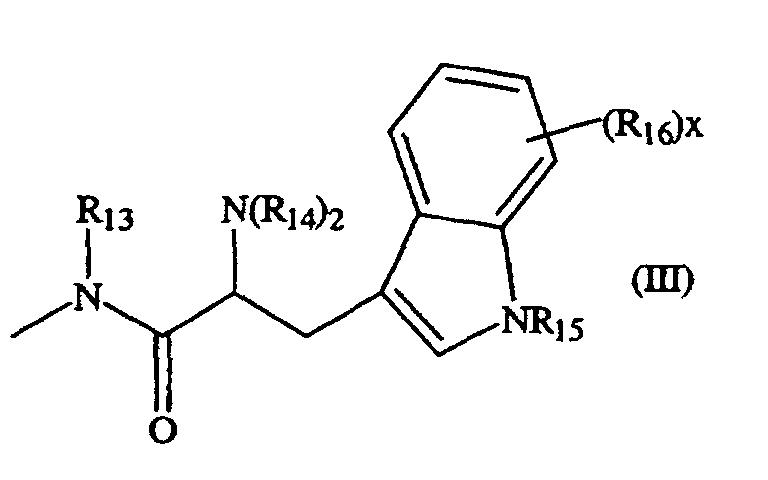
- In a preferred embodiment, Y is NR9, wherein R9 is a branched or straight chain alkyl group; and R5 is a group having the structure IV:
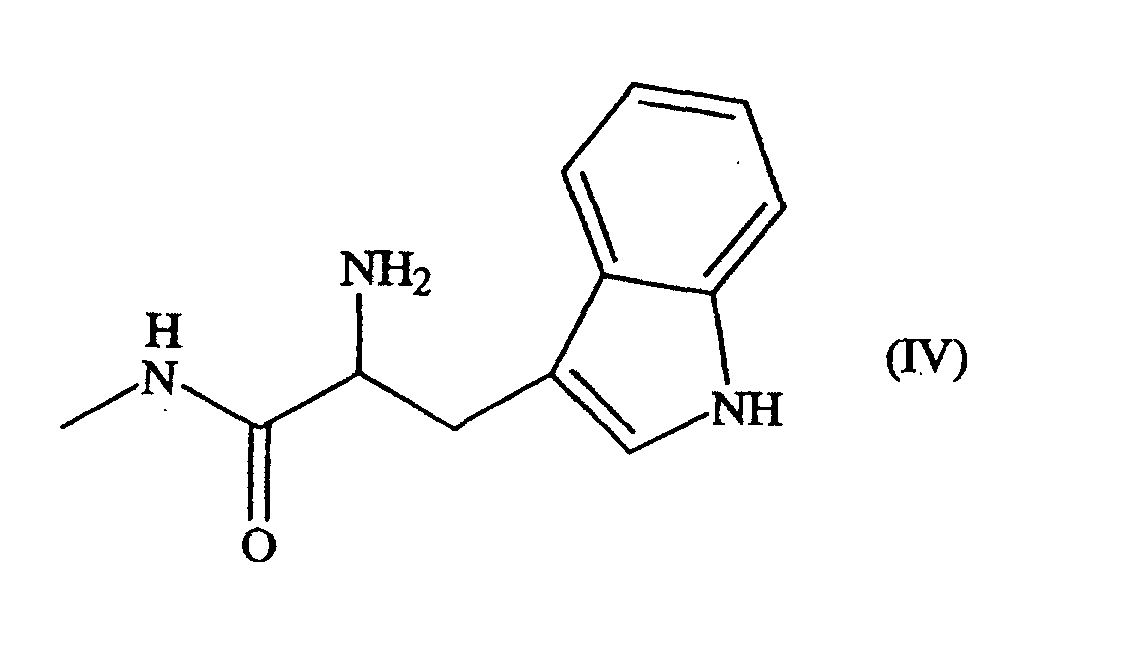
- The line attached to the amide group of structures III and IV denotes a chemical bond and not an additional carbon atom. Thus, the amide group of structures III and IV is chemically bonded to the seven-member ring of structure I. Similarly for structure II, the line attached to the C=Z group is a bond and not an additional carbon atom. Thus, the C=Z group of structure II is chemically bonded to the nitrogen atom incorporated within the seven-member ring of structure I.
- In one embodiment, Y is NR9, wherein R9 is a branched or straight chain alkyl group bond a is a double bond and bond c is a single bond. In yet another embodiment, Y is NR9, wherein R9 is a branched or straight chain alkyl group; and R3 comprises a substituted or unsubstituted phenyl group.
- In a preferred embodiment, the agent is 3-(R,S)-(L-tryptophanyl)-1,3-dihydro-1-methyl-5-phenyl-2H-1,4-benzodiazepine-2-one (BDA452). The structure of BDA452 is shown below in structure V.

- Examples of benzothiazepine compounds useful in the present invention are disclosed in U.S. Patent No. 5,416,066 to Kanecko et al. Kanecko et al. also disclose the procedures for preparing a number of benzothiazepine compounds.
- In one embodiment, Y is sulfur. In another embodiment, Y is sulfur and R1 is branched or straight chain alkoxy. In yet another embodiment, Y is sulfur and R4 is a group having the structure II. In a preferred embodiment, Y is sulfur and R4 is structure II, wherein W is nitrogen; Z is oxygen; n is 2; and R7 is CH2Ph.
- In one embodiment, Y is sulfur; bonds g and h are not present; bond f is a single bond; and V and X are hydrogen. In another embodiment, Y is sulfur; bonds a and c are single bonds; and bonds d and e are not present. In another embodiment, bonds a, c, and f are single bonds; bonds d, e, g and h are not present; Y is sulfur; R1 is branched or straight chain alkoxy; and R4 has the structure II.
- In a preferred embodiment, the agent is 4-(3-(1-(4-benzyl)piperidinyl)propionyl)-7-methoxy-2,3,4,5-tetrahydro-1,4-benzathiazepine, which is K201. The structure of K201 is shown below in structure VII:

- In another embodiment, additional rings can be fused to the seven-member ring of structure I. For example, when bonds b, d, and e, and bonds f, g, and h are present, then three- to seven-member rings can be fused to the seven-member ring of structure I depending upon the selection of R3-E-R4 and F, respectively. The fused rings can stabilize certain compounds having the structure I. For example, when bond f is a single bond, and X is sulfur, then the fused ring formed by F can increase the binding of the resultant compound.
- In one embodiment, R3-E-R4 and F is a substituted or unsubstituted alkylene group, or a substituted or unsubstituted alkylene group containing at least one heteroatom. Examples of unsubstituted alkylene groups include, but are not limited to, methylene, ethylene, propylene, or butylene groups. Thus, when F is a methylene group (i.e., -CH2-), a three-member ring is fused to the seven-member ring of structure I. A substituted alkylene group has an organic group attached to the alkylene backbone. For example, a substituted alkylene group is represented by the formula -CH2CH(R)-, where R can be any organic group listed above such as an alkyl group, aryl group, an aralkyl group, or a cycloalkyl group.
- The substituted or unsubstituted alkylene group can also contain at least one heteroatom. Examples of heteroatoms include, but are not limited to oxygen, nitrogen, and sulfur. The heteroatom may be at the terminal end of the alkylene group (e.g., -CH2CH2O-), within the alkylene group (e.g., -CH2OCH2-), or both the terminal end of and within the alkylene group (e.g., -CH2OCH2O-). Additionally, the heteroatom can be attached to the backbone of the alkylene group (e.g., -CH2CH(OH)CH2-).
- When the compounds represented by structure I possess basic groups, it is possible to form the corresponding salt of the compound. In one embodiment, the addition of an acid to the compound will result in the formation of the salt. The acid used to form the salt should be selected from pharmaceutically acceptable acids. Examples of salts include, but are not limited to, inorganic salts such as hydrochloride or sulfate, and organic salts, such as citrate, maleate, fumarate, benzoate, succinate, acetate, tartrate, or malate.
- Additionally, salts can be formed at the nitrogen atom incorporated within the seven-member ring of structure I when bonds a or c are double bonds. For example, the imine nitrogen of BDA452 (bond a is a double bond and bond c is a single bond) can react with an acid or an alkylating agent (e.g., an alkyl halide) to produce R4, where R4 is hydrogen or an alkyl group, respectively. Thus, when bond a or c is a double bond, R4 may or may not be present. In the case when bond a or c is a double bond, and R4 is present, then the nitrogen atom incorporated within the seven-member ring of structure I is cationic.
- Attaching or modifying certain groups of structure I can influence the physical properties (e.g., solubility and metabolic stability) of the agent. For example, by modifying R1, it is possible to increase the in vivo stability (e.g., reduce enzymatic degradation of the agent by the liver) of the agent. R1 can be modified to be an alkyl, halogroup, trihalomethyl group, cyanogroup, a substituted or unbsubstituted amino group, or a cycloalkyl group. In another example, if R4 is a sterically-demanding group, it is possible to increase the ability of the agent to attenuate annexin function.
- As used throughout, by "subject" is meant an individual. Preferably, the subject is a mammal such as a primate, and, more preferably, a human. Thus, the "subject" can include domesticated animals, such as cats, dogs, etc., livestock (e.g., cattle, horses, pigs, sheep, goats, etc.), and laboratory animals (e.g., mouse, rabbit, rat, guinea pig, etc.).
- The present invention is more particularly described in the following examples which are intended as illustrative only since numerous modifications and variations therein will be apparent to those skilled in the art.
- Cartilage samples were dissected from the medial aspect of the dome of the talus obtained from organ donors within 24 hours of death. Samples were obtained through the Regional Organ Bank of Illinois (ROBI) and from the Department of Orthopaedic Surgery, Rush-Presbyterian-St. Luke=s Medical Center, Chicago, Illinois, according to the institutions= protocols and with the institutional approvals. See, e.g., Aydelotte and Kuettner, 1988 [6].
- Human chondrocytes were isolated by overnight digestion of the tissue with pronase/collagenase. The freshly isolated chondrocytes were plated at high density (2X10⁶ cells per Well) into 24-well plates and cultured in DMEM/F12 + 10 % fetal calf serum for 48h. The medium was then exchanged with serum-free DMEM containing 3H-proline and/or 35S-sulfate, and collagen fragments or IL-1 as indicated. Cells were incubated for 24h, the medium and cell layers were harvested separately and analyzed for protein-bound 3H-proline, 3H-hydroxyproline, and 35S-sulfate [4].
- In cultured chondrocytes, in the presence of 0.1 mg/ml collagen peptides, protein (collagen) synthesis could be blocked by about 50% compared to untreated controls. See Figure 1. The addition of
BDA 452 reversed the effect dose-dependently. In the absence of a challenge,BDA 452 did not alter protein synthesis significantly. In extension of these findings, our data presented here suggest strongly that blockade of the annexin V gate in chondrocytes results in influencing the chondrocyte=s macromolecule metabolism. Reducing the efficiency of this channel supports the anabolic metabolism and suppresses degradative processes in the extracellular matrix. Taken together, the data suggest that controlling annexin V function, and more generally, calcium influxes, in chondrocytes may support cartilage repair mechanisms. - Artifical vesicles containing annexin were prepared according to methods known in the art [12]. Specifically, vesicles were prepared by drying down lipids (Avanti Polar Lipids) with nitrogen overlay. Lipids were washed once in ether and further dried under vacuum overnight. Lipids were then sonicated on ice in NMDG Buffer (150mM N Methyl D Glucamine, and 10mM Hepes, adjusted to ph 7.4 with HCl, then diluted to 100 mOSM with water) containing 300□M Calcium Green dye (Molecular Probes). Extravesicular dye was removed by Biobead extraction for 20 minutes.
- Vesicles were diluted 1:100 in NMDG Buffer, mixed with Annexin V with or without collagen fragments (CII peptide), and incubated for 2 hours. Ca++fluxes were measured according to Kaneko et al. [13]. Fluorescence was measured in a 96 well plate using the Flipr plate reader.
- In the presence of collagen fragments, the Ca++ fluxes were significantly increased in artificial vesicles containing
annexin V. BDA 452 inhibited these fluxes dose-dependently, both in the presence and absence of collagen fragments. These findings show that annexin V serves as a calcium gate, that the gating can be enhanced by collagen, collagen fragments, or peptides derived from the linear amino acid sequence of collagen and that the gating function can be blocked by BDA 452 [2]. - There was an initial increase in fluorescence with all samples, then a development of a CII peptide mediated signal over 2 hours. See Figure 2 and Table I.
Fluorescence (Calcium Signal) Lipid Ratio 180ug/ml Annexin V 180ug/ml Annexin V +100ug/ml CII Peptide 70 % PS/12.5 % PC/ 12.5 % PE 46454 57118 65 % PS/12.5 % PC/ 12.5 % PE/5 % Chol 29023 42820 - Adult patients diagnosed with osteoarthritis and having limitations in joint range of motion and/or narrowed joint spaces, as Visualized radiographically, are identified. BDA452 (5mg /kg/day) is administered orally to the patients for a three-month to two-year period. Range of motion is measured weekly to assess the efficacy of treatment. Periodic radiographic assessments are also performed.
- To prolong endochondral bone growth at the epiphyseal plate of a child or adolescent, the child or adolescent is administered BDA452 (5mg /kg/day) orally for a three-month to two-year period, corresponding to the period of prolonged growth that is desired. The status of the growth plates is assessed radiologically every month, and the height of the child or adolescent is monitored. The treatment is considered effective if the epiphyseal plate fails to close and ossify during that period of time and if the height of the child or adolescent receiving treatment continues to increase.
- The purpose of this study was to test the ability of calcium channel blocker BDA to inhibit cartilage degradation in embryonic avian tibias maintained in organ culture in the presence of lipopolysaccharide (LPS). Chick tibiotarsi were removed from 12 day embryos and their tarsal regions removed. These bones were maintained in organ culture as previously described (26-28). Four bones were placed in each well of a 24-well plate and cultured in 1 ml of DMEM supplemented with 50 µg/ml ascorbate and 10 µg/ml LPS (E. coli serotype 0111:B4, catalog # L-3012, Sigma, St. Louis). The culture medium with fresh supplements was changed every other day.
- BDA was dissolved in DMSO at a stock concentration of 2 mM. BDA was added to the culture medium on all feeding days and tested at two concentrations, 0.5 and 2 µM. Control cultures received an equivalent concentration of DMSO.
- The loss of cartilage from the embryonic bones was measured as the release of proteoglycans and collagen (hydroxyproline) into the culture medium. The spent culture medium was collected with each medium change. The proteoglycan content of the culture medium was determined by a dimethyl methylene blue dye-binding assay (25). The hydroxyproline was measured by a colorimetric assay in 96 well plates (29).
- LPS induced cartilage loss from embryonic tibias maintained in organ culture, as evident from an increased release of hydroxyproline or proteoglycan into the culture media. Treatment of the cultures with BDA caused a dose-dependent inhibition of this cartilage loss. See Figure 3 and 4. The proteoglycans were lost from the tissue first. The highest concentration of BDA (2 µM) showed the least release of proteoglycans to the culture medium. See Figure 3. The 0.5 µM concentration of BDA caused an intermediate loss compared to the DMSO carrier control. A similar effect was seen on the collagen release. See Figure 4. By feeding
day 15 the DMSO control showed the greatest collagen release, while the 0.5 µM BDA had an intermediate degree of collagen release and the 2 µM BDA demonstrated the least collagen loss to the culture medium. When the collagen was lost from the cartilage tissue, the macroscopic length of the bones was diminished. The protective affect of BDA in the cultures was evident by the increased size of the bone and cartilage at the end of the experiments. - Full thickness articular cartilage was dissected from load bearing regions of the femoral condyles of donors with no history of joint disease within 24 hours of death. Samples from men and women (
age 50 to 76) were obtained from the Regional Organ Bank of Illinois as described above. After opening the joint, the surface of the cartilage was examined grossly. The appearance of each joint was given a grade based on the Collins scale (30) as modified by Muehleman et al (31). - Tissue explants (3 x 3 mm) were prepared as described above and were cultured in Dulbecco's modified Eagle's medium/Hams' F12 (1/1) containing 10 ml/L of Insulin Transferrin Selenium A (ITS, Gibco), 25 µg/ml ascorbate, and 50 µg/ml gentamicin. Experimental cultures contained either recombinant human IL-1β (Genzyme), BDA compound in DMSO, or a combination of IL-1β and BDA. ITS containing medium was used to reduce or eliminate serum-contained growth factors that could mask the released OP-1 or OP-1 degradation products and create nonspecific binding of the antibodies. To reach a steady state, cartilage explants were cultured in the absence of IL-1β or BDA for 4 days (or 96 hours) followed by two days (or 48 hours) of culture with IL-1β, BDA or both IL-1β and BDA. DMSO was added to the media control groups to account for a possible effect of DMSO.
- Articular cartilage explants were briefly washed with 0.9% saline, homogenized and extracted in 1 M guanidine hydrochloride in the presence of proteinase inhibitors (0.1 M ε-aminocaproic acid, 0.05 M sodium acetate, 0.005 M EDTA, 0.005 M benzamidine chloride, 0.01 M N-ethylmaleimide, 0.0005 M phenymethanesulfonyl fluoride) at pH 7.4. Samples were extracted for 3 h in the refrigerator, and the extracts, together with the media, were dialyzed against water for 48 hours at 2-8° C, lyophilized and solubilized in sample buffer (0.01 M Tris HCl, pH 6.5, 1% sodium dodecyl sulfate (SDS), 10% glycerol, 0.016% bromphenol blue, 8 M urea, 0.2 M sodium chloride with (for the reduced conditions) or without (for non-reduced conditions) dithioerythritol added (DTT), pH 6.8). Cartilage extracts and media were analyzed by western blotting.
All samples were normalized to the protein concentration. Protein concentrations was determined by a colorimetric assay, using BSA as a standard (Pierce, Rockford, IL). - Aliquots of samples (30 µg of protein per lane) were analyzed by electrophoresis and immunoblotting. Samples were loaded onto a 12% SDS-polyacrylamide gel (PAGE) in a buffer containing 0.2 M glycine, 25 mM Tris and 3.5 mM SDS. Proteins were transferred from SDS-PAGE gels onto nitrocellulose transfer membranes overnight at 20 V, 4-8° C in a buffer containing 12 mM Tris (pH 7.4), 6 mM Na acetate, and 0.3 mM EDTA at pH 7.4. Immunoblot analyses was done using OP-1 antibodies. Non-specific binding sites were blocked with 5% skim milk powder (Carnation). The blots were then incubated with OP-1 primary antibodies at suggested dilutions, and a biotin-labeled goat anti-mouse IgG or anti-rabbit IgG (ImmunoPure ABC kit, Pierce, Rockford, IL) as a secondary antibody (1:4000 dilution). The colored reaction product was developed with alkaline phosphatase-based 1 step-NBT/BCIP substrate (ImmunoPure ABC kit, Pierce, Rockford, IL). To inhibit endogenous alkaline phosphatase activity, ImmunoPure Phosphatase Suppressor (Levamisole) was added to NBT/BCIP substrate in 1:100 dilution.
- Western blot analysis of cartilage extracts and media confirmed the presence of endogenous OP-1 in tested samples. Importantly, the addition of BDA to the IL-1 culture led to the increase in the content of endogenous OP-1 in treated cartilage samples. Critically, this increase was primarily evident on the level of mature processed OP-1 (stronger intensity of the bands representing mature forms of OP-1, either dimer or monomer). The analysis of the culture media showed the dramatic release of pro-OP-1 on
day 2 of culture in the presence of BDA that supports the data described for the cartilage. Also, BDA enhanced the release of pro-OP-1 domain, which indicates that OP-1 molecule has been processed to the mature state under these culture conditions. - In conclusion, the data indicate two major effects of BDA compound on human cartilage cultured under catabolic conditions: 1) The increase in the content of endogenous anabolic factor, cartilage OP-1, in IL-1 challenged system; 2) the processing of cartilage endogenous OP-1 from pro- into mature form.
- Throughout this application, various publications are referenced.
- Although the present process has been described with reference to specific details of certain embodiments thereof, it is not intended that such details should be regarded as limitations upon the scope of the invention except as and to the extent that they are included in the accompanying claims.
-
- [1] Mollenhauer J, et al: J Histochem Cytochem 47:209-220 (1999)
- [2] Hofmann, A, et al. J Biol Chem 273, 2885-2894 (1998)
- [3] Mollenhauer, J, et al. Orthop Res Trans 23:444 (1998)
- [4] Koyano Y, et al. Connect Tiss Res 34:215-225 (1996)
- [5] Billinghurst, et al. J Clin Invest 99: 1534-1545(1997)
- [6] Ayedelotte MB and KE Kuettner, Connect Tiss Res 18:205-222 (1988)
- [7] Raynal P and Pollard HB, Biochim. Biophys. Acta 1197: 63-93 (1994)
- [8] Seaton BA (ed.) Annexins:molecular structure to cellular function. Book series: Molecular Biology Intelligence Unit, R.G. Landis Co., Austin, USA (1996)
- [9] Langer R. "Drug delivery and targeting" Nature 392:5-10 (1998)
- [10] Mollenhauer, J. Cell. Molec. Life Sci. 53:506-556 (1997)
- [11] Metsaranta M et al. J. Biol. Chem. 266: 16862-16869 (1991)
- [12] Mollenhauer J. et al. J. Cell Biol. 98:1572-1579 (1984)
- [13] Kaneko N. et al. Biochim. Biophys. Acta 1330:1-7 (1997)
- [25] Chandrasekhar, S. Anal. Biochem. 161:103-108 (1987)
- [29] Creemers, L.B., et al. Bio Techniques 22:656-658 (1997)
- [30] Collins, G.H. Pathology of Articular and Spinal Diseases, pp. 74-115, London : Edward Arnold
- [31] Huehleman, C. et al. Osteoarthritis and Cartilage 5:23-37 (1997)
-
Claims (12)
- Use of a therapeutically effective amount of an agent for the manufacture of a medicament for the treatment or prevention of arthritis or arthritic disease, wherein the agent has the structure I:wherein y is from 1 to 4, wherein each R1 is, independently, hydrogen, a branched or straight chain alkyl group, an alkenyl group, an alkynyl group, a branched or straight chain alkoxy group, an aryl group, an aralkyl group, a cycloalkyl group, an ester group, a substituted or unsubstituted amino group, a cyano group, an amide group, a nitro group, a hydroxy group, a halo group, a thio group, or a trihalomethyl group;

R2 and R6 are, independently, hydrogen, hydroxy, or branched or straight chain alkyl;
R3 is hydrogen, a branched or straight chain alkyl group, or a substituted or unsubstituted aryl group;
R4 is hydrogen, a branched or straight chain alkyl group, an acyl group, a cycloalkyl group, oxygen, or a group having the structure IIwherein W is carbon or nitrogen; Z is oxygen or H2; n is 1 or 2; and R7 is a branched or straight chain alkyl group, a branched or straight chain alkoxy group, an aryl group, an aralkyl group, a cycloalkyl group, or a heteroaryl group;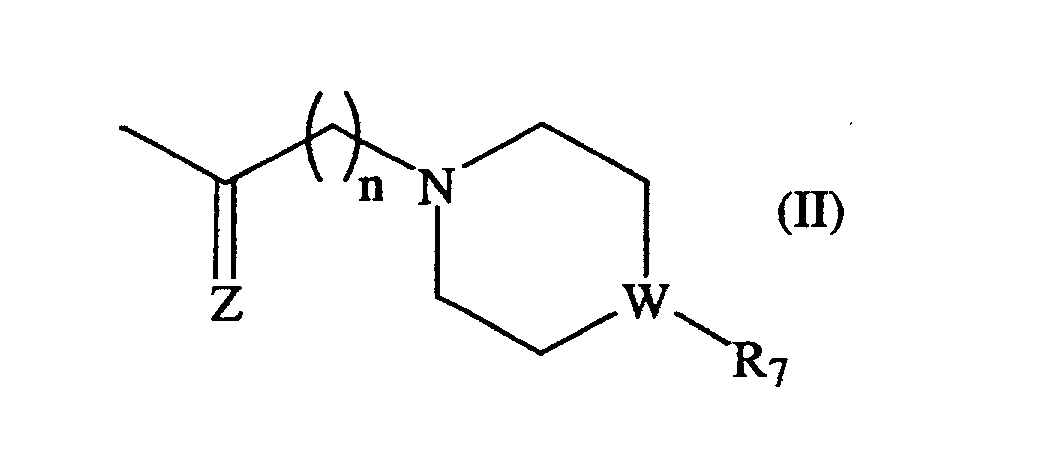
R5 is A-R10 or R10, wherein A is a C1-4 branched or straight chain alkyl group, a hydroxyalkyl group, an acyl group, an amino group, an amide group, an ester group, a keto group, a substituted or unsubstituted aryl group, a substituted or unsubstituted heteroaryl group, a sulfonamide group, or a combination thereof; or
R5 and R6 are collectively =C(H)R10;
wherein R10 is substituted or unsubstituted aryl, or substituted or unsubstituted heteroaryl;
V is hydrogen; an aryl group, a heteroaryl group, an alkoxy group, or an alkenyloxy group; or a monopeptide
X is oxygen, sulfur, hydrogen, an aryl group, a heteroaryl group, an alkoxy group, an alkenyloxy group, or NR8, wherein R8 is hydrogen, a branched or straight chain alkyl group, a substituted or unsubstituted aryl group, or a substituted or unsubstituted heteroaryl group; or
Y is carbon, oxygen, sulfur, a sulfone group, a sulfoxide group, or NR9, wherein R9 is hydrogen, a branched or straight chain alkyl group, an alkenyl group, an alkynyl group, a cycloalkyl group, an ester group, an amino group, an amide group, a cyano group, or a trihalomethyl group;
wherein when bond a is a double bond, then R3 is present and R2 is not present; or when bond a is a single bond, then R2 and R3 are present;
wherein when bond c is a double bond, then R5 is present and R6 is not present; or when bond c is a single bond, then R5 and R6 are present;
wherein bonds a and c are not simultaneously double bonds;
wherein when bonds b, d, and e are present, then R3-E-R4 is a substituted or unsubstituted alkylene group, or a substituted or unsubstituted alkylene group containing at least one heteroatom;
wherein when bond f is a double bond, then bond i and V are not present; or when bond f is a single bond, then bond i is a single bond and V is present;
wherein when bond f is a single bond or a double bond, then bonds g and h are not present; or when bond f is a single bond or a double bond, and bonds g and h are present, then F is a substituted or unsubstituted alkylene group, or a substituted or unsubstituted alkylene group containing at least one heteroatom;
and a pharmaceutically acceptable salt thereof;
and wherein the term "alkyl" is used to designate a straight or branched chain substituted or unsubstituted hydrocarbon radical containing from 1 to 12 carbon atoms;
the term "cycloalkyl" is used to represent a cyclic aliphatic hydrocarbon radical containing from 3 to 8 carbon atoms;
the term "aryl" includes carbocyclic aromatic radicals containing from 6 to 18 carbon atoms;
the term "heteroaryl" is used to represent mono- or bicyclic heteroaromatic radicals containing at least one heteroatom selected from oxygen, sulfur and nitrogen or a combination of these atoms;
the term "aralkyl" is defined as a group composed of an alkyl and an aryl group;
the terms "alkenyl" and "alkynyl" are used to denote a substituted or unsubstituted hydrocarbon moiety having from 3 to 8 carbon atoms and containing at least one carbon-carbon double bond and one carbon-carbon triple bond, respectively;
the term halogen is used to include bromine, chlorine, fluorine and iodine;
the term "trihalomethyl" is defined by the formula CX3, where X is a halogen, the halogen groups of the trihalomethyl groups being the same or different.
the term "cyano" is defined as a group that contains a carbon-nitrogen triple bond;
the term "acyl" refers to a group of the formula RC(O)O-, wherein R is an alkyl group, an aryl group, an aralkyl group, a cycloalkyl group, an alkenyl group, or an alkynyl group as defined above;
and
the term "suffonamide group" is defined as -SO2NR, wherein R is an alkyl group, an aryl group, an aralkyl group, a cycloalkyl group, an alkenyl group, or an alkynyl group as defined above. - Use according to claim 1, wherein Y is NR9, wherein R9 is a branched or straight chain alkyl group and wherein bond f is a double bond; bonds g and h are not present; and X is oxygen.
- Use according to claim 1, wherein Y is NR9, wherein R9 is a branched or straight chain alkyl group; and wherein R5 is a group having the structure IIIwherein R13-R15 are, independently, hydrogen, a branched or straight chain alkyl group, an acyl group, a cycloalkyl group, or an aryl group; and
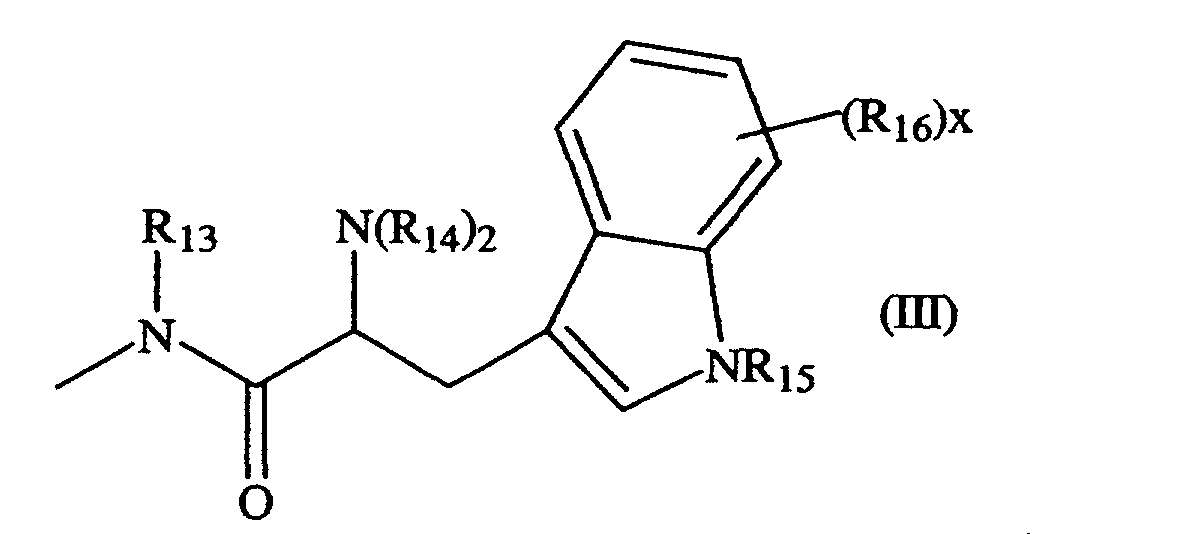
x is from 1 to 4, wherein each R16 is, independently, hydrogen, a branched or straight chain alkyl group, an alkenyl group, an alkynyl group, a branched or straight chain alkoxy group, an aryl group, an aralkyl group, a cycloalkyl group, an ester group, a substituted or unsubstituted amino group, a cyano group, an amide group, a nitro group, a hydroxy group, a halo group, a thio group, or a trihalomethyl group. - Use according to claim 1, wherein Y is NR9, wherein R9 is a branched or straight chain alkyl group and wherein bond a is a double bond and bond c is a single bond.
- Use according to claim 1, wherein Y is NR9, wherein R9 is a branched or straight chain alkyl group and wherein R3 comprises a substituted or unsubstituted phenyl group.
- Use according to claim 1, wherein Y is NR9, wherein R9 is a branched or straight chain alkyl group and wherein R5 has the structure IV
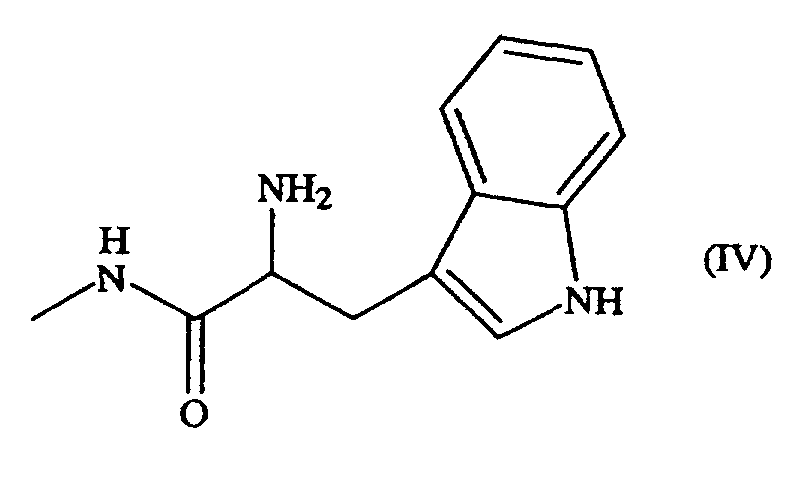
- Use according to claim 1, wherein the agent is 3-(R,S)-(L-tryptophanyl)-1,3-dihydro-1-methyl-5-phenyl-2H-1,4-benzodiazepine-2-one.
- Use according to claim 1, wherein Y is sulfur; and wherein V and X are hydrogen; bonds g and h are not present, and bond f is a single bond.
- Use according to claim 1, wherein Y is sulfur; and wherein R4 has the structure II as defined in claim 1 and wherein W is nitrogen; Z is oxygen; n is 2, and R7 is CH2Ph.
- Use according to claim 1, wherein Y is sulfur and wherein bonds a and c are single bonds, and bonds d and e are not present.
- Use according to claim 1, wherein Y is sulfur and wherein R1 is branched or straight chain alkoxy.
- Use according to claim 1, wherein the agent is 4-(3-(1-(4-benzyl)piperidinyl)propionyl)7-methoxy-2,3,4,5-tetrahydro-1,4-benzothiazepine.
Applications Claiming Priority (3)
| Application Number | Priority Date | Filing Date | Title |
|---|---|---|---|
| US17369299P | 1999-12-29 | 1999-12-29 | |
| US173692P | 1999-12-29 | ||
| PCT/US2000/034936 WO2001047510A2 (en) | 1999-12-29 | 2000-12-21 | Methods and compositions related to modulators of annexin and cartilage homeostasis |
Publications (2)
| Publication Number | Publication Date |
|---|---|
| EP1244457A2 EP1244457A2 (en) | 2002-10-02 |
| EP1244457B1 true EP1244457B1 (en) | 2004-10-27 |
Family
ID=22633103
Family Applications (1)
| Application Number | Title | Priority Date | Filing Date |
|---|---|---|---|
| EP00990288A Expired - Lifetime EP1244457B1 (en) | 1999-12-29 | 2000-12-21 | Use of modulators of annexin for the manufacture of a medicament for the treatment and/or prevention of arthritis and arthritic diseases |
Country Status (8)
| Country | Link |
|---|---|
| US (2) | US6649366B2 (en) |
| EP (1) | EP1244457B1 (en) |
| JP (1) | JP2003518494A (en) |
| AR (1) | AR027118A1 (en) |
| AT (1) | ATE280580T1 (en) |
| AU (1) | AU2733301A (en) |
| DE (1) | DE60015392D1 (en) |
| WO (1) | WO2001047510A2 (en) |
Families Citing this family (33)
| Publication number | Priority date | Publication date | Assignee | Title |
|---|---|---|---|---|
| US7067144B2 (en) | 1998-10-20 | 2006-06-27 | Omeros Corporation | Compositions and methods for systemic inhibition of cartilage degradation |
| US20040048780A1 (en) * | 2000-05-10 | 2004-03-11 | The Trustees Of Columbia University In The City Of New York | Method for treating and preventing cardiac arrhythmia |
| US20040229781A1 (en) * | 2000-05-10 | 2004-11-18 | Marks Andrew Robert | Compounds and methods for treating and preventing exercise-induced cardiac arrhythmias |
| US7879840B2 (en) | 2005-08-25 | 2011-02-01 | The Trustees Of Columbia University In The City Of New York | Agents for preventing and treating disorders involving modulation of the RyR receptors |
| US7718644B2 (en) | 2004-01-22 | 2010-05-18 | The Trustees Of Columbia University In The City Of New York | Anti-arrhythmic and heart failure drugs that target the leak in the ryanodine receptor (RyR2) and uses thereof |
| US7393652B2 (en) | 2000-05-10 | 2008-07-01 | The Trustees Of Columbia University In The City Of New York | Methods for identifying a chemical compound that directly enhances binding of FKBP12.6 to PKA-phosphorylated type 2 ryanodine receptor (RyR2) |
| US8022058B2 (en) | 2000-05-10 | 2011-09-20 | The Trustees Of Columbia University In The City Of New York | Agents for preventing and treating disorders involving modulation of the RyR receptors |
| US20060293266A1 (en) * | 2000-05-10 | 2006-12-28 | The Trustees Of Columbia | Phosphodiesterase 4D in the ryanodine receptor complex protects against heart failure |
| US6489125B1 (en) * | 2000-05-10 | 2002-12-03 | The Trustees Of Columbia University In The City Of New York | Methods for identifying chemical compounds that inhibit dissociation of FKBP12.6 binding protein from type 2 ryanodine receptor |
| US20030180948A1 (en) * | 2000-12-29 | 2003-09-25 | Hutchins Jeff T. | Superficial zone protein and methods of making and using same |
| US7044945B2 (en) * | 2001-03-30 | 2006-05-16 | Sand Bruce J | Prevention of regression in thermal ciliary muscle tendinoplasty |
| US7544678B2 (en) | 2002-11-05 | 2009-06-09 | The Trustees Of Columbia University In The City Of New York | Anti-arrythmic and heart failure drugs that target the leak in the ryanodine receptor (RyR2) |
| AU2004220548A1 (en) | 2003-03-07 | 2004-09-23 | The Trustees Of Columbia University, In The City Of New York | Type 1 ryanodine receptor-based methods |
| US8710045B2 (en) | 2004-01-22 | 2014-04-29 | The Trustees Of Columbia University In The City Of New York | Agents for preventing and treating disorders involving modulation of the ryanodine receptors |
| US7425539B2 (en) * | 2004-03-19 | 2008-09-16 | Baxter International Inc. | Factor IXa for the treatment of bleeding disorders |
| US7704990B2 (en) | 2005-08-25 | 2010-04-27 | The Trustees Of Columbia University In The City Of New York | Agents for preventing and treating disorders involving modulation of the RyR receptors |
| CA2685860A1 (en) * | 2007-05-10 | 2008-11-20 | Amr Technology, Inc. | Aryl- and heteroaryl-substituted tetrahydrobenzo-1,4-diazepines and use thereof to block reuptake of norepinephrine, dopamine, and serotonin |
| US8518933B2 (en) | 2009-04-23 | 2013-08-27 | Abbvie Inc. | Modulators of 5-HT receptors and methods of use thereof |
| US8546377B2 (en) | 2009-04-23 | 2013-10-01 | Abbvie Inc. | Modulators of 5-HT receptors and methods of use thereof |
| EP2641907B1 (en) | 2009-05-22 | 2015-01-28 | AbbVie Inc. | Preparation of modulators of 5-HT receptors |
| RU2015140748A (en) | 2010-05-21 | 2018-12-26 | Эббви Инк. | 5-NT RECEPTOR MODULATORS AND WAYS OF THEIR APPLICATION |
| AR084070A1 (en) | 2010-12-02 | 2013-04-17 | Constellation Pharmaceuticals Inc | BROMODOMINIUM INHIBITORS AND USES OF THE SAME |
| US9249161B2 (en) | 2010-12-02 | 2016-02-02 | Constellation Pharmaceuticals, Inc. | Bromodomain inhibitors and uses thereof |
| EP2705039B1 (en) | 2011-05-04 | 2017-07-26 | Constellation Pharmaceuticals, Inc. | Bromodomain inhibitors and uses thereof |
| US9328117B2 (en) | 2011-06-17 | 2016-05-03 | Constellation Pharmaceuticals, Inc. | Bromodomain inhibitors and uses thereof |
| TWI602820B (en) | 2012-06-06 | 2017-10-21 | 星宿藥物公司 | Bromodomain inhibitors and uses thereof |
| US9624244B2 (en) | 2012-06-06 | 2017-04-18 | Constellation Pharmaceuticals, Inc. | Benzo [B] isoxazoloazepine bromodomain inhibitors and uses thereof |
| MY186570A (en) | 2014-05-13 | 2021-07-27 | Novartis Ag | Compounds and compositions for inducing chondrogenesis |
| PL3157928T3 (en) | 2014-06-20 | 2019-07-31 | Constellation Pharmaceuticals, Inc. | Crystalline forms of 2-((4s)-6-(4-chlorophenyl)-1-methyl-4h-benzo[c]isoxazolo[4,5-e]azepin-4-yl)acetamide |
| EP3045470A1 (en) | 2015-01-15 | 2016-07-20 | Deutsches Krebsforschungszentrum Stiftung des Öffentlichen Rechts | Modulators of the function of the core domain of annexins, and uses thereof in autoimmune and/or cancer therapy |
| CN109328077A (en) | 2016-06-10 | 2019-02-12 | 德国癌症研究公共权益基金会 | The core domain of annexin and its use in antigen delivery and vaccination |
| US20210353721A1 (en) * | 2018-08-07 | 2021-11-18 | The Brigham And Women's Hospital, Inc. | Methods and compositions relating to inhibiting cardiovascular calcification via annexin a1 |
| CN121537530A (en) * | 2025-11-21 | 2026-02-17 | 上海萨美细胞技术有限公司 | A type III collagen fusion protein, its preparation method and application |
Family Cites Families (3)
| Publication number | Priority date | Publication date | Assignee | Title |
|---|---|---|---|---|
| US5004741A (en) * | 1984-06-26 | 1991-04-02 | Merck & Co., Inc. | Methods of antagonizing CCK or gastrin with benzodiazepine analogs |
| JP2703408B2 (en) * | 1990-12-28 | 1998-01-26 | 麒麟麦酒株式会社 | 1,4-benzothiazepine derivatives |
| ES2194213T3 (en) * | 1996-08-09 | 2003-11-16 | Boehringer Ingelheim Pharma | BETA-CARBOLINAS-4- REPLACED IN QUALITY OF IMMUNOMODULATORS. |
-
2000
- 2000-12-21 US US09/745,989 patent/US6649366B2/en not_active Expired - Lifetime
- 2000-12-21 EP EP00990288A patent/EP1244457B1/en not_active Expired - Lifetime
- 2000-12-21 DE DE60015392T patent/DE60015392D1/en not_active Expired - Lifetime
- 2000-12-21 WO PCT/US2000/034936 patent/WO2001047510A2/en not_active Ceased
- 2000-12-21 AT AT00990288T patent/ATE280580T1/en not_active IP Right Cessation
- 2000-12-21 JP JP2001548105A patent/JP2003518494A/en active Pending
- 2000-12-21 AU AU27333/01A patent/AU2733301A/en not_active Abandoned
- 2000-12-27 AR ARP000106954A patent/AR027118A1/en unknown
-
2003
- 2003-09-11 US US10/659,801 patent/US20040053919A1/en not_active Abandoned
Also Published As
| Publication number | Publication date |
|---|---|
| US20020052358A1 (en) | 2002-05-02 |
| US20040053919A1 (en) | 2004-03-18 |
| WO2001047510A3 (en) | 2002-02-21 |
| DE60015392D1 (en) | 2004-12-02 |
| AU2733301A (en) | 2001-07-09 |
| US6649366B2 (en) | 2003-11-18 |
| WO2001047510A2 (en) | 2001-07-05 |
| EP1244457A2 (en) | 2002-10-02 |
| ATE280580T1 (en) | 2004-11-15 |
| JP2003518494A (en) | 2003-06-10 |
| AR027118A1 (en) | 2003-03-12 |
Similar Documents
| Publication | Publication Date | Title |
|---|---|---|
| US6649366B2 (en) | Methods and compositions related to modulators of annexin and cartilage homeostasis | |
| Yan et al. | Pathological calcification in osteoarthritis: an outcome or a disease initiator? | |
| US7005274B1 (en) | Methods and compositions for diagnosing and treating arthritic disorders and regulating bone mass | |
| Wang et al. | Regulation of MMP-13 expression by RUNX2 and FGF2 in osteoarthritic cartilage | |
| KR19990088495A (en) | Treating or preventing the early stages of degeneration of articular cartilage or subchondral bone in mammals using carprofen and derivatives | |
| US6812034B2 (en) | Fetuin-MGP-mineral complex in serum assayed to determine calcification risk | |
| Zhang et al. | Enhancement of subchondral bone quality by alendronate administration for the reduction of cartilage degeneration in the early phase of experimental osteoarthritis | |
| Selvam et al. | Oxalate binding proteins in calcium oxalate nephrolithiasis | |
| Heilig et al. | Collagen IX deficiency leads to premature vascularization and ossification of murine femoral heads through an imbalance of pro-and antiangiogenic factors | |
| Michelsson et al. | Inflammatory involvement in rabbit knee following immobilization and resulting in osteoarthritis | |
| CA2288178A1 (en) | Piperazine derivatives for treating bone deficit conditions | |
| Ratcliffe et al. | Differential levels of synovial fluid aggrecan aggregate components in experimental osteoarthritis and joint disuse | |
| Musumeci et al. | Microscopic and macroscopic anatomical features in healthy and osteoarthritic knee cartilage | |
| US7230132B2 (en) | Aryl N-cyanoguanidines and methods related thereto | |
| WO2019157085A2 (en) | INHIBITION OF WNT/β-CATENIN SIGNALING IN THE TREATMENT OF OSTEOARTHRITIS | |
| Li | The roles of extracellular matrix molecules matrilins and aggrecan in bone development and articular cartilage functions | |
| Gratal et al. | 6-shogaol (enexasogoal) improves experimental knee osteoarthritis exerting a pleiotropic effect over immune innate signaling response in chondrocytes | |
| Terkeltaub | Aging, Inflammation, and Altered Chondrocyte Differentation in Articular Cartilage Calcification and Osteoarthritis | |
| Hayashi et al. | Effect of raloxifene on arthritis and bone mineral density in rats with collagen-induced arthritis | |
| Mastrobattista et al. | The Effect of Dexmedetomidine on the Mini-Cog Score and High-Mobility Group Box 1 Levels in Elderly Patients with Postoperative Neurocognitive Disorders Undergoing Orthopedic Surgery | |
| Kawasaki et al. | Parallel distribution of Bcl-2 and Bax in hypertrophied chondrocytes of the mandibular condylar cartilage from the senescence-accelerated mouse (SAMP3) | |
| KR20030007314A (en) | A pharmaceutical composition and package for treating or preventing the early stages of degeneration of articular cartilage or subchondral bone in mammals, comprising carprofen and derivatives | |
| Iwakura et al. | Stimulation of superficial zone protein/lubricin accumulation by Hedgehog signaling in surface zone articular chondrocyte | |
| Satsuma et al. | Immunohistochemical Localization of Cartilage-Specific and Non-Cartilage-Specific Proteoglycans in Experimental Osteoarthritic Articular Cartilage in Rats | |
| Chen et al. | Fetuin-A uptake in bovine vascular smooth muscle cells (BVSMC) is calcium dependent and mediated by annexins |
Legal Events
| Date | Code | Title | Description |
|---|---|---|---|
| PUAI | Public reference made under article 153(3) epc to a published international application that has entered the european phase |
Free format text: ORIGINAL CODE: 0009012 |
|
| 17P | Request for examination filed |
Effective date: 20020723 |
|
| AK | Designated contracting states |
Kind code of ref document: A2 Designated state(s): AT BE CH CY DE DK ES FI FR GB GR IE IT LI LU MC NL PT SE TR |
|
| AX | Request for extension of the european patent |
Free format text: AL;LT;LV;MK;RO;SI |
|
| 17Q | First examination report despatched |
Effective date: 20021022 |
|
| GRAP | Despatch of communication of intention to grant a patent |
Free format text: ORIGINAL CODE: EPIDOSNIGR1 |
|
| RIC1 | Information provided on ipc code assigned before grant |
Ipc: 7A 61P 19/02 B Ipc: 7A 61K 31/553 B Ipc: 7A 61K 31/5513 A |
|
| RTI1 | Title (correction) |
Free format text: USE OF MODULATORS OF ANNEXIN FOR THE MANUFACTURE OF A MEDICAMENT FOR THE TREATMENT AND/OR PREVENTION OF ARTHRITIS AND ART |
|
| GRAS | Grant fee paid |
Free format text: ORIGINAL CODE: EPIDOSNIGR3 |
|
| GRAA | (expected) grant |
Free format text: ORIGINAL CODE: 0009210 |
|
| AK | Designated contracting states |
Kind code of ref document: B1 Designated state(s): AT BE CH CY DE DK ES FI FR GB GR IE IT LI LU MC NL PT SE TR |
|
| PG25 | Lapsed in a contracting state [announced via postgrant information from national office to epo] |
Ref country code: TR Free format text: LAPSE BECAUSE OF FAILURE TO SUBMIT A TRANSLATION OF THE DESCRIPTION OR TO PAY THE FEE WITHIN THE PRESCRIBED TIME-LIMIT Effective date: 20041027 Ref country code: SE Free format text: LAPSE BECAUSE OF FAILURE TO SUBMIT A TRANSLATION OF THE DESCRIPTION OR TO PAY THE FEE WITHIN THE PRESCRIBED TIME-LIMIT Effective date: 20041027 Ref country code: NL Free format text: LAPSE BECAUSE OF FAILURE TO SUBMIT A TRANSLATION OF THE DESCRIPTION OR TO PAY THE FEE WITHIN THE PRESCRIBED TIME-LIMIT Effective date: 20041027 Ref country code: LI Free format text: LAPSE BECAUSE OF FAILURE TO SUBMIT A TRANSLATION OF THE DESCRIPTION OR TO PAY THE FEE WITHIN THE PRESCRIBED TIME-LIMIT Effective date: 20041027 Ref country code: IT Free format text: LAPSE BECAUSE OF FAILURE TO SUBMIT A TRANSLATION OF THE DESCRIPTION OR TO PAY THE FEE WITHIN THE PRESCRIBED TIME-LIMIT;WARNING: LAPSES OF ITALIAN PATENTS WITH EFFECTIVE DATE BEFORE 2007 MAY HAVE OCCURRED AT ANY TIME BEFORE 2007. THE CORRECT EFFECTIVE DATE MAY BE DIFFERENT FROM THE ONE RECORDED. Effective date: 20041027 Ref country code: FR Free format text: LAPSE BECAUSE OF FAILURE TO SUBMIT A TRANSLATION OF THE DESCRIPTION OR TO PAY THE FEE WITHIN THE PRESCRIBED TIME-LIMIT Effective date: 20041027 Ref country code: FI Free format text: LAPSE BECAUSE OF FAILURE TO SUBMIT A TRANSLATION OF THE DESCRIPTION OR TO PAY THE FEE WITHIN THE PRESCRIBED TIME-LIMIT Effective date: 20041027 Ref country code: CY Free format text: LAPSE BECAUSE OF FAILURE TO SUBMIT A TRANSLATION OF THE DESCRIPTION OR TO PAY THE FEE WITHIN THE PRESCRIBED TIME-LIMIT Effective date: 20041027 Ref country code: CH Free format text: LAPSE BECAUSE OF FAILURE TO SUBMIT A TRANSLATION OF THE DESCRIPTION OR TO PAY THE FEE WITHIN THE PRESCRIBED TIME-LIMIT Effective date: 20041027 Ref country code: BE Free format text: LAPSE BECAUSE OF FAILURE TO SUBMIT A TRANSLATION OF THE DESCRIPTION OR TO PAY THE FEE WITHIN THE PRESCRIBED TIME-LIMIT Effective date: 20041027 Ref country code: AT Free format text: LAPSE BECAUSE OF FAILURE TO SUBMIT A TRANSLATION OF THE DESCRIPTION OR TO PAY THE FEE WITHIN THE PRESCRIBED TIME-LIMIT Effective date: 20041027 |
|
| REG | Reference to a national code |
Ref country code: GB Ref legal event code: FG4D |
|
| REG | Reference to a national code |
Ref country code: CH Ref legal event code: EP |
|
| PGFP | Annual fee paid to national office [announced via postgrant information from national office to epo] |
Ref country code: GB Payment date: 20041104 Year of fee payment: 5 |
|
| PGFP | Annual fee paid to national office [announced via postgrant information from national office to epo] |
Ref country code: FR Payment date: 20041105 Year of fee payment: 5 |
|
| PGFP | Annual fee paid to national office [announced via postgrant information from national office to epo] |
Ref country code: ES Payment date: 20041115 Year of fee payment: 5 |
|
| PGFP | Annual fee paid to national office [announced via postgrant information from national office to epo] |
Ref country code: DE Payment date: 20041130 Year of fee payment: 5 Ref country code: BE Payment date: 20041130 Year of fee payment: 5 |
|
| REG | Reference to a national code |
Ref country code: IE Ref legal event code: FG4D |
|
| REF | Corresponds to: |
Ref document number: 60015392 Country of ref document: DE Date of ref document: 20041202 Kind code of ref document: P |
|
| PG25 | Lapsed in a contracting state [announced via postgrant information from national office to epo] |
Ref country code: LU Free format text: LAPSE BECAUSE OF NON-PAYMENT OF DUE FEES Effective date: 20041221 Ref country code: IE Free format text: LAPSE BECAUSE OF NON-PAYMENT OF DUE FEES Effective date: 20041221 |
|
| PG25 | Lapsed in a contracting state [announced via postgrant information from national office to epo] |
Ref country code: MC Free format text: LAPSE BECAUSE OF NON-PAYMENT OF DUE FEES Effective date: 20041231 |
|
| PG25 | Lapsed in a contracting state [announced via postgrant information from national office to epo] |
Ref country code: GR Free format text: LAPSE BECAUSE OF FAILURE TO SUBMIT A TRANSLATION OF THE DESCRIPTION OR TO PAY THE FEE WITHIN THE PRESCRIBED TIME-LIMIT Effective date: 20050127 Ref country code: DK Free format text: LAPSE BECAUSE OF FAILURE TO SUBMIT A TRANSLATION OF THE DESCRIPTION OR TO PAY THE FEE WITHIN THE PRESCRIBED TIME-LIMIT Effective date: 20050127 |
|
| PG25 | Lapsed in a contracting state [announced via postgrant information from national office to epo] |
Ref country code: DE Free format text: LAPSE BECAUSE OF FAILURE TO SUBMIT A TRANSLATION OF THE DESCRIPTION OR TO PAY THE FEE WITHIN THE PRESCRIBED TIME-LIMIT Effective date: 20050128 |
|
| PG25 | Lapsed in a contracting state [announced via postgrant information from national office to epo] |
Ref country code: ES Free format text: LAPSE BECAUSE OF FAILURE TO SUBMIT A TRANSLATION OF THE DESCRIPTION OR TO PAY THE FEE WITHIN THE PRESCRIBED TIME-LIMIT Effective date: 20050207 |
|
| LTIE | Lt: invalidation of european patent or patent extension |
Effective date: 20041027 |
|
| REG | Reference to a national code |
Ref country code: CH Ref legal event code: PL |
|
| NLV1 | Nl: lapsed or annulled due to failure to fulfill the requirements of art. 29p and 29m of the patents act | ||
| PLBE | No opposition filed within time limit |
Free format text: ORIGINAL CODE: 0009261 |
|
| STAA | Information on the status of an ep patent application or granted ep patent |
Free format text: STATUS: NO OPPOSITION FILED WITHIN TIME LIMIT |
|
| REG | Reference to a national code |
Ref country code: IE Ref legal event code: MM4A |
|
| 26N | No opposition filed |
Effective date: 20050728 |
|
| PG25 | Lapsed in a contracting state [announced via postgrant information from national office to epo] |
Ref country code: GB Free format text: LAPSE BECAUSE OF NON-PAYMENT OF DUE FEES Effective date: 20051221 |
|
| EN | Fr: translation not filed | ||
| GBPC | Gb: european patent ceased through non-payment of renewal fee |
Effective date: 20051221 |
|
| PG25 | Lapsed in a contracting state [announced via postgrant information from national office to epo] |
Ref country code: PT Free format text: LAPSE BECAUSE OF NON-PAYMENT OF DUE FEES Effective date: 20050327 |