EP1243638A2 - Method for sulphur retention in a power plant - Google Patents
Method for sulphur retention in a power plant Download PDFInfo
- Publication number
- EP1243638A2 EP1243638A2 EP02396034A EP02396034A EP1243638A2 EP 1243638 A2 EP1243638 A2 EP 1243638A2 EP 02396034 A EP02396034 A EP 02396034A EP 02396034 A EP02396034 A EP 02396034A EP 1243638 A2 EP1243638 A2 EP 1243638A2
- Authority
- EP
- European Patent Office
- Prior art keywords
- sulphur
- ash
- wood
- content
- wood ash
- Prior art date
- Legal status (The legal status is an assumption and is not a legal conclusion. Google has not performed a legal analysis and makes no representation as to the accuracy of the status listed.)
- Granted
Links
Images

Classifications
-
- C—CHEMISTRY; METALLURGY
- C10—PETROLEUM, GAS OR COKE INDUSTRIES; TECHNICAL GASES CONTAINING CARBON MONOXIDE; FUELS; LUBRICANTS; PEAT
- C10L—FUELS NOT OTHERWISE PROVIDED FOR; NATURAL GAS; SYNTHETIC NATURAL GAS OBTAINED BY PROCESSES NOT COVERED BY SUBCLASSES C10G OR C10K; LIQUIFIED PETROLEUM GAS; USE OF ADDITIVES TO FUELS OR FIRES; FIRE-LIGHTERS
- C10L9/00—Treating solid fuels to improve their combustion
- C10L9/10—Treating solid fuels to improve their combustion by using additives
-
- C—CHEMISTRY; METALLURGY
- C10—PETROLEUM, GAS OR COKE INDUSTRIES; TECHNICAL GASES CONTAINING CARBON MONOXIDE; FUELS; LUBRICANTS; PEAT
- C10L—FUELS NOT OTHERWISE PROVIDED FOR; NATURAL GAS; SYNTHETIC NATURAL GAS OBTAINED BY PROCESSES NOT COVERED BY SUBCLASSES C10G OR C10K; LIQUIFIED PETROLEUM GAS; USE OF ADDITIVES TO FUELS OR FIRES; FIRE-LIGHTERS
- C10L10/00—Use of additives to fuels or fires for particular purposes
-
- C—CHEMISTRY; METALLURGY
- C10—PETROLEUM, GAS OR COKE INDUSTRIES; TECHNICAL GASES CONTAINING CARBON MONOXIDE; FUELS; LUBRICANTS; PEAT
- C10L—FUELS NOT OTHERWISE PROVIDED FOR; NATURAL GAS; SYNTHETIC NATURAL GAS OBTAINED BY PROCESSES NOT COVERED BY SUBCLASSES C10G OR C10K; LIQUIFIED PETROLEUM GAS; USE OF ADDITIVES TO FUELS OR FIRES; FIRE-LIGHTERS
- C10L10/00—Use of additives to fuels or fires for particular purposes
- C10L10/02—Use of additives to fuels or fires for particular purposes for reducing smoke development
Definitions
- the present invention relates to a method in sulphur retention in a power plant, in which an additive that binds the sulphur dioxide arising during combustion is added to a fuel with a sulphur content and the air in the firebox of a thermal boiler.
- Wood fuels have a beneficial effect on sulphur dioxide emissions, not only due to their lower sulphur content, but also due to the alkali composition of wood ash, which permits the partial retention of sulphur in wood-ash residue.
- the greatest known benefit of using wood comes from the reduction of the sulphur content of the fuel mix.
- wood-ash residue that comes from power plants is generally waste, for which a final disposal location must be found.
- Possible final disposal applications have included fertilizer, forest improvement, landscaping, landfill, etc.
- the high heavy-metal content of wood ash has generally prevented its use as fertilizer and for forest improvement, especially if waste sludge from the forest products industry, for example, is burned with wood.
- This invention is intended to create a method, by means of which the use of limestone to reduce the sulphur dioxide in flue gases arising during combustion can be replaced with wood ash that is created as a byproduct of wood combustion, but which is useless as such.
- the characteristic features of the method according to the invention are stated in the accompanying Claim 1.
- the method according to the invention is characterized at least by wood ash, which is preferably a dry, fine fly ash arising during the combustion of wood, being added to the firebox of a thermal boiler along with air and a fuel containing sulphur.
- the preferable feed rate of wood ash to the firebox is 0,5 - 5 % of the total fuel flow.
- Other characteristics of the method according to the invention appear in the accompanying Claims.
- composition and properties of wood ash are advantageous for sulphur retention, as wood ash contains lime. This allows the costs of retaining sulphur in coal and peat-fired power plants to be reduced by using the lime. Savings arise from eliminating the costs of quarrying and crushing limestone, for instance, as wood ash residue can be regarded, except for transportation costs, as a practically free sorbent material. In addition, it can be assumed that the final disposal of ash will become significantly more expensive in the future, so that benefits will come from the net costs of the landfill disposal of ash.
- Wood ash contains a significant amount of calcium (Ca), the content of which is usually c. 200 - 400 g/kg, of which as much as 75 % is calcium oxide.
- CaCO 3 limestone
- the limestone calcines under the effect of the temperature (+520 °C - +850 °C) into calcium oxide (CaO): CaCO 3 -> CaO + CO 2 .
- CaO + SO 2 + 1 ⁇ 2 O 2 CaSO 4 .
- Pilot runs made using a circulating fluid bed test device were used to ascertain the ability of wood ashes obtained from boiler plants to bind sulphur oxides, when burning fuels with a sulphur content (e.g., milled peat, coal).
- the wood ashes used in the research came from thermal boilers burning wood fuels, preferably fly ash from a fluid bed boiler (FBC) and a grate boiler.
- the wood ash used should be dry and fine, like the limestone typically fed into the combustion.
- the pilot runs were compared with feeding limestone into a fluid bed.
- the optimal temperature in sulphur retention is about +800 °C in a fluid bed (FBC) and +850 °C in a circulating fluid bed (CFB), with an oxygen content of 5 - 6 %.
- FBC fluid bed
- CFB circulating fluid bed
- the desulphuration efficiency decreases partly due to sintering of the CaO, so that the pores of the CaO become blocked and the particle size increases.
- Binding of the sulphur can also be optimized with good mixing and a sufficient amount of air, as the removal of sulphur oxide is based on oxidizing it to form a sulphate. Once the sulphur is bound as sulphate compounds, it exits the combustion along with fly ash into particle separators, such as electrical filters, where it is separated from the flue gases in a known manner.
- Limestone is fed into the firebox in a suitable Ca/S ratio in relation to the sulphur content of the fuel.
- a suitable Ca/S ratio in relation to the sulphur content of the fuel.
- 30 % was used as the average proportion of calcium for both wood ashes.
- the so-called total calcium amount in question was determined using the XRF method.
- the conversion of the sulphur in the flue gas into sulphur dioxide was correspondingly 114 ppm / 206 ppm, i.e. 55 %. 45 % of the peat's sulphur thus remained in the peat ash.
- Figure 1 shows the effect of wood ash on the sulphur-dioxide emission of the circulating fluid bed combustion of peat.
- the feed of the wood ash commenced at 15:06, the SO 2 content dropping sharply immediately.
- the feed of the wood ash was terminated at 15:45, after which the SO 2 content rose slowly to the values prevailing before the feed.
- 1 g/min i.e. 0,8 % of the total fuel flow
- the measured sulphur-dioxide content corresponds to a sulphur-dioxide emission of 59 mg/MJ, the SO 2 conversion being 29,5 %.
- the wood ash fed in reduced the sulphur-dioxide emission by 46 %.
- the calculation was carried out using a process balance calculation program, which took into account factors such as the effect of the change in the oxygen content on the conversion of the sulphur oxide.
- Figure 2 shows the effect of feeding wood ash on the sulphur-dioxide emission of the circulating fluid bed (CFB) combustion of Polish coal.
- Feed of the wood ash was commenced at 14:30 and terminated at 15:15.
- the calcium/sulphur ratio in the test was 1,9.
- fly ash from a fluid-bed boiler (FBC) was used as the sorbent.
- the maximum sulphur dioxide content of the flue gas was 514 ppm, using coal with a sulphur content of 0,88 %.
- the boiler was fed with a fuel mass flow of 1,2 g/s, the sulphur dioxide content of the flue gas being measured as 296 ppm when the oxygen content was 6,7 %.
- the conversion of the sulphur in the flue gas into sulphur dioxide was 57,7 %.
- the SO 2 content measured corresponds to an emission of 374 mg/MJ.
- the sulphur dioxide contents of Figure 2 were measured from the flue-gas duct using a continuous-operation flue-gas analyser.
- the figure shows that the sulphur dioxide content of the combustion of the coal did not return to the previous emission level immediately after the ending of the feed of the wood ash, mainly due to the slight accumulation of ash on the walls of the post-separation cyclone during the feed of the wood ash.
- the continual deduction in the sulphur dioxide content during the wood-ash feed also seems to be due to the accumulation of ash.
- the calculations of average content were therefore made from short stable time periods.
- the power-plant-scale sulphur-retention test which was carried out to test the method according to the invention, took place in a circulating fluid bed boiler, in which combined combustion of peat and wood had taken place recently.
- the combustion plant had usually achieved the sulphur dioxide emission limit (140 mg/MJ) by using limestone in sulphur retention. During 1999, an average of about 160 tonnes of lime was consumed each month in the plant.
- the power plant also operates an older fluid bed boiler (FBC), which at present burns wood fuels (including woodchips, sawdust, bark, logging-waste chips). This means that the use of the wood ash available from the fluid bed boiler in the sulphur retention of the circulating fluid bed combustion (CFB) would be extremely profitable in both financially and in terms of environmental protection.
- FBC fluid bed boiler
- Wood ash which was fly ash from the fluid bed boiler, was used as the ash sorbent.
- the calcium content of the wood ash was about 37 %.
- wood, birch and spruce bark, and plywood off-cuts were burned.
- milled peat with an average sulphur content of 0,25 % and an effective thermal value in solids of 20,89 MJ/kg, was burned in the circulating fluid bed boiler.
- the average moisture content of the peat was 52 - 54 %.
- the peat for combustion was transported to the circulating fluid bed boiler using two conveyor belts.
- feed screws of the lime were used to feed wood ash to the peat lines.
- the flow of peat to the boiler was kept constant during the sulphur-retention test.
- the average mass flow of peat to the boiler was about 13 kg/s.
- the wood ash was fed into the boiler in a so-called lime/peat ratio of 1,0 - 1,5.
- the ratio was based on the speed of rotation of the additive and fuel feed screws.
- the total wood ash feed time on the two tests days was about 15 hours, the average mass flow being 0,12 kg/s.
- the power plant's process controllers were used to try to keep the mass flow of the wood ash into the boiler at 0,15 kg/s.
- the process calculations were calibrated according to the weight of the lime (about 1500 kg/m 3 ). At a wood ash mass flow of 0,15 kg/s, the calculated calcium/sulphur ratio was about 2,9.
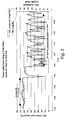
- Figure 3 shows the amount of sulphur dioxide (mg/m3n) measured from the wet flue gas and the sulphur-dioxide emission (mg/MJ) on the second day of the test.
- Wood-ash feed to the peat line was commenced between 07:15 and 07:30 when the mass flow was in the order of 0,11 kg/s. At a wood-ash mass flow of 0,11 kg/s, the calculated calcium/sulphur value was about 2,1.
- the amount of sulphur dioxide in the peat line was at a level of 414 mg/m3n, the amount of sulphur dioxide averaging 120 mg/m3n during the feed of wood ash and dropping at times to as little as under 100 mg/m3n. This gives a separation of sulphur dioxide using wood ash averaging about 70 %.
- the sulphur dioxide emissions of the circulating fluid combustion of peat with a sulphur content of 0,2 % were reduced by the use of wood ash by as much as 45 %, using a calcium/sulphur ratio of 1,5.
- the sulphur dioxide emissions of the combustion of coal, with a sulphur content of 0,88 % were reduced by more than 50 %.
- An example calculation of the method according to the invention can be made for a 300-MW power plant, which uses coal with a sulphur content of 0,7 weight-% as fuel.
- the annual fuel consumption of such a power plant is 259 300 t of coal, with an energy content of 8,33 Mwh/t, giving an annual energy amount of 2160 GWh.
- lime must be added to the process usually in a Ca/S ratio of 2 - 2,5.
- the Ca/S ratio is assumed to be 2,0, so that the amount of lime required annually is 113 444 kmol, i.e. 11 340 t. If the price of limestone is FIM 250/t, the annual lime costs are FIM 2,8 million.
- the sulphur dioxide emissions of energy production were about 53 000 tonnes and those of industry a corresponding 48 000 tonnes. If the wood ash could be utilized in its entirety in sulphur retention, its total effect would be to reduce SO 2 emissions by about 10 %. Even though the utilization of such wood ash were only 10 - 20 % of the total amount of ash, its effect would be to clearly reduce total emissions. From the point of view of individual plants, the application of the method according to the invention will achieve highly significant benefits, in the form of an improvement of operating economy and in meeting the conditions of emissions permits.
Landscapes
- Chemical & Material Sciences (AREA)
- Engineering & Computer Science (AREA)
- Combustion & Propulsion (AREA)
- Oil, Petroleum & Natural Gas (AREA)
- Organic Chemistry (AREA)
- Treating Waste Gases (AREA)
- Solid-Fuel Combustion (AREA)
- Solid Fuels And Fuel-Associated Substances (AREA)
Abstract
Description
- Figure 1
- shows the measurement results of the method according to the invention using a pilot device in peat burning,
- Figure 2
- shows the measurement results of the method according to the invention using a pilot device in coal burning.
- Figure 3
- shows the measurement results of the method according to the invention in peat burning on a power-plant scale.
Claims (6)
- A method in sulphur retention in a power plant, in which, along with a fuel with a sulphur content and air, an additive is added to the firebox of a thermal boiler, which binds the sulphur dioxide arising in connection with combustion, characterized in that the said additive is wood ash.
- A method according to Claim 1, characterized in that the wood ash is dry and fine fly ash arising in combustion.
- A method according to Claim 1 or 2, characterized in that the calcium content of the wood ash is 10 - 60 %, preferably 30 - 50 %.
- A method according to any of Claims 1 - 3, characterized in that the feed rate of the wood ash is 0,5 - 5 % of the total fuel flow.
- A method according to any of Claims 1 - 4, characterized in that the fuel and the wood ash are mixed together prior to their being added to the firebox.
- A method according to any of Claims 1 - 5, characterized in that the wood ash is in a solid, particulate form.
Applications Claiming Priority (2)
| Application Number | Priority Date | Filing Date | Title |
|---|---|---|---|
| FI20010572A FI109601B (en) | 2001-03-21 | 2001-03-21 | Process of sulfur retention in power plants |
| FI20010572 | 2001-03-21 |
Publications (3)
| Publication Number | Publication Date |
|---|---|
| EP1243638A2 true EP1243638A2 (en) | 2002-09-25 |
| EP1243638A3 EP1243638A3 (en) | 2004-01-02 |
| EP1243638B1 EP1243638B1 (en) | 2011-09-21 |
Family
ID=8560797
Family Applications (1)
| Application Number | Title | Priority Date | Filing Date |
|---|---|---|---|
| EP02396034A Expired - Lifetime EP1243638B1 (en) | 2001-03-21 | 2002-03-18 | Method for sulphur retention in a power plant |
Country Status (3)
| Country | Link |
|---|---|
| EP (1) | EP1243638B1 (en) |
| AT (1) | ATE525452T1 (en) |
| FI (1) | FI109601B (en) |
Families Citing this family (1)
| Publication number | Priority date | Publication date | Assignee | Title |
|---|---|---|---|---|
| CN111774029B (en) * | 2020-06-30 | 2021-11-19 | 华中科技大学 | Preparation of PM from biomass ash2.5Method for producing adsorbent, product and application thereof |
Family Cites Families (6)
| Publication number | Priority date | Publication date | Assignee | Title |
|---|---|---|---|---|
| DE3308927A1 (en) * | 1983-03-12 | 1984-09-13 | L. & C. Steinmüller GmbH, 5270 Gummersbach | Process for binding gaseous pollutants contained in flue gases |
| JPS6222895A (en) * | 1985-07-22 | 1987-01-31 | Norio Ohashi | Solid fuel |
| US5246364A (en) * | 1986-07-14 | 1993-09-21 | Inland Steel Company | Method and apparatus for reducing sulfur dioxide content in flue gases |
| IL101531A (en) * | 1991-04-11 | 1996-10-31 | Ormat Inc | Method of and means for exploiting fuel having high sulfur content |
| DE4420845C1 (en) * | 1994-06-15 | 1995-12-07 | Mitteldeutsche Braunkohlengese | Coating of brown coal with sulphur-binding additive |
| DE4421313C2 (en) * | 1994-06-17 | 1996-08-14 | Lausitzer Braunkohle Ag | Additive for reducing the pollution of the air during the combustion of lignite |
-
2001
- 2001-03-21 FI FI20010572A patent/FI109601B/en not_active IP Right Cessation
-
2002
- 2002-03-18 EP EP02396034A patent/EP1243638B1/en not_active Expired - Lifetime
- 2002-03-18 AT AT02396034T patent/ATE525452T1/en not_active IP Right Cessation
Also Published As
| Publication number | Publication date |
|---|---|
| FI109601B (en) | 2002-09-13 |
| EP1243638A3 (en) | 2004-01-02 |
| EP1243638B1 (en) | 2011-09-21 |
| ATE525452T1 (en) | 2011-10-15 |
| FI20010572A0 (en) | 2001-03-21 |
Similar Documents
| Publication | Publication Date | Title |
|---|---|---|
| Pedersen et al. | Full-scale co-firing of straw and coal | |
| US10670265B2 (en) | Reducing mercury emissions from the burning of coal | |
| Caillat et al. | Large-scale biomass combustion plants: an overview | |
| JP6595547B2 (en) | Reduction of environmental pollution and pollution caused by coal combustion | |
| Obernberger et al. | Chemical properties of solid biofuels—significance and impact | |
| US8372362B2 (en) | Method and system for controlling mercury emissions from coal-fired thermal processes | |
| US7276217B2 (en) | Reduction of coal-fired combustion emissions | |
| CN105567375A (en) | Composite additive | |
| US9579600B2 (en) | Method of and apparatus for combusting sulfurous fuel in a circulating fluidized bed boiler | |
| Piotrowska et al. | Fate of alkali metals and phosphorus of rapeseed cake in circulating fluidized bed boiler Part 2: Cocombustion with coal | |
| EP2876371B1 (en) | Method of and apparatus for combusting sulfurous fuel in a circulating fluidized bed boiler | |
| EP1243638B1 (en) | Method for sulphur retention in a power plant | |
| EP3383521B1 (en) | Enzyme treatment of coal for mercury remediation | |
| FI88681C (en) | Method and apparatus for purifying flue gases at boilers | |
| RU2440179C2 (en) | Method of reducing content of sulphur and/or mercury in flue gases (versions), sorbent composition, method of burning coal with reduced emission of harmful elements into environment (versions), coal ash obtained using said methods, and cement, pozzolan, concrete mixture and mortar thereof, concrete structure, method of producing cementing mixture, obtained based on or through said ash | |
| Grammelis et al. | Fluidized bed combustion of solid biomass for electricity and/or heat generation | |
| Lindström et al. | Effect of kaolin and limestone addition on slag formation during combustion of woody biomass pellets | |
| De Geyter | The role of sulphur in preventing bed agglomeration during combustion of biomass | |
| KR100591143B1 (en) | Sewage sludge pellets and manufacturing method | |
| WO1996020038A1 (en) | Method and device for separating gaseous pollutants | |
| JPS63129209A (en) | Utilization of ash of fluidized-bed boiler | |
| Caillat et al. | Biomass combustion science, technology and engineering: 9. Large-scale biomass combustion plants: an overview | |
| AU2014202214A1 (en) | Reducing mercury emissions from the burning of coal | |
| AU2012202115A1 (en) | Reducing mercury emissions from the burning of coal |
Legal Events
| Date | Code | Title | Description |
|---|---|---|---|
| PUAI | Public reference made under article 153(3) epc to a published international application that has entered the european phase |
Free format text: ORIGINAL CODE: 0009012 |
|
| AK | Designated contracting states |
Kind code of ref document: A2 Designated state(s): AT BE CH CY DE DK ES FI FR GB GR IE IT LI LU MC NL PT SE TR |
|
| AX | Request for extension of the european patent |
Free format text: AL;LT;LV;MK;RO;SI |
|
| PUAL | Search report despatched |
Free format text: ORIGINAL CODE: 0009013 |
|
| AK | Designated contracting states |
Kind code of ref document: A3 Designated state(s): AT BE CH CY DE DK ES FI FR GB GR IE IT LI LU MC NL PT SE TR |
|
| AX | Request for extension of the european patent |
Extension state: AL LT LV MK RO SI |
|
| 17P | Request for examination filed |
Effective date: 20040531 |
|
| AKX | Designation fees paid |
Designated state(s): AT BE CH CY DE DK ES FI FR GB GR IE IT LI LU MC NL PT SE TR |
|
| 17Q | First examination report despatched |
Effective date: 20041008 |
|
| RIC1 | Information provided on ipc code assigned before grant |
Ipc: C10L 10/04 20060101AFI20101213BHEP Ipc: C10L 9/10 20060101ALI20101213BHEP |
|
| GRAP | Despatch of communication of intention to grant a patent |
Free format text: ORIGINAL CODE: EPIDOSNIGR1 |
|
| GRAS | Grant fee paid |
Free format text: ORIGINAL CODE: EPIDOSNIGR3 |
|
| RAP1 | Party data changed (applicant data changed or rights of an application transferred) |
Owner name: TEKNOLOGIAN TUTKIMUSKESKUS VTT |
|
| GRAA | (expected) grant |
Free format text: ORIGINAL CODE: 0009210 |
|
| AK | Designated contracting states |
Kind code of ref document: B1 Designated state(s): AT BE CH CY DE DK ES FI FR GB GR IE IT LI LU MC NL PT SE TR |
|
| REG | Reference to a national code |
Ref country code: GB Ref legal event code: FG4D |
|
| REG | Reference to a national code |
Ref country code: CH Ref legal event code: EP |
|
| REG | Reference to a national code |
Ref country code: IE Ref legal event code: FG4D |
|
| REG | Reference to a national code |
Ref country code: DE Ref legal event code: R096 Ref document number: 60241087 Country of ref document: DE Effective date: 20111124 |
|
| REG | Reference to a national code |
Ref country code: NL Ref legal event code: VDEP Effective date: 20110921 |
|
| PG25 | Lapsed in a contracting state [announced via postgrant information from national office to epo] |
Ref country code: FI Free format text: LAPSE BECAUSE OF FAILURE TO SUBMIT A TRANSLATION OF THE DESCRIPTION OR TO PAY THE FEE WITHIN THE PRESCRIBED TIME-LIMIT Effective date: 20110921 Ref country code: SE Free format text: LAPSE BECAUSE OF FAILURE TO SUBMIT A TRANSLATION OF THE DESCRIPTION OR TO PAY THE FEE WITHIN THE PRESCRIBED TIME-LIMIT Effective date: 20110921 |
|
| PG25 | Lapsed in a contracting state [announced via postgrant information from national office to epo] |
Ref country code: GR Free format text: LAPSE BECAUSE OF FAILURE TO SUBMIT A TRANSLATION OF THE DESCRIPTION OR TO PAY THE FEE WITHIN THE PRESCRIBED TIME-LIMIT Effective date: 20111222 Ref country code: CY Free format text: LAPSE BECAUSE OF FAILURE TO SUBMIT A TRANSLATION OF THE DESCRIPTION OR TO PAY THE FEE WITHIN THE PRESCRIBED TIME-LIMIT Effective date: 20110921 Ref country code: AT Free format text: LAPSE BECAUSE OF FAILURE TO SUBMIT A TRANSLATION OF THE DESCRIPTION OR TO PAY THE FEE WITHIN THE PRESCRIBED TIME-LIMIT Effective date: 20110921 |
|
| REG | Reference to a national code |
Ref country code: AT Ref legal event code: MK05 Ref document number: 525452 Country of ref document: AT Kind code of ref document: T Effective date: 20110921 |
|
| PG25 | Lapsed in a contracting state [announced via postgrant information from national office to epo] |
Ref country code: BE Free format text: LAPSE BECAUSE OF FAILURE TO SUBMIT A TRANSLATION OF THE DESCRIPTION OR TO PAY THE FEE WITHIN THE PRESCRIBED TIME-LIMIT Effective date: 20110921 |
|
| PG25 | Lapsed in a contracting state [announced via postgrant information from national office to epo] |
Ref country code: IT Free format text: LAPSE BECAUSE OF FAILURE TO SUBMIT A TRANSLATION OF THE DESCRIPTION OR TO PAY THE FEE WITHIN THE PRESCRIBED TIME-LIMIT Effective date: 20110921 Ref country code: PT Free format text: LAPSE BECAUSE OF FAILURE TO SUBMIT A TRANSLATION OF THE DESCRIPTION OR TO PAY THE FEE WITHIN THE PRESCRIBED TIME-LIMIT Effective date: 20120123 Ref country code: NL Free format text: LAPSE BECAUSE OF FAILURE TO SUBMIT A TRANSLATION OF THE DESCRIPTION OR TO PAY THE FEE WITHIN THE PRESCRIBED TIME-LIMIT Effective date: 20110921 |
|
| PLBE | No opposition filed within time limit |
Free format text: ORIGINAL CODE: 0009261 |
|
| STAA | Information on the status of an ep patent application or granted ep patent |
Free format text: STATUS: NO OPPOSITION FILED WITHIN TIME LIMIT |
|
| PG25 | Lapsed in a contracting state [announced via postgrant information from national office to epo] |
Ref country code: DK Free format text: LAPSE BECAUSE OF FAILURE TO SUBMIT A TRANSLATION OF THE DESCRIPTION OR TO PAY THE FEE WITHIN THE PRESCRIBED TIME-LIMIT Effective date: 20110921 |
|
| 26N | No opposition filed |
Effective date: 20120622 |
|
| REG | Reference to a national code |
Ref country code: DE Ref legal event code: R097 Ref document number: 60241087 Country of ref document: DE Effective date: 20120622 |
|
| PG25 | Lapsed in a contracting state [announced via postgrant information from national office to epo] |
Ref country code: MC Free format text: LAPSE BECAUSE OF NON-PAYMENT OF DUE FEES Effective date: 20120331 |
|
| REG | Reference to a national code |
Ref country code: CH Ref legal event code: PL |
|
| REG | Reference to a national code |
Ref country code: IE Ref legal event code: MM4A |
|
| PG25 | Lapsed in a contracting state [announced via postgrant information from national office to epo] |
Ref country code: IE Free format text: LAPSE BECAUSE OF NON-PAYMENT OF DUE FEES Effective date: 20120318 Ref country code: CH Free format text: LAPSE BECAUSE OF NON-PAYMENT OF DUE FEES Effective date: 20120331 Ref country code: LI Free format text: LAPSE BECAUSE OF NON-PAYMENT OF DUE FEES Effective date: 20120331 |
|
| PG25 | Lapsed in a contracting state [announced via postgrant information from national office to epo] |
Ref country code: ES Free format text: LAPSE BECAUSE OF FAILURE TO SUBMIT A TRANSLATION OF THE DESCRIPTION OR TO PAY THE FEE WITHIN THE PRESCRIBED TIME-LIMIT Effective date: 20120101 |
|
| PG25 | Lapsed in a contracting state [announced via postgrant information from national office to epo] |
Ref country code: TR Free format text: LAPSE BECAUSE OF FAILURE TO SUBMIT A TRANSLATION OF THE DESCRIPTION OR TO PAY THE FEE WITHIN THE PRESCRIBED TIME-LIMIT Effective date: 20110921 |
|
| PGFP | Annual fee paid to national office [announced via postgrant information from national office to epo] |
Ref country code: DE Payment date: 20140328 Year of fee payment: 13 |
|
| PG25 | Lapsed in a contracting state [announced via postgrant information from national office to epo] |
Ref country code: LU Free format text: LAPSE BECAUSE OF NON-PAYMENT OF DUE FEES Effective date: 20120318 |
|
| PGFP | Annual fee paid to national office [announced via postgrant information from national office to epo] |
Ref country code: FR Payment date: 20140319 Year of fee payment: 13 |
|
| PGFP | Annual fee paid to national office [announced via postgrant information from national office to epo] |
Ref country code: GB Payment date: 20140319 Year of fee payment: 13 |
|
| REG | Reference to a national code |
Ref country code: DE Ref legal event code: R119 Ref document number: 60241087 Country of ref document: DE |
|
| GBPC | Gb: european patent ceased through non-payment of renewal fee |
Effective date: 20150318 |
|
| REG | Reference to a national code |
Ref country code: FR Ref legal event code: ST Effective date: 20151130 |
|
| PG25 | Lapsed in a contracting state [announced via postgrant information from national office to epo] |
Ref country code: GB Free format text: LAPSE BECAUSE OF NON-PAYMENT OF DUE FEES Effective date: 20150318 Ref country code: DE Free format text: LAPSE BECAUSE OF NON-PAYMENT OF DUE FEES Effective date: 20151001 |
|
| PG25 | Lapsed in a contracting state [announced via postgrant information from national office to epo] |
Ref country code: FR Free format text: LAPSE BECAUSE OF NON-PAYMENT OF DUE FEES Effective date: 20150331 |