EP1243595A1 - Bh4-fused polypeptides - Google Patents

Bh4-fused polypeptides Download PDF

Info

Publication number
EP1243595A1
EP1243595A1 EP00985913A EP00985913A EP1243595A1 EP 1243595 A1 EP1243595 A1 EP 1243595A1 EP 00985913 A EP00985913 A EP 00985913A EP 00985913 A EP00985913 A EP 00985913A EP 1243595 A1 EP1243595 A1 EP 1243595A1
Authority
EP
European Patent Office
Prior art keywords
amino acid
acid sequence
polypeptide
seq
sequence
Prior art date
Legal status (The legal status is an assumption and is not a legal conclusion. Google has not performed a legal analysis and makes no representation as to the accuracy of the status listed.)
Granted
Application number
EP00985913A
Other languages
German (de)
French (fr)
Other versions
EP1243595B1 (en
EP1243595A4 (en
Inventor
Shigeomi Shimizu
Yoshihide Tsujimoto
Current Assignee (The listed assignees may be inaccurate. Google has not performed a legal analysis and makes no representation or warranty as to the accuracy of the list.)
Shionogi and Co Ltd
Original Assignee
Shionogi and Co Ltd
Priority date (The priority date is an assumption and is not a legal conclusion. Google has not performed a legal analysis and makes no representation as to the accuracy of the date listed.)
Filing date
Publication date
Application filed by Shionogi and Co Ltd filed Critical Shionogi and Co Ltd
Publication of EP1243595A1 publication Critical patent/EP1243595A1/en
Publication of EP1243595A4 publication Critical patent/EP1243595A4/en
Application granted granted Critical
Publication of EP1243595B1 publication Critical patent/EP1243595B1/en
Anticipated expiration legal-status Critical
Expired - Lifetime legal-status Critical Current

Links

Images

Classifications

    • CCHEMISTRY; METALLURGY
    • C07ORGANIC CHEMISTRY
    • C07KPEPTIDES
    • C07K14/00Peptides having more than 20 amino acids; Gastrins; Somatostatins; Melanotropins; Derivatives thereof
    • C07K14/435Peptides having more than 20 amino acids; Gastrins; Somatostatins; Melanotropins; Derivatives thereof from animals; from humans
    • C07K14/46Peptides having more than 20 amino acids; Gastrins; Somatostatins; Melanotropins; Derivatives thereof from animals; from humans from vertebrates
    • C07K14/47Peptides having more than 20 amino acids; Gastrins; Somatostatins; Melanotropins; Derivatives thereof from animals; from humans from vertebrates from mammals
    • C07K14/4701Peptides having more than 20 amino acids; Gastrins; Somatostatins; Melanotropins; Derivatives thereof from animals; from humans from vertebrates from mammals not used
    • C07K14/4747Apoptosis related proteins
    • AHUMAN NECESSITIES
    • A61MEDICAL OR VETERINARY SCIENCE; HYGIENE
    • A61PSPECIFIC THERAPEUTIC ACTIVITY OF CHEMICAL COMPOUNDS OR MEDICINAL PREPARATIONS
    • A61P9/00Drugs for disorders of the cardiovascular system
    • A61P9/10Drugs for disorders of the cardiovascular system for treating ischaemic or atherosclerotic diseases, e.g. antianginal drugs, coronary vasodilators, drugs for myocardial infarction, retinopathy, cerebrovascula insufficiency, renal arteriosclerosis
    • AHUMAN NECESSITIES
    • A61MEDICAL OR VETERINARY SCIENCE; HYGIENE
    • A61KPREPARATIONS FOR MEDICAL, DENTAL OR TOILETRY PURPOSES
    • A61K38/00Medicinal preparations containing peptides
    • CCHEMISTRY; METALLURGY
    • C07ORGANIC CHEMISTRY
    • C07KPEPTIDES
    • C07K2319/00Fusion polypeptide

Definitions

  • the present invention relates to a BH4 fusion polypeptide capable of inhibiting apoptosis and its use, an apoptosis inhibitor and a method for treating ischemic diseases. More particularly, the present invention relates to a BH4 fusion polypeptide possessing an incorporation action into a cell and capable of inhibiting apoptosis, and its use, an apoptosis inhibitor comprising the fusion polypeptide, and a method for treating ischemic diseases.
  • the BH4 fusion polypeptide is useful as therapeutic agents for treating AIDS, neurodegenerative diseases, osteomyelodysplasia, ischemic diseases, infectious multiple organ failure, fulminant hepatitis, ischemic reperfusion disorders, diabetes and the like.
  • Bcl-2 and Bcl-x L proteins suppressively regulate apoptotic signaling upstream of caspase, a protease which is essential to induction of apoptosis, and that caspase family acts as a mediator for the signal.
  • Bcl-2 protein inhibits apoptosis by inhibiting loss of mitochondrial membrane potential ( ⁇ ), release of cytochrome c from mitochondria, and release of apoptosis-inducing factor (hereinafter referred to as "AIF").
  • mitochondrial membrane potential
  • AIF apoptosis-inducing factor
  • VDAC voltage-dependent anion channel
  • An object of the present invention is to provide a BH4 fusion polypeptide capable of inhibiting apoptosis and its use as an apoptosis inhibitor and a method for treating ischemic diseases
  • the present invention relates to:
  • BH4 fusion polypeptide comprises:
  • BH4 fusion polypeptide of the present invention comprises a minimum unit for inhibiting apoptosis, namely an amino acid sequence selected from the group consisting of:
  • the BH4 fusion polypeptide of the present invention comprises an amino acid sequence of a polypeptide capable of exhibiting uptake action into a cell or a derivative sequence thereof, the BH4 fusion polypeptide can exhibit excellent effects such that the BH4 fusion polypeptide can be more efficiently incorporated into the cell, so that the polypeptide can efficiently inhibit apoptosis.
  • apoptosis refers to a manner of cell death characterized by changes represented by condensation or fragmentation of nucleus of cell, condensation or fragmentation of the cell itself, and fragmentation of chromosomal DNA of the cell into nucleosome units (about 180 bp), and includes those events caused by pathological factors and physiological factors (for instance, expression of physiological events such as immunization, hormone or development).
  • anti-apoptotic Bcl-2 family protein means Bcl-2 protein and those possessing an action of inhibiting apoptosis among proteins similar to the Bcl-2 protein.
  • An activity of inhibiting apoptosis will herein be referred to as “anti-apoptotic activity,” and an activity for promoting apoptosis will be referred to as “pro-apoptotic activity.”
  • the inhibition and promotion of apoptosis can be evaluated by, for instance, the following method, without being limited thereto.
  • the method comprises treating cells with VP16 for 24 hours, thereafter staining the cells with 1 ⁇ M Hoechst 33342, and then calculating an extent of apoptosis as the ratio of cells exhibiting nuclear fragmentation to the total cells.
  • the anti-apoptotic activity can be evaluated by the reduction of the mitochondrial ⁇ and the inhibition of the cytochrome c release.
  • Rhodamine 123 Rhodamine 123
  • the cytochrome c release can be evaluated by preparing mitochondria, centrifuging the mitochondria to obtain mitochondria pellets and supernatant, resuspending the resulting pellets in an RIPA buffer, and subjecting the resulting suspension of mitochondria and the supernatant to Western blotting with an anti-cytochrome c antibody.
  • the above-mentioned anti-apoptotic Bcl-2 family proteins have sequence homologies in Bcl-2 homology (BH)1, BH2, BH3 and BH4 domains.
  • BH1 and BH2 domains, and probably BH3 domain are crucial in the dimerization with any of the proteins belonging to the pro-apoptotic factor family protein as determined by mutationally structural analysis, by which it is thought that pro-apoptotic activity is inhibited.
  • the amino acid sequence of SEQ ID NO: 1 is a sequence of BH4 domain which is commonly conserved only among the proteins belonging to anti-apoptotic Bcl-2 family protein.
  • ⁇ -helix is crucial for action for inhibiting apoptosis by a polypeptide comprising the BH4 domain, and that especially well conserved amino acid residues (amino acid nos: 8 and 9 in SEQ ID NO: 1) play an important role in the formation of the ⁇ -helix structure.
  • amino acid residues of amino acid nos: 5, 6, 9, 10 and 14 in SEQ ID NO: 1 are aligned on the binding surface of ⁇ -helix of the above-mentioned BH4 domain to another protein.
  • the BH4 domain of the above-mentioned anti-apoptotic Bcl-2 family protein may have an amino acid sequence having substitution, deletion or insertion of at least one amino acid residue in the amino acid sequence of SEQ ID NO: 1, as long as the BH4 domain is a sequence in which amino acid nos: 5, 6, 8, 9, 10 and 14 in above-mentioned the amino acid sequence of SEQ ID NO: 1 are conserved.
  • a polypeptide having the amino acid sequence comprising the mutation is a polypeptide capable of exhibiting an anti-apoptotic activity.
  • the above-mentioned anti-apoptotic activity can be examined by evaluating the reduction of the mitochondrial ⁇ and the inhibition of the cytochrome c release according to the methods described above.
  • amino acid sequence having substitution, deletion or insertion of at least one amino acid residue can be arbitrarily prepared in accordance with the desired sequence when a peptide is synthesized by a known method.
  • the BH4 domain of the above-mentioned anti-apoptotic Bcl-2 family protein may have an amino acid sequence having at least 50%, preferably 70% or higher, and more preferably 90% or higher sequence identity to the amino acid sequence of SEQ ID NO: 1, as long as the BH4 domain has a sequence in which amino acid nos: 5, 6, 8, 9, 10 and 14 in the above-mentioned amino acid sequence of SEQ ID NO: 1 are conserved.
  • the above polypeptide having the sequence identity is a polypeptide capable of exhibiting anti-apoptotic activity.
  • the above-mentioned anti-apoptotic activity can be examined by evaluating the reduction of the mitochondrial ⁇ and the inhibition of cytochrome c release according to the methods described above.
  • sequence identity refers to the identity of amino acid residues between two amino acid sequences, namely between the amino acid sequence of SEQ ID NO: 1 and an amino acid sequence to be compared thereto.
  • sequence identity can be determined by comparing two amino acid sequences which are optimally aligned with each other over the region of the amino acid sequence to be compared.
  • the amino acid sequence to be compared may have addition or deletion (for instance, gap, overhang or the like), as compared to the amino acid sequence of SEQ ID NO: 1 given herein.
  • the numerical value (percentage) of the sequence identity can be calculated by determining identical amino acid residues which are present in both of the sequences to determine the numbers of matched sites, thereafter dividing the above-mentioned number of the matched site by a total number of the amino acid residues present within the region of the sequence to be compared, and multiplying the resulting numerical value by 100.
  • An algorithm for obtaining optimal alignment and homology includes, for instance, BLAST and the like. Concretely, the optimal alignment and homology can be obtained by gene analysis software GENETYX-SV/RG Ver.
  • the BH4 domain of the above-mentioned anti-apoptotic Bcl-2 family protein may have an amino acid sequence having at least 50%, preferably 70% or higher, and more preferably 90% or higher homology to the amino acid sequence of SEQ ID NO: 1, as long as the polypeptide having the domain exhibits the anti-apoptotic activity, namely the reduction of the mitochondrial ⁇ and the inhibition of the cytochrome c release determined according to the methods described above.
  • the BH4 domain of the above-mentioned anti-apoptotic Bcl-2 family protein may have an amino acid sequence having conservative substitution.
  • substitution encompasses substitution with an amino acid possessing similar properties (i.e., hydrophobicity, electric charge, pK, features in three-dimensional structure); and substitution with an amino acid which would cause any changes in the three-dimensional structure and folding structure of the polypeptide only to an extent so that the physiological activity inherently owned by the polypeptide is maintained.
  • the conservative substitution includes, for instance, the followings: substitutions within the groups of: 1) glycine and alanine; 2) valine, isoleucine and leucine; 3) aspartic acid, glutamic acid, aspartic acid and glutamine; 4) serine and threonine; 5) lysine and arginine; or 6) phenylalanine and tyrosine.
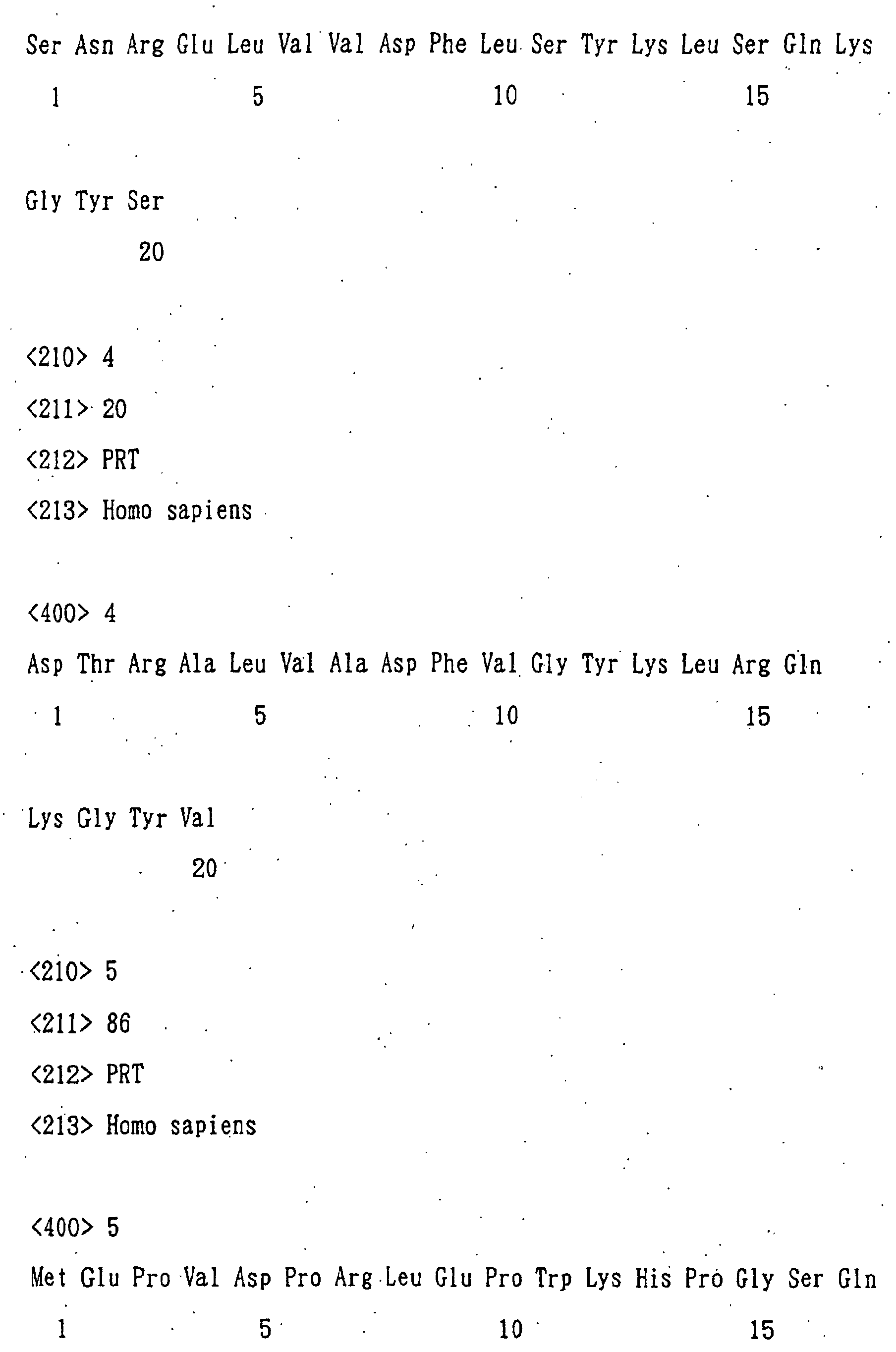
  • the BH4 domain examples include (a) Bcl-2 BH4 domain (SEQ ID NO: 2), (b) Bcl-x L BH4 domain (SEQ ID NO: 3), (c) Bcl-w BH4 domain (SEQ ID NO: 4), (d) C. elegans Ced-9 BH4 domain (amino acid nos: 79 to 98 of SEQ ID NO: 9) and the like.
  • the Bcl-2 BH4 domain (SEQ ID NO: 2) and the Bcl-x L BH4 domain (SEQ ID NO: 3) are preferable.
  • the BH4 domain may be an amino acid sequence having substitution, deletion or insertion of at least one amino acid residue in any one of the above-mentioned amino acid sequences (a) to (d), and may be an amino acid sequence having at least 50%, preferably 70% or higher, and more preferably 90% or higher sequence identity to any one of the above-mentioned amino acid sequences (a) to (d), as long as the domain exhibits the reduction of the mitochondrial ⁇ and the inhibition of the cytochrome c release determined according to the methods described above.
  • the polypeptide used in the BH4 fusion polypeptide of the present invention capable of exhibiting uptake action into a cell includes, for instance, TAT from human immunodeficiency virus (HIV), p27 from HTLV-I, art/trs from HIV, VP22 from HSV-1, Antp from Drosophila and the like.
  • HIV human immunodeficiency virus
  • p27 from HTLV-I
  • art/trs from HIV
  • VP22 from HSV-1
  • Antp from Drosophila and the like.
  • amino acid sequence of the polypeptide capable of exhibiting uptake action into a cell includes, for instance:
  • the uptake action into a cell can be examined on a microscope by immunologically staining with an antibody against the peptide or introducing a fluorescent-labeling into the peptide.
  • the chemically modified group includes functional groups exhibiting fluorescence, functional groups not involved in the formation of the three-dimensional structure of polypeptide, and the like, as long as the polypeptides comprising an amino acid sequence having the chemically-modified amino acid residue are capable of exhibiting uptake action into a cell.
  • the term "chemically modified group” as referred to herein may be an amino acid residue (for instance, ⁇ -alanine or the like) other than the amino acid residues constituting a naturally-occurring "polypeptide capable of exhibiting uptake action into a cell.”
  • the functional group exhibiting fluorescence includes eosin, fluorescein isothiocyanate (FITC), and the like.
  • the functional group not involved in the formation of the three-dimensional structure of the polypeptide includes spacer groups represented by ⁇ -alanine residue or the like. It is preferable that the functional-group is present at the terminal at which the "polypeptide capable of exhibiting uptake action into a cell” is fused to the "BH4 domain of anti-apoptotic Bcl-2 family protein.”
  • each of the "polypeptide capable of exhibiting uptake action into a cell” and the "BH4 domain of anti-apoptotic BcI-2 family protein” can maintain their inherent three-dimensional structures, so that their functions can be sufficiently exhibited.
  • the BH4 fusion polypeptide of the present invention is a polypeptide comprising an amino acid sequence of the region consisting of at least amino acid nos: 49 to 57 (SEQ ID NO: 6) of TAT sequence (SEQ ID NO: 5) from human immunodeficiency virus, and (a) the sequence of the BH4 domain (SEQ ID NO: 2) of Bcl-2 protein, (b) an amino acid sequence of the BH4 domain (SEQ ID NO: 3) of Bcl-x L protein, (c) an amino acid sequence of the BH4 domain (SEQ ID NO: 4) of Bcl-w protein, or (d) a BH4 domain (amino acid nos: 79 to 98 of SEQ ID NO: 9) of C. elegans Ced-9.
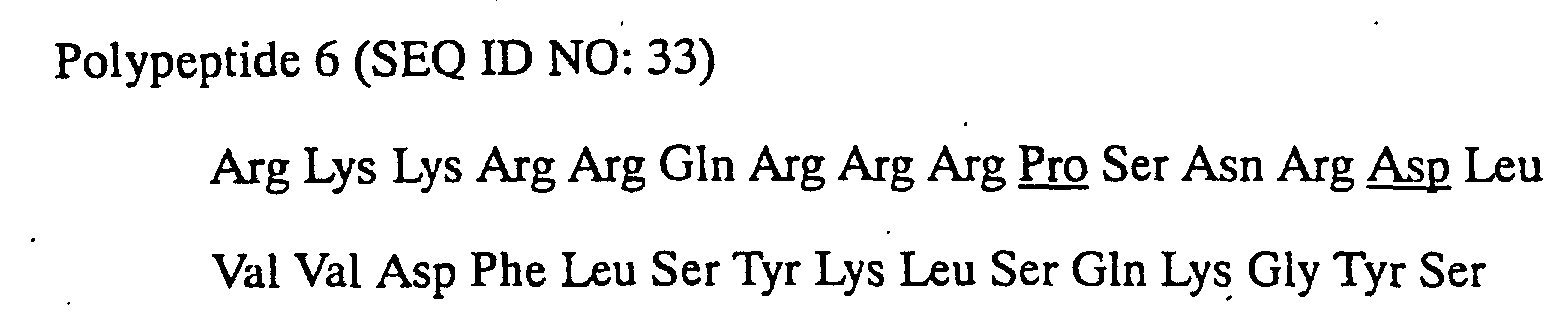
  • the BH4 fusion polypeptide of the present invention is concretely a polypeptide comprising one amino acid sequence selected from the group consisting of the amino acid sequences of SEQ ID NOs: 7, 8, 28, 29, 30, 31, 32 and 33.
  • Cys (TAT)- ⁇ -Ala-BH4 peptide which is a BH4 fusion peptide of the present invention, can be synthesized by Fmoc method using Fmoc-linked amide resin in ABI433A automated synthesizer.
  • the resulting protected peptide resin is treated with a reagent containing trifluoroacetic acid, and free peptide is then purified by reverse phase HPLC.
  • eosin-5-iodoacetamide dissolved in DMF was mixed with the above-mentioned purified peptide dissolved in 50 mM phosphate buffer (pH 7.7), and the mixture was allowed to react at room temperature for 1 hour. After the reaction, the peptide is purified again by reverse phase HPLC, and collected as a single peak. The molecular weight of the purified sample is determined by MALDI-TOF MS.
  • the BH4 fusion polypeptide of the present invention for instance, as the apoptosis-inhibitory ability in HeLa cell, there can be expected to have an inhibition ratio of at least 50%, preferably 70% or higher, and more preferably 90% or higher, as compared to those in the absence of the BH4 fusion polypeptide.
  • the BH4 fusion polypeptide of the present invention exhibits anti-apoptotic activity
  • the BH4 fusion polypeptide can be used as an active ingredient in an apoptosis-inhibitor.
  • the apoptosis-inhibitor is also encompassed in the present invention.
  • apoptosis-inhibitor of the present invention resides in that the apoptosis-inhibitor comprises the above-mentioned BH4 fusion polypeptide.
  • the apoptosis-inhibitor of the present invention comprises the BH4 fusion polypeptide exhibiting an anti-apoptotic activity
  • neurodegenerative disorders such as Alzheimer's disease, Parkinson's disease, amyotrophic lateral sclerosis, retinitis pigmentosa or cerebellar degeneration
  • osteomyelodysplasia aplastic anemia and the like
  • ischemic diseases myocardial infarction, brain infarction, apoplectic stroke, ischemic reperfusion disorder and the like
  • fulminant hepatitis hepatic failures caused by addictions such as an alcoholism, infectious multiple organ failure, diabetes and the like.
  • the present invention also encompasses a method for treating the above-mentioned diseases, characterized by administering the above-mentioned apoptosis-inhibitor to a patient with the above-mentioned diseases to inhibit apoptosis, thereby treating those diseases.
  • the treatment method is, among all, suitable for treatment of ischemic diseases, particularly myocardial infarction and brain infarction, and especially myocardial infarction.
  • the organ can be stored in a more preferable state until implantation.
  • the apoptosis-inhibitor of the present invention may comprise the BH4 fusion polypeptide in any modified form so that the uptake of the above-mentioned BH4 fusion polypeptide into a particular cell is facilitated.
  • the apoptosis-inhibitor of the present invention may contain various aids which are usually employed within a range so that anti-apoptotic activity can be exhibited.
  • the administration form, the administration method and the dose can be suitably set, depending upon age, weight and conditions of an individual to be administered.
  • BH4 fusion polypeptide for the manufacture of a prophylactic or therapeutic agent for the above-mentioned diseases, notably ischemic diseases, particularly myocardial infarction and brain infarction, and especially myocardial infarction.
  • anti-human Bcl-x L polyclonal antibodies [L19 specific to the region of amino acid nos: 193 to 212 of human Bcl-x L amino acid sequence (SEQ ID NO: 10), and S18 specific to the region of amino acid nos: 2-19 of the amino acid sequence], those obtained from Santa Cruz Biotechnology were used.
  • diisopropylcarbodiimide/1-hydroxybenzotriazole-activated Fmoc-protected amino acid one obtained from Genzyme-Syena was used.
  • As other reagents and the like those reagents manufactured by Wako Pure Chemical Industries, Ltd. were used unless otherwise indicated.
  • Human bcl-x L mutant DNAs were prepared by polymerase chain reaction (PCR) using a proofreading Pfu DNA polymerase (manufactured by Stratagene), human B cell-derived cDNA library (manufactured by Clontech) as a template and oligonucleotides of each of SEQ ID NO: 11 and SEQ ID NO: 12 as primers.
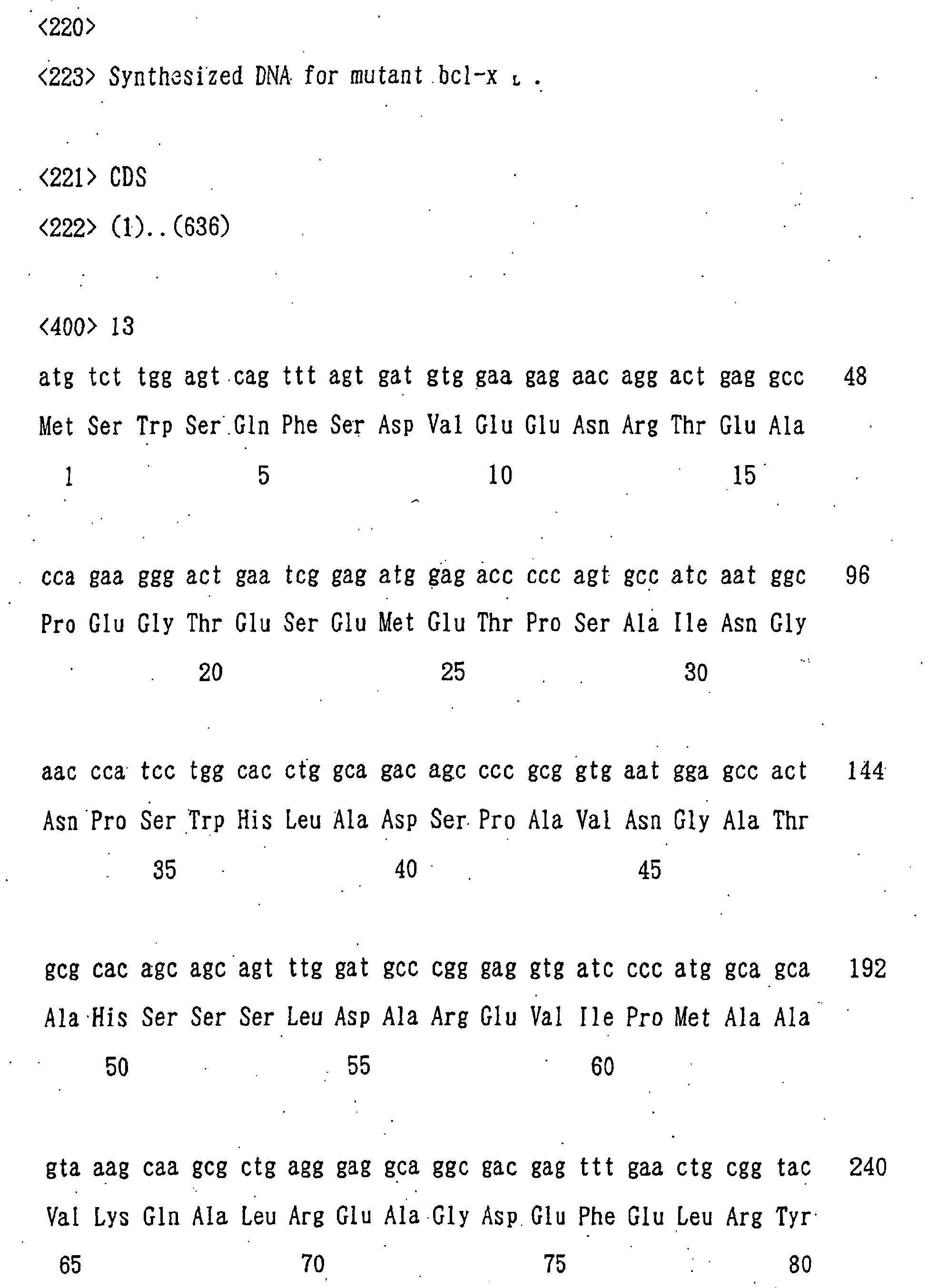
  • the sequence of the above-mentioned human bcl-x L mutant DNA is shown in SEQ ID NO: 13 of Sequence Listing.
  • Each of the resulting amplified fragments was subcloned into pUC-GAGGS expression vector [Shimizu, et al., Oncogene, 13, 21-29 (1996)].
  • HeLa cells a human cervical carcinoma cell line
  • GFP green fluorescence protein
  • the resulting transfected cells were treated with VP16 for 24 hours. Thereafter, the cells were stained with 1 ⁇ M Hoechst 33342, and the extent of apoptosis was then calculated as the percentage of GFP-positive cells exhibiting nuclear fragmentation to all the positive cells.
  • DAF decay-accelerating factor
  • the DAF-positive cells sorted as described above were treated with 200 ⁇ M VP16 for 24 hours. Thereafter, the cells were treated with 10 ⁇ M digitonin at 37°C for 10 minutes, and supernatant and pellets were separated by centrifugation. The amount of cytochrome c was estimated by Western blot analysis using anti-pigeon cytochrome c antibody.
  • Rat liver mitochondria (1 mg protein/ml) isolated in accordance with a report made by Shimizu et al. [ Oncogene, 13, 21-29(1996)] were incubated at 25°C in a medium containing 0.3 M mannitol, 10 mM HEPES/K + (pH 7.4), 0.1% fatty acid-free BSA, 1 mM potassium phosphate, 40 ⁇ M CaCl 2 and 4.2 mM succinate for energization in the presence or absence of recombinant proteins.
  • Rhodamine 123 Rhodamine 123
  • the cytochrome c release was evaluated by centrifuging the above-mentioned mitochondria, re-suspending the resulting pellets in an RIPA buffer to give mitochondria suspension, and subjecting the mitochondria suspension and supernatant to Western blot analysis using anti-cytochrome c antibodies.
  • VDAC Purified VDAC (20 ⁇ g/ml) was incubated with recombinant Bcl-x L (rBcl-x L ) and recombinant ⁇ 21 (r ⁇ 21), and the resulting mixture was immunoprecipitated with anti-Bcl-x L (L19) antibody and normal rabbit IgG.
  • isolated mitochondria (1 mg) were incubated with 20 ⁇ g of Bcl-x L N-terminal polypeptide or Bcl-x L C-terminal polypeptide for 5 minutes.
  • мем ⁇ ран ⁇ е о ⁇ е ⁇ е ⁇ ество ⁇ о ⁇ ки ⁇ а ⁇ а ⁇ а ⁇ ⁇ о ⁇ о ⁇ о ⁇ о ⁇ е ⁇ ⁇ о ⁇ о ⁇ о ⁇ ⁇ о ⁇ е ⁇ ⁇ о ⁇ е ⁇ ⁇ о ⁇ е ⁇ ⁇ о ⁇ е ⁇ ⁇ о ⁇ е ⁇ ⁇ о ⁇ е ⁇ ⁇ о ⁇ е ⁇ ⁇ о ⁇ е ⁇ ⁇ о ⁇ е ⁇ ⁇ о ⁇ е ⁇ ⁇ g/ml ⁇ g/ml chymostatin, 1 ⁇ g/ml leupeptin, 1 ⁇ /ml antipain, 1 ⁇ g/ml pepstatin), followed by ultrasonic disruption.
  • Immunoprecipitation was carried out with anti-Bcl-x polyclonal antibodies corresponding to the polypeptides used.
  • Co-immunoprecipitation of VDAC was detected by Western blotting using an anti-VDAC antibody.
  • VDAC VDAC
  • Purified VDAC was reconstituted in small unilamellar vesicles by the ultrasonic freeze-thaw procedure described in a report made by Shimizu et al.[ Nature , 399, 483-487 (1999)]. Sucrose uptake experiment was performed by assessing liposomal swelling.
  • Liposomes produced at pH 5.2 were incubated at 25°C in 1 ml of liposome buffer together with rBcl-x L , r ⁇ 21, rBax or a polypeptide for 3 minutes.
  • acidic pH was a required condition for efficient uptake of rBcl-x L and rBax into the liposomes.
  • sucrose was added up to a concentration of 50 mM to the mixture, and the liposomal swelling was assessed by the decrease in light scatter at a wavelength of 520 nm using a spectrophotometer (F-4500, manufactured by Hitachi, Ltd.).
  • Sucrose uptake was also estimated from 14 C-sucrose uptake as described in the report made by Shimizu et al. [ Nature , 399, 483-487(1999)].
  • Human Bcl-xL and Bcl-x L ⁇ 21 (lacking the N-terminus 21 amino acids residues of Bcl-x L ) were expressed as glutathione-S-transferase (GST) fusion proteins in Escherichia coli strain DH5 ⁇ , and the resulting fusion proteins were purified on a glutathione-sepharose column.
  • GST glutathione-S-transferase
  • human Bcl-x L or Bcl-x L ⁇ 21, and GST were separated by cleavage with thrombin.
  • human Bax was obtained in accordance with literature by Narita et al. [ Proc. Natl. Acad. Sci., USA, 95, 14681-14686 (1988)].
  • the resulting purified proteins were dissolved in a buffer [composition: 20 mM Tris-HCl (pH 7.4), 2 mM MgCl 2 , 1 mM dithiothreitol].
  • GST proteins derived from a vector carrying no insert were prepared, and used as mock control proteins.
  • Rat liver VDAC was purified in accordance with a report made by Shimizu et al. [ Nature , 399, 483-487 (1999)]. The resulting VDAC showed a single band on SDS-polyacrylamide electrophoresis.
  • Polypeptides were synthesized with a Model 396 Multiple Polypeptide synthesizer [manufactured by Advanced Chemtech], using diisopropylcarbodiimide/1-hydroxybenzotriazole-activated, Fmoc-protected amino acids.
  • N-terminal (amino acid nos: 2 to 19) polypeptide of Bcl-x L and the C-terminal (amino acid nos: 193 to 212) polypeptide of Bcl-x L were purchased from Santa Cruz Biotechnology.
  • TAT-BH4 polypeptide TAT-BH4 polypeptide
  • TAT-BH4 polypeptide had a purity of 90% or higher by monitoring fluorescence derived from the protein (absorption at 280 nm) using reverse-phase HPLC.
  • Bcl-2/Bcl-x L inhibits apoptosis by blocking apoptotic mitochondrial changes. Therefore, there was evaluated whether or not the BH4 domain is required for Bcl-2/Bcl-x L to inhibit apoptotic mitochondrial changes.
  • HeLa cells were transfected in accordance with Reference Example 1 with DNA corresponding to Bcl-x L or its BH4 deletion mutant ( ⁇ 21: lacking amino acid residues of 2 to 21-positions of Bcl-x L ), and apoptotic assay was performed.
  • the HeLa cells were transiently transfected with an expression construct for Bcl-x L or ⁇ 21 or an empty vector together with an expression construct for DAF.
  • Cell surface expression of DAF was used to identify cells transfected with the above-mentioned DNAs, and these cells were then collected using a flow cytometer.
  • the transfected cells expressing Bcl-x L having the BH4 domain show resistance against apoptotic induction by 100 ⁇ M or 200 ⁇ M VP16
  • the transfected cells expressing ⁇ 21 lacking the BH4 domain and the cells transfected with the empty vector show no resistance against apoptotic induction by 100 ⁇ M VP16.
  • Bcl-x L directly binds to VDAC and inhibits the activity of this channel, thereby leading to inhibition of apoptotic cytochrome c release and ⁇ loss.
  • interaction between Bcl-x L and VDAC has also been detected in cells as described in a report made by Shimizu et al. [ Nature, 399, 483-487 (1999)]. Therefore, the functional role of the BH4 domain in VDAC regulation was examined.
  • VDAC activity was measured by assessing sucrose uptake into VDAC-containing liposomes, using the two procedures: a method with radiolabeled sucrose described in a report made by Shimizu et al. [ Nature, 399, 483-487 (1999)], and a method for measuring a sucrose uptake-dependent liposomal swelling that was monitored by decrease in light scatter.
  • the results are shown in Figure 6. Since sucrose-uptake-dependent liposomal swelling was confirmed by microscopic observation or flow cytometric analysis, it is thought that the liposomal swelling is based on the rapid influx of sucrose and water through large VDAC pores which overwhelmed osmosis-dependent efflux of water.
  • VDAC-liposomes as shown in Figure 6, developed swelling in the presence of sucrose, whereas VDAC-free liposomes and denatured VDAC-liposomes did not show swelling, indicating that sucrose uptake was mediated by VDAC.
  • Example 5 Involvement of BH4 Domain of Bcl-x L in Inhibition of VDAC Activity
  • L 8 V 9 mutant polypeptides (LV89VF, LV89GG and ⁇ LV) and F 12 L 13 mutant polypeptides (FL1213GG and ⁇ FL) did not inhibit VDAC.
  • Example 6 Inhibition of Ca 2+ -Induced- ⁇ Loss from Isolated Mitochondria by BH4 Domain of Bcl-x L
  • the BH4 polypeptide of Bcl-x L significantly inhibits Ca 2+ -induced ⁇ loss and VDAC activity, although only at a molar concentration of about 25-fold higher than that of recombinant Bcl-x L , consistent with the notion that other regions besides BH4 may increase the accessibility of VDAC.
  • Bcl-2/Bcl-x L BH1 mutant and BH2 mutant that influence the apoptotic activity indeed affect the ability of Bcl-2/Bcl-x L to bind to VDAC.
  • all of the BH4 mutant polypeptides respectively showed their ability to inhibit VDAC activity (Figure 15) in proportion to their ability to inhibit mitochondrial ⁇ ( Figure 14).
  • the above-mentioned TAT-BH4 polypeptide of 30 amino acid residues was synthesized, the polypeptide comprising N-terminal eosin-conjugated cystein and the PTD of HIV TAT protein fused to the Bcl-x L BH4 polypeptide.
  • HeLa cells were treated with 200 ⁇ M VP16 in the presence of the TAT-BH4 polypeptide, and then observed by an optical phase-contrast microscope and a fluorescence microscope, respectively.
  • TAT-PTD has been known to facilitate the delivery of proteins into cells in a rapid, concentration-dependent manner. The results are shown in Figure 16, wherein the upper panel shows the cell morphology, and the lower panel shows the intracellular accumulation of the polypeptide.
  • FIG 16 shows that TAT-BH4 polypeptide which had been added to the culture medium was incorporated into the cells at a transfection efficiency of about 90%.
  • Co-staining of the transfected cells with mitotracker revealed that the TAT-BH4 polypeptide was mainly localized at the mitochondria.
  • the TAT-BH4 polypeptide significantly inhibited VP16-induced apoptosis in a concentration-dependent manner, whereas TAT-only polypeptide did not significantly inhibit VP16-induced apoptosis at any concentrations.
  • BH4-only polypeptide showed no effect on VP16-induced apoptosis, as a result of an inefficient transport of the polypeptide into cells. It is shown from these findings that the TAT-BH4 polypeptide is sufficient to inhibit apoptotic cell death.
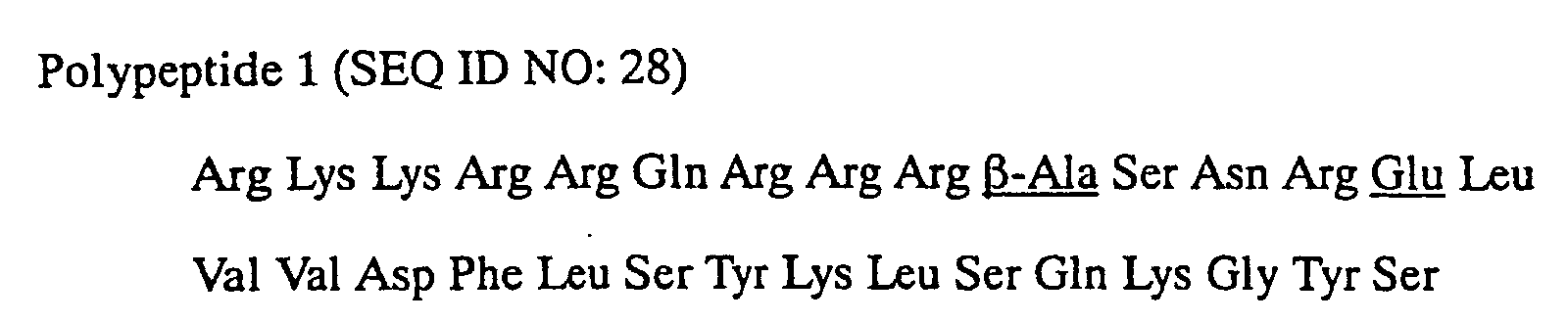
  • TAT-BH4 polypeptides (BH4 fusion polypeptides) having the following amino acid sequences (SEQ ID NOs: 28 to 33) were synthesized in the same manner as in Example 2.
  • BH4 fusion polypeptides were dissolved in H 2 O to give aqueous solutions of 0.1 ⁇ g/ml or 1 ⁇ g/ml BH4 fusion polypeptide (apoptosis inhibitor).
  • HeLa cells were pre-treated by bringing these aqueous solutions into contact with HeLa cells for 3 hours. HeLa cells were then treated with 200 ⁇ M VP16 to induce apoptosis. Each of the cells was stained with 1 ⁇ M Hoechst 33342, and an extent of apoptosis (viability) was calculated as a ratio of cells exhibiting nuclear fragmentation to total cells. The results are shown in Table 1.
  • SEQ ID NO: 1 shows consensus sequence of BH4 domain conserved in anti-apoptotic Bcl family protein.
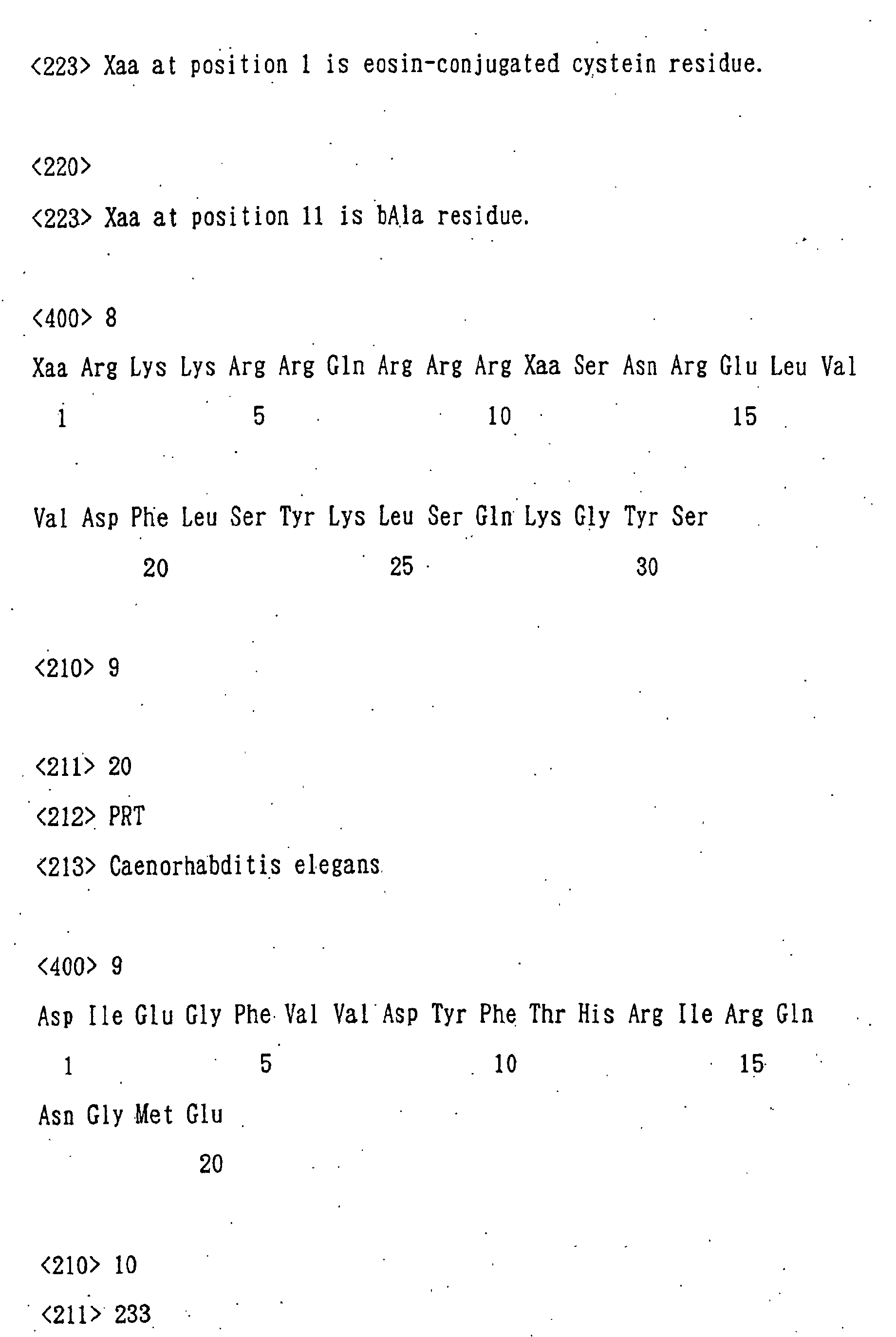
  • Xaa at position 1 shows eosin-conjugated cystein residue
  • Xaa at position 11 shows ⁇ -Ala residue
  • Xaa at position 1 shows eosin-conjugated cystein residue
  • Xaa at position 11 shows ⁇ -Ala residue
  • SEQ ID NO: 11 is a sequence of a primer designed for preparing mutant bcl-x L based on human bcl-x L DNA sequence.
  • SEQ ID NO: 12 is a sequence of a primer designed for preparing mutant bcl-x L based on human bcl-x L DNA sequence.
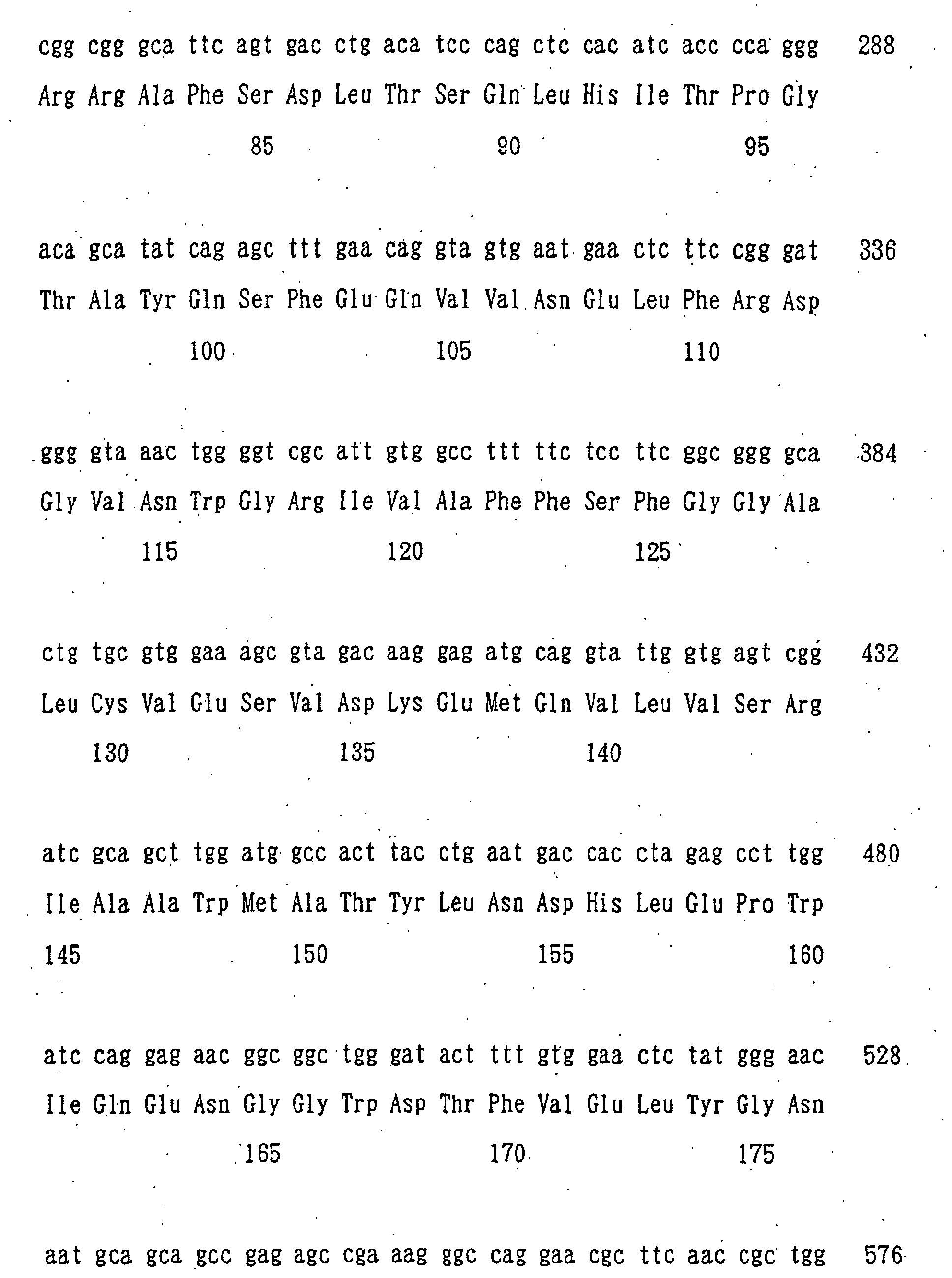
  • SEQ ID NO: 13 is a sequence of a synthesized mutant bcl-x L DNA sequence.
  • SEQ ID NO: 14 is an amino acid sequence for a synthesized mutant Bcl-x L BH4 polypeptide.
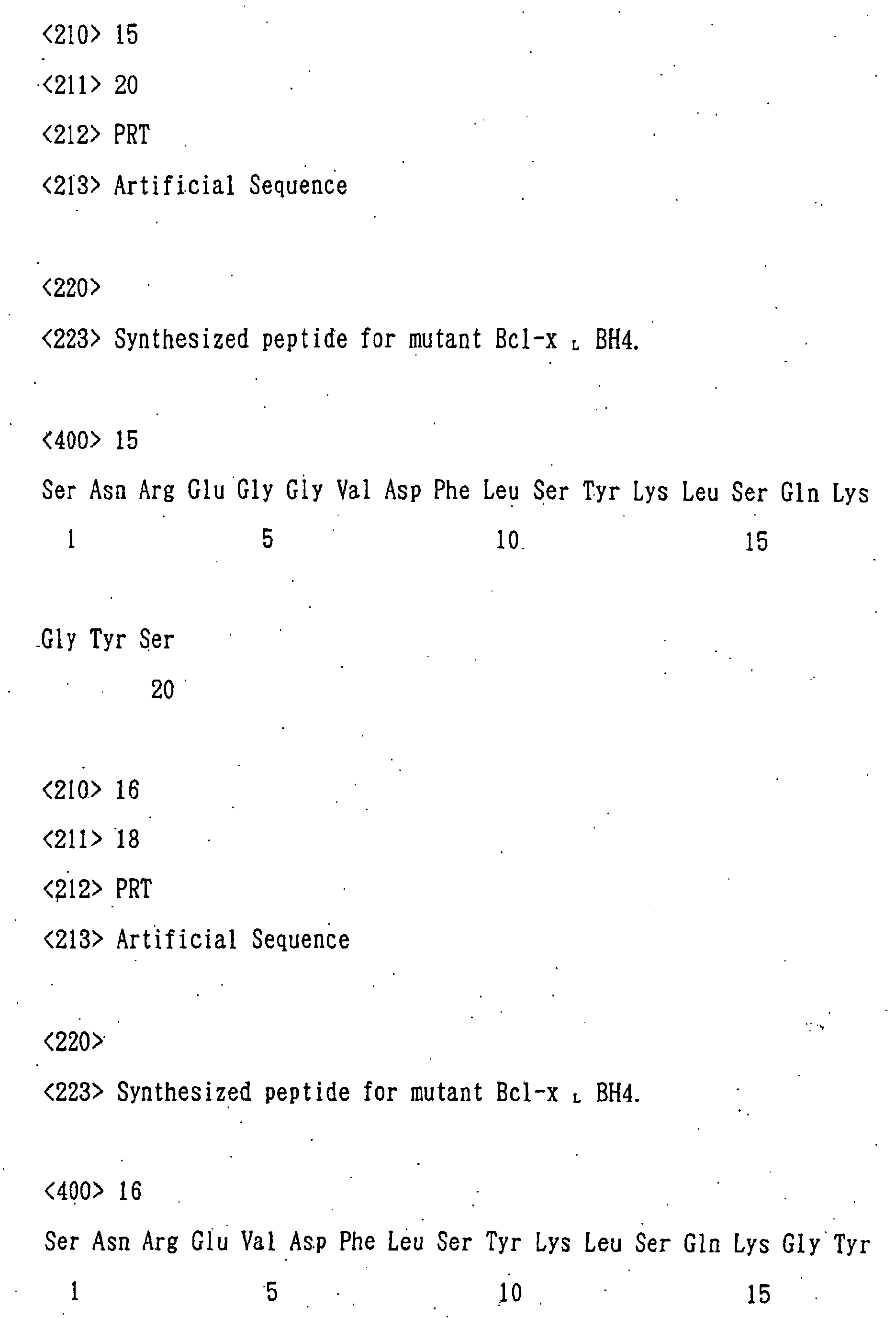
  • SEQ ID NO: 15 is an amino acid sequence for a synthesized mutant Bcl-x L BH4 polypeptide.
  • SEQ ID NO: 16 is an amino acid sequence for a synthesized mutant Bcl-x L BH4 polypeptide.
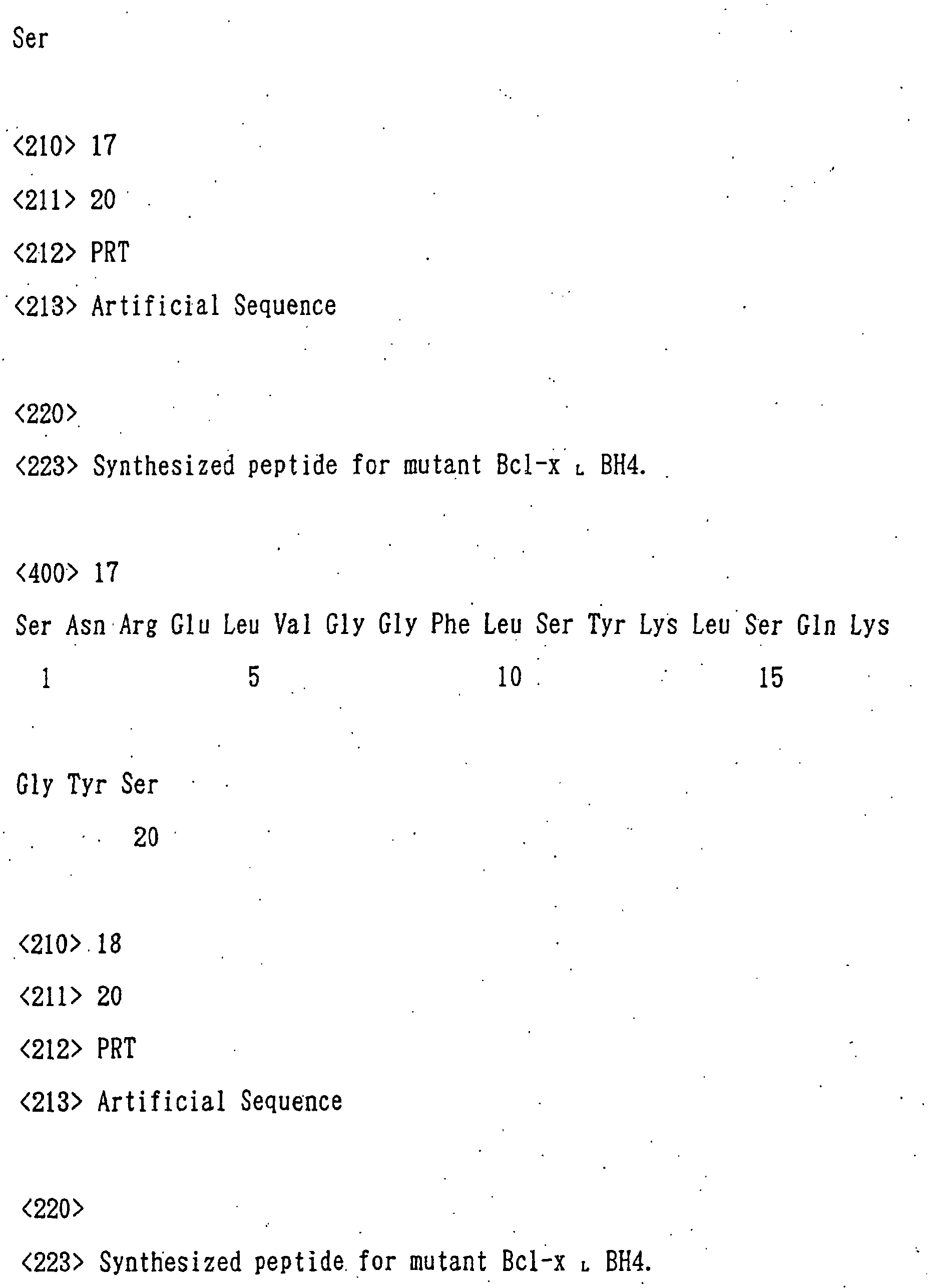
  • SEQ ID NO: 17 is an amino acid sequence for a synthesized mutant Bcl-x L BH4 polypeptide.
  • SEQ ID NO: 18 is an amino acid sequence for a synthesized mutant Bcl-x L BH4 polypeptide.
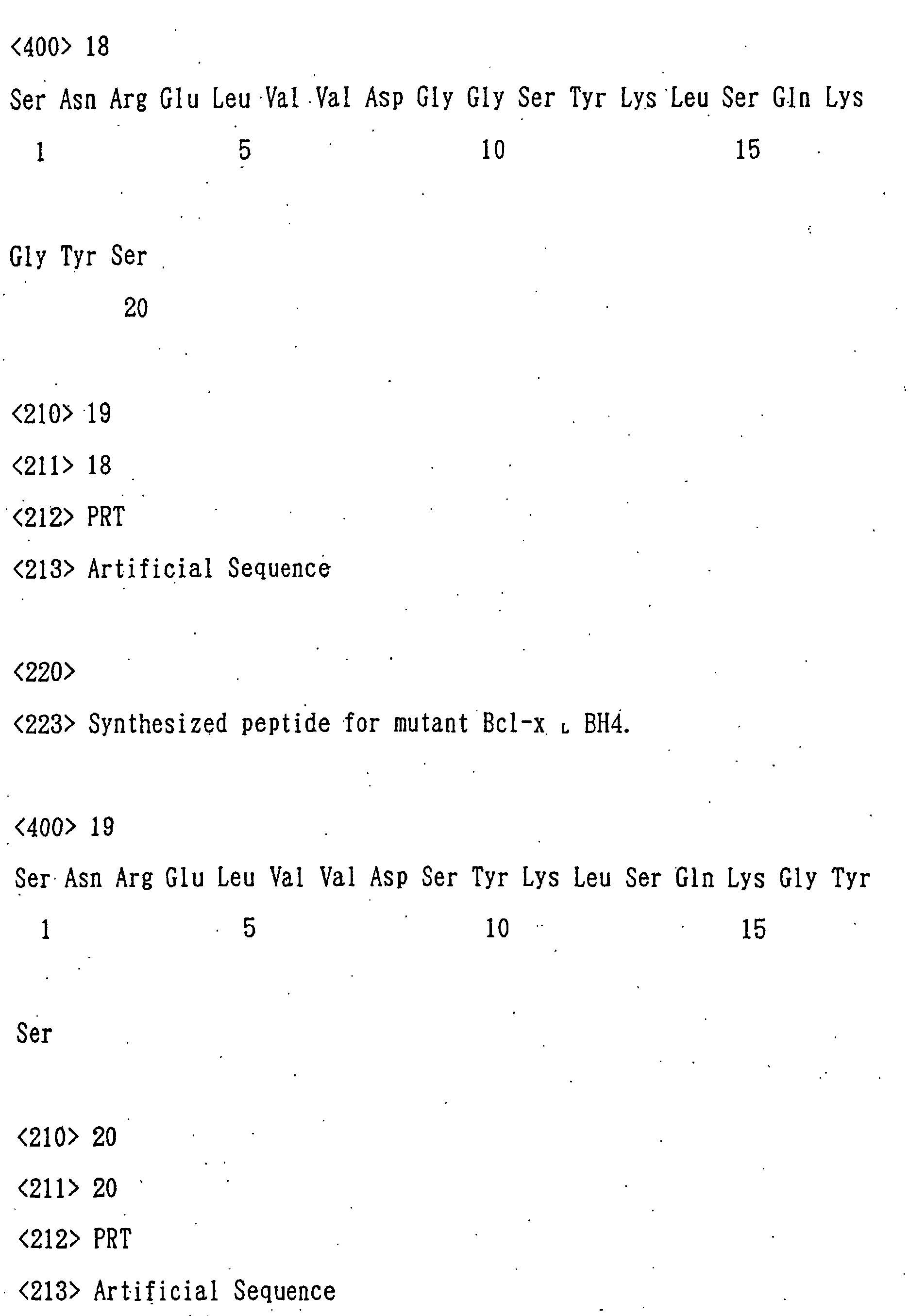
  • SEQ ID NO: 19 is an amino acid sequence for a synthesized mutant Bcl-x L BH4 polypeptide.
  • SEQ ID NO: 20 is an amino acid sequence for a synthesized mutant Bcl-x L BH4 polypeptide.
  • SEQ ID NO: 21 is an amino acid sequence for a synthesized mutant Bcl-x L BH4 polypeptide.
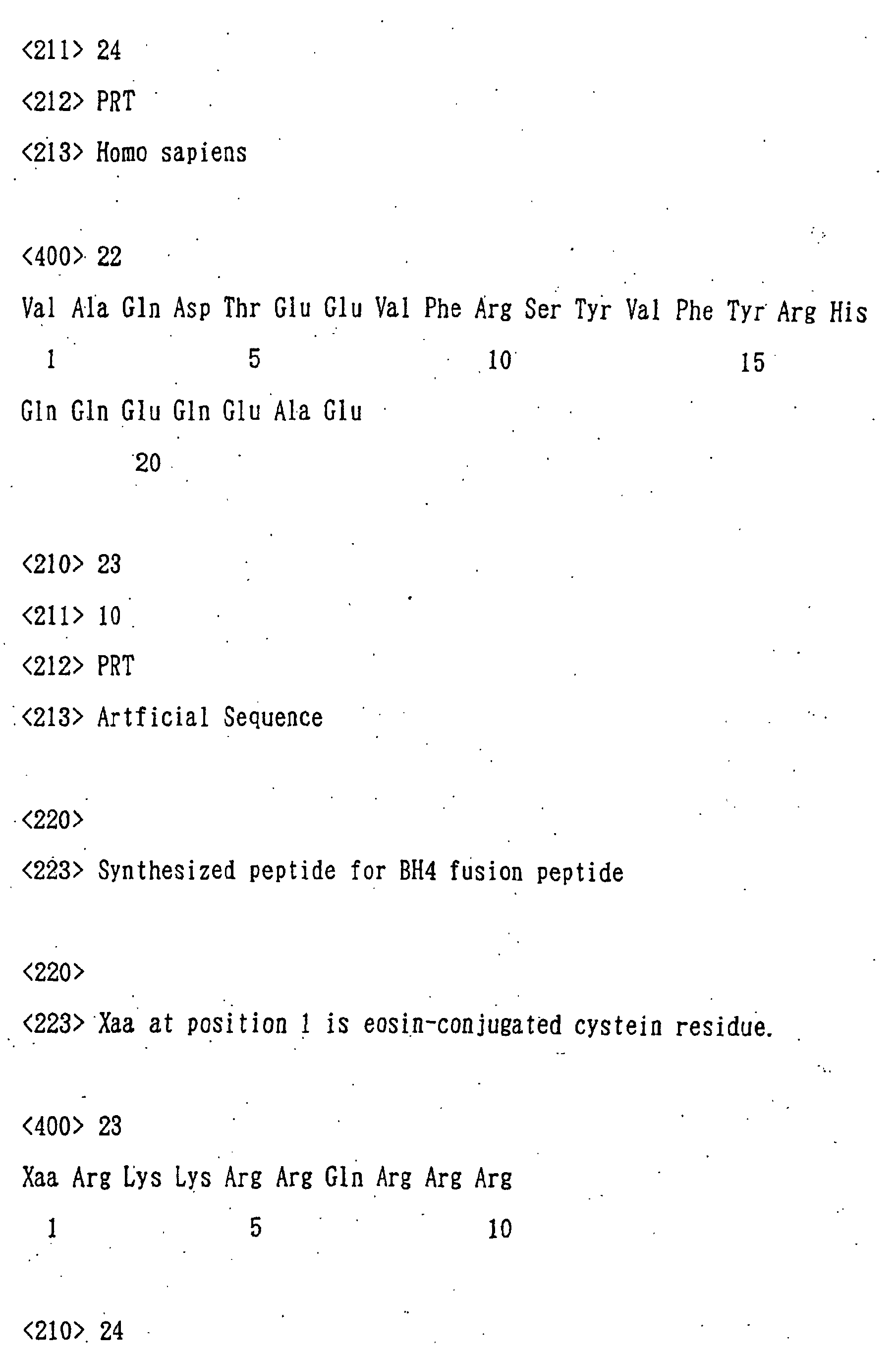
  • SEQ ID NO: 23 is a polypeptide sequence resulting from introduction of eosin-conjugated cystein residue into N-terminal of a polypeptide TAT-PTD. In the sequence, wherein Xaa at position 1 shows eosin-conjugated cystein residue.
  • SEQ ID NO: 28 is an amino acid sequence of a synthesized BH4 fusion polypeptide. In the sequence, Xaa shows ⁇ -Ala residue.
  • SEQ ID NO: 29 is an amino acid sequence of a synthesized BH4 fusion polypeptide. In the sequence, Xaa shows ⁇ -Ala residue.
  • SEQ ID NO: 30 is an amino acid sequence of a synthesized BH4 fusion polypeptide.
  • SEQ ID NO: 31 is an amino acid sequence of a synthesized BH4 fusion polypeptide.
  • SEQ ID NO: 32 is an amino acid sequence of a synthesized BH4 fusion polypeptide.
  • SEQ ID NO: 33 is an amino acid sequence of a synthesized BH4 fusion polypeptide.
  • the BH4 fusion polypeptide of the present invention exhibits excellent effects such that each of mitochondrial ⁇ loss and cytochrome c release can be inhibited, and that the uptake of the BH4 fusion polypeptide into cells can be efficiently carried out, so that apoptosis can be efficiently inhibited.
  • the apoptosis inhibitor of the present invention can inhibit apoptosis, it is useful as a therapeutic agent for AIDS, neurodegenerative disorders, osteomyelodysplasia, ischemic diseases, infectious multiple organ failure, fulminant hepatitis, toxic hepatic failures, diabetes and the like.

Landscapes

  • Health & Medical Sciences (AREA)
  • Chemical & Material Sciences (AREA)
  • Life Sciences & Earth Sciences (AREA)
  • Organic Chemistry (AREA)
  • General Health & Medical Sciences (AREA)
  • Medicinal Chemistry (AREA)
  • Gastroenterology & Hepatology (AREA)
  • Toxicology (AREA)
  • Proteomics, Peptides & Aminoacids (AREA)
  • Genetics & Genomics (AREA)
  • Biophysics (AREA)
  • Biochemistry (AREA)
  • Bioinformatics & Cheminformatics (AREA)
  • Engineering & Computer Science (AREA)
  • Zoology (AREA)
  • Molecular Biology (AREA)
  • Vascular Medicine (AREA)
  • Cardiology (AREA)
  • Veterinary Medicine (AREA)
  • Heart & Thoracic Surgery (AREA)
  • Urology & Nephrology (AREA)
  • Pharmacology & Pharmacy (AREA)
  • Nuclear Medicine, Radiotherapy & Molecular Imaging (AREA)
  • Public Health (AREA)
  • General Chemical & Material Sciences (AREA)
  • Animal Behavior & Ethology (AREA)
  • Chemical Kinetics & Catalysis (AREA)
  • Peptides Or Proteins (AREA)
  • Medicines That Contain Protein Lipid Enzymes And Other Medicines (AREA)
  • Addition Polymer Or Copolymer, Post-Treatments, Or Chemical Modifications (AREA)

Abstract

A BH4 fusion polypeptide comprising an amino acid sequence of a polypeptide capable of exhibiting uptake action into a cell or a derivative sequence thereof; and an amino acid sequence selected from the group consisting of (A) an amino acid sequence comprising at least the sequence of BH4 domain (SEQ ID NO: 1) of anti-apoptotic Bcl-2 family protein, (B) an amino acid sequence having substitution, deletion or insertion of at least one amino acid residue in the amino acid sequence of SEQ ID NO: 1, and (C) an amino acid sequence having at least 50% sequence identity to the amino acid sequence of SEQ ID NO: 1, wherein the BH4 fusion polypeptide is capable of inhibiting apoptosis; an apoptosis-inhibitor comprising the BH4 fusion polypeptide mentioned above; a method for treating an ischemic disease, characterized by administering the apoptosis-inhibitor mentioned above to a patient with the ischemic disease to inhibit apoptosis, thereby treating the ischemic disease; and use of the BH4 polypeptide mentioned above, for manufacturing a prophylactic or therapeutic agent for an ischemic disease. According to the present invention, the apoptosis can be efficiently suppressed, so that its application as a therapeutic agent for AIDS, neurodegenerative disorders, osteomyelodysplasia, ischemic diseases, infectious multiple organ failure, fulminant hepatitis, diabetes and the like can be expected.

Description

TECHNICAL FIELD
The present invention relates to a BH4 fusion polypeptide capable of inhibiting apoptosis and its use, an apoptosis inhibitor and a method for treating ischemic diseases. More particularly, the present invention relates to a BH4 fusion polypeptide possessing an incorporation action into a cell and capable of inhibiting apoptosis, and its use, an apoptosis inhibitor comprising the fusion polypeptide, and a method for treating ischemic diseases. The BH4 fusion polypeptide is useful as therapeutic agents for treating AIDS, neurodegenerative diseases, osteomyelodysplasia, ischemic diseases, infectious multiple organ failure, fulminant hepatitis, ischemic reperfusion disorders, diabetes and the like.
BACKGROUND ART
Cell death plays an important role in vivo in the dynamics of cells such as organ and tissue cells. Many of the cell deaths progress by apoptosis, and the mechanism of the apoptosis is usually strictly controlled. The above-mentioned apoptosis may also be caused by pathological factors.
Recently, a large number of molecules associated with apoptosis have been identified, and apoptotic signaling mechanisms have been investigated. For example, it has been shown that Bcl-2 and Bcl-xL proteins suppressively regulate apoptotic signaling upstream of caspase, a protease which is essential to induction of apoptosis, and that caspase family acts as a mediator for the signal.
Bcl-2 protein inhibits apoptosis by inhibiting loss of mitochondrial membrane potential (ΔΨ), release of cytochrome c from mitochondria, and release of apoptosis-inducing factor (hereinafter referred to as "AIF"). The above-mentioned Bcl-2 protein is the product of bc1-2 gene, which was found as one of oncogenes by Tsujimoto et al. [Tsujimoto, Y. et al., Science, 228: 1440-1443 (1985)].
Recently, there have been suggested that 1) Bcl-2 family protein directly targets voltage-dependent anion channel (VDAC) to regulate apoptotic release of cytochrome c; 2) pro-apoptotic factors such as Bax and Bak stimulate VDAC activity to allow for passage of cytochrome c, whereas anti-apoptotic factors inhibit the VDAC; and 3) VDAC is required for apoptotic ΔΨ loss to occur. The above-mentioned VDAC, which is abundantly present in mitochondrial outer membrane, has a function of regulating mitochondrial membrane permeability and form a permeability transition pore together with adenine nucleotide translocator (ANT) and other molecule.
As described above, there have been suggested various involvements of Bcl-2 family protein in inhibiting release of cytochrome c, ΔΨ loss or the like. However, there are much unclarified matters in the detailed action mechanism at present.
In addition, when an intact Bcl-2 protein is used, there is a defect that the protein becomes large and tends to be degraded, and the production efficiency is lowered in some cases.
DISCLOSURE OF INVENTION
An object of the present invention is to provide a BH4 fusion polypeptide capable of inhibiting apoptosis and its use as an apoptosis inhibitor and a method for treating ischemic diseases
The present invention relates to:
  • [1] a BH4 fusion polypeptide comprising:
  • an amino acid sequence of a polypeptide capable of exhibiting uptake action into a cell or a derivative sequence thereof; and
  • an amino acid sequence selected from the group consisting of:
  • (A) an amino acid sequence comprising at least the sequence of BH4 domain (SEQ ID NO: 1) of anti-apoptotic Bcl-2 family protein;
  • (B) an amino acid sequence having substitution, deletion or insertion of at least one amino acid residue in the amino acid sequence of SEQ ID NO: 1; and
  • (C) an amino acid sequence having at least 50% sequence identity to the amino acid sequence of SEQ ID NO: 1,
  • wherein the BH4 fusion polypeptide is capable of inhibiting apoptosis;
  • [2] a DNA encoding the BH4 fusion polypeptide of item [1] above;
  • [3] an apoptosis-inhibitor comprising the BH4 fusion polypeptide of item [1] above;
  • [4] a method for treating an ischemic disease, characterized by administering the apoptosis-inhibitor of item [3] above to a patient with the ischemic disease to inhibit apoptosis, thereby treating the ischemic disease; and
  • [5] use of the BH4 polypeptide of item [1] above, for manufacturing a prophylactic or therapeutic agent for an ischemic disease.
  • BRIEF DESCRIPTION OF THE DRAWINGS
  • Figure 1 is a diagram showing the results for evaluating the effect of transient expression of Bcl-xL and Δ21 on VP16-induced apoptosis. HeLa cells were transfected with a Bcl-xL-expressing construct (○), a Δ21-expressing construct (▪) or a vector alone (□) as well as with 0.1 µg of GFP-expressing construct (for detecting DNA-transfected cells) for 24 hours. The transfected cells were treated with VP16 at indicated concentrations for 24 hours. Treated cells were then stained with Hoechst 33342. Apoptotic cell death was determined as a ratio of GFP-positive cells with nuclear fragmentation among all GFP-positive cells. Data shown are from one of three independent experiments.
  • Figure 2 is a diagram showing the results for evaluating the sorting of Bcl-xL-expressing HeLa cells and Δ21-expressing HeLa cells sorted by flow cytometry. HeLa cells were transfected with the product for expression of Bcl-xL, Δ21 or vector alone together with a DAF-expressing plasmid for 24 hours. Next, the cells were stained with anti-human DAF antibody, and DAF-positive cells were sorted by flow cytometry. Expression of DAF (the upper panel) or Bcl-xL and Δ21 proteins (the lower panel) by the sorted cells were assayed by flow cytometry. Dotted lines show the results for Bcl-xL-expressing cell, and solid lines show the results for Δ21-expressing cells. Solid image region represents the results for untransfected cells. Data shown are the representative results of three independent experiments.
  • Figure 3 is a diagram showing the results for evaluating the effects of Bcl-xL or Δ21 on apoptotic release of cytochrome c. DAF-positive cells sorted as in Figure 2 were treated with 200 µM VP16 for indicated periods of time, subjected to biochemical cell fractionation and then to Western blotting, to determine release of cytochrome c. Data shown are from one of three independent experiments.
  • Figure 4 is a diagram showing the results for evaluating the role of BH4 domain of Bcl-xL in the inhibition of Ca2+-induced ΔΨ loss and release of cytochrome c from isolated mitochondria. Panel (A) shows the results obtained by treating rat liver mitochondria (1 mg/ml) with rBcl-xL, rΔ21 or mock protein (20 µg/ml) together with 40 µM Ca2+, and examining ΔΨ using Rh123. Panel (B) shows the results for evaluating cytochrome c levels in supernatant (sup) and mitochondria (pt) fractions at 15 minutes after incubation. Data shown are from one of three independent experiments. "Total " indicates the total amount of cytochrome c release by 1% Triton-X100.
  • Figure 5 is a diagram showing the results for evaluating the direct interaction between VDAC and Bcl-xL or Δ21. Purified rat liver VDAC (20 µg/ml) was incubated with rBcl-xL protein (20 µg/ml) or rΔ21 protein (20 µg/ml). Each sample was immunoprecipitated with an anti-Bcl-xL antibody, L19 (α-Bcl-xL), and normal rabbit IgG (IgG). Next, each of immunoprecipitated products was assayed by Western blotting using anti-VDAC antibody. "Total" indicates a total amount of VDAC used.
  • Figure 6 is a diagram showing the results for evaluating sucrose uptake by VDAC liposome. According to the previous report by Shimizu et al. [Nature, 399, 483-487 (1999)], VDAC-free liposome, VDAC liposome or heat denatured-VDAC liposome (heated VDAC liposome) was incubated with 50 mM sucrose. Liposome swelling was continuously monitored by the decrease of light scatter using a spectrophotometer at a wavelength of 520 nm.
  • Figure 7 is a diagram showing the results for evaluating the effects of Δ21 on the inhibition of VDAC activity. In the left panel, VDAC liposome was incubated with 50 mM sucrose together with 20 µg/ml rBcl-xL, rΔ21 or mock protein. Light scatter was monitored in the same manner as in Figure 6. The right panel shows the results for evaluating the effect of protein concentration on the inhibition of VDAC activity by Δ21. VDAC liposome of indicated concentrations was incubated with 50 mM sucrose together with rBcl-xL (closed column) or rΔ21 (open column). Differences between light scatter detected at the start time (time 0) and at 10 minutes (Δ light scatter) are indicated.
  • Figure 8 is a diagram showing the results for evaluating the effect of Bcl-xL on 14C-sucrose uptake into VDAC liposome. According to the previous report by Shimizu et al. [Nature, 399, 483-487 (1999)], VDAC-free liposome, heat denatured-VDAC liposome (heated) or VDAC liposome was incubated for 10 minutes with 14C-sucrose (2 µCi) in the presence or absence of 20 µg/ml rBcl-xL or rΔ21. After centrifugation and filtration, liposome was collected and dissolved in 2% SDS. Next, 14C-sucrose radioactivity was counted in the liposome.
  • Figure 9 is a diagram showing the results for evaluating the inhibition of VDAC activity by BH4 polypeptide. VDAC liposome was incubated with 50 mM sucrose together with Bcl-xL BH4 polypeptide at indicated concentrations, and light scatter was measured.
  • Figure 10 is a diagram showing the results for evaluating the inhibition of VDAC activity by various BH4 polypeptides. VDAC liposome was incubated with sucrose together with 20 µg/ml Bcl-2 BH4 polypeptide, Bcl-xL BH4 polypeptide or Bak-putative BH4 polypeptide, and then light scatter was measured.
  • Figure 11 is a diagram showing the results for evaluating the inhibition of Bax-induced enhancement of VDAC activity by Bcl-xL BH4 polypeptide. VDAC liposome was incubated with 50 mM sucrose in the presence or absence of 5 µg/ml rBax and/or Bcl-xL BH4 polypeptide of an indicated concentration, and light scatter was measured. Differences between light scatter detected at the start time (time 0) and at 10 minutes (Δ light scatter) are indicated.
  • Figure 12 is a diagram showing the results for evaluating the interaction between Bcl-xL N-terminal fragment or C-terminal fragment and VDAC. Mitochondria (1 mg/ml) were incubated for 5 minutes with Bcl-xL N-terminal (amino acid nos: 2-19) polypeptide (20 µg/ml) or Bcl-xL C-terminal (amino acid nos: 193-212) polypeptide (20 µg/ml). Mitochondrial lysate was immunoprecipitated with anti-Bcl-xL antibody (S18) (α-NBcl-xL, an antibody against amino acid nos: 2-19) or L19 antibody (α-CBcl-xL, an antibody against amino acid nos: 193-212). Normal rabbit IgG (IgG) was used as a control. Immunoprecipitated products were analyzed by Western blotting using anti-VDAC antibody.
  • Figure 13 shows the amino acid sequences of mutant Bcl-xL BH4 polypeptides. In the figure, substituted residues are indicated by letters with blackened background.
  • Figure 14 shows the results for evaluating the ability of mutant BH4 polypeptides to inhibit VDAC activity. VDAC liposome was incubated with 20 µg/ml Bcl-xL BH4 polypeptide or mutant polypeptides indicated together with 50 mM sucrose, and light scatter was measured. The left panel shows the results of continuously-monitored light scatter. The right panel shows the difference between light scatter detected at the start time (time 0) and at 10 minutes (Δ light scatter).
  • Figure 15 is a diagram showing the results for evaluating the inhibition of Ca2+-induced ΔΨ loss from mitochondria by BH4 polypeptide. The left panel shows the results obtained by incubating isolated mitochondria (1 mg/ml) with 20 µg/ml Bcl-xL BH4 polypeptide in the presence of 40 µM Ca2+, and then continuously monitoring an intensity for Rhodamine 123. The right panel shows the results obtained by incubating isolated mitochondria (1 mg/ml) with 20 µg/ml Bcl-xL BH4 polypeptide or various mutant polypeptides in the presence of 40 µM Ca2+ for 15 minutes and then measuring ΔΨ using an intensity for Rhodamine 123.
  • Figure 16 is a diagram showing representative examples of HeLa cells treated with VP16 in the presence or absence of TAT-BH4 polypeptide. HeLa cells were treated with 200 µM VP16 for the indicated periods of time in the presence of TAT-BH4 polypeptide at the indicated concentrations. Next, the morphology of cells (the upper panel) and the accumulation of polypeptide in cells (the lower panel) were observed by a light phase contrast microscope and a fluorescence microscope, respectively.
  • Figure 17 is a diagram showing the results for evaluating the effect of TAT-BH4 polypeptide on VP16-induced apoptosis. Cells were treated with VP16 at the indicated concentrations for 24 hours in the presence of 100 µg/ml TAT-BH4 polypeptide (□) or TAT polypeptide (○) or absence of polypeptide () and then stained with Hoechst 33342. Apoptotic cell death was determined by the morphology of nuclei using a fluorescence microscope. Data shown are from one of three independent experiments.
  • Figure 18 is a diagram showing the results for evaluating the dose-dependent inhibition of VP16-induced apoptosis by TAT-BH4 polypeptide. HeLa cells were treated with 200 µM VP16 for 24 hours in the presence of TAT-BH4 polypeptide (□) or TAT polypeptide (○) at the indicated concentrations. Apoptotic cell death was determined in the same manner as in Figure 17.
  • BEST MODE FOR CARRYING OUT THE INVENTION
    One of the significant features of the BH4 fusion polypeptide of the present invention resides in that the BH4 fusion polypeptide comprises:
  • an amino acid sequence of a polypeptide capable of exhibiting uptake action into a cell or a derivative sequence thereof, and
  • an amino acid sequence selected from the group consisting of:
  • (A) an amino acid sequence comprising at least the sequence of BH4 domain (SEQ ID NO: 1) of anti-apoptotic Bcl-2 family protein;
  • (B) an amino acid sequence having substitution, deletion or insertion of at least one amino acid residue in the amino acid sequence of SEQ ID NO: 1; and
  • (C) an amino acid sequence having at least 50% sequence identity to the amino acid sequence of SEQ ID NO: 1,
  • wherein the BH4 fusion polypeptide is capable of inhibiting apoptosis.
    Since BH4 fusion polypeptide of the present invention comprises a minimum unit for inhibiting apoptosis, namely an amino acid sequence selected from the group consisting of:
  • (A) an amino acid sequence comprising at least the sequence of BH4 domain (SEQ ID NO: 1) of anti-apoptotic Bcl-2 family protein;
  • (B) an amino acid sequence having substitution, deletion or insertion of at least one amino acid residue in the amino acid sequence of SEQ ID NO: 1; and
  • (C) an amino acid sequence having at least 50% sequence identity to the amino acid sequence of SEQ ID NO: 1,
  • the BH4 fusion polypeptide exhibits an excellent characteristic such that the BH4 fusion polypeptide can efficiently inhibit apoptosis. Since the BH4 fusion polypeptide of the present invention comprises a BH4 domain, the mitochondrial ΔΨ loss and the cytochrome c release can be respectively suppressed, so that it is thought that the apoptosis can be inhibited.
    Further, since the BH4 fusion polypeptide of the present invention comprises an amino acid sequence of a polypeptide capable of exhibiting uptake action into a cell or a derivative sequence thereof, the BH4 fusion polypeptide can exhibit excellent effects such that the BH4 fusion polypeptide can be more efficiently incorporated into the cell, so that the polypeptide can efficiently inhibit apoptosis.
    The term "apoptosis" as used herein refers to a manner of cell death characterized by changes represented by condensation or fragmentation of nucleus of cell, condensation or fragmentation of the cell itself, and fragmentation of chromosomal DNA of the cell into nucleosome units (about 180 bp), and includes those events caused by pathological factors and physiological factors (for instance, expression of physiological events such as immunization, hormone or development).
    The term "anti-apoptotic Bcl-2 family protein" means Bcl-2 protein and those possessing an action of inhibiting apoptosis among proteins similar to the Bcl-2 protein. An activity of inhibiting apoptosis will herein be referred to as "anti-apoptotic activity," and an activity for promoting apoptosis will be referred to as "pro-apoptotic activity."
    The inhibition and promotion of apoptosis can be evaluated by, for instance, the following method, without being limited thereto. The method comprises treating cells with VP16 for 24 hours, thereafter staining the cells with 1 µM Hoechst 33342, and then calculating an extent of apoptosis as the ratio of cells exhibiting nuclear fragmentation to the total cells.
    In addition, the anti-apoptotic activity can be evaluated by the reduction of the mitochondrial ΔΨ and the inhibition of the cytochrome c release.
    ΔΨ can be evaluated by determining uptake of Rhodamine 123 (Rh123) as previously described in, for instance, Shimizu et al. [Oncogene, 13, 21-29 (1996)].
    The cytochrome c release can be evaluated by preparing mitochondria, centrifuging the mitochondria to obtain mitochondria pellets and supernatant, resuspending the resulting pellets in an RIPA buffer, and subjecting the resulting suspension of mitochondria and the supernatant to Western blotting with an anti-cytochrome c antibody.
    The above-mentioned anti-apoptotic Bcl-2 family proteins have sequence homologies in Bcl-2 homology (BH)1, BH2, BH3 and BH4 domains. The above-mentioned BH1 and BH2 domains, and probably BH3 domain are crucial in the dimerization with any of the proteins belonging to the pro-apoptotic factor family protein as determined by mutationally structural analysis, by which it is thought that pro-apoptotic activity is inhibited.
    The amino acid sequence of SEQ ID NO: 1 is a sequence of BH4 domain which is commonly conserved only among the proteins belonging to anti-apoptotic Bcl-2 family protein. In the BH4 domain, it is thought that α-helix is crucial for action for inhibiting apoptosis by a polypeptide comprising the BH4 domain, and that especially well conserved amino acid residues (amino acid nos: 8 and 9 in SEQ ID NO: 1) play an important role in the formation of the α-helix structure. Further, it is deduced that the amino acid residues of amino acid nos: 5, 6, 9, 10 and 14 in SEQ ID NO: 1 are aligned on the binding surface of α-helix of the above-mentioned BH4 domain to another protein.
    Therefore, the BH4 domain of the above-mentioned anti-apoptotic Bcl-2 family protein may have an amino acid sequence having substitution, deletion or insertion of at least one amino acid residue in the amino acid sequence of SEQ ID NO: 1, as long as the BH4 domain is a sequence in which amino acid nos: 5, 6, 8, 9, 10 and 14 in above-mentioned the amino acid sequence of SEQ ID NO: 1 are conserved. A polypeptide having the amino acid sequence comprising the mutation is a polypeptide capable of exhibiting an anti-apoptotic activity. The above-mentioned anti-apoptotic activity can be examined by evaluating the reduction of the mitochondrial ΔΨ and the inhibition of the cytochrome c release according to the methods described above.
    Here, "amino acid sequence having substitution, deletion or insertion of at least one amino acid residue" can be arbitrarily prepared in accordance with the desired sequence when a peptide is synthesized by a known method.
    Further, the BH4 domain of the above-mentioned anti-apoptotic Bcl-2 family protein may have an amino acid sequence having at least 50%, preferably 70% or higher, and more preferably 90% or higher sequence identity to the amino acid sequence of SEQ ID NO: 1, as long as the BH4 domain has a sequence in which amino acid nos: 5, 6, 8, 9, 10 and 14 in the above-mentioned amino acid sequence of SEQ ID NO: 1 are conserved.
    The above polypeptide having the sequence identity is a polypeptide capable of exhibiting anti-apoptotic activity. The above-mentioned anti-apoptotic activity can be examined by evaluating the reduction of the mitochondrial ΔΨ and the inhibition of cytochrome c release according to the methods described above.
    The term "sequence identity" as used herein refers to the identity of amino acid residues between two amino acid sequences, namely between the amino acid sequence of SEQ ID NO: 1 and an amino acid sequence to be compared thereto. The above-mentioned "sequence identity" can be determined by comparing two amino acid sequences which are optimally aligned with each other over the region of the amino acid sequence to be compared. Here, the amino acid sequence to be compared may have addition or deletion (for instance, gap, overhang or the like), as compared to the amino acid sequence of SEQ ID NO: 1 given herein.
    The numerical value (percentage) of the sequence identity can be calculated by determining identical amino acid residues which are present in both of the sequences to determine the numbers of matched sites, thereafter dividing the above-mentioned number of the matched site by a total number of the amino acid residues present within the region of the sequence to be compared, and multiplying the resulting numerical value by 100. An algorithm for obtaining optimal alignment and homology includes, for instance, BLAST and the like. Concretely, the optimal alignment and homology can be obtained by gene analysis software GENETYX-SV/RG Ver. 4.01 (manufactured by Software Development), gene analysis program BLAST [internet address:
    http://www.ncbi.nlm.nih.gov/BLAST; reference: Altschul, S.F. et al., J. Mol. Biol., 215, 403-410, (1990), Altschul, S.F. et al., Nucl. Acid Res., 25, 3389-3402, (1997)], or the like.
    In addition, in the present invention, the BH4 domain of the above-mentioned anti-apoptotic Bcl-2 family protein may have an amino acid sequence having at least 50%, preferably 70% or higher, and more preferably 90% or higher homology to the amino acid sequence of SEQ ID NO: 1, as long as the polypeptide having the domain exhibits the anti-apoptotic activity, namely the reduction of the mitochondrial ΔΨ and the inhibition of the cytochrome c release determined according to the methods described above. Here, the BH4 domain of the above-mentioned anti-apoptotic Bcl-2 family protein may have an amino acid sequence having conservative substitution. The above-mentioned "conservative substitution" encompasses substitution with an amino acid possessing similar properties (i.e., hydrophobicity, electric charge, pK, features in three-dimensional structure); and substitution with an amino acid which would cause any changes in the three-dimensional structure and folding structure of the polypeptide only to an extent so that the physiological activity inherently owned by the polypeptide is maintained. The conservative substitution includes, for instance, the followings:
    substitutions within the groups of: 1) glycine and alanine; 2) valine, isoleucine and leucine; 3) aspartic acid, glutamic acid, aspartic acid and glutamine; 4) serine and threonine; 5) lysine and arginine; or 6) phenylalanine and tyrosine.
    Concrete examples of the BH4 domain include (a) Bcl-2 BH4 domain (SEQ ID NO: 2), (b) Bcl-xL BH4 domain (SEQ ID NO: 3), (c) Bcl-w BH4 domain (SEQ ID NO: 4), (d) C. elegans Ced-9 BH4 domain (amino acid nos: 79 to 98 of SEQ ID NO: 9) and the like. In the present invention, the Bcl-2 BH4 domain (SEQ ID NO: 2) and the Bcl-xL BH4 domain (SEQ ID NO: 3) are preferable. In addition, the BH4 domain may be an amino acid sequence having substitution, deletion or insertion of at least one amino acid residue in any one of the above-mentioned amino acid sequences (a) to (d), and may be an amino acid sequence having at least 50%, preferably 70% or higher, and more preferably 90% or higher sequence identity to any one of the above-mentioned amino acid sequences (a) to (d), as long as the domain exhibits the reduction of the mitochondrial ΔΨ and the inhibition of the cytochrome c release determined according to the methods described above.
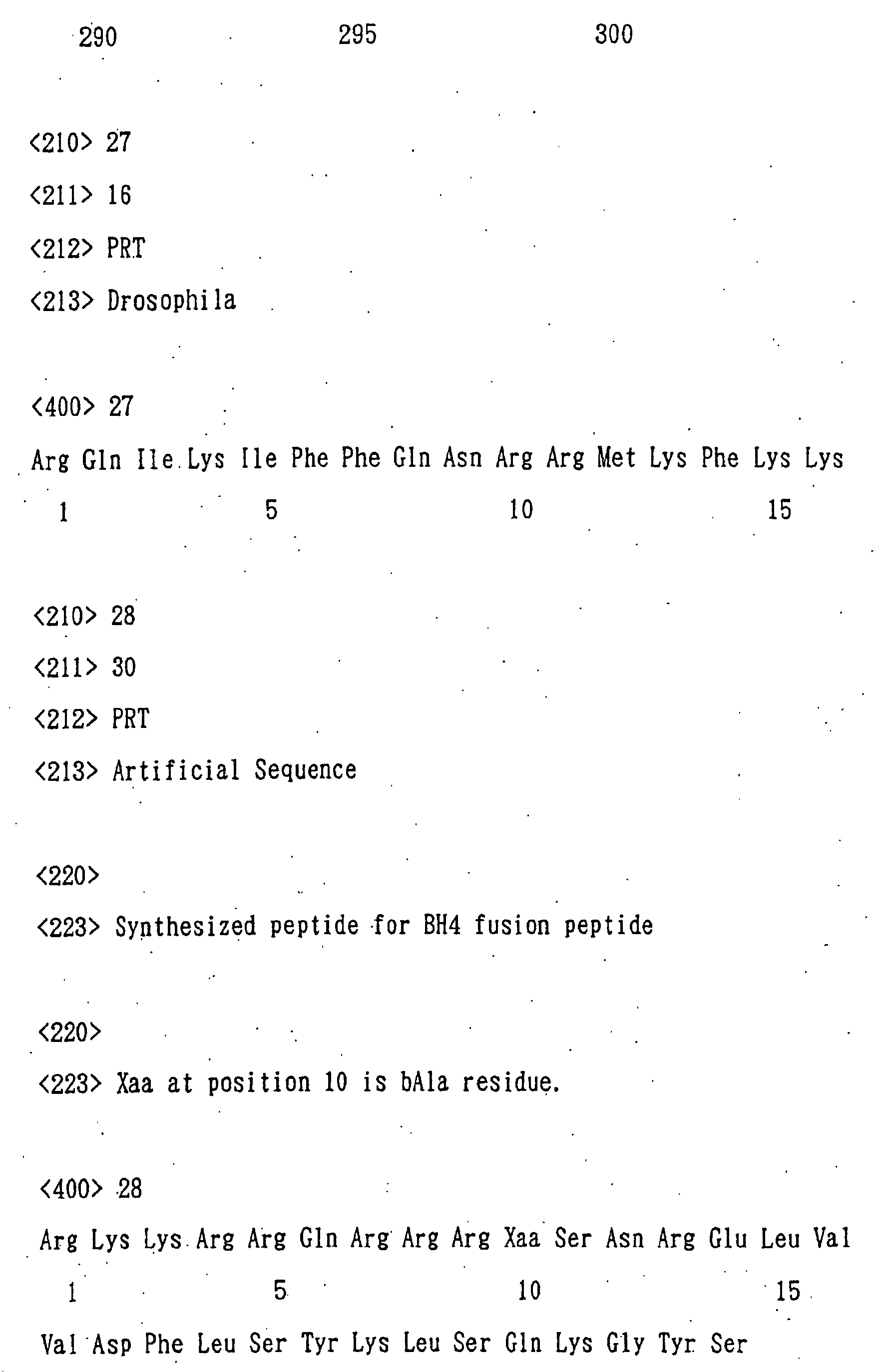
    The polypeptide used in the BH4 fusion polypeptide of the present invention, capable of exhibiting uptake action into a cell includes, for instance, TAT from human immunodeficiency virus (HIV), p27 from HTLV-I, art/trs from HIV, VP22 from HSV-1, Antp from Drosophila and the like.
    The amino acid sequence of the polypeptide capable of exhibiting uptake action into a cell includes, for instance:
  • (i) a sequence comprising at least amino acid nos: 49 to 57 of the amino acid sequence of SEQ ID NO: 5;
  • (ii) a sequence comprising at least amino acid nos: 1 to 13 of the amino acid sequence of SEQ ID NO: 24;
  • (iii) a sequence comprising at least amino acid nos: 1 to 16 of the amino acid sequence of SEQ ID NO: 25;
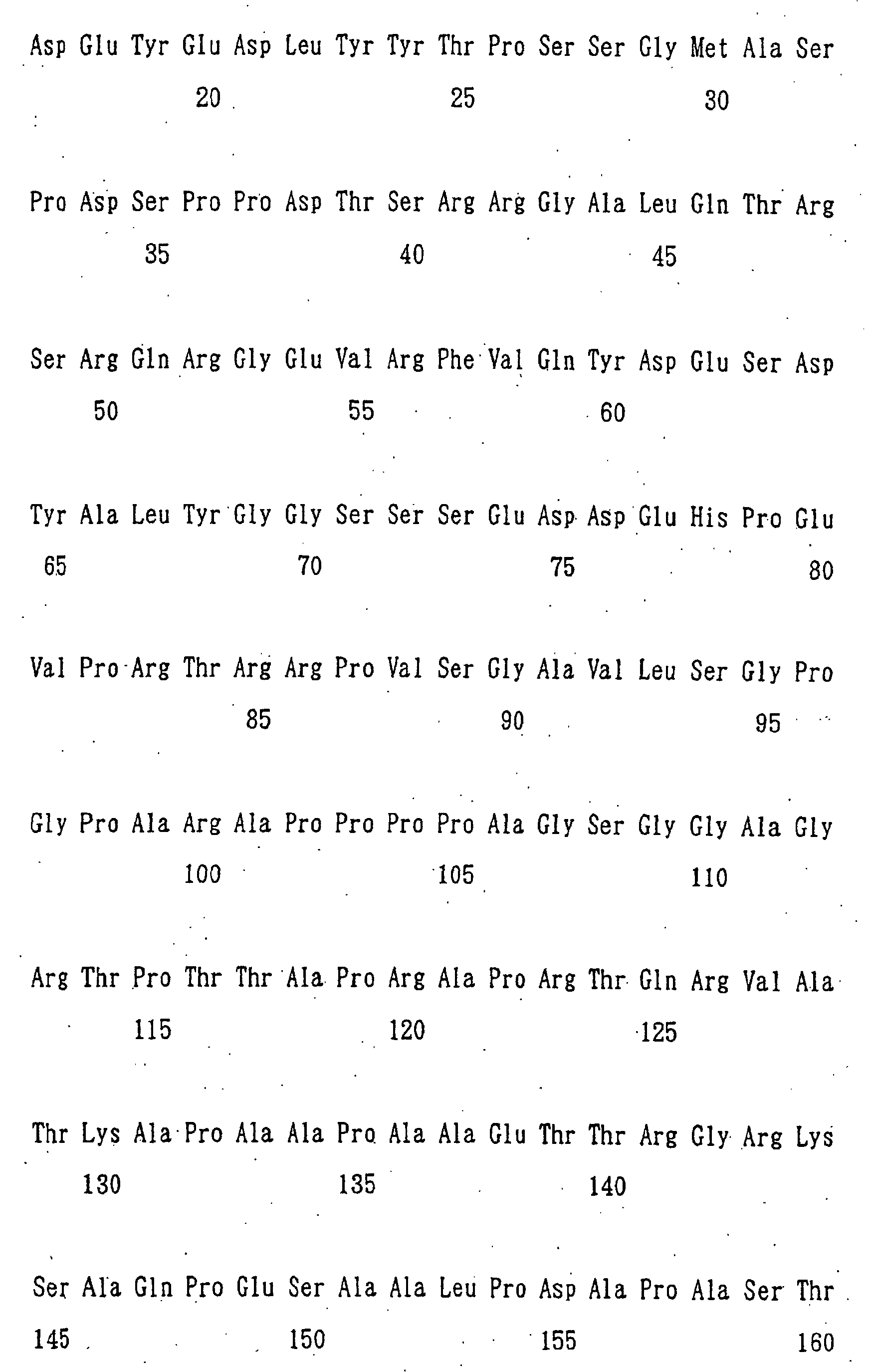
  • (iv) a sequence comprising at least amino acid nos: 1 to 301 of the amino acid sequence of SEQ ID NO: 26;
  • (v) a sequence comprising at least amino acid nos: 1 to 16 of the amino acid sequence of SEQ ID NO: 27;
  • and the like. Among them, an amino acid sequence comprising a region consisting of at least amino acid nos: 49 to 57 (SEQ ID NO: 6) of TAT sequence (SEQ ID NO: 5) from human immunodeficiency virus is preferable.
    The above-mentioned "derivative sequence of the amino acid sequence of a polypeptide capable of exhibiting uptake action into a cell" includes, for instance,
  • (I) an amino acid sequence having a chemically modified group of at least one residue in the above-mentioned amino acid sequence of the polypeptide capable of exhibiting uptake action into a cell, or
  • (II) an amino acid sequence having substitution or insertion of at least one amino acid residue in the above-mentioned amino acid sequence of the polypeptide capable of exhibiting uptake action into a cell,
  • wherein the resulting polypeptide is capable of exhibiting uptake action into a cell.
    The uptake action into a cell can be examined on a microscope by immunologically staining with an antibody against the peptide or introducing a fluorescent-labeling into the peptide.
    The chemically modified group includes functional groups exhibiting fluorescence, functional groups not involved in the formation of the three-dimensional structure of polypeptide, and the like, as long as the polypeptides comprising an amino acid sequence having the chemically-modified amino acid residue are capable of exhibiting uptake action into a cell. The term "chemically modified group" as referred to herein may be an amino acid residue (for instance, β-alanine or the like) other than the amino acid residues constituting a naturally-occurring "polypeptide capable of exhibiting uptake action into a cell."
    The functional group exhibiting fluorescence includes eosin, fluorescein isothiocyanate (FITC), and the like.
    The functional group not involved in the formation of the three-dimensional structure of the polypeptide includes spacer groups represented by β-alanine residue or the like. It is preferable that the functional-group is present at the terminal at which the "polypeptide capable of exhibiting uptake action into a cell" is fused to the "BH4 domain of anti-apoptotic Bcl-2 family protein." By introducing the functional group, each of the "polypeptide capable of exhibiting uptake action into a cell" and the "BH4 domain of anti-apoptotic BcI-2 family protein" can maintain their inherent three-dimensional structures, so that their functions can be sufficiently exhibited.
    It is preferable that the BH4 fusion polypeptide of the present invention is a polypeptide comprising an amino acid sequence of the region consisting of at least amino acid nos: 49 to 57 (SEQ ID NO: 6) of TAT sequence (SEQ ID NO: 5) from human immunodeficiency virus, and (a) the sequence of the BH4 domain (SEQ ID NO: 2) of Bcl-2 protein, (b) an amino acid sequence of the BH4 domain (SEQ ID NO: 3) of Bcl-xL protein, (c) an amino acid sequence of the BH4 domain (SEQ ID NO: 4) of Bcl-w protein, or (d) a BH4 domain (amino acid nos: 79 to 98 of SEQ ID NO: 9) of C. elegans Ced-9.
    It is preferable that the BH4 fusion polypeptide of the present invention is concretely a polypeptide comprising one amino acid sequence selected from the group consisting of the amino acid sequences of SEQ ID NOs: 7, 8, 28, 29, 30, 31, 32 and 33.
    Cys (TAT)-β-Ala-BH4 peptide, which is a BH4 fusion peptide of the present invention, can be synthesized by Fmoc method using Fmoc-linked amide resin in ABI433A automated synthesizer. The resulting protected peptide resin is treated with a reagent containing trifluoroacetic acid, and free peptide is then purified by reverse phase HPLC. Next, eosin-5-iodoacetamide dissolved in DMF was mixed with the above-mentioned purified peptide dissolved in 50 mM phosphate buffer (pH 7.7), and the mixture was allowed to react at room temperature for 1 hour. After the reaction, the peptide is purified again by reverse phase HPLC, and collected as a single peak. The molecular weight of the purified sample is determined by MALDI-TOF MS.
    According to the BH4 fusion polypeptide of the present invention, for instance, as the apoptosis-inhibitory ability in HeLa cell, there can be expected to have an inhibition ratio of at least 50%, preferably 70% or higher, and more preferably 90% or higher, as compared to those in the absence of the BH4 fusion polypeptide.
    Since the BH4 fusion polypeptide of the present invention exhibits anti-apoptotic activity, the BH4 fusion polypeptide can be used as an active ingredient in an apoptosis-inhibitor. The apoptosis-inhibitor is also encompassed in the present invention.
    One of the features in the apoptosis-inhibitor of the present invention resides in that the apoptosis-inhibitor comprises the above-mentioned BH4 fusion polypeptide.
    Since the apoptosis-inhibitor of the present invention comprises the BH4 fusion polypeptide exhibiting an anti-apoptotic activity, there can be expected therapeutic effects for AIDS, neurodegenerative disorders (such as Alzheimer's disease, Parkinson's disease, amyotrophic lateral sclerosis, retinitis pigmentosa or cerebellar degeneration), osteomyelodysplasia (aplastic anemia and the like), ischemic diseases (myocardial infarction, brain infarction, apoplectic stroke, ischemic reperfusion disorder and the like), fulminant hepatitis, hepatic failures caused by addictions such as an alcoholism, infectious multiple organ failure, diabetes and the like. The present invention also encompasses a method for treating the above-mentioned diseases, characterized by administering the above-mentioned apoptosis-inhibitor to a patient with the above-mentioned diseases to inhibit apoptosis, thereby treating those diseases. The treatment method is, among all, suitable for treatment of ischemic diseases, particularly myocardial infarction and brain infarction, and especially myocardial infarction. Alternatively, by adding the apoptosis-inhibitor to a stock solution for preserving an organ to be used for implantation, the organ can be stored in a more preferable state until implantation.
    The apoptosis-inhibitor of the present invention may comprise the BH4 fusion polypeptide in any modified form so that the uptake of the above-mentioned BH4 fusion polypeptide into a particular cell is facilitated. In addition, the apoptosis-inhibitor of the present invention may contain various aids which are usually employed within a range so that anti-apoptotic activity can be exhibited.
    When the apoptosis-inhibitor is administered, the administration form, the administration method and the dose can be suitably set, depending upon age, weight and conditions of an individual to be administered.
    Further, according to the present invention, there is provided use of BH4 fusion polypeptide for the manufacture of a prophylactic or therapeutic agent for the above-mentioned diseases, notably ischemic diseases, particularly myocardial infarction and brain infarction, and especially myocardial infarction.
    The present invention will be concretely described by means of Examples and the like, without intending to limit the scope of the present invention thereto.
    Reagents
    As an anti-pigeon cytochrome c monoclonal antibody (7H8.2C12) cross-reacting with human cytochrome c and rat cytochrome c, one kindly provided by Dr. E. Margoliash (University of Illinois, Illinois) was used. As an anti-human VDAC (porin) monoclonal antibody (31HL) cross-reacting with rat VDAC, one obtained from Calbiochem was used. As anti-human Bcl-xL polyclonal antibodies [L19 specific to the region of amino acid nos: 193 to 212 of human Bcl-xL amino acid sequence (SEQ ID NO: 10), and S18 specific to the region of amino acid nos: 2-19 of the amino acid sequence], those obtained from Santa Cruz Biotechnology were used. As hydroxyapatite and celite, those obtained from Bio-Rad and Roth, respectively, were used. As diisopropylcarbodiimide/1-hydroxybenzotriazole-activated Fmoc-protected amino acid, one obtained from Genzyme-Syena was used. As other reagents and the like, those reagents manufactured by Wako Pure Chemical Industries, Ltd. were used unless otherwise indicated.
    Reference Example 1: DNA Transfection and Apoptosis Assay
    Human bcl-xL mutant DNAs were prepared by polymerase chain reaction (PCR) using a proofreading Pfu DNA polymerase (manufactured by Stratagene), human B cell-derived cDNA library (manufactured by Clontech) as a template and oligonucleotides of each of SEQ ID NO: 11 and SEQ ID NO: 12 as primers. The sequence of the above-mentioned human bcl-xL mutant DNA is shown in SEQ ID NO: 13 of Sequence Listing. Each of the resulting amplified fragments was subcloned into pUC-GAGGS expression vector [Shimizu, et al., Oncogene, 13, 21-29 (1996)].
    Using lipofectamine, HeLa cells, a human cervical carcinoma cell line, were transfected for 24 hours with the expression plasmid (0.1 µg) for human Bcl-xL or mutant thereof together with the expression construct pEGFP-N1 (manufactured by Clontech) of green fluorescence protein (hereinafter referred to as GFP) (0.1 µg) for monitoring DNA transfection.
    The resulting transfected cells were treated with VP16 for 24 hours. Thereafter, the cells were stained with 1 µM Hoechst 33342, and the extent of apoptosis was then calculated as the percentage of GFP-positive cells exhibiting nuclear fragmentation to all the positive cells.
    In addition, in the case of decay-accelerating factor (DAF) expression, HeLa cells were transfected for 24 hours with the expression plasmids (0.1 µg) for human Bcl-xL or mutant derivative thereof together with 0.1 µg of DAF expression construct (pUC-CAGGS-DAF). After 24 hours, the resulting cells were stained with anti-human DAF antibody and FITC-conjugated anti-mouse IgG for 1 hour. Thereafter, DAF-positive cells were sorted using a cell sorter [trade name: FACS-Vantage manufactured by Becton-Dickinson], and expression of DAF and Bcl-xL was assessed by a flow cytometer. The DAF-positive cells sorted as described above were treated with 200 µM VP16 for 24 hours. Thereafter, the cells were treated with 10 µM digitonin at 37°C for 10 minutes, and supernatant and pellets were separated by centrifugation. The amount of cytochrome c was estimated by Western blot analysis using anti-pigeon cytochrome c antibody.
    Reference Example 2: Measurement of Mitochondrial Biochemical Parameters (ΔΨ and Cytochrome c Release)
    Rat liver mitochondria (1 mg protein/ml) isolated in accordance with a report made by Shimizu et al. [Oncogene, 13, 21-29(1996)] were incubated at 25°C in a medium containing 0.3 M mannitol, 10 mM HEPES/K+ (pH 7.4), 0.1% fatty acid-free BSA, 1 mM potassium phosphate, 40 µM CaCl2 and 4.2 mM succinate for energization in the presence or absence of recombinant proteins.
    ΔΨ was assessed by measuring the uptake of Rhodamine 123 (Rh123) as previously described by Shimizu et al. [Oncogene, 13, 21-29(1996)].
    The cytochrome c release was evaluated by centrifuging the above-mentioned mitochondria, re-suspending the resulting pellets in an RIPA buffer to give mitochondria suspension, and subjecting the mitochondria suspension and supernatant to Western blot analysis using anti-cytochrome c antibodies.
    Reference Example 3: Immunoprecipitation and Western Blot Analysis
    Purified VDAC (20 µg/ml) was incubated with recombinant Bcl-xL (rBcl-xL) and recombinant Δ21 (rΔ21), and the resulting mixture was immunoprecipitated with anti-Bcl-xL (L19) antibody and normal rabbit IgG. In order to detect interactions between polypeptide and VDAC, isolated mitochondria (1 mg) were incubated with 20 µg of Bcl-xL N-terminal polypeptide or Bcl-xL C-terminal polypeptide for 5 minutes. Thereafter, the resulting mitochondria were pelleted, washed, and suspended in a lysis buffer (10 mM HEPES, pH 7.4, 142.5 mM KCl, 5 mM MgCl2, 1 mM EGTA and 0.5% NP40) in the presence of proteinase inhibitors (0.1 mM p-APMSF, 10 µg/ml aprotinin, 1 µg/ml chymostatin, 1 µg/ml leupeptin, 1 µ/ml antipain, 1 µg/ml pepstatin), followed by ultrasonic disruption. Immunoprecipitation was carried out with anti-Bcl-x polyclonal antibodies corresponding to the polypeptides used. Co-immunoprecipitation of VDAC was detected by Western blotting using an anti-VDAC antibody.
    Reference Example 4: Reconstitution of VDAC in Liposomes
    Purified VDAC was reconstituted in small unilamellar vesicles by the ultrasonic freeze-thaw procedure described in a report made by Shimizu et al.[Nature, 399, 483-487 (1999)]. Sucrose uptake experiment was performed by assessing liposomal swelling.
    Liposomes produced at pH 5.2 were incubated at 25°C in 1 ml of liposome buffer together with rBcl-xL, rΔ21, rBax or a polypeptide for 3 minutes. Here, acidic pH was a required condition for efficient uptake of rBcl-xL and rBax into the liposomes. Thereafter, sucrose was added up to a concentration of 50 mM to the mixture, and the liposomal swelling was assessed by the decrease in light scatter at a wavelength of 520 nm using a spectrophotometer (F-4500, manufactured by Hitachi, Ltd.). Sucrose uptake was also estimated from 14C-sucrose uptake as described in the report made by Shimizu et al. [Nature, 399, 483-487(1999)].
    Example 1: Purification of Human Bcl-xL and Human Bcl-xLΔ21
    Human Bcl-xL and Bcl-xLΔ21 (lacking the N-terminus 21 amino acids residues of Bcl-xL) were expressed as glutathione-S-transferase (GST) fusion proteins in Escherichia coli strain DH5α, and the resulting fusion proteins were purified on a glutathione-sepharose column. Next, human Bcl-xL or Bcl-xLΔ21, and GST were separated by cleavage with thrombin. In addition, human Bax was obtained in accordance with literature by Narita et al. [Proc. Natl. Acad. Sci., USA, 95, 14681-14686 (1988)]. The resulting purified proteins were dissolved in a buffer [composition: 20 mM Tris-HCl (pH 7.4), 2 mM MgCl2, 1 mM dithiothreitol]. GST proteins derived from a vector carrying no insert were prepared, and used as mock control proteins. Rat liver VDAC was purified in accordance with a report made by Shimizu et al. [Nature, 399, 483-487 (1999)]. The resulting VDAC showed a single band on SDS-polyacrylamide electrophoresis.
    Example 2: Synthesis of Polypeptides
    Polypeptides were synthesized with a Model 396 Multiple Polypeptide synthesizer [manufactured by Advanced Chemtech], using diisopropylcarbodiimide/1-hydroxybenzotriazole-activated, Fmoc-protected amino acids.
    Synthesized polypeptides were as follows:
  • Synthesized Polypeptides:
    Human Bcl-xL BH4 (amino acid nos: 4 to 23 of human Bcl-xL): SNRELVVDFLSYKLSQKGYS (SEQ ID NO: 3);
  • Mutants of Human Bcl-xL BH4 (amino acid nos: 4 to 23 of human Bcl-xL BH4) shown in Figure 14 (SEQ ID NOs: 14 to 21);
  • Human Bcl-2 BH4 (amino acid nos: 7 to 30 of human Bcl-2 BH4): TGYDNREIVMKYIHYKLSQRGYEW (SEQ ID NO: 2); and
  • Human Bak BH4 (amino acid nos: 27 to 50 of human Bak BH4) VAQDTEEVFRSYVFYRHQQEQEAE (SEQ ID NO: 22).
  • It was confirmed that the purity for each of the above-mentioned polypeptides was exceeding 95% according to matrix-assisted laser desorption ionization-time of flight mass spectrometry (MALDI-TOF MS).
    The N-terminal (amino acid nos: 2 to 19) polypeptide of Bcl-xL and the C-terminal (amino acid nos: 193 to 212) polypeptide of Bcl-xL were purchased from Santa Cruz Biotechnology.
    There was synthesized a polypeptide [eosin-C-RKKRRQRRR (SEQ ID NO: 23)], resulting from introduction of an eosin-conjugated cystein residue into an N-terminal of a polypeptide TAT-PTD, corresponding to the protein transduction domain (PTD) (amino acid nos: 49 to 57) of HIV TAT (SEQ ID NO: 5). Thereafter, TAT-PTD-BH4 polypeptide (TAT-BH4 polypeptide) was prepared by linking eosin-conjugated TAT-PTD polypeptide to human Bcl-xL BH4 polypeptide via β-alanine residue.
    It was confirmed that the resulting TAT-BH4 polypeptide had a purity of 90% or higher by monitoring fluorescence derived from the protein (absorption at 280 nm) using reverse-phase HPLC.
    Example 3: Importance of BH4 Domain in Inhibition of Apoptotic Mitochondrial Changes by Bcl-xL
    Bcl-2/Bcl-xL inhibits apoptosis by blocking apoptotic mitochondrial changes. Therefore, there was evaluated whether or not the BH4 domain is required for Bcl-2/Bcl-xL to inhibit apoptotic mitochondrial changes.
    HeLa cells were transfected in accordance with Reference Example 1 with DNA corresponding to Bcl-xL or its BH4 deletion mutant (Δ21: lacking amino acid residues of 2 to 21-positions of Bcl-xL), and apoptotic assay was performed. The HeLa cells were transiently transfected with an expression construct for Bcl-xL or Δ21 or an empty vector together with an expression construct for DAF. Cell surface expression of DAF was used to identify cells transfected with the above-mentioned DNAs, and these cells were then collected using a flow cytometer.
    As a result, as shown in Figure 1, the transfected cells expressing Bcl-xL having the BH4 domain show resistance against apoptotic induction by 100 µM or 200 µM VP16, whereas the transfected cells expressing Δ21 lacking the BH4 domain and the cells transfected with the empty vector show no resistance against apoptotic induction by 100 µM VP16.
    In addition, as shown in Figure 2, DAF-positive cells having the purity of exceeding 93% was obtained. In addition, almost all of the resulting DAF-positive cells expressed Bcl-xL or Δ21 at a comparative level.
    Thereafter, the collected cells were treated with VP16 to induce apoptosis, and cytochrome c release was tested. As a result, as shown in Figure 3, overexpression of Bcl-xL inhibited cytochrome c release from mitochondria after VP16 treatment, whereas overexpression of Δ21 did not inhibit cytochrome c release, indicating that the BH4 domain was required to inhibit apoptotic cytochrome c release. Also, consistent with these results, as shown Figure 4, when isolated mitochondria were used, recombinant Bcl-xL (rBcl-xL) inhibited both Ca2+-induced mitochondrial ΔΨ loss and cytochrome c release, whereas recombinant Δ21 (rΔ21) did not virtually show inhibitory activity for each of mitochondrial ΔΨ loss or cytochrome c release. In addition, similar results were obtained when mitochondria were subjected to other apoptotic stimuli such as atractyloside or hydrogen peroxide.
    Example 4: Role of BH4 Domain in VDAC Regulation
    It has been known that Bcl-xL directly binds to VDAC and inhibits the activity of this channel, thereby leading to inhibition of apoptotic cytochrome c release and ΔΨ loss. In addition, interaction between Bcl-xL and VDAC has also been detected in cells as described in a report made by Shimizu et al. [Nature, 399, 483-487 (1999)]. Therefore, the functional role of the BH4 domain in VDAC regulation was examined.
    First, co-immunoprecipitation analysis was performed in accordance with Reference Example 3, and the effect of the deletion of the BH4 domain on the interaction between Bcl-xL and VDAC was examined. As a result, as shown in Figure 5, the co-immunoprecipitation analysis revealed that Bcl-xL and VDAC interacted with VDAC to a similar level, suggesting that the BH4 domain was not important for binding between Bcl-xL and VDAC.
    Next, the functional role of the BH4 domain in the regulation of VDAC activity was examined. VDAC activity was measured by assessing sucrose uptake into VDAC-containing liposomes, using the two procedures: a method with radiolabeled sucrose described in a report made by Shimizu et al. [Nature, 399, 483-487 (1999)], and a method for measuring a sucrose uptake-dependent liposomal swelling that was monitored by decrease in light scatter. The results are shown in Figure 6. Since sucrose-uptake-dependent liposomal swelling was confirmed by microscopic observation or flow cytometric analysis, it is thought that the liposomal swelling is based on the rapid influx of sucrose and water through large VDAC pores which overwhelmed osmosis-dependent efflux of water. VDAC-liposomes, as shown in Figure 6, developed swelling in the presence of sucrose, whereas VDAC-free liposomes and denatured VDAC-liposomes did not show swelling, indicating that sucrose uptake was mediated by VDAC.
    As shown in Figure 7, addition of rBcl-xL to VDAC-liposomes inhibited VDAC-mediated sucrose uptake, whereas addition of rΔ21 to VDAC-liposomes did not affect VDAC-mediated sucrose uptake, indicating that BH4 was essential for inhibition of VDAC by Bcl-xL. In addition, as shown in Figure 8, similar results were obtained when VDAC activity was directly measured by assessing the influx of radiolabeled sucrose.
    It is suggested from these results that the BH4 is required for Bcl-xL to inhibit VDAC activity, even though the BH4 domain does not significantly affect the binding to VDAC.
    Example 5: Involvement of BH4 Domain of Bcl-xL in Inhibition of VDAC Activity
    In order to elucidate the role of the BH4 domain in inhibiting VDAC activity, a polypeptide corresponding to the domain of Bcl-xL was added to VDAC liposomes to evaluate VDAC activity. As a result, as shown in Figure 9, the BH4 polypeptide inhibited the VDAC activity in a concentration-dependent manner.
    The increase in light scatter detected in the presence of 20 µg/ml BH4 polypeptide (shown in Figure 9) was due to the osmosis-dependent shrinkage of VDAC liposomes after complete closure of VDAC by the BH4 polypeptide. As shown in Figure 10, the BH4 polypeptide derived from Bcl-2 also inhibited VDAC activity, whereas a corresponding polypeptide derived from Bak was inactive. The BH4 polypeptides derived from Bcl-2 and Bcl-xL did not show any significant effect on VDAC-free liposomes. In accordance with the report made by Shimizu et al. [Nature, 399, 483-487 (1999)], Bax and Bak enhanced the activity of VDAC, and this effect was antagonized by Bcl-xL. As shown in Figure 11, the BH4 polypeptide inhibited the rBax-induced enhancement of VDAC activity in a dose-dependent manner, whereas the BH4 polypeptide derived from Bcl-xL did not bind to Bax.
    It is suggested from these results that the antagonistic influence of rBcl-xL and Bax on VDAC is not due to the formation of heterodimers, but due to their independent actions. In addition, although VDAC liposome experiments have generally been carried out at an acidic pH that facilitated the insertion of rBcl-xL into membranes [Shimizu et al., Nature, 399, 483-487 (1999)], virtually identical results were also obtained when the polypeptides were used at a neutral pH.
    As shown in Figure 12, consistent with the inhibition of VDAC by the BH4 polypeptide of Bcl-xL, the interaction between the N-terminal fragment (amino acid nos: 2 to 9) of Bcl-xL and VDAC was detected, although to a lesser extent, as compared to that of rBcl-xL. Since Bcl-xL mainly binds to VDAC at some regions other than BH4, other regions may enhance the activity of BH4, probably by increasing affinity and/or accessibility to VDAC. It is suggested from these results that the BH4 domain of anti-apoptotic Bcl-2 family protein was sufficient to inhibit VDAC.
    It has been reported that some of the conserved residues in the BH4 domain, such as L8V9 or F12, in Bcl-xL are crucial for the anti-apoptotic activity of Bcl-2/Bcl-xL. In order to assess the role of the above-mentioned conserved residues in the inhibition of VDAC by the BH4 domain, several kinds of BH4 mutant polypeptides shown in Figure 13 were prepared, and their inhibitory effect on VDAC was examined. The results are shown in Figure 14.
    As shown in Figure 14, L8V9 mutant polypeptides (LV89VF, LV89GG and ΔLV) and F12L13 mutant polypeptides (FL1213GG and ΔFL) did not inhibit VDAC. Further, polypeptides with one amino acid substitution at D11 (D11G) and one amino acid substitution at L17 (L17W), respectively, showed VDAC inhibitory activities of about 70% and about one-half, as compared to VDAC inhibition of the normal BH4 polypeptide, which was consistent with the decrease in anti-apoptotic activity as described in a report made by Huang, D.C., et al. [Huang, D.C., et al., EMBO J., 117, 1029-1039 (1998)]. It is suggested in these results that the anti-apoptotic function of Bcl-xL was mediated by its inhibition of VDAC activity.
    Example 6: Inhibition of Ca2+-Induced-ΔΨ Loss from Isolated Mitochondria by BH4 Domain of Bcl-xL
    The effects on ΔΨ loss were examined using the above-mentioned several kinds of the BH4 mutant polypeptides shown in Figure 13. Isolated mitochondria (1 mg/ml) were incubated with 20 µg/ml Bcl-xL BH4 polypeptide in the presence of 40 µM Ca2+, and thereafter Rhodamine 123 intensity was continuously monitored. The results are shown in the left panel of Figure 14. In addition, isolated mitochondria (1 mg/ml) were incubated with 20 µg/ml BH4 polypeptide of Bcl-xL and any of various mutant polypeptides in the presence of 40 µM Ca2+ for 15 minutes, and thereafter ΔΨ was measured by Rhodamine 123 intensity. The results are shown in the right panel of Figure 14.
    As shown in Figures 14 and 15, the BH4 polypeptide of Bcl-xL significantly inhibits Ca2+-induced ΔΨ loss and VDAC activity, although only at a molar concentration of about 25-fold higher than that of recombinant Bcl-xL, consistent with the notion that other regions besides BH4 may increase the accessibility of VDAC. In fact, Bcl-2/Bcl-xL BH1 mutant and BH2 mutant that influence the apoptotic activity indeed affect the ability of Bcl-2/Bcl-xL to bind to VDAC. Further, all of the BH4 mutant polypeptides respectively showed their ability to inhibit VDAC activity (Figure 15) in proportion to their ability to inhibit mitochondrial ΔΨ (Figure 14).
    It is suggested from these results that the BH4 domain of anti-apoptotic Bcl-xL has an ability to inhibit apoptotic mitochondrial changes, which was in parallel to the ability to inhibit VDAC activity.
    Example 7: Inhibition of Apoptosis (Cell Death) by BH4 Domain
    Since it was drawn up from the results of the above-mentioned Example 6 that even the BH4 polypeptide alone can have an ability to inhibit apoptotic mitochondrial changes, the possibility that the BH4 polypeptide might have an ability to inhibit apoptosis was further examined.
    Therefore, in order to facilitate the transport of the BH4 polypeptide into cells, the above-mentioned TAT-BH4 polypeptide of 30 amino acid residues was synthesized, the polypeptide comprising N-terminal eosin-conjugated cystein and the PTD of HIV TAT protein fused to the Bcl-xL BH4 polypeptide. HeLa cells were treated with 200 µM VP16 in the presence of the TAT-BH4 polypeptide, and then observed by an optical phase-contrast microscope and a fluorescence microscope, respectively. TAT-PTD has been known to facilitate the delivery of proteins into cells in a rapid, concentration-dependent manner. The results are shown in Figure 16, wherein the upper panel shows the cell morphology, and the lower panel shows the intracellular accumulation of the polypeptide.
    Figure 16 shows that TAT-BH4 polypeptide which had been added to the culture medium was incorporated into the cells at a transfection efficiency of about 90%. Co-staining of the transfected cells with mitotracker revealed that the TAT-BH4 polypeptide was mainly localized at the mitochondria. As shown in Figures 16, 17 and 18, the TAT-BH4 polypeptide significantly inhibited VP16-induced apoptosis in a concentration-dependent manner, whereas TAT-only polypeptide did not significantly inhibit VP16-induced apoptosis at any concentrations. Also, BH4-only polypeptide showed no effect on VP16-induced apoptosis, as a result of an inefficient transport of the polypeptide into cells. It is shown from these findings that the TAT-BH4 polypeptide is sufficient to inhibit apoptotic cell death.
    Example 8: Evaluation of Anti-Apoptotic Activity of Various BH4 Fusion Polypeptides
    TAT-BH4 polypeptides (BH4 fusion polypeptides) having the following amino acid sequences (SEQ ID NOs: 28 to 33) were synthesized in the same manner as in Example 2.
    Figure 00300001
    Figure 00300002
    Figure 00300003
    Figure 00310001
    Figure 00310002
    Figure 00310003
    Figure 00310004
    The resulting various BH4 fusion polypeptides were dissolved in H2O to give aqueous solutions of 0.1 µg/ml or 1 µg/ml BH4 fusion polypeptide (apoptosis inhibitor). HeLa cells were pre-treated by bringing these aqueous solutions into contact with HeLa cells for 3 hours. HeLa cells were then treated with 200 µM VP16 to induce apoptosis. Each of the cells was stained with 1 µM Hoechst 33342, and an extent of apoptosis (viability) was calculated as a ratio of cells exhibiting nuclear fragmentation to total cells. The results are shown in Table 1.
    BH4 Fusion Polypeptide Viability (%)
    0.1 µg/ml 1 µg/ml
    1 62.3 74.7
    2 52.1 55.6
    3 71.9 77.6
    4 65.6 69.7
    5 69.8 70.4
    6 61.7 67.8
    Peptide 46.5
    No VP16, No peptide 97.3
    It is seen from the results shown in Table 1 that the spacer group existing between the polypeptide (TAT) capable of exhibiting uptake action into cells and the BH4 domain of anti-apoptotic Bcl-2 family protein can be substituted with not only β-alanine but also with alanine or proline. In addition, it is seen that those having substitution of fourth glutamic acid with aspartic acid in the BH4 domain also possess anti-apoptotic activity at a practical level.
    SEQUENCE LIST FREE TEXT
    SEQ ID NO: 1 shows consensus sequence of BH4 domain conserved in anti-apoptotic Bcl family protein.
    In SEQ ID NO: 7, Xaa at position 1 shows eosin-conjugated cystein residue, and Xaa at position 11 shows β-Ala residue.
    In SEQ ID NO: 8, Xaa at position 1 shows eosin-conjugated cystein residue, and Xaa at position 11 shows β-Ala residue.
    SEQ ID NO: 11 is a sequence of a primer designed for preparing mutant bcl-xL based on human bcl-xL DNA sequence.
    SEQ ID NO: 12 is a sequence of a primer designed for preparing mutant bcl-xL based on human bcl-xL DNA sequence.
    SEQ ID NO: 13 is a sequence of a synthesized mutant bcl-xL DNA sequence.
    SEQ ID NO: 14 is an amino acid sequence for a synthesized mutant Bcl-xL BH4 polypeptide.
    SEQ ID NO: 15 is an amino acid sequence for a synthesized mutant Bcl-xL BH4 polypeptide.
    SEQ ID NO: 16 is an amino acid sequence for a synthesized mutant Bcl-xL BH4 polypeptide.
    SEQ ID NO: 17 is an amino acid sequence for a synthesized mutant Bcl-xL BH4 polypeptide.
    SEQ ID NO: 18 is an amino acid sequence for a synthesized mutant Bcl-xL BH4 polypeptide.
    SEQ ID NO: 19 is an amino acid sequence for a synthesized mutant Bcl-xL BH4 polypeptide.
    SEQ ID NO: 20 is an amino acid sequence for a synthesized mutant Bcl-xL BH4 polypeptide.
    SEQ ID NO: 21 is an amino acid sequence for a synthesized mutant Bcl-xL BH4 polypeptide.
    SEQ ID NO: 23 is a polypeptide sequence resulting from introduction of eosin-conjugated cystein residue into N-terminal of a polypeptide TAT-PTD. In the sequence, wherein Xaa at position 1 shows eosin-conjugated cystein residue.
    SEQ ID NO: 28 is an amino acid sequence of a synthesized BH4 fusion polypeptide. In the sequence, Xaa shows β-Ala residue.
    SEQ ID NO: 29 is an amino acid sequence of a synthesized BH4 fusion polypeptide. In the sequence, Xaa shows β-Ala residue.
    SEQ ID NO: 30 is an amino acid sequence of a synthesized BH4 fusion polypeptide.
    SEQ ID NO: 31 is an amino acid sequence of a synthesized BH4 fusion polypeptide.
    SEQ ID NO: 32 is an amino acid sequence of a synthesized BH4 fusion polypeptide.
    SEQ ID NO: 33 is an amino acid sequence of a synthesized BH4 fusion polypeptide.
    INDUSTRIAL APPLICABILITY
    The BH4 fusion polypeptide of the present invention exhibits excellent effects such that each of mitochondrial ΔΨ loss and cytochrome c release can be inhibited, and that the uptake of the BH4 fusion polypeptide into cells can be efficiently carried out, so that apoptosis can be efficiently inhibited. In addition, since the apoptosis inhibitor of the present invention can inhibit apoptosis, it is useful as a therapeutic agent for AIDS, neurodegenerative disorders, osteomyelodysplasia, ischemic diseases, infectious multiple organ failure, fulminant hepatitis, toxic hepatic failures, diabetes and the like.
    Figure 00350001
    Figure 00360001
    Figure 00370001
    Figure 00380001
    Figure 00390001
    Figure 00400001
    Figure 00410001
    Figure 00420001
    Figure 00430001
    Figure 00440001
    Figure 00450001
    Figure 00460001
    Figure 00470001
    Figure 00480001
    Figure 00490001
    Figure 00500001
    Figure 00510001
    Figure 00520001
    Figure 00530001
    Figure 00540001
    Figure 00550001
    Figure 00560001
    Figure 00570001
    Figure 00580001

    Claims (14)

    1. A BH4 fusion polypeptide comprising:
      an amino acid sequence of a polypeptide capable of exhibiting uptake action into a cell or a derivative sequence thereof; and
      an amino acid sequence selected from the group consisting of:
      (A) an amino acid sequence comprising at least the sequence of BH4 domain (SEQ ID NO: 1) of anti-apoptotic Bcl-2 family protein;
      (B) an amino acid sequence having substitution, deletion or insertion of at least one amino acid residue in the amino acid sequence of SEQ ID NO: 1; and
      (C) an amino acid sequence having at least 50% sequence identity to the amino acid sequence of SEQ ID NO: 1,
      wherein the BH4 fusion polypeptide is capable of inhibiting apoptosis.
    2. The BH4 fusion polypeptide according to claim 1, wherein the BH4 domain of the anti-apoptotic Bcl-2 family protein is at least one kind selected from the group consisting of:
      (a) an amino acid sequence comprising a sequence of Bcl-2 BH4 domain (SEQ ID NO: 2);
      (b) an amino acid sequence comprising a sequence of Bcl-xL BH4 domain (SEQ ID NO: 3);
      (c) an amino acid sequence of Bcl-w BH4 domain (SEQ ID NO: 4);
      (d) C. elegans Ced-9 BH4 domain (amino acid nos: 79 to 98 of SEQ ID NO: 9);
      (e) an amino acid sequence of a polypeptide comprising an amino acid sequence having substitution, deletion or insertion of at least one amino acid residue in the amino acid sequence of any one of (a) to (d) above, wherein the polypeptide is capable of inhibiting apoptosis; and
      (f) an amino acid sequence of a polypeptide comprising an amino acid sequence having at least 50% sequence identity to the amino acid sequence of any one of (a) to (d) above, wherein the polypeptide is capable of inhibiting apoptosis.
    3. The BH4 fusion polypeptide according to claim 1 or 2, wherein the derivative sequence is:
      (I) an amino acid sequence having a chemically modified group of at least one residue in the amino acid sequence of the polypeptide capable of exhibiting uptake action into a cell, or
      (II) an amino acid sequence having substitution or insertion of at least one amino acid residue in the amino acid sequence of the polypeptide capable of exhibiting uptake action into a cell,
      wherein the resulting polypeptide is capable of exhibiting uptake action into a cell.
    4. The BH4 fusion polypeptide according to any one of claims 1 to 3, wherein the polypeptide capable of exhibiting uptake action into a cell is at least one kind selected from the group consisting of TAT from human immunodeficiency virus, p27 from HTLV-I, art/trs from HIV, VP22 from HSV-1 and Antp from Drosophila.
    5. The BH4 fusion polypeptide according to claim 4, wherein the amino acid sequence of the polypeptide capable of exhibiting uptake action into a cell is at least one kind selected from the group consisting of:
      (i) a sequence comprising at least amino acid nos: 49 to 57 of the amino acid sequence of SEQ ID NO: 5;
      (ii) a sequence comprising at least amino acid nos: 1 to 13 of the amino acid sequence of SEQ ID NO: 24;
      (iii) a sequence comprising at least amino acid nos: 1 to 16 of the amino acid sequence of SEQ ID NO: 25;
      (iv) a sequence comprising at least amino acid nos: 1 to 301 of the amino acid sequence of SEQ ID NO: 26; and
      (v) a sequence comprising at least amino acid nos: 1 to 16 of the amino acid sequence of SEQ ID NO: 27.
    6. The BH4 fusion polypeptide according to claim 5, comprising
      at least an amino acid sequence of a region consisting of amino acid nos: 49 to 57 (SEQ ID NO: 6) of TAT sequence (SEQ ID NO: 5) from human immunodeficiency virus; and
      one kind selected from the group consisting of:
      (a) an amino acid sequence of Bcl-2 BH4 domain (SEQ ID NO: 2);
      (b) an amino acid sequence of Bcl-xL BH4 domain (SEQ ID NO: 3);
      (c) an amino acid sequence of Bcl-w BH4 domain (SEQ ID NO: 4);
      (d) C. elegans Ced-9 BH4 domain (amino acid nos: 79 to 98 of SEQ ID NO: 9);
      (e) an amino acid sequence of a polypeptide comprising an amino acid sequence having substitution, deletion or insertion of at least one amino acid residue in the amino acid sequence of any one of (a) to (d) above, wherein the polypeptide is capable of exhibiting uptake action into a cell; and
      (f) an amino acid sequence of a polypeptide comprising an amino acid sequence having at least 50% sequence identity to the amino acid sequence of any one of (a) to (d) above, wherein the polypeptide is capable of exhibiting uptake action into a cell.
    7. The BH4 fusion polypeptide according to claim 6, having at least one amino acid sequence selected from the group consisting of amino acid sequences of SEQ ID NOs: 7, 8, 28, 29, 30, 31, 32 and 33.
    8. The BH4 fusion polypeptide according to any one of claims 1 to 7, having cystein residue at amino terminal of the amino acid sequence of the polypeptide capable of exhibiting uptake action into a cell and β-alanine residue at carboxyl terminal.
    9. A DNA encoding the BH4 fusion polypeptide according to any one of claims 1 to 7.
    10. An apoptosis-inhibitor comprising the BH4 fusion polypeptide of any one of claims 1 to 8.
    11. A method for treating an ischemic disease, characterized by administering the apoptosis-inhibitor of claim 10 to a patient with the ischemic disease to inhibit apoptosis, thereby treating the ischemic disease.
    12. The method for treating an ischemic disease according to claim 11, wherein the ischemic disease is myocardial infarction.
    13. Use of the BH4 fusion polypeptide of any one of claims 1 to 7, for manufacturing a prophylactic or therapeutic agent for an ischemic disease.
    14. The use according to claim 13, wherein the ischemic disease is myocardial infarction.
    EP00985913A 1999-12-27 2000-12-26 Bh4-fused polypeptides Expired - Lifetime EP1243595B1 (en)

    Applications Claiming Priority (3)

    Application Number Priority Date Filing Date Title
    JP37144999 1999-12-27
    JP37144999 1999-12-27
    PCT/JP2000/009274 WO2001048014A1 (en) 1999-12-27 2000-12-26 Bh4-fused polypeptides

    Publications (3)

    Publication Number Publication Date
    EP1243595A1 true EP1243595A1 (en) 2002-09-25
    EP1243595A4 EP1243595A4 (en) 2004-08-04
    EP1243595B1 EP1243595B1 (en) 2006-09-06

    Family

    ID=18498735

    Family Applications (1)

    Application Number Title Priority Date Filing Date
    EP00985913A Expired - Lifetime EP1243595B1 (en) 1999-12-27 2000-12-26 Bh4-fused polypeptides

    Country Status (6)

    Country Link
    US (1) US20030152946A1 (en)
    EP (1) EP1243595B1 (en)
    JP (1) JP3906078B2 (en)
    AT (1) ATE338770T1 (en)
    DE (1) DE60030587T2 (en)
    WO (1) WO2001048014A1 (en)

    Cited By (2)

    * Cited by examiner, † Cited by third party
    Publication number Priority date Publication date Assignee Title
    WO2002061105A3 (en) * 2001-02-02 2003-11-06 Pasteur Institut Chimeric molecules containing a module able to target specific cells and a module regulating the apoptogenic function of the permeability transition pore complex (ptpc)
    WO2005033147A1 (en) * 2003-09-30 2005-04-14 Centre National De La Recherche Scentifique Interacting polypeptide comprising a heptapeptide pattern and a cellular penetration domain

    Families Citing this family (6)

    * Cited by examiner, † Cited by third party
    Publication number Priority date Publication date Assignee Title
    EP3211084B1 (en) * 2003-05-16 2019-03-27 Acorda Therapeutics, Inc. Proteoglycan degrading mutants for treatment of cns
    US20070154962A1 (en) * 2005-12-23 2007-07-05 Giulio Taglialatela Bcl-2 promoted cell death
    EP2641911A3 (en) * 2008-12-23 2014-01-01 Vivoscript, Inc. Compositions and methods for re-programming cells without genetic modification
    WO2016018454A2 (en) * 2014-06-18 2016-02-04 Cisthera, Inc. Compositions and methods employing bcl2 and bcl2 family members
    WO2017189826A1 (en) * 2016-04-29 2017-11-02 Portage Pharmaceuticals Ltd. Use of cell-permeable peptides and non-peptide carriers conjugated with nemo binding domain cargo sequence for the treatment of dry eye disease and uveitis
    EP3661447B1 (en) 2017-08-01 2023-03-08 O&M Halyard, Inc. Pocket and drape system for providing sterile fields

    Family Cites Families (1)

    * Cited by examiner, † Cited by third party
    Publication number Priority date Publication date Assignee Title
    US5646008A (en) * 1993-06-22 1997-07-08 The Regent Of The University Of Michigan Vertebrate apoptosis gene: compositions and methods

    Cited By (3)

    * Cited by examiner, † Cited by third party
    Publication number Priority date Publication date Assignee Title
    WO2002061105A3 (en) * 2001-02-02 2003-11-06 Pasteur Institut Chimeric molecules containing a module able to target specific cells and a module regulating the apoptogenic function of the permeability transition pore complex (ptpc)
    WO2005033147A1 (en) * 2003-09-30 2005-04-14 Centre National De La Recherche Scentifique Interacting polypeptide comprising a heptapeptide pattern and a cellular penetration domain
    US7709606B2 (en) 2003-09-30 2010-05-04 Ecole Normale Superieure De Lyon Interacting polypeptide comprising a heptapeptide pattern and a cellular penetration domain

    Also Published As

    Publication number Publication date
    WO2001048014A1 (en) 2001-07-05
    US20030152946A1 (en) 2003-08-14
    DE60030587T2 (en) 2007-05-31
    EP1243595B1 (en) 2006-09-06
    ATE338770T1 (en) 2006-09-15
    JP3906078B2 (en) 2007-04-18
    DE60030587D1 (en) 2006-10-19
    EP1243595A4 (en) 2004-08-04

    Similar Documents

    Publication Publication Date Title
    Capano et al. Biphasic translocation of Bax to mitochondria
    Fields et al. v-SNARE cellubrevin is required for basolateral sorting of AP-1B–dependent cargo in polarized epithelial cells
    Liao et al. The phosphotyrosine-independent interaction of DLC-1 and the SH2 domain of cten regulates focal adhesion localization and growth suppression activity of DLC-1
    Lee et al. Programmed cell death 6 (PDCD6) protein interacts with death-associated protein kinase 1 (DAPk1): additive effect on apoptosis via caspase-3 dependent pathway
    US20100292145A1 (en) Methods of regulating apoptosis
    CA2432111A1 (en) Jfy1 protein induces rapid apoptosis
    EP0733706A2 (en) Apoptosis-regulating proteins
    US6545128B1 (en) Anti-bax inhibitor protein antibodies
    EP1243595B1 (en) Bh4-fused polypeptides
    Yasuda et al. Regulation of apoptosis by a Caenorhabditis elegans BNIP3 homolog
    JPWO2001048014A1 (en) BH4 Fusion Polypeptides
    US7919233B2 (en) Motif of the beclin protein which interacts with anti-apoptotic members of the Bcl-2 protein family, and uses
    US7141541B1 (en) Use of peptides
    US7229773B1 (en) Screening method for apoptosis-suppressing or-promoting substance
    Lalle et al. Evidence for crucial electrostatic interactions between Bcl-2 homology domains BH3 and BH4 in the anti-apoptotic Nr-13 protein
    Nestler et al. The zinc containing pro-apoptotic protein siva interacts with the peroxisomal membrane protein pmp22
    EP1637540A1 (en) Hyperactive Stat molecules and their use in assays employing gene activation
    CA2380631A1 (en) Human p53 mutations and a genetic system in yeast for functional indentification of human p53 mutations
    JP2024045244A (en) Breast cancer therapeutic drug containing PHB2-derived peptide that inhibits BIG3-PHB2 interaction
    AU2004245959A1 (en) Methods for screening inhibitors of apoptosis
    Matsuyama Training in Support of Research Project Entitled" Genetic Regulation of the Bcl-2/Bax Death Pathway"
    Thomas The interaction of FADD with death receptors
    Urresti Characterization of the fas death receptor antagonist in the nervous system, lifeguard (LFG)
    Kular et al. Rational drug design: a GAGE derived peptide kills tumor cells
    Harlan et al. The BH3 Domain of Bcl-x

    Legal Events

    Date Code Title Description
    PUAI Public reference made under article 153(3) epc to a published international application that has entered the european phase

    Free format text: ORIGINAL CODE: 0009012

    17P Request for examination filed

    Effective date: 20020712

    AK Designated contracting states

    Kind code of ref document: A1

    Designated state(s): AT BE CH CY DE DK ES FI FR GB GR IE IT LI LU MC NL PT SE TR

    RIC1 Information provided on ipc code assigned before grant

    Ipc: 7A 61P 9/10 B

    Ipc: 7C 12N 15/12 B

    Ipc: 7C 12N 15/62 B

    Ipc: 7A 61K 38/17 B

    Ipc: 7C 07K 14/47 A

    A4 Supplementary search report drawn up and despatched

    Effective date: 20040617

    17Q First examination report despatched

    Effective date: 20041112

    GRAP Despatch of communication of intention to grant a patent

    Free format text: ORIGINAL CODE: EPIDOSNIGR1

    GRAS Grant fee paid

    Free format text: ORIGINAL CODE: EPIDOSNIGR3

    GRAA (expected) grant

    Free format text: ORIGINAL CODE: 0009210

    AK Designated contracting states

    Kind code of ref document: B1

    Designated state(s): AT BE CH CY DE DK ES FI FR GB GR IE IT LI LU MC NL PT SE TR

    PG25 Lapsed in a contracting state [announced via postgrant information from national office to epo]

    Ref country code: IT

    Free format text: LAPSE BECAUSE OF FAILURE TO SUBMIT A TRANSLATION OF THE DESCRIPTION OR TO PAY THE FEE WITHIN THE PRESCRIBED TIME-LIMIT;WARNING: LAPSES OF ITALIAN PATENTS WITH EFFECTIVE DATE BEFORE 2007 MAY HAVE OCCURRED AT ANY TIME BEFORE 2007. THE CORRECT EFFECTIVE DATE MAY BE DIFFERENT FROM THE ONE RECORDED.

    Effective date: 20060906

    Ref country code: LI

    Free format text: LAPSE BECAUSE OF FAILURE TO SUBMIT A TRANSLATION OF THE DESCRIPTION OR TO PAY THE FEE WITHIN THE PRESCRIBED TIME-LIMIT

    Effective date: 20060906

    Ref country code: BE

    Free format text: LAPSE BECAUSE OF FAILURE TO SUBMIT A TRANSLATION OF THE DESCRIPTION OR TO PAY THE FEE WITHIN THE PRESCRIBED TIME-LIMIT

    Effective date: 20060906

    Ref country code: AT

    Free format text: LAPSE BECAUSE OF FAILURE TO SUBMIT A TRANSLATION OF THE DESCRIPTION OR TO PAY THE FEE WITHIN THE PRESCRIBED TIME-LIMIT

    Effective date: 20060906

    Ref country code: NL

    Free format text: LAPSE BECAUSE OF FAILURE TO SUBMIT A TRANSLATION OF THE DESCRIPTION OR TO PAY THE FEE WITHIN THE PRESCRIBED TIME-LIMIT

    Effective date: 20060906

    Ref country code: CH

    Free format text: LAPSE BECAUSE OF FAILURE TO SUBMIT A TRANSLATION OF THE DESCRIPTION OR TO PAY THE FEE WITHIN THE PRESCRIBED TIME-LIMIT

    Effective date: 20060906

    Ref country code: FI

    Free format text: LAPSE BECAUSE OF FAILURE TO SUBMIT A TRANSLATION OF THE DESCRIPTION OR TO PAY THE FEE WITHIN THE PRESCRIBED TIME-LIMIT

    Effective date: 20060906

    REG Reference to a national code

    Ref country code: GB

    Ref legal event code: FG4D

    REG Reference to a national code

    Ref country code: CH

    Ref legal event code: EP

    REG Reference to a national code

    Ref country code: IE

    Ref legal event code: FG4D

    REF Corresponds to:

    Ref document number: 60030587

    Country of ref document: DE

    Date of ref document: 20061019

    Kind code of ref document: P

    PGFP Annual fee paid to national office [announced via postgrant information from national office to epo]

    Ref country code: GB

    Payment date: 20061201

    Year of fee payment: 7

    PG25 Lapsed in a contracting state [announced via postgrant information from national office to epo]

    Ref country code: SE

    Free format text: LAPSE BECAUSE OF FAILURE TO SUBMIT A TRANSLATION OF THE DESCRIPTION OR TO PAY THE FEE WITHIN THE PRESCRIBED TIME-LIMIT

    Effective date: 20061206

    Ref country code: DK

    Free format text: LAPSE BECAUSE OF FAILURE TO SUBMIT A TRANSLATION OF THE DESCRIPTION OR TO PAY THE FEE WITHIN THE PRESCRIBED TIME-LIMIT

    Effective date: 20061206

    PGFP Annual fee paid to national office [announced via postgrant information from national office to epo]

    Ref country code: FR

    Payment date: 20061212

    Year of fee payment: 7

    PG25 Lapsed in a contracting state [announced via postgrant information from national office to epo]

    Ref country code: ES

    Free format text: LAPSE BECAUSE OF FAILURE TO SUBMIT A TRANSLATION OF THE DESCRIPTION OR TO PAY THE FEE WITHIN THE PRESCRIBED TIME-LIMIT

    Effective date: 20061217

    PG25 Lapsed in a contracting state [announced via postgrant information from national office to epo]

    Ref country code: IE

    Free format text: LAPSE BECAUSE OF NON-PAYMENT OF DUE FEES

    Effective date: 20061228

    PGFP Annual fee paid to national office [announced via postgrant information from national office to epo]

    Ref country code: DE

    Payment date: 20061229

    Year of fee payment: 7

    PG25 Lapsed in a contracting state [announced via postgrant information from national office to epo]

    Ref country code: MC

    Free format text: LAPSE BECAUSE OF NON-PAYMENT OF DUE FEES

    Effective date: 20061231

    PG25 Lapsed in a contracting state [announced via postgrant information from national office to epo]

    Ref country code: PT

    Free format text: LAPSE BECAUSE OF FAILURE TO SUBMIT A TRANSLATION OF THE DESCRIPTION OR TO PAY THE FEE WITHIN THE PRESCRIBED TIME-LIMIT

    Effective date: 20070219

    NLV1 Nl: lapsed or annulled due to failure to fulfill the requirements of art. 29p and 29m of the patents act
    ET Fr: translation filed
    REG Reference to a national code

    Ref country code: CH

    Ref legal event code: PL

    PLBE No opposition filed within time limit

    Free format text: ORIGINAL CODE: 0009261

    STAA Information on the status of an ep patent application or granted ep patent

    Free format text: STATUS: NO OPPOSITION FILED WITHIN TIME LIMIT

    26N No opposition filed

    Effective date: 20070607

    PG25 Lapsed in a contracting state [announced via postgrant information from national office to epo]

    Ref country code: GR

    Free format text: LAPSE BECAUSE OF FAILURE TO SUBMIT A TRANSLATION OF THE DESCRIPTION OR TO PAY THE FEE WITHIN THE PRESCRIBED TIME-LIMIT

    Effective date: 20061207

    PG25 Lapsed in a contracting state [announced via postgrant information from national office to epo]

    Ref country code: TR

    Free format text: LAPSE BECAUSE OF FAILURE TO SUBMIT A TRANSLATION OF THE DESCRIPTION OR TO PAY THE FEE WITHIN THE PRESCRIBED TIME-LIMIT

    Effective date: 20060906

    Ref country code: LU

    Free format text: LAPSE BECAUSE OF NON-PAYMENT OF DUE FEES

    Effective date: 20061226

    GBPC Gb: european patent ceased through non-payment of renewal fee

    Effective date: 20071226

    PG25 Lapsed in a contracting state [announced via postgrant information from national office to epo]

    Ref country code: DE

    Free format text: LAPSE BECAUSE OF NON-PAYMENT OF DUE FEES

    Effective date: 20080701

    REG Reference to a national code

    Ref country code: FR

    Ref legal event code: ST

    Effective date: 20081020

    PG25 Lapsed in a contracting state [announced via postgrant information from national office to epo]

    Ref country code: CY

    Free format text: LAPSE BECAUSE OF FAILURE TO SUBMIT A TRANSLATION OF THE DESCRIPTION OR TO PAY THE FEE WITHIN THE PRESCRIBED TIME-LIMIT

    Effective date: 20060906

    PG25 Lapsed in a contracting state [announced via postgrant information from national office to epo]

    Ref country code: GB

    Free format text: LAPSE BECAUSE OF NON-PAYMENT OF DUE FEES

    Effective date: 20071226

    PG25 Lapsed in a contracting state [announced via postgrant information from national office to epo]

    Ref country code: FR

    Free format text: LAPSE BECAUSE OF NON-PAYMENT OF DUE FEES

    Effective date: 20071231