EP1243317A1 - Spargers for the feeding of fluids in a fluidised bed used for partial oxidation of hydrocarbons - Google Patents
Spargers for the feeding of fluids in a fluidised bed used for partial oxidation of hydrocarbons Download PDFInfo
- Publication number
- EP1243317A1 EP1243317A1 EP02251904A EP02251904A EP1243317A1 EP 1243317 A1 EP1243317 A1 EP 1243317A1 EP 02251904 A EP02251904 A EP 02251904A EP 02251904 A EP02251904 A EP 02251904A EP 1243317 A1 EP1243317 A1 EP 1243317A1
- Authority
- EP
- European Patent Office
- Prior art keywords
- sparger
- reactor
- hydrocarbon
- oxygen
- mixture
- Prior art date
- Legal status (The legal status is an assumption and is not a legal conclusion. Google has not performed a legal analysis and makes no representation as to the accuracy of the status listed.)
- Withdrawn
Links
- 229930195733 hydrocarbon Natural products 0.000 title claims abstract description 59
- 150000002430 hydrocarbons Chemical class 0.000 title claims abstract description 59
- 230000003647 oxidation Effects 0.000 title claims abstract description 24
- 238000007254 oxidation reaction Methods 0.000 title claims abstract description 24
- 239000012530 fluid Substances 0.000 title 1
- QVGXLLKOCUKJST-UHFFFAOYSA-N atomic oxygen Chemical compound [O] QVGXLLKOCUKJST-UHFFFAOYSA-N 0.000 claims abstract description 51
- 239000001301 oxygen Substances 0.000 claims abstract description 51
- 229910052760 oxygen Inorganic materials 0.000 claims abstract description 51
- 239000004215 Carbon black (E152) Substances 0.000 claims abstract description 47
- 239000000203 mixture Substances 0.000 claims abstract description 38
- 238000000034 method Methods 0.000 claims abstract description 22
- 239000000376 reactant Substances 0.000 claims abstract description 12
- 239000000463 material Substances 0.000 claims description 10
- 229910000975 Carbon steel Inorganic materials 0.000 claims description 4
- 239000010962 carbon steel Substances 0.000 claims description 4
- 238000011437 continuous method Methods 0.000 claims description 2
- 238000004064 recycling Methods 0.000 claims description 2
- 229910000831 Steel Inorganic materials 0.000 claims 1
- 239000000956 alloy Substances 0.000 claims 1
- 229910045601 alloy Inorganic materials 0.000 claims 1
- 239000010959 steel Substances 0.000 claims 1
- 239000003054 catalyst Substances 0.000 abstract description 14
- 238000005243 fluidization Methods 0.000 abstract description 9
- 230000015572 biosynthetic process Effects 0.000 abstract description 7
- 238000009420 retrofitting Methods 0.000 abstract description 4
- 230000008929 regeneration Effects 0.000 description 10
- 238000011069 regeneration method Methods 0.000 description 10
- 239000007789 gas Substances 0.000 description 8
- 238000010276 construction Methods 0.000 description 3
- 238000012986 modification Methods 0.000 description 3
- 230000004048 modification Effects 0.000 description 3
- 238000001179 sorption measurement Methods 0.000 description 3
- -1 such as Natural products 0.000 description 3
- MYMOFIZGZYHOMD-UHFFFAOYSA-N Dioxygen Chemical compound O=O MYMOFIZGZYHOMD-UHFFFAOYSA-N 0.000 description 2
- ATUOYWHBWRKTHZ-UHFFFAOYSA-N Propane Chemical compound CCC ATUOYWHBWRKTHZ-UHFFFAOYSA-N 0.000 description 2
- 238000006243 chemical reaction Methods 0.000 description 2
- 238000012423 maintenance Methods 0.000 description 2
- 238000010926 purge Methods 0.000 description 2
- NLHHRLWOUZZQLW-UHFFFAOYSA-N Acrylonitrile Chemical compound C=CC#N NLHHRLWOUZZQLW-UHFFFAOYSA-N 0.000 description 1
- 229910000851 Alloy steel Inorganic materials 0.000 description 1
- 239000003463 adsorbent Substances 0.000 description 1
- 239000001273 butane Substances 0.000 description 1
- 230000003247 decreasing effect Effects 0.000 description 1
- 238000003795 desorption Methods 0.000 description 1
- 230000000694 effects Effects 0.000 description 1
- 238000004880 explosion Methods 0.000 description 1
- 239000002360 explosive Substances 0.000 description 1
- FPYJFEHAWHCUMM-UHFFFAOYSA-N maleic anhydride Chemical compound O=C1OC(=O)C=C1 FPYJFEHAWHCUMM-UHFFFAOYSA-N 0.000 description 1
- IJDNQMDRQITEOD-UHFFFAOYSA-N n-butane Chemical compound CCCC IJDNQMDRQITEOD-UHFFFAOYSA-N 0.000 description 1
- OFBQJSOFQDEBGM-UHFFFAOYSA-N n-pentane Natural products CCCCC OFBQJSOFQDEBGM-UHFFFAOYSA-N 0.000 description 1
- 230000001590 oxidative effect Effects 0.000 description 1
- 239000002245 particle Substances 0.000 description 1
- 238000011027 product recovery Methods 0.000 description 1
- 239000001294 propane Substances 0.000 description 1
- 238000011084 recovery Methods 0.000 description 1
- 238000000926 separation method Methods 0.000 description 1
- 239000002699 waste material Substances 0.000 description 1
Images
Classifications
-
- B—PERFORMING OPERATIONS; TRANSPORTING
- B01—PHYSICAL OR CHEMICAL PROCESSES OR APPARATUS IN GENERAL
- B01J—CHEMICAL OR PHYSICAL PROCESSES, e.g. CATALYSIS OR COLLOID CHEMISTRY; THEIR RELEVANT APPARATUS
- B01J8/00—Chemical or physical processes in general, conducted in the presence of fluids and solid particles; Apparatus for such processes
- B01J8/18—Chemical or physical processes in general, conducted in the presence of fluids and solid particles; Apparatus for such processes with fluidised particles
- B01J8/1818—Feeding of the fluidising gas
- B01J8/1827—Feeding of the fluidising gas the fluidising gas being a reactant
-
- B—PERFORMING OPERATIONS; TRANSPORTING
- B01—PHYSICAL OR CHEMICAL PROCESSES OR APPARATUS IN GENERAL
- B01J—CHEMICAL OR PHYSICAL PROCESSES, e.g. CATALYSIS OR COLLOID CHEMISTRY; THEIR RELEVANT APPARATUS
- B01J8/00—Chemical or physical processes in general, conducted in the presence of fluids and solid particles; Apparatus for such processes
- B01J8/18—Chemical or physical processes in general, conducted in the presence of fluids and solid particles; Apparatus for such processes with fluidised particles
- B01J8/1818—Feeding of the fluidising gas
-
- B—PERFORMING OPERATIONS; TRANSPORTING
- B01—PHYSICAL OR CHEMICAL PROCESSES OR APPARATUS IN GENERAL
- B01J—CHEMICAL OR PHYSICAL PROCESSES, e.g. CATALYSIS OR COLLOID CHEMISTRY; THEIR RELEVANT APPARATUS
- B01J2208/00—Processes carried out in the presence of solid particles; Reactors therefor
- B01J2208/00008—Controlling the process
- B01J2208/00548—Flow
-
- B—PERFORMING OPERATIONS; TRANSPORTING
- B01—PHYSICAL OR CHEMICAL PROCESSES OR APPARATUS IN GENERAL
- B01J—CHEMICAL OR PHYSICAL PROCESSES, e.g. CATALYSIS OR COLLOID CHEMISTRY; THEIR RELEVANT APPARATUS
- B01J2208/00—Processes carried out in the presence of solid particles; Reactors therefor
- B01J2208/00008—Controlling the process
- B01J2208/00628—Controlling the composition of the reactive mixture
-
- B—PERFORMING OPERATIONS; TRANSPORTING
- B01—PHYSICAL OR CHEMICAL PROCESSES OR APPARATUS IN GENERAL
- B01J—CHEMICAL OR PHYSICAL PROCESSES, e.g. CATALYSIS OR COLLOID CHEMISTRY; THEIR RELEVANT APPARATUS
- B01J2219/00—Chemical, physical or physico-chemical processes in general; Their relevant apparatus
- B01J2219/00002—Chemical plants
- B01J2219/00018—Construction aspects
- B01J2219/00024—Revamping, retrofitting or modernisation of existing plants
-
- B—PERFORMING OPERATIONS; TRANSPORTING
- B01—PHYSICAL OR CHEMICAL PROCESSES OR APPARATUS IN GENERAL
- B01J—CHEMICAL OR PHYSICAL PROCESSES, e.g. CATALYSIS OR COLLOID CHEMISTRY; THEIR RELEVANT APPARATUS
- B01J2219/00—Chemical, physical or physico-chemical processes in general; Their relevant apparatus
- B01J2219/00049—Controlling or regulating processes
- B01J2219/00245—Avoiding undesirable reactions or side-effects
- B01J2219/00259—Preventing runaway of the chemical reaction
-
- B—PERFORMING OPERATIONS; TRANSPORTING
- B01—PHYSICAL OR CHEMICAL PROCESSES OR APPARATUS IN GENERAL
- B01J—CHEMICAL OR PHYSICAL PROCESSES, e.g. CATALYSIS OR COLLOID CHEMISTRY; THEIR RELEVANT APPARATUS
- B01J2219/00—Chemical, physical or physico-chemical processes in general; Their relevant apparatus
- B01J2219/02—Apparatus characterised by their chemically-resistant properties
- B01J2219/025—Apparatus characterised by their chemically-resistant properties characterised by the construction materials of the reactor vessel proper
- B01J2219/0277—Metal based
- B01J2219/0286—Steel
Definitions
- This invention relates to a sparger system provided for appropriately feeding reactant streams to fluidised bed reactors of hydrocarbon partial oxidation processes that are retrofitted to selectively recover and recycle unreacted hydrocarbons.
- This novel sparger system minimizes the capital cost required for retrofitting the existing sparging equipment, while at the same time allows the desired fluidization and catalyst oxidation characteristics to be achieved without the formation of flammable mixtures anywhere inside the sparging system.
- Partial oxidation products such as, maleic anhydride and acrylonitrile
- hydrocarbons such as, butane, butylene, propylene, or propane
- hydrocarbons such as, butane, butylene, propylene, or propane
- These processes typically operate at high hydrocarbon conversions (of the order to 75 to 99%) in order to maximize the once-through product yield.
- the unreacted hydrocarbons contained in the reactor effluent are incinerated after the product is recovered in a product recovery unit.
- the reactor is operated at significantly lower reactant conversion to enhance the selectivity to the desired product and the unreacted hydrocarbons are recovered in a selective recovery unit and recycled back to the reactor.
- the unreacted hydrocarbons are selectively recovered in a pressure swing adsorption (PSA) unit.
- PSA pressure swing adsorption
- the hydrocarbons are adsorbed on a selective adsorbent, while the undesired components of the effluent stream are rejected into the waste stream from the PSA unit.
- the hydrocarbons are desorbed and recovered in the recycle stream by lowering the pressure and simultaneously purging with a controlled amount of regeneration gas, such as, air.
- the desorption pressure and regeneration gas flow rate are adjusted to prevent the formation of flammable mixtures in the recycle stream. Additionally, these operating parameters can be adjusted to achieve the desired linear velocities in the reactor sparging equipment used to inject the feed streams to the reactor.
- the recycle-based processes can be applied as modifications to existing non-recycle processes, as well as to new grassroots plants.
- Higher reactor inlet concentrations of hydrocarbon and oxygen are employed to enhance the reactor productivity.
- the increase in the reactant concentrations is achieved by using oxygen-enriched air or by substituting a portion of the air with oxygen.
- the recycle of recovered hydrocarbons and the use of enriched air or oxygen requires modification to the existing reactor sparging equipment.
- the presence of enriched air or oxygen requires costly upgrades to the materials of construction, and hence in the overall capital cost.
- some catalysts may be more sensitive to high oxygen concentrations.
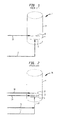
- FIG. 1 of the drawings is a schematic side elevation of the sparger arrangement in a fluidised bed partial oxidation reactor in particular, a typical fluidised bed reactor for a non-recycle process is indicated generally by numeral 2.
- the non-recycle reactor has two or more reactant streams and two spargers.
- the reactant air 12 is typically sparged from the bottom sparger 6 and the vaporized hydrocarbon feed 10 is introduced through a second sparger 8 located at a certain distance above the bottom sparger 6.
- the introduction of the reactant streams in this manner allows several desirable characteristics to be achieved.
- the bulk of the total reactant feed to the partial oxidation fluidised bed reactor 4 is comprised of the air feed 12.
- introducing the air through the bottom sparger 6 accomplishes the task of maintaining a suitably high fluidizing velocity at the bottom of the reactor 4.
- FIG. 20 there is shown an alternative sparger arrangement for a typical recycle-based retrofitted process is represented generally by reference numeral 20.
- a recycle-based reactor there are typically two additional reactant streams and thus at least one additional sparger 22 to introduce these streams to the reactor 4. Therefore, the existing sparging equipment must be modified to feed three to four separate streams, which include fresh feed hydrocarbon 10, fresh feed air 12, fresh feed oxygen 26, and recycled hydrocarbon 24, as opposed to the two streams of the once-through, non-recycle process represented in Figure 1 (fresh feed hydrocarbon 10 and fresh feed air 12).
- a typical recycle-based retrofitted process employs three separate spargers; one sparger 8 for fresh feed hydrocarbon 10, a second sparger 22 for recycled hydrocarbon 24 and a third sparger 6 for the combined air and oxygen stream 28.
- the combined air and oxygen stream 28 is introduced through a sparger 6 at the bottom of the reactor 4, while the fresh feed hydrocarbon and the recycled hydrocarbon streams are separately introduced through spargers 8, 22 located above bottom sparger 6. Introducing the streams in this manner avoids the formation of flammable mixtures and maintains the oxidation and fluidization characteristics in reactor 4.
- the present invention is directed to a sparger system provided for appropriately feeding reactant streams to fluidised bed reactors of hydrocarbon partial oxidation processes that are retrofitted to selectively recover and recycle unreacted hydrocarbons.
- the reactor productivity and selectivity is enhanced while employing only two spargers.
- the capital cost required for retrofitting existing sparging equipment is minimized, while at the same time, the desired fluidization and catalyst oxidation characteristics are achieved without the formation of flammable mixtures within the sparging systems.
- a sparger system for use in a recycle-based fluidised bed hydrocarbon partial oxidation reactor which comprises a first sparger and a second sparger, characterised in that:
- a method for feeding reactant streams to a recycle-based fluidised bed partial oxidation reactor comprising the steps of:
- a continuous method for the partial oxidation of a hydrocarbon feed comprising the steps of:
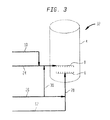
- a preferred embodiment of the present invention is indicated generally by reference numeral 32.
- the recycle-based fluidised-bed reactor 4 is configured such that a portion of the fresh feed oxygen 26 supplied by a pressure swing adsorption (PSA) unit (not shown) and all of the fresh feed air 12 is injected through a sparger 6 located at the bottom of reactor 4.
- PSA pressure swing adsorption
- the existing sparger material typically low-cost carbon steel, may be used without any modifications.
- fresh feed hydrocarbon 10, recycled hydrocarbon 24, and balance of fresh feed oxygen 30 is injected through a second sparger 8 located above bottom sparger 6. Table 1 below summarizes the preferred operating ranges for this embodiment.
- the flow rates of the individual reactor inlet streams are determined by the overall material balance for the recycle-based process.
- the overall process material balance is impacted by parameters such as the level of oxygen enrichment, reactor performance and the amount of air used as the regeneration gas used in the PSA unit.
- the level of oxygen enrichment and the amount of regeneration gas can be conveniently adjusted to achieve the desired fluidization and catalyst oxidation characteristics without the formation of flammable mixtures in the sparging system.
- the fresh feed oxygen supplied via stream 26 constitutes about 55 to 85 % of oxygen supplied via the combined fresh feed oxygen and air streams.
- the PSA unit can be operated such that the molar flow rate of the regeneration air stream is 0 to 100% of the molar flow rate of the feed to the PSA unit.
- the molar flow rate of the regeneration air stream is 20 to 60% of the molar flow rate of the feed to the PSA unit.
- Lower regeneration air flow rates allow the flow through bottom sparger 6 to be increased since a correspondingly higher amount of fresh air is required.
- the reactor is preferably sized such that the reactor superficial velocity is between 1.5 to 2.5 ft/sec.
- the fraction of fresh feed oxygen 26 mixed with the air stream 12 is varied between 20 to 90%.
- the preferred fraction of oxygen 26 mixed with air stream 12 is the largest fraction that allows the desired fluidization and catalyst characteristics to be achieved without the formation of a flammable mixture inside the sparger system.
- the level of oxygen enrichment is lowered and a new oxygen split is used, so as to achieve the desired characteristics.
- the mixture of oxygen 26 and air 12 is present in a volume ratio of between about 0.25 : 1.0 to 1.25 : 1.0. More preferably, the mixture is present in a volume ratio of between about 0.4 : 1.0 to 0.65 : 1.0.
- the mixture of fresh feed air 12 and oxygen 26 preferably is fed to sparger 6 of reactor 4 at a flow rate between about 25% and 50% of the total reactor superficial velocity. More preferably, the mixture is fed to sparger 6 at a flow rate between about 30% to 40% of the total reactor superficial velocity.
- the flow rate of fresh feed air 12 and oxygen stream 26 may be lower than the comparable flow rate for a non-recycle case, the linear velocity at the bottom of reactor 4 is sufficient to maintain desirable fluidization characteristics.
- the operation of the PSA unit used for recovering the hydrocarbons can also be adjusted to increase the amount of fresh feed air directly injected through bottom sparger 6, while reducing the amount of air introduced through the PSA purge gas.
- Oxygen-rich stream 28 injected from bottom sparger 6 allows the desired "oxidation zone" to be established at the bottom of reactor 4.
- the remaining portion of fresh feed oxygen 30, the entire recycle hydrocarbon 24, and the entire fresh feed hydrocarbon 10 are mixed and fed through a second sparger 8 placed preferably at a distance between about 0.1 feet (ft.) to 10 ft. above bottom sparger 6.
- the portion of fresh feed oxygen 30 diverted to this stream is controlled to keep the composition of the mixture sufficiently above the upper explosion limit (UEL).
- UEL explosion limit
- the mixture of oxygen 30, recycle hydrocarbon 24, and fresh feed hydrocarbon 10 is preferably present in a volume ratio between about 1.0 : 45.0 : 5.0 to 1.0 : 2.5 : 0.5. More preferably, the mixture is present in a volume ratio between about 1.0 : 8.5 : 1.0 to 1.0 : 4.0 : 0.5.
- the mixture is preferably fed to sparger 8 at a flow rate between about 50% to 75% of the total reactor superficial velocity. More preferably, the mixture is fed to sparger 8 at a flow rate between about 55% to 70% of the total reactor superficial velocity.
Landscapes
- Chemical & Material Sciences (AREA)
- Engineering & Computer Science (AREA)
- Combustion & Propulsion (AREA)
- Organic Chemistry (AREA)
- Chemical Kinetics & Catalysis (AREA)
- Organic Low-Molecular-Weight Compounds And Preparation Thereof (AREA)
- Devices And Processes Conducted In The Presence Of Fluids And Solid Particles (AREA)
Abstract
The present invention is directed to a sparger system comprising sparger 6 and
sparger 8 provided for appropriately feeding reactant streams to a fluidised bed
reactor 4 of hydrocarbon partial oxidation processes that are retrofitted to selectively
recover and recycle unreacted hydrocarbons. A mixture of air and oxygen is
supplied to the bottom sparger 6. A mixture of fresh hydrocarbon feed, recycled
hydrocarbon, and fresh oxygen feed is supplied to the sparger 8. As a result of the
sparger system, the reactor productivity and selectivity is enhanced while employing
only two spargers. Also, the capital cost required for retrofitting existing sparging
equipment is minimized, while at the same time, the desired fluidization and catalyst
oxidation characteristics are achieved without the formation of flammable mixtures
within the sparging system.
Description
- This invention relates to a sparger system provided for appropriately feeding reactant streams to fluidised bed reactors of hydrocarbon partial oxidation processes that are retrofitted to selectively recover and recycle unreacted hydrocarbons. This novel sparger system minimizes the capital cost required for retrofitting the existing sparging equipment, while at the same time allows the desired fluidization and catalyst oxidation characteristics to be achieved without the formation of flammable mixtures anywhere inside the sparging system.
- Partial oxidation products, such as, maleic anhydride and acrylonitrile, are typically produced by the oxidation of hydrocarbons, such as, butane, butylene, propylene, or propane, using atmospheric air in fluidised bed reactors. These processes typically operate at high hydrocarbon conversions (of the order to 75 to 99%) in order to maximize the once-through product yield. The unreacted hydrocarbons contained in the reactor effluent are incinerated after the product is recovered in a product recovery unit.
- Recently, recycle-based processes with higher productivity and selectivity have been proposed, wherein the reactor is operated at significantly lower reactant conversion to enhance the selectivity to the desired product and the unreacted hydrocarbons are recovered in a selective recovery unit and recycled back to the reactor. In a typical recycle process, the unreacted hydrocarbons are selectively recovered in a pressure swing adsorption (PSA) unit. During the adsorption step of the separation process, the hydrocarbons are adsorbed on a selective adsorbent, while the undesired components of the effluent stream are rejected into the waste stream from the PSA unit. During the regeneration step of the PSA unit, the hydrocarbons are desorbed and recovered in the recycle stream by lowering the pressure and simultaneously purging with a controlled amount of regeneration gas, such as, air.
- The desorption pressure and regeneration gas flow rate are adjusted to prevent the formation of flammable mixtures in the recycle stream. Additionally, these operating parameters can be adjusted to achieve the desired linear velocities in the reactor sparging equipment used to inject the feed streams to the reactor.
- The recycle-based processes can be applied as modifications to existing non-recycle processes, as well as to new grassroots plants. Higher reactor inlet concentrations of hydrocarbon and oxygen are employed to enhance the reactor productivity. The increase in the reactant concentrations is achieved by using oxygen-enriched air or by substituting a portion of the air with oxygen. For a retrofit application, the recycle of recovered hydrocarbons and the use of enriched air or oxygen requires modification to the existing reactor sparging equipment. Additionally, the presence of enriched air or oxygen requires costly upgrades to the materials of construction, and hence in the overall capital cost. In addition to the above, some catalysts may be more sensitive to high oxygen concentrations.
- Referring to Figure 1 of the drawings, which is a schematic side elevation of the sparger arrangement in a fluidised bed partial oxidation reactor in particular, a typical fluidised bed reactor for a non-recycle process is indicated generally by
numeral 2. Typically, the non-recycle reactor has two or more reactant streams and two spargers. Thereactant air 12 is typically sparged from thebottom sparger 6 and the vaporizedhydrocarbon feed 10 is introduced through asecond sparger 8 located at a certain distance above thebottom sparger 6. The introduction of the reactant streams in this manner allows several desirable characteristics to be achieved. Maintenance of an "oxidation zone" at the bottom of the reactor 4 is achieved, wherein reduced catalyst circulating from the upper (reducing)sections 14 of the reactor 4 is re-oxidized and returned to its oxidized state. By introducingair 12 through thebottom sparger 6, the circulating catalyst first comes in contact with an oxygen-rich stream. The catalyst oxidized in this manner then travels upward and subsequently comes in contact with thehydrocarbon 10 fed through thesecond sparger 8. By staging the contact with the oxidizing and reducing atmospheres, increased catalyst life and higher selectivities to the desired partial oxidation product can be achieved. - Maintenance of a linear velocity high enough to effect sufficient fluidization of the catalyst particles at the bottom of the reactor 4 is also achieved. The bulk of the total reactant feed to the partial oxidation fluidised bed reactor 4 is comprised of the
air feed 12. Thus, introducing the air through thebottom sparger 6 accomplishes the task of maintaining a suitably high fluidizing velocity at the bottom of the reactor 4. - Referring now to Figure 2 of the drawings, there is shown an alternative sparger arrangement for a typical recycle-based retrofitted process is represented generally by
reference numeral 20. With a recycle-based reactor, there are typically two additional reactant streams and thus at least oneadditional sparger 22 to introduce these streams to the reactor 4. Therefore, the existing sparging equipment must be modified to feed three to four separate streams, which includefresh feed hydrocarbon 10,fresh feed air 12,fresh feed oxygen 26, and recycledhydrocarbon 24, as opposed to the two streams of the once-through, non-recycle process represented in Figure 1 (fresh feed hydrocarbon 10 and fresh feed air 12). A typical recycle-based retrofitted process employs three separate spargers; one sparger 8 forfresh feed hydrocarbon 10, asecond sparger 22 for recycledhydrocarbon 24 and athird sparger 6 for the combined air andoxygen stream 28. The combined air andoxygen stream 28 is introduced through asparger 6 at the bottom of the reactor 4, while the fresh feed hydrocarbon and the recycled hydrocarbon streams are separately introduced throughspargers bottom sparger 6. Introducing the streams in this manner avoids the formation of flammable mixtures and maintains the oxidation and fluidization characteristics in reactor 4. - However, there are several disadvantages associated with the existing recycle-based retrofitted processes. First, at least one additional sparger is required compared to the once-through, non-recycle process. Secondly, because of the introduction of pure oxygen, the bottom sparger may have to be constructed from a material that is more expensive than the carbon steel that is typically used in commercial plants. Lastly, the introduction of pure oxygen directly into the reactor can potentially have a negative impact on the life of the catalyst. These disadvantages ultimately result in higher capital costs to retrofit the reactor, as additional spargers are necessary, expensive materials of construction are required to handle the introduction of oxygen, and increased catalyst usage and decreased catalyst life.
- The present invention is directed to a sparger system provided for appropriately feeding reactant streams to fluidised bed reactors of hydrocarbon partial oxidation processes that are retrofitted to selectively recover and recycle unreacted hydrocarbons. As a result of the sparger system, the reactor productivity and selectivity is enhanced while employing only two spargers. Also, the capital cost required for retrofitting existing sparging equipment is minimized, while at the same time, the desired fluidization and catalyst oxidation characteristics are achieved without the formation of flammable mixtures within the sparging systems.
- According to a first aspect of the present invention there is provided a sparger system for use in a recycle-based fluidised bed hydrocarbon partial oxidation reactor which comprises a first sparger and a second sparger, characterised in that:
- a) the first sparger is arranged to feed a mixture of oxygen and air to said reactor; and
- b) the second sparger is arranged to feed a mixture of oxygen, recycled hydrocarbon, and fresh feed hydrocarbon to said reactor.
-
- According to a second aspect of the present invention there is provided a method for feeding reactant streams to a recycle-based fluidised bed partial oxidation reactor comprising the steps of:
- a) providing a first sparger disposed in the bottom portion of said reactor;
- b) feeding a mixture of oxygen and air to said first sparger;
- c) providing a second sparger in the reactor above said first sparger; and
- d) feeding a mixture of oxygen, recycled hydrocarbon, and fresh feed hydrocarbon to said second sparger.
-
- According to a third aspect of the present invention there is provided a continuous method for the partial oxidation of a hydrocarbon feed comprising the steps of:
- a) feeding a mixture of oxygen and air to a first sparger disposed in the bottom portion of a reactor;
- b) feeding a mixture of oxygen and fresh feed hydrocarbon to a second sparger disposed within said reactor above said first sparger; and
- c) recycling unreacted hydrocarbon from said reactor, whereby said unreacted hydrocarbon is fed back to said reactor via said second sparger.
-
- The methods and system according to the invention will now be described by way of example with reference to Figure 3 of the accompanying drawings which shows one embodiment of the preferred recycle-based reactor configuration of the present invention.
- Referring to Figure 3, a preferred embodiment of the present invention is indicated generally by
reference numeral 32. The recycle-based fluidised-bed reactor 4 is configured such that a portion of thefresh feed oxygen 26 supplied by a pressure swing adsorption (PSA) unit (not shown) and all of thefresh feed air 12 is injected through asparger 6 located at the bottom of reactor 4. By maintaining the oxygen concentration in the mixture below a certain critical level, such as, for example, 35 vol%, the existing sparger material, typically low-cost carbon steel, may be used without any modifications. Separately,fresh feed hydrocarbon 10, recycledhydrocarbon 24, and balance offresh feed oxygen 30 is injected through asecond sparger 8 located abovebottom sparger 6. Table 1 below summarizes the preferred operating ranges for this embodiment.Summary of Operating Ranges Parameter Range Preferred Range Reactor Linear Velocity 1.5 - 2.5 ft/sec Oxygen Enrichment Such that the fresh feed oxygen constitutes 55 - 85 % of the oxygen molecules supplied via the combined fresh feed oxygen and air streams. Adjusted to keep O2 concentration in Air + O2 stream passing to the sparger 6 < 35 vol%, and the composition of the hydrocarbon + recycle gas + O2 stream passing to thesparger 8 above the Upper Explosive Limit (UEL).PSA Regeneration Air Flow Rate 0 - 100% of molar feed flow rate to PSA unit 20 - 60% of molar feed flow rate to PSA unit Lower regeneration gas flow allows flow through the bottom sparger 6 to be increased.Fraction Fresh Feed O2 Mixed with Fresh Feed Air 20-90%. Adjusted to keep O2 concentration in Air + O2 stream < 35 vol%, and the composition of hydrocarbon + recycle gas + O2 stream above the UEL - The flow rates of the individual reactor inlet streams (
fresh feed air 12,fresh feed oxygen 26,fresh feed hydrocarbon 10, and recycled hydrocarbon 24) are determined by the overall material balance for the recycle-based process. The overall process material balance is impacted by parameters such as the level of oxygen enrichment, reactor performance and the amount of air used as the regeneration gas used in the PSA unit. In particular, the level of oxygen enrichment and the amount of regeneration gas can be conveniently adjusted to achieve the desired fluidization and catalyst oxidation characteristics without the formation of flammable mixtures in the sparging system. - For the hydrocarbon partial oxidation process of the present invention, the fresh feed oxygen supplied via
stream 26 constitutes about 55 to 85 % of oxygen supplied via the combined fresh feed oxygen and air streams. The PSA unit can be operated such that the molar flow rate of the regeneration air stream is 0 to 100% of the molar flow rate of the feed to the PSA unit. Preferably, the molar flow rate of the regeneration air stream is 20 to 60% of the molar flow rate of the feed to the PSA unit. Lower regeneration air flow rates allow the flow throughbottom sparger 6 to be increased since a correspondingly higher amount of fresh air is required. - For a given material balance, the reactor is preferably sized such that the reactor superficial velocity is between 1.5 to 2.5 ft/sec. For a given overall material balance, the fraction of
fresh feed oxygen 26 mixed with theair stream 12 is varied between 20 to 90%. The preferred fraction ofoxygen 26 mixed withair stream 12 is the largest fraction that allows the desired fluidization and catalyst characteristics to be achieved without the formation of a flammable mixture inside the sparger system. For cases where these objectives cannot be achieved simultaneously, the level of oxygen enrichment is lowered and a new oxygen split is used, so as to achieve the desired characteristics. Preferably, the mixture ofoxygen 26 andair 12 is present in a volume ratio of between about 0.25 : 1.0 to 1.25 : 1.0. More preferably, the mixture is present in a volume ratio of between about 0.4 : 1.0 to 0.65 : 1.0. - The mixture of
fresh feed air 12 andoxygen 26 preferably is fed tosparger 6 of reactor 4 at a flow rate between about 25% and 50% of the total reactor superficial velocity. More preferably, the mixture is fed tosparger 6 at a flow rate between about 30% to 40% of the total reactor superficial velocity. Although the flow rate offresh feed air 12 andoxygen stream 26 may be lower than the comparable flow rate for a non-recycle case, the linear velocity at the bottom of reactor 4 is sufficient to maintain desirable fluidization characteristics. - The operation of the PSA unit used for recovering the hydrocarbons can also be adjusted to increase the amount of fresh feed air directly injected through
bottom sparger 6, while reducing the amount of air introduced through the PSA purge gas. Oxygen-rich stream 28 injected frombottom sparger 6 allows the desired "oxidation zone" to be established at the bottom of reactor 4. Separately, the remaining portion offresh feed oxygen 30, theentire recycle hydrocarbon 24, and the entirefresh feed hydrocarbon 10 are mixed and fed through asecond sparger 8 placed preferably at a distance between about 0.1 feet (ft.) to 10 ft. abovebottom sparger 6. The portion offresh feed oxygen 30 diverted to this stream is controlled to keep the composition of the mixture sufficiently above the upper explosion limit (UEL). - The mixture of
oxygen 30, recyclehydrocarbon 24, andfresh feed hydrocarbon 10 is preferably present in a volume ratio between about 1.0 : 45.0 : 5.0 to 1.0 : 2.5 : 0.5. More preferably, the mixture is present in a volume ratio between about 1.0 : 8.5 : 1.0 to 1.0 : 4.0 : 0.5. The mixture is preferably fed tosparger 8 at a flow rate between about 50% to 75% of the total reactor superficial velocity. More preferably, the mixture is fed tosparger 8 at a flow rate between about 55% to 70% of the total reactor superficial velocity. - By introducing the feed streams in this manner in the recycle process, only two spargers are required. In addition, the same low-cost materials of construction, such as, carbon steel or low alloy steel, may be used when retrofitting existing non-recycle systems. The desired fluidization and oxidation characteristics of existing non-recycle processes are also maintained using this approach.
Claims (10)
- A sparger system for use in a recycle-based fluidised bed hydrocarbon partial oxidation reactor which comprises a first sparger and a second sparger, characterised in that:(a) the first sparger is arranged to feed a mixture of oxygen and air to said reactor; and(b) the second sparger is arranged to feed a mixture of oxygen, recycled hydrocarbon, and fresh feed hydrocarbon to said reactor.
- A sparger system according to claim 1, wherein said mixture of oxygen and air is present in a volume ratio of between about 0.25 : 1.0 to 1.25 : 1.0.
- A sparger system according to claim 1 or claim 2, wherein said first sparger is located in the bottom portion of said reactor.
- A sparger system according to any one of the preceding claims, wherein said first sparger is constructed from a material selected from the group consisting of: carbon steel and low-alloy steels.
- A sparger system according to any one of the preceding claims, wherein said mixture fed by said first sparger is fed to said reactor at a flow rate between about 25% to 50% of the total reactor superficial velocity.
- A sparger system according to any one of the preceding claims, wherein said mixture of oxygen, recycled hydrocarbon, and fresh feed hydrocarbon is present in a volume ratio of between about 1.0 : 45.0 : 5.0 to 1.0 : 2.5 : 0.5.
- A sparger system according to any one of the preceding claims, wherein said second sparger is disposed above said first sparger.
- A sparger system according to any one of the preceding claims, wherein said mixture fed by said second sparger is fed to said reactor at a flow rate between about 50% to 75% of the total reactor superficial velocity.
- A method for feeding reactant streams to a recycle-based fluidised bed partial oxidation reactor comprising the steps of:(a) providing a first sparger disposed in the bottom portion of said reactor;(b) feeding a mixture of oxygen and air to said first sparger;(c) providing a second sparger in the reactor above said first sparger; and(d) feeding a mixture of oxygen, recycled hydrocarbon, and fresh feed hydrocarbon to said second sparger.
- A continuous method for the partial oxidation of a hydrocarbon feed comprising the steps of:(a) feeding a mixture of oxygen and air to a first sparger disposed in the bottom portion of a reactor;(b) feeding a mixture of oxygen and fresh feed hydrocarbon to a second sparger disposed within said reactor above said first sparger; and(c) recycling unreacted hydrocarbon from said reactor, whereby said unreacted hydrocarbon is fed back to said reactor via said second sparger.
Applications Claiming Priority (2)
| Application Number | Priority Date | Filing Date | Title |
|---|---|---|---|
| US09/813,508 US6743400B2 (en) | 2001-03-21 | 2001-03-21 | Sparger configuration for fluidized bed hydrocarbon partial oxidation reactors |
| US813508 | 2001-03-21 |
Publications (1)
| Publication Number | Publication Date |
|---|---|
| EP1243317A1 true EP1243317A1 (en) | 2002-09-25 |
Family
ID=25212589
Family Applications (1)
| Application Number | Title | Priority Date | Filing Date |
|---|---|---|---|
| EP02251904A Withdrawn EP1243317A1 (en) | 2001-03-21 | 2002-03-18 | Spargers for the feeding of fluids in a fluidised bed used for partial oxidation of hydrocarbons |
Country Status (3)
| Country | Link |
|---|---|
| US (1) | US6743400B2 (en) |
| EP (1) | EP1243317A1 (en) |
| CN (1) | CN1238104C (en) |
Cited By (4)
| Publication number | Priority date | Publication date | Assignee | Title |
|---|---|---|---|---|
| WO2004020083A1 (en) * | 2002-08-30 | 2004-03-11 | Basf Aktiengesellschaft | Oxidation method |
| WO2004033060A3 (en) * | 2002-06-21 | 2005-01-20 | Exxonmobil Chem Patents Inc | Controlling solids circulation in a gas-solids reaction system |
| EP3617177A4 (en) * | 2017-04-27 | 2020-05-06 | Dalian Institute Of Chemical Physics, Chinese Academy of Sciences | FLUID BED REACTOR AND METHOD FOR PRODUCING PARAXYLENE-COPRODUCED OLEFIN WITH LOW CARBON CONTENT FROM BENZOL AND METHANOL AND / OR DIMETHYL ETHER |
| US10967350B2 (en) | 2017-04-27 | 2021-04-06 | Dalian Institute Of Chemical Physics, Chinese Academy Of Sciences | Fluidized bed gas distributor, reactor using fluidized bed gas distributor, and method for producing para-xylene and co-producing light olefins |
Families Citing this family (13)
| Publication number | Priority date | Publication date | Assignee | Title |
|---|---|---|---|---|
| US7261751B2 (en) * | 2004-08-06 | 2007-08-28 | Conocophillips Company | Synthesis gas process comprising partial oxidation using controlled and optimized temperature profile |
| US7507857B2 (en) | 2004-09-02 | 2009-03-24 | Eastman Chemical Company | Optimized liquid-phase oxidation |
| US7589231B2 (en) * | 2004-09-02 | 2009-09-15 | Eastman Chemical Company | Optimized liquid-phase oxidation |
| US7582793B2 (en) * | 2004-09-02 | 2009-09-01 | Eastman Chemical Company | Optimized liquid-phase oxidation |
| US7910769B2 (en) | 2004-09-02 | 2011-03-22 | Eastman Chemical Company | Optimized liquid-phase oxidation |
| US7692037B2 (en) * | 2004-09-02 | 2010-04-06 | Eastman Chemical Company | Optimized liquid-phase oxidation |
| US7381836B2 (en) | 2004-09-02 | 2008-06-03 | Eastman Chemical Company | Optimized liquid-phase oxidation |
| US7504535B2 (en) * | 2004-09-02 | 2009-03-17 | Eastman Chemical Company | Optimized liquid-phase oxidation |
| US7692036B2 (en) | 2004-11-29 | 2010-04-06 | Eastman Chemical Company | Optimized liquid-phase oxidation |
| US7572936B2 (en) * | 2004-09-02 | 2009-08-11 | Eastman Chemical Company | Optimized liquid-phase oxidation |
| CN104941535A (en) * | 2014-03-31 | 2015-09-30 | 英尼奥斯欧洲股份公司 | Improved air grille designed for oxidation or ammonia oxidation reactor |
| CN108786671B (en) | 2017-04-27 | 2021-04-23 | 中国科学院大连化学物理研究所 | Fluidized bed device and method for co-producing light olefins from methanol and/or dimethyl ether and benzene to p-xylene |
| CN115055124B (en) * | 2022-06-22 | 2023-12-29 | 上海盛蓝汇科技有限责任公司 | Acrylonitrile fluidized bed reaction device and process |
Citations (6)
| Publication number | Priority date | Publication date | Assignee | Title |
|---|---|---|---|---|
| US4987239A (en) * | 1988-04-06 | 1991-01-22 | The Boc Group, Inc. | Process for the production of anhydrides |
| EP0878464A1 (en) * | 1996-01-05 | 1998-11-18 | Asahi Kasei Kogyo Kabushiki Kaisha | PROCESS FOR PRODUCING $g(a).$g(b)-UNSATURATED NITRILE |
| EP0885871A1 (en) * | 1997-06-19 | 1998-12-23 | Praxair Technology, Inc. | Method and apparatus for direct oxygen injection with a reactant stream into a fluidized bed reactor |
| US5973186A (en) * | 1997-07-16 | 1999-10-26 | Asahi Kasei Kogyo Kabushiki Kaisha | Process for producing acrylonitrile or methacrylonitrile from propane or isobutane by ammoxidation |
| US6110440A (en) * | 1995-02-01 | 2000-08-29 | Asahi Kasei Kogyo Kabushiki Kaisha | Fluidized-bed reactor and reaction process using the same |
| US6156921A (en) * | 1995-08-24 | 2000-12-05 | Praxair Technology, Inc. | Method and apparatus for direct oxygen injection with a reactant stream into a fluidized bed reactor |
Family Cites Families (7)
| Publication number | Priority date | Publication date | Assignee | Title |
|---|---|---|---|---|
| US3372734A (en) * | 1965-06-01 | 1968-03-12 | Pullman Inc | Fluid process useful in the recovery of hydrocarbons from tar sands |
| US3974091A (en) * | 1974-08-29 | 1976-08-10 | Shell Oil Company | Fluidized bed regeneration of carbon-contaminated catalysts using gas discharge nozzles of specific dimensions |
| US4337143A (en) * | 1980-06-02 | 1982-06-29 | University Of Utah | Process for obtaining products from tar sand |
| US4754094A (en) * | 1984-04-16 | 1988-06-28 | Atlantic Richfield Company | Fixed bed reactor system |
| US5156921A (en) * | 1988-04-11 | 1992-10-20 | Hercules Incorporated | Tire innerliner |
| US5021222A (en) * | 1988-10-18 | 1991-06-04 | Mobil Oil Corporation | Resid cracking apparatus |
| US5466857A (en) * | 1994-08-10 | 1995-11-14 | The Standard Oil Company | Process for reduction of waste material during manufacture of acrylonitrile |
-
2001
- 2001-03-21 US US09/813,508 patent/US6743400B2/en not_active Expired - Fee Related
-
2002
- 2002-03-18 EP EP02251904A patent/EP1243317A1/en not_active Withdrawn
- 2002-03-21 CN CN02107919.6A patent/CN1238104C/en not_active Expired - Fee Related
Patent Citations (6)
| Publication number | Priority date | Publication date | Assignee | Title |
|---|---|---|---|---|
| US4987239A (en) * | 1988-04-06 | 1991-01-22 | The Boc Group, Inc. | Process for the production of anhydrides |
| US6110440A (en) * | 1995-02-01 | 2000-08-29 | Asahi Kasei Kogyo Kabushiki Kaisha | Fluidized-bed reactor and reaction process using the same |
| US6156921A (en) * | 1995-08-24 | 2000-12-05 | Praxair Technology, Inc. | Method and apparatus for direct oxygen injection with a reactant stream into a fluidized bed reactor |
| EP0878464A1 (en) * | 1996-01-05 | 1998-11-18 | Asahi Kasei Kogyo Kabushiki Kaisha | PROCESS FOR PRODUCING $g(a).$g(b)-UNSATURATED NITRILE |
| EP0885871A1 (en) * | 1997-06-19 | 1998-12-23 | Praxair Technology, Inc. | Method and apparatus for direct oxygen injection with a reactant stream into a fluidized bed reactor |
| US5973186A (en) * | 1997-07-16 | 1999-10-26 | Asahi Kasei Kogyo Kabushiki Kaisha | Process for producing acrylonitrile or methacrylonitrile from propane or isobutane by ammoxidation |
Cited By (6)
| Publication number | Priority date | Publication date | Assignee | Title |
|---|---|---|---|---|
| WO2004033060A3 (en) * | 2002-06-21 | 2005-01-20 | Exxonmobil Chem Patents Inc | Controlling solids circulation in a gas-solids reaction system |
| WO2004020083A1 (en) * | 2002-08-30 | 2004-03-11 | Basf Aktiengesellschaft | Oxidation method |
| EP3617177A4 (en) * | 2017-04-27 | 2020-05-06 | Dalian Institute Of Chemical Physics, Chinese Academy of Sciences | FLUID BED REACTOR AND METHOD FOR PRODUCING PARAXYLENE-COPRODUCED OLEFIN WITH LOW CARBON CONTENT FROM BENZOL AND METHANOL AND / OR DIMETHYL ETHER |
| RU2745438C1 (en) * | 2017-04-27 | 2021-03-25 | Далянь Инститьют Оф Кемикал Физикс, Чайниз Академи Оф Сайенсиз | Boiling layer reactor and method for producing para-xylol and co-production of lowest olefins from benzene and methanol and / or dimethyl ether |
| US10967350B2 (en) | 2017-04-27 | 2021-04-06 | Dalian Institute Of Chemical Physics, Chinese Academy Of Sciences | Fluidized bed gas distributor, reactor using fluidized bed gas distributor, and method for producing para-xylene and co-producing light olefins |
| US11072571B2 (en) | 2017-04-27 | 2021-07-27 | Dalian Institute Of Chemical Physics, Chinese Academy Of Sciences | Fluidized bed reactor and method for producing para-xylene and co-producing light olefins from benzene and methanol and/or dimethyl ether |
Also Published As
| Publication number | Publication date |
|---|---|
| US20020182123A1 (en) | 2002-12-05 |
| CN1383911A (en) | 2002-12-11 |
| CN1238104C (en) | 2006-01-25 |
| US6743400B2 (en) | 2004-06-01 |
Similar Documents
| Publication | Publication Date | Title |
|---|---|---|
| US6743400B2 (en) | Sparger configuration for fluidized bed hydrocarbon partial oxidation reactors | |
| EP0372972B1 (en) | Process for the production of nitriles and oxides | |
| KR100191974B1 (en) | Catalyst regeneration process | |
| KR0138536B1 (en) | Process for the production of nitriles and anhydrides | |
| US4415508A (en) | Apparatus for mixing gases | |
| JPH04368351A (en) | Method for manufacturing hydrocarbon derivative | |
| EP0501757A2 (en) | Production of hydrocarbon derivatives | |
| CA2184020C (en) | Method and apparatus for direct oxygen injection with a reactant stream into a fluidized bed reactor | |
| US4990632A (en) | Process for the production of oxides | |
| US5278319A (en) | Process for the production of hydrocarbon partial oxidation products | |
| US5532384A (en) | Process for producing hydrocarbon partial oxidation products | |
| EP0885871B1 (en) | Method and apparatus for direct oxygen injection with a reactant stream into a fluidized bed reactor | |
| EP0467538B1 (en) | Process for the production of alkylene oxide | |
| US5268497A (en) | Process for the production of nitriles | |
| US7090817B2 (en) | Process for the preparation of hydroxylammonium | |
| EP0381369A1 (en) | Process for the production of nitriles and oxides | |
| EP1359138B1 (en) | Process for the production of maleic anhydride | |
| US5043461A (en) | Process for the production of oxides | |
| US5264608A (en) | Process for the production of nitriles from alkenes | |
| WO2001058839A1 (en) | Process to recover condensable gases from oxygen containing mixtures | |
| US5883281A (en) | Oxygen addition to reduce inerts in an acrylonitrile reactor | |
| JP2918285B2 (en) | Manufacturing method of nitriles | |
| MXPA98004899A (en) | Method and apparatus for directing the oxygen injection with a reagent current within a fluidized bed reactor |
Legal Events
| Date | Code | Title | Description |
|---|---|---|---|
| PUAI | Public reference made under article 153(3) epc to a published international application that has entered the european phase |
Free format text: ORIGINAL CODE: 0009012 |
|
| AK | Designated contracting states |
Kind code of ref document: A1 Designated state(s): AT BE CH CY DE DK ES FI FR GB GR IE IT LI LU MC NL PT SE TR |
|
| AX | Request for extension of the european patent |
Free format text: AL;LT;LV;MK;RO;SI |
|
| 17P | Request for examination filed |
Effective date: 20030320 |
|
| AKX | Designation fees paid |
Designated state(s): AT BE CH CY DE DK ES FI FR GB GR IE IT LI LU MC NL PT SE TR |
|
| STAA | Information on the status of an ep patent application or granted ep patent |
Free format text: STATUS: THE APPLICATION IS DEEMED TO BE WITHDRAWN |
|
| 18D | Application deemed to be withdrawn |
Effective date: 20091001 |