EP1243263A1 - Novel use of a peptide class of compound for treating allodynia or other different types of chronic or phantom pain - Google Patents
Novel use of a peptide class of compound for treating allodynia or other different types of chronic or phantom pain Download PDFInfo
- Publication number
- EP1243263A1 EP1243263A1 EP01107026A EP01107026A EP1243263A1 EP 1243263 A1 EP1243263 A1 EP 1243263A1 EP 01107026 A EP01107026 A EP 01107026A EP 01107026 A EP01107026 A EP 01107026A EP 1243263 A1 EP1243263 A1 EP 1243263A1
- Authority
- EP
- European Patent Office
- Prior art keywords
- pain
- chronic
- allodynia
- different types
- treatment
- Prior art date
- Legal status (The legal status is an assumption and is not a legal conclusion. Google has not performed a legal analysis and makes no representation as to the accuracy of the status listed.)
- Granted
Links
- 208000002193 Pain Diseases 0.000 title claims abstract description 75
- 208000004454 Hyperalgesia Diseases 0.000 title claims abstract description 39
- 150000001875 compounds Chemical class 0.000 title claims abstract description 38
- 208000000094 Chronic Pain Diseases 0.000 title claims abstract description 24
- 230000001684 chronic effect Effects 0.000 title claims abstract description 24
- 206010053552 allodynia Diseases 0.000 title claims abstract description 22
- 208000004983 Phantom Limb Diseases 0.000 title claims abstract description 17
- 206010056238 Phantom pain Diseases 0.000 title claims abstract description 17
- 108090000765 processed proteins & peptides Proteins 0.000 title 1
- 230000036407 pain Effects 0.000 claims abstract description 48
- 208000037265 diseases, disorders, signs and symptoms Diseases 0.000 claims abstract description 19
- 208000024891 symptom Diseases 0.000 claims abstract description 18
- 201000010099 disease Diseases 0.000 claims abstract description 17
- VPPJLAIAVCUEMN-GFCCVEGCSA-N lacosamide Chemical compound COC[C@@H](NC(C)=O)C(=O)NCC1=CC=CC=C1 VPPJLAIAVCUEMN-GFCCVEGCSA-N 0.000 claims description 27
- 239000008194 pharmaceutical composition Substances 0.000 claims description 20
- 238000002360 preparation method Methods 0.000 claims description 20
- 150000003839 salts Chemical class 0.000 claims description 10
- 125000001997 phenyl group Chemical group [H]C1=C([H])C([H])=C(*)C([H])=C1[H] 0.000 claims description 7
- 125000004432 carbon atom Chemical group C* 0.000 claims description 6
- 125000003545 alkoxy group Chemical group 0.000 claims description 5
- 125000005843 halogen group Chemical group 0.000 claims description 5
- 208000009205 Tinnitus Diseases 0.000 claims description 3
- 239000003937 drug carrier Substances 0.000 claims description 3
- 125000002496 methyl group Chemical group [H]C([H])([H])* 0.000 claims description 3
- 231100000886 tinnitus Toxicity 0.000 claims description 3
- 125000001153 fluoro group Chemical group F* 0.000 claims 2
- 208000004296 neuralgia Diseases 0.000 abstract description 20
- 208000021722 neuropathic pain Diseases 0.000 abstract description 20
- 229960002623 lacosamide Drugs 0.000 description 23
- 238000012360 testing method Methods 0.000 description 21
- WSFSSNUMVMOOMR-UHFFFAOYSA-N Formaldehyde Chemical compound O=C WSFSSNUMVMOOMR-UHFFFAOYSA-N 0.000 description 20
- 230000000694 effects Effects 0.000 description 17
- 230000002269 spontaneous effect Effects 0.000 description 12
- 230000006399 behavior Effects 0.000 description 9
- 229940021182 non-steroidal anti-inflammatory drug Drugs 0.000 description 8
- 230000002093 peripheral effect Effects 0.000 description 8
- 230000003502 anti-nociceptive effect Effects 0.000 description 7
- 230000006378 damage Effects 0.000 description 7
- 229940079593 drug Drugs 0.000 description 7
- 239000003814 drug Substances 0.000 description 7
- 208000014674 injury Diseases 0.000 description 7
- 208000027418 Wounds and injury Diseases 0.000 description 6
- 210000002683 foot Anatomy 0.000 description 6
- 241001465754 Metazoa Species 0.000 description 5
- 230000002159 abnormal effect Effects 0.000 description 5
- 230000001154 acute effect Effects 0.000 description 5
- 210000005036 nerve Anatomy 0.000 description 5
- 230000020341 sensory perception of pain Effects 0.000 description 5
- 210000000548 hind-foot Anatomy 0.000 description 4
- 208000035824 paresthesia Diseases 0.000 description 4
- 208000033808 peripheral neuropathy Diseases 0.000 description 4
- 230000004044 response Effects 0.000 description 4
- 230000001953 sensory effect Effects 0.000 description 4
- 239000003981 vehicle Substances 0.000 description 4
- HBAQYPYDRFILMT-UHFFFAOYSA-N 8-[3-(1-cyclopropylpyrazol-4-yl)-1H-pyrazolo[4,3-d]pyrimidin-5-yl]-3-methyl-3,8-diazabicyclo[3.2.1]octan-2-one Chemical class C1(CC1)N1N=CC(=C1)C1=NNC2=C1N=C(N=C2)N1C2C(N(CC1CC2)C)=O HBAQYPYDRFILMT-UHFFFAOYSA-N 0.000 description 3
- PEDCQBHIVMGVHV-UHFFFAOYSA-N Glycerine Chemical compound OCC(O)CO PEDCQBHIVMGVHV-UHFFFAOYSA-N 0.000 description 3
- 206010020751 Hypersensitivity Diseases 0.000 description 3
- 229940035676 analgesics Drugs 0.000 description 3
- 239000000730 antalgic agent Substances 0.000 description 3
- 230000003542 behavioural effect Effects 0.000 description 3
- 230000037396 body weight Effects 0.000 description 3
- 210000003169 central nervous system Anatomy 0.000 description 3
- 230000000763 evoking effect Effects 0.000 description 3
- 238000000034 method Methods 0.000 description 3
- 201000001119 neuropathy Diseases 0.000 description 3
- 230000007823 neuropathy Effects 0.000 description 3
- 230000003040 nociceptive effect Effects 0.000 description 3
- 210000000929 nociceptor Anatomy 0.000 description 3
- 230000001473 noxious effect Effects 0.000 description 3
- 230000008058 pain sensation Effects 0.000 description 3
- 230000002829 reductive effect Effects 0.000 description 3
- 230000035807 sensation Effects 0.000 description 3
- 239000007787 solid Substances 0.000 description 3
- 230000000638 stimulation Effects 0.000 description 3
- 230000001256 tonic effect Effects 0.000 description 3
- 231100000331 toxic Toxicity 0.000 description 3
- 230000002588 toxic effect Effects 0.000 description 3
- 208000035154 Hyperesthesia Diseases 0.000 description 2
- 241000124008 Mammalia Species 0.000 description 2
- 241000699666 Mus <mouse, genus> Species 0.000 description 2
- 208000028389 Nerve injury Diseases 0.000 description 2
- 208000010886 Peripheral nerve injury Diseases 0.000 description 2
- 208000006011 Stroke Diseases 0.000 description 2
- 239000002253 acid Substances 0.000 description 2
- 208000005298 acute pain Diseases 0.000 description 2
- 208000026935 allergic disease Diseases 0.000 description 2
- 238000000540 analysis of variance Methods 0.000 description 2
- 238000010171 animal model Methods 0.000 description 2
- 230000003063 anti-neuropathic effect Effects 0.000 description 2
- 239000001961 anticonvulsive agent Substances 0.000 description 2
- 210000003050 axon Anatomy 0.000 description 2
- 230000008901 benefit Effects 0.000 description 2
- 239000003795 chemical substances by application Substances 0.000 description 2
- -1 conduction blockade Substances 0.000 description 2
- 238000011161 development Methods 0.000 description 2
- 230000018109 developmental process Effects 0.000 description 2
- 208000035475 disorder Diseases 0.000 description 2
- 239000002552 dosage form Substances 0.000 description 2
- 238000001647 drug administration Methods 0.000 description 2
- 206010015037 epilepsy Diseases 0.000 description 2
- 230000009610 hypersensitivity Effects 0.000 description 2
- 238000001727 in vivo Methods 0.000 description 2
- 230000005764 inhibitory process Effects 0.000 description 2
- 238000002347 injection Methods 0.000 description 2
- 239000007924 injection Substances 0.000 description 2
- 239000007788 liquid Substances 0.000 description 2
- 239000003589 local anesthetic agent Substances 0.000 description 2
- 229960005015 local anesthetics Drugs 0.000 description 2
- 239000000203 mixture Substances 0.000 description 2
- 230000008764 nerve damage Effects 0.000 description 2
- 230000001537 neural effect Effects 0.000 description 2
- 210000002569 neuron Anatomy 0.000 description 2
- 229940005483 opioid analgesics Drugs 0.000 description 2
- 230000001991 pathophysiological effect Effects 0.000 description 2
- 230000008289 pathophysiological mechanism Effects 0.000 description 2
- 230000008447 perception Effects 0.000 description 2
- 210000000578 peripheral nerve Anatomy 0.000 description 2
- 230000002980 postoperative effect Effects 0.000 description 2
- 230000011514 reflex Effects 0.000 description 2
- 230000004043 responsiveness Effects 0.000 description 2
- 210000003497 sciatic nerve Anatomy 0.000 description 2
- 239000000243 solution Substances 0.000 description 2
- 239000008223 sterile water Substances 0.000 description 2
- 239000000126 substance Substances 0.000 description 2
- 230000002459 sustained effect Effects 0.000 description 2
- 208000011580 syndromic disease Diseases 0.000 description 2
- XLYOFNOQVPJJNP-UHFFFAOYSA-N water Chemical compound O XLYOFNOQVPJJNP-UHFFFAOYSA-N 0.000 description 2
- 208000007848 Alcoholism Diseases 0.000 description 1
- 238000012935 Averaging Methods 0.000 description 1
- 208000000412 Avitaminosis Diseases 0.000 description 1
- 208000037157 Azotemia Diseases 0.000 description 1
- 201000006474 Brain Ischemia Diseases 0.000 description 1
- 206010058019 Cancer Pain Diseases 0.000 description 1
- 208000001387 Causalgia Diseases 0.000 description 1
- 206010064012 Central pain syndrome Diseases 0.000 description 1
- 206010008120 Cerebral ischaemia Diseases 0.000 description 1
- 208000023890 Complex Regional Pain Syndromes Diseases 0.000 description 1
- 206010013886 Dysaesthesia Diseases 0.000 description 1
- LFQSCWFLJHTTHZ-UHFFFAOYSA-N Ethanol Chemical compound CCO LFQSCWFLJHTTHZ-UHFFFAOYSA-N 0.000 description 1
- 206010019233 Headaches Diseases 0.000 description 1
- 208000029433 Herpesviridae infectious disease Diseases 0.000 description 1
- 241000282412 Homo Species 0.000 description 1
- 241000725303 Human immunodeficiency virus Species 0.000 description 1
- CPELXLSAUQHCOX-UHFFFAOYSA-N Hydrogen bromide Chemical class Br CPELXLSAUQHCOX-UHFFFAOYSA-N 0.000 description 1
- DGAQECJNVWCQMB-PUAWFVPOSA-M Ilexoside XXIX Chemical compound C[C@@H]1CC[C@@]2(CC[C@@]3(C(=CC[C@H]4[C@]3(CC[C@@H]5[C@@]4(CC[C@@H](C5(C)C)OS(=O)(=O)[O-])C)C)[C@@H]2[C@]1(C)O)C)C(=O)O[C@H]6[C@@H]([C@H]([C@@H]([C@H](O6)CO)O)O)O.[Na+] DGAQECJNVWCQMB-PUAWFVPOSA-M 0.000 description 1
- 206010061218 Inflammation Diseases 0.000 description 1
- 206010065390 Inflammatory pain Diseases 0.000 description 1
- 208000008930 Low Back Pain Diseases 0.000 description 1
- FYYHWMGAXLPEAU-UHFFFAOYSA-N Magnesium Chemical compound [Mg] FYYHWMGAXLPEAU-UHFFFAOYSA-N 0.000 description 1
- 208000019695 Migraine disease Diseases 0.000 description 1
- 241000699670 Mus sp. Species 0.000 description 1
- 206010028980 Neoplasm Diseases 0.000 description 1
- 208000012902 Nervous system disease Diseases 0.000 description 1
- 208000025966 Neurological disease Diseases 0.000 description 1
- 208000005890 Neuroma Diseases 0.000 description 1
- ZLMJMSJWJFRBEC-UHFFFAOYSA-N Potassium Chemical compound [K] ZLMJMSJWJFRBEC-UHFFFAOYSA-N 0.000 description 1
- 206010037211 Psychomotor hyperactivity Diseases 0.000 description 1
- 206010070834 Sensitisation Diseases 0.000 description 1
- 206010040021 Sensory abnormalities Diseases 0.000 description 1
- 206010040030 Sensory loss Diseases 0.000 description 1
- 208000026137 Soft tissue injury Diseases 0.000 description 1
- 208000031072 Somatosensory disease Diseases 0.000 description 1
- 206010047115 Vasculitis Diseases 0.000 description 1
- 206010047627 Vitamin deficiencies Diseases 0.000 description 1
- 206010048010 Withdrawal syndrome Diseases 0.000 description 1
- 230000005856 abnormality Effects 0.000 description 1
- 230000004913 activation Effects 0.000 description 1
- 230000003044 adaptive effect Effects 0.000 description 1
- 239000002671 adjuvant Substances 0.000 description 1
- 210000003766 afferent neuron Anatomy 0.000 description 1
- 150000003862 amino acid derivatives Chemical class 0.000 description 1
- 229960000836 amitriptyline Drugs 0.000 description 1
- KRMDCWKBEZIMAB-UHFFFAOYSA-N amitriptyline Chemical compound C1CC2=CC=CC=C2C(=CCCN(C)C)C2=CC=CC=C21 KRMDCWKBEZIMAB-UHFFFAOYSA-N 0.000 description 1
- 230000036592 analgesia Effects 0.000 description 1
- 230000000202 analgesic effect Effects 0.000 description 1
- 230000001773 anti-convulsant effect Effects 0.000 description 1
- 230000003556 anti-epileptic effect Effects 0.000 description 1
- 230000000573 anti-seizure effect Effects 0.000 description 1
- 229940125681 anticonvulsant agent Drugs 0.000 description 1
- 239000000935 antidepressant agent Substances 0.000 description 1
- 229940005513 antidepressants Drugs 0.000 description 1
- 229960003965 antiepileptics Drugs 0.000 description 1
- 238000013459 approach Methods 0.000 description 1
- 206010003246 arthritis Diseases 0.000 description 1
- 238000003556 assay Methods 0.000 description 1
- 230000003376 axonal effect Effects 0.000 description 1
- 239000002585 base Substances 0.000 description 1
- 150000007514 bases Chemical class 0.000 description 1
- 230000002051 biphasic effect Effects 0.000 description 1
- 210000000746 body region Anatomy 0.000 description 1
- 201000011510 cancer Diseases 0.000 description 1
- 239000002775 capsule Substances 0.000 description 1
- 208000015114 central nervous system disease Diseases 0.000 description 1
- 206010008118 cerebral infarction Diseases 0.000 description 1
- 230000008859 change Effects 0.000 description 1
- 208000037976 chronic inflammation Diseases 0.000 description 1
- 230000006020 chronic inflammation Effects 0.000 description 1
- 208000014439 complex regional pain syndrome type 2 Diseases 0.000 description 1
- 239000003246 corticosteroid Substances 0.000 description 1
- 229960001334 corticosteroids Drugs 0.000 description 1
- 238000013480 data collection Methods 0.000 description 1
- 206010012601 diabetes mellitus Diseases 0.000 description 1
- 231100000673 dose–response relationship Toxicity 0.000 description 1
- 238000001704 evaporation Methods 0.000 description 1
- 238000002474 experimental method Methods 0.000 description 1
- 239000002360 explosive Substances 0.000 description 1
- 238000010304 firing Methods 0.000 description 1
- 238000009472 formulation Methods 0.000 description 1
- 239000012458 free base Substances 0.000 description 1
- 230000006870 function Effects 0.000 description 1
- 229960005150 glycerol Drugs 0.000 description 1
- 239000008187 granular material Substances 0.000 description 1
- 231100000869 headache Toxicity 0.000 description 1
- 230000035876 healing Effects 0.000 description 1
- 150000003840 hydrochlorides Chemical class 0.000 description 1
- 208000003532 hypothyroidism Diseases 0.000 description 1
- 230000002989 hypothyroidism Effects 0.000 description 1
- 230000006872 improvement Effects 0.000 description 1
- 208000015181 infectious disease Diseases 0.000 description 1
- 230000002757 inflammatory effect Effects 0.000 description 1
- 230000004054 inflammatory process Effects 0.000 description 1
- 230000000977 initiatory effect Effects 0.000 description 1
- 230000030214 innervation Effects 0.000 description 1
- 238000010255 intramuscular injection Methods 0.000 description 1
- 239000007927 intramuscular injection Substances 0.000 description 1
- 238000010253 intravenous injection Methods 0.000 description 1
- 238000011835 investigation Methods 0.000 description 1
- 230000002427 irreversible effect Effects 0.000 description 1
- 230000003902 lesion Effects 0.000 description 1
- 238000011542 limb amputation Methods 0.000 description 1
- 230000000670 limiting effect Effects 0.000 description 1
- 239000012669 liquid formulation Substances 0.000 description 1
- 239000011777 magnesium Substances 0.000 description 1
- 229910052749 magnesium Inorganic materials 0.000 description 1
- 238000005259 measurement Methods 0.000 description 1
- 206010027599 migraine Diseases 0.000 description 1
- 150000007522 mineralic acids Chemical class 0.000 description 1
- 230000000877 morphologic effect Effects 0.000 description 1
- 229940035363 muscle relaxants Drugs 0.000 description 1
- 239000003158 myorelaxant agent Substances 0.000 description 1
- 239000004081 narcotic agent Substances 0.000 description 1
- 210000000653 nervous system Anatomy 0.000 description 1
- 230000007971 neurological deficit Effects 0.000 description 1
- 230000008284 neuronal mechanism Effects 0.000 description 1
- 239000000041 non-steroidal anti-inflammatory agent Substances 0.000 description 1
- 150000007524 organic acids Chemical class 0.000 description 1
- 230000008533 pain sensitivity Effects 0.000 description 1
- 208000005877 painful neuropathy Diseases 0.000 description 1
- 230000001314 paroxysmal effect Effects 0.000 description 1
- 230000036961 partial effect Effects 0.000 description 1
- 230000007170 pathology Effects 0.000 description 1
- 230000002688 persistence Effects 0.000 description 1
- 230000002085 persistent effect Effects 0.000 description 1
- 239000002831 pharmacologic agent Substances 0.000 description 1
- 230000000144 pharmacologic effect Effects 0.000 description 1
- 210000004044 posterior horn cell Anatomy 0.000 description 1
- 239000011591 potassium Substances 0.000 description 1
- 229910052700 potassium Inorganic materials 0.000 description 1
- 230000003334 potential effect Effects 0.000 description 1
- 239000000843 powder Substances 0.000 description 1
- 230000002035 prolonged effect Effects 0.000 description 1
- 230000009993 protective function Effects 0.000 description 1
- 229940001470 psychoactive drug Drugs 0.000 description 1
- 239000004089 psychotropic agent Substances 0.000 description 1
- 102000005962 receptors Human genes 0.000 description 1
- 108020003175 receptors Proteins 0.000 description 1
- 230000009467 reduction Effects 0.000 description 1
- 238000000611 regression analysis Methods 0.000 description 1
- 230000008439 repair process Effects 0.000 description 1
- 238000013077 scoring method Methods 0.000 description 1
- 230000035945 sensitivity Effects 0.000 description 1
- 210000001044 sensory neuron Anatomy 0.000 description 1
- 239000011734 sodium Substances 0.000 description 1
- 229910052708 sodium Inorganic materials 0.000 description 1
- 239000002904 solvent Substances 0.000 description 1
- 230000003238 somatosensory effect Effects 0.000 description 1
- 241000894007 species Species 0.000 description 1
- 210000000278 spinal cord Anatomy 0.000 description 1
- 210000003009 spinothalamic tract Anatomy 0.000 description 1
- 230000008925 spontaneous activity Effects 0.000 description 1
- 238000010254 subcutaneous injection Methods 0.000 description 1
- 239000007929 subcutaneous injection Substances 0.000 description 1
- 239000000829 suppository Substances 0.000 description 1
- 238000001356 surgical procedure Methods 0.000 description 1
- 230000004083 survival effect Effects 0.000 description 1
- 230000008961 swelling Effects 0.000 description 1
- 238000010189 synthetic method Methods 0.000 description 1
- 238000012956 testing procedure Methods 0.000 description 1
- 210000001103 thalamus Anatomy 0.000 description 1
- 238000002560 therapeutic procedure Methods 0.000 description 1
- 210000001519 tissue Anatomy 0.000 description 1
- 230000000451 tissue damage Effects 0.000 description 1
- 231100000827 tissue damage Toxicity 0.000 description 1
- 230000008733 trauma Effects 0.000 description 1
- 206010044652 trigeminal neuralgia Diseases 0.000 description 1
- 208000009852 uremia Diseases 0.000 description 1
- 230000009385 viral infection Effects 0.000 description 1
- 208000009935 visceral pain Diseases 0.000 description 1
Classifications
-
- A—HUMAN NECESSITIES
- A61—MEDICAL OR VETERINARY SCIENCE; HYGIENE
- A61K—PREPARATIONS FOR MEDICAL, DENTAL OR TOILETRY PURPOSES
- A61K31/00—Medicinal preparations containing organic active ingredients
- A61K31/16—Amides, e.g. hydroxamic acids
-
- A—HUMAN NECESSITIES
- A61—MEDICAL OR VETERINARY SCIENCE; HYGIENE
- A61K—PREPARATIONS FOR MEDICAL, DENTAL OR TOILETRY PURPOSES
- A61K31/00—Medicinal preparations containing organic active ingredients
- A61K31/16—Amides, e.g. hydroxamic acids
- A61K31/165—Amides, e.g. hydroxamic acids having aromatic rings, e.g. colchicine, atenolol, progabide
-
- A—HUMAN NECESSITIES
- A61—MEDICAL OR VETERINARY SCIENCE; HYGIENE
- A61P—SPECIFIC THERAPEUTIC ACTIVITY OF CHEMICAL COMPOUNDS OR MEDICINAL PREPARATIONS
- A61P23/00—Anaesthetics
-
- A—HUMAN NECESSITIES
- A61—MEDICAL OR VETERINARY SCIENCE; HYGIENE
- A61P—SPECIFIC THERAPEUTIC ACTIVITY OF CHEMICAL COMPOUNDS OR MEDICINAL PREPARATIONS
- A61P25/00—Drugs for disorders of the nervous system
-
- A—HUMAN NECESSITIES
- A61—MEDICAL OR VETERINARY SCIENCE; HYGIENE
- A61P—SPECIFIC THERAPEUTIC ACTIVITY OF CHEMICAL COMPOUNDS OR MEDICINAL PREPARATIONS
- A61P25/00—Drugs for disorders of the nervous system
- A61P25/02—Drugs for disorders of the nervous system for peripheral neuropathies
-
- A—HUMAN NECESSITIES
- A61—MEDICAL OR VETERINARY SCIENCE; HYGIENE
- A61P—SPECIFIC THERAPEUTIC ACTIVITY OF CHEMICAL COMPOUNDS OR MEDICINAL PREPARATIONS
- A61P25/00—Drugs for disorders of the nervous system
- A61P25/04—Centrally acting analgesics, e.g. opioids
-
- A—HUMAN NECESSITIES
- A61—MEDICAL OR VETERINARY SCIENCE; HYGIENE
- A61P—SPECIFIC THERAPEUTIC ACTIVITY OF CHEMICAL COMPOUNDS OR MEDICINAL PREPARATIONS
- A61P27/00—Drugs for disorders of the senses
- A61P27/16—Otologicals
-
- A—HUMAN NECESSITIES
- A61—MEDICAL OR VETERINARY SCIENCE; HYGIENE
- A61P—SPECIFIC THERAPEUTIC ACTIVITY OF CHEMICAL COMPOUNDS OR MEDICINAL PREPARATIONS
- A61P29/00—Non-central analgesic, antipyretic or antiinflammatory agents, e.g. antirheumatic agents; Non-steroidal antiinflammatory drugs [NSAID]
Definitions
- the present invention relates to the novel use of harkoseride and its derivatives for the preparation of pharmaceutical compositions useful for the treatment of allodynia as a major and unique pain symptom independent of the nature of an underlying disease, but that is often related to neuropathic pain, or other different types of chronic or phantom pain.
- the compounds of the invention are known agents useful in antiseizure therapy for central nervous system disorders such as epilepsy, stroke and cerebral ischemia.
- the instant invention concerns the novel use of a compound of Formula I below for the preparation of pharmaceutical compositions useful for the treatment of pain, particularly for the treatment of chronic pain disorders and especially for the treatment of allodynia as a major and unique pain symptom independent of the nature of an underlying disease, but that is often related to neuropathic pain conditions , or other different types of chronic or phantom pain and tinnitus aureum.
- Ar is phenyl which is unsubstituted or substituted with at least one halo group
- Q is lower alkoxy containing 1-3 carbon atoms and Q 1 is methyl; diastereomers and enantiomers of compounds of Formula I are included in the invention.
- Preferred compounds of the invention are those according to Formula I in which the compounds are an (R), (S), or (R,S) isomer.
- the most preferred compound of the invention is (R)-2-Acetamido-N-benzyl-3-methoxypropionamide or its pharmaceutically acceptable salt thereof.
- Pain is a subjective experience and the perception of pain is performed in particular parts of the central nervous system.
- Acute clinical pain typically results from inflammation or soft tissue injury. This type of pain is adaptive and has the biologically relevant function of warning and enabling healing and repair of an already damaged body part to occur undisturbed. A protective function is achieved by making the injured/inflamed area and surrounding tissue hypersensitive to all stimuli so that contact with any external stimulus is avoided.
- the neuronal mechanisms underlying this type of clinical pain are fairly well understood and pharmacological control of acute clinical pain is available and effective by means of e.g. Non-Steroidal AntiInflammatory Drugs (NSAIDs) up to opioids depending on type and extension of the sensation.
- NSAIDs Non-Steroidal AntiInflammatory Drugs
- Chronic clinical pain appears as sustained sensory abnormalities resulting from an ongoing peripheral pathology such as cancer of chronic inflammation (e.g. arthritis) or it can be independent of the initiating triggers.
- the latter being maladaptive, offering no survival advantage and very often no effective treatment is available.
- Neuropathic pain is caused by injury or infection of peripheral sensory nerves. It includes, but is not limited to pain from peripheral nerve trauma, herpes virus infection, diabetes mellitus, causalgia, plexus avulsion, neuroma, limb amputation, and vasculitis. Neuropathic pain is also caused by nerve damage from chronic alcoholism, human immunodeficiency virus infection, hypothyroidism, uremia, or vitamin deficiencies. Neuropathic pain includes, but is not limited to pain caused by nerve injury such as, for example, the pain diabetics suffer from.
- Painful neuropathies are defined as neurological disorders characterised by persistence of pain and hypersensitivity in a body region, of which the sensory innervation has been damaged, but damage to sensory nerves does not always produce neuropathic pain, usually loss of sensation rather than hypersensitivity or pain are observed.
- allodynia innocuous somatosensory stimulation evokes abnormal intense pain sensation with an explosive, radiating character often outlasting stimulus duration like a trigger
- hyperalgesia noxious stimulation evokes more intense and prolonged pain sensations
- paresthesia spontaneous aversive but nonpainful sensations, described as tingling or "pins and needles"
- dysesthesia evoked as well as spontaneous abnormal sensations.
- analgesics such as narcotics or nonsteroidal anti-inflammatory drugs (NSAID's) due to insufficient efficacy or limiting side effects.
- NSAID's nonsteroidal anti-inflammatory drugs
- an object of this invention to provide a novel use of harkoseride for the preparation of pharmaceutical compositions useful for the treatment of allodynia as a major and unique pain symptom independent of the nature of an underlying disease, but that is often related to neuropathic pain, or other different types of chronic or phantom pain.
- Harkoseride which chemical name is (R)-2-Acetamido-N-benzyl-3-methoxypropion-amide is one derivative selected of the group of specific amino acid derivatives.
- the compounds of the present invention may form pharmaceutically acceptable salts with both organic and inorganic acids or bases.
- the acid addition salts of the basic compounds are prepared either by dissolving the free base in aqueous or aqueous alcohol solution or other suitable solvents containing the appropriate acid and isolating the salt by evaporating the solution.
- Examples of pharmaceutically acceptable salts are hydrochlorides, hydrobromides, hydrosulfates, etc. as well as sodium, potassium, and magnesium, etc. salts.
- the compounds of the present invention can contain one or several assymmetric carbon atoms.
- the invention includes the individual diastereomers or enantiomers, and the mixtures thereof.
- the individual diastereomers or enantiomers may be prepared or isolated by methods already well-knwon in the art.
- the compounds are in the (R)-configuration. Most preferred is the compound (R)-2-Acetamido-N-benzyl-3-methoxypropionamide.
- the compounds of this invention may be synthesized as disclosed in the documents U.S. P 5,378,729; U.S. P 5,654,301 and U.S. P 5,773,475.
- the compounds made by the synthetic methods can be used as pharmaceutical compositions as agent in the treatment of pain when an effective amount of a compound of the Formula I, together with a pharmaceutically acceptable carrier is used.
- the pharmaceutical can be used in a method for treating such disorders in mammals, including human, suffering therefrom by administering to such mammals an effective amount of the compounds described above in unit dosage form.
- the pharmaceutical compound made in accordance with the present invention, can be prepared and administered in a wide variety of dosage forms by either oral or parenteral routes of administration.
- these pharmaceutical compositions can be made in inert, pharmaceutically acceptable carriers which are either solid or liquid.
- Solid form preparations include powders, tablets, dispersible granules, capsules, cachets, and suppositories.
- Other solid and liquid form preparations could be made in accordance with known methods of the art and administered by the oral route in an appropriate formulation, or by a parenteral route such as intravenous, intramuscular, or subcutaneous injection as a liquid formulation.
- the quantity of active compound in a unit dose of preparation may be varied or adjusted from 1 mg to about 300 mg/kg daily, based on an average 70 kg-patient. A daily dose range of about 1 mg to about 50 mg/kg is preferred.
- the dosages may be varied depending upon the requirement with a patient, the severity of the condition being treated, and the compound being employed. Determination of the proper dosage for particular situations is within the skill of the art.
- Harkoseride significantly and dose dependent efficacy of Harkoseride could be demonstrated in the late phase of the rat formalin test.
- CCI Chronic constriction injury
- Harkoseride in reducing spontaneous chronic pain, mechanical allodynia, and thermal hyperalgesia was tested using the chronic constriction injury (CCI) model of peripheral neuropathy, one of the best characterised in vivo animal models used to study chronic pain due to peripheral nerve injury.
- CCI chronic constriction injury
- loose ligatures are placed around the sciatic nerve, which produces axonal swelling and a partial deafferentation manifested as a significant but incomplete loss of axons in the distal portion of the peripheral nerve.
- One of the prominent behaviours seen following sciatic nerve ligation is the appearance of hind paw guarding, thought to be an indication of an ongoing spontaneous chronic pain.
- Spontaneous pain (ongoing pain without an apparent external stimulus) of the ligated paw was assessed for 5 min following a 10 min acclimation period by use of a rating score (weighted behaviour score scaled 0-5).
- Harkoseride did not change the level of spontaneous pain induced by unilateral chronic constriction injury as shown in table 2 (weighted pain scores ⁇ SEM).
- Spontaneous nociception, CCI model, rat Dose [mg/kg] No. of Animals Baseline Post-op Post-op + Drug 0 23 0 ⁇ 0 1.4 ⁇ 0.15 1.2 ⁇ 0.14 5 9 0 ⁇ 0 2.0 ⁇ 0.10 1.8 ⁇ 0.18 10 20 0.0019 ⁇ 0.0019 1.5 ⁇ 0.10 1.5 ⁇ 0.11 20 8 0 ⁇ 0 1.1 ⁇ 0.17 0.9 ⁇ 0.14 40 10 0.0004 ⁇ 0.0004 1.3 ⁇ 0.12 0.8 ⁇ 0.28
- Thermal hyperalgesia was assessed by means of withdrawal latency in response to radiant heat applied to the subplantar surface of the ligated rat hind paw. As compared to the baseline latency (s), a significant decrease in the (postoperative) latency of foot withdrawal in response to the thermal stimulus was interpreted as indicating the presence of thermal hyperalgesia following chronic constriction injury.
- Harkoseride was additionally tested for potential activity in acute spinal thermal nociception using the tail flick test.
- This model of acute thermal spinal/reflex hyperalgesia radiant heat is applied to the animal's tail approximately 2 cm from the tip and time latency for withdrawal reaction is automatically assessed by an algometer, a defined maximal stimulus time prevents tissue damage.
- This test is widely used as an assay for the anti-nociceptive efficacy of pharmacological agents and is highly predictive of acute analgesic efficacy in humans.
- Usually pure analgesics of the opioid type are most active; neither adjuvants like amitryptiline nor anti-epileptics nor NSAIDs (non-steroidal anti-inflammatory drugs) are active.
- a baseline or pre-drug tail-flick latency was determined by averaging 5 consecutive measurements taken 2 minutes apart. Vehicle (sterile water 0.04ml/10g body weight) or Harkoseride were then administered and tail flick latencies recorded at 10-minute intervals for the next 60 minutes. Even at doses giving maximum effect in the rat formalin test (see above), Harkoseride had little or no effect on the latency of the tail flick reflex.
Landscapes
- Health & Medical Sciences (AREA)
- Pharmacology & Pharmacy (AREA)
- Veterinary Medicine (AREA)
- Public Health (AREA)
- Chemical & Material Sciences (AREA)
- General Health & Medical Sciences (AREA)
- Animal Behavior & Ethology (AREA)
- Medicinal Chemistry (AREA)
- Life Sciences & Earth Sciences (AREA)
- Nuclear Medicine, Radiotherapy & Molecular Imaging (AREA)
- General Chemical & Material Sciences (AREA)
- Chemical Kinetics & Catalysis (AREA)
- Organic Chemistry (AREA)
- Epidemiology (AREA)
- Engineering & Computer Science (AREA)
- Bioinformatics & Cheminformatics (AREA)
- Neurosurgery (AREA)
- Biomedical Technology (AREA)
- Neurology (AREA)
- Pain & Pain Management (AREA)
- Anesthesiology (AREA)
- Rheumatology (AREA)
- Pharmaceuticals Containing Other Organic And Inorganic Compounds (AREA)
- Medicines That Contain Protein Lipid Enzymes And Other Medicines (AREA)
- Acyclic And Carbocyclic Compounds In Medicinal Compositions (AREA)
- Peptides Or Proteins (AREA)
- Organic Low-Molecular-Weight Compounds And Preparation Thereof (AREA)
- Investigating Or Analysing Biological Materials (AREA)
Abstract
Description
- The present invention relates to the novel use of harkoseride and its derivatives for the preparation of pharmaceutical compositions useful for the treatment of allodynia as a major and unique pain symptom independent of the nature of an underlying disease, but that is often related to neuropathic pain, or other different types of chronic or phantom pain.
- The compounds of the invention are known agents useful in antiseizure therapy for central nervous system disorders such as epilepsy, stroke and cerebral ischemia.
- The instant invention concerns the novel use of a compound of Formula I below for the preparation of pharmaceutical compositions useful for the treatment of pain, particularly for the treatment of chronic pain disorders and especially for the treatment of allodynia as a major and unique pain symptom independent of the nature of an underlying disease, but that is often related to neuropathic pain conditions , or other different types of chronic or phantom pain and tinnitus aureum.
- or a pharmaceutically acceptable salt thereof wherein

- Ar is phenyl which is unsubstituted or substituted with at least one halo group;
- Q is lower alkoxy containing 1-3 carbon atoms and Q1 is methyl;
diastereomers and enantiomers of compounds of Formula I are included in the invention. - Preferred compounds of the invention are those according to Formula I in which the compounds are an (R), (S), or (R,S) isomer.
- The most preferred compound of the invention is (R)-2-Acetamido-N-benzyl-3-methoxypropionamide or its pharmaceutically acceptable salt thereof.
- Pain is a subjective experience and the perception of pain is performed in particular parts of the central nervous system.
- Usually noxious (peripheral) stimuli are transmitted to the Central Nervous System (CNS) beforehand, but pain is not always associated with nociception.
- A broad variety of different types of clinical pain exists, that are derived from different underlying pathophysiological mechanisms and that will need different treatment approaches.
- The perception of pain may be characterized by three major types of clinical pain:
- acute pain
- chronic pain
- neuropathic pain
- Acute clinical pain typically results from inflammation or soft tissue injury. This type of pain is adaptive and has the biologically relevant function of warning and enabling healing and repair of an already damaged body part to occur undisturbed. A protective function is achieved by making the injured/inflamed area and surrounding tissue hypersensitive to all stimuli so that contact with any external stimulus is avoided. The neuronal mechanisms underlying this type of clinical pain are fairly well understood and pharmacological control of acute clinical pain is available and effective by means of e.g. Non-Steroidal AntiInflammatory Drugs (NSAIDs) up to opioids depending on type and extension of the sensation.
- Chronic clinical pain appears as sustained sensory abnormalities resulting from an ongoing peripheral pathology such as cancer of chronic inflammation (e.g. arthritis) or it can be independent of the initiating triggers. The latter being maladaptive, offering no survival advantage and very often no effective treatment is available.
- Neuropathic pain is caused by injury or infection of peripheral sensory nerves. It includes, but is not limited to pain from peripheral nerve trauma, herpes virus infection, diabetes mellitus, causalgia, plexus avulsion, neuroma, limb amputation, and vasculitis. Neuropathic pain is also caused by nerve damage from chronic alcoholism, human immunodeficiency virus infection, hypothyroidism, uremia, or vitamin deficiencies. Neuropathic pain includes, but is not limited to pain caused by nerve injury such as, for example, the pain diabetics suffer from.
- Neuropathic pain shows two different pathophysiological mechanisms which have to be considered:
- First, enhanced activity of afferent nociceptive neurons following sensitisation of (sleeping) neurons (e.g., inflammatory pain, cancer pain, headache, lower back pain, visceral pain, migraine) with the primary afferent nociceptive neuron remaining intact, though the receptor activity is changed and reduced thresholds, increase of firing rates and starting of or increase of spontaneous activity are typically found.
- Second, ectopic activity of afferent nociceptive neurons following lesions of its axons (e.g., peripheral and central neuropathic pain), with the primary afferent neuron being damaged. This leads to irreversible peripheral and central biochemical, morphological and functional changes. Therefore, (peripheral) neuropathy is broadly defined as a disease of the (peripheral) nervous system.
-
- There are several causes of human neuropathy with considerable variability in symptoms and neurological deficits. Painful neuropathies are defined as neurological disorders characterised by persistence of pain and hypersensitivity in a body region, of which the sensory innervation has been damaged, but damage to sensory nerves does not always produce neuropathic pain, usually loss of sensation rather than hypersensitivity or pain are observed.
- Specific somatosensory disorders are referred to as allodynia (innocuous somatosensory stimulation evokes abnormal intense pain sensation with an explosive, radiating character often outlasting stimulus duration like a trigger), hyperalgesia (noxious stimulation evokes more intense and prolonged pain sensations), paresthesia (spontaneous aversive but nonpainful sensations, described as tingling or "pins and needles"), dysesthesia (evoked as well as spontaneous abnormal sensations).
- Several key events are agreed in as common pathophysiological events of abnormal pain states particularely following peripheral nerve injury. Thus, high frequency spontaneous discharge from ectopic site is followed by an increased responsiveness of dorsal horn neurons and expansion of the receptive field, often defined as central sensitisation.
- Common analgesics like opioids and non-steroidal anti-inflammatory drugs (NSAIDs) improve only insufficiently chronic abnormal pain syndromes. In the search for alternative treatment regimes to produce satisfactory and sustained pain relief, corticosteroids, conduction blockade, glycerol, antidepressants, local anesthetics, gangliosids and electrostimulation have been tried, but mainly anti-convulsants have been found useful against various types of neuropathic pain conditions, but appear to be most effective in cases of paroxysmal, lancinating events, e.g. trigeminal neuralgia.
- If general overactivity and unleaded low threshold activation of sensory neurons is considered as one of the main syndromes of neuropathy and neuropathic pain sensation with a marked mechanoallodynia as the most disabling clinical sympton, selective inhibition of this pathophysiological event instead of general inhibition of high threshold noxious stimuli (by e.g. local anesthetics) of the normal sensory nociception provides clear advantages.
- The conditions listed above are known to be poorly treated by currently marketed analgesics such as narcotics or nonsteroidal anti-inflammatory drugs (NSAID's) due to insufficient efficacy or limiting side effects.
- It is an object of this invention to provide a novel use of compounds according to the aforementioned Formula I and its derivatives for the preparation of pharmaceutical compositions useful for the treatment of allodynia as a major and unique pain symptom independent of the nature of an underlying disease, but that is often related to neuropathic pain, or other different types of chronic or phantom pain.
- Particularly it is an object of this invention to provide a novel use of harkoseride for the preparation of pharmaceutical compositions useful for the treatment of allodynia as a major and unique pain symptom independent of the nature of an underlying disease, but that is often related to neuropathic pain, or other different types of chronic or phantom pain.
- Harkoseride, which chemical name is (R)-2-Acetamido-N-benzyl-3-methoxypropion-amide is one derivative selected of the group of specific amino acid derivatives.
- This group of substances is disclosed in US 5,378,729; US 5,654,301 and 5,773,475. They show activity for the treatment of epilepsy and stroke. But there is no disclosure in the above references to make obvious the present invention.
- The compounds of the present invention may form pharmaceutically acceptable salts with both organic and inorganic acids or bases.
- For example, the acid addition salts of the basic compounds are prepared either by dissolving the free base in aqueous or aqueous alcohol solution or other suitable solvents containing the appropriate acid and isolating the salt by evaporating the solution.
- Examples of pharmaceutically acceptable salts are hydrochlorides, hydrobromides, hydrosulfates, etc. as well as sodium, potassium, and magnesium, etc. salts.
- The compounds of the present invention can contain one or several assymmetric carbon atoms. The invention includes the individual diastereomers or enantiomers, and the mixtures thereof. The individual diastereomers or enantiomers may be prepared or isolated by methods already well-knwon in the art.
- According to the invention it is preferred that the compounds are in the (R)-configuration. Most preferred is the compound (R)-2-Acetamido-N-benzyl-3-methoxypropionamide.
- The compounds of this invention may be synthesized as disclosed in the documents U.S. P 5,378,729; U.S. P 5,654,301 and U.S. P 5,773,475.
- The compounds made by the synthetic methods can be used as pharmaceutical compositions as agent in the treatment of pain when an effective amount of a compound of the Formula I, together with a pharmaceutically acceptable carrier is used. The pharmaceutical can be used in a method for treating such disorders in mammals, including human, suffering therefrom by administering to such mammals an effective amount of the compounds described above in unit dosage form.
- The pharmaceutical compound, made in accordance with the present invention, can be prepared and administered in a wide variety of dosage forms by either oral or parenteral routes of administration. For example, these pharmaceutical compositions can be made in inert, pharmaceutically acceptable carriers which are either solid or liquid. Solid form preparations include powders, tablets, dispersible granules, capsules, cachets, and suppositories. Other solid and liquid form preparations could be made in accordance with known methods of the art and administered by the oral route in an appropriate formulation, or by a parenteral route such as intravenous, intramuscular, or subcutaneous injection as a liquid formulation.
- The quantity of active compound in a unit dose of preparation may be varied or adjusted from 1 mg to about 300 mg/kg daily, based on an average 70 kg-patient. A daily dose range of about 1 mg to about 50 mg/kg is preferred. The dosages, however, may be varied depending upon the requirement with a patient, the severity of the condition being treated, and the compound being employed. Determination of the proper dosage for particular situations is within the skill of the art.
- The following working examples selected from specific animal models show the anti-neuropathic pain activity of Harkoseride and its derivatives in general and the antiallodynia efficay of Harkoseride and its derivatives in particular.
- Significant and dose dependent efficacy of Harkoseride could be demonstrated in the late phase of the rat formalin test.
- The formalin test is a chemically-induced tonic pain model in which biphasic changes of nociceptive behaviour are assessed and spinal/supraspinal plasticity of nociception is considered as a molecular basis for neuropathic pain particularly during the second (=late) phase of the test, during which most clinically used drugs against neuropathic pain are active. These features have resulted in the formalin test being accepted as a valid model of persistent clinical pain.
- The compound was tested for anti-nociceptive properties by use of the weighted behavioural scoring method: Freely moving animals underwent observational assessment of the position of the left hind paw according to a rating score scaled 0-3 before and 10, 20, 30 and 40 min after injection of 0.05 ml of sterile 2.5% formalin under the skin on the dorsal surface of the paw. Harkoseride, administered i.p. just prior to formalin injection produced dose dependant reduction of the formalin-induced tonic inflammatory nociceptive behaviour as shown in table 1 (weighted pain scores ± SEM, n=11-12/group).

- The term ANOVA stands for Analysis of Variance.
- These results support and confirm the hypothesised anti-neuropathic pain activity of the compound.
- Data reported here support and give the necessary scientific basis for the activity observed earlier in the writhing test and the mouse formalin test. The former data being limited due to the fact that the writhing test is considered a very unspecific test with some tonic chemically-induced nociceptive aspects that usually gives positive results for all psychoactive drug muscle relaxants etc. therefore not being specific enough to claim specific activity. In addition, the former results obtained in the mouse formalin test, lacks clear evidence of dose relationship and therefore specificity of the observed effects for harkoseride. Furthermore, the only and highest dose giving significant effects in the firts investigation already was found to be celarly toxic. As the toxic effects included changes in behavior,these drug-related changes cannot be claimed as antinociceptive any longer.
- Therefore, only the newly reported data provided here can be considered an in vivo proven antinociceptive effect of harkoseride, with dose dependency serving as measure of specificity and improvement of antinociceptive behavior as being unrelated to toxic effects. Example 2:
- The effectiveness of Harkoseride in reducing spontaneous chronic pain, mechanical allodynia, and thermal hyperalgesia was tested using the chronic constriction injury (CCI) model of peripheral neuropathy, one of the best characterised in vivo animal models used to study chronic pain due to peripheral nerve injury. In this model, loose ligatures are placed around the sciatic nerve, which produces axonal swelling and a partial deafferentation manifested as a significant but incomplete loss of axons in the distal portion of the peripheral nerve. One of the prominent behaviours seen following sciatic nerve ligation is the appearance of hind paw guarding, thought to be an indication of an ongoing spontaneous chronic pain. Support for this idea is derived from reports of increased spinal cord neural activity, and increased spontaneous neuronal discharge in spinothalamic tract neurons and in the ventrobasal thalamus in the absence of overt peripheral stimulation. In addition to the appearance of spontaneous pain behaviours, several abnormalities in stimulus evoked pain occur as a result of CCI, including thermal hyperalgesia and mechanical allodynia. The development of these abnormal stimulus-evoked pains has also been reported as occurring in areas outside the territory of the damaged nerve, areas innervated by uninjured nerves.
- Behavioural tests for spontaneous pain, thermal hyperalgesia, and mechanical allodynia were conducted to evaluate different components of neuropathic pain. Baseline data for each test was collected prior to any experimental procedure; in addition, all animals were tested for the development of chronic pain behaviours 13-25 days after CCI surgery 1 day prior to the day of vehicle (0.04 ml sterile water /10 g body weight) or drug administration and after vehicle/drug administration. The sequence of the tests was (1) spontaneous pain-related behaviour (2) mechanical allodynia, (3) thermal hyperalgesia in order to minimise the influence of one test on the result of the next. The testing procedures and results are presented separately for each aspect of chronic pain. Either 0 (vehicle, 0.04 ml/10g body weight), 5, 10, 20 or 40 mg/kg of SPM 927 (n=7-23/group) was administered i.p. 15 minutes before the first behavioural test.
- Spontaneous pain (ongoing pain without an apparent external stimulus) of the ligated paw was assessed for 5 min following a 10 min acclimation period by use of a rating score (weighted behaviour score scaled 0-5).
- Harkoseride did not change the level of spontaneous pain induced by unilateral chronic constriction injury as shown in table 2 (weighted pain scores ± SEM).
Spontaneous nociception, CCI model, rat Dose [mg/kg] No. of Animals Baseline Post-op Post-op + Drug 0 23 0 ± 0 1.4 ± 0.15 1.2 ± 0.14 5 9 0 ± 0 2.0 ± 0.10 1.8 ± 0.18 10 20 0.0019 ± 0.0019 1.5 ± 0.10 1.5 ± 0.11 20 8 0 ± 0 1.1 ± 0.17 0.9 ± 0.14 40 10 0.0004 ± 0.0004 1.3 ± 0.12 0.8 ± 0.28 - Thermal hyperalgesia was assessed by means of withdrawal latency in response to radiant heat applied to the subplantar surface of the ligated rat hind paw. As compared to the baseline latency (s), a significant decrease in the (postoperative) latency of foot withdrawal in response to the thermal stimulus was interpreted as indicating the presence of thermal hyperalgesia following chronic constriction injury.
- Harkoseride dose dependently reduced chronic constriction injury-induced thermal hyperalgesia as shown in table 3 [latencies (s) ± SEM]. Significant effects were observed only at the highest doses tested (20 and 40 mg/kg i.p.) with the maximum effect seen already at 20 mg/kg i.p.
Thermal hyperalgesia, CCI model, rat 0 13 9.8 ± 0.74 7.0 ± 0.29 7.3 ± 0.43 5 7 10.5 ± 0.68 8.1 ± 0.59 9.2 ± 0.98 10 7 9.2 ± 0.68 7.1 ± 0.60 8.1 ± 0.59 20 8 10.0 ± 0.70 7.0 ± 0.56 9.7 ± 0.96 40 8 8.3 ± 0.57 7.4 ± 0.48 10.2 ± 0.75 - Mechanical sensitivity and allodynia of the ligated rat hind paw was quantified by brisk foot withdrawal in response to normally innocuous mechanical stimuli as described previously. Responsiveness to mechanical stimuli was tested with a calibrated electronic Von Frey pressure algometer connected to an online computerised data collection system. A significant decrease in the post operative compared to baseline pressure (g/mm2) necessary to elicit a brisk foot withdrawal in response to this mechanical stimulus is interpreted as mechanical allodynia.
- Harkoseride dose dependently reduced the intensity of mechanical allodynia induced by unilateral nerve ligation as shown in table 4 [pressure (g/mm2) ± SEM]. Regression analysis showed a positive linear correlation between the dose of Harkoseride and the increase in the amount of force required to produce foot withdrawal
Mechanical allodynia, CCI model, rat Dose [mg/kg] No. of Animals Baseline Post-op Post-op + Drug 0 20 41.6 ± 2.20 18.8 ± 2.09 20.2 ± 1.90 5 11 53.6 ± 3.35 16.4 ± 2.56 21.8 ± 2.34 10 17 42.9 ± 2.55 21.2 ± 2.13 29.2 ± 2.85 20 8 46.1 ± 2.62 24.7 ± 2.78 39.6 ± 3.62 40 9 48.4 ± 3.84 23.9 ± 2.23 43.0 ± 5.48 - These results support and confirm the hypothesised anti-allodynia efficacy of Harkoseride. Furthermore this effect is additionally related to neuropathic pain and therefore supports the potential clinical use of the compound by mimicking the clinical situation of symptom related treatment as close as possible..
- Further proof of specificity of the anti-allodynia effect of harkoseride was given by negative results in the tail flick test excluding typical opioid-like analgesia of the compound. The former data obtained in mice could be repeated and confirmed in a second species, the rat, by additional means of more appropriate choice of the doses tested:
- Harkoseride was additionally tested for potential activity in acute spinal thermal nociception using the tail flick test. In this model of acute thermal spinal/reflex hyperalgesia radiant heat is applied to the animal's tail approximately 2 cm from the tip and time latency for withdrawal reaction is automatically assessed by an algometer, a defined maximal stimulus time prevents tissue damage. This test is widely used as an assay for the anti-nociceptive efficacy of pharmacological agents and is highly predictive of acute analgesic efficacy in humans. Usually pure analgesics of the opioid type are most active; neither adjuvants like amitryptiline nor anti-epileptics nor NSAIDs (non-steroidal anti-inflammatory drugs) are active.
- Results for 20 and 40 mg/kg Harkoseride i.p are shown in table 5 [percent anti-nociception, calculated as [{(post-drug latency) - (pre-drug-latency}}/{(max. latency) - (pre-drug latency)} x 100] ± SEM, n=12/group]. A baseline or pre-drug tail-flick latency was determined by averaging 5 consecutive measurements taken 2 minutes apart. Vehicle (sterile water 0.04ml/10g body weight) or Harkoseride were then administered and tail
flick latencies recorded at 10-minute intervals for the next 60 minutes. Even at doses giving maximum effect in the rat formalin test (see above), Harkoseride had little or no effect on the latency of the tail flick reflex.
- Therefore no anti-nociceptive effect of harkoseride was detectable in the tail-flick test, this supports the hypothesised profile of Harkoseride with higly specific anti-allodynia properties and not being active in conditions of acute pain.
Claims (14)
- Use of a compound having the formula (I)wherein
 Ar is phenyl which is unsubstituted or substituted with at least one halo group;Q is lower alkoxy containing 1-3 carbon atoms and Q1 is methyl or of a pharmaceutically acceptable salt thereof, for the preparation of a pharmaceutical composition for the treatment of allodynia as a major and unique pain symptom independent of the nature of an underlying disease, or other different types of chronic or phantom pain.
 - Use of a compound according to claim 1 wherein Ar is unsubstituted phenyl for the preparation of a pharmaceutical composition for the treatment of allodynia as a major and unique pain symptom independent of the nature of an underlying disease, or other different types of chronic or phantom pain.
- Use of a compound according to claims 1 and 2 wherein halo is fluoro for the preparation of a pharmaceutical composition for the treatment of allodynia as a major and unique pain symptom independent of the nature of an underlying disease, or other different types of chronic or phantom pain.
- Use of a compound according to claims 1-3 wherein Q is alkoxy containing 1-3 carbon atoms and Ar is unsubstituted phenyl for the preparation of a pharmaceutical composition for the treatment of allodynia as a major and unique pain symptom independent of the nature of an underlying disease, or other different types of chronic or phantom pain.
- Use of a compound according to claims 1-4 for the preparation of a pharmaceutical composition for the treatment of tinnitus aureum.
- Use of a compound in the R configuration having the formula (I)wherein
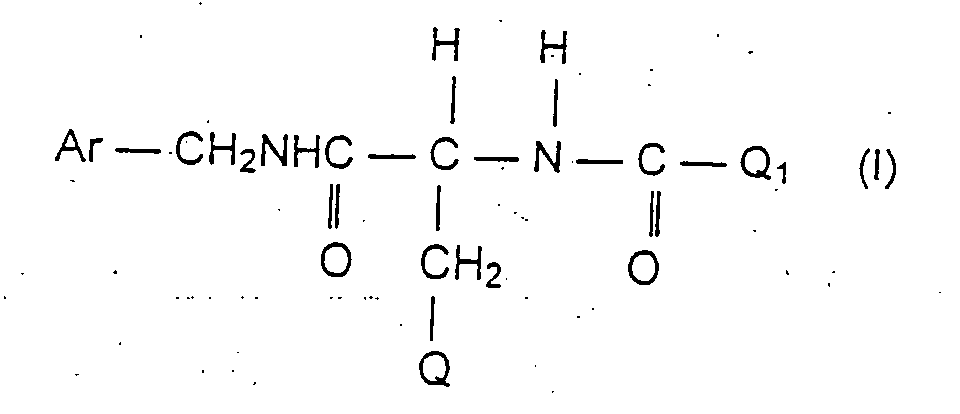 Ar is phenyl which is unsubstituted or substituted with at least one halo group;Q is lower alkoxy containing 1-3 carbon atoms and Q1 is methyl or of a pharmaceutically acceptable salt thereof, for the preparation of a pharmaceutical composition for the treatment of allodynia as a major and unique pain symptom independent of the nature of an underlying disease, or other different types of chronic or phantom pain.
 - Use of the compound according to claim 6 which is substantially enantiopure for the preparation of a pharmaceutical composition for the treatment of allodynia as a major and unique pain symptom independent of the nature of an underlying disease, or other different types of chronic or phantom pain.
- Use of a compound according to claims 6 and 7 wherein Ar is unsubstituted phenyl for the preparation of a pharmaceutical composition for the treatment of allodynia as a major and unique pain symptom independent of the nature of an underlying disease, or other different types of chronic or phantom pain.
- Use of a compound according to claims 6-8 wherein halo is fluoro for the preparation of a pharmaceutical composition for the treatment of allodynia as a major and unique pain symptom independent of the nature of an underlying disease, or other different types of chronic or phantom pain.
- Use of a compound according to claims 6-9 wherein Q is alkoxy containing 1-3 carbon atoms and Ar is unsubstituted phenyl for the preparation of a pharmaceutical composition for the treatment of allodynia as a major and unique pain symptom independent of the nature of an underlying disease, or other different types of chronic or phantom pain.
- Use of (R)-2-Acetamido-N-benzyl-3-methoxypropionamide or its pharmaceutically acceptable salt thereof for the preparation of a pharmaceutical composition for the treatment of allodynia as a major and unique pain symptom independent of the nature of an underlying disease, or other different types of chronic or phantom pain.
- Use of the compound according claim 11 which is substantially enantiopure for the preparation of a pharmaceutical composition for the treatment of allodynia as a major and unique pain symptom independent of the nature of an underlying disease, or other different types of chronic or phantom pain.
- Use of a compound according to claims 6-12 for the preparation of a pharmaceutical composition for the treatment of tinnitus aureum.
- A pharmaceutical composition comprising an antiallodynia effective amount of a compound according to any one of claims 1-13 and a pharmaceutical carrier therefor.
Priority Applications (37)
| Application Number | Priority Date | Filing Date | Title |
|---|---|---|---|
| PT01107026T PT1243263E (en) | 2001-03-21 | 2001-03-21 | NEW USE OF A PEPTIDICAL COMPOSITE CLASS FOR THE TREATMENT OF ALODINIA OR OTHER DIFFERENT TYPES OF CHRONIC OR GHOST PAIN |
| AT01107026T ATE228358T1 (en) | 2001-03-21 | 2001-03-21 | NEW USE OF A CLASS OF PEPTIDE COMPOUNDS FOR THE TREATMENT OF ALLODYNIA OR OTHER TYPES OF CHRONIC OR PHANTOMATIC PAIN |
| ES01107026T ES2185606T3 (en) | 2001-03-21 | 2001-03-21 | NEW USE OF A CLASS OF PEPTIDIC COMPOUNDS FOR TREATMENT OF ALLODINIA OR OTHER DIFFERENT TYPES OF CHRONIC OR GHOST PAIN. |
| DE60100055T DE60100055T2 (en) | 2001-03-21 | 2001-03-21 | New use of a class of peptide compounds for the treatment of allodynia or other types of chronic or phantom pain |
| DK01107026T DK1243263T3 (en) | 2001-03-21 | 2001-03-21 | Hitherto unknown use of a class of peptide compounds to treat allodynia or other various types of chronic or phantom pain |
| EP01107026A EP1243263B1 (en) | 2001-03-21 | 2001-03-21 | Novel use of a peptide class of compound for treating allodynia or other different types of chronic or phantom pain |
| AU2002257680A AU2002257680B2 (en) | 2001-03-21 | 2002-03-19 | Novel use of a peptide class of compound for treating allodynia or other different types of chronic or phantom pain |
| IL15558502A IL155585A0 (en) | 2001-03-21 | 2002-03-19 | Novel use of a peptide class of compound for treating allodynia or other different types of chronic or phantom pain |
| CNB028069137A CN100522149C (en) | 2001-03-21 | 2002-03-19 | Novel application of peptide class of compound for treating allodynia or other different types of chronic or phantom pain |
| KR1020037009213A KR100557852B1 (en) | 2001-03-21 | 2002-03-19 | Pharmaceutical composition used to treat pain or other types of chronic or ring pain |
| DE60238524T DE60238524D1 (en) | 2001-03-21 | 2002-03-19 | NEW USE OF A CLASS OF PEPTIDE COMPOUNDS FOR THE TREATMENT OF ALLODYNIA OR OTHER TYPES OF CHRONIC OR PHATOM PAIN |
| MXPA03006438A MXPA03006438A (en) | 2001-03-21 | 2002-03-19 | Novel use of a peptide class of compound for treating allodynia or other different types of chronic or phantom pain. |
| BR0208141-5A BR0208141A (en) | 2001-03-21 | 2002-03-19 | Use of a peptide class compound for the treatment of allodynia or other different types of chronic or phantom pain |
| EA200300933A EA007600B1 (en) | 2001-03-21 | 2002-03-19 | Use of a peptide class compound for treating allodynia or other different types of chronic or phantom pain |
| ES10157595T ES2368317T3 (en) | 2001-03-21 | 2002-03-19 | NEW USE OF A CLASS OF PEPTIDE COMPOUNDS TO TREAT DIABETIC NEUROPATHIC PAIN. |
| ES02727436T ES2354417T3 (en) | 2001-03-21 | 2002-03-19 | NEW USE OF A CLASS OF PEPTIDE COMPOUNDS TO TREAT ALLODINIA OR OTHER DIFFERENT TYPES OF CHRONIC PAIN OR GHOST. |
| AT02727436T ATE490766T1 (en) | 2001-03-21 | 2002-03-19 | NEW USE OF A CLASS OF PEPTIDE COMPOUNDS FOR THE TREATMENT OF ALLODYNIA OR OTHER TYPES OF CHRONIC OR PHATOMA PAIN |
| PL02368408A PL368408A1 (en) | 2001-03-21 | 2002-03-19 | Novel use of a peptide class of compound for treating allodynia or other different types of chronic or phantom pain |
| PCT/EP2002/003032 WO2002074297A1 (en) | 2001-03-21 | 2002-03-19 | Novel use of a peptide class of compound for treating allodynia or other different types of chronic or phantom pain |
| US10/466,295 US7875652B2 (en) | 2001-03-21 | 2002-03-19 | Method and composition for treating pain or tinnitus aureum |
| SK1290-2003A SK287714B6 (en) | 2001-03-21 | 2002-03-19 | Use of amino acid derivative for the preparation of pharmaceutical compositions for treating phantom pain or diabetic neuropathic pain |
| EP10157595A EP2201943B1 (en) | 2001-03-21 | 2002-03-19 | Novel use of a peptide class of compounds for treating diabetic neuropathic pain |
| CZ20032798A CZ20032798A3 (en) | 2001-03-21 | 2002-03-19 | Novel use of a peptide class of compound for treating allodynia or other different types of chronic pain or phantom pain |
| CA002430470A CA2430470C (en) | 2001-03-21 | 2002-03-19 | Novel use of a peptide class of compound for treating allodynia or other different types of chronic or phantom pain |
| HU0303983A HUP0303983A3 (en) | 2001-03-21 | 2002-03-19 | Novel use of a peptide class of compound for treating allodynia or other different types of chronic or phantom pain |
| AT10157595T ATE518532T1 (en) | 2001-03-21 | 2002-03-19 | NEW USE OF A PEPTIDE CLASS OF COMPOUNDS FOR THE TREATMENT OF DIABETIC NEUROPATHIC PAIN |
| SI200220007A SI21169B (en) | 2001-03-21 | 2002-03-19 | Novel use of a peptide class of compound for treating allodynia or other different types of chronic or phantom pain |
| EP02727436A EP1383487B1 (en) | 2001-03-21 | 2002-03-19 | Novel use of a peptide class of compound for treating allodynia or other different types of chronic or phantom pain |
| JP2002573005A JP4154237B2 (en) | 2001-03-21 | 2002-03-19 | Novel use of the peptide class of compounds to treat allodynia and various other types of chronic or phantom limb pain |
| UA2003109400A UA73854C2 (en) | 2001-03-21 | 2002-03-19 | Use of peptide compound for treating allodynia or other different types of chronic or phantom pain |
| HK03100858.8A HK1048763B (en) | 2001-03-21 | 2003-02-06 | Novel use of a peptide class of compound for treating allodynia or other different types of chronic or phantom pain |
| IL155585A IL155585A (en) | 2001-03-21 | 2003-04-27 | Use of the compound (r) - 2 - acetamido - n - benzyl - 3 - methoxypropionamide for the preparation of a pharmaceutical composition for treating allodynia as a major and unique pain symptom independent of the nature of the underlying disease or chronic or phantom pain |
| ZA200303319A ZA200303319B (en) | 2001-03-21 | 2003-04-30 | Novel use of a peptide class of compound for treating allodynia or other different types of chronic or phantom pain. |
| NO20033918A NO20033918L (en) | 2001-03-21 | 2003-09-04 | New use of peptide class of compounds for the treatment of allodynia or other types of chronic pain or phantom pain |
| IL202688A IL202688A0 (en) | 2001-03-21 | 2009-12-10 | Novel use of a compound for treating diabetic neuropathic pain |
| US12/643,665 US20100099770A1 (en) | 2001-03-21 | 2009-12-21 | Method for treating diabetic peripheral neuropathic pain |
| US12/945,953 US20110082211A1 (en) | 2001-03-21 | 2010-11-15 | Method for treating tinnitus aureum |
Applications Claiming Priority (1)
| Application Number | Priority Date | Filing Date | Title |
|---|---|---|---|
| EP01107026A EP1243263B1 (en) | 2001-03-21 | 2001-03-21 | Novel use of a peptide class of compound for treating allodynia or other different types of chronic or phantom pain |
Publications (2)
| Publication Number | Publication Date |
|---|---|
| EP1243263A1 true EP1243263A1 (en) | 2002-09-25 |
| EP1243263B1 EP1243263B1 (en) | 2002-11-27 |
Family
ID=8176866
Family Applications (3)
| Application Number | Title | Priority Date | Filing Date |
|---|---|---|---|
| EP01107026A Expired - Lifetime EP1243263B1 (en) | 2001-03-21 | 2001-03-21 | Novel use of a peptide class of compound for treating allodynia or other different types of chronic or phantom pain |
| EP02727436A Expired - Lifetime EP1383487B1 (en) | 2001-03-21 | 2002-03-19 | Novel use of a peptide class of compound for treating allodynia or other different types of chronic or phantom pain |
| EP10157595A Expired - Lifetime EP2201943B1 (en) | 2001-03-21 | 2002-03-19 | Novel use of a peptide class of compounds for treating diabetic neuropathic pain |
Family Applications After (2)
| Application Number | Title | Priority Date | Filing Date |
|---|---|---|---|
| EP02727436A Expired - Lifetime EP1383487B1 (en) | 2001-03-21 | 2002-03-19 | Novel use of a peptide class of compound for treating allodynia or other different types of chronic or phantom pain |
| EP10157595A Expired - Lifetime EP2201943B1 (en) | 2001-03-21 | 2002-03-19 | Novel use of a peptide class of compounds for treating diabetic neuropathic pain |
Country Status (26)
| Country | Link |
|---|---|
| US (3) | US7875652B2 (en) |
| EP (3) | EP1243263B1 (en) |
| JP (1) | JP4154237B2 (en) |
| KR (1) | KR100557852B1 (en) |
| CN (1) | CN100522149C (en) |
| AT (3) | ATE228358T1 (en) |
| AU (1) | AU2002257680B2 (en) |
| BR (1) | BR0208141A (en) |
| CA (1) | CA2430470C (en) |
| CZ (1) | CZ20032798A3 (en) |
| DE (2) | DE60100055T2 (en) |
| DK (1) | DK1243263T3 (en) |
| EA (1) | EA007600B1 (en) |
| ES (3) | ES2185606T3 (en) |
| HK (1) | HK1048763B (en) |
| HU (1) | HUP0303983A3 (en) |
| IL (3) | IL155585A0 (en) |
| MX (1) | MXPA03006438A (en) |
| NO (1) | NO20033918L (en) |
| PL (1) | PL368408A1 (en) |
| PT (1) | PT1243263E (en) |
| SI (1) | SI21169B (en) |
| SK (1) | SK287714B6 (en) |
| UA (1) | UA73854C2 (en) |
| WO (1) | WO2002074297A1 (en) |
| ZA (1) | ZA200303319B (en) |
Cited By (12)
| Publication number | Priority date | Publication date | Assignee | Title |
|---|---|---|---|---|
| EP1537862A1 (en) * | 2003-12-02 | 2005-06-08 | Schwarz Pharma Ag | Novel use of peptide compounds for treating central neuropathic pain |
| WO2005053667A1 (en) * | 2003-12-02 | 2005-06-16 | Schwarz Pharma Ag | Novel use of peptide compounds for treating central neuropathic pain |
| WO2005110390A1 (en) * | 2004-05-18 | 2005-11-24 | Schwarz Pharma Ag | Novel use of peptide compounds for treating dyskinesia |
| EP1604655A1 (en) * | 2004-06-09 | 2005-12-14 | Schwarz Pharma Ag | Novel use of peptide compounds for treating pain in trigeminal neuralgia |
| EP1604656A1 (en) * | 2004-06-09 | 2005-12-14 | Schwarz Pharma Ag | Novel use of peptide compounds for treating amyotrophic lateral sclerosis (ALS) |
| US7687553B2 (en) | 2004-08-27 | 2010-03-30 | Schwarz Pharma Ag | Method for treating bone cancer pain or chemotherapy induced pain |
| US7875652B2 (en) | 2001-03-21 | 2011-01-25 | Ucb Pharma Gmbh | Method and composition for treating pain or tinnitus aureum |
| US8008351B2 (en) | 2004-04-16 | 2011-08-30 | Ucb Pharma Gmbh | Methods for prophylaxis or treatment of conditions associated with cortical spreading depression |
| US8053476B2 (en) | 2001-03-20 | 2011-11-08 | Ucb Pharma Gmbh | Method for treating peripheral neuropathic pain |
| WO2012072256A2 (en) | 2010-12-02 | 2012-06-07 | Ucb Pharma Gmbh | Once daily formulation of lacosamide |
| EP2468261A1 (en) | 2010-12-02 | 2012-06-27 | UCB Pharma GmbH | Formulation of lacosamide |
| US8828943B2 (en) | 2006-06-15 | 2014-09-09 | Ucb Pharma Gmbh | Anticonvulsant combination therapy |
Families Citing this family (23)
| Publication number | Priority date | Publication date | Assignee | Title |
|---|---|---|---|---|
| US20100256179A1 (en) * | 2004-03-26 | 2010-10-07 | Ucb Pharma Gmbh | Combination therapy for pain in painful diabetic neuropathy |
| EP1579858A1 (en) * | 2004-03-26 | 2005-09-28 | Schwarz Pharma Ag | Novel use of peptide compounds for treating pain in painful diabetic neuropathy |
| US20070042969A1 (en) * | 2004-03-26 | 2007-02-22 | Srz Properties, Inc. | Combination therapy for pain in painful diabetic neuropathy |
| US7427601B2 (en) * | 2004-06-24 | 2008-09-23 | Schwarz Pharma Ag | Method for treating tremor |
| EP1629839A1 (en) * | 2004-08-27 | 2006-03-01 | Schwarz Pharma Ag | Use of peptide compounds for treating bone cancer pain, chemotherapy- and nucleoside-induced pain |
| EP1642889A1 (en) * | 2004-10-02 | 2006-04-05 | Schwarz Pharma Ag | Improved synthesis scheme for lacosamide |
| US20060252749A1 (en) * | 2005-01-28 | 2006-11-09 | Srz Properties, Inc. | Lacosamide for add-on therapy of psychosis |
| AR057643A1 (en) | 2005-01-28 | 2007-12-12 | Sanol Arznei Schwarz Gmbh | LACOSAMIDE FOR ATTACHED THERAPY |
| EP1754476A1 (en) * | 2005-08-18 | 2007-02-21 | Schwarz Pharma Ag | Lacosamide (SPM 927) for treating myalgia, e.g. fibromyalgia |
| US20070043120A1 (en) * | 2005-08-18 | 2007-02-22 | Bettina Beyreuther | Therapeutic combination for painful medical conditions |
| US20090253585A1 (en) * | 2005-11-30 | 2009-10-08 | Luda Diatchenko | Identification of Genetic Polymorphic Variants Associated With Somatosensory Disorders and Methods of Using the Same |
| US7902401B2 (en) | 2006-12-14 | 2011-03-08 | Nps Pharmaceuticals, Inc. | Fluorinated compounds |
| EP1873527A1 (en) * | 2006-06-30 | 2008-01-02 | Schwarz Pharma Ag | Method for identifying CRMP modulators |
| EP1920780A1 (en) * | 2006-10-12 | 2008-05-14 | Schwarz Pharma Ag | Peptide compounds for the treatment of hyperexcitability disorders |
| CN101466390B (en) | 2006-06-15 | 2014-03-12 | 优时比制药有限公司 | Peptide compounds for the treatment of refractory status epilepticus |
| WO2008070994A1 (en) | 2006-12-14 | 2008-06-19 | Nps Pharmaceuticals, Inc. | Use of d-serine derivatives for the treatment of anxiety disorders |
| MD3310G2 (en) * | 2006-12-27 | 2008-02-29 | Ион МЕРЕУЦЭ | Method of phantom-limb pains treatment |
| US20100260716A1 (en) * | 2007-10-23 | 2010-10-14 | Ucb Pharma Gmbh | Compounds for treating demyelination conditions |
| WO2011037833A2 (en) * | 2009-09-23 | 2011-03-31 | The University Of North Carolina At Chapel Hill | Novel n-benzylamide substituted derivatives of 2-(acylamido)acetic acid and 2-(acylamido)propionic acids: potent neurological agents |
| GB201200525D0 (en) * | 2011-12-19 | 2012-02-29 | Teva Branded Pharmaceutical Prod R & D Inc | An inhalable medicament |
| US10034866B2 (en) | 2014-06-19 | 2018-07-31 | Teva Branded Pharmaceutical Products R&D, Inc. | Inhalable medicament comprising tiotropium |
| KR20220147075A (en) | 2020-02-26 | 2022-11-02 | 에이지씨 가부시키가이샤 | Fluorine-containing polymer, film, film production method and organic optoelectronic device |
| FR3114739B1 (en) * | 2020-10-06 | 2022-08-26 | Centre Nat Rech Scient | NEW PEPTOIDS AND THEIR USE IN THE PREVENTION OR TREATMENT OF CHRONIC PAIN |
Citations (2)
| Publication number | Priority date | Publication date | Assignee | Title |
|---|---|---|---|---|
| WO1996032100A1 (en) * | 1995-04-14 | 1996-10-17 | The Regents Of The University Of California | Compositions and methods for treating pain |
| US5773475A (en) * | 1997-03-17 | 1998-06-30 | Research Corporation Technologies, Inc. | Anticonvulsant enantiomeric amino acid derivatives |
Family Cites Families (98)
| Publication number | Priority date | Publication date | Assignee | Title |
|---|---|---|---|---|
| DE2937698A1 (en) | 1979-09-18 | 1981-04-02 | A. Nattermann & Cie GmbH, 5000 Köln | N-PROPIONYLSARCOSINANILIDES, THEIR PRODUCTION METHOD AND MEDICINAL PRODUCTS BASED ON THEM |
| FR2480747A1 (en) | 1980-04-17 | 1981-10-23 | Roques Bernard | AMINO ACID DERIVATIVES AND THEIR THERAPEUTIC APPLICATION |
| US4533657A (en) | 1981-07-24 | 1985-08-06 | Sterling Drug Inc. | Analgesic dipeptide amides and method of use and composition thereof |
| FR2518088B1 (en) | 1981-12-16 | 1987-11-27 | Roques Bernard | NOVEL AMINO ACID DERIVATIVES AND THEIR THERAPEUTIC APPLICATION |
| US4510082A (en) | 1983-03-07 | 1985-04-09 | Eli Lilly And Company | Pharmacologically active peptides |
| JPH0680079B2 (en) | 1984-11-09 | 1994-10-12 | エーザイ株式会社 | Polypeptide |
| US5378729A (en) | 1985-02-15 | 1995-01-03 | Research Corporation Technologies, Inc. | Amino acid derivative anticonvulsant |
| US5654301A (en) | 1985-02-15 | 1997-08-05 | Research Corporation Technologies, Inc. | Amino acid derivative anticonvulsant |
| US5962490A (en) * | 1987-09-25 | 1999-10-05 | Texas Biotechnology Corporation | Thienyl-, furyl- and pyrrolyl-sulfonamides and derivatives thereof that modulate the activity of endothelin |
| GB9103454D0 (en) | 1991-02-19 | 1991-04-03 | Pfizer Ltd | Therapeutic agents |
| US5656267A (en) | 1991-08-22 | 1997-08-12 | Sagen; Jacqueline | Implantable cells that alleviate chronic pain in humans |
| TW217417B (en) | 1991-12-04 | 1993-12-11 | Manyu Seiyaku Kk | |
| US5585358A (en) | 1993-07-06 | 1996-12-17 | Yissum Research Development Corporation Of The Hebrew University Of Jerusalem | Derivatives of valproic acid amides and 2-valproenoic acid amides, method of making and use thereof as anticonvulsant agents |
| GB9504854D0 (en) | 1994-03-31 | 1995-04-26 | Zeneca Ltd | Nitrogen derivatives |
| US5536853A (en) | 1994-04-11 | 1996-07-16 | Chiron Corporation | Opiate receptor ligands |
| MY113062A (en) | 1994-05-10 | 2001-11-30 | The Wellcome Foundation Ltd | Amide derivatives and their therapeutic use |
| US5508266A (en) | 1994-06-22 | 1996-04-16 | Ciba-Geigy Corporation | Gem-disubstituted amino acid derivatives |
| ES2133807T3 (en) | 1994-10-05 | 1999-09-16 | Darwin Discovery Ltd | PEPTIDYL COMPOUNDS AND THEIR THERAPEUTIC USE AS METALOPROTEASE INHIBITORS. |
| DE19533023B4 (en) | 1994-10-14 | 2007-05-16 | Basf Ag | New carboxylic acid derivatives, their preparation and use |
| US5780589A (en) | 1994-11-30 | 1998-07-14 | The United States Of America As Represented By The Department Of Health And Human Services | Ultraselective opioidmimetic peptides and pharmacological and therapeutic uses thereof |
| US5651301A (en) * | 1994-12-13 | 1997-07-29 | Unipat Aktiengessellschaft | Hydrostatic piston machines |
| US5760038A (en) | 1995-02-06 | 1998-06-02 | Bristol-Myers Squibb Company | Substituted biphenyl sulfonamide endothelin antagonists |
| EP0840612A1 (en) | 1995-07-24 | 1998-05-13 | Trustees Of Boston University | Inhibition of nmda receptor activity by pregnenolone sulfate derivatives |
| TW450807B (en) * | 1995-09-15 | 2001-08-21 | Pfizer | Pharmaceutical compositions for treating tinnitus comprising neuroprotective agents |
| US6114390A (en) | 1995-11-30 | 2000-09-05 | Karl Thomae Gmbh | Amino acid derivatives, pharmaceutical compositions containing these compounds and processes for preparing them |
| US6037324A (en) | 1996-01-04 | 2000-03-14 | Leukosite, Inc. | Inhibitors of MAdCAM-1-mediated interactions and methods of use therefor |
| GB9601724D0 (en) | 1996-01-29 | 1996-03-27 | Merck Sharp & Dohme | Therapeutic agents |
| DE19614542A1 (en) | 1996-04-12 | 1997-10-16 | Basf Ag | New carboxylic acid derivatives, their production and use |
| DE19614533A1 (en) | 1996-04-12 | 1997-10-16 | Basf Ag | New alpha-hydroxy acid derivatives, their production and use |
| DE19614534A1 (en) | 1996-04-12 | 1997-10-16 | Basf Ag | New carboxylic acid derivatives, their production and use |
| US6277825B1 (en) | 1996-07-22 | 2001-08-21 | University Of Utah Research Foundation | Use of conantokins for treating pain |
| US6001876A (en) | 1996-07-24 | 1999-12-14 | Warner-Lambert Company | Isobutylgaba and its derivatives for the treatment of pain |
| US6589994B1 (en) | 1996-08-30 | 2003-07-08 | Nps Pharmaceuticals, Inc. | Treating a variety of pathological conditions, including spasticity and convulsions, by effecting a modulation of CNS activity with isovaleramide, isovaleric acid, or a related compound |
| US6126939A (en) | 1996-09-03 | 2000-10-03 | Yeda Research And Development Co. Ltd. | Anti-inflammatory dipeptide and pharmaceutical composition thereof |
| DE19636046A1 (en) | 1996-09-05 | 1998-03-12 | Basf Ag | New carboxylic acid derivatives, their production and use as mixed ET¶A¶ / ET¶B¶ receptor antagonists |
| US6038324A (en) * | 1997-02-21 | 2000-03-14 | Ambourn; Paul R. | Automotive surround sound circuit background of the invention |
| US6071966A (en) * | 1997-06-30 | 2000-06-06 | Merz + Co. Gmbh & Co. | 1-amino-alkylcyclohexane NMDA receptor antagonists |
| DE69833858T2 (en) | 1997-07-08 | 2007-02-22 | Ono Pharmaceutical Co. Ltd. | AMINO ACID DERIVATIVES |
| US6737408B1 (en) | 1997-08-07 | 2004-05-18 | University Of Cincinnati | Compounds for control of appetite, blood pressure, cardiovascular response, libido, and circadian rhythm |
| WO1999007413A1 (en) | 1997-08-11 | 1999-02-18 | Algos Pharmaceutical Corporation | Substance p inhibitors in combination with nmda-blockers for treating pain |
| DE19743143A1 (en) | 1997-09-30 | 1999-04-01 | Knoll Ag | Combination pharmaceutical preparations |
| JP2001521927A (en) | 1997-10-31 | 2001-11-13 | ビーエーエスエフ アクチェンゲゼルシャフト | Novel carboxylic acid derivatives having amide side chains, their preparation and use as endothelin receptor antagonists |
| US6492553B1 (en) * | 1998-01-29 | 2002-12-10 | Aventis Pharamaceuticals Inc. | Methods for preparing N-[(aliphatic or aromatic)carbonyl)]-2-aminoaetamide compounds and for cyclizing such compounds |
| US6028102A (en) | 1998-02-24 | 2000-02-22 | Yissum Research Development Company Of The Hebrew University Of Jerusalem | Anticonvulsant drugs and pharmaceutical compositions thereof |
| US6673832B1 (en) | 1998-05-04 | 2004-01-06 | Gudarz Davar | Methods for identifying compounds for treating pain |
| GB9812683D0 (en) * | 1998-06-12 | 1998-08-12 | Smithkline Beecham Plc | Novel compounds |
| ES2295048T3 (en) | 1999-09-03 | 2008-04-16 | Actelion Pharmaceuticals Ltd. | BIS-SULFONAMIDS. |
| SE0001373D0 (en) | 2000-04-13 | 2000-04-13 | Karolinska Innovations Ab | NPY Y1 receptor agonists and antagonists |
| WO2002013766A2 (en) | 2000-08-17 | 2002-02-21 | Teva Pharmaceutical Industries, Ltd. | Valproic acid derivatives for the treatment of pain |
| DE10041478A1 (en) * | 2000-08-24 | 2002-03-14 | Sanol Arznei Schwarz Gmbh | New pharmaceutical composition |
| EP1695703B1 (en) * | 2000-08-25 | 2010-08-11 | Research Corporation Technologies, Inc. | Anticonvulsant amino acids for the treatment of obsessive-compulsive neurosis |
| US6821978B2 (en) * | 2000-09-19 | 2004-11-23 | Schering Corporation | Xanthine phosphodiesterase V inhibitors |
| ATE397584T1 (en) | 2000-11-21 | 2008-06-15 | Ucb Pharma Sa | N-ALKYLATED GABA COMPOUNDS, METHOD FOR THE PRODUCTION THEREOF AND THEIR USE AS MEDICINAL PRODUCTS |
| EP1243262B1 (en) * | 2001-03-20 | 2006-05-31 | Schwarz Pharma Ag | Novel use of a peptide class of compound for treating non-neuropathic inflammatory pain |
| DE60100055T2 (en) * | 2001-03-21 | 2003-07-24 | Schwarz Pharma Ag | New use of a class of peptide compounds for the treatment of allodynia or other types of chronic or phantom pain |
| EP1379523B1 (en) | 2001-03-27 | 2005-07-27 | Actelion Pharmaceuticals Ltd. | 1,2,3,4-tetrahydroisoquinolines derivatives as urotensin ii receptor antagonists |
| WO2002088664A2 (en) | 2001-04-26 | 2002-11-07 | Bristol-Myers Squibb Company | Control of compactability through crystallization |
| ITMI20011308A1 (en) | 2001-06-21 | 2002-12-21 | Nicox Sa | DRUGS FOR CHRONIC PAIN |
| AU2003243180A1 (en) | 2002-05-17 | 2003-12-12 | Xenoport, Inc. | Amino acid conjugates providing for sustained systemic concentrations of gaba analogues |
| DK1546134T3 (en) | 2002-08-05 | 2007-09-10 | Lilly Co Eli | Piperazine-substituted arylbenzodiazepines |
| CA2505361A1 (en) | 2002-11-11 | 2004-05-27 | Bayer Healthcare Ag | Phenyl or heteroaryl amino alkane derivatives as ip receptor antagonist |
| US7485622B2 (en) | 2002-11-18 | 2009-02-03 | Bioprospecting Nb Inc. | Paralytic peptide for use in neuromuscular therapy |
| US7687080B2 (en) | 2002-11-25 | 2010-03-30 | Taraxos Inc. | Treatment of neuropathy |
| US6991764B2 (en) * | 2002-12-13 | 2006-01-31 | Dade Behring Inc. | Method for replacing used reaction cuvettes in an automatic analyzer depending upon next scheduled assay |
| CA2511385A1 (en) | 2002-12-19 | 2004-07-22 | Pharmacia Corporation | Non-hygroscopic formulation comprising a hydroscopic drug |
| JP2006515326A (en) | 2003-01-30 | 2006-05-25 | ダイノジェン ファーマシューティカルズ, インコーポレイテッド | Use of sodium channel modulators to treat gastrointestinal disorders |
| US20040209960A1 (en) | 2003-01-30 | 2004-10-21 | Dynogen Pharmaceuticals, Inc. | Methods of treating lower urinary tract disorders using sodium channell modulators |
| US20040265375A1 (en) | 2003-04-16 | 2004-12-30 | Platteeuw Johannes J. | Orally disintegrating tablets |
| WO2004100871A2 (en) | 2003-05-09 | 2004-11-25 | Pharmacia Corporation | Combination of an aldosterone receptor antagonist and a renin inhibitor |
| US7307669B2 (en) * | 2003-06-24 | 2007-12-11 | Broadcom Corporation | System, method, and apparatus for displaying streams with dynamically changing formats |
| US7320675B2 (en) | 2003-08-21 | 2008-01-22 | Cardiac Pacemakers, Inc. | Method and apparatus for modulating cellular metabolism during post-ischemia or heart failure |
| EP1537862A1 (en) | 2003-12-02 | 2005-06-08 | Schwarz Pharma Ag | Novel use of peptide compounds for treating central neuropathic pain |
| WO2005053667A1 (en) | 2003-12-02 | 2005-06-16 | Schwarz Pharma Ag | Novel use of peptide compounds for treating central neuropathic pain |
| EP1541138A1 (en) | 2003-12-05 | 2005-06-15 | Schwarz Pharma Ag | Novel use of peptide compounds for treating status epilepticus or related conditions |
| US20060009384A1 (en) | 2003-12-05 | 2006-01-12 | David Rudd | Novel use of peptide compounds for treating status epilepticus or related conditions |
| US20070042969A1 (en) | 2004-03-26 | 2007-02-22 | Srz Properties, Inc. | Combination therapy for pain in painful diabetic neuropathy |
| EP1579858A1 (en) | 2004-03-26 | 2005-09-28 | Schwarz Pharma Ag | Novel use of peptide compounds for treating pain in painful diabetic neuropathy |
| US20100256179A1 (en) * | 2004-03-26 | 2010-10-07 | Ucb Pharma Gmbh | Combination therapy for pain in painful diabetic neuropathy |
| US20050227961A1 (en) | 2004-04-08 | 2005-10-13 | Vela Pharmaceuticals, Inc. | Compositions and methods for treatment of neuropathic pain, fibromyalgia and chronic fatigue syndrome |
| KR20070007931A (en) | 2004-04-16 | 2007-01-16 | 쉬바르츠파르마에이지 | Use of Peptide Compounds for the Prevention and Treatment of Chronic Headaches |
| EP1598428A1 (en) * | 2004-05-18 | 2005-11-23 | Georg Dewald | Methods and kits to detect Hereditary angioedema type III |
| EP1604654A1 (en) | 2004-05-18 | 2005-12-14 | Schwarz Pharma Ag | Novel use of peptide compounds for treating dyskinesia |
| EP1604656A1 (en) * | 2004-06-09 | 2005-12-14 | Schwarz Pharma Ag | Novel use of peptide compounds for treating amyotrophic lateral sclerosis (ALS) |
| EP1604655A1 (en) * | 2004-06-09 | 2005-12-14 | Schwarz Pharma Ag | Novel use of peptide compounds for treating pain in trigeminal neuralgia |
| US7427601B2 (en) | 2004-06-24 | 2008-09-23 | Schwarz Pharma Ag | Method for treating tremor |
| WO2006021412A2 (en) | 2004-08-27 | 2006-03-02 | Schwarz Pharma Ag | Use of peptide compounds for treating bone cancer pain, chemotherapy-and nucleoside-induced pain |
| EP1642889A1 (en) * | 2004-10-02 | 2006-04-05 | Schwarz Pharma Ag | Improved synthesis scheme for lacosamide |
| US20060252749A1 (en) | 2005-01-28 | 2006-11-09 | Srz Properties, Inc. | Lacosamide for add-on therapy of psychosis |
| EP1688137A1 (en) | 2005-01-28 | 2006-08-09 | Schwarz Pharma Ag | SPM 927 for add-on therapy of schizophrenia |
| US20070048372A1 (en) | 2005-08-18 | 2007-03-01 | Srz Properties, Inc. | Method for treating non-inflammatory osteoarthritic pain |
| US20070043120A1 (en) | 2005-08-18 | 2007-02-22 | Bettina Beyreuther | Therapeutic combination for painful medical conditions |
| EP1754476A1 (en) | 2005-08-18 | 2007-02-21 | Schwarz Pharma Ag | Lacosamide (SPM 927) for treating myalgia, e.g. fibromyalgia |
| US8735356B2 (en) * | 2006-06-15 | 2014-05-27 | Ucb Pharma Gmbh | Anticonvulsant combination therapy |
| CN101466390B (en) * | 2006-06-15 | 2014-03-12 | 优时比制药有限公司 | Peptide compounds for the treatment of refractory status epilepticus |
| EP1873527A1 (en) * | 2006-06-30 | 2008-01-02 | Schwarz Pharma Ag | Method for identifying CRMP modulators |
| JP4355003B2 (en) * | 2007-03-08 | 2009-10-28 | 本田技研工業株式会社 | Control device for internal combustion engine |
| US20100260716A1 (en) * | 2007-10-23 | 2010-10-14 | Ucb Pharma Gmbh | Compounds for treating demyelination conditions |
| CN101841984A (en) * | 2009-03-19 | 2010-09-22 | 鸿富锦精密工业(深圳)有限公司 | Electronic device and key assembly thereof |
-
2001
- 2001-03-21 DE DE60100055T patent/DE60100055T2/en not_active Expired - Lifetime
- 2001-03-21 ES ES01107026T patent/ES2185606T3/en not_active Expired - Lifetime
- 2001-03-21 EP EP01107026A patent/EP1243263B1/en not_active Expired - Lifetime
- 2001-03-21 DK DK01107026T patent/DK1243263T3/en active
- 2001-03-21 PT PT01107026T patent/PT1243263E/en unknown
- 2001-03-21 AT AT01107026T patent/ATE228358T1/en active
-
2002
- 2002-03-19 ES ES02727436T patent/ES2354417T3/en not_active Expired - Lifetime
- 2002-03-19 CN CNB028069137A patent/CN100522149C/en not_active Expired - Fee Related
- 2002-03-19 UA UA2003109400A patent/UA73854C2/en unknown
- 2002-03-19 AU AU2002257680A patent/AU2002257680B2/en not_active Ceased
- 2002-03-19 ES ES10157595T patent/ES2368317T3/en not_active Expired - Lifetime
- 2002-03-19 BR BR0208141-5A patent/BR0208141A/en not_active Application Discontinuation
- 2002-03-19 KR KR1020037009213A patent/KR100557852B1/en not_active Expired - Fee Related
- 2002-03-19 SK SK1290-2003A patent/SK287714B6/en not_active IP Right Cessation
- 2002-03-19 EP EP02727436A patent/EP1383487B1/en not_active Expired - Lifetime
- 2002-03-19 MX MXPA03006438A patent/MXPA03006438A/en active IP Right Grant
- 2002-03-19 PL PL02368408A patent/PL368408A1/en unknown
- 2002-03-19 WO PCT/EP2002/003032 patent/WO2002074297A1/en not_active Ceased
- 2002-03-19 US US10/466,295 patent/US7875652B2/en not_active Expired - Fee Related
- 2002-03-19 SI SI200220007A patent/SI21169B/en not_active IP Right Cessation
- 2002-03-19 EP EP10157595A patent/EP2201943B1/en not_active Expired - Lifetime
- 2002-03-19 CZ CZ20032798A patent/CZ20032798A3/en unknown
- 2002-03-19 EA EA200300933A patent/EA007600B1/en not_active IP Right Cessation
- 2002-03-19 AT AT02727436T patent/ATE490766T1/en not_active IP Right Cessation
- 2002-03-19 HU HU0303983A patent/HUP0303983A3/en unknown
- 2002-03-19 IL IL15558502A patent/IL155585A0/en unknown
- 2002-03-19 DE DE60238524T patent/DE60238524D1/en not_active Expired - Lifetime
- 2002-03-19 AT AT10157595T patent/ATE518532T1/en not_active IP Right Cessation
- 2002-03-19 JP JP2002573005A patent/JP4154237B2/en not_active Expired - Fee Related
- 2002-03-19 CA CA002430470A patent/CA2430470C/en not_active Expired - Fee Related
-
2003
- 2003-02-06 HK HK03100858.8A patent/HK1048763B/en not_active IP Right Cessation
- 2003-04-27 IL IL155585A patent/IL155585A/en not_active IP Right Cessation
- 2003-04-30 ZA ZA200303319A patent/ZA200303319B/en unknown
- 2003-09-04 NO NO20033918A patent/NO20033918L/en not_active Application Discontinuation
-
2009
- 2009-12-10 IL IL202688A patent/IL202688A0/en unknown
- 2009-12-21 US US12/643,665 patent/US20100099770A1/en not_active Abandoned
-
2010
- 2010-11-15 US US12/945,953 patent/US20110082211A1/en not_active Abandoned
Patent Citations (2)
| Publication number | Priority date | Publication date | Assignee | Title |
|---|---|---|---|---|
| WO1996032100A1 (en) * | 1995-04-14 | 1996-10-17 | The Regents Of The University Of California | Compositions and methods for treating pain |
| US5773475A (en) * | 1997-03-17 | 1998-06-30 | Research Corporation Technologies, Inc. | Anticonvulsant enantiomeric amino acid derivatives |
Non-Patent Citations (1)
| Title |
|---|
| EUROPEAN JOURNAL OF NEUROLOGY., vol. 7, no. Sup 7, November 2000 (2000-11-01), pages 3 - 4, XP001012700 * |
Cited By (27)
| Publication number | Priority date | Publication date | Assignee | Title |
|---|---|---|---|---|
| US8053476B2 (en) | 2001-03-20 | 2011-11-08 | Ucb Pharma Gmbh | Method for treating peripheral neuropathic pain |
| US7875652B2 (en) | 2001-03-21 | 2011-01-25 | Ucb Pharma Gmbh | Method and composition for treating pain or tinnitus aureum |
| EA013590B1 (en) * | 2003-12-02 | 2010-06-30 | Шварц Фарма Аг | Use of peptide compounds for treating pains related to central nervous system (central neuropathic pain) |
| WO2005053667A1 (en) * | 2003-12-02 | 2005-06-16 | Schwarz Pharma Ag | Novel use of peptide compounds for treating central neuropathic pain |
| EP1537862A1 (en) * | 2003-12-02 | 2005-06-08 | Schwarz Pharma Ag | Novel use of peptide compounds for treating central neuropathic pain |
| US7794987B2 (en) | 2003-12-02 | 2010-09-14 | Ucb Pharma Gmbh | Method for treating central neuropathic pain |
| AU2004294714B2 (en) * | 2003-12-02 | 2009-12-10 | Ucb Pharma Gmbh | Novel use of peptide compounds for treating central neuropathic pain |
| US8008351B2 (en) | 2004-04-16 | 2011-08-30 | Ucb Pharma Gmbh | Methods for prophylaxis or treatment of conditions associated with cortical spreading depression |
| WO2005110390A1 (en) * | 2004-05-18 | 2005-11-24 | Schwarz Pharma Ag | Novel use of peptide compounds for treating dyskinesia |
| EP1604654A1 (en) * | 2004-05-18 | 2005-12-14 | Schwarz Pharma Ag | Novel use of peptide compounds for treating dyskinesia |
| US7416864B2 (en) | 2004-05-18 | 2008-08-26 | Schwarz Pharma Ag | Method for treating dyskinesia |
| WO2005120539A3 (en) * | 2004-06-09 | 2006-01-26 | Sanol Arznei Schwarz Gmbh | Novel use of peptide compounds for treating pain in trigeminal neuralgia |
| EP1604655A1 (en) * | 2004-06-09 | 2005-12-14 | Schwarz Pharma Ag | Novel use of peptide compounds for treating pain in trigeminal neuralgia |
| US8338641B2 (en) | 2004-06-09 | 2012-12-25 | Ucb Pharma Gmbh | Method for treating atypical facial pain |
| AU2005251465B2 (en) * | 2004-06-09 | 2009-07-09 | Ucb Pharma Gmbh | Novel use of peptide compounds for treating pain in trigeminal neuralgia |
| US7820857B2 (en) | 2004-06-09 | 2010-10-26 | Ucb Pharma Gmbh | Method for treating pain in trigeminal neuralgia |
| WO2005120476A3 (en) * | 2004-06-09 | 2006-02-16 | Sanol Arznei Schwarz Gmbh | Novel use of peptide compounds for treating amyotrophic lateral sclerosis |
| EP1604656A1 (en) * | 2004-06-09 | 2005-12-14 | Schwarz Pharma Ag | Novel use of peptide compounds for treating amyotrophic lateral sclerosis (ALS) |
| US7718161B2 (en) | 2004-06-09 | 2010-05-18 | Ucb Pharma Gmbh | Method for treating a motoneuron disorder |
| US7687553B2 (en) | 2004-08-27 | 2010-03-30 | Schwarz Pharma Ag | Method for treating bone cancer pain or chemotherapy induced pain |
| US8536137B2 (en) | 2004-08-27 | 2013-09-17 | Ucb Pharma Gmbh | Methods for treating nucleoside-induced pain |
| US8828943B2 (en) | 2006-06-15 | 2014-09-09 | Ucb Pharma Gmbh | Anticonvulsant combination therapy |
| WO2012072256A2 (en) | 2010-12-02 | 2012-06-07 | Ucb Pharma Gmbh | Once daily formulation of lacosamide |
| EP2468261A1 (en) | 2010-12-02 | 2012-06-27 | UCB Pharma GmbH | Formulation of lacosamide |
| WO2012084126A2 (en) | 2010-12-02 | 2012-06-28 | Ucb Pharma Gmbh | Formulation of lacosamide |
| US10149818B2 (en) | 2010-12-02 | 2018-12-11 | Ucb Pharma Gmbh | Daily formulation of lacosamide |
| EP3766485A1 (en) | 2010-12-02 | 2021-01-20 | UCB Pharma GmbH | Once daily formulation of lacosamide |
Also Published As
Similar Documents
| Publication | Publication Date | Title |
|---|---|---|
| EP1243263B1 (en) | Novel use of a peptide class of compound for treating allodynia or other different types of chronic or phantom pain | |
| AU2002257680A1 (en) | Novel use of a peptide class of compound for treating allodynia or other different types of chronic or phantom pain | |
| EP1243262B1 (en) | Novel use of a peptide class of compound for treating non-neuropathic inflammatory pain | |
| KR20000068015A (en) | Isobutylgaba and Its Derivatives for the Treatment of Pain | |
| JP2001515492A (en) | Compositions containing capsaicin or capsaicin analogs and local anesthesia | |
| EP1219624B1 (en) | Remedies for neuropathic pain and model animals of neuropathic pain | |
| US20070105940A1 (en) | Method for treating pain | |
| HK1143088A (en) | Novel use of a peptide class of compounds for treating diabetic neuropathic pain | |
| EP0187009A2 (en) | Compounds and compositions having anti-inflammatory and analgesic activity | |
| DE60122541T2 (en) | 2-Indanylaminoderivate for the treatment of chronic, acute or inflammatory pain | |
| JP2001516335A (en) | Methods and compositions for producing analgesia | |
| Herman et al. | Pharmacologic management of spinal spasticity | |
| ES2323981T3 (en) | THIAZOLOPIRIMIDINS FOR USE IN THERAPY. | |
| Herman et al. | The spinal form of spasticity | |
| JPH07503968A (en) | Use of 3,5-diamino-6-(2,3-dichlorophenyl)-1,2,4-triazine for the treatment of edema and pain |
Legal Events
| Date | Code | Title | Description |
|---|---|---|---|
| GRAH | Despatch of communication of intention to grant a patent |
Free format text: ORIGINAL CODE: EPIDOS IGRA |
|
| PUAI | Public reference made under article 153(3) epc to a published international application that has entered the european phase |
Free format text: ORIGINAL CODE: 0009012 |
|
| 17P | Request for examination filed |
Effective date: 20010523 |
|
| AK | Designated contracting states |
Kind code of ref document: A1 Designated state(s): AT BE CH CY DE DK ES FI FR GB GR IE IT LI LU MC NL PT SE TR |
|
| AX | Request for extension of the european patent |
Free format text: AL;LT;LV;MK;RO;SI |
|
| GRAH | Despatch of communication of intention to grant a patent |
Free format text: ORIGINAL CODE: EPIDOS IGRA |
|
| GRAA | (expected) grant |
Free format text: ORIGINAL CODE: 0009210 |
|
| AK | Designated contracting states |
Kind code of ref document: B1 Designated state(s): AT BE CH CY DE DK ES FI FR GB GR IE IT LI LU MC NL PT SE TR |
|
| AX | Request for extension of the european patent |
Free format text: AL PAYMENT 20020927;LT PAYMENT 20020927;LV PAYMENT 20020927;MK PAYMENT 20020927;RO PAYMENT 20020927;SI PAYMENT 20020927 |
|
| REF | Corresponds to: |
Ref document number: 228358 Country of ref document: AT Date of ref document: 20021215 Kind code of ref document: T |
|
| REG | Reference to a national code |
Ref country code: GB Ref legal event code: FG4D |
|
| REG | Reference to a national code |
Ref country code: CH Ref legal event code: EP |
|
| REG | Reference to a national code |
Ref country code: CH Ref legal event code: NV Representative=s name: E. BLUM & CO. PATENTANWAELTE |
|
| REG | Reference to a national code |
Ref country code: IE Ref legal event code: FG4D |
|
| REF | Corresponds to: |
Ref document number: 60100055 Country of ref document: DE Date of ref document: 20030109 |
|
| REG | Reference to a national code |
Ref country code: GR Ref legal event code: EP Ref document number: 20030400305 Country of ref document: GR |
|
| REG | Reference to a national code |
Ref country code: DK Ref legal event code: T3 |
|
| REG | Reference to a national code |
Ref country code: PT Ref legal event code: SC4A Free format text: AVAILABILITY OF NATIONAL TRANSLATION Effective date: 20030130 |
|
| ET | Fr: translation filed | ||
| REG | Reference to a national code |
Ref country code: ES Ref legal event code: FG2A Ref document number: 2185606 Country of ref document: ES Kind code of ref document: T3 |
|
| LTIE | Lt: invalidation of european patent or patent extension |
Effective date: 20021127 |
|
| AKX | Designation fees paid |
Designated state(s): AT BE CH CY DE DK ES FI FR GB GR IE IT LI LU MC NL PT SE TR |
|
| AXX | Extension fees paid |
Extension state: LT Payment date: 20020927 Extension state: MK Payment date: 20020927 Extension state: RO Payment date: 20020927 Extension state: SI Payment date: 20020927 Extension state: AL Payment date: 20020927 Extension state: LV Payment date: 20020927 |
|
| PLBI | Opposition filed |
Free format text: ORIGINAL CODE: 0009260 |
|
| PLBQ | Unpublished change to opponent data |
Free format text: ORIGINAL CODE: EPIDOS OPPO |
|
| PLAX | Notice of opposition and request to file observation + time limit sent |
Free format text: ORIGINAL CODE: EPIDOSNOBS2 |
|
| 26 | Opposition filed |
Opponent name: RESEARCH CORPORATION TECHNOLOGIES, INC. Effective date: 20030827 |
|
| NLR1 | Nl: opposition has been filed with the epo |
Opponent name: RESEARCH CORPORATION TECHNOLOGIES, INC. |
|
| PLBP | Opposition withdrawn |
Free format text: ORIGINAL CODE: 0009264 |
|
| PLAX | Notice of opposition and request to file observation + time limit sent |
Free format text: ORIGINAL CODE: EPIDOSNOBS2 |
|
| PLBB | Reply of patent proprietor to notice(s) of opposition received |
Free format text: ORIGINAL CODE: EPIDOSNOBS3 |
|
| PLBD | Termination of opposition procedure: decision despatched |
Free format text: ORIGINAL CODE: EPIDOSNOPC1 |
|
| PLBM | Termination of opposition procedure: date of legal effect published |
Free format text: ORIGINAL CODE: 0009276 |
|
| STAA | Information on the status of an ep patent application or granted ep patent |
Free format text: STATUS: OPPOSITION PROCEDURE CLOSED |
|
| 27C | Opposition proceedings terminated |
Effective date: 20040625 |
|
| NLR2 | Nl: decision of opposition |
Effective date: 20040625 |
|
| REG | Reference to a national code |
Ref country code: CH Ref legal event code: PFA Owner name: SCHWARZ PHARMA AG Free format text: SCHWARZ PHARMA AG#ALFRED-NOBEL-STRASSE 10#40789 MONHEIM (DE) -TRANSFER TO- SCHWARZ PHARMA AG#ALFRED-NOBEL-STRASSE 10#40789 MONHEIM (DE) |
|
| REG | Reference to a national code |
Ref country code: CH Ref legal event code: PFA Owner name: UCB PHARMA GMBH Free format text: SCHWARZ PHARMA AG#ALFRED-NOBEL-STRASSE 10#40789 MONHEIM (DE) -TRANSFER TO- UCB PHARMA GMBH#ALFRED-NOBEL-STRASSE 10#40789 MONHEIM (DE) |
|
| REG | Reference to a national code |
Ref country code: FR Ref legal event code: CD Ref country code: FR Ref legal event code: CJ |
|
| REG | Reference to a national code |
Ref country code: NL Ref legal event code: TD Effective date: 20101112 |
|
| REG | Reference to a national code |
Ref country code: ES Ref legal event code: PC2A Owner name: UCB PHARMA GMBH Effective date: 20110315 |
|
| PGFP | Annual fee paid to national office [announced via postgrant information from national office to epo] |
Ref country code: DK Payment date: 20110310 Year of fee payment: 11 Ref country code: IE Payment date: 20110310 Year of fee payment: 11 Ref country code: MC Payment date: 20110228 Year of fee payment: 11 |
|
| PGFP | Annual fee paid to national office [announced via postgrant information from national office to epo] |
Ref country code: CH Payment date: 20110314 Year of fee payment: 11 Ref country code: AT Payment date: 20110228 Year of fee payment: 11 Ref country code: SE Payment date: 20110311 Year of fee payment: 11 Ref country code: NL Payment date: 20110317 Year of fee payment: 11 Ref country code: PT Payment date: 20110309 Year of fee payment: 11 Ref country code: LU Payment date: 20110415 Year of fee payment: 11 Ref country code: IT Payment date: 20110316 Year of fee payment: 11 Ref country code: FI Payment date: 20110310 Year of fee payment: 11 Ref country code: FR Payment date: 20110317 Year of fee payment: 11 |
|
| PGFP | Annual fee paid to national office [announced via postgrant information from national office to epo] |
Ref country code: GR Payment date: 20110217 Year of fee payment: 11 |
|
| PGFP | Annual fee paid to national office [announced via postgrant information from national office to epo] |
Ref country code: GB Payment date: 20110316 Year of fee payment: 11 Ref country code: ES Payment date: 20110414 Year of fee payment: 11 Ref country code: DE Payment date: 20110316 Year of fee payment: 11 Ref country code: BE Payment date: 20110311 Year of fee payment: 11 |
|
| PGFP | Annual fee paid to national office [announced via postgrant information from national office to epo] |
Ref country code: CY Payment date: 20110309 Year of fee payment: 11 |
|
| PGFP | Annual fee paid to national office [announced via postgrant information from national office to epo] |
Ref country code: TR Payment date: 20120224 Year of fee payment: 12 |
|
| REG | Reference to a national code |
Ref country code: PT Ref legal event code: MM4A Free format text: LAPSE DUE TO NON-PAYMENT OF FEES Effective date: 20120921 |
|
| BERE | Be: lapsed |
Owner name: UCB PHARMA G.M.B.H. Effective date: 20120331 |
|
| REG | Reference to a national code |
Ref country code: NL Ref legal event code: V1 Effective date: 20121001 |
|
| REG | Reference to a national code |
Ref country code: SE Ref legal event code: EUG |
|
| PG25 | Lapsed in a contracting state [announced via postgrant information from national office to epo] |
Ref country code: CY Free format text: LAPSE BECAUSE OF NON-PAYMENT OF DUE FEES Effective date: 20120321 Ref country code: FI Free format text: LAPSE BECAUSE OF NON-PAYMENT OF DUE FEES Effective date: 20120321 Ref country code: MC Free format text: LAPSE BECAUSE OF NON-PAYMENT OF DUE FEES Effective date: 20120331 Ref country code: SE Free format text: LAPSE BECAUSE OF NON-PAYMENT OF DUE FEES Effective date: 20120322 |
|
| REG | Reference to a national code |
Ref country code: CH Ref legal event code: PL |
|
| REG | Reference to a national code |
Ref country code: DK Ref legal event code: EBP |
|
| GBPC | Gb: european patent ceased through non-payment of renewal fee |
Effective date: 20120321 |
|
| PG25 | Lapsed in a contracting state [announced via postgrant information from national office to epo] |
Ref country code: PT Free format text: LAPSE BECAUSE OF NON-PAYMENT OF DUE FEES Effective date: 20120921 |
|
| REG | Reference to a national code |
Ref country code: GR Ref legal event code: ML Ref document number: 20030400305 Country of ref document: GR Effective date: 20121008 |
|
| REG | Reference to a national code |
Ref country code: AT Ref legal event code: MM01 Ref document number: 228358 Country of ref document: AT Kind code of ref document: T Effective date: 20120321 |
|
| REG | Reference to a national code |
Ref country code: FR Ref legal event code: ST Effective date: 20121130 |
|
| REG | Reference to a national code |
Ref country code: IE Ref legal event code: MM4A |
|
| REG | Reference to a national code |
Ref country code: DE Ref legal event code: R119 Ref document number: 60100055 Country of ref document: DE Effective date: 20121002 |
|
| PG25 | Lapsed in a contracting state [announced via postgrant information from national office to epo] |
Ref country code: CH Free format text: LAPSE BECAUSE OF NON-PAYMENT OF DUE FEES Effective date: 20120331 Ref country code: GB Free format text: LAPSE BECAUSE OF NON-PAYMENT OF DUE FEES Effective date: 20120321 Ref country code: FR Free format text: LAPSE BECAUSE OF NON-PAYMENT OF DUE FEES Effective date: 20120402 Ref country code: LI Free format text: LAPSE BECAUSE OF NON-PAYMENT OF DUE FEES Effective date: 20120331 Ref country code: BE Free format text: LAPSE BECAUSE OF NON-PAYMENT OF DUE FEES Effective date: 20120331 Ref country code: AT Free format text: LAPSE BECAUSE OF NON-PAYMENT OF DUE FEES Effective date: 20120321 Ref country code: IE Free format text: LAPSE BECAUSE OF NON-PAYMENT OF DUE FEES Effective date: 20120321 |
|
| PG25 | Lapsed in a contracting state [announced via postgrant information from national office to epo] |
Ref country code: GR Free format text: LAPSE BECAUSE OF NON-PAYMENT OF DUE FEES Effective date: 20121008 Ref country code: IT Free format text: LAPSE BECAUSE OF NON-PAYMENT OF DUE FEES Effective date: 20120321 |
|
| PG25 | Lapsed in a contracting state [announced via postgrant information from national office to epo] |
Ref country code: NL Free format text: LAPSE BECAUSE OF NON-PAYMENT OF DUE FEES Effective date: 20121001 |
|
| PG25 | Lapsed in a contracting state [announced via postgrant information from national office to epo] |
Ref country code: DK Free format text: LAPSE BECAUSE OF NON-PAYMENT OF DUE FEES Effective date: 20120331 |
|
| REG | Reference to a national code |
Ref country code: ES Ref legal event code: FD2A Effective date: 20130711 |
|
| PG25 | Lapsed in a contracting state [announced via postgrant information from national office to epo] |
Ref country code: ES Free format text: LAPSE BECAUSE OF NON-PAYMENT OF DUE FEES Effective date: 20120322 |
|
| PG25 | Lapsed in a contracting state [announced via postgrant information from national office to epo] |
Ref country code: LU Free format text: LAPSE BECAUSE OF NON-PAYMENT OF DUE FEES Effective date: 20120321 |
|
| PG25 | Lapsed in a contracting state [announced via postgrant information from national office to epo] |
Ref country code: DE Free format text: LAPSE BECAUSE OF NON-PAYMENT OF DUE FEES Effective date: 20121002 |
|
| PG25 | Lapsed in a contracting state [announced via postgrant information from national office to epo] |
Ref country code: TR Free format text: LAPSE BECAUSE OF NON-PAYMENT OF DUE FEES Effective date: 20140321 |