EP1242460B1 - Immobilisation of proteins using a polypeptide segment - Google Patents
Immobilisation of proteins using a polypeptide segment Download PDFInfo
- Publication number
- EP1242460B1 EP1242460B1 EP00981290A EP00981290A EP1242460B1 EP 1242460 B1 EP1242460 B1 EP 1242460B1 EP 00981290 A EP00981290 A EP 00981290A EP 00981290 A EP00981290 A EP 00981290A EP 1242460 B1 EP1242460 B1 EP 1242460B1
- Authority
- EP
- European Patent Office
- Prior art keywords
- protein
- sequence
- material according
- tail
- polypeptide segment
- Prior art date
- Legal status (The legal status is an assumption and is not a legal conclusion. Google has not performed a legal analysis and makes no representation as to the accuracy of the status listed.)
- Expired - Lifetime
Links
Images


Classifications
-
- C—CHEMISTRY; METALLURGY
- C07—ORGANIC CHEMISTRY
- C07K—PEPTIDES
- C07K16/00—Immunoglobulins [IG], e.g. monoclonal or polyclonal antibodies
- C07K16/18—Immunoglobulins [IG], e.g. monoclonal or polyclonal antibodies against material from animals or humans
- C07K16/26—Immunoglobulins [IG], e.g. monoclonal or polyclonal antibodies against material from animals or humans against hormones ; against hormone releasing or inhibiting factors
-
- C—CHEMISTRY; METALLURGY
- C07—ORGANIC CHEMISTRY
- C07K—PEPTIDES
- C07K17/00—Carrier-bound or immobilised peptides; Preparation thereof
- C07K17/02—Peptides being immobilised on, or in, an organic carrier
- C07K17/06—Peptides being immobilised on, or in, an organic carrier attached to the carrier via a bridging agent
-
- G—PHYSICS
- G01—MEASURING; TESTING
- G01N—INVESTIGATING OR ANALYSING MATERIALS BY DETERMINING THEIR CHEMICAL OR PHYSICAL PROPERTIES
- G01N33/00—Investigating or analysing materials by specific methods not covered by groups G01N1/00 - G01N31/00
- G01N33/48—Biological material, e.g. blood, urine; Haemocytometers
- G01N33/50—Chemical analysis of biological material, e.g. blood, urine; Testing involving biospecific ligand binding methods; Immunological testing
- G01N33/53—Immunoassay; Biospecific binding assay; Materials therefor
- G01N33/543—Immunoassay; Biospecific binding assay; Materials therefor with an insoluble carrier for immobilising immunochemicals
- G01N33/54353—Immunoassay; Biospecific binding assay; Materials therefor with an insoluble carrier for immobilising immunochemicals with ligand attached to the carrier via a chemical coupling agent
-
- C—CHEMISTRY; METALLURGY
- C07—ORGANIC CHEMISTRY
- C07K—PEPTIDES
- C07K2317/00—Immunoglobulins specific features
- C07K2317/20—Immunoglobulins specific features characterized by taxonomic origin
- C07K2317/22—Immunoglobulins specific features characterized by taxonomic origin from camelids, e.g. camel, llama or dromedary
-
- Y—GENERAL TAGGING OF NEW TECHNOLOGICAL DEVELOPMENTS; GENERAL TAGGING OF CROSS-SECTIONAL TECHNOLOGIES SPANNING OVER SEVERAL SECTIONS OF THE IPC; TECHNICAL SUBJECTS COVERED BY FORMER USPC CROSS-REFERENCE ART COLLECTIONS [XRACs] AND DIGESTS
- Y10—TECHNICAL SUBJECTS COVERED BY FORMER USPC
- Y10S—TECHNICAL SUBJECTS COVERED BY FORMER USPC CROSS-REFERENCE ART COLLECTIONS [XRACs] AND DIGESTS
- Y10S435/00—Chemistry: molecular biology and microbiology
- Y10S435/8215—Microorganisms
- Y10S435/822—Microorganisms using bacteria or actinomycetales
- Y10S435/824—Achromobacter
-
- Y—GENERAL TAGGING OF NEW TECHNOLOGICAL DEVELOPMENTS; GENERAL TAGGING OF CROSS-SECTIONAL TECHNOLOGIES SPANNING OVER SEVERAL SECTIONS OF THE IPC; TECHNICAL SUBJECTS COVERED BY FORMER USPC CROSS-REFERENCE ART COLLECTIONS [XRACs] AND DIGESTS
- Y10—TECHNICAL SUBJECTS COVERED BY FORMER USPC
- Y10S—TECHNICAL SUBJECTS COVERED BY FORMER USPC CROSS-REFERENCE ART COLLECTIONS [XRACs] AND DIGESTS
- Y10S436/00—Chemistry: analytical and immunological testing
- Y10S436/824—Immunological separation techniques
Definitions
- the present invention relates generally to the immobilisation of proteins at solid surfaces. More particularly, the invention relates to the preparation and use of materials, especially immunoactive materials, comprising a protein immobilised on a solid surface by means of a polypeptide segment comprising one or more sites for covalent linkage, which segment is capable of adopting a folded structure.
- Adsorption onto the solid surface is usually accompanied by significant conformational disruption with partial unfolding and denaturation of the protein concerned.
- the concomitant loss of protein activity detracts from the overall usefulness of the process.
- adsorption of antibodies onto a hydrophobic surface is accompanied by the loss of in the order of greater than 95% of specific binding activity.
- the amount of specific binding affinity retained upon adsorption onto a solid surface can be even lower as described in Molina-Bolivar et al, J. Biomaterials Science-Polymer Edition, 9, 1103-1113, 1998).
- One alternative approach is to use chemical cross-linking of residues in the protein for covalent attachment to an activated solid surface using conventional coupling chemistries for example as described in Bioconjugate Techniques, G.T. Hermanson, ed. Academic Press, Inc., San Diego, CA, USA.
- Amino acid residues incorporating sulphydryl groups, such as cysteine may be covalently attached using a bispecific reagent such as succinimidyl-maleimidophenylbutyrate (SMPB), for example.
- SMPB succinimidyl-maleimidophenylbutyrate
- lysine groups located at the protein surface may be coupled to activated carboxyl groups at the solid surface by conventional carbodiimide coupling using 1, ethyl-3-[3-dimethyl aminopropyl] carbodiimide (EDC) and N-hydroxysuccinimide (NHS).
- EDC ethyl-3-[3-dimethyl aminopropyl] carbodiimide
- NHS N-hydroxysuccinimide
- EP 0434317 discloses the use of improved affinity purification media which employ small specific binding agents, especially Fv antibody fragments. These optionally have a hydrophobic tail, with a particularly preferred linking group being the residue "Myc" amino acid sequence. Although such a group is primarily intended to facilitate immobilisation of the binding agent by non-covalent attachment onto a hydrophobic surface, it is mentioned in passing in the specification that as the myc group contains a lysine residue, it could also be used for covalent attachment onto surfaces.
- WO 91/08482 discloses that small specific binding molecules, such as single variable domain antibodies (Dabs) and Fv fragments, can be coupled to solid plastics surfaces or to tracers such as enzymes by means of linkers comprising polypeptides containing from 5 to 20 amino acids and which are hydrophobic and/or contain at least one lysine residue.
- Dabs single variable domain antibodies
- Fv fragments Fv fragments
- US-4894443 describes polypeptides of the general formula (F-(Pro)n)mF, wherein F represents a flexible amino acid sequence wherein each amino acid is individually selected from the group consisting of serine, glycine, and threonine, and n is an integer from 4-8 inclusive and m is an integer from 1-4 inclusive.
- F represents a flexible amino acid sequence wherein each amino acid is individually selected from the group consisting of serine, glycine, and threonine, and n is an integer from 4-8 inclusive and m is an integer from 1-4 inclusive.
- the polypeptides are said to be useful in the construction of conjugates between antibodies and peptide toxins.
- NTA nitrilotriacetic acid
- the invention provides a material as defined in the appended Claim I.
- the invention provides a method as defined in the appended Claim II.
- the invention is based on the finding that the efficiency of covalent coupling of a protein to a solid surface may be enhanced by providing the protein with a polypeptide segment having one or more sites for covalent attachment which is capable of adopting a folded structure separate from the folded structure of the remainder of the protein.
- folded its meant a well defined three-dimensional structure which is held together by non-covalent forces.
- the invention advantageously affords the possibility of carrying out the covalent coupling reaction under conditions which are less likely to cause irreversible damage to protein functionality resulting from denaturation. In this way, non-specific binding interactions may be minimised as protein unfolding is reduced such that the proportion of coupled protein retaining its activity increases, decreasing the amount of material required to produce an active surface.
- the invention is applicable to proteins in general and is not restricted to any particular grouping.
- suitable proteins include antibodies or immunologically active fragments thereof, receptors or binding fragments thereof, lectins and enzymes.
- a solid surface may have more than one different protein immobilised on it in accordance with the present invention. These may be distributed evenly over the surface or immobilised in one or more discrete regions.
- antibodies or immunologically active fragments thereof may be immobilised at a solid surface to prepare improved immunoactive materials of use in immunological recognition procedures such as immunoaffinity techniques.
- the antibody is an immunoglobulin which may be derived from natural sources, or synthetically produced.
- the terms 'antibody' and 'immunoglobulin' are used synonymously throughout the specification unless otherwise indicated.
- An immunologically active antibody fragment is a portion of a whole antibody which retains the ability to exhibit antigen-binding activity.
- the antigen binding site may be formed through association of antibody light and heavy chain variable domains or may comprise individual antibody variable domains. Suitable fragments include an Fab fragment, containing both binding sites of an antibody connected together, an Fv fragment (comprising the variable domains of antibody heavy and light chains associated with each other) or a single chain Fv fragment (where both light and heavy chains are present as part of a fusion protein).
- the protein is an immunoglobulin naturally devoid of light chains (hereinafter a heavy chain immunoglobulin), even more particularly a heavy chain variable domain of an immunoglobulin naturally devoid of light chains such as may be obtained from Camelids as described in WO 94/04678 (Casterman et al), or a protein functionally equivalent thereto.
- a heavy chain immunoglobulin an immunoglobulin naturally devoid of light chains
- An advantage of using immunoglobulins or heavy chain variable domains from Camelids is that they can readily and conveniently be produced economically on a large scale, for example, using a transformed lower eukaryotic host as described in WO 94/25591.
- the antigen-binding capacity and specificity is located naturally and exclusively in the immunoglobulin heavy chains, more specifically in the heavy chain variable domains. That is, the heavy chain variable domain forms the complete antigen-binding site.
- functionally equivalent is meant any protein or fragment or derivative thereof which has the same or similar antigen binding properties located in a single binding domain.
- immunoglobulins or fragments or derivatives thereof modified to enable them to function as binding domains in the same way as heavy chain immunoglobulins from Camelids may also suitably be used according to the invention.
- polypeptide segment according to the invention may be introduced by mutation or insertion within the protein sequence or preferably may be appended as a tail at either, or both of, the N- or C- terminus of the protein.
- polypeptide segment and the protein to which it is attached may conveniently be produced together by expression as a single fused protein in a genetically modified organism such that the protein and segment are linked through peptide bond(s).
- the protein and segment may be produced separately and attached by chemical conjugation, in which case the bond between the segment and protein will generally not be a peptide bond nor will the segment necessarily be attached at one end of the protein.
- the polypeptide segment according to the invention comprises from 3 to 30 amino acid residues, preferably from 5 to 20 amino acid residues.
- the polypeptide segment contains at least one, more preferably a plurality of cross-linkable residues for covalent attachment to a solid surface. It will be appreciated that the number of such cross-linkable residues is limited only by the requirement that the sequence remains capable of forming a folded structure. Conveniently, the polypeptide segment comprises from 2 to 15 cross-linkable residues for covalent attachment. Suitable reactive cross-linkable residues include cysteine and/or lysine residues.
- the whole of the polypeptide segment forms a folded structure, provided that at least part of it, most particularly a part comprising cross linkable residues can form a local folded structure.
- the polypeptide segment contains a spacer tail or tag in addition to that part which forms the folded structure such that the locally folded structure is held separate from the folded structure of the protein to which it is introduced.
- Sequence features promote the formation of ⁇ -helical or ⁇ -turn conformation.
- the presence of a folded structure may conveniently be detected using conventional techniques such as nuclear magnetic reasonable spectroscopy.
- polypeptide segment for use according to the invention preferably comprises one or more proline residues.
- the polypeptide segment comprises at least one, preferably a plurality of pairs of oppositely charged amino acid residues capable of aligning against each other in a folded structure.
- the segment comprises two or more regions of alternating oppositely charged amino acid residues.
- the regions of alternating oppositely charged amino acid residues are separated by a sequence which favours formation of a reverse turn compatible with pairing of opposite charges, especially by a sequence comprising one or more proline residue.
- Polypeptide segments for use according to the invention comprise an amino acid sequence of formula: (XY) n Z(XY) m wherein X and Y are amino acids with opposite charge, n and m are the same or different and represent an integer from 2 to 15, and Z is a region of peptide sequence able to form a turn comprising an ⁇ -helical or ⁇ -turn conformation.
- Particularly preferred polypeptide segments comprise an amino acid sequence selected from:-
- EKP and GKP segments respectively.
- the segment having an amino acid sequence as set forth in SEQ. ID. No. 1 above (hereinafter referred to as the EKP segment) is thought to adopt a ⁇ -hairpin structural configuration, wherein the turn in the peptide backbone promoted by the presence of the proline residue in the sequence is stabilised by the electrostatic interaction of pairs of oppositely charged amino acid residues.
- This segment especially when appended as a tail at one or both ends of the protein, represents a particularly preferred embodiment, of the invention.
- the solid surface to which the protein is immobilised according to the invention may be provided by a variety of materials.
- the solid surface is any solid phase carrier material conventionally used in immobilising proteins. Examples include polystyrene or other plastics such as polypropylene or polyvinylchloride, celluloses, dextrans, synthetic polymers and co-polymers, latex, silicas, fabrics, metals such as gold, silver and platinum, carbon, glass.
- These materials may conveniently be particulate, such as polymeric beads or granules for columns, or in sheet form, for example membranes or filters, glass or plastic slides, microtitre assay plates, dipsticks, capillary fill devices or such like.
- the solid surface may alternatively comprise part of a mass-dependent biosensor such as an evanescent wave type sensor, for example a surface plasmon resonance detector such as may be obtained from Biacore AB, Stevenage, UK.
- a solid surface for use according to the invention must be capable of being covalently coupled to the polypeptide segment.
- the solid surface may naturally comprise cross-linkable residues suitable for covalent attachment to the segment or it may be coated or derivatised to introduce suitable cross-linkable groups according to methods well known in the art.
- Materials prepared according to the invention may be used in any process where it is useful to bind a molecule to an immobilised protein. Suitable applications will readily suggest themselves to the average skilled person in the art; these may include testing for the presence of a binding partner, for example, using a multiplicity of proteins bound to a solid surface according to the present invention in a protein array, or in assay or purification of a test sample.
- the immobilised materials may be used in immunoadsorption processes such as immunoassays, for example an enzyme-linked immuno-specific assay procedure (ELISA), or immunoaffinity purification processes by contacting a material according to the invention with a test sample according to standard methods conventional in the art.
- immunoadsorption processes such as immunoassays, for example an enzyme-linked immuno-specific assay procedure (ELISA), or immunoaffinity purification processes by contacting a material according to the invention with a test sample according to standard methods conventional in the art.
- the invention can be applied to proteins other than those derived from antibodies and the like.
- enzymes can be coupled to surfaces for use in juice clarification.
- Other applications of immobilised proteins can be applied are described in In Protein Immobilisation, pp. 2-9, R.F. Taylor ed., Marcel Dekker, Inc., New York, 1991.
- the invention may be employed in diagnostic test kits.
- VHH denotes heavy chain variable domain of a heavy chain immunoglobulin.
- Anti hCG VHHs containing peptide tails were expressed in Pichia pastoris according to the following method.
- Colonies from freshly transformed P. pastoris were replica plated onto MD and MM plates as described in the Invitrogen Pichia expression kit (version B) users manual. The plates were incubated for 48 hours at 30°C, at which point mut-s clones were selected (visualised by the presence of much smaller colony growth on MM plates). 6-12 colonies of each VHH type were "stabbed” from the MD plates (corresponding to the mut-s colonies identified from the MM plates) and used to inoculate 10 ml of BMGY media. The 10 ml cultures were incubated at 30°C for 20 hours and were then pelleted by centrifugation. 2 ml BMMY was used to replace the media for each culture, which were then incubated for a further 20 hours. 10 ⁇ l methanol (100%) was added and the cultures were incubated for a final 24 hours before being pelleted again.
- Expression supernatants were evaluated for VHH production using an NTA sensor chip (to bind the His6 tags that made up part of each VHH tail type) in a Biacore 2000 instrument. Each supernatant was diluted 1/50 in HBS buffer containing 50 ⁇ M EDTA. 15 ⁇ l diluted sample was passed over the surface (after first priming the surface with 15 ⁇ l of 0.5 mM Ni 2 SO 4 ). After sample addition the sensor surfaces were regenerated using 15 ⁇ l 0.35M EDTA. Flow rate was set to 15 ⁇ l/min throughout. Isolated colonies that generated expression supernatants with the highest production levels were re-cultured overnight in BMGY, and were stored until required in 15% glycerol at -70°C.
- VHHs Purification of the VHHs was via the use of commercially available Ni-NTA Superflow resin (Qiagen corp.), which has a capacity of 5 - 10 mg of 6x His-tagged protein per ml of resin. Before starting, the pH of the load (expression supernatant) was adjusted to 6 or greater in order to ensure high affinity interaction between the His6 tagged VHHs and the resin.
- CM5 Sensor chip (Biacore AB, Sweden) was docked in a Biacore 2000 biosensor (Biacore AB, Sweden) and an experiment was performed as follows:-
- the flow rate was set to 10 ul/min and 20 ul of VHH115EKP (made up in 10 mM sodium citrate pH 4.0) was injected across the sensor surface. This was repeated using VHH115EKP made up in sodium citrate buffer at pH 4.0, 4.2, 4.4, 4.6, 4.8, 5.1, 5.4, 5.8 and 6.0. The amount of protein interacting with the sensor surface during the injection was determined.
- VHH115GKP (20 ul made up in 10 mM Tris pH 5.8, 6.0, 6.2, 6.4, 6.6, 6.8, 7.0, 7.2, 7.4 and 7.6) and injections of VHH115GKG (20 ul made up in 10 mM Tris pH 5.8, 6.0, 6.2, 6.4, 6.6, 6.8, 7.0, 7.2, 7.4 and 7.6) were made across a CM5 biosensor surface.
- the amount of antibody fragment associating with the chip surface was plotted at the different pH's and can be seen in Figure 6.
- the data shown with the solid lines are those samples made up in sodium citrate buffer, whereas the data shown with the dashed lines are those samples made up in Tris buffer.
- the antibody fragment VHH115EKP associated with the CM5 sensor surface to a greater extent at higher pH than either of the other two fragments. This is due to the decreased pI of this protein brought about by the introduction of glutamic acid residues in the peptide tail.
- Antibody fragments VHH115EKP, VHH115GKP and VHH115GKG were covalently coupled to a CM5 sensor surface as follows:
- a new CM5 sensor chip was docked in the Biacore and a sensorgram was obtained as follows.
- the flow path set to 1-2-3-4 and the flow rate of HBS set to 10 ⁇ l/min.
- the flow path was changed to flow only through flow cell 1 and VHH115EKP was coupled using an amine coupling kit as described by the manufacturers. Briefly, 40 ⁇ l of a mixture of N-hydroxysuccinimide ester (NHS) and ethylenediamine carboimide (EDC) was quickinjected across flow cell 1 to activate the sensor surface. This was followed by a 20 ⁇ l quickinjection of VHH115EKP diluted 1 in 50 in 10 mM sodium citrate buffer pH 5.4.
- NHS N-hydroxysuccinimide ester
- EDC ethylenediamine carboimide
- the sensor surface was blocked by a quickinjection of 40 ⁇ l ethanolamine (1M) across flow cell 1. The flow path was then changed to flow only across flow cell 2 and VHH115GKP was amine coupled. Briefly, 40 ⁇ l of a mixture of NHS/EDC was quickinjected across flow cell 2 to activate the sensor surface. This was followed by a 20 ⁇ l quickinjection of VHH115GKP diluted 1 in 50 in 10 mM sodium citrate buffer pH 4.0. The sensor surface was blocked by a quickinjection of 40 ⁇ l ethanolamine (1M) across flow cell 2. The flow path was then changed to flow only across flow cell 3 and VHH115GKG was amine coupled.
- a new CM5 sensor chip (chip 2) was docked in the Biacore and a sensorgram was run.
- the flow path set to 1-2-3-4 and the flow rate of HBS set to 10 ⁇ l/min.
- the flow path was changed to flow only through flow cell 1 and VHH115EKP was coupled using an amine coupling kit as described by the manufacturers. Briefly, 40 ⁇ l of a mixture of NHS/EDC was quickinjected across flow cell 1 to activate the sensor surface. This was followed by a 20 ⁇ l quickinjection of VHH115EKP diluted 1 in 50 in 10 mM sodium citrate buffer pH 4.0. The sensor surface was blocked by a quickinjection of 40 ⁇ l ethanolamine (1M) across flow cell 1.
- VHH115EKP was amine coupled by quickinjecting 40 ⁇ l of a mixture of NHS/EDC across flow cell 2 to activate the sensor surface. This was followed by a 20 ⁇ l quickinjection of VHH115EKP diluted 1 in 50 in 10 mM sodium citrate buffer pH 4.6. The sensor surface was blocked by a quickinjection of 40 ⁇ l ethanolamine (1M) across flow cell 2. The flow path was then changed to flow only across flow cell 3 and VHH11SEKP was amine coupled. Briefly, 40 ⁇ l of a mixture of NHS/EDC was quickinjected across flow cell 3 to activate the sensor surface.
- VHH115EKP The amounts of VHH115EKP coupled under the different pH's is shown in Table 2.
- Table 2 VHH115EKP coupling pH Amount coupled (Response Units) 4.0 554.0 4.6 425.3 5.1 100.6
- the sensor chip (chip 2) was docked in the Biacore 2000 and a sensorgram was run.
- the flow path was set to flow through 1-2-3-4 and the flow rate set to 10 ⁇ l/min.
- a 40 ⁇ l sample of hCG (50 IU/ml) was injected across flow cells 1-4.
- the sensorgram traces resulting from the injection were overlayed in the software package BIAevaluation (Biacore AB) and the background from flow cell 4 was subtracted from all flow channels.
- A is the amount of VHH115EKP coupled
- M1 is the molecular weight of hCG (38000 Da)
- M2 is the molecular weight of VHH115EKP (15000 Da).
- the amount of hCG binding can be expressed as a percentage of the maximum binding, this data is shown in Table 3.
- Table 3 VHH115EKP coupling pH hCG bound Maximum binding PMB 4.0 567 1403 40 4.6 518 1076 48 5.1 237 253 94 PMB, percentage of maximum binding, where the molecular weight of hCG and VHH115EKP is 38000 and 15000 Da, respectively.
Landscapes
- Health & Medical Sciences (AREA)
- Chemical & Material Sciences (AREA)
- Life Sciences & Earth Sciences (AREA)
- Immunology (AREA)
- Molecular Biology (AREA)
- Organic Chemistry (AREA)
- Biochemistry (AREA)
- Engineering & Computer Science (AREA)
- General Health & Medical Sciences (AREA)
- Medicinal Chemistry (AREA)
- Biomedical Technology (AREA)
- Hematology (AREA)
- Genetics & Genomics (AREA)
- Biophysics (AREA)
- Urology & Nephrology (AREA)
- Proteomics, Peptides & Aminoacids (AREA)
- Biotechnology (AREA)
- Cell Biology (AREA)
- Microbiology (AREA)
- Endocrinology (AREA)
- Food Science & Technology (AREA)
- Physics & Mathematics (AREA)
- Analytical Chemistry (AREA)
- General Physics & Mathematics (AREA)
- Pathology (AREA)
- Peptides Or Proteins (AREA)
- Immobilizing And Processing Of Enzymes And Microorganisms (AREA)
- Preparation Of Compounds By Using Micro-Organisms (AREA)
- Medicines Containing Antibodies Or Antigens For Use As Internal Diagnostic Agents (AREA)
Abstract
Description
- The present invention relates generally to the immobilisation of proteins at solid surfaces. More particularly, the invention relates to the preparation and use of materials, especially immunoactive materials, comprising a protein immobilised on a solid surface by means of a polypeptide segment comprising one or more sites for covalent linkage, which segment is capable of adopting a folded structure.
- Processes directed towards immobilising proteins on to a solid surface are of considerable commercial interest. Functionalisation of surfaces with immunological materials, such as antibodies or antibody fragments, for example, forms the basis of immunoadsorption techniques such as immuno affinity purification processes which are increasingly being applied to the recovery or purification of a range of commercially important materials.
- Commonly, attachment of proteins to solid surfaces, such as chromatography media, has been brought about by exposing the surface to a solution of the protein such that the protein is adsorbed onto the solid surface via non-specific binding mechanisms. Methods for immobilising proteins on chromatography media are well established in the literature (see for example, In Protein Immobilisation, R.F. Taylor ed., Marcel Dekker, Inc., New York, 1991). Where the solid surface is provided by a hydrophobic material such as polystyrene, for example, then attachment is generally brought about by adsorption of hydrophobic regions of the protein onto the hydrophobic surface.
- Adsorption onto the solid surface is usually accompanied by significant conformational disruption with partial unfolding and denaturation of the protein concerned. The concomitant loss of protein activity detracts from the overall usefulness of the process. Commonly, for example, adsorption of antibodies onto a hydrophobic surface is accompanied by the loss of in the order of greater than 95% of specific binding activity. Where smaller antibody fragments are involved, the amount of specific binding affinity retained upon adsorption onto a solid surface can be even lower as described in Molina-Bolivar et al, J. Biomaterials Science-Polymer Edition, 9, 1103-1113, 1998).
- Alternatives to or improvements upon the method of adsorption of proteins in the preparation of immobilised protein surfaces have been considered.
- One alternative approach is to use chemical cross-linking of residues in the protein for covalent attachment to an activated solid surface using conventional coupling chemistries for example as described in Bioconjugate Techniques, G.T. Hermanson, ed. Academic Press, Inc., San Diego, CA, USA. Amino acid residues incorporating sulphydryl groups, such as cysteine, may be covalently attached using a bispecific reagent such as succinimidyl-maleimidophenylbutyrate (SMPB), for example. Alternatively, lysine groups located at the protein surface may be coupled to activated carboxyl groups at the solid surface by conventional carbodiimide coupling using 1, ethyl-3-[3-dimethyl aminopropyl] carbodiimide (EDC) and N-hydroxysuccinimide (NHS). A disadvantage of this approach is that cross-linking residues in the protein can interfere with the functionality of the protein.
- By providing the protein with a peptide tail extension containing cross-linkable residues, coupling of the protein to the surface can be brought about using conventional chemical cross-linking agents at a site remote from the main body of the protein. In this way, the covalent coupling process itself is less likely to interfere with the functionality of the protein.
- EP 0434317 (Joseph Crosfield & Sons) discloses the use of improved affinity purification media which employ small specific binding agents, especially Fv antibody fragments. These optionally have a hydrophobic tail, with a particularly preferred linking group being the residue "Myc" amino acid sequence. Although such a group is primarily intended to facilitate immobilisation of the binding agent by non-covalent attachment onto a hydrophobic surface, it is mentioned in passing in the specification that as the myc group contains a lysine residue, it could also be used for covalent attachment onto surfaces.
- WO 91/08482 discloses that small specific binding molecules, such as single variable domain antibodies (Dabs) and Fv fragments, can be coupled to solid plastics surfaces or to tracers such as enzymes by means of linkers comprising polypeptides containing from 5 to 20 amino acids and which are hydrophobic and/or contain at least one lysine residue.
- US-4894443 describes polypeptides of the general formula (F-(Pro)n)mF, wherein F represents a flexible amino acid sequence wherein each amino acid is individually selected from the group consisting of serine, glycine, and threonine, and n is an integer from 4-8 inclusive and m is an integer from 1-4 inclusive. The polypeptides are said to be useful in the construction of conjugates between antibodies and peptide toxins.
- Alternative peptide tails incorporating histidine residues have been used to attach proteins to nitrilotriacetic acid (NTA, manufactured by QIAGEN GmbH surfaces through the co-ordination of nickel. However, interactions of this type are non-covalent.
- There remains a continuing need to improve the efficiency of the coupling reaction, however, and in particular to address the problems arising from the need to ensure that the protein is brought into association with the surface prior to the covalent coupling reaction. In case of coupling a protein to a negatively charged surface, such as a carboxymethyl activated dextran surface, for example, the coupling reaction must be performed at a low pH to ensure that the protein is positively charged in order for such association to occur. As many proteins are acid-sensitive, such conditions may have the effect of impairing the specific activity of the cross-linked protein. Not only would it be desirable to increase the amount of protein coupled to the surface but also to increase the proportion of coupled protein which retains its specific activity by minimising the possibility of non-specific binding interactions resulting from the protein unfolding under the coupling conditions.
- In one aspect, the invention provides a material as defined in the appended Claim I.
- In another aspect, the invention provides a method as defined in the appended Claim II.
- Further provided is the use of a material of the invention, as defined in the appended Claim 8.
- The present invention may be more fully understood with reference to the following description, when read together with the accompanying drawings.
-
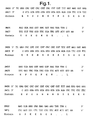
- Figure 1
- shows the nucleotide sequence of three pairs of complementary overlapping oligonucleotides used for the assembly of VHH antibodies with peptide tails. Peptide sequence translation is marked below.
- Figure 2(a)
- shows a diagram showing a cassette comprising an anti-hCG VHH-encoding sequence which is inserted into pUC19 to give an intermediate vector (Vector A). This vector contains a Xho I site near the 3' end of the VHH-encoding DNA sequence, used for ligation of the annealed oligonucleotides encoding the tail sequences to the VHH and a Mun I site for ligation of the annealed oligonucleotides to the vector backbone.
- Figure 2(b)
- shows a diagram showing a cassette comprising the VHH encoding sequence which is inserted into pUC19 to give the intermediate construct (Vector B). This intermediate vector cassette contains a Xho1 I site at the 5' end of the VHH-encoding DNA sequence, which is in the correct reading frame for cloning into the Pichia Pastoris expression vector pIC9.
- Figure 3
- shows diagrammatically the intermediate vector cassette obtained by ligation of the tail sequences to the 3' end of the VHH-encoding sequence in Vector A.
- Figure 4
- shows diagrammatically the structure of the cassettes comprising the assembled VHH-tail encoding sequences which are inserted into the vector pPIC9 to give the constructs used for expression in Pichia Pastoris.
- Figure 5
- shows a schematic representation of the proposed hairpin structure of the EKP tail.
- Figure 6
- shows the pH-dependence of the amount of VHH-tail protein associating with a carboxymethylated surface as detected by surface plasmon resonance.
- The invention is based on the finding that the efficiency of covalent coupling of a protein to a solid surface may be enhanced by providing the protein with a polypeptide segment having one or more sites for covalent attachment which is capable of adopting a folded structure separate from the folded structure of the remainder of the protein.
- By "folded" its meant a well defined three-dimensional structure which is held together by non-covalent forces.
- Without wishing to be bound by theory, it is thought that by incorporating into the protein a polypeptide segment having one or more sites for covalent attachment in a locally ordered structure separate from the folded structure of the protein, the presentation of covalent coupling sites in the segment to suitable cross-linkable groups on the solid surface in an orientation appropriate for coupling to take place is facilitated. This leads to an increased likelihood of coupling of protein to surface occurring through the locally ordered polypeptide segment, which is not involved in protein binding and hence to increased coupling efficiency.
- By improving the intrinsic association (or 'pre-concentration') of protein with the surface prior to coupling taking place, the invention advantageously affords the possibility of carrying out the covalent coupling reaction under conditions which are less likely to cause irreversible damage to protein functionality resulting from denaturation. In this way, non-specific binding interactions may be minimised as protein unfolding is reduced such that the proportion of coupled protein retaining its activity increases, decreasing the amount of material required to produce an active surface.
- As shown in the Examples below, by means of the invention it is possible to raise the pH at which coupling of a protein to a negatively charged surface occurs, thereby reducing the likelihood of protein function being adversely affected by the coupling conditions used and so increasing coupling efficiency. This represents a significant advantage for the method of the invention over methods of coupling proteins to solid surfaces mediated by tails which are not capable of adopting a stable folded structure, such as the myc tail.
- The invention is applicable to proteins in general and is not restricted to any particular grouping. Examples of suitable proteins include antibodies or immunologically active fragments thereof, receptors or binding fragments thereof, lectins and enzymes.
- It will be appreciated that a solid surface may have more than one different protein immobilised on it in accordance with the present invention. These may be distributed evenly over the surface or immobilised in one or more discrete regions.
- According to one important embodiment of the invention, antibodies or immunologically active fragments thereof may be immobilised at a solid surface to prepare improved immunoactive materials of use in immunological recognition procedures such as immunoaffinity techniques.
- Suitably, the antibody is an immunoglobulin which may be derived from natural sources, or synthetically produced. The terms 'antibody' and 'immunoglobulin' are used synonymously throughout the specification unless otherwise indicated. An immunologically active antibody fragment is a portion of a whole antibody which retains the ability to exhibit antigen-binding activity. The antigen binding site may be formed through association of antibody light and heavy chain variable domains or may comprise individual antibody variable domains. Suitable fragments include an Fab fragment, containing both binding sites of an antibody connected together, an Fv fragment (comprising the variable domains of antibody heavy and light chains associated with each other) or a single chain Fv fragment (where both light and heavy chains are present as part of a fusion protein).
- According to one particular embodiment of the invention, the protein is an immunoglobulin naturally devoid of light chains (hereinafter a heavy chain immunoglobulin), even more particularly a heavy chain variable domain of an immunoglobulin naturally devoid of light chains such as may be obtained from Camelids as described in WO 94/04678 (Casterman et al), or a protein functionally equivalent thereto. An advantage of using immunoglobulins or heavy chain variable domains from Camelids is that they can readily and conveniently be produced economically on a large scale, for example, using a transformed lower eukaryotic host as described in WO 94/25591.
- With a heavy chain immunoglobulin, the antigen-binding capacity and specificity is located naturally and exclusively in the immunoglobulin heavy chains, more specifically in the heavy chain variable domains. That is, the heavy chain variable domain forms the complete antigen-binding site. By functionally equivalent is meant any protein or fragment or derivative thereof which has the same or similar antigen binding properties located in a single binding domain. It will be appreciated that immunoglobulins or fragments or derivatives thereof modified to enable them to function as binding domains in the same way as heavy chain immunoglobulins from Camelids (see Davies et al, Bio Technology, 13, 475-479, (1995)) may also suitably be used according to the invention.
- The polypeptide segment according to the invention may be introduced by mutation or insertion within the protein sequence or preferably may be appended as a tail at either, or both of, the N- or C- terminus of the protein.
- The polypeptide segment and the protein to which it is attached may conveniently be produced together by expression as a single fused protein in a genetically modified organism such that the protein and segment are linked through peptide bond(s). Alternatively, the protein and segment may be produced separately and attached by chemical conjugation, in which case the bond between the segment and protein will generally not be a peptide bond nor will the segment necessarily be attached at one end of the protein.
- The polypeptide segment according to the invention comprises from 3 to 30 amino acid residues, preferably from 5 to 20 amino acid residues.
- The polypeptide segment contains at least one, more preferably a plurality of cross-linkable residues for covalent attachment to a solid surface. It will be appreciated that the number of such cross-linkable residues is limited only by the requirement that the sequence remains capable of forming a folded structure. Conveniently, the polypeptide segment comprises from 2 to 15 cross-linkable residues for covalent attachment. Suitable reactive cross-linkable residues include cysteine and/or lysine residues. By providing the polypeptide segment with a plurality of such residues, the probability of coupling taking place via this segment is increased. This has the effect of enhancing coupling efficiency, and minimising coupling via residues elsewhere on the protein which could impair activity of the cross-linked protein.
- Sequence features which may suitably be incorporated into the polypeptide segment in order to impart the propensity to form a folded structure according to the purposes of the invention would readily suggest themselves to those skilled in the art.
- It will be appreciated it is not necessary for the operation of the invention that the whole of the polypeptide segment forms a folded structure, provided that at least part of it, most particularly a part comprising cross linkable residues can form a local folded structure. Conveniently, the polypeptide segment contains a spacer tail or tag in addition to that part which forms the folded structure such that the locally folded structure is held separate from the folded structure of the protein to which it is introduced.
- Sequence features promote the formation of α-helical or β-turn conformation. The presence of a folded structure may conveniently be detected using conventional techniques such as nuclear magnetic reasonable spectroscopy.
- In one embodiment, the polypeptide segment for use according to the invention preferably comprises one or more proline residues.
- Without wishing to be bound by theory, it is generally thought that the incorporation of a proline residue in the amino acid sequence of the polypeptide segment encourages the formation of a beta-turn structural configuration, with the peptide backbone changing direction about the proline residue.
- The polypeptide segment comprises at least one, preferably a plurality of pairs of oppositely charged amino acid residues capable of aligning against each other in a folded structure.
- By incorporating oppositely charged amino acids in the sequence of the polypeptide segment in such a distribution that the formation of a folded structure would bring them into a favourable electrostatic configuration, the stability of the folded structure may be enhanced. The segment comprises two or more regions of alternating oppositely charged amino acid residues. Preferably, the regions of alternating oppositely charged amino acid residues are separated by a sequence which favours formation of a reverse turn compatible with pairing of opposite charges, especially by a sequence comprising one or more proline residue.
- Polypeptide segments for use according to the invention comprise an amino acid sequence of formula:
(XY)nZ(XY)m
wherein X and Y are amino acids with opposite charge, n and m are the same or different and represent an integer from 2 to 15, and Z is a region of peptide sequence able to form a turn comprising an α-helical or β-turn conformation. - Particularly preferred polypeptide segments comprise an amino acid sequence selected from:-
- EHHHHHHRSEKEKKPKEKEK (SEQ. ID. No. 1)
- EHHHHHHRSGKGKKPKGKGK (SEQ. ID. No. 2)
- hereinafter referred to as the EKP and GKP segments respectively.
- It will be appreciated that the portion of the sequences comprising the amino acids EHHHHHHRS corresponds to a poly His tag; its presence is not essential to the invention and this part of the sequence could be replaced with another conventional tag or deleted.
- As shown in Figure 5, the segment having an amino acid sequence as set forth in SEQ. ID. No. 1 above (hereinafter referred to as the EKP segment) is thought to adopt a β-hairpin structural configuration, wherein the turn in the peptide backbone promoted by the presence of the proline residue in the sequence is stabilised by the electrostatic interaction of pairs of oppositely charged amino acid residues. This segment, especially when appended as a tail at one or both ends of the protein, represents a particularly preferred embodiment, of the invention.
- As shown in the Examples below, by providing a protein with a polypeptide tail capable of adopting a folded structure not only is it possible to couple more protein to a solid surface but this coupling can be brought about under conditions which are less likely to result in protein denaturation and hence are less likely adversely to affect protein functionality, leading to an increased coupling efficiency.
- Experiments to study the coupling or proteins provided with either the EKP or GKP tails as described above or a control tail with no sequence features introducing structural characteristics (having the amino acid sequence EHHHHHHRSGKGKKGKGKGK, hereinafter referred to as a GKG tail) to a carboxymethyl activated dextran surface have shown that demonstrably more protein couples to the solid surface when a structured tail is employed, the order of increase in amount reflecting increasing structural organisation of the tail (GKG < GKP < EKP). Furthermore, by using the EKP tail to couple an anti-hCG VHH fragment to a carboxymethyl dextran surface, it has been demonstrated that it is possible to obtain an acceptable yield of immobilised protein, while increasing the proportion which retains its functionality, by carrying out the coupling reaction under less acidic conditions.
- The solid surface to which the protein is immobilised according to the invention may be provided by a variety of materials. Suitably, the solid surface is any solid phase carrier material conventionally used in immobilising proteins. Examples include polystyrene or other plastics such as polypropylene or polyvinylchloride, celluloses, dextrans, synthetic polymers and co-polymers, latex, silicas, fabrics, metals such as gold, silver and platinum, carbon, glass. These materials may conveniently be particulate, such as polymeric beads or granules for columns, or in sheet form, for example membranes or filters, glass or plastic slides, microtitre assay plates, dipsticks, capillary fill devices or such like. The solid surface may alternatively comprise part of a mass-dependent biosensor such as an evanescent wave type sensor, for example a surface plasmon resonance detector such as may be obtained from Biacore AB, Stevenage, UK.
- It will be appreciated that a solid surface for use according to the invention must be capable of being covalently coupled to the polypeptide segment. The solid surface may naturally comprise cross-linkable residues suitable for covalent attachment to the segment or it may be coated or derivatised to introduce suitable cross-linkable groups according to methods well known in the art.
- Materials prepared according to the invention may be used in any process where it is useful to bind a molecule to an immobilised protein. Suitable applications will readily suggest themselves to the average skilled person in the art; these may include testing for the presence of a binding partner, for example, using a multiplicity of proteins bound to a solid surface according to the present invention in a protein array, or in assay or purification of a test sample. Where the protein is an antibody or an immunologically active fragment thereof, the immobilised materials may be used in immunoadsorption processes such as immunoassays, for example an enzyme-linked immuno-specific assay procedure (ELISA), or immunoaffinity purification processes by contacting a material according to the invention with a test sample according to standard methods conventional in the art.
- It will be appreciated that the invention can be applied to proteins other than those derived from antibodies and the like. By way of example, enzymes can be coupled to surfaces for use in juice clarification. Other applications of immobilised proteins can be applied are described in In Protein Immobilisation, pp. 2-9, R.F. Taylor ed., Marcel Dekker, Inc., New York, 1991.
- Conveniently, the invention may be employed in diagnostic test kits.
- The following examples are provided by way of illustration only. Techniques used for the manipulation and analysis of nucleic acid materials were performed as described in Sambrook et al, Molecular Cloning, Cold Spring Harbor Press, New York, 2nd Ed., (1989), unless otherwise indicated.
- VHH denotes heavy chain variable domain of a heavy chain immunoglobulin.
- Complimentary overlapping oligonucleotides (Figure 1) were annealed and used to add peptide tail encoding DNA to an anti hCG VHH (clone number HI15) isolated from an immunised llama as described in WO 94/25591 according to the following steps:-
- (I) VHH encoding DNA was isolated from the phage display vector (pHEN) via restriction digestion, using the enzymes Pst I/Bst EII, and was cloned into two pUC 19 intermediate vectors (A and B), modified to enable further manipulation via standard molecular biological techniques (Figure 2a and b).
- (II) 2 µg of each overlapping oligonucleotide pair (Figure 1) were mixed in a 50 µl volume, heated for 5 minutes at 98°C then cooled on ice to anneal. Oligonucleotide primer pairs were:- SW26 and SW27 (used for the assembly of the GKG tail sequence, a control sequence with no structural organisation), SW28 and SW29 (GKP tail sequence) and SW30 and SW31 (EKP tail sequence). Intermediate vector (A) was isolated and digested with enzymes Xho I and Mun I. Vector and annealed primer pairs were ligated, introducing the peptide tail encoding DNA (Figure 3).
- (III)The VHH-tail DNA fusions were introduced into the Pichia pastoris expression vector pPIC 9 as three point ligations (one for each tail format). Vector A clones, containing correctly inserted VHH DNA were digested with Bst EII and Eco RI (tail DNA inserts were collected). Vector B, (Figure 2b) was digested Xho I/Bst EII (VHH insert was collected). pPIC 9 Vector DNA was digested Xho I/Eco RI (vector backbone collected). Insert, vector and tails were ligated and transformed into the E. coli strain XL1-B using standard molecular biological techniques, creating the final constructs.
- (IV) DNA comprising the final constructs was isolated from overnight cultures inoculated with single colonies taken from plated transformations, using a Qiagen plasmid midiprep kit as per the manufacturers' instructions. The constructs were verified as correctly assembled by automated DNA sequence analysis. 5 µg of each construct was digested with the restriction enzyme Bgl II, followed by phenol extraction, chloroform extraction and ethanol precipitation. Pelleted DNA was washed twice with 70% ethanol (to remove salts) air dried and resuspended in 5 µl dH2O. Bgl II digested pPIC 9 vector, containing the modified VHH DNA, was transformed into Pichia pastoris strain GS115 according to the method of step (V).
- (V) Cells were grown overnight at 30°C, in 500 ml YPD medium (1% yeast extract, 2% peptone, 1% glucose) to an OD600 of 1.4. The cells were spun (3 min. 2.5Kg) and the pellet was washed with sterile distilled water before resuspending in 100 ml KDTT buffer (50 mM KH2PO4 pH 7.5 plus 25 mM dithiothreotol). After 15 min. incubation at 37°C the cells were pelleted as before and resuspended in 100 ml ice cold STM buffer (10 mM Tris. Cl pH 7.5 plus 1 mM MgCl2 and 92.4 g glucose per litre). After 5 washes with this buffer the cell pellet was resuspended into a final volume of 3 ml STM buffer. Digested DNA (in a volume of 5 µl) was mixed with 70µl competent cells on ice. The cells were electroporated in a 0.2 cm cuvette at 1.5 kV, 400Ω, 25 µF in a BioRad Gene-Pulser. Immediately after electroporation, 1 ml YPD medium was added to the cells. After recovery for 1 hour at 37°C the cells were plated out onto 3 x MD plates. Colonies formed by transformed cells (His+) were visible within 48 hours incubation at 30°C.
- Anti hCG VHHs containing peptide tails were expressed in Pichia pastoris according to the following method.
- Colonies from freshly transformed P. pastoris were replica plated onto MD and MM plates as described in the Invitrogen Pichia expression kit (version B) users manual. The plates were incubated for 48 hours at 30°C, at which point mut-s clones were selected (visualised by the presence of much smaller colony growth on MM plates). 6-12 colonies of each VHH type were "stabbed" from the MD plates (corresponding to the mut-s colonies identified from the MM plates) and used to inoculate 10 ml of BMGY media. The 10 ml cultures were incubated at 30°C for 20 hours and were then pelleted by centrifugation. 2 ml BMMY was used to replace the media for each culture, which were then incubated for a further 20 hours. 10 µl methanol (100%) was added and the cultures were incubated for a final 24 hours before being pelleted again.
- Expression supernatants were evaluated for VHH production using an NTA sensor chip (to bind the His6 tags that made up part of each VHH tail type) in a Biacore 2000 instrument. Each supernatant was diluted 1/50 in HBS buffer containing 50 µM EDTA. 15 µl diluted sample was passed over the surface (after first priming the surface with 15 µl of 0.5 mM Ni2SO4). After sample addition the sensor surfaces were regenerated using 15 µl 0.35M EDTA. Flow rate was set to 15 µl/min throughout. Isolated colonies that generated expression supernatants with the highest production levels were re-cultured overnight in BMGY, and were stored until required in 15% glycerol at -70°C.
- Large scale shake flask expression was conducted as described in the Invitrogen Pichia Users Manual, using 2L baffled shake flasks, with a liquid volume of 0.5L. Forty-eight hours after induction, the cultures were harvested by centrifugation at 18,112 g (1 hour at 4°C) and then the supernatants were filtered through 0.45 µm Nalgene filter units.
- Purification of the VHHs was via the use of commercially available Ni-NTA Superflow resin (Qiagen corp.), which has a capacity of 5 - 10 mg of 6x His-tagged protein per ml of resin. Before starting, the pH of the load (expression supernatant) was adjusted to 6 or greater in order to ensure high affinity interaction between the His6 tagged VHHs and the resin.
- 10-20 ml of resin was packed into chromatography columns, which were washed with 5 bed volumes of wash buffer (e.g. PBSA or 10 mM potassium phosphate buffer pH 6). This and all subsequent steps were performed at a flow rate of 2 mL/min.
- Supernatants were loaded onto the column and then washed with about 10 column volumes of wash buffer, 5 column volumes of 1 M NaCl, then again with wash buffer until the optical density at 280 nm reached the baseline. Elution of VHH was via a linear gradient of 0-0.5 M imidazole over 10 column volumes followed by desalting through a 200 ml sephadex G25 desalting column. The purity of VHHs isolated using this methodology was estimated to be 99% or greater.
- A CM5 Sensor chip (Biacore AB, Sweden) was docked in a Biacore 2000 biosensor (Biacore AB, Sweden) and an experiment was performed as follows:-
- The flow rate was set to 10 ul/min and 20 ul of VHH115EKP (made up in 10 mM sodium citrate pH 4.0) was injected across the sensor surface. This was repeated using VHH115EKP made up in sodium citrate buffer at pH 4.0, 4.2, 4.4, 4.6, 4.8, 5.1, 5.4, 5.8 and 6.0. The amount of protein interacting with the sensor surface during the injection was determined.
- A further experiment was then performed in which injections of VHH115GKP (20 ul made up in 10 mM Tris pH 5.8, 6.0, 6.2, 6.4, 6.6, 6.8, 7.0, 7.2, 7.4 and 7.6) and injections of VHH115GKG (20 ul made up in 10 mM Tris pH 5.8, 6.0, 6.2, 6.4, 6.6, 6.8, 7.0, 7.2, 7.4 and 7.6) were made across a CM5 biosensor surface.
- The amount of antibody fragment associating with the chip surface was plotted at the different pH's and can be seen in Figure 6. The data shown with the solid lines are those samples made up in sodium citrate buffer, whereas the data shown with the dashed lines are those samples made up in Tris buffer.
- The antibody fragment VHH115EKP associated with the CM5 sensor surface to a greater extent at higher pH than either of the other two fragments. This is due to the decreased pI of this protein brought about by the introduction of glutamic acid residues in the peptide tail.
- Antibody fragments VHH115EKP, VHH115GKP and VHH115GKG were covalently coupled to a CM5 sensor surface as follows:
- A new CM5 sensor chip was docked in the Biacore and a sensorgram was obtained as follows. The flow path set to 1-2-3-4 and the flow rate of HBS set to 10 µl/min. The flow path was changed to flow only through
flow cell 1 and VHH115EKP was coupled using an amine coupling kit as described by the manufacturers. Briefly, 40 µl of a mixture of N-hydroxysuccinimide ester (NHS) and ethylenediamine carboimide (EDC) was quickinjected acrossflow cell 1 to activate the sensor surface. This was followed by a 20 µl quickinjection of VHH115EKP diluted 1 in 50 in 10 mM sodium citrate buffer pH 5.4. The sensor surface was blocked by a quickinjection of 40 µl ethanolamine (1M) acrossflow cell 1. The flow path was then changed to flow only acrossflow cell 2 and VHH115GKP was amine coupled. Briefly, 40 µl of a mixture of NHS/EDC was quickinjected acrossflow cell 2 to activate the sensor surface. This was followed by a 20 µl quickinjection of VHH115GKP diluted 1 in 50 in 10 mM sodium citrate buffer pH 4.0. The sensor surface was blocked by a quickinjection of 40 µl ethanolamine (1M) acrossflow cell 2. The flow path was then changed to flow only acrossflow cell 3 and VHH115GKG was amine coupled. Briefly, 40 µl of a mixture of NHS/EDC was quickinjected acrossflow cell 3 to activate the sensor surface. This was followed by a 20 µl quickinjection of VHH115GKG diluted 1 in 50 in 10 mM sodium citrate buffer pH 4.7. The sensor surface was blocked by a quickinjection of 40 µl ethanolamine (1M) acrossflow cell 3. - The particular coupling pH for each fragment was chosen as at these pH's the fragments all associated with the CM5 surface to the same extent (see Figure 6). The amount of fragment coupled to the various flow cells is shown in Table 1 below. It can be seen from the results presented in Table 1 that more protein is coupled when a structured tail is used.
Table 1 Fragment Amount coupled (Response Units) VHH115EKP 513.2 VHH115GKP 258.3 VHH115GKG 223.5 - In this experiment, the individual coupling pHs chosen were such that the extent of non-covalent association in advance of the coupling reaction was the same for all three proteins. The finding that the amount of protein coupled is not the same in all three cases therefore indicates that efficiency of cross-linking does not depend solely on the amount of protein non-covalently associated with the surface. The results obtained demonstrate the influence of the tail structure and pH on coupling efficiency, the amount of protein coupled increasing in an order reflecting the increase in structural organisation of the tail (GKG < GKP < EKP).
- A new CM5 sensor chip (chip 2) was docked in the Biacore and a sensorgram was run. The flow path set to 1-2-3-4 and the flow rate of HBS set to 10 µl/min. The flow path was changed to flow only through
flow cell 1 and VHH115EKP was coupled using an amine coupling kit as described by the manufacturers. Briefly, 40 µl of a mixture of NHS/EDC was quickinjected acrossflow cell 1 to activate the sensor surface. This was followed by a 20 µl quickinjection of VHH115EKP diluted 1 in 50 in 10 mM sodium citrate buffer pH 4.0. The sensor surface was blocked by a quickinjection of 40 µl ethanolamine (1M) acrossflow cell 1. The flow path was then changed to flow only acrossflow cell 2 and VHH115EKP was amine coupled by quickinjecting 40 µl of a mixture of NHS/EDC acrossflow cell 2 to activate the sensor surface. This was followed by a 20 µl quickinjection of VHH115EKP diluted 1 in 50 in 10 mM sodium citrate buffer pH 4.6. The sensor surface was blocked by a quickinjection of 40 µl ethanolamine (1M) acrossflow cell 2. The flow path was then changed to flow only acrossflow cell 3 and VHH11SEKP was amine coupled. Briefly, 40 µl of a mixture of NHS/EDC was quickinjected acrossflow cell 3 to activate the sensor surface. This was followed by a 20 µl quickinjection of VHH115EKP diluted 1 in 50 in 10 mM sodium citrate buffer pH 5.1. The sensor surface was blocked by a quickinjection of 40 µl ethanolamine (1M) acrossflow cell 3. - The amounts of VHH115EKP coupled under the different pH's is shown in Table 2.
Table 2 VHH115EKP coupling pH Amount coupled (Response Units) 4.0 554.0 4.6 425.3 5.1 100.6 - The sensor chip (chip 2) was docked in the Biacore 2000 and a sensorgram was run. The flow path was set to flow through 1-2-3-4 and the flow rate set to 10 µl/min. A 40 µl sample of hCG (50 IU/ml) was injected across flow cells 1-4. The sensorgram traces resulting from the injection were overlayed in the software package BIAevaluation (Biacore AB) and the background from flow cell 4 was subtracted from all flow channels.
- Overlayed traces of hCG binding to VHH115EKP coupled surfaces are shown in Figure 9 (fine line, flow
cell 3; medium line, flowcell 2; thick line, flow cell 1). The amount of hCG bound when the binding curve reached a plateau is shown in Table 3. The maximum amount of hCG expected to bind to the coupled VHH115EKP fragment can be determined by the following equation:
- Where, A is the amount of VHH115EKP coupled, M1 is the molecular weight of hCG (38000 Da) and M2 is the molecular weight of VHH115EKP (15000 Da).
- The amount of hCG binding can be expressed as a percentage of the maximum binding, this data is shown in Table 3.
Table 3 VHH115EKP coupling pH hCG bound Maximum binding PMB 4.0 567 1403 40 4.6 518 1076 48 5.1 237 253 94 PMB, percentage of maximum binding, where the molecular weight of hCG and VHH115EKP is 38000 and 15000 Da, respectively. - It can be seen as the pH is decreased, although the amount of captured hCG increases, it does not increase in proportion to the total amount of protein cross-linked, indicating that a greater proportion of the cross-linked protein loses function when the coupling pH is lower. This demonstrates the potential importance of being able to achieve a good coupling efficiency at a higher (more moderate) coupling pH by using the method according to the present invention.
-
- <110> UNILEVER PLC
- <120> IMMOBILISATION OF PROTEINS
- <130> T3081
- <140> 99309515.7
<141> 1999-11-29 - <160> 11
- <170> PatentIn Ver. 2.1
- <210> 1
<211> 20
<212> PRT
<213> Artificial Sequence - <220>
<223> Description of Artificial Sequence:LINKER SEQUENCE - <400> 1

- <210> 2
<211> 20
<212> PRT
<213> Artificial Sequence - <220>
<223> Description of Artificial Sequence:LINKER SEQUENCE - <400> 2

- <210> 3
<211> 69
<212> DNA
<213> Artificial Sequence - <220>
<223> Description of Artificial Sequence:SYNTHETIC PLASMID INSERT ENCODING PEPTIDE TAIL - <220>
<221> CDS
<222> (3)..(62) - <400> 3

- <210> 4
<211> 20
<212> PRT
<213> Artificial Sequence
<223> Description of Artificial Sequence:SYNTHETIC PLASMID INSERT ENCODING PEPTIDE TAIL - <400> 4

- <210> 5
<211> 69
<212> DNA
<213> Artificial Sequence - <220>
<223> Description of Artificial Sequence:SYNTHETIC PLASMID INSERT ENCODING PEPTIDE TAIL - <400> 5

- <210> 6
<211> 69
<212> DNA
<213> Artificial Sequence - <220>
<223> Description of Artificial Sequence:SYNTHETIC PLASMID INSERT ENCODING PEPTIDE TAIL - <220>
<221> CDS
<222> (3)..(62) - <400> 6

- <210> 7
<211> 20
<212> PRT
<213> Artificial Sequence
<223> Description of Artificial Sequence:SYNTHETIC PLASMID INSERT ENCODING PEPTIDE TAIL - <400> 7

- <210> 8
<211> 69
<212> DNA
<213> Artificial Sequence - <220>
<223> Description of Artificial Sequence:SYNTHETIC PLASMID INSERT ENCODING PEPTIDE TAIL - <400> 8

- <210> 9
<211> 69
<212> DNA
<213> Artificial Sequence - <220>
<223> Description of Artificial Sequence:SYNTHETIC PLASMID INSERT ENCODING PEPTIDE TAIL - <220>
<221> CDS
<222> (3)..(62) - <400> 9

- <210> 10
<211> 20
<212> PRT
<213> Artificial Sequence
<223> Description of Artificial Sequence:SYNTHETIC PLASMID INSERT ENCODING PEPTIDE TAIL - <400> 10

- <210> 11
<211> 69
<212> DNA
<213> Artificial Sequence - <220>
<223> Description of Artificial Sequence:SYNTHETIC PLASMID INSERT ENCODING PEPTIDE TAIL - <400> 11

Claims (6)
- A material comprising a protein covalently coupled to a solid surface via at least one polypeptide segment having one or more sites for covalent attachment, wherein the polypeptide segment consists of a sequence of the formula (XY)nZ(XY)m, wherein:a) Z is a peptide sequence capable of forming a reverse turn;b) n and m are the same or different and represent an integer from 2 to 15;c) X and Y are amino acid residues with opposite charge;and one or more pairs of oppositely charged amino acid residues X and Y, separated by Z, are capable of aligning against each other in a folded structure so that the polypeptide segment (XY)nZ(XY)m adopts a beta-hairpin structural conformation.
- A material according to claim 1 wherein Z comprises one or more proline residues.
- A material according to claim 2 wherein the protein segment (XY)nZ(XY)m consists of the amino acid sequence EKEKKPKEKEK.
- A material according to any of claims 1 to 3, wherein the protein covalently coupled to the solid surface is an antibody or an immunologically active fragment thereof.
- A material according to claim 4, wherein the protein is an immunoglobulin naturally devoid of light chains or a heavy chain variable domain (VHH) fragment thereof.
- A material according to any one of claims 1 to 5, wherein the solid surface is selected from polystyrene, polypropylene, polyvinylchloride, celluloses, dextrans, synthetic polymers and co-polymers, latex, silica, fabric, metal, carbon and glass.
Priority Applications (1)
| Application Number | Priority Date | Filing Date | Title |
|---|---|---|---|
| EP00981290A EP1242460B1 (en) | 1999-11-29 | 2000-11-22 | Immobilisation of proteins using a polypeptide segment |
Applications Claiming Priority (4)
| Application Number | Priority Date | Filing Date | Title |
|---|---|---|---|
| EP99309515 | 1999-11-29 | ||
| EP99309515 | 1999-11-29 | ||
| PCT/EP2000/011625 WO2001040310A2 (en) | 1999-11-29 | 2000-11-22 | Immobilisation of proteins using a polypeptide segment |
| EP00981290A EP1242460B1 (en) | 1999-11-29 | 2000-11-22 | Immobilisation of proteins using a polypeptide segment |
Publications (2)
| Publication Number | Publication Date |
|---|---|
| EP1242460A2 EP1242460A2 (en) | 2002-09-25 |
| EP1242460B1 true EP1242460B1 (en) | 2006-10-18 |
Family
ID=8241760
Family Applications (1)
| Application Number | Title | Priority Date | Filing Date |
|---|---|---|---|
| EP00981290A Expired - Lifetime EP1242460B1 (en) | 1999-11-29 | 2000-11-22 | Immobilisation of proteins using a polypeptide segment |
Country Status (8)
| Country | Link |
|---|---|
| US (1) | US7358096B1 (en) |
| EP (1) | EP1242460B1 (en) |
| AT (1) | ATE342922T1 (en) |
| AU (1) | AU1859201A (en) |
| DE (1) | DE60031441T2 (en) |
| DK (1) | DK1242460T3 (en) |
| ES (1) | ES2275563T3 (en) |
| WO (1) | WO2001040310A2 (en) |
Families Citing this family (160)
| Publication number | Priority date | Publication date | Assignee | Title |
|---|---|---|---|---|
| ATE513854T1 (en) * | 2000-12-13 | 2011-07-15 | Bac Ip B V | PROTEIN GRID OF VARIABLE DOMAIN OF THE CAMEL IMMUNOGLOBULIN HEAVY CHAIN |
| US6995248B2 (en) | 2001-07-16 | 2006-02-07 | Dr. Chip Biotechnology, Inc. | Immobilization of nucleic acids |
| EP1278063B1 (en) * | 2001-07-16 | 2006-04-19 | DR. Chip Biotechnology Inc. | Imobilization of biomolecules |
| EP1841452B8 (en) | 2004-10-08 | 2014-06-11 | Domantis Limited | Single domain antibodies against tnfr1 and methods of use therefor |
| AU2006249144B2 (en) | 2005-05-18 | 2011-11-17 | Ablynx Nv | Improved NanobodiesTM against Tumor Necrosis Factor-alpha |
| MX2007014564A (en) | 2005-05-20 | 2008-02-07 | Ablynx Nv | VHH ANTIBODIES OF SINGLE DOMAIN AGAINST VON WILLEBRAND FACTOR. |
| SI3028716T1 (en) | 2006-10-10 | 2021-01-29 | Regenesance B.V. | Complement inhibition for improved nerve regeneration |
| GB0621513D0 (en) | 2006-10-30 | 2006-12-06 | Domantis Ltd | Novel polypeptides and uses thereof |
| AU2007336243B2 (en) | 2006-12-19 | 2012-07-26 | Ablynx N.V. | Amino acid sequences directed against a metalloproteinase from the ADAM family and polypeptides comprising the same for the treatment of ADAM-related diseases and disorders |
| CA2673331A1 (en) | 2006-12-19 | 2008-06-26 | Ablynx N.V. | Amino acid sequences directed against gpcrs and polypeptides comprising the same for the treatment of gpcr-related diseases and disorders |
| SI2308514T1 (en) | 2007-03-23 | 2013-09-30 | To-Bbb Holding B.V. | Conjugates for targeted drug delivery across the blood-brain barrier |
| AU2008270274B2 (en) | 2007-07-03 | 2012-06-28 | Ablynx N.V. | Providing improved immunoglobulin sequences by mutating CDR and/or FR positions |
| WO2009068631A1 (en) | 2007-11-27 | 2009-06-04 | Ablynx N.V. | Method for obtaining polypeptide constructs comprising two or more single domain antibodies |
| CA2717015A1 (en) | 2008-03-05 | 2009-09-11 | Ablynx Nv | Novel antigen binding dimer-complexes, methods of making and uses thereof |
| GB0809069D0 (en) | 2008-05-19 | 2008-06-25 | Univ Leuven Kath | Gene signatures |
| AU2009235467A1 (en) | 2008-04-07 | 2009-10-15 | Ablynx Nv | Single variable domains against the Notch pathways |
| CN102089325A (en) | 2008-04-17 | 2011-06-08 | 埃博灵克斯股份有限公司 | Peptides capable of binding to serum proteins and compounds, constructs and polypeptides comprising the same |
| WO2010100135A1 (en) | 2009-03-05 | 2010-09-10 | Ablynx N.V. | Novel antigen binding dimer-complexes, methods of making/avoiding and uses thereof |
| HUE053480T2 (en) | 2009-04-30 | 2021-06-28 | Ablynx Nv | Method for the production of domain antibodies |
| US9150640B2 (en) | 2009-07-10 | 2015-10-06 | Ablynx N.V. | Method for the production of variable domains |
| LT2805731T (en) | 2009-09-03 | 2019-02-11 | Ablynx N.V. | Stable formulations of polypeptides and uses thereof |
| WO2011083141A2 (en) | 2010-01-08 | 2011-07-14 | Ablynx Nv | Method for generation of immunoglobulin sequences by using lipoprotein particles |
| CN102781959A (en) | 2010-02-05 | 2012-11-14 | 埃博灵克斯股份有限公司 | Peptides capable of binding to serum albumin and compounds, constructs and polypeptides comprising the same |
| ES2738114T3 (en) | 2010-02-11 | 2020-01-20 | Ablynx Nv | Methods and compositions for aerosol preparation |
| US9101674B2 (en) | 2010-03-29 | 2015-08-11 | Vib Vzw | Targeting and in vivo imaging of tumor-associated macrophages |
| US9556273B2 (en) | 2010-03-29 | 2017-01-31 | Vib Vzw | Anti-macrophage mannose receptor single variable domains for targeting and in vivo imaging of tumor-associated macrophages |
| CN104961827A (en) | 2010-04-06 | 2015-10-07 | 阿格罗塞文公司 | Specific delivery of agrochemicals |
| WO2011161263A1 (en) | 2010-06-25 | 2011-12-29 | Ablynx Nv | Pharmaceutical compositions for cutaneous administration |
| WO2012025602A1 (en) | 2010-08-26 | 2012-03-01 | Vib Vzw | Insect binding antibodies |
| ES2634547T3 (en) | 2010-08-26 | 2017-09-28 | Agrosavfe N.V. | Compositions for seed treatment |
| ES2660895T3 (en) | 2010-10-29 | 2018-03-26 | Ablynx N.V. | Method for the production of individual variable domains of immunoglobulin |
| US9468679B2 (en) | 2011-03-28 | 2016-10-18 | Ablynx N.V. | Method for producing solid formulations comprising immunoglobulin single variable domains |
| US9534039B2 (en) | 2011-05-09 | 2017-01-03 | Ablynx N.V. | Method for the production of immunoglobulin single variable domains |
| KR102072250B1 (en) | 2011-05-27 | 2020-03-02 | 아블린쓰 엔.브이. | Inhibition of bone resorption with rankl binding peptides |
| JP2014525736A (en) | 2011-06-23 | 2014-10-02 | アブリンクス エン.ヴェー. | Immunoglobulin single variable domain for IgE |
| EP2747782B1 (en) | 2011-09-23 | 2018-01-17 | Ablynx NV | Prolonged inhibition of interleukin-6 mediated signaling |
| CA2851040A1 (en) | 2011-10-06 | 2013-04-11 | Agrosavfe N.V. | Manufacturing of specifically targeting microcapsules |
| AU2013265665B2 (en) | 2012-05-24 | 2017-10-26 | Vib Vzw | Anti-macrophage mannose receptor single variable domains for targeting and in vivo imaging of tumor-associated macrophages |
| WO2014087010A1 (en) | 2012-12-07 | 2014-06-12 | Ablynx N.V. | IMPROVED POLYPEPTIDES DIRECTED AGAINST IgE |
| CN112858672A (en) | 2013-01-30 | 2021-05-28 | 弗拉芒区生物技术研究所 | Novel chimeric polypeptides for screening and drug discovery purposes |
| PL2953973T3 (en) | 2013-02-05 | 2020-01-31 | Vib Vzw | Muscarinic acetylcholine receptor binding agents and uses thereof |
| WO2014140376A1 (en) | 2013-03-15 | 2014-09-18 | Vib Vzw | Anti-macrophage mannose receptor single variable domains for use in cardiovascular diseases |
| JP6967347B2 (en) | 2013-04-29 | 2021-11-17 | バイオタリス・エン・フェー | Agricultural chemical composition containing an antibody that binds to sphingolipids |
| NL1040254C2 (en) | 2013-05-17 | 2014-11-24 | Ablynx Nv | Stable formulations of immunoglobulin single variable domains and uses thereof. |
| EP2883883A1 (en) | 2013-12-16 | 2015-06-17 | Cardio3 Biosciences S.A. | Therapeutic targets and agents useful in treating ischemia reperfusion injury |
| CA2936728C (en) | 2014-01-30 | 2023-06-20 | Vib Vzw | Opioid receptor binding agents and uses thereof |
| NL2013661B1 (en) | 2014-10-21 | 2016-10-05 | Ablynx Nv | KV1.3 Binding immunoglobulins. |
| WO2016012363A1 (en) | 2014-07-22 | 2016-01-28 | Vib Vzw | Methods to select for agents that stabilize protein complexes |
| US20180036442A1 (en) | 2014-07-29 | 2018-02-08 | Vrije Universiteit Brussel | Radio-labelled antibody fragments for use in the prognosis, diagnosis of cancer as well as for the prediction of cancer therapy response |
| JP6289733B2 (en) | 2014-07-29 | 2018-03-07 | フレイエ ユニヴェルシテイト ブリュッセルVrije Universiteit Brussel | Radiolabeled antibody fragments for use in the prevention and / or treatment of cancer |
| AR102550A1 (en) | 2014-11-05 | 2017-03-08 | Agrosavfe Nv | TRANSGENIC PLANT THAT INCLUDES A POLINUCLEOTIDE THAT CODIFIES A VARIABLE DOMAIN OF HEAVY CHAIN ANTIBODY |
| CN107406497A (en) | 2014-12-19 | 2017-11-28 | 埃博灵克斯股份有限公司 | The nano antibody dimer of cysteine connection |
| WO2017013026A1 (en) | 2015-07-17 | 2017-01-26 | Vrije Universiteit Brussel | Radiolabelled antibody fragments for use in treating cancer |
| CN108473561B (en) | 2015-11-27 | 2022-12-16 | 埃博灵克斯股份有限公司 | Polypeptide inhibiting CD40L |
| WO2017182605A1 (en) | 2016-04-22 | 2017-10-26 | Université Libre de Bruxelles | A new biomarker expressed in pancreatic beta cells useful in imaging or targeting beta cells |
| US11243214B2 (en) | 2016-04-22 | 2022-02-08 | Université Libre de Bruxelles | Biomarker expressed in pancreatic beta cells useful in imaging or targeting beta cells |
| CA3022697A1 (en) | 2016-05-02 | 2017-11-09 | Ablynx Nv | Treatment of rsv infection |
| WO2018007442A1 (en) | 2016-07-06 | 2018-01-11 | Ablynx N.V. | Treatment of il-6r related diseases |
| WO2018029182A1 (en) | 2016-08-08 | 2018-02-15 | Ablynx N.V. | Il-6r single variable domain antibodies for treatment of il-6r related diseases |
| US11098113B2 (en) | 2016-09-15 | 2021-08-24 | Vib Vzw | Immunoglobulin single variable domains directed against macrophage migration inhibitory factor |
| IL317416A (en) | 2016-11-16 | 2025-02-01 | Ablynx Nv | T cell recruiting polypeptides capable of binding cd123 and tcr alpha/beta |
| WO2018099968A1 (en) | 2016-11-29 | 2018-06-07 | Ablynx N.V. | Treatment of infection by respiratory syncytial virus (rsv) |
| BR112019017853A2 (en) | 2017-02-28 | 2021-04-27 | Vib Vzw | MEANS AND METHODS FOR ORAL RELEASE OF PROTEIN |
| EP3612648A1 (en) | 2017-04-18 | 2020-02-26 | Université Libre de Bruxelles | Biomarkers and targets for proliferative diseases |
| CA3062238A1 (en) | 2017-05-11 | 2018-11-15 | Vib Vzw | Glycosylation of variable immunoglobulin domains |
| CN111032695B (en) | 2017-06-02 | 2024-06-25 | 默克专利股份有限公司 | ADAMTS-binding immunoglobulin |
| MX2019014397A (en) | 2017-06-02 | 2020-02-10 | Merck Patent Gmbh | Polypeptides binding adamts5, mmp13 and aggrecan. |
| MX2019014504A (en) | 2017-06-02 | 2020-07-20 | Merck Patent Gmbh | AGRECAN-BINDING IMMUNOGLOBULINS. |
| CN110997001A (en) | 2017-06-02 | 2020-04-10 | 默克专利股份有限公司 | MMP13 binding to immunoglobulins |
| CA3070253A1 (en) | 2017-07-19 | 2019-01-24 | Vib Vzw | Serum albumin binding agents |
| EP4635987A3 (en) | 2017-10-31 | 2026-01-14 | Vib Vzw | Novel antigen-binding chimeric proteins and methods and uses thereof |
| WO2019155041A1 (en) | 2018-02-12 | 2019-08-15 | Vib Vzw | Gβγ COMPLEX ANTIBODIES AND USES THEREOF |
| EP3758742A1 (en) | 2018-03-01 | 2021-01-06 | Vrije Universiteit Brussel | Human pd-l1-binding immunoglobulins |
| JP7390729B2 (en) | 2018-03-23 | 2023-12-04 | ユニヴェルシテ リブル ドゥ ブリュッセル | Wnt signaling agonist molecules |
| MX2020010091A (en) | 2018-03-27 | 2021-01-15 | Umc Utrecht Holding Bv | Targeted thrombolysis for treatment of microvascular thrombosis. |
| GB201904697D0 (en) | 2019-04-03 | 2019-05-15 | Vib Vzw | Means and methods for single molecule peptide sequencing |
| CN114041057A (en) | 2019-04-29 | 2022-02-11 | 康福治疗有限公司 | Chimeric proteins and methods for screening compounds and ligands that bind to GPCRs |
| US20220289837A1 (en) | 2019-04-30 | 2022-09-15 | Vib Vzw | Cystic Fibrosis Transmembrane Conductance Regulator Stabilizing Agents |
| EP3976650A1 (en) | 2019-05-28 | 2022-04-06 | Vib Vzw | Cancer treatment by targeting plexins in the immune compartment |
| WO2020239934A1 (en) | 2019-05-28 | 2020-12-03 | Vib Vzw | Cd8+ t-cells lacking plexins and their application in cancer treatment |
| EP4048703A1 (en) | 2019-10-21 | 2022-08-31 | Vib Vzw | Nanodisc-specific antigen-binding chimeric proteins |
| IL292879B2 (en) | 2019-11-11 | 2025-08-01 | Ibi Ag Innovative Bio Insecticides Ltd | Insect control nanobodies and uses thereof |
| EP4065603A1 (en) | 2019-11-27 | 2022-10-05 | Vib Vzw | Positive allosteric modulators of the calcium-sensing receptor |
| GB201918279D0 (en) | 2019-12-12 | 2020-01-29 | Vib Vzw | Glycosylated single chain immunoglobulin domains |
| EP4077372A1 (en) | 2019-12-20 | 2022-10-26 | Vib Vzw | Nanobody exchange chromatography |
| WO2021140205A1 (en) | 2020-01-10 | 2021-07-15 | Confo Therapeutics N.V. | Methods for generating antibodies and antibody fragments and libraries comprising same |
| WO2021156490A2 (en) | 2020-02-06 | 2021-08-12 | Vib Vzw | Corona virus binders |
| JP7814714B2 (en) | 2020-02-25 | 2026-02-17 | ブイアイビー ブイゼットダブリュ | Allosteric regulator of leucine-rich repeat kinase 2 |
| EP4125379B1 (en) | 2020-03-31 | 2024-08-21 | Biotalys NV | Anti-fungal polypeptides |
| CN113527488B (en) | 2020-04-22 | 2026-04-17 | 迈威(上海)生物科技股份有限公司 | A monovariable domain antibody targeting human programmed death-ligand 1 (PD-L1) and its derivatives |
| WO2021229104A1 (en) | 2020-05-15 | 2021-11-18 | Université de Liège | Anti-cd38 single-domain antibodies in disease monitoring and treatment |
| WO2022003156A1 (en) | 2020-07-02 | 2022-01-06 | Oncurious Nv | Ccr8 non-blocking binders |
| WO2022023583A1 (en) | 2020-07-31 | 2022-02-03 | Biotalys NV | Expression host |
| WO2022063947A1 (en) | 2020-09-24 | 2022-03-31 | Vib Vzw | Combination of p2y6 inhibitors and immune checkpoint inhibitors |
| WO2022063957A1 (en) | 2020-09-24 | 2022-03-31 | Vib Vzw | Biomarker for anti-tumor therapy |
| WO2022063984A1 (en) | 2020-09-25 | 2022-03-31 | Ablynx Nv | Polypeptides comprising immunoglobulin single variable domains targeting il-13 and ox40l |
| WO2022117569A1 (en) | 2020-12-02 | 2022-06-09 | Oncurious Nv | A ccr8 antagonist antibody in combination with a lymphotoxin beta receptor agonist antibody in therapy against cancer |
| EP4255929A2 (en) | 2020-12-02 | 2023-10-11 | Vib Vzw | An ltbr agonist in combination therapy against cancer |
| JP7842101B2 (en) | 2020-12-18 | 2026-04-07 | アブリンクス エン.ヴェー. | polypeptide containing a single variable immunoglobulin domain that targets IL-6 and TNF-α |
| GB202020502D0 (en) | 2020-12-23 | 2021-02-03 | Vib Vzw | Antibody composistion for treatment of corona virus infection |
| EP4267617A1 (en) | 2020-12-24 | 2023-11-01 | Vib Vzw | Human ccr8 binders |
| EP4267621A1 (en) | 2020-12-24 | 2023-11-01 | Vib Vzw | Murine cross-reactive human ccr8 binders |
| US20240052044A1 (en) | 2020-12-24 | 2024-02-15 | Vib Vzw | Non-blocking human ccr8 binders |
| CA3207548A1 (en) | 2021-02-05 | 2022-08-11 | Xavier Saelens | Sarbecovirus binders |
| CN117794566A (en) | 2021-02-05 | 2024-03-29 | Vib研究所 | Sabei virus binding agent |
| EP4294407A1 (en) | 2021-02-17 | 2023-12-27 | Vib Vzw | Inhibition of slc4a4 in the treatment of cancer |
| IL305318A (en) | 2021-02-19 | 2023-10-01 | Vib Vzw | Cation-independent mannose-6-phosphate receptor binders |
| WO2022199804A1 (en) | 2021-03-24 | 2022-09-29 | Vib Vzw | Nek6 inhibition to treat als and ftd |
| US20240261446A1 (en) | 2021-05-17 | 2024-08-08 | Université de Liège | Anti-cd38 single domain antibodies in disease monitoring and treatment |
| WO2022268993A1 (en) | 2021-06-23 | 2022-12-29 | Vib Vzw | Means and methods for selection of specific binders |
| US20240343811A1 (en) | 2021-06-29 | 2024-10-17 | Shandong Simcere Biopharmacutical Co., Ltd. | Cd16 antibody and use thereof |
| EP4378954A4 (en) | 2021-07-30 | 2025-05-21 | Shandong Simcere Biopharmaceutical Co., Ltd. | BISPECIFIC ANTI-PVRIG/ANTI-TIGIT ANTIBODY AND USE |
| WO2023016828A2 (en) | 2021-07-30 | 2023-02-16 | Vib Vzw | Cation-independent mannose-6-phosphate receptor binders for targeted protein degradation |
| WO2023057601A1 (en) | 2021-10-06 | 2023-04-13 | Biotalys NV | Anti-fungal polypeptides |
| CN118696058A (en) | 2021-12-03 | 2024-09-24 | 山东先声生物制药有限公司 | Anti-BCMA nanoantibodies and their applications |
| AU2022409733A1 (en) | 2021-12-17 | 2024-08-01 | Ablynx Nv | POLYPEPTIDES COMPRISING IMMUNOGLOBULIN SINGLE VARIABLE DOMAINS TARGETING TCRαβ, CD33 AND CD123 |
| US20250145705A1 (en) | 2021-12-31 | 2025-05-08 | Shandong Simcere Biopharmaceutical Co., Ltd. | Gprc5d antibody and application thereof |
| CA3248241A1 (en) | 2022-01-12 | 2023-07-20 | Vib Vzw | Human ntcp binders for therapeutic use and liver-specific targeted delivery |
| EP4473108A1 (en) | 2022-02-02 | 2024-12-11 | Biotalys NV | Methods for genome editing |
| EP4476250A1 (en) | 2022-02-07 | 2024-12-18 | Vib Vzw | Engineered stabilizing aglycosylated fc-regions |
| US20250235534A1 (en) | 2022-04-13 | 2025-07-24 | Vib Vzw | An LTBR Agonist In Combination Therapy Against Cancer |
| EP4519324A1 (en) | 2022-05-02 | 2025-03-12 | UMC Utrecht Holding B.V. | Single domain antibodies for the detection of plasmin-cleaved vwf |
| EP4526340A1 (en) | 2022-05-18 | 2025-03-26 | Vib Vzw | Sarbecovirus spike s2 subunit binders |
| KR20250021313A (en) | 2022-06-06 | 2025-02-12 | 산둥심시어 바이오파마슈티칼 씨오., 엘티디. | Multispecific antibodies targeting BCMA, GPRC5D and T cells and their applications |
| JP2025523630A (en) | 2022-07-04 | 2025-07-23 | ブイアイビー ブイゼットダブリュ | Blood-cerebrospinal fluid barrier crossing antibodies |
| EP4594348A1 (en) | 2022-09-27 | 2025-08-06 | Vib Vzw | Antivirals against human parainfluenza virus |
| WO2024105091A1 (en) | 2022-11-15 | 2024-05-23 | Imec Vzw | Method and system for droplet manipulation |
| US20240200085A1 (en) | 2022-12-15 | 2024-06-20 | Aarhus Universitet | Synthetic activation of multimeric transmembrane receptors |
| WO2024133937A1 (en) | 2022-12-22 | 2024-06-27 | Biotalys NV | Methods for genome editing |
| US20260026500A1 (en) | 2022-12-29 | 2026-01-29 | Biotalys NV | Agrochemical compositions |
| EP4642233A1 (en) | 2022-12-30 | 2025-11-05 | Biotalys NV | Agglomerate |
| WO2024141638A1 (en) | 2022-12-30 | 2024-07-04 | Biotalys NV | Self-emulsifiable concentrate |
| EP4642916A2 (en) | 2022-12-30 | 2025-11-05 | Biotalys NV | Secretion signals |
| EP4655323A1 (en) | 2023-01-27 | 2025-12-03 | Vrije Universiteit Brussel | Cd8b-binding polypeptides |
| WO2024156888A1 (en) | 2023-01-27 | 2024-08-02 | Vib Vzw | Cd163-binding conjugates |
| WO2024165710A1 (en) | 2023-02-09 | 2024-08-15 | Seni-Preps B.V. | Immunoglobulin single variable domains that inhibit urease and use thereof |
| WO2024175787A1 (en) | 2023-02-24 | 2024-08-29 | Vrije Universiteit Brussel | Anti-inflammatory pannexin 1 channel inhibitors |
| WO2024184407A1 (en) | 2023-03-06 | 2024-09-12 | Vib Vzw | Method for identifying tumor-specific cell surface o-glycopeptides |
| AU2024236537A1 (en) | 2023-03-14 | 2025-09-04 | Aarhus Universitet | Genetically altered nfr5 receptor kinases |
| WO2024208816A1 (en) | 2023-04-03 | 2024-10-10 | Vib Vzw | Blood-brain barrier crossing antibodies |
| CN121511260A (en) | 2023-05-11 | 2026-02-10 | 非营利性组织佛兰芒综合大学生物技术研究所 | SLC4A4/NBCe1 inhibitors |
| AU2024276787A1 (en) | 2023-05-23 | 2026-01-15 | Allygen Group | Pd-l1 and trop-2 targeting conjugates comprising effector molecules and uses thereof |
| WO2024261344A1 (en) | 2023-06-23 | 2024-12-26 | Vib Vzw | Novel binders targeting the multi-drug resistant pathogen acinetobacter baumannii |
| EP4483951A1 (en) | 2023-06-30 | 2025-01-01 | Université de Liège | Single-domain antibody for inhibition of neutrophil elastase activity |
| NL2036011B1 (en) | 2023-10-12 | 2025-04-30 | Synapse Res Institute | Molecules for reversing anti-coagulant activity of direct oral anticoagulants |
| WO2025093683A1 (en) | 2023-11-03 | 2025-05-08 | Neuvasq Biotechnologies Sa | Wnt7 signaling agonists |
| WO2025109176A1 (en) | 2023-11-22 | 2025-05-30 | Exevir Bio Bv | Optimized sarbecovirus spike s2 subunit binders and compositions comprising the same |
| WO2025125577A1 (en) | 2023-12-14 | 2025-06-19 | Vib Vzw | Antibodies against influenza b virus |
| US12378306B2 (en) | 2023-12-22 | 2025-08-05 | Biotalys NV | Anti-fungal VHH antibodies |
| WO2025154056A1 (en) | 2024-01-21 | 2025-07-24 | Ibi-Ag Innovative Bio Insecticides Ltd. | Anti-insect cda nanobodies and uses thereof |
| WO2025154058A1 (en) | 2024-01-21 | 2025-07-24 | Ibi-Ag Innovative Bio Insecticides Ltd. | Anti-insect hsp70 nanobodies and uses thereof |
| WO2025181155A1 (en) | 2024-02-26 | 2025-09-04 | Vib Vzw | Human beta-glucocerebrosidase binders and uses thereof |
| WO2025196308A1 (en) | 2024-03-22 | 2025-09-25 | Vib Vzw | Means and methods for displaying fc-containing proteins on cells and selection thereof |
| WO2025219231A1 (en) | 2024-04-15 | 2025-10-23 | Vib Vzw | Computer-implemented means and methods for the de novo design of antibodies targeting a specific epitope |
| WO2025238157A1 (en) | 2024-05-15 | 2025-11-20 | Katholieke Universiteit Leuven | Multispecific binding agent suitable for use in cancer immune therapy |
| WO2026008665A1 (en) | 2024-07-01 | 2026-01-08 | Vib Vzw | Binders of the pd-1•pd-l1 complex and their use |
| WO2026008785A1 (en) | 2024-07-03 | 2026-01-08 | Biotalys NV | Agrochemical compositions |
| WO2026027659A1 (en) | 2024-07-31 | 2026-02-05 | Seni-Preps B.V. | Improved immunoglobulin single variable domains that inhibit urease and use thereof |
| WO2026068859A1 (en) | 2024-09-30 | 2026-04-02 | Université Libre de Bruxelles | Wnt signaling agonist molecules in the treatment of a bone-related disease or disorder |
| WO2026087355A1 (en) | 2024-10-22 | 2026-04-30 | Biotalys NV | Downstream processing |
Family Cites Families (9)
| Publication number | Priority date | Publication date | Assignee | Title |
|---|---|---|---|---|
| US4894443A (en) * | 1984-02-08 | 1990-01-16 | Cetus Corporation | Toxin conjugates |
| US5260203A (en) | 1986-09-02 | 1993-11-09 | Enzon, Inc. | Single polypeptide chain binding molecules |
| US5089605A (en) * | 1987-03-13 | 1992-02-18 | Repligen Corporation | Immobilized immunoglobulin-binding proteins |
| US6274324B1 (en) * | 1989-12-01 | 2001-08-14 | Unilever Patent Holdings B.V. | Specific binding reagent comprising a variable domain protein linked to a support or tracer |
| GB8927230D0 (en) | 1989-12-01 | 1990-01-31 | Unilever Plc | Reagents |
| GB8928501D0 (en) * | 1989-12-18 | 1990-02-21 | Unilever Plc | Reagents |
| US5439829A (en) | 1991-01-30 | 1995-08-08 | Eli Lilly And Company | Immobilization of biologically active molecules by changing the Oxidation state of a chelated transition metal ion |
| PT1621554E (en) | 1992-08-21 | 2009-07-13 | Univ Bruxelles | IMMUNOGLOBTAINES OF LIGHT CHAINS |
| US6406921B1 (en) * | 1998-07-14 | 2002-06-18 | Zyomyx, Incorporated | Protein arrays for high-throughput screening |
-
2000
- 2000-11-22 EP EP00981290A patent/EP1242460B1/en not_active Expired - Lifetime
- 2000-11-22 AU AU18592/01A patent/AU1859201A/en not_active Abandoned
- 2000-11-22 US US10/129,012 patent/US7358096B1/en not_active Expired - Lifetime
- 2000-11-22 WO PCT/EP2000/011625 patent/WO2001040310A2/en not_active Ceased
- 2000-11-22 AT AT00981290T patent/ATE342922T1/en not_active IP Right Cessation
- 2000-11-22 ES ES00981290T patent/ES2275563T3/en not_active Expired - Lifetime
- 2000-11-22 DK DK00981290T patent/DK1242460T3/en active
- 2000-11-22 DE DE60031441T patent/DE60031441T2/en not_active Expired - Lifetime
Also Published As
| Publication number | Publication date |
|---|---|
| DE60031441T2 (en) | 2007-08-30 |
| WO2001040310A2 (en) | 2001-06-07 |
| WO2001040310A3 (en) | 2002-07-18 |
| AU1859201A (en) | 2001-06-12 |
| ATE342922T1 (en) | 2006-11-15 |
| US7358096B1 (en) | 2008-04-15 |
| EP1242460A2 (en) | 2002-09-25 |
| DE60031441D1 (en) | 2006-11-30 |
| ES2275563T3 (en) | 2007-06-16 |
| DK1242460T3 (en) | 2006-12-11 |
Similar Documents
| Publication | Publication Date | Title |
|---|---|---|
| US7358096B1 (en) | Immobilisation of proteins | |
| US20210347816A1 (en) | Method for affinity purification | |
| US20130129727A1 (en) | Methods and systems for increasing protein stability | |
| Fong et al. | Affinity separation using an Fv antibody fragment–“smart” polymer conjugate | |
| US7956165B2 (en) | Compositions and methods for purifying and crystallizing molecules of interest | |
| CN114200128B (en) | Preparation and application of two-dimensional protein nanoarrays as carriers of immune sensing elements | |
| CN120842385B (en) | Nanobody 1B4 targeting serum albumin and its long-term application | |
| EP2614371B1 (en) | Method for labeling of compounds | |
| EP1856528A2 (en) | Compositions and methods for purifying and crystallizing molecules of interest | |
| CN118085077A (en) | Anti-bovine serum albumin nanoantibody BSA-4-41 and its application | |
| CN117986359A (en) | Nanoantibody SEA-4-13 against Staphylococcus aureus enterotoxin A and its application | |
| JP7070914B2 (en) | Antibody-polysaccharide conjugate and high-sensitivity immunoassay method using it | |
| CN119119278B (en) | A nano antibody against PD-L1 protein and its preparation method and application | |
| CN118878667B (en) | A nano antibody against human IgG1-CH1 and a method for purifying IgG1 antibody or its fragments using the nano antibody | |
| CN120842386B (en) | A nanobody 4B1 that binds to serum albumin and its application | |
| WO2011068538A2 (en) | General method for generating ultra-high affinity binding proteins | |
| CN118725111A (en) | An anti-human insulin monoclonal antibody combination and its application | |
| CN117700559A (en) | anti-V5 tag nano antibody, product and application thereof | |
| CN117567604A (en) | anti-MBP nano antibody, fusion protein enrichment and purification product and application thereof | |
| CN121627883A (en) | Preparation and application of a diagnostic monoclonal antibody targeting a novel HNL epitope | |
| CN120310745A (en) | A pair of carcinoembryonic antigen monoclonal antibody hybridoma cell lines and carcinoembryonic antigen detection method | |
| CN121895439A (en) | Targeting AAV8 and AAV9 binding molecules and their applications | |
| CN120349411A (en) | Anti-D-OVA nanobody, fusion protein and application | |
| CN117567631A (en) | GST-resistant nano antibody, recombinant vector and application thereof | |
| JP2007063179A (en) | Monoclonal antibody against tryptophan containing nitrobenzenesulfenyl group and antibody column using the same |
Legal Events
| Date | Code | Title | Description |
|---|---|---|---|
| PUAI | Public reference made under article 153(3) epc to a published international application that has entered the european phase |
Free format text: ORIGINAL CODE: 0009012 |
|
| 17P | Request for examination filed |
Effective date: 20020424 |
|
| AK | Designated contracting states |
Kind code of ref document: A2 Designated state(s): AT BE CH CY DE DK ES FI FR GB GR IE IT LI LU MC NL PT SE TR |
|
| AX | Request for extension of the european patent |
Free format text: AL;LT;LV;MK;RO;SI |
|
| 17Q | First examination report despatched |
Effective date: 20030626 |
|
| REG | Reference to a national code |
Ref country code: SE Ref legal event code: TRGR |
|
| GRAP | Despatch of communication of intention to grant a patent |
Free format text: ORIGINAL CODE: EPIDOSNIGR1 |
|
| GRAS | Grant fee paid |
Free format text: ORIGINAL CODE: EPIDOSNIGR3 |
|
| GRAA | (expected) grant |
Free format text: ORIGINAL CODE: 0009210 |
|
| AK | Designated contracting states |
Kind code of ref document: B1 Designated state(s): AT BE CH CY DE DK ES FI FR GB GR IE IT LI LU MC NL PT SE TR |
|
| PG25 | Lapsed in a contracting state [announced via postgrant information from national office to epo] |
Ref country code: FI Free format text: LAPSE BECAUSE OF FAILURE TO SUBMIT A TRANSLATION OF THE DESCRIPTION OR TO PAY THE FEE WITHIN THE PRESCRIBED TIME-LIMIT Effective date: 20061018 Ref country code: AT Free format text: LAPSE BECAUSE OF FAILURE TO SUBMIT A TRANSLATION OF THE DESCRIPTION OR TO PAY THE FEE WITHIN THE PRESCRIBED TIME-LIMIT Effective date: 20061018 |
|
| REG | Reference to a national code |
Ref country code: GB Ref legal event code: FG4D |
|
| REG | Reference to a national code |
Ref country code: CH Ref legal event code: EP Ref country code: IE Ref legal event code: FG4D |
|
| PG25 | Lapsed in a contracting state [announced via postgrant information from national office to epo] |
Ref country code: IE Free format text: LAPSE BECAUSE OF NON-PAYMENT OF DUE FEES Effective date: 20061122 |
|
| PG25 | Lapsed in a contracting state [announced via postgrant information from national office to epo] |
Ref country code: MC Free format text: LAPSE BECAUSE OF NON-PAYMENT OF DUE FEES Effective date: 20061130 |
|
| REF | Corresponds to: |
Ref document number: 60031441 Country of ref document: DE Date of ref document: 20061130 Kind code of ref document: P |
|
| REG | Reference to a national code |
Ref country code: DK Ref legal event code: T3 |
|
| REG | Reference to a national code |
Ref country code: CH Ref legal event code: NV Representative=s name: BUGNION S.A. |
|
| PG25 | Lapsed in a contracting state [announced via postgrant information from national office to epo] |
Ref country code: PT Free format text: LAPSE BECAUSE OF FAILURE TO SUBMIT A TRANSLATION OF THE DESCRIPTION OR TO PAY THE FEE WITHIN THE PRESCRIBED TIME-LIMIT Effective date: 20070319 |
|
| ET | Fr: translation filed | ||
| REG | Reference to a national code |
Ref country code: ES Ref legal event code: FG2A Ref document number: 2275563 Country of ref document: ES Kind code of ref document: T3 |
|
| PLBE | No opposition filed within time limit |
Free format text: ORIGINAL CODE: 0009261 |
|
| STAA | Information on the status of an ep patent application or granted ep patent |
Free format text: STATUS: NO OPPOSITION FILED WITHIN TIME LIMIT |
|
| 26N | No opposition filed |
Effective date: 20070719 |
|
| PG25 | Lapsed in a contracting state [announced via postgrant information from national office to epo] |
Ref country code: GR Free format text: LAPSE BECAUSE OF FAILURE TO SUBMIT A TRANSLATION OF THE DESCRIPTION OR TO PAY THE FEE WITHIN THE PRESCRIBED TIME-LIMIT Effective date: 20070119 |
|
| PG25 | Lapsed in a contracting state [announced via postgrant information from national office to epo] |
Ref country code: TR Free format text: LAPSE BECAUSE OF FAILURE TO SUBMIT A TRANSLATION OF THE DESCRIPTION OR TO PAY THE FEE WITHIN THE PRESCRIBED TIME-LIMIT Effective date: 20061018 Ref country code: LU Free format text: LAPSE BECAUSE OF NON-PAYMENT OF DUE FEES Effective date: 20061122 |
|
| PG25 | Lapsed in a contracting state [announced via postgrant information from national office to epo] |
Ref country code: CY Free format text: LAPSE BECAUSE OF FAILURE TO SUBMIT A TRANSLATION OF THE DESCRIPTION OR TO PAY THE FEE WITHIN THE PRESCRIBED TIME-LIMIT Effective date: 20061018 |
|
| REG | Reference to a national code |
Ref country code: FR Ref legal event code: PLFP Year of fee payment: 16 |
|
| REG | Reference to a national code |
Ref country code: FR Ref legal event code: PLFP Year of fee payment: 17 |
|
| REG | Reference to a national code |
Ref country code: FR Ref legal event code: PLFP Year of fee payment: 18 |
|
| PGFP | Annual fee paid to national office [announced via postgrant information from national office to epo] |
Ref country code: DK Payment date: 20171124 Year of fee payment: 18 |
|
| PGFP | Annual fee paid to national office [announced via postgrant information from national office to epo] |
Ref country code: AT Payment date: 20171228 Year of fee payment: 6 |
|
| REG | Reference to a national code |
Ref country code: DK Ref legal event code: EBP Effective date: 20181130 |
|
| PG25 | Lapsed in a contracting state [announced via postgrant information from national office to epo] |
Ref country code: DK Free format text: LAPSE BECAUSE OF NON-PAYMENT OF DUE FEES Effective date: 20181130 Ref country code: IT Free format text: LAPSE BECAUSE OF NON-PAYMENT OF DUE FEES Effective date: 20181122 |
|
| PGFP | Annual fee paid to national office [announced via postgrant information from national office to epo] |
Ref country code: ES Payment date: 20190730 Year of fee payment: 19 |
|
| PGFP | Annual fee paid to national office [announced via postgrant information from national office to epo] |
Ref country code: NL Payment date: 20191113 Year of fee payment: 20 Ref country code: SE Payment date: 20191125 Year of fee payment: 20 Ref country code: DE Payment date: 20191129 Year of fee payment: 20 |
|
| PGFP | Annual fee paid to national office [announced via postgrant information from national office to epo] |
Ref country code: BE Payment date: 20191127 Year of fee payment: 20 Ref country code: FR Payment date: 20191126 Year of fee payment: 20 |
|
| PGFP | Annual fee paid to national office [announced via postgrant information from national office to epo] |
Ref country code: CH Payment date: 20191125 Year of fee payment: 20 |
|
| PGFP | Annual fee paid to national office [announced via postgrant information from national office to epo] |
Ref country code: GB Payment date: 20191128 Year of fee payment: 20 |
|
| REG | Reference to a national code |
Ref country code: DE Ref legal event code: R071 Ref document number: 60031441 Country of ref document: DE |
|
| REG | Reference to a national code |
Ref country code: NL Ref legal event code: MK Effective date: 20201121 |
|
| REG | Reference to a national code |
Ref country code: CH Ref legal event code: PL |
|
| REG | Reference to a national code |
Ref country code: GB Ref legal event code: PE20 Expiry date: 20201121 |
|
| REG | Reference to a national code |
Ref country code: BE Ref legal event code: MK Effective date: 20201122 |
|
| PG25 | Lapsed in a contracting state [announced via postgrant information from national office to epo] |
Ref country code: GB Free format text: LAPSE BECAUSE OF EXPIRATION OF PROTECTION Effective date: 20201121 |
|
| REG | Reference to a national code |
Ref country code: ES Ref legal event code: FD2A Effective date: 20210528 |
|
| PG25 | Lapsed in a contracting state [announced via postgrant information from national office to epo] |
Ref country code: ES Free format text: LAPSE BECAUSE OF NON-PAYMENT OF DUE FEES Effective date: 20191123 |