EP1242339B1 - Methods for creating a compound library and identifying lead chemical templates and ligands for target molecules - Google Patents
Methods for creating a compound library and identifying lead chemical templates and ligands for target molecules Download PDFInfo
- Publication number
- EP1242339B1 EP1242339B1 EP00977289A EP00977289A EP1242339B1 EP 1242339 B1 EP1242339 B1 EP 1242339B1 EP 00977289 A EP00977289 A EP 00977289A EP 00977289 A EP00977289 A EP 00977289A EP 1242339 B1 EP1242339 B1 EP 1242339B1
- Authority
- EP
- European Patent Office
- Prior art keywords
- sample
- compounds
- nmr
- compound
- target molecule
- Prior art date
- Legal status (The legal status is an assumption and is not a legal conclusion. Google has not performed a legal analysis and makes no representation as to the accuracy of the status listed.)
- Expired - Lifetime
Links
- 150000001875 compounds Chemical class 0.000 title claims abstract description 148
- 238000000034 method Methods 0.000 title claims abstract description 71
- 239000003446 ligand Substances 0.000 title claims abstract description 48
- 239000000126 substance Substances 0.000 title abstract description 44
- 238000005481 NMR spectroscopy Methods 0.000 claims abstract description 68
- 239000000523 sample Substances 0.000 claims description 150
- 102000004169 proteins and genes Human genes 0.000 claims description 48
- 108090000623 proteins and genes Proteins 0.000 claims description 48
- 238000001228 spectrum Methods 0.000 claims description 35
- 239000000203 mixture Substances 0.000 claims description 26
- 238000004401 flow injection analysis Methods 0.000 claims description 21
- 238000012360 testing method Methods 0.000 claims description 20
- 238000010494 dissociation reaction Methods 0.000 claims description 14
- 230000005593 dissociations Effects 0.000 claims description 14
- 230000000694 effects Effects 0.000 claims description 10
- XLYOFNOQVPJJNP-ZSJDYOACSA-N Heavy water Chemical compound [2H]O[2H] XLYOFNOQVPJJNP-ZSJDYOACSA-N 0.000 claims description 9
- 238000000655 nuclear magnetic resonance spectrum Methods 0.000 claims description 4
- 238000002436 one-dimensional nuclear magnetic resonance spectrum Methods 0.000 claims 1
- 238000009510 drug design Methods 0.000 abstract description 7
- 238000007876 drug discovery Methods 0.000 abstract description 6
- 238000012216 screening Methods 0.000 description 36
- 150000003384 small molecules Chemical class 0.000 description 18
- IJGRMHOSHXDMSA-UHFFFAOYSA-N Atomic nitrogen Chemical compound N#N IJGRMHOSHXDMSA-UHFFFAOYSA-N 0.000 description 14
- 239000007788 liquid Substances 0.000 description 14
- XLYOFNOQVPJJNP-UHFFFAOYSA-N water Substances O XLYOFNOQVPJJNP-UHFFFAOYSA-N 0.000 description 14
- 238000012546 transfer Methods 0.000 description 13
- 239000003814 drug Substances 0.000 description 11
- 229940079593 drug Drugs 0.000 description 11
- 239000002904 solvent Substances 0.000 description 11
- 229910001873 dinitrogen Inorganic materials 0.000 description 10
- 238000002347 injection Methods 0.000 description 10
- 239000007924 injection Substances 0.000 description 10
- 230000018109 developmental process Effects 0.000 description 9
- 238000004458 analytical method Methods 0.000 description 8
- 230000008569 process Effects 0.000 description 8
- 238000007405 data analysis Methods 0.000 description 7
- 238000002825 functional assay Methods 0.000 description 7
- 230000003993 interaction Effects 0.000 description 7
- 238000000425 proton nuclear magnetic resonance spectrum Methods 0.000 description 7
- 238000013459 approach Methods 0.000 description 6
- 238000013480 data collection Methods 0.000 description 6
- 238000013461 design Methods 0.000 description 6
- 238000011161 development Methods 0.000 description 6
- 230000003595 spectral effect Effects 0.000 description 6
- 230000006870 function Effects 0.000 description 5
- 238000002360 preparation method Methods 0.000 description 5
- 238000011084 recovery Methods 0.000 description 5
- 238000004461 1H-15N HSQC Methods 0.000 description 4
- 230000008901 benefit Effects 0.000 description 4
- 238000007707 calorimetry Methods 0.000 description 4
- 238000009792 diffusion process Methods 0.000 description 4
- 238000002474 experimental method Methods 0.000 description 4
- 230000010354 integration Effects 0.000 description 4
- 238000005457 optimization Methods 0.000 description 4
- 238000000159 protein binding assay Methods 0.000 description 4
- 230000009467 reduction Effects 0.000 description 4
- 238000007619 statistical method Methods 0.000 description 4
- 238000005160 1H NMR spectroscopy Methods 0.000 description 3
- 102000004190 Enzymes Human genes 0.000 description 3
- 108090000790 Enzymes Proteins 0.000 description 3
- 238000004364 calculation method Methods 0.000 description 3
- 238000011049 filling Methods 0.000 description 3
- 239000011521 glass Substances 0.000 description 3
- 238000012594 liquid chromatography nuclear magnetic resonance Methods 0.000 description 3
- 230000009257 reactivity Effects 0.000 description 3
- 239000012898 sample dilution Substances 0.000 description 3
- 239000000243 solution Substances 0.000 description 3
- 238000003786 synthesis reaction Methods 0.000 description 3
- 239000004696 Poly ether ether ketone Substances 0.000 description 2
- 238000003556 assay Methods 0.000 description 2
- JUPQTSLXMOCDHR-UHFFFAOYSA-N benzene-1,4-diol;bis(4-fluorophenyl)methanone Chemical compound OC1=CC=C(O)C=C1.C1=CC(F)=CC=C1C(=O)C1=CC=C(F)C=C1 JUPQTSLXMOCDHR-UHFFFAOYSA-N 0.000 description 2
- 238000004422 calculation algorithm Methods 0.000 description 2
- 238000004140 cleaning Methods 0.000 description 2
- 238000002288 cocrystallisation Methods 0.000 description 2
- 239000013078 crystal Substances 0.000 description 2
- 238000001514 detection method Methods 0.000 description 2
- 239000012895 dilution Substances 0.000 description 2
- 238000010790 dilution Methods 0.000 description 2
- 229940000406 drug candidate Drugs 0.000 description 2
- 238000001952 enzyme assay Methods 0.000 description 2
- 238000011067 equilibration Methods 0.000 description 2
- 238000011156 evaluation Methods 0.000 description 2
- 239000007789 gas Substances 0.000 description 2
- PCHJSUWPFVWCPO-UHFFFAOYSA-N gold Chemical compound [Au] PCHJSUWPFVWCPO-UHFFFAOYSA-N 0.000 description 2
- 239000010931 gold Substances 0.000 description 2
- 229910052737 gold Inorganic materials 0.000 description 2
- 238000013537 high throughput screening Methods 0.000 description 2
- 230000005415 magnetization Effects 0.000 description 2
- 239000011159 matrix material Substances 0.000 description 2
- 230000003278 mimic effect Effects 0.000 description 2
- 229910052757 nitrogen Inorganic materials 0.000 description 2
- 238000000053 physical method Methods 0.000 description 2
- 229920002530 polyetherether ketone Polymers 0.000 description 2
- 238000011160 research Methods 0.000 description 2
- 238000002805 secondary assay Methods 0.000 description 2
- 238000000926 separation method Methods 0.000 description 2
- 230000001225 therapeutic effect Effects 0.000 description 2
- 239000002699 waste material Substances 0.000 description 2
- 238000012565 NMR experiment Methods 0.000 description 1
- 108091005804 Peptidases Proteins 0.000 description 1
- 102100037486 Reverse transcriptase/ribonuclease H Human genes 0.000 description 1
- 239000004809 Teflon Substances 0.000 description 1
- 229920006362 Teflon® Polymers 0.000 description 1
- 239000002253 acid Substances 0.000 description 1
- 230000009471 action Effects 0.000 description 1
- 230000003044 adaptive effect Effects 0.000 description 1
- 239000007864 aqueous solution Substances 0.000 description 1
- 125000003118 aryl group Chemical group 0.000 description 1
- QVGXLLKOCUKJST-UHFFFAOYSA-N atomic oxygen Chemical compound [O] QVGXLLKOCUKJST-UHFFFAOYSA-N 0.000 description 1
- 229920001222 biopolymer Polymers 0.000 description 1
- 230000015572 biosynthetic process Effects 0.000 description 1
- 125000002915 carbonyl group Chemical group [*:2]C([*:1])=O 0.000 description 1
- 230000008859 change Effects 0.000 description 1
- 238000012512 characterization method Methods 0.000 description 1
- 238000001311 chemical methods and process Methods 0.000 description 1
- 239000003795 chemical substances by application Substances 0.000 description 1
- 230000000295 complement effect Effects 0.000 description 1
- 125000004122 cyclic group Chemical group 0.000 description 1
- 238000004925 denaturation Methods 0.000 description 1
- 230000036425 denaturation Effects 0.000 description 1
- 238000010586 diagram Methods 0.000 description 1
- 239000006185 dispersion Substances 0.000 description 1
- 238000009509 drug development Methods 0.000 description 1
- 238000012912 drug discovery process Methods 0.000 description 1
- 230000036267 drug metabolism Effects 0.000 description 1
- 238000001035 drying Methods 0.000 description 1
- 238000005516 engineering process Methods 0.000 description 1
- 230000002349 favourable effect Effects 0.000 description 1
- 238000001914 filtration Methods 0.000 description 1
- 238000005206 flow analysis Methods 0.000 description 1
- 125000000524 functional group Chemical group 0.000 description 1
- 238000007429 general method Methods 0.000 description 1
- 125000005842 heteroatom Chemical group 0.000 description 1
- 238000001511 high performance liquid chromatography nuclear magnetic resonance spectroscopy Methods 0.000 description 1
- 238000012203 high throughput assay Methods 0.000 description 1
- 230000036571 hydration Effects 0.000 description 1
- 238000006703 hydration reaction Methods 0.000 description 1
- 125000001183 hydrocarbyl group Chemical group 0.000 description 1
- 239000001257 hydrogen Substances 0.000 description 1
- 229910052739 hydrogen Inorganic materials 0.000 description 1
- 230000006872 improvement Effects 0.000 description 1
- 239000003112 inhibitor Substances 0.000 description 1
- 238000003780 insertion Methods 0.000 description 1
- 230000037431 insertion Effects 0.000 description 1
- 238000004811 liquid chromatography Methods 0.000 description 1
- 238000004895 liquid chromatography mass spectrometry Methods 0.000 description 1
- 238000012423 maintenance Methods 0.000 description 1
- 238000013507 mapping Methods 0.000 description 1
- 238000004949 mass spectrometry Methods 0.000 description 1
- 239000000463 material Substances 0.000 description 1
- 230000002503 metabolic effect Effects 0.000 description 1
- 238000002156 mixing Methods 0.000 description 1
- 229930014626 natural product Natural products 0.000 description 1
- 239000003960 organic solvent Substances 0.000 description 1
- 229910052760 oxygen Inorganic materials 0.000 description 1
- 239000001301 oxygen Substances 0.000 description 1
- 238000005192 partition Methods 0.000 description 1
- 230000000069 prophylactic effect Effects 0.000 description 1
- 238000012552 review Methods 0.000 description 1
- 150000003839 salts Chemical class 0.000 description 1
- 238000001507 sample dispersion Methods 0.000 description 1
- 230000035945 sensitivity Effects 0.000 description 1
- 229910000162 sodium phosphate Inorganic materials 0.000 description 1
- 239000001488 sodium phosphate Substances 0.000 description 1
- 238000012306 spectroscopic technique Methods 0.000 description 1
- 238000004611 spectroscopical analysis Methods 0.000 description 1
- 238000010183 spectrum analysis Methods 0.000 description 1
- 239000000758 substrate Substances 0.000 description 1
- 230000001629 suppression Effects 0.000 description 1
- 238000000293 three-dimensional nuclear magnetic resonance spectroscopy Methods 0.000 description 1
- 231100000331 toxic Toxicity 0.000 description 1
- 230000002588 toxic effect Effects 0.000 description 1
- 230000002110 toxicologic effect Effects 0.000 description 1
- 231100000723 toxicological property Toxicity 0.000 description 1
- 231100000041 toxicology testing Toxicity 0.000 description 1
- 230000007704 transition Effects 0.000 description 1
- RYFMWSXOAZQYPI-UHFFFAOYSA-K trisodium phosphate Chemical compound [Na+].[Na+].[Na+].[O-]P([O-])([O-])=O RYFMWSXOAZQYPI-UHFFFAOYSA-K 0.000 description 1
- 238000010200 validation analysis Methods 0.000 description 1
- 238000012800 visualization Methods 0.000 description 1
- 238000002424 x-ray crystallography Methods 0.000 description 1
Images




Classifications
-
- G—PHYSICS
- G01—MEASURING; TESTING
- G01R—MEASURING ELECTRIC VARIABLES; MEASURING MAGNETIC VARIABLES
- G01R33/00—Arrangements or instruments for measuring magnetic variables
- G01R33/20—Arrangements or instruments for measuring magnetic variables involving magnetic resonance
- G01R33/28—Details of apparatus provided for in groups G01R33/44 - G01R33/64
- G01R33/30—Sample handling arrangements, e.g. sample cells, spinning mechanisms
- G01R33/307—Sample handling arrangements, e.g. sample cells, spinning mechanisms specially adapted for moving the sample relative to the MR system, e.g. spinning mechanisms, flow cells or means for positioning the sample inside a spectrometer
-
- C—CHEMISTRY; METALLURGY
- C40—COMBINATORIAL TECHNOLOGY
- C40B—COMBINATORIAL CHEMISTRY; LIBRARIES, e.g. CHEMICAL LIBRARIES
- C40B40/00—Libraries per se, e.g. arrays, mixtures
Definitions
- the process of drug design can be considered to involve two steps. First, a lead chemical template (often one or more) is selected. Second, a synthetic chemistry effort is undertaken to create analogs of the lead chemical template to create a compound or compounds possessing the desired therapeutic and pharmacokinetic properties.
- An important step in the drug discovery process is the selection of a suitable lead chemical template upon which to base a chemistry analog program.
- the process of identifying a lead chemical template for a given molecular target typically involves screening a large number of compounds (often more than 100,000) in a functional assay, selecting a subset based on some arbitrary activity threshold for testing in a secondary assay to confirm activity, and then assessing the remaining active compounds for suitability of chemical elaboration.
- WO98/57155 discloses a method of identifying a compound that binds to a target molecule, comprising the steps of:
- the present invention is related to rational drug design. Specifically, the present invention provides an approach to the development of a library of compounds as well as methods for identifying compounds (e.g. ligands) that bind to a specific target molecule (e.g., a protein) and lead chemical templates that can be used, for example, in drug discovery and design.
- This approach for identifying ligands for target molecules uses nuclear magnetic resonance (NMR) spectroscopy.
- NMR nuclear magnetic resonance
- the present invention involves the use of flow NMR techniques, which can reduce the amount of time and effort required to evaluate small molecules for binding to a given target.
- the method comprises:
- the library of test compounds includes at least about 75 compounds, more preferably at least about 300 compounds, and most preferably at least about 2000 compounds, and these compounds preferably have relatively diverse chemical structures.
- the molecular weights of the compounds are determined without solubilising counterions (if the compounds are salts) and without water molecules of hydration. Also, concentrations are reported based on aqueous solutions, which may or may not include a buffer.
- the concentration of target molecule is no greater than about 10 mM. More preferably, the concentration of target molecule is about 1 mM to 10 mM.
- binding compounds are distinguished from nonbinders (i.e. non-binding compounds) by the opposite sign of their water-ligand NOEs. Using this method, there is no need to collect a reference spectrum in the absence of a target molecule.
- the compounds in the library have a solubility in deuterated water of at least about 1 mM at room temperature (i.e., about 25°C to about 30°C), and a molecular weight of no greater than about 350 grams/mole.
- the dissociation constant of the identified ligand to a target molecule is no weaker than (i.e., at least) 100 mM.
- the dissociation constant for the lead chemical template to a target molecule is no weaker than (i.e., at least) 1 mM.
- the present invention involves the selection of a generally small library of structurally diverse compounds that are generally water soluble, have a relatively low molecular weight, and are amenable to synthetic chemistry elaboration.
- the present invention preferably involves carrying out a binding assay at relatively low concentrations of target and near equimolar ratios of ligand to target, or even at extremely low concentrations of target and higher ratios of ligand to target.
- a relatively small subset of compounds preferably, at least about 75, more preferably, at least about 300, most preferably, at least about 2000, and typically no more than about 10,000
- This generally small library is screened for binding affinity to a target molecule (as determined herein by dissociation constants).
- the compounds from the library that are identified to be effective ligands are then used to focus further screening efforts or to direct chemical elaborations to arrive at one or more lead chemical templates (which, typically have an affinity for a desired target as evidenced by a dissociation constant of at least about 1.0 x 10 -6 M). This process is shown schematically in Figure 1 .
- binding assay such as the one based on NMR spectroscopy described herein, eliminates the need to develop a high-throughput functional assay, and also allows the methods to be used on molecular targets lacking a known function.
- the present invention provides methods of identifying a compound that binds to a target molecule (preferably, a protein) that are based on NMR spectroscopy techniques, using WaterLOGSY. This involves the transfer of magnetization from bulk water to detect the binding interaction. Using WaterLOGSY techniques, binding compounds are distinguished from nonbinders by the opposite sign of their water-ligand nuclear Overhauser effects (NOEs).
- NOEs water-ligand nuclear Overhauser effects
- Important elements that contribute to the success of the methods of the invention preferably include developing a suitable small library of compounds to screen, carrying out the binding assay at extremely low concentrations of target (if desired) and high ratios of ligand to target, and the capacity for rapid throughput of data collection.
- concentration of target molecule is preferably no greater than about 10 ⁇ M.
- each component possesses many of the desirable qualities of a lead chemical template. These include water solubility, low molecular weight (no greater than about 350 grams/mole, more preferably, no greater than about 325 grams/mole, and most preferably, less than about 325 grams/mole), and amenability to synthetic chemistry elaboration. Templates possessing these qualities, as compared to a template selected randomly, are preferably considered to be predisposed to being lead-like and having an increased likelihood of ultimately leading to a drug.
- Good structural diversity in a library increases the likelihood that one or more compounds will possess structural characteristics important for binding to a given molecular target.
- Predisposing the compounds to be water soluble, to have low molecular weight (no greater than about 350 grams/mole, more preferably, no greater than about 325 grams/mole, and most preferably, less than about 325 grams/mole), and to be amenable to synthetic elaboration increases the likelihood that a compound found to be a ligand will lead to a related compound or compounds suitable as a lead chemical template for use, for example, in a process of identifying an effective therapuetic and/or prophylactic agent.
- the requirement for good water solubility (at least about 1.0 x 10 -3 M in deuterated water at room temperature) is important in that it increases the likelihood of success of other downstream drug-design projects, such as co-crystallization attempts, calorimetry studies, and enzyme kinetic analyses.
- Compounds testing positive for binding have affinities within a factor of about 3-4 of low target concentrations (preferably, no greater than about 10 ⁇ M, but is more preferably about 1 ⁇ M to about 10 ⁇ M) and ligand to target ratios of about 100:1 to about 10:1.
- This level of affinity is desired if the subsequent steps of focused screening and directed chemical elaboration are to be successful in elucidating a lead chemical template with very low affinity (e.g., one having a dissociation constant of at least about 1.0 x 10 -6 M). Carrying out the initial screening at these low concentrations also avoids detection of unwanted compounds with much smaller dissociation constants in the 1.0 x 10 -3 M range, which are less specific in their binding and therefore harder to turn into lead chemical templates given their weak affinity initially.
- Flow NMR techniques can reduce the amount of time and effort required to evaluate small molecules for binding to a given target.
- the use of a Bruker Efficient Sample Transfer system in combination with a tubeless, flow-injection NMR probe has proven to be much faster and less labor intensive than the use of traditional NMR tubes.
- a significant increase in throughput is obtained compared to both manual sample changing and to using an autosampler.
- Implementation of the screening process using multiwell sample holders also standardizes the experimental setup as well as the components in a given mixture from one molecular target to the next.
- the compound library includes compounds of sufficiently diverse chemical structure that one would expect at least one compound to bind to a given target protein with an affinity (dissociation constant) no weaker than (i.e., at least) about 200 ⁇ M.
- compounds of diverse chemical structure are those that have a variety of backbone hydrocarbon structures (e.g., linear, branched, cyclic - which may or may not be aromatic, have fused rings, etc.), optionally including a variety of heteroatoms (e.g., oxygen, nitrogen) and a variety of functional groups (e.g., carbonyls) in a variety of positions (e.g., pointing in various directions at a variety of distances from each other).
- backbone hydrocarbon structures e.g., linear, branched, cyclic - which may or may not be aromatic, have fused rings, etc.
- heteroatoms e.g., oxygen, nitrogen
- functional groups e.g., carbonyls
- a solution containing a molecular target protein was added to each well containing a mixture of compounds in the 96-well plate.
- the final concentration of protein is typically about 5.0 x 10 -5 M.
- the ratio of each compound in a mixture to protein is typically about 1:1. This process typically involves adding 475 mL of protein to each mixture. Dispersion throughout the mixture was facilitated by shaking the 96-well plate for 20 minutes following addition of protein.
- WaterLOGSY methods are used to detect the binding interaction. WaterLOGSY is described in more detail in C. Dalvit et al., J. Biomol. NMR, 18, 65-68 (2000 ).
- the concentration of target molecule (e.g., protein) in each sample preferably can be reduced to no greater than about 10 ⁇ M (preferably, about 1 ⁇ M to about 10 ⁇ M) while the concentration of each compound can be about 100 ⁇ M.
- concentrations of target molecule to compounds in each sample reservoir of about 100:1 to about 10:1.
- concentrations and ratios used can vary depending on the size of the target molecule, the amount of target molecule available, the desired binding affinity detection limit, and the desired speed of data collection.
- the relaxation-editing method there is no need to collect a comparison or control spectrum to identify binding compounds from nonbinders. Instead, binding compounds are distinguished from nonbinders by the opposite sign of their water-ligand nuclear Overhauser effects (NOEs).
- NOEs water-ligand nuclear Overhauser effects
- Ligand binding was confirmed by making fresh solutions containing only the identified ligand, with and without added protein at a 1:1 ratio, and comparing the 1D relaxation-edited 1 H NMR spectra.
- the ligand's dissociation constant was estimated by analyzing several 1D diffusion-edited 1 H NMR spectra collected at several gradient strengths. The relative diffusion coefficients for the protein, for the ligand in the presence of protein, and for the ligand in the absence of protein, in conjunction with known protein and ligand concentrations, were used to estimate the ligand's dissociation constant. These spectra are typically collected using an NMR spectrometer, a conventional high resolution probe, and regular 5 mm NMR tubes.
- a ligand Once a ligand had been identified and confirmed, its structure is used to identify available compounds with similar structures to be assayed for activity or affinity, or to direct the synthesis of structurally related compounds to be assayed for activity or affinity. These compounds are then either obtained from inventory or synthesized. Most often, they are then assayed for activity using enzyme assays. In the case of molecular targets that are not enzymes or that do not have an enzyme assay available, these compounds can be assayed for affinity using NMR techniques similar to those described above, or by other physical methods such as isothermal denaturation calorimetry. Compounds identified in this step with affinities for the molecular target of about 1.0 x 10 -6 M are typically considered lead chemical templates.
- ligand binding is further studied using more complex NMR experiments or other physical methods such as calorimetry or X-ray crystallography. These downstream studies have a greater chance of success since the ligands and lead chemical templates so identified are fairly water soluble. For instance, if [ 15 N]protein is available, 2D 1 H- 15 N HSQC (heteronuclear single quantum correlation) spectra can be collected with and without added ligand to locate the ligand's binding site on the protein. In cases where the protein is small enough (molecular weight less than about 30,000) and further characterization of protein/ligand interactions is desired, 3D NMR experiments can be carried out on [ 13 C/ 15 N]protein/[ 12 C/ 14 N]ligand complexes. Attempts to soak lead chemical templates identified by this method into existing protein crystals, or to form co-crystals, can also be carried out.
- flow-injection NMR has several advantages.
- the stationary flow cell provides uniform locking and shimming from one sample to the next, and, with the radio frequency coils mounted directly onto the flow cell's glass surface, high sensitivity. Fast throughput of data collection is thus possible.
- Use of a liquid handler to prepare and inject samples such as the Gilson 215 liquid handler used on Bruker and Varian systems, allows the potential for on-the-fly sample preparation ( A. Ross et al., J. Biomol. NMR, 16, 139 (2000 )), thus maximizing sample integrity and uniformity. Since the use and/or re-use of glass NMR tubes is avoided, costs are minimized.
- a typical Flow NMR system consists of a magnet, an NMR console, a computer workstation, a Gilson sample handler, and a flow-injection probe.
- Two vendors currently offer complete flow-injection systems: Bruker Instruments and Varian Instruments.
- the Nalorac Corporation manufactures an LC probe that can also be used for flow-injection NMR screening.
- a schematic of the Bruker Efficient Transport System (BEST) manufactured by Bruker Instruments is shown in Figure 3 .
- the Gilson 215 sample handler supplied by Bruker is equipped with two Rheodyne 819 valves.
- the first valve is attached to a 5 ml syringe, the needle capillary in the sample handler injection arm, the bridge capillary, the waste reservoir, and the second valve.
- the second Rheodyne valve is attached to the input and output of the probe, the source of nitrogen gas, the first valve, and the injection port.
- FEP Teflon tubing is used in each of the connections with the exception of the gas connection, which uses PEEK tubing.
- a sample is injected into the Bruker probe by filling the needle capillary and transferring the sample into the inlet tubing for the probe using the second Rheodyne valve.
- the next sample is loaded into the tubing during the spectral acquisition of the previous sample.
- the first sample exits the probe through the outlet capillary. This action pulls the next sample into the probe through the inlet port and spectral acquisition can immediately begin.
- Quick mode acquisition can save approximately one minute per sample from the time it would take to load each sample individually. However, sample recovery is not currently an option with this method. In order to recover a sample, each sample is injected individually using normal mode acquisition.
- the sample is recovered by selecting either nitrogen gas or the syringe to pull the sample back from the probe through the inlet tube.
- the sample can then be returned to the Gilson liquid handler into its original well or into a new 96 well plate.
- a recovery unit has recently been added to the BEST system to improve the efficiency of recovery of the syringe by using the nitrogen gas to create a back pressure on the sample.
- the solvent switcher was added to the flow system for the combinatorial chemist who may want to analyze samples in various organic solvents, but it can also be used for a library screen to vary buffer conditions or to clean the probe out with an acid or a base.
- the heated transfer line is used to equilibrate the sample temperature to the probe temperature during sample transfer. Both the inlet and output capillary transfer lines are threaded through the heated transfer line. This feature is desirable when the spectral analysis time is short and a high throughput of samples is required. In the ideal case, data acquisition using this accessory can begin immediately after the sample enters the probe. Some samples may still require a temperature equilibration period after entering the probe.
- VAST Versatile Automated Sample Transport
- the setup of the Versatile Automated Sample Transport (VAST) system produced by Varian is similar to the Bruker system.
- the VAST system consists of a Gilson 215 liquid handler, a Varian NMR flow probe, an NMR console, and a Sun workstation.
- the Gilson liquid handler supplied by Varian is equipped with a single Rheodyne 819 valve and is connected to the NMR flow probe with 0.3 mm [0.010 inch] inside diameter PEEK tubing ( P. A. Keifer et al., J. Comb. Chem., 2, 151 (2000 )).
- the sample handler injects a specified volume of sample into the probe, the data is acquired, and then the flow of liquid through the tubing is reversed and the sample is returned to its original vial or well.
- the return of the sample to the Gilson by the syringe pump is assisted by a Valco valve and nitrogen gas which supply some backpressure on the outlet portion of the Varian flow probe.
- the probe is rinsed just prior to sample injection and then is dried with nitrogen gas to minimize dilution of the sample during injection.
- the Varian design gives excellent sample recovery without dilution, but it is strongly recommended that samples be filtered to prevent clogging of the capillary transfer lines ( P. A. Keifer et al., J. Comb. Chem., 2, 151 (2000 )).
- Flow NMR systems are ideally suited for use with the shielded magnets manufactured by Bruker Instruments or Oxford Magnets. Actively shielding a 600 MHz magnet reduces the radial 5 gauss line from approximately 4 meters to less than 2 meters, which allows the Gilson liquid handler to be placed significantly closer to the magnet. This reduces the length of tubing needed between the Rheodyne valve and the flow-injection probe and minimizes the sample transfer time. The potential for clogging and sample dilution are concomitantly reduced.
- Bruker uses two software packages to run the BEST system: BEST Administrator and ICONNMR (Bruker Instruments, AMIX, BEST and ICONNMR software packages).
- the BEST administrator is activated by typing the command 'BESTADM' in XWINNMR. This portion of the software is used during method generation and optimization. Samples are injected into the probe one at a time and data is collected under XWINNMR.
- Early versions of the BEST software utilized three separate programs: CFBEST, SUBEST, and OTBEST. These functions were recently combined under the single software package, BEST Administrator.
- the parameters available for customization have been greatly expanded to include automated solvent switching and method switching, which were not available in earlier versions of the software.
- the software package ICONNMR is used after a flow method has been optimized with the BEST administrator.
- the first volume calibrated is the total probe volume. This can be accomplished by injecting a colored liquid into the inlet of a dry probe with a syringe and watching for the liquid to appear in the outlet port (approximately 700-800 ⁇ L for a 5 mm flow probe).
- the system filling volume also includes the capillary tubing that connects the injector port to the flow probe ( P. A. Keifer et al., J. Comb. Chem., 2, 151 (2000 )). This volume is used to calculate the distance required to reposition a sample from the Gilson sample handler to the center of the flow cell in the probe.
- the second volume calibrated is the flow cell volume. This is the volume of liquid required to fully fill the coil around the flow cell.
- the three flow probe vendors (Bruker, Varian, and Nalorac) have probes available with active volumes ranging from 30-250 ⁇ L.
- the stated volume of the flow cell in a 5 mm Bruker flow probe is 250 ⁇ L, but it was calibrated to be approximately 300 ⁇ L.
- This volume can be calibrated by making repeated injections of a standard sample, starting with a volume less than the stated active volume of the probe, and collecting a 1D 1 H NMR spectrum. The injection volume can then be increased incrementally until no further improvement in signal-to-noise is observed.
- Bruker software also includes a third volume for calibration.
- This volume is used to optimize the centering of a sample in the flow cell.
- ICONNMR software prior to 3.0.a.9 did not include the ability to set the positioning volume. Rather, Bruker literature suggested that the flow cell volume should be roughly doubled to insure that the sample would completely fill the coil (Bruker Instruments, AMIX, BEST and ICONNMR software packages). Fortunately, this is no longer necessary. The positioning volume can now be used to optimize the sample position.
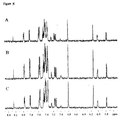
- the positioning volume can be optimized by collecting a series of spectra on a standard sample. In each spectrum collected, the positioning volume can first be varied by large increments (50-100 ⁇ L) to get a rough estimate of the volume. An example of three such spectra is shown in Figure 5 . The positioning volume can then be varied in smaller increments (10-25 ⁇ L) to identify the best volume for this parameter. The best signal-to-noise was obtained for our 5 mm Bruker flow probe on a DRX-600 when the positioning volume was set to +25 ⁇ L, but this volume is probe specific and is calibrated for each flow probe.
- the optimization of a flow-injection system for screening has three main objectives.
- the first objective is to transfer an aqueous sample to the center of the flow cell for analysis using the parameters determined during the flow probe calibration described above.
- the second objective is to reposition a sample from the Gilson liquid handler into the flow-injection probe without bubbles and with minimal sample dilution. This can be achieved by using nitrogen as a transfer gas (which keeps the system under pressure) and by using a series of leading and trailing solvents.
- nitrogen which keeps the system under pressure
- a series of leading and trailing solvents we typically use 150 ⁇ L of 2 H 2 O as a leading solvent, 20 ⁇ L of nitrogen gas, 300 ⁇ L of sample, 20 ⁇ L of nitrogen gas, and 100 ⁇ L of 2 H 2 O as a trailing solvent.
- a larger volume of sample can be used in place of the push solvents.
- the third objective is to determine a cleaning procedure which would reduce sample carry-over to less than 0.1 %. Typically, this involves rinsing the probe with a predetermined volume of water.
- the rinse cycle can also be followed by a dry cycle, in which the capillary lines and flow probe are dried with nitrogen gas to further minimize sample dilution. In our experiments, we typically use a 1-mL wash volume followed by a 30 second drying time with nitrogen gas.
- An NMR-based screen like other binding assays, has the advantage in that a high throughput functional assay does not need to be developed. This will become increasingly important as more and more targets of interest to pharmaceutical research are derived from genomics efforts and thus may not have a known function that can be assayed.
- the size and content of a broad screening library should be such that screening can be accomplished in a day or two with a favorable chance of identifying several hits for each of the target proteins to be screened.
- several rationale approaches have been implemented. These include the SHAPES library developed by Fejzo and coworkers that is composed largely of molecules that represent frameworks commonly found in known drug molecules ( J. Fejzo et al., Chem. Biol., 6, 755 (1999 )), drug-like or lead-like libraries, and diversity-based libraries.
- a number of studies have recently appeared that discuss the properties of known drugs and methods to distinguish between drug-like and non-druglike compounds ( G. W. Bemis et al., J. Med.
- a cell-based diversity algorithm is employed to divide the descriptor axes into bins and thus into a lattice of multidimensional hypercubes.
- this can be used to construct or expand a small screening library.
- the cell-based algorithm is used to partition the 250,000 compounds into approximately 1,000 cells. The number of compounds per cell will vary and some will be empty. Maximum structural diversity will be obtained by taking one compound from each occupied cell (and as close to the center as possible).
- the actual compounds chosen are based on desirable lead-like properties such as low molecular weight and hydrophilicity as well as availability and chemical non-reactivity as explained below.
- Diversity voids as exemplified by empty cells, can be filled from external sources or by chemical syntheses if desired. Identifying and filling diversity voids is important since larger compound collections are often heavily weighted in certain classes of compounds stemming from earlier research projects.
- FIG. 6 An example of diversity-based subset selection using these methods is shown in Figure 6 .
- the 6,436 compounds from the Comprehensive Medicinal Chemistry index have been divided into 2,012 cells to maximize diversity using five chemistry-space descriptors.
- the two-dimensional representation projected onto the hydrogen bond acceptor and charge BCUT axes is shown in gray.
- the black squares correspond to the 1,474 lead-like compounds (molecular weight less than 350 and 1 ⁇ cLogP ⁇ 3) contained in the CMC index.
- a total of 806 of the 2,012 cells were occupied by lead-like compounds.
- a similar approach could be used to select diverse, lead-like compounds from a large corporate compound collection.
- a protein target can be analyzed for protein-ligand interactions using relaxation-editing methods by adding sufficient protein to each well of the 96-well library plate to give a 1:1 (protein:ligand) ratio at a concentration of approximately 50 ⁇ M. Homogeneous sample dispersion throughout the well can be facilitated by agitating the plate on a flat bed shaker. Screening at this concentration allows a decent 1D 1 H NMR spectrum to be acquired in about 10 minutes. In our experience, this concentration of target and small molecule requires identified ligands to have affinities on the order of approximately 200 ⁇ M or tighter.
- the Gilson liquid sample handler transfers samples from 96-well plates into the flow-injection probe and if desired, returns the samples back into either the original 96-well plate or a new plate. Once the sample is in the magnet, spectra that can detect changes in chemical shifts, relaxation properties, or diffusion properties can be collected.
- Binding is detected using the WaterLOGSY technique. Extremely low levels of target are used (1-10 ⁇ M) with ratios of ligand to target of 100:1 1 to 10:1. For data analysis, binding compounds are distinguished from nonbinders by the opposite sign of their water-ligand NOEs. In contrast to a relaxation-edited technique, only a single WaterLOGSY spectrum is used for each ligand mixture. There is no need to collect a reference spectrum in the absence of target protein. An example is illustrated in Figure 7 for a mixture of compounds and a different protein. In the WaterLOGSY spectrum shown in Figure 7 , binding compounds have resonances of opposite intensity (sharp positive peaks) than nonbinders (near zero intensity or sharp negative peaks). Residual protein resonances are also of positive intensity.
- binding compounds are distinguished from nonbinders by the opposite sign of their water-ligand NOEs, as observed in Figure 7 . Comparison to an assigned small molecule control spectrum is made, to identify the compound associated with the indicated resonances.
- Data analysis for 2D screening methods typically involves either the analysis of protein chemical shift perturbations indicative of ligand binding ( A. Ross et al., J. Biomol. NMR, 16, 139 (2000 ); and S. B. Shuker et al, Science, 274, 1531 (1996 )), or the analysis of changes in signals from the small molecules in NOE or DECODES spectra indicative of binding ( B. Meyer et al., Eur. J. Biochem., 246, 705 (1997 ); J. Fejzo et al., Chem. Biol., 6, 755 (1999 ); and M. Lin et al., J. Am. Chem. Soc., 119, 5249 (1997 )).
- Non-statistical methods such as the bucketing calculations of AMIX (Bruker Instruments, AMIX, BEST and ICONNMR software packages) or the database comparisons of ACD ( Williams A, Book of Abstracts, 218th ACS National Meeting (1999 )) compare chemical shift, multiplicity, integration regions and patterns to give correlation factors between spectra.
- AMIX Brunauer-Int al.
- BEST and ICONNMR software packages the database comparisons of ACD ( Williams A, Book of Abstracts, 218th ACS National Meeting (1999 )) compare chemical shift, multiplicity, integration regions and patterns to give correlation factors between spectra.
- ACD Williams A, Book of Abstracts, 218th ACS National Meeting (1999 )
- Prediction software is also available to help aid in interpretation of data sets.
- Statistical methods such as principal components analysis can be used to analyze data for other correlations that are not apparent using non-statistical methods alone.
- Prerequisites for a high-throughput assay include rapid data collection, sample-to-sample integrity and minimal costs.
- Flow NMR techniques have been developed with each in mind. For 1D 1 H NMR screening experiments, the process of removing the previous sample from the flow cell, rinsing the flow cell, injecting the next sample, allowing for thermal equilibration, automating solvent suppression and acquiring the data can take less than 10 minutes. In practice, the use of this procedure is two to three times faster than a sample changer with conventional NMR tubes. If compounds were screened in mixtures of 10, this results in a throughput of about 1,500 compounds per day.
Landscapes
- Physics & Mathematics (AREA)
- Condensed Matter Physics & Semiconductors (AREA)
- General Physics & Mathematics (AREA)
- Investigating Or Analysing Biological Materials (AREA)
- Investigating Or Analyzing Non-Biological Materials By The Use Of Chemical Means (AREA)
- Other Investigation Or Analysis Of Materials By Electrical Means (AREA)
- Organic Low-Molecular-Weight Compounds And Preparation Thereof (AREA)
Abstract
Description
- From an organic chemistry standpoint, the process of drug design can be considered to involve two steps. First, a lead chemical template (often one or more) is selected. Second, a synthetic chemistry effort is undertaken to create analogs of the lead chemical template to create a compound or compounds possessing the desired therapeutic and pharmacokinetic properties.
- An important step in the drug discovery process is the selection of a suitable lead chemical template upon which to base a chemistry analog program. The process of identifying a lead chemical template for a given molecular target typically involves screening a large number of compounds (often more than 100,000) in a functional assay, selecting a subset based on some arbitrary activity threshold for testing in a secondary assay to confirm activity, and then assessing the remaining active compounds for suitability of chemical elaboration.
- This process can be quite time- and resource-consuming, and has numerous disadvantages. It requires the development and implementation of a high-throughput functional assay, which by definition requires that the function of the molecular target be known. It requires the testing of large numbers of compounds, the vast majority of which will be inactive for a given molecular target. It leads to the depletion of chemical resources and requires the continual maintenance of large collections of compounds. Importantly, it often leads to a final pool of potential lead templates that, for the most part, with the exception of affinity for a given molecular target, do not possess desirable drug-like qualities. In some cases, high-throughput functional assays do not identify any compounds, from the large number (e.g. 100,000) of compounds screened, that meet the criteria established for activity.
-
WO98/57155 - providing a mixture of test compounds;
- introducing the target molecule into a sample reservoir containing a mixture of test compounds, to provide a test sample; collecting a relaxation-filtered NMR spectrum on the sample; and
- comparing the spectrum of this sample to the spectrum taken under the same conditions in the absence of the target molecule, to identify a compound that binds to the target molecule;
- The present invention is related to rational drug design. Specifically, the present invention provides an approach to the development of a library of compounds as well as methods for identifying compounds (e.g. ligands) that bind to a specific target molecule (e.g., a protein) and lead chemical templates that can be used, for example, in drug discovery and design. This approach for identifying ligands for target molecules (e.g., proteins) uses nuclear magnetic resonance (NMR) spectroscopy. There are numerous NMR spectroscopic techniques currently available that detect binding of small molecules to targets such as protein targets, including targets identified using genomics techniques that lack a functional assay. Ligands with only moderate binding affinities, which might be overlooked in a traditional functional assay but yet might serve as templates for subsequent synthetic chemistry efforts, can potentially be identified using the present invention. The present invention involves the use of flow NMR techniques, which can reduce the amount of time and effort required to evaluate small molecules for binding to a given target.
- According to the present invention, in a method of identifying a compound that binds to a target molecule, the method comprises:
- selecting a library of test compounds each having a solubility in deuterated water of at least 1 mM at room temperature and a molecular weight of no greater than 350 grams/mole;
- providing a plurality of mixtures of the test compounds, each mixture being in a sample reservoir;
- introducing a target molecule into each sample reservoir, to provide a plurality of test samples;
- providing a nuclear magnetic resonance spectrometer equipped with a flow injection probe;
- transferring each test sample from the sample reservoir into the flow-injection probe;
- collecting a WaterLOGSY nuclear magnetic resonance spectrum on each sample in each reservoir; and
- analysing the spectrum of each sample to distinguish binding compounds from non-binding compounds, by virtue of the opposite signs of their water-ligand nuclear Overhauser effects;
- Preferably, the library of test compounds includes at least about 75 compounds, more preferably at least about 300 compounds, and most preferably at least about 2000 compounds, and these compounds preferably have relatively diverse chemical structures. Herein, the molecular weights of the compounds are determined without solubilising counterions (if the compounds are salts) and without water molecules of hydration. Also, concentrations are reported based on aqueous solutions, which may or may not include a buffer.
- When binding is detected using the WaterLOGSY (water-ligand observation with gradient spectroscopy) technique, extremely low levels of target can be used, with a ratio of ligand to target that is preferably 100:1 to about 10:1. Preferably, the concentration of target molecule is no greater than about 10 mM. More preferably, the concentration of target molecule is about 1 mM to 10 mM. For data analysis, binding compounds are distinguished from nonbinders (i.e. non-binding compounds) by the opposite sign of their water-ligand NOEs. Using this method, there is no need to collect a reference spectrum in the absence of a target molecule.
- The compounds in the library have a solubility in deuterated water of at least about 1 mM at room temperature (i.e., about 25°C to about 30°C), and a molecular weight of no greater than about 350 grams/mole. For effective use of a compound identified as a ligand for a given target in the search for a lead chemical template, preferably, the dissociation constant of the identified ligand to a target molecule is no weaker than (i.e., at least) 100 mM. For effective use of a lead chemical template in further drug design, preferably, the dissociation constant for the lead chemical template to a target molecule is no weaker than (i.e., at least) 1 mM.
-
-
Figure 1 . Schematic diagram illustrating the use of NMR to discover a ligand having an approximate dissociation constant of 1.0 x 10⁻⁴ M (left figure), to use the discovered ligand to direct the discovery of a lead chemical template having an approximate dissociation constant of 1.0 x 10⁻⁶ M (middle figure), and then via synthetic chemistry and structure-directed drug design arrive at a drug candidate having an approximate dissociation constant of 1.0 x 10⁻⁸ M. -
Figure 2 . Comparison of the two-dimensional HA (hydrogen-bond acceptor) vs. CHRG (charge) BCUT plots for the compounds contained in the NMR library described herein (dark squares) and a larger chemical library database (gray spots). -
Figure 3 . Schematic of the BEST flow system: (1) computer workstation, (2) NMR console, (3) Gilson sample handler, (4) flow probe in the magnet, and (5) nitrogen gas. The Gilson sample handler is labeled as follows: (A) keypad, (B) syringe, (C) injector, (D) solvent reservoir, (E) solvent rack, (F) sample racks, (G) waste reservoir, (H) Rheodyne valves, (I) injection port, and (J) recovery unit. -
Figure 4 . Schematic of a Bruker flow probe showing (A) the total probe volume, (B) the flow cell volume, and (C) the positioning volume. -
Figure 5 . 600.13 MHz 1H NMR spectra of a 100 µM NMR library sample with the positioning volume set to (A) -100 µl, (B) 0 µl, and (C) +100 µl. -
Figure 6 . Overlay of the two-dimensional HA (hydrogen-bond acceptor) vs. CHRG (charge) BCUT plots for the compounds in the CMC index (gray) and the lead-like compounds contained therein (black). -
Figure 7 . Region of the 600.13 MHz WaterLOGSY spectrum of a compound mixture with added target protein. The concentration of protein was 10 µM while the concentration of each compound was 100 µM. The spectrum was acquired on a Bruker 5 mm flow-injection probe at 27°C. A total of 4K scans were collected resulting in a total acquisition time of about 288 minutes. A mixing time of 2.0 seconds was used. - The present invention involves the selection of a generally small library of structurally diverse compounds that are generally water soluble, have a relatively low molecular weight, and are amenable to synthetic chemistry elaboration. Significantly and advantageously, for certain embodiments, the present invention preferably involves carrying out a binding assay at relatively low concentrations of target and near equimolar ratios of ligand to target, or even at extremely low concentrations of target and higher ratios of ligand to target.
- In a method of the present invention, a relatively small subset of compounds (preferably, at least about 75, more preferably, at least about 300, most preferably, at least about 2000, and typically no more than about 10,000) that mimics the structural diversity of compounds in much larger collections is created based on a predetermined set of criteria. This generally small library is screened for binding affinity to a target molecule (as determined herein by dissociation constants). The compounds from the library that are identified to be effective ligands (typically, having an affinity for a desired target as evidenced by a dissociation constant of at least about 1.0 x 10⁻⁴ M) are then used to focus further screening efforts or to direct chemical elaborations to arrive at one or more lead chemical templates (which, typically have an affinity for a desired target as evidenced by a dissociation constant of at least about 1.0 x 10⁻⁶ M). This process is shown schematically in
Figure 1 . - Significantly, time and resources are saved by screening far fewer compounds using the present invention. Use of a binding assay, such as the one based on NMR spectroscopy described herein, eliminates the need to develop a high-throughput functional assay, and also allows the methods to be used on molecular targets lacking a known function.
- Thus, the present invention provides methods of identifying a compound that binds to a target molecule (preferably, a protein) that are based on NMR spectroscopy techniques, using WaterLOGSY. This involves the transfer of magnetization from bulk water to detect the binding interaction. Using WaterLOGSY techniques, binding compounds are distinguished from nonbinders by the opposite sign of their water-ligand nuclear Overhauser effects (NOEs).
- Important elements that contribute to the success of the methods of the invention preferably include developing a suitable small library of compounds to screen, carrying out the binding assay at extremely low concentrations of target (if desired) and high ratios of ligand to target, and the capacity for rapid throughput of data collection. For example, the concentration of target molecule is preferably no greater than about 10 µM.
- The selection of compounds in a small library (preferably, at least about 75 compounds, more preferably, at least about 300 compounds, and most preferably, at least about 2000 compounds) is important in that its diversity should mimic the diversity of larger compound collections. Preferably, each component possesses many of the desirable qualities of a lead chemical template. These include water solubility, low molecular weight (no greater than about 350 grams/mole, more preferably, no greater than about 325 grams/mole, and most preferably, less than about 325 grams/mole), and amenability to synthetic chemistry elaboration. Templates possessing these qualities, as compared to a template selected randomly, are preferably considered to be predisposed to being lead-like and having an increased likelihood of ultimately leading to a drug.
- Good structural diversity in a library increases the likelihood that one or more compounds will possess structural characteristics important for binding to a given molecular target. Predisposing the compounds to be water soluble, to have low molecular weight (no greater than about 350 grams/mole, more preferably, no greater than about 325 grams/mole, and most preferably, less than about 325 grams/mole), and to be amenable to synthetic elaboration increases the likelihood that a compound found to be a ligand will lead to a related compound or compounds suitable as a lead chemical template for use, for example, in a process of identifying an effective therapuetic and/or prophylactic agent. Additionally, the requirement for good water solubility (at least about 1.0 x 10⁻³ M in deuterated water at room temperature) is important in that it increases the likelihood of success of other downstream drug-design projects, such as co-crystallization attempts, calorimetry studies, and enzyme kinetic analyses.
- Compounds testing positive for binding have affinities within a factor of about 3-4 of low target concentrations (preferably, no greater than about 10 µM, but is more preferably about 1 µM to about 10 µM) and ligand to target ratios of about 100:1 to about 10:1. This level of affinity is desired if the subsequent steps of focused screening and directed chemical elaboration are to be successful in elucidating a lead chemical template with very low affinity (e.g., one having a dissociation constant of at least about 1.0 x 10⁻⁶ M). Carrying out the initial screening at these low concentrations also avoids detection of unwanted compounds with much smaller dissociation constants in the 1.0 x 10⁻³ M range, which are less specific in their binding and therefore harder to turn into lead chemical templates given their weak affinity initially.
- The capacity for rapid throughput of data collection is important if a large number of molecular targets are to be screened. Flow NMR techniques can reduce the amount of time and effort required to evaluate small molecules for binding to a given target. For example, the use of a Bruker Efficient Sample Transfer system in combination with a tubeless, flow-injection NMR probe has proven to be much faster and less labor intensive than the use of traditional NMR tubes. A significant increase in throughput is obtained compared to both manual sample changing and to using an autosampler. Implementation of the screening process using multiwell sample holders also standardizes the experimental setup as well as the components in a given mixture from one molecular target to the next.
- The following is a description of a preferred method for carrying out the present invention. It is provided for exemplification purposes only and should not be considered to unnecessarily limit the invention as set forth in the claims.
- In the design of a preferred small library of structurally diverse compounds according to the present invention, compounds were selected from a large library based on dissimilarity, predicted water solubility, low molecular weight, and chemical intuition. Some were based on frameworks suggested in the literature, although some literature-suggested frameworks were consciously avoided. Each compound was tested for solubility at 1.0 x 10⁻³ M in 2H2O and for purity by mass spectrometry and 1H NMR spectroscopy. Compounds deemed to be water soluble and pure were kept for inclusion in the final library (approximately 30% of the initial compounds). The resulting library contains approximately 300 compounds. One measure of the degree of structural diversity of the compounds in this small library is shown in
Figure 2 . This is based on the technique described in Pearlman et al., Perspectives in Drug Discovery & Design, 9, 339-353 (1998). Preferably, the compound library includes compounds of sufficiently diverse chemical structure that one would expect at least one compound to bind to a given target protein with an affinity (dissociation constant) no weaker than (i.e., at least) about 200 µM. Herein, compounds of diverse chemical structure are those that have a variety of backbone hydrocarbon structures (e.g., linear, branched, cyclic - which may or may not be aromatic, have fused rings, etc.), optionally including a variety of heteroatoms (e.g., oxygen, nitrogen) and a variety of functional groups (e.g., carbonyls) in a variety of positions (e.g., pointing in various directions at a variety of distances from each other). Ideally, using the technique described in Pearlman et al., Perspectives in Drug Discovery & Design, 9, 339-353 (1998), the library of compounds displays a pattern of well-dispersed black squares (e.g., seeFigure 2 ). - In order to increase the throughput of the NMR screening, compounds were grouped into 32 sets of 6-10 compounds that have at least one distinguishable resonance in a 1D 1H NMR spectrum of the mixture. To accomplish this, a 1D 1H NMR spectrum was obtained of each mixture in 100% 2H2O and in 0.1 M sodium phosphate/100% 2H2O at pH 6.5. Two solvents were used in order to determine the assignment of pH-titratable resonances in the spectrum. Each of the 32 mixtures was then plated out into separate wells of a 96-well plate, using 25 µL of a 1.0 x 10⁻³ M solution, and frozen at -80°C until needed. In an initial version of the NMR screening library, approximately 70 compounds were grouped into 21 sets of 3-4 compounds each.
- After a 96-well plate had completely thawed, a solution containing a molecular target protein was added to each well containing a mixture of compounds in the 96-well plate. The final concentration of protein is typically about 5.0 x 10⁻⁵ M. The ratio of each compound in a mixture to protein is typically about 1:1. This process typically involves adding 475 mL of protein to each mixture. Dispersion throughout the mixture was facilitated by shaking the 96-well plate for 20 minutes following addition of protein.
- WaterLOGSY methods are used to detect the binding interaction. WaterLOGSY is described in more detail in C. Dalvit et al., J. Biomol. NMR, 18, 65-68 (2000).
- Since WaterLOGSY relies on the transfer of magnetization from bulk water to detect the binding interaction, it is a very sensitive technique. As such, the concentration of target molecule (e.g., protein) in each sample preferably can be reduced to no greater than about 10 µM (preferably, about 1 µM to about 10 µM) while the concentration of each compound can be about 100 µM. This results in ratios of target molecule to compounds in each sample reservoir of about 100:1 to about 10:1. The exact concentrations and ratios used can vary depending on the size of the target molecule, the amount of target molecule available, the desired binding affinity detection limit, and the desired speed of data collection. In contrast to the relaxation-editing method, there is no need to collect a comparison or control spectrum to identify binding compounds from nonbinders. Instead, binding compounds are distinguished from nonbinders by the opposite sign of their water-ligand nuclear Overhauser effects (NOEs).
- Ligand binding was confirmed by making fresh solutions containing only the identified ligand, with and without added protein at a 1:1 ratio, and comparing the 1D relaxation-edited 1H NMR spectra. In addition, the ligand's dissociation constant was estimated by analyzing several 1D diffusion-edited 1H NMR spectra collected at several gradient strengths. The relative diffusion coefficients for the protein, for the ligand in the presence of protein, and for the ligand in the absence of protein, in conjunction with known protein and ligand concentrations, were used to estimate the ligand's dissociation constant. These spectra are typically collected using an NMR spectrometer, a conventional high resolution probe, and regular 5 mm NMR tubes.
- Once a ligand had been identified and confirmed, its structure is used to identify available compounds with similar structures to be assayed for activity or affinity, or to direct the synthesis of structurally related compounds to be assayed for activity or affinity. These compounds are then either obtained from inventory or synthesized. Most often, they are then assayed for activity using enzyme assays. In the case of molecular targets that are not enzymes or that do not have an enzyme assay available, these compounds can be assayed for affinity using NMR techniques similar to those described above, or by other physical methods such as isothermal denaturation calorimetry. Compounds identified in this step with affinities for the molecular target of about 1.0 x 10⁻⁶ M are typically considered lead chemical templates.
- In some instances, ligand binding is further studied using more complex NMR experiments or other physical methods such as calorimetry or X-ray crystallography. These downstream studies have a greater chance of success since the ligands and lead chemical templates so identified are fairly water soluble. For instance, if [15N]protein is available, 2D 1H-15N HSQC (heteronuclear single quantum correlation) spectra can be collected with and without added ligand to locate the ligand's binding site on the protein. In cases where the protein is small enough (molecular weight less than about 30,000) and further characterization of protein/ligand interactions is desired, 3D NMR experiments can be carried out on [13C/15N]protein/[12C/14N]ligand complexes. Attempts to soak lead chemical templates identified by this method into existing protein crystals, or to form co-crystals, can also be carried out.
- Objects and advantages of this invention are further illustrated by the following examples, but the particular materials and amounts thereof recited in these examples, as well as other conditions and details, should not be construed to unduly limit this invention, which is defined in the claims.
- Flow NMR spectroscopy techniques are becoming increasingly utilized in drug discovery and development (B. J. Stockman, Curr. Opin. Drug Disc. Dev., 3, 269-274 (2000)). The technique was first applied to couple the separation characteristics of liquid chromatography with the analytical capabilities of NMR spectroscopy (N. Watanabe et al., Proc. Jpn. Acad. Ser B, 54, 194 (1978)). Since then, HPLC-NMR, or LC-NMR as it is more commonly referred to, has been broadly applied to natural products biochemistry, drug metabolism and drug toxicology studies (J. C. Lindon et al., Prog. NMR Spectr., 29, 1 (1996); J. C. Lindon et al., Drug. Met. Rev., 29, 705 (1997); B. Vogler et al., J Nat. Prod., 61, 175 (1998); and J.-L. Wolfender et al., Curr. Org. Chem. 2, 575 (1998)). The wealth and complexity of data made available from the latter two applications have created the potential for NMR-based metabonomics to complement genomics and proteomics (J. K. Nicholson et al., Xenobiotica, 29, 1181 (1999)). Stopped-flow analysis in LC-NMR, where the chromatographic flow is halted to obtain an NMR spectrum with higher signal-to-noise and then restarted when the spectrum has finished collecting, was the forerunner to the flow-injection systems that will be described here. The largest difference between the two systems is that one includes a separation component (LC column) and the other does not. The rapid throughput possible for combinatorial chemistry samples and protein/small molecule mixtures has allowed flow-injection NMR methods to impact medicinal chemistry and protein screening (P. A. Keifer, Drugs Fut., 23, 301 (1998); P. A. Keifer, Drug Disc. Today, 2, 468 (1997); P. A. Keifer, Curr. Opin. Biotech., 10, 34 (1999); K. A. Farley et al., SMASH'99, Argonne, IL, 15-18 August 1999; and A. Ross et al., Biomol. NMR, 16, 139 (2000)).
- Changes in chemical shifts, relaxation properties or diffusion coefficients that occur upon the interaction between a protein and a small molecule have been documented for many years (for recent reviews see M. J. Shapiro et al., Curr. Opin. Drug. Disc. Dev., 2, 396 (1999); J. M. Moore, Biopolymers, 51, 221 (1999); and B. J. Stockman, Prog. NMR Spectr., 33, 109 (1998)). Observables typically used to detect or monitor the interactions are chemical shift changes for the ligand or isotopically-enriched protein resonances (J. Wang et al., Biochemistry, 31, 921 (1992)), or line broadening (D. L. Rabenstein, et al., J. Magn. Reson., 34, 669 (1979); and T. Scherf et al., Biophys. J., 64, 754 (1993)), change in sign of the NOE from positive to negative (P. Balaram et al., J. Am. Chem. Soc., 94, 4017 (1972); and A. A. Bothner-By et al., Ann. NY Acad. Sci. 222, 668 (1972)), or restricted diffusion (A. J. Lennon et al., Biophys., J. 67, 2096 (1994)) for the ligand. For the most part, these studies have focussed on protein/ligand systems where the small molecule was already known to be a ligand or was assumed to be one. In the last several years, however, the work of the Fesik (S. B. Shuker et al., Science, 274, 1531 (1996); and P. J. Hajduk et al., J. Am. Chem. Soc., 119, 12257 (1997)), Meyer (B. Meyer et al., Eur. J. Biochem., 246, 705 (1997)), Moore (J. Fejzo et al., Chem. Biol., 6, 755 (1999)), Shapiro (M. Lin et al., J. Org. Chem., 62, 8930 (1997)), and Dalvit (C. Dalvit et al., J. Biomol NMR, 18, 65-68 (2000)) labs has demonstrated the applicability of these same general methods as a screening tool to identify ligands from mixtures of small molecules.
- These screening protocols typically involve the preparation of a series of individual samples in glass NMR tubes and the use of an autosampler to achieve reasonable throughput. Variations in volume or positioning that occur during sample preparation or tube insertion can necessitate tuning and calibration of the probe between each sample, thereby reducing throughput of data collection.
- By contrast, flow-injection NMR has several advantages. The stationary flow cell provides uniform locking and shimming from one sample to the next, and, with the radio frequency coils mounted directly onto the flow cell's glass surface, high sensitivity. Fast throughput of data collection is thus possible. Use of a liquid handler to prepare and inject samples, such as the Gilson 215 liquid handler used on Bruker and Varian systems, allows the potential for on-the-fly sample preparation (A. Ross et al., J. Biomol. NMR, 16, 139 (2000)), thus maximizing sample integrity and uniformity. Since the use and/or re-use of glass NMR tubes is avoided, costs are minimized.
- A typical Flow NMR system consists of a magnet, an NMR console, a computer workstation, a Gilson sample handler, and a flow-injection probe. Two vendors currently offer complete flow-injection systems: Bruker Instruments and Varian Instruments. In addition, the Nalorac Corporation manufactures an LC probe that can also be used for flow-injection NMR screening. A schematic of the Bruker Efficient Transport System (BEST) manufactured by Bruker Instruments is shown in
Figure 3 . The Gilson 215 sample handler supplied by Bruker is equipped with two Rheodyne 819 valves. The first valve is attached to a 5 ml syringe, the needle capillary in the sample handler injection arm, the bridge capillary, the waste reservoir, and the second valve. The second Rheodyne valve is attached to the input and output of the probe, the source of nitrogen gas, the first valve, and the injection port. FEP Teflon tubing is used in each of the connections with the exception of the gas connection, which uses PEEK tubing. - A sample is injected into the Bruker probe by filling the needle capillary and transferring the sample into the inlet tubing for the probe using the second Rheodyne valve. In quick mode, the next sample is loaded into the tubing during the spectral acquisition of the previous sample. When the spectral acquisition has completed, the first sample exits the probe through the outlet capillary. This action pulls the next sample into the probe through the inlet port and spectral acquisition can immediately begin. Quick mode acquisition can save approximately one minute per sample from the time it would take to load each sample individually. However, sample recovery is not currently an option with this method. In order to recover a sample, each sample is injected individually using normal mode acquisition. The sample is recovered by selecting either nitrogen gas or the syringe to pull the sample back from the probe through the inlet tube. The sample can then be returned to the Gilson liquid handler into its original well or into a new 96 well plate. A recovery unit has recently been added to the BEST system to improve the efficiency of recovery of the syringe by using the nitrogen gas to create a back pressure on the sample.
- Two useful accessories available for the BEST system are a Valvemate solvent switcher and a heated transfer line. The solvent switcher was added to the flow system for the combinatorial chemist who may want to analyze samples in various organic solvents, but it can also be used for a library screen to vary buffer conditions or to clean the probe out with an acid or a base. The heated transfer line is used to equilibrate the sample temperature to the probe temperature during sample transfer. Both the inlet and output capillary transfer lines are threaded through the heated transfer line. This feature is desirable when the spectral analysis time is short and a high throughput of samples is required. In the ideal case, data acquisition using this accessory can begin immediately after the sample enters the probe. Some samples may still require a temperature equilibration period after entering the probe.
- The setup of the Versatile Automated Sample Transport (VAST) system produced by Varian is similar to the Bruker system. The VAST system consists of a Gilson 215 liquid handler, a Varian NMR flow probe, an NMR console, and a Sun workstation. The Gilson liquid handler supplied by Varian is equipped with a single Rheodyne 819 valve and is connected to the NMR flow probe with 0.3 mm [0.010 inch] inside diameter PEEK tubing (P. A. Keifer et al., J. Comb. Chem., 2, 151 (2000)). In the Varian system design, the sample handler injects a specified volume of sample into the probe, the data is acquired, and then the flow of liquid through the tubing is reversed and the sample is returned to its original vial or well. The return of the sample to the Gilson by the syringe pump is assisted by a Valco valve and nitrogen gas which supply some backpressure on the outlet portion of the Varian flow probe. With the VAST system setup, the probe is rinsed just prior to sample injection and then is dried with nitrogen gas to minimize dilution of the sample during injection. The Varian design gives excellent sample recovery without dilution, but it is strongly recommended that samples be filtered to prevent clogging of the capillary transfer lines (P. A. Keifer et al., J. Comb. Chem., 2, 151 (2000)).
- Flow NMR systems are ideally suited for use with the shielded magnets manufactured by Bruker Instruments or Oxford Magnets. Actively shielding a 600 MHz magnet reduces the radial 5 gauss line from approximately 4 meters to less than 2 meters, which allows the Gilson liquid handler to be placed significantly closer to the magnet. This reduces the length of tubing needed between the Rheodyne valve and the flow-injection probe and minimizes the sample transfer time. The potential for clogging and sample dilution are concomitantly reduced.
- Bruker uses two software packages to run the BEST system: BEST Administrator and ICONNMR (Bruker Instruments, AMIX, BEST and ICONNMR software packages). The BEST administrator is activated by typing the command 'BESTADM' in XWINNMR. This portion of the software is used during method generation and optimization. Samples are injected into the probe one at a time and data is collected under XWINNMR. Early versions of the BEST software utilized three separate programs: CFBEST, SUBEST, and OTBEST. These functions were recently combined under the single software package, BEST Administrator. In addition, the parameters available for customization have been greatly expanded to include automated solvent switching and method switching, which were not available in earlier versions of the software. The software package ICONNMR is used after a flow method has been optimized with the BEST administrator. This package is setup for full automation and is the same software used with automated NMR tube sample changers. In a similar fashion, Varian software uses the command 'Gilson' to generate a method before sample injection and data acquisition is initiated using Enter/Autogo in VNMR (Varian NMR Systems, VNMR software package).
- In addition to the normal 90° pulse lengths and power levels which are calibrated for any NMR probe, several additional calibrations are required for a flow probe. The three additional volumes required to calibrate a Bruker flow probe are shown schematically in
Figure 4 (Bruker Instruments, AMIX, BEST and ICONNMR software packages). The first volume calibrated is the total probe volume. This can be accomplished by injecting a colored liquid into the inlet of a dry probe with a syringe and watching for the liquid to appear in the outlet port (approximately 700-800 µL for a 5 mm flow probe). With the Varian system, the system filling volume also includes the capillary tubing that connects the injector port to the flow probe (P. A. Keifer et al., J. Comb. Chem., 2, 151 (2000)). This volume is used to calculate the distance required to reposition a sample from the Gilson sample handler to the center of the flow cell in the probe. - The second volume calibrated is the flow cell volume. This is the volume of liquid required to fully fill the coil around the flow cell. The three flow probe vendors (Bruker, Varian, and Nalorac) have probes available with active volumes ranging from 30-250 µL. The stated volume of the flow cell in a 5 mm Bruker flow probe is 250 µL, but it was calibrated to be approximately 300 µL. This volume can be calibrated by making repeated injections of a standard sample, starting with a volume less than the stated active volume of the probe, and collecting a 1D 1H NMR spectrum. The injection volume can then be increased incrementally until no further improvement in signal-to-noise is observed.
- In addition to the two probe volume calibrations already discussed, Bruker software also includes a third volume for calibration. This volume, referred to as the positioning volume, is used to optimize the centering of a sample in the flow cell. Early versions of ICONNMR software (prior to 3.0.a.9) did not include the ability to set the positioning volume. Rather, Bruker literature suggested that the flow cell volume should be roughly doubled to insure that the sample would completely fill the coil (Bruker Instruments, AMIX, BEST and ICONNMR software packages). Fortunately, this is no longer necessary. The positioning volume can now be used to optimize the sample position. This calibration reduced the sample size required for injection from 450 µL in the first few protein screens to 300 µL for current screens using a
Bruker 5 mm flow probe with an active volume of 250 µL. Optimization of this parameter minimized the sample volume required for each spectrum. Importantly, this significantly reduced the total amount of protein (or other target) at a given concentration needed to screen our small molecule library. The positioning volume can be optimized by collecting a series of spectra on a standard sample. In each spectrum collected, the positioning volume can first be varied by large increments (50-100 µL) to get a rough estimate of the volume. An example of three such spectra is shown inFigure 5 . The positioning volume can then be varied in smaller increments (10-25 µL) to identify the best volume for this parameter. The best signal-to-noise was obtained for our 5 mm Bruker flow probe on a DRX-600 when the positioning volume was set to +25 µL, but this volume is probe specific and is calibrated for each flow probe. - The optimization of a flow-injection system for screening has three main objectives. The first objective is to transfer an aqueous sample to the center of the flow cell for analysis using the parameters determined during the flow probe calibration described above. The second objective is to reposition a sample from the Gilson liquid handler into the flow-injection probe without bubbles and with minimal sample dilution. This can be achieved by using nitrogen as a transfer gas (which keeps the system under pressure) and by using a series of leading and trailing solvents. In our experiments, we typically use 150 µL of 2H2O as a leading solvent, 20 µL of nitrogen gas, 300 µL of sample, 20 µL of nitrogen gas, and 100 µL of 2H2O as a trailing solvent. Alternatively, a larger volume of sample can be used in place of the push solvents. The third objective is to determine a cleaning procedure which would reduce sample carry-over to less than 0.1 %. Typically, this involves rinsing the probe with a predetermined volume of water. The rinse cycle can also be followed by a dry cycle, in which the capillary lines and flow probe are dried with nitrogen gas to further minimize sample dilution. In our experiments, we typically use a 1-mL wash volume followed by a 30 second drying time with nitrogen gas.
- With the increasing prevalence of extremely high throughput screening equipment in the pharmaceutical industry, it may seem counter intuitive to suggest screening smaller collections of compounds in an NMR-based assay. However, a correlation between the quality of hits obtained and the number of compounds screened has not been well documented. In fact, compounds are typically added to screening collections not to simply increase their numbers, but to increase the diversity and quality of the compound collection. Thus, if one could find suitable hits from a smaller collection of well-chosen compounds, it may not be necessary to expend the time and chemical resources to screen the entire compound library against every single target. Hits so identified could then be used to focus further screening efforts or to direct combinatorial syntheses, thus saving both time and chemical resources, as shown schematically in
Figure 1 . An NMR-based screen, like other binding assays, has the advantage in that a high throughput functional assay does not need to be developed. This will become increasingly important as more and more targets of interest to pharmaceutical research are derived from genomics efforts and thus may not have a known function that can be assayed. - Several types of libraries are possible: broad screening libraries applicable to many types of target proteins, directed libraries that are designed with the common features of an active site in mind that might be useful for screening a series of targets from the same protein class, such as protease enzymes, and "functional genomics" libraries composed of known substrates, cofactors and inhibitors for a diverse array of enzymes that might be useful for defining the function of genomics-identified targets.
- Ideally, the size and content of a broad screening library should be such that screening can be accomplished in a day or two with a favorable chance of identifying several hits for each of the target proteins to be screened. Rather than just randomly choosing a subset library, several rationale approaches have been implemented. These include the SHAPES library developed by Fejzo and coworkers that is composed largely of molecules that represent frameworks commonly found in known drug molecules (J. Fejzo et al., Chem. Biol., 6, 755 (1999)), drug-like or lead-like libraries, and diversity-based libraries. A number of studies have recently appeared that discuss the properties of known drugs and methods to distinguish between drug-like and non-druglike compounds (G. W. Bemis et al., J. Med. Chem., 39, 2887 (1996); C. A. Lipinski et al., Adv. Drug Del. Rev., 23, 3 (1997); Ajay et al., J. Med. Chem., 41, 3314 (1998); J. Sadowski et al., J. Med. Chem., 41, 3325 (1998); A. K. Ghose et al., J. Comb. Chem., 1, 55 (1999); J. Wang et al., J. Comb. Chem., 1, 524 (1999); and G. W. Bemis et al., J. Med. Chem., 42, 5095 (1999)). Superimposing drug-like (E. J. Martin et al., J. Comb. Chem., 1, 32 (1999)) or lead-like (S. J. Teague et al., Angew. Chem. Int. Ed., 38, 3743 (1999)) properties on a diversity-selected compound set may yield the best library of compounds. The distinction of lead-like is important since the NMR-based assay is designed to identify weak-affinity compounds that will most likely gain molecular weight and lipophilicity to become drug candidates or even lead chemical templates (S. J. Teague et al., Angew. Chem. Int. Ed., 38, 3743 (1999)).
- Development and expansion of our lead-like NMR screening library to mimic the structural diversity of our larger compound collection has made use of the DiverseSolutions software for chemical diversity (R. S. Pearlman et al., Persp. Drug Disc. Des., 9/10/11, 339 (1998)). In this approach, each compound is described by a set of descriptors, which are metrics of chemistry space. Six orthogonal descriptors, related to substructures as opposed to the entire molecule, are often used. While the descriptors to use can be automatically chosen to maximize diversity, typically there are two each corresponding to charge, polarizability and hydrogen-bonding. A cell-based diversity algorithm is employed to divide the descriptor axes into bins and thus into a lattice of multidimensional hypercubes. As an example of how this can be used to construct or expand a small screening library, consider the selection of 1,000 compounds from a compound library of 250,000 compounds. First, the cell-based algorithm is used to partition the 250,000 compounds into approximately 1,000 cells. The number of compounds per cell will vary and some will be empty. Maximum structural diversity will be obtained by taking one compound from each occupied cell (and as close to the center as possible). The actual compounds chosen are based on desirable lead-like properties such as low molecular weight and hydrophilicity as well as availability and chemical non-reactivity as explained below. Diversity voids, as exemplified by empty cells, can be filled from external sources or by chemical syntheses if desired. Identifying and filling diversity voids is important since larger compound collections are often heavily weighted in certain classes of compounds stemming from earlier research projects.
- An example of diversity-based subset selection using these methods is shown in
Figure 6 . Here, the 6,436 compounds from the Comprehensive Medicinal Chemistry index have been divided into 2,012 cells to maximize diversity using five chemistry-space descriptors. The two-dimensional representation projected onto the hydrogen bond acceptor and charge BCUT axes is shown in gray. The black squares correspond to the 1,474 lead-like compounds (molecular weight less than 350 and 1 < cLogP < 3) contained in the CMC index. A total of 806 of the 2,012 cells were occupied by lead-like compounds. A similar approach could be used to select diverse, lead-like compounds from a large corporate compound collection. - The cell concept of structural space is quite useful after the screening is complete. When a hit is identified, other compounds from the same or nearby cells are obvious candidates for secondary assays. One can think of this as the gold mine analogy: when gold is struck, the search is best continued in close proximity.
- In addition to structural diversity, there are other characteristics that can be considered when selecting the subset molecules. These include purity, identity, reactivity, toxicological properties, molecular weight, water solubility, and suitability for chemical elaboration by traditional or combinatorial methods. It makes sense to populate the screening library with compounds of high integrity that are not destined for failure down the road. Time spent upfront to insure purity and identity with LC-MS or LC-NMR analyses will save resources downstream. Filtering tools can be used to avoid compounds that are known to be highly reactive, toxic, or to have poor metabolic properties. Lack of reactivity is important since compounds can be screened more efficiently as mixtures. Like other labs (S. B. Shuker et al, Science, 274, 1531 (1996); B. Meyer et al., Eur. J. Biochem., 246, 705 (1997); J. Fejzo et al., Chem. Biol., 6, 755 (1999); and M. Lin et al., J. Org. Chem., 62, 8930 (1997)) we typically pool our selected small molecules into mixtures of 6-10 compounds for screening (K. A. Farley et al., SMASH'99, Argonne, IL, 15-18 August 1999).
- Compounds chosen for our diversity library are lead-like as opposed to drug-like. It is often the case that chemical elaborations to improve affinity also increase molecular weight and decrease solubility (S. J. Teague et al., Angew. Chem. Int. Ed., 38, 3743 (1999)). The molecular weight of the compounds therefore should not exceed about 350. Since most hits obtained will have affinities for their target in the approximately 100 µM range, low molecular weight will leave room for chemical elaboration to build in more affinity and selectivity. Using larger molecular weight drug-like compounds would not substantially improve affinity of the hits and could easily preclude obtaining lead chemical templates of reasonable size. Lead-like hits that are reasonably water soluble allow for chemical elaboration that results in modest increased lipophilicity of the final therapeutic entity (S. J. Teague et al., Angew. Chem. Int. Ed., 38, 3743 (1999)). Water solubility is also important since it enhances the potential success of downstream studies such as calorimetry, enzymology, co-crystallization and NMR structural studies. Compound solubility is especially important for flow-injection NMR methods in order to prevent clogging of the capillary lines.
- Compounds should also be chosen with their suitability for chemical elaboration by traditional or combinatorial chemistry methods in mind. Hits with facile handles for synthetic chemistry will be of more interest and will allow more efficient use of often limited medicinal chemistry resources.
- Calibration and validation of the flow system and creation of a small-molecule screening library yields an automated system that is ready to screen new targets. A protein target can be analyzed for protein-ligand interactions using relaxation-editing methods by adding sufficient protein to each well of the 96-well library plate to give a 1:1 (protein:ligand) ratio at a concentration of approximately 50 µM. Homogeneous sample dispersion throughout the well can be facilitated by agitating the plate on a flat bed shaker. Screening at this concentration allows a decent 1D 1H NMR spectrum to be acquired in about 10 minutes. In our experience, this concentration of target and small molecule requires identified ligands to have affinities on the order of approximately 200 µM or tighter.
- Once the screening plate has been prepared, the Gilson liquid sample handler transfers samples from 96-well plates into the flow-injection probe and if desired, returns the samples back into either the original 96-well plate or a new plate. Once the sample is in the magnet, spectra that can detect changes in chemical shifts, relaxation properties, or diffusion properties can be collected.
- Binding is detected using the WaterLOGSY technique. Extremely low levels of target are used (1-10 µM) with ratios of ligand to target of 100:1 1 to 10:1. For data analysis, binding compounds are distinguished from nonbinders by the opposite sign of their water-ligand NOEs. In contrast to a relaxation-edited technique, only a single WaterLOGSY spectrum is used for each ligand mixture. There is no need to collect a reference spectrum in the absence of target protein. An example is illustrated in
Figure 7 for a mixture of compounds and a different protein. In the WaterLOGSY spectrum shown inFigure 7 , binding compounds have resonances of opposite intensity (sharp positive peaks) than nonbinders (near zero intensity or sharp negative peaks). Residual protein resonances are also of positive intensity. - The development of flow probes has facilitated the transition to high-throughput NMR and has made possible the routine collection of tremendous volumes of data. Recent software developments have advanced the automated handling of large data sets collected on combinatorial chemistry libraries (P. A. Keifer et al., J. Comb. Chem., 2, 151 (2000); Bruker Instruments, AMIX, BEST and ICONNMR software packages; Varian NMR Systems, VNMR software package; and Williams A, Book of Abstracts, 218th ACS National Meeting (1999)). Visualization of results in a 96-well format allows rapid evaluation of the data sets. The integration of features such as this into a software package tailored more for data reduction and evaluation of library screening data sets parallels the combinatorial chemistry software development but remains slightly behind. However, recent advancements that have been made for combinatorial chemistry data analyses portend similar developments for the automation of protein binding screening data.
- In our WaterLOGSY data sets, binding compounds are distinguished from nonbinders by the opposite sign of their water-ligand NOEs, as observed in
Figure 7 . Comparison to an assigned small molecule control spectrum is made, to identify the compound associated with the indicated resonances. - Other labs have relied on difference spectra to analyze relaxation- or diffusion-edited 1D 1H NMR data sets (P. J. Hajduk et al., J. Am. Chem. Soc., 119, 12257 (1997); N. Gonnella et al., J. Magn. Reson., 131, 336 (1998); and A. Chen et al., J. Am. Chem. Soc., 122, 414 (2000)). After a series of spectral subtractions, the resulting spectrum represents the resonances of the compounds that bind to the protein. Two factors that pose problems are line broadening and shifting resonances, both of which can lead to subtraction artifacts. Changes in intensity can also add the need for a scaling factor in the data analysis step. These additional steps, which can vary from one spectrum to the next, make strategies for automated data analysis complex.
- Data analysis for 2D screening methods typically involves either the analysis of protein chemical shift perturbations indicative of ligand binding (A. Ross et al., J. Biomol. NMR, 16, 139 (2000); and S. B. Shuker et al, Science, 274, 1531 (1996)), or the analysis of changes in signals from the small molecules in NOE or DECODES spectra indicative of binding (B. Meyer et al., Eur. J. Biochem., 246, 705 (1997); J. Fejzo et al., Chem. Biol., 6, 755 (1999); and M. Lin et al., J. Am. Chem. Soc., 119, 5249 (1997)). While a series of 2D 1H-15N HSQC spectra can be compared manually, automated analysis using both non-statistical and statistical approaches of a series of 1H-15N HSQC spectra acquired with flow-injection NMR methods was recently demonstrated (A. Ross et al., J. Biomol. NMR, 16, 139 (2000)). AMIX was used for the non-statistical analysis by comparing spectra collected in the presence of single compounds to the reference spectrum of the protein alone. Then, using bucketing calculations for data reduction, a table ranked by the correlation coefficient was generated. No correlations were observed using the bucketing calculations alone. Subsequently, integration patterns for all 300 small molecule spectra were analyzed by AMIX to generate a data matrix of N integration regions times 300. A statistical software package, UNSCRAMBLER 6.0, was then used to analyze this data matrix using principal components analysis. Two classes of spectral changes were observed. Ultimately, one class was found to correspond to pH changes caused by certain small molecules while the other class corresponded to small molecules binding to the target protein (A. Ross et al., J. Biomol. NMR, 16, 139 (2000)).
- Data reduction is an important aspect for handling the amounts of data generated if high-throughput screening by NMR is to be successful. Non-statistical methods such as the bucketing calculations of AMIX (Bruker Instruments, AMIX, BEST and ICONNMR software packages) or the database comparisons of ACD (Williams A, Book of Abstracts, 218th ACS National Meeting (1999)) compare chemical shift, multiplicity, integration regions and patterns to give correlation factors between spectra. These software packages can be used for data reduction of both one- and two-dimensional data. Prediction software is also available to help aid in interpretation of data sets. Statistical methods such as principal components analysis can be used to analyze data for other correlations that are not apparent using non-statistical methods alone. In the case of 2D 1H-15N HSQC data, an adaptive, multivariate method that incorporates a weighted mapping of perturbations to correlate information within a spectrum or across many spectra has also been described (F. Delaglio, CHI Conference on NMR Technologies: Development and Applications for Drug Discovery, Baltimore, MD, 4-5 November 1999).
- The advantage of working with samples in the flow NMR screening environment is that each set of spectra is collected on samples that are at the same concentration. This accelerates spectral acquisition considerably. Since the samples are fairly homogeneous, many of the routine tasks need to be completed on only the first sample: probe tuning, 1H 90° pulse calibration, receiver gain, number of transients, locking, and gradient shimming. On subsequent samples, these steps can be omitted, although simplex shimming of Z1 and Z2 can still be used with multi-day acquisitions.
- Prerequisites for a high-throughput assay include rapid data collection, sample-to-sample integrity and minimal costs. Flow NMR techniques have been developed with each in mind. For 1D 1H NMR screening experiments, the process of removing the previous sample from the flow cell, rinsing the flow cell, injecting the next sample, allowing for thermal equilibration, automating solvent suppression and acquiring the data can take less than 10 minutes. In practice, the use of this procedure is two to three times faster than a sample changer with conventional NMR tubes. If compounds were screened in mixtures of 10, this results in a throughput of about 1,500 compounds per day. Use of a liquid handler, such as the Gilson 215 typically employed by Bruker and Varian flow NMR systems, can simplify the preparation of samples as well. Ross and coworkers have demonstrated on-the-fly sample preparation by using the liquid handler to mix the protein to be screened with the small molecule immediately prior to injection (A. Ross et al., J. Biomol. NMR, 16, 139 (2000)). Sample conditions can thus be highly standardized with the resulting spectra very consistent and reproducible. Even if target protein is added manually to pre-plated screening libraries, the amount of pipetting is still less than if using NMR tubes. Recurring expenses associated with purchasing and/or cleaning NMR tubes are eliminated with flow-injection NMR methods. The cost of the 96-well microtitre plates is insignificant compared to NMR tubes.
Claims (11)
- A method of identifying a compound that binds to a target molecule, the method comprising:selecting a library of test compounds each having a solubility in deuterated water of at least 1 mM at room temperature and a molecular weight of no greater than 350 grams/mole;providing a plurality of mixtures of the test compounds, each mixture being in a sample reservoir;introducing a target molecule into each sample reservoir, to provide a plurality of test samples;providing a nuclear magnetic resonance spectrometer equipped with a flow-injection probe;transferring each test sample from the sample reservoir into the flow-injection probe;collecting a WaterLOGSY nuclear magnetic resonance spectrum on each sample in each reservoir; andanalysing the spectrum of each sample, to distinguish binding compounds from non-binding compounds, by virtue of the opposite signs of their water-ligand nuclear Overhauser effects;wherein the concentration of target molecule and each test compound in each sample reservoir is no greater than 100 µM, and wherein the ratio of target molecule to each test compound in each sample reservoir is no more than 1:1.
- The method of claim 1, wherein the said ratio is 1:100 to 1:10.
- The method of claim 1 or claim 2, wherein the concentration of target molecule and each compound in each sample is at least 25 µM.
- The method of any preceding claim, wherein the concentration of target molecule and each compound in each sample is no greater than 50 µM.
- The method of any preceding claim, wherein each mixture is in a sample reservoir of a multiwell sample holder.
- The method of claim 5, wherein the multiwell sample holder is a 96-well microtiter plate.
- The method of any preceding claim, wherein each test compound has a molecular weight of no greater than 325 grams/mole.
- The method of any preceding claim, wherein each mixture of compounds comprises at least 3 compounds, each compound having at least one distinguishable resonance in a 1D NMR spectrum of the mixture.
- The method of claim 8, wherein each mixture comprises at least 6 compounds.
- The method of any preceding claim, wherein the dissociation constant of a compound that binds to the target molecule is at least 100 µM.
- The method of any preceding claim, wherein the target molecule is a protein.
Applications Claiming Priority (7)
| Application Number | Priority Date | Filing Date | Title |
|---|---|---|---|
| US15681899P | 1999-09-29 | 1999-09-29 | |
| US156818P | 1999-09-29 | ||
| US16168299P | 1999-10-26 | 1999-10-26 | |
| US161682P | 1999-10-26 | ||
| US19268500P | 2000-03-28 | 2000-03-28 | |
| US192685P | 2000-03-28 | ||
| PCT/US2000/041034 WO2001023330A2 (en) | 1999-09-29 | 2000-09-29 | Methods for creating a compound library and identifying lead chemical templates and ligands for target molecules |
Publications (2)
| Publication Number | Publication Date |
|---|---|
| EP1242339A2 EP1242339A2 (en) | 2002-09-25 |
| EP1242339B1 true EP1242339B1 (en) | 2009-07-29 |
Family
ID=27387923
Family Applications (1)
| Application Number | Title | Priority Date | Filing Date |
|---|---|---|---|
| EP00977289A Expired - Lifetime EP1242339B1 (en) | 1999-09-29 | 2000-09-29 | Methods for creating a compound library and identifying lead chemical templates and ligands for target molecules |
Country Status (7)
| Country | Link |
|---|---|
| EP (1) | EP1242339B1 (en) |
| AT (1) | ATE437845T1 (en) |
| AU (1) | AU1494401A (en) |
| CA (1) | CA2400094A1 (en) |
| DE (1) | DE60042658D1 (en) |
| ES (1) | ES2331050T3 (en) |
| WO (1) | WO2001023330A2 (en) |
Families Citing this family (5)
| Publication number | Priority date | Publication date | Assignee | Title |
|---|---|---|---|---|
| US7329489B2 (en) | 2000-04-14 | 2008-02-12 | Matabolon, Inc. | Methods for drug discovery, disease treatment, and diagnosis using metabolomics |
| JP2003530130A (en) | 2000-04-14 | 2003-10-14 | メタボロン インコーポレイテッド | Methods for drug discovery, disease treatment and diagnosis using metabolomics |
| US7470543B2 (en) | 2002-06-05 | 2008-12-30 | Nerviano Medical Sciences S.R.L. | Methods for identifying ligands using competitive binding 1H NMR experiments |
| WO2003104824A2 (en) * | 2002-06-05 | 2003-12-18 | Pharmacia & Upjohn Company | Methods for identifying ligands using waterlogsy nmr |
| WO2008033575A2 (en) | 2006-09-15 | 2008-03-20 | Metabolon, Inc. | Methods of identifying biochemical pathways |
Family Cites Families (13)
| Publication number | Priority date | Publication date | Assignee | Title |
|---|---|---|---|---|
| JPS60107554A (en) * | 1983-11-16 | 1985-06-13 | Ube Ind Ltd | Method and device for determining chemical structure of unknown material |
| DE4234544C2 (en) * | 1992-10-14 | 1996-09-05 | Bruker Analytische Messtechnik | Directly coupled sample changing system for liquid NMR spectroscopy and method for its operation |
| US5668734A (en) * | 1995-04-10 | 1997-09-16 | The Uab Research Foundation | Method for analyzing 2D transferred noesy spectra of molecules undergoing multistate conformational exchange |
| AU6386196A (en) * | 1995-06-19 | 1997-01-15 | Eli Lilly And Company | Process for parallel synthesis of a non-peptide library |
| US5698401A (en) * | 1995-11-14 | 1997-12-16 | Abbott Laboratories | Use of nuclear magnetic resonance to identify ligands to target biomolecules |
| GB9610811D0 (en) * | 1996-05-23 | 1996-07-31 | Pharmacia Spa | Combinatorial solid phase synthesis of a library of indole derivatives |
| GB2316941A (en) * | 1996-07-02 | 1998-03-11 | Merck & Co Inc | Combinatorial sythesis on soluble polyvalent supports |
| DE19649359C1 (en) * | 1996-11-28 | 1998-02-12 | Thomas Prof Dr Peters | Detecting biologically active substances in substance libraries |
| GB9707744D0 (en) * | 1997-04-17 | 1997-06-04 | Zeneca Ltd | Method |
| JP2002505004A (en) | 1997-06-13 | 2002-02-12 | バーテックス ファマシューティカルズ インコーポレイテッド | How to identify drug nuclei |
| AR016817A1 (en) * | 1997-08-14 | 2001-08-01 | Smithkline Beecham Plc | DERIVATIVES OF FENILUREA OR FENILTIOUREA, PROCEDURE FOR PREPARATION, COLLECTION OF COMPOUNDS, INTERMEDIARY COMPOUNDS, PHARMACEUTICAL COMPOSITION, METHOD OF TREATMENT AND USE OF SUCH COMPOUNDS FOR THE MANUFACTURE OF A MEDICINAL PRODUCT |
| JP2002509149A (en) * | 1998-01-14 | 2002-03-26 | ザ ユーエイビー リサーチ ファウンデイション | Methods for synthesizing and screening inhibitors of bacterial NAD synthetase enzyme, compounds thereof, and methods of treating bacterial and microbial infections using inhibitors of bacterial NAD synthetase enzyme |
| EP1058678B1 (en) * | 1998-02-26 | 2002-12-11 | Massachusetts Institute of Technology | Metal-catalyzed arylations and vinylations of hydrazines, hydrazones, hydroxylamines and oximes |
-
2000
- 2000-09-29 AU AU14944/01A patent/AU1494401A/en not_active Abandoned
- 2000-09-29 CA CA002400094A patent/CA2400094A1/en not_active Abandoned
- 2000-09-29 EP EP00977289A patent/EP1242339B1/en not_active Expired - Lifetime
- 2000-09-29 ES ES00977289T patent/ES2331050T3/en not_active Expired - Lifetime
- 2000-09-29 AT AT00977289T patent/ATE437845T1/en not_active IP Right Cessation
- 2000-09-29 DE DE60042658T patent/DE60042658D1/en not_active Expired - Fee Related
- 2000-09-29 WO PCT/US2000/041034 patent/WO2001023330A2/en not_active Ceased
Also Published As
| Publication number | Publication date |
|---|---|
| EP1242339A2 (en) | 2002-09-25 |
| WO2001023330A2 (en) | 2001-04-05 |
| ES2331050T3 (en) | 2009-12-21 |
| DE60042658D1 (en) | 2009-09-10 |
| ATE437845T1 (en) | 2009-08-15 |
| CA2400094A1 (en) | 2001-04-05 |
| AU1494401A (en) | 2001-04-30 |
| WO2001023330A3 (en) | 2002-05-10 |
Similar Documents
| Publication | Publication Date | Title |
|---|---|---|
| US7377894B2 (en) | Methods for creating a compound library and identifying lead chemical templates and ligands for target molecules | |
| Diercks et al. | Applications of NMR in drug discovery | |
| Corcoran et al. | LC–NMR–MS in drug discovery | |
| Peng et al. | Nuclear magnetic resonance-based approaches for lead generation in drug discovery | |
| Draper et al. | Benchtop nuclear magnetic resonance spectroscopy in forensic chemistry | |
| Keifer | High-resolution NMR techniques for solid-phase synthesis and combinatorial chemistry | |
| Dalvit et al. | Technical and practical aspects of 19F NMR‐based screening: toward sensitive high‐throughput screening with rapid deconvolution | |
| Kupče et al. | Parallel nuclear magnetic resonance spectroscopy | |
| Dalvit et al. | Reliable high-throughput functional screening with 3-FABS | |
| Keifer et al. | Direct-injection NMR (DI-NMR): a flow NMR technique for the analysis of combinatorial chemistry libraries | |
| Keifer | NMR tools for biotechnology | |
| Keifer | New methods for obtaining high-resolution NMR spectra of solid-phase synthesis resins, natural products, and solution-state combinatorial chemistry libraries | |
| Campos-Olivas | NMR screening and hit validation in fragment based drug discovery | |
| Fesik | NMR studies of molecular complexes as a tool in drug design | |
| Stockman et al. | Screening of compound libraries for protein binding using flow-injection nuclear magnetic resonance spectroscopy | |
| Salvatella et al. | NMR-based methods and strategies for drug discovery | |
| US6764858B2 (en) | Methods for creating a compound library | |
| Ross et al. | Automation of measurements and data evaluation in biomolecular NMR screening | |
| Keifer | NMR spectroscopy in drug discovery: tools for combinatorial chemistry, natural products, and metabolism research | |
| EP1242339A2 (en) | Methods for creating a compound library and identifying lead chemical templates and ligands for target molecules | |
| Siegal et al. | Biomolecular NMR: recent advances in liquids, solids and screening | |
| Vogtherr et al. | NMR-based screening methods for lead discovery | |
| Jeannerat et al. | NMR experiments for the analysis of mixtures: beyond 1D 1H spectra | |
| CA2488473A1 (en) | Use of fluorine nmr for high throughput screening | |
| JP2004501350A (en) | Method for increasing the throughput of an NMR spectrometer |
Legal Events
| Date | Code | Title | Description |
|---|---|---|---|
| PUAI | Public reference made under article 153(3) epc to a published international application that has entered the european phase |
Free format text: ORIGINAL CODE: 0009012 |
|
| 17P | Request for examination filed |
Effective date: 20020708 |
|
| AK | Designated contracting states |
Kind code of ref document: A2 Designated state(s): AT BE CH CY DE DK ES FI FR GB GR IE IT LI LU MC NL PT SE |
|
| AX | Request for extension of the european patent |
Free format text: AL;LT;LV;MK;RO;SI |
|
| RIC1 | Information provided on ipc code assigned before grant |
Free format text: 7C 07B 61/00 A, 7G 01R 33/46 B |
|
| RIN1 | Information on inventor provided before grant (corrected) |
Inventor name: FARLEY, KATHLEEN Inventor name: DALVIT, CLAUDIO Inventor name: STOCKMAN, BRIAN, J. |
|
| RBV | Designated contracting states (corrected) |
Designated state(s): AT BE CH CY DE DK ES FI FR GB GR IE IT LI LU MC NL PT SE |
|
| RAP1 | Party data changed (applicant data changed or rights of an application transferred) |
Owner name: PHARMACIA & UPJOHN COMPANY LLC |
|
| 17Q | First examination report despatched |
Effective date: 20050823 |
|
| RAP1 | Party data changed (applicant data changed or rights of an application transferred) |
Owner name: PHARMACIA & UPJOHN COMPANY LLC |
|
| 17Q | First examination report despatched |
Effective date: 20050823 |
|
| RAP1 | Party data changed (applicant data changed or rights of an application transferred) |
Owner name: NERVIANO MEDICAL SCIENCES S.R.L. |
|
| GRAP | Despatch of communication of intention to grant a patent |
Free format text: ORIGINAL CODE: EPIDOSNIGR1 |
|
| GRAS | Grant fee paid |
Free format text: ORIGINAL CODE: EPIDOSNIGR3 |
|
| GRAA | (expected) grant |
Free format text: ORIGINAL CODE: 0009210 |
|
| AK | Designated contracting states |
Kind code of ref document: B1 Designated state(s): AT BE CH CY DE DK ES FI FR GB GR IE IT LI LU MC NL PT SE |
|
| REG | Reference to a national code |
Ref country code: GB Ref legal event code: FG4D |
|
| REG | Reference to a national code |
Ref country code: CH Ref legal event code: EP |
|
| REG | Reference to a national code |
Ref country code: IE Ref legal event code: FG4D |
|
| REF | Corresponds to: |
Ref document number: 60042658 Country of ref document: DE Date of ref document: 20090910 Kind code of ref document: P |
|
| REG | Reference to a national code |
Ref country code: SE Ref legal event code: TRGR |
|
| REG | Reference to a national code |
Ref country code: ES Ref legal event code: FG2A Ref document number: 2331050 Country of ref document: ES Kind code of ref document: T3 |
|
| PG25 | Lapsed in a contracting state [announced via postgrant information from national office to epo] |
Ref country code: AT Free format text: LAPSE BECAUSE OF FAILURE TO SUBMIT A TRANSLATION OF THE DESCRIPTION OR TO PAY THE FEE WITHIN THE PRESCRIBED TIME-LIMIT Effective date: 20090729 Ref country code: FI Free format text: LAPSE BECAUSE OF FAILURE TO SUBMIT A TRANSLATION OF THE DESCRIPTION OR TO PAY THE FEE WITHIN THE PRESCRIBED TIME-LIMIT Effective date: 20090729 |
|
| REG | Reference to a national code |
Ref country code: NL Ref legal event code: V1 Effective date: 20100401 |
|
| PG25 | Lapsed in a contracting state [announced via postgrant information from national office to epo] |
Ref country code: DK Free format text: LAPSE BECAUSE OF FAILURE TO SUBMIT A TRANSLATION OF THE DESCRIPTION OR TO PAY THE FEE WITHIN THE PRESCRIBED TIME-LIMIT Effective date: 20090729 Ref country code: MC Free format text: LAPSE BECAUSE OF NON-PAYMENT OF DUE FEES Effective date: 20090930 |
|
| REG | Reference to a national code |
Ref country code: CH Ref legal event code: PL |
|
| EUG | Se: european patent has lapsed | ||
| PG25 | Lapsed in a contracting state [announced via postgrant information from national office to epo] |
Ref country code: BE Free format text: LAPSE BECAUSE OF FAILURE TO SUBMIT A TRANSLATION OF THE DESCRIPTION OR TO PAY THE FEE WITHIN THE PRESCRIBED TIME-LIMIT Effective date: 20090729 |
|
| PLBE | No opposition filed within time limit |
Free format text: ORIGINAL CODE: 0009261 |
|
| STAA | Information on the status of an ep patent application or granted ep patent |
Free format text: STATUS: NO OPPOSITION FILED WITHIN TIME LIMIT |
|
| REG | Reference to a national code |
Ref country code: FR Ref legal event code: ST Effective date: 20100531 |
|
| 26N | No opposition filed |
Effective date: 20100503 |
|
| PG25 | Lapsed in a contracting state [announced via postgrant information from national office to epo] |
Ref country code: FR Free format text: LAPSE BECAUSE OF NON-PAYMENT OF DUE FEES Effective date: 20090930 Ref country code: IE Free format text: LAPSE BECAUSE OF NON-PAYMENT OF DUE FEES Effective date: 20090929 Ref country code: DE Free format text: LAPSE BECAUSE OF NON-PAYMENT OF DUE FEES Effective date: 20100401 Ref country code: NL Free format text: LAPSE BECAUSE OF NON-PAYMENT OF DUE FEES Effective date: 20100401 |
|
| PG25 | Lapsed in a contracting state [announced via postgrant information from national office to epo] |
Ref country code: CH Free format text: LAPSE BECAUSE OF NON-PAYMENT OF DUE FEES Effective date: 20090930 Ref country code: LI Free format text: LAPSE BECAUSE OF NON-PAYMENT OF DUE FEES Effective date: 20090930 Ref country code: GR Free format text: LAPSE BECAUSE OF FAILURE TO SUBMIT A TRANSLATION OF THE DESCRIPTION OR TO PAY THE FEE WITHIN THE PRESCRIBED TIME-LIMIT Effective date: 20091030 |
|
| PG25 | Lapsed in a contracting state [announced via postgrant information from national office to epo] |
Ref country code: GB Free format text: LAPSE BECAUSE OF NON-PAYMENT OF DUE FEES Effective date: 20091029 |
|
| PG25 | Lapsed in a contracting state [announced via postgrant information from national office to epo] |
Ref country code: IT Free format text: LAPSE BECAUSE OF NON-PAYMENT OF DUE FEES Effective date: 20090929 |
|
| PG25 | Lapsed in a contracting state [announced via postgrant information from national office to epo] |
Ref country code: LU Free format text: LAPSE BECAUSE OF NON-PAYMENT OF DUE FEES Effective date: 20090929 |
|
| PG25 | Lapsed in a contracting state [announced via postgrant information from national office to epo] |
Ref country code: SE Free format text: LAPSE BECAUSE OF NON-PAYMENT OF DUE FEES Effective date: 20090930 |
|
| REG | Reference to a national code |
Ref country code: ES Ref legal event code: FD2A Effective date: 20110714 |
|
| PG25 | Lapsed in a contracting state [announced via postgrant information from national office to epo] |
Ref country code: ES Free format text: LAPSE BECAUSE OF NON-PAYMENT OF DUE FEES Effective date: 20110704 |
|
| PG25 | Lapsed in a contracting state [announced via postgrant information from national office to epo] |
Ref country code: ES Free format text: LAPSE BECAUSE OF NON-PAYMENT OF DUE FEES Effective date: 20090930 Ref country code: CY Free format text: LAPSE BECAUSE OF FAILURE TO SUBMIT A TRANSLATION OF THE DESCRIPTION OR TO PAY THE FEE WITHIN THE PRESCRIBED TIME-LIMIT Effective date: 20090729 |
|
| PG25 | Lapsed in a contracting state [announced via postgrant information from national office to epo] |
Ref country code: PT Free format text: LAPSE BECAUSE OF FAILURE TO SUBMIT A TRANSLATION OF THE DESCRIPTION OR TO PAY THE FEE WITHIN THE PRESCRIBED TIME-LIMIT Effective date: 20091229 |