EP1239690A1 - Mobile communication apparatus and corresponding method for handling incoming telephone calls - Google Patents
Mobile communication apparatus and corresponding method for handling incoming telephone calls Download PDFInfo
- Publication number
- EP1239690A1 EP1239690A1 EP02004362A EP02004362A EP1239690A1 EP 1239690 A1 EP1239690 A1 EP 1239690A1 EP 02004362 A EP02004362 A EP 02004362A EP 02004362 A EP02004362 A EP 02004362A EP 1239690 A1 EP1239690 A1 EP 1239690A1
- Authority
- EP
- European Patent Office
- Prior art keywords
- call
- information
- network
- mobile
- incoming
- Prior art date
- Legal status (The legal status is an assumption and is not a legal conclusion. Google has not performed a legal analysis and makes no representation as to the accuracy of the status listed.)
- Granted
Links
Images



Classifications
-
- H—ELECTRICITY
- H04—ELECTRIC COMMUNICATION TECHNIQUE
- H04W—WIRELESS COMMUNICATION NETWORKS
- H04W8/00—Network data management
- H04W8/18—Processing of user or subscriber data, e.g. subscribed services, user preferences or user profiles; Transfer of user or subscriber data
- H04W8/183—Processing at user equipment or user record carrier
-
- H—ELECTRICITY
- H04—ELECTRIC COMMUNICATION TECHNIQUE
- H04M—TELEPHONIC COMMUNICATION
- H04M1/00—Substation equipment, e.g. for use by subscribers
- H04M1/66—Substation equipment, e.g. for use by subscribers with means for preventing unauthorised or fraudulent calling
- H04M1/663—Preventing unauthorised calls to a telephone set
Definitions
- the present invention relates generally to mobile telecommunications networks. More specifically, the invention relates to a mobile communication apparatus being capable of having an Integrated Circuit (IC) card for communicating and relates to a method for handling incoming calls in the mobile communication apparatus.
- IC Integrated Circuit
- SIM Subscriber Identification Module
- GSM Global System for Mobile communication
- the SIM card is a storing unit. It can comprise a plurality of Integrated Circuits (IC), and stores information that is needed to communicate with a mobile communication network.
- the SIM card includes information such as an authentication algorithm required for communication, an identification number, etc. The identification number is used for identifying a subscriber as an authorized user in the mobile network.
- a GSM cellular phone communicates with the network based on information contained in the SIM card.
- a third generation (3G) mobile phone system referred to as International Mobile Telecommunications 2000 (IMT2000)
- IMT2000 International Mobile Telecommunications 2000
- a Universal Subscriber Identity Module (USIM) card is necessary for each mobile device to communicate with each mobile communication network.
- the USIM card has basically the same functionality as SIM cards in GSM networks, in that the USIM card stores data such as an authentication algorithm required for communication and an identification number for identifying a subscriber as an authorized user in a 3G mobile communication network system.
- the USIM card also can store a telephone directory for storing telephone numbers that may be referenced by the mobile communication apparatus in which it is located.
- each USIM card has four Elementary Files (EF1, EF2, EF3 and EF4), each of which stores data for establishing a link with a mobile network.
- EF1, EF2, EF3 and EF4 each of which stores data for establishing a link with a mobile network.
- Each of EF1, EF2, EF3 and EF4 includes an Elementary File International Mobile Subscriber Identity (EF_IMSI).
- EF_IMSI Elementary File International Mobile Subscriber Identity
- the EF_IMSI comprises the following three elements: Mobile Country Code (MCC), Mobile Network Code (MNC) and Mobile Subscriber Identification Number (MSIN).
- MCC Mobile Country Code
- MNC Mobile Network Code
- MSIN Mobile Subscriber Identification Number
- the MCC has three digits and indicates a country code of a mobile communication network to which the subscriber belongs (i.e., the subscriber's home country).
- the MNC has two or three digits and indicates a network code of a mobile communication network to which the subscriber belongs (i.e., the subscriber's home network).
- the MSIN indicates a unique number (e.g., the telephone number) identifying the mobile device in the mobile communication network to which the subscriber belongs.
- Calls made to or from a network other than the subscriber's home network, but within the same country, are referred to as domestic roaming calls.
- Calls made to or from a country other than the subscriber's home country are referred to as international roaming calls.
- Subscribers typically must pay a surcharge for domestic and international roaming calls.
- the subscriber's phone When a subscriber is roaming (domestic or international), the subscriber's phone typically registers with the local network in which it is presently located. In this manner, the subscriber may continue to receive calls without any change noticeable to other subscribers (i.e., the subscriber still receives calls using the same telephone number).
- callers may not realize that the subscriber they are calling is actually in a network other than her home network, or a country other than her home country.
- a subscriber B has a USIM card whose MCC is Japanese country code "81" and the MNC indicates a mobile network 40 as the network to which the subscriber B belongs and MSIN indicates "090.0123.4567" as a telephone number.
- subscriber A When subscriber A calls subscriber B, subscriber A must input the telephone number "81+090.0123.4567.” At first, subscriber A accesses mobile network 40 over a network 44 in Japan (local call 1). Mobile network 40 recognizes that subscriber B is located in Korea and that Korea is a roaming country because subscriber B registered its location in Korea to mobile network 40. After recognizing that subscriber B is in Korea, mobile network 40 accesses mobile network 42 in Korea to call subscriber B (international roaming call). The accessed mobile network 42 calls subscriber B (local call 2).
- the subscriber has the benefit of a caller ID that is displayed on the mobile communication apparatus, and can decide whether to take a call based on the caller ID information.
- the mobile communication apparatus will still ring for every call. The subscriber may turn off the sound on the mobile phone, but then she may miss an important call that she actually wants to receive.
- a mobile communication apparatus can set in advance an operation to perform when the apparatus receives an international roaming incoming call.
- the apparatus may determine the operation based on the information stored in an IC unit and further based on broadcasted information from the mobile network. Using this information, the mobile communication apparatus can automatically choose to ignore international roam calls, to forward them to a network voice mail service, to answer the call using a phone's local voice mail service, to play a prerecorded message informing the caller that the phone is not accepting international roam calls, or any other action appropriate to handle international roam calls.
- the user is not forced to answer the phone each time it rings before learning that the call is an unwanted international roam call, thus saving unnecessary international roam fees.
- the invention provides a mobile communication apparatus comprising: a comparing module that compares a first information stored in a storage unit with a second information received from a mobile network; a setting module that sets an operation to be performed by the apparatus when an incoming call is received based on operation decision data stored in memory, wherein the operation decision data comprises decision information based at least on the first and second information.
- This invention also provides a method for handling incoming telephone calls by a mobile communications apparatus, comprising the steps of: reading a first information from a storage unit; receiving a second information from a mobile network with which the apparatus is presently communicating; and selectively handling incoming telephone calls based at least on values of the first and second information.
- FIG. 1 illustrates a configuration of a mobile communication apparatus 99, such as a cellular or mobile telephone, according to an embodiment of the present invention.
- Mobile communication apparatus may alternatively be any mobile or portable device configured capabilities, such as a personal digital assistant, notebook or portable computer, and the like.
- any communications device with a data communications or USIM card could alternatively be used.
- a mobile communication apparatus is described with reference to a cellular phone.
- Cellular phone 99 may include a controller 1000, a hardware controller (HWC) 105, a radio frequency (RF) transceiver 106 and a memory 107.
- Controller 1000 may comprise a USIM controller 101, a network controller 102, a comparing unit 103 and a setting unit 104. It should be appreciated by one of skill in the art that one or more of the cellular phone's components may be performed by hardware circuits, software routines stored in memory and executed by an on-board processor, or any combination of the two.
- EF_IMSI may comprise the three elements Mobile Country Code (MCC), Mobile Network Code (MNC) and Mobile Subscriber Identification Number (MSIN).
- MCC Mobile Country Code
- MNC Mobile Network Code
- MSIN Mobile Subscriber Identification Number
- the MCC typically has three digits and indicates a home country code of the mobile network to which the subscriber belongs.
- the MNC typically has two or three digits and indicates a mobile network code to which the subscriber belongs.
- the MSIN indicates a unique number identifying the cellular phone (e.g., a telephone number) in the mobile network to which the cellular phone belongs.
- the UISM card controller 101 reads the elements in EF_IMSI.
- a mobile network in which a cellular phone is presently registered broadcasts data over a specified radio channel.
- One piece of this broadcasted data is referred to as the master information block, and includes the registered network's MCC and MNC, which may or may not be the same as the stored MCC and MNC information in EF_IMSI.
- the broadcasted MCC indicates the country in which the registered network is located.
- the broadcasted MNC indicates the registered network's unique identification in that country.
- the master information block is received by RF transceiver 106 and sent to network controller 102 through HWC 105.
- the network controller 102 detects the MCC and MNC information from the master information block.
- the comparing unit 103 compares the MCC value stored in the USIM card 100 with the MCC value retrieved from the master information block broadcasted by the mobile network in which the cellular phone 99 is presently registered.
- the comparing unit 103 also compares the MNC value stored in the USIM card 100 with the MNC value retrieved from the master information block broadcasted by the mobile network in which the cellular phone 99 is presently registered.
- the setting unit 104 sets an operation of the cellular phone 99 to be performed while the cellular phone 99 is roaming internationally, based on the results of the comparing unit 103 (i.e., on whether the cellular phone is presently in its home network and/or country), by looking up the correct operation in a table stored in memory 107.
- the table is referred to herein as the operation decision table.
- the operation to be performed by the cellular phone when an international roaming call is received may be stored in advance in the operation decision table by the phone's manufacturer or software designer. Alternatively, a user of the cellular phone 99 can manually determine and store the desired operation(s) in the operation decision table in memory 107.
- FIG. 2 illustrates an operation decision table that may be used when the setting unit 104 determines the operation based on the home network's MCC and MNC in combination with the registered network's MCC and MNC.
- the setting unit 104 may set the operation of the cellular phone 99 to display the message "international roaming" on the phone's display.
- the set operation can include displaying the caller ID (Identification Number) of the caller so that the user of the cellular phone can make the decision whether to answer the phone on a call-by-call basis.
- the setting unit 104 may set the operation that the cellular phone records an incoming voice. That is, in the mobile network model that supports voice mail services at both the device and network levels, setting unit 104 enables the cellular phone's voice mail service.
- the set operation can also optionally include displaying a message on the display, such as "local voice mail.”
- the message indicates to the user that the cellular phone 99 is set to record an incoming voice using the phone's voice mail service.
- the setting unit 104 may set the operation of the cellular phone to automatically send all incoming international roaming calls to the home or registered network's voice mail service.
- the set operation can again optionally include displaying a message on the display, such as "network voice mail.”
- the message may indicate to the user that the cellular phone 99 is set to forward international roaming calls to a voice mail service in a mobile network.
- the operation is determined based on the home network's MCC and MNC in combination with the registered network's MCC and MNC.
- the operation may be determined based on the first MCC in combination with the second MCC.
- the setting unit 104 may set the operation of the cellular phone 99 to display the message "international roaming" on the phone's display. In this embodiment, MNC information is ignored.
- the setting unit 104 may set the operation of the cellular phone to automatically send international roam calls to a voice mail service in the home or registered network.
- the set operation may optionally include displaying a message on the display indicating that the cellular phone is set to automatically send international roam calls to a voice mail service in the network.
- the setting unit 104 may determine the operation based on the home network's MCC, the registered network's MCC, and a caller ID associated with a calling party.
- the setting unit 104 may set the operation of the cellular phone 99 to ring as a normal incoming call. This operation means that the cellular phone 99 accepts the incoming call.
- the setting unit 104 sets the operation of the cellular phone to automatically forward the call to a voice mail service in the home or registered network.
- the setting unit 104 may set the cellular phone's operation to record an incoming voice using the phone's local voice mail.
- the setting unit 104 may set the cellular phone's operation to forward the call to a voice mail service in the home or registered network.
- the operation can be based on the home network's MCC, the registered network's MCC, and the time and/or the day when the cellular phone 99 receives an incoming call.
- the setting unit 104 may set the cellular phone's operation to ring as a normal incoming call.
- the setting unit 104 may set the phone's operation to forward the call to a voice mail service in the home or registered network.
- the setting unit 104 may set the phone's operation to ring as a normal incoming call.
- the setting unit 104 may set the phone's operation to forward the call to a voice mail service in the home or registered network.
- the variables on which the operational decision are based may be set by the user of the cellular phone, or may be preset at a factory or according to some predefined criteria.
- the values of the variables may be set by the user or may also be predetermined. That is, the user can decide whether the international roaming operation decision should be based on MCC information, MNC information, date, time, caller ID, or any combination thereof, and also which operation should be performed when the user-defined conditions are met.
- the operation also can be that the cellular phone 99 does not receive an incoming call. That is, the cellular phone does not ring to alert the user to answer the phone, so that the user will not be forced to pay international roaming charges.
Landscapes
- Engineering & Computer Science (AREA)
- Databases & Information Systems (AREA)
- Computer Networks & Wireless Communication (AREA)
- Signal Processing (AREA)
- Mobile Radio Communication Systems (AREA)
- Telephone Function (AREA)
Abstract
Description
- The present invention relates generally to mobile telecommunications networks. More specifically, the invention relates to a mobile communication apparatus being capable of having an Integrated Circuit (IC) card for communicating and relates to a method for handling incoming calls in the mobile communication apparatus.
- A Subscriber Identification Module (SIM) card is necessary to use a Global System for Mobile communication (GSM) mobile telephone, such as are used in Europe. The SIM card is a storing unit. It can comprise a plurality of Integrated Circuits (IC), and stores information that is needed to communicate with a mobile communication network. The SIM card includes information such as an authentication algorithm required for communication, an identification number, etc. The identification number is used for identifying a subscriber as an authorized user in the mobile network. A GSM cellular phone communicates with the network based on information contained in the SIM card.
- A third generation (3G) mobile phone system, referred to as International Mobile Telecommunications 2000 (IMT2000), is being standardized all over the world. In IMT2000, a Universal Subscriber Identity Module (USIM) card is necessary for each mobile device to communicate with each mobile communication network. The USIM card has basically the same functionality as SIM cards in GSM networks, in that the USIM card stores data such as an authentication algorithm required for communication and an identification number for identifying a subscriber as an authorized user in a 3G mobile communication network system. The USIM card also can store a telephone directory for storing telephone numbers that may be referenced by the mobile communication apparatus in which it is located.
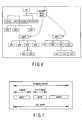
- As shown in FIG. 6, each USIM card has four Elementary Files (EF1, EF2, EF3 and EF4), each of which stores data for establishing a link with a mobile network.
- Each of EF1, EF2, EF3 and EF4 includes an Elementary File International Mobile Subscriber Identity (EF_IMSI).
- As shown in FIG. 7, the EF_IMSI comprises the following three elements: Mobile Country Code (MCC), Mobile Network Code (MNC) and Mobile Subscriber Identification Number (MSIN). The MCC has three digits and indicates a country code of a mobile communication network to which the subscriber belongs (i.e., the subscriber's home country). The MNC has two or three digits and indicates a network code of a mobile communication network to which the subscriber belongs (i.e., the subscriber's home network). The MSIN indicates a unique number (e.g., the telephone number) identifying the mobile device in the mobile communication network to which the subscriber belongs.
- Calls made to or from a network other than the subscriber's home network, but within the same country, are referred to as domestic roaming calls. Calls made to or from a country other than the subscriber's home country are referred to as international roaming calls. Subscribers typically must pay a surcharge for domestic and international roaming calls. When a subscriber is roaming (domestic or international), the subscriber's phone typically registers with the local network in which it is presently located. In this manner, the subscriber may continue to receive calls without any change noticeable to other subscribers (i.e., the subscriber still receives calls using the same telephone number). As a result, callers may not realize that the subscriber they are calling is actually in a network other than her home network, or a country other than her home country.
- As shown in FIG. 8, for example, a subscriber B has a USIM card whose MCC is Japanese country code "81" and the MNC indicates a
mobile network 40 as the network to which the subscriber B belongs and MSIN indicates "090.0123.4567" as a telephone number. - When subscriber A calls subscriber B, subscriber A must input the telephone number "81+090.0123.4567." At first, subscriber A accesses
mobile network 40 over anetwork 44 in Japan (local call 1).Mobile network 40 recognizes that subscriber B is located in Korea and that Korea is a roaming country because subscriber B registered its location in Korea tomobile network 40. After recognizing that subscriber B is in Korea,mobile network 40 accessesmobile network 42 in Korea to call subscriber B (international roaming call). The accessedmobile network 42 calls subscriber B (local call 2). - In presently known IMT2000 systems, international roaming call charges are paid by the called party. For the reasons stated above, the subscriber typically will continue to receive calls using the same telephone number. The subscriber may not want to answer each telephone call (or any telephone calls) while roaming; because each answered telephone call results in additional roaming charges (i.e., international roaming call and local call 2). However, there is presently no method or apparatus that can automatically block or otherwise redirect incoming international roaming calls. Thus, the subscriber must answer the phone each time it rings, and incur roaming charges, before she can decide whether she should have taken the call. This often results in the subscriber paying roaming charges for calls that she otherwise would not have taken, for example, inadvertent calls, wrong numbers dialed, or unnecessary or frivolous calls.
- In some known systems, the subscriber has the benefit of a caller ID that is displayed on the mobile communication apparatus, and can decide whether to take a call based on the caller ID information. However, the mobile communication apparatus will still ring for every call. The subscriber may turn off the sound on the mobile phone, but then she may miss an important call that she actually wants to receive.
- Thus, it would be advancement in the art to provide a mobile communication apparatus that, upon detecting an incoming international roam call, selectively automatically ignores or accepts the call based on predefined criteria, without requiring a user to make a decision regarding each call. It would be a further advancement in the art to make such a decision based on various criteria set by a user, including caller ID and date/time information.
- According to the various embodiments, a mobile communication apparatus can set in advance an operation to perform when the apparatus receives an international roaming incoming call. The apparatus may determine the operation based on the information stored in an IC unit and further based on broadcasted information from the mobile network. Using this information, the mobile communication apparatus can automatically choose to ignore international roam calls, to forward them to a network voice mail service, to answer the call using a phone's local voice mail service, to play a prerecorded message informing the caller that the phone is not accepting international roam calls, or any other action appropriate to handle international roam calls. By automatically analyzing and responding to incoming international roam calls, and optionally presenting caller ID information to a user, the user is not forced to answer the phone each time it rings before learning that the call is an unwanted international roam call, thus saving unnecessary international roam fees.
- In order to achieve the above object, the invention provides a mobile communication apparatus comprising: a comparing module that compares a first information stored in a storage unit with a second information received from a mobile network; a setting module that sets an operation to be performed by the apparatus when an incoming call is received based on operation decision data stored in memory, wherein the operation decision data comprises decision information based at least on the first and second information.
- This invention also provides a method for handling incoming telephone calls by a mobile communications apparatus, comprising the steps of: reading a first information from a storage unit; receiving a second information from a mobile network with which the apparatus is presently communicating; and selectively handling incoming telephone calls based at least on values of the first and second information.
- This summary of the invention does not necessarily describe all necessary features so that the invention may also be a sub-combination of these described features.
- The invention can be more fully understood from the following detailed description when taken in conjunction with the accompanying drawings, in which:
- FIG. 1 illustrates a configuration of a mobile communication apparatus according to an embodiment of the present invention.
- FIG. 2 illustrates data stored in a table that may be used to determine an operation to perform while internationally roaming, based on MCC and MNC information in EF_IMSI and broadcasted MCC and MNC information, according to an embodiment of the invention.
- FIG. 3 illustrates data stored in a table that may be used to determine an operation to perform while internationally roaming, based on MCC information in EF_IMSI and broadcasted MCC information, according to an embodiment of the invention.
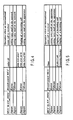
- FIG. 4 illustrates data stored in a table that may be used to determine an operation to perform while internationally roaming, based on an incoming caller's ID, according to an embodiment of the invention.
- FIG. 5 illustrates data stored in a table that may be used to determine an operation to perform while internationally roaming, based on a date and/or time when a mobile apparatus receives an incoming call, according to an embodiment of the invention.
- FIG. 6 illustrates a configuration of files in a USIM card, according to an embodiment of the invention
- FIG. 7 illustrates a configuration of EF_IMSI according to an embodiment of the invention.
- FIG. 8 illustrates data flow during an international roaming call according to an embodiment of the invention.
-
- Hereafter, an illustrative embodiment of the present invention will be described with reference to the drawings.
- FIG. 1 illustrates a configuration of a
mobile communication apparatus 99, such as a cellular or mobile telephone, according to an embodiment of the present invention. Mobile communication apparatus may alternatively be any mobile or portable device configured capabilities, such as a personal digital assistant, notebook or portable computer, and the like. In addition, any communications device with a data communications or USIM card could alternatively be used. For illustrative purposes only, a mobile communication apparatus is described with reference to a cellular phone. -
Cellular phone 99 may include acontroller 1000, a hardware controller (HWC) 105, a radio frequency (RF)transceiver 106 and amemory 107.Controller 1000 may comprise a USIMcontroller 101, anetwork controller 102, a comparingunit 103 and asetting unit 104. It should be appreciated by one of skill in the art that one or more of the cellular phone's components may be performed by hardware circuits, software routines stored in memory and executed by an on-board processor, or any combination of the two. -
Cellular phone 99 can attach and detachUSIM card 100.USIM card 100 stores data field EF_IMSI, illustrated in FIG. 7. EF_IMSI may comprise the three elements Mobile Country Code (MCC), Mobile Network Code (MNC) and Mobile Subscriber Identification Number (MSIN). - The MCC typically has three digits and indicates a home country code of the mobile network to which the subscriber belongs. The MNC typically has two or three digits and indicates a mobile network code to which the subscriber belongs. The MSIN indicates a unique number identifying the cellular phone (e.g., a telephone number) in the mobile network to which the cellular phone belongs. The
UISM card controller 101 reads the elements in EF_IMSI. - A mobile network in which a cellular phone is presently registered ("registered network") broadcasts data over a specified radio channel. One piece of this broadcasted data is referred to as the master information block, and includes the registered network's MCC and MNC, which may or may not be the same as the stored MCC and MNC information in EF_IMSI.
- The broadcasted MCC indicates the country in which the registered network is located. The broadcasted MNC indicates the registered network's unique identification in that country. The master information block is received by
RF transceiver 106 and sent tonetwork controller 102 throughHWC 105. Thenetwork controller 102 detects the MCC and MNC information from the master information block. - The comparing
unit 103 compares the MCC value stored in theUSIM card 100 with the MCC value retrieved from the master information block broadcasted by the mobile network in which thecellular phone 99 is presently registered. The comparingunit 103 also compares the MNC value stored in theUSIM card 100 with the MNC value retrieved from the master information block broadcasted by the mobile network in which thecellular phone 99 is presently registered. - The
setting unit 104 sets an operation of thecellular phone 99 to be performed while thecellular phone 99 is roaming internationally, based on the results of the comparing unit 103 (i.e., on whether the cellular phone is presently in its home network and/or country), by looking up the correct operation in a table stored inmemory 107. The table is referred to herein as the operation decision table. The operation to be performed by the cellular phone when an international roaming call is received may be stored in advance in the operation decision table by the phone's manufacturer or software designer. Alternatively, a user of thecellular phone 99 can manually determine and store the desired operation(s) in the operation decision table inmemory 107. - FIG. 2 illustrates an operation decision table that may be used when the
setting unit 104 determines the operation based on the home network's MCC and MNC in combination with the registered network's MCC and MNC. - For example, when the MCC in EF_IMSI indicates "Japan", the MNC in EF_IMSI indicates "A network", the MCC in the broadcasted information from the registered mobile network indicates "Korea" and the MNC in the broadcasted information from the registered mobile network indicates "B network", the
setting unit 104 may set the operation of thecellular phone 99 to display the message "international roaming" on the phone's display. - In this manner, by watching the display, the user of the
cellular phone 99 is reminded that she is roaming internationally, and can select either to answer the incoming call (and pay for the international roaming charge) or to turn off the power source to stop the phone from receiving any further incoming calls. The set operation can include displaying the caller ID (Identification Number) of the caller so that the user of the cellular phone can make the decision whether to answer the phone on a call-by-call basis. - In another example, when the MCC in EF_IMSI indicates "Japan", the MNC in EF_IMSI indicates "C network", the MCC in the broadcasted information from the registered mobile network indicates "Taiwan" and the MNC in the broadcasted information from the registered mobile network indicates "D network", the
setting unit 104 may set the operation that the cellular phone records an incoming voice. That is, in the mobile network model that supports voice mail services at both the device and network levels, settingunit 104 enables the cellular phone's voice mail service. - The set operation can also optionally include displaying a message on the display, such as "local voice mail." The message indicates to the user that the
cellular phone 99 is set to record an incoming voice using the phone's voice mail service. - In a third example, when the MCC in EF_IMSI indicates "Germany", the MNC in EF_IMSI indicates "E network", the MCC in the broadcasted information from the registered mobile network indicates "Hong Kong" and the MNC in the broadcasted information from the registered mobile network indicates "F network", the
setting unit 104 may set the operation of the cellular phone to automatically send all incoming international roaming calls to the home or registered network's voice mail service. - The set operation can again optionally include displaying a message on the display, such as "network voice mail." The message may indicate to the user that the
cellular phone 99 is set to forward international roaming calls to a voice mail service in a mobile network. - In the above examples, the operation is determined based on the home network's MCC and MNC in combination with the registered network's MCC and MNC. However, with reference to sample data illustrated in FIG. 3, in another embodiment of the invention the operation may be determined based on the first MCC in combination with the second MCC.
- For example, when the home network's MCC in EF_IMSI indicates "Japan" and the registered network's MCC in the broadcasted information indicates "Korea", the
setting unit 104 may set the operation of thecellular phone 99 to display the message "international roaming" on the phone's display. In this embodiment, MNC information is ignored. - In another example, when the MCC in EF_IMSI indicates "Germany" and the MCC in the registered network's broadcasted information indicates "Hong Kong", the
setting unit 104 may set the operation of the cellular phone to automatically send international roam calls to a voice mail service in the home or registered network. - The set operation, as above, may optionally include displaying a message on the display indicating that the cellular phone is set to automatically send international roam calls to a voice mail service in the network.
- In another embodiment of the invention, with reference to sample data illustrated in FIG. 4, the
setting unit 104 may determine the operation based on the home network's MCC, the registered network's MCC, and a caller ID associated with a calling party. - For example, when the MCC in EF_IMSI indicates "Japan", the MCC in the registered network's broadcasted information indicates "Korea", and the caller ID indicates "090.123.4567" or "090.234.5678", the
setting unit 104 may set the operation of thecellular phone 99 to ring as a normal incoming call. This operation means that thecellular phone 99 accepts the incoming call. - When the MCC in EF_IMSI indicates "Japan", the MCC in the registered network's broadcasted information indicates "Korea", and the caller ID does not indicate either "090.123.4567" or "090.234.5678", the
setting unit 104 sets the operation of the cellular phone to automatically forward the call to a voice mail service in the home or registered network. - When the MCC in EF_IMSI indicates "Japan", the MCC in the registered network's broadcasted information indicates "Taiwan", and the caller ID indicates "090.345.6789", the
setting unit 104 may set the cellular phone's operation to record an incoming voice using the phone's local voice mail. - When the MCC in EF_IMSI indicates "Japan", the MCC in the registered network's broadcasted information indicates "Korea", and the caller ID does not indicate "090.345.6789", the
setting unit 104 may set the cellular phone's operation to forward the call to a voice mail service in the home or registered network. - In another embodiment of the invention, with reference to sample data illustrated in FIG. 5, the operation can be based on the home network's MCC, the registered network's MCC, and the time and/or the day when the
cellular phone 99 receives an incoming call. - For example, when the MCC in EF_IMSI indicates "Japan", the MCC in the registered network's broadcasted information indicates "Korea" and the time when the
cellular phone 99 receives an incoming call is in the range 08:00 - 17:00, thesetting unit 104 may set the cellular phone's operation to ring as a normal incoming call. - When the MCC in EF_IMSI indicates "Japan", the MCC in the registered network's broadcasted information indicates "Korea" and the time when the
cellular phone 99 receives an incoming call is not in the range 08:00 - 17:00, thesetting unit 104 may set the phone's operation to forward the call to a voice mail service in the home or registered network. - When the MCC in EF_IMSI indicates "Japan", the MCC in the registered network's broadcasted information indicates "Taiwan" and the day when the
cellular phone 99 receives an incoming call is Saturday or Sunday, thesetting unit 104 may set the phone's operation to ring as a normal incoming call. - When the MCC in EF_IMSI indicates "Japan", the MCC in the registered network's broadcasted information indicates "Korea" and the day when the
cellular phone 99 receives an incoming call is not Saturday or Sunday, thesetting unit 104 may set the phone's operation to forward the call to a voice mail service in the home or registered network. - The variables on which the operational decision are based may be set by the user of the cellular phone, or may be preset at a factory or according to some predefined criteria. In addition, the values of the variables may be set by the user or may also be predetermined. That is, the user can decide whether the international roaming operation decision should be based on MCC information, MNC information, date, time, caller ID, or any combination thereof, and also which operation should be performed when the user-defined conditions are met.
- Other operations may also be used in addition to those operations described above. For instance, the operation also can be that the
cellular phone 99 does not receive an incoming call. That is, the cellular phone does not ring to alert the user to answer the phone, so that the user will not be forced to pay international roaming charges. - While the present invention has been particularly shown and described with reference to the preferred embodiment thereof, it will be understood by those skilled in the art that the foregoing and other changes in form and details can be made therein without departing from the spirit and scope of the present invention.
Claims (25)
- A mobile communication apparatus (99) characterized by comprising:a comparing module (103) that compares a first information stored in a storage unit (100) with a second information received from a mobile network;a setting module (104) that sets an operation to be performed by the apparatus (99) when an incoming call is received based on operation decision data stored in memory, wherein the operation decision data comprises decision information based at least on the first and second information.
- The apparatus of claim 1, characterized in that the first and second information comprise a country code.
- The apparatus of claim 1, characterized in that the storage unit (100) comprises a removably connected integrated circuit (100).
- The apparatus of claim 1, characterized in that the decision information is further based on a date that the incoming call is received.
- The apparatus of claim 1, characterized in that the decision information is further based on a time when the incoming call is received.
- The apparatus of claim 1, characterized in that the decision information is further based on information corresponding to the caller.
- The apparatus of claim 1, characterized in that the decision information is further based on a first network code stored in the storage unit (100) and a second network code retrieved from the mobile network.
- The apparatus of claim 2, characterized in that the first information indicates a country where a user of the apparatus (99) contracts with a home mobile network.
- The apparatus of claim 1, characterized in that the decision information instructs the setting module (104) to perform a first operation when the first information comprises a first predetermined value and the second information comprises a second predetermined value, and to perform a second operation when the first information comprises the first predetermined value and the second information comprises a third predetermined value.
- The apparatus of claim 9, characterized in that the first and second operations each comprise different operations from the set of accepting the incoming call, ignoring the call, forwarding the incoming call to a voice mail service, and recording a voice on the apparatus.
- The apparatus of claim 1, characterized in that the setting module (104) further causes a message to be displayed on a display of the apparatus (99), said message indicating a default operation to be performed when an incoming call is received.
- A method for handling incoming telephone calls by a mobile communications apparatus (99), comprising the steps of:(a) reading a first information from a storage unit (100);(b) receiving a second information from a mobile network with which the apparatus (99) is presently communicating; and(c) selectively handling incoming telephone calls based at least on values of the first and second information.
- The method of claim 12, characterized in that the first and second information comprise a country code.
- The method of claim 12, characterized in that step (a) comprises reading the first information from an integrated circuit (100) removably connected to the apparatus (99).
- The method of claim 12, characterized in that in step (c) the selective handling is further based on a date of each incoming telephone call.
- The method of claim 12, characterized in that in step (c) the selective handling is further based on a time of each incoming telephone call.
- The method of claim 12, characterized in that in step (c) the selective handling is further based on information corresponding to a caller.
- The method of claim 12, characterized in that in step (c) the selective handling is further based on a first network code stored in the storage unit (100) and on a second network code received from the mobile network.
- The method of claim 13, characterized in that the first information indicates a country where a user of the apparatus (99) contracts with a home mobile network.
- The method of claim 12, characterized in that step (c) comprises performing a first response to a first incoming telephone call when the first information comprises a first value and the second information comprises a second value, and performing a second response to a second incoming telephone call when the first information comprises the first value and the second information comprises a third value.
- The method of claim 12, characterized in that step (c) comprises performing, for each incoming telephone call, an action from the set of accepting the call, ignoring the call, forwarding the call to a voice mail service, and recording a voice on the apparatus (99),
wherein the action performed is based at least on the values of the first and second information. - The method of claim 12, characterized by further comprising the step of:(d) displaying on a display screen an indication corresponding to a default action to be performed for incoming telephone calls.
- A method for selectively handling incoming telephone calls by a mobile apparatus (99), comprising the steps of:wherein the predetermined criteria is based at least in part on a comparison of a variable received through a network with which the mobile apparatus (99) is registered with a variable read from a storage unit (100) on the mobile apparatus (99).(a) receiving information corresponding to an international roam call; and(b) when the information meets predetermined criteria, accepting the call; otherwise, rejecting the call;
- A method for selectively handling international telephone calls by a mobile apparatus (99) comprising steps of;(a) reading a first country code from a storage unit (100) of the mobile apparatus (99);(b) reading a first network code form a storage unit (100) of the mobile apparatus (99);(c) receiving a second country code from a mobile network with which the mobile apparatus (99) is registered;(d) receiving a second network code from a mobile network;(e) based on a comparison of first and second country code, and further on a comparison of first and second network code, handling the incoming call by performing one of:i. forwarding the call to a network voice mail service;ii. accepting the call;iii. ignoring the call; andiv. answering the call using a local voice mail service.
- A computer readable medium storing computer readable instructions that, when executed, performs the steps of;selectively handling incoming telephone calls based at least on values of the first and second country codes.(a) reading a first country code stored in a storage unit (100) ;(b) receiving a second country code from a mobile network with which a mobile communication apparatus (99) is presently communicating; and
Applications Claiming Priority (2)
| Application Number | Priority Date | Filing Date | Title |
|---|---|---|---|
| JP2001060697A JP3394952B2 (en) | 2001-03-05 | 2001-03-05 | Communication device |
| JP2001060697 | 2001-03-05 |
Publications (2)
| Publication Number | Publication Date |
|---|---|
| EP1239690A1 true EP1239690A1 (en) | 2002-09-11 |
| EP1239690B1 EP1239690B1 (en) | 2005-05-18 |
Family
ID=18920083
Family Applications (1)
| Application Number | Title | Priority Date | Filing Date |
|---|---|---|---|
| EP02004362A Expired - Lifetime EP1239690B1 (en) | 2001-03-05 | 2002-03-04 | Mobile communication apparatus and corresponding method for handling incoming telephone calls |
Country Status (4)
| Country | Link |
|---|---|
| US (1) | US7209735B2 (en) |
| EP (1) | EP1239690B1 (en) |
| JP (1) | JP3394952B2 (en) |
| DE (1) | DE60204182T2 (en) |
Cited By (8)
| Publication number | Priority date | Publication date | Assignee | Title |
|---|---|---|---|---|
| WO2003045097A1 (en) * | 2001-11-23 | 2003-05-30 | Sonera Oyj | Formation of a user id |
| WO2004105267A3 (en) * | 2003-05-19 | 2005-05-26 | Qualcomm Inc | Network operator identification for cdma communication networks |
| WO2006018854A1 (en) * | 2004-08-18 | 2006-02-23 | Hari Das Gupta | International calling system and method |
| WO2006067449A1 (en) * | 2004-12-22 | 2006-06-29 | Symbian Software Limited | Method and device for a time zone based call handling system |
| CN1301031C (en) * | 2004-03-09 | 2007-02-14 | 乐金电子(中国)研究开发中心有限公司 | Method of processing voice telephone of mobile communication terminal machine |
| WO2007141607A3 (en) * | 2006-06-08 | 2008-03-20 | Ciaran Bradley | Methods and apparatus for a sim-based firewall |
| GB2454651A (en) * | 2007-10-31 | 2009-05-20 | Symbian Software Ltd | Communication device which calculates the present time at an intended call recipient's location |
| US9185642B2 (en) | 2011-09-22 | 2015-11-10 | Nec Corporation | Portable telephone, communication connection control method, and program |
Families Citing this family (26)
| Publication number | Priority date | Publication date | Assignee | Title |
|---|---|---|---|---|
| US20040224727A1 (en) * | 2003-05-09 | 2004-11-11 | Benco David S. | International call indicator |
| JP2004349802A (en) * | 2003-05-20 | 2004-12-09 | Sharp Corp | IP telephone equipment |
| JP4158032B2 (en) * | 2003-09-08 | 2008-10-01 | 日本電気株式会社 | Synchronizing method of cellular phone and intermittent reception with processing that needs to be performed periodically |
| FR2863425B1 (en) * | 2003-12-04 | 2006-02-10 | Gemplus Card Int | METHOD AND SYSTEM FOR AUTOMATIC DEVICE CONFIGURATION IN A COMMUNICATION NETWORK |
| US6968214B2 (en) | 2004-02-25 | 2005-11-22 | Research In Motion Limited | Phone number replace code system and method |
| US7324813B2 (en) * | 2004-03-05 | 2008-01-29 | At&T Mobility Ii Llc | Method and system for controlling the operation of movable wireless networks |
| TWI236270B (en) * | 2004-04-27 | 2005-07-11 | Benq Corp | Method for managing a mobile phone according to broadcast area code |
| US20060077943A1 (en) * | 2004-10-12 | 2006-04-13 | Mino Holdings, Inc. C/O M&C Corporate Services Limited | Method and system for processing international calls using a voice over IP process |
| US7693271B2 (en) * | 2004-11-29 | 2010-04-06 | Dialogic Corporation | Method and apparatus for handling an incoming call to avoid a conflict with an earlier call |
| TWI252645B (en) * | 2004-12-30 | 2006-04-01 | Inventec Appliances Corp | Method for automatically restoring the communication settings for mobile device |
| CN100438696C (en) * | 2005-08-15 | 2008-11-26 | 华为技术有限公司 | Method and system for indicating roaming state of called user |
| DE602006016912D1 (en) * | 2006-03-30 | 2010-10-28 | Alcatel Lucent | Optimization of the connection between a mobile communication terminal and a signaling server by an address translation device |
| US7720474B2 (en) * | 2006-04-18 | 2010-05-18 | Alcatel-Lucent Usa Inc. | Method and apparatus for call delivery |
| US20070280441A1 (en) * | 2006-05-03 | 2007-12-06 | Mino Holdings, Inc. | Method And System For Using Advertisement To Sponsor International Mobile Phone Calls For Cellular Telephone Networks |
| US20080020755A1 (en) * | 2006-05-16 | 2008-01-24 | Mino Holdings, Inc. | Method and system for international roaming using virtual sim card |
| US20080182622A1 (en) * | 2007-01-25 | 2008-07-31 | Sierra Wireless, Inc. | Method and Apparatus for Implementing a SIM Card Onboard a PC Card |
| JP4949099B2 (en) * | 2007-03-23 | 2012-06-06 | 株式会社エヌ・ティ・ティ・ドコモ | Communication device and operation confirmation method |
| JP5493315B2 (en) * | 2008-09-05 | 2014-05-14 | 富士通モバイルコミュニケーションズ株式会社 | Mobile device |
| CN101800930B (en) * | 2009-02-11 | 2017-11-14 | 中兴通讯美国公司 | Terminal redirecting method and wireless communication method |
| US8995947B2 (en) * | 2012-07-20 | 2015-03-31 | Google Technology Holdings LLC | Configuration of display settings for broadcast messaging while roaming |
| JP6057678B2 (en) * | 2012-11-16 | 2017-01-11 | 京セラ株式会社 | Mobile terminal device, program, and control method for mobile terminal device |
| CN106304024A (en) * | 2015-06-08 | 2017-01-04 | 中国移动通信集团公司 | Implementation method, device and the SIM that a kind of single deck tape-recorder is many numbers |
| CN106101396B (en) * | 2016-06-02 | 2019-04-30 | 惠州Tcl移动通信有限公司 | A kind of method and system reading Voicemail icon card file |
| CN106210350B (en) * | 2016-08-22 | 2019-10-29 | Tcl移动通信科技(宁波)有限公司 | A kind of method and system updating voice mail icon card file |
| WO2019183917A1 (en) * | 2018-03-30 | 2019-10-03 | Orange | Method for operating a device for handling a phone call |
| US11343373B1 (en) | 2021-01-29 | 2022-05-24 | T-Mobile Usa, Inc. | Machine intelligent isolation of international calling performance degradation |
Citations (4)
| Publication number | Priority date | Publication date | Assignee | Title |
|---|---|---|---|---|
| EP0676884A2 (en) * | 1994-03-11 | 1995-10-11 | AT&T Corp. | Selective screening of incoming calls for cellular telephone systems |
| GB2292285A (en) * | 1994-08-05 | 1996-02-14 | Kokusai Denshin Denwa Co Ltd | International incoming prank phone call rejection method and system |
| WO1998039944A2 (en) * | 1997-03-04 | 1998-09-11 | Nokia Telecommunications Oy | Call control method |
| EP0915631A2 (en) * | 1997-08-22 | 1999-05-12 | Nokia Mobile Phones Ltd. | A method for detecting the home area in a mobile station and a mobile station |
Family Cites Families (11)
| Publication number | Priority date | Publication date | Assignee | Title |
|---|---|---|---|---|
| EP1317153B1 (en) * | 1993-06-15 | 2011-07-27 | Celltrace LLC | Telecommunications system |
| US5815808A (en) * | 1996-02-20 | 1998-09-29 | Ericsson Inc. | Location based screening in a mobile telecommunications system |
| US6181935B1 (en) * | 1996-09-27 | 2001-01-30 | Software.Com, Inc. | Mobility extended telephone application programming interface and method of use |
| US6456706B1 (en) * | 1997-07-18 | 2002-09-24 | Carolyn S. Blood | Automatic telephone silent call screening system |
| GB2333673A (en) * | 1998-01-21 | 1999-07-28 | Nokia Mobile Phones Ltd | Despreading a signal which has been spread by a code and modulated according to a non-linear modulation scheme |
| KR100300629B1 (en) * | 1998-11-07 | 2001-09-07 | 윤종용 | Code division multiple access system System and method for using SIM card in service area |
| JP2000188644A (en) | 1998-12-21 | 2000-07-04 | Canon Inc | Wireless communication device, wireless communication system, wireless communication method, and storage medium |
| US6771953B1 (en) * | 1998-12-31 | 2004-08-03 | At&T Corp. | Wireless centrex call transfer |
| US6334054B1 (en) * | 1999-10-21 | 2001-12-25 | Bellsouth Intellectual Property Corporation | Wireless telephone with improved pager mode |
| US6615036B1 (en) * | 2000-04-04 | 2003-09-02 | Motorola, Inc. | Method and apparatus for storing data within a communication system |
| US6684072B1 (en) * | 2000-08-24 | 2004-01-27 | Level Z, L.L.C. | Global wireless prepaid roaming |
-
2001
- 2001-03-05 JP JP2001060697A patent/JP3394952B2/en not_active Expired - Lifetime
-
2002
- 2002-03-04 US US10/086,867 patent/US7209735B2/en not_active Expired - Lifetime
- 2002-03-04 DE DE60204182T patent/DE60204182T2/en not_active Expired - Lifetime
- 2002-03-04 EP EP02004362A patent/EP1239690B1/en not_active Expired - Lifetime
Patent Citations (4)
| Publication number | Priority date | Publication date | Assignee | Title |
|---|---|---|---|---|
| EP0676884A2 (en) * | 1994-03-11 | 1995-10-11 | AT&T Corp. | Selective screening of incoming calls for cellular telephone systems |
| GB2292285A (en) * | 1994-08-05 | 1996-02-14 | Kokusai Denshin Denwa Co Ltd | International incoming prank phone call rejection method and system |
| WO1998039944A2 (en) * | 1997-03-04 | 1998-09-11 | Nokia Telecommunications Oy | Call control method |
| EP0915631A2 (en) * | 1997-08-22 | 1999-05-12 | Nokia Mobile Phones Ltd. | A method for detecting the home area in a mobile station and a mobile station |
Cited By (11)
| Publication number | Priority date | Publication date | Assignee | Title |
|---|---|---|---|---|
| WO2003045097A1 (en) * | 2001-11-23 | 2003-05-30 | Sonera Oyj | Formation of a user id |
| WO2004105267A3 (en) * | 2003-05-19 | 2005-05-26 | Qualcomm Inc | Network operator identification for cdma communication networks |
| US7542451B2 (en) | 2003-05-19 | 2009-06-02 | Qualcomm Incorporated | Network operator identification for CDMA communication networks |
| KR101012620B1 (en) * | 2003-05-19 | 2011-02-09 | 퀄컴 인코포레이티드 | Network operator identification for CDMA communication network |
| CN1301031C (en) * | 2004-03-09 | 2007-02-14 | 乐金电子(中国)研究开发中心有限公司 | Method of processing voice telephone of mobile communication terminal machine |
| WO2006018854A1 (en) * | 2004-08-18 | 2006-02-23 | Hari Das Gupta | International calling system and method |
| WO2006067449A1 (en) * | 2004-12-22 | 2006-06-29 | Symbian Software Limited | Method and device for a time zone based call handling system |
| WO2007141607A3 (en) * | 2006-06-08 | 2008-03-20 | Ciaran Bradley | Methods and apparatus for a sim-based firewall |
| GB2454651A (en) * | 2007-10-31 | 2009-05-20 | Symbian Software Ltd | Communication device which calculates the present time at an intended call recipient's location |
| US9185642B2 (en) | 2011-09-22 | 2015-11-10 | Nec Corporation | Portable telephone, communication connection control method, and program |
| US9510179B2 (en) | 2011-09-22 | 2016-11-29 | Nec Corporation | Portable telephone, communication connection control method, and program |
Also Published As
| Publication number | Publication date |
|---|---|
| EP1239690B1 (en) | 2005-05-18 |
| JP2002262358A (en) | 2002-09-13 |
| JP3394952B2 (en) | 2003-04-07 |
| US20020123333A1 (en) | 2002-09-05 |
| DE60204182D1 (en) | 2005-06-23 |
| US7209735B2 (en) | 2007-04-24 |
| DE60204182T2 (en) | 2006-02-02 |
Similar Documents
| Publication | Publication Date | Title |
|---|---|---|
| US7209735B2 (en) | Mobile communication apparatus | |
| KR100929090B1 (en) | Wireless-terminal for auto-managing national code and method for storing and searching phone number using the wireless-terminal | |
| US8554219B2 (en) | Method of selecting a network by a mobile apparatus | |
| US20050170854A1 (en) | Network support for multi-line mobile device | |
| WO2006048709A2 (en) | Completion of an international calling number in a mobile communication terminal | |
| US20080167074A1 (en) | Device and Method for Automatically Selecting One of a Set of Sim Card Readers Comprised by a Communications Device for Setting Up an Outgoing Call | |
| EP0932973A1 (en) | Local time manager | |
| US7054665B2 (en) | Billing records enhanced by called party names from subscriber phone book | |
| JP2002368871A (en) | Mobile wireless terminal | |
| KR100651911B1 (en) | Method and system for providing call forwarding information in mobile communication network | |
| JPH06217365A (en) | Call processing method in wireless communication system | |
| CN106535166A (en) | Data service processing method and device | |
| US7062256B2 (en) | Network supported new feature notification and trial | |
| JP2002135848A (en) | Mobile communication terminal | |
| JP2002291043A (en) | Communication terminal and electronic device having communication function | |
| EP1613120B1 (en) | Network support for number dialed identification with multi-line mobiles | |
| US20040052360A1 (en) | Equipment and method for automatically screening and filtering disturbance for the incoming phone call | |
| US20050239452A1 (en) | Method for managing a mobile phone according to broadcast area code | |
| WO2005013593A1 (en) | Procedure and system for processing identification numbers in telecommunication networks | |
| JP2003018282A (en) | Mobile wireless terminal | |
| KR100424467B1 (en) | Roaming service indication method in mobile phone and mobile phone thereof | |
| JP2005159799A (en) | Mobile device | |
| KR20070076695A (en) | How to display roaming service fee information on mobile terminal | |
| KR20040103258A (en) | Method for multi-national call forwading service of mobile communication system | |
| KR20050011253A (en) | Apparatus and method for receiving and sending call with embedded subscriber information modules |
Legal Events
| Date | Code | Title | Description |
|---|---|---|---|
| PUAI | Public reference made under article 153(3) epc to a published international application that has entered the european phase |
Free format text: ORIGINAL CODE: 0009012 |
|
| 17P | Request for examination filed |
Effective date: 20020304 |
|
| AK | Designated contracting states |
Kind code of ref document: A1 Designated state(s): AT BE CH CY DE DK ES FI FR GB GR IE IT LI LU MC NL PT SE TR |
|
| AX | Request for extension of the european patent |
Free format text: AL;LT;LV;MK;RO;SI |
|
| 17Q | First examination report despatched |
Effective date: 20030203 |
|
| AKX | Designation fees paid |
Designated state(s): DE FR GB |
|
| GRAP | Despatch of communication of intention to grant a patent |
Free format text: ORIGINAL CODE: EPIDOSNIGR1 |
|
| GRAS | Grant fee paid |
Free format text: ORIGINAL CODE: EPIDOSNIGR3 |
|
| GRAA | (expected) grant |
Free format text: ORIGINAL CODE: 0009210 |
|
| AK | Designated contracting states |
Kind code of ref document: B1 Designated state(s): DE FR GB |
|
| REG | Reference to a national code |
Ref country code: GB Ref legal event code: FG4D |
|
| REG | Reference to a national code |
Ref country code: IE Ref legal event code: FG4D |
|
| REF | Corresponds to: |
Ref document number: 60204182 Country of ref document: DE Date of ref document: 20050623 Kind code of ref document: P |
|
| ET | Fr: translation filed | ||
| PLBE | No opposition filed within time limit |
Free format text: ORIGINAL CODE: 0009261 |
|
| STAA | Information on the status of an ep patent application or granted ep patent |
Free format text: STATUS: NO OPPOSITION FILED WITHIN TIME LIMIT |
|
| 26N | No opposition filed |
Effective date: 20060221 |
|
| REG | Reference to a national code |
Ref country code: GB Ref legal event code: 732E Free format text: REGISTERED BETWEEN 20110224 AND 20110302 |
|
| REG | Reference to a national code |
Ref country code: FR Ref legal event code: TP |
|
| REG | Reference to a national code |
Ref country code: DE Ref legal event code: R082 Ref document number: 60204182 Country of ref document: DE Representative=s name: HOFFMANN - EITLE, DE |
|
| REG | Reference to a national code |
Ref country code: DE Ref legal event code: R081 Ref document number: 60204182 Country of ref document: DE Owner name: FUJITSU MOBILE COMMUNICATIONS LTD., JP Free format text: FORMER OWNER: KABUSHIKI KAISHA TOSHIBA, TOKYO, JP Effective date: 20111213 Ref country code: DE Ref legal event code: R082 Ref document number: 60204182 Country of ref document: DE Representative=s name: HOFFMANN - EITLE, DE Effective date: 20111213 Ref country code: DE Ref legal event code: R082 Ref document number: 60204182 Country of ref document: DE Representative=s name: HOFFMANN - EITLE PATENT- UND RECHTSANWAELTE PA, DE Effective date: 20111213 Ref country code: DE Ref legal event code: R081 Ref document number: 60204182 Country of ref document: DE Owner name: GODO KAISHA IP BRIDGE 1, JP Free format text: FORMER OWNER: KABUSHIKI KAISHA TOSHIBA, TOKYO, JP Effective date: 20111213 |
|
| REG | Reference to a national code |
Ref country code: DE Ref legal event code: R082 Ref document number: 60204182 Country of ref document: DE Representative=s name: HOFFMANN - EITLE, DE |
|
| REG | Reference to a national code |
Ref country code: FR Ref legal event code: CD Owner name: FUJITSU TOSHIBA MOBILE COMMUNICATIONS LIMITED, JP Effective date: 20130128 |
|
| REG | Reference to a national code |
Ref country code: DE Ref legal event code: R082 Ref document number: 60204182 Country of ref document: DE Representative=s name: HOFFMANN - EITLE, DE Effective date: 20130123 Ref country code: DE Ref legal event code: R081 Ref document number: 60204182 Country of ref document: DE Owner name: FUJITSU MOBILE COMMUNICATIONS LTD., JP Free format text: FORMER OWNER: FUJITSU TOSHIBA MOBILE COMMUNICATIONS LTD., KAWASAKI-SHI, JP Effective date: 20130123 Ref country code: DE Ref legal event code: R081 Ref document number: 60204182 Country of ref document: DE Owner name: FUJITSU MOBILE COMMUNICATIONS LTD., JP Free format text: FORMER OWNER: FUJITSU TOSHIBA MOBILE COMMUNICATIONS LTD., KAWASAKI-SHI, KANAGAWA, JP Effective date: 20130123 Ref country code: DE Ref legal event code: R082 Ref document number: 60204182 Country of ref document: DE Representative=s name: HOFFMANN - EITLE PATENT- UND RECHTSANWAELTE PA, DE Effective date: 20130123 Ref country code: DE Ref legal event code: R081 Ref document number: 60204182 Country of ref document: DE Owner name: GODO KAISHA IP BRIDGE 1, JP Free format text: FORMER OWNER: FUJITSU TOSHIBA MOBILE COMMUNICATIONS LTD., KAWASAKI-SHI, KANAGAWA, JP Effective date: 20130123 |
|
| REG | Reference to a national code |
Ref country code: FR Ref legal event code: PLFP Year of fee payment: 14 |
|
| REG | Reference to a national code |
Ref country code: GB Ref legal event code: 732E Free format text: REGISTERED BETWEEN 20150730 AND 20150805 |
|
| REG | Reference to a national code |
Ref country code: DE Ref legal event code: R081 Ref document number: 60204182 Country of ref document: DE Owner name: GODO KAISHA IP BRIDGE 1, JP Free format text: FORMER OWNER: FUJITSU MOBILE COMMUNICATIONS LTD., KAWASAKI-SHI, JP Ref country code: DE Ref legal event code: R082 Ref document number: 60204182 Country of ref document: DE Representative=s name: HOFFMANN - EITLE PATENT- UND RECHTSANWAELTE PA, DE |
|
| REG | Reference to a national code |
Ref country code: FR Ref legal event code: PLFP Year of fee payment: 15 |
|
| REG | Reference to a national code |
Ref country code: FR Ref legal event code: CD Owner name: GODO KAISHA IP BRIDGE 1, JP Effective date: 20160113 |
|
| REG | Reference to a national code |
Ref country code: FR Ref legal event code: TP Owner name: GODO KAISHA IP BRIDGE 1, JP Effective date: 20160114 |
|
| REG | Reference to a national code |
Ref country code: FR Ref legal event code: PLFP Year of fee payment: 16 |
|
| REG | Reference to a national code |
Ref country code: FR Ref legal event code: PLFP Year of fee payment: 17 |
|
| PGFP | Annual fee paid to national office [announced via postgrant information from national office to epo] |
Ref country code: FR Payment date: 20210323 Year of fee payment: 20 |
|
| PGFP | Annual fee paid to national office [announced via postgrant information from national office to epo] |
Ref country code: GB Payment date: 20210324 Year of fee payment: 20 Ref country code: DE Payment date: 20210319 Year of fee payment: 20 |
|
| REG | Reference to a national code |
Ref country code: DE Ref legal event code: R071 Ref document number: 60204182 Country of ref document: DE |
|
| REG | Reference to a national code |
Ref country code: GB Ref legal event code: PE20 Expiry date: 20220303 |
|
| PG25 | Lapsed in a contracting state [announced via postgrant information from national office to epo] |
Ref country code: GB Free format text: LAPSE BECAUSE OF EXPIRATION OF PROTECTION Effective date: 20220303 |