EP1239394A2 - Assistance au choix d'un produit dans un catalogue électronique de produits - Google Patents
Assistance au choix d'un produit dans un catalogue électronique de produits Download PDFInfo
- Publication number
- EP1239394A2 EP1239394A2 EP02290343A EP02290343A EP1239394A2 EP 1239394 A2 EP1239394 A2 EP 1239394A2 EP 02290343 A EP02290343 A EP 02290343A EP 02290343 A EP02290343 A EP 02290343A EP 1239394 A2 EP1239394 A2 EP 1239394A2
- Authority
- EP
- European Patent Office
- Prior art keywords
- product
- products
- category
- order
- categories
- Prior art date
- Legal status (The legal status is an assumption and is not a legal conclusion. Google has not performed a legal analysis and makes no representation as to the accuracy of the status listed.)
- Withdrawn
Links
Images




Classifications
-
- G—PHYSICS
- G06—COMPUTING OR CALCULATING; COUNTING
- G06Q—INFORMATION AND COMMUNICATION TECHNOLOGY [ICT] SPECIALLY ADAPTED FOR ADMINISTRATIVE, COMMERCIAL, FINANCIAL, MANAGERIAL OR SUPERVISORY PURPOSES; SYSTEMS OR METHODS SPECIALLY ADAPTED FOR ADMINISTRATIVE, COMMERCIAL, FINANCIAL, MANAGERIAL OR SUPERVISORY PURPOSES, NOT OTHERWISE PROVIDED FOR
- G06Q30/00—Commerce
- G06Q30/02—Marketing; Price estimation or determination; Fundraising
Definitions
- the present invention relates to a method for assist a user to choose a product from a electronic catalog of products from a terminal consultation in a processing system interactive data.
- a "product” within the meaning of the invention is a article, object, good or service offered or marketed by a company.
- a first process initially used for service directories such as directories professional telephone calls, defined category or theme tree in order to target the choice. For example, looking for a product such as a computer is made in choosing the category "computers” then the category "desktops", then a category corresponding to the desired brand of computers from office, then a category corresponding to microprocessor available in computers from office of the desired brand, etc. The user obtains thus a dozen proposals among which there makes its choice.
- the order of choices is, in particular, imposed on the user.
- the user To get a computer costing less than an amount predetermined, the user must consult the entire catalog of a brand, then select a microprocessor before getting proposals for prices, which can be too expensive. More generally, the products of a final category are all similar, in this case have the same brand and same microprocessor. Through therefore the user does not want to compare the different product offers displayed on the screen from his terminal.
- a second process categorizes the products according to types of profiles of the type of users.
- the user chooses the category corresponding to his profile. For example to choose a mobile radiotelephone, a user identifies his profile as a "young dynamic framework" corresponding to a intensive professional use, or as a "father of family "wishing to be called at any time by their family, or as an average user, etc.
- a number of products from studies by market have been preselected to meet the needs of a category of users In fact, this second method is to resume a categorization or creating it.
- the second process reduces the disadvantage of first process, by introducing categories more suited to the needs of the user and grouping significantly different products. Through however, the second method does not help the user to understand the different offers their advantages and their weaknesses. As we will see below, this disadvantage is common to the four methods according to the prior art.
- a third process invites the user to complete a form expressing their needs or preferences. Products are ordered based on responses of the user. This third process can consist simply by searching for products in a database data, for example by selecting all computers costing less than an amount determined.
- the third process requires knowing precisely the product you want. It helps to determine a product but does not help to choose between products.
- the third process requires the prior creation of forms adapted to the types of products considered and a process analyzing user responses to order the products.
- This third method is therefore relatively complex since, moreover, the combination of user preferences and their interpretation is not simple. For example, the cost and power of a high-fidelity chain are relevant characteristics for many users, and the compromise between these two characteristics is specific to each user. A user may prefer a 50 W to 150 chain and another user a 60 W to 170 chain . Determining the relative importance to be given to the two preferences from a form is therefore a complex problem to solve. Once a compromise has been chosen, the offers selected may all look the same.
- a fourth process represents products and user preferences by weighted vectors and performs correspondences between these vectors.
- Weighted vectors are generally based on keywords representative of each product or each preference to which weights are assigned. Determining weights is a delicate problem.
- the fourth process requires capturing beforehand the precise personal information on user preferences. This fourth process results in the selection of a product catalog more or less corresponding to preferences, but does not explains this selection and associates it the user. In addition, this process, like the previous one, is focused on one type of possibility and doesn't not offer several possibilities actually different.
- the present invention aims to provide a assistance in choosing one of several products, not offering the disadvantages of the processes previous ones, defining iteratively and dynamically product categories, without user intervention, as and when chosen product category and choice of criteria products.
- a "product” is the coded digital representation of a product or a service marketed by a company, which coded digital representation is recorded in the server medium.
- the categorization according to the process of the invention is based on preferences expressed by a user and on product attributes predetermined.
- the user thus participates in the categorization and has the possibility of modifying or enriching its preferences at any time, especially when categories seem to him equivalent.
- the invention advantageously makes explicit the different product offers presented to the user by giving a playful aspect to the consultation.
- the invention is not to fill a long questionnaire, and requires the user to trust establishing categories and determination of representatives of these categories whenever he has to choose between different category representatives.
- the step of decompose by the server means a set of products in a predetermined number of categories involves a determination of early products like pivots in the product set, an assessment of similarity parameters between each product of the assembly and the pivots to determine the pivot most similar to each product and store said each product in the category associated with most similar pivot, and a determination of the barycenter in each category in order to deduce the most similar product of the barycenter as category representative, and reiterate evaluation of parameters and determination of barycenter as long as the representatives considered as category pivots do not converge to a near predetermined uncertainty.
- the parameter of similarity between each product and a pivot can be the Euclidean distance depending on the attributes of them.
- the step of decompose by the server means a set of products in a predetermined number of categories involves a determination of early products like pivots in the product set, a determination of the vicinity of each pivot in relation to couples of at least part of the set of products, determining the neighborhood of each product other than pivots compared to couples of at least part of the set of products, an assessment of similarities between each product of the set and the pivots in order to determine the pivot most similar to each audit product and store said each product in the category associated with the most similar pivot, and a determination of the neighborhood of each product in each category in order to deduce the product having the largest neighborhood in each category as that representative of the category, and reiterate the determination of the neighborhood of each pivot as that representative, determining the neighborhood of each product, the assessment of similarities and the determination of the largest of the neighborhoods in each category, as long as the representatives considered as pivots of the categories do not converge not within a predetermined uncertainty.
- a system of interactive data processing includes known manner a user terminal TE, a server SR data and an RT telecommunications network connecting the TE terminal to the SR server.
- the RT telecommunications network is any type of telecommunications network or computer and can be one or more handsets of the following networks: radio network, switched telephone network, digital network to integration of ISDN services, high speed network of ATM type, packet network, network intranet, internet network, etc.
- the RT telecommunications network consists essentially of the internet network in which the TE terminal is a client with a browser and SR server includes a application for online consultation of product catalogs and especially an engine of MR research of products implementing the assistance in choosing a product according to the invention.
- the SR server gives access to at least one BD server in which databases corresponding to product catalogs are installed.
- SR and BD servers which can be gathered in a single server, constitute a means server according to the invention.
- attributes describing the products are a subset of the fields saved in the database.
- Communication from the terminal TE with SR server is established according to a protocol known, with mutual authentication of the TE terminal and the SR server and exchange of requests and responses.
- the dialogue established between the TE terminal and the server SR is for example developed under the Java language, after loading a corresponding applet in the TE terminal. Dialog at the interface level in the TE terminal is performed mainly through pages hypertext displayed on the terminal screen, or by a script such as an applet.
- the TE terminal can for example be a personal computer, workstation, or portable radiotelephone, or personal assistant digital PDA, or even a terminal installed in self service in a public place.
- the SR server can constitute a portal in which the MR search engine is applied to a large number of BD database.
- the SR server and the TE terminal can be combined into a dedicated terminal to the invention.
- the database contains at least one product catalog constituting an EP set of products of M products P1, ... Pm, ... PM corresponding to a set EA of attributes A1, ... An, ... AN.
- a set of EV preferences is initially empty.
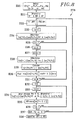
- the process assistance basically consists of two groups of stages ET1 to ET7 and ET9 to ET16 relating to two iterative possibilities of interaction offered to a user at all times. These two possibilities of interaction concern a selection of one year of attributes and preference expression on this attribute, and a selection or rejection of one Ci categories resulting from the decomposition of all EP products at an intermediate stage ET8.
- the steps illustrated by a frame in dotted lines are executed by the search engine MR in the SR server, and other steps illustrated by a solid line frame are controlled from the user interface in the TE terminal.
- the steps illustrated by a frame whose side is formed by a double line correspond to displayed buttons constituting dynamic links in user responses transmitted by the TE terminal to the search engine MR.
- the electronic product catalog concerns a cellphone package catalog mobile offered by three operators X, Y and Z including phone plans are designated respectively by FX, FY and FZ followed by a number.
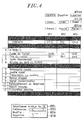
- the products offered constituted by representatives of categories determined by the search engine MR are represented on the screen of the TE terminal under the form of a table whose columns correspond to packages and whose lines correspond to attributes of the packages constituting the products.
- the intersection of a row and a column in the table is materialized by a box that can contain the value associated with the attribute of the line respective for the product in the respective column.
- the attributes are duration, price, the number of minutes of a package, which are expressed by number of hours, currency, etc., or by the presence or absence of certain options whose value can be expressed by a "0” or a "1” or by "no” or "yes".
- the products can to be mechanical parts and the attributes of physical properties of these parts, in order to assist the selection of these parts based for example on their dimensions and / or of the materials constituting them and / or measured coefficients or parameters.
- the method of the invention assists in the choice of a tire according to the weight, the impasto, the average speed of use and of the category (tourism, utility or all terrain) of a vehicle, regardless of everything economic attribute, such as price.
- the method of the invention is independent of the nature of the products and their attributes, and is therefore not limited to the example of radiotelephone packages which will be referred to below.
- step ET17 At the start of all of the ET1 iterative steps at ET16, one year of the attributes of the set EA not still selected can be selected in step ET1. Otherwise the process is terminated in step ET17.
- step ET1a the user can choose to order the motor to search MR a selection of one of the attributes according to one of the steps ET2, ET4 or ET6, or a random selection of an attribute An not yet selected, or a selection from one of the remaining attributes which is statistically the most selected by users.
- step ET1a the process goes directly to step ET8 described more far.
- step ET1 The selection of an attribute An in step ET1 is translated at the user interface level in the TE terminal by one of the three stages ET2, ET4 and ET6, as illustrated at the bottom of Figures 3 to 5.
- Step ET2 invites the user to order by order preferably OAn the values of the attribute An, in general in number less than 10.
- the next step ET3 adds the OAn ordered values of the attribute An preferably selected by the user to all of the EV preferences.
- the order of preference used for the attribute A2 "price" can be as follows: 131 > 92 > 55 > 36 > 30 > 24 .
- these orders of preference are obtained by asking consumers to attribute a note for each Vj value of the selected attribute Year. For example, note 1 is awarded for the duration 1h30, 2 for 2h, 3 for 2h30, 4 for 5h, 5 for 10 a.m. and 6 for 3 p.m.
- the order of preference between duration of package is then the ascending order on these numbers.
- these orders of preference are pre-set by the engine MR research; in this variant, the selection of a attribute implies acceptance of the order of preference pre-set by the search engine, or is restricted to the alternative between order ascending and descending order of values of the attribute An.
- the user changes the order of preference of values of the attribute An in step ET4, or in variant adds or removes at least one value in the previous order.
- the MR search engine replaces the previous order by the new order of values of the attribute An in step ET5 and introduces it in the set of preferences EV in step ET3.
- the user can delete the order of preference previous of attribute An if it exists, at step ET 6.
- the MR search engine then removes the order preferably OAn of the set of preferences EV to step ET7.
- step ET3 and ET7 After one of steps ET3 and ET7, or after optional step ET1a, the process goes to step of decomposition ET8. If none of the steps ET2, ET4 and ET6 is not selected, or if no attribute An is selected in step ET1, without passing through the optional step ET1a, the process is terminated at step ET17.
- the search engine MR considers all products contained in the previously defined EP set and the breaks down into I product categories C1, ... Ci, ... CI according to one of the two decomposition realizations set of products described below in reference to Figures 7 and 8. For each of the categories C1 to CI, the MR search engine identifies a respective representative RP1 to RPI and the transmits with at least its selected attributes to TE terminal to display it.
- next step ET9 the user chooses the representative RPi of one Ci of categories C1 to CI that he decides to delete, or to choose for a subsequent breakdown of the category, or take it more simply, by clicking on one of the three corresponding buttons located above the column of the selected representative, as shown in Figure 3, in one of the steps ET10, ET13 and ET16.
- step ET10 the MR search engine eliminates the Ci category from the current set of EP products in step ET11.
- step ET12 the set of EP products is not restricted to a decomposable category into other categories, which may consist of three products according to the above example, the engine search returns to the attribute selection step ET1 which can be followed directly by step ET8.
- step ET12 the process goes from step ET12 to step ET9 so as to oblige the user to choose the category remaining and possibly to take the representative of the remaining category.
- the MR search engine eliminates the other categories C1 to C (i-1) and C (i + 1) to CI of the EP set which is reduced to the category Ci in step ET14. If in the next step ET15, the engine finds that the category Ci is not reduced to a single product consisting of its representing RPi, the method returns to step ET1.
- the MR search engine invites the user to confirm his choice on the RPi product, for example by a purchasing procedure. Let this purchase be completed or not, the process then ends at step ET17.
- step ET2 When the user considers that the representatives of proposed category seem to him equivalent, the user try to distinguish them by introducing new ones preferences in step ET2, or by modifying preferences previous to step ET4. For example, the user selects the fourth attribute A4 corresponding to the price of the minute beyond fixed price, at stage ET2.
- the search engine adds this last preference to the EV set, at step 3 in order to break down the set of EP products into three categories, each product being defined by three attributes A1, A2 and A4.
- the result of the decomposition and identification step ET8 is shown by the table in FIG. 5, in which three packages FY15, FX2 and FZ100 correspond to package durations of the order of 2 hours, at a price of package of 30 approximately, and at a price per minute beyond the package of between 0.20 and 0.30 about.
- the user can then take one of these three packages at step ET16, by clicking on the respective "Take" button.
- FIG. 6 is a graph showing a schematic distribution of points representative of products P1 to PM each defined by two attributes A1 and A2 lying between respective limits A1 min and A1 max and A2 min and A2 max . This graph is used to illustrate in particular the first decomposition of the EP assembly in step ET8.
- step E0 the set of products remaining at the start of step ET8 may be the full catalog, or part of it after execution of steps ET11 and ET14. It is assumed in the continuation that this remaining set is designated by EP and includes M products P1 to PM associated with a set EA of N attributes.
- the decomposition process according to this first implementation implemented in the SR server includes thirteen steps E1 to E13 shown in Figure 7, without no user intervention.
- the search engine MR determines I first products as representatives RP1 to RPI in the set of EP products.
- the pivots can be determined randomly in step E1, or according to the orders of preference of the securities attributes selected by the user at stages ET2 and / or ET4, or deleted in stages ET6, i.e. according to the orders of preference of attribute values in the EV set.
- pivot variables PV1 to PVI are set equal to representatives RP1 to RPI and the index m of product is zeroed in step E2.
- a pivot is a product around which a category of products in the following steps.
- Step E4 calculates the Euclidean distances ° Pm, PV1 ° to ° Pm, PVI ° between the current product Pm and the pivots P1 to PI. Euclidean distance depends on attributes as coordinates and constitutes a similarity parameter between the current product Pm and a pivot.
- the search engine then ranks the product current Pm in a category Ci whose pivot PVi is most similar to the current product Pm, i.e. is closest in the graph of the figure 6.
- Category Ci constitutes a group, called "Cluster”.
- Steps E3 to E5 are executed for all products P1 to PM of the remaining set EP, as shown in step E6.
- the search engine MR determines, for each category Ci associated with a PVi pivot, the barycenter Bi among the products classified in the category Ci, as indicated in steps E8 and E9.
- Step E10 determines the product belonging to the category Ci which is the most similar of the barycenter Bi so that it constitutes a representative RPi of the current category Ci.
- the representative corresponds to the smallest of the distances Euclidean lines between the barycenter Bi and the belonging to the category Ci.
- all the representatives RP1 to RPI are determined respectively in categories C1 to THIS.
- step E12 the search engine MR compare attributes of RP1 representatives to RPI who have just been determined in step E10 with the pivots PV1 to PVI determined as representatives in previous steps E2 to E12 and stored at step E2.
- the barycentres are representative of categories and are not specifically products categories. Therefore the determination of categories as well as their representatives is refined until there is convergence after several iterations of steps E2 to E11.
- the search engine identifies the last pivots determined as representatives RP1 to RPI of categories C1 to CI in step E13.
- the I so determined representatives are displayed in a table in the TE terminal in step ET8 so that the user selects a representative of category in step ET9.
- the similarity of Pm and PVi products belonging to the remaining set of EP products are based on notions of generalization Gen (Pm, PVi) and neighborhood of product Voi (Pm) for product Pm.
- the values VAn (P1) to VAn (PM) of each attribute An of the products P1 to PM are greater than the minimum of the attribute values VAn (Pm) and VAn (PVi) of the products of the torque and at most equal to the maximum value VAn max of the attribute An.
- Gen (Pm, PVi) ⁇ Pk ⁇ EP
- the generalization of the couple (Pm, PVi) thus corresponds to the products belonging to the positive quadrant in the graph of FIG. 6 originating from the minimum attributes of the products of the couple.
- the neighborhood thus covers all the generalizations of which one of the members of the couple is the product Pm, and any other generalizations which contain the product Pm.
- This similarity parameter according to the second embodiment is equivalent to the Euclidean distance according to the first embodiment.
- the decomposition of the remaining assembly according to the second embodiment of step ET8, implemented in the SR server comprises steps E20 to E38, without any intervention from the user.
- Steps E20, E21, E22, E28-E30, E34-E35 and E37-E39 are respectively analogous to those E0, E1, E2, E4-E5, E9-E10 and E12-E13 included in the algorithm of the first embodiment shown in figure 7.
- step E20 defines the remaining set EP products P1, ... Ph, ... Pk, ... Pm, ... PM and the set EA of attributes A1, ... An, ... AN.
- the MR search engine determines I first PV1 representatives, ... PVi, ... PVI belonging to the remaining set of EP products in general from randomly, or according to the orders of preference of attribute values expressed over steps ET2 to ET7.
- step E24 the engine MR research determines the neighborhood of each representative RPi become pivot PVi, after having put variables PV1 to PVI equal to the representatives RP1 at RPI and the index i at zero in step E22 and increased of a unit the index i in step E23.
- step E28 for determining the neighborhood Voi (Pm) of each product Pm of the set remaining EP other than pivots PV1 to PVI, in a manner analogous to step E24, after having zeroed and incremented of a unit the index m in steps E26 and E27.
- the search engine does not determine step E28, as in step E24, the generalizations on product pairs that part of the remaining set EP for each neighborhood Voi (PVi), Voi (Pm) of each PVi product, Pm so that increase the speed of the process.
- step E29 the engine research assesses the similarities between the product current Pm and the pivots PV1 to PVI in step E29. The greater of these similarities is determined to the next step E30.
- the range search engine then the product Pm in a category Ci which is associated with the PVi pivot which has the largest similarity to the product Pm.
- steps E27 to E31 are iterated for each product Pm of the EP assembly, and the process goes from step E31 to steps E32 to E35 to determine a representative for each of the categories C1 to CI.
- step E32 and E33 the index i is set to zero and incremented by one.
- step E34 the search engine MR determines for each Pm product belonging to the category Cm the neighborhood of the product constituted by generalizations about couples with each two products Ph and Pk in the category Ci.
- step E35 determines the largest of the neighborhoods for Pm products belonging to the category Ci, i.e. determines the RPi representative corresponding to the product of the Ci category with the highest number of generalizations. If several products in the category Ci have the same maximum number of generalizations, one of them is chosen randomly as a representative, or the first one who present is chosen as representative.
- step E37 the search engine checks in step E37 if the representatives RP1 to RPI just determined are almost identical to pivots PV1 to PVI determined and memorized as that representatives during the previous iteration of steps E22 to E37. Thus steps E22 to E37 are reiterated until representatives RP1 to RPI are almost confused with pivots PV1 to PVI to within an uncertainty. Finally, in step E38, the MR search engine identifies the latest pivots determined in the last iteration of steps E22 to E37, as representatives RP1 to RPI from categories C1 to CI. Representatives as well determined are displayed in a table in the TE terminal in step ET8 so that the user selects a representative of category in step ET9.
Landscapes
- Business, Economics & Management (AREA)
- Strategic Management (AREA)
- Engineering & Computer Science (AREA)
- Accounting & Taxation (AREA)
- Development Economics (AREA)
- Finance (AREA)
- Economics (AREA)
- Game Theory and Decision Science (AREA)
- Entrepreneurship & Innovation (AREA)
- Marketing (AREA)
- Physics & Mathematics (AREA)
- General Business, Economics & Management (AREA)
- General Physics & Mathematics (AREA)
- Theoretical Computer Science (AREA)
- Management, Administration, Business Operations System, And Electronic Commerce (AREA)
- Information Retrieval, Db Structures And Fs Structures Therefor (AREA)
Abstract
Description

- décomposer par le moyen serveur l'ensemble électronique de produits en un nombre prédéterminé de catégories de produits afin que le serveur identifie des produits respectivement comme représentants des catégories, et
- sélectionner dans le terminal l'un des
représentants pour commander l'exécution de l'une des
étapes suivantes dans le moyen serveur si le
représentant sélectionné n'est pas pris :
- supprimer la catégorie correspondant au représentant sélectionné dans l'ensemble de produits afin que le moyen serveur applique l'étape de décomposer à l'ensemble de produits ainsi réduit si celui-ci n'est pas restreint à une catégorie non décomposable ; et
- choisir la catégorie correspondant au représentant sélectionné pour réduire l'ensemble de produits à la catégorie correspondante afin que le moyen serveur applique l'étape de décomposer à la catégorie correspondante si celle-ci n'est pas restreinte au représentant sélectionné.
- sélectionner l'un des attributs pour exécuter
l'une des étapes suivantes :
- ordonner par ordre de préférence les valeurs de l'attribut sélectionné afin de décomposer l'ensemble restant de produits en un nombre de catégories dépendant notamment respectivement de l'ordre de préférence des valeurs de l'attribut ;
- modifier un ordre de préférence des valeurs de l'attribut sélectionné afin de décomposer l'ensemble restant de produits en fonction de l'ordre de préférence modifié des valeurs de l'attribut ; et
- supprimer un ordre de préférence de valeurs déjà ordonnées de l'attribut sélectionné afin de décomposer l'ensemble de produits restant en fonction notamment d'ordres de valeurs d'autres attributs antérieurement sélectionnés.
- un moyen pour décomposer l'ensemble électronique de produits en un nombre prédéterminé de catégories de produits,
- un moyen pour identifier des produits respectivement comme représentants des catégories,
- un moyen répondant à une sélection dans le terminal de l'un des représentants si le représentant sélectionné n'est pas pris, pour supprimer la catégorie correspondant au représentant sélectionné dans l'ensemble de produits afin que le moyen pour décomposer décompose l'ensemble de produits ainsi réduit en d'autres catégories si celui-ci n'est pas restreint à une catégorie non décomposable ; et
- un moyen répondant à une sélection dans le terminal de l'un des représentants si le représentant sélectionné n'est pas pris, pour choisir la catégorie correspondant au représentant sélectionné pour réduire l'ensemble de produits à la catégorie correspondante afin que le moyen pour décomposer décompose la catégorie correspondante en d'autres catégories si celle-ci n'est pas restreinte au représentant sélectionné.
- la figure 1 est un bloc-diagramme schématique d'un système de traitement interactif de données pour la mise en oeuvre du procédé d'assistance au choix d'un produit selon une vérification préférée de l'invention ;
- la figure 2 est un algorithme d'étapes itératives du procédé d'assistance au choix d'un produit selon l'invention ;
- les figures 3, 4 et 5 sont des tableaux des attributs de produits représentatifs de catégories, inclus dans des pages affichées sur un terminal du système interactif ;
- la figure 6 est un graphe de produits en fonction des valeurs de deux attributs ;
- la figure 7 est un algorithme de décomposition d'ensemble de produits en des catégories selon une première réalisation ; et
- la figure 8 est un algorithme de décomposition d'ensemble de produits en des catégories selon une deuxième réalisation.
- Produit : article, objet, bien ou service dans un catalogue constituant un ensemble de produits ;
- Attribut : propriété attribuée à un produit et participant à la description du produit ;
- Valeur : nombre évaluant un attribut ou symbole ordonnable qualifiant un produit ;
- Domaine d'un attribut : ensemble de toutes les valeurs prises par un attribut sur tous les produits du catalogue ;
- Préférences sur un attribut : ordre total ou partiel entre les valeurs du domaine d'un attribut ;
- Usager : personne recherchant dans le catalogue un produit l'intéressant ;
- Moteur de recherche MR : outil informatique mettant en oeuvre le procédé de l'invention pour effectuer une recherche de produit demandé par un usager ;
- Catégorie : ensemble de produits appartenant au catalogue et ayant un ou plusieurs attributs dont les valeurs sont voisines ; et
- Représentant : produit catégoriel, représentatif d'une catégorie.
- un forfait FZ10 correspondant au représentant
RP1 de la première catégorie C1 pour une durée de dix
heures et un prix de 92
- le forfait FX5 correspondant au représentant
RP2 de la deuxième catégorie C2 pour une durée de
cinq heures et un prix de 55
- le forfait FX2 correspondant au représentant
RP3 de la troisième catégorie C3 pour une durée de
deux heures et un prix de 30
- le forfait FY15 de 2h30 pour 36
- le forfait FX2 de 2h pour 30
- le forfait FZ13 de 1h30 pour 24
Claims (13)
- Procédé d'assistance au choix d'un produit dans un ensemble électronique de produits (EP) mémorisé dans un moyen serveur (SR, BD) interagissant avec un terminal (TE), chaque produit (Pm) étant défini par plusieurs attributs (A1-AN), caractérisé en ce qu'il comprend la suite itérative des étapes suivantes :décomposer (ET8) par le moyen serveur l'ensemble électronique de produits (EP) en un nombre prédéterminé de catégories de produits (C1-CI) afin que le serveur identifie des produits respectivement comme représentants (RP1-RPI) des catégories, etsélectionner (ET9) dans le terminal l'un (RPi) des représentants pour commander l'exécution de l'une des étapes suivantes dans le moyen serveur si le représentant sélectionné n'est pas pris (ET16) :supprimer (ET10, ET11, ET12) la catégorie (Ci) correspondant au représentant sélectionné (RPi) dans l'ensemble de produits (EP) afin que le moyen serveur applique l'étape de décomposer (ET8) à l'ensemble de produits ainsi réduit si celui-ci n'est pas restreint à une catégorie non décomposable ; etchoisir (ET13, ET14, ET15) la catégorie (Ci) correspondant au représentant sélectionné (RPi) pour réduire l'ensemble de produits (EP) à la catégorie correspondante afin que le moyen serveur applique l'étape de décomposer à la catégorie correspondante si celle-ci n'est pas restreinte au représentant sélectionné.
- Procédé conforme à la revendication 1, selon lequel la suite itérative d'étapes comprend, en outre, les étapes suivantes :sélectionner (ET1) dans le terminal (TE) l'un des attributs (An) pour exécuter l'une des étapes suivantes :ordonner (ET2, ET3) par ordre de préférence (OAn) les valeurs de l'attribut sélectionné (An) afin de décomposer l'ensemble restant de produits en un nombre de catégories (C1-CI) dépendant respectivement de l'ordre de préférence des valeurs de l'attribut ;modifier (ET4, ET5) un ordre de préférence (OAn) des valeurs de l'attribut sélectionné (An) afin de décomposer l'ensemble restant de produits en fonction de l'ordre de préférence modifié des valeurs de l'attribut ; etsupprimer (ET6, ET7) un ordre de préférence (OAn) de valeurs déjà ordonnées de l'attribut sélectionné (An) afin de décomposer l'ensemble de produits restant en fonction notamment d'ordres de valeurs d'autres attributs antérieurement sélectionnés.
- Procédé conforme à la revendication 2, comprenant un choix (ET1, ET1a) commandé depuis le terminal (TE) au serveur (SR) entre l'étape de sélectionner l'un des attributs selon la revendication 2 et une sélection aléatoire ou le plus sélectionné de l'un des attributs restants à sélectionner.
- Procédé conforme à l'une quelconque des revendications 1 à 3, selon lequel l'étape de décomposer (ET8) par le moyen serveur (SR, BD) un ensemble de produits en un nombre prédéterminé de catégories (C1-CI) comporte une détermination (E1) de premiers produits comme pivots (PV1-PVI) dans l'ensemble de produits, une évaluation (E2-E6) de paramètres de similarité entre chaque produit (Pm) de l'ensemble et les pivots afin de déterminer le pivot le plus similaire audit chaque produit et ranger ledit chaque produit dans la catégorie (Ci) associée au pivot le plus similaire (PVi), et une détermination (E7-E11) du barycentre (Bi) dans chaque catégorie afin d'en déduire le produit le plus similaire du barycentre en tant que représentant (RPi) de la catégorie, et réitérer (ET12) l'évaluation de paramètres et la détermination de barycentre (E2-E11) tant que les représentants considérés comme pivots des catégories ne convergent pas à une incertitude prédéterminée près.
- Procédé conforme à la revendication 4, selon lequel le paramètre de similarité entre chaque produit (Pm) et un pivot (PVi) est la distance euclidienne dépendant des attributs du produit et du pivot.
- Procédé conforme à l'une quelconque des revendications 1 à 3, selon lequel l'étape de décomposer (ET8) par le moyen serveur (SR, BD) un ensemble de produits en un nombre prédéterminé de catégories (C1-CI) comporte une détermination (E21) de premiers produits comme pivots (PV1-PVI) dans l'ensemble de produits, une détermination (E22-E25) du voisinage de chaque pivot (PVi) par rapport à des couples (Pk, Pm) d'au moins une partie de l'ensemble de produits, une détermination (E26-E28) du voisinage de chaque produit (Pm) autre que les pivots par rapport à des couples (Ph, Pk) d'au moins une partie de l'ensemble de produits, une évaluation (E29-E30) de similarités entre chaque produit (Pm) de l'ensemble et les pivots (PV1-PVI) afin de déterminer le pivot le plus similaire audit chaque produit et ranger ledit chaque produit dans la catégorie (Ci) associée au pivot le plus similaire (PVi), et une détermination (E32-E36) du voisinage de chaque produit dans chaque catégorie afin d'en déduire le produit ayant le plus grand voisinage dans chaque catégorie (Ci) en tant que représentant (PPi) de la catégorie, et réitérer la détermination de voisinage de chaque pivot en tant que représentant, la détermination du voisinage de chaque produit, l'évaluation de similarités et la détermination du plus grand des voisinages dans chaque catégorie (E22-E37), tant que les représentants considérées comme pivots des catégories ne convergent pas à une incertitude prédéterminée près.
- Procédé conforme à la revendication 6, selon lequel le voisinage d'un produit (Pm) dépend du nombre de généralisations de couples composés du produit et des autres produits de l'ensemble (EP), la généralisation de chaque couple étant un ensemble de produits dont les attributs sont respectivement supérieurs au minimum des attributs des produits du couple, et la similarité entre chaque produit et un pivot (PV1-PVI) dépend du rapport entre le nombre de généralisations énoncées dans les voisinages du produit et du pivot et le nombre de généralisations communes au produit et au pivot et le nombre des généralisations comprises dans le produit et le pivot.
- Procédé conforme aux revendications 2 ou 3 à l'une quelconque des revendications 4 à 7, selon lequel la détermination (E1 ; E21) de premiers produits comme pivots (PV1-PVI) dépend d'ordres de préférence de valeurs d'attributs (A1-AN) des produits (P1-PM).
- Système d'assistance au choix d'un produit dans un ensemble électronique de produits (EP) comprenant un moyen serveur (SR, BD) interagissant avec un terminal (TE) et ayant mémorisé l'ensemble électronique de produits, chaque produit (Pm) étant défini par plusieurs attributs (A1-AN), caractérisé en ce qu'il comprend :un moyen pour décomposer (ET8) l'ensemble électronique de produits (EP) en un nombre prédéterminé de catégories de produits (C1-CI)un moyen pour identifier des produits respectivement comme représentants (RP1-RPI) des catégories,un moyen répondant à une sélection (ET9) dans le terminal (TE) de l'un (RPi) des représentants si le représentant sélectionné n'est pas pris (ET16), pour supprimer (ET10, ET11, ET12) la catégorie (Ci) correspondant au représentant sélectionné (RPi) dans l'ensemble de produits (EP) afin que le moyen pour décomposer décompose (ET8) l'ensemble de produits ainsi réduit en d'autres catégories si celui-ci n'est pas restreint à une catégorie non décomposable ; etun moyen répondant à une sélection (ET9) dans le terminal (TE) de l'un (RPi) des représentants si le représentant sélectionné n'est pas pris (ET16), pour choisir (ET13, ET14, ET15) la catégorie (Ci) correspondant au représentant sélectionné (RPi) pour réduire l'ensemble de produits (EP) à la catégorie correspondante afin que le moyen pour décomposer décompose la catégorie correspondante en d'autres catégories si celle-ci n'est pas restreinte au représentant sélectionné.
- Système conforme à la revendication 9, dans lequel le moyen pour décomposer comporte un moyen pour déterminer (E1) des premiers produits comme pivots (PV1-PVI) dans l'ensemble de produits, un moyen pour évaluer (E2-E6) des paramètres de similarité entre chaque produit (Pm) de l'ensemble et les pivots afin de déterminer le pivot le plus similaire audit chaque produit et ranger ledit chaque produit dans la catégorie (Ci) associée au pivot le plus similaire (PVi), et un deuxième moyen pour déterminer (E7-E11) le barycentre (Bi) dans chaque catégorie afin d'en déduire le produit le plus similaire du barycentre en tant que représentant (RPi) de la catégorie, le moyen pour évaluer et le deuxième moyen pour déterminer réitérant (ET12) l'évaluation de paramètres et la détermination de barycentre (E2-E11) tant que les représentants considérés comme pivots des catégories ne convergent pas à une incertitude prédéterminée près.
- Système conforme à la revendication 9, dans lequel le moyen pour décomposer comporte un moyen pour déterminer (E21) des premiers produits comme pivots (PV1-PVI) dans l'ensemble de produits, un moyen pour déterminer (E22-E25) le voisinage de chaque pivot (PVi) par rapport à des couples (Pk, Pm) d'au moins une partie de l'ensemble de produits, un moyen pour déterminer (E26-E28) le voisinage de chaque produit (Pm) autre que les pivots par rapport à des couples (Ph, Pk) d'au moins une partie de l'ensemble de produits, un moyen pour évaluer (E29-E30) des similarités entre chaque produit (Pm) de l'ensemble et les pivots (PV1-PVI) afin de déterminer le pivot le plus similaire audit chaque produit et ranger ledit chaque produit dans la catégorie (Ci) associée au pivot le plus similaire (PVi), et un moyen pour déterminer (E32-E36) le voisinage de chaque produit dans chaque catégorie afin d'en déduire le produit ayant le plus grand voisinage dans chaque catégorie (Ci) en tant que représentant (PPi) de la catégorie, les moyens pour déterminer les voisinages et le moyen pour évaluer réitérant la détermination de voisinage de chaque pivot en tant que représentant, la détermination du voisinage de chaque produit, l'évaluation de similarités et la détermination du plus grand des voisinages dans chaque catégorie (E22-E37), tant que les représentants considérées comme pivots des catégories ne convergent pas à une incertitude prédéterminée près.
- Système conforme à l'une quelconque des revendications 9 à 11, dans lequel le terminal (TE) est une borne installée dans un lieu public.
- Système conforme à l'une quelconque des revendications 9 à 11, dans lequel le terminal (TE) et le moyen serveur (SR, BD) sont réunis en un terminal dédié.
Applications Claiming Priority (2)
| Application Number | Priority Date | Filing Date | Title |
|---|---|---|---|
| FR0102524 | 2001-02-23 | ||
| FR0102524A FR2821457A1 (fr) | 2001-02-23 | 2001-02-23 | Assistance au choix d'un produit dans un catalogue electronique de produits |
Publications (2)
| Publication Number | Publication Date |
|---|---|
| EP1239394A2 true EP1239394A2 (fr) | 2002-09-11 |
| EP1239394A3 EP1239394A3 (fr) | 2006-03-15 |
Family
ID=8860396
Family Applications (1)
| Application Number | Title | Priority Date | Filing Date |
|---|---|---|---|
| EP02290343A Withdrawn EP1239394A3 (fr) | 2001-02-23 | 2002-02-12 | Assistance au choix d'un produit dans un catalogue électronique de produits |
Country Status (2)
| Country | Link |
|---|---|
| EP (1) | EP1239394A3 (fr) |
| FR (1) | FR2821457A1 (fr) |
-
2001
- 2001-02-23 FR FR0102524A patent/FR2821457A1/fr active Pending
-
2002
- 2002-02-12 EP EP02290343A patent/EP1239394A3/fr not_active Withdrawn
Non-Patent Citations (1)
| Title |
|---|
| Sans recherche * |
Also Published As
| Publication number | Publication date |
|---|---|
| FR2821457A1 (fr) | 2002-08-30 |
| EP1239394A3 (fr) | 2006-03-15 |
Similar Documents
| Publication | Publication Date | Title |
|---|---|---|
| EP1193625A1 (fr) | Moteur de recherche collaboratif | |
| EP2164212A1 (fr) | Procédé et système de communication pour la détermination d'une séquence de services liés à une conversation | |
| EP2087463A1 (fr) | Applications pour le profilage d'utilisateurs de services de telecommunications | |
| WO2001075696A1 (fr) | Procede permettant a un adjudicateur de faire parvenir un appel d'offre a un ou plusieurs prestataires selectionnes | |
| Fisk | An application of social filtering to movie recommendation | |
| EP2120179A1 (fr) | Méthode pour établir un modèle d'utilisateur | |
| FR2821457A1 (fr) | Assistance au choix d'un produit dans un catalogue electronique de produits | |
| EP4154189A1 (fr) | Procédés d'utilisation sécurisée d'un premier réseau de neurones sur une donnée d'entrée, et d'apprentissage de paramètres d'un deuxième réseau de neurones | |
| FR3089324A1 (fr) | Procédé de détermination d’un agent conversationnel sur un terminal | |
| FR3127607A1 (fr) | Procédé de traitement d’un contenu numérique exprimant un récit d’une expérience, et applications de ce procédé pour la recommandation de contenus et/ou d’expériences | |
| FR3093225A1 (fr) | Procédé de gestion d’accès d’un utilisateur à un service vocal, dispositif, système et programmes correspondants | |
| WO2024194385A1 (fr) | Dispositif et procédé de suivi d'un utilisateur accédant à un site web | |
| WO2019086782A1 (fr) | Procédé, dispositif et programme de composition d'une liste ordonnée d'éléments recommandés | |
| EP2645311A1 (fr) | Procédé et système de notification, à un utilisateur d'un terminal, de données contextuelles relatives à des éléments identifiés dans une application de type répertoire | |
| FR3167459A1 (fr) | Méthode de mise en œuvre d’une application de rencontre, et produit programme informatique du type application de rencontre | |
| FR3148100A1 (fr) | Methode et systeme pour comparer des annonces internet multisites | |
| WO2021123603A1 (fr) | Procede de gestion d'une pluralite de listes d'items | |
| FR3003966A1 (fr) | Procede d'adaptation dynamique d'un environnement logiciel execute a partir d'un terminal de communication d'un utilisateur, au cours d'une communication entre l'utilisateur et au moins un interlocuteur. | |
| FR3147394A1 (fr) | Methode et systeme pour analyser des annonces internet | |
| FR2812420A1 (fr) | Procede automatique de mise en forme de pages dynamiques sur un site internet | |
| FR2800486A1 (fr) | Procede de gestion d'informations commerciales | |
| EP3933610A1 (fr) | Procede de recherche assistee dans une base de donnees et systeme de recherche associe | |
| WO2007057569A2 (fr) | Procede et systeme de traitement informatise d'informations relatives a une communication telephonique | |
| FR2897500A1 (fr) | Procede, systeme et terminal de communication pour proposer un ecran d'accueil a un utilisateur | |
| FR2817636A1 (fr) | Procede d'echange d'informations |
Legal Events
| Date | Code | Title | Description |
|---|---|---|---|
| PUAI | Public reference made under article 153(3) epc to a published international application that has entered the european phase |
Free format text: ORIGINAL CODE: 0009012 |
|
| AK | Designated contracting states |
Kind code of ref document: A2 Designated state(s): AT BE CH CY DE DK ES FI FR GB GR IE IT LI LU MC NL PT SE TR |
|
| AX | Request for extension of the european patent |
Free format text: AL;LT;LV;MK;RO;SI |
|
| 17P | Request for examination filed |
Effective date: 20020821 |
|
| PUAL | Search report despatched |
Free format text: ORIGINAL CODE: 0009013 |
|
| AK | Designated contracting states |
Kind code of ref document: A3 Designated state(s): AT BE CH CY DE DK ES FI FR GB GR IE IT LI LU MC NL PT SE TR |
|
| AX | Request for extension of the european patent |
Extension state: AL LT LV MK RO SI |
|
| AKX | Designation fees paid |
Designated state(s): AT BE CH CY DE DK ES FI FR GB GR IE IT LI LU MC NL PT SE TR |
|
| STAA | Information on the status of an ep patent application or granted ep patent |
Free format text: STATUS: THE APPLICATION IS DEEMED TO BE WITHDRAWN |
|
| 18D | Application deemed to be withdrawn |
Effective date: 20070901 |