TECHNICAL FIELD
The present invention relates, in systems for using a
one-way communication to transmit data, to a receiving-terminal
simulator and a delivery scheduler, which are
adapted to take into account the state of a receiving
terminal to control the delivery of data, and to a data
transmission system employing the same.
BACKGROUND ART
Conventional data transmission systems provide data
to be delivered with an expiry date and send the data to
receiving terminals. The receiving terminal is provided
with a delete processing schedule control portion and a
delete processing portion to periodically perform delete
processing on expired data. In such a data communication,
since data is delivered in one way, the data transmitting
side cannot take into account the file delete processing
performed at the aforementioned terminal and therefore
cannot know how many files have been accumulated at the
terminal. In addition, the receiving terminal is
controlled entirely by the receiving terminal itself, and
the data transmitting side delivers data without taking the
state of the receiving terminal into account.
Furthermore, in the conventional data transmission
system, when preparing a delivery schedule for data to be
delivered, the data transmitting side makes a plan for the
delivery only in consideration of whether the data being
transmitted can be accommodated in the frame of delivery
(transmitted data bandwidth).
That is, the amount of data that can be transmitted
in 1Mbp bandwidth in one hour is 1Mbits*60*60/8 = 450
Mbytes. Upon determining a data broadcast schedule, it is
sufficient to allocate data in a broadcast frame so as to
be accommodated in the data size that can be transmitted in
a broadcast frame desired for the broadcast.
However, in the aforementioned conventional data
transmission system for transmitting data in a one way
communication, since the receiving terminal cannot notify
the state thereof, the state of a storage area of the
receiving terminal cannot be taken into account correctly.
Thus, consider a case where a terminal receives data sent
in a one way communication to store and save the data, and
the data has been sent only because the data can be sent.
In this case, regardless of the absence of a sufficient
free space in a storage area of the receiving terminal, it
is possible to deliver data exceeding the capacity of the
free space. Thus, there is a problem that this results in
failing to store the data at the aforementioned receiving
terminal. For example, suppose that the free space
available is only 300 Mbytes for the amount of data
deliverable of 450 Mbytes. In this case, it is obvious
that sending the data (450 Mbytes), which can be sent, as
it is would cause the storage of the data to be failed.
DISCLOSURE OF THE INVENTION
The present invention was developed in view of the
aforementioned conventional problems. It is therefore a
first object of the present invention to provide a data
transmission system in which a device on the data
transmitting side controls data to be delivered in
consideration of the state of a receiving terminal to
prevent the occurrence of troubles in data transmission.
A second object of the present invention is to
prepare a data delivery schedule which enables a device on
the data transmitting side to estimate correctly the state
of a receiving terminal and allows the receiving terminal
to receive and accumulate data correctly.
To achieve the aforementioned objects, the present
invention provides a system for transmitting data using a
one-way communication. The system includes a data control
portion for controlling the information on transmitted data
and data to be transmitted from now, and a data storage
portion for storing the transmitted data, the data to be
transmitted from now, and information on the data. The
system further includes a receiving-terminal simulation
portion for simulating the operation of receive, storage,
and delete processing at a receiving terminal in accordance
with the information.
This makes it possible to simulate what expiry date
the transmitted data has, until when the data will exist on
the receiving terminal, and to which region the data has
been transmitted, thereby making it possible to know the
situation of the storage area of the receiving terminal.
However, the above-mentioned situation is based on the
assumption that all the storage and delete processing work
properly. Knowing the situation of the storage area will
make it possible to know how much more data can be
transmitted and accommodated in the storage area. It is
also made possible to know when the desired free space is
available in the storage area.
To achieve the aforementioned objects, the present
invention provides a delivery scheduler for use in a system
for transmitting data using one-way communication. The
delivery scheduler includes a data storage portion for
storing information on data, a data control portion for
controlling data, a receiving-terminal simulation portion
for simulating the state of a receiving terminal and a
delivery control portion for preparing a delivery schedule
of data using a simulation result.
This configuration of the delivery scheduler
according to the present invention makes it possible to
make and implement a transmission plan (a delivery
schedule) by which the receiving terminal can positively
receive and deliver data.
BRIEF DESCRIPTION OF THE DRAWINGS
Fig. 1 is a block diagram illustrating the overall
configuration of a data broadcast system according to a
first embodiment of the present invention.
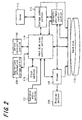
Fig. 2 is a block diagram illustrating the
configuration of a receiving terminal corresponding to the
data transmission system according to the aforementioned
embodiment.
Fig. 3 is a view illustrating an exemplary list of
control data entries according to the aforementioned
embodiment.
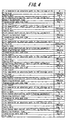
Fig. 4 is a view illustrating an exemplary list of
delivered registration data according to the aforementioned
embodiment.
Fig. 5 is an explanatory view illustrating a first
example of a file simulation according to the
aforementioned embodiment.
Fig. 6 is an explanatory view illustrating the first
example of the file simulation according to the
aforementioned embodiment.
Fig. 7 is a block diagram illustrating the overall
configuration of a data broadcast system having a delivery
scheduler according to a second embodiment of the present
invention.
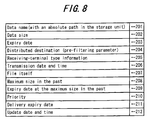
Fig. 8 is a view illustrating an exemplary list of
control data entries according to the aforementioned
embodiment.
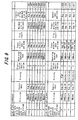
Fig. 9 is a view illustrating an exemplary list of
registration data according to the aforementioned
embodiment.
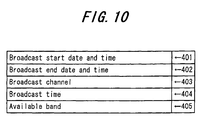
Fig. 10 is a view illustrating an example of
broadcast frame information according to the aforementioned
embodiment.
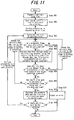
Fig. 11 is an explanatory flow diagram illustrating a
broadcast scheduling operation according to the
aforementioned embodiment.
Fig. 12 is an explanatory flow diagram illustrating a
processing order decision operation according to the
aforementioned embodiment.
Fig. 13 is an explanatory flow diagram illustrating a
free space simulation operation according to the
aforementioned embodiment.
Fig. 14 is a view illustrating the period of time
during which data is stored in a storage area of a
receiving terminal according to the aforementioned
embodiment.
Fig. 15 is a view illustrating an example of control
information saved in a delivery control portion according
to the aforementioned embodiment.
PREFERRED EMBODIMENTS OF THE INVENTION
[EMBODIMENT 1]
Now, the present invention will be explained below
with reference to the accompanying drawings in accordance
with the embodiments. Incidentally, the present invention
is not limited to these embodiments, and various
modifications can be made without departing from the scope
thereof. Fig. 1 is a block diagram illustrating the
overall configuration of a data transmission system
according to a first embodiment of the present invention.
In this embodiment, a data transmission system including a
receiving terminal simulator is explained with reference to
a data broadcast system for transmitting data in the form
of a broadcast.
This data broadcast system employs a scheme for
transmitting data in a one way communication to receive the
data at a receiving terminal, being configured as shown in
Fig. 1. A receiving-terminal simulator includes an
operator terminal portion 101 for inputting simulation
conditions and outputting simulation results, a receiving-terminal
simulation portion 102 for performing actual
simulation of the state of the receiving terminal, and a
database portion 103 for storing and controlling the
information on delivery data. The data broadcast system is
composed of this receiving-terminal simulator, a data entry
portion 104, a delivery control portion 105, and a delivery
portion 106. The database portion 103 includes a data
control portion 1031 for controlling information on data to
be transmitted from now and a data storage portion 1032 for
storing the transmitted data, the data to be transmitted
from now, and the information on the aforementioned data.
The following explanations will be given with reference to
the data control portion 1031 and the data storage portion
1032 as the database portion 103. Data that is transmitted
from the data broadcast system is received and stored in a
receiving terminal 109. It is to be understood that the
operator terminal portion 101, the receiving-terminal
simulation portion 102, the data control portion 1031, and
the data storage portion 1032 may be incorporated into the
same device or configured separately and coupled to each
other over a network. On the other hand, multiple operator
terminal portions 101, database portions 103, and data
entry portions 104 may be available. In addition, the data
storage portion 1032, the data control portion 1031, and
the receiving-terminal simulation portion 102 may be
provided as functional portions in a general purpose
computer for executing each function by a program installed
in the computer to simulate the receiving capacity of the
receiving terminal.
Fig. 2 is a block diagram illustrating the
configuration of the receiving terminal 109 corresponding
to the data transmission system according to the first
embodiment of the present invention. The receiving
terminal 109 constitutes a portion for receiving a
broadcast wave from the data broadcast system. The
receiving terminal 109 includes a tuner 111 for receiving
the broadcast wave to select stations, a storage update
portion 112 for storing or updating the data (contents) of
received broadcast programs, a hard disk 113 serving as a
storage area in which data is stored, a hard disk area
control portion 114 having a CPU and serving as a storage
area control portion for controlling operations such as
reading, writing, or deleting data on the hard disk 113, a
viewer 115 for reading data from the hard disk 113 for
display, and a display portion 116 for displaying the read
data.
Furthermore, the receiving terminal 109 includes a
contents attribute control portion 117 for controlling the
state of reference to and other attributes of the data
stored in the hard disk 113, a clock portion 119 for
providing the clock information that the hard disk area
control portion 114 uses to determine whether the data
stored on the hard disk 113 has been expired, a region/type
information storage portion 120 for storing information on
regions and types, and an operator entry portion 121 for
the entry of data. The contents attribute control portion
117 controls the state of reference to or attributes of the
data stored in the hard disk 113. As an example, the
contents attribute control portion 117 monitors or controls
what kind of reference is being made to the storage data
(e.g., data is currently being written or read). The
region/type information storage portion 120 stores
information on regions for identifying the region in which
the receiving terminal 109 is installed and information on
types for indicating the type of the receiving terminal 109.
Incidentally, the region/type information storage portion
120 may be separated into region information storage means
for storing information on regions for identifying the
region in which the receiving terminal is installed and
type information storage means for storing information on
types for indicating the type of the receiving terminal.
Now, explained below are the operation of the
receiving terminal 109 and the data control executed by the
receiving terminal 109. For one-way data broadcast systems,
it is impossible to ensure that the data broadcast system
provides instructions to delete data. This is because all
the receiving terminals 109 would not positively receive
and execute the delete instructions or the like that are
transmitted in the form of a broadcast. In this context,
data to be transmitted is provided with an expiry date and
then transmitted. The receiving terminal 109 checks
periodically the expiry date of the stored data and then
deletes or discards expired data. Accordingly, the data
that has expired and becomes unnecessary is deleted,
thereby making it possible to use effectively the storage
area of the receiving terminal 109.
In this case, the hard disk area control portion 114
checks periodically the expiry date of the data stored in
the hard disk 113. The hard disk area control portion 114
recognizes that the expiry date of the expired data has
actually ended in accordance with the clock information
provided by the clock portion 119, and then provides an
instruction to the storage update portion 112, allowing the
storage update portion 112 to delete and discard the data.
For the purpose of deleting the data that has expired and
become unnecessary, the clock information provided by the
clock portion 119 includes mainly the current date and time.
In addition, the receiving terminal 109 has stored
the information for identifying the region and the type of
the receiving terminal 109 in the region/type information
storage portion 120. In accordance with the region data
provided by the region/type information storage portion 120,
the hard disk area control portion 114 checks the
information, provided to the transmitted data, on the
transmission destination and the type of a receiving
terminal to allow only corresponding terminals to receive
and store the data. In this embodiment, the information on
the type of receiving terminals represents how much storage
capacity is provided for a terminal. The receiving-terminal
type information allows the data transmitting side
to transmit an amount of data suitable for the storage
capacity of the terminal. In addition to the information
as to how much storage capacity is provided for the
terminal, the receiving-terminal type information can
include the information on the configuration of the
receiving terminal 109 and on the features of the receiving
terminal 109 such as an external connection form.
There is also another operation of the hard disk area
control portion 114 available as an alternative to the
operation of deleting expired data. That is, the hard disk
area control portion 114 can check the free space of the
hard disk 113, allowing the expired storage data to stay in
the hard disk 113 (i.e., not to be deleted) if sufficient
free space is available. It is also made possible for the
hard disk area control portion 114 to check the free space
of the hard disk 113 to delete expired data only when the
hard disk 113 has been used up or is being used up. On the
other hand, upon deleting expired data, the hard disk area
control portion 114 can also be adapted to exclude data
being referenced, such as data currently being read, from
being deleted or discarded in accordance with data from the
contents attribute control portion 117.
In addition to the transmission destination
information and receiving-terminal type information, the
receiving terminal 109 can store, as information for
identifying reception and storage, the information such as
on the family member or the hobby of the audiences who use
the receiving terminal 109. The data to be received and
stored may be identified in accordance with the information
for identifying reception and storage. Thus, the
information used for identification is not limited.
The receiving terminal 109 performs receive and
delete processing outside the serviceable period of time of
the terminal or during when the terminal is not used by an
operator. Here, "outside the serviceable period of time"
means when the user does not use the receiving terminal 109,
when the user does not look at the display outputted on the
receiving terminal 109, or when the receiving terminal 109
itself does not execute automatic processing. In this case,
upon deleting expired data, the hard disk area control
portion 114 repeats the periods of delete and delete stop
operations alternately when the receiving terminal is on,
while executing the delete operation successively when the
receiving terminal is off. What is referred to by "off"
here means that the user turns off the power by means of a
remote controller or the like (stand-by state) without
turning off the main power. It is to be understood that,
when the delete processing could not be performed for some
reason, this is carried out when the delete processing has
been enabled. When the delete processing coincides in
timing with the receive processing, the hard disk area
control portion 114 may judge the circumstances each time
to perform the delete processing on a priority basis or the
write operation on a priority basis. For example, when the
delete processing coincides in timing with the receive
processing, the delete processing is executed on a priority
basis when the storage capacity of the hard disk 113 is
nearly used up. That is, the necessary delete processing
has been completed when the receive processing is executed.
In contrast to this, when the delete processing coincides
in timing with the receive processing, the receive
processing or write processing is executed on a priority
basis when the free space of the hard disk 113 is still
sufficiently available.
Upon receiving and storing data, it is also possible
that the hard disk area control portion 114 checks the free
space of the hard disk 113 to delete expired data when the
hard disk 113 is expected to be used up.
However, this is not limited to the receiving
terminal 109 which performs such processing. Now,
explained below is the flow of the processing from the
registration to the transmission of data in the data
broadcast system according to this embodiment. The data to
be transmitted is registered from the data entry portion
104 to the database portion 103. Data may be entered to
the data entry portion 104 directly, via a storage medium,
or over a network.
At the time of the data entry, as shown in Fig. 3,
registered are a file name 201, a file size 202, an expiry
date 203, a distribution destination 204, a receiving-terminal
type 205, and a file itself 207. Instead of
registering the file itself 207, the file can be saved in
another location, and the information for linking to the
location and the information and identifiers for retrieving
the file may be registered. The delivery control portion
105 holds a transmission schedule indicative of when and
which data is transmitted. In accordance with the schedule,
the delivery control portion 105 retrieves data from the
database portion 103 to add information on the expiry date
203 and the distribution destination 204 to the data being
transmitted, which is then outputted to the delivery
portion 106. Subsequently, the delivery portion 106
transmits the transmitted data to the receiving terminal
109. This transmission date and time is registered as a
transmission date and time 206 in the database portion 103.
It may be acceptable to register either a feedback
transmission date and time obtained from the delivery
portion or register a transmission date and time from the
delivery control portion. The transmission may be executed
using any communication means such as the ground wave, a
satellite, or a wired line but not limited thereto. It is
also to be understood that the file control entries shown
in Fig. 3 are not limited to those described there and may
be changed, added, or deleted as appropriate depending on
the operation.
There is no means available for knowing how the data
transmitted as described above is stored, due to the one-way
communication. Therefore, the receiving-terminal
simulator to be described later is used to take into
account the state of the storage (the state of the storage
area) of the receiving terminal 109, use of which is made
to prepare a subsequent data transmission schedule.
To perform a simulation, at least one or more of the
date and time at which the state of the receiving terminal
109 is wanted to know, the region, the receiving-terminal
type, or the minimum data write unit at the receiving
terminal 109 are specified at the operator terminal portion
101. Upon specifying conditions, conditions may be entered
each time at the operator terminal portion 101 or
conditions may be entered and registered at the operator
terminal portion to call the registered condition upon
simulation.
Now, described below is a simulation method performed
when the date and time, the region, the receiving-terminal
type, and the minimum data write unit at the receiving
terminal 109 have been specified.
Suppose that the data having the information shown in
Fig. 4 has been transmitted. Fig. 5 illustrates the period
of time during which the data is stored in the storage area
of the receiving terminal 109. Suppose that the conditions
for simulation require a date of August 9, a terminal
located at a region other than Tokyo, a receiving-terminal
type having a storage capacity of 10 Mbytes, and a least
write unit of 128 kbytes. (In the distribution destination
of file information, Tokyo is specified as 1 and no
destination as 0. In this case, files having distribution
information of other than 1 meet the condition.)
As can be seen from Fig. 5, the files present on
August 9 are B, C, D, E, F, and G (search results 1). A
simulation of terminals located at other than Tokyo
provides B, C, D, F, and G (search results 2). The files
to be received by a terminal having a receiving-terminal
type of 10 Mbytes are B, C, D, and F (search results 3).
The amount of use of storage area can be calculated from
the size of the files B, C, D, and F. The size of the file
itself is 50 kbytes for B, 200 kbytes for C, 5 Mbytes (5120
kbytes) for D, and 500 kbytes for F, yielding a total of
5870 kbytes. The size of the actually occupied storage
area is calculated in the following way.
The size of each file is divided by the minimum write
unit. Then, any digits to the right of the decimal point
would be rounded up to 1. The resulting size is multiplied
by the minimum write unit. Then, all the results for the
files are summed up.
(Example) 200 kbytes/128 kbytes = 1.5625
Then, the digits to the right of the decimal point
are rounded up to 1. Thus,
2* 128 kbytes = 256 kbytes.
Therefore, the size occupying the storage area is 128
kbytes for B, 256 kbytes for C, 5 Mbytes for D, and 512
kbytes for F, yielding a total of 6016 kbytes.
From these results, the simulation can show that a
storage area of 6016 kbytes is occupied in the 10Mbyte
storage area.
There is a problematic possibility that data is
received with uncertainty by the receiving terminal 109 in
a one-way broadcast. However, when no data is received and
therefore no storage area is occupied, less storage area is
actually occupied than estimated by the simulation.
Nevertheless, since less occupied storage area presents no
problem to this theme, such a terminal as receiving no data
is not to be taken into account in this simulation.
In addition, the delete processing is not performed
every day at the receiving terminal 109 in practice.
Accordingly, a simulation may be performed as follows
assuming that the delete processing is not carried out for
conceivable days. That is, files having a specified date
and time immediately after the current delete processing
will remain as expired files until the subsequent delete
processing is performed. In this context, for an interval
of n days from one delete processing to another, the expiry
date of the aforementioned simulation is replaced by the
expiry date plus n days to perform a simulation. This
makes it possible to perform a simulation in consideration
of the current situation of the actual delete processing.
Likewise, when the audience such as of a 24-hour TV program
continues to use the receiving terminal 109 and thus no
delete processing is possibly performed, it is also
possible to specify this period as a no-delete-processing
period to perform a simulation.
For example, suppose a simulation is performed under
the conditions, entered from the operator terminal portion
101, that the delete processing is performed every two days
in Fig. 6, the no-delete-processing period is two days, and
the delete processing is carried out at 01:00:00 on August
8. File A (having an expiry date of August 8) which does
not meet the aforementioned conditions still remains in the
results of this simulation on August 9. (In this
embodiment, only a day is specified for the expiry date and
the day include the whole day (up to 23:59:59), however, a
given time may be set to the time.) From these results,
the simulation tells that a storage area of 7040 kbytes (=
6016 kbytes + 1 Mbytes (1024 kbytes)) is occupied in the
10Mbyte storage area.
In the foregoing explanation, simplified file names
were employed such as A, B, C, and D. However, for a file
specification, /HDD1/user/A/B, as in an ordinary directory
configuration, it is also possible to simulate the amount
of files that exist under the directory "/HDD1". In this
case, the directory "/HDD1" is specified in addition to the
aforementioned entries as the conditions for the simulation.
Likewise, when a plurality of storage media are present in
the receiving terminal 109, a simulation can be performed
under the conditions including the storage medium. At this
time, a file is provided with a file name (e.g., "/HDD1")
to identify the storage medium on which the file is stored
or controlled in accordance with a storage medium type
provided to the file control entry. Likewise, providing
the file control entry with a file type (such as image or
sound) will make it possible to perform simulations on
which type of files and how many files are stored in the
receiving terminal 109.
The results of the simulation obtained as such are
outputted on the operator terminal portion 101. Consider
the case where the delete processing is performed every two
days at a receiving terminal 109, having a storage capacity
of 10 Mbytes, located at other than Tokyo, on August 9.
From the above-mentioned results, it is found that the
receiving terminal 109 has a free space of about 3 Mbytes
and can receive and store data, which can be accommodated
in the free space, without any problem. A delivery plan is
made in consideration of this result.
In some cases, the delivery control portion 105 may
perform a simulation directly on the receiving terminal 109.
When the delivery control portion 105 makes a delivery plan,
an expected transmission date is registered to the
transmission date and time of the registered data being
transmitted. The state of the receiving terminal 109 at
the specified date and time subsequent to the transmission
date and time can be simulated, thereby making it possible,
prior to the transmission, to know the state thereof to be
provided after the transmission. Suppose that the
aforementioned simulation shows the result that the storage
area will overflow. In this case, such actions are taken
as making the size of data being delivered smaller or the
process wait until the delete processing is performed to
provide a free space. An algorithm for the actions is not
limited to that described above. It is assumed that the
action algorithm is entered from a transmission rule entry
portion 108 and stored in a transmission rule storage
portion 107. The specified date and time can be changed
successively to repeat a simulation, thereby making it
possible to know when the data being transmitted is
actually transmitted with certainty. It is also possible
to display a plot of the state of the receiving terminal
109, on the operator terminal portion 101, such as the free
space obtained as a result of the simulation. This makes
it possible to know more easily when the data being
transmitted is actually transmitted with certainty. The
delivery control portion 105, the transmission rule storage
portion 107, and the transmission rule entry portion 108
may be incorporated in the same device or in separate
devices to be coupled to each other over a network, and
thus not limited to a particular form. Furthermore, the
operator terminal portion employs the same device for entry
of conditions and output of results, however, separate
devices may be employed for the entry of conditions and the
output of results, respectively.
In addition, the database portion 103 may be allowed
to control the identification information received and
stored in all terminals, each of which is then simulated,
thereby making it possible to know the situation of each
receiving terminal 109. The results obtained by the
simulation are further controlled in the database, thereby
making it possible to know easily the situation of all
receiving terminals.
Incidentally, as partly described above, suppose that
a command for delete processing is directly received from a
center station or the like via a broadcast system or a
communication system (e.g., a telephone, the Internet, or a
CATV). In this case, the receiving terminal 109 can be
adapted to allow the delete instructing portion to output a
delete command in order to perform the delete processing.
This would allow the center station to transmit the delete
command to the receiving terminal 109 at a given timing to
perform the delete processing. However, transmitting the
delete command in a broadcasting or the like would not
ensure all receiving terminals 109 to receive and execute
the delete command with certainty. Thus, the 100%
operation of such a function is not assured. Therefore,
such an idea is required as the automatic delete processing
at the receiving terminal 109 according to the present
invention.
[EMBODIMENT 2]
Fig. 7 is a block diagram illustrating the overall
configuration of a data broadcast system having a delivery
scheduler according to a second embodiment of the present
invention. The present invention provides the data
broadcast system with the data control portion 1031 for
controlling information on transmitted data and on data to
be transmitted from now, a data storage portion 1032 for
storing the transmitted data, the data to be transmitted
from now, and the information on the aforementioned data,
the receiving-terminal simulation portion 102 for
simulating the operation of receive, storage, and delete
processing in accordance with the information at the
receiving terminal 109, and the delivery control portion
105 for controlling delivery schedules using the results of
the simulation. In addition, the data storage portion 1032,
the data control portion 1031, and the receiving-terminal
simulation portion 102 may be provided as functional
portions in a general purpose computer for executing each
function by a program installed in the computer to prepare
delivery schedules.
According to each of the aforementioned portions, the
database portion 103 stores the data transmitted in the
past, and controls what is the expiry date of the data, how
long the data exists on the receiving terminal 109, for
which region the data is destined, and under what receive
conditions the data has been transmitted. (The database
portion 103 is composed of the data control portion 1031
and the data storage portion 1032.) Using the data stored
in the database portion 103, it is possible to perform a
simulation of the state of terminal at the receiving-terminal
simulation portion 102 to know the situation of
the storage area of the receiving terminal 109. Knowing
the situation of the storage area will make it possible to
know how much more data can be transmitted and accommodated
in the storage area. That is, it is also possible to know
when the desired free space is available in the storage
area. Using this function, the delivery control portion
105 can know when the data to be delivered from now should
be actually delivered to be accommodated in a free space of
the receiving terminal 109. It is thus made possible to
prepare a delivery schedule of data in consideration of
this.
Referring to Fig. 7, the delivery scheduler includes
the receiving-terminal simulation portion 102 for
performing simulations, the database portion 103 for
storing and controlling the information on delivery data,
and the delivery control portion 105 for preparing a
delivery schedule of which data and when the data should
transmitted and for controlling the delivery. The delivery
scheduler constitutes a data broadcast system in
conjunction with the operator terminal portion 101 for
operating the delivery control portion, the data entry
portion 104 for registering delivery data, and the delivery,
portion 106 for delivering data. The database portion 103
includes the data control portion 1031 and the data storage
portion 1032. The following explanations will be given
with reference to the data control portion 1031 and the
data storage portion 1032 as the database portion 103.
Data that is transmitted from the data broadcast
system is received and stored in the receiving terminal 109.
It is to be understood that the operator terminal portion
101, the receiving-terminal simulation portion 102, the
data control portion 1031, the data storage portion 1032,
and the data entry portion 104 may be incorporated into the
same device or configured separately and coupled to each
other over a network. On the other hand, multiple operator
terminal portions 101, database portions 103, and data
entry portions 104 may be available.
Now, explained below is how data is controlled in the
receiving terminal 109. For one-way data transmission
systems, it is impossible to ensure that the data broadcast
system provides an instruction for deleting data to execute
the instruction. This is because all the receiving
terminals 109 would not positively receive and execute the
delete instructions or the like that are transmitted in the
form of a broadcast. In this context, data to be
transmitted is provided with an expiry date and then
transmitted. The receiving terminal 109 checks
periodically the expiry date of the stored data and then
deletes or discards expired data. Accordingly, the data
that has expired and become unnecessary is deleted, thereby
making it possible to use effectively the storage area of
the receiving terminal 109.
In addition, the receiving terminal 109 has stored
the information for identifying the region and the type of
the receiving terminal 109. The receiving terminal 109
checks the received and stored information, provided to the
transmitted data, on the transmission destination and the
type of a receiving terminal to allow only corresponding
terminals to receive and store the data. In this
embodiment, the information on the type of receiving
terminals represents how much storage capacity is provided
for a terminal. The receiving-terminal type information
allows the transmitting side to transmit an amount of data
suitable for the storage capacity of the terminal. In
addition to the information as to how much storage capacity
is provided for the terminal, the receiving-terminal type
information can include the information on the
configuration of the receiving terminal 109 and on the
features of the receiving terminal 109 such as an external
connection form.
In addition to the transmission destination
information and receiving-terminal type information, the
receiving terminal 109 can store, as information for
identifying reception and storage, the information such as
on the family member or the hobby of the audiences who use
the receiving terminal 109. The data to be received and
stored may be identified in accordance with the information
for identifying reception and storage. Thus, the
information used for identification is not limited.
The receiving terminal 109 performs receive and
delete processing outside the serviceable period of time of
the terminal or during when the terminal is not used by an
operator. Here, "outside the serviceable period of time"
means when the user does not use the receiving terminal 109,
when the user does not look at the display outputted on the
receiving terminal 109, or when the receiving terminal 109
itself does not execute automatic processing. In this case,
upon deleting expired data, the hard disk area control
portion 114 repeats the periods of delete and delete stop
operations alternately when the receiving terminal is on,
while executing the delete operation successively when the
receiving terminal is off. What is referred to by "off"
here means that the user turns off the power by means of a
remote controller or the like (stand-by state) without
turning off the main power. It is to be understood that,
when the delete processing could not be performed for some
reason, this is carried out when the delete processing has
been enabled. When the delete processing coincides in
timing with the receive processing, the hard disk area
control portion 114 may judge the circumstances each time
to perform the delete processing on a priority basis or the
write operation on a priority basis. For example, when the
delete processing coincides in timing with the receive
processing, the delete processing is executed on a priority
basis when the storage capacity of the hard disk 113 is
nearly used up. That is, the necessary delete processing
has been completed when the receive processing is executed.
In contrast to this, when the delete processing coincides
in timing with the receive processing, the receive
processing or write processing is executed on a priority
basis when the free space of the hard disk 113 is still
sufficiently available.
Upon receiving and storing data, it is also possible
that the hard disk area control portion 114 checks the free
space of the hard disk 113 to delete expired data when the
hard disk 113 is expected to be used up.
Now, explained below is the flow of the processing
from the registration to the transmission of data in the
data broadcast system. The data to be transmitted is
registered from the data entry portion 104 to the database
portion 103. Data may be entered to the data entry portion
104 directly, via a storage medium, or over a network. At
the time of the data entry, as shown in Fig. 8, registered
are the file name 201, the data size 202, the expiry date
203, the distribution destination 204, the receiving-terminal
type 205, the file itself 207, a delivery priority
210, a delivery expiry date 211 that describes by what time
data should be transmitted at the latest, and an update
date and time 212. Instead of registering the file itself
207, the file can be saved in another location, and the
information for linking to the location and the information
and identifiers for retrieving the file may be registered.
The information of the broadcast frame shown in Fig.
10 is also saved in the database portion 103. The
broadcast frame information includes a broadcast start date
and time 401, a broadcast end date and time 402, a
broadcast channel 403, broadcast time 404, and an available
band 405. However, the entry and order of the broadcast
frame information are not limited to those described above.
The broadcast frame information may be controlled in the
same database as controlling data or in an independent
database.
Using a schedule preparation scheme described later,
the delivery control portion 105 prepares and saves a
transmission schedule indicative of when data is
transmitted. In accordance with the schedule, the delivery
control portion 105 retrieves transmitted data from the
database portion 103 to add information on the expiry date
203 and the distribution destination 204 to the transmitted
data, which is then outputted to the delivery portion 106.
Subsequently, the delivery portion 106 transmits the
transmitted data to the receiving terminal 109. This
transmission date and time is registered as the
transmission date and time 206 in the database portion 103.
It may be acceptable to register either a feedback
transmission date and time obtained from the delivery
portion or register a transmission date and time from the
delivery control portion. The transmission may be executed
using any communication means such as the ground wave, a
satellite, or a wired line, but not limited thereto.
It is also to be understood that the data control
entries shown in Fig. 8 are not limited to those described
there and may be changed, added, or deleted as appropriate
depending on the operation.
However, there is no means available for knowing how
the transmitted data is stored, due to the one-way
communication. Therefore, the receiving-terminal
simulation to be described later is used to take into
account the state of the storage (the state of the storage
area) of the receiving terminal 109, use of which is made
to prepare a data transmission schedule.
The outline of the preparation of a data delivery
schedule is explained with reference to Fig. 11. Fig. 15
is a view illustrating an example of control information
saved in the delivery control portion 105 according to this
embodiment. First, using a previous delivery schedule
preparation date and time 901 and a redelivery interval 902
which are held by the delivery control portion 105 itself,
the delivery control portion 105 searches the database
portion 103. The delivery control portion 105 thereby
retrieves the data that has been updated after the date and
time at which the previous delivery schedule was prepared
and the data that has experienced a certain period of time
after having been delivered previously. Then, the list of
the data is stored in a temporary storage area for the time
being (step 501). The data that has been once delivered is
to be delivered again. This is because it is necessary for
a storage broadcast to send data repeatedly so that
additional terminals can acquire the data sent in the past,
whenever necessary, after a certain period of time.
Then, the order (priority) of processing the list
stored in the temporary storage area is determined (step
502). The method for determining the order is described
with reference to Fig. 12. First, the data is sorted in
the order of their descending priorities (step 601). Then,
the data having the same priority is sorted by delivery
date and time (step 602). This is done as such to send
first those that have to be sent earlier. This processing
is performed on each priority. Then, the data within the
same delivery expiry date is sorted by update date and time
(step 603). Priorities are assigned to the data in the
order of their ascending update date and time. This is
based on the concept that first updated data is delivered
on a priority basis.
Such a method (rule) for determining the order of
processing is not limited to the aforementioned contents.
Various ways of determining the order of processing are
conceivable. For example, the order of processing data can
be determined according to their data size 201, expiry date
203, data name (accommodated in a particular directory),
distribution destination 204, receiving-terminal type 205,
delivery expiry date 211, or update date and time 212.
These are determined in the course of operation.
In accordance with the order of processing determined
through this step, the delivery schedule is prepared. In
accordance with the order of processing determined by the
aforementioned method, the data in the delivery queue list
of Fig. 9 is processed in the order of H, C, J, and I.
Then, the size of data is calculated (step 503). The
size of data is that of a file itself when the data is
defined as the single file. On the other hand, when the
unit of a delivery is defined as the data included in a
directory or any other given unit, the size of data is the
total of the data included in the directory or the given
unit. Data will be treated as a batch to prepare a
delivery schedule below; however, it is also acceptable to
make a schedule with data defined in a file, directory, or
a given unit, which are actual control units.
Now, using the receive conditions and delivery date
and time of data, a simulation is performed on the free
space of the receiving terminal 109 (step 504). It is
assumed that the delivery date and time is saved as the
information of a broadcast frame in the database portion
103 in time sequence. The aforementioned saved broadcast
frames having an earlier date and time are adopted in
sequence as the conditions for the simulation of the free
space. (Any request for broadcasting other data in this
broadcast frame period would be met in some other way.)
This is done as such because a frame for broadcasting data
is often predetermined under contract. When the date and
time for broadcasting data can be determined freely, the
delivery date and time is determined in consideration of
the expiry date of the data, the timing for deleting the
data, and so forth.
Fig. 13 is an explanatory flow diagram illustrating a
free space simulation operation according to this
embodiment. In this free space simulation operation, at
least one or more of the following parameters are specified
from the delivery control portion 105 to the receiving-terminal
simulation portion 102 (steps 701 to 707). The
parameters include the delivery date and time of the data,
the receive conditions (such as the region or receiving-terminal
type) that the data has, the minimum data write
unit of the receiving terminal 109, and so forth.
Now, described below is the method for performing a
simulation when the date and time, the region, and the
receiving-terminal type are specified in
step 701.
Suppose that the data having the information shown in
Fig. 9 has been transmitted. Described below is the actual
free space simulation for this case. Fig. 14 illustrates
the period of time during which the data is stored in the
storage area of the receiving terminal 109.
In the free space simulation operation of Fig. 13,
the delivery date and time of files in a delivery queue is
determined in the following steps in the order of their
descending priorities. In this embodiment, explanations
are given assuming that the broadcast frame is assigned
once a day at a fixed time (e.g., at 00:00 AM), and the
expiry date of data is simply defined in days. However, in
practice, data are delivered in a plurality of broadcast
frames a day. It is also possible to control the expiry
date of the data in smaller units. Assuming that the first
broadcast frame can be delivered in a broadcast on August 9,
it is verified whether data H can be delivered on the day.
First, the state of the receiving terminal 109 is simulated
to estimate the free space of the storage area (step 701).
Suppose that the conditions for simulation require a date
of August 9, a terminal having no region specified, a
receiving-terminal type having a storage capacity of 20
Mbytes, and a least write unit of 128 kbytes. (Since Tokyo
is specified as 1 and no destination as 0 in the
distribution destination of data information, file H could
be received at all regions.) (It is assumed that a
receiving terminal 109 having a storage capacity of 20
Mbytes also receives and stores data destined for the
receiving terminals 109 having a capacity less than that.)
As can be seen from Fig. 14, the data present on
August 9 are B, C, D, E, F, and G (search results 1). A
simulation of terminals located at all regions provides B,
C, D, E, F, and G (search results 2). The data to be
received by a terminal having a receiving-terminal type of
20 Mbytes are B, C, D, E, and F (search results 3). The
amount of use of storage area can be calculated from the
sizes of the data B, C, D, F, and G. The size of the data
itself is 50 kbytes for B, 200 kbytes for C, 5 Mbytes (5120
kbytes) for D, 100 kbytes for E, 500 kbytes for F, and 8
Mbytes for G.
However, the transmitted data G has the maximum size
of 10 Mbytes in the past and an expiry date of August 17.
That is, the receiving terminal 109 that has failed to
receive the data G of a size of 8 Mbytes will have the data
G of a size of 10 Mbytes present until August 17. To allow
such a receiving terminal 109 to receive data properly, the
calculation is performed assuming that the size of data G
is 10 Mbytes although the data G has a size of 8 Mbytes in
fact.
Accordingly, the total of the data is 50 kbytes for B
+ 200 kbytes for C + 5 Mbytes (5120 kbytes) for D + 100
kbytes for E + 500 kbytes for F + 10 Mbytes for G = 16210
kbytes. Therefore, the free space for the receiving
terminal 109 having a storage capacity of 20 Mbytes is 20
Mbytes (20480 kbytes) - 16210 kbytes = 4270 kbytes.
Then, a searching is made for the presence of data
that has already been determined to be delivered (step 702).
The searched results are saved in the storage area for the
time being to make the following checks on each of the
searched results. Here, data has not been delivered at the
simulated date and time but planned to be delivered in the
future. When the schedule has been determined, the
presence of the (simulated) data to be distributed from now
is not taken into account. Accordingly, the free space has
to be taken into account so that the data having a
predetermined delivery date and time can be properly
received. When the data having a predetermined delivery
date and time is present, it is checked whether the data to
be distributed from now is present at the delivery date and
time of the data having a predetermined delivery date and
time (step 704). If the data is present, a free space of
the receiving terminal 109 available then is calculated to
check whether the data to be distributed from now can be
accommodated in the free space (step 705). If the data
cannot be accommodated, the receiving-terminal simulation
portion 102 outputs to the delivery control portion 105 the
result that there is no free space available. This is done
as such because even if data can be sent until the
simulated delivery date and time, there is a problem with
the predetermined delivery of the data. If the data can be
accommodated, the same check is made successively on other
data, having the predetermined delivery date and time and
stored in the storage area, to assure that any problem will
not occur at any scheduled delivery date and time ( steps
702, 703, 704, and 705 are repeated). At this stage of
still preparing a first schedule, there is no change in
free space since no data which is scheduled to be delivered
in the future is present.
It is then checked whether the data to be delivered
already exists in the receiving terminal 109 (step 706).
If the data exists, since the data will be overwritten, it
is not necessary to include the existing data in the
calculation of free space (the overwriting will cause the
existing data to be erased once). Therefore, since the
presence of the same data would cause a free space to
increase by the size of the existing data, added is the
size of the data having the name of the same meaning as
that of the data that is already present in the free space
of the receiving terminal 109 and sent from now (step 707).
There is no change in free space since data H is sent for
the first time. As a result of the simulation, the
receiving-terminal simulation portion 102 outputs, to the
delivery control portion 105, the free space added by an
overlap as the final free space (step 708).
It is then checked whether the size of the data
desired to be sent is suitable for being accommodated in
the free space (step 505). Since data H has a size of 6
Mbytes (6144 kbytes) and a free space of only 4270 kbytes
is available in the receiving terminal 109 at the expected
stage of August 9, it is impossible to store the data.
Even when other data can be sent at the present stage, no
delivery schedule is assigned thereto in order to find the
date and time at which data of the highest priority can be
sent first. Since the data cannot be sent at the stage of
August 9, the delivery date and time is changed to the
subsequent deliverable broadcast frame on August 10 to
perform a simulation.
The currently lacking area is 6144 - 4270 = 1874
kbytes. As can be seen from Fig. 14, there is no chance of
an increase in free space by 1874 kbytes on August 10, 11,
12, and 13. A sufficient capacity will not be available in
the receiving terminal 109 until the expiry date of data D
(of 5 Mbytes) ends on August 14. As described above, the
information on the broadcast frame stored in the database
portion 103 is successively retrieved and the resulting
delivery date and time is adopted to perform simulations
repeatedly. It can be thereby found that the data can be
delivered on August 15 ( steps 504 and 505 are repeated).
In this case, although the broadcast frame is set once a
day for simplicity, more frequent broadcast frames are
conceivably set in practice.
Suppose that successive searches have not provided
any deliverable broadcast frames or a broadcast frame has
not been sent by its delivery expiry date. In this case,
an error is outputted to interrupt the processing (step
509). Since this happens because of too large a size of
the data to be delivered, the size of the delivery data
itself is changed and then a delivery schedule is prepared
again. Then, it is checked whether data can be sent in the
broadcast frame derived from steps 504 and 505 (step 506).
In'this embodiment, since the broadcast frame is set
once a day for simplicity as described above, a constant
amount of data can be sent in a broadcast frame. However,
when more broadcast frames are set in a day, there is a
possibility that the period of time of a single frame
becomes variant or available bands may increase or decrease.
In other words, the deliverable amount of data is varied
depending on the broadcast frame. The size of data that
can be actually sent in a broadcast frame can be determined
by the repetition of the period of time × band / delivery
of the broadcast frame. Therefore, a broadcast frame may
often be insufficient even when the receiving terminal 109
is ready to receive data. In such a case, the broadcast
frame is successively shifted towards the future to find a
broadcast frame sufficiently enough to send data and allow
the receiving terminal 109 to receive the data ( steps 504,
505, and 506 are repeated). In general, when the time axis
is shifted towards the future, the storage capacity of the
receiving terminal 109 will decrease. It is thus possible
to find a deliverable broadcast frame in practice (step 506
is repeated). Suppose that successive searches have not
provided any deliverable broadcast frames or a broadcast
frame has not been sent by its delivery expiry date. In
this case, an error is outputted to interrupt the
processing (step 509). Since this happens because of too
large a size of the data to be delivered, directories are
divided when the data is sent in the directory or the size
of a file is changed when the data is sent in the file.
Thus, the data itself is changed to prepare a delivery
schedule again.
As such, it is made possible to obtain the delivery
date and time (the date and time of a broadcast frame) at
which the receiving terminal 109 can receive and store data
and can send data sufficiently in the broadcast frame.
This result is registered to the transmission date and time
206 in the database portion 103 (step 507).
Then, it is checked whether data is in a delivery
queue. If true, the processing is performed on data having
the next priority (step 508). In this case, the processing
is performed on data C which has a higher priority next to
data H. Like the case of file H, assuming that a first
broadcast frame can be broadcast on August 9 to check if
data C can be delivered on the day.
First, the state of the receiving terminal 109 is
simulated to estimate the free space of the storage area
(step 701). Since the simulation result is the same as in
the case of data H, the free space is 4270 kbytes.
However, since the delivery date and time of data H
has been determined, it is checked whether having sent data
C would raise any problem when data H is delivered. To
this end, the free space is estimated which will be
available when data H is sent (step 703). The free space
available then is 20 Mbytes - E(100 kbytes) - F(500 kbytes)
- G(10 Mbytes) - H(6 Mbytes) = about 3.5 Mbytes.
Then, the expiry date is checked to know whether data
C to be sent from now exists until the date and time at
which data H is sent (step 704). Since data H has a
delivery date and time of August 14 (308) and data C has an
expiry date of August 19 (309), it can be found that data C
is present at the date and time at which data H is sent.
It can also be found that data C can be sent without any
problem since data C has a size of 200 kbytes and the free
space available after data H has been sent is about 3.5
Mbytes. Since there is no other data that is to be
delivered, the process proceeds to the next step.
Now, it is checked whether the data to be delivered
next is already present in the receiving terminal 109 (step
706). Since data C is data that has been sent, the free
space of the receiving terminal 109 should be subtracted by
the capacity of data C that is already present therein. In
other words, although there is a free space of 4270 kbytes,
a size of 200 kbytes of data C that is already present in
the receiving terminal 109 is also an available area in
practice.
As a result of the simulation, a final free space
obtained by adding the overlap to the free space is
outputted from the receiving-terminal simulation portion
102 to the delivery control portion 105 (step 708). Then,
in the same procedure as for data H, it is checked if data
can be delivered. If true, the date and time of the
simulation (the delivery frame) is registered as a schedule
(step 507).
For data J, the data itself has a size of 3 Mbytes
and is subjected to the same processing as the foregoing
processing (steps 503 to 505). This tells that data J even
when sent in the broadcast frame of data H could be
received by and stored in the receiving terminal 109 with
no problem (the free space available after data H has been
sent is 3.5 Mbytes). It is then checked whether the data
can be sent using the same broadcast frame as that of data
H and a sufficient band is available (step 506). This is
because there is a limit to the amount of data that can be
sent in a broadcast frame. For example, suppose that the
broadcast frame for sending data H has a deliverable total
amount of data of 8 Mbytes. In this case, data J cannot be
sent (since the total size of data H and J is 9 Mbytes).
Therefore, in order to send data J, it is necessary to find
a new deliverable broadcast frame. In other words, it is
necessary to simulate deliverable broadcast frames
successively ( steps 504, 505, and 506 are repeated).
On the other hand, suppose that a plurality of
deliverable broadcast frames are present at the same time
(i.e., a plurality of transmission paths). In this case,
it is also conceivable to use broadcast frames having a
broader transmission band on a priority basis. That is,
when delivery data having a higher priority is desired to
be delivered as soon as possible, a transmission path
having a broader transmission band can be selected to
thereby make it possible to send the data as soon as
possible.
As is obvious from the embodiments described above,
the present invention provides a system for transmitting
data using a one-way communication. The system includes a
data control portion for controlling the information on
transmitted data and data to be transmitted from now, a
data storage portion for storing the transmitted data, the
data to be transmitted from now, and information on the
data, and a receiving-terminal simulation portion for
simulating the operation of receive, storage, and delete
processing at the receiving terminal in accordance with the
information. This makes it possible to know the situation
of the storage area of the receiving terminal and make and
implement an efficient transmission plan.
In particular, this makes it possible to simulate
what expiry date the transmitted data has, until when the
data will exist on the receiving terminal, and to which
region the data has been transmitted, thereby making it
possible to know the situation of the storage area of the
receiving terminal. Knowing the situation of the storage
area will make it possible to know how much more data can
be transmitted and accommodated in the storage area. It is
also made possible to know when the desired free space is
available in the storage area.
According to another aspect of the present invention,
the system for transmitting data using one-way
communication is provided with a delivery scheduler
including a data storage portion for storing information on
data, a data control portion for controlling data, a
receiving-terminal simulation portion for simulating the
state of a receiving terminal, and a delivery control
portion for preparing a delivery schedule of data using a
simulation result. This makes it possible to make and
implement a transmission plan (a delivery schedule) by
which the receiving terminal can positively receive and
deliver data.