Technical Field
This invention relates to a DNA fragment having a
promoter activity in plants. More particularly, this
invention relates to a novel DNA fragment having a promoter
activity derived from a gene encoding metallothionein and a
vector containing the same and a plant cell, a plant and a seed
transformed thereby.
Background art
Improvement of plants by using a genetic engineering
method has become practical recently. Particularly, a
mechanism of tumor formation in plant by Ti plasmid of
Agrobacterium tumefaciens which is a soil microorganism is
solved in molecular level, and taking this opportunity, since
a transformation system using a Ti plasmid vector has been
established, research on plants in molecular level has been
making a significant progress. In these days, the
transformation system using the Ti plasmid vector can be
applied to a main agricultural products including rice, soy
been, etc., as well as to the model plants such as tobacco and
Arabidopsis thaliana, etc.
It has been generally known that a 5' upstream region
of a structural gene called promoter is involved in a
transcription of a gene. The promoter is a DNA sequence
located in an upstream region of a structural gene, containing
a signal (TATA region) for an RNA polymerase to start
transcription, thereby enabling a following protein synthesis.
Therefore, the promoter is an important and essential gene to
produce a genetically recombinant plant.
In a 5' upstream of the TATA region, there exists a
specific nucleotide sequence called cis element, and this
region interacts with a DNA binding protein (trans element)
to determine a strength of promoter activity and control of
the transcription.
For example, a promoter of Arabidopsis thaliana gene
(rd29A) whose expression is induced by drought [Koizumi et al.,
Gene 129:175-182 (1993)] was isolated, and after that, from
a research in which a promoter region is mutated by deletion
or a research in which various kinds of DNA fragments are linked,
it has been reported that the cis element of rd29A gene
controlling an induction by drought is a 9 base sequence
comprising TACCGACAT [Yamaguchi-Shinozaki et al., J. Plant Res.
108:127-136 (1995)], and it has been elucidated that the above
mentioned cis element comprising 9 bases is essential for
serving as a promoter induced by drought.
Currently, as a promoter for a gene transduction, 35S
promoter of a cauliflower mosaic virus [Guilley et al., Cell
30:763-773 (1982)] has been frequently used. From analyses
using tobacco [Morell et al., Nature 315:200-204 (1985)] on
petunia [Sander, Nucl. Acid Res. 15:1543-1558 (1987)], 35S
promoter has been shown to have an activity 30 times or more
as strong as that of nopaline synthetase promoter. As shown
above, since the promoter activity of 35S promoter is strong
in dycotyledons, this promoter is widely used in order to
transfer a structural gene and have it highly expressed in
dycotyledons.
However, 35S promoter shows only relatively low promoter
activity in a rice family plant which is an important
monocotyledon in agriculture [Hauptmann et al., Plant Cell Rep.
6:265-270 (1987)].
On the contrary, a promoter derived from alcohol
dehydrogenase (Adh) of corns merely gives an extremely low
expression in protoplast of Nicotiana plumbaginifolia which
is a dicotyledon [Ellis et al., EMBO J. 6:11-16 (1987)].
In order to produce practically useful novel plant
strain in a wide range of plants by recombinant DNA technology
in the future, it is thought to be an important technology,
how to carry out efficiently an expression of a structural gene
to be transferred or how to control an expression. However,
with the 35S promoter or the Adh promoter, it is not easy to
control a tissue-specific expression, or to control an
expression by chemical substances.
Therefore, a promoter having a promoter activity not
only in monocotyledons but also in dicotyledons, and being able
to control a tissue specific and part specific expression has
been sought.
Incidentally, metallothionein (Mt) has been known as a
protein with a low molecular weight, playing an important role
in metabolism of metals in vivo in animals, microorganisms and
plants [Yu et al., Gene 206:29-35 (1998)].
Mt was initially isolated from the kidneys of horses and
research on its structure and its function has made progress
by using organisms such as cyanobacteria or fungi as a sample
[Yu et al., Plant Biotechnology 15:167-172 (1998)]. When Mt
originated from Chinese hamster is expressed in a metallosensitive
yeast, the yeast becomes resistant to cadmium. This
suggests Mt takes a part in detoxification of metals.
Regarding rice Mt gene, cDNA has been isolated from
YAMAHOUSHI, and a promoter region has been isolated from
Sasanishiki, whose base sequences have been reported [Japanese
Provisional Patent Publication No. 10-248570].
The present invention has been aimed to obtain and
provide a novel DNA fragment having a promoter activity which
makes a linked exogenous structural gene express in the plant
or plant cells, and enabling an induction of expression or
control of a tissue-specific and part-specific expression by
substances.
The present inventors have made intensive studies to
solve the above-mentioned problems and they have isolated a
promoter region of Mt gene from'rice plant NNipponbare. As
a result of comparison of nucleotide sequences with a promoter
region isolated from Sasanishiki, the both sequences are
totally different and a novel promoter has been identified.
Further, they have found that this promoter has a promoter
activity in a different plant strain, regardless of
monocotyledons or dicotyledons, and that it enables an
expression of an exogenous gene and control of the expression,
and thus, the present invention has been completed.
Summary of the Invention
The present invention comprises promoters shown below,
which is derived from a gene encoding a rice metallothionein.
That is, it is a DNA fragment having a promoter activity
comprising a whole or a part of a base sequence shown by SEQ
ID NO:1 wherein one or two or more bases may be deleted, inserted
or substituted provided that the sequence has a function in
plants or in plant cells to control expression of a structural
gene which can be expressed in plants, for example, a DNA of
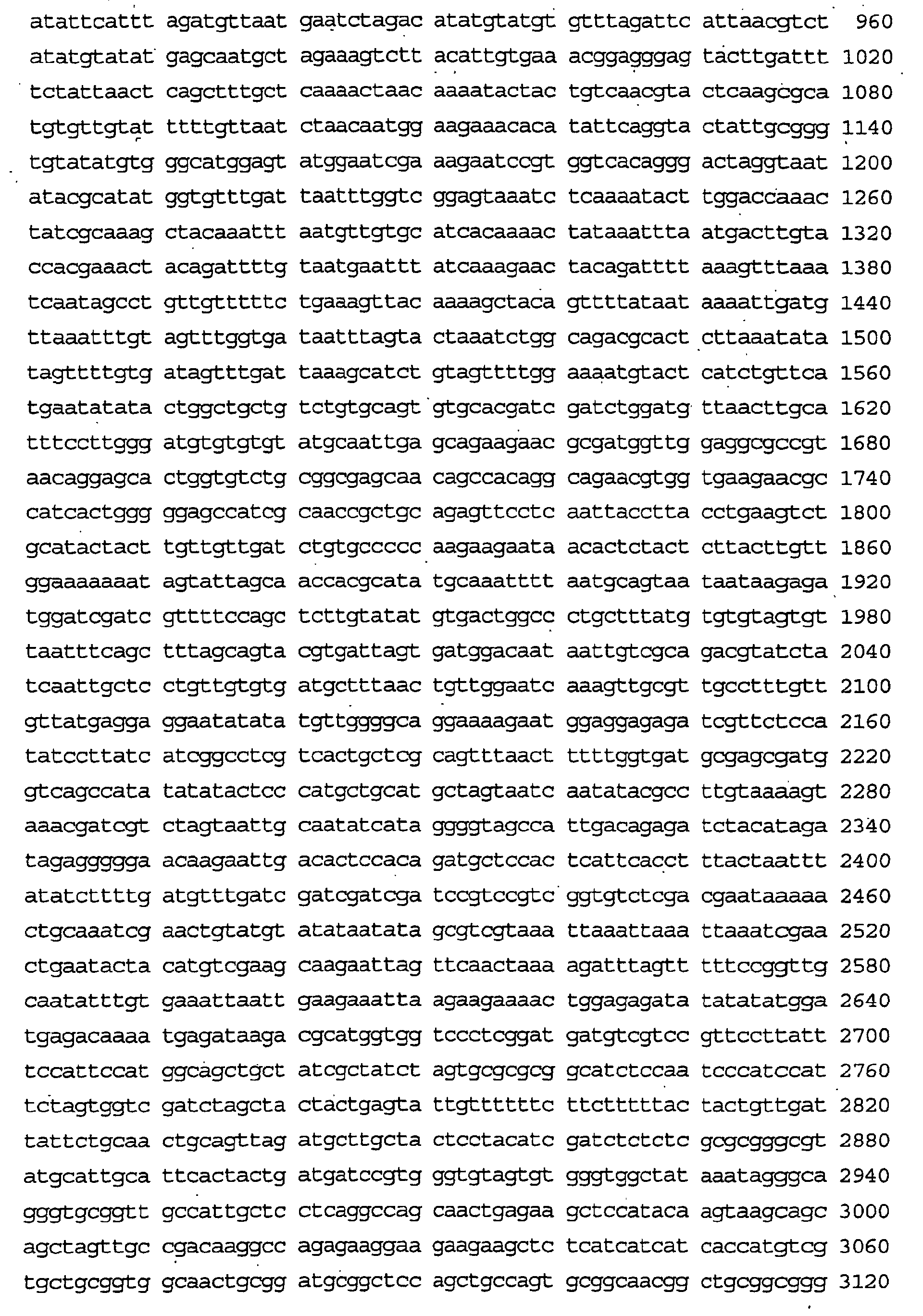
about 2.7Kbp shown by SEQ ID NO:2.
Further, the present invention is an expression vector
into which a DNA fragment shown by SEQ ID NO:1 or 2 is
transferred.
In addition, the present invention relates to an
expression vector wherein the DNA sequence shown by SEQ ID NO:1
or 2 is transferred to an exogenous structural gene.
Yet further, the present invention relates to a
transformed plant cell obtainable by introducing the
above-mentioned vector into a host plant cell, a transformed
plant regenerated from the plant cells and a seed obtainable
from the plant.
Best Mode for Carrying Out the Invention
In the description below, unless otherwise specified,
recombinant DNA technology used as a conventional method can
be carried out using techniques described in the following
reference: "Molecular Cloning" (Fristch et al., Cold Spring
Harbour Press (1989)).
The DNA fragment having a promoter activity of the
present invention can be isolated from a plant genomic library
by a plaque hybridization, etc. using cDNA of rice
metallothionein as a probe.
Genomic library can be obtained by extracting genomic
DNA from plant such as a rice plant, partially digesting the
isolated genomic DNA by an appropriate restriction enzyme such
as EcoRI, fractionating longer DNA fragments, for example, DNA
fragments of 9 to 23 kb by sucrose density-gradient centrifugation
or by agarose gel electrophoresis, incorporating
this into an appropriate vector such as λ phage and packaging,
followed by infecting Escherichia coli such as XL-1 Blue strain
with this recombinant phage, and culturing them on a flat
culture medium such as an LB plate (1% Bactotryptone, 0.5%
yeast-extract, 1% NaCl and 1.3% agarose). As a vector, a
plasmid may be used, however, it is preferable to use λ phage
or cosmid vector in that longer DNA fragments can be
effectively inserted.
Membrane such as nylon membrane is placed on the
above-mentioned flat culture medium, and this membrane is
immersed in a denaturing agent, followed by immersing in a
neutralizing solution and washing with a washing solution, so
that the recombinant DNAs on the flat culture medium become
single stranded and are adsorbed onto the membrane.
As a probe, for example, an oligo DNA synthesized
according to a part of Mt structural gene or a DNA amplified
by the PCR method using Mt cDNA is labeled with [α-32P]dCTP,
DIG (Digoxigenin), biotin, etc. and used.
Hybridization can be carried out using the membrane to
which the above-mentioned single stranded DNAs are adsorbed
and the labeled probe.
The membrane thus hybridized with the labeled probe is
applied to autoradiography to detect clones strongly
hybridized with the probes, and they can be isolated as
positive clones.
DNA of the isolated positive clone is treated with an
appropriate restriction enzyme, such as Eco RI, carrying out
subcloning with an appropriate cloning vector such as
pBluescript II and pUC type vector, and then, its nucleotide
sequence can be determined by the Maxam-Gilbert method or by
dideoxy method, etc. Commercially available kits, and an
automated sequencer that automatically determines a sequence,
etc. may be used.
Base sequence of the obtained clone is determined as
mentioned above and the 5' non-translated region and its
upstream promoter region of the Mt gene are found out.
To a downstream of the thus obtained promoter region,
a structural gene and a terminator gene are linked, and by
inserting them into an expression vector, it is possible to
construct an expression vector for gene transfer.
As an expression vector, there may be mentioned pUC type
vector (for example, pUC118, pUC119), pBR type vector (for
example, pBR322), pBI type vector (for example, pBI101, pBI112
and pBI221), pGA type vector (pGA492 and pGAH), etc. In
addition to these, virus vectors, etc. may be listed.
As a terminator gene to be linked, there may be mentioned
35S terminator gene, Nos terminator gene, etc.
As a structural gene to be linked, there may be mentioned,
for example, a reporter gene, a gene of an insecticidal protein,
a herbicide-resistant gene, a gene expressing antibacterial
activity, blight resistant gene, a gene which induces bloom
of plants, a gene involving morphogenesis, a gene involving
resistance to an environmental stress, a gene involving in
increasing an yield, a gene with an antiseptic effect on crops,
etc.
As a reporter gene, there may be mentioned β-glucuronidase
(GUS) gene, luciferase gene, chloramphenicol
acetyltransferase (CAT) gene, etc. As a gene of an
insecticidal protein, there may be mentioned a gene of a
crystalline protein of Bacillus thuringiensis, a protease
inhibitor gene, etc., as a herbicide-resistant gene, a
gliphosate-resistant gene, a glufosinate-resistant gene, a
sulfonylurea type herbicide resistant gene, etc., as a gene
expressing antibacterial activity, chitinase gene, glucanase
gene, lysozyme gene, cecropin gene, etc., as a gene which
induces bloom of plants, .a gene involving formation of florigen,
etc., as a gene involving morphogenesis, chalcone synthase
gene, phenylalanine ammonia-lyase, RolC gene, etc., as a gene
involving resistance to an environmental stress, glutamine
synthase gene, glycine betaine gene, Mt gene, etc., as a gene
involving in increasing a yield, a modified gene of a seed
storage protein, sucrose-phosphate synthase gene, etc., and
as a gene with an antiseptic effect on crops, an antisense gene
of ethylene synthase gene, etc.
As a method for introducing an expression vector in which
a structural gene such as a reporter gene and a terminator gene
are linked to a downstream of a promoter, there may be mentioned
an indirect introducing method or a direct introducing method.
As the indirect introducing method, for example, a
method using Agrobacterium is exemplified.
As the direct introducing method, there may be
exemplified, for example, an electroporation method, a
particle gun method, a polyethylene glycol method, a
microinjection method, a silicon carbide method, etc.
All kinds of plants are included as a plant to which a
gene is transferred, and, for example, there may be mentioned
the rice family, the palm family, the lily family, the orchid
family, the taro family, etc., for monocotyledon plants.
Examples of the rice family may include a rice plant,
wheat, barley, rye wheat, brushwood, a ditch reed, a sugar cane,
corn, foxtail millet, a barnyard grass, etc. Examples of lily
family may include a Welsh onion, a lily, a tulip, etc.
For dicotyledon plants, examples may include the beech
family, the cactus family, the camellia family, the mallow
family, the gourd family, the rape family, the rose family,
the pulse family, the mulberry family, Euphorbia family, the
grape family, the tangerine family, the drop wort family, the
eggplant family, the perilla family, the crysanthemum family,
the primrose family, the fringed pink family, etc. As the
camellia family, tea, etc. are mentioned. As the mallow family,
cotton, etc. are mentioned. As the gourd family, cucumber,
melon, pumpkin, etc. are mentioned. As the rape family, rape,
Arabidopsis thaliana, Japanese radish, horseradish, cabbage,
etc. are mentioned. As the rose family, Japanese apricot,
peach, apple, pears, rose, etc. are mentioned. As the pulse
family, soybean, adzuki bean, garden pea, broad bean, peanut,
etc. are mentioned. As the mulberry family, hop, etc. are
mentioned. As the eggplant family, tobacco, eggplant, potato,
tomato, etc. are mentioned. As the crysanthemum family,
crysanthemum, garden crysanthemum, sunflower, lettuce, etc.
are mentioned. As the primrose family, primrose, cyclamen,
etc. are mentioned. As the fringed pink family, carnation,
etc. are mentioned.
Further, plants which belong to a gymnosperm, such as
Japanese cedar family, pine tree family, white cedar family,
etc. are also included.
A plant which contains the transferred promoter and the
structural gene can be obtained by inserting a gene having a
resistance to chemicals such as kanamycin, hygromycin, etc.
to a gene transferred vector, or by simultaneously introducing
a vector having a chemical resistant gene to a plant, and then,
selecting with a chemical such as kanamycin or hygromycin, etc.
Further, by analyzing the gene transferred into the plant, such
as a PCR method or a southern hybridization method, etc., or
by analyzing a translated product of the transferred
structural gene, for example, by analyzing a desired protein
contained in an extract of the plant leaves, etc. in terms of
enzyme activity or by a Western blotting method, etc., thereby
confirming and selecting plants to which the desired gene is
transferred.
It is possible to grow the thus obtained transformed
plant to collect its seeds, and to differentiate and regenerate
a plant using a tissue of the transformed plant, such as a leaf
or a root.
Since Mt gene is localized in the internode, it is
possible to control site of expression of the transferred gene
in the transformed plant into which it is transferred, by
linking a structural gene to a downstream of the promoter
region.
Analysis on site-specific expression of the structural
gene which is linked and transferred into the promoter is
carried out by analyzing localization of mRNA or a translated
product of the structural gene in the plant.
For example, when a GUS gene is used as a structural gene,
an existing site of GUS in the transformed plant can be
confirmed by a histochemical method.
That is, localized site of GUS can be confirmed by
observing tissue by a microscope for a blue color of indigotin,
that is a hydrolysis product of 5-bromo-4-chloro-3-indolyl-β-D-glucuronic
acid by GUS.
Examples
In the following, Examples of the present invention will
be explained more specifically, but, the present invention is
not limited by these.
Example 1: Preparation of rice genomic library
For preparing a rice genomic library, genomic DNA was
extracted and isolated from leaves of rice plant 2 weeks after
seedling (strain: NNipponbare). Isolated genomic DNA was
partially digested by Mbo I. The reaction mixture was
extracted with phenol-chloroform, the obtained aqueous layer
was precipitated with ethanol, and then, the resultant
precipitate was dissolved in a TE buffer to obtain Mbo I
fragments of genomic DNA.
The thus obtained Mbo I fragments of the genomic DNA were
cloned using λ-GEM12Xho I Half-site Arms Cloning System
(manufactured by Promega Co.). That is, the Mbo I fragments
of the genomic DNA were inserted into Xho I sites of the phage
vector λ-GEM12, and packaged in phage particles, and then, this
recombinant phages were plated on an NZYM (1% NZ amine, 0.5%
Yeast Extract, 0.5% NaCl, 0.2% MgSO4·7H2O and 1.3% agarose)
plate together with a top agar containing Escherichia coli (KW
251), followed by overnight culture at 37°C to form plaques.
Example 2: Screening of rice genomic library
(a) Preparation of membrane
After the above-mentioned NZYM plate with formed plaques
were refrigerated, a membrane (Hybond N+, manufactured by
Amersham Co.) marked with a pencil was placed thereon, left
for 2 minutes, and then, it was marked by stabbing through it
and into the agar with a needle, and removed. This membrane
was impregnated into a solution of 1.5M NaCl and 0.5M of NaOH
for 2 minutes for denature and neutralized by impregnating it
into a solution of 1.5M Tris-HCl (pH 7.5) and 2XSSC for 5
minutes. Subsequently, the membrane was immersed in a
solution of 0.2M Tris-HCl (pH 7.5) and 2XSSC for 30 seconds
to wash it, and dried on a filter, so that recombinant DNA on
the NZYM plate was adsorbed on the membrane as a single stranded
state.
(b) Preparation of probe
A probe was prepared according to a method as mentioned
below, using cDNA of Mt isolated by Kawai et al. [Kawai et al.,
The Plant Journal 2(6):845-854 (1992)], and using Random
Primer DNA Labeling Kit Ver.2.0 (manufactured by Takara Co.)
for labeling DNA. Into a tube were charged 1 µg of Mt cDNA
and 2 µl of Random Primer, and the total volume was made 14
µl with a sterilized water. To the mixture were added each
2.5 µl of 10X buffer and dNTP mixture and 5 µl of [α-32P]dCTP
(1.85MBq). 1 µl of Exo-free Klenow Fragment was added and kept
at 37°C for 10 minutes, followed by heating at 65°C for 5 minutes
to obtain a probe.
(c) Hybridization
The membrane to which the above-mentioned single
stranded DNA was attached was placed in a Hybri-Bag, a
hybridization buffer (5XSSC, 5X Denhardt's reagent, 0.5% SDS)
was added in an amount of 5 ml per 100 cm2 of the membrane,
and salmon sperms DNA that had been treated with ultrasonic
wave, heated and quenched were added to make its concentration
0.1 mg/ml, and then, the mixture was incubated at 65°C for 1
hour. The above-mentioned labeled probe was heated and
quenched, and it was added to the above mixture in a
corresponding amount of 105-106 cpm per 1 ml of the
hybridization buffer. After sealing it, hybridization was
carried out at 65°C overnight. Subsequently, the membrane
after completion of hybridization was washed by shaking in a
washing solution A (0.1% SDS, 2XSSC) at a room temperature for
10 minutes, and then, washed by shaking in a washing solution
B (0.1% SDS, 1XSSC) at 65°C for 30 minutes. Repeatedly, in
a fresh washing solution B, it was washed by shaking at 65°C
for 30 minutes, and air-dried.
(d) Autoradiography
After the air-dried membrane was wrapped with a plastic
film, it was subjected to autoradiography to obtain an
autoradiography film. By adjusting the mark left on the
membrane and the mark left on the agar plate, phages that were
strongly hybridized with the probe were detected by the
positions of positive signals on the film, and they were
isolated as positive phages. Among about million phages, 7
positive phages were obtained.
Example 3: Determination of nucleotide sequence
(a) Preparation of DNA from positive phages
From the isolated positive phages, DNA was isolated
according to the method as mentioned below. Single phage was
picked up and suspended in 100 µl of an SM buffer solution (0.58%
NaCl, 0.2% MgSO4·H2O, 0.01% gelatin and 0.05% Tris-HCl), and
left alone at room temperature for 1 hour. To the solution
was added E.coli (KW251) in an amount of 20 µl, and the mixture
was left alone at 37°C for 15 minutes. Subsequently, 5 ml of
an NZYM medium was added thereto and followed by culture at
37°C overnight. After the culture, 100 µl of chloroform was
added to the culture liquid and subjected to shaking culture
for 15 minutes. After centrifugal separation, to the obtained
supernatant that is a phage containing liquid, RNase A and
DNase I were added so that each concentration thereof became
5 µg/ml, and then, the mixture was incubated at 37°C for 30
minutes. To the mixture was added an equivalent amount of 20
% PEG6000-2.5M NaCl solution, and it was left still for 1 hour
on ice. The obtained precipitate was suspended in 500 µl of
an SM buffer solution. To the suspended solution were added
EDTA (final concentration of 10 mM) and SDS (final concentration
of 0.1%), and it was kept at 65°C for 15 minutes,
followed by extraction with phenol, extraction with phenol-chloroform,
and extraction with chloroform, to obtain an
aqueous layer. To the obtained aqueous layer was added an
equivalent amount of isopropanol and left still at 80°C for
10 minutes, followed by centrifugation. To the precipitate
was added 70% ethanol and it was subjected to another
centrifugation. The precipitate was dissolved in 50 µl of a
TE buffer solution to obtain a phage DNA solution.
(b) Determination of nucleotide sequence of the positive
phage DNA
Each of the thus obtained phage DNA was treated with
several kinds of restriction enzymes including Eco RI, and
separated by means of agarose gel electrophoresis, followed
by the Southern blotting analysis using a whole Mt cDNA as a
probe. From the results, an Eco RI DNA fragment (about 4 Kbp)
that was thought to contain a region identical to the Mt cDNA
was recovered from the agarose gel, using a centrifugation tube
equipped with a filter for DNA recovery (SUPREC-01, manufactured
by TaKaRa Co.). The recovered DNA fragments were
ligated to a restriction enzyme site (Eco RI) of pBluescript
II (manufactured by STRATAGENE Co.), using a DNA ligation kit
(Ligation Kit) (manufactured by TaKaRa Co.), and transferred
into E.coli (XL1-Blue). The thus obtained clone was named
pMt(Eco RI), and its nucleotide sequence was determined
according to the dideoxy method; using a sequencing kit for
determining nucleotide sequence (Sequencing High -Cycle-,
manufactured by TOYOBO Co.). Further, nucleotide sequences
of a plural number of deletion mutant clones with different
lengths of deletion parts, prepared from the obtained clones
using a Deletion Kit for Kilo-Sequence (manufactured by TaKaRa
Co.) was determined, according to the dideoxy method, using
a sequencing kit for determining nucleotide sequence
(Sequencing High -Cycle-, manufactured by TOYOBO Co.).
(c) Analysis on determined nucleotide sequence
The thus determined nucleotide sequence of the clone was
analyzed by using a genetic information analyzing software
(GENETYX-MAC Ver. 8, manufactured by Software Kaihatsu K.K.),
to determine a nucleotide sequence of about 4.0 Kb as shown
in SEQ ID NO:3. Further, it was found that a translation start
codon (ATG) clarified by analysis of Mt cDNA existed in
nucleotide sequence No. 3055-3057 of SEQ ID NO:3 in the
Sequence Listing.
From a promoter analysis using a genetic information
analyzing software (GENETYX-MAC Ver.8, manufactured by
Software Kaihatsu K.K.), TATA box-like sequence was identified
in nucleotide sequence No. 2928-2935 (8 bases) of SEQ ID NO:3.
Example 4: Detection of promoter activity
(a) Gene transfer into plant
Three kinds of primers were synthesized based on the
nucleotide sequence determined in Example 3, and PCR was
carried out. PCR product obtained by using a primer shown in
SEQ ID NO: 4 and a primer shown in SEQ ID NO: 5 was named Mt
pro1, and PCR product obtained by using a primer shown in SEQ
ID NO: 4 and a primer shown in SEQ ID NO: 6 was named Mt pro2,
respectively. Each of them were separated by an agarose gel
electrophoresis, and then, DNA fragments about 2.8 Kbp and
about 2.7 Kbp were recovered from the agarose gel, using a
centrifugation tube equipped with a filter for DNA recovery
(SUPREC-01, manufactured by TaKaRa Co.). The obtained DNA
fragments were inserted into a Sal I and Bam HI sites of a gene
transferred vector for a plant having kanamycin and hygromycin
resistant genes and GUS gene (a vector pNC obtained by
introducing a hygromycin resistant gene into pBI101for), which
enables confirmation of a gene transferred into a plant. These
vectors were named pNC/Mt prol-GUS and pNC/Mt pro2-GUS,
respectively. According to the method described below, these
two kinds of gene- transferred vectors were transferred into
an Agrobacterium (LBA4404 strain and EHA101).
The Agrobacterium was cultured using a YEP liquid culture
medium (1% Bacto-peptone, 1% Bacto-yeast extract and 0.5%
NaCl), until its absorbance at 600 nm at 28°C reached around
1.0. After the culture liquid was chilled on ice, it was
subjected to centrifugation. The precipitated cells were
suspended in 1 ml of 20 mM CaCl2 solution, and frozen by liquid
nitrogen. 1 µg of DNA of either pNC/Mt pro1-GUS or pNC/Mt
pro2-GUS was added and the mixture was thawed at 37°C for 5
minutes. 1 ml of a YEP liquid culture medium was added thereto,
and the resulting material was subjected to a shaking culture
gently at 28°C for 4 hours. The culture liquid was centrifuged
and the precipitated cells were suspended in 0.1 ml of a YEP
liquid culture medium and plated onto a YEP plate (containing
1.5% agarose, 50 µg/ml of kanamycin, 50 µg/ml of hygromycin),
and it was cultured at 28°C for 3 days to obtain a transformed
Agrobacterium.
According to the method below, gene transferred into a
tobacco plant was carried out.
First, the above transformed Agrobacterium was cultured
at 28°C overnight, using an LB liquid culture medium.
Subsequently, leaves of tobacco plant grown under sterilized
condition were cut into dices of 1 cm square, and immersed in
the culture liquid of the above transformed Agrobacterium for
5 minutes for infection. After infection, the tobacco leaves
from which excessive culture liquid was removed on a sterilized
filter paper were placed on an MS-NB plate, and cultured under
the light of about 3000 lux. Three days later, they were
transferred to an MS-NB plate containing 500 µg/ml of chlaforan
and cultured to remove the transformed Agrobacterium. Seven
days later, they were transferred to an MS-NB plate containing
100 µg/ml of kanamycin and 500 µg/ml of chlaforan and cultured
to obtain kanamycin- resistant individuals. Ten days later,
when kanamycin-resistant differentiated foliages grew big,
they were transferred to an MS plate without containing
hormones and grew to give a transformed tobacco.
According to the method below, gene transferred into a
rice plant was carried out.
The transformed Agrobacterium was cultured for 3days
under dark condition at 28°C, using an AB agar culture medium.
Subsequently, calluses derived from a rice plant (NNipponbare)
were immersed for 2 minutes in a suspension obtained by
suspending the above transformed Agrobacterium into an AAM
liquid culture medium containing 10 mg/l of acetosyringone,
so that the calluses were infected. After infection, excess
culture liquid was removed from the calluses on a sterilized
filter paper, and then, the resulting calluses were placed on
a 2N6 plate containing 10 mg/l of acetosyringone with a
covering filter paper. They were cultured at 25°C under dark
condition. Three days later, sterilizing treatment was
carried out to remove the transformed Agrobacterium, and the
calluses were transferred to a N6D plate containing 500 mg/l
of carbenicillin, and cultured at 25°C under light of about
3000 lux. After 14 days, they were transferred to a N6D plate
containing 500 mg/l of carbenicillin, and 50 mg/l of hygromycin
and cultured, to obtain hygromycin-resistant individuals. A
few weeks later, they were transferred to an MSNK plate
containing 500 mg/l of carbenicillin, and 50 mg/l of hygromycin
to promote re-differentiation. When the hygromycin-resistant
calluses were re-differentiated to give a shoot,
they were then transferred to an MS plate without containing
hormones, and let them grow to give transformed rice plants.
(b) Confirmation of transferred gene
Existence of transferred gene in the thus obtained
transformed tobacco or rice plant was confirmed according to
the CTAB method, using a genomic DNA extracted from the
transformed tobacco as a template, amplifying the part between
the promoter gene and the GUS gene by the PCR reaction using
primers as shown by SEQ ID NO:4 and SEQ ID NO:7, followed by
an agarose gel electrophoresis.
Composition of the reaction solution used in the PCR
reaction was described below. As a heat-resistant DNA
polymerase, Ampli Taq Gold (manufactured by Perkin Elmer Co.)
was used.
| Extracted genomic DNA solution | 0.5 µl |
| 10XPCR buffer | 5.0 µl |
| 25 mM MgCl2 | 4.0 µl |
| 2 mM dNPT mix | 5.0 µl |
| Heat-resistant DNA polymerase | 0.2 µl |
| 25 pmol/µl primer | 1.0 µl each |
| SDW | 33.3 µl |
| Total | 50.0 µl |
Conditions for the PCR reaction were as follows.
The PCR reaction solution was subjected to 1% agarose gel
electrophoresis for separation. As a result, a DNA band with
an objective size was detected, confirming the existence of
the transferred Mt promoter region and GUS gene in both the
Mt-GUS tobacco and rice plants.
(c) Measurement of promoter activity
Promoter activity was confirmed, according to the method
below, by measuring an enzyme activity of GUS (GUS activity),
that is a translated product of a reporter gene linked
downstream of the promoter.
(c-1) Fluorometric assay
About 100 mg of a section of a leaf or a root of the
transformed plant was put into a microtube (1.5 ml) and 100
µl of an extraction buffer solution (50 mM phosphate buffer
(pH 7.0), 10 mM EDTA, 0.1% Triton X-100, 0.1% N-Lauroyl-sarcosine
Sodium Salt, 1 mM β-mercaptoethanol) was added
thereto. The mixture was completely ground on ice, and
subjected to a centrifugal separation to obtain about 100 µl
of a supernatant. Using the obtained supernatant, measurement
on a GUS activity and determination of an amount of
the protein were carried out. With respect to a non-recombinant
plant, measurement on a GUS activity and
determination of an amount of the protein were carried out in
the same manner.
In measurement on the GUS activity, 170 µl of a buffer
solution was added to 80 µl of the above-mentioned supernatant
to give an extract solution. To the extract solution was added
250 µl of 4-methyl-umbelliferyl-β-D-glucuronide (4MUG)
solution (1 mM 4MUG/extract buffer solution) as a substrate,
and a reaction was started at 37°C. A part (100 µl) of the
reaction liquid was portioned after 10 minutes or 40 minutes
after the start of the reaction, and added to 2 ml of a
reaction-terminating solution (0.2 M sodium carbonate) to
terminate the reaction. As a blank, a mixture wherein only
100 µl of an extract solution was added to 2 ml of a reaction-terminating
solution was used, and as a control, a mixture
wherein 50 µl or 100 µl of 1 µM 4-methyl-umbelliferron (4MU)
solution was added to 2 ml of a reaction-terminating solution
was used. Fluorescences of these solutions were measured by
using a fluorescence spectrophotometer (excitation
wavelength = 365 nm, emission wavelength = 455 nm).
Determination of an amount of the protein was carried
out according to the Bradford method, using a Bio-Rad Protein
Assay Kit (manufactured by BIO-RAD Co.).
Based on the thus obtained numerical values, amounts of
4MU produced per unit time and unit amount of the protein were
calculated. The GUS activity values were about 114 times and
about 72 times, respectively, as that of non-recombinant
plant, in Mt pro1-GUS tobacco and Mt pro2-GUS tobacco.
(c-2) Histochemical assay
Plant tissue such as leaf, stem or root was cut off and
immersed in a fixation solution (0.3% formamide, 10mM MES and
0.3M mannitol), suctioned by a vacuum pump, and treated at room
temperature for about 1 hour. Subsequently, the tissue was
washed with a buffer solution (50 mM sodium phosphate, pH 7.0),
and immersed in a 5-bromo-4-chloro-3-indolyl-β-D-glucuronic
acid (X-Gluc) solution, and suctioned by a vacuum pump, and
treated for 2 hours or more at 37°C. As a result, in both Mt-GUS
tobacco and rice plants, blue color due to indigotin formation
was expressed, confirming that the DNA fragments as shown in
SEQ ID NO:1 and SEQ ID NO:2 had a promoter activity.
(c-3) Analysis on plant of the next generation of recombination
by histochemical assay
Seeds were collected from Mt pro1-GUS tobacco, Mt
pro2-GUS tobacco, Mt pro1-GUS rice plant and Mt pro2-GUS rice
plant that exhibited the GUS activity in the recombinant
generation. By seedling these seeds, a plant of the next
generation of recombination was obtained. Results from the
tests of tissue staining by the histochemical assay showed
expression of blue color due to indigotin formation in both
Mt-GUS tobacco and rice plants. From these results, it was
confirmed that the Mt promoter had a function also in the next
generation of the recombination.
(c-4) Analysis on plant of the next generation of recombination
by fluorometric assay
Young seedling of Mt prol-GUS tobacco obtained by
seedling the seeds was dissected in respective tissues
including leaf, stem and root, and analyzed by the fluorometric
assay. As a result, Mt pro1 showed a GUS activity which
corresponds to 35S promoter, all in leaf, stem and root.
Similarly, young seedling of Mt pro1-GUS rice plant was
dissected in respective tissues including leaf sheath, root
and endosperm, and analyzed by the fluorometric assay. As a
result, Mt pro1 showed a GUS activity which corresponds to 35S
promoter in leaf sheath and root. On the other hand, there
was no GUS activity detected in endosperm.
Industrial Applicability
The promoter of the present invention, that is linked
to a useful gene and transferred in a plant or in a plant cell,
enables an expression of the useful gene. In addition, since
the promoter of the present invention is a promoter of Mt gene
which is induced by heavy metals, virus infection or damage,
it is possible to use it as a promoter to induce an expression
of the transferred useful gene by an environmental stress.
Moreover, since Mt is localized in internodes, it is possible
to limit a tissue or a part where the transferred gene is
expressed.